EP4134725B1 - Linsenfreies mikroskopisches bildgebungssystem und verfahren sowie system und verfahren zum nachweis biochemischer substanzen - Google Patents
Linsenfreies mikroskopisches bildgebungssystem und verfahren sowie system und verfahren zum nachweis biochemischer substanzen Download PDFInfo
- Publication number
- EP4134725B1 EP4134725B1 EP20930394.0A EP20930394A EP4134725B1 EP 4134725 B1 EP4134725 B1 EP 4134725B1 EP 20930394 A EP20930394 A EP 20930394A EP 4134725 B1 EP4134725 B1 EP 4134725B1
- Authority
- EP
- European Patent Office
- Prior art keywords
- microbeads
- lens
- image sensor
- microbead
- light source
- Prior art date
- Legal status (The legal status is an assumption and is not a legal conclusion. Google has not performed a legal analysis and makes no representation as to the accuracy of the status listed.)
- Active
Links
Images



Classifications
-
- G—PHYSICS
- G02—OPTICS
- G02B—OPTICAL ELEMENTS, SYSTEMS OR APPARATUS
- G02B21/00—Microscopes
- G02B21/36—Microscopes arranged for photographic purposes or projection purposes or digital imaging or video purposes including associated control and data processing arrangements
-
- G—PHYSICS
- G02—OPTICS
- G02B—OPTICAL ELEMENTS, SYSTEMS OR APPARATUS
- G02B21/00—Microscopes
- G02B21/36—Microscopes arranged for photographic purposes or projection purposes or digital imaging or video purposes including associated control and data processing arrangements
- G02B21/361—Optical details, e.g. image relay to the camera or image sensor
-
- G—PHYSICS
- G02—OPTICS
- G02B—OPTICAL ELEMENTS, SYSTEMS OR APPARATUS
- G02B21/00—Microscopes
- G02B21/36—Microscopes arranged for photographic purposes or projection purposes or digital imaging or video purposes including associated control and data processing arrangements
- G02B21/365—Control or image processing arrangements for digital or video microscopes
- G02B21/367—Control or image processing arrangements for digital or video microscopes providing an output produced by processing a plurality of individual source images, e.g. image tiling, montage, composite images, depth sectioning, image comparison
-
- G—PHYSICS
- G03—PHOTOGRAPHY; CINEMATOGRAPHY; ANALOGOUS TECHNIQUES USING WAVES OTHER THAN OPTICAL WAVES; ELECTROGRAPHY; HOLOGRAPHY
- G03H—HOLOGRAPHIC PROCESSES OR APPARATUS
- G03H1/00—Holographic processes or apparatus using light, infrared or ultraviolet waves for obtaining holograms or for obtaining an image from them; Details peculiar thereto
- G03H1/04—Processes or apparatus for producing holograms
- G03H1/0443—Digital holography, i.e. recording holograms with digital recording means
-
- G—PHYSICS
- G02—OPTICS
- G02B—OPTICAL ELEMENTS, SYSTEMS OR APPARATUS
- G02B5/00—Optical elements other than lenses
- G02B5/20—Filters
- G02B5/28—Interference filters
-
- G—PHYSICS
- G03—PHOTOGRAPHY; CINEMATOGRAPHY; ANALOGOUS TECHNIQUES USING WAVES OTHER THAN OPTICAL WAVES; ELECTROGRAPHY; HOLOGRAPHY
- G03H—HOLOGRAPHIC PROCESSES OR APPARATUS
- G03H1/00—Holographic processes or apparatus using light, infrared or ultraviolet waves for obtaining holograms or for obtaining an image from them; Details peculiar thereto
- G03H1/0005—Adaptation of holography to specific applications
- G03H2001/005—Adaptation of holography to specific applications in microscopy, e.g. digital holographic microscope [DHM]
Definitions
- the subject matter relates to biological detection, and more particularly, to a lens-free microscopic imaging system and method, and a biochemical substance detection system and method.
- a lot of assays for complex samples of macromolecular usually include two steps.
- molecules that can capture specific target macromolecules are attached to a surface of solid phase.
- Such attached molecules can capture the target macromolecules from a complex sample in various ways such as hybridization (e.g., in assays based on DNA, RNA) or interactions between antigens and antibodies (in immunoassays).
- molecules required for the detection hereinafter, “detection molecules” are incubated with and bonded to a compound of the capture molecules and the target, thereby emitting signals such as fluorescent or electromagnetic signals.
- the target is then quantified based on an intensity of the signals.
- Multiplex detection can be carried out by a variety of capture reagents that are specific for different target macromolecules.
- each type of capture reagent is attached to a predetermined position on the chip.
- Multiple targets in the complex sample are quantified by measuring the signal of the detection molecule at each position of the corresponding type of capture reagent.
- particles or microbeads are suspended in a solution required for the detection. Such particles or microbeads include identification elements that can be embedded, printed, or otherwise generated by one or more elements of the particles or microbeads.
- Each type of capture reagent is fixed to particles having a same identity number, and the signal emitted by the detection molecules on the particles having a specific identity number can reflect the amount of the corresponding target.
- the particles or microbeads can be identified, so that the signal from the molecules captured by the capture reagent is associated with the identity number to realize multiplex detection.
- the existing microscope can obtain clear images of the microbeads/magnetic beads and images of corresponding signals (such as fluorescent signals).
- signals such as fluorescent signals.
- the existing optical microscope also needs to perform a lens focusing process, which is not only time-consuming and laborious, but also difficult to find a focus plane.
- An optical lens system and a slider for moving the field of view result in the detecting system being high cost and not portable.
- D1 SASAGAWA KIYOTAKA ET AL: “Dual-mode lensless imaging device for digital enzyme linked immunosorbent assay”
- D2 Roy Mohendra ET AL: "A simple and low-cost device performing blood cell counting based on lens-free shadow imaging technique”
- D3 CN 101809444A
- D4 Qingshan Wei ET AL: "On-Chip Cytometry using Plasmonic Nanoparticle Enhanced Lensfree Holography ").
- the present disclosure provides a lens-free microscopic imaging system for imaging microbeads with pattern codes.
- the lens-free microscopic imaging system includes an illumination system and an imaging system.
- the illumination system includes an illumination light source and an excitation light source.
- the imaging system includes an image sensor.
- the illumination light source is configured to emit illumination light to irradiate the microbeads, causing the irradiated microbeads to be imaged on the image sensor.
- the excitation light source is configured to emit excitation light to excite the microbeads to generate specific signals
- the image sensor is configured to collect images of the microbeads and of the specific signals.
- the illumination light irradiates the microbeads, causing the images of the irradiated microbeads to be projected on the image sensor.
- the illumination light further forms interference fringes on the image sensor, and the interference fringes are collected by the image sensor.
- the illumination light source is a monochrome light source.
- a pinhole is arranged on an optical path from the illumination light source to the microbeads.
- the illumination light source is configured to emit the illumination light from a first orientation to a second orientation to irradiate the microbeads.
- the excitation light source is configured to emit the excitation light from the first orientation to the second orientation.
- the illumination system further includes a total reflection device.
- the total reflection device includes a total reflection surface, and the total reflection surface is configured to reflect the excitation light emitted by the excitation light source to the microbeads.
- the total reflection surface is arranged in the second orientation, and is configured to reflect the excitation light from the second orientation to the first orientation.
- the illumination light source is configured to emit the illumination light from a first orientation to a second orientation to irradiate the microbeads
- the excitation light source is configured to emit the excitation light from the second orientation to the first orientation
- a filtering device is further included, which is in front of or on the image sensor.
- the present disclosure provides a lens-free microscopic imaging method for imaging microbeads with pattern codes.
- the microbeads are configured to capture specific biochemical substances.
- the lens-free microscopic imaging method including:
- the illumination light irradiates the microbeads, causing the irradiated microbeads to be projected on the image sensor.
- the illumination light source 111 is powered on, which irradiates the microbeads 15 from the first orientation to the second orientation, and the irradiated microbeads 15 are projected onto the image sensor 113.
- the excitation light source 112 is powered on, which emits the excitation light from the first orientation to the second orientation to irradiate the microbeads 15, causing the microbeads 15 to emit the fluorescent signals toward the image sensor 113.
- the image sensor 113 collects the projections and the fluorescent signals of the microbeads 15, and generates the images of the microbeads 15 and the fluorescent signals. The images are output to the recognition and detection device 13.
Landscapes
- Physics & Mathematics (AREA)
- Engineering & Computer Science (AREA)
- Multimedia (AREA)
- General Physics & Mathematics (AREA)
- Chemical & Material Sciences (AREA)
- Analytical Chemistry (AREA)
- Optics & Photonics (AREA)
- Computing Systems (AREA)
- Theoretical Computer Science (AREA)
- Computer Vision & Pattern Recognition (AREA)
- Investigating, Analyzing Materials By Fluorescence Or Luminescence (AREA)
Claims (15)
- Ein linsenfreies mikroskopisches Abbildungssystem (11, 21, 31), wobei das linsenfreie mikroskopische Abbildungssystem (11, 21, 31) zur Abbildung von Mikrokügelchen (15, 25, 35) konfiguriert ist, wobei jedes der Mikrokügelchen (15,25,35) sind mit undurchsichtigen oder fluoreszierenden Stoffen markiert, t
das linsenfreie mikroskopische Abbildungssystem (11, 21, 31) umfasst:ein Beleuchtungssystem (11., 21., 31.); undein Bildgebungssystem (11b, 21b, 31b);wobei das Beleuchtungssystem (11a, 21a, 31a) eine Beleuchtungslichtquelle (111, 211, 311) und eine Anregungslichtquelle (112, 212 oder 312) umfasst, das Abbildungssystem (11b, 21b, 31b) ein Bild Sensor (113, 213, 313), die Beleuchtungslichtquelle (111, 211, 311) ist so konfiguriert, dass sie Beleuchtungslicht emittiert, um die Mikrokügelchen (15, 25, 35) zu bestrahlen, wodurch die bestrahlten Mikrokügelchen (15, 25, 35) auf dem Bildsensor (113, 213, 313) abgebildet werden, ist die Anregungslichtquelle (112, 212 oder 312) so konfiguriert, dass sie Anregungslicht emittiert, um dasMikroperlen (15, 25, 35) zur Erzeugung spezifischer Signale, wobei der Bildsensor (113, 213, 313) so konfiguriert ist, dass er Bilder der Mikroperlen (15, 25, 35) und der spezifischen Signale erfasst,dadurch gekennzeichnet, dass das System so konfiguriert ist, dass es eine Menge spezifischer biochemischer Substanzen quantifiziert, die von verschiedenen Arten von Mikrokügelchen (15, 25, 35) erfasst werden, wobei jedes der Mikrokügelchen (15, 25, 35) Mustercodes mit unterschiedlichen Tiefen, Formen und/oder Abständen aufweist, die um das Mikrokügelchen (15, 25, 35) herum eingraviert sind, und alle oder ein Teil der Mustercodes kombiniert werden, um eine Identifikationsnummer des Mikrokügelchens (15, 25, 35) zu bilden, und jedes Mikrokügelchen (15, 25, 35) dieselbe Identifikationsnummer aufweist, jedes Mikrokügelchen (15, 25, 35) eine biochemische Substanz erfasst, unterschiedliche Mikrokügelchen (15, 25, 35) unterschiedliche biochemische Substanzen erfassen, das System weiterhin so konfiguriert ist, dass es die Identifikationsnummer des Mikrokügelchens (15, 25, 35) anhand der Mustercodes in den Bildern erkennt, und eine Menge einer spezifische biochemische Substanz, die von jeder Art von Mikrokügelchen (15, 25, 35) durch eine Intensität der spezifischen Signale in den Bildern erfasst wird. - Linsenfreies mikroskopisches Abbildungssystem (11, 21, 31) nach Anspruch 1, dadurch gekennzeichnet, dass das Beleuchtungslicht die Mikrokügelchen (15, 25, 35) bestrahlt, wodurch die Bilder der bestrahlten Mikrokügelchen (15, 25, 35) auf den Bildsensor (113, 213, 313) projiziert werden.
- Linsenfreies mikroskopisches Abbildungssystem (11, 21, 31) nach Anspruch 1, dadurch gekennzeichnet, dass das Beleuchtungslicht außerdem Interferenzstreifen auf dem Bildsensor (113, 213, 313) bildet und die Interferenzstreifen vom Bildsensor (113, 213, 313) erfasst werden.
- Linsenfreies mikroskopisches Abbildungssystem (11, 21, 31) nach Anspruch 3, dadurch gekennzeichnet, dass auf einem optischen Weg von der Beleuchtungslichtquelle (111, 211, 311) zu den Mikrokügelchen (15, 25, 35) eine Lochblende angeordnet ist.
- Linsenfreies mikroskopisches Abbildungssystem (11, 21, 31) nach Anspruch 1, dadurch gekennzeichnet, dass die Beleuchtungslichtquelle (111, 211, 311) so konfiguriert ist, dass sie das Beleuchtungslicht von einer ersten Orientierung in eine zweite Orientierung emittiert, um die Mikrokügelchen (15, 25, 35) zu bestrahlen, und dass die Anregungslichtquelle (112, 212 oder 312) so konfiguriert ist, dass sie das Anregungslicht von der ersten Orientierung in die zweite Orientierung emittiert.
- Linsenfreies Mikroabbildungssystem (31) nach Anspruch 5, dadurch gekennzeichnet, dass das Beleuchtungssystem (31a) ferner eine Totalreflexionsvorrichtung (317) umfasst, die Totalreflexionsvorrichtung (317) eine Totalreflexionsoberfläche (3171) umfasst und die Totalreflexionsoberfläche (3171) so konfiguriert ist, dass sie das von der Anregungslichtquelle (112, 212 oder 312) emittierte Anregungslicht zu den Mikrokügelchen (15, 25, 35) reflektiert.
- Linsenfreies mikroskopisches Abbildungssystem (31) nach Anspruch 6, dadurch gekennzeichnet, dass die Totalreflexionsfläche (3171) in der zweiten Orientierung angeordnet ist und dazu ausgebildet ist, das Anregungslicht von der zweiten Orientierung in die erste Orientierung zu reflektieren.
- Linsenfreies mikroskopisches Abbildungssystem (11, 21, 31) nach Anspruch 1, dadurch gekennzeichnet, dass die Beleuchtungslichtquelle (111, 211, 311) so konfiguriert ist, dass sie das Beleuchtungslicht von einer ersten Orientierung in eine zweite Orientierung emittiert, um die Mikrokügelchen (15, 25, 35) zu bestrahlen, und dass die Anregungslichtquelle (112, 212 oder 312) so konfiguriert ist, dass sie das Anregungslicht von der zweiten Orientierung in die erste Orientierung emittiert.
- Linsenfreies mikroskopisches Abbildungssystem (11, 21, 31) nach Anspruch 1, dadurch gekennzeichnet, dass es zusätzlich eine Filtervorrichtung (114, 214, 314) vor oder auf dem Bildsensor (113, 213, 313) umfasst.
- Ein linsenfreies mikroskopisches Bildgebungsverfahren, wobei das linsenfreie mikroskopische Bildgebungsverfahren zum Abbilden von Mikrokügelchen (15, 25, 35) konfiguriert ist, wobei jedes der Mikrokügelchen mit undurchsichtigen Substanzen oder fluoreszierenden Substanzen markiert ist, wobei die Mikrokügelchen (15, 25, 35) zum Erfassen spezifischer biochemischer Substanzen konfiguriert sind, wobei das linsenfreie mikroskopische Bildgebungsverfahren umfasst:Anordnen der Mikrokügelchen (15, 25, 35) zwischen einer Beleuchtungslichtquelle (111, 211, 311) und einem Bildsensor (113, 213, 313);Einschalten der Beleuchtungslichtquelle (111, 211, 311), um Beleuchtungslicht in Richtung der Mikrokügelchen (15, 25, 35) auszusenden, wodurch die Mikrokügelchen (15, 25, 35) auf dem Bildsensor (113, 213, 313) abgebildet werden;Einschalten der Anregungslichtquelle (112, 212 oder 312), um Anregungslicht in Richtung der Mikrokügelchen (15, 25, 35) auszusenden, wodurch die spezifischen biochemischen Substanzen spezifische Signale erzeugen;Sammeln von Bildern der Mikrokügelchen (15, 25, 35) und der spezifischen Signale,dadurch gekennzeichnet, dass verschiedene Arten von Mikrokügelchen (15, 25, 35) zwischen der Beleuchtungsquelle (111, 211, 311) und dem Bildsensor (113, 213, 313) angeordnet sind, wobei jedes der Mikrokügelchen (15, 25, 35) außerdem Mustercodes mit unterschiedlichen Tiefen, Formen und/oder Abständen aufweist, die um das Mikrokügelchen (15, 25, 35) herum eingraviert sind, alle oder ein Teil der Mustercodes kombiniert sind, um eine Identifikationsnummer des Mikrokügelchens (15, 25, 35) zu bilden, und jedes Mikrokügelchen (15, 25, 35) dieselbe Identifikationsnummer aufweist, jedes Mikrokügelchen (15, 25, 35) eine biochemische Substanz erfasst, unterschiedliche Mikrokügelchen (15, 25, 35) unterschiedliche biochemische Substanzen erfassen, die Identifikationsnummer des Mikrokügelchens (15, 25, 35) ist anhand der Mustercodes in den Bildern erkennbar, und eine Menge einer bestimmten biochemischen Substanz, die von jeder Art von Mikrokügelchen (15, 25, 35) erfasst wird, wird anhand einer Intensität der spezifischen Signale in den Bildern quantifiziert.
- Linsenfreies mikroskopisches Bildgebungsverfahren nach Anspruch 10, dadurch gekennzeichnet, dass das Beleuchtungslicht die Mikrokügelchen (15, 25, 35) bestrahlt, wodurch die bestrahlten Mikrokügelchen (15, 25, 35) auf den Bildsensor (113, 213, 313) projiziert werden.
- Linsenfreies mikroskopisches Bildgebungsverfahren nach Anspruch 10, dadurch gekennzeichnet, dass das Beleuchtungslicht außerdem Interferenzstreifen auf dem Bildsensor (113, 213, 313) bildet und die Interferenzstreifen vom Bildsensor (113, 213, 313) erfasst werden.
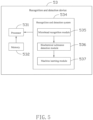
- Ein System zur Erkennung biochemischer Substanzen (1, 2, 3), dadurch gekennzeichnet, dass es Folgendes umfasst:
ein linsenfreies mikroskopisches Bildgebungssystem (11, 21, 31) gemäß einem der Ansprüche 1 bis 9;
und eine Erkennungs- und Detektionsvorrichtung (13, 23, 33, 43, 53), die so konfiguriert ist, dass sie die vom Bildsensor (113, 213, 313) ausgegebenen Bilder empfängt, die Mikrokügelchen (15, 25, 35) in den Bildern erkennt, eine Identifikationsnummer jedes der Mikrokügelchen (15, 25, 35) und eine Menge der spezifischen biochemischen Substanzen, die von jedem Mikrokügelchentyp (15, 25, 35) erfasst werden, wobei die Mikrokügelchen (15, 25, 35) mit derselben Identifikationsnummer in einen Mikrokügelchentyp (15, 25, 35) eingeteilt werden. - Das biochemische Substanzerkennungssystem (1, 2, 3) gemäß Anspruch 13, dadurch gekennzeichnet, dass die Erkennungs- und Detektionsvorrichtung (13, 23, 33, 43, 53) ein Erkennungs- und Detektionssystem (134, 234, 334, 434, 534) umfasst, das Erkennungs- und Detektionssystem (134, 234, 334, 434, 534) ein Mikrokügelchenerkennungsmodul (135, 235, 335, 435, 535) und ein biochemische Substanzerkennungsmodul (136, 236, 336, 436, 536) umfasst, das Mikrokügelchenerkennungsmodul (135, 235, 335, 435, 535) so konfiguriert ist, dass es die Mikrokügelchen (15, 25, 35) in den Bildern erkennt, die Mustercodes jedes der Mikrokügelchen (15, 25, 35) und die Identitätsnummer jedes der Mikrokügelchen (15, 25, 35) gemäß einer Sequenz der Mustercodes jedes der Mikrokügelchen (15, 25, 35); das Modul zur Erkennung biochemischer Substanzen (136, 236, 336, 436, 536) ist so konfiguriert, dass es in den Bildern eine Intensität eines der spezifischen Signale erkennt, die von jeder Art von Mikrokügelchen (15, 25, 35) gesendet werden, und eine Menge einer der spezifischen biochemischen Substanzen erkennt, die von jeder Art von Mikrokügelchen (15, 25, 35) erfasst werden, gemäß der Intensität des spezifischen Signals.
- Das biochemische Substanzerkennungssystem (1, 2, 3) gemäß Anspruch 14, dadurch gekennzeichnet, dass das Erkennungs- und Detektionssystem (434) ferner ein Bildrekonstruktionsmodul (437) umfasst, wobei das Bildrekonstruktionsmodul (437) so konfiguriert ist, dass es die vom Bildsensor (113, 213, 313) ausgegebenen Bilder rekonstruiert und rekonstruierte Bilder an das Mikrokügelchenerkennungsmodul (435) ausgibt;
das Erkennungs- und Detektionssystem (534) ferner ein Maschinenlernmodul (537) umfasst, wobei das Maschinenlernmodul (537) so konfiguriert ist, dass es automatisch Erkennungsergebnisse vom Mikrokügelchenerkennungsmodul (535) lernt und charakteristische Werte für nachfolgende Erkennungen durch das Mikrokügelchenerkennungsmodul (535) extrahiert.
Applications Claiming Priority (1)
| Application Number | Priority Date | Filing Date | Title |
|---|---|---|---|
| PCT/CN2020/083738 WO2021203291A1 (zh) | 2020-04-08 | 2020-04-08 | 无透镜显微成像系统、方法及生化物质检测系统、方法 |
Publications (3)
| Publication Number | Publication Date |
|---|---|
| EP4134725A1 EP4134725A1 (de) | 2023-02-15 |
| EP4134725A4 EP4134725A4 (de) | 2024-01-03 |
| EP4134725B1 true EP4134725B1 (de) | 2025-02-26 |
Family
ID=78022666
Family Applications (1)
| Application Number | Title | Priority Date | Filing Date |
|---|---|---|---|
| EP20930394.0A Active EP4134725B1 (de) | 2020-04-08 | 2020-04-08 | Linsenfreies mikroskopisches bildgebungssystem und verfahren sowie system und verfahren zum nachweis biochemischer substanzen |
Country Status (5)
| Country | Link |
|---|---|
| US (1) | US12099177B2 (de) |
| EP (1) | EP4134725B1 (de) |
| JP (1) | JP7478248B2 (de) |
| CN (1) | CN115004076B (de) |
| WO (1) | WO2021203291A1 (de) |
Families Citing this family (1)
| Publication number | Priority date | Publication date | Assignee | Title |
|---|---|---|---|---|
| JP2025002197A (ja) * | 2023-06-22 | 2025-01-09 | 株式会社ジャパンディスプレイ | 検出装置及び検出システム |
Family Cites Families (25)
| Publication number | Priority date | Publication date | Assignee | Title |
|---|---|---|---|---|
| JP2003139773A (ja) * | 2001-10-31 | 2003-05-14 | Ebara Corp | アフィニティー反応プローブビーズ及び検出システム |
| US7858307B2 (en) * | 2005-08-09 | 2010-12-28 | Maxwell Sensors, Inc. | Light transmitted assay beads |
| EP2179289A1 (de) * | 2007-08-08 | 2010-04-28 | Maxwell Sensors, Inc. | Vorrichtung und verfahren zur digitalen magnetkügelchen-analyse |
| WO2009128938A1 (en) * | 2008-04-17 | 2009-10-22 | Maxwell Sensors, Inc. | Hydrodynamic focusing for analyzing rectangular microbeads |
| CN107121396B (zh) * | 2008-09-24 | 2020-06-30 | 曙光生命科学公司 | 用于检测分析物的方法 |
| US20100157086A1 (en) * | 2008-12-15 | 2010-06-24 | Illumina, Inc | Dynamic autofocus method and system for assay imager |
| US20140152801A1 (en) * | 2009-10-28 | 2014-06-05 | Alentic Microscience Inc. | Detecting and Using Light Representative of a Sample |
| US20140160236A1 (en) * | 2011-07-29 | 2014-06-12 | The Regents Of The University Of California | Lensfree holographic microscopy using wetting films |
| CN102508356B (zh) | 2011-09-30 | 2014-09-10 | 浙江大学 | 基于光学投影的无透镜显微成像方法及其装置 |
| EP2602608B1 (de) | 2011-12-07 | 2016-09-14 | Imec | Analyse und Sortierung von im Fluss befindlichen biologischen Zellen |
| EP3495799B1 (de) * | 2012-07-25 | 2023-09-06 | Labrador Diagnostics LLC | Ein system zur bildgebung einer biologischen probe |
| FR3002634B1 (fr) | 2013-02-28 | 2015-04-10 | Commissariat Energie Atomique | Procede d'observation d'au moins un objet, tel qu'une entite biologique, et systeme d'imagerie associe |
| JP2017538970A (ja) | 2014-12-29 | 2017-12-28 | アイメック・ヴェーゼットウェーImec Vzw | 光カプラ |
| WO2017066102A1 (en) | 2015-10-15 | 2017-04-20 | The Regents Of The University Of California | System and method for droplet formation and manipulation using ferrofluids |
| JP6621844B2 (ja) | 2015-12-16 | 2019-12-18 | オリンパス株式会社 | 蛍光観察装置および蛍光観察システム、インキュベータ |
| CN107069391B (zh) * | 2017-02-10 | 2020-07-17 | 北京大学 | 飞秒脉冲激光调制器及具有其的微型双光子显微成像装置 |
| EP3432194A1 (de) | 2017-07-16 | 2019-01-23 | IMEC vzw | Zellerkennung |
| CN111742208A (zh) * | 2017-11-28 | 2020-10-02 | 阿兰蒂克微科学股份有限公司 | 在近场成像中对微珠进行分类 |
| CN108362651B (zh) * | 2018-01-26 | 2021-07-16 | 绍兴柯桥睿宇光电科技有限公司 | 一种便携式无透镜多光谱显微成像系统和方法 |
| CN109112176A (zh) * | 2018-09-04 | 2019-01-01 | 武汉尚码生物科技有限公司 | 一种微球编码载体及其应用 |
| CN109001900A (zh) * | 2018-09-05 | 2018-12-14 | 南京大学 | 一种明场和荧光双模态的显微成像系统及方法 |
| EP3881137B1 (de) * | 2018-11-15 | 2024-06-26 | The Regents of the University of California | System und verfahren zur umwandlung holografischer mikroskopiebilder in mikroskopiebilder verschiedener modalitäten |
| JP7039071B2 (ja) * | 2019-03-14 | 2022-03-22 | サイトロニクス株式会社 | モニタリング装置、及びモニタリングシステム |
| CN109884018B (zh) | 2019-03-22 | 2020-09-18 | 华中科技大学 | 一种基于神经网络的亚微米级无透镜显微成像方法及系统 |
| US10684278B1 (en) * | 2019-03-28 | 2020-06-16 | Alentic Microscience Inc. | Bead-based analysis of a sample |
-
2020
- 2020-04-08 EP EP20930394.0A patent/EP4134725B1/de active Active
- 2020-04-08 JP JP2022559628A patent/JP7478248B2/ja active Active
- 2020-04-08 CN CN202080094159.8A patent/CN115004076B/zh active Active
- 2020-04-08 WO PCT/CN2020/083738 patent/WO2021203291A1/zh not_active Ceased
- 2020-04-08 US US17/913,958 patent/US12099177B2/en active Active
Also Published As
| Publication number | Publication date |
|---|---|
| US12099177B2 (en) | 2024-09-24 |
| CN115004076B (zh) | 2024-05-10 |
| US20230124060A1 (en) | 2023-04-20 |
| WO2021203291A1 (zh) | 2021-10-14 |
| JP7478248B2 (ja) | 2024-05-02 |
| EP4134725A4 (de) | 2024-01-03 |
| CN115004076A (zh) | 2022-09-02 |
| EP4134725A1 (de) | 2023-02-15 |
| JP2023519423A (ja) | 2023-05-10 |
Similar Documents
| Publication | Publication Date | Title |
|---|---|---|
| US20230384208A1 (en) | Image-based cell sorting systems and methods | |
| EP2491366B1 (de) | Inkohärente linsenlose zellenholographie und -mikroskopie auf einem chip | |
| US7948632B2 (en) | Method and apparatus for analysis of a sample of cells | |
| EP3729053B1 (de) | Schnelle und robuste fourier-domänenbasierte zelldifferenzierung | |
| CN112041660B (zh) | 用于移动粒子三维成像的系统、装置与方法 | |
| JP2015505983A (ja) | 物質解析システム、方法、および装置 | |
| CN108693098B (zh) | 细胞样本的细胞计数分析方法 | |
| KR101071439B1 (ko) | 이미징 장치 | |
| CN105190690A (zh) | 显微图像的图像质量评估 | |
| CN101943663A (zh) | 自动辨别微粒的衍射图像测量分析系统及方法 | |
| WO2009020506A1 (en) | Apparatus and method for digital magnetic beads analysis | |
| EP4479977A1 (de) | Synthetische erzeugung immunohistochemischer sonderflecken | |
| EP4134725B1 (de) | Linsenfreies mikroskopisches bildgebungssystem und verfahren sowie system und verfahren zum nachweis biochemischer substanzen | |
| KR20210117796A (ko) | 3차원 굴절률 영상과 인공지능을 이용한 세포의 세부 분류 구분 방법 및 장치 | |
| US12038370B2 (en) | Magnetically modulated computational cytometer and methods of use | |
| Hu et al. | Enhanced resolution 3D digital cytology and pathology with dual-view inverted selective plane illumination microscopy | |
| HK40072749A (en) | Lens-free microscopic imaging system and method, and biochemical substance detection system and method | |
| HK40072749B (zh) | 无透镜显微成像系统、方法及生化物质检测系统、方法 | |
| Potter | Lens-Free Holographic Microscopy With Deep Learning Image Classification for Biosensing and Disease Diagnosis | |
| Yagoda‐Aharoni et al. | Label‐Free Holographic Imaging Flow Cytometry With Deep‐Learning‐Based Detection and Classification of Thousands of Cells Per Second |
Legal Events
| Date | Code | Title | Description |
|---|---|---|---|
| STAA | Information on the status of an ep patent application or granted ep patent |
Free format text: STATUS: THE INTERNATIONAL PUBLICATION HAS BEEN MADE |
|
| PUAI | Public reference made under article 153(3) epc to a published international application that has entered the european phase |
Free format text: ORIGINAL CODE: 0009012 |
|
| STAA | Information on the status of an ep patent application or granted ep patent |
Free format text: STATUS: REQUEST FOR EXAMINATION WAS MADE |
|
| 17P | Request for examination filed |
Effective date: 20221107 |
|
| AK | Designated contracting states |
Kind code of ref document: A1 Designated state(s): AL AT BE BG CH CY CZ DE DK EE ES FI FR GB GR HR HU IE IS IT LI LT LU LV MC MK MT NL NO PL PT RO RS SE SI SK SM TR |
|
| DAV | Request for validation of the european patent (deleted) | ||
| DAX | Request for extension of the european patent (deleted) | ||
| A4 | Supplementary search report drawn up and despatched |
Effective date: 20231205 |
|
| RIC1 | Information provided on ipc code assigned before grant |
Ipc: G02B 5/28 20060101ALN20231129BHEP Ipc: G02B 21/36 20060101AFI20231129BHEP |
|
| GRAP | Despatch of communication of intention to grant a patent |
Free format text: ORIGINAL CODE: EPIDOSNIGR1 |
|
| STAA | Information on the status of an ep patent application or granted ep patent |
Free format text: STATUS: GRANT OF PATENT IS INTENDED |
|
| RIC1 | Information provided on ipc code assigned before grant |
Ipc: G02B 5/28 20060101ALN20241018BHEP Ipc: G02B 21/36 20060101AFI20241018BHEP |
|
| INTG | Intention to grant announced |
Effective date: 20241030 |
|
| GRAS | Grant fee paid |
Free format text: ORIGINAL CODE: EPIDOSNIGR3 |
|
| GRAA | (expected) grant |
Free format text: ORIGINAL CODE: 0009210 |
|
| STAA | Information on the status of an ep patent application or granted ep patent |
Free format text: STATUS: THE PATENT HAS BEEN GRANTED |
|
| AK | Designated contracting states |
Kind code of ref document: B1 Designated state(s): AL AT BE BG CH CY CZ DE DK EE ES FI FR GB GR HR HU IE IS IT LI LT LU LV MC MK MT NL NO PL PT RO RS SE SI SK SM TR |
|
| REG | Reference to a national code |
Ref country code: GB Ref legal event code: FG4D |
|
| REG | Reference to a national code |
Ref country code: CH Ref legal event code: EP |
|
| REG | Reference to a national code |
Ref country code: DE Ref legal event code: R096 Ref document number: 602020047030 Country of ref document: DE |
|
| REG | Reference to a national code |
Ref country code: IE Ref legal event code: FG4D |
|
| P01 | Opt-out of the competence of the unified patent court (upc) registered |
Free format text: CASE NUMBER: APP_10567/2025 Effective date: 20250304 |
|
| REG | Reference to a national code |
Ref country code: NL Ref legal event code: MP Effective date: 20250226 |
|
| PG25 | Lapsed in a contracting state [announced via postgrant information from national office to epo] |
Ref country code: RS Free format text: LAPSE BECAUSE OF FAILURE TO SUBMIT A TRANSLATION OF THE DESCRIPTION OR TO PAY THE FEE WITHIN THE PRESCRIBED TIME-LIMIT Effective date: 20250526 |
|
| PG25 | Lapsed in a contracting state [announced via postgrant information from national office to epo] |
Ref country code: FI Free format text: LAPSE BECAUSE OF FAILURE TO SUBMIT A TRANSLATION OF THE DESCRIPTION OR TO PAY THE FEE WITHIN THE PRESCRIBED TIME-LIMIT Effective date: 20250226 |
|
| PG25 | Lapsed in a contracting state [announced via postgrant information from national office to epo] |
Ref country code: PL Free format text: LAPSE BECAUSE OF FAILURE TO SUBMIT A TRANSLATION OF THE DESCRIPTION OR TO PAY THE FEE WITHIN THE PRESCRIBED TIME-LIMIT Effective date: 20250226 |
|
| PGFP | Annual fee paid to national office [announced via postgrant information from national office to epo] |
Ref country code: DE Payment date: 20250411 Year of fee payment: 6 |
|
| PG25 | Lapsed in a contracting state [announced via postgrant information from national office to epo] |
Ref country code: ES Free format text: LAPSE BECAUSE OF FAILURE TO SUBMIT A TRANSLATION OF THE DESCRIPTION OR TO PAY THE FEE WITHIN THE PRESCRIBED TIME-LIMIT Effective date: 20250226 |
|
| PGFP | Annual fee paid to national office [announced via postgrant information from national office to epo] |
Ref country code: GB Payment date: 20250417 Year of fee payment: 6 |
|
| REG | Reference to a national code |
Ref country code: LT Ref legal event code: MG9D |
|
| PG25 | Lapsed in a contracting state [announced via postgrant information from national office to epo] |
Ref country code: NO Free format text: LAPSE BECAUSE OF FAILURE TO SUBMIT A TRANSLATION OF THE DESCRIPTION OR TO PAY THE FEE WITHIN THE PRESCRIBED TIME-LIMIT Effective date: 20250526 Ref country code: IS Free format text: LAPSE BECAUSE OF FAILURE TO SUBMIT A TRANSLATION OF THE DESCRIPTION OR TO PAY THE FEE WITHIN THE PRESCRIBED TIME-LIMIT Effective date: 20250626 |
|
| PG25 | Lapsed in a contracting state [announced via postgrant information from national office to epo] |
Ref country code: NL Free format text: LAPSE BECAUSE OF FAILURE TO SUBMIT A TRANSLATION OF THE DESCRIPTION OR TO PAY THE FEE WITHIN THE PRESCRIBED TIME-LIMIT Effective date: 20250226 |
|
| PG25 | Lapsed in a contracting state [announced via postgrant information from national office to epo] |
Ref country code: HR Free format text: LAPSE BECAUSE OF FAILURE TO SUBMIT A TRANSLATION OF THE DESCRIPTION OR TO PAY THE FEE WITHIN THE PRESCRIBED TIME-LIMIT Effective date: 20250226 |
|
| PG25 | Lapsed in a contracting state [announced via postgrant information from national office to epo] |
Ref country code: LV Free format text: LAPSE BECAUSE OF FAILURE TO SUBMIT A TRANSLATION OF THE DESCRIPTION OR TO PAY THE FEE WITHIN THE PRESCRIBED TIME-LIMIT Effective date: 20250226 Ref country code: PT Free format text: LAPSE BECAUSE OF FAILURE TO SUBMIT A TRANSLATION OF THE DESCRIPTION OR TO PAY THE FEE WITHIN THE PRESCRIBED TIME-LIMIT Effective date: 20250626 |
|
| PGFP | Annual fee paid to national office [announced via postgrant information from national office to epo] |
Ref country code: FR Payment date: 20250429 Year of fee payment: 6 |
|
| PG25 | Lapsed in a contracting state [announced via postgrant information from national office to epo] |
Ref country code: BG Free format text: LAPSE BECAUSE OF FAILURE TO SUBMIT A TRANSLATION OF THE DESCRIPTION OR TO PAY THE FEE WITHIN THE PRESCRIBED TIME-LIMIT Effective date: 20250226 Ref country code: GR Free format text: LAPSE BECAUSE OF FAILURE TO SUBMIT A TRANSLATION OF THE DESCRIPTION OR TO PAY THE FEE WITHIN THE PRESCRIBED TIME-LIMIT Effective date: 20250527 |
|
| REG | Reference to a national code |
Ref country code: AT Ref legal event code: MK05 Ref document number: 1771185 Country of ref document: AT Kind code of ref document: T Effective date: 20250226 |
|
| PG25 | Lapsed in a contracting state [announced via postgrant information from national office to epo] |
Ref country code: SE Free format text: LAPSE BECAUSE OF FAILURE TO SUBMIT A TRANSLATION OF THE DESCRIPTION OR TO PAY THE FEE WITHIN THE PRESCRIBED TIME-LIMIT Effective date: 20250226 |
|
| PG25 | Lapsed in a contracting state [announced via postgrant information from national office to epo] |
Ref country code: SM Free format text: LAPSE BECAUSE OF FAILURE TO SUBMIT A TRANSLATION OF THE DESCRIPTION OR TO PAY THE FEE WITHIN THE PRESCRIBED TIME-LIMIT Effective date: 20250226 |
|
| PG25 | Lapsed in a contracting state [announced via postgrant information from national office to epo] |
Ref country code: DK Free format text: LAPSE BECAUSE OF FAILURE TO SUBMIT A TRANSLATION OF THE DESCRIPTION OR TO PAY THE FEE WITHIN THE PRESCRIBED TIME-LIMIT Effective date: 20250226 |
|
| PG25 | Lapsed in a contracting state [announced via postgrant information from national office to epo] |
Ref country code: IT Free format text: LAPSE BECAUSE OF FAILURE TO SUBMIT A TRANSLATION OF THE DESCRIPTION OR TO PAY THE FEE WITHIN THE PRESCRIBED TIME-LIMIT Effective date: 20250226 |
|
| PG25 | Lapsed in a contracting state [announced via postgrant information from national office to epo] |
Ref country code: AT Free format text: LAPSE BECAUSE OF FAILURE TO SUBMIT A TRANSLATION OF THE DESCRIPTION OR TO PAY THE FEE WITHIN THE PRESCRIBED TIME-LIMIT Effective date: 20250226 |
|
| PG25 | Lapsed in a contracting state [announced via postgrant information from national office to epo] |
Ref country code: EE Free format text: LAPSE BECAUSE OF FAILURE TO SUBMIT A TRANSLATION OF THE DESCRIPTION OR TO PAY THE FEE WITHIN THE PRESCRIBED TIME-LIMIT Effective date: 20250226 Ref country code: CZ Free format text: LAPSE BECAUSE OF FAILURE TO SUBMIT A TRANSLATION OF THE DESCRIPTION OR TO PAY THE FEE WITHIN THE PRESCRIBED TIME-LIMIT Effective date: 20250226 |
|
| PG25 | Lapsed in a contracting state [announced via postgrant information from national office to epo] |
Ref country code: RO Free format text: LAPSE BECAUSE OF FAILURE TO SUBMIT A TRANSLATION OF THE DESCRIPTION OR TO PAY THE FEE WITHIN THE PRESCRIBED TIME-LIMIT Effective date: 20250226 |
|
| PG25 | Lapsed in a contracting state [announced via postgrant information from national office to epo] |
Ref country code: SK Free format text: LAPSE BECAUSE OF FAILURE TO SUBMIT A TRANSLATION OF THE DESCRIPTION OR TO PAY THE FEE WITHIN THE PRESCRIBED TIME-LIMIT Effective date: 20250226 |
|
| REG | Reference to a national code |
Ref country code: CH Ref legal event code: H13 Free format text: ST27 STATUS EVENT CODE: U-0-0-H10-H13 (AS PROVIDED BY THE NATIONAL OFFICE) Effective date: 20251125 |
|
| REG | Reference to a national code |
Ref country code: DE Ref legal event code: R097 Ref document number: 602020047030 Country of ref document: DE |
|
| PG25 | Lapsed in a contracting state [announced via postgrant information from national office to epo] |
Ref country code: LU Free format text: LAPSE BECAUSE OF NON-PAYMENT OF DUE FEES Effective date: 20250408 |
|
| PG25 | Lapsed in a contracting state [announced via postgrant information from national office to epo] |
Ref country code: MC Free format text: LAPSE BECAUSE OF FAILURE TO SUBMIT A TRANSLATION OF THE DESCRIPTION OR TO PAY THE FEE WITHIN THE PRESCRIBED TIME-LIMIT Effective date: 20250226 |
|
| REG | Reference to a national code |
Ref country code: BE Ref legal event code: MM Effective date: 20250430 |
|
| PLBE | No opposition filed within time limit |
Free format text: ORIGINAL CODE: 0009261 |
|
| STAA | Information on the status of an ep patent application or granted ep patent |
Free format text: STATUS: NO OPPOSITION FILED WITHIN TIME LIMIT |
|
| PG25 | Lapsed in a contracting state [announced via postgrant information from national office to epo] |
Ref country code: BE Free format text: LAPSE BECAUSE OF NON-PAYMENT OF DUE FEES Effective date: 20250430 |
|
| PG25 | Lapsed in a contracting state [announced via postgrant information from national office to epo] |
Ref country code: CH Free format text: LAPSE BECAUSE OF NON-PAYMENT OF DUE FEES Effective date: 20250430 |
|
| 26N | No opposition filed |
Effective date: 20251127 |