EP4134479A1 - Verfahren zum betreiben einer wäschewaschmaschine mit einer einzeldosisverpackung sowie wäschewaschmaschine - Google Patents
Verfahren zum betreiben einer wäschewaschmaschine mit einer einzeldosisverpackung sowie wäschewaschmaschine Download PDFInfo
- Publication number
- EP4134479A1 EP4134479A1 EP22193331.0A EP22193331A EP4134479A1 EP 4134479 A1 EP4134479 A1 EP 4134479A1 EP 22193331 A EP22193331 A EP 22193331A EP 4134479 A1 EP4134479 A1 EP 4134479A1
- Authority
- EP
- European Patent Office
- Prior art keywords
- operation mode
- unit dose
- dose package
- washing
- water
- Prior art date
- Legal status (The legal status is an assumption and is not a legal conclusion. Google has not performed a legal analysis and makes no representation as to the accuracy of the status listed.)
- Granted
Links
Images




Classifications
-
- D—TEXTILES; PAPER
- D06—TREATMENT OF TEXTILES OR THE LIKE; LAUNDERING; FLEXIBLE MATERIALS NOT OTHERWISE PROVIDED FOR
- D06F—LAUNDERING, DRYING, IRONING, PRESSING OR FOLDING TEXTILE ARTICLES
- D06F39/00—Details of washing machines not specific to a single type of machines covered by groups D06F9/00 - D06F27/00
- D06F39/02—Devices for adding soap or other washing agents
- D06F39/028—Arrangements for selectively supplying water to detergent compartments
-
- C—CHEMISTRY; METALLURGY
- C11—ANIMAL OR VEGETABLE OILS, FATS, FATTY SUBSTANCES OR WAXES; FATTY ACIDS THEREFROM; DETERGENTS; CANDLES
- C11D—DETERGENT COMPOSITIONS; USE OF SINGLE SUBSTANCES AS DETERGENTS; SOAP OR SOAP-MAKING; RESIN SOAPS; RECOVERY OF GLYCEROL
- C11D17/00—Detergent materials or soaps characterised by their shape or physical properties
- C11D17/04—Detergent materials or soaps characterised by their shape or physical properties combined with or containing other objects
- C11D17/041—Compositions releasably affixed on a substrate or incorporated into a dispensing means
- C11D17/042—Water soluble or water disintegrable containers or substrates containing cleaning compositions or additives for cleaning compositions
-
- D—TEXTILES; PAPER
- D06—TREATMENT OF TEXTILES OR THE LIKE; LAUNDERING; FLEXIBLE MATERIALS NOT OTHERWISE PROVIDED FOR
- D06F—LAUNDERING, DRYING, IRONING, PRESSING OR FOLDING TEXTILE ARTICLES
- D06F21/00—Washing machines with receptacles, e.g. perforated, having a rotary movement, e.g. oscillatory movement
- D06F21/02—Washing machines with receptacles, e.g. perforated, having a rotary movement, e.g. oscillatory movement about a horizontal axis
- D06F21/04—Washing machines with receptacles, e.g. perforated, having a rotary movement, e.g. oscillatory movement about a horizontal axis within an enclosing receptacle
-
- D—TEXTILES; PAPER
- D06—TREATMENT OF TEXTILES OR THE LIKE; LAUNDERING; FLEXIBLE MATERIALS NOT OTHERWISE PROVIDED FOR
- D06F—LAUNDERING, DRYING, IRONING, PRESSING OR FOLDING TEXTILE ARTICLES
- D06F33/00—Control of operations performed in washing machines or washer-dryers
- D06F33/30—Control of washing machines characterised by the purpose or target of the control
- D06F33/32—Control of operational steps, e.g. optimisation or improvement of operational steps depending on the condition of the laundry
- D06F33/37—Control of operational steps, e.g. optimisation or improvement of operational steps depending on the condition of the laundry of metering of detergents or additives
-
- D—TEXTILES; PAPER
- D06—TREATMENT OF TEXTILES OR THE LIKE; LAUNDERING; FLEXIBLE MATERIALS NOT OTHERWISE PROVIDED FOR
- D06F—LAUNDERING, DRYING, IRONING, PRESSING OR FOLDING TEXTILE ARTICLES
- D06F33/00—Control of operations performed in washing machines or washer-dryers
- D06F33/30—Control of washing machines characterised by the purpose or target of the control
- D06F33/43—Control of cleaning or disinfection of washing machine parts, e.g. of tubs
-
- D—TEXTILES; PAPER
- D06—TREATMENT OF TEXTILES OR THE LIKE; LAUNDERING; FLEXIBLE MATERIALS NOT OTHERWISE PROVIDED FOR
- D06F—LAUNDERING, DRYING, IRONING, PRESSING OR FOLDING TEXTILE ARTICLES
- D06F34/00—Details of control systems for washing machines, washer-dryers or laundry dryers
- D06F34/14—Arrangements for detecting or measuring specific parameters
- D06F34/22—Condition of the washing liquid, e.g. turbidity
-
- D—TEXTILES; PAPER
- D06—TREATMENT OF TEXTILES OR THE LIKE; LAUNDERING; FLEXIBLE MATERIALS NOT OTHERWISE PROVIDED FOR
- D06F—LAUNDERING, DRYING, IRONING, PRESSING OR FOLDING TEXTILE ARTICLES
- D06F39/00—Details of washing machines not specific to a single type of machines covered by groups D06F9/00 - D06F27/00
- D06F39/08—Liquid supply or discharge arrangements
- D06F39/087—Water level measuring or regulating devices
-
- C—CHEMISTRY; METALLURGY
- C11—ANIMAL OR VEGETABLE OILS, FATS, FATTY SUBSTANCES OR WAXES; FATTY ACIDS THEREFROM; DETERGENTS; CANDLES
- C11D—DETERGENT COMPOSITIONS; USE OF SINGLE SUBSTANCES AS DETERGENTS; SOAP OR SOAP-MAKING; RESIN SOAPS; RECOVERY OF GLYCEROL
- C11D2111/00—Cleaning compositions characterised by the objects to be cleaned; Cleaning compositions characterised by non-standard cleaning or washing processes
- C11D2111/10—Objects to be cleaned
- C11D2111/12—Soft surfaces, e.g. textile
-
- D—TEXTILES; PAPER
- D06—TREATMENT OF TEXTILES OR THE LIKE; LAUNDERING; FLEXIBLE MATERIALS NOT OTHERWISE PROVIDED FOR
- D06F—LAUNDERING, DRYING, IRONING, PRESSING OR FOLDING TEXTILE ARTICLES
- D06F2101/00—User input for the control of domestic laundry washing machines, washer-dryers or laundry dryers
- D06F2101/20—Operation modes, e.g. delicate laundry washing programs, service modes or refreshment cycles
-
- D—TEXTILES; PAPER
- D06—TREATMENT OF TEXTILES OR THE LIKE; LAUNDERING; FLEXIBLE MATERIALS NOT OTHERWISE PROVIDED FOR
- D06F—LAUNDERING, DRYING, IRONING, PRESSING OR FOLDING TEXTILE ARTICLES
- D06F2103/00—Parameters monitored or detected for the control of domestic laundry washing machines, washer-dryers or laundry dryers
- D06F2103/16—Washing liquid temperature
-
- D—TEXTILES; PAPER
- D06—TREATMENT OF TEXTILES OR THE LIKE; LAUNDERING; FLEXIBLE MATERIALS NOT OTHERWISE PROVIDED FOR
- D06F—LAUNDERING, DRYING, IRONING, PRESSING OR FOLDING TEXTILE ARTICLES
- D06F2105/00—Systems or parameters controlled or affected by the control systems of washing machines, washer-dryers or laundry dryers
- D06F2105/02—Water supply
- D06F2105/04—Water supply from separate hot and cold water inlets
-
- D—TEXTILES; PAPER
- D06—TREATMENT OF TEXTILES OR THE LIKE; LAUNDERING; FLEXIBLE MATERIALS NOT OTHERWISE PROVIDED FOR
- D06F—LAUNDERING, DRYING, IRONING, PRESSING OR FOLDING TEXTILE ARTICLES
- D06F2105/00—Systems or parameters controlled or affected by the control systems of washing machines, washer-dryers or laundry dryers
- D06F2105/52—Changing sequence of operational steps; Carrying out additional operational steps; Modifying operational steps, e.g. by extending duration of steps
-
- D—TEXTILES; PAPER
- D06—TREATMENT OF TEXTILES OR THE LIKE; LAUNDERING; FLEXIBLE MATERIALS NOT OTHERWISE PROVIDED FOR
- D06F—LAUNDERING, DRYING, IRONING, PRESSING OR FOLDING TEXTILE ARTICLES
- D06F35/00—Washing machines, apparatus, or methods not otherwise provided for
- D06F35/005—Methods for washing, rinsing or spin-drying
- D06F35/008—Methods for washing, rinsing or spin-drying for disinfecting the tub or the drum
-
- D—TEXTILES; PAPER
- D06—TREATMENT OF TEXTILES OR THE LIKE; LAUNDERING; FLEXIBLE MATERIALS NOT OTHERWISE PROVIDED FOR
- D06F—LAUNDERING, DRYING, IRONING, PRESSING OR FOLDING TEXTILE ARTICLES
- D06F39/00—Details of washing machines not specific to a single type of machines covered by groups D06F9/00 - D06F27/00
- D06F39/02—Devices for adding soap or other washing agents
- D06F39/026—Devices for adding soap or other washing agents the powder or tablets being added directly, e.g. without the need of a flushing liquid
-
- D—TEXTILES; PAPER
- D06—TREATMENT OF TEXTILES OR THE LIKE; LAUNDERING; FLEXIBLE MATERIALS NOT OTHERWISE PROVIDED FOR
- D06F—LAUNDERING, DRYING, IRONING, PRESSING OR FOLDING TEXTILE ARTICLES
- D06F39/00—Details of washing machines not specific to a single type of machines covered by groups D06F9/00 - D06F27/00
- D06F39/08—Liquid supply or discharge arrangements
- D06F39/088—Liquid supply arrangements
Definitions
- the present invention relates to the field of laundry washing techniques.
- the present invention relates to a method for operating a laundry washing machine using a unit dose package, more particularly a unit dose detergent, and to a laundry washing machine configured to use the same.
- laundry washing machines both "simple” laundry washing machines (i.e. laundry washing machines which can only wash and rinse laundry) and laundry washing-drying machines (i.e. laundry washing machines which can also dry laundry), is widespread.
- laundry washing machine will refer to both simple laundry washing machines and laundry washing-drying machines.
- Laundry washing machines generally comprise an external casing, or cabinet, provided with a washing tub, which contains a rotatable perforated drum where the laundry is placed.
- a loading/unloading door ensures access to the drum.
- Laundry washing machines typically comprise a water supply unit and a products supply unit, or dispenser, for the introduction of water and treating agents (i.e. detergent, softener, rinse conditioner, etc.) into the tub.
- treating agents i.e. detergent, softener, rinse conditioner, etc.
- Applicant has performed a plurality of washing cycles using a unit dose package which are inserted into the drum together with the laundry at the beginning of the cycle.
- the unit dose package comprises a pre-measured amount of treating agent incorporated into a water-soluble pouch, wherein the treating agent includes detergent.
- the treating agent includes detergent.
- a drawback posed by the use of pods lies in that the pod may easily remain trapped in the middle of the load, between clothing, determining a residual undissolved detergent into the fabric at the end of cycle, thus creating undesired spots or stains on the laundry.
- pods Another drawback posed by the use of pods is due to the presence of undissolved product of the pod, inside the laundry washing machine, at the end of the washing cycle.
- residual product may be found inside the bellows connecting the tub to the external casing. Due to the movement of the drum, the pod may move inside the bellows which is typically S-shaped. The pod may remain inside the bellows for the whole cycle. Part of the detergent dose is therefore not used during the laundry washing cycle and the cleaning effect is negatively affected.
- a further drawback posed by the undissolved residual product, for example residual detergent trapped inside the bellows, is that it may successively come into contact with the laundry in a rinsing phase of the laundry washing cycle, for example due to the movement of the drum which causes the residual detergent leaving the bellows.
- the presence of a quantity of residual detergent during a rinsing phase may cause insufficient rinsing. Insufficient rinsing, in turn, can leave detergent in laundry to affect people with allergies or sensitivity.
- a further drawback posed by use of pods is due to the possibility that the pod inserted in the drum breaks down, or its pouch dissolves, before the washing cycle begins. In such situation, the detergent may fall down on the bottom of the tub. In case the washing cycle starts with a draining phase, which is typically performed for safety and/or hygienic reasons at the very beginning of the cycle, the detergent from the bottom of the tub is drained to the outside. The washing cycle then could even be carried out without use of detergent.
- Another drawback posed by use of pods is due to the possibility that the washing cycle begins after a delay time with respect to the time of insertion of the pod inside the drum, for example in laundry washing machines with time delay option. Time delay allows the user to load the washing machine with pod and start it later. The pod inserted in the drum may break down, or its pouch may dissolve, before the washing cycle begins. This may create undesired spots or stains on the laundry.
- the detergent may fall down on the bottom of the tub.
- the detergent from the bottom of the tub is drained to the outside.
- a laundry washing machine having a cabinet supporting a washing tub, a washing drum rotatably mounted within the washing tub and configured to receive a laundry load, a treating agents dispenser comprising a compartment configured to receive a unit dose package containing a pre-measured amount of a treating agent, one or more water conveying lines configured to convey water to the compartment, a supply line fluidly connecting the treating agents dispenser and the washing tub, and a control unit configured to control the laundry washing machine.
- the control unit is configured to: activate a controllable valve to provide a first water supply to the washing tub through the one or more water conveying lines and the compartment, measure a temperature of water in the washing tub and store a value of the measured temperature in a memory of the control unit, and perform a selection process based at least in part on the value of the measured temperature.
- the selection process includes electing between one of: (a) filling the washing tub with a volume of hot water when the value of the measured temperature is equal to or below a predetermined value, and (b) filling the washing tub with a volume of cold water when the value of the measured temperature is above the predetermined value.
- the predetermined value may be 25° C.
- the selection process may be based at least in part on the value of the measured temperature and on a determination of whether or not the laundry washing mode is operating in a predetermined operating mode.
- step (b) of the selection process may include filling the washing tub with a volume of cold water when both (i) the value of the measured temperature is above the predetermined value and (ii) the laundry washing machine is not operating in the predetermined operating mode, and the selection process may further include (c) filling the washing tub with a volume of hot water when both (i) the value of the measured temperature is above the predetermined value and (ii) the laundry washing machine is operating in the predetermined operating mode.
- the predetermined operating mode may be a sanitizing cycle.
- control unit may be further configured to control the laundry washing machine, after completing performance of the selection process, to fill the washing tub with an additional volume of water.
- the additional volume of water may be a volume of water sufficient to fill the washing tub to a water level corresponding to one or both of a preselected washing program and a sensed load level within the washing tub.
- the control unit may be configured to provide the first water supply by: activating the controllable valve to provide a first portion of the first water supply; waiting a predetermined time without providing water through the controllable valve; and after the predetermined time elapses, activating the controllable valve to provide a second portion of the first water supply.
- the predetermined time may be at least 10 seconds. In some embodiments, the predetermined time may be at least 20 seconds. In some embodiments, the predetermined time may be at least 30 seconds.
- the one or more water conveying lines may include at least one nozzle for generating a water jet over the compartment, such that water from the at least one water jet is oriented to directly hit the unit dose package.
- the laundry washing machine may include an interface unit arranged at a surface of the cabinet and configured to communicate user input selections to the control unit.
- the user interface unit has a selection input for selecting a washing program configured for using a unit dose package, wherein the control unit selects the washing program configured for using a unit dose package as the default washing program until a user input is received to change the washing program to a different washing program.
- the unit dose package may be a laundry-treating composition in a water-soluble membrane.
- control unit may be configured to control a sensor in the laundry washing machine to monitor at least one of a water level, pressure or a moisture level in the washing tub.
- a sensor in the laundry washing machine may monitor at least one of a water level, pressure or a moisture level in the washing tub.
- water may be supplied to the washing tub to maintain a water level for the selected washing program.
- a method for operating a laundry washing machine includes: receiving a unit dose package including a pre-measured amount of treating agent into a compartment of a treating agents dispenser of the laundry washing machine, providing a first supply of water to a compartment configured for receiving a unit dose package, measuring a temperature of water in a washing tub of the laundry washing machine, and performing a selection process based at least in apart on the measured temperature.
- the selection process includes electing between one of: (a) filling the washing tub with a volume of hot water when the measured temperature is equal to or below a predetermined value, and (b) filling the washing tub with a volume of cold water when the measured temperature is above the predetermined value.
- the predetermined value may be 25° C.
- the selection process may be based at least in part on the value of the measured temperature and on a determination of whether or not the laundry washing mode is operating in a predetermined operating mode.
- step (b) of the selection process may include filling the washing tub with a volume of cold water when both (i) the value of the measured temperature is above the predetermined value and (ii) the laundry washing machine is not operating in the predetermined operating mode, and the selection process may further include (c) filling the washing tub with a volume of hot water when both (i) the value of the measured temperature is above the predetermined value and (ii) the laundry washing machine is operating in the predetermined operating mode.
- control unit may be further configured to control the laundry washing machine, after completing performance of the selection process, to fill the washing tub with an additional volume of water.
- the additional volume of water may be a volume of water sufficient to fill the washing tub to a water level corresponding to one or both of a preselected washing program and a sensed load level within the washing tub.
- providing the first supply of water may include: providing a first portion of the first supply of water; waiting a predetermined time without providing additional water to the compartment; and, after the predetermined time elapses, providing a second portion of the first supply of water to the compartment,
- the predetermined time may be at least 10 seconds. In some embodiments, the predetermined time may be at least 20 seconds. In some embodiments, the predetermined time may be at least 30 seconds.
- the unit dose package may be a laundry-treating composition in a water-soluble membrane.
- the foregoing aspects may provide improved dissolution of the unit dose package and mixing of detergent into the wash water, and may provide better control over the temperature of the water in the washing tub.
- a method for operating a laundry washing machine includes: providing, at a user input, a unit dose package operation mode control; deactivating a default detergent operation mode and activating a unit dose package operation mode in response to receiving a first selection of the unit dose package operation mode control from the user input; performing a plurality of complete washing cycles in the unit dose package operation mode without receiving a further selection of the unit dose package operation mode from the user input; and deactivating the unit dose package operation mode and activating the default detergent operating mode in response to receiving a second selection of the unit dose package operation mode control from the user input.
- the default detergent operation mode comprises one or more operating parameters that are different from the operating parameters of the unit dose package operation mode.
- performing a plurality of complete washing cycles in the unit dose package operation mode without receiving a further selection of the unit dose package operation mode from the user input further may comprise cycling the power state of the laundry washing machine between at least two successive complete washing cycles.
- performing a plurality of complete washing cycles in the unit dose package operation mode without receiving a further selection of the unit dose package operation mode from the user input may further comprise receiving a selection at a user input to change a washing cycle and changing the washing cycle between at least two successive complete washing cycles, such that the two successive complete washing cycles comprise different washing cycles.
- performing a plurality of complete washing cycles in the unit dose package operation mode without receiving a further selection of the unit dose package operation mode from the user input may further comprise receiving a selection at a user input to change an operating parameter of a washing cycle and changing the operating parameter of the washing cycle between at least two successive complete washing cycles, such that the two successive complete washing cycles are performed with different operating parameters.
- the method also may include: receiving a selection at a user input to change a washing cycle to an exempt washing cycle; temporarily deactivating the unit dose package operation mode and activating the default detergent operation mode; performing the exempt washing cycle in the default detergent operation mode; and automatically activating the unit dose package operation mode and deactivating the default detergent mode upon one or more of: terminating the exempt washing cycle, or receiving a selection at the user input to change to a washing cycle that is not an exempt washing cycle.
- the exempt washing cycle may be a rinse cycle.
- the default detergent operation mode comprises a first procedure for dispensing water into the laundry washing machine
- the unit dose package operation mode comprises a second procedure for dispensing water into the laundry washing machine, the second procedure being different from the first procedure
- a method for operating a laundry washing machine comprises: providing, at a user input, a unit dose package operation mode control;
- performing a plurality of complete washing cycles in the unit dose package operation mode without receiving a further selection of the unit dose package operation mode from the user input further comprises cycling the power state of the laundry washing machine between at least two successive complete washing cycles.
- performing a plurality of complete washing cycles in the unit dose package operation mode without receiving a further selection of the unit dose package operation mode from the user input may further comprise receiving a selection at a user input to change a washing cycle and changing the washing cycle between at least two successive complete washing cycles, such that the two successive complete washing cycles comprise different washing cycles.
- performing a plurality of complete washing cycles in the unit dose package operation mode without receiving a further selection of the unit dose package operation mode from the user input may further comprise receiving a selection at a user input to change an operating parameter of a washing cycle and changing the operating parameter of the washing cycle between at least two successive complete washing cycles, such that the two successive complete washing cycles are performed with different operating parameters.
- the default detergent operation mode may comprise a first procedure for dispensing water into the laundry washing machine, and the unit dose package operation mode may comprise a second procedure for dispensing water into the laundry washing machine, the second procedure being different from the first procedure.
- These aspects may provide improved user experience and predictability in operating a laundry washing machine in a unit dose package mode.
- the present invention has proved to be particularly advantageous when applied to laundry washing machines, as described below. It should in any case be underlined that the present invention is not limited to laundry washing machines. On the contrary, the present invention can be conveniently applied to laundry washing-drying machines (i.e. laundry washing machines which can also dry laundry).
- laundry washing machine will refer to both simple laundry washing machines and laundry washing-drying machines.
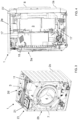
- a laundry washing machine 1 where a method according to a preferred embodiment of the invention is performed is described with reference to Figures 1 to 12 .
- the laundry washing machine 1 comprises an external casing or cabinet 2, in which a washing tub 3 is provided that contains a perforated washing drum 4 where the laundry to be treated can be loaded.
- the external casing 2 comprises vertical side walls 2a-2d and an upper side wall 2e.
- the tub 3 and the drum 4 both preferably have a substantially cylindrical shape. Between the tub 3 and the drum 4 a gap is defined.
- the cabinet 2 is provided with a loading/unloading door 8 which allows access to the drum 4.
- the tub 3 is preferably suspended in a floating manner inside the cabinet 2, advantageously by means of a number of coil springs and shock-absorbers 17.
- the drum 4 is advantageously rotated by an electric motor, not illustrated, which preferably transmits the rotating motion to the shaft of the drum 4, advantageously by means of a belt/pulley system.
- the motor can be directly associated with the shaft of the drum 4.
- the drum 4 is advantageously provided with holes which allow the liquid flowing therethrough. Said holes are typically and preferably homogeneously distributed on the cylindrical side wall of the drum 4.
- the tub 3 is preferably connected to the cabinet 2 by means of an elastic bellows 7, or gasket.
- the bellows 7 is preferably S-shaped.
- Laundry washing machine 1 advantageously comprises a control unit 11, for example illustrated in Figure 3 , connected to the various parts of the laundry washing machine 1 in order to ensure its operation.
- Laundry washing machine 1 preferably comprises an interface unit 16, connected to the control unit 11, accessible to the user and by means of which the user may select and set the washing parameters, like for example a desired washing program. Usually, other parameters can optionally be inserted by the user, for example the washing temperature, the spinning speed, etc..
- the interface unit 16 preferably comprises a display 16a which displays machine working conditions.
- the unit interface 16 then preferably comprises one or more selector devices which allow to select the appropriate wash program and/or to set other parameters.
- the selector devices may comprise a selector 16b (a rotary knob) which advantageously allows selection of the appropriate wash program.
- the selector devices may then preferably comprise push buttons.
- one of the push buttons 16c is advantageously dedicated for selection of a program which uses a detergent pod, as will be described later.
- a "Pods cycle" button 16c we can refer hereinafter to a "Pods cycle" button 16c.
- the selection of the washing program which uses a detergent pod may be obtained through other selector devices, for example through the selector 16b.
- the selector devices may comprise other types of devices, such as capacitive switch, touch screen, etc.
- the touch screen may coincide with the display 16.
- Treating agents may comprise, for example, detergents, rinse additives, fabric softeners or fabric conditioners, waterproofing agents, fabric enhancers, rinse sanitization additives, chlorine-based additives, etc.
- the treating agents dispenser 20 comprises a box-shaped housing 21, connected to the external casing 2, internally to the latter, preferably by suitable fixing means, comprising, for example, screws or rivets, not illustrated, or also glue, or welding.
- the housing 21 is advantageously substantially parallelepiped, and it is connected to the frontal side wall 2a of the external casing 2, opportunely in an upper region of the latter, positioned above the tub 3.
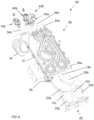
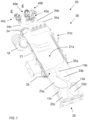
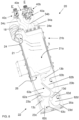
- the housing 21 contains a removable drawer 22 which can be extracted from the housing 21, such as to protrude from the external casing 2 in a opened loading position, as illustrated for example in figures 2 and 5 , or can be fully inserted into the housing 21 in an operative position, as illustrated for example in figures 1 and 9 .
- the drawer 22 is provided with one or more compartments 23a, 23b, 23c, 23d adapted to be filled with treating agents.
- the first compartment 23a is preferably adapted for receiving a powder detergent; the second compartment 23b is preferably adapted for receiving a quantity of liquid detergent; the third compartment 23c is preferably adapted for receiving a softener; the fourth compartment 23d is preferably adapted for receiving other treating agents, such as fabric conditioners, waterproofing agents, fabric enhancers, rinse sanitization additives, chlorine-based additives, etc.
- the first compartment 23a is preferably adapted for receiving also a unit dose package.
- unit dose package it is meant a product comprising a pre-measured amount, or single dose, of treating agent incorporated into a water-soluble pouch.
- the treating agent is detergent D.
- the unit dose package will be simply indicate as "detergent pod DP”.
- the detergent pod DP comprises a pre-measured amount, or single dose, of detergent D incorporated into a water-soluble pouch P, as illustrated in Figures 5A and 5B .
- Detergent D may comprise any type of detergent, for example powder, liquid, paste, waxy or gel compositions.
- the pouch P preferably comprises a water-soluble film.
- the liquid detergent products may be incorporated into a multi-compartment water-soluble pouch.
- the pouches may have a percentage of water-solubility, for example a water- solubility of at least 50%, preferably of at least 75% or more preferably at least 95%.
- Suitable pouch materials may include, but are not limited to, polymeric materials.
- the polymers are formed into a film or sheet.
- the pouch material can, for example, be obtained by casting, blow-molding, extrusion or blown extrusion of the polymeric material, as known in the art.
- polymers, copolymers or derivatives thereof suitable for use as pouch material may be selected from polyvinyl alcohols, polyvinyl pyrrolidone, polyalkylene oxides, acrylamide, acrylic acid, cellulose, cellulose ethers, cellulose esters, cellulose amides, polyvinyl acetates, polycarboxylic acids and salts, polyaminoacids or peptides, polyamides, polyacrylamide, copolymers of maleic/acrylic acids, polysaccharides including starch and gelatine, natural gums such as xanthum and carragum.
- polymers are selected from polyacrylates and water-soluble acrylate copolymers, methylcellulose, carboxymethylcellulose sodium, dextrin, ethylcellulose, hydroxyethyl cellulose, hydroxypropyl methylcellulose, maltodextrin, polymethacrylates, and most preferably selected from polyvinyl alcohols, polyvinyl alcohol copolymers and hydroxypropyl methyl cellulose (HPMC), and combinations thereof.
- the level of polymer in the pouch material for example a PVA polymer, may be at least 60%.
- the polymer can have any weight average molecular weight of from 1000 to 1,000,000, in some examples from 10,000 to 300,000, and in further examples from 20,000 to 150,000.
- Mixtures of polymers can also be used as the pouch material. This can be beneficial to control the mechanical and/or dissolution properties of the compartments or pouch, depending on the application thereof and the required needs.
- Suitable mixtures include for example mixtures wherein one polymer has a higher water-solubility than another polymer, and/or one polymer has a higher mechanical strength than another polymer. Also suitable are mixtures of polymers having different weight average molecular weights, for example a mixture of PVA or a copolymer thereof of a weight average molecular weight of 10,000-40,000, in some examples a weight average molecular weight of about 20,000, and of PVA or copolymer thereof, with a weight average molecular weight of 100,000 to 300,000, in some examples a weight average molecular weight of about 150,000.
- polymer blend compositions for example comprising hydrolytically degradable and water-soluble polymer blends such as polylactide and polyvinyl alcohol, obtained by mixing polylactide and polyvinyl alcohol, typically comprising 1-35% by weight polylactide and 65% to 99% by weight polyvinyl alcohol.
- polymers for use herein are from 60% to 98% hydrolysed, and in further examples from 80% to 90% hydrolysed, to improve the dissolution characteristics of the material.
- the pouch material herein can comprise one or more additive ingredients.
- plasticisers for example glycerol, ethylene glycol, diethyleneglycol, propylene glycol, sorbitol and mixtures thereof.
- additives include functional detergent additives to be delivered to the wash water, for example organic polymeric dispersants, etc.
- pouches or pouch compartments containing a component which is liquid will preferably contain an air bubble having a volume of up to 50%, alternatively up to 40%, alternatively up to 30%, alternatively up to 20%, alternatively up to 10% of the volume space of said compartment.
- the compartments 23a, 23b, 23c and 23d are fluidly connected to the bottom 21a of the housing 21, particularly to the rear portion 21b of this bottom 21a, in which an outlet port 24 is obtained.
- the outlet port 24 is adapted to allow the flowing of a liquid into a supply pipe 18 fluidly connecting the treating agents dispenser 20 and the tub 3, as visible in Figure 8 .
- the supply pipe 18, as illustrated in Figure 4 is preferably arranged laterally with respect to the tub 3 and preferably terminates at an upper region 3a of the tub 3. More preferably, the supply pipe 18 terminates at a rear side of the tub 3.
- the bottom 21a of the housing 21 preferably has a sloped bottom so that a fluid may flow towards the outlet port 24.
- the outlet port 24 is preferably located at the rear of the sloped bottom wall 21a.
- saying that a first component is "fluidly connected" to a second component means that a fluid can flow from the first component to the second component and vice versa; on the contrary, saying that a first component is "fluidly separated” from a second component means that a fluid cannot flow from the first component to the second component or vice versa.
- the first compartment 23a of the drawer 22 is fluidly connected to the bottom 21a of the housing 21 through an aperture 26 defined at the rear of the first compartment 23a.
- the first compartment 23a preferably has a sloped bottom wall 62a so that a fluid may flow towards the aperture 26.
- the aperture 26 is located at the rear of the sloped bottom wall 62a.
- the first compartment 23a is suited to receive the detergent pod DP.
- the other compartments 23b, 23c and 23d of the drawer 22 are preferably fluidly connected to the bottom 21a of the housing 21 through respective siphons 13b, 13c, 13d.
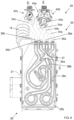
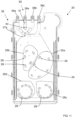
- the treating agents dispenser 20 comprises a water distributor 35, associated to the housing 21 and placed above the drawer 22 in such a way to allow the flowing of water to one or more of said compartments 23a, 23b, 23c, 23d.
- the treating agents dispenser 20 comprises one or more water conveying lines adapted for conveying water to one or more of said compartments 23a, 23b, 23c, 23d.
- the water distributor 35 preferably comprises a lower part 35a and an upper closing part 35b structured for being reciprocally coupled to form the water distributor 35.
- the two parts 35a, 35b are preferably coupled by welding and/or gluing and/or joint.
- the water distributor 35 comprises a first and a second inlet connector 36a, 36b connectable to a water source E which could comprise, for example, the plumbing of the building in which the laundry washing machine 1 is installed, as better visible in Figure 9 .
- first and second connectors 36a, 36b can be connected to the water source E via first and second controllable valves 40a, 40b, preferably of the electromagnetic type, opportunely controlled by the control unit 11.
- the two inlet connectors 36a, 36b can be connected via the dedicated controllable valves 40a, 40b, to the water source E for the adduction of cold water.
- Inlets of the two controllable valves 40a, 40b are connectable to the water source E and outlets of the two controllable valves 40a, 40b are connected, through respective pipes 34a, 34b, to the two inlet connectors 36a, 36b of the water distributor 35.
- controllable valves 40a, 40b above described, and all the valves described hereinafter comprise a regulator system that automatically cuts off the flow of water flowing therethrough at a certain maximum pressure.
- the maximum pressure is set at a value comprises between 1.7 and 2.4 bar.
- a third inlet connector 36c connectable, via a third controllable valve 40c, to a warm or hot water source E' (as visible in Figure 9 ); the further inlet connector 36c can be fed with warm or hot water, for example obtained by a solar thermal collector; in a further embodiment, not illustrated, there could be more than one further inlet connectors, connected to one or more water sources.
- Inlet of the third controllable valve 40c is connectable to the water source E' and outlet of the third controllable valve 40c is connected, through a respective pipe 34c, to the third inlet connector 36c of the water distributor 35.
- Three ducts 38a, 38b, 38c are fluidly connected to the inlet connectors 36a, 36b. Each one of said three ducts 38a, 38b, 38c fluidly communicates with a different region 25a, 25b, 25c, 25d of the water distributor 35. Each region 25a, 25b, 25c, 25d is positioned in such a way to be placed above a respective compartment 23a, 23b, 23c, 23d of the drawer 22 when the latter is placed in its closed operative position.
- the inlet connectors 36a, 36b and the three ducts 38a, 38b, 38c are connected through a so called "air-break" 37, that is a safety system comprising an opening obtained in the water path in such a way to ensure that a stream of water can flow from the inlet connectors 36a, 36b to the three ducts 38a, 38b, 38c due to the water source pressure, while water can't flow from the ducts 38a, 38b, 38c to the inlet connectors 36a, 36b.
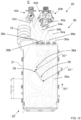
- the "air-break" 37 advantageously comprises a lower opening 37a, better visible in Figure 11 .
- the regions 25a, 25b, 25c and 25d of the water distributor 35 are provided with one or more outlets 29 that allow the passage of the water from the ducts 38a, 38b, 38c to the underlying compartments 23a, 23b, 23c, 23d.
- Outlets 29 are preferably arranged in the water distributor 35 so that the water falling into the underlying compartments 23a, 23b, 23c, 23d hits the lateral side walls 63a, 63b, 63c, 63d of the respective compartment 23a, 23b, 23c, 23d and then flows towards the bottom side 62a, 62b, 62c, 62d of the respective compartment 23a, 23b, 23c, 23d.
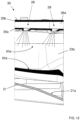
- Figure 12 illustrates a section view of two of said outlets 29.
- Outlets 29 here illustrated allow the passage of water from the first duct 38a to the underlying first compartment 23a. Water spreading out from the outlets 29 hits the lateral side wall 63a of the first compartment 23a and falls down by gravity into the bottom 62a of the same.
- the first compartment 23a is filled with powder detergent, the water drags the detergent towards the rear aperture 26 of the first compartment 23a.
- the water hitting the lateral side wall 63a advantageously cleans the first compartment 23a.
- the same cleaning effect for the other compartments 23b, 23c, 23d is obtained through outlets 29.
- ducts 38a, 38b, 38c they are advantageously defined between lower part 35a and the upper closing part 35b of the water distributor 35.
- controllable valves 40a, 40b and 40c by acting on the controllable valves 40a, 40b and 40c, it is possible to selectively feed one of the ducts 38a, 38b and 38c and one or more compartments 23a, 23b, 23c, 23d with water coming from the water source E or E'.
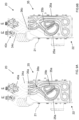
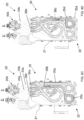
- first duct 38a communicates with two regions 25a, 25b of the water distributor 35 which are positioned above the first and second compartments 23a, 23b, as indicated in Figure 9A .
- Water is conveyed to the two compartments 23a, 23b of the drawer 22 by activating the first valve 40a and making the water flowing through the first duct 38a up to the regions 25a, 25b, as schematically indicated in Figure 9A with grey path.
- the further connector 36c which can be fed with warm or hot water, is fluidly connected to the two regions 25a, 25b of the water distributor 35, in such a way to adduct also warm or hot water in the underlying first and second compartments 23a, 23b, as schematically indicated in Figure 9B .
- the water distributor may comprise a dedicated duct and valve for each compartment, i.e. a duct communicating with the first region and another duct communicating with the second region.
- the second duct 38b communicates with the third region 25c of the water distributor 35 which is positioned above the third compartment 23c.
- Water is conveyed to the third compartment 23c of the drawer 22 by activating simultaneously the first and second valves 40a, 40b and making the water flowing through the second duct 38b up to the third region 25c, as schematically indicated in Figure 9C .
- the third duct 38c communicates with the fourth region 25d of the water distributor 35 which is positioned above the fourth compartment 23d.
- Water is conveyed to the fourth compartment 23d of the drawer 22 by activating the second valve 40b and making the water flowing through the third duct 38c up to the fourth region 25d, as schematically indicated in Figure 9D .
- in the drawer there can be more than four compartments, and in the water distributor there can be more than three ducts, each one fluidly communicating with a different region of the water distributor which is positioned in such a way to be placed above a different compartment of the drawer when the latter is placed in its closed operative position; also in this case, by acting on the controllable valves, it is possible to selectively feed a desired duct with water coming from the water source.
- the drawer there can be less than four compartments, even just one, and in the water distributor there can be less than three ducts, each one fluidly communicating with a different region of the water distributor which is positioned in such a way to be placed above a different compartment of the drawer when the latter is placed in its closed operative position; also in this case, by acting on the controllable valves, it is possible to selectively feed a desired duct with water coming from the water source.
- the treating agents dispenser 20 also preferably comprises a by- pass line 50, better visible in Figure 11 .
- the by-pass line 50 comprises a conduit portion 51, obtained in a region of the water distributor 35 not intersected by the ducts 38a, 38b and 38c.
- the conduit portion 51 is opportunely fluidly separated from the compartments 23a, 23b, 23c e 23d and terminates with an opening 53, shown in Figure 11 , facing the underlying housing 21.
- the opening 53 is placed above the drawer 22 in such a way to allow the flowing of water directly to the bottom 21a of the housing 21 and outside the compartments 23a, 23b, 23c, 23d without entering the compartments 23a, 23b, 23c, 23d.
- the conduit portion 51 communicates with an inlet connector 36e of the water distributor 35.
- the inlet connector 36e is fluidly connected, via a controllable valve 40e, to the water source E.
- Inlet of the controllable valve 40e is connectable to the water source E and outlet of the controllable valve 40e is connected, through a respective pipe 34e, to the inlet connector 36e.
- the by-pass line 50 is adapted to allow the passage of clean (or fresh) water from the water source E directly to the washing tub 3 by-passing the compartments 23a, 23b, 23c, 23d of the water distributor 35.
- the by-pass line may not be present.
- the laundry washing cycle is advantageously carried out using powder or liquid detergent as known in the art.
- the first compartment 23a of the treating agents dispenser 20 is filled with powder detergent or the second compartment 23b is filled with liquid detergent.
- the third compartment 23c may be filled with a softener and/or the fourth compartment 23d may be filled with other treating agents, such as fabric conditioners, waterproofing agents, fabric enhancers, rinse sanitization additives, chlorine-based additives, etc.
- the interface unit 16 the user selects the desired washing program.
- the control unit 11 controls the laundry washing machine 1 so that it may start the washing program and dispensing, when required, the proper treating agent from the treating agents dispenser 20 to the washing tub 3.
- the treating agent is dispensed from the treating agents dispenser 20 to the washing tub 3 by making flow an amount of flushing water into the proper compartment so as to flush out the treating agent contained therein and convey it into the washing tub 3 through the outlet port 24 and the supply pipe 18.
- the powder detergent is dispensed from the treating agents dispenser 20 to the washing tub 3 by making flow an amount of flushing water into the first compartment 23a so as to flush out the powder detergent contained therein and convey it into the washing tub 3 through the outlet port 24 and the supply pipe 18.
- the washing cycle may then proceed with the following phases, such as water heating, drum rotation, draining phases, spinning cycles, etc., or further water loads.
- phases such as water heating, drum rotation, draining phases, spinning cycles, etc., or further water loads.
- the laundry washing cycle is advantageously carried out introducing a detergent pod DP inside the first compartment 23a.
- the third compartment 23c may be filled with a softener and the fourth compartment 23d may be filled with other treating agents, such as fabric conditioners, waterproofing agents, fabric enhancers, rinse sanitization additives, chlorine-based additives, etc.
- the initial phase of the washing cycle is carried out using water and the detergent D of the detergent pod DP.
- the detergent D of the detergent pod DP is dispensed from the first compartment 23a to the washing tub 3, as will be described in the following.
- the detergent pod DP is placed inside the first compartment 23a by the user and the drawer 22 is positioned in its closed operating position.
- the method according to the invention comprises a step of conveying water, when required, to the first compartment 23a by activating the first valve 40a and making the water flowing through the first duct 38a and the first region 25a, as explained above and shown in Figure 9A .
- the step of conveying warm or hot water, instead of cold water, to the first compartment 23a is carried out activating the third valve 40c and making the warm or hot water flowing through the first duct 38a and the first region 25a, as shown in Figure 9B .
- the water introduced inside the first compartment 23a through the outlets 29 advantageously pushes the detergent pod DP towards the aperture 26 of the first compartment 23a and then towards the outlet port 24 and the supply pipe 18.
- the detergent pod DP then reaches the washing tub 3.
- the washing cycle may then proceed with the following phases, such as water heating, drum rotation, draining phases, spinning cycles, etc., or further loads of water.
- phases such as water heating, drum rotation, draining phases, spinning cycles, etc., or further loads of water.
- the detergent pod DP is conveyed into the washing tub 3 only at the correct time required by the washing cycle.
- the water-soluble pouch P of the detergent pod DP starts to dissolve.
- the detergent pod DP is therefore broken and the detergent D is released before it reaches the washing tub 3 and the laundry contained therein.
- the dose of released detergent D previously contained in the detergent pod DP is therefore at least partially mixed with water before it reaches the laundry and it is more uniformly distributed over the laundry.
- the method of the invention it is guaranteed that all the detergent D of the detergent pod DP is used during the laundry washing cycle and the whole cleaning effect of the unit dose detergent is therefore achieved. Furthermore, with the method of the invention the breakage of the detergent pod PD may advantageously happen before it reaches the laundry inside the washing drum. Therefore residual of the detergent pod DP in the laundry or inside the laundry washing machine, for example inside the bellows, is avoided.
- the indeterminateness of the effective time of breakage of the pod and the effective time of release of the detergent contained therein is eliminated and the performance of the washing cycle selected by the user is guaranteed.
- a stopping device 30 may be provided in the first compartment 23a to hold the detergent pod DP to prevent it from passing through the rear aperture 26 until it is at least partially dissolved. It has been found that typical detergent pod DP pouch materials tend to adhere to the first compartment surfaces to prevent early release, but a stopping device 30 may be desirable in some instances if it is found that the detergent pod DP does not readily remain in place within the first compartment 23a for a suitable amount of time to effectuate breakage and/or dissolution of the outer pouch.
- This embodiment of Figure 13 is otherwise the same as the previous embodiment, and like reference numbers are used to illustrate exemplary features.
- break is used to indicate the action of perforating or cutting the water-soluble pouch P of the detergent pod DP by a mechanical action of the water jet and not exclusively by dissolution of the pouch in contact with water.
- the treating agents dispenser may include nozzles that are shaped to generate a jet of water that helps break the water-soluble pouch P by a mechanical action.
- nozzles that are shaped to generate a jet of water that helps break the water-soluble pouch P by a mechanical action.
- One or more of these nozzles may be located over the first compartment 23a to direct a concentrated stream of water onto the detergent pod DP.
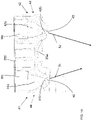
- Such nozzles also may be provided with a separate source of water, such as an additional hose and valve to selective operate to pass water through these jets. Examples of such nozzles are shown in Figure 14 .
- each nozzle 41, 42 is adapted to allow the passage of the water from a fourth duct 38d (which may be separate from the first, second and third ducts) to the underlying first compartment 23a and each nozzle 41, 42 is shaped such that it forms the water into a respective water jet 51, 52.
- the impact of the water jets against the detergent pod DP breaks its water-soluble pouch P.
- the nozzles 41, 42 preferably have a first portion 44 and a second terminal portion 45.
- the first portion 44 preferably has a substantially frustum conical shape with a larger top section 41a (large section) and a smaller bottom section 41b (small section).
- the second terminal portion 45 preferably has a cylindrical shape. In the first portion 44 the water is forced from the larger section 41a to the smaller section 41b of the frustum and the water speed in increased.
- the second terminal portion 45 keeps the water speed and generates at its output the water jet 51, 52 with the required direction. Furthermore, the shape of the second terminal portion 45 guarantees that the water jet 51, 52 is a laminar-flow water jet. As a result, the water jet 51, 52 doesn't spread out and every part of the flow travels in a substantially straight line.
- the nozzles 41, 42 represent, therefore, laminar-flow nozzles.
- nozzles of other shapes may be used in other embodiments, and the invention is not intended to be restricted to any particular structure of fluid nozzle.
- FIG. 15 is a flow chart illustrating another process for a washing cycle including a detergent pod (DP) selection for the laundry washing machine of FIG. 1 .
- the method for dispensing a solution comprising the detergent pod DP and water into the washing tub 3 is described below.
- the laundry washing cycle is carried out using a detergent pod DP inserted into, for example, the first compartment 23a of the drawer 22 (shown for example in FIG. 5B ) and the drawer 22 is closed.
- a detergent pod DP inserted into, for example, the first compartment 23a of the drawer 22 (shown for example in FIG. 5B ) and the drawer 22 is closed.
- the first compartment 23a may be configured to accept the unit dose, for example, a detergent pod DP containing a premeasured amount or a single dose of a treating agent.
- the first compartment 23a as described above, preferably has a sloped bottom wall so that a fluid may flow through an aperture 26 defined at the rear of the first compartment 23a.
- the first compartment 23a may be further configured so that its shape accomplishes the function of stopping the detergent pod DP from moving in its pod form from the first compartment 23a to the washing tub 3, or it may have a stopping device 30.
- the treating agent for example, detergent
- the third compartment 23c may be filled with a softener and/or the fourth compartment 23d may be filled with other treating agents, such as fabric conditioners, waterproofing agents, fabric enhancers, rinse sanitization additives, chlorine-based additives, etc.
- the user selects a washing program having an initial phase that uses detergent pods DP (for example through selecting the "Pods Cycle" button 16c of the interface unit 16).
- the Pods Cycle becomes the default or automatic detergent selection for any additional washing loads for the laundry machine until the user deselects the Pods Cycle and selects another treating agent type option on the interface unit 16.
- water is conveyed to the first compartment 23a by activating (opening) controllable valve 40c that is connected to a warm or hot water source E' as illustrated, for example, in FIG. 9B .
- hot water for example about 0.2 L (0.05 gallon) flows from water source E' through pipe 34C to the inlet connector 36c into the region 25a of the first compartment 23a.
- the hot water may enter the first compartment 23a via laminar flow water jets schematically indicated with arrows 51 and 52 in FIG. 14 and described above, but other water inlets (e.g., a conventional arrangement of one or more inlet openings) may be used in other embodiments.
- the hot water wets or moistens the pouch or membrane of the detergent pod DP which causes the membrane to slowly dissolve.
- the water flow is terminated and the water continues to moisten the membrane for a predetermined period of time.
- the predetermined time may vary in different embodiments, and may be adjustable based on the properties of the detergent pod DP membrane.
- the predetermined time may be 30 seconds to provide a desired degree of softening of the membrane. In other cases, the predetermined time may be 20 seconds or 10 seconds. For membranes that are more easily dissolved, a shorter duration may be selected, and vise versa for membranes that are more difficult to dissolve.
- the laundry washing machine also may include an adjustable timer that can be operated if it is discovered that portions of the membrane remain in the laundry after the wash. During this period of time, the detergent pod DP remains generally stationary within the first compartment 23c, and the membrane continues to dissolve.
- additional hot water flows from water source E' to the chamber.
- This flow of water may be provided by, for example, water jets 51, 52 that are positioned over the detergent pod DP in the first compartment 23a to directly hit the detergent pod DP with one or more "shots” or “bursts” of water in order to break the dissolving water-soluble membrane pouch containing the unit dose detergent.
- the impact of the water jets against the dissolving detergent pod DP membrane breaks the water-soluble pouch.
- the action of breaking or perforating or piercing the pouch with the longer "shots” or “bursts” of water is intended as an action of breaking the pouch by a mechanical action of the water jet, and not exclusively by dissolution of the pouch in contact with the water.
- the water added in step S1508 may be via other fluid inlets, such as one or more conventional water inlets.
- the water may not specifically penetrate or break the membrane by mechanical action, but it is still expected to accelerate the opening of the detergent pod DP membrane.
- the detergent pod DP it is not required in all embodiments for the detergent pod DP to be opened by breaking the membrane, and simple dissolution may be performed in some embodiments.
- a logical selection process is performed to determine whether to add hot or cold water depending on the current temperature of water in the tub 3.
- the temperature of the water in the washing tub 3 is measured and its value is saved to a memory of the control unit 11 ( FIG. 3 ). If the measured water temperature is less than or equal to a predetermined value, such as 25°C, then the process continues to S1514.
- a predetermined value such as 25°C
- hot water for example, 2 liters (0.53 gallon)
- the water source E' is supplied to the washing tub to increase the temperature of the water in the washing tub 3. After the hot water is added, the process continues to S1516.
- the predetermined value e.g. 25°C
- cold water for example, 2 L (0.53 gallon
- 2 L 0.53 gallon
- the logical selection process in step S1510 also may be modified to depend on the particular operation cycle in which the laundry washing machine is operating. For example, the process may include an additional evaluation of whether or not a predetermined operation mode (e.g., an optional Sanitary cycle or warm/hot water cycle) has been selected by the user for the washing program. If the predetermined operation mode, such as a Sanitary cycle, has been selected, the process proceeds to step S1514 and bypasses step S1514, regardless of whether the water temperature is less than or equal to the predetermined temperature.
- a predetermined operation mode e.g., an optional Sanitary cycle or warm/hot water cycle
- one or more of the valves 40a or 40c are activated for a predetermined period of time, for example 60 seconds, to complete a normal filling of water into the washing tub 3.
- the water fill level in the washing tub 3 may be based upon an amount of laundry load in the washer and/or the washing program selected by the user, or based on other factors (e.g., it may be a fixed value for all operations,).
- the operation of the valves may be selected to provide a desired final temperature of the water, based upon the wash program selected by the user at the user interface 16, and connection to water source E or E' (discussed above), wherein in the example water source E supplies cold water, and water source E' supplies hot water.
- E and E' for connection to cold/hot water is exemplary and could be switched by the user of the laundry washing machine.
- the washing cycle proceeds in accordance with the selected cycle such as drum rotation, draining phases, spinning cycles, rinsing phases etc., or further water loads.
- the process continues to S1518.
- a sensor within the washing tub 3 monitors the water level to ensure and maintain proper water levels based upon the selected wash program.
- the clothing or laundry within the washing tub 3 may absorb water or there may be a leak.
- the sensor within the washing tub 3 is configured to detect the reduced water level and can transmit a signal to a control unit at the interface 16 to refill water to maintain the water levels when the water is absorbed by the laundry, or transmit a signal to the control unit to indicate an error when there is a leak.
- the method according to the examples of the invention has been advantageously described in particular with reference to a detergent pod DP, but it has to be noted that the method may be also be performed when a different unit dose package is utilized.
- the method may be advantageously performed for distributing a softener on the laundry in a particular phase of the washing cycle.
- the method according to the invention preferably comprises at least a step of introducing the softener pod into the dedicated compartment of the treating agents dispenser, a softener pod breakage step of breaking the pouch of the softener pod and a step of conveying the dose of softener inside the washing tub.
- the unit dose package is constituted of a unit dose softener comprising a pre-measured amount, or single dose, of softener incorporated into a water-soluble pouch.
- the pouch as described above, is preferably made of a film material that is soluble or dispersible in water.
- the laundry washing machine may include various selector devices for receiving user input.
- Such devices may include, for example, a selector 16b in the form of buttons or a rotary knob to allow selection of the appropriate wash cycle (as used hereinafter, a "cycle” is a complete set of operations for processing a single load of laundry within the machine), and one or more buttons or knobs that allow the user to modify parameters of the selected cycle (e.g., wash time, dirt level, load level, water temperature, etc.).
- a push button 16c e.g., a Pods cycle button 16c
- a Pods cycle button 16c may be dedicated for selection between a default detergent mode and a detergent pod mode.
- the detergent mode is selected based on the type of detergent that is being provided to the laundry washing machine, and the machine is operated differently for different types of detergent.
- the detergent mode controls how the laundry washing machine dispenses water into the machine. For example, in a default detergent mode, the machine may dispense a predetermined volume of water into a detergent compartment 23a via one or more spray nozzles in a continuous stream (i.e., the water is all dispensed at once), whereas in a detergent pod mode the machine may dispense water according to a series of steps (or by particular inlet nozzles) intended to pierce a unit dose package outer pouch, such as described in embodiments discussed above.
- the operating parameters such as the water loading procedure, for the default detergent operation mode is different from the operating parameters for the unit dose package operation mode.
- a typical rotary knob selector 16b returns to a "normal" operation cycle following each completed washing cycle and upon each new power-up of the machine.
- This functionality is desirable to prevent accidental use of inappropriate cycles, and is generally desirable because users typically separate laundry loads according to the type of washing cycle they are to receive (e.g., separating colored clothing from white clothing, separating heavily-soiled clothing from lightly-soiled clothing, etc.).
- a laundry washing machine having a user input corresponding to a unit dose package operation mode control may be programmed to operate by deactivating a default detergent operation mode and activating a unit dose package operation mode in response to receiving a first selection of the unit dose package operation mode control from the user input. Afterwards, the laundry washing machine will perform complete washing cycles in the unit dose package operation mode without receiving a further selection of the unit dose package operation mode from the user input. Thus, the unit dose package operation mode is "persistent" across multiple wash cycles. However, when the machine receives a second selection of the unit dose package operation mode control from the user input, it returns to the default detergent operating mode.
- a dedicated detergent pod cycle button 16c on the machine may remain active to indicate that this mode is selected.
- a visual indicator such as a light embedded in the button may remain lit until the user manually turns off this input by selecting it a second time.
- the pod cycle input also may remain active after the user changes other user inputs or selects other options.
- the unit dose package operation mode may remain active after the machine power state cycles between the on and off conditions, so that this mode (if previously selected) will be used when the machine is turned on, without further input from the user.
- the unit dose package operation mode also may remain active after the machine receives instructions to change from one washing cycle to a different washing cycle.
- the unit dose package operation mode may remain active after a user operates a rotary knob selector 16b or other user inputs to change the cleaning cycle (e.g., changing from a "normal” mode to a "delicates” mode) or to change parameters of a particular cleaning cycle (e.g., changing the temperature setting or load size without changing the particular cycle between laundry loads).
- change the cleaning cycle e.g., changing from a "normal” mode to a "delicates” mode
- parameters of a particular cleaning cycle e.g., changing the temperature setting or load size without changing the particular cycle between laundry loads.
- changing the operation of the laundry washing machine to particular cycles or changing particular parameters may temporarily override unit dose package operation mode.
- the machine may have one or more exempt cycles, such as a "rinse" cycle or a steam cycle, in which no detergent is used.
- the machine may be programmed to automatically override the unit dose package operation mode, either by reverting to the default detergent mode or by omitting the use of any detergent mode or omitting any processing steps that are affected by the selection of the detergent mode.
- the machine may return to the unit dose package detergent mode.
- selecting an exempt cycle may disable the unit dose package detergent mode until the user re-selects the unit dose package detergent mode.
- the present invention allows various objects to be achieved. For example, it makes it possible to provide a method for operating a laundry washing machine using a unit dose treating agent which guarantees the use of all the product contained in the unit dose package and avoids any residual of the same on the laundry. It will be understood, however, that it is not strictly required for each embodiment of the invention to achieve any one or more of the objects described herein. Indeed, other utility may be obtained by practicing the inventions described herein without necessarily obtaining any of the described objectives or goals. Thus, the invention is not limited to any particular performance metrics or function other than those as might be required by a claim reciting a particular embodiment of the invention.
- laundry washing machines illustrated in the enclosed figures are of the front-loading type; however it is clear that the system according to the invention can be applied as well to a top-loading washing machine, substantially without any modification.
- a laundry washing machine 1 comprising:
- the predetermined value is 25° C.
- the selection process is based at least in part on the value of the measured temperature and on a determination of whether or not the laundry washing mode is operating in a predetermined operating mode;
- the predetermined operating mode comprises a sanitizing cycle.
- control unit is further configured to control the laundry washing machine 1, after completing performance of the selection process, to fill the washing tub 3 with an additional volume of water.
- the additional volume of water comprises a volume of water sufficient to fill the washing tub 3 to a water level corresponding to one or both of a preselected washing program and a sensed load level within the washing tub 3.
- control unit is configured to provide the first water supply by:
- the predetermined time is at least 10 seconds.
- the predetermined time is at least 20 seconds.
- the predetermined time is at least 30 seconds.
- the one or more water conveying lines comprise at least one nozzle for generating a water jet over the compartment, and wherein water from the at least one water jet is oriented to directly hit the unit dose package.
- the laundry washing machine further comprises an interface unit 16 arranged at a surface of the cabinet 2 and configured to communicate user input selections to the control unit 11, the user interface unit 16 having a selection input 16c for selecting a washing program configured for using a unit dose package DP, wherein the control unit 11 selects the washing program configured for using a unit dose package DP as the default washing program until a user input is received to change the washing program to a different washing program.
- an interface unit 16 arranged at a surface of the cabinet 2 and configured to communicate user input selections to the control unit 11, the user interface unit 16 having a selection input 16c for selecting a washing program configured for using a unit dose package DP, wherein the control unit 11 selects the washing program configured for using a unit dose package DP as the default washing program until a user input is received to change the washing program to a different washing program.
- the unit dose package DP comprises a laundry-treating composition in a water-soluble membrane.
- control unit 11 further controls a sensor in the laundry washing machine 1 to monitor at least one of a water level, pressure or a moisture level in the washing tub 3, and when the at least one water level, pressure or moisture level is below a predetermined threshold, water is supplied to the washing tub 3 to maintain a water level for the selected washing program.
- a method for operating a laundry washing machine 1 comprising:
- the predetermined value is 25° C.
- the selection process is based at least in part on the measured temperature and on receiving a selection of a predetermined operating mode
- the additional volume of water comprises a volume of water sufficient to fill the washing tub 3 to a water level corresponding to one or both of a preselected washing program and a sensed load level within the washing tub 3.
- Preferably providing the first supply of water comprises:
- the predetermined time is at least 10 seconds.
- the predetermined time is at least 20 seconds.
- the predetermined time is at least 30 seconds.
- unit dose package DP comprises a laundry-treating composition in a water-soluble membrane.
Landscapes
- Engineering & Computer Science (AREA)
- Textile Engineering (AREA)
- Chemical & Material Sciences (AREA)
- Life Sciences & Earth Sciences (AREA)
- Chemical Kinetics & Catalysis (AREA)
- Oil, Petroleum & Natural Gas (AREA)
- Wood Science & Technology (AREA)
- Organic Chemistry (AREA)
- Detail Structures Of Washing Machines And Dryers (AREA)
- Control Of Washing Machine And Dryer (AREA)
Applications Claiming Priority (3)
| Application Number | Priority Date | Filing Date | Title |
|---|---|---|---|
| US16/131,935 US11162209B2 (en) | 2018-09-14 | 2018-09-14 | Method for operating a laundry washing machine using a unit dose package and laundry washing machine |
| PCT/IB2019/000746 WO2020053644A2 (en) | 2018-09-14 | 2019-09-11 | Method for operating a laundry washing machine using a unit dose package and laundry washing machine |
| EP19805727.5A EP3850146B1 (de) | 2018-09-14 | 2019-09-11 | Verfahren zum betrieb einer waschmaschine mit verwendung einer einheitsdosispackung und waschmaschine |
Related Parent Applications (2)
| Application Number | Title | Priority Date | Filing Date |
|---|---|---|---|
| EP19805727.5A Division EP3850146B1 (de) | 2018-09-14 | 2019-09-11 | Verfahren zum betrieb einer waschmaschine mit verwendung einer einheitsdosispackung und waschmaschine |
| EP19805727.5A Division-Into EP3850146B1 (de) | 2018-09-14 | 2019-09-11 | Verfahren zum betrieb einer waschmaschine mit verwendung einer einheitsdosispackung und waschmaschine |
Publications (2)
| Publication Number | Publication Date |
|---|---|
| EP4134479A1 true EP4134479A1 (de) | 2023-02-15 |
| EP4134479B1 EP4134479B1 (de) | 2024-09-04 |
Family
ID=68610251
Family Applications (2)
| Application Number | Title | Priority Date | Filing Date |
|---|---|---|---|
| EP19805727.5A Active EP3850146B1 (de) | 2018-09-14 | 2019-09-11 | Verfahren zum betrieb einer waschmaschine mit verwendung einer einheitsdosispackung und waschmaschine |
| EP22193331.0A Active EP4134479B1 (de) | 2018-09-14 | 2019-09-11 | Verfahren zum betreiben einer wäschewaschmaschine mit einer einzeldosisverpackung sowie wäschewaschmaschine |
Family Applications Before (1)
| Application Number | Title | Priority Date | Filing Date |
|---|---|---|---|
| EP19805727.5A Active EP3850146B1 (de) | 2018-09-14 | 2019-09-11 | Verfahren zum betrieb einer waschmaschine mit verwendung einer einheitsdosispackung und waschmaschine |
Country Status (4)
| Country | Link |
|---|---|
| US (4) | US11162209B2 (de) |
| EP (2) | EP3850146B1 (de) |
| PL (1) | PL3850146T3 (de) |
| WO (1) | WO2020053644A2 (de) |
Families Citing this family (9)
| Publication number | Priority date | Publication date | Assignee | Title |
|---|---|---|---|---|
| US10988881B2 (en) * | 2017-07-06 | 2021-04-27 | Whirlpool Corporation | Fabric cleaning appliance with performance enhancement selector |
| US11447908B2 (en) * | 2020-02-13 | 2022-09-20 | Haier Us Appliance Solutions, Inc. | Additive dispenser for varying the types of additives within a washing machine appliance |
| CN111455611A (zh) * | 2020-04-21 | 2020-07-28 | 江苏新安电器股份有限公司 | 一种洗衣机自清洁控制方法 |
| WO2021232637A1 (zh) * | 2020-05-22 | 2021-11-25 | 海信(山东)冰箱有限公司 | 洗衣机 |
| KR102765401B1 (ko) * | 2022-11-11 | 2025-02-11 | 엘지전자 주식회사 | 의류처리장치 |
| DE102023202069A1 (de) * | 2023-03-08 | 2024-09-12 | BSH Hausgeräte GmbH | Wäschepflegegerät mit einer Steuerung |
| KR102872431B1 (ko) * | 2023-07-27 | 2025-10-17 | 엘지전자 주식회사 | 의류처리장치 및 의류처리장치의 제어방법 |
| US20250129538A1 (en) * | 2023-10-18 | 2025-04-24 | Haier Us Appliance Solutions, Inc. | Water jet system for a washing machine appliance |
| US20250270753A1 (en) * | 2024-02-27 | 2025-08-28 | Haier Us Appliance Solutions, Inc. | Dispensing assembly for a washing machine appliance |
Citations (3)
| Publication number | Priority date | Publication date | Assignee | Title |
|---|---|---|---|---|
| WO2016102005A1 (en) * | 2014-12-23 | 2016-06-30 | Electrolux Appliances Aktiebolag | Method for operating a laundry washing machine using a unit dose package and laundry washing machine implementing the method |
| WO2016101994A1 (en) * | 2014-12-23 | 2016-06-30 | Electrolux Appliances Aktiebolag | Method for operating a laundry washing machine using a unit dose package and laundry washing machine |
| US20160237612A1 (en) * | 2015-02-17 | 2016-08-18 | Whirlpool Corporation | Laundry treating appliance with bulk dispenser and treating chemistry cartridge therefor |
Family Cites Families (81)
| Publication number | Priority date | Publication date | Assignee | Title |
|---|---|---|---|---|
| GB589374A (en) | 1945-02-24 | 1947-06-18 | Gen Motors Corp | Improved clothes washing machine |
| GB586424A (en) | 1945-02-24 | 1947-03-18 | Gen Motors Corp | Improved clothes washing machine |
| NL152100B (nl) | 1949-03-08 | Matsushita Electric Industrial Co Ltd | Spanningsafhankelijke weerstand van het type met oppervlaktebarriere. | |
| US2821848A (en) | 1955-07-15 | 1958-02-04 | Philco Corp | Washing machine |
| US2933912A (en) | 1957-08-19 | 1960-04-26 | Gen Motors Corp | Dispensing device for a domestic appliance |
| FR1209601A (fr) | 1957-08-19 | 1960-03-02 | Gen Motors Corp | Machine à laver le linge |
| US2976711A (en) | 1958-12-08 | 1961-03-28 | Maytag Co | Washing agitator with fluid pumping means, filter, and dispenser |
| BE660007A (de) | 1964-02-25 | 1965-08-19 | ||
| NL6805834A (de) | 1968-04-24 | 1969-10-28 | ||
| GB1319844A (en) | 1970-10-30 | 1973-06-13 | Kalman P G | Control mechanisms |
| US3736773A (en) | 1971-10-12 | 1973-06-05 | Gen Electric | Additive dispenser for automatic washing machine |
| DE7834912U1 (de) | 1978-11-24 | 1979-03-08 | Licentia Patent-Verwaltungs-Gmbh, 6000 Frankfurt | Wasch- und Zusatzmitteleinspuelvorrichtung fuer Waschmaschinen |
| US4478059A (en) | 1983-09-12 | 1984-10-23 | General Electric Company | Additive dispenser system for clothes washing appliance |
| FR2574097B1 (fr) | 1984-11-30 | 1987-01-23 | Amiens Const Electro Mec | Machine a laver le lige possedant une boite a produits de lavage a double usage |
| US4882917A (en) | 1988-05-11 | 1989-11-28 | The Clorox Company | Rinse release laundry additive and dispenser |
| IT1272065B (it) | 1993-11-30 | 1997-06-11 | Merloni Elettrodomestici Spa | Macchina lavabiancheria a carica frontale. |
| DE4447160A1 (de) | 1994-12-29 | 1996-07-04 | Bosch Siemens Hausgeraete | Waschmaschine mit einer Waschmittel-Einspüleinrichtung |
| US5500967A (en) | 1995-03-01 | 1996-03-26 | White Consolidated Industries, Inc. | Liquid fabric softener dispenser for automatic washing machines |
| DE19535203C1 (de) | 1995-09-22 | 1996-10-02 | Bauknecht Hausgeraete | Einspülvorrichtung für Waschmaschinen u. dgl. |
| DE19537671A1 (de) | 1995-10-10 | 1997-04-17 | Bosch Gmbh Robert | Wasch-, Spül- oder Reinigungsmittelverpackung |
| KR19990085387A (ko) | 1998-05-18 | 1999-12-06 | 윤종용 | 세탁기용 세제 투입 장치 |
| DE60015716T2 (de) | 2000-02-17 | 2005-12-22 | The Procter & Gamble Company, Cincinnati | Wäschezusatzbeutel |
| WO2003069042A1 (en) | 2002-02-13 | 2003-08-21 | The Procter & Gamble Company | Dispensing of rinse additives into the rinse cycle during automatic machine laundering of fabrics |
| US7168273B2 (en) | 2002-11-07 | 2007-01-30 | The Procter & Gamble Company | Selective dispensing apparatus |
| US7340790B2 (en) | 2002-02-13 | 2008-03-11 | Procter & Gamble Company | Universal dispenser for dispensing of laundry additives during automatic machine laundering of fabrics |
| ITPN20020016A1 (it) | 2002-03-19 | 2003-09-19 | Electrolux Home Products Corpo | Vaschetta per sostanze detergenti e macchina lavatrice comprendente detta vaschetta. |
| CN1316109C (zh) | 2002-06-07 | 2007-05-16 | 乐金电子(天津)电器有限公司 | 洗衣机的洗涤剂盒结合装置 |
| US20040200245A1 (en) | 2003-04-10 | 2004-10-14 | Maytag Corporation | Washing machine water and chemical delivery apparatus |
| US7181934B2 (en) | 2003-05-21 | 2007-02-27 | Unilever Home & Personal Care Usa, Division Of Conopco, Inc. | Dispensing device for unit dose laundry additive pouch |
| BRPI0417318A (pt) | 2003-12-03 | 2007-03-27 | Procter & Gamble | lavagem de tecidos em máquina automática |
| GB0329327D0 (en) | 2003-12-18 | 2004-01-21 | Unilever Plc | Process and dispensing device for washing laundry in a washing machine |
| KR101082562B1 (ko) | 2004-04-14 | 2011-11-10 | 엘지전자 주식회사 | 세탁기의 급수 제어 방법 |
| KR101082561B1 (ko) | 2004-04-14 | 2011-11-10 | 엘지전자 주식회사 | 세탁기의 세제 공급장치 |
| KR20050118894A (ko) | 2004-06-15 | 2005-12-20 | 삼성전자주식회사 | 세제공급장치를 갖는 세탁기 |
| KR101128799B1 (ko) | 2005-09-30 | 2012-03-23 | 엘지전자 주식회사 | 세탁 장치용 급수 제어 방법 |
| GB0522660D0 (en) | 2005-11-07 | 2005-12-14 | Reckitt Benckiser Nv | Assembly and device |
| KR101215448B1 (ko) | 2006-01-12 | 2012-12-26 | 삼성전자주식회사 | 세탁기 |
| DE102006002400B3 (de) | 2006-01-17 | 2007-01-11 | Miele & Cie. Kg | Einspüleinrichtung für Behandlungsmittel zum Einsatz in einer Waschmaschine |
| KR101257703B1 (ko) | 2006-04-13 | 2013-04-24 | 삼성전자주식회사 | 드럼세탁기 |
| US20080295546A1 (en) | 2007-05-28 | 2008-12-04 | Cheon-Soo Cho | Top-loading type washing machine |
| DE102007036009A1 (de) | 2007-07-30 | 2009-02-19 | Miele & Cie. Kg | Einspülvorrichtung für eine Waschmaschine und Waschmaschine |
| US9085844B2 (en) | 2007-11-13 | 2015-07-21 | Electrolux Home Products, Inc. | Sequenced water delivery in an additive dispenser |
| US20090293203A1 (en) | 2008-05-30 | 2009-12-03 | Hettinger Stephen E | Dispenser and dispensing method for pulsator wash system |
| EP2374927B1 (de) | 2008-11-17 | 2018-01-10 | LG Electronics Inc. | Waschmaschine |
| EP2239363B1 (de) | 2009-04-09 | 2012-06-20 | Electrolux Home Products Corporation N.V. | Waschmaschine mit verbessertem Wasch-/Spülflüssigkeitseinlasskreis |
| EP2241669B1 (de) | 2009-04-09 | 2014-06-18 | Electrolux Home Products Corporation N.V. | Waschmaschine mit verbessertem Wasch-/Spülflüssigkeitseinlasskreis |
| KR101609681B1 (ko) | 2009-06-30 | 2016-04-20 | 삼성전자 주식회사 | 세탁기 및 그 제어방법 |
| US9003588B2 (en) | 2010-04-13 | 2015-04-14 | Whirlpool Corporation | Appliances with sudsing-reducing flushable detergent dispensers |
| KR101752895B1 (ko) | 2010-09-15 | 2017-06-29 | 엘지전자 주식회사 | 세탁장치 및 그 제어방법 |
| EP2497855B1 (de) | 2011-03-08 | 2016-08-24 | Miele & Cie. KG | Waschmaschine mit einem als Schub ausgebildeten Einspülkasten, sowie Verfahren zur Reinigung eines Einschubfachs |
| US8931311B2 (en) | 2011-04-26 | 2015-01-13 | General Electric Company | Additive dispenser for a washing machine |
| EP2540902B1 (de) | 2011-06-30 | 2020-05-13 | Electrolux Home Products Corporation N.V. | Waschmaschine |
| BRPI1103238A2 (pt) | 2011-07-29 | 2013-07-23 | Electrolux Do Brasil Sa | cesto flutuante e embreagem aplicados a mÁquina de lavar roupas com carregamento superior |
| EP2554739B1 (de) | 2011-08-01 | 2018-04-18 | Electrolux Home Products Corporation N.V. | Waschmaschine |
| US9970148B2 (en) | 2012-08-28 | 2018-05-15 | Whirlpool Corporation | Household appliance having a physical alteration element |
| US9271627B2 (en) | 2012-08-28 | 2016-03-01 | Whirlpool Corporation | Household appliance having a physical alteration element |
| US9850618B2 (en) | 2012-08-28 | 2017-12-26 | Whirlpool Corporation | Household appliance having a physical alteration element |
| US9416482B2 (en) | 2012-08-28 | 2016-08-16 | Whirlpool Corporation | Household appliances and methods of control |
| US20150013075A1 (en) | 2013-07-10 | 2015-01-15 | Whirlpool Corporation | Method of sanitization in a laundry treating appliance |
| CN104514114B (zh) | 2013-09-03 | 2017-10-27 | Lg电子株式会社 | 衣物处理设备 |
| US9663893B2 (en) | 2014-03-21 | 2017-05-30 | Whirlpool Corporation | Laundry treating appliance dispenser |
| US9695540B2 (en) | 2014-05-29 | 2017-07-04 | Haier Us Appliance Solutions, Inc. | Dispensing apparatus with labyrinth seal |
| US10508375B2 (en) | 2014-06-24 | 2019-12-17 | Electrolux Appliances Aktiebolag | Method for operating a washing appliance and washing appliance |
| US9644308B2 (en) | 2014-08-12 | 2017-05-09 | Haier Us Appliance Solutions, Inc. | Nozzle formed in a dispensing apparatus |
| BR202014023113Y1 (pt) | 2014-09-18 | 2019-12-10 | Whirlpool Sa | disposição construtiva introduzida em agitador para aparelhos eletrodomésticos |
| JP2016073330A (ja) | 2014-10-02 | 2016-05-12 | 株式会社東芝 | 洗濯機 |
| EP3037582A1 (de) | 2014-12-23 | 2016-06-29 | Indesit Company S.p.A. | Zubehör für ein haushaltsgerät zum waschen von wäsche und haushaltsgerät mit dem zubehörteil |
| US20170073877A1 (en) | 2015-09-11 | 2017-03-16 | General Electric Company | Washing machine appliance and a method for operating the same |
| EP3184688B1 (de) | 2015-12-23 | 2018-11-28 | Electrolux Appliances Aktiebolag | Waschmaschine mit einem behandlungsmittelspender mit wasserzufuhrvorrichtung |
| US20170297770A1 (en) | 2016-04-15 | 2017-10-19 | The Procter & Gamble Company | Container systems having instructional systems and related methods |
| CN109312522A (zh) | 2016-06-09 | 2019-02-05 | 荷兰联合利华有限公司 | 洗衣产品 |
| EP3257998A1 (de) | 2016-06-14 | 2017-12-20 | Electrolux Appliances Aktiebolag | Wäschewaschmaschine mit einem behandlungsmittelspender |
| US9903063B2 (en) | 2016-06-16 | 2018-02-27 | Whirlpool Corporation | Agitator assembly with scrub brush for a fabric treating appliance |
| EP3293302A1 (de) | 2016-09-13 | 2018-03-14 | Electrolux Appliances Aktiebolag | Verfahren zum betrieb einer wäschewaschmaschine mit einer einheitsdosisverpackung und wäschewaschmaschine zur implementierung des verfahrens |
| US10731284B2 (en) | 2016-12-06 | 2020-08-04 | Whirlpool Corporation | Clothes washer with a clothes mover having a removable cap |
| US11053622B2 (en) | 2017-07-17 | 2021-07-06 | Whirlpool Corporation | Laundry treating appliance with removable basket |
| US10815607B2 (en) | 2018-06-12 | 2020-10-27 | Whirlpool Corporation | Dispenser for a laundry treating appliance |
| US11041267B2 (en) | 2018-09-14 | 2021-06-22 | Electrolux Appliances Aktiebolag | Method and apparatus for cleaning laundry |
| DE102018130256A1 (de) | 2018-11-29 | 2020-06-04 | Miele & Cie. Kg | Waschmaschine für Wäschestücke und Verfahren für deren Betrieb |
| US11142862B2 (en) | 2019-05-20 | 2021-10-12 | Haier Us Appliance Solutions, Inc. | Bulk tank detergent reservoir and dispenser in a washing machine appliance |
| US11155951B2 (en) | 2019-07-25 | 2021-10-26 | Electrolux Appliances Aktiebolag | Laundry washing machine for use with unit dose detergent packages |
-
2018
- 2018-09-14 US US16/131,935 patent/US11162209B2/en active Active
-
2019
- 2019-09-11 EP EP19805727.5A patent/EP3850146B1/de active Active
- 2019-09-11 EP EP22193331.0A patent/EP4134479B1/de active Active
- 2019-09-11 WO PCT/IB2019/000746 patent/WO2020053644A2/en not_active Ceased
- 2019-09-11 PL PL19805727.5T patent/PL3850146T3/pl unknown
-
2021
- 2021-05-17 US US17/322,046 patent/US11952705B2/en active Active
-
2024
- 2024-04-09 US US18/630,260 patent/US12264429B2/en active Active
-
2025
- 2025-03-31 US US19/096,146 patent/US20250223747A1/en active Pending
Patent Citations (3)
| Publication number | Priority date | Publication date | Assignee | Title |
|---|---|---|---|---|
| WO2016102005A1 (en) * | 2014-12-23 | 2016-06-30 | Electrolux Appliances Aktiebolag | Method for operating a laundry washing machine using a unit dose package and laundry washing machine implementing the method |
| WO2016101994A1 (en) * | 2014-12-23 | 2016-06-30 | Electrolux Appliances Aktiebolag | Method for operating a laundry washing machine using a unit dose package and laundry washing machine |
| US20160237612A1 (en) * | 2015-02-17 | 2016-08-18 | Whirlpool Corporation | Laundry treating appliance with bulk dispenser and treating chemistry cartridge therefor |
Also Published As
| Publication number | Publication date |
|---|---|
| PL3850146T3 (pl) | 2023-03-13 |
| US20200087839A1 (en) | 2020-03-19 |
| EP3850146A2 (de) | 2021-07-21 |
| US11952705B2 (en) | 2024-04-09 |
| US20240254678A1 (en) | 2024-08-01 |
| US12264429B2 (en) | 2025-04-01 |
| EP3850146B1 (de) | 2022-11-09 |
| US20250223747A1 (en) | 2025-07-10 |
| US11162209B2 (en) | 2021-11-02 |
| EP4134479B1 (de) | 2024-09-04 |
| WO2020053644A2 (en) | 2020-03-19 |
| US20210269962A1 (en) | 2021-09-02 |
| WO2020053644A3 (en) | 2020-07-30 |
Similar Documents
| Publication | Publication Date | Title |
|---|---|---|
| US12264429B2 (en) | Method for operating a laundry washing machine using a unit dose package and laundry washing machine | |
| US12371840B2 (en) | Method for operating a laundry washing machine using a unit dose package and laundry washing machine implementing the method | |
| US11585036B2 (en) | Method for operating a laundry washing machine using a unit dose package and laundry washing machine implementing the method | |
| EP3237672B1 (de) | Verfahren zum betrieb einer waschmaschine mit verwendung einer einheitsdosispackung und waschmaschine | |
| CA2659661C (en) | Washing system and method for load size and water retention detection | |
| JP2024007294A (ja) | 洗濯機 |
Legal Events
| Date | Code | Title | Description |
|---|---|---|---|
| PUAI | Public reference made under article 153(3) epc to a published international application that has entered the european phase |
Free format text: ORIGINAL CODE: 0009012 |
|
| STAA | Information on the status of an ep patent application or granted ep patent |
Free format text: STATUS: THE APPLICATION HAS BEEN PUBLISHED |
|
| AC | Divisional application: reference to earlier application |
Ref document number: 3850146 Country of ref document: EP Kind code of ref document: P |
|
| AK | Designated contracting states |
Kind code of ref document: A1 Designated state(s): AL AT BE BG CH CY CZ DE DK EE ES FI FR GB GR HR HU IE IS IT LI LT LU LV MC MK MT NL NO PL PT RO RS SE SI SK SM TR |
|
| STAA | Information on the status of an ep patent application or granted ep patent |
Free format text: STATUS: REQUEST FOR EXAMINATION WAS MADE |
|
| 17P | Request for examination filed |
Effective date: 20230816 |
|
| RBV | Designated contracting states (corrected) |
Designated state(s): AL AT BE BG CH CY CZ DE DK EE ES FI FR GB GR HR HU IE IS IT LI LT LU LV MC MK MT NL NO PL PT RO RS SE SI SK SM TR |
|
| GRAP | Despatch of communication of intention to grant a patent |
Free format text: ORIGINAL CODE: EPIDOSNIGR1 |
|
| STAA | Information on the status of an ep patent application or granted ep patent |
Free format text: STATUS: GRANT OF PATENT IS INTENDED |
|
| RIC1 | Information provided on ipc code assigned before grant |
Ipc: D06F 105/52 20200101ALN20240312BHEP Ipc: D06F 105/04 20200101ALN20240312BHEP Ipc: D06F 103/16 20200101ALN20240312BHEP Ipc: D06F 101/20 20200101ALN20240312BHEP Ipc: D06F 35/00 20060101ALI20240312BHEP Ipc: D06F 33/37 20200101ALI20240312BHEP Ipc: D06F 33/43 20200101ALI20240312BHEP Ipc: D06F 39/08 20060101ALI20240312BHEP Ipc: D06F 39/02 20060101AFI20240312BHEP |
|
| RIC1 | Information provided on ipc code assigned before grant |
Ipc: D06F 105/52 20200101ALN20240318BHEP Ipc: D06F 105/04 20200101ALN20240318BHEP Ipc: D06F 103/16 20200101ALN20240318BHEP Ipc: D06F 101/20 20200101ALN20240318BHEP Ipc: D06F 35/00 20060101ALI20240318BHEP Ipc: D06F 33/37 20200101ALI20240318BHEP Ipc: D06F 33/43 20200101ALI20240318BHEP Ipc: D06F 39/08 20060101ALI20240318BHEP Ipc: D06F 39/02 20060101AFI20240318BHEP |
|
| RIC1 | Information provided on ipc code assigned before grant |
Ipc: D06F 105/52 20200101ALN20240402BHEP Ipc: D06F 105/04 20200101ALN20240402BHEP Ipc: D06F 103/16 20200101ALN20240402BHEP Ipc: D06F 101/20 20200101ALN20240402BHEP Ipc: D06F 35/00 20060101ALI20240402BHEP Ipc: D06F 33/37 20200101ALI20240402BHEP Ipc: D06F 33/43 20200101ALI20240402BHEP Ipc: D06F 39/08 20060101ALI20240402BHEP Ipc: D06F 39/02 20060101AFI20240402BHEP |
|
| INTG | Intention to grant announced |
Effective date: 20240417 |
|
| P01 | Opt-out of the competence of the unified patent court (upc) registered |
Effective date: 20240517 |
|
| GRAS | Grant fee paid |
Free format text: ORIGINAL CODE: EPIDOSNIGR3 |
|
| GRAA | (expected) grant |
Free format text: ORIGINAL CODE: 0009210 |
|
| STAA | Information on the status of an ep patent application or granted ep patent |
Free format text: STATUS: THE PATENT HAS BEEN GRANTED |
|
| AC | Divisional application: reference to earlier application |
Ref document number: 3850146 Country of ref document: EP Kind code of ref document: P |
|
| AK | Designated contracting states |
Kind code of ref document: B1 Designated state(s): AL AT BE BG CH CY CZ DE DK EE ES FI FR GB GR HR HU IE IS IT LI LT LU LV MC MK MT NL NO PL PT RO RS SE SI SK SM TR |
|
| REG | Reference to a national code |
Ref country code: GB Ref legal event code: FG4D |
|
| REG | Reference to a national code |
Ref country code: CH Ref legal event code: EP |
|
| REG | Reference to a national code |
Ref country code: IE Ref legal event code: FG4D |
|
| REG | Reference to a national code |
Ref country code: DE Ref legal event code: R096 Ref document number: 602019058574 Country of ref document: DE |
|
| REG | Reference to a national code |
Ref country code: LT Ref legal event code: MG9D |
|
| REG | Reference to a national code |
Ref country code: NL Ref legal event code: MP Effective date: 20240904 |
|
| PG25 | Lapsed in a contracting state [announced via postgrant information from national office to epo] |
Ref country code: NO Free format text: LAPSE BECAUSE OF FAILURE TO SUBMIT A TRANSLATION OF THE DESCRIPTION OR TO PAY THE FEE WITHIN THE PRESCRIBED TIME-LIMIT Effective date: 20241204 |
|
| PG25 | Lapsed in a contracting state [announced via postgrant information from national office to epo] |
Ref country code: GR Free format text: LAPSE BECAUSE OF FAILURE TO SUBMIT A TRANSLATION OF THE DESCRIPTION OR TO PAY THE FEE WITHIN THE PRESCRIBED TIME-LIMIT Effective date: 20241205 Ref country code: FI Free format text: LAPSE BECAUSE OF FAILURE TO SUBMIT A TRANSLATION OF THE DESCRIPTION OR TO PAY THE FEE WITHIN THE PRESCRIBED TIME-LIMIT Effective date: 20240904 |
|
| PG25 | Lapsed in a contracting state [announced via postgrant information from national office to epo] |
Ref country code: BG Free format text: LAPSE BECAUSE OF FAILURE TO SUBMIT A TRANSLATION OF THE DESCRIPTION OR TO PAY THE FEE WITHIN THE PRESCRIBED TIME-LIMIT Effective date: 20240904 |
|
| PG25 | Lapsed in a contracting state [announced via postgrant information from national office to epo] |
Ref country code: LV Free format text: LAPSE BECAUSE OF FAILURE TO SUBMIT A TRANSLATION OF THE DESCRIPTION OR TO PAY THE FEE WITHIN THE PRESCRIBED TIME-LIMIT Effective date: 20240904 |
|
| PG25 | Lapsed in a contracting state [announced via postgrant information from national office to epo] |
Ref country code: HR Free format text: LAPSE BECAUSE OF FAILURE TO SUBMIT A TRANSLATION OF THE DESCRIPTION OR TO PAY THE FEE WITHIN THE PRESCRIBED TIME-LIMIT Effective date: 20240904 |
|
| PG25 | Lapsed in a contracting state [announced via postgrant information from national office to epo] |
Ref country code: RS Free format text: LAPSE BECAUSE OF FAILURE TO SUBMIT A TRANSLATION OF THE DESCRIPTION OR TO PAY THE FEE WITHIN THE PRESCRIBED TIME-LIMIT Effective date: 20241204 Ref country code: ES Free format text: LAPSE BECAUSE OF FAILURE TO SUBMIT A TRANSLATION OF THE DESCRIPTION OR TO PAY THE FEE WITHIN THE PRESCRIBED TIME-LIMIT Effective date: 20240904 |
|
| PG25 | Lapsed in a contracting state [announced via postgrant information from national office to epo] |
Ref country code: RS Free format text: LAPSE BECAUSE OF FAILURE TO SUBMIT A TRANSLATION OF THE DESCRIPTION OR TO PAY THE FEE WITHIN THE PRESCRIBED TIME-LIMIT Effective date: 20241204 Ref country code: NO Free format text: LAPSE BECAUSE OF FAILURE TO SUBMIT A TRANSLATION OF THE DESCRIPTION OR TO PAY THE FEE WITHIN THE PRESCRIBED TIME-LIMIT Effective date: 20241204 Ref country code: LV Free format text: LAPSE BECAUSE OF FAILURE TO SUBMIT A TRANSLATION OF THE DESCRIPTION OR TO PAY THE FEE WITHIN THE PRESCRIBED TIME-LIMIT Effective date: 20240904 Ref country code: HR Free format text: LAPSE BECAUSE OF FAILURE TO SUBMIT A TRANSLATION OF THE DESCRIPTION OR TO PAY THE FEE WITHIN THE PRESCRIBED TIME-LIMIT Effective date: 20240904 Ref country code: GR Free format text: LAPSE BECAUSE OF FAILURE TO SUBMIT A TRANSLATION OF THE DESCRIPTION OR TO PAY THE FEE WITHIN THE PRESCRIBED TIME-LIMIT Effective date: 20241205 Ref country code: FI Free format text: LAPSE BECAUSE OF FAILURE TO SUBMIT A TRANSLATION OF THE DESCRIPTION OR TO PAY THE FEE WITHIN THE PRESCRIBED TIME-LIMIT Effective date: 20240904 Ref country code: ES Free format text: LAPSE BECAUSE OF FAILURE TO SUBMIT A TRANSLATION OF THE DESCRIPTION OR TO PAY THE FEE WITHIN THE PRESCRIBED TIME-LIMIT Effective date: 20240904 Ref country code: BG Free format text: LAPSE BECAUSE OF FAILURE TO SUBMIT A TRANSLATION OF THE DESCRIPTION OR TO PAY THE FEE WITHIN THE PRESCRIBED TIME-LIMIT Effective date: 20240904 |
|
| REG | Reference to a national code |
Ref country code: AT Ref legal event code: MK05 Ref document number: 1720496 Country of ref document: AT Kind code of ref document: T Effective date: 20240904 |
|
| PG25 | Lapsed in a contracting state [announced via postgrant information from national office to epo] |
Ref country code: NL Free format text: LAPSE BECAUSE OF FAILURE TO SUBMIT A TRANSLATION OF THE DESCRIPTION OR TO PAY THE FEE WITHIN THE PRESCRIBED TIME-LIMIT Effective date: 20240904 |
|
| PG25 | Lapsed in a contracting state [announced via postgrant information from national office to epo] |
Ref country code: IS Free format text: LAPSE BECAUSE OF FAILURE TO SUBMIT A TRANSLATION OF THE DESCRIPTION OR TO PAY THE FEE WITHIN THE PRESCRIBED TIME-LIMIT Effective date: 20250104 Ref country code: PT Free format text: LAPSE BECAUSE OF FAILURE TO SUBMIT A TRANSLATION OF THE DESCRIPTION OR TO PAY THE FEE WITHIN THE PRESCRIBED TIME-LIMIT Effective date: 20250106 |
|
| PG25 | Lapsed in a contracting state [announced via postgrant information from national office to epo] |
Ref country code: RO Free format text: LAPSE BECAUSE OF FAILURE TO SUBMIT A TRANSLATION OF THE DESCRIPTION OR TO PAY THE FEE WITHIN THE PRESCRIBED TIME-LIMIT Effective date: 20240904 Ref country code: SM Free format text: LAPSE BECAUSE OF FAILURE TO SUBMIT A TRANSLATION OF THE DESCRIPTION OR TO PAY THE FEE WITHIN THE PRESCRIBED TIME-LIMIT Effective date: 20240904 |
|
| PG25 | Lapsed in a contracting state [announced via postgrant information from national office to epo] |
Ref country code: AT Free format text: LAPSE BECAUSE OF FAILURE TO SUBMIT A TRANSLATION OF THE DESCRIPTION OR TO PAY THE FEE WITHIN THE PRESCRIBED TIME-LIMIT Effective date: 20240904 Ref country code: EE Free format text: LAPSE BECAUSE OF FAILURE TO SUBMIT A TRANSLATION OF THE DESCRIPTION OR TO PAY THE FEE WITHIN THE PRESCRIBED TIME-LIMIT Effective date: 20240904 |
|
| PG25 | Lapsed in a contracting state [announced via postgrant information from national office to epo] |
Ref country code: CZ Free format text: LAPSE BECAUSE OF FAILURE TO SUBMIT A TRANSLATION OF THE DESCRIPTION OR TO PAY THE FEE WITHIN THE PRESCRIBED TIME-LIMIT Effective date: 20240904 Ref country code: PL Free format text: LAPSE BECAUSE OF FAILURE TO SUBMIT A TRANSLATION OF THE DESCRIPTION OR TO PAY THE FEE WITHIN THE PRESCRIBED TIME-LIMIT Effective date: 20240904 |
|
| PG25 | Lapsed in a contracting state [announced via postgrant information from national office to epo] |
Ref country code: SK Free format text: LAPSE BECAUSE OF FAILURE TO SUBMIT A TRANSLATION OF THE DESCRIPTION OR TO PAY THE FEE WITHIN THE PRESCRIBED TIME-LIMIT Effective date: 20240904 Ref country code: IT Free format text: LAPSE BECAUSE OF FAILURE TO SUBMIT A TRANSLATION OF THE DESCRIPTION OR TO PAY THE FEE WITHIN THE PRESCRIBED TIME-LIMIT Effective date: 20240904 |
|
| REG | Reference to a national code |
Ref country code: CH Ref legal event code: PL |
|
| PG25 | Lapsed in a contracting state [announced via postgrant information from national office to epo] |
Ref country code: LU Free format text: LAPSE BECAUSE OF NON-PAYMENT OF DUE FEES Effective date: 20240911 |
|
| REG | Reference to a national code |
Ref country code: DE Ref legal event code: R097 Ref document number: 602019058574 Country of ref document: DE |
|
| PG25 | Lapsed in a contracting state [announced via postgrant information from national office to epo] |
Ref country code: MC Free format text: LAPSE BECAUSE OF FAILURE TO SUBMIT A TRANSLATION OF THE DESCRIPTION OR TO PAY THE FEE WITHIN THE PRESCRIBED TIME-LIMIT Effective date: 20240904 |
|
| PG25 | Lapsed in a contracting state [announced via postgrant information from national office to epo] |
Ref country code: DK Free format text: LAPSE BECAUSE OF FAILURE TO SUBMIT A TRANSLATION OF THE DESCRIPTION OR TO PAY THE FEE WITHIN THE PRESCRIBED TIME-LIMIT Effective date: 20240904 |
|
| REG | Reference to a national code |
Ref country code: BE Ref legal event code: MM Effective date: 20240930 |
|
| PLBE | No opposition filed within time limit |
Free format text: ORIGINAL CODE: 0009261 |
|
| STAA | Information on the status of an ep patent application or granted ep patent |
Free format text: STATUS: NO OPPOSITION FILED WITHIN TIME LIMIT |
|
| PG25 | Lapsed in a contracting state [announced via postgrant information from national office to epo] |
Ref country code: BE Free format text: LAPSE BECAUSE OF NON-PAYMENT OF DUE FEES Effective date: 20240930 |
|
| PG25 | Lapsed in a contracting state [announced via postgrant information from national office to epo] |
Ref country code: CH Free format text: LAPSE BECAUSE OF NON-PAYMENT OF DUE FEES Effective date: 20240930 |
|
| PG25 | Lapsed in a contracting state [announced via postgrant information from national office to epo] |
Ref country code: IE Free format text: LAPSE BECAUSE OF NON-PAYMENT OF DUE FEES Effective date: 20240911 |
|
| 26N | No opposition filed |
Effective date: 20250605 |
|
| PG25 | Lapsed in a contracting state [announced via postgrant information from national office to epo] |
Ref country code: SE Free format text: LAPSE BECAUSE OF FAILURE TO SUBMIT A TRANSLATION OF THE DESCRIPTION OR TO PAY THE FEE WITHIN THE PRESCRIBED TIME-LIMIT Effective date: 20240904 |
|
| PGFP | Annual fee paid to national office [announced via postgrant information from national office to epo] |
Ref country code: DE Payment date: 20250926 Year of fee payment: 7 |
|
| PGFP | Annual fee paid to national office [announced via postgrant information from national office to epo] |
Ref country code: GB Payment date: 20250923 Year of fee payment: 7 |
|
| PGFP | Annual fee paid to national office [announced via postgrant information from national office to epo] |
Ref country code: FR Payment date: 20250925 Year of fee payment: 7 |