EP4134059B1 - Kniegelenkmechanismus ohne stromquelle - Google Patents
Kniegelenkmechanismus ohne stromquelle Download PDFInfo
- Publication number
- EP4134059B1 EP4134059B1 EP21822054.9A EP21822054A EP4134059B1 EP 4134059 B1 EP4134059 B1 EP 4134059B1 EP 21822054 A EP21822054 A EP 21822054A EP 4134059 B1 EP4134059 B1 EP 4134059B1
- Authority
- EP
- European Patent Office
- Prior art keywords
- connecting base
- rotating shaft
- locking
- support assembly
- knee joint
- Prior art date
- Legal status (The legal status is an assumption and is not a legal conclusion. Google has not performed a legal analysis and makes no representation as to the accuracy of the status listed.)
- Active
Links
Images


Classifications
-
- A—HUMAN NECESSITIES
- A61—MEDICAL OR VETERINARY SCIENCE; HYGIENE
- A61H—PHYSICAL THERAPY APPARATUS, e.g. DEVICES FOR LOCATING OR STIMULATING REFLEX POINTS IN THE BODY; ARTIFICIAL RESPIRATION; MASSAGE; BATHING DEVICES FOR SPECIAL THERAPEUTIC OR HYGIENIC PURPOSES OR SPECIFIC PARTS OF THE BODY
- A61H3/00—Appliances for aiding patients or disabled persons to walk about
-
- A—HUMAN NECESSITIES
- A61—MEDICAL OR VETERINARY SCIENCE; HYGIENE
- A61H—PHYSICAL THERAPY APPARATUS, e.g. DEVICES FOR LOCATING OR STIMULATING REFLEX POINTS IN THE BODY; ARTIFICIAL RESPIRATION; MASSAGE; BATHING DEVICES FOR SPECIAL THERAPEUTIC OR HYGIENIC PURPOSES OR SPECIFIC PARTS OF THE BODY
- A61H3/00—Appliances for aiding patients or disabled persons to walk about
- A61H3/008—Appliances for aiding patients or disabled persons to walk about using suspension devices for supporting the body in an upright walking or standing position, e.g. harnesses
-
- A—HUMAN NECESSITIES
- A61—MEDICAL OR VETERINARY SCIENCE; HYGIENE
- A61H—PHYSICAL THERAPY APPARATUS, e.g. DEVICES FOR LOCATING OR STIMULATING REFLEX POINTS IN THE BODY; ARTIFICIAL RESPIRATION; MASSAGE; BATHING DEVICES FOR SPECIAL THERAPEUTIC OR HYGIENIC PURPOSES OR SPECIFIC PARTS OF THE BODY
- A61H1/00—Apparatus for passive exercising; Vibrating apparatus; Chiropractic devices, e.g. body impacting devices, external devices for briefly extending or aligning unbroken bones
- A61H1/02—Stretching or bending or torsioning apparatus for exercising
- A61H1/0237—Stretching or bending or torsioning apparatus for exercising for the lower limbs
-
- A—HUMAN NECESSITIES
- A61—MEDICAL OR VETERINARY SCIENCE; HYGIENE
- A61H—PHYSICAL THERAPY APPARATUS, e.g. DEVICES FOR LOCATING OR STIMULATING REFLEX POINTS IN THE BODY; ARTIFICIAL RESPIRATION; MASSAGE; BATHING DEVICES FOR SPECIAL THERAPEUTIC OR HYGIENIC PURPOSES OR SPECIFIC PARTS OF THE BODY
- A61H3/00—Appliances for aiding patients or disabled persons to walk about
- A61H2003/005—Appliances for aiding patients or disabled persons to walk about with knee, leg or stump rests
-
- A—HUMAN NECESSITIES
- A61—MEDICAL OR VETERINARY SCIENCE; HYGIENE
- A61H—PHYSICAL THERAPY APPARATUS, e.g. DEVICES FOR LOCATING OR STIMULATING REFLEX POINTS IN THE BODY; ARTIFICIAL RESPIRATION; MASSAGE; BATHING DEVICES FOR SPECIAL THERAPEUTIC OR HYGIENIC PURPOSES OR SPECIFIC PARTS OF THE BODY
- A61H3/00—Appliances for aiding patients or disabled persons to walk about
- A61H2003/007—Appliances for aiding patients or disabled persons to walk about secured to the patient, e.g. with belts
-
- A—HUMAN NECESSITIES
- A61—MEDICAL OR VETERINARY SCIENCE; HYGIENE
- A61H—PHYSICAL THERAPY APPARATUS, e.g. DEVICES FOR LOCATING OR STIMULATING REFLEX POINTS IN THE BODY; ARTIFICIAL RESPIRATION; MASSAGE; BATHING DEVICES FOR SPECIAL THERAPEUTIC OR HYGIENIC PURPOSES OR SPECIFIC PARTS OF THE BODY
- A61H2201/00—Characteristics of apparatus not provided for in the preceding codes
- A61H2201/12—Driving means
- A61H2201/1207—Driving means with electric or magnetic drive
- A61H2201/1215—Rotary drive
-
- A—HUMAN NECESSITIES
- A61—MEDICAL OR VETERINARY SCIENCE; HYGIENE
- A61H—PHYSICAL THERAPY APPARATUS, e.g. DEVICES FOR LOCATING OR STIMULATING REFLEX POINTS IN THE BODY; ARTIFICIAL RESPIRATION; MASSAGE; BATHING DEVICES FOR SPECIAL THERAPEUTIC OR HYGIENIC PURPOSES OR SPECIFIC PARTS OF THE BODY
- A61H2201/00—Characteristics of apparatus not provided for in the preceding codes
- A61H2201/14—Special force transmission means, i.e. between the driving means and the interface with the user
-
- A—HUMAN NECESSITIES
- A61—MEDICAL OR VETERINARY SCIENCE; HYGIENE
- A61H—PHYSICAL THERAPY APPARATUS, e.g. DEVICES FOR LOCATING OR STIMULATING REFLEX POINTS IN THE BODY; ARTIFICIAL RESPIRATION; MASSAGE; BATHING DEVICES FOR SPECIAL THERAPEUTIC OR HYGIENIC PURPOSES OR SPECIFIC PARTS OF THE BODY
- A61H2201/00—Characteristics of apparatus not provided for in the preceding codes
- A61H2201/14—Special force transmission means, i.e. between the driving means and the interface with the user
- A61H2201/1418—Cam
-
- A—HUMAN NECESSITIES
- A61—MEDICAL OR VETERINARY SCIENCE; HYGIENE
- A61H—PHYSICAL THERAPY APPARATUS, e.g. DEVICES FOR LOCATING OR STIMULATING REFLEX POINTS IN THE BODY; ARTIFICIAL RESPIRATION; MASSAGE; BATHING DEVICES FOR SPECIAL THERAPEUTIC OR HYGIENIC PURPOSES OR SPECIFIC PARTS OF THE BODY
- A61H2201/00—Characteristics of apparatus not provided for in the preceding codes
- A61H2201/16—Physical interface with patient
- A61H2201/1602—Physical interface with patient kind of interface, e.g. head rest, knee support or lumbar support
- A61H2201/164—Feet or leg, e.g. pedal
-
- A—HUMAN NECESSITIES
- A61—MEDICAL OR VETERINARY SCIENCE; HYGIENE
- A61H—PHYSICAL THERAPY APPARATUS, e.g. DEVICES FOR LOCATING OR STIMULATING REFLEX POINTS IN THE BODY; ARTIFICIAL RESPIRATION; MASSAGE; BATHING DEVICES FOR SPECIAL THERAPEUTIC OR HYGIENIC PURPOSES OR SPECIFIC PARTS OF THE BODY
- A61H2201/00—Characteristics of apparatus not provided for in the preceding codes
- A61H2201/16—Physical interface with patient
- A61H2201/1602—Physical interface with patient kind of interface, e.g. head rest, knee support or lumbar support
- A61H2201/165—Wearable interfaces
-
- A—HUMAN NECESSITIES
- A61—MEDICAL OR VETERINARY SCIENCE; HYGIENE
- A61H—PHYSICAL THERAPY APPARATUS, e.g. DEVICES FOR LOCATING OR STIMULATING REFLEX POINTS IN THE BODY; ARTIFICIAL RESPIRATION; MASSAGE; BATHING DEVICES FOR SPECIAL THERAPEUTIC OR HYGIENIC PURPOSES OR SPECIFIC PARTS OF THE BODY
- A61H2201/00—Characteristics of apparatus not provided for in the preceding codes
- A61H2201/50—Control means thereof
- A61H2201/5058—Sensors or detectors
- A61H2201/5069—Angle sensors
Definitions
- the present invention relates to the technical field of knee joint mechanisms, in particular to a knee joint mechanism without a power source.
- a lightweight wearable lower limb rehabilitation walking-aiding exoskeleton for hemiplegic patients is provided, wherein a knee joint driving mechanism comprises a second limiting end cap, a second flexible flange, a second coupling, a second rigid wheel flange, a second harmonic reducer, a second motor flange and a second motor; and the knee joint driving mechanism requires two knee joint driving mechanisms, one on the left and one on the right, which is costly, increases the weight and size of the exoskeleton machine, and requires a continuous power supply to the two knee joint driving mechanisms during use, has high energy consumption, and generally requires high-capacity batteries, and the choice of high-capacity batteries also brings about an increase in cost and weight.
- a lower limb exoskeleton robot with a four-bar-linkage knee joint is provided, wherein a keen joint comprises an upper knee joint support block and a lower knee joint support block, which are connected into a four-bar-linkage structure through a first knee joint swinging plate and a second knee joint swinging plate, and a movement of the lower knee joint support block is driven through a hydraulic cylinder, so that the overall size and weight are large and the cost is high.
- an adaptive knee joint mechanism and device for wearable exoskeleton comprises a thigh rod, a shank rod, a flexible knee joint, a knee Bowden cable, a knee Bowden cable winding cylinder and a knee joint driving motor.
- the overall structure is complex, the energy consumption generated during use is high, and the Bowden cable is at risk of fracture over time.
- a driven type lower limb motion force assisting exoskeleton device which stores and releases energy by a torsion spring to achieve an effect of buffering and saving labor.
- the device is small in size and light in weight, the weight-bearing support effect is poor during the patient's walking.
- the whole leg of the exoskeleton is stressed, its knee joint is not completely locked, and can still rotate along the axial direction. If the patient's leg is weak or inadvertent, it is easy to lose control of support and fall, resulting in secondary injury.
- EP3466395 discloses an actuator-equipped knee ankle foot orthosis in which a control device executes operational control for an actuator unit such that the assisting force is output.
- This actuator-equipped knee ankle foot orthosis has a thigh support assembly fixed at a thigh of an exoskeleton robot close to a hip of the exoskeleton robot being mounted with a first angle sensor; a shank support assembly fixed at a shank of the exoskeleton robot; a connecting base located at a knee joint side of the exoskeleton robot, the connecting base being mounted with a second angle sensor; and a locking mechanism mounted on the connecting base and comprising a locking member, an unlocking member, a first limiting member and a drive assembly, with the locking member being locked between the unlocking member and the first limiting member, the shank support assembly being connected to the locking member.
- EP3357474A discloses a non-intrusive rehabilitation device suitable for rehabilitating a patient's joint to perform a joint extension or flexion and traction.
- CN203400232U discloses an adjustable elastic power knee joint hinge device through which the muscle near the knee joint can provide constant and quantitative traction force for a long time, and the traction force is adjustable.
- the present invention provides a knee joint mechanism without a power source, wherein power is supplied by a hip of an exoskeleton robot, a first angle sensor or a second angle sensor controls a drive assembly to drive an unlocking member to make a locking member unlocked or locked, and a shank drives the locking member to rotate or form support through a shank support assembly under the action of gravity, thus avoiding setting a power source at the knee joint.
- the overall structure is light, the size is small, and the battery life is long, which can effectively improve the practicability of the exoskeleton rehabilitation robot.
- the present invention provides a knee joint mechanism without a power source, which comprises:
- the present invention differs in that, the knee joint mechanism without a power source provided by the present invention comprises a thigh support assembly, a connecting base, a shank support assembly and a locking mechanism; the thigh support assembly is fixed at a thigh of an exoskeleton robot, and a first angle sensor is disposed on a hip, the connecting base is mounted with a second angle sensor, the locking mechanism includes a motor, a worm gear assembly, a locking member fixedly connected with the shank support assembly, an unlocking member and a first limiting member for limiting a rotation range of the locking member; when the mechanism supports the human body to bear weight, the unlocking member and the first limiting member firmly fix the locking member, the thigh support assembly, the connecting base and the shank support assembly are maintained at an ergonomic angle to support the weight of human body; through a worm gear assembly and a motor self-locking unlocking member, a weight-bearing support effect is good; when the exoskeleton robot
- the present invention provides a knee joint mechanism without a power source, which comprises:
- the connecting base and the shank support assembly will reach the predetermined ergonomic angle, i.e., 180°, so as to realize the locking of the locking member and play a supporting role.
- the locking member 2 comprises a locking cam 21 and a first rotating shaft 22, wherein the locking cam 21 is attached to the rear side of the connecting base 1, and the first rotating shaft 22 is rotationally disposed in the connecting base 1 and fixedly connected with the locking cam 21; and the locking cam 21 is provided with a locking block 211 movably inserted between the unlocking member 3 and the first limiting member 201, and the connecting base 1 is provided with a first bearing 23 sleeved on the first rotating shaft 22.
- the first bearing 23 is pressed into a shaft hole of the connecting base 1, and pressed in the constant section ring 231 for stopping disengagement; then the first rotating shaft 22 is pressed in an inner ring of the first bearing 23 to a predetermined position, an end of the first rotating shaft 22 away from the cam 21 is provided with a clamping groove, and clamping spring 232 is locked in on the clamping groove for stopping disengagement; and the first bearing 23 makes a rotation of the first rotating shaft 22 more flexible and facilitates patients to bend knees and swing.
- a side of the locking block 211 close to the unlocking member 3 is provided with an arc-shaped surface
- a side of the unlocking member 3 close to the locking block 211 is also provided with an arc-shaped surface, so as to fit with each other; the locking block 211 and the unlocking member 3 are fitted by the arc-shaped surface, while the unlocking member 3 effectively controls the locking member 2, making the structure more compact and space-saving.
- the arc-shaped surface can also be replaced with an inclined surface or other non-standard surface, which is not limited in detail here and falls within the protection scope of the present invention.
- a lower end of the locking cam 21 is provided with a U-shaped groove 212 in which the shank support assembly 20 is positioned and is fixedly mounted on the first rotating shaft 22, to lock and fix the shank support assembly 20 on the first rotating shaft 22, and then the U-shaped groove 212 ensures that the shank support assembly 20 does not rotate relatively on the locking cam 21, so that the connection between the shank support assembly 20 and the connecting base 1 is more stable, the structure is more compact and space-saving.
- the unlocking member 3 comprises an unlocking block 31 attached to the rear side of the connecting base 1 and a second rotating shaft 32 rotationally disposed in the connecting base 1 and fixedly connected with the unlocking block 31; and the unlocking block 31 is fitted with the locking member 2, and the connecting base 1 is provided with a second bearing 33 sleeved on the second rotating shaft 32; the second rotating shaft 32 is connected with the drive assembly after passing through the connecting base 1, and the drive assembly drives the second rotating shaft 32 to rotate in the second bearing 33, so that a rotation of the second rotating shaft 32 is more flexible.
- the drive assembly comprises a worm gear assembly, a third rotating shaft 53 and a motor 4, wherein the worm gear assembly comprises a worm wheel 51 and a worm gear 52 which are fitted with each other;
- the rear side of the connecting base 1 is also fixedly provided with a second limiting member 202 for limiting the rotation range of the unlocking member 3; the second limiting member 202 is located at one side of the unlocking member 3 away from a rotation direction of the locking member 2, so as to prevent a failure in a process of the motor 4 driving the second rotating shaft 32 and the unlocking member 3 to rotate through the worm gear assembly, resulting in the locking member 2 rotating too far to go beyond the control range of the unlocking member 3, which can also shorten a reset rotation stroke of the unlocking member 3 and improve the response speed of the locking action of the locking member.
- the rear side of the connecting base 1 is provided with a profiling groove 12 for mounting the thigh support assembly 10, which ensures that the thigh support assembly 10 is firmly connected with the connecting base 1 and avoids a relative rotation of the thigh support assembly 10 on the connecting base 1.
- the rear side of the connecting base 1 is mounted with a back cover 13, which is close to the upper end of the connecting base 1 and fitted with the locking member 2 to form a seal for protecting various parts mounted on the rear side of the connecting base 1 while improving the aesthetic value.
- the front side of the connecting base 1 is mounted with a front cover 14, and the second angle sensor 11 is mounted on the inner side of the front cover 14, which is used for protecting various parts mounted on the front side of the connecting base 1 while improving the aesthetic value.
- the knee joint mechanism without a power source is correspondingly fixed at the thigh, shank and knee joint of the exoskeleton robot, when the legs are in a standing position, the locking member 2 is closely attached to the first limiting member 201, the unlocking member 3 is closely attached to the other side of the locking member 2; since the unlocking member 3 is connected to the motor rotating shaft 41 through the worm gear assembly, the self-locking effect is good, and the locking member 2 is locked and fixed under the action of the first limiting member 201 and the unlocking member 3.
- the angle of the thigh and shank is locked and fixed through the locking and fixing among the thigh support assembly 10, the connecting base 1 and the shank support assembly 20, thus playing a role in supporting the body weight of the patient.
- power is provided at the hip joint of the leg to rotate the thigh support assembly 10; as the thigh support assembly 10 rotates, the first angle sensor on the thigh support assembly 10 senses an angle change signal and controls the motor 4 to rotate, and the motor rotating shaft 41 drives the unlocking member 3 to rotate away from the locking member 2 through the worm gear assembly to unlock the locking block 211.
- the shank support assembly 20 has a certain rotation space between the unlocking member 3 and the first limiting member 201 through the locking member 2, and the patient can complete knee bending and swing.
- the second angle sensor 11 in the connection base 1 sends a signal
- the unlocking member 3 is controlled to reset and rotate in the direction towards the locking member 2 by the motor 4
- the locking member 2 is driven to closely attached to the first limiting member 201, to complete locking again.
- the thigh support assembly 10, the connecting base 1 and the shank support assembly 20 are restored to the original ergonomic angle, to play a role in supporting body weight.
- the other leg can be lifted with this leg as the support.
- the above cycle completes the walking action and facilitates the patient's lower limb rehabilitation. It is suitable for helping rehabilitation of one leg and helping rehabilitation of both legs at the same time, and its principle of action is the same.
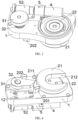
- FIG. 2 is the actual exploded diagram of the structure of the present application
- some unmarked parts are conventional standard parts such as gaskets and jackscrews commonly used in the installation of mechanical structures, and those skilled in the art can select them appropriately according to the actual installation situation, and no explanation will be given in the embodiments.
- the knee joint mechanism herein saves the power source at the knee joint, provides power through the hip, and the angle sensor at the hip or knee joint respectively drives the motor 4 to unlock or lock correspondingly, which not only has a good control effect, but also has simple overall structure, small size, light weight and high endurance.
Landscapes
- Health & Medical Sciences (AREA)
- Epidemiology (AREA)
- Pain & Pain Management (AREA)
- Physical Education & Sports Medicine (AREA)
- Rehabilitation Therapy (AREA)
- Life Sciences & Earth Sciences (AREA)
- Animal Behavior & Ethology (AREA)
- General Health & Medical Sciences (AREA)
- Public Health (AREA)
- Veterinary Medicine (AREA)
- Rehabilitation Tools (AREA)
Claims (8)
- Kniegelenkmechanismus ohne Kraftquelle, dadurch gekennzeichnet, dass er umfasst:eine Oberschenkelstützenanordnung (10), die an einem Oberschenkel eines Exoskelettroboters befestigt ist, wobei ein Ende der Oberschenkelstützenanordnung (10) in der Nähe einer Hüfte des Exoskelettroboters mit einem ersten Winkelsensor versehen ist;eine Unterschenkelstützanordnung (20), die an einem Unterschenkel des Exoskelettroboters befestigt ist;eine Verbindungsbasis (1), die an einer Kniegelenkseite des Exoskelettroboters angeordnet ist, wobei ein erster Teil der Verbindungsbasis (1) fest mit der Oberschenkelstützenanordnung (10) verbunden ist, wobei ein zweiter Teil der Verbindungsbasis (1), der dem ersten Teil gegenüberliegt, drehbar mit der Unterschenkelstützanordnung (20) verbunden ist, und wobei die Verbindungsbasis (1) mit einem zweiten Winkelsensor (11) versehen ist; undeinen Verriegelungsmechanismus, der an der Verbindungsbasis (1) angebracht ist und ein Verriegelungselement (2), ein Entriegelungselement (3), ein erstes Begrenzungselement (201) und eine Antriebsbaugruppe umfasst, wobei das Verriegelungselement (2) zwischen dem Entriegelungselement (3) und dem ersten Begrenzungselement (201) verriegelt ist, die Unterschenkelstützanordnung (20) mit dem Verriegelungselement (2) verbunden ist, die Antriebsbaugruppe mit dem Entriegelungselement (3) verbunden ist und die Antriebsbaugruppe auf der Grundlage von Ausgangssignalen, die von dem ersten Winkelsensor und dem zweiten Winkelsensor (11) erzeugt werden, angetrieben und gesteuert wird;wobei ferner das Entriegelungselement (3) einen Entriegelungsblock (31), der an der Rückseite der Verbindungsbasis (1) befestigt ist, und eine zweite Drehwelle (32), die drehbar in der Verbindungsbasis (1) angeordnet und fest mit dem Entriegelungsblock (31) verbunden ist, umfasst; Wobei der Entriegelungsblock (31) mit dem Verriegelungselement (2) abgestimmt ist, wobei die Verbindungsbasis (1) mit einem zweiten Lager (33) versehen ist, das auf der zweiten Drehwelle (32) gelagert ist, und wobei die zweite Drehwelle (32) durch die Verbindungsbasis verläuft und dann mit dem Antriebsbaugruppe (1) verbunden ist;wobei die Antriebsbaugruppe eine Schneckengetriebebaugruppe, eine dritte Drehwelle (53) und einen Motor (4) umfasst, wobei die Schneckengetriebebaugruppe ein Schneckenrad (51) und ein Schneckenrad (52) umfasst, die miteinander verbunden sind; wobei das Schneckenrad (51) koaxial und fest mit einem Ende der zweiten Drehwelle (32) verbunden ist, wobei ein fester Träger (5) an einer Vorderseite der Verbindungsbasis (1) angebracht ist und die dritte Drehwelle (32) drehbar in dem festen Träger (5) angebracht ist; und das Schneckenrad (52) auf der dritten Drehwelle (32) gelagert ist, wobei ein Ende des festen Trägers (5), das dem zweiten Teil der Verbindungsbasis (1) zugewandt ist, mit einer Senkbohrung versehen ist, in der der Motor (4) montiert ist,eine Motordrehwelle (41) des Motors (4) koaxial und fest mit der dritten Drehwelle (32) verbunden ist, so dass das Entriegelungselement (3) mit der Motordrehwelle (41) durch die Schneckengetriebebaugruppe verbunden werden kann, um einen Selbstsperreffekt zu erzielen; und wobeii) basierend auf dem Ausgangssignal, das von dem ersten Winkelsensor erzeugt wird, wenn der erste Winkelsensor ein Winkeländerungssignal erfasst, während sich die Oberschenkelstützenanordnung (10) dreht, der Motor (4) angetrieben wird, um sich in einer Vorwärtsrichtung zu drehen, und bewirkt, dass sich das Entriegelungselement (3) von dem Verriegelungselement (2) wegdreht und es dadurch freigibt; undii) basierend auf dem Ausgangssignal, das von dem zweiten Winkelsensor erzeugt wird, wenn der zweite Winkelsensor (11) erkennt, dass die Oberschenkelstützanordnung (10), die Verbindungsbasis (1) und die Unterschenkelstützanordnung (20) einen vorbestimmten ergonomischen Winkel bilden, der Motor (4) angetrieben wird, um sich in einer umgekehrten Richtung zu drehen, und bewirkt, dass sich das Entriegelungselement (3) in Richtung des Verriegelungselements (2) dreht, wodurch das Verriegelungselement (2) zwischen dem Entriegelungselement (3) und dem ersten Begrenzungselement (201) verriegelt wird.
- Kniegelenkmechanismus ohne Kraftquelle nach Anspruch 1, dadurch gekennzeichnet, dass das Verriegelungselement (2) einen an einer Rückseite der Verbindungsbasis (1) angebrachten Verriegelungsnocken (21) und eine erste Drehwelle (22) umfasst, die drehbar in der Verbindungsbasis (1) angeordnet und fest mit dem Verriegelungsnocken (21) verbunden ist; und
wobei der Verriegelungsnocken (21) mit einem Verriegelungsblock (211) versehen ist, der beweglich zwischen dem Entriegelungselement (3) und dem ersten Begrenzungselement (201) eingesetzt ist, und die Verbindungsbasis (1) mit einem ersten Lager (23) versehen ist, das auf der ersten Drehwelle (22) gelagert ist. - Kniegelenkmechanismus ohne Kraftquelle nach Anspruch 2, dadurch gekennzeichnet, dass eine dem Entriegelungselement (3) zugewandte Seite des Verriegelungsblocks (211) mit einer bogenförmigen Fläche oder einer schrägen Fläche versehen ist.
- Kniegelenkmechanismus ohne Kraftquelle nach Anspruch 2, dadurch gekennzeichnet, dass ein Ende des Verriegelungsnockens (21) in Richtung des zweiten Teils der Verbindungsbasis (1) mit einer U-förmigen Nut versehen ist, in der die Unterschenkelstützanordnung (20) positioniert und fest auf der ersten Drehwelle (22) montiert ist.
- Kniegelenkmechanismus ohne Kraftquelle nach Anspruch 1, dadurch gekennzeichnet, dass die Rückseite der Verbindungsbasis (1) auch fest mit einem zweiten Begrenzungselement (202) zur Begrenzung eines Drehbereichs des Entriegelungselements (3) versehen ist, und das zweite Begrenzungselement (202) an einer Seite des Entriegelungselements (3) angeordnet ist, die von einer Drehrichtung des Verriegelungselements (2) entfernt ist.
- Kniegelenkmechanismus ohne Kraftquelle nach Anspruch 1, dadurch gekennzeichnet, dass die Rückseite der Verbindungsbasis (1) mit einer Profilnut zur Aufnahme der Oberschenkelstützenanordnung (10) versehen ist.
- Kniegelenkmechanismus ohne Kraftquelle nach Anspruch 1, dadurch gekennzeichnet, dass die Rückseite der Verbindungsbasis (1) mit einer hinteren Abdeckung (13) versehen ist, wobei die hintere Abdeckung (13) nahe dem ersten Ende der Verbindungsbasis (1) liegt und mit dem Verriegelungselement (2) zur Bildung einer Dichtung abgestimmt ist.
- Kniegelenkmechanismus ohne Kraftquelle nach Anspruch 1 oder 7, dadurch gekennzeichnet, dass die Vorderseite der Verbindungsbasis (1) mit einer Frontabdeckung (14) versehen ist und der zweite Winkelsensor (11) an der Innenseite der Frontabdeckung (14) angebracht ist.
Applications Claiming Priority (2)
| Application Number | Priority Date | Filing Date | Title |
|---|---|---|---|
| CN202010532163.XA CN111419652B (zh) | 2020-06-12 | 2020-06-12 | 一种无动力源膝关节机构 |
| PCT/CN2021/081744 WO2021248968A1 (zh) | 2020-06-12 | 2021-03-19 | 一种无动力源膝关节机构 |
Publications (3)
| Publication Number | Publication Date |
|---|---|
| EP4134059A1 EP4134059A1 (de) | 2023-02-15 |
| EP4134059A4 EP4134059A4 (de) | 2024-05-15 |
| EP4134059B1 true EP4134059B1 (de) | 2025-01-22 |
Family
ID=71559047
Family Applications (1)
| Application Number | Title | Priority Date | Filing Date |
|---|---|---|---|
| EP21822054.9A Active EP4134059B1 (de) | 2020-06-12 | 2021-03-19 | Kniegelenkmechanismus ohne stromquelle |
Country Status (4)
| Country | Link |
|---|---|
| US (1) | US12558286B2 (de) |
| EP (1) | EP4134059B1 (de) |
| CN (1) | CN111419652B (de) |
| WO (1) | WO2021248968A1 (de) |
Families Citing this family (5)
| Publication number | Priority date | Publication date | Assignee | Title |
|---|---|---|---|---|
| CN111419652B (zh) * | 2020-06-12 | 2020-09-29 | 上海傅利叶智能科技有限公司 | 一种无动力源膝关节机构 |
| CN112891157B (zh) * | 2021-01-21 | 2023-03-28 | 上海傅利叶智能科技有限公司 | 基于智能拐杖的收集数据的方法、装置和智能拐杖 |
| CN115027809A (zh) * | 2022-06-29 | 2022-09-09 | 宁波公牛数码科技有限公司 | 一种盒体结构及无线耳机 |
| CN116292539B (zh) * | 2023-03-24 | 2025-08-01 | 安杰莱科技(杭州)有限公司 | 一种快速拆装锁定机构和下肢康复机器人 |
| CN118991966B (zh) * | 2024-08-16 | 2025-12-12 | 具身智人(北京)科技有限公司 | 人形机器人的下肢系统和人形机器人 |
Family Cites Families (29)
| Publication number | Priority date | Publication date | Assignee | Title |
|---|---|---|---|---|
| US4489718A (en) * | 1983-03-08 | 1984-12-25 | Medical Designs, Inc. | Knee brace hinge |
| CN85107981A (zh) * | 1985-10-28 | 1986-07-02 | 霍满焕 | 步行助力装置 |
| US5399154A (en) * | 1993-06-30 | 1995-03-21 | Empi, Inc. | Constant torque range-of-motion splint |
| US5921946A (en) * | 1997-10-22 | 1999-07-13 | Smith & Nephew, Inc. | Joint brace hinges |
| DE19904554B4 (de) * | 1999-02-04 | 2007-04-26 | Albrecht Gmbh | Zweiseitig wirkende Orthese zur Reduktion von Streck- und/oder Beugedefiziten |
| DE10005764B4 (de) * | 2000-02-10 | 2005-12-15 | Albrecht Gmbh | Orthese mit Verstellung des Flexions- und Extensionsanschlags durch Schienenschwenkbewegungen |
| US6635024B2 (en) * | 2001-05-14 | 2003-10-21 | Bobby Joe Hatton | Articulating knee supports |
| US7235058B2 (en) * | 2002-09-11 | 2007-06-26 | Djo, Llc | Lockable hinge |
| CN2829697Y (zh) * | 2005-09-12 | 2006-10-25 | 唐丹 | 一种膝踝足矫形器线锁膝关节 |
| US7578799B2 (en) * | 2006-06-30 | 2009-08-25 | Ossur Hf | Intelligent orthosis |
| US20100125229A1 (en) * | 2008-07-11 | 2010-05-20 | University Of Delaware | Controllable Joint Brace |
| DE102009052888A1 (de) * | 2009-11-13 | 2011-05-19 | Otto Bock Healthcare Products Gmbh | Verfahren und Vorrichtung zur Steuerung eines künstlichen orthetischen oder prothetischen Gelenkes |
| JP4998623B2 (ja) * | 2010-04-16 | 2012-08-15 | トヨタ自動車株式会社 | 回転制限装置、ロボット関節および歩行補助装具 |
| CN103260576B (zh) * | 2010-12-16 | 2015-04-22 | 丰田自动车株式会社 | 行走辅助装置 |
| CN104822346B (zh) * | 2012-09-07 | 2018-05-11 | 加利福尼亚大学董事会 | 可控被动人工膝部 |
| CN102973337B (zh) * | 2012-09-25 | 2015-05-06 | 电子科技大学 | 一种具有承重自锁功能的主动式膝关节结构 |
| CN203400232U (zh) * | 2013-07-31 | 2014-01-22 | 北京环球精博康复辅具技术有限公司 | 可调型弹性动力膝关节铰链装置 |
| KR102253243B1 (ko) * | 2014-02-18 | 2021-05-20 | 삼성전자주식회사 | 보행 보조장치 및 보행 보조장치의 제어 방법 |
| CN104490568B (zh) * | 2014-12-25 | 2017-02-01 | 北京航空航天大学 | 人体下肢外骨骼助行康复机器人 |
| CN105326627B (zh) * | 2015-11-25 | 2018-04-13 | 华南理工大学 | 基于躯干重心偏移的康复装置行走触发控制方法 |
| JP6148766B1 (ja) | 2016-06-01 | 2017-06-14 | サンコール株式会社 | アクチュエータ付き長下肢装具 |
| EP3357474A1 (de) | 2017-02-07 | 2018-08-08 | Fundación Tecnalia Research & Innovation | Rehabilitationsvorrichtung |
| CN208447860U (zh) * | 2017-09-30 | 2019-02-01 | 北京精博现代假肢矫形器技术有限公司 | 一种膝铰链 |
| CN108652634B (zh) * | 2018-03-29 | 2020-10-09 | 上海理工大学 | 可调仿真膝关节步态数据采集系统及其方法 |
| CN110123589A (zh) | 2019-05-20 | 2019-08-16 | 南京理工大学 | 一种针对偏瘫患者的轻质可穿戴下肢康复助行外骨骼 |
| CN110193819A (zh) | 2019-06-27 | 2019-09-03 | 迈宝智能科技(苏州)有限公司 | 用于可穿戴外骨骼的自适应膝关节机构及装置 |
| CN110465924A (zh) | 2019-08-12 | 2019-11-19 | 山东省科学院自动化研究所 | 一种四连杆膝关节的下肢外骨骼机器人 |
| CN110744526B (zh) | 2019-10-30 | 2020-11-24 | 重庆理工大学 | 一种被动式下肢运动助力外骨骼装置 |
| CN111419652B (zh) * | 2020-06-12 | 2020-09-29 | 上海傅利叶智能科技有限公司 | 一种无动力源膝关节机构 |
-
2020
- 2020-06-12 CN CN202010532163.XA patent/CN111419652B/zh active Active
-
2021
- 2021-03-19 US US17/923,538 patent/US12558286B2/en active Active
- 2021-03-19 WO PCT/CN2021/081744 patent/WO2021248968A1/zh not_active Ceased
- 2021-03-19 EP EP21822054.9A patent/EP4134059B1/de active Active
Also Published As
| Publication number | Publication date |
|---|---|
| CN111419652B (zh) | 2020-09-29 |
| EP4134059A4 (de) | 2024-05-15 |
| US20230181409A1 (en) | 2023-06-15 |
| EP4134059A1 (de) | 2023-02-15 |
| CN111419652A (zh) | 2020-07-17 |
| WO2021248968A1 (zh) | 2021-12-16 |
| US12558286B2 (en) | 2026-02-24 |
Similar Documents
| Publication | Publication Date | Title |
|---|---|---|
| EP4134059B1 (de) | Kniegelenkmechanismus ohne stromquelle | |
| CN110103207B (zh) | 一种辅助行走的柔性下肢外骨骼 | |
| CN103767815B (zh) | 前置式动力性踝足康复矫形器 | |
| CN108670729B (zh) | 一种外骨骼机器人 | |
| CN115137618B (zh) | 一种可穿戴式下肢外骨骼康复及助力机器人 | |
| CN113440372B (zh) | 一种柔性驱动膝关节外骨骼 | |
| CN106901947A (zh) | 可穿戴式下肢外骨骼助力行走机器人机构 | |
| CN206577092U (zh) | 一种踝关节康复辅助装置 | |
| CN107693304A (zh) | 一种下肢康复机器人 | |
| CN110897833A (zh) | 一种开环式可调节腕关节康复训练外骨骼 | |
| CN111920650B (zh) | 一种旋转缓冲助力机构和外骨骼踝关节缓冲助力装置 | |
| CN112022633A (zh) | 一种末端牵引上肢康复训练装置 | |
| CN115350047A (zh) | 一种膝关节辅助康复训练外骨骼 | |
| CN109966117A (zh) | 一种被动式可穿戴助行机器人 | |
| CN112741756A (zh) | 一种自调节式手腕康复机器人 | |
| CN113967151A (zh) | 一种基于重力补偿的主动上肢康复装置 | |
| CN113545958A (zh) | 一种肩关节康复机器人 | |
| CN110613584B (zh) | 一种柔性下肢康复训练机构 | |
| CN109648546B (zh) | 可调节式轻薄外骨骼膝关节驱动器 | |
| CN107569362B (zh) | 一种外骨骼机器人及其髋关节部件 | |
| CN112057302A (zh) | 一种腿部康复训练系统 | |
| CN209286071U (zh) | 传动装置、下肢康复外骨骼和外骨骼机器人 | |
| CN219538793U (zh) | 一种膝关节辅助康复训练外骨骼 | |
| CN115446802B (zh) | 新型穿戴式下肢外骨骼机构 | |
| CN217513874U (zh) | 一种用于外骨骼的可个性化定制刚性膝关节 |
Legal Events
| Date | Code | Title | Description |
|---|---|---|---|
| STAA | Information on the status of an ep patent application or granted ep patent |
Free format text: STATUS: THE INTERNATIONAL PUBLICATION HAS BEEN MADE |
|
| PUAI | Public reference made under article 153(3) epc to a published international application that has entered the european phase |
Free format text: ORIGINAL CODE: 0009012 |
|
| STAA | Information on the status of an ep patent application or granted ep patent |
Free format text: STATUS: REQUEST FOR EXAMINATION WAS MADE |
|
| 17P | Request for examination filed |
Effective date: 20221108 |
|
| AK | Designated contracting states |
Kind code of ref document: A1 Designated state(s): AL AT BE BG CH CY CZ DE DK EE ES FI FR GB GR HR HU IE IS IT LI LT LU LV MC MK MT NL NO PL PT RO RS SE SI SK SM TR |
|
| DAV | Request for validation of the european patent (deleted) | ||
| DAX | Request for extension of the european patent (deleted) | ||
| A4 | Supplementary search report drawn up and despatched |
Effective date: 20240411 |
|
| RIC1 | Information provided on ipc code assigned before grant |
Ipc: A61H 1/02 20060101ALI20240405BHEP Ipc: A61H 3/00 20060101AFI20240405BHEP |
|
| GRAP | Despatch of communication of intention to grant a patent |
Free format text: ORIGINAL CODE: EPIDOSNIGR1 |
|
| STAA | Information on the status of an ep patent application or granted ep patent |
Free format text: STATUS: GRANT OF PATENT IS INTENDED |
|
| INTG | Intention to grant announced |
Effective date: 20240816 |
|
| GRAS | Grant fee paid |
Free format text: ORIGINAL CODE: EPIDOSNIGR3 |
|
| GRAA | (expected) grant |
Free format text: ORIGINAL CODE: 0009210 |
|
| STAA | Information on the status of an ep patent application or granted ep patent |
Free format text: STATUS: THE PATENT HAS BEEN GRANTED |
|
| P01 | Opt-out of the competence of the unified patent court (upc) registered |
Free format text: CASE NUMBER: APP_64642/2024 Effective date: 20241206 |
|
| AK | Designated contracting states |
Kind code of ref document: B1 Designated state(s): AL AT BE BG CH CY CZ DE DK EE ES FI FR GB GR HR HU IE IS IT LI LT LU LV MC MK MT NL NO PL PT RO RS SE SI SK SM TR |
|
| REG | Reference to a national code |
Ref country code: GB Ref legal event code: FG4D |
|
| REG | Reference to a national code |
Ref country code: CH Ref legal event code: EP |
|
| REG | Reference to a national code |
Ref country code: IE Ref legal event code: FG4D |
|
| REG | Reference to a national code |
Ref country code: DE Ref legal event code: R096 Ref document number: 602021025194 Country of ref document: DE |
|
| PGFP | Annual fee paid to national office [announced via postgrant information from national office to epo] |
Ref country code: AT Payment date: 20250417 Year of fee payment: 5 |
|
| REG | Reference to a national code |
Ref country code: NL Ref legal event code: MP Effective date: 20250122 |
|
| PG25 | Lapsed in a contracting state [announced via postgrant information from national office to epo] |
Ref country code: NL Free format text: LAPSE BECAUSE OF FAILURE TO SUBMIT A TRANSLATION OF THE DESCRIPTION OR TO PAY THE FEE WITHIN THE PRESCRIBED TIME-LIMIT Effective date: 20250122 |
|
| PG25 | Lapsed in a contracting state [announced via postgrant information from national office to epo] |
Ref country code: RS Free format text: LAPSE BECAUSE OF FAILURE TO SUBMIT A TRANSLATION OF THE DESCRIPTION OR TO PAY THE FEE WITHIN THE PRESCRIBED TIME-LIMIT Effective date: 20250422 |
|
| PG25 | Lapsed in a contracting state [announced via postgrant information from national office to epo] |
Ref country code: FI Free format text: LAPSE BECAUSE OF FAILURE TO SUBMIT A TRANSLATION OF THE DESCRIPTION OR TO PAY THE FEE WITHIN THE PRESCRIBED TIME-LIMIT Effective date: 20250122 |
|
| PG25 | Lapsed in a contracting state [announced via postgrant information from national office to epo] |
Ref country code: PL Free format text: LAPSE BECAUSE OF FAILURE TO SUBMIT A TRANSLATION OF THE DESCRIPTION OR TO PAY THE FEE WITHIN THE PRESCRIBED TIME-LIMIT Effective date: 20250122 |
|
| PG25 | Lapsed in a contracting state [announced via postgrant information from national office to epo] |
Ref country code: ES Free format text: LAPSE BECAUSE OF FAILURE TO SUBMIT A TRANSLATION OF THE DESCRIPTION OR TO PAY THE FEE WITHIN THE PRESCRIBED TIME-LIMIT Effective date: 20250122 |
|
| REG | Reference to a national code |
Ref country code: LT Ref legal event code: MG9D |
|
| PG25 | Lapsed in a contracting state [announced via postgrant information from national office to epo] |
Ref country code: NO Free format text: LAPSE BECAUSE OF FAILURE TO SUBMIT A TRANSLATION OF THE DESCRIPTION OR TO PAY THE FEE WITHIN THE PRESCRIBED TIME-LIMIT Effective date: 20250422 Ref country code: IS Free format text: LAPSE BECAUSE OF FAILURE TO SUBMIT A TRANSLATION OF THE DESCRIPTION OR TO PAY THE FEE WITHIN THE PRESCRIBED TIME-LIMIT Effective date: 20250522 |
|
| REG | Reference to a national code |
Ref country code: AT Ref legal event code: MK05 Ref document number: 1760944 Country of ref document: AT Kind code of ref document: T Effective date: 20250122 |
|
| PG25 | Lapsed in a contracting state [announced via postgrant information from national office to epo] |
Ref country code: HR Free format text: LAPSE BECAUSE OF FAILURE TO SUBMIT A TRANSLATION OF THE DESCRIPTION OR TO PAY THE FEE WITHIN THE PRESCRIBED TIME-LIMIT Effective date: 20250122 |
|
| PG25 | Lapsed in a contracting state [announced via postgrant information from national office to epo] |
Ref country code: PT Free format text: LAPSE BECAUSE OF FAILURE TO SUBMIT A TRANSLATION OF THE DESCRIPTION OR TO PAY THE FEE WITHIN THE PRESCRIBED TIME-LIMIT Effective date: 20250522 Ref country code: LV Free format text: LAPSE BECAUSE OF FAILURE TO SUBMIT A TRANSLATION OF THE DESCRIPTION OR TO PAY THE FEE WITHIN THE PRESCRIBED TIME-LIMIT Effective date: 20250122 |
|
| PG25 | Lapsed in a contracting state [announced via postgrant information from national office to epo] |
Ref country code: BG Free format text: LAPSE BECAUSE OF FAILURE TO SUBMIT A TRANSLATION OF THE DESCRIPTION OR TO PAY THE FEE WITHIN THE PRESCRIBED TIME-LIMIT Effective date: 20250122 Ref country code: GR Free format text: LAPSE BECAUSE OF FAILURE TO SUBMIT A TRANSLATION OF THE DESCRIPTION OR TO PAY THE FEE WITHIN THE PRESCRIBED TIME-LIMIT Effective date: 20250423 |
|
| PG25 | Lapsed in a contracting state [announced via postgrant information from national office to epo] |
Ref country code: AT Free format text: LAPSE BECAUSE OF FAILURE TO SUBMIT A TRANSLATION OF THE DESCRIPTION OR TO PAY THE FEE WITHIN THE PRESCRIBED TIME-LIMIT Effective date: 20250122 |
|
| PG25 | Lapsed in a contracting state [announced via postgrant information from national office to epo] |
Ref country code: SE Free format text: LAPSE BECAUSE OF FAILURE TO SUBMIT A TRANSLATION OF THE DESCRIPTION OR TO PAY THE FEE WITHIN THE PRESCRIBED TIME-LIMIT Effective date: 20250122 |
|
| PG25 | Lapsed in a contracting state [announced via postgrant information from national office to epo] |
Ref country code: SM Free format text: LAPSE BECAUSE OF FAILURE TO SUBMIT A TRANSLATION OF THE DESCRIPTION OR TO PAY THE FEE WITHIN THE PRESCRIBED TIME-LIMIT Effective date: 20250122 |
|
| PG25 | Lapsed in a contracting state [announced via postgrant information from national office to epo] |
Ref country code: DK Free format text: LAPSE BECAUSE OF FAILURE TO SUBMIT A TRANSLATION OF THE DESCRIPTION OR TO PAY THE FEE WITHIN THE PRESCRIBED TIME-LIMIT Effective date: 20250122 |
|
| PG25 | Lapsed in a contracting state [announced via postgrant information from national office to epo] |
Ref country code: MC Free format text: LAPSE BECAUSE OF FAILURE TO SUBMIT A TRANSLATION OF THE DESCRIPTION OR TO PAY THE FEE WITHIN THE PRESCRIBED TIME-LIMIT Effective date: 20250122 |
|
| PG25 | Lapsed in a contracting state [announced via postgrant information from national office to epo] |
Ref country code: IT Free format text: LAPSE BECAUSE OF FAILURE TO SUBMIT A TRANSLATION OF THE DESCRIPTION OR TO PAY THE FEE WITHIN THE PRESCRIBED TIME-LIMIT Effective date: 20250122 |
|
| PG25 | Lapsed in a contracting state [announced via postgrant information from national office to epo] |
Ref country code: CZ Free format text: LAPSE BECAUSE OF FAILURE TO SUBMIT A TRANSLATION OF THE DESCRIPTION OR TO PAY THE FEE WITHIN THE PRESCRIBED TIME-LIMIT Effective date: 20250122 Ref country code: EE Free format text: LAPSE BECAUSE OF FAILURE TO SUBMIT A TRANSLATION OF THE DESCRIPTION OR TO PAY THE FEE WITHIN THE PRESCRIBED TIME-LIMIT Effective date: 20250122 |
|
| REG | Reference to a national code |
Ref country code: CH Ref legal event code: H13 Free format text: ST27 STATUS EVENT CODE: U-0-0-H10-H13 (AS PROVIDED BY THE NATIONAL OFFICE) Effective date: 20251023 Ref country code: DE Ref legal event code: R097 Ref document number: 602021025194 Country of ref document: DE |
|
| PG25 | Lapsed in a contracting state [announced via postgrant information from national office to epo] |
Ref country code: RO Free format text: LAPSE BECAUSE OF FAILURE TO SUBMIT A TRANSLATION OF THE DESCRIPTION OR TO PAY THE FEE WITHIN THE PRESCRIBED TIME-LIMIT Effective date: 20250122 |
|
| PG25 | Lapsed in a contracting state [announced via postgrant information from national office to epo] |
Ref country code: SK Free format text: LAPSE BECAUSE OF FAILURE TO SUBMIT A TRANSLATION OF THE DESCRIPTION OR TO PAY THE FEE WITHIN THE PRESCRIBED TIME-LIMIT Effective date: 20250122 |
|
| PG25 | Lapsed in a contracting state [announced via postgrant information from national office to epo] |
Ref country code: LU Free format text: LAPSE BECAUSE OF NON-PAYMENT OF DUE FEES Effective date: 20250319 |
|
| PLBE | No opposition filed within time limit |
Free format text: ORIGINAL CODE: 0009261 |
|
| STAA | Information on the status of an ep patent application or granted ep patent |
Free format text: STATUS: NO OPPOSITION FILED WITHIN TIME LIMIT |
|
| REG | Reference to a national code |
Ref country code: BE Ref legal event code: MM Effective date: 20250331 |
|
| 26N | No opposition filed |
Effective date: 20251023 |
|
| PG25 | Lapsed in a contracting state [announced via postgrant information from national office to epo] |
Ref country code: BE Free format text: LAPSE BECAUSE OF NON-PAYMENT OF DUE FEES Effective date: 20250331 |
|
| PG25 | Lapsed in a contracting state [announced via postgrant information from national office to epo] |
Ref country code: CH Free format text: LAPSE BECAUSE OF NON-PAYMENT OF DUE FEES Effective date: 20250331 |
|
| PG25 | Lapsed in a contracting state [announced via postgrant information from national office to epo] |
Ref country code: IE Free format text: LAPSE BECAUSE OF NON-PAYMENT OF DUE FEES Effective date: 20250319 |
|
| PGFP | Annual fee paid to national office [announced via postgrant information from national office to epo] |
Ref country code: GB Payment date: 20260325 Year of fee payment: 6 |
|
| PGFP | Annual fee paid to national office [announced via postgrant information from national office to epo] |
Ref country code: DE Payment date: 20260324 Year of fee payment: 6 |
|
| PGFP | Annual fee paid to national office [announced via postgrant information from national office to epo] |
Ref country code: FR Payment date: 20260330 Year of fee payment: 6 |