EP4130022B1 - Phosphoryliertes proteinmarkierungsreagenz mit gleichgewichtigen stabilen isotopen, herstellungsverfahren dafür und verwendung davon - Google Patents
Phosphoryliertes proteinmarkierungsreagenz mit gleichgewichtigen stabilen isotopen, herstellungsverfahren dafür und verwendung davon Download PDFInfo
- Publication number
- EP4130022B1 EP4130022B1 EP21788695.1A EP21788695A EP4130022B1 EP 4130022 B1 EP4130022 B1 EP 4130022B1 EP 21788695 A EP21788695 A EP 21788695A EP 4130022 B1 EP4130022 B1 EP 4130022B1
- Authority
- EP
- European Patent Office
- Prior art keywords
- stable isotope
- reaction
- isobaric
- solution
- amino acid
- Prior art date
- Legal status (The legal status is an assumption and is not a legal conclusion. Google has not performed a legal analysis and makes no representation as to the accuracy of the status listed.)
- Active
Links
Images

Classifications
-
- C—CHEMISTRY; METALLURGY
- C07—ORGANIC CHEMISTRY
- C07B—GENERAL METHODS OF ORGANIC CHEMISTRY; APPARATUS THEREFOR
- C07B59/00—Introduction of isotopes of elements into organic compounds ; Labelled organic compounds per se
- C07B59/008—Peptides; Proteins
-
- C—CHEMISTRY; METALLURGY
- C07—ORGANIC CHEMISTRY
- C07K—PEPTIDES
- C07K1/00—General methods for the preparation of peptides, i.e. processes for the organic chemical preparation of peptides or proteins of any length
- C07K1/13—Labelling of peptides
-
- C—CHEMISTRY; METALLURGY
- C07—ORGANIC CHEMISTRY
- C07K—PEPTIDES
- C07K5/00—Peptides containing up to four amino acids in a fully defined sequence; Derivatives thereof
- C07K5/04—Peptides containing up to four amino acids in a fully defined sequence; Derivatives thereof containing only normal peptide links
- C07K5/06—Dipeptides
- C07K5/06008—Dipeptides with the first amino acid being neutral
- C07K5/06017—Dipeptides with the first amino acid being neutral and aliphatic
- C07K5/06026—Dipeptides with the first amino acid being neutral and aliphatic the side chain containing 0 or 1 carbon atom, i.e. Gly or Ala
-
- G—PHYSICS
- G01—MEASURING; TESTING
- G01N—INVESTIGATING OR ANALYSING MATERIALS BY DETERMINING THEIR CHEMICAL OR PHYSICAL PROPERTIES
- G01N30/00—Investigating or analysing materials by separation into components using adsorption, absorption or similar phenomena or using ion-exchange, e.g. chromatography or field flow fractionation
- G01N30/02—Column chromatography
- G01N30/04—Preparation or injection of sample to be analysed
- G01N30/06—Preparation
-
- G—PHYSICS
- G01—MEASURING; TESTING
- G01N—INVESTIGATING OR ANALYSING MATERIALS BY DETERMINING THEIR CHEMICAL OR PHYSICAL PROPERTIES
- G01N33/00—Investigating or analysing materials by specific methods not covered by groups G01N1/00 - G01N31/00
- G01N33/48—Biological material, e.g. blood, urine; Haemocytometers
- G01N33/50—Chemical analysis of biological material, e.g. blood, urine; Testing involving biospecific ligand binding methods; Immunological testing
- G01N33/68—Chemical analysis of biological material, e.g. blood, urine; Testing involving biospecific ligand binding methods; Immunological testing involving proteins, peptides or amino acids
- G01N33/6803—General methods of protein analysis not limited to specific proteins or families of proteins
- G01N33/6842—Proteomic analysis of subsets of protein mixtures with reduced complexity, e.g. membrane proteins, phosphoproteins, organelle proteins
-
- G—PHYSICS
- G01—MEASURING; TESTING
- G01N—INVESTIGATING OR ANALYSING MATERIALS BY DETERMINING THEIR CHEMICAL OR PHYSICAL PROPERTIES
- G01N33/00—Investigating or analysing materials by specific methods not covered by groups G01N1/00 - G01N31/00
- G01N33/48—Biological material, e.g. blood, urine; Haemocytometers
- G01N33/50—Chemical analysis of biological material, e.g. blood, urine; Testing involving biospecific ligand binding methods; Immunological testing
- G01N33/68—Chemical analysis of biological material, e.g. blood, urine; Testing involving biospecific ligand binding methods; Immunological testing involving proteins, peptides or amino acids
- G01N33/6803—General methods of protein analysis not limited to specific proteins or families of proteins
- G01N33/6848—Methods of protein analysis involving mass spectrometry
-
- G—PHYSICS
- G01—MEASURING; TESTING
- G01N—INVESTIGATING OR ANALYSING MATERIALS BY DETERMINING THEIR CHEMICAL OR PHYSICAL PROPERTIES
- G01N30/00—Investigating or analysing materials by separation into components using adsorption, absorption or similar phenomena or using ion-exchange, e.g. chromatography or field flow fractionation
- G01N30/02—Column chromatography
- G01N30/88—Integrated analysis systems specially adapted therefor, not covered by a single one of the groups G01N30/04 - G01N30/86
- G01N2030/8809—Integrated analysis systems specially adapted therefor, not covered by a single one of the groups G01N30/04 - G01N30/86 analysis specially adapted for the sample
- G01N2030/8813—Integrated analysis systems specially adapted therefor, not covered by a single one of the groups G01N30/04 - G01N30/86 analysis specially adapted for the sample biological materials
- G01N2030/8831—Integrated analysis systems specially adapted therefor, not covered by a single one of the groups G01N30/04 - G01N30/86 analysis specially adapted for the sample biological materials involving peptides or proteins
-
- G—PHYSICS
- G01—MEASURING; TESTING
- G01N—INVESTIGATING OR ANALYSING MATERIALS BY DETERMINING THEIR CHEMICAL OR PHYSICAL PROPERTIES
- G01N2440/00—Post-translational modifications [PTMs] in chemical analysis of biological material
- G01N2440/14—Post-translational modifications [PTMs] in chemical analysis of biological material phosphorylation
-
- G—PHYSICS
- G01—MEASURING; TESTING
- G01N—INVESTIGATING OR ANALYSING MATERIALS BY DETERMINING THEIR CHEMICAL OR PHYSICAL PROPERTIES
- G01N2458/00—Labels used in chemical analysis of biological material
- G01N2458/15—Non-radioactive isotope labels, e.g. for detection by mass spectrometry
-
- G—PHYSICS
- G01—MEASURING; TESTING
- G01N—INVESTIGATING OR ANALYSING MATERIALS BY DETERMINING THEIR CHEMICAL OR PHYSICAL PROPERTIES
- G01N30/00—Investigating or analysing materials by separation into components using adsorption, absorption or similar phenomena or using ion-exchange, e.g. chromatography or field flow fractionation
- G01N30/02—Column chromatography
- G01N30/26—Conditioning of the fluid carrier; Flow patterns
- G01N30/28—Control of physical parameters of the fluid carrier
- G01N30/34—Control of physical parameters of the fluid carrier of fluid composition, e.g. gradient
-
- G—PHYSICS
- G01—MEASURING; TESTING
- G01N—INVESTIGATING OR ANALYSING MATERIALS BY DETERMINING THEIR CHEMICAL OR PHYSICAL PROPERTIES
- G01N30/00—Investigating or analysing materials by separation into components using adsorption, absorption or similar phenomena or using ion-exchange, e.g. chromatography or field flow fractionation
- G01N30/02—Column chromatography
- G01N30/62—Detectors specially adapted therefor
- G01N30/74—Optical detectors
-
- Y—GENERAL TAGGING OF NEW TECHNOLOGICAL DEVELOPMENTS; GENERAL TAGGING OF CROSS-SECTIONAL TECHNOLOGIES SPANNING OVER SEVERAL SECTIONS OF THE IPC; TECHNICAL SUBJECTS COVERED BY FORMER USPC CROSS-REFERENCE ART COLLECTIONS [XRACs] AND DIGESTS
- Y02—TECHNOLOGIES OR APPLICATIONS FOR MITIGATION OR ADAPTATION AGAINST CLIMATE CHANGE
- Y02P—CLIMATE CHANGE MITIGATION TECHNOLOGIES IN THE PRODUCTION OR PROCESSING OF GOODS
- Y02P20/00—Technologies relating to chemical industry
- Y02P20/50—Improvements relating to the production of bulk chemicals
- Y02P20/55—Design of synthesis routes, e.g. reducing the use of auxiliary or protecting groups
Definitions
- the present disclosure belongs to the field of protein labeling reagents, and particularly relates to an isobaric stable isotope-containing phosphorylated protein labeling reagent, and a preparation method and application thereof.
- bio-MS biological mass spectrometry
- MS stable isotope-labeled protein MS quantification methods and reagents
- iTRAQ [2] , ICAT [3] , and TMT [4] have been widely used as commercial reagents in life science and clinical research.
- Stable isotope-labeled molecular probes based on high-resolution MS have become a core for protein quantification in proteomics research.
- Various protein quantification methods have been successfully developed based on the principles of chemical reactions and instrumental enzyme catalytic labeling.
- stable isotope tags based on primary MS such as multi-labeled reductive methylation, 18 O labeling, SILAC (Stable Isotope Labeling by Amino Acids in Cell Culture), 153 Eu-labeled quantitative probe, and trypsin-catalyzed N-terminal arginine labeling.
- primary MS such as multi-labeled reductive methylation, 18 O labeling, SILAC (Stable Isotope Labeling by Amino Acids in Cell Culture), 153 Eu-labeled quantitative probe, and trypsin-catalyzed N-terminal arginine labeling.
- EASI-tag based on peptide reporter ions
- TMTpro based on isopropyl-modified proline structures
- the present disclosure Based on the organophosphorus labeling chemistry, the present disclosure synthesizes a series of isobaric stable isotope-labeled organophosphorus reagents with novel structures and uses the reagents to successfully achieve the quantitative analysis of standard proteins and proteins in biological samples.
- the present disclosure is intended to provide an isobaric stable isotope-containing phosphorylated protein labeling reagent, and a preparation method and application thereof.
- the present disclosure adopts the following solutions:
- the present disclosure provides an isobaric stable isotope-containing phosphorylated protein labeling reagent, characterized in that its structural formula is as follows: where a is 14 or 15; b is 12 or 13; c is 16 or 18; d is 1 or 2; n is 1, 2, 3, 4, or 5 and preferably 1 or 2; n 1 is 0, 1, or 2 and preferably 0 or 1; R 1 is a side chain substituent of an L or D -configuration amino acid with or without a stable isotope, and preferably R 1 is methyl; and R 2 is a side chain substituent of an amino acid with or without a stable isotope, and preferably R 2 is hydrogen.
- the present disclosure provides a preparation method of an isobaric stable isotope-containing phosphorylated protein labeling reagent, characterized in that it includes the following steps:
- the alkali solution in the steps (1) and (3) was one selected from the group consisting of a sodium hydroxide solution, a potassium hydroxide solution, a sodium carbonate solution, and a sodium bicarbonate solution and was preferably a sodium carbonate solution;
- the cooling and the low temperature were ice bath conditions; and the low-temperature stirring reaction time was for 2 h to 4 h and the room temperature stirring reaction was for 5 h to 12 h.
- the organic solvent in the steps (2) and (6) was one selected from the group consisting of ethylene glycol dimethyl ether and carbon dichloride; and the condensation agent was one selected from the group consisting of DCC and EDCI.
- the low temperature in the step (5) was an ice bath condition; and the low-temperature stirring reaction time was for 2 h to 4 h and the reaction under stirring at the room temperature was conducted for 4 h to 6 h.
- the isobaric stable isotope-containing alcohol solvent was one selected from the group consisting of methanol, ethanol, propanol, butanol, and amyl alcohol and was preferably methanol or ethanol.
- the present disclosure provides an application of the isobaric stable isotope-containing phosphorylated protein labeling reagent in the quantitative analysis of a polypeptide.
- the present disclosure provides an application of the isobaric stable isotope-containing phosphorylated protein labeling reagent in the quantitative analysis of a standard protein or a protein in a cell.
- the present disclosure provides an application of the isobaric stable isotope-containing phosphorylated protein labeling reagent in the quantitative analysis of a protein in a urine sample.
- the present disclosure provides an application of the isobaric stable isotope-containing phosphorylated protein labeling reagent in the quantitative analysis of a protein in a blood sample.
- the isobaric stable isotope-containing phosphorylated protein labeling reagent provided by the present disclosure can be used as an isobaric stable isotope-containing phosphorylated labeled molecular probe (iSIPL) to label the N-terminal and lysine side-chain amino selectively and efficiently of a peptide and then achieve the relative quantitative analysis of the peptide and protein by MS analysis, especially the report ions produced by secondary MS cleavage.
- iSIPL isobaric stable isotope-containing phosphorylated labeled molecular probe
- stable isotopes in the labeling reagent are mainly distributed in a phosphate group of a reporter ion and an equilibrium linker arm.
- an ethoxyl structure is adopted for the phosphate group; considering the availability of the 13 C and 15 N labeling synthesis module, glycine at a relatively low price is adopted for the equilibrium linker arm in the labeling reagent; and the interference of peptide cleavage fragment ions to the reporter ion is investigated after labeling with different organophosphorus reagents. A labeling reagent that does not interfere with the reporter ion in the corresponding m / z range is selected.
- FIG. 1 shows a structural formula of the isobaric stable isotope-containing phosphorylated protein labeling reagent prepared by the present disclosure.
- the general method for quantitative analysis of an iSIPL-labeled polypeptide and protein includes: an isobaric stable isotope-containing phosphorylated protein labeling reagent is prepared into a reaction solution, then a sample to be tested (which can be any one selected from the group consisting of a polypeptide, a standard protein sample, a protein sample in a cell, and a protein in an urine and blood sample) is added to allow a derivatization reaction, and a resulting product is concentrated, desalted, and then directly analyzed by LC-MS.
- a sample to be tested which can be any one selected from the group consisting of a polypeptide, a standard protein sample, a protein sample in a cell, and a protein in an urine and blood sample
- the MS includes electrospray ionization-time-of-flight MS (ESI-TOF MS), electrospray ionization-orbitaltrap MS (ESI-Orbitrap MS), electrospray ionization-ion trap MS (ESI-IT MS), matrix-assisted laser-desorption ionization-time-of-flight MS (MALDI-TOF/TOF MS), or the like.
- ESI-TOF MS and ESI-Orbitrap MS are preferred.
- the ion ionization mode is a positive ion mode.
- the cleavage mode is collision-induced dissociation (CID), high-energy collision dissociation (HCD), or the like.
- CID collision-induced dissociation
- HCD high-energy collision dissociation
- the HCD mode is preferred.
- the high-performance liquid chromatograph includes Easy-NanoLC1000 nanoflow liquid chromatograph and DIONEX Ultimate 3000 high-performance liquid chromatograph.
- Example 1 Preparation of a diethyl phosphite alanine-glycine dipeptide activated ester, specifically including the following steps:
- the BOC-N 15 -Ala-OSU (4.61 mmol) synthesized was taken and dissolved in 18.44 mL of acetone and 73.76 mL of ethanol, slowly added dropwise to a NaHCO 3 (9.22 mmol, 774.5 mg) aqueous solution of glycine (4.61 mmol, 346 mg) at 0°C; subjected to a reaction at room temperature for 20 h after the dropwise addition was completed. After the reaction was stopped; a part of the solvent was concentrated under reduced pressure and removed , 46.1 mL of H 2 O was added to the residue, and shaken for thorough mixing.
- the aqueous layer was extracted with ethyl acetate (2 ⁇ 25 mL), the residual aqueous solution was cooled to 0°C, and pH was adjusted to about 2 with diluted hydrochloric acid (1 M).
- the acidic aqueous solution was extracted with ethyl acetate (3 ⁇ 60 mL), and the organic layers were combined, washed with a saturated NaCl aqueous solution, dried with anhydrous MgSO 4 , filtered, and concentrated under reduced pressure to obtain a crude product.
- the crude product was recrystallized with petroleum ether and ethyl acetate in a ratio of 5:1 to obtain a white solid product BOC-N 15 -Ala-Gly (800 mg, 70%), which had a structure shown as follows:
- BOC-N 15 -Ala-Gly (3.2 mmol, 800 mg) was dissolved in 8 mL of THF, 8 mL of concentrated hydrochloric acid was added, subjected to a reaction for 3 h at room temperature under the protection of N 2 , the solvent was evaporated, the residue was dissolved in 10 mL of H 2 O; the aqueous layer was extracted with CH 2 Cl 2 (2 ⁇ 10 mL), evaporated under reduced pressure to obtain a light-yellow oily substance N 15 -Ala-Gly, which would be directly used for the next reaction without further purification.
- Ala-N 15 -Gly was prepared, which had a structure shown as follows:
- N 15 -Ala-Gly (3 mmol, 443 mg) was dissolved in 3 mL of water, then 1.5 mL of triethylamine and 1.5 mL of ethanol were added, thoroughly stirred and then cooled to 0°C; diethyl phosphite (3.3 mmol, 0.425 mL) was taken and dissolved in 3 mL of carbon tetrachloride, added dropwise to the dipeptide solution, subjected to a reaction for 6 h at a low temperature; and after the reaction was stopped, a part of the solvent was evaporated under reduced pressure and removed, and the crude product was subjected to high-performance liquid chromatography to obtain a transparent oily substance DEPH-N 15 -Ala-Gly (513 mg, 60.3%).
- DEPH-Ala-N 15 -Gly was prepared, which had a structure shown as follows:
- DEPH-Ala-N 15 -Gly (2.115 mmol, 599.2 mg) and N-hydroxysuccinimide (2.157 mmol, 248.2 mg) were subjected to a reaction to obtain DEPH-Ala-N 15 -Gly-NHS (748 mg, 93%), which had a structure shown as follows:
- DEPH-Ala-N 15 -Gly-NHS was prepared, which had a structure shown as follows:
- a double-necked flask was dried and cooled, and magnetons and weighted Fmoc- L -Ala (1 mmol, namely, 311 mg) were added and dried for about 2 h; 10 mL of oxygen-18 water was prepared (180 ⁇ L of acetyl chloride was added to obtain 0.25 M HCl), nitrogen replacement was conducted for protection, and the flask was tightly plugged for later use; and a nitrogen balloon was prepared for later use.
- a condenser tube was dried and connected to the nitrogen balloon, a dried sample and the double-necked bottle are connected to the condenser tube and the nitrogen balloon outside an infrared lamp, air in the system was replaced by a water pump, and the device was prepared and loaded with condensation water; then 1.5 mL of anhydrous 1,4-dioxane was taken by a syringe, thoroughly stirred and then gradually heated to 110°C; 0.5 mL of the prepared oxygen-18 water (25 mmol, namely, 25 equivalents) was added dropwise, and a resulting mixture was stirred to allow a reaction for 24 h under condensation reflux.
- the reaction solution was transferred to a single-necked round-bottomed flask after cooling to room temperature; and under anhydrous conditions, the same equivalent of oxygen-18 water was used to allow a reaction for 24 h under stirring and reflux, the concentration and dry were conducted to obtain a light-yellow solid powder (namely, the target compound), which was denoted as Fmoc-Ala- 18 OH (C 18 H 17 N 18 OO 3 ) and had a structure shown as follows:
- 9-fluorenylmethoxycarbonyl- L -alanine-glycine dipeptide labeled with other stable isotopes 9-fluorenylmethoxycarbonyl- L / D -alanine labeled with different isotopes was first subjected to a reaction with N-hydroxysuccinimide to obtain an activated ester, and then the activated ester was subjected to a reaction with glycine labeled with different isotopes to obtain the following target compounds Fmoc- 15 N-Ala-Gly (C 20 H 20 N 2 O 5 ), which had a structure shown as follows:
- the 9-fluorenylmethoxycarbonyl-alanine-glycine dipeptide (1 mmol) labeled with stable isotopes prepared in the step 3 was taken and dissolved in 15 mL of methanol, two drops of glacial acetic acid were added, and one-tenth of the mass of 10% palladium on carbon was added; after the reaction reagents were added, air was removed by a vacuum pump, then an inert gas was introduced and then replaced with hydrogen, and the reaction was stirred overnight at room temperature.
- Absolute ethanol (21.7 mmol, 1 g, 1.26 mL) was taken and dissolved in 5 mL of dichloromethane to obtain an ethanol solution; phosphorus trichloride (7.2 mmol, 995 mg, 632 ⁇ L) was dissolved in 2 mL of dichloromethane to obtain a phosphorus trichloride solution, and the phosphorus trichloride solution was cooled to 0°C; under the protection of nitrogen, the ethanol solution was slowly added dropwise to the phosphorus trichloride solution.
- the reaction system was transferred to room temperature and the reaction stirred, during which a phosphorus spectrum was tracked every half an hour; 12 h to 14 h later, the reaction was completed, at which point the phosphorus trichloride was exhausted.
- the organic solvent and hydrochloric acid gas were removed through concentration under reduced pressure by a rotary evaporator. Distillation was conducted under reduced pressure to obtain a colorless or light-yellow oily liquid, which was diethyl phosphite.
- the reaction conditions were similar to that in Example 1, except that the stable isotope-labeled alanine-glycine dipeptide obtained in the step 4 was used instead of the ordinary alanine-glycine dipeptide and the carbon-13-labeled diethyl phosphite obtained in the step 5 was used instead of the ordinary diethyl phosphite to prepare a stable isotope-labeled diethyl phosphite-alanine-glycine dipeptide, and finally, the stable isotope-labeled diethyl phosphite-alanine-glycine dipeptide was subjected to activation with N-hydroxysuccinimide to prepare the following six-labeled reagents with isobaric stable isotopes.
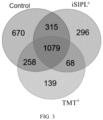
- Example 4 Total proteolytic peptides extracted from Hela cells and derivatization analysis with an iSIPL 0 reagent
- the medium used for the culture was DMEM medium, and the cell culture conditions were 37°C and 5% CO 2 .
- the cellular protein was extracted through the following steps:
- Derivatization reaction steps A concentration of peptides obtained after enzymolysis was determined by a protein concentration detector, and a peptide solution was evenly dispensed into several tubes (25 ⁇ g to 100 ⁇ g per tube). Two of the tubes were taken to conduct an experiment, with one tube as a blank control and the other tube for a derivatization reaction with an iSIPL 0 reagent.
- iSIPL 0 was dissolved in 50 ⁇ L of acetonitrile, added to 100 ⁇ L of a peptide solution, thoroughly shaken, subjected to a reaction in an ice bath for half an hour, and then transferred to room temperature and subjected to a reaction for half an hour; and the acetonitrile was removed through dry centrifugation, and subjected to acid adjustment, desalination, and MS analysis.
- a structure of the iSIPL 0 labeling reagent was as follows: LC-MS/MS analysis.
- LC-MS/MS analysis conditions were as follows: nano-UHPLC Proxeon Easy-nLC 1000 coupled LTQ-Orbitrap Q-Exactive MS of Thermo Scientific was adopted; after being injected into a liquid chromatograph, a sample was first captured by a capture column (C18, 3 ⁇ m, 2 cm ⁇ 100 ⁇ m), then entered an analytical column (Acclaim PepMap RSLC-C18, 2.0 ⁇ m, 150 mm ⁇ 75 ⁇ m), and was separated, with a total injection amount of 1 ⁇ g of polypeptides. Chromatographic conditions: a gradient elution was conducted for 120 min with 5% to 45% of acetonitrile with 0.1% formic acid; flow rate: 250 nL/min.
- Example 5 Comparative analysis of a labeling reagent iSIPL 0 and a commercial labeling reagent TMT 0
- the experimental methods of total protein extraction and enzymolysis to produce peptides were the same as that in Example 4.
- a concentration of the peptides obtained after enzymolysis was determined, and a peptide solution was evenly dispensed into four tubes for test.
- 120 ⁇ L of a solution of iSIPL 0 (3 mg) in acetonitrile was added to each of two of the tubes with a ratio of m(iSIPL 0 ) to m(peptide) being 30:1, such that two parallel test tubes were set; and 40 ⁇ L of a solution of TMT 0 (0.8 mg) in acetonitrile was added to each of the other two tubes with a ratio of m(TMT0) to m(peptide) being 8:1, such that two parallel test tubes were set.
- Example 6 BSA standard peptide concentration gradient experiment: different concentrations of standard peptides were subjected to derivatization with iSIPL 0 .
- This Example was the same as Example 4 except that, a BSA standard protein was used instead of the total protein extracted from Hela cells for reductive alkylation and enzymolysis to produce peptides; the peptides obtained after enzymolysis of the BSA standard protein were tested for concentration and diluted to different concentrations of 0.002 ⁇ , 0.01 ⁇ , 0.05 ⁇ , 0.25 ⁇ , 0.8 ⁇ , and the like to conduct a standard peptide concentration gradient experiment.
- the different concentrations of BSA standard peptides were each subjected to derivatization with the iSIPLzero reagent at a same mass to determine the lowest concentration of peptides that could be identified by the chemical labeling reagent.
- Standard proteolysis 250 ⁇ g of a BSA protein was dissolved in a 0.1 M Tris/HCl pH 8.0 (8 M urea) buffer, added to a 10 KD concentration tube and centrifuged at 14,000 g until about 30 ⁇ L was left; 100 ⁇ L of a DTT solution was added, thoroughly mixed, allowed to stand at room temperature for 30 min, and centrifuged at 14,000 g for 30 min; 100 ⁇ L of an IAA solution was added, thoroughly mixed, allowed to stand at room temperature for 5 min, centrifuged at 14,000 g for 30 min; 100 ⁇ L of a 0.1 M Tris/HCl pH 8.0 (8 M urea) solution was added to the concentration tube and the concentration tube was centrifuged at 14,000 g for 40 min, and the operation was repeated twice; 160 uL of a triethylammonium bicarbonate solution with trypsin (a ratio of the trypsin to the protein was 1:50) was added to the concentration tube, thoroughly mixed and incuba
- Example 7 Concentration gradient experiment of total proteolytic peptides extracted from Hela cells: different concentrations of peptides were each subjected to derivatization with iSIPL 0 .
- the total protein was extracted from Hela cells and subjected to reductive alkylation, enzymolysis, and then derivatization to obtain a proteolysis solution with a total protein concentration of 0.6 ⁇ g/ ⁇ L, and the proteolysis solution was diluted to the different concentrations of 0.002 ⁇ g/ ⁇ L, 0.01 ⁇ g/ ⁇ L, 0.05 ⁇ g/ ⁇ L, 0.25 ⁇ g/ ⁇ L, 0.6 ⁇ g/ ⁇ L, and the like to conduct an enzymatic peptide concentration gradient experiment.
- the different concentrations of peptides extracted from HELA cells were subjected to derivatization with the iSIPLzero reagent at a same mass (2 mg), and after the reaction was completed, a resulting product was desalted according to Example 4, detected by MS, and searched in a protein library.
- a specified amount of the BSA standard protein was weighed, subjected to reductive alkylation and enzymolysis, tested for concentration, and divided into six portions according to a mass ratio of 3:3:3: 1:1: 1.
- the six labeling reagents of iSIPL 6 -180, iSIPL 6 -181, iSIPL 6 -182, iSIPL 6 -183, iSIPL 6 -184, and iSIPL 6 -185 were added at an equal amount to the six portions, respectively, and a derivatization reaction was conducted at a low temperature for half an hour and then at room temperature for 1 h.
- iSIPL 6 labeling reagents were as follows: iSIPL 6 -180 iSIPL 6 -181 iSIPL 6 -182 iSIPL 6 -183 iSIPL 6 -184 iSIPL 6 -185
- a protein was extracted from a urine sample by a method with reference to a literature. 200 ⁇ L of urine was taken and centrifuged, the supernatant was added to a filter (3 K) and centrifuged at 13,000 rpm, and the protein in the centrifuge tube was subjected to reductive alkylation with reference to Example 4, tested for concentration, and divided into six portions; the six labeling reagents of iSIPL 6 -180, iSIPL 6 -181, iSIPL 6 -182, iSIPL 6 -183, iSIPL 6 -184, and iSIPL 6 -185 were added at an equal amount to the six portions, respectively; a derivatization reaction was conducted at a low temperature for half an hour and then at room temperature for 1 h; and after the reaction was completed, the acetonitrile was removed by centrifugal drying, a pH of a residue was adjusted to 2 to 3 with 1% to 2.5% formic acid, and a resulting
- MS data was analyzed by the MaxQuant software. The results showed that a total of 1,459 proteins were detected, among which 1,406 proteins had a report ion strength ratio of 0.5 to 2, indicating that the iSIPL 6 labeling reagent could well quantify a protein in a urine sample.
- a serum protein was extracted by a method with reference to a literature. 200 ⁇ L of a serum sample was taken and centrifuged, the supernatant was added to a filter (3 K) and centrifuged at 13,000 rpm, and the protein in the centrifuge tube was subjected to reductive alkylation with reference to Example 4, tested for concentration, and divided into six portions; the six labeling reagents of iSIPL 6 -180, iSIPL 6 -181, iSIPL 6 -182, iSIPL 6 -183, iSIPL 6 -184, and iSIPL 6 -185 were added at an equal amount to the six portions, respectively; a derivatization reaction was conducted at a low temperature for half an hour and then at room temperature for 1 h; and after the reaction was completed, the acetonitrile was removed by centrifugal drying, a pH of a residue was adjusted to 2 to 3 with 1% to 2.5% formic acid, and a resulting product
- MS data was analyzed by the MaxQuant software. The results showed that a total of 2,732 proteins were detected, among which 2,686 proteins had a report ion strength ratio of 0.5 to 2, indicating that the iSIPL 6 labeling reagent could well quantify a protein in serum.
Landscapes
- Chemical & Material Sciences (AREA)
- Life Sciences & Earth Sciences (AREA)
- Health & Medical Sciences (AREA)
- Molecular Biology (AREA)
- Organic Chemistry (AREA)
- Engineering & Computer Science (AREA)
- Physics & Mathematics (AREA)
- Biochemistry (AREA)
- General Health & Medical Sciences (AREA)
- Immunology (AREA)
- Biophysics (AREA)
- Analytical Chemistry (AREA)
- Medicinal Chemistry (AREA)
- Proteomics, Peptides & Aminoacids (AREA)
- Hematology (AREA)
- Urology & Nephrology (AREA)
- Biomedical Technology (AREA)
- Bioinformatics & Cheminformatics (AREA)
- Bioinformatics & Computational Biology (AREA)
- General Physics & Mathematics (AREA)
- Pathology (AREA)
- Genetics & Genomics (AREA)
- Biotechnology (AREA)
- Cell Biology (AREA)
- Microbiology (AREA)
- Food Science & Technology (AREA)
- Spectroscopy & Molecular Physics (AREA)
- Organic Low-Molecular-Weight Compounds And Preparation Thereof (AREA)
- Other Investigation Or Analysis Of Materials By Electrical Means (AREA)
Claims (10)
- Isobares, stabiles, Isotop-haltiges, phosphoryliertes Protein markierendes Reagenz, umfassend eine Strukturformel wie folgt:

- Herstellungsverfahren für das isobare, stabile, Isotop-haltige, phosphoryliertes Protein markierende Reagenz nach Anspruch 1, umfassend die folgenden Schritte:(1) eine Herstellung einer isobaren, stabilen, Isotop-haltigen Aminosäure mit einem N-terminalen Schutz durch die folgenden zwei Methoden:Methode A: Auflösen einer isobaren, stabilen, Isotop-haltigen Aminosäure R1 in einer Alkalilösung, Abkühlen und Hinzufügen eines organischen Lösungsmittels für eine Auflösung, um eine Aminosäuremischlösung zu erhalten; Auflösen von 9-Fluorenylmethylchlorformiat in dem organischen Lösungsmittel, um eine erste resultierende Lösung zu erhalten, und langsames Hinzufügen der ersten resultierenden Lösung zu der Aminosäuremischlösung, um eine erste resultierende Mischung zu erhalten; Rühren der resultierenden Mischung bei einer niedrigen Temperatur, um eine erste Reaktion zu ermöglichen, und weiteres Rühren der ersten resultierenden Mischung bei Raumtemperatur, um eine zweite Reaktion zu ermöglichen; und Entfernen des organischen Lösungsmittels, um einen ersten Rückstand zu erhalten, und Reinigen des ersten Rückstands, um eine isobare, stabile, Isotop-haltige Aminosäure Fmoc-R1 zu erhalten, die durch 9-Fluorenylmethoxycarbonyl geschützt ist;Methode B: Auflösen einer isobaren, stabilen, Isotop-haltigen Aminosäure R1 in einer Alkalilösung, Abkühlen und Hinzufügen eines organischen Lösungsmittels für eine Auflösung, um eine Aminosäuremischlösung zu erhalten; Auflösen von Di-tert-butyldicarbonat in 1,4-Dioxan, um eine zweite resultierende Lösung zu erhalten, und langsames Hinzufügen der zweiten resultierenden Lösung zu der Aminosäuremischlösung, um eine zweite resultierende Mischung zu erhalten; Rühren der zweiten resultierenden Mischung bei einer niedrigen Temperatur, um eine dritte Reaktion zu ermöglichen, und weiteres Rühren der zweiten resultierenden Mischung bei Raumtemperatur, um eine vierte Reaktion zu ermöglichen; und Entfernen des organischen Lösungsmittels, um einen zweiten Rückstand zu erhalten, und Reinigen des zweiten Rückstands, um eine isobare, stabile, Isotop-haltige Aminosäure Boc-R1 zu erhalten, die durch tert-Butoxycarbonyl geschützt ist;(2) ein Präparat eines isobaren, stabilen, Isotop-haltigen aminosäureaktivierten Esters Fmoc/Boc-R1-NHS mit einem N-terminalem Schutz:
Auflösen des Fmoc/Boc-R1, das in dem Schritt (1) hergestellt wird, und N-Hydroxysuccinimid in einem organischen Lösungsmittel und Hinzufügen eines Kondensationsmittels, um eine Kondensationsreaktion zu ermöglichen, um den isobaren, stabilen, Isotop-haltigen aminosäureaktivierten Ester Fmoc/Boc-R1-NHS mit dem N-terminalem Schutz zu erhalten;(3) eine Herstellung eines isobaren, stabilen, Isotop-haltigen Dipeptids:
Auflösen des Fmoc/Boc-R1-NHS, das in dem Schritt (2) hergestellt wird, in einem gemischten Lösungsmittel, um eine dritte resultierende Lösung zu erhalten, und Hinzufügen der dritten resultierenden Lösung zu einer Alkalilösung einer isobaren, stabilen, Isotop-haltigen Aminosäure R2 bei einer niedrigen Temperatur, um eine dritte resultierende Mischung zu erhalten; Rühren der dritten resultierenden Mischung bei einer niedrigen Temperatur, um eine fünfte Reaktion zu ermöglichen, und weiteres Rühren der dritten resultierenden Mischung bei Raumtemperatur, um eine sechste Reaktion zu ermöglichen; und Entfernen des organischen Lösungsmittels, um einen dritten Rückstand zu erhalten, Reinigen des dritten Rückstands und Unterziehen des dritten Rückstands einer De-Fmoc/Boc-Behandlung, um das isobare, stabile, Isotop-haltige Dipeptid zu erhalten;(4) eine Herstellung eines isobaren, stabilen, Isotop-haltigen Phosphits:
unter einem Schutz einer inerten Atmosphäre, Herstellen einer Mischlösung mit einem isobaren, stabilen, Isotop-haltigen Alkohollösungsmittel und Dichlormethan (DCM) und langsames tropfenweises Hinzufügen der Mischlösung zu einer DCM-Lösung von Phosphortrichlorid in einem Eisbad, um eine vierte resultierende Mischung zu erhalten; Rühren der vierten resultierenden Mischung bei Raumtemperatur, um eine siebte Reaktion zu ermöglichen, Verfolgen der siebten Reaktion, bis das Phosphortrichlorid aufgebraucht ist, und Stoppen der siebten Reaktion; und Entfernen des isobaren, stabilen, Isotop-haltigen Alkohollösungsmittels und der Salzsäure und Unterziehen des resultierenden öligen Produkts einer Vakuumdestillation;(5) eine Herstellung eines isobaren, stabilen, Isotop-haltigen Phosphit-Dipeptids:
Auflösen des isobaren, stabilen, Isotop-haltigen Dipeptids, das in dem Schritt (3) hergestellt wird, in einer Mischlösung aus Wasser und Ethanol, Hinzufügen von Triethylamin (TEA), Rühren bei einer niedrigen Temperatur und langsames tropfenweises Hinzufügen einer Mischlösung des isobaren, stabilen, Isotop-haltigen Phosphits, das in dem Schritt (4) hergestellt wird, und von 6 bis 10 Äquivalenten Tetrachlorkohlenstoff, um eine fünfte resultierende Mischung zu erhalten; Rühren der fünften resultierenden Mischung bei einer niedrigen Temperatur, um eine achte Reaktion zu ermöglichen, und weiteres Rühren der fünften resultierenden Mischung bei Raumtemperatur, um eine neunte Reaktion zu ermöglichen; und Entfernen des Lösungsmittels, um einen vierten Rückstand zu erhalten, und Reinigen des vierten Rückstands, um ein stabiles isotopenmarkiertes Phosphit-Alanin-Glycin-Dipeptid zu erhalten; und(6) eine Herstellung eines stabilen, isotopenmarkierten, N-phosphorylierten, aminosäureaktivierten Esters:
Auflösen des stabilen, isotopenmarkierten Phosphit-Alanin-Glycin-Dipeptids, das in dem Schritt (5) hergestellt wird, und N-Hydroxysuccinimid in einem organischen Lösungsmittel und Hinzufügen eines Kondensationsmittels, um eine Kondensationsreaktion zu ermöglichen; und Entfernen des organischen Lösungsmittels, um einen fünften Rückstand zu erhalten, und Reinigen des fünften Rückstands, um das isobare, stabile, Isotop-haltige, phosphoryliertes Protein markierende Reagenz zu erhalten. - Herstellungsverfahren des isobaren, stabilen, Isotop-haltigen, phosphoryliertes Protein markierenden Reagenzes nach Anspruch 2, wobei in den Schritten (1) und (3) die Alkalilösung eine ist, die aus der Gruppe ausgewählt ist, bestehend aus einer Natriumhydroxidlösung, einer Kaliumhydroxidlösung, einer Natriumcarbonatlösung und einer Natriumbicarbonatlösung, und vorzugsweise eine Natriumcarbonatlösung ist; das Kühlen und die niedrige Temperatur jeweils durch ein Eisbad erreicht werden; und jede der ersten Reaktion, der dritten Reaktion und der fünften Reaktion unter Rühren bei der niedrigen Temperatur 2 bis 4 Stunden lang durchgeführt wird und jede der zweiten Reaktion, der vierten Reaktion und der sechsten Reaktion unter Rühren bei der Raumtemperatur 5 bis 12 Stunden lang durchgeführt wird.
- Herstellungsverfahren des isobaren, stabilen, Isotop-haltigen, phosphoryliertes Protein markierenden Reagenzes nach Anspruch 2, wobei in den Schritten (2) und (6) das organische Lösungsmittel eines ist, das aus der Gruppe ausgewählt ist, bestehend aus Ethylenglycoldimethylether und Kohlendioxid; und das Kondensationsmittel eines ist, das aus der Gruppe ausgewählt ist, bestehend aus Dicyclohexylcarbodiimid (DCC) und 1-(3-Dimethylaminopropyl)-3-ethylcarbodiimid-hydrochlorid (EDCI).
- Herstellungsverfahren des isobaren, stabilen, Isotop-haltigen, phosphoryliertes Protein markierenden Reagenzes nach Anspruch 2, wobei in dem Schritt (5), die niedrige Temperatur durch ein Eisbad erreicht wird; und die achte Reaktion unter Rühren bei der niedrigen Temperatur 2 bis 4 Stunden lang durchgeführt wird und die neunte Reaktion unter Rühren bei der Raumtemperatur 4 bis 6 Stunden lang durchgeführt wird.
- Herstellungsverfahren des isobaren, stabilen, Isotop-haltigen, phosphoryliertes Protein markierenden Reagenzes nach Anspruch 2, wobei in dem Schritt (4), das isobare, stabile, Isotop-haltige Alkohollösungsmittel eines ist, das aus der Gruppe ausgewählt wird, bestehend aus Methanol, Ethanol, Propanol, Butanol und Amylalkohol, und vorzugsweise Methanol oder Ethanol ist.
- Verwendung des isobaren, stabilen, Isotop-haltigen, phosphoryliertes Protein markierenden Reagenzes nach Anspruch 1 in einer quantitativen Analyse eines Polypeptids.
- Verwendung des isobaren, stabilen, Isotop-haltigen, phosphoryliertes Protein markierenden Reagenzes nach Anspruch 1 in einer quantitativen Analyse eines Standardproteins oder eines Proteins in einer Zelle.
- Verwendung eines isobaren, stabilen, Isotop-haltigen, phosphoryliertes Protein markierenden Reagenzes nach Anspruch 1 bei einer quantitativen Analyse eines Proteins in einer Urinprobe.
- Verwendung des isobaren, stabilen, Isotop-haltigen, phosphoryliertes Protein markierenden Reagenzes nach Anspruch 1 in einer quantitativen Analyse eines Proteins in einer Blutprobe.
Applications Claiming Priority (2)
| Application Number | Priority Date | Filing Date | Title |
|---|---|---|---|
| CN202010303845.3A CN111499686B (zh) | 2020-04-17 | 2020-04-17 | 一种含等重稳定同位素的磷酰化蛋白标记试剂及其制备方法与应用 |
| PCT/CN2021/086224 WO2021208818A1 (zh) | 2020-04-17 | 2021-04-09 | 一种含等重稳定同位素的磷酰化蛋白标记试剂及其制备方法与应用 |
Publications (4)
| Publication Number | Publication Date |
|---|---|
| EP4130022A1 EP4130022A1 (de) | 2023-02-08 |
| EP4130022A4 EP4130022A4 (de) | 2023-10-04 |
| EP4130022C0 EP4130022C0 (de) | 2024-11-13 |
| EP4130022B1 true EP4130022B1 (de) | 2024-11-13 |
Family
ID=71871019
Family Applications (1)
| Application Number | Title | Priority Date | Filing Date |
|---|---|---|---|
| EP21788695.1A Active EP4130022B1 (de) | 2020-04-17 | 2021-04-09 | Phosphoryliertes proteinmarkierungsreagenz mit gleichgewichtigen stabilen isotopen, herstellungsverfahren dafür und verwendung davon |
Country Status (4)
| Country | Link |
|---|---|
| US (1) | US12448340B2 (de) |
| EP (1) | EP4130022B1 (de) |
| CN (1) | CN111499686B (de) |
| WO (1) | WO2021208818A1 (de) |
Families Citing this family (2)
| Publication number | Priority date | Publication date | Assignee | Title |
|---|---|---|---|---|
| CN111499686B (zh) * | 2020-04-17 | 2023-01-03 | 广东磷基生物科技有限公司 | 一种含等重稳定同位素的磷酰化蛋白标记试剂及其制备方法与应用 |
| CN119165091B (zh) * | 2024-11-20 | 2025-04-22 | 成都北方石油勘探开发技术有限公司 | 一种原油母质沉积环境识别方法 |
Family Cites Families (5)
| Publication number | Priority date | Publication date | Assignee | Title |
|---|---|---|---|---|
| US20090142849A1 (en) * | 2007-10-05 | 2009-06-04 | University Of Connecticut | Stable Oxygen Isotope Labeling of Pre-existing Phosphoryl Groups on Phosphomolecules for Modification-Specific Mass Spectrometry |
| WO2010120946A1 (en) * | 2009-04-14 | 2010-10-21 | Institute For Systems Biology | Improvements in mass spectrum-based identification and quantitation of proteins and peptides |
| CN106596967B (zh) * | 2016-11-25 | 2018-08-10 | 厦门大学 | 一种稳定同位素磷酰化标记蛋白质的定量方法 |
| CN106749402B (zh) * | 2016-11-25 | 2019-03-15 | 厦门大学 | 一种稳定同位素标记手性磷试剂及其制备方法与应用 |
| CN111499686B (zh) * | 2020-04-17 | 2023-01-03 | 广东磷基生物科技有限公司 | 一种含等重稳定同位素的磷酰化蛋白标记试剂及其制备方法与应用 |
-
2020
- 2020-04-17 CN CN202010303845.3A patent/CN111499686B/zh active Active
-
2021
- 2021-04-09 WO PCT/CN2021/086224 patent/WO2021208818A1/zh not_active Ceased
- 2021-04-09 US US17/919,496 patent/US12448340B2/en active Active
- 2021-04-09 EP EP21788695.1A patent/EP4130022B1/de active Active
Also Published As
| Publication number | Publication date |
|---|---|
| CN111499686B (zh) | 2023-01-03 |
| EP4130022A4 (de) | 2023-10-04 |
| EP4130022A1 (de) | 2023-02-08 |
| US12448340B2 (en) | 2025-10-21 |
| WO2021208818A1 (zh) | 2021-10-21 |
| EP4130022C0 (de) | 2024-11-13 |
| CN111499686A (zh) | 2020-08-07 |
| US20230150897A1 (en) | 2023-05-18 |
Similar Documents
| Publication | Publication Date | Title |
|---|---|---|
| CA2520297C (en) | Mass labels | |
| EP2467350B1 (de) | Massekennzeichnungen | |
| PT1425586E (pt) | Marcadores de massa | |
| KR101106355B1 (ko) | 물성이 조절된 가변질량 라벨링제와 이를 이용한 아미노산 서열 및 단백질 다중 정량 동시 분석방법 | |
| US20110318771A1 (en) | Deuterium isobaric tag reagents for quantitative analysis | |
| US12448340B2 (en) | Isobaric stable isotope-containing phosphorylated protein labeling reagent, and preparation method and application thereof | |
| JP4679368B2 (ja) | 発現微量タンパク質/ペプチドの検出・分離・同定法 | |
| US20110028330A1 (en) | Compounds and methods for the labelling and affinity-selection of proteins | |
| CN106596967B (zh) | 一种稳定同位素磷酰化标记蛋白质的定量方法 | |
| CN108794489B (zh) | 一种衍生化试剂及其制备方法与应用 | |
| Zou et al. | Stable isotope labeling-based two-step derivatization strategy for analysis of Phosphopeptides | |
| CN110950774B (zh) | 蛋白质定量标记试剂及其制备方法与应用 | |
| JP2004529364A (ja) | ポリペプチドの特徴分析 | |
| CN116337567B (zh) | 一种快速高效的化学蛋白质组学样品制备方法 | |
| CN114646762B (zh) | 一类基于二级质谱定量的高通量蛋白质组标记试剂 | |
| JP4558297B2 (ja) | 発現微量タンパク質/ペプチドの検出・分離・同定法 | |
| Koshiyama et al. | Synthesis and evaluation of a fluorogenic reagent for proteomic studies: 7-fluoro-N-[2-(dimethylamino) ethyl]-2, 1, 3-benzoxadiazole-4-sulfonamide (DAABD-F) | |
| US20060234314A1 (en) | Selective binding and analysis of macromolecules | |
| JP2010071986A (ja) | 蛍光試薬 |
Legal Events
| Date | Code | Title | Description |
|---|---|---|---|
| STAA | Information on the status of an ep patent application or granted ep patent |
Free format text: STATUS: THE INTERNATIONAL PUBLICATION HAS BEEN MADE |
|
| PUAI | Public reference made under article 153(3) epc to a published international application that has entered the european phase |
Free format text: ORIGINAL CODE: 0009012 |
|
| STAA | Information on the status of an ep patent application or granted ep patent |
Free format text: STATUS: REQUEST FOR EXAMINATION WAS MADE |
|
| 17P | Request for examination filed |
Effective date: 20221104 |
|
| AK | Designated contracting states |
Kind code of ref document: A1 Designated state(s): AL AT BE BG CH CY CZ DE DK EE ES FI FR GB GR HR HU IE IS IT LI LT LU LV MC MK MT NL NO PL PT RO RS SE SI SK SM TR |
|
| DAV | Request for validation of the european patent (deleted) | ||
| DAX | Request for extension of the european patent (deleted) | ||
| A4 | Supplementary search report drawn up and despatched |
Effective date: 20230906 |
|
| RIC1 | Information provided on ipc code assigned before grant |
Ipc: G01N 30/74 20060101ALI20230831BHEP Ipc: G01N 30/88 20060101ALI20230831BHEP Ipc: G01N 30/34 20060101ALI20230831BHEP Ipc: C07B 59/00 20060101ALI20230831BHEP Ipc: G01N 30/06 20060101ALI20230831BHEP Ipc: G01N 33/68 20060101ALI20230831BHEP Ipc: C07K 1/13 20060101ALI20230831BHEP Ipc: C07K 1/02 20060101ALI20230831BHEP Ipc: C07K 1/06 20060101ALI20230831BHEP Ipc: C07K 5/062 20060101AFI20230831BHEP |
|
| GRAP | Despatch of communication of intention to grant a patent |
Free format text: ORIGINAL CODE: EPIDOSNIGR1 |
|
| STAA | Information on the status of an ep patent application or granted ep patent |
Free format text: STATUS: GRANT OF PATENT IS INTENDED |
|
| INTG | Intention to grant announced |
Effective date: 20240611 |
|
| GRAS | Grant fee paid |
Free format text: ORIGINAL CODE: EPIDOSNIGR3 |
|
| GRAA | (expected) grant |
Free format text: ORIGINAL CODE: 0009210 |
|
| STAA | Information on the status of an ep patent application or granted ep patent |
Free format text: STATUS: THE PATENT HAS BEEN GRANTED |
|
| AK | Designated contracting states |
Kind code of ref document: B1 Designated state(s): AL AT BE BG CH CY CZ DE DK EE ES FI FR GB GR HR HU IE IS IT LI LT LU LV MC MK MT NL NO PL PT RO RS SE SI SK SM TR |
|
| REG | Reference to a national code |
Ref country code: GB Ref legal event code: FG4D |
|
| REG | Reference to a national code |
Ref country code: CH Ref legal event code: EP |
|
| REG | Reference to a national code |
Ref country code: DE Ref legal event code: R096 Ref document number: 602021021860 Country of ref document: DE |
|
| REG | Reference to a national code |
Ref country code: IE Ref legal event code: FG4D |
|
| U01 | Request for unitary effect filed |
Effective date: 20241210 |
|
| U07 | Unitary effect registered |
Designated state(s): AT BE BG DE DK EE FI FR IT LT LU LV MT NL PT RO SE SI Effective date: 20241219 |
|
| PG25 | Lapsed in a contracting state [announced via postgrant information from national office to epo] |
Ref country code: IS Free format text: LAPSE BECAUSE OF FAILURE TO SUBMIT A TRANSLATION OF THE DESCRIPTION OR TO PAY THE FEE WITHIN THE PRESCRIBED TIME-LIMIT Effective date: 20250313 Ref country code: HR Free format text: LAPSE BECAUSE OF FAILURE TO SUBMIT A TRANSLATION OF THE DESCRIPTION OR TO PAY THE FEE WITHIN THE PRESCRIBED TIME-LIMIT Effective date: 20241113 |
|
| PG25 | Lapsed in a contracting state [announced via postgrant information from national office to epo] |
Ref country code: ES Free format text: LAPSE BECAUSE OF FAILURE TO SUBMIT A TRANSLATION OF THE DESCRIPTION OR TO PAY THE FEE WITHIN THE PRESCRIBED TIME-LIMIT Effective date: 20241113 |
|
| PG25 | Lapsed in a contracting state [announced via postgrant information from national office to epo] |
Ref country code: NO Free format text: LAPSE BECAUSE OF FAILURE TO SUBMIT A TRANSLATION OF THE DESCRIPTION OR TO PAY THE FEE WITHIN THE PRESCRIBED TIME-LIMIT Effective date: 20250213 |
|
| PG25 | Lapsed in a contracting state [announced via postgrant information from national office to epo] |
Ref country code: GR Free format text: LAPSE BECAUSE OF FAILURE TO SUBMIT A TRANSLATION OF THE DESCRIPTION OR TO PAY THE FEE WITHIN THE PRESCRIBED TIME-LIMIT Effective date: 20250214 |
|
| PG25 | Lapsed in a contracting state [announced via postgrant information from national office to epo] |
Ref country code: PL Free format text: LAPSE BECAUSE OF FAILURE TO SUBMIT A TRANSLATION OF THE DESCRIPTION OR TO PAY THE FEE WITHIN THE PRESCRIBED TIME-LIMIT Effective date: 20241113 |
|
| PG25 | Lapsed in a contracting state [announced via postgrant information from national office to epo] |
Ref country code: RS Free format text: LAPSE BECAUSE OF FAILURE TO SUBMIT A TRANSLATION OF THE DESCRIPTION OR TO PAY THE FEE WITHIN THE PRESCRIBED TIME-LIMIT Effective date: 20250213 |
|
| U20 | Renewal fee for the european patent with unitary effect paid |
Year of fee payment: 5 Effective date: 20250417 |
|
| PG25 | Lapsed in a contracting state [announced via postgrant information from national office to epo] |
Ref country code: SM Free format text: LAPSE BECAUSE OF FAILURE TO SUBMIT A TRANSLATION OF THE DESCRIPTION OR TO PAY THE FEE WITHIN THE PRESCRIBED TIME-LIMIT Effective date: 20241113 |
|
| PG25 | Lapsed in a contracting state [announced via postgrant information from national office to epo] |
Ref country code: SK Free format text: LAPSE BECAUSE OF FAILURE TO SUBMIT A TRANSLATION OF THE DESCRIPTION OR TO PAY THE FEE WITHIN THE PRESCRIBED TIME-LIMIT Effective date: 20241113 |
|
| PG25 | Lapsed in a contracting state [announced via postgrant information from national office to epo] |
Ref country code: CZ Free format text: LAPSE BECAUSE OF FAILURE TO SUBMIT A TRANSLATION OF THE DESCRIPTION OR TO PAY THE FEE WITHIN THE PRESCRIBED TIME-LIMIT Effective date: 20241113 |
|
| PLBE | No opposition filed within time limit |
Free format text: ORIGINAL CODE: 0009261 |
|
| STAA | Information on the status of an ep patent application or granted ep patent |
Free format text: STATUS: NO OPPOSITION FILED WITHIN TIME LIMIT |
|
| 26N | No opposition filed |
Effective date: 20250814 |
|
| REG | Reference to a national code |
Ref country code: CH Ref legal event code: H13 Free format text: ST27 STATUS EVENT CODE: U-0-0-H10-H13 (AS PROVIDED BY THE NATIONAL OFFICE) Effective date: 20251125 |
|
| PG25 | Lapsed in a contracting state [announced via postgrant information from national office to epo] |
Ref country code: MC Free format text: LAPSE BECAUSE OF FAILURE TO SUBMIT A TRANSLATION OF THE DESCRIPTION OR TO PAY THE FEE WITHIN THE PRESCRIBED TIME-LIMIT Effective date: 20241113 |
|
| GBPC | Gb: european patent ceased through non-payment of renewal fee |
Effective date: 20250409 |
|
| PG25 | Lapsed in a contracting state [announced via postgrant information from national office to epo] |
Ref country code: GB Free format text: LAPSE BECAUSE OF NON-PAYMENT OF DUE FEES Effective date: 20250409 |
|
| PG25 | Lapsed in a contracting state [announced via postgrant information from national office to epo] |
Ref country code: CH Free format text: LAPSE BECAUSE OF NON-PAYMENT OF DUE FEES Effective date: 20250430 |
|
| U1K | Transfer of rights of the unitary patent after the registration of the unitary effect |
Owner name: SHENZHEN WININNOVATE BIOTECHNOLOGY CO., LTD.; CN |
|
| PG25 | Lapsed in a contracting state [announced via postgrant information from national office to epo] |
Ref country code: IE Free format text: LAPSE BECAUSE OF NON-PAYMENT OF DUE FEES Effective date: 20250409 |