EP4098751A1 - Verfahren zur herstellung einer weniger gefärbten zusammensetzung mit polypeptid - Google Patents
Verfahren zur herstellung einer weniger gefärbten zusammensetzung mit polypeptid Download PDFInfo
- Publication number
- EP4098751A1 EP4098751A1 EP21747230.7A EP21747230A EP4098751A1 EP 4098751 A1 EP4098751 A1 EP 4098751A1 EP 21747230 A EP21747230 A EP 21747230A EP 4098751 A1 EP4098751 A1 EP 4098751A1
- Authority
- EP
- European Patent Office
- Prior art keywords
- culture medium
- antibody
- culture
- polypeptide
- producing
- Prior art date
- Legal status (The legal status is an assumption and is not a legal conclusion. Google has not performed a legal analysis and makes no representation as to the accuracy of the status listed.)
- Pending
Links
Images




Classifications
-
- C—CHEMISTRY; METALLURGY
- C07—ORGANIC CHEMISTRY
- C07K—PEPTIDES
- C07K16/00—Immunoglobulins [IG], e.g. monoclonal or polyclonal antibodies
- C07K16/18—Immunoglobulins [IG], e.g. monoclonal or polyclonal antibodies against material from animals or humans
- C07K16/22—Immunoglobulins [IG], e.g. monoclonal or polyclonal antibodies against material from animals or humans against growth factors ; against growth regulators
-
- C—CHEMISTRY; METALLURGY
- C07—ORGANIC CHEMISTRY
- C07K—PEPTIDES
- C07K16/00—Immunoglobulins [IG], e.g. monoclonal or polyclonal antibodies
-
- C—CHEMISTRY; METALLURGY
- C12—BIOCHEMISTRY; BEER; SPIRITS; WINE; VINEGAR; MICROBIOLOGY; ENZYMOLOGY; MUTATION OR GENETIC ENGINEERING
- C12P—FERMENTATION OR ENZYME-USING PROCESSES TO SYNTHESISE A DESIRED CHEMICAL COMPOUND OR COMPOSITION OR TO SEPARATE OPTICAL ISOMERS FROM A RACEMIC MIXTURE
- C12P21/00—Preparation of peptides or proteins
- C12P21/02—Preparation of peptides or proteins having a known sequence of two or more amino acids, e.g. glutathione
-
- C—CHEMISTRY; METALLURGY
- C07—ORGANIC CHEMISTRY
- C07K—PEPTIDES
- C07K16/00—Immunoglobulins [IG], e.g. monoclonal or polyclonal antibodies
- C07K16/18—Immunoglobulins [IG], e.g. monoclonal or polyclonal antibodies against material from animals or humans
-
- C—CHEMISTRY; METALLURGY
- C07—ORGANIC CHEMISTRY
- C07K—PEPTIDES
- C07K16/00—Immunoglobulins [IG], e.g. monoclonal or polyclonal antibodies
- C07K16/18—Immunoglobulins [IG], e.g. monoclonal or polyclonal antibodies against material from animals or humans
- C07K16/24—Immunoglobulins [IG], e.g. monoclonal or polyclonal antibodies against material from animals or humans against cytokines, lymphokines or interferons
- C07K16/244—Interleukins [IL]
-
- C—CHEMISTRY; METALLURGY
- C07—ORGANIC CHEMISTRY
- C07K—PEPTIDES
- C07K16/00—Immunoglobulins [IG], e.g. monoclonal or polyclonal antibodies
- C07K16/18—Immunoglobulins [IG], e.g. monoclonal or polyclonal antibodies against material from animals or humans
- C07K16/36—Immunoglobulins [IG], e.g. monoclonal or polyclonal antibodies against material from animals or humans against blood coagulation factors
-
- C—CHEMISTRY; METALLURGY
- C07—ORGANIC CHEMISTRY
- C07K—PEPTIDES
- C07K16/00—Immunoglobulins [IG], e.g. monoclonal or polyclonal antibodies
- C07K16/46—Hybrid immunoglobulins
-
- C—CHEMISTRY; METALLURGY
- C12—BIOCHEMISTRY; BEER; SPIRITS; WINE; VINEGAR; MICROBIOLOGY; ENZYMOLOGY; MUTATION OR GENETIC ENGINEERING
- C12N—MICROORGANISMS OR ENZYMES; COMPOSITIONS THEREOF; PROPAGATING, PRESERVING, OR MAINTAINING MICROORGANISMS; MUTATION OR GENETIC ENGINEERING; CULTURE MEDIA
- C12N15/00—Mutation or genetic engineering; DNA or RNA concerning genetic engineering, vectors, e.g. plasmids, or their isolation, preparation or purification; Use of hosts therefor
- C12N15/09—Recombinant DNA-technology
- C12N15/63—Introduction of foreign genetic material using vectors; Vectors; Use of hosts therefor; Regulation of expression
- C12N15/79—Vectors or expression systems specially adapted for eukaryotic hosts
- C12N15/85—Vectors or expression systems specially adapted for eukaryotic hosts for animal cells
-
- C—CHEMISTRY; METALLURGY
- C12—BIOCHEMISTRY; BEER; SPIRITS; WINE; VINEGAR; MICROBIOLOGY; ENZYMOLOGY; MUTATION OR GENETIC ENGINEERING
- C12N—MICROORGANISMS OR ENZYMES; COMPOSITIONS THEREOF; PROPAGATING, PRESERVING, OR MAINTAINING MICROORGANISMS; MUTATION OR GENETIC ENGINEERING; CULTURE MEDIA
- C12N5/00—Undifferentiated human, animal or plant cells, e.g. cell lines; Tissues; Cultivation or maintenance thereof; Culture media therefor
- C12N5/0018—Culture media for cell or tissue culture
- C12N5/0031—Serum-free culture media
-
- C—CHEMISTRY; METALLURGY
- C12—BIOCHEMISTRY; BEER; SPIRITS; WINE; VINEGAR; MICROBIOLOGY; ENZYMOLOGY; MUTATION OR GENETIC ENGINEERING
- C12N—MICROORGANISMS OR ENZYMES; COMPOSITIONS THEREOF; PROPAGATING, PRESERVING, OR MAINTAINING MICROORGANISMS; MUTATION OR GENETIC ENGINEERING; CULTURE MEDIA
- C12N5/00—Undifferentiated human, animal or plant cells, e.g. cell lines; Tissues; Cultivation or maintenance thereof; Culture media therefor
- C12N5/10—Cells modified by introduction of foreign genetic material
-
- C—CHEMISTRY; METALLURGY
- C07—ORGANIC CHEMISTRY
- C07K—PEPTIDES
- C07K2317/00—Immunoglobulins specific features
- C07K2317/10—Immunoglobulins specific features characterized by their source of isolation or production
- C07K2317/14—Specific host cells or culture conditions, e.g. components, pH or temperature
-
- C—CHEMISTRY; METALLURGY
- C07—ORGANIC CHEMISTRY
- C07K—PEPTIDES
- C07K2317/00—Immunoglobulins specific features
- C07K2317/50—Immunoglobulins specific features characterized by immunoglobulin fragments
- C07K2317/52—Constant or Fc region; Isotype
-
- C—CHEMISTRY; METALLURGY
- C12—BIOCHEMISTRY; BEER; SPIRITS; WINE; VINEGAR; MICROBIOLOGY; ENZYMOLOGY; MUTATION OR GENETIC ENGINEERING
- C12N—MICROORGANISMS OR ENZYMES; COMPOSITIONS THEREOF; PROPAGATING, PRESERVING, OR MAINTAINING MICROORGANISMS; MUTATION OR GENETIC ENGINEERING; CULTURE MEDIA
- C12N2500/00—Specific components of cell culture medium
- C12N2500/30—Organic components
- C12N2500/38—Vitamins
-
- C—CHEMISTRY; METALLURGY
- C12—BIOCHEMISTRY; BEER; SPIRITS; WINE; VINEGAR; MICROBIOLOGY; ENZYMOLOGY; MUTATION OR GENETIC ENGINEERING
- C12N—MICROORGANISMS OR ENZYMES; COMPOSITIONS THEREOF; PROPAGATING, PRESERVING, OR MAINTAINING MICROORGANISMS; MUTATION OR GENETIC ENGINEERING; CULTURE MEDIA
- C12N2510/00—Genetically modified cells
- C12N2510/02—Cells for production
-
- C—CHEMISTRY; METALLURGY
- C12—BIOCHEMISTRY; BEER; SPIRITS; WINE; VINEGAR; MICROBIOLOGY; ENZYMOLOGY; MUTATION OR GENETIC ENGINEERING
- C12N—MICROORGANISMS OR ENZYMES; COMPOSITIONS THEREOF; PROPAGATING, PRESERVING, OR MAINTAINING MICROORGANISMS; MUTATION OR GENETIC ENGINEERING; CULTURE MEDIA
- C12N2511/00—Cells for large scale production
Definitions
- the present invention provides a method for producing a composition containing a polypeptide with suppressed coloring.
- a method for producing a polypeptide in vitro using a recombinant cell culture is well known, and widely used for industrial-scale production.
- a composition containing a polypeptide e.g. an antibody
- it is required to keep the color of the preparation at an acceptable level, for example, a level that meets a regulatory requirement for product marketing.
- a preparation containing an antibody at a high concentration (e.g. 150 mg/mL or more) becomes more intensely colored as it is concentrated, and therefore it is important to keep the color of the preparation at an acceptable level.
- a cause of coloring of a preparation containing an antibody has been reported to be adsorption of vitamin B 12 (hereinafter "VB12") to the antibody (Non Patent Literatures 1 to 3 and Patent Literature 1).
- VB12 vitamin B 12
- One molecule of cobalt is coordinated to one molecule of VB12.
- VB12 has a cyanocobalamine body and a hydroxycobalamin body, and it has been reported that the hydroxycobalamin body binds to an antibody, so that the molecule is colored pink or red (Non Patent Literatures 1 to 3).
- Patent Literature 2 As a culture method intended to prevent coloring of an antibody, a culture method using a culture medium containing specific amounts of vitamins B2, B6, B9, B12 and cystine has been reported (Patent Literature 2). A method has been reported in which coloring is prevented by prevention of conversion of a cyanocobalamine body in a culture medium into hydroxycobalamin and reduction of a disulfide bond of an antibody (Patent Literature 1).
- Non Patent Literature 1 Non Patent Literature 1
- VB12 is a component essential to culturing mammal cells
- An object of the present invention is to provide a method for solving the coloring problem while maintaining the amount produced and the physical properties of polypeptides within acceptable ranges by modification of a relatively simple production method for polypeptides having a property that easily causes coloring.
- the present inventors have extensively conducted studies for achieving the above-described object, and resultantly found that use of a culture medium free of VB12 enables suppression of coloring while maintaining the amount of polypeptides produced.
- a method for producing a composition containing a polypeptide with suppressed coloring is provided.
- the present invention relates to a method for producing a composition containing a polypeptide with suppressed coloring.
- VB12 refers to cyanocobalamin in the narrow sense, and refers to cobalamin as an inclusive term of vitamin B 12 in the broad sense.
- VB12 as a culture medium component is cyanocobalamin, and when the culture medium component is in the form of an aqueous solution, cyanocobalamin, hydroxycobalamin, aquacobalamin, adenosylcobalamin and methylcobalamin are held in an equilibrium state.
- the relative concentration of VB12 against an antibody was determined by determining the relative concentration of cobalt molecules against the antibody.
- an initial culture medium and a feed culture medium which are free of VB12 can be used for culturing eukaryotic cells.
- the culture medium "free of VB12" in the present invention includes not only culture media containing VB 12 at a concentration of 0 mg/L but also culture media containing VB12 in an amount that is below a substantial content as a culture medium additive.
- the term "free of VB12" applies to a case where the concentration of cobalt molecules contained in VB 12 is less than 20 ppb as a limit for quantitative determination when culture is performed under the same conditions as in Example 1 of the present invention using the culture medium and the resulting antibody-containing composition (antibody concentration: about 30 mg/mL) is measured by ICP-MS.
- the eukaryotic cell is a cell having nucleus covered with a nuclear membrane.
- the "eukaryotic cell containing a nucleic acid encoding a polypeptide" in the present invention is a host cell which can be used as a production system for producing a desired polypeptide.
- the cell may be a natural cell capable of producing a desired polypeptide, or a cell in which a nucleic acid encoding (or expressing) a desired polypeptide is artificially introduced, and a transformed cell is preferable in which a nucleic acid encoding a desired polypeptide is introduced.
- An example of the transformed cell is a polypeptide producing strain obtained by introducing exogenous DNA encoding a desired polypeptide into a eukaryotic cell using a gene-recombination technique. Therefore, the phrase "containing a nucleic acid encoding a polypeptide" can be replaced with "a nucleic acid encoding a polypeptide is artificially introduced” or "an exogenous nucleic acid encoding a polypeptide is introduced”.
- a typical example of the eukaryotic cell in the present invention is a cell suitable as a host for production of a recombinant protein, which can be selected from cells derived from insects, fish, amphibia, reptiles or mammals.
- a preferred example of the eukaryotic cell in the present invention is a mammal cell.
- the mammal cell is selected from a CHO cell, a NS0 cell, a Sp2/0 cell, a COS cell, a HEK cell, a BHK cell, a PER.C6 (R) cell, a hybridoma cell and the like, and is more preferably a CHO cell.
- the cell culture medium is a culture medium used for culturing cells containing a nucleic acid encoding a polypeptide, and can also be referred to simply as a culture medium.
- a culture medium a commercially available culture medium or a known culture medium can be appropriately used.
- a normal culture media contains VB12 as an essential component necessary for transcriptional activity and nucleic acid synthesis in cells.
- a culture medium was used in which while the composition of an existing culture medium is maintained, only the VB12 component is excluded, removed or reduced in amount.
- culture medium suitable for a specific cell strain
- culture media such as IMDM (Iscove's Modified Dulbecco's Medium), DMEM (Dulbecco's Modified Eagle Medium), Ham's F12 Medium, D-MEM/F-12 1:1 Mixture (Dulbecco's Modified Eagle Medium: Nutrient Mixture F-12), RPMI1640, CHO-S-SFM II (Invitrogen Company), CHO-SF (Sigma-Aldrich Co.
- EX-CELL 301 JRH biosciences Inc.
- CD-CHO Invitrogen Company
- IS CHO-V Irvine Scientific, Inc.
- PF-ACF-CHO Sigma-Aldrich Co. LLC
- Examples of the culture medium which can be used for culturing CHO cell strains producing a humanized antibody (IgG1 antibody) that binds to latent myostatin used in Examples include IMDM, DMEM, Ham's F12 Medium, and combinations thereof.
- cell culture methods are classified into batch culture, continuous culture and fed-batch culture.
- the batch culture is a culture method in which a small amount of a seed culture solution is added to a culture medium, and cells are grown without adding a fresh culture medium into the culture medium or discharging the culture solution.
- the continuous culture is a culture method in which a culture medium is continuously added and continuously discharged during culture.
- the continuous culture includes perfusion culture.
- the fed-batch culture is also called semi-batch culture because it is in the middle between batch culture and continuous culture.
- a culture medium is continuously or sequentially added during culture, but continuous discharge of a culture solution as in continuous culture is not performed.
- the culture medium added during fed-batch culture (hereinafter, referred to as a feed culture medium) is not required to be a culture medium identical to a culture medium that has been already used for culture (hereinafter, referred to as an initial culture medium), and a different culture medium may be added, or only a specific component may be added.
- the feed culture medium may be a culture medium having the same composition as that of the initial culture medium.
- any culture method selected from batch culture, continuous culture and fed-batch culture may be used, and fed-batch culture is preferably used.
- a certain amount of a seed culture medium containing the cells is added to an initial culture medium, and the cells are cultured. Further, for increasing the amount of a desired polypeptide produced, a feed culture medium is added during culture.
- the seed culture medium is a culture medium in which cells producing a desired polypeptide (working cell bank) are amplified and cultured to obtain a cell number necessary for transferring the cells to a culture medium for ultimately producing a desired polypeptide (initial culture medium).
- the initial culture medium is normally a culture medium in which cells are cultured to produce a desired polypeptide, where the culture medium is used in the initial stage of the culture of cells.
- the feed culture medium is normally a culture medium added to a culture medium during initial culture.
- the feed culture medium may be added in divided parts.
- the feed culture medium may be continuously or intermittently added.
- passage culture of cells is performed in a seed culture medium, a certain amount of the seed culture medium containing the cells is then added to an initial culture medium, and the cells are cultured in the initial culture medium for producing a desired polypeptide. Further, in some cases, a feed culture medium is added to the culture medium one or more times during culture.
- the fed-batch culture is further classified according to the way of performing feeding.
- the constant-rate fed-batch culture is a culture method in which a certain amount of a feed culture medium is continuously added to an initial culture medium.
- composition containing polypeptide composition containing polypeptide
- the polypeptide for use in the present invention is preferably a Fc-containing polypeptide containing a region corresponding to Fc of an antibody, more preferably an antibody.
- composition containing polypeptide means a composition containing a polypeptide and other components.
- a composition containing a polypeptide can be collected from a culture obtained by a cell culture step for polypeptide production.
- the term "collect” mentioned here means that from a culture or culture solution obtained by the cell culture step, a supernatant liquid (culture supernatant liquid) containing a polypeptide is collected or a filtrate containing a polypeptide is collected using a filter.
- the solution collected in this way can undergo the steps of purification by affinity column chromatography or the like and concentration to prepare a composition containing a polypeptide at an appropriate concentration.
- the composition containing a polypeptide can be replaced with a composition containing a Fc-containing polypeptide (Fc-containing polypeptide-containing composition) or a composition containing an antibody (antibody-containing composition).
- Fc region includes a natural sequence Fc region and a variant Fc region.
- the Fc region is a region composed of a hinge portion or a part thereof and CH2 and CH3 domains in an antibody molecule.
- the Fc region is not limited as long as it is a Fc region of an antibody (IgA, IgD, IgE, IgG or IgM), particularly IgG, and the Fc region is preferably a Fc region of human IgG (IgG1, IgG2, IgG3 or IgG4), more preferably a Fc region of human IgG1.
- the composition containing a polypeptide with suppressed coloring in the present invention is a composition containing a polypeptide with reduced coloring caused by adsorption of VB12, specifically red or pink coloring.
- a polypeptide (antibody)-containing composition with a polypeptide (antibody) concentration adjusted to about 30 mg/mL was evaluated as being colorless in visual assessment, and it was confirmed that coloring was suppressed.
- the molar concentration ratio [%] of VB12 to the polypeptide which is determined under the conditions in Example 1 is less than 0.26, preferably less than 0.2, more preferably less than 0.1, still more preferably less than 0.05.
- an antibody which is easily colored is identified in advance, and for this antibody, a culture step different from a normal culture step and suitable for suppression of coloring is selected.
- a culture step different from a normal culture step and suitable for suppression of coloring is selected.
- the term "identifying" includes not only identifying a specific modification position in the polypeptide by an analytic method, but also previously recognizing that a polypeptide of interest contains the modification.
- a step different from a normal culture step is selected. That is, in the normal culture step, a cell culture medium containing VB12 as an essential component (normal cell culture medium) is used, whereas in the culture step for the antibody, a cell culture medium free of VB12 is used instead of the normal cell culture medium.
- a cell culture medium free of VB12 one having the same composition as the composition of the normal cell culture medium except that only VB12 is excluded can be used.
- a composition containing a polypeptide is produced through the step of culturing cells containing a nucleic acid encoding the polypeptide and the step of collecting a composition containing the polypeptide from the culture.
- CHO cells As CHO cells, a CHO-DXB11-derived strain was used.
- Culture medium As initial culture media and feed culture media, culture media manufactured by Thermo Fisher Scientific, Inc. and FUJIFILM Wako Pure Chemical Corporation were used. In Examples, an initial culture medium containing VB 12 (initial culture medium having a relative VB12 concentration of 100%), an initial culture medium completely free of VB12 and identical to the above-mentioned initial culture medium in composition except for VB12 (initial culture medium having a relative VB12 concentration of 0%) and an initial culture medium obtained by mixing the above-mentioned two culture media at a ratio of 1 : 1 (initial culture medium having a relative VB12 concentration of 50%) were provided as initial culture media.
- VB 12 initial culture medium having a relative VB12 concentration of 100%
- an initial culture medium completely free of VB12 and identical to the above-mentioned initial culture medium in composition except for VB12 initial culture medium having a relative VB12 concentration of 0%
- a feed culture medium containing VB12 (feed culture medium having a relative VB12 concentration of 100%) and a feed culture medium completely free of VB12 and identical to the above-mentioned feed culture medium in composition except for VB12 (feed culture medium having a relative VB12 concentration of 0%) were provided as feed culture media.
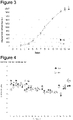
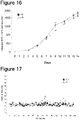
- Cells producing antibody A were cultured under the same conditions by constant-rate fed-batch culture using a 1 L to 25 L culture apparatus for each of samples 1 to 9 in which the initial culture medium and the feed culture medium are combined as in Table 1. Culture was performed for 14 days at a pH of 6.7 to 7.2 and at 34°C to 38°C, and the feed culture medium was added on the third day after the start of the culture.
- a composition containing an antibody was collected from the culture solution after culturing for 14 days, and purified by affinity column chromatography with Protein A, and the eluate was then concentrated. Samples 1 to 8 were adjusted to an antibody concentration of about 30 mg/mL (26.7 mg/mL to 31.4 mg/mL). Sample 9 was further concentrated to an antibody concentration of 200 mg/mL or more.
- coloring and the VB12 content were evaluated.
- the coloring was evaluated by visual assessment. For samples 1, 5 and 7, the composition was slightly colored (slightly red). For sample 9, the composition was colored (red). On the other hand, for samples 2 to 4 and 6 to 8, the composition was not colored (colorless).
- the concentration of cobalt contained in the antibody-containing composition was measured by ICP-MS (inductively coupled plasma-mass spectrometry), and the molar concentration ratio of cobalt to antibody (cobalt/antibody [%]) was calculated to estimate the content of VB12 (molar concentration ratio of VB12 to antibody (VB 12/antibody [%])).
- Table 1 shows the results. [Table 1] Sample No.
- Cells producing antibody B or cells producing antibody C were cultured under the same conditions by constant-rate fed-batch culture using a 1 L culture apparatus for each of sample 10 (VB+) and sample 11 (VB-) in which the condition of an initial culture medium and a feed culture medium is set as in Table 1-1. Culture was performed for 14 days at a pH of 6.7 to 7.2 and at 34°C to 38°C, and the feed culture medium was added on the third day after the start of the culture.
- Cells producing antibody B or cells producing antibody C were cultured under the same conditions by constant-rate fed-batch culture using a 1 L culture apparatus for each of sample 10 (VB+) and sample 12 (VB-) in which the condition of an initial culture medium and a feed culture medium is set as in Table 1-1. Culture was performed for 14 days at a pH of 6.7 to 7.2 and at 34°C to 38°C, and the feed culture medium was added on the third day after the start of the culture.
- Antibody C VB+ corresponds to the condition for sample No 10 and VB- corresponds to the condition for sample No 11 Amount produced (%) Standard error (%) VB+ 100 1.027 VB- 106.2 1.558
- Antibody C VB+ corresponds to the condition for sample No 10 and VB- corresponds to the condition for sample No 12 Amount produced (%) Standard error (%) VB+ 100 1.027 VB- 107.4 1.623
- Example 2 Using an initial culture medium and a feed culture medium containing VB 12, culture and affinity column chromatography treatment were performed in the same conditions as in Example 1. For the obtained antibody-containing composition, whether it was possible to remove VB 12 by a cation exchange chromatography process, which is a binding/elute method, was examined. As in Example 1, the concentration of cobalt was measured by ICP-MS, and used as an indicator of the concentration of VB12.
- Example 1 Using a culture medium having VB12 contained in an initial culture medium and a feed culture medium, culture, affinity column chromatography treatment, a polishing process and concentration were performed in the same conditions as in Example 1.
- antibody concentration about 30 mg/ml, colored (slightly red)
- an additional study was conducted on adsorption of VB12 to the antibody.
- Potassium cyanide was added to the antibody-containing composition at 0.1% (as a control, a test was also conducted under a condition without the addition of potassium cyanide), and the resulting mixture was held at 37°C for 45 minutes. These samples were caused to pass through a 5 KD cutoff filter, and collected samples from which the antibody had been removed were analyzed by reversed phase chromatography. The results showed that the potassium cyanide-non-treated sample (KCN-) did not have a peak for VB12 (cyanocobalamine), whereas the potassium cyanide-treated sample (KCN+) had a peak indicating VB12 (cyanocobalamine) ( Figure 19 , antibody A). The results showed that VB12 was released from the antibody by the treatment with potassium cyanide, and it was confirmed that VB12 had an effect on coloring of the antibody.
- the present invention can be used for production of a medicament containing a polypeptide.
Landscapes
- Health & Medical Sciences (AREA)
- Chemical & Material Sciences (AREA)
- Organic Chemistry (AREA)
- Life Sciences & Earth Sciences (AREA)
- Genetics & Genomics (AREA)
- Engineering & Computer Science (AREA)
- General Health & Medical Sciences (AREA)
- Biochemistry (AREA)
- Biotechnology (AREA)
- Wood Science & Technology (AREA)
- Zoology (AREA)
- Biomedical Technology (AREA)
- Molecular Biology (AREA)
- Bioinformatics & Cheminformatics (AREA)
- Biophysics (AREA)
- Proteomics, Peptides & Aminoacids (AREA)
- Immunology (AREA)
- Medicinal Chemistry (AREA)
- General Engineering & Computer Science (AREA)
- Microbiology (AREA)
- Cell Biology (AREA)
- Physics & Mathematics (AREA)
- Plant Pathology (AREA)
- Chemical Kinetics & Catalysis (AREA)
- General Chemical & Material Sciences (AREA)
- Hematology (AREA)
- Preparation Of Compounds By Using Micro-Organisms (AREA)
- Micro-Organisms Or Cultivation Processes Thereof (AREA)
- Peptides Or Proteins (AREA)
Applications Claiming Priority (2)
| Application Number | Priority Date | Filing Date | Title |
|---|---|---|---|
| JP2020014739 | 2020-01-31 | ||
| PCT/JP2021/003215 WO2021153723A1 (ja) | 2020-01-31 | 2021-01-29 | 着色を抑制したポリペプチドを含む組成物の製造方法 |
Publications (2)
| Publication Number | Publication Date |
|---|---|
| EP4098751A1 true EP4098751A1 (de) | 2022-12-07 |
| EP4098751A4 EP4098751A4 (de) | 2023-06-21 |
Family
ID=77079170
Family Applications (1)
| Application Number | Title | Priority Date | Filing Date |
|---|---|---|---|
| EP21747230.7A Pending EP4098751A4 (de) | 2020-01-31 | 2021-01-29 | Verfahren zur herstellung einer weniger gefärbten zusammensetzung mit polypeptid |
Country Status (12)
| Country | Link |
|---|---|
| US (1) | US12571018B2 (de) |
| EP (1) | EP4098751A4 (de) |
| JP (1) | JP7621284B2 (de) |
| KR (1) | KR20220134541A (de) |
| CN (1) | CN115038793B (de) |
| AU (1) | AU2021213606B2 (de) |
| BR (1) | BR112022012467A2 (de) |
| CA (1) | CA3163829A1 (de) |
| IL (1) | IL295175A (de) |
| MX (1) | MX2022008339A (de) |
| TW (1) | TWI870543B (de) |
| WO (1) | WO2021153723A1 (de) |
Family Cites Families (11)
| Publication number | Priority date | Publication date | Assignee | Title |
|---|---|---|---|---|
| JP2006212033A (ja) * | 1995-11-17 | 2006-08-17 | Asahi Kasei Corp | 分化抑制ポリペプチド |
| CN101724074B (zh) * | 2008-10-31 | 2012-06-27 | 苏州工业园区晨健抗体组药物开发有限公司 | 血管抑素受体β亚基人源化嵌合及人抗体、其制备及应用 |
| EP2653548A1 (de) * | 2012-04-17 | 2013-10-23 | Greenovation Biotech GmbH | Verfahren zur Erhöhung der Sekretion rekombinanter Proteine |
| US20130281355A1 (en) | 2012-04-24 | 2013-10-24 | Genentech, Inc. | Cell culture compositions and methods for polypeptide production |
| MX2017005774A (es) | 2014-12-19 | 2017-07-28 | Chugai Pharmaceutical Co Ltd | Anticuerpos antimiostatina, polipeptidos que contienen regiones fc variantes, y metodos de uso. |
| CN114773469B (zh) | 2015-02-05 | 2025-12-19 | 中外制药株式会社 | 包含离子浓度依赖性的抗原结合结构域的抗体,fc区变体,il-8-结合抗体及其应用 |
| PE20181336A1 (es) | 2015-09-18 | 2018-08-21 | Chugai Pharmaceutical Co Ltd | Anticuerpos que se unen a interleucina 8 (il-8) y sus usos |
| WO2017173359A2 (en) * | 2016-03-31 | 2017-10-05 | University Of Southern California | Methods of constructing immunoglobulin fusion proteins inhibiting cathepsin b and compositions thereof |
| TWI760396B (zh) * | 2016-06-17 | 2022-04-11 | 日商中外製藥股份有限公司 | 抗肌抑素抗體及使用方法 |
| WO2018208743A1 (en) | 2017-05-09 | 2018-11-15 | Bristol-Myers Squibb Company | Method of controlling the formation of pink color during antibody manufacturing |
| CA3071236A1 (en) | 2017-09-29 | 2019-04-04 | Chugai Seiyaku Kabushiki Kaisha | Multispecific antigen-binding molecule having blood coagulation factor viii (fviii) cofactor function-substituting activity, and pharmaceutical formulation containing said moleculeas active ingredient |
-
2021
- 2021-01-29 US US17/795,075 patent/US12571018B2/en active Active
- 2021-01-29 KR KR1020227025167A patent/KR20220134541A/ko active Pending
- 2021-01-29 AU AU2021213606A patent/AU2021213606B2/en active Active
- 2021-01-29 EP EP21747230.7A patent/EP4098751A4/de active Pending
- 2021-01-29 BR BR112022012467A patent/BR112022012467A2/pt unknown
- 2021-01-29 CA CA3163829A patent/CA3163829A1/en active Pending
- 2021-01-29 IL IL295175A patent/IL295175A/en unknown
- 2021-01-29 CN CN202180011858.6A patent/CN115038793B/zh active Active
- 2021-01-29 JP JP2021574143A patent/JP7621284B2/ja active Active
- 2021-01-29 WO PCT/JP2021/003215 patent/WO2021153723A1/ja not_active Ceased
- 2021-01-29 TW TW110103427A patent/TWI870543B/zh active
- 2021-01-29 MX MX2022008339A patent/MX2022008339A/es unknown
Also Published As
| Publication number | Publication date |
|---|---|
| JPWO2021153723A1 (de) | 2021-08-05 |
| CN115038793B (zh) | 2025-04-25 |
| EP4098751A4 (de) | 2023-06-21 |
| MX2022008339A (es) | 2022-08-04 |
| BR112022012467A2 (pt) | 2022-09-06 |
| IL295175A (en) | 2022-09-01 |
| TWI870543B (zh) | 2025-01-21 |
| CN115038793A (zh) | 2022-09-09 |
| AU2021213606A1 (en) | 2022-07-21 |
| JP7621284B2 (ja) | 2025-01-24 |
| KR20220134541A (ko) | 2022-10-05 |
| TW202142694A (zh) | 2021-11-16 |
| CA3163829A1 (en) | 2021-08-05 |
| AU2021213606B2 (en) | 2026-07-23 |
| US20230093028A1 (en) | 2023-03-23 |
| WO2021153723A1 (ja) | 2021-08-05 |
| US12571018B2 (en) | 2026-03-10 |
Similar Documents
| Publication | Publication Date | Title |
|---|---|---|
| JP6055615B2 (ja) | Dachyp組成物および方法 | |
| RU2678142C2 (ru) | Способ культивирования клеток млекопитающих и получение полипептидов с использованием композиции клеточной культуры | |
| EP3880824B1 (de) | Kontrolle von spurenmetallen bei der herstellung von anti-cd38-antikörpern | |
| KR20210049155A (ko) | 멸균 크로마토그래피 수지 및 제조 공정에서 이의 용도 | |
| KR20200026248A (ko) | 당단백질을 만들기 위한 세포 배양 과정 | |
| JP7812826B2 (ja) | 生物活性が低下した抗体バリアント | |
| US12571018B2 (en) | Method for producing composition containing polypeptide with suppressed coloring | |
| JP2023549809A (ja) | Fab高マンノースグリコフォーム | |
| HK40076465A (en) | Method for producing less colored composition containing polypeptide | |
| US10519479B1 (en) | Methods for modifying glycosylation using manganese | |
| HK40076465B (en) | Method for producing less colored composition containing polypeptide | |
| WO2025262319A1 (en) | Modifying blue color formation in bioprocesses | |
| HK40060443B (en) | Control of trace metals during production of anti-cd38 antibodies | |
| HK40060443A (en) | Control of trace metals during production of anti-cd38 antibodies | |
| EA045535B1 (ru) | Контроль содержания микроэлементов-металлов во время продукции антител к cd38 | |
| HK40031063A (en) | Antibody variant and isoform with lowered biological activity |
Legal Events
| Date | Code | Title | Description |
|---|---|---|---|
| STAA | Information on the status of an ep patent application or granted ep patent |
Free format text: STATUS: THE INTERNATIONAL PUBLICATION HAS BEEN MADE |
|
| PUAI | Public reference made under article 153(3) epc to a published international application that has entered the european phase |
Free format text: ORIGINAL CODE: 0009012 |
|
| STAA | Information on the status of an ep patent application or granted ep patent |
Free format text: STATUS: REQUEST FOR EXAMINATION WAS MADE |
|
| 17P | Request for examination filed |
Effective date: 20220818 |
|
| AK | Designated contracting states |
Kind code of ref document: A1 Designated state(s): AL AT BE BG CH CY CZ DE DK EE ES FI FR GB GR HR HU IE IS IT LI LT LU LV MC MK MT NL NO PL PT RO RS SE SI SK SM TR |
|
| DAV | Request for validation of the european patent (deleted) | ||
| DAX | Request for extension of the european patent (deleted) | ||
| A4 | Supplementary search report drawn up and despatched |
Effective date: 20230522 |
|
| RIC1 | Information provided on ipc code assigned before grant |
Ipc: C12N 5/00 20060101ALI20230515BHEP Ipc: C07K 16/24 20060101ALI20230515BHEP Ipc: C07K 16/22 20060101ALI20230515BHEP Ipc: C12N 15/13 20060101ALI20230515BHEP Ipc: C12N 5/10 20060101ALI20230515BHEP Ipc: C07K 16/46 20060101ALI20230515BHEP Ipc: C07K 16/18 20060101ALI20230515BHEP Ipc: C12P 21/08 20060101AFI20230515BHEP |
|
| STAA | Information on the status of an ep patent application or granted ep patent |
Free format text: STATUS: EXAMINATION IS IN PROGRESS |
|
| 17Q | First examination report despatched |
Effective date: 20250220 |