EP4092016A1 - Verfahren zur synthetisierung eines zirkoniumkomplexes - Google Patents
Verfahren zur synthetisierung eines zirkoniumkomplexes Download PDFInfo
- Publication number
- EP4092016A1 EP4092016A1 EP20914026.8A EP20914026A EP4092016A1 EP 4092016 A1 EP4092016 A1 EP 4092016A1 EP 20914026 A EP20914026 A EP 20914026A EP 4092016 A1 EP4092016 A1 EP 4092016A1
- Authority
- EP
- European Patent Office
- Prior art keywords
- acid
- zirconium
- synthesizing
- zirconium complex
- dota
- Prior art date
- Legal status (The legal status is an assumption and is not a legal conclusion. Google has not performed a legal analysis and makes no representation as to the accuracy of the status listed.)
- Pending
Links
Images


Classifications
-
- C—CHEMISTRY; METALLURGY
- C07—ORGANIC CHEMISTRY
- C07F—ACYCLIC, CARBOCYCLIC OR HETEROCYCLIC COMPOUNDS CONTAINING ELEMENTS OTHER THAN CARBON, HYDROGEN, HALOGEN, OXYGEN, NITROGEN, SULFUR, SELENIUM OR TELLURIUM
- C07F7/00—Compounds containing elements of Groups 4 or 14 of the Periodic Table
-
- C—CHEMISTRY; METALLURGY
- C07—ORGANIC CHEMISTRY
- C07D—HETEROCYCLIC COMPOUNDS
- C07D257/00—Heterocyclic compounds containing rings having four nitrogen atoms as the only ring hetero atoms
- C07D257/02—Heterocyclic compounds containing rings having four nitrogen atoms as the only ring hetero atoms not condensed with other rings
-
- C—CHEMISTRY; METALLURGY
- C07—ORGANIC CHEMISTRY
- C07D—HETEROCYCLIC COMPOUNDS
- C07D255/00—Heterocyclic compounds containing rings having three nitrogen atoms as the only ring hetero atoms, not provided for by groups C07D249/00 - C07D253/00
- C07D255/02—Heterocyclic compounds containing rings having three nitrogen atoms as the only ring hetero atoms, not provided for by groups C07D249/00 - C07D253/00 not condensed with other rings
-
- C—CHEMISTRY; METALLURGY
- C07—ORGANIC CHEMISTRY
- C07F—ACYCLIC, CARBOCYCLIC OR HETEROCYCLIC COMPOUNDS CONTAINING ELEMENTS OTHER THAN CARBON, HYDROGEN, HALOGEN, OXYGEN, NITROGEN, SULFUR, SELENIUM OR TELLURIUM
- C07F7/00—Compounds containing elements of Groups 4 or 14 of the Periodic Table
- C07F7/003—Compounds containing elements of Groups 4 or 14 of the Periodic Table without C-Metal linkages
-
- C—CHEMISTRY; METALLURGY
- C07—ORGANIC CHEMISTRY
- C07B—GENERAL METHODS OF ORGANIC CHEMISTRY; APPARATUS THEREFOR
- C07B2200/00—Indexing scheme relating to specific properties of organic compounds
- C07B2200/05—Isotopically modified compounds, e.g. labelled
-
- C—CHEMISTRY; METALLURGY
- C22—METALLURGY; FERROUS OR NON-FERROUS ALLOYS; TREATMENT OF ALLOYS OR NON-FERROUS METALS
- C22B—PRODUCTION AND REFINING OF METALS; PRETREATMENT OF RAW MATERIALS
- C22B3/00—Extraction of metal compounds from ores or concentrates by wet processes
- C22B3/20—Treatment or purification of solutions, e.g. obtained by leaching
- C22B3/44—Treatment or purification of solutions, e.g. obtained by leaching by chemical processes
-
- C—CHEMISTRY; METALLURGY
- C22—METALLURGY; FERROUS OR NON-FERROUS ALLOYS; TREATMENT OF ALLOYS OR NON-FERROUS METALS
- C22B—PRODUCTION AND REFINING OF METALS; PRETREATMENT OF RAW MATERIALS
- C22B34/00—Obtaining refractory metals
- C22B34/10—Obtaining titanium, zirconium or hafnium
- C22B34/14—Obtaining zirconium or hafnium
-
- Y—GENERAL TAGGING OF NEW TECHNOLOGICAL DEVELOPMENTS; GENERAL TAGGING OF CROSS-SECTIONAL TECHNOLOGIES SPANNING OVER SEVERAL SECTIONS OF THE IPC; TECHNICAL SUBJECTS COVERED BY FORMER USPC CROSS-REFERENCE ART COLLECTIONS [XRACs] AND DIGESTS
- Y02—TECHNOLOGIES OR APPLICATIONS FOR MITIGATION OR ADAPTATION AGAINST CLIMATE CHANGE
- Y02P—CLIMATE CHANGE MITIGATION TECHNOLOGIES IN THE PRODUCTION OR PROCESSING OF GOODS
- Y02P10/00—Technologies related to metal processing
- Y02P10/20—Recycling
Definitions
- the present invention relates to a method for synthesizing a zirconium complex, in which a complex of radioactive zirconium such as 89 Zr and a chelating agent is synthesized.
- radioactive zirconium ( 89 Zr) has high resolution and a medium half-life of about 78 hours and is thus a radio isotope effective in medical imaging.
- a method for producing radioactive zirconium a method irradiating an yttrium (Y) target with proton rays is known.
- Y yttrium
- irradiation for a few hours generates a minute amount of radioactive zirconium in units of a few gigabecquerels (GBq) (a few tens of to a few hundreds of nanograms (ng) in terms of mass) in yttrium in units of a few hundreds of milligrams (mg).
- GBq gigabecquerels
- DOTA and NOTA are chelating agents having high versatility forming complexes with almost all metal nuclides such as radioactive copper (Cu), gallium (Ga), yttrium (Y), indium (In), lutetium (Lu), and actinium (Ac). Formation of a complex of DOTA and zirconium (Zr) has so far been considered to be difficult, but it has been revealed that the complex can be formed by reacting them at a high temperature of about 95°C (refer to Non Patent Literature 1).
- Patent Literature 1 Japanese Patent Application Laid-open No. 2018-123372
- Non Patent Literature 1 Zirconium tetraazamacrocycle complexes display extraordinary stability and provide a new strategy for zirconium-89-based radiopharmaceutical development, Chem. Sci. 2017, 8, 2309-2314 .
- Non Patent Literature 2 Evaluation of a chloride-based 89Zr isolation strategy using a tributyl phosphate (TBP)-functionalized extraction resin, Nucl. Bio. and Med., 2018, 64, 1-7 .
- TBP tributyl phosphate
- the radiochemical yield means a yield of a target radioactive compound, is calculated by dividing the radioactivity of the target compound by the radioactivity of a raw material, and may be referred to simply as a yield.
- a drug for use in positron emission tomography (hereinafter, a PET drug)
- PET positron emission tomography
- DOTA and radioactive zirconium are desirably bonded to each other with a reaction rate higher than 90%.
- the present invention has been made in view of the above, and an object thereof is to provide a method for synthesizing a zirconium complex, in which a zirconium complex can be synthesized by reacting a chelating agent such as DOTA or NOTA, even with a low concentration, and radioactive zirconium with a high reaction rate.
- a chelating agent such as DOTA or NOTA
- a method for synthesizing a zirconium complex includes setting a temperature of a mixed solution at a certain temperature or more to synthesize a zirconium complex, the mixed solution being obtained by mixing: an organic solvent containing an organic substance having water miscibility; a chelating agent solution in which a chelating agent containing a structure represented by General Formula (1) or General Formula (2) is dissolved; and zirconium dissolved in an acidic solution,
- the organic substance is methanol or ethanol.
- a dipole moment of the organic substance is less than 3.0 D.
- a concentration of the organic substance is 40% by volume or more.
- an oxalic acid concentration is adjusted to be 10 -6 mol/L or more and 10 -4 mol/L or less.
- the certain temperature is 35°C or more.
- the organic solvent is a solvent purified with a metal removing agent.
- the acidic solution is hydrochloric acid.
- zirconium dissolved in the acidic solution is mixed into a solution in which the organic solvent and the chelating agent solution are mixed together immediately before heating at the certain temperature or more or after the heating.
- a molecular probe is bonded via at least one structure selected from the group consisting of Chemical Formulae (16) to (21) and (26) or a linker is bonded to a molecular probe via at least one structure selected from the group consisting of Chemical Formulae (16) to (21) and (26):
- the molecular probe is a protein, a peptide, or a low-molecular weight organic compound.
- the protein or the peptide includes a natural amino acid, a non-natural amino acid, or both the natural amino acid and the non-natural amino acid and has a linear-chain structure or a cyclic structure.
- the linker is polyethylene glycol, an alkyl chain, piperazine, or a complex thereof.
- the method for synthesizing a zirconium complex according to the present invention can synthesize a zirconium complex by reacting a chelating agent such as DOTA or NOTA, even with a low concentration, and radioactive zirconium with a high radiochemical yield.
- a chelating agent such as DOTA or NOTA
- DOTA indicated by General Formula (1) below can easily bond to radio isotopes (RIs) of many kinds of metals and has thus conventionally widely been used as a generalpurpose chelating agent. Furthermore, in many drugs, methods for synthesizing DOTA derivatives have been established, and DOTA and derivatives thereof (1,4,7,10-tetrakis(carbamoylmethyl)-1,4,7,10-tetraazacyclododecane (DOTAM) and 1,4,7,10-tetraazacyclododecane-1,4,7,10-tetra(methylene phosphonic acid) (DOTP), for example) are easily available.
- DOTAM 1,4,7,10-tetraazacyclododecane
- DTP 1,4,7,10-tetraazacyclododecane-1,4,7,10-tetra(methylene phosphonic acid)
- n is an integer of 0 or more.
- At least two of R 5 , R 6 , R 7 , R 8 , R 9 , R 10 , R 11 , R 12 , R 13 , R 14 , R 15 , R 16 , R 17 , R 18 , R 19 , and R 20 are at least two selected from a carboxylic acid, a primary amide, hydroxamic acid, phosphonic acid, phosphoric acid, sulfonic acid, an alcohol, an amine, phenol, aniline, and an ester, a secondary amide, hydroxamic acid, and a phosphate that are each obtained by adding a substituent to the aforementioned, with the residual substituents being each hydrogen, an alkyl chain, a tert-butyl blocked carboxylic acid, nitrobenzene, or a substituent-added alkyl chain.
- a PET probe or a functional group facilitating bonding of a PET probe is optionally added to a functional group contained in R 5 to R 20 .
- the functional group facilitating bonding is a carboxylic acid, a succinimide carboxylate, a tetrafluorophenol carboxylate, an alcohol, an amine, a thiol, an isothiocyanate, maleimide, phenol, aniline, benzoic acid, phenyl isothiocyanate, or an alkyne, an azide, dibenzocyclooctyne (DBCO), bicyclononyne (BCN), trans-cyclooctene (TCO), norbornene, tetrazine, or methyltetrazine, which are each a click chemistry reagent.
- R 5 to R 20 optionally have a structure of the functional group facilitating bonding or a condensed structure of a PET probe and the functional group facilitating bonding.
- the functional group described above may have still another compound bonded via an ester bond, an amide bond, or the like or have branching for holding another compound from an alkyl chain.
- Specific examples include crosslink-forming functional groups such as succinimide, isothiocyanate, an amine, a thiol, and a carboxylic acid and click chemistry-oriented functional groups such as an azide, an alkene, an alkyne, and tetrazine.
- a drug for use in molecular imaging may be bonded via these crosslink-forming functional groups.
- n in Chemical Formulae (3-2) to (3-4) is an integer of 0 or more.
- n in General Formulae (4) to (21) is an integer of 0 or more.
- General Formulae (4) to (21) are functional groups that are likely to coordinately bond to metal.
- At least two of R 5 to R 12 are preferably selected from the structures represented by General Formulae (4) to (21).
- one selected from the structures represented by General Formulae (22) to (26) below can be employed.
- the structures represented by General Formulae (22) to (26) are structures that do not form any complex with a metal ion or are hard to form a complex therewith.
- a molecular probe may be bonded via at least one structure selected from the group consisting of Chemical Formulae (16) to (26), or a linker may be bonded to a molecular probe via at least one structure selected from the group consisting of Chemical Formulae (16) to (26).
- a complex of DOTA or a derivative of DOTA and a drug such as an antibody, a protein, a peptide, or a low-molecular weight organic compound as an object of a molecular imaging experiment can also be used.
- a drug such as an antibody, a protein, a peptide, or a low-molecular weight organic compound as an object of a molecular imaging experiment
- the protein or the peptide one including a natural amino acid, a non-natural amino acid, or both the natural amino acid and the non-natural amino acid and having a linear-chain structure or a cyclic structure can be employed.
- a method amidating one carboxylic acid in the structure of DOTA and crosslinking it with the drug and a substance obtained through crosslinking from a cyclic alkyl chain in the structure of DOTA are known.
- Bonding may be performed via an appropriate linker such as polyethylene glycol between DOTA and the drug. Specifically, it has been used for high-molecular drugs such as antibodies and low-molecular drugs such as PSMA-617.
- the linker is typically, but is not necessarily limited to, polyethylene glycol, an alkyl chain, piperazine, or a complex of polyethylene glycol, an alkyl chain, or piperazine.
- the substance as an object of bonding is not limited to DOTA and also includes derivatives thereof and complexes with drugs. That is, for R in each of General Formulae (16) to (21) and (26) described above, one selected from the structures represented by Chemical Formulae (27) to (47) below can be employed.
- 89 Zr may be complexed in the DOTA structure after bonding the drug to R or the drug may be bonded to R after complexing 89 Zr.
- 89 Zr has an appropriate half-life and high resolution and is thus a nuclide extremely suitable for use in medical imaging.
- deferoxamine (DFO) indicated by Chemical Formula (100) below has conventionally been used, for example.
- DFO having a weak bonding force with those other than Zr, is substantially an exclusive chelating agent for radioactive zirconium, and thus has a problem in that it has poor versatility and cannot be used also for imaging of other nuclides.
- a complex of DFO and the PET probe is required to be synthesized only for 89 Zr imaging, causing a problem of an increased cost of synthesis.
- DFO has an insufficient bonding force in bonding to Zr, causing a problem in that radioactive zirconium separates from a drug in living bodies in molecular imaging.
- the inventor of the present invention variously studied the problem and the cause about the foregoing reaction of 89 Zr and DOTA and thought that to obtain a high radiochemical yield in a complex forming reaction of 89 Zr and DOTA, it was necessary that a reaction rate be increased or that formation of a hydroxide of 89 Zr be inhibited. Given these circumstances, the inventor of the present invention performed various experiments and made earnest studies on the increase in the reaction rate and inhibition of the formation of the hydroxide.
- the inventor of the present invention performed experiments in which metal ions such as iron ions (Fe 3+ ), titanium ions (Ti 4+ ) , and yttrium ions (Y 3+ ) as impurities other than 89 Zr were mixed so as to have a molar concentration equal to DOTA with a concentration of 10 -2 mol/L to be reacted. Consequently, as listed in Table 1, it was revealed that the bonding rate, that is, the radiochemical yield of 89 Zr reduced to about 10% to 32%. That is, it is revealed that DOTA reacts with the other metal ions in preference to Zr and that the other metal ions and Zr are not exchanged after the reaction.
- metal ions such as iron ions (Fe 3+ ), titanium ions (Ti 4+ ) , and yttrium ions (Y 3+ ) as impurities other than 89 Zr were mixed so as to have a molar concentration equal to DOTA with a concentration of 10 -2 mol/L to
- the metal ions as impurities are preferably removed in the present reaction.
- metals as impurities are preferably removed by a metal removing agent such as a styrene-vinylbenzene copolymer containing iminodiacetate ions in a buffer solution and/or an organic solvent for use in the reaction of 89 Zr and DOTA.
- a metal removing agent such as a styrene-vinylbenzene copolymer containing iminodiacetate ions in a buffer solution and/or an organic solvent for use in the reaction of 89 Zr and DOTA.
- the purity of a purified solution of 89 Zr may be improved by employing the method described in Patent Literature 1.
- Table 1 Added metal ion Bonding rate of 89 Zr No addition 92% Y3+ 10% Ti 4+ 12% Fe3+ 32%
- the inventor of the present invention added dimethylsulfoxide (DMSO) indicated by Chemical Formula (200) below to react 89 Zr and DOTA, and it was confirmed that the reaction time was about 30 minutes, which was a half of conventional 1 hour, and that the radiochemical yield improved up to 95%. Furthermore, a phenomenon in which 89 Zr becomes zirconium hydroxide to adhere to the reaction vessel was almost unobserved.
- DMSO dimethylsulfoxide
- the inventor of the present invention made further studies based on the earnest studies described above.
- the inventor of the present invention studied a method to remove the organic solvent more efficiently. That is, the what is called highly polar organic solvent such as DMSO described above has a boiling point of as high as about 189°C, and thus it is extremely difficult to remove the solvent by evaporation.
- the highly polar organic solvent generally has a high boiling point; N,N-dimethylformamide has a boiling point of 153°C, whereas N-methylpyrrolidone has a boiling point of 202°C, for example. When such a highly polar organic solvent is used, removal of the solvent is often a problem.
- the inventor of the present invention also studied removal of the organic solvent by solid phase extraction using a C18 column or the like.
- the organic solvent with a high concentration hinder the hydrophobic interaction between ligands of a chelating agent-drug complex and a solid phase to hinder retention in the column, and thus it was difficult to separate the organic solvent by solid phase extraction.
- the highly polar organic solvent can be removed using high performance liquid chromatography (HPLC), there was a problem in that it not only required dedicated equipment but also took time for separation.
- the inventor of the present invention conducted various experiments and studies on organic solvents other than the highly polar organic solvent and devised a method using an organic solvent having water miscibility with moderate polarity in the reaction of 89 Zr and DOTA.
- the organic solvent with moderate polarity generally has a low boiling point and can easily be removed by evaporation.
- the inventor of the present invention has found out from the experiments that the concentration of the organic solvent is preferably 40 to 90% by volume and the reaction temperature is preferably 80°C or more. With this, reactivity equal to that of DMSO described above can be obtained.
- the inventor of the present invention has also found out that methanol (CH 3 OH), ethanol (C 2 H 5 OH), and the like are preferred as the organic solvent having water miscibility with moderate polarity.
- the inventor of the present invention first studied a factor responsible for the low yield of the complex of DOTA and zirconium ions in water.
- an intermediate state complex with the structure indicated on the left side of Reaction Formulae (301a) and (301b) is taken.
- the intermediate state complex is a complex in which two of the cyclic amines on a diagonal line are protonated, four carboxylic acids coordinate to the metal, and a plurality of water molecules coordinate to the metal.
- 89 Zr is bound to DOTA as indicated on the right side of Reaction Formula (301a).
- 89 Zr tends to generate a hydroxide, and thus it is considered that 89 Zr is desorbed from DOTA to easily become zirconium hydroxide by the reaction indicated in Reaction Formula (301b), resulting in the lowered radiochemical yield.
- the inventor of the present invention then studied a factor improving the yield of Zr by a mixture solvent in which an organic solvent and water are mixed together.
- the inventor of the present invention expected that the water molecules coordinating to zirconium in the intermediate state complex would hinder the reaction to form the complex.
- the inventor of the present invention considered that by replacing the coordination of the water molecules by the coordination of an organic solvent L as indicated in Reaction Formula (302a) below, the generation of zirconium hydroxide indicated in Reaction Formula (302b) would be inhibited, and the yield was able to be increased.
- the inventor of the present invention thought of a method of mixing the organic solvent with a reaction solution in the synthesis of zirconium.
- the inventor of the present invention studied various organic solvents. That is, the inventor of the present invention set the concentration at 50% by volume in the various organic solvents and compared the yield when DOTA and radioactive zirconium were reacted in this solution with a reaction temperature of 100°C and a reaction time of 30 minutes. Consequently, it was found out that the yield greatly varied depending on the type of the organic solvents. Furthermore, it was confirmed that the organic solvent with higher polarity tended to give a higher yield. Thus, the inventor of the present invention expected that the organic solvent with stronger affinity with zirconium would be more likely to hinder the hydration of zirconium and thus inhibit the generation of zirconium hydroxide.
- the organic solvent with a low degree of polarity it was expected that it would be inferior in affinity with zirconium to the highly polar one and thus have a smaller effect of hindering the hydration of zirconium and that it would be inferior in the yield as well.
- a particularly good radiochemical yield was obtained in the highly polar organic solvent such as DMSO, DMF, or NMP with a dipole moment of 3.0 D or more, it was found out that a relatively good radiochemical yield was obtained even with an organic substance with moderate polarity with a dipole moment of less than 3.0 D (hereinafter, a moderately polar organic solvent), or the moderately polar organic solvent having water miscibility such as methanol or ethanol.
- FIG. 5 is a graph illustrating a relation between the concentration of the moderately polar organic solvent and the yield. As illustrated in FIG. 5 , it was confirmed that the yield was improved by making the organic solvent concentration higher concentrations, and the yield became maximum at 60% by volume for both methanol and ethanol. Thus, it was shown that the yield was able to be improved by optimizing the concentration of the moderately polar organic solvent.
- the inventor of the present invention performed various experiments to find out that the radiochemical yield of DOTA- 89 Zr varies by a method for purifying 89 Zr. Specifically, when a 89 Zr solution prepared by the method of purification described in Non Patent Literature 1 and Non Patent Literature 2 was used, the yield was extremely low. On the other hand, it was found out that when a 89 Zr solution purified by the method described in Patent Literature 2 was used, the yield was high.
- 89 Zr is first roughly purified as an oxalic acid solution using a hydroxamic acid resin and is then replaced by a hydrochloric acid solution using an anion exchange resin.
- the anion exchange resin to which 89 Zr adsorbs is washed with purified water, and then 89 Zr is eluted with hydrochloric acid with a concentration of 1 mol/L.
- oxalic acid of the order of 10 -3 mol/L is dissolved in the 89 Zr solution eluted by the method described in Non Patent Literature 1 and Non Patent Literature 2.
- the anion exchange resin is washed with diluted hydrochloric acid before eluting 89 Zr, whereby the oxalic acid concentration can be reduced; specifically, it was confirmed that the dissolved oxalic acid concentration was able to be reduced to the order of 10 -6 mol/L.
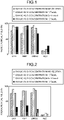
- FIG. 1 is a graph illustrating an influence of oxalic acid on the radiochemical yield of DOTA- 89 Zr in accordance with the oxalic acid concentration
- FIG. 2 is a graph illustrating an influence of oxalic acid on the radiochemical yield of a 89 Zr-DOTA-containing PET probe in accordance with the oxalic acid concentration.
- the inventor of the present invention has found out that there is a preferable oxalic acid concentration in terms of the oxalic acid concentration. That is, the inventor of the present invention has found out that the oxalic acid concentration is typically 10 -5 mol/L or more and less than 10 -4 mol/L and preferably suitably 10 -5 mol/L or more and 5 x 10 -5 mol/L or less, although it depends on the drug or the solvent.
- 89 Zr is likely to adhere to a vessel in a condition in which oxalic acid is not added, and thus it is assumed that when the oxalic acid concentration is low, zirconium hydroxide is likely to be generated.
- the inventor of the present invention has also found out that when the oxalic acid concentration is high, although adhesion of 89 Zr to the vessel hardly occurs, a reaction rate reduces. It is considered that this is because although oxalic acid and 89 Zr form a complex to inhibit generation of the hydroxide, complex formation with the drug such as DOTA is hindered.
- an oxalic acid concentration that does not hinder the reaction with DOTA while inhibiting generation of the hydroxide is preferred; it is considered that the range of this oxalic acid concentration is 10 -5 mol/L or more and less than 10 -4 mol/L and suitably 10 -5 mol/L or more and 5 x 10 -5 mol/L or less described above.
- a preferred oxalic acid concentration is a relatively high concentration in the moderately polar substance compared to the highly polar substance. It is considered that this is because the highly polar substance coordinates to 89 Zr in the same manner as oxalic acid and inhibits hydroxylation. That is, it was confirmed that also by controlling the oxalic acid concentration in the reaction solution, radioactive zirconium and DOTA were able to be reacted with a high yield using the moderately polar organic solvent.
- Such an effect could also be obtained with a zirconium-binding organic substance (such as citric acid or ascorbic acid).
- a zirconium-binding organic substance such as citric acid or ascorbic acid.
- the appropriate concentration range may vary from substance to substance.
- the oxalic acid was present with the concentration of about 10 -6 to 10 -5 mol/L.
- the complex formation reaction between DOTA and metal ions has been considered to be ratedetermined by the deprotonation of the cyclic tertiary amine of DOTA. That is, when the cyclic tertiary amine is protonated, although the intermediate complexes indicated on the left side of Chemical Formulae (302), (302a), and (302b) can be formed, the final products indicated on the right side cannot be reached. Thus, the deprotonation reaction of the cyclic tertiary amine rate-determines the complexation reaction. Assuming this mechanism, it is considered that the yield of the radioactive zirconium DOTA complex improves by a decrease in the pKa of the amine.
- Organic solvents are generally less polar than water and thus have the effect of inhibiting ionization of organic compounds, that is, protonation of amino groups or deprotonation of carboxylic acids. This may reduce the acid dissociation constant pKa of the protonated amino group of the reaction intermediate complex and promote the reaction to change it into the target complex. That is, based on the hypothesis that the generation of zirconium hydroxide takes precedence over the reaction with DOTA when 89 Zr is hydrated, the inventor of the present invention assumed that the highly polar organic solvent would coordinate to zirconium in preference to water and inhibit hydration, thus improving the yield.
- the inventor of the present invention has further found out that the moderately polar organic solvent, while having a low ability to coordinate to zirconium, can coordinate to zirconium in preference to water by increasing its concentration to inhibit hydration, thus improving the yield. Furthermore, it is considered that the fact that the yield of the target complex improves by adding a minute amount of a substance with a strong ability to coordinate to zirconium such as oxalic acid also indicates that the hydration hindrance of zirconium contributes to the promotion of the reaction of DOTA and radioactive zirconium.
- the present invention and the one embodiment thereof described in the following have been devised through the foregoing earnest studies by the inventor of the present invention.
- a tricyclic such as NOTA indicated by General Formula (2) below or the like may be used. That is, the earnest studies by the inventor of the present invention described above can be discussed in the same manner even when DOTA is replaced by NOTA.
- n is an integer of 0 or more.
- At least two of R 24 , R 25 , R 26 , R 27 , R 28 , R 29 , R 30 , R 31 , R 32 , R 33 , R 34 , and R 35 are at least two selected from a carboxylic acid, a primary amide, hydroxamic acid, phosphonic acid, phosphoric acid, sulfonic acid, an alcohol, an amine, phenol, aniline, and an ester, a secondary amide, hydroxamic acid, and a phosphate that are each obtained by adding a substituent to the aforementioned, with the residual substituents being each hydrogen, an alkyl chain, a tert-butyl blocked carboxylic acid, nitrobenzene, or a substituent-added alkyl chain.
- a PET probe or a functional group facilitating bonding of a PET probe is optionally added to a functional group contained in R 24 to R 35 .
- the functional group facilitating bonding is the following functional group: a carboxylic acid, a succinimide carboxylate, a tetrafluorophenol carboxylate, an alcohol, an amine, a thiol, an isothiocyanate, maleimide, phenol, aniline, benzoic acid, phenyl isothiocyanate, or an alkyne, an azide, DBCO, BCN, TCO, norbornene, tetrazine, or methyltetrazine, which are each a click chemistry reagent.
- R 24 to R 35 optionally have a structure of the functional group facilitating bonding or a condensed structure of a PET probe and the functional group facilitating bonding.
- the functional group described above may have still another compound bonded via an ester bond, an amide bond, or the like or have branching for holding another compound from an alkyl chain.
- Specific examples include crosslink-forming functional groups such as succinimide, isothiocyanate, an amine, a thiol, and a carboxylic acid and click chemistry-oriented functional groups such as an azide, an alkene, an alkyne, and tetrazine.
- a drug for use in molecular imaging may be bonded via these crosslink-forming functional groups.
- n in Chemical Formulae (3-2) to (3-4) is an integer of 0 or more.
- n in General Formulae (4) to (21) is an integer of 0 or more.
- n in General Formulae (4) to (21) is an integer of 0 or more.
- R 5 to R 20 one selected from the structures represented by General Formulae (22) to (26) below can be employed.
- the structures represented by General Formulae (22) to (26) are structures that do not form any complex with a metal ion or are hard to form a complex therewith.
- a molecular probe may be bonded via at least one structure selected from the group consisting of Chemical Formulae (16) to (21) and (26), or a linker may be bonded to a molecular probe via at least one structure selected from the group consisting of Chemical Formulae (16) to (21) and (26) .
- a complex of NOTA or a derivative of NOTA and a drug such as an antibody, a protein, a peptide, or a low-molecular weight organic compound as an object of a molecular imaging experiment can also be used.
- a drug such as an antibody, a protein, a peptide, or a low-molecular weight organic compound as an object of a molecular imaging experiment
- the protein or the peptide one including a natural amino acid, a non-natural amino acid, or both the natural amino acid and the non-natural amino acid and having a linear-chain structure or a cyclic structure can be employed.
- a method amidating one carboxylic acid in the structure of NOTA and crosslinking it with the drug and a substance obtained through crosslinking from a cyclic alkyl chain in the structure of NOTA are known.
- Bonding may be performed by interposing an appropriate linker such as polyethylene glycol between NOTA and the drug. Specifically, it has been used for high-molecular drugs such as antibodies and low-molecular drugs such as PSMA-617.
- the linker is typically, but is not necessarily limited to, polyethylene glycol, an alkyl chain, piperazine, or a complex of polyethylene glycol, an alkyl chain, or piperazine.
- the substance as an object of bonding is not limited to NOTA and also includes derivatives thereof and complexes with drugs. That is, for R in each of General Formulae (16) to (21) and (26) described above, one selected from the structures represented by Chemical Formulae (27) to (47) below can be employed.
- 89 Zr may be complexed in the NOTA structure after bonding the drug to R or the drug may be bonded to R after complexing 89 Zr.
- Reaction Formulae (1-1) to (1-13) For DOTA represented by General Formula (1), the structures reacted as in Reaction Formulae (1-1) to (1-13) below can also be employed.
- Reaction Formulae (1-1) to (1-13) represented in the order from the left are a DOTA derivative, a substance desired to be bonded (written above the arrow), and a structure after condensation.
- Reaction Formulae (1-11) to (1-13) are click chemistry-oriented methods of bonding.
- Reaction Formulae (2-1) to (2-13) For NOTA represented by General Formula (2), the structures reacted as in Reaction Formulae (2-1) to (2-13) below can be employed.
- Reaction Formulae (2-1) to (2-13) represented in the order from the left are a NOTA derivative, a substance desired to be bonded (written above the arrow), and a structure after condensation.
- Reaction Formulae (2-11) to (2-13) are click chemistry-oriented methods of bonding.
- FIG. 3 is a diagram of an example of a specific method for performing a reaction of zirconium and DOTA according to this embodiment.
- a DOTA solution in which a compound containing DOTA is dissolved as a chelating agent solution with a certain concentration is introduced to a microtube as a reaction vessel.
- DOTA as the chelating agent, 1,4,7,10-tetraazacyclododecane-1,4,7,10-tetraacetic acid was used.
- the concentration of the DOTA solution is 10 -7 mol/L or more and less than 10 -4 mol/L.
- a final concentration of the DOTA solution is 10 -5 mol/L, for example, and an introduction amount is 1 ⁇ L for a solution with a concentration of 10 -2 mol/L, for example.
- a substantially neutral buffer solution is introduced to the microtube.
- a final buffer solution 4-(2-hydroxyethyl)-1-piperazineethanesulfonic acid (HEPES) with a concentration of about 0.25 mol/L and a pH of 7.0 is used, for example.
- An introduction amount thereof is 449 ⁇ L for a solution with a concentration of 0.5 mol/L, for example.
- the buffer solution used in the present embodiment is a buffer solution with metal ions as impurities other than 89 Zr removed by a metal removing agent in advance.
- metal ions such as Fe 3+ , Ti 4+ , and Y 3+ as impurities mixing into a reaction solution to be finally mixed can be reduced.
- an organic solvent containing an organic substance having water miscibility is introduced to the microtube.
- an organic solvent containing methanol or ethanol for example, is used as the organic substance.
- the following describes a relation between the concentration of the organic solvent containing methanol or ethanol and the radiochemical yield of zirconium.
- FIG. 5 is a graph illustrating the dependence of the radiochemical yield of zirconium on the concentration of the organic solvent containing methanol or ethanol.
- the radiochemical yield can be improved compared to the case in which the organic solvent is not mixed by making the organic solvent concentration greater than 0% by volume and 1% by volume or more. It can also be seen from FIG. 5 that the radiochemical yield of 89 Zr peaks when the concentration is 60% by volume. It can also be seen from FIG. 5 that to make the radiochemical yield of 89 Zr 50% or more, for example, preferred is 20% by volume or more for methanol as the organic solvent and 40% by volume or more for ethanol. Furthermore, based on FIG. 5 , the concentration of the organic substance in the organic solvent can be selected in accordance with a required radiochemical yield in 89 Zr.
- the concentration of the organic substance having water miscibility in the organic solvent is preferably 40% by volume or more and more preferably 50% by volume or more from the viewpoint of producing an effect of improving the radiochemical yield.
- the reaction rate reduces, and thus the concentration of the organic substance is desirably 95% by volume or less, and when considering the radiochemical yield, it is more preferably 80% by volume or less and even more preferably 70% by volume or less.
- An introduction amount of the organic solvent is 600 ⁇ L for an organic solvent with a final concentration of 60% by volume, for example.
- the order of introducing the DOTA solution, the buffer solution, and the organic solvent to the microtube is not limited to the order described above, and they can be introduced in various orders.
- an acidic solution containing 89 Zr (a 89 Zr-containing acidic solution) is introduced to the reaction solution within the microtube to generate a mixed solution within the microtube.
- the acidic solution is preferably a solution of a strong acid and is specifically preferably hydrochloric acid (HCl).
- the acidic solution is not necessarily limited to the strong acidic solution such as hydrochloric acid.
- An introduction amount of the acidic solution containing 89 Zr is 50 ⁇ L, for example.
- the yield can further be improved by controlling the concentration of the remaining oxalic acid.
- Specific examples include a method adjusting a mixing ratio with a reaction solvent including a mixed solution of a HEPES buffer solution and the organic solvent in accordance with the oxalic acid concentration of the 89 Zr-containing acidic solution and a method adding an oxalic acid solution.
- FIG. 6 and FIG. 7 are graphs illustrating the dependence of a precipitate generation rate, radiochemical purity, and a radiochemical yield on a methanol concentration and an ethanol concentration, respectively, in the generation of a zirconium complex. That is, when methanol is used as the organic substance having water miscibility, the methanol concentration of the organic solvent can be selected based on the graph illustrated in FIG. 6 . When ethanol is used as the organic substance having water miscibility, the ethanol concentration of the organic solvent can be selected based on the graph illustrated in FIG. 7 . In these cases, the concentration of the organic substance in the organic solvent can be selected to be a concentration so as to make precipitate adhering to the microtube or the like at a desired generation rate or less or a concentration giving a desired radiochemical purity.
- the mixed solution is heated at a certain temperature and is maintained for a certain time.
- DOTA and 89 Zr react.
- the 89 Zrcontaining acidic solution is preferably introduced to the microtube immediately before the heating of the mixed solution. This is because 89 Zr, when left under a neutral condition and at room temperature, undergoes hydroxylation and becomes inactive for the reaction with DOTA. Zirconium hydroxide is a stable compound, and even if temperature is raised thereafter, the reaction of 89 Zr and DOTA does not proceed.
- the mixed solution is preferably immediately heated up to the certain temperature to immediately be reacted with DOTA. After 89 Zr has formed a complex with DOTA, 89 Zr does not experience hydroxidation.
- the certain temperature is preferably 35°C or more; if the substance bonding to DOTA is a substance resistant to high temperature, the certain temperature may be 70°C or more, for example, and specifically 80°C, for example.
- the heating temperature is set at 80°C or more, the boiling point of methanol is 68°C, for example, and the temperature may exceed the boiling point of the organic substance contained in the organic solvent.
- the certain time is about 30 minutes, for example.
- the acidic solution containing 89 Zr is strongly acidic, and when it is added to the reaction vessel, there is a possibility of pH significantly changing. For this reason, even after the 89 Zr-containing acidic solution is added to the microtube using a high concentration buffer solution, adjustment is required so as to cause the range of pH to fall under a desired range. That is, after the 89 Zr-containing acidic solution is added, pH is preferably checked using a pH meter, pH test paper, or the like.
- the range of pH is preferably 4 or more and 9 or less, more preferably 5 or more and 9 or less, and even more preferably 6 or more and 8 or less.
- FIG. 4 is a diagram illustrating a specific method for performing a reaction of zirconium and DOTA according to the conventional technology.
- a DOTA solution with a concentration of 10 -4 mol/L or more is introduced to a microtube as a reaction vessel.
- the 89 Zrcontaining acidic solution is introduced to the microtube.
- HEPES with a pH of 7.0 as a substantially neutral buffer solution is introduced to the microtube.
- the one embodiment of the present invention can synthesize a zirconium complex by reacting DOTA, even with a low concentration of about 10 -7 to 10 -4 mol/L, and 89 Zr with a high reaction rate of 90% or more.
- hydrochloric acid HCl
- methanol and ethanol are used as the organic substance having water miscibility, it is not necessarily limited to methanol and ethanol, and aqueous solutions of various organic substances having water miscibility such as various alcohols can be used.
- the method for synthesizing a zirconium complex according to the present invention can suitably be used for medical imaging.
Landscapes
- Chemical & Material Sciences (AREA)
- Organic Chemistry (AREA)
- Organic Low-Molecular-Weight Compounds And Preparation Thereof (AREA)
- Inorganic Compounds Of Heavy Metals (AREA)
Applications Claiming Priority (2)
| Application Number | Priority Date | Filing Date | Title |
|---|---|---|---|
| JP2020005187 | 2020-01-16 | ||
| PCT/JP2020/045605 WO2021145099A1 (ja) | 2020-01-16 | 2020-12-08 | ジルコニウム錯体の合成方法 |
Publications (2)
| Publication Number | Publication Date |
|---|---|
| EP4092016A1 true EP4092016A1 (de) | 2022-11-23 |
| EP4092016A4 EP4092016A4 (de) | 2024-01-17 |
Family
ID=76864168
Family Applications (1)
| Application Number | Title | Priority Date | Filing Date |
|---|---|---|---|
| EP20914026.8A Pending EP4092016A4 (de) | 2020-01-16 | 2020-12-08 | Verfahren zur synthetisierung eines zirkoniumkomplexes |
Country Status (7)
| Country | Link |
|---|---|
| US (1) | US12606575B2 (de) |
| EP (1) | EP4092016A4 (de) |
| JP (1) | JP7834482B2 (de) |
| KR (1) | KR102937856B1 (de) |
| CN (1) | CN114929717B (de) |
| AU (1) | AU2020423724B2 (de) |
| WO (1) | WO2021145099A1 (de) |
Families Citing this family (1)
| Publication number | Priority date | Publication date | Assignee | Title |
|---|---|---|---|---|
| WO2023240135A2 (en) | 2022-06-07 | 2023-12-14 | Actinium Pharmaceuticals, Inc. | Bifunctional chelators and conjugates |
Family Cites Families (9)
| Publication number | Priority date | Publication date | Assignee | Title |
|---|---|---|---|---|
| KR101044393B1 (ko) | 2007-12-27 | 2011-06-27 | 주식회사 엘지화학 | 지르코늄 화합물을 포함하는 에스테르화 촉매 조성물 및이를 이용한 에스테르 화합물의 제조방법 |
| US20140147381A1 (en) | 2012-11-29 | 2014-05-29 | Gregory David Espenan | 89zr compounds, to include somatostatin, apparatus and products comprising such compounds, methods of making same, and methods of using same for radio imaging and/or treatment |
| US10195295B2 (en) | 2014-02-06 | 2019-02-05 | T2Pharma Gmbh | Process for purifying 1,4,7,10-tetra-azacyclododecane-1,4,7,10-tetraacetic acid |
| GB201518996D0 (en) | 2015-10-27 | 2015-12-09 | Magnesium Elektron Ltd | Zirconia-based compositions for use as three-way catalysts |
| WO2017161356A1 (en) | 2016-03-18 | 2017-09-21 | Wake Forest University | Compounds, compositions and associated methods using zirconium-89 in immuno-positron emission tomography |
| CN106075484A (zh) | 2016-06-28 | 2016-11-09 | 北京肿瘤医院 | 核素标记的前列腺特异性膜抗原靶向抑制剂及其制备方法 |
| JP6665806B2 (ja) | 2017-01-31 | 2020-03-13 | Jfeエンジニアリング株式会社 | ジルコニウムの精製方法および精製装置 |
| MX2020006395A (es) | 2017-12-18 | 2020-12-03 | Janssen Biotech Inc | Radioetiquetado de polipeptidos. |
| CN114206845A (zh) | 2019-07-30 | 2022-03-18 | 杰富意工程技术株式会社 | 锆络合物的合成方法 |
-
2020
- 2020-12-08 JP JP2021570678A patent/JP7834482B2/ja active Active
- 2020-12-08 AU AU2020423724A patent/AU2020423724B2/en active Active
- 2020-12-08 EP EP20914026.8A patent/EP4092016A4/de active Pending
- 2020-12-08 US US17/784,368 patent/US12606575B2/en active Active
- 2020-12-08 CN CN202080092776.4A patent/CN114929717B/zh active Active
- 2020-12-08 KR KR1020227024350A patent/KR102937856B1/ko active Active
- 2020-12-08 WO PCT/JP2020/045605 patent/WO2021145099A1/ja not_active Ceased
Also Published As
| Publication number | Publication date |
|---|---|
| CA3166187A1 (en) | 2021-07-22 |
| EP4092016A4 (de) | 2024-01-17 |
| US12606575B2 (en) | 2026-04-21 |
| JP7834482B2 (ja) | 2026-03-24 |
| CN114929717B (zh) | 2025-01-10 |
| US20230047529A1 (en) | 2023-02-16 |
| JPWO2021145099A1 (de) | 2021-07-22 |
| WO2021145099A1 (ja) | 2021-07-22 |
| AU2020423724B2 (en) | 2024-02-22 |
| KR102937856B1 (ko) | 2026-03-16 |
| CN114929717A (zh) | 2022-08-19 |
| KR20220114616A (ko) | 2022-08-17 |
| AU2020423724A1 (en) | 2022-06-23 |
Similar Documents
| Publication | Publication Date | Title |
|---|---|---|
| EP4006015A1 (de) | Verfahren zur synthetisierung eines zirkoniumkomplexes | |
| EP3212610B1 (de) | Verfahren zur radioaktiven fluor-18-niedrigtemperaturmarkierung von biomolekülen | |
| US9907868B2 (en) | Process for the preparation of complexes of 68Ga | |
| Price et al. | Amino acid based gallium-68 chelators capable of radiolabeling at neutral pH | |
| Aleshin et al. | Zinc and copper complexes with azacrown ethers and their comparative stability in vitro and in vivo | |
| Brandt et al. | 52g/55 Mn-Labelled CDTA-based trimeric complexes as novel bimodal PET/MR probes with high relaxivity | |
| EP3007732B1 (de) | Bifunktionelle chelatoren auf der basis des 1,4-diazepingerüstes (daza) zur nichtinvasiven molekularen bildgebung | |
| US12606575B2 (en) | Method for synthesizing zirconium complex | |
| CA3166187C (en) | Method for synthesizing zirconium complex | |
| WO2020141723A1 (ko) | 칼코부트롤의 제조방법 | |
| CN104307002A (zh) | 一种适合临床应用的无载体[*i]mibg的制备方法及应用 | |
| JP6947008B2 (ja) | ジルコニウムの標識方法 | |
| CA2634666A1 (en) | Stabilized compositions and methods for radiolabeling pharmaceuticals with alpha-particle emitters | |
| Schirrmacher et al. | Silicon Fluoride Acceptors (SIFAs) for Peptide and Protein Labeling with 18F | |
| EP3590911A1 (de) | Reagenz und verfahren zur ortsspezifischen deoxyfluorierung von peptiden |
Legal Events
| Date | Code | Title | Description |
|---|---|---|---|
| STAA | Information on the status of an ep patent application or granted ep patent |
Free format text: STATUS: THE INTERNATIONAL PUBLICATION HAS BEEN MADE |
|
| PUAI | Public reference made under article 153(3) epc to a published international application that has entered the european phase |
Free format text: ORIGINAL CODE: 0009012 |
|
| STAA | Information on the status of an ep patent application or granted ep patent |
Free format text: STATUS: REQUEST FOR EXAMINATION WAS MADE |
|
| 17P | Request for examination filed |
Effective date: 20220531 |
|
| AK | Designated contracting states |
Kind code of ref document: A1 Designated state(s): AL AT BE BG CH CY CZ DE DK EE ES FI FR GB GR HR HU IE IS IT LI LT LU LV MC MK MT NL NO PL PT RO RS SE SI SK SM TR |
|
| DAV | Request for validation of the european patent (deleted) | ||
| DAX | Request for extension of the european patent (deleted) | ||
| A4 | Supplementary search report drawn up and despatched |
Effective date: 20231220 |
|
| RIC1 | Information provided on ipc code assigned before grant |
Ipc: C22B 3/44 20060101ALI20231214BHEP Ipc: C07F 7/00 20060101ALI20231214BHEP Ipc: C22B 34/14 20060101ALI20231214BHEP Ipc: C07D 257/02 20060101ALI20231214BHEP Ipc: C07D 255/02 20060101AFI20231214BHEP |