EP4069538B1 - Antriebseinheit und antriebsanordnung - Google Patents
Antriebseinheit und antriebsanordnung Download PDFInfo
- Publication number
- EP4069538B1 EP4069538B1 EP20808292.5A EP20808292A EP4069538B1 EP 4069538 B1 EP4069538 B1 EP 4069538B1 EP 20808292 A EP20808292 A EP 20808292A EP 4069538 B1 EP4069538 B1 EP 4069538B1
- Authority
- EP
- European Patent Office
- Prior art keywords
- shaft
- electric rotary
- rotary machine
- drive unit
- rotor
- Prior art date
- Legal status (The legal status is an assumption and is not a legal conclusion. Google has not performed a legal analysis and makes no representation as to the accuracy of the status listed.)
- Active
Links
Images


Classifications
-
- B—PERFORMING OPERATIONS; TRANSPORTING
- B60—VEHICLES IN GENERAL
- B60K—ARRANGEMENT OR MOUNTING OF PROPULSION UNITS OR OF TRANSMISSIONS IN VEHICLES; ARRANGEMENT OR MOUNTING OF PLURAL DIVERSE PRIME-MOVERS IN VEHICLES; AUXILIARY DRIVES FOR VEHICLES; INSTRUMENTATION OR DASHBOARDS FOR VEHICLES; ARRANGEMENTS IN CONNECTION WITH COOLING, AIR INTAKE, GAS EXHAUST OR FUEL SUPPLY OF PROPULSION UNITS IN VEHICLES
- B60K6/00—Arrangement or mounting of plural diverse prime-movers for mutual or common propulsion, e.g. hybrid propulsion systems comprising electric motors and internal combustion engines
- B60K6/20—Arrangement or mounting of plural diverse prime-movers for mutual or common propulsion, e.g. hybrid propulsion systems comprising electric motors and internal combustion engines the prime-movers consisting of electric motors and internal combustion engines, e.g. HEVs
- B60K6/22—Arrangement or mounting of plural diverse prime-movers for mutual or common propulsion, e.g. hybrid propulsion systems comprising electric motors and internal combustion engines the prime-movers consisting of electric motors and internal combustion engines, e.g. HEVs characterised by apparatus, components or means specially adapted for HEVs
- B60K6/40—Arrangement or mounting of plural diverse prime-movers for mutual or common propulsion, e.g. hybrid propulsion systems comprising electric motors and internal combustion engines the prime-movers consisting of electric motors and internal combustion engines, e.g. HEVs characterised by apparatus, components or means specially adapted for HEVs characterised by the assembly or relative disposition of components
- B60K6/405—Housings
-
- B—PERFORMING OPERATIONS; TRANSPORTING
- B60—VEHICLES IN GENERAL
- B60K—ARRANGEMENT OR MOUNTING OF PROPULSION UNITS OR OF TRANSMISSIONS IN VEHICLES; ARRANGEMENT OR MOUNTING OF PLURAL DIVERSE PRIME-MOVERS IN VEHICLES; AUXILIARY DRIVES FOR VEHICLES; INSTRUMENTATION OR DASHBOARDS FOR VEHICLES; ARRANGEMENTS IN CONNECTION WITH COOLING, AIR INTAKE, GAS EXHAUST OR FUEL SUPPLY OF PROPULSION UNITS IN VEHICLES
- B60K6/00—Arrangement or mounting of plural diverse prime-movers for mutual or common propulsion, e.g. hybrid propulsion systems comprising electric motors and internal combustion engines
- B60K6/20—Arrangement or mounting of plural diverse prime-movers for mutual or common propulsion, e.g. hybrid propulsion systems comprising electric motors and internal combustion engines the prime-movers consisting of electric motors and internal combustion engines, e.g. HEVs
- B60K6/42—Arrangement or mounting of plural diverse prime-movers for mutual or common propulsion, e.g. hybrid propulsion systems comprising electric motors and internal combustion engines the prime-movers consisting of electric motors and internal combustion engines, e.g. HEVs characterised by the architecture of the hybrid electric vehicle
- B60K6/44—Series-parallel type
-
- B—PERFORMING OPERATIONS; TRANSPORTING
- B60—VEHICLES IN GENERAL
- B60K—ARRANGEMENT OR MOUNTING OF PROPULSION UNITS OR OF TRANSMISSIONS IN VEHICLES; ARRANGEMENT OR MOUNTING OF PLURAL DIVERSE PRIME-MOVERS IN VEHICLES; AUXILIARY DRIVES FOR VEHICLES; INSTRUMENTATION OR DASHBOARDS FOR VEHICLES; ARRANGEMENTS IN CONNECTION WITH COOLING, AIR INTAKE, GAS EXHAUST OR FUEL SUPPLY OF PROPULSION UNITS IN VEHICLES
- B60K6/00—Arrangement or mounting of plural diverse prime-movers for mutual or common propulsion, e.g. hybrid propulsion systems comprising electric motors and internal combustion engines
- B60K6/20—Arrangement or mounting of plural diverse prime-movers for mutual or common propulsion, e.g. hybrid propulsion systems comprising electric motors and internal combustion engines the prime-movers consisting of electric motors and internal combustion engines, e.g. HEVs
- B60K6/22—Arrangement or mounting of plural diverse prime-movers for mutual or common propulsion, e.g. hybrid propulsion systems comprising electric motors and internal combustion engines the prime-movers consisting of electric motors and internal combustion engines, e.g. HEVs characterised by apparatus, components or means specially adapted for HEVs
- B60K6/24—Arrangement or mounting of plural diverse prime-movers for mutual or common propulsion, e.g. hybrid propulsion systems comprising electric motors and internal combustion engines the prime-movers consisting of electric motors and internal combustion engines, e.g. HEVs characterised by apparatus, components or means specially adapted for HEVs characterised by the combustion engines
-
- B—PERFORMING OPERATIONS; TRANSPORTING
- B60—VEHICLES IN GENERAL
- B60K—ARRANGEMENT OR MOUNTING OF PROPULSION UNITS OR OF TRANSMISSIONS IN VEHICLES; ARRANGEMENT OR MOUNTING OF PLURAL DIVERSE PRIME-MOVERS IN VEHICLES; AUXILIARY DRIVES FOR VEHICLES; INSTRUMENTATION OR DASHBOARDS FOR VEHICLES; ARRANGEMENTS IN CONNECTION WITH COOLING, AIR INTAKE, GAS EXHAUST OR FUEL SUPPLY OF PROPULSION UNITS IN VEHICLES
- B60K6/00—Arrangement or mounting of plural diverse prime-movers for mutual or common propulsion, e.g. hybrid propulsion systems comprising electric motors and internal combustion engines
- B60K6/20—Arrangement or mounting of plural diverse prime-movers for mutual or common propulsion, e.g. hybrid propulsion systems comprising electric motors and internal combustion engines the prime-movers consisting of electric motors and internal combustion engines, e.g. HEVs
- B60K6/22—Arrangement or mounting of plural diverse prime-movers for mutual or common propulsion, e.g. hybrid propulsion systems comprising electric motors and internal combustion engines the prime-movers consisting of electric motors and internal combustion engines, e.g. HEVs characterised by apparatus, components or means specially adapted for HEVs
- B60K6/26—Arrangement or mounting of plural diverse prime-movers for mutual or common propulsion, e.g. hybrid propulsion systems comprising electric motors and internal combustion engines the prime-movers consisting of electric motors and internal combustion engines, e.g. HEVs characterised by apparatus, components or means specially adapted for HEVs characterised by the motors or the generators
-
- B—PERFORMING OPERATIONS; TRANSPORTING
- B60—VEHICLES IN GENERAL
- B60K—ARRANGEMENT OR MOUNTING OF PROPULSION UNITS OR OF TRANSMISSIONS IN VEHICLES; ARRANGEMENT OR MOUNTING OF PLURAL DIVERSE PRIME-MOVERS IN VEHICLES; AUXILIARY DRIVES FOR VEHICLES; INSTRUMENTATION OR DASHBOARDS FOR VEHICLES; ARRANGEMENTS IN CONNECTION WITH COOLING, AIR INTAKE, GAS EXHAUST OR FUEL SUPPLY OF PROPULSION UNITS IN VEHICLES
- B60K6/00—Arrangement or mounting of plural diverse prime-movers for mutual or common propulsion, e.g. hybrid propulsion systems comprising electric motors and internal combustion engines
- B60K6/20—Arrangement or mounting of plural diverse prime-movers for mutual or common propulsion, e.g. hybrid propulsion systems comprising electric motors and internal combustion engines the prime-movers consisting of electric motors and internal combustion engines, e.g. HEVs
- B60K6/22—Arrangement or mounting of plural diverse prime-movers for mutual or common propulsion, e.g. hybrid propulsion systems comprising electric motors and internal combustion engines the prime-movers consisting of electric motors and internal combustion engines, e.g. HEVs characterised by apparatus, components or means specially adapted for HEVs
- B60K6/36—Arrangement or mounting of plural diverse prime-movers for mutual or common propulsion, e.g. hybrid propulsion systems comprising electric motors and internal combustion engines the prime-movers consisting of electric motors and internal combustion engines, e.g. HEVs characterised by apparatus, components or means specially adapted for HEVs characterised by the transmission gearings
-
- B—PERFORMING OPERATIONS; TRANSPORTING
- B60—VEHICLES IN GENERAL
- B60K—ARRANGEMENT OR MOUNTING OF PROPULSION UNITS OR OF TRANSMISSIONS IN VEHICLES; ARRANGEMENT OR MOUNTING OF PLURAL DIVERSE PRIME-MOVERS IN VEHICLES; AUXILIARY DRIVES FOR VEHICLES; INSTRUMENTATION OR DASHBOARDS FOR VEHICLES; ARRANGEMENTS IN CONNECTION WITH COOLING, AIR INTAKE, GAS EXHAUST OR FUEL SUPPLY OF PROPULSION UNITS IN VEHICLES
- B60K6/00—Arrangement or mounting of plural diverse prime-movers for mutual or common propulsion, e.g. hybrid propulsion systems comprising electric motors and internal combustion engines
- B60K6/20—Arrangement or mounting of plural diverse prime-movers for mutual or common propulsion, e.g. hybrid propulsion systems comprising electric motors and internal combustion engines the prime-movers consisting of electric motors and internal combustion engines, e.g. HEVs
- B60K6/22—Arrangement or mounting of plural diverse prime-movers for mutual or common propulsion, e.g. hybrid propulsion systems comprising electric motors and internal combustion engines the prime-movers consisting of electric motors and internal combustion engines, e.g. HEVs characterised by apparatus, components or means specially adapted for HEVs
- B60K6/38—Arrangement or mounting of plural diverse prime-movers for mutual or common propulsion, e.g. hybrid propulsion systems comprising electric motors and internal combustion engines the prime-movers consisting of electric motors and internal combustion engines, e.g. HEVs characterised by apparatus, components or means specially adapted for HEVs characterised by the driveline clutches
- B60K6/387—Actuated clutches, i.e. clutches engaged or disengaged by electric, hydraulic or mechanical actuating means
-
- B—PERFORMING OPERATIONS; TRANSPORTING
- B60—VEHICLES IN GENERAL
- B60K—ARRANGEMENT OR MOUNTING OF PROPULSION UNITS OR OF TRANSMISSIONS IN VEHICLES; ARRANGEMENT OR MOUNTING OF PLURAL DIVERSE PRIME-MOVERS IN VEHICLES; AUXILIARY DRIVES FOR VEHICLES; INSTRUMENTATION OR DASHBOARDS FOR VEHICLES; ARRANGEMENTS IN CONNECTION WITH COOLING, AIR INTAKE, GAS EXHAUST OR FUEL SUPPLY OF PROPULSION UNITS IN VEHICLES
- B60K6/00—Arrangement or mounting of plural diverse prime-movers for mutual or common propulsion, e.g. hybrid propulsion systems comprising electric motors and internal combustion engines
- B60K6/20—Arrangement or mounting of plural diverse prime-movers for mutual or common propulsion, e.g. hybrid propulsion systems comprising electric motors and internal combustion engines the prime-movers consisting of electric motors and internal combustion engines, e.g. HEVs
- B60K6/22—Arrangement or mounting of plural diverse prime-movers for mutual or common propulsion, e.g. hybrid propulsion systems comprising electric motors and internal combustion engines the prime-movers consisting of electric motors and internal combustion engines, e.g. HEVs characterised by apparatus, components or means specially adapted for HEVs
- B60K6/40—Arrangement or mounting of plural diverse prime-movers for mutual or common propulsion, e.g. hybrid propulsion systems comprising electric motors and internal combustion engines the prime-movers consisting of electric motors and internal combustion engines, e.g. HEVs characterised by apparatus, components or means specially adapted for HEVs characterised by the assembly or relative disposition of components
-
- B—PERFORMING OPERATIONS; TRANSPORTING
- B60—VEHICLES IN GENERAL
- B60K—ARRANGEMENT OR MOUNTING OF PROPULSION UNITS OR OF TRANSMISSIONS IN VEHICLES; ARRANGEMENT OR MOUNTING OF PLURAL DIVERSE PRIME-MOVERS IN VEHICLES; AUXILIARY DRIVES FOR VEHICLES; INSTRUMENTATION OR DASHBOARDS FOR VEHICLES; ARRANGEMENTS IN CONNECTION WITH COOLING, AIR INTAKE, GAS EXHAUST OR FUEL SUPPLY OF PROPULSION UNITS IN VEHICLES
- B60K6/00—Arrangement or mounting of plural diverse prime-movers for mutual or common propulsion, e.g. hybrid propulsion systems comprising electric motors and internal combustion engines
- B60K6/20—Arrangement or mounting of plural diverse prime-movers for mutual or common propulsion, e.g. hybrid propulsion systems comprising electric motors and internal combustion engines the prime-movers consisting of electric motors and internal combustion engines, e.g. HEVs
- B60K6/42—Arrangement or mounting of plural diverse prime-movers for mutual or common propulsion, e.g. hybrid propulsion systems comprising electric motors and internal combustion engines the prime-movers consisting of electric motors and internal combustion engines, e.g. HEVs characterised by the architecture of the hybrid electric vehicle
- B60K6/44—Series-parallel type
- B60K6/442—Series-parallel switching type
-
- H—ELECTRICITY
- H02—GENERATION; CONVERSION OR DISTRIBUTION OF ELECTRIC POWER
- H02K—DYNAMO-ELECTRIC MACHINES
- H02K1/00—Details of the magnetic circuit
- H02K1/06—Details of the magnetic circuit characterised by the shape, form or construction
- H02K1/12—Stationary parts of the magnetic circuit
-
- H—ELECTRICITY
- H02—GENERATION; CONVERSION OR DISTRIBUTION OF ELECTRIC POWER
- H02K—DYNAMO-ELECTRIC MACHINES
- H02K7/00—Arrangements for handling mechanical energy structurally associated with dynamo-electric machines, e.g. structural association with mechanical driving motors or auxiliary dynamo-electric machines
- H02K7/003—Couplings; Details of shafts
-
- H—ELECTRICITY
- H02—GENERATION; CONVERSION OR DISTRIBUTION OF ELECTRIC POWER
- H02K—DYNAMO-ELECTRIC MACHINES
- H02K7/00—Arrangements for handling mechanical energy structurally associated with dynamo-electric machines, e.g. structural association with mechanical driving motors or auxiliary dynamo-electric machines
- H02K7/10—Structural association with clutches, brakes, gears, pulleys or mechanical starters
- H02K7/108—Structural association with clutches, brakes, gears, pulleys or mechanical starters with friction clutches
-
- H—ELECTRICITY
- H02—GENERATION; CONVERSION OR DISTRIBUTION OF ELECTRIC POWER
- H02K—DYNAMO-ELECTRIC MACHINES
- H02K7/00—Arrangements for handling mechanical energy structurally associated with dynamo-electric machines, e.g. structural association with mechanical driving motors or auxiliary dynamo-electric machines
- H02K7/18—Structural association of electric generators with mechanical driving motors, e.g. with turbines
- H02K7/1807—Rotary generators
- H02K7/1815—Rotary generators structurally associated with reciprocating piston engines
-
- B—PERFORMING OPERATIONS; TRANSPORTING
- B60—VEHICLES IN GENERAL
- B60K—ARRANGEMENT OR MOUNTING OF PROPULSION UNITS OR OF TRANSMISSIONS IN VEHICLES; ARRANGEMENT OR MOUNTING OF PLURAL DIVERSE PRIME-MOVERS IN VEHICLES; AUXILIARY DRIVES FOR VEHICLES; INSTRUMENTATION OR DASHBOARDS FOR VEHICLES; ARRANGEMENTS IN CONNECTION WITH COOLING, AIR INTAKE, GAS EXHAUST OR FUEL SUPPLY OF PROPULSION UNITS IN VEHICLES
- B60K6/00—Arrangement or mounting of plural diverse prime-movers for mutual or common propulsion, e.g. hybrid propulsion systems comprising electric motors and internal combustion engines
- B60K6/20—Arrangement or mounting of plural diverse prime-movers for mutual or common propulsion, e.g. hybrid propulsion systems comprising electric motors and internal combustion engines the prime-movers consisting of electric motors and internal combustion engines, e.g. HEVs
- B60K6/22—Arrangement or mounting of plural diverse prime-movers for mutual or common propulsion, e.g. hybrid propulsion systems comprising electric motors and internal combustion engines the prime-movers consisting of electric motors and internal combustion engines, e.g. HEVs characterised by apparatus, components or means specially adapted for HEVs
- B60K6/26—Arrangement or mounting of plural diverse prime-movers for mutual or common propulsion, e.g. hybrid propulsion systems comprising electric motors and internal combustion engines the prime-movers consisting of electric motors and internal combustion engines, e.g. HEVs characterised by apparatus, components or means specially adapted for HEVs characterised by the motors or the generators
- B60K2006/266—Arrangement or mounting of plural diverse prime-movers for mutual or common propulsion, e.g. hybrid propulsion systems comprising electric motors and internal combustion engines the prime-movers consisting of electric motors and internal combustion engines, e.g. HEVs characterised by apparatus, components or means specially adapted for HEVs characterised by the motors or the generators with two coaxial motors or generators
-
- B—PERFORMING OPERATIONS; TRANSPORTING
- B60—VEHICLES IN GENERAL
- B60Y—INDEXING SCHEME RELATING TO ASPECTS CROSS-CUTTING VEHICLE TECHNOLOGY
- B60Y2200/00—Type of vehicle
- B60Y2200/90—Vehicles comprising electric prime movers
- B60Y2200/92—Hybrid vehicles
-
- Y—GENERAL TAGGING OF NEW TECHNOLOGICAL DEVELOPMENTS; GENERAL TAGGING OF CROSS-SECTIONAL TECHNOLOGIES SPANNING OVER SEVERAL SECTIONS OF THE IPC; TECHNICAL SUBJECTS COVERED BY FORMER USPC CROSS-REFERENCE ART COLLECTIONS [XRACs] AND DIGESTS
- Y02—TECHNOLOGIES OR APPLICATIONS FOR MITIGATION OR ADAPTATION AGAINST CLIMATE CHANGE
- Y02T—CLIMATE CHANGE MITIGATION TECHNOLOGIES RELATED TO TRANSPORTATION
- Y02T10/00—Road transport of goods or passengers
- Y02T10/60—Other road transportation technologies with climate change mitigation effect
- Y02T10/62—Hybrid vehicles
Definitions
- the invention relates to a drive unit for a drive train of an electrically driven motor vehicle, in particular a hybrid motor vehicle, and to a drive arrangement.
- the DE 11 2015 006 071 T5 discloses a hybrid vehicle drive system comprising a generator that can generate electrical energy using the power of an internal combustion engine; an electric motor that is driven by electrical energy to drive wheels; a housing that accommodates the generator and the electric motor, and a power control unit for controlling the generator and the electric motor.
- the generator and the electric motor are arranged side by side on a same axis in the housing.
- a drive train for a hybrid motor vehicle comprises a transmission input shaft, which is operatively connected to a first electric machine and an internal combustion engine for torque transmission via a first partial drive train, and which is operatively connected to a second electric machine for torque transmission via a second partial drive train.
- the two electric machines are arranged coaxially and axially adjacent to one another.
- the US 2016 / 0218584 A1 describes a control unit which serves to control electrical machines, wherein the control unit is mounted on a housing of the drive unit comprising the electrical machines.
- the drive unit comprises two electrical machines which are arranged coaxially and axially adjacent to each other.
- Integrating a drive unit with several electric rotary machines in a drive arrangement that is intended for a hybrid motor vehicle is subject to strict installation space requirements, particularly in the axial direction.
- a drive arrangement that is particularly short axially is advantageous.
- the present invention is based on the object of providing a drive unit and a drive arrangement equipped therewith, which ensure optimal operation in a cost-effective design and in a space-saving manner.
- the terms “axial” and “radial” always refer to the axis of rotation of the drive unit, which corresponds to the axis of rotation of at least one of the electrical rotary machines comprised by the drive unit.
- the invention relates to a drive unit for a drive train of an electrically driven motor vehicle, in particular a hybrid motor vehicle.
- the drive unit comprises a first electric rotary machine and a second electric rotary machine and a first shaft and a second shaft, wherein a rotor of the first electric rotary machine is connected in a rotationally fixed manner to the first shaft and a rotor of the second electric rotary machine is connected in a rotationally fixed manner to the second shaft.
- the drive unit also has a separating clutch with which the rotor of the first electric rotary machine can be or is connected to the second shaft for torque transmission.
- one of the two electric rotary machines is arranged at least in regions radially and axially within a space radially delimited by the other electric rotary machine.
- the electric rotary machine arranged radially inward is arranged radially and axially completely within a space radially delimited by the other electric rotary machine.
- the separating clutch is arranged in a torque transmission path running from the first electric rotary machine to the second shaft or is designed to open and close this torque transmission path.
- the drive unit can comprise an actuating system for actuating the separating clutch, wherein a release bearing of the actuating system can be designed as a single-row or double-row.
- the axes of rotation of the rotors of the electric rotary machines are positioned coaxially.
- the radial nesting of the two electric rotary machines has the advantage that when producing the individual sheets of the rotor package and the stator package of both electric rotary machines from a board with one punching stroke, both a sheet of the rotor of the radially inner electric rotary machine and the stator of the radially inner electric rotary machine and also the stator of the radially outer electric rotary machine and the rotor of the radially outer electric rotary machine can be cut out.
- the rotor of the radially outer electric rotary machine can be carried by a rotor carrier which is connected to the second shaft, wherein the rotor is in particular non-positively and/or positively connected to the rotor carrier and the rotor carrier is non-positively and/or positively connected to the second shaft.
- the drive unit can have a central bearing or a central bearing unit, which is designed in one or more parts and by means of which the first shaft and/or the second shaft are supported on a housing of the drive unit.
- the rotor carrier of the radially outer electric rotary machine can be supported directly via the central bearing or indirectly via the second shaft on the central bearing.
- the central bearing is designed, for example, as a roller, ball or angular contact ball bearing.
- the drive unit may comprise a fastening element which is bolted to the first or second shaft for securing the position of the rotor carrier of the radially outer electric rotary machine with respect to the position of the second shaft.
- the radially inner electric rotary machine can be operated as a generator.
- the rotor of the radially inner electric rotary machine is relatively small and therefore has a lower mass moment of inertia than the rotor of the radially outer rotary machine.
- the radially outer electric rotary machine can advantageously be used as a drive unit, since the rotor of this electric rotary machine is relatively large and can generate a correspondingly large torque.
- both the radially inner electric rotary machine and the radially outer electric rotary machine can be used to drive a motor vehicle equipped with the drive unit.
- the radially inner electric rotary machine can be used to transmit torque to an input side of the drive unit so that a start can be made of an internal combustion engine that can be connected to the input side.
- one or both electric rotary machines can provide torque and, together with a connected combustion engine to realize hybrid operation of the drive unit.
- the first electric rotary machine is arranged at least partially radially and axially within a space radially delimited by the second electric rotary machine.
- the first electric rotary machine is designed as an internal rotor motor and the second electric rotary machine is designed as an external rotor motor, wherein the stator of the first electric rotary machine and the stator of the second electric rotary machine are mechanically fixed to one another. Accordingly, in one embodiment, it is provided that the rotor of the first electric rotary machine is arranged within a space radially delimited by the stator of the second electric rotary machine.
- the stators of the two electric rotary machines are arranged on a common stator carrier.
- the stator carrier is in turn fixed to a housing of the drive unit.
- this stator carrier can be arranged in terms of its radial position between the stators of the two electric rotary machines and be mechanically connected to them, so that the stator carrier fixes both stators.
- the stators of the two electric rotary machines are integral components of a stator unit.
- This stator unit can in turn be fixed to a housing of the drive unit.
- This alternative design does not use an extra stator carrier between the individual stators, but rather comprises a compact unit that is formed only by the two stators.
- the stator unit can be fixed to a housing of the drive unit using several screw connections. Each screw of a screw connection is passed through the stator unit in particular in the axial direction and screwed into a housing of the drive unit.
- the drive unit comprises a first housing and a second housing, which together define a housing interior in which the two electric rotary machines are arranged and in which the first shaft and the second shaft are arranged at least in regions.
- a common stator carrier or a stator unit is mechanically connected to the first housing, wherein the rotors of the two electric rotary machines are mounted on the second housing.
- the second shaft can be mounted on the second housing, wherein the first shaft can be mounted on the first housing and on the second shaft.
- power electronics for controlling the electric rotary machines can be carried by the second housing.
- the two shafts are arranged coaxially.
- the second shaft is designed as a hollow shaft and the first shaft runs partially within the second shaft.
- the drive unit comprises a first gear ratio, wherein the first gear ratio is formed by a connecting element of the drive unit, which comprises an internally toothed gear, and the first shaft, which has an element with external teeth, wherein the teeth of the internally toothed gear and the external teeth mesh with one another for the purpose of transmitting the rotary movement from the connecting element to the first shaft.
- the drive unit according to the invention is designed as a so-called hybrid transmission.
- the drive unit also comprises a transmission in addition to the electric rotary machines and the shafts.
- the element with the external toothing can be a gear wheel arranged in a rotationally fixed manner on the first shaft.
- the drive unit has a second gear ratio, which is formed by a toothing, in particular an external toothing, of the second shaft and a first gear meshing with the toothing of the second shaft.
- the first gear can be coupled in a rotationally fixed manner to an intermediate shaft of the transmission.
- This transmission can comprise a differential gear in the output area.
- An external toothing of the intermediate shaft can mesh with an input gear of the differential gear, thereby realizing a third gear ratio.
- the second shaft thus functions here as a transmission input shaft and is operatively connected to the transmission, so that a torque provided by the second shaft or the rotary motion realized by the second shaft can be transmitted via the transmission in an increased or reduced ratio to another transmission unit of a motor vehicle, or can also be transmitted directly to the drive wheels of a motor vehicle.
- the drive unit according to the invention has the advantage that, due to the axial nesting of the electric rotary machines, significantly less installation space is required axially than in conventional drive units with two electric rotary machines.
- a drive arrangement which has a drive unit according to the invention and an internal combustion engine, wherein an output element of the internal combustion engine is or can be coupled in a rotationally fixed manner to the rotor of the first electric rotary machine.
- the drive arrangement comprises a vibration damper connected in a rotationally fixed manner to the connection element of the drive unit and a housing element mechanically connected to the internal combustion engine, wherein the vibration damper is arranged in the housing element.
- the housing element is advantageously connected to the second housing of the drive unit.
- a pump actuator of a cooling circuit of the drive unit can be mounted in the housing element.
- the intermediate shaft and/or the wheel drive shaft are mounted axially on the one hand in the housing element and on the other hand in the second housing.
- Fig. 1 is a schematic representation of a drive arrangement 100 according to the invention with a drive unit 1 according to the invention.
- the drive unit 1 comprises a first electric rotary machine 10, a second electric rotary machine 20, a first shaft 40 and a second shaft 41.
- the drive arrangement 100 comprises an internal combustion engine 110 and a vibration damper 101, wherein an output element 111 of the internal combustion engine 110 is coupled to the vibration damper 101.
- the vibration damper 101 is also connected to a connection element 4 of the drive arrangement 1, which functions as an input side 2 of the drive arrangement 1.
- the internal combustion engine 110 is thus coupled to the drive arrangement 1 via the vibration damper 110.
- the connecting element 4 is coupled to the first shaft 40 such that a first transmission stage 70 is formed between the connecting element 4 and the first shaft 40.
- a rotor 11 of the first electric rotary machine 10 is connected in a rotationally fixed manner to the first shaft 40 and a rotor 21 of the second electric rotary machine 20 is connected in a rotationally fixed manner to the second shaft 41.
- the connection of the rotor 11 of the first electric rotary machine 10 to the first shaft 40 is realized in such a way that the rotor 11 of the first electric rotary machine 10 is mounted directly on the first Shaft 40 is arranged.
- the rotor 21 of the second electric rotary machine 20, however, is carried by a rotor carrier 30 and the rotor carrier 30 is connected to the second shaft 41.
- the first electric rotary machine 10 is arranged radially and in some areas axially within a space radially delimited by the second electric rotary machine 20.
- the first electric rotary machine 10 is designed as an internal rotor motor and the second electric rotary machine 20 is designed as an external rotor motor, wherein a stator 12 of the first electric rotary machine 10 and a stator 22 of the second electric rotary machine 20 are mechanically fixed to one another.
- a separating clutch 50 of the drive unit 1 is connected with its input side 51 to the first shaft 40 and with its output side 52 to the second shaft 41.
- the separating clutch 50 thus serves to transmit torque between the first shaft 40 and the second shaft 41. Accordingly, a torque transmission path between the rotor 11 of the first electric rotary machine 10 and the rotor 21 of the second electric rotary machine 20 can be opened or closed by means of the separating clutch 50.
- the second shaft 41 is designed as a hollow shaft and the first shaft 40 runs radially inside the second shaft 41 in sections.
- the two shafts 40, 41 thus run coaxially to one another, with the rotors 11, 21 of the two electric rotary machines 10, 20 also being arranged coaxially to one another and coaxially to the shafts 40, 41.
- the second shaft 41 is connected to an intermediate shaft 81 via a second gear stage 71.
- the intermediate shaft 81 runs parallel to the second shaft 41.
- the intermediate shaft 81 is connected via a third gear stage 72 to an input element of a differential gear 80 of the drive unit 1 for the purpose of transmitting torque.
- the differential gear 80 forms an output side 3 of the drive unit 1.
- a wheel drive shaft 103 on which wheels of a motor vehicle equipped with the drive arrangement 100 are to be arranged, forms the output of the differential gear 80, so that a drive realized by the second shaft 41 Rotational movement can be transmitted via the second gear stage 71 and the third gear stage 72 as well as via the differential gear 80 to the wheel drive shaft 103 and thus to the wheels.
- a torque provided by the internal combustion engine 110 is transmitted via the vibration damper 101 and via the first gear stage 70 to the first shaft 40 of the drive unit 1. If the separating clutch 50 is opened, the torque of the internal combustion engine 110 is only directed to the rotor 11 of the first electric rotary machine 10. In this way, the first electric rotary machine 10 can be used in generator mode to charge a battery. If the separating clutch 50 is closed, the torque provided by the internal combustion engine 110 is transmitted from the first shaft 40 to the second shaft 41. From the second shaft 41, the torque of the internal combustion engine 110 is directed via the second gear stage 71 to the intermediate shaft 81 and via the third gear stage 72 to the differential gear 80. The torque is transmitted via the differential gear 80 to wheels of a motor vehicle equipped with the drive arrangement 100 by means of the wheel drive shaft 103.
- a torque provided by the rotor 11 of the first electric rotary machine 10 can be transmitted to the internal combustion engine 110 via the first gear stage 70 when the separating clutch 50 is open. When the separating clutch 50 is closed, it can be transmitted to the differential gear 80 and thus to the wheel drive shaft 103 via the second gear stage 71 and the third gear stage 72.
- a torque provided by the rotor 21 of the second electric rotary machine 20 is transmitted independently of a switching of the separating clutch 50 via the second gear stage 71 and the third gear stage 72 to the differential gear 80 and thus to the wheel drive shaft 103.
- the drive arrangement 100 can accordingly be operated in a variety of driving modes.
- Fig. 2 shows a section of the drive arrangement 100 according to the invention in a sectional side view.
- FIG. 2 is a more detailed presentation of some of the Figure 1 indicated components, whereby in Figure 2 the internal combustion engine is not shown and the output element 111 of the internal combustion engine coupled to the vibration damper 101 is only partially shown.
- a first housing 60, a second housing 61 and a housing element 62 can be seen, which are connected to one another and form an overall housing of the drive arrangement 100 or the drive unit 1.
- the first and second housings 60, 61 serve to accommodate the two electric rotary machines 10, 20, with the housing element 62 serving to couple the first housing 60 and the second housing 61 to a housing of the internal combustion engine (not shown).
- the first housing 60 is firmly connected to the second housing 61 in the axial direction, with the housing element 62 being firmly connected to the second housing 61 on the side of the second housing 61 axially opposite the first housing 60.
- the first shaft 40 is mounted with its first axial end region 42 via a single-row support bearing 92 in the first housing 60 and with its second axial end region 43 via a needle bearing 91 radially inwardly on a second axial end region 45 of the second shaft 41.
- the second shaft 41 is mounted with its first axial end region 44 on the second housing 61 via a central bearing unit 90.
- This central bearing unit 90 comprises two coaxially arranged rolling bearings, which are positioned axially close to one another.
- a common stator carrier 32 supporting the stators 12, 22 of the electric rotary machines 10, 20 is firmly connected to the first housing 60, so that the stators 12, 22 of the electric rotary machines 10, 20 are supported by the first housing 60.
- the rotor carrier 30 of the rotor 21 of the second electric rotary machine 20 is mounted on the second housing 61 by means of a rolling bearing of the central bearing unit 90.
- a transmitter element of a rotor position sensor 34 is also connected to the rotor carrier 30, wherein a detector element of the rotor position sensor 34 is connected to the second housing 61, so that a detection of an angular position and/or a rotational speed of the rotor 21 of the second electric rotary machine 20 or the rotor carrier 30 can be carried out by the rotor position sensor 34.
- the intermediate shaft 81 and the wheel drive shaft 103 are each mounted on their axial side facing the electric rotary machines 10, 20 in the second housing 61 and on their opposite axial side in the housing element 62.
- the connection element 4 of the drive unit 1 is mounted on the housing element 62 via a two-row bearing unit 93.
- This two-row bearing unit 93 comprises two coaxially arranged rolling bearings that are positioned axially close to one another.
- the vibration damper 101 is arranged in the housing element 62.
- the central bearing unit 90 and the double-row bearing unit 93 are shown in different possible designs to illustrate their possible configurations.
- the central bearing unit 90 is shown with tapered roller bearings and with angular contact ball bearings, with the double-row bearing unit 93 being shown with tapered roller bearings.
- other bearings can also be used here, such as angular contact ball bearings.
- power electronics 102 are arranged radially on the outside of the first and second housings 60, 61, wherein the power electronics 102 are designed to control the electric rotary machines 10, 20.
- a heat exchanger 105 of a cooling circuit for cooling at least one of the electric rotary machines 10, 20 is also arranged on the second housing 61.
- a pump actuator 104 of this cooling circuit is carried by the housing element 62.
- Figure 2 also shows a detailed structure of the gear ratios 70, 71, 72.
- the first gear ratio 70 is designed such that the connecting element 4 comprises an internally toothed gear 5 which meshes with an external toothing 46 on the second axial end region 43 of the first shaft 40.
- the second shaft 41 also has an external toothing 47 at its second axial end region 45, with which it is in engagement with a first gear 82, wherein the first gear 82 is arranged in a rotationally fixed manner on the intermediate shaft 81, so that the second gear stage 71 is formed between the second shaft 41 and the intermediate shaft 81.
- An external toothing 84 of the intermediate shaft 81 is in engagement with a second gear 83 as an input element of the differential gear 80, whereby the third gear stage 72 is formed between the intermediate shaft 81 and the differential gear 80.
- the separating clutch 50 corresponds to a frictionally lockable multi-plate clutch, the input side 51 of which is formed by inner plates which are arranged axially next to the rotor 11 of the first electric rotary machine 10 on the first shaft 40, wherein outer plates of the separating clutch 50 are connected to the second shaft 41 as its output side 52.
- an actuating system 53 for actuating the separating clutch 50 is arranged on the second housing 61, wherein a pressure pot of the actuating system 53 extends axially through the rotor carrier 30 in order to transmit an actuating force provided by the actuating system 53 to the separating clutch 50 for the purpose of closing it.
- a locking screw 35 is provided which is screwed into the first axial end region 44 of the second shaft 41, so that a screw head of the locking screw 35 exerts an axially acting preload force on the rotor carrier 30 and the two rolling bearings of the central bearing unit 90, whereby the axial position of the rotor carrier 30 and the central bearing unit 90 in relation to the second shaft 41 is secured.
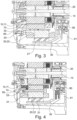
- Fig. 3 a section of a drive unit 1 according to the invention in the area of the electric rotary machines 10, 20 is shown.
- the detail shows a drive unit 1, identical to the embodiment of the drive unit 1 from Figure 2 .
- the common stator carrier 32 is connected to the first housing 60 by means of a carrier screw 33.
- the carrier screw 33 is guided axially through a radially extending section of the common stator carrier 32 and screwed in the axial direction in the first housing 60.
- stator 12 of the first electric rotary machine 10 which is carried on the radial inner side of the common stator carrier 32, is axially offset from the stator 22 of the second electric rotary machine 20, which is carried on the radial outer side of the common stator carrier 32.
- FIG. 4 a section of a drive unit 1 according to the invention in the area of the electric rotary machines 10, 20 in an alternative embodiment.
- the stators 12, 22 of the two electric rotary machines 10, 20 are integral components of a stator unit 31.
- This stator unit 31 is fixed to the first housing 60 by a support screw 33, which is guided in the axial direction through the entire stator unit 31 and is screwed in the first housing 60 in the axial direction.
- This alternative embodiment therefore does not use an extra stator support between the individual stators 12, 22, but rather comprises a compact unit that is formed only by the two stators 12, 22.
Landscapes
- Engineering & Computer Science (AREA)
- Chemical & Material Sciences (AREA)
- Combustion & Propulsion (AREA)
- Transportation (AREA)
- Mechanical Engineering (AREA)
- Power Engineering (AREA)
- Hybrid Electric Vehicles (AREA)
- Electric Propulsion And Braking For Vehicles (AREA)
- Gear Transmission (AREA)
- Connection Of Motors, Electrical Generators, Mechanical Devices, And The Like (AREA)
Description
- Die Erfindung betrifft eine Antriebseinheit für einen Antriebsstrang eines elektrisch antreibbaren Kraftfahrzeugs, insbesondere eines Hybridkraftfahrzeuges, sowie eine Antriebsanordnung.
- Aus dem Stand der Technik sind diverse Antriebseinheiten bekannt, die in Antriebsanordnungen oder Antriebssträngen integriert sind.
- Die
DE 11 2015 006 071 T5 offenbart ein Hybridfahrzeugantriebssystem mit einem Generator, der unter Verwendung der Leistung eines Verbrennungsmotors elektrische Energie generieren kann; einem Elektromotor, der durch elektrische Energie angetrieben wird, um Räder anzutreiben; einem Gehäuse, das den Generator und den Elektromotor aufnimmt, und mit einer Leistungssteuereinheit zum Steuern des Generators und des Elektromotor. Der Generator und der Elektromotor sind dabei nebeneinander auf einer gleichen Achse in dem Gehäuse angeordnet. - In der
WO 2019 101 264 A1 ist ein Antriebsstrang für ein Hybridkraftfahrzeug offenbart. Der Antriebsstrang umfasst eine Getriebeeingangswelle, die über einen ersten Teilantriebsstrang mit einer ersten elektrischen Maschine und einer Verbrennungskraftmaschine zur Drehmomentübertragung in Wirkbeziehung steht und die über einen zweiten Teilantriebsstrang mit einer zweiten elektrischen Maschine zur Drehmomentübertragung in Wirkbeziehung steht. Die beiden elektrischen Maschinen sind dabei koaxial sowie axial benachbart zueinander angeordnet. - Aus der
EP 1 464 876 A2 ist ein Antriebsstrang bekannt, bei dem die beiden elektrischen Maschinen radial und axial ineinander geschachtelt sind. Ferner ist aus der derWO 2011/054097 A1 eine Antriebseinheit bekannt, die auf den Oberbegriff des Anspruchs 1 lesbar ist. - Die
US 2016 / 0218584 A1 beschreibt eine Steuerungseinheit, welche zur Steuerung elektrischer Maschinen dient, wobei die Steuerungseinheit an einem Gehäuse der die elektrischen Maschinen umfassenden Antriebseinheit montiert ist. Die Antriebseinheit umfasst dabei zwei elektrische Maschinen, welche koaxial sowie axial benachbart zueinander angeordnet sind. - Eine Antriebseinheit mit mehreren elektrischen Rotationsmaschinen in einer Antriebsanordnung zu integrieren, die für ein Hybridkraftahrzeug vorgesehen ist, unterliegt besonders in axialer Richtung strengen Bauraumanforderungen. Insbesondere bei Einsatz einer derartigen Antriebseinheit in sogenannten Front-Quer-Anordnungen in Kraftfahrzeugen, in welchen die elektrischen Rotationsmaschinen und die Verbrennungskraftmaschine als Frontantriebe eingesetzt werden und eine jeweilige Rotationsachse einer elektrischen Rotationsmaschine und der Verbrennungskraftmaschine quer zur Längsrichtung des Kraftfahrzeugs angeordnet ist, ist eine axial besonders kurz bauende Antriebsanordnung vorteilhaft.
- Hiervon ausgehend liegt der vorliegenden Erfindung die Aufgabe zugrunde, eine Antriebseinheit sowie eine damit ausgestattete Antriebsanordnung zur Verfügung zu stellen, die in kostengünstiger Ausgestaltung sowie bauraumsparender Weise einen optimalen Betrieb gewährleisten.
- Die Aufgabe wird durch die erfindungsgemäße Antriebseinheit nach Anspruch 1 gelöst. Vorteilhafte Ausgestaltungen der Antriebseinheit sind in den Unteransprüchen 2 bis 7 angegeben.
- Ergänzend wird eine Antriebsanordnung, welches die Antriebseinheit aufweist, gemäß Anspruch 8 zur Verfügung gestellt. Eine vorteilhafte Ausgestaltung der Antriebsanordnung ist im Unteranspruch 9 angegeben.
- Die Merkmale der Ansprüche können in jeglicher technisch sinnvollen Art und Weise kombiniert werden, wobei hierzu auch die Erläuterungen aus der nachfolgenden Beschreibung sowie Merkmale aus den Figuren hinzugezogen werden können, die ergänzende Ausgestaltungen der Erfindung umfassen.
- Die Begriffe "axial" und "radial" beziehen sich im Rahmen der vorliegenden Erfindung immer auf die Rotationsachse der Antriebseinheit, die der Rotationsachse zumindest einer der von der Antriebseinheit umfassten, elektrischen Rotationsmaschinen entspricht.
- Die Erfindung betrifft eine Antriebseinheit für einen Antriebsstrang eines elektrisch antreibbaren Kraftfahrzeugs, insbesondere eines Hybridkraftfahrzeuges. Die Antriebseinheit umfasst eine erste elektrische Rotationsmaschine sowie eine zweite elektrische Rotationsmaschine und eine erste Welle sowie eine zweite Welle, wobei ein Rotor der ersten elektrischen Rotationsmaschine drehfest mit der ersten Welle verbunden ist und ein Rotor der zweiten elektrischen Rotationsmaschine drehfest mit der zweiten Welle verbunden ist. Die Antriebseinheit weist weiterhin eine Trennkupplung auf, mit der der Rotor der ersten elektrischen Rotationsmaschine zur Drehmomentübertragung mit der zweiten Welle verbindbar oder verbunden ist. Erfindungsgemäß ist vorgesehen, dass eine der beiden elektrischen Rotationsmaschinen zumindest bereichsweise radial sowie axial innerhalb eines von der jeweils anderen elektrischen Rotationsmaschine radial begrenzten Raums angeordnet ist.
- In einer Ausführungsform kann vorgesehen sein, dass die radial innen angeordnete elektrische Rotationsmaschine radial sowie axial vollständig innerhalb eines von der jeweils anderen elektrischen Rotationsmaschine radial begrenzten Raums angeordnet ist.
- Die Trennkupplung ist in einem von der ersten elektrischen Rotationsmaschine zur zweiten Welle verlaufenden Drehmoment-Übertragungspfad angeordnet bzw. dazu eingerichtet, diesen Drehmoment-Übertragungspfad zu öffnen und zu schließen. Die Antriebseinheit kann ein Betätigungssystem zur Betätigung der Trennkupplung umfassen, wobei ein Ausrücklager des Betätigungssystems einreihig oder zweireihig ausführbar ist. Erfindungsgemäß sind die Drehachsen der Rotoren der elektrischen Rotationsmaschinen koaxial positioniert.
- Die radiale Verschachtelung der beiden elektrischen Rotationsmaschinen bewirkt den Vorteil, dass bei der Herstellung der einzelnen Bleche des Rotor-Pakets und des Stator-Pakets beider elektrischer Rotationsmaschinen aus einer Platine mit einem Stanz-Hub sowohl ein Blech des Rotors der radial inneren elektrischen Rotationsmaschine als auch des Stators der radial inneren elektrischen Rotationsmaschine und auch des Stators der radial äußeren elektrischen Rotationsmaschine sowie des Rotors der radial äußeren elektrischen Rotationsmaschine ausgeschnitten werden kann.
- Der Rotor der radial äußeren elektrischen Rotationsmaschine kann zwecks seiner Verbindung zur zweiten Welle von einem Rotorträger getragen sein, welcher mit der zweiten Welle verbunden ist, wobei der Rotor dabei insbesondere kraft- und/oder formschlüssig mit dem Rotorträger verbunden ist und der Rotorträger kraft- und/oder formschlüssig mit der zweiten Welle verbunden ist.
- Zwecks drehbarer Lagerung der ersten Welle und/oder der zweiten Welle kann die Antriebseinheit ein Zentrallager bzw. eine zentrale Lagereinheit aufweisen, welches ein- oder mehrteilig ausgestaltet ist, und mittels welchem die erste Welle und/oder die zweite Welle an einem Gehäuse der Antriebseinheit gelagert sind. Der Rotorträger der radial äußeren elektrischen Rotationsmaschine kann dabei unmittelbar über das Zentrallager gelagert sein oder mittelbar über die zweite Welle am Zentrallager gelagert sein. Das Zentrallager ist beispielsweise als Rollen-, Kugel- oder Schrägkugellager ausgestaltet.
- Die Antriebseinheit kann ein Befestigungselement umfassen, welches mit der ersten oder zweiten Welle verschraubt ist, zwecks Sicherung der Position des Rotorträgers der radial äußeren elektrischen Rotationsmaschine in Bezug zur Position der zweiten Welle.
- Vorteilhafterweise kann die radial innere elektrische Rotationsmaschine als Generator betrieben werden. Der Rotor der radial inneren elektrischen Rotationsmaschine ist relativ klein ausgeführt und hat somit ein geringeres Massenträgheitsmoment als der Rotor der radial äußeren Rotationsmaschine.
- Entsprechend kann die radial äußere elektrische Rotationsmaschine vorteilhafterweise als Antriebseinheit eingesetzt werden, da der Rotor dieser elektrischen Rotationsmaschine relativ groß ist und ein entsprechend großes Drehmoment erzeugen kann.
- Damit ist nicht ausgeschlossen, dass sowohl die radial innere elektrische Rotationsmaschine als auch die radial äußere elektrische Rotationsmaschine zwecks Antrieb eines mit der Antriebseinheit ausgestatteten Kraftfahrzeugs einsetzbar ist. Beispielsweise kann die radial innere elektrische Rotationsmaschine dazu eingesetzt werden, Drehmoment an eine Eingangsseite der Antriebseinheit zu leiten, sodass ein Start einer an die Eingangsseite anschließbaren Verbrennungskraftmaschine realisiert werden kann. Alternativ kann auch eine oder können auch beide elektrischen Rotationsmaschinen Drehmoment zur Verfügung stellen und zusammen mit einer angeschlossenen Verbrennungskraftmaschine einen Hybrid-Betrieb der Antriebseinheit realisieren.
- In einer Ausführungsform ist die erste elektrische Rotationsmaschine zumindest bereichsweise radial sowie axial innerhalb eines von der zweiten elektrischen Rotationsmaschine radial begrenzten Raums angeordnet.
- Dabei ist die erste elektrische Rotationsmaschine als Innenläufermotor ausgebildet und die zweite elektrische Rotationsmaschine als Außenläufermotor ausgebildet, wobei der Stator der ersten elektrischen Rotationsmaschine sowie der Stator der zweiten elektrischen Rotationsmaschine mechanisch aneinander fixiert sind. Entsprechend ist in einer Ausführungsform vorgesehen, dass der Rotor der ersten elektrischen Rotationsmaschine innerhalb eines vom Stator der zweiten elektrischen Rotationsmaschine radial begrenzten Raums angeordnet ist.
- Gemäß einer ergänzenden Ausführungsform der Erfindung sind die Statoren der beiden elektrischen Rotationsmaschinen auf einem gemeinsamen Stator-Träger angeordnet.
- Der Stator-Träger ist wiederum an einem Gehäuse der Antriebseinheit fixiert. Insbesondere kann dieser Stator-Träger hinsichtlich seiner radialen Position zwischen den Statoren der beiden elektrischen Rotationsmaschinen angeordnet sein und mit diesen mechanisch verbunden sein, sodass der Stator-Träger beide Statoren fixiert.
- Gemäß einer alternativen Ausführungsform sind die Statoren der beiden elektrischen Rotationsmaschinen integrale Bestandteile einer Stator-Einheit.
- Diese Stator-Einheit kann wiederum an einem Gehäuse der Antriebseinheit fixiert sein. Diese alternative Ausgestaltungsform nutzt also keinen extra Stator-Träger zwischen den einzelnen Statoren, sondern umfasst eine kompakte Einheit, die lediglich durch die beiden Statoren ausgebildet ist.
- Die Fixierung der Stator-Einheit an einem Gehäuse der Antriebseinheit kann durch mehrere Schraubverbindungen realisiert sein. Eine jeweilige Schraube einer Schraubverbindung ist dabei insbesondere in axialer Richtung durch die Stator-Einheit durchgeführt und in einem Gehäuse der Antriebseinheit verschraubt.
- In einer Ausführungsform der Antriebseinheit umfasst diese ein erstes Gehäuse sowie ein zweites Gehäuse, welche zusammen einen Gehäuseinnenraum definieren, in welchem die beiden elektrischen Rotationsmaschinen angeordnet sind und in welchem die erste Welle und die zweite Welle zumindest bereichsweise angeordnet sind.
- Insbesondere ist ein gemeinsamer Stator-Träger oder eine Stator-Einheit mit dem ersten Gehäuse mechanisch verbunden, wobei die Rotoren der beiden elektrischen Rotationsmaschinen am zweiten Gehäuse gelagert sind.
- Insbesondere kann die zweite Welle am zweiten Gehäuse gelagert sein, wobei die erste Welle am ersten Gehäuse und an der zweiten Welle gelagert sein kann.
- Zudem kann eine Leistungselektronik zur Steuerung der elektrischen Rotationsmaschinen vom zweiten Gehäuse getragen sein.
- Erfindungsgemäß sind die beiden Wellen koaxial angeordnet. Zu diesem Zweck ist vorgesehen, dass sie zweite Welle als Hohlwelle ausgestaltet ist und die erste Welle abschnittsweise innerhalb der zweiten Welle verläuft.
- Gemäß einer weiteren Ausführungsform umfasst die Antriebseinheit eine erste Übersetzungsstufe, wobei die erste Übersetzungsstufe durch ein Anschlusselement der Antriebseinheit, welches ein innenverzahntes Zahnrad umfasst, und die erste Welle, welche ein Element mit einer Außenverzahnung aufweist, ausgebildet ist, wobei die Verzahnung des innenverzahnten Zahnrades sowie die Außenverzahnung zwecks Übertragung der Drehbewegung vom Anschlusselement auf die erste Welle miteinander kämmen.
- Entsprechend ist die erfindungsgemäße Antriebseinheit als ein sogenanntes HybridGetriebe ausgestaltet. Das bedeutet also, dass die Antriebseinheit neben den elektrischen Rotationsmaschinen und den Wellen auch ein Getriebe umfasst. Insbesondere kann das Element mit der Außenverzahnung ein drehfest auf der ersten Welle angeordnetes Zahnrad sein.
- Erfindungsgemäß weist die Antriebseinheit eine zweite Übersetzungsstufe auf, welche durch eine Verzahnung, insbesondere eine Außenverzahnung, der zweiten Welle und ein erstes, mit der Verzahnung der zweiten Welle kämmendes, Zahnrad ausgebildet ist.
- In einer Ausführungsform, in der die Antriebseinheit ein Getriebe aufweist, kann das erste Zahnrad drehfest mit einer Zwischenwelle des Getriebes gekoppelt sein. Dieses Getriebe kann im Abtriebsbereich ein Differenzial-Getriebe umfassen. Dabei kann eine Außenverzahnung der Zwischenwelle mit einem Eingangs-Zahnrad des Differenzial-Getriebes kämmen, wodurch eine dritte Übersetzungsstufe realisiert wird. Die zweite Welle fungiert somit hier als Getriebeeingangswelle und steht mit dem Getriebe in Wirkverbindung, so dass ein von der zweiten Welle zur Verfügung gestelltes Drehmoment bzw. die von der zweiten Welle realisierte Drehbewegung über das Getriebe über- oder untersetzt an eine weitere Getriebeeinheit eines Kraftfahrzeugs geleitet werden kann, oder auch direkt auf Antriebsräder eines Kraftfahrzeuges geleitet werden kann.
- Die erfindungsgemäße Antriebseinheit weist den Vorteil auf, dass durch die axiale Schachtelung der elektrischen Rotationsmaschinen axial deutlich weniger Bauraum benötigt wird als in herkömmlichen Antriebseinheiten mit zwei elektrischen Rotationsmaschinen.
- Des Weiteren wird erfindungsgemäß eine Antriebsanordnung zur Verfügung gestellt, die eine erfindungsgemäße Antriebseinheit sowie eine Verbrennungskraftmaschine aufweist, wobei ein Abtriebselement der Verbrennungskraftmaschine drehfest mit dem Rotor der ersten elektrischen Rotationsmaschine gekoppelt oder koppelbar ist.
- Im Betrieb eines Kraftfahrzeugs, insbesondere eines Hybridfahrzeugs, mit einer erfindungsgemäßen Antriebsanordnung, umfassend eine erfindungsgemäße Antriebseinheit sowie eine Verbrennungskraftmaschine, werden z.B. folgende Fahrbetriebsmodi ermöglicht:
- Elektrisches Fahren und Rekuperieren:
Die Trennkupplung ist geöffnet, wodurch die zweite elektrische Rotationsmaschine von der ersten elektrischen Rotationsmaschine und der Verbrennungskraftmaschine abgekoppelt ist. Die zweite elektrische Rotationsmaschine wird somit separat als Traktionsmaschine oder als Generator angesteuert. Die Verbrennungskraftmaschine und die erste elektrische Rotationsmaschine sind nicht in Betrieb. - Seriell Fahren und Laden:
Die Trennkupplung ist geöffnet. Die Verbrennungskraftmaschine wird mittels der ersten elektrischen Rotationsmaschine gestartet, wobei die Verbrennungskraftmaschine die erste elektrische Rotationsmaschine antreiben kann und folglich die erste elektrische Rotationsmaschine als Generator angesteuert wird, um die Batterie des Kraftfahrzeugs zu laden. Die zweite elektrische Rotationsmaschine wird als Traktionsmaschine angesteuert. - Paralleler Hybridantrieb, Laden und Boosten:
Die Trennkupplung ist geschlossen, wodurch die erste elektrische Rotationsmaschine, die zweite elektrische Rotationsmaschine sowie die Verbrennungskraftmaschine miteinander gekoppelt sind. Das Kraftfahrzeug wird mittels der Verbrennungskraftmaschine und / oder einer oder beider elektrischen Rotationsmaschinen angetrieben. Die beiden elektrischen Rotationsmaschinen können hier als Traktionsmaschine oder als Generator angesteuert werden. - Gemäß einer Ausführungsform der Antriebsanordnung umfasst die Antriebsanordnung einen mit dem Anschlusselement der Antriebseinheit drehfest verbundenen Schwingungsdämpfer sowie ein mechanisch an die Verbrennungskraftmaschine angeschlossenes Gehäuseelement, wobei der Schwingungsdämpfer in dem Gehäuseelementangeordnet ist.
- Das Gehäuseelement ist dabei vorteilhafterweise an das zweite Gehäuse der Antriebseinheit angeschlossen.
- Im Gehäuseelement kann ein Pumpenaktor eines Kühlkreislaufs der Antriebseinheit gelagert sein.
- Weiterhin kann vorgesehen sein, die Zwischenwelle und/oder die Radantriebswelle axial einerseits im Gehäuseelement und andererseits im zweiten Gehäuse zu lagern.
- Die oben beschriebene Erfindung wird nachfolgend vor dem betreffenden technischen Hintergrund unter Bezugnahme auf die zugehörigen Zeichnungen, welche bevorzugte Ausgestaltungen zeigen, detailliert erläutert. Die Erfindung wird durch die rein schematischen Zeichnungen in keiner Weise beschränkt, wobei anzumerken ist, dass die in den Zeichnungen gezeigten Ausführungsbeispiele nicht auf die dargestellten Maße eingeschränkt sind. Es ist dargestellt in
- Fig. 1:
- eine schematische Darstellung einer erfindungsgemäßen Antriebsanordnung mit erfindungsgemäßer Antriebseinheit,
- Fig. 2:
- einen Ausschnitt der erfindungsgemäßen Antriebsanordnung in geschnittener Seitenansicht,
- Fig. 3:
- einen Ausschnitt der erfindungsgemäßen Antriebseinheit im Bereich der elektrischen Rotationsmaschinen und
- Fig. 4:
- einen Ausschnitt einer erfindungsgemäßen Antriebseinheit im Bereich der elektrischen Rotationsmaschinen in einer alternativen Ausführungsform.
- In
Fig. 1 ist eine schematische Darstellung einer erfindungsgemäßen Antriebsanordnung 100 mit einer erfindungsgemäßen Antriebseinheit 1 dargestellt. Die Antriebseinheit 1 umfasst eine erste elektrische Rotationsmaschine 10, eine zweite elektrische Rotationsmaschine 20, eine erste Welle 40 sowie eine zweite Welle 41. - Des Weiteren umfasst die Antriebsanordnung 100 eine Verbrennungskraftmaschine 110 und einen Schwingungsdämpfer 101, wobei ein Abtriebselement 111 der Verbrennungskraftmaschine 110 mit dem Schwingungsdämpfer 101 gekoppelt ist. Der Schwingungsdämpfer 101 ist außerdem mit einem Anschlusselement 4 der Antriebsanordnung 1 verbunden, welches als eine Eingangsseite 2 der Antriebsanordnung 1 fungiert. Die Verbrennungskraftmaschine 110 ist damit über den Schwingungsdämpfer 110 mit der Antriebsanordnung 1 gekoppelt.
- Das Anschlusselement 4 ist mit der ersten Welle 40 derart gekoppelt, dass eine erste Übersetzungsstufe 70 zwischen dem Anschlusselement 4 und der ersten Welle 40 ausgebildet ist.
- Ein Rotor 11 der ersten elektrische Rotationsmaschine 10 ist mit der ersten Welle 40 drehfest verbunden und ein Rotor 21 der zweiten elektrische Rotationsmaschine 20 ist mit der zweiten Welle 41 drehfest verbunden. Die Verbindung des Rotors 11 der ersten elektrischen Rotationsmaschine 10 mit der ersten Welle 40 ist derart realisiert, dass der Rotor 11 der ersten elektrische Rotationsmaschine 10 direkt auf der ersten Welle 40 angeordnet ist. Der Rotor 21 der zweiten elektrischen Rotationsmaschine 20 ist hingegen von einem Rotorträger 30 getragen und der Rotorträger 30 ist mit der zweiten Welle 41 verbunden.
- Die erste elektrische Rotationsmaschine 10 ist radial sowie bereichsweise axial innerhalb eines von der zweiten elektrischen Rotationsmaschine 20 radial begrenzten Raums angeordnet. Dabei ist die erste elektrische Rotationsmaschine 10 als Innenläufermotor ausgebildet und die zweite elektrische Rotationsmaschine 20 als Außenläufermotor ausgebildet, wobei ein Stator 12 der ersten elektrischen Rotationsmaschine 10 sowie ein Stator 22 der zweiten elektrischen Rotationsmaschine 20 mechanisch aneinander fixiert sind.
- Eine Trennkupplung 50 der Antriebseinheit 1 ist mit ihrer Eingangsseite 51 mit der ersten Welle 40 verbunden und mit ihrer Ausgangsseite 52 mit der zweiten Welle 41 verbunden. Die Trennkupplung 50 dient somit zur Drehmomentübertragung zwischen der ersten Welle 40 und der zweiten Welle 41. Entsprechend kann mittels der Trennkupplung 50 ein Drehmoment-Übertagungspfad zwischen dem Rotor 11 der ersten elektrischen Rotationsmaschine 10 und dem Rotor 21 der zweiten elektrischen Rotationsmaschine 20 geöffnet oder geschlossen werden.
- Die zweite Welle 41 ist als Hohlwelle ausgestaltet und die erste Welle 40 verläuft abschnittsweise radial innerhalb der zweiten Welle 41. Die beiden Wellen 40, 41 verlaufen somit koaxial zueinander, wobei auch die Rotoren 11, 21 der beiden elektrischen Rotationsmaschinen 10, 20 koaxial zueinander und koaxial zu den Wellen 40, 41 angeordnet sind.
- Die zweite Welle 41 ist über eine zweite Übersetzungsstufe 71 mit einer Zwischenwelle 81 verbunden. Die Zwischenwelle 81 verläuft dabei parallel zur zweiten Welle 41.
- Die Zwischenwelle 81 ist über eine dritte Übersetzungsstufe 72 mit einem Eingangselement eines Differentialgetriebes 80 der Antriebseinheit 1 zwecks Übertragung von Drehmoment verbunden. Das Differentialgetriebe 80 bildet eine Ausgangsseite 3 der Antriebseinheit 1.
- Eine Radantriebswelle 103, an welcher Räder eines mit der Antriebsanordnung 100 ausgestatteten Kraftfahrzeugs anzuordnen sind, bildet den Ausgang des Differentialgetriebes 80, so dass eine von der zweiten Welle 41 realisierte Drehbewegung über die zweite Übersetzungsstufe 71 und die dritte Übersetzungsstufe 72 sowie über das Differenzialgetriebe 80 auf die Radantriebswelle 103 und damit auf die Räder übertragen werden kann.
- Ein von der Verbrennungskraftmaschine 110 bereitgestelltes Drehmoment wird über den Schwingungsdämpfer 101 und über die erste Übersetzungsstufe 70 an die erste Welle 40 der Antriebseinheit 1 übertragen. Ist die Trennkupplung 50 dabei geöffnet, wird das Drehmoment der Verbrennungskraftmaschine 110 lediglich an den Rotor 11 der ersten elektrischen Rotationsmaschine 10 geleitet. Derart kann die erste elektrische Rotationsmaschine 10 im Generatorbetrieb zum Laden einer Batterie genutzt werden. Ist die Trennkupplung 50 geschlossen, wird das von der Verbrennungskraftmaschine 110 bereitgestellte Drehmoment von der ersten Welle 40 auf die zweite Welle 41 übertragen. Von der zweiten Welle 41 wird das Drehmoment der Verbrennungskraftmaschine 110 über die zweite Übersetzungsstufe 71 auf die Zwischenwelle 81 und über die dritte Übersetzungsstufe 72 in das Differentialgetriebe 80 geleitet. Über das Differentialgetriebe 80 gelangt das Drehmoment mittels der Radantriebswelle 103 an Räder eines mit der Antriebsanordnung 100 ausgestatteten Kraftfahrzeugs.
- Ein vom Rotor 11 der ersten elektrischen Rotationsmaschine 10 bereitgestelltes Drehmoment kann bei geöffneter Trennkupplung 50 über die erste Übersetzungsstufe 70 an die Verbrennungskraftmaschine 110 übertragen werden. Bei geschlossener Trennkupplung 50 über die zweite Übersetzungsstufe 71 und die dritte Übersetzungsstufe 72 an das Differentialgetriebe 80 und damit an die Radantriebswelle 103 übertragen.
- Ein vom Rotor 21 der zweiten elektrischen Rotationsmaschine 20 bereitgestelltes Drehmoment wird unabhängig einer Schaltung der Trennkupplung 50 über die zweite Übersetzungsstufe 71 und die dritte Übersetzungsstufe 72 an das Differentialgetriebe 80 und damit an die Radantriebswelle 103 übertragen.
- Die Antriebsanordnung 100 kann entsprechend in einer Vielzahl an Fahrbetriebsmodi betrieben werden.
-
Fig. 2 zeigt einen Ausschnitt der erfindungsgemäßen Antriebsanordnung 100 in geschnittener Seitenansicht. - Die
Figur 2 ist eine detailliertere Darstellung einzelner der inFigur 1 angedeuteten Komponenten, wobei inFigur 2 die Verbrennungskraftmaschine nicht gezeigt ist und das an den Schwingungsdämpfer 101 gekoppelte Abtriebselement 111 der Verbrennungskraftmaschine nur teilweise dargestellt ist. - In
Figur 2 sind ein erstes Gehäuse 60, ein zweites Gehäuse 61 sowie ein Gehäuseelement 62 erkennbar, welche miteinander verbunden sind und ein Gesamt-Gehäuse der Antriebsanordnung 100 bzw. der Antriebseinheit 1 ausbilden. Das erste und zweite Gehäuse 60, 61 dienen der Aufnahme der beiden elektrischen Rotationsmaschinen 10, 20, wobei das Gehäuseelement 62 dazu dient, das erste Gehäuse 60 und das zweite Gehäuse 61 mit einem Gehäuse der Verbrennungskraftmaschine (nicht dargestellt) zu koppeln. Das erste Gehäuse 60 ist dazu in axialer Richtung fest mit dem zweiten Gehäuse 61 verbunden, wobei das Gehäuseelement 62 auf der dem ersten Gehäuse 60 axial gegenüberliegenden Seite des zweiten Gehäuses 61 mit dem zweiten Gehäuse 61 fest verbunden ist. - Die erste Welle 40 ist mit ihrem ersten axialen Endbereich 42 über ein einreihiges Stützlager 92 im ersten Gehäuse 60 gelagert und mit ihrem zweiten axialen Endbereich 43 über ein Nadellager 91 radial innen an einem zweiten axialen Endbereich 45 der zweiten Welle 41 gelagert.
- Die zweite Welle 41 ist mit ihrem ersten axialen Endbereich 44 über eine zentrale Lagereinheit 90 am zweiten Gehäuse 61 gelagert. Diese zentrale Lagereinheit 90 umfasst zwei koaxial angeordnete Wälzlager, die axial dicht nebeneinander positioniert sind.
- Weiterhin ist ein die Statoren 12, 22 der elektrischen Rotationsmaschinen 10, 20 tragender gemeinsamer Stator-Träger 32 fest mit dem ersten Gehäuse 60 verbunden, so dass die Statoren 12, 22 der elektrischen Rotationsmaschinen 10, 20 vom ersten Gehäuse 60 getragen sind. Der Rotorträger 30 des Rotors 21 der zweiten elektrischen Rotationsmaschine 20 ist mittels eines Wälzlagers der zentralen Lagereinheit 90 am zweiten Gehäuse 61 gelagert. Mit dem Rotorträger 30 ist zudem ein Geberelement eines Rotorlagesensors 34 verbunden, wobei ein Detektorelement des Rotorlagesensors 34 mit dem zweiten Gehäuse 61 verbunden ist, so dass eine Detektion einer Winkelposition und/oder einer Drehgeschwindigkeit des Rotors 21 der zweiten elektrischen Rotationsmaschine 20 bzw. des Rotorträgers 30 von dem Rotorlagesensor 34 durchführbar ist.
- Außerdem sind die Zwischenwelle 81 und die Radantriebswelle 103 jeweils auf ihrer den elektrischen Rotationsmaschinen 10, 20 zugewandten axialen Seite im zweiten Gehäuse 61 gelagert und an deren gegenüberliegenden axialen Seite im Gehäuseelement 62 gelagert. Das Anschlusselement 4 der Antriebseinheit 1 ist über eine zweireihige Lagereinheit 93 am Gehäuseelement 62 gelagert. Diese zweireihige Lagereinheit 93 umfasst zwei koaxial angeordnete Wälzlager, die axial dicht nebeneinander positioniert sind. Der Schwingungsdämpfer 101 ist im Gehäuseelement 62 angeordnet.
- Die zentrale Lagereinheit 90 sowie das zweireihige Lagereinheit 93 sind dabei zur Verdeutlichung ihrer möglichen Ausgestaltungsformen jeweils in unterschiedlichen, möglichen Ausführungen dargestellt. Die zentrale Lagereinheit 90 ist mit Kegelrollenlagern und mit Schrägkugellagern gezeigt, wobei die zweireihige Lagereinheit 93 mit Kegelrollenlagern gezeigt ist. Allerdings können auch hier, wie zur zentralen Lagereinheit 90 erwähnt, andere Lager eingesetzt werden, wie z.B. Schrägkugellager.
- Des Weiteren ist eine Leistungselektronik 102 radial außen auf dem ersten und zweiten Gehäuse 60, 61 angeordnet, wobei die Leistungselektronik 102 zur Steuerung der elektrischen Rotationsmaschinen 10, 20 eingerichtet ist. Zwischen dem zweiten Gehäuse 61 und der Leistungselektronik 102 ist zudem ein Wärmetauscher 105 eines Kühlkreislaufs zur Kühlung zumindest einer der elektrischen Rotationsmaschinen 10, 20 am zweiten Gehäuse 61 angeordnet. Ein Pumpenaktor 104 dieses Kühlkreislaufs ist vom Gehäuseelement 62 getragen.
-
Figur 2 zeigt außerdem einen detaillierten Aufbau der Übersetzungsstufen 70, 71, 72. Die erste Übersetzungsstufe 70 ist derart ausgebildet, dass das Anschlusselement 4 ein innenverzahntes Zahnrad 5 umfasst, welches mit einer Außenverzahnung 46 am zweiten axialen Endbereich 43 der ersten Welle 40 kämmt. - Die zweite Welle 41 weist ebenfalls eine Außenverzahnung 47 an deren zweitem axialen Endbereich 45 auf, mit welcher sie mit einem ersten Zahnrad 82 in Eingriff steht, wobei das erste Zahnrad 82 drehfest auf der Zwischenwelle 81 angeordnet ist, so dass die zweite Übersetzungsstufe 71 zwischen der zweiten Welle 41 und der Zwischenwelle 81 ausgebildet ist.
- Eine Außenverzahnung 84 der Zwischenwelle 81 steht mit einem zweiten Zahnrad 83 als Eingangselement des Differentialgetriebes 80 in Eingriff, wodurch die dritte Übersetzungsstufe 72 zwischen der Zwischenwelle 81 und dem Differentialgetriebe 80 ausgebildet ist.
- Die Trennkupplung 50 entspricht einer reibschlüssig schließbaren Lamellenkupplung, deren Eingangsseite 51 durch Innenlamellen ausgebildet ist, welche axial neben dem Rotor 11 der ersten elektrischen Rotationsmaschine 10 auf der ersten Welle 40 angeordnet sind, wobei Außenlamellen der Trennkupplung 50 als deren Ausgangsseite 52 mit der zweiten Welle 41 verbunden sind.
- Radial außerhalb der zentralen Lagereinheit 90 ist ein Betätigungssystem 53 zur Betätigung der Trennkupplung 50 am zweiten Gehäuse 61 angeordnet, wobei ein Drucktopf des Betätigungssystems 53 axial durch den Rotorträger 30 hindurchgreift, um eine vom Betätigungssystem 53 bereitgestellte Betätigungskraft an die Trennkupplung 50 zwecks deren Schließung zu übertragen.
- Weiterhin ist eine Sicherungsschraube 35 vorgesehen, welche am ersten axialen Endbereich 44 der zweiten Welle 41 in diese eingeschraubt ist, so dass ein Schraubenkopf der Sicherungsschraube 35 eine axial wirkende Vorspannkraft auf den Rotorträger 30 und die beiden Wälzlager der zentralen Lagereinheit 90 wirkt, wodurch die axiale Position des Rotorträgers 30 und der zentralen Lagereinheit 90 in Bezug zur zweiten Welle 41 gesichert ist.
- In
Fig. 3 ist ein Ausschnitt einer erfindungsgemäßen Antriebseinheit 1 im Bereich der elektrischen Rotationsmaschinen 10, 20 dargestellt. - Der Ausschnitt zeigt eine Antriebseinheit 1, identisch zur Ausführungsform der Antriebseinheit 1 aus
Figur 2 . - Zu sehen ist in
Figur 3 , dass der gemeinsame Stator-Träger 32 mittels einer Trägerschraube 33 mit dem ersten Gehäuse 60 verbunden ist. Dazu ist die Trägerschraube 33 axial durch einen radial verlaufenden Abschnitt des gemeinsamen Stator-Trägers 32 geführt und in axialer Richtung im ersten Gehäuse 60 verschraubt. - Zudem ist der auf der radialen Innenseite des gemeinsamen Stator-Trägers 32 getragene Stator 12 der ersten elektrischen Rotationsmaschine 10 axial versetzt zum auf der radialen Außenseite des gemeinsamen Stator-Trägers 32 getragenen Stator 22 der zweiten elektrischen Rotationsmaschine 20.
- Alternativ zur Antriebseinheit 1 aus
Figur 3 zeigtFigur 4 einen Ausschnitt einer erfindungsgemäßen Antriebseinheit 1 im Bereich der elektrischen Rotationsmaschinen 10, 20 in einer alternativen Ausführungsform. Unterschiedlich zurFigur 3 ist hier, dass die Statoren 12, 22 der beiden elektrischen Rotationsmaschinen 10, 20 integrale Bestandteile einer Stator-Einheit 31 sind. Diese Stator-Einheit 31 ist am ersten Gehäuse 60 durch eine Trägerschraube 33 fixiert, die in axialer Richtung durch die gesamte Stator-Einheit 31 hindurchgeführt ist und im ersten Gehäuse 60 in axialer Richtung verschraubt ist. Diese alternative Ausführungsform nutzt also keinen extra Stator-Träger zwischen den einzelnen Statoren 12, 22, sondern umfasst eine kompakte Einheit, die lediglich durch die beiden Statoren 12, 22 ausgebildet ist. - Mit der erfindungsgemäßen Antriebseinheit sowie der Antriebsanordnung lässt sich in kostengünstiger Ausgestaltung sowie bauraumsparender Weise ein optimaler Betrieb gewährleisten.
-
- 1
- Antriebseinheit
- 2
- Eingangsseite der Antriebseinheit
- 3
- Ausgangsseite der Antriebseinheit
- 4
- Anschlusselement der Antriebseinheit
- 5
- innenverzahntes Zahnrad des Anschlusselements
- 10
- erste elektrische Rotationsmaschine
- 11
- Rotor der ersten elektrischen Rotationsmaschine
- 12
- Stator der ersten elektrischen Rotationsmaschine
- 20
- zweite elektrische Rotationsmaschine
- 21
- Rotor der zweiten elektrischen Rotationsmaschine
- 22
- Stator der zweiten elektrischen Rotationsmaschine
- 30
- Rotorträger der zweiten elektrischen Rotationsmaschine
- 31
- Stator-Einheit
- 32
- gemeinsamer Stator-Träger
- 33
- Trägerschraube
- 34
- Rotorlagesensor
- 35
- Sicherungsschraube
- 40
- erste Welle
- 41
- zweite Welle
- 42
- erster axialer Endbereich der ersten Welle
- 43
- zweiter axialer Endbereich der ersten Welle
- 44
- erster axialer Endbereich der zweiten Welle
- 45
- zweiter axialer Endbereich der zweiten Welle
- 46
- Außenverzahnung der ersten Welle
- 47
- Außenverzahnung der zweiten Welle
- 50
- Trennkupplung
- 51
- Eingangsseite der Trennkupplung
- 52
- Ausgangsseite der Trennkupplung
- 53
- Betätigungssystem
- 60
- erstes Gehäuse
- 61
- zweites Gehäuse
- 62
- Gehäuseelement
- 70
- erste Übersetzungsstufe
- 71
- zweite Übersetzungsstufe
- 72
- dritte Übersetzungsstufe
- 80
- Differentialgetriebe
- 81
- Zwischenwelle
- 82
- erstes Zahnrad
- 83
- zweites Zahnrad
- 84
- Außenverzahnung der Zwischenwelle
- 90
- zentrale Lagereinheit
- 91
- Nadellager
- 92
- Stützlager
- 93
- zweireihige Lagereinheit
- 100
- Antriebsanordnung
- 101
- Schwingungsdämpfer
- 102
- Leistungselektronik
- 103
- Radantriebswelle
- 104
- Pumpenaktor
- 105
- Wärmetauscher
- 110
- Verbrennungskraftmaschine
- 111
- Abtriebselement der Verbrennungskraftmaschine
Claims (8)
- Antriebseinheit (1) für einen Antriebsstrang eines elektrisch antreibbaren Kraftfahrzeugs, insbesondere eines Hybridkraftfahrzeuges, mit einer ersten elektrischen Rotationsmaschine (10) sowie einer zweiten elektrischen Rotationsmaschine (20) und einer ersten Welle (40) sowie einer zweiten Welle (41), wobei ein Rotor (11) der ersten elektrischen Rotationsmaschine (10) drehfest mit der ersten Welle (40) verbunden ist und ein Rotor (21) der zweiten elektrischen Rotationsmaschine (20) drehfest mit der zweiten Welle (41) verbunden ist und wobei die Antriebseinheit (1) weiterhin eine Trennkupplung (50) aufweist, mit der der Rotor (11) der ersten elektrischen Rotationsmaschine (10) zur Drehmomentübertragung mit der zweiten Welle (41) verbindbar oder verbunden ist,wobei eine der beiden elektrischen Rotationsmaschinen (10, 20) zumindest bereichsweise radial sowie axial innerhalb eines von der jeweils anderen elektrischen Rotationsmaschine (10, 20) radial begrenzten Raums angeordnet ist, die Trennkupplung (50) mit ihrer Eingangsseite (51) mit der ersten Welle (40) und mit ihrer Ausgangsseite (52) mit der zweiten Welle (41) verbunden ist,die Antriebseinheit (1) eine zweite Übersetzungsstufe (71) aufweist, welche durch eine Verzahnung der zweiten Welle (41) und ein erstes, mit der Verzahnung der zweiten Welle (41) kämmendes, Zahnrad (82) ausgebildet ist,ein vom Rotor (11) der ersten elektrischen Rotationsmaschine (10) bereitgestelltes Drehmoment bei geschlossener Trennkupplung (50) über die zweite Übersetzungsstufe (71) übertragen wird, und wobei die beiden Wellen (40, 41) koaxial angeordnet sind, die zweite Welle (41) als Hohlwelle ausgestaltet ist und die erste Welle (40) abschnittsweise innerhalb der zweiten Welle (41) verläuft, dadurch gekennzeichnet, dass die Trennkupplung (50) als Lamellenkupplung ausgebildet ist, deren Eingangsseite (51) durch Innenlamellen ausgebildet ist, welche axial neben dem Rotor (11) der ersten elektrischen Rotationsmaschine (10) auf der ersten Welle (40) angeordnet sind, und Außenlamellen der Trennkupplung (50) als deren Ausgangsseite (52) mit der zweiten Welle (41) verbunden sind.
- Antriebseinheit (1) nach Anspruch 1, dadurch gekennzeichnet, dass die erste elektrische Rotationsmaschine (10) zumindest bereichsweise radial sowie axial innerhalb eines von der zweiten elektrischen Rotationsmaschine (20) radial begrenzten Raums angeordnet ist.
- Antriebseinheit (1) nach Anspruch 2, dadurch gekennzeichnet, dass die erste elektrische Rotationsmaschine (10) als Innenläufermotor ausgebildet ist und die zweite elektrische Rotationsmaschine (20) als Außenläufermotor ausgebildet ist, wobei der Stator (12) der ersten elektrischen Rotationsmaschine (10) sowie der Stator (22) der zweiten elektrischen Rotationsmaschine (20) mechanisch aneinander fixiert sind.
- Antriebseinheit (1) nach Anspruch 3, dadurch gekennzeichnet, dass die Statoren (12, 22) der beiden elektrischen Rotationsmaschinen (10, 20) auf einem gemeinsamen Stator-Träger (32) angeordnet sind.
- Antriebseinheit (1) nach Anspruch 3, dadurch gekennzeichnet, dass die Statoren (12, 22) der beiden elektrischen Rotationsmaschinen (10, 20) integrale Bestandteile einer Stator-Einheit (31) sind.
- Antriebseinheit (1) nach einem der vorhergehenden Ansprüche, dadurch gekennzeichnet, dass die Antriebseinheit (1) eine erste Übersetzungsstufe (70) umfasst, wobei die erste Übersetzungsstufe (70) durch ein Anschlusselement (4) der Antriebseinheit (1), welches ein innenverzahntes Zahnrad (5) umfasst, und die erste Welle (40), welche ein Element mit einer Außenverzahnung (46) aufweist, ausgebildet ist, wobei die Verzahnung des innenverzahnten Zahnrades (5) sowie die Außenverzahnung (46) zwecks Übertragung der Drehbewegung vom Anschlusselement (4) auf die erste Welle (40) miteinander kämmen.
- Antriebsanordnung (100) mit einer Antriebseinheit (1) gemäß einem der Ansprüche 1 bis 6 sowie mit einer Verbrennungskraftmaschine (110), die mittels eines Abtriebselements (111) der Verbrennungskraftmaschine (110) drehfest mit dem Rotor (11) der ersten elektrischen Rotationsmaschine (10) gekoppelt oder koppelbar ist.
- Antriebsanordnung (100) nach Anspruch 7, dadurch gekennzeichnet, dass die Antriebsanordnung (100) einen mit dem Anschlusselement (4) der Antriebseinheit (1) drehfest verbundenen Schwingungsdämpfer (101) sowie ein mechanisch an die Verbrennungskraftmaschine (110) angeschlossenes Gehäuseelement (62) umfasst, wobei der Schwingungsdämpfer (101) in dem Gehäuseelement (62) angeordnet ist.
Applications Claiming Priority (2)
| Application Number | Priority Date | Filing Date | Title |
|---|---|---|---|
| DE102019132941.8A DE102019132941B4 (de) | 2019-12-04 | 2019-12-04 | Antriebseinheit und Antriebsanordnung |
| PCT/DE2020/100907 WO2021110194A1 (de) | 2019-12-04 | 2020-10-21 | Antriebseinheit und antriebsanordnung |
Publications (2)
| Publication Number | Publication Date |
|---|---|
| EP4069538A1 EP4069538A1 (de) | 2022-10-12 |
| EP4069538B1 true EP4069538B1 (de) | 2024-12-11 |
Family
ID=73475840
Family Applications (1)
| Application Number | Title | Priority Date | Filing Date |
|---|---|---|---|
| EP20808292.5A Active EP4069538B1 (de) | 2019-12-04 | 2020-10-21 | Antriebseinheit und antriebsanordnung |
Country Status (7)
| Country | Link |
|---|---|
| US (1) | US20230041635A1 (de) |
| EP (1) | EP4069538B1 (de) |
| JP (1) | JP7354449B2 (de) |
| KR (1) | KR102722037B1 (de) |
| CN (1) | CN114761265B (de) |
| DE (1) | DE102019132941B4 (de) |
| WO (1) | WO2021110194A1 (de) |
Families Citing this family (10)
| Publication number | Priority date | Publication date | Assignee | Title |
|---|---|---|---|---|
| DE102019132942B4 (de) | 2019-12-04 | 2024-07-25 | Schaeffler Technologies AG & Co. KG | Antriebseinheit und Antriebsanordnung |
| US20230039195A1 (en) * | 2020-01-14 | 2023-02-09 | Nidec Corporation | Motor unit and electric car |
| DE102020109781A1 (de) | 2020-04-08 | 2021-10-14 | Schaeffler Technologies AG & Co. KG | Hybridfahrzeugantriebsstrang mit Zwei-Elektromaschinen-Getriebe für seriellen Antrieb und Hybridfahrzeug |
| DE102020123116A1 (de) | 2020-09-04 | 2022-03-10 | Schaeffler Technologies AG & Co. KG | Antriebseinheit und Antriebsanordnung |
| DE202020005997U1 (de) | 2020-09-04 | 2024-01-24 | Schaeffler Technologies AG & Co. KG | Antriebseinheit und Antriebsanordnung |
| EP4334151A1 (de) | 2021-05-03 | 2024-03-13 | Schaeffler Technologies AG & Co. KG | Hybridgetriebe sowie antriebsstrang mit hybridgetriebe |
| CN114198471B (zh) * | 2021-12-24 | 2024-04-12 | 成都飞亚航空设备应用研究所有限公司 | 一种单电机两段驱动旋转作动器 |
| DE102022107665A1 (de) | 2022-03-31 | 2023-10-05 | Schaeffler Technologies AG & Co. KG | Statoreinheit, Antriebseinheit und Antriebsanordnung |
| KR20230153086A (ko) * | 2022-04-28 | 2023-11-06 | 현대자동차주식회사 | 차량의 하이브리드 파워트레인 |
| CN224117110U (zh) | 2025-04-17 | 2026-04-14 | 舍弗勒技术股份两合公司 | 具有共轭定子电机的车辆驱动系统和车辆 |
Family Cites Families (30)
| Publication number | Priority date | Publication date | Assignee | Title |
|---|---|---|---|---|
| JP2001145209A (ja) | 1999-11-18 | 2001-05-25 | Denso Corp | 車両用回転電機 |
| DE10154147C1 (de) * | 2001-11-03 | 2003-07-24 | Daimler Chrysler Ag | Hybridantrieb |
| JP3641243B2 (ja) * | 2002-02-26 | 2005-04-20 | 日産自動車株式会社 | ハイブリッド変速機 |
| JP3857669B2 (ja) * | 2002-09-04 | 2006-12-13 | 日産自動車株式会社 | ハイブリッド変速機 |
| US6952061B2 (en) * | 2002-11-28 | 2005-10-04 | Honda Motor Co., Ltd | Motor drive unit |
| JP3641265B2 (ja) * | 2002-12-04 | 2005-04-20 | 日産自動車株式会社 | ハイブリッド変速機 |
| JP3700709B2 (ja) * | 2003-04-03 | 2005-09-28 | 日産自動車株式会社 | ハイブリッド変速機の変速制御装置 |
| JP3797354B2 (ja) * | 2003-09-30 | 2006-07-19 | アイシン・エィ・ダブリュ株式会社 | 電動車両駆動制御装置及び電動車両駆動制御方法 |
| US7090613B2 (en) * | 2004-05-15 | 2006-08-15 | General Motors Corporation | Method of providing electric motor torque reserve in a hybrid electric vehicle |
| JP4179266B2 (ja) * | 2004-11-08 | 2008-11-12 | 日産自動車株式会社 | ハイブリッド4輪駆動システム |
| JP4265570B2 (ja) * | 2005-05-10 | 2009-05-20 | トヨタ自動車株式会社 | 動力出力装置およびこれを搭載する自動車並びに駆動装置、動力出力装置の制御方法 |
| DE102006041159B4 (de) * | 2006-09-01 | 2012-04-19 | Audi Ag | Hybridantriebsvorrichtung |
| JP4434194B2 (ja) * | 2006-10-31 | 2010-03-17 | トヨタ自動車株式会社 | 車両用駆動装置の制御装置 |
| CA2770948A1 (en) * | 2009-11-03 | 2011-05-12 | Tm4 Inc. | Hybrid vehicle transmission |
| US8337352B2 (en) * | 2010-06-22 | 2012-12-25 | Oshkosh Corporation | Electromechanical variable transmission |
| CN103402840B (zh) * | 2011-02-21 | 2015-12-02 | 铃木株式会社 | 混合动力车辆的驱动控制装置 |
| US9033836B2 (en) * | 2011-10-08 | 2015-05-19 | Finemech Co., Ltd. | Drive device for hybrid electric vehicle |
| ITMO20120044A1 (it) * | 2012-02-23 | 2013-08-24 | Simone Casali | Gruppo motore elettrico |
| KR101416420B1 (ko) * | 2013-06-24 | 2014-07-09 | 현대자동차 주식회사 | 하이브리드 차량용 변속장치 |
| DE102014205886A1 (de) * | 2014-03-28 | 2015-10-01 | Siemens Aktiengesellschaft | Elektroantriebseinheit, insbesondere für ein Hybrid-Elektrokraftfahrzeug |
| KR101610089B1 (ko) * | 2014-09-23 | 2016-04-07 | 현대자동차 주식회사 | 하이브리드 차량용 변속장치 |
| JP6573456B2 (ja) * | 2015-01-28 | 2019-09-11 | 本田技研工業株式会社 | 一体型ユニット |
| US10675962B2 (en) * | 2015-01-28 | 2020-06-09 | Honda Motor Co., Ltd. | Hybrid vehicle driving system |
| JP6344358B2 (ja) * | 2015-10-05 | 2018-06-20 | トヨタ自動車株式会社 | ハイブリッド車両の駆動装置 |
| US9638292B1 (en) * | 2015-10-27 | 2017-05-02 | Schaeffler Technologies AG & Co. KG | CVT differential |
| JP6548835B2 (ja) * | 2016-03-18 | 2019-07-24 | ジー・ケー・エヌ オートモーティヴ リミテッドGKN Automotive Limited | 電気駆動装置 |
| JP6819083B2 (ja) * | 2016-06-13 | 2021-01-27 | 三菱自動車工業株式会社 | トランスアクスル装置 |
| KR102383223B1 (ko) * | 2016-12-12 | 2022-04-05 | 현대자동차 주식회사 | 하이브리드 차량용 동력전달장치 |
| DE102017127695A1 (de) * | 2017-11-23 | 2019-05-23 | Schaeffler Technologies AG & Co. KG | Hybrid-Antriebsstrang mit zwei elektrischen Maschinen und einer Verbrennungskraftmaschine |
| KR20200067530A (ko) * | 2018-12-04 | 2020-06-12 | 현대자동차주식회사 | 하이브리드 차량용 동력전달장치 |
-
2019
- 2019-12-04 DE DE102019132941.8A patent/DE102019132941B4/de active Active
-
2020
- 2020-10-21 JP JP2022533652A patent/JP7354449B2/ja active Active
- 2020-10-21 KR KR1020227018014A patent/KR102722037B1/ko active Active
- 2020-10-21 WO PCT/DE2020/100907 patent/WO2021110194A1/de not_active Ceased
- 2020-10-21 EP EP20808292.5A patent/EP4069538B1/de active Active
- 2020-10-21 US US17/782,177 patent/US20230041635A1/en not_active Abandoned
- 2020-10-21 CN CN202080084594.2A patent/CN114761265B/zh active Active
Also Published As
| Publication number | Publication date |
|---|---|
| KR20220088491A (ko) | 2022-06-27 |
| CN114761265B (zh) | 2025-06-06 |
| CN114761265A (zh) | 2022-07-15 |
| DE102019132941A1 (de) | 2021-06-10 |
| DE102019132941B4 (de) | 2021-09-30 |
| JP7354449B2 (ja) | 2023-10-02 |
| WO2021110194A1 (de) | 2021-06-10 |
| JP2023505665A (ja) | 2023-02-10 |
| EP4069538A1 (de) | 2022-10-12 |
| KR102722037B1 (ko) | 2024-10-28 |
| US20230041635A1 (en) | 2023-02-09 |
Similar Documents
| Publication | Publication Date | Title |
|---|---|---|
| EP4069538B1 (de) | Antriebseinheit und antriebsanordnung | |
| DE102019132942B4 (de) | Antriebseinheit und Antriebsanordnung | |
| EP3807112B1 (de) | Antriebseinheit für einen antriebsstrang eines elektrisch antreibbaren kraftfahrzeugs und antriebsanordnung | |
| EP4208361A1 (de) | Antriebseinheit und antriebsanordnung | |
| EP3826872A2 (de) | Hybridgetriebe, hybrid-antriebsanordnung und verfahren zum betreiben einer hybrid-antriebsanordnung | |
| DE202019006038U1 (de) | Antriebseinheit und Antriebsanordnung | |
| DE102021210740B3 (de) | Getriebe für ein Fahrzeug sowie Antriebsstrang mit einem solchen Getriebe | |
| DE102005003077A1 (de) | Antriebseinheit für ein Kraftfahrzeug | |
| EP3810449B1 (de) | Antriebseinheit für einen antriebsstrang eines elektrisch antreibbaren kraftfahrzeugs und antriebsanordnung | |
| EP1185430A1 (de) | Antriebsvorrichtung für wenigstens ein nebenaggregat | |
| DE102021114919B4 (de) | Antriebseinheit und Antriebsanordnung | |
| WO2021190699A1 (de) | Antriebseinheit und antriebsanordnung | |
| WO2022258111A1 (de) | Antriebseinheit und antriebsanordnung | |
| DE102019120145A1 (de) | Hybridgetriebeanordnung mit Standklimatisierung | |
| DE102023115644B4 (de) | Antriebseinheit und Antriebsanordnung | |
| EP2295274A1 (de) | Antriebseinheit für ein Kraftfahrzeug | |
| DE202020005997U1 (de) | Antriebseinheit und Antriebsanordnung | |
| DE102019131580A1 (de) | Getriebeeinheit mit zwei axial überlappenden Planetenradsätzen sowie ein Kraftfahrzeug mit einer solchen Getriebeeinheit | |
| DE102019131578A1 (de) | Getriebeeinheit mit zwei Planetenradsätzen und einem von einer elektrischen Maschine angetriebenen Sonnenrad sowie ein Kraftfahrzeug mit einer solchen Getriebeeinheit | |
| DE102020100606B4 (de) | Antriebssystem für ein Hybridkraftfahrzeug, mit zwei elektrischen Maschinen und einer längs eingebauten Verbrennungskraftmaschine; sowie Kraftfahrzeug | |
| DE102019131575A1 (de) | Getriebeeinheit mit zwei Planetenradsätzen und einem einteilig ausgebildeten Planetenradträger sowie ein Kraftfahrzeug mit einer solchen Getriebeeinheit | |
| DE202020005923U1 (de) | Hybrides Antriebssystem mit mehrgängiger Getriebeeinrichtung; sowie Kraftfahrzeug | |
| DE102011107565A1 (de) | Differentialanordnung für ein Kraftfahrzeug | |
| DE202020005924U1 (de) | Hybrides Antriebssystem mit mehrgängiger Getriebeeinrichtung; sowie Kraftfahrzeug | |
| EP3810447A1 (de) | Antriebseinheit, antriebsanordnung und hybrid-kraftfahrzeug |
Legal Events
| Date | Code | Title | Description |
|---|---|---|---|
| STAA | Information on the status of an ep patent application or granted ep patent |
Free format text: STATUS: UNKNOWN |
|
| STAA | Information on the status of an ep patent application or granted ep patent |
Free format text: STATUS: THE INTERNATIONAL PUBLICATION HAS BEEN MADE |
|
| PUAI | Public reference made under article 153(3) epc to a published international application that has entered the european phase |
Free format text: ORIGINAL CODE: 0009012 |
|
| STAA | Information on the status of an ep patent application or granted ep patent |
Free format text: STATUS: REQUEST FOR EXAMINATION WAS MADE |
|
| 17P | Request for examination filed |
Effective date: 20220704 |
|
| AK | Designated contracting states |
Kind code of ref document: A1 Designated state(s): AL AT BE BG CH CY CZ DE DK EE ES FI FR GB GR HR HU IE IS IT LI LT LU LV MC MK MT NL NO PL PT RO RS SE SI SK SM TR |
|
| DAV | Request for validation of the european patent (deleted) | ||
| DAX | Request for extension of the european patent (deleted) | ||
| STAA | Information on the status of an ep patent application or granted ep patent |
Free format text: STATUS: EXAMINATION IS IN PROGRESS |
|
| 17Q | First examination report despatched |
Effective date: 20230413 |
|
| P01 | Opt-out of the competence of the unified patent court (upc) registered |
Effective date: 20230523 |
|
| GRAP | Despatch of communication of intention to grant a patent |
Free format text: ORIGINAL CODE: EPIDOSNIGR1 |
|
| STAA | Information on the status of an ep patent application or granted ep patent |
Free format text: STATUS: GRANT OF PATENT IS INTENDED |
|
| INTG | Intention to grant announced |
Effective date: 20240813 |
|
| GRAS | Grant fee paid |
Free format text: ORIGINAL CODE: EPIDOSNIGR3 |
|
| GRAA | (expected) grant |
Free format text: ORIGINAL CODE: 0009210 |
|
| STAA | Information on the status of an ep patent application or granted ep patent |
Free format text: STATUS: THE PATENT HAS BEEN GRANTED |
|
| AK | Designated contracting states |
Kind code of ref document: B1 Designated state(s): AL AT BE BG CH CY CZ DE DK EE ES FI FR GB GR HR HU IE IS IT LI LT LU LV MC MK MT NL NO PL PT RO RS SE SI SK SM TR |
|
| REG | Reference to a national code |
Ref country code: GB Ref legal event code: FG4D Free format text: NOT ENGLISH |
|
| REG | Reference to a national code |
Ref country code: CH Ref legal event code: EP |
|
| REG | Reference to a national code |
Ref country code: DE Ref legal event code: R096 Ref document number: 502020009967 Country of ref document: DE |
|
| REG | Reference to a national code |
Ref country code: IE Ref legal event code: FG4D Free format text: LANGUAGE OF EP DOCUMENT: GERMAN |
|
| REG | Reference to a national code |
Ref country code: LT Ref legal event code: MG9D |
|
| PG25 | Lapsed in a contracting state [announced via postgrant information from national office to epo] |
Ref country code: HR Free format text: LAPSE BECAUSE OF FAILURE TO SUBMIT A TRANSLATION OF THE DESCRIPTION OR TO PAY THE FEE WITHIN THE PRESCRIBED TIME-LIMIT Effective date: 20241211 |
|
| PG25 | Lapsed in a contracting state [announced via postgrant information from national office to epo] |
Ref country code: FI Free format text: LAPSE BECAUSE OF FAILURE TO SUBMIT A TRANSLATION OF THE DESCRIPTION OR TO PAY THE FEE WITHIN THE PRESCRIBED TIME-LIMIT Effective date: 20241211 |
|
| PG25 | Lapsed in a contracting state [announced via postgrant information from national office to epo] |
Ref country code: BG Free format text: LAPSE BECAUSE OF FAILURE TO SUBMIT A TRANSLATION OF THE DESCRIPTION OR TO PAY THE FEE WITHIN THE PRESCRIBED TIME-LIMIT Effective date: 20241211 |
|
| REG | Reference to a national code |
Ref country code: NL Ref legal event code: MP Effective date: 20241211 |
|
| PG25 | Lapsed in a contracting state [announced via postgrant information from national office to epo] |
Ref country code: ES Free format text: LAPSE BECAUSE OF FAILURE TO SUBMIT A TRANSLATION OF THE DESCRIPTION OR TO PAY THE FEE WITHIN THE PRESCRIBED TIME-LIMIT Effective date: 20241211 |
|
| PG25 | Lapsed in a contracting state [announced via postgrant information from national office to epo] |
Ref country code: NO Free format text: LAPSE BECAUSE OF FAILURE TO SUBMIT A TRANSLATION OF THE DESCRIPTION OR TO PAY THE FEE WITHIN THE PRESCRIBED TIME-LIMIT Effective date: 20250311 |
|
| PG25 | Lapsed in a contracting state [announced via postgrant information from national office to epo] |
Ref country code: GR Free format text: LAPSE BECAUSE OF FAILURE TO SUBMIT A TRANSLATION OF THE DESCRIPTION OR TO PAY THE FEE WITHIN THE PRESCRIBED TIME-LIMIT Effective date: 20250312 Ref country code: LV Free format text: LAPSE BECAUSE OF FAILURE TO SUBMIT A TRANSLATION OF THE DESCRIPTION OR TO PAY THE FEE WITHIN THE PRESCRIBED TIME-LIMIT Effective date: 20241211 |
|
| PG25 | Lapsed in a contracting state [announced via postgrant information from national office to epo] |
Ref country code: RS Free format text: LAPSE BECAUSE OF FAILURE TO SUBMIT A TRANSLATION OF THE DESCRIPTION OR TO PAY THE FEE WITHIN THE PRESCRIBED TIME-LIMIT Effective date: 20250311 |
|
| PG25 | Lapsed in a contracting state [announced via postgrant information from national office to epo] |
Ref country code: NL Free format text: LAPSE BECAUSE OF FAILURE TO SUBMIT A TRANSLATION OF THE DESCRIPTION OR TO PAY THE FEE WITHIN THE PRESCRIBED TIME-LIMIT Effective date: 20241211 |
|
| PG25 | Lapsed in a contracting state [announced via postgrant information from national office to epo] |
Ref country code: SM Free format text: LAPSE BECAUSE OF FAILURE TO SUBMIT A TRANSLATION OF THE DESCRIPTION OR TO PAY THE FEE WITHIN THE PRESCRIBED TIME-LIMIT Effective date: 20241211 |
|
| PG25 | Lapsed in a contracting state [announced via postgrant information from national office to epo] |
Ref country code: PL Free format text: LAPSE BECAUSE OF FAILURE TO SUBMIT A TRANSLATION OF THE DESCRIPTION OR TO PAY THE FEE WITHIN THE PRESCRIBED TIME-LIMIT Effective date: 20241211 |
|
| PG25 | Lapsed in a contracting state [announced via postgrant information from national office to epo] |
Ref country code: IS Free format text: LAPSE BECAUSE OF FAILURE TO SUBMIT A TRANSLATION OF THE DESCRIPTION OR TO PAY THE FEE WITHIN THE PRESCRIBED TIME-LIMIT Effective date: 20250411 |
|
| PG25 | Lapsed in a contracting state [announced via postgrant information from national office to epo] |
Ref country code: PT Free format text: LAPSE BECAUSE OF FAILURE TO SUBMIT A TRANSLATION OF THE DESCRIPTION OR TO PAY THE FEE WITHIN THE PRESCRIBED TIME-LIMIT Effective date: 20250411 |
|
| PG25 | Lapsed in a contracting state [announced via postgrant information from national office to epo] |
Ref country code: EE Free format text: LAPSE BECAUSE OF FAILURE TO SUBMIT A TRANSLATION OF THE DESCRIPTION OR TO PAY THE FEE WITHIN THE PRESCRIBED TIME-LIMIT Effective date: 20241211 |
|
| PG25 | Lapsed in a contracting state [announced via postgrant information from national office to epo] |
Ref country code: RO Free format text: LAPSE BECAUSE OF FAILURE TO SUBMIT A TRANSLATION OF THE DESCRIPTION OR TO PAY THE FEE WITHIN THE PRESCRIBED TIME-LIMIT Effective date: 20241211 |
|
| PG25 | Lapsed in a contracting state [announced via postgrant information from national office to epo] |
Ref country code: SK Free format text: LAPSE BECAUSE OF FAILURE TO SUBMIT A TRANSLATION OF THE DESCRIPTION OR TO PAY THE FEE WITHIN THE PRESCRIBED TIME-LIMIT Effective date: 20241211 |
|
| PG25 | Lapsed in a contracting state [announced via postgrant information from national office to epo] |
Ref country code: CZ Free format text: LAPSE BECAUSE OF FAILURE TO SUBMIT A TRANSLATION OF THE DESCRIPTION OR TO PAY THE FEE WITHIN THE PRESCRIBED TIME-LIMIT Effective date: 20241211 |
|
| PG25 | Lapsed in a contracting state [announced via postgrant information from national office to epo] |
Ref country code: IT Free format text: LAPSE BECAUSE OF FAILURE TO SUBMIT A TRANSLATION OF THE DESCRIPTION OR TO PAY THE FEE WITHIN THE PRESCRIBED TIME-LIMIT Effective date: 20241211 |
|
| PG25 | Lapsed in a contracting state [announced via postgrant information from national office to epo] |
Ref country code: SE Free format text: LAPSE BECAUSE OF FAILURE TO SUBMIT A TRANSLATION OF THE DESCRIPTION OR TO PAY THE FEE WITHIN THE PRESCRIBED TIME-LIMIT Effective date: 20241211 |
|
| REG | Reference to a national code |
Ref country code: DE Ref legal event code: R097 Ref document number: 502020009967 Country of ref document: DE |
|
| PG25 | Lapsed in a contracting state [announced via postgrant information from national office to epo] |
Ref country code: DK Free format text: LAPSE BECAUSE OF FAILURE TO SUBMIT A TRANSLATION OF THE DESCRIPTION OR TO PAY THE FEE WITHIN THE PRESCRIBED TIME-LIMIT Effective date: 20241211 |
|
| PLBE | No opposition filed within time limit |
Free format text: ORIGINAL CODE: 0009261 |
|
| STAA | Information on the status of an ep patent application or granted ep patent |
Free format text: STATUS: NO OPPOSITION FILED WITHIN TIME LIMIT |
|
| 26N | No opposition filed |
Effective date: 20250912 |
|
| PGFP | Annual fee paid to national office [announced via postgrant information from national office to epo] |
Ref country code: DE Payment date: 20251211 Year of fee payment: 6 |
|
| PGFP | Annual fee paid to national office [announced via postgrant information from national office to epo] |
Ref country code: FR Payment date: 20251030 Year of fee payment: 6 |