EP4061017A2 - Schallfeldunterstützungsverfahren, schallfeldunterstützungsvorrichtung und schallfeldunterstützungsprogramm - Google Patents
Schallfeldunterstützungsverfahren, schallfeldunterstützungsvorrichtung und schallfeldunterstützungsprogramm Download PDFInfo
- Publication number
- EP4061017A2 EP4061017A2 EP22162878.7A EP22162878A EP4061017A2 EP 4061017 A2 EP4061017 A2 EP 4061017A2 EP 22162878 A EP22162878 A EP 22162878A EP 4061017 A2 EP4061017 A2 EP 4061017A2
- Authority
- EP
- European Patent Office
- Prior art keywords
- sound
- signal
- field support
- audience
- sound signal
- Prior art date
- Legal status (The legal status is an assumption and is not a legal conclusion. Google has not performed a legal analysis and makes no representation as to the accuracy of the status listed.)
- Pending
Links
Images





Classifications
-
- H—ELECTRICITY
- H04—ELECTRIC COMMUNICATION TECHNIQUE
- H04S—STEREOPHONIC SYSTEMS
- H04S7/00—Indicating arrangements; Control arrangements, e.g. balance control
- H04S7/30—Control circuits for electronic adaptation of the sound field
- H04S7/302—Electronic adaptation of stereophonic sound system to listener position or orientation
- H04S7/303—Tracking of listener position or orientation
- H04S7/304—For headphones
-
- H—ELECTRICITY
- H04—ELECTRIC COMMUNICATION TECHNIQUE
- H04S—STEREOPHONIC SYSTEMS
- H04S7/00—Indicating arrangements; Control arrangements, e.g. balance control
- H04S7/30—Control circuits for electronic adaptation of the sound field
-
- H—ELECTRICITY
- H04—ELECTRIC COMMUNICATION TECHNIQUE
- H04R—LOUDSPEAKERS, MICROPHONES, GRAMOPHONE PICK-UPS OR LIKE ACOUSTIC ELECTROMECHANICAL TRANSDUCERS; ELECTRIC HEARING AIDS; PUBLIC ADDRESS SYSTEMS
- H04R3/00—Circuits for transducers
- H04R3/12—Circuits for transducers for distributing signals to two or more loudspeakers
-
- H—ELECTRICITY
- H04—ELECTRIC COMMUNICATION TECHNIQUE
- H04S—STEREOPHONIC SYSTEMS
- H04S7/00—Indicating arrangements; Control arrangements, e.g. balance control
- H04S7/30—Control circuits for electronic adaptation of the sound field
- H04S7/301—Automatic calibration of stereophonic sound system, e.g. with test microphone
-
- H—ELECTRICITY
- H04—ELECTRIC COMMUNICATION TECHNIQUE
- H04S—STEREOPHONIC SYSTEMS
- H04S7/00—Indicating arrangements; Control arrangements, e.g. balance control
- H04S7/30—Control circuits for electronic adaptation of the sound field
- H04S7/302—Electronic adaptation of stereophonic sound system to listener position or orientation
-
- H—ELECTRICITY
- H04—ELECTRIC COMMUNICATION TECHNIQUE
- H04S—STEREOPHONIC SYSTEMS
- H04S7/00—Indicating arrangements; Control arrangements, e.g. balance control
- H04S7/30—Control circuits for electronic adaptation of the sound field
- H04S7/302—Electronic adaptation of stereophonic sound system to listener position or orientation
- H04S7/303—Tracking of listener position or orientation
-
- H—ELECTRICITY
- H04—ELECTRIC COMMUNICATION TECHNIQUE
- H04S—STEREOPHONIC SYSTEMS
- H04S2400/00—Details of stereophonic systems covered by H04S but not provided for in its groups
- H04S2400/01—Multi-channel, i.e. more than two input channels, sound reproduction with two speakers wherein the multi-channel information is substantially preserved
-
- H—ELECTRICITY
- H04—ELECTRIC COMMUNICATION TECHNIQUE
- H04S—STEREOPHONIC SYSTEMS
- H04S2400/00—Details of stereophonic systems covered by H04S but not provided for in its groups
- H04S2400/11—Positioning of individual sound objects, e.g. moving airplane, within a sound field
-
- H—ELECTRICITY
- H04—ELECTRIC COMMUNICATION TECHNIQUE
- H04S—STEREOPHONIC SYSTEMS
- H04S2400/00—Details of stereophonic systems covered by H04S but not provided for in its groups
- H04S2400/15—Aspects of sound capture and related signal processing for recording or reproduction
-
- H—ELECTRICITY
- H04—ELECTRIC COMMUNICATION TECHNIQUE
- H04S—STEREOPHONIC SYSTEMS
- H04S2420/00—Techniques used stereophonic systems covered by H04S but not provided for in its groups
- H04S2420/01—Enhancing the perception of the sound image or of the spatial distribution using head related transfer functions [HRTF's] or equivalents thereof, e.g. interaural time difference [ITD] or interaural level difference [ILD]
-
- H—ELECTRICITY
- H04—ELECTRIC COMMUNICATION TECHNIQUE
- H04S—STEREOPHONIC SYSTEMS
- H04S7/00—Indicating arrangements; Control arrangements, e.g. balance control
- H04S7/30—Control circuits for electronic adaptation of the sound field
- H04S7/305—Electronic adaptation of stereophonic audio signals to reverberation of the listening space
- H04S7/306—For headphones
Definitions
- An embodiment of the present disclosure relates to a sound field support method and a sound field support apparatus that perform processing to simulate a sound field by a sound source set in a virtual space, in a target space in which a speaker is disposed.
- a simulation system disclosed in Japanese Unexamined Patent Application Publication No. 2017-184174 sets a position of a plurality of virtual speakers so as to maintain and follow a relative positional relationship with an audience in a virtual space, in accordance with a change of a position of the audience. Furthermore, the simulation system disclosed in Japanese Unexamined Patent Application Publication No. 2017-184174 sets a volume balance of a plurality of virtual speakers.
- the simulation system disclosed in Japanese Unexamined Patent Application Publication No. 2017-184174 executes sound processing using the plurality of virtual speakers, based on these settings.
- the sound to be emitted in the target space is a sound obtained by simulating a sound of the virtual sound source by the sound of the speaker disposed in the target space.
- the sound from the virtual sound source has not been able to be compared with the sound (a simulated reproduction sound) to be reproduced in a simulated manner by the speaker in the target space. Therefore, the audience has not been able to check how well the sound from the virtual sound source is simulated by the simulated reproduction sound and easily make adjustment.
- an object of an embodiment of the present disclosure is to allow comparison between a sound of a virtual sound source and a simulated reproduction sound.
- a sound field support method for an audio reproducing apparatus for simulating sound emitting from a sound source includes selecting either position information on the sound source to be set in a virtual space or localization information of the sound source, in a case where sound from the sound source is to be simulated by sound emitted from a speaker to be set in a target space, generating a first sound signal based on the position information in a state where the selecting has selected the position information, generating a second sound signal based on the localization information in a state where the selecting has selected the localization information, and adjusting sound image localization of an input audio signal from the sound source to be output to the speaker using the first sound signal and the second sound signal.
- a sound field support method allows an audience to compare a sound of a virtual sound source with a simulated reproduction sound.
- a target space is a space in which an audience uses a speaker or the like, and actually listens to a sound of a sound source set in a virtual space. It is to be noted that, more specifically, in the sound field support method according to the embodiment of the present disclosure, a target space does not mean a space in which a speaker is actually disposed, but means a space in which a speaker is disposed and an audience is to listen to a sound from this speaker.
- a virtual space is a space in which a sound source desired to be simulated in a target space is set.
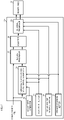
- FIG. 1 is a functional block diagram showing a configuration of a sound field support system including a sound field support apparatus according to a first embodiment of the present disclosure.
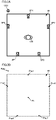
- FIG. 2A is a view showing an example of a positional relationship among a sound source, an audience point, and a plurality of speakers in a sound field support method according to the first embodiment of the present disclosure
- FIG. 2B is a view showing a position coordinate of the sound source, a position coordinate of the audience point, and a position coordinate of the plurality of speakers, in a case of FIG. 2A
- FIG. 3A is a view showing an image of emitting a sound from a sound source
- FIG. 3B is a view showing an image of rendering a sound source to a speaker and emitting a sound.
- an audience point 900 at which an audience watches and listens to, and a plurality of speakers SP1 to SP5 are disposed in a target space 90.
- a virtual space is set in this target space 90.
- a sound source OBJ is set in the virtual space.
- the number of sound sources may be two or more.
- the sound field support method to be described below may be applied for each of a plurality of sound sources.
- the sound field support method to be described below may be applied to the plurality of sound sources all at once.
- the present embodiment shows a case of one sound source.
- the description of the present embodiment of the present disclosure shows five speakers, the number of speakers is not limited to five.
- a coordinate system of the target space 90 and a coordinate system of the virtual space are set so that a direction and a center point of three orthogonal axes may coincide, for example.
- the position coordinate by the coordinate system in the target space 90 and the position coordinate by the coordinate system of the virtual space coincide with each other. It is to be noted that, even when the coordinate system of the target space 90 and the coordinate system of the virtual space do not coincide with each other, a coordinate transformation matrix between the target space 90 and the virtual space may be set in this case.
- a sound field support system includes a sound field support apparatus 10 and headphones 80.
- the sound field support apparatus 10 includes an audience point setter 21, a sound source position setter 22, a speaker position setter 23, an adjustment operator 29, a simulated reproduction sound signal generator 30, a selector 40, and a binaural processor 50.
- the sound field support apparatus 10 is achieved by a program that executes each above functioner, a storage medium that stores this program, and an arithmetic processing apparatus such as a CPU or the like that executes this program.
- the audience point setter 21 sets a position coordinate Pr of the audience point 900 in the target space 90.
- the audience point setter 21 outputs the position coordinate Pr of the audience point 900 to the simulated reproduction sound signal generator 30 and the binaural processor 50.
- the sound source position setter 22 sets a position coordinate (more specifically, a position coordinate obtained by projecting a sound source in a virtual space onto the target space 90) Pobj of a sound source OBJ in the virtual space.
- the sound source position setter 22 outputs the position coordinate Pobj of the sound source OBJ to the simulated reproduction sound signal generator 30 and the binaural processor 50.
- the speaker position setter 23 sets position coordinates Pspl to Psp5 of the plurality of speakers SP1 to SP5 in the target space 90.
- the speaker position setter 23 outputs the position coordinates Pspl to Psp5 of the plurality of speakers SP1 to SP5 to the simulated reproduction sound signal generator 30 and the binaural processor 50.
- the adjustment operator 29 receives an operation input of a parameter for adjustment.
- the adjustment operator 29 outputs the parameter for adjustment to the simulated reproduction sound signal generator 30.
- the simulated reproduction sound signal generator 30 generates a simulated reproduction sound signal to be outputted to the speakers SP1 to SP5 of the target space 90, from an object reproduction sound signal.
- the object reproduction sound signal is an audio signal to be outputted from the sound source OBJ.
- the simulated reproduction sound signal is an audio signal to perform sound image localization of the sound source OBJ by the speaker rendering the sound source OBJ.
- the simulated reproduction sound signal generator 30 calculates the positional relationship between the position coordinate Pobj of the sound source OBJ, and the position coordinate Pspl to Psp5 of the plurality of speakers SP1 to SP5 with reference to the position coordinate Pr of the audience point 900.
- the simulated reproduction sound signal generator 30 sets sound image localization information on the sound source OBJ by use of this positional relationship.
- the sound image localization information is information that sets as if a sound is emitted from the sound source OBJ in the audience point 900 by the sound that the plurality of speakers SP1 to SP5 output.
- the sound image localization information is information to determine a volume of an output sound from the plurality of speakers SP1 to SP5, and output timing.
- the simulated reproduction sound signal generator 30 sets a plurality of speakers that render the sound source OBJ by use of the sound image localization information of the sound source OBJ (see FIG. 3B ).
- the simulated reproduction sound signal generator 30 generates the simulated reproduction sound signal to be reproduced by the plurality of speakers in which the sound source OBJ is rendered.
- the simulated reproduction sound signal generator 30 outputs the simulated reproduction sound signal to the selector 40.
- the selector 40 receives the operation input from an audience or the like, and selects the object reproduction sound signal and the simulated reproduction sound signal. More specifically, when a setting (a state of FIG. 3A ) in which a sound directly outputted from the sound source OBJ set in the virtual space is listened to is selected, the selector 40 selects and outputs the object reproduction sound signal. On the other hand, when a setting (a state of FIG. 3B ) in which a sound from a plurality of rendered speakers is listened to is selected, the selector 40 selects and outputs the simulated reproduction sound signal. In other words, when the position information on the sound source OBJ is selected, the object reproduction sound signal is selected and outputted, and when the localization information on the sound source OBJ using a speaker is selected, the simulated reproduction sound signal is selected and outputted.
- the selector 40 outputs a selected audio signal to the binaural processor 50.
- the binaural processor 50 performs binaural processing on an audio signal selected by the selector 40. It is to be noted that the binaural processing uses a head-related transfer function, and detailed content is known. A detailed description of the binaural processing will be omitted.
- the binaural processor 50 performs the binaural processing on an audio signal of the sound source OBJ by use of the position coordinate Pobj of the sound source OBJ and the position coordinate Pr of the audience point 900.
- the binaural processor 50 performs the binaural processing on the simulated reproduction sound signal by use of the position coordinate Psp of a speaker SP in which the sound source OBJ is rendered and the position coordinate Pr of the audience point 900.
- the binaural processor 50 performs the binaural processing on the object reproduction sound signal by use of the position coordinate Pobj of the sound source OBJ and the position coordinate Pr of the audience point 900.
- the binaural processor 50 performs the binaural processing on the simulated reproduction sound signal by use of the position coordinates Pspl and Psp5 of the speakers SP1 and SP5 in which the sound source OBJ is rendered and the position coordinate Pr of the audience point 900.
- the binaural processor 50 outputs the audio signal (a binaural signal) on which the binaural processing has been performed, to the headphones 80.
- the headphones 80 reproduce the audio signal by the binaural signal and emits a sound. It is to be noted that, while the present embodiment shows a mode in which a sound is emitted by use of the headphones 80, a sound may be emitted by use of a stereo speaker of two channels.
- the audience can listen to a sound (an object reproduction sound) of which the sound source is localized at a position of the sound source OBJ, through the headphones 80.
- the audience can listen to the sound (the simulated reproduction sound) of which the sound source is localized in a simulated manner at the position of the sound source OBJ by the speaker to which the sound source OBJ is rendered, through headphones.
- the audience without actually placing a speaker in a real space, can compare and listen to the object reproduction sound and the simulated reproduction sound. Therefore, the audience can directly and physically experience a difference between the object reproduction sound and the simulated reproduction sound. As a result, the audience can determine whether the simulated reproduction sound is able to reproduce (simulate) the object reproduction sound with good accuracy, or no discomfort between the object reproduction sound and the simulated reproduction sound is caused.
- the audience refers to such a physical experience result, and can adjust the parameter for adjustment of the simulated reproduction sound signal. Then, the audience can reproduce the object reproduction sound with good accuracy with the simulated reproduction sound by repeating adjustment of such a parameter.
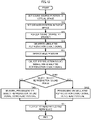
- FIG. 4 is a flow chart showing a first method of the sound field support method according to the first embodiment of the present disclosure.
- the sound field support method shown in FIG. 4 is executed until an audio signal on which the binaural processing has been performed is outputted. It is to be noted that, since the detailed description in each processing shown in FIG. 4 is stated above, the following detailed description will be omitted.
- a case of the placement mode shown in FIG. 2A, FIG. 2B , FIG. 3A, and FIG. 3B will be described as an example.
- the sound source position setter 22 sets a position of the sound source OBJ in the virtual space (S11) .
- the speaker position setter 23 sets positions of the speakers SP1 to SP5 in the target space (S12).
- the simulated reproduction sound signal generator 30 renders the sound source OBJ to the speakers SP1 and SP5 by use of the position coordinate Pobj of the sound source OBJ, the position coordinates Pspl to Psp5 of the speakers SP1 to SP5, the position coordinate Pr of the audience point 900 (S13).
- the simulated reproduction sound signal generator 30 generates a simulated reproduction sound signal by use of a rendering result (S14) .
- the selector 40 selects the object reproduction sound signal and the simulated reproduction sound signal by an operation from an audience or the like (S15).
- the sound field support apparatus 10 includes a GUI (Graphical User Interface).
- the GUI includes a physical controller that selects an audio signal to be reproduced.
- the selector 40 selects the object reproduction sound signal (YES in S150).
- the selector 40 selects the simulated reproduction sound signal (NO in S150).
- a switching time may be set for a selection of the object reproduction sound signal and the simulated reproduction sound signal and the selection is also able to be automatically switched according to the switching time.
- the binaural processor 50 performs the binaural processing on a selected audio signal, and generates a binaural signal. More specifically, when the object reproduction sound signal is selected, the binaural processor 50 performs the binaural processing on the object reproduction sound signal, and generates a binaural signal of the object reproduction sound signal (S161). When the simulated reproduction sound signal is selected, the binaural processor 50 performs the binaural processing on the simulated reproduction sound signal, and generates a binaural signal of the simulated reproduction sound signal (S162).
- the headphones 80 reproduce the binaural signal (S17). More specifically, the headphones 80 reproduce this binaural signal when the binaural signal of the object reproduction sound signal is inputted. The headphones 80 reproduce this binaural signal when the binaural signal of the simulated reproduction sound signal is inputted.
- the sound field support method is able to selectively provide an audience or the like with the object reproduction sound and the simulated reproduction sound.
- FIG. 5 is a flow chart showing a second method of the sound field support method according to the first embodiment of the present disclosure.
- the sound field support method shown in FIG. 5 adds parameter adjustment to the sound field support method shown in FIG. 4 . It is to be noted that a description of processing that is the same as the processing shown in FIG. 4 in processing shown in FIG. 5 will be omitted.
- a case of the placement mode shown in FIG. 2A, FIG. 2B , FIG. 3A, and FIG. 3B will be described as an example.
- the sound field support method shown in FIG. 5 executes the same processing up to Step S17 as the sound field support method shown in FIG. 4 .
- An audience executes processing from Step S15 to Step S17 and switches an audio signal to be reproduced.
- the audience listens to a sound of the binaural signal of the object reproduction sound signal and a sound of the binaural signal of the simulated reproduction sound signal, and compares the sounds.
- the processing ends.
- the parameter adjustment is not required (NO in S23)
- the audience performs the parameter adjustment by use of the adjustment operator 29 (S24).
- the simulated reproduction sound signal generator 30 generates a simulated reproduction sound signal by use of an adjusted parameter (S14).
- FIG. 6 is a view showing an example of a GUI for the parameter adjustment.
- a GUI 100 includes a positional relationship check window 111, a waveform check window 112, and a plurality of physical controllers 113.
- Each of the plurality of physical controllers 113 includes a knob 1131 and an adjustment value display window 1132.
- the positional relationship check window 111 displays sound sources OBJ1 to OBJ3 and the plurality of speakers SP1 to SP5 by the position coordinate set for each.
- the setting of a speaker SP to be assigned to the sound source OBJ is able to be achieved by a selection of the sound source OBJ and the speaker SP to be rendered, for example in the positional relationship check window 111.
- the waveform check window 112 displays a waveform of a simulated reproduction sound signal.
- a selection of the simulated reproduction sound signal to be displayed is switched, for example, by a selection of the plurality of speakers SP1 to SP5 displayed on the positional relationship check window 111.
- the plurality of physical controllers 113 are physical controllers that receive Q of the simulated reproduction sound signal, a setting of filter processing, a setting of gain value, or the like for each of a plurality of frequency bands (Hi, Mid, Low), for example.
- the knob 1131 receives an operation from an audience.
- the adjustment value display window 1132 displays a numerical value set by the knob 1131.
- the parameter of the simulated reproduction sound signal is adjusted by an operation input through the plurality of physical controllers 113. Then, a waveform with this adjusted parameter is displayed on the waveform check window 112.
- the audience can adjust and set a parameter by operating while looking at this GUI 100.
- the audience performs parameter adjustment by listening to and comparing the sound by the binaural signal of the object reproduction sound signal and the sound by the binaural signal of the simulated reproduction sound signal.
- the audience can adjust the sound by the binaural signal of the simulated reproduction sound signal so as to reproduce the sound by the binaural signal of the object reproduction sound signal with good accuracy.
- the audience can adjust the simulated reproduction sound by a speaker to simulate the object reproduction sound of the sound source OBJ with good accuracy.
- a comparer and outputter of the object reproduction sound and the simulated reproduction sound, and the adjustment operator 29 implement an "adjuster" of the present disclosure.
- the sound field support apparatus 10 and the sound field support method according to the embodiment of the present disclosure show a mode in which a comparison is performed between the object reproduction sound and the simulated reproduction sound by binaural reproduction.
- the sound field support apparatus 10 and the sound field support method according to the embodiment of the present disclosure are able to perform parameter adjustment, for example, by comparing the waveform or frequency spectrum, and HOA (Higher-Order Ambisonics) of an object reproduction sound signal with the waveform or frequency spectrum, and HOA (Higher-Order Ambisonics) of a simulated reproduction sound signal.
- HOA Higher-Order Ambisonics
- FIG. 7 is a functional block diagram showing a configuration of a sound field support system including a sound field support apparatus according to the second embodiment of the present disclosure.
- FIG. 8 is a view showing an example of a positional relationship among a sound source, an audience point, a plurality of speakers, and a virtual space in a sound field support method according to the second embodiment of the present disclosure.
- a sound field support apparatus 10A according to the second embodiment is different from the sound field support apparatus 10 according to the first embodiment in that a reverb processor 60 is added.
- Other configurations of the sound field support apparatus 10A are the same as or similar to the configurations of the sound field support apparatus 10, and a description of the same or similar configurations will be omitted.
- the sound field support apparatus 10A includes a reverb processor 60.
- An object reproduction sound signal and a simulated reproduction sound signal are inputted to the reverb processor 60.
- the reverb processor 60 generates an initial reflected sound signal and a reverberant sound signal by use of information on a virtual space 99.
- the initial reflected sound signal is an audio signal that simulates a sound of the sound source OBJ that is reflected (primary reflection) by a wall of the virtual space and reaches an audience point.
- the initial reflected sound signal is determined by a geometrical shape of the virtual space, a position of the sound source OBJ in the virtual space, and a position of the audience point.
- the reverberant sound signal is an audio signal that simulates a sound that is multiply reflected in the virtual space and reaches the audience point.
- the reverberant sound signal is determined by a geometrical shape of the virtual space, and a position of the audience point in the virtual space.
- the reverb processor 60 generates an initial reflected sound signal and a reverberant sound signal with respect to an object reproduction sound signal by use of position information on the sound source OBJ, information on the virtual space 99, and position information on the audience point.
- the reverb processor 60 adds generated initial reflected sound signal and reverberant sound signal to the object reproduction sound signal, and outputs the signals to the selector 40.
- the reverb processor 60 generates an initial reflected sound signal and a reverberant sound signal with respect to a simulated reproduction sound signal by use of the position information on the sound source OBJ, the position information on the speaker SP1 to speaker SP5, the information on the virtual space 99, the position information on the audience point.
- the reverb processor 60 sets a virtual sound source that represents a generation position of the initial reflected sound to this sound source OBJ in a simulated manner from the position information on the sound source OBJ and the audience point and the information on the virtual space 99.
- the reverb processor 60 generates an initial reflected sound signal from a positional relationship between this virtual sound source and the speaker SP to which this virtual sound source is assigned.
- the reverb processor 60 generates a reverberant sound signal by use of a geometrical shape of the virtual space, and a position of the audience point in the virtual space.
- the reverb processor 60 adds the initial reflected sound signal and reverberant sound signal that have been generated as described above, to a simulated reproduction sound signal, and outputs the signals to the selector 40.
- the sound field support apparatus 10A is able to add each reverb component (an initial reflected sound and a reverberant sound) to an object reproduction sound (a sound from the sound source OBJ) and a simulated reproduction sound (a sound simulated by a speaker) and output the signals.
- an audience also takes a reverb component into consideration and can determine accuracy of reproduction of the object reproduction sound by the simulated reproduction sound.
- FIG. 9 is a view showing an example of a GUI for adjustment of expansion and a sense of localization of a sound.
- a GUI 100A includes a setting display window 111A, an output state display window 115, and a plurality of physical controllers 116.
- the plurality of physical controllers 116 include a knob 1161 and an adjustment value display window 1162.
- the setting display window 111A displays a virtual sound source SS set to the sound source OBJ, a plurality of speakers SP, a virtual space 99, and an audience point RP by a position coordinate set for each.
- the plurality of physical controllers 116 are physical controllers to set weight volume that sets a weight value, shape volume that sets a shape value, and the like.
- Each of the physical controllers 116 for weight volume includes a physical controller 116 to set left-right weight, front-rear weight, and up-down weight, and includes a physical controller to set a gain value, and a physical controller to set a delay amount.
- the physical controllers 116 for shape volume include a physical controller to set expansion, and includes a physical controller to set a gain value, and a physical controller to set a delay amount. An audience can adjust expansion and a sense of localization of a sound by operating the plurality of physical controllers 116.
- the output state display window 115 graphically and schematically displays expansion and a sense of localization of a sound that are obtained by the weight value and the shape value that are set by the plurality of physical controllers 116. Accordingly, an audience can easily recognize expansion and a sense of localization of a sound that are set by the plurality of physical controllers 116, as an image. It is to be noted that, in a case in which the audience listens to a sound on which the binaural processing has been performed, by the headphones 80, the output state display window 115 can also combine and display an image showing a head, and an image showing expansion and a sense of localization of a sound in accordance to the image of a head.
- an audience also takes expansion and a sense of localization of a sound into consideration and can determine accuracy of reproduction of the object reproduction sound by the simulated reproduction sound.
- the audience can also adjust a shape of the virtual space 99, a position to a reproduction space, a position of the sound source OBJ, and a position of the plurality of speakers SP by operating the setting display window 111A.
- the sound field support apparatus according to various kinds of adjusted content, generates an object reproduction sound signal and a simulated reproduction sound signal and performs similar reverb processing.
- the audience even after adjustment, can determine accuracy of reproduction of the object reproduction sound by the simulated reproduction sound.
- FIG. 10 is a flow chart showing a sound field support method according to the second embodiment of the present disclosure.
- the sound field support method shown in FIG. 10 adds processing to add a reverb component to the sound field support method shown in FIG. 4 . It is to be noted that a description of processing that is the same as the processing shown in FIG. 4 in each processing shown in FIG. 10 will be omitted.
- the sound field support method shown in FIG. 10 executes the same processing up to Step S14 as the sound field support method shown in FIG. 4 .
- the reverb processor 60 generates a reverb component (an initial reflected sound signal and a reverberant sound signal) with respect to an object reproduction sound signal and a simulated reproduction sound signal, and adds the reverb component to the object reproduction sound signal and the simulated reproduction sound signal (S31).
- a reverb component an initial reflected sound signal and a reverberant sound signal
- the sound field support apparatus 10A executes processing after Step S15 by use of the object reproduction sound signal to which the reverb component is added and the simulated reproduction sound signal to which the reverb component is added.
- the sound field support method is able to add each reverb component (an initial reflected sound and a reverberant sound) to the object reproduction sound (the sound from the sound source OBJ) and the simulated reproduction sound (the sound simulated by a speaker) and output the signals.
- each reverb component an initial reflected sound and a reverberant sound
- the object reproduction sound the sound from the sound source OBJ
- the simulated reproduction sound the sound simulated by a speaker
- FIG. 11 is a functional block diagram showing a configuration of a sound field support system including a sound field support apparatus according to the third embodiment of the present disclosure.
- a sound field support apparatus 10B according to the third embodiment is different from the sound field support apparatus 10 according to the first embodiment in that a posture detector 70 is added.
- Other configurations of the sound field support apparatus 10B are the same as or similar to the configurations of the sound field support apparatus 10, and a description of the same or similar configurations will be omitted.
- the posture detector 70 is attached to the head of an audience and detects the posture of the head of an audience.
- the posture detector 70 is a posture detection sensor of three orthogonal axes, and is attached to the headphones 80.
- the posture detector 70 outputs detected posture of the head of the audience to the binaural processor 50.
- the binaural processor 50 performs the binaural processing on the object reproduction sound signal and the simulated reproduction sound signal by use of a posture detection result of the head of the audience, that is, a direction of the face of the audience.
- the sound field support apparatus 10B is able to reproduce the object reproduction sound and the simulated reproduction sound according to the direction of the face of the audience. Accordingly, the audience, while changing the direction of the face in the target space, can compare and listen to the object reproduction sound and the simulated reproduction sound according to the direction of the face. Therefore, the audience can directly and physically experience a difference between the object reproduction sound and the simulated reproduction sound in a plurality of directions in the target space. Accordingly, the audience can determine whether the simulated reproduction sound is able to reproduce (simulate) the object reproduction sound with good accuracy, or no discomfort between the object reproduction sound and the simulated reproduction sound is caused. In addition, as a result, the audience can reproduce the object reproduction sound by the simulated reproduction sound with better accuracy.
- FIG. 12 is a flow chart showing a sound field support method according to the third embodiment of the present disclosure.
- the sound field support method shown in FIG. 12 includes processing related to head posture detection in addition to the sound field support method shown in FIG. 4 . It is to be noted that a description of processing that is the same as the processing shown in FIG. 4 in each processing shown in FIG. 12 will be omitted.
- the sound field support method shown in FIG. 12 executes the same processing up to Step S14 as the sound field support method shown in FIG. 4 .
- the posture detector 70 detects a posture of the head of an audience (S41).
- the selector 40 selects the object reproduction sound signal and the simulated reproduction sound signal by an operation from an audience or the like (S15).
- the binaural processor 50 When the object reproduction sound signal is selected (YES in S150), the binaural processor 50 performs the binaural processing on the object reproduction sound signal by use of detected head posture (S461). When the simulated reproduction sound signal is selected (NO in S150), the binaural processor 50 performs the binaural processing on the simulated reproduction sound signal by use of the detected head posture (S462) .
- the sound field support apparatus 10B executes processing of Step S17 by use of the audio signal on which the binaural processing has been performed.
- the sound field support method is able to output an object reproduction sound and a simulated reproduction sound according to the direction of the face of an audience. Accordingly, the audience, while changing the direction of the face in the target space, can compare and listen to the object reproduction sound and the simulated reproduction sound according to the direction of the face. Therefore, the audience can directly and physically experience a difference between the object reproduction sound and the simulated reproduction sound in a plurality of directions in the target space. Then, the audience can determine whether the simulated reproduction sound is able to reproduce (simulate) the object reproduction sound with good accuracy, or no discomfort between the object reproduction sound and the simulated reproduction sound is caused. In addition, as a result, the audience can reproduce the object reproduction sound by the simulated reproduction sound with better accuracy.
Landscapes
- Physics & Mathematics (AREA)
- Engineering & Computer Science (AREA)
- Acoustics & Sound (AREA)
- Signal Processing (AREA)
- Health & Medical Sciences (AREA)
- General Health & Medical Sciences (AREA)
- Otolaryngology (AREA)
- Stereophonic System (AREA)
Applications Claiming Priority (1)
| Application Number | Priority Date | Filing Date | Title |
|---|---|---|---|
| JP2021045543A JP7666041B2 (ja) | 2021-03-19 | 2021-03-19 | 音場支援方法および音場支援装置 |
Publications (2)
| Publication Number | Publication Date |
|---|---|
| EP4061017A2 true EP4061017A2 (de) | 2022-09-21 |
| EP4061017A3 EP4061017A3 (de) | 2022-09-28 |
Family
ID=80819642
Family Applications (1)
| Application Number | Title | Priority Date | Filing Date |
|---|---|---|---|
| EP22162878.7A Pending EP4061017A3 (de) | 2021-03-19 | 2022-03-18 | Schallfeldunterstützungsverfahren, schallfeldunterstützungsvorrichtung und schallfeldunterstützungsprogramm |
Country Status (4)
| Country | Link |
|---|---|
| US (1) | US11917393B2 (de) |
| EP (1) | EP4061017A3 (de) |
| JP (2) | JP7666041B2 (de) |
| CN (2) | CN115119133B (de) |
Families Citing this family (4)
| Publication number | Priority date | Publication date | Assignee | Title |
|---|---|---|---|---|
| KR102671956B1 (ko) * | 2022-12-06 | 2024-06-05 | 주식회사 라온에이엔씨 | 인터콤용 실감음향 오디오출력장치 |
| CN116600230A (zh) * | 2023-04-06 | 2023-08-15 | 北京奥特维科技有限公司 | 一种特定场景环境声音模拟方法及装置 |
| WO2025018560A1 (ko) * | 2023-07-20 | 2025-01-23 | 삼성전자주식회사 | 가상 공간을 통해 음성을 전달하는 방법 및 장치 |
| CN118310620B (zh) * | 2024-06-07 | 2024-08-06 | 深圳市声菲特科技技术有限公司 | 基于特征分析的声场测试方法及系统 |
Citations (1)
| Publication number | Priority date | Publication date | Assignee | Title |
|---|---|---|---|---|
| JP2017184174A (ja) | 2016-03-31 | 2017-10-05 | 株式会社バンダイナムコエンターテインメント | シミュレーションシステム及びプログラム |
Family Cites Families (13)
| Publication number | Priority date | Publication date | Assignee | Title |
|---|---|---|---|---|
| JPH1032899A (ja) * | 1996-07-15 | 1998-02-03 | Matsushita Electric Ind Co Ltd | 車載用音響装置 |
| JP2000099066A (ja) * | 1998-09-25 | 2000-04-07 | Sony Corp | 表示方法および効果音付加装置 |
| JP2004266647A (ja) * | 2003-03-03 | 2004-09-24 | Mitsubishi Electric Engineering Co Ltd | 電気音響変換装置 |
| JP2006222801A (ja) * | 2005-02-10 | 2006-08-24 | Nec Tokin Corp | 移動音像提示装置 |
| JP2007228526A (ja) * | 2006-02-27 | 2007-09-06 | Mitsubishi Electric Corp | 音像定位装置 |
| JP2008193382A (ja) * | 2007-02-05 | 2008-08-21 | Mitsubishi Electric Corp | 携帯電話機、及び音声調整方法 |
| JP2010252220A (ja) * | 2009-04-20 | 2010-11-04 | Nippon Hoso Kyokai <Nhk> | 3次元音響パンニング装置およびそのプログラム |
| JP6117469B2 (ja) * | 2011-12-12 | 2017-04-19 | 富士通テン株式会社 | 携帯端末、音出力プログラム、及び音色調整方法 |
| CN104010265A (zh) * | 2013-02-22 | 2014-08-27 | 杜比实验室特许公司 | 音频空间渲染设备及方法 |
| EP4421617A3 (de) | 2013-10-31 | 2024-11-06 | Dolby Laboratories Licensing Corporation | Binaurales rendering für kopfhörer mit metadatenverarbeitung |
| KR20170106063A (ko) * | 2016-03-11 | 2017-09-20 | 가우디오디오랩 주식회사 | 오디오 신호 처리 방법 및 장치 |
| US10652686B2 (en) * | 2018-02-06 | 2020-05-12 | Sony Interactive Entertainment Inc. | Method of improving localization of surround sound |
| CN108616789B (zh) * | 2018-04-11 | 2021-01-01 | 北京理工大学 | 基于双耳实时测量的个性化虚拟音频回放方法 |
-
2021
- 2021-03-19 JP JP2021045543A patent/JP7666041B2/ja active Active
-
2022
- 2022-03-14 CN CN202210247023.7A patent/CN115119133B/zh active Active
- 2022-03-14 CN CN202511730188.XA patent/CN121585952A/zh active Pending
- 2022-03-16 US US17/695,907 patent/US11917393B2/en active Active
- 2022-03-18 EP EP22162878.7A patent/EP4061017A3/de active Pending
-
2025
- 2025-04-08 JP JP2025063577A patent/JP2025096443A/ja active Pending
Patent Citations (1)
| Publication number | Priority date | Publication date | Assignee | Title |
|---|---|---|---|---|
| JP2017184174A (ja) | 2016-03-31 | 2017-10-05 | 株式会社バンダイナムコエンターテインメント | シミュレーションシステム及びプログラム |
Also Published As
| Publication number | Publication date |
|---|---|
| US11917393B2 (en) | 2024-02-27 |
| CN115119133B (zh) | 2025-12-12 |
| JP2025096443A (ja) | 2025-06-26 |
| CN121585952A (zh) | 2026-02-27 |
| EP4061017A3 (de) | 2022-09-28 |
| CN115119133A (zh) | 2022-09-27 |
| US20220303709A1 (en) | 2022-09-22 |
| JP7666041B2 (ja) | 2025-04-22 |
| JP2022144499A (ja) | 2022-10-03 |
Similar Documents
| Publication | Publication Date | Title |
|---|---|---|
| EP4061017A2 (de) | Schallfeldunterstützungsverfahren, schallfeldunterstützungsvorrichtung und schallfeldunterstützungsprogramm | |
| JP6818841B2 (ja) | 少なくとも一つのフィードバック遅延ネットワークを使ったマルチチャネル・オーディオに応答したバイノーラル・オーディオの生成 | |
| CA3226617C (en) | GENERATION OF BINAURAL AUDIO SIGNAL IN RESPONSE TO A MULTICHANNEL AUDIO SIGNAL BY MEANS OF AT LEAST ONE FEEDBACK DELAY NETWORK | |
| US8488796B2 (en) | 3D audio renderer | |
| US20120243713A1 (en) | Spatially constant surround sound system | |
| JP5172665B2 (ja) | 筐体内の音場の録音、合成、及び再現 | |
| CN111372167B (zh) | 音效优化方法及装置、电子设备、存储介质 | |
| WO2015102920A1 (en) | Generating binaural audio in response to multi-channel audio using at least one feedback delay network | |
| JP7758108B2 (ja) | 情報処理装置および方法、再生装置および方法、並びにプログラム | |
| JP2026053748A (ja) | 音信号処理方法および音信号処理装置 | |
| TWI867359B (zh) | 用以使用關於潛在修改物件之修改資料來合成空間擴展聲源之設備、方法及電腦程式 | |
| JP2018148323A (ja) | 音像定位装置および音像定位方法 | |
| TWI867358B (zh) | 用以使用變異數或共變異數資料合成空間擴展音源之裝置、方法或電腦程式 | |
| CN114915881A (zh) | 虚拟现实头戴设备的控制方法、电子设备及存储介质 | |
| US12563357B2 (en) | Method and system for generating a personalised Head-Related Transfer Function | |
| US12495270B2 (en) | Apparatus and method for personalized binaural audio rendering | |
| EP4060655B1 (de) | Audiosignalverarbeitungsverfahren, audiosignalverarbeitungsgerät und audiosignalverarbeitungsprogramm | |
| US20250159426A1 (en) | Information processing apparatus and information processing method | |
| US20240267696A1 (en) | Apparatus, Method and Computer Program for Synthesizing a Spatially Extended Sound Source Using Elementary Spatial Sectors | |
| Grigoriou et al. | Binaural mixing using gestural control interaction | |
| LUBECK et al. | Evaluating the Plausibility of Binaural Ambisonics and Parametric Renderings | |
| WO2025253637A1 (ja) | 音響信号生成装置、音響信号生成方法、及び音響信号生成プログラム | |
| KR20240168228A (ko) | 가상 장소에서의 끊김없는 잔향 전이 | |
| HK40041323A (en) | Generating binaural audio in response to multi-channel audio using at least one feedback delay network | |
| HK40041323B (en) | Generating binaural audio in response to multi-channel audio using at least one feedback delay network |
Legal Events
| Date | Code | Title | Description |
|---|---|---|---|
| PUAI | Public reference made under article 153(3) epc to a published international application that has entered the european phase |
Free format text: ORIGINAL CODE: 0009012 |
|
| STAA | Information on the status of an ep patent application or granted ep patent |
Free format text: STATUS: THE APPLICATION HAS BEEN PUBLISHED |
|
| PUAL | Search report despatched |
Free format text: ORIGINAL CODE: 0009013 |
|
| AK | Designated contracting states |
Kind code of ref document: A2 Designated state(s): AL AT BE BG CH CY CZ DE DK EE ES FI FR GB GR HR HU IE IS IT LI LT LU LV MC MK MT NL NO PL PT RO RS SE SI SK SM TR |
|
| AK | Designated contracting states |
Kind code of ref document: A3 Designated state(s): AL AT BE BG CH CY CZ DE DK EE ES FI FR GB GR HR HU IE IS IT LI LT LU LV MC MK MT NL NO PL PT RO RS SE SI SK SM TR |
|
| RIC1 | Information provided on ipc code assigned before grant |
Ipc: H04S 7/00 20060101AFI20220823BHEP |
|
| STAA | Information on the status of an ep patent application or granted ep patent |
Free format text: STATUS: REQUEST FOR EXAMINATION WAS MADE |
|
| 17P | Request for examination filed |
Effective date: 20230328 |
|
| RBV | Designated contracting states (corrected) |
Designated state(s): AL AT BE BG CH CY CZ DE DK EE ES FI FR GB GR HR HU IE IS IT LI LT LU LV MC MK MT NL NO PL PT RO RS SE SI SK SM TR |
|
| STAA | Information on the status of an ep patent application or granted ep patent |
Free format text: STATUS: EXAMINATION IS IN PROGRESS |
|
| 17Q | First examination report despatched |
Effective date: 20241108 |
|
| GRAP | Despatch of communication of intention to grant a patent |
Free format text: ORIGINAL CODE: EPIDOSNIGR1 |
|
| STAA | Information on the status of an ep patent application or granted ep patent |
Free format text: STATUS: GRANT OF PATENT IS INTENDED |
|
| INTG | Intention to grant announced |
Effective date: 20260216 |