EP4047102A2 - Zusammensetzung zur diagnose von leberkrebs durch verwendung von cpg-methylierungsänderungen bei spezifischen genen und deren verwendung - Google Patents
Zusammensetzung zur diagnose von leberkrebs durch verwendung von cpg-methylierungsänderungen bei spezifischen genen und deren verwendung Download PDFInfo
- Publication number
- EP4047102A2 EP4047102A2 EP20877421.6A EP20877421A EP4047102A2 EP 4047102 A2 EP4047102 A2 EP 4047102A2 EP 20877421 A EP20877421 A EP 20877421A EP 4047102 A2 EP4047102 A2 EP 4047102A2
- Authority
- EP
- European Patent Office
- Prior art keywords
- methylation
- liver cancer
- group
- cancer
- lipe
- Prior art date
- Legal status (The legal status is an assumption and is not a legal conclusion. Google has not performed a legal analysis and makes no representation as to the accuracy of the status listed.)
- Pending
Links
Images




Classifications
-
- C—CHEMISTRY; METALLURGY
- C12—BIOCHEMISTRY; BEER; SPIRITS; WINE; VINEGAR; MICROBIOLOGY; ENZYMOLOGY; MUTATION OR GENETIC ENGINEERING
- C12Q—MEASURING OR TESTING PROCESSES INVOLVING ENZYMES, NUCLEIC ACIDS OR MICROORGANISMS; COMPOSITIONS OR TEST PAPERS THEREFOR; PROCESSES OF PREPARING SUCH COMPOSITIONS; CONDITION-RESPONSIVE CONTROL IN MICROBIOLOGICAL OR ENZYMOLOGICAL PROCESSES
- C12Q1/00—Measuring or testing processes involving enzymes, nucleic acids or microorganisms; Compositions therefor; Processes of preparing such compositions
- C12Q1/68—Measuring or testing processes involving enzymes, nucleic acids or microorganisms; Compositions therefor; Processes of preparing such compositions involving nucleic acids
- C12Q1/6876—Nucleic acid products used in the analysis of nucleic acids, e.g. primers or probes
- C12Q1/6883—Nucleic acid products used in the analysis of nucleic acids, e.g. primers or probes for diseases caused by alterations of genetic material
- C12Q1/6886—Nucleic acid products used in the analysis of nucleic acids, e.g. primers or probes for diseases caused by alterations of genetic material for cancer
-
- C—CHEMISTRY; METALLURGY
- C12—BIOCHEMISTRY; BEER; SPIRITS; WINE; VINEGAR; MICROBIOLOGY; ENZYMOLOGY; MUTATION OR GENETIC ENGINEERING
- C12Q—MEASURING OR TESTING PROCESSES INVOLVING ENZYMES, NUCLEIC ACIDS OR MICROORGANISMS; COMPOSITIONS OR TEST PAPERS THEREFOR; PROCESSES OF PREPARING SUCH COMPOSITIONS; CONDITION-RESPONSIVE CONTROL IN MICROBIOLOGICAL OR ENZYMOLOGICAL PROCESSES
- C12Q2523/00—Reactions characterised by treatment of reaction samples
- C12Q2523/10—Characterised by chemical treatment
- C12Q2523/125—Bisulfite(s)
-
- C—CHEMISTRY; METALLURGY
- C12—BIOCHEMISTRY; BEER; SPIRITS; WINE; VINEGAR; MICROBIOLOGY; ENZYMOLOGY; MUTATION OR GENETIC ENGINEERING
- C12Q—MEASURING OR TESTING PROCESSES INVOLVING ENZYMES, NUCLEIC ACIDS OR MICROORGANISMS; COMPOSITIONS OR TEST PAPERS THEREFOR; PROCESSES OF PREPARING SUCH COMPOSITIONS; CONDITION-RESPONSIVE CONTROL IN MICROBIOLOGICAL OR ENZYMOLOGICAL PROCESSES
- C12Q2600/00—Oligonucleotides characterized by their use
- C12Q2600/154—Methylation markers
-
- C—CHEMISTRY; METALLURGY
- C12—BIOCHEMISTRY; BEER; SPIRITS; WINE; VINEGAR; MICROBIOLOGY; ENZYMOLOGY; MUTATION OR GENETIC ENGINEERING
- C12Q—MEASURING OR TESTING PROCESSES INVOLVING ENZYMES, NUCLEIC ACIDS OR MICROORGANISMS; COMPOSITIONS OR TEST PAPERS THEREFOR; PROCESSES OF PREPARING SUCH COMPOSITIONS; CONDITION-RESPONSIVE CONTROL IN MICROBIOLOGICAL OR ENZYMOLOGICAL PROCESSES
- C12Q2600/00—Oligonucleotides characterized by their use
- C12Q2600/158—Expression markers
Definitions
- the present invention relates to a composition, a kit, a nucleic acid chip and a method which allow the diagnosis of liver cancer by detecting methylation levels of CpG sites of any one or more genes selected from the group consisting of FAM110A, FAR1, VIM, LDHB, LIPE, INAFM1, ATL1, CELF6, MTHFD2, PAK1, NXPE3, SLC25A36 and VANGL2.
- Liver cancer is one of cancers with high incidence worldwide. In Korea, the mortality from liver cancer is very high at 23 per 100,000 people, and about 10% of the total mortality in Koreans is related to hepatitis, cirrhosis and liver cancer. Liver cancer is difficult to be diagnosed early because there are no perceptual symptoms. In general, since liver cancer is usually detected in a stage of advanced carcinoma that cannot be treated properly, the treatment is very limited and the prognosis is also very poor. Since the prognosis of liver cancer varies greatly depending on the cancer progression at the time of diagnosis, early detection of liver cancer patients is very important to increase the survival rate of liver cancer patients.
- epigenetics is a field that studies the regulation of gene expression in a state in which the base sequence of DNA is not changed.
- the epigenetics is to study the regulation of gene expression through epigenetic variations, such as DNA methylation, acetylation, methylation, phosphorylation, and ubiquitination of miRNAs or histones, and the like.
- the DNA methylation is the most studied epigenetic variation.
- the epigenetic variation may result in gene function variations and changes to tumor cells.
- the DNA methylation is associated with the expression (or inhibition and induction) of disease-regulatory genes in cells, and recently, cancer diagnosis methods through measurement of DNA methylation have been proposed.
- cancer-specific methylation occurs in advance even in precancerous tissues, the detection of cancer-specific methylation is highly likely to be used for diagnosis of cancer.
- liver cancer-specific methylation markers capable of predicting the risk of liver cancer.
- the present inventors found that CpG sites of specific genes were hypermethylated state in liver cancer, developed a composition, a kit, a nucleic acid chip, and a method capable of diagnosing liver cancer by detecting the methylation levels, and then completed the present invention.
- An object of the present invention is to provide a composition for diagnosing liver cancer comprising a preparation for measuring methylation levels of CpG sites of specific genes.
- Another object of the present invention is to provide a kit for diagnosing liver cancer comprising a PRC primer pair for amplifying fragments including CpG sites of specific genes and a sequencing primer for pyrosequencing a PCR product amplified by the primer pair.
- Yet another object of the present invention is to provide a nucleic acid chip for diagnosing liver cancer in which probes capable of hybridizing with fragments including CpG sites of specific genes under a stringent condition are immobilized.
- Still another object of the present invention is to provide a method for diagnosing liver cancer comprising measuring and comparing methylation levels of CpG sites of specific genes from different samples.
- Still yet another object of the present invention is to provide a use of a preparation for measuring methylation levels of CpG sites of genes for preparing a preparation for diagnosing liver cancer.
- composition for diagnosing liver cancer comprising a preparation for measuring methylation levels of CpG sites of any one or more genes selected from the group consisting of FAM110A, FAR1, VIM, LDHB, LIPE, INAFM1, ATL1, CELF6, MTHFD2, PAK1, NXPE3, SLC25A36 and VANGL2.
- kits for diagnosing liver cancer comprising a primer pair for amplifying fragments including CpG sites of any one or more genes selected from the group consisting of FAM110A, FAR1, VIM, LDHB, LIPE, INAFM1, ATL1, CELF6, MTHFD2, PAK1, NXPE3, SLC25A36 and VANGL2.
- nucleic acid chip for diagnosing liver cancer immobilized with probes capable of hybridizing with fragments including CpG sites of any one or more genes selected from the group consisting of FAM110A, FAR1, VIM, LDHB, LIPE, INAFM1, ATL1, CELF6, MTHFD2, PAK1, NXPE3, SLC25A36 and VANGL2.
- a method for diagnosing liver cancer comprising measuring methylation levels of CpG sites of any one or more genes selected from the group consisting of FAM110A, FAR1, VIM, LDHB, LIPE, INAFM1, ATL1, CELF6, MTHFD2, PAK1, NXPE3, SLC25A36 and VANGL2 from samples of patients suspected of having liver cancer; and comparing the measured methylation levels with methylation levels of CpG sites of the same genes in a normal control sample.
- a preparation for measuring methylation levels of CpG sites of any one or more genes selected from the group consisting of FAM110A, FAR1, VIM, LDHB, LIPE, INAFM1, ATL1, CELF6, MTHFD2, PAK1, NXPE3, SLC25A36 and VANGL2 for preparing a preparation for diagnosing liver cancer.
- the present invention relates to a composition for diagnosing liver cancer comprising a preparation for measuring methylation levels of CpG sites of any one or more genes selected from the group consisting of FAM110A, FAR1, VIM, LDHB, LIPE, INAFM1, ATL1, CELF6, MTHFD2, PAK1, NXPE3, SLC25A36 and VANGL2.
- methylation means that a methyl group is attached to a base constituting DNA.
- the methylation refers to whether methylation occurs in cytosine of a specific CpG site of a specific gene.
- the binding of a transcription factor is disturbed to inhibit the expression of the specific gene.
- unmethylation or hypomethylation occurs, the expression of the specific gene is increased.
- 5-methylcytosine In genomic DNA of mammalian cells, in addition to A, C, G, and T, there is the fifth base called 5-methylcytosine (5-mC) with a methyl group attached to the fifth carbon of a cytosine ring.
- the methylation of 5-methylcytosine occurs only at C of CG dinucleotide (5'-mCG-3') called CpG, and methylation of CpG inhibits the expression of alu or transposon and a repeating sequence of a genome.
- 5-mC of the CpG is naturally deaminated to be easily converted to thymine (T)
- T thymine
- the term "measurement of the methylation level” refers to measuring methylation levels of CpG sites of any one or more genes selected from the group consisting of FAM110A, FAR1, VIM, LDHB, LIPE, INAFM1, ATL1, CELF6, MTHFD2, PAK1, NXPE3, SLC25A36 and VANGL2, and the methylation levels may be measured by a detection method according to the treatment of bisulfite or a bisulfite-free detection method.
- the methylation level may be measured by methylation-specific PCR, for example, methylation-specific polymerase chain reaction (MSP), real time methylation-specific polymerase chain reaction (PCR), PCR using a methylated DNA-specific binding protein, or quantitative PCR.
- MSP methylation-specific polymerase chain reaction
- PCR real time methylation-specific polymerase chain reaction
- PCR PCR using a methylated DNA-specific binding protein
- quantitative PCR quantitative PCR.
- the methylation level may be measured by automatic sequencing such as pyrosequencing and bisulfite sequencing, but is not limited thereto.
- the methylation level may be measured using a detection method using a ten-eleven translocation protein (TET protein) as the bisulfite-free detection method (see Nature Biotechnology, volume 37, pages 424-429 (2019 )).
- TET protein ten-eleven translocation protein
- the TET protein is an enzyme that acts on DNA and is involved in chemical changes of bases, and when bisulfite is treated, all Cs except for methylated C are converted to T bases, whereas in the Tet protein, only the methylated C is converted to T to enable effective detection.
- the CpG sites of any one or more genes selected from the group consisting of FAM110A, FAR1, VIM, LDHB, LIPE, INAFM1, ATL1, CELF6, MTHFD2, PAK1, NXPE3, SLC25A36 and VANGL2 refer to CpG sites on DNAs of the genes.
- the DNA of the gene is a concept including all of a series of structural units required for expression of the gene and operably linked to each other, and may include, for example, a promoter region, an open reading frame (ORF) and a terminator region.
- the CpG sites of any one or more genes selected from the group consisting of FAM110A, FAR1, VIM, LDHB, LIPE, INAFM1, ATL1, CELF6, MTHFD2, PAK1, NXPE3, SLC25A36 and VANGL2 exist in the promoter regions, the open reading frames (ORFs) or the terminator regions of the corresponding genes.
- the measuring of the methylation levels of the CpG sites of any one or more genes selected from the group consisting of FAM110A, FAR1, VIM, LDHB, LIPE, INAFM1, ATL1, CELF6, MTHFD2, PAK1, NXPE3, SLC25A36 and VANGL2 may mean measuring methylation levels of cytosines in CpG sites of genes shown in Table 1 below.
- the CpG sites of any one or more genes selected from the group consisting of FAM110A, FAR1, VIM, LDHB, LIPE, INAFM1, ATL1, CELF6, MTHFD2, PAK1, NXPE3, SLC25A36 and VANGL2 are located between +/- 2000 bases (2 kb) from transcription start sites (TSS) of the genes.
- a base sequence of a human genome chromosomal region was expressed according to The February 2009 Human reference sequence (GRCh37), but the expression of a specific sequence of the human genome chromosomal region may be slightly changed as the study results on the genomic sequence are updated, and the expression of the human genome chromosomal region of the present invention may vary according to the change. Accordingly, in the human genome chromosomal region expressed according to The February 2009 Human reference sequence (GRCh 37) of the present invention, since a human reference sequence has been updated after the filing date of the present invention, even if the expression of the human genome chromosomal region is changed differently from now, it will be apparent that the scope of the present invention affects the changed human genome chromosomal region. These changes may be easily seen by those with ordinary skill in the art to which the present invention pertains.
- the preparation for measuring the methylation level of the CpG site may include a compound of modifying a cytosine base or a methylation-sensitive restriction enzyme, primers specific to methylated allele sequences of any one or more genes selected from the group consisting of FAM110A, FAR1, VIM, LDHB, LIPE, INAFM1, ATL1, CELF6, MTHFD2, PAK1, NXPE3, SLC25A36 and VANGL2, and primers specific to unmethylated allele sequences.
- the compound of modifying the cytosine base is a compound of modifying unmethylated cytosine or methylated cytosine, and may be bisulfite or a salt thereof, preferably sodium bisulfite of modifying the unmethylated cytosine, or a TET protein of modifying the methylated cytosine, but is not limited thereto.
- Methods for detecting whether the CpG site is methylated by modifying the cytosine base are well known in the art ( WO01/26536 ; US2003/0148326A1 ).
- the methylation-sensitive restriction enzyme may be a restriction enzyme capable of specifically detecting methylation of the CpG site, and may be a restriction enzyme containing CG as a recognition site of the restriction enzyme. Examples thereof include SmaI, SacII, EagI, HpaII, MspI, BssHII, BstUI, NotI, and the like, but are not limited thereto.
- cleavage by the restriction enzyme varies and may be detected through PCR or southern blot analysis.
- Methylation-sensitive restriction enzymes other than the restriction enzymes are well known in the art.
- the primers may include primers specific to methylated allele sequences of any one or more genes selected from the group consisting of FAM110A, FAR1, VIM, LDHB, LIPE, INAFM1, ATL1, CELF6, MTHFD2, PAK1, NXPE3, SLC25A36 and VANGL2, and primers specific to unmethylated allele sequences.
- the term "primer” refers to a nucleic acid sequence having a short free 3-terminal hydroxyl group, and a short nucleic acid sequence capable of forming a base pair with a complementary template and serving as a starting point for copying a template strand.
- the primer may initiate DNA synthesis in the presence of a reagent for polymerization (i.e., DNA polymerase or reverse transcriptase) and four different nucleoside triphosphates in appropriate buffer and temperature.
- the primer is a sense and antisense nucleic acid with a sequence of 7 to 50 nucleotides and may incorporate an additional feature without changing the basic properties of the primer that serves as an initiation site of DNA synthesis.
- the primer of the present invention may be preferably designed according to a sequence of a specific CpG site for analyzing methylation, and more preferably, may be at least one selected the group consisting of a primer pair capable of specifically amplifying cytosine that is methylated to be unmodified by bisulfite, a primer pair capable of specifically amplifying cytosine that is not methylated to be modified by bisulfite, and a primer pair capable of specifically amplifying cytosine that is methylated to be modified by a Tet-based protein, and a primer pair capable of specifically amplifying cytosine that is not methylated and has not been modified by a Tet-based protein.
- the present invention provides a kit for diagnosing liver cancer comprising a primer pair for amplifying fragments including CpG sites of any one or more genes selected from the group consisting of FAM110A, FAR1, VIM, LDHB, LIPE, INAFM1, ATL1, CELF6, MTHFD2, PAK1, NXPE3, SLC25A36 and VANGL2.
- polymerase agarose in addition to the preparation, polymerase agarose, a buffer solution required for electrophoresis, and the like may be additionally included.
- the present invention provides a nucleic acid chip for diagnosing liver cancer immobilized with probes capable of hybridizing with fragments including CpG sites of any one or more genes selected from the group consisting of FAM110A, FAR1, VIM, LDHB, LIPE, INAFM1, ATL1, CELF6, MTHFD2, PAK1, NXPE3, SLC25A36 and VANGL2.
- nucleic acid refers to oligonucleotides, nucleotides, polynucleotides or fragments thereof, single- or double-stranded genomic or synthetic-origin DNA or RNA, sense or antisense-stranded genomic or synthetic-origin DNA or RNA, and peptide nucleic acid (PNA) or natural or synthetic-origin DNA or RNA analog material. If the nucleic acid is RNA, it will be apparent to those skilled in the art that instead of deoxynucleotides A, G, C and T, ribonucleotides A, G, C and U are substituted, respectively.
- the gene involved in cell transformation may be diagnosed early by detecting the methylation outside the regulatory site.
- liver cancer it is possible to early diagnose cells likely to form liver cancer using the methylated gene marker.
- a gene confirmed to be methylated in cancer cells is methylated in cells appearing to be clinically or morphologically normal, the normal-appearing cells are being cancerizated. Therefore, it is possible to diagnose liver cancer early by confirming the methylation of a liver cancer-specific gene in normal-appearing cells.
- the present invention provides a method for diagnosing liver cancer comprising measuring methylation levels of CpG sites of any one or more genes selected from the group consisting of FAM110A, FAR1, VIM, LDHB, LIPE, INAFM1, ATL1, CELF6, MTHFD2, PAK1, NXPE3, SLC25A36 and VANGL2 from samples of patients suspected of having liver cancer; and comparing the measured methylation levels with methylation levels of CpG sites of the same genes in a normal control sample.
- the method for measuring the methylation level may be selected from the group consisting of PCR, methylation specific PCR, real time methylation specific PCR, PCR using a methylated DNA-specific binding protein, measuring whether there is methylation using a methylation-sensitive restriction enzyme, quantitative PCR, DNA chip, pyrosequencing and bisulfite sequencing, but is not limited thereto.
- the method of methylation-specific PCR is a method of designing and using different types of primers depending on whether CpG dinucleotide is methylated as a primer to perform PCR after treating a sample DNA with bisulfite. If the primer binding site has been methylated, PCR proceeds with the methylated primer, and if not methylated, PCR proceeds with a normal primer. That is, the method is a method of treating the sample DNA with bisulfite, performing PCR using two types of primers at the same time, and comparing the results.
- the real time methylation specific PCR is to convert the methylation-specific PCR method to a real-time measurement method and to perform real time PCR by treating genomic DNA with bisulfite, designing PCR primers corresponding to methylation, and using these primers.
- the method is a method of preparing a standard curve using an in vitro methylated DNA sample, and quantitatively analyzing the methylation level by amplifying a gene without a 5'-CpG-3' sequence in a base sequence together as a negative control for standization.
- the methylation-sensitive restriction enzyme uses CpG dinucleotide as an action site, and dose not act as the enzyme when this site is methylated. Therefore, when the sample DNA is treated with the methylation-sensitive restriction enzyme and then amplified by PCR to include an enzyme target site, the restriction enzyme does not act in the case of methylation, but is amplified by PCR, but the unmethylated normal site is cleaved by the restriction enzyme and not amplified by PCR, thereby measuring whether a specific DNA site is methylated.
- a protein that specifically binds only to methylated DNA when a protein that specifically binds only to methylated DNA is mixed with DNA, the protein specifically binds only to the methylated DNA, so that only the methylated DNA may be selectively isolated. After mixing genomic DNA with the methylated DNA-specific binding protein, only the methylated DNA is selectively isolated. This is a method of amplifying these isolated DNAs using a PCR primer corresponding to an intron site, and then measuring whether methylation occurs by agarose electrophoresis.
- the methylation may be measured by quantitative PCR, and the methylated DNA isolated by the methylated DNA-specific binding protein is labeled with a fluorescent dye and hybridized to a DNA chip integrated with a complementary probe to measure the methylation.
- the methylated DNA-specific binding protein is not limited to MBD2bt.
- pyrosequencing of bisulfite-treated DNA is based on the following principle.
- 5-methylcytosine (5-mC) is formed, wherein the modified base is converted to uracil upon treatment with bisulfite.
- the CpG dinucleotide has been methylated when the DNA extracted from the sample is treated with bisulfite, the CpG dinucleotide is preserved as cytosine and the remaining unmethylated cytosines are converted to uracils.
- Sequencing of the bisulfite-treated DNA may be preferably performed using a pyrosequencing method.
- Tet-treated DNA is not limited only to the pyrosequencing method, but may be performed by using methods such as methylation-sensitive PCR (MSP), microarray, and next generation sequencing (NGS).
- MSP methylation-sensitive PCR
- NGS next generation sequencing
- the method for diagnosing liver cancer of the present invention may be performed by a method characterized by including steps of a) obtaining a sample from a subject, b) obtaining genomic DNA from the sample, c) treating the obtained genomic DNA with a compound of modifying an unmethylated cytosine base, d) obtaining a PCR product by amplifying the treated DNA by PCR using a primer capable of amplifying any one or more CpG sites selected from the group consisting of FAM110A, FAR1, VIM, LDHB, LIPE, INAFM1, ATL1, CELF6, MTHFD2, PAK1, NXPE3, SLC25A36 and VANGL2, and e) measuring the methylation level of the PCR product.
- a primer capable of amplifying any one or more CpG sites selected from the group consisting of FAM110A, FAR1, VIM, LDHB, LIPE, INAFM1, ATL1, CELF6, MTHFD2, PAK1, NXPE3, SLC25A36 and VANG
- the obtaining of the genomic DNA in step b) may be performed using a phenol/chloroform extraction method commonly used in the art, an SDS extraction method ( Tai et al., Plant Mol. Biol. Reporter, 8: 297-303, 1990 ), a CTAB separation method (Cetyl Trimethyl Ammonium Bromide; Murray et al., Nuc) Res., 4321-4325, 1980 ) or a commercially available DNA extraction kit.
- sample refers to a wide range of bodily fluids, including all biological fluids obtained from individuals, bodily fluids, cell lines, tissue culture, etc., depending on a type of analysis to be performed. Methods for obtaining bodily fluids and tissue biopsies from mammals are generally well known, and in the present invention, the samples may be preferably selected from the group consisting of human derivatives including tissues, cells, blood, plasma, serum, feces, and urine.
- abnormal methylation changes in cancer tissues show significant similarities to methylation changes in genomic DNA obtained from biological samples such as cells, whole blood, serum, plasma, saliva, sputum, cerebrospinal fluid, or urine, in the case of using the marker of the present invention, with respect to the prediction of the occurrence of liver cancer, there is an advantage that it is possible to be easily diagnosed through blood, bodily fluids, or the like.
- the present invention provides a use of a preparation for measuring methylation levels of CpG sites of any one or more genes selected from the group consisting of FAM110A, FAR1, VIM, LDHB, LIPE, INAFM1, ATL1, CELF6, MTHFD2, PAK1, NXPE3, SLC25A36 and VANGL2 for preparing a preparation for diagnosing liver cancer.
- Example 1 Screening of hepatocellular cancer-specific methylated genes
- the DNA extracted from each tissue was converted through bisulfite treatment. Through this, a cytosine base was modified depending on the methylation of the DNA region.
- a probe used in the microarray experiment was specifically designed for methylation and unmethylation in order to confirm whether the cytosine base in a methylated region of a gene was modified.
- the microarray experiment measured the methylation levels of the genes through about 450,000 (450 k) probes representing the methylated region of each gene, and a result of each probe derived from the experiment was presented as a beta value.
- the beta value had a value of 0 to 1, and it was determined that the closer to 1, the higher the methylation level of the corresponding gene region.
- DMRs differentially methylated regions
- the Limma method has been known to be least affected by an outlier among several methylation statistical analysis methods to identify the difference between the groups. Therefore, the method was a suitable method for finding cancer-specific markers because the method was less affected by abnormal measurement values of some samples. In the experiment, it was determined that there was a significant difference in methylation between the two groups as an adjusted p-value derived through the Limma method decreased.
- gene regions with significant differences in beta values between tumor and non-tumor groups were selected as cancer-specific biomarker candidates.
- Example 2 Screening of hepatocellular cancer-specific hypermethylated genes
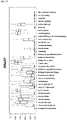
- the methylation levels of the genes were as shown in FIG. 15 through the microarray experiment on tumor tissue (cancer tissue of hepatocellular cancer) and non-tumor tissue (tissue other than cancer tissue including normal liver tissue) for the genes.
- tumor tissue cancer tissue of hepatocellular cancer
- non-tumor tissue tissue other than cancer tissue including normal liver tissue
- the result of each probe derived through the experiment was represented as a beta value, and the beta value had 0 to 1, and it was determined that the closer to 1, the higher the methylation level of the corresponding gene region.
- methylation may occur in cancers other than liver cancer. That is, liver cancer-specific methylation was not confirmed.
- GRASP phosphoinositides 1 associated scaffold protein
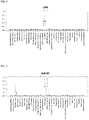
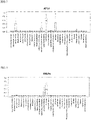
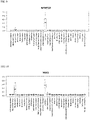
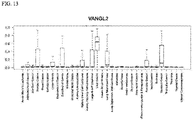
- the 33 cancer types were as follows: Acute Myeloid Leukemia, Adrenocortical cancer, Bile Duct cancer, Breast cancer, Cervical Cancer, Colon cancer, Endometrioid Cancer, Esophageal Cancer, Glioblastoma, Head and neck cancer, Kidney chromophobe, Kidney Clear cell carcinoma, Kidney papillary cell carcinoma, Large b-cell lymphoma, Liver cancer, Lower Grade Glioma, Lung adenocarcinoma, Melanoma, Mesothelioma, Ocular melanomas, Ovarian cancer, Pancreatic cancer, Pheochromocytoma & paraganglioma, Prostate cancer, Rectal cancer, Sarcoma, Stomach cancer, testicular cancer, Thymoma, Thyroid cancer, and Uterine carcinosarcoma.
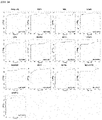
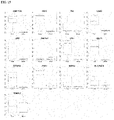
- the corresponding region when the corresponding region was not a pseudogene, existed in a CpG island site, was located in a gene region selected between +/- 2000 bases (2 kb) from a transcription start site (TSS) of the gene, and existed in an autosome, the corresponding region was selected as a hepatocellular cancer-specific hypermethylation gene. As a result, as shown in Table 3 below, a total of 13 genes were selected (see FIGS. 1 to 13 ).
- FAR1 FIG. 2
- LIPE FIG. 5
- MTHFD2 FIG. 10
- NXPE3 FIG. 12
- methylation patterns in 1,022 cancer cell lines derived from 14 tissues were analyzed using a public database.
- the Infinium Human Methylation 450 Beadchip microarray experiment was performed on DNA extracted from each cell line according to a manufacturer's standardized methylation analysis test procedure.
- the methylation levels of genes were measured through about 450,000 probes as in Example 1, and the methylation value of each probe was presented as a beta value.
- the beta value had a value of 0 to 1, and it was determined that the closer to 1, the higher the methylation level of the corresponding gene region.
- the 14 tissues were as follows: aerodigestive tract, blood, bone, breast, digestive system, kidney, lung, nervous system, pancreas, skin, soft tissue, thyroid, urogenital system, other tissue.
- DMRs differentially methylated regions
- liver cancer cell line had a remarkably low adjusted p-value to be specific to liver cancer.
- genes such as LDHB and PAK1 showed distinct methylation in the liver cancer cell line compared to other cell lines.
- a Receiver Operating Characteristic (ROC) curve that presented changes in sensitivity and specificity according to a cut-off value may be shown through the calculation of the sensitivity and specificity values for feasible cut-off values of consecutive diagnostic test measurement values.
- the accuracy of diagnosis may be measured by an area under the ROC curve (AUC).
- AUC area under the ROC curve
- the AUC value has a value between 0.5 and 1, and it is evaluated that the higher the value, the higher the diagnosis accuracy. If the AUC value is 1, it is meant that the diagnosis result is a perfectly accurate test, but if the AUC value is 0.5, it is determined that the diagnosis result is the same as the random result.
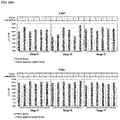
- Example 5 Measurement of liver cancer tissue qMSP-based methylation of selected genes
- genomic DNA was isolated from a pair of cancer tissues and cancer-adjacent tissues of total 15 liver cancer patients, 5 for each stage from stage 2c to 4c, and treated with bisulfite, and then the amplification and methylation levels of specific gene regions were observed with respect to each of FAR1, PAK1, ATL1, and LIPE according to a generalized qMSP experimental method.
- an ACTB gene which was specifically bound to a gene region converted by bisulfite to be amplified and not related to methylation to standardize the amplified value of the corresponding region, was used as an internal control.
- ⁇ Ct + 10 The methylation level of the bisulfite-converted DNA amplified by PCR was represented as ⁇ Ct + 10, which was a value adjusted with a Cycle of Threshold (Ct) value of ACTB used as an internal control.
- the selected genes may be used even for the diagnosis of liver cancer.
Landscapes
- Chemical & Material Sciences (AREA)
- Life Sciences & Earth Sciences (AREA)
- Health & Medical Sciences (AREA)
- Organic Chemistry (AREA)
- Proteomics, Peptides & Aminoacids (AREA)
- Engineering & Computer Science (AREA)
- Immunology (AREA)
- Pathology (AREA)
- Analytical Chemistry (AREA)
- Zoology (AREA)
- Genetics & Genomics (AREA)
- Wood Science & Technology (AREA)
- Physics & Mathematics (AREA)
- Biotechnology (AREA)
- Microbiology (AREA)
- Molecular Biology (AREA)
- Hospice & Palliative Care (AREA)
- Biophysics (AREA)
- Oncology (AREA)
- Biochemistry (AREA)
- Bioinformatics & Cheminformatics (AREA)
- General Engineering & Computer Science (AREA)
- General Health & Medical Sciences (AREA)
- Measuring Or Testing Involving Enzymes Or Micro-Organisms (AREA)
Applications Claiming Priority (2)
| Application Number | Priority Date | Filing Date | Title |
|---|---|---|---|
| KR20190127218 | 2019-10-14 | ||
| PCT/KR2020/013801 WO2021075797A2 (ko) | 2019-10-14 | 2020-10-08 | 특정 유전자의 cpg 메틸화 변화를 이용한 간암 진단용 조성물 및 이의 용도 |
Publications (2)
| Publication Number | Publication Date |
|---|---|
| EP4047102A2 true EP4047102A2 (de) | 2022-08-24 |
| EP4047102A4 EP4047102A4 (de) | 2024-04-17 |
Family
ID=75537890
Family Applications (1)
| Application Number | Title | Priority Date | Filing Date |
|---|---|---|---|
| EP20877421.6A Pending EP4047102A4 (de) | 2019-10-14 | 2020-10-08 | Zusammensetzung zur diagnose von leberkrebs durch verwendung von cpg-methylierungsänderungen bei spezifischen genen und deren verwendung |
Country Status (6)
| Country | Link |
|---|---|
| US (1) | US20240110244A1 (de) |
| EP (1) | EP4047102A4 (de) |
| JP (2) | JP2022552400A (de) |
| KR (1) | KR102472253B1 (de) |
| CN (2) | CN114829631A (de) |
| WO (1) | WO2021075797A2 (de) |
Families Citing this family (7)
| Publication number | Priority date | Publication date | Assignee | Title |
|---|---|---|---|---|
| CN113862370B (zh) * | 2021-12-02 | 2022-03-22 | 广州滴纳生物科技有限公司 | 用于筛查肝癌的引物和探针、试剂盒及其应用 |
| CN114369663A (zh) * | 2022-01-18 | 2022-04-19 | 博尔诚(北京)科技有限公司 | 用于肝癌筛查的标志物、探针组合物及其应用 |
| CN114941029B (zh) * | 2022-03-28 | 2023-08-29 | 武汉艾米森生命科技有限公司 | 肝癌的生物标志物、核酸产品和试剂盒 |
| CN115572765B (zh) * | 2022-03-30 | 2024-05-31 | 江苏鹍远生物技术有限公司 | 一组肿瘤检测标志物及其用途 |
| AU2024212478A1 (en) * | 2023-01-26 | 2025-05-29 | Lepidyne Co., Ltd. | Composition for predicting risk of developing liver cancer |
| KR20240162635A (ko) | 2023-05-08 | 2024-11-18 | 전남대학교산학협력단 | 개과 동물의 아토피피부염 예후 예측용 조성물 |
| KR20240162634A (ko) | 2023-05-08 | 2024-11-18 | 전남대학교산학협력단 | 개과 동물의 아토피피부염 예후 예측용 조성물 |
Family Cites Families (16)
| Publication number | Priority date | Publication date | Assignee | Title |
|---|---|---|---|---|
| AU8021500A (en) | 1999-10-13 | 2001-04-23 | Johns Hopkins University School Of Medicine, The | Methods of diagnosing and treating hepatic cell proliferative disorders |
| EP1370685A2 (de) | 2000-04-06 | 2003-12-17 | Epigenomics AG | Diagnose von dns-reparatur assozierten krankheiten |
| CN1200112C (zh) * | 2002-04-15 | 2005-05-04 | 上海市肿瘤研究所 | 肝癌相关基因启动子CpG岛的甲基化状态及其应用 |
| CA2621932A1 (en) * | 2005-09-14 | 2007-03-22 | Human Genetic Signatures Pty Ltd | Assay for hpv and methylated genomic dna targets to screen for cervical cancer |
| EP2321641A4 (de) * | 2008-08-08 | 2012-03-21 | Orion Genomics Llc | Genmethylierung bei der krebsdiagnose |
| US20130022974A1 (en) * | 2011-06-17 | 2013-01-24 | The Regents Of The University Of Michigan | Dna methylation profiles in cancer |
| JP6056092B2 (ja) * | 2012-02-29 | 2017-01-11 | シスメックス株式会社 | 肝細胞癌由来の癌細胞の存否の判定方法、判定用マーカーおよびキット |
| JP6369857B2 (ja) * | 2013-05-29 | 2018-08-08 | シスメックス株式会社 | 肝細胞癌に関する情報の取得方法、ならびに肝細胞癌に関する情報を取得するためのマーカーおよびキット |
| EP3034624A1 (de) * | 2014-12-18 | 2016-06-22 | Hospital Clínic de Barcelona | Verfahren zur Prognose von hepatozellulärem Karzinom |
| CN106480019B (zh) * | 2015-09-01 | 2019-05-17 | 杨小丽 | 人nudt2和pcdh8基因甲基化位点的检测和应用 |
| CN106544406B (zh) * | 2015-09-21 | 2019-09-13 | 杨小丽 | 定量检测slc2a14和ston2基因特异性位点甲基化水平的引物及应用 |
| KR20170071724A (ko) * | 2015-12-16 | 2017-06-26 | 연세대학교 산학협력단 | 간암 발생 특이적 유전자 발현에 관여하는 유전자 구조 내 cpg 섬의 dna 메틸화 변이를 이용한 간암의 예측 또는 진단 방법 |
| US20180066320A1 (en) * | 2016-09-02 | 2018-03-08 | Mayo Foundation For Medical Education And Research | Detecting hepatocellular carcinoma |
| BR112019018272A2 (pt) * | 2017-03-02 | 2020-07-28 | Youhealth Oncotech, Limited | marcadores metilação para diagnosticar hepatocelular carcinoma e câncer |
| KR20190127218A (ko) | 2018-05-04 | 2019-11-13 | 엘지이노텍 주식회사 | 반도체 소자 패키지 및 이를 포함하는 광조사장치 |
| CN111676292B (zh) * | 2020-08-11 | 2020-10-30 | 圣湘生物科技股份有限公司 | 一种用于检测肝癌的组合物,试剂盒及其用途 |
-
2020
- 2020-10-08 EP EP20877421.6A patent/EP4047102A4/de active Pending
- 2020-10-08 CN CN202080086538.2A patent/CN114829631A/zh active Pending
- 2020-10-08 US US17/768,601 patent/US20240110244A1/en active Pending
- 2020-10-08 JP JP2022522772A patent/JP2022552400A/ja active Pending
- 2020-10-08 CN CN202610732061.XA patent/CN122326752A/zh active Pending
- 2020-10-08 KR KR1020200130523A patent/KR102472253B1/ko active Active
- 2020-10-08 WO PCT/KR2020/013801 patent/WO2021075797A2/ko not_active Ceased
-
2023
- 2023-11-14 JP JP2023193944A patent/JP7886586B2/ja active Active
Also Published As
| Publication number | Publication date |
|---|---|
| JP2024020392A (ja) | 2024-02-14 |
| US20240110244A1 (en) | 2024-04-04 |
| WO2021075797A3 (ko) | 2021-06-10 |
| KR20210044159A (ko) | 2021-04-22 |
| EP4047102A4 (de) | 2024-04-17 |
| WO2021075797A2 (ko) | 2021-04-22 |
| JP7886586B2 (ja) | 2026-07-08 |
| JP2022552400A (ja) | 2022-12-15 |
| KR102472253B1 (ko) | 2022-11-30 |
| CN122326752A (zh) | 2026-07-03 |
| CN114829631A (zh) | 2022-07-29 |
Similar Documents
| Publication | Publication Date | Title |
|---|---|---|
| KR102472253B1 (ko) | 특정 유전자의 CpG 메틸화 변화를 이용한 간암 진단용 조성물 및 이의 용도 | |
| CN107208135B (zh) | 用于进行甲基化检测测定的组合物和方法 | |
| EP2891720B1 (de) | Screeningverfahren für krebs | |
| US20070141582A1 (en) | Method and kit for detection of early cancer or pre-cancer using blood and body fluids | |
| CA2715774A1 (en) | Detection and prognosis of lung cancer | |
| WO2009108917A2 (en) | Markers for improved detection of breast cancer | |
| KR20260008061A (ko) | GLRB 유전자의 CpG 메틸화 변화를 이용한 대장암, 직장암 또는 대장 선종 진단용 조성물 및 이의 용도 | |
| EP4411750A2 (de) | Kits und verfahren zur diagnose von lungenkrebs | |
| EP4098755A1 (de) | Zusammensetzung mit cpg-methylierungsänderungen bei spezifischen genen zur diagnose von blasenkrebs und deren verwendung | |
| KR20210044441A (ko) | 특정 유전자의 CpG 메틸화 변화를 이용한 대장암, 직장암 또는 대장 선종 진단용 조성물 및 이의 용도 | |
| JP2011509688A (ja) | 前立腺癌におけるgstp1高メチル化の発見 | |
| KR102472257B1 (ko) | LINC01798 유전자의 CpG 메틸화 변화를 이용한 대장암, 직장암 또는 대장 선종 진단용 조성물 및 이의 용도 | |
| US20190390282A1 (en) | Target enrichment and sequencing of modified nucleic acids for human cancer detection | |
| US20240352537A1 (en) | Composition for diagnosing prostate cancer by using cpg methylation changes in specific genes, and use thereof | |
| KR101539105B1 (ko) | SPSB1 유전자 프로모터의 CpG 메틸화 변화를 이용한 난소암의 항암제 치료 반응성 예측용 조성물 및 이의 이용 | |
| KR101539098B1 (ko) | CD302 유전자 프로모터의 CpG 메틸화 변화를 이용한 난소암의 항암제 치료 반응성 예측용 조성물 및 이의 이용 | |
| KR101539104B1 (ko) | PARP4 유전자 프로모터의 CpG 메틸화 변화를 이용한 난소암의 항암제 치료 반응성 예측용 조성물 및 이의 이용 | |
| CN117844927A (zh) | 检测四种消化道癌症:食管癌、胃癌、肠癌、肝癌的核酸组合物以及包含它的试剂盒 | |
| WO2025033530A1 (ja) | 大腸癌の診断マーカー | |
| KR101550873B1 (ko) | ANXA4 유전자 프로모터의 CpG 메틸화 변화를 이용한 난소암의 항암제 치료 반응성 예측용 조성물 및 이의 이용 | |
| KR101539102B1 (ko) | MBNL2 유전자 프로모터의 CpG 메틸화 변화를 이용한 난소암의 항암제 치료 반응성 예측용 조성물 및 이의 이용 | |
| KR101539100B1 (ko) | EFTUD1 유전자 프로모터의 CpG 메틸화 변화를 이용한 난소암의 항암제 치료 반응성 예측용 조성물 및 이의 이용 | |
| KR101539103B1 (ko) | MICAL2 유전자 프로모터의 CpG 메틸화 변화를 이용한 난소암의 항암제 치료 반응성 예측용 조성물 및 이의 이용 | |
| KR101539101B1 (ko) | KCNE4 유전자 프로모터의 CpG 메틸화 변화를 이용한 난소암의 항암제 치료 반응성 예측용 조성물 및 이의 이용 | |
| KR101539099B1 (ko) | CDC42EP2 유전자 프로모터의 CpG 메틸화 변화를 이용한 난소암의 항암제 치료 반응성 예측용 조성물 및 이의 이용 |
Legal Events
| Date | Code | Title | Description |
|---|---|---|---|
| STAA | Information on the status of an ep patent application or granted ep patent |
Free format text: STATUS: THE INTERNATIONAL PUBLICATION HAS BEEN MADE |
|
| PUAI | Public reference made under article 153(3) epc to a published international application that has entered the european phase |
Free format text: ORIGINAL CODE: 0009012 |
|
| STAA | Information on the status of an ep patent application or granted ep patent |
Free format text: STATUS: REQUEST FOR EXAMINATION WAS MADE |
|
| 17P | Request for examination filed |
Effective date: 20220413 |
|
| AK | Designated contracting states |
Kind code of ref document: A2 Designated state(s): AL AT BE BG CH CY CZ DE DK EE ES FI FR GB GR HR HU IE IS IT LI LT LU LV MC MK MT NL NO PL PT RO RS SE SI SK SM TR |
|
| DAV | Request for validation of the european patent (deleted) | ||
| DAX | Request for extension of the european patent (deleted) | ||
| RIC1 | Information provided on ipc code assigned before grant |
Ipc: C12Q 1/6886 20180101AFI20231016BHEP |
|
| A4 | Supplementary search report drawn up and despatched |
Effective date: 20240320 |
|
| RIC1 | Information provided on ipc code assigned before grant |
Ipc: C12Q 1/6886 20180101AFI20240314BHEP |
|
| STAA | Information on the status of an ep patent application or granted ep patent |
Free format text: STATUS: EXAMINATION IS IN PROGRESS |
|
| 17Q | First examination report despatched |
Effective date: 20260616 |