EP4038480B1 - Bedienvorrichtung zum bedienen eines infotainmentsystems, verfahren zum bereitstellen eines akustischen signals für eine bedienvorrichtung und kraftfahrzeug mit einer bedienvorrichtung - Google Patents
Bedienvorrichtung zum bedienen eines infotainmentsystems, verfahren zum bereitstellen eines akustischen signals für eine bedienvorrichtung und kraftfahrzeug mit einer bedienvorrichtung Download PDFInfo
- Publication number
- EP4038480B1 EP4038480B1 EP21716600.8A EP21716600A EP4038480B1 EP 4038480 B1 EP4038480 B1 EP 4038480B1 EP 21716600 A EP21716600 A EP 21716600A EP 4038480 B1 EP4038480 B1 EP 4038480B1
- Authority
- EP
- European Patent Office
- Prior art keywords
- operating
- touch
- actuating
- actuating element
- sensitive display
- Prior art date
- Legal status (The legal status is an assumption and is not a legal conclusion. Google has not performed a legal analysis and makes no representation as to the accuracy of the status listed.)
- Active
Links
Images

Classifications
-
- G—PHYSICS
- G06—COMPUTING OR CALCULATING; COUNTING
- G06F—ELECTRIC DIGITAL DATA PROCESSING
- G06F3/00—Input arrangements for transferring data to be processed into a form capable of being handled by the computer; Output arrangements for transferring data from processing unit to output unit, e.g. interface arrangements
- G06F3/01—Input arrangements or combined input and output arrangements for interaction between user and computer
- G06F3/016—Input arrangements with force or tactile feedback as computer generated output to the user
-
- B—PERFORMING OPERATIONS; TRANSPORTING
- B60—VEHICLES IN GENERAL
- B60K—ARRANGEMENT OR MOUNTING OF PROPULSION UNITS OR OF TRANSMISSIONS IN VEHICLES; ARRANGEMENT OR MOUNTING OF PLURAL DIVERSE PRIME-MOVERS IN VEHICLES; AUXILIARY DRIVES FOR VEHICLES; INSTRUMENTATION OR DASHBOARDS FOR VEHICLES; ARRANGEMENTS IN CONNECTION WITH COOLING, AIR INTAKE, GAS EXHAUST OR FUEL SUPPLY OF PROPULSION UNITS IN VEHICLES
- B60K35/00—Instruments specially adapted for vehicles; Arrangement of instruments in or on vehicles
- B60K35/10—Input arrangements, i.e. from user to vehicle, associated with vehicle functions or specially adapted therefor
-
- B—PERFORMING OPERATIONS; TRANSPORTING
- B60—VEHICLES IN GENERAL
- B60K—ARRANGEMENT OR MOUNTING OF PROPULSION UNITS OR OF TRANSMISSIONS IN VEHICLES; ARRANGEMENT OR MOUNTING OF PLURAL DIVERSE PRIME-MOVERS IN VEHICLES; AUXILIARY DRIVES FOR VEHICLES; INSTRUMENTATION OR DASHBOARDS FOR VEHICLES; ARRANGEMENTS IN CONNECTION WITH COOLING, AIR INTAKE, GAS EXHAUST OR FUEL SUPPLY OF PROPULSION UNITS IN VEHICLES
- B60K35/00—Instruments specially adapted for vehicles; Arrangement of instruments in or on vehicles
- B60K35/20—Output arrangements, i.e. from vehicle to user, associated with vehicle functions or specially adapted therefor
- B60K35/21—Output arrangements, i.e. from vehicle to user, associated with vehicle functions or specially adapted therefor using visual output, e.g. blinking lights or matrix displays
- B60K35/22—Display screens
-
- B—PERFORMING OPERATIONS; TRANSPORTING
- B60—VEHICLES IN GENERAL
- B60K—ARRANGEMENT OR MOUNTING OF PROPULSION UNITS OR OF TRANSMISSIONS IN VEHICLES; ARRANGEMENT OR MOUNTING OF PLURAL DIVERSE PRIME-MOVERS IN VEHICLES; AUXILIARY DRIVES FOR VEHICLES; INSTRUMENTATION OR DASHBOARDS FOR VEHICLES; ARRANGEMENTS IN CONNECTION WITH COOLING, AIR INTAKE, GAS EXHAUST OR FUEL SUPPLY OF PROPULSION UNITS IN VEHICLES
- B60K35/00—Instruments specially adapted for vehicles; Arrangement of instruments in or on vehicles
- B60K35/20—Output arrangements, i.e. from vehicle to user, associated with vehicle functions or specially adapted therefor
- B60K35/26—Output arrangements, i.e. from vehicle to user, associated with vehicle functions or specially adapted therefor using acoustic output
-
- B—PERFORMING OPERATIONS; TRANSPORTING
- B60—VEHICLES IN GENERAL
- B60K—ARRANGEMENT OR MOUNTING OF PROPULSION UNITS OR OF TRANSMISSIONS IN VEHICLES; ARRANGEMENT OR MOUNTING OF PLURAL DIVERSE PRIME-MOVERS IN VEHICLES; AUXILIARY DRIVES FOR VEHICLES; INSTRUMENTATION OR DASHBOARDS FOR VEHICLES; ARRANGEMENTS IN CONNECTION WITH COOLING, AIR INTAKE, GAS EXHAUST OR FUEL SUPPLY OF PROPULSION UNITS IN VEHICLES
- B60K35/00—Instruments specially adapted for vehicles; Arrangement of instruments in or on vehicles
- B60K35/20—Output arrangements, i.e. from vehicle to user, associated with vehicle functions or specially adapted therefor
- B60K35/28—Output arrangements, i.e. from vehicle to user, associated with vehicle functions or specially adapted therefor characterised by the type of the output information, e.g. video entertainment or vehicle dynamics information; characterised by the purpose of the output information, e.g. for attracting the attention of the driver
-
- B—PERFORMING OPERATIONS; TRANSPORTING
- B60—VEHICLES IN GENERAL
- B60K—ARRANGEMENT OR MOUNTING OF PROPULSION UNITS OR OF TRANSMISSIONS IN VEHICLES; ARRANGEMENT OR MOUNTING OF PLURAL DIVERSE PRIME-MOVERS IN VEHICLES; AUXILIARY DRIVES FOR VEHICLES; INSTRUMENTATION OR DASHBOARDS FOR VEHICLES; ARRANGEMENTS IN CONNECTION WITH COOLING, AIR INTAKE, GAS EXHAUST OR FUEL SUPPLY OF PROPULSION UNITS IN VEHICLES
- B60K35/00—Instruments specially adapted for vehicles; Arrangement of instruments in or on vehicles
- B60K35/80—Arrangements for controlling instruments
-
- G—PHYSICS
- G06—COMPUTING OR CALCULATING; COUNTING
- G06F—ELECTRIC DIGITAL DATA PROCESSING
- G06F3/00—Input arrangements for transferring data to be processed into a form capable of being handled by the computer; Output arrangements for transferring data from processing unit to output unit, e.g. interface arrangements
- G06F3/01—Input arrangements or combined input and output arrangements for interaction between user and computer
- G06F3/03—Arrangements for converting the position or the displacement of a member into a coded form
- G06F3/041—Digitisers, e.g. for touch screens or touch pads, characterised by the transducing means
- G06F3/0412—Digitisers structurally integrated in a display
-
- G—PHYSICS
- G06—COMPUTING OR CALCULATING; COUNTING
- G06F—ELECTRIC DIGITAL DATA PROCESSING
- G06F3/00—Input arrangements for transferring data to be processed into a form capable of being handled by the computer; Output arrangements for transferring data from processing unit to output unit, e.g. interface arrangements
- G06F3/01—Input arrangements or combined input and output arrangements for interaction between user and computer
- G06F3/048—Interaction techniques based on graphical user interfaces [GUI]
- G06F3/0481—Interaction techniques based on graphical user interfaces [GUI] based on specific properties of the displayed interaction object or a metaphor-based environment, e.g. interaction with desktop elements like windows or icons, or assisted by a cursor's changing behaviour or appearance
- G06F3/0482—Interaction with lists of selectable items, e.g. menus
-
- G—PHYSICS
- G06—COMPUTING OR CALCULATING; COUNTING
- G06F—ELECTRIC DIGITAL DATA PROCESSING
- G06F3/00—Input arrangements for transferring data to be processed into a form capable of being handled by the computer; Output arrangements for transferring data from processing unit to output unit, e.g. interface arrangements
- G06F3/01—Input arrangements or combined input and output arrangements for interaction between user and computer
- G06F3/048—Interaction techniques based on graphical user interfaces [GUI]
- G06F3/0484—Interaction techniques based on graphical user interfaces [GUI] for the control of specific functions or operations, e.g. selecting or manipulating an object, an image or a displayed text element, setting a parameter value or selecting a range
- G06F3/04842—Selection of displayed objects or displayed text elements
-
- G—PHYSICS
- G06—COMPUTING OR CALCULATING; COUNTING
- G06F—ELECTRIC DIGITAL DATA PROCESSING
- G06F3/00—Input arrangements for transferring data to be processed into a form capable of being handled by the computer; Output arrangements for transferring data from processing unit to output unit, e.g. interface arrangements
- G06F3/01—Input arrangements or combined input and output arrangements for interaction between user and computer
- G06F3/048—Interaction techniques based on graphical user interfaces [GUI]
- G06F3/0487—Interaction techniques based on graphical user interfaces [GUI] using specific features provided by the input device, e.g. functions controlled by the rotation of a mouse with dual sensing arrangements, or of the nature of the input device, e.g. tap gestures based on pressure sensed by a digitiser
- G06F3/0488—Interaction techniques based on graphical user interfaces [GUI] using specific features provided by the input device, e.g. functions controlled by the rotation of a mouse with dual sensing arrangements, or of the nature of the input device, e.g. tap gestures based on pressure sensed by a digitiser using a touch-screen or digitiser, e.g. input of commands through traced gestures
-
- G—PHYSICS
- G06—COMPUTING OR CALCULATING; COUNTING
- G06F—ELECTRIC DIGITAL DATA PROCESSING
- G06F3/00—Input arrangements for transferring data to be processed into a form capable of being handled by the computer; Output arrangements for transferring data from processing unit to output unit, e.g. interface arrangements
- G06F3/16—Sound input; Sound output
- G06F3/165—Management of the audio stream, e.g. setting of volume, audio stream path
-
- G—PHYSICS
- G06—COMPUTING OR CALCULATING; COUNTING
- G06F—ELECTRIC DIGITAL DATA PROCESSING
- G06F3/00—Input arrangements for transferring data to be processed into a form capable of being handled by the computer; Output arrangements for transferring data from processing unit to output unit, e.g. interface arrangements
- G06F3/16—Sound input; Sound output
- G06F3/167—Audio in a user interface, e.g. using voice commands for navigating, audio feedback
-
- B—PERFORMING OPERATIONS; TRANSPORTING
- B60—VEHICLES IN GENERAL
- B60K—ARRANGEMENT OR MOUNTING OF PROPULSION UNITS OR OF TRANSMISSIONS IN VEHICLES; ARRANGEMENT OR MOUNTING OF PLURAL DIVERSE PRIME-MOVERS IN VEHICLES; AUXILIARY DRIVES FOR VEHICLES; INSTRUMENTATION OR DASHBOARDS FOR VEHICLES; ARRANGEMENTS IN CONNECTION WITH COOLING, AIR INTAKE, GAS EXHAUST OR FUEL SUPPLY OF PROPULSION UNITS IN VEHICLES
- B60K2360/00—Indexing scheme associated with groups B60K35/00 or B60K37/00 relating to details of instruments or dashboards
- B60K2360/128—Axially displaceable input devices for instruments
-
- B—PERFORMING OPERATIONS; TRANSPORTING
- B60—VEHICLES IN GENERAL
- B60K—ARRANGEMENT OR MOUNTING OF PROPULSION UNITS OR OF TRANSMISSIONS IN VEHICLES; ARRANGEMENT OR MOUNTING OF PLURAL DIVERSE PRIME-MOVERS IN VEHICLES; AUXILIARY DRIVES FOR VEHICLES; INSTRUMENTATION OR DASHBOARDS FOR VEHICLES; ARRANGEMENTS IN CONNECTION WITH COOLING, AIR INTAKE, GAS EXHAUST OR FUEL SUPPLY OF PROPULSION UNITS IN VEHICLES
- B60K2360/00—Indexing scheme associated with groups B60K35/00 or B60K37/00 relating to details of instruments or dashboards
- B60K2360/143—Touch sensitive instrument input devices
-
- B—PERFORMING OPERATIONS; TRANSPORTING
- B60—VEHICLES IN GENERAL
- B60K—ARRANGEMENT OR MOUNTING OF PROPULSION UNITS OR OF TRANSMISSIONS IN VEHICLES; ARRANGEMENT OR MOUNTING OF PLURAL DIVERSE PRIME-MOVERS IN VEHICLES; AUXILIARY DRIVES FOR VEHICLES; INSTRUMENTATION OR DASHBOARDS FOR VEHICLES; ARRANGEMENTS IN CONNECTION WITH COOLING, AIR INTAKE, GAS EXHAUST OR FUEL SUPPLY OF PROPULSION UNITS IN VEHICLES
- B60K2360/00—Indexing scheme associated with groups B60K35/00 or B60K37/00 relating to details of instruments or dashboards
- B60K2360/143—Touch sensitive instrument input devices
- B60K2360/1438—Touch screens
-
- B—PERFORMING OPERATIONS; TRANSPORTING
- B60—VEHICLES IN GENERAL
- B60K—ARRANGEMENT OR MOUNTING OF PROPULSION UNITS OR OF TRANSMISSIONS IN VEHICLES; ARRANGEMENT OR MOUNTING OF PLURAL DIVERSE PRIME-MOVERS IN VEHICLES; AUXILIARY DRIVES FOR VEHICLES; INSTRUMENTATION OR DASHBOARDS FOR VEHICLES; ARRANGEMENTS IN CONNECTION WITH COOLING, AIR INTAKE, GAS EXHAUST OR FUEL SUPPLY OF PROPULSION UNITS IN VEHICLES
- B60K2360/00—Indexing scheme associated with groups B60K35/00 or B60K37/00 relating to details of instruments or dashboards
- B60K2360/145—Instrument input by combination of touch screen and hardware input devices
-
- B—PERFORMING OPERATIONS; TRANSPORTING
- B60—VEHICLES IN GENERAL
- B60K—ARRANGEMENT OR MOUNTING OF PROPULSION UNITS OR OF TRANSMISSIONS IN VEHICLES; ARRANGEMENT OR MOUNTING OF PLURAL DIVERSE PRIME-MOVERS IN VEHICLES; AUXILIARY DRIVES FOR VEHICLES; INSTRUMENTATION OR DASHBOARDS FOR VEHICLES; ARRANGEMENTS IN CONNECTION WITH COOLING, AIR INTAKE, GAS EXHAUST OR FUEL SUPPLY OF PROPULSION UNITS IN VEHICLES
- B60K2360/00—Indexing scheme associated with groups B60K35/00 or B60K37/00 relating to details of instruments or dashboards
- B60K2360/16—Type of output information
- B60K2360/164—Infotainment
-
- B—PERFORMING OPERATIONS; TRANSPORTING
- B60—VEHICLES IN GENERAL
- B60K—ARRANGEMENT OR MOUNTING OF PROPULSION UNITS OR OF TRANSMISSIONS IN VEHICLES; ARRANGEMENT OR MOUNTING OF PLURAL DIVERSE PRIME-MOVERS IN VEHICLES; AUXILIARY DRIVES FOR VEHICLES; INSTRUMENTATION OR DASHBOARDS FOR VEHICLES; ARRANGEMENTS IN CONNECTION WITH COOLING, AIR INTAKE, GAS EXHAUST OR FUEL SUPPLY OF PROPULSION UNITS IN VEHICLES
- B60K35/00—Instruments specially adapted for vehicles; Arrangement of instruments in or on vehicles
- B60K35/20—Output arrangements, i.e. from vehicle to user, associated with vehicle functions or specially adapted therefor
- B60K35/25—Output arrangements, i.e. from vehicle to user, associated with vehicle functions or specially adapted therefor using haptic output
-
- G—PHYSICS
- G06—COMPUTING OR CALCULATING; COUNTING
- G06F—ELECTRIC DIGITAL DATA PROCESSING
- G06F2203/00—Indexing scheme relating to G06F3/00 - G06F3/048
- G06F2203/041—Indexing scheme relating to G06F3/041 - G06F3/045
- G06F2203/04105—Pressure sensors for measuring the pressure or force exerted on the touch surface without providing the touch position
Definitions
- the invention relates to an operating device for operating an infotainment system, a motor vehicle with such an operating device, and a method for providing an acoustic signal for an operating device.
- Operating devices with a touch-sensitive display device are known for operating an infotainment system, in particular an infotainment system of a vehicle, which provide a user with acoustic or haptic feedback during operation, the haptic feedback being generated by an actuator, for example.
- a touch-sensitive display device is, for example, a touch screen, via which graphic operating elements of the infotainment system can be displayed.
- the disadvantage is that, for example, the actuator system for generating the haptic feedback includes very complex and expensive mechanical elements.
- a disadvantage of purely acoustic feedback is that a user does not receive any haptic feedback.
- a vehicle function control in particular for controlling comfort functions, is known.
- the controller is designed in such a way that it assigns a function-dependent mechanical and/or auditory feedback signal from the actuator as a function of selection options displayed in a display device.
- a generic operating device and a method for controlling and reading out a control panel with a large number of functional areas are known, via which an associated switching function can be switched depending on a manual force applied per functional area and haptic feedback can be given.
- the data input device includes a touchpad, which is mounted in a housing such that it can be tilted relative to a plurality of buttons and is biased into its upper rest position by means of the buttons. Will the finger pressure reinforced on the touchpad, at least one of the buttons can be pressed selectively.
- the object of the invention is to provide a cost-effective operating device that provides a user with haptic and acoustic feedback when it is actuated.
- the invention provides an operating device for operating an infotainment system or another vehicle system, such as climate functions, vehicle functions, seat settings, etc.
- the operating device has a touch-sensitive display device, which is movably mounted and is designed to display at least one graphical operating element. Furthermore, the operating device includes a control device, an audio device and an actuating element.
- the touch-sensitive display device is designed to move when an actuation is performed and thus to activate the actuating element, with the control unit being designed to determine an actuation position of the actuation action on the touch-sensitive display device when the actuating element is activated and with a display position of the at least one graphic compare controls.
- the control unit is also designed to activate the audio device to output an acoustic signal when the actuation position matches the display position.
- the touch-sensitive display device which can be a touchscreen, can be pressed like a switch or button and thus activate the actuating element.
- the actuating element can include a mechanical button, capacitive distance sensors, inductive sensors, strain gauges, piezo elements or foils.
- An actuation action can mean, for example, the touch-sensitive display device pressing on the actuating element, as a result of which the latter is activated and, for example, provides an electrical signal.
- the display device can, for example, be movable in such a way that, after overcoming a mechanical resistance, it can be moved by a predetermined distance in one direction before it encounters another mechanical resistance that stops the movement. This means that a tactile feel can be generated by moving or shifting the display device.
- a control unit determines an actuating position of the actuating action, ie the pressure point on the touch-sensitive display device, and compares whether there is a graphic operating element in this actuating position. This means that it is checked whether a display position of at least one graphical control element matches the operating position. If this is the case, the control unit can control an audio device so that an acoustic signal is emitted.
- haptic feedback can be provided by moving the display device and acoustic feedback can be provided by playing the acoustic signal.
- an advantage of this is that the operating device does not have to be operated visually, since a user receives feedback by feeling and hearing that his actuation has been carried out and whether it was successful. This is particularly advantageous in an in-vehicle application, as it eliminates the need to take a look off a road.
- a user also perceives haptic feedback much more intensively if he hears acoustic feedback at the same time, since the haptic feeling is strongly influenced by acoustics.
- one or more loudspeakers can be provided as the audio device, which play the acoustic signal as a sound, such as a click.
- the advantage of the invention is that a cost-effective operating device can be provided, through which a user clearly can distinguish whether a function of a graphical control element has been triggered or not. Since the operating device can thus be operated "blindly", safety can also be increased while driving. The user can intuitively distinguish whether he has actuated a graphic control element on the touchscreen (touch-sensitive display device) or whether he pressed next to the graphic control element. This can reduce distraction while driving. Furthermore, the operating device described is significantly cheaper than other complex solutions.
- the movably mounted touch-sensitive display device is designed to incline about an axis of inclination in the direction of the actuating element. That is, the touch-sensitive display is configured like a large switch that is rotatable about a tilt axis, with rotation about the tilt axis activating the actuator.
- the axis of inclination can be provided, for example, horizontally in a center of the display device. This results in the advantage that a user receives improved haptic feedback during an actuation action.
- the invention also includes embodiments that result in additional advantages.
- the actuating element is designed to provide a silent haptic actuating effect.
- the actuating element gives a user haptic feedback, for example by resistance occurring when it is actuated, which shows the user whether the actuating element has been activated.
- the actuating element itself should neither actively nor passively generate a noise.
- the actuator may limit or stop movement of the indicator, with activation of the actuator preferably being triggered by the indicator striking the actuator. This has the advantage that a User only receives an acoustic feedback when the display position of the graphical control element was hit by the actuation action. In this way, irritation of the user can be avoided.
- the actuating element preferably has a button, in particular a micro button, which is activated by pressing it in and thus generates an electronic signal, for example, the electronic signal causing the control unit to carry out the position check of the actuating position and the display position.
- a button represents a cost-effective way of detecting a movement of the display device by pressing the button.
- a further embodiment provides that the actuating element is designed to measure a pressure caused by the actuation action and to generate a pressure-dependent control signal, and that the audio device is designed to adapt a volume of the acoustic signal as a function of the pressure-dependent signal.
- the actuating element can measure a pressure or a force with which the actuation takes place.
- a pressure-dependent control signal can then be generated, which includes information about the magnitude of the pressure or the force, it being possible for a volume of the acoustic signal to be adjusted using the information from the pressure-dependent signal.
- a capacitive or inductive pressure sensor can be used for this purpose, for example, which can also be provided in a button, for example. This embodiment has the advantage that a user also receives feedback about the strength of the pressure on the display device.
- control unit is also designed to activate the audio device to output an acoustic error signal if the actuating position does not match the display position when the actuating element is activated.
- an error signal which is preferably from can distinguish from the acoustic signal, is issued if a user presses outside the display position of the graphical control element.
- control unit is also designed to activate the infotainment system to execute a function assigned to the graphic control element when the actuating element is activated and the actuating position matches the display position.
- a function of the infotainment system can be performed at the same time, which is displayed by the graphical control element.
- the graphic control element can display a navigation symbol and by actuating this navigation symbol, a navigation mode can be started in addition to the acoustic signal.
- control device is also designed to activate the infotainment system to execute a function assigned to the graphic control element as a function of the pressure-dependent signal.
- a function of the graphic control element can be changed as a function of the amount of pressure.
- a higher change interval when setting a temperature of an air conditioning system can be generated by an increased pressure.
- the temperature can be adjusted in 0.5 degree Celsius increments at low pressure and in 2 degree Celsius increments at higher pressure.
- the movably mounted touch-sensitive display device can also be configured to move perpendicular to a display surface of the display device as a whole in the direction of the actuating element. That means that the touch-sensitive display device can be designed as a large button which is movable in the direction of the actuating element.
- a method for providing an acoustic signal for an operating device comprising as step a) activating an actuating element by moving the touch-sensitive display device during an actuation action, wherein the movably mounted touch-sensitive display device is tilted about a tilt axis in the direction of the actuating element, as step b) determining an actuating position of the actuating action when activating the actuating element on the touch-sensitive display device, as step c) comparing the actuating position with a display position of the at least one graphical control element and as step d) providing an acoustic signal if the comparison of the actuating position with the display position shows that the actuating position corresponds to the display position .
- a further aspect of the invention relates to a motor vehicle with an operating device according to one of the preceding embodiments.
- the invention also includes the control device for the motor vehicle.
- the control device has a processor device that is set up to carry out an embodiment of the method according to the invention.
- the processor device can have at least one microprocessor and/or at least one microcontroller and/or at least one FPGA (Field Programmable Gate Array) and/or at least one DSP (Digital Signal Processor).
- the processor device can have program code that is set up to, when executed by the processor device, the embodiment of the invention to carry out the procedure.
- the program code can be stored in a data memory of the processor device.
- the invention also includes developments of the method according to the invention, which have features as have already been described in connection with the developments of the operating device according to the invention. For this reason, the corresponding developments of the method according to the invention are not described again here.
- the motor vehicle according to the invention is preferably designed as a motor vehicle, in particular as a passenger car or truck, or as a passenger bus or motorcycle.
- the invention also includes the combinations of features of the described embodiments.
- a highly schematic motor vehicle 10 is shown with an operating device 12 according to an exemplary embodiment.
- the operating device 12 can be provided for operating an infotainment system 14 of the motor vehicle 10 .
- the infotainment system 14 can be, for example, a vehicle computer that can provide vehicle-specific functions, such as telephony functions, navigation functions, air conditioning functions, and entertainment functions.
- the operating device 12 has a touch-sensitive display device 16, that is to say a combined input and output device, on which at least one graphical operating element can be displayed, by means of which functions assigned to the graphical operating element can be controlled.
- Functions assigned to the graphic control element can include, for example, the above-mentioned functions of the infotainment system.
- the touch-sensitive display device 16 can be an inductive or capacitive touch screen.
- the touch-sensitive display device 16 is movably mounted in the operating device 12 .
- This means that the touch-sensitive display device 16 is not firmly fixed to a surface of the operating device 12 but has guide rails on the sides, for example, whereby the touch-sensitive display device 16 can be moved into a housing of the operating device 12 .
- the touch-sensitive display 16 as a whole can be moved to a plane that is parallel behind the original position.
- a movement can, for example, cover a distance of one to ten millimeters, in particular two millimeters.
- the actuating element 18 can, for example, have a button 20 , in particular a micro button 20 .
- the micro-button 20 can be pressed in or in other words activated.
- the actuating element 18 can preferably provide a silent haptic actuating effect. This means that a user feels resistance to the actuation action when the button 20 is pressed in, but no acoustic signal, such as an acoustic click, occurs. This is advantageous because a user feels haptically that an actuation action has been carried out, but an acoustic signal should only occur if the actuation action was successful.
- a signal is sent to a control unit 22, which then checks whether an operating position of the operating action on the touch-sensitive display device 16 matches a display position of the at least one graphical operating element. This means that it is detected at which point a user pressed the touch screen and whether there is a graphic operating element at this point. If this is the case, the control unit 22 controls an audio device 24 to output an acoustic signal.
- audio device 24 may be a speaker that plays an audible click, for example. A user can thus receive acoustic feedback that the graphical control element was pressed by his actuation.
- the function assigned to the graphic control element can also be executed by the infotainment system 14 . This has the advantage that a user does not have to take his or her eyes off the road while driving the motor vehicle 10 when operating the operating device 12 , as a result of which safety while driving can be improved.
- control unit 22 also controls the audio device 24 if the actuating position does not match has been detected with the display position, but in this case such that an audible error signal is emitted by the audio device 24.
- the acoustic error signal can differ from the acoustic signal that occurs when there is a match, so that a user receives acoustic feedback when he has clicked next to the graphical control element.
- the actuating element 18 can preferably also be designed to detect the strength of the actuating action. This means, for example, that the actuating element 18 can be used to measure the pressure with which a user presses the touch-sensitive display device 16 onto the actuating element 18 .
- the button 20 can be multi-stage, with a mechanical resistance being provided between each stage.
- an electronic pressure sensor measures a force curve of the actuation action. This measured pressure can then be provided by the actuating element 18 as a pressure-dependent control signal.
- the pressure-dependent control signal can be used, for example, to adjust the function assigned to the graphic control element depending on the force used for the actuation action, with the volume of the audio device 24 also being able to be adjusted so that, for example, the volume of the acoustic signal is also increased when the pressure is high.
- the operating device 12 provides a cost-effective and efficient method for operating the infotainment system 14 .
- a driver of the vehicle 10 receives haptic feedback for the actuation action and acoustic feedback for a successful actuation action, as a result of which the safety of the driver can also be increased.
- the operating device 12 has a touch-sensitive display device 16 which is movably mounted and is designed to display at least one graphical operating element.
- an actuating element is activated by moving the touch-sensitive display device during an actuating action.
- an operating position of the operating action upon activation of the operating element on the touch-sensitive display device 16 is determined.
- the actuation position is compared with a display position of the at least one graphical control element.
- an acoustic signal is provided if the comparison of the actuation position with the display position shows that they match.
- one aspect is that a display (touch-sensitive display 16) is minimally moveably suspended.
- a silent micro-button 20 is located behind the display or touch screen 16. When the touch screen 16 is actuated, this micro-button 20 is pressed. The actuating force can thus be determined. The switching power of the micro switch 20 is necessary for a signal. At the same time, the button 20 can produce a haptic actuation effect.
- the touch sensor system (control unit 22) simultaneously determines the position of the actuation, ie the finger on the touchscreen.
- an actuable element graphical control
- an audible click acoustic signal
- speakers audio device 24
- the silent micro button 20 can also switch, but there is no acoustic click.
- the acoustic feedback is selective only, if the button 20 was pressed and an actuable element (graphical control element) is also displayed at this point.
- the user perceives a button confirmation much more intensively if he hears an acoustic signal at the same time. This effect can be exploited to change a perceived intensity when a graphical control is operated or an area with no function.
- the user can clearly distinguish whether a function assigned to the graphical control element has been triggered or not. The triggering of the function can be confirmed with an acoustic click. There is no acoustic click when pressing in the non-functional area.
Landscapes
- Engineering & Computer Science (AREA)
- General Engineering & Computer Science (AREA)
- Theoretical Computer Science (AREA)
- Human Computer Interaction (AREA)
- Physics & Mathematics (AREA)
- General Physics & Mathematics (AREA)
- Transportation (AREA)
- Combustion & Propulsion (AREA)
- Chemical & Material Sciences (AREA)
- Mechanical Engineering (AREA)
- Multimedia (AREA)
- Health & Medical Sciences (AREA)
- Audiology, Speech & Language Pathology (AREA)
- General Health & Medical Sciences (AREA)
- Mechanical Control Devices (AREA)
- User Interface Of Digital Computer (AREA)
- Position Input By Displaying (AREA)
Description
- Die Erfindung betrifft eine Bedienvorrichtung zum Bedienen eines Infotainmentsystems, ein Kraftfahrzeug mit einer solchen Bedienvorrichtung und ein Verfahren zum Bereitstellen eines akustischen Signals für eine Bedienvorrichtung.
- Zur Bedienung eines Infotainmentsystems, insbesondere eines Infotainmentsystems eines Fahrzeugs, sind Bedienvorrichtungen mit einer berührungsempfindlichen Anzeigevorrichtung bekannt, die einem Nutzer eine akustische oder haptische Rückmeldung bei der Bedienung bereitstellen, wobei die haptische Rückmeldung beispielsweise durch einen Aktuator erzeugt wird. Eine berührungsempfindliche Anzeigevorrichtung ist zum Beispiel ein Touchscreen, über den grafische Bedienelemente des Infotainmentsystems angezeigt werden können. Nachteilig ist, dass beispielsweise die Aktuatorik zur Erzeugung der haptischen Rückmeldung sehr komplexe und teure mechanische Elemente umfasst. Ein Nachteil bei einer rein akustischen Rückmeldung ist es, dass ein Benutzer keine haptische Rückmeldung erhält.
- Aus der
DE 10 2006 021 593 A1 ist eine Fahrzeugfunktionssteuerung, insbesondere zur Steuerung von Komfortfunktionen, bekannt. Die Steuerung ist derart ausgebildet, das sie in Abhängigkeit von in einer Anzeigevorrichtung dargestellten Auswahlmöglichkeiten ein funktionsabhängiges mechanisches und/oder auditives Rückmeldesignal des Aktors zuordnet. - Aus der
DE 10 2013 020 990 A1 sind ein Kraftfahrzeug und ein Verfahren zum Bereitstellen eines vorbestimmten akustischen Signals für ein Bedienelement bekannt. - Aus der
WO 2019/101879 A1 ist ein transparenter Schalter zur Integration in ein Display bekannt, bei dem für wichtige Benutzereingaben ein mechanisches Feedback gegeben wird. - Aus der
DE 10 2010 026 910 A1 sind eine gattungsgemäße Bedienvorrichtung und ein Verfahren zum Steuern und Auslesen eines Bedienfeldes mit einer Vielzahl von Funktionsbereichen bekannt, über die abhängig von einer manuellen Krafteinwirkung pro Funktionsbereich eine zugeordnete Schaltfunktion schaltbar und dabei eine haptische Rückmeldung gebbar ist. Um ein verbessertes Steuern und Auslesen des Bedienfeldes zu ermöglichen, sind ein Erkennen und lokalisieren zumindest eines Vorgangs einer Annäherung an das Bedienfeld oder einer Berührung des Bedienfeldes und ein Geben der haptischen Rückmeldung nur, falls kurz vor oder zumindest bei der manuellen Krafteinwirkung der zumindest eine Vorgang für genau einen der Funktionsbereiche der Vielzahl der Funktionsbereiche erkannt und lokalisiert ist, vorgesehen. - Aus der
EP 3 043 240 A1 sind eine berührungsempfindliche Bedienvorrichtungen mit einem Touchscreen bekannt, welche bei einer Betätigung eines virtuellen Bedienelements eine haptische Rückkopplung erzeugen, sowie ein Verfahren zum Bedienen von Funktionen. - Aus der
DE 10 2013 020 990 A1 ist ein Kraftfahrzeug und ein Verfahren zum Bereitstellen eines vorbestimmten akustischen Signals für ein Bedienelement bekannt. - Aus der
DE 103 04 704 A1 ist ein Dateneingabegerät mit einem Touchpad bekannt. Das Dateneingabegerät umfasst ein Touchpad, welches in einem Gehäuse relativ zu mehreren Tastern kippbeweglich gelagert ist und mittels der Taster in seine obere Ruhestellung vorgespannt ist. Wird der Fingerdruck auf das Touchpad verstärkt, so kann mindestens einer der Taster selektiv betätigt werden. - Der Erfindung liegt die Aufgabe zugrunde, eine kostengünstige Bedienvorrichtung bereitzustellen, die einem Nutzer bei Betätigung eine haptische und akustische Rückmeldung bereitstellt.
- Diese Aufgabe wird durch die unabhängigen Patentansprüche gelöst. Vorteilhafte Weiterbildungen der Erfindung sind durch die abhängigen Patentansprüche, die folgende Beschreibung sowie die Figuren offenbart.
- Durch die Erfindung ist eine Bedienvorrichtung zum Bedienen eines Infotainmentsystems oder eines anderen Fahrzeugsystems, wie z.B. Klimafunktionen, Fahrzeugfunktionen, Sitzeinstellungen etc., bereitgestellt.
- Die Bedienvorrichtung weist eine berührungsempfindliche Anzeigevorrichtung auf, die beweglich gelagert und dazu ausgebildet ist, zumindest ein grafisches Bedienelement anzuzeigen. Ferner umfasst die Bedienvorrichtung ein Steuergerät, eine Audiovorrichtung und ein Betätigungselement. Die berührungsempfindliche Anzeigevorrichtung ist dazu ausgebildet, sich bei einer Betätigungshandlung zu bewegen und somit das Betätigungselement zu aktivieren, wobei das Steuergerät dazu ausgebildet ist, bei einer Aktivierung des Betätigungselements eine Betätigungsposition der Betätigungshandlung auf der berührungsempfindlichen Anzeigevorrichtung zu bestimmen und mit einer Anzeigeposition des zumindest einen grafischen Bedienelements zu vergleichen. Das Steuergerät ist ferner dazu ausgebildet, bei einer Übereinstimmung der Betätigungsposition mit der Anzeigeposition die Audiovorrichtung zur Ausgabe eines akustischen Signals anzusteuern.
- Mit anderen Worten kann die berührungsempfindliche Anzeigevorrichtung, die einen Touchscreen sein kann, wie ein Schalter oder Knopf gedrückt werden und somit das Betätigungselement aktivieren. Beispielsweise kann das Betätigungselement eine mechanische Taste, kapazitive Abstandssensoren, induktive Sensoren, Dehnmessstreifen, Piezoelemente oder Folien umfassen. Mit Betätigungshandlung kann beispielsweise ein Drücken der berührungsempfindlichen Anzeigevorrichtung auf das Betätigungselement gemeint sein, wodurch dieses aktiviert wird und beispielsweise ein elektrisches Signal bereitstellt. Die Anzeigevorrichtung kann beispielsweise derart beweglich sein, dass sich diese nach Überwindung eines mechanischen Widerstands um eine vorgegebene Strecke in eine Richtung bewegen lässt, bevor sie auf einen weiteren mechanischen Widerstand stößt, der die Bewegung stoppt. Das heißt, dass durch eine Bewegung oder Verschiebung der Anzeigevorrichtung eine fühlbare Haptik erzeugt werden kann.
- Des Weiteren ist vorgesehen, dass bei der Aktivierung des Betätigungselements ein Steuergerät eine Betätigungsposition der Betätigungshandlung, also den Druckpunkt auf der berührungsempfindlichen Anzeigevorrichtung, bestimmt und vergleicht, ob sich auf dieser Betätigungsposition ein grafisches Bedienelement befindet. Das heißt es wird geprüft, ob eine Anzeigeposition von zumindest einem grafischen Bedienelement mit der Betätigungsposition übereinstimmt. Ist dies der Fall, kann das Steuergerät eine Audiovorrichtung ansteuern, sodass ein akustisches Signal ausgegeben wird. Somit können eine haptische Rückmeldung durch Bewegung der Anzeigevorrichtung und eine akustische Rückmeldung durch Abspielen des akustischen Signals bereitgestellt werden. Ein Vorteil davon ist, dass die Bedienvorrichtung nicht visuell bedient werden muss, da ein Benutzer durch fühlen und hören eine Rückmeldung erhält, dass seine Betätigungshandlung vorgenommen wurde und ob diese erfolgreich war. Dies ist besonders bei einer Anwendung in einem Fahrzeug vorteilhaft, da so nicht ein Blick von einer Straße genommen werden muss. Auch nimmt ein Benutzer eine haptische Rückmeldung viel intensiver wahr, wenn er gleichzeitig eine akustische Rückmeldung hört, da das haptische Gefühl stark durch eine Akustik beeinflusst wird. Als Audiovorrichtung können beispielsweise ein oder mehrere Lautsprecher vorgesehen sein, die das akustische Signal als einen Ton abspielen, wie beispielsweise ein Klicken.
- Durch die Erfindung ergibt sich der Vorteil, dass eine kostengünstige Bedienvorrichtung bereitgestellt werden kann, durch die ein Benutzer deutlich unterscheiden kann, ob eine Funktion eines grafischen Bedienelements ausgelöst wurde oder nicht. Da somit eine Bedienung der Bedienvorrichtung "blind" erfolgen kann, kann auch eine Sicherheit während einer Fahrt erhöht werden. Der Benutzer kann intuitiv unterscheiden, ob er ein grafisches Bedienelement auf dem Touchscreen (berührungsempfindliche Anzeigevorrichtung) getätigt hat oder ob er neben das grafische Bedienelement gedrückt hat. Dies kann eine Ablenkung während einer Fahrt reduzieren. Des Weiteren ist die beschriebene Bedienvorrichtung deutlich billiger als andere komplexe Lösungen.
- Des Weiteren ist vorgesehen, dass die beweglich gelagerte berührungsempfindliche Anzeigevorrichtung dazu ausgebildet ist, sich um eine Neigungsachse herum in Richtung des Betätigungselements zu neigen. Das heißt, dass die berührungsempfindliche Anzeigevorrichtung wie ein großer Schalter ausgebildet ist, der um eine Neigungsachse herum drehbar ist, wobei bei einer Drehung um die Neigungsachse das Betätigungselement aktiviert wird. Die Neigungsachse kann hierbei beispielsweise waagerecht in einer Mitte der Anzeigevorrichtung vorgesehen sein. Hierdurch ergibt sich der Vorteil, dass ein Benutzer eine verbesserte haptische Rückmeldung bei einer Betätigungshandlung erhält.
- Zu der Erfindung gehören auch Ausführungsformen, durch die sich zusätzliche Vorteile ergeben.
- Eine Ausführungsform sieht vor, dass das Betätigungselement dazu ausgebildet ist, einen lautlosen haptischen Betätigungseffekt bereitzustellen. Das bedeutet, dass das Betätigungselement einem Benutzer haptische Rückmeldung gibt, beispielsweise indem bei Betätigen ein Widerstand auftritt, der dem Benutzer zeigt, ob das Betätigungselement aktiviert wurde. Das Betätigungselement selber soll jedoch weder aktiv oder passiv ein Geräusch erzeugen. Zum Beispiel kann das Betätigungselement die Bewegung der Anzeigevorrichtung begrenzen oder stoppen, wobei die Aktivierung des Betätigungselements vorzugsweise durch das Auftreffen der Anzeigevorrichtung auf das Betätigungselement ausgelöst wird. Das hat den Vorteil, dass ein Benutzer nur dann eine akustische Rückmeldung erhält, wenn die Anzeigeposition des grafischen Bedienelements durch die Betätigungshandlung getroffen wurde. So können Irritationen des Benutzers vermieden werden.
- Vorzugsweise weist das Betätigungselement einen Taster, insbesondere einen Mikrotaster, auf, der durch Hereindrücken aktiviert wird und somit beispielsweise ein elektronisches Signal erzeugt, wobei durch das elektronische Signal das Steuergerät dazu veranlasst wird, die Positionsüberprüfung der Betätigungsposition und der Anzeigeposition durchzuführen. Hierdurch ergibt sich der Vorteil, dass ein Taster eine kostengünstige Möglichkeit darstellt, eine Bewegung der Anzeigevorrichtung durch Eindrücken des Tasters zu detektieren.
- Eine weitere Ausführungsform sieht vor, dass das Betätigungselement dazu ausgebildet ist, einen Druck durch die Betätigungshandlung zu messen und ein druckabhängiges Steuersignal zu erzeugen und dass die Audiovorrichtung dazu ausgebildet ist, eine Lautstärke des akustischen Signals in Abhängigkeit des druckabhängigen Signals anzupassen. Mit anderen Worten kann das Betätigungselement einen Druck oder eine Kraft messen, mit welcher die Betätigung erfolgt. Daraufhin kann ein druckabhängiges Steuersignal erzeugt werden, das eine Information über den Betrag des Drucks beziehungsweise der Kraft umfasst, wobei eine Lautstärke des akustischen Signals mit der Information des druckabhängigen Signals angepasst werden kann. Hierfür kann beispielsweise ein kapazitiver oder induktiver Drucksensor verwendet werden, der beispielsweise auch in einem Taster vorgesehen sein kann. Durch diese Ausführungsform ergibt sich der Vorteil, dass ein Benutzer auch eine Rückmeldung über eine Stärke des Drucks auf die Anzeigevorrichtung erhält.
- In einer weiteren Ausführungsform ist vorgesehen, dass das Steuergerät ferner dazu ausgebildet ist, die Audiovorrichtung zur Ausgabe eines akustischen Fehlersignals anzusteuern, falls keine Übereinstimmung der Betätigungsposition mit der Anzeigeposition bei der Aktivierung des Betätigungselements vorliegt. Das heißt, dass ein Fehlersignal, das sich vorzugseise von dem akustischen Signal unterscheiden kann, ausgegeben wird, falls ein Benutzer neben die Anzeigeposition des grafischen Bedienelements drückt. Durch diese Ausführungsform ergibt sich der Vorteil, dass ein Benutzer bei einer blinden Bedienung der Bedienvorrichtung eine akustische Rückmeldung erhält, wenn das graphische Bedienelement nicht getroffen wurde, woraufhin der Benutzer die Betätigungsposition anpassen kann.
- Eine weitere Ausführungsform sieht vor, dass das Steuergerät ferner dazu ausgebildet ist, bei der Aktivierung des Betätigungselements und bei Übereinstimmung der Betätigungsposition mit der Anzeigeposition das Infotainmentsystem zur Ausführung einer dem grafischen Bedienelement zugeordneten Funktion anzusteuern. Mit anderen Worten kann neben der Erzeugung eines akustischen Signals gleichzeitig eine Funktion des Infotainmentsystems durchgeführt werden, die von dem grafischen Bedienelement angezeigt wird. Beispielsweise kann das grafische Bedienelement ein Navigationssymbol anzeigen und durch Betätigung dieses Navigationssymbols kann neben dem akustischen Signal ein Navigationsmodus gestartet werden.
- Bevorzugt kann vorgesehen sein, dass das Steuergerät ferner dazu ausgebildet ist, das Infotainmentsystem zur Ausführung einer dem grafischen Bedienelement zugeordneten Funktion in Abhängigkeit des druckabhängigen Signals anzusteuern. Das heißt, dass beispielsweise bei einem erhöhten Druck auf die Anzeigevorrichtung eine Funktion des grafischen Bedienelements in Abhängigkeit des Betrags des Drucks verändert werden kann. Beispielsweise kann durch einen erhöhten Druck ein höheres Veränderungsintervall bei einer Einstellung einer Temperatur einer Klimaanlage erzeugt werden. Beispielsweise kann bei geringem Druck die Temperatur in 0,5-Grad-Celsius-Schritten verstellt werden und bei einem höheren Druck in 2-Grad-Celsius-Schritten.
- In einem alternativen nicht beanspruchten Beispiel kann die beweglich gelagerte berührungsempfindliche Anzeigevorrichtung auch dazu ausgebildet sein, sich senkrecht zu einer Anzeigefläche der Anzeigevorrichtung als Ganzes in Richtung des Betätigungselements zu bewegen. Das heißt, dass die berührungsempfindliche Anzeigevorrichtung wie eine große Taste ausgebildet sein kann, die in Richtung des Betätigungselements bewegbar ist.
- Erfindungsgemäß ist auch ein Verfahren zum Bereitstellen eines akustischen Signals für eine Bedienvorrichtung vorgesehen, wobei die Bedienvorrichtung eine berührungsempfindliche Anzeigevorrichtung aufweist, die beweglich gelagert ist und dazu ausgebildet ist, zumindest ein grafisches Bedienelement anzuzeigen. Das Verfahren umfasst als Schritt a) ein Aktivieren eines Betätigungselements durch Bewegen der berührungsempfindlichen Anzeigevorrichtung bei einer Betätigungshandlung, wobei die beweglich gelagerte berührungsempfindliche Anzeigevorrichtung um eine Neigungsachse herum in Richtung des Betätigungselements geneigt wird, als Schritt b) ein Bestimmen einer Betätigungsposition der Betätigungshandlung bei Aktivierung des Betätigungselements auf der berührungsempfindlichen Anzeigevorrichtung, als Schritt c) ein Vergleichen der Betätigungsposition mit einer Anzeigeposition des zumindest einen graphischen Bedienelements und als Schritt d) ein Bereitstellen eines akustischen Signals, falls der Vergleich der Betätigungsposition mit der Anzeigeposition ergibt, dass die Betätigungsposition mit der Anzeigeposition übereinstimmt. Hierbei ergeben sich gleiche Vorteile und Variationsmöglichkeiten wie bei der Bedienvorrichtung.
- Ein weiterer Aspekt der Erfindung betrifft ein Kraftfahrzeug mit einer Bedienvorrichtung gemäß einer der vorhergehenden Ausführungsformen.
- Zu der Erfindung gehört auch die Steuervorrichtung für das Kraftfahrzeug. Die Steuervorrichtung weist eine Prozessoreinrichtung auf, die dazu eingerichtet ist, eine Ausführungsform des erfindungsgemäßen Verfahrens durchzuführen. Die Prozessoreinrichtung kann hierzu zumindest einen Mikroprozessor und/oder zumindest einen Mikrocontroller und/oder zumindest einen FPGA (Field Programmable Gate Array) und/oder zumindest einen DSP (Digital Signal Processor) aufweisen. Des Weiteren kann die Prozessoreinrichtung Programmcode aufweisen, der dazu eingerichtet ist, bei Ausführen durch die Prozessoreinrichtung die Ausführungsform des erfindungsgemäßen Verfahrens durchzuführen. Der Programmcode kann in einem Datenspeicher der Prozessoreinrichtung gespeichert sein.
- Zu der Erfindung gehören auch Weiterbildungen des erfindungsgemäßen Verfahrens, die Merkmale aufweisen, wie sie bereits im Zusammenhang mit den Weiterbildungen der erfindungsgemäßen Bedienvorrichtung beschrieben worden sind. Aus diesem Grund sind die entsprechenden Weiterbildungen des erfindungsgemäßen Verfahrens hier nicht noch einmal beschrieben.
- Das erfindungsgemäße Kraftfahrzeug ist bevorzugt als Kraftwagen, insbesondere als Personenkraftwagen oder Lastkraftwagen, oder als Personenbus oder Motorrad ausgestaltet.
- Die Erfindung umfasst auch die Kombinationen der Merkmale der beschriebenen Ausführungsformen.
- Im Folgenden sind Ausführungsbeispiele der Erfindung beschrieben. Hierzu zeigt:
- Fig. 1
- ein Kraftfahrzeug mit einer Bedienvorrichtung gemäß einer beispielhaften Ausführungsform;
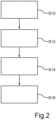
- Fig. 2
- ein Verfahrensdiagramm gemäß einer beispielhaften Ausführungsform.
- Bei den im Folgenden erläuterten Ausführungsbeispielen handelt es sich um bevorzugte Ausführungsformen der Erfindung. Bei den Ausführungsbeispielen stellen die beschriebenen Komponenten der Ausführungsformen jeweils einzelne, unabhängig voneinander zu betrachtende Merkmale der Erfindung dar, welche die Erfindung jeweils auch unabhängig voneinander weiterbilden. Daher soll die Offenbarung auch andere als die dargestellten Kombinationen der Merkmale der Ausführungsformen umfassen. Des Weiteren sind die beschriebenen Ausführungsformen auch durch weitere der bereits beschriebenen Merkmale der Erfindung ergänzbar.
- In den Figuren bezeichnen gleiche Bezugszeichen jeweils funktionsgleiche Elemente.
- In
Fig. 1 ist ein stark schematisiertes Kraftfahrzeug 10 mit einer Bedienvorrichtung 12 gemäß einer beispielhaften Ausführungsform dargestellt. Die Bedienvorrichtung 12 kann zum Bedienen eines Infotainmentsystems 14 des Kraftfahrzeugs 10 vorgesehen sein. Das Infotainmentsystem 14 kann dabei beispielsweise ein Fahrzeugcomputer sein, der fahrzeugspezifische Funktionen bereitstellen kann, wie beispielsweise Telefoniefunktionen, Navigationsfunktionen, Klimafunktionen und Unterhaltungsfunktionen. - Die Bedienvorrichtung 12 weist eine berührungsempfindliche Anzeigevorrichtung 16 auf, also ein kombiniertes Ein- und Ausgabegerät, auf dem zumindest ein grafisches Bedienelement angezeigt werden kann, durch welches dem graphischen Bedienelement zugeordnete Funktionen gesteuert werden können. Dem grafischen Bedienelement zugeordnete Funktionen können beispielsweise die oben genannten Funktionen des Infotainmentsystems umfassen. Die berührungsempfindliche Anzeigevorrichtung 16 kann ein induktiver oder kapazitiver Touchscreen sein.
- Die berührungsempfindliche Anzeigevorrichtung 16 ist in der Bedienvorrichtung 12 beweglich gelagert. Das heißt, dass die berührungsempfindliche Anzeigevorrichtung 16 nicht fest an einer Oberfläche der Bedienvorrichtung 12 fixiert ist, sondern beispielsweise Führungsschienen an den Seiten aufweist, wodurch die berührungsempfindliche Anzeigevorrichtung 16 in ein Gehäuse der Bedienvorrichtung 12 bewegt werden kann. In vorteilhafter Weise kann die berührungsempfindliche Anzeigevorrichtung 16 als Ganzes in eine Ebene verschoben werden, die sich parallel hinter der ursprünglichen Position befindet. Eine Bewegung kann beispielsweise eine Strecke von einem bis zehn Millimeter umfassen, insbesondere zwei Millimeter.
- Diese Strecke kann ausreichen, um die berührungsempfindliche Anzeigevorrichtung 16 bei einer Betätigungshandlung, das bedeutet bei einem Drücken, auf oder an ein Betätigungselement 18 zu bewegen. Das Betätigungselement 18 kann beispielsweise einen Taster 20, insbesondere einen Mikrotaster 20, aufweisen. Durch die Bewegung der berührungsempfindlichen Anzeigevorrichtung 16 in Richtung des Betätigungselements 18 kann der Mikrotaster 20 hereingedrückt werden oder mit anderen Worten aktiviert werden. Vorzugsweise kann das Betätigungselement 18 hierbei einen lautlosen haptischen Betätigungseffekt bereitstellen. Das heißt, dass ein Benutzer bei der Betätigungshandlung einen Widerstand fühlt, wenn der Taster 20 hereingedrückt ist, dabei jedoch kein akustisches Signal, wie beispielsweise ein akustisches Klicken, auftritt. Dies ist von Vorteil, da ein Benutzer haptisch spürt, dass eine Betätigungshandlung durchgeführt wurde, ein akustisches Signal jedoch erst dann auftreten soll, wenn die Betätigungshandlung erfolgreich war.
- Wird das Betätigungselement 18 aktiviert, wird ein Signal an ein Steuergerät 22 gesendet, was daraufhin überprüft, ob eine Betätigungsposition der Betätigungshandlung auf der berührungsempfindlichen Anzeigevorrichtung 16 mit einer Anzeigeposition des zumindest einen grafischen Bedienelements übereinstimmt. Das heißt, dass detektiert wird, an welcher Stelle ein Benutzer auf den Touchscreen gedrückt hat und ob sich an dieser Stelle ein grafisches Bedienelement befindet. Ist dies der Fall, steuert das Steuergerät 22 eine Audiovorrichtung 24 zur Ausgabe eines akustischen Signals an. Insbesondere kann die Audiovorrichtung 24 ein Lautsprecher sein, der beispielsweise ein akustisches Klicken abspielt. Somit kann ein Benutzer eine akustische Rückmeldung erhalten, dass das grafische Bedienelement durch seine Betätigungshandlung gedrückt wurde. Zusätzlich kann neben dem akustischen Signal auch die dem grafischen Bedienelement zugeordnete Funktion durch das Infotainmentsystem 14 ausgeführt werden. Das hat den Vorteil, dass ein Benutzer während einer Fahrt mit dem Kraftfahrzeug 10 den Blick nicht von einer Straße nehmen muss, wenn er die Bedienvorrichtung 12 bedient, wodurch eine Sicherheit während einer Fahrt verbessert werden kann.
- Zusätzlich kann auch vorgesehen sein, dass das Steuergerät 22 die Audiovorrichtung 24 auch dann ansteuert, falls keine Übereinstimmung der Betätigungsposition mit der Anzeigeposition festgestellt wurde, in diesem Fall jedoch derart, dass ein akustisches Fehlersignal durch die Audiovorrichtung 24 ausgegeben wird. Das akustische Fehlersignal kann sich insbesondere von dem akustischen Signal, welches bei einer Übereinstimmung auftritt, unterscheiden, sodass ein Benutzer eine akustische Rückmeldung erhält, wenn er neben das grafische Bedienelement geklickt hat.
- Vorzugsweise kann das Betätigungselement 18 auch dazu ausgebildet sein, eine Stärke der Betätigungshandlung zu erfassen. Damit ist beispielsweise gemeint, dass durch das Betätigungselement 18 gemessen werden kann, mit welchem Druck ein Benutzer die berührungsempfindliche Anzeigevorrichtung 16 auf das Betätigungselement 18 drückt. Hierfür kann beispielsweise der Taster 20 mehrstufig sein, wobei zwischen jeder Stufe ein mechanischer Widerstand vorgesehen ist. Alternativ kann vorgesehen sein, dass ein elektronischer Drucksensor eine Kraftkurve der Betätigungshandlung misst. Dieser gemessene Druck kann dann von dem Betätigungselement 18 als ein druckabhängiges Steuersignal bereitgestellt werden.
- Das druckabhängige Steuersignal kann beispielsweise dazu verwendet wird, die dem grafischen Bedienelement zugeordnete Funktion je nach verwendeter Kraft der Betätigungshandlung anzupassen, wobei zusätzlich eine Lautstärke der Audiovorrichtung 24 angepasst werden kann, sodass beispielsweise bei einem hohen Druck auch eine Lautstärke des akustischen Signals erhöht wird.
- Durch die Bedienvorrichtung 12 ist eine kostengünstige und effiziente Methode zur Bedienung des Infotainmentsystem 14 bereitgestellt. Zusätzlich ist es beispielsweise bei einer Verwendung der Bedienvorrichtung 12 in dem Fahrzeug 10 von Vorteil, dass das Infotainmentsystem 14 gesteuert werden kann, ohne einen Blick von der Straße nehmen zu müssen. Ein Fahrer des Fahrzeugs 10 erhält für die Betätigungshandlung eine haptische Rückmeldung und für eine erfolgreiche Betätigungshandlung eine akustische Rückmeldung, wodurch auch eine Sicherheit des Fahrers erhöht werden kann.
- In
Fig. 2 ist ein Verfahrensdiagramm zum Bereitstellen eines akustischen Signals für eine Bedienvorrichtung 12 dargestellt. Die Bedienvorrichtung 12 weist in diesem Ausführungsbeispiel eine berührungsempfindliche Anzeigevorrichtung 16 auf, die beweglich gelagert ist und dazu ausgebildet ist, zumindest ein grafisches Bedienelement anzuzeigen. - In einem Schritt S10 wird ein Betätigungselement durch Bewegen der berührungsempfindlichen Anzeigevorrichtung bei einer Betätigungshandlung aktiviert. In einem Schritt S12 wird eine Betätigungsposition der Betätigungshandlung bei Aktivierung des Betätigungselements auf der berührungsempfindlichen Anzeigevorrichtung 16 bestimmt. Anschließend wird in einem Schritt S14 die Betätigungsposition mit einer Anzeigeposition des zumindest einen grafischen Bedienelements verglichen. Schließlich wird in einem Schritt S16 ein akustisches Signal bereitgestellt, falls der Vergleich der Betätigungsposition mit der Anzeigeposition ergibt, dass diese übereinstimmen.
- In einer anderen beispielhaften Ausführungsform besteht ein Aspekt darin, dass ein Display (berührungsempfindliche Anzeigevorrichtung 16) minimal beweglich aufgehängt ist. Hinter dem Display beziehungsweise Touchscreen 16 befindet sich ein lautloser Mikrotaster 20. Bei der Betätigung des Touchscreen 16 wird dieser Mikrotaster 20 gedrückt. Damit kann die Betätigungskraft ermittelt werden. Die Schaltkraft des Mikrotasters 20 ist notwendig für ein Signal. Gleichzeitig kann der Taster 20 einen haptischen Betätigungseffekt erzeugen.
- Die Touchsensorik (Steuergerät 22) ermittelt zeitgleich die Position der Betätigung, das heißt des Fingers auf dem Touchscreen. Wenn an der betätigten Position ein betätigbares Element (grafisches Bedienelement) angezeigt wird, erfolgt ein akustischer Klick (akustisches Signal) über Lautsprecher (Audiovorrichtung 24).
- Sollte der Benutzer auf einen anderen Bereich drücken (zum Beispiel den Rand), kann der lautlose Mikrotaster 20 auch schalten, ein akustischer Klick erfolgt jedoch nicht. Somit erfolgt die akustische Rückmeldung selektiv nur, wenn der Taster 20 betätigt wurde und an dieser Stelle auch ein betätigbares Element (grafisches Bedienelement) angezeigt wird.
- Da das haptische Gefühl stark durch die Akustik beeinflusst wird, nimmt der Benutzer eine Tasterbestätigung viel intensiver wahr, wenn er gleichzeitig ein akustisches Signal hört. Dieser Effekt kann ausgenutzt werden, um eine gefühlte Intensität zu ändern, wenn ein grafisches Bedienelement betätigt wird oder ein Bereich ohne Funktion. Zusätzlich kann der Benutzer deutlich unterscheiden, ob eine dem grafischen Bedienelement zugeordnete Funktion ausgelöst wurde oder nicht. Die Funktionsauslösung kann mit einem akustischen Klick bestätigt werden. Beim Drücken im funktionslosen Bereich erfolgt kein akustischer Klick.
- Das ist vorteilhaft, da eine Ablenkung während einer Fahrt reduziert werden kann, da ein Benutzer intuitiv unterscheiden kann, ob er ein grafisches Element auf dem Touchscreen betätigt hat oder ob er versehentlich neben das Element gedrückt hat. Des Weiteren ist die beschriebene Bedienvorrichtung 12 deutlich billiger als andere komplexe Lösungen.
- Insgesamt zeigen die Beispiele, wie durch die Erfindung eine Methode zur Erzeugung eines situativen akustischen Klicks bei einem haptischen Touchscreen bereitgestellt werden kann.
Claims (9)
- Bedienvorrichtung (12) zum Bedienen eines Infotainmentsystems (14), mit- einer berührungsempfindlichen Anzeigevorrichtung (16), die beweglich gelagert und dazu ausgebildet ist, zumindest ein graphisches Bedienelement anzuzeigen;- einem Steuergerät (22), und- einem Betätigungselement (18),- wobei die berührungsempfindliche Anzeigevorrichtung (16) ferner dazu ausgebildet ist, sich bei einer Betätigungshandlung zu bewegen und somit das Betätigungselement (18) zu aktivieren,- wobei das Steuergerät (22) dazu ausgebildet ist, bei einer Aktivierung des Betätigungselements (18) eine Betätigungsposition der Betätigungshandlung auf der berührungsempfindlichen Anzeigevorrichtung (16) zu bestimmen und mit einer Anzeigeposition des zumindest einen graphischen Bedienelements zu vergleichen,gekennzeichnet durch- eine Audiovorrichtung (24),- wobei das Steuergerät (22) ferner dazu ausgebildet ist, bei einer Übereinstimmung der Betätigungsposition mit der Anzeigeposition die Audiovorrichtung (24) zur Ausgabe eines akustischen Signals anzusteuern; und- wobei die beweglich gelagerte berührungsempfindliche Anzeigevorrichtung (16) dazu ausgebildet ist, sich um eine Neigungsachse herum in Richtung des Betätigungselements (18) zu neigen.
- Bedienvorrichtung (12) nach Anspruch 1, wobei das Betätigungselement (18) dazu ausgebildet ist, einen lautlosen haptischen Betätigungseffekt bereitzustellen.
- Bedienvorrichtung (12) nach einem der vorhergehenden Ansprüche wobei das Betätigungselement (18) einen Taster (20), insbesondere einen Mikrotaster, aufweist.
- Bedienvorrichtung (12) nach einem der vorhergehenden Ansprüche, wobei das Betätigungselement (18) dazu ausgebildet ist, einen Druck durch die Betätigungshandlung zu messen und ein druckabhängiges Steuersignal zu erzeugen und wobei die Audiovorrichtung (24) dazu ausgebildet ist, eine Lautstärke des akustischen Signals in Abhängigkeit des druckabhängigen Signals anzupassen.
- Bedienvorrichtung (12) nach einem der vorhergehenden Ansprüche, wobei das Steuergerät (22) ferner dazu ausgebildet ist, die Audiovorrichtung (24) zur Ausgabe eines akustischen Fehlersignals anzusteuern, falls keine Übereinstimmung der Betätigungsposition mit der Anzeigeposition bei der Aktivierung des Betätigungselements (18) vorliegt.
- Bedienvorrichtung (12) nach einem der vorhergehenden Ansprüche, wobei das Steuergerät (22) ferner dazu ausgebildet ist, bei der Aktivierung des Betätigungselements (18) und bei Übereinstimmung der Betätigungsposition mit der Anzeigeposition das Infotainmentsystem (14) zur Ausführung einer dem graphischen Bedienelement zugeordneten Funktion anzusteuern.
- Bedienvorrichtung (12) nach Anspruch 6 in dessen Rückbezug auf Anspruch 4, wobei das Steuergerät (22) ferner dazu ausgebildet ist, das Infotainmentsystem (14) zur Ausführung einer dem graphischen Bedienelement zugeordneten Funktion in Abhängigkeit des druckabhängigen Signals anzusteuern.
- Verfahren zum Bereitstellen eines akustischen Signals für eine Bedienvorrichtung (12), wobei die Bedienvorrichtung (12) eine berührungsempfindliche Anzeigevorrichtung (16) aufweist, die beweglich gelagert ist und dazu ausgebildet ist, zumindest ein graphisches Bedienelement anzuzeigen; mit den Schritten:a) Aktivieren (S10) eines Betätigungselements (18) durch bewegen der berührungsempfindlichen Anzeigevorrichtung (16) bei einer Betätigungshandlung, wobei die beweglich gelagerte berührungsempfindliche Anzeigevorrichtung (16) um eine Neigungsachse herum in Richtung des Betätigungselements (18) geneigt wird;b) Bestimmen (S12) einer Betätigungsposition der Betätigungshandlung bei Aktivierung des Betätigungselements (18) auf der berührungsempfindlichen Anzeigevorrichtung (16);c) Vergleichen (S14) der Betätigungsposition mit einer Anzeigeposition des zumindest einen graphischen Bedienelements;d) Bereitstellen (S16) eines akustischen Signals, falls der Vergleich in Schritt c) ergibt, dass die Betätigungsposition mit der Anzeigeposition übereinstimmt.
- Kraftfahrzeug (10) mit einer Bedienvorrichtung (12) nach einem der Ansprüche 1 bis 7.
Applications Claiming Priority (2)
| Application Number | Priority Date | Filing Date | Title |
|---|---|---|---|
| DE102020107338.0A DE102020107338B4 (de) | 2020-03-17 | 2020-03-17 | Bedienvorrichtung zum Bedienen eines Infotainmentsystems, Verfahren zum Bereitstellen eines akustischen Signals für eine Bedienvorrichtung und Kraftfahrzeug mit einer Bedienvorrichtung |
| PCT/EP2021/056613 WO2021185801A1 (de) | 2020-03-17 | 2021-03-16 | Bedienvorrichtung zum bedienen eines infotainmentsystems, verfahren zum bereitstellen eines akustischen signals für eine bedienvorrichtung und kraftfahrzeug mit einer bedienvorrichtung |
Publications (2)
| Publication Number | Publication Date |
|---|---|
| EP4038480A1 EP4038480A1 (de) | 2022-08-10 |
| EP4038480B1 true EP4038480B1 (de) | 2023-05-10 |
Family
ID=75396685
Family Applications (1)
| Application Number | Title | Priority Date | Filing Date |
|---|---|---|---|
| EP21716600.8A Active EP4038480B1 (de) | 2020-03-17 | 2021-03-16 | Bedienvorrichtung zum bedienen eines infotainmentsystems, verfahren zum bereitstellen eines akustischen signals für eine bedienvorrichtung und kraftfahrzeug mit einer bedienvorrichtung |
Country Status (5)
| Country | Link |
|---|---|
| US (1) | US12005780B2 (de) |
| EP (1) | EP4038480B1 (de) |
| CN (1) | CN115087558B (de) |
| DE (1) | DE102020107338B4 (de) |
| WO (1) | WO2021185801A1 (de) |
Families Citing this family (4)
| Publication number | Priority date | Publication date | Assignee | Title |
|---|---|---|---|---|
| DE102020107338B4 (de) | 2020-03-17 | 2022-09-29 | Audi Aktiengesellschaft | Bedienvorrichtung zum Bedienen eines Infotainmentsystems, Verfahren zum Bereitstellen eines akustischen Signals für eine Bedienvorrichtung und Kraftfahrzeug mit einer Bedienvorrichtung |
| US20230219465A1 (en) * | 2022-01-11 | 2023-07-13 | Hyundai Mobis Co., Ltd. | Purpose-built vehicle |
| DE102023111331A1 (de) * | 2023-05-02 | 2024-11-07 | Audi Aktiengesellschaft | Bedienelement für ein Kraftfahrzeug und Kraftfahrzeug |
| DE102023128285A1 (de) * | 2023-10-16 | 2025-04-17 | Bayerische Motoren Werke Aktiengesellschaft | Steuervorrichtung und verfahren zur ansteuerung eines aktivhaptischen bedienelements für ein kraftfahrzeug |
Family Cites Families (47)
| Publication number | Priority date | Publication date | Assignee | Title |
|---|---|---|---|---|
| US9513744B2 (en) * | 1994-08-15 | 2016-12-06 | Apple Inc. | Control systems employing novel physical controls and touch screens |
| US20090322499A1 (en) * | 1995-06-29 | 2009-12-31 | Pryor Timothy R | Programmable tactile touch screen displays and man-machine interfaces for improved vehicle instrumentation and telematics |
| US6636197B1 (en) * | 1996-11-26 | 2003-10-21 | Immersion Corporation | Haptic feedback effects for control, knobs and other interface devices |
| US6128006A (en) * | 1998-03-26 | 2000-10-03 | Immersion Corporation | Force feedback mouse wheel and other control wheels |
| US6009355A (en) * | 1997-01-28 | 1999-12-28 | American Calcar Inc. | Multimedia information and control system for automobiles |
| US8482535B2 (en) * | 1999-11-08 | 2013-07-09 | Apple Inc. | Programmable tactile touch screen displays and man-machine interfaces for improved vehicle instrumentation and telematics |
| US6708086B2 (en) * | 2000-12-11 | 2004-03-16 | Sue M. Richard | Vehicle computer |
| DE10304704B4 (de) | 2003-02-06 | 2024-06-13 | Bayerische Motoren Werke Aktiengesellschaft | Dateneingabegerät mit einem Touchpad |
| US20060227065A1 (en) * | 2005-04-08 | 2006-10-12 | Matsushita Electric Industrial Co. Ltd. | Human machine interface system for automotive application |
| US7415352B2 (en) * | 2005-05-20 | 2008-08-19 | Bose Corporation | Displaying vehicle information |
| US8532678B2 (en) * | 2006-03-08 | 2013-09-10 | Tomtom International B.V. | Portable GPS navigation device |
| DE102006021593A1 (de) | 2006-05-09 | 2007-11-22 | Siemens Ag | Fahrzeugfunktionssteuerung und Eingabeverfahren für eine Fahrzeugfunktionssteuerung |
| DE102009013440A1 (de) | 2008-03-19 | 2009-09-24 | Marquardt Gmbh | Schaltvorrichtung |
| US9870130B2 (en) * | 2008-05-13 | 2018-01-16 | Apple Inc. | Pushing a user interface to a remote device |
| US10592092B2 (en) * | 2009-07-02 | 2020-03-17 | Uusi, Llc. | User interface with proximity detection for object tracking |
| DE102009036860A1 (de) | 2009-08-10 | 2011-03-03 | Siemens Aktiengesellschaft | Bedieneinheit, Gerät und Verfahren |
| DE102010026910B4 (de) | 2010-07-13 | 2018-11-22 | Daimler Ag | Steuern und Auslesen eines Bedienfelds |
| US20130245882A1 (en) * | 2012-03-14 | 2013-09-19 | Christopher P. Ricci | Removable, configurable vehicle console |
| US9187038B2 (en) * | 2010-10-13 | 2015-11-17 | Hewlett-Packard Development Company, L.P. | Dashboard including rules to display data |
| DE102011018897A1 (de) | 2011-04-28 | 2012-10-31 | Daimler Ag | Bedieneinrichtung für ein Kraftfahrzeug und Verfahren zum Ansteuern einer Haptikeinrichtung |
| DE102011101808A1 (de) * | 2011-05-17 | 2012-11-22 | Volkswagen Ag | Verfahren und System zum Bereitstellen einer Nutzerschnittstelle in einem Fahrzeug |
| US9513799B2 (en) * | 2011-06-05 | 2016-12-06 | Apple Inc. | Devices, methods, and graphical user interfaces for providing control of a touch-based user interface absent physical touch capabilities |
| WO2013029083A1 (en) * | 2011-09-02 | 2013-03-07 | Monash University | Graphics communication apparatus |
| US9058703B2 (en) * | 2012-03-14 | 2015-06-16 | Flextronics Ap, Llc | Shared navigational information between vehicles |
| US9200915B2 (en) * | 2013-06-08 | 2015-12-01 | Apple Inc. | Mapping application with several user interfaces |
| US9300779B2 (en) * | 2013-03-15 | 2016-03-29 | Blackberry Limited | Stateful integration of a vehicle information system user interface with mobile device operations |
| US11199906B1 (en) * | 2013-09-04 | 2021-12-14 | Amazon Technologies, Inc. | Global user input management |
| DE102013020990B4 (de) | 2013-12-13 | 2018-04-05 | Audi Ag | Kraftfahrzeug und Verfahren zum Bereitstellen eines vorbestimmten akustischen Signals für ein Bedienelement |
| DE102013020992B4 (de) | 2013-12-13 | 2018-06-28 | Audi Ag | Kraftfahrzeug mit zwei Bedieneinheiten mit Bedienfeedback |
| US9975742B1 (en) * | 2014-06-10 | 2018-05-22 | Superwinch, Llc | Apparatus and methods for monitoring and controlling a winch |
| FR3024560B1 (fr) * | 2014-07-31 | 2016-10-28 | Dav | Procede et interface de commande a retour haptique pour vehicule automobile |
| FR3026868B1 (fr) * | 2014-10-02 | 2019-08-16 | Dav | Dispositif et procede de commande pour vehicule automobile |
| DE102014016222A1 (de) * | 2014-10-31 | 2016-05-04 | Audi Ag | Verfahren und System zum Betreiben einer berührungssensitiven Anzeigeeinrichtung eines Kraftwagens |
| DE102015209593A1 (de) * | 2015-01-05 | 2016-07-07 | Volkswagen Aktiengesellschaft | Bedienvorrichtung mit schneller haptischer Rückmeldung |
| DE102015200037A1 (de) | 2015-01-05 | 2016-07-07 | Volkswagen Aktiengesellschaft | Bedienvorrichtung mit verbesserter haptischer Rückmeldung |
| DE102015008537A1 (de) * | 2015-07-02 | 2017-01-05 | Audi Ag | Kraftfahrzeug-Bedienvorrichtung mit haptischer Rückmeldung |
| US9666079B2 (en) * | 2015-08-20 | 2017-05-30 | Harman International Industries, Incorporated | Systems and methods for driver assistance |
| KR102594718B1 (ko) * | 2015-11-20 | 2023-10-26 | 하만인터내셔날인더스트리스인코포레이티드 | 동적 재구성가능 디스플레이 노브 |
| US10647237B2 (en) * | 2016-06-30 | 2020-05-12 | Faraday & Future Inc. | Systems and methods for providing customized and adaptive massaging in vehicle seats |
| US10209832B2 (en) * | 2016-07-25 | 2019-02-19 | Google Llc | Detecting user interactions with a computing system of a vehicle |
| DE102016120075B4 (de) * | 2016-10-21 | 2020-11-05 | Harman Becker Automotive Systems Gmbh | Bediensystem zur Bedienung eines Multifunktionssystems |
| DE102016120995A1 (de) * | 2016-11-03 | 2018-05-03 | Visteon Global Technologies, Inc. | Benutzerschnittstelle und Verfahren zur Eingabe und Ausgabe von Informationen in einem Fahrzeug |
| US10860192B2 (en) * | 2017-01-06 | 2020-12-08 | Honda Motor Co., Ltd. | System and methods for controlling a vehicular infotainment system |
| DE102017200735A1 (de) * | 2017-01-18 | 2018-07-19 | Volkswagen Aktiengesellschaft | Verfahren und Anordnung zur Interaktion mit einem Vorschlagssystem mit automatisierten Bedienhandlungen |
| DE102017104784A1 (de) | 2017-03-08 | 2018-09-13 | Valeo Schalter Und Sensoren Gmbh | Kraftmessung mit magnetischen Sensoren |
| WO2019101879A1 (de) | 2017-11-24 | 2019-05-31 | Panasonic Automotive Systems Europe Gmbh | Transparenter schalter |
| DE102020107338B4 (de) | 2020-03-17 | 2022-09-29 | Audi Aktiengesellschaft | Bedienvorrichtung zum Bedienen eines Infotainmentsystems, Verfahren zum Bereitstellen eines akustischen Signals für eine Bedienvorrichtung und Kraftfahrzeug mit einer Bedienvorrichtung |
-
2020
- 2020-03-17 DE DE102020107338.0A patent/DE102020107338B4/de active Active
-
2021
- 2021-03-16 US US17/912,323 patent/US12005780B2/en active Active
- 2021-03-16 EP EP21716600.8A patent/EP4038480B1/de active Active
- 2021-03-16 WO PCT/EP2021/056613 patent/WO2021185801A1/de not_active Ceased
- 2021-03-16 CN CN202180013013.0A patent/CN115087558B/zh active Active
Also Published As
| Publication number | Publication date |
|---|---|
| EP4038480A1 (de) | 2022-08-10 |
| CN115087558B (zh) | 2023-09-05 |
| DE102020107338B4 (de) | 2022-09-29 |
| US12005780B2 (en) | 2024-06-11 |
| CN115087558A (zh) | 2022-09-20 |
| DE102020107338A1 (de) | 2021-09-23 |
| US20230158886A1 (en) | 2023-05-25 |
| WO2021185801A1 (de) | 2021-09-23 |
Similar Documents
| Publication | Publication Date | Title |
|---|---|---|
| DE102020107338B4 (de) | Bedienvorrichtung zum Bedienen eines Infotainmentsystems, Verfahren zum Bereitstellen eines akustischen Signals für eine Bedienvorrichtung und Kraftfahrzeug mit einer Bedienvorrichtung | |
| EP3040816B1 (de) | Verfahren und vorrichtung zur eingabe von daten mit zwei eingabearten und haptischer rückkopplung, insbesondere in einem kraftfahrzeug | |
| DE102010024776B4 (de) | Vorrichtung zur Bedienung mehrerer Funktionen in einem Kraftfahrzeug | |
| EP2574881B1 (de) | Verfahren zum Betrieb eines Bediensystems für ein Fahrzeug und Bediensystem für ein Fahrzeug | |
| DE102009021280A1 (de) | Kraftfahrzeug mit einem Touchpad im Lenkrad und Verfahren zur Ansteuerung des Touchpads | |
| EP1830244A2 (de) | Verfahren und Vorrichtung zum Betreiben von zumindest zwei Funktionskomponenten eines Systems, insbesondere eines Fahrzeugs | |
| EP2754015A2 (de) | Bedienanordnung für ein kraftfahrzeug und verfahren zum bedienen der bedienanordnung für ein kraftfahrzeug | |
| EP3347226B1 (de) | Kraftfahrzeug-bedienvorrichtung mit touchscreen-bedienung | |
| EP2852876B1 (de) | System und verfahren zur steuerung von zumindest einem fahrzeugsystem mittels von einem fahrer durchgeführter gesten | |
| EP2312429B1 (de) | Verfahren zum Bereitstellen einer Benutzerschnittstelle und Bedienvorrichtung | |
| DE102010062317A1 (de) | Positioniervorrichtung für einen Fahrzeugsitz, Verfahren zum Positionieren eines Fahrzeugsitzes und Fahrzeugsitz | |
| EP1631975A1 (de) | Bedienelement | |
| DE102012001149B4 (de) | Verfahren und Vorrichtung zur Erzeugung eines synthetischen, räumlich verorteten, akustischen Feedback-Signals bei Betätigung eines Bedienelements | |
| EP4440862B1 (de) | Multifunktionale bedienvorrichtung für ein kraftfahrzeug und kraftfahrzeug | |
| WO2016206776A1 (de) | Kraftfahrzeugbedienvorrichtung mit blindbedienbarem touchscreen | |
| EP3755567B1 (de) | Bedienvorrichtung sowie verfahren zum ansteuern zumindest einer funktionseinheit für ein kraftfahrzeug mit einer optischen verlagerung eines bediensymbols | |
| DE102017104784A1 (de) | Kraftmessung mit magnetischen Sensoren | |
| EP4646337A1 (de) | Nutzfahrzeug mit einem favoriten-bedienfeld | |
| EP4043263B1 (de) | Verfahren zur steuerung von fahrzeugfunktionen | |
| EP3233559A1 (de) | Verfahren zum betreiben einer bedienanordnung für ein kraftfahrzeug mit bereitstellen von zwei bedienmodi für ein bedienelement, bedienanordnung sowie kraftfahrzeug | |
| DE102013006174A1 (de) | Verfahren zum Betreiben eines Bediensystems eines Kraftwagens und Bediensystem für einen Kraftwagen | |
| WO2015090528A1 (de) | Kraftfahrzeug-bedienvorrichtung mit graphischer benutzerschnittstelle | |
| EP3924209B1 (de) | Bedienvorrichtung mit einem berührungsempfindlichen element und verfahren zum erfassen einer bediengeste | |
| EP4384419A1 (de) | Reduzierte bedienvorrichtung | |
| DE102024210864B3 (de) | Verfahren zum Individualisieren einer haptischen Rückmeldung eines oder mehrerer Bedienelemente für ein Kraftfahrzeug |
Legal Events
| Date | Code | Title | Description |
|---|---|---|---|
| STAA | Information on the status of an ep patent application or granted ep patent |
Free format text: STATUS: UNKNOWN |
|
| STAA | Information on the status of an ep patent application or granted ep patent |
Free format text: STATUS: THE INTERNATIONAL PUBLICATION HAS BEEN MADE |
|
| STAA | Information on the status of an ep patent application or granted ep patent |
Free format text: STATUS: EXAMINATION IS IN PROGRESS |
|
| PUAI | Public reference made under article 153(3) epc to a published international application that has entered the european phase |
Free format text: ORIGINAL CODE: 0009012 |
|
| 17P | Request for examination filed |
Effective date: 20220502 |
|
| AK | Designated contracting states |
Kind code of ref document: A1 Designated state(s): AL AT BE BG CH CY CZ DE DK EE ES FI FR GB GR HR HU IE IS IT LI LT LU LV MC MK MT NL NO PL PT RO RS SE SI SK SM TR |
|
| GRAP | Despatch of communication of intention to grant a patent |
Free format text: ORIGINAL CODE: EPIDOSNIGR1 |
|
| STAA | Information on the status of an ep patent application or granted ep patent |
Free format text: STATUS: GRANT OF PATENT IS INTENDED |
|
| RIC1 | Information provided on ipc code assigned before grant |
Ipc: G06F 3/04842 20220101ALI20221103BHEP Ipc: G06F 3/0482 20130101ALI20221103BHEP Ipc: B60K 35/00 20060101ALI20221103BHEP Ipc: G06F 3/041 20060101ALI20221103BHEP Ipc: G06F 3/16 20060101ALI20221103BHEP Ipc: B60K 37/06 20060101ALI20221103BHEP Ipc: G06F 3/0488 20220101ALI20221103BHEP Ipc: G06F 3/01 20060101AFI20221103BHEP |
|
| INTG | Intention to grant announced |
Effective date: 20221130 |
|
| GRAS | Grant fee paid |
Free format text: ORIGINAL CODE: EPIDOSNIGR3 |
|
| GRAA | (expected) grant |
Free format text: ORIGINAL CODE: 0009210 |
|
| STAA | Information on the status of an ep patent application or granted ep patent |
Free format text: STATUS: THE PATENT HAS BEEN GRANTED |
|
| AK | Designated contracting states |
Kind code of ref document: B1 Designated state(s): AL AT BE BG CH CY CZ DE DK EE ES FI FR GB GR HR HU IE IS IT LI LT LU LV MC MK MT NL NO PL PT RO RS SE SI SK SM TR |
|
| DAV | Request for validation of the european patent (deleted) | ||
| DAX | Request for extension of the european patent (deleted) | ||
| REG | Reference to a national code |
Ref country code: GB Ref legal event code: FG4D Free format text: NOT ENGLISH |
|
| REG | Reference to a national code |
Ref country code: AT Ref legal event code: REF Ref document number: 1567329 Country of ref document: AT Kind code of ref document: T Effective date: 20230515 Ref country code: CH Ref legal event code: EP |
|
| REG | Reference to a national code |
Ref country code: DE Ref legal event code: R096 Ref document number: 502021000677 Country of ref document: DE |
|
| REG | Reference to a national code |
Ref country code: IE Ref legal event code: FG4D Free format text: LANGUAGE OF EP DOCUMENT: GERMAN |
|
| P01 | Opt-out of the competence of the unified patent court (upc) registered |
Effective date: 20230529 |
|
| REG | Reference to a national code |
Ref country code: LT Ref legal event code: MG9D |
|
| REG | Reference to a national code |
Ref country code: NL Ref legal event code: MP Effective date: 20230510 |
|
| PG25 | Lapsed in a contracting state [announced via postgrant information from national office to epo] |
Ref country code: SE Free format text: LAPSE BECAUSE OF FAILURE TO SUBMIT A TRANSLATION OF THE DESCRIPTION OR TO PAY THE FEE WITHIN THE PRESCRIBED TIME-LIMIT Effective date: 20230510 Ref country code: PT Free format text: LAPSE BECAUSE OF FAILURE TO SUBMIT A TRANSLATION OF THE DESCRIPTION OR TO PAY THE FEE WITHIN THE PRESCRIBED TIME-LIMIT Effective date: 20230911 Ref country code: NO Free format text: LAPSE BECAUSE OF FAILURE TO SUBMIT A TRANSLATION OF THE DESCRIPTION OR TO PAY THE FEE WITHIN THE PRESCRIBED TIME-LIMIT Effective date: 20230810 Ref country code: NL Free format text: LAPSE BECAUSE OF FAILURE TO SUBMIT A TRANSLATION OF THE DESCRIPTION OR TO PAY THE FEE WITHIN THE PRESCRIBED TIME-LIMIT Effective date: 20230510 Ref country code: ES Free format text: LAPSE BECAUSE OF FAILURE TO SUBMIT A TRANSLATION OF THE DESCRIPTION OR TO PAY THE FEE WITHIN THE PRESCRIBED TIME-LIMIT Effective date: 20230510 |
|
| PG25 | Lapsed in a contracting state [announced via postgrant information from national office to epo] |
Ref country code: RS Free format text: LAPSE BECAUSE OF FAILURE TO SUBMIT A TRANSLATION OF THE DESCRIPTION OR TO PAY THE FEE WITHIN THE PRESCRIBED TIME-LIMIT Effective date: 20230510 Ref country code: PL Free format text: LAPSE BECAUSE OF FAILURE TO SUBMIT A TRANSLATION OF THE DESCRIPTION OR TO PAY THE FEE WITHIN THE PRESCRIBED TIME-LIMIT Effective date: 20230510 Ref country code: LV Free format text: LAPSE BECAUSE OF FAILURE TO SUBMIT A TRANSLATION OF THE DESCRIPTION OR TO PAY THE FEE WITHIN THE PRESCRIBED TIME-LIMIT Effective date: 20230510 Ref country code: LT Free format text: LAPSE BECAUSE OF FAILURE TO SUBMIT A TRANSLATION OF THE DESCRIPTION OR TO PAY THE FEE WITHIN THE PRESCRIBED TIME-LIMIT Effective date: 20230510 Ref country code: IS Free format text: LAPSE BECAUSE OF FAILURE TO SUBMIT A TRANSLATION OF THE DESCRIPTION OR TO PAY THE FEE WITHIN THE PRESCRIBED TIME-LIMIT Effective date: 20230910 Ref country code: HR Free format text: LAPSE BECAUSE OF FAILURE TO SUBMIT A TRANSLATION OF THE DESCRIPTION OR TO PAY THE FEE WITHIN THE PRESCRIBED TIME-LIMIT Effective date: 20230510 Ref country code: GR Free format text: LAPSE BECAUSE OF FAILURE TO SUBMIT A TRANSLATION OF THE DESCRIPTION OR TO PAY THE FEE WITHIN THE PRESCRIBED TIME-LIMIT Effective date: 20230811 |
|
| PG25 | Lapsed in a contracting state [announced via postgrant information from national office to epo] |
Ref country code: FI Free format text: LAPSE BECAUSE OF FAILURE TO SUBMIT A TRANSLATION OF THE DESCRIPTION OR TO PAY THE FEE WITHIN THE PRESCRIBED TIME-LIMIT Effective date: 20230510 |
|
| PG25 | Lapsed in a contracting state [announced via postgrant information from national office to epo] |
Ref country code: SK Free format text: LAPSE BECAUSE OF FAILURE TO SUBMIT A TRANSLATION OF THE DESCRIPTION OR TO PAY THE FEE WITHIN THE PRESCRIBED TIME-LIMIT Effective date: 20230510 |
|
| PG25 | Lapsed in a contracting state [announced via postgrant information from national office to epo] |
Ref country code: SM Free format text: LAPSE BECAUSE OF FAILURE TO SUBMIT A TRANSLATION OF THE DESCRIPTION OR TO PAY THE FEE WITHIN THE PRESCRIBED TIME-LIMIT Effective date: 20230510 Ref country code: SK Free format text: LAPSE BECAUSE OF FAILURE TO SUBMIT A TRANSLATION OF THE DESCRIPTION OR TO PAY THE FEE WITHIN THE PRESCRIBED TIME-LIMIT Effective date: 20230510 Ref country code: RO Free format text: LAPSE BECAUSE OF FAILURE TO SUBMIT A TRANSLATION OF THE DESCRIPTION OR TO PAY THE FEE WITHIN THE PRESCRIBED TIME-LIMIT Effective date: 20230510 Ref country code: EE Free format text: LAPSE BECAUSE OF FAILURE TO SUBMIT A TRANSLATION OF THE DESCRIPTION OR TO PAY THE FEE WITHIN THE PRESCRIBED TIME-LIMIT Effective date: 20230510 Ref country code: DK Free format text: LAPSE BECAUSE OF FAILURE TO SUBMIT A TRANSLATION OF THE DESCRIPTION OR TO PAY THE FEE WITHIN THE PRESCRIBED TIME-LIMIT Effective date: 20230510 Ref country code: CZ Free format text: LAPSE BECAUSE OF FAILURE TO SUBMIT A TRANSLATION OF THE DESCRIPTION OR TO PAY THE FEE WITHIN THE PRESCRIBED TIME-LIMIT Effective date: 20230510 |
|
| REG | Reference to a national code |
Ref country code: DE Ref legal event code: R097 Ref document number: 502021000677 Country of ref document: DE |
|
| PLBE | No opposition filed within time limit |
Free format text: ORIGINAL CODE: 0009261 |
|
| STAA | Information on the status of an ep patent application or granted ep patent |
Free format text: STATUS: NO OPPOSITION FILED WITHIN TIME LIMIT |
|
| 26N | No opposition filed |
Effective date: 20240213 |
|
| PG25 | Lapsed in a contracting state [announced via postgrant information from national office to epo] |
Ref country code: SI Free format text: LAPSE BECAUSE OF FAILURE TO SUBMIT A TRANSLATION OF THE DESCRIPTION OR TO PAY THE FEE WITHIN THE PRESCRIBED TIME-LIMIT Effective date: 20230510 |
|
| PG25 | Lapsed in a contracting state [announced via postgrant information from national office to epo] |
Ref country code: SI Free format text: LAPSE BECAUSE OF FAILURE TO SUBMIT A TRANSLATION OF THE DESCRIPTION OR TO PAY THE FEE WITHIN THE PRESCRIBED TIME-LIMIT Effective date: 20230510 Ref country code: IT Free format text: LAPSE BECAUSE OF FAILURE TO SUBMIT A TRANSLATION OF THE DESCRIPTION OR TO PAY THE FEE WITHIN THE PRESCRIBED TIME-LIMIT Effective date: 20230510 |
|
| REG | Reference to a national code |
Ref country code: CH Ref legal event code: PL |
|
| PG25 | Lapsed in a contracting state [announced via postgrant information from national office to epo] |
Ref country code: BG Free format text: LAPSE BECAUSE OF FAILURE TO SUBMIT A TRANSLATION OF THE DESCRIPTION OR TO PAY THE FEE WITHIN THE PRESCRIBED TIME-LIMIT Effective date: 20230510 |
|
| PG25 | Lapsed in a contracting state [announced via postgrant information from national office to epo] |
Ref country code: LU Free format text: LAPSE BECAUSE OF NON-PAYMENT OF DUE FEES Effective date: 20240316 |
|
| PG25 | Lapsed in a contracting state [announced via postgrant information from national office to epo] |
Ref country code: MC Free format text: LAPSE BECAUSE OF FAILURE TO SUBMIT A TRANSLATION OF THE DESCRIPTION OR TO PAY THE FEE WITHIN THE PRESCRIBED TIME-LIMIT Effective date: 20230510 |
|
| PG25 | Lapsed in a contracting state [announced via postgrant information from national office to epo] |
Ref country code: MC Free format text: LAPSE BECAUSE OF FAILURE TO SUBMIT A TRANSLATION OF THE DESCRIPTION OR TO PAY THE FEE WITHIN THE PRESCRIBED TIME-LIMIT Effective date: 20230510 Ref country code: LU Free format text: LAPSE BECAUSE OF NON-PAYMENT OF DUE FEES Effective date: 20240316 Ref country code: BG Free format text: LAPSE BECAUSE OF FAILURE TO SUBMIT A TRANSLATION OF THE DESCRIPTION OR TO PAY THE FEE WITHIN THE PRESCRIBED TIME-LIMIT Effective date: 20230510 |
|
| REG | Reference to a national code |
Ref country code: BE Ref legal event code: MM Effective date: 20240331 |
|
| PG25 | Lapsed in a contracting state [announced via postgrant information from national office to epo] |
Ref country code: BE Free format text: LAPSE BECAUSE OF NON-PAYMENT OF DUE FEES Effective date: 20240331 |
|
| PG25 | Lapsed in a contracting state [announced via postgrant information from national office to epo] |
Ref country code: IE Free format text: LAPSE BECAUSE OF NON-PAYMENT OF DUE FEES Effective date: 20240316 |
|
| PG25 | Lapsed in a contracting state [announced via postgrant information from national office to epo] |
Ref country code: IE Free format text: LAPSE BECAUSE OF NON-PAYMENT OF DUE FEES Effective date: 20240316 Ref country code: BE Free format text: LAPSE BECAUSE OF NON-PAYMENT OF DUE FEES Effective date: 20240331 Ref country code: CH Free format text: LAPSE BECAUSE OF NON-PAYMENT OF DUE FEES Effective date: 20240331 |
|
| PGFP | Annual fee paid to national office [announced via postgrant information from national office to epo] |
Ref country code: AT Payment date: 20250417 Year of fee payment: 5 |
|
| PG25 | Lapsed in a contracting state [announced via postgrant information from national office to epo] |
Ref country code: CY Free format text: LAPSE BECAUSE OF FAILURE TO SUBMIT A TRANSLATION OF THE DESCRIPTION OR TO PAY THE FEE WITHIN THE PRESCRIBED TIME-LIMIT; INVALID AB INITIO Effective date: 20210316 |
|
| PG25 | Lapsed in a contracting state [announced via postgrant information from national office to epo] |
Ref country code: HU Free format text: LAPSE BECAUSE OF FAILURE TO SUBMIT A TRANSLATION OF THE DESCRIPTION OR TO PAY THE FEE WITHIN THE PRESCRIBED TIME-LIMIT; INVALID AB INITIO Effective date: 20210316 |
|
| PG25 | Lapsed in a contracting state [announced via postgrant information from national office to epo] |
Ref country code: TR Free format text: LAPSE BECAUSE OF FAILURE TO SUBMIT A TRANSLATION OF THE DESCRIPTION OR TO PAY THE FEE WITHIN THE PRESCRIBED TIME-LIMIT Effective date: 20230510 |
|
| PGFP | Annual fee paid to national office [announced via postgrant information from national office to epo] |
Ref country code: GB Payment date: 20260324 Year of fee payment: 6 |
|
| PGFP | Annual fee paid to national office [announced via postgrant information from national office to epo] |
Ref country code: DE Payment date: 20260331 Year of fee payment: 6 |
|
| PGFP | Annual fee paid to national office [announced via postgrant information from national office to epo] |
Ref country code: FR Payment date: 20260324 Year of fee payment: 6 |