EP4023291A1 - Fettstoffwechsel-promotor - Google Patents
Fettstoffwechsel-promotor Download PDFInfo
- Publication number
- EP4023291A1 EP4023291A1 EP20858038.1A EP20858038A EP4023291A1 EP 4023291 A1 EP4023291 A1 EP 4023291A1 EP 20858038 A EP20858038 A EP 20858038A EP 4023291 A1 EP4023291 A1 EP 4023291A1
- Authority
- EP
- European Patent Office
- Prior art keywords
- group
- test
- lipid metabolism
- promoter
- beverage
- Prior art date
- Legal status (The legal status is an assumption and is not a legal conclusion. Google has not performed a legal analysis and makes no representation as to the accuracy of the status listed.)
- Pending
Links
Images









Classifications
-
- A—HUMAN NECESSITIES
- A61—MEDICAL OR VETERINARY SCIENCE; HYGIENE
- A61P—SPECIFIC THERAPEUTIC ACTIVITY OF CHEMICAL COMPOUNDS OR MEDICINAL PREPARATIONS
- A61P43/00—Drugs for specific purposes, not provided for in groups A61P1/00-A61P41/00
-
- A—HUMAN NECESSITIES
- A23—FOODS OR FOODSTUFFS; TREATMENT THEREOF, NOT COVERED BY OTHER CLASSES
- A23L—FOODS, FOODSTUFFS OR NON-ALCOHOLIC BEVERAGES, NOT OTHERWISE PROVIDED FOR; PREPARATION OR TREATMENT THEREOF
- A23L2/00—Non-alcoholic beverages; Dry compositions or concentrates therefor; Preparation or treatment thereof
- A23L2/52—Adding ingredients
-
- A—HUMAN NECESSITIES
- A23—FOODS OR FOODSTUFFS; TREATMENT THEREOF, NOT COVERED BY OTHER CLASSES
- A23L—FOODS, FOODSTUFFS OR NON-ALCOHOLIC BEVERAGES, NOT OTHERWISE PROVIDED FOR; PREPARATION OR TREATMENT THEREOF
- A23L33/00—Modifying nutritive qualities of foods; Dietetic products; Preparation or treatment thereof
- A23L33/10—Modifying nutritive qualities of foods; Dietetic products; Preparation or treatment thereof using additives
- A23L33/115—Fatty acids or derivatives thereof; Fats or oils
- A23L33/12—Fatty acids or derivatives thereof
-
- A—HUMAN NECESSITIES
- A61—MEDICAL OR VETERINARY SCIENCE; HYGIENE
- A61K—PREPARATIONS FOR MEDICAL, DENTAL OR TOILETRY PURPOSES
- A61K31/00—Medicinal preparations containing organic active ingredients
- A61K31/21—Esters, e.g. nitroglycerine, selenocyanates
- A61K31/215—Esters, e.g. nitroglycerine, selenocyanates of carboxylic acids
- A61K31/22—Esters, e.g. nitroglycerine, selenocyanates of carboxylic acids of acyclic acids, e.g. pravastatin
-
- A—HUMAN NECESSITIES
- A61—MEDICAL OR VETERINARY SCIENCE; HYGIENE
- A61K—PREPARATIONS FOR MEDICAL, DENTAL OR TOILETRY PURPOSES
- A61K31/00—Medicinal preparations containing organic active ingredients
- A61K31/21—Esters, e.g. nitroglycerine, selenocyanates
- A61K31/215—Esters, e.g. nitroglycerine, selenocyanates of carboxylic acids
- A61K31/22—Esters, e.g. nitroglycerine, selenocyanates of carboxylic acids of acyclic acids, e.g. pravastatin
- A61K31/23—Esters, e.g. nitroglycerine, selenocyanates of carboxylic acids of acyclic acids, e.g. pravastatin of acids having a carboxyl group bound to a chain of seven or more carbon atoms
-
- A—HUMAN NECESSITIES
- A61—MEDICAL OR VETERINARY SCIENCE; HYGIENE
- A61P—SPECIFIC THERAPEUTIC ACTIVITY OF CHEMICAL COMPOUNDS OR MEDICINAL PREPARATIONS
- A61P3/00—Drugs for disorders of the metabolism
-
- A—HUMAN NECESSITIES
- A61—MEDICAL OR VETERINARY SCIENCE; HYGIENE
- A61P—SPECIFIC THERAPEUTIC ACTIVITY OF CHEMICAL COMPOUNDS OR MEDICINAL PREPARATIONS
- A61P3/00—Drugs for disorders of the metabolism
- A61P3/04—Anorexiants; Antiobesity agents
-
- A—HUMAN NECESSITIES
- A61—MEDICAL OR VETERINARY SCIENCE; HYGIENE
- A61P—SPECIFIC THERAPEUTIC ACTIVITY OF CHEMICAL COMPOUNDS OR MEDICINAL PREPARATIONS
- A61P3/00—Drugs for disorders of the metabolism
- A61P3/06—Antihyperlipidemics
Definitions
- the present invention relates to a lipid metabolism promoter comprising a compound represented by general formula (1): wherein R 1 and R 2 each independently represent an alkyl group having one, two, three, four, five, six, or seven carbon atoms.
- Obesity refers to condition involving excessive accumulation of fat, and one of causes for lifestyle diseases such as diabetes mellitus, hypertension, and dyslipidemia.
- lifestyle diseases such as diabetes mellitus, hypertension, and dyslipidemia.
- control of calorie intake by dietary restriction and control of calorie consumption by exercise are performed for preventing and improving obesity.
- Patent Literature 1 discloses a composition containing arginine, alanine, and phenylalanine as active ingredients, and discloses that lipid metabolism in individuals with obesity can be promoted by setting the contents of arginine, alanine, and phenylalanine in the composition to specific contents or more.
- Patent Literature 1 JP 2019-099498A
- An object of the present invention is to provide a novel technique by which metabolism of fat can be promoted.
- the present inventors found that metabolism of fat can be promoted through administering of a compound having an octanol/water partition coefficient (log Pow) in the range of 1.9 or more and 3.8 or less and represented by general formula (1): wherein R 1 and R 2 each independently represent an alkyl group having one, two, three, four, five, six, or seven carbon atoms. As a result, the present invention is completed.
- a compound having an octanol/water partition coefficient (log Pow) in the range of 1.9 or more and 3.8 or less and represented by general formula (1): wherein R 1 and R 2 each independently represent an alkyl group having one, two, three, four, five, six, or seven carbon atoms.
- the present invention can provide a novel technique by which metabolism of fat can be promoted.
- alkyl group without specifying whether it is substituted or unsubstituted should be interpreted to refer to not only an alkyl group having no substituent (unsubstituted alkyl group) but also an alkyl group having a substituent (substituted alkyl group).
- the present embodiment relates to a lipid metabolism promoter that promotes metabolism of fat.
- the lipid metabolism promoter of the present embodiment comprises a compound represented by general formula (1) (hereinafter, also referred to as "compound (1)").
- Compound (1) comprised in the lipid metabolism promoter of the present embodiment has an octanol/water partition coefficient (log Pow) of 1.9 or more and 3.8 or less.
- R 1 and R 2 each independently represent an alkyl group having one, two, three, four, five, six, or seven carbon atoms.
- R 1 and R 2 each independently indicates that the alkyl groups (alkyl groups having one, two, three, four, five, six, or seven carbon atoms) constituting R 1 and R 2 may be identical or different.
- Each alkyl group having one, two, three, four, five, six, or seven carbon atoms for R 1 and R 2 may be straight chain or branched chain.
- the alkyl groups having one, two, three, four, five, six, or seven carbon atoms for R 1 and R 2 may be cyclic, but are not needed to be cyclic. It is preferred for the alkyl groups having one, two, three, four, five, six, or seven carbon atoms for R 1 and R 2 are not cyclic. It is preferred for each of the alkyl groups having one, two, three, four, five, six, or seven carbon atoms for R 1 and R 2 to be an alkyl group having no substituent such as a hydroxy group and a benzyl group.
- Examples of the alkyl groups having one, two, three, four, five, six, or seven carbon atoms for R 1 and R 2 include a methyl group, an ethyl group, a n-propyl group, an isopropyl group (1-methylethyl group), a n-butyl group, a sec-butyl group (1-methylpropyl group), an isobutyl group (2-methylpropyl group), a tert-butyl group (1,1-dimethylethyl group), a n-pentyl group, an isopentyl group (3-methylbutyl group), a 2-methylbutyl group, a sec-pentyl group (1-methylbutyl group), a 3-pentyl group (1-ethylpropyl group), a tert-pentyl group (1,1-dimethylpropyl group), a n-hexyl group, an isohexyl group (4-methylp
- Preferred as the alkyl group having one, two, three, four, five, six, or seven carbon atoms for R 1 are a methyl group, an ethyl group, a n-propyl group, a n-butyl group, a n-pentyl group, an isopentyl group, a n-hexyl group, and a n-heptyl group, from the viewpoint of promoting metabolism of fat.
- Preferred as the alkyl group having one, two, three, four, five, six, or seven carbon atoms for R 2 are a methyl group, an ethyl group, a n-propyl group, a n-butyl group, a n-pentyl group, an isopentyl group, a 2-methylbutyl group, a n-hexyl group, and a n-heptyl group, from the viewpoint of promoting metabolism of fat.
- alkyl groups for R 1 and R 2 Preferred as a combination of alkyl groups for R 1 and R 2 if the alkyl group for R 1 is a methyl group, an ethyl group, a n-propyl group, a n-butyl group, a n-pentyl group, an isopentyl group, a n-hexyl group, or a n-heptyl group, are combinations with the alkyl group for R 2 being a methyl group, an ethyl group, a n-propyl group, a n-butyl group, a n-pentyl group, an isopentyl group, a 2-methylbutyl group, a n-hexyl group, or a n-heptyl group, from the viewpoint of promoting metabolism of fat.
- the octanol/water partition coefficient which is also designated as log Pow, is the logarithm of the ratio of concentrations of compound (1) in two phases (1-octanol phase and water phase) when compound (1) is added to two solvent phases composed of 1-octanol and water, and an equilibrium state is then reached.
- Pow is regarded as a physicochemical index indicating the hydrophobicity of a chemical, and in general, represented as a logarithmic value (log Pow). Smaller numerical values of log Pow indicate hydrophilicity, and larger numerical values of log Pow indicate lipophilicity.
- Log Pow which indicates an octanol/water partition coefficient
- an octanol/water partition coefficient may be a value calculated with commercially available software or software on the Web using a quantitative structure-activity relationship algorithm.
- Examples of the quantitative structure-activity relationship algorithms include an XLOGP3 algorithm, which is an atom-based approach. XLOGP3 is described in known documents such as " Computation of Octanol-Water Partition Coefficients by Guiding an Additive Model with Knowledge.”, Journal of Chemical Information and Modeling, 2007, Vol. 47, issue 6, pages 2140-2148 .
- Examples of software capable of calculating octanol/water partition coefficients include XlogP (Shanghai Institute of Organic Chemistry, Chinese Academy of Sciences, available from http://WWW.sio-ccbg.ac.cn/software/xlogp3/). Moreover, results of calculation by XlogP are recorded in the database PubChem (http://pubchem.ncbi.nlm.nih.gov/#), and these can be utilized.
- Examples of compound (1) include ethyl caproate (ethyl hexanoate), methyl caproate (methyl hexanoate), propyl caproate (propyl hexanoate), butyl caproate (butyl hexanoate), pentyl caproate (pentyl hexanoate), ethyl caprylate (ethyl octanoate), isoamyl acetate (3-methylbutyl acetate), isoamyl propionate (3-methylbutyl propanoate), isoamyl butyrate (3-methylbutyl butanoate), isoamyl caproate (3-methylbutyl hexanoate), pentyl acetate, heptyl acetate, methyl caprylate (methyl octanoate), ethyl 4-methylvalerate (ethyl 4-methylpentanoate), 2-methylbutyl acetate,
- compound (1) be ethyl caproate, propyl caproate, butyl caproate, pentyl caproate, ethyl caprylate, isoamyl propionate, isoamyl butyrate, isoamyl caproate, pentyl acetate, heptyl acetate, or ethyl 4-methylvalerate, and it is more preferable that compound (1) be ethyl caproate or isoamyl acetate.
- two or more compounds may be used in combination as compound (1).
- Ethyl caproate is a compound represented by formula (2):
- Isoamyl acetate is a compound represented by formula (3):
- Compound (1) comprised in the lipid metabolism promoter of the present embodiment may be a compound biosynthesized by an organism, or a chemically synthesized (chemosynthesized) compound.
- a commercially available product may be used for compound (1) to be comprised in the lipid metabolism promoter of the present embodiment.
- ethyl caproate and isoamyl acetate can be biosynthesized with a yeast. Biosynthesis of ethyl caproate with a yeast is described, for example, in JP2011-182745A , and biosynthesis of isoamyl acetate with a yeast is described, for example, in Japanese Patent JPH10-276767A .
- the amount of compound (1) to be blended in the lipid metabolism promoter of the present embodiment is not limited, but such an amount that the amount of compound (1) to be ingested by an adult per day preferably reaches 0.0017 mg or more and 1.8 mg or less, and more preferably reaches 0.017 mg or more and 1.8 mg or less.
- the amount of ethyl caproate blended is even more preferably such an amount that the amount of compound (1) to be ingested by an adult per day reaches 0.017 mg or more and 0.17 mg or less
- the amount of isoamyl acetate blended is even more preferably such an amount that the amount of compound (1) to be ingested by an adult per day reaches 0.018 mg or more and 0.18 mg or less.
- the amount of compound (1) to be ingested by an adult per body weight (per day) is preferably 0.028 ⁇ g/kg or more and 30 ⁇ g/kg or less, and more preferably 0.28 ⁇ g/kg or more and 30 ⁇ g/kg or less.
- the amount of ethyl caproate to be ingested (per day) is even more preferably 0.28 ⁇ g/kg or more and 2.8 ⁇ g/kg or less, and the amount of isoamyl acetate to be ingested (per day) is even more preferably 0.30 ⁇ g/kg or more and 3.0 ⁇ g/kg or less.
- the frequency to ingest the lipid metabolism promoter of the present embodiment is not limited, and may be, for example, once per day.
- the lipid metabolism promoter of the present embodiment has no limitation on the form of usage, and any form of usage may be employed such as a pharmaceutical, a quasi-drug, a food or beverage, and an additive.
- the lipid metabolism promoter of the present embodiment has no limitation on the state, and may be in any state such as liquid, solid, semisolid, and gel.
- An appropriate method may be employed, without limitation, for ingesting the lipid metabolism promoter of the present embodiment according to the form of usage and the state, and the lipid metabolism promoter of the present embodiment may be ingested, for example, orally.
- an additional component other than compound (1) may be comprised in the lipid metabolism promoter of the present embodiment.
- the lipid metabolism promoter of the present embodiment may comprise an excipient, a binder, a stabilizer, a disintegrator, a lubricant, a taste masking agent, a suspending agent, a coating agent, a solvent (e.g., ethanol), or a component comprised in a food or a beverage, in addition to compound (1).
- the lipid metabolism promoter of the present embodiment is used for a food or beverage
- the food or beverage may be a normal food or beverage, or a food for special dietary uses such as a food for specified health uses, a food with nutrient function claims, or a food with functional claims.
- foods and beverages include: dietary supplements (supplements), milk, milk beverages, soft drinks (e.g., carbonated drinks, non-alcohol drinks, juices, coffee drinks, tea drinks, mineral waters, sports drinks), soybean drinks, probiotic drinks, cocoa, alcoholic drinks (e.g., beer, low-malt beer, other brewage, liqueur, sake, amazake, wine, shochu), processed milk, fermented milk, modified milk powder, drinks prepared with instant powder, and other drinks, cereals, yogurt, cheese, bread, pizza crust, ice cream, confectioneries including biscuits, crackers, candy, gummy candy, chewing gum, and others; liquid diets, foods for medical use, foods such as milk powder for infants, foods such as milk powder for nursing mothers, and feed stuffs.
- dietary supplements supplied
- milk milk beverages
- soft drinks e.g., carbonated drinks, non-alcohol drinks, juices, coffee drinks, tea drinks, mineral waters, sports drinks
- soybean drinks probiotic drinks
- cocoa alcoholic drinks
- the lipid metabolism promoter of the present embodiment has no limitation on the dosage form, and any dosage form may be appropriately employed according to the form of usage and state of the lipid metabolism promoter. If the lipid metabolism promoter of the present embodiment is used for a pharmaceutical, a quasi-drug, or a food or beverage such as a supplement, the dosage form may be, for example, a tablet, a pill, a capsule, a granule, a powder, a powdered agent, or a syrup.
- Subjects to ingest the lipid metabolism promoter of the present embodiment are not limited to humans, and may be non-human animals.
- non-human animals include non-human higher vertebrates, in particular, non-human mammals, more specifically, pet animals such as dogs and cats, and domestic animals such as cattle, horses, pigs, and sheep.
- the subjects may be subjects under control of calorie intake by dietary restriction or the like, or subjects under control of calorie consumption by exercise or the like, but are not limited thereto.
- exercise may be performed after ingestion of the lipid metabolism promoter.
- An example of exercise is pedaling exercise using an AEROBIKE (R) as demonstrated later in Examples.
- the load may be 30 W or more
- the rotational frequency may be 60 rpm or more
- the exercise time may be 30 minutes or longer. If exercise is performed after ingestion of the lipid metabolism promoter, for example, exercise may be initiated immediately after ingestion of the lipid metabolism promoter or within 2 hours after the ingestion.
- Metabolism of fat can be promoted by ingesting the above-described lipid metabolism promoter of the present embodiment.
- metabolism of fat is a collective term for reactions that occur in the course of decomposition of fat into water and carbon dioxide.
- Metabolism of fat involves a reaction to decompose fat into free fatty acids and glycerol (hereinafter, also referred to as “lipolysis”) and a reaction to decompose fatty acids into carbon dioxide and water (hereinafter, also referred to as "fat combustion").
- the situation that metabolism of fat is promoted refers to such a situation that fat is more metabolized by ingesting the lipid metabolism promoter of the present embodiment than in the case that the lipid metabolism promoter of the present embodiment is not ingested.
- Ingestion of the lipid metabolism promoter of the present embodiment allows metabolism of fat to be promoted, and thus the reactions including lipolysis and fat combustion are promoted.
- compound (1) is inferred to be able to pass through cell membranes with ease by virtue of the octanol/water partition coefficient (log Pow) being in the range of 1.9 or more and 3.8 or less. And compound (1) is inferred to be able to interact with the binding site of an ion channel present in cells, even when being decomposed by esterase in cells, by virtue of the number of carbon atoms of each of the alkyl groups represented by R 1 and R 2 in compound (1) being one, two, three, four, five, six, or seven.
- the octanol/water partition coefficient (log Pow) being in the range of 1.9 or more and 3.8 or less.
- compound (1) is inferred to be able to interact with the binding site of an ion channel present in cells, even when being decomposed by esterase in cells, by virtue of the number of carbon atoms of each of the alkyl groups represented by R 1 and R 2 in compound (1) being one, two, three, four, five, six, or seven.
- the temperature-sensitive ion channel Transient Receptor Potential Ankyrin 1 (hereinafter, also referred to as "TRPA1"), which is expressed in sensory nerves, is inferred to be activated by compound (1), promoting metabolism of fat via neurotransmission.
- TRPA1 Transient Receptor Potential Ankyrin 1
- Another possible reason for the promotion of metabolism of fat is that compound (1) absorbed by the gastrointestinal tract acts on adipocytes (or fat) by virtue of its ability to pass through cell membranes with ease, thereby promoting metabolism of fat.
- One of aspects of the lipid metabolism promoter of the present embodiment includes a lipid metabolism-promoting composition comprising compound (1) and any of the components other than compound (1) described above (hereinafter, also referred to as "additional component").
- One of aspects of the lipid metabolism-promoting composition includes a lipid metabolism-promoting food or beverage composition comprising compound (1) and an additional component that can be comprised in a food or beverage (hereinafter, also referred to as "food or beverage component").
- the lipid metabolism-promoting food or beverage composition may be used for a normal food or beverage, or for a food for special dietary uses such as a food for specified health uses, a food with nutrient function claims, or a food with functional claims.
- the lipid metabolism-promoting composition (or the lipid metabolism-promoting food or beverage composition) also can promote metabolism of fat as the lipid metabolism promoter of the present embodiment does.
- the lipid metabolism promoter of the present embodiment may be used as an additive to be added to an additional component.
- An additional component to which the lipid metabolism promoter has been added as an additive can be used as a lipid metabolism-promoting composition capable of promoting metabolism of fat.
- the lipid metabolism promoter of the present embodiment can be used as an additive to be added to a food or beverage component.
- a food or beverage component to which the lipid metabolism promoter has been added as an additive can be used as a lipid metabolism-promoting food or beverage composition capable of promoting metabolism of fat.
- the lipid metabolism promoter of the present embodiment can promote a reaction to decompose fat into free fatty acids and glycerol (lipolysis). Accordingly, the lipid metabolism promoter of the present embodiment can be used as a lipolysis promoter capable of promoting lipolysis (i.e., applicable as a lipolysis promoter by the same configuration as the lipid metabolism promoter has).
- promoting lipolysis refers to such a situation that fat is more decomposed by ingesting the lipid metabolism promoter (or lipolysis promoter) of the present embodiment than in the case that the lipid metabolism promoter (or lipolysis promoter) of the present embodiment is not ingested.
- One of aspects of the lipolysis promoter includes a lipolysis-promoting composition comprising compound (1) and an additional component other than compound (1).
- One of aspects of the lipolysis-promoting composition is a lipolysis-promoting food or beverage composition comprising compound (1) and an additional component that can be comprised in a food or beverage (food or beverage component).
- the lipolysis-promoting food or beverage composition may be used for a normal food or beverage, or for a food for special dietary uses such as a food for specified health uses, a food with nutrient function claims, or a food with functional claims.
- the lipolysis-promoting composition (or lipolysis-promoting food or beverage composition) can promote decomposition of fat as the lipolysis promoter does.
- the lipolysis promoter of the present embodiment may be used as an additive to be added to an accessory component.
- An additional component to which the lipolysis promoter has been added as an additive can be used as a lipolysis-promoting composition capable of promoting lipolysis.
- the lipolysis promoter of the present embodiment can be used as an additive to be added to a food or beverage component.
- a food or beverage component to which the lipolysis promoter has been added as an additive can be used as a lipolysis-promoting food or beverage composition capable of promoting lipolysis.
- the lipid metabolism promoter of the present embodiment can promote a reaction to decompose free fatty acids into carbon dioxide and water (fat combustion). Accordingly, the lipid metabolism promoter of the present embodiment can be used as a fat combustion promoter capable of promoting decomposition of free fatty acids (i.e., applicable as a fat combustion promoter by the same configuration as the lipid metabolism promoter has).
- promoting combustion of fat refers to such a situation that fat is more combusted by ingesting the lipid metabolism promoter (or fat combustion promoter) of the present embodiment than in the case that the lipid metabolism promoter (or fat combustion promoter) of the present embodiment is not ingested.
- One of aspects of the fat combustion promoter is a fat-combustion-promoting composition comprising compound (1) and an additional component other than compound (1).
- One of aspects of the fat-combustion-promoting composition is a fat-combustion-promoting food or beverage composition comprising compound (1) and an additional component that is comprised in a food or beverage (food or beverage component).
- the fat-combustion-promoting food or beverage composition may be used for a normal food or beverage, or for a food for special dietary uses such as a food for specified health uses, a food with nutrient function claims, or a food with functional claims.
- the fat-combustion-promoting composition can promote combustion of fat as the fat combustion promoter does.
- the fat combustion promoter of the present embodiment may be used as an additive to be added to an additional component other than compound (1).
- An additional component to which the fat combustion promoter has been added as an additive can be used as a fat-combustion-promoting composition capable of promoting combustion of fat.
- the fat combustion promoter of the present embodiment can be used as an additive to be added to a food or beverage component.
- a food or beverage component to which the fat combustion promoter has been added as an additive can be used as a fat-combustion-promoting food or beverage composition capable of promoting combustion of fat.
- compound (1) is used for promoting lipid metabolism (including lipolysis and fat combustion), or for producing a lipid metabolism promoter (a lipolysis promoter or fat combustion promoter, too).
- the above-described present embodiment includes use of compound (1) for promoting lipid metabolism and use of compound (1) for producing a lipid metabolism promoter.
- Compound (1) to be used for promoting lipid metabolism and compound (1) to be used for producing a lipid metabolism promoter have the same configuration as compound (1) in the lipid metabolism promoter described above has, and hence detailed description thereof will be omitted.
- the lipid metabolism promoter of the present embodiment can promote metabolism of fat (including lipolysis and fat combustion). Promoted metabolism of fat results in lowered blood triglyceride levels and LDL cholesterol levels, thus leading to treatment and/or prevention of various diseases in which blood triglyceride or LDL cholesterol are involved. For this reason, the lipid metabolism promoter of the present embodiment can be used for treating or preventing such a disease that the symptoms are ameliorated or the onset is prevented by promoting metabolism of fat. Examples of such diseases include dyslipidemia, hyperlipidemia, obesity, hypercholesterolemia, hypertriglyceridemia, arteriosclerosis, and metabolic syndrome.
- the lipid metabolism promoter of the present embodiment can be used as a therapeutic and/or preventive agent for at least one disease selected from the group consisting of dyslipidemia, hyperlipidemia, obesity, hypercholesterolemia, hypertriglyceridemia, arteriosclerosis, and metabolic syndrome (applicable as a therapeutic and/or preventive agent for at least one disease selected from the group consisting of dyslipidemia, hyperlipidemia, obesity, hypercholesterolemia, hypertriglyceridemia, arteriosclerosis, and metabolic syndrome by the same configuration as the lipid metabolism promoter of the present embodiment has).
- compound (1) is used for treating and/or preventing at least one disease selected from the group consisting of dyslipidemia, hyperlipidemia, obesity, hypercholesterolemia, hypertriglyceridemia, arteriosclerosis, and metabolic syndrome.
- the above-described embodiment relating to a therapeutic agent or a preventive agent includes use of compound (1) for treating and/or preventing at least one disease selected from the group consisting of dyslipidemia, hyperlipidemia, obesity, hypercholesterolemia, hypertriglyceridemia, arteriosclerosis, and metabolic syndrome.
- Compound (1) to be used for the above-described treatment and/or prevention has the same configuration as compound (1) in the lipid metabolism promoter described above has, and hence detailed description thereof will be omitted.
- compound (1) is used for producing a therapeutic and/or preventive agent for at least one disease selected from the group consisting of dyslipidemia, hyperlipidemia, obesity, hypercholesterolemia, hypertriglyceridemia, arteriosclerosis, and metabolic syndrome.
- the above-described embodiment relating to a therapeutic agent or a preventive agent includes use of compound (1) for producing a therapeutic and/or preventive agent for at least one disease selected from the group consisting of dyslipidemia, hyperlipidemia, obesity, hypercholesterolemia, hypertriglyceridemia, arteriosclerosis, and metabolic syndrome.
- Compound (1) to be used for producing the above-described therapeutic and/or preventive agent has the same configuration as compound (1) in the lipid metabolism promoter described above has, and hence detailed description thereof will be omitted.
- the lipid metabolism promoter of the present embodiment can be used as a body heat production promoter capable of promoting production of body heat (i.e., applicable as a body heat production promoter by the same configuration as the lipid metabolism promoter has).
- promoting production of body heat refers to such a situation that body heat is more producted by ingesting the lipid metabolism promoter (or body heat production promoter) of the present embodiment than in the case that the lipid metabolism promoter (or body heat production promoter) of the present embodiment is not ingested.
- the lipid metabolism promoter (or body heat production promoter) of the present embodiment can promote production of body heat has not been clarified, production of body heat is inferred to be promoted by energy generated when free fatty acids resulting from decomposition of fat promoted, as described above, by ingesting the lipid metabolism promoter (or body heat production promoter) of the present embodiment are decomposed, for example, in brown adipocytes.
- the lipid metabolism promoter of the present embodiment can activate TRPA1.
- TRPA1 The activation of TRPA1 is known to promote production of body heat ( Sawai S et al., "The effect of carbonated water on body temperature", 2012, Proceedings of Annual Meating of the Japan Society for Bioscience, Biotechnology, and Agrochemistry, Presentation No.: 3J15a01 ; Yukiko MASAMOTO et al., "Intragastric Administration of TRPV1, TRPV3, TRPM8, and TRPA1 Agonists Modulates Autonomic Thermoregulation in Different Manners in Mice", Bioscience, Biotechnology, and Biochemistry, 2009, Volume 73, Issue 5, Pages 1021-1027 ).
- Another possible reason for the promotion of production of body heat is that compound (1) absorbed by the gastrointestinal tract acts on adipocytes (or fat) to promote decomposition of free fatty acids, as a result promoting production of body heat.
- the lipid metabolism promoter (or body heat production promoter) of the present embodiment can improve cold sensation.
- cold sensation refers to such a state that any of the limbs, waist, stomach, back, shoulders, and other sites is felt cold.
- causes for cold sensation and reduction of body heat production is believed to be one of the causes.
- susceptibility to coldness chronic feeling of cold sensation irrespective of the season or outside temperature. Examples of symptoms associated with susceptibility to coldness include shoulder stiffness, headache, swelling, sleep disruption, limb numbness, limb pain, frequent urination, and lumbar pain.
- One of aspects of the body heat production promoter is a body heat production-promoting composition comprising compound (1) and an additional component other than compound (1).
- One of aspects of the body heat production-promoting composition is a body heat production-promoting food or beverage composition comprising compound (1) and an additional component that can be comprised in a food or beverage (food or beverage component).
- the body heat production-promoting food or beverage composition may be used for a normal food or beverage, or for a food for special dietary uses such as a food for specified health uses, a food with nutrient function claims, or a food with functional claims.
- the body heat production-promoting composition (or body heat production-promoting food or beverage composition) also can promote production of body heat as the body heat production promoter does.
- the body heat production promoter of the present embodiment may be used as an additive to be added to an additional component other than compound (1).
- An additional component to which the body heat production promoter has been added as an additive can be used as a body heat production-promoting composition capable of promoting production of body heat.
- the body heat production promoter of the present embodiment can be used as an additive to be added to a food or beverage component.
- a food or beverage component to which the body heat production promoter has been added as an additive can be used as a body heat production-promoting food or beverage composition capable of promoting production of body heat.
- compound (1) is used for promoting body heat production, or for producing a body heat production promoter.
- the above-described embodiment relating to a body heat production promoter includes use of compound (1) for promoting body heat production and use of compound (1) for producing a body heat production promoter.
- Compound (1) to be used for promoting body heat production and compound (1) to be used for producing a body heat production promoter have the same configuration as compound (1) in the lipid metabolism promoter described above has, and hence detailed description thereof will be omitted.
- the respiratory quotient is the ratio of the amount of carbon dioxide released per unit time relative to the amount of oxygen consumed per unit time, and respiratory quotients were calculated by using an Aero Monitor (R) (manufactured by MINATO MEDICAL SCIENCE CO., LTD.) in the present test.
- Aero Monitor manufactured by MINATO MEDICAL SCIENCE CO., LTD.
- the specific testing method of the present test and the results of the test are shown in the following.
- the present test was carried out as a crossover study.
- each test beverage was ingested by three subjects (adult males (BMI (Body Mass Index): 18.5 kg/m 2 or higher and lower than 25 kg/m 2 )), and the respiratory quotients of each subject were measured.
- Used as test beverages were 200 mL of water (Comparative Example 1), and 200 mL of test solutions obtained by adding ethyl caproate into water to reach concentrations of 0.1 ppm, 1 ppm, and 10 ppm (Examples 1 to 3).
- the test beverages of Examples 1 to 3 give 0.017 mg, 0.17 mg, and 1.7 mg of ethyl caproate, respectively, as the amount of ethyl caproate to be ingested.
- the log Pow of ethyl caproate was 2.4 (calculated with the same method as described later in Test 9). In Tests 2 to 7 described later, description on the log Pow of ethyl caproate (2.4) is omitted.
- Ethanol was used as the solvent for ethyl caproate for the test beverages of Examples 1 to 3, and a consistent ethanol concentration of 0.0999% was used for the test beverages of Examples 1 to 3 in all cases.
- ethyl caproate, ethanol, and water were "Ethyl Hexanoate ⁇ 98%, FCC, Food Grade" (manufactured by Sigma-Aldrich Co.
- pre-measurement was carried out prior to measurement of respiratory quotients in the present test.
- the subjects after being fasted for 12 hours from 21:00 on the previous day put on a mask for measurement of expired breath, and then measurement of respiratory quotients was initiated.
- each subject After the initiation of measurement of respiratory quotients, each subject was made to sit on a chair to rest for 10 minutes. In 10 minutes of resting in a sitting position after the initiation of measurement of the respiratory quotient, the average of the respiratory quotient for 5 minutes from minute 6 to minute 10 was obtained as the baseline respiratory quotient.
- the subjects after being fasted for 12 hours from 21:00 on the previous day was subjected to measurement of the respiratory quotient under conditions shown in Figure 1 .
- the subjects was first made to ingest 200 mL of the test beverage of Comparative Example 1 in 2 minutes. After ingestion of the test beverage, each subject sat on a chair to rest for 30 minutes. Thereafter, each subject was made to ingest white rice (approximately 200 kcal) and 100 mL of water in 10 minutes, and put on a mask. After putting on a mask, measurement of respiratory quotients was initiated. For 20 minutes after the initiation of measurement of respiratory quotients, each subject was sitting on a chair to rest.
- test beverages of Examples 1 to 3 were ingested.
- Different test beverages were ingested on different days of test. Specifically, the test subjects were made to ingest ethyl caproate with concentrations sequentially increased from day 2 to day 4 of test.
- Figure 2 shows the results.
- intergroup statistical significance test was carried out by analysis of variance (ANOVA) with repeated measures for averages of respiratory quotients at 1-minute intervals on each day of test with respect to change rates thereof to the baseline respiratory quotient.
- ANOVA analysis of variance
- a reduced respiratory quotient indicates the increase in the amount of fat consumed. Therefore, the results of the present test confirmed that the test beverages of Examples 1 to 3 promoted both lipolysis and fat combustion, and thus promoted metabolism of fat.
- each of the subjects was made to ingest each test beverages, and their interscapular skin temperature and tympanic temperature (hereinafter in Test 2, these are also referred to as "body temperature", collectively) after ingestion were measured.
- body temperature these are also referred to as "body temperature”, collectively
- the present test was carried out as a single-ingestion crossover study for 10 adult males and females (four males, six females) as subjects. The specific testing method of the present test and the results of the test are shown in the following.
- interscapular skin temperature was measured with a myBeat (R) WHS-2 (manufactured by UNION TOOL CO.), and tympanic temperature was measured with the ear thermometer CE Thermo 2 (manufactured by NIPRO CORPORATION).
- test beverage of Comparative Example 2 200 mL of water was used as a test beverage of Comparative Example 2.
- Used as a test beverage of Example 4 was 200 mL of a test solution obtained by adding ethyl caproate into water to reach a concentration of 1 ppm. Each subject was made to ingest different test beverages on day 1 and day 2 of test.
- the test beverage of Example 4 gives 0.17 mg of ethyl caproate as the amount of ethyl caproate to be ingested.
- Ethanol was used as the solvent for ethyl caproate for the test beverage of Example 4, and a consistent ethanol concentration of 0.0999% was used for the test beverage in all cases.
- the subjects were forced to abstain from alcohol from the night before the test.
- the subjects were forbidden from taking coffee or a highly spiced meal, made to finish lunch before 12:30, and forbidden from eating or drinking, except drinking water, after 12:30. All the subjects were made to wear the same specified short-sleeve shirt and long pants as clothes for the test.
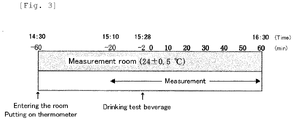
- Measurement of body temperature was carried out under conditions shown in Figure 3 , and the same conditions were applied on day 1 and day 2 of test. Specifically, the subjects were made to enter a measurement room with the room temperature set to 24 ⁇ 0.5°C at 14:30, and conditioned to the environment for 40 minutes with a thermometer put on each subject. Subsequently, measurement of body temperature was initiated at 15:10, and the subjects were made to ingest 200 mL of a test beverage warmed to 37°C within 2 minutes at 15:28. Thereafter, the subjects were made to rest for 60 minutes with the measurement of body temperature continued, and the measurement of body temperature was completed at 16:30. In view of the diurnal variation of autonomic nerve activity, the measurements on day 1 and day 2 of test were carried out at the same time of day.
- Table 1 and Figure 4 show the results on interscapular skin temperature
- Table 2 and Figure 5 shows the results on tympanic temperature.
- statistical significance test was carried out by paired t-test for differences between the groups at identical times. Significance levels of p ⁇ 0.05 were each determined to be a significant difference.
- data analysis was performed with Excel (manufactured by Microsoft Corporation).
- tympanic temperature is body temperature reflecting core body temperature, and hence reduction in lowering of tympanic temperature indicates that production of body heat is also promoted in the inside of a body. Since the interscapular part is in the vicinity of the brown adipose tissue, increase in interscapular skin temperature indicates that fatty acids are consumed in the brown adipose tissue and production of body heat is promoted. Therefore, the results of the present test confirmed that the test beverage of Example 4 promoted combustion of fat and further promoted production of body heat.
- each of the subjects was made to ingest each test beverage, and their interscapular skin temperature during imposing exercise was measured.
- the present test was carried out for four adult males as subjects. Interscapular skin temperature was measured with a myBeat (R) WHS-2.
- the specific testing method of the present test and the results of the test are shown in the following.
- a sweet-and-sour solution of less than 5 kcal/100 mL consisting of aspartame, acesulfame K, sucralose, anhydrous citric acid, trisodium citrate, and water was used as a test beverage of Comparative Example 3.
- a test solution obtained by adding ethyl caproate into the sweet-and-sour solution described above to reach a concentration of 1 ppm was used as a test beverage of Example 5.
- Each subject was made to ingest the test beverage of Comparative Example 3 on day 1 of test and to ingest the test beverage of Example 5 on day 2 of test.
- the test beverage of Example 5 gives 0.17 mg of ethyl caproate as the amount of ethyl caproate to be ingested. Ethanol was used as the solvent for ethyl caproate for the test beverage of Example 5, and a consistent ethanol concentration of 0.0999% was used for the test beverage in all cases.
- the subjects were forced to abstain from alcohol from the night before the test. All the subjects were made to wear the same specified short-sleeve shirt and long pants as clothes for the test.
- the subjects after being fasted from 21:00 on the previous day were subjected to measurement of interscapular skin temperature under conditions shown in Figure 6 .
- the same conditions were applied on day 1 and day 2 of test. Specifically, first, the subjects were each made to enter a thermostatic/humidistatic experimental room set to a temperature of 23 ⁇ 2°C and a humidity of 45 ⁇ 5% at 8:30, and made to ingest a test beverage and sit on a chair. After resting by sitting a chair for 30 minutes, each of the subjects was made to ingest white rice (approximately 200 kcal) and 100 mL of water in 10 minutes, and put on a mask for measurement of expired breath. After putting on a mask, measurement of interscapular skin temperature was initiated.
- each subject After resting by sitting on a chair for 20 minutes after the initiation of measurement of interscapular skin temperature, each subject was made to sit on an AEROBIKE (R) to further rest for 10 minutes. Thereafter, each subject was made to exercise with the AEROBIKE (R) for 30 minutes (30 W, 60 rpm), and the measurement of interscapular skin temperature was completed.
- the measurements on day 1 and day 2 of test were carried out at the same time of day.
- the group with ingestion of the test beverage of Example 5 was successfully found to exhibit high interscapular skin temperature for a longer period than the group with ingestion of the test beverage of Comparative Example 3 exhibited.
- statistical test by intergroup comparison found that the group with ingestion of the test beverage of Example 5 had a tendency of higher interscapular skin temperature than the group with ingestion of the test beverage of Comparative Example 3 exhibited at minute 30 after the initiation of exercise (i.e., at minute 60 after the initiation of temperature measurement).
- test beverage of Example 5 promoted combustion of fat also through exercise and further promoted generation of body heat.
- the lipolysis-promoting effect of the promoter of the present embodiment was tested by quantifying glycerol released into culture supernatant through decomposition of fat accumulated in adipocytes.
- Mouse embryonic 3T3-L1 cells which are progenitor cells of adipocytes and were used in the present test, were induced to differentiate to form adipocytes.
- the present test was carried out in accordance with a method described in " Effects of Quercetin Glucosides on Dietinduced Obesity in Mice - The Lipolytic Activity of Quercetin -" (Tateishi et al., Japanese Pharmacology & Therapeutics 2009; 37(2): 123-131 ).
- the specific testing method of the present test and the results of the test are shown in the following.
- 3T3-L1 cells were suspended in Dulbecco's Modified Eagle medium (manufactured by FUJIFILM Wako Pure Chemical Corporation) (hereinafter, also referred to as "DMEM medium") to which penicillin-streptomycin (manufactured by Thermo Fisher Scientific, Inc.) and fetal bovine serum (manufactured by Sigma-Aldrich Co. LLC) had been added to reach concentrations of 100 Unit/mL, 100 ⁇ g/mL, and 10%, respectively, and seeded in a 12-well plate.
- DMEM medium Dulbecco's Modified Eagle medium
- penicillin-streptomycin manufactured by Thermo Fisher Scientific, Inc.
- fetal bovine serum manufactured by Sigma-Aldrich Co. LLC
- the 3T3-L1 cells were cultured under conditions of 5% CO 2 and 37°C until the cells became confluent (a state in which cells are totally covering the surface of a culture vessel). Two days after becoming confluent, the medium was exchanged with a medium obtained by adding dexamethasone (manufactured by NACALAI TESQUE, INC.), 3-isobutyl-1-methylxanthine (manufactured by NACALAI TESQUE, INC.), and insulin (manufactured by NACALAI TESQUE, INC.) to DMEM medium to reach concentrations of 0.25 ⁇ M, 0.5 mM, and 10 ⁇ g/mL, respectively. Thereafter, the 3T3-L1 cells were cultured at 5% CO 2 and 37°C for 2 days to induce the cells to differentiate into adipocytes.
- dexamethasone manufactured by NACALAI TESQUE, INC.
- 3-isobutyl-1-methylxanthine manufactured by NACALAI TESQUE, INC
- a medium exchange with a medium obtained by adding insulin to DMEM medium to reach a concentration of 5 ⁇ g/mL was performed every 2 or 3 days, and differentiation was maintained by culturing at 5% CO 2 and 37°C for 12 days in total. Thereafter, a medium is prepared as a test medium by adding penicillin-streptomycin (manufactured by Thermo Fisher Scientific, Inc.) and fetal bovine serum (manufactured by Sigma-Aldrich Co.
- Ethyl caproate manufactured by Tokyo Chemical Industry Co., Ltd. was used for the ethyl caproate
- ethanol manufactured by FUJIFILM Wako Pure Chemical Corporation was used for the ethanol
- noradrenaline manufactured by NACALAI TESQUE, INC. was used for the noradrenaline.
- control ratio The ratio of the amount of glycerol in each medium to which the components of any of Comparative Example 5 and Examples 6 to 8 had been added relative to the amount of glycerol in the medium to which the component of Comparative Example 4 had been added (hereinafter, referred to as "control ratio") was determined to obtain the average ⁇ standard error.
- the contribution of the lipid metabolism promoter of the present embodiment to TRPA1 activity was examined by checking the activation of the temperature-sensitive ion channel TRPA1 with a calcium imaging method.
- the specific testing method of the present test and the results of the test are shown in the following.
- human embryonic HEK293T cells were first suspended in DMEM medium to which penicillin-streptomycin (manufactured by Thermo Fisher Scientific, Inc.) and fetal bovine serum (manufactured by Sigma-Aldrich Co. LLC) were added to reach concentrations of 100 Unit/mL, 100 ⁇ g/mL, and 10%, respectively, seeded in a 96-well plate at a volume of 100 ⁇ L/well, and cultured under conditions of 5% CO 2 and 37°C until a cell density reached 70 to 90%.
- penicillin-streptomycin manufactured by Thermo Fisher Scientific, Inc.
- fetal bovine serum manufactured by Sigma-Aldrich Co. LLC
- OptiMEM medium manufactured by Thermo Fisher Scientific, Inc.
- OptiMEM medium manufactured by Thermo Fisher Scientific, Inc.
- Lipofectamine 2000 manufactured by Thermo Fisher Scientific, Inc.
- hTRPA1 gene expression plasmid was added at a volume of 50 ⁇ L/well.
- culture was performed under conditions of 37°C and 5% CO 2 for approximately 24 hours to transfer the TRPA1 gene into the HEK293T cells.
- the contents of Lipofectamine 2000 and the hTRPA1 gene expression plasmid per 50 ⁇ L of the OptiMEM medium were 0.3 ⁇ L and 400 ng, respectively.
- the TRPA1 gene can be confirmed with a DNA database such as GenBank.
- HEPES buffer was used as a test solution of Comparative Example 6. Measurement of fluorescence intensity for the cells with forced expression of TRPA1 was initiated, and, 20 seconds thereafter, 50- ⁇ L portions of each of the test solutions prepared were added to three wells.
- non-transformed cells 50 ⁇ L of the test solution of Example 9 and 50 ⁇ L of the test solution of Comparative Example 6 were added with the same method as performed for the cells with forced expression of TRPA1, and ⁇ RFU was determined.
- the total volume of the OptiMEM medium and the FLIPR Calcium 6 Assay Kit contained in each well immediately before addition of a test solution was 100 ⁇ L, to which 50 ⁇ L of a test solution was then added, and hence ethyl caproate comprised in the test solution of Example 9 was 3-fold diluted in each well.
- concentration of ethyl caproate in each well with addition of the test solution of Example 9 was 100 ppm.
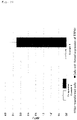
- Table 6 and Figure 9 shows average ⁇ standard deviation for maximum values of ⁇ RFU after addition of a test solution.
- SoftMaxPro Vr. 6 manufactured by Molecular Devices, LLC.
- Excel manufactured by Microsoft Corporation
- the test solution of Comparative Example 6 exhibited a maximum value of ⁇ RFU of about 0.2 for the cells with forced expression of TRPA1, and thus did not evoke cellular response.
- the test solution of Example 9 exhibited a maximum value of ⁇ RFU of about 3.3 for the cells with forced expression of TRPA1, and thus was successfully found to have evoked cellular response. From this result, the test solution of Example 9 was confirmed to have activated TRPA1.
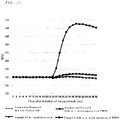
- Figure 10 shows temporal variations of RFU before and after addition of each test solution.
- the maximum values of ⁇ RFU shown in Table 6 and Figure 9 are values determined on the basis of RFU shown in Figure 10 .
- the test solution of Example 9 evoked cellular response for the cells with forced expression of TRPA1
- the test solution of Comparative Example 6 did not evoke cellular response for the cells with forced expression of TRPA1.
- the TRPA1 inhibitor HC03001 (manufactured by Sigma-Aldrich Co. LLC) was further added to the wells to which the test solution of Example 9 had been added in First Testing Method (co-addition). Subsequently, the fluorescence intensity in each well was confirmed to have become constant, and RFU was then determined (hereinafter, also referred to as "RFU after addition of the inhibitor”). The amount of change in RFU after addition of the inhibitor from RFU before addition of the test solution, which was assumed to be 1, was determined (hereinafter, also referred to as " ⁇ RFU after addition of the test solution”). DMSO was used for dilution of HC03001, and the DMSO concentration in each well was set to 0.1% in view of cytotoxicity.
- Figure 11 shows average ⁇ standard deviation of ⁇ RFU after addition of the inhibitor (with coaddition of HC03001 in Figure 11 ).
- maximum value ⁇ standard deviation of ⁇ RFU before coaddition of the inhibitor is shown as a reference (without coaddition of HC03001 in Figure 11 ).
- SoftMax Pro Vr. 6 and Excel were used for data analysis as in Results of First Test.
- the respiratory quotients were measured with the same method as in Test 1.
- the lipid oxidation rate is the amount of fat consumed through energy metabolism, and determined, as with the case of respiratory quotients, on the basis of analysis results on expired breath obtained by using an Aero Monitor (R) (manufactured by MINATO
- the present test was carried out as a single-ingestion crossover study for 34 adult males (BMI: 18.5 kg/m 2 or higher and lower than 25 kg/m 2 ) as subjects.
- BMI 18.5 kg/m 2 or higher and lower than 25 kg/m 2
- the specific testing method of the present test and the results of the test are shown in the following.
- test beverages of Comparative Example 3 and Example 5 used in Test 3 were used, and a test solution obtained by adding ethyl caproate into the test beverage (sweet-and-sour solution) of Comparative Example 3 to reach a concentration of 0.1 ppm was used as a test beverage of Example 10.
- the test was performed three times at intervals of 1 week or longer, and the test beverages were randomly ingested.
- the test beverages of Examples 5 and 10 respectively give 0.17 mg and 0.017 mg of ethyl caproate as the amount of ethyl caproate to be ingested.
- Ethanol was used as the solvent for ethyl caproate for the test beverages of Example 5 and Example 10, and a consistent ethanol concentration of 0.0999% was used for the test beverages in all cases.
- the subjects were provided with identical meals for 3 days before the test, and forced to abstain from alcohol from the previous night. On the day of the test, the subjects were forbidden from ingesting any food or drink, except water. The subjects were each provided with the same clothes for the test.
- the subjects were fasted for 12 hours from 21:00 on the previous day, and measurement of respiratory quotients was carried out in the same manner as in Test 1 under the conditions shown in Figure 1 .
- measurement of lipid oxidation rates was carried out.
- the measurements of respiratory quotients and lipid oxidation rates were continuously carried out for 60 minutes. Thereafter, the same measurement was further performed twice at intervals of 1 week or longer. Beverages to be ingested were randomly assigned to every subject to make the subjects ingest each beverage once.
- Figure 12 shows the results on respiratory quotients
- Figure 13 shows the results on lipid oxidation rates.
- intergroup statistical significance test was carried out by Dunnett's test for the averages for the groups. Significance levels of p ⁇ 0.05 were each determined to be a significant difference.
- data analysis was performed with Excel (manufactured by Microsoft Corporation).
- a reduced respiratory quotient indicates the increase in the amount of fat consumed
- an increased lipid oxidation rate indicates the increase in the amount of fat consumed through energy metabolism. Therefore, the results of the present test confirmed that the test beverages of Example 5 and Example 10 promote both lipolysis and fat combustion, and thus promote metabolism of fat.
- each of the subjects was made to ingest each test beverage, and their respiratory quotients and lipid oxidation rates were measured.
- an Aero Monitor (R) was used as in Test 6.
- the present test was carried out for four adult males as subjects. The specific testing method of the present test and the results of the test are shown in the following.
- each subject was made to ingest different test beverages on day 1 and day 2 of test.
- As the test beverage on day 1 of test 200 mL of carbonated water (Comparative Example 7) was used.
- As the test beverage on day 2 of test 200 mL of a test solution obtained by adding ethyl caproate into carbonated water to reach a concentration of 1 ppm (Example 11) was used.
- the test beverage of Example 11 gives 0.17 mg of ethyl caproate as the amount of ethyl caproate to be ingested.
- "WILKINSON TANSAN" manufactured by ASAHI SOFT DRINKS CO., LTD.
- Ethanol was used as the solvent for ethyl caproate for the test beverage of Example 11, and a consistent ethanol concentration of 0.0999% was used for the test beverage in all cases.
- the subjects were forced to abstain from alcohol from the night before the test.
- the subjects were fasted for 12 hours from 21:00 on the previous day, and measurement of respiratory quotients was carried out in the same manner as in Test 1 under the conditions shown in Figure 1 .
- measurement of lipid oxidation rates was carried out.
- the measurements of respiratory quotients and lipid oxidation rates were carried out in a thermostatic/humidistatic experimental room set to a temperature of 23 ⁇ 2°C and a humidity of 45 ⁇ 5%, and those on day 1 and day 2 of test were carried out at the same time of day under the same conditions.
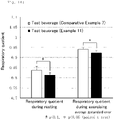
- Figure 14 shows the results on respiratory quotients
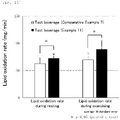
- Figure 15 shows the results on lipid oxidation rates.
- statistical significance test was carried out by paired t-test for the averages for the groups. Significance levels of p ⁇ 0.05 were each determined to be a significant difference, and significance levels of p ⁇ 0.1 were each determined to be a significant tendency. Data analysis was performed with Excel (manufactured by Microsoft Corporation).
- a reduced respiratory quotient indicates the increase in the amount of fat consumed
- an increased lipid oxidation rate indicates the increase in the amount of fat consumed through energy metabolism. Therefore, the results of the present test confirmed that the test beverage of Example 11 promotes both lipolysis and fat combustion, and thus promotes metabolism of fat.
- each of the subjects was made to ingest each test beverage, and their interscapular skin temperature and tympanic temperature (hereinafter in Test 8, these are also referred to as "body temperature", collectively,) after the ingestion were measured.
- the present test was carried out as a single-ingestion crossover study for six adult males and females (two males, four females) as subjects.
- interscapular skin temperature was measured with a myBeat (R) WHS-2 (manufactured by UNION TOOL CO.), and tympanic temperature was measured with the ear thermometer CE Thermo 2 (manufactured by NIPRO CORPORATION).
- each subject was made to ingest different test beverages on day 1 and day 2 of test.
- As the test beverage on day 1 of test 200 mL of water (Comparative Example 8) was used.
- As the test beverage on day 2 of test 200 mL of a test solution obtained by adding isoamyl acetate into water to reach a concentration of 1 ppm (Example 12) was used.
- the test beverage of Example 12 gives 0.18 mg of isoamyl acetate as the amount of isoamyl acetate to be ingested.
- Ethanol was used as the solvent for isoamyl acetate for the test beverage of Example 12, and a consistent ethanol concentration of 0.0999% was used for the test beverage in all cases.
- isoamyl acetate ⁇ 97%, FCC, Food Grade (manufactured by Sigma-Aldrich Co. LLC) was used for the isoamyl acetate as a raw material of the test beverage.
- the log Pow of isoamyl acetate was 2.0 (calculated with the same method as described later in Test 9).
- the subjects were forced to abstain from alcohol from the night before the test.
- the subjects were forbidden from taking coffee or a highly spiced meal, made to finish lunch before 12:30, and forbidden from eating or drinking, except drinking water, after 12:30.
- the subjects were each made to wear the same specified short-sleeve shirt and long pants as clothes for the test.
- Measurement of body temperature was carried out, in the same manner as in Test 2, under conditions shown in Figure 3 , and the measurements on day 1 and day 2 of test were carried out at the same time of day under the same conditions.
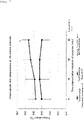
- Figure 16 shows the results on interscapular skin temperature
- Figure 17 shows the results on tympanic temperature.
- statistical significance test was carried out by paired t-test for differences between the groups at identical times. Significance levels of p ⁇ 0.05 were each determined to be a significant difference, and significance levels of p ⁇ 0.10 were each determined to be a significant tendency.
- data analysis was performed with Excel (manufactured by Microsoft Corporation).
- tympanic temperature is body temperature reflecting core body temperature, and hence reduction in lowering of tympanic temperature indicates that production of body heat is promoted even in the inside of a body.
- increase in interscapular skin temperature indicates that fatty acids are consumed in the brown adipose tissue and production of body heat is promoted. Therefore, the results of the present test confirmed that the test beverage of Example 12 promoted combustion of fat and further promoted production of body heat.
- test solutions of Examples 13 to 28 and Comparative Examples 9 to 14 described later were used in place of the test solutions used in First Testing Method of Test 5. Except that, the amount of change in RFU before and after addition of each test solution ( ⁇ RFU) was determined for cells with forced expression of TRPA1 and non-transformed cells with the same method as First Testing Method of Test 5.
- test solutions of Examples 13 to 28 and Comparative Examples 10 to 14 used in the present test were each obtained by adding a compound listed in Table 7 into HEPES buffer.
- the octanol/water partition coefficient (log Pow) of each compound listed in Table 7 was calculated with XlogP (Shanghai Institute of Organic Chemistry, Chinese Academy of Sciences, http://WWW.sio-ccbg.ac.cn/software/xlogp3/), which is software using the XlogP3 algorithm.
- Each test solution was added as 50- ⁇ L portions to wells, and the concentrations of the compounds were set to concentrations shown in Table 7.
- HEPES buffer was used as the test solution of Comparative Example 9 for a negative control (N.C.), and added as 50- ⁇ L portions to wells.
- Table 7 and Figure 18 show average ⁇ standard deviation of maximum values of ⁇ RFU.
- SoftMax Pro Vr. 6 manufactured by Molecular Devices, LLC.
- Excel manufactured by Microsoft Corporation
- test solutions of Comparative Examples 9 to 14 did not provide maximum values of ⁇ RFU in cells with forced expression of TRPA1 higher than maximum values of ⁇ RFU in non-transformed cells, and thus the response of cells with forced expression of TRPA1 was not found.
- test solutions of Examples 13 to 28 provided maximum values of ⁇ RFU in cells with forced expression of TRPA1 higher (specifically, 2.9 or more times higher) than maximum values of ⁇ RFU in non-transformed cells, and thus the cellular response of cells with forced expression of TRPA1 was successfully found. These results confirmed that the test solutions of Examples 13 to 28 activate TRPA1.
Landscapes
- Health & Medical Sciences (AREA)
- Life Sciences & Earth Sciences (AREA)
- Chemical & Material Sciences (AREA)
- Engineering & Computer Science (AREA)
- Veterinary Medicine (AREA)
- Pharmacology & Pharmacy (AREA)
- Medicinal Chemistry (AREA)
- Animal Behavior & Ethology (AREA)
- General Health & Medical Sciences (AREA)
- Public Health (AREA)
- General Chemical & Material Sciences (AREA)
- Chemical Kinetics & Catalysis (AREA)
- Organic Chemistry (AREA)
- Nuclear Medicine, Radiotherapy & Molecular Imaging (AREA)
- Bioinformatics & Cheminformatics (AREA)
- Obesity (AREA)
- Hematology (AREA)
- Diabetes (AREA)
- Epidemiology (AREA)
- Nutrition Science (AREA)
- Polymers & Plastics (AREA)
- Food Science & Technology (AREA)
- Emergency Medicine (AREA)
- Mycology (AREA)
- Oil, Petroleum & Natural Gas (AREA)
- Child & Adolescent Psychology (AREA)
- Acyclic And Carbocyclic Compounds In Medicinal Compositions (AREA)
Applications Claiming Priority (3)
| Application Number | Priority Date | Filing Date | Title |
|---|---|---|---|
| JP2019158602 | 2019-08-30 | ||
| JP2020080357 | 2020-04-30 | ||
| PCT/JP2020/029309 WO2021039269A1 (ja) | 2019-08-30 | 2020-07-30 | 脂肪代謝促進剤 |
Publications (2)
| Publication Number | Publication Date |
|---|---|
| EP4023291A1 true EP4023291A1 (de) | 2022-07-06 |
| EP4023291A4 EP4023291A4 (de) | 2023-10-04 |
Family
ID=74685861
Family Applications (1)
| Application Number | Title | Priority Date | Filing Date |
|---|---|---|---|
| EP20858038.1A Pending EP4023291A4 (de) | 2019-08-30 | 2020-07-30 | Fettstoffwechsel-promotor |
Country Status (6)
| Country | Link |
|---|---|
| EP (1) | EP4023291A4 (de) |
| JP (1) | JP7660512B2 (de) |
| AU (1) | AU2020337307B2 (de) |
| PH (1) | PH12022550473A1 (de) |
| TW (1) | TWI883030B (de) |
| WO (1) | WO2021039269A1 (de) |
Family Cites Families (11)
| Publication number | Priority date | Publication date | Assignee | Title |
|---|---|---|---|---|
| JP3176868B2 (ja) | 1997-04-02 | 2001-06-18 | 三和酒類株式会社 | 酢酸イソアミル高生産酵母の取得方法 |
| GB0220045D0 (en) | 2002-08-29 | 2002-10-09 | Cxr Biosciences Ltd Sc 211745 | Methods |
| KR20090132899A (ko) * | 2008-06-23 | 2009-12-31 | 조선대학교산학협력단 | 혈행개선용 솔잎 발효액 |
| EP2143342B1 (de) | 2008-07-11 | 2013-02-27 | Nestec S.A. | Aromaverbindungen zur Gewichtsregelung |
| US20110077300A1 (en) * | 2009-03-26 | 2011-03-31 | Jianping Ye | Metabolic Benefits to Butyrate as a Chronic Diet Supplement |
| JP5710132B2 (ja) | 2010-03-10 | 2015-04-30 | 月桂冠株式会社 | カプロン酸エチル生成促進酵母株、その製造方法、および、それを用いた発酵産物の製造方法 |
| US9937115B2 (en) * | 2010-10-01 | 2018-04-10 | The Procter & Gamble Company | Oral care compositions with improved flavor |
| CN106537149A (zh) | 2014-04-01 | 2017-03-22 | 宝洁公司 | 用于筛选色氨酸通道的方法 |
| KR20170000043A (ko) * | 2015-06-22 | 2017-01-02 | 대한민국(환경부 국립생물자원관장) | 신균주 아스퍼질러스 오라이지에 kacc93232p 및 이를 이용한 막걸리 제조방법 |
| KR20170000047A (ko) * | 2015-06-22 | 2017-01-02 | 대한민국(환경부 국립생물자원관장) | 신균주 아스퍼질러스 오라이지에 kacc93233p 및 이를 이용한 막걸리 제조방법 |
| JP2019099498A (ja) | 2017-12-01 | 2019-06-24 | 株式会社明治 | 脂質代謝促進のための組成物 |
-
2020
- 2020-07-30 JP JP2021542663A patent/JP7660512B2/ja active Active
- 2020-07-30 WO PCT/JP2020/029309 patent/WO2021039269A1/ja not_active Ceased
- 2020-07-30 EP EP20858038.1A patent/EP4023291A4/de active Pending
- 2020-07-30 PH PH1/2022/550473A patent/PH12022550473A1/en unknown
- 2020-07-30 AU AU2020337307A patent/AU2020337307B2/en active Active
- 2020-08-04 TW TW109126266A patent/TWI883030B/zh active
Also Published As
| Publication number | Publication date |
|---|---|
| AU2020337307A1 (en) | 2022-03-03 |
| TWI883030B (zh) | 2025-05-11 |
| AU2020337307B2 (en) | 2026-04-23 |
| JP7660512B2 (ja) | 2025-04-11 |
| TW202122074A (zh) | 2021-06-16 |
| PH12022550473A1 (en) | 2023-03-06 |
| WO2021039269A1 (ja) | 2021-03-04 |
| EP4023291A4 (de) | 2023-10-04 |
| JPWO2021039269A1 (de) | 2021-03-04 |
Similar Documents
| Publication | Publication Date | Title |
|---|---|---|
| JP5985138B2 (ja) | エネルギー消費促進剤 | |
| KR101562271B1 (ko) | 알콜대사를 완화하고 알콜유도성 질환의 위험을 감소하기위한 조성물 | |
| KR20150145262A (ko) | 에너지 소비의 촉진 및/또는 에너지 소비 기능 저하의 치료 및/또는 예방제, 또는 방법 | |
| JP6976030B2 (ja) | 非アルコール性脂肪肝疾患の予防または改善用組成物 | |
| JP7058225B2 (ja) | イソキサントフモールを含む脂質代謝促進用組成物 | |
| WAKAMIYA et al. | Vitamin C activity of 2-O-α-D-glucopyranosyl-L-ascorbic acid in guinea pigs | |
| KR101540004B1 (ko) | 혈당, 혈압, 혈류 및 콜레스테롤 개선용 건강기능식품 조성물 | |
| EP4023291A1 (de) | Fettstoffwechsel-promotor | |
| EP3142660B1 (de) | Zusammensetzungen mit 7-hydroxymatairesinol | |
| EP3701952A1 (de) | Inositphosphathaltige zusammensetzung | |
| JP6391959B2 (ja) | 非アルコール性脂肪性肝炎の改善剤および改善用栄養組成物 | |
| JP6194192B2 (ja) | アディポネクチン産生促進剤 | |
| JP2009001507A (ja) | 体脂肪減少剤およびその利用 | |
| KR20080020617A (ko) | (-)-에피갈로카테킨 갈레이트의 신규 용도 | |
| Uebanso et al. | Glycolate as a Biological Marker of B Vitamins | |
| JP2015027996A (ja) | 経口紫外線抵抗性向上剤 | |
| KR20260053338A (ko) | 지방 분해 및/또는 체중 감소에 대한 내용 조성물, 유효성을 판정하는 방법, 및 식물 추출물의 품질 지표 | |
| JP2025084032A (ja) | グルコン酸亜鉛塩およびシクロ-ヒスプロを有効成分として含む肥満および糖尿病の予防、改善または治療用組成物 | |
| WO2024249223A2 (en) | Composition and method to reduce liver fat and circulating triacylglycerols | |
| JP2022000011A (ja) | 抗肥満用組成物及び経口用組成物 | |
| Cupp et al. | Pyruvate | |
| JP2018111669A (ja) | 過食抑制剤 | |
| CN107106579A (zh) | 兜甲蛋白减少的抑制/改善剂、谷氨酰胺转胺酶3激活剂和皮肤角质层角质化包膜的形成促进/结构增强剂 |
Legal Events
| Date | Code | Title | Description |
|---|---|---|---|
| STAA | Information on the status of an ep patent application or granted ep patent |
Free format text: STATUS: THE INTERNATIONAL PUBLICATION HAS BEEN MADE |
|
| PUAI | Public reference made under article 153(3) epc to a published international application that has entered the european phase |
Free format text: ORIGINAL CODE: 0009012 |
|
| STAA | Information on the status of an ep patent application or granted ep patent |
Free format text: STATUS: REQUEST FOR EXAMINATION WAS MADE |
|
| 17P | Request for examination filed |
Effective date: 20220324 |
|
| AK | Designated contracting states |
Kind code of ref document: A1 Designated state(s): AL AT BE BG CH CY CZ DE DK EE ES FI FR GB GR HR HU IE IS IT LI LT LU LV MC MK MT NL NO PL PT RO RS SE SI SK SM TR |
|
| DAV | Request for validation of the european patent (deleted) | ||
| DAX | Request for extension of the european patent (deleted) | ||
| A4 | Supplementary search report drawn up and despatched |
Effective date: 20230904 |
|
| RIC1 | Information provided on ipc code assigned before grant |
Ipc: A23L 2/52 20060101ALI20230829BHEP Ipc: A61K 31/23 20060101ALI20230829BHEP Ipc: A61K 31/22 20060101ALI20230829BHEP Ipc: A23L 33/12 20160101ALI20230829BHEP Ipc: A23L 33/10 20160101ALI20230829BHEP Ipc: A61P 43/00 20060101ALI20230829BHEP Ipc: A61P 3/06 20060101ALI20230829BHEP Ipc: A61P 3/04 20060101ALI20230829BHEP Ipc: A61P 3/00 20060101AFI20230829BHEP |