EP4017748B1 - Elektrische ladevorrichtung für ein kraftfahrzeug - Google Patents
Elektrische ladevorrichtung für ein kraftfahrzeug Download PDFInfo
- Publication number
- EP4017748B1 EP4017748B1 EP20757826.1A EP20757826A EP4017748B1 EP 4017748 B1 EP4017748 B1 EP 4017748B1 EP 20757826 A EP20757826 A EP 20757826A EP 4017748 B1 EP4017748 B1 EP 4017748B1
- Authority
- EP
- European Patent Office
- Prior art keywords
- drive
- charging
- locking element
- actuating element
- locking
- Prior art date
- Legal status (The legal status is an assumption and is not a legal conclusion. Google has not performed a legal analysis and makes no representation as to the accuracy of the status listed.)
- Active
Links
Images




Classifications
-
- B—PERFORMING OPERATIONS; TRANSPORTING
- B60—VEHICLES IN GENERAL
- B60L—PROPULSION OF ELECTRICALLY-PROPELLED VEHICLES; SUPPLYING ELECTRIC POWER FOR AUXILIARY EQUIPMENT OF ELECTRICALLY-PROPELLED VEHICLES; ELECTRODYNAMIC BRAKE SYSTEMS FOR VEHICLES IN GENERAL; MAGNETIC SUSPENSION OR LEVITATION FOR VEHICLES; MONITORING OPERATING VARIABLES OF ELECTRICALLY-PROPELLED VEHICLES; ELECTRIC SAFETY DEVICES FOR ELECTRICALLY-PROPELLED VEHICLES
- B60L53/00—Methods of charging batteries, specially adapted for electric vehicles; Charging stations or on-board charging equipment therefor; Exchange of energy storage elements in electric vehicles
- B60L53/10—Methods of charging batteries, specially adapted for electric vehicles; Charging stations or on-board charging equipment therefor; Exchange of energy storage elements in electric vehicles characterised by the energy transfer between the charging station and the vehicle
- B60L53/14—Conductive energy transfer
- B60L53/16—Connectors, e.g. plugs or sockets, specially adapted for charging electric vehicles
-
- B—PERFORMING OPERATIONS; TRANSPORTING
- B60—VEHICLES IN GENERAL
- B60K—ARRANGEMENT OR MOUNTING OF PROPULSION UNITS OR OF TRANSMISSIONS IN VEHICLES; ARRANGEMENT OR MOUNTING OF PLURAL DIVERSE PRIME-MOVERS IN VEHICLES; AUXILIARY DRIVES FOR VEHICLES; INSTRUMENTATION OR DASHBOARDS FOR VEHICLES; ARRANGEMENTS IN CONNECTION WITH COOLING, AIR INTAKE, GAS EXHAUST OR FUEL SUPPLY OF PROPULSION UNITS IN VEHICLES
- B60K1/00—Arrangement or mounting of electrical propulsion units
- B60K1/04—Arrangement or mounting of electrical propulsion units of the electric storage means for propulsion
-
- B—PERFORMING OPERATIONS; TRANSPORTING
- B60—VEHICLES IN GENERAL
- B60L—PROPULSION OF ELECTRICALLY-PROPELLED VEHICLES; SUPPLYING ELECTRIC POWER FOR AUXILIARY EQUIPMENT OF ELECTRICALLY-PROPELLED VEHICLES; ELECTRODYNAMIC BRAKE SYSTEMS FOR VEHICLES IN GENERAL; MAGNETIC SUSPENSION OR LEVITATION FOR VEHICLES; MONITORING OPERATING VARIABLES OF ELECTRICALLY-PROPELLED VEHICLES; ELECTRIC SAFETY DEVICES FOR ELECTRICALLY-PROPELLED VEHICLES
- B60L2270/00—Problem solutions or means not otherwise provided for
- B60L2270/30—Preventing theft during charging
- B60L2270/32—Preventing theft during charging of electricity
-
- H—ELECTRICITY
- H01—ELECTRIC ELEMENTS
- H01R—ELECTRICALLY-CONDUCTIVE CONNECTIONS; STRUCTURAL ASSOCIATIONS OF A PLURALITY OF MUTUALLY-INSULATED ELECTRICAL CONNECTING ELEMENTS; COUPLING DEVICES; CURRENT COLLECTORS
- H01R13/00—Details of coupling devices of the kinds covered by groups H01R12/70 or H01R24/00 - H01R33/00
- H01R13/62—Means for facilitating engagement or disengagement of coupling parts or for holding them in engagement
- H01R13/639—Additional means for holding or locking coupling parts together, after engagement, e.g. separate keylock, retainer strap
- H01R13/6397—Additional means for holding or locking coupling parts together, after engagement, e.g. separate keylock, retainer strap with means for preventing unauthorised use
-
- Y—GENERAL TAGGING OF NEW TECHNOLOGICAL DEVELOPMENTS; GENERAL TAGGING OF CROSS-SECTIONAL TECHNOLOGIES SPANNING OVER SEVERAL SECTIONS OF THE IPC; TECHNICAL SUBJECTS COVERED BY FORMER USPC CROSS-REFERENCE ART COLLECTIONS [XRACs] AND DIGESTS
- Y02—TECHNOLOGIES OR APPLICATIONS FOR MITIGATION OR ADAPTATION AGAINST CLIMATE CHANGE
- Y02T—CLIMATE CHANGE MITIGATION TECHNOLOGIES RELATED TO TRANSPORTATION
- Y02T10/00—Road transport of goods or passengers
- Y02T10/60—Other road transportation technologies with climate change mitigation effect
- Y02T10/70—Energy storage systems for electromobility, e.g. batteries
-
- Y—GENERAL TAGGING OF NEW TECHNOLOGICAL DEVELOPMENTS; GENERAL TAGGING OF CROSS-SECTIONAL TECHNOLOGIES SPANNING OVER SEVERAL SECTIONS OF THE IPC; TECHNICAL SUBJECTS COVERED BY FORMER USPC CROSS-REFERENCE ART COLLECTIONS [XRACs] AND DIGESTS
- Y02—TECHNOLOGIES OR APPLICATIONS FOR MITIGATION OR ADAPTATION AGAINST CLIMATE CHANGE
- Y02T—CLIMATE CHANGE MITIGATION TECHNOLOGIES RELATED TO TRANSPORTATION
- Y02T10/00—Road transport of goods or passengers
- Y02T10/60—Other road transportation technologies with climate change mitigation effect
- Y02T10/7072—Electromobility specific charging systems or methods for batteries, ultracapacitors, supercapacitors or double-layer capacitors
-
- Y—GENERAL TAGGING OF NEW TECHNOLOGICAL DEVELOPMENTS; GENERAL TAGGING OF CROSS-SECTIONAL TECHNOLOGIES SPANNING OVER SEVERAL SECTIONS OF THE IPC; TECHNICAL SUBJECTS COVERED BY FORMER USPC CROSS-REFERENCE ART COLLECTIONS [XRACs] AND DIGESTS
- Y02—TECHNOLOGIES OR APPLICATIONS FOR MITIGATION OR ADAPTATION AGAINST CLIMATE CHANGE
- Y02T—CLIMATE CHANGE MITIGATION TECHNOLOGIES RELATED TO TRANSPORTATION
- Y02T90/00—Enabling technologies or technologies with a potential or indirect contribution to GHG emissions mitigation
- Y02T90/10—Technologies relating to charging of electric vehicles
- Y02T90/12—Electric charging stations
-
- Y—GENERAL TAGGING OF NEW TECHNOLOGICAL DEVELOPMENTS; GENERAL TAGGING OF CROSS-SECTIONAL TECHNOLOGIES SPANNING OVER SEVERAL SECTIONS OF THE IPC; TECHNICAL SUBJECTS COVERED BY FORMER USPC CROSS-REFERENCE ART COLLECTIONS [XRACs] AND DIGESTS
- Y02—TECHNOLOGIES OR APPLICATIONS FOR MITIGATION OR ADAPTATION AGAINST CLIMATE CHANGE
- Y02T—CLIMATE CHANGE MITIGATION TECHNOLOGIES RELATED TO TRANSPORTATION
- Y02T90/00—Enabling technologies or technologies with a potential or indirect contribution to GHG emissions mitigation
- Y02T90/10—Technologies relating to charging of electric vehicles
- Y02T90/14—Plug-in electric vehicles
Definitions
- the invention relates to an electrical charging device for a motor vehicle, in particular an electric or hybrid motor vehicle, with a charging socket on the motor vehicle side and a charging plug on the charging column side, or vice versa, and with a locking element that can be moved by a motor drive for releasably locking the charging plug in the charging socket, wherein an actuating element that can be manually actuated with the aid of a tool is provided for emergency release of the locking element.
- the charging plug can in principle also be provided on the motor vehicle side and the charging socket on the charging column side.
- Batteries in electric or hybrid vehicles must be regularly supplied with electrical energy. This is done using a charging infrastructure, which typically includes one or more charging stations.
- a charging infrastructure typically includes one or more charging stations.
- the charging plug of the charging station is generally connected to the charging socket on the vehicle side.
- the opposite can also be done.
- the charging station is equipped with the charging socket, whereas the charging plug is on the vehicle side.
- the removable locking of the charging plug in relation to the charging socket is necessary, for example, to avoid health risks for users. This is because high voltage is generally used here, which can be several hundred volts.
- the locking also ensures that only previously identified users can legally draw on the energy provided by the charging station and that misuse is prevented. For this purpose, the operator is usually identified and authorised using an identification signal before such a charging process, as is generally the case in the WO 2010/149426 A1 described.
- the adjustment of the locking element is carried out in the state of the art according to the CN 2029695855 U typically carried out with the help of an electric motor drive.
- the electric motor drive in turn consists of an electric motor and a downstream, often multi-stage gear.
- the multi-stage gear in turn works via a cam on the locking element.
- state-of-the-art solutions are known according to the DE 10 2011 10 809 A1 , in which a locking device is implemented that works with a mechanical latch.
- the mechanical latch can be operated by an electric motor. In this way, the mechanical latch engages in grooves on the charging plug and ensures that the plug or charging plug is locked with the help of the locking device inside the charging socket.
- Another locking device in particular for a charging plug, is described by the generic DE 10 2011 050 783 A1 known.
- an electromechanical drive is provided for the locking element, with the help of which a change between a locking position and an unlocking position of the locking element can be made.
- an emergency release is already mentioned for emergencies. As part of the emergency release, the locking device is transferred from a locking position to its unlocking position.
- Such an emergency release is required, among other things, if the vehicle electronics or the drive for the locking element or locking device fails. As a result, the charging plug can no longer be removed from the vehicle. This makes it almost impossible to continue driving or even tow the vehicle.
- a traction device is ultimately used for the emergency release, with the help of which at least part of the locking element can be moved in an emergency.
- the traction device can be a rope, a Bowden cable or a rod or a lever which ends in the vehicle interior, whereby the traction device can be operated by a user in an emergency.
- the traction device for example in connection with a lever represents the previously mentioned tool and thus an actuating element that can be operated manually.
- the emergency release can practically only be carried out from the interior of the vehicle - and not from the outside. This is problematic when the vehicle can no longer be opened.
- the known emergency release is generally accessible from the outside when the flap covering the charging socket is open.
- the actuating element is a pivot lever connected to the locking element, which is attached to the outside of a housing that accommodates the drive and the locking element.
- a passage opening for the tool is provided, closed by a thin separating layer made of plastic film. The separating layer or passage opening temporarily closes an additional guide.
- the guide is directed towards the actuating element or the pivot lever and is used for the defined translational movement of the tool. This again results in a relatively high design effort.
- the guide in the known gauge is designed according to the DE 10 2013 222 509 A1 must be adapted to the tool to be used as well as to the vehicle itself, which makes universal emergency release difficult.
- WO 2019/073854 A1 An electric charging device for a motor vehicle is also known in which an actuating element is provided for an emergency release of a locking element which is intended for locking a charging plug in a charging socket, which is actuated by means of a tool during the emergency release.
- an electrical connection device for electric or hybrid vehicles in particular is known, which has a charging plug and a charging socket in its basic structure.
- the charging plug is releasably anchored in the charging socket with the aid of a movable locking element.
- a drive is provided which causes the locking element to perform positioning movements relative to a guide.
- the locking element is accommodated on the housing side in a movable support of the drive as part of the guide.
- the invention is based on the technical problem of further developing such a charging device for a motor vehicle in such a way that the design effort is reduced and the emergency release can be carried out flexibly and easily on site by using various available tools.
- the invention of a generic electric charging device for a motor vehicle proposes that the actuating element is designed as a U-shaped lever which axially overlaps at least one gear wheel of the drive on both sides and which has an attachment area for the tool on its U-base, and that the drive has variable bearing points which are released by the actuating element for emergency release.
- the tool does not act directly on the locking element, but indirectly, if you will.
- the actuating element is used to release the locking element in an emergency by releasing variable bearing points.
- the bearing points are fixed. In this way, radial forces exerted by the drive on the bearing in general or on the individual bearing points can be easily absorbed. This is usually done with the help of the housing that holds the drive, which provides the appropriate bearing points.
- variable bearing points are also implemented according to the invention. These variable bearing points can be released for emergency release of the locking element, namely with the help of the actuating element.
- the variable bearing points are fixed in normal operation and can therefore absorb radial forces acting on individual components of a usually provided gearbox, the electric motor or other drive components during normal operation.
- the manually actuated actuating element ensures that the variable bearing points fixed in normal operation are released.
- the fixed bearing points remain unchanged. Since the variable bearing points for the emergency release of the locking element are released and therefore can no longer absorb radial forces, the locking element that was previously in its locked position can be acted upon and transferred to its unlocked position. This is possible automatically, for example.
- the drive automatically takes the locking element into its unlocked position when the bearing is released. This can be done, for example, by a spring or several springs which elastically act on the drive or a drive component that has then become free when the bearing is released, with the drive component automatically taking the locking element into its unlocked position in this case.
- the actuating element is generally equipped with a return spring.
- the return spring ensures that the actuating element normally assumes the position that is appropriate for normal operation, in which the drive bearing or the variable bearing points are fixed. This prevents unintentional emergency release. Only in an emergency and when an emergency release is to be carried out, and usually when a tool is placed on the actuating element, can the actuating element be acted upon against the force of the return spring, so that the drive bearing that was previously fixed in normal operation is released for the emergency release of the locking element.
- the previously described housing that houses the drive is generally made up of two parts, with a lower shell and an upper shell.
- the actuating element is also housed in the housing in question that houses the drive.
- the design is usually such that the drive and the actuating element are housed together primarily in the lower shell.
- the upper shell mainly functions as a closure for the lower shell and overall ensures that the bearing points for the drive are fixed.
- the actuating element itself is a U-shaped lever according to the invention.
- This U-shaped lever is designed in such a way that it axially engages at least one gear wheel of the drive on both sides.
- the gear wheel in question is usually the output-side gear wheel, which is equipped with a pin that engages in a recess in the locking element.
- the actuating element now defines the two previously mentioned variable bearing points on both sides of the centrally arranged gear wheel. As soon as the actuating element is manually actuated, the two variable bearing points are released and the gear wheel can move away from the position it assumes during normal operation.
- the locking element Since the gear wheel engages in the recess of the locking element with its output-side pin, the locking element is simultaneously moved and taken along during this process, namely it is transferred from its previously assumed “locked” position during normal operation to the "unlocked” position for the purpose of emergency release.
- an attachment area for the manually actuated tool is provided on its U-base.
- This attachment area can be designed to be flexible and variable, so that very different tools can be attached if necessary.
- the tool in question can also be firmly connected to the U-shaped lever, for example designed as a crank that acts on the lever.
- the actuating element or the U-shaped lever is generally designed as a pivoting lever. Consequently, the actuating element or the pivoting lever can be pivoted relative to its mounting in the housing. the actuating element or the pivot lever assumes at least two positions, namely a functional position for normal operation and a functional position corresponding to the emergency release. In fact, the design is further such that for the emergency release of the locking element, the pivot lever indirectly acts on the locking element via a driving element on the drive. This means that in the course of the previously mentioned further actuation of the actuating element, the actuating element or the pivot lever can interact with the driving element on the drive.
- This driving element is usually found on the gear wheel that is released during the emergency release. Following the emergency release, the pivot lever can now act on the driving element on the said gear wheel as it continues to pivot. Since the pin on the output side of the gear wheel engages in the recess of the locking element, the locking element is also acted upon, specifically moved from its previously assumed “locked” position to the "unlocked” position.
- the design according to the invention provides an electric charging device for a motor vehicle in which the entire transmission does not have to be reset for emergency release, but only the locking element. As a result, a significantly lower force has to be applied for emergency release than when resetting the entire transmission. Furthermore, the electric charging device for a motor vehicle is provided which is structurally particularly simple. This is because the emergency release essentially only requires the actuating element or the pivot lever provided in this connection. Further measures are unnecessary. This pivot lever can also be actuated with practically any conceivable tool or directly manually, so that the emergency release can be carried out flexibly and easily on site without great effort.
- an electrical charging device for a battery that is only Fig. 2
- the motor vehicle 1 indicated is shown.
- the motor vehicle 1 is an electric or hybrid motor vehicle.
- the electric charging device is equipped with a charging socket 2 on the motor vehicle side and a charging plug 3 on the charging station side.
- the opposite procedure can also be used.
- the charging plug 3 is on the motor vehicle side, whereas the charging socket 2 is provided on the charging station side, although this is not shown.
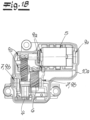
- the basic structure also includes a particularly in the Figures 1A , 1B motor drive 5, 6 can be seen, which is equipped with an electric motor 5 and a gear 6 or a gear wheel 6 on the output side, which will be examined in more detail below.
- a locking element 4 can be moved to releasably lock the charging plug 3 in the charging socket 2.
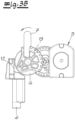
- the Fig. 3A the "unlocked” state of the charging plug 3 relative to the charging socket 2 with the locking element 4 retracted or retracted accordingly.
- the Fig. 3B the "locked” situation is shown, in which the locking element 4 dips into a recess in the charging plug 3 in order to properly lock the charging plug 3 plugged into the charging socket 2 relative to the charging socket 2.
- the actuating element 7 can be actuated directly manually or with the aid of a Fig. 1A indicated tool 8.
- the actuating element 7 is a pivot lever 7, which is caused by the tool 8 and in the Fig. 1A can perform counterclockwise swivel movements as indicated by a comparison of the Figures 3B and 3C become clear and are indicated by corresponding arrows.
- a tool 8 designed as a crank engages the actuating element 7 and ensures, by means of a correspondingly Fig. 1A indicated counterclockwise rotation for the desired pivoting movement of the pivot lever 7 also in the counterclockwise direction.
- the tool 8 can be designed as another component for generating a pivoting movement of the pivot lever 7, for example as a cable pull, instead of as a crank.
- the drive 5, 6 now has different and especially in the Fig. 1B indicated bearing points 9a, 9b.
- fixed bearing points 9a and variable bearing points 9b are realized on the one hand.
- the variable bearing points 9b are provided on both sides of the gear wheel 6.
- the electric motor 5 and another intermediate gear wheel are equipped with fixed bearing points 9a.
- the actuating element 7 ensures their definition.
- the fixed bearing points 9a are set by the fact that the relevant drive components, i.e. the electric motor 5 and the intermediate gear wheel, are fixed with the help of an upper shell 10b.
- the drive 5, 6 is mounted in a housing 10a, 10b.
- the housing 10a, 10b is made up of two parts, with a lower shell 10a and an upper shell 10b.
- the drive 5, 6 is mounted primarily in the lower shell 10a, whereas the actuating element 7 is mounted primarily in the upper shell 10b.
- the design is such that the actuating element 7 releases a bearing of the drive 5, 6 for emergency release of the locking element 4.
- the fixed bearing points 9a are defined by the interplay of bearing recesses in the lower shell 10a with corresponding bearing recesses in the upper shell 10b.
- the variable bearing points 9b these are again defined by bearing shells in the lower shell 10a, but in combination with the actuating element or pivot lever 7.
- the locking element 4 can now automatically move into its unlocked position.
- the released bearing of the drive 5, 6 corresponds specifically and in the embodiment to the fact that the output-side gear wheel 6 is no longer axially fixed in the area of its variable bearing points 9b and is therefore practically “lifted” relative to the lower shell 10a, as is the case with the transition from the Fig. 3B ("locked") to Fig. 3C ("emergency unlocked”). Since the output-side gear wheel 6 is equipped with a particularly Fig. 3C illustrated pin 11 engages in a recess 12 of the locking element 4, during this process of "lifting" the output-side gear wheel 6, the locking element 4 is simultaneously lifted and taken along.
- the locking element 4 moves from the Fig. 3B to Fig. 3C from its previously assumed “locked” position to the “emergency unlocked” or “unlocked” position.
- This can - as mentioned - happen automatically when, after the bearing of the drive 5, 6 is released by the actuating element 7, the gear wheel 6 in question is "lifted” for example with the aid of a spring, thereby taking the locking element 4 in its locked position with it and moving it to the "unlocked” position.
- the procedure is such that the drive 5, 6 is transferred to its unlocked position by further loading of the actuating element 7 when the locking element 4 is released.
- the further loading of the actuating element 7 in an anti-clockwise direction now results in the actuating element 7 being moved with a particularly in the Fig. 3C to be recognized driver element 13 on the drive 5, 6 and specifically on the output-side gear wheel 6.
- the actuating element or the pivot lever 7 for emergency release of the locking element 4 indirectly acts on the locking element 4 via the said driver element 13 on the drive 5, 6 or on the output-side gear wheel 6.
- the actuating element 7 is designed as at least one gear wheel 6, specifically the output-side gear wheel 6 of the drive 5, 6, U-shaped lever or pivot lever 7 that extends axially on both sides.
- the U-shaped lever 7 designed in this way is equipped with an attachment area for the previously discussed tool 8 on its U-base.
- the tool 8 can be coupled to the attachment area and consequently to the U-shaped pivot lever 7 in order to move the pivot lever 7 in the Fig. 1A indicated counterclockwise so that the emergency release of the locking element 4 can be initiated.
- the actuating element or the pivot lever 7 is equipped with a return spring (not shown).
- This return spring ensures that, without the actuating element 7 being subjected to the tool 8, the actuating element 7 continuously maintains its normal operating position and is included in the Figures 3A and 3B
- the loading of the actuating element 7 during the emergency release corresponds to the fact that the actuating element 7 must be loaded against the force of the return spring in question. This ensures that in the During normal operation, all drive components of the drive 5, 6 are properly fixed and the associated bearing points 9a, 9b can absorb radial forces.
Landscapes
- Engineering & Computer Science (AREA)
- Transportation (AREA)
- Mechanical Engineering (AREA)
- Chemical & Material Sciences (AREA)
- Combustion & Propulsion (AREA)
- Power Engineering (AREA)
- Electric Propulsion And Braking For Vehicles (AREA)
Description
- Die Erfindung betrifft eine elektrische Ladevorrichtung für ein Kraftfahrzeug, insbesondere ein Elektro- oder Hybridkraftfahrzeug, mit einer kraftfahrzeugseitigen Ladesteckdose und einem ladesäulenseitigen Ladestecker, oder umgekehrt, und mit einem motorisch durch einen Antrieb verfahrbaren Riegelelement zur lösbaren Verriegelung des Ladesteckers in der Ladesteckdose, wobei zur Notentriegelung des Riegelelementes ein mit Hilfe eines Werkzeuges manuell beaufschlagbares Betätigungselement vorgesehen ist. - Der Ladestecker kann grundsätzlich auch kraftfahrzeugseitig und die Ladesteckdose ladensäulenseitig vorgesehen sein.
- Akkumulatoren von Elektro- oder Hybridkraftfahrzeugen müssen regelmäßig mit elektrischer Energie versorgt werden. Das geschieht unter Rückgriff auf eine Ladeinfrastruktur, zu welcher typischerweise eine oder mehrere Ladesäulen gehören. Für den Ladevorgang mit elektrischer Energie wird im Allgemeinen der Ladestecker der Ladesäule mit der kraftfahrzeugseitigen Ladesteckdose gekoppelt. Es kann aber auch umgekehrt vorgegangen werden. Dann ist die Ladesäule mit der Ladesteckdose ausgerüstet, wohingegen kraftfahrzeugseitig der Ladestecker realisiert ist.
- Die lösbare Verriegelung des Ladesteckers gegenüber der Ladesteckdose ist erforderlich, um beispielsweise Gesundheitsgefährdungen von Benutzern zu vermeiden. Denn an dieser Stelle wird im Allgemeinen mit Hochspannung gearbeitet, die mehrere 100 V betragen kann. Außerdem stellt die Verriegelung sicher, dass ausschließlich zuvor identifizierte Benutzer die von der Ladesäule zur Verfügung gestellte Energie auch rechtmäßig beziehen und Missbrauch verhindert wird. Zu diesem Zweck findet meistens vor einem solchen Ladevorgang eine Identifizierung des Bedieners und eine Berechtigungsprüfung mit Hilfe eines Identifikationssignals statt, wie dies grundsätzlich in der
WO 2010/149426 A1 beschrieben wird. - Die Verstellung des Riegelelementes wird im Stand der Technik nach der
CN 2029695855 U - Darüber hinaus kennt man Lösungen im Stand der Technik nach der
DE 10 2011 10 809 A1 , bei welchen eine Verriegelungsvorrichtung realisiert ist, die mit einem mechanischen Riegel arbeitet. Der mechanische Riegel kann elektromotorisch betrieben werden. Auf diese Weise greift der mechanische Riegel in Nuten am Ladestecker ein und sorgt so dafür, dass der Stecker bzw. Ladestecker mit Hilfe der Verriegelungseinrichtung im Innern der Ladesteckdose verriegelt wird. - Eine andere Verriegelungsvorrichtung insbesondere für einen Ladestecker ist durch die gattungsbildende
DE 10 2011 050 783 A1 bekannt geworden. Auch in diesem Fall ist ein elektromechanischer Antrieb für das Riegelelement vorgesehen, mit dessen Hilfe ein Wechsel zwischen einer Verriegelungsstellung und Entriegelungsstellung des Riegelelementes vorgenommen werden kann. Außerdem wird bereits eine Notentriegelung für einen Notfall angesprochen. Im Rahmen der Notentriegelung wird das Sperrmittel aus einer Verriegelungsstellung in seine Entriegelungsstellung überführt. - Ein solcher Notfall bzw. eine Notentriegelung ist unter anderem dann erforderlich, wenn die Fahrzeugelektronik oder der Antrieb für das Riegelelement bzw. Sperrmittel ausfällt. Als Folge hiervon kann der Ladestecker nicht mehr vom Fahrzeug entfernt werden. Dadurch ist eine Weiterfahrt oder auch ein Abschleppen des Fahrzeuges kaum möglich.
- Bei der
DE 10 2011 050 783 A1 dient für die Notentriegelung letztendlich ein Zugmittel, mit dessen Hilfe zumindest ein Teil des Riegelelementes im Notfall bewegt werden kann. Bei dem Zugmittel kann es sich um ein Seil, einen Bowdenzug oder eine Stange bzw. einen Hebel handeln, welcher im Fahrzeuginnenraum endet, wodurch das Zugmittel von einem Benutzer im Notfall bedient werden kann. Insofern stellt das Zugmittel beispielsweise in Verbindung mit einem Hebel das zuvor angesprochene Werkzeug und hierdurch manuell beaufschlagbare Betätigungselement dar. Eine derartige Lösung ist konstruktiv aufwändig. Hinzu kommt, dass die Notentriegelung im beschriebenen Fall praktisch nur vom Innenraum des Kraftfahrzeuges her - und nicht von außen - vorgenommen werden kann. Das ist dann problematisch, wenn das Kraftfahrzeug nicht mehr geöffnet werden kann. - Zu diesem Zweck schlägt der weitere gattungsbildende Stand der Technik nach der
DE 10 2013 222 509 A1 ein Lademodul für die Aufladung von elektrischen Speichermedien elektrisch angetriebener Kraftfahrzeuge vor. Dabei ist eine mit Hilfe eines Betätigungselementes manuell betätigbare Notentriegelungsvorrichtung vorgesehen, mit deren Hilfe das Riegelelement in seine Entriegelungsstellung überführt werden kann. Außerdem wird ein Werkzeug angesprochen, mit dessen Hilfe eine manuelle Betätigungskraft auf das Betätigungselement der Notentriegelungsvorrichtung übertragen werden kann. - Die bekannte Notentriegelung ist zwar generell von außen her bei einer geöffneten Klappe zur Abdeckung der Ladesteckdose zugänglich. Allerdings handelt es sich bei dem Betätigungselement um einen mit dem Riegelelement verbundenen Schwenkhebel, welcher außen an einem den Antrieb und das Riegelelement aufnehmenden Gehäuse angebracht ist. Zusätzlich ist eine durch eine dünne Trennschicht aus einer Kunststofffolie verschlossene Durchlassöffnung für das Werkzeug vorgesehen. Die Trennschicht bzw. Durchlass- öffnung verschließt temporär eine zusätzliche Führung. Die Führung ist auf das Betätigungselement bzw. den Schwenkhebel gerichtet und dient zur definierten translatorischen Bewegung des Werkzeuges. Daraus resultiert erneut ein relativ hoher konstruktiver Aufwand. Hinzu kommt, dass die Führung bei der bekannten Lehre nach der
DE 10 2013 222 509 A1 an das zu benutzende Werkzeug ebenso wie an das Kraftfahrzeug selbst angepasst werden muss, was eine universelle Notentriegelung erschwert. Hier will die Erfindung insgesamt Abhilfe schaffen. Aus derWO 2019/073854 A1 ist ebenfalls eine elektrische Ladevorrichtung für ein Kraftfahrzeug bekannt, bei der zu einer Notentriegelung eines Riegelelements, welches zur Verriegelung eines Ladesteckers in einer Ladedose vorgesehen ist, ein Betätigungselement vorgesehen ist, das bei der Notentriegelung mittels eines Werkzeugs betätigt wird. - Aus der
DE 10 2017 123206 A1 schließlich ist eine elektrische Anschlussvorrichtung für insbesondere Elektro- oder Hybridkraftfahrzeuge bekannt, die verfügt in ihrem grundsätzlichen Aufbau über einen Ladestecker und eine Ladesteckdose verfügt. Der Ladestecker wird in der Ladesteckdose mit Hilfe eines verfahrbaren Riegelelementes lösbar verankert. Zusätzlich ist ein Antrieb vorgesehen, welcher das Riegelelement zu Stellbewegungen gegenüber einer Führung beaufschlagt. Erfindungsgemäß wird das Riegelelement gehäuseseitig in einer bewegbaren Abstützung des Antriebes als Bestandteil der Führung aufgenommen. - Der Erfindung liegt das technische Problem zugrunde, eine derartige Ladevorrichtung für ein Kraftfahrzeug so weiter zu entwickeln, dass der konstruktive Aufwand verringert ist und die Notentriegelung unter Rückgriff auf verschiedene zur Verfügung stehende Werkzeuge flexibel und einfach vor Ort vorgenommen werden kann.
- Zur Lösung dieser technischen Problemstellung schlägt die Erfindung einer gattungsgemäßen elektrischen Ladevorrichtung für ein Kraftfahrzeug vor, dass das Betätigungselement als wenigstens ein Getrieberad des Antriebes beidseitig axial übergreifender U-förmiger Hebel ausgebildet ist, der an seiner U-Basis einen Ansatzbereich für das Werkzeug aufweist, und dass der Antrieb variable Lagerstellen aufweist, die durch das Betätigungselement zur Notentriegelung gelöst werden.
- Im Gegensatz zum Stand der Technik nach der
DE 10 2013 222 509 A1 greift also das Werkzeug nicht unmittelbar am Verriegelungselement an, sondern - wenn man so will - mittelbar. Denn mit Hilfe des Betätigungselementes wird zur Notentriegelung des Riegelelementes eine im Normalbetrieb fixierte Lagerung des Antriebes gelöst, indem variable Lagerstellen gelöst werden. Das heißt, während des Normalbetriebes ist der Antrieb typischerweise in einem den Antrieb aufnehmenden Gehäuse gelagert. Die Lagerstellen sind dabei fixiert. Auf diese Weise können vom Antrieb auf die Lagerung allgemein bzw. die einzelnen Lagerstellen ausgeübte Radialkräfte problemlos aufgenommen werden. Das geschieht meistens mit Hilfe des den Antrieb aufnehmenden Gehäuses, welches entsprechende Lagerstellen zur Verfügung stellt. - Neben gleichsam fixen und unveränderbaren Lagerstellen sind darüber hinaus erfindungsgemäß variable Lagerstellen realisiert. Diese variablen Lagerstellen lassen sich zur Notentriegelung des Riegelelementes lösen, und zwar mit Hilfe des Betätigungselementes. Demgegenüber sind die variablen Lagerstellen im Normalbetrieb fixiert und können folglich im Normalbetrieb angreifende Radialkräfte einzelner Bestandteile eines zumeist vorgesehenen Getriebes, des Elektromotors oder von weiteren Antriebsbestandteilen aufnehmen.
- Im Zuge der Notentriegelung des Riegelelementes sorgt nun das manuell beaufschlagbare Betätigungselement dafür, dass die im Normalbetrieb fixierten variablen Lagerstellen gelöst werden. Die fixen Lagerstellen bleiben demgegenüber unverändert. Da die variablen Lagerstellen zur Notentriegelung des Riegelelementes gelöst sind und folglich keine Radialkräfte (mehr) aufnehmen können, kann das zuvor in seiner verriegelten Position befindliche Riegelelement beaufschlagt werden und in seine entriegelte Position überführt werden. Das ist beispielsweise automatisch möglich. Denn nach vorteilhafter Ausgestaltung nimmt der Antrieb bei gelöster Lagerung das Riegelelement in seine entriegelte Position selbststätig mit. Hierfür mag beispielsweise eine Feder oder können mehrere Federn sorgen, welche bei gelöster Lagerung den Antrieb bzw. einen dann frei gewordenen Antriebsbestandteil elastisch beaufschlagen, wobei der Antriebsbestandteil das Riegelelement in seine entriegelte Position in diesem Fall selbsttätig mitnimmt.
- Das Betätigungselement ist im Allgemeinen mit einer Rückstellfeder ausgerüstet. Die Rückstellfeder sorgt dafür, dass das Betätigungselement im Regelfall seine zum Normalbetrieb gehörige Position einnimmt, in welcher die Lagerung des Antriebes bzw. die variablen Lagerstellen fixiert werden. Dadurch kann eine unbeabsichtigte Notentriegelung ausgeschlossen werden. Erst im Notfall und bei einer vorzunehmenden Notentriegelung sowie meistens bei am Betätigungselement angesetzten Werkzeug lässt sich das Betätigungselement gegen die Kraft der Rückstellfeder beaufschlagen, sodass die zuvor im Normalbetrieb fixierte Lagerung des Antriebes zur Notentriegelung des Riegelelementes gelöst wird.
- Das zuvor bereits beschriebene und den Antrieb aufnehmende Gehäuse ist im Allgemeinen zweiteilig mit einer Unterschale und einer Oberschale ausgebildet. Dabei ist auch das Betätigungselement in dem fraglichen und den Antrieb aufnehmenden Gehäuse gelagert. Meistens ist die Auslegung so getroffen, dass der Antrieb und das Betätigungselement gemeinsam primär in der Unterschale gelagert werden. Demgegenüber fungiert die Oberschale überwiegend als Verschluss der Unterschale und sorgt insgesamt dafür, dass die Lagerstellen für den Antrieb fixiert werden.
- Bei dem Betätigungselement selbst handelt es sich erfindungs um einen U-förmigen Hebel. Dieser U-förmige Hebel ist so ausgelegt, dass er wenigstens ein Getrieberad des Antriebes beidseitig axial übergreift. Bei dem fraglichen Getrieberad handelt es sich meistens um das ausgangsseitige Getrieberad, welches mit einem in eine Ausnehmung des Verriegelungselementes eingreifenden Zapfen ausgerüstet ist. Das Betätigungselement definiert nun die beiden zuvor bereits angesprochenen variablen Lagerstellen beidseitig des mittig angeordneten Getrieberades. Sobald das Betätigungselement manuell beaufschlagt wird, werden die beiden variablen Lagerstellen gelöst und kann sich das Getrieberad aus seiner im Normalbetrieb eingenommenen Position entfernen. Da das Getrieberad mit seinem ausgangsseitigen Zapfen in die Ausnehmung des Riegelelementes eingreift, wird bei diesem Vorgang zugleich das Riegelelement bewegt und mitgenommen, nämlich zum Zwecke der Notentriegelung von seiner zuvor im Normalbetrieb eingenommenen Position "verriegelt" in die Stellung "entriegelt" überführt.
- Zur Beaufschlagung des U-förmigen Hebels bzw. des Betätigungselementes ist erfindungsgemäß an seiner U-Basis ein Ansatzbereich für das manuell beaufschlagbare Werkzeug vorgesehen. Dieser Ansatzbereich kann flexibel und variabel gestaltet werden, sodass sich im Bedarfsfall ganz unterschiedliche Werkzeuge ansetzen lassen. Grundsätzlich kann das fragliche Werkzeug auch fest mit dem U-förmigen Hebel verbunden sein, beispielsweise als am Hebel angreifende Kurbel ausgelegt werden.
- Das Betätigungselement bzw. der U-förmige Hebel ist im Allgemeinen als Schwenkhebel ausgebildet. Folglich lässt sich das Betätigungselement bzw. der Schwenkhebel gegenüber seiner Lagerung im Gehäuse verschwenken. Dabei nimmt das Betätigungselement bzw. der Schwenkhebel zumindest zwei Positionen ein, nämlich eine zum Normalbetrieb gehörige Funktionsstellung und eine zur Notentriegelung korrespondierende Funktionsstellung. Tatsächlich ist die Auslegung weiter so getroffen, dass zur Notentriegelung des Riegelelementes der Schwenkhebel über ein Mitnahmeelement am Antrieb das Riegelelement mittelbar beaufschlagt. Das heißt, im Zuge der zuvor bereits angesprochenen weitergehenden Beaufschlagung des Betätigungselementes kommt es dazu, dass das Betätigungselement bzw. der Schwenkhebel mit dem Mitnahmeelement am Antrieb wechselwirken kann.
- Meistens findet sich dieses Mitnahmeelement an dem im Zuge der Notentriegelung gelösten Getrieberad. Im Anschluss an die Notentriegelung kann nun der Schwenkhebel bei seiner weitergehenden Schwenkbewegung das Mitnahmeelement an dem besagten Getrieberad beaufschlagen. Da das Getrieberad mit seinem ausgangsseitigen Zapfen in die Ausnehmung des Riegelelementes eingreift, wird hierbei zugleich das Riegelelement beaufschlagt, konkret von seiner zuvor eingenommenen Position "verriegelt" in die Position "entriegelt" überführt.
- Durch die erfindungsgemäße Ausführung wird eine elektrische Ladevorrichtung für ein Kraftfahrzeug bereitgestellt, bei der zur Notentriegelung nicht das gesamte Getriebe zurückgestellt werden muss, sondern lediglich das Riegelelement. Hierdurch muss zur Notentriegelung eine deutlich geringere Kraft als bei Rückstellung des gesamten Getriebes aufgebracht werden. Ferner ist die elektrische Ladevorrichtung für ein Kraftfahrzeug zur Verfügung gestellt, die konstruktiv besonders einfach aufgebaut ist. Denn zur Realisierung der Notentriegelung ist im Wesentlichen und lediglich das Betätigungselement bzw. der in diesem Zusammenhang vorgesehene Schwenkhebel realisiert. Weitergehende Maßnahmen sind entbehrlich. Dieser Schwenkhebel kann darüber hinaus mit praktisch jedem denkbaren Werkzeug oder auch direkt manuell beaufschlagt werden, sodass die Notentriegelung flexibel und einfach vor Ort ohne großen Aufwand vorgenommen werden kann. In diesem Zusammenhang werden auch etwaige Beschädigungen des Gehäuses vermieden, wie sie im Rahmen der gattungsbildenden Lehre nach der
DE 10 2013 222 509 A1 praktisch unumgänglich sind. Das führt zu einer weiteren Kostenreduktion, da nach einem Vorgang der Notentriegelung prinzipiell eine Revision nicht erforderlich ist. - Im Folgenden wird die Erfindung anhand einer lediglich ein Ausführungsbeispiel darstellenden Zeichnung näher erläutert; es zeigen:
- Fig. 1A, 1B
- die erfindungsgemäße Ladevorrichtung in einer Übersicht,
- Fig. 2
- eine Seitenansicht des Gegenstandes nach der
Fig. 1 mit dem Verriegelungselement und - Figuren 3A bis 3C
- das Verriegelungselement in unterschiedlichen Funktionsstellungen, jeweils reduziert auf die wesentlichen Bestandteile, wobei die
Figur 3A zur Stellung "entriegelt", dieFig. 3B zur Position "verriegelt" und schließlich dieFig. 3C zur Situation "notentriegelt" korrespondiert. - In den Figuren ist eine elektrische Ladevorrichtung für ein lediglich in der
Fig. 2 angedeutetes Kraftfahrzeug 1 dargestellt. Bei dem Kraftfahrzeug 1 handelt es sich im Ausführungsbeispiel um ein Elektro- oder Hybridkraftfahrzeug. Die elektrische Ladevorrichtung ist zu diesem Zweck mit einer kraftfahrzeugseitigen Ladesteckdose 2 und einem ladesäulenseitigen Ladestecker 3 ausgerüstet. Es kann auch umgekehrt vorgegangen werden. Dann findet sich kraftfahrzeugseitig der Ladestecker 3, wohingegen ladesäulenseitig die Ladesteckdose 2 vorgesehen ist, was allerdings nicht dargestellt wird. - Zum grundsätzlichen Aufbau gehört noch ein insbesondere in den
Figuren 1A ,1B zu erkennender motorischer Antrieb 5, 6, welcher mit einem Elektromotor 5 und einem Getriebe 6 bzw. einem abtriebsseitigen Getrieberad 6 ausgerüstet ist, welches nachfolgend noch näher betrachtet wird. Mit Hilfe des motorischen Antriebes 5, 6 kann ein Riegelelement 4 zur lösbaren Verriegelung des Ladesteckers 3 in der Ladesteckdose 2 verfahren werden. - In diesem Zusammenhang zeigt die
Fig. 3A den Zustand "entriegelt" des Ladesteckers 3 gegenüber der Ladesteckdose 2 mit entsprechend zurückgezogenem oder eingefahrenem Riegelelement 4. Demgegenüber ist in derFig. 3B die Situation "verriegelt" dargestellt, in welcher das Riegelelement 4 in eine Ausnehmung im Ladestecker 3 eintaucht, um den in die Ladesteckdose 2 eingesteckten Ladestecker 3 gegenüber der Ladesteckdose 2 einwandfrei zu verriegeln. - Erfindungsgemäß und von besonderer Bedeutung ist nun eine in der
Fig. 3C dargestellte Notentriegelung des Riegelelementes 4. Zu diesem Zweck ist ein insbesondere in denFiguren 1A und3A bis 3C dargestelltes sowie manuell beaufschlagbares Betätigungselement 7 vorgesehen. Das Betätigungselement 7 lässt sich direkt manuell beaufschlagen oder auch mit Hilfe eines lediglich in derFig. 1A angedeuteten Werkzeuges 8. Bei dem Betätigungselement 7 handelt es sich um einen Schwenkhebel 7, welcher beispielhaft durch das Werkzeug 8 verursachte und in derFig. 1A angedeutete Schwenkbewegungen im Gegenuhrzeigersinn vollführen kann, wie sie bei einem Vergleich derFiguren 3B und3C deutlich werden und durch entsprechende Pfeile angedeutet sind. Um die beschriebene Schwenkbewegung des Betätigungselementes bzw. Schwenkhebels 7 im Gegenuhrzeigersinn im Rahmen des gezeigten Beispiels zu realisieren und umzusetzen, greift an dem Betätigungselement 7 ein als Kurbel ausgebildetes Werkzeug 8 an und sorgt durch eine entsprechend in derFig. 1A angedeutete Gegenuhrzeigersinndrehung für die gewünschte Schwenkbewegung des Schwenkhebels 7 ebenfalls im Gegenuhrzeigersinn. In alternativen Ausgestaltungen kann das Werkzeug 8 anstelle als Kurbel als ein anderes Bauteil zur Erzeugung einer Schwenkbewegung des Schwenkhebels 7 ausgeführt sein, beispielsweise als Seilzug. - Der Antrieb 5, 6 verfügt nun über unterschiedliche und insbesondere in der
Fig. 1B angedeutete Lagerstellen 9a, 9b. Tatsächlich sind einerseits fixe Lagerstellen 9a und andererseits variable Lagerstellen 9b realisiert. Anhand derFig. 1B erkennt man, dass die variablen Lagerstellen 9b beidseitig des Getrieberades 6 vorgesehen sind. Demgegenüber ist der Elektromotor 5 sowie ein weiteres zwischengeschaltetes Getrieberad mit fixen Lagerstellen 9a ausgerüstet. - Im Bereich der variablen Lagerstellen 9b sorgt das Betätigungselement 7 für ihre Definition. Demgegenüber stellen sich die fixen Lagerstellen 9a dadurch ein, dass die betreffenden Antriebsbestandteile, also der Elektromotor 5 und das zwischengeschaltete Getrieberad, mit Hilfe einer Oberschale 10b festgelegt werden. Tatsächlich wird der Antrieb 5, 6 insgesamt in einem Gehäuse 10a, 10b gelagert. Das Gehäuse 10a, 10b ist zweiteilig mit einer Unterschale 10a und der Oberschale 10b ausgerüstet. Der Antrieb 5, 6 ist dabei primär in der Unterschale 10a gelagert, wogegen das Betätigungselement 7 primär in der Oberschale 10b gelagert ist.
- Erfindungsgemäß ist nun die Auslegung so getroffen, dass das Betätigungselement 7 eine Lagerung des Antriebes 5, 6 zur Notentriegelung des Riegelelementes 4 löst. Das bedeutet konkret, dass im Normalbetrieb sämtliche Antriebsbestandteile des Antriebes 5, 6 fixiert sind und folglich die korrespondierenden Lagerstellen 9a, 9b Radialkräfte der Antriebsbestandteile des Antriebes 5, 6 sämtlich aufnehmen können. Dazu werden die fixen Lagerstellen 9a durch das Wechselspiel von Lagerausnehmungen in der Unterschale 10a mit entsprechenden Lagerausnehmungen in der Oberschale 10b definiert. Für die variablen Lagerstellen 9b gilt, dass diese erneut durch Lagerschalen in der Unterschale 10a allerdings in Kombination mit dem Betätigungselement bzw. Schwenkhebel 7 definiert werden. Da das Betätigungselement bzw. der Schwenkhebel 7 im Beispielfall mit Hilfe des Werkzeuges 8 verschwenkt werden kann, kommt es bei einem solchen eingeleiteten Vorgang zur Notentriegelung des Riegelelementes 4 dazu, dass die variablen Lagerstellen 9b gelöst werden. Das führt insgesamt dazu, dass die Lagerung des Antriebes 5, 6 zur Notentriegelung des Riegelelementes 4 gelöst wird.
- Bei gelöster Lagerung kann nun generell das Riegelelement 4 in seine entriegelte Position selbsttätig mitnehmen. Denn die gelöste Lagerung des Antriebes 5, 6 korrespondiert konkret und im Ausführungsbeispiel dazu, dass das ausgangsseitige Getrieberad 6 im Bereich seiner variablen Lagerstellen 9b nicht (mehr) axial fixiert ist und folglich gegenüber der Unterschale 10a praktisch "angehoben" wird, wie man dies beim Übergang von der
Fig. 3B ("verriegelt") zurFig. 3C ("notentriegelt") nachvollziehen kann. Da das ausgangsseitige Getrieberad 6 mit einem insbesondere in derFig. 3C dargestellten Zapfen 11 in eine Ausnehmung 12 des Riegelelementes 4 eingreift, wird bei diesem Vorgang des "Anhebens" des ausgangsseitigen Getrieberades 6 zugleich auch das Riegelelement 4 angehoben und mitgenommen. - Dadurch geht das Riegelelement 4 beim Übergang von der
Fig. 3B zurFig. 3C von seiner zuvor eingenommenen Position "verriegelt" in die Stellung "notentriegelt" bzw. "entriegelt" über. Das kann - wie gesagt - selbsttätig dadurch geschehen, dass nach Lösen der Lagerung des Antriebes 5, 6 durch das Betätigungselement 7 das fragliche Getrieberad 6 beispielsweise federunterstützt "angehoben" wird und hierbei das in seiner verriegelten Stellung befindliche Riegelelement 4 mitnimmt und in die Position "entriegelt" überführt. - Im Rahmen des Ausführungsbeispiels und nach bevorzugter Variante wird jedoch so vorgegangen, dass der Antrieb 5, 6 bei gelöster Lagerung des Riegelelementes 4 in seine entriegelte Position durch eine weitergehende Beaufschlagung des Betätigungselement 7 überführt wird. Das heißt, zunächst sorgt die mit Hilfe des Werkzeuges 8 verursachte Schwenkbewegung des Betätigungselementes respektive Schwenkhebels 7 im Gegenuhrzeigersinn dafür, dass die variablen Lagerstellen 9b geöffnet und folglich das abtriebsseitige Getrieberad 6 von den Lagerstellen 9b und damit der Unterschale 10a entfernt respektive "angehoben" wird. Die weitergehende Beaufschlagung des Betätigungselementes 7 im Gegenuhrzeigersinn hat nun zur Folge, dass das Betätigungselement 7 mit einem insbesondere in der
Fig. 3C zu erkennenden Mitnahmeelement 13 am Antrieb 5, 6 und konkret am abtriebsseitigen Getrieberad 6 wechselwirken kann. Dadurch beaufschlagt das Betätigungselement bzw. der Schwenkhebel 7 zur Notentriegelung des Riegelelementes 4 über das besagte Mitnahmeelement 13 am Antrieb 5, 6 bzw. am abtriebsseitigen Getrieberad 6 das Riegelelement 4 mittelbar. - Anhand einer vergleichenden Betrachtung der
Figuren 1A und3A bis 3C wird deutlich, dass das Betätigungselement 7 als wenigstens ein Getrieberad 6, konkret das abtriebsseitige Getrieberad 6 des Antriebes 5, 6, beidseitig axial übergreifender U-förmiger Hebel bzw. Schwenkhebel 7 ausgebildet ist. Der solchermaßen ausgelegte U-förmige Hebel 7 ist an seiner U-Basis mit einem Ansatzbereich für das zuvor bereits besprochene Werkzeug 8 ausgerüstet. Das Werkzeug 8 kann mit dem Ansatzbereich und folglich dem U-förmigen Schwenkhebel 7 gekoppelt werden, um den Schwenkhebel 7 im in derFig. 1A angedeuteten Gegenuhrzeigersinn zu verschwenken, damit die Notentriegelung des Verriegelungselementes 4 eingeleitet werden kann. - Anhand der
Figuren 3A und3B erkennt man schließlich, dass das am Antrieb 5, 6 vorgesehene bzw. konkret am ausgangsseitigen Getrieberad 6 realisierte Mitnahmeelement 13 während des Normalbetriebes mit dem Betätigungselement bzw. Schwenkhebel 7 nicht wechselwirken kann. Denn ausgehend von der in derFig. 3A dargestellten Funktionsstellung "entriegelt" sorgt ein Verriegelungsvorgang beim Übergang zur Position "verriegelt" in derFig. 3 B dafür, dass das fragliche Mitnahmeelement 13 von einer zuvor eingenommen Position auf in etwa "5 Uhr" nach derFig. 3A in eine Position bei in etwa "2 Uhr" in derFig. 3B verschwenkt wird, und zwar im Ausführungsbeispiel um in etwa 90°. Hierbei kommt es nicht zur Wechselwirkung mit dem Betätigungselement bzw. Schwenkhebel 7. - Erst wenn das Betätigungselement 7 ausgehend von der Stellung "verriegelt" in der
Fig. 3B im dort angedeuteten Gegenuhrzeigersinn verschwenkt wird, nähern sich die letztlich die variablen Lagerstellen 9b definierenden Füße am jeweiligen U-Schenkel dem Mitnahmeelement 13. Jetzt ist das ausgangsseitige Getrieberad 6 und damit die Lagerung des Antriebes 5, 6 zur Notentriegelung frei. Die weitergehende Beaufschlagung des Betätigungselementes respektive Schwenkhebels 7 hat nun zur Folge, dass der U-Schenkel des Schwenkhebels 7 gegen das Mitnahmeelement 13 des ausgangsseitigen Getrieberades 6 fährt. Dadurch wird das Getrieberad 6 zunehmend gegenüber der Unterschale 10a angehoben. Gleiches gilt für das Riegelelement 4, weil das ausgangsseitige Getrieberad 6 mit seinem Zapfen 11 in die Ausnehmung 12 am Riegelelement 4 eingreift, sodass bei dem beschriebenen Anhebevorgang des ausgangsseitigen Getrieberades 6 zugleich das Riegelelement 4 mitgenommen wird und dadurch von der zuvor eingenommenen Position "verriegelt" in die Stellung "notentriegelt" bzw. "entriegelt" nach derFig. 3C übergeht. - Das Betätigungselement bzw. der Schwenkhebel 7 ist mit einer nicht dargestellten Rückstellfeder ausgerüstet. Diese Rückstellfeder sorgt dafür, dass ohne Beaufschlagung des Betätigungselementes 7 mit dem Werkzeug 8 das Betätigungselement 7 durchgängig seine zum Normalbetrieb gehörige und in den
Figuren 3A und3B dargestellte Normalstellung einnimmt. Die Beaufschlagung des Betätigungselementes 7 im Zuge der Notentriegelung korrespondiert also dazu, dass das Betätigungselement 7 gegen die Kraft der fraglichen Rückstellfeder beaufschlagt werden muss. Dadurch ist sichergestellt, dass im Normalbetrieb sämtliche Antriebsbestandteile des Antriebes 5, 6 einwandfrei fixiert sind und die zugehörigen Lagerstellen 9a, 9b Radialkräfte aufnehmen können. -
- 1
- Kraftfahrzeug
- 2
- Ladesteckdose
- 3
- Ladestecker
- 4
- Riegelelement
- 5, 6
- Antrieb,
- 6
- Getrieberad
- 7
- Betätigungselement
- 8
- Werkzeug
- 9a, 9b
- Lagerstellen
- 9a
- fixe Lagerstellen
- 9b
- variable Lagerstellen
- 10a, 10b
- Gehäuse
- 10a
- Unterschale
- 10b
- Oberschale
Claims (6)
- Elektrische Ladevorrichtung für ein Kraftfahrzeug (1), insbesondere ein Elektro- oder Hybridkraftfahrzeug, mit einer kraftfahrzeugseitigen Ladesteckdose (2) und einem ladesäulenseitigen Ladestecker (3), oder umgekehrt, und mit einem motorisch durch einen Antrieb (5, 6) verfahrbaren Riegelelement (4) zur lösbaren Verriegelung des Ladesteckers (3) in der Ladesteckdose (2), wobei zur Notentriegelung des Riegelelementes (4) ein mit Hilfe eines Werkzeuges (8) manuell beaufschlagbares Betätigungselement (7) vorgesehen ist, wobei das Betätigungselement (7) eine Lagerung des Antriebes (5, 6) zur Notentriegelung des Riegelelementes (4) löst, dadurch gekennzeichnet, dass das Betätigungselement (7) als wenigstens ein Getrieberad (6) des Antriebes (5, 6) beidseitig axial übergreifender U-förmiger Hebel ausgebildet ist, der an seiner U-Basis einen Ansatzbereich für das Werkzeug (8) aufweist, und dass der Antrieb (5, 6) variable Lagerstellen (9b) aufweist, die durch das Betätigungselement (7) zur Notentriegelung gelöst werden.
- Vorrichtung nach Anspruch 1, dadurch gekennzeichnet, dass der Antrieb (5, 6) bei gelöster Lagerung das Riegelelement (4) in seine entriegelte Position durch eine weitergehende Beaufschlagung des Betätigungselementes (7) überführt wird.
- Vorrichtung nach einem der Ansprüche 1 bis 2, dadurch gekennzeichnet, dass das Betätigungselement (7) eine Rückstellfeder aufweist, die dafür sorgt, dass das Betätigungselement (7) ohne Beaufschlagung mit dem Werkzeug (8) durchgängig seine zum Normalbetrieb gehörige Normalstellung einnimmt.
- Vorrichtung nach einem der Ansprüche 1 bis 3, dadurch gekennzeichnet, dass das Betätigungselement (7) in einem den Antrieb (5, 6) aufnehmenden Gehäuse (10a, 10b) gelagert ist.
- Vorrichtung nach Anspruch 4, dadurch gekennzeichnet, dass das Gehäuse (10a, 10b) zweiteilig mit Unterschale (10a) und Oberschale (10b) ausgebildet ist.
- Vorrichtung nach Anspruch 5, dadurch gekennzeichnet, dass der Antrieb (5, 6) und das Betätigungselement (7) primär in der Oberschale (10b) gelagert sind.
Applications Claiming Priority (2)
| Application Number | Priority Date | Filing Date | Title |
|---|---|---|---|
| DE102019122419.5A DE102019122419A1 (de) | 2019-08-21 | 2019-08-21 | Elektrische Ladevorrichtung für ein Kraftfahrzeug |
| PCT/DE2020/100618 WO2021032234A1 (de) | 2019-08-21 | 2020-07-15 | Elektrische ladevorrichtung für ein kraftfahrzeug |
Publications (2)
| Publication Number | Publication Date |
|---|---|
| EP4017748A1 EP4017748A1 (de) | 2022-06-29 |
| EP4017748B1 true EP4017748B1 (de) | 2024-12-11 |
Family
ID=72145196
Family Applications (1)
| Application Number | Title | Priority Date | Filing Date |
|---|---|---|---|
| EP20757826.1A Active EP4017748B1 (de) | 2019-08-21 | 2020-07-15 | Elektrische ladevorrichtung für ein kraftfahrzeug |
Country Status (3)
| Country | Link |
|---|---|
| EP (1) | EP4017748B1 (de) |
| DE (1) | DE102019122419A1 (de) |
| WO (1) | WO2021032234A1 (de) |
Families Citing this family (1)
| Publication number | Priority date | Publication date | Assignee | Title |
|---|---|---|---|---|
| DE102024116317B4 (de) * | 2024-06-11 | 2025-12-31 | Lisa Dräxlmaier GmbH | Verriegelungsvorrichtung zum verriegeln eines ladesteckers in einer ladedose |
Citations (4)
| Publication number | Priority date | Publication date | Assignee | Title |
|---|---|---|---|---|
| DE20208246U1 (de) * | 2002-05-27 | 2003-10-09 | Kiekert AG, 42579 Heiligenhaus | Motor-Getriebe-Antriebseinheit |
| US20160312499A1 (en) * | 2015-03-12 | 2016-10-27 | Strattec Security Corporation | Powered latch mechanism with manual release |
| DE102017123206A1 (de) * | 2017-10-06 | 2019-04-11 | Kiekert Ag | Elektrische Anschlussvorrichtung für insbesondere Elektro- oder Hybridkraftfahrzeuge |
| DE112018004505T5 (de) * | 2017-10-10 | 2020-06-10 | Murakami Corporation | Anschluss-Sperraktuatorvorrichtung für Fahrzeugeingangsanschluss |
Family Cites Families (6)
| Publication number | Priority date | Publication date | Assignee | Title |
|---|---|---|---|---|
| DE102009030092A1 (de) | 2009-06-22 | 2010-12-30 | Rwe Ag | Ladekabelstecker für Elektrofahrzeuge |
| DE102011050783A1 (de) | 2011-01-27 | 2012-08-02 | Huf Hülsbeck & Fürst Gmbh & Co. Kg | Verriegelungsvorrichtung, insbesondere für einen Stecker |
| DE102011010809A1 (de) | 2011-02-09 | 2012-08-09 | Rwe Ag | Ladestation und Verfahren zur Sicherung eines Ladevorgangs eines Elektrofahrzeugs |
| CN202969585U (zh) | 2012-11-28 | 2013-06-05 | 福建工程学院 | 一种钢筋混凝土框架节点 |
| DE102013222509A1 (de) | 2013-11-06 | 2015-05-21 | Volkswagen Aktiengesellschaft | Lademodul für die Aufladung von elektrischen Speichermedien elektrisch angetriebener Kraftfahrzeuge |
| DE102017123209A1 (de) * | 2017-10-06 | 2019-04-11 | Kiekert Ag | Verriegelungseinrichtung einer elektrischen Anschlussvorrichtung für Elektro- oder Hybridkraftfahrzeuge |
-
2019
- 2019-08-21 DE DE102019122419.5A patent/DE102019122419A1/de active Pending
-
2020
- 2020-07-15 EP EP20757826.1A patent/EP4017748B1/de active Active
- 2020-07-15 WO PCT/DE2020/100618 patent/WO2021032234A1/de not_active Ceased
Patent Citations (4)
| Publication number | Priority date | Publication date | Assignee | Title |
|---|---|---|---|---|
| DE20208246U1 (de) * | 2002-05-27 | 2003-10-09 | Kiekert AG, 42579 Heiligenhaus | Motor-Getriebe-Antriebseinheit |
| US20160312499A1 (en) * | 2015-03-12 | 2016-10-27 | Strattec Security Corporation | Powered latch mechanism with manual release |
| DE102017123206A1 (de) * | 2017-10-06 | 2019-04-11 | Kiekert Ag | Elektrische Anschlussvorrichtung für insbesondere Elektro- oder Hybridkraftfahrzeuge |
| DE112018004505T5 (de) * | 2017-10-10 | 2020-06-10 | Murakami Corporation | Anschluss-Sperraktuatorvorrichtung für Fahrzeugeingangsanschluss |
Also Published As
| Publication number | Publication date |
|---|---|
| EP4017748A1 (de) | 2022-06-29 |
| DE102019122419A1 (de) | 2021-02-25 |
| WO2021032234A1 (de) | 2021-02-25 |
Similar Documents
| Publication | Publication Date | Title |
|---|---|---|
| EP3807122B1 (de) | Verriegelungsvorrichtung für eine elektrische ladevorrichtung eines kraftfahrzeuges | |
| EP2920389A2 (de) | Kraftfahrzeugtür | |
| WO2015014343A1 (de) | Kraftfahrzeugtür | |
| WO2021000992A1 (de) | Kraftfahrzeug-türschloss | |
| EP4038252B1 (de) | Kraftfahrzeugschloss | |
| DE202013102505U1 (de) | Zuzieheinrichtung für ein Kraftfahrzeugschloss | |
| EP3078793A1 (de) | Türaussengriff für ein kraftfahrzeug | |
| DE102017123208A1 (de) | Elektrische Anschlussvorrichtung für Elektro- oder Hybridkraftfahrzeuge | |
| WO2021032235A1 (de) | Elektrische ladevorrichtung für ein kraftfahrzeug | |
| EP4017748B1 (de) | Elektrische ladevorrichtung für ein kraftfahrzeug | |
| DE202012008326U1 (de) | Kraftfahrzeugtürschloss | |
| DE102018121383A1 (de) | Kraftfahrzeugtürschloss | |
| EP4217565A1 (de) | Türgriff-system und verfahren zum entriegeln und öffnen einer tür oder der klappe eines kraftfahrzeugs | |
| EP3822444A1 (de) | Kraftfahrzeugtürantrieb, insbesondere kraftfahrzeugschiebetüranrieb | |
| EP3847328A1 (de) | Antriebseinheit für kraftfahrzeugtechnische anwendungen | |
| DE102021119633A1 (de) | Aufstellvorrichtung für eine Kraftfahrzeug-Tür | |
| DE102017123211A1 (de) | Elektromotorischer Antrieb für kraftfahrzeugtechnische Anwendungen | |
| DE102021128439A1 (de) | Kraftfahrzeug-Schloss | |
| DE102019132110A1 (de) | Elektrische ladevorrichtung eines kraftfahrzeuges | |
| DE102019119183A1 (de) | Elektrische Ladevorrichtung für ein Kraftfahrzeug | |
| DE20218679U1 (de) | Kombinierte Antriebseinheit für eine Fensterhebereinrichtung und ein Türschloss in einer Kraftfahrzeugtür | |
| DE102022113045A1 (de) | Kraftfahrzeug-Schloss | |
| DE102023135702A1 (de) | Kraftfahrzeugschlossanordnung | |
| DE102022117167A1 (de) | Kraftfahrzeug-Schloss | |
| DE102023107357A1 (de) | Kraftfahrzeug |
Legal Events
| Date | Code | Title | Description |
|---|---|---|---|
| STAA | Information on the status of an ep patent application or granted ep patent |
Free format text: STATUS: UNKNOWN |
|
| STAA | Information on the status of an ep patent application or granted ep patent |
Free format text: STATUS: THE INTERNATIONAL PUBLICATION HAS BEEN MADE |
|
| PUAI | Public reference made under article 153(3) epc to a published international application that has entered the european phase |
Free format text: ORIGINAL CODE: 0009012 |
|
| STAA | Information on the status of an ep patent application or granted ep patent |
Free format text: STATUS: REQUEST FOR EXAMINATION WAS MADE |
|
| 17P | Request for examination filed |
Effective date: 20220317 |
|
| AK | Designated contracting states |
Kind code of ref document: A1 Designated state(s): AL AT BE BG CH CY CZ DE DK EE ES FI FR GB GR HR HU IE IS IT LI LT LU LV MC MK MT NL NO PL PT RO RS SE SI SK SM TR |
|
| DAV | Request for validation of the european patent (deleted) | ||
| DAX | Request for extension of the european patent (deleted) | ||
| STAA | Information on the status of an ep patent application or granted ep patent |
Free format text: STATUS: EXAMINATION IS IN PROGRESS |
|
| 17Q | First examination report despatched |
Effective date: 20230313 |
|
| GRAP | Despatch of communication of intention to grant a patent |
Free format text: ORIGINAL CODE: EPIDOSNIGR1 |
|
| STAA | Information on the status of an ep patent application or granted ep patent |
Free format text: STATUS: GRANT OF PATENT IS INTENDED |
|
| INTG | Intention to grant announced |
Effective date: 20240829 |
|
| GRAS | Grant fee paid |
Free format text: ORIGINAL CODE: EPIDOSNIGR3 |
|
| GRAA | (expected) grant |
Free format text: ORIGINAL CODE: 0009210 |
|
| STAA | Information on the status of an ep patent application or granted ep patent |
Free format text: STATUS: THE PATENT HAS BEEN GRANTED |
|
| P01 | Opt-out of the competence of the unified patent court (upc) registered |
Free format text: CASE NUMBER: APP_53499/2024 Effective date: 20240926 |
|
| AK | Designated contracting states |
Kind code of ref document: B1 Designated state(s): AL AT BE BG CH CY CZ DE DK EE ES FI FR GB GR HR HU IE IS IT LI LT LU LV MC MK MT NL NO PL PT RO RS SE SI SK SM TR |
|
| REG | Reference to a national code |
Ref country code: GB Ref legal event code: FG4D Free format text: NOT ENGLISH |
|
| REG | Reference to a national code |
Ref country code: CH Ref legal event code: EP |
|
| REG | Reference to a national code |
Ref country code: DE Ref legal event code: R096 Ref document number: 502020009953 Country of ref document: DE |
|
| REG | Reference to a national code |
Ref country code: IE Ref legal event code: FG4D Free format text: LANGUAGE OF EP DOCUMENT: GERMAN |
|
| REG | Reference to a national code |
Ref country code: LT Ref legal event code: MG9D |
|
| PG25 | Lapsed in a contracting state [announced via postgrant information from national office to epo] |
Ref country code: HR Free format text: LAPSE BECAUSE OF FAILURE TO SUBMIT A TRANSLATION OF THE DESCRIPTION OR TO PAY THE FEE WITHIN THE PRESCRIBED TIME-LIMIT Effective date: 20241211 |
|
| PG25 | Lapsed in a contracting state [announced via postgrant information from national office to epo] |
Ref country code: FI Free format text: LAPSE BECAUSE OF FAILURE TO SUBMIT A TRANSLATION OF THE DESCRIPTION OR TO PAY THE FEE WITHIN THE PRESCRIBED TIME-LIMIT Effective date: 20241211 |
|
| PG25 | Lapsed in a contracting state [announced via postgrant information from national office to epo] |
Ref country code: BG Free format text: LAPSE BECAUSE OF FAILURE TO SUBMIT A TRANSLATION OF THE DESCRIPTION OR TO PAY THE FEE WITHIN THE PRESCRIBED TIME-LIMIT Effective date: 20241211 |
|
| REG | Reference to a national code |
Ref country code: NL Ref legal event code: MP Effective date: 20241211 |
|
| PG25 | Lapsed in a contracting state [announced via postgrant information from national office to epo] |
Ref country code: ES Free format text: LAPSE BECAUSE OF FAILURE TO SUBMIT A TRANSLATION OF THE DESCRIPTION OR TO PAY THE FEE WITHIN THE PRESCRIBED TIME-LIMIT Effective date: 20241211 |
|
| PG25 | Lapsed in a contracting state [announced via postgrant information from national office to epo] |
Ref country code: NO Free format text: LAPSE BECAUSE OF FAILURE TO SUBMIT A TRANSLATION OF THE DESCRIPTION OR TO PAY THE FEE WITHIN THE PRESCRIBED TIME-LIMIT Effective date: 20250311 |
|
| PG25 | Lapsed in a contracting state [announced via postgrant information from national office to epo] |
Ref country code: LV Free format text: LAPSE BECAUSE OF FAILURE TO SUBMIT A TRANSLATION OF THE DESCRIPTION OR TO PAY THE FEE WITHIN THE PRESCRIBED TIME-LIMIT Effective date: 20241211 Ref country code: GR Free format text: LAPSE BECAUSE OF FAILURE TO SUBMIT A TRANSLATION OF THE DESCRIPTION OR TO PAY THE FEE WITHIN THE PRESCRIBED TIME-LIMIT Effective date: 20250312 |
|
| PG25 | Lapsed in a contracting state [announced via postgrant information from national office to epo] |
Ref country code: RS Free format text: LAPSE BECAUSE OF FAILURE TO SUBMIT A TRANSLATION OF THE DESCRIPTION OR TO PAY THE FEE WITHIN THE PRESCRIBED TIME-LIMIT Effective date: 20250311 |
|
| PG25 | Lapsed in a contracting state [announced via postgrant information from national office to epo] |
Ref country code: NL Free format text: LAPSE BECAUSE OF FAILURE TO SUBMIT A TRANSLATION OF THE DESCRIPTION OR TO PAY THE FEE WITHIN THE PRESCRIBED TIME-LIMIT Effective date: 20241211 |
|
| PG25 | Lapsed in a contracting state [announced via postgrant information from national office to epo] |
Ref country code: SM Free format text: LAPSE BECAUSE OF FAILURE TO SUBMIT A TRANSLATION OF THE DESCRIPTION OR TO PAY THE FEE WITHIN THE PRESCRIBED TIME-LIMIT Effective date: 20241211 |
|
| PG25 | Lapsed in a contracting state [announced via postgrant information from national office to epo] |
Ref country code: PL Free format text: LAPSE BECAUSE OF FAILURE TO SUBMIT A TRANSLATION OF THE DESCRIPTION OR TO PAY THE FEE WITHIN THE PRESCRIBED TIME-LIMIT Effective date: 20241211 |
|
| PG25 | Lapsed in a contracting state [announced via postgrant information from national office to epo] |
Ref country code: IS Free format text: LAPSE BECAUSE OF FAILURE TO SUBMIT A TRANSLATION OF THE DESCRIPTION OR TO PAY THE FEE WITHIN THE PRESCRIBED TIME-LIMIT Effective date: 20250411 |
|
| PG25 | Lapsed in a contracting state [announced via postgrant information from national office to epo] |
Ref country code: PT Free format text: LAPSE BECAUSE OF FAILURE TO SUBMIT A TRANSLATION OF THE DESCRIPTION OR TO PAY THE FEE WITHIN THE PRESCRIBED TIME-LIMIT Effective date: 20250411 |
|
| PG25 | Lapsed in a contracting state [announced via postgrant information from national office to epo] |
Ref country code: EE Free format text: LAPSE BECAUSE OF FAILURE TO SUBMIT A TRANSLATION OF THE DESCRIPTION OR TO PAY THE FEE WITHIN THE PRESCRIBED TIME-LIMIT Effective date: 20241211 |
|
| PG25 | Lapsed in a contracting state [announced via postgrant information from national office to epo] |
Ref country code: RO Free format text: LAPSE BECAUSE OF FAILURE TO SUBMIT A TRANSLATION OF THE DESCRIPTION OR TO PAY THE FEE WITHIN THE PRESCRIBED TIME-LIMIT Effective date: 20241211 |
|
| PG25 | Lapsed in a contracting state [announced via postgrant information from national office to epo] |
Ref country code: SK Free format text: LAPSE BECAUSE OF FAILURE TO SUBMIT A TRANSLATION OF THE DESCRIPTION OR TO PAY THE FEE WITHIN THE PRESCRIBED TIME-LIMIT Effective date: 20241211 |
|
| PG25 | Lapsed in a contracting state [announced via postgrant information from national office to epo] |
Ref country code: IT Free format text: LAPSE BECAUSE OF FAILURE TO SUBMIT A TRANSLATION OF THE DESCRIPTION OR TO PAY THE FEE WITHIN THE PRESCRIBED TIME-LIMIT Effective date: 20241211 |
|
| PG25 | Lapsed in a contracting state [announced via postgrant information from national office to epo] |
Ref country code: SE Free format text: LAPSE BECAUSE OF FAILURE TO SUBMIT A TRANSLATION OF THE DESCRIPTION OR TO PAY THE FEE WITHIN THE PRESCRIBED TIME-LIMIT Effective date: 20241211 |
|
| REG | Reference to a national code |
Ref country code: DE Ref legal event code: R097 Ref document number: 502020009953 Country of ref document: DE |
|
| PG25 | Lapsed in a contracting state [announced via postgrant information from national office to epo] |
Ref country code: DK Free format text: LAPSE BECAUSE OF FAILURE TO SUBMIT A TRANSLATION OF THE DESCRIPTION OR TO PAY THE FEE WITHIN THE PRESCRIBED TIME-LIMIT Effective date: 20241211 |
|
| PGFP | Annual fee paid to national office [announced via postgrant information from national office to epo] |
Ref country code: DE Payment date: 20250722 Year of fee payment: 6 |
|
| PLBE | No opposition filed within time limit |
Free format text: ORIGINAL CODE: 0009261 |
|
| STAA | Information on the status of an ep patent application or granted ep patent |
Free format text: STATUS: NO OPPOSITION FILED WITHIN TIME LIMIT |
|
| PGFP | Annual fee paid to national office [announced via postgrant information from national office to epo] |
Ref country code: FR Payment date: 20250723 Year of fee payment: 6 |
|
| PGFP | Annual fee paid to national office [announced via postgrant information from national office to epo] |
Ref country code: CZ Payment date: 20250702 Year of fee payment: 6 |
|
| REG | Reference to a national code |
Ref country code: CH Ref legal event code: L10 Free format text: ST27 STATUS EVENT CODE: U-0-0-L10-L00 (AS PROVIDED BY THE NATIONAL OFFICE) Effective date: 20251022 |
|
| 26N | No opposition filed |
Effective date: 20250912 |
|
| REG | Reference to a national code |
Ref country code: CH Ref legal event code: H13 Free format text: ST27 STATUS EVENT CODE: U-0-0-H10-H13 (AS PROVIDED BY THE NATIONAL OFFICE) Effective date: 20260224 |
|
| PG25 | Lapsed in a contracting state [announced via postgrant information from national office to epo] |
Ref country code: LU Free format text: LAPSE BECAUSE OF NON-PAYMENT OF DUE FEES Effective date: 20250715 |
|
| GBPC | Gb: european patent ceased through non-payment of renewal fee |
Effective date: 20250715 |
|
| REG | Reference to a national code |
Ref country code: BE Ref legal event code: MM Effective date: 20250731 |
|
| PG25 | Lapsed in a contracting state [announced via postgrant information from national office to epo] |
Ref country code: GB Free format text: LAPSE BECAUSE OF NON-PAYMENT OF DUE FEES Effective date: 20250715 |
|
| PG25 | Lapsed in a contracting state [announced via postgrant information from national office to epo] |
Ref country code: BE Free format text: LAPSE BECAUSE OF NON-PAYMENT OF DUE FEES Effective date: 20250731 |
|
| PG25 | Lapsed in a contracting state [announced via postgrant information from national office to epo] |
Ref country code: CH Free format text: LAPSE BECAUSE OF NON-PAYMENT OF DUE FEES Effective date: 20250731 |