EP4004002B1 - Macrocyclic compounds as sting agonists and methods and uses thereof - Google Patents
Macrocyclic compounds as sting agonists and methods and uses thereof Download PDFInfo
- Publication number
- EP4004002B1 EP4004002B1 EP20768090.1A EP20768090A EP4004002B1 EP 4004002 B1 EP4004002 B1 EP 4004002B1 EP 20768090 A EP20768090 A EP 20768090A EP 4004002 B1 EP4004002 B1 EP 4004002B1
- Authority
- EP
- European Patent Office
- Prior art keywords
- carboxamido
- compound
- ethyl
- pyrazole
- methyl
- Prior art date
- Legal status (The legal status is an assumption and is not a legal conclusion. Google has not performed a legal analysis and makes no representation as to the accuracy of the status listed.)
- Active
Links
Images

Classifications
-
- C—CHEMISTRY; METALLURGY
- C07—ORGANIC CHEMISTRY
- C07D—HETEROCYCLIC COMPOUNDS
- C07D498/00—Heterocyclic compounds containing in the condensed system at least one hetero ring having nitrogen and oxygen atoms as the only ring hetero atoms
- C07D498/12—Heterocyclic compounds containing in the condensed system at least one hetero ring having nitrogen and oxygen atoms as the only ring hetero atoms in which the condensed system contains three hetero rings
- C07D498/18—Bridged systems
-
- C—CHEMISTRY; METALLURGY
- C07—ORGANIC CHEMISTRY
- C07D—HETEROCYCLIC COMPOUNDS
- C07D498/00—Heterocyclic compounds containing in the condensed system at least one hetero ring having nitrogen and oxygen atoms as the only ring hetero atoms
- C07D498/12—Heterocyclic compounds containing in the condensed system at least one hetero ring having nitrogen and oxygen atoms as the only ring hetero atoms in which the condensed system contains three hetero rings
- C07D498/16—Peri-condensed systems
-
- A—HUMAN NECESSITIES
- A61—MEDICAL OR VETERINARY SCIENCE; HYGIENE
- A61K—PREPARATIONS FOR MEDICAL, DENTAL OR TOILETRY PURPOSES
- A61K31/00—Medicinal preparations containing organic active ingredients
- A61K31/33—Heterocyclic compounds
- A61K31/395—Heterocyclic compounds having nitrogen as a ring hetero atom, e.g. guanethidine or rifamycins
- A61K31/41—Heterocyclic compounds having nitrogen as a ring hetero atom, e.g. guanethidine or rifamycins having five-membered rings with two or more ring hetero atoms, at least one of which being nitrogen, e.g. tetrazole
- A61K31/4164—1,3-Diazoles
- A61K31/4188—1,3-Diazoles condensed with other heterocyclic ring systems, e.g. biotin, sorbinil
-
- A—HUMAN NECESSITIES
- A61—MEDICAL OR VETERINARY SCIENCE; HYGIENE
- A61K—PREPARATIONS FOR MEDICAL, DENTAL OR TOILETRY PURPOSES
- A61K31/00—Medicinal preparations containing organic active ingredients
- A61K31/33—Heterocyclic compounds
- A61K31/395—Heterocyclic compounds having nitrogen as a ring hetero atom, e.g. guanethidine or rifamycins
- A61K31/535—Heterocyclic compounds having nitrogen as a ring hetero atom, e.g. guanethidine or rifamycins having six-membered rings with at least one nitrogen and one oxygen as the ring hetero atoms, e.g. 1,2-oxazines
- A61K31/5375—1,4-Oxazines, e.g. morpholine
- A61K31/5377—1,4-Oxazines, e.g. morpholine not condensed and containing further heterocyclic rings, e.g. timolol
-
- A—HUMAN NECESSITIES
- A61—MEDICAL OR VETERINARY SCIENCE; HYGIENE
- A61K—PREPARATIONS FOR MEDICAL, DENTAL OR TOILETRY PURPOSES
- A61K31/00—Medicinal preparations containing organic active ingredients
- A61K31/33—Heterocyclic compounds
- A61K31/395—Heterocyclic compounds having nitrogen as a ring hetero atom, e.g. guanethidine or rifamycins
- A61K31/535—Heterocyclic compounds having nitrogen as a ring hetero atom, e.g. guanethidine or rifamycins having six-membered rings with at least one nitrogen and one oxygen as the ring hetero atoms, e.g. 1,2-oxazines
- A61K31/5375—1,4-Oxazines, e.g. morpholine
- A61K31/5386—1,4-Oxazines, e.g. morpholine spiro-condensed or forming part of bridged ring systems
-
- A—HUMAN NECESSITIES
- A61—MEDICAL OR VETERINARY SCIENCE; HYGIENE
- A61K—PREPARATIONS FOR MEDICAL, DENTAL OR TOILETRY PURPOSES
- A61K31/00—Medicinal preparations containing organic active ingredients
- A61K31/33—Heterocyclic compounds
- A61K31/395—Heterocyclic compounds having nitrogen as a ring hetero atom, e.g. guanethidine or rifamycins
- A61K31/54—Heterocyclic compounds having nitrogen as a ring hetero atom, e.g. guanethidine or rifamycins having six-membered rings with at least one nitrogen and one sulfur as the ring hetero atoms, e.g. sulthiame
- A61K31/541—Non-condensed thiazines containing further heterocyclic rings
-
- A—HUMAN NECESSITIES
- A61—MEDICAL OR VETERINARY SCIENCE; HYGIENE
- A61K—PREPARATIONS FOR MEDICAL, DENTAL OR TOILETRY PURPOSES
- A61K39/00—Medicinal preparations containing antigens or antibodies
- A61K39/39—Medicinal preparations containing antigens or antibodies characterised by the immunostimulating additives, e.g. chemical adjuvants
-
- A—HUMAN NECESSITIES
- A61—MEDICAL OR VETERINARY SCIENCE; HYGIENE
- A61P—SPECIFIC THERAPEUTIC ACTIVITY OF CHEMICAL COMPOUNDS OR MEDICINAL PREPARATIONS
- A61P31/00—Antiinfectives, i.e. antibiotics, antiseptics, chemotherapeutics
-
- A—HUMAN NECESSITIES
- A61—MEDICAL OR VETERINARY SCIENCE; HYGIENE
- A61P—SPECIFIC THERAPEUTIC ACTIVITY OF CHEMICAL COMPOUNDS OR MEDICINAL PREPARATIONS
- A61P31/00—Antiinfectives, i.e. antibiotics, antiseptics, chemotherapeutics
- A61P31/04—Antibacterial agents
-
- A—HUMAN NECESSITIES
- A61—MEDICAL OR VETERINARY SCIENCE; HYGIENE
- A61P—SPECIFIC THERAPEUTIC ACTIVITY OF CHEMICAL COMPOUNDS OR MEDICINAL PREPARATIONS
- A61P31/00—Antiinfectives, i.e. antibiotics, antiseptics, chemotherapeutics
- A61P31/12—Antivirals
-
- A—HUMAN NECESSITIES
- A61—MEDICAL OR VETERINARY SCIENCE; HYGIENE
- A61P—SPECIFIC THERAPEUTIC ACTIVITY OF CHEMICAL COMPOUNDS OR MEDICINAL PREPARATIONS
- A61P31/00—Antiinfectives, i.e. antibiotics, antiseptics, chemotherapeutics
- A61P31/12—Antivirals
- A61P31/14—Antivirals for RNA viruses
- A61P31/16—Antivirals for RNA viruses for influenza or rhinoviruses
-
- A—HUMAN NECESSITIES
- A61—MEDICAL OR VETERINARY SCIENCE; HYGIENE
- A61P—SPECIFIC THERAPEUTIC ACTIVITY OF CHEMICAL COMPOUNDS OR MEDICINAL PREPARATIONS
- A61P31/00—Antiinfectives, i.e. antibiotics, antiseptics, chemotherapeutics
- A61P31/12—Antivirals
- A61P31/14—Antivirals for RNA viruses
- A61P31/18—Antivirals for RNA viruses for HIV
-
- A—HUMAN NECESSITIES
- A61—MEDICAL OR VETERINARY SCIENCE; HYGIENE
- A61P—SPECIFIC THERAPEUTIC ACTIVITY OF CHEMICAL COMPOUNDS OR MEDICINAL PREPARATIONS
- A61P35/00—Antineoplastic agents
-
- A—HUMAN NECESSITIES
- A61—MEDICAL OR VETERINARY SCIENCE; HYGIENE
- A61P—SPECIFIC THERAPEUTIC ACTIVITY OF CHEMICAL COMPOUNDS OR MEDICINAL PREPARATIONS
- A61P35/00—Antineoplastic agents
- A61P35/02—Antineoplastic agents specific for leukemia
-
- C—CHEMISTRY; METALLURGY
- C07—ORGANIC CHEMISTRY
- C07D—HETEROCYCLIC COMPOUNDS
- C07D519/00—Heterocyclic compounds containing more than one system of two or more relevant hetero rings condensed among themselves or condensed with a common carbocyclic ring system not provided for in groups C07D453/00 or C07D455/00
-
- C—CHEMISTRY; METALLURGY
- C07—ORGANIC CHEMISTRY
- C07F—ACYCLIC, CARBOCYCLIC OR HETEROCYCLIC COMPOUNDS CONTAINING ELEMENTS OTHER THAN CARBON, HYDROGEN, HALOGEN, OXYGEN, NITROGEN, SULFUR, SELENIUM OR TELLURIUM
- C07F9/00—Compounds containing elements of Groups 5 or 15 of the Periodic Table
- C07F9/02—Phosphorus compounds
- C07F9/547—Heterocyclic compounds, e.g. containing phosphorus as a ring hetero atom
- C07F9/6564—Heterocyclic compounds, e.g. containing phosphorus as a ring hetero atom having phosphorus atoms, with or without nitrogen, oxygen, sulfur, selenium or tellurium atoms, as ring hetero atoms
- C07F9/6581—Heterocyclic compounds, e.g. containing phosphorus as a ring hetero atom having phosphorus atoms, with or without nitrogen, oxygen, sulfur, selenium or tellurium atoms, as ring hetero atoms having phosphorus and nitrogen atoms with or without oxygen or sulfur atoms, as ring hetero atoms
- C07F9/6584—Heterocyclic compounds, e.g. containing phosphorus as a ring hetero atom having phosphorus atoms, with or without nitrogen, oxygen, sulfur, selenium or tellurium atoms, as ring hetero atoms having phosphorus and nitrogen atoms with or without oxygen or sulfur atoms, as ring hetero atoms having one phosphorus atom as ring hetero atom
-
- A—HUMAN NECESSITIES
- A61—MEDICAL OR VETERINARY SCIENCE; HYGIENE
- A61K—PREPARATIONS FOR MEDICAL, DENTAL OR TOILETRY PURPOSES
- A61K39/00—Medicinal preparations containing antigens or antibodies
- A61K2039/555—Medicinal preparations containing antigens or antibodies characterised by a specific combination antigen/adjuvant
- A61K2039/55511—Organic adjuvants
Definitions
- the modulation of a STING protein and/or STING protein complex is the activation of said STING protein and/or STING protein complex.
- the invention relates the compound of Formula (II), its tautomeric form, its stereoisomer, its pharmaceutically acceptable salt, its hydrate, or its solvate , wherein, Gi is -CH 2 - or
- the invention provides a compound of Formula (II) and their tautomeric forms, its pharmaceutically acceptable salt, its hydrate, or its solvate, wherein the compound is selected from a compound set forth in Table 1 below. Table 1.
- Table 1 Exemplary Compounds of the Invention Ex.
- heteroaryl refers to a 5-14 membered monocyclic, bicyclic, or tricyclic ring system having 1-4 ring heteroatoms selected from O, N, or S, and the remainder ring atoms being carbon (with appropriate hydrogen atoms unless otherwise indicated), wherein at least one ring in the ring system is aromatic.
- the promoiety may include or exclude C1-C4 carboxylic acids, C1-C4 alcohols, C1-C4 aldehydes, C1-C4 ketones, a single amino acid or a peptide.
- the promoiety is a single amino acid which is optionally protected on its functional groups.
- Methods of forming prodrugs by coupling the aforementioened promoieties to compounds of formula (II) can be performed by using conventional ester, amide, or acetal formation methods which are well-understood in the art.
- a carboxylic acid functional group on a compound of or formula (II) can be reacted with ethanol in the presence of EDC for form an ester.
- geometric isomer refers to E or Z geometric isomers (for example, cis or trans) of double bond.
- a “therapeutically effective amount,” as used herein, refers to the amount of a compound that, when administered to a subject in need thereof, is sufficient to cause a desired effect.
- the “therapeutically effective amount” will vary depending on the compound, the disease and its severity, age, weight, physical condition and responsiveness of the subject to be treated.
- a therapeutically effective amount is preferably also one in which any toxic or detrimental effects of the substance/molecule, agonist or antagonist may be outweighed by the therapeutically beneficial effects.
- cancer refers to or describe the physiological condition in a subject that is typically characterized by unregulated cell growth and/or proliferation. Some cancers are composed of rapidly dividing cells while others are composed of cells that divide more slowly than normal. Types of cancer examples can include or exclude, for example, carcinoma, lymphoma (e.g., Hodgkin's and non-Hodgkin's lymphoma), blastoma, sarcoma, and leukemia.
- lymphoma e.g., Hodgkin's and non-Hodgkin's lymphoma
- blastoma e.g., blastoma, sarcoma, and leukemia.
- cancers can include or exclude, for example, squamous cell cancer, small-cell lung cancer, non-small cell lung cancer, adenocarcinoma of the lung, squamous carcinoma of the lung, cancer of the peritoneum, hepatocellular cancer, gastrointestinal cancer, pancreatic cancer, glioblastoma, cervical cancer, ovarian cancer, liver cancer, bladder cancer, hepatoma, breast cancer, colon cancer, colorectal cancer, endometrial or uterine carcinoma, salivary gland carcinoma, kidney cancer, liver cancer, prostate cancer, vulval cancer, thyroid cancer, hepatic carcinoma, leukemia and other lymphoproliferative disorders, and various types of head and neck cancer.
- squamous cell cancer small-cell lung cancer, non-small cell lung cancer, adenocarcinoma of the lung, squamous carcinoma of the lung, cancer of the peritoneum, hepatocellular cancer, gastrointestinal cancer, pancreatic cancer, glioblastoma, cervical
- salts refers to one or more pharmaceutically acceptable organic, or inorganic, salts of a compound of the invention.
- Exemplary salts include, but are not limited to, sulfate, citrate, acetate, oxalate, chloride, bromide, iodide, nitrate, bisulfate, phosphate, acid phosphate, isonicotinate, lactate, salicylate, acid citrate, tartrate, oleate, tannate, pantothenate, bitartrate, ascorbate, succinate, maleate, gentisinate, fumarate, gluconate, glucuronate, saccharate, formate, benzoate, glutamate, methanesulfonate "mesylate,” ethanesulfonate, benzenesulfonate, p-toluenesulfonate, and pamoate (i.e., 1,1'-methylene
- a pharmaceutically acceptable salt may involve the inclusion of another molecule, such as an acetate ion, a succinate ion, or other counter ion.
- the counter ion is any organic, or inorganic, moiety that stabilizes the charge on the parent compound.
- a pharmaceutically acceptable salt may have more than one charged atom in its structure. Instances where multiple charged atoms are part of the pharmaceutically acceptable salt can have multiple counter ions. Hence, a pharmaceutically acceptable salt can have one or more charged atoms and/or one or more counter ion.
- solvate refers to an association, or complex, of one or more solvent molecules and a compound of the invention.
- solvents that form solvates include, but are not limited to, water, isopropanol, ethanol, methanol, DMSO, ethylacetate, acetic acid, and ethanolamine.
- the inventors have recognized that modification of one or more subunits of a linked compound can significantly increase bioavailability and pharmacokinetics such that administration of asymmetrically-linked compounds presents a significant advance in STING protein activation. Moreover, the inventors have recognized that inclusion of hydrophilic moieties (e.g., ionizable and/or highly polar) at one or more subunits of a linked compound can increase solubility and ease of formulation for efficient activation of STING protein that can be used to treat an infectious disease and/or cancer.
- hydrophilic moieties e.g., ionizable and/or highly polar
- the invention provides the use of a compound or pharmaceutical composition of Formula (II), or a pharmaceutically acceptable salt thereof for the manufacture of a medicament for use in the treatment of a disease or condition in which activation of STING protein and/or a STING protein complex is beneficial.
- lymphoma which may be treated with the compounds of invention can include or exclude: Hodgkin's disease, non-Hodgkin's lymphoma, Follicular lymphoma, Mantle cell lymphoma, Burkitt's lymphoma, Lymphoblastic T-cell lymphoma, Marginal zone lymphoma, Cutaneous T cell lymphoma, CNS lymphoma, Small lymphocytic lymphoma, Lymphoplasmacytic lymphoma, Diffuse large B-cell lymphoma (DLBCL), Peripheral T-cell lymphoma, Anaplastic large cell lymphoma, Primary mediastinal lymphoma, Mycosis fungoides, Small non-cleaved cell lymphoma, Lymphoblastic lymphoma, Immunoblastic lymphoma, Primary effusion lymphoma and HIV associated (or AIDS related) lymphomas.
- the aforementioned solid tumors can be modeled using the method and cell lines described
- Baculoviridae Closteroviridae Closteroviridae, Caliciviridae, Carmotetraviridae, Clavaviridae, Corticoviridae, Dicistroviridae, Endornaviridae, Filoviridae, Globuloviridae, Guttaviridae, Geminiviridae, Hytrosaviridae, Leviviridae, Luteoviridae, Lipothrixviridae, Mesoniviridae, Marnaviridae, Metaviridae, Malacoherpesviridae, Nodaviridae, Nyamiviridae, Nimaviridae, Nanoviridae, Piconaviridae, Partitiviridae, Picobimaviridae, Paramyxoviridae, Poxviridae, Pandoraviridae, Polymaviridae, Phycodnaviridae, Papillomaviridae, Polydn
- Examples of bacterial infection which may be treated with the compounds of invention can include or exclude: infections caused by bacteria belonging to Brucella, Clostridium, Clostrodium, Campylobacter, Enterococcus, Fransicella, Listeria, Legionella, Mycobacteria, Pseudomonas, Salmonella, Staphylococcus, Yersinia genus.
- the invention provides a composition comprising compound of Formula (II), or its pharmaceutically acceptable salt thereof, and one or more additional therapies.
- the invention provides a composition comprising compound of Formula (II), or a pharmaceutically acceptable salt thereof, and one or more additional therapies which can include or exclude: chemotherapy, immunotherapy, radiotherapy or a combination thereof.
- Chemotherapy comprises administering one or more additional chemotherapeutic agents that may be used in combination with the compounds of Formula (II) or a pharmaceutically acceptable salt thereof.
- Chemotherapeutic agents that may be used in combination can include or exclude: topoisomerase II inhibitors, anti-tumor antibiotics, anti-metabolites, retinoids, antiviral agents, abiraterone acetate, altretamine, anhydrovinblastine, auristatin, bexarotene, bicalutamide, BMS 184476, 2,3,4,5,6-pentafluoro-N-(3-fluoro-4-methoxyphenyl)benzene sulfonamide, bleomycin, N,N-dimethyl-L-valyl-L-valyl-N-methyl-L-valyl-L-proly- 1-Lproline-tbutylamide, cachectin, cemadotin, chlorambucil, cyclophosp
- paclitaxel TAXOL ® , Bristol-Myers Squibb Oncology, Princeton, N.J.
- pemetrexed ALMTA ® , Eli Lilly
- temozolomide 4-methyl-5-oxo-2,3,4,6,8-pentazabicyclo[4.3.0] nona-2,7,9-triene-9-carboxamide, CAS No.
- dynemicin dynemicin A
- bisphosphonates such as clodronate
- an esperamicin as well as neocarzinostatin chromophore and related chromoprotein enediyne antibiotic chromophores
- aclacinomysins actinomycin, authramycin, azaserine, bleomycins, cactinomycin, carabicin, caminomycin, carzinophilin, chromomycinis, dactinomycin, daunorubicin, detorubicin, 6-diazo-5-oxo-L-norleucine, morpholino-doxorubicin, cyanomorpholino-doxorubicin, 2-pyrrolino-doxorubicin and deoxydoxorubicin), epirubicin, esorubicin, idarubicin,
- chemotherapeutic agent therapeutic antibodies such as alemtuzumab (Campath), bevacizumab (AVASTIN ® , Genentech); cetuximab (ERBITUX ® , Imclone); panitumumab (VECTIBIX ® , Amgen), rituximab (RITUXAN ® , Genentech/Biogen Idec), pertuzumab (OMNITARG TM , 2C4, Genentech), trastuzumab (HERCEPTIN ® , Genentech), tositumomab (Bexxar, Corixia), and the antibody drug conjugate, gemtuzumab ozogamicin (MYLOTARG ® , Wyeth).
- therapeutic antibodies such as alemtuzumab (Campath), bevacizumab (AVASTIN ® , Genentech); cetuximab (ERBITUX ® , Imclone); panitumumab
- the compounds of Formula (II) or pharmaceutically acceptable salts thereof of the invention can be dosed, administered or formulated as described herein.
- the dose can be 0.001, 0.002, 0.003, 0.004, 0.005, 0.006, 0.007, 0.008, 0.009, 0.01, 0.02, 0.03, 0.04, 0.05, 0.06, 0.07, 0.08, 0.09, 0.1, 0.2., 0.3, 0.4, 0.5, 0.6, 0.7, 0.8, 0.9, 1.0, 1.1, 1.2, 1.3, 1.4, 1.5, 1.6, 1.7, 1.8, 1.9, 2.0, 2.1, 2.2, 2.3, 2.4, 2.5, 2.6, 2.7, 2.8, 2.9, 3.0, 3.1, 3.2, 3.3, 3.4, 3.5, 3.6, 3.7, 3.8, 3.9, 4.0, 4.1, 4.2, 4.3, 4.4, 4.5, 4.6, 4.7, 4.8, 4.9, 5.0, 5.1, 5.2, 5.3, 5.4, 5.5, 5.6, 5.7, 5.8, 5.9, 6.0, 6.1, 6.2, 6.3, 6.4, 6.5, 6.6
- the dose can be 0.001, 0.002, 0.003, 0.004, 0.005, 0.006, 0.007, 0.008, 0.009, 0.01, 0.02, 0.03, 0.04, 0.05, 0.06, 0.07, 0.08, 0.09, 0.1, 0.2., 0.3, 0.4, 0.5, 0.6, 0.7, 0.8, 0.9, 1.0, 1.1, 1.2, 1.3, 1.4, 1.5, 1.6, 1.7, 1.8, 1.9, 2.0, 2.1, 2.2, 2.3, 2.4, 2.5, 2.6, 2.7, 2.8, 2.9, 3.0, 3.1, 3.2, 3.3, 3.4, 3.5, 3.6, 3.7, 3.8, 3.9, 4.0, 4.1, 4.2, 4.3, 4.4, 4.5, 4.6, 4.7, 4.8, 4.9, 5.0, 5.1, 5.2, 5.3, 5.4, 5.5, 5.6, 5.7, 5.8, 5.9, 6.0, 6.1, 6.2, 6.3, 6.4, 6.5
- the preservative may be stabilized chlorine dioxide, cationic polymers or quaternary ammonium compounds.
- the pharmaceutical compositions may also comprise wetting agents, nutrients, viscosity builders, antioxidants, and the like, for example, disodium ethylene diamine tetraacetate, alkali metal hexametaphosphate, citric acid, sodium citrate, sodium metabisulfite, sodium thiosulfate, N-acetylcysteine, butylated hydroxyanisole, butylated hydroxytoluene, polyvinyl alcohol, polyoxamers, polyvinyl pyrrollidone, hydroxypropyl methyl cellulose, hydroxyethylmethyl cellulose, and mixtures thereof and mixtures thereof.
- the pharmaceutical formulations of this invention will not include a preservative.
- the invention provides a vaccine adjuvant comprising a compound of Formula (II), or a pharmaceutically acceptable salt thereof.
- Adjuvants which can include or exclude: aluminum hydroxide or aluminum phosphate, can be added to increase the ability of the vaccine to trigger, enhance, or prolong an immune response.
- Additional materials which can include or exclude: cytokines, chemokines, and bacterial nucleic acid sequences, like CpG, a toll-like receptor (TLR) 9 agonist as well as additional agonists for TLR 2, TLR 4, TLR 5, TLR 7, TLR 8, TLR9, including lipoprotein, LPS, monophosphoryllipid A, lipoteichoic acid, imiquimod, resiquimod, and in addition retinoic acid- inducible gene I (RIG-I) agonists which can include or exclude: poly I:C, used separately or in combination with the described compositions are also potential adjuvants.
- TLR toll-like receptor
- Baculoviridae Closteroviridae Closteroviridae, Caliciviridae, Carmotetraviridae, Clavaviridae, Corticoviridae, Dicistroviridae, Endornaviridae, Filoviridae, Globuloviridae, Guttaviridae, Geminiviridae, Hytrosaviridae, Leviviridae, Luteoviridae, Lipothrixviridae, Mesoniviridae, Marnaviridae, Metaviridae, Malacoherpesviridae, Nodaviridae, Nyamiviridae, Nimaviridae, Nanoviridae, Piconaviridae, Partitiviridae, Picobirnaviridae, Paramyxoviridae, Poxviridae, Pandoraviridae, Polymaviridae, Phycodnaviridae, Papillomaviridae, Polyd
- Examples of bacterial infection which may be treated with the compounds of Formula (II) or pharmaceutically acceptable salts thereof can include or exclude: infections caused by bacteria belonging to Brucella, Clostridium, Clostrodium, Campylobacter, Enterococcus, Fransicella, Listeria, Legionella, Mycobacteria, Pseudomonas, Salmonella, Staphylococcus, Yersinia genus.
- the invention provides a composition comprising compound of Formula (II), or a pharmaceutically acceptable salt thereof, and one or more additional therapies.
- the formulations of this invention are substantially pure.
- substantially pure is meant that the formulations comprise less than about 10%, 5%, or 1%, and preferably less than about 0.1%, of any impurity.
- the total impurities, including metabolities of the compounds of Formula (II) will be not more than 15%.
- the total impurities, including metabolities of the compounds of Formula (II) will be not more than 12%.
- the total impurities, including metabolities of the compounds of Formula (II) will be not more than 11%.
- the total impurities, including metabolities of compounds of Formula (II) will be not more than 10%.
- the purity of the formulations of this invention may be measured using a method selected from anion exchange HPLC (AEX-HPLC) or mass spectrometry.
- Mass spectrometry may include LC/MS, or LC/MS/MS.
- the method used to measure the impurity may comprise both AEX-HPLC and LC/MS.
- Sterile compositions comprising the compounds of Formula (II) of this invention prepared using aseptic processing by dissolving the compound in the formulation vehicle.
- the formulation may also be sterilized by filtration. Excipients used in the manufacture of of the formulations of this invention are widely used in pharmaceutical products and released to pharmacopeial standards.
- the compound of the formula (2) is reacted with 3-bromopropan-1-ol in presence of base such as caesium carbonate, potassium carbonate, in solvents such as dimethyl formamide, acetonitrile, THF, acetone to obtain the compound of formula (3).
- base such as caesium carbonate, potassium carbonate
- solvents such as dimethyl formamide, acetonitrile, THF, acetone
- the compound of the formula (3) as obtained in the previous step is reacted with methanesulfonyl chloride in presence of base such as TEA, DIPEA in solvents like DCM, THF to obtain the compounds of formula (4).
- the compound of the formula (6) is reacted with zinc and acetic acid to obtain the compound of formula (7).
- Coupling of compound of the formula (7) with compounds of formula (11) can be carried out by using EDC and base such as triethylamine or diisopropylamine in solvents such as dimethyl formamide, tetrahydrofuran to give compound of formula (8).
- the compound of the formula (12) is reacted with t-butanol in presence of anhydrous magnesium sulphate and sulphuric acid or phosphorus pentoxide and sulphuric acid or t-butyl acetoacetate and cat. Sulphuric acid in solvents like DCM or chloroform to obtain the t-butyl ester compound of formula (13).
- the compound of the formula (14) was obtained by its reaction with compound of formula (3) under Mitsunobu protocol using triphenylphosphine and an azodicarboxylate such as diethyl azodicarboxylate (DEAD) or diisopropyl azodicarboxylate (DIAD) in THF or alternatively by a base mediated alkylation of the phenol (13) with the mesylate of formula (4) in presence of caesium carbonate or potassium carbonate in solvents such as DMF or acetonitrile.
- DEAD diethyl azodicarboxylate
- DIAD diisopropyl azodicarboxylate
- Coupling of compound of the formula (9) with primary or secondary amines can be carried out by using coupling reagents such as TBTU, EDC and base such as triethylamine or diisopropylamine in solvents like dimethyl formamide, dimethyl sulfoxide, etc. to give compound of formula (I-A).
- coupling reagents such as TBTU, EDC and base such as triethylamine or diisopropylamine in solvents like dimethyl formamide, dimethyl sulfoxide, etc.
- Scheme 4 shows methods of preparation of the compound (21) from the compound (2).
- the compounds of the formula (25) can be reacted with sodium dithionite in solvents such as methanol to obtain the compounds of formula (26).
- Coupling of compounds of the formula (26) with compounds of formula (11) can be carried out by using EDC and base such as triethylamine or diisopropylamine in solvents like dimethyl formamide, tetrahydrofuran to give compounds of formula (27).
- Coupling of compound of the formula (30) with primary or secondary amines can be carried out by using coupling reagents such as TBTU, EDC and base such as triethylamine or diisopropylamine in solvents like dimethyl formamide, dimethyl sulfoxide, etc to give compound of formula (I-B).
- coupling reagents such as TBTU, EDC and base such as triethylamine or diisopropylamine in solvents like dimethyl formamide, dimethyl sulfoxide, etc to give compound of formula (I-B).
- the compounds of the formula (38) as obtained in the previous step can be treated with base like lithium hydroxide or sodium hydroxide for hydrolysis to obtain the compounds of formula (39).
- Compound of formula (I-C) when having substitutions like -COOMe, - COOEt or -COOtBu on R 3 , can be further hydrolysed to give the corresponding acids by processes known in the art by treating with base like lithium hydroxide or sodium hydroxide or alternatively, with acid like trifluoroacetic acid or hydrochloric acid for hydrolysis.
- Coupling of compound of the formula (44) with primary amines can be carried out by using coupling reagents such as TBTU, EDC and base such as triethylamine or diisopropylamine in solvents like dimethyl formamide, tetrahydrofuran to gives compound of formula (45).
- the compounds of the formula (45) can be reacted with TBTU and ammonium chloride in solvents like tetrahydrofuran, dimethyl formamide to afford the compounds of formula (I-C).
- Compound of formula (I-C) when having substitutions like -COOMe, - COOEt or -COOtBu on R 3 , can be further hydrolysed to give the corresponding acids by processes known in the art by treating with base like lithium hydroxide or sodium hydroxide for hydrolysis or alternatively, with acid like trifluoroacetic acid or hydrochloric acid for hydrolysis.
- the compound of the formula (10) can be reacted with trichloromethylcarbonochloridate in solvents such as acetonitrile, THF to obtain the compound of formula (46).
- the compound of the formula (46), can be reacted with compound of formula (10) and 1,3-dibromopropane in presence of base such as TEA, DIPEA, in solvents such as NMP, dimethyl formamide, to obtain the compound of formula (47).
- base such as TEA, DIPEA
- solvents such as NMP, dimethyl formamide
- the compound of the formula (50) as obtained in the previous step can be treated with sodium azide and ammonium chloride in DMF as solvent to obtain the compound of formula (I-E).
- Nomenclature of the compounds of the invention is according to ChemDraw Professional 18.0. Structures of the intermediates as well as the final compounds were confirmed by spectral data.
- Step 8 (E)-4-(ethoxycarbonyl)-1,15-bis(1-ethyl-3-methyl-1H-pyrazole-5-carboxamido)-8,9,16,19-tetrahydro-7H-6,10-dioxa-2,14,15a,19a-tetraazacyclopentadeca[3,2,1-cd:8,9,10-c'd']diindene-12-carboxylic acid:
- Step 9 ethyl (E)-12-carbamoyl-1,15-bis(1-ethyl-3-methyl-1H-pyrazole-5-carboxamido)-8,9,16,19-tetrahydro-7H-6,10-dioxa-2,14,15a,19a-tetraazacyclopentadeca[3,2,1-cd:8,9,10-c'd']diindene-4-carboxylate:
- Step 10 (E)-4-carbamoyl-1,15-bis(1-ethyl-3-methyl-1H-pyrazole-5-carboxamido)-8,9,16,19-tetrahydro-7H-6,10-dioxa-2,14,15a,19a-tetraazacyclopentadeca[3,2,1-cd:8,9,10-c'd']diindene-12-carboxylic acid (Intermediate 1):
- Step-2 Ethyl 4-chloro-3-(3-((methylsulfonyl)oxy)propoxy)-5-nitrobenzoate:
- Step-3 Ethyl 3-(3-(5-carbamoyl-2-chloro-3-nitrophenoxy)propoxy)-4-chloro-5-nitrobenzoate:
- Step-4 Ethyl (E)-11-carbamoyl-1,13-dinitro-7,8,14,15,18,19-hexahydro-6H-dibenzo [bj][1,12]dioxa[4,9]diazacyclopentadecine-3-carboxylate:
- Step 1 Synthesis of tert-butyl ((1r,4r)-4-(1H-tetrazol-5-yl)cyclohexyl)carbamate
- Step-2 ethyl 1-(3-aminopropyl)-1H-pyrazole-4-carboxylate:
- Step-1 2-(3-(8-oxa-3-azabicyclo[3.2.1]octan-3-yl)propyl)isoindoline-1,3-dione: Synthesized from (1R,5S)-8-oxa-3-azabicyclo[3.2.1]octane hydrochloride and 2-(3-bromopropyl)isoindoline-1,3-dione ( Chem. Eur. J., 2014, 20(6):1530-1538 ) by following an analogous procedure described in Step 1 of Int. 9.
- Step-2 3-(8-oxa-3-azabicyclo[3.2.1]octan-3-yl)propan-1-amine: Synthesized from 2-(3-(8-oxa-3-azabicyclo[3.2.1]octan-3-yl)propyl)isoindoline-1,3-dione obtained in Step 1, by following an analogous procedure described in Step 2 of Int. 9.
- Step-1 2-(4-(8-oxa-3-azabicyclo[3.2.1]octan-3-yl)butyl)isoindoline-1,3-dione: Synthesized from (1R,5S)-8-oxa-3-azabicyclo[3.2.1]octane hydrochloride and 2-(4-bromobutyl)isoindoline-1,3-dione ( ACS Med. Chem. Lett., 2016, 7(3):245-249 ) by following an analogous procedure described in Step 1 of Int. 9.
- Step-2 4-(8-oxa-3-azabicyclo[3.2.1]octan-3-yl)butan-1-amine: Synthesized from 2-(4-(8-oxa-3-azabicyclo[3.2.1]octan-3-yl)butyl)isoindoline-1,3-dione obtained in Step 1, by following an analogous procedure described in Step 2 of Int. 9.
- Step-1 2-(3-(4-fluoropiperidin-1-yl)propyl)isoindoline-1,3-dione: Synthesized from 4-Fluoropiperidine hydrochloride and 2-(3-bromopropyl)isoindoline-1,3-dione by following an analogous procedure described in Step 1 of Int. 9.
- Step-2 3-(4-fluoropiperidin-1-yl)propan-1-amine: Synthesized from 2-(3-(4-fluoropiperidin-1-yl)propyl)isoindoline-1,3-dione obtained in Step 1, by following an analogous procedure described in Step 2 of Int. 9.
- Step-1 (R)-2-(3-(3-fluoropyrrolidin-1-yl)propyl)isoindoline-1,3-dione: Synthesized from (R)-3-Fluoropyrrolidine hydrochloride and 2-(3-bromopropyl)isoindoline-1,3-dione by following an analogous procedure described in Step 1 of Int. 9.
- Step-2 (R)-3-(3-fluoropyrrolidin-1-yl)propan-1-amine: Synthesized from (R)-2-(3-(3-fluoropyrrolidin-1-yl)propyl)isoindoline-1,3-dione obtained in Step 1, by following an analogous procedure described in Step 2 of Int. 9.
- Step-1 (S)-2-(3-(3-fluoropyrrolidin-1-yl)propyl)isoindoline-1,3-dione: Synthesized from (S)-3-Fluoropyrrolidine hydrochloride and 2-(3-bromopropyl)isoindoline-1,3-dione by following an analogous procedure described in Step 1 of Int. 9.
- Step-2 (S)-3-(3-fluoropyrrolidin-1-yl)propan-1-amine: Synthesized from (S)-2-(3-(3-fluoropyrrolidin-1-yl)propyl)isoindoline-1,3-dione obtained in Step 1, by following an analogous procedure described in Step 2 of Int. 9.
- Step-2 3-(4-(methylsulfonyl)piperidin-1-yl)propan-1-amine: Synthesized from 2-(3-(4-(methylsulfonyl)piperidin-1-yl)propyl)isoindoline-1,3-dione obtained in Step 1, by following an analogous procedure described in Step 2 of Int. 9.
- Step-2 3-(3,3-difluoropyrrolidin-1-yl)propan-1-amine: Synthesized from 2-(3-(3,3-difluoropyrrolidin-1-yl)propyl)isoindoline-1,3-dione obtained in Step 1, by following an analogous procedure described in Step 2 of Int. 9.
- Step 1 2-(3-(3,3-dimethylmorpholino)propyl)isoindoline-1,3-dione: Synthesized from 3,3-dimethylmorpholine ( Eur. J. Org. Chem., 2011, 17:3156-3164 ) and 2-(3-bromopropyl)isoindoline-1,3-dione by following an analogous procedure described in Step 1 of Int. 9.
- Step-2 3-(3,3-dimethylmorpholino)propan-1-amine: Synthesized from 2-(3-(3,3-dimethylmorpholino)propyl)isoindoline-1,3-dione obtained in Step 1, by following an analogous procedure described in Step 2 of Int. 9.
- Step-1 Synthesis of ethyl 1-cyanocyclopropane-1-carboxylate:
- 1,2-dibromoethane (19.93 g, 106 mmol) was dissolved in DMF (30 ml) and cooled to 0 °C.
- ethyl 2-cyanoacetate (10 g, 88 mmol) K 2 CO 3 (61.1 g, 442 mmol) was added and the resulting yellow slurry was stirred for 12 h at 120°C.
- the resulting mixture was extracted twice with ethyl acetate and the combined organic extracts were washed with water and brine and dried over sodium sulphate, filtered and concentrated to give crude material.
- Step-2 Synthesis of ethyl 1-(aminomethyl)cyclopropane-1-carboxylate:
- Step-1 methyl 2-(bromomethyl)nicotinate:
- Step-2 methyl 2-(cyanomethyl)nicotinate:
- Step-2 Synthesis of methyl 2-(3-aminopropyl)benzoate:
- Step 1 Synthesis of ethyl 4-chloro-3-(3-hydroxy-2-(methoxymethoxy)propoxy)-5-nitrobenzoate
- Step 2 Synthesis of tert-butyl 4-chloro-3-(3-(2-chloro-5-(ethoxycarbonyl)-3-nitrophenoxy)-2-(methoxymethoxy)propoxy)-5-nitrobenzoate
- Step 3 Synthesis of tert-butyl (S)-4-chloro-3-(3-(2-chloro-5-(ethoxycarbonyl)-3-nitrophenoxy)-2-hydroxypropoxy)-5-nitrobenzoate
- step 3 product Absolute stereochemistry of step 3 product was confirmed by running chiral HPLC with this product (tert-butyl (S)-4-chloro-3-(3-(2-chloro-5-(ethoxycarbonyl)-3-nitrophenoxy)-2-hydroxypropoxy)-5-nitrobenzoate), as for both the products RT in chiral HPLC (Chiral Pak IG 30X250 mm 5 ⁇ ) was same (RT: 9.99) whereas RT of its (R) enantiomer was 11.13.
- Step 4 Synthesis of tert-butyl (S)-4-chloro-3-(3-(2-chloro-5-(ethoxycarbonyl)-3-nitrophenoxy)-2-(((trifluoromethyl)sulfonyl)oxy)propoxy)-5-nitrobenzoate
- Step 6 Synthesis of 3-(tert-butyl) 11-ethyl (7R,E)-1,13-diamino-7-(3-oxa-8-azabicyclo[3.2.1]octan-8-yl)-7,8,14,15,18,19-hexahydro-6H-dibenzo[b,j][1,12]dioxa[4,9]diazacyclopentadecine-3,11-dicarboxylate
- Step 7 Synthesis of 3-(tert-butyl) 11-ethyl (7R,E)-1,13-diamino-7-(3-oxa-8-azabicyclo[3.2.1]octan-8-yl)-7,8,14,15,18,19-hexahydro-6H-dibenzo[bj][1,12]dioxa[4,9]diazacyclopentadecine-3,11-dicarboxylate
- step 4 To a solution of diethyl 5,5'-((2-morpholinopropane-1,3-diyl)bis(oxy))bis(4-chloro-3-nitrobenzoate) (step 4, 40.0 g, 62.6 mmol) in a solvent mixture of ethanol (350 ml) and THF (50 mL) in 1 lit autoclave was added (E)-but-2-ene-1,4-diamine dihydrochloride (13.9 g, 87.2 mmol) and DIPEA (108 ml, 622.6 mmol) and stirred the reaction mixture at 110°C for 24h. The progress of the reaction was monitored by TLC.
- Example 25 (E)-N-(3-(1H-tetrazol-5-yl)propyl)-1,15-bis(1-ethyl-3-methyl-1H-pyrazole-5-carboxamido)-8-morpholino-8,9,16,19-tetrahydro-7H-6,10-dioxa-2,14,15a,19a-tetraazacyclopentadeca[3,2,1-cd:8,9,10-c'd']diindene-4,12-dicarboxamide (Compound 25)
- Example 27 (E)-1-(3-(12-carbamoyl-1,15-bis(1-ethyl-3-methyl-1H-pyrazole-5-carboxamido)-8-morpholino-8,9,16,19-tetrahydro-7H-6,10-dioxa-2,14,15a,19a-tetraazacyclopentadeca[3,2,1-cd:8,9,10-c'd']diindene-4-carboxamido)propyl)-1H-pyrazole-4-carboxylic acid (Compound 27)
- Example 28 (E)-1,15-bis(1-ethyl-3-methyl-1H-pyrazole-5-carboxamido)-N-(2-morpholinoethyl)-8,9,16,19-tetrahydro-7H-6,10-dioxa-2,14,15a,19a-tetraazacyclopentadeca[3,2,1-cd:8,9,10-c'd']diindene-4,12-dicarboxamide hydrochloride (Compound 28)
- Example 30 (E)-N-(2-(8-oxa-3-azabicyclo[3.2.1]octan-3-yl)ethyl)-1,15-bis(1-ethyl-3-methyl-1H-pyrazole-5-carboxamido)-8,9,16,19-tetrahydro-7H-6,10-dioxa-2,14,15a,19a-tetraazacyclopentadeca[3,2,1-cd:8,9,10-c'd']diindene-4,12-dicarboxamide hydrochloride (Compound 30)
- Example 32 (E)-1,15-bis(1-ethyl-3-methyl-1H-pyrazole-5-carboxamido)-N-(3-morpholinopropyl)-8,9,16,19-tetrahydro-7H-6,10-dioxa-2,14,15a,19a-tetraazacyclopentadeca[3,2,1-cd:8,9,10-c'd']diindene-4,12-dicarboxamide hydrochloride (Compound 32)
- Example 33 (E)-N-(3-(8-oxa-3-azabicyclo[3.2.1]octan-3-yl)propyl)-1,15-bis(1-ethyl-3-methyl-1H-pyrazole-5-carboxamido)-8,9,16,19-tetrahydro-7H-6,10-dioxa-2,14,15a,19a-tetraazacyclopentadeca[3,2,1-cd:8,9,10-c'd']diindene-4,12-dicarboxamide hydrochloride (Compound 33)
- Example 37 (E)-N-(3-(4,4-difluoropiperidin-1-yl)propyl)-1,15-bis(1-ethyl-3-methyl-1H-pyrazole-5-carboxamido)-8,9,16,19-tetrahydro-7H-6,10-dioxa-2,14,15a,19a-tetraazacyclopentadeca[3,2,1-cd:8,9,10-c'd']diindene-4,12-dicarboxamide hydrochloride (Compound 37)
- Example 39 (E)-1,15-bis(1-ethyl-3-methyl-1H-pyrazole-5-carboxamido)-N-(3-(4-fluoropiperidin-1-yl)propyl)-8,9,16,19-tetrahydro-7H-6,10-dioxa-2,14,15a,19a-tetraazacyclopentadeca[3,2,1-cd:8,9,10-c'd']diindene-4,12-dicarboxamide hydrochloride (Compound 39)
- Example 50 (E)-1,15-bis(1-ethyl-3-methyl-1H-pyrazole-5-carboxamido)-N-(3-(pyridin-2-yl)propyl)-8,9,16,19-tetrahydro-7H-6,10-dioxa-2,14,15a,19a-tetraazacyclopentadeca[3,2,1-cd:8,9,10-c'd']diindene-4,12-dicarboxamide (Compound 50)
- Example-53 (E)-(12-carbamoyl-1,15-bis(1-ethyl-3-methyl-1H-pyrazole-5- carboxamido)-8,9,16,19-tetrahydro-7H-6,10-dioxa-2,14,15a,19a-tetraazacyclopentadeca[3,2,1-cd:8,9,10-c'd']diindene-4-carbonyl)glycyl-L-valine (Compound 53)
- Example-54 (E)-N,N'-(12-carbamoyl-4-(1H-tetrazol-5-yl)-8,9,16,19-tetrahydro-7H-6,10-dioxa-2,14,15a,19a-tetraazacyclopentadeca[3,2,1-cd:8,9,10-c'd']diindene-1,15-diyl)bis(1-ethyl-3-methyl-1H-pyrazole-5-carboxamide) (Compound 54)
- Step 4 Synthesis of (E)-1,13-diamino-11-cyano-7,8,14,15,18,19-hexahydro-6H-dibenzo[b,j][1,12]dioxa[4,9]diazacyclopentadecine-3-carboxamide
- Step 5 Synthesis of (E)-1,15-diamino-4-cyano-8,9,16,19-tetrahydro-7H-6,10-dioxa-2,14,15a,19a-tetraazacyclopentadeca[3,2,1-cd:8,9, 10-c'd']diindene-12-carboxamide dihydrobromide
- Step 6 (E)-N,N'-(12-carbamoyl-4-cyano-8,9,16,19-tetrahydro-7H-6,10-dioxa-2,14,15a,19a-tetraazacyclopentadeca[3,2,1-cd:8,9,10-c'd']diindene-1,15-diyl)bis(1-ethyl-3-methyl-1H-pyrazole-5-carboxamide)
- Step 7 (E)-N,N'-(12-carbamoyl-4-(1H-tetrazol-5-yl)-8,9,16,19-tetrahydro-7H-6,10-dioxa-2,14,15a,19a-tetraazacyclopentadeca[3,2,1-cd:8,9,10-c'd']diindene-1,15-diyl)bis(1-ethyl-3-methyl-1H-pyrazole-5-carboxamide)
- Example-55 (1S,3S)-3-((E)-4-carbamoyl-1,15-bis(1-ethyl-3-methyl-1H-pyrazole-5-carboxamido)-8,9,16,19-tetrahydro-7H-6,10-dioxa-2,14,15a,19a-tetraazacyclopentadeca [3,2,1-cd:8,9,10-c'd']diindene-12-carboxamido)cyclobutane-1-carboxylic acid (Compound 55)
- Example-56 (1R,3R)-3-((E)-4-carbamoyl-1,15-bis(1-ethyl-3-methyl-1H-pyrazole-5-carboxamido)-8,9,16,19-tetrahydro-7H-6,10-dioxa-2,14,15a,19a-tetraazacyclopentadeca [3,2,1-cd:8,9,10-c'd']diindene-12-carboxamido)cyclobutane-1-carboxylic acid (Compound 56)
- Example-57 Synthesis of (E)-1-((12-carbamoyl-1,15-bis(1-ethyl-3-methyl-1H-pyrazole-5-carboxamido)-8,9,16,19-tetrahydro-7H-6,10-dioxa-2,14,15a,19a-tetraazacyclopentadeca[3,2,1-cd:8,9,10-c'd']diindene-4-carboxamido)methyl)cyclopropane-1-carboxylic acid (Compound 57)
- Example-59 (E)-2-(3-(12-carbamoyl-1,15-bis(1-ethyl-3-methyl-1H-pyrazole-5-carboxamido)-8,9,16,19-tetrahydro-7H-6,10-dioxa-2,14,15a,19a-tetraazacyclopentadeca[3,2,1-cd:8,9,10-c'd']diindene-4-carboxamido)propyl)benzoic acid (Compound 59)
- Example-60 (E)-N-(3-(4-ethoxy-4-oxido-1,4-azaphosphinan-1-yl)propyl)-1,15-bis(1-ethyl-3-methyl-1H-pyrazole-5-carboxamido)-8,9,16,19-tetrahydro-7H-6,10-dioxa-2,14,15a,19a-tetraazacyclopentadeca[3,2,1-cd:8,9,10-c'd']diindene-4,12-dicarboxamide, hydrogen chloride salt (Compound 60)
- Test sample preparation About 0.5 mg of the test sample was weighed and transferred in duplicate in 1mL glass inserts of 96 well plates. 5 ⁇ L of DMSO and 1 ml of phosphate buffer were added. Allowed for equilibrium in an orbital shaker at 37°C for 24 hrs. Later, allowed it cool to room temperature and centrifuged the 96 well plate (at 240 x 10 RPM for 20 min) and supernatant material was taken into collection plate, covered it with the heat resistant aluminum sheet or supernatant material was directly taken into HPLC sample vial.
- Injected diluent as blank and linearity solutions in duplicate Recorded the chromatograms and plotted the calibration curve, concentration (X-axis) versus Area (y-axis).
- the correlation coefficient for calibration curve should be not less than 0.95. If above criteria passes, then injected the test samples and recorded the chromatograms. In case saturated peaks are observed, then diluted the test sample with diluent as appropriate.
- Solubility Data Compound No. Solubility (micromolar) 2 (Sodium Salt) 3569 3 (Sodium Salt) 928 4 149 5 (Sodium Salt) 1120 6 (Sodium Salt) 3499 8 (Sodium Salt) 5229 9 100 10 631 11 98 12 (Sodium Salt) 14227 14 (Sodium Salt) 6799 16 (Sodium Salt) 243 18 (Sodium Salt) 250
- THP1-Blue TM ISG SEAP based reporter cell line (Invivogen). Briefly, THP1-Blue ISG cells (100,000 cells/well) in 96 well plate were treated with varying concentrations of test and reference compounds and incubated at 37°C with 5% CO 2 for 18-20 hours. The control untreated cells were also set up. Post incubation, the cell supernatant was tested for SEAP (Secreted Embryonic Alkaline Phosphatase) activity using the QuantiBlue TM substrate reagent (Invivogen). The formation of blue coloured product was quantified by measuring absorbance at wavelength of 620 nm using PheraStar/Tecan reader.
- SEAP Secreted Embryonic Alkaline Phosphatase
- the average of duplicate readouts for each data point was plotted in GraphPad prism 6 against the concentration of test or reference compound to calculate EC 50 value.
- the fold of SEAP induction or increase in luminescence at different data points was estimated against the un-stimulated cell control set.
- Compounds 2, 3, 4, 5, 6, 8, 11, 12, 14, 16 and 18 have shown EC 50 value ranging from 1 to 10 nM.
- mice were tested for their ability to induce cytokine secretion, particularly IFN ⁇ in the mouse or human whole blood.
- Mouse blood was collected from C57 mice utilizing heparin as an anticoagulant.
- Human blood was collected in sodium heparin containing vacutainers.
- Mouse or human blood was diluted in 1:3 ratio (four fold) with serum-free RPMI medium containing 2X Penicillin-Streptomycin solution.
- Diluted whole blood 150 ⁇ L was seeded in U-bottom plates and added with 50 ⁇ l test compound prepared in RPMI medium and mixed twice with a pipette followed by incubation the plate at 37°C for 4 h (mice) and 5 h (human).
- Test compounds were added at a final concentrations of 3 ⁇ M.
- compounds 2, 3, 4, 5, 6, 8, 9, 10, 11, 12, 14, 16 and 18 have shown IFN ⁇ secretion ranging from 200-1000 pg/mL at 1 ⁇ M concentration at 4h time point.
- compounds 2, 3, 4, 5, 6, 8, 9, 10, 11, 12, 14, 16 and 18 have shown IFN ⁇ secretion ranging from 200-600 pg/mL at 3 ⁇ M concentration at 5h time point.
- mice Healthy, female BALB/c mice in the age group of 5-8 weeks issued from Research Animal Facility (RAF). These mice were housed in individually ventilated cages (IVC) in the experimental animal room and were acclimatized not less than 5 days prior to cell inoculation. All the experimental activities were carried out inside the biosafety cabinet to ensure sterility. Under aseptic conditions, Allograft tumor model was generated by inoculating BALB/c mice with 0.1 million CT26 single cell suspension (colorectal cancer model), using 1 mL disposable syringe fitted with a 26G 1 ⁇ 2" sterile needle. Each mouse was inoculated with 100 ⁇ L of CT26 cell suspension in phosphate buffered saline (PBS) media, subcutaneously in right flank region. Mice were randomized into different groups, post cell inoculation, with approximately equal mean and equal variation (S.E.M.) of tumor volumes in various treatment groups including vehicle control group.
- PBS phosphate buffered saline
- Tumor size was measured with Vernier caliper when the tumor became palpable.
- mice were selected and randomized, on the basis of tumor volume, into required no. of groups with approximately equal mean and equal variation on day 1 of treatment, post-tumor cell inoculation. All study groups were treated via intravenous route on day 1, 4 and 8 dosing schedule, through lateral tail vein at a dose volume of 5 mL/kg.
- Tumor sizes were measured with Vernier caliper twice weekly and body weights of mice were recorded daily.
- % TGI Percent tumor growth inhibition
- % TR Percent Tumor Regression
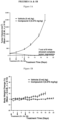
- Figures 1A & 1B show the effect of a representative compound of the invention, Compound 2, in CT26 Ectopic Allograft BALB/c Mice Model, on tumor volume reduction and body weight change, respectively, indicating that Compound 2 reduces tumor volume, with 7 out of 9 subjects exhibiting complete tumor regression.
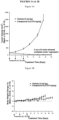
- Figures 2A & 2B show the effect of a representative compound of the invention, Compound 6, in CT26 Ectopic Allograft BALB/c Mice Model, on tumor volume reduction and body weight change, respectively, indicating that Compound 6 reduces tumor volume, with 7 out of 9 subjects exhibiting complete tumor regression.
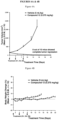
- Figures 3A & 3B show the effect of a representative compound of the invention, Compound 8, in CT26 Ectopic Allograft BALB/c Mice Model, on tumor volume reduction and body weight change, respectively, indicating that Compound 8 reduces tumor volume, with 5 out of 9 subjects exhibiting complete tumor regression.
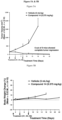
- Figures 4A & 4B show the effect of a representative compound of the invention, Compound 12, in CT26 Ectopic Allograft BALB/c Mice Model, on tumor volume reduction and body weight change, respectively, indicating that Compound 12 reduces tumor volume, with 8 out of 10 subjects exhibiting complete tumor regression.
- Figures 5A & 5B show the effect of a representative compound of the invention, Compound 14, in CT26 Ectopic Allograft BALB/c Mice Model on tumor volume reduction and body weight change, indicating that Compound 14 reduces tumor volume, with 6 out of 9 subjects exhibiting complete tumor regression.
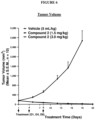
- Figure 6 shows the effect of Compound 2 at high dose in CT26 Ectopic Allograft BALB/c Mice Model wherein Compound 2 at two different doses reduces tumor volume (the plot lines for the two doses of Compound 2 overlap).
- mice showed more than 70% tumor regression after day 21 in CT26 Ectopic Allograft BALB/c Mice Model when Compounds 2, 6, 8, 12 or 14 are dosed at 0.375mpk (mg/kg), or Compound 2 is dosed at 1.5mpk (mg/kg) or 3mpk (mg/kg). Also, Compound 2 maintained high efficacy even at 3 mpk (mg/kg) without significant effect on body weight ( ⁇ 10%).
- Serum and tumor cytokine levels and corresponding compound concentrations in mouse plasma were determined following single-dose intravenous administration in CT26 (murine colorectal carcinoma) tumor-bearing mice. Briefly, na ⁇ ve BALB/c mice in the age group of 6-8 weeks were inoculated with 0.1 million CT-26 cells/animal in phosphate buffered saline (PBS), subcutaneously. Upon reaching tumor volume of 150-300 mm 3 animals were administered with single i.v. dose of vehicle, test compounds, Compound 2, Compound 6, Compound 8, Compound 12 and Compound 14 at 0.375 mg/kg, in a dose volume of 5 mL/kg. Blood and tumor samples were harvested at various time points up to 24 h post-dose.
- CT26 murine colorectal carcinoma
- Tumor samples were homogenized and prepared for cytokine estimation (ELISA) and compound concentration were determined by LC-MS/MS. Serum aliquots and tumor samples were snap-frozen and stored at -80 °C till further analysis. Serum and tumor samples were evaluated for Interferon beta (IFN ⁇ ), interleukin-6 (IL-6) and tumor necrosis factor alpha (TNF ⁇ ) by enzyme linked immunosorbent assay (ELISA) using kits from R & D systems (Quantikine mouse IL-6 and TNF ⁇ kits) and PBL biosciences (Verikine mouse IFN ⁇ kit).
- IFN ⁇ Interferon beta
- IL-6 interleukin-6
- TNF ⁇ tumor necrosis factor alpha
- Cytokine analysis from mouse serum samples For IL-6 and TNF ⁇ estimation, 50 ⁇ L of test samples or internal standard or control were applied to wells in duplicates and incubated for 2h at room temperature, followed by aspiration and washing four times with 400 ⁇ L of wash buffer. 100 ⁇ L of mouse IL-6 or TNF ⁇ conjugate solution was added and incubated further for 2 h at room temperature and followed later by 4 wash cycles. 100 ⁇ L of substrate solution was added to each well with addition of stop solution after 30 min. Optical density was measured at 450 nm averaged and was used for further calculations following subtraction of respective blank controls. Cytokine concentrations were determined by interpolating the optical density of samples into the reference standard curve utilizing four parameter logistic (4-PL) curve-fit.
- Cytokine concentrations were normalized with their respective dilution factors and represented in pg/mL.
- IFN ⁇ estimation 100 ⁇ L test sample or internal standard or controls were applied to the wells in duplicates and incubated for 1 h at room temperature followed by three washes and addition of the anti-mouse IFN ⁇ antibody solution with further 1 h incubation. This was followed by addition of horseradish peroxidase (HRP) solution and three washes, later addition of TMB substrate and reading the optical density at 450 nm. Optical densities were blank-subtracted and interpolated to the reference standard utilizing the four parameter logistic (4-PL) curve-fit. Cytokine concentrations were normalized with their respective dilution factors and represented in pg/mL. Tables 4 and 5 indicate cytokine levels for compounds 2, 6, 8, 12, and 14 in serum and tumor at different administered doses.
- Cytokine analysis from tumor samples Tumor samples were homogenized in a bead-based homogenizer and lysates were prepared with buffer supplemented with 1% Triton X-100 and protease inhibitors. Cytokine levels were estimated by ELISA and expressed as pg/g tumor.
- Plasma and tumor concentrations of test compounds were determined by LC-MS/MS method. Tumor samples were homogenized utilizing a bead-based homogenizer. Plasma samples and tumor homogenates were extracted using protein precipitation method with organic solution containing respective internal standards. Plasma and tumor concentrations were determined against respective calibration curve. Table 3 indicates the concentration of Compound 2 in plasma and tumor at different administered doses. Table 4 indicates the concentration of Compounds 6, 8, 12, and 14 in plasma and tumor at different administered doses. Table 5 indicates cytokine levels for Compound 2 in serum and tumor at different doses. Table 6 indicates cytokine levels for Compounds 6, 8, 12 and 14 in serum and tumor at 0.375 mpk.
- Compounds have shown slower clearance in tumor than in plasma, which is also reflected in the higher cytokine levels in tumor compared to serum. In addition, significant levels of cytokines were observed in tumor even at 24h. Compound 2 showed sustained levels in tumor and it also correlated with sustained cytokine levels, thus offering higher tolerability. Table 3. Concentration of Compound 2 in plasma and tumor at different doses Compound 2 (mg/kg) Time (h) Plasma Conc. ( ⁇ M) Tumor Conc.
- Cytokine levels for Compound 2 in serum and tumor at different doses Compoun d 2 (mg/kg) Time (h) Serum Cytokines (pg/ml) Tumor Cytokines (pg/g) IFN ⁇ IL-6 TNF ⁇ IFN ⁇ IL-6 TNF ⁇ 0.093 3.5 446 1323 261 4000 4580 2460 8 64 662 210 955 1100 637 0.187 3.5 1920 3139 574 4169 4798 3201 8 127 738 136 962 2244 531 0.375 3.5 8540 6014 1242 8044 8103 6074 8 263 1201 160 1723 2715 617 12 14 372 50 323 2794 298 Table 6.
- Tumor samples were minced and subjected to tissue digestion using freshly prepared collagenase-IV solution (1 mg/ml) containing DNase (0.05 mg/ml) for 1-1.5 h at 37 °C and 150-200 rpm.
- Single cell suspension was prepared by filtering it through a 100 ⁇ m mesh and checked for cell viability. Cells were stained with various antibodies as mentioned above. The distinct T cell subsets were analysed on FACS Canto II (BD) and percentage of each population was calculated after initial gating of CD45 + lymphocyte population.
- BD FACS Canto II
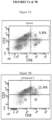
- Figure 7A shows a flow cytometry plot of the percentage of CD3 + CD8 + T cells infiltration in the tumor 96h post treatment with vehicle (DMA (10%): CrEL (10%): PEG300 (20%): N. Saline (60%)).
- Figure 7B shows representative data of a flow cytometry plot of the percentage of CD3 + CD8 + T cells infiltration in the tumor 96h post treatment with a representative compound of the invention, Compound 2, indicating a higher percentage of T cell infiltration over that of vehicle control. Table 7.
- a variety of cancer tumor models are created using the methods described in Paragraph [0608] above modified for a range of cancer types. Cancer cell lines are allografted into mice using known methods. It is expected that the tumor size in mice following administration of the compounds of formula (II) will be reduced relative to vehicle control.
- the following cell types can serve as models for various cancer types: 4-T1 and EMT-6 (breast cancer), B16BL6 and B16F10 (melanoma), H22 (liver), RM1 (prostate) and Pan02 (pancreatic cancer).
Landscapes
- Health & Medical Sciences (AREA)
- Chemical & Material Sciences (AREA)
- Organic Chemistry (AREA)
- Life Sciences & Earth Sciences (AREA)
- General Health & Medical Sciences (AREA)
- Veterinary Medicine (AREA)
- Medicinal Chemistry (AREA)
- Public Health (AREA)
- Pharmacology & Pharmacy (AREA)
- Animal Behavior & Ethology (AREA)
- Chemical Kinetics & Catalysis (AREA)
- General Chemical & Material Sciences (AREA)
- Nuclear Medicine, Radiotherapy & Molecular Imaging (AREA)
- Oncology (AREA)
- Communicable Diseases (AREA)
- Virology (AREA)
- Epidemiology (AREA)
- Molecular Biology (AREA)
- Hematology (AREA)
- Immunology (AREA)
- Mycology (AREA)
- Microbiology (AREA)
- Tropical Medicine & Parasitology (AREA)
- AIDS & HIV (AREA)
- Pulmonology (AREA)
- Biochemistry (AREA)
- Pharmaceuticals Containing Other Organic And Inorganic Compounds (AREA)
- Medicines That Contain Protein Lipid Enzymes And Other Medicines (AREA)
- Nitrogen Condensed Heterocyclic Rings (AREA)
- Nitrogen And Oxygen Or Sulfur-Condensed Heterocyclic Ring Systems (AREA)
- Medicines Containing Antibodies Or Antigens For Use As Internal Diagnostic Agents (AREA)
Priority Applications (5)
| Application Number | Priority Date | Filing Date | Title |
|---|---|---|---|
| SI202030501T SI4004002T1 (sl) | 2019-07-22 | 2020-07-22 | Makrociklične spojine kot sting agonisti in postopki ter uporaba le-teh |
| HRP20241222TT HRP20241222T1 (hr) | 2019-07-22 | 2020-07-22 | Makrociklički spojevi kao agonisti sting, te postupci i njihova upotreba |
| MA56674A MA56674B1 (fr) | 2019-07-22 | 2020-07-22 | Composés macrocycliques utilisés en tant qu'agonistes sting et procédés et utilisations de ceux-ci |
| RS20241052A RS66126B1 (sr) | 2019-07-22 | 2020-07-22 | Makrociklična jedinjenja kao agonisti uboda i njihove metode i upotreba |
| SM20240399T SMT202400399T1 (it) | 2019-07-22 | 2020-07-22 | Composti macrociclici come agonisti di sting e metodi e usi di questi |
Applications Claiming Priority (4)
| Application Number | Priority Date | Filing Date | Title |
|---|---|---|---|
| IN201921029556 | 2019-07-22 | ||
| IN201921051086 | 2019-12-10 | ||
| IN202021003961 | 2020-01-29 | ||
| PCT/IB2020/056875 WO2021014365A1 (en) | 2019-07-22 | 2020-07-22 | Macrocyclic compounds as sting agonists and methods and uses thereof |
Publications (2)
| Publication Number | Publication Date |
|---|---|
| EP4004002A1 EP4004002A1 (en) | 2022-06-01 |
| EP4004002B1 true EP4004002B1 (en) | 2024-07-10 |
Family
ID=72422197
Family Applications (1)
| Application Number | Title | Priority Date | Filing Date |
|---|---|---|---|
| EP20768090.1A Active EP4004002B1 (en) | 2019-07-22 | 2020-07-22 | Macrocyclic compounds as sting agonists and methods and uses thereof |
Country Status (32)
| Country | Link |
|---|---|
| US (1) | US12479858B2 (lt) |
| EP (1) | EP4004002B1 (lt) |
| JP (1) | JP7592689B2 (lt) |
| CN (1) | CN114174303B (lt) |
| AU (1) | AU2020319058B2 (lt) |
| BR (1) | BR112022001125A2 (lt) |
| CA (1) | CA3147397A1 (lt) |
| CL (1) | CL2022000145A1 (lt) |
| CO (1) | CO2022001814A2 (lt) |
| CR (1) | CR20220029A (lt) |
| DK (1) | DK4004002T3 (lt) |
| EC (1) | ECSP22005485A (lt) |
| ES (1) | ES2989915T3 (lt) |
| FI (1) | FI4004002T3 (lt) |
| GE (2) | GEP20247627B (lt) |
| HR (1) | HRP20241222T1 (lt) |
| HU (1) | HUE068456T2 (lt) |
| IL (1) | IL289740B2 (lt) |
| LT (1) | LT4004002T (lt) |
| MA (1) | MA56674B1 (lt) |
| MX (1) | MX420195B (lt) |
| PE (1) | PE20220937A1 (lt) |
| PH (1) | PH12022550175A1 (lt) |
| PL (1) | PL4004002T3 (lt) |
| PT (1) | PT4004002T (lt) |
| RS (1) | RS66126B1 (lt) |
| SA (1) | SA522431429B1 (lt) |
| SI (1) | SI4004002T1 (lt) |
| SM (1) | SMT202400399T1 (lt) |
| UA (1) | UA129653C2 (lt) |
| WO (1) | WO2021014365A1 (lt) |
| ZA (1) | ZA202201375B (lt) |
Families Citing this family (11)
| Publication number | Priority date | Publication date | Assignee | Title |
|---|---|---|---|---|
| JP7664680B2 (ja) | 2017-03-29 | 2025-04-18 | リガケム バイオサイエンシズ, インク. | ピロロベンゾジアゼピン二量体前駆体及びそのリガンド-リンカーコンジュゲート化合物 |
| US12391667B2 (en) | 2019-07-22 | 2025-08-19 | Boehringer Ingelheim International Gmbh | N-methyl, n-(6-(methoxy)pyridazin-3-yl) amine derivatives as Autotaxin (ATX) modulators for the treatment of inflammatory airway or fibrotic diseases |
| KR20220056176A (ko) | 2019-08-02 | 2022-05-04 | 메르사나 테라퓨틱스, 인코포레이티드 | 암 치료를 위한 sting(인터페론 유전자의 자극인자) 작용제로서의 비스-[n-((5-카바모일)-1h-벤조[d]이미다졸-2-일)-피라졸-5-카복사미드] 유도체 및 관련 화합물 |
| CN116196435B (zh) | 2020-04-02 | 2025-12-02 | 梅尔莎纳医疗公司 | 包含sting激动剂的抗体药物缀合物 |
| US20230141284A1 (en) | 2020-04-10 | 2023-05-11 | Ono Pharmaceutical Co., Ltd. | Cancer therapeutic method |
| US20240116909A1 (en) * | 2021-01-12 | 2024-04-11 | Jacobio Pharmaceuticals Co., Ltd. | Novel compounds useful as sting agonists and uses thereof |
| EP4277904A1 (en) * | 2021-01-15 | 2023-11-22 | Seagen Inc. | Immunomodulatory antibody-drug conjugates |
| CN120513246A (zh) * | 2022-12-22 | 2025-08-19 | 阿库勒斯治疗私人有限公司 | 用于调节sting的苯并咪唑衍生物 |
| AR133167A1 (es) * | 2023-07-07 | 2025-09-03 | Hoffmann La Roche | Macrociclos para el tratamiento de enfermedad autoinmunitaria |
| AR133266A1 (es) * | 2023-07-19 | 2025-09-10 | Hoffmann La Roche | Macrociclos para el tratamiento de enfermedades autoinmunitarias |
| CN119490423A (zh) * | 2023-08-15 | 2025-02-21 | 沈阳中化农药化工研发有限公司 | 一种制备2-氟-3-氨基苯甲酸及其酯类化合物的方法 |
Family Cites Families (27)
| Publication number | Priority date | Publication date | Assignee | Title |
|---|---|---|---|---|
| ITMI20010395A1 (it) | 2001-02-27 | 2002-08-27 | Dompe Spa | Omega-amminoalchilammidi di acidi r-2-aril-propionici come inibitori della chemiotassi di cellule polimorfonucleate e mononucleate |
| AR046959A1 (es) | 2003-12-18 | 2006-01-04 | Tibotec Pharm Ltd | Morfolinilo que contiene bencimidazoles como inhibidores de la replicacion del virus sincitial respiratorio |
| US7488736B2 (en) | 2004-05-17 | 2009-02-10 | Epix Delaware, Inc. | Thienopyridinone compounds and methods of treatment |
| NZ567140A (en) | 2005-10-07 | 2011-09-30 | Exelixis Inc | Azetidines as MEK inhibitors for the treatment of proliferative diseases |
| AU2007257650A1 (en) | 2006-06-15 | 2007-12-21 | Boehringer Ingelheim International Gmbh | 2-anilino-4-(heterocyclic)amino-pyrimidines as inhibitors of protein kinase C-alpha |
| WO2008090570A1 (en) | 2007-01-25 | 2008-07-31 | Panacea Biotec Ltd | Novel antimicrobials |
| TW201000447A (en) | 2008-05-30 | 2010-01-01 | Astrazeneca Ab | New compounds useful in pain therapy |
| WO2011091446A1 (en) * | 2010-01-22 | 2011-07-28 | Glaxosmithkline Llc | Chemical compounds |
| WO2012083053A2 (en) * | 2010-12-15 | 2012-06-21 | Abbott Laboratories | Anti-viral compounds |
| WO2014104272A1 (ja) | 2012-12-28 | 2014-07-03 | 日本臓器製薬株式会社 | ケイ皮酸アミド誘導体 |
| EP3152217B1 (en) * | 2014-06-04 | 2018-08-01 | GlaxoSmithKline Intellectual Property Development Limited | Cyclic di-nucleotides as modulators of sting |
| US20180147187A1 (en) | 2015-01-12 | 2018-05-31 | Proteostasis Therapeutics, Inc. | Compounds, compositions, and methods for increasing cftr activity |
| WO2017011920A1 (en) | 2015-07-22 | 2017-01-26 | The Royal Institution For The Advancement Of Learning/Mcgill University | Compounds and uses thereof in the treatment of cancers and other medical conditions |
| SG10201900628RA (en) * | 2016-04-07 | 2019-02-27 | Glaxosmithkline Ip Dev Ltd | Heterocyclic amides useful as protein modulators |
| WO2017175156A1 (en) | 2016-04-07 | 2017-10-12 | Glaxosmithkline Intellectual Property Development Limited | Heterocyclic amides useful as protein modulators |
| KR102499780B1 (ko) | 2016-05-27 | 2023-02-16 | 항저우 인노게이트 파마 컴퍼니 리미티드 | Fgfr4 저해제인 헤테로 고리 화합물 |
| EA036435B1 (ru) * | 2017-02-22 | 2020-11-10 | Глэксосмитклайн Интеллекчуал Проперти Девелопмент Лимитед | Гетероциклические амиды, пригодные в качестве модуляторов белков |
| US20200138827A1 (en) | 2017-06-22 | 2020-05-07 | Curadev Pharma Limited | Small molecule modulators of human sting |
| JP2020524718A (ja) | 2017-06-22 | 2020-08-20 | キュラデブ・ファーマ・リミテッドCuradev Pharma Limited | ヒトstingの複素環式小分子調節因子 |
| CN111132972B (zh) | 2017-06-22 | 2024-07-12 | 克拉德夫制药有限公司 | 人sting的小分子调节剂 |
| WO2019023635A1 (en) | 2017-07-27 | 2019-01-31 | Stingray Therapeutics, Inc. | SUBSTITUTED 3 H-IMIDAZO (4,5-C) PYRIDINE AND 1H-PYRROLO (2,3-C) PYRIDINE SERIES OF A NOVEL ECTONUCLEOTIDE PYROPHOSPHATASE / PHOSPHODIESTERASE-1 (ENPP1) AND STIMULATOR FOR A GENE MODULATOR INTERFERON (STING) AS IMMUNOTHERAPEUTIC AGENTS AGAINST CANCER |
| AU2018311965A1 (en) | 2017-08-04 | 2020-02-13 | Merck Sharp & Dohme Llc | Combinations of PD-1 antagonists and benzo[b]thiophene sting antagonists for cancer treatment |
| MA49772A (fr) | 2017-08-04 | 2021-04-21 | Merck Sharp & Dohme | Agonistes benzo[b]thiophène de sting pour le traitement du cancer |
| US11377440B2 (en) | 2017-10-05 | 2022-07-05 | Glaxosmithkline Intellectual Property Development Limited | Modulators of stimulator of interferon genes (STING) |
| AU2018344902B2 (en) * | 2017-10-05 | 2021-06-03 | Glaxosmithkline Intellectual Property Development Limited | Modulators of stimulator of interferon genes (STING) useful in treating HIV |
| WO2020132582A1 (en) * | 2018-12-21 | 2020-06-25 | Nimbus Titan, Inc. | Sting agonists and uses thereof |
| KR20210146370A (ko) * | 2019-03-28 | 2021-12-03 | 루핀 리미티드 | Sting 효능제로서의 매크로사이클릭 화합물 |
-
2020
- 2020-07-22 DK DK20768090.1T patent/DK4004002T3/da active
- 2020-07-22 HR HRP20241222TT patent/HRP20241222T1/hr unknown
- 2020-07-22 EP EP20768090.1A patent/EP4004002B1/en active Active
- 2020-07-22 FI FIEP20768090.1T patent/FI4004002T3/fi active
- 2020-07-22 PL PL20768090.1T patent/PL4004002T3/pl unknown
- 2020-07-22 GE GEAP202015883A patent/GEP20247627B/en unknown
- 2020-07-22 PT PT207680901T patent/PT4004002T/pt unknown
- 2020-07-22 IL IL289740A patent/IL289740B2/en unknown
- 2020-07-22 CA CA3147397A patent/CA3147397A1/en active Pending
- 2020-07-22 SI SI202030501T patent/SI4004002T1/sl unknown
- 2020-07-22 CN CN202080053237.XA patent/CN114174303B/zh active Active
- 2020-07-22 UA UAA202200745A patent/UA129653C2/uk unknown
- 2020-07-22 LT LTEPPCT/IB2020/056875T patent/LT4004002T/lt unknown
- 2020-07-22 JP JP2022504707A patent/JP7592689B2/ja active Active
- 2020-07-22 MX MX2022000939A patent/MX420195B/es unknown
- 2020-07-22 SM SM20240399T patent/SMT202400399T1/it unknown
- 2020-07-22 GE GEAP202415883A patent/GEAP202415883A/en unknown
- 2020-07-22 WO PCT/IB2020/056875 patent/WO2021014365A1/en not_active Ceased
- 2020-07-22 HU HUE20768090A patent/HUE068456T2/hu unknown
- 2020-07-22 RS RS20241052A patent/RS66126B1/sr unknown
- 2020-07-22 AU AU2020319058A patent/AU2020319058B2/en active Active
- 2020-07-22 CR CR20220029A patent/CR20220029A/es unknown
- 2020-07-22 PE PE2022000120A patent/PE20220937A1/es unknown
- 2020-07-22 US US17/628,619 patent/US12479858B2/en active Active
- 2020-07-22 PH PH1/2022/550175A patent/PH12022550175A1/en unknown
- 2020-07-22 MA MA56674A patent/MA56674B1/fr unknown
- 2020-07-22 ES ES20768090T patent/ES2989915T3/es active Active
- 2020-07-22 BR BR112022001125A patent/BR112022001125A2/pt unknown
-
2022
- 2022-01-19 SA SA522431429A patent/SA522431429B1/ar unknown
- 2022-01-21 CL CL2022000145A patent/CL2022000145A1/es unknown
- 2022-01-21 EC ECSENADI20225485A patent/ECSP22005485A/es unknown
- 2022-01-28 ZA ZA2022/01375A patent/ZA202201375B/en unknown
- 2022-02-21 CO CONC2022/0001814A patent/CO2022001814A2/es unknown
Also Published As
Similar Documents
| Publication | Publication Date | Title |
|---|---|---|
| US12479858B2 (en) | Macrocyclic compounds as sting agonists and methods and uses thereof | |
| US12139487B2 (en) | Compounds and uses thereof | |
| US12077537B2 (en) | Capsid inhibitors for the treatment of HIV | |
| JP6742534B2 (ja) | 修飾環状ジヌクレオチド化合物 | |
| AU2017202755B2 (en) | Toll like receptor modulator compounds | |
| JP2023052449A (ja) | 化学療法の間の正常細胞の一時的な保護 | |
| ES2558780T3 (es) | Imidazopiridazinas como inhibidores de la cinasa Akt | |
| JP2025503422A (ja) | Pd-l1を標的とするための方法及び組成物 | |
| ES2962269T3 (es) | Análogos de nucleósidos alquinil como inhibidores del rinovirus humano | |
| RU2825271C2 (ru) | Макроциклические соединения в качестве агонистов sting и способы с их использованием и пути их применения | |
| HK40074766B (en) | Macrocyclic compounds as sting agonists and methods and uses thereof | |
| HK40074766A (en) | Macrocyclic compounds as sting agonists and methods and uses thereof | |
| HK40042000B (en) | Benzoxazepin oxazolidinone compounds and methods of use | |
| HK40042521B (en) | Benzoxazepin oxazolidinone compounds and methods of use | |
| HK40039385B (en) | Benzoxazepin oxazolidinone compounds and methods of use | |
| OA18435A (en) | Toll like receptor modulator compounds | |
| HK1177462B (en) | Triazolopyridine derivatives |
Legal Events
| Date | Code | Title | Description |
|---|---|---|---|
| STAA | Information on the status of an ep patent application or granted ep patent |
Free format text: STATUS: UNKNOWN |
|
| STAA | Information on the status of an ep patent application or granted ep patent |
Free format text: STATUS: THE INTERNATIONAL PUBLICATION HAS BEEN MADE |
|
| PUAI | Public reference made under article 153(3) epc to a published international application that has entered the european phase |
Free format text: ORIGINAL CODE: 0009012 |
|
| STAA | Information on the status of an ep patent application or granted ep patent |
Free format text: STATUS: REQUEST FOR EXAMINATION WAS MADE |
|
| 17P | Request for examination filed |
Effective date: 20220209 |
|
| AK | Designated contracting states |
Kind code of ref document: A1 Designated state(s): AL AT BE BG CH CY CZ DE DK EE ES FI FR GB GR HR HU IE IS IT LI LT LU LV MC MK MT NL NO PL PT RO RS SE SI SK SM TR |
|
| RAV | Requested validation state of the european patent: fee paid |
Extension state: MA Effective date: 20220209 |
|
| STAA | Information on the status of an ep patent application or granted ep patent |
Free format text: STATUS: EXAMINATION IS IN PROGRESS |
|
| REG | Reference to a national code |
Ref country code: HK Ref legal event code: DE Ref document number: 40074766 Country of ref document: HK |
|
| 17Q | First examination report despatched |
Effective date: 20221223 |
|
| P01 | Opt-out of the competence of the unified patent court (upc) registered |
Effective date: 20230524 |
|
| GRAP | Despatch of communication of intention to grant a patent |
Free format text: ORIGINAL CODE: EPIDOSNIGR1 |
|
| STAA | Information on the status of an ep patent application or granted ep patent |
Free format text: STATUS: GRANT OF PATENT IS INTENDED |
|
| INTG | Intention to grant announced |
Effective date: 20240312 |
|
| GRAS | Grant fee paid |
Free format text: ORIGINAL CODE: EPIDOSNIGR3 |
|
| GRAA | (expected) grant |
Free format text: ORIGINAL CODE: 0009210 |
|
| STAA | Information on the status of an ep patent application or granted ep patent |
Free format text: STATUS: THE PATENT HAS BEEN GRANTED |
|
| AK | Designated contracting states |
Kind code of ref document: B1 Designated state(s): AL AT BE BG CH CY CZ DE DK EE ES FI FR GB GR HR HU IE IS IT LI LT LU LV MC MK MT NL NO PL PT RO RS SE SI SK SM TR |
|
| REG | Reference to a national code |
Ref country code: CH Ref legal event code: EP |
|
| REG | Reference to a national code |
Ref country code: DE Ref legal event code: R096 Ref document number: 602020033785 Country of ref document: DE |
|
| REG | Reference to a national code |
Ref country code: MA Ref legal event code: VAGR Ref document number: 56674 Country of ref document: MA Kind code of ref document: B1 Ref country code: DK Ref legal event code: T3 Effective date: 20240926 |
|
| REG | Reference to a national code |
Ref country code: NL Ref legal event code: FP |
|
| REG | Reference to a national code |
Ref country code: FI Ref legal event code: FGE |
|
| REG | Reference to a national code |
Ref country code: PT Ref legal event code: SC4A Ref document number: 4004002 Country of ref document: PT Date of ref document: 20241007 Kind code of ref document: T Free format text: AVAILABILITY OF NATIONAL TRANSLATION Effective date: 20240930 |
|
| REG | Reference to a national code |
Ref country code: SE Ref legal event code: TRGR |
|
| REG | Reference to a national code |
Ref country code: EE Ref legal event code: FG4A Ref document number: E024604 Country of ref document: EE Effective date: 20240925 |
|
| REG | Reference to a national code |
Ref country code: SK Ref legal event code: T3 Ref document number: E 45031 Country of ref document: SK |
|
| REG | Reference to a national code |
Ref country code: HR Ref legal event code: ODRP Ref document number: P20241222T Country of ref document: HR Payment date: 20240909 Year of fee payment: 5 |
|
| REG | Reference to a national code |
Ref country code: GR Ref legal event code: EP Ref document number: 20240402227 Country of ref document: GR Effective date: 20241111 |
|
| REG | Reference to a national code |
Ref country code: ES Ref legal event code: FG2A Ref document number: 2989915 Country of ref document: ES Kind code of ref document: T3 Effective date: 20241128 |
|
| REG | Reference to a national code |
Ref country code: HR Ref legal event code: T1PR Ref document number: P20241222 Country of ref document: HR |
|
| REG | Reference to a national code |
Ref country code: HU Ref legal event code: AG4A Ref document number: E068456 Country of ref document: HU |
|
| REG | Reference to a national code |
Ref country code: DE Ref legal event code: R097 Ref document number: 602020033785 Country of ref document: DE |
|
| PLBE | No opposition filed within time limit |
Free format text: ORIGINAL CODE: 0009261 |
|
| STAA | Information on the status of an ep patent application or granted ep patent |
Free format text: STATUS: NO OPPOSITION FILED WITHIN TIME LIMIT |
|
| 26N | No opposition filed |
Effective date: 20250411 |
|
| REG | Reference to a national code |
Ref country code: HR Ref legal event code: ODRP Ref document number: P20241222 Country of ref document: HR Payment date: 20250625 Year of fee payment: 6 |
|
| PGFP | Annual fee paid to national office [announced via postgrant information from national office to epo] |
Ref country code: HU Payment date: 20250630 Year of fee payment: 6 |
|
| PGFP | Annual fee paid to national office [announced via postgrant information from national office to epo] |
Ref country code: LU Payment date: 20250714 Year of fee payment: 6 |
|
| PGFP | Annual fee paid to national office [announced via postgrant information from national office to epo] |
Ref country code: FI Payment date: 20250715 Year of fee payment: 6 Ref country code: ES Payment date: 20250807 Year of fee payment: 6 |
|
| PGFP | Annual fee paid to national office [announced via postgrant information from national office to epo] |
Ref country code: DE Payment date: 20250528 Year of fee payment: 6 Ref country code: DK Payment date: 20250714 Year of fee payment: 6 |
|
| PGFP | Annual fee paid to national office [announced via postgrant information from national office to epo] |
Ref country code: NO Payment date: 20250709 Year of fee payment: 6 |
|
| PGFP | Annual fee paid to national office [announced via postgrant information from national office to epo] |
Ref country code: TR Payment date: 20250709 Year of fee payment: 6 |
|
| PGFP | Annual fee paid to national office [announced via postgrant information from national office to epo] |
Ref country code: AL Payment date: 20250710 Year of fee payment: 6 Ref country code: AT Payment date: 20250625 Year of fee payment: 6 |
|
| PGFP | Annual fee paid to national office [announced via postgrant information from national office to epo] |
Ref country code: CH Payment date: 20250801 Year of fee payment: 6 Ref country code: MT Payment date: 20250721 Year of fee payment: 6 |
|
| PGFP | Annual fee paid to national office [announced via postgrant information from national office to epo] |
Ref country code: CZ Payment date: 20250701 Year of fee payment: 6 |
|
| PGFP | Annual fee paid to national office [announced via postgrant information from national office to epo] |
Ref country code: IS Payment date: 20250708 Year of fee payment: 6 |
|
| VSFP | Annual fee paid to validation state [announced via postgrant information from national office to epo] |
Ref country code: MA Payment date: 20240919 Year of fee payment: 5 |
|
| PGFP | Annual fee paid to national office [announced via postgrant information from national office to epo] |
Ref country code: MK Payment date: 20250605 Year of fee payment: 6 |
|
| VSFP | Annual fee paid to validation state [announced via postgrant information from national office to epo] |
Ref country code: MA Payment date: 20250725 Year of fee payment: 6 |
|
| PGFP | Annual fee paid to national office [announced via postgrant information from national office to epo] |
Ref country code: CY Payment date: 20250627 Year of fee payment: 6 |
|
| PGFP | Annual fee paid to national office [announced via postgrant information from national office to epo] |
Ref country code: SM Payment date: 20260629 Year of fee payment: 7 |
|
| PGFP | Annual fee paid to national office [announced via postgrant information from national office to epo] |
Ref country code: GB Payment date: 20260601 Year of fee payment: 7 Ref country code: RS Payment date: 20260619 Year of fee payment: 7 Ref country code: PL Payment date: 20260528 Year of fee payment: 7 |
|
| PGFP | Annual fee paid to national office [announced via postgrant information from national office to epo] |
Ref country code: IT Payment date: 20260622 Year of fee payment: 7 Ref country code: GR Payment date: 20260611 Year of fee payment: 7 Ref country code: MC Payment date: 20260630 Year of fee payment: 7 |
|
| PGFP | Annual fee paid to national office [announced via postgrant information from national office to epo] |
Ref country code: LT Payment date: 20260618 Year of fee payment: 7 |
|
| PGFP | Annual fee paid to national office [announced via postgrant information from national office to epo] |
Ref country code: SE Payment date: 20260527 Year of fee payment: 7 |
|
| PGFP | Annual fee paid to national office [announced via postgrant information from national office to epo] |
Ref country code: RO Payment date: 20260630 Year of fee payment: 7 Ref country code: IE Payment date: 20260529 Year of fee payment: 7 Ref country code: BE Payment date: 20260615 Year of fee payment: 7 |
|
| PGFP | Annual fee paid to national office [announced via postgrant information from national office to epo] |
Ref country code: EE Payment date: 20260605 Year of fee payment: 7 Ref country code: HR Payment date: 20260609 Year of fee payment: 7 |
|
| PGFP | Annual fee paid to national office [announced via postgrant information from national office to epo] |
Ref country code: PT Payment date: 20260630 Year of fee payment: 7 |
|
| PGFP | Annual fee paid to national office [announced via postgrant information from national office to epo] |
Ref country code: NL Payment date: 20260615 Year of fee payment: 7 |
|
| PGFP | Annual fee paid to national office [announced via postgrant information from national office to epo] |
Ref country code: FR Payment date: 20260608 Year of fee payment: 7 |
|
| PGFP | Annual fee paid to national office [announced via postgrant information from national office to epo] |
Ref country code: LV Payment date: 20260603 Year of fee payment: 7 |
|
| PGFP | Annual fee paid to national office [announced via postgrant information from national office to epo] |
Ref country code: SK Payment date: 20260612 Year of fee payment: 7 |
|
| PGFP | Annual fee paid to national office [announced via postgrant information from national office to epo] |
Ref country code: BG Payment date: 20260601 Year of fee payment: 7 |
|
| PGFP | Annual fee paid to national office [announced via postgrant information from national office to epo] |
Ref country code: SI Payment date: 20260529 Year of fee payment: 7 |
|
| REG | Reference to a national code |
Ref country code: HR Ref legal event code: ODRP Ref document number: P20241222 Country of ref document: HR Payment date: 20260609 Year of fee payment: 7 |
|
| REG | Reference to a national code |
Ref country code: CH Ref legal event code: U11 Free format text: ST27 STATUS EVENT CODE: U-0-0-U10-U11 (AS PROVIDED BY THE NATIONAL OFFICE) Effective date: 20260801 |