EP4003532B1 - Crystalline forms of 7-chloro-2-(4-(3-methoxyazetidin-1-yl)cyclohexyl)-2,4-dimethyl-n-((6-methyl-4-(methylthio)-2-oxo-1,2-dihydropyridin-3-yl)methyl)benzo[d][1,3]dioxole-5-carboxamide - Google Patents
Crystalline forms of 7-chloro-2-(4-(3-methoxyazetidin-1-yl)cyclohexyl)-2,4-dimethyl-n-((6-methyl-4-(methylthio)-2-oxo-1,2-dihydropyridin-3-yl)methyl)benzo[d][1,3]dioxole-5-carboxamide Download PDFInfo
- Publication number
- EP4003532B1 EP4003532B1 EP20754482.6A EP20754482A EP4003532B1 EP 4003532 B1 EP4003532 B1 EP 4003532B1 EP 20754482 A EP20754482 A EP 20754482A EP 4003532 B1 EP4003532 B1 EP 4003532B1
- Authority
- EP
- European Patent Office
- Prior art keywords
- crystalline form
- cancer
- methyl
- compound
- powder diffraction
- Prior art date
- Legal status (The legal status is an assumption and is not a legal conclusion. Google has not performed a legal analysis and makes no representation as to the accuracy of the status listed.)
- Active
Links
Images



Classifications
-
- C—CHEMISTRY; METALLURGY
- C07—ORGANIC CHEMISTRY
- C07D—HETEROCYCLIC COMPOUNDS
- C07D405/00—Heterocyclic compounds containing both one or more hetero rings having oxygen atoms as the only ring hetero atoms, and one or more rings having nitrogen as the only ring hetero atom
- C07D405/14—Heterocyclic compounds containing both one or more hetero rings having oxygen atoms as the only ring hetero atoms, and one or more rings having nitrogen as the only ring hetero atom containing three or more hetero rings
-
- A—HUMAN NECESSITIES
- A61—MEDICAL OR VETERINARY SCIENCE; HYGIENE
- A61K—PREPARATIONS FOR MEDICAL, DENTAL OR TOILETRY PURPOSES
- A61K31/00—Medicinal preparations containing organic active ingredients
- A61K31/33—Heterocyclic compounds
- A61K31/395—Heterocyclic compounds having nitrogen as a ring hetero atom, e.g. guanethidine or rifamycins
- A61K31/435—Heterocyclic compounds having nitrogen as a ring hetero atom, e.g. guanethidine or rifamycins having six-membered rings with one nitrogen as the only ring hetero atom
- A61K31/44—Non condensed pyridines; Hydrogenated derivatives thereof
- A61K31/4427—Non condensed pyridines; Hydrogenated derivatives thereof containing further heterocyclic ring systems
- A61K31/443—Non condensed pyridines; Hydrogenated derivatives thereof containing further heterocyclic ring systems containing a five-membered ring with oxygen as a ring hetero atom
-
- A—HUMAN NECESSITIES
- A61—MEDICAL OR VETERINARY SCIENCE; HYGIENE
- A61P—SPECIFIC THERAPEUTIC ACTIVITY OF CHEMICAL COMPOUNDS OR MEDICINAL PREPARATIONS
- A61P35/00—Antineoplastic agents
-
- C—CHEMISTRY; METALLURGY
- C07—ORGANIC CHEMISTRY
- C07B—GENERAL METHODS OF ORGANIC CHEMISTRY; APPARATUS THEREFOR
- C07B2200/00—Indexing scheme relating to specific properties of organic compounds
- C07B2200/13—Crystalline forms, e.g. polymorphs
Definitions
- Eukaryotic chromatin is composed of macromolecular complexes called nucleosomes.
- a nucleosome has 147 base pairs of DNA wrapped around a protein octamer having two subunits of each of histone protein H2A, H2B, H3, and H4.
- Histone proteins are subject to post-translational modifications which in turn affect chromatin structure and gene expression.
- One type of post-translational modification found on histones is methylation of lysine and arginine residues.
- Histone methylation plays a critical role in the regulation of gene expression in eukaryotes. Methylation affects chromatin structure and has been linked to both activation and repression of transcription ( Zhang and Reinberg, Genes Dev. 15:2343-2360, 2001 ).
- Enzymes that catalyze attachment and removal of methyl groups from histones are implicated in gene silencing, embryonic development, cell proliferation, and other processes.
- Enhancer of Zeste Trithorax (SET) domain, comprising about 130 amino acids.
- Enhancer of Zeste Homolog 2 (EZH2) is an example of a human SET-domain containing methylase.
- EZH2 associates with EED (Embryonic Ectoderm Development) and SUZ12 (suppressor of zeste 12 homolog) to form a complex known as PRC2 (Polycomb GroupRepressive Complex 2) having the ability to tri-methylate histone H3 at lysine 27 ( Cao and Zhang, Mol. Cell 15:57-67, 2004 ).
- PRC2 complexes can also include RBAP46 and RBAP48 subunits. Another example is the related methylase EZH1.
- EZH2 The oncogenic activities of EZH2 have been shown by a number of studies. In cell line experiments, over-expression of EZH2 induces cell invasion, growth in soft agar, and motility while knockdown of EZH2 inhibits cell proliferation and cell invasion ( Kleer et al., 2003, Proc. Nat. Acad. Sci. USA 100:11606-11611 ; Varambally et al., (2002), "The polycomb group protein EZH2 is involved in progression of prostate cancer," Nature 419, 624-629 ). It has been shown that EZH2 represses the expression of several tumor suppressors, including E-cadherin, DAB2IP and RUNX3 among others.
- EZH2 knockdown inhibits tumor growth and metastasis. Recently, it has been shown that down modulation of EZH2 in murine models blocks prostate cancer metastasis ( Min et al., "An oncogene-tumor suppressor cascade drives metastatic prostate cancer by coordinately activating Ras and nuclear factor- kappaB," Nat Med. 2010 Mar; 16(3):286-94 ). EZH2 overexpression is associated with aggressiveness of certain cancers such as breast cancer ( Kleer et al., Proc. Nat. Acad. Sci. USA 100:11606-11611, 2003 ).
- Compound 1 7-chloro-2-(4-(3-methoxyazetidin-1-yl)cyclohexyl)-2,4-dimethyl-N-((6-methyl-4-(methylthio)-2-oxo-1,2-dihydropyridin-3-yl)methyl)benzo[d][1,3]dioxole-5-carboxamide is a small molecule inhibitor of EZH2 showing great therapeutic potential for treating a variety of conditions associated with a methyl modifying enzyme, e.g., in treating proliferative disorders such as cancer.
- Compound 1 is exemplified in U.S. Provisional Application No. 62/659,408 , and in WO2019/204490 and has the structure
- compositions comprising the crystalline Form 1 of Compound 1 .
- crystalline Form 1 of Compound 1 for use in the treatment of diseases or disorders responsive to inhibition of EZH2, e.g., cancer.
- crystalline refers to a solid form of a compound wherein there exists long-range atomic order in the positions of the atoms. The crystalline nature of a solid can be confirmed, for example, by examination of the X-ray powder diffraction pattern.
- the crystalline forms (Form 1 , Form 2 , and Form 3 ) of Compound 1 are each single crystalline forms.
- a "single crystalline form" means that the recited compound, i.e., Compound 1 , is present as a single crystal or a plurality of crystals in which each crystal has the same crystal form (e.g., Form 1 , 2 or 3 ). Percent by weight of a particular crystal form is determined by the weight of the particular crystal form divided by the sum weight of the particular crystal, plus the weight of the other crystal forms present plus the weight of amorphous form present multiplied by 100%.
- Chemical purity refers to extent by which the disclosed form is free from materials having different chemical structures. Chemical purity of the compound in the disclosed crystal forms means the weight of the compound divided by the sum of the weight of the compound plus materials/impurities having different chemical structures multiplied by 100%, i.e., percent by weight.
- amorphous refers to a solid that is present in a non-crystalline state or form. Amorphous solids are disordered arrangements of molecules and therefore possess no distinguishable crystal lattice or unit cell and consequently have no definable long range ordering. Solid state ordering of solids may be determined by standard techniques known in the art, e.g., by X-ray powder diffraction (XRPD) or differential scanning calorimetry (DSC).
- XRPD X-ray powder diffraction
- DSC differential scanning calorimetry
- anhydrous and “anhydrate” are used interchangeably and mean that the referenced crystalline form has substantially no water in the crystal lattice, e.g., less than 1% by weight as determined by Karl Fisher analysis
- the 2-theta values of the X-ray powder diffraction patterns for the crystalline forms described herein may vary slightly from one instrument to another and also depending on variations in sample preparation and batch to batch variation due to factors such as temperature variation, sample displacement, and the presence or absence of an internal standard. Therefore, unless otherwise defined, the XRPD patterns / assignments recited herein are not to be construed as absolute and can vary ⁇ 0.2 degrees. It is well known in the art that this variability will account for the above factors without hindering the unequivocal identification of a crystal form. Unless otherwise specified, the 2-theta values provided herein were obtained using Cu K ⁇ 1 radiation.
- Temperature values, e.g., for DSC peaks herein may vary slightly from one instrument to another and also depending on variations in sample preparation, batch to batch variation, and environmental factors. Therefore, unless otherwise defined, temperature values recited herein are not to be construed as absolute and can vary ⁇ 5 degrees or ⁇ 2 degrees.
- the amount of one crystalline form relative to another crystalline form in a sample can be assessed by preparing a series of mixtures of the two crystalline forms with known weight ratios and obtaining an XRPD spectrum for each.
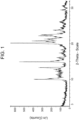
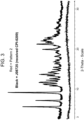
- the relative amounts of crystalline Form 1 and Form 2 in a sample can be assessed by selecting one or more characteristic peaks of crystalline Form 1 and Form 2 depicted in FIG. 1 and FIG. 3 , respectively, and correlating their relative intensities in the sample XRPD to their relative intensities in the mixture XRPDs.
- the terms "subject” and “patient” may be used interchangeably, and means a mammal in need of treatment, e.g. , companion animals (e.g. , dogs, cats, and the like), farm animals (e.g. , cows, pigs, horses, sheep, goats and the like) and laboratory animals (e.g. , rats, mice, guinea pigs and the like).
- the subject is a human in need of treatment.
- pharmaceutically acceptable carrier refers to a non-toxic carrier, adjuvant, or vehicle that does not adversely affect the pharmacological activity of the compound with which it is formulated, and which is also safe for human use.
- Pharmaceutically acceptable carriers, adjuvants or vehicles that may be used in the compositions of this disclosure include, but are not limited to, ion exchangers, alumina, aluminum stearate, magnesium stearate, lecithin, serum proteins, such as human serum albumin, buffer substances such as phosphates, glycine, sorbic acid, potassium sorbate, partial glyceride mixtures of saturated vegetable fatty acids, water, salts or electrolytes, such as protamine sulfate, disodium hydrogen phosphate, dicalcium phosphate, potassium hydrogen phosphate, sodium chloride, zinc salts, colloidal silica, magnesium trisilicate, polyvinyl pyrrolidone, polyvinylpyrrolidone-vinyl acetate, cellulose
- treatment refers to reversing, alleviating, reducing the likelihood of developing, or inhibiting the progress of a disease or disorder, or one or more symptoms thereof, as described herein.
- treatment may be administered after one or more symptoms have developed, i.e., therapeutic treatment.
- treatment may be administered in the absence of symptoms.
- treatment may be administered to a susceptible individual prior to the onset of symptoms (e.g., in light of a history of symptoms and/or in light of genetic or other susceptibility factors), i.e., prophylactic treatment. Treatment may also be continued after symptoms have resolved, for example to prevent or delay their recurrence.
- an effective amount or “therapeutically effective amount” includes an amount of a compound described herein that will elicit a biological or medical response of a subject, e.g., a dosage of between 0.001 - 100 mg/kg body weight/day of Compound 1 .
- crystalline Form 1 is characterized by at least three X-ray powder diffraction peaks at 2 ⁇ angles selected from 10.0°, 13.3°, 14.9°, 20.2°, 20.8°, 22.2°, and 22.5°.
- crystalline Form 1 is characterized by at least four X-ray powder diffraction peaks at 2 ⁇ angles selected from 10.0°, 13.3°, 14.9°, 20.2°, 20.8°, 22.2°, and 22.5°.
- crystalline Form 1 is characterized by at least five X-ray powder diffraction peaks at 2 ⁇ angles selected from 10.0°, 13.3°, 14.9°, 20.2°, 20.8°, 22.2°, and 22.5°.
- crystalline Form 1 is characterized by at least six X-ray powder diffraction peaks at 2 ⁇ angles selected from 10.0°, 13.3°, 14.9°, 20.2°, 20.8°, 22.2°, and 22.5°.
- crystalline Form 1 is characterized by X-ray powder diffraction peaks at 2 ⁇ angles selected from 10.0°, 13.3°, 14.9°, 20.2°, 20.8°, 22.2°, and 22.5°.
- crystalline Form 1 is characterized by X-ray powder diffraction peaks at 2 ⁇ angles selected from 10.0°, 10.2°, 12.3°, 12.7°, 13.3°, 14.9°, 15.3°, 20.2°, 20.8°, 21.3°, 22.2°, 22.5°, and 23.8°.
- crystalline Form 1 is characterized by X-ray powder diffraction peaks at 2 ⁇ angles selected from 10.0°, 10.2°, 11.0°, 11.4°, 11.8°, 12.3°, 12.7°, 13.3°, 14.9°, 15.3°, 16.1°, 17.4°, 20.2°, 20.8°, 21.3°, 22.2°, 22.5°, and 23.8°.
- crystalline Form 1 is characterized by x-ray powder diffraction peaks at 2 ⁇ angles selected from 14.9°, 20.2°, and 20.8°.
- crystalline Form 1 is characterized by x-ray powder diffraction peaks at 2 ⁇ angles selected from 10.0°, 14.9°, 20.2°, and 20.8°. In another alternative, as part of a second aspect, crystalline Form 1 is characterized by x-ray powder diffraction peaks at 2 ⁇ angles selected from 10.0°, 14.9°, 20.2°, 20.8°, and 22.2°. In another alternative, as part of a second aspect, crystalline Form 1 is characterized by x-ray powder diffraction peaks at 2 ⁇ angles selected from 10.0°, 13.3°, 14.9°, 20.2°, 20.8°, and 22.2°. In another alternative, as part of a second aspect, crystalline Form 1 is characterized by an XRPD (x-ray powder diffraction) substantially similar to FIG. 1 .
- XRPD x-ray powder diffraction
- crystalline Form 1 is anhydrous, wherein the crystalline Form 1 may also comprise XRPD peaks at 2 ⁇ angles selected from any of those described in the second aspect, and/or the TGA or DSC values or figures recited in the third aspect.
- crystalline Form 2 is characterized by an XRPD (x-ray powder diffraction) substantially similar to FIG. 3 .
- crystalline Form 2 is characterized by a Thermogravimetric analysis (TGA) of a 3.48% weight loss between 46 and 114 °C as well as a 0.97% weight loss between 114 and 156 °C, or Differential Scanning Calorimetry (DSC) with two endotherms at 34.2 °C and 122.6 °C (onset temperatures), or both, wherein the crystalline Form 2 may also comprise XRPD peaks at 2 ⁇ angles substantially similar to FIG. 3 .
- crystalline Form 2 is characterized by a Thermogravimetric analysis (TGA) or Differential Scanning Calorimetry (DSC) substantially similar to FIG. 4 , wherein the crystalline Form 2 may also comprise XRPD peaks at 2 ⁇ angles substantially similar to FIG. 3 .
- crystalline Form 2 as described herein is at least 60% a single crystalline form, at least 70% a single crystalline form, at least 80% a single crystalline form, at least 90% a single crystalline form, at least 95% a single crystalline form, or at least 99% a single crystalline form by weight.
- crystalline Form 2 as described herein has a chemical purity of at least 60%, at least 70%, at least 80%, at least 90%, at least 95%, or at least 99% by weight.
- crystalline Form 3 is characterized by an XRPD (x-ray powder diffraction) substantially similar to FIG. 5 .
- crystalline Form 3 is characterized by a Thermogravimetric analysis (TGA) of a 5.93% weight loss between 43 and 143 °C, or Differential Scanning Calorimetry (DSC) with two endotherms at 34.5 °C and 107.0 °C (onset temperatures) and one exotherm at 249.0 °C (onset temperature), or both, wherein the crystalline Form 3 may also comprise XRPD peaks at 2 ⁇ angles substantially similar to FIG. 5 .
- crystalline Form 3 is characterized by a Thermogravimetric analysis (TGA) or Differential Scanning Calorimetry (DSC) substantially similar to FIG. 6 , wherein the crystalline Form 3 may also comprise XRPD peaks at 2 ⁇ angles substantially similar to FIG. 5 .
- crystalline Form 3 as described herein is at least 60% a single crystalline form, at least 70% a single crystalline form, at least 80% a single crystalline form, at least 90% a single crystalline form, at least 95% a single crystalline form, or at least 99% a single crystalline form by weight.
- crystalline Form 3 as described herein has a chemical purity of at least 60%, at least 70%, at least 80%, at least 90%, at least 95%, or at least 99% by weight.
- the crystalline Form 1 as described herein e.g., as in the first, second, third, fourth, or fifth aspect
- the crystalline Form 2 as described herein e.g., as in the seventh, eighth, ninth, tenth, or eleventh aspect
- the or crystalline Form 3 e.g., as in the twelfth, thirteenth, fourteenth, fifteenth, or sixteenth aspect
- the crystalline Form 1 as described herein e.g., as in the first, second, third, fourth, or fifth aspect
- the crystalline Form 2 as described herein e.g., as in the seventh, eighth, ninth, tenth, or eleventh aspect
- the or crystalline Form 3 e.g., as in the twelfth, thirteenth, fourteenth, fifteenth, or sixteenth aspect
- the crystalline Form 1 as described herein e.g., as in the first, second, third, fourth, or fifth aspect
- the crystalline Form 2 as described herein e.g., as in the seventh, eighth
- the crystalline forms described herein and compositions thereof are useful for treating diseases or disorders responsive to inhibition of EZH2. Such diseases and disordes include those associated with cellular proliferation. In some embodiments, the crystalline forms and compositions thereof described herein are useful in treating diseases and/or disorders associated with misregulation of cell cycle or DNA repair. In some embodiments, the crystalline forms and compositions thereof described herein are useful in treating cancer.
- Exemplary types of cancer include e.g., adrenal cancer, acinic cell carcinoma, acoustic neuroma, acral lentiginous melanoma, acrospiroma, acute eosinophilic leukemia, acute erythroid leukemia, acute lymphoblastic leukemia, acute megakaryoblastic leukemia, acute monocytic leukemia, acute promyelocytic leukemia, adenocarcinoma, adenoid cystic carcinoma, adenoma, adenomatoid odontogenic tumor, adenosquamous carcinoma, adipose tissue neoplasm, adrenocortical carcinoma, adult T-cell leukemia/lymphoma, aggressive NK-cell leukemia, AIDS-related lymphoma, alveolar rhabdomyosarcoma, alveolar soft part sarcoma, ameloblastic fibroma, anaplastic large cell lymph
- the cancer treated by the crystalline forms and compositions thereof described herein is selected from breast cancer, prostate cancer, colon cancer, renal cell carcinoma, glioblastoma multiforme cancer, bladder cancer, melanoma, bronchial cancer, lymphoma, liver cancer, multiple myeloma, lymphoma, ovarian cancer, NSCL, pancreatic cancers, malignant rhabdoid tumor, synovial sarcoma, and glioma.
- Another aspect of the present disclosure is the use of one or more of the crystalline forms as described herein in the manufacture of a medicament for use in the treatment of a disorder or disease herein.
- Another object of the present disclosure is one or more of the crystalline forms or composition described herein for use in the treatment of a disorder or disease herein.
- compositions comprising one or more of the disclosed crystalline forms; and a pharmaceutically acceptable carrier.
- compositions described herein may be administered orally, parenterally, by inhalation spray, topically, rectally, nasally, buccally, vaginally or via an implanted reservoir.
- parenteral as used herein includes subcutaneous, intravenous, intramuscular, intra-articular, intra-synovial, intrasternal, intrathecal, intrahepatic, intralesional and intracranial injection or infusion techniques.
- compositions may be formulated such that a dosage of between 0.001 - 100 mg/kg body weight/day of the inhibitor can be administered to a patient receiving these compositions.
- a specific dosage and treatment regimen for any particular patient will depend upon a variety of factors, including age, body weight, general health, sex, diet, time of administration, rate of excretion, drug combination, the judgment of the treating physician, and the severity of the particular disease being treated.
- the amount of a provided crystalline form in the composition will also depend upon the particular compound in the composition.
- the amorphous form of Compound 1 was prepared as a single enantiomer, single geometric isomer, using the following procedure below.
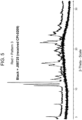
- the XRPD pattern of the amorphous product from this procedure is shown in FIG. 7 .
- Step 2 Synthesis of methyl 7-chloro-2,4-dimethyl-2-(4-oxocyclohexyl)-2H-1,3-benzodioxole-5-carboxylate
- Step 3 Separation of methyl (R)-7-chloro-2,4-dimethyl-2-(4-oxocyclohexyl)benzo[d][1,3]dioxole-5-carboxylate and methyl (S)-7-chloro-2,4-dimethyl-2-(4-oxocyclohexyl)benzo[d][1,3]dioxole-5-carboxylate
- Step 1 Synthesis of methyl 7-chloro-2-(4-(3-methoxyazetidin-1-yl)cyclohexyl)-2,4-dimethylbenzo[d][1,3]dioxole-5-carboxylate
- 3-methoxyazetidine hydrochloride salt 8 g, 64.75 mmol
- N,N-diisopropylethylamine (12 mL, 68.9 mmol
- methanol methanol
- reaction mixture was stirred at room temperature for 1 h then cooled to -70 °C.
- Lithium borohydride 500 mg, 22.96 mmol was added and the reaction stirred at -70 °C for 30 min [or until complete consumption of the starting material was observed by TLC, ethyl acetate/methanol 5:1].
- two batches of the reaction were combined and quenched with a saturated aqueous solution of ammonium chloride (120 mL) at 0 °C and the desired product was extracted with dichloromethane (200 mL ⁇ 3). The combined organic layers were dried over sodium sulfate, filtered and concentrated to dryness under reduced pressure.
- Step 2 Synthesis of 7-chloro-2-(4-(3-methoxyazetidin-1-yl)cyclohexyl)-2,4-dimethylbenzo[d][1,3]dioxole-5-carboxylic acid
- the XRPD pattern of the amorphous product from this procedure is shown in FIG. 7 .
- List of Abbreviations Acronym Meaning % w/w Percentage weight 1 H-NMR Proton Nuclear magnetic Resonance DMF dimethyl formamide DMSO dimethylsulfoxide DSC Differential Scanning Calorimetry DVS Dynamic Vapour Sorption EtOAc ethyl acetate EtOH ethanol GVS Gravimetric Vapour Sorption H 2 O water HPLC High Performance Liquid Chromatography HCl Hydrochloric acid IC Ion Chromatography IPA propan-2-ol KF Karl Fischer MAS Magic Angle Spinning MDSC Modulated Differential Scanning Calorimetry MEK methyl ethyl ketone MeOH methanol N/A Not Applicable PLM Polarised Light Microscopy RH Relative Humidity RT Room Temperature SCXRD Single Crystal X-Ray Diffraction SEM Scanning Electron Microscope TFA tri-fluor
- XRPD diffractograms were collected on a Bruker AXS C2 GADDS, Bruker AXS D8 Advance, or PANalytical Empyrean as detailed below.
- XRPD using the Bruker AXS C2 GADDS diffractometer was performed using Cu K ⁇ radiation (40 kV, 40 mA), an automated XYZ stage, a laser video microscope for auto-sample positioning and a V ⁇ ntec-500 2-dimensional area detector.
- X-ray optics consisted of a single Göbel multilayer mirror coupled with a pinhole collimator of 0.3 mm. The beam divergence, i.e. the effective size of the X-ray beam on the sample, was approximately 4 mm.
- a ⁇ - ⁇ continuous scan mode was employed with a sample - detector distance of 20 cm which gives an effective 2 ⁇ range of 1.5°-32.5°. Typically, the sample was exposed to the X-ray beam for 120 seconds.
- the software used for data collection and analysis was GADDS for Win7/XP and Diffrac Plus EVA, respectively._Samples run under ambient conditions were prepared as flat plate specimens using powder as received without grinding. Samples were prepared and analyzed on either a glass slide or glass frit. Samples were lightly pressed onto a glass slide to obtain a flat surface for analysis. A glass frit filter block was used to isolate and analyze solids from suspensions by adding a small amount of suspension directly to the glass frit before filtration under a light vacuum. For variable temperature (VT) experiments samples were mounted on an Anton Paar DHS 900 hot stage under ambient conditions. The sample was then heated to the appropriate temperature at 10 °C/min and subsequently held isothermally for 1 minute before data collection was initiated. Samples were prepared and analyzed on a silicon wafer mounted to the hot stage using a heat-conducting compound.
- VT variable temperature
- XRPD using the Bruker D8 diffractometer was performed using Cu K ⁇ radiation (40 kV, 40 mA) and a ⁇ -2 ⁇ goniometer fitted with a Ge monochromator.
- the incident beam passes through a 2.0 mm divergence slit followed by a 0.2 mm anti-scatter slit and knife edge.
- the diffracted beam passes through an 8.0 mm receiving slit with 2.5° Soller slits followed by the Lynxeye Detector.
- the software used for data collection and analysis was Diffrac Plus XRD Commander and Diffrac Plus EVA, respectively. Samples were run under ambient conditions as flat plate specimens using powder as received. The sample was prepared on a polished, zero-background (510) silicon wafer by gently pressing onto the flat surface or packed into a cut cavity. The sample was rotated in its own plane.
- XRPD using the PANalytical Empyrean diffractometer was performed using Cu K ⁇ radiation (45 kV, 40 mA) in transmission geometry.
- a 0.5° slit, 4 mm mask and 0.04 rad Seller slits with a focusing mirror were used on the incident beam.
- the software used for data collection was X'Pert Data Collector using X'Pert Operator Interface. The data were analyzed and presented using Diffrac Plus EVA or HighScore Plus. Samples were prepared and analyzed in either a metal or Millipore 96 well-plate in transmission mode.
- X-ray transparent film was used between the metal sheets on the metal well-plate and powders (approximately 1-2 mg) were used as received.
- the Millipore plate was used to isolate and analyze solids from suspensions by adding a small amount of suspension directly to the plate before filtration under a light vacuum.
- DSC data were collected on a TA Instruments Q2000 equipped with a 50 position auto-sampler. Typically, 0.5-3 mg of each sample, in a pin-holed aluminium pan, was heated at 10 °C/min from 25 °C up to 300 °C. A purge of dry nitrogen at 50 ml/min was maintained over the sample. Modulated temperature DSC was carried out using an underlying heating rate of 2 °C/min and temperature modulation parameters of ⁇ 0.318 °C (amplitude) every 60 seconds (period). The instrument control software was Advantage for Q Series and Thermal Advantage and the data were analyzed using Universal Analysis or TRIOS.
- DSC data were also collected on a TA Instruments Discovery DSC equipped with a 50 position auto-sampler. Typically, 0.5-3 mg of each sample, in a pin-holed aluminium pan, was heated at 10 °C/min from 25 °C up to 300 °C. A purge of dry nitrogen at 50 ml/min was maintained over the sample.
- the instrument control software was TRIOS and the data were analyzed using TRIOS or Universal Analysis.
- TGA data were collected on a TA Instruments Q500 TGA, equipped with a 16 position auto-sampler. Typically, 5-10 mg of each sample was loaded onto a pre-tared aluminum DSC pan and heated at 10 °C/min from ambient temperature to 300 °C. A nitrogen purge at 60 ml/min was maintained over the sample.
- the instrument control software was Advantage for Q Series and Thermal Advantage and the data were analyzed using Universal Analysis or TRIOS.
- TGA data were also collected on a TA Instruments Discovery TGA, equipped with a 25 position auto-sampler. Typically, 5-10 mg of each sample was loaded onto a pre-tared aluminium DSC pan and heated at 10 °C/min from ambient temperature to 300 °C. A nitrogen purge at 25 ml/min was maintained over the sample.
- the instrument control software was TRIOS and the data were analyzed using TRIOS or Universal Analysis.
- Form 1 was the most abundant form, which was obtained from multiple solvent systems.
- Form 3 was only observed once from the solvent 2-butanol.
- the polymorph screening using the amorphous form of Compound 1 with 97.6% purity yielded Form 1 and Form 2 , but not Form 3 ( Table 3 ).
- Form 1 was more abundant than Form 2.
- the characterizations of Forms 1-3 are presented below. Table 1 .
- Forms 1 and 2 were selected for further analysis as XRPD for Form 3 revealed a poorly crystalline phase.
- Form 1 the sample obtained from acetone had the highest purity (97.4 %) and contained only trace solvent. Scale-up experiments on Form 1 were performed accordingly as described below.
- Form 2 the sample obtained from MEK had a higher purity (97.2 %) and contained only a small amount of residual MEK. Scale-up experiments on Form 1 were performed accordingly as described below.
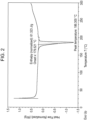
- Form 1 scale-up the solid sample was confirmed to be crystalline Form 1 by XRPD ( Table 4 and FIG. 1 ). The purity was determined to be 96.6 % by HPLC. The sample matched the amorphous form of Compound 1 reference material by 1 H NMR with a small amount of residual acetone (0.04 eq) remained in the sample. Thermal analysis showed a small weight loss of 1.0 % w/w (which equates to 0.32 eq of water), consistent with the KF data. DSC analysis showed a sharp endotherm at 179.5 °C (onset) ( FIG. 2 ).
- Form 1 was determined to be anhydrous. See also Table 5 for Form 1 property summaries.
- Form 2 scale-up, the solid sample was confirmed to be crystalline Form 2 by XRPD ( FIG. 3 ). However, further characterizations suggested that Form 2 was a less stable crystalline form than Form 1 . For example, unlike Form 1 retaining its original crystalline form, the XRPD analysis showed that Form 2 became amorphous after GVS analysis or stored for 5 days at elevated RH conditions. Unlike Form 1 exhibiting a sharp endotherm ( FIG. 2 ), Form 2 exhibited two endotherm events in the DSC analysis ( FIG. 4 ). Form 2 also exhibited a higher overall weight loss than Form 1 in the TGA analysis. Form 1 was observed more frequently than Form 2 both during polymorph screening and in competitive slurry experiments, further supporting that Form 1 was more stable than Form 2 . Table 7.
Landscapes
- Chemical & Material Sciences (AREA)
- Organic Chemistry (AREA)
- Health & Medical Sciences (AREA)
- Life Sciences & Earth Sciences (AREA)
- Medicinal Chemistry (AREA)
- Pharmacology & Pharmacy (AREA)
- Animal Behavior & Ethology (AREA)
- General Health & Medical Sciences (AREA)
- Public Health (AREA)
- Veterinary Medicine (AREA)
- Nuclear Medicine, Radiotherapy & Molecular Imaging (AREA)
- General Chemical & Material Sciences (AREA)
- Chemical Kinetics & Catalysis (AREA)
- Epidemiology (AREA)
- Pharmaceuticals Containing Other Organic And Inorganic Compounds (AREA)
- Plural Heterocyclic Compounds (AREA)
Priority Applications (6)
| Application Number | Priority Date | Filing Date | Title |
|---|---|---|---|
| MA56661A MA56661B1 (fr) | 2019-07-24 | 2020-07-23 | Formes cristallines de 7-chloro-2-(4-(3-méthoxyazétidine-1-yl))cyclohexyl) 2,4-diméthyl-n-((6-méthyl-4-(méthylthio)-2-oxo-1,2-dihydropyridine-3-yl) méthyl)benzo[d][1,3]dioxole-5-carboxamide |
| RS20241327A RS66244B1 (sr) | 2019-07-24 | 2020-07-23 | Kristalni oblici 7-hloro-2-(4-(3-metoksiazetidin-1-il)cikloheksil)-2,4-dimetil-n-((6-metil-4-(metiltio)-2-okso-1, 2-dihidropiridin-3-il)metil)benzo[d][1,3]dioksol-5-karboksamida |
| EP24182094.3A EP4442261A3 (en) | 2019-07-24 | 2020-07-23 | Crystalline forms of 7-chloro-2-(4-(3-methoxyazetidin-1-yl)cyclohexyl)-2,4-dimethyl-n-((6-methyl-4-(methylthio)-2-oxo-1,2-dihydropyridin-3-yl)methyl)benzo[d][1,3]dioxole-5-carboxamide |
| SI202030528T SI4003532T1 (sl) | 2019-07-24 | 2020-07-23 | Kristalinične oblike 7-kloro-2-(4-(3-metoksiazetidin-1-il)cikloheksil)-2,4-dimetil-N-((6-metil-4-(metilthio)-2-okso-1,2-dihidropiridin-3-il)metil)benzo[d][1,3]dioksol-5-karboksamida |
| SM20240485T SMT202400485T1 (it) | 2019-07-24 | 2020-07-23 | Forme cristalline di 7-cloro-2-(4-(3-metossiazetidin-1-il)cicloesil)-2,4-dimetil-n-((6-metil-4-(metiltio)-2-osso-1,2-diidropiridin-3-il)metil)benzo[d][1,3]diossol-5-carbossammide |
| HRP20241443TT HRP20241443T1 (hr) | 2019-07-24 | 2020-07-23 | Kristalni oblici 7-klor-2-(4-(3-metoksiazetidin-1-il)cikloheksil)-2,4-dimetil-n-((6-metil-4-(metiltio)-2-okso-1,2-dihidropiridin-3-il)metil)benzo[d][1,3]dioksol-5-karboksamida |
Applications Claiming Priority (2)
| Application Number | Priority Date | Filing Date | Title |
|---|---|---|---|
| US201962878012P | 2019-07-24 | 2019-07-24 | |
| PCT/US2020/043178 WO2021016414A1 (en) | 2019-07-24 | 2020-07-23 | Crystalline forms of 7-chloro-2-(4-(3-methoxyazetidin-1-yl)cyclohexyl)-2,4-dimethyl-n-((6-methyl-4-(methylthio)-2-oxo-1,2-dihydropyridin-3-yl)methyl)benzo[d][1,3]dioxole-5-carboxamide |
Related Child Applications (2)
| Application Number | Title | Priority Date | Filing Date |
|---|---|---|---|
| EP24182094.3A Division EP4442261A3 (en) | 2019-07-24 | 2020-07-23 | Crystalline forms of 7-chloro-2-(4-(3-methoxyazetidin-1-yl)cyclohexyl)-2,4-dimethyl-n-((6-methyl-4-(methylthio)-2-oxo-1,2-dihydropyridin-3-yl)methyl)benzo[d][1,3]dioxole-5-carboxamide |
| EP24182094.3A Division-Into EP4442261A3 (en) | 2019-07-24 | 2020-07-23 | Crystalline forms of 7-chloro-2-(4-(3-methoxyazetidin-1-yl)cyclohexyl)-2,4-dimethyl-n-((6-methyl-4-(methylthio)-2-oxo-1,2-dihydropyridin-3-yl)methyl)benzo[d][1,3]dioxole-5-carboxamide |
Publications (2)
| Publication Number | Publication Date |
|---|---|
| EP4003532A1 EP4003532A1 (en) | 2022-06-01 |
| EP4003532B1 true EP4003532B1 (en) | 2024-09-04 |
Family
ID=72047059
Family Applications (2)
| Application Number | Title | Priority Date | Filing Date |
|---|---|---|---|
| EP20754482.6A Active EP4003532B1 (en) | 2019-07-24 | 2020-07-23 | Crystalline forms of 7-chloro-2-(4-(3-methoxyazetidin-1-yl)cyclohexyl)-2,4-dimethyl-n-((6-methyl-4-(methylthio)-2-oxo-1,2-dihydropyridin-3-yl)methyl)benzo[d][1,3]dioxole-5-carboxamide |
| EP24182094.3A Pending EP4442261A3 (en) | 2019-07-24 | 2020-07-23 | Crystalline forms of 7-chloro-2-(4-(3-methoxyazetidin-1-yl)cyclohexyl)-2,4-dimethyl-n-((6-methyl-4-(methylthio)-2-oxo-1,2-dihydropyridin-3-yl)methyl)benzo[d][1,3]dioxole-5-carboxamide |
Family Applications After (1)
| Application Number | Title | Priority Date | Filing Date |
|---|---|---|---|
| EP24182094.3A Pending EP4442261A3 (en) | 2019-07-24 | 2020-07-23 | Crystalline forms of 7-chloro-2-(4-(3-methoxyazetidin-1-yl)cyclohexyl)-2,4-dimethyl-n-((6-methyl-4-(methylthio)-2-oxo-1,2-dihydropyridin-3-yl)methyl)benzo[d][1,3]dioxole-5-carboxamide |
Country Status (29)
| Country | Link |
|---|---|
| US (1) | US20220251073A1 (ro) |
| EP (2) | EP4003532B1 (ro) |
| JP (2) | JP7603653B2 (ro) |
| KR (1) | KR20220041129A (ro) |
| CN (2) | CN114450279B (ro) |
| AU (1) | AU2020316073A1 (ro) |
| BR (1) | BR112022001161A2 (ro) |
| CA (1) | CA3148447A1 (ro) |
| CL (1) | CL2022000175A1 (ro) |
| CO (1) | CO2022001482A2 (ro) |
| DK (1) | DK4003532T3 (ro) |
| ES (1) | ES2997972T3 (ro) |
| FI (1) | FI4003532T3 (ro) |
| HR (1) | HRP20241443T1 (ro) |
| HU (1) | HUE069127T2 (ro) |
| IL (1) | IL289972A (ro) |
| LT (1) | LT4003532T (ro) |
| MA (1) | MA56661B1 (ro) |
| MD (1) | MD4003532T2 (ro) |
| MX (2) | MX2022000931A (ro) |
| MY (1) | MY207951A (ro) |
| PE (1) | PE20220562A1 (ro) |
| PH (1) | PH12022550188A1 (ro) |
| PL (1) | PL4003532T3 (ro) |
| PT (1) | PT4003532T (ro) |
| RS (1) | RS66244B1 (ro) |
| SI (1) | SI4003532T1 (ro) |
| SM (1) | SMT202400485T1 (ro) |
| WO (1) | WO2021016414A1 (ro) |
Families Citing this family (8)
| Publication number | Priority date | Publication date | Assignee | Title |
|---|---|---|---|---|
| CA3100977A1 (en) | 2018-05-21 | 2019-11-28 | Constellation Pharmaceuticals, Inc. | Modulators of methyl modifying enzymes, compositions and uses thereof |
| AU2023206700A1 (en) * | 2022-01-14 | 2024-08-29 | Dong Wha Pharm. Co., Ltd. | 1,3-benzodioxole derivative compound and pharmaceutical composition comprising same |
| JP2025525324A (ja) | 2022-06-13 | 2025-08-05 | ツリーライン バイオサイエンシズ インコーポレイテッド | 1,8-ナフチリジン-2-オンヘテロ二官能性bcl6分解剤 |
| CA3258325A1 (en) | 2022-06-13 | 2023-12-21 | Treeline Biosciences, Inc. | BIFUNCTIONAL QUINOLONE DEGRADING AGENTS BCL6 |
| CN119855592A (zh) | 2022-07-15 | 2025-04-18 | 星座制药公司 | 用于治疗包含富含at的相互作用结构域的蛋白1a(arid1a)突变癌症的ezh2抑制疗法 |
| CN115403040B (zh) * | 2022-08-11 | 2023-08-01 | 中国地质大学(北京) | 一种可通过光辐射调控导热系数的偶氮苯聚合物表面修饰的金刚石纳米粒子及其制备方法 |
| EP4572756A1 (en) | 2022-08-17 | 2025-06-25 | Incyte Corporation | Therapy comprising anti-cd19 antibody and ezh2 modulators |
| CN119997955A (zh) | 2022-10-06 | 2025-05-13 | 星座制药公司 | 用于治疗brca1相关蛋白(bap1)突变的癌症的ezh2抑制疗法 |
Family Cites Families (7)
| Publication number | Priority date | Publication date | Assignee | Title |
|---|---|---|---|---|
| SG10201606135TA (en) * | 2012-01-25 | 2016-09-29 | Vertex Pharma | Formulations of 3-(6-(1-(2,2-difluorobenzo[d][1,3]dioxol-5-yl) cyclopropanecarboxamido)-3-methylpyridin-2-yl)benzoic acid |
| PE20160044A1 (es) * | 2013-02-11 | 2016-02-11 | Constellation Pharmaceuticals Inc | Moduladores de las enzimas modificadoras de los metilos, composiciones que los comprenden y sus usos |
| DK3121175T3 (da) * | 2014-03-17 | 2020-03-09 | Daiichi Sankyo Co Ltd | 1,3-benzodioxolderivater som ezh1- og/eller ezh2-hæmmere |
| US10577350B2 (en) * | 2015-08-28 | 2020-03-03 | Constellation Pharmaceuticals, Inc. | Crystalline forms of (R)-N-((4-methoxy-6-methyl-2-oxo-1,2-dihydropyridin-3-yl)methyl)-2-methyl-1-(1-(1-(2,2,2-trifluoroethyl)piperidin-4-yl)ethyl)-1H-indole-3-carboxamide |
| AU2018210099A1 (en) * | 2017-01-19 | 2019-08-15 | Daiichi Sankyo Company, Limited | Pharmaceutical composition used for treatment of HTLV-1-associated myelopathy |
| HUE066783T2 (hu) * | 2018-04-18 | 2024-09-28 | Constellation Pharmaceuticals Inc | Metil módosító enzimek modulátorai, ezek készítményei és alkalmazásuk |
| CA3100977A1 (en) * | 2018-05-21 | 2019-11-28 | Constellation Pharmaceuticals, Inc. | Modulators of methyl modifying enzymes, compositions and uses thereof |
-
2020
- 2020-07-23 BR BR112022001161A patent/BR112022001161A2/pt unknown
- 2020-07-23 MA MA56661A patent/MA56661B1/fr unknown
- 2020-07-23 PH PH1/2022/550188A patent/PH12022550188A1/en unknown
- 2020-07-23 SM SM20240485T patent/SMT202400485T1/it unknown
- 2020-07-23 HR HRP20241443TT patent/HRP20241443T1/hr unknown
- 2020-07-23 CA CA3148447A patent/CA3148447A1/en active Pending
- 2020-07-23 RS RS20241327A patent/RS66244B1/sr unknown
- 2020-07-23 MY MYPI2022000428A patent/MY207951A/en unknown
- 2020-07-23 CN CN202080066219.5A patent/CN114450279B/zh active Active
- 2020-07-23 CN CN202410901775.XA patent/CN118852139A/zh active Pending
- 2020-07-23 MX MX2022000931A patent/MX2022000931A/es unknown
- 2020-07-23 DK DK20754482.6T patent/DK4003532T3/da active
- 2020-07-23 PT PT207544826T patent/PT4003532T/pt unknown
- 2020-07-23 PL PL20754482.6T patent/PL4003532T3/pl unknown
- 2020-07-23 US US17/628,947 patent/US20220251073A1/en active Pending
- 2020-07-23 MD MDE20220601T patent/MD4003532T2/ro unknown
- 2020-07-23 LT LTEPPCT/US2020/043178T patent/LT4003532T/lt unknown
- 2020-07-23 HU HUE20754482A patent/HUE069127T2/hu unknown
- 2020-07-23 EP EP20754482.6A patent/EP4003532B1/en active Active
- 2020-07-23 WO PCT/US2020/043178 patent/WO2021016414A1/en not_active Ceased
- 2020-07-23 FI FIEP20754482.6T patent/FI4003532T3/fi active
- 2020-07-23 KR KR1020227005690A patent/KR20220041129A/ko active Pending
- 2020-07-23 SI SI202030528T patent/SI4003532T1/sl unknown
- 2020-07-23 ES ES20754482T patent/ES2997972T3/es active Active
- 2020-07-23 AU AU2020316073A patent/AU2020316073A1/en active Pending
- 2020-07-23 JP JP2022504532A patent/JP7603653B2/ja active Active
- 2020-07-23 EP EP24182094.3A patent/EP4442261A3/en active Pending
- 2020-07-23 PE PE2022000116A patent/PE20220562A1/es unknown
-
2022
- 2022-01-19 IL IL289972A patent/IL289972A/en unknown
- 2022-01-21 MX MX2025004573A patent/MX2025004573A/es unknown
- 2022-01-24 CL CL2022000175A patent/CL2022000175A1/es unknown
- 2022-02-15 CO CONC2022/0001482A patent/CO2022001482A2/es unknown
-
2024
- 2024-12-09 JP JP2024214565A patent/JP7692524B2/ja active Active
Also Published As
Similar Documents
| Publication | Publication Date | Title |
|---|---|---|
| EP4003532B1 (en) | Crystalline forms of 7-chloro-2-(4-(3-methoxyazetidin-1-yl)cyclohexyl)-2,4-dimethyl-n-((6-methyl-4-(methylthio)-2-oxo-1,2-dihydropyridin-3-yl)methyl)benzo[d][1,3]dioxole-5-carboxamide | |
| KR101927083B1 (ko) | 퓨린 유도체의 결정 형태 | |
| KR101787784B1 (ko) | 3-(2,6―디클로로―3,5―디메톡시―페닐)-1-{6-[4-(4-에틸-피페라진-1-일)-페닐아미노]-피리미딘-4-일}-1-메틸-우레아의 결정질 형태 및 그의 염 | |
| EP3436463B1 (en) | Crystalline forms of 2-[(2s)-1-azabicyclo[2.2.2]oct-2-yl]-6-(3-methyl-1h- pyrazol-4-yl)thieno[3,2-d]pyrimidin-4(3h)-one hemihydrate | |
| KR102342776B1 (ko) | (S)-2-((2-((S)-4-(다이플루오로메틸)-2-옥소옥사졸리딘-3-일)-5,6-다이하이드로벤조[f]이미다조[1,2-d][1,4]옥사제핀-9-일)아미노)프로판아미드의 다형체 및 고체 형태, 및 이의 제조 방법 | |
| JP2015180679A (ja) | ナトリウム4−{[9−クロロ−7−(2−フルオロ−6−メトキシフェニル)−5H−ピリミド[5,4−d][2]ベンゾアゼピン−2−イル]アミノ}−2−メトキシベンゾエートの結晶形 | |
| US10160759B2 (en) | Hydroxyethyl sulfonate of cyclin-dependent protein kinase inhibitor, crystalline form thereof and preparation method therefor | |
| EP3303306B1 (en) | Crystalline forms of a histone deacetylase inhibitor | |
| US10577350B2 (en) | Crystalline forms of (R)-N-((4-methoxy-6-methyl-2-oxo-1,2-dihydropyridin-3-yl)methyl)-2-methyl-1-(1-(1-(2,2,2-trifluoroethyl)piperidin-4-yl)ethyl)-1H-indole-3-carboxamide | |
| KR20240141719A (ko) | 질소 함유 융합된 고리 유도체 억제제의 산성염 또는 결정형 및 이의 제조 방법 및 이의 용도 | |
| HK40118805A (en) | Crystalline forms of 7-chloro-2-(4-(3-methoxyazetidin-1-yl)cyclohexyl)-2,4-dimethyl-n-((6-methyl-4-(methylthio)-2-oxo-1,2-dihydropyridin-3-yl)methyl)benzo[d][1,3]dioxole-5-carboxamide | |
| HK40075037A (en) | Crystalline forms of 7-chloro-2-(4-(3-methoxyazetidin-1-yl)cyclohexyl)-2,4-dimethyl-n-((6-methyl-4-(methylthio)-2-oxo-1,2-dihydropyridin-3-yl)methyl)benzo[d][1,3]dioxole-5-carboxamide | |
| HK40075037B (en) | Crystalline forms of 7-chloro-2-(4-(3-methoxyazetidin-1-yl)cyclohexyl)-2,4-dimethyl-n-((6-methyl-4-(methylthio)-2-oxo-1,2-dihydropyridin-3-yl)methyl)benzo[d][1,3]dioxole-5-carboxamide | |
| CN114401720A (zh) | 多酪氨酸激酶抑制剂的晶型、制备方法及其用途 | |
| WO2019145410A1 (en) | Combination treatment of acute myeloid leukemia | |
| EA043785B1 (ru) | Кристаллические формы 7-хлор-2-(4-(3-метоксиазетидин-1-ил)циклогексил)-2,4-диметил-n-((6-метил-4-(метилтио)-2-оксо-1,2-дигидропиридин-3-ил)метил)бензо[d][1,3]диоксол-5-карбоксамида | |
| WO2017114735A1 (en) | Process for making crystalline form a of gefitinib | |
| HK40064763A (en) | Crystalline form of a multi-tyrosine kinase inhibitor, method of preparation, and use thereof | |
| WO2025240706A1 (en) | Crystalline forms of kras g12d inhibitor and uses thereof |
Legal Events
| Date | Code | Title | Description |
|---|---|---|---|
| REG | Reference to a national code |
Ref country code: HR Ref legal event code: TUEP Ref document number: P20241443T Country of ref document: HR |
|
| STAA | Information on the status of an ep patent application or granted ep patent |
Free format text: STATUS: UNKNOWN |
|
| STAA | Information on the status of an ep patent application or granted ep patent |
Free format text: STATUS: THE INTERNATIONAL PUBLICATION HAS BEEN MADE |
|
| PUAI | Public reference made under article 153(3) epc to a published international application that has entered the european phase |
Free format text: ORIGINAL CODE: 0009012 |
|
| STAA | Information on the status of an ep patent application or granted ep patent |
Free format text: STATUS: REQUEST FOR EXAMINATION WAS MADE |
|
| 17P | Request for examination filed |
Effective date: 20220223 |
|
| AK | Designated contracting states |
Kind code of ref document: A1 Designated state(s): AL AT BE BG CH CY CZ DE DK EE ES FI FR GB GR HR HU IE IS IT LI LT LU LV MC MK MT NL NO PL PT RO RS SE SI SK SM TR |
|
| REG | Reference to a national code |
Ref country code: HK Ref legal event code: DE Ref document number: 40075037 Country of ref document: HK |
|
| P01 | Opt-out of the competence of the unified patent court (upc) registered |
Effective date: 20230523 |
|
| GRAP | Despatch of communication of intention to grant a patent |
Free format text: ORIGINAL CODE: EPIDOSNIGR1 |
|
| STAA | Information on the status of an ep patent application or granted ep patent |
Free format text: STATUS: GRANT OF PATENT IS INTENDED |
|
| INTG | Intention to grant announced |
Effective date: 20230925 |
|
| RAP3 | Party data changed (applicant data changed or rights of an application transferred) |
Owner name: CONSTELLATION PHARMACEUTICALS, INC. |
|
| GRAJ | Information related to disapproval of communication of intention to grant by the applicant or resumption of examination proceedings by the epo deleted |
Free format text: ORIGINAL CODE: EPIDOSDIGR1 |
|
| STAA | Information on the status of an ep patent application or granted ep patent |
Free format text: STATUS: REQUEST FOR EXAMINATION WAS MADE |
|
| GRAP | Despatch of communication of intention to grant a patent |
Free format text: ORIGINAL CODE: EPIDOSNIGR1 |
|
| STAA | Information on the status of an ep patent application or granted ep patent |
Free format text: STATUS: GRANT OF PATENT IS INTENDED |
|
| INTC | Intention to grant announced (deleted) | ||
| INTG | Intention to grant announced |
Effective date: 20240214 |
|
| GRAS | Grant fee paid |
Free format text: ORIGINAL CODE: EPIDOSNIGR3 |
|
| GRAA | (expected) grant |
Free format text: ORIGINAL CODE: 0009210 |
|
| STAA | Information on the status of an ep patent application or granted ep patent |
Free format text: STATUS: THE PATENT HAS BEEN GRANTED |
|
| AK | Designated contracting states |
Kind code of ref document: B1 Designated state(s): AL AT BE BG CH CY CZ DE DK EE ES FI FR GB GR HR HU IE IS IT LI LT LU LV MC MK MT NL NO PL PT RO RS SE SI SK SM TR |
|
| REG | Reference to a national code |
Ref country code: GB Ref legal event code: FG4D |
|
| REG | Reference to a national code |
Ref country code: CH Ref legal event code: EP |
|
| REG | Reference to a national code |
Ref country code: IE Ref legal event code: FG4D |
|
| REG | Reference to a national code |
Ref country code: DE Ref legal event code: R096 Ref document number: 602020037131 Country of ref document: DE |
|
| REG | Reference to a national code |
Ref country code: NL Ref legal event code: FP |
|
| REG | Reference to a national code |
Ref country code: PT Ref legal event code: SC4A Ref document number: 4003532 Country of ref document: PT Date of ref document: 20241202 Kind code of ref document: T Free format text: AVAILABILITY OF NATIONAL TRANSLATION Effective date: 20241125 Ref country code: DK Ref legal event code: T3 Effective date: 20241127 |
|
| REG | Reference to a national code |
Ref country code: FI Ref legal event code: FGE |
|
| REG | Reference to a national code |
Ref country code: HR Ref legal event code: T1PR Ref document number: P20241443 Country of ref document: HR |
|
| REG | Reference to a national code |
Ref country code: SE Ref legal event code: TRGR |
|
| REG | Reference to a national code |
Ref country code: EE Ref legal event code: FG4A Ref document number: E024761 Country of ref document: EE Effective date: 20241128 |
|
| REG | Reference to a national code |
Ref country code: SK Ref legal event code: T3 Ref document number: E 45452 Country of ref document: SK Ref country code: GR Ref legal event code: EP Ref document number: 20240402826 Country of ref document: GR Effective date: 20250120 |
|
| REG | Reference to a national code |
Ref country code: MA Ref legal event code: VAGR Ref document number: 56661 Country of ref document: MA Kind code of ref document: B1 Ref country code: MD Ref legal event code: VAGR Ref document number: 4003532 Country of ref document: MD Date of ref document: 20250131 Kind code of ref document: T2 |
|
| REG | Reference to a national code |
Ref country code: ES Ref legal event code: FG2A Ref document number: 2997972 Country of ref document: ES Kind code of ref document: T3 Effective date: 20250218 |
|
| REG | Reference to a national code |
Ref country code: HU Ref legal event code: AG4A Ref document number: E069127 Country of ref document: HU |
|
| REG | Reference to a national code |
Ref country code: DE Ref legal event code: R097 Ref document number: 602020037131 Country of ref document: DE |
|
| PGFP | Annual fee paid to national office [announced via postgrant information from national office to epo] |
Ref country code: SM Payment date: 20250630 Year of fee payment: 6 |
|
| PGFP | Annual fee paid to national office [announced via postgrant information from national office to epo] |
Ref country code: MC Payment date: 20250626 Year of fee payment: 6 |
|
| PGFP | Annual fee paid to national office [announced via postgrant information from national office to epo] |
Ref country code: PL Payment date: 20250626 Year of fee payment: 6 |
|
| PGFP | Annual fee paid to national office [announced via postgrant information from national office to epo] |
Ref country code: GB Payment date: 20250619 Year of fee payment: 6 |
|
| PGFP | Annual fee paid to national office [announced via postgrant information from national office to epo] |
Ref country code: LT Payment date: 20250618 Year of fee payment: 6 |
|
| PLBE | No opposition filed within time limit |
Free format text: ORIGINAL CODE: 0009261 |
|
| STAA | Information on the status of an ep patent application or granted ep patent |
Free format text: STATUS: NO OPPOSITION FILED WITHIN TIME LIMIT |
|
| PGFP | Annual fee paid to national office [announced via postgrant information from national office to epo] |
Ref country code: RS Payment date: 20250626 Year of fee payment: 6 |
|
| PGFP | Annual fee paid to national office [announced via postgrant information from national office to epo] |
Ref country code: NL Payment date: 20250627 Year of fee payment: 6 Ref country code: BE Payment date: 20250626 Year of fee payment: 6 |
|
| PGFP | Annual fee paid to national office [announced via postgrant information from national office to epo] |
Ref country code: LV Payment date: 20250619 Year of fee payment: 6 |
|
| PGFP | Annual fee paid to national office [announced via postgrant information from national office to epo] |
Ref country code: EE Payment date: 20250620 Year of fee payment: 6 Ref country code: FR Payment date: 20250623 Year of fee payment: 6 |
|
| PGFP | Annual fee paid to national office [announced via postgrant information from national office to epo] |
Ref country code: GR Payment date: 20250626 Year of fee payment: 6 Ref country code: BG Payment date: 20250627 Year of fee payment: 6 |
|
| PGFP | Annual fee paid to national office [announced via postgrant information from national office to epo] |
Ref country code: SK Payment date: 20250624 Year of fee payment: 6 |
|
| PGFP | Annual fee paid to national office [announced via postgrant information from national office to epo] |
Ref country code: IE Payment date: 20250624 Year of fee payment: 6 |
|
| PGFP | Annual fee paid to national office [announced via postgrant information from national office to epo] |
Ref country code: SE Payment date: 20250626 Year of fee payment: 6 Ref country code: SI Payment date: 20250624 Year of fee payment: 6 |
|
| PGFP | Annual fee paid to national office [announced via postgrant information from national office to epo] |
Ref country code: HU Payment date: 20250711 Year of fee payment: 6 |
|
| 26N | No opposition filed |
Effective date: 20250605 |
|
| PGFP | Annual fee paid to national office [announced via postgrant information from national office to epo] |
Ref country code: LU Payment date: 20250714 Year of fee payment: 6 |
|
| REG | Reference to a national code |
Ref country code: HR Ref legal event code: ODRP Ref document number: P20241443 Country of ref document: HR Payment date: 20250702 Year of fee payment: 6 |
|
| PGFP | Annual fee paid to national office [announced via postgrant information from national office to epo] |
Ref country code: FI Payment date: 20250715 Year of fee payment: 6 Ref country code: PT Payment date: 20250709 Year of fee payment: 6 Ref country code: ES Payment date: 20250807 Year of fee payment: 6 |
|
| PGFP | Annual fee paid to national office [announced via postgrant information from national office to epo] |
Ref country code: DE Payment date: 20250618 Year of fee payment: 6 Ref country code: DK Payment date: 20250714 Year of fee payment: 6 |
|
| PGFP | Annual fee paid to national office [announced via postgrant information from national office to epo] |
Ref country code: NO Payment date: 20250709 Year of fee payment: 6 |
|
| PGFP | Annual fee paid to national office [announced via postgrant information from national office to epo] |
Ref country code: TR Payment date: 20250709 Year of fee payment: 6 Ref country code: IT Payment date: 20250626 Year of fee payment: 6 |
|
| VSFP | Annual fee paid to validation state [announced via postgrant information from national office to epo] |
Ref country code: MD Payment date: 20250714 Year of fee payment: 6 |
|
| PGFP | Annual fee paid to national office [announced via postgrant information from national office to epo] |
Ref country code: HR Payment date: 20250702 Year of fee payment: 6 |
|
| PGFP | Annual fee paid to national office [announced via postgrant information from national office to epo] |
Ref country code: AL Payment date: 20250718 Year of fee payment: 6 Ref country code: AT Payment date: 20250625 Year of fee payment: 6 |
|
| PGFP | Annual fee paid to national office [announced via postgrant information from national office to epo] |
Ref country code: CH Payment date: 20250801 Year of fee payment: 6 Ref country code: MT Payment date: 20250721 Year of fee payment: 6 |
|
| PGFP | Annual fee paid to national office [announced via postgrant information from national office to epo] |
Ref country code: CZ Payment date: 20250701 Year of fee payment: 6 |
|
| PGFP | Annual fee paid to national office [announced via postgrant information from national office to epo] |
Ref country code: RO Payment date: 20250709 Year of fee payment: 6 |
|
| PGFP | Annual fee paid to national office [announced via postgrant information from national office to epo] |
Ref country code: IS Payment date: 20250718 Year of fee payment: 6 |
|
| PGFP | Annual fee paid to national office [announced via postgrant information from national office to epo] |
Ref country code: MK Payment date: 20250618 Year of fee payment: 6 |
|
| VSFP | Annual fee paid to validation state [announced via postgrant information from national office to epo] |
Ref country code: MA Payment date: 20250725 Year of fee payment: 6 |