EP4003314B1 - Functionalized long-chain hydrocarbon mono- and di-carboxylic acids useful for the prevention or treatment of disease - Google Patents
Functionalized long-chain hydrocarbon mono- and di-carboxylic acids useful for the prevention or treatment of disease Download PDFInfo
- Publication number
- EP4003314B1 EP4003314B1 EP20848591.2A EP20848591A EP4003314B1 EP 4003314 B1 EP4003314 B1 EP 4003314B1 EP 20848591 A EP20848591 A EP 20848591A EP 4003314 B1 EP4003314 B1 EP 4003314B1
- Authority
- EP
- European Patent Office
- Prior art keywords
- compound
- alkyl
- independently
- acid
- pharmaceutically acceptable
- Prior art date
- Legal status (The legal status is an assumption and is not a legal conclusion. Google has not performed a legal analysis and makes no representation as to the accuracy of the status listed.)
- Active
Links
Images







Classifications
-
- C—CHEMISTRY; METALLURGY
- C07—ORGANIC CHEMISTRY
- C07C—ACYCLIC OR CARBOCYCLIC COMPOUNDS
- C07C55/00—Saturated compounds having more than one carboxyl group bound to acyclic carbon atoms
- C07C55/02—Dicarboxylic acids
-
- A—HUMAN NECESSITIES
- A61—MEDICAL OR VETERINARY SCIENCE; HYGIENE
- A61K—PREPARATIONS FOR MEDICAL, DENTAL OR TOILETRY PURPOSES
- A61K31/00—Medicinal preparations containing organic active ingredients
- A61K31/185—Acids; Anhydrides, halides or salts thereof, e.g. sulfur acids, imidic, hydrazonic or hydroximic acids
- A61K31/19—Carboxylic acids, e.g. valproic acid
- A61K31/194—Carboxylic acids, e.g. valproic acid having two or more carboxyl groups, e.g. succinic, maleic or phthalic acid
-
- A—HUMAN NECESSITIES
- A61—MEDICAL OR VETERINARY SCIENCE; HYGIENE
- A61P—SPECIFIC THERAPEUTIC ACTIVITY OF CHEMICAL COMPOUNDS OR MEDICINAL PREPARATIONS
- A61P1/00—Drugs for disorders of the alimentary tract or the digestive system
-
- A—HUMAN NECESSITIES
- A61—MEDICAL OR VETERINARY SCIENCE; HYGIENE
- A61P—SPECIFIC THERAPEUTIC ACTIVITY OF CHEMICAL COMPOUNDS OR MEDICINAL PREPARATIONS
- A61P1/00—Drugs for disorders of the alimentary tract or the digestive system
- A61P1/16—Drugs for disorders of the alimentary tract or the digestive system for liver or gallbladder disorders, e.g. hepatoprotective agents, cholagogues, litholytics
-
- A—HUMAN NECESSITIES
- A61—MEDICAL OR VETERINARY SCIENCE; HYGIENE
- A61P—SPECIFIC THERAPEUTIC ACTIVITY OF CHEMICAL COMPOUNDS OR MEDICINAL PREPARATIONS
- A61P29/00—Non-central analgesic, antipyretic or antiinflammatory agents, e.g. antirheumatic agents; Non-steroidal antiinflammatory drugs [NSAID]
-
- A—HUMAN NECESSITIES
- A61—MEDICAL OR VETERINARY SCIENCE; HYGIENE
- A61P—SPECIFIC THERAPEUTIC ACTIVITY OF CHEMICAL COMPOUNDS OR MEDICINAL PREPARATIONS
- A61P3/00—Drugs for disorders of the metabolism
- A61P3/06—Antihyperlipidemics
-
- A—HUMAN NECESSITIES
- A61—MEDICAL OR VETERINARY SCIENCE; HYGIENE
- A61P—SPECIFIC THERAPEUTIC ACTIVITY OF CHEMICAL COMPOUNDS OR MEDICINAL PREPARATIONS
- A61P3/00—Drugs for disorders of the metabolism
- A61P3/08—Drugs for disorders of the metabolism for glucose homeostasis
- A61P3/10—Drugs for disorders of the metabolism for glucose homeostasis for hyperglycaemia, e.g. antidiabetics
-
- A—HUMAN NECESSITIES
- A61—MEDICAL OR VETERINARY SCIENCE; HYGIENE
- A61P—SPECIFIC THERAPEUTIC ACTIVITY OF CHEMICAL COMPOUNDS OR MEDICINAL PREPARATIONS
- A61P35/00—Antineoplastic agents
-
- C—CHEMISTRY; METALLURGY
- C07—ORGANIC CHEMISTRY
- C07C—ACYCLIC OR CARBOCYCLIC COMPOUNDS
- C07C57/00—Unsaturated compounds having carboxyl groups bound to acyclic carbon atoms
- C07C57/02—Unsaturated compounds having carboxyl groups bound to acyclic carbon atoms with only carbon-to-carbon double bonds as unsaturation
- C07C57/13—Dicarboxylic acids
-
- C—CHEMISTRY; METALLURGY
- C07—ORGANIC CHEMISTRY
- C07C—ACYCLIC OR CARBOCYCLIC COMPOUNDS
- C07C57/00—Unsaturated compounds having carboxyl groups bound to acyclic carbon atoms
- C07C57/30—Unsaturated compounds having carboxyl groups bound to acyclic carbon atoms containing six-membered aromatic rings
- C07C57/34—Unsaturated compounds having carboxyl groups bound to acyclic carbon atoms containing six-membered aromatic rings containing more than one carboxyl group
-
- C—CHEMISTRY; METALLURGY
- C07—ORGANIC CHEMISTRY
- C07C—ACYCLIC OR CARBOCYCLIC COMPOUNDS
- C07C61/00—Compounds having carboxyl groups bound to carbon atoms of rings other than six-membered aromatic rings
- C07C61/16—Unsaturated compounds
- C07C61/39—Unsaturated compounds containing six-membered aromatic rings
-
- A—HUMAN NECESSITIES
- A61—MEDICAL OR VETERINARY SCIENCE; HYGIENE
- A61K—PREPARATIONS FOR MEDICAL, DENTAL OR TOILETRY PURPOSES
- A61K45/00—Medicinal preparations containing active ingredients not provided for in groups A61K31/00 - A61K41/00
- A61K45/06—Mixtures of active ingredients without chemical characterisation, e.g. antiphlogistics and cardiaca
-
- C—CHEMISTRY; METALLURGY
- C07—ORGANIC CHEMISTRY
- C07C—ACYCLIC OR CARBOCYCLIC COMPOUNDS
- C07C2601/00—Systems containing only non-condensed rings
- C07C2601/02—Systems containing only non-condensed rings with a three-membered ring
Definitions
- This invention provides compounds of Formulae (IA), (IB), (IC), (ID), (IE), (IF), (IG), (IH), (IJ), (IK), (IL), (II), (III), (IIIA), and (IIIB), and pharmaceutically acceptable salts and solvates thereof, and compositions thereof.
- This invention further provides methods for preventing or treating a disease, including but not limited to, liver disease or an abnormal liver condition; cancer (such as hepatocellular carcinoma or cholangiocarcinoma); a malignant or benign tumor of the lung, liver, gall bladder, bile duct or digestive tract; an intra- or extra-hepatic bile duct disease; a disorder of lipoprotein; a lipid-and-metabolic disorder; cirrhosis; fibrosis; a disorder of glucose metabolism; a cardiovascular or related vascular disorder; a disease resulting from steatosis, fibrosis, or cirrhosis; a disease associated with increased inflammation (such as hepatic inflammation or pulmonary inflammation); hepatocyte ballooning; a peroxisome proliferator activated receptor-associated disorder; an ATP citrate lyase disorder; an acetyl-coenzyme A carboxylase disorder; obesity; pancreatitis; or renal disease.
- cancer such as hepatocellular
- Type IIb hyperlipidemia patients have a high risk of developing NAFLD and nonalcoholic steatosis hepatitis (NASH), which can develop due to hepatic triglyceride overproduction and accumulation.
- Elevated levels of low-density lipoprotein cholesterol (LDL-C) and triglycerides are associated with mixed dyslipidemia, including type IIb hyperlipidemia which is characterized by elevation of apolipoprotein B, very low-density lipoprotein cholesterol (VLDL-C), intermediate density lipoprotein cholesterol (IDL), and small dense low-density lipoprotein (LDL) levels, in addition to elevation in LDL-C and triglyceride levels.
- VLDL-C very low-density lipoprotein cholesterol
- IDL intermediate density lipoprotein cholesterol
- LDL small dense low-density lipoprotein
- the present invention provides a compound of the present invention or a pharmaceutically acceptable salt or solvate thereof, for use in a method of treating or preventing renal cell carcinoma.
- the disease is cancer, a lipid-and-metabolic disorder, a liver disorder, cirrhosis, fibrosis, a disorder of glucose metabolism, a peroxisome proliferator activated receptor-associated disorder, a malignant or benign tumor of the lung, liver, bile and digestive tract, an ATP citrate lyase disorder, an acetyl-coenzyme A carboxylase disorder
- Pharmaceutically acceptable salts can also be obtained by reacting a compound of the invention functioning as an acid, with an inorganic or organic base to form a salt, for example, salts of sodium, potassium, lithium, ammonium, calcium, magnesium, iron, zinc, copper, manganese, aluminum, ammonia, isopropylamine, trimethylamine, etc.
- a salt for example, salts of sodium, potassium, lithium, ammonium, calcium, magnesium, iron, zinc, copper, manganese, aluminum, ammonia, isopropylamine, trimethylamine, etc.
- pharmaceutically acceptable salts can be prepared by reaction of the compounds of the invention with an appropriate inorganic or organic acid or base via any of a number of known methods.
- the solvent can be an alcohol, such as methanol or ethanol; an aldehyde; a ketone, such as acetone; or an ester, such as ethyl acetate.
- a "subject” is a human or non-human mammal, e.g., a bovine, horse, feline, canine, rodent, or non-human primate.
- the human can be a male or female, child, adolescent or adult.
- the female can be premenarcheal or postmenarcheal.
- a C 1 -C 5 alkyl includes C 5 alkyls, C 4 alkyls, C 3 alkyls, C 2 alkyls and C 1 alkyl (i.e., methyl).
- a C 1 -C 6 alkyl includes all moieties described above for C 1 -C 5 alkyls but also includes C 6 alkyls.
- a C 1 -C 10 alkyl includes all moieties described above for C 1 -C 5 alkyls and C 1 -C 6 alkyls, but also includes C 7 , C 8 , C 9 and C 10 alkyls.
- a C 1 -C 12 alkyl includes all the foregoing moieties, but also includes C 11 and C 12 alkyls.
- An alkenyl group with 2 to 12 carbon atoms is a C 2 -C 12 alkenyl
- an alkenyl group with 2 to 10 carbon atoms is a C 2 -C 10 alkenyl
- an alkenyl group with 2 to 6 carbon atoms is a C 2 -C 6 alkenyl
- an alkenyl group with 2 to 5 carbon atoms is a C 2 -C 5 alkenyl.
- a C 2 -C 5 alkenyl includes C 5 alkenyls, C 4 alkenyls, C 3 alkenyls, and C 2 alkenyls.
- An alkynyl group having 2 to 12 carbon atoms is a C 2 -C 12 alkynyl
- an alkynyl group with 2 to 10 carbon atoms is a C 2 -C 10 alkynyl
- an alkynyl group with 2 to 6 carbon atoms is a C 2 -C 6 alkynyl
- an alkynyl group with 2 to 5 carbon atoms is a C 2 -C 5 alkynyl.
- a C 2 -C 5 alkynyl includes C 5 alkynyls, C 4 alkynyls, C 3 alkynyls, and C 2 alkynyls.
- a C 2 -C 6 alkynyl includes all moieties described above for C 2 -C 5 alkynyls but also includes C 6 alkynyls.
- a C 2 -C 10 alkynyl includes all moieties described above for C 2 -C 5 alkynyls and C 2 -C 6 alkynyls, but also includes C 7 , C 8 , C 9 and C 10 alkynyls.
- a C 2 -C 12 alkynyl includes all the foregoing moieties, but also includes C 11 and C 12 alkynyls.
- Non-limiting examples of C 2 -C 12 alkenyl include ethynyl, propynyl, butynyl, pentynyl and the like. Unless stated otherwise, an alkyl group can be unsubstituted or substituted with a substituent disclosed herein.
- Alkynylene refers to a straight or branched divalent hydrocarbon chain radical, having from two to twelve carbon atoms, and having one or more carbon-carbon triple bonds.
- C 2 -C 12 alkynylene include ethynylene, propynylene, butynylene, and the like.
- Each terminus of the alkynylene chain is attached to an atom through a single bond. The points of attachment of the alkynylene chain can be through one or two atoms.
- an alkynylene chain can be unsubstituted or substituted with a substituent disclosed herein.
- Alkoxy refers to a radical of the formula -OR a where R a is an alkyl, alkenyl or alknyl radical as defined herein. Unless stated otherwise, an alkoxy group can be unsubstituted or substituted with a substituent disclosed herein.
- Arylalkyl refers to a radical of the formula -R b -R c where R b is an alkylene group as defined herein and R c is an aryl radical as defined herein, for example, benzyl, diphenylmethyl and the like. Unless stated otherwise, an arylalkyl group can be unsubstituted or substituted with a substituent disclosed herein.
- Arylalkenyl refers to a radical of the formula -R b -R c where R b is an alkenylene group as defined herein and R c is an aryl radical as defined herein. Unless stated otherwise, an arylalkenyl group can be unsubstituted or substituted with a substituent disclosed herein.
- Cycloalkyl refers to a non-aromatic monocyclic or polycyclic fully saturated hydrocarbon radical consisting of carbon and hydrogen atoms, which can include fused or bridged ring systems, having from three to twenty carbon atoms, preferably having from three to ten carbon atoms, and which is attached to an atom by a single bond.
- Monocyclic cycloalkyl radicals include, for example, cyclopropyl, cyclobutyl, cyclopentyl, cyclohexyl, cycloheptyl, and cyclooctyl.
- Polycyclic cycloalkyl radicals include, for example, adamantyl, norbornyl, decalinyl, 7,7-dimethyl-bicyclo[2.2.1]heptanyl, and the like. Unless stated otherwise, a cycloalkyl group can be unsubstituted or substituted with a substituent disclosed herein.
- Cycloalkenylalkyl refers to a radical of the formula -R b -R d where R b is an alkylene group as defined herein and R d is a cycloalkenyl radical as defined herein. Unless stated otherwise, a cycloalkenylalkyl group can be unsubstituted or substituted with a substituent disclosed herein. "Cycloalkenylalkenyl” refers to a radical of the formula -R b -R d where R b is an alkenylene group as defined herein and R d is a cycloalkyl radical as defined herein.
- a cycloalkenylalkenyl group can be unsubstituted or substituted with a substituent disclosed herein.”
- Cycloalkenylalkynyl refers to a radical of the formula -R b -R d where R b is an alkynylene group as defined herein and R d is a cycloalkyl radical as defined herein.
- a cycloalkenylalkynyl group can be unsubstituted or substituted with a substituent disclosed herein.
- Cycloalkynylalkyl refers to a radical of the formula -R b -R d where R b is an alkylene group as defined herein and R d is a cycloalkynyl radical as defined herein. Unless stated otherwise, a cycloalkynylalkyl group can be unsubstituted or substituted with a substituent disclosed herein.
- Cycloalkynylalkenyl refers to a radical of the formula -R b -R d where R b is an alkenylene group as defined herein and R d is a cycloalkyl radical as defined herein.
- a cycloalkynylalkenyl group can be unsubstituted or substituted with a substituent disclosed herein.
- Cycloalkynylalkynyl refers to a radical of the formula -R b -R d where R b is an alkynylene group as defined herein and R d is a cycloalkyl radical as defined herein.
- a cycloalkynylalkynyl group can be unsubstituted or substituted with a substituent disclosed herein.
- Carbocyclyl refers to a ring structure, wherein the atoms which form the ring are each carbon.
- the carbocyclyl, carbocyclic ring or carbocycle can comprise from 3 to 20 carbon atoms in the ring.
- the carbocyclyl, carbocyclic ring or carbocycle includes aryl, cycloalkyl, cycloalkenyl and cycloalkynyl as defined herein.
- the carbocyclyl, carbocyclic ring or carbocycle can be a monocyclic, bicyclic, tricyclic or tetracyclic ring system, which can include fused, bridged, and spiral ring systems. Unless stated otherwise, a carbocyclyl group, carbocyclic ring or carbocycle can be unsubstituted or substituted with a substituent disclosed herein.
- Haloalkenyl refers to an alkenyl radical, as defined herein, that is substituted by one or more halo radicals, as defined herein, e.g., 1-fluoropropenyl, 1,1-difluorobutenyl, and the like. Unless stated otherwise, a haloalkenyl group can be unsubstituted or substituted with a substituent disclosed herein.
- Heterocyclyl refers to a 3- to 20-membered non-aromatic, partially unsaturated, or aromatic ring radical which includes two to twelve carbon atoms and from one to six nitrogen, oxygen or sulfur heteroatoms. Heterocycly include heteroaryls as defined herein. Unless stated otherwise, the heterocyclyl radical can be a monocyclic, bicyclic, tricyclic or tetracyclic ring system, which can include fused, bridged, and spiral ring systems; and the nitrogen, carbon or sulfur atoms in the heterocyclyl radical can be optionally oxidized; the nitrogen atom can be optionally quaternized; and the heterocyclyl radical can be partially or fully saturated.
- heterocyclyl radicals include, but are not limited to, dioxolanyl, thienyl[1,3]dithianyl, decahydroisoquinolyl, imidazolinyl, imidazolidinyl, isothiazolidinyl, isoxazolidinyl, morpholinyl, octahydroindolyl, octahydroisoindolyl, 2-oxopiperazinyl, 2-oxopiperidinyl, 2-oxopyrrolidinyl, oxazolidinyl, piperidinyl, piperazinyl, 4-piperidonyl, pyrrolidinyl, pyrazolidinyl, quinuclidinyl, thiazolidinyl, tetrahydrofuryl, trithianyl, tetrahydropyranyl, thiomorpholinyl, thiamorpholinyl, 1-oxo-thiomorph
- Heteroaryl refers to a 5- to 20-membered ring system radical including hydrogen atoms, one to thirteen carbon atoms, one to six nitrogen, oxygen or sulfur heteroatoms, and at least one aromatic ring.
- the heteroaryl radical can be a monocyclic, bicyclic, tricyclic or tetracyclic ring system, which can include fused or bridged ring systems; and the nitrogen, carbon or sulfur atoms in the heteroaryl radical can be optionally oxidized; the nitrogen atom can be optionally quaternized.
- heteroaryl examples include, but are not limited to, azepinyl, acridinyl, benzimidazolyl, benzothiazolyl, benzindolyl, benzodioxolyl, benzofuranyl, benzooxazolyl, benzothiazolyl, benzothiadiazolyl, benzo[b][1,4]dioxepinyl, 1,4-benzodioxanyl, benzonaphthofuranyl, benzoxazolyl, benzodioxolyl, benzodioxinyl, benzopyranyl, benzopyranonyl, benzofuranyl, benzofuranonyl, benzothienyl (benzothiophene), benzotriazolyl, benzo[4,6]imidazo[1,2-a]pyridinyl, carbazolyl, cinnolinyl, dibenzofuranyl, dibenzothiophene, fur
- Heteroarylalkenyl refers to a radical of the formula -R b -R f where R b is an alkenylene chain as defined herein and R f is a heteroaryl radical as defined herein. Unless stated otherwise, a heteroarylalkenyl group can be unsubstituted or substituted with a substituent disclosed herein.
- each p is 2, 3, 4, or 5.
- the compound of Formula (IB) may have any one of the structures shown in Table A-2, or a pharmaceutically acceptable salt or solvate thereof.
- Compound I-32 is a compound of the present invention.
- Table A-2 Compound No. Structure and Name I-31 5-[3-(4-Carboxy-4-methylpentyl)phenyl]-2,2-dimethylpentanoic acid I-32 6-[3-(5-Carboxy-5-methylhexyl)-phenyl]-2,2-dimethylhexanoic acid I-33 7-(3-(5-Carboxy-5-methylhexyl)phenyl)-2,2-dimethylheptanoic acid I-34 7,7'-(1,3-Phenylene)bis(2,2-dimethylheptanoic acid) I-35 8-(3-(5-Carboxy-5-methylhexyl)phenyl)-2,2-dimethyloctanoic acid I-36 8,8'-(1,3
- Y is -COOH or -COOR 5 .
- the compound of Formula (IC) may have of any one of the structures shown in Table A-3, or a pharmaceutically acceptable salt or solvate thereof.
- Compound I-61 is a compound of the present invention.
- Table A-3 Compound No. Structure and Name I-61 5-[2-(4-Carboxy-4-methylpentyl)-phenyl]-2,2-dimethylpentanoic acid I-62 6,6'-(1,2-Phenylene)bis(2,2-dimethylhexanoic acid) I-63 8-(2-(6-Carboxy-6-methylheptyl)phenyl)-2,2-dimethyloctanoic acid I-64 7-(2-(5-Carboxy-5-methylhexyl)phenyl)-2,2-dimethylheptanoic acid I-65 8,8'-(1,2-Phenylene)bis(2,2-dimethyloctanoic acid) I-66 1-(4-(2-(5-carboxy-5-methylhexy
- each p is 2, 3, 4, or 5.
- each d is 0, 1, 2, or 3.
- d may be 0 or 1.
- Q 1 and Q 2 are each H.
- the compound has the structure of formula (IJ), (IK), or (IL), or a pharmaceutically acceptable salt thereof:
- Z 1 and Z 2 are each independently -C(R 1 )(R 2 )-(CH 2 ) c -X.
- Z 1 and Z 2 is -W-(CH 2 ) c -C(R 3 )(R 4 )-Y.
- X is - COOH or -COOR 5 .
- each R 1 and R 2 is independently -C 1- C 6 alkyl, -C 2- C 6 alkenyl, or -C 2- C 6 alkynyl.
- each R 1 and R 2 is independently - C 1- C 3 alkyl, -C 2- C 3 alkenyl, or -C 2- C 3 alkynyl.
- R 1 and R 2 are methyl.
- composition of the invention further comprises an anti-cancer agent.
- the other pharmaceutically active agent is novantrone, prednisone, pixantrone, losoxantrone, Cytidine-phosphate-guanosine (CpG) DNA, paclitaxel, oraxol, MTL-CEBPA, ribavirin, elbasvir, grazoprevir, lipotecan, ZSP1241, U3-1784, avadomide, INCAGN01949, or CMP-001.
- the binder or filler can be present from about 2% to about 49% by weight of the compositions of the invention provided herein or any range within these values. In some embodiments, the binder or filler is present in the composition of the invention from about 5% to about 15% by weight. In some embodiments, the binder or filler is present in the composition of the invention at about 5%, 6%, 7%, 8%, 9%, 8%, 10%, 11%, 12%, 13%, 14%, or 15% by weight or any range within any of these values.
- the compositions of the invention is prepared by fluid bed granulation of the compound of the invention with one or more pharmaceutically acceptable carrier, vehicle, or excipients.
- the compositions of the invention prepared by fluid bed granulation process can provide tablet formulation with good flowability, good compressibility, fast dissolution, good stability, and/or minimal to no cracking.
- the fluid bed granulation process allows preparation of formulations having high drug loading, such as over 70% or over 75% of a compound of the invention.
- liquid, semisolid, and solid dosage forms can be encapsulated in a capsule.
- suitable liquid and semisolid dosage forms include solutions and suspensions in propylene carbonate, vegetable oils, or triglycerides.
- Capsules containing such solutions can be prepared as described in U.S. Pat. Nos. 4,328,245 ; 4,409,239 ; and 4,410,545 .
- the capsules can also be coated as known by those of skill in the art in order to modify or sustain dissolution of the active ingredient.
- compositions of the invention can be provided as non- effervescent or effervescent, granules and powders, to be reconstituted into a liquid dosage form.
- Pharmaceutically acceptable carriers and excipients used in the non-effervescent granules or powders can include diluents, sweeteners, and wetting agents.
- Pharmaceutically acceptable carriers and excipients used in the effervescent granules or powders can include organic acids and a source of carbon dioxide.
- compositions of the invention can comprise another active ingredient that does not impair the composition's therapeutic or prophylactic efficacy or can comprise a substance that augments or supplements the composition's efficacy.
- the tablet dosage forms can comprise the compound of the invention in powdered, crystalline, or granular form, and can further comprise a carrier or vehicle described herein, including binder, disintegrant, controlled-release polymer, lubricant, diluent, or colorant.
- compositions of the invention can further comprise an excipient such as a diluent, a disintegrant, a wetting agent, a binder, a glidant, a lubricant, or any combination thereof.
- a tablet comprises a binder.
- the binder comprises microcrystalline cellulose, dibasic calcium phosphate, sucrose, corn starch, polyvinylpyrridone, hydroxypropyl cellulose, hydroxymethyl cellulose, or any combination thereof.
- the tablet comprises a disintegrant.
- the disintegrant comprises sodium croscarmellose, sodium starch glycolate, or any combination thereof.
- the tablet comprises a lubricant.
- the lubricant comprises magnesium stearate stearic acid, hydrogenated oil, sodium stearyl fumarate, or any combination thereof.
- compositions of the invention are in the form of a tablet that comprises a binder such as any of the binders described herein.
- compositions of the invention are in the form of a tablet that comprises a disintegrant such as any of the disintegrants described herein.
- compositions of the invention are in the form of a tablet that comprises a lubricant such as any of the lubricants described herein.
- the compositions of the invention are a matrix-controlled release dosage form.
- the compositions of the invention can comprise about 300 mg to about 600 mg of a compound of the invention provided as a matrix-controlled release form.
- a matrix-controlled release form can further comprise another pharmaceutically active agent.
- the release profile of the compound of the invention and of the other pharmaceutically active agent is the same or different. Suitable matrix-controlled release dosage forms are described, for example, in Takada et al in "Encyclopedia of Controlled Drug Delivery," Vol. 2, Mathiowitz ed., Wiley, 1999 .
- compositions of the invention comprise from about 10 mg to about 400 mg of another pharmaceutically active agent and from about 300 mg to about 600 mg of a compound of the invention. In some embodiments, the compositions of the invention comprise from about 10 mg to about 400 mg of the anti-cancer agent and from about 300 mg to about 600 mg of a compound of the invention. In some embodiment, the composition is in a matrix-controlled modified release dosage form.
- the matrix-controlled release form comprises an erodible matrix comprising water-swellable, erodible, or soluble polymers, including synthetic polymers, and naturally occurring polymers and derivatives, such as polysaccharides and proteins.
- the erodible matrix of the matrix-controlled release form comprises chitin, chitosan, dextran, or pullulan; gum agar, gum arabic, gum karaya, locust bean gum, gum tragacanth, carrageenans, gum ghatti, guar gum, xanthan gum, or scleroglucan; starches, such as dextrin or maltodextrin; hydrophilic colloids, such as pectin; phosphatides, such as lecithin; alginates; propylene glycol alginate; gelatin; collagen; cellulosics, such as ethyl cellulose (EC), methylethyl cellulose (MEC), carboxymethyl cellulose (CMC), carrrboxymethyl ethyl cellulose (CMEC,) hydroxyethyl cellulose (HEC), hydroxypropyl cellulose (HPC), cellulose acetate (CA), cellulose propionate (CP),
- EC
- the compositions of the invention comprise a tablets-in-capsule system, which can be a multifunctional and multiple unit system comprising versatile mini-tablets in a hard gelatin capsule.
- the mini-tablets can be rapid-release, extended-release, pulsatile, delayed-onset extended-release minitablets, or any combination thereof.
- combinations of mini-tablets or combinations of mini-tablets and minibeads comprising multiple active pharmaceutical agents can each have specific lag times, of release multiplied pulsatile drug delivery system (DDS), site-specific DDS, slow-quick DDS, quick/slow DDS and zero-order DDS.
- DDS release multiplied pulsatile drug delivery system
- the core of the osmotic device optionally comprises an osmotic agent, which creates a driving force for transport of water from the environment of use into the core of the device.
- osmogens which are capable of imbibing water to affect an osmotic pressure gradient across the barrier of the surrounding coating.
- Suitable osmogens include, but are not limited to, inorganic salts, such as magnesium sulfate, magnesium chloride, calcium chloride, sodium chloride, lithium chloride, potassium sulfate, potassium phosphates, sodium carbonate, sodium sulfite, lithium sulfate, potassium chloride, and sodium sulfate; sugars, such as dextrose, fructose, glucose, inositol, lactose, maltose, mannitol, raffinose, sorbitol, sucrose, trehalose, and xylitol; organic acids, such as ascorbic acid, benzoic acid, fumaric acid, citric acid, maleic acid, sebacic acid, sorbic acid, adipic acid,
- Materials useful for forming the semipermeable membrane include various grades of acrylics, vinyls, ethers, polyamides, polyesters, and cellulosic derivatives that are water-permeable and water-insoluble at physiologically relevant pHs or are susceptible to being rendered water-insoluble by chemical alteration, such as crosslinking.
- Suitable polymers useful in forming the coating include plasticized, unplasticized, and reinforced cellulose acetate (CA), cellulose diacetate, cellulose triacetate, CA propionate, cellulose nitrate, cellulose acetate butyrate (CAB), CA ethyl carbamate, CAP, CA methyl carbamate, CA succinate, cellulose acetate trimellitate (CAT), CA dimethylaminoacetate, CA ethyl carbonate, CA chloroacetate, CA ethyl oxalate, CA methyl sulfonate, CA butyl sulfonate, CA p-toluene sulfonate, agar acetate, amylose triacetate, beta glucan acetate, beta glucan triacetate, acetaldehyde dimethyl acetate, triacetate of locust bean gum, hydroxlated ethylene-vinylacetate, EC, PEG, PPG, PEG/PPG copo
- the delivery port(s) on the semipermeable membrane can be formed post-coating by mechanical or laser drilling. Delivery port(s) can also be formed in situ by erosion of a plug of water-soluble material or by rupture of a thinner portion of the membrane over an indentation in the core. In addition, delivery ports can be formed during coating process, as in the case of asymmetric membrane coatings of the type disclosed in U.S. Pat. Nos. 5,612,059 and 5,698,220 .
- the total amount of the compound of the invention released and the release rate can substantially be modulated via the thickness and porosity of the semipermeable membrane, the composition of the core, and the number, size, and position of the delivery ports.
- the pharmaceutical composition in an osmotic controlled-release dosage form can further comprise additional conventional excipients as described herein to promote performance or processing of the formulation.
- the osmotic controlled-release dosage forms can be prepared according to conventional methods and techniques known to those skilled in the art (see, Remington: The Science and Practice of Pharmacy, supra; Santus and Baker, J. Controlled Release 1995, 35, 1-21 ; Verma et al., Drug Development and Industrial Pharmacy 2000, 26, 695-708 ; Verma et al., J. Controlled Release 2002, 79, 7-27 ).
- the pharmaceutical composition provided herein is formulated as ESC controlled-release dosage form that comprises an osmotic membrane that coats a core comprising the compound of the invention, hydroxylethyl cellulose, and other pharmaceutically acceptable excipients.
- compositions of the invention are a modified release dosage form that is fabricated as a multiparticulate-controlled release dosage form that comprises a plurality of particles, granules, or pellets, microparticulates, beads, microcapsules and microtablets, ranging from about 10 ⁇ m to about 3 mm, about 50 ⁇ m to about 2.5 mm, or from about 100 ⁇ m to 1 mm in diameter.
- the multiparticulate-controlled release dosage forms can provide a prolonged release dosage form with an improved bioavailability.
- Suitable carriers to sustain the release rate of the compound of the invention include, without limitation, ethyl cellulose, HPMC, HPMC-phtalate, colloidal silicondioxide and Eudragit-RSPM.
- compositions of the invention in pellet form can comprise 50-80% (w/w) of a drug and 20-50% (w/w) of microcrystalline cellulose or other polymers.
- Suitable polymers include, but are not limited to, microcrystalline wax, pregelatinized starch and maltose dextrin.
- Beads can be prepared in capsule and tablet dosage forms. Beads in tablet dosage form can demonstrate a slower dissolution profile than microparticles in capsule form.
- Microparticle fillers suitable for compositions and therapeutic or prophylactic methods of the invention include, without limitation, sorbitan monooleate (Span 80), HPMC, or any combination thereof.
- Suitable dispersions for controlled release latex include, for example, ethyl-acrylate and methyl-acrylate.
- compositions of the invention are in the form or microcapsules and/or microtablets.
- microcapsules comprise extended release polymer microcapsules containing a statin and a compound of the invention with various solubility characteristics. Extended release polymer microcapsules can be prepared with colloidal polymer dispersion in an aqueous environment.
- microcapsules suitable for the compositions and methods provided herein can be prepared using conventional microencapsulating techniques (Bodmeier & Wang, 1993).
- compositions of the invention can be blended with the compositions of the invention to aid in processing and forming the multiparticulates.
- the resulting particles can themselves constitute the multiparticulate dosage form or can be coated by various film-forming materials, such as enteric polymers, water-swellable, or water-soluble polymers.
- the multiparticulates can be further processed as a capsule or a tablet.
- compositions of the invention are in a dosage form that has an instant releasing component and at least one delayed releasing component, and is capable of giving a discontinuous release of the compound in the form of at least two consecutive pulses separated in time from about 0.1 hour to about 24 hours.
- compositions of the invention comprise from about 1 mg to about 1000 mg of a compound of the invention or any amount ranging from and to these values. In some embodiment, the compositions of the invention comprise from about 1 mg to about 500 mg of a compound of the invention or any amount ranging from and to these values. In some embodiment, the compositions of the invention comprise from about 1 mg to about 400 mg of a compound of the invention or any amount ranging from and to these values.
- compositions of the invention comprise a compound of the invention in an amount that is a molar equivalent to about 1 mg to about 1000 mg of a compound of the invention or any amount ranging from and to these values. In other embodiments, the compositions of the invention comprise a compound of the invention in an amount that is a molar equivalent to about 1 mg to about 500 mg of a compound of the invention or any amount ranging from and to these values. In other embodiments, the compositions of the invention comprise a compound of the invention in an amount that is a molar equivalent to about 1 mg to about 400 mg of a compound of the invention or any amount ranging from and to these values.
- compositions of the invention comprise a compound of the invention in an amount of about 10 wt% to about 99 wt% of the total weight of the composition of the invention.
- the cancer is fibrosarcoma, myxosarcoma, liposarcoma, chondrosarcoma, osteogenic sarcoma, chordoma, angiosarcoma, endotheliosarcoma, lymphangiosarcoma, lymphangioendotheliosarcoma, synovioma, mesothelioma, Ewing's tumor, leiomyosarcoma, rhabdomyosarcoma, colon cancer, colorectal cancer, kidney cancer, pancreatic cancer, bone cancer, breast cancer, ovarian cancer, prostate cancer, esophogeal cancer, stomach cancer, oral cancer, nasal cancer, throat cancer, squamous cell carcinoma, basal cell carcinoma adenocarcinoma, sweat gland carcinoma, sebaceous gland carcinoma, papillary carcinoma, papillary adenocarcinomas, cystadenocarcinoma, medullary carcinoma, bronchogenic carcinoma, renal cell carcinoma,
- the hematopoietic cancer is non-Hodgkin's lymphoma (NHL), Burkitt's lymphoma (BL), multiple myeloma (MM), B chronic lymphocytic leukemia (B-CLL), B and T acute lymphocytic leukemia (ALL), T cell lymphoma (TCL), acute myeloid leukemia (AML), hairy cell leukemia (HCL), Hodgkin's Lymphoma (HL), or chronic myeloid leukemia (CML).
- NHL non-Hodgkin's lymphoma
- BL Burkitt's lymphoma
- MM multiple myeloma
- B-CLL B chronic lymphocytic leukemia
- ALL T acute lymphocytic leukemia
- TCL T cell lymphoma
- AML acute myeloid leukemia
- HCL hairy cell leukemia
- HL Hodgkin's Lymphoma
- CML chronic my
- the cancer is in any stage. In some embodiments, the cancer can be in stage 0, stage I, stage II, stage III, or stage IV. In some embodiments of the methods as disclosed herein, the disease is tumor and the tumor can be in any stage. In some embodiments, the tumor is grade 1, grade 2, grade 3, or grade 4.
- the disease is a lipid-and-metabolic disorder.
- the lipid-and-metabolic disorder is characterized by high C-reactive protein (CRP), high serum amyloid A (SAA),high alanine aminotransferase (ALT), high aspartate aminotransferase (AST), high alkaline phosphatase (ALP), high gamma-glutamyl transferase (GGT), high low-density lipoprotein (LDL), high very-low-density lipoprotein (VLDL), high apolipoprotein B (ApoB) and ApoB/Lp(a) (lipoprotein(a)) ratio, high total cholesterol, low high-density lipoprotein (HDL), or high non-HDL-cholesterol in the subject's plasma or blood serum; or by high glucose and insulin resistance in a subject with diabetes.
- the lipid-and-metabolic disorder is non-alcoholic fatty liver disease (NAFLD
- the disease is a disorder of glucose metabolism.
- the disorder of glucose metabolism is type I diabetes or type II diabetes.
- the disease is a disease resulting from steatosis, fibrosis, and cirrhosis.
- the disease resulting from steatosis is inflammation.
- the disease resulting from steatosis is NAFLD, NASH, or ASH.
- the disease resulting from fibrosis is liver cirrhosis or liver failure.
- the disease resulting from cirrhosis is, hepatocellular carcinoma, liver damage, or hepatic encephalopathy.
- CRP C-reactive protein
- SAA serum amyloid A
- ALT alanine aminotransferase
- AST aspartate aminotransferase
- ALP alkaline phosphatase
- GTT gamma-glutamyl transferase
- serum creatinine concentration 7 ⁇ -hydroxy-4-cholesten-3-one (C4) concentration
- protein:creatinine ratio creatine kinase concentration, angiopoietin-like protein 3 concentration, angiopoietin-like protein 4 concentration, angiopoietin-like protein 8 concentration, fibrinogen concentration, total cholesterol concentration, low-density lipoprotein cholesterol concentration, low-density lipoprotein concentration, very low-density lipoprotein cholesterol concentration, very low-density lipoprotein concentration, non-HDL cholesterol concentration, non-
- the disease is inflammatory bowel disease.
- the inflammatory bowel disease is Crohn's Disease or ulcerative colitis.
- interleukin may be IL-2, IL-6, IL-17 or IL-18.
- the compound is administered to the subject in need thereof once a day at a dose of about 1 mg to about 1000 mg or any amount ranging from and to these values.
- the compound is administered to the subject in need thereof twice a day, each dose comprising the compound in about 1 mg to about 500 mg or any amount ranging from and to these values. In some embodiments, the compound is administered to the subject in need thereof twice a day, each dose comprising the compound in about 500 mg, about 450 mg, about 400 mg, about 350 mg, about 300 mg, about 250 mg, about 200 mg, about 150 mg, about 100 mg, about 80 mg, about 60 mg, about 40 mg, about 20 mg, about 10 mg, about 5 mg, or about 1 mg.
- the other pharmaceutically active agent is lovastatin.
- the other pharmaceutically active agent is sorafenib; taxol; carotuximab; pembrolizumab; lenvatinib; avelumab; durvalumab; tremelimumab; nivolumab; tazemetostat; cemiplimab; ABX196; T-cell receptor (TCR) immune cell therapy agent; TBI-302; namodenoson; MM-310; a tumor-injected oncolytic virus or gene-modified oncolytic virus such as, but not limited to, telomelysin and imlygic; or an immunomodulating gene-therapy agent such as MDA-7/IL-24, GLIPR1/RTVP-1, and REIC/Dkk-3.
- the methods further comprises administering two or more other pharmaceutically active agents.
- the methods of the invention comprise administering two or more other pharmaceutically active agents, optionally in combination.
- the two or more other pharmaceutically active agents are oncolytic agents, such as, but not limited to, nanatinostat and valganciclovir.
- the methods comprise orally administering a compound of the invention and further comprise administering a tumor-injected oncolytic treatment. In some embodiments, the combination is administered orally.
- the other pharmaceutically active agent is cenicriviroc, elafibranor, eicosapentaenoic acid, galunisertib, LY2109761, LDE225, nivolumub, firsocostat, apararenone, metformin, leucine-metformin-sildenafil combination (NS-0200), IMM-124E, RG-125, vitamin E, cysteamine, selonsertib, losartan, RO5093151 , pradigastat, Sitagliptin, vildagliptin, NGM282, pegbelfermin, PF-05231023, obeticholic acid, cilofexor, tropifexor, EDP-305, INT-767, galactoarabino-rhamnogalacturonate, liraglutide, semaglutide, exenatide, ND-L02-s0201/BMS-986263, volix
- the methods of the invention may comprise administering to a subject in need thereof an effective amount of a compound of the invention and another pharmaceutically active agent set forth of an embodiment of Table D.
- the other pharmaceutically active agent may be administered concurrently with, prior to or subsequent to the administration of the compound of the invention or the composition of the invention.
- the methods further comprise administering radiation therapy to the subject.
- the radiation therapy is gamma ray radiation therapy or x-ray radiation therapy.
- the radiation therapy is administered via a gamma ray or x-ray radiation apparatus.
- the compounds of Formulae (IA), (IB), (IC), (ID), (IE), (IF), (IG), (IH), (IJ), (IK), and (IL), can be prepared via the synthetic methodologies illustrated in Schemes 1-7.
- the starting materials useful for preparing the compounds of the invention and intermediates thereof are commercially available or can be prepared from commercially available materials using known synthetic methods and reagents.
- Q 1 and Q 2 can each independently be -O-alkyl, -S-alkyl, -S-aryl, - NR 1A R 2A , NHR 1A , phenoxy, aryloxy, benzyl, aryl, cycloalkyl, F, Cl, Br, I, -CF 3 , -COR 1A , heteroaryl, or heterocyclyl, or each carbon atom together with the Q 1 and Q 2 attached to the carbon atom independently form a heterocyclyl or a carbocyclyl group.
- R 1A and R 2A are as defined herein for formula (I).
- Scheme 4 illustrates the synthesis of para, meta, and ortho di-bromoalkyl substituted arene compounds 5-Br from the parent dicarboxylic acids 10 wherein (p-1) is an integer in the range from 1-2.
- Scheme 4 first outlines the esterification of compounds of the formula 10 to diesters of the formula 20, wherein R is an alkyl moiety such as, but not limited to, methyl, ethyl, or isopropyl using general procedures referenced in Larock, R. C. Comprehensive Organic Transformations. A Guide to Functional Group Preparations, 2nd ed.; Wiley-VCH, New York, 1999, pp 1932-1941 and Smith, M. B.; March, J. March's Advanced Organic Chemistry.
- Diols 30 can be prepared from diesters 20 by well-known synthetic methods (for a discussion of suitable reduction methods, see for example Hudlicky, M. Reductions in Organic Chemistry, 2nd ed.; ACS Monograph 188, Washington, DC, 1996, pp 212-216 ).
- transformation of the alcohol functionalities in 30 to the bromo moieties in Compound 5-Br can be accomplished by a variety of standard methods as referenced in Larock, R. C. Comprehensive Organic Transformations.
- a useful solvent for this conversion is water, as is described in Schimelpfenig, C. W. J. Org. Chem. 1975, 40, 1493-1494 .
- Q 1 and Q 2 can each independently be -O-alkyl, -S-alkyl, -S-aryl, - NR 1A R 2A , NHR 1A , phenoxy, aryloxy, benzyl, aryl, cycloalkyl, F, Cl, Br, I, -CF 3 , -COR 1A , heteroaryl, or heterocyclyl, or each carbon atom together with the Q 1 and Q 2 attached to the carbon atom independently form a heterocyclyl or a carbocyclyl group.
- R 1A and R 2A are as defined herein for formula (I).
- the protective groups of 190 are removed to liberate the terminal hydroxylmethyl moieties in 200, which are the oxidized using a suitable oxidizing agent ( Larock, R. C. Comprehensive Organic Transformations. A Guide to Functional Group Preparations, 2nd ed.; Wiley-VCH, New York, 1999, pp 1646-1648 and Smith, M. B.; March, J. March's Advanced Organic Chemistry. Reactions, Mechanisms, and Structure, 5th ed.; John Wiley and Sons, New York, 2001, p 1537 ) to give a dicarboxylic acid of the formula 7.
- Scheme 8 shows illustrative alternate syntheses of compounds I-1 and I-32 .
- Commercially available benzene-dicarboxaldehydes (Sigma-Aldrich, AK Scientific, etc.) are reacted with (5-ethoxy-4,4-dimethyl-5-oxopentyl)triphenylphosphonium bromide (220) (prepared as described in Oniciu, D, C. et al., WO2012/054535 and US 8,349,833 B2 ) in the presence of base (including but not limited to sodium or potassium hydroxide, potassium or sodium tert-butoxide, potassium or sodium carbonate, and sodium hydride), in the manner described in Le Bigot Y.
- base including but not limited to sodium or potassium hydroxide, potassium or sodium tert-butoxide, potassium or sodium carbonate, and sodium hydride
- the esters thus obtained are subjected to hydrolysis after the hydrogenation reaction is deemed substantially complete by using an appropriate analytical methods.
- the reaction mixtures containing compounds of formula ( 250 ) or ( 260 ), respectively, are hydrolyzed in the presence of an alkaline earth metal salt or base, or oxide, or alkali metal salt or base. in refluxing alcohols for 2 to 96 hours.
- Typical examples include, but are not limited to, hydrolysis with K 2 CO 3 in a refluxing mixture of DMSO and water.
- Other suitable procedures are referenced in Houben-Weyl, Methoden der Organische Chemie, Georg Thieme Verlag Stuttgart 1964, vol. XII/2, pp. 143-210 and 872-879 , or Anderson, N.G., Practical Process Research & Development, Academic Press, London, 2000, pp.93-94 and 181-182 .
- ketodiacid compound II-3 from Example 1 is achieved with sodium borohydride after salt formation with NaOH to yield compound II-1 (see U.S. Patent No. 7,119,221 for suitable reaction conditions).
- Compound II-3 (Example 1) is dissolved in NaOH solution (2 to 7 equiv) to form an intermediate disodium salt in water. Isopropanol is then added followed by addition of sodium borohydride (1.05 equiv) in portions. The reaction mixture is heated at about 45 °C for a few hours to yield compound II-1 .
- Such product can be purified by recrystallization from MTBE, heptane or mixtures.
- Compound II-12 is prepared via a Williamson ether synthesis starting from 3-1 and 3-2 (prepared as described in Dasseux et al. U.S. 6,459,003 ). The resulting 3-3 is deprotected in methanol in the presence of a catalytic amount of p -toluenesulphonic acid monohydrate to give diol 3-4. This diol is then coupled with tert-butyl bromoacetate in a two-phase system of aqueous NaOH and toluene in the presence of tetrabutylammonium bromide as PTC catalyst, as described in U.S. Patent No. 10,227,285 . Finally, this tert-butyl ester is cleaved under acidic conditions to afford compound II-12.
- Compound 3-1 (prepared as described in U.S. Patent No. 6,790,953 ) is treated with sodium sulfide similarly to the method by Edwards, D.; Stenlake, J. B. J. Pharmacy Pharmacol. 1955, 7, 852-860 , to form thio ether 4-1, which is deprotected in methanol in the presence of a catalytic amount of pyridinium p-toluenesulphonate (PPTS) as described in Miyashita, N.; Yoshikoshi, A.; Grieco, P. A. J. Org. Chem. 1977, 42(23), 3772-73 .
- PPTS pyridinium p-toluenesulphonate
- the diol 4-2 thus obtained is reacted with tert-butyl bromoacetate under phase-transfer catalysis conditions using (Bu 4 N)(HSO 4 ) as catalyst, following the method of Nagatsugi, F.; Sasaki, S.; Maeda, M. J. Fluorine Chem. 1992, 56, 373-383 , to obtain its tert-butyl ester 4-3.
- Subsequent cleavage of tert-butyl ester by trifluoroacetic acid (TFA) affords free acid compound II-20 in 90% yield similar to the procedure in Nagatsugi, F.; Sasaki, S.; Maeda, M. J. Fluorine Chem. 1992, 56, 373-383 .
- Compound II-24 is prepared starting from compound II-12 (Example 4) using hydrogen peroxide as an oxidizer similarly to the procedure described in U.S. Patent No. 6,673,780 .
- bis(4-chlorobutyl ether) is converted via diacetate 8-1 [Kliem, A., Schniepp, L.E. J . Am. Chem. Soc, 1948, 70, 1839] to diol 8-2, which is further reacted with ethyl bromoacetate to provide 8-3 .
- Compound 8-3 is hydrolyzed to provide II-11 .
- bis(4-chlorobutyl ether) is treated with the dianion of hydroxyacetic acid to provide compound II-11 via autoclave or high temperatures.
- diacetate 8-1 is treated with potassium carbonate in methanol similarly to the method described in Kliem, A., Schniepp, L.E. J. Am. Chem. Soc, 1948, 70 , 1839, and the crude compound 8-2 is optionally purified by column chromatography.
- Diol 8-2 is reacted deprotonated with sodium hydride (95% or 60% in mineral oil) in THF for about 2 h to about 4 h and then it is reacted with ethyl bromoacetate to give diester 8-3.
- the last step, hydrolysis of 8-3 is carried out with KOH in ethyl alcohol for about 2 to about 8 h.
- the compound was prepared by a modified method than reported in Cram, D.J.; Allinger, N.L.; Steinberg, H. J. Amer. Chem. Soc. 1954, 76, 6132 .
- the compound is prepared according to Cram, D. J.; Allinger, N. L.; Steinberg, H. J. Am. Chem. Soc. 1954, 76, 6132-6141 ).
- a solution of 4-[4-(3-methoxycarbonylpropyl)-phenyl]-butyric acid methyl ester (17.7 g, 63.6 mmol) in THF (50 mL) was added to a suspension of LiAlH 4 (7.2 g, 0.19 mol) in THF (300 mL) with stirring at 0 °C.
- the reaction mixture was heated to reflux for 1 h. Water (100 mL) and aqueous HCl (10 %, 200 mL) were added.
- This known compound was prepared by a method different from the one described in Matsuoka, T.; Negi, T.; Otsubo, T.; Sakata, Y.; Misumi, S. Bull. Chem. Soc. Japan 1972, 45, 1825-1833 .
- This known compound was prepared by a method different from the one described in Matsuoka, T., Negi, T., Otsubo, T., Sakata, Y., Misumi, S. Bull. Chem. Soc., Japan, 1972, 45, 1825-1833 and Ruzicka, L.; Buijs, J. B.; Stoll, M. Helv. Chim. Acta 1932, 15, 1220 .
- reaction mixture was cooled to 0 ° C and 2-(5-bromo-2,2-dimethylpentyloxy)-tetrahydropyran (prepared according to Dasseux et al ., US6646170 and US6410802 , 30.0 g, 107.5 mmol) was added dropwise.
- the reaction mixture was heated to reflux for 20 h. Water (150 mL) was added and the organic phase was separated. The aqueous solution was extracted with EtOAc (2 ⁇ 100 mL). The organic phases were combined, washed with brine (50 mL), and dried over MgSO 4 .
- the mixture was stirred for 2 h, then cooled with an ice bath, and carefully hydrolyzed by dropwise addition of deionized water (100 mL). The hydrolysis was completed by dropwise addition of 10 % sulfuric acid at room temperature and stirring overnight. The mixture was extracted with dichloromethane (200 mL, 2 ⁇ 100 mL).
- the mixture was extracted with dichloromethane (3 ⁇ 100 mL) and the combined organic layers were successively washed with water (100 mL), saturated sodium bicarbonate solution (100 mL), 10 % aqueous sodium thiosulfate solution (200 mL), and saturated sodium chloride solution (100 mL).
- the organic layer was dried over MgSO 4 , concentrated in vacuo, and dried in high vacuo to give the crude product (11.2 g) as a brown oil.
- the mixture was stirred at -78 °C for an additional hour, then allowed to slowly warm to room temperature over the next 2 h and stirred overnight.
- the reaction mixture was cooled with an ice-bath and hydrolyzed by addition of saturated NH 4 Cl solution (100 mL) and deionized water (100 mL). The layers were separated, and the aqueous layer was extracted with ethyl acetate (3 ⁇ 100 mL). The combined organic layers were washed with water (100 mL), 1 N hydrochloric acid (100 mL), water (100 mL), and saturated sodium chloride solution (100 mL).
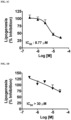
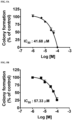
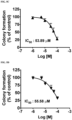
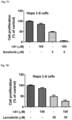
- Hep3B and murine liver cancer cells Hepa1-6 were seeded at a cell density of 3000 cells/well in 96-well plates using either Eagle's Minimum Essential Medium (Corning) for Hep3B or Dulbecco's Modified Eagle's Medium (DMEM) High Glucose (Gibco) for Hepa1-6 cells, supplemented with 10% fetal bovine serum (FBS, Gibco) and 1% Antibiotic-Antimycotic solution (Thermo-Fisher Scientific).
- DMEM Dulbecco's Modified Eagle's Medium
- the cells were treated with 0 (vehicle control), 0.1, 0.5, 1, 5, 10, 30, 50 or 100 ⁇ M Compound I-32, I-61, I-1, or III-1 (final concentration of DMSO 0.1%) and were allowed to grow for 72 hours at 37 °C.
- 10 ⁇ l of PrestoBlue TM Cell Viability Reagent (Invitrogen) was added to each well and the plate was incubated at 37 °C for an additional 1-2 hours. After incubation, fluorescence signal was measured with an excitation/emission wavelength of 560/590 nm using a SpectraMax M5 Microplate Reader (Molecular Devices).
Landscapes
- Health & Medical Sciences (AREA)
- Chemical & Material Sciences (AREA)
- Organic Chemistry (AREA)
- Animal Behavior & Ethology (AREA)
- Life Sciences & Earth Sciences (AREA)
- Pharmacology & Pharmacy (AREA)
- General Health & Medical Sciences (AREA)
- Public Health (AREA)
- Veterinary Medicine (AREA)
- Medicinal Chemistry (AREA)
- General Chemical & Material Sciences (AREA)
- Chemical Kinetics & Catalysis (AREA)
- Nuclear Medicine, Radiotherapy & Molecular Imaging (AREA)
- Diabetes (AREA)
- Bioinformatics & Cheminformatics (AREA)
- Engineering & Computer Science (AREA)
- Epidemiology (AREA)
- Obesity (AREA)
- Hematology (AREA)
- Pain & Pain Management (AREA)
- Rheumatology (AREA)
- Emergency Medicine (AREA)
- Endocrinology (AREA)
- Gastroenterology & Hepatology (AREA)
- Pharmaceuticals Containing Other Organic And Inorganic Compounds (AREA)
- Acyclic And Carbocyclic Compounds In Medicinal Compositions (AREA)
- Medicines That Contain Protein Lipid Enzymes And Other Medicines (AREA)
- Organic Low-Molecular-Weight Compounds And Preparation Thereof (AREA)
- Medicines Containing Antibodies Or Antigens For Use As Internal Diagnostic Agents (AREA)
- Medicines Containing Material From Animals Or Micro-Organisms (AREA)
Priority Applications (1)
| Application Number | Priority Date | Filing Date | Title |
|---|---|---|---|
| EP24186245.7A EP4464688A1 (en) | 2019-07-26 | 2020-07-23 | Functionalized long-chain hydrocarbon mono- and di-carboxylic acids useful for the prevention or treatment of disease |
Applications Claiming Priority (3)
| Application Number | Priority Date | Filing Date | Title |
|---|---|---|---|
| US201962878852P | 2019-07-26 | 2019-07-26 | |
| US201962901739P | 2019-09-17 | 2019-09-17 | |
| PCT/US2020/043274 WO2021021563A1 (en) | 2019-07-26 | 2020-07-23 | Functionalized long-chain hydrocarbon mono- and di-carboxylic acids useful for the prevention or treatment of disease |
Related Child Applications (1)
| Application Number | Title | Priority Date | Filing Date |
|---|---|---|---|
| EP24186245.7A Division EP4464688A1 (en) | 2019-07-26 | 2020-07-23 | Functionalized long-chain hydrocarbon mono- and di-carboxylic acids useful for the prevention or treatment of disease |
Publications (4)
| Publication Number | Publication Date |
|---|---|
| EP4003314A1 EP4003314A1 (en) | 2022-06-01 |
| EP4003314A4 EP4003314A4 (en) | 2023-09-20 |
| EP4003314C0 EP4003314C0 (en) | 2024-07-10 |
| EP4003314B1 true EP4003314B1 (en) | 2024-07-10 |
Family
ID=74189909
Family Applications (2)
| Application Number | Title | Priority Date | Filing Date |
|---|---|---|---|
| EP20848591.2A Active EP4003314B1 (en) | 2019-07-26 | 2020-07-23 | Functionalized long-chain hydrocarbon mono- and di-carboxylic acids useful for the prevention or treatment of disease |
| EP24186245.7A Pending EP4464688A1 (en) | 2019-07-26 | 2020-07-23 | Functionalized long-chain hydrocarbon mono- and di-carboxylic acids useful for the prevention or treatment of disease |
Family Applications After (1)
| Application Number | Title | Priority Date | Filing Date |
|---|---|---|---|
| EP24186245.7A Pending EP4464688A1 (en) | 2019-07-26 | 2020-07-23 | Functionalized long-chain hydrocarbon mono- and di-carboxylic acids useful for the prevention or treatment of disease |
Country Status (14)
| Country | Link |
|---|---|
| US (8) | US11098002B2 (enExample) |
| EP (2) | EP4003314B1 (enExample) |
| JP (2) | JP7783802B2 (enExample) |
| KR (1) | KR20220039754A (enExample) |
| CN (2) | CN118903087A (enExample) |
| AU (2) | AU2020321945B2 (enExample) |
| BR (1) | BR112022000993A2 (enExample) |
| CA (1) | CA3143294C (enExample) |
| ES (1) | ES2991100T3 (enExample) |
| IL (1) | IL289919B2 (enExample) |
| MX (2) | MX2022000570A (enExample) |
| TW (2) | TW202532387A (enExample) |
| WO (1) | WO2021021563A1 (enExample) |
| ZA (1) | ZA202110502B (enExample) |
Families Citing this family (13)
| Publication number | Priority date | Publication date | Assignee | Title |
|---|---|---|---|---|
| US11098002B2 (en) | 2019-07-26 | 2021-08-24 | Espervita Therapeutics, Inc. | Functionalized long-chain hydrocarbon mono- and di-carboxylic acids and their use for the prevention or treatment of disease |
| HUE071473T2 (hu) * | 2020-04-15 | 2025-09-28 | Medivir Ab | MIV-818/lenvatinib kombinációs terápia májrák kezelésére |
| WO2022159811A1 (en) * | 2021-01-25 | 2022-07-28 | Espervita Therapeutics, Inc. | Functionalized long-chain hydrocarbon mono- and di-carboxylic acids and derivatives thereof, and their use for the prevention or treatment of disease |
| CA3209453A1 (en) | 2021-01-25 | 2022-07-28 | Espervita Therapeutics, Inc. | Functionalized long-chain hydrocarbon mono- and di-carboxylic acids and derivatives therof, and their use for the prevention or treatment of disease |
| CA3203644A1 (en) * | 2021-02-26 | 2022-09-01 | Obi Pharma, Inc. | Use of akr1c3-activated compound |
| KR20240004519A (ko) * | 2021-04-28 | 2024-01-11 | 아센타위츠 파마슈티컬즈 리미티드 | 면역관문 억제제와 함께 akr1c3-활성화 화합물을 사용하는 병용 요법 |
| CN115887435A (zh) * | 2021-09-23 | 2023-04-04 | 博骥源(上海)生物医药有限公司 | 长链类化合物及其用途 |
| CN114736191B (zh) * | 2022-04-01 | 2023-08-08 | 上海工程技术大学 | 特普替尼中间体及其制备方法和应用 |
| CN114949230B (zh) * | 2022-06-13 | 2024-12-06 | 厦门大学附属第一医院 | 一种预防和/或治疗急性髓系白血病的联合用药物组合物及其应用 |
| CN115844887B (zh) * | 2022-12-28 | 2023-09-08 | 中国人民解放军空军军医大学 | Selonsertib在制备治疗癌症的药物中的用途 |
| KR102928747B1 (ko) | 2023-07-21 | 2026-02-26 | 대한민국 | 피라졸로[1,5-에이]퀴나졸린 유도체 화합물을 포함하는 인간면역결핍바이러스 억제용 조성물 |
| CN117843938B (zh) * | 2024-03-08 | 2024-05-24 | 华东理工大学 | 一种类聚烯烃的长碳链聚酯弹性体、制备方法及其应用 |
| CN120131672B (zh) * | 2025-04-28 | 2025-12-26 | 山东大学 | 乐伐替尼联合熊去氧胆酸在肝癌治疗中的应用 |
Family Cites Families (66)
| Publication number | Priority date | Publication date | Assignee | Title |
|---|---|---|---|---|
| US397037A (en) | 1889-01-29 | Conductor-support | ||
| US2789970A (en) | 1953-12-08 | 1957-04-23 | Eastman Kodak Co | Polycarbonates from 1, 4-bis-(beta-hydroxyethyl)-benzenes-bis |
| GB900875A (en) | 1959-11-12 | 1962-07-11 | Sierra Eng Co | Check valve |
| US3536809A (en) | 1969-02-17 | 1970-10-27 | Alza Corp | Medication method |
| US3598123A (en) | 1969-04-01 | 1971-08-10 | Alza Corp | Bandage for administering drugs |
| US3845770A (en) | 1972-06-05 | 1974-11-05 | Alza Corp | Osmatic dispensing device for releasing beneficial agent |
| US3916899A (en) | 1973-04-25 | 1975-11-04 | Alza Corp | Osmotic dispensing device with maximum and minimum sizes for the passageway |
| DE2410782C2 (de) | 1974-03-07 | 1982-02-18 | Dynamit Nobel Ag, 5210 Troisdorf | Phenylendiessigsäuredialkylester und Verfahren zu deren Herstellung |
| US4008719A (en) | 1976-02-02 | 1977-02-22 | Alza Corporation | Osmotic system having laminar arrangement for programming delivery of active agent |
| US4410545A (en) | 1981-02-13 | 1983-10-18 | Syntex (U.S.A.) Inc. | Carbonate diester solutions of PGE-type compounds |
| US4328245A (en) | 1981-02-13 | 1982-05-04 | Syntex (U.S.A.) Inc. | Carbonate diester solutions of PGE-type compounds |
| IL64542A0 (en) * | 1981-12-15 | 1982-03-31 | Yissum Res Dev Co | Long-chain alpha,omega-dicarboxylic acids and derivatives thereof and pharmaceutical compositions containing them |
| US4409239A (en) | 1982-01-21 | 1983-10-11 | Syntex (U.S.A.) Inc. | Propylene glycol diester solutions of PGE-type compounds |
| DE3423166A1 (de) | 1984-06-22 | 1986-01-02 | Epis S.A., Zug | Alpha-, omega-dicarbonsaeuren, verfahren zu ihrer herstellung und arzneimittel, die diese verbindungen enthalten |
| HU196714B (en) | 1984-10-04 | 1989-01-30 | Monsanto Co | Process for producing non-aqueous composition comprising somatotropin |
| IE58110B1 (en) | 1984-10-30 | 1993-07-14 | Elan Corp Plc | Controlled release powder and process for its preparation |
| US5073543A (en) | 1988-07-21 | 1991-12-17 | G. D. Searle & Co. | Controlled release formulations of trophic factors in ganglioside-lipsome vehicle |
| US5612059A (en) | 1988-08-30 | 1997-03-18 | Pfizer Inc. | Use of asymmetric membranes in delivery devices |
| IT1229203B (it) | 1989-03-22 | 1991-07-25 | Bioresearch Spa | Impiego di acido 5 metiltetraidrofolico, di acido 5 formiltetraidrofolico e dei loro sali farmaceuticamente accettabili per la preparazione di composizioni farmaceutiche in forma a rilascio controllato attive nella terapia dei disturbi mentali organici e composizioni farmaceutiche relative. |
| PH30995A (en) | 1989-07-07 | 1997-12-23 | Novartis Inc | Sustained release formulations of water soluble peptides. |
| US5120548A (en) | 1989-11-07 | 1992-06-09 | Merck & Co., Inc. | Swelling modulated polymeric drug delivery device |
| US5733566A (en) | 1990-05-15 | 1998-03-31 | Alkermes Controlled Therapeutics Inc. Ii | Controlled release of antiparasitic agents in animals |
| US5580578A (en) | 1992-01-27 | 1996-12-03 | Euro-Celtique, S.A. | Controlled release formulations coated with aqueous dispersions of acrylic polymers |
| TW333456B (en) | 1992-12-07 | 1998-06-11 | Takeda Pharm Ind Co Ltd | A pharmaceutical composition of sustained-release preparation the invention relates to a pharmaceutical composition of sustained-release preparation which comprises a physiologically active peptide. |
| US5591767A (en) | 1993-01-25 | 1997-01-07 | Pharmetrix Corporation | Liquid reservoir transdermal patch for the administration of ketorolac |
| US5387672A (en) * | 1993-03-02 | 1995-02-07 | The University Of Maryland At Baltimore | Hemoglobin intramolecularly cross-linked withlong chain divalent reagents |
| US6087324A (en) | 1993-06-24 | 2000-07-11 | Takeda Chemical Industries, Ltd. | Sustained-release preparation |
| IT1270594B (it) | 1994-07-07 | 1997-05-07 | Recordati Chem Pharm | Composizione farmaceutica a rilascio controllato di moguisteina in sospensione liquida |
| US5648387A (en) | 1995-03-24 | 1997-07-15 | Warner-Lambert Company | Carboxyalkylethers, formulations, and treatment of vascular diseases |
| US5798119A (en) | 1995-06-13 | 1998-08-25 | S. C. Johnson & Son, Inc. | Osmotic-delivery devices having vapor-permeable coatings |
| AU6242096A (en) | 1995-06-27 | 1997-01-30 | Takeda Chemical Industries Ltd. | Method of producing sustained-release preparation |
| TW448055B (en) | 1995-09-04 | 2001-08-01 | Takeda Chemical Industries Ltd | Method of production of sustained-release preparation |
| JP2909418B2 (ja) | 1995-09-18 | 1999-06-23 | 株式会社資生堂 | 薬物の遅延放出型マイクロスフイア |
| US5980945A (en) | 1996-01-16 | 1999-11-09 | Societe De Conseils De Recherches Et D'applications Scientifique S.A. | Sustained release drug formulations |
| US6264970B1 (en) | 1996-06-26 | 2001-07-24 | Takeda Chemical Industries, Ltd. | Sustained-release preparation |
| US6419961B1 (en) | 1996-08-29 | 2002-07-16 | Takeda Chemical Industries, Ltd. | Sustained release microcapsules of a bioactive substance and a biodegradable polymer |
| CA2217134A1 (en) | 1996-10-09 | 1998-04-09 | Sumitomo Pharmaceuticals Co., Ltd. | Sustained release formulation |
| PT839525E (pt) | 1996-10-31 | 2004-10-29 | Takeda Chemical Industries Ltd | Preparacao de libertacao prolongada |
| WO1998027980A2 (en) | 1996-12-20 | 1998-07-02 | Takeda Chemical Industries, Ltd. | Method of producing a sustained-release preparation |
| US5891474A (en) | 1997-01-29 | 1999-04-06 | Poli Industria Chimica, S.P.A. | Time-specific controlled release dosage formulations and method of preparing same |
| US20020037876A1 (en) * | 1998-06-25 | 2002-03-28 | Yissum Research Development Company Of Hebrew University Of Jerusalem | Carboxylic acids and derivatives thereof and pharmaceutical compositions containing them |
| US6350458B1 (en) | 1998-02-10 | 2002-02-26 | Generex Pharmaceuticals Incorporated | Mixed micellar drug deliver system and method of preparation |
| US6613358B2 (en) | 1998-03-18 | 2003-09-02 | Theodore W. Randolph | Sustained-release composition including amorphous polymer |
| KR19990085365A (ko) | 1998-05-16 | 1999-12-06 | 허영섭 | 지속적으로 약물 조절방출이 가능한 생분해성 고분자 미립구 및그 제조방법 |
| US6248363B1 (en) | 1999-11-23 | 2001-06-19 | Lipocine, Inc. | Solid carriers for improved delivery of active ingredients in pharmaceutical compositions |
| US6410802B1 (en) | 1999-04-01 | 2002-06-25 | Esperion Therapeutics, Inc. | Methods for synthesizing ether compounds and intermediates therefor |
| BR0113626A (pt) | 2000-08-30 | 2003-06-17 | Pfizer Prod Inc | Formulações de liberação sustentada para secretores de hormÈnio do crescimento |
| CA2425311C (en) | 2000-10-11 | 2011-06-14 | Esperion Therapeutics, Inc. | Ketone compounds and compositions for cholesterol management and related uses |
| JP2004531459A (ja) | 2000-10-11 | 2004-10-14 | エスペリオン セラピューティクス,インコーポレイテッド | コレステロールマネージメント用スルホキシドおよびビススルホキシド化合物ならびに組成物および関連する使用 |
| JP2005522504A (ja) | 2002-04-10 | 2005-07-28 | エスペリオン セラピューティクス,インコーポレイテッド | パントラクトンおよびパントテン酸誘導体を含むアシル補酵素−aのミミック、その組成物、ならびにコレステロール管理の方法および関連の使用 |
| ES2625429T3 (es) | 2003-01-23 | 2017-07-19 | Esperion Therapeutics Inc. | Compuestos de hidroxilo y composiciones para el control del colesterol y utilizaciones correspondientes |
| US7638531B2 (en) | 2005-12-21 | 2009-12-29 | Schering Corporation | Phenoxypiperidines and analogs thereof useful as histamine H3 antagonists |
| SG189019A1 (en) | 2010-10-18 | 2013-05-31 | Cerenis Therapeutics Holding Sa | Compounds, compositions and methods useful for cholesterol mobilisation |
| CN105997967B (zh) | 2010-10-27 | 2019-08-23 | 普罗米蒂克医药Smt有限公司 | 用于治疗癌症的化合物和组合物 |
| CN107096032A (zh) | 2011-05-16 | 2017-08-29 | 罗马克实验室有限公司 | 在有需要的对象中刺激免疫应答的方法 |
| WO2012159107A1 (en) | 2011-05-19 | 2012-11-22 | Rhode Island Hospital | Inhibition of renal fibrosis |
| US20140378922A1 (en) | 2013-06-25 | 2014-12-25 | Basf Se | Fluid-absorbent article with indicator |
| WO2016077832A2 (en) | 2014-11-14 | 2016-05-19 | Gemphire Therapeutics Inc. | PROCESSES AND INTERMEDIATES FOR PREPARING α,ω-DICARBOXYLIC ACID-TERMINATED DIALKANE ETHERS |
| AU2016253972B2 (en) | 2015-04-27 | 2020-01-02 | Acuitas Therapeutics Inc. | Nucleoside-modified RNA for inducing an adaptive immune response |
| TWI773657B (zh) | 2015-12-18 | 2022-08-11 | 美商亞德利克斯公司 | 作爲非全身tgr5促效劑之經取代之4-苯基吡啶化合物 |
| CN105801405A (zh) | 2016-05-23 | 2016-07-27 | 天津迪尔斯化学科技有限公司 | 一种降血脂小分子化合物、中间体及各自制备方法 |
| US10004761B2 (en) | 2016-06-21 | 2018-06-26 | Mark M. Levy | Malodor neutralizing composition |
| CN110200981A (zh) | 2019-06-06 | 2019-09-06 | 中国药科大学 | 五环三萜皂苷的医药用途及其药物组合物 |
| US11098002B2 (en) | 2019-07-26 | 2021-08-24 | Espervita Therapeutics, Inc. | Functionalized long-chain hydrocarbon mono- and di-carboxylic acids and their use for the prevention or treatment of disease |
| WO2022159811A1 (en) | 2021-01-25 | 2022-07-28 | Espervita Therapeutics, Inc. | Functionalized long-chain hydrocarbon mono- and di-carboxylic acids and derivatives thereof, and their use for the prevention or treatment of disease |
| CA3209453A1 (en) | 2021-01-25 | 2022-07-28 | Espervita Therapeutics, Inc. | Functionalized long-chain hydrocarbon mono- and di-carboxylic acids and derivatives therof, and their use for the prevention or treatment of disease |
-
2020
- 2020-07-23 US US16/937,154 patent/US11098002B2/en active Active
- 2020-07-23 EP EP20848591.2A patent/EP4003314B1/en active Active
- 2020-07-23 TW TW113140056A patent/TW202532387A/zh unknown
- 2020-07-23 AU AU2020321945A patent/AU2020321945B2/en active Active
- 2020-07-23 ES ES20848591T patent/ES2991100T3/es active Active
- 2020-07-23 WO PCT/US2020/043274 patent/WO2021021563A1/en not_active Ceased
- 2020-07-23 IL IL289919A patent/IL289919B2/en unknown
- 2020-07-23 JP JP2022503935A patent/JP7783802B2/ja active Active
- 2020-07-23 TW TW109124977A patent/TWI862642B/zh active
- 2020-07-23 BR BR112022000993A patent/BR112022000993A2/pt unknown
- 2020-07-23 CA CA3143294A patent/CA3143294C/en active Active
- 2020-07-23 EP EP24186245.7A patent/EP4464688A1/en active Pending
- 2020-07-23 CN CN202410969586.6A patent/CN118903087A/zh active Pending
- 2020-07-23 MX MX2022000570A patent/MX2022000570A/es unknown
- 2020-07-23 KR KR1020227005523A patent/KR20220039754A/ko active Pending
- 2020-07-23 CN CN202080052472.5A patent/CN114126593B/zh active Active
-
2021
- 2021-03-03 US US17/190,844 patent/US11084773B1/en active Active
- 2021-04-26 US US17/240,513 patent/US11267778B2/en active Active
- 2021-07-12 US US17/373,110 patent/US20220402851A1/en not_active Abandoned
- 2021-12-15 ZA ZA2021/10502A patent/ZA202110502B/en unknown
-
2022
- 2022-01-07 US US17/571,107 patent/US20230007838A1/en not_active Abandoned
- 2022-01-13 MX MX2025002978A patent/MX2025002978A/es unknown
-
2023
- 2023-06-01 US US18/204,442 patent/US12180151B2/en active Active
-
2024
- 2024-08-22 US US18/812,284 patent/US12252467B2/en active Active
-
2025
- 2025-03-07 AU AU2025201689A patent/AU2025201689A1/en active Pending
- 2025-03-17 US US19/082,112 patent/US20250367149A1/en active Pending
- 2025-11-28 JP JP2025207487A patent/JP2026048714A/ja active Pending
Also Published As
Similar Documents
| Publication | Publication Date | Title |
|---|---|---|
| EP4003314B1 (en) | Functionalized long-chain hydrocarbon mono- and di-carboxylic acids useful for the prevention or treatment of disease | |
| JP2020519697A (ja) | インドリジン誘導体及びその医学的応用 | |
| US11730712B2 (en) | Functionalized long-chain hydrocarbon mono- and di-carboxylic acids and derivatives thereof, and their use for the prevention or treatment of disease | |
| WO2022159808A2 (en) | Functionalized long-chain hydrocarbon mono- and di-carboxylic acids and derivatives thereof, and their use for the prevention or treatment of disease | |
| RU2839725C2 (ru) | Функционализированные моно- и дикарбоновые кислоты с длинной углеводородной цепью и их применение для предотвращения или лечения заболеваний | |
| TW202517249A (zh) | 含有缺氧誘導因子-脯醯胺羥基化酶抑制劑的長效口服藥物及其用途 | |
| HK40065893A (en) | Functionalized long-chain hydrocarbon mono- and di-carboxylic acids useful for the prevention or treatment of disease | |
| HK40065893B (en) | Functionalized long-chain hydrocarbon mono- and di-carboxylic acids useful for the prevention or treatment of disease | |
| JP2022542613A (ja) | ヒトatglの阻害剤 | |
| HK40063169A (en) | Functionalized long-chain hydrocarbon mono- and di-carboxylic acids useful for the prevention or treatment of disease | |
| BR122024018347A2 (pt) | Compostos, seus usos na prevenção ou tratamento de doenças, e composição farmacêutica | |
| HK40063169B (zh) | 可用於预防或治疗疾病的官能化的长链烃一元和二元羧酸 | |
| CN118119386A (zh) | 官能化羧酸以及其用于治疗疾病的用途 |
Legal Events
| Date | Code | Title | Description |
|---|---|---|---|
| STAA | Information on the status of an ep patent application or granted ep patent |
Free format text: STATUS: THE INTERNATIONAL PUBLICATION HAS BEEN MADE |
|
| PUAI | Public reference made under article 153(3) epc to a published international application that has entered the european phase |
Free format text: ORIGINAL CODE: 0009012 |
|
| STAA | Information on the status of an ep patent application or granted ep patent |
Free format text: STATUS: REQUEST FOR EXAMINATION WAS MADE |
|
| 17P | Request for examination filed |
Effective date: 20220222 |
|
| AK | Designated contracting states |
Kind code of ref document: A1 Designated state(s): AL AT BE BG CH CY CZ DE DK EE ES FI FR GB GR HR HU IE IS IT LI LT LU LV MC MK MT NL NO PL PT RO RS SE SI SK SM TR |
|
| REG | Reference to a national code |
Ref country code: HK Ref legal event code: DE Ref document number: 40065893 Country of ref document: HK |
|
| DAV | Request for validation of the european patent (deleted) | ||
| DAX | Request for extension of the european patent (deleted) | ||
| REG | Reference to a national code |
Ref country code: DE Free format text: PREVIOUS MAIN CLASS: A61K0031047000 Ipc: C07C0057340000 Ref country code: DE Ref legal event code: R079 Ref document number: 602020033880 Country of ref document: DE Free format text: PREVIOUS MAIN CLASS: A61K0031047000 Ipc: C07C0057340000 |
|
| A4 | Supplementary search report drawn up and despatched |
Effective date: 20230821 |
|
| RIC1 | Information provided on ipc code assigned before grant |
Ipc: A61K 31/194 20060101ALI20230814BHEP Ipc: A61K 31/192 20060101ALI20230814BHEP Ipc: A61K 31/047 20060101ALI20230814BHEP Ipc: C07C 61/39 20060101ALI20230814BHEP Ipc: C07C 57/34 20060101AFI20230814BHEP |
|
| GRAP | Despatch of communication of intention to grant a patent |
Free format text: ORIGINAL CODE: EPIDOSNIGR1 |
|
| STAA | Information on the status of an ep patent application or granted ep patent |
Free format text: STATUS: GRANT OF PATENT IS INTENDED |
|
| RIC1 | Information provided on ipc code assigned before grant |
Ipc: A61K 31/194 20060101ALI20240102BHEP Ipc: A61K 31/192 20060101ALI20240102BHEP Ipc: A61K 31/047 20060101ALI20240102BHEP Ipc: C07C 61/39 20060101ALI20240102BHEP Ipc: C07C 57/34 20060101AFI20240102BHEP |
|
| INTG | Intention to grant announced |
Effective date: 20240131 |
|
| GRAS | Grant fee paid |
Free format text: ORIGINAL CODE: EPIDOSNIGR3 |
|
| GRAA | (expected) grant |
Free format text: ORIGINAL CODE: 0009210 |
|
| STAA | Information on the status of an ep patent application or granted ep patent |
Free format text: STATUS: THE PATENT HAS BEEN GRANTED |
|
| AK | Designated contracting states |
Kind code of ref document: B1 Designated state(s): AL AT BE BG CH CY CZ DE DK EE ES FI FR GB GR HR HU IE IS IT LI LT LU LV MC MK MT NL NO PL PT RO RS SE SI SK SM TR |
|
| REG | Reference to a national code |
Ref country code: CH Ref legal event code: EP |
|
| REG | Reference to a national code |
Ref country code: DE Ref legal event code: R096 Ref document number: 602020033880 Country of ref document: DE |
|
| U01 | Request for unitary effect filed |
Effective date: 20240716 |
|
| U07 | Unitary effect registered |
Designated state(s): AT BE BG DE DK EE FI FR IT LT LU LV MT NL PT RO SE SI Effective date: 20240902 |
|
| U20 | Renewal fee for the european patent with unitary effect paid |
Year of fee payment: 5 Effective date: 20240916 |
|
| REG | Reference to a national code |
Ref country code: ES Ref legal event code: FG2A Ref document number: 2991100 Country of ref document: ES Kind code of ref document: T3 Effective date: 20241202 |
|
| PG25 | Lapsed in a contracting state [announced via postgrant information from national office to epo] |
Ref country code: GR Free format text: LAPSE BECAUSE OF FAILURE TO SUBMIT A TRANSLATION OF THE DESCRIPTION OR TO PAY THE FEE WITHIN THE PRESCRIBED TIME-LIMIT Effective date: 20241011 Ref country code: PL Free format text: LAPSE BECAUSE OF FAILURE TO SUBMIT A TRANSLATION OF THE DESCRIPTION OR TO PAY THE FEE WITHIN THE PRESCRIBED TIME-LIMIT Effective date: 20240710 |
|
| PG25 | Lapsed in a contracting state [announced via postgrant information from national office to epo] |
Ref country code: IS Free format text: LAPSE BECAUSE OF FAILURE TO SUBMIT A TRANSLATION OF THE DESCRIPTION OR TO PAY THE FEE WITHIN THE PRESCRIBED TIME-LIMIT Effective date: 20241110 |
|
| PG25 | Lapsed in a contracting state [announced via postgrant information from national office to epo] |
Ref country code: HR Free format text: LAPSE BECAUSE OF FAILURE TO SUBMIT A TRANSLATION OF THE DESCRIPTION OR TO PAY THE FEE WITHIN THE PRESCRIBED TIME-LIMIT Effective date: 20240710 |
|
| PG25 | Lapsed in a contracting state [announced via postgrant information from national office to epo] |
Ref country code: RS Free format text: LAPSE BECAUSE OF FAILURE TO SUBMIT A TRANSLATION OF THE DESCRIPTION OR TO PAY THE FEE WITHIN THE PRESCRIBED TIME-LIMIT Effective date: 20241010 |
|
| PG25 | Lapsed in a contracting state [announced via postgrant information from national office to epo] |
Ref country code: RS Free format text: LAPSE BECAUSE OF FAILURE TO SUBMIT A TRANSLATION OF THE DESCRIPTION OR TO PAY THE FEE WITHIN THE PRESCRIBED TIME-LIMIT Effective date: 20241010 Ref country code: PL Free format text: LAPSE BECAUSE OF FAILURE TO SUBMIT A TRANSLATION OF THE DESCRIPTION OR TO PAY THE FEE WITHIN THE PRESCRIBED TIME-LIMIT Effective date: 20240710 Ref country code: IS Free format text: LAPSE BECAUSE OF FAILURE TO SUBMIT A TRANSLATION OF THE DESCRIPTION OR TO PAY THE FEE WITHIN THE PRESCRIBED TIME-LIMIT Effective date: 20241110 Ref country code: HR Free format text: LAPSE BECAUSE OF FAILURE TO SUBMIT A TRANSLATION OF THE DESCRIPTION OR TO PAY THE FEE WITHIN THE PRESCRIBED TIME-LIMIT Effective date: 20240710 Ref country code: GR Free format text: LAPSE BECAUSE OF FAILURE TO SUBMIT A TRANSLATION OF THE DESCRIPTION OR TO PAY THE FEE WITHIN THE PRESCRIBED TIME-LIMIT Effective date: 20241011 |
|
| PG25 | Lapsed in a contracting state [announced via postgrant information from national office to epo] |
Ref country code: SM Free format text: LAPSE BECAUSE OF FAILURE TO SUBMIT A TRANSLATION OF THE DESCRIPTION OR TO PAY THE FEE WITHIN THE PRESCRIBED TIME-LIMIT Effective date: 20240710 |
|
| PG25 | Lapsed in a contracting state [announced via postgrant information from national office to epo] |
Ref country code: MC Free format text: LAPSE BECAUSE OF FAILURE TO SUBMIT A TRANSLATION OF THE DESCRIPTION OR TO PAY THE FEE WITHIN THE PRESCRIBED TIME-LIMIT Effective date: 20240710 |
|
| PG25 | Lapsed in a contracting state [announced via postgrant information from national office to epo] |
Ref country code: CZ Free format text: LAPSE BECAUSE OF FAILURE TO SUBMIT A TRANSLATION OF THE DESCRIPTION OR TO PAY THE FEE WITHIN THE PRESCRIBED TIME-LIMIT Effective date: 20240710 |
|
| PG25 | Lapsed in a contracting state [announced via postgrant information from national office to epo] |
Ref country code: SK Free format text: LAPSE BECAUSE OF FAILURE TO SUBMIT A TRANSLATION OF THE DESCRIPTION OR TO PAY THE FEE WITHIN THE PRESCRIBED TIME-LIMIT Effective date: 20240710 |
|
| PLBE | No opposition filed within time limit |
Free format text: ORIGINAL CODE: 0009261 |
|
| STAA | Information on the status of an ep patent application or granted ep patent |
Free format text: STATUS: NO OPPOSITION FILED WITHIN TIME LIMIT |
|
| 26N | No opposition filed |
Effective date: 20250411 |
|
| U20 | Renewal fee for the european patent with unitary effect paid |
Year of fee payment: 6 Effective date: 20250728 |
|
| PGFP | Annual fee paid to national office [announced via postgrant information from national office to epo] |
Ref country code: ES Payment date: 20250827 Year of fee payment: 6 |
|
| PGFP | Annual fee paid to national office [announced via postgrant information from national office to epo] |
Ref country code: NO Payment date: 20250725 Year of fee payment: 6 |
|
| PGFP | Annual fee paid to national office [announced via postgrant information from national office to epo] |
Ref country code: GB Payment date: 20250722 Year of fee payment: 6 |
|
| PGFP | Annual fee paid to national office [announced via postgrant information from national office to epo] |
Ref country code: CH Payment date: 20250801 Year of fee payment: 6 |
|
| PGFP | Annual fee paid to national office [announced via postgrant information from national office to epo] |
Ref country code: IE Payment date: 20250723 Year of fee payment: 6 |
|
| PG25 | Lapsed in a contracting state [announced via postgrant information from national office to epo] |
Ref country code: CY Free format text: LAPSE BECAUSE OF FAILURE TO SUBMIT A TRANSLATION OF THE DESCRIPTION OR TO PAY THE FEE WITHIN THE PRESCRIBED TIME-LIMIT; INVALID AB INITIO Effective date: 20200723 |
|
| PG25 | Lapsed in a contracting state [announced via postgrant information from national office to epo] |
Ref country code: HU Free format text: LAPSE BECAUSE OF FAILURE TO SUBMIT A TRANSLATION OF THE DESCRIPTION OR TO PAY THE FEE WITHIN THE PRESCRIBED TIME-LIMIT; INVALID AB INITIO Effective date: 20200723 |