EP3979988B1 - Synthetic lipids for mrna delivery - Google Patents
Synthetic lipids for mrna delivery Download PDFInfo
- Publication number
- EP3979988B1 EP3979988B1 EP20817914.3A EP20817914A EP3979988B1 EP 3979988 B1 EP3979988 B1 EP 3979988B1 EP 20817914 A EP20817914 A EP 20817914A EP 3979988 B1 EP3979988 B1 EP 3979988B1
- Authority
- EP
- European Patent Office
- Prior art keywords
- mrna
- lipid
- nanoparticle
- delivery
- bamea
- Prior art date
- Legal status (The legal status is an assumption and is not a legal conclusion. Google has not performed a legal analysis and makes no representation as to the accuracy of the status listed.)
- Active
Links
Images











Classifications
-
- A—HUMAN NECESSITIES
- A61—MEDICAL OR VETERINARY SCIENCE; HYGIENE
- A61K—PREPARATIONS FOR MEDICAL, DENTAL OR TOILETRY PURPOSES
- A61K9/00—Medicinal preparations characterised by special physical form
- A61K9/10—Dispersions; Emulsions
- A61K9/127—Synthetic bilayered vehicles, e.g. liposomes or liposomes with cholesterol as the only non-phosphatidyl surfactant
- A61K9/1271—Non-conventional liposomes, e.g. PEGylated liposomes or liposomes coated or grafted with polymers
-
- A—HUMAN NECESSITIES
- A61—MEDICAL OR VETERINARY SCIENCE; HYGIENE
- A61K—PREPARATIONS FOR MEDICAL, DENTAL OR TOILETRY PURPOSES
- A61K31/00—Medicinal preparations containing organic active ingredients
- A61K31/70—Carbohydrates; Sugars; Derivatives thereof
- A61K31/7088—Compounds having three or more nucleosides or nucleotides
-
- A—HUMAN NECESSITIES
- A61—MEDICAL OR VETERINARY SCIENCE; HYGIENE
- A61K—PREPARATIONS FOR MEDICAL, DENTAL OR TOILETRY PURPOSES
- A61K38/00—Medicinal preparations containing peptides
- A61K38/16—Peptides having more than 20 amino acids; Gastrins; Somatostatins; Melanotropins; Derivatives thereof
- A61K38/43—Enzymes; Proenzymes; Derivatives thereof
- A61K38/46—Hydrolases (3)
- A61K38/465—Hydrolases (3) acting on ester bonds (3.1), e.g. lipases, ribonucleases
-
- A—HUMAN NECESSITIES
- A61—MEDICAL OR VETERINARY SCIENCE; HYGIENE
- A61K—PREPARATIONS FOR MEDICAL, DENTAL OR TOILETRY PURPOSES
- A61K47/00—Medicinal preparations characterised by the non-active ingredients used, e.g. carriers or inert additives; Targeting or modifying agents chemically bound to the active ingredient
- A61K47/06—Organic compounds, e.g. natural or synthetic hydrocarbons, polyolefins, mineral oil, petrolatum or ozokerite
- A61K47/08—Organic compounds, e.g. natural or synthetic hydrocarbons, polyolefins, mineral oil, petrolatum or ozokerite containing oxygen, e.g. ethers, acetals, ketones, quinones, aldehydes, peroxides
- A61K47/14—Esters of carboxylic acids, e.g. fatty acid monoglycerides, medium-chain triglycerides, parabens or PEG fatty acid esters
-
- A—HUMAN NECESSITIES
- A61—MEDICAL OR VETERINARY SCIENCE; HYGIENE
- A61K—PREPARATIONS FOR MEDICAL, DENTAL OR TOILETRY PURPOSES
- A61K47/00—Medicinal preparations characterised by the non-active ingredients used, e.g. carriers or inert additives; Targeting or modifying agents chemically bound to the active ingredient
- A61K47/06—Organic compounds, e.g. natural or synthetic hydrocarbons, polyolefins, mineral oil, petrolatum or ozokerite
- A61K47/20—Organic compounds, e.g. natural or synthetic hydrocarbons, polyolefins, mineral oil, petrolatum or ozokerite containing sulfur, e.g. dimethyl sulfoxide [DMSO], docusate, sodium lauryl sulfate or aminosulfonic acids
-
- A—HUMAN NECESSITIES
- A61—MEDICAL OR VETERINARY SCIENCE; HYGIENE
- A61K—PREPARATIONS FOR MEDICAL, DENTAL OR TOILETRY PURPOSES
- A61K48/00—Medicinal preparations containing genetic material which is inserted into cells of the living body to treat genetic diseases; Gene therapy
- A61K48/0008—Medicinal preparations containing genetic material which is inserted into cells of the living body to treat genetic diseases; Gene therapy characterised by an aspect of the 'non-active' part of the composition delivered, e.g. wherein such 'non-active' part is not delivered simultaneously with the 'active' part of the composition
- A61K48/0025—Medicinal preparations containing genetic material which is inserted into cells of the living body to treat genetic diseases; Gene therapy characterised by an aspect of the 'non-active' part of the composition delivered, e.g. wherein such 'non-active' part is not delivered simultaneously with the 'active' part of the composition wherein the non-active part clearly interacts with the delivered nucleic acid
- A61K48/0041—Medicinal preparations containing genetic material which is inserted into cells of the living body to treat genetic diseases; Gene therapy characterised by an aspect of the 'non-active' part of the composition delivered, e.g. wherein such 'non-active' part is not delivered simultaneously with the 'active' part of the composition wherein the non-active part clearly interacts with the delivered nucleic acid the non-active part being polymeric
-
- A—HUMAN NECESSITIES
- A61—MEDICAL OR VETERINARY SCIENCE; HYGIENE
- A61K—PREPARATIONS FOR MEDICAL, DENTAL OR TOILETRY PURPOSES
- A61K9/00—Medicinal preparations characterised by special physical form
- A61K9/0012—Galenical forms characterised by the site of application
- A61K9/0019—Injectable compositions; Intramuscular, intravenous, arterial, subcutaneous administration; Compositions to be administered through the skin in an invasive manner
-
- A—HUMAN NECESSITIES
- A61—MEDICAL OR VETERINARY SCIENCE; HYGIENE
- A61K—PREPARATIONS FOR MEDICAL, DENTAL OR TOILETRY PURPOSES
- A61K9/00—Medicinal preparations characterised by special physical form
- A61K9/48—Preparations in capsules, e.g. of gelatin, of chocolate
- A61K9/50—Microcapsules having a gas, liquid or semi-solid filling; Solid microparticles or pellets surrounded by a distinct coating layer, e.g. coated microspheres, coated drug crystals
- A61K9/51—Nanocapsules; Nanoparticles
- A61K9/5107—Excipients; Inactive ingredients
- A61K9/5123—Organic compounds, e.g. fats, sugars
-
- A—HUMAN NECESSITIES
- A61—MEDICAL OR VETERINARY SCIENCE; HYGIENE
- A61P—SPECIFIC THERAPEUTIC ACTIVITY OF CHEMICAL COMPOUNDS OR MEDICINAL PREPARATIONS
- A61P3/00—Drugs for disorders of the metabolism
- A61P3/06—Antihyperlipidemics
-
- A—HUMAN NECESSITIES
- A61—MEDICAL OR VETERINARY SCIENCE; HYGIENE
- A61P—SPECIFIC THERAPEUTIC ACTIVITY OF CHEMICAL COMPOUNDS OR MEDICINAL PREPARATIONS
- A61P43/00—Drugs for specific purposes, not provided for in groups A61P1/00-A61P41/00
-
- A—HUMAN NECESSITIES
- A61—MEDICAL OR VETERINARY SCIENCE; HYGIENE
- A61P—SPECIFIC THERAPEUTIC ACTIVITY OF CHEMICAL COMPOUNDS OR MEDICINAL PREPARATIONS
- A61P9/00—Drugs for disorders of the cardiovascular system
-
- C—CHEMISTRY; METALLURGY
- C07—ORGANIC CHEMISTRY
- C07C—ACYCLIC OR CARBOCYCLIC COMPOUNDS
- C07C323/00—Thiols, sulfides, hydropolysulfides or polysulfides substituted by halogen, oxygen or nitrogen atoms, or by sulfur atoms not being part of thio groups
- C07C323/10—Thiols, sulfides, hydropolysulfides or polysulfides substituted by halogen, oxygen or nitrogen atoms, or by sulfur atoms not being part of thio groups containing thio groups and singly-bound oxygen atoms bound to the same carbon skeleton
- C07C323/11—Thiols, sulfides, hydropolysulfides or polysulfides substituted by halogen, oxygen or nitrogen atoms, or by sulfur atoms not being part of thio groups containing thio groups and singly-bound oxygen atoms bound to the same carbon skeleton having the sulfur atoms of the thio groups bound to acyclic carbon atoms of the carbon skeleton
- C07C323/12—Thiols, sulfides, hydropolysulfides or polysulfides substituted by halogen, oxygen or nitrogen atoms, or by sulfur atoms not being part of thio groups containing thio groups and singly-bound oxygen atoms bound to the same carbon skeleton having the sulfur atoms of the thio groups bound to acyclic carbon atoms of the carbon skeleton the carbon skeleton being acyclic and saturated
-
- C—CHEMISTRY; METALLURGY
- C07—ORGANIC CHEMISTRY
- C07C—ACYCLIC OR CARBOCYCLIC COMPOUNDS
- C07C323/00—Thiols, sulfides, hydropolysulfides or polysulfides substituted by halogen, oxygen or nitrogen atoms, or by sulfur atoms not being part of thio groups
- C07C323/23—Thiols, sulfides, hydropolysulfides or polysulfides substituted by halogen, oxygen or nitrogen atoms, or by sulfur atoms not being part of thio groups containing thio groups and nitrogen atoms, not being part of nitro or nitroso groups, bound to the same carbon skeleton
- C07C323/24—Thiols, sulfides, hydropolysulfides or polysulfides substituted by halogen, oxygen or nitrogen atoms, or by sulfur atoms not being part of thio groups containing thio groups and nitrogen atoms, not being part of nitro or nitroso groups, bound to the same carbon skeleton having the sulfur atoms of the thio groups bound to acyclic carbon atoms of the carbon skeleton
- C07C323/25—Thiols, sulfides, hydropolysulfides or polysulfides substituted by halogen, oxygen or nitrogen atoms, or by sulfur atoms not being part of thio groups containing thio groups and nitrogen atoms, not being part of nitro or nitroso groups, bound to the same carbon skeleton having the sulfur atoms of the thio groups bound to acyclic carbon atoms of the carbon skeleton the carbon skeleton being acyclic and saturated
-
- C—CHEMISTRY; METALLURGY
- C12—BIOCHEMISTRY; BEER; SPIRITS; WINE; VINEGAR; MICROBIOLOGY; ENZYMOLOGY; MUTATION OR GENETIC ENGINEERING
- C12N—MICROORGANISMS OR ENZYMES; COMPOSITIONS THEREOF; PROPAGATING, PRESERVING, OR MAINTAINING MICROORGANISMS; MUTATION OR GENETIC ENGINEERING; CULTURE MEDIA
- C12N15/00—Mutation or genetic engineering; DNA or RNA concerning genetic engineering, vectors, e.g. plasmids, or their isolation, preparation or purification; Use of hosts therefor
- C12N15/09—Recombinant DNA-technology
- C12N15/11—DNA or RNA fragments; Modified forms thereof; Non-coding nucleic acids having a biological activity
-
- C—CHEMISTRY; METALLURGY
- C12—BIOCHEMISTRY; BEER; SPIRITS; WINE; VINEGAR; MICROBIOLOGY; ENZYMOLOGY; MUTATION OR GENETIC ENGINEERING
- C12N—MICROORGANISMS OR ENZYMES; COMPOSITIONS THEREOF; PROPAGATING, PRESERVING, OR MAINTAINING MICROORGANISMS; MUTATION OR GENETIC ENGINEERING; CULTURE MEDIA
- C12N15/00—Mutation or genetic engineering; DNA or RNA concerning genetic engineering, vectors, e.g. plasmids, or their isolation, preparation or purification; Use of hosts therefor
- C12N15/09—Recombinant DNA-technology
- C12N15/11—DNA or RNA fragments; Modified forms thereof; Non-coding nucleic acids having a biological activity
- C12N15/113—Non-coding nucleic acids modulating the expression of genes, e.g. antisense oligonucleotides; Antisense DNA or RNA; Triplex- forming oligonucleotides; Catalytic nucleic acids, e.g. ribozymes; Nucleic acids used in co-suppression or gene silencing
-
- C—CHEMISTRY; METALLURGY
- C12—BIOCHEMISTRY; BEER; SPIRITS; WINE; VINEGAR; MICROBIOLOGY; ENZYMOLOGY; MUTATION OR GENETIC ENGINEERING
- C12N—MICROORGANISMS OR ENZYMES; COMPOSITIONS THEREOF; PROPAGATING, PRESERVING, OR MAINTAINING MICROORGANISMS; MUTATION OR GENETIC ENGINEERING; CULTURE MEDIA
- C12N9/00—Enzymes; Proenzymes; Compositions thereof; Processes for preparing, activating, inhibiting, separating or purifying enzymes
- C12N9/14—Hydrolases (3)
- C12N9/16—Hydrolases (3) acting on ester bonds (3.1)
- C12N9/22—Ribonucleases [RNase]; Deoxyribonucleases [DNase]
-
- C—CHEMISTRY; METALLURGY
- C12—BIOCHEMISTRY; BEER; SPIRITS; WINE; VINEGAR; MICROBIOLOGY; ENZYMOLOGY; MUTATION OR GENETIC ENGINEERING
- C12N—MICROORGANISMS OR ENZYMES; COMPOSITIONS THEREOF; PROPAGATING, PRESERVING, OR MAINTAINING MICROORGANISMS; MUTATION OR GENETIC ENGINEERING; CULTURE MEDIA
- C12N2310/00—Structure or type of the nucleic acid
- C12N2310/10—Type of nucleic acid
- C12N2310/20—Type of nucleic acid involving clustered regularly interspaced short palindromic repeats [CRISPR]
-
- C—CHEMISTRY; METALLURGY
- C12—BIOCHEMISTRY; BEER; SPIRITS; WINE; VINEGAR; MICROBIOLOGY; ENZYMOLOGY; MUTATION OR GENETIC ENGINEERING
- C12N—MICROORGANISMS OR ENZYMES; COMPOSITIONS THEREOF; PROPAGATING, PRESERVING, OR MAINTAINING MICROORGANISMS; MUTATION OR GENETIC ENGINEERING; CULTURE MEDIA
- C12N2320/00—Applications; Uses
- C12N2320/30—Special therapeutic applications
- C12N2320/32—Special delivery means, e.g. tissue-specific
-
- C—CHEMISTRY; METALLURGY
- C12—BIOCHEMISTRY; BEER; SPIRITS; WINE; VINEGAR; MICROBIOLOGY; ENZYMOLOGY; MUTATION OR GENETIC ENGINEERING
- C12N—MICROORGANISMS OR ENZYMES; COMPOSITIONS THEREOF; PROPAGATING, PRESERVING, OR MAINTAINING MICROORGANISMS; MUTATION OR GENETIC ENGINEERING; CULTURE MEDIA
- C12N2800/00—Nucleic acids vectors
- C12N2800/80—Vectors containing sites for inducing double-stranded breaks, e.g. meganuclease restriction sites
Definitions
- Angiopoietin-like 3 (ANGPTL3) is an enzyme which serves to regulate plasma lipoprotein levels.
- ANGPTL3 deficiency resulting from naturally-occurring loss-of-function mutations in the ANGPTL3 gene. These patients show lowered blood triglycerides (TG) and low density lipoprotein cholesterol (LDL-C), without any apparent clinical risks or complications resulting from this loss.
- TG blood triglycerides
- LDL-C low density lipoprotein cholesterol
- Recent genetic and pharmacologic studies have validated this finding and indicated that ANGPTL3 knockdown may confer some protective benefits, making ANGPTL3 an attractive therapeutic target for the treatment of human lipoprotein metabolism disorders. Two different therapeutic inhibition strategies against ANGPTL3 have recently been validated.
- an ANGPTL3 targeting monoclonal antibody has proven effective reduction in LDL-C and TG levels in healthy human volunteers.
- ASO antisense oligonucleotides
- mRNA messenger RNA
- CRISPR/Cas9 clustered regularly interspaced short palindromic repeats [CRISPR]/CRISPR-associated protein 9) system is one of the most revolutionary genome editing tools.
- CRISPR/Cas9 introduces DNA double-strand breaks (DSBs) in a targeted (i.e. sequence-specific) fashion, followed by repair of the DSBs either by nonhomologous end-joining (NHEJ) or homology directed repair (HDR).
- NHEJ nonhomologous end-joining
- HDR homology directed repair
- the CRISPR/Cas9 system can induce permanent loss-of-function target gene mutations which result in long-term therapeutic effects in the edited cells, making CRISPR/Cas9 a promising candidate for the treatment of human diseases.
- Non-viral nanoparticles such as lipid nanoparticles (LNPs), gold nanoparticles, and polymeric nanoparticles, with better safety profile have been developed for the delivery of CRISPR plasmid DNA, messenger RNA (mRNA), and ribonucleoproteins (RNPs), typically at the cost of reduced delivery efficiency.
- CRISPR delivery in each of the DNA, mRNA, and RNP formats has potential strengths, mRNA delivery may be particularly promising for in vivo genome editing applications.
- Patent document EP3315125 discloses lipid nanoparticles for drug delivery.
- lipidoid nanoparticle for use in treating a human lipoprotein metabolism disorder or a cardiovascular disease
- the lipidoid nanoparticle comprises a lipid, a CRISPR/Cas9 mRNA, and a single guide RNA (sgRNA), wherein the sgRNA is single guide Angiopoietin-like 3 (sgANGPTL3) or single guide proprotein convertase subtilisin/kexin type 9 (sgPCSK9); wherein the lipid is represented by formula I: R Heed -R Lipid (I) or a pharmaceutically acceptable salt thereof, wherein
- lipid nanoparticles composed of disulfide bond-containing hydrophobic tails for mRNA delivery and CRISPR/Cas9 genome editing ( Fig. 1A and Fig. 1B ). It is noted that only lipids according to claim 1 are in the scope of the claims.
- bioreducible lipids are identified to deliver reporter mRNA and Cas9 mRNA/sgRNA complex both in vitro and in vivo via a screening and optimization approach.
- the bioreducible lipids can encapsulate mRNA via electrostatic interaction to assemble nanoparticle, while releasing mRNA intracellularly in response to the reductive chemical signals through a disulfide bond exchange mechanism ( Fig. 1A ).
- the present disclosure provides formulations according to claim 1.
- R Head is derived from a compound selected from the group consisting of
- X is CH 2 , O, or NR 30 . In certain embodiments, X is CH 2 . In certain embodiments, X is O. In certain embodiments, X is NR 30 .
- m is 1 or 2.
- n is an integer selected from 4-12. In certain embodiments, n is an integer selected from 6-10.
- p is 0. In certain embodiments, p is 1.
- q is an integer selected from 2-8. In certain embodiments, q is an integer selected from 4-8.
- t is 0. In certain embodiments, t is 1.
- R Lipid each independently is selected from the group consisting of and
- the lipid is selected from the group consisting of
- the ratio of the lipid to the CRISPR/Cas9 mRNA is about 3:1 to about 15:1. In certain embodiments, the ratio of the lipid to the CRISPR/Cas9 mRNA is about 7.5:1.
- the lipidoid nanoparticle further comprises cholesterol.
- the ratio of the lipid to the cholesterol is about 1:1 to about 2:1.
- the lipidoid nanoparticle further comprising DOPE, DSPC, or DOPC, and DMG-PEG2K, wherein
- the lipidoid nanoparticle further comprising DOPC and DMG-PEG2K.
- the ratio of the lipid to the DOPC is about 4:1 to about 6:1 and the ratio of the lipid to the DMG-PEG2K is about 4:1 to about 100:1 to about 4:1 to about 20:1.
- the lipidoid nanoparticle has a particle size of about 25 nm to about 1000 nm. In certain embodiments, the lipidoid nanoparticle has a particle size of about 50 nm to about 500 nm.
- the human lipoprotein metabolism disorder is associated with loss-of-function mutations in ANGPTL3 gene.
- the cardiovascular disease is associated with proprotein convertase subtilisin/kexin type 9 gene (PCSK9).
- the human lipoprotein metabolism disorder is associated with reduction of plasma high density lipoprotein cholesterol, serum low density lipoprotein cholesterol, or triglycerides level.
- the human lipoprotein metabolism disorder is associated with low levels of plasma high density lipoprotein cholesterol, high levels of serum low density lipoprotein cholesterol, or high levels of triglycerides.
- the cardiovascular disease is selected from the group consisting of homozygous familial hypercholesterolemia, and hypercholesterolemia.
- the present disclosure provides lipids selected from the group consisting of
- the terms “optional” or “optionally” mean that the subsequently described event or circumstance may occur or may not occur, and that the description includes instances where the event or circumstance occurs as well as instances in which it does not.
- “optionally substituted alkyl” refers to the alkyl may be substituted as well as where the alkyl is not substituted.
- substituents and substitution patterns on the compounds of the present invention can be selected by one of ordinary skilled person in the art to result chemically stable compounds which can be readily synthesized by techniques known in the art, as well as those methods set forth below, from readily available starting materials. If a substituent is itself substituted with more than one group, it is understood that these multiple groups may be on the same carbon or on different carbons, so long as a stable structure results.
- the term "optionally substituted” refers to the replacement of one to six hydrogen radicals in a given structure with the radical of a specified substituent including, but not limited to: hydroxyl, hydroxyalkyl, alkoxy, halogen, alkyl, nitro, silyl, acyl, acyloxy, aryl, cycloalkyl, heterocyclyl, amino, aminoalkyl, cyano, haloalkyl, haloalkoxy, -OCO-CH 2 -O-alkyl, -OP(O)(O-alkyl) 2 or -CH 2 -OP(O)(O-alkyl) 2 .
- “optionally substituted” refers to the replacement of one to four hydrogen radicals in a given structure with the substituents mentioned above. More preferably, one to three hydrogen radicals are replaced by the substituents as mentioned above. It is understood that the substituent can be further substituted.
- Articles such as “a,” “an,” and “the” may mean one or more than one unless indicated to the contrary or otherwise evident from the context. Claims or descriptions that include “or” between one or more members of a group are considered satisfied if one, more than one, or all of the group members are present in, employed in, or otherwise relevant to a given product or process unless indicated to the contrary or otherwise evident from the context.
- the invention includes embodiments in which exactly one member of the group is present in, employed in, or otherwise relevant to a given product or process.
- the invention includes embodiments in which more than one, or all of the group members are present in, employed in, or otherwise relevant to a given product or process.
- alkyl refers to saturated aliphatic groups, including but not limited to C 1 -C 10 straight-chain alkyl groups or C 1 -C 10 branched-chain alkyl groups.
- the "alkyl” group refers to C 1 -C 6 straight-chain alkyl groups or C 1 -C 6 branched-chain alkyl groups.
- the "alkyl” group refers to C 1 -C 4 straight-chain alkyl groups or C 1 -C 4 branched-chain alkyl groups.
- alkyl examples include, but are not limited to, methyl, ethyl, 1-propyl, 2-propyl, n-butyl, sec-butyl, tert-butyl, 1-pentyl, 2-pentyl, 3-pentyl, neo-pentyl, 1-hexyl, 2-hexyl, 3-hexyl, 1-heptyl, 2-heptyl, 3-heptyl, 4-heptyl, 1-octyl, 2-octyl, 3-octyl or 4-octyl and the like.
- the "alkyl” group may be optionally substituted.
- acyl is art-recognized and refers to a group represented by the general formula hydrocarbylC(O)-, preferably alkylC(O)-.
- acylamino is art-recognized and refers to an amino group substituted with an acyl group and may be represented, for example, by the formula hydrocarbylC(O)NH-.
- acyloxy is art-recognized and refers to a group represented by the general formula hydrocarbylC(O)O-, preferably alkylC(O)O-.
- alkoxy refers to an alkyl group having an oxygen attached thereto.
- Representative alkoxy groups include methoxy, ethoxy, propoxy, tert-butoxy and the like.
- alkoxyalkyl refers to an alkyl group substituted with an alkoxy group and may be represented by the general formula alkyl-O-alkyl.
- alkyl refers to saturated aliphatic groups, including straight-chain alkyl groups, branched-chain alkyl groups, cycloalkyl (alicyclic) groups, alkyl-substituted cycloalkyl groups, and cycloalkyl-substituted alkyl groups.
- a straight chain or branched chain alkyl has 30 or fewer carbon atoms in its backbone (e.g., C 1-30 for straight chains, C 3-30 for branched chains), and more preferably 20 or fewer.
- alkyl as used throughout the specification, examples, and claims is intended to include both unsubstituted and substituted alkyl groups, the latter of which refers to alkyl moieties having substituents replacing a hydrogen on one or more carbons of the hydrocarbon backbone, including haloalkyl groups such as trifluoromethyl and 2,2,2-trifluoroethyl, etc.
- C x-y or "C x -C y ", when used in conjunction with a chemical moiety, such as, acyl, acyloxy, alkyl, alkenyl, alkynyl, or alkoxy is meant to include groups that contain from x to y carbons in the chain.
- C 0 alkyl indicates a hydrogen where the group is in a terminal position, a bond if internal.
- a C 1-6 alkyl group for example, contains from one to six carbon atoms in the chain.
- alkylamino refers to an amino group substituted with at least one alkyl group.
- alkylthio refers to a thiol group substituted with an alkyl group and may be represented by the general formula alkylS-.
- amide refers to a group wherein R 9 and R 10 each independently represent a hydrogen or hydrocarbyl group, or R 9 and R 10 taken together with the N atom to which they are attached complete a heterocycle having from 4 to 8 atoms in the ring structure.
- amine and “amino” are art-recognized and refer to both unsubstituted and substituted amines and salts thereof, e.g., a moiety that can be represented by wherein R 9 , R 10 , and R 10 ' each independently represent a hydrogen or a hydrocarbyl group, or R 9 and R 10 taken together with the N atom to which they are attached complete a heterocycle having from 4 to 8 atoms in the ring structure.
- aminoalkyl refers to an alkyl group substituted with an amino group.
- aralkyl refers to an alkyl group substituted with an aryl group.
- aryl as used herein include substituted or unsubstituted single-ring aromatic groups in which each atom of the ring is carbon.
- the ring is a 5- to 7-membered ring, more preferably a 6-membered ring.
- aryl also includes polycyclic ring systems having two or more cyclic rings in which two or more carbons are common to two adjoining rings wherein at least one of the rings is aromatic, e.g., the other cyclic rings can be cycloalkyls, cycloalkenyls, cycloalkynyls, aryls, heteroaryls, and/or heterocyclyls.
- Aryl groups include benzene, naphthalene, phenanthrene, phenol, aniline, and the like.
- carboxylate is art-recognized and refers to a group wherein R 9 and R 10 independently represent hydrogen or a hydrocarbyl group.
- Carbocyclylalkyl refers to an alkyl group substituted with a carbocycle group.
- Carbocycle includes 5-7 membered monocyclic and 8-12 membered bicyclic rings. Each ring of a bicyclic carbocycle may be selected from saturated, unsaturated and aromatic rings. Carbocycle includes bicyclic molecules in which one, two or three or more atoms are shared between the two rings.
- fused carbocycle refers to a bicyclic carbocycle in which each of the rings shares two adjacent atoms with the other ring. Each ring of a fused carbocycle may be selected from saturated, unsaturated and aromatic rings.
- an aromatic ring e.g., phenyl
- a saturated or unsaturated ring e.g., cyclohexane, cyclopentane, or cyclohexene.
- Exemplary "carbocycles" include cyclopentane, cyclohexane, bicyclo[2.2.1]heptane, 1,5-cyclooctadiene, 1,2,3,4-tetrahydronaphthalene, bicyclo[4.2.0]oct-3-ene, naphthalene and adamantane.
- Exemplary fused carbocycles include decalin, naphthalene, 1,2,3,4-tetrahydronaphthalene, bicyclo[4.2.0]octane, 4,5,6,7-tetrahydro-1H-indene and bicyclo[4.1.0]hept-3-ene.
- Carbocycles may be substituted at any one or more positions capable of bearing a hydrogen atom.
- Carbocyclylalkyl refers to an alkyl group substituted with a carbocycle group.
- carbonate is art-recognized and refers to a group -OCO 2 -.
- esters refers to a group -C(O)OR 9 wherein R 9 represents a hydrocarbyl group.
- ether refers to a hydrocarbyl group linked through an oxygen to another hydrocarbyl group. Accordingly, an ether substituent of a hydrocarbyl group may be hydrocarbyl-O-. Ethers may be either symmetrical or unsymmetrical. Examples of ethers include, but are not limited to, heterocycle-O-heterocycle and aryl-O-heterocycle. Ethers include "alkoxyalkyl” groups, which may be represented by the general formula alkyl-O-alkyl.
- heteroalkyl and “heteroaralkyl”, as used herein, refers to an alkyl group substituted with a hetaryl group.
- heteroaryl and “hetaryl” include substituted or unsubstituted aromatic single ring structures, preferably 5- to 7-membered rings, more preferably 5- to 6-membered rings, whose ring structures include at least one heteroatom, preferably one to four heteroatoms, more preferably one or two heteroatoms.
- heteroaryl and “hetaryl” also include polycyclic ring systems having two or more cyclic rings in which two or more carbons are common to two adjoining rings wherein at least one of the rings is heteroaromatic, e.g., the other cyclic rings can be cycloalkyls, cycloalkenyls, cycloalkynyls, aryls, heteroaryls, and/or heterocyclyls.
- Heteroaryl groups include, for example, pyrrole, furan, thiophene, imidazole, oxazole, thiazole, pyrazole, pyridine, pyrazine, pyridazine, and pyrimidine, and the like.
- heteroatom as used herein means an atom of any element other than carbon or hydrogen. Preferred heteroatoms are nitrogen, oxygen, and sulfur.
- heterocyclylalkyl refers to an alkyl group substituted with a heterocycle group.
- heterocyclyl refers to substituted or unsubstituted non-aromatic ring structures, preferably 3- to 10-membered rings, more preferably 3- to 7-membered rings, whose ring structures include at least one heteroatom, preferably one to four heteroatoms, more preferably one or two heteroatoms.
- heterocyclyl and “heterocyclic” also include polycyclic ring systems having two or more cyclic rings in which two or more carbons are common to two adjoining rings wherein at least one of the rings is heterocyclic, e.g., the other cyclic rings can be cycloalkyls, cycloalkenyls, cycloalkynyls, aryls, heteroaryls, and/or heterocyclyls.
- Heterocyclyl groups include, for example, piperidine, piperazine, pyrrolidine, morpholine, lactones, lactams, and the like.
- Hydrocarbyl groups include, but are not limited to aryl, heteroaryl, carbocycle, heterocycle, alkyl, alkenyl, alkynyl, and combinations thereof.
- hydroxyalkyl refers to an alkyl group substituted with a hydroxy group.
- lower when used in conjunction with a chemical moiety, such as, acyl, acyloxy, alkyl, alkenyl, alkynyl, or alkoxy is meant to include groups where there are ten or fewer atoms in the substituent, preferably six or fewer.
- acyl, acyloxy, alkyl, alkenyl, alkynyl, or alkoxy substituents defined herein are respectively lower acyl, lower acyloxy, lower alkyl, lower alkenyl, lower alkynyl, or lower alkoxy, whether they appear alone or in combination with other substituents, such as in the recitations hydroxyalkyl and aralkyl (in which case, for example, the atoms within the aryl group are not counted when counting the carbon atoms in the alkyl substituent).
- polycyclyl refers to two or more rings (e.g., cycloalkyls, cycloalkenyls, cycloalkynyls, aryls, heteroaryls, and/or heterocyclyls) in which two or more atoms are common to two adjoining rings, e.g., the rings are "fused rings".
- Each of the rings of the polycycle can be substituted or unsubstituted.
- each ring of the polycycle contains from 3 to 10 atoms in the ring, preferably from 5 to 7.
- sulfate is art-recognized and refers to the group -OSO 3 H, or a pharmaceutically acceptable salt thereof.
- sulfonamide is art-recognized and refers to the group represented by the general formulae wherein R 9 and R 10 independently represents hydrogen or hydrocarbyl.
- sulfoxide is art-recognized and refers to the group-S(O)-.
- sulfonate is art-recognized and refers to the group SO 3 H, or a pharmaceutically acceptable salt thereof.
- sulfone is art-recognized and refers to the group -S(O) 2 -.
- substituted refers to moieties having substituents replacing a hydrogen on one or more carbons of the backbone. It will be understood that “substitution” or “substituted with” includes the implicit proviso that such substitution is in accordance with permitted valence of the substituted atom and the substituent, and that the substitution results in a stable compound, e.g., which does not spontaneously undergo transformation such as by rearrangement, cyclization, elimination, etc. As used herein, the term “substituted” is contemplated to include all permissible substituents of organic compounds.
- the permissible substituents include acyclic and cyclic, branched and unbranched, carbocyclic and heterocyclic, aromatic and non-aromatic substituents of organic compounds.
- the permissible substituents can be one or more and the same or different for appropriate organic compounds.
- the heteroatoms such as nitrogen may have hydrogen substituents and/or any permissible substituents of organic compounds described herein which satisfy the valences of the heteroatoms.
- Substituents can include any substituents described herein, for example, a halogen, a hydroxyl, a carbonyl (such as a carboxyl, an alkoxycarbonyl, a formyl, or an acyl), a thiocarbonyl (such as a thioester, a thioacetate, or a thioformate), an alkoxyl, a phosphoryl, a phosphate, a phosphonate, a phosphinate, an amino, an amido, an amidine, an imine, a cyano, a nitro, an azido, a sulfhydryl, an alkylthio, a sulfate, a sulfonate, a sulfamoyl, a sulfonamido, a sulfonyl, a heterocyclyl, an aralkyl, or an aromatic or heteroaromatic mo
- thioalkyl refers to an alkyl group substituted with a thiol group.
- thioester refers to a group -C(O)SR 9 or -SC(O)R 9 wherein R 9 represents a hydrocarbyl.
- thioether is equivalent to an ether, wherein the oxygen is replaced with a sulfur.
- urea is art-recognized and may be represented by the general formula wherein R 9 and R 10 independently represent hydrogen or a hydrocarbyl.
- modulate includes the inhibition or suppression of a function or activity (such as cell proliferation) as well as the enhancement of a function or activity.
- compositions, excipients, adjuvants, polymers and other materials and/or dosage forms which are, within the scope of sound medical judgment, suitable for use in contact with the tissues of human beings and animals without excessive toxicity, irritation, allergic response, or other problem or complication, commensurate with a reasonable benefit/risk ratio.
- Salt is used herein to refer to an acid addition salt or a basic addition salt.
- stereogenic center in their structure.
- This stereogenic center may be present in a R or a S configuration, said R and S notation is used in correspondence with the rules described in Pure Appl. Chem. (1976), 45, 11-30 .
- the disclosure contemplates all stereoisomeric forms such as enantiomeric and diastereoisomeric forms of the compounds, salts, prodrugs or mixtures thereof (including all possible mixtures of stereoisomers). See, e.g., WO 01/062726 .
- “Pharmaceutically acceptable” means approved or approvable by a regulatory agency of the Federal or a state government or the corresponding agency in countries other than the United States, or that is listed in the U.S. Pharmacopoeia or other generally recognized pharmacopoeia for use in animals, and more particularly, in humans.
- “Pharmaceutically acceptable salt” refers to a salt of a compound of the invention that is pharmaceutically acceptable and that possesses the desired pharmacological activity of the parent compound.
- such salts are non-toxic may be inorganic or organic acid addition salts and base addition salts.
- such salts include: (1) acid addition salts, formed with inorganic acids such as hydrochloric acid, hydrobromic acid, sulfuric acid, nitric acid, phosphoric acid, and the like; or formed with organic acids such as acetic acid, propionic acid, hexanoic acid, cyclopentanepropionic acid, glycolic acid, pyruvic acid, lactic acid, malonic acid, succinic acid, malic acid, maleic acid, fumaric acid, tartaric acid, citric acid, benzoic acid, 3-(4-hydroxybenzoyl)benzoic acid, cinnamic acid, mandelic acid, methanesulfonic acid, ethanesulfonic acid, 1,2-ethane-disulfonic acid, 2-hydroxyethanesulfonic acid, benzenesulfonic acid, chlorobenzenesulfonic acid, 2-naphthalenesulfonic acid, 4-toluenesulfonic acid, cam
- Salts further include, by way of example only, sodium potassium, calcium, magnesium, ammonium, tetraalkylammonium, and the like; and when the compound contains a basic functionality, salts of nontoxic organic or inorganic acids, such as hydrochloride, hydrobromide, tartrate, mesylate, acetate, maleate, oxalate and the like.
- pharmaceutically acceptable cation refers to an acceptable cationic counterion of an acidic functional group. Such cations are exemplified by sodium, potassium, calcium, magnesium, ammonium, tetraalkylammonium cations, and the like (see, e. g., Berge, et al., J. Pharm. Sci. 66 (1):1-79 (January 77 ).
- “Pharmaceutically acceptable vehicle” refers to a diluent, adjuvant, excipient or carrier with which a compound of the invention is administered.
- “Pharmaceutically acceptable metabolically cleavable group” refers to a group which is cleaved in vivo to yield the parent molecule of the structural formula indicated herein.
- Examples of metabolically cleavable groups include -COR, -COOR, -CONRR and -CH 2 OR radicals, where R is selected independently at each occurrence from alkyl, trialkylsilyl, carbocyclic aryl or carbocyclic aryl substituted with one or more of alkyl, halogen, hydroxy or alkoxy.
- Specific examples of representative metabolically cleavable groups include acetyl, methoxycarbonyl, benzoyl, methoxymethyl and trimethylsilyl groups.
- Prodrugs refers to compounds, including derivatives of the compounds of the invention, which have cleavable groups and become by solvolysis or under physiological conditions the compounds of the invention which are pharmaceutically active in vivo. Such examples include, but are not limited to, choline ester derivatives and the like, N-alkylmorpholine esters and the like. Other derivatives of the compounds of this invention have activity in both their acid and acid derivative forms, but in the acid sensitive form often offers advantages of solubility, tissue compatibility, or delayed release in the mammalian organism (see, Bundgard, H., Design of Prodrugs, pp. 7-9, 21-24, Elsevier, Amsterdam 1985 ).
- Prodrugs include acid derivatives well known to practitioners of the art, such as, for example, esters prepared by reaction of the parent acid with a suitable alcohol, or amides prepared by reaction of the parent acid compound with a substituted or unsubstituted amine, or acid anhydrides, or mixed anhydrides. Simple aliphatic or aromatic esters, amides and anhydrides derived from acidic groups pendant on the compounds of this invention are particular prodrugs. In some cases it is desirable to prepare double ester type prodrugs such as (acyloxy)alkylesters or (alkoxycarbonyl)oxy)alkylesters.
- C 1 -C 8 alkyl, C 2 -C 8 alkenyl, C 2 -C 8 alkynyl, aryl, C 7 -C 12 substituted aryl, and C 7 -C 12 arylalkyl esters of the compounds of the invention are particularly the C 1 -C 8 alkyl, C 2 -C 8 alkenyl, C 2 -C 8 alkynyl, aryl, C 7 -C 12 substituted aryl, and C 7 -C 12 arylalkyl esters of the compounds of the invention.
- Solidvate refers to forms of the compound that are associated with a solvent or water (also referred to as "hydrate”), usually by a solvolysis reaction. This physical association includes hydrogen bonding.
- solvents include water, ethanol, acetic acid and the like.
- the compounds of the invention may be prepared e.g., in crystalline form and may be solvated or hydrated.
- Suitable solvates include pharmaceutically acceptable solvates, such as hydrates, and further include both stoichiometric solvates and non-stoichiometric solvates. In certain instances, the solvate will be capable of isolation, for example when one or more solvent molecules are incorporated in the crystal lattice of the crystalline solid.
- “Solvate” encompasses both solution-phase and isolable solvates. Representative solvates include hydrates, ethanolates and methanolates.
- a "subject" to which administration is contemplated includes, but is not limited to, humans (i.e., a male or female of any age group, e.g., a pediatric subject (e.g, infant, child, adolescent) or adult subject (e.g., young adult, middle aged adult or senior adult) and/or a non- human animal, e.g., a mammal such as primates (e.g., cynomolgus monkeys, rhesus monkeys), cattle, pigs, horses, sheep, goats, rodents, cats, and/or dogs.
- the subject is a human.
- the subject is a non-human animal.
- the terms "human,” “patient,” and “subject” are used interchangeably herein.
- an “effective amount” means the amount of a compound that, when administered to a subject for treating or preventing a disease, is sufficient to effect such treatment or prevention.
- the “effective amount” can vary depending on the compound, the disease and its severity, and the age, weight, etc., of the subject to be treated.
- a “therapeutically effective amount” refers to the effective amount for therapeutic treatment.
- a “prophylatically effective amount” refers to the effective amount for prophylactic treatment.
- Preventing or “prevention” or “prophylactic treatment” refers to a reduction in risk of acquiring or developing a disease or disorder (i.e., causing at least one of the clinical symptoms of the disease not to develop in a subject not yet exposed to a disease-causing agent, or predisposed to the disease in advance of disease onset.
- prophylaxis is related to "prevention,” and refers to a measure or procedure the purpose of which is to prevent, rather than to treat or cure a disease.
- prophylactic measures may include the administration of vaccines; the administration of low molecular weight heparin to hospital patients at risk for thrombosis due, for example, to immobilization, and the administration of an anti-malarial agent such as chloroquine, in advance of a visit to a geographical region where malaria is endemic or the risk of contracting malaria is high.
- Treating” or “treatment” or “therapeutic treatment” of any disease or disorder refers, in one embodiment, to ameliorating the disease or disorder (i.e., arresting the disease or reducing the manifestation, extent or severity of at least one of the clinical symptoms thereof).
- “treating” or “treatment” refers to ameliorating at least one physical parameter, which may not be discernible by the subject.
- “treating” or “treatment” refers to modulating the disease or disorder, either physically, (e.g., stabilization of a discernible symptom), physiologically, (e.g., stabilization of a physical parameter), or both.
- “treating” or “treatment” relates to slowing the progression of the disease.
- isotopic variant refers to a compound that contains unnatural proportions of isotopes at one or more of the atoms that constitute such compound.
- an “isotopic variant” of a compound can contain one or more non-radioactive isotopes, such as for example, deuterium ( 2 H or D), carbon-13 ( 13 C), nitrogen-15 ( 15 N), or the like.
- non-radioactive isotopes such as for example, deuterium ( 2 H or D), carbon-13 ( 13 C), nitrogen-15 ( 15 N), or the like.
- the following atoms, where present may vary, so that for example, any hydrogen may be " 2 H/D, any carbon may be 13 C, or any nitrogen may be 15 N, and that the presence and placement of such atoms may be determined within the skill of the art.
- the invention may include the preparation of isotopic variants with radioisotopes, in the instance for example, where the resulting compounds may be used for drug and/or substrate tissue distribution studies.
- the radio-active isotopes tritium, i.e., 3 H, and carbon-14, i.e., 14 C, are particularly useful for this purpose in view of their ease of incorporation and ready means of detection.
- com pounds may be prepared that are substituted with positron emitting isotopes, such as 11 C, 18 F, 15 O and 13 N, and would be useful in Positron Emission Topography (PET) studies for examining substrate receptor occupancy. All isotopic variants of the compounds provided herein, radioactive or not, are intended to be encompassed within the scope of the invention.
- stereoisomers that are not mirror images of one another are termed “diastereomers” and those that are non-superimposable mirror images of each other are termed “enantiomers.”
- enantiomers When a compound has an asymmetric center, for example, it is bonded to four different groups, a pair of enantiomers is possible.
- An enantiomer can be characterized by the absolute configuration of its asymmetric center and is described by the R - and S - sequencing rules of Cahn and Prelog, or by the manner in which the molecule rotates the plane of polarized light and designated as dextrorotatory or levorotatory (i.e., as (+)- or (-)-isomers respectively).
- a chiral compound can exist as either individual enantiomer or as a mixture thereof. A mixture containing equal proportions of the enantiomers is called a "racemic mixture".
- Tautomers refer to compounds that are interchangeable forms of a particular compound structure, and that vary in the displacement of hydrogen atoms and electrons. Thus, two structures may be in equilibrium through the movement of it electrons and an atom (usually H). For example, enols and ketones are tautomers because they are rapidly interconverted by treatment with either acid or base. Another example of tautomerism is the aci- and nitro-forms of phenylnitromethane, that are likewise formed by treatment with acid or base. Tautomeric forms may be relevant to the attainment of the optimal chemical reactivity and biological activity of a compound of interest.
- a pure enantiomeric compound is substantially free from other enantiomers or stereoisomers of the compound (i.e., in enantiomeric excess).
- an "S” form of the compound is substantially free from the "R” form of the compound and is, thus, in enantiomeric excess of the "R” form.
- enantiomerically pure or “pure enantiomer” denotes that the compound comprises more than 95% by weight, more than 96% by weight, more than 97% by weight, more than 98% by weight, more than 98.5% by weight, more than 99% by weight, more than 99.2% by weight, more than 99.5% by weight, more than 99.6% by weight, more than 99.7% by weight, more than 99.8% by weight or more than 99.9% by weight, of the enantiomer.
- the weights are based upon total weight of all enantiomers or stereoisomers of the compound.
- the term “enantiomerically pure R-compound” refers to at least about 95% by weight R-compound and at most about 5% by weight S-compound, at least about 99% by weight R-compound and at most about 1% by weight S-compound, or at least about 99.9 % by weight R-compound and at most about 0.1% by weight S-compound. In certain embodiments, the weights are based upon total weight of compound.
- the term “enantiomerically pure S-compound” or “S-compound” refers to at least about 95% by weight S-compound and at most about 5% by weight R-compound, at least about 99% by weight S-compound and at most about 1% by weight R-compound or at least about 99.9% by weight S-compound and at most about 0.1% by weight R-compound. In certain embodiments, the weights are based upon total weight of compound.
- an enantiomerically pure compound or a pharmaceutically acceptable salt, solvate, hydrate or prodrug thereof can be present with other active or inactive ingredients.
- a pharmaceutical composition comprising enantiomerically pure R-compound can comprise, for example, about 90% excipient and about 10% enantiomerically pure R-compound.
- the enantiomerically pure R-compound in such compositions can, for example, comprise, at least about 95% by weight R-compound and at most about 5% by weight S-compound, by total weight of the compound.
- a pharma ceutical composition comprising enantiomerically pure S-compound can comprise, for example, about 90% excipient and about 10% enantiomerically pure S-compound.
- the enantiomerically pure S-compound in such compositions can, for example, comprise, at least about 95% by weight S-compound and at most about 5% by weight R-compound, by total weight of the compound.
- the active ingredient can be formulated with little or no excipient or carrier.
- the compounds of this invention may possess one or more asymmetric centers; such compounds can therefore be produced as individual (R)- or (S)- stereoisomers or as mixtures thereof.
- heterocyclic ring may have one to four heteroatoms so long as the heteroaromatic ring is chemically feasible and stable.
- gRNA targeting GFP was prepared according to our previous reports, sgRNA targeting mouse PCSK9 and human HPV18 was prepared using in vitro transcription according to reported methods.
- RFP-encoding mRNA was prepared using in vitro transcription method with pcDNA3.1-RFP (Yingrun, Changsha, China) as a template using the RiboMAX TM Large Scale RNA Production Systems (Promega, USA).
- Flow cytometry was performed on Beckman Coulter CytoFLEX. HeLa, A375 and HEK-GFP cells were maintained in DMEM (Sigma-Aldrich) supplemented with 10% FBS (Sigma-Aldrich) and 1% penicillin-streptomycin (Life Technologies).
- the lipids were synthesized by heating amines and acrylate or acrylamide using the methods described according to our previous reports (9), and purified using flash chromatography on silica gel.
- the purified lipids were mixed with cholesterol, DOPE and DSPE-PEG2000 at a weight/weight ratio of 16:8:4:1 in chloroform in a 2 mL vial, the organic solvent was evaporated under vacuum, the resulted mixtures was further dried overnight to form a thin layer film.
- the resulted nanoparticles were dialysed against phosphate buffered saline (PBS) to remove excessive ethanol.
- PBS phosphate buffered saline
- HEK cells were treated with 160 ng/mL of luciferase mRNA nanoparticles or different lipids nanoparticles similarly to that of genome editing efficiency study.
- the cell viability was determined using Alamar Blue or SRB cell proliferation and cytotoxicity assay 24 h post-delivery.
- RFP mRNA delivery HeLa cells seeded in 48-well plate (25 K cells per well) were treated with BAMEA-O16B/RFP mRNA nanoparticle at the optimized conditions for 8 h before changing fresh cell culture medium.
- the RFP expression profile was imaged using CLSM on an Olympus FV-IX81 confocal system or quantified by flow cytometry on a Beckman Coulter CytoFLEX 24 h post mRNA delivery.
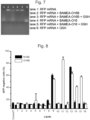
- the resulted nanocomplexes were treated with 5mM GSH for 4 h at 37 °C before agarose gel electrophoresis, and compared to mRNA nanocomplexes without GSH treatment.
- RNA nanoparticles For the cellular uptake study of RNA nanoparticles, a 43-nucleotide RNA labeled with Cy3 was mixed with BAMEA-O16B or BAMEA-O16 nanoparticle at a weight ratio of 30:1 before adding to HeLa cells.
- BAMEA-O16B or BAMEA-O16/RNA nanoparticles For the CLSM imaging study, HeLa cells were treated with Cy3-RNA nanoparticles for 8 h, and the endosome was co-stained using LysoTracker Green (ThermoFisher Scientific, USA).
- LysoTracker Green ThermoFisher Scientific, USA.
- GFP-stably expressed HEK cells were seeded in 48-well plate a day before experiment at a density of 25 K per well.
- the BAMEA-O16B/Cas9 mRNA/sgGFP nanoparticle was then added to cells and incubated for 10 h before changing fresh cell culture medium.
- the GFP expression profile was imaged using CLSM or quantified using flow cytometry analysis at different time points post Cas9 mRNA delivery, and normalized to cells without Cas9 mRNA/sgGFP delivery to determine genome editing efficiency.
- sgGFP was replaced with a scramble sgRNA, and delivered into HEK-GFP cells similarly to that of Cas9 mRNA/sgGFP delivery.
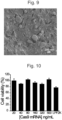
- HEK cells were treated with different concentration of Cas9 mRNA nanoparticles similarly to that of genome editing efficiency study.
- the cell viability was determined using Alamar Blue 48 h post Cas9 mRNA delivery.
- mice Female athymic nude mice were injected via tail vein with BAMEA-O16B/Luci-mRNA nanoparticle at a mRNA dose of 0.6 mg/kg or same dose of free mRNA. 24 h post nanoparticle or free mRNA injection, the mice were sacrificed to harvest different tissues for bioluminescence imaging on an IVIS spectrum In Vivo imaging system (Perkin Elmer, USA). To study the delivery of mRNA into hepatocytes, BAMEA-O16B/RFP mRNA nanoparticle was injected to C57BL/6 mouse similarly to luciferase mRNA delivery. 24 h post nanoparticle delivery, the mice were sacrificed to harvest liver for fluorescence imaging study.
- mice Female athymic nude mice were injected via tail vein with BAMEA-O16B/ Cas9 mRNA/Cy3-RNA nanoparticle at dose of 9 mg/kg BAMEA-O16B, 0.6 mg/kg Cas9 mRNA and 0.8 mg/kg Cy3-RNA or same dose of free mRNA. 6 h post nanoparticle or free mRNA injection, the mice were sacrificed to harvest different tissues for bioluminescence imaging on an IVIS spectrum In Vivo imaging system (Perkin Elmer, USA).
- mice were injected via tail vein with BAMEA-O16B/Cas9 mRNA/sgPCSK9 or BAMEA-O16B/Cas9 mRNA/sgRNA with a scramble sgRNA sequence at a dose of 9 mg/kg BAMEA-O16B, 0.6 mg/kg Cas9 mRNA and 0.8 mg/kg sgRNA.
- BAMEA-O16B 0.6 mg/kg Cas9 mRNA
- Cas9 mRNA 0.8 mg/kg sgRNA.
- mice were sacrificed to withdraw mouse serum for PCSK9 and liver toxicity assay. Meanwhile, liver tissues were collected for H&E staining to study the possible liver injury of nanoparticle injections.
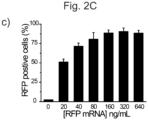
- Figs. 2A - 2C are graphs and images depicting the intracellular delivery of Luciferase and RFP mRNA. It is noted that only the lipids of present claim 1 are in the scope of the invention.
- the bioreducible lipids was synthesized by heating amine and acrylates or acrylamides featuring a disulfide bond according to our previous reports ( Fig. 1A ).
- the lipids were named by amine number or name followed by O16B or N16B to discriminate the use of acrylate or acrylamide, respectively ( Fig. 1B ).
- the as-purified lipids were formulated with cholesterol, 1, 2-dioleoyl-sn-glycero-3-phosphoethanolamine (DOPE), and DSPE-PEG 2000 for all cellular delivery experiments in this study (see Materials and Methods for details).
- luciferase-encoding mRNA was assembled with different lipids at weight ratio of 1:15 to transfect A375 human melanoma cells.
- the luciferase expression of transfected A375 cells was measured and compared to cells treated with luciferase mRNA alone or luciferase mRNA complexed with a commercial transfection lipid, Lipofectamine 2000 (LPF2K). As shown in Fig.
- the representative lipid, BAMEA-O16B is selected for detailed mRNA delivery and CRISPR/Cas9 genome editing studies.
- the representative lipid BAMEA-O16B is a general nanocarrier for mRNA delivery, as evidenced by its capability and high efficiency to deliver red fluorescent protein (RFP)-encoding mRNA into HeLa cells.
- RFP red fluorescent protein
- Flow cytometry analysis indicated that the RFP-positive cells is dependent on mRNA dose, and the transfection efficiency could be as high as 90% when 160 ng/mL of RFP mRNA was delivered into HeLa cells.
- both luciferase and RFP mRNA delivery demonstrated the effectiveness of BAMEA-O16B nanoparticle for efficient yet safe mRNA delivery.
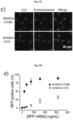
- Figs. 3A- 3D are graphs and images depicting cellular uptake and endosome escape study of BAMEA-O16B/RNA nanoparticles.
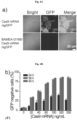
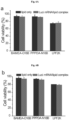
- Figs. 4A - 4D CRISPR/Cas9 mRNA delivery and genome editing in cultured cells. It is noted that only samples comprising a CRISPR/Cas9 mRNA, and a single guide RNA (sgRNA), wherein the sgRNA is single guide Angiopoietin-like 3 (sgANGPTL3) or single guide proprotein convertase subtilisin/kexin type 9 (sgPCSK9), are in the scope of the invention.
- sgRNA single guide RNA
- sgRNA single guide Angiopoietin-like 3
- sgPCSK9 single guide proprotein convertase subtilisin/kexin type 9
- BAMEA-O16B or BAMEA-O16 showed a comparable RNA delivery efficiency.
- the treatment of HeLa cells with fluorescent-labeled RNA complexes (10 nM) of BAMEA-O16B or BAMEA-O16 resulted in RNA internalization efficiency higher than 90% at all different lipid and RNA ratios ( Fig. 3B ).
- Confocal laser scanning microscopy (CLSM) imaging of HeLa cells indicated that the BAMEA-O16B/RNA treated cells shown a higher endosome escape efficiency than that of BAMEA-O16/RNA treatment ( Fig.
- Cas9 mRNA is around 4500 nucleotides in size, it is much longer than luciferase or RFP mRNA ( ⁇ 1000 nt ) and therefore much more difficult for intracellular delivery.
- GFP stably-expressed HEK cells were treated with the lipid nanoparticle encapsulating Cas9 mRNA and GFP-targeting sgRNA, and monitored the GFP expression change before and after mRNA delivery.
- the on-target GFP genome editing could induce the shift of reading frame of GFP gene, and thereby preventing GFP expression.
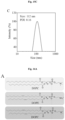
- seven of the thirty-two lipids can efficiently deliver Cas9 mRNA and sgRNA to knock down GFP expression of HEK cells, among which lipid BAMEA-O16B showed the highest genome editing and GFP knock out efficiency. It is found that the electrostatic interaction of BAMEA-O16B and Cas9 mRNA/sgRNA assembled well-dispersed nanoparticles around 230 nm in size (Table 2, Fig. 9 ). Meanwhile, the BAMEA-O16B/Cas9 mRNA nanocomplex is highly biocompatible for genome editing delivery.
- Figs. 5A - 5C are graphs and images depicting Cas9 mRNA/sgRNA delivery and genome editing in vivo.
- BAMEA-O16B mediated Cas9 mRNA delivery is able to regulate endogenous gene expression, and therefore of great potential for developing new gene therapy.
- Human papillomavirus type 18 HPV18
- SgRNA that targets HPV18 was delivered into HeLa cells along with Cas9 mRNA using BAMEA-O16B, the viability of HeLa cells followed the treatment was measured and compared to that with scramble sgRNA and Cas9 mRNA treatment. As shown in Fig.
- BAMEA-O16B/Cas9 mRNA/sgHPV18 treatment significantly prohibited HeLa growth compared to that of a scramble sgRNA and Cas9 mRNA delivery ( Fig. 4D ).
- the delivery of 320 ng/mL Cas9 mRNA and 26 nM sgHPV18 reduced HeLa cell viability down to 30%, while the replacement of sgHPV18 with a scramble sgRNA did not show similar effect on prohibiting HeLa cell growth.
- PCSK9 proprotein convertase subtilisin/kexin type 9
- LDL-R low-density lipoprotein cholesterol receptors
- BAMEA-O16B nanoparticle for in vivo mRNA delivery was first studied.
- BAMEA-O16B/Luciferase mRNA nanoparticle or fluorescently labeled BAMEA-O16B/Cas9 mRNA/Cy3-RNA nanoparticles were formulated and intravenously injected to mice via tail vein at an mRNA dosage of 0.6 mg/kg or 0.8 mg/kg sgRNA, followed by bioluminescence or fluorescence imaging of tissue organs to study the biodistribution of the nanoparticles.
- BAMEA-O16B nanoparticle for in vivo genome editing was studied by injecting BAMEA-O16B/Cas9 mRNA/sgPCSK9 nanoparticles into C57BL/6 mice, followed by serum PCSK9 level quantification to evaluate the in vivo genome editing efficacy.
- the intravenous injection of BAMEA-O16B/Cas9 mRNA/sgPCSK9 nanoparticle reduced mouse serum PCSK9 down to 20% of that with DPBS injection or BAMEA-O16B/Cas9 mRNA/scramble sgRNA nanoparticle injections ( Fig. 5C ).
- lipidoids were synthesized as per our previous reports.
- LNPs were prepared using a NanoAssemblr microfluidic system (Precision Nanosystems). Briefly, lipidoids, cholesterol (Sigma), phospholipids (DSPC, DOPE, and DOPC, Avanti Polar Lipids), and DMG-PEG (Avanti Polar Lipids) were dissolved in 100% ethanol at molar ratios of 50/38.5/10/1.5 at a final lipidoids concentration of 10 mg/mL.
- Cas9 mRNA and gRNA were mixed at the appropriate weight ratio in sodium acetate buffer (25 mM, pH 5.2).
- RNA encapsulation efficiency was characterized by Ribogreen assay.
- mice All procedures for animal experiment were approved by the Tufts University Institutional Animal Care and Use Committee (IACUC) and performed in accordance with the National Institutes of Health (NIH) guidelines for the care and use of experimental animals. All the animals were ordered from Charles River. Female Balb/c mice (6-8 weeks) were used for in vivo firefly luciferase mRNA (fLuc mRNA, TriLink Biotechnologies) encapsulated LNPs screening and formulations optimization. Briefly, fLuc mRNA LNPs were intravenously injected into the mice at a dose of 0.5 mg/kg mRNA.
- IACUC Tufts University Institutional Animal Care and Use Committee
- NASH National Institutes of Health
- mice were injected with 100 ⁇ L of D-Luciferin potassium salt (Goldbio) solution (15 mg/mL in PBS), anesthetized under isoflurane anesthesia, and measured by IVIS imaging system (Caliper Life Sciences).
- D-Luciferin potassium salt Goldbio
- Cas9 mRNA TriLink Biotechnologies
- LoxP-targeted single guide RNA sgLoxP, sequence: 5'-AAGTAAAACCTCTACAAATG, Synthego
- Tissue samples were embedded with OCT, frozen completely in liquid nitrogen, and stored at -80°C until ready for sectioning.
- the frozen tissue block was sectioned into a desired thickness (10 ⁇ m) using the cryotome and placed onto glass slides suitable for immunofluorescence staining.
- the tissue sections were fixed with pre-cooled acetone (-20 °C) for 10 min, and then washed twice with PBS, 5 min each.
- the fixed tissue sections were incubated in 10% BSA blocking buffer at room temperature (r.t.) for 1 h, and then washed with PBS.
- a hepatocyte specific primary antibody (1:100 diluted in 1% BSA buffer, anti-hepatocyte specific antigen (HepPar1), Novus) was applied to the sections on the slides and incubated in a humidified chamber at 4 °C overnight.
- the slides were rinsed with PBS for 2 changes, 5 min each, and then stained with eFlour660 conjugated F(ab')2-Goat anti-mouse secondary antibody (1:50, Invitrogen) s and incubated in a humidified chamber protected from light at room temperature for 1 h, and then washed 3 times with PBS. Fluorescent mounting medium containing DAPI(Sigma) was used to coverslip the slides. Sections were analyzed using a Leica SP8 confocal microscope.
- RNA sequence targeting ANGPTL3 gene was designed using the Benchling software.
- Female wild-type C57BL/6 mice were intravenously dosed with Cas9 mRNA and ANGPTL3-targeted single guide RNA (sgAngptl3, sequence: 5'-AGCCCTTCAACACAAGGTCA, Synthego) co-loaded 306-O12B LNPs at a dose of 1.0, 2.0, and 3.0 mg/kg in total RNA.
- PBS administrated mice were treated as negative control.
- mice were sacrificed, blood was collected for circulating ANGPTL3 protein and blood lipids quantitation by ELISA, and liver tissue was collected from the median and left lateral lobe for DNA extraction and next generation sequence (NGS) analysis.
- NGS next generation sequence
- blood was collected and proceeded to serum from mice 2 days after the injection.
- Aspartate aminotransferase (AST) and alanine aminotransferase (ALT), and tumor necrosis factor alpha (TNF-alpha) were measured using assay kits for AST (G-Biosciences), ALT (G-Biosciences), and TNF-alpha (R&D Systems) per manufacturer's protocols.
- PCR primers were designed to amplify the region surrounding the target site in the Angptl3 gene, or the regions surrounding the predicted off-target sites (Table S1). Off-target sites were predicted using the Cas Off Finder software (rgenome.net/cas-offinder/). PCR amplicons were prepared for sequencing on an Illumina MiSeq (Tufts Genomics Core Facility). Sequencing data was analyzed using the OutKnocker 2 software (outknocker.org/outknocker2.htm).
- Mouse blood was collected without using an anticoagulant and allow to clot for 2 h at r.t., and centrifuged at 2000 ⁇ g for 15-20 min at r.t. to collect mouse serum.
- Serum levels of ANGPTL3 protein, LDL-C, and TG were determined using a Mouse Angiopoietin-like 3 Quantikine ELISA kit (R&D systems), Mouse LDL-Cholesterol kit (Crystal Chem), and Triglyceride Colorimetric Assay kit (Cayman Chemical) as per manufacturer's protocols, respectively.
- the following cycles were run: 30 s at 98 °C, followed by 33 cycles of 10 s at 98 °C ,15 s at 65 °C, and 30 s at 72 °C, followed 10 min at 72 °C.
- the PCR products were purified using the GeneJET PCR Purification Kit (Thermo Scientific). 400 ng of purified PCR products were hybridized in NEBuffer 2 (New England Biolabs) by heating to 95°C for 5 min, followed by a 2 °C / second ramp down to 85 °C and a 0.1 °C / second ramp down to 25 °C on a AppliedBiosystems PCR system (Thermo Fisher Scientific).
- the annealed samples were digested by T7 Endonuclease I (New England Biolabs) at 37 °C for 15 min, followed by incubating at 65 °C for 5 min to stop the reaction.
- the products were further purified and run on a 4-20% Novex TBE gel (Invitrogen).
- Figs. 15A - 15C depict syntheses of lipidoid nanoparticles.
- the tail-branched bioreducible lipidoids were prepared via a combinatory solvent free Michael-Addition reaction between disulfide bond-incorporated acrylate lipid tails and amine-containing heads. ( Fig. 15A ).
- the in vivo mRNA delivery efficacy of these lipids was first evaluated by encapsulating firefly luciferase mRNA (fLuc mRNA) into LNPs and delivering these LNPs intravenously to female wild-type Balb/c mice.
- fLuc mRNA firefly luciferase mRNA
- These LNPs were formulated with our synthetic ionizable lipids, along with the excipient compounds cholesterol, DSPC, and DMG-PEG.
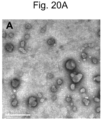
- Fig. 20A and Fig. 20B Representative transmission electron microscopy images of blank (unloaded) and fLuc mRNA-loaded LNPs were shown in Fig. 20A and Fig. 20B .
- the gold standard MC-3 LNPs was included as a positive control.
- Fig. 15B mRNA delivery with 306-O12B, 113-O12B, and 306-O10B LNPs resulted in comparable or even higher luciferase bioluminescence intensity as compared with MC-3 LNPs delivery.
- Figs. 16A - 16F depict the optimization of fLuc mRNA 306-O12B LNPs formulations.
- DOPE and DOPC which have similar structure, but differing head groups and tail saturation comparing to the original DSPC phospholipid, were selected to evaluate the effect of phospholipid excipient on the efficacy of luciferase expression in vivo.
- DOPC and DOPE each contain one degree of unsaturation in the carbon tail, while DSPC is fully saturated.
- DSPC and DOPE each contain a quaternary amine headgroup, while DOPE contains a primary amine headgroup.
- fLuc mRNA LNPs formulated with DOPC indeed resulted in significantly higher luciferase expression in the liver than that of formulations with DOPE and the original DSPC phospholipid.
- fLuc mRNA delivered with DOPC-containing LNPs resulted in approximately 4-fold higher luminescence signal compared with the original DSPC-containing LNPs.
- the active lipid and excipient components were formulated at a molar ratio of [Lipid : Cholesterol : DSPC : DMG-PEG] of [50 : 38.5 : 10 : 1.5].
- LNPs formulated at a variety of molar ratios was tested to identify the optimal parameters ( Fig. 16D ). As shown in Fig.
- the original formulation O (306-O12B : cholesterol : DOPC : DMG-PEG at a molar ratio of 50 : 38.5 : 10 : 1.5) displayed the highest luciferase bioluminenscence intensity; none of the new formulation parameters could suprass the original
- the LNPs with this optimal ratio of four components were formulated with different weight ratios of active lipid 306-O12B : mRNA ranging from 5 : 1 to 25 : 1. Interestingly, it is found that the highest efficacy was achieved when the weight ratio was 7.5 : 1. It appears as though increasing the amount of lipid beyond this point did not benefit the in vivo delivery efficacy ( Fig. 16F ). Collectively, these results indicated that the opimized formulation of 306-O12B LNPs had 50% 306-O12B, 38.5% cholesterol, 10% DOPC, and 1.5% DMG-PEG molar composition with a 7.5/1 weight ratio of 306-O12B/mRNA.
- Example 6 In vivo hepatocytes specific codelivery of Cas9 mRNA and sgRNA with mRNA-optimized LNPs.
- Figs. 17A - 17C depict 306-O12B LNPs enabled Cas9/sgLoxP-mediated genome editing in Ai14 mice.
- Fig. 23A - 23B are images that depicts 306-O12B LNPs enabled sgLoxP-mediated genome editing in Ai14/Cas9 crossing mice.
- the Ai14 reporter mouse line which is genetically engineered with a LoxP-Flanked STOP cassette controlling tdTomato expression, was used. While this mouse line is frequently used with Cre recombinase, successful CRISPR-mediated excision of the LoxP-flanked stop codon will also induce the expression of tdTomato. By examining the cells which have tdTomato expression, cell types our LNP delivery system could successfully target can be determined.
- sgLoxP LoxP-targeted sgRNA
- mice engineered to express both the Ai14 construct and a constitutively-expressed Cas9 construct (Ai14+/Cas9+ mouse model).
- sgLoxP LoxP-targeted sgRNA
- FIG. 23A and Fig. 23B delivery of sgLoxP with our LNP system resulted in red fluorescence detected specifically in the liver.
- tdTomato signal was mainly observed in the liver hepatocytes, indicating that 306-O12B LNPs can also specifically deliver sgRNA to this therapeutically relevant cell type.
- RNA and sgLoxP were co-formulated into one single LNPs and injected into Ai14 mice via tail vein at 1.65 mg/kg total RNA dose ( Fig. 17A ).
- organs were harvested and imaged ex vivo using the IVIS system.
- the ex vivo image of mouse organs analyzed by IVIS system showed that this system could indeed induce red fluorescence, indicating successful functional codelivery of both the mRNA and sgRNA components, and that tdTomato signal was predominantly detected in the liver ( Fig. 17B ).
- Figs. 18A - 18B depict 306-O12B LNPs-mediated significant levels of in vivo genome editing of ANGPTL3 in wild-type C57BL/6 mice.
- Figs. 19A - 19C show that 306-O12B LNPs is more efficient than MC-3 LNPs in inducing the loss-of-function mutations in ANGPTL3 through CRISPR/Cas9-based genome editing.
- ANGPTL3 angiopoietin-like 3
- ANGPTL3 angiopoietin-like 3
- Wild-type C57BL/6 mice were used to study the non-viral Cas9 mRNA/sgAngptl3 LNPs-mediated in vivo genome editing of ANGPTL3.
- mice is injected with 306-O12B LNPs co-formulated with different Cas9 mRNA to sgAngptl3 mass ratios of 2:1, 1:1.2, and 1:2 at a total RNA dose of 3.0 mg/kg.
Landscapes
- Health & Medical Sciences (AREA)
- Chemical & Material Sciences (AREA)
- Life Sciences & Earth Sciences (AREA)
- Engineering & Computer Science (AREA)
- General Health & Medical Sciences (AREA)
- Medicinal Chemistry (AREA)
- Bioinformatics & Cheminformatics (AREA)
- Organic Chemistry (AREA)
- Public Health (AREA)
- Veterinary Medicine (AREA)
- Animal Behavior & Ethology (AREA)
- Pharmacology & Pharmacy (AREA)
- Genetics & Genomics (AREA)
- Epidemiology (AREA)
- Biomedical Technology (AREA)
- Molecular Biology (AREA)
- General Chemical & Material Sciences (AREA)
- Chemical Kinetics & Catalysis (AREA)
- Biotechnology (AREA)
- Wood Science & Technology (AREA)
- Zoology (AREA)
- Nuclear Medicine, Radiotherapy & Molecular Imaging (AREA)
- General Engineering & Computer Science (AREA)
- Biochemistry (AREA)
- Physics & Mathematics (AREA)
- Microbiology (AREA)
- Nanotechnology (AREA)
- Heart & Thoracic Surgery (AREA)
- Cardiology (AREA)
- Diabetes (AREA)
- Hematology (AREA)
- Obesity (AREA)
- Optics & Photonics (AREA)
- Plant Pathology (AREA)
- Biophysics (AREA)
- Oil, Petroleum & Natural Gas (AREA)
- Dispersion Chemistry (AREA)
- Dermatology (AREA)
- Gastroenterology & Hepatology (AREA)
- Immunology (AREA)
Applications Claiming Priority (2)
| Application Number | Priority Date | Filing Date | Title |
|---|---|---|---|
| US201962857111P | 2019-06-04 | 2019-06-04 | |
| PCT/US2020/036085 WO2020247604A1 (en) | 2019-06-04 | 2020-06-04 | Synthetic lipids for mrna delivery |
Publications (3)
| Publication Number | Publication Date |
|---|---|
| EP3979988A1 EP3979988A1 (en) | 2022-04-13 |
| EP3979988A4 EP3979988A4 (en) | 2023-06-21 |
| EP3979988B1 true EP3979988B1 (en) | 2025-02-26 |
Family
ID=73652953
Family Applications (1)
| Application Number | Title | Priority Date | Filing Date |
|---|---|---|---|
| EP20817914.3A Active EP3979988B1 (en) | 2019-06-04 | 2020-06-04 | Synthetic lipids for mrna delivery |
Country Status (9)
| Country | Link |
|---|---|
| US (1) | US20220168231A1 (https=) |
| EP (1) | EP3979988B1 (https=) |
| JP (1) | JP7691742B2 (https=) |
| KR (1) | KR20220017466A (https=) |
| CN (1) | CN114173762A (https=) |
| AU (1) | AU2020287624A1 (https=) |
| CA (1) | CA3142725A1 (https=) |
| MX (1) | MX2021014911A (https=) |
| WO (1) | WO2020247604A1 (https=) |
Families Citing this family (15)
| Publication number | Priority date | Publication date | Assignee | Title |
|---|---|---|---|---|
| EP3585895A1 (en) | 2017-02-22 | 2020-01-01 | CRISPR Therapeutics AG | Compositions and methods for gene editing |
| CZ310613B6 (cs) | 2020-09-23 | 2026-01-28 | Ústav organické chemie a biochemie AV ČR, v. v. i. | Lipidoidy pro transfekci nukleových kyselin a jejich použití |
| AU2022208484A1 (en) * | 2021-01-15 | 2023-08-24 | The Brigham And Women's Hospital, Inc. | Lipid nanoparticles for targeted delivery of mrna |
| CN113402404B (zh) * | 2021-04-30 | 2022-03-11 | 苏州科锐迈德生物医药科技有限公司 | 脂质化合物及包含其的脂质载体、核酸脂质纳米粒组合物和药物制剂 |
| CN113209022A (zh) * | 2021-04-30 | 2021-08-06 | 中国科学院化学研究所 | 一种阳离子脂质体与制备方法及其在细菌效应蛋白的递送与抗肿瘤中的应用 |
| CZ310443B6 (cs) | 2021-07-19 | 2025-06-25 | Ústav organické chemie a biochemie AV ČR, v. v. i. | Cyklohexanové lipidoidy pro transfekci nukleových kyselin a jejich použití |
| WO2023166425A1 (en) * | 2022-03-01 | 2023-09-07 | Crispr Therapeutics Ag | Methods and compositions for treating angiopoietin-like 3 (angptl3) related conditions |
| KR20240155955A (ko) * | 2022-03-04 | 2024-10-29 | 베이징 카리우스 바이오 엘티디. | 활성 분자 전달을 위한 분해성 리포솜 및 이의 나노 복합체 |
| GB2634837A (en) | 2022-06-07 | 2025-04-23 | Scribe Therapeutics Inc | Compositions and methods for the targeting of PCSK9 |
| WO2024032677A1 (zh) * | 2022-08-11 | 2024-02-15 | 益杰立科(上海)生物科技有限公司 | 一种表观编辑靶点的方法及用途 |
| CN115745788B (zh) * | 2022-11-21 | 2025-06-24 | 国家纳米科学中心 | 一种可电离脂质化合物及其制备方法和应用 |
| CN120916753A (zh) * | 2023-03-29 | 2025-11-07 | 星锐医药(苏州)有限公司 | 编码治疗性多肽的核酸及包含所述核酸的脂质纳米颗粒组合物 |
| AU2024279278A1 (en) | 2023-05-31 | 2025-12-18 | Capstan Therapeutics, Inc. | Lipid nanoparticle formulations and compositions |
| WO2025080867A1 (en) * | 2023-10-10 | 2025-04-17 | The Board Of Regents Of The University Of Texas System | Ionizable lipids for improved mrna delivery |
| WO2025182865A1 (ja) * | 2024-03-01 | 2025-09-04 | 国立大学法人東海国立大学機構 | 脂質粒子 |
Family Cites Families (7)
| Publication number | Priority date | Publication date | Assignee | Title |
|---|---|---|---|---|
| CN101484588B (zh) | 2006-05-11 | 2013-11-06 | 阿尔尼拉姆医药品有限公司 | 抑制pcsk9基因表达的组合物和方法 |
| FR2921838A1 (fr) * | 2007-10-05 | 2009-04-10 | Guerbet Sa | Nouveau procede de preparation de nanoparticules recouvertes d'une couche stabilisatrice gem-bisphosphonate couplee a des ligands de biodistribution hydrophile |
| WO2009097332A2 (en) * | 2008-01-29 | 2009-08-06 | Shire Human Genetic Therapies, Inc. | Therapeutic compositions |
| ES2859923T3 (es) * | 2013-02-28 | 2021-10-04 | Univ Tufts | Compuestos de disulfuro para el suministro de agentes farmacéuticos |
| WO2014186348A2 (en) * | 2013-05-14 | 2014-11-20 | Tufts University | Nanocomplexes of modified peptides or proteins |
| EP3315125A1 (en) * | 2016-10-31 | 2018-05-02 | Silence Therapeutics (London) Ltd | Lipid nanoparticle formulation |
| WO2018191750A2 (en) * | 2017-04-14 | 2018-10-18 | The Broad Institute Inc. | Novel delivery of large payloads |
-
2020
- 2020-06-04 JP JP2021571709A patent/JP7691742B2/ja active Active
- 2020-06-04 AU AU2020287624A patent/AU2020287624A1/en not_active Abandoned
- 2020-06-04 KR KR1020227000096A patent/KR20220017466A/ko not_active Ceased
- 2020-06-04 EP EP20817914.3A patent/EP3979988B1/en active Active
- 2020-06-04 MX MX2021014911A patent/MX2021014911A/es unknown
- 2020-06-04 WO PCT/US2020/036085 patent/WO2020247604A1/en not_active Ceased
- 2020-06-04 CA CA3142725A patent/CA3142725A1/en active Pending
- 2020-06-04 CN CN202080054813.2A patent/CN114173762A/zh active Pending
-
2021
- 2021-12-06 US US17/543,173 patent/US20220168231A1/en active Pending
Also Published As
| Publication number | Publication date |
|---|---|
| WO2020247604A1 (en) | 2020-12-10 |
| EP3979988A1 (en) | 2022-04-13 |
| AU2020287624A1 (en) | 2022-01-06 |
| US20220168231A1 (en) | 2022-06-02 |
| CN114173762A (zh) | 2022-03-11 |
| JP7691742B2 (ja) | 2025-06-12 |
| KR20220017466A (ko) | 2022-02-11 |
| MX2021014911A (es) | 2022-02-21 |
| CA3142725A1 (en) | 2020-12-10 |
| EP3979988A4 (en) | 2023-06-21 |
| JP2022535535A (ja) | 2022-08-09 |
Similar Documents
| Publication | Publication Date | Title |
|---|---|---|
| EP3979988B1 (en) | Synthetic lipids for mrna delivery | |
| JP7441802B2 (ja) | ビタミンカチオン性脂質 | |
| Yang et al. | Efficient hepatic delivery and protein expression enabled by optimized mRNA and ionizable lipid nanoparticle | |
| US20250276086A1 (en) | Lipid nanoparticles for targeted delivery of mrna | |
| JP2024511463A (ja) | 細胞への標的送達のための組成物および方法 | |
| CN112672761A (zh) | 磷酸酯阳离子脂质 | |
| US20240358841A1 (en) | Nanomaterials comprising tetravalent lipid compounds | |
| UA121863C2 (uk) | Стереохімічно збагачені композиції для доставки нуклеїнових кислот | |
| WO2022165386A1 (en) | Lnp and lmp delivery of antiviral nucleotide 5'-phosphates | |
| WO2023121965A1 (en) | Nanomaterial comprising diamines | |
| CA3017028C (en) | Fibrotic treatment | |
| Wang et al. | Bivalent mRNA vaccines against three SARS-CoV-2 variants mediated by new ionizable lipid nanoparticles | |
| CN120202025A (zh) | 用于增强核酸递送的组合物 | |
| US20220315529A1 (en) | Nitrilotriacetic acid-containing lipidoid nanoparticles | |
| Liu et al. | Multiple tail ionizable lipids improve in vivo mRNA delivery efficiency with biosafety | |
| US20250387334A1 (en) | Oxyanion azide-benzaldehyde acetal acid-degradable lipids | |
| HK40107703A (zh) | 用於靶向递送mrna的脂质纳米颗粒 | |
| CA3205812A1 (en) | Method of treating advanced non-alcoholic steatohepatitis | |
| CN117529305A (zh) | 用于靶向递送mRNA的脂质纳米颗粒 | |
| CA3205380A1 (en) | Lipid nanoparticles for targeted delivery of mrna | |
| Xia¹ et al. | Novel bionic inspired nanosystem construction for precise delivery | |
| WO2025080854A1 (en) | Lipid nanoparticle, and methods of use thereof | |
| Du | Lipid Nanoparticle-Messenger RNA for Cancer Immunotherapy and Genetic Disease Treatment | |
| Liu et al. | Nonviral Delivery of CRISPR/Cas Systems in mRNA | |
| WO2025194120A1 (en) | Zwitterionic polymer functionalized lipid nanoparticles for delivery of nucleic acids |
Legal Events
| Date | Code | Title | Description |
|---|---|---|---|
| STAA | Information on the status of an ep patent application or granted ep patent |
Free format text: STATUS: THE INTERNATIONAL PUBLICATION HAS BEEN MADE |
|
| PUAI | Public reference made under article 153(3) epc to a published international application that has entered the european phase |
Free format text: ORIGINAL CODE: 0009012 |
|
| STAA | Information on the status of an ep patent application or granted ep patent |
Free format text: STATUS: REQUEST FOR EXAMINATION WAS MADE |
|
| 17P | Request for examination filed |
Effective date: 20211223 |
|
| AK | Designated contracting states |
Kind code of ref document: A1 Designated state(s): AL AT BE BG CH CY CZ DE DK EE ES FI FR GB GR HR HU IE IS IT LI LT LU LV MC MK MT NL NO PL PT RO RS SE SI SK SM TR |
|
| DAV | Request for validation of the european patent (deleted) | ||
| DAX | Request for extension of the european patent (deleted) | ||
| REG | Reference to a national code |
Ref country code: HK Ref legal event code: DE Ref document number: 40070710 Country of ref document: HK |
|
| A4 | Supplementary search report drawn up and despatched |
Effective date: 20230519 |
|
| RIC1 | Information provided on ipc code assigned before grant |
Ipc: A61P 43/00 20060101ALI20230512BHEP Ipc: A61P 9/00 20060101ALI20230512BHEP Ipc: A61P 3/06 20060101ALI20230512BHEP Ipc: A61K 9/51 20060101ALI20230512BHEP Ipc: C12N 15/86 20060101ALI20230512BHEP Ipc: C12N 15/113 20100101ALI20230512BHEP Ipc: A61K 48/00 20060101ALI20230512BHEP Ipc: A61K 9/127 20060101AFI20230512BHEP |
|
| GRAP | Despatch of communication of intention to grant a patent |
Free format text: ORIGINAL CODE: EPIDOSNIGR1 |
|
| STAA | Information on the status of an ep patent application or granted ep patent |
Free format text: STATUS: GRANT OF PATENT IS INTENDED |
|
| RIN1 | Information on inventor provided before grant (corrected) |
Inventor name: WANG, MING Inventor name: XU, QIAOBING |
|
| INTG | Intention to grant announced |
Effective date: 20240919 |
|
| P01 | Opt-out of the competence of the unified patent court (upc) registered |
Free format text: CASE NUMBER: UPC_APP_325526/2023 Effective date: 20230523 |
|
| GRAS | Grant fee paid |
Free format text: ORIGINAL CODE: EPIDOSNIGR3 |
|
| GRAA | (expected) grant |
Free format text: ORIGINAL CODE: 0009210 |
|
| STAA | Information on the status of an ep patent application or granted ep patent |
Free format text: STATUS: THE PATENT HAS BEEN GRANTED |
|
| AK | Designated contracting states |
Kind code of ref document: B1 Designated state(s): AL AT BE BG CH CY CZ DE DK EE ES FI FR GB GR HR HU IE IS IT LI LT LU LV MC MK MT NL NO PL PT RO RS SE SI SK SM TR |
|
| REG | Reference to a national code |
Ref country code: GB Ref legal event code: FG4D |
|
| REG | Reference to a national code |
Ref country code: CH Ref legal event code: EP |
|
| REG | Reference to a national code |
Ref country code: DE Ref legal event code: R096 Ref document number: 602020046880 Country of ref document: DE |
|
| REG | Reference to a national code |
Ref country code: IE Ref legal event code: FG4D |
|
| REG | Reference to a national code |
Ref country code: NL Ref legal event code: MP Effective date: 20250226 |
|
| PG25 | Lapsed in a contracting state [announced via postgrant information from national office to epo] |
Ref country code: RS Free format text: LAPSE BECAUSE OF FAILURE TO SUBMIT A TRANSLATION OF THE DESCRIPTION OR TO PAY THE FEE WITHIN THE PRESCRIBED TIME-LIMIT Effective date: 20250526 |
|
| PG25 | Lapsed in a contracting state [announced via postgrant information from national office to epo] |
Ref country code: FI Free format text: LAPSE BECAUSE OF FAILURE TO SUBMIT A TRANSLATION OF THE DESCRIPTION OR TO PAY THE FEE WITHIN THE PRESCRIBED TIME-LIMIT Effective date: 20250226 |
|
| PG25 | Lapsed in a contracting state [announced via postgrant information from national office to epo] |
Ref country code: PL Free format text: LAPSE BECAUSE OF FAILURE TO SUBMIT A TRANSLATION OF THE DESCRIPTION OR TO PAY THE FEE WITHIN THE PRESCRIBED TIME-LIMIT Effective date: 20250226 |
|
| PGFP | Annual fee paid to national office [announced via postgrant information from national office to epo] |
Ref country code: DE Payment date: 20250604 Year of fee payment: 6 |
|
| PG25 | Lapsed in a contracting state [announced via postgrant information from national office to epo] |
Ref country code: ES Free format text: LAPSE BECAUSE OF FAILURE TO SUBMIT A TRANSLATION OF THE DESCRIPTION OR TO PAY THE FEE WITHIN THE PRESCRIBED TIME-LIMIT Effective date: 20250226 |
|
| PGFP | Annual fee paid to national office [announced via postgrant information from national office to epo] |
Ref country code: GB Payment date: 20250520 Year of fee payment: 6 |
|
| REG | Reference to a national code |
Ref country code: LT Ref legal event code: MG9D |
|
| PG25 | Lapsed in a contracting state [announced via postgrant information from national office to epo] |
Ref country code: IS Free format text: LAPSE BECAUSE OF FAILURE TO SUBMIT A TRANSLATION OF THE DESCRIPTION OR TO PAY THE FEE WITHIN THE PRESCRIBED TIME-LIMIT Effective date: 20250626 Ref country code: NO Free format text: LAPSE BECAUSE OF FAILURE TO SUBMIT A TRANSLATION OF THE DESCRIPTION OR TO PAY THE FEE WITHIN THE PRESCRIBED TIME-LIMIT Effective date: 20250526 |
|
| PG25 | Lapsed in a contracting state [announced via postgrant information from national office to epo] |
Ref country code: NL Free format text: LAPSE BECAUSE OF FAILURE TO SUBMIT A TRANSLATION OF THE DESCRIPTION OR TO PAY THE FEE WITHIN THE PRESCRIBED TIME-LIMIT Effective date: 20250226 |
|
| PG25 | Lapsed in a contracting state [announced via postgrant information from national office to epo] |
Ref country code: HR Free format text: LAPSE BECAUSE OF FAILURE TO SUBMIT A TRANSLATION OF THE DESCRIPTION OR TO PAY THE FEE WITHIN THE PRESCRIBED TIME-LIMIT Effective date: 20250226 |
|
| PG25 | Lapsed in a contracting state [announced via postgrant information from national office to epo] |
Ref country code: LV Free format text: LAPSE BECAUSE OF FAILURE TO SUBMIT A TRANSLATION OF THE DESCRIPTION OR TO PAY THE FEE WITHIN THE PRESCRIBED TIME-LIMIT Effective date: 20250226 Ref country code: PT Free format text: LAPSE BECAUSE OF FAILURE TO SUBMIT A TRANSLATION OF THE DESCRIPTION OR TO PAY THE FEE WITHIN THE PRESCRIBED TIME-LIMIT Effective date: 20250626 |
|
| PGFP | Annual fee paid to national office [announced via postgrant information from national office to epo] |
Ref country code: FR Payment date: 20250606 Year of fee payment: 6 |
|
| PG25 | Lapsed in a contracting state [announced via postgrant information from national office to epo] |
Ref country code: GR Free format text: LAPSE BECAUSE OF FAILURE TO SUBMIT A TRANSLATION OF THE DESCRIPTION OR TO PAY THE FEE WITHIN THE PRESCRIBED TIME-LIMIT Effective date: 20250527 Ref country code: BG Free format text: LAPSE BECAUSE OF FAILURE TO SUBMIT A TRANSLATION OF THE DESCRIPTION OR TO PAY THE FEE WITHIN THE PRESCRIBED TIME-LIMIT Effective date: 20250226 |
|
| REG | Reference to a national code |
Ref country code: AT Ref legal event code: MK05 Ref document number: 1769976 Country of ref document: AT Kind code of ref document: T Effective date: 20250226 |
|
| PG25 | Lapsed in a contracting state [announced via postgrant information from national office to epo] |
Ref country code: SE Free format text: LAPSE BECAUSE OF FAILURE TO SUBMIT A TRANSLATION OF THE DESCRIPTION OR TO PAY THE FEE WITHIN THE PRESCRIBED TIME-LIMIT Effective date: 20250226 |
|
| PG25 | Lapsed in a contracting state [announced via postgrant information from national office to epo] |
Ref country code: SM Free format text: LAPSE BECAUSE OF FAILURE TO SUBMIT A TRANSLATION OF THE DESCRIPTION OR TO PAY THE FEE WITHIN THE PRESCRIBED TIME-LIMIT Effective date: 20250226 |
|
| PG25 | Lapsed in a contracting state [announced via postgrant information from national office to epo] |
Ref country code: DK Free format text: LAPSE BECAUSE OF FAILURE TO SUBMIT A TRANSLATION OF THE DESCRIPTION OR TO PAY THE FEE WITHIN THE PRESCRIBED TIME-LIMIT Effective date: 20250226 |
|
| PG25 | Lapsed in a contracting state [announced via postgrant information from national office to epo] |
Ref country code: IT Free format text: LAPSE BECAUSE OF FAILURE TO SUBMIT A TRANSLATION OF THE DESCRIPTION OR TO PAY THE FEE WITHIN THE PRESCRIBED TIME-LIMIT Effective date: 20250226 |
|
| PG25 | Lapsed in a contracting state [announced via postgrant information from national office to epo] |
Ref country code: AT Free format text: LAPSE BECAUSE OF FAILURE TO SUBMIT A TRANSLATION OF THE DESCRIPTION OR TO PAY THE FEE WITHIN THE PRESCRIBED TIME-LIMIT Effective date: 20250226 |
|
| PG25 | Lapsed in a contracting state [announced via postgrant information from national office to epo] |
Ref country code: CZ Free format text: LAPSE BECAUSE OF FAILURE TO SUBMIT A TRANSLATION OF THE DESCRIPTION OR TO PAY THE FEE WITHIN THE PRESCRIBED TIME-LIMIT Effective date: 20250226 Ref country code: EE Free format text: LAPSE BECAUSE OF FAILURE TO SUBMIT A TRANSLATION OF THE DESCRIPTION OR TO PAY THE FEE WITHIN THE PRESCRIBED TIME-LIMIT Effective date: 20250226 |
|
| PG25 | Lapsed in a contracting state [announced via postgrant information from national office to epo] |
Ref country code: RO Free format text: LAPSE BECAUSE OF FAILURE TO SUBMIT A TRANSLATION OF THE DESCRIPTION OR TO PAY THE FEE WITHIN THE PRESCRIBED TIME-LIMIT Effective date: 20250226 |
|
| PG25 | Lapsed in a contracting state [announced via postgrant information from national office to epo] |
Ref country code: SK Free format text: LAPSE BECAUSE OF FAILURE TO SUBMIT A TRANSLATION OF THE DESCRIPTION OR TO PAY THE FEE WITHIN THE PRESCRIBED TIME-LIMIT Effective date: 20250226 |
|
| REG | Reference to a national code |
Ref country code: DE Ref legal event code: R097 Ref document number: 602020046880 Country of ref document: DE |
|
| PLBE | No opposition filed within time limit |
Free format text: ORIGINAL CODE: 0009261 |
|
| STAA | Information on the status of an ep patent application or granted ep patent |
Free format text: STATUS: NO OPPOSITION FILED WITHIN TIME LIMIT |
|
| REG | Reference to a national code |
Ref country code: CH Ref legal event code: L10 Free format text: ST27 STATUS EVENT CODE: U-0-0-L10-L00 (AS PROVIDED BY THE NATIONAL OFFICE) Effective date: 20260107 |
|
| REG | Reference to a national code |
Ref country code: CH Ref legal event code: H13 Free format text: ST27 STATUS EVENT CODE: U-0-0-H10-H13 (AS PROVIDED BY THE NATIONAL OFFICE) Effective date: 20260127 |
|
| PG25 | Lapsed in a contracting state [announced via postgrant information from national office to epo] |
Ref country code: MC Free format text: LAPSE BECAUSE OF FAILURE TO SUBMIT A TRANSLATION OF THE DESCRIPTION OR TO PAY THE FEE WITHIN THE PRESCRIBED TIME-LIMIT Effective date: 20250226 |
|
| 26N | No opposition filed |
Effective date: 20251127 |
|
| PG25 | Lapsed in a contracting state [announced via postgrant information from national office to epo] |
Ref country code: LU Free format text: LAPSE BECAUSE OF NON-PAYMENT OF DUE FEES Effective date: 20250604 |
|
| REG | Reference to a national code |
Ref country code: BE Ref legal event code: MM Effective date: 20250630 |
|
| PG25 | Lapsed in a contracting state [announced via postgrant information from national office to epo] |
Ref country code: IE Free format text: LAPSE BECAUSE OF NON-PAYMENT OF DUE FEES Effective date: 20250604 |
|
| PG25 | Lapsed in a contracting state [announced via postgrant information from national office to epo] |
Ref country code: BE Free format text: LAPSE BECAUSE OF NON-PAYMENT OF DUE FEES Effective date: 20250630 |
|
| PG25 | Lapsed in a contracting state [announced via postgrant information from national office to epo] |
Ref country code: CH Free format text: LAPSE BECAUSE OF NON-PAYMENT OF DUE FEES Effective date: 20250630 |