EP3972028A1 - Batterie - Google Patents
Batterie Download PDFInfo
- Publication number
- EP3972028A1 EP3972028A1 EP20805996.4A EP20805996A EP3972028A1 EP 3972028 A1 EP3972028 A1 EP 3972028A1 EP 20805996 A EP20805996 A EP 20805996A EP 3972028 A1 EP3972028 A1 EP 3972028A1
- Authority
- EP
- European Patent Office
- Prior art keywords
- solid electrolyte
- electrolyte layer
- negative electrode
- battery
- positive electrode
- Prior art date
- Legal status (The legal status is an assumption and is not a legal conclusion. Google has not performed a legal analysis and makes no representation as to the accuracy of the status listed.)
- Withdrawn
Links
Images
Classifications
-
- H—ELECTRICITY
- H01—ELECTRIC ELEMENTS
- H01M—PROCESSES OR MEANS, e.g. BATTERIES, FOR THE DIRECT CONVERSION OF CHEMICAL ENERGY INTO ELECTRICAL ENERGY
- H01M10/00—Secondary cells; Manufacture thereof
- H01M10/05—Accumulators with non-aqueous electrolyte
- H01M10/056—Accumulators with non-aqueous electrolyte characterised by the materials used as electrolytes, e.g. mixed inorganic/organic electrolytes
- H01M10/0561—Accumulators with non-aqueous electrolyte characterised by the materials used as electrolytes, e.g. mixed inorganic/organic electrolytes the electrolyte being constituted of inorganic materials only
- H01M10/0562—Solid materials
-
- H—ELECTRICITY
- H01—ELECTRIC ELEMENTS
- H01M—PROCESSES OR MEANS, e.g. BATTERIES, FOR THE DIRECT CONVERSION OF CHEMICAL ENERGY INTO ELECTRICAL ENERGY
- H01M10/00—Secondary cells; Manufacture thereof
- H01M10/05—Accumulators with non-aqueous electrolyte
- H01M10/052—Li-accumulators
-
- H—ELECTRICITY
- H01—ELECTRIC ELEMENTS
- H01M—PROCESSES OR MEANS, e.g. BATTERIES, FOR THE DIRECT CONVERSION OF CHEMICAL ENERGY INTO ELECTRICAL ENERGY
- H01M10/00—Secondary cells; Manufacture thereof
- H01M10/05—Accumulators with non-aqueous electrolyte
- H01M10/056—Accumulators with non-aqueous electrolyte characterised by the materials used as electrolytes, e.g. mixed inorganic/organic electrolytes
- H01M10/0564—Accumulators with non-aqueous electrolyte characterised by the materials used as electrolytes, e.g. mixed inorganic/organic electrolytes the electrolyte being constituted of organic materials only
- H01M10/0565—Polymeric materials, e.g. gel-type or solid-type
-
- H—ELECTRICITY
- H01—ELECTRIC ELEMENTS
- H01M—PROCESSES OR MEANS, e.g. BATTERIES, FOR THE DIRECT CONVERSION OF CHEMICAL ENERGY INTO ELECTRICAL ENERGY
- H01M10/00—Secondary cells; Manufacture thereof
- H01M10/42—Methods or arrangements for servicing or maintenance of secondary cells or secondary half-cells
- H01M10/4235—Safety or regulating additives or arrangements in electrodes, separators or electrolyte
-
- H—ELECTRICITY
- H01—ELECTRIC ELEMENTS
- H01M—PROCESSES OR MEANS, e.g. BATTERIES, FOR THE DIRECT CONVERSION OF CHEMICAL ENERGY INTO ELECTRICAL ENERGY
- H01M2300/00—Electrolytes
- H01M2300/0017—Non-aqueous electrolytes
- H01M2300/0065—Solid electrolytes
- H01M2300/0068—Solid electrolytes inorganic
-
- H—ELECTRICITY
- H01—ELECTRIC ELEMENTS
- H01M—PROCESSES OR MEANS, e.g. BATTERIES, FOR THE DIRECT CONVERSION OF CHEMICAL ENERGY INTO ELECTRICAL ENERGY
- H01M2300/00—Electrolytes
- H01M2300/0088—Composites
- H01M2300/0094—Composites in the form of layered products, e.g. coatings
-
- Y—GENERAL TAGGING OF NEW TECHNOLOGICAL DEVELOPMENTS; GENERAL TAGGING OF CROSS-SECTIONAL TECHNOLOGIES SPANNING OVER SEVERAL SECTIONS OF THE IPC; TECHNICAL SUBJECTS COVERED BY FORMER USPC CROSS-REFERENCE ART COLLECTIONS [XRACs] AND DIGESTS
- Y02—TECHNOLOGIES OR APPLICATIONS FOR MITIGATION OR ADAPTATION AGAINST CLIMATE CHANGE
- Y02E—REDUCTION OF GREENHOUSE GAS [GHG] EMISSIONS, RELATED TO ENERGY GENERATION, TRANSMISSION OR DISTRIBUTION
- Y02E60/00—Enabling technologies; Technologies with a potential or indirect contribution to GHG emissions mitigation
- Y02E60/10—Energy storage using batteries
-
- Y—GENERAL TAGGING OF NEW TECHNOLOGICAL DEVELOPMENTS; GENERAL TAGGING OF CROSS-SECTIONAL TECHNOLOGIES SPANNING OVER SEVERAL SECTIONS OF THE IPC; TECHNICAL SUBJECTS COVERED BY FORMER USPC CROSS-REFERENCE ART COLLECTIONS [XRACs] AND DIGESTS
- Y02—TECHNOLOGIES OR APPLICATIONS FOR MITIGATION OR ADAPTATION AGAINST CLIMATE CHANGE
- Y02P—CLIMATE CHANGE MITIGATION TECHNOLOGIES IN THE PRODUCTION OR PROCESSING OF GOODS
- Y02P70/00—Climate change mitigation technologies in the production process for final industrial or consumer products
- Y02P70/50—Manufacturing or production processes characterised by the final manufactured product
Definitions
- the present disclosure relates to a battery.
- PTL 1 discloses an all-solid state lithium secondary battery including an alloy layer containing lithium (Li).
- the alloy layer is formed between a metal electrode containing Li as a main component and a solid electrolyte having a garnet-like crystal structure and being a ceramic sintered compact containing aluminum (Al).
- the alloy layer prevents or reduces short circuiting associated with deposition of Li dendrite in the solid electrolyte.
- the present disclosure is directed to a battery including:
- the present disclosure provides a battery that causes less voltage abnormality.
- All-solid state batteries including solid electrolytes are expected to have high input-output characteristics.
- an all-solid state battery including a sulfide solid electrolyte may cause voltage abnormality in the final stage of charging. Voltage abnormality is markedly observed particularly when the all-solid state battery is charged quickly. Voltage abnormality is assumed to occur in the following manner. First, the negative electrode potential reaches the lithium redox potential during charging of the battery. Lithium is thus deposited on the negative electrode. Deposited lithium grows as a dendrite in the solid electrolyte. Upon some of deposited lithium reaching the positive electrode, short circuiting locally occurs. This may cause voltage abnormality.
- the alloy layer prevents or reduces short circuiting associated with deposition of lithium dendrite in the solid electrolyte.
- the alloy layer of PTL 1 may not have sufficient ionic conductivity.
- the alloy layer may function as a resistive layer to degrade battery characteristics.
- a battery according to a first aspect of the present disclosure includes
- the first solid electrolyte layer contains a metal alloyable with lithium.
- the first solid electrolyte layer contains a solid electrolyte, the first solid electrolyte layer has sufficient ionic conductivity. In the battery including the first solid electrolyte layer, voltage abnormality is thus less likely to occur.
- the battery according to the first or second aspect may further include a third solid electrolyte layer that is positioned between the positive electrode and the first solid electrolyte layer and that is free of the metal. According to the third aspect, the battery causes less voltage abnormality.
- the polymer solid electrolyte may be, for example, a compound including a polymer compound and a lithium salt.
- the polymer compound may have an ethylene oxide structure. Having an ethylene oxide structure, the polymer compound can have a high lithium salt content. In this case, the polymer solid electrolyte can have high ionic conductivity.
- the lithium salt include LiPF 6 , LiBF 4 , LiSbF 6 , LiAsF 6 , LiSO 3 CF 3 , LiN(SO 2 CF 3 ) 2 , LiN(SO 2 C 2 F 5 ) 2 , LiN(SO 2 CF 3 )(SO 2 C 4 F 9 ), and LiC(SO 2 CF 3 ) 3 .
- the polymer solid electrolyte contains, for example, one lithium salt or a mixture of two or more lithium salts selected from these.
- the first solid electrolyte layer 30 may further contain a binder.
- the binder improves, for example, the adhesion between the first portions and the second portion in the first solid electrolyte layer 30.
- the binder is, for example, a resin material.
- the binder include polyvinylidene fluoride, polytetrafluoroethylene, polyethylene, polypropylene, aramid resin, polyamide, polyimide, polyamideimide, polyacrylonitrile, poly(acrylic acid), poly(methyl acrylate), poly(ethyl acrylate), poly(hexyl acrylate), poly(methacrylic acid), poly(methyl methacrylate), poly(ethyl methacrylate), poly(hexyl methacrylate), poly(vinyl acetate), polyvinylpyrrolidone, polyether, polyethersulfone, hexafluoropolypropylene, styrene-butadiene rubber, and carboxymethylcellulose.
- the binder may be a copolymer of two or more selected from the group consisting of tetrafluoroethylene, hexafluoroethylene, hexafluoropropylene, perfluoroalkyl vinyl ether, vinylidene fluoride, chlorotrifluoroethylene, ethylene, propylene, pentafluoropropylene, fluoromethyl vinyl ether, acrylic acid, and hexadiene.
- the first solid electrolyte layer 30 contains, for example, one binder or a mixture of two or more binders selected from these.
- the volume fraction v of the first portions in the total volume of the first portions and the second portion satisfies, for example, 20 vol% ⁇ v ⁇ 80 vol%. In this case, two or more first portions are easily dispersed in the second portion, and short circuiting of the battery 100 can be suppressed sufficiently.
- the fraction v may satisfy 40 vol% ⁇ v ⁇ 60 vol%.
- the average particle size of the first portions is, for example, less than or equal to 10 ⁇ m in view of the rate at which lithium and the metal A contained in the first portions form an alloy.
- the lower limit of the average particle size of the first portions is not limited and is, for example, 1 ⁇ m.
- the average particle size of the first portions can be determined by, for example, the following method. First, the cross section of the first solid electrolyte layer 30 is observed with a scanning electron microscope. In the obtained electron microscopy image, the area of a specific first portion is calculated by image processing. The diameter of a circle having the same area as the calculated area is regarded as the particle size of the specific first portion (the diameter of the particle). The particle sizes of certain numbers (e.g., 50) of the first portions are calculated, and the average of the calculated values is regarded as the average particle size of the first portions.
- the first solid electrolyte layer 30 has, for example, a thickness greater than or equal to 1 ⁇ m and less than or equal to 200 ⁇ m.
- a thickness greater than or equal to 1 ⁇ m there is less possibility of short circuiting between the positive electrode 10 and the negative electrode 50.
- the first solid electrolyte layer 30 has a thickness less than or equal to 200 ⁇ m, the battery 100 can operate with high input-output power.
- a thickness of the first solid electrolyte layer 30 may be smaller than a thickness of the second solid electrolyte layer 40.
- the second solid electrolyte layer 40 contains a solid electrolyte, but is free of the metal A alloyable with lithium.
- Examples of the solid electrolyte contained in the second solid electrolyte layer 40 include the solid electrolytes described above in the first solid electrolyte layer 30.
- the solid electrolyte contained in the second solid electrolyte layer 40 may be the same as or different from that contained in the first solid electrolyte layer 30.
- the second solid electrolyte layer 40 contains, for example, the solid electrolyte as a main component.
- the "main component” means a component present in the largest amount in terms of weight ratio in the second solid electrolyte layer 40.
- the second solid electrolyte layer 40 may consist essentially of the solid electrolyte.
- the term "consist essentially of” means excluding other components that change the essential characteristics of the mentioned material. It is noted that the second solid electrolyte layer 40 may contain impurities in addition to the solid electrolyte. To improve the adhesion between solid electrolyte particles, the second solid electrolyte layer 40 may further contain a binder. Examples of the binder contained in the second solid electrolyte layer 40 include the binders described above in the first solid electrolyte layer 30.
- the positive electrode 10 has, for example, a positive electrode current collector and a layer containing a positive electrode active material.
- the positive electrode 10 may have a positive electrode mixture layer containing a positive electrode active material and a solid electrolyte.
- the positive electrode active material may include lithium-containing transition metal oxides, transition metal fluorides, polyanion materials, fluorinated polyanion materials, transition metal sulfides, transition metal oxyfluorides, transition metal oxysulfides, and transition metal oxynitrides.
- the use of a lithium-containing transition metal oxide as a positive electrode active material can increase the average discharge voltage of the battery 100 while reducing the production costs.
- the solid electrolyte contained in the positive electrode 10 include the solid electrolytes described above in the first solid electrolyte layer 30.
- the positive electrode active material has, for example, a particle shape.
- the positive electrode active material may have a median diameter greater than or equal to 0.1 ⁇ m and less than or equal to 100 ⁇ m.
- the positive electrode active material and the solid electrolyte are dispersed well in the positive electrode mixture layer.
- the battery 100 has good charging/discharging characteristics.
- the positive electrode active material has a median diameter less than or equal to 100 ⁇ m, the lithium diffusion rate in the positive electrode active material is high enough.
- the battery 100 including the positive electrode active material can thus operate with high output power.
- the solid electrolyte may have a particle shape.
- the positive electrode active material may have a larger median diameter than the solid electrolyte.
- the median diameter means a particle size (d50) at a cumulative volume of 50% in the particle size distribution measured with a laser diffraction particle size analyzer or other analyzers.
- Examples of the conductive assistant may include graphites, such as natural graphite and artificial graphite; carbon blacks, such as acetylene black and Ketjenblack; conductive fibers, such as carbon fibers and metal fibers; fluorinated carbon; metal powders, such as aluminum powder; conductive whiskers, such as zinc oxide whisker and potassium titanate whisker; conductive metal oxides, such as titanium oxide; and conductive polymer compounds, such as polyaniline, polypyrrole, and polythiophene.
- the use of a conductive assistant containing carbon can reduce the cost of the battery 100.
- the positive electrode current collector is made of, for example, a metal material, such as aluminum, stainless steel, titanium, or an alloy containing these metals. Aluminum and aluminum-containing alloys are inexpensive and easily formed into a thin film.
- the positive electrode current collector may be porous or non-porous.
- the positive electrode current collector has, for example, a sheet or film shape.
- the positive electrode current collector may be, for example, metal foil or mesh.
- the positive electrode current collector may have a thickness greater than or equal to 1 ⁇ m and less than or equal to 30 ⁇ m. When the positive electrode current collector has a thickness greater than or equal to 1 ⁇ m, the positive electrode current collector has sufficient mechanical strength and is thus less likely to crack or tear. When the positive electrode current collector has a thickness less than or equal to 30 ⁇ m, the battery 100 has high energy density.
- the positive electrode 10 may have a thickness greater than or equal to 10 ⁇ m and less than or equal to 500 ⁇ m. When the positive electrode 10 has a thickness greater than or equal to 10 ⁇ m, the battery 100 has sufficient energy density. When the positive electrode 10 has a thickness less than or equal to 500 ⁇ m, the battery 100 can operate with high output power.
- the negative electrode 50 has, for example, a negative electrode current collector and a layer containing a negative electrode active material.
- the negative electrode 50 may have a negative electrode mixture layer containing a negative electrode active material and a solid electrolyte.
- the material of the negative electrode active material may be a material that accepts and releases metal ions, or may be a material that accepts and releases lithium ions.
- Examples of the negative electrode active material may include lithium metal; metals, alloys, or compounds alloyable with lithium; carbon materials; transition metal oxides; and transition metal sulfides.
- Examples of carbon materials may include graphite, and non-graphite carbon, such as hard carbon and coke.
- transition metal oxides may include CuO and NiO.
- transition metal sulfides may include copper sulfide represented by composition formula CuS.
- metals, alloys, or compounds alloyable with lithium may include silicon compounds, tin compounds, and aluminum compounds.
- the use of a carbon material as a negative electrode active material can increase the average discharge voltage of the battery 100 while reducing the production costs.
- the negative electrode active material may contain silicon (Si), tin (Sn), a silicon compound, a tin compound, or other substances.
- the solid electrolyte contained in the negative electrode 50 include the solid electrolytes described above in the first solid electrolyte layer 30.
- the layer containing the negative electrode active material may further contain a binder.
- the binder contained in this layer include the binders described above in the first solid electrolyte layer 30.
- the layer containing the negative electrode active material may further contain a conductive assistant.
- the conductive assistant contained in the layer containing the negative electrode active material include the conductive assistants described above in the layer containing the positive electrode active material.
- the negative electrode current collector is made of, for example, a metal material, such as stainless steel, nickel, copper, or an alloy containing these metals. Copper and copper-containing alloys are inexpensive and easily formed into a thin film.
- the negative electrode current collector may be porous or non-porous.
- the negative electrode current collector has, for example, a sheet or film shape.
- the negative electrode current collector may be, for example, metal foil or mesh.
- the negative electrode current collector may have a thickness greater than or equal to 1 ⁇ m and less than or equal to 30 ⁇ m. When the negative electrode current collector has a thickness greater than or equal to 1 ⁇ m, the negative electrode current collector has sufficient mechanical strength and is thus less likely to crack or tear. When the negative electrode current collector has a thickness less than or equal to 30 ⁇ m, the battery 100 has high energy density.
- the area of the main surface of the battery 100 may be greater than or equal to 1 cm 2 and less than or equal to 100 cm 2 , or greater than or equal to 100 cm 2 and less than or equal to 1000 cm 2 .
- the "main surface” refers to a surface of the battery 100 that has the widest area.
- the battery 100 is suitable as a battery for portable electronic devices, such as smartphones and digital cameras.
- the battery 100 is suitable as a battery for power supplies for large mobile devices, such as electric vehicles.
- the negative electrode current collector is disposed on the negative electrode mixture layer to produce the negative electrode 50.
- a current collector lead is connected to each of the positive electrode current collector and the negative electrode current collector.
- the insulating casing is sealed with an insulating ferrule or the like so that the inside of the insulating casing is shut off from the outside atmosphere, whereby the battery 100 is produced.
- lithium dendrite may grow from the negative electrode 50. Lithium dendrite significantly grows during quick charging of the battery 100.
- lithium dendrite extends to the first solid electrolyte layer 30, lithium dendrite comes into contact with the metal A contained in the first solid electrolyte layer 30.
- the metal A in contact with lithium dendrite forms an alloy with lithium. This suppresses the growth of lithium dendrite to prevent lithium dendrite from reaching the positive electrode 10. Preventing lithium dendrite from reaching the positive electrode 10 can suppress occurrence of local short circuiting.
- the first solid electrolyte layer 30 can suppress occurrence of local short circuiting even when, for example, the battery 100 is charged at 0.7 C rate or higher. Since the first solid electrolyte layer 30 contains a solid electrolyte, the first solid electrolyte layer 30 has sufficient ionic conductivity. In the battery 100 including the first solid electrolyte layer 30, voltage abnormality is thus less likely to occur.
- the potential at which lithium and aluminum form an alloy is 0.3 V vs. Li, which is close to the lithium redox potential.
- the metal A in contact with lithium dendrite can easily form an alloy with lithium. In other words, the metal A can assuredly suppress the growth of lithium dendrite.
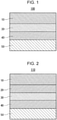
- the battery 100 includes the second solid electrolyte layer 40
- the first solid electrolyte layer 30 is not in direct contact with the negative electrode 50.
- the second solid electrolyte layer 40 blocks electron conduction between the first solid electrolyte layer 30 and the negative electrode 50.
- the first solid electrolyte layer 30 has almost no effect on the negative electrode potential.
- the negative electrode potential is determined only by the material of the negative electrode 50.
- the second solid electrolyte layer 40 can further suppress occurrence of voltage abnormality in the battery 100.
- the alloy layer containing lithium is in direct contact with the negative electrode containing lithium as a main component.
- the negative electrode potential of the battery of PTL 1 is affected not only by the negative electrode but also by the alloy layer. In the battery of PTL 1, the negative electrode potential is thus unstable, and voltage abnormality may occur.
- the third solid electrolyte layer 20 contains a solid electrolyte, but is free of the metal A alloyable with lithium. Examples of the solid electrolyte contained in the third solid electrolyte layer 20 include the solid electrolytes described above in the first solid electrolyte layer 30. The solid electrolyte contained in the third solid electrolyte layer 20 may be the same as or different from that contained in the first solid electrolyte layer 30 or the second solid electrolyte layer 40. The third solid electrolyte layer 20 contains, for example, the solid electrolyte as a main component. The third solid electrolyte layer 20 may consist essentially of the solid electrolyte. It is noted that the third solid electrolyte layer 20 may contain impurities in addition to the solid electrolyte. The third solid electrolyte layer 20 may further contain a binder in addition to the solid electrolyte layer. Examples of the binder contained in the third solid electrolyte layer 20 include the binders described above in the first solid electrolyte layer 30.
- Li 2 S and P 2 S 5 were weighed in a glove box in an argon atmosphere at a dew point of -60°C or lower.
- Li 2 S and P 2 S 5 were ground and mixed in a mortar.
- the resulting mixture was milled in a planetary ball mill (Fritsch Japan Co., Ltd., P-7 model) at 510 rpm for 10 hours to provide a solid electrolyte in the form of glass.
- the solid electrolyte in the form of glass was heated in an inert atmosphere at 270 degrees for 2 hours. Accordingly, Li 2 S-P 2 S 5 , a solid electrolyte in the form of glass ceramics, was produced.
- the sulfide solid electrolyte and the positive electrode active material were weighed in a globe box in an argon atmosphere.
- As the positive electrode active material Li(NiCoMn)O 2 (hereinafter referred to as NCM) was used.
- the volume ratio of the weighed sulfide solid electrolyte and the weighed positive electrode active material was 30:70.
- the sulfide solid electrolyte and the positive electrode active material were mixed in an agate mortar to prepare a positive electrode mixture.
- the sulfide solid electrolyte material and a negative electrode active material were weighed in a globe box in an argon atmosphere. Graphite was used as the negative electrode active material. The volume ratio of the weighed sulfide solid electrolyte and the weighed negative electrode active material was 40:60. The sulfide solid electrolyte and the negative electrode active material were mixed in an agate mortar to prepare a negative electrode mixture.
- the following process was carried out by using the material of the first solid electrolyte layer, the positive electrode mixture, the negative electrode mixture, and Li 2 S-P 2 S 5 , a sulfide solid electrolyte in the form of glass ceramics.
- the sulfide solid electrolyte, the material of the first solid electrolyte layer, the sulfide solid electrolyte, and the positive electrode mixture were packed in an insulating casing in this order.
- the negative electrode mixture was packed on the outermost sulfide solid electrolyte.
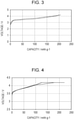
- these materials were compacted at a pressure of 360 MPa to form a multilayer body including the positive electrode mixture layer, the third solid electrolyte layer, the first solid electrolyte layer, the second solid electrolyte layer, and the negative electrode mixture layer.
- a current collector made of stainless steel was disposed on each end of the obtained multilayer body. Each current collector was provided with a current collector lead.
- the insulating casing was sealed with an insulating ferrule so that the inside of the insulating casing was shut off from the outside atmosphere, whereby a battery of Example 1 was produced.
- a charging test was carried out under the following conditions using the batteries of Example 1 and Comparative Example 1. First, the batteries were placed in a thermostatic oven at 25°C. Each battery was charged at a constant current of 0.17 mA corresponding to 0.05 C rate based on the theoretical capacity of the battery until the voltage reached 4.2 V. The charging curves during 0.05 C charging of the batteries of Example 1 and Comparative Example 1 were obtained accordingly.
- Fig. 3 is a graph showing the charging curves of the batteries of Example 1 and Comparative Example 1.
- a charging test was carried out under the following conditions using the batteries of Example 1 and Comparative Example 2. First, the batteries were placed in a thermostatic oven at 25°C. Each battery was charged at a constant current of 3.4 mA corresponding to 1 C rate (1 hour rate) based on the theoretical capacity of the battery until the voltage reached 4.2 V. The charging curves during 1 C charging of the batteries of Example 1 and Comparative Example 2 were obtained accordingly.
- Fig. 4 is a graph showing the charging curves of the batteries of Example 1 and Comparative Example 2.
- the battery of Example 1 included a first solid electrolyte layer formed from a metal powder made of aluminum and a sulfide solid electrolyte, a second solid electrolyte layer formed from a sulfide solid electrolyte, and a third solid electrolyte layer.
- the first solid electrolyte layer was disposed between the second solid electrolyte layer and the third solid electrolyte layer.
- no voltage abnormality was observed during 0.05 C and 1C charging in the battery of Example 1 having a three-layer structure including the first solid electrolyte layer, the second solid electrolyte layer, and the third solid electrolyte layer.
- Voltage abnormality was observed in the final stage of 1 C charging. Voltage abnormality may have occurred in the following manner. First, the negative electrode potential reaches the lithium redox potential. Lithium is thus deposited on the negative electrode. Deposited lithium grows as a dendrite in the solid electrolyte. Upon some of deposited lithium reaching the positive electrode, short circuiting locally occurs. This may have caused voltage abnormality.
- a battery that includes a first solid electrolyte layer containing the metal A alloyable with lithium and in which the first solid electrolyte layer is not in direct contact with the negative electrode causes less voltage abnormality. This indicates that the first solid electrolyte layer can improve the charging/discharging characteristics of the battery.
Landscapes
- Chemical & Material Sciences (AREA)
- Engineering & Computer Science (AREA)
- Manufacturing & Machinery (AREA)
- Chemical Kinetics & Catalysis (AREA)
- Electrochemistry (AREA)
- General Chemical & Material Sciences (AREA)
- Physics & Mathematics (AREA)
- Condensed Matter Physics & Semiconductors (AREA)
- General Physics & Mathematics (AREA)
- Inorganic Chemistry (AREA)
- Dispersion Chemistry (AREA)
- Secondary Cells (AREA)
- Battery Electrode And Active Subsutance (AREA)
Applications Claiming Priority (2)
| Application Number | Priority Date | Filing Date | Title |
|---|---|---|---|
| JP2019091907 | 2019-05-15 | ||
| PCT/JP2020/006737 WO2020230396A1 (ja) | 2019-05-15 | 2020-02-20 | 電池 |
Publications (2)
| Publication Number | Publication Date |
|---|---|
| EP3972028A1 true EP3972028A1 (de) | 2022-03-23 |
| EP3972028A4 EP3972028A4 (de) | 2022-07-13 |
Family
ID=73289181
Family Applications (1)
| Application Number | Title | Priority Date | Filing Date |
|---|---|---|---|
| EP20805996.4A Withdrawn EP3972028A4 (de) | 2019-05-15 | 2020-02-20 | Batterie |
Country Status (5)
| Country | Link |
|---|---|
| US (1) | US12132168B2 (de) |
| EP (1) | EP3972028A4 (de) |
| JP (1) | JP7499454B2 (de) |
| CN (1) | CN113557621B (de) |
| WO (1) | WO2020230396A1 (de) |
Families Citing this family (3)
| Publication number | Priority date | Publication date | Assignee | Title |
|---|---|---|---|---|
| KR102899216B1 (ko) * | 2020-11-19 | 2025-12-11 | 삼성전자주식회사 | 전고체 전지 및 그 제조방법 |
| KR102787981B1 (ko) * | 2022-02-09 | 2025-03-27 | 한국화학연구원 | 무기 입자의 함량이 조절된 다층 구조의 유무기 하이브리드 고분자 전해질, 이의 제조방법 및 이를 포함하는 전고체 전지 |
| CN115621418A (zh) * | 2022-11-02 | 2023-01-17 | 宜昌邦普循环科技有限公司 | 一种自修复快离子导体锂金属负极及其制备方法 |
Family Cites Families (18)
| Publication number | Priority date | Publication date | Assignee | Title |
|---|---|---|---|---|
| JP2004206942A (ja) * | 2002-12-24 | 2004-07-22 | Ion Engineering Research Institute Corp | 全固体リチウム電池 |
| JP5207206B2 (ja) * | 2008-03-07 | 2013-06-12 | 住友電気工業株式会社 | 全固体リチウム二次電池の製造方法 |
| JP2011003500A (ja) * | 2009-06-22 | 2011-01-06 | Samsung Electronics Co Ltd | 全固体型リチウム二次電池 |
| WO2011010552A1 (ja) * | 2009-07-22 | 2011-01-27 | 住友電気工業株式会社 | 非水電解質電池及び非水電解質電池用固体電解質 |
| JP5283188B2 (ja) * | 2009-09-03 | 2013-09-04 | 日本碍子株式会社 | 全固体二次電池およびその製造方法 |
| JP6328151B2 (ja) * | 2013-02-21 | 2018-05-23 | ローベルト ボツシユ ゲゼルシヤフト ミツト ベシユレンクテル ハフツングRobert Bosch Gmbh | 複合固体電解質を有するリチウム電池 |
| JP5610034B2 (ja) * | 2013-05-23 | 2014-10-22 | 日本電気株式会社 | 二次電池および二次電池用負極 |
| US9484595B2 (en) * | 2013-08-15 | 2016-11-01 | Robert Bosch Gmbh | Li/metal battery with composite solid electrolyte |
| JP6264807B2 (ja) * | 2013-09-25 | 2018-01-24 | 株式会社村田製作所 | 全固体電池およびその製造方法 |
| US10164289B2 (en) | 2014-12-02 | 2018-12-25 | Polyplus Battery Company | Vitreous solid electrolyte sheets of Li ion conducting sulfur-based glass and associated structures, cells and methods |
| DE102016214398A1 (de) * | 2016-08-04 | 2018-02-08 | Bayerische Motoren Werke Aktiengesellschaft | Verfahren zur Herstellung einer elektrochemischen Zelle mit Lithiumelektrode und elektrochemische Zelle |
| KR101905992B1 (ko) * | 2016-10-28 | 2018-10-08 | 현대자동차주식회사 | 음극 계면이 안정화된 전고체 전지 |
| JP6536538B2 (ja) * | 2016-11-08 | 2019-07-03 | トヨタ自動車株式会社 | フッ化物イオン電池およびその製造方法 |
| JP2018101466A (ja) | 2016-12-19 | 2018-06-28 | セイコーエプソン株式会社 | 電池、および電子機器 |
| US10686213B2 (en) * | 2017-05-18 | 2020-06-16 | Panasonic Intellectual Property Management Co., Ltd. | Battery |
| CN109659474A (zh) * | 2017-10-12 | 2019-04-19 | 宁德时代新能源科技股份有限公司 | 一种刚性膜片及固态锂金属电池 |
| KR102431358B1 (ko) * | 2017-11-02 | 2022-08-11 | 한국전기연구원 | 리튬을 함유하는 중간막이 코팅된 고체 전해질 분리막 및 이를 이용한 전고체 이차 전지 |
| CN208489305U (zh) * | 2018-06-27 | 2019-02-12 | 江西星盈科技有限公司 | 一种由复合型固态电解质组成的全固态锂电池 |
-
2020
- 2020-02-20 EP EP20805996.4A patent/EP3972028A4/de not_active Withdrawn
- 2020-02-20 JP JP2021519266A patent/JP7499454B2/ja active Active
- 2020-02-20 WO PCT/JP2020/006737 patent/WO2020230396A1/ja not_active Ceased
- 2020-02-20 CN CN202080020656.3A patent/CN113557621B/zh active Active
-
2021
- 2021-10-28 US US17/512,671 patent/US12132168B2/en active Active
Also Published As
| Publication number | Publication date |
|---|---|
| EP3972028A4 (de) | 2022-07-13 |
| US20220052375A1 (en) | 2022-02-17 |
| JP7499454B2 (ja) | 2024-06-14 |
| JPWO2020230396A1 (de) | 2020-11-19 |
| CN113557621A (zh) | 2021-10-26 |
| US12132168B2 (en) | 2024-10-29 |
| WO2020230396A1 (ja) | 2020-11-19 |
| CN113557621B (zh) | 2024-08-20 |
Similar Documents
| Publication | Publication Date | Title |
|---|---|---|
| CN111566848B (zh) | 负极材料和使用它的电池 | |
| US11670775B2 (en) | Positive electrode material and battery | |
| CN111566865B (zh) | 电池 | |
| EP3745504B1 (de) | Elektrodenmaterial und batterie | |
| CN111566851B (zh) | 正极材料和电池 | |
| JP7145439B6 (ja) | 電池 | |
| US11631853B2 (en) | Battery | |
| CN111557057B (zh) | 正极材料和使用它的电池 | |
| EP3745503A1 (de) | Positivelektrodenmaterial und batterie damit | |
| WO2019135346A1 (ja) | 正極材料、および、電池 | |
| WO2019146217A1 (ja) | 電池 | |
| CN115428186A (zh) | 正极材料和电池 | |
| US12132168B2 (en) | Battery | |
| CN113614948B (zh) | 正极材料和电池 | |
| CN115380402A (zh) | 电池 | |
| CN117693828A (zh) | 正极材料和电池 |
Legal Events
| Date | Code | Title | Description |
|---|---|---|---|
| STAA | Information on the status of an ep patent application or granted ep patent |
Free format text: STATUS: THE INTERNATIONAL PUBLICATION HAS BEEN MADE |
|
| PUAI | Public reference made under article 153(3) epc to a published international application that has entered the european phase |
Free format text: ORIGINAL CODE: 0009012 |
|
| STAA | Information on the status of an ep patent application or granted ep patent |
Free format text: STATUS: REQUEST FOR EXAMINATION WAS MADE |
|
| 17P | Request for examination filed |
Effective date: 20211018 |
|
| AK | Designated contracting states |
Kind code of ref document: A1 Designated state(s): AL AT BE BG CH CY CZ DE DK EE ES FI FR GB GR HR HU IE IS IT LI LT LU LV MC MK MT NL NO PL PT RO RS SE SI SK SM TR |
|
| A4 | Supplementary search report drawn up and despatched |
Effective date: 20220613 |
|
| RIC1 | Information provided on ipc code assigned before grant |
Ipc: H01M 10/42 20060101ALI20220608BHEP Ipc: H01M 10/052 20100101ALI20220608BHEP Ipc: H01M 10/0585 20100101ALI20220608BHEP Ipc: H01M 10/0565 20100101ALI20220608BHEP Ipc: H01M 10/0562 20100101AFI20220608BHEP |
|
| DAV | Request for validation of the european patent (deleted) | ||
| DAX | Request for extension of the european patent (deleted) | ||
| STAA | Information on the status of an ep patent application or granted ep patent |
Free format text: STATUS: THE APPLICATION HAS BEEN WITHDRAWN |
|
| 18W | Application withdrawn |
Effective date: 20251020 |