EP3972018A1 - Negativer stromabnehmer, negatives polstück und elektrochemische vorrichtung - Google Patents
Negativer stromabnehmer, negatives polstück und elektrochemische vorrichtung Download PDFInfo
- Publication number
- EP3972018A1 EP3972018A1 EP19930526.9A EP19930526A EP3972018A1 EP 3972018 A1 EP3972018 A1 EP 3972018A1 EP 19930526 A EP19930526 A EP 19930526A EP 3972018 A1 EP3972018 A1 EP 3972018A1
- Authority
- EP
- European Patent Office
- Prior art keywords
- negative electrode
- copper
- current collector
- electrode current
- conductive layer
- Prior art date
- Legal status (The legal status is an assumption and is not a legal conclusion. Google has not performed a legal analysis and makes no representation as to the accuracy of the status listed.)
- Granted
Links
Images

Classifications
-
- H—ELECTRICITY
- H01—ELECTRIC ELEMENTS
- H01M—PROCESSES OR MEANS, e.g. BATTERIES, FOR THE DIRECT CONVERSION OF CHEMICAL ENERGY INTO ELECTRICAL ENERGY
- H01M4/00—Electrodes
- H01M4/02—Electrodes composed of, or comprising, active material
- H01M4/64—Carriers or collectors
- H01M4/66—Selection of materials
- H01M4/661—Metal or alloys, e.g. alloy coatings
-
- H—ELECTRICITY
- H01—ELECTRIC ELEMENTS
- H01M—PROCESSES OR MEANS, e.g. BATTERIES, FOR THE DIRECT CONVERSION OF CHEMICAL ENERGY INTO ELECTRICAL ENERGY
- H01M10/00—Secondary cells; Manufacture thereof
- H01M10/05—Accumulators with non-aqueous electrolyte
- H01M10/052—Li-accumulators
- H01M10/0525—Rocking-chair batteries, i.e. batteries with lithium insertion or intercalation in both electrodes; Lithium-ion batteries
-
- H—ELECTRICITY
- H01—ELECTRIC ELEMENTS
- H01M—PROCESSES OR MEANS, e.g. BATTERIES, FOR THE DIRECT CONVERSION OF CHEMICAL ENERGY INTO ELECTRICAL ENERGY
- H01M4/00—Electrodes
- H01M4/02—Electrodes composed of, or comprising, active material
- H01M4/06—Electrodes for primary cells
-
- H—ELECTRICITY
- H01—ELECTRIC ELEMENTS
- H01M—PROCESSES OR MEANS, e.g. BATTERIES, FOR THE DIRECT CONVERSION OF CHEMICAL ENERGY INTO ELECTRICAL ENERGY
- H01M4/00—Electrodes
- H01M4/02—Electrodes composed of, or comprising, active material
- H01M4/13—Electrodes for accumulators with non-aqueous electrolyte, e.g. for lithium-accumulators; Processes of manufacture thereof
- H01M4/133—Electrodes based on carbonaceous material, e.g. graphite-intercalation compounds or CFx
-
- H—ELECTRICITY
- H01—ELECTRIC ELEMENTS
- H01M—PROCESSES OR MEANS, e.g. BATTERIES, FOR THE DIRECT CONVERSION OF CHEMICAL ENERGY INTO ELECTRICAL ENERGY
- H01M4/00—Electrodes
- H01M4/02—Electrodes composed of, or comprising, active material
- H01M4/64—Carriers or collectors
- H01M4/66—Selection of materials
- H01M4/661—Metal or alloys, e.g. alloy coatings
- H01M4/662—Alloys
-
- H—ELECTRICITY
- H01—ELECTRIC ELEMENTS
- H01M—PROCESSES OR MEANS, e.g. BATTERIES, FOR THE DIRECT CONVERSION OF CHEMICAL ENERGY INTO ELECTRICAL ENERGY
- H01M4/00—Electrodes
- H01M4/02—Electrodes composed of, or comprising, active material
- H01M4/64—Carriers or collectors
- H01M4/66—Selection of materials
- H01M4/663—Selection of materials containing carbon or carbonaceous materials as conductive part, e.g. graphite, carbon fibres
-
- H—ELECTRICITY
- H01—ELECTRIC ELEMENTS
- H01M—PROCESSES OR MEANS, e.g. BATTERIES, FOR THE DIRECT CONVERSION OF CHEMICAL ENERGY INTO ELECTRICAL ENERGY
- H01M4/00—Electrodes
- H01M4/02—Electrodes composed of, or comprising, active material
- H01M4/64—Carriers or collectors
- H01M4/66—Selection of materials
- H01M4/665—Composites
- H01M4/667—Composites in the form of layers, e.g. coatings
-
- H—ELECTRICITY
- H01—ELECTRIC ELEMENTS
- H01M—PROCESSES OR MEANS, e.g. BATTERIES, FOR THE DIRECT CONVERSION OF CHEMICAL ENERGY INTO ELECTRICAL ENERGY
- H01M10/00—Secondary cells; Manufacture thereof
- H01M10/05—Accumulators with non-aqueous electrolyte
- H01M10/052—Li-accumulators
-
- H—ELECTRICITY
- H01—ELECTRIC ELEMENTS
- H01M—PROCESSES OR MEANS, e.g. BATTERIES, FOR THE DIRECT CONVERSION OF CHEMICAL ENERGY INTO ELECTRICAL ENERGY
- H01M10/00—Secondary cells; Manufacture thereof
- H01M10/05—Accumulators with non-aqueous electrolyte
- H01M10/054—Accumulators with insertion or intercalation of metals other than lithium, e.g. with magnesium or aluminium
-
- H—ELECTRICITY
- H01—ELECTRIC ELEMENTS
- H01M—PROCESSES OR MEANS, e.g. BATTERIES, FOR THE DIRECT CONVERSION OF CHEMICAL ENERGY INTO ELECTRICAL ENERGY
- H01M4/00—Electrodes
- H01M4/02—Electrodes composed of, or comprising, active material
- H01M2004/026—Electrodes composed of, or comprising, active material characterised by the polarity
- H01M2004/027—Negative electrodes
-
- H—ELECTRICITY
- H01—ELECTRIC ELEMENTS
- H01M—PROCESSES OR MEANS, e.g. BATTERIES, FOR THE DIRECT CONVERSION OF CHEMICAL ENERGY INTO ELECTRICAL ENERGY
- H01M4/00—Electrodes
- H01M4/02—Electrodes composed of, or comprising, active material
- H01M4/13—Electrodes for accumulators with non-aqueous electrolyte, e.g. for lithium-accumulators; Processes of manufacture thereof
-
- H—ELECTRICITY
- H01—ELECTRIC ELEMENTS
- H01M—PROCESSES OR MEANS, e.g. BATTERIES, FOR THE DIRECT CONVERSION OF CHEMICAL ENERGY INTO ELECTRICAL ENERGY
- H01M6/00—Primary cells; Manufacture thereof
- H01M6/14—Cells with non-aqueous electrolyte
-
- Y—GENERAL TAGGING OF NEW TECHNOLOGICAL DEVELOPMENTS; GENERAL TAGGING OF CROSS-SECTIONAL TECHNOLOGIES SPANNING OVER SEVERAL SECTIONS OF THE IPC; TECHNICAL SUBJECTS COVERED BY FORMER USPC CROSS-REFERENCE ART COLLECTIONS [XRACs] AND DIGESTS
- Y02—TECHNOLOGIES OR APPLICATIONS FOR MITIGATION OR ADAPTATION AGAINST CLIMATE CHANGE
- Y02E—REDUCTION OF GREENHOUSE GAS [GHG] EMISSIONS, RELATED TO ENERGY GENERATION, TRANSMISSION OR DISTRIBUTION
- Y02E60/00—Enabling technologies; Technologies with a potential or indirect contribution to GHG emissions mitigation
- Y02E60/10—Energy storage using batteries
Definitions
- This application belongs to the technical field of electrochemical devices, and especially relates to a negative electrode current collector, a negative electrode plate, and an electrochemical device.
- Electrochemical devices such as lithium-ion secondary batteries have good charge and discharge performance and environmental friendliness, and have been widely used in electric vehicles and consumer electronic products.
- Current collectors are important parts of the electrochemical devices. They not only provide support for active material layers, but also collect current generated by the active material layers for external output. Therefore, the current collectors have an important influence on the performance of electrode plates and electrochemical devices.
- the present application proposes a negative electrode current collector with excellent performances, a negative electrode plate and an electrochemical device.
- the embodiments of the present application provides a negative electrode current collector, a negative electrode plate and an electrochemical device, aiming to obtain a negative electrode current collector having improved mechanical properties while having both low weight and good electrical conductivity and current collection performance.
- embodiments of present application provide a negative electrode current collector, including an organic support layer and a copper-based conductive layer disposed on at least one surface of the organic support layer, a copper-based crystal grain size in the copper-based conductive layer is from 10 nm to 500 nm.
- embodiments of the present application provide a negative electrode plate, including a negative electrode current collector and a negative electrode active material layer disposed on the current collector, wherein the negative electrode current collector is the negative electrode current collector according to the first aspect of the present application.
- embodiments of the present application provide an electrochemical device, including a positive electrode plate, a negative electrode plate and an electrolyte, wherein the negative electrode plate is the negative electrode plate according to the second aspect of the present application.
- the embodiments of the present application provides a negative electrode current collector, a negative electrode plate and an electrochemical device.
- the negative electrode current collector includes an organic support layer and a copper-based conductive layer disposed on the organic support layer.
- the support layer adopting an organic material has a lighter weight, which is beneficial to making the negative electrode current collector and the negative electrode plate to have a smaller weight, so that the electrochemical device has a higher gravimetric energy density.
- the support layer adopting the organic material has a relatively high toughness.
- a copper-based crystal grain size in the copper-based conductive layer is from 10 nm to 500 nm, which enables the copper-based conductive layer and the organic support layer to have a high interface bonding force, and the copper-based conductive layer can be uniformly deformed with the extension of the organic support layer, which effectively prevents local stress concentration and greatly reduces the possibility of fracture of the copper-based conductive layer, thereby greatly improving the fracture toughness of the negative electrode current collector, improving the mechanical properties of the negative electrode current collector, and further significantly improving yields of the negative electrode current collector and the negative electrode plate and electrochemical device during preparation and their safety and reliability during use.
- a copper-based crystal grain size in the copper-based conductive layer is from 10 nm to 500 nm, which also ensure that the negative electrode current collector has good electrical conductivity and current collecting performance, so that the electrochemical device has relatively high electrochemical performance.
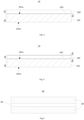
- 10-Negative electrode current collector 10-Negative electrode current collector; 101-Organic support layer; 101a-First surface; 101b-Second surface; 1011-First sublayer; 1012-Second sublayer; 1013-Third sublayer; 102-Copper-based conductive layer; 103-Protective layer; 20-Negative electrode active material layer; 30-Negative electrode plate.
- any lower limit may be combined with any upper limit to form a range that is not explicitly described; and any lower limit may be combined with other lower limits to form an unspecified range, and any upper limit may be combined with any other upper limit to form an unspecified range.
- each point or single value between the endpoints of the range is included in the range.
- each point or single value can be combined with any other point or single value as its own lower limit or upper limit or combined with other lower limit or upper limit to form a range that is not explicitly specified.
- Fig. 1 is a schematic structural diagram of a negative electrode current collector 10 as an embodiment of the present application.
- the negative electrode current collector 10 includes an organic support layer 101 and a copper-based conductive layer 102 that are laminated.
- the organic support layer 101 has a first surface 101a and a second surface 101b opposite in its thickness direction, and the copper-based conductive layer 102 is disposed on the first surface 101a and the second surface 101b of the organic support layer 101.
- the copper-based conductive layer 102 may be disposed on either of the first surface 101a and the second surface 101b of the organic support layer 101.
- the copper-based conductive layer 102 is disposed on the first surface 101a of the organic support layer 101.
- the copper-based conductive layer 102 may also be disposed on the second surface 101b of the organic support layer 101.
- a copper-based crystal grain size d in the copper-based conductive layer 102 is from 10 nm to 500 nm.
- the negative electrode current collector 10 can be subjected to an X-ray diffraction analysis using instruments and methods known in the art.
- an X-ray powder diffractometer is used to determine the X-ray diffraction spectrum in accordance with JIS K0131-1996 X-ray diffraction analysis general rules.
- the negative electrode current collector 10 of the embodiment of the present application includes an organic support layer 101 and a copper-based conductive layer 102 disposed on the organic support layer 101.
- the negative electrode current collector according to the present application can help to reduce the weight of the electrochemical device, thereby significantly improving the energy density of the electrochemical device.
- the support layer using organic materials has higher toughness
- the copper-based crystal grain size d in the copper-based conductive layer 102 is from 10nm to 500nm, so that the copper-based conductive layer 102 and the organic support layer 101 have a higher interface bonding force, and the copper-based conductive layer 102 can be uniformly deformed with the extension of the organic support layer 101, effectively prevent local stress concentration, and greatly reduce the probability of the fracture of copper-based conductive layer 102, thereby greatly improving the fracture toughness of the negative electrode current collector 10, improving the mechanical properties of the negative electrode current collector 10, and preventing the negative electrode current collector 10 from breaking or forming microcracks during processing or use, and further significantly improving yields of the negative electrode current collector 10, the negative electrode plate 20 and electrochemical device during preparation and their safety and reliability during use.
- the copper-based crystal grain size d in the copper-based conductive layer 102 is from 10 nm to 500 nm, which ensures that the copper-based conductive layer 102 has good electrical conductivity, thereby ensuring that the negative electrode current collector 10 has good electrical conductivity and current collecting performance, and at the same time which is beneficial to making the negative electrode plate 20 and the electrochemical device to have low impedance and reduces the polarization of the negative electrode, so that the electrochemical device has higher electrochemical performance, such as the electrochemical device has higher rate performance and cycle performance.
- the upper limit of the copper-based crystal grain size d in the copper-based conductive layer 102 can be selected from 500nm, 450nm, 400nm, 350nm, 300nm, 250nm, 200nm, 150nm, 100nm, 80nm, 50nm and the lower limit can be selected from 380nm, 320nm, 280nm, 240nm, 180nm, 120nm, 90nm, 70nm, 30nm, 10nm.
- the range of the copper-based crystal grain size d in the copper-based conductive layer 102 can be formed by a combination of any lower limit and any upper limit, or a combination of any lower limit and any other lower limit, or a combination of any upper limit and any other upper limit.
- the copper-based crystal grain size d in the copper-based conductive layer 102 is from 30 nm to 300 nm, more preferably from 50 nm to 150 nm.
- the copper-based conductive layer 102 having the above mentioned copper-based crystal grain size d which can enable the negative electrode current collector 10 to better exert the above-mentioned effects.
- the thickness D 1 of the copper-based conductive layer 102 is preferably 30 nm ⁇ D 1 ⁇ 3 ⁇ m.
- the copper-based conductive layer 102 with a smaller thickness is disposed on the surface of the organic support layer 101, which can significantly reduce the weight of the negative electrode current collector 10 compared with the traditional metal current collector (such as a copper foil), thereby reducing the weight of the electrochemical device and significantly increasing the energy density of the electrochemical device.
- the thickness D 1 of the copper-based conductive layer 102 is preferably 30nm ⁇ D1 ⁇ 3 ⁇ m, which enables the copper-based conductive layer 102 to have good electrical conductivity, and is beneficial to ensuring that the negative electrode current collector 10 has good electrical conductivity and current collecting performance, thereby ensuring that the electrochemical device has good electrochemical performance; and which enables the copper-based conductive layer 102 not to be easy to break during processing and use, so that the negative electrode current collector 10 has higher fracture toughness, and ensures that the negative electrode current collector 10 has better mechanical stability and work stability.
- the copper-based conductive layer 102 in the case of abnormalities such as nail penetration in the electrochemical device, the copper-based conductive layer 102 generates relatively small burrs, which can reduce the risk of exposure of the metal burrs to the counter electrode, thereby improving the safety performance of electrochemical devices.
- the upper limit of the thickness D 1 of the copper-based conductive layer 102 can be selected from 3 ⁇ m, 2.5 ⁇ m, 2 ⁇ m, 1.8 ⁇ m, 1.5 ⁇ m, 1.2 ⁇ m, 1 ⁇ m, 900nm, 750nm, 450nm, 250nm, 100nm, and the lower limit can be selected from 1.6 ⁇ m, 1 ⁇ m, 800nm, 600nm, 400nm, 300nm, 150nm, 100nm, 80nm, 30nm.
- the range of the thickness D 1 of the copper-based conductive layer 102 can be formed by a combination of any of the aforementioned lower limits and any upper limits, or by a combination of any lower limit and any other lower limit, or by a combination of any upper limit and any other upper limit.
- the thickness D 1 of the copper-based conductive layer 102 is 300 nm ⁇ D1 ⁇ 2 ⁇ m, preferably 500 nm ⁇ D 1 ⁇ 1.5 ⁇ m, and further is 600 nm ⁇ D 1 ⁇ 1.2 ⁇ m.
- the thickness D 1 of the copper-based conductive layer 102 and the copper-based crystal grain size d satisfies 1 ⁇ D 1 /d ⁇ 300.
- the thickness D 1 of the copper-based conductive layer 102 and the copper-based crystal grain size d satisfying the above relationship can enable the negative electrode current collector 10 to have better mechanical properties, as well as to have higher electrical conductivity and current collection performance.
- the upper limit of Di/d may be selected from 300, 280, 250, 230, 220, 200, 190, 170, 150, 120, 100, 80, 60, 50, 48, and the lower limit can be selected from 1, 2, 3, 5, 6, 8, 10, 12, 15, 18, 20, 22, 25, 30, 33, 35, 37, 40, 42, 45.
- the range of D1/d can be formed by a combination of any lower limit and any upper limit, or a combination of any lower limit and any other lower limit, and it can also be formed by a combination of any upper limit and any other upper limit.
- the thickness D 1 of the copper-based conductive layer 102 and the copper-based crystal grain size d satisfy 2 ⁇ D 1 /d ⁇ 100, more preferably 3 ⁇ D 1 /d ⁇ 50.
- the copper-based conductive layer 102 includes one or more of copper (Cu) and copper alloy.
- Copper alloy is an alloy in which copper is the main element and one or more additional elements are included.
- the additional element is selected from titanium (Ti), vanadium (V), nickel (Ni), chromium (Cr), iron (Fe), cobalt (Co), manganese (Mn), zinc (Zn), zirconium (Zr), molybdenum (Mo), niobium (Nb), tungsten (W), silver (Ag), palladium (Pd) and cadmium (Cd).
- the additional element is selected from titanium (Ti), vanadium (V), nickel (Ni), chromium (Cr), iron (Fe), cobalt (Co), manganese (Mn), zinc (Zn), zirconium (Zr), molybdenum (Mo), niobium (Nb), tungsten (W), silver (Ag), palladium (Pd) and cadmium (Cd).
- the mass percentage of the copper element in the copper alloy is 80 wt% or above, more preferably 90 wt% or above, for example, from 90 wt% to 95 wt%.
- the mass percentage of the copper element in the copper alloy is within the above-mentioned range, which enables the copper alloy conductive layer to have higher electrical conductivity, mechanical properties, tolerance to processing and corrosion resistance.
- the organic support layer 101 has a Young's modulus E preferably ⁇ 2 Gpa, which enables the organic support layer 101 to have good toughness and also suitable rigidity, so that it can better support the copper-based conductive layer 102 to ensure the overall strength of the negative electrode current collector 10, but also it will not be excessively extended or deformed during the processing of the negative electrode current collector 10, which more effectively prevents the organic support layer 101 and the copper-based conductive layer 102 from breaking, and enables higher bonding strength between the organic support layer 101 and the copper-based conductive layer 102 without delamination of the copper-based conductive layer 102.
- the mechanical stability and working stability of the negative electrode current collector 10 are improved, thereby improving the performance of the electrochemical device.
- the Young's modulus E of the organic support layer 101 is preferably 2 GPa ⁇ E ⁇ 20 GPa, such as 2 GPa, 3 GPa, 4 GPa, 5 GPa, 6 GPa, 7 GPa, 8 GPa, 9 GPa, 10 GPa, 11 GPa, 12 GPa, 13 GPa, 14 GPa, 15 GPa, 16 GPa, 17 GPa, 18 GPa, 19 GPa, or 20 GPa.
- This enables the organic support layer 101 to have appropriate toughness and appropriate rigidity, and winding flexibility during processing.
- the thickness D 2 of the organic support layer 101 is preferably 1 ⁇ m ⁇ D 2 ⁇ 30 ⁇ m.
- the thickness D 2 of the organic support layer 101 is 1 ⁇ m or above, which enables the organic support layer 101 to have relatively high mechanical strength, not to be easy to break during processing and use, and to support and protect the copper-based conductive layer 102 well, thereby improving the mechanical stability and working stability of the negative electrode current collector 10.
- the thickness D 2 of the organic support layer 101 is 30 ⁇ m or less, which enables the electrochemical device to have relatively small size and relatively low weight, thereby increasing volumetric energy density and gravimetric energy density of the electrochemical device.
- the upper limit of the thickness D 2 of the organic support layer 101 may be 30 ⁇ m, 25 ⁇ m, 20 ⁇ m, 18 ⁇ m, 15 ⁇ m, 12 ⁇ m, 10 ⁇ m or 8 ⁇ m, and the lower limit may be 1 ⁇ m, 1.5 ⁇ m, 2 ⁇ m, 3 ⁇ m, 4 ⁇ m, 5 ⁇ m, 6 ⁇ m, 7 ⁇ m, 9 ⁇ m or 16 ⁇ m.
- the range of the thickness D 2 of the organic support layer 101 can be formed by a combination of any of the foregoing upper limit and any lower limit, or can be formed by a combination of the foregoing any upper limit and any other upper limit, or can be formed by a combination of the foregoing any lower limit and any other lower limit value.
- the thickness D 2 of the organic support layer 101 is 1 ⁇ m ⁇ D 2 ⁇ 15 ⁇ m, preferably 1 ⁇ m ⁇ D 2 ⁇ 10 ⁇ m, preferably 1 ⁇ m ⁇ D 2 ⁇ 8 ⁇ m, preferably 2 ⁇ m ⁇ D 2 ⁇ 8 ⁇ m, more preferably 2 ⁇ m ⁇ D 2 ⁇ 6 ⁇ m.
- the gravimetric energy density and volumetric energy density of the electrochemical device can be made higher, and the d value of the copper-based conductive layer 102 and the D1/d value within the above range will be able to better improve the mechanical properties of the negative electrode current collector 10, and enable the negative electrode current collector 10 to have both higher electrical conductivity and current collecting performance. Also, the d value of the copper-based conductive layer 102 and the D1/d value have more obvious effects on the mechanics properties and mechanical properties of the negative electrode current collector 10.
- the organic support layer 101 adopts one or more of polymer materials and polymer-based negative electrode materials.
- the polymer materials are one or more of polyamides, polyimides, polyesters, polyolefins, polyynes, siloxane polymers, polyethers, polyols, polysulfones, polysaccharide polymers, amino acid polymers, polysulfur nitrides, aromatic ring polymers, aromatic heterocyclic polymers, epoxy resin, phenolic resin, derivatives thereof, cross linkers thereof, and copolymers thereof.
- the polymer materials are one or more of polycaprolactam (commonly known as nylon 6), polyhexamethylene adipamide (commonly known as nylon 66), polyparaphenylene terephthalamide (PPTA), polyisophthaloyl metaphenylene diamine (PMIA), polyethylene terephthalate (PET), polybutylene terephthalate (PBT), polyethylene naphthalate (PEN), polycarbonate (PC), polyethylene (PE), polypropylene (PP), polypropylene (PPE), polyvinyl alcohol (PVA), polystyrene (PS), polyvinyl chloride (PVC), polyvinylidene fluoride (PVDF), polytetrafluoroethylene (PTEE), poly(sodium styrene sulfonate) (PSS), polyacetylene (PA), silicone rubber, polyoxymethylene (POM), polyphenylene ether (PPO), polyphenylene sulfide (PP
- the above-mentioned polymer-based composite materials may include the above-mentioned polymer materials and additives.
- the additives may include one or more of metallic materials and inorganic non-metallic materials.
- metal material additives for example one or more of aluminum, aluminum alloy, copper, copper alloy, nickel, nickel alloy, titanium, titanium alloy, iron, iron alloy, silver, and silver alloy can be given.
- inorganic non-metallic material additives for example, one or more of carbon-based materials, alumina, silicon dioxide, silicon nitride, silicon carbide, boron nitride, silicate, and titanium oxide, and also for example, one or more of glass materials, ceramics materials and ceramic composite materials can be given.
- the carbon-based material additives are, for example, one or more of graphite, superconducting carbon, acetylene black, carbon black, Ketjen black, carbon dots, carbon nanotubes, graphene, and carbon nanofibers.
- additives may be metal-coated carbon-based materials, such as one or more of nickel-coated graphite powder and nickel-coated carbon fibers.
- the organic support layer 101 adopts one or more of insulating polymer materials and insulating polymer-based composite materials.
- the organic support layer 101 has a relatively high volume resistivity, which is beneficial to improving the safety performance of the electrochemical device.
- the organic support layer 101 includes one or more of polyethylene terephthalate (PET), polybutylene terephthalate (PBT), polyethylene naphthalate (PEN), poly(sodium styrene sulfonate) (PSS) and polyimide (PI).
- PET polyethylene terephthalate
- PBT polybutylene terephthalate
- PEN polyethylene naphthalate
- PSS poly(sodium styrene sulfonate)
- PI polyimide
- the organic support layer 101 may be of a single-layer structure, or a composite layer structure of two or more layers, such as two layers, three layers, or four layers.
- Fig. 2 is a schematic structural diagram of another negative electrode current collector 10 according to an embodiment of the present application.
- the organic support layer 101 is of a composite layer structure formed by laminating a first sublayer 1011, a second sublayer 1012, and a third sublayer 1013.
- the organic support layer 101 of the composite layer structure has a first surface 101a and a second surface 101b opposite to each other, and the copper-based conductive layers 102 are laminated on the first surface 101a and the second surface 101b of the organic support layer 101.
- the copper-based conductive layer 102 may be disposed only on the first surface 101a of the organic support layer 101, or only on the second surface 101b of the organic support layer 101.
- the organic support layer 101 is of a composite layer structure of two or more layers
- materials of the sublayers may be the same or different.
- the negative electrode current collector 10 further optionally includes a protective layer 103.
- the copper-based conductive layer has two opposite surfaces in its thickness direction, and the protective layer 103 is disposed on either or both of two opposite surfaces of either copper-based conductive layer 102 to protect the copper-based conductive layer 102, prevent the copper-based conductive layer 102 from chemical corrosion or mechanical damage, and ensure the working stability and service life of the negative electrode current collector 10, which is beneficial to enabling the electrochemical device to have relatively high safety performance and electrochemical performance.
- the protective layer 103 can also increase the strength of the negative electrode current collector 10.
- Figs. 3 to 5 show the copper-based conductive layer 102 on a single side of the organic support layer 101, and the protective layer(s) 103 on either or both of two opposite surfaces of the copper-based conductive layer 102 in its thickness direction
- the copper-based conductive layers 102 may be respectively disposed on two opposite surfaces of the organic support layer 101
- the protective layer(s) 103 may be disposed on either or both of two opposite surfaces of each copper-based conductive layer 102 in its thickness direction
- the protective layer 103 may be disposed on either or both of two opposite surfaces of two copper-based conductive layers 102 in their thickness direction.
- the protective layer 103 includes one or more of metal, metal oxide, and conductive carbon.
- the above-mentioned metal may include one or more of nickel, chromium, nickel-based alloy, and copper-based alloy.
- the above-mentioned nickel-based alloy is an alloy formed by adding one or more other elements to pure nickel as a matrix, and is preferably a nickel-chromium alloy.
- the nickel-chromium alloy is an alloy formed of metallic nickel and metallic chromium.
- a weight ratio of nickel to chromium in the nickel-chromium alloy is from 1: 99 to 99: 1, such as 9: 1.
- the above-mentioned copper-based alloy is an alloy formed by adding one or more other elements to pure copper as a matrix, and is preferably a nickel-copper alloy.
- a weight ratio of nickel to copper in the nickel-copper alloy is from 1: 99 to 99: 1, such as 9: 1.
- the above-mentioned metal oxide is, for example, one or more of aluminum oxide, cobalt oxide, chromium oxide, and nickel oxide.
- the above-mentioned conductive carbon is, for example, one or more of graphite, superconducting carbon, acetylene black, carbon black, Ketjen black, carbon dots, carbon nanotubes, graphene and carbon nanofibers, and further include one or more of carbon black, carbon nanotubes, acetylene black, and graphene.
- the protective layer 103 preferably adopts one or more of metals and metal oxides, which can improve the performance of the negative electrode current collector 10.
- the metal protective layer and the metal oxide protective layer have high corrosion resistance, high hardness and large specific surface area, which can effectively prevent the copper-based conductive layer 102 from chemical corrosion or mechanical damage, and enhance the strength of the negative electrode current collector 10 and improve the stability and service life of the negative electrode current collector 10; at the same time, which can further improve the interface between the copper-based conductive layer 102 and the organic support layer 101 or the negative electrode active material layer 20 (as shown in Figure 6 ), and improve the performance of the electrochemical device.
- the negative electrode current collector 10 includes an organic support layer 101, an copper-based conductive layer 102 and a protective layer 103 that are laminated.
- the organic support layer 101 has a first surface 101a and a second surface 101b opposite in its thickness direction, the copper-based conductive layer 102 is disposed on at least one of the first surface 101a and the second surface 101b of the organic support layer 101, and the protective layer 103 is disposed on the surface of the copper-based conductive layer 102 facing away from the organic support layer 101.
- the protective layer 103 disposed on the surface of the copper-based conductive layer 102 facing away from the organic support layer 101 protects the copper-based conductive layer 102 from chemical corrosion and mechanical damage, also improves the interface between the negative electrode current collector 10 and the active material layer 20 and improves the bonding force between the negative electrode current collector 10 and the active material layer 20.
- the above effects can be further improved if the upper protective layer is a metal protective layer or metal oxide protective layer.
- the interface resistance can also be significantly reduced, the conductivity performance between the negative electrode current collector 10 and the negative electrode active material layer 201 can be improved, the negative electrode polarization can be reduced, and the performance of the electrochemical device can be improved.
- the upper protective layer is a metal oxide protective layer, it can more apparently protect against chemical corrosion and mechanical damage.
- the upper protective layer can be a double-layer protective layer of a metal protective layer and a metal oxide protective layer, preferably comprises a metal protective layer that is provided on the surface of the copper-based conductive layer 102 facing away from the organic support layer 101, and a metal oxide protective layer that is further provided on the surface of the metal protective layer facing away from the organic support layer 101, so as to better improve the conductivity, corrosion resistance, and mechanical damage resistance of the negative electrode current collector 10.
- the negative electrode current collector 10 includes an organic support layer 101, an copper-based conductive layer 102 and a protective layer 103 that are laminated.
- the organic support layer 101 has a first surface 101a and a second surface 101b opposite in its thickness direction, the copper-based conductive layer 102 is laminated on at least one of the first surface 101a and the second surface 101b of the organic support layer 101, and the protective layer 103 is laminated on the surface of the copper-based conductive layer 102 facing toward the organic support layer 101.
- the protective layer 103 On the surface of the copper-based conductive layer 102 facing toward the organic support layer 101 is disposed the protective layer 103(referred to as a lower protective layer for short), and the lower protective layer protects the copper-based conductive layer 102 from chemical corrosion and mechanical damage. Meanwhile, the lower protective layer can also improve the bonding force between the copper-based conductive layer 102 and the organic support layer 101, prevent the copper-based conductive layer 102 from separating from the organic support layer 101, and improve the supporting and protecting effect on the copper-based conductive layer 102.
- the lower protective layer is a metal oxide protective layer.
- the metal oxide protective layer has relatively larger specific surface area and higher hardness, which is conducive to further improving the bonding force between the copper-based conductive layer 102 and the organic support layer 101, and to increasing the strength of the negative electrode current collector 10.
- the lower protective layer is a metal protective layer, it can improve the bonding force between the copper-based conductive layer 102 and the organic support layer 101 and increase the strength of the negative electrode current collector 10, while better reducing the polarization of the electrode plate and enhancing the conductivity of the negative electrode current collector 10.
- the lower protective layer is preferably a metal protective layer.
- the negative electrode current collector 10 includes an organic support layer 101, an copper-based conductive layer 102 and a protective layer 103 that are laminated.
- the organic support layer 101 has a first surface 101a and a second surface 101b opposite in its thickness direction
- the copper-based conductive layer 102 is laminated on at least one of the first surface 101a and the second surface 101b of the organic support layer 101
- the protective layer 103 is disposed on the surface of the copper-based conductive layer 102 facing away the organic support layer 101 and on the surface of the copper-based conductive layer 102 facing toward the organic support layer 101.
- the protective layer 103 is disposed on both surfaces of the copper-based conductive layer 102 to more fully protect the copper-based conductive layer 102, so that the negative electrode current collector 10 has relatively high comprehensive performance.
- the protective layers 103 on the two surfaces of the copper-based conductive layer 102 may be made of the same or different materials, and may have the same or different thicknesses.
- the thickness D 3 of the protective layer 103 is 1 nm ⁇ D 3 ⁇ 200 nm, and D 3 ⁇ 0.1 D 1 . If the protective layer 103 is too thin, it will not be sufficient to protect the copper-based conductive layer 102; if it is too thick, the energy density of the electrochemical device will be reduced.
- the upper limit of the thickness D 3 of the protective layer 103 may be 200 nm, 180 nm, 150 nm, 120 nm, 100 nm, 80 nm, 60 nm, 55 nm, 50 nm, 45 nm, 40 nm, 30 nm or 20 nm, and the lower limit may be 1 nm, 2 nm, 5 nm, 8nm, 10 nm, 12 nm, 15 nm or 18nm.
- the range of the thickness D 3 of the protective layer 103 can be formed by a combination of any of the foregoing upper limit and any lower limit, or can be formed by a combination of the foregoing any upper limit and any other upper limit, or can be formed by a combination of the foregoing any lower limit and any other lower limit value.
- the thickness D 3 of the protective layer 103 is 5 nm ⁇ D 3 ⁇ 200 nm, more preferably, is 10 nm ⁇ D 3 ⁇ 200 nm.
- the thickness D a of the upper protective layer is 1 nm ⁇ D a ⁇ 200 nm and D a ⁇ 0.1D 1 ; and the thickness D b of the lower protective layer is 1 nm ⁇ D b ⁇ 200 nm and D b ⁇ 0.1D1.
- D a > D b which enables the upper protective layer and the lower protective layer to protect the copper-based conductive layer 102 cooperatively from chemical corrosion and mechanical damage, and enables the electrochemical device to have relatively high energy density. More preferably, 0.5 D a ⁇ D b ⁇ 0.8 D a .
- the cooperative protection effect of the upper protective layer and the lower protective layer can be better exerted.
- the negative electrode current collector 10 has an elongation at break of greater than or equal to 3%.
- the negative electrode current collector 10 having an elongation at break of greater than or equal to 3% has high fracture toughness, which greatly reduces the probability of its fracture and the presence of cracks in the copper-based conductive layer 102 during processing and use, thereby improving yields of the negative electrode current collector 10 and the negative electrode plate 20 and electrochemical device using the same during preparation and their safety and reliability during use.
- the elongation at break may be tested by the method known in the art.
- the negative electrode current collector 10 is cut into a sample of 15 mm ⁇ 200 mm, a tensile test is performed by Go-tech tensile tester at normal temperature and pressure (25°C, 0.1 MPa), an initial position is set such that the sample between the clamps is 50 mm long, the sample is stretched at a speed of 5 mm/ min, the clamp displacement y (mm) at tensile break is recorded, and finally the elongation at break is calculated as (y/ 50) ⁇ 100%.
- the copper-based conductive layer 102 is formed on the organic support layer 101, for example, by at least one means of mechanical rolling, bonding, vapor deposition, chemical plating, and electroplating. Among them, vapor deposition and electroplating are preferred. That is, the copper-based conductive layer 102 is preferably a vapor deposition layer or an electroplating layer, which enables the copper-based crystal grain size in the copper-based conductive layer to be in the range of 10 nm to 500 nm, enables the bonding force between the copper-based conductive layer 102 and the organic support layer 101 to be relatively high, and improves the mechanical properties and electrical conductivity performance of the negative electrode current collector 10.
- the above-mentioned vapor deposition is preferably physical vapor deposition.
- the physical vapor deposition is preferably at least one of evaporation and sputtering, wherein the evaporation is preferably at least one of vacuum evaporation, thermal evaporation and electron beam evaporation, and the sputtering is preferably magnetron sputtering.
- the copper-based conductive layer 102 can be formed by vacuum evaporation including the steps of placing the organic support layer 101 after surface cleaning treatment in a vacuum evaporation chamber, melting and evaporating a metal wire in the metal evaporation chamber at a high temperature of from 1300°C to 2000°C, and passing the evaporated metal through a cooling system in the vacuum evaporation chamber and then depositing the evaporated metal on the organic support layer 101 to form the copper-based conductive layer 102.
- the protective layer 103 When the protective layer 103 is present, it can be formed on the copper-based conductive layer 102 by at least one of vapor deposition, in-situ formation and coating.
- the vapor deposition may be the aforementioned vapor deposition.
- the in-situ formation is preferably in-situ passivation, that is, a method of forming a metal oxide passivation layer in situ on a metal surface.
- the coating is preferably at least one of roll coating, extrusion coating, knife coating, and gravure coating.
- the protective layer 103 is formed on the copper-based conductive layer 102 by at least one means of vapor deposition and in-situ formation, which enables relatively high bonding force between the copper-based conductive layer 102 and the protective layer 103, thereby better protecting the negative electrode current collector 10 by the protective layer 102 and ensuring good working performance of the negative electrode current collector 10.
- the lower protective layer When the protective layer 103 (that is, the lower protective layer) is disposed between the copper-based conductive layer 102 and the organic support layer 101, the lower protective layer may be formed on the organic support layer 101 first, and then the copper-based conductive layer 102 is formed on the lower protective layer.
- the lower protective layer may be formed on the organic support layer 101 by at least one means of vapor deposition and coating, and preferably by vapor deposition.
- the copper-based conductive layer 102 may be formed on the lower protective layer by at least one means of mechanical rolling, bonding, vapor deposition and chemical plating, and preferably by vapor deposition.
- Fig. 6 is a schematic structural diagram of a negative electrode plate 30 according to an embodiment of the present application.
- the negative electrode plate 30 includes a negative electrode current collector 10 and an active material layer 20 that are laminated, wherein the negative electrode current collector 10 is the negative electrode current collector according to the first aspect of the present application.
- the negative electrode plate 30 of the embodiments of the present application adopts the negative electrode current collector 10 according to the first aspect of the embodiments of the present application, it has relatively high mechanics, relatively high preparation yield, relatively high use safety and reliability, low weight and relatively high electrochemical performance.
- the negative electrode plate 30 includes a negative electrode current collector 10 and active material layers 20 that are laminated, the negative electrode current collector 10 has two opposite surfaces in its thickness direction, and the active material layer 20 is laminated on the two surfaces of the negative electrode current collector 10.
- the active material layer 20 may also be laminated on either of the two surfaces of the negative electrode current collector 10.
- the negative electrode active material layer 20 may adopt any negative electrode active material in the art, which is not limited in this application.
- the negative electrode active material for lithium-ion secondary batteries may be one or more of metallic lithium, natural graphite, artificial graphite, mesocarbon microbeads (MCMB), hard carbon, soft carbon, silicon, silicon-carbon negative electrode, SiO, Li-Sn alloy, Li-Sn-O alloy, Sn, SnO, SnO 2 , lithium titanate of a spinel structure, and Li-Al alloy.
- metallic lithium natural graphite, artificial graphite, mesocarbon microbeads (MCMB), hard carbon, soft carbon, silicon, silicon-carbon negative electrode, SiO, Li-Sn alloy, Li-Sn-O alloy, Sn, SnO, SnO 2 , lithium titanate of a spinel structure, and Li-Al alloy.
- the negative active material layer 20 may further include a conductive agent.
- a conductive agent is one or more of graphite, superconducting carbon, acetylene black, carbon black, Ketjen black, carbon dots, carbon nanotubes, graphene, and carbon nanofibers.
- the negative electrode active material layer 20 may further include a binder.
- the binder is one or more of styrene-butadiene rubber (SBR), water-based acrylic resin, carboxymethyl cellulose (CMC), polyvinylidene fluoride (PVDF), polytetrafluoroethylene (PTFE), ethylene-vinyl acetate copolymer (EVA), polyvinyl alcohol (PVA), and polyvinyl butyral (PVB).
- SBR styrene-butadiene rubber
- CMC carboxymethyl cellulose
- PVDF polyvinylidene fluoride
- PTFE polytetrafluoroethylene
- EVA ethylene-vinyl acetate copolymer
- PVB polyvinyl butyral
- the negative electrode plate 30 can be prepared according to a conventional method in the art. Generally, the negative electrode active material and optional conductive agent and binder are dispersed in a solvent which may be NMP or deionized water to form a uniform negative electrode slurry; the negative electrode slurry is applied to the negative electrode current collector 10, and the negative electrode plate 30 is obtained after steps including drying and the like.
- a solvent which may be NMP or deionized water
- the embodiments of the present application provide an electrochemical device.
- the electrochemical device includes a positive electrode plate, a negative electrode plate and an electrolyte, wherein the negative electrode plate is the negative electrode plate according to the second aspect of the present application.
- the aforementioned electrochemical device may be, but not limited to, a lithium-ion secondary battery, a lithium primary battery, a sodium ion battery, a magnesium ion battery, etc.
- the electrochemical device adopts the negative electrode plate provided according to the second aspect of the embodiments of the present application, and thus the electrochemical device of the embodiments of the present application has relatively high comprehensive electrochemical performance, including relatively high energy density, rate performance, cycle performance and safety performance.
- the above positive electrode plate may comprises a positive electrode current collector and a positive electrode active material layer.
- the positive electrode current collector may adopt one or more of aluminum, aluminum alloy, copper, copper alloy, nickel, nickel alloy, titanium, titanium alloy, silver and silver alloy.
- the positive electrode active material layer may adopt any positive electrode active material in the art, which is not limited in the present application.
- the positive electrode active material for lithium-ion secondary batteries may be one or more of lithium transition metal composite oxides, and composite oxides obtained by adding other transition metals or non-transition metals or non-metals to lithium transition metal composite oxides.
- the transition metals may be one or more of Mn, Fe, Ni, Co, Cr, Ti, Zn, V, Al, Zr, Ce, and Mg.
- the positive electrode active material may be selected from one or more of lithium cobalt oxide, lithium nickel oxide, lithium manganese oxide, lithium nickel manganese oxide, lithium nickel cobalt manganese oxide, lithium nickel cobalt aluminum oxide, and lithiumcontaining phosphate of an olivine structure.
- the lithium transition metal composite oxides are one or more of LiMn 2 O 4 , LiNiO 2 , LiCoO 2 , LiNi 1-y Co y O 2 (0 ⁇ y ⁇ 1), LiNi a Co b Al 1-a-b O 2 (0 ⁇ a ⁇ 1,0 ⁇ b ⁇ 1,0 ⁇ a+b ⁇ 1), LiMn 1-m-n NiMCo n O 2 (0 ⁇ m ⁇ 1,0 ⁇ n ⁇ 1,0 ⁇ m+n ⁇ 1),LiMPO 4 (M may be one or more of Fe, Mn, and Co), and Li 3 V 2 (PO 4 ) 3 .
- LiMn 2 O 4 LiNiO 2 , LiCoO 2 , LiNi 1-y Co y O 2 (0 ⁇ y ⁇ 1), LiNi a Co b Al 1-a-b O 2 (0 ⁇ a ⁇ 1,0 ⁇ b ⁇ 1,0 ⁇ a+b ⁇ 1), LiMn 1-m-n NiMCo n O 2 (0 ⁇ m ⁇ 1,0 ⁇ n ⁇ 1,0 ⁇ m+
- the positive electrode active material layer may further include a binder.
- a binder is one or more of styrene-butadiene rubber (SBR), water-based acrylic resin, carboxymethyl cellulose (CMC), polyvinylidene fluoride (PVDF), polytetrafluoroethylene (PTFE), ethylene-vinyl acetate copolymer (EVA), polyvinyl alcohol (PVA), and polyvinyl butyral (PVB).
- SBR styrene-butadiene rubber
- CMC carboxymethyl cellulose
- PVDF polyvinylidene fluoride
- PTFE polytetrafluoroethylene
- EVA ethylene-vinyl acetate copolymer
- PVB polyvinyl butyral
- the positive electrode active material layer may further include a conductive agent.
- a conductive agent is one or more of graphite, superconducting carbon, acetylene black, carbon black, Ketjen black, carbon dots, carbon nanotubes, graphene, and carbon nanofibers.
- the positive electrode plate can be prepared according to a conventional method in the art. Generally, the positive electrode active material and optional conductive agent and binder are dispersed in a solvent which for example is N-methyl pyrrolidone, abbreviated as NMP to form a uniform positive electrode slurry; the positive electrode slurry is applied to the positive current collector, and the positive electrode plate is obtained after steps including drying and the like.
- a solvent which for example is N-methyl pyrrolidone, abbreviated as NMP to form a uniform positive electrode slurry
- NMP N-methyl pyrrolidone
- the electrolyte may be a solid electrolyte or a non-aqueous electrolytic solution, such as those obtained by dispersing an electrolyte salt in an organic solvent.
- the organic solvent serves as a medium to transport ions in electrochemical reaction, and may adopt any organic solvent in the art.
- the electrolyte salt may be any electrolyte salt in the art.
- the organic solvent for lithium-ion secondary batteries may be one or more of ethylene carbonate (EC), propylene carbonate (PC), ethyl methyl carbonate (EMC), diethyl carbonate (DEC), dimethyl carbonate (DMC), dipropyl carbonate (DPC), methyl propyl carbonate (MPC), ethylene propyl carbonate (EPC), butylene carbonate (BC), fluoroethylene carbonate (FEC), methyl formate (MF), methyl acetate (MA), ethyl acetate (EA), propyl acetate (PA), methyl propionate (MP), ethyl propionate (EP), propyl propionate (PP), methyl butyrate (MB), ethyl butyrate (EB), 1,4-butyrolactone (GBL), sulfolane (SF), dimethyl sulfone (MSM), methyl ethyl sulfone (EMS), and diethyl sulfone
- the electrolyte salt for lithium-ion secondary batteries may be one or more of LiPF 6 (lithium hexafluorophosphate), LiBF 4 (lithium tetrafluoroborate), LiClO 4 (lithium perchlorate), LiAsF 6 (lithium hexafluoroarsenate), LiFSI (lithium difluorosulfimide), LiTFSI (lithium bistrifluoromethanesulfonimide), LiTFS (lithium trifluoromethanesulfonate), LiDFOB (lithium difluorooxalate), LiBOB (lithium bisoxalate), LiPO 2 F 2 (lithium difluorophosphate), LiDFOP (lithium difluorobisoxalate phosphate), and LiTFOP (lithium tetrafluorooxalate phosphate).
- LiPF 6 lithium hexafluorophosphate
- LiBF 4 lithium tetrafluoroborate
- the electrolyte may further optionally include additives.
- the type of additives is not specifically limited, and may be selected according to requirements.
- the additives may include one or more of vinylene carbonate (VC), vinyl ethylene carbonate (VEC), fluoroethylene carbonate (FEC), succinonitrile (SN), adiponitrile (ADN), 1,3-propylene sultone (PST), tris(trimethylsilane) phosphate (TMSP), and tris(trimethylsilane) borate (TMSB).
- a separator is required to be disposed between the positive electrode plate and the negative electrode plate for separation.
- the type of separator is not specially limited, and the separator may be any known porous separator with good chemical and mechanical stability, such as one or more of glass fiber, non-woven fabric, polyethylene, polypropylene, and polyvinylidene fluoride.
- the separator may be a single-layer film or a multi-layer composite film. When the separator is a multi-layer composite film, materials of respective layers may be the same or different.
- the electrochemical device is prepared by the steps of stacking the positive electrode plate, the separator and the negative electrode plate in order so that the separator is disposed between the positive electrode plate and the negative electrode plate for isolation to obtain a battery core, which may be obtained by winding; placing the battery core into a package shell followed by injecting the electrolytic solution and sealing.
- a organic support layer with a predetermined thickness was selected and subjected to surface cleaning treatment, the organic support layer after the surface cleaning treatment was placed in a vacuum evaporation chamber, a high-purity copper wire in the metal evaporation chamber was melted and evaporated at a high temperature from 1300°C to 2000°C, and the evaporated metal passed through a cooling system in the vacuum evaporation chamber and was finally deposited on two surfaces of the organic support layer to form a copper based conductive layer.
- Negative electrode active materials including graphite, conductive carbon black, sodium carboxymethyl cellulose as a thickener, and styrene butadiene rubber emulsion (SBR) as a binder were mixed thoroughly at a weight ratio of 96.5: 1.0: 1.0: 1.5 in an appropriate amount of deionized water to form a uniform negative electrode slurry; the negative electrode slurry was applied to a negative electrode current collector, and a negative electrode plate was obtained after steps including drying and the like.
- SBR styrene butadiene rubber emulsion
- Positive electrode active materials including LiNi 1/3 Co 1/3 Mn 1/3 O 2 (NCM333), conductive carbon black, and polyvinylidene fluoride (PVDF) as a binder were mixed thoroughly at a weight ratio of 93: 2: 5 in an appropriate amount of N-methylpyrrolidone (NMP) solvent to form a uniform positive electrode slurry; the positive electrode slurry was applied to a positive electrode current collector, and a positive electrode plate was obtained after steps including drying and the like.
- NMP N-methylpyrrolidone
- Ethylene carbonate (EC) and ethyl methyl carbonate (EMC) at a volume ratio of 3: 7 were mixed uniformly to obtain an organic solvent, and then 1 mol/L LiPF 6 was uniformly dissolved in the organic solvent.
- the positive electrode plate, the separator which was a PP/ PE/ PP negative electrode film, and the negative electrode plate were laminated in sequence and then wound into an electrode assembly, and the electrode assembly was packaged into a packaging housing, injected with the electrolyte and sealed to obtain a lithium-ion secondary battery.
- the Bruker D8 Discover X-ray diffractometer from Bruker AxS, Germany, was used to determine the X-ray diffraction spectrum of the copper-based conductive layer, with CuK ⁇ rays as a radiation source, in which the ray wavelength ⁇ 1.54056 ⁇ , the scanning 2 ⁇ angle range is from 20° to 80°, and the scanning rate is 0.05°/s.
- the copper-based crystal grain size d was calculated using the Scherrer formula.
- the negative electrode current collector was cut into a sample of 15 mm ⁇ 200 mm, a tensile test was performed by Go-tech tensile tester at normal temperature and pressure (25°C, 0.1 MPa), an initial position was set such that the sample between the clamps was 50 mm long, the sample was stretched at a speed of 5 mm/ min, the clamp displacement y (mm) at tensile break was recorded, and finally the elongation at break was calculated as (y/ 50) ⁇ 100%.
- the lithium-ion secondary battery was charged to 4.2 V at a constant current rate of 1C and then charged at a constant voltage until the current was ⁇ 0.05C, and afterwards discharged at a constant current rate of 1C to 2.8 V. This was a charge-discharge cycle.
- the discharge capacity at this time was a discharge capacity of the first cycle.
- the lithium-ion secondary battery was subjected to 1000 charge-discharge cycles according to the above method, the discharge capacity of the 1000th cycle was recorded, and a capacity retention rate of the lithium-ion secondary battery for 1000 cycles at 1C/1C was calculated.
- Capacity retention rate of lithium-ion secondary battery for 1000 cycles at 1C/1C (%) the discharge capacity of the 1000th cycle/ the discharge capacity of the first cycle ⁇ 100% (2) Rate performance test
- the lithium-ion secondary battery was charged to 4.2 V at a constant current rate of 1C and then charged at a constant voltage until the current was ⁇ 0.05C, and afterwards discharged at a constant current rate of 1C to 3.0 V, thereby obtaining 1C rate discharge capacity of the lithium-ion secondary battery.
- the lithium-ion secondary battery was charged to 4.2 V at a constant current rate of 1C and then charged at a constant voltage until the current was ⁇ 0.05C, and afterwards discharged at a constant current rate of 4C to 3.0 V, thereby obtaining 4C rate discharge capacity of the lithium-ion secondary battery.
- the weight percentage of the negative electrode current collector was a percentage of the weight of the negative electrode current collector per unit area relative to the weight of the conventional negative electrode current collector per unit area.
- the weight adopting the negative electrode current collector of the present application was reduced to various degrees, so that gravimetric energy densities of battery can be improved.
- the negative electrode current collector in Table 2 was based on the negative electrode current collector 7 as shown in Table 1 and was provided with a protective layer.
- the upper protective layer of the negative electrode current collector 7-14 adopted a two-layer protective layer that includes a nickel protective layer (i.e. a lower layer) on the surface of the Cu-based conductive layer facing away from the organic support layer, with a thickness of 25nm; and a nickel oxide protective layer (i.e. an upper layer) on the surface of the nickel protective layer facing away from the organic support layer, with a thickness of 25nm.
- a nickel protective layer i.e. a lower layer
- a nickel oxide protective layer i.e. an upper layer
- composition of the copper alloy in Table 5 was: 95 wt% copper and 5 wt% nickel.
Landscapes
- Chemical & Material Sciences (AREA)
- Engineering & Computer Science (AREA)
- Chemical Kinetics & Catalysis (AREA)
- Electrochemistry (AREA)
- General Chemical & Material Sciences (AREA)
- Materials Engineering (AREA)
- Composite Materials (AREA)
- Manufacturing & Machinery (AREA)
- Cell Electrode Carriers And Collectors (AREA)
Applications Claiming Priority (2)
| Application Number | Priority Date | Filing Date | Title |
|---|---|---|---|
| CN201910473184.6A CN110943228B (zh) | 2019-05-31 | 2019-05-31 | 负极集流体、负极极片及电化学装置 |
| PCT/CN2019/090403 WO2020237712A1 (zh) | 2019-05-31 | 2019-06-06 | 负极集流体、负极极片及电化学装置 |
Publications (3)
| Publication Number | Publication Date |
|---|---|
| EP3972018A1 true EP3972018A1 (de) | 2022-03-23 |
| EP3972018A4 EP3972018A4 (de) | 2022-08-10 |
| EP3972018B1 EP3972018B1 (de) | 2024-05-01 |
Family
ID=69905651
Family Applications (1)
| Application Number | Title | Priority Date | Filing Date |
|---|---|---|---|
| EP19930526.9A Active EP3972018B1 (de) | 2019-05-31 | 2019-06-06 | Negativelektroden-stromabnehmer, negative elektrodenplatte und elektrochemische vorrichtung |
Country Status (7)
| Country | Link |
|---|---|
| US (1) | US12567590B2 (de) |
| EP (1) | EP3972018B1 (de) |
| JP (1) | JP7585223B2 (de) |
| KR (1) | KR102724269B1 (de) |
| CN (2) | CN113363499B (de) |
| HU (1) | HUE067140T2 (de) |
| WO (1) | WO2020237712A1 (de) |
Cited By (2)
| Publication number | Priority date | Publication date | Assignee | Title |
|---|---|---|---|---|
| EP4439730A4 (de) * | 2021-11-22 | 2026-03-25 | Asahi Carbon Co Ltd | Negativelektrodenaktivmaterial für sekundärbatterie und sekundärbatterie damit |
| EP4723183A1 (de) * | 2024-10-04 | 2026-04-08 | Samsung Sdi Co., Ltd. | Kupfersubstrat für negativelektrodenstromkollektor einer wiederaufladbaren lithiumbatterie, negativelektrode damit und wiederaufladbare lithiumbatterie damit |
Families Citing this family (14)
| Publication number | Priority date | Publication date | Assignee | Title |
|---|---|---|---|---|
| JP7267509B2 (ja) * | 2020-06-23 | 2023-05-01 | 寧徳時代新能源科技股▲分▼有限公司 | 二次電池及び二次電池を含む装置 |
| US20240322186A1 (en) * | 2021-08-27 | 2024-09-26 | Shenzhen Yuansu Optoelectronics Technology Co., Ltd. | Electrode protective layer, and preparation method therefor and use thereof |
| CN114335557B (zh) * | 2021-11-30 | 2023-07-14 | 蜂巢能源科技有限公司 | 复合箔材及制备方法、集流体和锂离子电池 |
| CN114540802B (zh) * | 2022-01-27 | 2023-12-01 | 江阴纳力新材料科技有限公司 | 低能耗制备复合集流体的方法 |
| CN114551896A (zh) * | 2022-01-27 | 2022-05-27 | 江阴纳力新材料科技有限公司 | 复合集流体的制备方法 |
| CN114744205B (zh) * | 2022-03-29 | 2023-05-16 | 电子科技大学 | 一种用于集流体的复合膜材料、制备方法以及锂离子电池 |
| CN114824160B (zh) * | 2022-04-25 | 2023-10-27 | 江阴纳力新材料科技有限公司 | 复合集流体及其制备方法、电极极片和二次电池 |
| CN115275212B (zh) * | 2022-08-10 | 2023-06-23 | 哈尔滨工业大学 | 一种无阳极锂离子电池铜基集流体的制备方法 |
| CN116330786B (zh) * | 2023-03-31 | 2025-08-01 | 江阴纳力新材料科技有限公司 | 一种阻燃型薄膜、集流体、电极和电池 |
| DE102023203386A1 (de) * | 2023-04-14 | 2024-10-17 | Robert Bosch Gesellschaft mit beschränkter Haftung | Zellstapellage eines elektrochemischen Zellenstapels, mit einer Korrosionsschutzbeschichtung, sowie Verfahren zum Beschichten einer Zellstapellage |
| WO2025038677A1 (en) * | 2023-08-16 | 2025-02-20 | Applied Materials, Inc. | Resilient metallized pet as current collector for lithium- ion batteries |
| CN118645706A (zh) * | 2024-06-04 | 2024-09-13 | 珠海冠宇电池股份有限公司 | 电池 |
| CN118943377B (zh) * | 2024-07-18 | 2025-05-06 | 江阴纳力新材料科技有限公司 | 一种复合集流体及应用其的极片、二次电池 |
| CN119764326A (zh) * | 2024-12-11 | 2025-04-04 | 浙江锂威能源科技有限公司 | 负极片及锂离子电池 |
Family Cites Families (22)
| Publication number | Priority date | Publication date | Assignee | Title |
|---|---|---|---|---|
| WO1996027910A1 (en) * | 1995-03-06 | 1996-09-12 | Fuji Photo Film Co., Ltd. | Nonaqueous secondary cell |
| JPH09120818A (ja) * | 1995-10-26 | 1997-05-06 | Sony Corp | 非水電解液二次電池 |
| JP2003001756A (ja) * | 2001-06-27 | 2003-01-08 | Oike Ind Co Ltd | 銅薄膜積層体 |
| US6933077B2 (en) * | 2002-12-27 | 2005-08-23 | Avestor Limited Partnership | Current collector for polymer electrochemical cells and electrochemical generators thereof |
| JP4743020B2 (ja) * | 2006-06-26 | 2011-08-10 | ソニー株式会社 | 電極集電体及びその製造方法、電池用電極及びその製造方法、並びに二次電池 |
| WO2012127561A1 (ja) * | 2011-03-18 | 2012-09-27 | 株式会社日立製作所 | 非水電解質電池 |
| CN102290578B (zh) * | 2011-08-04 | 2016-01-06 | 中国第一汽车股份有限公司 | 一种用柔软型集流体制作的锂离子电池 |
| CN103474632B (zh) * | 2012-06-07 | 2016-08-03 | 中国科学院物理研究所 | 一种用于锂电池的负极材料及其制备方法和应用 |
| CN204088469U (zh) * | 2014-07-28 | 2015-01-07 | 东莞新能源科技有限公司 | 锂离子电池正极集流体和包含该集流体的正极极片 |
| KR102029139B1 (ko) * | 2015-11-09 | 2019-10-07 | 케이씨에프테크놀로지스 주식회사 | 전해동박, 그것을 포함하는 전극, 그것을 포함하는 이차전지, 및 그것의 제조방법 |
| KR101984723B1 (ko) * | 2016-09-07 | 2019-05-31 | 주식회사 엘지화학 | 리튬 전극용 다공성 집전체 및 이를 포함하는 리튬 전극 |
| US11450876B2 (en) * | 2016-09-30 | 2022-09-20 | LiBama, LLC | Porous electrode for electrochemical cells |
| CN108281662B (zh) * | 2017-01-12 | 2020-05-05 | 宁德时代新能源科技股份有限公司 | 一种集流体,其极片和电池及应用 |
| KR102136794B1 (ko) * | 2017-03-09 | 2020-07-22 | 케이씨에프테크놀로지스 주식회사 | 우수한 밀착력을 갖는 동박, 그것을 포함하는 전극, 그것을 포함하는 이차전지, 및 그것의 제조방법 |
| JP6764587B2 (ja) * | 2017-04-14 | 2020-10-07 | 東レKpフィルム株式会社 | 金属化フィルムの製造方法 |
| CN107154499B (zh) * | 2017-04-14 | 2020-05-15 | 宁德时代新能源科技股份有限公司 | 一种含有集流体的锂电池及其制备方法 |
| CN107240721B (zh) * | 2017-05-27 | 2020-01-31 | 深圳市雄韬电源科技股份有限公司 | 双极性电极及锂离子电池和锂离子电池的制作方法 |
| CN107221676A (zh) * | 2017-06-30 | 2017-09-29 | 江苏道赢科技有限公司 | 一种复合集流体及应用该集流体的锂离子二次电池 |
| CN108232114B (zh) * | 2017-12-30 | 2021-08-17 | 中南大学 | 复合负极、制备及其在制备锂离子电池中的应用 |
| CN111883740B (zh) * | 2018-06-22 | 2021-09-21 | 宁德时代新能源科技股份有限公司 | 一种极片及二次电池 |
| CN109698359A (zh) * | 2018-11-26 | 2019-04-30 | 中航锂电技术研究院有限公司 | 一种具有电互联、通孔结构的复合集流体及其制备方法、电池极片和锂离子电池 |
| CN109786755A (zh) * | 2018-12-26 | 2019-05-21 | 中国电子科技集团公司第十八研究所 | 一种双极性电池复合集流体结构及制备方法 |
-
2019
- 2019-05-31 CN CN202110552629.7A patent/CN113363499B/zh active Active
- 2019-05-31 CN CN201910473184.6A patent/CN110943228B/zh active Active
- 2019-06-06 HU HUE19930526A patent/HUE067140T2/hu unknown
- 2019-06-06 EP EP19930526.9A patent/EP3972018B1/de active Active
- 2019-06-06 WO PCT/CN2019/090403 patent/WO2020237712A1/zh not_active Ceased
- 2019-06-06 KR KR1020217034236A patent/KR102724269B1/ko active Active
- 2019-06-06 JP JP2021557695A patent/JP7585223B2/ja active Active
-
2021
- 2021-11-30 US US17/537,516 patent/US12567590B2/en active Active
Cited By (2)
| Publication number | Priority date | Publication date | Assignee | Title |
|---|---|---|---|---|
| EP4439730A4 (de) * | 2021-11-22 | 2026-03-25 | Asahi Carbon Co Ltd | Negativelektrodenaktivmaterial für sekundärbatterie und sekundärbatterie damit |
| EP4723183A1 (de) * | 2024-10-04 | 2026-04-08 | Samsung Sdi Co., Ltd. | Kupfersubstrat für negativelektrodenstromkollektor einer wiederaufladbaren lithiumbatterie, negativelektrode damit und wiederaufladbare lithiumbatterie damit |
Also Published As
| Publication number | Publication date |
|---|---|
| EP3972018B1 (de) | 2024-05-01 |
| CN113363499B (zh) | 2024-10-29 |
| EP3972018A4 (de) | 2022-08-10 |
| JP2022528846A (ja) | 2022-06-16 |
| KR20210143852A (ko) | 2021-11-29 |
| WO2020237712A1 (zh) | 2020-12-03 |
| US20220085380A1 (en) | 2022-03-17 |
| CN110943228B (zh) | 2021-06-08 |
| CN113363499A (zh) | 2021-09-07 |
| JP7585223B2 (ja) | 2024-11-18 |
| HUE067140T2 (hu) | 2024-10-28 |
| US12567590B2 (en) | 2026-03-03 |
| KR102724269B1 (ko) | 2024-10-31 |
| CN110943228A (zh) | 2020-03-31 |
Similar Documents
| Publication | Publication Date | Title |
|---|---|---|
| US12567590B2 (en) | Negative electrode current collector, negative electrode plate and electrochemical device | |
| EP3968418B1 (de) | Verbundstromabnehmer, elektrodenplatte und elektrochemische vorrichtung | |
| EP3799172B1 (de) | Negativer stromabnehmer, negatives polstück, elektrochemische vorrichtung und vorrichtung | |
| EP3796438B1 (de) | Lithiumionensekundärbatterie, batteriezelle, negativelektrodenpolstück, und vorrichtung mit lithiumionensekundärbatterie | |
| EP3796437B1 (de) | Lithium-ionen-sekundärbatterie | |
| EP3951959B1 (de) | Positivelektrodenstromkollektor, positive elektrodenplatte, elektrochemische vorrichtung und apparat | |
| EP4312295A2 (de) | Negativelektrodenplatte, sekundärbatterie und vorrichtung dafür | |
| EP3624240B1 (de) | Stromabnehmer, elektrodenplatte und elektrochemische vorrichtung | |
| EP3951956B1 (de) | Negativelektrodenstromabnehmer, negative elektrodenplatte, elektrochemische vorrichtung und vorrichtung | |
| EP3930057A1 (de) | Positivelektrodenstromkollektor, positivelektrodenplatte, elektrochemische einrichtung und vorrichtung dafür |
Legal Events
| Date | Code | Title | Description |
|---|---|---|---|
| STAA | Information on the status of an ep patent application or granted ep patent |
Free format text: STATUS: THE INTERNATIONAL PUBLICATION HAS BEEN MADE |
|
| PUAI | Public reference made under article 153(3) epc to a published international application that has entered the european phase |
Free format text: ORIGINAL CODE: 0009012 |
|
| STAA | Information on the status of an ep patent application or granted ep patent |
Free format text: STATUS: REQUEST FOR EXAMINATION WAS MADE |
|
| 17P | Request for examination filed |
Effective date: 20211213 |
|
| AK | Designated contracting states |
Kind code of ref document: A1 Designated state(s): AL AT BE BG CH CY CZ DE DK EE ES FI FR GB GR HR HU IE IS IT LI LT LU LV MC MK MT NL NO PL PT RO RS SE SI SK SM TR |
|
| A4 | Supplementary search report drawn up and despatched |
Effective date: 20220711 |
|
| RIC1 | Information provided on ipc code assigned before grant |
Ipc: H01M 4/66 20060101AFI20220705BHEP |
|
| DAV | Request for validation of the european patent (deleted) | ||
| DAX | Request for extension of the european patent (deleted) | ||
| REG | Reference to a national code |
Ref country code: DE Ref legal event code: R079 Free format text: PREVIOUS MAIN CLASS: H01M0004660000 Ipc: H01M0004130000 Ref document number: 602019051759 Country of ref document: DE |
|
| GRAP | Despatch of communication of intention to grant a patent |
Free format text: ORIGINAL CODE: EPIDOSNIGR1 |
|
| STAA | Information on the status of an ep patent application or granted ep patent |
Free format text: STATUS: GRANT OF PATENT IS INTENDED |
|
| RIC1 | Information provided on ipc code assigned before grant |
Ipc: H01M 4/02 20060101ALI20231213BHEP Ipc: H01M 4/13 20100101AFI20231213BHEP |
|
| INTG | Intention to grant announced |
Effective date: 20240103 |
|
| GRAS | Grant fee paid |
Free format text: ORIGINAL CODE: EPIDOSNIGR3 |
|
| GRAA | (expected) grant |
Free format text: ORIGINAL CODE: 0009210 |
|
| STAA | Information on the status of an ep patent application or granted ep patent |
Free format text: STATUS: THE PATENT HAS BEEN GRANTED |
|
| AK | Designated contracting states |
Kind code of ref document: B1 Designated state(s): AL AT BE BG CH CY CZ DE DK EE ES FI FR GB GR HR HU IE IS IT LI LT LU LV MC MK MT NL NO PL PT RO RS SE SI SK SM TR |
|
| REG | Reference to a national code |
Ref country code: GB Ref legal event code: FG4D |
|
| REG | Reference to a national code |
Ref country code: CH Ref legal event code: EP |
|
| REG | Reference to a national code |
Ref country code: IE Ref legal event code: FG4D |
|
| REG | Reference to a national code |
Ref country code: DE Ref legal event code: R096 Ref document number: 602019051759 Country of ref document: DE |
|
| REG | Reference to a national code |
Ref country code: LT Ref legal event code: MG9D |
|
| REG | Reference to a national code |
Ref country code: DE Ref legal event code: R081 Ref document number: 602019051759 Country of ref document: DE Owner name: CONTEMPORARY AMPEREX TECHNOLOGY (HONG KONG) LI, HK Free format text: FORMER OWNER: CONTEMPORARY AMPEREX TECHNOLOGY CO., LIMITED, NINGDE CITY, FUJIAN, CN |
|
| REG | Reference to a national code |
Ref country code: NL Ref legal event code: MP Effective date: 20240501 |
|
| REG | Reference to a national code |
Ref country code: GB Ref legal event code: 732E Free format text: REGISTERED BETWEEN 20240822 AND 20240828 |
|
| REG | Reference to a national code |
Ref country code: HU Ref legal event code: GB9C Owner name: CONTEMPORARY AMPEREX TECHNOLOGY (HONG KONG) LIMITED, HK Free format text: FORMER OWNER(S): CONTEMPORARY AMPEREX TECHNOLOGY CO., LIMITED, CN Ref country code: HU Ref legal event code: FH1C Free format text: FORMER REPRESENTATIVE(S): DANUBIA SZABADALMI ES JOGI IRODA KFT., HU Representative=s name: DANUBIA SZABADALMI ES JOGI IRODA KFT., HU |
|
| RAP2 | Party data changed (patent owner data changed or rights of a patent transferred) |
Owner name: CONTEMPORARY AMPEREX TECHNOLOGY(HONG KONG) LIMITED |
|
| PG25 | Lapsed in a contracting state [announced via postgrant information from national office to epo] |
Ref country code: IS Free format text: LAPSE BECAUSE OF FAILURE TO SUBMIT A TRANSLATION OF THE DESCRIPTION OR TO PAY THE FEE WITHIN THE PRESCRIBED TIME-LIMIT Effective date: 20240901 |
|
| PG25 | Lapsed in a contracting state [announced via postgrant information from national office to epo] |
Ref country code: BG Free format text: LAPSE BECAUSE OF FAILURE TO SUBMIT A TRANSLATION OF THE DESCRIPTION OR TO PAY THE FEE WITHIN THE PRESCRIBED TIME-LIMIT Effective date: 20240501 |
|
| PG25 | Lapsed in a contracting state [announced via postgrant information from national office to epo] |
Ref country code: HR Free format text: LAPSE BECAUSE OF FAILURE TO SUBMIT A TRANSLATION OF THE DESCRIPTION OR TO PAY THE FEE WITHIN THE PRESCRIBED TIME-LIMIT Effective date: 20240501 Ref country code: FI Free format text: LAPSE BECAUSE OF FAILURE TO SUBMIT A TRANSLATION OF THE DESCRIPTION OR TO PAY THE FEE WITHIN THE PRESCRIBED TIME-LIMIT Effective date: 20240501 |
|
| PG25 | Lapsed in a contracting state [announced via postgrant information from national office to epo] |
Ref country code: GR Free format text: LAPSE BECAUSE OF FAILURE TO SUBMIT A TRANSLATION OF THE DESCRIPTION OR TO PAY THE FEE WITHIN THE PRESCRIBED TIME-LIMIT Effective date: 20240802 |
|
| PG25 | Lapsed in a contracting state [announced via postgrant information from national office to epo] |
Ref country code: PT Free format text: LAPSE BECAUSE OF FAILURE TO SUBMIT A TRANSLATION OF THE DESCRIPTION OR TO PAY THE FEE WITHIN THE PRESCRIBED TIME-LIMIT Effective date: 20240902 |
|
| REG | Reference to a national code |
Ref country code: AT Ref legal event code: MK05 Ref document number: 1683637 Country of ref document: AT Kind code of ref document: T Effective date: 20240501 |
|
| PG25 | Lapsed in a contracting state [announced via postgrant information from national office to epo] |
Ref country code: NL Free format text: LAPSE BECAUSE OF FAILURE TO SUBMIT A TRANSLATION OF THE DESCRIPTION OR TO PAY THE FEE WITHIN THE PRESCRIBED TIME-LIMIT Effective date: 20240501 |
|
| PG25 | Lapsed in a contracting state [announced via postgrant information from national office to epo] |
Ref country code: ES Free format text: LAPSE BECAUSE OF FAILURE TO SUBMIT A TRANSLATION OF THE DESCRIPTION OR TO PAY THE FEE WITHIN THE PRESCRIBED TIME-LIMIT Effective date: 20240501 |
|
| PG25 | Lapsed in a contracting state [announced via postgrant information from national office to epo] |
Ref country code: AT Free format text: LAPSE BECAUSE OF FAILURE TO SUBMIT A TRANSLATION OF THE DESCRIPTION OR TO PAY THE FEE WITHIN THE PRESCRIBED TIME-LIMIT Effective date: 20240501 |
|
| PG25 | Lapsed in a contracting state [announced via postgrant information from national office to epo] |
Ref country code: PL Free format text: LAPSE BECAUSE OF FAILURE TO SUBMIT A TRANSLATION OF THE DESCRIPTION OR TO PAY THE FEE WITHIN THE PRESCRIBED TIME-LIMIT Effective date: 20240501 |
|
| REG | Reference to a national code |
Ref country code: HU Ref legal event code: AG4A Ref document number: E067140 Country of ref document: HU |
|
| PG25 | Lapsed in a contracting state [announced via postgrant information from national office to epo] |
Ref country code: LV Free format text: LAPSE BECAUSE OF FAILURE TO SUBMIT A TRANSLATION OF THE DESCRIPTION OR TO PAY THE FEE WITHIN THE PRESCRIBED TIME-LIMIT Effective date: 20240501 |
|
| PG25 | Lapsed in a contracting state [announced via postgrant information from national office to epo] |
Ref country code: PT Free format text: LAPSE BECAUSE OF FAILURE TO SUBMIT A TRANSLATION OF THE DESCRIPTION OR TO PAY THE FEE WITHIN THE PRESCRIBED TIME-LIMIT Effective date: 20240902 Ref country code: PL Free format text: LAPSE BECAUSE OF FAILURE TO SUBMIT A TRANSLATION OF THE DESCRIPTION OR TO PAY THE FEE WITHIN THE PRESCRIBED TIME-LIMIT Effective date: 20240501 Ref country code: NO Free format text: LAPSE BECAUSE OF FAILURE TO SUBMIT A TRANSLATION OF THE DESCRIPTION OR TO PAY THE FEE WITHIN THE PRESCRIBED TIME-LIMIT Effective date: 20240801 Ref country code: NL Free format text: LAPSE BECAUSE OF FAILURE TO SUBMIT A TRANSLATION OF THE DESCRIPTION OR TO PAY THE FEE WITHIN THE PRESCRIBED TIME-LIMIT Effective date: 20240501 Ref country code: LV Free format text: LAPSE BECAUSE OF FAILURE TO SUBMIT A TRANSLATION OF THE DESCRIPTION OR TO PAY THE FEE WITHIN THE PRESCRIBED TIME-LIMIT Effective date: 20240501 Ref country code: IS Free format text: LAPSE BECAUSE OF FAILURE TO SUBMIT A TRANSLATION OF THE DESCRIPTION OR TO PAY THE FEE WITHIN THE PRESCRIBED TIME-LIMIT Effective date: 20240901 Ref country code: HR Free format text: LAPSE BECAUSE OF FAILURE TO SUBMIT A TRANSLATION OF THE DESCRIPTION OR TO PAY THE FEE WITHIN THE PRESCRIBED TIME-LIMIT Effective date: 20240501 Ref country code: GR Free format text: LAPSE BECAUSE OF FAILURE TO SUBMIT A TRANSLATION OF THE DESCRIPTION OR TO PAY THE FEE WITHIN THE PRESCRIBED TIME-LIMIT Effective date: 20240802 Ref country code: FI Free format text: LAPSE BECAUSE OF FAILURE TO SUBMIT A TRANSLATION OF THE DESCRIPTION OR TO PAY THE FEE WITHIN THE PRESCRIBED TIME-LIMIT Effective date: 20240501 Ref country code: ES Free format text: LAPSE BECAUSE OF FAILURE TO SUBMIT A TRANSLATION OF THE DESCRIPTION OR TO PAY THE FEE WITHIN THE PRESCRIBED TIME-LIMIT Effective date: 20240501 Ref country code: BG Free format text: LAPSE BECAUSE OF FAILURE TO SUBMIT A TRANSLATION OF THE DESCRIPTION OR TO PAY THE FEE WITHIN THE PRESCRIBED TIME-LIMIT Effective date: 20240501 Ref country code: AT Free format text: LAPSE BECAUSE OF FAILURE TO SUBMIT A TRANSLATION OF THE DESCRIPTION OR TO PAY THE FEE WITHIN THE PRESCRIBED TIME-LIMIT Effective date: 20240501 Ref country code: RS Free format text: LAPSE BECAUSE OF FAILURE TO SUBMIT A TRANSLATION OF THE DESCRIPTION OR TO PAY THE FEE WITHIN THE PRESCRIBED TIME-LIMIT Effective date: 20240801 |
|
| PG25 | Lapsed in a contracting state [announced via postgrant information from national office to epo] |
Ref country code: DK Free format text: LAPSE BECAUSE OF FAILURE TO SUBMIT A TRANSLATION OF THE DESCRIPTION OR TO PAY THE FEE WITHIN THE PRESCRIBED TIME-LIMIT Effective date: 20240501 |
|
| PG25 | Lapsed in a contracting state [announced via postgrant information from national office to epo] |
Ref country code: EE Free format text: LAPSE BECAUSE OF FAILURE TO SUBMIT A TRANSLATION OF THE DESCRIPTION OR TO PAY THE FEE WITHIN THE PRESCRIBED TIME-LIMIT Effective date: 20240501 |
|
| PG25 | Lapsed in a contracting state [announced via postgrant information from national office to epo] |
Ref country code: CZ Free format text: LAPSE BECAUSE OF FAILURE TO SUBMIT A TRANSLATION OF THE DESCRIPTION OR TO PAY THE FEE WITHIN THE PRESCRIBED TIME-LIMIT Effective date: 20240501 |
|
| PG25 | Lapsed in a contracting state [announced via postgrant information from national office to epo] |
Ref country code: RO Free format text: LAPSE BECAUSE OF FAILURE TO SUBMIT A TRANSLATION OF THE DESCRIPTION OR TO PAY THE FEE WITHIN THE PRESCRIBED TIME-LIMIT Effective date: 20240501 Ref country code: SK Free format text: LAPSE BECAUSE OF FAILURE TO SUBMIT A TRANSLATION OF THE DESCRIPTION OR TO PAY THE FEE WITHIN THE PRESCRIBED TIME-LIMIT Effective date: 20240501 |
|
| PG25 | Lapsed in a contracting state [announced via postgrant information from national office to epo] |
Ref country code: SM Free format text: LAPSE BECAUSE OF FAILURE TO SUBMIT A TRANSLATION OF THE DESCRIPTION OR TO PAY THE FEE WITHIN THE PRESCRIBED TIME-LIMIT Effective date: 20240501 |
|
| PG25 | Lapsed in a contracting state [announced via postgrant information from national office to epo] |
Ref country code: SM Free format text: LAPSE BECAUSE OF FAILURE TO SUBMIT A TRANSLATION OF THE DESCRIPTION OR TO PAY THE FEE WITHIN THE PRESCRIBED TIME-LIMIT Effective date: 20240501 Ref country code: SK Free format text: LAPSE BECAUSE OF FAILURE TO SUBMIT A TRANSLATION OF THE DESCRIPTION OR TO PAY THE FEE WITHIN THE PRESCRIBED TIME-LIMIT Effective date: 20240501 Ref country code: RO Free format text: LAPSE BECAUSE OF FAILURE TO SUBMIT A TRANSLATION OF THE DESCRIPTION OR TO PAY THE FEE WITHIN THE PRESCRIBED TIME-LIMIT Effective date: 20240501 Ref country code: EE Free format text: LAPSE BECAUSE OF FAILURE TO SUBMIT A TRANSLATION OF THE DESCRIPTION OR TO PAY THE FEE WITHIN THE PRESCRIBED TIME-LIMIT Effective date: 20240501 Ref country code: DK Free format text: LAPSE BECAUSE OF FAILURE TO SUBMIT A TRANSLATION OF THE DESCRIPTION OR TO PAY THE FEE WITHIN THE PRESCRIBED TIME-LIMIT Effective date: 20240501 Ref country code: CZ Free format text: LAPSE BECAUSE OF FAILURE TO SUBMIT A TRANSLATION OF THE DESCRIPTION OR TO PAY THE FEE WITHIN THE PRESCRIBED TIME-LIMIT Effective date: 20240501 Ref country code: MC Free format text: LAPSE BECAUSE OF FAILURE TO SUBMIT A TRANSLATION OF THE DESCRIPTION OR TO PAY THE FEE WITHIN THE PRESCRIBED TIME-LIMIT Effective date: 20240501 |
|
| REG | Reference to a national code |
Ref country code: CH Ref legal event code: PL |
|
| REG | Reference to a national code |
Ref country code: DE Ref legal event code: R097 Ref document number: 602019051759 Country of ref document: DE |
|
| PG25 | Lapsed in a contracting state [announced via postgrant information from national office to epo] |
Ref country code: IT Free format text: LAPSE BECAUSE OF FAILURE TO SUBMIT A TRANSLATION OF THE DESCRIPTION OR TO PAY THE FEE WITHIN THE PRESCRIBED TIME-LIMIT Effective date: 20240501 |
|
| PG25 | Lapsed in a contracting state [announced via postgrant information from national office to epo] |
Ref country code: LU Free format text: LAPSE BECAUSE OF NON-PAYMENT OF DUE FEES Effective date: 20240606 |
|
| PLBE | No opposition filed within time limit |
Free format text: ORIGINAL CODE: 0009261 |
|
| STAA | Information on the status of an ep patent application or granted ep patent |
Free format text: STATUS: NO OPPOSITION FILED WITHIN TIME LIMIT |
|
| 26N | No opposition filed |
Effective date: 20250204 |
|
| PG25 | Lapsed in a contracting state [announced via postgrant information from national office to epo] |
Ref country code: IE Free format text: LAPSE BECAUSE OF NON-PAYMENT OF DUE FEES Effective date: 20240606 |
|
| PG25 | Lapsed in a contracting state [announced via postgrant information from national office to epo] |
Ref country code: CH Free format text: LAPSE BECAUSE OF NON-PAYMENT OF DUE FEES Effective date: 20240630 Ref country code: SI Free format text: LAPSE BECAUSE OF FAILURE TO SUBMIT A TRANSLATION OF THE DESCRIPTION OR TO PAY THE FEE WITHIN THE PRESCRIBED TIME-LIMIT Effective date: 20240501 Ref country code: BE Free format text: LAPSE BECAUSE OF NON-PAYMENT OF DUE FEES Effective date: 20240630 |
|
| REG | Reference to a national code |
Ref country code: BE Ref legal event code: MM Effective date: 20240630 |
|
| PGFP | Annual fee paid to national office [announced via postgrant information from national office to epo] |
Ref country code: DE Payment date: 20250625 Year of fee payment: 7 |
|
| PGFP | Annual fee paid to national office [announced via postgrant information from national office to epo] |
Ref country code: GB Payment date: 20250620 Year of fee payment: 7 |
|
| PGFP | Annual fee paid to national office [announced via postgrant information from national office to epo] |
Ref country code: FR Payment date: 20250620 Year of fee payment: 7 Ref country code: HU Payment date: 20250612 Year of fee payment: 7 |
|
| PG25 | Lapsed in a contracting state [announced via postgrant information from national office to epo] |
Ref country code: SE Free format text: LAPSE BECAUSE OF FAILURE TO SUBMIT A TRANSLATION OF THE DESCRIPTION OR TO PAY THE FEE WITHIN THE PRESCRIBED TIME-LIMIT Effective date: 20240501 |
|
| PG25 | Lapsed in a contracting state [announced via postgrant information from national office to epo] |
Ref country code: CY Free format text: LAPSE BECAUSE OF FAILURE TO SUBMIT A TRANSLATION OF THE DESCRIPTION OR TO PAY THE FEE WITHIN THE PRESCRIBED TIME-LIMIT; INVALID AB INITIO Effective date: 20190606 |