EP3969424B1 - Glaszusammensetzungen und verfahren mit beständigkeit gegen dampfbehandlungstrübungen - Google Patents
Glaszusammensetzungen und verfahren mit beständigkeit gegen dampfbehandlungstrübungen Download PDFInfo
- Publication number
- EP3969424B1 EP3969424B1 EP20729472.9A EP20729472A EP3969424B1 EP 3969424 B1 EP3969424 B1 EP 3969424B1 EP 20729472 A EP20729472 A EP 20729472A EP 3969424 B1 EP3969424 B1 EP 3969424B1
- Authority
- EP
- European Patent Office
- Prior art keywords
- equal
- less
- mpa
- glass
- mol
- Prior art date
- Legal status (The legal status is an assumption and is not a legal conclusion. Google has not performed a legal analysis and makes no representation as to the accuracy of the status listed.)
- Active
Links
Images
Classifications
-
- C—CHEMISTRY; METALLURGY
- C03—GLASS; MINERAL OR SLAG WOOL
- C03C—CHEMICAL COMPOSITION OF GLASSES, GLAZES OR VITREOUS ENAMELS; SURFACE TREATMENT OF GLASS; SURFACE TREATMENT OF FIBRES OR FILAMENTS MADE FROM GLASS, MINERALS OR SLAGS; JOINING GLASS TO GLASS OR OTHER MATERIALS
- C03C3/00—Glass compositions
- C03C3/04—Glass compositions containing silica
- C03C3/076—Glass compositions containing silica with 40% to 90% silica, by weight
- C03C3/097—Glass compositions containing silica with 40% to 90% silica, by weight containing phosphorus, niobium or tantalum
-
- C—CHEMISTRY; METALLURGY
- C03—GLASS; MINERAL OR SLAG WOOL
- C03B—MANUFACTURE, SHAPING, OR SUPPLEMENTARY PROCESSES
- C03B27/00—Tempering or quenching glass products
- C03B27/04—Tempering or quenching glass products using gas
-
- C—CHEMISTRY; METALLURGY
- C03—GLASS; MINERAL OR SLAG WOOL
- C03C—CHEMICAL COMPOSITION OF GLASSES, GLAZES OR VITREOUS ENAMELS; SURFACE TREATMENT OF GLASS; SURFACE TREATMENT OF FIBRES OR FILAMENTS MADE FROM GLASS, MINERALS OR SLAGS; JOINING GLASS TO GLASS OR OTHER MATERIALS
- C03C21/00—Treatment of glass, not in the form of fibres or filaments, by diffusing ions or metals in the surface
- C03C21/007—Treatment of glass, not in the form of fibres or filaments, by diffusing ions or metals in the surface in gaseous phase
-
- C—CHEMISTRY; METALLURGY
- C03—GLASS; MINERAL OR SLAG WOOL
- C03C—CHEMICAL COMPOSITION OF GLASSES, GLAZES OR VITREOUS ENAMELS; SURFACE TREATMENT OF GLASS; SURFACE TREATMENT OF FIBRES OR FILAMENTS MADE FROM GLASS, MINERALS OR SLAGS; JOINING GLASS TO GLASS OR OTHER MATERIALS
- C03C4/00—Compositions for glass with special properties
- C03C4/18—Compositions for glass with special properties for ion-sensitive glass
-
- H—ELECTRICITY
- H05—ELECTRIC TECHNIQUES NOT OTHERWISE PROVIDED FOR
- H05K—PRINTED CIRCUITS; CASINGS OR CONSTRUCTIONAL DETAILS OF ELECTRIC APPARATUS; MANUFACTURE OF ASSEMBLAGES OF ELECTRICAL COMPONENTS
- H05K5/00—Casings, cabinets or drawers for electric apparatus
- H05K5/02—Details
- H05K5/0217—Mechanical details of casings
-
- C—CHEMISTRY; METALLURGY
- C03—GLASS; MINERAL OR SLAG WOOL
- C03C—CHEMICAL COMPOSITION OF GLASSES, GLAZES OR VITREOUS ENAMELS; SURFACE TREATMENT OF GLASS; SURFACE TREATMENT OF FIBRES OR FILAMENTS MADE FROM GLASS, MINERALS OR SLAGS; JOINING GLASS TO GLASS OR OTHER MATERIALS
- C03C2204/00—Glasses, glazes or enamels with special properties
Definitions
- This disclosure relates to glass-based articles strengthened by steam treatment, alkali-free glass compositions utilized to form the glass-based articles, and methods of steam treatment to strengthen the glass-based articles.
- Portable electronic devices such as, smartphones, tablets, and wearable devices (such as, for example, watches and fitness trackers) continue to get smaller and more complex.
- materials that are conventionally used on at least one external surface of such portable electronic devices also continue to get more complex.
- the display covers and housings used in these portable electronic devices also get smaller and thinner, resulting in higher performance requirements for the materials used to form these components.
- US 2012/277085 A1 relates to methods for strengthening glass articles using a steam treatment.
- the invention relates to a glass-based article.
- the glass-based article comprises: a hydrogen-containing layer extending from the surface of the glass-based article to a depth of layer, wherein a hydrogen concentration of the hydrogen-containing layer decreases from a maximum hydrogen concentration to the depth of layer; a compressive stress layer extending from the surface of the glass-based article to a depth of compression, wherein the compressive stress layer comprises a compressive stress of greater than or equal to 10 MPa; and a composition at the center of the glass-based article comprising:
- the invention further relates to a method comprising: exposing a glass-based substrate to a saturated water vapor environment with a temperature of greater than or equal to 85 °C to form a glass-based article with compressive stress layer extending from the surface of the glass-based article to a depth of compression and a hydrogen-containing layer extending from the surface of the glass-based article to a depth of layer.
- the compressive stress layer comprises a compressive stress of greater than or equal to 10 MPa, a hydrogen concentration of the hydrogen-containing layer decreases from a maximum hydrogen concentration to the depth of layer
- the glass-based substrate comprises:
- glass-based is used in its broadest sense to include any objects made wholly or partly of glass, including glass ceramics (which include a crystalline phase and a residual amorphous glass phase). Unless otherwise specified, all compositions of the glasses described herein are expressed in terms of mole percent (mol%), and the constituents are provided on an oxide basis. Unless otherwise specified, all temperatures are expressed in terms of degrees Celsius (°C).
- the terms “substantially” and “about” may be utilized herein to represent the inherent degree of uncertainty that may be attributed to any quantitative comparison, value, measurement, or other representation. These terms are also utilized herein to represent the degree by which a quantitative representation may vary from a stated reference without resulting in a change in the basic function of the subject matter at issue.
- a glass that is "substantially free of K 2 O” is one in which K 2 O is not actively added or batched into the glass but may be present in very small amounts as a contaminant, such as in amounts of less than about 0.01 mol%.
- the term “about” when the term “about” is used to modify a value, the exact value is also disclosed.
- the term “greater than about 10 mol%” also discloses “greater than or equal to 10 mol%.”
- the glass-based articles disclosed herein are formed by steam treating a glass-based substrate to produce a compressive stress layer extending from surface of the article to a depth of compression (DOC).
- the glass-based substrate compositions and the treatment methods are selected to avoid the formation of haze on the surface of the glass-based articles.
- the compressive stress layer includes a stress that decreases from a maximum stress to the depth of compression. In some embodiments, the maximum compressive stress may be located at the surface of the glass-based article.
- depth of compression (DOC) means the depth at which the stress in the glass-based article changes from compressive to tensile.
- the glass-based article also contains a tensile stress region having a maximum central tension (CT), such that the forces within the glass-based article are balanced.
- CT maximum central tension
- the glass-based articles further include a hydrogen-containing layer extending from a surface of the article to a depth of layer.
- the hydrogen-containing layer includes a hydrogen concentration that decreases from a maximum hydrogen concentration of the glass-based article to the depth of layer.
- the maximum hydrogen concentration may be located at the surface of the glass-based article.
- the glass-based articles may be formed by exposing glass-based substrates to environments containing water vapor, thereby allowing hydrogen species to penetrate the glass-based substrates and form the glass-based articles having a hydrogen-containing layer and/or a compressive stress layer.
- hydrogen species includes molecular water, hydroxyl, hydrogen ions, and hydronium.
- the composition of the glass-based substrates may be selected to promote the interdiffusion of hydrogen species into the glass.
- the term "glass-based substrate” refers to the precursor prior to exposure to a water vapor containing environment for the formation of a glass-based article that includes hydrogen-containing layers and/or compressive stress layers.
- the term "glass-based article” refers to the post exposure article that includes a hydrogen-containing layer and/or a compressive stress layer.
- the glass-based articles disclosed herein may exhibit a compressive stress layer without undergoing conventional ion exchange, thermal tempering, or lamination treatments.
- Ion exchange processes produces significant waste in the form of expended molten salt baths that require costly disposal, and also are applicable to only some glass compositions.
- Thermal tempering requires thick glass specimens as a practical matter, as thermal tempering of thin sheets utilizes small air gap quenching processes which results in sheet scratching damage that reduces performance and yield. Additionally, it is difficult to achieve uniform compressive stress across surface and edge regions when thermal tempering thin glass sheets. Laminate processes result in exposed tensile stress regions when large sheets are cut to usable sizes, which is undesirable.
- the water vapor treatment utilized to form the glass-based articles allows for reduced waste and lower cost when compared to ion exchange treatments as molten salts are not utilized, and alkali-free glass-based substrates may be employed.
- the water vapor treatment is also capable of strengthening thin ( ⁇ 2 mm) low-cost glass that would not be suitable for thermal tempering at such thicknesses. Additionally, the water vapor treatment may be performed at the part level, avoiding the undesirable exposed tensile stress regions associated with laminate processes.
- the glass-based articles disclosed herein may be produced with a low thickness and at a low cost while exhibiting a high compressive stress and deep depth of compression.
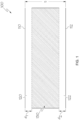
- FIG. 1 A representative cross-section of a glass-based article 100 according to some embodiments is depicted in FIG. 1 .
- the glass-based article 100 has a thickness t that extends between a first surface 110 and a second surface 112.
- a first compressive stress layer 120 extends from the first surface 110 to a first depth of compression, where the first depth of compression has a depth d 1 measured from the first surface 110 into the glass-based article 100.
- a second compressive stress layer 122 extends from the second surface 112 to a second depth of compression, where the second depth of compression has a depth d 2 measured from the second surface 112 into the glass-based article 100.
- a tensile stress region 130 is present between the first depth of compression and the second depth of compression.
- the first depth of compression d 1 may be substantially equivalent or equivalent to the second depth of compression d 2 .
- the compressive stress layer of the glass-based article includes a compressive stress of at greater than or equal to 10 MPa, such as greater than or equal to 20 MPa, greater than or equal to 30 MPa, greater than or equal to 40 MPa, greater than or equal to 50 MPa, greater than or equal to 60 MPa, greater than or equal to 70 MPa, greater than or equal to 80 MPa, greater than or equal to 90 MPa, greater than or equal to 100 MPa, greater than or equal to 110 MPa, greater than or equal to 120 MPa, greater than or equal to 130 MPa, greater than or equal to 140 MPa, greater than or equal to 145 MPa, greater than or equal to 150 MPa, greater than or equal to 160 MPa, greater than or equal to 170 MPa, greater than or equal to 180 MPa, greater than or equal to 190 MPa, greater than or equal to 200 MPa, greater than or equal to 210 MPa, greater than or equal to 220 MPa, greater than or equal to 230 MPa, greater than or equal to 240 MPa, greater
- the compressive stress layer may include a compressive stress of from greater than or equal to 10 MPa to less than or equal to 450 MPa, such as from greater than or equal to 20 MPa to less than or equal to 440 MPa, from greater than or equal to 20 MPa to less than or equal to 430 MPa, from greater than or equal to 30 MPa to less than or equal to 420 MPa, from greater than or equal to 40 MPa to less than or equal to 410 MPa, from greater than or equal to 50 MPa to less than or equal to 400 MPa, from greater than or equal to 60 MPa to less than or equal to 390 MPa, from greater than or equal to 70 MPa to less than or equal to 380 MPa, from greater than or equal to 80 MPa to less than or equal to 370 MPa, from greater than or equal to 90 MPa to less than or equal to 360 MPa, from greater than or equal to 100 MPa to less than or equal to 350 MPa, from greater than or equal to 110 MPa to less than or equal to 340 MPa, from greater
- the DOC of the compressive stress layer may be greater than or equal to 5 ⁇ m, such as greater than or equal to 7 ⁇ m, greater than or equal to 10 ⁇ m, greater than or equal to 15 ⁇ m, greater than or equal to 20 ⁇ m, greater than or equal to 25 ⁇ m, greater than or equal to 30 ⁇ m, greater than or equal to 35 ⁇ m, greater than or equal to 40 ⁇ m, greater than or equal to 45 ⁇ m, greater than or equal to 50 ⁇ m, greater than or equal to 55 ⁇ m, greater than or equal to 60 ⁇ m, greater than or equal to 65 ⁇ m, greater than or equal to 70 ⁇ m, greater than or equal to 75 ⁇ m, greater than or equal to 80 ⁇ m, greater than or equal to 85 ⁇ m, greater than or equal to 90 ⁇ m, greater than or equal to 95 ⁇ m, greater than or equal to 100 ⁇ m, greater than or equal to 105 ⁇ m, greater than or equal to 110 ⁇ m, greater than or equal to
- the DOC of the compressive stress layer may be from greater than or equal to 5 ⁇ m to less than or equal to 145 ⁇ m, such as from greater than or equal to 7 ⁇ m to less than or equal to 140 ⁇ m, from greater than or equal to 10 ⁇ m to less than or equal to 135 ⁇ m, from greater than or equal to 15 ⁇ m to less than or equal to 130 ⁇ m, from greater than or equal to 20 ⁇ m to less than or equal to 125 ⁇ m, from greater than or equal to 25 ⁇ m to less than or equal to 120 ⁇ m, from greater than or equal to 30 ⁇ m to less than or equal to 115 ⁇ m, from greater than or equal to 35 ⁇ m to less than or equal to 110 ⁇ m, from greater than or equal to 40 ⁇ m to less than or equal to 105 ⁇ m, from greater than or equal to 45 ⁇ m to less than or equal to 100 ⁇ m, from greater than or equal to 50 ⁇ m to less than or equal to 95 ⁇ m, from
- the glass-based articles may exhibit a deep depth of compression and a high compressive stress.
- the glass-based articles may have a depth of compression greater than or equal to 40 ⁇ m and a compressive stress of greater than or equal to 300 MPa.
- the glass-based articles may have a DOC greater than or equal to 0.05t, wherein t is the thickness of the glass-based article, such as greater than or equal to 0.06 t , greater than or equal to 0.07 t , greater than or equal to 0.08 t , greater than or equal to 0.09 t , greater than or equal to 0.10 t , greater than or equal to 0.11 t , greater than or equal to 0.12 t , greater than or equal to 0.13 t , greater than or equal to 0.14 t , greater than or equal to 0.15 t , greater than or equal to 0.16 t , greater than or equal to 0.17 t , greater than or equal to 0.18 t , greater than or equal to 0.19 t , or more.
- the glass-based articles may have a DOC from greater than or equal to 0.05 t to less than or equal to 0.20 t , such as from greater than or equal to 0.06 t to less than or equal to 0 .19 t , from greater than or equal to 0.07 t to less than or equal to 0.18 t , from greater than or equal to 0.08 t to less than or equal to 0.17 t , from greater than or equal to 0.09 t to less than or equal to 0.16 t , from greater than or equal to 0.10 t to less than or equal to 0.15 t , from greater than or equal to 0.11 t to less than or equal to 0.14 t , from greater than or equal to 0.12 t to less than or equal to 0.13 t , or any sub-ranges formed from any of these endpoints.
- Compressive stress is measured by surface stress meter using commercially available instruments such as the FSM-6000 (FSM), manufactured by Orihara Industrial Co., Ltd. (Japan).
- FSM FSM-6000
- SOC stress optical coefficient
- ASTM standard C770-16 ASTM standard C770-16, entitled "Standard Test Method for Measurement of Glass Stress-Optical Coefficient”.
- DOC is measured by FSM.
- the maximum central tension (CT) values are measured using a scattered light polariscope (SCALP) technique known in the art.
- the hydrogen-containing layer of the glass-based articles may have a depth of layer (DOL) greater than 5 ⁇ m.
- the depth of layer may be greater than or equal to 10 ⁇ m, such as greater than or equal to 15 ⁇ m, greater than or equal to 20 ⁇ m, greater than or equal to 25 ⁇ m, greater than or equal to 30 ⁇ m, greater than or equal to 35 ⁇ m, greater than or equal to 40 ⁇ m, greater than or equal to 45 ⁇ m, greater than or equal to 50 ⁇ m, greater than or equal to 55 ⁇ m, greater than or equal to 60 ⁇ m, greater than or equal to 65 ⁇ m, greater than or equal to 70 ⁇ m, greater than or equal to 75 ⁇ m, greater than or equal to 80 ⁇ m, greater than or equal to 85 ⁇ m, greater than or equal to 90 ⁇ m, greater than or equal to 95 ⁇ m, or more.
- the depth of layer may be from greater than 5 ⁇ m to less than or equal to 100 ⁇ m, such as from greater than or equal to 10 ⁇ m to less than or equal to 95 ⁇ m, from greater than or equal to 15 ⁇ m to less than or equal to 90 ⁇ m, from greater than or equal to 20 ⁇ m to less than or equal to 85 ⁇ m, from greater than or equal to 25 ⁇ m to less than or equal to 80 ⁇ m, from greater than or equal to 30 ⁇ m to less than or equal to 75 ⁇ m, from greater than or equal to 35 ⁇ m to less than or equal to 70 ⁇ m, from greater than or equal to 40 ⁇ m to less than or equal to 65 ⁇ m, from greater than or equal to 45 ⁇ m to less than or equal to 60 ⁇ m, from greater than or equal to 50 ⁇ m to less than or equal to 55 ⁇ m, or any sub-ranges formed by any of these endpoints.
- the depth of layer exhibited by the glass-based articles is greater than the depth
- the hydrogen-containing layer of the glass-based articles may have a depth of layer (DOL) greater than 0.005 t , wherein t is the thickness of the glass-based article.
- the depth of layer may be greater than or equal to 0.010t, such as greater than or equal to 0.015 t , greater than or equal to 0.020 t , greater than or equal to 0.025 t , greater than or equal to 0.030 t , greater than or equal to 0.035 t , greater than or equal to 0.040 t , greater than or equal to 0.045 t , greater than or equal to 0.050 t , greater than or equal to 0.055 t , greater than or equal to 0.060 t , greater than or equal to 0.065 t , greater than or equal to 0.070 t , greater than or equal to 0.075 t , greater than or equal to 0.080 t , greater than or equal to 0.085 t , greater than or equal to 0.010t
- the DOL may be from greater than 0.005 t to less than or equal to 0.205 t , such as from greater than or equal to 0.010 t to less than or equal to 0.200 t , from greater than or equal to 0.015 t to less than or equal to 0.195 t , from greater than or equal to 0.020 t to less than or equal to 0.190 t , from greater than or equal to 0.025 t to less than or equal to 0.185 t , from greater than or equal to 0.030 t to less than or equal to 0.180 t , from greater than or equal to 0.035 t to less than or equal to 0.175 t , from greater than or equal to 0.040 t to less than or equal to 0.170 t , from greater than or equal to 0.045 t to less than or equal to 0.165 t , from greater than or equal to 0.050 t to less than or equal to 0.160 t , from greater than or equal to 0.055 t to less than
- the depth of layer and hydrogen concentration are measured by a secondary ion mass spectrometry (SIMS) technique that is known in the art.
- SIMS secondary ion mass spectrometry
- the SIMS technique is capable of measuring the hydrogen concentration at a given depth but is not capable of distinguishing the hydrogen species present in the glass-based article. For this reason, all hydrogen species contribute to the SIMS measured hydrogen concentration.
- the depth of layer refers to the first depth below the surface of the glass-based article where the hydrogen concentration is equal to the hydrogen concentration at the center of the glass-based article. This definition accounts for the hydrogen concentration of the glass-based substrate prior to treatment, such that the depth of layer refers to the depth of the hydrogen added by the treatment process.
- the hydrogen concentration at the center of the glass-based article may be approximated by the hydrogen concentration at the depth from the surface of the glass-based article where the hydrogen concentration becomes substantially constant, as the hydrogen concentration is not expected to change between such a depth and the center of the glass-based article.
- This approximation allows for the determination of the DOL without measuring the hydrogen concentration throughout the entire depth of the glass-based article.
- the presence of the hydrogen-containing layer may be indicated by the formation of a compressive stress layer in the glass-based article as a result of the water vapor treatment.
- the hydrogen-containing layer of the glass-based articles may be the result of an interdiffusion of hydrogen species for ions contained in the compositions of the glass-based substrate.
- Hydrogen-containing species such as H 3 O + , H 2 O, and/or H + , may diffuse into the glass-based substrate to form the glass-based article. Water could penetrate the glass-based substrates by forming silanol groups, breaking the network structure and causing a volume expansion of the glass. Such a volume expansion may generate a compressive stress layer in the glass-based articles.
- the compressive stress and depth of compression of the compressive stress layer may depend on the composition of the glass-based substrate utilized to form the glass-based article, and the water vapor treatment conditions, such as temperature, pressure, water content, and duration.
- the stress profile of the glass-based articles produced by the water vapor treatment may be similar to stress profiles produced by potassium for sodium ion exchange strengthening processes.
- the glass-based articles that have compressive stress layers also exhibit weight gain when compared to the glass-based substrates prior to the water vapor treatment process.
- the weight gain of the glass-based articles indicates the formation of a hydrogen-containing layer as a result of the water vapor treatment.
- the amount of weight gain is directly related to the amount of hydrogen species that enter the glass-based article as a result of the water vapor treatment process.
- the glass-based articles disclosed herein may be incorporated into another article such as an article with a display (or display articles) (e.g., consumer electronics, including mobile phones, tablets, computers, navigation systems, wearable devices (e.g., watches) and the like), architectural articles, transportation articles (e.g., automotive, trains, aircraft, sea craft, etc.), appliance articles, or any article that requires some transparency, scratch-resistance, abrasion resistance or a combination thereof.
- a display or display articles
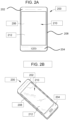
- FIGS. 2A and 2B An exemplary article incorporating any of the glass-based articles disclosed herein is shown in FIGS. 2A and 2B . Specifically, FIGS.
- FIGS. 2A and 2B show a consumer electronic device 200 including a housing 202 having front 204, back 206, and side surfaces 208; electrical components (not shown) that are at least partially inside or entirely within the housing and including at least a controller, a memory, and a display 210 at or adjacent to the front surface of the housing; and a cover substrate 212 at or over the front surface of the housing such that it is over the display.
- at least a portion of at least one of the cover substrate 212 and the housing 202 may include any of the glass-based articles disclosed herein.
- the glass-based articles may be formed from glass-based substrates having any appropriate composition.
- the composition of the glass-based substrate may be specifically selected to promote the diffusion of hydrogen-containing species, such that a glass-based article including a hydrogen-containing layer and a compressive stress layer may be formed efficiently, and to avoid the formation of haze as a result of the water vapor treatment process.
- the glass-based substrates have a composition that includes SiO 2 , Al 2 O 3 , P 2 O 5 , and Li 2 O, and K 2 O.
- the hydrogen species does not diffuse to the center of the glass-based article. Stated differently, the center of the glass-based article is the area least affected by the water vapor treatment. For this reason, the center of the glass-based article has a composition that is substantially the same, or the same, as the composition of the glass-based substrate prior to treatment in the water containing environment.
- the glass-based substrate includes an appropriate amount of SiO 2 .
- SiO 2 is the largest constituent and, as such, SiO 2 is the primary constituent of the glass network formed from the glass composition. If the concentration of SiO 2 in the glass composition is too high, the formability of the glass composition may be diminished as higher concentrations of SiO 2 increase the difficulty of melting the glass, which, in turn, adversely impacts the formability of the glass.
- the glass-based substrate includes SiO 2 in an amount from greater than or equal to 55 mol% to less than or equal to 70 mol%, such as from greater than or equal to 56 mol% to less than or equal to 69 mol%, from greater than or equal to 57 mol% to less than or equal to 68 mol%, from greater than or equal to 58 mol% to less than or equal to 67 mol%, from greater than or equal to 59 mol% to less than or equal to 66 mol%, from greater than or equal to 60 mol% to less than or equal to 65 mol%, from greater than or equal to 61 mol% to less than or equal to 64 mol%, from greater than or equal to 62 mol% to less than or equal to 63 mol%, 62 mol%, or any sub-ranges formed by any of these endpoints.
- the glass-based substrate includes an appropriate amount of Al 2 O 3 .
- Al 2 O 3 may serve as a glass network former, similar to SiO 2 .
- Al 2 O 3 may increase the viscosity of the glass composition due to its tetrahedral coordination in a glass melt formed from a glass composition, decreasing the formability of the glass composition when the amount of Al 2 O 3 is too high.
- Al 2 O 3 can reduce the liquidus temperature of the glass melt, thereby enhancing the liquidus viscosity and improving the compatibility of the glass composition with certain forming processes, such as the fusion forming process.
- the inclusion of Al 2 O 3 in the glass-based substrate prevents phase separation and reduces the number of non-bridging oxygens (NBOs) in the glass. Additionally, Al 2 O 3 can improve the effectiveness of ion exchange.
- the glass-based substrate includes Al 2 O 3 in an amount of from greater than or equal to 3 mol% to less than or equal to 17 mol%, such as from greater than or equal to 4 mol% to less than or equal to 16 mol%, from greater than or equal to 5 mol% to less than or equal to 15 mol%, from greater than or equal to 6 mol% to less than or equal to 14 mol%, from greater than or equal to 7 mol% to less than or equal to 13 mol%, from greater than or equal to 8 mol% to less than or equal to 12 mol%, from greater than or equal to 9 mol% to less than or equal to 11 mol%, 10 mol%, or any sub-ranges formed by any of these endpoints.
- the glass-based substrate includes an amount of P 2 O 5 sufficient to produce the desired hydrogen diffusivity.
- the inclusion of phosphorous in the glass-based substrate promotes faster interdiffusion.
- the phosphorous containing glass-based substrates allow the efficient formation of glass-based articles including a hydrogen-containing layer.
- the inclusion of P 2 O 5 also allows for the production of a glass-based article with a deep depth of layer (e.g., greater than about 10 ⁇ m) in a relatively short treatment time.
- the glass-based substrate includes P 2 O 5 in an amount of from greater than or equal to 3 mol% to less than or equal to 15 mol%, such as from greater than or equal to 4 mol% to less than or equal to 14 mol%, from greater than or equal to 5 mol% to less than or equal to 13 mol%, from greater than or equal to 6 mol% to less than or equal to 12 mol%, from greater than or equal to 7 mol% to less than or equal to 11 mol%, from greater than or equal to 8 mol% to less than or equal to 10 mol%, 9 mol%, or any sub-ranges formed by any of these endpoints.
- the glass-based substrate includes Li 2 O in an appropriate amount.
- the inclusion of Li 2 O in the glass-based substrate increases the resistance of the glass-based article to haze formation as a result of steam strengthening.
- the content of Li 2 O in the glass-based substrate is directly correlated with reduction in the 200 P temperature of the glass-based substrate and the coefficient of thermal expansion of the glass-based substrate.
- the glass-based substrate includes Li 2 O in an amount of from greater than or equal to 1 mol% to less than or equal to 7 mol%, such as from greater than or equal to 2 mol% to less than or equal to 6 mol%, from greater than or equal to 3 mol% to less than or equal to 5 mol%, 4 mol%, or any and all sub-ranges formed from these endpoints.
- the glass-based substrate includes K 2 O in an appropriate amount.
- the inclusion of K 2 O in the glass-based substrate increases the steam strengthening susceptibility of the glass-based article to a greater degree than other alkali metal oxides.
- the glass-based substrate includes K 2 O in an amount of from greater than or equal to 5 mol% to less than or equal to 20 mol%, such as from greater than or equal to 6 mol% to less than or equal to 19 mol%, from greater than or equal to 7 mol% to less than or equal to 18 mol%, from greater than or equal to 8 mol% to less than or equal to 17 mol%, from greater than or equal to 9 mol% to less than or equal to 16 mol%, from greater than or equal to 10 mol% to less than or equal to 15 mol%, from greater than or equal to 11 mol% to less than or equal to 14 mol%, from greater than or equal to 12 mol% to less than or equal to 13 mol%, or any and all sub-ranges formed from these endpoints
- the glass-based substrate may include Na 2 O in any appropriate amount.
- the glass-based substrate may include Na 2 O in an amount of from greater than or equal to 0 mol% to less than or equal to 1 mol%.
- the glass-based substrate may be substantially free or free of Na 2 O.
- the glass-based substrates may additionally include a fining agent.
- the fining agent may include tin.
- the glass-based substrate may include SnO 2 in an amount from greater than or equal to 0 mol% to less than or equal to 0.5 mol%, such as from greater than 0 mol% to less than or equal to 0.1 mol%.
- the glass-based substrate may be substantially free or free of SnO 2 .
- the glass-based substrates may have a Young's modulus that is greater than or equal to 50 GPa. In embodiments, the glass-based substrates have a Young's modulus that is greater than or equal to 51 GPa, such as greater than or equal to 52 GPa, greater than or equal to 53 GPa, greater than or equal to 54 GPa, greater than or equal to 55 GPa, greater than or equal to 56 GPa, greater than or equal to 57 GPa, greater than or equal to 58 GPa, greater than or equal to 59 GPa, or more.
- 51 GPa such as greater than or equal to 52 GPa, greater than or equal to 53 GPa, greater than or equal to 54 GPa, greater than or equal to 55 GPa, greater than or equal to 56 GPa, greater than or equal to 57 GPa, greater than or equal to 58 GPa, greater than or equal to 59 GPa, or more.
- the glass-based substrates may have a Young's modulus in the range from greater than or equal to 50 GPa to less than or equal to 60 GPa, such as from greater than or equal to 51 GPa to less than or equal to 59 GPa, from greater than or equal to 52 GPa to less than or equal to 58 GPa, from greater than or equal to 53 GPa to less than or equal to 57 GPa, from greater than or equal to 54 GPa to less than or equal to 56 GPa, 55 GPa, or any and all sub-ranges formed from these endpoints.
- a Young's modulus in the range from greater than or equal to 50 GPa to less than or equal to 60 GPa, such as from greater than or equal to 51 GPa to less than or equal to 59 GPa, from greater than or equal to 52 GPa to less than or equal to 58 GPa, from greater than or equal to 53 GPa to less than or equal to 57 GPa, from greater than or equal
- the glass-based substrates may have a 20 Pa•s (200 P) temperature of less than or equal to 1715°C, such as less than or equal to less than or equal to 1710°C, less than or equal to 1705°C, less than or equal to 1700°C, less than or equal to 1695°C, less than or equal to 1690°C, less than or equal to 1685°C, less than or equal to 1680°C, less than or equal to 1675°C, less than or equal to 1670°C, less than or equal to 1665°C, less than or equal to 1660°C, less than or equal to 1655°C, less than or equal to 1650°C, or less.
- the low 20 Pa•s (200 P) temperature improves the meltability and thereby manufacturability of the glass-based substrate compositions.
- the glass-based substrates may have a liquidus viscosity of greater than or equal to 1 kPa•s (10 kP), such as greater than or equal to 10 kPa•s (100 kP), greater than or equal to 100 kPa•s (1000 kP), or more.
- Increases in the Li 2 O content of the glass-based substrate decrease the liquidus viscosity of the glass-based substrate composition. Maintaining the liquidus viscosity of the glass-based substrate at greater than about 1 kPa•s (10 kP) allows the glass-based substrates to be produced on a variety of manufacturing platforms. If the liquidus viscosity decreases too much, the manufacturability of the glass-based substrates is decreased.
- the glass-based substrate may have any appropriate geometry.
- the glass-based substrate may have a thickness of less than or equal to 2 mm, such as less than or equal to 1.9 mm, less than or equal to 1.8 mm, less than or equal to 1.7 mm, less than or equal to 1.6 mm, less than or equal to 1.5 mm, less than or equal to 1.4 mm, less than or equal to 1.3 mm, less than or equal to 1.2 mm, less than or equal to 1.1 mm, less than or equal to 1 mm, less than or equal to 900 ⁇ m, less than or equal to 800 ⁇ m, less than or equal to 700 ⁇ m, less than or equal to 600 ⁇ m, less than or equal to 500 ⁇ m, less than or equal to 400 ⁇ m, less than or equal to 300 ⁇ m, or less.
- the glass-based substrate may have a thickness from greater than or equal to 300 ⁇ m to less than or equal to 2 mm, such as from greater than or equal to 400 ⁇ m to less than or equal to 1.9 mm, from greater than or equal to 500 ⁇ m to less than or equal to 1.8 mm, from greater than or equal to 600 ⁇ m to less than or equal to 1.7 mm, from greater than or equal to 700 ⁇ m to less than or equal to 1.6 mm, from greater than or equal to 800 ⁇ m to less than or equal to 1.5 mm, from greater than or equal to 900 ⁇ m to less than or equal to 1.4 mm, from greater than or equal to 1 mm to less than or equal to 1.3 mm, from greater than or equal to 1.1 mm to less than or equal to 1.2 mm, or any and all sub-ranges formed from these endpoints.
- the glass-based substrate may have a plate or sheet shape. In some other embodiments, the glass-based substrates may have a 2.5D or 3D shape. As utilized herein, a "2.5D shape” refers to a sheet shaped article with at least one major surface being at least partially nonplanar, and a second major surface being substantially planar. As utilized herein, a "3D shape” refers to an article with first and second opposing major surfaces that are at least partially nonplanar.
- the glass-based articles may have dimensions and shapes substantially similar or the same as the glass-based substrates from which they are formed.
- the glass-based articles may be produced from the glass-based substrate by exposure to water vapor under any appropriate conditions.
- the exposure may be carried out in any appropriate device, such as a furnace with relative humidity control.
- the exposure may also be carried out at an elevated pressure, such as a furnace or autoclave with relative humidity and pressure control.
- the glass-based articles may be produced by exposing a glass-based substrate to an environment with a pressure greater than ambient pressure and containing water vapor.
- the environment may have a pressure greater than 0.1 MPa and a water partial pressure of greater than or equal to 0.05 MPa, such as greater than or equal to 0.075 MPa.
- the elevated pressure allows in the exposure environment allows for a higher concentration of water vapor in the environment, especially as temperatures are increased. As the temperature increases the amount of water available for diffusion into the glass-based substrates to form glass-based articles decreases for a fixed volume, such as the interior of a furnace or autoclave.
- the water vapor saturation condition is 99.61 °C.
- the amount of water available for diffusion into the glass-based substrates to form glass-based articles decreases for a fixed volume, such as the interior of a furnace or autoclave.
- reduced total water vapor concentration may reduce the effectiveness of the treatment.
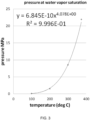
- the saturation condition for water vapor as a function of pressure and temperature is shown in FIG. 3 .
- the regions above the curve will result in condensation of water vapor into liquid which is undesirable.
- the water vapor treatment conditions utilized herein may preferably fall on or under the curve in FIG. 3 , with further preferred conditions being on or just under the curve to maximize water vapor content.
- the water vapor treatment of the glass-based substrates may be carried out at elevated pressure.
- High temperature and pressure conditions have been shown to produce glass-based articles with a hazy appearance.
- the hazy appearance is correlated to the concentration of added hydrogen species in the glass-based article, with higher temperature and pressure conditions producing higher concentrations of hydrogen species in the glass-based article.
- the formation of haze during the water treatment process may be addressed by utilizing the lithium containing compositions described herein or by selecting the treatment conditions to manage the amount of hydrogen species added to the glass-based article. For example, at high temperatures treatment pressures below the saturation pressure may be utilized to reduce the concentration of hydrogen species in the glass-based article.
- the concentration of the hydrogen species may be reduced by decreasing the total amount of hydrogen species diffused into the glass-based article, as evidenced by reduced weight gain during water vapor treatment, or by increasing the depth of layer for the same amount of weight gain.
- the approaches for mitigating haze, composition and treatment conditions, may be utilized in conjunction.
- the lithium containing glass-based substrates described herein are exposed to a water vapor treatment in a saturated steam environment at a temperature of greater than or equal to 85°C.
- the glass-based substrates containing lithium allow the use of a wider process window with higher temperatures and pressures while avoiding haze, thereby decreasing treatment times and increasing the efficiency of the strengthening process.
- the glass-based articles produced utilizing these haze mitigation strategies are substantially haze-free or haze-free in appearance.
- the glass-based substrates may be exposed to an environment at a pressure greater than or equal to 0.1 MPa, such as greater than or equal to 0.2 MPa, greater than or equal to 0.3 MPa, greater than or equal to 0.4 MPa, greater than or equal to 0.5 MPa, greater than or equal to 0.6 MPa, greater than or equal to 0.7 MPa, greater than or equal to 0.8 MPa, greater than or equal to 0.9 MPa, greater than or equal to 1.0 MPa, greater than or equal to 1.1 MPa, greater than or equal to 1.2 MPa, greater than or equal to 1.3 MPa, greater than or equal to 1.4 MPa, greater than or equal to 1.5 MPa, greater than or equal to 1.6 MPa, greater than or equal to 1.7 MPa, greater than or equal to 1.8 MPa, greater than or equal to 1.9 MPa, greater than or equal to 2.0 MPa, greater than or equal to 2.1 MPa, greater than or equal to 2.2 MPa, greater than or equal to 2.3 MPa, greater than or equal to 0.1 MP
- the glass-based substrates may be exposed to an environment at a pressure of from greater than or equal to 0.1 MPa to less than or equal to 25 MPa, such as from greater than or equal to 0.2 MPa to less than or equal to 24 MPa, from greater than or equal to 0.3 MPa to less than or equal to 23 MPa, from greater than or equal to 0.4 MPa to less than or equal to 22 MPa, from greater than or equal to 0.5 MPa to less than or equal to 21 MPa, from greater than or equal to 0.6 MPa to less than or equal to 20 MPa, from greater than or equal to 0.7 MPa to less than or equal to 19 MPa, from greater than or equal to 0.8 MPa to less than or equal to 18 MPa, from greater than or equal to 0.9 MPa to less than or equal to 17 MPa, from greater than or equal to 1.0 MPa to less than or equal to 16 MPa, from greater than or equal to 1.1 MPa to less than or equal to 15 MPa, from greater than or equal to 1.2 MPa to less
- the glass-based substrates are exposed to an environment at with a temperature of greater than or equal to 85°C, such as greater than or equal to 90°C, greater than or equal to 100°C, greater than or equal to 110°C, greater than or equal to 120°C, greater than or equal to 130°C, greater than or equal to 140°C, greater than or equal to 150°C, greater than or equal to 160°C, greater than or equal to 170°C, greater than or equal to 180°C, greater than or equal to 190°C, greater than or equal to 200°C, greater than or equal to 210°C, greater than or equal to 220°C, greater than or equal to 230°C, greater than or equal to 240°C, greater than or equal to 250°C, greater than or equal to 260°C, greater than or equal to 270°C, greater than or equal to 280°C, greater than or equal to 290°C, greater than or equal to 300°C, greater than or equal to 310°C, greater than or equal to 85°C
- the glass-based substrates may be exposed to an environment with a temperature from greater than or equal to 85°C to less than or equal to 400°C, such as from greater than or equal to 100°C to less than or equal to 390°C, from greater than or equal to 110°C to less than or equal to 380°C, from greater than or equal to 115°C to less than or equal to 370°C, from greater than or equal to 120°C to less than or equal to 360°C, from greater than or equal to 125°C to less than or equal to 350°C, from greater than or equal to 130°C to less than or equal to 340°C, from greater than or equal to 135°C to less than or equal to 330°C, from greater than or equal to 140°C to less than or equal to 320°C, from greater than or equal to 145°C to less than or equal to 310°C, from greater than or equal to 150°C to less than or equal to 300°C, from greater than or equal to 155°C to less
- the glass-based substrate may be exposed to the water vapor containing environment for a time period sufficient to produce the desired degree of hydrogen-containing species diffusion and the desired compressive stress layer.
- the glass-based substrate may be exposed to the water vapor containing environment for greater than or equal to 2 hours, such as greater than or equal to 4 hours, greater than or equal to 6 hours, greater than or equal to 8 hours, greater than or equal to 10 hours, greater than or equal to 12 hours, greater than or equal to 14 hours, greater than or equal to 16 hours, greater than or equal to 18 hours, greater than or equal to 20 hours, greater than or equal to 22 hours, greater than or equal to 24 hours, greater than or equal to 30 hours, greater than or equal to 36 hours, greater than or equal to 42 hours, greater than or equal to 48 hours, greater than or equal to 54 hours, greater than or equal to 60 hours, greater than or equal to 66 hours, greater than or equal to 72 hours, greater than or equal to 78 hours, greater than or equal to 84 hours, greater than or equal to 90
- the glass-based substrate may be exposed to the water vapor containing environment for a time period from greater than or equal to 2 hours to less than or equal to 10 days, such as from greater than or equal to 4 hours to less than or equal to 9 days, from greater than or equal to 6 hours to less than or equal to 8 days, from greater than or equal to 8 hours to less than or equal to 168 hours, from greater than or equal to 10 hours to less than or equal to 162 hours, from greater than or equal to 12 hours to less than or equal to 156 hours, from greater than or equal to 14 hours to less than or equal to 150 hours, from greater than or equal to 16 hours to less than or equal to 144 hours, from greater than or equal to 18 hours to less than or equal to 138 hours, from greater than or equal to 20 hours to less than or equal to 132 hours, from greater than or equal to 22 hours to less than or equal to 126 hours, from greater than or equal to 24 hours to less than or equal to 120 hours, from greater than or equal to 30 hours to less than or equal to 114
- the glass-based substrates may be exposed to multiple water vapor containing environments.
- the glass-based substrate may be exposed to a first environment to form a first glass-based article with a first compressive stress layer extending from a surface of the first glass-based article to a first depth of compression, and the first glass-based article may then be exposed to a second environment to form a second glass-based article with a second compressive stress layer extending from a surface of the second glass-based article to a second depth of compression.
- the first environment has a first water partial pressure and a first temperature
- the glass-based substrate is exposed to the first environment for a first time period.
- the second environment has a second water partial pressure and a second temperature, and the first glass-based article is exposed to the second environment for a second time period.
- At least one of the first environment and the second environment has a relative humidity of 100%.
- the first and second environments may be, independently, a saturated steam environment.
- the first compressive stress layer includes a first maximum compressive stress
- the second compressive stress layer includes a second maximum compressive stress.
- the first maximum compressive stress is less than the second maximum compressive stress.
- the second maximum compressive stress may be compared to a compressive stress "spike" of the type formed through multi-step or mixed bath ion exchange techniques.
- the first and second maximum compressive stress may have any of the values disclosed herein with respect to the compressive stress of the glass-based article.
- the second maximum compressive stress may be greater than or equal to 50 MPa.
- the first depth of compression may be less than or equal to the second depth of compression. In some embodiments, the first depth of compression is less than the second depth of compression.
- the first depth of compression and the second depth of compression may have any of the values disclosed herein with respect to the depth of compression. In embodiments, the second depth of compression is greater than 5 ⁇ m.
- the first temperature may be greater than or equal to the second temperature. In embodiments, the first temperature is greater than the second temperature.
- the first and second temperatures may be any of the temperatures disclosed in connection with the elevated pressure method.
- the first time period may be less than or equal to the second time period. In embodiments, the first time period is less than the second time period.
- the first and second time periods may be any of the time periods disclosed in connection with the elevated pressure method.
- any or all of the multiple exposures to a water vapor containing environment may be performed at an elevated pressure.
- at least one of the first environment and the second environment may have a pressure greater than 0.1 MPa.
- the first and second environments may have any pressure disclose in connection with the elevated pressure method.
- the multiple water vapor environment exposure technique may include more than two exposure environments.
- the second glass-based article may be exposed to a third environment to form a third glass-based article.
- the third environment has a third water partial pressure and a third temperature, and the second glass-based article is exposed to the third environment for a third time period.
- the third glass-based article includes a third compressive stress layer extending from a surface of the article to a third depth of compression and having a third maximum compressive stress.
- the third water partial pressure may be greater than or equal to 0.05 MPa or greater than or equal to 0.075 MPa.
- the values of any of the properties of the third environment and third glass-based article may be selected from those disclosed for the corresponding properties in connection with the elevated pressure method.
- the first glass-based article may be cooled to ambient temperature or otherwise removed from the first environment after the conclusion of the first time period and prior to being exposed to the second environment. In some embodiments, the first glass-based article may remain in the first environment after the conclusion of the first time period, and the first environment conditions may be changed to the second environment conditions without cooling to ambient temperature or removing the first glass-based article from the water vapor containing environment.
- the methods of producing the glass-based articles disclosed herein may be free of an ion exchange treatment with an alkali ion source.
- the glass-based articles are produced by methods that do not include an ion exchange with an alkali ion source. Stated differently, in some embodiments the glass-based substrates and glass-based articles are not subjected to an ion exchange treatment with an alkali ion source.
- the exposure conditions may be modified to reduce the time necessary to produce the desired amount of hydrogen-containing species diffusion into the glass-based substrate.
- the temperature may be increased to reduce the time required to achieve the desired degree of hydrogen-containing species diffusion and depth of layer into the glass-based substrate.
- the methods and glass-based substrate compositions disclosed herein may produce glass-based articles that have a substantially haze-free or haze-free appearance.
- Glass compositions that are particularly suited for formation of the glass-based articles described herein were formed into glass-based substrates, and the glass compositions are provided in Table I below.
- the density of the glass compositions was determined using the buoyancy method of ASTM C693-93(2013).
- the strain point and anneal point were determined using the beam bending viscosity method of ASTM C598-93(2013).
- the softening point was determined using the parallel plate viscosity method of ASTM C1351M-96(2012).
- the Young's modulus and Poisson's ratio values refer to values as measured by a resonant ultrasonic spectroscopy technique of the general type set forth in ASTM E2001-13, titled “Standard Guide for Resonant Ultrasound Spectroscopy for Defect Detection in Both Metallic and Non-metallic Parts.”
- the stress optical coefficient (SOC) was measured according to Procedure C (Glass Disc Method) described in ASTM standard C770-16, entitled “Standard Test Method for Measurement of Glass Stress-Optical Coefficient.”
- the refractive index was measured at a wavelength of 589.3 nm.
- the liquidus temperature was measured in accordance with ASTM C829-81 (2015), titled “Standard Practice for Measurement of Liquidus Temperature of Glass by the Gradient Furnace Method.”
- the liquidus viscosity was determined by measuring the viscosity of the glass at the liquidus temperature in accordance with ASTM C965-96(2012), titled “Standard Practice for Measuring Viscosity of Glass Above the Softening Point.”
- Samples having the compositions shown in Table I were exposed to water vapor containing environments to form glass articles having compressive stress layers.
- the sample composition and the environment the samples were exposed to, including the temperature, pressure, and exposure time, are shown in Table II below.
- the exposure environments were saturated where possible based on the temperature and pressure conditions.
- the resulting maximum compressive stress and depth of compression as measured by surface stress meter (FSM) is also reported in Table II.
Landscapes
- Chemical & Material Sciences (AREA)
- Engineering & Computer Science (AREA)
- Organic Chemistry (AREA)
- Materials Engineering (AREA)
- Geochemistry & Mineralogy (AREA)
- General Chemical & Material Sciences (AREA)
- Chemical Kinetics & Catalysis (AREA)
- Life Sciences & Earth Sciences (AREA)
- Ceramic Engineering (AREA)
- Physics & Mathematics (AREA)
- Thermal Sciences (AREA)
- Microelectronics & Electronic Packaging (AREA)
- Surface Treatment Of Glass (AREA)
- Glass Compositions (AREA)
Claims (11)
- Gegenstand auf Glasbasis, umfassend:eine wasserstoffhaltige Schicht, die sich von der Oberfläche des Gegenstands auf Glasbasis bis in eine Tiefe der Schicht erstreckt, wobei eine Wasserstoffkonzentration der wasserstoffhaltigen Schicht von einer maximalen Wasserstoffkonzentration zu der Tiefe der Schicht abnimmt;eine Druckspannungsschicht, die sich von der Oberfläche des Gegenstands auf Glasbasis bis zu einer Kompressionstiefe erstreckt, wobei die Druckspannungsschicht eine Druckspannung von mehr als oder gleich 10 MPa umfasst; undeine Zusammensetzung in der Mitte des Gegenstands auf Glasbasis, umfassend:mehr als oder gleich 55 Mol-% bis weniger als oder gleich 70 Mol-% SiO2,mehr als oder gleich 3 Mol-% bis weniger als oder gleich 17 Mol-% Al2O3,mehr als oder gleich 3 Mol-% bis weniger als oder gleich 15 Mol-% P2O5,mehr als oder gleich 1 Mol-% bis weniger als oder gleich 7 Mol-% Li2O undmehr als oder gleich 5 Mol-% bis weniger als oder gleich 20 Mol-% K2O.
- Gegenstand auf Glasbasis nach Anspruch 1, wobei die Zusammensetzung in der Mitte des Gegenstands auf Glasbasis ferner mehr als oder gleich 0 Mol-% bis weniger als oder gleich 1 Mol-% Na2O umfasst.
- Gegenstand auf Glasbasis nach Anspruch 1 oder 2, wobei die Zusammensetzung in der Mitte des Gegenstands auf Glasbasis ferner mehr als oder gleich 0 Mol-% bis weniger als oder gleich 0,5 Mol-% SnO2 umfasst.
- Gegenstand auf Glasbasis nach einem der Ansprüche 1 bis 3, wobei die Druckspannungsschicht eine Druckspannung von mehr als oder gleich 50 MPa umfasst.
- Gegenstand auf Glasbasis nach einem der Ansprüche 1 bis 4, wobei die Druckspannungsschicht eine Druckspannung von mehr als oder gleich 300 MPa umfasst.
- Gegenstand auf Glasbasis nach einem der Ansprüche 1 bis 5, wobei die Kompressionstiefe mehr als oder gleich 5 µm beträgt.
- Gegenstand auf Glasbasis nach einem der Ansprüche 1 bis 6, wobei die Druckspannungsschicht eine Druckspannung von mehr als oder gleich 300 MPa umfasst und die Kompressionstiefe mehr als oder gleich 40 µm beträgt.
- Gegenstand auf Glasbasis nach einem der Ansprüche 1 bis 7, wobei der Gegenstand auf Glasbasis eine Stärke von weniger als oder gleich 2 mm aufweist.
- Verfahren, umfassend:Aussetzen eines Substrats auf Glasbasis einer gesättigten Wasserdampfumgebung mit einer Temperatur von mehr als oder gleich 85 °C, um einen Gegenstand auf Glasbasis mit einer Druckspannungsschicht, die sich von der Oberfläche des Gegenstands auf Glasbasis bis zu einer Kompressionstiefe erstreckt, und einer wasserstoffhaltigen Schicht, die sich von der Oberfläche des Gegenstands auf Glasbasis bis zu einer Tiefe der Schicht erstreckt, zu bilden,wobei die Druckspannungsschicht eine Druckspannung von mehr als oder gleich 10 MPa umfasst, eine Wasserstoffkonzentration der wasserstoffhaltigen Schicht von einer maximalen Wasserstoffkonzentration zu der Tiefe der Schicht abnimmt, und das Substrat auf Glasbasis Folgendes umfasst:mehr als oder gleich 55 Mol-% bis weniger als oder gleich 70 Mol-% SiO2,mehr als oder gleich 3 Mol-% bis weniger als oder gleich 17 Mol-% Al2O3,mehr als oder gleich 3 Mol-% bis weniger als oder gleich 15 Mol-% P2O5,mehr als oder gleich 1 Mol-% bis weniger als oder gleich 7 Mol-% Li2O undmehr als oder gleich 5 Mol-% bis weniger als oder gleich 20 Mol-% K2O.
- Verfahren nach Anspruch 9, wobei das Substrat auf Glasbasis mehr als oder gleich 0 Mol-% bis weniger als oder gleich 1 Mol-% Na2O umfasst.
- Verfahren nach Anspruch 9 oder 10, wobei das Substrat auf Glasbasis mehr als oder gleich 0 Mol-% bis weniger als oder gleich 0,5 Mol-% SnO2 umfasst.
Applications Claiming Priority (2)
| Application Number | Priority Date | Filing Date | Title |
|---|---|---|---|
| US201962848777P | 2019-05-16 | 2019-05-16 | |
| PCT/US2020/032422 WO2020231961A1 (en) | 2019-05-16 | 2020-05-12 | Glass compositions and methods with steam treatment haze resistance |
Publications (2)
| Publication Number | Publication Date |
|---|---|
| EP3969424A1 EP3969424A1 (de) | 2022-03-23 |
| EP3969424B1 true EP3969424B1 (de) | 2024-11-13 |
Family
ID=70919162
Family Applications (1)
| Application Number | Title | Priority Date | Filing Date |
|---|---|---|---|
| EP20729472.9A Active EP3969424B1 (de) | 2019-05-16 | 2020-05-12 | Glaszusammensetzungen und verfahren mit beständigkeit gegen dampfbehandlungstrübungen |
Country Status (4)
| Country | Link |
|---|---|
| US (4) | US11370696B2 (de) |
| EP (1) | EP3969424B1 (de) |
| CN (2) | CN117361875A (de) |
| WO (1) | WO2020231961A1 (de) |
Families Citing this family (4)
| Publication number | Priority date | Publication date | Assignee | Title |
|---|---|---|---|---|
| NL2020896B1 (en) * | 2018-05-08 | 2019-11-14 | Corning Inc | Water-containing glass-based articles with high indentation cracking threshold |
| WO2020231959A1 (en) * | 2019-05-16 | 2020-11-19 | Corning Incorporated | Glasses with modified young's modulus profile |
| GB202012825D0 (en) * | 2020-05-12 | 2020-09-30 | Corning Inc | Fusion formable and steam strengthenable glass compositions with platinum compatibility |
| US12098094B2 (en) * | 2021-10-26 | 2024-09-24 | Corning Incorporated | Ion exchangeable glasses having high fracture toughness |
Citations (2)
| Publication number | Priority date | Publication date | Assignee | Title |
|---|---|---|---|---|
| EP1888474B1 (de) * | 2005-06-08 | 2011-04-06 | Ivoclar Vivadent AG | Dentalglaskeramiken |
| US20160200623A1 (en) * | 2013-09-25 | 2016-07-14 | Asahi Glass Company, Limited | Glass sheet |
Family Cites Families (122)
| Publication number | Priority date | Publication date | Assignee | Title |
|---|---|---|---|---|
| BE382736A (de) | 1931-09-17 | 1931-10-21 | ||
| US2273778A (en) | 1939-03-17 | 1942-02-17 | Hartford Empire Co | Method of increasing the durability of glassware |
| US2377062A (en) | 1943-02-27 | 1945-05-29 | Pittsburgh Plate Glass Co | Fortification of glass surfaces |
| US3275470A (en) | 1963-02-18 | 1966-09-27 | Gen Electric | Glass bodies and methods of treatment thereof |
| US3485647A (en) | 1964-12-18 | 1969-12-23 | Corning Glass Works | Glass article and method of production |
| US3395998A (en) | 1964-12-18 | 1968-08-06 | Corning Glass Works | Method for production of glass article having increased mechanical strength |
| US3498803A (en) | 1967-04-13 | 1970-03-03 | Corning Glass Works | Glass or glass-ceramic steam treatment method and article |
| US3498802A (en) | 1967-04-13 | 1970-03-03 | Corning Glass Works | Steam treatment process to produce thermoplastic materials and hydraulic cements |
| US3756798A (en) | 1968-03-01 | 1973-09-04 | Ppg Industries Inc | Of making same novel glass ceramic article and water content crystallization process |
| US3653864A (en) | 1969-03-17 | 1972-04-04 | Corning Glass Works | Dealkalization of glass surfaces |
| US3811853A (en) | 1972-05-01 | 1974-05-21 | Corning Glass Works | Degradable glass suitable for containers |
| NL152228C (de) | 1973-03-06 | |||
| DE2313074C2 (de) | 1973-03-16 | 1974-10-31 | Jenaer Glaswerk Schott & Gen., 6500 Mainz | Phosphatgetrübte Opalgläser mit Wärmedehnungskoeffizienten von 48 bis 92 mal 10 hoch -7 Grad C und guter chemischer Resistenz |
| US3912481A (en) | 1974-02-25 | 1975-10-14 | Corning Glass Works | Method for making alkali metal silicate thermoplastic materials |
| US4201561A (en) | 1974-02-25 | 1980-05-06 | Corning Glass Works | Method for hydrating silicate glasses |
| US3948629A (en) | 1974-04-29 | 1976-04-06 | Corning Glass Works | Hydration of silicate glasses in aqueous solutions |
| US3915720A (en) | 1974-10-07 | 1975-10-28 | Corning Glass Works | Machinable hydrothermally-crystallized glass bodies |
| US4053679A (en) | 1975-08-15 | 1977-10-11 | Ppg Industries, Inc. | Chemically strengthened opal glass |
| US4073654A (en) | 1975-12-15 | 1978-02-14 | Corning Glass Works | Optical articles prepared from hydrated glasses |
| GB1515641A (en) | 1976-01-30 | 1978-06-28 | Pilkington Brothers Ltd | Photochromic glasses |
| US4042405A (en) | 1976-03-18 | 1977-08-16 | American Optical Corporation | High strength ophthalmic lens |
| US4133665A (en) | 1977-09-01 | 1979-01-09 | Corning Glass Works | Hydration of silicate glasses in alcohol-water solutions |
| US4099978A (en) | 1977-10-20 | 1978-07-11 | Corning Glass Works | High refractive index hydrated glasses |
| US4175942A (en) | 1978-04-12 | 1979-11-27 | Corning Glass Works | Method of glass drawing |
| US4214886A (en) | 1979-04-05 | 1980-07-29 | Corning Glass Works | Forming laminated sheet glass |
| SU1100252A1 (ru) | 1982-12-02 | 1984-06-30 | Государственный научно-исследовательский институт стекла | Цветное стекло |
| JPH0692674B2 (ja) | 1986-04-23 | 1994-11-16 | 株式会社林友 | ア−チ形集成柱を用いた木造建築物の構造体 |
| DE4026814C2 (de) | 1990-08-24 | 2000-05-18 | Deutz Ag | Anlage zur thermischen Behandlung von mehlförmigen Rohmaterialien |
| US5475528A (en) | 1994-03-25 | 1995-12-12 | Corning Incorporated | Optical signal amplifier glasses |
| DE4423793C1 (de) | 1994-07-01 | 1996-02-22 | Ivoclar Ag | Leucithaltige Phosphosilikat-Glaskeramik, Verfahren zu deren Herstellung und deren Verwendung |
| JP3245516B2 (ja) | 1995-04-19 | 2002-01-15 | ホーヤ株式会社 | 光学ガラス |
| US6200137B1 (en) | 1997-06-12 | 2001-03-13 | Ivoclar Ag | Chemically stable translucent apatite glass ceramic |
| DE19725553A1 (de) * | 1997-06-12 | 1998-12-24 | Ivoclar Ag | Chemisch stabile transluzente Apatit-Glaskeramik |
| DE19917921C1 (de) | 1999-04-20 | 2000-06-29 | Schott Glas | Gläser und Glaskeramiken mit hohem spezifischen E-Modul und deren Verwendung |
| JP2001226138A (ja) | 1999-12-06 | 2001-08-21 | Nippon Electric Glass Co Ltd | フラットパネルディスプレイ装置用ガラス基板 |
| WO2002057191A1 (en) | 2001-01-18 | 2002-07-25 | Nippon Sheet Glass Co., Ltd. | Method and apparatus for forcedly cooling sheet glass, and tempered sheet glass |
| JP2004051393A (ja) | 2002-07-17 | 2004-02-19 | Nippon Sheet Glass Co Ltd | 強化ガラスの製造方法、及びこれに用いるガラス板の強制冷却設備 |
| CN100538827C (zh) | 2004-03-25 | 2009-09-09 | Hoya株式会社 | 磁盘用玻璃基板 |
| CN102603183B (zh) | 2005-06-28 | 2015-04-15 | 康宁股份有限公司 | 无碱玻璃及其制造方法 |
| JP5173123B2 (ja) | 2005-07-25 | 2013-03-27 | 株式会社オハラ | 無機組成物 |
| JP5553511B2 (ja) | 2006-02-10 | 2014-07-16 | コーニング インコーポレイテッド | 熱および化学安定性が高いガラス組成物ならびにその製造方法 |
| ATE469106T1 (de) * | 2006-03-20 | 2010-06-15 | Schott Ag | Lithium-aluminium-silikatglas mit kurzen keramisierungszeiten |
| WO2008044694A1 (fr) * | 2006-10-10 | 2008-04-17 | Nippon Electric Glass Co., Ltd. | Substrat en verre renforcé |
| US7534734B2 (en) | 2006-11-13 | 2009-05-19 | Corning Incorporated | Alkali-free glasses containing iron and tin as fining agents |
| US8887528B2 (en) | 2006-12-04 | 2014-11-18 | Asahi Glass Company, Limited | Process for producing surface-treated glass plate |
| US7666511B2 (en) | 2007-05-18 | 2010-02-23 | Corning Incorporated | Down-drawable, chemically strengthened glass for cover plate |
| JP5046103B2 (ja) | 2007-09-06 | 2012-10-10 | 富士電機株式会社 | ガラス基板の製造方法 |
| JP5743125B2 (ja) * | 2007-09-27 | 2015-07-01 | 日本電気硝子株式会社 | 強化ガラス及び強化ガラス基板 |
| US8271375B2 (en) | 2007-10-24 | 2012-09-18 | Nybx, Llc | System and method for integrating a dark trading facility and a securities exchange |
| DE102008056323B8 (de) | 2007-11-21 | 2019-01-03 | Schott Ag | Verwendung von alkalifreien Aluminoborosilikatgläsern für Leuchtmittel mit außen- oder innenliegender Kontaktierung |
| EP2227444B1 (de) | 2007-11-29 | 2019-02-20 | Corning Incorporated | Gläser mit verbesserter zähigkeit und kratzfestigkeit |
| EP2262741B1 (de) | 2008-02-26 | 2017-05-24 | Corning Incorporated | Läutermittel für silikatgläser |
| US8232218B2 (en) | 2008-02-29 | 2012-07-31 | Corning Incorporated | Ion exchanged, fast cooled glasses |
| JP5867953B2 (ja) | 2008-06-27 | 2016-02-24 | 日本電気硝子株式会社 | 強化ガラスおよび強化用ガラス |
| CN102089252A (zh) | 2008-07-03 | 2011-06-08 | 康宁股份有限公司 | 用于电子设备的耐用玻璃陶瓷机壳/封罩 |
| CN103043900A (zh) | 2008-08-08 | 2013-04-17 | 康宁股份有限公司 | 强化的玻璃制品及其制造方法 |
| CN102123960A (zh) | 2008-08-21 | 2011-07-13 | 康宁股份有限公司 | 用于电子设备的耐久性玻璃机壳/封罩 |
| US8975199B2 (en) | 2011-08-12 | 2015-03-10 | Corsam Technologies Llc | Fusion formable alkali-free intermediate thermal expansion coefficient glass |
| US8341976B2 (en) | 2009-02-19 | 2013-01-01 | Corning Incorporated | Method of separating strengthened glass |
| JP4559523B2 (ja) | 2009-02-24 | 2010-10-06 | 株式会社オハラ | 情報記録媒体用ガラス基板およびその製造方法 |
| US8802581B2 (en) | 2009-08-21 | 2014-08-12 | Corning Incorporated | Zircon compatible glasses for down draw |
| US8759238B2 (en) | 2010-05-27 | 2014-06-24 | Corning Incorporated | Ion exchangeable glasses |
| JP2012036074A (ja) * | 2010-07-12 | 2012-02-23 | Nippon Electric Glass Co Ltd | ガラス板 |
| TWI478889B (zh) | 2010-10-06 | 2015-04-01 | Corning Inc | 具有高熱與化學穩定性的無鹼玻璃組合物 |
| DE102010043326B4 (de) | 2010-11-03 | 2013-08-14 | Schott Ag | Verfahren zur festigkeitssteigernden Keramisierung eines gefloateten kristallisierbaren Glases, keramisiertes Floatglas und Verwendung des keramisierten Floatglases |
| US9346703B2 (en) | 2010-11-30 | 2016-05-24 | Corning Incorporated | Ion exchangable glass with deep compressive layer and high damage threshold |
| JP2012148909A (ja) * | 2011-01-18 | 2012-08-09 | Nippon Electric Glass Co Ltd | 強化ガラス及び強化ガラス板 |
| JP5850401B2 (ja) | 2011-02-10 | 2016-02-03 | 日本電気硝子株式会社 | 強化ガラス板 |
| WO2012110246A1 (de) | 2011-02-18 | 2012-08-23 | Schott Ag | Durchführungsbauteil |
| US20120277085A1 (en) * | 2011-04-28 | 2012-11-01 | Dana Craig Bookbinder | Methods for enhancing strength and durability of a glass article |
| JP2013043795A (ja) * | 2011-08-23 | 2013-03-04 | Nippon Electric Glass Co Ltd | 強化ガラス及びその製造方法 |
| EP2780291B1 (de) | 2011-11-16 | 2018-04-11 | Corning Incorporated | Ionenaustauschglas mit hoher anrissschwelle |
| US20130136909A1 (en) * | 2011-11-30 | 2013-05-30 | John Christopher Mauro | Colored alkali aluminosilicate glass articles |
| US9162919B2 (en) | 2012-02-28 | 2015-10-20 | Corning Incorporated | High strain point aluminosilicate glasses |
| US9359251B2 (en) | 2012-02-29 | 2016-06-07 | Corning Incorporated | Ion exchanged glasses via non-error function compressive stress profiles |
| US8885447B2 (en) | 2012-03-29 | 2014-11-11 | Hoya Corporation | Glass for magnetic recording medium substrate, glass substrate for magnetic recording medium, and their use |
| US9346708B2 (en) | 2012-05-04 | 2016-05-24 | Corning Incorporated | Strengthened glass substrates with glass frits and methods for making the same |
| WO2014017495A1 (ja) | 2012-07-25 | 2014-01-30 | 旭硝子株式会社 | 白色ガラス |
| US8854623B2 (en) | 2012-10-25 | 2014-10-07 | Corning Incorporated | Systems and methods for measuring a profile characteristic of a glass sample |
| US20140154661A1 (en) * | 2012-11-30 | 2014-06-05 | Corning Incorporated | Durable glass articles for use as writable erasable marker boards |
| CN105143134B (zh) * | 2012-11-30 | 2018-07-27 | 康宁股份有限公司 | 减反射玻璃制品及其制备和使用方法 |
| US9527767B2 (en) | 2013-05-09 | 2016-12-27 | Corning Incorporated | Alkali-free phosphoborosilicate glass |
| KR20160020511A (ko) | 2013-06-14 | 2016-02-23 | 코닝 인코포레이티드 | 향상된 엣지 조건을 갖는 적층 유리 제품을 제조하는 방법 |
| DE102013214426A1 (de) | 2013-07-24 | 2015-01-29 | Schott Ag | Verbundelement und dessen Verwendung |
| CN113860730A (zh) | 2013-08-27 | 2021-12-31 | 康宁股份有限公司 | 具有高热膨胀系数的耐损坏的玻璃 |
| TWI689480B (zh) | 2013-08-29 | 2020-04-01 | 美商康寧公司 | 含有硼及磷的可離子交換玻璃 |
| EP3401286A1 (de) | 2013-08-30 | 2018-11-14 | Corning Incorporated | Ionenaustauschbares glas, glaskeramik und verfahren zur herstellung davon |
| JP6131154B2 (ja) | 2013-09-11 | 2017-05-17 | Hoya株式会社 | 磁気記録媒体基板用ガラスおよび磁気記録媒体基板 |
| US10160688B2 (en) | 2013-09-13 | 2018-12-25 | Corning Incorporated | Fracture-resistant layered-substrates and articles including the same |
| WO2015072297A1 (ja) | 2013-11-14 | 2015-05-21 | 旭硝子株式会社 | ペン入力装置用のカバーガラスおよびその製造方法 |
| US9708216B2 (en) | 2013-11-26 | 2017-07-18 | Corning Incorporated | Phosphorous containing glass having antimicrobial efficacy |
| JP6217762B2 (ja) | 2013-12-13 | 2017-10-25 | 旭硝子株式会社 | 化学強化用ガラスおよび化学強化ガラス並びに化学強化ガラスの製造方法 |
| US9321677B2 (en) | 2014-01-29 | 2016-04-26 | Corning Incorporated | Bendable glass stack assemblies, articles and methods of making the same |
| FR3017613B1 (fr) | 2014-02-18 | 2020-03-13 | Glass Surface Technology | Procede et dispositif de passivation de la surface interne d'un flacon en verre et flacon obtenu avec un tel procede. |
| US11039620B2 (en) | 2014-02-19 | 2021-06-22 | Corning Incorporated | Antimicrobial glass compositions, glasses and polymeric articles incorporating the same |
| US9622483B2 (en) | 2014-02-19 | 2017-04-18 | Corning Incorporated | Antimicrobial glass compositions, glasses and polymeric articles incorporating the same |
| US10118858B2 (en) * | 2014-02-24 | 2018-11-06 | Corning Incorporated | Strengthened glass with deep depth of compression |
| EP3110769B1 (de) | 2014-02-27 | 2023-04-05 | Corning Incorporated | Ionenaustauschbarer glasartikel zur dreidimensionalen formung |
| KR102297729B1 (ko) * | 2014-04-09 | 2021-09-03 | 니폰 덴키 가라스 가부시키가이샤 | 유리의 제조방법 및 유리 |
| US9359243B2 (en) * | 2014-05-13 | 2016-06-07 | Corning Incorporated | Transparent glass-ceramic articles, glass-ceramic precursor glasses and methods for forming the same |
| TWI725945B (zh) * | 2014-10-07 | 2021-05-01 | 美商康寧公司 | 具有已定應力輪廓的玻璃物件 |
| US9919951B2 (en) | 2014-10-31 | 2018-03-20 | Corning Incorporated | Dimensionally stable fast etching glasses |
| US10150698B2 (en) | 2014-10-31 | 2018-12-11 | Corning Incorporated | Strengthened glass with ultra deep depth of compression |
| EP3224217A1 (de) | 2014-11-26 | 2017-10-04 | Corning Incorporated | Verstärktes glas, glaskeramik und keramische artikel und verfahren zur herstellung davon durch ionenaustausch unter druck |
| WO2016094282A1 (en) | 2014-12-08 | 2016-06-16 | Corning Incorporated | Laminated glass article with low compaction and method for forming the same |
| WO2016104454A1 (ja) | 2014-12-25 | 2016-06-30 | 旭硝子株式会社 | ガラス板 |
| JP7004488B2 (ja) | 2015-03-10 | 2022-01-21 | 日本電気硝子株式会社 | ガラス基板 |
| US11104602B2 (en) * | 2015-06-26 | 2021-08-31 | Corning Incorporated | Glass with high surface strength |
| US10579106B2 (en) * | 2015-07-21 | 2020-03-03 | Corning Incorporated | Glass articles exhibiting improved fracture performance |
| DE102016109085A1 (de) * | 2016-05-18 | 2017-11-23 | Schott Ag | Verfahren zur Asymmetrisierung des Wasserstoffgehalts sowie zur Herstellung eines chemisch hoch vorspannbaren scheibenförmigen Glasartikels sowie verfahrensgemäß erhaltener Glasartikel |
| KR102501762B1 (ko) | 2017-01-18 | 2023-02-20 | 코닝 인코포레이티드 | 공학적 응력 프로파일을 갖는 코팅된 유리-계 제품 및 그 제조방법 |
| US11208344B2 (en) | 2017-03-28 | 2021-12-28 | Corning Incorporated | Textured glass articles and methods of making the same |
| CN110944954A (zh) * | 2017-07-26 | 2020-03-31 | Agc株式会社 | 化学强化用玻璃、化学强化玻璃以及电子设备壳体 |
| US11548810B2 (en) | 2017-09-14 | 2023-01-10 | Corning Incorporated | Textured glass-based articles with scratch resistance and methods of making the same |
| NL2020896B1 (en) | 2018-05-08 | 2019-11-14 | Corning Inc | Water-containing glass-based articles with high indentation cracking threshold |
| TWI806928B (zh) | 2017-11-17 | 2023-07-01 | 美商康寧公司 | 具有高凹痕開裂閾值之含氫玻璃基底物件 |
| DE102017128413A1 (de) | 2017-11-30 | 2019-06-06 | Schott Ag | Verfahren zur Herstellung eines Glasartikels |
| DE202018102537U1 (de) | 2017-12-22 | 2018-05-22 | Schott Ag | Einrichtungs- und Ausstattungsgegenstände für Küchen oder Labore mit Leuchtelement |
| CN108341595B (zh) | 2018-02-12 | 2020-09-29 | 东旭集团有限公司 | 玻璃用组合物、低夹杂物含量的玻璃及其制备方法和应用 |
| CN115196874A (zh) | 2018-06-01 | 2022-10-18 | 日本电气硝子株式会社 | 强化玻璃以及强化用玻璃 |
| WO2020102147A2 (en) | 2018-11-16 | 2020-05-22 | Corning Incorporated | Laminated glass articles comprising a hydrogen-containing glass core layer and methods of forming the same |
| TWI891613B (zh) | 2018-11-16 | 2025-08-01 | 美商康寧公司 | 用於透過蒸氣處理而強化之玻璃成分及方法 |
-
2020
- 2020-05-12 EP EP20729472.9A patent/EP3969424B1/de active Active
- 2020-05-12 US US17/611,222 patent/US11370696B2/en active Active
- 2020-05-12 WO PCT/US2020/032422 patent/WO2020231961A1/en not_active Ceased
- 2020-05-12 CN CN202311293137.6A patent/CN117361875A/zh active Pending
- 2020-05-12 CN CN202080051448.XA patent/CN114127024B/zh active Active
-
2022
- 2022-05-02 US US17/734,175 patent/US11505492B2/en active Active
- 2022-10-28 US US17/975,818 patent/US11767255B2/en active Active
-
2023
- 2023-08-29 US US18/239,240 patent/US12060298B2/en active Active
Patent Citations (2)
| Publication number | Priority date | Publication date | Assignee | Title |
|---|---|---|---|---|
| EP1888474B1 (de) * | 2005-06-08 | 2011-04-06 | Ivoclar Vivadent AG | Dentalglaskeramiken |
| US20160200623A1 (en) * | 2013-09-25 | 2016-07-14 | Asahi Glass Company, Limited | Glass sheet |
Also Published As
| Publication number | Publication date |
|---|---|
| US12060298B2 (en) | 2024-08-13 |
| US11370696B2 (en) | 2022-06-28 |
| US11767255B2 (en) | 2023-09-26 |
| EP3969424A1 (de) | 2022-03-23 |
| CN117361875A (zh) | 2024-01-09 |
| US20220144686A1 (en) | 2022-05-12 |
| US20230069661A1 (en) | 2023-03-02 |
| US20220259093A1 (en) | 2022-08-18 |
| CN114127024A (zh) | 2022-03-01 |
| WO2020231961A1 (en) | 2020-11-19 |
| US11505492B2 (en) | 2022-11-22 |
| US20230399251A1 (en) | 2023-12-14 |
| CN114127024B (zh) | 2023-10-24 |
Similar Documents
| Publication | Publication Date | Title |
|---|---|---|
| US12077470B2 (en) | Glass-based articles with improved fracture resistance | |
| US12060298B2 (en) | Glass compositions and methods with steam treatment haze resistance | |
| US12234182B2 (en) | Glass compositions and methods for strengthening via steam treatment | |
| CN106604901B (zh) | 具有非易碎的应力特性的玻璃 | |
| KR102711362B1 (ko) | 개선된 낙하 성능을 갖는 유리 | |
| EP3757080A1 (de) | Brille mit verbesserter fallleistung | |
| US11312657B2 (en) | Glass-based articles with improved stress profiles | |
| TWI788473B (zh) | 增進具有多重厚度之玻璃物件的iox加工性之方法 | |
| US20230271880A1 (en) | Glass-based articles with sections of different thicknesses | |
| US20220242777A1 (en) | Fusion formable and steam strengthenable glass compositions with platinum compatibility | |
| WO2020231963A1 (en) | Steam strengthenable glass compositions with low phosphorous content | |
| US20200156995A1 (en) | Water vapor strengthenable alkali-free glass compositions | |
| US20220073426A1 (en) | Steam strengthenable glass compositions with low phosphorous content | |
| US12404204B2 (en) | Glasses with modified young's modulus profile | |
| WO2020231967A1 (en) | Steam strengthenable glass compositions with low alkali content |
Legal Events
| Date | Code | Title | Description |
|---|---|---|---|
| STAA | Information on the status of an ep patent application or granted ep patent |
Free format text: STATUS: UNKNOWN |
|
| STAA | Information on the status of an ep patent application or granted ep patent |
Free format text: STATUS: THE INTERNATIONAL PUBLICATION HAS BEEN MADE |
|
| PUAI | Public reference made under article 153(3) epc to a published international application that has entered the european phase |
Free format text: ORIGINAL CODE: 0009012 |
|
| STAA | Information on the status of an ep patent application or granted ep patent |
Free format text: STATUS: REQUEST FOR EXAMINATION WAS MADE |
|
| 17P | Request for examination filed |
Effective date: 20211202 |
|
| AK | Designated contracting states |
Kind code of ref document: A1 Designated state(s): AL AT BE BG CH CY CZ DE DK EE ES FI FR GB GR HR HU IE IS IT LI LT LU LV MC MK MT NL NO PL PT RO RS SE SI SK SM TR |
|
| DAV | Request for validation of the european patent (deleted) | ||
| DAX | Request for extension of the european patent (deleted) | ||
| GRAP | Despatch of communication of intention to grant a patent |
Free format text: ORIGINAL CODE: EPIDOSNIGR1 |
|
| STAA | Information on the status of an ep patent application or granted ep patent |
Free format text: STATUS: GRANT OF PATENT IS INTENDED |
|
| INTG | Intention to grant announced |
Effective date: 20240604 |
|
| GRAS | Grant fee paid |
Free format text: ORIGINAL CODE: EPIDOSNIGR3 |
|
| GRAA | (expected) grant |
Free format text: ORIGINAL CODE: 0009210 |
|
| STAA | Information on the status of an ep patent application or granted ep patent |
Free format text: STATUS: THE PATENT HAS BEEN GRANTED |
|
| AK | Designated contracting states |
Kind code of ref document: B1 Designated state(s): AL AT BE BG CH CY CZ DE DK EE ES FI FR GB GR HR HU IE IS IT LI LT LU LV MC MK MT NL NO PL PT RO RS SE SI SK SM TR |
|
| REG | Reference to a national code |
Ref country code: GB Ref legal event code: FG4D |
|
| REG | Reference to a national code |
Ref country code: CH Ref legal event code: EP |
|
| REG | Reference to a national code |
Ref country code: DE Ref legal event code: R096 Ref document number: 602020041282 Country of ref document: DE |
|
| REG | Reference to a national code |
Ref country code: IE Ref legal event code: FG4D |
|
| REG | Reference to a national code |
Ref country code: LT Ref legal event code: MG9D |
|
| REG | Reference to a national code |
Ref country code: NL Ref legal event code: MP Effective date: 20241113 |
|
| PG25 | Lapsed in a contracting state [announced via postgrant information from national office to epo] |
Ref country code: PT Free format text: LAPSE BECAUSE OF FAILURE TO SUBMIT A TRANSLATION OF THE DESCRIPTION OR TO PAY THE FEE WITHIN THE PRESCRIBED TIME-LIMIT Effective date: 20250313 Ref country code: HR Free format text: LAPSE BECAUSE OF FAILURE TO SUBMIT A TRANSLATION OF THE DESCRIPTION OR TO PAY THE FEE WITHIN THE PRESCRIBED TIME-LIMIT Effective date: 20241113 Ref country code: IS Free format text: LAPSE BECAUSE OF FAILURE TO SUBMIT A TRANSLATION OF THE DESCRIPTION OR TO PAY THE FEE WITHIN THE PRESCRIBED TIME-LIMIT Effective date: 20250313 |
|
| PG25 | Lapsed in a contracting state [announced via postgrant information from national office to epo] |
Ref country code: FI Free format text: LAPSE BECAUSE OF FAILURE TO SUBMIT A TRANSLATION OF THE DESCRIPTION OR TO PAY THE FEE WITHIN THE PRESCRIBED TIME-LIMIT Effective date: 20241113 Ref country code: NL Free format text: LAPSE BECAUSE OF FAILURE TO SUBMIT A TRANSLATION OF THE DESCRIPTION OR TO PAY THE FEE WITHIN THE PRESCRIBED TIME-LIMIT Effective date: 20241113 |
|
| REG | Reference to a national code |
Ref country code: AT Ref legal event code: MK05 Ref document number: 1741600 Country of ref document: AT Kind code of ref document: T Effective date: 20241113 |
|
| PG25 | Lapsed in a contracting state [announced via postgrant information from national office to epo] |
Ref country code: BG Free format text: LAPSE BECAUSE OF FAILURE TO SUBMIT A TRANSLATION OF THE DESCRIPTION OR TO PAY THE FEE WITHIN THE PRESCRIBED TIME-LIMIT Effective date: 20241113 |
|
| PG25 | Lapsed in a contracting state [announced via postgrant information from national office to epo] |
Ref country code: ES Free format text: LAPSE BECAUSE OF FAILURE TO SUBMIT A TRANSLATION OF THE DESCRIPTION OR TO PAY THE FEE WITHIN THE PRESCRIBED TIME-LIMIT Effective date: 20241113 |
|
| PG25 | Lapsed in a contracting state [announced via postgrant information from national office to epo] |
Ref country code: NO Free format text: LAPSE BECAUSE OF FAILURE TO SUBMIT A TRANSLATION OF THE DESCRIPTION OR TO PAY THE FEE WITHIN THE PRESCRIBED TIME-LIMIT Effective date: 20250213 |
|
| PG25 | Lapsed in a contracting state [announced via postgrant information from national office to epo] |
Ref country code: LV Free format text: LAPSE BECAUSE OF FAILURE TO SUBMIT A TRANSLATION OF THE DESCRIPTION OR TO PAY THE FEE WITHIN THE PRESCRIBED TIME-LIMIT Effective date: 20241113 Ref country code: AT Free format text: LAPSE BECAUSE OF FAILURE TO SUBMIT A TRANSLATION OF THE DESCRIPTION OR TO PAY THE FEE WITHIN THE PRESCRIBED TIME-LIMIT Effective date: 20241113 Ref country code: GR Free format text: LAPSE BECAUSE OF FAILURE TO SUBMIT A TRANSLATION OF THE DESCRIPTION OR TO PAY THE FEE WITHIN THE PRESCRIBED TIME-LIMIT Effective date: 20250214 |
|
| PG25 | Lapsed in a contracting state [announced via postgrant information from national office to epo] |
Ref country code: PL Free format text: LAPSE BECAUSE OF FAILURE TO SUBMIT A TRANSLATION OF THE DESCRIPTION OR TO PAY THE FEE WITHIN THE PRESCRIBED TIME-LIMIT Effective date: 20241113 |
|
| PG25 | Lapsed in a contracting state [announced via postgrant information from national office to epo] |
Ref country code: RS Free format text: LAPSE BECAUSE OF FAILURE TO SUBMIT A TRANSLATION OF THE DESCRIPTION OR TO PAY THE FEE WITHIN THE PRESCRIBED TIME-LIMIT Effective date: 20250213 |
|
| PG25 | Lapsed in a contracting state [announced via postgrant information from national office to epo] |
Ref country code: SM Free format text: LAPSE BECAUSE OF FAILURE TO SUBMIT A TRANSLATION OF THE DESCRIPTION OR TO PAY THE FEE WITHIN THE PRESCRIBED TIME-LIMIT Effective date: 20241113 |
|
| PGFP | Annual fee paid to national office [announced via postgrant information from national office to epo] |
Ref country code: DE Payment date: 20250409 Year of fee payment: 6 |
|
| PG25 | Lapsed in a contracting state [announced via postgrant information from national office to epo] |
Ref country code: DK Free format text: LAPSE BECAUSE OF FAILURE TO SUBMIT A TRANSLATION OF THE DESCRIPTION OR TO PAY THE FEE WITHIN THE PRESCRIBED TIME-LIMIT Effective date: 20241113 |
|
| PGFP | Annual fee paid to national office [announced via postgrant information from national office to epo] |
Ref country code: GB Payment date: 20250410 Year of fee payment: 6 |
|
| PG25 | Lapsed in a contracting state [announced via postgrant information from national office to epo] |
Ref country code: EE Free format text: LAPSE BECAUSE OF FAILURE TO SUBMIT A TRANSLATION OF THE DESCRIPTION OR TO PAY THE FEE WITHIN THE PRESCRIBED TIME-LIMIT Effective date: 20241113 |
|
| PGFP | Annual fee paid to national office [announced via postgrant information from national office to epo] |
Ref country code: FR Payment date: 20250409 Year of fee payment: 6 |
|
| PG25 | Lapsed in a contracting state [announced via postgrant information from national office to epo] |
Ref country code: RO Free format text: LAPSE BECAUSE OF FAILURE TO SUBMIT A TRANSLATION OF THE DESCRIPTION OR TO PAY THE FEE WITHIN THE PRESCRIBED TIME-LIMIT Effective date: 20241113 |
|
| PG25 | Lapsed in a contracting state [announced via postgrant information from national office to epo] |
Ref country code: SK Free format text: LAPSE BECAUSE OF FAILURE TO SUBMIT A TRANSLATION OF THE DESCRIPTION OR TO PAY THE FEE WITHIN THE PRESCRIBED TIME-LIMIT Effective date: 20241113 |
|
| PG25 | Lapsed in a contracting state [announced via postgrant information from national office to epo] |
Ref country code: CZ Free format text: LAPSE BECAUSE OF FAILURE TO SUBMIT A TRANSLATION OF THE DESCRIPTION OR TO PAY THE FEE WITHIN THE PRESCRIBED TIME-LIMIT Effective date: 20241113 |
|
| PG25 | Lapsed in a contracting state [announced via postgrant information from national office to epo] |
Ref country code: IT Free format text: LAPSE BECAUSE OF FAILURE TO SUBMIT A TRANSLATION OF THE DESCRIPTION OR TO PAY THE FEE WITHIN THE PRESCRIBED TIME-LIMIT Effective date: 20241113 |
|
| REG | Reference to a national code |
Ref country code: DE Ref legal event code: R097 Ref document number: 602020041282 Country of ref document: DE |
|
| PG25 | Lapsed in a contracting state [announced via postgrant information from national office to epo] |
Ref country code: SE Free format text: LAPSE BECAUSE OF FAILURE TO SUBMIT A TRANSLATION OF THE DESCRIPTION OR TO PAY THE FEE WITHIN THE PRESCRIBED TIME-LIMIT Effective date: 20241113 |
|
| PLBE | No opposition filed within time limit |
Free format text: ORIGINAL CODE: 0009261 |
|
| STAA | Information on the status of an ep patent application or granted ep patent |
Free format text: STATUS: NO OPPOSITION FILED WITHIN TIME LIMIT |
|
| 26N | No opposition filed |
Effective date: 20250814 |