EP3966346B1 - Combined solution phase and solid phase dna amplification - Google Patents
Combined solution phase and solid phase dna amplification Download PDFInfo
- Publication number
- EP3966346B1 EP3966346B1 EP20725896.3A EP20725896A EP3966346B1 EP 3966346 B1 EP3966346 B1 EP 3966346B1 EP 20725896 A EP20725896 A EP 20725896A EP 3966346 B1 EP3966346 B1 EP 3966346B1
- Authority
- EP
- European Patent Office
- Prior art keywords
- amplification
- immobilised
- nucleic acid
- primers
- primer
- Prior art date
- Legal status (The legal status is an assumption and is not a legal conclusion. Google has not performed a legal analysis and makes no representation as to the accuracy of the status listed.)
- Active
Links
Images






Classifications
-
- C—CHEMISTRY; METALLURGY
- C12—BIOCHEMISTRY; BEER; SPIRITS; WINE; VINEGAR; MICROBIOLOGY; ENZYMOLOGY; MUTATION OR GENETIC ENGINEERING
- C12Q—MEASURING OR TESTING PROCESSES INVOLVING ENZYMES, NUCLEIC ACIDS OR MICROORGANISMS; COMPOSITIONS OR TEST PAPERS THEREFOR; PROCESSES OF PREPARING SUCH COMPOSITIONS; CONDITION-RESPONSIVE CONTROL IN MICROBIOLOGICAL OR ENZYMOLOGICAL PROCESSES
- C12Q1/00—Measuring or testing processes involving enzymes, nucleic acids or microorganisms; Compositions therefor; Processes of preparing such compositions
- C12Q1/68—Measuring or testing processes involving enzymes, nucleic acids or microorganisms; Compositions therefor; Processes of preparing such compositions involving nucleic acids
- C12Q1/6813—Hybridisation assays
- C12Q1/6816—Hybridisation assays characterised by the detection means
- C12Q1/6825—Nucleic acid detection involving sensors
-
- G—PHYSICS
- G01—MEASURING; TESTING
- G01N—INVESTIGATING OR ANALYSING MATERIALS BY DETERMINING THEIR CHEMICAL OR PHYSICAL PROPERTIES
- G01N21/00—Investigating or analysing materials by the use of optical means, i.e. using sub-millimetre waves, infrared, visible or ultraviolet light
- G01N21/62—Systems in which the material investigated is excited whereby it emits light or causes a change in wavelength of the incident light
- G01N21/63—Systems in which the material investigated is excited whereby it emits light or causes a change in wavelength of the incident light optically excited
- G01N21/64—Fluorescence; Phosphorescence
- G01N21/6428—Measuring fluorescence of fluorescent products of reactions or of fluorochrome labelled reactive substances, e.g. measuring quenching effects, using measuring "optrodes"
-
- G—PHYSICS
- G01—MEASURING; TESTING
- G01N—INVESTIGATING OR ANALYSING MATERIALS BY DETERMINING THEIR CHEMICAL OR PHYSICAL PROPERTIES
- G01N27/00—Investigating or analysing materials by the use of electric, electrochemical, or magnetic means
- G01N27/26—Investigating or analysing materials by the use of electric, electrochemical, or magnetic means by investigating electrochemical variables; by using electrolysis or electrophoresis
- G01N27/403—Cells and electrode assemblies
- G01N27/414—Ion-sensitive or chemical field-effect transistors, i.e. ISFETS or CHEMFETS
- G01N27/4145—Ion-sensitive or chemical field-effect transistors, i.e. ISFETS or CHEMFETS specially adapted for biomolecules, e.g. gate electrode with immobilised receptors
-
- C—CHEMISTRY; METALLURGY
- C12—BIOCHEMISTRY; BEER; SPIRITS; WINE; VINEGAR; MICROBIOLOGY; ENZYMOLOGY; MUTATION OR GENETIC ENGINEERING
- C12Q—MEASURING OR TESTING PROCESSES INVOLVING ENZYMES, NUCLEIC ACIDS OR MICROORGANISMS; COMPOSITIONS OR TEST PAPERS THEREFOR; PROCESSES OF PREPARING SUCH COMPOSITIONS; CONDITION-RESPONSIVE CONTROL IN MICROBIOLOGICAL OR ENZYMOLOGICAL PROCESSES
- C12Q1/00—Measuring or testing processes involving enzymes, nucleic acids or microorganisms; Compositions therefor; Processes of preparing such compositions
- C12Q1/68—Measuring or testing processes involving enzymes, nucleic acids or microorganisms; Compositions therefor; Processes of preparing such compositions involving nucleic acids
- C12Q1/6813—Hybridisation assays
- C12Q1/6834—Enzymatic or biochemical coupling of nucleic acids to a solid phase
- C12Q1/6837—Enzymatic or biochemical coupling of nucleic acids to a solid phase using probe arrays or probe chips
-
- C—CHEMISTRY; METALLURGY
- C12—BIOCHEMISTRY; BEER; SPIRITS; WINE; VINEGAR; MICROBIOLOGY; ENZYMOLOGY; MUTATION OR GENETIC ENGINEERING
- C12Q—MEASURING OR TESTING PROCESSES INVOLVING ENZYMES, NUCLEIC ACIDS OR MICROORGANISMS; COMPOSITIONS OR TEST PAPERS THEREFOR; PROCESSES OF PREPARING SUCH COMPOSITIONS; CONDITION-RESPONSIVE CONTROL IN MICROBIOLOGICAL OR ENZYMOLOGICAL PROCESSES
- C12Q1/00—Measuring or testing processes involving enzymes, nucleic acids or microorganisms; Compositions therefor; Processes of preparing such compositions
- C12Q1/68—Measuring or testing processes involving enzymes, nucleic acids or microorganisms; Compositions therefor; Processes of preparing such compositions involving nucleic acids
- C12Q1/6876—Nucleic acid products used in the analysis of nucleic acids, e.g. primers or probes
- C12Q1/6888—Nucleic acid products used in the analysis of nucleic acids, e.g. primers or probes for detection or identification of organisms
-
- C—CHEMISTRY; METALLURGY
- C12—BIOCHEMISTRY; BEER; SPIRITS; WINE; VINEGAR; MICROBIOLOGY; ENZYMOLOGY; MUTATION OR GENETIC ENGINEERING
- C12Q—MEASURING OR TESTING PROCESSES INVOLVING ENZYMES, NUCLEIC ACIDS OR MICROORGANISMS; COMPOSITIONS OR TEST PAPERS THEREFOR; PROCESSES OF PREPARING SUCH COMPOSITIONS; CONDITION-RESPONSIVE CONTROL IN MICROBIOLOGICAL OR ENZYMOLOGICAL PROCESSES
- C12Q2600/00—Oligonucleotides characterized by their use
- C12Q2600/118—Prognosis of disease development
-
- G—PHYSICS
- G01—MEASURING; TESTING
- G01N—INVESTIGATING OR ANALYSING MATERIALS BY DETERMINING THEIR CHEMICAL OR PHYSICAL PROPERTIES
- G01N21/00—Investigating or analysing materials by the use of optical means, i.e. using sub-millimetre waves, infrared, visible or ultraviolet light
- G01N21/62—Systems in which the material investigated is excited whereby it emits light or causes a change in wavelength of the incident light
- G01N21/63—Systems in which the material investigated is excited whereby it emits light or causes a change in wavelength of the incident light optically excited
- G01N21/64—Fluorescence; Phosphorescence
- G01N21/6428—Measuring fluorescence of fluorescent products of reactions or of fluorochrome labelled reactive substances, e.g. measuring quenching effects, using measuring "optrodes"
- G01N2021/6439—Measuring fluorescence of fluorescent products of reactions or of fluorochrome labelled reactive substances, e.g. measuring quenching effects, using measuring "optrodes" with indicators, stains, dyes, tags, labels, marks
Definitions
- the present invention relates to a method for the sequence specific amplification of subpopulations of nucleic acid fragments from a broader population of nucleic acid sequences.
- the invention cleanly detects only the desired target sequences.
- aspects of the invention relate to nucleic acid constructs for use in such a method. Described is a means for the efficient targeted amplification and detection of a particular nucleic acid sequence from a population.
- Amplification reactions generally rely on a pair of amplification primers for each desired sequence to be amplified. Whilst a few pairs of non-immobilised primers can be combined, the combination of large numbers of pairs of primers is not generally feasible due to cross-hybridisations between primers. Thus multiplex PCR is generally done using separate primers in separate solution volumes, requiring a large amount of sample.
- the current inventions describe improvements to amplification reactions enabling sequence selective amplification of a plurality of different primers within a single sample volume.
- emulsion PCR Methods have also been disclosed for emulsion PCR, where individual templates are diluted such that water bubbles in an oil emulsion contain on average less than one template molecule per water bubble.
- Beads can be included having a single immobilised primer, the second primer being in solution.
- amplification is performed using a mix of two primers, one of which is immobilised and one of which is in solution. This however only gives a single amplification product per reaction volume, in contrast to the methods described herein where the first amplification product is further amplified.
- Amplification methods are also known where both primers are immobilised, such as for example Illumina's cluster based bridging amplification. In such cases there are no primers in free solution.
- WO 2007/086935 A2 discloses an apparatus and method for performing rapid DNA sequencing, such as genomic sequencing.
- the method includes the steps of preparing a sample DNA for genomic sequencing, amplifying the prepared DNA in a representative manner, and performing multiple sequencing reaction on the amplified DNA with only one primer hybridisation step.
- PloS one 13.1 (2016): e0190451 discloses an advanced qPCR with primer-incorporated network (PIN).
- PIN primer-incorporated network
- One directional primers are immobilised in the porous hydrogen particle by covalent bond and the other direction of primers are temporarily immobilised at so-called 'Supplimers'. Supplimers released the primers to aqueous phase in the hydrogel at the thermal cycling of PCR. It induced the high PCR efficiency over 92% with high reliability.
- WO 2015/162301 A2 discloses a method of analysing nucleic acid using apparatus comprising a reaction chamber and plurality of sensors located in the base of the chamber, with each sensor preferably located within a respective well. The method comprises flowing a fluid containing the nucleic acid or fragments thereof into the reaction chamber.
- the current invention provides a biphasic amplification reaction comprising both solid and solution-phase (thermocycled or isothermal) amplification reactions that can use a combination of immobilised and non-immobilised primers and target DNA templates to simultaneously generate DNA amplicons in solution and on a surface.
- the presence or absence of the amplicons can be detected in an end-point assay after amplification or in real time.
- This biphasic approach differs from the state of the art, including emulsion PCR, because it includes both solid, i.e. surface-based amplification and solution phase amplification.
- a nucleic acid sample can be amplified using one or more non-immobilised primers.
- This solution-phase-generated DNA, as well as the target DNA template can also act, or subsequently acts, as a template for an additional reaction on the solid phase whereby one or more immobilised primers interact with the solution-phase template as part of the DNA amplification reaction.
- a detection system capable of discriminating the location (for example, using ISFETs on CMOS IC chips or array based fluorescence/optical imaging systems) the readout provides the system with further discriminating powers.
- a method includes a method for the amplification and analysis of nucleic acid sequences comprising:
- CMOS chip In another aspect of the invention there is a method for the amplification and analysis of nucleic acid sequences in a CMOS chip, the method comprising:
- the detection is performed via an array of silicon based sensors.
- the sensors are configured to integrate signal sensed either temporally, spatially or both.
- the senor detects the protons generated by the reaction involving the primer immobilised thereon.
- the method can be performed wherein the non-immobilised amplification primers in the liquid volume are released from the solid phase prior to amplification.
- the nucleic acid amplification reaction using non-immobilised primers can use one or more pairs of non-immobilised primers.
- the nucleic acid amplification, of any stage, can be isothermal, or it can be carried out by thermocycling.
- the primer hybridised to the second nucleic acid amplification product can be fluorescently labelled and subsequent measurement of fluorescence can be achieved.
- the method can be performed wherein the detection of the amplified products uses detection of the released protons from nucleotide incorporation via, for example, an ISFET sensor.
- the method can be performed in such a manner that the first and second amplification products are obtained using amplification primers having the same nucleic acid sequence.
- the method may further involve the immobilised amplification primers amplifying an internal section of the first amplification product such that the second amplification product is shorter than the first amplification product.
- the method may further involve the exposure of the same first liquid volume to two or more immobilised amplification primers where each primer amplifies a different sequence.
- the two or more immobilised amplification primers may differ by a single base, thereby detecting single base variants in the first nucleic amplification process.
- the immobilised primers of the method can be on an open microarray or in separate wells.
- the separate wells can be simultaneously exposed to the same reagent volume. If the wells contain immobilised primers of different sequence, then different amplicons can be generated in different wells, thus enabling multiplexed amplification within a single liquid volume.
- the invention provides a system for the amplification and detection of nucleic acid sequences comprising a liquid volume in contact with a solid support wherein the liquid volume contains a nucleic acid sample, two or more non-immobilised amplification primers and reagents for nucleic acid amplification, and the solid support has one or more immobilised amplification primers, wherein the system contains a sensor for detecting the amplification products.
- a still further aspect of the invention provides a CMOS chip for the amplification and detection of nucleic acid sequences, the chip comprising a liquid volume in contact with a surface of the chip wherein the liquid volume contains a nucleic acid sample, two or more non-immobilised amplification primers and reagents for nucleic acid amplification, and wherein the chip surface has one or more immobilised amplification primers, wherein the chip contains a sensor for detecting the amplification products on the chip.
- the senor is an optical sensor.
- the senor is an electrical sensor.
- the CMOS chip contains multiple ISFET sensors and two or more immobilised primers, wherein each ISFET sensor contains a single immobilised primer.
- the amplification products can be optically or electrically detected. To be detected optically, the amplification products need to be labelled with a fluorescent marker and the marker can then be detected through an optical regimen.
- the sensing can be performed via an array of silicon based sensors, such as Field Effect Transistors (FETs).
- FETs Field Effect Transistors
- the FETs chosen may be any suitable CMOS chip including, but not limited to ISFETs.
- the sensors are configured to integrate signal sensed either temporally, or spatially or both in order to identify the presence or absence, or in some cases the quantum of amplification product present. Unlike some deployments of optical arrays, they are not configured to image the output.
- a system is described with the capability to generate a readout of different sequences from the same reaction volume.
- the system comprises a biphasic amplification reaction wherein a solution phase (PCR or isothermal) amplification reaction occurs in the presence of immobilised primers on the solid phase which further participate in producing amplification reaction product.
- the solution-phase (PCR or isothermal) amplification reaction can use one or more primers and target nucleic acid template to generate nucleic acid amplification product in solution with a corresponding signal being detected by the system when sufficient product has been produced.
- This solution-phase-generated nucleic acid amplification product, as well as the target nucleic acid template, can also act, or subsequently acts, as a template for an additional reaction on the solid phase whereby one or more immobilised primers interact with the solution-phase template as part of the amplification reaction and generate a nucleic acid sequence which is subsequently detectable by the system.
- immobilising the primers in known locations and using a detection system capable of discriminating the location for example, using ISFETs on CMOS IC chips or array type optical imaging systems
- the readout enables the selective amplification and detection of many amplicons in the same device.
- An amplification reaction is carried out in the solution phase in the presence of one or more further primers immobilised on the solid phase.
- the immobilised primers can be either the same sequence as one or more of the solution phase primers or correspond to internal sequences of the nucleic acid template generated in the solution phase.
- the former allows a second call to be made from the same reaction components, and the latter a second call that adds confirmation and increased confidence that the correct amplification reaction product has been generated and/or gives further information on the internal sequence of the target template.
- the detection mode described herein can use ISFET CMOS technology but would also be applicable to existing nucleic acid amplification reactions and microarray methods, as well as a customised system to integrate the real time detection of both solution and solid phase reactions.
- the redundancy potential of the ISFET CMOS allows a significant number of replicates for each assay, as well as multiple target genes for each target, thereby improving the confidence in the system by relying upon multiple readouts for each target.
- Incorporation of positive and negative controls in each reaction vessel is also facilitated by this design, ensuring that correct calls are made when the control perform as required.
- the immobilised primers described can be the same as, or similar to, one or more of the solution phase primers, and participate in the amplification reaction such that an increased signal is generated from the immobilised primers when compared to an amplification carried out in the absence of the solution primers, thereby adding confidence in the result but without adding further information to the sequence being generated.
- an asymmetric PCR in the solution phase can be compensated for by having the depleted primer in the solution phase present on the solid phase.
- the solution phase product being generated is encouraged to interact with the solid phase, generating both solution phase and solid phase amplicons.
- the immobilised amplicon can be detected. Presence of this readout across multiple locations where the primer is immobilised gives increased confidence the then amplified material is definitely present in the sample. The confidence in the result is increased if immobilised primers having a different sequence do not give a positive result.
- the immobilised primers described can correspond to internal sequences of the DNA template generated in the solution phase such that any signal generated on the solid phase is positive confirmation that the correct product has been made in the solution phase.
- This confirmation demonstrates that the solution phase amplicon has not been generated by such things as primer dimers, mismatched primers or other non-specific reaction (for example, signals generated by interacting with the host (human) DNA when the intended target is a pathogen in the host sample), and gives a significant benefit over standard confirmatory tests such as melt curve analysis and electrophoresis gel imaging in that additional sequence information is inferred in the readout.
- the internal confirmation signal is analogous to standard laboratory confirmatory procedures such as melt curve analysis, electrophoresis gel imaging, etc.
- immobilised primers corresponding to internal sequences in the target template allows further specificity to be given to the system whereby the combination of solution phase reaction and solid phase reaction identifies more sequence information than a solution phase reaction on its own, thereby improving the confidence in the result compared to solution phase alone.
- the potential is also available to allow multiple immobilised primers to be present corresponding to different areas of the solution phase-amplified product, such that one or more can be used to provide internal information in addition to merely confirming that the correct product has been made in the solution phase.
- a target gene corresponding to point mutations and other polymorphisms.
- Current identification strategies using PCR and other amplification reactions are limited in capability and laboratories can resort to sequencing to elucidate the internal sequence and identify the polymorphisms - this is time-consuming and costly to implement and is often not done.
- a single primer pair can be used in the solution phase to amplify up all variants of the gene, with one or more immobilised primers corresponding to the point mutations or polymorphisms can be used on the solid phase to identify one or more of the variants.
- a combination of each of the internal immobilised primers provides the user with rich information on the overall sequence of the amplified gene and can result in clinical decisions being made easier and more quickly.
- Run-off (including multiple run-offs)
- Amplification reactions are generally performed in high ionic strength buffers.
- the amplification products can be detected if the amplification buffer is replaced by a buffer with a low buffering capacity.
- the amplification products can be detected using fluorescently labelled primers or via the use of fluorescently labelled nucleotides.
- run-off takes place on an open system requiring flow capabilities on the chip.
- product amplicon from the solution phase lands on the solid phase primers, which extend to create a forest of extended amplicon on the chip surface.
- Post amplification the amplification product and reagents are washed away to leave single stranded amplicon on the chip surface.
- Run off primer and enzyme is loaded onto the chip, and, after a short hybridisation step, all four nucleotides are flowed in together, creating a burst of protons on those ISFETs with extended oligos. This proton burst is very clear to see with minimal data processing.
- the solution phase components are flushed out of the cartridge and replaced with a solution with low buffering capacity.
- primers and enzyme either in sequence or combined, followed by a flow of nucleotides, which will result in a release of protons as the nucleotides are incorporated and a corresponding signal on the detection platform, for example a mV change on the relevant ISFETs.
- the primers used for the run-off can correspond to any location within the amplified template, including generic sequences added during earlier amplification reactions.
- amplicon specific primers internal to the solution amplified product delivers increased confidence in the result by confirming that the correct material has been made on the solid phase, but can add to the complexity of the system by having a higher multiplex. If generic sequences have been added in earlier amplification reactions, it would be possible to limit the scale of the solution phase multiplex thereby improving the efficiency of the reaction, however this may limit the readout confidence due to the potential for misfiring of the generic sequences.
- the identification of the target can be determined when the protons being generated during the run-off reaction result in a signal on the particular ISFET sensor to which the specific primer is immobilised.
- Multiple replicates for each assay target is possible in this embodiment, with the scale of the multiplex limited by spatial separation, the number of wells and sensors per device and bioinformatics challenges.
- the system can make use of a single run-off reaction or multiple run-off reactions, with or without a dehybridisation step between each run. Additional run-offs can be used to interrogate the earlier signals such that increased confidence of the internal sequence can be made. For example, if generic sequences were used in earlier amplification reactions, a first run-off could use the generic sequence to identify which assays have generated signals, with subsequent run-off using specific primers corresponding to those particular assays to confirm that the correct product was made.
- primers of different sequence can be immobilised in different locations on the solid support.
- Sequence information (single or multiple bases at a time)
- the solution phase components can be flushed out of the cartridge and replaced with a solution with low buffering, as with the run-off workflow.
- primers and enzyme either in sequence or combined, followed by a flow of individual nucleotides or combination of 2 or more nucleotides, which will result in a release of protons when the correct complementary nucleotides are flowed across the chip and incorporated.
- This workflow provides the richest information of all of the embodiments, in that it gives sequence information as opposed to relying only on the alignment of primers with their corresponding template.
- This workflow not only confirms that the correct alignment has taken place and the correct product has been made on the solid phase, but also indicates the internal sequence either by inference or by direct identification. Similar approaches can be used here as have been discussed in the run-off embodiment, with multiple runs being possible to provide further information, as well as a workflow that combines run-off with this approach of one or more nucleotides being used.
- the amplification process can be detected in real time by measuring the extension of the immobilised primers.
- the reaction could take place in a permanently-sealed reaction chamber or chambers.
- product amplicon from the solution phase lands on the solid phase oligos, modifying and extending the specific oligos.
- protons will be generated close to solid phase during the extension stage of each cycle of the amplification reaction, and these can be detected.
- the amplification can be asymmetric, where the two primers in solution are present in different concentrations, giving rise to amplification products which are largely single stranded due to the lack of a complementary primer to extend against them. Pushing the asymmetry to give a significant excess of forward primer in the solution phase will effectively generate a "mini Run off" burst of protons in each cycle which should become detectable in the later cycles.
- An alternative to an asymmetry in the primers at the start of the amplification reaction additional primer could be released or added during the amplification reaction, or at set time points.
- the amplification reaction will be in low buffer to allow real time detection of the pH signal.
- the source nucleic acid may be a genomic polynucleotide.
- the source material may be eukaryotic, prokaryotic, or archaeal.
- One or more source materials may be provided.
- the source nucleic acid may represent a fragment of a genome; for example, a single chromosome, or a single genomic locus (for example, for rapid sequencing of allelic polymorphisms).
- the amplification may be specific for pathogenic material within a sample.
- the amplification may select bacterial or viral nucleic acids present within a human sample. Templates may be DNA, RNA, or the cDNA copies thereof.
- the biological material may be amplified in solution prior to undergoing the claimed amplification reactions.
- the material may already have undergone a step of sequence based amplification prior to the invention being performed.
- the sample may be processed to attach a universal sequence common to one or both ends of all the strands in the sample.
- the universal sequence can be used as a universal sequence to hybridise to a common primer, which can be non-naturally occurring.
- the invention described herein can allow for four or more levels of amplification specificity.
- a first amplification can be carried out in solution.
- a second amplification can be carried out using the non-immobilised primers.
- a third amplification can be carried out using immobilised primers of different sequence to the second amplification primers.
- the presence of the amplicon can be detected using a primer specific to the amplicon generated by the immobilised primers.
- four levels of amplification specificity can be used, ensuring that the final amplicon is only detected if the originating sequence is absolutely definitely present in the sample. Thus false positive results from the detection of closely related, but undesired sequences can be eliminated.
- Immobilisation of nucleic acids to surfaces is conventional. Any method of covalent or non covalent immobilisation may be used.
- the immobilisation is ideally stable to multiple cycles of thermocycling to a temperature causing nucleic acid strand separation.
- Particular methods of immobilisation include UV induced cross-linking or the immobilisation via the formation of amide bonds or phosphorothioate bonds.
- Target region 1 which is after a few nucleotide bases from the 3' end of the amplified template DNA hybridised onto the complementary anchored primer target 1.
- Target region 2 which after a few bases from target region 1 and towards the 5' end of the amplified template DNA hybridised onto the complementary anchored primer target 2.
- Target region 3 which is after a few bases from target region 2 and towards the 5' end of the amplified template DNA hybridised onto the complementary anchored primer target 3.
- Target region 4 which after a few bases from target region 3 and towards the 5' end of the amplified template DNA hybridised onto the complementary anchored primer target 4.
- these 4 anchored primer targets with the hybridised DNA templates were extended and then in the next stage the same target regions were detected during extension.
- Primer/oligonucleotide sequences used are shown in Table 1.
- the chip platform incorporated '004' Ta 2 O 5 CMOS Chips consisting of ISFETs and enclosed in SU-8 wells were anchored with primers using a UV based cross-linking surface chemistry.
- a manifold was mounted onto the chip surface to include fluidics for the reaction to occur on the chip surface.
- PCR was performed to generate DNA for detection, the PCR reagent recipe, final volume 50 ⁇ l, is shown in Table 2 . Thermocycling conditions used are shown in Table 3. Table 2: PCR Reagent Recipe Reagent Vendor Catalogue No.
- the chips were washed with wash buffer (0.06x Saline-Sodium Citrate, 0.06% Tween20), followed by chemical dehybridisation of DNA with 20 mM NaOH for 5 minutes and then washed with wash buffer again.
- wash buffer 0.06x Saline-Sodium Citrate, 0.06% Tween20
- Runoff primer mix (sequence shown in Table 1 ) was then added to the chip surface. 3.33 ⁇ M of fluorescently labelled (Cy3) primer was added to Annealing buffer (5 mM Magnesium Acetate, 150 mM Sodium Chloride, 20 mM Tris pH 7.5, 0.01% Tween20).
- Chips with the Runoff primer mix was then heated at 95°C for 2minutes followed by 58°C for 5minutes and left for incubation at room temperature for 15minutes. Chips were then washed with Enzyme loading buffer (1x Thermopol ® , 0.06% Tween20).
- Enzyme mix was then added onto the surface of the chip, this enzyme mix was created by adding 25units/ ⁇ L of Custom made Bst Large Fragment DNA polymerase to Enzyme loading buffer. The chips were then incubated at room temperature for 5 minutes.
- Deoxyribonucleotide triphosphate (dNTP) incorporation was achieved via use of a custom-made flow system enabling dNTPs to be flown on the chip surface. 12.5 ⁇ M each of Deoxyadenosine triphosphate, Deoxythymidine triphosphate, Deoxyguanosine triphosphate and Deoxycytidine triphosphate was added to non-carbonated RMD buffer (10 mM Magnesium Chloride, 25 mM Sodium Chloride, 0.025% Tergitol). The pH of the dNTP mix was adjusted to pH 8 and maintained by keeping the fluid under nitrogen gas.
- the raw ISFET sensor voltage output data and Anchored primer spotting map was processed together by a custom data analysis pipeline (Galaxy Runoff pipeline v1.3.15). Voltage signal peak heights from ISFETs were detected and Anchored primer ISFET voltage signal peak heights were subtracted from that of the adjacent upstream blank ISFET. This is done to remove system noise including noise from the fluidic flow which may mask detection. This delta ISFET sensor voltage output from all the specific Anchored primers sensors were averaged to determine signal detection.
- E-gels 48 well 2% agarose gels stained with Ethidium Bromide
- Samples were collected post PCR from the chip surface and 1 uL of the sample was adding to 1x E-gel loading dye before loading into the E-gel wells.
- a ladder was also loaded for size comparison of the amplicon. The gel was run for 10minutes on the E-gel base which provides an electric field for the DNA amplicon to migrate according to its size.
- Anchored primer sequences for Example 1 can be seen in Table 4.
- Table 4 Anchored Primer Sequences for Example 1 Anchored Primer target Positive NH2_iSp18_SmR Anchored Primer Negative NH2_iSp18_SmIntRof NH2_iSp18_EfR NH2_iSp18_EfIntRof Anchored Primer Control NH2_ddl_5'+T15
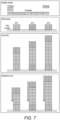
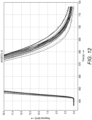
- Average delta signal from ISFETs can be seen in Figure 11 .
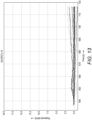
- Delta signals from all ISFETs for Anchored Primer control can be seen in Figure 14 .
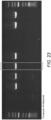
- Solution phase amplicon was generated post PCR for Serratia marcescens as seen in the gel electrophoresis image ( Figure 16 ).
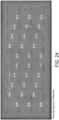
- the On-chip amplicon generated can also be seen for the Positive Anchored primer NH2-iSp18_SmR on the sensospot fluorescent image ( Figure 17 ).
- Anchored primer sequences for Example 2 can be seen in Table 5.
- Table 5 Anchored primer sequences for Example 2.
- Anchored Primer target 1 Positive T10C10_iSp18_Spo_gp_1_338+19_5'_Rof Anchored Primer target 2 Positive T10C10_iSp18_ Spo_gp_1_369+24_5'_Rof Anchored Primer target 3 Positive T10C10iSp18_Spo_gp_1_436+15_5'_Rof Anchored Primer target 4 Positive T10C10_iSp18_Spo_gp_1_495+ 20_5'_Rof Anchored Primer Negative T10C10_iSp18_Sa_nuc_1_186+19_Rof T10C10_iSp18_Sa_nuc_1_220+18_Rof T1 0C10_iSp18_Sa_nuc_1_
- Average delta signal from ISFETs for Example 2 can be seen in Figure 18 .
- Delta signals from all ISFETs for Anchored Primer Negative can be seen in Figure 20 .
- ISFET signal results for Positive, Negative and Control primers can be seen in Figure 22 .
- 1.5 to 4.4 dmV ISFET signal was detected for the four Positive Anchored primers. This is much lower than previous signal intensities and the Control Anchored Primer average ISFET signal which was 34.6 dmV.
- Solution phase amplicon was generated post PCR for Schizosaccharomyces pombe as seen in the gel electrophoresis image ( Figure 23 ). On-chip amplicon generated cannot be seen for the Positive Anchored primers on the sensospot fluorescent image ( Figure 24 ) . The Control Anchored primer however can be seen.
Landscapes
- Chemical & Material Sciences (AREA)
- Health & Medical Sciences (AREA)
- Life Sciences & Earth Sciences (AREA)
- Physics & Mathematics (AREA)
- Analytical Chemistry (AREA)
- Organic Chemistry (AREA)
- Immunology (AREA)
- Engineering & Computer Science (AREA)
- Biochemistry (AREA)
- General Health & Medical Sciences (AREA)
- Molecular Biology (AREA)
- Proteomics, Peptides & Aminoacids (AREA)
- Zoology (AREA)
- Wood Science & Technology (AREA)
- General Physics & Mathematics (AREA)
- Chemical Kinetics & Catalysis (AREA)
- Pathology (AREA)
- Genetics & Genomics (AREA)
- General Engineering & Computer Science (AREA)
- Biophysics (AREA)
- Biotechnology (AREA)
- Microbiology (AREA)
- Bioinformatics & Cheminformatics (AREA)
- Spectroscopy & Molecular Physics (AREA)
- Electrochemistry (AREA)
- Microelectronics & Electronic Packaging (AREA)
- Nuclear Medicine, Radiotherapy & Molecular Imaging (AREA)
- Optics & Photonics (AREA)
- Measuring Or Testing Involving Enzymes Or Micro-Organisms (AREA)
- Saccharide Compounds (AREA)
- Apparatus Associated With Microorganisms And Enzymes (AREA)
Priority Applications (2)
| Application Number | Priority Date | Filing Date | Title |
|---|---|---|---|
| EP23185680.8A EP4293124B1 (en) | 2019-05-08 | 2020-05-07 | Combined solution phase and solid phase dna amplification |
| EP25150312.4A EP4524260B1 (en) | 2019-05-08 | 2020-05-07 | Combined solution phase and solid phase dna amplification |
Applications Claiming Priority (2)
| Application Number | Priority Date | Filing Date | Title |
|---|---|---|---|
| GB201906461 | 2019-05-08 | ||
| PCT/GB2020/051122 WO2020225564A1 (en) | 2019-05-08 | 2020-05-07 | Combined solution phase and solid phase dna amplification |
Related Child Applications (3)
| Application Number | Title | Priority Date | Filing Date |
|---|---|---|---|
| EP25150312.4A Division EP4524260B1 (en) | 2019-05-08 | 2020-05-07 | Combined solution phase and solid phase dna amplification |
| EP23185680.8A Division EP4293124B1 (en) | 2019-05-08 | 2020-05-07 | Combined solution phase and solid phase dna amplification |
| EP23185680.8A Division-Into EP4293124B1 (en) | 2019-05-08 | 2020-05-07 | Combined solution phase and solid phase dna amplification |
Publications (2)
| Publication Number | Publication Date |
|---|---|
| EP3966346A1 EP3966346A1 (en) | 2022-03-16 |
| EP3966346B1 true EP3966346B1 (en) | 2023-08-23 |
Family
ID=67002052
Family Applications (3)
| Application Number | Title | Priority Date | Filing Date |
|---|---|---|---|
| EP20725896.3A Active EP3966346B1 (en) | 2019-05-08 | 2020-05-07 | Combined solution phase and solid phase dna amplification |
| EP25150312.4A Active EP4524260B1 (en) | 2019-05-08 | 2020-05-07 | Combined solution phase and solid phase dna amplification |
| EP23185680.8A Active EP4293124B1 (en) | 2019-05-08 | 2020-05-07 | Combined solution phase and solid phase dna amplification |
Family Applications After (2)
| Application Number | Title | Priority Date | Filing Date |
|---|---|---|---|
| EP25150312.4A Active EP4524260B1 (en) | 2019-05-08 | 2020-05-07 | Combined solution phase and solid phase dna amplification |
| EP23185680.8A Active EP4293124B1 (en) | 2019-05-08 | 2020-05-07 | Combined solution phase and solid phase dna amplification |
Country Status (7)
| Country | Link |
|---|---|
| US (1) | US20220333167A1 (https=) |
| EP (3) | EP3966346B1 (https=) |
| JP (2) | JP7611858B2 (https=) |
| CN (2) | CN119753103A (https=) |
| CA (2) | CA3139356C (https=) |
| ES (3) | ES3023484T3 (https=) |
| WO (1) | WO2020225564A1 (https=) |
Families Citing this family (1)
| Publication number | Priority date | Publication date | Assignee | Title |
|---|---|---|---|---|
| WO2022104138A1 (en) * | 2020-11-14 | 2022-05-19 | Life Technologies Corporation | System and method for automated repeat sequencing |
Citations (1)
| Publication number | Priority date | Publication date | Assignee | Title |
|---|---|---|---|---|
| WO2015162301A2 (en) * | 2014-04-25 | 2015-10-29 | Dna Electronics Ltd | Nucleic acid test system, apparatus and method |
Family Cites Families (10)
| Publication number | Priority date | Publication date | Assignee | Title |
|---|---|---|---|---|
| US6531302B1 (en) * | 1999-04-12 | 2003-03-11 | Nanogen/Becton Dickinson Partnership | Anchored strand displacement amplification on an electronically addressable microchip |
| US7575865B2 (en) * | 2003-01-29 | 2009-08-18 | 454 Life Sciences Corporation | Methods of amplifying and sequencing nucleic acids |
| JP2009000070A (ja) * | 2007-06-22 | 2009-01-08 | Hitachi Ltd | 大規模並列核酸分析方法 |
| JP4853403B2 (ja) * | 2007-07-02 | 2012-01-11 | セイコーエプソン株式会社 | 画像読み取り装置 |
| WO2012042399A1 (en) | 2010-09-30 | 2012-04-05 | Nxp B.V. | Biosensor device and method |
| GB2500715A (en) | 2012-03-30 | 2013-10-02 | Gene Onyx Ltd | Single nucleotide polymorphism detection using an ISFET array |
| US9914968B2 (en) | 2012-09-26 | 2018-03-13 | Cepheid | Honeycomb tube |
| ES2640570T3 (es) * | 2012-10-18 | 2017-11-03 | F. Hoffmann-La Roche Ag | Ensayo de doble sonda para la detección de VHC |
| KR20180040511A (ko) | 2014-11-05 | 2018-04-20 | 캘리포니아 인스티튜트 오브 테크놀로지 | 유기체의 약물에 대한 반응의 미세유체 측정 |
| WO2018046689A1 (en) * | 2016-09-08 | 2018-03-15 | Danmarks Tekniske Universitet | A polymeric chip system and uses thereof |
-
2020
- 2020-05-07 EP EP20725896.3A patent/EP3966346B1/en active Active
- 2020-05-07 WO PCT/GB2020/051122 patent/WO2020225564A1/en not_active Ceased
- 2020-05-07 CA CA3139356A patent/CA3139356C/en active Active
- 2020-05-07 JP JP2021565983A patent/JP7611858B2/ja active Active
- 2020-05-07 CN CN202510021594.2A patent/CN119753103A/zh active Pending
- 2020-05-07 CA CA3251083A patent/CA3251083A1/en active Pending
- 2020-05-07 EP EP25150312.4A patent/EP4524260B1/en active Active
- 2020-05-07 ES ES23185680T patent/ES3023484T3/es active Active
- 2020-05-07 US US17/609,553 patent/US20220333167A1/en active Pending
- 2020-05-07 EP EP23185680.8A patent/EP4293124B1/en active Active
- 2020-05-07 CN CN202080034226.7A patent/CN114207146B/zh active Active
- 2020-05-07 ES ES20725896T patent/ES2954784T3/es active Active
- 2020-05-07 ES ES25150312T patent/ES3052734T3/es active Active
-
2024
- 2024-12-24 JP JP2024226980A patent/JP2025060794A/ja active Pending
Patent Citations (1)
| Publication number | Priority date | Publication date | Assignee | Title |
|---|---|---|---|---|
| WO2015162301A2 (en) * | 2014-04-25 | 2015-10-29 | Dna Electronics Ltd | Nucleic acid test system, apparatus and method |
Also Published As
| Publication number | Publication date |
|---|---|
| EP3966346A1 (en) | 2022-03-16 |
| WO2020225564A1 (en) | 2020-11-12 |
| JP7611858B2 (ja) | 2025-01-10 |
| EP4293124A2 (en) | 2023-12-20 |
| CN119955908A (zh) | 2025-05-09 |
| EP4524260A3 (en) | 2025-05-14 |
| CA3139356C (en) | 2025-04-01 |
| EP4524260A2 (en) | 2025-03-19 |
| ES3023484T3 (en) | 2025-06-02 |
| ES2954784T3 (es) | 2023-11-24 |
| CA3139356A1 (en) | 2020-11-12 |
| CN119753103A (zh) | 2025-04-04 |
| ES3052734T3 (en) | 2026-01-13 |
| EP4293124B1 (en) | 2025-02-19 |
| CA3251083A1 (en) | 2025-10-30 |
| EP4293124A3 (en) | 2024-01-17 |
| JP2025060794A (ja) | 2025-04-10 |
| CN114207146A (zh) | 2022-03-18 |
| JP2022531707A (ja) | 2022-07-08 |
| EP4524260B1 (en) | 2025-10-22 |
| CN114207146B (zh) | 2025-01-10 |
| US20220333167A1 (en) | 2022-10-20 |
Similar Documents
| Publication | Publication Date | Title |
|---|---|---|
| Leamon et al. | Cramming more sequencing reactions onto microreactor chips | |
| CN102459630B (zh) | 样本分析方法和用于该方法的检测试剂盒 | |
| CN104114716A (zh) | 用于识别和定量化单链靶核酸的方法和试剂盒 | |
| HK1222881A1 (zh) | 改进的ngs工作流程 | |
| EP4063014A1 (en) | Surface-based detection of nucleic acid in a convection flow fluidic device | |
| JP6339787B2 (ja) | 核酸の分析方法 | |
| JP2025060794A (ja) | 液相及び固相dna増幅の組合せ | |
| CN1810989B (zh) | 一种等温反应检测具序列特异性的dna和rna的方法 | |
| US20090275028A1 (en) | Method of detecting target nucleic acid | |
| HK40124729A (en) | Combined solution phase and solid phase dna amplification | |
| HK40105256B (en) | Combined solution phase and solid phase dna amplification | |
| HK40070545A (en) | Combined solution phase and solid phase dna amplification | |
| HK40070545B (en) | Combined solution phase and solid phase dna amplification | |
| HK40105256A (en) | Combined solution phase and solid phase dna amplification | |
| CN119955908B (zh) | 组合的液相和固相dna扩增 | |
| US20240392360A1 (en) | Nucleic acid detection | |
| WO2013022778A1 (en) | Nucleic acid sequencing by electrochemical detection | |
| US20230235415A1 (en) | Method of detection | |
| RU114320U1 (ru) | УСТРОЙСТВО ДЛЯ ПРЯМОЙ ЭЛЕКТРОХИМИЧЕСКОЙ РЕГИСТРАЦИИ НЕПРАЙМИРОВАННОГО СИНТЕЗА МОЛЕКУЛ ДНК НА ОСНОВЕ pН-ЧУВСТВИТЕЛЬНОГО СЕНСОРА | |
| WO2006070667A1 (ja) | Egfr遺伝子変異の検出法ならびに検出キット | |
| KR20140000734A (ko) | 비결합성 변형염기가 포함된 dna 라이게이션 단편을 사용한 고효율의 리가아제 기반 snp분석 | |
| KR20150046958A (ko) | 마이크로어레이 칩을 이용한 흰반점바이러스 진단용 멀티플렉스 키트 | |
| JPWO2001016310A1 (ja) | 遺伝子変異の高感度検出方法 | |
| JPH03147796A (ja) | 核酸の検出法 |
Legal Events
| Date | Code | Title | Description |
|---|---|---|---|
| STAA | Information on the status of an ep patent application or granted ep patent |
Free format text: STATUS: UNKNOWN |
|
| STAA | Information on the status of an ep patent application or granted ep patent |
Free format text: STATUS: THE INTERNATIONAL PUBLICATION HAS BEEN MADE |
|
| PUAI | Public reference made under article 153(3) epc to a published international application that has entered the european phase |
Free format text: ORIGINAL CODE: 0009012 |
|
| STAA | Information on the status of an ep patent application or granted ep patent |
Free format text: STATUS: REQUEST FOR EXAMINATION WAS MADE |
|
| 17P | Request for examination filed |
Effective date: 20211206 |
|
| AK | Designated contracting states |
Kind code of ref document: A1 Designated state(s): AL AT BE BG CH CY CZ DE DK EE ES FI FR GB GR HR HU IE IS IT LI LT LU LV MC MK MT NL NO PL PT RO RS SE SI SK SM TR |
|
| DAV | Request for validation of the european patent (deleted) | ||
| DAX | Request for extension of the european patent (deleted) | ||
| STAA | Information on the status of an ep patent application or granted ep patent |
Free format text: STATUS: EXAMINATION IS IN PROGRESS |
|
| 17Q | First examination report despatched |
Effective date: 20220915 |
|
| REG | Reference to a national code |
Ref country code: HK Ref legal event code: DE Ref document number: 40070545 Country of ref document: HK |
|
| GRAP | Despatch of communication of intention to grant a patent |
Free format text: ORIGINAL CODE: EPIDOSNIGR1 |
|
| STAA | Information on the status of an ep patent application or granted ep patent |
Free format text: STATUS: GRANT OF PATENT IS INTENDED |
|
| GRAC | Information related to communication of intention to grant a patent modified |
Free format text: ORIGINAL CODE: EPIDOSCIGR1 |
|
| GRAJ | Information related to disapproval of communication of intention to grant by the applicant or resumption of examination proceedings by the epo deleted |
Free format text: ORIGINAL CODE: EPIDOSDIGR1 |
|
| GRAP | Despatch of communication of intention to grant a patent |
Free format text: ORIGINAL CODE: EPIDOSNIGR1 |
|
| INTG | Intention to grant announced |
Effective date: 20230314 |
|
| INTG | Intention to grant announced |
Effective date: 20230314 |
|
| GRAS | Grant fee paid |
Free format text: ORIGINAL CODE: EPIDOSNIGR3 |
|
| GRAA | (expected) grant |
Free format text: ORIGINAL CODE: 0009210 |
|
| STAA | Information on the status of an ep patent application or granted ep patent |
Free format text: STATUS: THE PATENT HAS BEEN GRANTED |
|
| AK | Designated contracting states |
Kind code of ref document: B1 Designated state(s): AL AT BE BG CH CY CZ DE DK EE ES FI FR GB GR HR HU IE IS IT LI LT LU LV MC MK MT NL NO PL PT RO RS SE SI SK SM TR |
|
| REG | Reference to a national code |
Ref country code: GB Ref legal event code: FG4D |
|
| REG | Reference to a national code |
Ref country code: CH Ref legal event code: EP |
|
| REG | Reference to a national code |
Ref country code: IE Ref legal event code: FG4D |
|
| REG | Reference to a national code |
Ref country code: DE Ref legal event code: R096 Ref document number: 602020016274 Country of ref document: DE |
|
| REG | Reference to a national code |
Ref country code: SE Ref legal event code: TRGR |
|
| REG | Reference to a national code |
Ref country code: NL Ref legal event code: FP |
|
| P01 | Opt-out of the competence of the unified patent court (upc) registered |
Effective date: 20230908 |
|
| REG | Reference to a national code |
Ref country code: ES Ref legal event code: FG2A Ref document number: 2954784 Country of ref document: ES Kind code of ref document: T3 Effective date: 20231124 |
|
| REG | Reference to a national code |
Ref country code: LT Ref legal event code: MG9D |
|
| REG | Reference to a national code |
Ref country code: AT Ref legal event code: MK05 Ref document number: 1602652 Country of ref document: AT Kind code of ref document: T Effective date: 20230823 |
|
| PG25 | Lapsed in a contracting state [announced via postgrant information from national office to epo] |
Ref country code: GR Free format text: LAPSE BECAUSE OF FAILURE TO SUBMIT A TRANSLATION OF THE DESCRIPTION OR TO PAY THE FEE WITHIN THE PRESCRIBED TIME-LIMIT Effective date: 20231124 |
|
| PG25 | Lapsed in a contracting state [announced via postgrant information from national office to epo] |
Ref country code: IS Free format text: LAPSE BECAUSE OF FAILURE TO SUBMIT A TRANSLATION OF THE DESCRIPTION OR TO PAY THE FEE WITHIN THE PRESCRIBED TIME-LIMIT Effective date: 20231223 |
|
| PG25 | Lapsed in a contracting state [announced via postgrant information from national office to epo] |
Ref country code: RS Free format text: LAPSE BECAUSE OF FAILURE TO SUBMIT A TRANSLATION OF THE DESCRIPTION OR TO PAY THE FEE WITHIN THE PRESCRIBED TIME-LIMIT Effective date: 20230823 Ref country code: PT Free format text: LAPSE BECAUSE OF FAILURE TO SUBMIT A TRANSLATION OF THE DESCRIPTION OR TO PAY THE FEE WITHIN THE PRESCRIBED TIME-LIMIT Effective date: 20231226 Ref country code: NO Free format text: LAPSE BECAUSE OF FAILURE TO SUBMIT A TRANSLATION OF THE DESCRIPTION OR TO PAY THE FEE WITHIN THE PRESCRIBED TIME-LIMIT Effective date: 20231123 Ref country code: LV Free format text: LAPSE BECAUSE OF FAILURE TO SUBMIT A TRANSLATION OF THE DESCRIPTION OR TO PAY THE FEE WITHIN THE PRESCRIBED TIME-LIMIT Effective date: 20230823 Ref country code: LT Free format text: LAPSE BECAUSE OF FAILURE TO SUBMIT A TRANSLATION OF THE DESCRIPTION OR TO PAY THE FEE WITHIN THE PRESCRIBED TIME-LIMIT Effective date: 20230823 Ref country code: IS Free format text: LAPSE BECAUSE OF FAILURE TO SUBMIT A TRANSLATION OF THE DESCRIPTION OR TO PAY THE FEE WITHIN THE PRESCRIBED TIME-LIMIT Effective date: 20231223 Ref country code: HR Free format text: LAPSE BECAUSE OF FAILURE TO SUBMIT A TRANSLATION OF THE DESCRIPTION OR TO PAY THE FEE WITHIN THE PRESCRIBED TIME-LIMIT Effective date: 20230823 Ref country code: GR Free format text: LAPSE BECAUSE OF FAILURE TO SUBMIT A TRANSLATION OF THE DESCRIPTION OR TO PAY THE FEE WITHIN THE PRESCRIBED TIME-LIMIT Effective date: 20231124 Ref country code: FI Free format text: LAPSE BECAUSE OF FAILURE TO SUBMIT A TRANSLATION OF THE DESCRIPTION OR TO PAY THE FEE WITHIN THE PRESCRIBED TIME-LIMIT Effective date: 20230823 Ref country code: AT Free format text: LAPSE BECAUSE OF FAILURE TO SUBMIT A TRANSLATION OF THE DESCRIPTION OR TO PAY THE FEE WITHIN THE PRESCRIBED TIME-LIMIT Effective date: 20230823 |
|
| PG25 | Lapsed in a contracting state [announced via postgrant information from national office to epo] |
Ref country code: PL Free format text: LAPSE BECAUSE OF FAILURE TO SUBMIT A TRANSLATION OF THE DESCRIPTION OR TO PAY THE FEE WITHIN THE PRESCRIBED TIME-LIMIT Effective date: 20230823 |
|
| PG25 | Lapsed in a contracting state [announced via postgrant information from national office to epo] |
Ref country code: SM Free format text: LAPSE BECAUSE OF FAILURE TO SUBMIT A TRANSLATION OF THE DESCRIPTION OR TO PAY THE FEE WITHIN THE PRESCRIBED TIME-LIMIT Effective date: 20230823 Ref country code: RO Free format text: LAPSE BECAUSE OF FAILURE TO SUBMIT A TRANSLATION OF THE DESCRIPTION OR TO PAY THE FEE WITHIN THE PRESCRIBED TIME-LIMIT Effective date: 20230823 Ref country code: EE Free format text: LAPSE BECAUSE OF FAILURE TO SUBMIT A TRANSLATION OF THE DESCRIPTION OR TO PAY THE FEE WITHIN THE PRESCRIBED TIME-LIMIT Effective date: 20230823 Ref country code: DK Free format text: LAPSE BECAUSE OF FAILURE TO SUBMIT A TRANSLATION OF THE DESCRIPTION OR TO PAY THE FEE WITHIN THE PRESCRIBED TIME-LIMIT Effective date: 20230823 Ref country code: CZ Free format text: LAPSE BECAUSE OF FAILURE TO SUBMIT A TRANSLATION OF THE DESCRIPTION OR TO PAY THE FEE WITHIN THE PRESCRIBED TIME-LIMIT Effective date: 20230823 Ref country code: SK Free format text: LAPSE BECAUSE OF FAILURE TO SUBMIT A TRANSLATION OF THE DESCRIPTION OR TO PAY THE FEE WITHIN THE PRESCRIBED TIME-LIMIT Effective date: 20230823 |
|
| REG | Reference to a national code |
Ref country code: DE Ref legal event code: R097 Ref document number: 602020016274 Country of ref document: DE |
|
| PLBE | No opposition filed within time limit |
Free format text: ORIGINAL CODE: 0009261 |
|
| STAA | Information on the status of an ep patent application or granted ep patent |
Free format text: STATUS: NO OPPOSITION FILED WITHIN TIME LIMIT |
|
| 26N | No opposition filed |
Effective date: 20240524 |
|
| PG25 | Lapsed in a contracting state [announced via postgrant information from national office to epo] |
Ref country code: SI Free format text: LAPSE BECAUSE OF FAILURE TO SUBMIT A TRANSLATION OF THE DESCRIPTION OR TO PAY THE FEE WITHIN THE PRESCRIBED TIME-LIMIT Effective date: 20230823 |
|
| PG25 | Lapsed in a contracting state [announced via postgrant information from national office to epo] |
Ref country code: BG Free format text: LAPSE BECAUSE OF FAILURE TO SUBMIT A TRANSLATION OF THE DESCRIPTION OR TO PAY THE FEE WITHIN THE PRESCRIBED TIME-LIMIT Effective date: 20230823 |
|
| PG25 | Lapsed in a contracting state [announced via postgrant information from national office to epo] |
Ref country code: BG Free format text: LAPSE BECAUSE OF FAILURE TO SUBMIT A TRANSLATION OF THE DESCRIPTION OR TO PAY THE FEE WITHIN THE PRESCRIBED TIME-LIMIT Effective date: 20230823 |
|
| PG25 | Lapsed in a contracting state [announced via postgrant information from national office to epo] |
Ref country code: MC Free format text: LAPSE BECAUSE OF FAILURE TO SUBMIT A TRANSLATION OF THE DESCRIPTION OR TO PAY THE FEE WITHIN THE PRESCRIBED TIME-LIMIT Effective date: 20230823 |
|
| PG25 | Lapsed in a contracting state [announced via postgrant information from national office to epo] |
Ref country code: LU Free format text: LAPSE BECAUSE OF NON-PAYMENT OF DUE FEES Effective date: 20240507 |
|
| PG25 | Lapsed in a contracting state [announced via postgrant information from national office to epo] |
Ref country code: MC Free format text: LAPSE BECAUSE OF FAILURE TO SUBMIT A TRANSLATION OF THE DESCRIPTION OR TO PAY THE FEE WITHIN THE PRESCRIBED TIME-LIMIT Effective date: 20230823 Ref country code: LU Free format text: LAPSE BECAUSE OF NON-PAYMENT OF DUE FEES Effective date: 20240507 |
|
| REG | Reference to a national code |
Ref country code: BE Ref legal event code: MM Effective date: 20240531 |
|
| PG25 | Lapsed in a contracting state [announced via postgrant information from national office to epo] |
Ref country code: IE Free format text: LAPSE BECAUSE OF NON-PAYMENT OF DUE FEES Effective date: 20240507 |
|
| PG25 | Lapsed in a contracting state [announced via postgrant information from national office to epo] |
Ref country code: BE Free format text: LAPSE BECAUSE OF NON-PAYMENT OF DUE FEES Effective date: 20240531 |
|
| PGFP | Annual fee paid to national office [announced via postgrant information from national office to epo] |
Ref country code: NL Payment date: 20250521 Year of fee payment: 6 |
|
| PGFP | Annual fee paid to national office [announced via postgrant information from national office to epo] |
Ref country code: DE Payment date: 20250521 Year of fee payment: 6 |
|
| PGFP | Annual fee paid to national office [announced via postgrant information from national office to epo] |
Ref country code: GB Payment date: 20250527 Year of fee payment: 6 |
|
| PGFP | Annual fee paid to national office [announced via postgrant information from national office to epo] |
Ref country code: IT Payment date: 20250521 Year of fee payment: 6 |
|
| PGFP | Annual fee paid to national office [announced via postgrant information from national office to epo] |
Ref country code: FR Payment date: 20250528 Year of fee payment: 6 |
|
| PGFP | Annual fee paid to national office [announced via postgrant information from national office to epo] |
Ref country code: CH Payment date: 20250601 Year of fee payment: 6 |
|
| PGFP | Annual fee paid to national office [announced via postgrant information from national office to epo] |
Ref country code: SE Payment date: 20250521 Year of fee payment: 6 |
|
| PG25 | Lapsed in a contracting state [announced via postgrant information from national office to epo] |
Ref country code: CY Free format text: LAPSE BECAUSE OF FAILURE TO SUBMIT A TRANSLATION OF THE DESCRIPTION OR TO PAY THE FEE WITHIN THE PRESCRIBED TIME-LIMIT; INVALID AB INITIO Effective date: 20200507 |
|
| PG25 | Lapsed in a contracting state [announced via postgrant information from national office to epo] |
Ref country code: HU Free format text: LAPSE BECAUSE OF FAILURE TO SUBMIT A TRANSLATION OF THE DESCRIPTION OR TO PAY THE FEE WITHIN THE PRESCRIBED TIME-LIMIT; INVALID AB INITIO Effective date: 20200507 |
|
| PGFP | Annual fee paid to national office [announced via postgrant information from national office to epo] |
Ref country code: ES Payment date: 20250630 Year of fee payment: 6 |