EP3958366A1 - Verfahren zur herstellung einer festkörperbatterie mit einer fest-flüssig-hybrid-elektrolytmembran und fest-flüssig-hybrid-elektrolytmembran - Google Patents
Verfahren zur herstellung einer festkörperbatterie mit einer fest-flüssig-hybrid-elektrolytmembran und fest-flüssig-hybrid-elektrolytmembran Download PDFInfo
- Publication number
- EP3958366A1 EP3958366A1 EP21741619.7A EP21741619A EP3958366A1 EP 3958366 A1 EP3958366 A1 EP 3958366A1 EP 21741619 A EP21741619 A EP 21741619A EP 3958366 A1 EP3958366 A1 EP 3958366A1
- Authority
- EP
- European Patent Office
- Prior art keywords
- solid
- liquid
- electrolyte membrane
- electrolyte
- polymer particles
- Prior art date
- Legal status (The legal status is an assumption and is not a legal conclusion. Google has not performed a legal analysis and makes no representation as to the accuracy of the status listed.)
- Pending
Links
Images

Classifications
-
- H—ELECTRICITY
- H01—ELECTRIC ELEMENTS
- H01M—PROCESSES OR MEANS, e.g. BATTERIES, FOR THE DIRECT CONVERSION OF CHEMICAL ENERGY INTO ELECTRICAL ENERGY
- H01M10/00—Secondary cells; Manufacture thereof
- H01M10/05—Accumulators with non-aqueous electrolyte
- H01M10/056—Accumulators with non-aqueous electrolyte characterised by the materials used as electrolytes, e.g. mixed inorganic/organic electrolytes
- H01M10/0564—Accumulators with non-aqueous electrolyte characterised by the materials used as electrolytes, e.g. mixed inorganic/organic electrolytes the electrolyte being constituted of organic materials only
- H01M10/0565—Polymeric materials, e.g. gel-type or solid-type
-
- H—ELECTRICITY
- H01—ELECTRIC ELEMENTS
- H01M—PROCESSES OR MEANS, e.g. BATTERIES, FOR THE DIRECT CONVERSION OF CHEMICAL ENERGY INTO ELECTRICAL ENERGY
- H01M10/00—Secondary cells; Manufacture thereof
- H01M10/05—Accumulators with non-aqueous electrolyte
- H01M10/058—Construction or manufacture
-
- H—ELECTRICITY
- H01—ELECTRIC ELEMENTS
- H01M—PROCESSES OR MEANS, e.g. BATTERIES, FOR THE DIRECT CONVERSION OF CHEMICAL ENERGY INTO ELECTRICAL ENERGY
- H01M10/00—Secondary cells; Manufacture thereof
- H01M10/05—Accumulators with non-aqueous electrolyte
- H01M10/056—Accumulators with non-aqueous electrolyte characterised by the materials used as electrolytes, e.g. mixed inorganic/organic electrolytes
- H01M10/0564—Accumulators with non-aqueous electrolyte characterised by the materials used as electrolytes, e.g. mixed inorganic/organic electrolytes the electrolyte being constituted of organic materials only
-
- H—ELECTRICITY
- H01—ELECTRIC ELEMENTS
- H01M—PROCESSES OR MEANS, e.g. BATTERIES, FOR THE DIRECT CONVERSION OF CHEMICAL ENERGY INTO ELECTRICAL ENERGY
- H01M10/00—Secondary cells; Manufacture thereof
- H01M10/05—Accumulators with non-aqueous electrolyte
- H01M10/056—Accumulators with non-aqueous electrolyte characterised by the materials used as electrolytes, e.g. mixed inorganic/organic electrolytes
- H01M10/0564—Accumulators with non-aqueous electrolyte characterised by the materials used as electrolytes, e.g. mixed inorganic/organic electrolytes the electrolyte being constituted of organic materials only
- H01M10/0566—Liquid materials
-
- H—ELECTRICITY
- H01—ELECTRIC ELEMENTS
- H01M—PROCESSES OR MEANS, e.g. BATTERIES, FOR THE DIRECT CONVERSION OF CHEMICAL ENERGY INTO ELECTRICAL ENERGY
- H01M10/00—Secondary cells; Manufacture thereof
- H01M10/05—Accumulators with non-aqueous electrolyte
-
- H—ELECTRICITY
- H01—ELECTRIC ELEMENTS
- H01M—PROCESSES OR MEANS, e.g. BATTERIES, FOR THE DIRECT CONVERSION OF CHEMICAL ENERGY INTO ELECTRICAL ENERGY
- H01M10/00—Secondary cells; Manufacture thereof
- H01M10/05—Accumulators with non-aqueous electrolyte
- H01M10/052—Li-accumulators
- H01M10/0525—Rocking-chair batteries, i.e. batteries with lithium insertion or intercalation in both electrodes; Lithium-ion batteries
-
- H—ELECTRICITY
- H01—ELECTRIC ELEMENTS
- H01M—PROCESSES OR MEANS, e.g. BATTERIES, FOR THE DIRECT CONVERSION OF CHEMICAL ENERGY INTO ELECTRICAL ENERGY
- H01M10/00—Secondary cells; Manufacture thereof
- H01M10/05—Accumulators with non-aqueous electrolyte
- H01M10/056—Accumulators with non-aqueous electrolyte characterised by the materials used as electrolytes, e.g. mixed inorganic/organic electrolytes
-
- H—ELECTRICITY
- H01—ELECTRIC ELEMENTS
- H01M—PROCESSES OR MEANS, e.g. BATTERIES, FOR THE DIRECT CONVERSION OF CHEMICAL ENERGY INTO ELECTRICAL ENERGY
- H01M10/00—Secondary cells; Manufacture thereof
- H01M10/05—Accumulators with non-aqueous electrolyte
- H01M10/058—Construction or manufacture
- H01M10/0585—Construction or manufacture of accumulators having only flat construction elements, i.e. flat positive electrodes, flat negative electrodes and flat separators
-
- H—ELECTRICITY
- H01—ELECTRIC ELEMENTS
- H01M—PROCESSES OR MEANS, e.g. BATTERIES, FOR THE DIRECT CONVERSION OF CHEMICAL ENERGY INTO ELECTRICAL ENERGY
- H01M50/00—Constructional details or processes of manufacture of the non-active parts of electrochemical cells other than fuel cells, e.g. hybrid cells
- H01M50/40—Separators; Membranes; Diaphragms; Spacing elements inside cells
- H01M50/409—Separators, membranes or diaphragms characterised by the material
- H01M50/449—Separators, membranes or diaphragms characterised by the material having a layered structure
-
- H—ELECTRICITY
- H01—ELECTRIC ELEMENTS
- H01M—PROCESSES OR MEANS, e.g. BATTERIES, FOR THE DIRECT CONVERSION OF CHEMICAL ENERGY INTO ELECTRICAL ENERGY
- H01M10/00—Secondary cells; Manufacture thereof
- H01M10/05—Accumulators with non-aqueous electrolyte
- H01M10/052—Li-accumulators
-
- H—ELECTRICITY
- H01—ELECTRIC ELEMENTS
- H01M—PROCESSES OR MEANS, e.g. BATTERIES, FOR THE DIRECT CONVERSION OF CHEMICAL ENERGY INTO ELECTRICAL ENERGY
- H01M2300/00—Electrolytes
- H01M2300/0017—Non-aqueous electrolytes
- H01M2300/0025—Organic electrolyte
- H01M2300/0028—Organic electrolyte characterised by the solvent
- H01M2300/0037—Mixture of solvents
-
- H—ELECTRICITY
- H01—ELECTRIC ELEMENTS
- H01M—PROCESSES OR MEANS, e.g. BATTERIES, FOR THE DIRECT CONVERSION OF CHEMICAL ENERGY INTO ELECTRICAL ENERGY
- H01M2300/00—Electrolytes
- H01M2300/0017—Non-aqueous electrolytes
- H01M2300/0065—Solid electrolytes
- H01M2300/0082—Organic polymers
-
- H—ELECTRICITY
- H01—ELECTRIC ELEMENTS
- H01M—PROCESSES OR MEANS, e.g. BATTERIES, FOR THE DIRECT CONVERSION OF CHEMICAL ENERGY INTO ELECTRICAL ENERGY
- H01M2300/00—Electrolytes
- H01M2300/0085—Immobilising or gelification of electrolyte
-
- H—ELECTRICITY
- H01—ELECTRIC ELEMENTS
- H01M—PROCESSES OR MEANS, e.g. BATTERIES, FOR THE DIRECT CONVERSION OF CHEMICAL ENERGY INTO ELECTRICAL ENERGY
- H01M2300/00—Electrolytes
- H01M2300/0088—Composites
- H01M2300/0091—Composites in the form of mixtures
-
- H—ELECTRICITY
- H01—ELECTRIC ELEMENTS
- H01M—PROCESSES OR MEANS, e.g. BATTERIES, FOR THE DIRECT CONVERSION OF CHEMICAL ENERGY INTO ELECTRICAL ENERGY
- H01M2300/00—Electrolytes
- H01M2300/0088—Composites
- H01M2300/0094—Composites in the form of layered products, e.g. coatings
-
- Y—GENERAL TAGGING OF NEW TECHNOLOGICAL DEVELOPMENTS; GENERAL TAGGING OF CROSS-SECTIONAL TECHNOLOGIES SPANNING OVER SEVERAL SECTIONS OF THE IPC; TECHNICAL SUBJECTS COVERED BY FORMER USPC CROSS-REFERENCE ART COLLECTIONS [XRACs] AND DIGESTS
- Y02—TECHNOLOGIES OR APPLICATIONS FOR MITIGATION OR ADAPTATION AGAINST CLIMATE CHANGE
- Y02E—REDUCTION OF GREENHOUSE GAS [GHG] EMISSIONS, RELATED TO ENERGY GENERATION, TRANSMISSION OR DISTRIBUTION
- Y02E60/00—Enabling technologies; Technologies with a potential or indirect contribution to GHG emissions mitigation
- Y02E60/10—Energy storage using batteries
-
- Y—GENERAL TAGGING OF NEW TECHNOLOGICAL DEVELOPMENTS; GENERAL TAGGING OF CROSS-SECTIONAL TECHNOLOGIES SPANNING OVER SEVERAL SECTIONS OF THE IPC; TECHNICAL SUBJECTS COVERED BY FORMER USPC CROSS-REFERENCE ART COLLECTIONS [XRACs] AND DIGESTS
- Y02—TECHNOLOGIES OR APPLICATIONS FOR MITIGATION OR ADAPTATION AGAINST CLIMATE CHANGE
- Y02P—CLIMATE CHANGE MITIGATION TECHNOLOGIES IN THE PRODUCTION OR PROCESSING OF GOODS
- Y02P70/00—Climate change mitigation technologies in the production process for final industrial or consumer products
- Y02P70/50—Manufacturing or production processes characterised by the final manufactured product
Definitions
- the present application claims priority to Korean Patent Application No. 10-2020-0004979 filed on January 14, 2020 in the Republic of Korea, the disclosures of which are incorporated herein by reference.
- the present disclosure relates to a method for manufacturing a solid-state battery including a solid-liquid hybrid electrolyte membrane, and a solid-liquid hybrid electrolyte membrane.
- the lithium secondary battery can be obtained by interposing a separator between a positive electrode and a negative electrode and injecting a liquid electrolyte thereto, or by interposing a solid electrolyte membrane between a positive electrode and a negative electrode.
- the negative electrode and the positive electrode are divided from each other by the separator. Therefore, when the separator is damaged by deformation or external impact, a short-circuit may occur, resulting in a risk, such as overheating or explosion.
- a lithium secondary battery using a solid electrolyte is advantageous in that it has enhanced safety and prevents leakage of an electrolyte to improve the reliability of the battery and to allow easy manufacture of a thin battery.
- a solid electrolyte is used, there is still a need for development of a solid electrolyte membrane having high energy density and improved processability.
- a solid electrolyte it has low ion conductivity to cause the problem of degradation of performance, and shows a significantly larger thickness as compared to the thickness of a conventional porous polyolefin-based separator to cause loss of energy density. Under these circumstances, there is a need for a technical solution capable of overcoming the problems.
- the present disclosure is designed to solve the problems of the related art, and therefore the present disclosure is directed to providing a method for manufacturing a solid-state battery without any separate step of injecting a liquid electrolyte to an electrode assembly after manufacturing the electrode assembly, or by injecting merely a small amount of liquid electrolyte to an electrode assembly.
- the present disclosure is directed to providing a solid-liquid hybrid electrolyte membrane which has improved mechanical strength, even though it is a thinner film as compared to commercially available solid electrolyte membranes.
- the present disclosure is also directed to providing a solid-liquid hybrid electrolyte membrane which can be formed into a thinner film as compared to the commercially available solid electrolyte membranes and has improved energy density per weight based on the thickness.
- a method for manufacturing a solid-state battery including the steps of:
- step (S1) includes the steps of: (S11) preparing a composition containing a plurality of polymer particles dispersed in a solvent; (S12) applying the composition onto a substrate, followed by drying, to form a preliminary porous structure; (S13) pressurizing the product of step (S12) to form a porous structure; and (S14) impregnating the porous structure with a liquid electrolyte to obtain a solid-liquid hybrid electrolyte membrane, and the content of the liquid electrolyte is 30-40 wt% based on the total weight of the solid-liquid hybrid electrolyte membrane.
- step (S3) is carried out by pressurizing the electrode assembly so that the liquid electrolyte in the solid-liquid hybrid electrolyte membrane may be ejected and the electrodes may be impregnated with the liquid electrolyte.
- the method for manufacturing a solid-state battery as defined in any one of the first to the fourth embodiments, wherein the solid polymer particle includes any one selected from polyphenylene sulfide, polyetherether ketone, polyimide, polyamideimide, liquid crystal polymer, polyether imide, polysulfone, polyarylate, polyethylene terephthalate, polybutylene terephthalate, polyoxymethylene, polycarbonate, polypropylene, polyethylene and polymethyl methacrylate, or two or more of them.
- the method for manufacturing a solid-state battery as defined in any one of the first to the sixth embodiments which is free of a step of injecting an electrolyte.
- the method for manufacturing a solid-state battery as defined in any one of the first to the seventh embodiments wherein the content of the liquid electrolyte is 31-36 wt% based on the total weight of the solid polymer particles.
- step (S14) the method for manufacturing a solid-state battery as defined in any one of the second to the eighth embodiments, wherein the impregnation in step (S14) is carried out by any one of dip coating, spray coating and drop coating.
- the method for manufacturing a solid-state battery as defined in any one of the first to the ninth embodiments, wherein the solid-liquid hybrid electrolyte membrane further includes a porous polymer substrate or a non-woven web substrate.
- a solid-liquid hybrid electrolyte membrane which includes a plurality of solid polymer particles and a liquid electrolyte, and has an ion conductivity of 1x10 -5 to 1x10 -1 S/cm,
- the solid-liquid hybrid electrolyte membrane as defined in the eleventh embodiment which further includes a porous polymer substrate or a non-woven web substrate.
- a solid-state battery having an ion conductivity equivalent to or similar to the ion conductivity of a conventional solid-state battery by injecting a small amount of liquid electrolyte or by injecting no liquid electrolyte, after manufacturing an electrode assembly.
- there is no need for a time during which electrodes are impregnated with a liquid electrolyte due to the step of injecting a liquid electrolyte to an electrode assembly and it is possible to reduce the time required for impregnating the inner part of an electrode with a liquid electrolyte, which is advantageous in terms of processability.
- a particle-shaped polymer capable of being compressed since a particle-shaped polymer capable of being compressed is used, it is possible to provide a solid-liquid hybrid electrolyte membrane having improved mechanical strength.
- no solid electrolyte since no solid electrolyte is used, it is possible to provide a solid-liquid hybrid electrolyte membrane which can be deformed by external pressurization.
- the polymer particles are bound physically with one another, which is favorable to porosity and pore channel formation.
- liquid electrolyte is used to ensure improved ion conductivity as compared to conventional solid electrolyte batteries, while preventing electrolyte leakage.
- the terms 'approximately', 'substantially', or the like are used as meaning contiguous from or to the stated numerical value, when an acceptable preparation and material error unique to the stated meaning is suggested, and are used for the purpose of preventing an unconscientious invader from unduly using the stated disclosure including an accurate or absolute numerical value provided to help understanding of the present disclosure.
- 'A and/or B' means 'A, B or both of them'.
- the present disclosure relates to a solid-liquid hybrid electrolyte membrane and a method for manufacturing a solid-state battery including the same.
- a solid-liquid hybrid electrolyte membrane including a pore structure formed by a plurality of solid polymer particles is used, wherein the pore structure is impregnated sufficiently with a liquid electrolyte.
- the solid-liquid hybrid electrolyte membrane impregnated sufficiently with a liquid electrolyte is interposed as a separator layer between electrodes and the resultant electrode assembly is pressurized, the liquid electrolyte contained in the solid-liquid hybrid electrolyte membrane is ejected and the electrodes are impregnated with the liquid electrolyte.
- FIG. 1 is a schematic view illustrating the structure of the solid-liquid hybrid electrolyte membrane according to an embodiment of the present disclosure and that of a solid-state battery including the same.
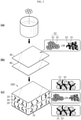
- FIG. 2 is a schematic view illustrating the method for manufacturing a solid-state battery according to an embodiment of the present disclosure.
- the solid-state battery 100 includes a positive electrode 10, a negative electrode 20 and a solid-liquid hybrid electrolyte membrane 30 interposed between the positive electrode and the negative electrode.
- the solid-liquid hybrid electrolyte membrane 30 includes a plurality of solid polymer particles 31 and a predetermined amount of liquid electrolyte 32.
- the solid polymer particle is present in a solid state at room temperature, and is a polymer material having low solubility to the electrolyte.
- the solid polymer particles are surrounded with the liquid electrolyte, and preferably have low solubility to the liquid electrolyte.
- the solid polymer particle is a polymer having excellent chemical resistance, preferably.
- the solid polymer particle may be an engineering plastic resin.
- the engineering plastic resin may include any one selected from polyphenylene sulfide, polyetherether ketone, polyimide, polyamideimide, liquid crystal polymer, polyether imide, polysulfone, polyarylate, polyethylene terephthalate, polybutylene terephthalate, polyoxymethylene, polycarbonate, polypropylene, polyethylene and polymethyl methacrylate, or two or more of them.
- the engineering plastic resin may have a molecular weight of 100,000-10,000,000 Da.
- the solid polymer particles have compressibility, unlike the conventional commercially available inorganic particles. Therefore, it is possible to provide a lithium secondary battery having increased energy density per weight based on the thickness.
- the solid polymer particles have ductility, and thus can be interconnected physically or chemically under pressurization or heating.
- the solid-liquid hybrid electrolyte membrane according to the present disclosure requires no separate binder polymer. In other words, the solid-liquid hybrid electrolyte membrane is free of a binder polymer. Therefore, it is possible to provide a solid-liquid hybrid electrolyte membrane showing reduced resistance.
- the solid polymer particles may have an average particle diameter of 100 nm to 10 ⁇ m, 200 nm to 5 ⁇ m, or 500 nm to 2 ⁇ m.
- the solid polymer particles have a particle diameter controlled within the above-defined range, it is possible to obtain a suitable pore size, to prevent a short-circuit, and to allow sufficient impregnation with the liquid electrolyte.
- the solid polymer particles are packed, while being in contact with one another, and a pore structure is formed among the solid polymer particles.
- the solid polymer particles may be in contact with one another by being packed under external pressure.
- the external pressure may be monoaxial pressurization, roll pressing, cold isostatic press (CIP), hot isostatic press (HIP), or the like.
- CIP cold isostatic press
- HIP hot isostatic press
- the scope of the present disclosure is not limited thereto, and any physical or chemical process capable of adhering the solid polymer particles with one another may be used.
- the solid polymer particles may undergo plastic deformation beyond the physical elastic region of the particles by the above-mentioned external pressure, and thus have an increased contact surface between particles as compared to the particles before applying the pressure or undergo a change in volume to generate a new contact surface, or the adhesion of the adhesion surface between particles is increased due to the plastic deformation to form a desired structure.
- the solid polymer particles may be pelletized.
- the liquid electrolyte surrounds the portions in which the solid polymer particles are in surface contact with one another, or the surfaces of the solid polymer particles. In other words, the surfaces of the solid polymer particles may be coated with the liquid electrolyte. Since the liquid electrolyte is present as mentioned above, it is possible to provide a solid-liquid hybrid electrolyte membrane having high ion conductivity.
- the liquid electrolyte is present in a predetermined amount.
- the liquid electrolyte is present in such a manner that the porous structure 33 formed by the solid polymer particles may be impregnated with the liquid electrolyte.
- the porous composite electrolyte membrane impregnated with the liquid electrolyte is interposed between a positive electrode and a negative electrode, and pressurization is carried out so that the liquid electrolyte may be ejected into the electrodes. Therefore, according to an embodiment of the present disclosure, it is possible to provide a solid-state battery having an ion conductivity equivalent to or similar to the ion conductivity of a conventional solid-state battery by injecting a small amount of liquid electrolyte or by using no separate step of injecting an electrolyte, after manufacturing an electrode assembly.
- the content of the liquid electrolyte is 30-40 wt% based on 100 wt% of the total content of the solid-liquid hybrid electrolyte membrane.
- the content of the liquid electrolyte may be 30 wt% or more, 31 wt% or more, 32 wt% or more, or 33 wt% or more, based on the total weight of the solid-liquid hybrid electrolyte membrane.
- the content of the liquid electrolyte may be 40 wt% or less, 39 wt% or less, 38 wt% or less, or 37 wt% or less, based on the total weight of the solid-liquid hybrid electrolyte membrane.
- the solid-liquid hybrid electrolyte membrane according to an embodiment of the present disclosure has the above-defined range of liquid electrolyte content, it is possible to provide high ion conductivity and a desired level of mechanical strength, when the solid-liquid hybrid electrolyte membrane is subsequently interposed between a positive electrode and a negative electrode.
- the content of the liquid electrolyte is less than 30 wt%, it is not possible to provide a desired level of ion conductivity.
- the content of the liquid electrolyte is larger than 40 wt%, it is difficult to form a porous structure by using solid polymer particles, and even if a porous structure is formed, the porous structure shows low strength due to the electrolyte and is hardly retained.
- liquid electrolyte even though the liquid electrolyte is present in a predetermined amount, it is possible to provide a solid-liquid hybrid electrolyte membrane having high ion conductivity. This is because the liquid electrolyte is dispersed homogeneously on the surfaces of the solid polymer particles or the portions in which the solid polymer particles are in surface contact with one another.
- dip coating, spray coating or drop coating may be used to carry out such homogeneous impregnation with the liquid electrolyte.
- the liquid electrolyte cannot dissolve the solid polymer particles and has excellent chemical resistance and electrochemical resistance.
- the liquid electrolyte is a salt having a structure of A + B - , wherein A + includes an alkali metal cation such as Li + , Na + , K + or a combination thereof, and B - includes an anion such as PF 6 - , BF 4 - , Cl - , Br - , I - , ClO 4 - , AsF 6 - , CH 3 CO 2 - , CF 3 SO 3 - , N(CF 3 SO 2 ) 2 - , C(CF 2 SO 2 ) 3 - or a combination thereof, wherein the salt may be dissolved or dissociated in an organic solvent, such as an ether-based solvent, carbonate-based solvent, nitrile-based solvent, or the like, but is not limited thereto.
- a + includes an alkali metal cation such as Li + , Na + , K + or a combination thereof
- B - includes an anion such as PF 6 - , BF
- the ether-based organic solvent may include dimethyl ether, diethyl ether, dipropyl ether, methyl ethyl ether, methyl propyl ether, ethyl propyl ether, 1,2-dimethoxyethane, or a mixture of two or more of them.
- the carbonate-based organic solvent may include propylene carbonate (PC), ethylene carbonate (EC), diethyl carbonate (DEC), dimethyl carbonate (DMC), dipropyl carbonate (DPC), ethyl methyl carbonate (EMC), or a mixture of two or more of them.
- PC propylene carbonate
- EC ethylene carbonate
- DEC diethyl carbonate
- DMC dimethyl carbonate
- DPC dipropyl carbonate
- EMC ethyl methyl carbonate
- the nitrile-based organic solvent may include acetonitrile, succinonitrile, or a mixture of two or more of them.
- the organic solvent may include dimethyl sulfoxide, dimethoxyethane, diethoxyethane, tetrahydrofuran, N-methyl-2-pyrrolidone (NMP), gamma-butyrolactone ( ⁇ -butyrolactone) or a mixture thereof, but is not limited thereto.
- the porous structure itself has a higher porosity than the porosity of the solid-liquid hybrid electrolyte membrane.
- the porous structure itself may have a porosity of 1-90 vol%, 5-80 vol%, 10-70 vol%, or 20-50 vol%
- the solid-liquid hybrid electrolyte membrane has a lower porosity than the porosity of the porous structure itself, and particularly, may have a porosity of 0-80 vol%, 5-60 vol%, 10-30 vol%, or 15-20 vol%.
- the ion conductivity of the solid-liquid hybrid electrolyte membrane is higher than the ion conductivity of the porous structure itself.
- the ion conductivity of the solid-liquid electrolyte membrane has a higher ion conductivity than the ion conductivity of the porous structure itself, and may have an ion conductivity of 1x10 -5 to 1x10 -1 S/cm, 1x10 -4 to 1x10 -2 S/cm, or 1x10 -4 to 5x10 -3 S/cm.
- the solid-liquid hybrid electrolyte membrane according to an embodiment of the present disclosure has a lower porosity as compared to the porous structure, it shows a higher ion conductivity as compared to the porous structure itself.
- the porosity and pore size of the porous structure itself and the electrolyte membrane according to the present disclosure may be controlled by adjusting the average particle diameter of the solid polymer particles or the pressurization condition during the manufacture.
- the porosity and pore size may be controlled by adjusting the roll gap of a roll press, controlling the temperature during the manufacture, or by controlling the content or particle diameter of the solid polymer particles.
- the porous structure may have a thickness of 10-500 ⁇ m, 20-300 ⁇ m, or 30-100 ⁇ m. According to an embodiment of the present disclosure, use of a thin film-type porous structure having a thickness of 10-50 ⁇ m is favorable in terms of the energy density of a lithium secondary battery obtained subsequently.
- the solid-liquid hybrid electrolyte membrane may have a thickness of 10-500 ⁇ m, 20-300 ⁇ m, or 30-100 ⁇ m.
- a separator in the form of a thin film having thickness of 10-50 ⁇ m can be provided, which is favorable to the energy density of a lithium secondary battery obtained subsequently.
- the solid-liquid hybrid electrolyte membrane may further include a porous polymer substrate or a non-woven web substrate.
- the solid-liquid hybrid electrolyte membrane according to an embodiment of the present disclosure has a large amount of liquid electrolyte with which it is impregnated. Therefore, when forming the solid-liquid hybrid electrolyte membrane on the porous polymer substrate or the non-woven web substrate, or when a separate porous polymer substrate or non-woven web substrate is inserted, there is an advantage of high mechanical strength.
- the non-woven web substrate may include polyolefin, such as polyethylene or polypropylene, polyethylene terephthalate, polyester, polyamide, polyacetal, polycarbonate, polyimide, polyetherether ketone, polyether sulfone, polyphenylene oxide, polyphenylene sulfide, polyethylene naphthalene, or a mixture thereof.
- polyolefin such as polyethylene or polypropylene, polyethylene terephthalate, polyester, polyamide, polyacetal, polycarbonate, polyimide, polyetherether ketone, polyether sulfone, polyphenylene oxide, polyphenylene sulfide, polyethylene naphthalene, or a mixture thereof.
- the porous polymer substrate or the non-woven web substrate may include pores having an average diameter of 10 nm to 100 ⁇ m, 100 nm to 10 ⁇ m, or 500 nm to 5 ⁇ m, and may have a porosity of 10-98 vol%, 30-90 vol%, or 40-80 vol%.
- the solid polymer particles may be partially embedded in the pores of the non-woven web substrate, wherein the surfaces of the solid polymer particles and the substrate may be surrounded with the liquid electrolyte.
- the solid polymer particles may be disposed on at least one surface of the non-woven web substrate, wherein the surfaces of the solid polymer particles and the substrate may be surrounded with the liquid electrolyte.
- the term 'pore' may have various types of pore structures, and any type of pore having an average pore size satisfying the above-defined average pore size, as determined by using porosimetry or as observed through field emission-scanning electron microscopy (FE-SEM), falls within the scope of the present disclosure.
- FE-SEM field emission-scanning electron microscopy
- a solid-liquid hybrid electrolyte membrane including a plurality of solid polymer particles and a liquid electrolyte, wherein the solid polymer particles are packed, while being in contact with one another, a porous structure is formed among the solid polymer particles, the liquid electrolyte surrounds the portions in which the solid polymer particles are in surface contact with one another, or the surfaces of the solid polymer particles, and the content of the liquid electrolyte is 30-40 wt% based on 100 wt% of the total content of the solid-liquid hybrid electrolyte membrane (S1).
- FIG. 2(a) a composition containing a plurality of polymer particles dispersed in a solvent may be used.
- the polymer particles are the same as described above.
- the solvent is capable of dispersing the solid polymer particles.
- the solvent may be ethanol, methanol, or the like.
- step (SI) may include the steps of: (S11) preparing a composition containing a plurality of polymer particles dispersed in a solvent; (S12) applying the composition onto a substrate, followed by drying, to form a preliminary porous structure; (S13) pressurizing the product of step (S12) to form a porous structure; and (S14) impregnating the porous structure with a liquid electrolyte to obtain a solid-liquid hybrid electrolyte membrane.
- the application and drying may be carried out by using a method used conventionally in the art (S12). This step is shown in FIG. 2(b) .
- a method of dispersing the polymer particles in a solvent and coating the resultant dispersion may be used in order to apply the polymer particles uniformly onto a substrate.
- the solvent evaporates to leave a residual material, but the scope of the present disclosure is not limited thereto, and a residual material may remain depending on purposes.
- step (S12) may be pressurized to form a porous structure (S13).
- the solid polymer particles may form a porous structure through the pressurization step.
- the solid polymer particles can be bound physically to one another by pressurization or heating, and there is no need for any separate binder polymer.
- a separate porous polymer substrate or non-woven web substrate may be used additionally in order to enhance the mechanical strength of the porous structure.
- the pressurization step may be carried out once or several times with a predetermined gap in order to provide a desired porous structure and/or thickness and porosity of the solid-liquid hybrid electrolyte membrane.
- the porous structure may be impregnated with a predetermined amount of liquid electrolyte (S14).
- impregnation with the liquid electrolyte may be carried out by any one of dip coating, spray coating and drop coating, but is not limited thereto.
- the content of the liquid electrolyte is 30-40 wt% based on 100 wt% of the total content of the solid-liquid hybrid electrolyte membrane. Since the content of the liquid electrolyte satisfies a desired numerical range as mentioned above, pressurization of an electrode assembly after the manufacture thereof provides the porous structure with increased density, and the liquid electrolyte contained in the porous structure is ejected and transferred to the electrode active material layers.
- the resultant solid-state battery shows increased ion conductivity without any separate step of injecting a liquid electrolyte, and the porous structure has increased density due to the pressurization to provide improved mechanical strength.
- a step of removing the substrate may be further carried out (S15).
- the method may further include a step of removing a release film.
- the release film shows poor wettability with an electrolyte, and thus a large amount of electrolyte cannot be leaked from the porous structure.
- the release film surrounds the solid-liquid hybrid electrolyte membrane, it is possible to reduce electrolyte leakage.
- the solid-liquid hybrid electrolyte membrane is interposed between electrodes to form an electrode assembly (S2).
- the method for interposing the solid-liquid hybrid electrolyte membrane between electrodes is not particularly limited, and any method used conventionally in the art may be used.
- the electrode assembly is pressurized (S3).
- the liquid electrolyte in the solid-liquid hybrid electrolyte membrane is ejected and introduced into the electrodes.
- the liquid electrolyte contained in the solid-liquid hybrid electrolyte membrane infiltrates into the positive electrode and negative electrode under the pressurization, thereby providing a solid-state battery with improved ion conductivity.
- the method is free of a separate step of injecting an electrolyte, or may include a step of injecting merely a small amount of liquid electrolyte.
- the present disclosure it is possible to determine whether the electrodes are impregnated with the electrolyte or not by comparing the thickness of the electrode assembly after the pressurization with that of the electrode assembly before the pressurization.
- the ratio (B/A) of the thickness (B) of the solid-liquid hybrid electrolyte membrane after pressurizing the electrode assembly based on the thickness (A) of the solid-liquid hybrid electrolyte membrane before pressurizing the electrode assembly is 86-92%.
- each of the positive electrode and the negative electrode includes a current collector, and an electrode active material layer formed on at least one surface of the current collector, wherein the electrode active material layer includes a plurality of electrode active material particles and a solid electrolyte.
- the electrodes may further include at least one of a conductive material and a binder resin.
- the electrode may further include various additives in order to supplement or improve the physicochemical properties of the electrode.
- any negative electrode active material may be used, as long as it can be used as a negative electrode active material for a lithium ion secondary battery.
- the negative electrode active material include any one selected from: carbon, such as non-graphitizable carbon or graphitic carbon; metal composite oxides such as Li x Fe 2 O 3 (0 ⁇ x ⁇ 1), Li x WO 2 (0 ⁇ x ⁇ 1), Sn x Me 1-x Me' y O z (Me: Mn, Fe, Pb or Ge; Me': Al, B, P, Si, an element of Group 1, Group 2 or Group 3 in the Periodic Table, or halogen; 0 ⁇ x ⁇ 1; 1 ⁇ y ⁇ 3; 1 ⁇ z ⁇ 8); lithium metal; lithium alloys; silicon-based alloys; tin-based alloys; metal oxides such as SnO, SnO 2 , PbO, PbO 2 , Pb 2 O 3 , Pb 3 O 4
- any positive electrode active material may be used with no particular limitation, as long as it can be used as a positive electrode active material for a lithium ion secondary battery.
- the positive electrode active material include, but are not limited to: layered compounds such as lithium cobalt oxide (LiCoO 2 ) and lithium nickel oxide (LiNiO 2 ), or those compounds substituted with one or more transition metals; lithium manganese oxides such as those represented by the chemical formula of Li 1+x Mn 2-x O 4 (wherein x is 0-0.33), LiMnO 3 , LiMn 2 O 3 and LiMnO 2 ; lithium copper oxide (Li 2 CuO 2 ); vanadium oxides such as LiV 3 O 8 , LiV 3 O 4 , V 2 O 5 or Cu 2 V 2 O 7 ; Ni-site type lithium nickel oxides represented by the chemical formula of LiNi 1 - x M x O 2 (wherein M is Co, Mn, Al, Cu, Fe, Mg, B
- the current collector includes a metal plate having electrical conductivity and may be one selected suitably depending on polarity of electrodes known in the field of secondary batteries.
- the conductive material is added generally in an amount of 1-30 wt% based on the total weight of the mixture including the electrode active material.
- the conductive material is not particularly limited, as long as it causes no chemical change in the corresponding battery and has conductivity.
- the conductive material include any one selected from: graphite, such as natural graphite or artificial graphite; carbon black, such as carbon black, acetylene black, Ketjen black, channel black, furnace black, lamp black or thermal black; conductive fibers, such as carbon fibers or metallic fibers; metal powder, such as carbon fluoride, aluminum or nickel powder; conductive whisker, such as zinc oxide or potassium titanate; conductive metal oxide, such as titanium oxide; and conductive materials, such as polyphenylene derivatives, or a mixture of two or more of them.
- graphite such as natural graphite or artificial graphite
- carbon black such as carbon black, acetylene black, Ketjen black, channel black, furnace black, lamp black or thermal black
- conductive fibers such as carbon fibers or metallic fibers
- metal powder such as carbon fluoride, aluminum or nickel powder
- conductive whisker such as zinc oxide or potassium titanate
- conductive metal oxide such as titanium oxide
- conductive materials such as polyphenylene derivatives
- the binder resin is not particularly limited, as long as it is an ingredient which assists binding of the electrode active material with the conductive material, and binding to the current collector.
- the binder resin include polyvinylidene fluoride, polyvinyl alcohol, carboxymethyl cellulose (CMC), starch, hydroxypropyl cellulose, regenerated cellulose, polyvinyl pyrrolidone, tetrafluoroethylene, polyethylene, polypropylene, ethylene-propylene-diene terpolymer (EPDM), sulfonated EPDM, styrene butadiene rubber, fluororubber, various copolymers, or the like.
- the binder resin may be used in an amount of 1-30 wt%, or 1-10 wt%, based on 100 wt% of electrode active material layer.
- each electrode active material layer may include at least one additive, such as an oxidation stabilizing additive, reduction stabilizing additive, flame retardant, heat stabilizer, anti-fogging agent, or the like, if necessary.
- an oxidation stabilizing additive such as an oxidation stabilizing additive, reduction stabilizing additive, flame retardant, heat stabilizer, anti-fogging agent, or the like, if necessary.
- the solid electrolyte may include at least one of a polymeric solid electrolyte, an oxide-based solid electrolyte and a sulfide-based solid electrolyte.
- each of the positive electrode and the negative electrode may use a different solid electrolyte, or the same solid electrolyte may be used for two or more battery elements.
- an electrolyte material having high oxidation stability may be used as a solid electrolyte.
- an electrolyte material having high reduction stability may be used as a solid electrolyte.
- the scope of the present disclosure is not limited thereto.
- the solid electrolyte mainly functions to conduct lithium ions in the electrodes, any material having a high ion conductivity or 10 -7 S/m or more, such as 10 -7 S/m or more, may be used, and the solid electrolyte material is not limited to any specific ingredient.
- the polymer electrolyte may be a solid polymer electrolyte formed by adding a polymer resin to a lithium salt solvated independently, or may be a polymer gel electrolyte prepared by impregnating a polymer resin with an organic electrolyte containing an organic solvent and a lithium salt.
- a dispersion prepared by dispersing powder-type polyphenylene sulfide (average particle diameter: 10 ⁇ m) as solid polymer particles in ethanol to a concentration of 1 g/ 4 mL was applied to a PET non-woven web (porosity 78 vol%) having a thickness of 40 ⁇ m, followed by drying, to obtain a preliminary porous structure.
- the preliminary porous structure having a total thickness of 83 ⁇ m was pressed by using a roll press to form a porous structure (porosity 36 vol%) having a thickness of 50 ⁇ m.
- the resultant solid-liquid hybrid electrolyte membrane had a thickness (A) of 50 ⁇ m and a porosity of 0%.
- Li metal (thickness 20 ⁇ m) available from Honjo Co. was prepared as a negative electrode.
- NCM811 LiNi 0.8 Co 0.1 Mn 0.1 O 2
- VGCF vapor grown carbon fibers
- PEO + LiTFSi, [EO]/[Li + ] 18:1, molar ratio
- the resultant mixture was applied to an aluminum current collector having a thickness of 20 ⁇ m by using a doctor blade, and the resultant product was vacuum dried at 120°C for 4 hours. Then, the vacuum dried product was pressed by using a roll press to obtain a positive electrode having a positive electrode slurry loading amount of 3 mAh/cm 2 and a porosity of 22%.
- the positive electrode obtained as described above was cut into a circular shape having an area of 1.4875 cm 2 .
- the negative electrode cut into a circular shape having an area of 1.7671 cm 2 was prepared.
- the solid-liquid hybrid electrolyte membrane obtained from 1) was interposed between the positive electrode and the negative electrode, and the resultant structure was pressurized under 5 MPa. After pressurizing the electrode assembly, the solid-liquid hybrid electrolyte membrane had a thickness (B) of 45 ⁇ m.
- a dispersion prepared by dispersing powder-type polyphenylene sulfide (average particle diameter: 10 ⁇ m) as solid polymer particles in ethanol to a concentration of 1 g/ 4 mL was applied to a PET non-woven web (porosity 78 vol%) having a thickness of 40 ⁇ m, followed by drying, to obtain a preliminary porous structure.
- the preliminary porous structure having a total thickness of 83 ⁇ m was pressed by using a roll press to form a porous structure (porosity 36 vol%) having a thickness of 50 ⁇ m.
- the resultant solid-liquid hybrid electrolyte membrane had a thickness (A) of 50 ⁇ m and a porosity of 5 vol%.
- the solid-liquid hybrid electrolyte membrane obtained as described above was interposed between the positive electrode and the negative electrode as described in Example 1, and the resultant structure was pressurized under 5 MPa.
- the ratio (B/A) of the thickness (B) of the solid-liquid hybrid electrolyte membrane after pressurizing the electrode assembly based on the thickness (A) of the solid-liquid hybrid electrolyte membrane before pressurizing the electrode assembly was 86%. After that, the electrode assembly was used to obtain a half-cell. Herein, there is no separate step of injecting an electrolyte.
- a solid-liquid hybrid electrolyte membrane was obtained in the same manner as Example 1, except that the dispersion prepared according to Example 1 was applied not to a non-woven web substrate but to a positive electrode active material layer including a solid electrolyte, followed by drying.
- NCM811 LiNi 0.8 Co 0.1 Mn 0.1 O 2
- VGCF vapor grown carbon fibers
- PEO + LiTFSi, [EO]/[Li + ] 18:1, molar ratio
- the preliminary porous structure had a thickness of 89 ⁇ m.
- the preliminary porous structure was pressed by using a roll press to form a porous structure (porosity 36 vol%) having a thickness of 50 ⁇ m.
- the resultant solid-liquid hybrid electrolyte membrane had a thickness (A) of 50 ⁇ m and a porosity of 0 vol%.
- the solid-liquid hybrid electrolyte membrane obtained as described above was interposed in such a manner that it might face the negative electrode according to Example 1, and the resultant structure was pressurized under 5 MPa.
- the ratio (B/A) of the thickness (B) of the solid-liquid hybrid electrolyte membrane after pressurizing the electrode assembly based on the thickness (A) of the solid-liquid hybrid electrolyte membrane before pressurizing the electrode assembly was 92%. After that, the electrode assembly was used to obtain a half-cell. Herein, there is no separate step of injecting an electrolyte.
- An electrolyte membrane was obtained in the same manner as Example 1, except that impregnation with a liquid electrolyte was not carried out.
- the electrolyte membrane was obtained as follows.
- a dispersion prepared by dispersing powder-type polyphenylene sulfide (average particle diameter: 10 ⁇ m) as solid polymer particles in ethanol to a concentration of 1 g/ 4 mL was applied to a PET non-woven web (porosity 78 vol%) having a thickness of 40 ⁇ m, followed by drying, to obtain a preliminary porous structure. Then, the preliminary porous structure having a total thickness of 83 ⁇ m was pressed by using a roll press to form a porous structure (porosity 36 vol%) having a thickness of 50 ⁇ m.
- An electrolyte membrane was obtained by mixing a liquid electrolyte with solid polymer particles at once, not by impregnating a porous structure with a liquid electrolyte after forming the porous structure.
- the electrolyte membrane was obtained as follows.
- powder-type polyphenylene sulfide (average particle diameter: 10 ⁇ m) was prepared as solid polymer particles.
- the solid polymer particles were mixed with the liquid electrolyte at a volume ratio of 7:3 to prepare a dispersion containing the solid polymer particles dispersed therein. After that, the dispersion was applied onto a polyethylene terephthalate film, followed by drying. Then, the resultant structure was allowed to pass through a roll press in order to obtain an electrolyte membrane. However, it was not possible to obtain an electrolyte membrane.
- An electrolyte membrane was obtained in the same manner as Comparative Example 2, except that the dispersion according to Comparative Example 2 was applied to and dried on a non-woven web (porosity: 87 vol%) having a thickness of 38 ⁇ m, instead of the polyethylene terephthalate film.
- the solid polymer particles are introduced into the pores of the non-woven web substrate.
- LiTFSI as a lithium salt was added thereto to a molar ratio of [EO]/[Li + ] of 18/1.
- the resultant mixture was agitated overnight at 70°C so that PEO and the lithium salt might be dissolved sufficiently in the polymer solution.
- an additive solution containing an initiator and a curing agent was prepared.
- the additive solution was agitated for about 1 hour so that the ingredients introduced thereto might be mixed thoroughly. Then, the additive solution was added to the polymer solution and the two solutions were mixed thoroughly. The mixed solution was applied to and coated on a release film by using a doctor blade.
- the coating gap was set to 800 ⁇ m and the coating rate was set to 20 mm/min.
- the release film coated with the solution was transferred to a glass plate, allowed to maintain level, dried overnight at room temperature, and vacuum dried at 100°C for 12 hours. In this manner, a first solid electrolyte layer and a second solid electrolyte layer was obtained.
- the resultant first solid electrolyte layer and second solid electrolyte layer had a thickness of about 50 ⁇ m.
- the electrolyte membrane obtained as described above was interposed between the positive electrode and the negative electrode according to Example 1, and the resultant structure was pressurized under 5 MPa.
- the ratio (B/A) of the thickness (B) of the solid-liquid hybrid electrolyte membrane after pressurizing the electrode assembly based on the thickness (A) of the solid-liquid hybrid electrolyte membrane before pressurizing the electrode assembly was 100%. After that, the electrode assembly was used to obtain a half-cell. Herein, there is no separate step of injecting an electrolyte.
- a dispersion prepared by dispersing powder-type polyphenylene sulfide (average particle diameter: 10 ⁇ m) as solid polymer particles in ethanol to a concentration of 1 g/2 mL was applied to a PET non-woven web (porosity 78 vol%) having a thickness of 40 ⁇ m, followed by drying, to obtain a preliminary porous structure.
- the preliminary porous structure having a total thickness of 200 ⁇ m was pressed by using a roll press to form a porous structure (porosity 21 vol%) having a thickness of 40 ⁇ m.
- the resultant solid-liquid hybrid electrolyte membrane had a thickness (A) of 40 ⁇ m and a porosity of 0 vol%.
- the solid-liquid hybrid electrolyte membrane obtained as described above was interposed between the positive electrode and the negative electrode as described in Example 1, and the resultant structure was pressurized under 5 MPa.
- the ratio (B/A) of the thickness (B) of the solid-liquid hybrid electrolyte membrane after pressurizing the electrode assembly based on the thickness (A) of the solid-liquid hybrid electrolyte membrane before pressurizing the electrode assembly was 97.5%. After that, the electrode assembly was used to obtain a half-cell. Herein, there is no separate step of injecting an electrolyte.
- each of the porous structures and electrolyte membranes according to Examples and Comparative Examples was cut into a size of 1.7671 cm 2 , the weight and volume of each electrolyte membrane were measured (apparent density was measured), and the apparent density was compared with a designed value (true density) to calculate the porosity.
- true density of each solid electrolyte membrane was calculated from the compositional ratio of the ingredients contained in the solid electrolyte membrane and the density of each ingredient, and then the porosity was calculated from the difference between the apparent density and the true density.
- Each of the electrolyte membranes according to Examples and Comparative Examples was cut into a circular shape having a size of 1.7671 cm 2 , and the electrolyte membrane was disposed between two stainless steel sheets to obtain a coin-cell. Then, electrochemical impedance was measured by using an analyzer (VMP3, Biologic science instrument) at room temperature under the conditions of an amplitude of 10 mV and a scan range of 500 kHz to 0.1 MHz. Based on this, ion conductivity was calculated.
- the content of a liquid electrolyte in a solid-liquid hybrid electrolyte membrane was calculated by the formula of [Weight of solid-liquid hybrid electrolyte membrane - Weight of porous structure].
- Each of the batteries according to Examples 1-3 and Comparative Examples 1-5 was charged/discharged at 0.05C at room temperature or at 60°C to evaluate the initial discharge capacity.
- 'room temperature' in Table 1 refers to a condition controlled to about 18-27°C.
- particles having no ion conductivity can be used to form a support and the internal part of the support is impregnated with a small amount of electrolyte to obtain a composite electrolyte layer having excellent ion conductivity.
- the composite electrolyte layer shows excellent properties, such as physical properties and ion conductivity, as compared to conventional solid electrolytes exemplified by PEO.
- the amount of electrolyte used herein is 2-15 ⁇ L, which is significantly smaller than the amount of the conventional electrolyte, 20-50 ⁇ L.
- the electrolyte is rearranged effectively toward the electrodes due to the pressure applied during the manufacture of an electrode assembly to ensure ion conductivity and to allow operation as a battery.
- the battery shows performance significantly higher than the performance of the conventional battery using PEO.
- the electrolyte membrane undergoes a small change in thickness, like Comparative Example 5, or when the absolute amount of electrolyte is excessively small, it is not possible to improve the performance of a battery sufficiently.
Landscapes
- Chemical & Material Sciences (AREA)
- Engineering & Computer Science (AREA)
- Chemical Kinetics & Catalysis (AREA)
- Electrochemistry (AREA)
- General Chemical & Material Sciences (AREA)
- Manufacturing & Machinery (AREA)
- Inorganic Chemistry (AREA)
- Condensed Matter Physics & Semiconductors (AREA)
- General Physics & Mathematics (AREA)
- Physics & Mathematics (AREA)
- Materials Engineering (AREA)
- Dispersion Chemistry (AREA)
- Secondary Cells (AREA)
- Conductive Materials (AREA)
- Cell Separators (AREA)
Applications Claiming Priority (2)
| Application Number | Priority Date | Filing Date | Title |
|---|---|---|---|
| KR1020200004979A KR102830334B1 (ko) | 2020-01-14 | 2020-01-14 | 고상-액상 하이브리드 전해질 막을 포함하는 전고체 전지의 제조방법 및 고상-액상 하이브리드 전해질 막 |
| PCT/KR2021/000525 WO2021145690A1 (ko) | 2020-01-14 | 2021-01-14 | 고상-액상 하이브리드 전해질 막을 포함하는 전고체 전지의 제조방법 및 고상-액상 하이브리드 전해질 막 |
Publications (2)
| Publication Number | Publication Date |
|---|---|
| EP3958366A1 true EP3958366A1 (de) | 2022-02-23 |
| EP3958366A4 EP3958366A4 (de) | 2022-08-10 |
Family
ID=76863230
Family Applications (1)
| Application Number | Title | Priority Date | Filing Date |
|---|---|---|---|
| EP21741619.7A Pending EP3958366A4 (de) | 2020-01-14 | 2021-01-14 | Verfahren zur herstellung einer festkörperbatterie mit einer fest-flüssig-hybrid-elektrolytmembran und fest-flüssig-hybrid-elektrolytmembran |
Country Status (6)
| Country | Link |
|---|---|
| US (1) | US12230755B2 (de) |
| EP (1) | EP3958366A4 (de) |
| JP (2) | JP7457789B2 (de) |
| KR (1) | KR102830334B1 (de) |
| CN (1) | CN113939940B (de) |
| WO (1) | WO2021145690A1 (de) |
Cited By (1)
| Publication number | Priority date | Publication date | Assignee | Title |
|---|---|---|---|---|
| EP4092797A4 (de) * | 2020-02-18 | 2024-02-28 | LG Energy Solution, Ltd. | Lithiumsekundärbatterie und verfahren zur herstellung davon |
Families Citing this family (3)
| Publication number | Priority date | Publication date | Assignee | Title |
|---|---|---|---|---|
| CN115939504A (zh) * | 2021-08-13 | 2023-04-07 | 通用汽车环球科技运作有限责任公司 | 用于固态电池组的凝胶电解质体系 |
| US12646802B2 (en) | 2021-09-02 | 2026-06-02 | Lg Energy Solution, Ltd. | Method for manufacturing electrode assembly for electrochemical device, electrode assembly obtained by same method, and method for manufacturing electrochemical device |
| CN119890613B (zh) * | 2025-01-15 | 2025-10-31 | 江苏正力新能电池技术股份有限公司 | 隔膜及其制备方法以及钠离子电池 |
Family Cites Families (31)
| Publication number | Priority date | Publication date | Assignee | Title |
|---|---|---|---|---|
| JP3230610B2 (ja) | 1991-07-25 | 2001-11-19 | 日本電信電話株式会社 | 高分子固体電解質及びその製造方法 |
| EP0555114B1 (de) | 1992-01-20 | 1996-11-13 | Nippon Telegraph And Telephone Corporation | Fester Polymerelektrolyt und Verfahren zu seiner Herstellung |
| JP3152264B2 (ja) | 1992-01-20 | 2001-04-03 | 日本電信電話株式会社 | 高分子固体電解質及びその製造方法 |
| JP3763188B2 (ja) | 1997-06-09 | 2006-04-05 | Jsr株式会社 | 高分子固体電解質組成物 |
| JPH11329501A (ja) * | 1998-05-19 | 1999-11-30 | Asahi Chem Ind Co Ltd | ポリマー電池の製造方法 |
| JP4112712B2 (ja) | 1998-11-02 | 2008-07-02 | Tdk株式会社 | 固体電解質、その製造方法およびこの固体電解質を用いた電気化学デバイス |
| KR100308690B1 (ko) | 1998-12-22 | 2001-11-30 | 이 병 길 | 흡수제를포함한미세다공성고분자전해질및그의제조방법 |
| US6413676B1 (en) | 1999-06-28 | 2002-07-02 | Lithium Power Technologies, Inc. | Lithium ion polymer electrolytes |
| KR100327488B1 (ko) | 2000-03-21 | 2002-03-13 | 김순택 | 리튬 고분자 이차전지 제조방법 |
| WO2001099220A1 (en) | 2000-05-24 | 2001-12-27 | Finecell Co., Ltd. | Microporous solid electrolytes and methods for preparing them |
| JP2002352859A (ja) * | 2001-05-24 | 2002-12-06 | Ube Ind Ltd | 複合高分子固体電解質及びその製造方法 |
| JP2004087334A (ja) | 2002-08-27 | 2004-03-18 | Noritake Co Ltd | 不織布から成る電池セパレータ用シート及びその利用 |
| JP2009259755A (ja) | 2008-03-25 | 2009-11-05 | Hitachi Chem Co Ltd | 電気化学素子用セパレータ、及びこれを用いたリチウムイオン電池 |
| US20120231346A1 (en) | 2009-10-21 | 2012-09-13 | Kyoto University | Electrochemical device using solid polymer electrolyte using fine polymer composite particles |
| WO2012118338A2 (ko) | 2011-03-03 | 2012-09-07 | 주식회사 엘지화학 | 일체형 전극조립체 및 이를 이용한 이차전지 |
| CN103620850B (zh) | 2011-06-23 | 2016-01-06 | 株式会社Lg化学 | 具有新型结构的电极组件和使用其的二次电池 |
| KR101393534B1 (ko) * | 2011-06-30 | 2014-05-09 | 주식회사 엘지화학 | 신규 구조 전극조립체 및 이를 이용한 이차전지 |
| EP2843749B1 (de) | 2012-04-23 | 2019-03-20 | Kyoto University | Polymer-ionen-flüssigverbundstoff mit porositätskoordination |
| WO2015034088A1 (ja) * | 2013-09-06 | 2015-03-12 | 株式会社 エム光・エネルギー開発研究所 | 撥液性多孔質膜を備えた電気化学反応装置 |
| KR20150106810A (ko) * | 2013-11-21 | 2015-09-22 | 삼성에스디아이 주식회사 | 분리막 및 이를 이용한 이차 전지 |
| JP2017014493A (ja) | 2015-07-03 | 2017-01-19 | 東レ株式会社 | イオン伝導性フィルム、イオン伝導性複合フィルム、および電極複合体 |
| JP6728653B2 (ja) | 2015-11-30 | 2020-07-22 | 日本ゼオン株式会社 | 非水系二次電池およびその製造方法 |
| CN108370061B (zh) | 2015-12-11 | 2021-12-31 | 富士胶片株式会社 | 固体电解质组合物、粘合剂粒子、全固态二次电池、片、电极片及它们的制造方法 |
| CN107645013A (zh) * | 2016-07-22 | 2018-01-30 | 中国科学院物理研究所 | 复合准固态电解质、其制法和含其的锂电池或锂离子电池 |
| JP7233157B2 (ja) | 2016-08-31 | 2023-03-06 | 住友化学株式会社 | 非水電解液二次電池用セパレータ |
| CN106450424B (zh) | 2016-10-24 | 2018-08-24 | 南京博驰新能源股份有限公司 | 一种聚合物复合固态电解质及其制备方法和应用 |
| KR102812819B1 (ko) | 2016-12-13 | 2025-05-28 | 삼성전자주식회사 | 복합 전해질 구조체 및 이를 포함하는 리튬금속전지 |
| WO2018190665A1 (ko) * | 2017-04-14 | 2018-10-18 | 주식회사 엘지화학 | 고분자 고체 전해질 및 이를 포함하는 리튬 이차전지 |
| KR102315122B1 (ko) * | 2018-06-04 | 2021-10-19 | 주식회사 엘지에너지솔루션 | 전지셀, 이차 전지 및 전지셀 제조 방법 |
| KR102594099B1 (ko) | 2018-07-05 | 2023-10-27 | 에스케이플래닛 주식회사 | 업로드된 이미지를 편집하기 위한 방법 및 이를 위한 장치 |
| CN110233285A (zh) * | 2019-06-18 | 2019-09-13 | 北京化工大学 | 一种利用聚合物电解质改善固态电池界面稳定性的方法 |
-
2020
- 2020-01-14 KR KR1020200004979A patent/KR102830334B1/ko active Active
-
2021
- 2021-01-14 WO PCT/KR2021/000525 patent/WO2021145690A1/ko not_active Ceased
- 2021-01-14 EP EP21741619.7A patent/EP3958366A4/de active Pending
- 2021-01-14 CN CN202180003246.2A patent/CN113939940B/zh active Active
- 2021-01-14 US US17/611,431 patent/US12230755B2/en active Active
- 2021-01-14 JP JP2022505495A patent/JP7457789B2/ja active Active
-
2023
- 2023-11-29 JP JP2023201799A patent/JP7700198B2/ja active Active
Cited By (1)
| Publication number | Priority date | Publication date | Assignee | Title |
|---|---|---|---|---|
| EP4092797A4 (de) * | 2020-02-18 | 2024-02-28 | LG Energy Solution, Ltd. | Lithiumsekundärbatterie und verfahren zur herstellung davon |
Also Published As
| Publication number | Publication date |
|---|---|
| JP2022542178A (ja) | 2022-09-29 |
| JP2024015101A (ja) | 2024-02-01 |
| US12230755B2 (en) | 2025-02-18 |
| JP7700198B2 (ja) | 2025-06-30 |
| US20220181688A1 (en) | 2022-06-09 |
| WO2021145690A1 (ko) | 2021-07-22 |
| JP7457789B2 (ja) | 2024-03-28 |
| KR20210091597A (ko) | 2021-07-22 |
| KR102830334B1 (ko) | 2025-07-03 |
| EP3958366A4 (de) | 2022-08-10 |
| CN113939940B (zh) | 2024-06-25 |
| CN113939940A (zh) | 2022-01-14 |
Similar Documents
| Publication | Publication Date | Title |
|---|---|---|
| US12230755B2 (en) | Method for manufacturing all-solid-state battery including solid-liquid hybrid electrolyte membrane, and solid-liquid hybrid electrolyte membrane | |
| EP3467907B1 (de) | Verfahren zur herstellung einer elektrode mit einem polymerelektrolyt und damit hergestellte elektrode | |
| EP3637500B1 (de) | Separator für eine lithium-ionen-sekundärbatterie und lithium-metall-batterie selbigen umfassend | |
| EP3467908B1 (de) | Verfahren zur herstellung einer elektrode mit polymerelektrolyt und nach diesem hergestellte elektrode | |
| EP3771012A1 (de) | Verfahren zur herstellung von festkörperbatterien mit polymerbasiertem feststoffelektrolyt und durch das verfahren hergestellte festkörperbatterie | |
| EP3836258A1 (de) | Verfahren zur herstellung einer elektrode aus einem polymeren festelektrolyten und damit hergestellte elektrode | |
| EP4012800A1 (de) | Verfahren zur vorsodierung einer negativen elektrode, vorsodierte negative elektrode und lithium-sekundärbatterie, die diese umfasst | |
| EP3758106A1 (de) | Verfahren zur herstellung einer elektrode mit polymerbasiertem festelektrolyt und durch das verfahren hergestellte elektrode | |
| EP3819975A1 (de) | Festelektrolytmembran, verfahren zur herstellung davon und festkörperbatterie damit | |
| KR20250105345A (ko) | 고상-액상 하이브리드 전해질 막, 이의 제조방법 및 이를 포함하는 리튬 이차 전지 | |
| EP4071876B1 (de) | Fest-flüssig-hybrid-elektrolytmembran und methode zu ihrer herstellung | |
| EP4012801A1 (de) | Verfahren zur vorlithiierung/vornatriierung von negativen elektroden, vorlithiierte/vornatriierte negative elektrode und diese enthaltende lithium-sekundärbatterie | |
| KR20230032400A (ko) | 고분자 겔 전해질, 및 이를 포함하는 리튬금속전지 | |
| US12119477B2 (en) | Method for manufacturing electrode comprising polymeric solid electrolyte and electrode obtained thereby | |
| EP4092797A1 (de) | Lithiumsekundärbatterie und verfahren zur herstellung davon | |
| EP4738451A1 (de) | Anode für lithiumsekundärbatterie, herstellungsverfahren dafür und lithiumsekundärbatterie damit |
Legal Events
| Date | Code | Title | Description |
|---|---|---|---|
| STAA | Information on the status of an ep patent application or granted ep patent |
Free format text: STATUS: THE INTERNATIONAL PUBLICATION HAS BEEN MADE |
|
| PUAI | Public reference made under article 153(3) epc to a published international application that has entered the european phase |
Free format text: ORIGINAL CODE: 0009012 |
|
| STAA | Information on the status of an ep patent application or granted ep patent |
Free format text: STATUS: REQUEST FOR EXAMINATION WAS MADE |
|
| 17P | Request for examination filed |
Effective date: 20211116 |
|
| AK | Designated contracting states |
Kind code of ref document: A1 Designated state(s): AL AT BE BG CH CY CZ DE DK EE ES FI FR GB GR HR HU IE IS IT LI LT LU LV MC MK MT NL NO PL PT RO RS SE SI SK SM TR |
|
| RAP3 | Party data changed (applicant data changed or rights of an application transferred) |
Owner name: LG ENERGY SOLUTION, LTD. |
|
| REG | Reference to a national code |
Ref country code: DE Ref legal event code: R079 Free format text: PREVIOUS MAIN CLASS: H01M0010056400 Ipc: H01M0010056500 |
|
| A4 | Supplementary search report drawn up and despatched |
Effective date: 20220707 |
|
| RIC1 | Information provided on ipc code assigned before grant |
Ipc: H01M 50/449 20210101ALI20220701BHEP Ipc: H01M 10/0525 20100101ALI20220701BHEP Ipc: H01M 10/0566 20100101ALI20220701BHEP Ipc: H01M 10/0565 20100101AFI20220701BHEP |
|
| DAV | Request for validation of the european patent (deleted) | ||
| DAX | Request for extension of the european patent (deleted) |