EP3955751B1 - Procédé de production de marrons grillés conditionnés - Google Patents
Procédé de production de marrons grillés conditionnés Download PDFInfo
- Publication number
- EP3955751B1 EP3955751B1 EP20727715.3A EP20727715A EP3955751B1 EP 3955751 B1 EP3955751 B1 EP 3955751B1 EP 20727715 A EP20727715 A EP 20727715A EP 3955751 B1 EP3955751 B1 EP 3955751B1
- Authority
- EP
- European Patent Office
- Prior art keywords
- chestnuts
- bags
- roasting
- comprised
- brown
- Prior art date
- Legal status (The legal status is an assumption and is not a legal conclusion. Google has not performed a legal analysis and makes no representation as to the accuracy of the status listed.)
- Active
Links
Images


Classifications
-
- A—HUMAN NECESSITIES
- A23—FOODS OR FOODSTUFFS; TREATMENT THEREOF, NOT COVERED BY OTHER CLASSES
- A23L—FOODS, FOODSTUFFS OR NON-ALCOHOLIC BEVERAGES, NOT OTHERWISE PROVIDED FOR; PREPARATION OR TREATMENT THEREOF
- A23L25/00—Food consisting mainly of nutmeat or seeds; Preparation or treatment thereof
- A23L25/20—Food consisting mainly of nutmeat or seeds; Preparation or treatment thereof consisting of whole seeds or seed fragments
-
- A—HUMAN NECESSITIES
- A23—FOODS OR FOODSTUFFS; TREATMENT THEREOF, NOT COVERED BY OTHER CLASSES
- A23B—PRESERVATION OF FOODS, FOODSTUFFS OR NON-ALCOHOLIC BEVERAGES; CHEMICAL RIPENING OF FRUIT OR VEGETABLES
- A23B2/00—Preservation of foods or foodstuffs, in general
- A23B2/05—Preservation of foods or foodstuffs, in general by heating using irradiation or electric treatment
-
- A—HUMAN NECESSITIES
- A23—FOODS OR FOODSTUFFS; TREATMENT THEREOF, NOT COVERED BY OTHER CLASSES
- A23B—PRESERVATION OF FOODS, FOODSTUFFS OR NON-ALCOHOLIC BEVERAGES; CHEMICAL RIPENING OF FRUIT OR VEGETABLES
- A23B2/00—Preservation of foods or foodstuffs, in general
- A23B2/10—Preservation of foods or foodstuffs, in general by treatment with pressure variation, shock, acceleration or shear stress
- A23B2/103—Preservation of foods or foodstuffs, in general by treatment with pressure variation, shock, acceleration or shear stress using sub- or super-atmospheric pressures, or pressure variations transmitted by a liquid or gas
-
- A—HUMAN NECESSITIES
- A23—FOODS OR FOODSTUFFS; TREATMENT THEREOF, NOT COVERED BY OTHER CLASSES
- A23B—PRESERVATION OF FOODS, FOODSTUFFS OR NON-ALCOHOLIC BEVERAGES; CHEMICAL RIPENING OF FRUIT OR VEGETABLES
- A23B7/00—Preservation of fruit or vegetables; Chemical ripening of fruit or vegetables
- A23B7/005—Preserving by heating
- A23B7/0053—Preserving by heating by direct or indirect contact with heating gases or liquids
- A23B7/0056—Preserving by heating by direct or indirect contact with heating gases or liquids with packages
-
- A—HUMAN NECESSITIES
- A23—FOODS OR FOODSTUFFS; TREATMENT THEREOF, NOT COVERED BY OTHER CLASSES
- A23B—PRESERVATION OF FOODS, FOODSTUFFS OR NON-ALCOHOLIC BEVERAGES; CHEMICAL RIPENING OF FRUIT OR VEGETABLES
- A23B7/00—Preservation of fruit or vegetables; Chemical ripening of fruit or vegetables
- A23B7/14—Preserving or ripening with chemicals not covered by group A23B7/08 or A23B7/10
- A23B7/144—Preserving or ripening with chemicals not covered by group A23B7/08 or A23B7/10 in the form of gases, e.g. fumigation; Compositions or apparatus therefor
- A23B7/148—Preserving or ripening with chemicals not covered by group A23B7/08 or A23B7/10 in the form of gases, e.g. fumigation; Compositions or apparatus therefor in a controlled atmosphere, e.g. partial vacuum, comprising only CO2, N2, O2 or H2O
Definitions
- the present industrial invention patent application generally regards the food industry and in particular that of the agri-food industry meant for the transformation of chestnuts and brown chestnuts.
- Roast chestnuts represent a preferred edible form of these fruits, since the roasting confers them a typically sweet taste, transforming part of the starch contained therein into simple sugars and altering part of the carbohydrates and proteins.
- JP 2008 073022 A discloses a method for producing packaged roasted chestnuts characterised in that it consists of the following processes: a. process for preparing and peeling the chestnuts; b. roasting process, in which the by now peeled product is subjected to a roasting step in a conventional oven at 170-230°C for 10-30 minutes; c.
- packaging process in a container with oxygen barrier layer and oxygen absorption layer.
- it is suitable to seal suitably, after carrying out oxygen substitution by an inert gas at the point of discolouration prevention.
- Nitrogen, argon, etc. are mentioned as an inert gas; and d. stabilisation process consisting of a sterilisation step in a hot-water retort for 30 minutes at 121°C.
- the frozen roast chestnut With the skin.
- it represents a product ready to be consumed, but having all those defects not directly visible and mentioned previously, that is to say that they manifest themselves only when the product is completely peeled.
- a further disadvantage of the frozen roast chestnut lies in the fact that one is compelled to follow the cold chain, with all the contingent problems in terms of preservation and transportation which have an inevitably negative impact on the already high selling price.
- an object of the present production method subject of the invention generally consists in providing a method capable of providing a finished product, which is easy to preserve, transport and which, in some cases, maintains the organoleptic properties of the just roasted product.
- a more particular object is to provide a finished product which can be easily heated in a microwave, so as to fully simulate the similar product just roasted.
- the present industrial invention patent application is intended to describe and claim an innovative method according to the claims for producing roast chestnuts.
- what is intended to be protected is a new method or process including the step of selecting, screening and roasting chestnuts as well as the step of packaging roast chestnuts.
- the present industrial invention patent application achieves its main objects, consisting of an innovative production method capable of producing roast chestnuts, which, by virtue of the particular packaging process, can be easily stored for long periods of time and which do not require special storage conditions.
- Another fundamental characteristic according to the present invention lies in the fact that the production process allows these roast chestnuts to be produced at the origin in association with excipients capable of conferring particular flavouring to the latter.
- roast chestnuts will show the quality, organoleptic and structural properties specific to roast chestnuts just roasted.
- a further not less fundamental characteristic relates to the fact that the aforementioned roast chestnuts still packaged can easily be subjected to a fast and simple microwave heating cycle in a conventional domestic microwave.
- a further object is to provide a process subject of the invention which can be made on an industrial scale, whose components are of the standard type and are perfectly available on the market and whose production is fully sustainable from an economic and environmental point of view.
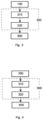
- the present invention mainly consists of five production processes comprising the process of preparing and peeling chestnuts 100, the roasting process 200, the flavouring process 300, the packaging process 400 and lastly the stabilisation process 500.
- the first step of the process provides for the process of preparing and peeling chestnuts 100 in turn consisting of the step of introducing and preparing chestnuts 110, in which the latter are placed in a fresh state or in any case in a state suitable for roasting, but in any case with a moisture content comprised between 10% and 80%, on suitable roller benches in the processing line, thanks to which the personnel has a perfect and full vision of the product to be discarded.
- the chestnuts are sent to the washing step 120 by immersion in suitable vats. They are then subjected to the fundamental peeling step 130 carried out by conventional automated machines capable of eliminating the pericarp and episperm, by administering steam or using the "brulage" method in open fire.
- the chestnuts have been peeled, in order to prevent the biological degradation and therefore for the purposes of obtaining the excellent organoleptic properties according to the present invention, they are subjected to the chilling step 140 by sending them to the deep-freezing tunnels at a temperature of at least -18°C for a period comprised between 4 hours and 24 hours.
- roasting process 200 in which the product frozen and peeled by now is subjected to the screening step 210 carried out by the designated personnel, capable of eliminating the chestnuts with any even minimum quality defect.
- basic roasting step 220 follows, in which the chestnuts are laid manually on a conveyor belt or on dripping pans and arranged in a conventional static or ventilated oven suitable for the purpose, for a period of time comprised between 1 min and 90 min and with a temperature range comprised between 600°C and 150°C.
- Said flavouring process 300 comprises the step of selecting and preparing the flavouring 310, which consists of selecting at least one substance including fresh or dry laurel, ginger, lemon, orange peel, wine, various liquors, cinnamon, vanilla, refined sugar, cane sugar and other types of unrefined sugar, millefiori honey, acacia honey, chestnut honey, salt, pepper, turmeric, sweet paprika, spicy paprika, onion, shallot, garlic, Brussels sprouts, thyme, parsley, cocoa and various spices.
- Next is the mixing step 320, in which the chestnuts are placed at contact with at least one of the aforementioned flavour enhancement agents and left in this condition until the package is opened and then forwarded to consumers for consumption.
- the packaging process 400 which consists in the step of packaging the roast chestnuts coming from the previous processes in microwavable containers such as bags, jars or trays suitable to be subjected to treatment in microwaves using a conventional domestic microwaves.
- microwavable containers such as bags, jars or trays suitable to be subjected to treatment in microwaves using a conventional domestic microwaves.
- Such characteristic is in fact fundamental, given that the roast chestnuts coming from the method subject of the invention and consumed immediately after being heated by means of a microwave oven will acquire all the organoleptic and structural characteristics specific to the roast chestnuts roasted on the spot.
- a further step is that of packaging in a protective atmosphere 420 in order to safeguard the appearance and the organoleptic and microbiological characteristics of the roast chestnuts.
- a further and final result is the stabilisation process 500 of the roast chestnuts shown in Figure 6 , which consists in subjecting them to the step 510 of stabilising/sterilising in a conventional autoclave same case applying to a steam and ventilated steam autoclave or water and steam shower autoclave, for a period comprised between 3 min and 3 hours and with a temperature range comprised between 75°C and 135°C.
- the counter-pressure step 520 is carried out in the autoclave with a value comprised from a minimum of 0.35 bar to a maximum of 5 bar.
- the last step is the cooling step 530 which can be carried out in a water or air autoclave or outside the autoclave still using water or air or at room temperature.
- the present invention provides for further alternative embodiments at some variants of the production steps.
- fresh chestnuts or chestnuts suitable for roasting besides being deemed as non-limiting, this meaning must rather comprise any size and variety of chestnuts as well as brown chestnuts.
- the type of chestnuts suitable for use in the method subject of the invention comprises chestnuts or brown chestnuts of all possible origins, varieties and sizes, same case applying to chilled/frozen and peeled chestnuts and brown chestnuts, chilled/frozen and not perfectly peeled chestnuts and brown chestnuts, chestnuts and brown chestnuts completely or partially peeled and thawed naturally at room temperature, peeled chestnuts and brown chestnuts completely or partially thawed in water at temperatures that can range from 1°C to 100°C and for times ranging from 3 min to 90 min, peeled chestnuts and brown chestnuts completely or partially thawed by steam, with pressure values comprised between 0.5 bar and 25 bar and at a temperature respectively comprised between 80°C and 235°C respectively, for a period between 2 min and 90 min, dry chestnuts and brown chestnuts, fresh chestnuts and brown chestnuts, rehydrated chestnuts and brown
- a further alternative embodiment provides for that the step 410 for packaging the roast chestnuts coming from the previous steps in bags/jars can be obtained by packaging the aforementioned roast chestnuts using techniques comprising packaging in stand-up bags with lower bellows, in stand-up bags with flat bottom, in stand-up retort bags, in vacuum bags, in cushion bags, in shaped stand-up bags, in stand-up bags with lateral bellows, in bags with 4 seals, in stand-up bags with spout, in bags with 3 seals, in multi-joined bags with aluminium, in multi-joined bags without aluminium, in doypack bags, in flat bags with 3 seals, in doypack bags with sealing zip, in plastic jars or trays with cap closure or with heat-sealed material, in glass jars, s and in paper bags
- a further alternative embodiment provides for that the type of packaging used in the packaging process 400 consists in one or more techniques comprising packaging in atmosphere with nitrogen and/or mixtures of gases, vacuum packaging, balanced atmosphere packaging, packaging without modified atmosphere.
- step 220 for roasting the chestnuts can be carried out through one of the methods comprising roasting in a static electric oven with or without belt and with or without trays/dripping pans, roasting in a ventilated electric oven with belt or with trays, roasting in a static gas oven with trays, roasting in a ventilated gas oven with belt and with trays, roasting on embers, roasting on grills, roasting on hot charcoal and direct roasting on fire deriving from gas, inflammable liquids or firewood.
Landscapes
- Engineering & Computer Science (AREA)
- Life Sciences & Earth Sciences (AREA)
- Chemical & Material Sciences (AREA)
- Food Science & Technology (AREA)
- Polymers & Plastics (AREA)
- Zoology (AREA)
- Wood Science & Technology (AREA)
- Chemical Kinetics & Catalysis (AREA)
- General Chemical & Material Sciences (AREA)
- Health & Medical Sciences (AREA)
- Nutrition Science (AREA)
- Preparation Of Fruits And Vegetables (AREA)
- Seeds, Soups, And Other Foods (AREA)
- Medicines Containing Plant Substances (AREA)
Claims (5)
- Procédé pour produire des châtaignes grillées emballées, constitué des traitements suivants :a. traitement pour préparer et peler les châtaignes (100), consistant en l'étape d'entrée et de préparation des châtaignes (110) dans laquelle ces dernières sont disposées, fraîches ou du moins dans un état approprié pour être grillées, mais avec une teneur une humidité comprise entre 10 % et 80 %, sur des bancs à rouleaux spéciaux dans la chaîne de traitement, grâce auxquels le personnel a à l'avance une vue parfaite et complète du produit à écarter, l'étape de lavage (120) dans laquelle a lieu l'immersion des châtaignes dans des bacs spéciaux, l'étape d'épluchage (130) dans laquelle l'élimination du péricarpe et de l'épisperme des châtaignes se fait en utilisant un équipement d'épluchage classique qui utilise de la vapeur ou le procédé de "brûlage" au feu direct, et enfin l'étape de réduction (140) dans laquelle les châtaignes sont acheminées dans des tunnels de congélation à la température d'au moins - 18°C pendant une période comprise entre 4 heures et 24 heures ;b. traitement de grillage (200) dans lequel le produit congelé et désormais épluché est soumis à l'étape de criblage (210) réalisée par le personnel désigné capable d'éliminer les châtaignes avec un quelconque - même minimal - défaut de qualité à l'étape de grillage (220) dans laquelle les châtaignes sont placées manuellement sur un convoyeur à courroie ou sur des bacs d'égouttement et disposées dans un four statique ou ventilé classique pendant une période comprise entre 1 min. et 90 min. et avec une plage de température comprise entre 600°C et 150°C ;c. traitement d'emballage (400) qui consiste en l'étape (410) d'emballer les châtaignes grillées provenant des traitements précédents dans des contenants, comme des sacs, des barquettes ou des pots, aptes à être soumis à un traitement au four à micro-ondes avec un four à micro-ondes domestique classique et en l'étape d'emballage dans une atmosphère de protection (420) ;d. traitement de stabilisation (500) consistant en l'étape de stabilisation/stérilisation (510) dans laquelle lesdites châtaignes grillées dans lesdits contenants sont soumises à un traitement dans un autoclave classique, tel qu'un autoclave à vapeur et à vapeur ventilée ou un autoclave à douche d'eau et de vapeur, pour une période comprise entre 2 min. et 3 heures et avec une plage de température comprise entre 75°C et 135°C, l'étape de contre-pression (520) dans laquelle est créée dans l'autoclave susmentionné une contre-pression avec une valeur comprise entre 0,35 bar et 5 bar et enfin l'étape de refroidissement (530) qui peut avoir lieu dans un autoclave à eau ou à air, ou à l'extérieur de l'autoclave, toujours du type à air ou à eau ou à température ambiante,e. traitement d'aromatisation (300), qui peut être réalisé avant ou immédiatement après le traitement de grillage (200) susmentionné, ledit traitement d'aromatisation (300) comprenant l'étape de sélection et de préparation de l'agent d'aromatisation (310) qui consiste à sélectionner au moins une substance parmi du laurier frais ou séché, du gingembre, du citron, du zeste d'orange, du vin, divers spiritueux, de la cannelle, de la vanille, du sucre raffiné, du sucre de canne et d'autres types de sucre non raffiné, du miel mille fleurs, du miel d'acacia, du miel de châtaignier, du sel, du poivre, du curcuma, du paprika doux, du paprika fort, de l'oignon, de l'échalote, de l'ail, des choux de Bruxelles, du thym, du persil, du cacao, diverses épices, et comprenant une étape de mélange (320) dans laquelle les châtaignes produites ou les châtaignes grillées sont placées en contact et emballées avec l'un au moins des agents d'aromatisation susmentionnés.
- Procédé pour produire des châtaignes grillées emballées selon la revendication 1, caractérisé en ce que les châtaignes acheminées jusqu'audit traitement de grillage (200) incluent celles de toute origine, taille et variété, telles que des marrons et des châtaignes et marrons congelés/surgelés et pelés, des châtaignes et marrons congelés/surgelés et pas parfaitement pelés, des châtaignes et marrons qui sont entièrement ou partiellement pelés et décongelés naturellement à température ambiante, des châtaignes et marrons qui, entièrement ou partiellement pelés, sont décongelés dans de l'eau à des températures comprises entre 1°C et 100°C et à des intervalles compris entre 3 min. et 90 min., des châtaignes et marrons qui, entièrement ou partiellement pelés, sont décongelés avec de la vapeur avec des valeurs de vapeur comprises entre 0,5 bar et 25 bar et à une température comprise respectivement entre 80°C et 235°C pendant des intervalles compris entre 2 min. et 90 min., des châtaignes et marrons séchés, des châtaignes et marrons frais, des châtaignes et marrons réhydratés et des châtaignes et marrons en morceaux.
- Procédé pour produire des châtaignes grillées emballées selon la revendication 1, caractérisé en ce que ladite étape (410) pour mettre en sachets/en pots les châtaignes grillées comprend l'emballage dans des sachets tenant debout avec des soufflets inférieurs, dans des sachets tenant debout avec un fond plat, dans des sachets tenant debout à bec, dans des sachets sous vide, dans des sachets-coussins, dans des sachets tenant debout structurés, dans des sachets tenant debout à soufflets latéraux, dans des sachets à quatre soudures, dans des sachets tenant debout avec bec verseur, dans des sachets avec trois soudures, dans des sachets multi-liaison avec de l'aluminium, dans des sachets multi-liaison sans aluminium, dans des sachets Doypack, dans des sachets plats à trois soudures, dans des sachets Doypack avec une fermeture à zip, dans des pots ou barquettes en matière plastique avec un couvercle ou avec un matériau thermoscellé, dans des pots en verre, dans des boîtes en aluminium ou en acier et dans des sachets en papier.
- Procédé pour produire des châtaignes grillées emballées selon la revendication 1, caractérisé en ce que le type d'emballage utilisé dans le traitement d'emballage (400) consiste en une ou plusieurs techniques comprenant l'emballage en atmosphère avec de l'azote et/ou des mélanges de gaz, l'emballage sous vide, l'emballage sous atmosphère équilibrée, l'emballage sans atmosphère modifiée.
- Procédé pour produire des châtaignes grillées emballées selon la revendication 1, caractérisé en ce que le grillage dans l'étape (220) susmentionnée pour griller les châtaignes peut être réalisée par l'un des procédés comprenant le grillage dans un four électrique statique avec ou sans courroie et avec ou sans barquettes/bacs d'égouttement, le grillage dans un four électrique ventilé avec courroie ou avec barquettes, le grillage dans un four à gaz statique et avec des barquettes, le grillage dans un four à gaz ventilé avec une courroie et avec des barquettes, le grillage sur des braises, le grillage sur des grills, le grillage sur du charbon chaud et le grillage direct sur un feu obtenu avec du gaz, des liquides inflammables ou du bois de chauffage.
Applications Claiming Priority (2)
| Application Number | Priority Date | Filing Date | Title |
|---|---|---|---|
| IT102019000007019A IT201900007019A1 (it) | 2019-05-20 | 2019-05-20 | Procedimento per la produzione di caldarroste confezionate |
| PCT/IB2020/054248 WO2020234677A1 (fr) | 2019-05-20 | 2020-05-05 | Procédé de production de châtaignes torréfiées emballées |
Publications (3)
| Publication Number | Publication Date |
|---|---|
| EP3955751A1 EP3955751A1 (fr) | 2022-02-23 |
| EP3955751C0 EP3955751C0 (fr) | 2025-01-08 |
| EP3955751B1 true EP3955751B1 (fr) | 2025-01-08 |
Family
ID=67875963
Family Applications (1)
| Application Number | Title | Priority Date | Filing Date |
|---|---|---|---|
| EP20727715.3A Active EP3955751B1 (fr) | 2019-05-20 | 2020-05-05 | Procédé de production de marrons grillés conditionnés |
Country Status (3)
| Country | Link |
|---|---|
| EP (1) | EP3955751B1 (fr) |
| IT (1) | IT201900007019A1 (fr) |
| WO (1) | WO2020234677A1 (fr) |
Families Citing this family (2)
| Publication number | Priority date | Publication date | Assignee | Title |
|---|---|---|---|---|
| IT202100009491A1 (it) | 2021-04-15 | 2022-10-15 | Sagi S R L | Confezione per prodotto a base di caldarroste aromatizzate confezionate |
| RU2767205C1 (ru) * | 2022-01-13 | 2022-03-16 | Общество с ограниченной ответственностью «КЬЮМИ» | Способ приготовления блюд-полуфабрикатов в упаковке с возможностью их дальнейшего автоматизированного разогрева и/или доготовки |
Citations (2)
| Publication number | Priority date | Publication date | Assignee | Title |
|---|---|---|---|---|
| US20080138476A1 (en) * | 2005-07-26 | 2008-06-12 | Cj Cheiljedang Corp. | Preparation Method of Retort Roast Chestnuts Using Far Infrared Ray Thawing |
| JP2015000053A (ja) * | 2013-06-18 | 2015-01-05 | クラシエフーズ株式会社 | マロングラッセの製造方法 |
Family Cites Families (7)
| Publication number | Priority date | Publication date | Assignee | Title |
|---|---|---|---|---|
| FR2401066B3 (fr) * | 1977-06-28 | 1980-04-25 | Inst Nat Vulgarisation Fruit | Procede de fabrication de marrons au naturel |
| JPS59140829A (ja) * | 1983-01-28 | 1984-08-13 | Kikkoman Corp | 包装剥き栗の製造法 |
| JPH07102079B2 (ja) * | 1993-01-13 | 1995-11-08 | 三島食品株式会社 | 栗加工食品の製造方法 |
| CN1423951A (zh) * | 2002-12-22 | 2003-06-18 | 李鸿 | 一种风味板栗及其制备方法 |
| JP4744406B2 (ja) * | 2006-09-25 | 2011-08-10 | クラシエフーズ株式会社 | 密封容器入り調理栗、調理栗の変色防止方法及び密封容器入り調理栗の製造方法 |
| KR101322525B1 (ko) * | 2011-10-05 | 2013-10-28 | 농업회사법인 주식회사 제이팜스 | 가공 밤 및 이의 제조방법 |
| CN108464475A (zh) * | 2018-03-29 | 2018-08-31 | 周雷 | 一种紫薯板栗及其加工方法 |
-
2019
- 2019-05-20 IT IT102019000007019A patent/IT201900007019A1/it unknown
-
2020
- 2020-05-05 WO PCT/IB2020/054248 patent/WO2020234677A1/fr not_active Ceased
- 2020-05-05 EP EP20727715.3A patent/EP3955751B1/fr active Active
Patent Citations (2)
| Publication number | Priority date | Publication date | Assignee | Title |
|---|---|---|---|---|
| US20080138476A1 (en) * | 2005-07-26 | 2008-06-12 | Cj Cheiljedang Corp. | Preparation Method of Retort Roast Chestnuts Using Far Infrared Ray Thawing |
| JP2015000053A (ja) * | 2013-06-18 | 2015-01-05 | クラシエフーズ株式会社 | マロングラッセの製造方法 |
Also Published As
| Publication number | Publication date |
|---|---|
| EP3955751C0 (fr) | 2025-01-08 |
| IT201900007019A1 (it) | 2020-11-20 |
| WO2020234677A1 (fr) | 2020-11-26 |
| EP3955751A1 (fr) | 2022-02-23 |
Similar Documents
| Publication | Publication Date | Title |
|---|---|---|
| EP3955751A1 (fr) | Procédé de production de châtaignes torréfiées emballées | |
| CA2519978A1 (fr) | Procede de traitement des avocats et procede de preparation du guacamole a partir de ceux-ci | |
| Owusu-Apenten et al. | Thermal processing and canning | |
| JPH06509306A (ja) | 食肉のパッケージ方法 | |
| US20110123693A1 (en) | Food preservation process | |
| CN111295098A (zh) | 用于在微波炉中8分钟内将预蒸煮米最终蒸煮的方法 | |
| US20170013865A1 (en) | Method of preparing a food product | |
| JPH06209702A (ja) | 栗加工食品の製造方法 | |
| McGee | Keys to good cooking: A guide to making the best of foods and recipes | |
| CN105495369A (zh) | 一种手撕麻辣兔的加工方法 | |
| Tansey et al. | Sous vide/freezing technology for ready meals | |
| KR100799347B1 (ko) | 금속제 용기수납 찜갈비 | |
| Attrey | Safe storage and cooking practices for foods of animal origin in home kitchen before consumption | |
| CN106261918A (zh) | 一种猪肉罐头的制作方法 | |
| Armstrong | Minimal thermal processing: cook-chill and sous vide technology | |
| WO2026095784A1 (fr) | Procédé de cuisson sous vide pour la production de masse de viande et de légumes prêts à l'emploi | |
| Kamande et al. | An Assessment on How Preservation Methods Prevent the Growth of Micro-Organisms | |
| KR20170076982A (ko) | 불고기 맛을 내는 막창 제조방법 및 그에 따른 막창 | |
| KR100998444B1 (ko) | 올리브유 또는 포도씨유를 이용한 진공포장방법 | |
| JP2025174805A (ja) | オリーブ食品 | |
| Nash | 52 Unique Techniques for Stocking Food for Preppers: A Strategy a Week to Help Stock Your Pantry for Survival | |
| TR2025005052A2 (tr) | Kavanozda çağ kebabi | |
| NZ239192A (en) | Cooked meat packaging: chilled before sealing | |
| Oehler | Food storage for emergencies | |
| Novak et al. | In the Kitchen (Storing and Preparing Food; Preventing Food Waste) |
Legal Events
| Date | Code | Title | Description |
|---|---|---|---|
| STAA | Information on the status of an ep patent application or granted ep patent |
Free format text: STATUS: UNKNOWN |
|
| STAA | Information on the status of an ep patent application or granted ep patent |
Free format text: STATUS: THE INTERNATIONAL PUBLICATION HAS BEEN MADE |
|
| PUAI | Public reference made under article 153(3) epc to a published international application that has entered the european phase |
Free format text: ORIGINAL CODE: 0009012 |
|
| STAA | Information on the status of an ep patent application or granted ep patent |
Free format text: STATUS: REQUEST FOR EXAMINATION WAS MADE |
|
| 17P | Request for examination filed |
Effective date: 20211115 |
|
| AK | Designated contracting states |
Kind code of ref document: A1 Designated state(s): AL AT BE BG CH CY CZ DE DK EE ES FI FR GB GR HR HU IE IS IT LI LT LU LV MC MK MT NL NO PL PT RO RS SE SI SK SM TR |
|
| DAV | Request for validation of the european patent (deleted) | ||
| DAX | Request for extension of the european patent (deleted) | ||
| P01 | Opt-out of the competence of the unified patent court (upc) registered |
Effective date: 20230523 |
|
| STAA | Information on the status of an ep patent application or granted ep patent |
Free format text: STATUS: EXAMINATION IS IN PROGRESS |
|
| 17Q | First examination report despatched |
Effective date: 20240209 |
|
| GRAP | Despatch of communication of intention to grant a patent |
Free format text: ORIGINAL CODE: EPIDOSNIGR1 |
|
| STAA | Information on the status of an ep patent application or granted ep patent |
Free format text: STATUS: GRANT OF PATENT IS INTENDED |
|
| INTG | Intention to grant announced |
Effective date: 20240903 |
|
| GRAS | Grant fee paid |
Free format text: ORIGINAL CODE: EPIDOSNIGR3 |
|
| GRAA | (expected) grant |
Free format text: ORIGINAL CODE: 0009210 |
|
| STAA | Information on the status of an ep patent application or granted ep patent |
Free format text: STATUS: THE PATENT HAS BEEN GRANTED |
|
| AK | Designated contracting states |
Kind code of ref document: B1 Designated state(s): AL AT BE BG CH CY CZ DE DK EE ES FI FR GB GR HR HU IE IS IT LI LT LU LV MC MK MT NL NO PL PT RO RS SE SI SK SM TR |
|
| REG | Reference to a national code |
Ref country code: GB Ref legal event code: FG4D |
|
| REG | Reference to a national code |
Ref country code: CH Ref legal event code: EP |
|
| REG | Reference to a national code |
Ref country code: DE Ref legal event code: R096 Ref document number: 602020044485 Country of ref document: DE |
|
| REG | Reference to a national code |
Ref country code: IE Ref legal event code: FG4D |
|
| U01 | Request for unitary effect filed |
Effective date: 20250122 |
|
| P04 | Withdrawal of opt-out of the competence of the unified patent court (upc) registered |
Free format text: CASE NUMBER: APP_4106/2025 Effective date: 20250124 |
|
| U07 | Unitary effect registered |
Designated state(s): AT BE BG DE DK EE FI FR IT LT LU LV MT NL PT RO SE SI Effective date: 20250129 |
|
| U20 | Renewal fee for the european patent with unitary effect paid |
Year of fee payment: 6 Effective date: 20250523 |
|
| PG25 | Lapsed in a contracting state [announced via postgrant information from national office to epo] |
Ref country code: RS Free format text: LAPSE BECAUSE OF FAILURE TO SUBMIT A TRANSLATION OF THE DESCRIPTION OR TO PAY THE FEE WITHIN THE PRESCRIBED TIME-LIMIT Effective date: 20250408 |
|
| PG25 | Lapsed in a contracting state [announced via postgrant information from national office to epo] |
Ref country code: PL Free format text: LAPSE BECAUSE OF FAILURE TO SUBMIT A TRANSLATION OF THE DESCRIPTION OR TO PAY THE FEE WITHIN THE PRESCRIBED TIME-LIMIT Effective date: 20250108 |
|
| PG25 | Lapsed in a contracting state [announced via postgrant information from national office to epo] |
Ref country code: ES Free format text: LAPSE BECAUSE OF FAILURE TO SUBMIT A TRANSLATION OF THE DESCRIPTION OR TO PAY THE FEE WITHIN THE PRESCRIBED TIME-LIMIT Effective date: 20250108 |
|
| PG25 | Lapsed in a contracting state [announced via postgrant information from national office to epo] |
Ref country code: NO Free format text: LAPSE BECAUSE OF FAILURE TO SUBMIT A TRANSLATION OF THE DESCRIPTION OR TO PAY THE FEE WITHIN THE PRESCRIBED TIME-LIMIT Effective date: 20250408 Ref country code: IS Free format text: LAPSE BECAUSE OF FAILURE TO SUBMIT A TRANSLATION OF THE DESCRIPTION OR TO PAY THE FEE WITHIN THE PRESCRIBED TIME-LIMIT Effective date: 20250508 |
|
| PG25 | Lapsed in a contracting state [announced via postgrant information from national office to epo] |
Ref country code: HR Free format text: LAPSE BECAUSE OF FAILURE TO SUBMIT A TRANSLATION OF THE DESCRIPTION OR TO PAY THE FEE WITHIN THE PRESCRIBED TIME-LIMIT Effective date: 20250108 |
|
| PG25 | Lapsed in a contracting state [announced via postgrant information from national office to epo] |
Ref country code: GR Free format text: LAPSE BECAUSE OF FAILURE TO SUBMIT A TRANSLATION OF THE DESCRIPTION OR TO PAY THE FEE WITHIN THE PRESCRIBED TIME-LIMIT Effective date: 20250409 |
|
| PG25 | Lapsed in a contracting state [announced via postgrant information from national office to epo] |
Ref country code: SM Free format text: LAPSE BECAUSE OF FAILURE TO SUBMIT A TRANSLATION OF THE DESCRIPTION OR TO PAY THE FEE WITHIN THE PRESCRIBED TIME-LIMIT Effective date: 20250108 |
|
| PG25 | Lapsed in a contracting state [announced via postgrant information from national office to epo] |
Ref country code: CZ Free format text: LAPSE BECAUSE OF FAILURE TO SUBMIT A TRANSLATION OF THE DESCRIPTION OR TO PAY THE FEE WITHIN THE PRESCRIBED TIME-LIMIT Effective date: 20250108 |
|
| PG25 | Lapsed in a contracting state [announced via postgrant information from national office to epo] |
Ref country code: SK Free format text: LAPSE BECAUSE OF FAILURE TO SUBMIT A TRANSLATION OF THE DESCRIPTION OR TO PAY THE FEE WITHIN THE PRESCRIBED TIME-LIMIT Effective date: 20250108 |
|
| PLBE | No opposition filed within time limit |
Free format text: ORIGINAL CODE: 0009261 |
|
| STAA | Information on the status of an ep patent application or granted ep patent |
Free format text: STATUS: NO OPPOSITION FILED WITHIN TIME LIMIT |
|
| REG | Reference to a national code |
Ref country code: CH Ref legal event code: L10 Free format text: ST27 STATUS EVENT CODE: U-0-0-L10-L00 (AS PROVIDED BY THE NATIONAL OFFICE) Effective date: 20251119 |
|
| 26N | No opposition filed |
Effective date: 20251009 |
|
| REG | Reference to a national code |
Ref country code: CH Ref legal event code: H13 Free format text: ST27 STATUS EVENT CODE: U-0-0-H10-H13 (AS PROVIDED BY THE NATIONAL OFFICE) Effective date: 20251223 |
|
| PG25 | Lapsed in a contracting state [announced via postgrant information from national office to epo] |
Ref country code: CH Free format text: LAPSE BECAUSE OF NON-PAYMENT OF DUE FEES Effective date: 20250531 |
|
| GBPC | Gb: european patent ceased through non-payment of renewal fee |
Effective date: 20250505 |
|
| PG25 | Lapsed in a contracting state [announced via postgrant information from national office to epo] |
Ref country code: MC Free format text: LAPSE BECAUSE OF FAILURE TO SUBMIT A TRANSLATION OF THE DESCRIPTION OR TO PAY THE FEE WITHIN THE PRESCRIBED TIME-LIMIT Effective date: 20250108 |
|
| PG25 | Lapsed in a contracting state [announced via postgrant information from national office to epo] |
Ref country code: GB Free format text: LAPSE BECAUSE OF NON-PAYMENT OF DUE FEES Effective date: 20250505 |
|
| PG25 | Lapsed in a contracting state [announced via postgrant information from national office to epo] |
Ref country code: IE Free format text: LAPSE BECAUSE OF NON-PAYMENT OF DUE FEES Effective date: 20250505 |