EP3955751B1 - Verfahren zur herstellung verpackter gerösteter kastanien - Google Patents
Verfahren zur herstellung verpackter gerösteter kastanien Download PDFInfo
- Publication number
- EP3955751B1 EP3955751B1 EP20727715.3A EP20727715A EP3955751B1 EP 3955751 B1 EP3955751 B1 EP 3955751B1 EP 20727715 A EP20727715 A EP 20727715A EP 3955751 B1 EP3955751 B1 EP 3955751B1
- Authority
- EP
- European Patent Office
- Prior art keywords
- chestnuts
- bags
- roasting
- comprised
- brown
- Prior art date
- Legal status (The legal status is an assumption and is not a legal conclusion. Google has not performed a legal analysis and makes no representation as to the accuracy of the status listed.)
- Active
Links
Images


Classifications
-
- A—HUMAN NECESSITIES
- A23—FOODS OR FOODSTUFFS; TREATMENT THEREOF, NOT COVERED BY OTHER CLASSES
- A23L—FOODS, FOODSTUFFS OR NON-ALCOHOLIC BEVERAGES, NOT OTHERWISE PROVIDED FOR; PREPARATION OR TREATMENT THEREOF
- A23L25/00—Food consisting mainly of nutmeat or seeds; Preparation or treatment thereof
- A23L25/20—Food consisting mainly of nutmeat or seeds; Preparation or treatment thereof consisting of whole seeds or seed fragments
-
- A—HUMAN NECESSITIES
- A23—FOODS OR FOODSTUFFS; TREATMENT THEREOF, NOT COVERED BY OTHER CLASSES
- A23B—PRESERVATION OF FOODS, FOODSTUFFS OR NON-ALCOHOLIC BEVERAGES; CHEMICAL RIPENING OF FRUIT OR VEGETABLES
- A23B2/00—Preservation of foods or foodstuffs, in general
- A23B2/05—Preservation of foods or foodstuffs, in general by heating using irradiation or electric treatment
-
- A—HUMAN NECESSITIES
- A23—FOODS OR FOODSTUFFS; TREATMENT THEREOF, NOT COVERED BY OTHER CLASSES
- A23B—PRESERVATION OF FOODS, FOODSTUFFS OR NON-ALCOHOLIC BEVERAGES; CHEMICAL RIPENING OF FRUIT OR VEGETABLES
- A23B2/00—Preservation of foods or foodstuffs, in general
- A23B2/10—Preservation of foods or foodstuffs, in general by treatment with pressure variation, shock, acceleration or shear stress
- A23B2/103—Preservation of foods or foodstuffs, in general by treatment with pressure variation, shock, acceleration or shear stress using sub- or super-atmospheric pressures, or pressure variations transmitted by a liquid or gas
-
- A—HUMAN NECESSITIES
- A23—FOODS OR FOODSTUFFS; TREATMENT THEREOF, NOT COVERED BY OTHER CLASSES
- A23B—PRESERVATION OF FOODS, FOODSTUFFS OR NON-ALCOHOLIC BEVERAGES; CHEMICAL RIPENING OF FRUIT OR VEGETABLES
- A23B7/00—Preservation of fruit or vegetables; Chemical ripening of fruit or vegetables
- A23B7/005—Preserving by heating
- A23B7/0053—Preserving by heating by direct or indirect contact with heating gases or liquids
- A23B7/0056—Preserving by heating by direct or indirect contact with heating gases or liquids with packages
-
- A—HUMAN NECESSITIES
- A23—FOODS OR FOODSTUFFS; TREATMENT THEREOF, NOT COVERED BY OTHER CLASSES
- A23B—PRESERVATION OF FOODS, FOODSTUFFS OR NON-ALCOHOLIC BEVERAGES; CHEMICAL RIPENING OF FRUIT OR VEGETABLES
- A23B7/00—Preservation of fruit or vegetables; Chemical ripening of fruit or vegetables
- A23B7/14—Preserving or ripening with chemicals not covered by group A23B7/08 or A23B7/10
- A23B7/144—Preserving or ripening with chemicals not covered by group A23B7/08 or A23B7/10 in the form of gases, e.g. fumigation; Compositions or apparatus therefor
- A23B7/148—Preserving or ripening with chemicals not covered by group A23B7/08 or A23B7/10 in the form of gases, e.g. fumigation; Compositions or apparatus therefor in a controlled atmosphere, e.g. partial vacuum, comprising only CO2, N2, O2 or H2O
Definitions
- the present industrial invention patent application generally regards the food industry and in particular that of the agri-food industry meant for the transformation of chestnuts and brown chestnuts.
- Roast chestnuts represent a preferred edible form of these fruits, since the roasting confers them a typically sweet taste, transforming part of the starch contained therein into simple sugars and altering part of the carbohydrates and proteins.
- JP 2008 073022 A discloses a method for producing packaged roasted chestnuts characterised in that it consists of the following processes: a. process for preparing and peeling the chestnuts; b. roasting process, in which the by now peeled product is subjected to a roasting step in a conventional oven at 170-230°C for 10-30 minutes; c.
- packaging process in a container with oxygen barrier layer and oxygen absorption layer.
- it is suitable to seal suitably, after carrying out oxygen substitution by an inert gas at the point of discolouration prevention.
- Nitrogen, argon, etc. are mentioned as an inert gas; and d. stabilisation process consisting of a sterilisation step in a hot-water retort for 30 minutes at 121°C.
- the frozen roast chestnut With the skin.
- it represents a product ready to be consumed, but having all those defects not directly visible and mentioned previously, that is to say that they manifest themselves only when the product is completely peeled.
- a further disadvantage of the frozen roast chestnut lies in the fact that one is compelled to follow the cold chain, with all the contingent problems in terms of preservation and transportation which have an inevitably negative impact on the already high selling price.
- an object of the present production method subject of the invention generally consists in providing a method capable of providing a finished product, which is easy to preserve, transport and which, in some cases, maintains the organoleptic properties of the just roasted product.
- a more particular object is to provide a finished product which can be easily heated in a microwave, so as to fully simulate the similar product just roasted.
- the present industrial invention patent application is intended to describe and claim an innovative method according to the claims for producing roast chestnuts.
- what is intended to be protected is a new method or process including the step of selecting, screening and roasting chestnuts as well as the step of packaging roast chestnuts.
- the present industrial invention patent application achieves its main objects, consisting of an innovative production method capable of producing roast chestnuts, which, by virtue of the particular packaging process, can be easily stored for long periods of time and which do not require special storage conditions.
- Another fundamental characteristic according to the present invention lies in the fact that the production process allows these roast chestnuts to be produced at the origin in association with excipients capable of conferring particular flavouring to the latter.
- roast chestnuts will show the quality, organoleptic and structural properties specific to roast chestnuts just roasted.
- a further not less fundamental characteristic relates to the fact that the aforementioned roast chestnuts still packaged can easily be subjected to a fast and simple microwave heating cycle in a conventional domestic microwave.
- a further object is to provide a process subject of the invention which can be made on an industrial scale, whose components are of the standard type and are perfectly available on the market and whose production is fully sustainable from an economic and environmental point of view.
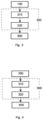
- the present invention mainly consists of five production processes comprising the process of preparing and peeling chestnuts 100, the roasting process 200, the flavouring process 300, the packaging process 400 and lastly the stabilisation process 500.
- the first step of the process provides for the process of preparing and peeling chestnuts 100 in turn consisting of the step of introducing and preparing chestnuts 110, in which the latter are placed in a fresh state or in any case in a state suitable for roasting, but in any case with a moisture content comprised between 10% and 80%, on suitable roller benches in the processing line, thanks to which the personnel has a perfect and full vision of the product to be discarded.
- the chestnuts are sent to the washing step 120 by immersion in suitable vats. They are then subjected to the fundamental peeling step 130 carried out by conventional automated machines capable of eliminating the pericarp and episperm, by administering steam or using the "brulage" method in open fire.
- the chestnuts have been peeled, in order to prevent the biological degradation and therefore for the purposes of obtaining the excellent organoleptic properties according to the present invention, they are subjected to the chilling step 140 by sending them to the deep-freezing tunnels at a temperature of at least -18°C for a period comprised between 4 hours and 24 hours.
- roasting process 200 in which the product frozen and peeled by now is subjected to the screening step 210 carried out by the designated personnel, capable of eliminating the chestnuts with any even minimum quality defect.
- basic roasting step 220 follows, in which the chestnuts are laid manually on a conveyor belt or on dripping pans and arranged in a conventional static or ventilated oven suitable for the purpose, for a period of time comprised between 1 min and 90 min and with a temperature range comprised between 600°C and 150°C.
- Said flavouring process 300 comprises the step of selecting and preparing the flavouring 310, which consists of selecting at least one substance including fresh or dry laurel, ginger, lemon, orange peel, wine, various liquors, cinnamon, vanilla, refined sugar, cane sugar and other types of unrefined sugar, millefiori honey, acacia honey, chestnut honey, salt, pepper, turmeric, sweet paprika, spicy paprika, onion, shallot, garlic, Brussels sprouts, thyme, parsley, cocoa and various spices.
- Next is the mixing step 320, in which the chestnuts are placed at contact with at least one of the aforementioned flavour enhancement agents and left in this condition until the package is opened and then forwarded to consumers for consumption.
- the packaging process 400 which consists in the step of packaging the roast chestnuts coming from the previous processes in microwavable containers such as bags, jars or trays suitable to be subjected to treatment in microwaves using a conventional domestic microwaves.
- microwavable containers such as bags, jars or trays suitable to be subjected to treatment in microwaves using a conventional domestic microwaves.
- Such characteristic is in fact fundamental, given that the roast chestnuts coming from the method subject of the invention and consumed immediately after being heated by means of a microwave oven will acquire all the organoleptic and structural characteristics specific to the roast chestnuts roasted on the spot.
- a further step is that of packaging in a protective atmosphere 420 in order to safeguard the appearance and the organoleptic and microbiological characteristics of the roast chestnuts.
- a further and final result is the stabilisation process 500 of the roast chestnuts shown in Figure 6 , which consists in subjecting them to the step 510 of stabilising/sterilising in a conventional autoclave same case applying to a steam and ventilated steam autoclave or water and steam shower autoclave, for a period comprised between 3 min and 3 hours and with a temperature range comprised between 75°C and 135°C.
- the counter-pressure step 520 is carried out in the autoclave with a value comprised from a minimum of 0.35 bar to a maximum of 5 bar.
- the last step is the cooling step 530 which can be carried out in a water or air autoclave or outside the autoclave still using water or air or at room temperature.
- the present invention provides for further alternative embodiments at some variants of the production steps.
- fresh chestnuts or chestnuts suitable for roasting besides being deemed as non-limiting, this meaning must rather comprise any size and variety of chestnuts as well as brown chestnuts.
- the type of chestnuts suitable for use in the method subject of the invention comprises chestnuts or brown chestnuts of all possible origins, varieties and sizes, same case applying to chilled/frozen and peeled chestnuts and brown chestnuts, chilled/frozen and not perfectly peeled chestnuts and brown chestnuts, chestnuts and brown chestnuts completely or partially peeled and thawed naturally at room temperature, peeled chestnuts and brown chestnuts completely or partially thawed in water at temperatures that can range from 1°C to 100°C and for times ranging from 3 min to 90 min, peeled chestnuts and brown chestnuts completely or partially thawed by steam, with pressure values comprised between 0.5 bar and 25 bar and at a temperature respectively comprised between 80°C and 235°C respectively, for a period between 2 min and 90 min, dry chestnuts and brown chestnuts, fresh chestnuts and brown chestnuts, rehydrated chestnuts and brown
- a further alternative embodiment provides for that the step 410 for packaging the roast chestnuts coming from the previous steps in bags/jars can be obtained by packaging the aforementioned roast chestnuts using techniques comprising packaging in stand-up bags with lower bellows, in stand-up bags with flat bottom, in stand-up retort bags, in vacuum bags, in cushion bags, in shaped stand-up bags, in stand-up bags with lateral bellows, in bags with 4 seals, in stand-up bags with spout, in bags with 3 seals, in multi-joined bags with aluminium, in multi-joined bags without aluminium, in doypack bags, in flat bags with 3 seals, in doypack bags with sealing zip, in plastic jars or trays with cap closure or with heat-sealed material, in glass jars, s and in paper bags
- a further alternative embodiment provides for that the type of packaging used in the packaging process 400 consists in one or more techniques comprising packaging in atmosphere with nitrogen and/or mixtures of gases, vacuum packaging, balanced atmosphere packaging, packaging without modified atmosphere.
- step 220 for roasting the chestnuts can be carried out through one of the methods comprising roasting in a static electric oven with or without belt and with or without trays/dripping pans, roasting in a ventilated electric oven with belt or with trays, roasting in a static gas oven with trays, roasting in a ventilated gas oven with belt and with trays, roasting on embers, roasting on grills, roasting on hot charcoal and direct roasting on fire deriving from gas, inflammable liquids or firewood.
Landscapes
- Engineering & Computer Science (AREA)
- Life Sciences & Earth Sciences (AREA)
- Chemical & Material Sciences (AREA)
- Food Science & Technology (AREA)
- Polymers & Plastics (AREA)
- Zoology (AREA)
- Wood Science & Technology (AREA)
- Chemical Kinetics & Catalysis (AREA)
- General Chemical & Material Sciences (AREA)
- Health & Medical Sciences (AREA)
- Nutrition Science (AREA)
- Preparation Of Fruits And Vegetables (AREA)
- Seeds, Soups, And Other Foods (AREA)
- Medicines Containing Plant Substances (AREA)
Claims (5)
- Verfahren zur Herstellung verpackter gerösteter Kastanien, bestehend aus den folgenden Prozessen:a. Prozess zum Vorbereiten und Schälen der Kastanien (100), das den Schritt der Einspeisung und Vorbereitung der Kastanien (110) aufweist, wobei die letzteren frisch oder aber in einem zum Rösten geeigneten Zustand, jedoch mit einem Feuchtigkeitsgehalt zwischen 10 % und 80 %, auf speziellen Rollenbänken in der Verarbeitungslinie angeordnet werden, dank derer das Personal eine perfekte und vollständige Sicht auf das zu auszumusternde Produkt im Voraus hat, den Waschschritt (120), in dem das Eintauchen der Kastanien in spezielle Behältnissen erfolgt, den Schälschritt (130), bei dem die Beseitigung der Fruchtschale und der Samenschalte der Kastanien durch Verwenden herkömmlicher Schälausrüstung, die Dampf oder das "Brulage"-Verfahren auf offenem Feuer verwendet, erfolgt, entfernt werden, und schließlich den Reduktionsschritt (140), bei dem die Kastanien in Gefriertunneln bei einer Temperatur von zumindest -18°C über einen Zeitraum zwischen 4 und 24 Stunden transportiert werden;b. Röstprozess (200), bei dem das gefrorene und inzwischen geschälte Produkt dem Schritt des Aussortierens (210) unterzogen wird, der durch das dazu bestimmte Personal durchgeführt wird, das in der Lage ist, die Kastanien mit jeglichem - auch minimalem - Qualitätsmangel auszusortieren, und dem Röstschritt (220), bei dem die Kastanien manuell auf ein Förderband oder auf Tropfschalen und in einem herkömmlichen statischen oder Umluft-Ofen für einen Zeitraum zwischen 1 Min. und 90 Min. und mit einem Temperaturbereich zwischen 600°C und 150°C platziert werden;c. Verpackungsprozess (400), der in dem Schritt (410) des Verpackens der gerösteten Kastanien, die von den vorhergehenden Verfahren kommen, in Behältern wie etwa Beuteln, Schalen oder Gefäßen, die geeignet sind, einer Mikrowellenofenbehandlung mit einer herkömmlichen Haushaltsmikrowelle unterzogen zu werden, und in dem Schritt des Verpackens in einer Schutzatmosphäre (420) besteht;d. Stabilisierungsprozess (500), bestehend aus dem Stabilisierungs-/Sterilisierungsschritt (510), bei dem die gerösteten Kastanien in den Behältern für einen Zeitraum zwischen 3 Minuten und 3 Stunden und mit einem Temperaturbereich zwischen 75°C und 135°C einer Behandlung in einem herkömmlichen Autoklaven wie etwa einem Dampf- und Umluft-Dampfautoklaven oder einem Wasser- und Dampfduschautoklaven unterzogen werden, dem Gegendruckschritt (520), bei dem in dem vorgenannten Autoklaven ein Gegendruck mit einem Wert zwischen 0,35 bar und 5 bar erzeugt wird, und schließlich der Abkühlungsschritt (530), der in einem Wasser- oder Luftautoklaven oder außerhalb des Autoklaven, noch an der Luft, im Wasser oder bei Raumtemperatur stattfinden kann,e. einen Aromatisierungsprozess (300), der vor oder unmittelbar nach dem vorgenannten Röstprozess (200) durchgeführt werden kann, wobei der Aromatisierungsprozess (300) den Schritt des Auswählens und Zubereitens des Aromatisierungsmittels (310) aufweist, der darin besteht, mindestens eine Substanz auszuwählen, die zwischen frischem oder trockenem Lorbeer, Ingwer, Zitrone, Orangenschale, Wein, verschiedenen Likören, Zimt, Vanille, raffiniertem Zucker, Rohrzucker und anderen Arten von unraffiniertem Zucker, Millefiori-Honig, Akazienhonig, Kastanienhonig, Salz, Pfeffer, Kurkuma, süßem Paprika, scharfem Paprika, Zwiebel, Schalotte, Knoblauch, Rosenkohl, Thymian, Petersilie, Kakao, verschiedenen Gewürzen aufweist, und einen Mischschritt (320) aufweist, bei dem die hergestellten Kastanien oder gerösteten Kastanien mit zumindest einem der vorgenannten Aromatisierungsmittel in Kontakt gebracht und verpackt werden.
- Verfahren zur Herstellung verpackter gerösteter Kastanien nach Anspruch 1, dadurch gekennzeichnet, dass die dem Röstprozess (200) zugeführten Kastanien solche jeglicher Herkunft, Größe und Sorte enthalten, wie etwa braune Kastanien und gefrorene/tiefgefrorene und geschälte Kastanien und braune Kastanien, gefrorene/tiefgefrorene und nicht perfekt geschälte Kastanien und braune Kastanien, Kastanien und braune Kastanien, die ganz oder teilweise geschält und auf natürliche Weise bei Raumtemperatur aufgetaut werden, Kastanien und braune Kastanien, die ganz oder teilweise geschält und in Wasser bei Temperaturen zwischen 1°C und 100°C und in Zeitintervallen zwischen 3 min und 90 min aufgetaut werden, Kastanien und braune Kastanien, die mit Dampf bei Druckwerten zwischen 0,5 bar und 25 bar und bei einer Temperatur zwischen 80°C und 235°C für Zeitintervalle zwischen 2 min und 90 min ganz oder teilweise geschält wurden, trockene Kastanien und braune Kastanien, frische Kastanien und braune Kastanien, rehydrierte Kastanien und braune Kastanien sowie Kastanien und braune Kastanien in Stücken.
- Verfahren zur Herstellung verpackter gerösteter Kastanien nach Anspruch 1, dadurch gekennzeichnet, dass der Schritt (410) des Verpackens/Einmachens der gerösteten Kastanien das Verpacken in Standbeuteln mit unteren Balgen, in Standbeuteln mit flachem Boden, in Standretortenbeuteln, in Vakuumbeuteln, in Kissenbeuteln, in geformten Standbeuteln, in Standbodenbeuteln mit seitlichen Balgen aufweist, in Beuteln mit 4 Versiegelungen, in Standbodenbeuteln mit Ausgießer, in Beuteln mit 3 Versiegelungen, in mehrfach verbundenen Beuteln mit Aluminium, in in mehrfach verbundenen Beuteln ohne Aluminium, in Doypack-Beuteln, in Flachbeuteln mit 3 Siegeln, in Doypack-Beuteln mit Siegelreißverschluss, in Kunststoffbehältern oder -schalen mit Deckelverschluss oder mit heißgesiegeltem Material, in Glasbehältern, in Aluminium- oder Stahldosen und in Papiertüten.
- Verfahren zur Herstellung verpackter gerösteter Kastanien nach Anspruch 1, dadurch gekennzeichnet, dass die Art des in dem Verpackungsprozess (400) verwendeten Verpackens aus einer oder mehr Techniken, die das Verpacken in Atmosphäre mit Stickstoff und/oder Mischungen von Gasen, das Vakuumverpacken, das Verpacken in ausgeglichener Atmosphäre und das Verpacken ohne modifizierte Atmosphäre aufweisen, besteht.
- Verfahren zur Herstellung verpackter gerösteter Kastanien nach Anspruch 1, dadurch gekennzeichnet, dass das Rösten in dem vorgenannten Schritt (220) zum Rösten der Kastanien durch eines der Verfahren durchgeführt werden kann, die das Rösten in einem statischen Elektroofen mit oder ohne Band und mit oder ohne Schalen/Tropfschalen, das Rösten in einem Umluft-Elektroofen mit Band oder mit Schalen, das Rösten in einem statischen Gasofen und mit Schalen, das Rösten in einem Umluft-Gasofen mit Band und mit Schalen, das Rösten auf Glut, das Rösten auf Grills, das Rösten auf heißer Holzkohle und das direkte Rösten auf Feuer, das von Gas, entzündlichen Flüssigkeiten oder Brennholz herrührt, aufweisen.
Applications Claiming Priority (2)
| Application Number | Priority Date | Filing Date | Title |
|---|---|---|---|
| IT102019000007019A IT201900007019A1 (it) | 2019-05-20 | 2019-05-20 | Procedimento per la produzione di caldarroste confezionate |
| PCT/IB2020/054248 WO2020234677A1 (en) | 2019-05-20 | 2020-05-05 | Method for producing packaged roast chestnuts |
Publications (3)
| Publication Number | Publication Date |
|---|---|
| EP3955751A1 EP3955751A1 (de) | 2022-02-23 |
| EP3955751C0 EP3955751C0 (de) | 2025-01-08 |
| EP3955751B1 true EP3955751B1 (de) | 2025-01-08 |
Family
ID=67875963
Family Applications (1)
| Application Number | Title | Priority Date | Filing Date |
|---|---|---|---|
| EP20727715.3A Active EP3955751B1 (de) | 2019-05-20 | 2020-05-05 | Verfahren zur herstellung verpackter gerösteter kastanien |
Country Status (3)
| Country | Link |
|---|---|
| EP (1) | EP3955751B1 (de) |
| IT (1) | IT201900007019A1 (de) |
| WO (1) | WO2020234677A1 (de) |
Families Citing this family (2)
| Publication number | Priority date | Publication date | Assignee | Title |
|---|---|---|---|---|
| IT202100009491A1 (it) | 2021-04-15 | 2022-10-15 | Sagi S R L | Confezione per prodotto a base di caldarroste aromatizzate confezionate |
| RU2767205C1 (ru) * | 2022-01-13 | 2022-03-16 | Общество с ограниченной ответственностью «КЬЮМИ» | Способ приготовления блюд-полуфабрикатов в упаковке с возможностью их дальнейшего автоматизированного разогрева и/или доготовки |
Citations (2)
| Publication number | Priority date | Publication date | Assignee | Title |
|---|---|---|---|---|
| US20080138476A1 (en) * | 2005-07-26 | 2008-06-12 | Cj Cheiljedang Corp. | Preparation Method of Retort Roast Chestnuts Using Far Infrared Ray Thawing |
| JP2015000053A (ja) * | 2013-06-18 | 2015-01-05 | クラシエフーズ株式会社 | マロングラッセの製造方法 |
Family Cites Families (7)
| Publication number | Priority date | Publication date | Assignee | Title |
|---|---|---|---|---|
| FR2401066B3 (fr) * | 1977-06-28 | 1980-04-25 | Inst Nat Vulgarisation Fruit | Procede de fabrication de marrons au naturel |
| JPS59140829A (ja) * | 1983-01-28 | 1984-08-13 | Kikkoman Corp | 包装剥き栗の製造法 |
| JPH07102079B2 (ja) * | 1993-01-13 | 1995-11-08 | 三島食品株式会社 | 栗加工食品の製造方法 |
| CN1423951A (zh) * | 2002-12-22 | 2003-06-18 | 李鸿 | 一种风味板栗及其制备方法 |
| JP4744406B2 (ja) * | 2006-09-25 | 2011-08-10 | クラシエフーズ株式会社 | 密封容器入り調理栗、調理栗の変色防止方法及び密封容器入り調理栗の製造方法 |
| KR101322525B1 (ko) * | 2011-10-05 | 2013-10-28 | 농업회사법인 주식회사 제이팜스 | 가공 밤 및 이의 제조방법 |
| CN108464475A (zh) * | 2018-03-29 | 2018-08-31 | 周雷 | 一种紫薯板栗及其加工方法 |
-
2019
- 2019-05-20 IT IT102019000007019A patent/IT201900007019A1/it unknown
-
2020
- 2020-05-05 WO PCT/IB2020/054248 patent/WO2020234677A1/en not_active Ceased
- 2020-05-05 EP EP20727715.3A patent/EP3955751B1/de active Active
Patent Citations (2)
| Publication number | Priority date | Publication date | Assignee | Title |
|---|---|---|---|---|
| US20080138476A1 (en) * | 2005-07-26 | 2008-06-12 | Cj Cheiljedang Corp. | Preparation Method of Retort Roast Chestnuts Using Far Infrared Ray Thawing |
| JP2015000053A (ja) * | 2013-06-18 | 2015-01-05 | クラシエフーズ株式会社 | マロングラッセの製造方法 |
Also Published As
| Publication number | Publication date |
|---|---|
| EP3955751C0 (de) | 2025-01-08 |
| IT201900007019A1 (it) | 2020-11-20 |
| WO2020234677A1 (en) | 2020-11-26 |
| EP3955751A1 (de) | 2022-02-23 |
Similar Documents
| Publication | Publication Date | Title |
|---|---|---|
| EP3955751A1 (de) | Verfahren zur herstellung von verpackten röstkastanien | |
| CA2519978A1 (en) | Method of treating avocados and method of preparing guacamole therefrom | |
| Owusu-Apenten et al. | Thermal processing and canning | |
| JPH06509306A (ja) | 食肉のパッケージ方法 | |
| US20110123693A1 (en) | Food preservation process | |
| CN111295098A (zh) | 用于在微波炉中8分钟内将预蒸煮米最终蒸煮的方法 | |
| US20170013865A1 (en) | Method of preparing a food product | |
| JPH06209702A (ja) | 栗加工食品の製造方法 | |
| McGee | Keys to good cooking: A guide to making the best of foods and recipes | |
| CN105495369A (zh) | 一种手撕麻辣兔的加工方法 | |
| Tansey et al. | Sous vide/freezing technology for ready meals | |
| KR100799347B1 (ko) | 금속제 용기수납 찜갈비 | |
| Attrey | Safe storage and cooking practices for foods of animal origin in home kitchen before consumption | |
| CN106261918A (zh) | 一种猪肉罐头的制作方法 | |
| Armstrong | Minimal thermal processing: cook-chill and sous vide technology | |
| WO2026095784A1 (en) | Sous-vide cooking method for mass production of readymade meat and vegetables | |
| Kamande et al. | An Assessment on How Preservation Methods Prevent the Growth of Micro-Organisms | |
| KR20170076982A (ko) | 불고기 맛을 내는 막창 제조방법 및 그에 따른 막창 | |
| KR100998444B1 (ko) | 올리브유 또는 포도씨유를 이용한 진공포장방법 | |
| JP2025174805A (ja) | オリーブ食品 | |
| Nash | 52 Unique Techniques for Stocking Food for Preppers: A Strategy a Week to Help Stock Your Pantry for Survival | |
| TR2025005052A2 (tr) | Kavanozda çağ kebabi | |
| NZ239192A (en) | Cooked meat packaging: chilled before sealing | |
| Oehler | Food storage for emergencies | |
| Novak et al. | In the Kitchen (Storing and Preparing Food; Preventing Food Waste) |
Legal Events
| Date | Code | Title | Description |
|---|---|---|---|
| STAA | Information on the status of an ep patent application or granted ep patent |
Free format text: STATUS: UNKNOWN |
|
| STAA | Information on the status of an ep patent application or granted ep patent |
Free format text: STATUS: THE INTERNATIONAL PUBLICATION HAS BEEN MADE |
|
| PUAI | Public reference made under article 153(3) epc to a published international application that has entered the european phase |
Free format text: ORIGINAL CODE: 0009012 |
|
| STAA | Information on the status of an ep patent application or granted ep patent |
Free format text: STATUS: REQUEST FOR EXAMINATION WAS MADE |
|
| 17P | Request for examination filed |
Effective date: 20211115 |
|
| AK | Designated contracting states |
Kind code of ref document: A1 Designated state(s): AL AT BE BG CH CY CZ DE DK EE ES FI FR GB GR HR HU IE IS IT LI LT LU LV MC MK MT NL NO PL PT RO RS SE SI SK SM TR |
|
| DAV | Request for validation of the european patent (deleted) | ||
| DAX | Request for extension of the european patent (deleted) | ||
| P01 | Opt-out of the competence of the unified patent court (upc) registered |
Effective date: 20230523 |
|
| STAA | Information on the status of an ep patent application or granted ep patent |
Free format text: STATUS: EXAMINATION IS IN PROGRESS |
|
| 17Q | First examination report despatched |
Effective date: 20240209 |
|
| GRAP | Despatch of communication of intention to grant a patent |
Free format text: ORIGINAL CODE: EPIDOSNIGR1 |
|
| STAA | Information on the status of an ep patent application or granted ep patent |
Free format text: STATUS: GRANT OF PATENT IS INTENDED |
|
| INTG | Intention to grant announced |
Effective date: 20240903 |
|
| GRAS | Grant fee paid |
Free format text: ORIGINAL CODE: EPIDOSNIGR3 |
|
| GRAA | (expected) grant |
Free format text: ORIGINAL CODE: 0009210 |
|
| STAA | Information on the status of an ep patent application or granted ep patent |
Free format text: STATUS: THE PATENT HAS BEEN GRANTED |
|
| AK | Designated contracting states |
Kind code of ref document: B1 Designated state(s): AL AT BE BG CH CY CZ DE DK EE ES FI FR GB GR HR HU IE IS IT LI LT LU LV MC MK MT NL NO PL PT RO RS SE SI SK SM TR |
|
| REG | Reference to a national code |
Ref country code: GB Ref legal event code: FG4D |
|
| REG | Reference to a national code |
Ref country code: CH Ref legal event code: EP |
|
| REG | Reference to a national code |
Ref country code: DE Ref legal event code: R096 Ref document number: 602020044485 Country of ref document: DE |
|
| REG | Reference to a national code |
Ref country code: IE Ref legal event code: FG4D |
|
| U01 | Request for unitary effect filed |
Effective date: 20250122 |
|
| P04 | Withdrawal of opt-out of the competence of the unified patent court (upc) registered |
Free format text: CASE NUMBER: APP_4106/2025 Effective date: 20250124 |
|
| U07 | Unitary effect registered |
Designated state(s): AT BE BG DE DK EE FI FR IT LT LU LV MT NL PT RO SE SI Effective date: 20250129 |
|
| U20 | Renewal fee for the european patent with unitary effect paid |
Year of fee payment: 6 Effective date: 20250523 |
|
| PG25 | Lapsed in a contracting state [announced via postgrant information from national office to epo] |
Ref country code: RS Free format text: LAPSE BECAUSE OF FAILURE TO SUBMIT A TRANSLATION OF THE DESCRIPTION OR TO PAY THE FEE WITHIN THE PRESCRIBED TIME-LIMIT Effective date: 20250408 |
|
| PG25 | Lapsed in a contracting state [announced via postgrant information from national office to epo] |
Ref country code: PL Free format text: LAPSE BECAUSE OF FAILURE TO SUBMIT A TRANSLATION OF THE DESCRIPTION OR TO PAY THE FEE WITHIN THE PRESCRIBED TIME-LIMIT Effective date: 20250108 |
|
| PG25 | Lapsed in a contracting state [announced via postgrant information from national office to epo] |
Ref country code: ES Free format text: LAPSE BECAUSE OF FAILURE TO SUBMIT A TRANSLATION OF THE DESCRIPTION OR TO PAY THE FEE WITHIN THE PRESCRIBED TIME-LIMIT Effective date: 20250108 |
|
| PG25 | Lapsed in a contracting state [announced via postgrant information from national office to epo] |
Ref country code: NO Free format text: LAPSE BECAUSE OF FAILURE TO SUBMIT A TRANSLATION OF THE DESCRIPTION OR TO PAY THE FEE WITHIN THE PRESCRIBED TIME-LIMIT Effective date: 20250408 Ref country code: IS Free format text: LAPSE BECAUSE OF FAILURE TO SUBMIT A TRANSLATION OF THE DESCRIPTION OR TO PAY THE FEE WITHIN THE PRESCRIBED TIME-LIMIT Effective date: 20250508 |
|
| PG25 | Lapsed in a contracting state [announced via postgrant information from national office to epo] |
Ref country code: HR Free format text: LAPSE BECAUSE OF FAILURE TO SUBMIT A TRANSLATION OF THE DESCRIPTION OR TO PAY THE FEE WITHIN THE PRESCRIBED TIME-LIMIT Effective date: 20250108 |
|
| PG25 | Lapsed in a contracting state [announced via postgrant information from national office to epo] |
Ref country code: GR Free format text: LAPSE BECAUSE OF FAILURE TO SUBMIT A TRANSLATION OF THE DESCRIPTION OR TO PAY THE FEE WITHIN THE PRESCRIBED TIME-LIMIT Effective date: 20250409 |
|
| PG25 | Lapsed in a contracting state [announced via postgrant information from national office to epo] |
Ref country code: SM Free format text: LAPSE BECAUSE OF FAILURE TO SUBMIT A TRANSLATION OF THE DESCRIPTION OR TO PAY THE FEE WITHIN THE PRESCRIBED TIME-LIMIT Effective date: 20250108 |
|
| PG25 | Lapsed in a contracting state [announced via postgrant information from national office to epo] |
Ref country code: CZ Free format text: LAPSE BECAUSE OF FAILURE TO SUBMIT A TRANSLATION OF THE DESCRIPTION OR TO PAY THE FEE WITHIN THE PRESCRIBED TIME-LIMIT Effective date: 20250108 |
|
| PG25 | Lapsed in a contracting state [announced via postgrant information from national office to epo] |
Ref country code: SK Free format text: LAPSE BECAUSE OF FAILURE TO SUBMIT A TRANSLATION OF THE DESCRIPTION OR TO PAY THE FEE WITHIN THE PRESCRIBED TIME-LIMIT Effective date: 20250108 |
|
| PLBE | No opposition filed within time limit |
Free format text: ORIGINAL CODE: 0009261 |
|
| STAA | Information on the status of an ep patent application or granted ep patent |
Free format text: STATUS: NO OPPOSITION FILED WITHIN TIME LIMIT |
|
| REG | Reference to a national code |
Ref country code: CH Ref legal event code: L10 Free format text: ST27 STATUS EVENT CODE: U-0-0-L10-L00 (AS PROVIDED BY THE NATIONAL OFFICE) Effective date: 20251119 |
|
| 26N | No opposition filed |
Effective date: 20251009 |
|
| REG | Reference to a national code |
Ref country code: CH Ref legal event code: H13 Free format text: ST27 STATUS EVENT CODE: U-0-0-H10-H13 (AS PROVIDED BY THE NATIONAL OFFICE) Effective date: 20251223 |
|
| PG25 | Lapsed in a contracting state [announced via postgrant information from national office to epo] |
Ref country code: CH Free format text: LAPSE BECAUSE OF NON-PAYMENT OF DUE FEES Effective date: 20250531 |
|
| GBPC | Gb: european patent ceased through non-payment of renewal fee |
Effective date: 20250505 |
|
| PG25 | Lapsed in a contracting state [announced via postgrant information from national office to epo] |
Ref country code: MC Free format text: LAPSE BECAUSE OF FAILURE TO SUBMIT A TRANSLATION OF THE DESCRIPTION OR TO PAY THE FEE WITHIN THE PRESCRIBED TIME-LIMIT Effective date: 20250108 |
|
| PG25 | Lapsed in a contracting state [announced via postgrant information from national office to epo] |
Ref country code: GB Free format text: LAPSE BECAUSE OF NON-PAYMENT OF DUE FEES Effective date: 20250505 |
|
| PG25 | Lapsed in a contracting state [announced via postgrant information from national office to epo] |
Ref country code: IE Free format text: LAPSE BECAUSE OF NON-PAYMENT OF DUE FEES Effective date: 20250505 |