EP3953124B1 - Herstellung von nassgegossenen betonprodukten auf der basis von schlacke - Google Patents
Herstellung von nassgegossenen betonprodukten auf der basis von schlacke Download PDFInfo
- Publication number
- EP3953124B1 EP3953124B1 EP20788618.5A EP20788618A EP3953124B1 EP 3953124 B1 EP3953124 B1 EP 3953124B1 EP 20788618 A EP20788618 A EP 20788618A EP 3953124 B1 EP3953124 B1 EP 3953124B1
- Authority
- EP
- European Patent Office
- Prior art keywords
- slag
- concrete
- water
- zero
- wet
- Prior art date
- Legal status (The legal status is an assumption and is not a legal conclusion. Google has not performed a legal analysis and makes no representation as to the accuracy of the status listed.)
- Active
Links
Images
Classifications
-
- C—CHEMISTRY; METALLURGY
- C04—CEMENTS; CONCRETE; ARTIFICIAL STONE; CERAMICS; REFRACTORIES
- C04B—LIME, MAGNESIA; SLAG; CEMENTS; COMPOSITIONS THEREOF, e.g. MORTARS, CONCRETE OR LIKE BUILDING MATERIALS; ARTIFICIAL STONE; CERAMICS; REFRACTORIES; TREATMENT OF NATURAL STONE
- C04B28/00—Compositions of mortars, concrete or artificial stone, containing inorganic binders or the reaction product of an inorganic and an organic binder, e.g. polycarboxylate cements
- C04B28/02—Compositions of mortars, concrete or artificial stone, containing inorganic binders or the reaction product of an inorganic and an organic binder, e.g. polycarboxylate cements containing hydraulic cements other than calcium sulfates
- C04B28/08—Slag cements
- C04B28/082—Steelmaking slags; Converter slags
-
- B—PERFORMING OPERATIONS; TRANSPORTING
- B28—WORKING CEMENT, CLAY, OR STONE
- B28B—SHAPING CLAY OR OTHER CERAMIC COMPOSITIONS; SHAPING SLAG; SHAPING MIXTURES CONTAINING CEMENTITIOUS MATERIAL, e.g. PLASTER
- B28B1/00—Producing shaped prefabricated articles from the material
- B28B1/14—Producing shaped prefabricated articles from the material by simple casting, the material being neither forcibly fed nor positively compacted
-
- B—PERFORMING OPERATIONS; TRANSPORTING
- B28—WORKING CEMENT, CLAY, OR STONE
- B28B—SHAPING CLAY OR OTHER CERAMIC COMPOSITIONS; SHAPING SLAG; SHAPING MIXTURES CONTAINING CEMENTITIOUS MATERIAL, e.g. PLASTER
- B28B11/00—Apparatus or processes for treating or working the shaped or preshaped articles
- B28B11/24—Apparatus or processes for treating or working the shaped or preshaped articles for curing, setting or hardening
-
- B—PERFORMING OPERATIONS; TRANSPORTING
- B28—WORKING CEMENT, CLAY, OR STONE
- B28B—SHAPING CLAY OR OTHER CERAMIC COMPOSITIONS; SHAPING SLAG; SHAPING MIXTURES CONTAINING CEMENTITIOUS MATERIAL, e.g. PLASTER
- B28B11/00—Apparatus or processes for treating or working the shaped or preshaped articles
- B28B11/24—Apparatus or processes for treating or working the shaped or preshaped articles for curing, setting or hardening
- B28B11/245—Curing concrete articles
-
- B—PERFORMING OPERATIONS; TRANSPORTING
- B28—WORKING CEMENT, CLAY, OR STONE
- B28B—SHAPING CLAY OR OTHER CERAMIC COMPOSITIONS; SHAPING SLAG; SHAPING MIXTURES CONTAINING CEMENTITIOUS MATERIAL, e.g. PLASTER
- B28B23/00—Arrangements specially adapted for the production of shaped articles with elements wholly or partly embedded in the moulding material; Production of reinforced objects
- B28B23/02—Arrangements specially adapted for the production of shaped articles with elements wholly or partly embedded in the moulding material; Production of reinforced objects wherein the elements are reinforcing members
-
- B—PERFORMING OPERATIONS; TRANSPORTING
- B28—WORKING CEMENT, CLAY, OR STONE
- B28B—SHAPING CLAY OR OTHER CERAMIC COMPOSITIONS; SHAPING SLAG; SHAPING MIXTURES CONTAINING CEMENTITIOUS MATERIAL, e.g. PLASTER
- B28B7/00—Moulds; Cores; Mandrels
- B28B7/40—Moulds; Cores; Mandrels characterised by means for modifying the properties of the moulding material
- B28B7/42—Moulds; Cores; Mandrels characterised by means for modifying the properties of the moulding material for heating or cooling, e.g. steam jackets, by means of treating agents acting directly on the moulding material
-
- C—CHEMISTRY; METALLURGY
- C04—CEMENTS; CONCRETE; ARTIFICIAL STONE; CERAMICS; REFRACTORIES
- C04B—LIME, MAGNESIA; SLAG; CEMENTS; COMPOSITIONS THEREOF, e.g. MORTARS, CONCRETE OR LIKE BUILDING MATERIALS; ARTIFICIAL STONE; CERAMICS; REFRACTORIES; TREATMENT OF NATURAL STONE
- C04B28/00—Compositions of mortars, concrete or artificial stone, containing inorganic binders or the reaction product of an inorganic and an organic binder, e.g. polycarboxylate cements
- C04B28/02—Compositions of mortars, concrete or artificial stone, containing inorganic binders or the reaction product of an inorganic and an organic binder, e.g. polycarboxylate cements containing hydraulic cements other than calcium sulfates
- C04B28/08—Slag cements
-
- C—CHEMISTRY; METALLURGY
- C04—CEMENTS; CONCRETE; ARTIFICIAL STONE; CERAMICS; REFRACTORIES
- C04B—LIME, MAGNESIA; SLAG; CEMENTS; COMPOSITIONS THEREOF, e.g. MORTARS, CONCRETE OR LIKE BUILDING MATERIALS; ARTIFICIAL STONE; CERAMICS; REFRACTORIES; TREATMENT OF NATURAL STONE
- C04B28/00—Compositions of mortars, concrete or artificial stone, containing inorganic binders or the reaction product of an inorganic and an organic binder, e.g. polycarboxylate cements
- C04B28/02—Compositions of mortars, concrete or artificial stone, containing inorganic binders or the reaction product of an inorganic and an organic binder, e.g. polycarboxylate cements containing hydraulic cements other than calcium sulfates
- C04B28/08—Slag cements
- C04B28/085—Slags from the production of specific alloys, e.g. ferrochrome slags
-
- C—CHEMISTRY; METALLURGY
- C04—CEMENTS; CONCRETE; ARTIFICIAL STONE; CERAMICS; REFRACTORIES
- C04B—LIME, MAGNESIA; SLAG; CEMENTS; COMPOSITIONS THEREOF, e.g. MORTARS, CONCRETE OR LIKE BUILDING MATERIALS; ARTIFICIAL STONE; CERAMICS; REFRACTORIES; TREATMENT OF NATURAL STONE
- C04B40/00—Processes, in general, for influencing or modifying the properties of mortars, concrete or artificial stone compositions, e.g. their setting or hardening ability
- C04B40/02—Selection of the hardening environment
- C04B40/0231—Carbon dioxide hardening
-
- Y—GENERAL TAGGING OF NEW TECHNOLOGICAL DEVELOPMENTS; GENERAL TAGGING OF CROSS-SECTIONAL TECHNOLOGIES SPANNING OVER SEVERAL SECTIONS OF THE IPC; TECHNICAL SUBJECTS COVERED BY FORMER USPC CROSS-REFERENCE ART COLLECTIONS [XRACs] AND DIGESTS
- Y02—TECHNOLOGIES OR APPLICATIONS FOR MITIGATION OR ADAPTATION AGAINST CLIMATE CHANGE
- Y02W—CLIMATE CHANGE MITIGATION TECHNOLOGIES RELATED TO WASTEWATER TREATMENT OR WASTE MANAGEMENT
- Y02W30/00—Technologies for solid waste management
- Y02W30/50—Reuse, recycling or recovery technologies
- Y02W30/91—Use of waste materials as fillers for mortars or concrete
Definitions
- the present description relates to a method of producing a wet-cast slag-based concrete product particularly where the wet-cast slag-based concrete product is partially or completely set inside a mould, pre-conditioned outside of the mould and then cured with carbon dioxide in a curing chamber.
- the wet-cast slag-based concrete product is optionally reinforced.
- Document US2017/073270 A1 discloses a method for producing a slag based concrete comprising mixing steel slag, filler and water, compacting the moulded mixture and curing the formed block with CO 2 .
- a method of producing a wet-cast slag-based concrete product comprising steps of: providing a composition for a non-zero-slump concrete, the composition comprising a slag-based binder, an aggregate and water; mixing the slag-based binder, the aggregate and the water to produce the non-zero-slump concrete comprising a first water to binder ratio by weight of greater than 0.2; casting the non-zero-slump concrete by transferring the non-zero-slump concrete into a mould; setting the non-zero-slump concrete partially or fully within the mould to produce a slag-based intermediate comprising a second water to binder ratio by weight that is less than the first water to binder ratio by weight; demoulding the slag-based intermediate to produce a demoulded intermediate; pre-conditioning the demoulded intermediate to produce a demoulded conditioned slag-based intermediate comprising a third water to binder ratio by weight that
- the slag-based binder is a slag - free of or mixed with at least one other binder selected from the group further consisting of fly ash, calcinated shale, silica fume, zeolite, GGBF (Ground Granulated Blast Furnace) slag, limestone powder, hydraulic cements and non-hydraulic cements.
- a cumulative calcium silicate content of the slag is at least 20 weight%.
- the non-zero-slump concrete has a slump value in a range of 5mm to 250mm.
- the steel slag is selected from the group consisting of reducing steel slag, oxidizing steel slag, converter steel slag, electrical arc furnace slag (EAF slag), basic oxygen furnace slag (BOF slag), ladle slag, fast-cooled steel slag and slow-cooled steel slag and combinations thereof.
- the wet-cast slag-based concrete comprises of a slag content of at least 5% by weight.
- non-zero-slump concrete further comprises at least one accelerator, retarder, viscosity modifying agent, air entertainer, foaming agent, ASR (alkali silicati reaction) inhibitor, anti-wash-out, corrosion inhibitor, shrinkage reducer, concrete crack reducer, plasticizer, super plasticizer, sealer, paint, coating, water reducer, water repellant, efflorescence control, polymer powder, polymer latex and workability retainer.
- ASR alkali silicati reaction
- non-zero-slump concrete further comprises at least one cellulose fiber, glass fiber, micro synthetic fiber, natural fiber, polypropylene (PP) fiber, polyvinyl alcohol (PVA) fiber and steel fiber.
- demoulded conditioned slag-based intermediate is cured in a chamber/enclosed space/vessel/room with a gas containing a concentration of CO 2 of at least 5% by volume.
- the method described herein wherein in producing 1 m 3 of the wet-cast slag-based concrete product, the first water to binder ratio of the non-zero-slump concrete was 0.45 with a time for the setting the non-zero-slump concrete of 18 hours.
- wet-cast cement-based precast concrete products are commonly cured with heat and steam.
- the present innovation of wet-cast slag-based concrete uses by-products of metallurgical plants and in a preferred embodiment - steelmaking factories as the main binder to replace Portland cement in production of concrete and precast products.
- carbon dioxide is used as an activator to cure the concrete and is sequestered in the process.
- no additional heat or steam are needed during the CO 2 curing process.
- the proposed wet-cast slag-based concrete products, that are optionally reinforced, may show equal or superior mechanical and durability properties when compared to the traditional cement-based precast products, while their production would reduce greenhouse gas emissions to the atmosphere.
- the proposed innovation would also reduce consumption of natural resources, both as conventional cement is not used in the slag-based concrete products and as a lower amounts of aggregate content are needed in the slag-based concrete products.
- the production of wet-cast slag-based concrete products, optionally reinforced, according to the proposed innovation may increase production rate at the precast concrete making facilities.
- the main binder in the production of wet-cast slag-based concrete 56 is a slag 11 that in a preferred embodiment derives from steel or stainless steel production.
- Other by-product materials from zinc, iron, and copper production can also be considered as the slag 11.
- slags 11 can be collected from steel factories that practice different methods of steel production.
- types of slag 11 that can be incorporated as the main binder in production of wet-cast slag-based concrete described herein is: stainless steel slag, reducing steel slag, oxidizing steel slag, converter steel slag, electrical arc furnace slag (EAF slag), basic oxygen furnace slag (BOF slag), ladle slag, fast-cooled steel slag, slow-cooled steel slag, basic oxygen converter sludge, blast furnace sludge and combinations thereof.
- the calcium oxide content by weight of slag 11 in a preferred embodiment is more that 10%, preferably more than 15%, preferably more than 20%.
- the silica oxide content by weight in a preferred embodiment is more than 6%, preferably more than 8%, preferably more than 12%.
- the total iron oxide content of slag in a preferred embodiment is less than 40%, preferably less than 30%.
- Steel slag 11 in a preferred embodiment has a cumulative calcium silicate content of at least 20% and a free lime concentration of less than 15%, and preferably less than 7% slag.
- the bulk density of the slag 11 in a preferred embodiment has a range of 1.0 to 2.0 g/cm 3 and an apparent density may vary from 2.0 to 6.0 g/cm 3 .
- the slag 11 may be ground to a smaller size (if required) before being incorporated into the wet-cast slag-based concrete mix described herein. Grinding the slag 11 can be performed with any mechanical machine such as a ball mill, rod mill, autogenous mill, SAG mill, pebble mill, high pressure grinding rolls, VSI or tower mill. The grinding process can be executed either wet or dry. While a dry size reduction process is preferred, if the wet process is chosen for grinding the slag, the ground slag can be either dried completely or semi-dried after grinding. Passing the slag through a classifier(s) is an alternative option to obtain slag 11 with a smaller particle/grain size.
- the classifiers used are known in the art and include but are not limited to : screens; centrifuges and cyclones.
- Ground or classified slags 11 in a preferred embodiment pass through a mesh#10 (2000 microns), preferably a mesh#50 (297 microns), preferably a mesh#200 (74 microns), preferably a mesh#400 (37 microns) each of which can be used alone or in combination with at least one other binder 13.
- Sieves may be utilized to screen slags either after or before grinding. Thus, one or combination of grinding and screening methods can be executed in order to obtain slag 11 with a proper particle size distribution.
- the slag 11 may be pulverized and/or screened to a Blaine fineness of at least 50 m 2 /kg and preferably, 150 m 2 /kg, and preferably at least 200 m 2 /kg.
- the free lime content of the slag 11 may be reduced with any standard known method in the prior art before it is incorporated into the mix. Alternatively, the slag can first be aged to reduce its free calcium oxide (free lime) content and then incorporated into the mix.
- Slag 11 content of wet-cast slag-based concrete should be no less than 5% of the weight of concrete, preferably no less than 20% of the weight of the wet-cast slag-based concrete or the non-zero-slump concrete composition.
- the slag-based binders 14 may further comprise: a slag alone (i.e. a slag that is-free of another binder) or be a combination of slag with at least one other binder 13, such as cementitious materials/pozzolanic materials.
- slag 11 can be mixed with at least one other binder 13 producing a slag-based binder 14 further comprising: fly ash, calcinated shale, silica fume, zeolite, GGBF (Ground Granulated Blast Furnace) slag, limestone powder, hydraulic cements, non-hydraulic cements and combinations thereof.
- aggregate 15 - including natural or artificial normal weight and lightweight aggregates - can be incorporated into the slag-based wet concrete product as filler in the production of wet-cast slag-based concrete product.
- potential lightweight aggregates includes natural lightweight aggregate (e.g. pumice), expanded clay aggregate, expanded shale aggregate and expanded iron slag aggregate.
- Other usable aggregates include: crushed stone, manufactured sand, gravel, sand, recycled aggregate, granite, limestone, quartz, chalk powder, marble powder, quartz sand and artificial aggregate. These aggregates are incorporated into the mix as fine and/or coarse aggregates.
- Aggregate content can be as high as 90% of the weight of the wet-cast slag-based concrete or the non-zero-slump concrete composition.
- the proposed slag-based wet concrete 56 is a workable concrete. Enough water should be added to the dry ingredient in order to produce a wet concrete (in contrast with slump-zero concrete).
- the required water content depends on the grain size of the slag chosen as the main binder and on the moisture content of the aggregates and content of binder. Finer ground slags absorb more water, so a higher water content would be required to produce wet concrete.
- Water-to binder ratio, in mass, can be 0.9, preferably 0.8, preferably 0.7, preferably 0.6, preferably 0.5, preferably 0.4, preferably 0.3, or preferably 0.2.
- the water to binder ratio of 0.4 can result in a workable wet concrete. It may be the case that no additional water is required in the mix if the aggregates are very wet.
- Chemical admixtures 17 can be introduced into the mix if required. Chemical admixtures 17 when introduced into the mix satisfy specific properties. Possible chemical admixtures 17 include but are not limited to: accelerators, retarders, viscosity modifying agents, air entertainers, foaming agents, ASR (alkali silica reaction) inhibitors, anti-wash-out, corrosion inhibitors, shrinkage reducers, crack reducers, plasticizers, super plasticizers, water reducers, water repellants, efflorescence controls and workability retainers.
- ASR alkali silica reaction
- Fibers can be added if required to the slag-based wet concrete.
- One or combination of cellulous fiber, glass fiber, micro synthetic fibers, micro synthetic fibers, natural fibers, PP fibers, PVA fibers and steel fibers can be incorporated into the mix.
- the "zero-slump concrete” is defined as a concrete of stiff or extremely dry consistency showing no measurable slump after removal of the slump cone.
- a standard exemplary slump test is ASTM C143, for Hydraulic-Cement Concrete.
- a non-zero-slump concrete 16 is a concrete that is not stiff nor extremely dry consistency showing a measurable slump after removal of the slump cone by a test such as ASTM C143.
- the slump values herein are assessed using the method described in the ASTM C143 standard.
- the method 1 of producing a wet-cast slag-based concrete 56 can be adapted to produce a variety of products including but not limited to precast, reinforced concrete pipes, box culverts, drainage products, paving slabs, floor slabs, traffic barriers, walls, manholes, precast non-reinforced concrete (plain) pavers, retaining walls, tiles and shingles.
- the products shall satisfy local and national standards and codes.
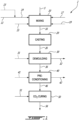
- FIG. 1 one embodiment of a method 10 of producing a wet-cast slag-based concrete 56 is provided.
- the method 1 of wet-cast slag-based concrete 56 begins by providing a composition of a non-zero-slump concrete 16 and uniformly mixing 10 all ingredients of a composition that include but are not limited to : a slag 11 and an optional at least one other binder 13 (providing a slag-based binder 14), an aggregate 15, chemical admixtures 17, fibers 19 and water 5.
- the water-to-binder ratio of the wet-cast slag-based concrete 56 used in this innovation should be higher than the water content of dry-cast or zero-slump concrete.
- the mixed non-zero-slump concrete 16 has a first water to binder ratio by weight of greater than 0.2, preferably 0.25, preferably 0.3, preferably 0.35, preferably 0.4, preferably 0.45, preferably 0.5, preferably 0.55, preferably 0.6 or preferably 0.65.
- the terms "water to slag-based binder ratio by weight” and “water to binder ratio by weight” are equivalents.
- the non-zero-slump concrete 16 will preferably have a slump range of 5 to 250 mm.
- the non-zero-slump concrete 16 is preferably workable for at least 5 minutes.
- the mixing 10 should ensure that the non-zero-slump concrete 16 is free of signs of segregation or bleeding.
- the compaction factor test for the non-zero-slump concrete 16 in a preferred embodiment is in a range of 0.7 to 1.0.
- the temperature of non-zero-slump concrete 16 before casting is preferably 0°C to 30°C.
- the fresh non-zero-slump concrete 16 in a preferred embodiment has an air void content of measured by any conventional method (an exemplary standardized test is ASTM C231 for Air Content of Freshly Mixed Concrete by the Pressure Method)should not exceed 15% of the volume of concrete.
- the compaction factor test is described in BS 1881-103:1993 and BS EN 12350-4:2009 (BS EN 12350-4:2009, Testing fresh concrete Part 4: Degree of compatibility).
- the non-zero-slump concrete 16 appropriately mixed is now ready for transfer to casting.
- the mould is prepared and reinforcing material such as, carbon steel, stainless steel and/or FRP reinforcement bars are placed inside the mould, if required.
- the diameter of the bars may vary from 5mm to 60mm with yield strength in the range of 100 MPa to 2100 MPa.
- the reinforcements to be designed in accordance with codes and standards.
- the mould is kept at the ambient temperature and humidity, allowing free water 32 to gradually evaporate, and allows the partial or full hydration and setting of the binder.
- the rate of evaporation depends on the temperature, relative humidity, initial water content of the non-zero-slump concrete 16 mix, surface area of the product and air flow if the mould is exposed to wind.
- the hydration and setting rate depend on the ingredients and chemical composition of the slag-based binder 14.
- one or a combination of evaporation and/or heating 31 with heating elements or drum heaters or floor heating mats or fans or heaters or blowers or fan heaters can be used to accelerate the evaporation rate.
- the heating elements/wires or floor heating mats or drum heaters are installed so as to cover the exterior surfaces of the mould. The elements heat up the mould's walls and eventually increase the evaporation process to reduce the moisture content of the concrete.
- Fans, heaters, fan heaters and blowers, are best placed facing toward the slag-based intermediate 26 free surface, which may be its upper surface.
- These casting 30 steps may continue until initial water-to-binder ratio is reduced by up to 90%, preferably 80%, preferably 70%, preferably 60%, preferably 50%, preferably 40%, preferably 30%, preferably 20%, preferably 10% or preferably 2%.
- the increase of porosity defined in terms of volume created within the demoulded intermediate 36 by either of the above casting 30 methods in concrete is 70%, preferably 60%, preferably 50%, preferably 40%, preferably 30%, preferably 20%, preferably 10%, preferably 5% or preferably 1% of the concrete volume.
- the slag-based intermediate 26 eventually attains a second water to binder ratio by weight that is less than the first water to binder ratio by weight of the non-zero-slump concrete 16.
- the process step of pre-conditioning 40 reduces the water content of (the slag-based intermediate 26 now) the demoulded intermediate 36 even further to a third water to binder ratio by weight prior to CO 2 curing 50.
- the demoulded intermediate 36 is kept at the ambient temperature and humidity, allowing free water 42 to gradually evaporates.
- the rate of evaporation of the demoulded intermediate 36 depends on the temperature, relative humidity, its initial water content, surface area of the product and air flow if the mould is exposed to wind.
- the pre-conditioning step of the demoulded intermediate 36 can be undertaken in a sealed room, enclosed space chamber or vessel.
- preconditioning 40 steps may continue until initial water-to-binder content is reduced by up to 90%, preferably 80%, preferably 70%, preferably 60%, preferably 50%, preferably 40%, preferably 30%, preferably 20%, preferably 10% or preferably 2%.
- the increase of porosity defined in terms of volume created within the demoulded intermediate 36 by either of the above pre-conditioning 40 methods in concrete is 70%, preferably 60%, preferably 50%, preferably 40%, preferably 30%, preferably 20%, preferably 10%, preferably 5% or preferably 1% of the concrete volume.
- the pre-conditioning 40 produces a demoulded conditioned slag-based intermediate 46 with a third water to binder ratio by weight.
- the third water to binder ratio by weight is less than the first water to binder ratio by weight (of the non-zero-slump concrete 16) and is also less than the second water to binder ratio by weight (of the slag-based intermediate 26).
- the remaining water in the concrete should not fall below 5% of the initial water content by mass.
- the formed optionally reinforced demoulded conditioned slag-based intermediate 46 products are then placed in a sealed room, chamber or vessel.
- Carbon dioxide 51 gas is introduced to cure the demoulded conditioned slag-based intermediate 46-at 5%, preferably 10%, preferably 20%, preferably 30%, preferably 40%, preferably 50%, preferably 60%, preferably 70%, preferably 80%, preferably 90%, or preferably 99.5% purity-into the enclosed area, that may be a chamber/enclosed space/vessel/room at ambient temperature.
- the gauge pressure of the chamber/enclosed space/vessel/room will gradually increase to a range of 0.1 psi to 100 psi.
- demoulded conditioned slag-based intermediate 46 products can be covered and sealed by airtight fabrics.
- the CO 2 51 is then introduced into the space created by these fabrics.
- the demoulded conditioned slag-based intermediate 46 products are kept pressurized under CO 2 gas 51 for no less than 5 minutes, though the CO 2 curing 50 process can continue for up to 48 hours, where a preferred embodiment is 8 hours for CO 2 curing 50.
- the chamber/enclosed space/vessel/room's internal temperature will gradually increase by at least 0.1 °C before it decreases as a result of an exothermic, accelerated curing reaction-the "CO 2 activation process". At the end of the activation process, the remaining CO 2 , if any, is vented out.
- the present method is not limited to the operable/preferred compositions presented above. Furthermore, if water reducing admixtures (i.e. chemical admixtures 17) are included in the non-zero-slump concrete 16, lower water contents (lower water to binder ratio) may be required.
- water reducing admixtures i.e. chemical admixtures 17
- lower water contents lower water to binder ratio
Landscapes
- Chemical & Material Sciences (AREA)
- Engineering & Computer Science (AREA)
- Ceramic Engineering (AREA)
- Structural Engineering (AREA)
- Chemical Kinetics & Catalysis (AREA)
- Organic Chemistry (AREA)
- Materials Engineering (AREA)
- Inorganic Chemistry (AREA)
- Mechanical Engineering (AREA)
- Manufacturing & Machinery (AREA)
- Toxicology (AREA)
- Health & Medical Sciences (AREA)
- Curing Cements, Concrete, And Artificial Stone (AREA)
- Devices For Post-Treatments, Processing, Supply, Discharge, And Other Processes (AREA)
- Road Paving Structures (AREA)
Claims (14)
- Verfahren zum Herstellen eines Nassgussbetonprodukts auf Schlackenbasis, umfassend die Schritte des:Bereitstellens eines Bindemittels auf Schlackenbasis, eines Aggregats und Wasser;Mischens des Bindemittels auf Schlackenbasis, des Aggregats und des Wassers, um eine Nicht-Null-Setzmaß-Betonzusammensetzung herzustellen, umfassend ein erstes Wasser-zu-Bindemittel auf Schlackenbasis-Gewichtsverhältnis von größer als 0,2;Gießens der Nicht-Null-Setzmaß-Betonzusammensetzung durch Transferieren der Nicht-Null-Setzmaß-Betonzusammensetzung in eine Form;Aushärtens der Nicht-Null-Setzmaß-Betonzusammensetzung innerhalb der Form, um ein Intermediat auf Schlackenbasis herzustellen, umfassend ein zweites Wasser-zu-Bindemittel auf Schlackenbasis-Gewichtsverhältnis, welches geringer ist als das erste Wasser-zu-Bindemittel auf Schlackenbasis-Gewichtsverhältnis;Entformens des Intermediats auf Schlackenbasis, um ein entformtes Intermediat herzustellen;Vorkonditionierens des entformten Intermediats, um ein entformtes vorkonditioniertes Intermediat auf Schlackenbasis herzustellen, umfassend ein drittes Wasser-zu-Bindemittel auf Schlackenbasis-Gewichtsverhältnis, welches geringer ist als das erste Wasser-zu-Bindemittel auf Schlackenbasis-Gewichtsverhältnis und welches auch geringer ist als das zweite Wasser-zu-Bindemittel auf Schlackenbasis-Gewichtsverhältnis; undHärtens des entformten vorkonditionierten Intermediats auf Schlackenbasis mit Kohlenstoffdioxid, um das Nassgussbetonprodukt auf Schlackenbasis herzustellen,wobeider Schritt des Gießens der Nicht-Null-Setzmaß-Betonzusammensetzung frei von Pressen/Verdichtung ist.
- Verfahren nach Anspruch 1, wobei das Bindemittel auf Schlackenbasis eine Schlacke ist, welche frei von oder mit mindestens einem anderen Bindemittel gemischt ist, ausgewählt aus der Gruppe bestehend aus Flugasche, kalziniertem Schiefer, Silikastaub, Zeolith, Kalksteinmehl, hydraulischen Zementen und nicht-hydraulischen Zementen, und optional, wobei die Schlacke aus der Gruppe ausgewählt ist, bestehend aus einer Stahlschlacke, einer Edelstahlschlacke, einem basischen Sauerstoffkonverterschlamm, Hochofenschlamm, einem Nebenprodukt der Zink-, Eisen- oder Kupferherstellung und Kombinationen davon.
- Verfahren nach einem der vorhergehenden Ansprüche, ferner umfassend einen Bewehrungsschritt, bei welchem ein Bewehrungsmaterial vor dem Gießschritt in die Form platziert wird, und optional, wobei das Bewehrungsmaterial Kohlenstoffstahl, Edelstahl und/oder FRP-Bewehrungsstäbe sind.
- Verfahren nach einem der vorhergehenden Ansprüche, wobei ein kumulativer Calciumsilikatgehalt der Schlacke mindestens 20 Gew.-% beträgt.
- Verfahren nach einem der vorhergehenden Ansprüche, wobei der Schritt des Vorkonditionierens durchgeführt wird, um eine erhöhte Porosität von mindestens 1 % des Volumens des Nassgussbetons auf Schlackenbasis bereitzustellen.
- Verfahren nach einem der vorhergehenden Ansprüche, wobei die Nicht-Null-Setzmaß-Betonzusammensetzung einen Setzmaßwert in einem Bereich von 5 mm bis 250 mm aufweist, wie unter Verwendung des im ASTM-Standard C143 beschriebenen Verfahrens beurteilt.
- Verfahren nach einem der vorhergehenden Ansprüche, wobei die Nicht-Null-Setzmaß-Betonzusammensetzung einen Verdichtungsfaktor-Test für den Frischbeton im Bereich von 0,7 bis 1,0 aufweist, gemessen gemäß BS 1881-103:1993 und BS EN 12350-4:2009.
- Verfahren nach einem der vorhergehenden Ansprüche, wobei das Bindemittel auf Schlackenbasis Stahlschlacke ist, ausgewählt aus der Gruppe bestehend aus reduzierende Stahlschlacke, oxidierende Stahlschlacke, Konverterstahlschlacke, Elektrolichtbogenofen (EAF)-Schlacke, Sauerstoffaufblaskonverter (BOF)-Schlacke, Pfannenschlacke, schnell abgekühlte Stahlschlacke und langsam abgekühlte Stahlschlacke und Kombinationen davon.
- Verfahren nach einem der vorhergehenden Ansprüche, wobei das Nassgussbetonprodukt auf Schlackenbasis ausgewählt ist aus der Gruppe bestehend aus vorgegossenen, bewehrten und unbewehrten Betonrohren, Rahmendurchlässen, Entwässerungsprodukten, Pflastersteinen, Bodenplatten, Verkehrsbarrieren, Wänden, Mannlöchern, Stützmauern, Betonpflastersteinen, Fliesen und Schindeln.
- Verfahren nach einem der vorhergehenden Ansprüche, wobei der Nassgussbeton auf Schlackenbasis einen Schlackengehalt von mindestens 5 Gew.-% aufweist.
- Verfahren nach einem der vorhergehenden Ansprüche, wobei die Nicht-Null-Setzmaß-Betonzusammensetzung ferner mindestens eines von: Beschleuniger, Verzögerer, Viskositätsmodifizierungsmittel, Luftporenbildner, Schaummittel, ASR (Alkali-Silika-Reaktion)-Inhibitor, Auswaschschutz, Korrosionsinhibitor, Schwindreduzierer, Betonrissminderer, Plastifizierer, Superplastifizierer, Versiegeler, Farbe, Beschichtung, Wasserreduzierer, Wasserabweiser, Ausblühungsschutz, Polymerpulver, Polymerlatex, Verarbeitbarkeitserhalter, Zellulosefaser, Glasfaser, Mikrosynthetikfaser, Naturfaser, PP-Faser, PVA-Faser und Stahlfaser umfasst.
- Verfahren nach einem der vorhergehenden Ansprüche, wobei die CO2-Härtung frei von zusätzlichen externen Wärme- und/oder Energiequellen ist.
- Verfahren nach einem der vorhergehenden Ansprüche, wobei der Schritt des Härtens in einer Kammer/geschlossener Raum/Behälter/Raum mit einem Gas ist, enthaltend eine Konzentration von CO2 von mindestens 5 Vol.-%.
- Verfahren nach einem der vorhergehenden Ansprüche, wobei der Schritt des Entformens durchgeführt wird, wenn das entformte Intermediat eine Druckfestigkeit von mindestens 0,01 MPa aufweist.
Applications Claiming Priority (2)
| Application Number | Priority Date | Filing Date | Title |
|---|---|---|---|
| US201962832956P | 2019-04-12 | 2019-04-12 | |
| PCT/CA2020/050466 WO2020206540A1 (en) | 2019-04-12 | 2020-04-09 | Production of wet-cast slag-based concrete products |
Publications (4)
| Publication Number | Publication Date |
|---|---|
| EP3953124A1 EP3953124A1 (de) | 2022-02-16 |
| EP3953124A4 EP3953124A4 (de) | 2022-06-29 |
| EP3953124C0 EP3953124C0 (de) | 2025-01-15 |
| EP3953124B1 true EP3953124B1 (de) | 2025-01-15 |
Family
ID=72750668
Family Applications (1)
| Application Number | Title | Priority Date | Filing Date |
|---|---|---|---|
| EP20788618.5A Active EP3953124B1 (de) | 2019-04-12 | 2020-04-09 | Herstellung von nassgegossenen betonprodukten auf der basis von schlacke |
Country Status (9)
| Country | Link |
|---|---|
| US (3) | US12552711B2 (de) |
| EP (1) | EP3953124B1 (de) |
| JP (1) | JP7490669B2 (de) |
| CN (1) | CN113905863A (de) |
| CA (1) | CA3136509C (de) |
| ES (1) | ES3014456T3 (de) |
| HU (1) | HUE070593T2 (de) |
| PL (1) | PL3953124T3 (de) |
| WO (1) | WO2020206540A1 (de) |
Families Citing this family (12)
| Publication number | Priority date | Publication date | Assignee | Title |
|---|---|---|---|---|
| JP7810555B2 (ja) * | 2019-04-12 | 2026-02-03 | カービクリート インコーポレイテッド | 湿式鋳造スラグ系コンクリート製品を製造するための炭酸化養生方法 |
| US11358304B2 (en) * | 2019-12-10 | 2022-06-14 | Carbicrete Inc | Systems and methods for curing a precast concrete product |
| CN112277154A (zh) * | 2020-10-28 | 2021-01-29 | 广东中建新型建筑构件有限公司 | 一种frp筋预制梁生产方法 |
| FR3121676B1 (fr) * | 2021-04-09 | 2023-06-30 | Saint Gobain Weber France | Liant hydraulique pour composition de mortier |
| US11703499B2 (en) | 2021-09-24 | 2023-07-18 | X Development Llc | Method to produce evolving concrete mixture heuristic |
| JP2023069490A (ja) * | 2021-11-05 | 2023-05-18 | 株式会社ホクエツ | コンクリート構造物の製造方法 |
| CN114163190B (zh) * | 2021-12-08 | 2022-07-22 | 福州大学 | 一种既有整毛石墙体加固uhpc材料及其加固方法 |
| EP4619360A1 (de) * | 2022-11-14 | 2025-09-24 | Carbicrete Inc. | Schnelle konditionierung bei der herstellung von kohlensäurehaltigem betonfertigteil |
| US12129207B2 (en) * | 2023-03-02 | 2024-10-29 | Carbicrete Inc. | Method of manufacturing concrete products with additives |
| CN116177960B (zh) * | 2023-03-06 | 2025-01-10 | 湖北工业大学 | 一种水渣湿法固碳制备预拌混凝土的方法 |
| EP4624436A1 (de) * | 2024-03-28 | 2025-10-01 | Saint-Gobain Weber France | Verfahren zur herstellung eines hydraulischen bindemittels |
| WO2026000066A1 (en) * | 2024-06-27 | 2026-01-02 | Carbicrete Inc. | Concrete curing system with controlled co2 concentration |
Citations (1)
| Publication number | Priority date | Publication date | Assignee | Title |
|---|---|---|---|---|
| CN109574610A (zh) * | 2019-01-21 | 2019-04-05 | 北京科技大学 | 一种利用钢渣高效制备低成本碳化砖的方法 |
Family Cites Families (59)
| Publication number | Priority date | Publication date | Assignee | Title |
|---|---|---|---|---|
| JPS5238789A (en) | 1975-08-14 | 1977-03-25 | Sinai School Medicine | Method of identifying hematocyte type and adaptability |
| JPH0448743B2 (de) * | 1980-05-01 | 1992-08-07 | Denshito As | |
| US4588543A (en) | 1982-09-13 | 1986-05-13 | Plascore, Inc. | Method of constructing heat exchanger core |
| JPS60145318A (ja) * | 1984-01-09 | 1985-07-31 | Kawasaki Steel Corp | 方向性けい素鋼スラブの加熱方法 |
| JP2972782B2 (ja) | 1989-11-01 | 1999-11-08 | 淑男 新岡 | コンクリート製造方法 |
| US5366549A (en) * | 1990-11-28 | 1994-11-22 | Kyowa Giken Co., Ltd. | Method for fabricating fiber-reinforced slag gypsum cement-based, lightweight set articles |
| JP2673218B2 (ja) | 1990-11-28 | 1997-11-05 | 協和技研株式会社 | 繊維補強スラグ石膏セメント系軽量硬化体の製造方法 |
| US5250113A (en) * | 1991-07-31 | 1993-10-05 | W. R. Grace & Co.-Conn. | Dry castable concrete compositions and methods of preparing and dry casting the same |
| KR960700869A (ko) * | 1993-03-08 | 1996-02-24 | 에쌈 카소기 | 수경성 매트릭스를 갖는 단열 차단벽(insulation barriers having a hydraulically settable matrix) |
| JP3992115B2 (ja) * | 1994-08-11 | 2007-10-17 | 太平洋セメント株式会社 | 無機硬化体及びその製造方法 |
| JP4240638B2 (ja) * | 1999-02-26 | 2009-03-18 | Jfeスチール株式会社 | 人工石材の製造方法 |
| JP2002012480A (ja) * | 2000-06-27 | 2002-01-15 | Nkk Corp | 炭酸固化体の製造方法 |
| JP5155512B2 (ja) * | 2000-10-04 | 2013-03-06 | ジェイムズ ハーディー テクノロジー リミテッド | 無機および/または有機物質が充填処理されたセルロース繊維を使用した繊維セメント複合材料 |
| JP2010235410A (ja) | 2009-03-31 | 2010-10-21 | Taiheiyo Cement Corp | 炭酸化セメント及び炭酸化セメント硬化体 |
| US20140197563A1 (en) * | 2010-12-15 | 2014-07-17 | Robert Niven | Carbon dioxide sequestration in concrete articles |
| PT2651846T (pt) * | 2010-12-17 | 2020-03-05 | Univ America Catholic | Mistura compósita de geopolímero para betão de altíssimo desempenho |
| FI123876B (fi) * | 2011-03-24 | 2013-11-29 | Consolis Technology Oy Ab | Alkaliaktivoitu betonikoostumus ja koostumuksen käyttö esivaletuissa betonielementeissä |
| WO2014024259A1 (ja) * | 2012-08-07 | 2014-02-13 | 株式会社エスイー | コンクリート成形体の製造方法 |
| US9878951B2 (en) * | 2013-10-04 | 2018-01-30 | Solidia Technologies, Inc. | Hollow-core articles and composite materials, methods of production and uses thereof |
| CN103771797B (zh) * | 2013-12-31 | 2015-09-30 | 首钢总公司 | 钢渣矿渣双掺制备泡沫混凝土砌块及其制备方法 |
| US10351478B2 (en) * | 2014-01-22 | 2019-07-16 | Solidia Technologies, Inc. | Advanced curing equipment and methods of using same |
| WO2015123769A1 (en) | 2014-02-18 | 2015-08-27 | Carboncure Technologies, Inc. | Carbonation of cement mixes |
| ES2808117T3 (es) | 2014-03-21 | 2021-02-25 | Carbicrete Inc | Método para fabricar productos de construcción unidos por carbonato procedentes de residuos de la fabricación de acero |
| CA2943791C (en) | 2014-04-07 | 2023-09-05 | Carboncure Technologies Inc. | Integrated carbon dioxide capture |
| US20170036372A1 (en) * | 2014-04-16 | 2017-02-09 | Carboncure Technologies Inc. | Modulation of thixotropic properties of cementitious materials |
| EP2990393A1 (de) * | 2014-08-29 | 2016-03-02 | Recoval Belgium | Verfahren zur Herstellung eines Carbonat-gebundenen, pressgeformten Artikels |
| CN105985075B (zh) * | 2015-02-28 | 2020-08-11 | 香港理工大学 | 一种水泥混凝土废弃物的回收再利用方法 |
| WO2017000075A1 (en) | 2015-06-30 | 2017-01-05 | Carboncure Technologies Inc. | Carbonated fly ash as a cement replacement |
| WO2017041176A1 (en) | 2015-09-08 | 2017-03-16 | Carboncure Technologies Inc. | Precarbonation of cement mixes |
| MX2018003091A (es) | 2015-09-11 | 2018-11-09 | Carboclave Corp | Productos prefabricados de hormigon cargados con co2 y el metodo para hacer los mismos. |
| US10338053B2 (en) * | 2015-10-08 | 2019-07-02 | Solidia Technologies, Inc. | Curing-drying model and its applications |
| US10752545B2 (en) | 2015-10-28 | 2020-08-25 | Solidia Technologies, Inc. | Steam-assisted production of metal silicate cements, compositions and methods thereof |
| CA3011251C (en) | 2016-01-19 | 2023-02-28 | Solidia Technologies, Inc. | Novel cement chemistries |
| EA201891698A1 (ru) | 2016-03-04 | 2019-04-30 | Солидия Текнолоджиз, Инк. | Белые способные к карбонизации цементы на основе силиката кальция, способы их получения и применения |
| US10556834B2 (en) | 2016-03-11 | 2020-02-11 | Solidia Technologies, Inc. | Hazing control for carbonatable calcium silicate-based cements and concretes |
| WO2017177324A1 (en) | 2016-04-11 | 2017-10-19 | Carboncure Technologies Inc. | Methods and compositions for treatment of concrete wash water |
| BR112018072656B1 (pt) | 2016-05-05 | 2024-03-05 | Solidia Technologies, Inc | Pozolana sintética, métodos para fazer uma pozolana sintética e material compósito |
| WO2017210294A1 (en) | 2016-05-31 | 2017-12-07 | Solidia Technologies, Inc. | Conditioned curing systems and processes thereof |
| CN106478003A (zh) * | 2016-09-21 | 2017-03-08 | 东莞市联洲知识产权运营管理有限公司 | 一种基于多级再生骨料的耐久透水混凝土及其制备方法 |
| JP7134170B2 (ja) | 2016-09-26 | 2022-09-09 | ソリディア テクノロジーズ インコーポレイテッド | 先進的な養生装置及びその養生装置を使用する方法 |
| CA3044943A1 (en) * | 2016-12-09 | 2018-06-14 | Carbicrete Inc. | Landscaping products and method of production thereof |
| CA3056936A1 (en) | 2017-03-23 | 2018-09-27 | Solidia Technologies, Inc. | Carbonatable calcium silicate-based cements and concretes having mineral additives, and methods thereof |
| WO2018175769A1 (en) | 2017-03-23 | 2018-09-27 | Solidia Technologies, Inc. | Mineral additives and production of lightweight composite materials from carbonatable calcium silicate |
| US11958212B2 (en) | 2017-06-20 | 2024-04-16 | Carboncure Technologies Inc. | Methods and compositions for treatment of concrete wash water |
| FR3068906B1 (fr) * | 2017-07-13 | 2021-04-23 | Kerneos | Procede d'obtention d'un materiau compacte et materiau compacte obtenu de ce procede |
| EP3687960B1 (de) | 2017-09-28 | 2024-03-20 | Carboclave Corp. | Verfahren und system zur karbonisierung von verdrängter luft |
| EP3713894A1 (de) | 2017-11-21 | 2020-09-30 | Solidia Technologies, Inc. | Zusammensetzungen und verfahren zur verbesserung der ästhetik von zementen und betonen auf calciumsilikatbasis |
| EP3713896A1 (de) | 2017-11-21 | 2020-09-30 | Solidia Technologies, Inc. | Zusammensetzungen und verfahren zur verbesserung der haltbarkeit von zementen und betons auf calciumsilikatbasis |
| WO2019101810A1 (en) | 2017-11-21 | 2019-05-31 | Holcim Technology Ltd | Compositions and method to improve the strength development of calcium silicate-based cements and concretes |
| JP2021505523A (ja) | 2017-12-04 | 2021-02-18 | ソリディア テクノロジーズ インコーポレイテッドSolidia Technologies, Inc. | 複合材料、製造方法およびその使用 |
| MX2020008782A (es) | 2018-02-22 | 2020-11-09 | Solidia Technologies Inc | Mitigación de la corrosión en concreto carbonatado basado en cemento bajo en silicato de calcio. |
| EA202091741A1 (ru) | 2018-02-22 | 2021-01-25 | Солидия Текнолоджиз, Инк. | Химический состав цемента |
| CN108623266A (zh) * | 2018-08-13 | 2018-10-09 | 武汉华强新型建筑材料有限公司 | 一种再生混凝土及其生产工艺 |
| BR112021003774A2 (pt) | 2018-08-27 | 2021-05-25 | Solidia Technologies, Inc. | cura em múltiplas etapas de corpos verdes |
| MA53762B1 (fr) | 2018-12-13 | 2023-06-28 | Carboncure Tech Inc | Procédés et compositions pour l'administration de dioxyde de carbone |
| CN109574601B (zh) * | 2019-02-03 | 2021-09-24 | 黑龙江工业学院 | 一种建筑石墨混凝土及其制备方法 |
| CA3138622A1 (en) | 2019-04-26 | 2020-10-29 | Carboncure Technologies Inc. | Carbonation of concrete aggregates |
| WO2021071980A1 (en) | 2019-10-07 | 2021-04-15 | Carboncure Technologies Inc. | Methods and compositions for treatment of concrete reclaimed water |
| WO2021072184A1 (en) | 2019-10-09 | 2021-04-15 | Solidia Technologies, Inc. | Methods of forming cured composite materials with optimized ph and related compositions and systems |
-
2020
- 2020-04-09 CA CA3136509A patent/CA3136509C/en active Active
- 2020-04-09 EP EP20788618.5A patent/EP3953124B1/de active Active
- 2020-04-09 ES ES20788618T patent/ES3014456T3/es active Active
- 2020-04-09 PL PL20788618.5T patent/PL3953124T3/pl unknown
- 2020-04-09 JP JP2021560104A patent/JP7490669B2/ja active Active
- 2020-04-09 HU HUE20788618A patent/HUE070593T2/hu unknown
- 2020-04-09 WO PCT/CA2020/050466 patent/WO2020206540A1/en not_active Ceased
- 2020-04-09 CN CN202080041122.9A patent/CN113905863A/zh active Pending
-
2021
- 2021-03-16 US US17/202,435 patent/US12552711B2/en active Active
- 2021-05-05 US US17/308,412 patent/US11358902B2/en active Active
-
2026
- 2026-01-21 US US19/454,631 patent/US20260152438A1/en active Pending
Patent Citations (1)
| Publication number | Priority date | Publication date | Assignee | Title |
|---|---|---|---|---|
| CN109574610A (zh) * | 2019-01-21 | 2019-04-05 | 北京科技大学 | 一种利用钢渣高效制备低成本碳化砖的方法 |
Also Published As
| Publication number | Publication date |
|---|---|
| JP7490669B2 (ja) | 2024-05-27 |
| CA3136509C (en) | 2022-07-05 |
| HUE070593T2 (hu) | 2025-06-28 |
| US11358902B2 (en) | 2022-06-14 |
| ES3014456T3 (en) | 2025-04-22 |
| US20210206696A1 (en) | 2021-07-08 |
| PL3953124T3 (pl) | 2025-06-02 |
| EP3953124A1 (de) | 2022-02-16 |
| CN113905863A (zh) | 2022-01-07 |
| US20210253480A1 (en) | 2021-08-19 |
| US12552711B2 (en) | 2026-02-17 |
| BR112021020557A2 (pt) | 2021-12-14 |
| EP3953124C0 (de) | 2025-01-15 |
| WO2020206540A1 (en) | 2020-10-15 |
| EP3953124A4 (de) | 2022-06-29 |
| CA3136509A1 (en) | 2020-10-15 |
| JP2022530193A (ja) | 2022-06-28 |
| US20260152438A1 (en) | 2026-06-04 |
Similar Documents
| Publication | Publication Date | Title |
|---|---|---|
| US11358902B2 (en) | Production of wet-cast slag-based concrete products | |
| US12384724B2 (en) | Carbonation curing method to produce wet-cast slag-based concrete products | |
| Suryanita et al. | The effect of silica fume admixture on the compressive strength of the cellular lightweight concrete | |
| US10494301B2 (en) | Lightweight concrete composition containing perlite and resin beads | |
| JP7173970B2 (ja) | 修景製品の製造方法 | |
| KR20230162898A (ko) | 향상된 내구성을 갖는 탄산화 프리캐스트 콘크리트 제품의 제조 방법 | |
| US12129207B2 (en) | Method of manufacturing concrete products with additives | |
| Askari Dolatabad et al. | Rheological and mechanical properties of light weight self-compacting concrete containing sirjan iron mine waste | |
| BR112021020557B1 (pt) | Produção de produtos de concreto à base de escória moldada por via húmida | |
| Cai et al. | Behavior of concrete with recycled clay brick as coarse aggregate | |
| Santos et al. | Earth, air lime and natural hydraulic lime mortars | |
| WO2011073272A1 (en) | Concrete composition | |
| BR112021020558B1 (pt) | Método de cura por carbonatação para produzir produtos de concreto à base de escória moldada por via húmida |
Legal Events
| Date | Code | Title | Description |
|---|---|---|---|
| STAA | Information on the status of an ep patent application or granted ep patent |
Free format text: STATUS: THE INTERNATIONAL PUBLICATION HAS BEEN MADE |
|
| PUAI | Public reference made under article 153(3) epc to a published international application that has entered the european phase |
Free format text: ORIGINAL CODE: 0009012 |
|
| STAA | Information on the status of an ep patent application or granted ep patent |
Free format text: STATUS: REQUEST FOR EXAMINATION WAS MADE |
|
| 17P | Request for examination filed |
Effective date: 20211111 |
|
| AK | Designated contracting states |
Kind code of ref document: A1 Designated state(s): AL AT BE BG CH CY CZ DE DK EE ES FI FR GB GR HR HU IE IS IT LI LT LU LV MC MK MT NL NO PL PT RO RS SE SI SK SM TR |
|
| A4 | Supplementary search report drawn up and despatched |
Effective date: 20220601 |
|
| RIC1 | Information provided on ipc code assigned before grant |
Ipc: C04B 28/04 20060101ALI20220525BHEP Ipc: B28C 7/04 20060101ALI20220525BHEP Ipc: B28C 5/00 20060101ALI20220525BHEP Ipc: B28B 13/06 20060101ALI20220525BHEP Ipc: B28B 11/00 20060101ALI20220525BHEP Ipc: B28B 11/24 20060101AFI20220525BHEP |
|
| DAV | Request for validation of the european patent (deleted) | ||
| DAX | Request for extension of the european patent (deleted) | ||
| STAA | Information on the status of an ep patent application or granted ep patent |
Free format text: STATUS: EXAMINATION IS IN PROGRESS |
|
| 17Q | First examination report despatched |
Effective date: 20230412 |
|
| REG | Reference to a national code |
Ref country code: DE Ref legal event code: R079 Free format text: PREVIOUS MAIN CLASS: B28B0011240000 Ipc: B28B0001140000 Ref country code: DE Ref legal event code: R079 Ref document number: 602020044874 Country of ref document: DE Free format text: PREVIOUS MAIN CLASS: B28B0011240000 Ipc: B28B0001140000 |
|
| GRAP | Despatch of communication of intention to grant a patent |
Free format text: ORIGINAL CODE: EPIDOSNIGR1 |
|
| STAA | Information on the status of an ep patent application or granted ep patent |
Free format text: STATUS: GRANT OF PATENT IS INTENDED |
|
| RIC1 | Information provided on ipc code assigned before grant |
Ipc: C04B 28/08 20060101ALI20240815BHEP Ipc: B28B 11/24 20060101ALI20240815BHEP Ipc: B28B 7/42 20060101ALI20240815BHEP Ipc: B28B 1/14 20060101AFI20240815BHEP |
|
| INTG | Intention to grant announced |
Effective date: 20240823 |
|
| GRAS | Grant fee paid |
Free format text: ORIGINAL CODE: EPIDOSNIGR3 |
|
| GRAA | (expected) grant |
Free format text: ORIGINAL CODE: 0009210 |
|
| STAA | Information on the status of an ep patent application or granted ep patent |
Free format text: STATUS: THE PATENT HAS BEEN GRANTED |
|
| AK | Designated contracting states |
Kind code of ref document: B1 Designated state(s): AL AT BE BG CH CY CZ DE DK EE ES FI FR GB GR HR HU IE IS IT LI LT LU LV MC MK MT NL NO PL PT RO RS SE SI SK SM TR |
|
| REG | Reference to a national code |
Ref country code: CH Ref legal event code: EP Ref country code: GB Ref legal event code: FG4D |
|
| REG | Reference to a national code |
Ref country code: DE Ref legal event code: R096 Ref document number: 602020044874 Country of ref document: DE |
|
| REG | Reference to a national code |
Ref country code: IE Ref legal event code: FG4D |
|
| RAP4 | Party data changed (patent owner data changed or rights of a patent transferred) |
Owner name: CARBICRETE INC. |
|
| U01 | Request for unitary effect filed |
Effective date: 20250214 |
|
| U07 | Unitary effect registered |
Designated state(s): AT BE BG DE DK EE FI FR IT LT LU LV MT NL PT RO SE SI Effective date: 20250219 |
|
| REG | Reference to a national code |
Ref country code: ES Ref legal event code: FG2A Ref document number: 3014456 Country of ref document: ES Kind code of ref document: T3 Effective date: 20250422 |
|
| PGFP | Annual fee paid to national office [announced via postgrant information from national office to epo] |
Ref country code: CZ Payment date: 20250328 Year of fee payment: 6 |
|
| PGFP | Annual fee paid to national office [announced via postgrant information from national office to epo] |
Ref country code: TR Payment date: 20250328 Year of fee payment: 6 |
|
| U20 | Renewal fee for the european patent with unitary effect paid |
Year of fee payment: 6 Effective date: 20250407 |
|
| REG | Reference to a national code |
Ref country code: HU Ref legal event code: AG4A Ref document number: E070593 Country of ref document: HU |
|
| PG25 | Lapsed in a contracting state [announced via postgrant information from national office to epo] |
Ref country code: RS Free format text: LAPSE BECAUSE OF FAILURE TO SUBMIT A TRANSLATION OF THE DESCRIPTION OR TO PAY THE FEE WITHIN THE PRESCRIBED TIME-LIMIT Effective date: 20250415 |
|
| PGFP | Annual fee paid to national office [announced via postgrant information from national office to epo] |
Ref country code: PL Payment date: 20250408 Year of fee payment: 6 |
|
| PGFP | Annual fee paid to national office [announced via postgrant information from national office to epo] |
Ref country code: ES Payment date: 20250508 Year of fee payment: 6 |
|
| PG25 | Lapsed in a contracting state [announced via postgrant information from national office to epo] |
Ref country code: IS Free format text: LAPSE BECAUSE OF FAILURE TO SUBMIT A TRANSLATION OF THE DESCRIPTION OR TO PAY THE FEE WITHIN THE PRESCRIBED TIME-LIMIT Effective date: 20250515 |
|
| PGFP | Annual fee paid to national office [announced via postgrant information from national office to epo] |
Ref country code: HU Payment date: 20250429 Year of fee payment: 6 Ref country code: NO Payment date: 20250409 Year of fee payment: 6 |
|
| PG25 | Lapsed in a contracting state [announced via postgrant information from national office to epo] |
Ref country code: HR Free format text: LAPSE BECAUSE OF FAILURE TO SUBMIT A TRANSLATION OF THE DESCRIPTION OR TO PAY THE FEE WITHIN THE PRESCRIBED TIME-LIMIT Effective date: 20250115 |
|
| PG25 | Lapsed in a contracting state [announced via postgrant information from national office to epo] |
Ref country code: GR Free format text: LAPSE BECAUSE OF FAILURE TO SUBMIT A TRANSLATION OF THE DESCRIPTION OR TO PAY THE FEE WITHIN THE PRESCRIBED TIME-LIMIT Effective date: 20250416 |
|
| PG25 | Lapsed in a contracting state [announced via postgrant information from national office to epo] |
Ref country code: SM Free format text: LAPSE BECAUSE OF FAILURE TO SUBMIT A TRANSLATION OF THE DESCRIPTION OR TO PAY THE FEE WITHIN THE PRESCRIBED TIME-LIMIT Effective date: 20250115 |
|
| PG25 | Lapsed in a contracting state [announced via postgrant information from national office to epo] |
Ref country code: SK Free format text: LAPSE BECAUSE OF FAILURE TO SUBMIT A TRANSLATION OF THE DESCRIPTION OR TO PAY THE FEE WITHIN THE PRESCRIBED TIME-LIMIT Effective date: 20250115 |
|
| PLBE | No opposition filed within time limit |
Free format text: ORIGINAL CODE: 0009261 |
|
| STAA | Information on the status of an ep patent application or granted ep patent |
Free format text: STATUS: NO OPPOSITION FILED WITHIN TIME LIMIT |
|
| REG | Reference to a national code |
Ref country code: CH Ref legal event code: H13 Free format text: ST27 STATUS EVENT CODE: U-0-0-H10-H13 (AS PROVIDED BY THE NATIONAL OFFICE) Effective date: 20251125 |
|
| REG | Reference to a national code |
Ref country code: CH Ref legal event code: L10 Free format text: ST27 STATUS EVENT CODE: U-0-0-L10-L00 (AS PROVIDED BY THE NATIONAL OFFICE) Effective date: 20251126 |
|
| PG25 | Lapsed in a contracting state [announced via postgrant information from national office to epo] |
Ref country code: MC Free format text: LAPSE BECAUSE OF FAILURE TO SUBMIT A TRANSLATION OF THE DESCRIPTION OR TO PAY THE FEE WITHIN THE PRESCRIBED TIME-LIMIT Effective date: 20250115 |
|
| 26N | No opposition filed |
Effective date: 20251016 |
|
| PG25 | Lapsed in a contracting state [announced via postgrant information from national office to epo] |
Ref country code: CH Free format text: LAPSE BECAUSE OF NON-PAYMENT OF DUE FEES Effective date: 20250430 |
|
| PG25 | Lapsed in a contracting state [announced via postgrant information from national office to epo] |
Ref country code: IE Free format text: LAPSE BECAUSE OF NON-PAYMENT OF DUE FEES Effective date: 20250409 |
|
| U20 | Renewal fee for the european patent with unitary effect paid |
Year of fee payment: 7 Effective date: 20260410 |
|
| PG25 | Lapsed in a contracting state [announced via postgrant information from national office to epo] |
Ref country code: CY Free format text: LAPSE BECAUSE OF FAILURE TO SUBMIT A TRANSLATION OF THE DESCRIPTION OR TO PAY THE FEE WITHIN THE PRESCRIBED TIME-LIMIT Effective date: 20250115 |
|
| PGFP | Annual fee paid to national office [announced via postgrant information from national office to epo] |
Ref country code: GB Payment date: 20260410 Year of fee payment: 7 |