EP3939992A1 - Therapeutic agents - Google Patents
Therapeutic agents Download PDFInfo
- Publication number
- EP3939992A1 EP3939992A1 EP21177321.3A EP21177321A EP3939992A1 EP 3939992 A1 EP3939992 A1 EP 3939992A1 EP 21177321 A EP21177321 A EP 21177321A EP 3939992 A1 EP3939992 A1 EP 3939992A1
- Authority
- EP
- European Patent Office
- Prior art keywords
- immuno
- cells
- cell according
- responsive cell
- binding element
- Prior art date
- Legal status (The legal status is an assumption and is not a legal conclusion. Google has not performed a legal analysis and makes no representation as to the accuracy of the status listed.)
- Withdrawn
Links
Images













Classifications
-
- C—CHEMISTRY; METALLURGY
- C12—BIOCHEMISTRY; BEER; SPIRITS; WINE; VINEGAR; MICROBIOLOGY; ENZYMOLOGY; MUTATION OR GENETIC ENGINEERING
- C12N—MICROORGANISMS OR ENZYMES; COMPOSITIONS THEREOF; PROPAGATING, PRESERVING, OR MAINTAINING MICROORGANISMS; MUTATION OR GENETIC ENGINEERING; CULTURE MEDIA
- C12N5/00—Undifferentiated human, animal or plant cells, e.g. cell lines; Tissues; Cultivation or maintenance thereof; Culture media therefor
- C12N5/06—Animal cells or tissues; Human cells or tissues
- C12N5/0602—Vertebrate cells
- C12N5/0634—Cells from the blood or the immune system
- C12N5/0636—T lymphocytes
-
- A—HUMAN NECESSITIES
- A61—MEDICAL OR VETERINARY SCIENCE; HYGIENE
- A61P—SPECIFIC THERAPEUTIC ACTIVITY OF CHEMICAL COMPOUNDS OR MEDICINAL PREPARATIONS
- A61P35/00—Antineoplastic agents
- A61P35/02—Antineoplastic agents specific for leukemia
-
- A—HUMAN NECESSITIES
- A61—MEDICAL OR VETERINARY SCIENCE; HYGIENE
- A61K—PREPARATIONS FOR MEDICAL, DENTAL OR TOILETRY PURPOSES
- A61K35/00—Medicinal preparations containing materials or reaction products thereof with undetermined constitution
- A61K35/12—Materials from mammals; Compositions comprising non-specified tissues or cells; Compositions comprising non-embryonic stem cells; Genetically modified cells
- A61K35/14—Blood; Artificial blood
-
- A—HUMAN NECESSITIES
- A61—MEDICAL OR VETERINARY SCIENCE; HYGIENE
- A61K—PREPARATIONS FOR MEDICAL, DENTAL OR TOILETRY PURPOSES
- A61K40/00—Cellular immunotherapy
- A61K40/10—Cellular immunotherapy characterised by the cell type used
- A61K40/11—T-cells, e.g. tumour infiltrating lymphocytes [TIL] or regulatory T [Treg] cells; Lymphokine-activated killer [LAK] cells
-
- A—HUMAN NECESSITIES
- A61—MEDICAL OR VETERINARY SCIENCE; HYGIENE
- A61K—PREPARATIONS FOR MEDICAL, DENTAL OR TOILETRY PURPOSES
- A61K40/00—Cellular immunotherapy
- A61K40/30—Cellular immunotherapy characterised by the recombinant expression of specific molecules in the cells of the immune system
- A61K40/31—Chimeric antigen receptors [CAR]
-
- A—HUMAN NECESSITIES
- A61—MEDICAL OR VETERINARY SCIENCE; HYGIENE
- A61K—PREPARATIONS FOR MEDICAL, DENTAL OR TOILETRY PURPOSES
- A61K40/00—Cellular immunotherapy
- A61K40/40—Cellular immunotherapy characterised by antigens that are targeted or presented by cells of the immune system
- A61K40/41—Vertebrate antigens
- A61K40/42—Cancer antigens
- A61K40/4202—Receptors, cell surface antigens or cell surface determinants
-
- A—HUMAN NECESSITIES
- A61—MEDICAL OR VETERINARY SCIENCE; HYGIENE
- A61K—PREPARATIONS FOR MEDICAL, DENTAL OR TOILETRY PURPOSES
- A61K40/00—Cellular immunotherapy
- A61K40/40—Cellular immunotherapy characterised by antigens that are targeted or presented by cells of the immune system
- A61K40/41—Vertebrate antigens
- A61K40/42—Cancer antigens
- A61K40/4202—Receptors, cell surface antigens or cell surface determinants
- A61K40/4203—Receptors for growth factors
- A61K40/4205—Her-2/neu/ErbB2, Her-3/ErbB3 or Her 4/ ErbB4
-
- A—HUMAN NECESSITIES
- A61—MEDICAL OR VETERINARY SCIENCE; HYGIENE
- A61K—PREPARATIONS FOR MEDICAL, DENTAL OR TOILETRY PURPOSES
- A61K40/00—Cellular immunotherapy
- A61K40/40—Cellular immunotherapy characterised by antigens that are targeted or presented by cells of the immune system
- A61K40/41—Vertebrate antigens
- A61K40/42—Cancer antigens
- A61K40/4202—Receptors, cell surface antigens or cell surface determinants
- A61K40/4214—Receptors for cytokines
- A61K40/4215—Receptors for tumor necrosis factors [TNF], e.g. lymphotoxin receptor [LTR], CD30
-
- A—HUMAN NECESSITIES
- A61—MEDICAL OR VETERINARY SCIENCE; HYGIENE
- A61K—PREPARATIONS FOR MEDICAL, DENTAL OR TOILETRY PURPOSES
- A61K40/00—Cellular immunotherapy
- A61K40/40—Cellular immunotherapy characterised by antigens that are targeted or presented by cells of the immune system
- A61K40/41—Vertebrate antigens
- A61K40/42—Cancer antigens
- A61K40/4202—Receptors, cell surface antigens or cell surface determinants
- A61K40/4214—Receptors for cytokines
- A61K40/4216—Receptors for colony stimulating factors [CSF]
-
- A—HUMAN NECESSITIES
- A61—MEDICAL OR VETERINARY SCIENCE; HYGIENE
- A61K—PREPARATIONS FOR MEDICAL, DENTAL OR TOILETRY PURPOSES
- A61K40/00—Cellular immunotherapy
- A61K40/40—Cellular immunotherapy characterised by antigens that are targeted or presented by cells of the immune system
- A61K40/41—Vertebrate antigens
- A61K40/42—Cancer antigens
- A61K40/4231—Cytokines
- A61K40/4234—Interleukins [IL]
-
- A—HUMAN NECESSITIES
- A61—MEDICAL OR VETERINARY SCIENCE; HYGIENE
- A61P—SPECIFIC THERAPEUTIC ACTIVITY OF CHEMICAL COMPOUNDS OR MEDICINAL PREPARATIONS
- A61P35/00—Antineoplastic agents
-
- C—CHEMISTRY; METALLURGY
- C07—ORGANIC CHEMISTRY
- C07K—PEPTIDES
- C07K14/00—Peptides having more than 20 amino acids; Gastrins; Somatostatins; Melanotropins; Derivatives thereof
- C07K14/435—Peptides having more than 20 amino acids; Gastrins; Somatostatins; Melanotropins; Derivatives thereof from animals; from humans
- C07K14/52—Cytokines; Lymphokines; Interferons
- C07K14/53—Colony-stimulating factor [CSF]
-
- C—CHEMISTRY; METALLURGY
- C07—ORGANIC CHEMISTRY
- C07K—PEPTIDES
- C07K14/00—Peptides having more than 20 amino acids; Gastrins; Somatostatins; Melanotropins; Derivatives thereof
- C07K14/435—Peptides having more than 20 amino acids; Gastrins; Somatostatins; Melanotropins; Derivatives thereof from animals; from humans
- C07K14/52—Cytokines; Lymphokines; Interferons
- C07K14/54—Interleukins [IL]
-
- C—CHEMISTRY; METALLURGY
- C07—ORGANIC CHEMISTRY
- C07K—PEPTIDES
- C07K14/00—Peptides having more than 20 amino acids; Gastrins; Somatostatins; Melanotropins; Derivatives thereof
- C07K14/435—Peptides having more than 20 amino acids; Gastrins; Somatostatins; Melanotropins; Derivatives thereof from animals; from humans
- C07K14/705—Receptors; Cell surface antigens; Cell surface determinants
-
- C—CHEMISTRY; METALLURGY
- C07—ORGANIC CHEMISTRY
- C07K—PEPTIDES
- C07K14/00—Peptides having more than 20 amino acids; Gastrins; Somatostatins; Melanotropins; Derivatives thereof
- C07K14/435—Peptides having more than 20 amino acids; Gastrins; Somatostatins; Melanotropins; Derivatives thereof from animals; from humans
- C07K14/705—Receptors; Cell surface antigens; Cell surface determinants
- C07K14/70503—Immunoglobulin superfamily
- C07K14/7051—T-cell receptor (TcR)-CD3 complex
-
- C—CHEMISTRY; METALLURGY
- C07—ORGANIC CHEMISTRY
- C07K—PEPTIDES
- C07K14/00—Peptides having more than 20 amino acids; Gastrins; Somatostatins; Melanotropins; Derivatives thereof
- C07K14/435—Peptides having more than 20 amino acids; Gastrins; Somatostatins; Melanotropins; Derivatives thereof from animals; from humans
- C07K14/705—Receptors; Cell surface antigens; Cell surface determinants
- C07K14/70503—Immunoglobulin superfamily
- C07K14/70517—CD8
-
- C—CHEMISTRY; METALLURGY
- C07—ORGANIC CHEMISTRY
- C07K—PEPTIDES
- C07K14/00—Peptides having more than 20 amino acids; Gastrins; Somatostatins; Melanotropins; Derivatives thereof
- C07K14/435—Peptides having more than 20 amino acids; Gastrins; Somatostatins; Melanotropins; Derivatives thereof from animals; from humans
- C07K14/705—Receptors; Cell surface antigens; Cell surface determinants
- C07K14/70503—Immunoglobulin superfamily
- C07K14/70521—CD28, CD152
-
- C—CHEMISTRY; METALLURGY
- C07—ORGANIC CHEMISTRY
- C07K—PEPTIDES
- C07K14/00—Peptides having more than 20 amino acids; Gastrins; Somatostatins; Melanotropins; Derivatives thereof
- C07K14/435—Peptides having more than 20 amino acids; Gastrins; Somatostatins; Melanotropins; Derivatives thereof from animals; from humans
- C07K14/705—Receptors; Cell surface antigens; Cell surface determinants
- C07K14/70578—NGF-receptor/TNF-receptor superfamily, e.g. CD27, CD30, CD40, CD95
-
- A—HUMAN NECESSITIES
- A61—MEDICAL OR VETERINARY SCIENCE; HYGIENE
- A61K—PREPARATIONS FOR MEDICAL, DENTAL OR TOILETRY PURPOSES
- A61K2121/00—Preparations for use in therapy
-
- A—HUMAN NECESSITIES
- A61—MEDICAL OR VETERINARY SCIENCE; HYGIENE
- A61K—PREPARATIONS FOR MEDICAL, DENTAL OR TOILETRY PURPOSES
- A61K2239/00—Indexing codes associated with cellular immunotherapy of group A61K40/00
- A61K2239/27—Indexing codes associated with cellular immunotherapy of group A61K40/00 characterized by targeting or presenting multiple antigens
- A61K2239/29—Multispecific CARs
-
- A—HUMAN NECESSITIES
- A61—MEDICAL OR VETERINARY SCIENCE; HYGIENE
- A61K—PREPARATIONS FOR MEDICAL, DENTAL OR TOILETRY PURPOSES
- A61K2239/00—Indexing codes associated with cellular immunotherapy of group A61K40/00
- A61K2239/31—Indexing codes associated with cellular immunotherapy of group A61K40/00 characterized by the route of administration
-
- A—HUMAN NECESSITIES
- A61—MEDICAL OR VETERINARY SCIENCE; HYGIENE
- A61K—PREPARATIONS FOR MEDICAL, DENTAL OR TOILETRY PURPOSES
- A61K2239/00—Indexing codes associated with cellular immunotherapy of group A61K40/00
- A61K2239/38—Indexing codes associated with cellular immunotherapy of group A61K40/00 characterised by the dose, timing or administration schedule
-
- A—HUMAN NECESSITIES
- A61—MEDICAL OR VETERINARY SCIENCE; HYGIENE
- A61K—PREPARATIONS FOR MEDICAL, DENTAL OR TOILETRY PURPOSES
- A61K2239/00—Indexing codes associated with cellular immunotherapy of group A61K40/00
- A61K2239/46—Indexing codes associated with cellular immunotherapy of group A61K40/00 characterised by the cancer treated
- A61K2239/48—Blood cells, e.g. leukemia or lymphoma
-
- A—HUMAN NECESSITIES
- A61—MEDICAL OR VETERINARY SCIENCE; HYGIENE
- A61K—PREPARATIONS FOR MEDICAL, DENTAL OR TOILETRY PURPOSES
- A61K2300/00—Mixtures or combinations of active ingredients, wherein at least one active ingredient is fully defined in groups A61K31/00 - A61K41/00
-
- C—CHEMISTRY; METALLURGY
- C07—ORGANIC CHEMISTRY
- C07K—PEPTIDES
- C07K2319/00—Fusion polypeptide
-
- C—CHEMISTRY; METALLURGY
- C07—ORGANIC CHEMISTRY
- C07K—PEPTIDES
- C07K2319/00—Fusion polypeptide
- C07K2319/01—Fusion polypeptide containing a localisation/targetting motif
- C07K2319/02—Fusion polypeptide containing a localisation/targetting motif containing a signal sequence
-
- C—CHEMISTRY; METALLURGY
- C07—ORGANIC CHEMISTRY
- C07K—PEPTIDES
- C07K2319/00—Fusion polypeptide
- C07K2319/01—Fusion polypeptide containing a localisation/targetting motif
- C07K2319/03—Fusion polypeptide containing a localisation/targetting motif containing a transmembrane segment
-
- C—CHEMISTRY; METALLURGY
- C07—ORGANIC CHEMISTRY
- C07K—PEPTIDES
- C07K2319/00—Fusion polypeptide
- C07K2319/33—Fusion polypeptide fusions for targeting to specific cell types, e.g. tissue specific targeting, targeting of a bacterial subspecies
-
- C—CHEMISTRY; METALLURGY
- C12—BIOCHEMISTRY; BEER; SPIRITS; WINE; VINEGAR; MICROBIOLOGY; ENZYMOLOGY; MUTATION OR GENETIC ENGINEERING
- C12N—MICROORGANISMS OR ENZYMES; COMPOSITIONS THEREOF; PROPAGATING, PRESERVING, OR MAINTAINING MICROORGANISMS; MUTATION OR GENETIC ENGINEERING; CULTURE MEDIA
- C12N2510/00—Genetically modified cells
Definitions
- the present invention relates to nucleic acids encoding novel chimeric antigen receptors (CARs), as well as to the CARs themselves, cells incorporating the nucleic acids and their use in therapy, in particular to methods in which they are used to facilitate a T-cell response to a selected target.
- CARs chimeric antigen receptors
- Chimeric antigen receptors which may also be referred to as artificial T cell receptors, chimeric T cell receptors (TCR) or chimeric immunoreceptors are engineered receptors, are well known in the art. They are used primarily to transform immune effector cells, in particular T-cells, so as to provide those cells with a particular specificity. They are particularly under investigation in the field of cancer immunotherapy where they may be used in techniques such as adoptive cell transfer.
- T-cells are removed from a patient and modified so that they express receptors specific to the antigens found in a particular form of cancer.
- the T cells which can then recognize and kill the cancer cells, are reintroduced into the patient.
- First generation CARs provide a TCR-like signal, most commonly using CD3 zeta (z) and thereby elicit tumouricidal functions.
- CD3z-chain fusion receptors may not suffice to elicit substantial IL-2 secretion and/ or proliferation in the absence of a concomitant co-stimulatory signal.
- optimal lymphocyte activation requires the engagement of one or more co-stimulatory receptors (signal 2) such as CD28 or 4-1BB. Consequently, T cells have also been engineered so that they receive a co-stimulatory signal in a tumour antigen-dependent manner.
- Second generation CARs most commonly provide co-stimulation using modules derived from CD28 or 4-1BB.
- the combined delivery of co-stimulation plus a CD3 zeta signal renders second generation CARs clearly superior in terms of function, when compared to their first generation counterparts (CD3z signal alone).
- An example of a second generation CAR is found in US Patent No 7,446,190 .
- CARs' have been prepared. These combine multiple signalling domains, such as CD28+4-1BB+CD3z or CD28+OX40+CD3z, to further augment potency.
- the signalling domains are aligned in series in the CAR endodomain and placed upstream of CD3z.
- T-cells can be maintained in a state that they can grow, produce cytokines and deliver a kill signal through several repeated rounds of stimulation by antigen-expressing tumour target cells.
- Provision of sub-optimal co-stimulation causes T-cells to lose these effector functions rapidly upon re-stimulation, entering a state known as "anergy".
- CAR T-cells are sequentially re-stimulated in vitro, they progressively lose effector properties (eg IL-2 production, ability to proliferate) and differentiate to become more effector-like - in other words, less likely to manifest the effects of co-stimulation. This is undesirable for a cancer immunotherapy since more differentiated cells tend to have less longevity and reduced ability to undergo further growth/ activation when they are stimulated repeatedly in the tumour microenvironment.
- T-cell responses may be generated using a combination of constructs in which multiple co-stimulatory regions are arranged in distinct constructs.
- an immuno-responsive cell expressing
- the arrangement of the elements in the pCARs may be facilitating activity.
- one of the co-stimulatory modules in a 3rd generation CAR must be placed away from its natural location close to the inner leaflet of the plasma membrane. This may cause it not to signal normally owing to impaired access to obligate membrane-associated partner molecules.
- close proximity of 2 co-stimulatory signalling modules in a 3rd generation CAR might lead to steric issues, preventing full engagement of one or more downstream signalling pathways. Both of these issues are avoided in the arrangement of the invention.
- Both the signalling moieties (b) and (e) may be fused directly to a transmembrane domain, ensuring that they are both adjacent to the plasma membrane within the cell. Furthermore, they may be spaced at distinct sites within the cell so that will not interact sterically with each other.
- Suitable immuno-responsive cells for use in the first aspect of the invention include T-cells such as cytotoxic T-cells, helper T-cells or regulatory T-cells and Natural Killer (NK) cells.
- T-cells such as cytotoxic T-cells, helper T-cells or regulatory T-cells and Natural Killer (NK) cells.
- NK Natural Killer
- the immuno-responsive cell is a T-cell.
- Suitable elements (a) above may include any suitable signalling region, including any region comprising an Immune-receptor-Tyrosine-based-Activation-Motif (ITAM), as reviewed for example by Love et al. Cold Spring Harbor Perspect. Biol 2010 2(6)1 a002485 .
- the signalling region comprises the intracellular domain of human CD3 [zeta] chain as described for example in US Patent No 7,446,190 , or a variant thereof.
- this comprises the domain, which spans amino acid residues 52-163 of the full-length human CD3 zeta chain. It has a number of polymorphic forms (e.g. Sequence ID: gb
- the term 'variant' refers to a polypeptide sequence which is a naturally occurring polymorphic form of the basic sequence as well as synthetic variants, in which one or more amino acids within the chain are inserted, removed or replaced.
- the variant produces a biological effect which is similar to that of the basic sequence.
- the variant mentioned above will act in a manner similar to that of the intracellular domain of human CD3 [zeta] chain.
- Amino acid substitutions may be regarded as "conservative" where an amino acid is replaced with a different amino acid in the same class with broadly similar properties.
- Non-conservative substitutions are where amino acids are replaced with amino acids of a different type or class.
- Amino acid classes are defined as follows: Class Amino acid examples Nonpolar: A, V, L, I, P, M, F, W Uncharged polar: G, S, T, C, Y, N, Q Acidic: D, E Basic: K, R, H.
- altering the primary structure of a peptide by a conservative substitution may not significantly alter the activity of that peptide because the side-chain of the amino acid which is inserted into the sequence may be able to form similar bonds and contacts as the side chain of the amino acid which has been substituted out. This is so even when the substitution is in a region which is critical in determining the peptide's conformation.
- Non-conservative substitutions may also be possible provided that these do not interrupt the function of the polypeptide as described above. Broadly speaking, fewer non-conservative substitutions will be possible without altering the biological activity of the polypeptides.
- variants will have amino acid sequences that will be at least 70%, for instance at least 71%, 75%, 79%, 81%, 84%, 87%, 90%, 93%, 95%, 96% or 98% identical to the basic sequence, for example SEQ ID NO 1 or SEQ ID NO 2.
- Identity in this context may be determined using the BLASTP computer program with SEQ ID NO 2 or a fragment, in particular a fragment as described below, as the base sequence.
- the BLAST software is publicly available at http://blast.ncbi.nlm.nih.gov/Blast.cgi (accessible on 12 March 2009).
- the co-stimulatory signal sequence (b) is suitably located between the transmembrane domain (c) and the signalling region (a) and remote from the binding element (d).
- the co-stimulatory signal sequence (e) is suitably located adjacent the transmembrane domain (f) and remote from the binding element (g).
- Suitable co-stimulatory signalling regions for use as elements (b) and (e) above are also well known in the art, and include members of the B7/CD28 family such as B7-1, B7-2, B7-H1, B7-H2, B7-H3, B7-H4, B7-H6, B7-H7, BTLA, CD28, CTLA-4, Gi24, ICOS, PD-1, PD-L2 or PDCD6; or ILT/CD85 family proteins such as LILRA3, LILRA4, LILRB1, LILRB2, LILRB3 or LILRB4; or tumour necrosis factor (TNF) superfamily members such as 4-1BB, BAFF, BAFF R, CD27, CD30, CD40, DR3, GITR, HVEM, LIGHT, Lymphotoxin-alpha, OX40, RELT, TACI, TL1A, TNF-alpha or TNF RII; or members of the SLAM family such as 2B4, BLAME,
- co-stimulatory signalling regions may be selected depending upon the particular use intended for the transformed cells.
- the co-stimulatory signalling regions selected for (b) and (e) above are those which may work co-operatively or synergistically together.
- the co-stimulatory signalling regions for (b) and (e) may be selected from CD28, CD27, ICOS, 4-1BB, OX40, CD30, GITR, HVEM, DR3 or CD40.
- one of (b) or (e) is CD28 and the other is 4-1BB or OX40.
- (b) is CD28.
- (e) is 4-1BB or OX40 and in particular, is 4-1BB.
- (e) is CD27.
- transmembrane domains of (c) and (f) above may be the same or different but in particular are different to ensure separation of the constructs on the surface of the cell. Selection of different transmembrane domains may also enhance stability of the vector since inclusion of a direct repeat nucleic acid sequence in the viral vector renders it prone to rearrangement, with deletion of sequences between the direct repeats. Where the transmembrane domains of (c) and (f) are the same however, this risk can be reduced by modifying or "wobbling" the codons selected to encode the same protein sequence.
- Suitable transmembrane domains are known in the art and include for example, CD8 ⁇ , CD28, CD4 or CD3z transmembrane domains.
- the CD28 transmembrane domain represents a suitable option.
- the full length CD28 protein is a 220 amino acid protein of SEQ ID NO 3 where the transmembrane domain is shown in bold type.
- one of the co-stimulatory signalling regions is based upon the hinge region and suitably also the transmembrane domain and endodomain of CD28.
- CD28 which comprises amino acids 114-220 of SEQ ID NO 3, shown below as SEQ ID NO 4.
- one of the co-stimulatory signalling regions (b) or (e) above is a modified form of SEQ ID NO 4 which includes a c-myc tag of SEQ ID No 5.
- the c-myc tag is well known and is of SEQ ID NO 5
- the c-myc tag may be added to the co-stimulatory signalling region (b) or (e) by insertion into the ectodomain or by replacement of a region in the ectodomain, which is therefore within the region of amino acids 1-152 of SEQ ID NO 3.
- the c-myc tag replaces MYPPPY motif in the CD28 sequence.
- This motif represents a potentially hazardous sequence. It is responsible for interactions between CD28 and its natural ligands, CD80 and CD86, so that it provides potential for off-target toxicity when CAR T-cells encounter a target cell that expresses either of these ligands.
- replacement of this motif with a tag sequence as described above, the potential for unwanted side-effects is reduced.
- the co-stimulatory signalling region (b) of the construct is of SEQ ID NO 6
- a c-myc epitope means that detection of the CAR T-cells using a monoclonal antibody is facilitated. This is very useful since flow cytometric detection had proven unreliable when using some available antibodies.
- a c-myc epitope tag could facilitate the antigen independent expansion of targeted CAR T-cells, for example by cross-linking of the CAR using the appropriate monoclonal antibody, either in solution or immobilised onto a solid phase (e.g. a bag).
- epitope for the anti-human c-myc antibody, 9e10 within the variable region of a TCR has previously been shown to be sufficient to enable antibody-mediated and complement mediated cytotoxicity both in vitro and in vivo ( Kieback et al. (2008) Proc. Natl. Acad. Sci. USA, 105(2) 623-8 ).
- the provision of such epitope tags could also be used as a "suicide system", whereby an antibody could be used to deplete CAR T-cells in vivo, in the event of toxicity.
- the binding elements (d) and (g) will be different and will bind the same, overlapping or different epitopes.
- the first and second epitopes are associated with the same receptor or antigen.
- the first and second epitopes as described above may, in some cases, be the same, or overlapping so that the binding elements (d) and (g) will compete in their binding.
- the first and second epitopes may be different and associated with the same or different antigens depending upon the particular therapy being envisaged.
- the antigens are different but may be associated with the same disease such as the same specific cancer.
- the term 'antigen' refers to any member of a specific binding pair that will bind to the binding elements.
- the term includes receptors on target cells.
- binding elements (d) and (g) may be any element which provides the pCAR with the ability to recognize a target of interest.
- the target to which the pCARs of the invention are directed can be any target of clinical interest to which it would be desirable to induce a T cell response.
- markers associated with cancers of various types including for example, one or more ErbB receptors or the ⁇ v ⁇ 6 integrin, markers associated with prostate cancer (for example using a binding element that binds to prostate-specific membrane antigen (PSMA)), breast cancer (for example using a binding element that targets Her-2 (also known as ErbB2)) and neuroblastomas (for example using a binding element that targets GD2), melanomas, small cell or non-small cell lung carcinoma, sarcomas and brain tumours.
- PSMA prostate-specific membrane antigen
- breast cancer for example using a binding element that targets Her-2 (also known as ErbB2)
- neuroblastomas for example using a binding element that targets GD2
- melanomas melanomas
- small cell or non-small cell lung carcinoma small cell or non-small cell lung carcinoma
- sarcomas and brain tumours.
- the target is one or more ErbB dimers as described above or the receptor for colony stimulating factor-1 (CSF-1R
- the binding elements used in the pCARs of the invention may comprise antibodies that recognize a selected target.
- the antibody used as the binding element is preferably a single chain antibody (scFv) or single domain antibody, from a camelid, human or other species.
- Single chain antibodies may be cloned from the V region genes of a hybridoma specific for a desired target. The production of such hybridomas has become routine, and the procedure will not be repeated here.
- a technique which can be used for cloning the variable region heavy chain (VH) and variable region light chain (VL) has been described in Orlandi et al., Proc. Natl Acad. Sci. (USA) 86: 3833-3837 (1989 ).
- mRNA is isolated from the hybridoma cell line, and reverse transcribed into complementary DNA (cDNA), for example using a reverse transcriptase polymerase chain reaction (RT-PCR) kit.
- RT-PCR reverse transcriptase polymerase chain reaction
- Sequence-specific primers corresponding to the sequence of the VH and VL genes are used. Sequence analysis of the cloned products and comparison to the known sequence for the VH and VL genes can be used to show that the cloned VH gene matched expectations.
- the VH and VL genes are then attached together, for example using an oligonucleotide encoding a (gly4-ser)3 linker.
- a binding element of a pCAR may comprise ligands such as the TIE peptide (binds ErbB homo- and heterodimers), colony-stimulating factor-1 (CSF-1) or IL-34 (both bind to the CSF-1 receptor).
- the TIE peptide is a chimeric fusion protein composed of the entire mature human EGF protein, excluding the five most N-terminal amino acids (amino acids 971-975 of pro-epidermal growth factor precursor (NP_001954.2)), which have been replaced by the seven most N-terminal amino acids of the mature human TGF- ⁇ protein (amino acids 40-46 of pro-transforming growth factor alpha isoform 1 (NP_003227.1)).
- a binding element of a pCAR comprises an ⁇ ⁇ ⁇ 6 integrin-specific binding agent.
- the integrin ⁇ v ⁇ 6 is now regarded as a target in cancer as it has been found to be strongly upregulated in many types of cancer.
- ⁇ v ⁇ 6 has been identified as a receptor for foot-and-mouth disease virus (FMDV) in vitro by binding through an RGD motif in the viral capsid protein, VP1.
- FMDV foot-and-mouth disease virus
- LX 5 X 6 L or LX 5 X 6 I is contained within an alpha helical structure, wherein X 5 and X 6 are helix promoting residues, which have a conformational preference greater than 1.0 for being found in the middle of an [alpha]-helix (from Creighton, 1993 and Pace C. N. and Scholtz J. M. (1998), Biophysical Journal, Vol. 75, pages 422-427 ).
- residues are independently selected from the group consisting of Glu, Ala, Leu, Met, Gln, Lys, Arg, Val, Ile, Trp, Phe and Asp.
- sequences include SEQ ID Nos 9-11 or variants thereof:
- These peptides may form a particular group of binding elements for the CARs of the present application.
- two natural ligands are CSF-1 and IL-34 and these form particularly suitable binding elements for (d) and (g). They do however bind with different affinities.
- the affinity of binding can impact on the activity observed. It may be beneficial in this case to ensure that the binding element with the lower binding affinity is used as binding element (b) and that with the higher binding affinity is used as binding element (g).
- the relative affinity of the second generation CAR (i) for its cognate target is lower than that of the partnering TNFR-based chimeric co-stimulatory receptor (ii).
- binding element (b) is CSF-1 which has a relatively low binding affinity
- binding element (g) comprises IL-34 which has a higher binding affinity
- the binding element is associated with a leader sequence which facilitates expression on the cell surface.
- leader sequences are known in the art, and these include the macrophage colony stimulating factor receptor (FMS) leader sequence or CD124 leader sequence.
- the cells expressing the pCAR are engineered to co-express a chimeric cytokine receptor, in particular the 4 ⁇ chimeric cytokine receptor.
- a chimeric cytokine receptor in particular the 4 ⁇ chimeric cytokine receptor.
- the ectodomain of the IL-4 receptor- ⁇ chain is joined to the transmembrane and endodomains of IL-2/15 receptor- ⁇ . This allows the selective expansion and enrichment of the genetically engineered T-cells ex vivo by the culture of these cells in a suitable support medium, which, in the case of 4 ⁇ , would comprise IL-4 as the sole cytokine support.
- the system can be used with a chimeric cytokine receptor in which the ectodomain of the IL-4 receptor- ⁇ chain is joined to the transmembrane and endodomains of another receptor that is naturally bound by a cytokine that also binds to the common ⁇ chain.
- a second aspect of the invention provides a method for stimulating a T cell mediated immune response to a target cell population in a patient in need thereof, said method comprising administering to the patient a population of immuno-responsive cells as described above, wherein the binding elements (d) and (g) are specific for the target cell.
- a method for preparing an immuno-responsive cell comprising transducing a cell with a first nucleic acid encoding a CAR of structure (i) as defined above; and also a second nucleic acid encoding a CAR of structure (ii) as defined above.
- lymphocytes from a patient are transduced with the nucleic acids encoding the CARs of (i) and (ii).
- T-cells are subjected to genetic modification, for example by retroviral mediated transduction, to introduce CAR coding nucleic acids into the host T-cell genome, thereby permitting stable CAR expression. They may then be reintroduced into the patient, optionally after expansion, to provide a beneficial therapeutic effect.
- the expansion step may include an ex vivo culture step in a medium which comprises the cytokine, such as a medium comprising IL-4 as the sole cytokine support in the case of 4 ⁇ .
- the chimeric cytokine receptor may comprise the ectodomain of the IL-4 receptor- ⁇ chain joined to the endodomain used by a common ⁇ cytokine with distinct properties, such as IL-7.
- expansion of the cells in IL-4 may result in less cell differentiation, capitalizing on the natural ability of IL-7 to achieve this effect. In this way, selective expansion and enrichment of genetically engineered T-cells with the desired state of differentiation can be ensured.
- a combination of a first nucleic acid encoding a CAR of (i) above and a second nucleic acid encoding a CCR of (ii) above is referred to as a pCAR.
- Suitable sequences for the nucleic acids will be apparent to a skilled person. The sequences may be optimized for use in the required immuno-responsive cell. However, in some cases, as discussed above, codons may be varied from the optimum or 'wobbled' in order to avoid repeat sequences. Particular examples of such nucleic acids will encode the preferred embodiments described above.
- nucleic acids of the fourth aspect of the invention are suitably introduced into a vector, such as a plasmid or a retroviral vector.
- a vector such as a plasmid or a retroviral vector.
- vectors including plasmid vectors, or cell lines containing them form a further aspect of the invention.
- the first and second nucleic acids or vectors containing them may be combined in a kit, which is supplied with a view to generating immuno-responsive cells of the first aspect of the invention in situ.
- Parallel chimeric activating receptors encoded by the nucleic acids described above form a further aspect of the invention.
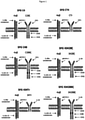
- a panel of CARs targeted against the CSF-1 receptor (encoded by c-FMS), which is over-expressed in Hodgkin's lymphoma, anaplastic large cell lymphoma and some solid tumours such as triple negative breast cancer were prepared and are illustrated schematically in Figure 1 .
- the panel of CARs included both second and third generation CARs with either of the two natural ligands, CSF-1 or IL-34, as the targeting moieties. Although both CSF-1 and IL-34 bind to CSF-1 receptor, IL-34 binds with much higher affinity (34-fold higher than CSF-1).
- the constructs SFG C28 ⁇ and SFG CTr were cloned in the SFG retroviral vector as NcoI/XhoI fragments, ensuring that their start codons are at the site of the naturally occurring NcoI site, previously occupied by the deleted env gene.
- Gene expression is achieved from the Moloney murine leukaemia virus (MoMLV) long terminal repeat (LTR), which has promoter activity and virus packaging of the RNA is ensured by the MoMLV ⁇ packaging signal, which is flanked by splice donor and acceptor sites.
- MoMLV Moloney murine leukaemia virus
- LTR long terminal repeat
- PIPE cloning method is a PCR-based alternative to conventional restriction enzyme- and ligation-dependent cloning methods. It eliminates the need to incorporate restriction sites, which could encode additional unwanted residues into expressed proteins.
- the PIPE method relies on the inefficiency of the amplification process in the final cycles of a PCR reaction, possibly due to the decreasing availability of dNTPs, which results in the generation of partially single-stranded (PIPE) PCR products with overhanging 5'ends.
- a set of vector-specific primers was used for PCR vector linearization and another set of primers with 5'-vector-end overlapping sequences then used for insert amplification, generating incomplete extension products by PIPE.
- the PIPE products were mixed and the single-stranded overlapping sequences annealed and assembled as a complete SFG CAR construct. Successful cloning was confirmed by diagnostic restriction digestion. DNA sequencing was performed on all constructs to confirm that the predicted coding sequence was present, without any PCR-induced mutations (Source Bioscience, UK).
- the panel included two "dual targeted” Chimeric Activating Receptors (pCARS) in which CSF-1 or IL-34 are coupled to 28z and 4-1BB, or vice versa.
- the dual targeted pCAR combinations were then stoichiometrically co-expressed in the same T-cell population using a Thosea Asigna (T)2A-containing retroviral vector.
- T Thosea Asigna
- One of these CARs was designated 'C34B' (CSF1-28z plus IL34-41BB) and the other was named '34CB' (IL34-28z plus CSF1-41BB).
- both co-stimulatory motifs (CD28/ 4-1BB) are placed in their natural location, close to the membrane, physically separated from each other and co-expressed in the same T-cell.
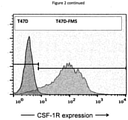
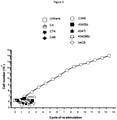
- the main focus of the experiments was to test the behaviour of the T-cells on repeated re-stimulation with tumour target cells that either express or lack the FMS/ CSF-1 receptor target.
- 1 million of the indicated IL-4 expanded CAR T-cells were suspended in RPMI + human AB serum and cultured with a confluent monolayer (24 well dish) of the antigen-expressing target (T47D FMS) or antigen null target (T47D).
- T-cells were cultured in the absence of any exogenous cytokine such as IL-2 or IL-4 - so they had to make their own cytokines in order to persist and expand.
- Cytokine (IFN- ⁇ and IL-2) production was measured by ELISA in supernatants harvested from T-cell/ tumour cell co-cultures, providing a second marker of effective co-stimulation.
- the controls are UT (untransduced), P4 (targets an irrelevant antigen, PSMA) and CT4 in which the endodomain is truncated. As expected, none of the CAR T-cells kill tumour cells that lack CSF-1 receptor (T47D).
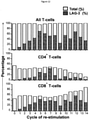
- FIG. 3 A representative re-stimulation experiment is shown in Figure 3 . Pooled re-stimulation data from 7 experiments is shown in Figure 4 .
- proliferation on the first cycle was similar for most of the constructs, although the IL-34 targeted second and third generation constructs were poorer. This may be because the affinity of the IL-34 targeting moiety is too high.
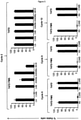
- exhaust markers on these T-cells (PD1, TIM3, 2B4 and LAG3) were also measured by flow cytometry. The results are shown in Figures 10-13 . As expected, the percentage of T cells that expressed various exhaustion markers progressively increased on the re-stimulated T-cells, but this did not retard the proliferation, tumour cell destruction or cytokine release by the C34B cells, upon antigen stimulation. This suggests that the superior function of C34B is not the result of delayed upregulation of exhaustion markers.
- the pCAR approach of the invention seems to maintain the cells in a state whereby they retain responsiveness to antigen through more cycles of re-stimulation. There are indications that it may retard differentiation beyond controlled memory state and it appears to delay the onset of anergy while retaining the ability of the cells to make IL-2 upon activation.
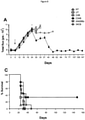
- a panel of CARs used in Example 1 above were tested for anti-tumour activity using a highly aggressive in vivo xenograft model in which the CSF-1 receptor target is expressed at low levels and in which disease is disseminated throughout lymph nodes ( Figure 7 ). Tumour cells were tagged with firefly luciferase, allowing the non-invasive monitoring of disease burden.
- SCID/Beige mice were randomised into 6 groups (9 animals per group combined over two independent experiments) and were inoculated intravenously (IV) with 2x10 6 K299 tumour cells, re-suspended in 200 ⁇ L PBS. On day 5, the groups were treated with one of the therapeutic regimens indicated below:
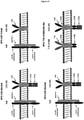
- a panel of CARs that target ⁇ v ⁇ 6 integrin alone or together with the extended ErbB family were prepared and are shown schematically in Figure 14 .
- the binding element used in this case was A20 peptide (SEQ ID NO 11) derived from the GH-loop of the capsid protein VP1 from Foot and Mouth Disease Virus (serotype 01 BFS)( US8,927,501 ). This was placed downstream of a CD124 signal peptide and fused to CD28 and CD3 ⁇ endodomains to form A20-28 ⁇ , a 2nd generation CAR.
- a control (C20-28 ⁇ ) was prepared comprising a similar construct but with a scrambled targeting peptide (named C20) in which the key RGDL motif was replaced with AAAA.
- a second control comprised A20 fused to a CD28 truncated endodomain (A20-Tr).
- A20-28z was co-expressed with a chimeric co-stimulatory receptor comprising a pan-ErbB targeted peptide (T1E) fused to a CD8 ⁇ transmembrane and a 41BB endodomain.
- T1E pan-ErbB targeted peptide
- CARs were co-expressed with the 4 ⁇ chimeric cytokine receptor to allow for IL-4-mediated enrichment in vitro.
- T Thosea Asigna
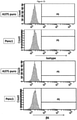
- the integrin expression pattern of cancer cell lines A375 was assessed using flow cytometry ( Figure 15 ), and these were separated into ⁇ v ⁇ 6-negative (Panc1 and A375 puro) or ⁇ v ⁇ 6-positive (Bxpc3 and A375 puro ⁇ 6) tumour cells. These cells were co-cultured with CAR T-cells at an effector:target ratio of 1:1 for either 24, 28 or 72 hours, after which time, cytotoxicity was assessed by MTT assay and expressed relative to untreated tumour cells. The results are shown in Figure 16 .
- A20-28z CAR T-cells kill all target cells that express ⁇ v ⁇ 6 integrin (Bxpc3 and A375 ⁇ 6 puro), but spare targets that lack this integrin (Panc1 and A375 puro).
- the control CARs C20-28z and A20-Tr are inactive in these assays.
- T-cells that express the T1E-41BB/ A20-28z pCAR cause efficient killing of target cells that express ⁇ v ⁇ 6 integrin (Bxpc3 and A375 ⁇ 6 puro). All of these results are as expected.
- T-cells that express the T1E-41BB/ A20-28z pCAR also cause the killing of target cells that lack ⁇ v ⁇ 6 (Panc1 and A375 puro). This indicates that, within a pCAR configuration, the ability of the A20 peptide to bind non- ⁇ v ⁇ 6 integrins with low affinity is sufficient to trigger the activation of these engineered T-cells.
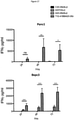
- Tumour cells that lacked ⁇ v ⁇ 6 (Panc1 and A375 puro) or expressed ⁇ v ⁇ 6 (Bxpc3 and A375 puro ⁇ 6) were co-cultured with genetically engineered T-cells at an effector:target ratio of 1:1 and supernatant was collected after 24, 48 or 72 hours. Levels of IFN- ⁇ were quantified by ELISA (eBioscience). The results are shown in Figure 17 .
- T-cells that express the pCAR of the invention TIE-41BB/A20z, produce more IFN- ⁇ than A20-28z T-cells when cultured with ⁇ v ⁇ 6-positive (Bxpc3) tumour cells.
- TIE-41BB/A20z + T-cells produced IFN- ⁇ when cultured with ⁇ v ⁇ 6-negative (Panc1 and A375 puro) tumour cells.
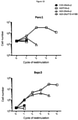
- T-cell populations were re-stimulated bi-weekly in the absence of IL-2 support on Panc1 ( ⁇ 6 negative) or Bxpc3 tumour cells ( ⁇ 6 positive).
- Tumour cells were co-cultured with CAR T-cells derived from a patient with pancreatic ductal adenocarcinoma (PDAC) at an effector:target ratio of 1:1 ( Figure 18 ).
- T-cells were initially added at 2x10 5 cells/well and were counted 72hrs after co-culture to assess expansion (top panels). Cytotoxicity was assessed at 72hrs post-addition of T-cells by MTT assay (bottom panels). If there were a sufficient number of T-cells (2x10 5 ), T-cells were re-stimulated on a fresh tumour monolayer and the process repeated a further 72hrs later.
- Results are shown in Figure 18 . These illustrate that A20-28z/T1E-41BB + T-cells undergo a number of rounds of expansion accompanied by IL-2 release (data not shown) and destruction of ⁇ 6 + Bxpc3 cells. Once again, they also underwent a number of rounds of expansion accompanied by IL-2 release and destruction of Panc1 tumour cells.
- additional pCARs were engineered in which the 41BB module was replaced by alternative members of the TNF receptor family, namely CD27 or CD40.
- Control pCARs were engineered in which endodomains were truncated (tr).
- Target cells that express (Bxpc3) or lack (Panc1) ⁇ v ⁇ 6 were plated at a density of 5x10 4 cells per well of a 24 well plate. After 24 hours, 5x10 4 pCAR T-cells were added to target cells or empty wells ("unstimulated”), without exogenous cytokine support.
- T-cells were harvested from the wells and were counted ( Figure 19A ).
- An MTT assay was performed to determine the percentage viability of the residual target cells, making comparison with control target cells that had been plated without addition of T-cells ( Figure 19B ). If T-cells proliferated after each cycle of stimulation, they were re-stimulated on fresh target cells, exactly as described above. Proliferation of pCAR T-cells ( Figure 19A ) and MTT assay ( Figure 19B ) were performed after 72 hours as before. Iterative re-stimulation of pCAR T-cells and assessment of target cell killing was continued in this manner until T-cells no longer proliferated over the course of each 72 hour cycle.
Landscapes
- Health & Medical Sciences (AREA)
- Life Sciences & Earth Sciences (AREA)
- Chemical & Material Sciences (AREA)
- Organic Chemistry (AREA)
- General Health & Medical Sciences (AREA)
- Immunology (AREA)
- Zoology (AREA)
- Genetics & Genomics (AREA)
- Biochemistry (AREA)
- Medicinal Chemistry (AREA)
- Biophysics (AREA)
- Molecular Biology (AREA)
- Proteomics, Peptides & Aminoacids (AREA)
- Gastroenterology & Hepatology (AREA)
- Toxicology (AREA)
- Public Health (AREA)
- Animal Behavior & Ethology (AREA)
- Veterinary Medicine (AREA)
- Epidemiology (AREA)
- Cell Biology (AREA)
- Engineering & Computer Science (AREA)
- Biomedical Technology (AREA)
- Biotechnology (AREA)
- Wood Science & Technology (AREA)
- Bioinformatics & Cheminformatics (AREA)
- Hematology (AREA)
- General Engineering & Computer Science (AREA)
- Microbiology (AREA)
- Pharmacology & Pharmacy (AREA)
- Developmental Biology & Embryology (AREA)
- Virology (AREA)
- Nuclear Medicine, Radiotherapy & Molecular Imaging (AREA)
- General Chemical & Material Sciences (AREA)
- Chemical Kinetics & Catalysis (AREA)
- Oncology (AREA)
- Micro-Organisms Or Cultivation Processes Thereof (AREA)
- Medicines Containing Material From Animals Or Micro-Organisms (AREA)
- Peptides Or Proteins (AREA)
- Medicines That Contain Protein Lipid Enzymes And Other Medicines (AREA)
Applications Claiming Priority (3)
| Application Number | Priority Date | Filing Date | Title |
|---|---|---|---|
| GBGB1513540.3A GB201513540D0 (en) | 2015-07-31 | 2015-07-31 | Therapeutic agents |
| PCT/GB2016/052324 WO2017021701A1 (en) | 2015-07-31 | 2016-07-28 | Therapeutic agents |
| EP16750211.1A EP3328880B1 (en) | 2015-07-31 | 2016-07-28 | Therapeutic agents |
Related Parent Applications (2)
| Application Number | Title | Priority Date | Filing Date |
|---|---|---|---|
| EP16750211.1A Division-Into EP3328880B1 (en) | 2015-07-31 | 2016-07-28 | Therapeutic agents |
| EP16750211.1A Division EP3328880B1 (en) | 2015-07-31 | 2016-07-28 | Therapeutic agents |
Publications (1)
| Publication Number | Publication Date |
|---|---|
| EP3939992A1 true EP3939992A1 (en) | 2022-01-19 |
Family
ID=54062973
Family Applications (2)
| Application Number | Title | Priority Date | Filing Date |
|---|---|---|---|
| EP21177321.3A Withdrawn EP3939992A1 (en) | 2015-07-31 | 2016-07-28 | Therapeutic agents |
| EP16750211.1A Active EP3328880B1 (en) | 2015-07-31 | 2016-07-28 | Therapeutic agents |
Family Applications After (1)
| Application Number | Title | Priority Date | Filing Date |
|---|---|---|---|
| EP16750211.1A Active EP3328880B1 (en) | 2015-07-31 | 2016-07-28 | Therapeutic agents |
Country Status (14)
| Country | Link |
|---|---|
| US (6) | US10703794B2 (https=) |
| EP (2) | EP3939992A1 (https=) |
| JP (2) | JP7053037B2 (https=) |
| KR (1) | KR102411571B1 (https=) |
| CN (1) | CN107735407B (https=) |
| AU (1) | AU2016303355B2 (https=) |
| DK (1) | DK3328880T3 (https=) |
| ES (1) | ES2883633T3 (https=) |
| GB (1) | GB201513540D0 (https=) |
| IL (1) | IL256511B (https=) |
| MX (1) | MX2018001009A (https=) |
| RU (1) | RU2747733C1 (https=) |
| SG (1) | SG10201912416QA (https=) |
| WO (1) | WO2017021701A1 (https=) |
Families Citing this family (44)
| Publication number | Priority date | Publication date | Assignee | Title |
|---|---|---|---|---|
| EP2948544A4 (en) | 2013-01-28 | 2016-08-03 | St Jude Childrens Res Hospital | CHIMERIC RECEPTOR WITH NKG2D SPECIFICITY FOR CELL THERAPY AGAINST CANCER AND INFECTION DISEASES |
| DK3143134T3 (da) | 2014-05-15 | 2021-01-04 | Nat Univ Singapore | Modificerede, naturlige dræberceller og anvendelser deraf |
| GB201513540D0 (en) | 2015-07-31 | 2015-09-16 | King S College London | Therapeutic agents |
| GB201514874D0 (en) | 2015-08-20 | 2015-10-07 | Autolus Ltd | Cell |
| CA3045339A1 (en) | 2016-12-03 | 2018-06-07 | Juno Therapeutics, Inc. | Methods and compositions for use of therapeutic t cells in combination with kinase inhibitors |
| EP3336107A1 (en) * | 2016-12-15 | 2018-06-20 | Miltenyi Biotec GmbH | Immune cells expressing an antigen binding receptor and a chimeric costimulatory receptor |
| AU2017383142A1 (en) | 2016-12-22 | 2019-07-04 | Università Degli Studi Magna Graecia Catanzaro | A monoclonal antibody targeting a unique sialoglycosilated cancer-associated epitope of CD43 |
| CA3056591A1 (en) | 2017-03-27 | 2018-10-04 | National University Of Singapore | Stimulatory cell lines for ex vivo expansion and activation of natural killer cells |
| BR112019019917A2 (pt) | 2017-03-27 | 2020-04-22 | Nat Univ Singapore | receptores quiméricos nkg2d truncados e seus usos em imunoterapia de células exterminadoras naturais |
| AU2018275894B2 (en) | 2017-06-02 | 2025-04-24 | Juno Therapeutics, Inc. | Articles of manufacture and methods for treatment using adoptive cell therapy |
| US20200216515A1 (en) * | 2017-07-26 | 2020-07-09 | Cellectis | Methods of antigen-dependent chimeric antigen receptor (car) immune cell selection |
| CN109971724B (zh) * | 2017-12-28 | 2023-10-31 | 上海细胞治疗研究院 | 靶向ErbB受体家族且自表达PD-1抗体的CAR-T细胞及其用途 |
| EP3749685A4 (en) | 2018-02-09 | 2021-12-22 | National University of Singapore | ACTIVATOR CHEMERIC RECEPTORS AND THEIR USES IN NATURAL KILLING CELL IMMUNOTHERAPY |
| JP7334985B2 (ja) | 2018-04-02 | 2023-08-29 | ナショナル ユニヴァーシティー オブ シンガポール | 免疫細胞で発現される膜結合抗サイトカイン非シグナル伝達バインダーによるヒトサイトカインの中和 |
| CN110615842B (zh) * | 2018-06-20 | 2023-05-09 | 上海隆耀生物科技有限公司 | 一种包含共刺激受体的嵌合抗原受体及应用 |
| EP3587454A1 (en) * | 2018-06-27 | 2020-01-01 | Albert-Ludwigs-Universität Freiburg | Chimeric antigen receptors that bind to prostate specific membrane antigen |
| EP3844186A4 (en) | 2018-08-29 | 2022-08-17 | National University of Singapore | METHOD OF SPECIFIC STIMULATION OF SURVIVAL AND EXPANSION OF GENETICALLY MODIFIED IMMUNE CELLS |
| CA3120563A1 (en) | 2018-11-26 | 2020-06-04 | Nkarta, Inc. | Methods for the simultaneous expansion of multiple immune cell types, related compositions and uses of same in cancer immunotherapy |
| GB201900858D0 (en) * | 2019-01-22 | 2019-03-13 | Price Nicola Kaye | Receptors providing targeted costimulation for adoptive cell therapy |
| GB201902277D0 (en) | 2019-02-19 | 2019-04-03 | King S College London | Therapeutic agents |
| EP3773918A4 (en) | 2019-03-05 | 2022-01-05 | Nkarta, Inc. | CD19 DIRECTED CHIMERIC ANTIGEN RECEPTORS AND THEIR USES IN IMMUNOTHERAPY |
| WO2020183158A1 (en) | 2019-03-11 | 2020-09-17 | Leucid Bio Ltd | MUC1 PARALLEL CAR (pCAR) THERAPEUTIC AGENTS |
| TW202110873A (zh) | 2019-04-30 | 2021-03-16 | 美商聖堤生物科技股份有限公司 | 嵌合受體及其使用方法 |
| AU2020327671A1 (en) * | 2019-08-13 | 2022-03-03 | King's College London | Immunoresponsive cells armoured with spatiotemporally restricted activity of cytokines of the IL-1 superfamily |
| EP4021485A1 (en) * | 2019-08-28 | 2022-07-06 | King's College London | B cell targeted parallel car (pcar) therapeutic agents |
| GB202003277D0 (en) | 2020-03-06 | 2020-04-22 | King S College London | Therapeutic agents |
| AU2021255702A1 (en) * | 2020-04-17 | 2022-11-17 | Regeneron Pharmaceuticals, Inc. | Modified CCR polypeptides and uses thereof |
| AU2021312871A1 (en) * | 2020-07-21 | 2023-02-09 | Allogene Therapeutics, Inc. | Chimeric antigen receptors with enhanced signaling and activities and uses thereof |
| WO2022036495A1 (en) | 2020-08-17 | 2022-02-24 | Utc Therapeutics Inc. | Lymphocytes-antigen presenting cells co-stimulators and uses thereof |
| WO2022083668A1 (en) * | 2020-10-21 | 2022-04-28 | Nanjing Legend Biotech Co., Ltd. | Use of a chimeric co-stimulatory receptor for cell therapy |
| US20240342282A1 (en) * | 2021-08-13 | 2024-10-17 | Ludwig-Maximilians-Universität München | Anti-csf1r car expressing lymphocytes for targeted tumor therapy |
| CA3229493A1 (en) * | 2021-08-18 | 2023-02-23 | Legend Biotech Ireland Limited | Modified immune cells expressing tlr receptors |
| JP7732840B2 (ja) * | 2021-10-14 | 2025-09-02 | 株式会社三共 | 遊技機 |
| JP7732842B2 (ja) * | 2021-10-14 | 2025-09-02 | 株式会社三共 | 遊技機 |
| JP7732843B2 (ja) * | 2021-10-14 | 2025-09-02 | 株式会社三共 | 遊技機 |
| JP7732841B2 (ja) * | 2021-10-14 | 2025-09-02 | 株式会社三共 | 遊技機 |
| JP7732839B2 (ja) * | 2021-10-14 | 2025-09-02 | 株式会社三共 | 遊技機 |
| IL312795A (en) | 2021-11-15 | 2024-07-01 | Neogene Therapeutics B V | Transgenic T cells with reduced signaling from TGF-BETA receptors |
| WO2023129929A1 (en) | 2021-12-30 | 2023-07-06 | Tr1X, Inc. | Cd4+ t cells expressing il-10 and chimeric antigen receptors and uses thereof |
| CN118510814A (zh) * | 2022-05-10 | 2024-08-16 | 星尘生物科技(上海)有限公司 | 一种嵌合抗原受体及其应用 |
| CN116804210A (zh) * | 2022-12-08 | 2023-09-26 | 复旦大学附属中山医院 | 一种肠道病毒载体及其应用 |
| EP4687957A1 (en) | 2023-04-05 | 2026-02-11 | King's College London | Parallel chimeric antigen receptors (pcars) and adaptor chimeric antigen receptors comprising alternative signalling domains and methods of use thereof |
| GB202403718D0 (en) | 2024-03-14 | 2024-05-01 | King S College London | Therapeutic agents |
| WO2026015450A1 (en) | 2024-07-06 | 2026-01-15 | Tr1X, Inc. | Cd4+ t cells expressing il-10 and chimeric antigen receptors and uses thereof |
Citations (3)
| Publication number | Priority date | Publication date | Assignee | Title |
|---|---|---|---|---|
| US7446190B2 (en) | 2002-05-28 | 2008-11-04 | Sloan-Kettering Institute For Cancer Research | Nucleic acids encoding chimeric T cell receptors |
| US8383593B2 (en) | 2005-10-03 | 2013-02-26 | Cancer Research Technology Limited | αvβ6 peptide ligands and their uses |
| WO2014055668A1 (en) * | 2012-10-02 | 2014-04-10 | Memorial Sloan-Kettering Cancer Center | Compositions and methods for immunotherapy |
Family Cites Families (30)
| Publication number | Priority date | Publication date | Assignee | Title |
|---|---|---|---|---|
| ATE297986T1 (de) * | 1995-02-24 | 2005-07-15 | Gen Hospital Corp | Neuorientierung der zellulären immunität durch rezeptorchimären |
| SI2856876T1 (en) | 2007-03-30 | 2018-04-30 | Memorial Sloan-Kettering Cancer Center | Constitutive expression of costimulatory ligands on adoptively transferred T lymphocytes |
| WO2010085660A2 (en) | 2009-01-23 | 2010-07-29 | Roger Williams Hospital | Viral vectors encoding multiple highly homologous non-viral polypeptides and the use of same |
| CA2776143A1 (en) | 2009-10-01 | 2011-04-07 | The United States Of America, As Represented By The Secretary, Departmen T Of Health And Human Services | Anti-vascular endothelial growth factor receptor-2 chimeric antigen receptors and use of same for the treatment of cancer |
| US9987308B2 (en) | 2011-03-23 | 2018-06-05 | Fred Hutchinson Cancer Research Center | Method and compositions for cellular immunotherapy |
| MX2014001222A (es) | 2011-07-29 | 2014-09-15 | Univ Pennsylvania | Receptores coestimuladores de cambio. |
| WO2013033626A2 (en) | 2011-08-31 | 2013-03-07 | Trustees Of Dartmouth College | Nkp30 receptor targeted therapeutics |
| EP2817330B1 (en) | 2012-02-22 | 2020-07-08 | The Trustees of the University of Pennsylvania | Use of icos-based cars to enhance antitumor activity and car persistence |
| WO2013126729A1 (en) | 2012-02-22 | 2013-08-29 | The Trustees Of The University Of Pennsylvania | Use of the cd2 signaling domain in second-generation chimeric antigen receptors |
| CN103483452B (zh) | 2012-06-12 | 2021-08-13 | 上海细胞治疗集团有限公司 | 双信号独立的嵌合抗原受体及其用途 |
| MX367730B (es) | 2012-09-04 | 2019-09-04 | Cellectis | Receptor de antigeno quimerico multi-cadena y usos del mismo. |
| WO2014055442A2 (en) | 2012-10-01 | 2014-04-10 | The Trustees Of The University Of Pennsylvania | Compositions and methods for targeting stromal cells for the treatment of cancer |
| WO2014055657A1 (en) | 2012-10-05 | 2014-04-10 | The Trustees Of The University Of Pennsylvania | Use of a trans-signaling approach in chimeric antigen receptors |
| CN113005091A (zh) | 2013-02-06 | 2021-06-22 | 细胞基因公司 | 具有改进特异性的修饰的t淋巴细胞 |
| DK2956175T3 (da) | 2013-02-15 | 2017-11-27 | Univ California | Kimærisk antigenreceptor og fremgangsmåder til anvendelse deraf |
| US20160017286A1 (en) | 2013-03-06 | 2016-01-21 | The Trustees Of The University Of Pennsylvania | Ikaros inhibition to augment adoptive t cell transfer |
| WO2014164544A1 (en) | 2013-03-09 | 2014-10-09 | Baylor College Of Medicine | Vascular-targeted t-cell therapy |
| CA2905352A1 (en) | 2013-03-14 | 2014-09-25 | Bellicum Pharmaceuticals, Inc. | Methods for controlling t cell proliferation |
| US10584158B2 (en) | 2013-04-17 | 2020-03-10 | Baylor College Of Medicine | Immunosuppressive TGF-β signal converter |
| CN105873952A (zh) | 2013-10-31 | 2016-08-17 | 弗莱德哈钦森癌症研究中心 | 经修饰的造血干细胞/祖细胞和非t效应细胞及其用途 |
| MX373687B (es) | 2013-11-21 | 2020-07-07 | Ucl Business Ltd | Célula natural (nk) |
| EP3087101B1 (en) | 2013-12-20 | 2024-06-05 | Novartis AG | Regulatable chimeric antigen receptor |
| WO2015099604A1 (en) * | 2013-12-26 | 2015-07-02 | Agrawal Avichal | A fluid handling device and a method of heating or cooling a fluid flow |
| US20170233452A1 (en) | 2014-04-23 | 2017-08-17 | Immusoft Corporation | Chimeric antigen receptors specific to avb6 integrin and methods of use thereof to treat cancer |
| KR20170032406A (ko) | 2014-07-15 | 2017-03-22 | 주노 쎄러퓨티크스 인코퍼레이티드 | 입양 세포 치료를 위한 조작된 세포 |
| BR112017001183A2 (pt) | 2014-07-21 | 2017-11-28 | Novartis Ag | tratamento de câncer usando receptor de antígeno quimérico anti-bcma humanizado |
| US10828353B2 (en) | 2015-01-31 | 2020-11-10 | The Trustees Of The University Of Pennsylvania | Compositions and methods for T cell delivery of therapeutic molecules |
| WO2016196388A1 (en) | 2015-05-29 | 2016-12-08 | Juno Therapeutics, Inc. | Composition and methods for regulating inhibitory interactions in genetically engineered cells |
| GB201513540D0 (en) * | 2015-07-31 | 2015-09-16 | King S College London | Therapeutic agents |
| WO2020183158A1 (en) * | 2019-03-11 | 2020-09-17 | Leucid Bio Ltd | MUC1 PARALLEL CAR (pCAR) THERAPEUTIC AGENTS |
-
2015
- 2015-07-31 GB GBGB1513540.3A patent/GB201513540D0/en not_active Ceased
-
2016
- 2016-07-28 CN CN201680039617.1A patent/CN107735407B/zh active Active
- 2016-07-28 US US15/749,016 patent/US10703794B2/en active Active
- 2016-07-28 ES ES16750211T patent/ES2883633T3/es active Active
- 2016-07-28 EP EP21177321.3A patent/EP3939992A1/en not_active Withdrawn
- 2016-07-28 SG SG10201912416QA patent/SG10201912416QA/en unknown
- 2016-07-28 JP JP2018503642A patent/JP7053037B2/ja active Active
- 2016-07-28 MX MX2018001009A patent/MX2018001009A/es unknown
- 2016-07-28 KR KR1020187005607A patent/KR102411571B1/ko active Active
- 2016-07-28 DK DK16750211.1T patent/DK3328880T3/da active
- 2016-07-28 RU RU2018105137A patent/RU2747733C1/ru active
- 2016-07-28 AU AU2016303355A patent/AU2016303355B2/en active Active
- 2016-07-28 EP EP16750211.1A patent/EP3328880B1/en active Active
- 2016-07-28 WO PCT/GB2016/052324 patent/WO2017021701A1/en not_active Ceased
-
2017
- 2017-12-24 IL IL256511A patent/IL256511B/en unknown
-
2020
- 2020-05-18 US US16/877,008 patent/US10899818B2/en active Active
- 2020-05-18 US US16/877,035 patent/US10865231B2/en active Active
- 2020-12-10 US US17/118,045 patent/US11802143B2/en active Active
-
2021
- 2021-07-09 JP JP2021114022A patent/JP2021168675A/ja active Pending
-
2023
- 2023-09-22 US US18/472,441 patent/US12612445B2/en active Active
-
2024
- 2024-01-22 US US18/418,864 patent/US12509499B2/en active Active
Patent Citations (4)
| Publication number | Priority date | Publication date | Assignee | Title |
|---|---|---|---|---|
| US7446190B2 (en) | 2002-05-28 | 2008-11-04 | Sloan-Kettering Institute For Cancer Research | Nucleic acids encoding chimeric T cell receptors |
| US8383593B2 (en) | 2005-10-03 | 2013-02-26 | Cancer Research Technology Limited | αvβ6 peptide ligands and their uses |
| US8927501B2 (en) | 2005-10-03 | 2015-01-06 | Cancer Research Technology Limited | αvβ6 peptide ligands and their uses |
| WO2014055668A1 (en) * | 2012-10-02 | 2014-04-10 | Memorial Sloan-Kettering Cancer Center | Compositions and methods for immunotherapy |
Non-Patent Citations (8)
| Title |
|---|
| CHRISTOPHER C KLOSS ET AL: "Combinatorial antigen recognition with balanced signaling promotes selective tumor eradication by engineered T cells", NATURE BIOTECHNOLOGY, vol. 31, no. 1, 16 December 2012 (2012-12-16), US, pages 71 - 75, XP055130697, ISSN: 1087-0156, DOI: 10.1038/nbt.2459 * |
| E. LANITIS ET AL: "Chimeric Antigen Receptor T Cells with Dissociated Signaling Domains Exhibit Focused Antitumor Activity with Reduced Potential for Toxicity In Vivo", CANCER IMMUNOLOGY RESEARCH, vol. 1, no. 1, 7 April 2013 (2013-04-07), pages 43 - 53, XP055170367, ISSN: 2326-6066, DOI: 10.1158/2326-6066.CIR-13-0008 * |
| KIEBACK ET AL., PROC. NATL. ACAD. SCI. USA, vol. 105, no. 2, 2008, pages 623 - 8 |
| KLOSS ET AL., NATURE BIOTECHNOLOGY, 2012 |
| LO ET AL: "Harnessing the tumour-derived cytokine, CSF-1, to co-stimulate T-cell growth and activation", MOLECULAR IMMUNOLOGY, PERGAMON, GB, vol. 45, no. 5, 24 October 2007 (2007-10-24), pages 1276 - 1287, XP022402160, ISSN: 0161-5890, DOI: 10.1016/J.MOLIMM.2007.09.010 * |
| LOVE ET AL.: "Biol", vol. 2, 2010, COLD SPRING HARBOR PERSPECT, pages: 1 a002485 |
| ORLANDI ET AL., PROC. NATL ACAD. SCI. (USA, vol. 86, 1989, pages 3833 - 3837 |
| PACE C. N.SCHOLTZ J. M., BIOPHYSICAL JOURNAL, vol. 75, 1998, pages 422 - 427 |
Also Published As
Similar Documents
| Publication | Publication Date | Title |
|---|---|---|
| US12509499B2 (en) | Therapeutic agents | |
| AU2023201197A1 (en) | Chimeric transmembrane proteins and uses thereof | |
| US20220152103A1 (en) | MUC1 PARALLEL CAR (pCAR) THERAPEUTIC AGENTS | |
| US12534507B2 (en) | B cell targeted parallel car (pCAR) therapeutic agents | |
| JP2025511872A (ja) | 多部位受容体及びシグナル伝達複合体 | |
| CA2993746C (en) | Therapeutic agents | |
| HK1256383B (en) | Therapeutic agents |
Legal Events
| Date | Code | Title | Description |
|---|---|---|---|
| PUAI | Public reference made under article 153(3) epc to a published international application that has entered the european phase |
Free format text: ORIGINAL CODE: 0009012 |
|
| STAA | Information on the status of an ep patent application or granted ep patent |
Free format text: STATUS: THE APPLICATION HAS BEEN PUBLISHED |
|
| AC | Divisional application: reference to earlier application |
Ref document number: 3328880 Country of ref document: EP Kind code of ref document: P |
|
| AK | Designated contracting states |
Kind code of ref document: A1 Designated state(s): AL AT BE BG CH CY CZ DE DK EE ES FI FR GB GR HR HU IE IS IT LI LT LU LV MC MK MT NL NO PL PT RO RS SE SI SK SM TR |
|
| STAA | Information on the status of an ep patent application or granted ep patent |
Free format text: STATUS: THE APPLICATION IS DEEMED TO BE WITHDRAWN |
|
| 18D | Application deemed to be withdrawn |
Effective date: 20220720 |