EP3933596A1 - Verfahren zur fehlererkennung und rollenauswahl in einem netzwerk von redundanten prozessen - Google Patents
Verfahren zur fehlererkennung und rollenauswahl in einem netzwerk von redundanten prozessen Download PDFInfo
- Publication number
- EP3933596A1 EP3933596A1 EP20183508.9A EP20183508A EP3933596A1 EP 3933596 A1 EP3933596 A1 EP 3933596A1 EP 20183508 A EP20183508 A EP 20183508A EP 3933596 A1 EP3933596 A1 EP 3933596A1
- Authority
- EP
- European Patent Office
- Prior art keywords
- processes
- network
- heartbeat
- priority
- supervising
- Prior art date
- Legal status (The legal status is an assumption and is not a legal conclusion. Google has not performed a legal analysis and makes no representation as to the accuracy of the status listed.)
- Granted
Links
Images




Classifications
-
- G—PHYSICS
- G06—COMPUTING OR CALCULATING; COUNTING
- G06F—ELECTRIC DIGITAL DATA PROCESSING
- G06F11/00—Error detection; Error correction; Monitoring
- G06F11/30—Monitoring
- G06F11/3055—Monitoring arrangements for monitoring the status of the computing system or of the computing system component, e.g. monitoring if the computing system is on, off, available, not available
-
- G—PHYSICS
- G06—COMPUTING OR CALCULATING; COUNTING
- G06F—ELECTRIC DIGITAL DATA PROCESSING
- G06F11/00—Error detection; Error correction; Monitoring
- G06F11/07—Responding to the occurrence of a fault, e.g. fault tolerance
- G06F11/16—Error detection or correction of the data by redundancy in hardware
- G06F11/20—Error detection or correction of the data by redundancy in hardware using active fault-masking, e.g. by switching out faulty elements or by switching in spare elements
- G06F11/202—Error detection or correction of the data by redundancy in hardware using active fault-masking, e.g. by switching out faulty elements or by switching in spare elements where processing functionality is redundant
- G06F11/2023—Failover techniques
- G06F11/2028—Failover techniques eliminating a faulty processor or activating a spare
-
- H—ELECTRICITY
- H04—ELECTRIC COMMUNICATION TECHNIQUE
- H04L—TRANSMISSION OF DIGITAL INFORMATION, e.g. TELEGRAPHIC COMMUNICATION
- H04L43/00—Arrangements for monitoring or testing data switching networks
- H04L43/10—Active monitoring, e.g. heartbeat, ping or trace-route
-
- G—PHYSICS
- G06—COMPUTING OR CALCULATING; COUNTING
- G06F—ELECTRIC DIGITAL DATA PROCESSING
- G06F11/00—Error detection; Error correction; Monitoring
- G06F11/07—Responding to the occurrence of a fault, e.g. fault tolerance
- G06F11/0703—Error or fault processing not based on redundancy, i.e. by taking additional measures to deal with the error or fault not making use of redundancy in operation, in hardware, or in data representation
- G06F11/0706—Error or fault processing not based on redundancy, i.e. by taking additional measures to deal with the error or fault not making use of redundancy in operation, in hardware, or in data representation the processing taking place on a specific hardware platform or in a specific software environment
- G06F11/0721—Error or fault processing not based on redundancy, i.e. by taking additional measures to deal with the error or fault not making use of redundancy in operation, in hardware, or in data representation the processing taking place on a specific hardware platform or in a specific software environment within a central processing unit [CPU]
-
- G—PHYSICS
- G06—COMPUTING OR CALCULATING; COUNTING
- G06F—ELECTRIC DIGITAL DATA PROCESSING
- G06F11/00—Error detection; Error correction; Monitoring
- G06F11/07—Responding to the occurrence of a fault, e.g. fault tolerance
- G06F11/0703—Error or fault processing not based on redundancy, i.e. by taking additional measures to deal with the error or fault not making use of redundancy in operation, in hardware, or in data representation
- G06F11/0751—Error or fault detection not based on redundancy
- G06F11/0754—Error or fault detection not based on redundancy by exceeding limits
- G06F11/0757—Error or fault detection not based on redundancy by exceeding limits by exceeding a time limit, i.e. time-out, e.g. watchdogs
-
- G—PHYSICS
- G06—COMPUTING OR CALCULATING; COUNTING
- G06F—ELECTRIC DIGITAL DATA PROCESSING
- G06F11/00—Error detection; Error correction; Monitoring
- G06F11/07—Responding to the occurrence of a fault, e.g. fault tolerance
- G06F11/14—Error detection or correction of the data by redundancy in operations
- G06F11/1402—Saving, restoring, recovering or retrying
- G06F11/1415—Saving, restoring, recovering or retrying at system level
- G06F11/142—Reconfiguring to eliminate the error
- G06F11/1425—Reconfiguring to eliminate the error by reconfiguration of node membership
-
- G—PHYSICS
- G06—COMPUTING OR CALCULATING; COUNTING
- G06F—ELECTRIC DIGITAL DATA PROCESSING
- G06F11/00—Error detection; Error correction; Monitoring
- G06F11/07—Responding to the occurrence of a fault, e.g. fault tolerance
- G06F11/14—Error detection or correction of the data by redundancy in operations
- G06F11/1479—Generic software techniques for error detection or fault masking
- G06F11/1482—Generic software techniques for error detection or fault masking using middleware or operating system [OS] functionalities
-
- G—PHYSICS
- G06—COMPUTING OR CALCULATING; COUNTING
- G06F—ELECTRIC DIGITAL DATA PROCESSING
- G06F11/00—Error detection; Error correction; Monitoring
- G06F11/07—Responding to the occurrence of a fault, e.g. fault tolerance
- G06F11/16—Error detection or correction of the data by redundancy in hardware
- G06F11/20—Error detection or correction of the data by redundancy in hardware using active fault-masking, e.g. by switching out faulty elements or by switching in spare elements
- G06F11/202—Error detection or correction of the data by redundancy in hardware using active fault-masking, e.g. by switching out faulty elements or by switching in spare elements where processing functionality is redundant
- G06F11/2023—Failover techniques
- G06F11/2025—Failover techniques using centralised failover control functionality
-
- G—PHYSICS
- G06—COMPUTING OR CALCULATING; COUNTING
- G06F—ELECTRIC DIGITAL DATA PROCESSING
- G06F11/00—Error detection; Error correction; Monitoring
- G06F11/07—Responding to the occurrence of a fault, e.g. fault tolerance
- G06F11/16—Error detection or correction of the data by redundancy in hardware
- G06F11/20—Error detection or correction of the data by redundancy in hardware using active fault-masking, e.g. by switching out faulty elements or by switching in spare elements
- G06F11/202—Error detection or correction of the data by redundancy in hardware using active fault-masking, e.g. by switching out faulty elements or by switching in spare elements where processing functionality is redundant
- G06F11/2035—Error detection or correction of the data by redundancy in hardware using active fault-masking, e.g. by switching out faulty elements or by switching in spare elements where processing functionality is redundant without idle spare hardware
-
- H—ELECTRICITY
- H04—ELECTRIC COMMUNICATION TECHNIQUE
- H04L—TRANSMISSION OF DIGITAL INFORMATION, e.g. TELEGRAPHIC COMMUNICATION
- H04L1/00—Arrangements for detecting or preventing errors in the information received
- H04L1/22—Arrangements for detecting or preventing errors in the information received using redundant apparatus to increase reliability
-
- H—ELECTRICITY
- H04—ELECTRIC COMMUNICATION TECHNIQUE
- H04L—TRANSMISSION OF DIGITAL INFORMATION, e.g. TELEGRAPHIC COMMUNICATION
- H04L41/00—Arrangements for maintenance, administration or management of data switching networks, e.g. of packet switching networks
- H04L41/06—Management of faults, events, alarms or notifications
- H04L41/0654—Management of faults, events, alarms or notifications using network fault recovery
- H04L41/0668—Management of faults, events, alarms or notifications using network fault recovery by dynamic selection of recovery network elements, e.g. replacement by the most appropriate element after failure
Definitions
- the present invention generally relates to a method for failure detection and role selection for a process in a network of redundant processes, and to a control unit for executing a process in a network of redundant processes, and to a corresponding computer program product.
- DCSs Distributed Control Systems
- Such applications may for example be in the oil industry and relate to production of petroleum products and extraction of oil from oil wells where downtime is costly.
- An often-used way to reduce downtime is to have multiples of critical hardware, such as for example controller duplication.
- a commonly used scheme is the M out of N pattern, where N nodes are ready to take over for M operative nodes.
- redundancy schemes are typically one out of two, meaning that there is a backup ready to take over if the primary node fails.
- the communication between the two hardware units is typically realized over a dedicated, purpose fit, redundancy link. This link allows for using dedicated wires for failure detection, that is, if the primary would fail, hardware support could ensure that the backup detects this.
- redundancy purposes such as links for redundancy communication.
- generic communication means are to be used, such as Ethernet.
- redundancy this allows for redundant control application deployment and hosting in a variety of platforms, such as industrial PCs, cloud servers, or edge devices. It also opens for flexible redundancy configuration in which a primary could have N number of backups, or that a computationally powerful server could act as backup for multiple primary controllers.
- a method for failure detection and role selection for a process in a network of redundant processes comprising a primary process being configured to transmit a heartbeat signal with a predetermined interval to the processes of the network, the method comprising: in response to a supervising process in the network not receiving a heartbeat from a primary process within a predetermined time interval, transmitting, by the supervising process, a heartbeat with a reveal command to other processes in the network, the reveal command prompting processes with priority higher than the priority of the supervising process to transmit a heartbeat; receiving heartbeats from the processes with higher priority than the supervising process, wherein the process with highest priority takes the role of primary process, or if the supervising process does not receive a heartbeat, take the role as primary.
- the present invention is at least partly based on the realization to utilize heartbeats for both failure detection and role selection.
- heartbeats which are often used in process networks to indicate normal operation of a process, are used for failure detection and role selection without the need for any other messaging. For example, there is no need for dedicated request-response handling for selecting a new primary.
- a heartbeat is per se known to the skilled person, and is often used for synchronization of different parts in a computer system or for indicating normal operation of a process.
- a heartbeat is a periodic signal transmitted between processes.
- Communication between processes, i.e. for transmitting heartbeats may be performed using hardwired communication such as Ethernet, or wireless solutions such as Wifi, Bluetooth, 3G-5G, etc. Further, the processes may operate on the same control unit, i.e. on the same processor, whereby software means and protocols are used for allowing the processes to communicate with each other. It should be understood that heartbeat transmission between software modules is known per se and the skilled person can foresee various ways of enabling such transmission.
- the failure detection is based on a heartbeat transmitted with a certain interval from a supervised process, i.e. a primary process.
- the supervising processes assume that a heartbeat should be observed within a certain interval. If no heartbeat message is received within this interval, the supervised process is assumed to have failed.
- the role selection is based on the heartbeat exchanged by the failure detection, i.e. no additional message is needed.
- the heartbeats used for failure detection can also be used for the role selection by means of message fields in the heartbeats.
- a role is herein the role that a certain process has in the network, where being a primary process is one such role.
- a primary process is the process responsible for a given task, and the other processes are redundant processes that may take over as primary, depending on e.g. a priority level of a given process.
- a transmitted heartbeat may be a multicast heartbeat.
- the heartbeat is sent in a one-to-many manner to all the processes in the network.
- a network of redundant processes may be a network centric process control system.
- a “process” should be interpreted broadly and generally includes a computer program and the activity or service provided by the computer program.
- a process may thus refer to an instantiation and execution of a computer program product.
- a process requires CPU time and memory to execute the computer program product.
- a process may be hosted on a controller, on a computer device such as a PC, or on a so-called Edge device.
- a process may be driven by any device or module that can drive execution of a computer program product.
- each process may be considered a node in the network.
- Each node may comprise a processor and a computer program product storing instructions that, when executed by the processor, causes the node to run the instructions to provide an activity or service.
- the controller/processor hosts several nodes, each node comprising a computer program product storing instructions that, when executed by the processor, causes the node to run the instructions to provide an activity or service.
- the method may comprise taking, by at least one other process in the network, a secondary role based on the priority order of the at least one other process.
- a secondary role based on the priority order of the at least one other process.
- the secondary role may be a backup role indicating a process being prospect for taking the role of primary process.
- One or more processes may take the role as backup process.
- a process maintains the backup role and is continuously updated with states from the primary process, i.e. it receives heartbeats from the primary process, so that a process being a backup process is ready to take over as primary process.
- the heartbeats transmitted in response to the reveal command may be received by at least each of the processes in the subset of processes, whereby all the processes that received the response heartbeat are informed of the new primary process. Accordingly, due to the multicast heartbeat, information of the new primary is efficiently transmitted to all the processes.
- a heartbeat message may for example comprise a message field with information indicating the priority of the process that multicasted the heartbeat. Accordingly, since the heartbeats are continuously multicasted, the processes in the network are continuously informed of the priority level of the processes in the network.
- the heartbeats transmittable by the processes may comprise message fields including at least a field indicating the priority of the process, a reveal command field, and a tiebreaker indicator.
- a tiebreaker indicator may be a value or string that distinguishes the process from other processes. In case two processes have the same priority, a rule or algorithm evaluates the tiebreaker indicators in order to give one of the processes precedence over the other.
- the primary process is determined based on the tiebreaker indicators associated with the two processes.
- At least the processes in the subset may be executable by separate physical control units.
- transmitting the heartbeats comprises multicasting the heartbeats such that all processes receive the heartbeats.
- a control unit configured to execute a supervising process comprising a computer program product storing instructions for providing an activity, the supervising process being part of a network of redundant processes comprising a primary process configured to transmit a heartbeat signal with a predetermined interval to the at least a subset of processes of the network, the control unit comprising means for: in response to the supervising process not receiving a heartbeat from the primary process within a predetermined time interval, controlling the supervising process to transmit a heartbeat with a reveal command to at least the subset of processes in the network, the reveal command prompting processes with priority higher than the priority of the supervising process to transmit a heartbeat; and receiving heartbeats from the processes with higher priority than the supervising process, wherein the process with highest priority takes the role of primary process, or if the supervising process does not receive heartbeat, taking the role as primary.
- the control unit may be configured to execute at least the supervising process and one other process of the network.
- the control unit may be configured to execute each process of the network.
- the control unit may be configured to execute each process of the subset of processes.
- a method for role selection for a first process in a network of redundant processes comprising a primary process being configured to transmit a heartbeat signal with a predetermined interval to at least a subset of processes of the network, the method comprising: in response to receiving, by the first process, a heartbeat with a reveal command from a supervising process of the network, transmitting, by the first process, if a priority of the first process is higher than the priority of the supervising process, a heartbeat to at least the subset of processes of the network, receiving, by the first process, at least one heartbeat indicating the priority of at least a subset of the redundant processes, wherein if the priority of the first process is higher than the priorities of the other processes of the subset, taking the role as primary process in the network.
- the method may comprise if a priority of the first process changes, transmitting, by the first process to at least the subset of the redundant processes, a heartbeat comprising a reveal command prompting processes with priority higher than the priority of the first process to transmit a heartbeat; wherein if the priority of the first process is higher than the priorities of the other processes of the subset, taking the role as primary process in the network.
- the first process may inform, in a subsequent heartbeat, the other processes of its new priority, and include a reveal command in the subsequent heartbeat, in order to check whether the first process should take over as primary, thus, advantageously providing for role selection in the absence of failure.
- a control unit configured to execute a first process comprising a computer program product storing instructions for providing an activity, the first process being comprised in a network of redundant processes comprising a primary process being configured to transmit a heartbeat signal with a predetermined interval to at least a subset of processes of the network, the control unit comprising means for: in response to receiving a heartbeat with a reveal command from a supervising process of the network, transmitting, if a priority of the first process is higher than the priority of the supervising process, a heartbeat from the first process to at least the subset of processes of the network, receiving heartbeats indicating the priority of at least a subset of the redundant processes, wherein if the priority of the first process is higher than the priorities of the processes of the subset, controlling the first process to take the role as primary process in the network.
- the means comprised in the control units may refer to computer program products comprising instructions or code for providing the steps.
- a computer program product comprising a computer readable medium having stored thereon computer program means for executing a supervising process in a network of redundant processes comprising a primary process being configured to transmit a heartbeat signal with a predetermined interval to at least a subset of processes of the network
- the computer program product comprises: code for in response to the supervising process in the network not receiving a heartbeat from the primary process within a predetermined time interval, executing a transmission of a heartbeat with a reveal command, from the supervising process to at least the subset of processes in the network, the reveal command prompting processes with priority higher than the priority of the supervising process to transmit a heartbeat; code for, in the absence of received heartbeats in response to the reveal command, taking, by the supervising process, the role as primary process.
- a computer program product comprising a computer readable medium having stored thereon computer program means for executing a first process in a network of redundant processes comprising a primary process being configured to transmit a heartbeat signal with a predetermined interval to at least a subset of processes of the network
- the computer program product comprises: code for, in response to receiving, by the first process, a heartbeat with a reveal command from a supervising process of the network, and if a priority of the first process is higher than the priority of the supervising process, executing a transmission of a heartbeat from the first process to at least the subset of processes of the network, code for evaluating the priorities indicated by at least one, by the first process, received heartbeat; and code for taking, by the first process, the role as primary process in the network if the priority of the first process is higher than the priorities of the other processes of the subset.
- Fig. 1A conceptually illustrates a network 100 of processes.
- the network comprises a first computer device 102 comprising a controller 103 configured to execute a process and a second computer device 105 comprising a controller 106 configured to execute a process.
- the controller 103 may be a primary controller and controller 106 may be a backup controller.
- a communication link 110 such as a redundancy link, which may be based on Ethernet communication, allows the primary controller 103 and the backup controller 106 to communicate with each other across the communication link 110.
- a heartbeat may be transmitted using the communication link 110.
- the controllers 103 and 106 may having stored instructions for execution of a computer program product.
- Fig. 1B illustrates another example network 118 of processes.
- the controllers 121 and 122 may share a hardware 120, whereas the hardware 125 comprises a controller 126 and the hardware 128 comprises a controller 129.
- the controller 126 and the controller 129 may both be primary controllers, and the primary controller 126 has backup controller 121, whereas the primary controller 129 has backup controller 122.
- the backup controllers 121 and 122 share hardware 120.
- the primary controllers 126 and 129 communicate with the backup controllers 121 and 122 over the communication link 110.
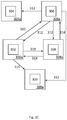
- Fig. 2 is a flow-chart of method steps according to embodiments of the invention, while fig. 3A conceptually illustrates a network of redundant processes 302, 304, 306, 308, 309.
- process 302 is assumed to be a supervising process and process 304 is assumed to be a presently primary process.
- the steps in fig. 2 are for a method for failure detection and role selection for a process in a network of redundant processes comprising a primary process being configured to transmit a heartbeat signal with a predetermined interval to at least a subset of processes of the network and will be described in conjunction with fig. 3A .
- step S104 in response to a supervising process 302 in the network not receiving a heartbeat from the primary process 304 within a predetermined time interval in step S102, transmitting, by the supervising process 302, a heartbeat 310 with a reveal command to at least the subset of processes 306, 308, and 309 in the network.
- the reveal command prompting processes with priority higher than the priority of the supervising process to transmit a heartbeat.
- the reveal command may be provided by setting a value different from zero or any other predetermined value, in a reveal message field of the heartbeat.
- step S106 receiving, by at least the supervising process, heartbeats 312, 314 from the processes with higher priority than the supervising process 302.
- the processes 306 and 308 have higher priority than the supervising process 302, whereby they multicast heartbeats 312 and 314 respectively.
- the heartbeats 312 and 314 are multicast to all processes in the network. Consequently, if the heartbeats transmitted in response to the reveal command are received by each of the processes, all the processes that received the response heartbeat are informed of the new primary process.
- the process with highest priority takes the role of primary process in step S108.
- process 306 has the highest priority, which it will know since it receives the heartbeat 314 with information about the priority of the other process 308 also having higher priority than the supervising process.
- the supervising process 302 does not receive a heartbeat in response to the reveal command included in the heartbeat 310, it takes the role as primary in step S110. Thus, in such case, there was no process with higher priority than the supervising process 302.
- the process 308 which here had lower priority than the process 306, may take a secondary role based on its priority being second in order.
- the secondary role may be a backup role indicating that the process 308 is prospect for taking the role of primary process.
- the table in fig. 4 indicates some preferred message fields of a heartbeat message.
- the message fields include at least a field indicating the priority of the process, a reveal command field, and a tiebreaker indicator.
- a become supervised process indicates whether the process should be supervised.
- the message can of course be extended with other fields that are suitable. Such as an address to the supervised process, or commands for disabling the supervision, or sequence number. Address of the supervised process could be suitable to include; it could serve as mean that allows backups to report their status back to the primary.
- determining the primary process is based on the tiebreaker indicators associated with the two processes. The decision is then determined based on a rule or algorithm the selects the process to take precedence over the other with the same priority based on the tiebreaker indicator.
- the processes 103 and 106 may be operative on separate physical control units 102 and 105.
- the processes 126 and 129 are operative on separate hardware 125 and 128 as shown in fig. 1B .
- at least two of the processes 121, 122 are operative on the same physical hardware.
- the primary process cyclically sends a multicast heartbeat with a heartbeat period.
- the supervising processes i.e., the backup processes, checks every heartbeat period if a heartbeat has been received.
- there may be more than one supervising processes such as a plurality of supervising processes.
- a maximum number of absent heartbeats may be allowed.
- the supervising process assumes that the primary process has failed.
- the predetermined failure time period may be longer than or the heartbeat period of the primary process.
- two different heartbeat periods are used, one for the supervised process, i.e. a sender heartbeat period, and one for the supervising processes, i.e. a receiver heartbeat period.
- the sender heartbeat period must be less than the receiver heartbeat period in order to avoid false positives failure indications.
- the role selection is based on the failure detection to enable a deterministic role selection.
- the role selection algorithm is based on a prospect state interaction with the failure detection algorithm, and on the reveal command functionality described above. More specifically as described above, the "reveal" forcibly instructs all processes with higher priority than the sender of the reveal command to reveal themselves and their priority. In response to revealing themselves, the processes enter prospect states.
- the process with the highest priority will transition to the primary state.
- the TieBreaker is also included in the assessment.
- the processes with lower priority than the highest priority process are configured to transition back to a backup state, if they were transitioned to the prospect state in the first place.
- control unit 320a comprises a memory, or has access to a computer readable medium storing instruction for executing a process.
- Each process 302, 304, 306, 308, 309 may here relate to a separate computer program product executed by the control unit 320a to provide a control service or activity.
- each control unit comprises a memory, or has access to a computer readable medium for storing instructions for executing a respective process.
- Each process 302, 304, 306, 308, 309 may relate to separate computer program products executed by the respective control unit running on their own operative systems to provide a control service or activity.
- a control unit e.g. 320a in fig. 3B or 302a in fig. 3C may be configured to execute a supervising process 302 comprising a computer program product storing instructions for providing an activity or control service in a network of redundant processes in which a primary process is configured to transmit a heartbeat signal with a predetermined interval to at least a subset of the processes of the network.
- the control unit 302a or 320a comprises means for: in response to the supervising process not receiving a heartbeat from the primary process 304 within a predetermined time interval, controlling the supervising process to transmit a heartbeat with a reveal command to at least the subset of processes 306, 308, 309 in the network, the reveal command prompting processes with priority higher than the priority of the supervising process to transmit a heartbeat.
- the control unit 302a or 320a further comprises means for receiving heartbeats from the processes with higher priority than the supervising process, wherein the process with highest priority takes the role of primary process, or if the supervising process does not receive any heartbeat, the control unit 302a, 320a controls the supervising process to taking the role as primary process.
- the control unit 302a, 320a comprises suitable input/output means for receiving and transmitting heartbeats and software modules for interpreting the heartbeat message fields.
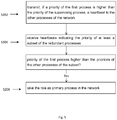
- Fig. 5 is a flow-chart of method steps according to embodiments of the invention, The steps in fig. 5 are for a role selection for a first process 306 in a network of redundant processes 302, 306, 308 309, comprising a primary process being configured to transmit a heartbeat signal with a predetermined interval to at least a subset of processes of the network and will be described in conjunction with fig. 3A .
- step S202 in response to receiving, by the first process 306 a heartbeat 310 with a reveal command from a supervising process 302 of the network, transmitting, if a priority of the first process 306 is higher than the priority of the supervising process 302, a heartbeat 312 by the first process 306 to at least the subset of processes 304, 308, 309, 302 of the network.
- step S204 receiving, by at least the first process 306, at least one heartbeat 314 indicating the priority of at least a subset of the redundant processes, here the subset only includes the process 308, wherein if the priority of the first process 306 is higher than the priorities of the other processes 308 of the subset, the first process 306 is configured to take the role as primary process in the network.
- a heartbeat is transmitted comprising a reveal command prompting processes with priority higher than the priority of the first process to transmit a heartbeat. If the priority of the first process is higher than the priorities of the other processes of the subset, the role as primary process in the network in step S304 is taken.
- a control unit 306a or 320a configured to execute a first process 306 comprising a computer program product storing instructions for providing an activity, being part of in a network of redundant processes comprising a primary process configured to transmit a heartbeat signal with a predetermined interval to at least a subset of processes of the network.
- the control unit comprising means for in response to receiving a heartbeat 310 with a reveal command from a supervising process 302 of the network, transmits, if a priority of the first process 306 is higher than the priority of the supervising process 302, a heartbeat 312 from the first process 306 to at least the subset of processes of the network.
- control unit 306a/320a (for 320a, see fig. 3C ) comprises means for receiving, by/for the first process 306, heartbeats 314 indicating the priority of at least a subset of the redundant processes 308, wherein if the priority of the first process 306 is higher than the priorities of the processes of the subset, the control unit 306a/320a controls the first process 306 to take the role as primary process in the network.
- a network of redundant processes comprising a primary process being configured to transmit a heartbeat signal with a predetermined interval to at least a subset of processes of the network, the network further comprises at least one supervising process configured to, in response to not receiving a heartbeat from the primary process within a predetermined time interval, transmit, a heartbeat with a reveal command to at least a subset of processes in the network, the reveal command prompting processes with priority higher than the priority of the supervising process to transmit a heartbeat.
- the supervising processes of the network are configured to receive heartbeats from the processes with higher priority than the respective supervising process, wherein the supervising process in the network with highest priority takes the role of primary process, or if the supervising process that transmitted the reveal comment does not receive a heartbeat, it takes the role as primary process.
- a control unit may include a microprocessor, microcontroller, programmable digital signal processor or another programmable device.
- the control unit may also, or instead, include an application specific integrated circuit, a programmable gate array or programmable array logic, a programmable logic device, or a digital signal processor.
- the control unit includes a programmable device such as the microprocessor, microcontroller or programmable digital signal processor mentioned above, the processor may further include computer executable code that controls operation of the programmable device.
- Computer-readable media may include computer-readable storage media, which correspond to tangible media such as data storage media, or communication media including any media that facilitate the transfer of a computer program from one place to another, e.g., according to a communication protocol.
- Computer-readable media generally may correspond to (1) tangible computer-readable storage media which are non-transitory or (2) a communication media such as signal or carrier waves.
- Data storage media may be any available media that can be accessed by one or more computers or one or more processors to retrieve instructions, code and/or data structures for implementation of the techniques described in this disclosure.
- a computer program product may include a computer-readable medium.
- such computer-readable storage media can comprise RAM, ROM, EEPROM, CD-ROM or other optical disk storage, magnetic disk storage, or other magnetic storage devices, flash memory, or any other medium that can be used to store desired program code in the form of instructions or data structures and that can be accessed by a computer.
Landscapes
- Engineering & Computer Science (AREA)
- Theoretical Computer Science (AREA)
- Quality & Reliability (AREA)
- Physics & Mathematics (AREA)
- General Engineering & Computer Science (AREA)
- General Physics & Mathematics (AREA)
- Computer Networks & Wireless Communication (AREA)
- Signal Processing (AREA)
- Health & Medical Sciences (AREA)
- Cardiology (AREA)
- General Health & Medical Sciences (AREA)
- Computing Systems (AREA)
- Hardware Redundancy (AREA)
- Biomedical Technology (AREA)
- Data Exchanges In Wide-Area Networks (AREA)
Priority Applications (3)
| Application Number | Priority Date | Filing Date | Title |
|---|---|---|---|
| EP20183508.9A EP3933596B1 (de) | 2020-07-01 | 2020-07-01 | Verfahren zur fehlererkennung und rollenauswahl in einem netzwerk von redundanten prozessen |
| CN202110664834.2A CN113965494A (zh) | 2020-07-01 | 2021-06-16 | 用于冗余进程网络中的故障检测和角色选择的方法 |
| US17/355,851 US11748217B2 (en) | 2020-07-01 | 2021-06-23 | Method for failure detection and role selection in a network of redundant processes |
Applications Claiming Priority (1)
| Application Number | Priority Date | Filing Date | Title |
|---|---|---|---|
| EP20183508.9A EP3933596B1 (de) | 2020-07-01 | 2020-07-01 | Verfahren zur fehlererkennung und rollenauswahl in einem netzwerk von redundanten prozessen |
Publications (2)
| Publication Number | Publication Date |
|---|---|
| EP3933596A1 true EP3933596A1 (de) | 2022-01-05 |
| EP3933596B1 EP3933596B1 (de) | 2024-05-08 |
Family
ID=71452028
Family Applications (1)
| Application Number | Title | Priority Date | Filing Date |
|---|---|---|---|
| EP20183508.9A Active EP3933596B1 (de) | 2020-07-01 | 2020-07-01 | Verfahren zur fehlererkennung und rollenauswahl in einem netzwerk von redundanten prozessen |
Country Status (3)
| Country | Link |
|---|---|
| US (1) | US11748217B2 (de) |
| EP (1) | EP3933596B1 (de) |
| CN (1) | CN113965494A (de) |
Families Citing this family (3)
| Publication number | Priority date | Publication date | Assignee | Title |
|---|---|---|---|---|
| CN114771556A (zh) * | 2022-04-25 | 2022-07-22 | 国汽智控(北京)科技有限公司 | 基于分布式冗余的车辆控制方法及装置、电子装置和介质 |
| CN114979688A (zh) * | 2022-05-11 | 2022-08-30 | 北京大甜绵白糖科技有限公司 | 直播数据传输系统、方法及装置 |
| CN117135729B (zh) * | 2023-01-20 | 2024-05-24 | 荣耀终端有限公司 | 多设备协同方法、系统及终端设备 |
Citations (2)
| Publication number | Priority date | Publication date | Assignee | Title |
|---|---|---|---|---|
| US9747183B2 (en) * | 2013-12-31 | 2017-08-29 | Ciena Corporation | Method and system for intelligent distributed health monitoring in switching system equipment |
| US10061664B2 (en) * | 2015-01-15 | 2018-08-28 | Cisco Technology, Inc. | High availability and failover |
Family Cites Families (15)
| Publication number | Priority date | Publication date | Assignee | Title |
|---|---|---|---|---|
| US5390326A (en) * | 1993-04-30 | 1995-02-14 | The Foxboro Company | Local area network with fault detection and recovery |
| US6993587B1 (en) * | 2000-04-07 | 2006-01-31 | Network Appliance Inc. | Method and apparatus for election of group leaders in a distributed network |
| US7590886B2 (en) * | 2006-11-21 | 2009-09-15 | General Instruments, Corporation | Method and apparatus for facilitating device redundancy in a fault-tolerant system |
| US7870425B2 (en) | 2007-11-23 | 2011-01-11 | International Business Machines Corporation | De-centralized nodal failover handling |
| US8296527B2 (en) | 2009-11-19 | 2012-10-23 | Ge Intelligent Platforms, Inc. | Method and system for implementing multi-controller systems |
| US20110161538A1 (en) | 2009-12-31 | 2011-06-30 | Schneider Electric USA, Inc. | Method and System for Implementing Redundant Network Interface Modules in a Distributed I/O System |
| US9710342B1 (en) | 2013-12-23 | 2017-07-18 | Google Inc. | Fault-tolerant mastership arbitration in a multi-master system |
| KR101694298B1 (ko) | 2014-02-28 | 2017-01-09 | 한국전자통신연구원 | 이중화시스템에서의 마스터 선정 장치 |
| CN104539055B (zh) * | 2015-01-07 | 2016-10-05 | 山东鲁能智能技术有限公司 | 基于网络的电力系统关键设备多机备一的方法及系统 |
| CN104933132B (zh) * | 2015-06-12 | 2019-11-19 | 深圳巨杉数据库软件有限公司 | 基于操作序列号的分布式数据库有权重选举方法 |
| CN105095008B (zh) * | 2015-08-25 | 2018-04-17 | 国电南瑞科技股份有限公司 | 一种适用于集群系统的分布式任务故障冗余方法 |
| US10565227B1 (en) * | 2016-08-31 | 2020-02-18 | Amazon Technologies, Inc. | Leadership lease protocol for data replication groups |
| CN107480014B (zh) * | 2017-07-24 | 2021-01-01 | 奇安信科技集团股份有限公司 | 一种高可用设备切换方法及装置 |
| US10983880B2 (en) | 2018-07-31 | 2021-04-20 | Hewlett Packard Enterprise Development Lp | Role designation in a high availability node |
| CN110417584A (zh) * | 2019-07-10 | 2019-11-05 | 南京南瑞继保电气有限公司 | 一种基于多链接选举机制的双机主备切换方法 |
-
2020
- 2020-07-01 EP EP20183508.9A patent/EP3933596B1/de active Active
-
2021
- 2021-06-16 CN CN202110664834.2A patent/CN113965494A/zh active Pending
- 2021-06-23 US US17/355,851 patent/US11748217B2/en active Active
Patent Citations (2)
| Publication number | Priority date | Publication date | Assignee | Title |
|---|---|---|---|---|
| US9747183B2 (en) * | 2013-12-31 | 2017-08-29 | Ciena Corporation | Method and system for intelligent distributed health monitoring in switching system equipment |
| US10061664B2 (en) * | 2015-01-15 | 2018-08-28 | Cisco Technology, Inc. | High availability and failover |
Also Published As
| Publication number | Publication date |
|---|---|
| EP3933596B1 (de) | 2024-05-08 |
| US20220004449A1 (en) | 2022-01-06 |
| US11748217B2 (en) | 2023-09-05 |
| CN113965494A (zh) | 2022-01-21 |
Similar Documents
| Publication | Publication Date | Title |
|---|---|---|
| US11748217B2 (en) | Method for failure detection and role selection in a network of redundant processes | |
| US9755895B2 (en) | System and method for configuration of link aggregation groups | |
| JP4695705B2 (ja) | クラスタシステムおよびノード切り替え方法 | |
| EP3799394B1 (de) | Peer-überwachung von bauteilen industrieller automatisierungssysteme | |
| CN105991376A (zh) | 一种监测冗余网络完整性的方法和冗余装置 | |
| JP5613119B2 (ja) | マスター/スレーブシステム、制御装置、マスター/スレーブ切替方法、および、マスター/スレーブ切替プログラム | |
| CN111988162A (zh) | 一种管理端口配置模式的方法及装置 | |
| CN113330380B (zh) | 用于管理警报的方法、装置和系统 | |
| CN104079425B (zh) | 一种用于匹配设备的方法、装置和系统 | |
| CN111373700B (zh) | 通信系统、被控制设备以及通信系统的控制方法 | |
| JP2003345620A (ja) | 多ノードクラスタシステムのプロセス監視方法 | |
| EP3777037A1 (de) | Knoten, netzwerksystem und verfahren zur datensynchronisation | |
| JP2011188322A (ja) | 通信制御方法、通信制御プログラムおよびマスタ通信装置 | |
| JP2011035512A (ja) | ネットワーク監視システム | |
| JP6869066B2 (ja) | 警報システム | |
| JP2016157254A (ja) | 制御装置、制御方法及び制御プログラム | |
| JPH05304528A (ja) | 多重化通信ノード | |
| CN116614412B (zh) | 终端异常修复方法、装置、系统、存储介质和电子设备 | |
| US20250125830A1 (en) | Communication control device, communication control method, non-transitory computer readable recording medium, and communication control system | |
| JP2013121095A (ja) | 通信装置 | |
| JP5881009B2 (ja) | データ通信システム | |
| JP2011146761A (ja) | マルチノードシステム、ノード間スイッチ及びデータ中継方法 | |
| CN109167682B (zh) | 电力自动化系统的告警信息远程调阅方法及装置 | |
| JP6262055B2 (ja) | データ復旧システム及びデータ復旧方法 | |
| JPH04319900A (ja) | 状態変化情報再送信方式 |
Legal Events
| Date | Code | Title | Description |
|---|---|---|---|
| PUAI | Public reference made under article 153(3) epc to a published international application that has entered the european phase |
Free format text: ORIGINAL CODE: 0009012 |
|
| STAA | Information on the status of an ep patent application or granted ep patent |
Free format text: STATUS: THE APPLICATION HAS BEEN PUBLISHED |
|
| AK | Designated contracting states |
Kind code of ref document: A1 Designated state(s): AL AT BE BG CH CY CZ DE DK EE ES FI FR GB GR HR HU IE IS IT LI LT LU LV MC MK MT NL NO PL PT RO RS SE SI SK SM TR |
|
| B565 | Issuance of search results under rule 164(2) epc |
Effective date: 20201125 |
|
| STAA | Information on the status of an ep patent application or granted ep patent |
Free format text: STATUS: REQUEST FOR EXAMINATION WAS MADE |
|
| 17P | Request for examination filed |
Effective date: 20220701 |
|
| RBV | Designated contracting states (corrected) |
Designated state(s): AL AT BE BG CH CY CZ DE DK EE ES FI FR GB GR HR HU IE IS IT LI LT LU LV MC MK MT NL NO PL PT RO RS SE SI SK SM TR |
|
| GRAP | Despatch of communication of intention to grant a patent |
Free format text: ORIGINAL CODE: EPIDOSNIGR1 |
|
| STAA | Information on the status of an ep patent application or granted ep patent |
Free format text: STATUS: GRANT OF PATENT IS INTENDED |
|
| RIC1 | Information provided on ipc code assigned before grant |
Ipc: H04L 43/10 20220101ALI20231128BHEP Ipc: H04L 41/0668 20220101ALI20231128BHEP Ipc: G06F 11/14 20060101ALI20231128BHEP Ipc: G06F 11/07 20060101ALI20231128BHEP Ipc: G06F 11/20 20060101ALI20231128BHEP Ipc: G06F 11/30 20060101AFI20231128BHEP |
|
| INTG | Intention to grant announced |
Effective date: 20231219 |
|
| GRAS | Grant fee paid |
Free format text: ORIGINAL CODE: EPIDOSNIGR3 |
|
| GRAA | (expected) grant |
Free format text: ORIGINAL CODE: 0009210 |
|
| STAA | Information on the status of an ep patent application or granted ep patent |
Free format text: STATUS: THE PATENT HAS BEEN GRANTED |
|
| AK | Designated contracting states |
Kind code of ref document: B1 Designated state(s): AL AT BE BG CH CY CZ DE DK EE ES FI FR GB GR HR HU IE IS IT LI LT LU LV MC MK MT NL NO PL PT RO RS SE SI SK SM TR |
|
| REG | Reference to a national code |
Ref country code: GB Ref legal event code: FG4D |
|
| REG | Reference to a national code |
Ref country code: CH Ref legal event code: EP |
|
| REG | Reference to a national code |
Ref country code: DE Ref legal event code: R096 Ref document number: 602020030511 Country of ref document: DE |
|
| REG | Reference to a national code |
Ref country code: IE Ref legal event code: FG4D |
|
| REG | Reference to a national code |
Ref country code: LT Ref legal event code: MG9D |
|
| REG | Reference to a national code |
Ref country code: NL Ref legal event code: MP Effective date: 20240508 |
|
| PG25 | Lapsed in a contracting state [announced via postgrant information from national office to epo] |
Ref country code: IS Free format text: LAPSE BECAUSE OF FAILURE TO SUBMIT A TRANSLATION OF THE DESCRIPTION OR TO PAY THE FEE WITHIN THE PRESCRIBED TIME-LIMIT Effective date: 20240908 |
|
| PG25 | Lapsed in a contracting state [announced via postgrant information from national office to epo] |
Ref country code: BG Free format text: LAPSE BECAUSE OF FAILURE TO SUBMIT A TRANSLATION OF THE DESCRIPTION OR TO PAY THE FEE WITHIN THE PRESCRIBED TIME-LIMIT Effective date: 20240508 |
|
| PG25 | Lapsed in a contracting state [announced via postgrant information from national office to epo] |
Ref country code: FI Free format text: LAPSE BECAUSE OF FAILURE TO SUBMIT A TRANSLATION OF THE DESCRIPTION OR TO PAY THE FEE WITHIN THE PRESCRIBED TIME-LIMIT Effective date: 20240508 Ref country code: HR Free format text: LAPSE BECAUSE OF FAILURE TO SUBMIT A TRANSLATION OF THE DESCRIPTION OR TO PAY THE FEE WITHIN THE PRESCRIBED TIME-LIMIT Effective date: 20240508 |
|
| PG25 | Lapsed in a contracting state [announced via postgrant information from national office to epo] |
Ref country code: GR Free format text: LAPSE BECAUSE OF FAILURE TO SUBMIT A TRANSLATION OF THE DESCRIPTION OR TO PAY THE FEE WITHIN THE PRESCRIBED TIME-LIMIT Effective date: 20240809 |
|
| PG25 | Lapsed in a contracting state [announced via postgrant information from national office to epo] |
Ref country code: PT Free format text: LAPSE BECAUSE OF FAILURE TO SUBMIT A TRANSLATION OF THE DESCRIPTION OR TO PAY THE FEE WITHIN THE PRESCRIBED TIME-LIMIT Effective date: 20240909 |
|
| REG | Reference to a national code |
Ref country code: AT Ref legal event code: MK05 Ref document number: 1685559 Country of ref document: AT Kind code of ref document: T Effective date: 20240508 |
|
| PG25 | Lapsed in a contracting state [announced via postgrant information from national office to epo] |
Ref country code: NL Free format text: LAPSE BECAUSE OF FAILURE TO SUBMIT A TRANSLATION OF THE DESCRIPTION OR TO PAY THE FEE WITHIN THE PRESCRIBED TIME-LIMIT Effective date: 20240508 |
|
| PG25 | Lapsed in a contracting state [announced via postgrant information from national office to epo] |
Ref country code: ES Free format text: LAPSE BECAUSE OF FAILURE TO SUBMIT A TRANSLATION OF THE DESCRIPTION OR TO PAY THE FEE WITHIN THE PRESCRIBED TIME-LIMIT Effective date: 20240508 |
|
| PG25 | Lapsed in a contracting state [announced via postgrant information from national office to epo] |
Ref country code: AT Free format text: LAPSE BECAUSE OF FAILURE TO SUBMIT A TRANSLATION OF THE DESCRIPTION OR TO PAY THE FEE WITHIN THE PRESCRIBED TIME-LIMIT Effective date: 20240508 |
|
| PG25 | Lapsed in a contracting state [announced via postgrant information from national office to epo] |
Ref country code: PL Free format text: LAPSE BECAUSE OF FAILURE TO SUBMIT A TRANSLATION OF THE DESCRIPTION OR TO PAY THE FEE WITHIN THE PRESCRIBED TIME-LIMIT Effective date: 20240508 |
|
| PG25 | Lapsed in a contracting state [announced via postgrant information from national office to epo] |
Ref country code: LV Free format text: LAPSE BECAUSE OF FAILURE TO SUBMIT A TRANSLATION OF THE DESCRIPTION OR TO PAY THE FEE WITHIN THE PRESCRIBED TIME-LIMIT Effective date: 20240508 |
|
| PG25 | Lapsed in a contracting state [announced via postgrant information from national office to epo] |
Ref country code: PT Free format text: LAPSE BECAUSE OF FAILURE TO SUBMIT A TRANSLATION OF THE DESCRIPTION OR TO PAY THE FEE WITHIN THE PRESCRIBED TIME-LIMIT Effective date: 20240909 Ref country code: PL Free format text: LAPSE BECAUSE OF FAILURE TO SUBMIT A TRANSLATION OF THE DESCRIPTION OR TO PAY THE FEE WITHIN THE PRESCRIBED TIME-LIMIT Effective date: 20240508 Ref country code: NO Free format text: LAPSE BECAUSE OF FAILURE TO SUBMIT A TRANSLATION OF THE DESCRIPTION OR TO PAY THE FEE WITHIN THE PRESCRIBED TIME-LIMIT Effective date: 20240808 Ref country code: NL Free format text: LAPSE BECAUSE OF FAILURE TO SUBMIT A TRANSLATION OF THE DESCRIPTION OR TO PAY THE FEE WITHIN THE PRESCRIBED TIME-LIMIT Effective date: 20240508 Ref country code: LV Free format text: LAPSE BECAUSE OF FAILURE TO SUBMIT A TRANSLATION OF THE DESCRIPTION OR TO PAY THE FEE WITHIN THE PRESCRIBED TIME-LIMIT Effective date: 20240508 Ref country code: IS Free format text: LAPSE BECAUSE OF FAILURE TO SUBMIT A TRANSLATION OF THE DESCRIPTION OR TO PAY THE FEE WITHIN THE PRESCRIBED TIME-LIMIT Effective date: 20240908 Ref country code: HR Free format text: LAPSE BECAUSE OF FAILURE TO SUBMIT A TRANSLATION OF THE DESCRIPTION OR TO PAY THE FEE WITHIN THE PRESCRIBED TIME-LIMIT Effective date: 20240508 Ref country code: GR Free format text: LAPSE BECAUSE OF FAILURE TO SUBMIT A TRANSLATION OF THE DESCRIPTION OR TO PAY THE FEE WITHIN THE PRESCRIBED TIME-LIMIT Effective date: 20240809 Ref country code: FI Free format text: LAPSE BECAUSE OF FAILURE TO SUBMIT A TRANSLATION OF THE DESCRIPTION OR TO PAY THE FEE WITHIN THE PRESCRIBED TIME-LIMIT Effective date: 20240508 Ref country code: ES Free format text: LAPSE BECAUSE OF FAILURE TO SUBMIT A TRANSLATION OF THE DESCRIPTION OR TO PAY THE FEE WITHIN THE PRESCRIBED TIME-LIMIT Effective date: 20240508 Ref country code: BG Free format text: LAPSE BECAUSE OF FAILURE TO SUBMIT A TRANSLATION OF THE DESCRIPTION OR TO PAY THE FEE WITHIN THE PRESCRIBED TIME-LIMIT Effective date: 20240508 Ref country code: AT Free format text: LAPSE BECAUSE OF FAILURE TO SUBMIT A TRANSLATION OF THE DESCRIPTION OR TO PAY THE FEE WITHIN THE PRESCRIBED TIME-LIMIT Effective date: 20240508 Ref country code: RS Free format text: LAPSE BECAUSE OF FAILURE TO SUBMIT A TRANSLATION OF THE DESCRIPTION OR TO PAY THE FEE WITHIN THE PRESCRIBED TIME-LIMIT Effective date: 20240808 |
|
| PG25 | Lapsed in a contracting state [announced via postgrant information from national office to epo] |
Ref country code: DK Free format text: LAPSE BECAUSE OF FAILURE TO SUBMIT A TRANSLATION OF THE DESCRIPTION OR TO PAY THE FEE WITHIN THE PRESCRIBED TIME-LIMIT Effective date: 20240508 |
|
| PG25 | Lapsed in a contracting state [announced via postgrant information from national office to epo] |
Ref country code: EE Free format text: LAPSE BECAUSE OF FAILURE TO SUBMIT A TRANSLATION OF THE DESCRIPTION OR TO PAY THE FEE WITHIN THE PRESCRIBED TIME-LIMIT Effective date: 20240508 |
|
| PG25 | Lapsed in a contracting state [announced via postgrant information from national office to epo] |
Ref country code: CZ Free format text: LAPSE BECAUSE OF FAILURE TO SUBMIT A TRANSLATION OF THE DESCRIPTION OR TO PAY THE FEE WITHIN THE PRESCRIBED TIME-LIMIT Effective date: 20240508 |
|
| PG25 | Lapsed in a contracting state [announced via postgrant information from national office to epo] |
Ref country code: SK Free format text: LAPSE BECAUSE OF FAILURE TO SUBMIT A TRANSLATION OF THE DESCRIPTION OR TO PAY THE FEE WITHIN THE PRESCRIBED TIME-LIMIT Effective date: 20240508 Ref country code: RO Free format text: LAPSE BECAUSE OF FAILURE TO SUBMIT A TRANSLATION OF THE DESCRIPTION OR TO PAY THE FEE WITHIN THE PRESCRIBED TIME-LIMIT Effective date: 20240508 |
|
| PG25 | Lapsed in a contracting state [announced via postgrant information from national office to epo] |
Ref country code: SM Free format text: LAPSE BECAUSE OF FAILURE TO SUBMIT A TRANSLATION OF THE DESCRIPTION OR TO PAY THE FEE WITHIN THE PRESCRIBED TIME-LIMIT Effective date: 20240508 |
|
| PG25 | Lapsed in a contracting state [announced via postgrant information from national office to epo] |
Ref country code: SM Free format text: LAPSE BECAUSE OF FAILURE TO SUBMIT A TRANSLATION OF THE DESCRIPTION OR TO PAY THE FEE WITHIN THE PRESCRIBED TIME-LIMIT Effective date: 20240508 Ref country code: SK Free format text: LAPSE BECAUSE OF FAILURE TO SUBMIT A TRANSLATION OF THE DESCRIPTION OR TO PAY THE FEE WITHIN THE PRESCRIBED TIME-LIMIT Effective date: 20240508 Ref country code: RO Free format text: LAPSE BECAUSE OF FAILURE TO SUBMIT A TRANSLATION OF THE DESCRIPTION OR TO PAY THE FEE WITHIN THE PRESCRIBED TIME-LIMIT Effective date: 20240508 Ref country code: EE Free format text: LAPSE BECAUSE OF FAILURE TO SUBMIT A TRANSLATION OF THE DESCRIPTION OR TO PAY THE FEE WITHIN THE PRESCRIBED TIME-LIMIT Effective date: 20240508 Ref country code: DK Free format text: LAPSE BECAUSE OF FAILURE TO SUBMIT A TRANSLATION OF THE DESCRIPTION OR TO PAY THE FEE WITHIN THE PRESCRIBED TIME-LIMIT Effective date: 20240508 Ref country code: CZ Free format text: LAPSE BECAUSE OF FAILURE TO SUBMIT A TRANSLATION OF THE DESCRIPTION OR TO PAY THE FEE WITHIN THE PRESCRIBED TIME-LIMIT Effective date: 20240508 |
|
| PG25 | Lapsed in a contracting state [announced via postgrant information from national office to epo] |
Ref country code: IT Free format text: LAPSE BECAUSE OF FAILURE TO SUBMIT A TRANSLATION OF THE DESCRIPTION OR TO PAY THE FEE WITHIN THE PRESCRIBED TIME-LIMIT Effective date: 20240508 Ref country code: MC Free format text: LAPSE BECAUSE OF FAILURE TO SUBMIT A TRANSLATION OF THE DESCRIPTION OR TO PAY THE FEE WITHIN THE PRESCRIBED TIME-LIMIT Effective date: 20240508 |
|
| REG | Reference to a national code |
Ref country code: DE Ref legal event code: R097 Ref document number: 602020030511 Country of ref document: DE |
|
| REG | Reference to a national code |
Ref country code: CH Ref legal event code: PL |
|
| PLBE | No opposition filed within time limit |
Free format text: ORIGINAL CODE: 0009261 |
|
| STAA | Information on the status of an ep patent application or granted ep patent |
Free format text: STATUS: NO OPPOSITION FILED WITHIN TIME LIMIT |
|
| PG25 | Lapsed in a contracting state [announced via postgrant information from national office to epo] |
Ref country code: LU Free format text: LAPSE BECAUSE OF NON-PAYMENT OF DUE FEES Effective date: 20240701 |
|
| PG25 | Lapsed in a contracting state [announced via postgrant information from national office to epo] |
Ref country code: LU Free format text: LAPSE BECAUSE OF NON-PAYMENT OF DUE FEES Effective date: 20240701 |
|
| 26N | No opposition filed |
Effective date: 20250211 |
|
| PG25 | Lapsed in a contracting state [announced via postgrant information from national office to epo] |
Ref country code: BE Free format text: LAPSE BECAUSE OF NON-PAYMENT OF DUE FEES Effective date: 20240731 Ref country code: SI Free format text: LAPSE BECAUSE OF FAILURE TO SUBMIT A TRANSLATION OF THE DESCRIPTION OR TO PAY THE FEE WITHIN THE PRESCRIBED TIME-LIMIT Effective date: 20240508 Ref country code: CH Free format text: LAPSE BECAUSE OF NON-PAYMENT OF DUE FEES Effective date: 20240731 |
|
| PG25 | Lapsed in a contracting state [announced via postgrant information from national office to epo] |
Ref country code: FR Free format text: LAPSE BECAUSE OF NON-PAYMENT OF DUE FEES Effective date: 20240708 |
|
| REG | Reference to a national code |
Ref country code: BE Ref legal event code: MM Effective date: 20240731 |
|
| PG25 | Lapsed in a contracting state [announced via postgrant information from national office to epo] |
Ref country code: IE Free format text: LAPSE BECAUSE OF NON-PAYMENT OF DUE FEES Effective date: 20240701 |
|
| PG25 | Lapsed in a contracting state [announced via postgrant information from national office to epo] |
Ref country code: SE Free format text: LAPSE BECAUSE OF FAILURE TO SUBMIT A TRANSLATION OF THE DESCRIPTION OR TO PAY THE FEE WITHIN THE PRESCRIBED TIME-LIMIT Effective date: 20240508 |
|
| PGFP | Annual fee paid to national office [announced via postgrant information from national office to epo] |
Ref country code: DE Payment date: 20250722 Year of fee payment: 6 |
|
| PGFP | Annual fee paid to national office [announced via postgrant information from national office to epo] |
Ref country code: GB Payment date: 20250722 Year of fee payment: 6 |
|
| PG25 | Lapsed in a contracting state [announced via postgrant information from national office to epo] |
Ref country code: CY Free format text: LAPSE BECAUSE OF FAILURE TO SUBMIT A TRANSLATION OF THE DESCRIPTION OR TO PAY THE FEE WITHIN THE PRESCRIBED TIME-LIMIT; INVALID AB INITIO Effective date: 20200701 |
|
| PG25 | Lapsed in a contracting state [announced via postgrant information from national office to epo] |
Ref country code: HU Free format text: LAPSE BECAUSE OF FAILURE TO SUBMIT A TRANSLATION OF THE DESCRIPTION OR TO PAY THE FEE WITHIN THE PRESCRIBED TIME-LIMIT; INVALID AB INITIO Effective date: 20200701 |