EP3927797B1 - Schmierstoff für die heissumformung von metallen - Google Patents
Schmierstoff für die heissumformung von metallen Download PDFInfo
- Publication number
- EP3927797B1 EP3927797B1 EP20706258.9A EP20706258A EP3927797B1 EP 3927797 B1 EP3927797 B1 EP 3927797B1 EP 20706258 A EP20706258 A EP 20706258A EP 3927797 B1 EP3927797 B1 EP 3927797B1
- Authority
- EP
- European Patent Office
- Prior art keywords
- lubricant
- graphite
- cellulose
- phlogopite
- particularly preferably
- Prior art date
- Legal status (The legal status is an assumption and is not a legal conclusion. Google has not performed a legal analysis and makes no representation as to the accuracy of the status listed.)
- Active
Links
Images

Classifications
-
- C—CHEMISTRY; METALLURGY
- C10—PETROLEUM, GAS OR COKE INDUSTRIES; TECHNICAL GASES CONTAINING CARBON MONOXIDE; FUELS; LUBRICANTS; PEAT
- C10M—LUBRICATING COMPOSITIONS; USE OF CHEMICAL SUBSTANCES EITHER ALONE OR AS LUBRICATING INGREDIENTS IN A LUBRICATING COMPOSITION
- C10M173/00—Lubricating compositions containing more than 10% water
- C10M173/02—Lubricating compositions containing more than 10% water not containing mineral or fatty oils
-
- C—CHEMISTRY; METALLURGY
- C10—PETROLEUM, GAS OR COKE INDUSTRIES; TECHNICAL GASES CONTAINING CARBON MONOXIDE; FUELS; LUBRICANTS; PEAT
- C10M—LUBRICATING COMPOSITIONS; USE OF CHEMICAL SUBSTANCES EITHER ALONE OR AS LUBRICATING INGREDIENTS IN A LUBRICATING COMPOSITION
- C10M2201/00—Inorganic compounds or elements as ingredients in lubricant compositions
- C10M2201/10—Compounds containing silicon
- C10M2201/102—Silicates
-
- C—CHEMISTRY; METALLURGY
- C10—PETROLEUM, GAS OR COKE INDUSTRIES; TECHNICAL GASES CONTAINING CARBON MONOXIDE; FUELS; LUBRICANTS; PEAT
- C10M—LUBRICATING COMPOSITIONS; USE OF CHEMICAL SUBSTANCES EITHER ALONE OR AS LUBRICATING INGREDIENTS IN A LUBRICATING COMPOSITION
- C10M2201/00—Inorganic compounds or elements as ingredients in lubricant compositions
- C10M2201/10—Compounds containing silicon
- C10M2201/102—Silicates
- C10M2201/1026—Silicates used as thickening agents
-
- C—CHEMISTRY; METALLURGY
- C10—PETROLEUM, GAS OR COKE INDUSTRIES; TECHNICAL GASES CONTAINING CARBON MONOXIDE; FUELS; LUBRICANTS; PEAT
- C10M—LUBRICATING COMPOSITIONS; USE OF CHEMICAL SUBSTANCES EITHER ALONE OR AS LUBRICATING INGREDIENTS IN A LUBRICATING COMPOSITION
- C10M2201/00—Inorganic compounds or elements as ingredients in lubricant compositions
- C10M2201/10—Compounds containing silicon
- C10M2201/102—Silicates
- C10M2201/103—Clays; Mica; Zeolites
-
- C—CHEMISTRY; METALLURGY
- C10—PETROLEUM, GAS OR COKE INDUSTRIES; TECHNICAL GASES CONTAINING CARBON MONOXIDE; FUELS; LUBRICANTS; PEAT
- C10M—LUBRICATING COMPOSITIONS; USE OF CHEMICAL SUBSTANCES EITHER ALONE OR AS LUBRICATING INGREDIENTS IN A LUBRICATING COMPOSITION
- C10M2201/00—Inorganic compounds or elements as ingredients in lubricant compositions
- C10M2201/12—Glass
-
- C—CHEMISTRY; METALLURGY
- C10—PETROLEUM, GAS OR COKE INDUSTRIES; TECHNICAL GASES CONTAINING CARBON MONOXIDE; FUELS; LUBRICANTS; PEAT
- C10M—LUBRICATING COMPOSITIONS; USE OF CHEMICAL SUBSTANCES EITHER ALONE OR AS LUBRICATING INGREDIENTS IN A LUBRICATING COMPOSITION
- C10M2205/00—Organic macromolecular hydrocarbon compounds or fractions, whether or not modified by oxidation as ingredients in lubricant compositions
- C10M2205/02—Organic macromolecular hydrocarbon compounds or fractions, whether or not modified by oxidation as ingredients in lubricant compositions containing acyclic monomers
- C10M2205/022—Ethene
-
- C—CHEMISTRY; METALLURGY
- C10—PETROLEUM, GAS OR COKE INDUSTRIES; TECHNICAL GASES CONTAINING CARBON MONOXIDE; FUELS; LUBRICANTS; PEAT
- C10M—LUBRICATING COMPOSITIONS; USE OF CHEMICAL SUBSTANCES EITHER ALONE OR AS LUBRICATING INGREDIENTS IN A LUBRICATING COMPOSITION
- C10M2209/00—Organic macromolecular compounds containing oxygen as ingredients in lubricant compositions
- C10M2209/02—Macromolecular compounds obtained by reactions only involving carbon-to-carbon unsaturated bonds
- C10M2209/06—Macromolecular compounds obtained by reactions only involving carbon-to-carbon unsaturated bonds containing monomers having an unsaturated radical bound to an acyloxy radical of saturated carboxylic or carbonic acid
- C10M2209/062—Vinyl esters of saturated carboxylic or carbonic acids, e.g. vinyl acetate
-
- C—CHEMISTRY; METALLURGY
- C10—PETROLEUM, GAS OR COKE INDUSTRIES; TECHNICAL GASES CONTAINING CARBON MONOXIDE; FUELS; LUBRICANTS; PEAT
- C10M—LUBRICATING COMPOSITIONS; USE OF CHEMICAL SUBSTANCES EITHER ALONE OR AS LUBRICATING INGREDIENTS IN A LUBRICATING COMPOSITION
- C10M2209/00—Organic macromolecular compounds containing oxygen as ingredients in lubricant compositions
- C10M2209/12—Polysaccharides, e.g. cellulose, biopolymers
- C10M2209/126—Polysaccharides, e.g. cellulose, biopolymers used as thickening agents
-
- C—CHEMISTRY; METALLURGY
- C10—PETROLEUM, GAS OR COKE INDUSTRIES; TECHNICAL GASES CONTAINING CARBON MONOXIDE; FUELS; LUBRICANTS; PEAT
- C10N—INDEXING SCHEME ASSOCIATED WITH SUBCLASS C10M RELATING TO LUBRICATING COMPOSITIONS
- C10N2030/00—Specified physical or chemical properties which is improved by the additive characterising the lubricating composition, e.g. multifunctional additives
- C10N2030/04—Detergent property or dispersant property
-
- C—CHEMISTRY; METALLURGY
- C10—PETROLEUM, GAS OR COKE INDUSTRIES; TECHNICAL GASES CONTAINING CARBON MONOXIDE; FUELS; LUBRICANTS; PEAT
- C10N—INDEXING SCHEME ASSOCIATED WITH SUBCLASS C10M RELATING TO LUBRICATING COMPOSITIONS
- C10N2030/00—Specified physical or chemical properties which is improved by the additive characterising the lubricating composition, e.g. multifunctional additives
- C10N2030/06—Oiliness; Film-strength; Anti-wear; Resistance to extreme pressure
-
- C—CHEMISTRY; METALLURGY
- C10—PETROLEUM, GAS OR COKE INDUSTRIES; TECHNICAL GASES CONTAINING CARBON MONOXIDE; FUELS; LUBRICANTS; PEAT
- C10N—INDEXING SCHEME ASSOCIATED WITH SUBCLASS C10M RELATING TO LUBRICATING COMPOSITIONS
- C10N2030/00—Specified physical or chemical properties which is improved by the additive characterising the lubricating composition, e.g. multifunctional additives
- C10N2030/16—Antiseptic; (micro) biocidal or bactericidal
-
- C—CHEMISTRY; METALLURGY
- C10—PETROLEUM, GAS OR COKE INDUSTRIES; TECHNICAL GASES CONTAINING CARBON MONOXIDE; FUELS; LUBRICANTS; PEAT
- C10N—INDEXING SCHEME ASSOCIATED WITH SUBCLASS C10M RELATING TO LUBRICATING COMPOSITIONS
- C10N2030/00—Specified physical or chemical properties which is improved by the additive characterising the lubricating composition, e.g. multifunctional additives
- C10N2030/18—Anti-foaming property
-
- C—CHEMISTRY; METALLURGY
- C10—PETROLEUM, GAS OR COKE INDUSTRIES; TECHNICAL GASES CONTAINING CARBON MONOXIDE; FUELS; LUBRICANTS; PEAT
- C10N—INDEXING SCHEME ASSOCIATED WITH SUBCLASS C10M RELATING TO LUBRICATING COMPOSITIONS
- C10N2030/00—Specified physical or chemical properties which is improved by the additive characterising the lubricating composition, e.g. multifunctional additives
- C10N2030/40—Low content or no content compositions
-
- C—CHEMISTRY; METALLURGY
- C10—PETROLEUM, GAS OR COKE INDUSTRIES; TECHNICAL GASES CONTAINING CARBON MONOXIDE; FUELS; LUBRICANTS; PEAT
- C10N—INDEXING SCHEME ASSOCIATED WITH SUBCLASS C10M RELATING TO LUBRICATING COMPOSITIONS
- C10N2040/00—Specified use or application for which the lubricating composition is intended
- C10N2040/20—Metal working
- C10N2040/241—Manufacturing joint-less pipes
-
- C—CHEMISTRY; METALLURGY
- C10—PETROLEUM, GAS OR COKE INDUSTRIES; TECHNICAL GASES CONTAINING CARBON MONOXIDE; FUELS; LUBRICANTS; PEAT
- C10N—INDEXING SCHEME ASSOCIATED WITH SUBCLASS C10M RELATING TO LUBRICATING COMPOSITIONS
- C10N2040/00—Specified use or application for which the lubricating composition is intended
- C10N2040/20—Metal working
- C10N2040/242—Hot working
Definitions
- the invention relates to an essentially graphite-free and boron-free mandrel bar lubricant for use in the hot forming of metals for the production of seamless tubes, in particular in so-called continuous processes or push bench processes.
- lubricants are required that ensure optimal sliding of the metal between the processing tools at high processing temperatures. Temperatures of 1100 to 1300 °C can occur during the production of profile sheets or seamless tubes in rolling mills. If hard metals or metals that are difficult to deform are processed, the processing tools can wear out quickly. High coefficients of friction between tool and workpiece also lead to increased energy consumption during processing.
- seamless tubes are formed in the main process step by rolling a prefabricated hollow block at around 1200°C to 1300°C over a mandrel bar.
- the mandrel bar is removed from the rolled tube blank and cooled in a cooling bath or by spray cooling with water and prepared for the next rolling process.
- This preparation of the mandrel bar after cooling also includes lubrication in which the lubricant is sprayed onto the mandrel bar.
- This lubrication is essential for optimal sliding of the hollow billet on the mandrel bar during the rolling process and is also crucial for the later quality and dimensional accuracy of the tube, especially for the condition of the inner surface of the tube.
- the mandrel bar lubricants used must have good lubricating properties and at the same time withstand the high machining temperatures.
- the good lubricating properties include not only that the lubricants are suitable for reducing the coefficient of friction between the mandrel bar, but also that they have good wetting properties and form a lubricant film that is as continuous as possible with a sufficient layer thickness on the mandrel bar.
- the lubricants contain additives that additionally reduce scale formation on the surface of the metal being processed, such as boron compounds, e.g.
- Known lubricants can be divided into graphite-containing and graphite-free lubricants.
- Graphite-free lubricants are also referred to as "white" lubricants because they are not colored by the strong inherent color of the graphite.
- Graphite is a suitable lubricant additive for high-temperature applications, such as the hot forming of metals, because graphite is particularly heat-resistant and has particularly good lubricating properties itself and in combination with mineral oils and inorganic salts.
- a disadvantage of lubricants containing graphite is that the high carbon content can lead to carburization of the metal surface of the workpiece. This can result in defective end products with poor further processing or material properties. The result is a high level of rejects.
- the use of graphite in the working environment raises health concerns, which necessitate particularly costly protective measures for the people working in the working environment.
- a group of lubricants that can contain graphite or be graphite-free contain salts or salt mixtures that melt on the hot surface of the workpiece and form a lubricating separating layer between the workpiece and the tool through the melt.
- salts or salt mixtures that melt on the hot surface of the workpiece and form a lubricating separating layer between the workpiece and the tool through the melt.
- only certain salts are suitable for this and some of them have such high melting temperatures that the lubricants are only fully usable once the operating temperature has been reached. This is particularly disadvantageous when the processing machines are started up when the tools or workpieces are still cold.
- borax is used as a low-melting salt.
- lubricants containing borax can also cause the tool and workpiece to stick together, with the result that the tool is damaged or the machines come to a standstill. Furthermore, lubricants containing borax adversely attack the metal surface of the tool or workpiece.
- lubricants use raw common salt, but this can lead to material being removed from the workpiece and material being deposited elsewhere, and thus to the formation of grooves.
- common salt leads to increased metal corrosion on the systems, which results in high maintenance costs.
- Another group of high-temperature lubricants contains alkali phosphate glasses or silicate glasses with various additives such as boron or aluminum. These lubricants have good lubricating properties, but are poorly soluble in water, which makes their removal from the machined workpiece considerably more difficult and requires a high level of technical effort.
- mandrel bar lubricants with a high graphite content are still predominantly used due to the high demands on lubricating properties and temperature resistance.
- Graphite-free or low-graphite (“white”) mandrel bar lubricants are hardly ever used, despite the disadvantages described above and others.
- Lubricants suitable for this purpose are expensive and require large amounts to be used, which has a disadvantageous effect on the manufacturing costs and thus on the cost of the product.
- the CN-A-104 694 240 discloses a non-graphite lubricant composition
- a non-graphite lubricant composition comprising 10-90% by weight mineral clay, 0-5% by weight stearate, 0.1-5% by weight of a thickener, preferably sodium polyacrylate, 5-30% by weight water-soluble borate and /or boric acid and other additives such as surfactants and polymers.
- the CN-A-102 732 367 discloses a graphite-free lubricant composition which contains 15-20% by weight of glass powder, 2.5-8% by weight of a white solid lubricant, 0.5-3.5% by weight of a thickener, and other additives such as surfactants and resins.
- the white solid lubricant includes one or more compounds from the group consisting of mica, talc and boron nitride. Gelatine or cellulose is used as a thickener.
- the known lubricants for the hot forming of metals therefore have a number of disadvantages due to and depending on their respective composition, such as health and environmental hazards and the associated necessary protective measures, high consumption due to the large amounts required, high costs of the components of the compositions, unfavorable coefficients of friction , adverse effects on the manufacturing process and/or the properties of the manufactured product, such as gluing or welding
- the object of the present invention was therefore to provide a mandrel bar lubricant which overcomes the disadvantages of the prior art and which is particularly suitable as a mandrel bar lubricant for the hot forming of metals in the production of seamless tubes in continuous processes or push bench processes and compared to those previously used in these processes used, based on graphite lubricants contains no or at most a small amount of graphite, has good coefficients of friction and good wetting properties and compared to known lubricants for the same application requires smaller quantities and / or is cheaper to produce
- a major advantage of the lubricant according to the invention is that it has very good coefficients of friction and wetting properties, particularly in the production of seamless tubes in continuous processes or push bench processes, which are comparable or comparable to those of graphite-containing lubricants currently used in these processes with the same or smaller layer thicknesses or amounts used are even superior to these.
- the lubricant according to the invention can therefore replace the graphite-containing lubricants previously used in continuous processes or push bench processes, and at the same time save costs, waste disposal costs and work safety measures.
- the lubricant according to the invention preferably contains no more than 5% by weight of boron-containing compounds, particularly preferably no boron-containing compounds such as boric acid, borax, boric acid salts or borate-containing minerals, which are frequently used in known lubricants for the hot forming of metals.
- the lubricant according to the invention can therefore overcome the disadvantages of graphite-based and boron-containing lubricants.
- the lubricant is sprayed as an aqueous suspension onto the cooled mandrel bar in preparation for the subsequent rolling step, although the mandrel bar is still at a temperature of the order of around 100 °C.
- An essential aspect for a good lubricating performance of the lubricant is the complete, continuous wetting of the mandrel bar and in particular the thickness of the layer of the lubricant on the wetted mandrel bar.
- the lubricant according to the invention is characterized by good adhesion to the mandrel bar and good and uniform wetting of the surface of the mandrel bar.
- the layer thickness or quantity of lubricant required for good lubrication in these processes is the same or even lower than that of the graphite-containing lubricants currently used in these processes.
- the layer thickness or application rate of the lubricant when reference is made herein to the layer thickness or application rate of the lubricant, this means the amount of solids of the lubricant on a given surface of the tool, ie the mandrel bar, measured in grams of solids of the lubricant per square meter [g/m 2 ].
- a suitable layer thickness of the lubricant according to the invention is of the order of about 30 to 150 g/m 2 surface area of the mandrel, preferably 50 to 120 g/m 2 , particularly preferably 70 to 100 g/m 2 , depending on the composition of the lubricant.
- the wetting of the surface of the mandrel bar and the layer thickness can be adjusted by the amount of lubricant suspension sprayed onto the surface of the mandrel bar or the duration of the spraying, as well as by the viscosity and adhesion of the suspension. It has been shown that the same or better lubricating effect can be achieved with the lubricant according to the invention compared to commercially available graphite-containing lubricants for the same purpose with the same or even smaller layer thickness or use quantity. In this way, considerable costs can be saved in the production of seamless tubes compared to the currently used graphite-containing lubricants.
- An essential feature of the lubricant according to the invention is the proportion of solid lubricant which is a mixture of talc and potassium mica and the ratio of talc to potassium mica is at least 2.0 and does not exceed 5.0.
- the ratio of talc to potassium mica in the solid lubricant is 2.5 to 4.5, preferably 3.0 to 4.0, particularly preferably 3.3 to 3.8.
- Talc which according to the invention is one of the main components of the solid lubricant in the lubricant according to the invention, is the powdered form of the mineral talc, a sheet silicate (phyllosilicate), more precisely magnesium silicate hydrate. Depending on the modification, it crystallizes as talc-1A in the triclinic crystal system or as talc-2M in the monoclinic crystal system.
- Potassium micas which according to the invention form the other main component of the solid lubricant in the lubricant according to the invention but are contained in a smaller amount than talc, are also layered silicates (phyllosilicates), which, however, have a potassium ion.
- the potassium mica in the solid lubricant of the lubricant according to the invention therefore contains at least 60% by weight phlogopite, preferably at least 80% by weight phlogopite, particularly preferably at least 90% by weight phlogopite. Only phlogopite is very particularly preferably used as the potassium mica.
- the lubricant according to the invention is sprayed onto the mandrel bar and possibly also the hollow block as a suspension of the solids in water during the hot forming of metals, in particular for lubricating the mandrel bar and/or the hollow block in the production of seamless pipes.
- the lubricant according to the invention also contains 10 to 30% by weight of an adhesive and 2 to 10% by weight of a thickener.
- Ethylene-vinyl acetate copolymer (EVA) has proven particularly advantageous as an adhesive and xanthan gum as a thickener.
- EVA Ethylene-vinyl acetate copolymer
- other suitable adhesives and thickeners as noted herein may also be employed.
- the lubricant according to the invention also contains 0 to 10% by weight of other auxiliaries which can be used advantageously in lubricants of the type mentioned here, depending on the application.
- Such adjuvants preferably include defoamers, dispersants and biocides.
- Defoamers are intended to prevent or at least reduce disadvantageous foam formation when the lubricant suspension is sprayed onto the tool, for example the mandrel bar.
- Suitable defoamers include polyglycols, amorphous and/or hydrophobic silica, polysiloxanes, dimethylpolysiloxanes, organically modified polysiloxanes and naphthalene condensates.
- Dispersants can be used to advantage in order to improve the distribution of the solids in the lubricant in the aqueous suspension and to prevent or slow down the sedimentation of the solids in the suspension.
- Suitable dispersants include C16-C18 alcohols, ethoxylate salts, sodium and potassium tripolyphosphates, polyethylene glycol and sodium silicate.
- Biocides can be used to advantage in order to prevent or at least reduce the proliferation of microorganisms, such as bacteria, fungi and/or yeasts, in the lubricant, in particular when the lubricant is stored for a longer period of time.
- Suitable biocides include 1,2-benziso-thiazol-3(2H)-one, 5-chloro-2-methyl-4-isothiazolin-3-one, 2-methyl-2H-isothiazol-3-one, 2-octyl- 2H-isothiazol-3-one, ethylenedioxydimethanol, tetrahydro-1,3,4,6-tetrakis(hydroxymethyl)imidazo[4,5-d]imidazole-2,5(1H,3H)-dione, 2-bromo-2 -nitropropane-1,3-diol, 2,2-dibromo-2-carbamoylacetonitrile, sodium hypochlorite and sodium chlorite.
- a particular advantage of the lubricant according to the invention is that it can replace graphite-based lubricants currently used in continuous processes and push-bench processes for the production of seamless pipes and can thus overcome the disadvantages of using graphite. Nevertheless, graphite is an excellent lubricant and, due to its heat resistance, is particularly suitable for hot metal forming. The graphite-based lubricants previously used for these applications therefore regularly contain high proportions of graphite.
- the lubricant according to the invention is intended to overcome the disadvantages of graphite-containing lubricants and to replace them, it can be advantageous in embodiments of the lubricant according to the invention to add a certain proportion of graphite in order to adjust and further improve the properties of the lubricant.
- the proportion of graphite in the lubricant must not exceed 10% by weight of graphite, preferably not more than 5 % by weight of graphite.
- such a proportion of graphite in the lubricant according to the invention is significantly lower than the high graphite proportion in previously used graphite-containing lubricants and is therefore not associated with the disadvantages of graphite to the known extent.
- the lubricant according to the invention particularly preferably contains no graphite.
- the invention also includes the use of the lubricant composition according to the invention for lubricating the mandrel bar and/or the hollow block in the production of seamless tubes by hot metal forming, preferably in the continuous process or push bench process.
- the lubricant is sprayed onto the mandrel bar, which has a temperature of approx. 100 °C, before it is inserted into the hollow block.
- the lubricant according to the invention is sprayed on in a layer thickness (amount used) of 30 to 150 g/m 2 surface of the mandrel bar.
- the layer thickness (amount used) is preferably 50 to 120 g/m 2 sprayed surface, particularly preferably 70 to 100 g/m 2 sprayed surface.
- Viscosity measurements were carried out using a Brookfield R/S Plus rotational rheometer (AME-TEK GmbH - Brookfield BU, Lorch, Germany) with a coaxial cylinder (40 mm spindle) in accordance with DIN 53019 and in accordance with the manufacturer's instructions and using the Rheo3000 software at a sample temperature of 20°C +/- 0.4°C.
- the tribometer consists of an inductively heatable, rotating disc made of Thermudur 2342 EFS steel with a diameter of 280 mm and a table that can be moved hydraulically in the direction of the rotating disc, on which a test specimen made of S355MC steel that can be heated by means of resistance heating is mounted.
- the rotating disk was heated to 100 °C ( ⁇ 10 °C) and sprayed with the lubricant in the desired layer thickness.
- the distance between the spray nozzle and the pane surface was 10 mm.
- the lubricant was applied in a layer thickness of 80 g/m 2 and left to act for about 5 seconds before the measurement.
- the disk was rotated at 10 rpm.
- the test specimen was heated to 1230 °C ( ⁇ 20 °C), pressed against the rotating disc by means of the hydraulically movable table with a contact force (F N ) of 32,000 N ( ⁇ 2,000 N) and the radial force acting on the disc perpendicular to the contact force (F R ) measured over a period of several seconds.
- Six measurements were carried out on each sample (6-fold determination). The mean value of the recorded friction values in the period of 2 to 6 seconds after the contact of the workpiece with the rotating disk was considered as the friction value of a measurement. Again, the coefficient of friction reported herein is the average of the six measurements made on each sample.
- the layer thickness of a lubricant applied to the disk of the tribometer under the spray conditions was checked by applying a magnetic tape film to the surface of the disk before spraying the lubricant and then spraying the lubricant on.
- the magnetic tape foil was removed, weighed with the lubricant applied to it, and the layer thickness was determined from the difference to the weight of the non-lubricated foil.
- the comparison lubricant used was the graphite-based mandrel rod lubricant PHOS-PHATHERM ® 120 GLW 30 (hereinafter "PH120”) from Chemische Fabrik Budenheim KG, which is used industrially in the continuous process for the manufacture of seamless pipes and is available as a 30% suspension.
- PH120 graphite-based mandrel rod lubricant
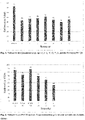
- figure 1 shows the coefficients of friction of the compositions examined.
- Formulation A showed similar results as Formulation G with talc alone.
- Recipe H in which mica muscovite (muscovite 1) was used instead of phlogopite compared to recipe F, showed significantly poorer results than recipe F with phlogopite alone.
- figure 2 shows the coefficients of friction of the compositions examined.
- the ratio of talcum to phlogopite in the range from 3.3 to 3.8 which has proven to be particularly advantageous with regard to the achievable coefficient of friction
- about 13% talcum plus phlogopite (recipes S and T) good coefficients of friction were comparable to those of 19 .5% talc plus phlogopite (recipes C and D) achieved.
- the coefficients of friction were higher, but still well below the reference recipe PH120 with the graphite-based product according to the prior art.
- figure 3 shows the coefficients of friction of the compositions examined.
- Formulations L and M alternative mica Muscovite 1 and Muscovite 2 were compared with Phlogopite in Formulation C and with the same use of pure graphite instead of talc plus mica in Formulation I. While the best coefficients of friction were achieved with the same quantity used with phlogopite (recipe C), the mica muscovite 1 and muscovite 2 (recipes L and M) also showed good coefficients of friction, which are only slightly above the use of the same total quantity of pure graphite instead of talc plus mica (Recipe I) were.
- figure 4 shows the coefficients of friction of PH120 and composition C with different layer thicknesses.
- the comparison of different layer thicknesses of recipe C with the comparison lubricant PH120 shows again that the recipe C according to the invention even with the lowest
- the amount used with a layer thickness of only 30 g/m 2 still provides better, or at least comparable, friction values compared to the comparison lubricant PH120 when used twice or more than three times as much.
- Composition "C” used in the foregoing comparisons contains 25% (w/w) solids and 75% water.
- higher dilutions of the same solids composition were produced with a lower solids content and friction coefficient measurements were carried out as above (20% to 10% solids content; hereinafter “C20”, “e17.5", ... “C10”)).
- C20 % to 10% solids content
- C10 friction coefficient measurements
Landscapes
- Chemical & Material Sciences (AREA)
- Chemical Kinetics & Catalysis (AREA)
- General Chemical & Material Sciences (AREA)
- Oil, Petroleum & Natural Gas (AREA)
- Organic Chemistry (AREA)
- Lubricants (AREA)
Description
- Die Erfindung betrifft einen im Wesentlichen graphitfreien und borfreien Dornstangenschmierstoff für den Einsatz bei der Heißumformung von Metallen zur Herstellung von nahtlosen Rohren, insbesondere in sogenannten Kontiprozessen oder Stoßbankprozessen.
- Bei der Heißumformung von Metallen, wie beispielsweise Blechen oder Hohlblöcken, in Walz- oder Preßanlagen werden Schmierstoffe benötigt, die bei hohen Verarbeitungstemperaturen ein optimales Gleiten des Metalls zwischen den Bearbeitungswerkzeugen gewährleisten. Bei der Herstellung von Profilblechen oder nahtlosen Rohren in Walzanlagen können dabei Temperaturen von 1100 bis 1300 °C auftreten. Werden harte oder schwer verformbare Metalle verarbeitet, so kann es zu einem schnellen Verschleiß der Bearbeitungswerkzeuge kommen. Hohe Reibwerte zwischen Werkzeug und Werkstück führen zudem zu einem erhöhten Energieverbrauch bei der Bearbeitung.
- In modernen Rohrwalzwerken, insbesondere im sogenannten Kontiprozess mit mehreren angetriebenen und separat gesteuerten Walzgerüsten, erfolgt die Formgebung von nahtlosen Rohren im Hauptprozessschritt durch Walzen eines vorgefertigten Hohlblocks bei etwa 1200°C bis 1300°C über eine Dornstange. Nach dem Walzvorgang wird die Dornstange aus dem gewalzten Rohrrohling entfernt und in einem Kühlbad oder durch Sprühkühlung mit Wasser gekühlt und für den nächsten Walzvorgang vorbereitet. Zu dieser Vorbereitung der Dornstange nach der Kühlung gehört auch eine Schmierung, bei der das Schmiermittel auf die Dornstange aufgesprüht wird.
- Diese Schmierung ist wesentlich für ein optimales Gleiten des Hohlblocks auf der Dornstange während des Walzvorgangs und mitentscheidend für die spätere Qualität und Maßhaltigkeit des Rohres, insbesondere für die Beschaffenheit der Innenoberfläche des Rohres.
- Die verwendeten Dornstangenschmierstoffe müssen gute Schmiereigenschaften besitzen und gleichzeitig den hohen Bearbeitungstemperaturen standhalten. Zu den guten Schmiereigenschaften gehört nicht nur, dass die Schmierstoffe geeignet sind, den Reibwert zwischen der Dornstange herabzusetzen, sondern auch, dass sie gute Benetzungseigenschaften besitzen und einen möglichst durchgängigen Schmierstofffilm mit einer ausreichenden Schichtdicke auf der Dornstange ausbilden.
- In einigen Fällen enthalten die Schmierstoffe Zusätze, die ergänzend die Zunderbildung an der Oberfläche des bearbeiteten Metalls reduzieren, wie beispielsweise Borverbindungen, z.B. Borsäuresalze, die aufgrund ihrer Wasserlöslichkeit in das Abwasser des Walzvorgangs gelangen können, was jedoch wegen ihrer teratogenen Wirkung zu erheblichen Entsorgungsproblemen führt.
- Bekannte Schmierstoffe lassen sich in graphithaltige und graphitfreie Schmierstoffe unterteilen. Graphitfreie Schmierstoffe werden auch als "weiße" Schmierstoffe bezeichnet, da sie nicht durch die starke Eigenfarbe des Graphits gefärbt sind.
- Graphit ist gerade bei Hochtemperaturanwendungen, wie der Heißumformung von Metallen, ein geeigneter Schmierstoffzusatz, weil Graphit besonders hitzebeständig ist und selbst sowie in Kombination mit Mineralölen und anorganischen Salzen besonders gute Schmiereigenschaften besitzt. Ein Nachteil graphithaltiger Schmierstoffe besteht darin, dass es aufgrund des hohen Kohlenstoffanteils zu Aufkohlungen der Metalloberfläche des Werkstückes kommen kann. Dabei können mangelhafte Endprodukte mit schlechten Weiterverarbeitungs- oder Materialeigenschaften entstehen. Ein hoher Werkstückausschuss ist die Folge. Darüber hinaus begegnet der Einsatz von Graphit in der Arbeitsumgebung gesundheitlichen Bedenken, welche besonders aufwendige Schutzmaßnahmen für die in dem Arbeitsumfeld tätigen Personen erforderlich machen.
- Eine Gruppe von Schmierstoffen, die sowohl graphithaltig als auch graphitfrei sein können, enthalten Salze oder Salzgemische, die auf der heißen Oberfläche des Werkstücks schmelzen und durch die Schmelze eine schmierende Trennschicht zwischen Werkstück und Werkzeug bilden. Hierfür eignen sich jedoch nur bestimmte Salze und einige davon besitzen so hohe Schmelztemperaturen, dass die Schmierstoffe erst bei erreichter Betriebstemperatur voll einsatzfähig sind. Besonders nachteilig ist dies insbesondere beim Anlaufen der Bearbeitungsmaschinen, wenn die Werkzeuge bzw. Werkstücke noch kalt sind. In einigen Schmierstoffen wird Borax als niedrigschmelzendes Salz eingesetzt. Neben den oben genannten Nachteilen wasserlöslicher Borverbindungen kann es bei boraxhaltigen Schmierstoffen auch zu einem Verkleben von Werkzeug und Werkstück kommen mit der Folge, dass Beschädigungen am Werkzeug auftreten oder die Maschinen zum Stillstand kommen. Weiterhin greifen boraxhaltige Schmierstoffe nachteilig die Metalloberfläche von Werkzeug oder Werkstück an.
- Weitere bekannte Schmierstoffe verwenden Rohkochsalz, was jedoch beim Werkstück zu Materialabtragungen und Materialauftragungen an anderer Stelle und damit zur Riefenbildung führen kann. Zudem führt Kochsalz zu erhöhter Metallkorrosion an den Anlagen, was hohe Instandhaltungskosten zur Folge hat. Auch wasserlösliche Schmierstoffe auf der Basis von Alkaliphosphaten und Alkaliboraten, die auch im Gemisch mit verschiedenen Metalloxiden wie Zinkoxid oder Eisenoxid verwendet werden, greifen die Oberfläche des zu bearbeitenden Metalls an.
- Eine weitere Gruppe von Hochtemperaturschmierstoffen enthält Alkaliphosphatgläser oder Silikatgläser mit verschiedenen Zusatzstoffen, wie Bor oder Aluminium. Diese Schmierstoffe weisen gute Schmiereigenschaften auf, sind jedoch schlecht wasserlöslich, was ihre Entfernung vom bearbeiteten Werkstück erheblich erschwert und einen hohen technischen Aufwand erfordert.
- Insbesondere bei der Herstellung von nahtlosen Rohren im Kontiprozess werden aufgrund der hohen Anforderungen an Schmiereigenschaften und Temperaturbeständigkeit nach wie vor überwiegend Dornstangenschmierstoffe mit hohem Graphitanteil eingesetzt. Graphitfreie bzw. graphitarme ("weiße") Dornstangenschmierstoffe kommen dabei trotz der oben beschriebenen und weiterer Nachteile kaum zum Einsatz. Hierfür geeignete Schmierstoffe sind teuer und erfordern hohe Einsatzmengen, was sich nachteilig auf die Herstellungskosten und damit auf die Kosten des Produkts auswirkt.
- Die
CN-A-104 694 240 offenbart eine graphitfreie Schmierstoffzusammensetzung, die 10-90 Gew.- % mineralischen Ton, 0-5 Gew.-% Stearat, 0,1-5 Gew.-% eines Verdickers, vorzugsweise Natriumpolyacrylat, 5-30 Gew.-% wasserlösliches Borat und/oder Borsäure und weitere Zusatzstoffe, wie oberflächenaktive Substanzen und Polymere, enthält. - Die
CN-A-102 732 367 offenbart eine graphitfreie Schmierstoffzusammensetzung, die 15-20 Gew.- % Glaspulver, 2,5-8 Gew.-% eines weißen Festschmierstoffs, 0,5-3,5 Gew.-% eines Verdickers, und weitere Zusatzstoffe, wie oberflächenaktive Substanzen und Harze, enthält. Der weiße Festschmierstoff umfasst eine oder mehrere Verbindungen aus der Gruppe, bestehend aus Glimmer, Talkum und Bornitrid. Als Verdicker wird Gelatine oder Cellulose eingesetzt. - Die bekannten Schmiermittel für die Heißumformung von Metallen besitzen demnach aufgrund und in Abhängigkeit von ihrer jeweiligen Zusammensetzung eine Reihe von Nachteilen, wie Gesundheits- und Umweltgefährdung und damit verbundene erforderliche Schutzmaßnahmen, hohen Verbrauch aufgrund hoher erforderlicher Einsatzmengen, hohe Kosten der Bestandteile der Zusammensetzungen, ungünstige Reibwerte, nachteilige Auswirkungen auf den Verarbeitungsprozess und/oder die Eigenschaften des hergestellten Produkts, wie Verkleben oder Verschweißen von
- Werkzeug und Werkstück, Aufkohlung oder anderweitige Beschädigung der Werkstückoberfläche, ungünstige Benetzungseigenschaften und/oder ungünstige Schichtdicken.
- Die Aufgabe der vorliegenden Erfindung bestand daher darin, einen Dornstangenschmierstoff bereitzustellen, der die Nachteile des Standes der Technik überwindet und der insbesondere als Dornstangenschmierstoff für die Heißumformung von Metallen bei der Herstellung von nahtlosen Rohren in Kontiprozessen oder Stoßbankprozessen geeignet ist und gegenüber den in diesen Prozessen bislang verwendeten, auf Graphit basierenden Schmierstoffen keinen oder allenfalls eine geringe Menge an Graphit enthält, gute Reibwerte und gute Benetzungseigenschaften besitzt und im Vergleich zu bekannten Schmierstoffen bei gleicher Anwendung geringere Einsatzmengen erfordert und/oder kostengünstiger herstellbar ist
- Diese Aufgabe wird durch einen Schmierstoff für die Heißumformung von Metallen, insbesondere zum Schmieren der Dornstange und/oder des Hohlblocks bei der Herstellung von nahtlosen Rohren, wobei der Schmierstoff, bezogen auf die Feststoffanteile, wenigstens folgende Bestandteile enthält:
- 55 bis 85 Gew.-% eines Festschmiermittels, bestehend aus einem Gemisch aus Talkum und einem Kalium-Glimmer, vorzugsweise Phlogopit, Muskovit oder ein Gemisch von beiden, besonders bevorzugt Phlogopit, wobei das Verhältnis von Talkum zu Kalium-Glimmer in dem Festschmiermittel 2,0 bis 5,0, beträgt,
- 10 bis 30 Gew.-% eines Haftmittels, ausgewählt unter einem Polyvinyl-Acetat, Natriumwasserglas oder einem Gemisch der vorgenannten, vorzugsweise Ethylen-Vinylacetat-Copolymer (EVA),
- 2 bis 10 Gew.-% eines Verdickers, ausgewählt unter Hydroxycellulose, Hydroxyethylcellulose, Hydroxypropylcellulose, Carboxymethylcellulose, Methylcellulose, Ethylcellulose, Methylethyl- cellulose, Hydroxyethylmethylcellulose, Hydroxypropylmethylcellulose, Ethylhydroxymethylcellulose, Carboxymethylhydroxycellulose, Dextrin, Stärke, organisch modifiziertem Bentonit, Smectit und Xanthan-Gummi, vorzugsweise Xanthan-Gummi,
- 0 bis 10 Gew.- % weitere Hilfsmittel, vorzugsweise ausgewählt unter Entschäumer, Dispergiermittel und Biozid und
- nicht mehr als 10 Gew.-% Graphit, vorzugsweise nicht mehr als 5 Gew.-% Graphit, besonders bevorzugt keinen Graphit.
- Ein wesentlicher Vorteil des erfindungsgemäßen Schmierstoffs besteht darin, dass er insbesondere bei der Herstellung von nahtlosen Rohren in Kontiprozessen oder Stoßbankprozessen sehr gute Reibwerte und Benetzungseigenschaften besitzt, die bei gleichen oder geringeren Schichtdicken bzw. Einsatzmengen mit denjenigen von derzeit in diesen Prozessen eingesetzten graphithaltigen Schmierstoffen vergleichbar oder diesen sogar überlegen sind. Der erfindungsgemäße Schmierstoff kann daher die bisher in Kontiprozessen oder Stoßbankprozessen eingesetzten graphithaltigen Schmierstoffe ersetzen und dabei gleichzeitig Kosten, Entsorgungsaufwand und Aufwand für Arbeitsschutzmaßnahmen einsparen. Vorzugsweise enthält der erfindungsgemäße Schmierstoffe nicht mehr als 5 Gew.-% borhaltige Verbindungen, besonders bevorzugt keine borhaltigen Verbindungen, wie Borsäure, Borax, Borsäuresalze oder Borat enthaltende Mineralien, die häufig in bekannten Schmierstoffen für die Heißumformung von Metallen eingesetzt werden. Der erfindungsgemäße Schmierstoff kann daher die Nachteile auf Graphit basierender und borhaltiger Schmierstoffe überwinden.
- Bei der Herstellung von nahtlosen Rohren in Kontiprozessen oder Stoßbankprozessen wird der Schmierstoff als wässrige Suspension zur Vorbereitung des nachfolgenden Walzschrittes auf die gekühlte Dornstange aufgesprüht, wobei die Dornstange jedoch noch immer eine Temperatur in der Größenordnung von etwa 100 °C besitzt. Ein wesentlicher Gesichtspunkt für eine gute Schmierleistung des Schmierstoffes ist dabei die vollständige, durchgängige Benetzung der Dornstange und insbesondere die Schichtdicke des Schmierstoffes auf der benetzten Dornstange. Der erfindungsgemäße Schmierstoff zeichnet sich durch eine gute Haftung auf der Dornstange und eine gute und gleichmäßige Benetzung der Oberfläche der Dornstange aus. Gleichzeitig ist die für eine gute Schmierung in diesen Prozessen erforderliche Schichtdicke oder Einsatzmenge des Schmierstoffs gleich oder sogar geringer als bei derzeit in diesen Prozessen eingesetzten graphithaltigen Schmierstoffen.
- Wenn hierin von der Schichtdicke oder Einsatzmenge des Schmierstoffs die Rede ist, bezeichnet dies die Feststoffmenge des Schmierstoffs auf einer bestimmten Oberfläche des Werkzeugs, d. h. der Dornstange, gemessen in Gramm Feststoff des Schmierstoffs pro Quadratmeter [g/m2]. Eine geeignete Schichtdicke des erfindungsgemäßen Schmierstoffs liegt in der Größenordnung von etwa 30 bis 150 g/m2 Oberfläche der Dornstange, vorzugsweise 50 bis 120 g/m2, besonders bevorzugt 70 bis 100 g/m2, je nach Zusammensetzung des Schmierstoffs.
- Die Benetzung der Oberfläche der Dornstange und die Schichtdicke lassen sich durch die Menge der auf die Oberfläche der Dornstange aufgesprühten Schmierstoffsuspension bzw. die Sprühdauer sowie durch die Viskosität und Haftung der Suspension einstellen. Es hat sich gezeigt, dass mit dem erfindungsgemäßen Schmierstoff im Vergleich zu handelsüblichen graphithaltigen Schmierstoffen für den gleichen Einsatzzweck bei gleicher oder sogar geringerer Schichtdicke bzw. Einsatzmenge die gleiche oder bessere Schmierwirkung erzielt werden kann. Damit können gegenüber derzeit verwendeten graphithaltigen Schmierstoffen erhebliche Kosten bei der Herstellung nahtloser Rohre eingespart werden. Gleichzeitig werden weitere Nachteile graphithaltiger Schmierstoffe überwunden, wie die bei graphithaltigen Schmierstoffen erforderlichen besonderen Arbeitsschutzmaßnahmen, das punktuelle Verschweißen von Werkzeug und Werkstück sowie die Aufkohlung und die dadurch hervorgerufene Versprödung des Werkstoffes an den Innenflächen der gewalzten Rohre.
- Ein wesentliches Merkmal des erfindungsgemäßen Schmierstoffs ist der Anteil an Festschmiermittel, welches ein Gemisch aus Talkum und Kalium-Glimmer ist und wobei das Verhältnis von Talkum zu Kalium-Glimmer wenigstens 2,0 beträgt und 5,0 nicht übersteigt.
- In einer vorteilhaften Ausführungsform der Erfindung beträgt das Verhältnis von Talkum zu Kalium-Glimmer in dem Festschmiermittel 2,5 bis 4,5, bevorzugt 3,0 bis 4,0, besonders bevorzugt 3,3 bis 3,8,
- Bei Talkum, welches erfindungsgemäß einer der Hauptbestandteile des Festschmiermittels in dem erfindungsgemäßen Schmierstoff ist, handelt es sich um die pulverisierte Form des Minerals Talk, einem Schichtsilikat (Phyllosilikat), genauer Magnesiumsilikathydrat. Es kristallisiert je nach Modifikation als Talk-1A im triklinen oder als Talk-2M im monoklinen Kristallsystem.
- Bei Kalium-Glimmern, welche erfindungsgemäß den weiteren Hauptbestandteil des Festschmiermittels in dem erfindungsgemäßen Schmierstoff bilden, aber in geringerer Menge als Talkum enthalten sind, handelt es sich auch um Schichtsilikate (Phyllosilikate), welche jedoch ein Kalium-Ion aufweisen.
- Grundsätzlich war die Verwendung von Schichtsilikaten in Schmierstoffen, auch solchen zur Heißumformung von Metallen, bekannt. Es war jedoch überraschend, dass gerade die Kombination aus Talkum und Kalium-Glimmer in dem hierin beanspruchten Verhältnis wesentlich zu den verbesserten und besonders vorteilhaften Eigenschaften des erfindungsgemäßen Schmiermittels beiträgt.
- Erfindungsgemäß geeignete Kalium-Glimmer umfassen Glimmer
- der Muskovit-Seladonit-Reihe (dioktaedrisch), nämlich Muskovit, K Al2 [AlSi3O10(OH)2], Aluminoseladonit, K AI(Mg, Fe2+) [Si4O10(OH)2], Ferro-Aluminoseladonit,
K Al(Mg, Fe2+) [Si4O10(OH)2], Seladonit, K Fe3+(Mg, Fe2+) [Si4O10(OH)2], Ferroseladonit, K Fe3+(Mg, Fe2+) [Si4O10(OH)2], - der Phlogopit-Annit-Reihe (trioktaedrisch), nämlich Annit, K Fe2+ 3 [AlSi3O10(OH)2], Phlogopit, K Mg2+ 3 [AlSi3O10(OH)2],
- der Siderophyllit-Polylithionit-Reihe (trioktaedrisch), nämlich Siderophyllit,
K Fe2+ 2Al [Al2Si2O10(OH)2], Polylithionit, K Li2 Al [Si4O10F2], - derTainiolith-Gruppe, Tainiolith, K Li Mg2 [Si4O10F2],
- und Gemische der vorgenannten Kalium-Glimmer.
- Als besonders vorteilhaft haben sich Phlogopit und Muskovit, insbesondere Phlogopit erwiesen. In einer weiteren Ausführungsform der Erfindung enthält der Kalium-Glimmer in dem Festschmierstoff des erfindungsgemäßen Schmierstoffs daher wenigstens 60 Gew.-% Phlogopit, vorzugsweise wenigstens 80 Gew.-% Phlogopit, besonders bevorzugt wenigstens 90 Gew.-% Phlogopit. Ganz besonders bevorzugt wird als Kalium-Glimmer nur Phlogopit eingesetzt.
- Der erfindungsgemäße Schmierstoff wird bei der Heißumformung von Metallen, insbesondere zum Schmieren der Dornstange und/oder des Hohlblocks bei der Herstellung von nahtlosen Rohren, als Suspension der Feststoffanteile in Wasser auf die Dornstange, ggf. auch den Hohlblock, aufgesprüht. Geeignet ist eine wässrige Suspension mit 10 bis 45 Gew.-% Feststoffanteilen, vorzugsweise 15 bis 35 Gew.-% Feststoffanteilen, besonders bevorzugt 20 bis 30 Gew.-% Feststoffanteilen.
- Der erfindungsgemäße Schmierstoff enthält neben dem Hauptbestandteil des Festschmiermittels aus Talkum und Kalium-Glimmer weiterhin 10 bis 30 Gew.-% eines Haftmittels sowie 2 bis 10 Gew.-% eines Verdickers. Als Haftmittel hat sich Ethylen-Vinylacetat-Copolymer (EVA) und als Verdicker hat sich Xanthan-Gummi als besonders vorteilhaft erwiesen. Andere geeignete Haftmittel und Verdicker, wie sie hierin genannt sind, können jedoch ebenfalls eingesetzt werden. Innerhalb der vorgenannten Mengenbereiche, jeweils bezogen auf den Feststoffanteil des Schmierstoffs, wird der Fachmann die für die Gesamtzusammensetzung des Schmierstoffs geeigneten Mengen an Haftmittel und Verdicker leicht ermitteln können, um für den jeweiligen Anwendungsfall gute Verarbeitbarkeit, Nutzbarkeit der Schmierstoffsuspension in der jeweils zur Verfügung stehenden Sprühanlage, Benetzung, Haftung und Schichtdickenausbildung auf der Werkzeugoberfläche zu erzielen.
- Der erfindungsgemäße Schmierstoff enthält weiterhin 0 bis 10 Gew.- % weitere Hilfsmittel, die in Schmierstoffen der hierin genannten Art mit Vorteil und je nach Anwendungsfall eingesetzt werden können. Solche Hilfsmittel umfassen vorzugsweise Entschäumer, Dispergiermittel und Biozide.
- Entschäumer sollen eine nachteilige Schaumbildung beim Aufsprühen der Schmierstoffsuspension auf das Werkzeug, beispielsweise die Dornstange, verhindern oder zumindest reduzieren. Geeignete Entschäumer umfassen Polyglykole, armorphe und/oder hydrophobe Kieselsäure, Polysiloxane, Dimethylpolysiloxane, organisch modifizierte Polysiloxane und Naphtalen-Kondensate.
- Dispergiermittel können mit Vorteil eingesetzt werden, um die Verteilung der Feststoffe des Schmierstoffs in der wässrigen Suspension zu verbessern und die Sedimentation der Feststoffe in der Suspension zu verhindern bzw. zu verlangsamen. Geeignete Dispergiermittel umfassen C16-C18-Alkohole, Ethoxylatsalze, Natrium- und Kalium-Tripolyphosphate, Polyethyleneglykol und Natrium-Silikat.
- Biozide können mit Vorteil eingesetzt werden, um die Vermehrung von Mikroorganismen, wie Bakterien, Pilzen und/oder Hefen, in dem Schmierstoff zu verhindern oder zumindest zu vermindern, insbesondere bei längerer Lagerung des Schmierstoffs. Geeignete Biozide umfassen 1,2-Benziso-thiazol-3(2H)-on, 5-Chlor-2-methyl-4-isothiazolin-3-on, 2-methyl-2H-isothiazol-3-on, 2-Octyl-2H-isothiazol-3-on, Ethylendioxydimethanol, Tetrahydro-1,3,4,6-tetrakis(hydroxymethyl)imidazo[4,5-d]imidazol-2,5(1H,3H)-dion, 2-Brom-2-nitropropan-1,3-diol, 2,2-Dibrom-2-carbamoylacetonitril, Natriumhypochlorit und Natriumchlorit.
- Ein besonderer Vorteil des erfindungsgemäßen Schmierstoffs besteht darin, dass er derzeit in Kontiprozessen und Stoßbankprozessen zur Herstellung nahtloser Rohre eingesetzte Schmierstoffe auf Graphitbasis ersetzen und damit die Nachteile der Verwendung von Graphit überwinden kann. Dennoch ist Graphit ein hervorragendes Schmiermittel und aufgrund seiner Hitzebeständigkeit insbesondere bei der Heißumformung von Metallen geeignet. Die für diese Anwendungen bisher verwendeten Schmierstoffe auf Graphitbasis enthalten daher regelmäßig hohe Anteile an Graphit.
- Auch wenn der erfindungsgemäße Schmierstoff die Nachteile graphithaltiger Schmierstoffe überwinden und diese ersetzen soll, so kann es in Ausführungsformen des erfindungsgemäßen Schmierstoffs vorteilhaft sein, einen gewissen Anteil an Graphit zuzugeben, um die Eigenschaften des Schmierstoffs einzustellen und weiter zu verbessern. Erfindungsgemäß darf der Anteil an Graphit in dem Schmierstoff jedoch nicht mehr als 10 Gew.-% Graphit, vorzugsweise nicht mehr als 5 Gew.-% Graphit betragen. Ein solcher Anteil an Graphit im erfindungsgemäßen Schmierstoff ist jedoch deutlich geringer als der hohe Graphitanteil in bisher verwendeten graphithaltigen Schmierstoffen und geht daher auch nicht in dem bekannten Ausmaß mit den Nachteilen des Graphits einher. Besonders bevorzugt enthält der erfindungsgemäße Schmierstoff jedoch keinen Graphit.
- Die Erfindung umfasst weiterhin die Verwendung der erfindungsgemäßen Schmierstoffzusammensetzung zum Schmieren der Dornstange und/oder des Hohlblocks bei der Herstellung von nahtlosen Rohren durch Heißumformung von Metallen, vorzugsweise im Kontiprozess oder Stoßbankprozess. Dabei wird der Schmierstoff zweckmäßigerweise als wässrige Suspension auf die ca. 100 °C heiße Dornstange aufgesprüht, bevor diese in den Hohlblock eingeführt wird.
- Je nach Zusammensetzung wird der erfindungsgemäße Schmierstoff in einer Schichtdicke (Einsatzmenge) von 30 bis 150 g/m2 Oberfläche der Dornstange aufgesprüht. Vorzugsweise beträgt die Schichtdicke (Einsatzmenge) 50 bis 120 g/m2 besprühte Oberfläche, besonders bevorzugt 70 bis 100 g/m2 besprühte Oberfläche.
- Die Erfindung wird nachfolgend anhand von Beispielen und der Beschreibung eingesetzter Materialien und Methoden weiter erläutert. Die Beispiele sind jedoch nicht als beschränkend für den Schutzumfang der Erfindung zu verstehen.
- Viskositätsmessungen wurden mit einem Rotationsrheometer R/S Plus der Firma Brookfield (AME-TEK GmbH - BU Brookfield, Lorch, Deutschland) mit koaxialem Zylinder (40 mm Spindel) gemäß DIN 53019 sowie nach Anleitung des Herstellers sowie unter Anwendung der Software Rheo3000 bei einer Probentemperatur von 20°C +/- 0,4°C durchgeführt.
- Reibwertmessungen wurden mit dem Tribometer "HT-Tribometer Prüfstand 564" der Firma Lohrentz GmbH Prüftechnik, Nidda-Harb, Deutschland durchgeführt. Das Tribometer besteht aus einer induktiv beheizbaren, rotierenden Scheibe aus Thermudur 2342 EFS Stahl mit einem Durchmesser von 280 mm und einen hydraulisch in Richtung der rotierenden Scheibe verfahrbaren Tisch, auf dem ein mittels Widerstandsheizung beheizbarer Prüfkörper aus S355MC-Stahl montiert wird.
- Für die Reibwertmessungen wurde die rotierende Scheibe auf 100 °C (± 10 °C) erhitzt und in der gewünschten Schichtdicke mit dem Schmierstoff besprüht. Der Abstand der Sprühdüse zur Scheibenoberfläche betrug 10 mm. Wenn nicht ausdrücklich etwas anderes angegeben ist, wurde der Schmierstoff in einer Schichtdicke von 80 g/m2 aufgebracht und vor der Messung für etwa 5 Sekunden einwirken gelassen.
- Bei der anschließenden Messung wurde die Scheibe mit 10 U.p.M. rotiert. Der Prüfkörper wurde auf 1230 °C (± 20 °C) aufgeheizt, mittels des hydraulisch verfahrbaren Tischs mit einer Anpresskraft (FN) von 32.000 N (± 2.000 N) gegen die rotierende Scheibe gepresst und die an der Scheibe senkrecht zur Anpresskraft wirkende Radialkraft (FR) über einen Zeitraum vom mehreren Sekunden gemessen. Der Reibwert (µ) ist der Quotient aus Radialkraft (FR) und Anpresskraft (FN), µ = FR / F N. Mit jeder Probe wurden sechs Messungen durchgeführt (6-fach-Bestimmung). Als Reibwert einer Messung wurde jeweils der Mittelwert der erfassten Reibwerte im Zeitraum von 2 bis 6 Sekunden nach dem Kontakt des Werkstücks mit der rotierenden Scheibe angesehen. Der hierin angegebene Reibwert ist wiederum der Mittelwert aus den sechs mit jeder Probe durchgeführten Messungen.
- Die auf die Scheibe des Tribometers unter den Sprühbedingungen (Sprühdauer) aufgebrachte Schichtdicke eines Schmierstoffes wurde überprüft, indem vor dem Aufsprühen des Schmierstoffs eine Magnetbandfolie auf die Oberfläche der Scheibe aufgebracht und der Schmierstoff anschließend aufgesprüht wurde. Die Magnetbandfolie wurde abgenommen, mit dem darauf aufgebrachten Schmierstoff gewogen und die Schichtdicke aus der Differenz zum Gewicht der nicht mit Schmierstoff beaufschlagten Folie bestimmt.
- Als Vergleichsschmierstoff wurde der u.a. im Kontiprozess zur Herstellung von nahtlosen Rohren industriell eingesetzte, auf Graphit basierende Dornstangenschmierstoff PHOS-PHATHERM® 120 GLW 30 (nachfolgend "PH120") von Chemische Fabrik Budenheim KG verwendet, welcher als 30%-ige Suspension vorliegt.
- Soweit nichts anderes angegeben ist, wurden nachfolgend angegebene Rohstoffe in die Schmierstoff-Rezepturen eingesetzt. Alle Prozentangaben sind Gewichtsprozente und entsprechen den Angaben des Herstellers.
Talkum: chemische Zusammensetzung: SiO2: 61,0% MgO: 31,0 % Al2O3: 0,1 % Fe2O3 :1,8% und CaO: 0,6%; mittlere Partikelgröße (D50): 5 µm Phlogopit: chemische Zusammensetzung: SiO2: 41%, Al2O3:10%, MgO: 26%, CaO: 2%, K2O: 10%, Fe2O3: 8%; mittlere Partikelgröße (D50): 44 µm Muskovit 1: chemische Zusammensetzung: SiO2: 44%, Al2O3: 31%, K2O: 9% Fe2O3: 3%; mittlere Partikelgröße (D50): 45 µm Muskovit 2: chemische Zusammensetzung: SiO2: 51,5%, Al2O3: 27,0%, K2O: 10,0%, Fe2O3: 2,9%, MgO: 2,8 %; mittlere Partikelgröße (D50): 5 µm Graphit: natürlicher Graphit, Kohlenstoffgehalt: 95%, mittlere Partikelgröße (D50): 21 µm Haftmittel: Vinylacetat-Ethylen-Copolymer (EVA) Verdicker: Xanthan-Gummi (E 415) -
Rezeptur PH 120 A B C D E F G H Wasser in % 75 75 75 75 75 75 75 75 Talkum in % 12 13 15 15,45 17 19,5 Phlogopit in % 7,5 6,5 4,5 4,05 2,5 19,5 Muskovit 1 in % 19,5 Haftmittel in % 5 5 5 5 5 5 5 5 Verdicker in % 0,5 0,5 0,5 0,5 0,5 0,5 0,5 0,5 Verhältnis Talkum/Glimmer --- 1,6 2 3,3 3,8 6,8 --- --- --- Reibwert (x 1000) in µ 73 57 49 44 45 51 49 55 63 -
Figur 1 zeigt die Reibwerte der untersuchten Zusammensetzungen. Die Rezepturen C und D mit einem Verhältnis von Talkum zu Phlogopit von 3,3 bzw. 3,8 zeigten die besten Ergebnisse. Die Rezepturen B und E mit einem Verhältnis von Talkum zu Phlogopit unter 3,3 bzw. über 3,8 zeigten ähnliche Ergebnisse wie Rezeptur F mit Phlogopit alleine. Die Rezeptur A zeigte ähnliche Ergebnisse wie Rezeptur G mit Talkum alleine. Rezeptur H, in welche im Vergleich zu Rezeptur F anstelle von Phlogopit der Glimmer Muskovit (Muskovit 1) eingesetzt wurde, zeigte deutlich schlechtere Ergebnisse als Rezeptur F mit Phlogopit alleine. - Die Reibwerte aller Rezepturen A bis H lagen jedoch deutlich unterhalb der Vergleichsrezeptur PH120 mit dem Produkt auf Graphitbasis nach dem Stand der Technik.
-
Rezeptur R C S U D T Wasser in % 70,1 75 80,6 70,6 75 81 Talkum in % 18,8 15 10,7 18,9 15,45 10,7 Phlogopit in % 5,6 4,5 3,2 5 4,05 2,8 Haftmittel in % 5 5 5 5 5 5 Verdicker in % 0,5 0,5 0,5 0,5 0,5 0,5 Verhältnis Talkum/ Glimmer 3,3 3,3 3,3 3,8 3,8 3,8 Reibwert (x 1000) in µ 56 44 42 56 45 42 -
Figur 2 zeigt die Reibwerte der untersuchten Zusammensetzungen. Bei dem Verhältnis von Talkum zu Phlogopit im Bereich von 3,3 bis 3,8, welches sich als besonders vorteilhaft hinsichtlich des erzielbaren Reibwertes erwiesen hat, wurden bei etwa 13 % Talkum plus Phlogopit (Rezepturen S und T) vergleichbar gute Reibwerte wie bei 19,5 % Talkum plus Phlogopit (Rezepturen C und D) erzielt. Beim Einsatz von 26 % bzw. 25,24 % Talkum plus Phlogopit (Rezepturen R und U) lagen die Reibwerte höher, jedoch noch immer deutlich unterhalb der Vergleichsrezeptur PH120 mit dem Produkt nach dem Stand der Technik auf Graphitbasis. -
Rezeptur PH 120 C I L M O P Q Wasser in % 75 75 75 75 75 75 75 Talkum in % 15 15 15 14,2 11,1 7,3 Phlogopit in % 4,5 4,3 3,4 2,2 Muskovit 1 in % 4,5 Muskovit 2 in % 4,5 Graphit in % 19,5 1 5 10 Haftmittel in % 5 5 5 5 5 5 5 Verdicker in % 0,5 0,5 0,5 0,5 0,5 0,5 0,5 Verhältnis Talkum/ Glimmer --- 3,3 --- 3,3 3,3 3,3 3,3 3,3 Reibwert (x 1000) in µ 73 44 47 48 51 45 40 46 -
Figur 3 zeigt die Reibwerte der untersuchten Zusammensetzungen. In den Rezepturen L und M wurden alternative Glimmer Muskovit 1 und Muskovit 2 mit Phlogopit in Rezeptur C sowie mit der gleichen Einsatzmenge an reinem Graphit anstelle von Talkum plus Glimmer in Rezeptur I verglichen. Während bei gleicher Einsatzmenge mit Phlogopit (Rezeptur C) die besten Reibwerte erzielt wurden, zeigten die Glimmer Muskovit 1 und Muskovit 2 (Rezepturen L und M) ebenfalls gute Reibwerte, welche nur gering über dem Einsatz gleicher Gesamtmenge an reinem Graphit anstelle von Talkum plus Glimmer (Rezeptur I) lagen. - In den Rezepturen O, P und Q wurde gegenüber Rezeptur C ein Teil der Einsatzmenge an Talkum plus Phlogopit unter Beibehaltung des Verhältnisses Talkum / Phlogopit = 3,3 durch 1 %, 5 % bzw. 10 % Graphit ersetzt.
- Die Ergebnisse zeigen insgesamt, dass mit dem erfindungsgemäßen Schmierstoff im Vergleich zu handelsüblichem graphithaltigem Schmierstoff sowie bei Verwendung von reinem Graphit oder einem Anteil an Graphit anstelle von Talkum plus Glimmer bei gleicher Einsatzmenge und Schichtdicke die gleiche oder sogar deutlich bessere Schmierwirkung erzielt werden kann. Mit dem erfindungsgemäßen Schmierstoff können daher gegenüber derzeit verwendeten graphithaltigen Schmierstoffen erhebliche Kosten bei der Herstellung nahtloser Rohre eingespart und weitere Nachteile graphithaltiger Schmierstoffe überwunden werden.
-
Rezeptur PH 120 PH 120 PH 120 C C C Wasser in % 75 75 75 Talkum in % 15 15 15 Phlogopit in % 4,5 4,5 4,5 Graphit in % Haftmittel in % 5 5 5 Verdicker in % 0,5 0,5 0,5 Verhältnis Talkum/Glimmer --- --- --- 3,3 3,3 3,3 Schichtdicke in g/m2 60 80 100 30 50 80 Reibwert (x 1000) in µ 86 73 88 69 59 44 -
Figur 4 zeigt die Reibwerte von PH120 und der Zusammensetzung C mit unterschiedlichen Schichtdicken. Der Vergleich verschiedener Schichtdicken von Rezeptur C mit dem Vergleichsschmierstoff PH120 zeigt erneut, dass die erfindungsgemäße Rezeptur C selbst bei der geringsten Einsatzmenge mit einer Schichtdicke von nur 30 g/m2 immer noch bessere, zumindest aber vergleichbare Reibwerte liefert gegenüber dem Vergleichsschmierstoff PH120 bei doppelter bis mehr als dreifacher Einsatzmenge. - Die in den vorausgehenden Vergleichen eingesetzte Zusammensetzung "C" enthält 25% (Gew.- %) Feststoffanteil und 75% Wasser. In einem weiteren Versuch wurden höhere Verdünnungen der gleichen Feststoffzusammensetzung mit einem geringeren Feststoffanteil hergestellt und Reibwertmessungen wie oben durchgeführt (20% bis 10% Feststoffanteil; nachfolgend "C20", "e17,5", ... "C10")). Mit zunehmender Verdünnung (zunehmendem Wasseranteil) und gleicher Aufbringungszeit nahm im Versuch die Einsatzmenge (Schichtdicke) ab.
-
Rezeptur PH 120 C(FS) C20 C17,5 C15 C12,5 C10 Wasser in % --- 80 82,5 85 87,5 90 Talkum in % 60 12 10,5 9 7,5 6 Phlogopit in % 18 3,6 3,15 2,7 2,25 1,8 Graphit in % 0 0 0 0 0 0 Haftmittel in % 20 4 3,5 3 2,5 2 Verdicker in % 2 0,4 0,35 0,3 0,25 0,2 Verhältnis Talkum/Glimmer --- 3,3 3,3 3,3 3,3 3,3 3,3 Schichtdicke in g/m2 60 --- 58 51 43 36 29 Reibwert (x 1000) in µ 86 --- 38 52 65 64 60 C(FS) = prozentuale Anteile, bezogen auf den Feststoff in Zusammensetzung "C" ohne Wasser - Die Ergebnisse zeigen, dass selbst bei der Probe "C10" mit höchsten Verdünnung und geringsten Einsatzmenge von nur etwa der Hälfte der Einsatzmenge mit dem erfindungsgemäßen Schmierstoff noch erheblich bessere Reibwerte erzielt werden als mit dem handelsüblichen graphithaltigen Schmierstoff. Ein Vergleich der Ergebnisse dieses Versuchs mit denjenigen des vorausgehenden Versuchs zeigt, dass für die erfindungsgemäße Feststoffzusammensetzung "C" bei einer Verdünnung in der Größenordnung von 20 bis 25% und einer Einsatzmenge von etwa 50 bis 80 g/m2 besonders vorteilhafte Reibwertergebnisse erzielt werden.
Claims (11)
- Schmierstoff für die Heißumformung von Metallen, insbesondere zum Schmieren der Dornstange und/oder des Hohlblocks bei der Herstellung von nahtlosen Rohren, dadurch gekennzeichnet, dass der Schmierstoff, bezogen auf die Feststoffanteile, wenigstens folgende Bestandteile enthält:- 55 bis 85 Gew.-% eines Festschmiermittels, bestehend aus einem Gemisch aus Talkum und einem Kalium-Glimmer, wobei das Verhältnis von Talkum zu Kalium-Glimmer in dem Festschmiermittel 2,0 bis 5,0, beträgt,- 10 bis 30 Gew.-% eines Haftmittels, ausgewählt unter einem Polyvinyl-Acetat, Natriumwasserglas oder einem Gemisch der vorgenannten,- 2 bis 10 Gew.-% eines Verdickers, ausgewählt unter Hydroxycellulose, Hydroxyethylcellulose, Hydroxypropylcellulose, Carboxymethylcellulose, Methylcellulose, Ethylcellulose, Methylethylcellulose, Hydroxyethylmethylcellulose, Hydroxypropylmethylcellulose, Ethylhydroxymethylcellulose, Carboxymethylhydroxycellulose, Dextrin, Stärke, organisch modifiziertem Bentonit, Smectit und Xanthan-Gummi- 0 bis 10 Gew.- % weitere Hilfsmittel, vorzugsweise ausgewählt unter Entschäumer, Dispergiermittel und Biozid und- nicht mehr als 10 Gew.-% Graphit, vorzugsweise nicht mehr als 5 Gew.-% Graphit, besonders bevorzugt keinen Graphit.
- Schmierstoff nach Anspruch 1, dadurch gekennzeichnet, dass das Verhältnis von Talkum zu Kalium-Glimmer in dem Festschmiermittel 2,5 bis 4,5, bevorzugt 3,0 bis 4,0, besonders bevorzugt 3,3 bis 3,8 beträgt,
- Schmierstoff nach einem der Ansprüche 1 oder 2, dadurch gekennzeichnet, dass der Kalium-Glimmer unter Phlogopit, Muskovit und einem Gemisch aus beiden ausgewählt ist.
- Schmierstoff nach einem der Ansprüche 1 bis 3, dadurch gekennzeichnet, dass der Kalium-Glimmer wenigstens 60 Gew.-% Phlogopit, vorzugsweise wenigstens 80 Gew.-% Phlogopit, besonders bevorzugt wenigstens 90 Gew.-% Phlogopit, ganz besonders bevorzugt 100 Gew.-% Phlogopit enthält.
- Schmierstoff nach einem der Ansprüche 1 bis 4, dadurch gekennzeichnet, dass der Schmierstoff eine wässrige Suspension mit 10 bis 45 Gew.-% Feststoffanteilen, vorzugsweise 15 bis 35 Gew.-% Feststoffanteilen, besonders bevorzugt 20 bis 30 Gew.-% Feststoffanteilen ist.
- Schmierstoff nach einem der Ansprüche 1 bis 5, dadurch gekennzeichnet, dass das Haftmittel Ethylen-Vinylacetat-Coplymer (EVA) umfasst oder ist.
- Schmierstoff nach einem der Ansprüche 1 bis 6, dadurch gekennzeichnet, dass der Verdicker Xanthan-Gummi umfasst oder ist.
- Schmierstoff nach einem der Ansprüche 1 bis 7, dadurch gekennzeichnet, dass der Schmierstoff als Rest weitere Hilfsmittel enthält, vorzugsweise ausgewählt unter Entschäumer, Dispergiermittel und Biozid.
- Schmierstoff nach einem der Ansprüche 1 bis 8, dadurch gekennzeichnet, dass der Schmierstoff 0 bis 5 Gew.-% borhaltige Verbindungen, vorzugsweise 0 bis 2,5 Gew.-% borhaltige Verbindungen, besonders bevorzugt 0 bis 1 Gew.-% borhaltige Verbindungen, ganz besonders bevorzugt keine borhaltige Verbindungen enthält.
- Verwendung einer Schmierstoffzusammensetzung nach einem der Ansprüche 1 bis 9 zum Schmieren der Dornstange und/oder des Hohlblocks bei der Herstellung von nahtlosen Rohren durch Heißumformung von Metallen, vorzugsweise im Kontiprozess oder Stoßbankprozess.
- Verwendung nach Anspruch 10, dadurch gekennzeichnet, dass der Schmierstoff als wässrige Suspension auf die Dornstange und/oder den Hohlblock in einer Menge von 30 bis 150 g/m2 Oberfläche aufgesprüht wird, vorzugsweise in einer Menge von 50 bis 120 g/m2 besprühte Oberfläche, besonders bevorzugt in einer Menge von 70 bis 100 g/m2 besprühte Oberfläche, ganz besonders bevorzugt in einer Menge von etwa 80 g/m2 besprühte Oberfläche.
Applications Claiming Priority (2)
| Application Number | Priority Date | Filing Date | Title |
|---|---|---|---|
| DE102019104540.1A DE102019104540B4 (de) | 2019-02-22 | 2019-02-22 | Schmierstoff und dessen Verwendung für die Heißumformung von Metallen |
| PCT/EP2020/054621 WO2020169800A1 (de) | 2019-02-22 | 2020-02-21 | Schmierstoff für die heissumformung von metallen |
Publications (2)
| Publication Number | Publication Date |
|---|---|
| EP3927797A1 EP3927797A1 (de) | 2021-12-29 |
| EP3927797B1 true EP3927797B1 (de) | 2022-12-28 |
Family
ID=69631626
Family Applications (1)
| Application Number | Title | Priority Date | Filing Date |
|---|---|---|---|
| EP20706258.9A Active EP3927797B1 (de) | 2019-02-22 | 2020-02-21 | Schmierstoff für die heissumformung von metallen |
Country Status (11)
| Country | Link |
|---|---|
| US (1) | US11485929B2 (de) |
| EP (1) | EP3927797B1 (de) |
| JP (1) | JP2022521134A (de) |
| KR (1) | KR20210127136A (de) |
| CN (1) | CN113474442B (de) |
| CA (1) | CA3119484C (de) |
| DE (1) | DE102019104540B4 (de) |
| EA (1) | EA202192274A1 (de) |
| SA (1) | SA521430126B1 (de) |
| WO (1) | WO2020169800A1 (de) |
| ZA (1) | ZA202104194B (de) |
Families Citing this family (1)
| Publication number | Priority date | Publication date | Assignee | Title |
|---|---|---|---|---|
| CN113444565A (zh) * | 2021-07-26 | 2021-09-28 | 湖南金裕环保科技有限公司 | 一种高温水基芯棒润滑剂、制备方法及其应用 |
Family Cites Families (22)
| Publication number | Priority date | Publication date | Assignee | Title |
|---|---|---|---|---|
| US2956019A (en) | 1954-03-01 | 1960-10-11 | Standard Oil Co | Cable pulling lubricant comprising a clay-organic complex |
| GB1438215A (en) * | 1974-05-08 | 1976-06-03 | Lonz Ltd | High temperature lubricant |
| JPH04331293A (ja) * | 1991-05-02 | 1992-11-19 | Yushiro Chem Ind Co Ltd | 熱間加工用潤滑剤 |
| JP4017225B2 (ja) * | 1997-12-02 | 2007-12-05 | ユシロ化学工業株式会社 | 熱間金属加工用潤滑剤及び熱間鋼材加工用潤滑剤並びに熱間金属加工方法及び熱間鋼材加工方法 |
| US6169059B1 (en) * | 1998-11-19 | 2001-01-02 | Superior Graphite Co. | High-temperature, water-based lubricant and process for making the same |
| JP4189168B2 (ja) | 2002-04-19 | 2008-12-03 | ユシロ化学工業株式会社 | 熱間塑性加工用潤滑剤 |
| JP2005097605A (ja) * | 2003-09-04 | 2005-04-14 | Sumitomo Metal Ind Ltd | 継目無鋼管加工潤滑剤組成物 |
| JP2005220267A (ja) | 2004-02-06 | 2005-08-18 | Nippon Steel Corp | 継ぎ目無し鋼管圧延用潤滑剤 |
| DE102004045128A1 (de) | 2004-09-17 | 2006-03-23 | Chemische Fabrik Budenheim Kg | Schmiermittel zum Schmieren von erhitzten Metallgegenständen |
| JP4705096B2 (ja) * | 2005-03-31 | 2011-06-22 | 住友金属工業株式会社 | 継目無管の製造方法 |
| EP2000525B1 (de) * | 2006-03-27 | 2016-09-28 | Nippon Steel & Sumitomo Metal Corporation | GLEITMITTEL FÜR HEIßPLASTISCHE ARBEITSVORGÄNGE UND PULVERGLEITMITTELZUSAMMENSETZUNG FÜR HEIßE ARBEITSVORGÄNGE |
| DE102006047621A1 (de) | 2006-10-09 | 2008-04-10 | Chemische Fabrik Budenheim Kg | Graphithaltiger Hochtemperaturschmierstoff für Edel- und Kohlenstoffstähle |
| JP5392134B2 (ja) | 2010-02-15 | 2014-01-22 | 新日鐵住金株式会社 | 熱間圧延工具用潤滑剤および熱間継目無管製造用マンドレルバーの表面処理方法 |
| CN102732367B (zh) | 2012-05-25 | 2014-02-12 | 衡阳市金化科技有限公司 | 无石墨环保型芯棒润滑剂 |
| US20140148369A1 (en) | 2012-11-28 | 2014-05-29 | Halliburton Energy Services, Inc. | Methods of Treating a Subterranean Formation with Friction Reducing Clays |
| JP6244384B2 (ja) | 2013-06-07 | 2017-12-06 | ハイドロ アルミニウム ロールド プロダクツ ゲゼルシャフト ミット ベシュレンクテル ハフツングHydro Aluminium Rolled Products GmbH | 金属シートまたはストリップのコーティング |
| CN104059740A (zh) | 2014-06-28 | 2014-09-24 | 张家港市华程异型钢管有限公司 | 异型钢管冷拔生产用润滑剂 |
| CN104694240B (zh) | 2015-02-13 | 2018-02-13 | 衡阳市金化科技有限公司 | 水基粘土润滑剂 |
| JP6757556B2 (ja) | 2015-04-27 | 2020-09-23 | 日本パーカライジング株式会社 | 固体潤滑剤、金属材料用潤滑皮膜剤、表面処理金属材料、及び金属材料の潤滑皮膜形成方法 |
| JP6920784B2 (ja) | 2015-05-29 | 2021-08-18 | 日本パーカライジング株式会社 | 含水潤滑膜剤、表面処理金属材料、及び、金属材料の含水潤滑膜形成方法 |
| CN106334713A (zh) | 2016-09-26 | 2017-01-18 | 天津钢管集团股份有限公司 | 钛合金无缝管的热轧润滑工艺方法 |
| CN107523386A (zh) | 2017-07-11 | 2017-12-29 | 青岛远大石墨有限公司 | 一种用于冷锻、冷挤压的润滑剂及制备方法及使用方法 |
-
2019
- 2019-02-22 DE DE102019104540.1A patent/DE102019104540B4/de not_active Expired - Fee Related
-
2020
- 2020-02-21 EP EP20706258.9A patent/EP3927797B1/de active Active
- 2020-02-21 EA EA202192274A patent/EA202192274A1/ru unknown
- 2020-02-21 WO PCT/EP2020/054621 patent/WO2020169800A1/de not_active Ceased
- 2020-02-21 CA CA3119484A patent/CA3119484C/en active Active
- 2020-02-21 JP JP2021540272A patent/JP2022521134A/ja active Pending
- 2020-02-21 US US17/310,710 patent/US11485929B2/en active Active
- 2020-02-21 CN CN202080015980.6A patent/CN113474442B/zh active Active
- 2020-02-21 KR KR1020217020708A patent/KR20210127136A/ko active Pending
-
2021
- 2021-06-18 ZA ZA2021/04194A patent/ZA202104194B/en unknown
- 2021-08-22 SA SA521430126A patent/SA521430126B1/ar unknown
Also Published As
| Publication number | Publication date |
|---|---|
| CA3119484A1 (en) | 2020-08-27 |
| BR112021009900A2 (pt) | 2021-09-08 |
| JP2022521134A (ja) | 2022-04-06 |
| CN113474442B (zh) | 2022-11-29 |
| KR20210127136A (ko) | 2021-10-21 |
| DE102019104540A1 (de) | 2020-08-27 |
| CA3119484C (en) | 2023-09-19 |
| SA521430126B1 (ar) | 2023-11-30 |
| EA202192274A1 (ru) | 2022-01-14 |
| EP3927797A1 (de) | 2021-12-29 |
| CN113474442A (zh) | 2021-10-01 |
| ZA202104194B (en) | 2022-10-26 |
| WO2020169800A1 (de) | 2020-08-27 |
| DE102019104540B4 (de) | 2021-08-19 |
| US11485929B2 (en) | 2022-11-01 |
| US20220162517A1 (en) | 2022-05-26 |
Similar Documents
| Publication | Publication Date | Title |
|---|---|---|
| EP2089498B1 (de) | Graphithaltiger hochtemperaturschmierstoff für edel- und kohlenstoffstähle | |
| EP0164637A1 (de) | Hochtemperaturschmierstoff für die spanlose Heissumformung von Metallen | |
| EP0169413A2 (de) | Beizmittel | |
| US4402838A (en) | Lubricant compositions for forging or extrusion | |
| DE102019104540B4 (de) | Schmierstoff und dessen Verwendung für die Heißumformung von Metallen | |
| EP2537915B1 (de) | Schmiermittel für warmwalzwerkzeuge sowie verfahren zur oberflächenbehandlung einer dornstange zur verwendung bei der herstellung eines nahtlosen rohrs durch warmwalzen | |
| EP3647396A1 (de) | Schmiermittel, metallmaterial, verfahren zum plastischen formen von metallmaterial und verfahren zur herstellung von geformtem metallmaterial | |
| EP0829528B1 (de) | Graphitfreier Dornstangenschmierstoff | |
| WO2006029934A2 (de) | Schmiermittel zum schmieren von erhitzten metallgegenständen | |
| EP0334977B1 (de) | Schmiermittel für die Umformung metallischer Werkstoffe | |
| EP3705556B1 (de) | Schmierstoff zur metallumformung, insbesondere zur umformung von stahl, und verfahren zur herstellung des umformschmierstoffs | |
| WO2025252763A1 (de) | ENTZUNDERUNGSMITTEL ZUR ENTFERNUNG VON ZUNDER BEI DER HEIßVERARBEITUNG VON METALLEN | |
| EA044398B1 (ru) | Смазка для использования при горячей обработке металлов давлением | |
| DE2320887C3 (de) | Pumpenteil einer HeiBkammer-Atuminium-Spritzgußmaschine | |
| EP1444314B1 (de) | Verwendung von Alkaliphosphat in einem Hochtemperatur-Schmiermittel | |
| BR112021009900B1 (pt) | Lubrificante para a conformação a quente de metais | |
| WO1997002334A1 (de) | Schmiermittel für profilwalzen |
Legal Events
| Date | Code | Title | Description |
|---|---|---|---|
| STAA | Information on the status of an ep patent application or granted ep patent |
Free format text: STATUS: UNKNOWN |
|
| STAA | Information on the status of an ep patent application or granted ep patent |
Free format text: STATUS: THE INTERNATIONAL PUBLICATION HAS BEEN MADE |
|
| PUAI | Public reference made under article 153(3) epc to a published international application that has entered the european phase |
Free format text: ORIGINAL CODE: 0009012 |
|
| STAA | Information on the status of an ep patent application or granted ep patent |
Free format text: STATUS: REQUEST FOR EXAMINATION WAS MADE |
|
| 17P | Request for examination filed |
Effective date: 20210915 |
|
| AK | Designated contracting states |
Kind code of ref document: A1 Designated state(s): AL AT BE BG CH CY CZ DE DK EE ES FI FR GB GR HR HU IE IS IT LI LT LU LV MC MK MT NL NO PL PT RO RS SE SI SK SM TR |
|
| DAV | Request for validation of the european patent (deleted) | ||
| DAX | Request for extension of the european patent (deleted) | ||
| GRAP | Despatch of communication of intention to grant a patent |
Free format text: ORIGINAL CODE: EPIDOSNIGR1 |
|
| STAA | Information on the status of an ep patent application or granted ep patent |
Free format text: STATUS: GRANT OF PATENT IS INTENDED |
|
| INTG | Intention to grant announced |
Effective date: 20220825 |
|
| GRAS | Grant fee paid |
Free format text: ORIGINAL CODE: EPIDOSNIGR3 |
|
| GRAA | (expected) grant |
Free format text: ORIGINAL CODE: 0009210 |
|
| STAA | Information on the status of an ep patent application or granted ep patent |
Free format text: STATUS: THE PATENT HAS BEEN GRANTED |
|
| AK | Designated contracting states |
Kind code of ref document: B1 Designated state(s): AL AT BE BG CH CY CZ DE DK EE ES FI FR GB GR HR HU IE IS IT LI LT LU LV MC MK MT NL NO PL PT RO RS SE SI SK SM TR |
|
| REG | Reference to a national code |
Ref country code: GB Ref legal event code: FG4D Free format text: NOT ENGLISH |
|
| REG | Reference to a national code |
Ref country code: CH Ref legal event code: EP |
|
| REG | Reference to a national code |
Ref country code: DE Ref legal event code: R096 Ref document number: 502020002277 Country of ref document: DE |
|
| REG | Reference to a national code |
Ref country code: AT Ref legal event code: REF Ref document number: 1540490 Country of ref document: AT Kind code of ref document: T Effective date: 20230115 |
|
| REG | Reference to a national code |
Ref country code: IE Ref legal event code: FG4D Free format text: LANGUAGE OF EP DOCUMENT: GERMAN |
|
| REG | Reference to a national code |
Ref country code: LT Ref legal event code: MG9D |
|
| PG25 | Lapsed in a contracting state [announced via postgrant information from national office to epo] |
Ref country code: SE Free format text: LAPSE BECAUSE OF FAILURE TO SUBMIT A TRANSLATION OF THE DESCRIPTION OR TO PAY THE FEE WITHIN THE PRESCRIBED TIME-LIMIT Effective date: 20221228 Ref country code: NO Free format text: LAPSE BECAUSE OF FAILURE TO SUBMIT A TRANSLATION OF THE DESCRIPTION OR TO PAY THE FEE WITHIN THE PRESCRIBED TIME-LIMIT Effective date: 20230328 Ref country code: LT Free format text: LAPSE BECAUSE OF FAILURE TO SUBMIT A TRANSLATION OF THE DESCRIPTION OR TO PAY THE FEE WITHIN THE PRESCRIBED TIME-LIMIT Effective date: 20221228 Ref country code: FI Free format text: LAPSE BECAUSE OF FAILURE TO SUBMIT A TRANSLATION OF THE DESCRIPTION OR TO PAY THE FEE WITHIN THE PRESCRIBED TIME-LIMIT Effective date: 20221228 |
|
| REG | Reference to a national code |
Ref country code: NL Ref legal event code: MP Effective date: 20221228 |
|
| PG25 | Lapsed in a contracting state [announced via postgrant information from national office to epo] |
Ref country code: RS Free format text: LAPSE BECAUSE OF FAILURE TO SUBMIT A TRANSLATION OF THE DESCRIPTION OR TO PAY THE FEE WITHIN THE PRESCRIBED TIME-LIMIT Effective date: 20221228 Ref country code: LV Free format text: LAPSE BECAUSE OF FAILURE TO SUBMIT A TRANSLATION OF THE DESCRIPTION OR TO PAY THE FEE WITHIN THE PRESCRIBED TIME-LIMIT Effective date: 20221228 Ref country code: HR Free format text: LAPSE BECAUSE OF FAILURE TO SUBMIT A TRANSLATION OF THE DESCRIPTION OR TO PAY THE FEE WITHIN THE PRESCRIBED TIME-LIMIT Effective date: 20221228 Ref country code: GR Free format text: LAPSE BECAUSE OF FAILURE TO SUBMIT A TRANSLATION OF THE DESCRIPTION OR TO PAY THE FEE WITHIN THE PRESCRIBED TIME-LIMIT Effective date: 20230329 |
|
| PG25 | Lapsed in a contracting state [announced via postgrant information from national office to epo] |
Ref country code: NL Free format text: LAPSE BECAUSE OF FAILURE TO SUBMIT A TRANSLATION OF THE DESCRIPTION OR TO PAY THE FEE WITHIN THE PRESCRIBED TIME-LIMIT Effective date: 20221228 |
|
| PG25 | Lapsed in a contracting state [announced via postgrant information from national office to epo] |
Ref country code: SM Free format text: LAPSE BECAUSE OF FAILURE TO SUBMIT A TRANSLATION OF THE DESCRIPTION OR TO PAY THE FEE WITHIN THE PRESCRIBED TIME-LIMIT Effective date: 20221228 Ref country code: RO Free format text: LAPSE BECAUSE OF FAILURE TO SUBMIT A TRANSLATION OF THE DESCRIPTION OR TO PAY THE FEE WITHIN THE PRESCRIBED TIME-LIMIT Effective date: 20221228 Ref country code: PT Free format text: LAPSE BECAUSE OF FAILURE TO SUBMIT A TRANSLATION OF THE DESCRIPTION OR TO PAY THE FEE WITHIN THE PRESCRIBED TIME-LIMIT Effective date: 20230428 Ref country code: ES Free format text: LAPSE BECAUSE OF FAILURE TO SUBMIT A TRANSLATION OF THE DESCRIPTION OR TO PAY THE FEE WITHIN THE PRESCRIBED TIME-LIMIT Effective date: 20221228 Ref country code: EE Free format text: LAPSE BECAUSE OF FAILURE TO SUBMIT A TRANSLATION OF THE DESCRIPTION OR TO PAY THE FEE WITHIN THE PRESCRIBED TIME-LIMIT Effective date: 20221228 Ref country code: CZ Free format text: LAPSE BECAUSE OF FAILURE TO SUBMIT A TRANSLATION OF THE DESCRIPTION OR TO PAY THE FEE WITHIN THE PRESCRIBED TIME-LIMIT Effective date: 20221228 |
|
| PG25 | Lapsed in a contracting state [announced via postgrant information from national office to epo] |
Ref country code: SK Free format text: LAPSE BECAUSE OF FAILURE TO SUBMIT A TRANSLATION OF THE DESCRIPTION OR TO PAY THE FEE WITHIN THE PRESCRIBED TIME-LIMIT Effective date: 20221228 Ref country code: PL Free format text: LAPSE BECAUSE OF FAILURE TO SUBMIT A TRANSLATION OF THE DESCRIPTION OR TO PAY THE FEE WITHIN THE PRESCRIBED TIME-LIMIT Effective date: 20221228 Ref country code: IS Free format text: LAPSE BECAUSE OF FAILURE TO SUBMIT A TRANSLATION OF THE DESCRIPTION OR TO PAY THE FEE WITHIN THE PRESCRIBED TIME-LIMIT Effective date: 20230428 Ref country code: AL Free format text: LAPSE BECAUSE OF FAILURE TO SUBMIT A TRANSLATION OF THE DESCRIPTION OR TO PAY THE FEE WITHIN THE PRESCRIBED TIME-LIMIT Effective date: 20221228 |
|
| PG25 | Lapsed in a contracting state [announced via postgrant information from national office to epo] |
Ref country code: MC Free format text: LAPSE BECAUSE OF FAILURE TO SUBMIT A TRANSLATION OF THE DESCRIPTION OR TO PAY THE FEE WITHIN THE PRESCRIBED TIME-LIMIT Effective date: 20221228 |
|
| REG | Reference to a national code |
Ref country code: CH Ref legal event code: PL Ref country code: DE Ref legal event code: R097 Ref document number: 502020002277 Country of ref document: DE |
|
| REG | Reference to a national code |
Ref country code: BE Ref legal event code: MM Effective date: 20230228 |
|
| PG25 | Lapsed in a contracting state [announced via postgrant information from national office to epo] |
Ref country code: LU Free format text: LAPSE BECAUSE OF NON-PAYMENT OF DUE FEES Effective date: 20230221 Ref country code: LI Free format text: LAPSE BECAUSE OF NON-PAYMENT OF DUE FEES Effective date: 20230228 Ref country code: DK Free format text: LAPSE BECAUSE OF FAILURE TO SUBMIT A TRANSLATION OF THE DESCRIPTION OR TO PAY THE FEE WITHIN THE PRESCRIBED TIME-LIMIT Effective date: 20221228 Ref country code: CH Free format text: LAPSE BECAUSE OF NON-PAYMENT OF DUE FEES Effective date: 20230228 |
|
| PLBE | No opposition filed within time limit |
Free format text: ORIGINAL CODE: 0009261 |
|
| STAA | Information on the status of an ep patent application or granted ep patent |
Free format text: STATUS: NO OPPOSITION FILED WITHIN TIME LIMIT |
|
| 26N | No opposition filed |
Effective date: 20230929 |
|
| REG | Reference to a national code |
Ref country code: IE Ref legal event code: MM4A |
|
| PG25 | Lapsed in a contracting state [announced via postgrant information from national office to epo] |
Ref country code: SI Free format text: LAPSE BECAUSE OF FAILURE TO SUBMIT A TRANSLATION OF THE DESCRIPTION OR TO PAY THE FEE WITHIN THE PRESCRIBED TIME-LIMIT Effective date: 20221228 Ref country code: IE Free format text: LAPSE BECAUSE OF NON-PAYMENT OF DUE FEES Effective date: 20230221 Ref country code: FR Free format text: LAPSE BECAUSE OF NON-PAYMENT OF DUE FEES Effective date: 20230228 |
|
| PG25 | Lapsed in a contracting state [announced via postgrant information from national office to epo] |
Ref country code: BE Free format text: LAPSE BECAUSE OF NON-PAYMENT OF DUE FEES Effective date: 20230228 |
|
| GBPC | Gb: european patent ceased through non-payment of renewal fee |
Effective date: 20240221 |
|
| PG25 | Lapsed in a contracting state [announced via postgrant information from national office to epo] |
Ref country code: BG Free format text: LAPSE BECAUSE OF FAILURE TO SUBMIT A TRANSLATION OF THE DESCRIPTION OR TO PAY THE FEE WITHIN THE PRESCRIBED TIME-LIMIT Effective date: 20221228 |
|
| PG25 | Lapsed in a contracting state [announced via postgrant information from national office to epo] |
Ref country code: BG Free format text: LAPSE BECAUSE OF FAILURE TO SUBMIT A TRANSLATION OF THE DESCRIPTION OR TO PAY THE FEE WITHIN THE PRESCRIBED TIME-LIMIT Effective date: 20221228 |
|
| PG25 | Lapsed in a contracting state [announced via postgrant information from national office to epo] |
Ref country code: GB Free format text: LAPSE BECAUSE OF NON-PAYMENT OF DUE FEES Effective date: 20240221 |
|
| PG25 | Lapsed in a contracting state [announced via postgrant information from national office to epo] |
Ref country code: GB Free format text: LAPSE BECAUSE OF NON-PAYMENT OF DUE FEES Effective date: 20240221 |
|
| PG25 | Lapsed in a contracting state [announced via postgrant information from national office to epo] |
Ref country code: CY Free format text: LAPSE BECAUSE OF FAILURE TO SUBMIT A TRANSLATION OF THE DESCRIPTION OR TO PAY THE FEE WITHIN THE PRESCRIBED TIME-LIMIT; INVALID AB INITIO Effective date: 20200221 |
|
| PG25 | Lapsed in a contracting state [announced via postgrant information from national office to epo] |
Ref country code: HU Free format text: LAPSE BECAUSE OF FAILURE TO SUBMIT A TRANSLATION OF THE DESCRIPTION OR TO PAY THE FEE WITHIN THE PRESCRIBED TIME-LIMIT; INVALID AB INITIO Effective date: 20200221 |
|
| PG25 | Lapsed in a contracting state [announced via postgrant information from national office to epo] |
Ref country code: TR Free format text: LAPSE BECAUSE OF FAILURE TO SUBMIT A TRANSLATION OF THE DESCRIPTION OR TO PAY THE FEE WITHIN THE PRESCRIBED TIME-LIMIT Effective date: 20221228 |
|
| PGFP | Annual fee paid to national office [announced via postgrant information from national office to epo] |
Ref country code: DE Payment date: 20260216 Year of fee payment: 7 |
|
| PGFP | Annual fee paid to national office [announced via postgrant information from national office to epo] |
Ref country code: AT Payment date: 20260216 Year of fee payment: 7 |
|
| PGFP | Annual fee paid to national office [announced via postgrant information from national office to epo] |
Ref country code: IT Payment date: 20260227 Year of fee payment: 7 |