EP3910044B1 - Frostschutzmittel - Google Patents
Frostschutzmittel Download PDFInfo
- Publication number
- EP3910044B1 EP3910044B1 EP21173029.6A EP21173029A EP3910044B1 EP 3910044 B1 EP3910044 B1 EP 3910044B1 EP 21173029 A EP21173029 A EP 21173029A EP 3910044 B1 EP3910044 B1 EP 3910044B1
- Authority
- EP
- European Patent Office
- Prior art keywords
- acid
- diol
- ethanol
- propane
- water
- Prior art date
- Legal status (The legal status is an assumption and is not a legal conclusion. Google has not performed a legal analysis and makes no representation as to the accuracy of the status listed.)
- Active
Links
Images
Classifications
-
- C—CHEMISTRY; METALLURGY
- C09—DYES; PAINTS; POLISHES; NATURAL RESINS; ADHESIVES; COMPOSITIONS NOT OTHERWISE PROVIDED FOR; APPLICATIONS OF MATERIALS NOT OTHERWISE PROVIDED FOR
- C09K—MATERIALS FOR MISCELLANEOUS APPLICATIONS, NOT PROVIDED FOR ELSEWHERE
- C09K5/00—Heat-transfer, heat-exchange or heat-storage materials, e.g. refrigerants; Materials for the production of heat or cold by chemical reactions other than by combustion
- C09K5/20—Antifreeze additives therefor, e.g. for radiator liquids
-
- C—CHEMISTRY; METALLURGY
- C23—COATING METALLIC MATERIAL; COATING MATERIAL WITH METALLIC MATERIAL; CHEMICAL SURFACE TREATMENT; DIFFUSION TREATMENT OF METALLIC MATERIAL; COATING BY VACUUM EVAPORATION, BY SPUTTERING, BY ION IMPLANTATION OR BY CHEMICAL VAPOUR DEPOSITION, IN GENERAL; INHIBITING CORROSION OF METALLIC MATERIAL OR INCRUSTATION IN GENERAL
- C23F—NON-MECHANICAL REMOVAL OF METALLIC MATERIAL FROM SURFACE; INHIBITING CORROSION OF METALLIC MATERIAL OR INCRUSTATION IN GENERAL; MULTI-STEP PROCESSES FOR SURFACE TREATMENT OF METALLIC MATERIAL INVOLVING AT LEAST ONE PROCESS PROVIDED FOR IN CLASS C23 AND AT LEAST ONE PROCESS COVERED BY SUBCLASS C21D OR C22F OR CLASS C25
- C23F11/00—Inhibiting corrosion of metallic material by applying inhibitors to the surface in danger of corrosion or adding them to the corrosive agent
- C23F11/08—Inhibiting corrosion of metallic material by applying inhibitors to the surface in danger of corrosion or adding them to the corrosive agent in other liquids
- C23F11/10—Inhibiting corrosion of metallic material by applying inhibitors to the surface in danger of corrosion or adding them to the corrosive agent in other liquids using organic inhibitors
Definitions
- the invention relates to an antifreeze, the raw materials which provide antifreeze are, in particular, bioavailable or renewable raw materials.
- Alcohols are known as good antifreezes, i.e. agents that improve antifreeze and thus lower the freezing point.
- the least alcohols are bioavailable or renewable raw materials.
- Ethanol is a bioavailable alcohol, but its antifreeze effect is not sufficient for most areas of application, or when used in high concentrations of over 20% by mass, it leads to processing and application problems.
- the combination of ethanol with the antifreeze diethylene glycol is known from past “wine adulteration scandals”. The disadvantage of this alcoholic mixture is that if you want to achieve significant antifreeze protection of around -20 to -45 °C, large amounts of diethylene glycol are necessary, which can increase the viscosity of the antifreeze.
- WO 2019/201363 A1 relates to an antifreeze which contains at least one base, 5 to 22% by mass of succinic acid and 3 to 60% by mass of ethanol, each based on the total mass of the antifreeze, the total mass of acetate and acetic acid in the antifreeze being less than 0.1% by mass. %, based on the total mass of the antifreeze.
- DE 20 2016 000330 U1 teaches a corrosion inhibitor which contains 1.60 to 4.20% by weight of at least one base, 0.26 to 0.70% by weight of at least a first dicarboxylic acid with two to six carbon atoms, 0.26 to 0.70% by weight.
- At least one second dicarboxylic acid with two to six carbon atoms 0.26 to 0.70% by weight of at least one aromatic carboxylic acid with a phenyl radical and at least one carboxyl group, 0.02 to 0.50% by weight of at least one diazole and /or a triazole and at least one alcohol selected from the group consisting of: Monoethylene glycol, monopropylene glycol, dipropylene glycol, triethylene glycol, 1,3-propanediol and ethanol.
- an antifreeze that contains propane-1,3-diol, ethanol and water. All three raw materials are bioavailable or renewable raw materials.
- the ethanol is preferably used in denatured form and contains approximately 96% by mass of ethanol, with methyl ethyl ketone or denodium benzoate being used in particular as the denaturant. If isopropyl alcohol (isopropanol) is used as a denaturant, its amount is less than 2% by mass based on the total mass of propane-1,3-diol. Preferably the denaturant does not contain isopropyl alcohol.
- the mass ratio of propane-1,3-diol: ethanol: water is 35-45: 12-16: 40-50, which means that very good frost protection can be achieved from at least -20 °C to -50 °C.
- the antifreeze is characterized by a low kinematic viscosity of approximately 5 mm 2 /s to 7 mm 2 /s, measured at 20 °C and approximately 45 mm 2 /s to 70 mm 2 /s, measured at -20 °C .
- a method according to DIN 53018 was used as the measuring method.
- the antifreeze according to the invention therefore has an excellent application-related and raw material-based property profile and is characterized by excellent bioavailability.
- the antifreeze of the antifreeze according to the invention can be adjusted even more specifically to low values of at least -30 ° C if the mass ratio of propane-1,3-diol: ethanol: water is 38-42: 14-16: 43-46.
- the antifreeze contains no other alcohols apart from ethanol and propane-1,3-diol and in particular none Monopropylene glycol (propane-1,2-diol), diethylene glycol, dipropylene glycol, butanediols, methanol, isopropyl alcohol and glycerin.
- the alcohols mentioned above have the particular disadvantage that they are not bioavailable or are not renewable raw materials. However, if one or the other alcohol is bioavailable or is a renewable raw material, it does not achieve the antifreeze effect according to the invention and/or significantly increases the viscosity of the antifreeze.
- Ethanol and propane-1,3-diol are also advantageous as the only agents in the antifreeze according to the invention that improve antifreeze protection and thus lower the freezing point, so that the proportion of bioavailable or renewable raw materials is particularly high.
- the environmental compatibility of the antifreeze and its market acceptance are therefore very good.
- the antifreeze also contains at least one base.
- the base is selected in particular from NaOH, KOH and amino alcohols, with triethanolamine in particular being used as the amino alcohol.
- NaOH and KOH are preferably used as aqueous solutions, in particular as 50% by weight aqueous solutions. This significantly reduces the etching effect and makes it easier to use, especially during production.
- the antifreeze also contains at least one dicarboxylic acid.
- Dicarboxylic acids and among them in particular dodecanedioic acid, undecanedioic acid, adipic acid, succinic acid and sebacic acid, have proven to be very effective multifunctional corrosion inhibitors. Due to the particularly high corrosion protection effect combined with high availability and very good processability, sebacic acid is particularly preferred among the dicarboxylic acids.
- the antifreeze contains at least one monocarboxylic acid as a further anti-corrosion agent.
- Suitable monocarboxylic acids include octanoic acid, benzoic acid, para-tert-butylbenzoic acid, lauric acid and myristic acid.
- Octanoic acid is a relatively short-chain monocarboxylic acid with very good multifunctional corrosion protection properties that can be easily incorporated into antifreeze.
- the antifreeze preferably contains sebacic acid and octanoic acid in combination.
- the antifreeze advantageously contains at least one anti-corrosion agent, which is particularly advantageous for improving the corrosion protection of non-ferrous metals.
- Thiazoles and/or triazoles which can each be used individually or in combinations, are particularly suitable. Benzotriazole is particularly preferred among these.
- the antifreeze preferably contains at least one defoaming agent.
- Preferred among these are silicone-free difunctional ethylene oxide-propylene oxide based nonionic block copolymers with terminal primary alcohol groups with an average molecular weight of approx. 2000 g/mol, silicone-free ethylene oxide-propylene oxide-ethylene oxide based nonionic block copolymers with a terminal primary alcohol group with an average molecular weight of the propylene oxide. Blocks of approx.
- the antifreeze further advantageously contains at least one hard water stabilizer and, due to its very good application and processing properties, in particular acrylic acid-sulfonic acid nonionic, non-neutralized terpolymers with an average molecular weight of approximately 4500 g/mol, maleic acid-based non-neutralized ones Homopolymers with an average molecular weight of approx. 500 - 1000 g/mol, 2-acrylamido-2-methyl-1-propanesulfonic acid, phosphinic acid-based sodium-neutralized copolymers with an average molecular weight of approx.
- acrylic acid-sulfonic acid nonionic, non-neutralized terpolymers with an average molecular weight of approximately 4500 g/mol
- maleic acid-based non-neutralized ones Homopolymers with an average molecular weight of approx. 500 - 1000 g/mol
- 2-acrylamido-2-methyl-1-propanesulfonic acid 2-acrylamido-2-methyl
- acrylic acid-based partially sodium-neutralized homopolymers with an average molecular weight of approximately 2100 g/mol or in particular an acrylate-based terpolymer.
- hard water stabilizers are understood to mean high molecular weight organic substances which are able to prevent further growth through their substoichiometric adsorption on existing lime microcrystallites.
- the antifreeze contains the following raw materials in combination: propane-1,3-diol, ethanol, water, NaOH, triethanolamine, sebacic acid, octanoic acid, at least one triazole , a defoaming agent and a hard water stabilizer, containing propane-1,3-diol, ethanol and water in the mass ratio defined above.
- the antifreeze particularly advantageously consists of the following raw materials: propane-1,3-diol, ethanol, water, NaOH, triethanolamine, sebacic acid, octanoic acid, benzotriazole, a propylene oxide/ Ethylene oxide block polymer-based defoaming agent and an acrylate-based terpolymer, whereby propane-1,3-diol, ethanol and water are again contained in the mass ratio defined above.
- An antifreeze which consists of propane-1,3-diol, ethanol, water, 2-diethylaminoethanol and a non-proteinogenic amino acid is also advantageously described.
- the mass ratio of propane-1,3-diol to ethanol to water is again 35-45: 12-16: 40-50.
- the antifreeze has very good antifreeze protection and also a low viscosity at low temperatures, making it particularly easy to process and use.
- the antifreeze only contains renewable and/or bioavailable raw materials.
- Antifreeze 1 to 3 was produced from the raw materials listed in Table 1 by mixing these raw materials by stirring. Also listed are the measured pH value, conductivity, corrosion protection and the measured freezing point. The conductivity was measured according to DIN EN 27888:1993-11 and the frost protection according to ASTM D 1177:2017.
- All three antifreezes were characterized by a very high antifreeze effect. Antifreeze 2 and 3 also had improved corrosion protection compared to antifreeze 1. All three antifreezes have a particularly high proportion of renewable, bioavailable raw materials and can be processed very well at low temperatures around freezing point due to their low viscosity.
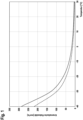
- Figure 1 shows two viscosity curves in detail.
- the upper curve shows the temperature dependence of the kinematic viscosity (measured according to DIN 53018) of an aqueous solution of the propane-1,3-diol used according to the invention, which was set to an antifreeze of -40 ° C.
- the lower curve shows the temperature dependence of the kinematic viscosity (measured according to DIN 53018) of an aqueous ethanolic solution with propane-1,3-diol, which was also set to antifreeze of -40 °C, with the mass ratio of propane-1,3-diol. diol: ethanol: water was 35-45: 12-16: 40-50.
Landscapes
- Chemical & Material Sciences (AREA)
- Engineering & Computer Science (AREA)
- Materials Engineering (AREA)
- Organic Chemistry (AREA)
- Mechanical Engineering (AREA)
- Metallurgy (AREA)
- Physics & Mathematics (AREA)
- Chemical Kinetics & Catalysis (AREA)
- Combustion & Propulsion (AREA)
- Thermal Sciences (AREA)
- Materials Applied To Surfaces To Minimize Adherence Of Mist Or Water (AREA)
- Preventing Corrosion Or Incrustation Of Metals (AREA)
Description
- Die Erfindung betrifft ein Frostschutzmittel, dessen den Frostschutz bewirkende Rohstoffe insbesondere bioverfügbare bzw. nachwachsende Rohstoffe sind.
- Alkohole sind als gute Frostschutzmittel, also den Frostschutz verbessernde und damit den Gefrierpunkt senkende Mittel bekannt. Die wenigstens Alkohole sind jedoch bioverfügbare bzw. nachwachsende Rohstoffe. Ethanol ist ein bioverfügbarer Alkohol, dessen Frostschutzwirkung jedoch für die meisten Einsatzbereiche nicht ausreichend ist, oder der in hohen Konzentrationen von über 20 Masse% eingesetzt zu Verarbeitungs- und Anwendungsproblemen führt. Aus den vergangenen "Weinpanschskandalen" ist die Kombination von Ethanol mit dem Frostschutzmittel Diethylenglycol bekannt. Nachteilig an dieser alkoholischen Mischung ist, dass wenn man einen deutlichen Frostschutz von um -20 bis -45 °C erzielen will, hohe Mengen an Diethylenglycol notwendig werden, was die Viskosität des Frostschutzmittels ansteigen lassen kann. Eine hohe Viskosität ist aber aufgrund schwierigerer Verarbeitung und Dosierung des Frostschutzmittels nachteilig. Zudem ist Diethylenglycol nicht bioverfügbar. Eine gute Bioverfügbarkeit ist wichtig für die Marktakzeptanz und die Nachhaltigkeit des Frostschutzmittels, wobei unter Bioverfügbarkeit eines Rohstoffs verstanden wird, dass dieser Rohstoff im Wesentlichen aus nachwachsenden Rohstoffquellen gewonnen und allenfalls durch Aufreinigung, nicht aber durch Syntheseverfahren hergestellt wird.
-
WO 2019/201363 A1 betrifft ein Frostschutzmittel, das mindestens eine Base, 5 bis 22 Masse-% Bernsteinsäure und 3 bis 60 Masse-% Ethanol, jeweils bezogen auf die Gesamtmasse des Frostschutzmittels enthält, wobei die Gesamtmasse an Acetat und Essigsäure im Frostschutzmittel weniger als 0,1 Masse-%, bezogen auf die Gesamtmasse des Frostschutzmittels beträgt. -
DE 20 2016 000330 U1 lehrt ein Korrosionsschutzmittel, das 1,60 bis 4,20 Gew.-% mindestens einer Base, 0,26 bis 0,70 Gew.-% mindestens einer ersten Dicarbonsäure mit zwei bis sechs Kohlenstoffatomen, 0,26 bis 0,70 Gew.-% mindestens einer zweiten Dicarbonsäure mit zwei bis sechs Kohlenstoffatomen, 0,26 bis 0,70 Gew.-% mindestens einer aromatischen Carbonsäure mit einem Phenylrest und mindestens einer Carboxylgruppe, 0,02 bis 0,50 Gew.-% mindestens eines Diazols und/oder eines Triazols und mindestens einen Alkohol, ausgewählt aus der Gruppe bestehend aus: Monoethylenglykol, Monopropylenglykol, Dipropylenglykol, Triethylenglykol, 1,3-Propandiol und Ethanol, enthält. - Es ist Aufgabe der Erfindung ein Frostschutzmittel mit sehr guter Frostschutzwirkung unter Verwendung von bioverfügbaren bzw. nachwachsenden Rohstoffen bereitzustellen, das sich durch eine niedrige Viskosität und damit sehr gute Verarbeitbarkeit, Anwendung und Nachhaltigkeit auszeichnet.
- Die Lösung dieser Aufgabe erfolgt durch die Merkmale des unabhängigen Anspruchs 1. Die Unteransprüche haben vorteilhafte Weiterbildungen zum Inhalt.
- Demnach wird die Aufgabe durch ein Frostschutzmittel gelöst, das Propan-1,3-diol, Ethanol und Wasser enthält. Bei allen drei Rohstoffen handelt es sich um bioverfügbare bzw. nachwachsende Rohstoffe. Das Ethanol wird dabei vorzugsweise in vergällter Form eingesetzt und enthält in etwa 96 Masse% Ethanol, wobei als Vergällungsmittel insbesondere Methylethylketon oder Denatriumbenzoat zur Anwendung kommt. Sofern Isopropylalkohol (Isopropanol) als Vergällungsmittel eingesetzt wird, liegt dessen Menge bei weniger als 2 Masse% bezogen auf die Gesamtmasse an Propan-1,3-diol. Vorzugsweise enthält das Vergällungsmittel keinen Isopropylalkohol.
- Das Masseverhältnis von Propan-1,3-diol : Ethanol : Wasser beträgt 35-45 : 12-16 : 40-50, wodurch sich ein sehr guter Frostschutz von mindestens -20 °C bis -50 °C einstellen lässt. Zudem zeichnet sich das Frostschutzmittel durch eine niedrige kinematische Viskosität von etwa 5 mm2/s bis 7 mm2/s, gemessen bei 20 °C und etwa 45 mm2/s bis 70 mm2/s, gemessen bei -20 °C aus. Als Messverfahren wurde ein Verfahren gemäß DIN 53018 verwendet. Das erfindungsgemäße Frostschutzmittel weist damit ein hervorragendes anwendungstechnisches und rohstoffbasiertes Eigenschaftsprofil aus und zeichnet sich durch eine hervorragende Bioverfügbarkeit aus. Seine den Frostschutz verbessernden Rohstoffe werden aus nachwachsenden Rohstoffquellen bezogen, so dass die Nachhaltigkeit des Frostschutzmittels besonders hoch ist. Hinsichtlich des anwendungsbezogenen Eigenschaftsprofils ist Insbesondere eine sehr niedrige Viskosität bei sehr niedrigen Temperaturen zu nennen, so dass das Frostschutzmittel sehr gut verarbeitbar und einsetzbar bzw. anwendbar ist.
- Der Frostschutz des erfindungsgemäßen Frostschutzmittels lässt sich noch gezielter auf niedrige Werte von insbesondere mindestens -30 °C einstellen, wenn das Masseverhältnis Propan-1,3-diol : Ethanol : Wasser 38-42 : 14-16 : 43-46 beträgt.
- Gemäß einer weiteren vorteilhaften Weiterbildung enthält das Frostschutzmittel außer Ethanol und Propan-1,3-diol keine weiteren Alkohole und insbesondere kein Monopropylenglycol (Propan-1,2-diol), Diethylenglycol, Dipropylenglycol, Butandiole, Methanol, Isopropylalkohol und Glycerin. Die vorstehend genannten Alkohole haben insbesondere den Nachteil, dass sie nicht bioverfügbar bzw. keine nachwachsenden Rohstoffe sind. Sofern der eine oder andere Alkohol bioverfügbar ist bzw. ein nachwachsender Rohstoff ist, erzielt er jedoch nicht die erfindungsgemäße Frostschutzwirkung und/oder erhöht die Viskosität des Frostschutzmittels deutlich.
- Weiter vorteilhaft sind Ethanol und Propan-1,3-diol die einzigen den Frostschutz verbessernden und damit den Gefrierpunkt senkenden Mittel im erfindungsgemäßen Frostschutzmittel, so dass der Anteil an bioverfügbaren bzw. auch nachwachsenden Rohstoffen besonders hoch ist. Die Umweltverträglichkeit des Frostschutzmittels sowie seine Markakzeptanz sind damit sehr gut.
- Zur Regulierung des pH-Werts, und um hierdurch ggf. auch den Korrosionsschutz des Frostschutzmittels zu verbessern, ist weiter vorteilhaft vorgesehen, dass das Frostschutzmittel ferner mindestens eine Base enthält. Die Base ist dabei aufgrund der sehr guten Verfügbarkeit und Anwendungseigenschaften insbesondere ausgewählt aus NaOH, KOH und Aminoalkoholen, wobei als Aminoalkohol insbesondere Triethanolamin zur Anwendung kommt. NaOH und KOH werden vorzugsweise als wässrige Lösung eingesetzt, insbesondere als 50 Masse%ige wässrige Lösungen. Hierdurch wird die Ätzwirkung deutlich gesenkt und die Anwendung insbesondere bei der Herstellung wird erleichtert.
- Eine weitere vorteilhafte Weiterbildung sieht vor, dass das Frostschutzmittel ferner mindestens eine Dicarbonsäure enthält. Dicarbonsäuren, und hierunter insbesondere insbesondere Dodekandisäure, Undekandisäure, Adipinsäure, Bersteinsäure und Sebacinsäure, haben sich als sehr wirkungsvolle multifunktionale Korrosionsinhibitoren herausgestellt. Aufgrund der besonders hohen Korrosionsschutzwirkung bei gleichzeitig hoher Verfügbarkeit und sehr guter Verarbeitbarkeit, ist Sebacinsäure unter den Dicarbonsäuren besonders bevorzugt.
- Weiter vorteilhaft enthält das Frostschutzmittel als weiteres Korrosionsschutzmittel mindestens eine Monocarbonsäure. Geeignete Monocarbonsäuren umfassen Octansäure, Benzoesäure, para-tert.-Butylbenzoesäure, Laurinsäure und Myristinsäure. Octansäure ist eine relativ kurzkettige Monocarbonsäure mit sehr guter multifunktionaler Korrosionsschutzwirkung, die sich gut in das Frostschutzmittel einarbeiten lässt.
- Zur Erzielung eines besonders hohen Korrosionsschutzes enthält das Frostschutzmittel vorzugsweise Sebacinsäure und Octansäure in Kombination.
- Ferner vorteilhaft enthält das Frostschutzmittel mindestens ein Korrosionsschutzmittel, das insbesondere zur Verbesserung des Korrosionsschutzes von Buntmetallen vorteilhaft ist. Besonders geeignet sind hierunter Thiazole und/oder Triazole, die jeweils einzeln oder aber in Kombinationen eingesetzt werden können. Benzotriazol ist hierunter besonders bevorzugt.
- Zur Verbesserung der Herstellung und auch der Anwendung des Frostschutzmittels, enthält das Frostschutzmittel vorzugsweise mindestens ein Entschäumungsmittel. Hierunter bevorzugt sind silikonfreie difunktionelle Ethylenoxid-Propylenoxid basierte nicht ionische Blockcopolymere mit endständigen primären Alkoholgruppen mit einer mittleren Molmasse von ca. 2000 g/mol, silikonfreie Ethylenoxid-Propylenoxid-Ethylenoxid basierte nicht ionische Blockcopolymer mit einer endständigen primären Alkoholgruppe mit einer mittleren Molmasse des Propylenoxid-Blocks von ca. 800 - 3250 g/mol, Silikon-Polyoxyalkylenkombinierte, kammförmige polyethermodifizierte hydrolysestabile Polydimethylsiloxane und insbesondere Propylenoxid (PO)/Ethylenoxid (EO)-Blockpolymer-basierte Entschäumungsmittel, die unter dem Handelsnamen "Pluronic" vertrieben werden.
- Zur Verbesserung der Hartwasserstabilität enthält das Frostschutzmittel weiter vorteilhaft mindestens einen Hartwasserstabilisator und hierunter, aufgrund seiner sehr guten anwendungstechnischen und verarbeitungstechnischen Eigenschaften, insbesondere Acrylsäure-Sulfonsäure nichtionische, nicht neutralisierte Terpolymere mit einer mittleren Molmasse von ca, 4500 g/mol, Maleinsäure-basierte nicht neutralisierte Homopolymere mit einer mittleren Molmasse von ca. 500 - 1000 g/mol, 2-Acrylamido-2-Methyl-1-Propansulfonsäure, Phosphinsäure-basierte Natrium-neutralisierte Copolymere mit einer mittleren Molmasse von ca, > 4000 g/mol, Acrylsäure-basierte teilweise Natrium-neutralisierte Homopolymere mit einer mittleren Molmasse von ca, 2100 g/mol oder insbesondere ein acrylatbasiertes Terpolymer. Unter Hartwasserstabilisatoren werden im Sinne der vorliegenden Erfindung hochmolekulare organische Substanzen verstanden, welche in der Lage sind, durch ihre unterstöchiometrische Adsorption an vorhandene Kalk-Mikrokristallite diese am weiteren Wachstum zu hindern.
- Um einen besonders hohen Frostschutz bei gleichzeitig sehr guter Korrosionsschutzwirkung, hoher Umweltverträglichkeit und Anwenderfreundlichkeit zu erzielen, enthält das Frostschutzmittel die nachstehenden Rohstoffe in Kombination: Propan-1,3-diol, Ethanol, Wasser, NaOH, Triethanolamin, Sebacinsäure, Octansäure, mindestens ein Triazol, ein Entschäumungsmittel und einen Hartwasserstabilisator, wobei Propan-1,3-diol, Ethanol und Wasser mit dem vorstehend definierten Masseverhältnis enthalten sind.
- Dieselben vorteilhaften Effekte werden auch für ein Frostschutzmittel erzielt, das Propan-1,3-diol, Ethanol, Wasser, 2-Diethylaminoethanol und eine nichtproteinogene Aminosäure enthält. Das Masseverhältnis von Propan-1,3-diol zu Ethanol zu Wasser beträgt wiederum 35-45 : 12-16 : 40-50. Dieses Frostschutzmittel hat zu dem vorstehenden Frostschutzmittel den Vorteil, dass es eine geringere Anzahl an Rohstoffen aufweist, dadurch einfacher herstellbar und dennoch hoch funktional ist.
- Aus Gründen einer sehr guten Korrosionsschutzwirkung, hohen Umweltverträglichkeit und Anwenderfreundlichkeit bei sehr gutem Frostschutz, besteht das Frostschutzmittel besonders vorteilhaft aus folgenden Rohstoffen: Propan-1,3-diol, Ethanol, Wasser, NaOH, Triethanolamin, Sebacinsäure, Octansäure, Benzotriazol, einem Propylenoxid/Ethylenoxid-Blockpolymer-basierten Entschäumungsmittel und einem acrylatbasierten Terpolymer, wobei Propan-1,3-diol, Ethanol und Wasser wiederum mit dem vorstehend definierten Masseverhältnis enthalten sind.
- Ebenfalls vorteilhaft wird ein Frostschutzmittel beschrieben, das aus Propan-1,3-diol, Ethanol, Wasser, 2-Diethylaminoethanol und einer nichtproteinogenen Aminosäure besteht. Das Masseverhältnis von Propan-1,3-diol zu Ethanol zu Wasser beträgt wiederum 35-45 : 12-16 : 40-50. Das Frostschutzmittel weist einen sehr guten Frostschutz und darüber hinaus eine niedrige Viskosität bei niedrigen Temperaturen auf, so dass die Verarbeitbarkeit und Anwendung besonders einfach sind. Zudem enthält das Frostschutzmittel ausschließlich nachwachsende und/oder bioverfügbare Rohstoffe.
- Aus den in Tabelle 1 gelisteten Rohstoffen wurden durch Vermengen dieser Rohstoffe durch Rühren Frostschutzmittel 1 bis 3 hergestellt. Ebenfalls gelistet sind der gemessene pH-Wert, die Leitfähigkeit, der Korrosionsschutz und der gemessene Gefrierpunkt. Die Leitfähigkeit wurde dabei gemäß DIN EN 27888:1993-11 und der Frostschutz gemäß ASTM D 1177:2017 gemessen.
Frostschutzmittel 1 Frostschutzmittel 2 Frostschutzmittel 3 Rohstoff Menge in Masse% Menge in Masse% Menge in Masse% Ethanol (96 Masse%) 15,0 15,0 15,00 Propan-1,3-diol 45,7 45,7 44,10 Triethanolamin (85 Masse% in Wasser) 0 0,24 0,24 NaOH (50 Masse% in Wasser) 0 0,064 0,064 Sebacinsäure 0 0,075 0,075 Octansäure 0 0,0535 0,0535 Benzotriazol 0 0,008 0,008 acrylatbasiertes Terpolymer* 0 0,007 0,007 EO/PO-Blockpolymer** 0 0,0005 0,0005 Wasser Rest auf 100 Masse% Rest auf 100 Masse% Rest auf 100 Masse% Korrosionsschutz ok sehr gut sehr gut Leitfähigkeit [µS/cm] 0,9 144,4 184,6 pH 6,75 8,09 8,10 Gefrierpunkt [°C] -47,3 -46,6 -45,8 - Alle drei Frostschutzmittel zeichneten sich durch eine sehr hohe Frostschutzwirkung aus. Frostschutzmittel 2 und 3 wiesen darüber hinaus gegenüber Frostschutzmittel 1 noch einen verbesserten Korrosionsschutz auf. Alle drei Frostschutzmittel weisen einen besonders hohen Anteil an nachwachsenden, bioverfügbaren Rohstoffen auf und lassen sich aufgrund der niedrigen Viskosität bei niedrigen Temperaturen um den Gefrierpunkt sehr gut verarbeiten.
- Weitere Einzelheiten, Vorteile und Merkmale der vorliegenden Erfindung ergeben sich aus nachfolgender Beschreibung von Ausführungsbeispielen anhand der Zeichnung. Es zeigt:
- Fig. 1
- Viskositätskurven.
-
Figur 1 zeigt im Detail zwei Viskositätskurven. Die obere Kurve zeigt die Temperaturabhängigkeit der kinematischen Viskosität (gemessen gemäß DIN 53018) einer wässrigen Lösung des erfindungsgemäß verwendeten Propan-1,3-diols, die auf einen Frostschutz von -40 °C eingestellt war. Die untere Kurve zeigt die Temperaturabhängigkeit der kinematischen Viskosität (gemessen gemäß DIN 53018) einer wässrigen ethanolischen Lösung mit Propan-1,3-diol, die ebenfalls auf einen Frostschutz von -40 °C eingestellt war, wobei das Masseverhältnis Propan-1,3-diol : Ethanol : Wasser 35-45 : 12-16 : 40-50 betrug. Zu erkennen ist, dass die Viskosität mit sinkender Temperatur zunimmt. Dieser Anstieg ist jedoch für die ethanolhaltige Propan-1,3-diollösung wesentlich geringer. Bei -40 °C wird für die wässrige Propan-1,3-diollösung (obere Kurve) ein Viskositätswert von etwa 290 mm2/s erhalten, während für die Lösung aus Ethanol, Propan-1,3-diol und Wasser bei selbem Frostschutzwert, eine Viskosität von nur etwa 220 mm2/s erhalten wurde. Die erfindungsgemäße Zubereitung aus Wasser, Ethanol und Propan-1,3-diol war damit wesentlich einfacher zu verarbeiten und bei der Anwendung zu handhaben. - Dieselben Viskositätsverhältnisse spiegelten sich auch in den Frostschutzmitteln 1 bis 3 wider. Durch den Zusatz von Propan-1,3-diol zu einer wässrigen Ethanollösung konnten sehr niedrige Viskositätswerte im Frostschutzbereich von -20 °C bis -40 °C erzielt werden.
- Neben der vorstehenden schriftlichen Beschreibung der Erfindung wird zu deren ergänzender Offenbarung hiermit explizit auf die zeichnerische Darstellung der Erfindung in
Fig. 1 Bezug genommen.
Claims (10)
- Frostschutzmittel enthaltend Propan-1,3-diol, Ethanol und Wasser, wobei das Masseverhältnis Propan-1,3-diol : Ethanol: Wasser 35-45 : 12-16 : 40-50 beträgt.
- Frostschutzmittel nach Anspruch 1, wobei das Masseverhältnis Propan-1,3-diol : Ethanol : Wasser 38-42 : 14-16 : 43-46 beträgt.
- Frostschutzmittel nach Anspruch 1 oder 2, das außer Ethanol und Propan-1,3-diol keine weiteren Alkohole enthält.
- Frostschutzmittel nach einem der vorhergehenden Ansprüche, ferner enthaltend mindestens eine Base, insbesondere ausgewählt aus NaOH, KOH und Aminoalkoholen und/oder ferner enthaltend mindestens eine Dicarbonsäure, insbesondere Dodekandisäure, Undekandisäure, Adipinsäure, Bernsteinsäure oder Sebacinsäure und/oder ferner enthaltend mindestens eine Monocarbonsäure, insbesondere Octansäure, Benzoesäure, para-tert. Butylbenzoesäure, Laurinsäure und Myristinsäure und/oder ferner enthaltend mindestens ein Korrosionsschutzmittel, insbesondere mindestens ein Thiazol und/oder mindestens ein Triazol.
- Frostschutzmittel nach einem der vorhergehenden Ansprüche, ferner enthaltend mindestens ein Entschäumungsmittel.
- Frostschutzmittel nach einem der vorhergehenden Ansprüche, ferner enthaltend mindestens einen Hartwasserstabilisator, insbesondere ein acrylatbasiertes Terpolymer.
- Frostschutzmittel nach einem der vorhergehenden Ansprüche enthaltend:
Propan-1,3-diol, Ethanol, Wasser, NaOH, Triethanolamin, Sebacinsäure, Octansäure, mindestens ein Triazol, ein Entschäumungsmittel und einen Hartwasserstabilisator. - Frostschutzmittel nach einem der Ansprüche 1 bis 6 enthaltend:
Propan-1,3-diol, Ethanol, Wasser, 2-Diethylaminoethanol und eine nichtproteinogene Aminosäure. - Frostschutzmittel nach Anspruch 1 bestehend aus:
Propan-1,3-diol, Ethanol, Wasser, NaOH, Triethanolamin, Sebacinsäure, Octansäure, Benzotriazol, einem Propylenoxid/Ethylenoxid-Blockpolymer-basierten Entschäumungsmittel und einem acrylatbasierten Terpolymer. - Frostschutzmittel nach Anspruch 1 bestehend aus: Propan-1,3-diol, Ethanol, Wasser, 2-Diethylaminoethanol und einer nichtproteinogenen Aminosäure.
Applications Claiming Priority (1)
| Application Number | Priority Date | Filing Date | Title |
|---|---|---|---|
| DE102020112674.3A DE102020112674A1 (de) | 2020-05-11 | 2020-05-11 | Frostschutzmittel |
Publications (2)
| Publication Number | Publication Date |
|---|---|
| EP3910044A1 EP3910044A1 (de) | 2021-11-17 |
| EP3910044B1 true EP3910044B1 (de) | 2024-03-06 |
Family
ID=75887910
Family Applications (1)
| Application Number | Title | Priority Date | Filing Date |
|---|---|---|---|
| EP21173029.6A Active EP3910044B1 (de) | 2020-05-11 | 2021-05-10 | Frostschutzmittel |
Country Status (2)
| Country | Link |
|---|---|
| EP (1) | EP3910044B1 (de) |
| DE (1) | DE102020112674A1 (de) |
Family Cites Families (3)
| Publication number | Priority date | Publication date | Assignee | Title |
|---|---|---|---|---|
| US4450088A (en) | 1983-05-19 | 1984-05-22 | Basf Wyandotte Corporation | Corrosion inhibited alcohol compositions |
| DE202016000330U1 (de) * | 2016-01-19 | 2016-02-02 | Aqua-Concept Gesellschaft Für Wasserbehandlung Mbh | Korrosionsschutzmittel |
| DK3781632T3 (da) | 2018-04-17 | 2022-03-28 | Aqua Concept Ges Fuer Wasserbehandlung Mbh | Frostbeskyttelsesmiddel |
-
2020
- 2020-05-11 DE DE102020112674.3A patent/DE102020112674A1/de not_active Ceased
-
2021
- 2021-05-10 EP EP21173029.6A patent/EP3910044B1/de active Active
Also Published As
| Publication number | Publication date |
|---|---|
| DE102020112674A1 (de) | 2021-11-11 |
| EP3910044A1 (de) | 2021-11-17 |
Similar Documents
| Publication | Publication Date | Title |
|---|---|---|
| EP2459688B1 (de) | Verwendung von polyoxymethylendi(alkylpolyglykol)ethern als zusatz zu dieselkraftstoffen zur verminderung der russemission in selbstzündungsmotoren | |
| DE3609928A1 (de) | Waessrige gelzusammensetzung, verfahren zu ihrer herstellung und ihre verwendung in der metallbearbeitung | |
| WO2018095759A1 (de) | Kühlmittel für kühlsysteme in elektrofahrzeugen mit brennstoffzellen und/oder batterien enthaltend azolderivate und zusätzliche korrosionsschutzmittel | |
| WO2009053382A1 (de) | Polymeres material und verfahren zu dessen herstellung | |
| EP0675941B1 (de) | Wässrige textilweichmacher-dispersionen | |
| DE3235095A1 (de) | Zementmasse | |
| DE2412124A1 (de) | Verfahren zur herstellung von phenolischen formmassen | |
| EP3865548A1 (de) | Lösemittelfreie zusammensetzung basierend auf 2,4,7,9-tetramethyl-5-decin-4,7-diol | |
| DE3315673C2 (de) | Polyesterweichmacher mit geringer Viskosität bei 25 DEG C | |
| DE69112431T2 (de) | Wässrige autoxidativ trocknende alkydzusammensetzung. | |
| EP2678372B1 (de) | Polymere basierend auf glycerincarbonat und einem alkohol | |
| EP3910044A1 (de) | Frostschutzmittel | |
| WO1997038965A1 (de) | Kältestabiles schmier- und kraftstoffadditiv | |
| EP2457959A1 (de) | Verwendung von Estern als Koaleszenzmittel | |
| EP0228422A1 (de) | Gel mit temperaturabhängiger lichtdurchlässigkeit, verfahren zu seiner herstellung und seine verwendung. | |
| DE1669024B2 (de) | Ueberzugsmittel | |
| DE202005020492U1 (de) | Pflanzenöl-Dieselkraftstoff | |
| DE1135121B (de) | Hydraulische Fluessigkeit | |
| DE19606327B4 (de) | Verfahren zur Verminderung der Oberflächenreibung und Gleit- und Trennmittel für Kautschuk- und Gummimaterialien | |
| EP3696252B1 (de) | Benzylhemiformal-haltige biodieselmischungen | |
| DE849903C (de) | Verfahren zur Herstellung von Kunstharzen | |
| EP2945975B1 (de) | Polyole, deren herstellung und verwendung | |
| DE1594358A1 (de) | Bremsfluessigkeit | |
| EP3781632B1 (de) | Frostschutzmittel | |
| EP3405601B1 (de) | Korrosionsschutzmittel |
Legal Events
| Date | Code | Title | Description |
|---|---|---|---|
| PUAI | Public reference made under article 153(3) epc to a published international application that has entered the european phase |
Free format text: ORIGINAL CODE: 0009012 |
|
| STAA | Information on the status of an ep patent application or granted ep patent |
Free format text: STATUS: THE APPLICATION HAS BEEN PUBLISHED |
|
| AK | Designated contracting states |
Kind code of ref document: A1 Designated state(s): AL AT BE BG CH CY CZ DE DK EE ES FI FR GB GR HR HU IE IS IT LI LT LU LV MC MK MT NL NO PL PT RO RS SE SI SK SM TR |
|
| B565 | Issuance of search results under rule 164(2) epc |
Effective date: 20210930 |
|
| STAA | Information on the status of an ep patent application or granted ep patent |
Free format text: STATUS: REQUEST FOR EXAMINATION WAS MADE |
|
| 17P | Request for examination filed |
Effective date: 20220516 |
|
| RBV | Designated contracting states (corrected) |
Designated state(s): AL AT BE BG CH CY CZ DE DK EE ES FI FR GB GR HR HU IE IS IT LI LT LU LV MC MK MT NL NO PL PT RO RS SE SI SK SM TR |
|
| STAA | Information on the status of an ep patent application or granted ep patent |
Free format text: STATUS: EXAMINATION IS IN PROGRESS |
|
| 17Q | First examination report despatched |
Effective date: 20220823 |
|
| GRAP | Despatch of communication of intention to grant a patent |
Free format text: ORIGINAL CODE: EPIDOSNIGR1 |
|
| STAA | Information on the status of an ep patent application or granted ep patent |
Free format text: STATUS: GRANT OF PATENT IS INTENDED |
|
| INTG | Intention to grant announced |
Effective date: 20230920 |
|
| GRAS | Grant fee paid |
Free format text: ORIGINAL CODE: EPIDOSNIGR3 |
|
| GRAA | (expected) grant |
Free format text: ORIGINAL CODE: 0009210 |
|
| STAA | Information on the status of an ep patent application or granted ep patent |
Free format text: STATUS: THE PATENT HAS BEEN GRANTED |
|
| AK | Designated contracting states |
Kind code of ref document: B1 Designated state(s): AL AT BE BG CH CY CZ DE DK EE ES FI FR GB GR HR HU IE IS IT LI LT LU LV MC MK MT NL NO PL PT RO RS SE SI SK SM TR |
|
| REG | Reference to a national code |
Ref country code: CH Ref legal event code: EP |
|
| REG | Reference to a national code |
Ref country code: IE Ref legal event code: FG4D Free format text: LANGUAGE OF EP DOCUMENT: GERMAN |
|
| REG | Reference to a national code |
Ref country code: DE Ref legal event code: R096 Ref document number: 502021002865 Country of ref document: DE |
|
| REG | Reference to a national code |
Ref country code: NL Ref legal event code: FP |
|
| REG | Reference to a national code |
Ref country code: LT Ref legal event code: MG9D |
|
| PG25 | Lapsed in a contracting state [announced via postgrant information from national office to epo] |
Ref country code: LT Free format text: LAPSE BECAUSE OF FAILURE TO SUBMIT A TRANSLATION OF THE DESCRIPTION OR TO PAY THE FEE WITHIN THE PRESCRIBED TIME-LIMIT Effective date: 20240306 |
|
| PG25 | Lapsed in a contracting state [announced via postgrant information from national office to epo] |
Ref country code: GR Free format text: LAPSE BECAUSE OF FAILURE TO SUBMIT A TRANSLATION OF THE DESCRIPTION OR TO PAY THE FEE WITHIN THE PRESCRIBED TIME-LIMIT Effective date: 20240607 |
|
| PG25 | Lapsed in a contracting state [announced via postgrant information from national office to epo] |
Ref country code: RS Free format text: LAPSE BECAUSE OF FAILURE TO SUBMIT A TRANSLATION OF THE DESCRIPTION OR TO PAY THE FEE WITHIN THE PRESCRIBED TIME-LIMIT Effective date: 20240606 Ref country code: HR Free format text: LAPSE BECAUSE OF FAILURE TO SUBMIT A TRANSLATION OF THE DESCRIPTION OR TO PAY THE FEE WITHIN THE PRESCRIBED TIME-LIMIT Effective date: 20240306 |
|
| PG25 | Lapsed in a contracting state [announced via postgrant information from national office to epo] |
Ref country code: ES Free format text: LAPSE BECAUSE OF FAILURE TO SUBMIT A TRANSLATION OF THE DESCRIPTION OR TO PAY THE FEE WITHIN THE PRESCRIBED TIME-LIMIT Effective date: 20240306 |
|
| PG25 | Lapsed in a contracting state [announced via postgrant information from national office to epo] |
Ref country code: RS Free format text: LAPSE BECAUSE OF FAILURE TO SUBMIT A TRANSLATION OF THE DESCRIPTION OR TO PAY THE FEE WITHIN THE PRESCRIBED TIME-LIMIT Effective date: 20240606 Ref country code: NO Free format text: LAPSE BECAUSE OF FAILURE TO SUBMIT A TRANSLATION OF THE DESCRIPTION OR TO PAY THE FEE WITHIN THE PRESCRIBED TIME-LIMIT Effective date: 20240606 Ref country code: LT Free format text: LAPSE BECAUSE OF FAILURE TO SUBMIT A TRANSLATION OF THE DESCRIPTION OR TO PAY THE FEE WITHIN THE PRESCRIBED TIME-LIMIT Effective date: 20240306 Ref country code: HR Free format text: LAPSE BECAUSE OF FAILURE TO SUBMIT A TRANSLATION OF THE DESCRIPTION OR TO PAY THE FEE WITHIN THE PRESCRIBED TIME-LIMIT Effective date: 20240306 Ref country code: GR Free format text: LAPSE BECAUSE OF FAILURE TO SUBMIT A TRANSLATION OF THE DESCRIPTION OR TO PAY THE FEE WITHIN THE PRESCRIBED TIME-LIMIT Effective date: 20240607 Ref country code: FI Free format text: LAPSE BECAUSE OF FAILURE TO SUBMIT A TRANSLATION OF THE DESCRIPTION OR TO PAY THE FEE WITHIN THE PRESCRIBED TIME-LIMIT Effective date: 20240306 Ref country code: ES Free format text: LAPSE BECAUSE OF FAILURE TO SUBMIT A TRANSLATION OF THE DESCRIPTION OR TO PAY THE FEE WITHIN THE PRESCRIBED TIME-LIMIT Effective date: 20240306 Ref country code: BG Free format text: LAPSE BECAUSE OF FAILURE TO SUBMIT A TRANSLATION OF THE DESCRIPTION OR TO PAY THE FEE WITHIN THE PRESCRIBED TIME-LIMIT Effective date: 20240306 |
|
| PG25 | Lapsed in a contracting state [announced via postgrant information from national office to epo] |
Ref country code: SE Free format text: LAPSE BECAUSE OF FAILURE TO SUBMIT A TRANSLATION OF THE DESCRIPTION OR TO PAY THE FEE WITHIN THE PRESCRIBED TIME-LIMIT Effective date: 20240306 Ref country code: LV Free format text: LAPSE BECAUSE OF FAILURE TO SUBMIT A TRANSLATION OF THE DESCRIPTION OR TO PAY THE FEE WITHIN THE PRESCRIBED TIME-LIMIT Effective date: 20240306 |
|
| PG25 | Lapsed in a contracting state [announced via postgrant information from national office to epo] |
Ref country code: IS Free format text: LAPSE BECAUSE OF FAILURE TO SUBMIT A TRANSLATION OF THE DESCRIPTION OR TO PAY THE FEE WITHIN THE PRESCRIBED TIME-LIMIT Effective date: 20240706 |
|
| PG25 | Lapsed in a contracting state [announced via postgrant information from national office to epo] |
Ref country code: PT Free format text: LAPSE BECAUSE OF FAILURE TO SUBMIT A TRANSLATION OF THE DESCRIPTION OR TO PAY THE FEE WITHIN THE PRESCRIBED TIME-LIMIT Effective date: 20240708 Ref country code: SM Free format text: LAPSE BECAUSE OF FAILURE TO SUBMIT A TRANSLATION OF THE DESCRIPTION OR TO PAY THE FEE WITHIN THE PRESCRIBED TIME-LIMIT Effective date: 20240306 |
|
| PG25 | Lapsed in a contracting state [announced via postgrant information from national office to epo] |
Ref country code: EE Free format text: LAPSE BECAUSE OF FAILURE TO SUBMIT A TRANSLATION OF THE DESCRIPTION OR TO PAY THE FEE WITHIN THE PRESCRIBED TIME-LIMIT Effective date: 20240306 Ref country code: CZ Free format text: LAPSE BECAUSE OF FAILURE TO SUBMIT A TRANSLATION OF THE DESCRIPTION OR TO PAY THE FEE WITHIN THE PRESCRIBED TIME-LIMIT Effective date: 20240306 |
|
| PG25 | Lapsed in a contracting state [announced via postgrant information from national office to epo] |
Ref country code: PL Free format text: LAPSE BECAUSE OF FAILURE TO SUBMIT A TRANSLATION OF THE DESCRIPTION OR TO PAY THE FEE WITHIN THE PRESCRIBED TIME-LIMIT Effective date: 20240306 |
|
| PG25 | Lapsed in a contracting state [announced via postgrant information from national office to epo] |
Ref country code: SK Free format text: LAPSE BECAUSE OF FAILURE TO SUBMIT A TRANSLATION OF THE DESCRIPTION OR TO PAY THE FEE WITHIN THE PRESCRIBED TIME-LIMIT Effective date: 20240306 |
|
| PG25 | Lapsed in a contracting state [announced via postgrant information from national office to epo] |
Ref country code: SM Free format text: LAPSE BECAUSE OF FAILURE TO SUBMIT A TRANSLATION OF THE DESCRIPTION OR TO PAY THE FEE WITHIN THE PRESCRIBED TIME-LIMIT Effective date: 20240306 Ref country code: SK Free format text: LAPSE BECAUSE OF FAILURE TO SUBMIT A TRANSLATION OF THE DESCRIPTION OR TO PAY THE FEE WITHIN THE PRESCRIBED TIME-LIMIT Effective date: 20240306 Ref country code: RO Free format text: LAPSE BECAUSE OF FAILURE TO SUBMIT A TRANSLATION OF THE DESCRIPTION OR TO PAY THE FEE WITHIN THE PRESCRIBED TIME-LIMIT Effective date: 20240306 Ref country code: PT Free format text: LAPSE BECAUSE OF FAILURE TO SUBMIT A TRANSLATION OF THE DESCRIPTION OR TO PAY THE FEE WITHIN THE PRESCRIBED TIME-LIMIT Effective date: 20240708 Ref country code: PL Free format text: LAPSE BECAUSE OF FAILURE TO SUBMIT A TRANSLATION OF THE DESCRIPTION OR TO PAY THE FEE WITHIN THE PRESCRIBED TIME-LIMIT Effective date: 20240306 Ref country code: IS Free format text: LAPSE BECAUSE OF FAILURE TO SUBMIT A TRANSLATION OF THE DESCRIPTION OR TO PAY THE FEE WITHIN THE PRESCRIBED TIME-LIMIT Effective date: 20240706 Ref country code: EE Free format text: LAPSE BECAUSE OF FAILURE TO SUBMIT A TRANSLATION OF THE DESCRIPTION OR TO PAY THE FEE WITHIN THE PRESCRIBED TIME-LIMIT Effective date: 20240306 Ref country code: CZ Free format text: LAPSE BECAUSE OF FAILURE TO SUBMIT A TRANSLATION OF THE DESCRIPTION OR TO PAY THE FEE WITHIN THE PRESCRIBED TIME-LIMIT Effective date: 20240306 |
|
| PG25 | Lapsed in a contracting state [announced via postgrant information from national office to epo] |
Ref country code: IT Free format text: LAPSE BECAUSE OF FAILURE TO SUBMIT A TRANSLATION OF THE DESCRIPTION OR TO PAY THE FEE WITHIN THE PRESCRIBED TIME-LIMIT Effective date: 20240306 |
|
| REG | Reference to a national code |
Ref country code: DE Ref legal event code: R097 Ref document number: 502021002865 Country of ref document: DE |
|
| PG25 | Lapsed in a contracting state [announced via postgrant information from national office to epo] |
Ref country code: IT Free format text: LAPSE BECAUSE OF FAILURE TO SUBMIT A TRANSLATION OF THE DESCRIPTION OR TO PAY THE FEE WITHIN THE PRESCRIBED TIME-LIMIT Effective date: 20240306 |
|
| PG25 | Lapsed in a contracting state [announced via postgrant information from national office to epo] |
Ref country code: MC Free format text: LAPSE BECAUSE OF FAILURE TO SUBMIT A TRANSLATION OF THE DESCRIPTION OR TO PAY THE FEE WITHIN THE PRESCRIBED TIME-LIMIT Effective date: 20240306 |
|
| PLBE | No opposition filed within time limit |
Free format text: ORIGINAL CODE: 0009261 |
|
| STAA | Information on the status of an ep patent application or granted ep patent |
Free format text: STATUS: NO OPPOSITION FILED WITHIN TIME LIMIT |
|
| PG25 | Lapsed in a contracting state [announced via postgrant information from national office to epo] |
Ref country code: DK Free format text: LAPSE BECAUSE OF FAILURE TO SUBMIT A TRANSLATION OF THE DESCRIPTION OR TO PAY THE FEE WITHIN THE PRESCRIBED TIME-LIMIT Effective date: 20240306 |
|
| PG25 | Lapsed in a contracting state [announced via postgrant information from national office to epo] |
Ref country code: LU Free format text: LAPSE BECAUSE OF NON-PAYMENT OF DUE FEES Effective date: 20240510 |
|
| PG25 | Lapsed in a contracting state [announced via postgrant information from national office to epo] |
Ref country code: MC Free format text: LAPSE BECAUSE OF FAILURE TO SUBMIT A TRANSLATION OF THE DESCRIPTION OR TO PAY THE FEE WITHIN THE PRESCRIBED TIME-LIMIT Effective date: 20240306 Ref country code: LU Free format text: LAPSE BECAUSE OF NON-PAYMENT OF DUE FEES Effective date: 20240510 Ref country code: DK Free format text: LAPSE BECAUSE OF FAILURE TO SUBMIT A TRANSLATION OF THE DESCRIPTION OR TO PAY THE FEE WITHIN THE PRESCRIBED TIME-LIMIT Effective date: 20240306 |
|
| 26N | No opposition filed |
Effective date: 20241209 |
|
| REG | Reference to a national code |
Ref country code: BE Ref legal event code: MM Effective date: 20240531 |
|
| PG25 | Lapsed in a contracting state [announced via postgrant information from national office to epo] |
Ref country code: IE Free format text: LAPSE BECAUSE OF NON-PAYMENT OF DUE FEES Effective date: 20240510 |
|
| PG25 | Lapsed in a contracting state [announced via postgrant information from national office to epo] |
Ref country code: SI Free format text: LAPSE BECAUSE OF FAILURE TO SUBMIT A TRANSLATION OF THE DESCRIPTION OR TO PAY THE FEE WITHIN THE PRESCRIBED TIME-LIMIT Effective date: 20240306 Ref country code: BE Free format text: LAPSE BECAUSE OF NON-PAYMENT OF DUE FEES Effective date: 20240531 |
|
| PG25 | Lapsed in a contracting state [announced via postgrant information from national office to epo] |
Ref country code: CY Free format text: LAPSE BECAUSE OF FAILURE TO SUBMIT A TRANSLATION OF THE DESCRIPTION OR TO PAY THE FEE WITHIN THE PRESCRIBED TIME-LIMIT; INVALID AB INITIO Effective date: 20210510 |
|
| PG25 | Lapsed in a contracting state [announced via postgrant information from national office to epo] |
Ref country code: HU Free format text: LAPSE BECAUSE OF FAILURE TO SUBMIT A TRANSLATION OF THE DESCRIPTION OR TO PAY THE FEE WITHIN THE PRESCRIBED TIME-LIMIT; INVALID AB INITIO Effective date: 20210510 |
|
| GBPC | Gb: european patent ceased through non-payment of renewal fee |
Effective date: 20250510 |
|
| PG25 | Lapsed in a contracting state [announced via postgrant information from national office to epo] |
Ref country code: GB Free format text: LAPSE BECAUSE OF NON-PAYMENT OF DUE FEES Effective date: 20250510 |
|
| PG25 | Lapsed in a contracting state [announced via postgrant information from national office to epo] |
Ref country code: TR Free format text: LAPSE BECAUSE OF FAILURE TO SUBMIT A TRANSLATION OF THE DESCRIPTION OR TO PAY THE FEE WITHIN THE PRESCRIBED TIME-LIMIT Effective date: 20240306 |
|
| REG | Reference to a national code |
Ref country code: CH Ref legal event code: U11 Free format text: ST27 STATUS EVENT CODE: U-0-0-U10-U11 (AS PROVIDED BY THE NATIONAL OFFICE) Effective date: 20260601 |
|
| PGFP | Annual fee paid to national office [announced via postgrant information from national office to epo] |
Ref country code: NL Payment date: 20260519 Year of fee payment: 6 |
|
| PGFP | Annual fee paid to national office [announced via postgrant information from national office to epo] |
Ref country code: DE Payment date: 20260521 Year of fee payment: 6 |
|
| PGFP | Annual fee paid to national office [announced via postgrant information from national office to epo] |
Ref country code: AT Payment date: 20260521 Year of fee payment: 6 |
|
| PGFP | Annual fee paid to national office [announced via postgrant information from national office to epo] |
Ref country code: CH Payment date: 20260601 Year of fee payment: 6 |
|
| PGFP | Annual fee paid to national office [announced via postgrant information from national office to epo] |
Ref country code: FR Payment date: 20260522 Year of fee payment: 6 |