EP3910029B1 - Composition comprising esters of lignin and oil or fatty acids - Google Patents
Composition comprising esters of lignin and oil or fatty acids Download PDFInfo
- Publication number
- EP3910029B1 EP3910029B1 EP21182866.0A EP21182866A EP3910029B1 EP 3910029 B1 EP3910029 B1 EP 3910029B1 EP 21182866 A EP21182866 A EP 21182866A EP 3910029 B1 EP3910029 B1 EP 3910029B1
- Authority
- EP
- European Patent Office
- Prior art keywords
- lignin
- weight
- ester
- solution
- composition
- Prior art date
- Legal status (The legal status is an assumption and is not a legal conclusion. Google has not performed a legal analysis and makes no representation as to the accuracy of the status listed.)
- Active
Links
Images



Classifications
-
- C—CHEMISTRY; METALLURGY
- C08—ORGANIC MACROMOLECULAR COMPOUNDS; THEIR PREPARATION OR CHEMICAL WORKING-UP; COMPOSITIONS BASED THEREON
- C08L—COMPOSITIONS OF MACROMOLECULAR COMPOUNDS
- C08L97/00—Compositions of lignin-containing materials
- C08L97/005—Lignin
-
- C—CHEMISTRY; METALLURGY
- C07—ORGANIC CHEMISTRY
- C07G—COMPOUNDS OF UNKNOWN CONSTITUTION
- C07G1/00—Lignin; Lignin derivatives
-
- C—CHEMISTRY; METALLURGY
- C08—ORGANIC MACROMOLECULAR COMPOUNDS; THEIR PREPARATION OR CHEMICAL WORKING-UP; COMPOSITIONS BASED THEREON
- C08H—DERIVATIVES OF NATURAL MACROMOLECULAR COMPOUNDS
- C08H6/00—Macromolecular compounds derived from lignin, e.g. tannins, humic acids
-
- C—CHEMISTRY; METALLURGY
- C08—ORGANIC MACROMOLECULAR COMPOUNDS; THEIR PREPARATION OR CHEMICAL WORKING-UP; COMPOSITIONS BASED THEREON
- C08L—COMPOSITIONS OF MACROMOLECULAR COMPOUNDS
- C08L97/00—Compositions of lignin-containing materials
- C08L97/02—Lignocellulosic material, e.g. wood, straw or bagasse
-
- C—CHEMISTRY; METALLURGY
- C10—PETROLEUM, GAS OR COKE INDUSTRIES; TECHNICAL GASES CONTAINING CARBON MONOXIDE; FUELS; LUBRICANTS; PEAT
- C10G—CRACKING HYDROCARBON OILS; PRODUCTION OF LIQUID HYDROCARBON MIXTURES, e.g. BY DESTRUCTIVE HYDROGENATION, OLIGOMERISATION, POLYMERISATION; RECOVERY OF HYDROCARBON OILS FROM OIL-SHALE, OIL-SAND, OR GASES; REFINING MIXTURES MAINLY CONSISTING OF HYDROCARBONS; REFORMING OF NAPHTHA; MINERAL WAXES
- C10G1/00—Production of liquid hydrocarbon mixtures from oil-shale, oil-sand, or non-melting solid carbonaceous or similar materials, e.g. wood, coal
-
- C—CHEMISTRY; METALLURGY
- C10—PETROLEUM, GAS OR COKE INDUSTRIES; TECHNICAL GASES CONTAINING CARBON MONOXIDE; FUELS; LUBRICANTS; PEAT
- C10L—FUELS NOT OTHERWISE PROVIDED FOR; NATURAL GAS; SYNTHETIC NATURAL GAS OBTAINED BY PROCESSES NOT COVERED BY SUBCLASSES C10G OR C10K; LIQUIFIED PETROLEUM GAS; USE OF ADDITIVES TO FUELS OR FIRES; FIRE-LIGHTERS
- C10L1/00—Liquid carbonaceous fuels
- C10L1/02—Liquid carbonaceous fuels essentially based on components consisting of carbon, hydrogen, and oxygen only
- C10L1/026—Liquid carbonaceous fuels essentially based on components consisting of carbon, hydrogen, and oxygen only for compression ignition
-
- C—CHEMISTRY; METALLURGY
- C10—PETROLEUM, GAS OR COKE INDUSTRIES; TECHNICAL GASES CONTAINING CARBON MONOXIDE; FUELS; LUBRICANTS; PEAT
- C10M—LUBRICATING COMPOSITIONS; USE OF CHEMICAL SUBSTANCES EITHER ALONE OR AS LUBRICATING INGREDIENTS IN A LUBRICATING COMPOSITION
- C10M107/00—Lubricating compositions characterised by the base-material being a macromolecular compound
- C10M107/20—Lubricating compositions characterised by the base-material being a macromolecular compound containing oxygen
-
- C—CHEMISTRY; METALLURGY
- C11—ANIMAL OR VEGETABLE OILS, FATS, FATTY SUBSTANCES OR WAXES; FATTY ACIDS THEREFROM; DETERGENTS; CANDLES
- C11C—FATTY ACIDS FROM FATS, OILS OR WAXES; CANDLES; FATS, OILS OR FATTY ACIDS BY CHEMICAL MODIFICATION OF FATS, OILS, OR FATTY ACIDS OBTAINED THEREFROM
- C11C3/00—Fats, oils, or fatty acids by chemical modification of fats, oils, or fatty acids obtained therefrom
-
- C—CHEMISTRY; METALLURGY
- C10—PETROLEUM, GAS OR COKE INDUSTRIES; TECHNICAL GASES CONTAINING CARBON MONOXIDE; FUELS; LUBRICANTS; PEAT
- C10L—FUELS NOT OTHERWISE PROVIDED FOR; NATURAL GAS; SYNTHETIC NATURAL GAS OBTAINED BY PROCESSES NOT COVERED BY SUBCLASSES C10G OR C10K; LIQUIFIED PETROLEUM GAS; USE OF ADDITIVES TO FUELS OR FIRES; FIRE-LIGHTERS
- C10L2200/00—Components of fuel compositions
- C10L2200/04—Organic compounds
- C10L2200/0461—Fractions defined by their origin
- C10L2200/0469—Renewables or materials of biological origin
-
- C—CHEMISTRY; METALLURGY
- C10—PETROLEUM, GAS OR COKE INDUSTRIES; TECHNICAL GASES CONTAINING CARBON MONOXIDE; FUELS; LUBRICANTS; PEAT
- C10M—LUBRICATING COMPOSITIONS; USE OF CHEMICAL SUBSTANCES EITHER ALONE OR AS LUBRICATING INGREDIENTS IN A LUBRICATING COMPOSITION
- C10M2209/00—Organic macromolecular compounds containing oxygen as ingredients in lubricant compositions
- C10M2209/003—Organic macromolecular compounds containing oxygen as ingredients in lubricant compositions used as base material
-
- Y—GENERAL TAGGING OF NEW TECHNOLOGICAL DEVELOPMENTS; GENERAL TAGGING OF CROSS-SECTIONAL TECHNOLOGIES SPANNING OVER SEVERAL SECTIONS OF THE IPC; TECHNICAL SUBJECTS COVERED BY FORMER USPC CROSS-REFERENCE ART COLLECTIONS [XRACs] AND DIGESTS
- Y02—TECHNOLOGIES OR APPLICATIONS FOR MITIGATION OR ADAPTATION AGAINST CLIMATE CHANGE
- Y02E—REDUCTION OF GREENHOUSE GAS [GHG] EMISSIONS, RELATED TO ENERGY GENERATION, TRANSMISSION OR DISTRIBUTION
- Y02E50/00—Technologies for the production of fuel of non-fossil origin
- Y02E50/10—Biofuels, e.g. bio-diesel
-
- Y—GENERAL TAGGING OF NEW TECHNOLOGICAL DEVELOPMENTS; GENERAL TAGGING OF CROSS-SECTIONAL TECHNOLOGIES SPANNING OVER SEVERAL SECTIONS OF THE IPC; TECHNICAL SUBJECTS COVERED BY FORMER USPC CROSS-REFERENCE ART COLLECTIONS [XRACs] AND DIGESTS
- Y02—TECHNOLOGIES OR APPLICATIONS FOR MITIGATION OR ADAPTATION AGAINST CLIMATE CHANGE
- Y02P—CLIMATE CHANGE MITIGATION TECHNOLOGIES IN THE PRODUCTION OR PROCESSING OF GOODS
- Y02P30/00—Technologies relating to oil refining and petrochemical industry
- Y02P30/20—Technologies relating to oil refining and petrochemical industry using bio-feedstock
Definitions
- the present invention relates to a composition with a high lignin content in an oil where the lignin has been functionalized with ester groups and a method of preparing said composition where the esterification step may be performed in the oil.
- the composition may be used to produce fuels.
- Biomass includes, but is not limited to, plant parts, fruits, vegetables, processing waste, wood chips, chaff, grain, grasses, com, com husks, weeds, aquatic plants, hay, paper, paper products, recycled paper and paper products, lignocellulosic material, lignin and any cellulose containing biological material or material of biological origin.
- Lignin comprises chains of aromatic and oxygenate constituents forming larger molecules that are not easily treated.
- a major reason for difficulty in treating the lignin is the inability to disperse the lignin for contact with catalysts that can break the lignin down.
- Lignin is one of the most abundant natural polymers on earth.
- One common way of obtaining lignin is by separation from wood during pulping processes. Only a small amount (1-2 %) is utilized in specialty products whereas the rest primary serves as fuel. Even if burning lignin is a valuable way to reduce usage of fossil fuel, lignin has significant potential as raw material for the sustainable production of chemicals and liquid fuels.
- lignins differ structurally depending on raw material source and subsequent processing, but one common feature is a backbone consisting of various substituted phenyl propane units that are bound to each other via aryl ether or carbon-carbon linkages. They are typically substituted with methoxy groups and the phenolic and aliphatic hydroxyl groups provide sites for e.g. further functionalization. Lignin is known to have a low ability to adsorb water compared to for example the hydrophilic cellulose.
- lignin may be used as a component in for example pellet fuel as a binder but it may also be used as an energy source due to its high energy content.
- Lignin has higher energy content than cellulose or hemicelluloses and one gram of lignin has on average 2.27 kJ, which is 30% more than the energy content of cellulosic carbohydrate.
- the energy content of lignin is similar to that of coal.
- Today due to its fuel value lignin that has been removed using the Kraft process, sulphate process, in a pulp or paper mill, is usually burned in order to provide energy to run the production process and to recover the chemicals from the cooking liquor.
- Lignoboost ® is a separation process developed by Innventia AB and the process has been shown to increase the lignin yield using less sulphuric acid.
- acid usually carbon dioxide (CO 2 )
- the lignin filter cake is then redispersed and acidified, usually using sulphuric acid, and the obtained slurry is then filtered and washed using displacement washing.
- the lignin is usually then dried and pulverized in order to make it suitable for lime kiln burners or before pelletizing it into pellet fuel.
- Biofuel such as biogasoline and biodiesel
- biomass material or gases such as wood, corn, sugarcane, animal fat, vegetable oils and so on.
- biofuel industries are struggling with issues like food vs fuel debate, efficiency and the general supply of raw material.
- pulp or paper making industries produces huge amounts of lignin which is often, as described above, only burned in the mill.
- Two common strategies for exploring biomass as a fuel or fuel component are to use pyrolysis oils or hydrogenated lignin.
- lignin In order to make lignin more useful one has to solve the problem with the low solubility of lignin in organic solvents.
- One drawback of using lignin as a source for fuel production is the issue of providing lignin or lignin derivatives in a form suitable for hydrotreaters or crackers. The problem is that lignin is not soluble in oils or fatty acids which is, if not necessary, highly wanted.
- Prior art provides various strategies for degrading lignin into small units or molecules in order to prepare lignin derivatives that may be processed. These strategies include hydrogenation, dexoygenation and acid catalyst hydrolysis.
- WO2011003029 relates to a method for catalytic cleavage of carbon-carbon bonds and carbon-oxygen bonds in lignin.
- US20130025191 relates to a depolymerisation and deoxygenation method where lignin is treated with hydrogen together with a catalyst in an aromatic containing solvent. All these strategies relates to methods where the degradation is performed prior to eventual mixing in fatty acids or oils.
- WO2008157164 discloses an alternative strategy where a first dispersion agent is used to form a biomass suspension to obtain a better contact with the catalyst.
- US2,429,102 discloses compositions of esterified lignin in various solvents including lignin esterified with oleic acid dissolved in volatile solvents such as ether and petroleum ether.
- the economic benefits of producing fuels from biomass depend for example on an efficient process for preparing the lignin and on the preparation of the lignin or lignin derivatives so that the fuel production is as efficient as possible.
- the amount of oxygen should be as low as possible and the number of preparation steps should be as few as possible.
- the object of the present invention is to overcome the drawbacks of solubility of the prior art.
- the present invention relates to a composition comprising a high content of lignin or lignin derivatives in an oil and optionally an organic solvent as well. In order to obtain a high content of lignin it have been functionalized or modified by esterification of the hydroxyl groups.
- One application for the composition may be as a raw material for fuel production or for the preparation of lubricating oils.
- the present invention facilitates the preparation of a composition suitable for fuel production which does not require pre-preparation steps such as degradation and isolation steps. Instead the functionalization of the biomass may be prepared in the carrier liquid in situ. Furthermore, the composition according to the present invention may be used as it is to prepare fuel or it may be added into to a production stream at a refinery. The composition may be mixed with well-known carrier liquids (oils for example).
- the present invention relates to composition according to claim 1.
- the present invention relates to a method according to claim 9.
- the present invention presents a composition for use in refinery processes for the production of various fuels.
- lignin means a polymer comprising coumaryl alcohol, coniferyl alcohol and sinapyl alcohol monomers.
- lignin derivative means molecules or polymers derived from lignin.
- lignin derivative and “molecules or polymers derived from lignin” are used interchangeably. These molecules or polymers may be a result of chemical modification or degradation of lignin or a lignin source, for example when treating black or red liquor in order to precipitate or separate lignin.
- the number average molecular weight (M n ) of the lignin derivative may be 500 g/mol or higher, or 800 g/mol or higher, for example 500-2000 g/mol, or 700-1500 g/mol.
- carrier liquid means a liquid selected from fatty acids or mixture of fatty acids, esterified fatty acids, rosin acid, crude oil, mineral oil and hydrocarbon oils or mixtures thereof.
- oil means a nonpolar chemical substance that is a viscous liquid at ambient temperature and is both hydrophobic and lipophilic.
- one repeating unit of lignin is assumed to be 180 Da.
- the degree substitution is calculated from 1H NMR using an internal standard, and 1-eq substitution degree is defined as a presence of one covalently attached acyl group per one lignin monomer. For example to achieve close to complete substitution we have used a twofold excess of acylating agent per one lignin monomer, which afforded substitution degrees ranging from 0.91 to 1.43 equivalents
- the substance For a substance to be processed in a refinery such as an oil refinery or bio oil refinery, the substance needs to be in liquid phase. Either the substance is in liquid phase at a given temperature (usually below 80 °C) or the substance is solvated in a liquid. In the present patent application, such liquid will be given the term carrier liquid.
- the present invention presents a composition and a method of preparing said composition where the composition comprises a biomass material, preferably lignin or lignin derivatives, where the biomass material is in liquid phase and may be processed in a refinery. The present invention makes it easier or even facilitates production of fuel from biomass material.
- biomass may be treated in any suitable way known to a person skilled in the art.
- the biomass may be treated with pulping processes or organosolv processes for example.
- Biomass includes, but is not limited to wood, fruits, vegetables, processing waste, chaff, grain, grasses, com, com husks, weeds, aquatic plants, hay, paper, paper products, recycled paper, shell, brown coal, algae, straw, bark or nut shells, lignocellulosic material, lignin and any cellulose containing biological material or material of biological origin.
- the biomass is wood, preferably particulate wood such as saw dust or wood chips.
- the wood may be any kind of wood, hard or soft wood, coniferous tree or broad-leaf tree.
- a non-limiting list of woods would be pine, birch, spruce, maple, ash, mountain ash, redwood, alder, elm, oak, larch, yew, chestnut, olive, cypress, banyan, sycamore, cherry, apple, pear, hawthorn, magnolia, sequoia, walnut, karri, coolabah and beech.
- the biomass contains as much lignin as possible.
- the Kappa number estimates the amount of chemicals required during bleaching of wood pulp in order to obtain a pulp with a given degree of whiteness. Since the amount of bleach needed is related to the lignin content of the pulp, the Kappa number can be used to monitor the effectiveness of the lignin-extraction phase of the pulping process. It is approximately proportional to the residual lignin content of the pulp. K ⁇ c*1
- K Kappa number
- c constant ⁇ 6.57 (dependent on process and wood); 1: lignin content in percent.
- the Kappa number is determined by ISO 302:2004.
- the kappa number may be 20 or higher, or 40 or higher, or 60 or higher. In one embodiment the kappa number is 10-100.
- Biomass materials and derivatives thereof often have a general formula of C x H y O z where the ratio z/x depends on origin, part of the plant and also processes of the biomass material, and where x and y each are ⁇ 1 and z ⁇ 0.
- x is ⁇ 2, or more preferably x is ⁇ 3, or more preferably x is ⁇ 6; z is preferably ⁇ 1, or ⁇ 2.
- x is ⁇ 20
- x is ⁇ 15, and in yet another embodiment x is ⁇ 11.
- z is ⁇ 10 and in another embodiment z is ⁇ 5.
- the biomass material may comprise other heteroatoms such as S or N.
- the lignin may be in the form of a mixture of biomass materials and derivatives thereof.
- the lignin is in the form of black or red liquor.
- Black and red liquor contains cellulose, hemi cellulose and lignin and derivatives thereof.
- the composition according to the present invention may comprise black or red liquor, or lignin or lignin derivatives obtained from black or red liquor.
- Black liquor comprises four main groups of organic substances, around 30-45 weight% biomass material, 25-35 weight% saccharine acids, about 10 weight% formic and acetic acid, 3-5 weight% extractives, about 1 weight% methanol, and many inorganic elements and sulphur.
- the exact composition of the liquor varies and depends on the cooking conditions in the production process and the feedstock.
- Red liquor comprises the ions from the sulfite process (calcium, sodium, magnesium or ammonium), sulfonated lignin, hemicellulose and low molecular resins.
- the lignin may be Kraft lignin, sulfonated lignin, Lignoboost ® lignin, precipitated lignin, filtrated lignin, acetosolv lignin or organosolv lignin.
- the lignin is Kraft lignin, acetosolv lignin or organosolv lignin.
- the lignin is Kraft lignin.
- the lignin is organosolv lignin.
- the lignin may be in particulate form with a particle size of 5 mm or less, or 1 mm or less.
- Lignin is not soluble in most organic solvents, fatty acids or oils. Instead prior art have presented various techniques to depolymerize and covert the depolymerized lignin into components soluble in the wanted media.
- the number average molecular weight (mass) (M n ) of the lignin may be 30,000 g/mol or less, such as not more than 20,000 g/mol, or not more than 10,000 g/mol, or not more than 5,000 g/mol, or not more than 2,000 g/mol, or not more than 1,000 g/mol, or higher than 800 g/mol, or higher than 950 g/mol. In one embodiment the number average molecular weight of the lignin is between 150 and 4,000 g/mol, or between 300 and 1,000 g/mol.
- the esterified lignin or lignin derivative may have a number average molecular weight (M n ) of 300 g/mol or more, or 1,000 g/mol or more, or 2,000 g/mol or more, or 5,000 g/mol or more, or 8,000 g/mol or more but less than 10,000 g/mol.
- M n number average molecular weight
- the number average molecular weight (M n ) is 1,000 to 6,000 g/mol, or 2,000 g/mol to 4,000 g/mol.
- the carrier liquid is to carry the wanted substrate or solution into the reactor without reacting or in any other way affecting the substrate or solution. Therefore, in one embodiment of the present application the carrier liquid is an inert hydrocarbon with a high boiling point, preferably at least 150°C.
- the carrier liquid should preferably be suitable for a hydrotreater or a catalytic cracker (cat cracker), preferably a liquid suitable for both hydrotreater and catalytic cracker.
- Hydrotreating and catalytic cracking are steps in the refinery process where the sulfur, oxygen and nitrogen contents of the oil is reduced and where high-boiling, high molecular weight hydrocarbons are converted into gasoline, diesel and gases.
- the carrier liquid is a hydrocarbon oil.
- hydrocarbon oils include different types of or gas oils and likewise e.g. Full Range Straight Run Middle Distillates, Hydrotreated, Middle Distillate, Light Catalytic Cracked Distillate, Naphtha full-range straight-run distillates, hydrodesulfurized full-range distillates, solvent-dewaxed straight-range distillates, straight-run middle sulfenylated, Naphtha clay-treated full-range straight run distillates full-range atm, hydrotreated full-range distillates, straight-run light distillates heavy straight-run, straight-run middle-run, Naphtha (shale oil), hydrocracked, full-range straight run (example of but not restricted to CAS nr: 68476-30-2, 68814-87-9, 74742-46-7, 64741-59-9, 64741-44-2, 64741-42-0, 101316-57-8
- substances can be solvated in lighter hydrocarbon fractions such as organic solvents e.g. mesitylene, toluene, benzene, petroleum ether, octanes, nonanes, decanes and also isomerized derivatives of these compounds or mixtures thereof (CAS nr: 108-88-3, 108-67-8, 71-43-2, 8032-32-4, 111-65-9, 111-84-2, 124-18-5).
- organic solvents e.g. mesitylene, toluene, benzene, petroleum ether, octanes, nonanes, decanes and also isomerized derivatives of these compounds or mixtures thereof (CAS nr: 108-88-3, 108-67-8, 71-43-2, 8032-32-4, 111-65-9, 111-84-2, 124-18-5).
- the composition may comprise 10-99 weight% of carrier liquid, such as 20 weight% or more, or 40 weight% or more, or 60 weight% or more, or 80 weight% or more, or 99 weight% or less, or 85 weight% or less.
- amount of carrier liquid is 60-90 weight% such as 65-85 weight%.
- the composition may further comprise an organic solvent, or a mixture of organic solvents.
- the composition may comprise a mixture of an organic solvent and a fatty acid or esterified fatty acid and/or an oil.
- the organic solvent may be but is not limited to oxygenates such as an alcohol, ester, ketone, ether, aldehydes, furane or furfural based solvent.
- Preferred solvents are C1-C10 alcohols, C1-C10 aldehydes, C2-C15 ketones, C2-C10 ethers, and C2-C10 esters.
- solvents is methanol, ethanol, propanol, isopropanol, glycerol, and butyl ether such as tert-butyl methyl ether; diethyl ether, diglyme, diisopropyl ether, dimethoxyethane, diethylene glycol, diethyl ether, polyethylene glycol, 1,4-dioxane and tetrahydrofuran, methylated tetrahydrofuran, mesityl oxide, furfural, isophorone.
- C2-C10 esters are organic esters, aromatic or non-aromatic esters, examples of esters are benzyl benzoate, various acetates such as methyl acetate, ethyl acetate, cyclopentyl methyl ether and butyl acetate, various lactates such as ethyl lactates.
- Solvents that are similar to or may be converted into fuel or petrol are interesting when the composition is to be used for fuel preparation. Such solvents could be ketones or aldehydes.
- the solvent is a C2-C15 ketone such as a C4-C12 ketone or a C6-C8 ketone.
- the solvent is a C1-C10 aldehyde such as a C4-C9 aldehyde or C6-C8 aldehyde. In one embodiment the solvent is a mixture of a C2-C15 ketone and a C1-C10 aldehyde. In one embodiment the solvent is mesityl oxide. In one embodiment the solvent is acetone. In one embodiment the solvent is acetophenone. In one embodiment the solvent is pentanone. In one embodiment the solvent is ethyl isopropyl ketone. In one embodiment the solvent is isophorone. In one embodiment the organic solvent is an aromatic aldehyde or a mixture containing an aromatic aldehyde for example furfural.
- the solvent comprises furfural or furfuryl alcohol. In one embodiment the solvent is benzaldehyde. In one embodiment the solvent is ethyl acetate. In one embodiment the solvent is ethanol. In one embodiment the solvent is methanol. In one embodiment the solvent is isopropanol. In one embodiment the solvent is solketal. In one embodiment the solvent is tetrahydrofuran or methylated tetrahydrofuran. In one embodiment the solvent is 1,4-dioxane.
- the solvent comprises a combination of C1-C10 alcohols, C1-C10 ethers and C1-C10 esters.
- the solvent comprises two C1-C10 alcohols for example ethanol and glycerol, and in another embodiment the solvent comprises propanol and glycerol.
- the solvent comprises polyethylene glycol and a C1-C10 alcohol.
- the solvent is a mixture of an organic solvent and water the mixture may contain methanol and water, ethanol and water, isopropanol and water or ethyl acetate and water, preferably ethanol and water, isopropanol and water and ethyl acetate and water.
- the amount of organic solvent is 1-99 weight%. In one embodiment the amount of organic solvent is70 weight% or less, or 40 weight% or less, or 20 weight% or less, or 10 weight% or less, or 5 weight% or less or 2 weight% or less of the total weight of the composition. In one embodiment the amount of solvent is 10-60 weight%, or 20-50 weight%. In some applications the amount of organic solvent should be as low as possible.
- the present inventors found that by esterifying the hydroxyl groups of the lignin or lignin derivatives the solubility of the lignin increased drastically.
- the composition according to the present invention may be prepared by first preparing the esterified lignin or lignin derivative and then mixing said esterified lignin with the carrier liquid or solvent.
- the esterified lignin may be isolated from the esterification reaction mixture or the esterified lignin is left in the reaction mixture when mixed with the carrier liquid or solvent.
- the esterification of the lignin may also be performed in situ, i.e. in the carrier liquid or solvent.
- the lignin, the fatty acid and an esterification agent, and the carrier liquid (or solvent) and optionally a catalyst are mixed to form a slurry or mixture.
- the slurry or mixture is then preferably heated between 50°C and 350°C, such as 50°C or higher, or 80°C or higher or 100°C or higher, or 120°C or higher, or 150°C or higher, but not higher than 350°C, or 250°C or lower, or 200°C or lower, or 180°C or lower.
- the esterification of the lignin occurs in the carrier liquid leaving a homogenous composition of carrier liquid and esterified biomass, and optionally catalyst. The catalyst and any other unwanted components may be removed afterwards.
- the mixing can be done by stirring or shaking or in any other suitable way.
- esterification is performed in a carrier liquid comprising a fatty acid and together with an esterification agent such as an anhydride
- esterification agent such as an anhydride
- the obtained esterified lignin is believed to comprise ester groups derived from the anhydride alone but also ester groups derived from an anhydride bond to a fatty acid.
- any suitable method may be used. For example an alcohol such as methanol may be added.
- the esterified lignin may be isolated by precipitation in for example hexane or water.
- degree of substitution for example 50% or more
- the esterified lignin may be treated with a base for example NaHCOs (aq) before precipitation in order to remove free acid.
- a base for example NaHCOs (aq)
- celite may be used.
- the esterified lignin according to the present invention may also be separated from metals and other additives or catalysts by simply rinsing the lignin in an aqueous solution or water.
- the amount of metals should be as low as possible since metals may damage the machinery or disturb the process.
- ester groups in situ, insoluble biomass may become soluble.
- lignin substituted with acetic ester groups is not dissolved in tall oil.
- the obtained homogenous mixture comprises 32 wt% of the formed lignin ester, see example 29.
- the esterification agent may be a carboxylic acid or an anhydride.
- the esterification agents preferably contain an unsaturated bond.
- carboxylic acids are fatty acids or C2-C42 carboxylic esters, preferably C4 to C22 such as C18
- anhydrides are C4 to C42 anhydrides.
- the ester groups may therefore be C2-C42 or C4-C42 preferably C4-C22 such as C18. Ester groups with longer chains tend to be more easily dissolved, especially in carrier liquids, and increases the C/O ratio.
- the ester groups is one or more C2-C42 groups, such as C6-C18 groups.
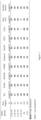
- the ester groups may be C2-C18, or C2-C12, C12-C18 or C2-C6 since it was found that the solubility increased substantially even when using shorter ester groups, figure 1 and 2 .
- the catalyst for the esterification may be a nitrogen containing aromatic heterocycle such as N-methyl imidazole or pyridine, or the catalyst may be a metal acetylacetonate such as TiO(acac) 2 or Fe(acac)s.
- table 1 and 2 the content of esterified lignin in different organic solvents and carrier liquids are presented.
- the hydroxyl groups of lignin may be divided into aliphatic hydroxyls (ROH), condensed phenol (PhOH), phenol and acids.
- the degree of substitution i.e. the degree of hydroxyl groups that has been converted into ester groups, may be from 10% to 100%, for example 20% or more, 30% or more, or 40% or more, or 60% or more or 80% or more, or 99% or more, or 100%. It is also possible to have part of the lignin, or the hydroxyl groups on the lignin, being substituted with one type of ester group (for example C2-C6 ester groups) and another part substituted with another type of ester group (for example C8-C18 ester groups).
- the hydroxyl groups may be substituted with acetyl groups and 60-90% of the hydroxyl groups may be substituted with a fatty acid, preferably C12 or longer ester groups.
- the degree of substitution does not have to be as high, for example 10-60% or 20-40%, in comparison when the composition comprises only a carrier liquid.
- Lignin wherein the ester groups are unsaturated is oilier at room temperature while lignin substituted with a saturated ester group is more solid or wax like material.
- lignin substituted with a saturated ester group is more solid or wax like material.
- the lignin increases the solubility in organic solvents.
- the inventors found that even at low degree of substitution (0.3 equivalents, 25% degree of substitution) the lignin becomes soluble in ethyl acetate, methyl THF, cyclopentyl methyl ether and iso-propanol.
- an oil such as light gas oil (LGO) the degree of substitution should be more than 30% for ester groups of C8 and longer, preferably 50% or more.
- the composition is a one phase system.
- the non-esterified groups may be capped for example with an anhydride such as acetic anhydride under common esterification conditions.
- the amount of esterified lignin or lignin derivatives in the composition according to the present invention may be 1 weight% or more, or 2 weight% or more, 4 weight% or more, or 5 weight% or more, or 7 weight% or more, or 10 weight% or more, or 12 weight% or more, or 15 weight% or more, or 20 weight% or more, or 25 weight% or more, or 30 weight% or more, or 40 weight% or more, or 50 weight% or more, or 60 weight% or more, or 70 weight% or more, or 75 weight% or more based on the total weight of the composition.
- the lignin or lignin derivatives are dearomatized.
- the lignin or lignin derivatives are dearomatized to at least 40%, or at least 50%, or at least 60%, or at least 70%, or at least 80%, or at least 90%, or at least 95%, or at least 99%.
- the composition may further comprise at least one additive.
- the additive may be any additive known to a person skilled in the art.
- the additive may further enhance the dissolution of the lignin or lignin derivatives.
- the additive may have the function of dissolving or breaking up inter molecular bonds between the lignin chains or the lignin derivatives.
- the additive is a polar compound or a salt.
- the liquor may be pre-treated by evaporation, separation or filtration or via chemical treatments such as the process described below and further defined in WO2012/ 121659 .
- the biomass, or the lignin or lignin derivatives in the composition may have been treated with the process described in WO2012/121659 which is hereby incorporated by reference.
- the process relates to reduction of a substrate wherein said substrate can be but is not limited to primary, secondary and tertiary benzylic or allylic alcohol, benzylic or allylic ether, benzylic or allylic carbonyl, and benzylic or allylic ester, or olefins to the corresponding hydrocarbon.
- the substrate may be lignin or any other compound or polymer comprising said functional group, or black or red liquor.
- a general method comprises adding a catalyst, a transition metal catalyst, to a reaction flask or container.
- a solvent mixture of at least two solvents where one of the solvents is water and a base is then heated followed by addition of a hydrogen donor and the substrate to be reduced.
- a base or carbon dioxide should be added to the solvent mixture and catalyst prior to addition of a hydrogen donor and the substrate.
- the hydrogen donor may for example be formic acid or an alcohol, it may even be hydrogen gas.
- the reduction is performed at a temperature of 40-100°C.
- the amount of base is not stoichiometric to the amount of the substrate.
- the separated lignin and lignin derivatives obtained from the reduction method may then be used in the composition according to the present invention.
- the lignin or lignin derivatives from the chemical reduction is further treated with filtration, ultra-filtration or cross-flow ultra-filtration; or treated with acidification and separation such as the Lignoboost ® technique.
- the composition of the present invention may comprise lignin or lignin derivatives obtained through precipitation and separation of lignin and lignin derivatives for example by acidification and separation, such as filtration. Lignoboost ® or any other similar separation technique are examples of such technique and may be used.
- the separated lignin and lignin derivatives may then be used as the biomass material in the composition according to the present invention.
- the separated lignin and lignin derivative may further be chemically reduced using the method described above and in WO2012/ 121659 .
- Another method or a complimentary method for purifying or separating lignin is through filtration, membrane-filtration, ultra-filtration or cross-flow ultra-filtration.
- the lignin may be separated in respect to size through any of said filtration techniques.
- the lignin or lignin derivatives may also be separated in respect to size through a depolymerisation technique; this separation may be performed in combination with filtration, ultra-filtration or cross-flow ultra-filtration.
- lignin or lignin derivatives with molecular weights of 10,000 g/mol or less may be separated, preferably the separated lignin or lignin derivatives have a molecular weight of 2,000g/mol or less, such as 1,000 g/mol or less.
- the separated lignin and lignin derivatives may then be used as the biomass material in the composition according to the present invention.
- the lignin and lignin derivatives obtained from said filtration may further be chemically reduced using the method described above and in WO2012/121659 .
- composition according to the present invention may be used in a refinery process or as a pre-step to a refinery process for preparing fuel such as diesel and petrol, or diesel and petrol analogues; or biogasoline or biodiesel; or fuel additives.
- fuel such as diesel and petrol, or diesel and petrol analogues; or biogasoline or biodiesel; or fuel additives.
- the composition may further be used to prepare lubricants, oils. For example synthetic oils with boiling point of at least 359°C.
- composition according to the present invention may also be used as an additive, for example as a concreted grinding aid, set retarder for cement, strengthener of cement, antioxidant, enhancer of thermal protection, stabilizer in asphalt, emulsifying agent, fiber strengthening additive, cross-linking agent, board binder, anti-corrosion additive, wear resistant additive, antifriction additive, binder, emulsifier or dispersing agent.
- a concreted grinding aid set retarder for cement
- strengthener of cement antioxidant
- enhancer of thermal protection stabilizer in asphalt
- emulsifying agent fiber strengthening additive, cross-linking agent, board binder, anti-corrosion additive, wear resistant additive, antifriction additive, binder, emulsifier or dispersing agent.
- the composition may further be used to prepare foams, plastics, rubbers or paint.
- the esterified lignin may be used as a cross-linking or curing agent, or as a water absorption inhibitor or as a fluidization agent. Mechanical properties may also be enhanced by the use of the composition.
- the composition may further be used as a raw material for preparing fine chemicals such as aromatic compounds using conventional techniques.
- the composition may be added to surfaces to obtain dust control, or the composition may be used to prepare batteries.
- Lignin type A2-Ac-ester (0.1046 g) was added. The suspension was stirred under heating (70 °C). A pourable solution at 70 °C comprising 50 weight% of Lignin type A2-Ac-ester was attained.
- Lignin type A2-Ac-ester (0.1086 g) was added. The suspension was stirred under heating (70 °C). A pourable solution at 70 °C comprising 56 weight% of Lignin type A2-Ac-ester was attained.
- Lignin type A2-Ac-ester (0.1012 g) was added. The suspension was stirred under heating (70 °C). A pourable solution at 70 °C comprising 63 weight% of Lignin type A2-Ac-ester was attained.
- Lignin type A2-Ac-ester (0.0986 g) was added. The suspension was stirred under heating (70 °C). A pourable solution at 70 °C comprising 42 weight% of Lignin type A2-Ac-ester was attained.
- Lignin type A2-Ac-ester (0.1032 g) was added. The suspension was stirred under heating (70 °C). A solution comprising ⁇ 8 weight% of Lignin type A2-Ac-ester was attained.
- Lignin type A2-Ac-ester (0.0981 g) was added. The suspension was stirred under heating (70 °C). A pourable solution at 70 °C comprising 53 weight% of Lignin type A2-Ac-ester was attained.
- Lignin type A2-Ac-ester (0.1027 g) was added. The suspension was stirred under heating (70 °C). A solution comprising ⁇ 12 weight% of Lignin type A2-Ac-ester was attained.
- Lignin type A2-Ac-ester (0.1063 g) was added. The suspension was stirred under heating (70 °C). A solution comprising ⁇ 7 weight% of Lignin type A2-Ac-ester was attained.
- Lignin type A2-Ac-ester (0.1043 g) was added. The suspension was stirred under heating (70 °C). A pourable solution at 70 °C comprising 54 weight% of Lignin type A2-Ac-ester was attained.
- Lignin type A2-Ac-ester (0.1038 g) was added. The suspension was stirred under heating (70 °C). A pourable solution at 70 °C comprising 48 weight% of Lignin type A2-Ac-ester was attained.
- Lignin type A2-Ac-ester (0.1057 g) was added. The suspension was stirred under heating (70 °C). A pourable solution at 70 °C comprising 39 weight% of Lignin type A2-Ac-ester was attained.
- Lignin type A2-Ac-ester (0.0987 g) was added. The suspension was stirred under heating (70 °C). A pourable solution at 70 °C comprising 56 weight% of Lignin type A2-Ac-ester was attained.
- Lignin type A2-Ac-ester (0.0986 g) was added. The suspension was stirred under heating (70 °C). A pourable solution at 70 °C comprising 59 weight% of Lignin type A2-Ac-ester was attained.
- Lignin type A2-Ac-ester (0.1064 g) was added. The suspension was stirred under heating (70 °C). A solution comprising ⁇ 11 weight% of Lignin type A2-Ac-ester was attained.
- Lignin type A2-Ac-ester (0.1034 g) was added. The suspension was stirred under heating (70 °C). A pourable solution at 70 °C comprising 51 weight% of Lignin type A2-Ac-ester was attained.
- Lignin type A2-Ac-ester (0.1063 g) was added. The suspension was stirred under heating (70 °C). A pourable solution at 70 °C comprising 55 weight% of Lignin type A2-Ac-ester was attained.
- Lignin type A2-Ac-ester (0.1080 g) was added. The suspension was stirred under heating (70 °C). A pourable solution at 70 °C comprising 52 weight% of Lignin type A2-Ac-ester was attained.
- Lignin type A2-Ac-ester (0.0986 g) was added. The suspension was stirred under heating (70 °C). A pourable solution at 70 °C comprising 53 weight% of Lignin type A2-Ac-ester was attained.
- Lignin type A2-Ac-ester (0.1080 g) was added. The suspension was stirred under heating (70 °C). A solution comprising ⁇ 8 weight% of Lignin type A2-Ac-ester was attained.
- Lignin type A2-Ac-ester (0.1021 g) was added. The suspension was stirred under heating (70 °C). A pourable solution at 70 °C comprising 55 weight% of Lignin type A2-Ac-ester was attained.
- Lignin type A2-Ac-ester (0.1025 g) was added. The suspension was stirred under heating (70 °C). A pourable solution at 70 °C comprising 60 weight% of Lignin type A2-Ac-ester was attained.
- Lignin type A2-Myr-ester 0.0195 g (Myr is a C14 fatty acid) was added. The suspension was stirred under heating (70 °C). A pourable solution at 70 °C comprising 25 weight% of Lignin type A2-Myr-ester was attained.
- Lignin type A1 0.407 g was added. The suspension was stirred under heating (120 °C) for 2h forming an esterified lignin. Upon cooling a solution comprising 30.9 weight% of Lignin type A1 was attained. The solution was then dissolved in a mixture of fatty acid derived from biomass in a 1:1 ratio yielding a solution comprising 15 weight% of Lignin type A1.
- Lignin type A2 (0.4 g) was added, as well as two drops of 1-methylimidazole. The suspension was stirred under heating (120°C) for 2h forming an esterified lignin. A pourable solution at 70 °C comprising 33 weight% of Lignin type A2 was attained.
- Lignin type A2 (0.2007 g) was added, as well as two drops of 1-methylimidazole. The suspension was stirred under heating (100°C) for 24h. A pourable solution at 70 °C comprising 32 weight% of Lignin type A2 was attained.
- Lignin type A3 (0.0961 g) was added. The suspension was stirred under heating. A pourable solution at 70 °C comprising 41 weight% of Lignin type A3 was attained.
- Lignin type A3 (0.1038 g) was added. The suspension was stirred under heating. A pourable solution at 70 °C comprising 54 weight% of Lignin type A3 was attained.
- Lignin type A3 (0.1021 g) was added. The suspension was stirred under heating. A pourable solution at 70 °C comprising ⁇ 7 weight% of Lignin type A3 was attained.
- Lignin type A3 (0.1013 g) was added. The suspension was stirred under heating. A pourable solution at 70 °C comprising 48 weight% of Lignin type A3 was attained.
- Lignin type A3 (0.0996 g) was added. The suspension was stirred under heating. A pourable solution at 70 °C comprising 47 weight% of Lignin type A3 was attained.
- Lignin type A3 (0.1006 g) was added. The suspension was stirred under heating. A pourable solution at 70 °C comprising 51 weight% of Lignin type A3 was attained.
- Lignin type A3 (0.1040 g) was added. The suspension was stirred under heating. A pourable solution at 70 °C comprising 38 weight% of Lignin type A3 was attained.
- Lignin type A3 (0.1032 g) was added. The suspension was stirred under heating. A pourable solution at 70 °C comprising 33 weight% of Lignin type A3 was attained.
- Lignin type A3 (0.0969 g) was added. The suspension was stirred under heating. A pourable solution at 70 °C comprising 43 weight% of Lignin type A3 was attained.
- Lignin type A3 (0.1044 g) was added. The suspension was stirred under heating. A pourable solution at 70 °C comprising 51 weight% of Lignin type A3 was attained.
- Lignin type A3 (0.0955 g) was added. The suspension was stirred under heating. A pourable solution at 70 °C comprising 55 weight% of Lignin type A3 was attained.
- Lignin type A3 (0.1037 g) was added. The suspension was stirred under heating. A pourable solution at 70 °C comprising 26 weight% of Lignin type A3 was attained.
- Lignin type A3 (0.0974 g) was added. The suspension was stirred under heating. A pourable solution at 70 °C comprising 48 weight% of Lignin type A3 was attained.
- Lignin type A3 (0.0993 g) was added. The suspension was stirred under heating. A pourable solution at 70 °C comprising 46 weight% of Lignin type A3 was attained.
- Lignin type A3 (0.1014 g) was added. The suspension was stirred under heating. A pourable solution at 70 °C comprising 41 weight% of Lignin type A3 was attained.
- Lignin type A3 (0.1040 g) was added. The suspension was stirred under heating. A pourable solution at 70 °C comprising 41 weight% of Lignin type A3 was attained.
- Lignin type A3 (0.0927 g) was added. The suspension was stirred under heating. A pourable solution at 70 °C comprising 31 weight% of Lignin type A3 was attained.
- Anhydride of tall oil fatty acids is anhydride of tall oil fatty acids.
- the celite with adsorbed product was filtered, washed with water and dried under vacuum.
- the ester was washed off with hexane to give 1.32 g of the lauric acid ester as brown residue after evaporation of the solvent.
- centrifuge was used to separate solid product.
- Partial substitutions According to the general procedure of esterification, following amounts were used: Lignin type A2 (1.00 g, 1 eq), stearic anhydride (0.31 or 0.92 g, 0.1 or 0.3 eq), 1-methylimidazole (0.1 ml) and dioxane (10 ml). After the reaction the esters were purified according to the general purification of partially substituted esters. 0.1 and 0.3-eq reactions afforded 1.12 g and 1.01 g respectively of the corresponding esters as brown powders.
- Oleic acid esters are Oleic acid esters.
- the product was purified by dissolving in chloroform and washing with water followed by celite purification.
- celite 50 g was used with 0.5 M solution of NaHCOs (400 ml).
- the ester was washed off with neat hexane to give 2.49 g of oleic acid ester as brown thick oil.
- Partial substitutions According to the general procedure of esterification, following amounts were used: Lignin type A2 (1.00 g, 1 eq), oleic anhydride (0.30 or 0.91 g, 0.1 or 0.3 eq), 1-methylimidazole (0.1 ml) and dioxane (10 ml). After the reaction the esters were purified according to the general purification of partially substituted esters. 0.1 and 0.3-eq reactions afforded 1.13 g and 1.18 g respectively of the corresponding esters as brown powders.
- Partial substitutions According to the general procedure of esterification, following amounts were used: Lignin (1.00 g, 1 eq), behenic anhydride (0.37 or 1.11 g, 0.1 or 0.3 eq), 1-methylimidazole (0.1 ml) and dioxane (10 ml). After the reaction the esters were purified according to the general purification of partially substituted esters. 0.1 and 0.3-eq reactions afforded 1.15 g and 1.20 g respectively of the corresponding esters as brown powders.
- Partial substitutions According to the general procedure of esterification, following amounts were used: Lignin type A2 (1.00 g, 1 eq), erucic anhydride (0.37 or 1.10 g, 0.1 or 0.3 eq), 1-methylimidazole (0.1 ml) and dioxane (10 ml). After the reaction the esters were purified according to the general purification of partially substituted esters. 0.1 and 0.3-eq reactions afforded 1.13 g and 1.17 g respectively of the corresponding esters as brown powders.
- the solubility was evaluated by adding ⁇ 100mg of lignin or esterified lignin to a HPLC vial followed by the addition of a small amount of solvent or carrier liquid ( ⁇ 3drops or less). The vial was then put in a shaker at 70°C and 900rpm for about 1h. If the lignin was not dissolved and pourable at 70°C then more solvent or carrier liquid was added (3drops or less) and put on shaker for a further 30min. The final step was repeated until the mixture was pourable at 70°C or the vial being full.
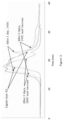
- Lignin type A2 (0.5g), oleic acid (1.5g) and TiO(acac) 2 (50mg, 10wt%) was added to a round bottom flask in a distillation setup. The mixture was initially heated under stirring to 140°C overnight. The following night the reaction was continued but with vacuum (>50mbar) applied and 140°C. The following night the reaction was continued with vacuum but at 180°C. The reaction was followed by GPC, figure 3 .
- a composition according to the present invention comprising 100% esterified lignin in RTD and LGO was treated in a hydrotreater. The obtained product remained well into EN590 specifications for road diesel.
- Lignin type A2 was extracted using iso-propanol.
- the isolated extracted lignin (15kg) was esterified using oleic acid (64kg), Ac 2 O (Acetic anhydride) (48kg) and 1-methylimidazole (2.6kg) according to previously described method.
- the Ac 2 O and imidazole was distilled off and a composition of 19% lignin in oleic acid was obtained.
- organosolv lignin 28 mg, 1 eq, 0.156 mmol
- oleic anhydride 170 mg, 2 eq, 0.311 mmol
- dioxane 1 ml
- 1-methylimidazole 1 drop
- the reaction was cooled and solvent removed under vacuum to give 202 mg of organosolv ester as a clear orange-yellow oil.
- the product was miscible with hexane, LGO and RTD.
Landscapes
- Chemical & Material Sciences (AREA)
- Organic Chemistry (AREA)
- Engineering & Computer Science (AREA)
- Chemical Kinetics & Catalysis (AREA)
- Oil, Petroleum & Natural Gas (AREA)
- Life Sciences & Earth Sciences (AREA)
- General Chemical & Material Sciences (AREA)
- Health & Medical Sciences (AREA)
- Materials Engineering (AREA)
- Medicinal Chemistry (AREA)
- Polymers & Plastics (AREA)
- Wood Science & Technology (AREA)
- Biochemistry (AREA)
- Emergency Medicine (AREA)
- Liquid Carbonaceous Fuels (AREA)
- Lubricants (AREA)
- Compositions Of Macromolecular Compounds (AREA)
- Fats And Perfumes (AREA)
Applications Claiming Priority (5)
| Application Number | Priority Date | Filing Date | Title |
|---|---|---|---|
| SE1351508A SE537732C2 (sv) | 2013-12-16 | 2013-12-16 | Komposition innefattande fettsyror och estrar av lignin |
| SE1450764 | 2014-06-19 | ||
| SE1451310 | 2014-11-03 | ||
| EP14870806.8A EP3083652B1 (en) | 2013-12-16 | 2014-12-16 | Composition comprising esters of lignin and oil or fatty acids |
| PCT/SE2014/051507 WO2015094099A1 (en) | 2013-12-16 | 2014-12-16 | Composition comprising esters of lignin and oil or fatty acids |
Related Parent Applications (2)
| Application Number | Title | Priority Date | Filing Date |
|---|---|---|---|
| EP14870806.8A Division EP3083652B1 (en) | 2013-12-16 | 2014-12-16 | Composition comprising esters of lignin and oil or fatty acids |
| EP14870806.8A Division-Into EP3083652B1 (en) | 2013-12-16 | 2014-12-16 | Composition comprising esters of lignin and oil or fatty acids |
Publications (3)
| Publication Number | Publication Date |
|---|---|
| EP3910029A1 EP3910029A1 (en) | 2021-11-17 |
| EP3910029C0 EP3910029C0 (en) | 2024-11-27 |
| EP3910029B1 true EP3910029B1 (en) | 2024-11-27 |
Family
ID=53403249
Family Applications (3)
| Application Number | Title | Priority Date | Filing Date |
|---|---|---|---|
| EP21182866.0A Active EP3910029B1 (en) | 2013-12-16 | 2014-12-16 | Composition comprising esters of lignin and oil or fatty acids |
| EP14870806.8A Active EP3083652B1 (en) | 2013-12-16 | 2014-12-16 | Composition comprising esters of lignin and oil or fatty acids |
| EP14872144.2A Withdrawn EP3083653A4 (en) | 2013-12-16 | 2014-12-16 | Composition comprising esters of lignin and organic solvent |
Family Applications After (2)
| Application Number | Title | Priority Date | Filing Date |
|---|---|---|---|
| EP14870806.8A Active EP3083652B1 (en) | 2013-12-16 | 2014-12-16 | Composition comprising esters of lignin and oil or fatty acids |
| EP14872144.2A Withdrawn EP3083653A4 (en) | 2013-12-16 | 2014-12-16 | Composition comprising esters of lignin and organic solvent |
Country Status (14)
| Country | Link |
|---|---|
| US (4) | US20160312029A1 (enExample) |
| EP (3) | EP3910029B1 (enExample) |
| JP (2) | JP2017501290A (enExample) |
| CN (3) | CN106164084A (enExample) |
| BR (2) | BR112016013916B1 (enExample) |
| CA (2) | CA2933841A1 (enExample) |
| CL (1) | CL2016001542A1 (enExample) |
| DK (1) | DK3083652T3 (enExample) |
| ES (1) | ES2895101T3 (enExample) |
| PL (1) | PL3083652T3 (enExample) |
| PT (1) | PT3083652T (enExample) |
| RU (1) | RU2690503C1 (enExample) |
| SG (1) | SG11201604775TA (enExample) |
| WO (2) | WO2015094098A1 (enExample) |
Families Citing this family (23)
| Publication number | Priority date | Publication date | Assignee | Title |
|---|---|---|---|---|
| SE1650065A1 (sv) | 2013-01-25 | 2016-01-21 | Ren Fuel K2B Ab | Ligninkomposition med esterfierade fettsyror |
| US20160312029A1 (en) * | 2013-12-16 | 2016-10-27 | Ren Fuel K2B Ab | Composition Comprising Esters Of Lignin And Organic Solvent |
| US20160355535A1 (en) * | 2015-05-04 | 2016-12-08 | North Carolina State University | Fatty acid derivatives of lignin and uses thereof |
| US10676688B2 (en) * | 2015-06-15 | 2020-06-09 | Ren Fuel K2B Ab | Composition comprising derivatized lignin for fuel production |
| CA3005772A1 (en) * | 2015-11-20 | 2017-05-26 | Ren Fuel K2B Ab | Process for making lignin composition |
| CA3006226C (en) | 2015-11-24 | 2023-09-19 | Inbicon A/S | Bitumen compositions comprising lignin |
| FI126754B (en) * | 2015-11-25 | 2017-05-15 | Teknologian Tutkimuskeskus Vtt Oy | Functionalization of cellulose with lignin to produce high quality products |
| SE542463C2 (en) | 2015-12-01 | 2020-05-12 | Ren Fuel K2B Ab | Depolymerized lignin in hydrocarbon oil |
| WO2017108055A1 (en) | 2015-12-21 | 2017-06-29 | Inbicon A/S | Fluid composition comprising lignin and vinasse |
| CN109476879B (zh) * | 2016-12-15 | 2022-04-12 | 木质素工业公司 | 包含改性木质素的聚合物材料 |
| WO2018174793A1 (en) * | 2017-03-22 | 2018-09-27 | Ren Fuel K2B Ab | Continuous production of fuel grade hydrocarbons by hydrotreatment of functionalized lignin |
| EP3409727A1 (en) * | 2017-05-29 | 2018-12-05 | Annikki GmbH | Method for the preparation of a lignin prepolymer |
| CN111566190A (zh) * | 2017-09-18 | 2020-08-21 | 埃因霍温科技大学 | 一种获得稳定的木质素的方法:通过温和溶剂改性得到极性有机溶剂组合物 |
| SE1850208A1 (en) * | 2018-02-23 | 2019-08-24 | Ren Fuel K2B Ab | Composition of esterified lignin in hydrocarbon oil |
| EP3933011A1 (en) | 2020-07-01 | 2022-01-05 | Ren Fuel K2B AB | Lignin esterified with a mixture of saturated and unsaturated fatty acids |
| EP3971230A1 (en) * | 2020-09-16 | 2022-03-23 | Fundación Tecnalia Research & Innovation | Deep eutectic solvents, uses thereof, and method for preparing a lignin prepolymer based on the deep eutectic solvents |
| SE2151491A1 (en) * | 2021-12-07 | 2023-06-08 | Rise Res Institutes Of Sweden Ab | Process for preparing lignin ester and lignin oil |
| EP4201946A1 (en) | 2021-12-22 | 2023-06-28 | Ren Fuel K2B AB | Lignin crosslinked with triglyceride |
| CA3208558A1 (en) * | 2023-08-04 | 2025-06-18 | Sixring Inc | Fischer esterification of lignin-based material |
| WO2025073864A1 (en) * | 2023-10-04 | 2025-04-10 | Roka Furadada, S.L. | Mixture of esterified lignin and carboxylic acids |
| AT527963A1 (de) | 2024-01-19 | 2025-08-15 | Mondi Ag | Verfahren zur Herstellung eines modifizierten Ligninderivats, modifiziertes Ligninderivat sowie Verwendung desselben |
| EP4606865A1 (en) | 2024-02-20 | 2025-08-27 | Hansen & Rosenthal GmbH & Co. KG | Lignin constituents containing composition and its applications |
| FI20245436A1 (en) * | 2024-04-08 | 2025-10-09 | Teknologian Tutkimuskeskus Vtt Oy | Modified lignin as a fire retardant in thermoplastic products |
Family Cites Families (40)
| Publication number | Priority date | Publication date | Assignee | Title |
|---|---|---|---|---|
| US2429102A (en) * | 1943-02-13 | 1947-10-14 | Mead Corp | Esters of lignin material |
| GB593735A (en) * | 1943-02-13 | 1947-10-24 | Mead Corp | Improvements in or relating to the formation of aliphatic carboxylic acid esters of lignin material |
| US2410578A (en) * | 1944-09-28 | 1946-11-05 | Socony Vacuum Oil Co Inc | Mineral oil composition |
| US5614564A (en) | 1993-07-28 | 1997-03-25 | Samsung General Chemicals Co., Ltd. | Degradable foam and the method for its production |
| US5484896A (en) * | 1994-03-24 | 1996-01-16 | The Procter & Gamble Company | Esterified high lignin content cellulosic fibers |
| US6172204B1 (en) * | 1999-06-04 | 2001-01-09 | Regents Of The University Of Minnesota | Compositions based on lignin derivatives |
| US7300705B2 (en) * | 2003-06-23 | 2007-11-27 | Weyerhaeuser Company | Methods for esterifying hydroxyl groups in wood |
| US7994375B2 (en) | 2006-09-26 | 2011-08-09 | Uop Llc | Production of gasoline, diesel, naphthenes and aromatics from lignin and cellulosic waste by one step hydrocracking |
| US8182557B2 (en) * | 2007-02-06 | 2012-05-22 | North Carolina State University | Use of lignocellulosics solvated in ionic liquids for production of biofuels |
| WO2008098036A1 (en) * | 2007-02-06 | 2008-08-14 | North Carolina State University | Product preparation and recovery from thermolysis of lignocellulosics in ionic liquids |
| US8013195B2 (en) | 2007-06-15 | 2011-09-06 | Uop Llc | Enhancing conversion of lignocellulosic biomass |
| EP2025735A1 (en) * | 2007-08-14 | 2009-02-18 | Bergen Teknologioverforing AS | One-step conversion of solid lignin to liquid products |
| US8894818B2 (en) * | 2008-02-28 | 2014-11-25 | Chevron U.S.A. Inc. | Process for generating a hydrocarbon feedstock lignin |
| US20100152428A1 (en) * | 2008-12-12 | 2010-06-17 | Weyerhaeuser Company | LOW Tg LIGNIN MIXED ESTERS |
| TW201031692A (en) * | 2009-01-15 | 2010-09-01 | Toho Tenax Europe Gmbh | Lignin derivative, shaped body comprising the derivative and carbon fibres produced from the shaped body |
| US8378020B1 (en) * | 2009-05-28 | 2013-02-19 | Lignol Innovations Ltd. | Processes for recovery of derivatives of native lignin |
| EP2435454B1 (en) * | 2009-05-28 | 2022-03-23 | Suzano Canada Inc. | Derivatives of native lignin from annual fibre feedstocks |
| WO2011003029A2 (en) | 2009-07-01 | 2011-01-06 | The Regents Of The University Of California | Catalytic disproportionation and catalytic reduction of carbon-carbon and carbon-oxygen bonds of lignin and other organic substrates |
| JP5729589B2 (ja) * | 2010-05-28 | 2015-06-03 | 国立研究開発法人産業技術総合研究所 | アシル化リグニンを用いたエポキシ樹脂組成物及びその製造方法 |
| WO2012005784A1 (en) | 2010-07-07 | 2012-01-12 | Catchlight Energy Llc | Solvent-enhanced biomass liquefaction |
| PL2661477T5 (pl) * | 2011-01-05 | 2022-12-19 | Licella Pty Limited | Przetwarzanie substancji organicznej |
| SE535691C2 (sv) | 2011-03-08 | 2012-11-13 | Kat2Biz Ab | Reduktion av C-O-bindningar via katalytisk transfer hydrogenolys |
| KR20140054045A (ko) | 2011-07-14 | 2014-05-08 | 인터디지탈 패튼 홀딩스, 인크 | M2m 통신에 대한 레인징 전력 제어 방법 및 장치 |
| US8772557B2 (en) | 2011-07-26 | 2014-07-08 | Uop Llc | Aromatic hydrocarbons from depolymerization and deoxygenation of lignin |
| WO2013050661A1 (en) | 2011-10-07 | 2013-04-11 | Teknologian Tutkimuskeskus Vtt | Functionalized lignin and method of producing the same |
| FI123936B2 (en) * | 2012-03-29 | 2019-03-29 | Upm Kymmene Corp | A method for increasing the reactivity of lignin |
| FI20125362L (fi) * | 2012-03-29 | 2013-09-30 | Upm Kymmene Corp | Ligniini sekä menetelmä ja järjestelmä ligniinin käsittelemiseksi |
| US8809426B2 (en) * | 2012-05-11 | 2014-08-19 | Cyclewood Solutions, Inc. | Chemical modification of lignin and lignin derivatives |
| US9000075B2 (en) * | 2012-05-11 | 2015-04-07 | Cyclewood Solutions, Inc. | Chemical modification of lignin and lignin derivatives |
| FI20125879A7 (fi) | 2012-08-24 | 2014-02-25 | Upm Kymmene Corp | Menetelmä ligniinin esteröimiseksi ainakin yhden rasvahapon avulla |
| US9340425B2 (en) * | 2012-10-09 | 2016-05-17 | Iowa State University Research Foundation, Inc. | Process of making carbon fibers from compositions including esterified lignin and poly(lactic acid) |
| SE1650065A1 (sv) * | 2013-01-25 | 2016-01-21 | Ren Fuel K2B Ab | Ligninkomposition med esterfierade fettsyror |
| EP2835391A1 (en) * | 2013-08-06 | 2015-02-11 | Maxbiogas GmbH | Method for lignin recovery |
| FI129414B (en) * | 2013-09-30 | 2022-02-15 | Upm Kymmene Corp | A method for increasing the reactivity of lignin |
| PL3080138T3 (pl) * | 2013-12-12 | 2021-06-14 | Solenis Technologies, L.P. | Dyspersje nanocząstek ligniny i sposoby ich wytwarzania i stosowania |
| US20160312029A1 (en) * | 2013-12-16 | 2016-10-27 | Ren Fuel K2B Ab | Composition Comprising Esters Of Lignin And Organic Solvent |
| WO2015137868A1 (en) | 2014-03-12 | 2015-09-17 | Ren Fuel K2B Ab | Method for efficient extraction of lignin |
| US9222223B1 (en) * | 2014-06-30 | 2015-12-29 | Weyerhaeuser Nr Company | Esterified cellulose pulp compositions and related methods |
| TWI618891B (zh) | 2014-07-18 | 2018-03-21 | 王柏豐 | 具可拆式光源之導光線體組之裝置 |
| US20160355535A1 (en) * | 2015-05-04 | 2016-12-08 | North Carolina State University | Fatty acid derivatives of lignin and uses thereof |
-
2014
- 2014-12-16 US US15/104,664 patent/US20160312029A1/en not_active Abandoned
- 2014-12-16 CN CN201480074490.8A patent/CN106164084A/zh active Pending
- 2014-12-16 CN CN201910052890.3A patent/CN110079365B/zh active Active
- 2014-12-16 EP EP21182866.0A patent/EP3910029B1/en active Active
- 2014-12-16 ES ES14870806T patent/ES2895101T3/es active Active
- 2014-12-16 PL PL14870806T patent/PL3083652T3/pl unknown
- 2014-12-16 SG SG11201604775TA patent/SG11201604775TA/en unknown
- 2014-12-16 PT PT14870806T patent/PT3083652T/pt unknown
- 2014-12-16 RU RU2016125714A patent/RU2690503C1/ru active
- 2014-12-16 WO PCT/SE2014/051506 patent/WO2015094098A1/en not_active Ceased
- 2014-12-16 EP EP14870806.8A patent/EP3083652B1/en active Active
- 2014-12-16 CA CA2933841A patent/CA2933841A1/en not_active Abandoned
- 2014-12-16 JP JP2016559142A patent/JP2017501290A/ja active Pending
- 2014-12-16 DK DK14870806.8T patent/DK3083652T3/da active
- 2014-12-16 US US15/104,702 patent/US10030147B2/en active Active
- 2014-12-16 CN CN201480074489.5A patent/CN106132976B/zh not_active Expired - Fee Related
- 2014-12-16 CA CA2933848A patent/CA2933848C/en active Active
- 2014-12-16 WO PCT/SE2014/051507 patent/WO2015094099A1/en not_active Ceased
- 2014-12-16 EP EP14872144.2A patent/EP3083653A4/en not_active Withdrawn
- 2014-12-16 BR BR112016013916-0A patent/BR112016013916B1/pt not_active IP Right Cessation
- 2014-12-16 JP JP2016559143A patent/JP6525343B2/ja active Active
- 2014-12-16 BR BR112016013905A patent/BR112016013905A2/pt not_active Application Discontinuation
-
2016
- 2016-06-16 CL CL2016001542A patent/CL2016001542A1/es unknown
-
2018
- 2018-06-21 US US16/014,271 patent/US10421861B2/en active Active
-
2019
- 2019-08-14 US US16/540,111 patent/US10781313B2/en not_active Expired - Fee Related
Also Published As
Similar Documents
| Publication | Publication Date | Title |
|---|---|---|
| US10781313B2 (en) | Composition comprising esters of lignin and oil or fatty acids | |
| EP3307751B1 (en) | Composition comprising derivatized lignin for fuel production | |
| EP2948531B1 (en) | Compositions of biomass materials for refining | |
| EP3215517B1 (en) | Ether functionalized lignin for fuel production | |
| WO2015199608A1 (en) | Depolymerisation of lignin | |
| SE537732C2 (sv) | Komposition innefattande fettsyror och estrar av lignin | |
| SE1550813A1 (en) | Composition comprising derivatized lignin for fuel production |
Legal Events
| Date | Code | Title | Description |
|---|---|---|---|
| PUAI | Public reference made under article 153(3) epc to a published international application that has entered the european phase |
Free format text: ORIGINAL CODE: 0009012 |
|
| STAA | Information on the status of an ep patent application or granted ep patent |
Free format text: STATUS: THE APPLICATION HAS BEEN PUBLISHED |
|
| AC | Divisional application: reference to earlier application |
Ref document number: 3083652 Country of ref document: EP Kind code of ref document: P |
|
| AK | Designated contracting states |
Kind code of ref document: A1 Designated state(s): AL AT BE BG CH CY CZ DE DK EE ES FI FR GB GR HR HU IE IS IT LI LT LU LV MC MK MT NL NO PL PT RO RS SE SI SK SM TR |
|
| B565 | Issuance of search results under rule 164(2) epc |
Effective date: 20211014 |
|
| STAA | Information on the status of an ep patent application or granted ep patent |
Free format text: STATUS: REQUEST FOR EXAMINATION WAS MADE |
|
| 17P | Request for examination filed |
Effective date: 20220429 |
|
| RBV | Designated contracting states (corrected) |
Designated state(s): AL AT BE BG CH CY CZ DE DK EE ES FI FR GB GR HR HU IE IS IT LI LT LU LV MC MK MT NL NO PL PT RO RS SE SI SK SM TR |
|
| STAA | Information on the status of an ep patent application or granted ep patent |
Free format text: STATUS: EXAMINATION IS IN PROGRESS |
|
| 17Q | First examination report despatched |
Effective date: 20231107 |
|
| GRAP | Despatch of communication of intention to grant a patent |
Free format text: ORIGINAL CODE: EPIDOSNIGR1 |
|
| STAA | Information on the status of an ep patent application or granted ep patent |
Free format text: STATUS: GRANT OF PATENT IS INTENDED |
|
| RAP1 | Party data changed (applicant data changed or rights of an application transferred) |
Owner name: REN FUEL K2B IPCO AB |
|
| INTG | Intention to grant announced |
Effective date: 20240710 |
|
| GRAS | Grant fee paid |
Free format text: ORIGINAL CODE: EPIDOSNIGR3 |
|
| GRAA | (expected) grant |
Free format text: ORIGINAL CODE: 0009210 |
|
| STAA | Information on the status of an ep patent application or granted ep patent |
Free format text: STATUS: THE PATENT HAS BEEN GRANTED |
|
| AC | Divisional application: reference to earlier application |
Ref document number: 3083652 Country of ref document: EP Kind code of ref document: P |
|
| AK | Designated contracting states |
Kind code of ref document: B1 Designated state(s): AL AT BE BG CH CY CZ DE DK EE ES FI FR GB GR HR HU IE IS IT LI LT LU LV MC MK MT NL NO PL PT RO RS SE SI SK SM TR |
|
| REG | Reference to a national code |
Ref country code: GB Ref legal event code: FG4D |
|
| REG | Reference to a national code |
Ref country code: CH Ref legal event code: EP |
|
| REG | Reference to a national code |
Ref country code: IE Ref legal event code: FG4D |
|
| REG | Reference to a national code |
Ref country code: DE Ref legal event code: R096 Ref document number: 602014091258 Country of ref document: DE |
|
| U01 | Request for unitary effect filed |
Effective date: 20241217 |
|
| U07 | Unitary effect registered |
Designated state(s): AT BE BG DE DK EE FI FR IT LT LU LV MT NL PT RO SE SI Effective date: 20250110 |
|
| PG25 | Lapsed in a contracting state [announced via postgrant information from national office to epo] |
Ref country code: IS Free format text: LAPSE BECAUSE OF FAILURE TO SUBMIT A TRANSLATION OF THE DESCRIPTION OR TO PAY THE FEE WITHIN THE PRESCRIBED TIME-LIMIT Effective date: 20250327 Ref country code: HR Free format text: LAPSE BECAUSE OF FAILURE TO SUBMIT A TRANSLATION OF THE DESCRIPTION OR TO PAY THE FEE WITHIN THE PRESCRIBED TIME-LIMIT Effective date: 20241127 |
|
| PG25 | Lapsed in a contracting state [announced via postgrant information from national office to epo] |
Ref country code: ES Free format text: LAPSE BECAUSE OF FAILURE TO SUBMIT A TRANSLATION OF THE DESCRIPTION OR TO PAY THE FEE WITHIN THE PRESCRIBED TIME-LIMIT Effective date: 20241127 |
|
| PG25 | Lapsed in a contracting state [announced via postgrant information from national office to epo] |
Ref country code: NO Free format text: LAPSE BECAUSE OF FAILURE TO SUBMIT A TRANSLATION OF THE DESCRIPTION OR TO PAY THE FEE WITHIN THE PRESCRIBED TIME-LIMIT Effective date: 20250227 |
|
| U20 | Renewal fee for the european patent with unitary effect paid |
Year of fee payment: 11 Effective date: 20250317 |
|
| PG25 | Lapsed in a contracting state [announced via postgrant information from national office to epo] |
Ref country code: GR Free format text: LAPSE BECAUSE OF FAILURE TO SUBMIT A TRANSLATION OF THE DESCRIPTION OR TO PAY THE FEE WITHIN THE PRESCRIBED TIME-LIMIT Effective date: 20250228 |
|
| PG25 | Lapsed in a contracting state [announced via postgrant information from national office to epo] |
Ref country code: PL Free format text: LAPSE BECAUSE OF FAILURE TO SUBMIT A TRANSLATION OF THE DESCRIPTION OR TO PAY THE FEE WITHIN THE PRESCRIBED TIME-LIMIT Effective date: 20241127 |
|
| PG25 | Lapsed in a contracting state [announced via postgrant information from national office to epo] |
Ref country code: RS Free format text: LAPSE BECAUSE OF FAILURE TO SUBMIT A TRANSLATION OF THE DESCRIPTION OR TO PAY THE FEE WITHIN THE PRESCRIBED TIME-LIMIT Effective date: 20250227 |
|
| PG25 | Lapsed in a contracting state [announced via postgrant information from national office to epo] |
Ref country code: SM Free format text: LAPSE BECAUSE OF FAILURE TO SUBMIT A TRANSLATION OF THE DESCRIPTION OR TO PAY THE FEE WITHIN THE PRESCRIBED TIME-LIMIT Effective date: 20241127 |
|
| PG25 | Lapsed in a contracting state [announced via postgrant information from national office to epo] |
Ref country code: SK Free format text: LAPSE BECAUSE OF FAILURE TO SUBMIT A TRANSLATION OF THE DESCRIPTION OR TO PAY THE FEE WITHIN THE PRESCRIBED TIME-LIMIT Effective date: 20241127 |
|
| PG25 | Lapsed in a contracting state [announced via postgrant information from national office to epo] |
Ref country code: CZ Free format text: LAPSE BECAUSE OF FAILURE TO SUBMIT A TRANSLATION OF THE DESCRIPTION OR TO PAY THE FEE WITHIN THE PRESCRIBED TIME-LIMIT Effective date: 20241127 |
|
| REG | Reference to a national code |
Ref country code: CH Ref legal event code: PL |
|
| PG25 | Lapsed in a contracting state [announced via postgrant information from national office to epo] |
Ref country code: MC Free format text: LAPSE BECAUSE OF FAILURE TO SUBMIT A TRANSLATION OF THE DESCRIPTION OR TO PAY THE FEE WITHIN THE PRESCRIBED TIME-LIMIT Effective date: 20241127 |
|
| PLBE | No opposition filed within time limit |
Free format text: ORIGINAL CODE: 0009261 |
|
| STAA | Information on the status of an ep patent application or granted ep patent |
Free format text: STATUS: NO OPPOSITION FILED WITHIN TIME LIMIT |
|
| PG25 | Lapsed in a contracting state [announced via postgrant information from national office to epo] |
Ref country code: CH Free format text: LAPSE BECAUSE OF NON-PAYMENT OF DUE FEES Effective date: 20241231 |
|
| PG25 | Lapsed in a contracting state [announced via postgrant information from national office to epo] |
Ref country code: IE Free format text: LAPSE BECAUSE OF NON-PAYMENT OF DUE FEES Effective date: 20241216 |
|
| GBPC | Gb: european patent ceased through non-payment of renewal fee |
Effective date: 20250227 |
|
| 26N | No opposition filed |
Effective date: 20250828 |