EP3902002A1 - Anzeigevorrichtung und verfahren zur herstellung davon - Google Patents
Anzeigevorrichtung und verfahren zur herstellung davon Download PDFInfo
- Publication number
- EP3902002A1 EP3902002A1 EP19898690.3A EP19898690A EP3902002A1 EP 3902002 A1 EP3902002 A1 EP 3902002A1 EP 19898690 A EP19898690 A EP 19898690A EP 3902002 A1 EP3902002 A1 EP 3902002A1
- Authority
- EP
- European Patent Office
- Prior art keywords
- light emitting
- insulating
- disposed
- electrode
- emitting element
- Prior art date
- Legal status (The legal status is an assumption and is not a legal conclusion. Google has not performed a legal analysis and makes no representation as to the accuracy of the status listed.)
- Granted
Links
Images















Classifications
-
- H—ELECTRICITY
- H10—SEMICONDUCTOR DEVICES; ELECTRIC SOLID-STATE DEVICES NOT OTHERWISE PROVIDED FOR
- H10H—INORGANIC LIGHT-EMITTING SEMICONDUCTOR DEVICES HAVING POTENTIAL BARRIERS
- H10H20/00—Individual inorganic light-emitting semiconductor devices having potential barriers, e.g. light-emitting diodes [LED]
- H10H20/80—Constructional details
- H10H20/85—Packages
- H10H20/852—Encapsulations
- H10H20/853—Encapsulations characterised by their shape
-
- H—ELECTRICITY
- H10—SEMICONDUCTOR DEVICES; ELECTRIC SOLID-STATE DEVICES NOT OTHERWISE PROVIDED FOR
- H10D—INORGANIC ELECTRIC SEMICONDUCTOR DEVICES
- H10D86/00—Integrated devices formed in or on insulating or conducting substrates, e.g. formed in silicon-on-insulator [SOI] substrates or on stainless steel or glass substrates
- H10D86/40—Integrated devices formed in or on insulating or conducting substrates, e.g. formed in silicon-on-insulator [SOI] substrates or on stainless steel or glass substrates characterised by multiple TFTs
- H10D86/441—Interconnections, e.g. scanning lines
-
- H—ELECTRICITY
- H10—SEMICONDUCTOR DEVICES; ELECTRIC SOLID-STATE DEVICES NOT OTHERWISE PROVIDED FOR
- H10H—INORGANIC LIGHT-EMITTING SEMICONDUCTOR DEVICES HAVING POTENTIAL BARRIERS
- H10H20/00—Individual inorganic light-emitting semiconductor devices having potential barriers, e.g. light-emitting diodes [LED]
- H10H20/80—Constructional details
- H10H20/84—Coatings, e.g. passivation layers or antireflective coatings
-
- H—ELECTRICITY
- H10—SEMICONDUCTOR DEVICES; ELECTRIC SOLID-STATE DEVICES NOT OTHERWISE PROVIDED FOR
- H10H—INORGANIC LIGHT-EMITTING SEMICONDUCTOR DEVICES HAVING POTENTIAL BARRIERS
- H10H20/00—Individual inorganic light-emitting semiconductor devices having potential barriers, e.g. light-emitting diodes [LED]
- H10H20/80—Constructional details
- H10H20/85—Packages
- H10H20/857—Interconnections, e.g. lead-frames, bond wires or solder balls
-
- H—ELECTRICITY
- H10—SEMICONDUCTOR DEVICES; ELECTRIC SOLID-STATE DEVICES NOT OTHERWISE PROVIDED FOR
- H10H—INORGANIC LIGHT-EMITTING SEMICONDUCTOR DEVICES HAVING POTENTIAL BARRIERS
- H10H29/00—Integrated devices, or assemblies of multiple devices, comprising at least one light-emitting semiconductor element covered by group H10H20/00
- H10H29/10—Integrated devices comprising at least one light-emitting semiconductor component covered by group H10H20/00
- H10H29/14—Integrated devices comprising at least one light-emitting semiconductor component covered by group H10H20/00 comprising multiple light-emitting semiconductor components
- H10H29/142—Two-dimensional arrangements, e.g. asymmetric LED layout
-
- H—ELECTRICITY
- H10—SEMICONDUCTOR DEVICES; ELECTRIC SOLID-STATE DEVICES NOT OTHERWISE PROVIDED FOR
- H10W—GENERIC PACKAGES, INTERCONNECTIONS, CONNECTORS OR OTHER CONSTRUCTIONAL DETAILS OF DEVICES COVERED BY CLASS H10
- H10W90/00—Package configurations
-
- H—ELECTRICITY
- H10—SEMICONDUCTOR DEVICES; ELECTRIC SOLID-STATE DEVICES NOT OTHERWISE PROVIDED FOR
- H10H—INORGANIC LIGHT-EMITTING SEMICONDUCTOR DEVICES HAVING POTENTIAL BARRIERS
- H10H20/00—Individual inorganic light-emitting semiconductor devices having potential barriers, e.g. light-emitting diodes [LED]
- H10H20/01—Manufacture or treatment
- H10H20/036—Manufacture or treatment of packages
- H10H20/0362—Manufacture or treatment of packages of encapsulations
-
- H—ELECTRICITY
- H10—SEMICONDUCTOR DEVICES; ELECTRIC SOLID-STATE DEVICES NOT OTHERWISE PROVIDED FOR
- H10H—INORGANIC LIGHT-EMITTING SEMICONDUCTOR DEVICES HAVING POTENTIAL BARRIERS
- H10H20/00—Individual inorganic light-emitting semiconductor devices having potential barriers, e.g. light-emitting diodes [LED]
- H10H20/01—Manufacture or treatment
- H10H20/036—Manufacture or treatment of packages
- H10H20/0364—Manufacture or treatment of packages of interconnections
-
- H—ELECTRICITY
- H10—SEMICONDUCTOR DEVICES; ELECTRIC SOLID-STATE DEVICES NOT OTHERWISE PROVIDED FOR
- H10H—INORGANIC LIGHT-EMITTING SEMICONDUCTOR DEVICES HAVING POTENTIAL BARRIERS
- H10H20/00—Individual inorganic light-emitting semiconductor devices having potential barriers, e.g. light-emitting diodes [LED]
- H10H20/80—Constructional details
- H10H20/81—Bodies
- H10H20/819—Bodies characterised by their shape, e.g. curved or truncated substrates
-
- H—ELECTRICITY
- H10—SEMICONDUCTOR DEVICES; ELECTRIC SOLID-STATE DEVICES NOT OTHERWISE PROVIDED FOR
- H10W—GENERIC PACKAGES, INTERCONNECTIONS, CONNECTORS OR OTHER CONSTRUCTIONAL DETAILS OF DEVICES COVERED BY CLASS H10
- H10W90/00—Package configurations
- H10W90/20—Configurations of stacked chips
- H10W90/22—Configurations of stacked chips the stacked chips being on both top and bottom sides of a package substrate, interposer or RDL
Definitions
- Embodiments of the present disclosure relate to a display device and a method of fabricating the same.
- a display device in accordance with an embodiment of the present disclosure includes a pixel disposed in a display area.
- the pixel includes: a first electrode and a second electrode spaced apart from each other; a light emitting element disposed between the first electrode and the second electrode; a first insulating pattern disposed on an area of the light emitting element such that a first end and a second end of the light emitting element are exposed; a second insulating pattern having a width less than a width of the first insulating pattern, and disposed on an area of the first insulating pattern such that opposite ends of the first insulating pattern are exposed; a third insulating pattern having a width greater than the width of the second insulating pattern, and disposed on the second insulating pattern to cover opposite ends of the second insulating pattern in a plan view; a first contact electrode disposed on the first end of the light emitting element, and electrically connecting the first end to the first electrode; and a second contact electrode disposed on the second end of the light emitting element,
- the pixel may further include a first conductive pattern disposed on the third insulating pattern and separated from the first and the second contact electrodes.
- the first conductive pattern may include a material identical to a material included in the first and the second contact electrodes.
- respective one ends of the first and the second contact electrodes may be respectively disposed on different ends of the first insulating pattern with the second insulating pattern interposed therebetween, and respectively have, on the first insulating pattern, thicknesses that gradually increase as approaching the first and the second electrodes, respectively.
- the second insulating pattern may have a thickness greater than a thickness of each of the first and the third insulating patterns.
- the opposite ends of the second insulating pattern may be respectively disposed at positions spaced apart from the opposite ends of the first insulating pattern by a distance corresponding to more than two times a thickness of the first contact electrode or the second contact electrode.
- the light emitting element may have a length greater than a width of each of the first to the third insulating patterns, and be horizontally disposed between the first and the second electrodes such that the first and the second ends are respectively disposed on opposite ends of the light emitting element in a longitudinal direction thereof.
- Respective one ends of the first and the second contact electrodes are respectively disposed on different ends of the first insulating pattern to be spaced apart from each other, and respectively have, on the first insulating pattern, thicknesses that gradually increase as approaching the first and the second electrodes, respectively.
- the first and the second contact electrodes are disposed on a same layer and face each other with the light emitting element interposed therebetween.
- the pixel may further include a conductive pattern disposed between the light emitting element and the first insulating pattern.
- the conductive pattern may have a width less than a width of the first insulating pattern and be disposed inside the first insulating pattern and separated from the first and the second contact electrodes.
- the method may further include, after the forming of the first and the second contact electrodes, removing the second and the third insulating patterns.
- first, second, etc. may be used herein to describe various elements, these elements should not be limited by these terms. It will be further understood that the terms “comprise”, “include”, “have”, etc. when used in this specification, specify the presence of stated features, integers, steps, operations, elements, components, and/or combinations of them but do not preclude the presence or addition of one or more other features, integers, steps, operations, elements, components, and/or combinations thereof. Furthermore, when a first component or part is disposed on a second component or part, the first component or part may be not only directly on the second component or part but a third component or part may intervene between them. Furthermore, the term “position”, “direction”, etc. used in the following description are defined in relative terms, and it should be noted that they may be changed into a reverse position or direction depending on a view angle or direction.
- a light emitting element LD in accordance with an embodiment of the present disclosure may include a first conductivity type semiconductor layer 11, a second conductivity type semiconductor layer 13, and an active layer 12 interposed between the first and second conductivity type semiconductor layers 11 and 13.
- the light emitting element LD may be configured of a stacked body formed by successively stacking the first conductivity type semiconductor layer 11, the active layer 12, and the second conductivity type semiconductor layer 13.
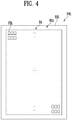
- the display area DA may be disposed in a central area of the display panel PNL, and the non-display area NDA may be disposed in a perimeter area of the display panel PNL in such a way as to enclose the display area DA.
- the locations of the display area DA and the non-display area NDA are not limited to this, and the locations thereof may be changed.
- the display area DA may form a screen on which an image is displayed.
- first ends of the light emitting elements LD forming each light source unit LSU may be connected in common to the pixel circuit PXC through an electrode of the light source unit LSU (e.g., a first electrode (also referred to as “first alignment electrode” or “first pixel electrode”) and/or a first contact electrode of each pixel PXL) and may be connected to the first power supply VDD through the pixel circuit PXC and a first power line PL1.
- a first electrode also referred to as "first alignment electrode” or “first pixel electrode”
- first contact electrode of each pixel PXL may be connected to the first power supply VDD through the pixel circuit PXC and a first power line PL1.
- the structure of the pixel circuit PXC is not limited to the embodiments shown in FIGS. 5A and 5B .
- the pixel circuit PXC may be formed of a well-known pixel circuit which may have various structures and/or be operated by various driving methods.
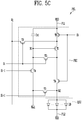
- the pixel circuit PXC may be configured in the same manner as that of an embodiment illustrated in FIG. 5C .
- the pixel circuit PXC may be connected not only to a scan line Si of a corresponding horizontal line but also to at least one another scan line (or a control line).
- the pixel circuit PXC of the pixel PXL disposed on the i-th row of the display area DA may be further connected to an i-1-th scan line Si-1 and/or an i+1-th scan line Si+1.
- the pixel circuit PXC may be connected not only to the first and second power supplies VDD and VSS but also to a third power supply.
- the pixel circuit PXC may also be connected to an initialization power supply Vint.
- the pixel circuit PXC may include first to seventh transistors T1 to T7 and a storage capacitor Cst.
- the voltage of the first electrode of the light source unit LSU may be initialized.
- the control signal for controlling the operation of the seventh transistor T7 may be changed in various ways.
- the gate electrode of the seventh transistor T7 may be connected to a scan line of a corresponding horizontal line, i.e., an i-th scan line Si.
- the seventh transistor T7 may be turned on so that the voltage of the initialization power supply Vint may be supplied to the first electrode of the light source unit LSU.
- FIG. 5C illustrates that the transistors, e.g., the first to seventh transistors T1 to T7, included in the pixel circuit PXC are P-type transistors, the present disclosure is not limited thereto.
- the present disclosure is not limited thereto.
- at least one of the first to seventh transistors T1 to T7 may be changed to an N-type transistor.
- the pixel circuit PXC may be omitted, and each of the opposite ends of the light emitting elements LD that constitute the light source unit LSU may be directly connected to the scan line Si, the data line Dj, a power line, and/or the control line.
- FIGS. 6 to 9 are plan views each illustrating a pixel PXL in accordance with an embodiment of the present disclosure.
- each pixel PXL illustrated in FIGS. 6 to 9 may be any one of the pixels PXL illustrated in FIGS. 4 to 5C .
- the pixels PXL disposed in the display area DA may have a substantially identical or similar structure, but the present disclosure is not limited thereto.
- the pixel PXL may include a first electrode ELT1 and a second electrode ELT2 which are disposed in each pixel area at positions spaced apart from each other, a plurality of light emitting elements LD arranged between the first and second electrodes ELT1 and ELT2, and a first contact electrode CNE1 and a second contact electrode CNE2 which are respectively disposed on the first electrode ELT1 and the second electrode ELT2.
- the first and second contact electrodes CNE1 and CNE2 may be disposed in each pixel area at positions spaced apart from each other, in the same manner as that of the first and second electrodes ELT1 and ELT2, and electrically connect the first ends EP1 and the second ends EP2 of the light emitting elements LD to the first electrode ELT1 and the second electrode ELT2, respectively.
- a first conductive pattern CDP1 may be disposed between the first and second contact electrodes CNE1 and CNE2.
- the pixel PXL in accordance with an embodiment of the present disclosure may further include at least one multilayer pattern MLP disposed on an area of the light emitting elements LD such that the first and second ends EP1 and EP2 of the light emitting elements LD are exposed.
- each multilayer pattern MLP may have a multilayer structure including a plurality of insulating patterns that overlap each other. At least some of the insulating patterns may have different surface areas and/or widths.
- the first conductive pattern CDP1 may be regarded as a component of the multilayer pattern MLP.
- the first conductive pattern CDP1 may be disposed on the uppermost portion of the multilayer pattern MLP.
- each pixel area may embrace an area in which the light source unit LSU and/or circuit elements for forming the corresponding pixel PXL are disposed.
- the emission area may be an area where the light emitting elements LD (particularly, valid light sources validly connected between the first and second electrodes ELT1 and ELT2) for forming the light source unit LSU of each pixel PXL are disposed, and may be an area where, along with the light emitting elements LD, predetermined electrodes connected thereto (e.g., the first and second electrodes ELT1 and ELT2 and the first and second contact electrodes CNE1 and CNE2) or predetermined areas of the electrodes are disposed.
- the emission area may be enclosed by a light shielding and/or reflective bank structure (also referred to as "pixel defining layer”), which is formed between the pixels PXL.
- first and second electrodes ELT1 and ELT2 may be disposed in each pixel area, and the numbers of first and second electrodes ELT1 and ELT2 disposed in the pixel area are not particularly limited.
- a plurality of first electrodes ELT1 which extend in the second direction DR2 and are arranged in parallel to each other may be disposed in each pixel area.
- At least one second electrode ELT2 facing each first electrode ELT1 may be disposed in each pixel area.
- a second electrode ELT2 may be disposed between two first electrodes ELT1, or a plurality of second electrodes ELT2 may be disposed to respectively correspond to the plurality of first electrodes ELT1.
- the first electrode ELT1 may be directly connected to a predetermined power line or signal line without using the first connection electrode CNL1, the first contact hole CH1, and/or the circuit element.
- the first electrode ELT1 may be integrally or non-integrally connected to the predetermined power line or the signal line.
- the second electrode ELT2 and the second connection electrode CNL2 may extend in different directions.
- the second connection electrode CNL2 may extend in the first direction DR1
- the second electrode ELT2 may extend in the second direction DR2 intersecting with the first direction DR1.
- a predetermined alignment signal may be applied between the first and second electrodes ELT1 and ELT2, so that an electric field may be formed between the first and second electrodes ELT1 and ELT2.
- the light emitting elements LD supplied to each pixel area, particularly, the emission area of each pixel PXL, may be aligned between the first and second electrodes ELT1 and ELT2 by the electric field.
- connection between the first electrodes ELT1 and/or connection of the second electrodes ELT2 may be disconnected between the pixel PXL so that the pixels PXL may be individually driven.
- At least one light emitting element LD may be arranged between the first and second electrodes ELT1 and ELT2.
- a plurality of light emitting elements LD may be arranged between the first and second electrodes ELT1 and ELT2.
- Each light emitting element LD may be electrically connected between the first and second electrodes ELT1 and ELT2 corresponding to each other.
- At least one light emitting element that is not validly connected between the first and second electrodes ELT1 and ELT2 may be further disposed in each pixel PXL.
- invalid light source may be further disposed in each pixel PXL.
- embodiments of the present disclosure will be described, focusing on light emitting elements LD (also referred to as “valid light sources”) the opposite ends of each of which are connected to the first and second electrodes ELT1 and ELT2.
- the valid light sources may collectively form the light source unit LSU of the corresponding pixel PXL.
- each of the light emitting elements LD may be a light emitting element which is made of material having an inorganic crystal structure and has a subminiature size, e.g., in a range of a nanometer to micrometer scale.
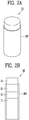
- each light emitting element LD may be a subminiature light emitting element having a size in a range of a nanometer to micrometer scale, as illustrated in FIGS. 1A to 3B .
- the size of the light emitting element LD may be changed in various ways depending on design conditions, etc. of each light emitting device, e.g., the pixel PXL, using the light emitting element LD as a light source.
- each light emitting element LD may include a first end EP1 which is disposed on an end thereof in the longitudinal direction and electrically connected to the first electrode ELT1 through the first contact electrode CNE1, and a second end EP2 which is disposed on another end thereof in the longitudinal direction and electrically connected to the second electrode ELT2 through the second contact electrode CNE2.
- each light emitting element LD may be horizontally oriented in the first direction DR1 between the first and second electrodes ELT1 and ELT2, in an area in which the first and second electrodes ELT1 and ELT2 corresponding to each other are disposed to face each other.
- Each light emitting element LD may or may not overlap the first electrode ELT1 and/or the second electrode ELT2 that is adjacent thereto.
- the first and second electrodes ELT1 and ELT2 that correspond to each other may be spaced apart from each other by a length of the light emitting elements LD or more, and the light emitting elements LD may be disposed between the first and second electrodes ELT1 and ELT2 without overlapping the first and second electrodes ELT1 and ELT2.
- FIG. 6 the first and second electrodes ELT1 and ELT2 that correspond to each other may be spaced apart from each other by a length of the light emitting elements LD or more, and the light emitting elements LD may be disposed between the first and second electrodes ELT1 and ELT2 without overlapping the first and second electrodes ELT1 and ELT2.
- the first and second electrodes ELT1 and ELT2 may be spaced apart from each other by the length of the light emitting elements LD or less, and the first and second ends EP1 and EP2 of each of the light emitting elements LD may respectively overlap the first and second electrodes ELT1 and ELT2.
- at least one light emitting element LD may overlap any one electrode of the first and second electrodes ELT1 and ELT2.
- relative disposition relationship between the light emitting elements LD and the first and second electrodes ELT1 and ELT2 may be changed in various ways.
- the light emitting elements LD may be prepared in a diffused or dispersed form in a predetermined solution and be supplied to each pixel area (particularly, the emission area of each pixel PXL) by an inkjet printing method or the like.
- the light emitting elements LD may be mixed with a volatile solvent and be supplied to each pixel area.
- predetermined alignment voltages or alignment signals
- an electric field is formed between the first and second electrodes ELT1 and ELT2
- the light emitting elements LD may be aligned between the first and second electrodes ELT1 and ELT2.
- the solvent may be removed by a volatilization method or other methods.
- the light emitting elements LD may be reliably disposed between the first and second electrodes ELT1 and ELT2.
- the first contact electrode CNE1 and the second contact electrode CNE2 may be respectively formed on the opposite ends of the light emitting elements LD, e.g., the first and second ends EP1 and EP2. Consequently, the light emitting elements LD may be more reliably connected between the first and second electrodes ELT1 and ELT2.
- the first ends EP1 of the light emitting elements LD may be electrically connected to the first power supply VDD via the first contact electrode CNE1, the first electrode ELT1, the pixel circuit PXC, and/or the first power line PL1.
- the second ends EP2 of the light emitting elements LD may be electrically connected to the second power supply VSS via the second contact electrode CNE2, the second electrode ELT2, and/or the second power line PL2. Therefore, at least one light emitting element LD that is connected in a forward direction between the first and second electrodes ELT1 and ELT2 may emit light at a luminance corresponding to driving current supplied from the pixel circuit PXC or the like. Therefore, the pixel PXL may emit light corresponding to the driving current.
- At least one multilayer pattern MLP may be disposed over predetermined areas of the light emitting elements LD.
- each multilayer pattern MLP may be disposed on a predetermined area of at least one light emitting element LD.
- each multilayer pattern MLP may be formed in common over a plurality of light emitting elements LD arranged between the first and second electrodes ELT1 and ELT2.
- the multilayer pattern MLP may be disposed on only the predetermined areas of the light emitting elements LD including central areas of the light emitting elements LD such that the first and second ends EP1 and EP2 of the light emitting elements LD are exposed.
- the multilayer pattern MLP may include a plurality of insulating patterns which have different surface areas and/or widths and overlap each other.
- the multilayer pattern MLP along with the first and second contact electrodes CNE1 and CNE2 may form the conductive pattern layer CPL, and may further include a first conductive pattern CDP1 separated from the first and second contact electrodes CNE1 and CNE2. The structure of the multilayer pattern MLP will be described in detail later herein.
- the conductive pattern layer CPL may be disposed on at least predetermined areas of the light emitting elements LD and the first and second electrodes ELT1 and ELT2. In an embodiment, the conductive pattern layer CPL may further include at least one first contact electrode CNE1 overlapping each first electrode ELT1 and/or at least one second contact electrode CNE2 overlapping each second electrode ELT2. The conductive pattern layer CPL may selectively further include at least one first conductive pattern CDP1 disposed over predetermined areas of the light emitting elements LD.
- the first contact electrode CNE1 may be disposed on at least one area of the first electrode ELT1 and the first end EP1 of at least one light emitting element LD (e.g., a plurality of light emitting elements LD) that is adjacent to the first electrode ELT1.
- the first contact electrode CNE1 may electrically connect the first end EP1 to the first electrode ELT1.
- the second contact electrode CNE2 may be disposed on at least one area of the second electrode ELT2 and the second end EP2 of at least one light emitting element LD (e.g., a plurality of light emitting elements LD) that is adjacent to the second electrode ELT2.
- the second contact electrode CNE2 may electrically connect the second end EP2 to the second electrode ELT2.
- the first and second ends EP1 and EP2 of each of the light emitting elements LD may be stably fixed by the first and second contact electrodes CNE1 and CNE2.
- the light emitting elements LD may be electrically connected between the first and second electrodes ELT1 and ELT2 by the first and second contact electrodes CNE1 and CNE2.
- the first conductive pattern CDP1 may form a portion of the conductive pattern layer CPL and/or the multilayer pattern MLP. In an embodiment, each of opposite ends of the first conductive pattern CDP1 may overlap an end of a corresponding one of the first and second contact electrodes CNE1 and CNE2 adjacent thereto.
- the first conductive pattern CDP1 may be separated from the first and second contact electrodes CNE1 and CNE2, in a cross-sectional view of the pixel PXL.
- the first conductive pattern CDP1 may be simultaneously formed using a conductive material identical to that of the first and second contact electrodes CNE1 and CNE2. Relative disposition relationship of the first and second contact electrodes CNE1 and CNE2 and the first conductive pattern CDP1 and a forming method thereof will be described below.
- each pixel PXL may further include at least one first partition wall PW1 which overlaps each first electrode ELT1 and a second partition wall PW2 which overlaps each second electrode ELT2.
- the first partition wall PW1 and the second partition wall PW2 may be respectively disposed under the first electrode ELT1 and the second electrode ELT2.
- the first and second partition walls PW1 and PW2 may be respectively disposed under the first and second electrodes ELT1 and ELT2. Therefore, the first and second contact electrodes CNE1 and CNE2 may be respectively disposed over the first and second electrodes ELT1 and ELT2.
- the first partition wall PW1 may have a width less than that of each first electrode ELT1 and be disposed under the first electrode ELT1.
- the first partition wall PW1 may have a shape corresponding to the first electrode ELT1 and be disposed inside the first electrode ELT1, in a plan view.
- the first electrode ELT1 may protrude in an upward direction of the base layer (BSL of FIG. 4 ) in the area in which the first partition wall PW1 is disposed. Therefore, light emitted from the first ends EP1 of the light emitting elements LD that face the first electrode ELT1 may be controlled to more effectively travel in the frontal direction of the display device.
- the second partition wall PW2 may have a width less than that of each second electrode ELT2 and be disposed under the second electrode ELT2.
- the second partition wall PW2 may have a shape corresponding to the second electrode ELT2 and be disposed inside the second electrode ELT2, in a plan view.
- the second electrode ELT2 may protrude in an upward direction of the base layer (BSL of FIG. 4 ) in the area in which the second partition wall PW2 is disposed. Therefore, light emitted from the second ends EP2 of the light emitting elements LD that face the second electrode ELT2 may be controlled to more effectively travel in the frontal direction of the display device.
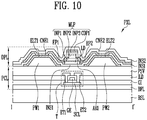
- FIG. 10 is a sectional view illustrating a pixel PXL in accordance with an embodiment of the present disclosure and for example illustrates an embodiment of a cross-section of the pixel PXL corresponding to line I-I' of FIG. 8 .
- FIG. 11 is a plan view schematically illustrating the multilayer pattern MLP of FIG. 10 .
- FIG. 12 is an enlarged sectional view of area AR1 of FIG. 10 .
- FIG. 10 illustrates the cross-section of the pixel PXL focusing on a light emitting element LD
- each pixel PXL and a display device including the Same may include a plurality of light emitting elements LD, as described in the embodiments of FIGS. 4 to 9 . Therefore, although only a light emitting element LD is illustrated in the cross-section, as needed, the light emitting elements LD may be designated in the singular form or the plural forms in the following description of the structure of the pixel PXL.
- the pixel PXL in accordance with an embodiment of the present disclosure may include a display element layer DPL disposed on one surface of the base layer BSL and including a plurality of light emitting elements LD. Furthermore, the pixel PXL may selectively include a pixel circuit layer PCL. For example, the pixel PXL may further include a pixel circuit layer PCL disposed between the base layer BSL and the display element layer DPL.
- the pixel circuit layer PCL may include at least one circuit element electrically connected to the light emitting elements LD.
- the pixel circuit layer PCL may include at least one circuit element which forms the pixel circuit PXC of each pixel PXL.
- the pixel circuit layer PCL may include a plurality of transistors T and a storage capacitor Cst that are disposed in each pixel area and form the corresponding pixel circuit PXC, and the pixel circuit layer PCL may further include at least one power line and/or at least one signal line that is connected to the pixel circuit PXC and/or the light source unit LSU.
- the pixel circuit layer PCL may be omitted.
- FIG. 10 representatively illustrates only a transistor T among the circuit elements and the lines that are disposed in the pixel circuit layer PCL.
- the pixel circuit layer PCL may include a plurality of insulating layers disposed between respective electrodes and/or lines.
- the pixel circuit layer PCL may include a buffer layer BFL, a gate insulating layer GI, an interlayer insulating layer ILD, and a passivation layer PSV which are successively stacked on a surface of the base layer BSL.
- the pixel circuit layer PCL may further include at least one light shielding pattern (not shown) disposed under at least some transistors.
- the buffer layer BFL may prevent impurities from diffusing into each circuit element.
- the buffer layer BFL may be formed of a single layer or multiple layers having at least two or more layers. In case that the buffer layer BFL has a multi-layer structure, the respective layers may be formed of the same material or different materials. In an embodiment, the buffer layer BFL may be omitted.
- each transistor T may include a semiconductor layer SCL, a gate electrode GE, and first and second transistor electrodes ET1 and ET2.
- FIG. 10 illustrates an embodiment in which each transistor T includes the first and second transistor electrodes ET1 and ET2 that are formed separately from the semiconductor layer SCL, the present disclosure is not limited thereto.
- the first and/or second transistor electrode ET1 and/or ET2 provided in at least one transistor T disposed in each pixel area may be integrally formed with the corresponding semiconductor layer SCL.
- the semiconductor layer SCL may be disposed on the buffer layer BFL.
- the semiconductor layer SCL may be disposed between the gate insulating layer GI and the base layer BSL on which the buffer layer BFL is formed.
- the semiconductor layer SCL may include a first area which comes into contact with each first transistor electrode ET1, a second area which comes into contact with each second transistor electrode ET2, and a channel area disposed between the first and second areas.
- one of the first and second areas may be a source area, and the other may be a drain area.
- the semiconductor layer SCL may be a semiconductor pattern formed of polysilicon, amorphous silicon, an oxide semiconductor, etc.
- the channel area of the semiconductor layer SCL may be an intrinsic semiconductor, which is an undoped semiconductor pattern.
- Each of the first and second areas of the semiconductor layer SCL may be a semiconductor pattern doped with a predetermined impurity.
- the gate electrode GE may be disposed on the semiconductor layer SCL with the gate insulating layer GI interposed therebetween.
- the gate electrode GE may be disposed between the gate insulating layer GI and the interlayer insulating layer ILD and overlap at least one area of the semiconductor layer SCL.
- the first and second transistor electrodes ET1 and ET2 may be disposed on each semiconductor layer SCL with at least one interlayer insulating layer ILD interposed therebetween.
- the first and second transistor electrodes ET1 and ET2 may be disposed between the interlayer insulating layer ILD and the passivation layer PSV.
- the first and second transistor electrodes ET1 and ET2 may be electrically connected to each semiconductor layer SCL.
- the first and second transistor electrodes ET1 and ET2 may be connected to the first and second areas of the semiconductor layer SCL through corresponding contact holes which pass through the gate insulating layer GI and the interlayer insulating layer ILD.
- At least one transistor T provided in the pixel circuit PXC may be connected to any one pixel electrode.
- any one of the first and second transistor electrodes ET1 and ET2 of the first transistor T1 illustrated in FIGS. 5A and 5B may be electrically connected to the first electrode ELT1 and/or the first connection electrode CNL1 of the light source unit LSU disposed over the passivation layer PSV, through a contact hole (e.g., the first contact hole CH1 of FIGS. 6 to 9 ) passing through the passivation layer PSV.
- At least one signal line and/or at least one power line that is connected to each pixel PXL may be disposed on a layer identical with that of one electrode of each of the circuit elements that form the pixel circuit PXC.
- the second power line PL2 for supplying the second power supply VSS may be disposed on the same layer as that of the gate electrodes GE of the transistors T and be electrically connected to the second electrode ELT2 and/or the second connection electrode CNL2 of the light source unit LSU disposed over the passivation layer PSV through at least one bridge pattern (not illustrated) and/or the contact hole (e.g., the second contact hole CH2 of FIGS. 6 to 9 ).
- the structures and/or positions of the second power line PL2, etc. may be changed in various ways.
- the display element layer DPL may include a light source unit LSU of each of the pixels PXL.
- the display element layer DPL may include at least one pair of first and second electrodes ELT1 and ELT2 and a plurality of light emitting elements LD electrically connected between the first and second electrodes ELT1 and ELT2.
- the display element layer DPL may further include, e.g., at least one conductive layer and/or at least one insulating layer.
- the display element layer DPL may include first and second partition walls PW1 and PW2, first and second electrodes ELT1 and ELT2, a first insulating layer INS1, light emitting elements LD, a multilayer pattern MLP, first and second contact electrodes CNE1 and CNE2, and a second insulating layer INS2, which are disposed and/or formed over the base layer BSL and/or the pixel circuit layer PCL.
- the first and second partition walls PW1 and PW2 may be disposed at positions spaced apart from each other in the emission area of each pixel PXL.
- the first and second partition walls PW1 and PW2 may protrude from the base layer BSL and/or the pixel circuit layer PCL in a height direction.
- the first and second partition walls PW1 and PW2 may have substantially the same height, but the present disclosure is not limited thereto.
- the first partition wall PW1 may be disposed between the base layer BSL and/or the pixel circuit layer PCL and the first electrode ELT1.
- the first partition wall PW1 may be disposed adjacent to the first ends EP1 of the light emitting elements LD.
- a side surface of the first partition wall PW1 may be positioned adjacent to the first ends EP1 of the light emitting elements LD and disposed to face the first ends EP1.
- the second partition wall PW2 may be disposed between the base layer BSL and/or the pixel circuit layer PCL and the second electrode ELT2.
- the second partition wall PW2 may be disposed adjacent to the second ends EP2 of the light emitting elements LD.
- one side surface of the second partition wall PW2 may be positioned adjacent to the second ends EP2 of the light emitting elements LD and disposed to face the second ends EP2.
- each of the first and second partition walls PW1 and PW2 may have various shapes.
- each of the first and second partition walls PW1 and PW2 may have a trapezoidal cross-section a width of which reduces from a bottom to a top thereof.
- each of the first and second partition walls PW1 and PW2 may have an inclined surface on at least one side.
- each of the first and second partition walls PW1 and PW2 may have the cross-section of a semi-circle or a semi-ellipse that is reduced in width from the bottom to the top thereof.
- each of the first and second partition walls PW1 and PW2 may have a curved surface on at least one side.
- each of the first and second partition walls PW1 and PW2 may be changed in various ways rather than being particularly limited.
- at least one of the first and second partition walls PW1 and PW2 may be omitted or changed in position.
- Each of the first and second partition walls PW1 and PW2 may include insulating material having at least one inorganic material and/or organic material.
- the first and second partition walls PW1 and PW2 may include at least one inorganic layer including various known inorganic insulating materials such as silicon nitride (SiNx) or silicon oxide (SiOx).
- the first and second partition walls PW1 and PW2 may include at least one organic layer and/or at least one photoresist layer containing various kinds of known organic insulating materials, or may form a single- or multi-layer insulator containing organic/inorganic materials in combination.
- the constituent materials of the first and second partition walls PW1 and PW2 may be changed in various ways.
- each of the first and second partition walls PW1 and PW2 may function as a reflector.
- the first and second partition walls PW1 and PW2 along with the first and second electrodes ELT1 and ELT2 provided on the first and second partition walls PW1 and PW2 may function as reflectors that guide light emitted from each light emitting element LD in a desired direction, thereby enhancing the light efficiency of the pixel PXL.
- the first and second electrodes ELT1 and ELT2 may be respectively disposed over the first and second partition walls PW1 and PW2.
- the first and second electrodes ELT1 and ELT2 may be disposed at positions spaced apart from each other in each pixel area.
- the first and second electrodes ELT1 and ELT2 that are respectively disposed over the first and second partition walls PW1 and PW2 may have shapes corresponding to the respective shapes of the first and second partition walls PW1 and PW2.
- the first and second electrodes ELT1 and ELT2 may have inclined surfaces or curved surfaces corresponding to the first and second partition walls PW1 and PW2, respectively, and protrude in the height direction of the base layer BSL.
- each of the first and second electrodes ELT1 and ELT2 may include at least one conductive material.
- each of the first and second electrodes ELT1 and ELT2 may include at least one conductive material among at least one metal of various metal materials including silver (Ag), magnesium (Mg), aluminium (Al), platinum (Pt), palladium (Pd), gold (Au), nickel (Ni), neodymium (Nd), iridium (Ir), chromium (Cr), titanium (Ti), molybdenum (Mo), copper (Cu), etc., or an alloy thereof, conductive oxide such as indium tin oxide (ITO), indium zinc oxide (IZO), zinc oxide (ZnO), antimony zinc oxide (AZO), indium tin zinc oxide (ITZO), zinc oxide (ZnO), tin oxide (SnO 2 ), and a conductive polymer such as PEDOT, but the present disclosure is not limited thereto.
- each of the first and second electrodes ELT1 and ELT2 may include other conductive materials such as a carbon nanotube and graphene.
- each of the first and second electrodes ELT1 and ELT2 may include at least one of various conductive materials to have conductivity, and the constituent material thereof is not particularly limited.
- each of the first and second electrodes ELT1 and ELT2 may include the same conductive material, or at least one different conductive material.
- Each of the first and second electrodes ELT1 and ELT2 may have a single-layer or multi-layer structure.
- each of the first and second electrodes ELT1 and ELT2 may include at least one reflective electrode layer.
- Each of the first and second electrodes ELT1 and ELT2 may selectively further include at least one of at least one transparent electrode layer disposed over and/or under the reflective electrode layer, and at least one conductive capping layer covering an upper portion of the reflective electrode layer and/or the transparent electrode layer.
- the reflective electrode layer of each of the first and second electrodes ELT1 and ELT2 may be formed of conductive material having a uniform reflectivity.
- the reflective electrode layer may include at least one of various metal materials including silver (Ag), magnesium (Mg), aluminium (Al), platinum (Pt), palladium (Pd), gold (Au), nickel (Ni), neodymium (Nd), iridium (Ir), chromium (Cr), titanium (Ti), molybdenum (Mo), copper (Cu), etc., or an alloy thereof, but the present disclosure is not limited thereto.
- the reflective electrode layer may be formed of various reflective conductive materials.
- Each of the first and second electrodes ELT1 and ELT2 that includes the reflective electrode layer may enable light emitted from the opposite ends of each of the light emitting elements LD, i.e., the first and second ends EP1 and EP2, to travel in a direction (e.g., in a frontal direction) in which an image is displayed.
- first and second electrodes ELT1 and ELT2 respectively have inclined or curved surfaces corresponding to the shapes of the first and second partition walls PW1 and PW2 and are respectively disposed to face the first and second ends EP1 and EP2 of the light emitting elements LD, light emitted from the first and second ends EP1 and EP2 of each light emitting element LD may be reflected by the first and second electrodes ELT1 and ELT2 and thus more reliably travel in the frontal direction of the display panel PNL (e.g., in an upward direction of the base layer BSL). Therefore, the efficiency of light emitted from the light emitting elements LD may be enhanced.
- each of the first and second electrodes ELT1 and ELT2 may be formed of various transparent conductive materials.
- the transparent electrode layer may include ITO, IZO or ITZO, but the present disclosure is not limited thereto.
- each of the first and second electrodes ELT1 and ELT2 may have a triple-layer structure having a stacked structure of ITO/Ag/ITO. As such, if the first and second electrodes ELT1 and ELT2 each are formed of a multilayer structure of at least two or more layers, voltage drops due to signal delay (RC delay) may be minimized. Thus, a desired voltage may be effectively transmitted to the light emitting elements LD.
- RC delay signal delay
- each of the first and second electrodes ELT1 and ELT2 includes the conductive capping layer covering the reflective electrode layer and/or the transparent electrode layer, it is possible to prevent the reflective electrode layer of the first and second electrodes ELT1 and ELT2 from being damaged by defects occurring during the manufacturing process of the pixel PXL.
- the conductive capping layer may be selectively included in the first and second electrodes ELT1 and ELT2 and may be omitted according to an embodiment.
- the conductive capping layer may be considered as a component of each of the first and second electrodes ELT1 and ELT2, or considered as a separate component disposed on the first and second electrodes ELT1 and ELT2.
- the first insulating layer INS1 may be disposed on an area of each of the first and second electrode ELT1 and ELT2.
- the first insulating layer INS1 may be formed to cover predetermined areas of the first and second electrodes ELT1 and ELT2 and may include an opening to expose other predetermined areas of the first and second electrodes ELT1 and ELT2.
- the first insulating layer INS1 may be primarily formed to cover the overall surfaces of the first and second electrodes ELT1 and ELT2. After the light emitting elements LD are supplied and aligned on the first insulating layer INS1, the first insulating layer INS1 may be partially opened to expose the first and second electrodes ELT1 and ELT2 in respective predetermined areas on the first and second partition walls PW1 and PW2. In an embodiment, the first insulating layer INS1 may be patterned in the form of an individual pattern which is sectionally disposed under the light emitting elements LD after the supply and alignment of the light emitting elements LD have been completed.
- the first insulating layer INS1 may be interposed between the first and second electrodes ELT1 and ELT2 and the light emitting elements LD, and may expose at least one area of each of the first and second electrodes ELT1 and ELT2.
- the first insulating layer INS1 may be formed to cover the first and second electrodes ELT1 and ELT2, so that it is possible to prevent the first and second electrodes ELT1 and ELT2 from being damaged or to prevent metal from being precipitated in a subsequent process.
- the first insulating layer INS1 may stably support each light emitting element LD.
- the first insulating layer INS1 may be formed of a single layer or multiple layers and may include at least one inorganic insulating material and/or organic insulating material.
- the first insulating layer INS1 may include various kinds of known organic/inorganic insulating materials including silicon nitride (SiNx), silicon oxide (SiOx), aluminium oxide (Al 2 O 3 ), etc.
- the constituent material of the first insulating layer INS1 is not particularly limited.
- a plurality of light emitting elements LD may be supplied to and aligned in each pixel area, particularly, the emission area of each pixel PXL, in which the first insulating layer INS1 is formed.
- a plurality of light emitting elements LD may be supplied to each emission area by an inkjet method or the like, and the light emitting elements LD may be aligned between the first and second electrodes ELT1 and ELT2 by predetermined alignment voltages (or alignment signals) applied to the first and second electrodes ELT1 and ELT2.
- each light emitting element LD may have a length greater than a width of the multilayer pattern MLP disposed thereover. Furthermore, each light emitting element LD may be horizontally disposed between the first and second electrodes ELT1 and ELT2 such that the first and second ends EP1 and EP2 are respectively disposed on the opposite ends of the light emitting element LD in a longitudinal direction thereof.
- the multilayer pattern MLP may be disposed on predetermined areas of the light emitting elements LD.
- the multilayer pattern MLP may be disposed to expose the first and second ends EP1 and EP2 of the light emitting elements LD and cover the predetermined areas of the light emitting elements LD including respective central areas of the light emitting elements LD.
- the multilayer pattern MLP may include first to third insulating patterns INP1, INP2, and INP3 that are successively disposed on the predetermined areas of the light emitting elements LD. Furthermore, the multilayer pattern MLP may selectively further include a first conductive pattern CDP1 disposed over the first to third insulating patterns INP1, INP2, and INP3.
- the first insulating pattern INP1 may be disposed over the light emitting elements LD aligned between the first and second electrodes ELT1 and ELT2 and may expose the first and second ends EP1 and EP2 of the light emitting elements LD.
- the first insulating pattern INP1 may be partially disposed over only predetermined areas of the light emitting elements LD such that the first and second ends EP1 and EP2 of the light emitting elements LD are exposed.
- the first insulating pattern INP1 may be formed in an independent pattern in each pixel area, but the present disclosure is not limited thereto.
- the first insulating pattern INP1 may be formed of a single layer or multiple layers and include at least one inorganic insulating material and/or organic insulating material.
- the first insulating pattern INP1 may include at least one inorganic insulating layer including various kinds of known inorganic insulating materials including silicon nitride (SiNx), silicon oxide (SiOx), aluminium oxide (Al 2 O 3 ), etc.
- the first insulating pattern INP1 may be formed on the light emitting elements LD so that the light emitting elements LD may be prevented from being displaced from the aligned position.
- the second insulating pattern INP2 may have a width less than that of the first insulating pattern INP1.
- the first insulating pattern INP1 has a first width W1 in a direction in which the first insulating pattern INP1 intersects the first and second electrodes ELT1 and ELT2, e.g., in the first direction DR1 of FIGS. 6 to 9
- the second insulating pattern INP2 may have a second width W2 less than the first width W1 in the first direction DR1.
- the second insulating pattern INP2 may be disposed on an area of the first insulating pattern INP1 such that the opposite ends of the first insulating pattern INP1 are exposed.
- the second insulating pattern INP2 may be disposed on the first insulating pattern INP1 such that the opposite ends of the first insulating pattern INP1 that are adjacent to the first and second ends EP1 and EP2 are exposed.
- the second insulating pattern INP2 may be disposed inside the first insulating pattern INP1, in a plan view.
- opposite ends of the second insulating pattern INP2 may be disposed inside the first insulating pattern INP1 such that the opposite ends of the second insulating pattern INP2 are respectively located at positions spaced apart from the opposite ends of the first insulating pattern INP1 by a distance corresponding to more than two times the thickness of the first or second contact electrode CNE1 or CNE2.
- the thickness of each of the first and second contact electrodes CNE1 and CNE2 is approximately 1000 ⁇
- the opposite ends of the second insulating pattern INP2 may be respectively located at positions spaced apart from the opposite ends of the first insulating pattern INP1 by a distance in a range of approximately 2000 ⁇ to approximately 3000 ⁇ .
- the opposite ends of the second insulating pattern INP2 may be located at positions spaced apart from the opposite ends of the first insulating pattern INP1 by a first distance d1 and a second distance d2, respectively.
- the first distance d1 may be a distance corresponding to more than approximately two times the thickness of the first contact electrode CNE1.
- the second distance d2 may be a distance corresponding to more than approximately two times the thickness of the second contact electrode CNE2.
- the first contact electrode CNE1 and the second contact electrode CNE2 may have substantially a same thickness, but the present disclosure is not limited thereto.
- the first distance d1 and the second distance d2 may be substantially equal to each other, but the present disclosure is not limited thereto.
- the second insulating pattern INP2 may have a width less than that of the third insulating pattern INP3 disposed thereover.
- the second insulating pattern INP2 may have a second width W2 less than the third width W3 in the first direction DR1.
- the second insulating pattern INP2 may be disposed inside the third insulating pattern INP3, in a plan view. For example, in a plan view, the opposite ends of the second insulating pattern INP2 that are adjacent to the first and second ends EP1 and EP2 of each light emitting element LD may be covered by the third insulating pattern INP3.
- the second insulating pattern INP2 may have a thickness greater than that of the first and/or third insulating patterns INP1 and/or INP3.
- the second insulating pattern INP2 may have a thickness greater than that of each of the first and third insulating patterns INP1 and INP3.
- the first and second contact electrodes CNE1 and CNE2 may be easily formed in each pixel area in which the first to third insulating patterns INP1, INP2, and INP3 are formed.
- the conductive layer may be naturally disconnected on the opposite ends of the second insulating pattern INP2.
- the first and second contact electrodes CNE1 and CNE2 are simultaneously formed on a same layer, a short-circuit defect may be prevented from occurring between the first and second contact electrodes CNE1 and CNE2.
- the second insulating pattern INP2 has a thickness greater than that of each of the first and third insulating patterns INP1 and INP3, the first and second contact electrodes CNE1 and CNE2 may be more reliably separated from each other during a process of forming the first and second contact electrodes CNE1 and CNE2.
- the second insulating pattern INP2 may be formed of a single or multiple layers, and include at least one inorganic insulating material and/or at least one organic insulating material.
- the second insulating pattern INP2 may include at least one organic layer and/or at least one photoresist layer including various kinds of known organic insulating materials, photoresist materials, or the like.
- the third insulating pattern INP3 may have a width greater than the second insulating pattern INP2 and be disposed on the second insulating pattern INP2 such that the opposite ends of the second insulating pattern INP2 are covered by the third insulating pattern INP3, in a plan view.
- the third insulating pattern INP3 may be formed of a single layer or multiple layers and may include at least one inorganic insulating material and/or organic insulating material.
- the third insulating pattern INP3 may include at least one inorganic insulating layer including various kinds of known inorganic insulating materials including silicon nitride (SiNx), silicon oxide (SiOx), aluminium oxide (Al 2 O 3 ), etc.
- the third insulating pattern INP3 may be formed of a same material as that of the first insulating layer INS1 and/or the first insulating pattern INP1, but the present disclosure is not limited thereto.
- the first conductive pattern CDP1 may be disposed over the third insulating pattern INP3.
- the first conductive pattern CDP1 may be formed along with the first and second contact electrodes CNE1 and CNE2.
- the first conductive pattern CDP1 along with the first and second contact electrodes CNE1 and CNE2 may be formed.
- first and second contact electrodes CNE1 and CNE2 and the first conductive pattern CDP1 may include a same conductive material. Furthermore, the first and second contact electrodes CNE1 and CNE2 may be disposed on a same layer and face each other with at least one light emitting element LD interposed therebetween.
- the first conductive pattern CDP1 may have a width substantially equal or similar to that of the third insulating pattern INP3.
- the first conductive pattern CDP1 may have a fourth width W4 substantially identical or similar to the third width W3.
- the second insulating pattern INP2 may have a width less than that of the first insulating pattern INP1 such that the opposite ends of the first insulating pattern INP1 disposed under the second insulating pattern INP2 are exposed.
- the third insulating pattern INP3 and the first conductive pattern CDP1 each may have a width greater than that of the second insulating pattern INP2 to cover the entirety of an upper portion of the second insulating pattern INP2 provided therebelow.
- the first insulating pattern INP1, the third insulating pattern INP3, and/or the first conductive pattern CDP1 may have substantially same or similar widths.
- the first conductive pattern CDP1 may be separated from the first and second contact electrodes CNE1 and CNE2. Therefore, the first and second contact electrodes CNE1 and CNE2 may be separated from each other.
- the conductive layer is disconnected on opposite ends of the multilayer pattern MLP, so that the first and second contact electrodes CNE1 and CNE2 and the first conductive pattern CDP1 may be separated from each other.
- first and second ends EP1 and EP2 which are not covered by the multilayer pattern MLP, may be respectively covered by the first and second contact electrodes CNE1 and CNE2.
- first insulating pattern INP1 that are not covered by the second insulating pattern INP2 may be respectively covered by the first and second contact electrodes CNE1 and CNE2.
- respective ends of the first and second contact electrodes CNE1 and CNE2 may be respectively disposed on different ends of the first insulating pattern INP1 with the second insulating pattern INP2 interposed therebetween.
- the first and second contact electrodes CNE1 and CNE2 may be formed on a same layer on a surface of the base layer BSL by a same process. Therefore, a process of fabricating the pixel PXL and the display device including the pixel PXL may be simplified.
- the number of mask processes needed to form the pixel PXL may be reduced, and the first and second contact electrodes CNE1 and CNE2 may be readily formed.
- the first and second contact electrodes CNE1 and CNE2 each may have a thickness which gradually varies on the first insulating pattern INP1.
- the amount of conductive material that reaches a corresponding area is reduced toward the inside of the first insulation pattern INP1. Therefore, an end of each of the first and second contact electrodes CNE1 and CNE2 may have, on the first insulating pattern INP1, a thickness that gradually increases as approaching (or toward) a corresponding one of the first and second electrodes ELT1 and ELT2.
- first and second contact electrodes CNE1 and CNE2 may be disposed over the first and second electrodes ELT1 and ELT2 to cover exposed areas of the first and second electrodes ELT1 and ELT2.
- the first and second contact electrodes CNE1 and CNE2 may be respectively disposed on at least predetermined areas of the first and second electrodes ELT1 and ELT2 to come into contact with the exposed areas of the first and second electrodes ELT1 and ELT2. Therefore, the first and second contact electrodes CNE1 and CNE2 may be electrically connected to the first and second electrodes ELT1 and ELT2, respectively.
- the first and second electrodes ELT1 and ELT2 may be electrically connected to the first and second ends EP1 and EP2 of the light emitting elements LD through the first and second contact electrodes CNE1 and CNE2, respectively.
- the first and second contact electrodes CNE1 and CNE2 may be formed of various transparent conductive materials.
- the first and second contact electrodes CNE1 and CNE2 may include at least one of various transparent conductive materials including ITO, IZO, and ITZO, and may be substantially transparent or translucent to satisfy a predetermined transmittancy. Therefore, light emitted from the light emitting elements LD through the first and second ends EP1 and EP2 may be emitted out of the display device through the first and second contact electrodes CNE1 and CNE2.
- the first conductive pattern CDP1 may also include transparent conductive material in an identical manner to that of the first and second contact electrodes CNE1 and CNE2.
- the second insulating layer INS2 may be disposed on the first and second contact electrodes CNE1 and CNE2 and the multilayer pattern MLP.
- the second insulating layer INS2 may be formed and/or disposed on the overall surface of the display area DA of the base layer BSL on which the first and second partition walls PW1 and PW2, the first and second electrodes ELT1 and ELT2, the light emitting elements LD, the multilayer pattern MLP, and the first and second contact electrodes CNE1 and CNE2 are formed, so that the second insulating layer INS2 may cover the first and second partition walls PW1 and PW2, the first and second electrodes ELT1 and ELT2, the light emitting elements LD, and the first and second contact electrodes CNE1 and CNE2.
- the second insulating layer INS2 may include at least one inorganic layer and/or organic layer.
- the second insulating layer INS2 may include a thin-film encapsulation layer having a multilayer structure, but the present disclosure is not limited thereto.
- at least one overcoat layer and/or an encapsulation substrate, etc. may be further disposed over the second insulating layer INS2.
- the second insulating layer INS2 may be formed of a single layer or multiple layers and may include at least one inorganic insulating material and/or organic insulating material.
- the second insulating layer INS2 may include various kinds of known organic/inorganic insulating materials including silicon nitride (SiNx), silicon oxide (SiOx), etc.
- the constituent material of the second insulating layer INS2 is not particularly limited.
- FIGS. 13 to 15 each are a sectional view illustrating a pixel PXL in accordance with an embodiment of the present disclosure, and for example illustrate different embodiments of a cross-section of the pixel PXL corresponding to line I-I' of FIG. 8 .
- like reference numerals will be used to designate components similar or identical to those of the previous embodiments, and detailed descriptions thereof will be omitted.
- each of the first and second partition walls PW1 and PW2 may be formed of a curved partition wall.
- each of the first and second partition walls PW1 and PW2 may have a cross-section of a semi-circle or a semi-ellipse, a width of which reduces from the bottom to the top thereof.
- the first and second electrodes ELT1 and ELT2 that are respectively disposed over the first and second partition walls PW1 and PW2 may have shapes corresponding to the respective shapes of the first and second partition walls PW1 and PW2.
- the first and second electrodes ELT1 and ELT2 may have curved surfaces corresponding to the first and second partition walls PW1 and PW2, respectively, and protrude in the height direction of the base layer BSL.
- each light emitting element LD may be disposed on the passivation layer PSV.
- part of the multilayer pattern MLP disclosed in the embodiment of FIG. 10 may be removed.
- the second and third insulating patterns INP2 and INP3 and the first conductive pattern CDP1 may be removed, and only the first insulating pattern INP1 may remain over the light emitting elements LD.
- the opposite ends of the first insulating pattern INP1 may be covered by the first and second contact electrodes CNE1 and CNE2, and the remaining area of the first insulating pattern INP1 may be covered by the second insulating layer INS2, etc.
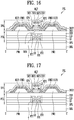
- FIGS. 16 and 17 each are a sectional view illustrating a pixel PXL in accordance with an embodiment of the present disclosure, and for example illustrate different embodiments of a cross-section of the pixel PXL corresponding to line II-II' of FIG. 9 .
- like reference numerals will be used to designate components similar or identical to those of the previous embodiments, and detailed descriptions thereof will be omitted.
- each light emitting element LD may be disposed to overlap an end of the first and/or second electrode ELT1 and/or ELT2.
- the first end EP1 of the light emitting element LD may be disposed over an end of the adjacent first electrode ELT1.
- the second end EP2 of the light emitting element LD may be disposed over an end of the adjacent second electrode ELT2.
- the first insulating layer INS1 may include a groove between the first and second electrodes ELT1 and ELT2. Space formed by the groove may be filled with insulating material drawn into space under the light emitting elements LD during a process of forming the first insulating pattern INP1, etc. Therefore, the light emitting elements LD may be more stably supported.
- the first insulating layer INS1 disclosed in the embodiment of FIG. 16 may be omitted, and each light emitting element LD may be directly disposed on the ends of the adjacent first and second electrodes ELT1 and ELT2.
- the first end EP1 of the light emitting element LD may be electrically connected to the first electrode ELT1 and the first contact electrode CNE1 by coming into direct contact with the first electrode ELT1 and the first contact electrode CNE1.
- the second end EP2 of the light emitting element LD may be electrically connected to the second electrode ELT2 and the second contact electrode CNE2 by coming into direct contact with the second electrode ELT2 and the second contact electrode CNE2.
- the space in case that a space is present between the light emitting element LD and the passivation layer PSV, the space may be filled with insulating material drawn into the space under the light emitting element LD during a process of forming the first insulating pattern INP1, etc.
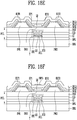
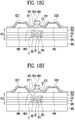
- FIGS. 18A to 18J are sectional views sequentially illustrating a method of fabricating a display device in accordance with an embodiment of the present disclosure and for example, illustrate an embodiment of a method of fabricating a display device including the pixel PXL according to the embodiment of FIG. 10 or 15 .
- the first and second partition walls PW1 and PW2 may be formed on a surface of the base layer BSL at positions spaced apart from each other, and the first and second electrodes ELT1 and ELT2 may be respectively formed on the first and second partition walls PW1 and PW2. Furthermore, after the first and second partition walls PW1 and PW2 and the first and second electrodes ELT1 and ELT2 are formed, a first insulating material layer INL1 may be formed to cover the first and second partition walls PW1 and PW2 and the first and second electrodes ELT1 and ELT2.
- the first and second partition walls PW1 and PW2 may be selectively formed. In some embodiments, the step of forming the first and second partition walls PW1 and PW2 may be omitted. In some embodiments, the pixel circuit layer PCL may be formed on the base layer BSL before the first and second partition walls PW1 and PW2 are formed. In this case, the first and second partition walls PW1 and PW2 may be formed on a surface of the base layer BSL on which the pixel circuit layer PCL is formed.
- the first and second partition walls PW1 and PW2 may be formed by a process of forming an insulating layer including inorganic material and/or organic material or a patterning process (e.g., a mask process) and may be formed by various types of known processes.
- the first and second partition walls PW1 and PW2 may be simultaneously formed on the same layer (or the same plane) on the base layer BSL, using a same material, but the present disclosure is not limited thereto.
- the first and second electrodes ELT1 and ELT2 may be formed at positions spaced apart from each other on the base layer BSL on which the first and second partition walls PW1 and PW2 are formed.
- the first and second electrodes ELT1 and ELT2 may be formed by a process of forming a conductive layer including at least one conductive material and/or a patterning process and may be formed by various types of known processes.
- the first and second connection electrodes CNL1 and CNL2 may be formed to be integrally connected to the first and second electrodes ELT1 and ELT2, respectively.
- each of the first and second electrodes ELT1 and ELT2 may have a single-layer or multi-layer structure.
- each of the first and second electrodes ELT1 and ELT2 may have a multi-layer structure including a reflective electrode layer and a conductive capping layer.
- the step of forming the first and second electrodes ELT1 and ELT2 may include the step of forming respective reflective electrodes on the first and second partition walls PW1 and PW2, and the step of forming respective conductive capping layers on the reflective electrodes.
- first and second electrodes ELT1 and ELT2 may be simultaneously formed on the same layer on the base layer BSL, but the present disclosure is not limited thereto. In case that the first and second electrodes ELT1 and ELT2 are simultaneously formed, the number of mask processes to be used to fabricate the display device may be reduced or minimized.
- the first insulating material layer INL1 may be formed by a deposition process of an insulating layer including inorganic insulating material and/or organic insulating material and may be formed by various types of known processes.
- the first insulating material layer INL1 may be formed by a deposition process of an insulating layer including at least one inorganic insulating material.
- the first insulating material layer INL1 may be formed of a single layer or multiple layers. In case that the first insulating material layer INL1 is formed of multiple layers, insulating material layers that constitute the first insulating material layer INL1 may be successively formed.
- a plurality of light emitting elements LD are supplied on the base layer BSL on which the first insulating material layer INL1 is formed.
- the light emitting elements LD are aligned between the first and second electrodes ELT1 and ELT2 such that the first and second ends EP1 and EP2 of at least some of the light emitting elements LD are adjacent to the respective first and second electrodes ELT1 and ELT2.
- the light emitting elements LD may be supplied to each pixel area on the base layer BSL by various methods including an inkjet method, etc.
- at least one light emitting element LD e.g., a plurality of light emitting elements LD
- the light emitting elements LD may be aligned between the first and second electrodes ELT1 and ELT2.
- the alignment voltages may be applied to the first and second electrodes ELT1 and ELT2 simultaneously with the supply of the light emitting elements LD, or may be applied to the first and second electrodes ELT1 and ELT2 after the supply of the light emitting elements LD.
- a second insulating material layer INL2 is formed on the base layer BSL on which the first and second electrodes ELT1 and ELT2, the light emitting elements LD, etc. are disposed.
- the second insulating material layer INL2 may be formed by a process of depositing an insulating layer including inorganic material and/or organic material and may be formed by various types of known processes.
- the second insulating material layer INL2 may be formed by a deposition process of an insulating layer including at least one inorganic insulating material.
- a third insulating material layer INL3 is formed on the base layer BSL on which the first and second electrodes ELT1 and ELT2, the light emitting elements LD, the second insulating material layer INL2, etc. are disposed.
- the third insulating material layer INL3 may be formed by a deposition process of an insulating layer including inorganic material and/or organic material and may be formed by various types of known processes.
- the third insulating material layer INL3 may be formed by depositing at least one organic layer including at least one organic insulating material and/or a photoresist layer to have a thickness greater than that of the second insulating material layer INL2.
- the third insulating pattern INP3 may be formed on the third insulating material layer INL3 to overlap the respective predetermined areas of light emitting elements LD (e.g., valid light emitting elements validly aligned between the first and second electrodes ELT1 and ELT2 of each pixel area), other than the respective first and second ends EP1 and EP2 of the light emitting elements LD.
- the respective predetermined areas of light emitting elements LD e.g., valid light emitting elements validly aligned between the first and second electrodes ELT1 and ELT2 of each pixel area
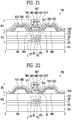
- each pixel PXL may further include a second conductive pattern CDP2 disposed between each light emitting element LD and the first insulating pattern INP1.
- each pixel PXL may include a multilayer pattern MLP disposed on predetermined areas of the light emitting elements LD such that the first and second ends EP1 and EP2 of the light emitting elements LD are exposed.
- the multilayer pattern MLP may include a second conductive pattern CDP2, first to third insulating patterns INP1, INP2, and INP3, and a first conductive pattern CDP1 which are successively disposed from the bottom to the top.
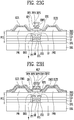
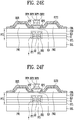
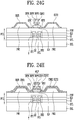
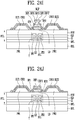
- FIGS. 23A to 23J are sectional views sequentially illustrating a method of fabricating a display device in accordance with an embodiment of the present disclosure and for example illustrate an embodiment of a method of fabricating a display device including the pixel PXL according to the embodiment of FIG. 19 .
- like reference numerals are used to designate components similar or identical to those of the above-described embodiments, e.g., the embodiment of the fabricating method described with reference to FIGS. 18A to 18J , and detailed descriptions thereof will be omitted.
- the third insulating material layer INL3 and the third insulating pattern INP3 are successively formed on the base layer BSL on which the first and second electrodes ELT1 and ELT2, the light emitting elements LD, the conductive material layer CDL, and the second insulating material layer INL2, etc. are disposed.
- the third insulating material layer INL3 may be formed by a deposition process of an insulating layer including at least one organic insulating material and/or photoresist material.
- the third insulating pattern INP3 may be formed by a deposition process of an insulating layer including at least one inorganic insulating material and a patterning process thereof.
- a mask process for forming the first and/or second contact electrodes CNE2 and/or CNE2 with predetermined shapes and/or sizes at desired positions may be further performed.
- a mask process for removing the conductive layer applied to a peripheral area of the first electrodes ELT1 may be selectively performed. Therefore, each first contact electrode CNE1 may be formed to have a desired shape and/or size.
- the second insulating layer INS2 is formed over the first and second contact electrodes CNE1 and CNE2 and the multilayer pattern MLP.
- the pixel PXL according to the embodiment of FIG. 19 and the display device including the pixel PXL may be fabricated.
- FIGS. 24A to 24J are sectional views sequentially illustrating a method of fabricating a display device in accordance with an embodiment of the present disclosure and for example illustrate an embodiment of a method of fabricating a display device including the pixel PXL according to the embodiment of FIG. 22 .
- the conductive material layer CDL and the second insulating material layer INL2 are successively formed on the base layer BSL on which the first and second electrodes ELT1 and ELT2, the light emitting elements LD, etc. are disposed.
- the second conductive pattern CDP2 is formed by etching the conductive material layer CDL by a wet etching process using the first to third insulating patterns INP1, INP2, and INP3 as a mask.
- the second conductive pattern CDP2 may be over-etched such that the second conductive pattern CDP2 may be spaced apart by sufficient distances from the first and second contact electrodes CNE1 and CNE2 to be formed by a subsequent process.
- the second conductive pattern CDP2 may be over-etched such that the second conductive pattern CDP2 has a width less than that of the first insulating pattern INP1 provided thereover.
Landscapes
- Electroluminescent Light Sources (AREA)
- Devices For Indicating Variable Information By Combining Individual Elements (AREA)
Applications Claiming Priority (2)
| Application Number | Priority Date | Filing Date | Title |
|---|---|---|---|
| KR1020180166401A KR102535276B1 (ko) | 2018-12-20 | 2018-12-20 | 표시 장치 및 그의 제조 방법 |
| PCT/KR2019/007467 WO2020130249A1 (ko) | 2018-12-20 | 2019-06-20 | 표시 장치 및 그의 제조 방법 |
Publications (3)
| Publication Number | Publication Date |
|---|---|
| EP3902002A1 true EP3902002A1 (de) | 2021-10-27 |
| EP3902002A4 EP3902002A4 (de) | 2022-09-28 |
| EP3902002B1 EP3902002B1 (de) | 2025-04-09 |
Family
ID=71102186
Family Applications (1)
| Application Number | Title | Priority Date | Filing Date |
|---|---|---|---|
| EP19898690.3A Active EP3902002B1 (de) | 2018-12-20 | 2019-06-20 | Anzeigevorrichtung und verfahren zur herstellung davon |
Country Status (5)
| Country | Link |
|---|---|
| US (1) | US11978834B2 (de) |
| EP (1) | EP3902002B1 (de) |
| KR (1) | KR102535276B1 (de) |
| CN (1) | CN113196487B (de) |
| WO (1) | WO2020130249A1 (de) |
Families Citing this family (24)
| Publication number | Priority date | Publication date | Assignee | Title |
|---|---|---|---|---|
| KR102670809B1 (ko) | 2019-09-05 | 2024-06-03 | 삼성디스플레이 주식회사 | 표시 장치 및 그의 제조 방법 |
| KR102787185B1 (ko) | 2019-11-12 | 2025-03-28 | 삼성디스플레이 주식회사 | 표시 장치 및 그의 제조 방법 |
| KR102747311B1 (ko) * | 2020-07-09 | 2025-01-02 | 삼성디스플레이 주식회사 | 표시 장치 및 그의 제조 방법 |
| KR102837101B1 (ko) * | 2020-07-09 | 2025-07-24 | 삼성디스플레이 주식회사 | 표시 장치 및 그의 제조 방법 |
| KR102855452B1 (ko) * | 2020-07-31 | 2025-09-08 | 삼성디스플레이 주식회사 | 표시 장치 |
| KR102893809B1 (ko) * | 2020-08-06 | 2025-12-02 | 삼성디스플레이 주식회사 | 표시 장치 및 이의 제조 방법 |
| KR102858002B1 (ko) | 2020-08-10 | 2025-09-12 | 삼성디스플레이 주식회사 | 발광 소자 및 이를 이용한 표시 장치와 그의 제조 방법 |
| KR102859914B1 (ko) | 2020-08-11 | 2025-09-16 | 삼성디스플레이 주식회사 | 화소 및 이를 구비한 표시 장치 |
| KR102855335B1 (ko) * | 2020-08-12 | 2025-09-08 | 삼성디스플레이 주식회사 | 표시 장치 및 그 제조 방법 |
| KR102790132B1 (ko) * | 2020-08-13 | 2025-04-02 | 삼성디스플레이 주식회사 | 표시 장치 |
| KR20220026626A (ko) * | 2020-08-25 | 2022-03-07 | 삼성디스플레이 주식회사 | 표시 장치 및 그 제조 방법 |
| KR102898075B1 (ko) | 2020-09-04 | 2025-12-10 | 삼성디스플레이 주식회사 | 화소 및 이를 포함하는 표시 장치 |
| KR102911830B1 (ko) | 2020-09-29 | 2026-01-15 | 삼성디스플레이 주식회사 | 표시 장치 및 그의 제조 방법 |
| KR102917456B1 (ko) * | 2020-10-08 | 2026-01-26 | 삼성디스플레이 주식회사 | 발광 소자 잉크, 표시 장치 및 그 제조 방법 |
| KR20220060074A (ko) * | 2020-11-03 | 2022-05-11 | 삼성디스플레이 주식회사 | 표시 장치 및 이의 제조 방법 |
| KR102940896B1 (ko) * | 2021-01-08 | 2026-03-18 | 삼성디스플레이 주식회사 | 표시 장치 |
| KR102883988B1 (ko) * | 2021-05-25 | 2025-11-11 | 삼성디스플레이 주식회사 | 표시 장치 및 이의 제조 방법 |
| KR102771519B1 (ko) * | 2021-06-08 | 2025-02-26 | 삼성디스플레이 주식회사 | 표시 장치 및 그 제조 방법 |
| KR102905251B1 (ko) * | 2021-06-17 | 2026-01-02 | 삼성디스플레이 주식회사 | 표시 장치 및 그의 제조 방법 |
| KR20230016123A (ko) | 2021-07-23 | 2023-02-01 | 삼성디스플레이 주식회사 | 표시 장치 및 이의 제조 방법 |
| KR102900214B1 (ko) * | 2021-09-23 | 2025-12-17 | 삼성디스플레이 주식회사 | 표시 장치 |
| KR20230056859A (ko) * | 2021-10-20 | 2023-04-28 | 삼성디스플레이 주식회사 | 표시 장치 및 그의 제조 방법 |
| KR20230076926A (ko) | 2021-11-23 | 2023-06-01 | 삼성디스플레이 주식회사 | 발광 소자 및 이를 포함하는 표시 장치 |
| KR20230120175A (ko) | 2022-02-07 | 2023-08-17 | 삼성디스플레이 주식회사 | 표시 장치 및 그 제조 방법 |
Family Cites Families (24)
| Publication number | Priority date | Publication date | Assignee | Title |
|---|---|---|---|---|
| JPS4914929B1 (de) | 1968-05-13 | 1974-04-11 | ||
| JPS4814394B1 (de) | 1968-12-06 | 1973-05-07 | ||
| JP4914929B2 (ja) | 2009-10-15 | 2012-04-11 | シャープ株式会社 | 発光装置およびその製造方法 |
| KR20110041401A (ko) | 2009-10-15 | 2011-04-21 | 샤프 가부시키가이샤 | 발광 장치 및 그 제조 방법 |
| US8872214B2 (en) | 2009-10-19 | 2014-10-28 | Sharp Kabushiki Kaisha | Rod-like light-emitting device, method of manufacturing rod-like light-emitting device, backlight, illuminating device, and display device |
| JP4814394B2 (ja) | 2010-03-05 | 2011-11-16 | シャープ株式会社 | 発光装置の製造方法 |
| US9329433B2 (en) * | 2010-03-12 | 2016-05-03 | Sharp Kabushiki Kaisha | Light-emitting device manufacturing method, light-emitting device, lighting device, backlight, liquid-crystal panel, display device, display device manufacturing method, display device drive method and liquid-crystal display device |
| KR101871501B1 (ko) * | 2011-07-29 | 2018-06-27 | 엘지이노텍 주식회사 | 발광 소자 패키지 및 이를 구비한 조명 시스템 |
| JP2014126753A (ja) | 2012-12-27 | 2014-07-07 | Seiko Epson Corp | ヘッドマウントディスプレイ |
| WO2015005655A1 (ko) | 2013-07-09 | 2015-01-15 | 피에스아이 주식회사 | 초소형 led 전극어셈블리 및 이의 제조방법 |
| KR101436123B1 (ko) | 2013-07-09 | 2014-11-03 | 피에스아이 주식회사 | 초소형 led를 포함하는 디스플레이 및 이의 제조방법 |
| US9673364B2 (en) | 2013-07-19 | 2017-06-06 | Nichia Corporation | Light emitting device and method of manufacturing the same |
| KR102123039B1 (ko) * | 2013-07-19 | 2020-06-15 | 니치아 카가쿠 고교 가부시키가이샤 | 발광 장치 및 그 제조 방법 |
| KR102410524B1 (ko) | 2015-07-03 | 2022-06-20 | 삼성디스플레이 주식회사 | 표시 장치 |
| US10153256B2 (en) * | 2016-03-03 | 2018-12-11 | X-Celeprint Limited | Micro-transfer printable electronic component |
| KR101987196B1 (ko) | 2016-06-14 | 2019-06-11 | 삼성디스플레이 주식회사 | 픽셀 구조체, 픽셀 구조체를 포함하는 표시장치 및 그 제조 방법 |
| KR102733637B1 (ko) | 2016-07-04 | 2024-11-27 | 삼성디스플레이 주식회사 | 표시 장치 |
| US10210798B2 (en) | 2016-07-04 | 2019-02-19 | Samsung Display Co., Ltd. | Display device having protective structure |
| KR102699567B1 (ko) * | 2016-07-11 | 2024-08-29 | 삼성디스플레이 주식회사 | 초소형 발광 소자를 포함하는 픽셀 구조체, 표시장치 및 그 제조방법 |
| KR102608419B1 (ko) | 2016-07-12 | 2023-12-01 | 삼성디스플레이 주식회사 | 표시장치 및 표시장치의 제조방법 |
| KR102592276B1 (ko) | 2016-07-15 | 2023-10-24 | 삼성디스플레이 주식회사 | 발광장치 및 그의 제조방법 |
| KR102707509B1 (ko) | 2016-12-19 | 2024-09-23 | 삼성디스플레이 주식회사 | 발광장치 및 그의 제조방법 |
| KR102587215B1 (ko) | 2016-12-21 | 2023-10-12 | 삼성디스플레이 주식회사 | 발광 장치 및 이를 구비한 표시 장치 |
| KR102559097B1 (ko) | 2018-07-27 | 2023-07-26 | 삼성디스플레이 주식회사 | 발광 장치, 그의 제조 방법, 및 이를 구비한 표시 장치 |
-
2018
- 2018-12-20 KR KR1020180166401A patent/KR102535276B1/ko active Active
-
2019
- 2019-06-20 US US17/415,893 patent/US11978834B2/en active Active
- 2019-06-20 CN CN201980084385.5A patent/CN113196487B/zh active Active
- 2019-06-20 WO PCT/KR2019/007467 patent/WO2020130249A1/ko not_active Ceased
- 2019-06-20 EP EP19898690.3A patent/EP3902002B1/de active Active
Also Published As
| Publication number | Publication date |
|---|---|
| US20220059739A1 (en) | 2022-02-24 |
| KR20200077671A (ko) | 2020-07-01 |
| WO2020130249A1 (ko) | 2020-06-25 |
| CN113196487B (zh) | 2024-11-26 |
| KR102535276B1 (ko) | 2023-05-23 |
| EP3902002B1 (de) | 2025-04-09 |
| US11978834B2 (en) | 2024-05-07 |
| EP3902002A4 (de) | 2022-09-28 |
| CN113196487A (zh) | 2021-07-30 |
Similar Documents
| Publication | Publication Date | Title |
|---|---|---|
| EP3902002B1 (de) | Anzeigevorrichtung und verfahren zur herstellung davon | |
| CN112840457B (zh) | 发光器件、发光器件的制造方法及具有其的显示设备 | |
| EP3910676B1 (de) | Anzeigevorrichtung und herstellungsverfahren dafür | |
| EP4027391B1 (de) | Anzeigevorrichtung und verfahren zur produktion davon | |
| CN112514086B (zh) | 发光器件、其制造方法及具有其的显示设备 | |
| KR102908278B1 (ko) | 표시 장치 및 그의 제조 방법 | |
| EP3890020B1 (de) | Anzeigevorrichtung | |
| KR102591056B1 (ko) | 발광 장치, 그의 제조 방법, 및 이를 포함한 표시 장치 | |
| EP3893279A1 (de) | Anzeigevorrichtung und herstellungsverfahren dafür | |
| CN112889154B (zh) | 发光器件、制造其的方法和包括其的显示装置 | |
| CN112740406A (zh) | 显示设备及制造其的方法 | |
| CN113302742A (zh) | 显示装置 | |
| KR102926284B1 (ko) | 표시 장치 및 표시 장치의 제조 방법 | |
| CN113130539B (zh) | 显示装置 | |
| EP3886172A1 (de) | Lichtemittierende vorrichtung und anzeigevorrichtung damit | |
| KR102751425B1 (ko) | 표시 장치 | |
| CN112703595A (zh) | 发光器件及具有该发光器件的显示装置 |
Legal Events
| Date | Code | Title | Description |
|---|---|---|---|
| STAA | Information on the status of an ep patent application or granted ep patent |
Free format text: STATUS: THE INTERNATIONAL PUBLICATION HAS BEEN MADE |
|
| PUAI | Public reference made under article 153(3) epc to a published international application that has entered the european phase |
Free format text: ORIGINAL CODE: 0009012 |
|
| STAA | Information on the status of an ep patent application or granted ep patent |
Free format text: STATUS: REQUEST FOR EXAMINATION WAS MADE |
|
| 17P | Request for examination filed |
Effective date: 20210621 |
|
| AK | Designated contracting states |
Kind code of ref document: A1 Designated state(s): AL AT BE BG CH CY CZ DE DK EE ES FI FR GB GR HR HU IE IS IT LI LT LU LV MC MK MT NL NO PL PT RO RS SE SI SK SM TR |
|
| DAV | Request for validation of the european patent (deleted) | ||
| DAX | Request for extension of the european patent (deleted) | ||
| REG | Reference to a national code |
Ref country code: DE Ref legal event code: R079 Free format text: PREVIOUS MAIN CLASS: H01L0027120000 Ipc: H01L0033620000 Ref country code: DE Ref legal event code: R079 Ref document number: 602019068569 Country of ref document: DE Free format text: PREVIOUS MAIN CLASS: H01L0027120000 Ipc: H01L0033620000 |
|
| A4 | Supplementary search report drawn up and despatched |
Effective date: 20220826 |
|
| RIC1 | Information provided on ipc code assigned before grant |
Ipc: H01L 33/24 20100101ALN20220822BHEP Ipc: H01L 25/16 20060101ALN20220822BHEP Ipc: H01L 25/075 20060101ALN20220822BHEP Ipc: H01L 33/62 20100101AFI20220822BHEP |
|
| P01 | Opt-out of the competence of the unified patent court (upc) registered |
Effective date: 20230516 |
|
| STAA | Information on the status of an ep patent application or granted ep patent |
Free format text: STATUS: EXAMINATION IS IN PROGRESS |
|
| 17Q | First examination report despatched |
Effective date: 20240223 |
|
| GRAP | Despatch of communication of intention to grant a patent |
Free format text: ORIGINAL CODE: EPIDOSNIGR1 |
|
| STAA | Information on the status of an ep patent application or granted ep patent |
Free format text: STATUS: GRANT OF PATENT IS INTENDED |
|
| RIC1 | Information provided on ipc code assigned before grant |
Ipc: H01L 33/20 20100101ALN20241004BHEP Ipc: H01L 25/16 20060101ALN20241004BHEP Ipc: H01L 25/075 20060101ALI20241004BHEP Ipc: H01L 33/44 20100101ALI20241004BHEP Ipc: H01L 33/62 20100101AFI20241004BHEP |
|
| INTG | Intention to grant announced |
Effective date: 20241108 |
|
| GRAS | Grant fee paid |
Free format text: ORIGINAL CODE: EPIDOSNIGR3 |
|
| GRAA | (expected) grant |
Free format text: ORIGINAL CODE: 0009210 |
|
| STAA | Information on the status of an ep patent application or granted ep patent |
Free format text: STATUS: THE PATENT HAS BEEN GRANTED |
|
| AK | Designated contracting states |
Kind code of ref document: B1 Designated state(s): AL AT BE BG CH CY CZ DE DK EE ES FI FR GB GR HR HU IE IS IT LI LT LU LV MC MK MT NL NO PL PT RO RS SE SI SK SM TR |
|
| REG | Reference to a national code |
Ref country code: GB Ref legal event code: FG4D |
|
| REG | Reference to a national code |
Ref country code: DE Ref legal event code: R096 Ref document number: 602019068569 Country of ref document: DE |
|
| REG | Reference to a national code |
Ref country code: IE Ref legal event code: FG4D |
|
| PGFP | Annual fee paid to national office [announced via postgrant information from national office to epo] |
Ref country code: DE Payment date: 20250520 Year of fee payment: 7 |
|
| PGFP | Annual fee paid to national office [announced via postgrant information from national office to epo] |
Ref country code: GB Payment date: 20250520 Year of fee payment: 7 |
|
| PGFP | Annual fee paid to national office [announced via postgrant information from national office to epo] |
Ref country code: FR Payment date: 20250521 Year of fee payment: 7 |
|
| REG | Reference to a national code |
Ref country code: NL Ref legal event code: MP Effective date: 20250409 |
|
| PG25 | Lapsed in a contracting state [announced via postgrant information from national office to epo] |
Ref country code: NL Free format text: LAPSE BECAUSE OF FAILURE TO SUBMIT A TRANSLATION OF THE DESCRIPTION OR TO PAY THE FEE WITHIN THE PRESCRIBED TIME-LIMIT Effective date: 20250409 |
|
| REG | Reference to a national code |
Ref country code: AT Ref legal event code: MK05 Ref document number: 1784386 Country of ref document: AT Kind code of ref document: T Effective date: 20250409 |
|
| PG25 | Lapsed in a contracting state [announced via postgrant information from national office to epo] |
Ref country code: PT Free format text: LAPSE BECAUSE OF FAILURE TO SUBMIT A TRANSLATION OF THE DESCRIPTION OR TO PAY THE FEE WITHIN THE PRESCRIBED TIME-LIMIT Effective date: 20250811 Ref country code: FI Free format text: LAPSE BECAUSE OF FAILURE TO SUBMIT A TRANSLATION OF THE DESCRIPTION OR TO PAY THE FEE WITHIN THE PRESCRIBED TIME-LIMIT Effective date: 20250409 Ref country code: ES Free format text: LAPSE BECAUSE OF FAILURE TO SUBMIT A TRANSLATION OF THE DESCRIPTION OR TO PAY THE FEE WITHIN THE PRESCRIBED TIME-LIMIT Effective date: 20250409 |
|
| REG | Reference to a national code |
Ref country code: LT Ref legal event code: MG9D |
|
| PG25 | Lapsed in a contracting state [announced via postgrant information from national office to epo] |
Ref country code: NO Free format text: LAPSE BECAUSE OF FAILURE TO SUBMIT A TRANSLATION OF THE DESCRIPTION OR TO PAY THE FEE WITHIN THE PRESCRIBED TIME-LIMIT Effective date: 20250709 Ref country code: GR Free format text: LAPSE BECAUSE OF FAILURE TO SUBMIT A TRANSLATION OF THE DESCRIPTION OR TO PAY THE FEE WITHIN THE PRESCRIBED TIME-LIMIT Effective date: 20250710 |
|
| PG25 | Lapsed in a contracting state [announced via postgrant information from national office to epo] |
Ref country code: PL Free format text: LAPSE BECAUSE OF FAILURE TO SUBMIT A TRANSLATION OF THE DESCRIPTION OR TO PAY THE FEE WITHIN THE PRESCRIBED TIME-LIMIT Effective date: 20250409 |
|
| PG25 | Lapsed in a contracting state [announced via postgrant information from national office to epo] |
Ref country code: BG Free format text: LAPSE BECAUSE OF FAILURE TO SUBMIT A TRANSLATION OF THE DESCRIPTION OR TO PAY THE FEE WITHIN THE PRESCRIBED TIME-LIMIT Effective date: 20250409 |
|
| PG25 | Lapsed in a contracting state [announced via postgrant information from national office to epo] |
Ref country code: HR Free format text: LAPSE BECAUSE OF FAILURE TO SUBMIT A TRANSLATION OF THE DESCRIPTION OR TO PAY THE FEE WITHIN THE PRESCRIBED TIME-LIMIT Effective date: 20250409 |
|
| PG25 | Lapsed in a contracting state [announced via postgrant information from national office to epo] |
Ref country code: AT Free format text: LAPSE BECAUSE OF FAILURE TO SUBMIT A TRANSLATION OF THE DESCRIPTION OR TO PAY THE FEE WITHIN THE PRESCRIBED TIME-LIMIT Effective date: 20250409 |
|
| PG25 | Lapsed in a contracting state [announced via postgrant information from national office to epo] |
Ref country code: RS Free format text: LAPSE BECAUSE OF FAILURE TO SUBMIT A TRANSLATION OF THE DESCRIPTION OR TO PAY THE FEE WITHIN THE PRESCRIBED TIME-LIMIT Effective date: 20250709 |
|
| PG25 | Lapsed in a contracting state [announced via postgrant information from national office to epo] |
Ref country code: IS Free format text: LAPSE BECAUSE OF FAILURE TO SUBMIT A TRANSLATION OF THE DESCRIPTION OR TO PAY THE FEE WITHIN THE PRESCRIBED TIME-LIMIT Effective date: 20250809 |
|
| PG25 | Lapsed in a contracting state [announced via postgrant information from national office to epo] |
Ref country code: LV Free format text: LAPSE BECAUSE OF FAILURE TO SUBMIT A TRANSLATION OF THE DESCRIPTION OR TO PAY THE FEE WITHIN THE PRESCRIBED TIME-LIMIT Effective date: 20250409 |
|
| REG | Reference to a national code |
Ref country code: DE Ref legal event code: R097 Ref document number: 602019068569 Country of ref document: DE |
|
| PG25 | Lapsed in a contracting state [announced via postgrant information from national office to epo] |
Ref country code: DK Free format text: LAPSE BECAUSE OF FAILURE TO SUBMIT A TRANSLATION OF THE DESCRIPTION OR TO PAY THE FEE WITHIN THE PRESCRIBED TIME-LIMIT Effective date: 20250409 Ref country code: SM Free format text: LAPSE BECAUSE OF FAILURE TO SUBMIT A TRANSLATION OF THE DESCRIPTION OR TO PAY THE FEE WITHIN THE PRESCRIBED TIME-LIMIT Effective date: 20250409 |
|
| PG25 | Lapsed in a contracting state [announced via postgrant information from national office to epo] |
Ref country code: CZ Free format text: LAPSE BECAUSE OF FAILURE TO SUBMIT A TRANSLATION OF THE DESCRIPTION OR TO PAY THE FEE WITHIN THE PRESCRIBED TIME-LIMIT Effective date: 20250409 |
|
| PG25 | Lapsed in a contracting state [announced via postgrant information from national office to epo] |
Ref country code: EE Free format text: LAPSE BECAUSE OF FAILURE TO SUBMIT A TRANSLATION OF THE DESCRIPTION OR TO PAY THE FEE WITHIN THE PRESCRIBED TIME-LIMIT Effective date: 20250409 |
|
| PG25 | Lapsed in a contracting state [announced via postgrant information from national office to epo] |
Ref country code: SK Free format text: LAPSE BECAUSE OF FAILURE TO SUBMIT A TRANSLATION OF THE DESCRIPTION OR TO PAY THE FEE WITHIN THE PRESCRIBED TIME-LIMIT Effective date: 20250409 Ref country code: RO Free format text: LAPSE BECAUSE OF FAILURE TO SUBMIT A TRANSLATION OF THE DESCRIPTION OR TO PAY THE FEE WITHIN THE PRESCRIBED TIME-LIMIT Effective date: 20250409 |
|
| REG | Reference to a national code |
Ref country code: CH Ref legal event code: H13 Free format text: ST27 STATUS EVENT CODE: U-0-0-H10-H13 (AS PROVIDED BY THE NATIONAL OFFICE) Effective date: 20260127 |
|
| PG25 | Lapsed in a contracting state [announced via postgrant information from national office to epo] |
Ref country code: IT Free format text: LAPSE BECAUSE OF FAILURE TO SUBMIT A TRANSLATION OF THE DESCRIPTION OR TO PAY THE FEE WITHIN THE PRESCRIBED TIME-LIMIT Effective date: 20250409 |
|
| PG25 | Lapsed in a contracting state [announced via postgrant information from national office to epo] |
Ref country code: MC Free format text: LAPSE BECAUSE OF FAILURE TO SUBMIT A TRANSLATION OF THE DESCRIPTION OR TO PAY THE FEE WITHIN THE PRESCRIBED TIME-LIMIT Effective date: 20250409 |
|
| PLBE | No opposition filed within time limit |
Free format text: ORIGINAL CODE: 0009261 |
|
| STAA | Information on the status of an ep patent application or granted ep patent |
Free format text: STATUS: NO OPPOSITION FILED WITHIN TIME LIMIT |
|
| PG25 | Lapsed in a contracting state [announced via postgrant information from national office to epo] |
Ref country code: LU Free format text: LAPSE BECAUSE OF NON-PAYMENT OF DUE FEES Effective date: 20250620 |
|
| REG | Reference to a national code |
Ref country code: CH Ref legal event code: L10 Free format text: ST27 STATUS EVENT CODE: U-0-0-L10-L00 (AS PROVIDED BY THE NATIONAL OFFICE) Effective date: 20260218 |
|
| REG | Reference to a national code |
Ref country code: BE Ref legal event code: MM Effective date: 20250630 |
|
| 26N | No opposition filed |
Effective date: 20260112 |
|
| PG25 | Lapsed in a contracting state [announced via postgrant information from national office to epo] |
Ref country code: IE Free format text: LAPSE BECAUSE OF NON-PAYMENT OF DUE FEES Effective date: 20250620 |
|
| PG25 | Lapsed in a contracting state [announced via postgrant information from national office to epo] |
Ref country code: BE Free format text: LAPSE BECAUSE OF NON-PAYMENT OF DUE FEES Effective date: 20250630 |
|
| PG25 | Lapsed in a contracting state [announced via postgrant information from national office to epo] |
Ref country code: CH Free format text: LAPSE BECAUSE OF NON-PAYMENT OF DUE FEES Effective date: 20250630 |