EP3876162A1 - Lernverfahren, lernsystem und lernprogramm - Google Patents
Lernverfahren, lernsystem und lernprogramm Download PDFInfo
- Publication number
- EP3876162A1 EP3876162A1 EP21160436.8A EP21160436A EP3876162A1 EP 3876162 A1 EP3876162 A1 EP 3876162A1 EP 21160436 A EP21160436 A EP 21160436A EP 3876162 A1 EP3876162 A1 EP 3876162A1
- Authority
- EP
- European Patent Office
- Prior art keywords
- learning
- time
- data
- sampling cycle
- series data
- Prior art date
- Legal status (The legal status is an assumption and is not a legal conclusion. Google has not performed a legal analysis and makes no representation as to the accuracy of the status listed.)
- Withdrawn
Links
Images




Classifications
-
- G—PHYSICS
- G06—COMPUTING OR CALCULATING; COUNTING
- G06N—COMPUTING ARRANGEMENTS BASED ON SPECIFIC COMPUTATIONAL MODELS
- G06N20/00—Machine learning
-
- G—PHYSICS
- G06—COMPUTING OR CALCULATING; COUNTING
- G06N—COMPUTING ARRANGEMENTS BASED ON SPECIFIC COMPUTATIONAL MODELS
- G06N3/00—Computing arrangements based on biological models
- G06N3/02—Neural networks
- G06N3/08—Learning methods
-
- G—PHYSICS
- G01—MEASURING; TESTING
- G01P—MEASURING LINEAR OR ANGULAR SPEED, ACCELERATION, DECELERATION, OR SHOCK; INDICATING PRESENCE, ABSENCE, OR DIRECTION, OF MOVEMENT
- G01P3/00—Measuring linear or angular speed; Measuring differences of linear or angular speeds
- G01P3/42—Devices characterised by the use of electric or magnetic means
- G01P3/44—Devices characterised by the use of electric or magnetic means for measuring angular speed
-
- G—PHYSICS
- G06—COMPUTING OR CALCULATING; COUNTING
- G06F—ELECTRIC DIGITAL DATA PROCESSING
- G06F18/00—Pattern recognition
- G06F18/20—Analysing
- G06F18/21—Design or setup of recognition systems or techniques; Extraction of features in feature space; Blind source separation
- G06F18/214—Generating training patterns; Bootstrap methods, e.g. bagging or boosting
- G06F18/2148—Generating training patterns; Bootstrap methods, e.g. bagging or boosting characterised by the process organisation or structure, e.g. boosting cascade
-
- G—PHYSICS
- G06—COMPUTING OR CALCULATING; COUNTING
- G06F—ELECTRIC DIGITAL DATA PROCESSING
- G06F18/00—Pattern recognition
- G06F18/20—Analysing
- G06F18/25—Fusion techniques
-
- G—PHYSICS
- G06—COMPUTING OR CALCULATING; COUNTING
- G06N—COMPUTING ARRANGEMENTS BASED ON SPECIFIC COMPUTATIONAL MODELS
- G06N3/00—Computing arrangements based on biological models
- G06N3/02—Neural networks
- G06N3/04—Architecture, e.g. interconnection topology
- G06N3/044—Recurrent networks, e.g. Hopfield networks
-
- G—PHYSICS
- G06—COMPUTING OR CALCULATING; COUNTING
- G06N—COMPUTING ARRANGEMENTS BASED ON SPECIFIC COMPUTATIONAL MODELS
- G06N3/00—Computing arrangements based on biological models
- G06N3/02—Neural networks
- G06N3/04—Architecture, e.g. interconnection topology
- G06N3/044—Recurrent networks, e.g. Hopfield networks
- G06N3/0442—Recurrent networks, e.g. Hopfield networks characterised by memory or gating, e.g. long short-term memory [LSTM] or gated recurrent units [GRU]
-
- G—PHYSICS
- G06—COMPUTING OR CALCULATING; COUNTING
- G06N—COMPUTING ARRANGEMENTS BASED ON SPECIFIC COMPUTATIONAL MODELS
- G06N3/00—Computing arrangements based on biological models
- G06N3/02—Neural networks
- G06N3/04—Architecture, e.g. interconnection topology
- G06N3/045—Combinations of networks
-
- G—PHYSICS
- G06—COMPUTING OR CALCULATING; COUNTING
- G06N—COMPUTING ARRANGEMENTS BASED ON SPECIFIC COMPUTATIONAL MODELS
- G06N3/00—Computing arrangements based on biological models
- G06N3/02—Neural networks
- G06N3/04—Architecture, e.g. interconnection topology
- G06N3/0464—Convolutional networks [CNN, ConvNet]
-
- G—PHYSICS
- G06—COMPUTING OR CALCULATING; COUNTING
- G06N—COMPUTING ARRANGEMENTS BASED ON SPECIFIC COMPUTATIONAL MODELS
- G06N3/00—Computing arrangements based on biological models
- G06N3/02—Neural networks
- G06N3/08—Learning methods
- G06N3/09—Supervised learning
Definitions
- the present disclosure relates to a learning method, a learning system, and a learning program for performing machine learning.
- a learning method in which: by comparing first time-series data based on an output of a first sensor that measures a movement of a person with second time-series data based on an output of a second sensor that measures a movement of an object used by the person, a label for specifying the object is added to a section of the first time-series data; and the first time-series data for which the label has been added is used as learning data (see, for example, Japanese Unexamined Patent Application Publication No. 2018-109882 ).
- the learning time may increase.
- the present disclosure has been made to solve the above-described problem and an object thereof is to provide a learning method, a learning system, and a learning program capable of reducing the learning time (or reducing an increase in the learning time) while also improving the learning accuracy by performing the learning while giving consideration to a long learning time (e.g., by using a long learning time).
- a first exemplary aspect is a learning method including:
- At least one time series data may be generated by performing sampling at a sampling cycle different from the first and second sampling cycles, and the learning data may be generated by combining the generated at least one time series data with the first and second time-series data.
- the first time-series data may be generated by performing sampling in a retrospective manner starting from a present time from the predetermined sensor value at the first sampling cycle
- the second time-series data may be generated by performing sampling in a retrospective manner starting from the present time from the predetermined sensor value at the second sampling cycle different from the first sampling cycle
- the same number of data may be included in each of the time-series data.
- the learning data may be generated by combining the first and second time-series data with a sensor value or an estimated value different from the predetermined sensor value.
- the predetermined sensor value may be an angular velocity of a rotation mechanism, and a frictional torque of the rotation mechanism may be estimated by performing learning using the learning data.
- a learning system including:
- another exemplary aspect is a learning program for causing a computer to execute:
- a learning method capable of reducing the learning time (or reducing an increase in the learning time) while improving the learning accuracy by performing the learning while giving consideration to a long learning time (e.g., by using a long learning time).
- Fig. 1 is a block diagram showing a schematic system configuration of a learning system according to this embodiment.
- the learning system 10 according to this embodiment can create a model of a frictional torque of a joint part of a robot by performing, for example, deep learning. It is possible, by using the created model for the frictional torque, to accurately control the joint part of the robot in a flexible manner through electric-current control without using a torque sensor.
- the learning system 10 has a hardware configuration of an ordinary computer including a processor such as a CPU (Central Processing Unit) or a GPU (Graphics Processing Unit), an internal memory such as a RAM (random access memory) and a ROM (Read Only Memory), a storage device such as an HDD (Hard Disk Drive) or an SDD (Solid State Drive), an input/output I/F (interface) for connecting peripheral devices such as a display device, and a communication I/F for communicating with external apparatuses.
- a processor such as a CPU (Central Processing Unit) or a GPU (Graphics Processing Unit)
- an internal memory such as a RAM (random access memory) and a ROM (Read Only Memory)
- a storage device such as an HDD (Hard Disk Drive) or an SDD (Solid State Drive)
- an input/output I/F interface
- peripheral devices such as a display device
- a communication I/F for communicating with external apparatuses.
- the learning system 10 can implement each of functional components (which will be described later) by, for example, having the processor execute a program stored in the storage device or the internal memory while using the internal memory.
- the learning system 10 includes a data generation unit 11 that generates learning data and a learning unit 12 that performs learning by using the generated learning data.
- the data generation unit 11 is a specific example of the data generation means.
- the data generation unit 11 generates first time-series data by performing sampling from predetermined sensor values at a first sampling cycle.
- the predetermined sensor values are, for example, a group of data (hereinafter also referred to as a data group) about an angular velocity of a rotation mechanism such as a joint mechanism of a robot.
- values that are detected in a predetermined time period by a sensor or the like may be stored as predetermined sensor values in the internal memory, the storage device, or the like in advance.
- the predetermined sensor values may be estimated values based on values obtained by a sensor.
- the data generation unit 11 generates time-series data composed of 32 angular velocities by performing sampling from the data group of the angular velocity at a sampling cycle of 100 ms.
- the data generation unit 11 generates second time-series data by performing sampling from the predetermined sensor values at a second sampling cycle different from the first sampling cycle.
- the first and second sampling cycles and the number of times of sampling are set in advance in the data generation unit 11, and a user can arbitrarily change these parameters.
- the first and second sampling cycles are set (i.e., determined) based on, for example, variations of the predetermined sensor values and/or the rate of variations thereof.
- the data generation unit 11 generates learning data by combining the generated first and second time-series data.
- the data generation unit 11 outputs the generated learning data to the learning unit 12.
- Fig. 2 is a diagram showing an example of the learning data.
- the data generation unit 11 generates first time-series data of the angular velocity by performing sampling, from a data group S of the angular velocity, in a retrospective manner starting from a present time 10 to a time 1 in the past at a first sampling cycle.
- the data generation unit 11 generates second time-series data of the angular velocity by performing sampling, from the data group S of the angular velocity, in a retrospective manner starting from the present time 10 to the time 1 in the past at the second sampling cycle.
- the second sampling cycle is set to a value longer than the first sampling cycle.
- the data generation unit 11 generates the first and second time-series data by performing sampling while using the present time as the starting point. As a result, although there are data that are obtained at the first sampling cycle, which is a shorter sampling cycle, near the present time, there are only data that are obtained at the second sampling cycle, which is a longer sampling cycle, in a time far from the present time. This is because data near the present time is considered to be important, and hence the density of data is high near the present time.
- the numbers of data included in the first and second time-series data are equal to each other. It is possible to simplify the calculation of the learning by making the numbers of data in the first and second time-series data equal to each other. Note that the numbers of data included in the first and second time-series data may be different from each other.
- Second sampling cycle Number of data in second time ⁇ series data ⁇ First sampling cycle ⁇ N
- the data generation unit 11 generates the first and second time-series data by starting the sampling for them at the same time point, the present disclosure is not limited to this example.
- the data generation unit 11 may generate the first and second time-series data by starting the sampling for them at different time points. Further, the data generation unit 11 generates the first and the second time-series data by performing sampling so that the first and the second time-series data overlap each other in the temporal direction, but the present disclosure is not limited to this example.
- the data generation unit 11 may generate the first and the second time-series data by performing sampling so that the first and the second time-series data do not overlap each other in the temporal direction.
- the learning unit 12 is a specific example of the learning means.
- the learning unit 12 performs machine learning such as deep learning by using the learning data generated by the data generation unit 11.
- the learning unit 12 inputs the learning data to a deep-learning network and thereby learns the number of network layers, weight parameters, and the like.
- the learning unit 12 is formed as, for example, a recursive neural network (RNN: Recurrent Neural Network). Further or alternatively, the learning unit 12 may be formed as an LSTM (Long Short-Term Memory).
- RNN Recurrent Neural Network
- LSTM Long Short-Term Memory
- the aforementioned RNN, especially the LSTM, is often used when a model for time series data is created through deep learning.
- the learning unit 12 may be formed as a convolutional neural network (CNN: Convolutional Neural Network) which is widely used in the field of image recognition.
- CNN Convolutional Neural Network
- the deep learning for image recognition it is common to improve the recognition accuracy by preparing a large amount of learning data and using, in addition to the original image, images that are obtained by, for example, translating, enlarging, reducing (i.e., contracting), or rotating the original image.
- images that are obtained by, for example, translating, enlarging, reducing (i.e., contracting), or rotating the original image.
- the learning for time-series data it is uncommon to correct the original data except in the method in which random noises are added.
- the LSTM it is attempted to improve the learning accuracy by making a contrivance to the structure of a neural network that performs learning. It is believed that this is because if time-series data is translated, enlarged, or reduced (i.e., contracted), the meaning of the time-series data is changed.
- the learning system 10 generates learning data that is corrected by changing the sampling cycle for the time-series data, and by doing so improves the learning accuracy by taking a long time into consideration without changing the meaning of the time-series data.
- the data generation unit 11 generates first time-series data by performing sampling from predetermined sensor values at a first sampling cycle, generates second time-series data by performing sampling from the predetermined sensor values at a second sampling cycle different from the first sampling cycle, and generates learning data by combining the generated first and second time-series data with each other.
- the learning unit 12 performs learning by using the learning data generated by the data generation unit 11.
- the second sampling cycle it is possible, by setting the second sampling cycle to a value longer than the first sampling cycle, to generate time-series learning data in which a longer time is taken into consideration, and thereby to improve the learning accuracy. Further, since all that needs to be done is to correct the learning data by changing the sampling cycle, the amount of the learning data (or the increase in the amount of learning data) can be reduced. Therefore, it is possible, by performing learning while giving consideration to a long learning time (e.g., by using a long learning time), to reduce the learning time (or the increase in the learning time) while improving the learning accuracy.
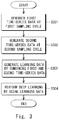
- FIG. 3 is a flowchart showing a flow of a learning method according to this embodiment.
- the data generation unit 11 generates first time-series data by performing sampling from predetermined sensor values at a first sampling cycle (step S301).
- the data generation unit 11 generates second time-series data by performing sampling from the predetermined sensor values at a second sampling cycle different from the first sampling cycle (step S302).
- the data generation unit 11 generates learning data by combining the generated first and second time-series data with each other (step S303), and outputs the generated learning data to the learning unit 12.
- the learning unit 12 performs deep learning using the learning data generated by the data generation unit 11 (step S304).
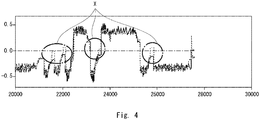
- Fig. 4 is a graph showing a comparison between estimated values estimated by a conventional learning unit and measured values.
- Fig. 5 is a graph showing a comparison between estimated values estimated by a learning unit formed by an LSTM according to this embodiment and measured values.
- Fig. 6 is a graph showing a comparison between estimated values estimated by a learning unit formed by a CNN according to this embodiment and measured values.
- Each of the learning units 12 deep-learns learning data about an angular velocity of a joint mechanism of a robot, and estimates a frictional torque of the joint mechanism as an estimated value.
- a torque sensor is provided in the joint mechanism of the robot. The torque sensor measures the frictional torque of the joint mechanism of the robot and outputs the measured frictional torque as a measured value.
- a frictional torque may be estimated from a value(s) obtained by other sensors.
- dotted lines indicate estimated values of the frictional torque and solid lines indicate measured values thereof.
- first time-series data is generated by performing sampling from predetermined sensor values at a first sampling cycle
- second time-series data is generated by performing sampling from the predetermined sensor values at a second sampling cycle different from the first sampling cycle.
- learning data is generated by combining the generated first and second time-series data with each other, and learning is performed by using the generated learning data. In this way, it is possible, by performing learning while giving consideration to a long learning time (e.g., by using a long learning time), to reduce the learning time (or the increase in the learning time) while improving the learning accuracy.
- the data generation unit 11 generates at least one time-series data by performing sampling at a sampling cycle different from both the first and second sampling cycles.
- the data generation unit 11 generates learning data by combining at least one generated time series data with the first and second time-series data.
- the data generation unit 11 generates third time-series data by performing sampling at a third sampling cycle that is different from both the first and second sampling cycles.
- the second sampling cycle is set to a value longer than the first sampling cycle
- the third sampling cycle is set to a value longer than the second sampling cycle.
- the first, second third sampling cycles are set to 1 ms, 10 ms, and 100 ms, respectively.
- the data generation unit 11 generates third time-series data about the angular velocity by performing sampling, from the data group S of the angular velocity, in a retrospective manner starting from the present time 10 to the time 1 in the past at a third sampling cycle.
- the data generation unit 11 generates learning data by combining the generated third time-series data with the first and second time-series data. In this way, it is possible, by combining time series data obtained at a longer sampling cycle, to generate learning data in which a longer time is taken into consideration, and thereby to improve the learning accuracy.
- the data generation unit 11 may generate fourth time-series data, .... , and Nth time series data by performing sampling at a fourth sampling cycle, .... , and an Nth sampling cycle in a similar manner.
- the fourth sampling cycle, .... , and the Nth sampling cycle are set so that they become gradually longer (i.e., the fifth sampling cycle is longer than fourth one, and the sixth sampling cycle is longer than the fifth one, and so on). In this way, it is possible to generate time-series learning data in which a still longer time is taken into consideration.
- the data generation unit 11 may generate learning data by combining time-series data sampled and generated as described above with a sensor value(s) or an estimated value(s) different from the predetermined sensor values. In this way, it is possible to improve the estimation accuracy of the learning unit 12.
- a rotation mechanism 100 includes a load part 101 rotatably supported on a shaft, a load-side encoder 102 connected to the load part 101, a speed reducer 103 connected to the load part 101, a motor 104 connected to the speed reducer 103, and a motor-side encoder 105 connected to the motor 104.
- a torque sensor may be provided in the speed reducer 103.
- a frictional torque may be estimated from a value(s) obtained by other sensors.
- the load-side encoder 102 detects the angular velocity of the load part 101.
- the motor-side encoder 105 detects the rotation angle of the motor 104.
- the data generation unit 11 may generate learning data by combining first to third time-series data of the angular velocity of the load part 101, the rotation angle of the motor 104, and the rotational displacement of the motor 104 from the stop position thereof.
- the data generation unit 11 may generate, as the time-series data of the rotation angle or the rotation displacement, a plurality of time-series data by changing the sampling cycle as in the case of the time-series data of the angular velocity.
- the data generation unit 11 generates learning data by combining the plurality of generated time series data of the rotation angle or the rotation displacement with the time series data of the angular velocity.
- Fig. 3 can be implemented by having a CPU execute a computer program.
- Non-transitory computer readable media include any type of tangible storage media.
- Examples of non-transitory computer readable media include magnetic storage media (such as floppy disks, magnetic tapes, hard disk drives, etc.), optical magnetic storage media (e.g. magneto-optical disks), CD-ROM (compact disc read only memory), CD-R (compact disc recordable), CD-R/W (compact disc rewritable), and semiconductor memories (such as mask ROM, PROM (programmable ROM), EPROM (erasable PROM), flash ROM, RAM (random access memory), etc.).
- magnetic storage media such as floppy disks, magnetic tapes, hard disk drives, etc.
- optical magnetic storage media e.g. magneto-optical disks
- CD-ROM compact disc read only memory
- CD-R compact disc recordable
- CD-R/W compact disc rewritable
- semiconductor memories such as mask ROM, PROM (programmable ROM), EPROM (erasable PROM), flash ROM
- the program may be provided to a computer using any type of transitory computer readable media.
- Examples of transitory computer readable media include electric signals, optical signals, and electromagnetic waves.
- Transitory computer readable media can provide the program to a computer through a wired communication line (e.g. electric wires, and optical fibers) or a wireless communication line.
- each unit of the learning system 10 of each of the above-described embodiments can be implemented not only by a program, but also by dedicated hardware such as an ASIC (Application Specific Integrated Circuit) or an FPGA (Field-Programmable Gate Array).
- ASIC Application Specific Integrated Circuit
- FPGA Field-Programmable Gate Array
Landscapes
- Engineering & Computer Science (AREA)
- Theoretical Computer Science (AREA)
- Physics & Mathematics (AREA)
- Data Mining & Analysis (AREA)
- General Physics & Mathematics (AREA)
- Artificial Intelligence (AREA)
- Evolutionary Computation (AREA)
- General Engineering & Computer Science (AREA)
- Life Sciences & Earth Sciences (AREA)
- Software Systems (AREA)
- Mathematical Physics (AREA)
- Computing Systems (AREA)
- Molecular Biology (AREA)
- Health & Medical Sciences (AREA)
- Biomedical Technology (AREA)
- Biophysics (AREA)
- Computational Linguistics (AREA)
- General Health & Medical Sciences (AREA)
- Computer Vision & Pattern Recognition (AREA)
- Evolutionary Biology (AREA)
- Bioinformatics & Computational Biology (AREA)
- Bioinformatics & Cheminformatics (AREA)
- Medical Informatics (AREA)
- Manipulator (AREA)
- Testing And Monitoring For Control Systems (AREA)
- Image Analysis (AREA)
Applications Claiming Priority (1)
| Application Number | Priority Date | Filing Date | Title |
|---|---|---|---|
| JP2020035716A JP2021140303A (ja) | 2020-03-03 | 2020-03-03 | 学習方法、学習システム及び学習プログラム |
Publications (1)
| Publication Number | Publication Date |
|---|---|
| EP3876162A1 true EP3876162A1 (de) | 2021-09-08 |
Family
ID=74856746
Family Applications (1)
| Application Number | Title | Priority Date | Filing Date |
|---|---|---|---|
| EP21160436.8A Withdrawn EP3876162A1 (de) | 2020-03-03 | 2021-03-03 | Lernverfahren, lernsystem und lernprogramm |
Country Status (4)
| Country | Link |
|---|---|
| US (1) | US20210279518A1 (de) |
| EP (1) | EP3876162A1 (de) |
| JP (1) | JP2021140303A (de) |
| CN (1) | CN113420885A (de) |
Families Citing this family (2)
| Publication number | Priority date | Publication date | Assignee | Title |
|---|---|---|---|---|
| JP7637609B2 (ja) * | 2021-11-05 | 2025-02-28 | 株式会社日立ハイテク | 移動ロボットシステム |
| WO2025005491A1 (ko) * | 2023-06-29 | 2025-01-02 | 삼성전자 주식회사 | 샘플링 주기가 변경된 데이터를 획득하는 전자 장치 및 그 제어 방법 |
Citations (2)
| Publication number | Priority date | Publication date | Assignee | Title |
|---|---|---|---|---|
| JP2018109882A (ja) | 2017-01-05 | 2018-07-12 | 株式会社東芝 | 動作解析装置、動作解析方法およびプログラム |
| GB2570890A (en) * | 2018-02-07 | 2019-08-14 | Green Running Ltd | Method and apparatus for monitoring electrical power consumption |
Family Cites Families (12)
| Publication number | Priority date | Publication date | Assignee | Title |
|---|---|---|---|---|
| JPH0696049A (ja) * | 1992-09-10 | 1994-04-08 | Hitachi Ltd | ニューラルネットワーク入力データ作成方法及び装置 |
| JP3637412B2 (ja) * | 2000-05-17 | 2005-04-13 | 中国電力株式会社 | 時系列データ学習・予測装置 |
| US9681270B2 (en) * | 2014-06-20 | 2017-06-13 | Opentv, Inc. | Device localization based on a learning model |
| JP6603192B2 (ja) * | 2016-10-25 | 2019-11-06 | ファナック株式会社 | 学習モデル構築装置、故障予測システム、学習モデル構築方法及び学習モデル構築プログラム |
| US20180197080A1 (en) * | 2017-01-11 | 2018-07-12 | International Business Machines Corporation | Learning apparatus and method for bidirectional learning of predictive model based on data sequence |
| JP6400750B2 (ja) * | 2017-01-26 | 2018-10-03 | ファナック株式会社 | 学習制御機能を備えた制御システム及び制御方法 |
| US11313994B2 (en) * | 2017-02-09 | 2022-04-26 | Schlumberger Technology Corporation | Geophysical deep learning |
| CN111033403B (zh) * | 2017-08-28 | 2023-04-04 | 三菱电机株式会社 | 数控装置 |
| KR102472134B1 (ko) * | 2018-03-29 | 2022-11-29 | 삼성전자주식회사 | 심층학습을 기반으로 한 설비 진단 시스템 및 방법 |
| WO2020021587A1 (ja) * | 2018-07-23 | 2020-01-30 | 三菱電機株式会社 | 時系列データ診断装置、追加学習方法およびプログラム |
| JP7162550B2 (ja) * | 2019-02-15 | 2022-10-28 | オムロン株式会社 | モデル生成装置、予測装置、モデル生成方法、及びモデル生成プログラム |
| JP6614384B1 (ja) * | 2019-04-19 | 2019-12-04 | 富士電機株式会社 | サーボアンプ及びサーボシステム |
-
2020
- 2020-03-03 JP JP2020035716A patent/JP2021140303A/ja active Pending
-
2021
- 2021-02-03 CN CN202110147210.3A patent/CN113420885A/zh active Pending
- 2021-02-25 US US17/185,018 patent/US20210279518A1/en not_active Abandoned
- 2021-03-03 EP EP21160436.8A patent/EP3876162A1/de not_active Withdrawn
Patent Citations (2)
| Publication number | Priority date | Publication date | Assignee | Title |
|---|---|---|---|---|
| JP2018109882A (ja) | 2017-01-05 | 2018-07-12 | 株式会社東芝 | 動作解析装置、動作解析方法およびプログラム |
| GB2570890A (en) * | 2018-02-07 | 2019-08-14 | Green Running Ltd | Method and apparatus for monitoring electrical power consumption |
Also Published As
| Publication number | Publication date |
|---|---|
| CN113420885A (zh) | 2021-09-21 |
| JP2021140303A (ja) | 2021-09-16 |
| US20210279518A1 (en) | 2021-09-09 |
Similar Documents
| Publication | Publication Date | Title |
|---|---|---|
| EP3876162A1 (de) | Lernverfahren, lernsystem und lernprogramm | |
| WO2018205490A1 (zh) | 控制机器人转动关节运动的方法和装置及机器人 | |
| US9647606B2 (en) | Counter based circuit for measuring movement of an object | |
| US11970896B2 (en) | Opening/closing control device and opening/closing control method | |
| JP5056853B2 (ja) | 速度検出方法とそれを用いたモータ制御装置 | |
| CN111168688B (zh) | 一种机器人动作的回放方法及装置 | |
| US11931897B2 (en) | Torque estimation system, torque estimation method, and program | |
| JPS63148881A (ja) | サ−ボモ−タの速度制御装置 | |
| JP6825260B2 (ja) | 速度検出装置および速度制御システム | |
| US11185983B2 (en) | Position control method for servo, computer readable storage medium, and robot | |
| CN111537005B (zh) | 一种增量式光电编码器信号丢失的处理方法 | |
| CN115609343B (zh) | 一种运动倍率调节方法、装置、计算机设备和存储介质 | |
| US6310458B1 (en) | Blended velocity estimation | |
| CN116980575B (zh) | 步进马达控制方法、装置、电子设备及存储介质 | |
| JPH061279B2 (ja) | デイジタル式速度検出装置 | |
| KR101836742B1 (ko) | 제스쳐를 판단하는 장치 및 방법 | |
| JP6101117B2 (ja) | パルスモータ制御装置 | |
| JP6589107B2 (ja) | 変調波レゾルバ装置 | |
| JPWO2022138778A5 (de) | ||
| JP2013247776A (ja) | パルスモータ制御装置およびパルス信号生成方法 | |
| JP4453618B2 (ja) | アブソリュートエンコーダ | |
| CN111614301A (zh) | 马达编码器的动态采样方法 | |
| WO2020050236A1 (ja) | 情報処理装置及び情報処理方法 | |
| JP2020197951A (ja) | 情報処理装置、工作機械、ロボット、情報処理装置の制御方法および情報処理装置の制御プログラム | |
| CN118339522A (zh) | 诊断系统、诊断方法以及程序 |
Legal Events
| Date | Code | Title | Description |
|---|---|---|---|
| PUAI | Public reference made under article 153(3) epc to a published international application that has entered the european phase |
Free format text: ORIGINAL CODE: 0009012 |
|
| STAA | Information on the status of an ep patent application or granted ep patent |
Free format text: STATUS: REQUEST FOR EXAMINATION WAS MADE |
|
| 17P | Request for examination filed |
Effective date: 20210320 |
|
| AK | Designated contracting states |
Kind code of ref document: A1 Designated state(s): AL AT BE BG CH CY CZ DE DK EE ES FI FR GB GR HR HU IE IS IT LI LT LU LV MC MK MT NL NO PL PT RO RS SE SI SK SM TR |
|
| STAA | Information on the status of an ep patent application or granted ep patent |
Free format text: STATUS: THE APPLICATION HAS BEEN WITHDRAWN |
|
| 18W | Application withdrawn |
Effective date: 20230706 |