EP3824044B1 - Herstellung von kohlenwasserstoffen aus recyceltem oder erneuerbarem organischem material - Google Patents
Herstellung von kohlenwasserstoffen aus recyceltem oder erneuerbarem organischem material Download PDFInfo
- Publication number
- EP3824044B1 EP3824044B1 EP19742729.7A EP19742729A EP3824044B1 EP 3824044 B1 EP3824044 B1 EP 3824044B1 EP 19742729 A EP19742729 A EP 19742729A EP 3824044 B1 EP3824044 B1 EP 3824044B1
- Authority
- EP
- European Patent Office
- Prior art keywords
- recycled
- organic material
- renewable organic
- renewable
- phosphorous
- Prior art date
- Legal status (The legal status is an assumption and is not a legal conclusion. Google has not performed a legal analysis and makes no representation as to the accuracy of the status listed.)
- Active
Links
Images
Classifications
-
- C—CHEMISTRY; METALLURGY
- C10—PETROLEUM, GAS OR COKE INDUSTRIES; TECHNICAL GASES CONTAINING CARBON MONOXIDE; FUELS; LUBRICANTS; PEAT
- C10G—CRACKING HYDROCARBON OILS; PRODUCTION OF LIQUID HYDROCARBON MIXTURES, e.g. BY DESTRUCTIVE HYDROGENATION, OLIGOMERISATION, POLYMERISATION; RECOVERY OF HYDROCARBON OILS FROM OIL-SHALE, OIL-SAND, OR GASES; REFINING MIXTURES MAINLY CONSISTING OF HYDROCARBONS; REFORMING OF NAPHTHA; MINERAL WAXES
- C10G3/00—Production of liquid hydrocarbon mixtures from oxygen-containing organic materials, e.g. fatty oils, fatty acids
- C10G3/42—Catalytic treatment
-
- C—CHEMISTRY; METALLURGY
- C10—PETROLEUM, GAS OR COKE INDUSTRIES; TECHNICAL GASES CONTAINING CARBON MONOXIDE; FUELS; LUBRICANTS; PEAT
- C10G—CRACKING HYDROCARBON OILS; PRODUCTION OF LIQUID HYDROCARBON MIXTURES, e.g. BY DESTRUCTIVE HYDROGENATION, OLIGOMERISATION, POLYMERISATION; RECOVERY OF HYDROCARBON OILS FROM OIL-SHALE, OIL-SAND, OR GASES; REFINING MIXTURES MAINLY CONSISTING OF HYDROCARBONS; REFORMING OF NAPHTHA; MINERAL WAXES
- C10G1/00—Production of liquid hydrocarbon mixtures from oil-shale, oil-sand, or non-melting solid carbonaceous or similar materials, e.g. wood, coal
- C10G1/002—Production of liquid hydrocarbon mixtures from oil-shale, oil-sand, or non-melting solid carbonaceous or similar materials, e.g. wood, coal in combination with oil conversion- or refining processes
-
- B—PERFORMING OPERATIONS; TRANSPORTING
- B01—PHYSICAL OR CHEMICAL PROCESSES OR APPARATUS IN GENERAL
- B01D—SEPARATION
- B01D15/00—Separating processes involving the treatment of liquids with solid sorbents; Apparatus therefor
- B01D15/08—Selective adsorption, e.g. chromatography
- B01D15/10—Selective adsorption, e.g. chromatography characterised by constructional or operational features
- B01D15/12—Selective adsorption, e.g. chromatography characterised by constructional or operational features relating to the preparation of the feed
-
- C—CHEMISTRY; METALLURGY
- C10—PETROLEUM, GAS OR COKE INDUSTRIES; TECHNICAL GASES CONTAINING CARBON MONOXIDE; FUELS; LUBRICANTS; PEAT
- C10G—CRACKING HYDROCARBON OILS; PRODUCTION OF LIQUID HYDROCARBON MIXTURES, e.g. BY DESTRUCTIVE HYDROGENATION, OLIGOMERISATION, POLYMERISATION; RECOVERY OF HYDROCARBON OILS FROM OIL-SHALE, OIL-SAND, OR GASES; REFINING MIXTURES MAINLY CONSISTING OF HYDROCARBONS; REFORMING OF NAPHTHA; MINERAL WAXES
- C10G1/00—Production of liquid hydrocarbon mixtures from oil-shale, oil-sand, or non-melting solid carbonaceous or similar materials, e.g. wood, coal
- C10G1/02—Production of liquid hydrocarbon mixtures from oil-shale, oil-sand, or non-melting solid carbonaceous or similar materials, e.g. wood, coal by distillation
-
- C—CHEMISTRY; METALLURGY
- C10—PETROLEUM, GAS OR COKE INDUSTRIES; TECHNICAL GASES CONTAINING CARBON MONOXIDE; FUELS; LUBRICANTS; PEAT
- C10G—CRACKING HYDROCARBON OILS; PRODUCTION OF LIQUID HYDROCARBON MIXTURES, e.g. BY DESTRUCTIVE HYDROGENATION, OLIGOMERISATION, POLYMERISATION; RECOVERY OF HYDROCARBON OILS FROM OIL-SHALE, OIL-SAND, OR GASES; REFINING MIXTURES MAINLY CONSISTING OF HYDROCARBONS; REFORMING OF NAPHTHA; MINERAL WAXES
- C10G11/00—Catalytic cracking, in the absence of hydrogen, of hydrocarbon oils
-
- C—CHEMISTRY; METALLURGY
- C10—PETROLEUM, GAS OR COKE INDUSTRIES; TECHNICAL GASES CONTAINING CARBON MONOXIDE; FUELS; LUBRICANTS; PEAT
- C10G—CRACKING HYDROCARBON OILS; PRODUCTION OF LIQUID HYDROCARBON MIXTURES, e.g. BY DESTRUCTIVE HYDROGENATION, OLIGOMERISATION, POLYMERISATION; RECOVERY OF HYDROCARBON OILS FROM OIL-SHALE, OIL-SAND, OR GASES; REFINING MIXTURES MAINLY CONSISTING OF HYDROCARBONS; REFORMING OF NAPHTHA; MINERAL WAXES
- C10G3/00—Production of liquid hydrocarbon mixtures from oxygen-containing organic materials, e.g. fatty oils, fatty acids
- C10G3/40—Thermal non-catalytic treatment
-
- C—CHEMISTRY; METALLURGY
- C10—PETROLEUM, GAS OR COKE INDUSTRIES; TECHNICAL GASES CONTAINING CARBON MONOXIDE; FUELS; LUBRICANTS; PEAT
- C10G—CRACKING HYDROCARBON OILS; PRODUCTION OF LIQUID HYDROCARBON MIXTURES, e.g. BY DESTRUCTIVE HYDROGENATION, OLIGOMERISATION, POLYMERISATION; RECOVERY OF HYDROCARBON OILS FROM OIL-SHALE, OIL-SAND, OR GASES; REFINING MIXTURES MAINLY CONSISTING OF HYDROCARBONS; REFORMING OF NAPHTHA; MINERAL WAXES
- C10G3/00—Production of liquid hydrocarbon mixtures from oxygen-containing organic materials, e.g. fatty oils, fatty acids
- C10G3/50—Production of liquid hydrocarbon mixtures from oxygen-containing organic materials, e.g. fatty oils, fatty acids in the presence of hydrogen, hydrogen donors or hydrogen generating compounds
-
- C—CHEMISTRY; METALLURGY
- C10—PETROLEUM, GAS OR COKE INDUSTRIES; TECHNICAL GASES CONTAINING CARBON MONOXIDE; FUELS; LUBRICANTS; PEAT
- C10G—CRACKING HYDROCARBON OILS; PRODUCTION OF LIQUID HYDROCARBON MIXTURES, e.g. BY DESTRUCTIVE HYDROGENATION, OLIGOMERISATION, POLYMERISATION; RECOVERY OF HYDROCARBON OILS FROM OIL-SHALE, OIL-SAND, OR GASES; REFINING MIXTURES MAINLY CONSISTING OF HYDROCARBONS; REFORMING OF NAPHTHA; MINERAL WAXES
- C10G45/00—Refining of hydrocarbon oils using hydrogen or hydrogen-generating compounds
- C10G45/02—Refining of hydrocarbon oils using hydrogen or hydrogen-generating compounds to eliminate hetero atoms without changing the skeleton of the hydrocarbon involved and without cracking into lower boiling hydrocarbons; Hydrofinishing
-
- C—CHEMISTRY; METALLURGY
- C10—PETROLEUM, GAS OR COKE INDUSTRIES; TECHNICAL GASES CONTAINING CARBON MONOXIDE; FUELS; LUBRICANTS; PEAT
- C10G—CRACKING HYDROCARBON OILS; PRODUCTION OF LIQUID HYDROCARBON MIXTURES, e.g. BY DESTRUCTIVE HYDROGENATION, OLIGOMERISATION, POLYMERISATION; RECOVERY OF HYDROCARBON OILS FROM OIL-SHALE, OIL-SAND, OR GASES; REFINING MIXTURES MAINLY CONSISTING OF HYDROCARBONS; REFORMING OF NAPHTHA; MINERAL WAXES
- C10G45/00—Refining of hydrocarbon oils using hydrogen or hydrogen-generating compounds
- C10G45/02—Refining of hydrocarbon oils using hydrogen or hydrogen-generating compounds to eliminate hetero atoms without changing the skeleton of the hydrocarbon involved and without cracking into lower boiling hydrocarbons; Hydrofinishing
- C10G45/04—Refining of hydrocarbon oils using hydrogen or hydrogen-generating compounds to eliminate hetero atoms without changing the skeleton of the hydrocarbon involved and without cracking into lower boiling hydrocarbons; Hydrofinishing characterised by the catalyst used
-
- C—CHEMISTRY; METALLURGY
- C10—PETROLEUM, GAS OR COKE INDUSTRIES; TECHNICAL GASES CONTAINING CARBON MONOXIDE; FUELS; LUBRICANTS; PEAT
- C10G—CRACKING HYDROCARBON OILS; PRODUCTION OF LIQUID HYDROCARBON MIXTURES, e.g. BY DESTRUCTIVE HYDROGENATION, OLIGOMERISATION, POLYMERISATION; RECOVERY OF HYDROCARBON OILS FROM OIL-SHALE, OIL-SAND, OR GASES; REFINING MIXTURES MAINLY CONSISTING OF HYDROCARBONS; REFORMING OF NAPHTHA; MINERAL WAXES
- C10G9/00—Thermal non-catalytic cracking, in the absence of hydrogen, of hydrocarbon oils
-
- C—CHEMISTRY; METALLURGY
- C10—PETROLEUM, GAS OR COKE INDUSTRIES; TECHNICAL GASES CONTAINING CARBON MONOXIDE; FUELS; LUBRICANTS; PEAT
- C10G—CRACKING HYDROCARBON OILS; PRODUCTION OF LIQUID HYDROCARBON MIXTURES, e.g. BY DESTRUCTIVE HYDROGENATION, OLIGOMERISATION, POLYMERISATION; RECOVERY OF HYDROCARBON OILS FROM OIL-SHALE, OIL-SAND, OR GASES; REFINING MIXTURES MAINLY CONSISTING OF HYDROCARBONS; REFORMING OF NAPHTHA; MINERAL WAXES
- C10G2300/00—Aspects relating to hydrocarbon processing covered by groups C10G1/00 - C10G99/00
- C10G2300/10—Feedstock materials
- C10G2300/1003—Waste materials
-
- C—CHEMISTRY; METALLURGY
- C10—PETROLEUM, GAS OR COKE INDUSTRIES; TECHNICAL GASES CONTAINING CARBON MONOXIDE; FUELS; LUBRICANTS; PEAT
- C10G—CRACKING HYDROCARBON OILS; PRODUCTION OF LIQUID HYDROCARBON MIXTURES, e.g. BY DESTRUCTIVE HYDROGENATION, OLIGOMERISATION, POLYMERISATION; RECOVERY OF HYDROCARBON OILS FROM OIL-SHALE, OIL-SAND, OR GASES; REFINING MIXTURES MAINLY CONSISTING OF HYDROCARBONS; REFORMING OF NAPHTHA; MINERAL WAXES
- C10G2300/00—Aspects relating to hydrocarbon processing covered by groups C10G1/00 - C10G99/00
- C10G2300/10—Feedstock materials
- C10G2300/1011—Biomass
-
- C—CHEMISTRY; METALLURGY
- C10—PETROLEUM, GAS OR COKE INDUSTRIES; TECHNICAL GASES CONTAINING CARBON MONOXIDE; FUELS; LUBRICANTS; PEAT
- C10G—CRACKING HYDROCARBON OILS; PRODUCTION OF LIQUID HYDROCARBON MIXTURES, e.g. BY DESTRUCTIVE HYDROGENATION, OLIGOMERISATION, POLYMERISATION; RECOVERY OF HYDROCARBON OILS FROM OIL-SHALE, OIL-SAND, OR GASES; REFINING MIXTURES MAINLY CONSISTING OF HYDROCARBONS; REFORMING OF NAPHTHA; MINERAL WAXES
- C10G2300/00—Aspects relating to hydrocarbon processing covered by groups C10G1/00 - C10G99/00
- C10G2300/20—Characteristics of the feedstock or the products
- C10G2300/201—Impurities
- C10G2300/202—Heteroatoms content, i.e. S, N, O, P
-
- C—CHEMISTRY; METALLURGY
- C10—PETROLEUM, GAS OR COKE INDUSTRIES; TECHNICAL GASES CONTAINING CARBON MONOXIDE; FUELS; LUBRICANTS; PEAT
- C10G—CRACKING HYDROCARBON OILS; PRODUCTION OF LIQUID HYDROCARBON MIXTURES, e.g. BY DESTRUCTIVE HYDROGENATION, OLIGOMERISATION, POLYMERISATION; RECOVERY OF HYDROCARBON OILS FROM OIL-SHALE, OIL-SAND, OR GASES; REFINING MIXTURES MAINLY CONSISTING OF HYDROCARBONS; REFORMING OF NAPHTHA; MINERAL WAXES
- C10G2300/00—Aspects relating to hydrocarbon processing covered by groups C10G1/00 - C10G99/00
- C10G2300/40—Characteristics of the process deviating from typical ways of processing
- C10G2300/4006—Temperature
-
- C—CHEMISTRY; METALLURGY
- C10—PETROLEUM, GAS OR COKE INDUSTRIES; TECHNICAL GASES CONTAINING CARBON MONOXIDE; FUELS; LUBRICANTS; PEAT
- C10G—CRACKING HYDROCARBON OILS; PRODUCTION OF LIQUID HYDROCARBON MIXTURES, e.g. BY DESTRUCTIVE HYDROGENATION, OLIGOMERISATION, POLYMERISATION; RECOVERY OF HYDROCARBON OILS FROM OIL-SHALE, OIL-SAND, OR GASES; REFINING MIXTURES MAINLY CONSISTING OF HYDROCARBONS; REFORMING OF NAPHTHA; MINERAL WAXES
- C10G2300/00—Aspects relating to hydrocarbon processing covered by groups C10G1/00 - C10G99/00
- C10G2300/40—Characteristics of the process deviating from typical ways of processing
- C10G2300/4012—Pressure
-
- Y—GENERAL TAGGING OF NEW TECHNOLOGICAL DEVELOPMENTS; GENERAL TAGGING OF CROSS-SECTIONAL TECHNOLOGIES SPANNING OVER SEVERAL SECTIONS OF THE IPC; TECHNICAL SUBJECTS COVERED BY FORMER USPC CROSS-REFERENCE ART COLLECTIONS [XRACs] AND DIGESTS
- Y02—TECHNOLOGIES OR APPLICATIONS FOR MITIGATION OR ADAPTATION AGAINST CLIMATE CHANGE
- Y02P—CLIMATE CHANGE MITIGATION TECHNOLOGIES IN THE PRODUCTION OR PROCESSING OF GOODS
- Y02P30/00—Technologies relating to oil refining and petrochemical industry
- Y02P30/20—Technologies relating to oil refining and petrochemical industry using bio-feedstock
Definitions
- the present invention relates to a method of producing hydrocarbons from a recycled or renewable organic material, in particular from a recycled or renewable organic material comprising organic oxygen compounds and phosphorous compounds.
- Recycled or renewable organic material typically contains organic oxygen compounds and phosphorous compounds. Before hydrotreating the recycled or renewable organic material by catalytic processing the phosphorous compounds need to be removed from the material as phosphorous and excess oxygen is thought to cause pore blocking of catalysts during upgrading.
- WO 2015/101713 A1 relates to a process, where pyrolysis of biomass is integrated with hydroprocessing and hydrogen plant.
- An object of the present invention is thus to provide a method so as to overcome the above problems.
- the objects of the invention are achieved by a method which is characterized by what is stated in the independent claims.
- the preferred embodiments of the invention are disclosed in the dependent claims.
- hydrocarbons may be produced from recycled or renewable organic material containing organic oxygen compounds and phosphorous compounds by a method that leads to removal of oxygen and phosphorous from recycled or renewable organic material as the recycled or renewable organic material is thermally cracked at a temperature between 350 to 450°C, and then hydrotreated in a presence of a hydrotreating catalyst to obtain hydrocarbons comprising less than 1 wt% oxygen and less than 10% of the original phosphorous content of the recycled or renewable organic material provided in step (a).
- the method allows use of low quality recycled or renewable organic material feeds as a feedstock in producing hydrocarbons, e.g. in processes producing high quality renewable fuels and/or chemicals.
- the present invention provides a method of producing hydrocarbons from a recycled or renewable organic material.
- the term "recycled or renewable organic material” refers to organic material, i.e. material containing carbon, obtained 1) from a natural resource which replenishes to overcome recourse depletion caused by its usage and consumption or 2) from a raw or processed material that is recovered from a waste for reuse.
- the recycled or renewable organic material characteristically comprises aliphatic compounds having a carbon chain of from 4 to 30 carbon atoms, particularly from 12 to 22 carbon atoms. Typical examples of such aliphatic compounds are fatty acids or esters thereof, in particular wherein the fatty acids have an aliphatic chain of from 4 to 30 carbon atoms, more particularly from 12 to 22 carbon atoms.
- the recycled or renewable organic material typically comprises at least 50 wt% aliphatic compound of the total weight of the recycled or renewable organic material.
- the recycled or renewable organic material refers to fats and/or oils of plant, microbial, algal, and/or animal origin. It also refers to any waste stream received from processing of such oils and/or fats.
- the recycled or renewable organic material may be in an unprocessed form (e.g. animal fat), or a processed form (used cooking oil).
- the recycled or renewable organic material also refers to fossil waste-based oils and waste oils.
- plant based fats and oils refers to fat and/or oils of plant origin i.e. oils that can originate directly from plants or can be byproducts from various industrial sectors, such as agriculture or forest industry.
- plant based fats and oils of the present invention include, but are not limited to, sludge palm oil, rapeseed oil, canola oil, colza oil, sunflower oil, soybean oil, hemp oil, olive oil, linseed oil, cottonseed oil, mustard oil, palm oil, arachis oil, castor oil and coconut oil.
- Biocrudes and bio oils are produced from biomass, in particular from lignocellulosic biomass, with various liquefying methods, such as hydrothermal liquefaction, or pyrolysis, in particular fast pyrolysis.
- biomass refers to oils produced from biomass by employing hydrothermal liquefaction.
- bio oil refers to pyrolysis oils produced from biomass by employing pyrolysis.
- biomass refers to material derived from recently living organisms, which includes plants, animals and their byproducts.
- lignocellulosic biomass refers to biomass derived from plants or their byproducts. Lignocellulosic biomass is composed of carbohydrate polymers (cellulose, hemicellulose) and an aromatic polymer (lignin).
- pyrolysis refers to thermal decomposition of materials at elevated temperatures in a non-oxidative atmosphere.
- fast pyrolysis refers to thermochemical decomposition of biomass through rapid heating in absence of oxygen.
- hydrothermothermal liquefaction refers to a thermal depolymerization process used to convert wet biomass into crude-like oil under moderate temperature and high pressure.
- bio oil and biocrude produced from lignocellulosic biomass e.g. materials like forest harvesting residues or byproducts of a saw mill
- LPL lignocellulosic pyrolysis liquid
- HTL-biocrude produced by employing hydrothermal liquefaction.
- plant based fats and oils include crude tall oil (CTO), obtained as a by-product of the Kraft process (wood pulping), and its derivatives, such as tall oil pitch (TOP), crude fatty acid (CFA), tall oil fatty acid (TOFA) and distilled tall oil (DTO).
- CTO crude tall oil
- TOP tall oil pitch
- CFA crude fatty acid
- TOFA tall oil fatty acid
- DTO distilled tall oil
- Crude tall oil comprises resin acids, fatty acids, and unsaponifiables.
- Resin acids are a mixture of organic acids derived from oxidation and polymerization reactions of terpenes.
- the main resin acid in crude tall oil is abietic acid but abietic derivatives and other acids, such as primaric acid are also found.
- Fatty acids are long chain monocarboxylic acids and are found in hardwoods and softwoods.
- the main fatty acids in crude tall oil are oleic, linoleic and palmitic acids.
- Unsaponifiables cannot be turned into soaps as they are neutral compounds which do not react with sodium hydroxide to form salts. They include sterols, higher alcohols and hydrocarbons. Sterols are steroids derivatives which also include a hydroxyl group.
- Tall oil pitch refers to residual bottom fraction from crude tall oil (CTO) distillation processes.
- Tall oil pitch typically comprises from 34 to 51 wt% free acids, from 23 to 37 wt% esterified acids, and from 25 to 34 wt% unsaponifiable neutral compounds of the total weight of the tall oil pitch.
- the free acids are typically selected from a group consisting of dehydroabietic acid, abietic and other resin acids.
- the esterified acids are typically selected from a group consisting of oleic and linoleic acids.
- the unsaponifiables neutral compounds are typically selected from a group consisting of diterpene sterols, fatty alcohols, sterols, and dehydrated sterols.
- CFA crude fatty acid
- TOFA tall oil fatty acid
- CTO crude tall oil distillation processes.
- TOFA typically comprises mainly fatty acids, typically at least 80 wt% of the total weight of the TOFA. Typically TOFA comprises less than 10 wt% rosin acids.
- DTO distilled tall oil
- CTO crude tall oil
- DTO typically comprises mainly fatty acids, typically from 55 to 90 wt%, and rosin acids, typically from 10 to 40 wt% rosin acids, of the total weight of the DTO.
- rosin acids typically from 10 to 40 wt% rosin acids, of the total weight of the DTO.
- DTO typically comprises less than 10 wt% unsaponifiable neutral compounds of the total weight of the distilled tall oil.
- animal based fats and oils refers to fats and/or oils of animal origin i.e. lipid materials derived from animals.
- animal based fats and oils include, but are not limited to, such as suet, tallow, blubber, lard, train oil, milk fat, fish oil, poultry oil and poultry fat.
- microbial oils refers to triglycerides (lipids) produced by microbes.
- algal oils refers to oils derived directly from algae.
- waste-based oils refers to oils produced from waste streams like waste plastics or end-life-tires.
- Examples of fossil waste-based oils include waste plastic pyrolysis oil (WPPO) and end-life-tire pyrolysis oil (ELT-PO).
- waste oils refers to any oils that, through contamination, have become unsuitable for their original purpose due to the presence of impurities or loss of original properties.
- waste oils are used lubricant oils (ULO), hydraulic oils, transformer oils or oils used in metal working.
- the recycled or renewable organic material is typically selected from a group consisting of plant based fats and oils, animal based fats and oils, fossil waste-based oils, waste oils, algal oils and microbial oils.
- the recycled or renewable organic material of the present invention include, but are not limited to, animal based fats and oils, such as suet, tallow, blubber, lard, train oil, milk fat, fish oil, poultry oil, and poultry fat; plant based fats and oils, such as sludge palm oil, rapeseed oil, canola oil, colza oil, sunflower oil, soybean oil, hemp oil, olive oil, linseed oil, cottonseed oil, mustard oil, palm oil, arachis oil, castor oil, coconut oil, lignocellulosic pyrolysis liquid (LPL), HTL biocrude, crude tall oil (CTO), tall oil pitch (TOP), crude fatty acid (CFA), tall oil fatty acid (TOFA) and distilled tall oil (DTO); microbial oils; algal oils; recycled fats or various waste streams of the food industry, such as used cooking oil, yellow and brown greases; free fatty acids, any lipids containing phosphorous and/or metals,
- the recycled or renewable organic material is selected from a group consisting of tall oil, its derivates and pyrolysis oils; in particular from a group consisting of tall oil, tall oil pitch (TOP), crude fatty acids (CFA), tall oil fatty acids (TOFA), distilled tall oil (DTO), lignocellulose pyrolysis liquid (LPL) and HTL-biocrude.
- TOP tall oil pitch
- CFA crude fatty acids
- TOFA tall oil fatty acids
- DTO distilled tall oil
- LPL lignocellulose pyrolysis liquid
- HTL-biocrude HTL-biocrude.
- the recycled or renewable organic material is tall oil pitch (TOP).
- the recycled or renewable organic material to be treated by the present method contains impurities comprising phosphorus and may also comprise other impurities such as metals. These impurities are typically present in the form of phospholipids, soaps and/or salts. Further impurities may for example be in the form of phosphates or sulfates, iron salts, organic salts, or soaps.
- the metal impurities that may be present in the biomass-based lipid material are for example alkali metals or alkali earth metals, such as sodium or potassium salts, or magnesium or calcium salts, or any compounds of said metals.
- the recycled or renewable organic material of the present invention comprises from 1 to 1000 ppm phosphorous as phosphorous compounds.
- the phosphorous compounds present in the recycled or renewable organic material are typically phospholipids.
- the phospholipids present in the recycled or renewable organic material are in particular one or more of phosphatidyl ethanolamines, phosphadityl cholines, phosphatidyl inositols, phosphatidic acids, and phosphatidyl ethanolamines.
- the recycled or renewable organic material of the present invention further comprises from 5 to 30 wt-% oxygen as organic oxygen compounds of the total weight of the recycled or renewable organic material.
- the recycled or renewable organic material comprises i) more than 20 ppm, especially more than 50 ppm, particularly more than 70 ppm, phosphorous compounds; and ii) more than 5 wt% of the total weight of the biomass-based lipid material, especially from 8 to 15 wt% organic oxygen compounds of the total weight of the recycled or renewable organic material.
- the invention is a method according to claim 1.
- step (c) the recycled or renewable organic material is heated to cause thermal cracking of the recycled or renewable organic material disrupting phosphorus compounds comprised in the recycled or renewable organic material creating a solid material that can be subsequently removed from the heat treated recycled or renewable organic material e.g. by filtration.
- step (c) may be performed in a separate reactor unit or in hydrotreating reactor before catalyst bed at a guard bed.
- step (c) the recycled or renewable organic material is thermally cracked thereby reducing the oxygen content of the recycled or renewable organic material and phosphorous content of the recycled or renewable organic material.
- step (c) typically takes place at any temperature from 350 to 450°C.
- step (c) takes place in an apparatus enabling sufficient residence time.
- the time during which the recycled or renewable organic material is heated and held at the desired temperature, i.e. residence time, is typically from 1 to 300 min, preferably from 5 to 240 min, more preferably from 30 to 90 min in step (c).
- the pressure in step (c) is such that sufficient oxygen removal is achieved.
- the pressure in step (c) is from 4 to 20 MPa, preferably from 8 to 16 MPa.
- step (c) the volatiles created due to the thermal cracking and/or otherwise present in the recycled or renewable organic material may be removed. Accordingly (d) the recycled or renewable organic material is optionally subjected to removing volatiles from the vapor fraction obtained in step (c) from the recycled or renewable organic material. This can be achieved in one or more stages. Typical examples of the volatiles include CO and CO 2 .
- Removal of the volatiles may be achieved for example by any separation method found suitable by a skilled person for separation of the volatiles from the thermally cracked renewable or recycled material. Suitable examples include, but are not limited to, evaporation, in particular flash evaporation and thin film evaporation.
- step (c) The optimum temperature, pressure, evaporated mass and how many flash stages to use depends on composition and quality of the recycled or renewable organic material and also on the thermal cracking parameters (temperature, pressure and residence time) of step (c).
- step (d) The temperature and pressure in step (d) is such that evaporation of volatile oxygen compounds is achieved.
- step (d) the removal of volatiles is typically achieved at any temperature from 300 to 450°C.
- step (d) is performed at from 350°C to 450°C.
- the pressure in step (d) is from 0.1 to 5 kPa, preferably from 0.1 to 3 kPa.
- Removal of volatiles reduces the amount of oxygen in the recycled or renewable organic material.
- step (c) Prior to thermal cracking of step (c) the recycled or renewable organic material is subjected to heat treatment to convert at least part of silicon compounds present in the recycled or renewable organic material to volatile silicon compounds.
- step (b) the recycled or renewable organic material is heated to cause thermal reactions that disrupt silicon containing impurities comprised in the recycled or renewable organic material creating volatile silicon compounds material that can be subsequently removed from the heat treated recycled or renewable organic material.
- PDMS polydimethylsiloxanes
- PMCS volatile polydimethylcyclosiloxanes
- the water content in the feed i.e. the recycled or renewable organic material may advantageously vary in from 200 to 5000 ppm. If the recycled or renewable organic material comprises more than 5000 ppm water, it may be removed from the feed before step (b) by any suitable means known to a skilled person for lowering the water content in the recycled or renewable organic material below 5000ppm.
- step (b) takes place at any temperature from 200 to 300°C, preferably at 240 to 280°C.
- the time during which the recycled or renewable organic material is heated and held at the desired temperature i.e. residence time, is from 5 to 90 min, more preferably from 20 to 40 min in step (b).
- the pressure in the heat treatment in step (b) is typically from 500 to 5000 kPa, preferably from 800 to 2000 kPa.
- step (b) The pressure range in step (b) is dictated by volatility of water and it is advantageous to keep the heat treatment pressure slightly higher than the balance pressure of water boiling in particular heat treatment temperature. Too low pressure may drive volatile components like water and fractions of fatty acids into gas phase. Carry over of organic volatiles is enhanced by presence of water or stripping.
- the process can be further enhanced by acid addition before or after heat treatment in step (b). This removes any remaining sodium impurities.
- the acid is preferably selected from citric acid and phosphoric acid.
- step (b) the solid material created due to the heat treatment may be removed.
- Removal of the solid material may be achieved for example by any separation method found suitable by a skilled person for separation of the solid material from the heat treated renewable or recycled material. Suitable examples include, but are not limited to, filtration, centrifugation, bleaching, degumming and phase separation. It is also to be understood that several separation methods, e.g. filtration and centrifugation, may be combined.
- the removal is accomplished by filtration. The removal is preferably performed at any temperature from 100 to 180°C.
- Removal or solids and/or precipitates avoids deactivation of the hydrotreating catalyst in hydrotreatment of the renewable or recycled material.
- step (e) the recycled or renewable organic material is optionally subjected to removing solids and/ or precipitates from the recycled or renewable organic material.
- Removal of the solid material may be achieved for example by any separation method found suitable by a skilled person for separation of the solid material from the thermally cracked renewable or recycled material. Suitable examples include, but are not limited to, filtration, centrifugation, bleaching, degumming and phase separation. It is also to be understood that several separation methods, e.g. filtration and centrifugation, may be combined. Preferably the removal is accomplished by filtration. The removal is preferably performed at any temperature from 100 to 180°C.
- the recycled or renewable organic material treated in accordance with steps (b)-(d), and optionally (e), of the present method typically comprises significantly lower content of oxygen and phosphorous as compared to the biomass-based lipid material prior to purification.
- An applicable purification step (b)-(d) and optional step (e), provide a purified recycled or renewable organic material, wherein the oxygen content of the recycled or renewable organic material is reduced by at least 10%, preferably at least 30%, more preferably at least 50% as compared to the recycled or renewable organic material provided in step (a).
- step (c) leads to precipitation of phosphorous compounds that can be removed in step (e) and the phosphorous content of the recycled or renewable organic material is thus reduced at least 10%, preferably at least 30%, more preferably at least 50% as compared to the recycled or renewable organic material provided in step (a).
- the recycled or renewable organic material treated in accordance with steps (b)-(d) and optionally step (e), is then subjected to (f) hydrotreating the recycled or renewable organic material in a presence of a hydrotreating catalyst.
- hydrotreating refers to a chemical engineer process in which reaction of hydrogen is used to remove impurities, such as oxygen, sulfur, nitrogen, phosphorous, silicon and metals, especially as part of oil refining.
- Hydrotreating can be performed in one or several steps in one or more reactor units or catalyst beds.
- Step (f) is typically achieved under continuous hydrogen flow.
- the continuous hydrogen flow is step (f) preferably has H2/feed ratio from 500 to 2000 n-L/L, more preferably from 800 to 1400 n-L/L.
- step (f) hydrotreatment is advantageously performed at a temperature from 270 to 380°C, preferably from 275 to 360°C, more preferably from 300 to 350°C.
- the pressure in step (f) is from 4 to 20 MPa.
- the hydrotreating catalyst is step (f) preferably comprises at least one component selected from IUPAC group 6, 8 or 10 of the Periodic Table.
- the hydrotreating catalyst in step (f) is a supported Pd, Pt, Ni, NiW, NiMo or a CoMo catalysts and the support is zeolite, zeolite-alumina, alumina and/or silica, preferably NiW/Al 2 O 3 , NiMo/Al 2 O 3 or CoMo/Al 2 O 3 .
- the hydrotreating catalyst is a sulfided NiMO or CoMo catalyst.
- step (f) is accomplished by (f1) hydrodeoxygenating (HDO) the heat treated recycled or renewable organic material fraction.
- HDO hydrodeoxygenating
- This is preferably achieved in a presence of a HDO catalyst at a temperature from 290 to 350°C under pressure from 4 to 20 MPa and under continuous hydrogen flow.
- HDO hydrodeoxygenation
- the time during which the recycled or renewable organic material is heated and held at the desired temperature is typically from 1 to 300 min, preferably from 5 to 240 min, more preferably from 30 to 90 min in step (f1).
- Step (f1) is performed under pressure from 4 to 20 MPa and under continuous hydrogen flow.
- the continuous hydrogen flow has H2/feed ratio from 500 to 2000 n-L/L, preferably from 800 to 1400 n-L/L.
- the HDO catalyst may for example be selected from a group consisting of NiMO-, CoMo-, NiW-catalysts.
- the HDO catalyst in step (f1) is sulfided NiMO, sulfided CoMo or sulfided NiW-catalyst or any mixture thereof.
- step (f1) is performed to obtain hydrodeoxygenated recycled or renewable organic material comprising less than 1 wt% oxygen.
- part of the deoxygenated recycled or renewable organic material may be recycled in step (f1).
- the ratio of the fresh feed i.e. purified recycled or renewable organic material obtained in previous step to the recycled deoxygenated recycled or renewable organic material is from 2:1 to 20:1.
- step (f) is accomplished by (f2) hydrodesulfurizing (HSD) the heat treated recycled or renewable organic material fraction.
- HSD hydrodesulfurizing
- HDS hydrodesulfurisation
- step (f) is accomplished by (f3) hydrometaillizing (HDM) the heat treated recycled or renewable organic material fraction.
- hydrometaillizing refers to removal of metals by trapping them with a (HDM) catalyst.
- step (f) is accomplished by (f4) hydrodenitrificating (HDN) the heat treated recycled or renewable organic material fraction.
- hydrodenitrification (HDN) refers to removal of nitrogen by the means of molecular hydrogen under the influence of a (HDN) catalyst.
- step (f) is accomplished by (f5) hydrodesaromatising (HDA) the heat treated recycled or renewable organic material fraction.
- hydrodesaromatising HDA
- the term “hydrodearomatisation (HDA)” refers to saturation or ring opening of aromatics by the means of molecular hydrogen under the influence of a (HDA) catalyst.
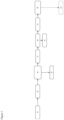
- Figure 1 illustrates a first exemplary process flow of the present method.
- a feed of recycled or renewable organic material, in particular tall oil pitch (TOP), 10 is subjected to a step of thermally cracking 20 the recycled or renewable organic material as discussed herein for step (c).
- the heat treated feed of recycled or renewable organic material is then subjected to evaporation 30 as discussed herein for step (d) and a bottom containing thermally cracked recycled or renewable organic material fraction 31 and a vapor fraction 32 comprising the major part of volatile impurities is obtained.
- the thermally recycled or renewable organic material comprising degraded phosphorous containing impurities in solid form 31 is the subjected to removal of the solid impurities 40 as discussed herein for step (e), e.g.
- step (f) hydrodeoxygenated 50, as discussed herein for step (f) flow to obtain hydrocarbons comprising less than 1 wt% oxygen and less than 10 % of the original phosphorous content of the recycled or renewable organic material provided in step (a).
- the obtained hydrocarbons may then be subjected to catalytic upgrading 60.
- catalytic upgrading processes include, but are not limited to, catalytic cracking, catalytic hydrocracking, thermo-catalytic cracking, catalytic hydrotreatment, fluid catalytic cracking, catalytic ketonization, and catalytic esterification.
- Such processes require the recycled or renewable organic material to be sufficiently pure and free from impurities that may otherwise hamper the catalytic process or poison the catalyst(s) present in the process.
- a process for producing recycled or renewable hydrocarbons comprising steps of (x) producing hydrocarbons from a recycled or renewable organic material as discussed herein, and(y) subjecting the purified recycled or renewable organic material to an oil refinery conversion process, wherein the oil refinery conversion process comprises altering the molecular weight of the feed, removal of heteroatoms from the feed, altering the degree of saturation of the feed, rearranging the molecular structure of the feed, or any combination thereof to obtain at least one recycled or renewable hydrocarbon.
- the recycled or renewable hydrocarbon is a renewable traffic fuel or fuel component.
- step (y) is hydrocracking.
- step (y) is preferably performed in a mild hydrocracking (MHC) refinery unit, in particular in a presence of a hydrocracking catalyst.
- MHC mild hydrocracking
- step (y) is steamcracking.
- step (y) is preferably performed in a steamcracking unit.
- step (y) is isomerization.
- step (y) is preferably performed in an isomerization unit.
- Step (y) is preferably performed in a mild hydrocracking (MHC) refinery unit, in particular in a presence of an alumina based HDO catalyst.
- MHC mild hydrocracking
- the experiment was carried out in continuous tubular reactor loaded with silicon carbide > 0.42 mm.
- the pressure was adjusted to 8 MPa partial pressure of hydrogen, with a hydrogen feed rate of 15.7 ml/h.
- the feed rate of tall oil pitch (TOP) was 15 g/h.
- TOP tall oil pitch
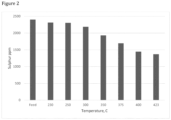
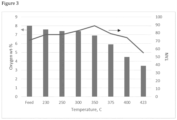
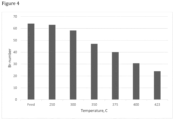
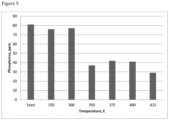
- Results are shown in Figures 2 to 5 .
- TAN increased from 71 in the feed to 89 at 350°C after which it started to decrease.
- the increase in TAN is thought to be due to thermal decomposition of esters, forming acids and alcohols.
- Oxygen content started to decrease fast at 350°C and was almost halved, compared to the feed, at 400°C.
- the phosphorous content was halved from 300 to 350°C and stayed on the same level when increasing the temperature further.
- Br-number started to decrease after 250°C and was halved at 350°C, compared to the level of the feed.
- Br-number is a measure of the number of double bonds in the feedstock, and gives an idea about the reactivity of the components. As the Br-number is halved compared to the feedstock at 400°C, the reactivity of the feedstock due to the presence of double bonds is considerably reduced.
- the sulfur content of the feed was 2400 ppm.
- the sulfur content in the liquid product started to decrease as the temperature increased above 250°C ( Figure 2 ).
- the sulfur content was 1400 ppm.
Landscapes
- Chemical & Material Sciences (AREA)
- Oil, Petroleum & Natural Gas (AREA)
- Engineering & Computer Science (AREA)
- Chemical Kinetics & Catalysis (AREA)
- General Chemical & Material Sciences (AREA)
- Organic Chemistry (AREA)
- Life Sciences & Earth Sciences (AREA)
- Wood Science & Technology (AREA)
- Physics & Mathematics (AREA)
- Thermal Sciences (AREA)
- Analytical Chemistry (AREA)
- Production Of Liquid Hydrocarbon Mixture For Refining Petroleum (AREA)
- Organic Low-Molecular-Weight Compounds And Preparation Thereof (AREA)
Claims (11)
- Verfahren zur Herstellung von Kohlenwasserstoffen aus einem recycelten oder erneuerbaren organischen Material (10), wobei das recycelte oder erneuerbare organische Material (10) von 5 bis 30 Gew.-% Sauerstoff als organische Sauerstoffverbindungen und von 1 bis 1000 ppm Phosphor als Phosphorverbindungen umfasst, das die folgenden Schritte umfasst:(a) Bereitstellen des recycelten oder erneuerbaren organischen Materials (10);(b) Wärmebehandeln des recycelten oder erneuerbaren organischen Materials bei einer Temperatur von 200 bis 300°C, vorzugsweise 240 bis 280°C, in einer Verweilzeit von 5 bis 90 Minuten, vorzugsweise von 20 bis 40 Minuten, zum Bilden eines wärmebehandelten recycelten oder erneuerbaren organischen Materials, wobei zumindest ein Teil von Siliziumverbindungen, die in dem recycelten oder erneuerbaren organischen Material vorhanden sind, in flüchtige Siliziumverbindungen umgewandelt werden; und(c) thermisches Spalten (20) des wärmebehandelten recycelten oder erneuerbaren organischen Materials (10) bei einer Temperatur von 300 bis 450°C und bei einem Druck von 4 bis 20 MPa, wodurch der Sauerstoff- und Phosphorgehalt des recycelten oder erneuerbaren organischen Materials vermindert wird,
zum Erhalten:(i) eines Dampfanteils (32), der den Großteil an flüchtigen Stoffen umfasst, und (ii) eines thermisch gespalteten recycelten oder erneuerbaren organischen Materialanteils (31), der weniger Sauerstoff und weniger Phosphor umfasst als das in Schritt (a) bereitgestellte recycelte oder erneuerbare organische Material;(d) Entfernen der flüchtigen Stoffe, die aufgrund des thermischen Spaltens erzeugt wurden and/oder auf eine andere Weise in dem recycelten oder erneuerbaren organischen Material vorhanden sind, von dem thermisch gespalteten recycelten oder erneuerbaren organischen Material;(e) wahlweise Entfernen von Feststoffen und/oder Niederschlägen von dem thermisch gespalteten recycelten oder erneuerbaren organischen Materialanteil; und(f) Hydrobehandlung (50) des thermisch gespalteten recycelten oder erneuerbaren organischen Materialanteils (31) bei einem Vorhandensein eines Hydrobehandlungskatalysators;
zum Erhalten von Kohlenwasserstoffen, die weniger als 1 Gew.-% Sauerstoff und weniger Phosphor als das in Schritt (a) bereitgestellte recycelte oder erneuerbare organische Material umfassen. - Verfahren nach Anspruch 1, wobei die Verweilzeit im Schritt (c) von 1 bis 300 Minuten, vorzugsweise von 5 bis 240 Minuten, mehr zu bevorzugen von 30 bis 90 Minuten, beträgt.
- Verfahren nach einem der Ansprüche 1 bis 2, wobei der Druck im Schritt (c) von 8 bis 16 MPa beträgt.
- Verfahren nach Anspruch 3, wobei der Schritt (c) bei 350 bis 400°C durchgeführt wird.
- Verfahren nach Anspruch 3 oder 4, wobei der Druck im Schritt (d) von 0,1 bis 5 kPa, vorzugsweise von 0,1 bis 3 kPa, beträgt.
- Verfahren nach einem der Ansprüche 1 bis 5, wobei (e) das recycelte oder erneuerbare organische Material dem Entfernen von Feststoffen und/oder Niederschlägen von dem thermisch gespalteten recycelten oder erneuerbaren organischen Materialanteil unterzogen wird, wobei das Entfernen von Feststoffen und/oder Niederschlägen vorzugsweise durch Filtration bewerkstelligt wird.
- Verfahren nach einem der Ansprüche 1 bis 6, wobei der Hydrobehandlungsschritt (f) unter kontinuierlicher Wasserstoffströmung mit einem H2/Zufuhrverhältnis von 500 bis 2000 n-l/l, vorzugsweise von 800 bis 1400 n-l/l, erfolgt.
- Verfahren nach einem der Ansprüche 1 bis 7, wobei der Hydrobehandlungskatalysator im Schritt (f) ein getragener Pd-, Pt-, Ni-, NiW-, NiMo- oder ein CoMo-Katalysator ist und der Träger Zeolith, Zeolith-Aluminiumoxid, Aluminiumoxid und/oder Siliziumdioxid, vorzugsweise NiW/Al2O3, NiMo/Al2O3 oder CoMo/Al2O3, ist.
- Verfahren nach einem der Ansprüche 1 bis 8, wobei Schritt (f1) durch (f1) Hydrodeoxigenierung (HDO) des thermisch gespalteten recycelten oder erneuerbaren organischen Materialanteils bei einem Vorhandensein eines HDO-Katalysators bei einer Temperatur von 290 bis 350°C unter einem Druck von 4 bis 20 MPa und unter kontinuierlicher Wasserstoffströmung bewerkstelligt wird, um gereinigtes recyceltes oder erneuerbares organisches Material zu erhalten, das weniger als 1 Gew.-% Sauerstoff und weniger Phosphor als das in Schritt (a) bereitgestellte recycelte oder erneuerbare organische Material umfasst.
- Verfahren nach einem der Ansprüche 1 bis 9, wobei der Phosphorgehalt des gereinigten recycelten oder erneuerbaren organischen Materials, bezogen auf das in Schritt (a) bereitgestellte recycelte oder erneuerbare organische Material um mindestens 10%, vorzugsweise mindestens 30%, mehr zu bevorzugen mindestens 50%, vermindert ist.
- Verfahren nach einem der Ansprüche 1 bis 10, wobei der Druck in Schritt (b) von 500 bis 5000 kPa, vorzugsweise von 800 bis 2000 kPa, beträgt.
Applications Claiming Priority (2)
| Application Number | Priority Date | Filing Date | Title |
|---|---|---|---|
| FI20185655A FI128121B (en) | 2018-07-20 | 2018-07-20 | Production of hydrocarbons from recycled or renewable organic material |
| PCT/EP2019/069512 WO2020016415A1 (en) | 2018-07-20 | 2019-07-19 | Production of hydrocarbons from recycled or renewable organic material |
Publications (3)
| Publication Number | Publication Date |
|---|---|
| EP3824044A1 EP3824044A1 (de) | 2021-05-26 |
| EP3824044B1 true EP3824044B1 (de) | 2024-02-28 |
| EP3824044C0 EP3824044C0 (de) | 2024-02-28 |
Family
ID=67402929
Family Applications (1)
| Application Number | Title | Priority Date | Filing Date |
|---|---|---|---|
| EP19742729.7A Active EP3824044B1 (de) | 2018-07-20 | 2019-07-19 | Herstellung von kohlenwasserstoffen aus recyceltem oder erneuerbarem organischem material |
Country Status (8)
| Country | Link |
|---|---|
| US (1) | US11624030B2 (de) |
| EP (1) | EP3824044B1 (de) |
| CN (1) | CN112639057B (de) |
| CA (1) | CA3106774C (de) |
| ES (1) | ES2976502T3 (de) |
| FI (1) | FI128121B (de) |
| SG (1) | SG11202100584WA (de) |
| WO (1) | WO2020016415A1 (de) |
Families Citing this family (12)
| Publication number | Priority date | Publication date | Assignee | Title |
|---|---|---|---|---|
| FI128115B2 (en) | 2018-07-20 | 2024-08-20 | Neste Oyj | Purification of recycled and renewable organic material |
| FI128174B (en) | 2018-07-20 | 2019-11-29 | Neste Oyj | Purification of recycled and renewable organic material |
| FI128121B (en) | 2018-07-20 | 2019-10-15 | Neste Oyj | Production of hydrocarbons from recycled or renewable organic material |
| FI128911B2 (en) | 2018-07-20 | 2025-05-27 | Neste Oyj | Cleaning of recycled and renewable organic material |
| FI128069B2 (en) | 2018-07-20 | 2024-04-24 | Neste Oyj | Purification of recycled and renewable organic material |
| US12391893B2 (en) | 2020-06-30 | 2025-08-19 | Duke Technologies, Llc | Sustainable diesel production from lignins |
| US12098334B2 (en) | 2020-06-30 | 2024-09-24 | Duke Technologies, Llc | Method for treating renewable feedstocks |
| US11254883B2 (en) * | 2020-06-30 | 2022-02-22 | Duke Technologies, Llc | Method and system for treating renewable feedstocks |
| FI130744B1 (fi) | 2022-04-07 | 2024-02-26 | Neste Oyj | Menetelmä vetykäsittelykatalyytin deaktivoinnin vähentämiseksi |
| FI130506B (en) | 2022-04-07 | 2023-10-13 | Neste Oyj | A method for reducing dissolved pollutants in a renewable feedstock |
| EP4520803A1 (de) * | 2023-09-06 | 2025-03-12 | OMV Downstream GmbH | Verfahren zur verarbeitung eines phosphor-haltigen kohlenwasserstoffstroms |
| EP4520804A1 (de) * | 2023-09-06 | 2025-03-12 | OMV Downstream GmbH | Verfahren zur verarbeitung eines silizium-haltigen kohlenwasserstoffstroms |
Citations (3)
| Publication number | Priority date | Publication date | Assignee | Title |
|---|---|---|---|---|
| WO2013006578A1 (en) | 2011-07-01 | 2013-01-10 | Sapphire Energy, Inc. | Thermal treatment of crude algae oil |
| WO2014001632A1 (en) | 2012-06-25 | 2014-01-03 | Upm-Kymmene Corporation | Process for converting biomass to liquid fuels |
| US20170158967A1 (en) | 2015-12-04 | 2017-06-08 | Exxonmobil Research And Engineering Company | Crude bio oil pretreatment and upgrading |
Family Cites Families (91)
| Publication number | Priority date | Publication date | Assignee | Title |
|---|---|---|---|---|
| CA894222A (en) | 1972-02-29 | C. Wood Frederick | Integral hydrocracking-hydro-treating process | |
| US2524088A (en) | 1944-08-17 | 1950-10-03 | Koppers Co Inc | Gas purification process |
| NO124839B (de) | 1968-04-02 | 1972-06-12 | Wolfen Farbenfab Veb | |
| US3503866A (en) | 1968-04-24 | 1970-03-31 | Atlantic Richfield Co | Process and system for producing synthetic crude from coal |
| JPS5431484B2 (de) | 1972-12-09 | 1979-10-08 | ||
| DE2508713C3 (de) | 1975-02-28 | 1979-04-12 | Adolf Schmids Erben Ag, Bern | Verfahren zur Aufarbeitung von gebrauchtem Mineralöl |
| DE2619805A1 (de) | 1976-05-05 | 1977-11-24 | Metallgesellschaft Ag | Verfahren zur reduktion des biologischen sauerstoffbedarfs von gaskondensaten |
| LU77015A1 (de) | 1977-03-25 | 1978-11-03 | ||
| US4151072A (en) | 1977-05-16 | 1979-04-24 | Phillips Petroleum Company | Reclaiming used lubricating oils |
| DE2818521A1 (de) | 1978-04-27 | 1979-11-08 | Degussa | Verfahren zur wiederaufbereitung von gebrauchten schmieroelen (ii) |
| US4328128A (en) | 1979-09-04 | 1982-05-04 | Gulf Research & Development Company | Hydrotreating catalyst and manufacture thereof |
| DE3173881D1 (en) | 1981-08-21 | 1986-04-03 | Kiyoshige Hayashi | Refining process for producing increased yield of distillation from heavy petroleum feedstocks |
| DE3839799A1 (de) | 1988-11-25 | 1990-07-05 | Rwe Entsorgung Ag | Verfahren zur aufarbeitung kontaminierter oele |
| CA2025220A1 (en) | 1989-09-28 | 1991-03-29 | William E. Winter, Jr. | Slurry hydrotreating process |
| CA2025466A1 (en) | 1989-09-28 | 1991-03-29 | Exxon Research And Engineering Company | Slurry hydroprocessing staged process |
| US5449797A (en) | 1992-04-13 | 1995-09-12 | W. R. Grace & Co.-Conn. | Process for the removal of soap from glyceride oils and/or wax esters using an amorphous adsorbent |
| ATE191496T1 (de) | 1992-06-12 | 2000-04-15 | Chemical Engineering Partners | Verbessertes verfahren zur produktion von grundölen aus altöl |
| US5514632A (en) | 1995-01-09 | 1996-05-07 | Mobil Oil Corporation | Use of an alumina containing bed for silicon species capture in the manufacture of silicone treated catalysts |
| FR2735785B1 (fr) | 1995-06-22 | 1997-08-08 | Chavet Bernard | Procede de raffinage d'huiles usagees par traitement alcalin |
| JPH0940970A (ja) | 1995-07-26 | 1997-02-10 | Hitachi Zosen Corp | オイル中の塩化物除去方法およびオイルの脱色方法 |
| JPH1161148A (ja) | 1997-08-21 | 1999-03-05 | Jgc Corp | 廃プラスチックの処理方法 |
| JP3642977B2 (ja) | 1998-10-02 | 2005-04-27 | 株式会社神戸製鋼所 | 廃油の精製方法 |
| CA2388189A1 (en) | 1999-10-19 | 2001-04-26 | Menbrane Extraction Technology Limited | Process for removing and recovering of phenolic compounds from aqueous fluids |
| JP3776335B2 (ja) | 2001-07-25 | 2006-05-17 | 独立行政法人科学技術振興機構 | 油中の塩素及び窒素の同時除去方法 |
| JP3736478B2 (ja) | 2002-03-05 | 2006-01-18 | 三菱マテリアル株式会社 | 樹脂含有廃棄物の熱分解物から脱塩分解油を回収する方法と装置 |
| ES2283736T5 (es) | 2002-09-06 | 2017-06-09 | Neste Oil Oyj | Procedimiento para producir un componente de hidrocarburo de origen biológico |
| DK1644469T4 (da) | 2003-07-10 | 2013-02-18 | Oleon Nv | Fremgangsmåde til fremstilling af oprensede fedtsyrer |
| US7473815B2 (en) | 2003-11-12 | 2009-01-06 | Crompton Corporation | Process for removal of catalyst residues from poly-α-olefins |
| DE102004020113A1 (de) | 2004-04-24 | 2005-11-17 | Bayer Materialscience Ag | Extraktion phenolhaltiger Abwasserströme |
| US8022258B2 (en) | 2005-07-05 | 2011-09-20 | Neste Oil Oyj | Process for the manufacture of diesel range hydrocarbons |
| US7754931B2 (en) | 2005-09-26 | 2010-07-13 | Her Majesty The Queen In Right Of Canada As Represented By The Minister Of Natural Resources | Production of high-cetane diesel fuel from low-quality biomass-derived feedstocks |
| CN1986505B (zh) | 2005-12-23 | 2010-04-14 | 中国石油化工股份有限公司 | 一种增产低碳烯烃的催化转化方法 |
| JP2007224196A (ja) | 2006-02-24 | 2007-09-06 | Masamichi Akimoto | 廃油の燃料資源化装置及び方法 |
| ITMI20062193A1 (it) | 2006-11-15 | 2008-05-16 | Eni Spa | Processo per produrre frazioni idrocarburiche da miscele di origine biologica |
| JP2009155475A (ja) | 2007-12-26 | 2009-07-16 | Nippon Shokubai Co Ltd | 脂肪酸アルキルエステルおよび/またはグリセリンの製造方法およびその製造装置 |
| US8198492B2 (en) | 2008-03-17 | 2012-06-12 | Uop Llc | Production of transportation fuel from renewable feedstocks |
| US8324438B2 (en) | 2008-04-06 | 2012-12-04 | Uop Llc | Production of blended gasoline and blended aviation fuel from renewable feedstocks |
| BRPI0802431B1 (pt) | 2008-07-28 | 2017-02-07 | Petróleo Brasileiro S/A - Petrobras | processo de remoção de compostos de silício de correntes de hidrocarbonetos |
| FI124508B (fi) | 2009-02-27 | 2014-09-30 | Upm Kymmene Oyj | Menetelmä ja laitteisto polttoainekomponenttien valmistamiseksi raakamäntyöljystä |
| FR2953854B1 (fr) | 2009-12-16 | 2012-12-28 | Inst Francais Du Petrole | Procede de conversion de charges issues de sources renouvelables avec pretraitement des charges par dephosphatation a chaud |
| FI125632B (fi) | 2010-05-25 | 2015-12-31 | Upm Kymmene Corp | Menetelmä ja laite hiilivetyjen tuottamiseksi |
| US8686204B2 (en) | 2010-11-08 | 2014-04-01 | Uop Llc | Methods for co-processing biorenewable feedstock and petroleum distillate feedstock |
| BE1019650A5 (fr) | 2010-11-22 | 2012-09-04 | Comet Traitements Sa | Procede d'elimination de derives a base de silicium d'une phase organique, en particulier dans des residus de craquage catalytique. |
| FI20106252A0 (fi) | 2010-11-26 | 2010-11-26 | Upm Kymmene Corp | Menetelmä ja systeemi polttoainekomponenttien valmistamiseksi |
| EP2489720A1 (de) | 2011-02-15 | 2012-08-22 | Neste Oil Oyj | Verwendung von erneuerbarem Öl in einem Wasserstoffbehandlungsverfahren |
| EP3872156A1 (de) | 2011-10-07 | 2021-09-01 | Neste Oil Oyj | Verbessertes verfahren zur herstellung von flüssigbrennstoffkomponenten aus erneuerbaren quellen |
| US9080109B2 (en) | 2011-12-14 | 2015-07-14 | Uop Llc | Methods for deoxygenating biomass-derived pyrolysis oil |
| ES2579854T3 (es) | 2012-01-31 | 2016-08-17 | Neste Oyj | Un método para la producción de hidrocarburos aumentando la longitud de la cadena de hidrocarburo |
| FI126808B (en) | 2012-03-16 | 2017-05-31 | Upm Kymmene Corp | Process for Refining Pyrolysis Oil, Treated Pyrolysis Oil and Its Use |
| FI127206B2 (en) | 2012-04-18 | 2021-08-31 | Upm Kymmene Corp | Process for producing biofuel and biofuel components |
| US9206357B2 (en) | 2012-05-17 | 2015-12-08 | Shell Oil Company | Methods and systems for processing biomass material |
| US9163181B2 (en) | 2012-06-20 | 2015-10-20 | Uop Llc | Methods and apparatuses for deoxygenating biomass-derived pyrolysis oil |
| US9309471B2 (en) | 2012-06-29 | 2016-04-12 | Uop Llc | Decontamination of deoxygenated biomass-derived pyrolysis oil using ionic liquids |
| CN102786986A (zh) | 2012-08-27 | 2012-11-21 | 青岛科技大学 | 一种微藻热裂解油的精制工艺 |
| US20140275666A1 (en) | 2013-03-14 | 2014-09-18 | Kior, Inc. | Two stage process for producing renewable biofuels |
| FI124885B (fi) | 2013-06-11 | 2015-03-13 | Upm Kymmene Corp | Prosessi biologista alkuperää olevan materiaalin raskaiden jäännösten käsittelemiseksi ja nestemäisten polttoaineiden valmistamiseksi |
| FI126674B (en) | 2013-07-12 | 2017-03-31 | Upm Kymmene Corp | Process for the preparation of hydrocarbons |
| FI126029B (en) | 2013-10-17 | 2016-05-31 | Upm Kymmene Corp | Process for the preparation of hydrocarbons |
| FI126812B (en) * | 2013-11-21 | 2017-05-31 | Upm Kymmene Corp | INTEGRATED HYDROCARBON PROCESSING |
| CN105992646B (zh) | 2013-12-11 | 2021-11-26 | 出光兴产株式会社 | 氢化裂解处理用催化剂和烃的制造方法 |
| WO2015095461A1 (en) * | 2013-12-18 | 2015-06-25 | Shell Oil Company | Biomass treatment for hydrothermal hydrocatalytic conversion |
| BR112016013286A2 (pt) * | 2013-12-18 | 2017-08-08 | Shell Int Research | Tratamento de biomassa para conversão hidrocatalítica hidrotérmica |
| WO2015095470A1 (en) * | 2013-12-18 | 2015-06-25 | Shell Oil Company | Biomass treatment for hydrothermal hydrocatalytic conversion |
| US9347178B2 (en) | 2013-12-18 | 2016-05-24 | Shell Oil Company | Biomass treatment for hydrothermal hydrocatalytic conversion |
| FI20136345L (fi) * | 2013-12-31 | 2015-07-01 | Upm Kymmene Corp | Integroitu prosessi hiilivetyjen tuottamiseksi |
| US9932530B2 (en) | 2014-06-17 | 2018-04-03 | Air Products And Chemicals, Inc. | Refining used motor oil through successive hydrotreating processes |
| WO2016053948A1 (en) | 2014-10-01 | 2016-04-07 | Shell Oil Company | Methods and systems for processing cellulosic biomass |
| US9523050B2 (en) | 2014-12-18 | 2016-12-20 | Uop Llc | Methods for co-processing renewable feedstock and petroleum distillate feedstock |
| FI127333B (en) | 2014-12-19 | 2018-04-13 | Upm Kymmene Corp | Process for the preparation of hydrocarbons |
| US20160186067A1 (en) | 2014-12-30 | 2016-06-30 | Shell Oil Company | Methods and systems for processing cellulosic biomass |
| EP3095844A1 (de) * | 2015-05-21 | 2016-11-23 | Neste Oyj | Verfahren zur herstellung von bio-kohlenwasserstoffen durch thermisches cracken eines bio-erneuerbaren rohstoffes |
| CN106552611B (zh) | 2015-09-28 | 2019-06-11 | 中国石油天然气股份有限公司 | 吸附剂的制备方法及吸附分离油脂中氯的方法 |
| CN109563414B (zh) | 2016-08-01 | 2021-07-27 | 沙特基础全球技术有限公司 | 使用脱挥挤出和氯化物清除剂对混合塑料热解油的脱氯 |
| JP6999646B2 (ja) | 2016-08-01 | 2022-01-18 | サビック グローバル テクノロジーズ ベスローテン フェンノートシャップ | 混合プラスチックの熱分解と熱分解油の脱塩素と同時に行う触媒プロセス |
| FI128345B (en) | 2016-08-05 | 2020-03-31 | Neste Oyj | Method for cleaning the feed |
| WO2018058172A1 (en) | 2016-09-29 | 2018-04-05 | Licella Pty Ltd | Biooil refining methods |
| CN107974266B (zh) | 2016-10-25 | 2020-06-12 | 中国石油化工股份有限公司 | 一种由废弃油脂生产航空燃料组分的方法及系统 |
| CN107974265B (zh) | 2016-10-25 | 2020-08-18 | 中国石油化工股份有限公司 | 一种由废弃油脂生产航空燃料组分的方法 |
| JP7065372B2 (ja) | 2017-01-05 | 2022-05-12 | サビック グローバル テクノロジーズ ベスローテン フェンノートシャップ | 廃棄プラスチックの熱分解によるベンゼンおよびキシレン類のような高価値産物への変換 |
| CN107892990B (zh) | 2017-11-14 | 2020-11-13 | 新疆聚力环保科技有限公司 | 一种废矿物油全氢型再生生产高档润滑油基础油的方法 |
| CN108251156B (zh) | 2018-01-31 | 2020-01-31 | 新疆聚力环保科技有限公司 | 一种全馏分废矿物油两段加氢处理再生工艺的方法 |
| FI128139B (en) | 2018-07-20 | 2019-10-31 | Neste Oyj | Production of hydrocarbons from recycled or renewable organic material |
| FI128174B (en) | 2018-07-20 | 2019-11-29 | Neste Oyj | Purification of recycled and renewable organic material |
| FI128121B (en) | 2018-07-20 | 2019-10-15 | Neste Oyj | Production of hydrocarbons from recycled or renewable organic material |
| FI128069B2 (en) | 2018-07-20 | 2024-04-24 | Neste Oyj | Purification of recycled and renewable organic material |
| FI128115B2 (en) | 2018-07-20 | 2024-08-20 | Neste Oyj | Purification of recycled and renewable organic material |
| FI128911B2 (en) | 2018-07-20 | 2025-05-27 | Neste Oyj | Cleaning of recycled and renewable organic material |
| WO2020198212A1 (en) | 2019-03-27 | 2020-10-01 | Bunge Global Innovation, Llc | Silica adsorbent treatment for removal of chlorophyll derivatives from triacylglycerol-based oils |
| US11667857B2 (en) | 2020-03-16 | 2023-06-06 | Lanzatech, Inc. | Use of fermentation tail gas in integrated gasification and gas fermentation system |
| US11566182B2 (en) | 2020-03-30 | 2023-01-31 | Chevron U.S.A. Inc. | Circular economy for plastic waste to polyethylene via refinery FCC feed pretreater and FCC units |
| CA3177035C (en) | 2020-04-22 | 2024-02-20 | Chevron U.S.A. Inc. | Circular economy for plastic waste to polypropylene via oil refinery with filtering and metal oxide treatment of pyrolysis oil |
-
2018
- 2018-07-20 FI FI20185655A patent/FI128121B/en active IP Right Grant
-
2019
- 2019-07-19 SG SG11202100584WA patent/SG11202100584WA/en unknown
- 2019-07-19 ES ES19742729T patent/ES2976502T3/es active Active
- 2019-07-19 CN CN201980053835.4A patent/CN112639057B/zh active Active
- 2019-07-19 CA CA3106774A patent/CA3106774C/en active Active
- 2019-07-19 US US17/261,765 patent/US11624030B2/en active Active
- 2019-07-19 EP EP19742729.7A patent/EP3824044B1/de active Active
- 2019-07-19 WO PCT/EP2019/069512 patent/WO2020016415A1/en not_active Ceased
Patent Citations (3)
| Publication number | Priority date | Publication date | Assignee | Title |
|---|---|---|---|---|
| WO2013006578A1 (en) | 2011-07-01 | 2013-01-10 | Sapphire Energy, Inc. | Thermal treatment of crude algae oil |
| WO2014001632A1 (en) | 2012-06-25 | 2014-01-03 | Upm-Kymmene Corporation | Process for converting biomass to liquid fuels |
| US20170158967A1 (en) | 2015-12-04 | 2017-06-08 | Exxonmobil Research And Engineering Company | Crude bio oil pretreatment and upgrading |
Non-Patent Citations (1)
| Title |
|---|
| "Handbook of Petroleum Processing", 1 January 2008, SPRINGER, article GRUIA ADRIAN : "Chapter 8 Hydrotreating ", pages: 321 - 354, XP093228000 |
Also Published As
| Publication number | Publication date |
|---|---|
| SG11202100584WA (en) | 2021-02-25 |
| FI128121B (en) | 2019-10-15 |
| US11624030B2 (en) | 2023-04-11 |
| CA3106774C (en) | 2023-09-19 |
| EP3824044C0 (de) | 2024-02-28 |
| EP3824044A1 (de) | 2021-05-26 |
| US20210292653A1 (en) | 2021-09-23 |
| CN112639057B (zh) | 2023-03-10 |
| CA3106774A1 (en) | 2020-01-23 |
| ES2976502T3 (es) | 2024-08-02 |
| BR112021000967A2 (pt) | 2021-04-20 |
| FI20185655A1 (fi) | 2019-10-15 |
| WO2020016415A1 (en) | 2020-01-23 |
| CN112639057A (zh) | 2021-04-09 |
Similar Documents
| Publication | Publication Date | Title |
|---|---|---|
| EP3824044B1 (de) | Herstellung von kohlenwasserstoffen aus recyceltem oder erneuerbarem organischem material | |
| US20240209268A1 (en) | Purification of recycled and renewable organic material | |
| US11655422B2 (en) | Purification of recycled and renewable organic material | |
| US11427782B2 (en) | Purification of recycled and renewable organic material | |
| US11499104B2 (en) | Purification of recycled and renewable organic material | |
| FI128139B (en) | Production of hydrocarbons from recycled or renewable organic material | |
| BR112021000967B1 (pt) | Método de produção de hidrocarbonetos a partir de um material orgânico reciclado ou renovável e processo para a produção de hidrocarbonetos reciclados ou renováveis |
Legal Events
| Date | Code | Title | Description |
|---|---|---|---|
| STAA | Information on the status of an ep patent application or granted ep patent |
Free format text: STATUS: UNKNOWN |
|
| STAA | Information on the status of an ep patent application or granted ep patent |
Free format text: STATUS: THE INTERNATIONAL PUBLICATION HAS BEEN MADE |
|
| PUAI | Public reference made under article 153(3) epc to a published international application that has entered the european phase |
Free format text: ORIGINAL CODE: 0009012 |
|
| STAA | Information on the status of an ep patent application or granted ep patent |
Free format text: STATUS: REQUEST FOR EXAMINATION WAS MADE |
|
| 17P | Request for examination filed |
Effective date: 20210218 |
|
| AK | Designated contracting states |
Kind code of ref document: A1 Designated state(s): AL AT BE BG CH CY CZ DE DK EE ES FI FR GB GR HR HU IE IS IT LI LT LU LV MC MK MT NL NO PL PT RO RS SE SI SK SM TR |
|
| DAV | Request for validation of the european patent (deleted) | ||
| DAX | Request for extension of the european patent (deleted) | ||
| GRAP | Despatch of communication of intention to grant a patent |
Free format text: ORIGINAL CODE: EPIDOSNIGR1 |
|
| STAA | Information on the status of an ep patent application or granted ep patent |
Free format text: STATUS: GRANT OF PATENT IS INTENDED |
|
| INTG | Intention to grant announced |
Effective date: 20230413 |
|
| GRAJ | Information related to disapproval of communication of intention to grant by the applicant or resumption of examination proceedings by the epo deleted |
Free format text: ORIGINAL CODE: EPIDOSDIGR1 |
|
| STAA | Information on the status of an ep patent application or granted ep patent |
Free format text: STATUS: REQUEST FOR EXAMINATION WAS MADE |
|
| GRAP | Despatch of communication of intention to grant a patent |
Free format text: ORIGINAL CODE: EPIDOSNIGR1 |
|
| STAA | Information on the status of an ep patent application or granted ep patent |
Free format text: STATUS: GRANT OF PATENT IS INTENDED |
|
| INTC | Intention to grant announced (deleted) | ||
| RIN1 | Information on inventor provided before grant (corrected) |
Inventor name: LAMMINPAEAE, KAISA Inventor name: KAELDSTROEM, MATS Inventor name: LINDBLAD, MARINA Inventor name: TOURONEN, JOUNI |
|
| INTG | Intention to grant announced |
Effective date: 20230919 |
|
| RAP3 | Party data changed (applicant data changed or rights of an application transferred) |
Owner name: NESTE OYJ |
|
| GRAS | Grant fee paid |
Free format text: ORIGINAL CODE: EPIDOSNIGR3 |
|
| GRAA | (expected) grant |
Free format text: ORIGINAL CODE: 0009210 |
|
| STAA | Information on the status of an ep patent application or granted ep patent |
Free format text: STATUS: THE PATENT HAS BEEN GRANTED |
|
| AK | Designated contracting states |
Kind code of ref document: B1 Designated state(s): AL AT BE BG CH CY CZ DE DK EE ES FI FR GB GR HR HU IE IS IT LI LT LU LV MC MK MT NL NO PL PT RO RS SE SI SK SM TR |
|
| REG | Reference to a national code |
Ref country code: GB Ref legal event code: FG4D |
|
| REG | Reference to a national code |
Ref country code: CH Ref legal event code: EP |
|
| REG | Reference to a national code |
Ref country code: DE Ref legal event code: R096 Ref document number: 602019047331 Country of ref document: DE |
|
| REG | Reference to a national code |
Ref country code: IE Ref legal event code: FG4D |
|
| U01 | Request for unitary effect filed |
Effective date: 20240321 |
|
| U07 | Unitary effect registered |
Designated state(s): AT BE BG DE DK EE FI FR IT LT LU LV MT NL PT SE SI Effective date: 20240328 |
|
| PG25 | Lapsed in a contracting state [announced via postgrant information from national office to epo] |
Ref country code: IS Free format text: LAPSE BECAUSE OF FAILURE TO SUBMIT A TRANSLATION OF THE DESCRIPTION OR TO PAY THE FEE WITHIN THE PRESCRIBED TIME-LIMIT Effective date: 20240628 |
|
| U20 | Renewal fee for the european patent with unitary effect paid |
Year of fee payment: 6 Effective date: 20240605 |
|
| PG25 | Lapsed in a contracting state [announced via postgrant information from national office to epo] |
Ref country code: GR Free format text: LAPSE BECAUSE OF FAILURE TO SUBMIT A TRANSLATION OF THE DESCRIPTION OR TO PAY THE FEE WITHIN THE PRESCRIBED TIME-LIMIT Effective date: 20240529 |
|
| PG25 | Lapsed in a contracting state [announced via postgrant information from national office to epo] |
Ref country code: RS Free format text: LAPSE BECAUSE OF FAILURE TO SUBMIT A TRANSLATION OF THE DESCRIPTION OR TO PAY THE FEE WITHIN THE PRESCRIBED TIME-LIMIT Effective date: 20240528 Ref country code: HR Free format text: LAPSE BECAUSE OF FAILURE TO SUBMIT A TRANSLATION OF THE DESCRIPTION OR TO PAY THE FEE WITHIN THE PRESCRIBED TIME-LIMIT Effective date: 20240228 |
|
| PG25 | Lapsed in a contracting state [announced via postgrant information from national office to epo] |
Ref country code: RS Free format text: LAPSE BECAUSE OF FAILURE TO SUBMIT A TRANSLATION OF THE DESCRIPTION OR TO PAY THE FEE WITHIN THE PRESCRIBED TIME-LIMIT Effective date: 20240528 Ref country code: NO Free format text: LAPSE BECAUSE OF FAILURE TO SUBMIT A TRANSLATION OF THE DESCRIPTION OR TO PAY THE FEE WITHIN THE PRESCRIBED TIME-LIMIT Effective date: 20240528 Ref country code: IS Free format text: LAPSE BECAUSE OF FAILURE TO SUBMIT A TRANSLATION OF THE DESCRIPTION OR TO PAY THE FEE WITHIN THE PRESCRIBED TIME-LIMIT Effective date: 20240628 Ref country code: HR Free format text: LAPSE BECAUSE OF FAILURE TO SUBMIT A TRANSLATION OF THE DESCRIPTION OR TO PAY THE FEE WITHIN THE PRESCRIBED TIME-LIMIT Effective date: 20240228 Ref country code: GR Free format text: LAPSE BECAUSE OF FAILURE TO SUBMIT A TRANSLATION OF THE DESCRIPTION OR TO PAY THE FEE WITHIN THE PRESCRIBED TIME-LIMIT Effective date: 20240529 |
|
| PG25 | Lapsed in a contracting state [announced via postgrant information from national office to epo] |
Ref country code: PL Free format text: LAPSE BECAUSE OF FAILURE TO SUBMIT A TRANSLATION OF THE DESCRIPTION OR TO PAY THE FEE WITHIN THE PRESCRIBED TIME-LIMIT Effective date: 20240228 |
|
| REG | Reference to a national code |
Ref country code: ES Ref legal event code: FG2A Ref document number: 2976502 Country of ref document: ES Kind code of ref document: T3 Effective date: 20240802 |
|
| PG25 | Lapsed in a contracting state [announced via postgrant information from national office to epo] |
Ref country code: PL Free format text: LAPSE BECAUSE OF FAILURE TO SUBMIT A TRANSLATION OF THE DESCRIPTION OR TO PAY THE FEE WITHIN THE PRESCRIBED TIME-LIMIT Effective date: 20240228 |
|
| PG25 | Lapsed in a contracting state [announced via postgrant information from national office to epo] |
Ref country code: SM Free format text: LAPSE BECAUSE OF FAILURE TO SUBMIT A TRANSLATION OF THE DESCRIPTION OR TO PAY THE FEE WITHIN THE PRESCRIBED TIME-LIMIT Effective date: 20240228 |
|
| PG25 | Lapsed in a contracting state [announced via postgrant information from national office to epo] |
Ref country code: CZ Free format text: LAPSE BECAUSE OF FAILURE TO SUBMIT A TRANSLATION OF THE DESCRIPTION OR TO PAY THE FEE WITHIN THE PRESCRIBED TIME-LIMIT Effective date: 20240228 |
|
| PG25 | Lapsed in a contracting state [announced via postgrant information from national office to epo] |
Ref country code: SK Free format text: LAPSE BECAUSE OF FAILURE TO SUBMIT A TRANSLATION OF THE DESCRIPTION OR TO PAY THE FEE WITHIN THE PRESCRIBED TIME-LIMIT Effective date: 20240228 |
|
| PG25 | Lapsed in a contracting state [announced via postgrant information from national office to epo] |
Ref country code: SM Free format text: LAPSE BECAUSE OF FAILURE TO SUBMIT A TRANSLATION OF THE DESCRIPTION OR TO PAY THE FEE WITHIN THE PRESCRIBED TIME-LIMIT Effective date: 20240228 Ref country code: SK Free format text: LAPSE BECAUSE OF FAILURE TO SUBMIT A TRANSLATION OF THE DESCRIPTION OR TO PAY THE FEE WITHIN THE PRESCRIBED TIME-LIMIT Effective date: 20240228 Ref country code: RO Free format text: LAPSE BECAUSE OF FAILURE TO SUBMIT A TRANSLATION OF THE DESCRIPTION OR TO PAY THE FEE WITHIN THE PRESCRIBED TIME-LIMIT Effective date: 20240228 Ref country code: CZ Free format text: LAPSE BECAUSE OF FAILURE TO SUBMIT A TRANSLATION OF THE DESCRIPTION OR TO PAY THE FEE WITHIN THE PRESCRIBED TIME-LIMIT Effective date: 20240228 |
|
| REG | Reference to a national code |
Ref country code: DE Ref legal event code: R026 Ref document number: 602019047331 Country of ref document: DE |
|
| PLBI | Opposition filed |
Free format text: ORIGINAL CODE: 0009260 |
|
| PLAX | Notice of opposition and request to file observation + time limit sent |
Free format text: ORIGINAL CODE: EPIDOSNOBS2 |
|
| 26 | Opposition filed |
Opponent name: UPM-KYMMENE CORPORATION Effective date: 20241128 |
|
| PG25 | Lapsed in a contracting state [announced via postgrant information from national office to epo] |
Ref country code: MC Free format text: LAPSE BECAUSE OF FAILURE TO SUBMIT A TRANSLATION OF THE DESCRIPTION OR TO PAY THE FEE WITHIN THE PRESCRIBED TIME-LIMIT Effective date: 20240228 |
|
| REG | Reference to a national code |
Ref country code: CH Ref legal event code: PL |
|
| PLBB | Reply of patent proprietor to notice(s) of opposition received |
Free format text: ORIGINAL CODE: EPIDOSNOBS3 |
|
| PG25 | Lapsed in a contracting state [announced via postgrant information from national office to epo] |
Ref country code: CH Free format text: LAPSE BECAUSE OF NON-PAYMENT OF DUE FEES Effective date: 20240731 |
|
| PGFP | Annual fee paid to national office [announced via postgrant information from national office to epo] |
Ref country code: GB Payment date: 20250605 Year of fee payment: 7 |
|
| U20 | Renewal fee for the european patent with unitary effect paid |
Year of fee payment: 7 Effective date: 20250606 |
|
| PG25 | Lapsed in a contracting state [announced via postgrant information from national office to epo] |
Ref country code: IE Free format text: LAPSE BECAUSE OF NON-PAYMENT OF DUE FEES Effective date: 20240719 |
|
| PGFP | Annual fee paid to national office [announced via postgrant information from national office to epo] |
Ref country code: ES Payment date: 20250805 Year of fee payment: 7 |
|
| PG25 | Lapsed in a contracting state [announced via postgrant information from national office to epo] |
Ref country code: CY Free format text: LAPSE BECAUSE OF FAILURE TO SUBMIT A TRANSLATION OF THE DESCRIPTION OR TO PAY THE FEE WITHIN THE PRESCRIBED TIME-LIMIT; INVALID AB INITIO Effective date: 20190719 |