EP3814159B1 - Getriebeanordnung mit einer parksperre und elektroantrieb mit einer solchen getriebeanordnung - Google Patents
Getriebeanordnung mit einer parksperre und elektroantrieb mit einer solchen getriebeanordnung Download PDFInfo
- Publication number
- EP3814159B1 EP3814159B1 EP18740132.8A EP18740132A EP3814159B1 EP 3814159 B1 EP3814159 B1 EP 3814159B1 EP 18740132 A EP18740132 A EP 18740132A EP 3814159 B1 EP3814159 B1 EP 3814159B1
- Authority
- EP
- European Patent Office
- Prior art keywords
- parking lock
- transmission assembly
- parking
- housing
- transmission
- Prior art date
- Legal status (The legal status is an assumption and is not a legal conclusion. Google has not performed a legal analysis and makes no representation as to the accuracy of the status listed.)
- Active
Links
Images



Classifications
-
- B—PERFORMING OPERATIONS; TRANSPORTING
- B60—VEHICLES IN GENERAL
- B60K—ARRANGEMENT OR MOUNTING OF PROPULSION UNITS OR OF TRANSMISSIONS IN VEHICLES; ARRANGEMENT OR MOUNTING OF PLURAL DIVERSE PRIME-MOVERS IN VEHICLES; AUXILIARY DRIVES FOR VEHICLES; INSTRUMENTATION OR DASHBOARDS FOR VEHICLES; ARRANGEMENTS IN CONNECTION WITH COOLING, AIR INTAKE, GAS EXHAUST OR FUEL SUPPLY OF PROPULSION UNITS IN VEHICLES
- B60K1/00—Arrangement or mounting of electrical propulsion units
-
- F—MECHANICAL ENGINEERING; LIGHTING; HEATING; WEAPONS; BLASTING
- F16—ENGINEERING ELEMENTS AND UNITS; GENERAL MEASURES FOR PRODUCING AND MAINTAINING EFFECTIVE FUNCTIONING OF MACHINES OR INSTALLATIONS; THERMAL INSULATION IN GENERAL
- F16H—GEARING
- F16H63/00—Control outputs from the control unit to change-speed- or reversing-gearings for conveying rotary motion or to other devices than the final output mechanism
- F16H63/02—Final output mechanisms therefor; Actuating means for the final output mechanisms
- F16H63/30—Constructional features of the final output mechanisms
- F16H63/34—Locking or disabling mechanisms
- F16H63/3416—Parking lock mechanisms or brakes in the transmission
- F16H63/3425—Parking lock mechanisms or brakes in the transmission characterised by pawls or wheels
-
- B—PERFORMING OPERATIONS; TRANSPORTING
- B60—VEHICLES IN GENERAL
- B60K—ARRANGEMENT OR MOUNTING OF PROPULSION UNITS OR OF TRANSMISSIONS IN VEHICLES; ARRANGEMENT OR MOUNTING OF PLURAL DIVERSE PRIME-MOVERS IN VEHICLES; AUXILIARY DRIVES FOR VEHICLES; INSTRUMENTATION OR DASHBOARDS FOR VEHICLES; ARRANGEMENTS IN CONNECTION WITH COOLING, AIR INTAKE, GAS EXHAUST OR FUEL SUPPLY OF PROPULSION UNITS IN VEHICLES
- B60K17/00—Arrangement or mounting of transmissions in vehicles
- B60K17/04—Arrangement or mounting of transmissions in vehicles characterised by arrangement, location or kind of gearing
-
- B—PERFORMING OPERATIONS; TRANSPORTING
- B60—VEHICLES IN GENERAL
- B60T—VEHICLE BRAKE CONTROL SYSTEMS OR PARTS THEREOF; BRAKE CONTROL SYSTEMS OR PARTS THEREOF, IN GENERAL; ARRANGEMENT OF BRAKING ELEMENTS ON VEHICLES IN GENERAL; PORTABLE DEVICES FOR PREVENTING UNWANTED MOVEMENT OF VEHICLES; VEHICLE MODIFICATIONS TO FACILITATE COOLING OF BRAKES
- B60T1/00—Arrangements of braking elements, i.e. of those parts where braking effect occurs specially for vehicles
- B60T1/005—Arrangements of braking elements, i.e. of those parts where braking effect occurs specially for vehicles by locking of wheel or transmission rotation
-
- F—MECHANICAL ENGINEERING; LIGHTING; HEATING; WEAPONS; BLASTING
- F16—ENGINEERING ELEMENTS AND UNITS; GENERAL MEASURES FOR PRODUCING AND MAINTAINING EFFECTIVE FUNCTIONING OF MACHINES OR INSTALLATIONS; THERMAL INSULATION IN GENERAL
- F16H—GEARING
- F16H37/00—Combinations of mechanical gearings, not provided for in groups F16H1/00 - F16H35/00
- F16H37/02—Combinations of mechanical gearings, not provided for in groups F16H1/00 - F16H35/00 comprising essentially only toothed or friction gearings
- F16H37/06—Combinations of mechanical gearings, not provided for in groups F16H1/00 - F16H35/00 comprising essentially only toothed or friction gearings with a plurality of driving or driven shafts; with arrangements for dividing torque between two or more intermediate shafts
- F16H37/08—Combinations of mechanical gearings, not provided for in groups F16H1/00 - F16H35/00 comprising essentially only toothed or friction gearings with a plurality of driving or driven shafts; with arrangements for dividing torque between two or more intermediate shafts with differential gearing
- F16H37/0806—Combinations of mechanical gearings, not provided for in groups F16H1/00 - F16H35/00 comprising essentially only toothed or friction gearings with a plurality of driving or driven shafts; with arrangements for dividing torque between two or more intermediate shafts with differential gearing with a plurality of driving or driven shafts
- F16H37/0813—Combinations of mechanical gearings, not provided for in groups F16H1/00 - F16H35/00 comprising essentially only toothed or friction gearings with a plurality of driving or driven shafts; with arrangements for dividing torque between two or more intermediate shafts with differential gearing with a plurality of driving or driven shafts with only one input shaft
-
- F—MECHANICAL ENGINEERING; LIGHTING; HEATING; WEAPONS; BLASTING
- F16—ENGINEERING ELEMENTS AND UNITS; GENERAL MEASURES FOR PRODUCING AND MAINTAINING EFFECTIVE FUNCTIONING OF MACHINES OR INSTALLATIONS; THERMAL INSULATION IN GENERAL
- F16H—GEARING
- F16H57/00—General details of gearing
- F16H57/02—Gearboxes; Mounting gearing therein
-
- F—MECHANICAL ENGINEERING; LIGHTING; HEATING; WEAPONS; BLASTING
- F16—ENGINEERING ELEMENTS AND UNITS; GENERAL MEASURES FOR PRODUCING AND MAINTAINING EFFECTIVE FUNCTIONING OF MACHINES OR INSTALLATIONS; THERMAL INSULATION IN GENERAL
- F16H—GEARING
- F16H57/00—General details of gearing
- F16H57/02—Gearboxes; Mounting gearing therein
- F16H57/027—Gearboxes; Mounting gearing therein characterised by means for venting gearboxes, e.g. air breathers
-
- F—MECHANICAL ENGINEERING; LIGHTING; HEATING; WEAPONS; BLASTING
- F16—ENGINEERING ELEMENTS AND UNITS; GENERAL MEASURES FOR PRODUCING AND MAINTAINING EFFECTIVE FUNCTIONING OF MACHINES OR INSTALLATIONS; THERMAL INSULATION IN GENERAL
- F16H—GEARING
- F16H57/00—General details of gearing
- F16H57/02—Gearboxes; Mounting gearing therein
- F16H57/037—Gearboxes for accommodating differential gearings
-
- F—MECHANICAL ENGINEERING; LIGHTING; HEATING; WEAPONS; BLASTING
- F16—ENGINEERING ELEMENTS AND UNITS; GENERAL MEASURES FOR PRODUCING AND MAINTAINING EFFECTIVE FUNCTIONING OF MACHINES OR INSTALLATIONS; THERMAL INSULATION IN GENERAL
- F16H—GEARING
- F16H57/00—General details of gearing
- F16H57/04—Features relating to lubrication or cooling or heating
- F16H57/045—Lubricant storage reservoirs, e.g. reservoirs in addition to a gear sump for collecting lubricant in the upper part of a gear case
-
- F—MECHANICAL ENGINEERING; LIGHTING; HEATING; WEAPONS; BLASTING
- F16—ENGINEERING ELEMENTS AND UNITS; GENERAL MEASURES FOR PRODUCING AND MAINTAINING EFFECTIVE FUNCTIONING OF MACHINES OR INSTALLATIONS; THERMAL INSULATION IN GENERAL
- F16H—GEARING
- F16H57/00—General details of gearing
- F16H57/04—Features relating to lubrication or cooling or heating
- F16H57/0457—Splash lubrication
-
- F—MECHANICAL ENGINEERING; LIGHTING; HEATING; WEAPONS; BLASTING
- F16—ENGINEERING ELEMENTS AND UNITS; GENERAL MEASURES FOR PRODUCING AND MAINTAINING EFFECTIVE FUNCTIONING OF MACHINES OR INSTALLATIONS; THERMAL INSULATION IN GENERAL
- F16H—GEARING
- F16H57/00—General details of gearing
- F16H57/04—Features relating to lubrication or cooling or heating
- F16H57/0467—Elements of gearings to be lubricated, cooled or heated
-
- F—MECHANICAL ENGINEERING; LIGHTING; HEATING; WEAPONS; BLASTING
- F16—ENGINEERING ELEMENTS AND UNITS; GENERAL MEASURES FOR PRODUCING AND MAINTAINING EFFECTIVE FUNCTIONING OF MACHINES OR INSTALLATIONS; THERMAL INSULATION IN GENERAL
- F16H—GEARING
- F16H63/00—Control outputs from the control unit to change-speed- or reversing-gearings for conveying rotary motion or to other devices than the final output mechanism
- F16H63/02—Final output mechanisms therefor; Actuating means for the final output mechanisms
- F16H63/30—Constructional features of the final output mechanisms
- F16H63/34—Locking or disabling mechanisms
-
- B—PERFORMING OPERATIONS; TRANSPORTING
- B60—VEHICLES IN GENERAL
- B60K—ARRANGEMENT OR MOUNTING OF PROPULSION UNITS OR OF TRANSMISSIONS IN VEHICLES; ARRANGEMENT OR MOUNTING OF PLURAL DIVERSE PRIME-MOVERS IN VEHICLES; AUXILIARY DRIVES FOR VEHICLES; INSTRUMENTATION OR DASHBOARDS FOR VEHICLES; ARRANGEMENTS IN CONNECTION WITH COOLING, AIR INTAKE, GAS EXHAUST OR FUEL SUPPLY OF PROPULSION UNITS IN VEHICLES
- B60K1/00—Arrangement or mounting of electrical propulsion units
- B60K2001/001—Arrangement or mounting of electrical propulsion units one motor mounted on a propulsion axle for rotating right and left wheels of this axle
-
- B—PERFORMING OPERATIONS; TRANSPORTING
- B60—VEHICLES IN GENERAL
- B60Y—INDEXING SCHEME RELATING TO ASPECTS CROSS-CUTTING VEHICLE TECHNOLOGY
- B60Y2300/00—Purposes or special features of road vehicle drive control systems
- B60Y2300/60—Control of electric machines, e.g. problems related to electric motors or generators
- B60Y2300/62—Mechanical lock-up, e.g. using brake to immobilise the rotor
-
- B—PERFORMING OPERATIONS; TRANSPORTING
- B60—VEHICLES IN GENERAL
- B60Y—INDEXING SCHEME RELATING TO ASPECTS CROSS-CUTTING VEHICLE TECHNOLOGY
- B60Y2306/00—Other features of vehicle sub-units
- B60Y2306/03—Lubrication
-
- B—PERFORMING OPERATIONS; TRANSPORTING
- B60—VEHICLES IN GENERAL
- B60Y—INDEXING SCHEME RELATING TO ASPECTS CROSS-CUTTING VEHICLE TECHNOLOGY
- B60Y2400/00—Special features of vehicle units
- B60Y2400/42—Clutches or brakes
- B60Y2400/421—Dog type clutches or brakes
-
- F—MECHANICAL ENGINEERING; LIGHTING; HEATING; WEAPONS; BLASTING
- F16—ENGINEERING ELEMENTS AND UNITS; GENERAL MEASURES FOR PRODUCING AND MAINTAINING EFFECTIVE FUNCTIONING OF MACHINES OR INSTALLATIONS; THERMAL INSULATION IN GENERAL
- F16H—GEARING
- F16H57/00—General details of gearing
- F16H57/02—Gearboxes; Mounting gearing therein
- F16H2057/02034—Gearboxes combined or connected with electric machines
-
- F—MECHANICAL ENGINEERING; LIGHTING; HEATING; WEAPONS; BLASTING
- F16—ENGINEERING ELEMENTS AND UNITS; GENERAL MEASURES FOR PRODUCING AND MAINTAINING EFFECTIVE FUNCTIONING OF MACHINES OR INSTALLATIONS; THERMAL INSULATION IN GENERAL
- F16H—GEARING
- F16H57/00—General details of gearing
- F16H57/02—Gearboxes; Mounting gearing therein
- F16H2057/02039—Gearboxes for particular applications
- F16H2057/02043—Gearboxes for particular applications for vehicle transmissions
- F16H2057/02052—Axle units; Transfer casings for four wheel drive
-
- F—MECHANICAL ENGINEERING; LIGHTING; HEATING; WEAPONS; BLASTING
- F16—ENGINEERING ELEMENTS AND UNITS; GENERAL MEASURES FOR PRODUCING AND MAINTAINING EFFECTIVE FUNCTIONING OF MACHINES OR INSTALLATIONS; THERMAL INSULATION IN GENERAL
- F16H—GEARING
- F16H2702/00—Combinations of two or more transmissions
- F16H2702/02—Mechanical transmissions with planetary gearing combined with one or more other mechanical transmissions
-
- F—MECHANICAL ENGINEERING; LIGHTING; HEATING; WEAPONS; BLASTING
- F16—ENGINEERING ELEMENTS AND UNITS; GENERAL MEASURES FOR PRODUCING AND MAINTAINING EFFECTIVE FUNCTIONING OF MACHINES OR INSTALLATIONS; THERMAL INSULATION IN GENERAL
- F16H—GEARING
- F16H57/00—General details of gearing
- F16H57/04—Features relating to lubrication or cooling or heating
- F16H57/0467—Elements of gearings to be lubricated, cooled or heated
- F16H57/0476—Electric machines and gearing, i.e. joint lubrication or cooling or heating thereof
-
- F—MECHANICAL ENGINEERING; LIGHTING; HEATING; WEAPONS; BLASTING
- F16—ENGINEERING ELEMENTS AND UNITS; GENERAL MEASURES FOR PRODUCING AND MAINTAINING EFFECTIVE FUNCTIONING OF MACHINES OR INSTALLATIONS; THERMAL INSULATION IN GENERAL
- F16H—GEARING
- F16H57/00—General details of gearing
- F16H57/04—Features relating to lubrication or cooling or heating
- F16H57/048—Type of gearings to be lubricated, cooled or heated
- F16H57/0482—Gearings with gears having orbital motion
- F16H57/0483—Axle or inter-axle differentials
Definitions
- the invention relates to a transmission arrangement with a parking lock, in particular for an electric drive of a motor vehicle.
- An electric drive can be provided as the sole drive for a motor vehicle.
- an internal combustion engine can be provided in hybrid drive concepts in addition to the electric drive. The electric drive and the internal combustion engine can then each drive the vehicle alone or drive the motor vehicle together in a superimposed manner.
- the electric machine of the electric drive is usually operated at high speeds.
- the gear arrangement of the electric drive assumes the function of adjusting the speed between the high speeds of the electric machine and the generally slower speeds of the wheels. In addition, the gear arrangement equalizes the speed between the individual wheels.
- an electric drive arrangement with a parking lock which has an electric machine, a reduction gear and a differential gear, which are accommodated in a housing arrangement.
- the reduction gear consists of a spur gear unit and a downstream planet gear unit, the planet carrier of which is non-rotatably connected to a differential housing of the differential gear.
- the spur gear unit has a drive pinion on a motor shaft which can be driven in rotation by the electric machine and which is in engagement with a drive wheel.
- the drive wheel is non-rotatably connected to a transmission shaft, which also includes the sun wheel of the planetary stage.
- the motor shaft has a free, overhanging shaft end that leads into a parking lock housing and with which a ratchet wheel is rotatably connected.
- the parking lock housing forms a common space in which the transmission elements are accommodated.
- the object of the present invention is to provide a transmission arrangement with a parking lock that enables constant engagement speeds of the parking lock and is durable and easy to service. Furthermore, it should be the object of the invention to provide an electric drive with such a gear arrangement.
- a gear arrangement for an electric drive of a motor vehicle comprising: a drive shaft, a reduction gear, which can be driven in rotation by the drive shaft and is designed to convert an initiated rotary movement from fast to slow, a power splitting unit, which is connected to the reduction gear is drive-connected and configured to transmit an initiated rotational movement to two output parts, a parking lock unit with a parking lock wheel, which is non-rotatably connected to a torque-transmitting member in the power path between the drive shaft and the output parts, and with a controllable locking element, which is selectively in intervention can be brought; wherein the parking lock unit is arranged in a parking lock housing which is sealed in a liquid-tight manner relative to a transmission housing in which at least parts of the reduction gear and the power split unit are arranged, so that a first oil bath in the transmission housing is separated from a second oil bath in the parking lock housing.
- the transmission arrangement according to the invention has the advantage that the parking lock wheel and the locking element can be lubricated by a second, separate oil bath.
- a second, separate oil bath As a result, when the parking lock is engaged, a defined supply of oil to the contact area between the parking lock wheel and the locking element can be realized, so that the engagement speed can be kept approximately constant over wide operating ranges of the transmission arrangement.
- a type of oil that differs from the type of oil in the first oil bath can be used for the second oil bath and whose specification is adapted to the lubrication requirements between the parking lock wheel and the locking element.
- the debris worn off the parking lock gear and the locking element when the parking lock is engaged is collected in the second oil bath and thus does not contaminate the oil of the first oil bath, resulting in an increase in the life of the gear reducer elements and of the power split unit, which are supplied with oil from the first oil bath.
- the parking lock in a separate parking lock housing in the event of a high degree of wear and tear, the targeted replacement of the oil in the second oil bath and the parking lock gear and the locking element is made possible.
- the liquid-tight seal between the parking lock housing and the transmission housing can be achieved by placing any suitable sealing element between the two housings.
- the sealing element can be designed, for example, as a rotary seal, such as a radial shaft seal, or as a non-contact seal, such as a labyrinth seal.
- the torque-transmitting member in the power path between the input shaft and the output parts can be, for example, but not limited to, the input shaft, a transmission shaft or a housing of the power split unit.
- the power-split unit can be designed, for example, as a differential gear or as a double friction clutch unit (eTwinster).
- the locking element can be controllable by a spindle drive, the spindle drive having a spindle shaft mounted to rotate about an axis of rotation with a centrifugal disc, the centrifugal disc pumping oil from the second oil bath in the direction of a contact area of the parking lock wheel and the locking element when the spindle shaft rotates.
- the spindle drive can have an electric motor, with which the spindle shaft can be driven in both directions of rotation.
- a control cone By rotating the spindle shaft, a control cone can be displaced axially in one direction via a spindle nut and in the opposite direction by being acted upon by a return spring.
- the control cone can have a guide contour on its surface, through which the blocking element is pushed in the direction of the parking lock wheel or removed from it, depending on the point of contact with the control cone.
- the centrifugal disk can have at least one ejection section which is aligned at an ejection angle to the axis of rotation of the spindle shaft, the ejection angle being less than or equal to 90° and/or greater than 25°, in particular greater than 45°.
- the oil thrown radially outwards by the centrifugal force can be conveyed in a targeted manner in one direction, for example directly into the contact area of the parking lock wheel and the locking element.
- an ejection angle of less than 90° areas that are not directly above the centrifugal disc can also be supplied with oil.
- the Centrifugal disk thus laterally offset to the area in which the oil is to be arranged are arranged, which leads to increased flexibility in the design of the space of the transmission assembly.
- the centrifugal disk can also comprise a number of ejection sections which have different ejection angles, so that a number of areas can be supplied with oil in a targeted manner.
- the centrifugal disc can have one or more first ejection sections with an ejection angle of 90° and one or more second ejection sections with an exemplary ejection angle of 75°.
- the oil is conveyed straight radially outwards through the first ejection sections and can, for example, supply oil to the recess of the parking lock wheel, which just enters the contact area of the parking lock wheel and the locking element, while the oil is conveyed radially outwards in an oblique direction through the second sections and, for example, the contact area of the parking lock wheel and the locking element is supplied directly with oil.
- the centrifugal disc can be arranged in axial overlap with the parking lock wheel with respect to the axis of rotation of the spindle shaft. It can thus be ensured that the oil conveyed directly radially outward reaches the contact area of the parking lock wheel and the locking element at least via the parking lock wheel.
- a level of the first oil bath can deviate from a level of the second oil bath in an installation position of the transmission arrangement in a steady state. In this way, a space-optimized arrangement of the transmission housing and the parking lock housing can be achieved. If necessary due to the space available, it is also conceivable for the level of the first oil bath and the level of the second oil bath to have the same nominal level.
- a level of the second oil bath in an installed position of the transmission arrangement can be in a steady state in the vertical direction below an effective range of the parking lock wheel.
- the effective range is to be understood as the volume that was swept over by the parking lock wheel after a complete rotation about the axis of rotation. There is thus a splashing of the parking lock wheel avoided in the second oil bath.
- a level of the second oil bath in an installed position of the transmission arrangement can be in a steady state in the vertical direction below the axis of rotation of the spindle shaft. This reduces churning losses during rotation of the spindle shaft in the second oil bath and makes it easier to control the rotation of the spindle shaft.
- the spindle drive can have a control cone, through which the blocking element can be reversibly moved from a release position, in which the parking lock wheel can rotate freely relative to the blocking element, into a blocking position, in which rotation of the parking lock wheel about the longitudinal axis is blocked by the blocking element.
- control cone can be transferred, the control cone being immersed in the second oil bath in an installed position of the transmission arrangement in a calmed state with a maximum of two thirds of a largest outer radius of the control cone, in particular with a maximum of one third of a largest outer radius of the control cone.
- control cone only has to be partially moved axially against the inertia of the oil in the second oil, so that the parking lock can be engaged and disengaged more quickly.
- the level of the second oil bath can also be selected such that a spindle bearing of the spindle drive is at least partially immersed in the second oil bath.
- the parking lock wheel can be connected in a torque-proof manner to a free shaft end of the torque-transmitting member in the power path between the drive shaft and the output parts.
- a free shaft end is to be understood as meaning any part of the torque-transmitting member that protrudes or protrudes beyond a bearing arrangement in the power path between the drive shaft and the output parts.
- the torque-transmitting member is rotatably mounted in the power path between the drive shaft and the output parts in the housing element of the parking lock housing and the parking lock wheel is arranged between the bearing elements of the associated bearing arrangement.
- the transmission housing can comprise at least a first housing part and a second housing part and enclose a transmission chamber in which the reduction gear and the power splitting unit are at least partially arranged
- the parking lock housing can be formed at least by the second housing part and a third housing part and include a parking lock compartment in which the parking lock unit is at least partially disposed.
- the transmission space and the parking lock space can be connected by a pressure equalization channel, with a first inlet of the pressure equalization channel being arranged in the transmission space and a second inlet of the pressure equalization channel being arranged in the parking lock space.
- the sealing effect of a sealing element arranged between the transmission housing and the parking lock housing can fail, at least for a short time, so that the oil in the first oil bath is contaminated with the oil in the second oil bath or vice versa.
- the pressure equalization channel ensures that the pressures in the transmission space and the parking lock space are largely identical, so that the sealing element can reliably separate the two spaces from one another.
- the first inlet can be arranged above the second inlet.
- the oil of the second oil bath would have to climb up the pressure compensation channel against the force of gravity. This can be largely ruled out by choosing a sufficient length, height of rise and a sufficiently large diameter of the pressure compensation channel.
- a labyrinth space free of splashing oil can be arranged adjacent to the first inlet of the pressure equalization channel. This prevents splashing oil from the first oil bath getting into the area of the first inlet and being conveyed by gravity through the pressure equalization channel into the second oil bath.
- the labyrinth space can have at least one screen section and at least one collecting section.
- a screen section should be understood to mean a constriction of the labyrinth space, which in particular can also be arranged at the entrance of the labyrinth space.
- the collection sections of the labyrinth space catch splash oil that has entered through an orifice section and in turn direct this back into the oil bath.
- the collecting spaces are designed in such a way that they do not have any depressions in which splash oil can accumulate permanently.
- the labyrinth space can be formed at least partially by the second housing element and/or the first housing element.
- the labyrinth space can be integrated, in particular cast, in one of the first housing element and the second housing element.
- a ventilation element can be accommodated in at least one of the transmission housing and the parking lock housing, through which the transmission space and/or the parking lock space can be vented to the environment.
- An electric drive with a gear arrangement according to the invention offers the same advantages as described above in connection with the gear arrangement, to which reference is made for the sake of brevity.
- FIG. 1a an electric drive 1' is shown, in which a housing arrangement 2 comprising a first housing element 3 and a second housing element 4 encloses a gear chamber 33 in which a reduction gear 45 and a differential arrangement 15 are arranged in a power-connected manner.
- the reduction gear 45 has a motor shaft 7 which can be driven in rotation about an axis of rotation X1 by an electric machine 31 and has a drive pinion 8 which is in engagement with a counter gear 10 .
- the mating gear 10 is arranged in a rotationally fixed manner on an intermediate shaft 13 which is rotatably mounted with a bearing 18 in the first housing element 3 and a bearing 19 in the second housing element 4 .
- a parking wheel 20 is also non-rotatably connected to the intermediate shaft 13, the degree of freedom of rotation of which can be restrained about an axis of rotation X2 by inserting a parking pawl 21, so that the electric drive is blocked.
- a drive pinion 14 of the intermediate shaft 13 is in engagement with a ring gear 16 which is fixedly connected to a differential housing 17 of the differential arrangement 15 .
- the ring gear 16 is immersed in a first oil bath 46 accommodated in the gear compartment 33 and having a level L1. When the ring wheel 16 rotates, the oil in the first oil bath 46 is distributed in the gear chamber 33 and lubricates the parking wheel 20 and the parking pawl 21, among other things.
- Figure 1b schematically shows a gear arrangement 30 according to the invention or an electric drive 1 according to the invention in a first embodiment, which differs from the electric drive 1 or gear of Figure 1a by the arrangement of the parking wheel 20 and the parking pawl 21 in a parking lock space 34 differs.
- Figure 1a referenced, wherein the same or corresponding elements are provided with the same reference numerals.
- the intermediate shaft 13 is guided through a wall of the second housing element 4 and has a free, projecting shaft end 49 adjacent to the bearing 19 .
- the free shaft end 49 protrudes into a parking lock space 34, which is enclosed by the second housing element 4 and a third housing element 5, which can also be designed as a housing cover.
- the parking wheel 20 is arranged in a rotationally fixed manner on the free shaft end 49 and can be selectively engaged with a parking pawl 21 also arranged in the parking lock space 34 .
- the parking lock chamber 34 is sealed off from the gear chamber 33 with a sealing element 37, which in the present case is designed as a labyrinth seal, shown schematically.
- a sealing element 37 which in the present case is designed as a labyrinth seal, shown schematically.
- any other sealing element is also conceivable, for example a rotary seal or a different type of non-contact seal.
- a second oil bath 47 having a level L2 is accommodated in the parking lock space 34 , the level L2 of the second oil bath 47 being vertically above the level L1 of the first oil bath 46 .
- the level L2 of the second oil bath 47 is vertically below the level L1 of the first oil bath 46 or that the two levels L1, L2 have a common nominal level.
- An electrical machine 31 is accommodated in a first housing element 3 of a housing arrangement 2 and includes a motor shaft 7 that can be driven in rotation about an axis of rotation X1.
- the motor shaft 7 has a drive pinion 8 at one shaft end on that together with a toothed mating gear 10 forms a first gear stage.
- the mating gear 10 is rotatably mounted on an intermediate shaft 13 with a bearing 51, for example a needle bearing, and can be connected to the intermediate plate 6 via a clutch arrangement 11, which is supported axially in a clutch seat 12, either to transmit a torque or to be separated from it become.
- the intermediate shaft 13 also includes a drive pinion 14 which is integrated into the shaft body of the intermediate shaft 13 and together with a ring gear 16 forms a second gear stage.
- the ring gear 16 is fixedly connected to a differential housing 17 of a differential assembly 15 .
- the differential assembly 15 also includes a differential gear set 52, which is arranged within the differential housing 17 and can be connected to the output shafts, not
- the gear arrangement comprising the drive pinion 8, the mating gear 10, the clutch arrangement 11, the intermediate shaft 13, the ring gear 16 and the differential arrangement 15 is arranged in a gear chamber 33 which is formed by the first housing element 3, an intermediate plate 6 and a second housing element 4 .
- the first gear stage 8, 10 and the second gear stage 14, 16 are arranged on different sides of the intermediate plate 6.
- the intermediate shaft 13 is supported with a first bearing 18 housed in the first housing member 3 and a second bearing 19 housed in the second housing member 4 about the axis of rotation X2.
- the axis of rotation X2 is offset parallel to the axis of rotation X1 of the motor shaft 7 by the amount of the center distance of the first gear stage.
- the intermediate shaft 13 extends through an opening 9 in the intermediate plate 6 .
- the differential assembly 15 is supported about an axis of rotation X3 with a first bearing 18'' housed in the intermediate plate 6 and a second bearing 19'' housed in the second housing member 4.
- the axis of rotation X3 is arranged coaxially to the axis of rotation X1 of the motor shaft 7 .
- the gear chamber 33 is divided by the intermediate plate 6 into two partial areas which are connected to one another via the opening 9 in the area of the clutch arrangement 11 are, the first gear stage 8, 10 being arranged in the first partial area and the second gear stage 14, 16 being arranged in the second partial area.
- a first oil bath 46 with a first level is accommodated in the gear chamber 33 and extends into the two partial areas. It is also conceivable that a sealing element is arranged in the opening 9 of the intermediate plate 6, so that the two partial areas are separated from one another. A separate oil bath could thus be provided in each of the two partial areas, the level and/or type of oil of which is adapted to the respective gear stage.
- the intermediate shaft 13 Adjacent to the bearing 19 , the intermediate shaft 13 has a free, cantilevered shaft end 49 which protrudes into a parking lock space 34 .
- the parking lock space 34 is enclosed by the second housing element 4 and a third housing element 5, which is designed as a housing cover.
- a second oil bath 47 having a level L2 is accommodated in the parking lock space 34 .
- the parking lock chamber 34 is sealed against the transmission chamber 33 in a liquid-tight manner by a sealing element 37 , for example a radial shaft sealing ring.
- a pressure equalization channel 32 is arranged in the second housing element 4 , which has a first inlet 35 in the direction of the transmission chamber 33 and a second inlet 36 in the direction of the parking lock chamber 34 .
- Pressure differences between the transmission chamber 33 and the parking lock chamber 34 which can cause oil to pass through the sealing element 37 , can be compensated for by the pressure equalization channel 32 .
- the first inlet 35 is arranged above the second inlet 36 . In this way, oil can be prevented from entering the parking lock space 34 into the transmission space 33 .
- a labyrinth space 38 formed by projections in the second housing element 4 and by the intermediate plate 6 is arranged adjacent to the first inlet 35 .
- the labyrinth space 38 comprises two baffle sections 39, 39' and two collecting sections 40, 40', which together prevent splash oil from entering the first oil bath 46 into the first inlet and return the splash oil to the first oil bath 46.
- a parking pawl 21 is arranged, which is reversible via a spindle drive 48 in a release position in which the parking wheel 20 freely around the Can rotate axis of rotation X2, and in a locked position in which the rotational degree of freedom of the parking wheel 20 tied up about the axis of rotation X2 and the electric drive is blocked, can be transferred.
- a tooth 54 of the parking pawl 21 engages in a recess 53 of the parking wheel 20 .
- the spindle drive 48 includes a control cone 28 which has a guide contour.
- the parking pawl 21 is pivoted into the effective range of the parking wheel 20 or pivoted out of the effective range.
- the control cone 28 is arranged to be axially movable and can be pushed by a spindle nut 26 in one direction, in the illustrated embodiment in the direction of a release position.
- the spindle nut 26 can in turn be moved axially by rotating a spindle shaft 24 about the axis of rotation X4 by means of a servomotor 22 . Starting from a release position, the spindle nut 26 in the direction of a locked position in the figures 6 and 7 is shown, proceed.
- control cone 28 is tracked by a restoring spring 27 of the spindle nut 26 .
- the control cone 28 initially remains in the release position and pivots the tooth 54 of the parking pawl 21 fully into the effective range of the parking wheel 20 only when the critical engagement speed is undershot.
- the control cone 28 is axially deflected by the parking pawl 21 and performs an oscillating movement against the return spring 27 .
- the inertia of the oil acts like a damper on the oscillating movement and thereby influences the critical engagement speed.
- the level L2 of the second oil bath 47 can be selected so that the immersion depth ⁇ R2 of the control cone 28 is less than 2/3 of its outer radius Ra, in particular less than 1/3 of its outer radius Ra.
- the level L2 of the second oil bath 47 can additionally be selected in such a way that a bearing 23 for supporting the spindle shaft 24 in rotation is immersed in the second oil bath 47 .
- a centrifugal disk 25 is firmly connected to the spindle shaft 24 and is immersed into the second oil bath 47 to an immersion depth ⁇ R1.
- the centrifugal disc 25 can be arranged in axial overlap with the parking wheel 20 in relation to the axis of rotation X4.
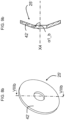
- the centrifugal disc 25 used in the second embodiment of the electric drive 1 is in Figure 8a in a perspective view and in Figure 9a shown in a longitudinal section.
- the centrifugal disk 25 has a circumferential ejection section 42 which is arranged at an ejection angle ⁇ 1_a of 90° to the axis of rotation X4. In this configuration, the oil of the second oil bath 47 is thrown off mainly in the radial direction. How out figure 6 to recognize, the centrifugal disk 25 supplies the parking wheel 20 with oil, which subsequently carries the oil into the contact area between the parking wheel 20 and the parking pawl 21 .
- FIG 8b and 9b a second possible configuration of the centrifugal disk 25' is shown.
- the centrifugal disc 25' has a circumferential ejection section 42' which is arranged at an ejection angle ⁇ 1_b of, for example, approximately 70° to the axis of rotation X4.
- ⁇ 1_b ejection angle
- the oil of the second oil bath 47 is thrown off in one direction with a radial and an axial component.
- an area offset axially from the centrifugal disk 25' can be supplied with oil in a targeted manner.
- oil could be pumped directly into the contact area between the parking wheel 20 and the parking pawl 21 through the centrifugal disk 25'.
- FIG 8c and 9c a third embodiment of the centrifugal disk 25" is shown.
- the centrifugal disk 25" has six first ejection sections 42", which are arranged at an ejection angle ⁇ 1_c of 90° to the axis of rotation X4 and eject the oil of the second oil bath 47 mainly in the radial direction
- the centrifugal disc 25" has six second ejection sections 43, which are arranged at an ejection angle ⁇ 2_c of, for example, approx. 70° to the axis of rotation X4 and eject the oil of the second oil bath 47 in a direction with a radial and an axial component.
- This third configuration of the centrifugal disk 25" allows several areas to be supplied with oil in a targeted manner by the centrifugal disk 25". become.
- the centrifugal disk 25" both supply the parking wheel 20 with oil, which subsequently carries the oil into the contact area between the parking wheel 20 and the parking pawl 21, and pump oil directly into the contact area between the parking wheel 20 and the parking pawl 21.
Landscapes
- Engineering & Computer Science (AREA)
- General Engineering & Computer Science (AREA)
- Mechanical Engineering (AREA)
- Transportation (AREA)
- Chemical & Material Sciences (AREA)
- Combustion & Propulsion (AREA)
- General Details Of Gearings (AREA)
- Gear-Shifting Mechanisms (AREA)
Description
- Die Erfindung betrifft eine Getriebeanordnung mit einer Parksperre, insbesondere für einen Elektroantrieb eines Kraftfahrzeuges. Ein Elektroantrieb kann als alleiniger Antrieb für ein Kraftfahrzeug vorgesehen sein. Alternativ kann in hybriden Antriebskonzepten zusätzlich zum Elektroantrieb ein Verbrennungsmotor vorgesehen sein. Der Elektroantrieb und der Verbrennungsmotor können dann jeweils alleine für den Antrieb des Fahrzeugs sorgen oder gemeinsam überlagert das Kraftfahrzeug antreiben. Die elektrische Maschine des Elektroantriebs wird in der Regel bei hohen Drehzahlen betrieben. Die Getriebeanordnung des Elektroantriebs übernimmt die Funktion der Drehzahlanpassung zwischen den hohen Drehzahlen der elektrischen Maschine und den in der Regel langsameren Drehzahlen der Räder. Zudem erfolgt über die Getriebeanordnung ein Drehzahlausgleich zwischen den einzelnen Rädern.
- Aus der
WO 2018/001476 A1 ist eine Elektroantriebsanordnung mit einer Parksperre bekannt, die eine elektrische Maschine, ein Untersetzungsgetriebe und ein Differentialgetriebe aufweist, die in einer Gehäuseanordnung aufgenommen sind. Das Untersetzungsgetriebe setzt sich aus einer Stirnradeinheit und einer nachgeschalteten Planetenradeinheit, deren Planetenträger drehfest mit einem Differentialgehäuse des Differentialgetriebes verbunden ist, zusammen. Die Stirnradeinheit weist ein Antriebsritzel auf einer durch die elektrische Maschine drehend antreibbare Motorwelle auf, das mit einem Antriebsrad in Eingriff steht. Das Antriebsrad ist drehfest mit einer Getriebewelle verbunden, die auch das Sonnenrad der Planetenstufe umfasst. Die Motorwelle weist ein freies, auskragendes Wellenende auf, das in ein Parksperrengehäuse hineingeführt und mit dem ein Sperrenrad drehfest verbunden ist. Das Parksperrengehäuse bildet zusammen mit der Gehäuseanordnung einen gemeinsamen Raum, in dem die Getriebeelemente aufgenommen sind. - Der vorliegenden Erfindung liegt die Aufgabe zu Grunde, eine Getriebeanordnung mit einer Parksperre bereitzustellen, die konstante Einrastgeschwindigkeiten der Parksperre ermöglicht sowie langlebig und servicefreundlich ist. Des Weiteren soll es Aufgabe der Erfindung sein, einen Elektroantrieb mit einer solchen Getriebeanordnung bereitzustellen.
- Zur Lösung der Aufgabe wird eine Getriebeanordnung für einen Elektroantrieb eines Kraftfahrzeugs vorgeschlagen, umfassend: eine Antriebswelle, ein Untersetzungsgetriebe, das von der Antriebswelle drehend antreibbar ist und ausgestaltet ist, eine eingeleitete Drehbewegung vom Schnellen ins Langsame zu übersetzen, eine Leistungsverzweigungseinheit, die mit dem Untersetzungsgetriebe antriebsverbunden ist und ausgestaltet ist, eine eingeleitete Drehbewegung auf zwei Ausgangsteile zu übertragen, eine Parksperreneinheit mit einem Parksperrenrad, das mit einem drehmomentübertragenden Glied im Leistungspfad zwischen der Antriebswelle und den Ausgangsteilen drehfest verbunden ist, und mit einem steuerbaren Sperrelement, das mit dem Parksperrenrad selektiv in Eingriff bringbar ist; wobei die Parksperreneinheit in einem Parksperrengehäuse angeordnet ist, das gegenüber einem Getriebegehäuse, in dem zumindest Teile des Untersetzungsgetriebes und der Leistungsverzweigungseinheit angeordnet sind, flüssigkeitsdicht abgedichtet ist, sodass ein erstes Ölbad in dem Getriebegehäuse von einem zweiten Ölbad in dem Parksperrengehäuse separiert ist.
- Die erfindungsgemäße Getriebeanordnung weißt den Vorteil auf, dass das Parksperrenrad und das Sperrelement von einem zweiten, separaten Ölbad geschmiert werden können. Dadurch kann beim Einlegen der Parksperre eine definierte Ölversorgung des Kontaktbereiches zwischen Parksperrenrad und Sperrelement realisiert werden, sodass die Einrastgeschwindigkeit über weite Betriebsbereiche der Getriebeanordnung annähernd konstant gehalten werden kann. Zudem kann für das zweite Ölbad eine Ölsorte verwendet werden, die zu der Ölsorte des ersten Ölbades unterschiedlich ist und deren Spezifikation an die Anforderungen der Schmierung zwischen Parksperrenrad und Sperrelement angepasst ist. Darüber hinaus wird der Abrieb, der beim Einrasten der Parksperre, insbesondere bei Ratcheting, von dem Parksperrenrad und dem Sperrelement abgetragen wird, im zweiten Ölbad gesammelt und kontaminiert somit nicht das Öl des ersten Ölbades, was zu einer Erhöhung der Lebensdauer der Elemente des Untersetzungsgetriebes und der Leistungsverzweigungseinheit führt, die von dem ersten Ölbad mit Öl versorgt werden. Ferner wird durch die Anordnung der Parksperre in einem separaten Parksperrengehäuse im Servicefall bei hohem Verschleiß der gezielte Austausch von dem Öl des zweiten Ölbades sowie dem Parksperrenrad und dem Sperrelement ermöglicht.
- Die flüssigkeitsdichte Dichtung zwischen dem Parksperrengehäuse und dem Getriebegehäuse kann durch Anordnung jedes geeigneten Dichtelementes zwischen den beiden Gehäusen erzielt werden. Das Dichtelement kann beispielsweise als eine rotatorische Dichtung, wie eine Radialwellendichtring, oder als eine berührungslose Dichtung, wie eine Labyrinthdichtung, ausgeführt sein.
- Es versteht sich, dass in einer erfindungsgemäßen Getriebeanordnung nur die Elemente der Parksperreneinheit in dem Parksperrengehäuse angeordnet sein müssen, durch die direkt die Sperrwirkung auf das drehmomentübertragende Glied im Leistungspfad zwischen der Antriebswelle und den Ausgangsteilen ausgeübt wird, insbesondere das Parksperrenrad und das Sperrelement. Weitere Elemente der Parksperreneinheit die beispielsweise der Aktuatorik oder der Lagerung des Sperrenelementes zu zuordnenden sind, können entweder innerhalb oder außerhalb des Parksperrengehäuses angeordnet sein.
- Das drehmomentübertragenden Glied im Leistungspfad zwischen der Antriebswelle und den Ausgangsteilen kann beispielsweise die Antriebswelle, eine Getriebewelle oder ein Gehäuse der Leistungsverzweigungseinheit sein, ohne darauf beschränkt zu sein.
- Als Leistungsverzweigungseinheit soll jede Anordnung verstanden werden, die es ermöglicht die Leistung zumindest eines Antriebselementes auf zumindest zwei Abtriebswellen aufzuteilen und die insbesondere einen Drehzahlausgleich zwischen den Abtriebswellen ermöglicht. Die Leistungsverzweigungseinheit kann beispielsweise als ein Differentialgetriebe oder als eine Doppelreibkupplungseinheit (eTwinster) ausgeführt sein.
- In einer möglichen Ausführungsform kann das Sperrelement von einem Spindelantrieb steuerbar sein, wobei der Spindelantrieb eine um eine Drehachse drehend gelagerte Spindelwelle mit einer Schleuderscheibe aufweist, wobei die Schleuderscheibe bei Rotation der Spindelwelle Öl des zweiten Ölbades in Richtung eines Kontaktbereiches des Parksperrenrades und des Sperrelementes fördert. Hierdurch kann dem Kontaktbereich des Parksperrenrades und des Sperrelementes gezielt Öl aus dem zweiten Ölbad zugeführt werden, während das Sperrelement in das Parksperrenrad einrastet. Hierzu kann der Spindelantrieb einen Elektromotor aufweisen, mit dem die Spindelwelle in beide Drehrichtungen antreibbar ist. Durch Verdrehen der Spindelwelle kann ein Steuerkonus über eine Spindelmutter axial in eine Richtung und durch die Beaufschlagung durch eine Rückstellfeder in die entgegengesetzte Richtung verschoben werden. Der Steuerkonus kann auf seiner Oberfläche eine Führungskontur aufweisen, durch die das Sperrelement je nach Kontaktpunkt mit dem Steuerkonus in Richtung des Parksperrenrades gedrängt oder von diesem entfernt wird. Durch das Rotieren der Spindelwelle zur Aktuierung des Sperrelementes wird auch die in das zweite Ölbad eingetauchte Schleuderscheibe in Rotation versetzt. Durch Reibung und die resultierende Fliehkraft wird Öl nach radial außen geschleudert und dem Kontaktbereich des Parksperrenrades und des Sperrelementes zugeführt.
- In einer möglichen Ausführungsform kann die Schleuderscheibe zumindest einen Abwurfabschnitt aufweisen, der in einem Abwurfwinkel zu der Drehachse der Spindelwelle ausgerichtet ist, wobei der Abwurfwinkel kleiner gleich 90° und/oder größer 25°, insbesondere größer 45°, ist. Hierdurch kann das durch die Fliehkraft nach radial au-ßen geschleuderte Öl gezielt in eine Richtung gefördert werden, beispielsweise direkt in den Kontaktbereich des Parksperrenrades und des Sperrelementes. Durch die Wahl eines Abwurfwinkels kleiner 90° können somit auch Bereiche mit Öl versorgt werden, die sich nicht direkt oberhalb der Schleuderscheibe befinden. Insbesondere kann die Schleuderscheibe somit seitlich versetzt zu dem Bereich in den das Öl gefördert werden soll angeordnet werden, was zu einer erhöhten Flexibilität in der Bauraumgestaltung der Getriebeanordnung führt. Die Schleuderscheibe kann auch mehrerer Abwurfabschnitte umfassen, die unterschiedliche Abwurfwinkel aufweisen, sodass mehrere Bereiche gezielt mit Öl versorgt werden können. So kann die Schleuderscheibe beispielsweise einen oder mehrere erste Abwurfabschnitte mit einem Abwurfwinkel von 90° und ein oder mehrere zweite Abwurfabschnitte mit einem beispielhaften Abwurfwinkel von 75° aufweisen. Durch die ersten Abwurfabschnitte wird das Öl gerade nach radial außen gefördert und kann beispielsweise die Ausnehmung des Parksperrenrades, die gerade in den Kontaktbereich des Parksperrenrades und des Sperrelementes einläuft, mit Öl versorgen, während durch die zweiten Abschnitte das Öl in schräger Richtung nach radial außen gefördert wird und beispielsweise der Kontaktbereich des Parksperrenrades und des Sperrelementes direkt mit Öl versorgt wird. In einer möglichen Ausführungsform kann die Schleuderscheibe bezüglich der Drehachse der Spindelwelle in axialer Überdeckung mit dem Parksperrenrad angeordnet ist. Somit kann sichergestellt werden, dass das direkt nach radial außen geförderte Öl zumindest über das Parksperrenrad in den Kontaktbereich des Parksperrenrades und des Sperrelementes gelangt.
- In einer möglichen Ausführungsform kann in einer Einbaulage der Getriebeanordnung in einem beruhigten Zustand ein Niveau des ersten Ölbades von einem Niveau des zweiten Ölbades abweichen. Hierdurch kann eine bauraumoptimierte Anordnung des Getriebegehäuses und des Parksperrengehäuses erzielt werden. Es ist, falls durch den zur Verfügung stehenden Bauraum erforderlich, auch denkbar, dass das Niveau des ersten Ölbades und das Niveau des zweiten Ölbades ein gleiches Nennniveau aufweisen.
- In einer weiteren Ausführungsform kann ein Niveau des zweiten Ölbades in einer Einbaulage der Getriebeanordnung in einem beruhigten Zustand in vertikaler Richtung unterhalb eines Wirkbereiches des Parksperrenrades liegen. Als Wirkbereich soll das Volumen verstanden werden, das von dem Parksperrenrad nach einer vollständigen Rotation um die Drehachse überstrichen wurde. Es wird somit ein Planschen des Parksperrenrades im zweiten Ölbad vermieden. Hierdurch wird der Wirkungsgrad der Getriebeanordnung erhöht, während gleichzeitig der Kontaktbereich des Parksperrenrades und des Sperrelementes mit einer definierten Menge Öl versorgt werden kann, die unabhängig von der Drehzahl des drehmomentübertragenden Gliedes im Leistungspfad zwischen der Antriebswelle und den Ausgangsteilen ist, mit dem das Parksperrenrad drehfest verbunden ist.
- In einer weiteren Ausführungsform kann ein Niveau des zweiten Ölbades in einer Einbaulage der Getriebeanordnung in einem beruhigten Zustand in vertikaler Richtung unterhalb der Drehachse der Spindelwelle liegen. Hierdurch werden Planschverluste bei der Rotation der Spindelwelle in dem zweiten Ölbad verringert und die Steuerung der Rotation der Spindelwelle wird erleichtert. In einer weiteren Ausführungsform kann der Spindelantrieb einen Steuerkonus aufweisen, durch den das Sperrelement reversibel von einer Freigabestellung, in der das Parksperrenrad gegenüber dem Sperrelement frei drehen kann, in eine Sperrstellung, in der eine Drehung des Parksperrenrades um die Längsachse durch das Sperrelement blockiert ist, überführbar ist, wobei der Steuerkonus in das zweite Ölbad in einer Einbaulage der Getriebeanordnung in einem beruhigten Zustand maximal mit zwei Dritteln eines größten Außenradius des Steuerkonus, insbesondere maximal mit einem Drittel eines größten Außenradius des Steuerkonus, eingetaucht ist. Der Steuerkonus muss in dieser Ausführungsform nur teilweise gegen die Trägheit des Öles in dem zweiten Öl axial bewegt werden, sodass ein schnelleres Ein- bzw. Auslegen der Parksperre ermöglicht wird. Das Niveau des zweiten Ölbades kann insbesondere auch so gewählt werden, dass ein Spindellager des Spindelantriebes zumindest teilweise in das zweite Ölbad eintaucht.
- In einer weiteren Ausführungsform kann das Parksperrenrad mit einem freien Wellenende des drehmomentübertragenden Gliedes im Leistungspfad zwischen der Antriebswelle und den Ausgangsteilen drehfest verbunden sein. Unter freiem Wellenende soll jedes über eine Lageranordnung überstehende oder auskragende Teil des drehmomentübertragenden Gliedes im Leistungspfad zwischen der Antriebswelle und den Ausgangsteilen verstanden werden. Hierdurch wird erreicht, dass ein Gehäuseelement des Parksperrengehäuses unabhängig von einer Demontage des drehmomentübertragenden Gliedes im Leistungspfad zwischen der Antriebswelle und den Ausgangsteilen demontiert werden kann. Somit wird die Zugänglichkeit der Parksperre im Servicefall erhöht. Es ist allerdings grundsätzlich auch denkbar, dass das drehmomentübertragende Glied im Leistungspfad zwischen der Antriebswelle und den Ausgangsteilen in dem Gehäuseelement des Parksperrengehäuses drehend gelagert wird und das Parksperrenrad zwischen den Lagerelementen der zugehörigen Lageranordnung angeordnet ist.
- In einer möglichen Ausführungsform kann das Getriebegehäuse zumindest ein erstes Gehäuseteil und ein zweites Gehäuseteil umfassen und einen Getrieberaum einschlie-ßen, in dem das Untersetzungsgetriebe und die Leistungsverzweigungseinheit zumindest teilweise angeordnet sind, und das Parksperrengehäuse kann zumindest von dem zweiten Gehäuseteil und einem dritten Gehäuseteil gebildet werden und einen Parksperrenraum einschließen, in dem die Parksperreneinheit zumindest teilweise angeordnet ist. In einer weiteren Ausführungsform können der Getrieberaum und der Parksperrenraum durch einen Druckausgleichskanal verbunden sein, wobei ein erster Einlass des Druckausgleichskanals in dem Getrieberaum und ein zweiter Einlass des Druckausgleichskanals in dem Parksperrenraum angeordnet ist. Bei hohen Druckunterschieden in den beiden Räumen kann die Dichtwirkung eines Dichtelementes, das zwischen dem Getriebegehäuse und dem Parksperrengehäuse angeordnet ist, zumindest kurzfristig versagen, sodass das Öl des ersten Ölbades mit dem Öl des zweiten Ölbades kontaminiert wird oder andersherum. Durch den Druckausgleichskanal wird sichergestellt, dass die Drücke in dem Getrieberaum und dem Parksperrenraum weitgehend identisch sind, sodass das Dichtelement die beiden Räume zuverlässig voneinander trennen kann.
- Um zu verhindern, dass über den Druckausgleichkanal das Öl des ersten Ölbades mit dem Öl des zweiten Ölbades kontaminiert wird, kann der erste Einlass oberhalb des zweiten Einlasses angeordnet sein. Das Öl des zweiten Ölbades müsste in diesem Fall entgegen der Schwerkraft den Druckausgleichskanal hinaufsteigen. Dies kann durch bei der Wahl einer ausreichenden Länge, Steighöhe und eines ausreichend gro-ßen Durchmessers des Druckausgleichskanals weitgehend ausgeschlossen werden.
- Um zu verhindern, dass über den Druckausgleichkanal das Öl des zweiten Ölbades mit dem Öl des ersten Ölbades kontaminiert wird, kann angrenzend an den ersten Einlass des Druckausgleichskanals ein spritzölfreier Labyrinthraum angeordnet sein. Hierdurch wird verhindert, dass in den Bereich des ersten Einlasses Spritzöl des ersten Ölbades gelangt und von der Schwerkraft durch den Druckausgleichskanal in das zweite Ölbad gefördert wird.
- Der Labyrinthraum kann zumindest einen Blendenabschnitt und zumindest einen Sammelabschnitt aufweisen. Unter Blendenabschnitt soll eine Einschnürung des Labyrinthraums verstanden werden, die insbesondere auch am Eingang des Labyrinthraums angeordnet sein kann. Die Sammelabschnitte des Labyrinthraums fangen Spritzöl, das durch einen Blendenabschnitt eingetreten ist auf und leiten dieses wiederum in das Ölbad zurück. Insbesondere sind die Sammelräume so ausgestaltet, dass sie keine Senken aufweisen, in denen sich Spritzöl dauerhaft ansammeln kann. Der Labyrinthraum kann zumindest teilweise durch das zweite Gehäuseelement und/oder das erste Gehäuseelement gebildet werden. Dabei kann der Labyrinthraum in einem von dem ersten Gehäuseelement und dem zweiten Gehäuseelement integriert sein, insbesondere eingegossen sein.
- In einer Ausführungsform kann zumindest in einem von dem Getriebegehäuse und dem Parksperrengehäuse ein Entlüftungselement aufgenommen sein, durch das der Getrieberaum und/oder der Parksperrenraum gegenüber der Umwelt entlüftbar ist.
- Ein Elektroantrieb mit einer erfindungsgemäßen Getriebeanordnung bietet analog dieselben Vorteile, wie oben im Zusammenhang mit der Getriebeanordnung beschrieben, worauf abkürzend verwiesen wird.
- Bevorzugte Ausführungsbeispiele werden nachstehend anhand der Zeichnungsfiguren erläutert. Hierin zeigt
- Figur 1a
- schematisch einen Elektroantrieb mit einer nicht erfindungsgemäßen Getriebeanordnung, die zum Verständnis beschrieben wird;
- Figur 1b
- schematisch einen Elektroantrieb mit einer erfindungsgemäßen Getriebeanordnung in einer ersten Ausführungsform;
- Figur 2
- einen Elektroantrieb mit einer erfindungsgemäßen Getriebeanordnung in einer zweiten Ausführungsform in einer perspektivischen Ansicht;
- Figur 3
- den Elektroantrieb aus
Figur 2 in einer Schnittansicht entlang der Schnittebene II - II; - Figur 4
- einen Ausschnitt eines Längsschnitts durch das zweite Gehäuseteil des Elektroantriebs aus
Figur 2 ; - Figur 5
- einen Ausschnitt der Seitenansicht von rechts des zweiten Gehäuseteils des Elektroantriebs aus
Figur 4 ; - Figur 6
- einen Ausschnitt eines Querschnittes des Elektroantriebes aus
Figur 3 entlang des Schnittverlaufs III - III; - Figur 7
- einen vergrößerten Ausschnitt der
Figur 6 im Bereich zwischen Schleuderscheibe und Steuerkonus; - Figur 8a
- eine Schleuderscheibe in einer ersten Ausführungsform;
- Figur 8b
- eine Schleuderscheibe in einer zweiten Ausführungsform;
- Figur 8c
- eine Schleuderscheibe in einer dritten Ausführungsform;
- Figur 9a
- die Schleuderscheibe in der ersten Ausführungsform in einem Längsschnitt entlang des Schnittverlaufes Vllla - Vllla;
- Figur 9b
- die Schleuderscheibe in der zweiten Ausführungsform in einem Längsschnitt entlang des Schnittverlaufes Vlllb - Vlllb; und
- Figur 9c
- die Schleuderscheibe in einer dritten Ausführungsform in einem Längsschnitt entlang des Schnittverlaufes VIIIc - VIIIc.
- In
Figur 1a ist ein Elektroantrieb 1' dargestellt, bei dem eine Gehäuseanordnung 2 umfassend ein erstes Gehäuseelement 3 und eine zweites Gehäuseelement 4 einen Getrieberaum 33 einschließt, in dem ein Untersetzungsgetriebe 45 und eine Differentialanordnung 15 miteinander leistungsverbunden angeordnet sind. Das Untersetzungsgetriebe 45 weist eine durch eine elektrische Maschine 31 um eine Drehachse X1 drehend antreibbare Motorwelle 7 mit einem Antriebsritzel 8 auf, das mit einem Gegenrad 10 in Eingriff steht. Das Gegenrad 10 ist drehfest auf einer Zwischenwelle 13 angeordnet, die mit einem Lager 18 im ersten Gehäuseelement 3 sowie einem Lager 19 im zweiten Gehäuseelement 4 drehend gelagert ist. Mit der Zwischenwelle 13 ist zudem ein Parkrad 20 drehfest verbunden, dessen Rotationsfreiheitsgrad um eine Drehachse X2 durch das Einlegen einer Parkklinke 21 gefesselt werden kann, sodass der Elektroantrieb blockiert wird. Ein Antriebsritzel 14 der Zwischenwelle 13 steht im Eingriff mit einem Ringrad 16, das mit einem Differentialgehäuse 17 der Differentialanordnung 15 fest verbunden ist. Das Ringrad 16 taucht in ein erstes Ölbad 46 ein, das in dem Getrieberaum 33 aufgenommen ist und ein Niveau L1 aufweist. Bei Rotation des Ringrades 16 wird das Öl des ersten Ölbades 46 in dem Getrieberaum 33 verteilt und schmiert dabei unter anderem das Parkrad 20 und die Parkklinke 21. Hierbei gelangt je nach Drehzahl des Ringrades 16 mehr oder weniger Öl in den Kontaktbereich zwischen Parkrad 20 und Parkklinke 21. Einerseits führt dies gegebenenfalls zu einer Minderschmierung in langsamen Betriebszuständen, andererseits führt die inkonstante Schmierung des Kontaktbereich zwischen Parkrad 20 und Parkklinke 21 zu einer Variabilität der kritischen Einrastgeschwindigkeit, bei der die Parkklinke 21 nicht mehr von dem Parkrad 20 abgewiesen wird und ein Zahn der Parkklinke 21 in eine Ausnehmung des Parkrades 20 einrastet. - Demgegenüber wird in
Figur 1b schematisch eine erfindungsgemäße Getriebeanordnung 30 bzw. ein erfindungsgemäßer Elektroantrieb 1 in einer ersten Ausführungsform gezeigt, der sich von dem Elektroantrieb 1 bzw. Getriebe derFigur 1a durch die Anordnung des Parkrades 20 und der Parkklinke 21 in einem Parksperrenraum 34 unterscheidet. Für Gemeinsamkeiten sei daher auf die Ausführungen zuFigur 1a verwiesen, wobei gleiche bzw. einander entsprechende Elemente mit gleichen Bezugszeichen versehen sind. - Bei der erfindungsgemäßen Getriebeanordnung 30 bzw. Elektroantrieb 1 ist die Zwischenwelle 13 durch eine Wand des zweiten Gehäuseelements 4 hindurchgeführt und weist angrenzend an das Lager 19 ein freies, auskragendes Wellenende 49 auf. Das freie Wellenende 49 ragt dabei in einen Parksperrenraum 34 hinein, der von dem zweiten Gehäuseelement 4 und einem dritten Gehäuseelement 5, das auch als Gehäusedeckel ausgeführt sein kann, eingeschlossen wird. Auf dem freien Wellenende 49 ist das Parkrad 20 drehfest angeordnet, das mit einer ebenfalls in dem Parksperrenraum 34 angeordneten Parkklinke 21 selektiv in Eingriff bringbar ist.
- Der Parksperrenraum 34 ist mit einem Dichtelement 37 gegenüber dem Getrieberaum 33 abgedichtet, das im vorliegenden Fall als schematisch dargestellte Labyrinthdichtung ausgeführt ist. Es ist allerdings auch jedes andere Dichtelement denkbar, beispielsweise eine rotatorische Dichtung oder eine andersartige berührungslose Dichtung. In dem Parksperrenraum 34 ist ein zweites Ölbad 47 mit einem Niveau L2 aufgenommen, wobei das Niveau L2 des zweiten Ölbads 47 vertikal oberhalb des Niveaus L1 des ersten Ölbades 46 liegt. Je nach Bauraumanforderung an den Elektroantrieb, ist es auch denkbar, dass das Niveau L2 des zweiten Ölbads 47 vertikal unterhalb des Niveaus L1 des ersten Ölbades 46 liegt oder die beiden Niveaus L1, L2 ein gemeinsames Nennniveau aufweisen. Durch die Separierung des ersten Ölbades 46 von dem zweiten Ölbad 47 kann das Niveau L2 und die Ölsorte des zweiten Ölbades 47 an die Anforderungen der Parksperren spezifisch angepasst werden.
- In den
Figuren 2 bis 7 , die im Folgenden gemeinsam beschrieben werden, wird eine erfindungsgemäße Getriebeanordnung 30 bzw. ein erfindungsgemäßer Elektroantrieb 1 mit einem solchen Getriebe in einer zweiten Ausführungsform gezeigt. - Eine elektrische Maschine 31 ist in einem ersten Gehäuseelement 3 einer Gehäuseanordnung 2 aufgenommen und umfasst eine um eine Drehachse X1 drehend antreibbare Motorwelle 7. Die Motorwelle 7 weist an einem Wellenende ein Antriebsritzel 8 auf, dass zusammen mit einem verzahnten Gegenrad 10 eine erste Getriebestufe bildet. Das Gegenrad 10 ist mit einem Lager 51, beispielsweise einem Nadellager, drehend auf einer Zwischenwelle 13 gelagert und kann über eine Kupplungsanordnung 11, die in einem Kupplungssitz 12 der Zwischenplatte 6 axial abgestützt ist, wahlweise mit dieser zur Übertragung eines Drehmoments verbunden oder von dieser getrennt werden. Die Zwischenwelle 13 umfasst zudem ein Antriebsritzel 14, das in den Wellenkörper der Zwischenwelle 13 integriert ist und zusammen mit einem Ringrad 16 eine zweite Getriebestufe bildet. Das Ringrad 16 ist fest mit einem Differentialgehäuse 17 einer Differentialanordnung 15 verbunden. Die Differentialanordnung 15 umfasst zudem einen Differentialrädersatz 52, der innerhalb des Differentialgehäuses 17 angeordnet ist und mit dem nicht dargestellte Abtriebswellen verbindbar sind.
- Die Getriebeanordnung umfassend das Antriebsritzel 8, das Gegenrad 10, die Kupplungsanordnung 11, die Zwischenwelle 13, das Ringrad 16 und die Differentialanordnung 15 ist in einem Getrieberaum 33 angeordnet, der durch das erste Gehäuseelement 3, eine Zwischenplatte 6 und ein zweites Gehäuseelement 4 gebildet wird. Dabei sind die erste Getriebestufe 8, 10 und die zweite Getriebestufe 14, 16 auf unterschiedlichen Seiten der Zwischenplatte 6 angeordnet.
- Die Zwischenwelle 13 ist mit einem ersten Lager 18, das in dem ersten Gehäuseelement 3 aufgenommen ist, und mit einem zweiten Lager 19, das in dem zweiten Gehäuseelement 4 aufgenommen ist, um die Drehachse X2 gelagert. Die Drehachse X2 ist dabei um den Betrag des Achsabstandes der ersten Getriebestufe parallel versetzt zur Drehachse X1 der Motorwelle 7 angeordnet. Die Zwischenwelle 13 erstreckt sich durch eine Öffnung 9 der Zwischenplatte 6 hindurch.
- Die Differentialanordnung 15 ist mit einem ersten Lager 18", das in der Zwischenplatte 6 aufgenommen ist, und einem zweiten Lager 19", das in dem zweiten Gehäuseelement 4 aufgenommen ist, um eine Drehachse X3 gelagert. Die Drehachse X3 ist dabei koaxial zu der Drehachse X1 der Motorwelle 7 angeordnet.
- Der Getrieberaum 33 wird durch die Zwischenplatte 6 in zwei Teilbereiche unterteilt, die über die Öffnung 9 im Bereich der Kupplungsanordnung 11 miteinander verbunden sind, wobei in dem ersten Teilbereich die erste Getriebestufe 8, 10 und in dem zweiten Teilbereich die zweite Getriebestufe 14, 16 angeordnet sind. In dem Getrieberaum 33 ist ein erstes Ölbad 46 mit einem ersten Niveau aufgenommen, das sich in die beiden Teilbereiche erstreckt. Es ist auch denkbar, dass in der Öffnung 9 der Zwischenplatte 6 ein Dichtelement angeordnet wird, sodass die beiden Teilbereich voneinander getrennt sind. Somit könnte in den beiden Teilbereichen jeweils ein separates Ölbad vorgesehen werden, dessen Niveau und/oder Ölsorte an die jeweilige Getriebestufe angepasst ist.
- Die Zwischenwelle 13 weist angrenzend an das Lager 19 ein freies, auskragendes Wellenende 49 auf, das in einen Parksperrenraum 34 hinein ragt. Der Parksperrenraum 34 wird dabei von dem zweiten Gehäuseelement 4 und einem dritten Gehäuseelement 5, das als Gehäusedeckel ausgeführt ist, eingeschlossen. In dem Parksperrenraum 34 ist ein zweites Ölbad 47 mit einem Niveau L2 aufgenommen. Durch ein Dichtelement 37, beispielsweise ein Radialwellendichtring, ist der Parksperrenraum 34 flüssigkeitsdicht gegenüber dem Getrieberaum 33 abgedichtet. Um eine zuverlässige Dichtwirkung des Dichtelementes 37 zu gewährleisten, ist im zweiten Gehäuseelement 4 ein Druckausgleichskanal 32 angeordnet, der einen ersten Einlass 35 in Richtung des Getrieberaums 33 und einen zweiten Einlass 36 in Richtung des Parksperrenraums 34 aufweist. Durch den Druckausgleichskanal 32 können Druckunterschiede zwischen dem Getrieberaum 33 und dem Parksperrenraum 34 ausgeglichen werden, die eine Öldurchtritt durch das Dichtelement 37 bedingen können. Um ein Öleintritt durch den Druckausgleichskanal 32 zu vermeiden ist der erste Einlass 35 oberhalb des zweiten Einlasses 36 angeordnet. Somit kann ein Öleintritt von dem Parksperrenraum 34 in den Getrieberaum 33 vermieden werden. Zusätzlich ist angrenzend an den ersten Einlass 35 ein Labyrinthraum 38 angeordnet, der durch Vorsprünge in dem zweiten Gehäuseelement 4 und durch die Zwischenplatte 6 gebildet wird. Der Labyrinthraum 38 umfasst dabei zwei Blendenabschnitte 39, 39` und zwei Sammelabschnitte 40, 40`, die gemeinsam einen Eintritt von Spritzöl aus dem ersten Ölbad 46 in den ersten Einlass verhindern und das Spritzöl in das erste Ölbad 46 zurückführen.
- In dem Parksperrenraum 34 ist zudem eine Parkklinke 21 angeordnet, die über einen Spindelantrieb 48 reversibel in eine Freigabestellung, in der das Parkrad 20 frei um die Drehachse X2 drehen kann, und in eine Sperrstellung, in der der Rotationsfreiheitsgrad des Parkrades 20 um die Drehachse X2 gefesselt und der Elektroantrieb blockiert ist, überführt werden kann. In der Sperrstellung rastet ein Zahn 54 der Parkklinke 21 in einer Ausnehmung 53 des Parkrades 20 ein. Der Spindelantrieb 48 umfasst einen Steuerkonus 28, der eine Führungskontur aufweist. Je nach Auflagepunkt der Parcklinke 21 auf der Führungskontur wird die Parklinke 21 in den Wirkbereich des Parkrades 20 hineingeschwenkt oder aus dem Wirkbereich herausgeschwenkt. Der Steuerkonus 28 ist axialbeweglich angeordnet und kann von einer Spindelmutter 26 in eine Richtung, in der dargestellten Ausführung in die Richtung einer Freigabestellung, geschoben werden. Hierzu kann die Spindelmutter 26 durch Verdrehen einer Spindelwelle 24 um die Drehachse X4 mittels eines Stellmotors 22 ihrerseits axial bewegt werden. Ausgehend von einer Freigabestellung kann die Spindelmutter 26 in Richtung einer Sperrstellung, die in den
Figuren 6 und7 dargestellt ist, verfahren werden. Dabei wird der Steuerkonus 28 von einer Rückstellfeder 27 der Spindelmutter 26 nachgeführt. Im Falle einer Zahn-auf-Zahn-Stellung oder bei Ratcheting verbleibt der Steuerkonus 28 zunächst in der Freigabestellung und schwenkt den Zahn 54 der Parkklinke 21 erst beim Unterschreiten der kritischen Einrastgeschwindigkeit vollständig in den Wirkbereich des Parkrads 20 ein. Während des Ratchetings wird der Steuerkonus 28 durch die Parkklinke 21 axial abgewiesen und führt dabei eine schwingende Bewegung gegen die Rückstellfeder 27 aus. - Ist der Steuerkonus 28 in das zweite Ölbad 47 eingetaucht, so wirkt die Trägheit des Öles wie ein Dämpfer auf die schwingende Bewegung und beeinflusst hierdurch die kritische Einrastgeschwindigkeit. Um den Einfluss des zweiten Ölbades 47 auf die kritische Einrastgeschwindigkeit zu minimieren beziehungsweise weitgehend konstant zu halten, kann das Niveau L2 des zweiten Ölbads 47 so gewählt werden, dass die Eintauchtiefe ΔR2 des Steuerkonus 28 kleiner als 2/3 seines Außenradius Ra ist, insbesondere kleiner als 1/3 seines Außenradius Ra. Die Wahl des Niveaus L2 des zweiten Ölbads 47 kann zusätzlich so erfolgen, dass ein Lager 23 zur drehenden Lagerung der Spindelwelle 24 in das zweite Ölbad 47 eingetaucht ist.
- Mit der Spindelwelle 24 ist eine Schleuderscheibe 25 fest verbunden, die mit einer Eintauchtiefe ΔR1 in das zweite Ölbad 47 eingetaucht ist. Bei Rotation der Spindelwelle 24 zur Aktuierung des Steuerkonus 28 wird durch die Fliehkraft Öl aus dem zweiten Ölbad 47 von der Schleuderscheibe 25 nach radial außen geschleudert und der Kontaktbereich zwischen Parkrad 20 und Parkklinke 21 wird mit Öl versorgt. Hierzu kann die Schleuderscheibe 25 bezogen auf die Drehachse X4 in axialer Überdeckung mit dem Parkrad 20 angeordnet sein. Die in der zweiten Ausführungsform des Elektroantriebes 1 eingesetzte Schleuderscheibe 25 ist in
Figur 8a in einer perspektivischen Darstellung und inFigur 9a in einem Längsschnitt dargestellt. Die Schleuderscheibe 25 weist einen umlaufenden Abwurfabschnitt 42 auf, der in einem Abwurfwinkel α1_a von 90° zur Drehachse X4 angeordnet ist. Bei dieser Ausgestaltung wird das Öl des zweiten Ölbades 47 hauptsächlich in radialer Richtung ab geschleudert. Wie ausFigur 6 zu erkennen, versorgt die Schleuderscheibe 25 das Parkrad 20 mit Öl, das das Öl nachfolgend in den Kontaktbereich zwischen Parkrad 20 und Parkklinke 21 trägt. - In
Figur 8b und 9b ist eine zweite mögliche Ausgestaltung der Schleuderscheibe 25' dargestellt. Die Schleuderscheibe 25' weist einen umlaufenden Abwurfabschnitt 42' auf, der in einem Abwurfwinkel α1_b von beispielsweise ca. 70° zur Drehachse X4 angeordnet ist. Bei dieser Ausgestaltung wird das Öl des zweiten Ölbades 47 in eine Richtung mit einer radialen und einer axialen Komponente ab geschleudert. Hierdurch lässt sich ein axial von der Schleuderscheibe 25' versetzter Bereich gezielt mit Öl versorgen. Im Falle der Anordnung gemäßFigur 6 könnte durch die Schleuderscheibe 25' Öl direkt in den Kontaktbereich zwischen Parkrad 20 und Parkklinke 21 gefördert werden. - In
Figur 8c und 9c ist eine dritte Ausgestaltung der Schleuderscheibe 25" dargestellt. Die Schleuderscheibe 25" weist sechs erste Abwurfabschnitte 42" auf, die in einem Abwurfwinkel α1_c von 90° zur Drehachse X4 angeordnet sind und das Öl des zweiten Ölbades 47 hauptsächlich in radialer Richtung ab schleudern. Daneben weist die Schleuderscheibe 25" sechs zweite Abwurfabschnitte 43 auf, die in einem Abwurfwinkel α2_c von beispielsweise ca. 70° zur Drehachse X4 angeordnet sind und das Öl des zweiten Ölbades 47 in eine Richtung mit einer radialen und einer axialen Komponente ab schleudern. Durch diese dritte Ausgestaltung der Schleuderscheibe 25" können mehrere Bereiche gezielt durch die Schleuderscheibe 25" mit Öl versorgt werden. Im Falle der Anordnung gemäßFigur 6 könnte durch die Schleuderscheibe 25" sowohl das Parkrad 20 mit Öl versorgen, das das Öl nachfolgend in den Kontaktbereich zwischen Parkrad 20 und Parkklinke 21 trägt, als auch Öl direkt in den Kontaktbereich zwischen Parkrad 20 und Parkklinke 21 fördern. -
- 1; 1'
- Elektroantrieb
- 2
- Gehäuseanordnung
- 3
- Gehäuseelement
- 4
- Gehäuseelement
- 5
- Gehäuseelement
- 6
- Zwischenplatte
- 7
- Motorwelle
- 8
- Antriebsritzel
- 9
- Öffnung
- 10
- Gegenrad
- 11
- Kupplungsanordnung
- 12
- Kupplungssitz
- 13
- Zwischenwelle
- 14
- Antriebsritzel
- 15
- Differentialanordnung
- 16
- Ringrad
- 17
- Differentialgehäuse
- 18, 18`, 18"
- Lager
- 19, 19`, 19"
- Lager
- 20
- Parkrad
- 21
- Parkklinke
- 22
- Stellmotor
- 23
- Lager
- 24
- Spindelwelle
- 25, 25', 25"
- Schleuderscheibe
- 26
- Spindelmutter
- 27
- Rückstellfeder
- 28
- Steuerkonus
- 29
- Hülse
- 30
- Getriebeanordnung
- 31
- Elektrische Maschine
- 32
- Druckausgleichskanal
- 33
- Getrieberaum
- 34
- Parksperrenraum
- 35
- Einlass
- 36
- Einlass
- 37
- Dichtelement
- 38
- Labyrinthraum
- 39, 39'
- Blendenabschnitt
- 40, 40`
- Sammelabschnitt
- 42, 42', 42"
- Abwurfabschnitt
- 43
- Abwurfabschnitt
- 44, 44`
- Seitenwellen
- 45
- Untersetzungsgetriebe
- 46
- Ölbad
- 47
- Ölbad
- 48
- Spindelantrieb
- 49
- Freies Wellenende
- 51
- Lager
- 52
- Differentialrädersatz
- 53
- Ausnehmung
- 54
- Zahn
- Ra
- Außenradius
- ΔR1
- Eintauchtiefe Schleuderscheibe
- ΔR2
- Eintauchtiefe Steuerkonus
- L
- Niveau
- X
- Drehachse
- α
- Abwurfwinkel
Claims (15)
- Getriebeanordnung für einen Elektroantrieb eines Kraftfahrzeugs, umfassend:eine Antriebswelle (7),ein Untersetzungsgetriebe (45), das von der Antriebswelle (7) drehend antreibbar ist und ausgestaltet ist, eine eingeleitete Drehbewegung vom Schnellen ins Langsame zu übersetzen,eine Leistungsverzweigungseinheit (15), die mit dem Untersetzungsgetriebe (45) antriebsverbunden ist und ausgestaltet ist, eine eingeleitete Drehbewegung auf zwei Ausgangsteile (44, 44`) zu übertragen,eine Parksperreneinheit mit einem Parksperrenrad (20), das mit einem drehmomentübertragenden Glied im Leistungspfad zwischen der Antriebswelle (7) und den Ausgangsteilen (44, 44`) drehfest verbunden ist, und mit einem steuerbaren Sperrelement (21), das mit dem Parksperrenrad (20) selektiv in Eingriff bringbar ist;dadurch gekennzeichnet,dass die Parksperreneinheit in einem Parksperrengehäuse (4, 5) angeordnet ist, das gegenüber einem Getriebegehäuse (3, 4), in dem zumindest Teile des Untersetzungsgetriebes (45) und der Leistungsverzweigungseinheit (15) angeordnet sind, flüssigkeitsdicht abgedichtet ist, sodass ein erstes Ölbad (46) in dem Getriebegehäuse (3, 4) von einem zweiten Ölbad (47) in dem Parksperrengehäuse (4, 5) separiert ist.
- Getriebeanordnung nach Anspruch 1,
dadurch gekennzeichnet,
dass das Sperrelement (21) von einem Spindelantrieb (48) steuerbar ist, wobei der Spindelantrieb (48) eine um eine Drehachse (X4) drehend gelagerte Spindelwelle (24) mit einer Schleuderscheibe (25, 25', 25") aufweist, wobei die Schleuderscheibe (25, 25', 25") bei Rotation der Spindelwelle (24) Öl des zweiten Ölbades (47) in Richtung eines Kontaktbereiches des Parksperrenrades (20) und des Sperrelementes (21) fördert. - Getriebeanordnung nach Anspruch 2,
dadurch gekennzeichnet,
dass die Schleuderscheibe (25, 25', 25") zumindest einen Abwurfabschnitt (42, 42', 42") aufweist, der in einem Abwurfwinkel (α1, α2) zu der Drehachse (X4) der Spindelwelle (24) ausgerichtet ist, wobei der Abwurfwinkel (α1, α2) kleiner gleich 90° und/oder größer 25°, insbesondere größer 45°, ist. - Getriebeanordnung nach einem der Ansprüche 2 oder 3,
dadurch gekennzeichnet,
dass die Schleuderscheibe (25, 25', 25") bezüglich der Drehachse (X4) der Spindelwelle (24) in axialer Überdeckung mit dem Parksperrenrad (20) angeordnet ist. - Getriebeanordnung nach einem der Ansprüche 1 bis 4,
dadurch gekennzeichnet,
dass in einer Einbaulage der Getriebeanordnung in einem beruhigten Zustand ein Niveau (L1) des ersten Ölbades (46) von einem Niveau (L2) des zweiten Ölbades (47) abweicht. - Getriebeanordnung nach einem der Ansprüche 1 bis 5,
dadurch gekennzeichnet,
dass ein Niveau (L2) des zweiten Ölbades (47) in einer Einbaulage der Getriebeanordnung in einem beruhigten Zustand in vertikaler Richtung unterhalb eines Wirkbereiches des Parksperrenrades (20) liegt. - Getriebeanordnung nach Anspruch 6,
dadurch gekennzeichnet,
dass ein Niveau (L2) des zweiten Ölbades (47) in einer Einbaulage der Getriebeanordnung in einem beruhigten Zustand in vertikaler Richtung unterhalb der Drehachse (X4) der Spindelwelle (24) liegt. - Getriebeanordnung nach einem der Ansprüche 2 bis 7,
dadurch gekennzeichnet,dass der Spindelantrieb (48) einen Steuerkonus (28) aufweist, durch den das Sperrelement (21) reversibel von einer Freigabestellung, in der das Parksperrenrad (20) gegenüber dem Sperrelement (21) frei drehen kann, in eine Sperrstellung, in der eine Drehung des Parksperrenrades (20) um die Längsachse (X2) durch das Sperrelement (21) blockiert ist, überführbar ist,wobei der Steuerkonus (28) in das zweite Ölbad (47) in einer Einbaulage der Getriebeanordnung in einem beruhigten Zustand maximal mit zwei Dritteln eines größten Außenradius (Ra) des Steuerkonus (28), insbesondere maximal mit einem Drittel eines größten Außenradius (Ra) des Steuerkonus (28), eingetaucht ist. - Getriebeanordnung nach einem der Ansprüche 1 bis 8,
dadurch gekennzeichnet,
dass das Parksperrenrad (20) mit einem freien Wellenende (49) des drehmomentübertragenden Gliedes im Leistungspfad zwischen der Antriebswelle (7) und den Ausgangsteilen (44, 44`) drehfest verbunden ist. - Getriebeanordnung nach einem der Ansprüche 1 bis 9,
dadurch gekennzeichnet,dass das Getriebegehäuse zumindest ein erstes Gehäuseteil (3) und ein zweites Gehäuseteil (4) umfasst und einen Getrieberaum einschließt, in dem das Untersetzungsgetriebe und die Leistungsverzweigungseinheit (15) zumindest teilweise angeordnet sind, unddass das Parksperrengehäuse zumindest von dem zweiten Gehäuseteil (4) und einem dritten Gehäuseteil (5) gebildet wird und einen Parksperrenraum einschließt, in dem die Parksperreneinheit zumindest teilweise angeordnet ist. - Getriebeanordnung nach Anspruch 10,
dadurch gekennzeichnet,
dass der Getrieberaum und der Parksperrenraum durch einen Druckausgleichskanal (32) verbunden sind, wobei ein erster Einlass (35) des Druckausgleichskanals (32) in dem Getrieberaum und ein zweiter Einlass (36) des Druckausgleichskanals (32) in dem Parksperrenraum angeordnet ist. - Getriebeanordnung nach Anspruch 11,
dadurch gekennzeichnet,
dass der erste Einlass (35) oberhalb des zweiten Einlasses (36) angeordnet ist. - Getriebeanordnung nach einem der Ansprüche 11 oder 12,
dadurch gekennzeichnet,
dass angrenzend an den ersten Einlass (35) des Druckausgleichskanals (32) ein spritzölfreier Labyrinthraum (38) angeordnet ist. - Getriebeanordnung nach einem der Ansprüche 10 bis 13,
dadurch gekennzeichnet,
dass zumindest in einem von dem Getriebegehäuse (3, 4) und dem Parksperrengehäuse (4, 5) ein Entlüftungselement aufgenommen ist, durch das der Getrieberaum und/oder der Parksperrenraum gegenüber der Umwelt entlüftbar ist. - Elektroantrieb, umfassend:eine Getriebeanordnung gemäß einem der Ansprüche 1 bis 14; undeine Antriebseinheit (31), die mit dem Getriebegehäuse (3, 4) verbunden ist, wobei die Antriebswelle (7) der Getriebeanordnung von der Antriebseinheit (31) drehend antreibbar ist.
Applications Claiming Priority (1)
| Application Number | Priority Date | Filing Date | Title |
|---|---|---|---|
| PCT/EP2018/067720 WO2020001794A1 (de) | 2018-06-29 | 2018-06-29 | Getriebeanordnung mit einer parksperre und elektroantrieb mit einer solchen getriebeanordnung |
Publications (2)
| Publication Number | Publication Date |
|---|---|
| EP3814159A1 EP3814159A1 (de) | 2021-05-05 |
| EP3814159B1 true EP3814159B1 (de) | 2023-07-05 |
Family
ID=62904424
Family Applications (1)
| Application Number | Title | Priority Date | Filing Date |
|---|---|---|---|
| EP18740132.8A Active EP3814159B1 (de) | 2018-06-29 | 2018-06-29 | Getriebeanordnung mit einer parksperre und elektroantrieb mit einer solchen getriebeanordnung |
Country Status (5)
| Country | Link |
|---|---|
| US (1) | US11320047B2 (de) |
| EP (1) | EP3814159B1 (de) |
| JP (1) | JP7114803B2 (de) |
| CN (1) | CN112368164B (de) |
| WO (1) | WO2020001794A1 (de) |
Families Citing this family (18)
| Publication number | Priority date | Publication date | Assignee | Title |
|---|---|---|---|---|
| DE102019132496A1 (de) * | 2019-11-29 | 2021-06-02 | Valeo Siemens Eautomotive Germany Gmbh | Getriebeeinrichtung für ein elektrisch antreibbares Fahrzeug, Antriebseinrichtung für ein elektrisch antreibbares Fahrzeug und Fahrzeug |
| WO2022053141A1 (de) | 2020-09-11 | 2022-03-17 | Gkn Automotive Limited | Parksperreneinheit für einen antriebsstrang eines kraftfahrzeugs und getriebeanordnung mit einer solchen parksperreneinheit |
| JP7448028B2 (ja) * | 2020-09-30 | 2024-03-12 | 株式会社アイシン | 車両用駆動装置 |
| DE102020216286A1 (de) | 2020-12-18 | 2022-06-23 | Valeo Siemens Eautomotive Germany Gmbh | Getriebeeinrichtung für ein elektrisch antreibbares Fahrzeug |
| DE102020216287A1 (de) | 2020-12-18 | 2022-06-23 | Valeo Siemens Eautomotive Germany Gmbh | Getriebeeinrichtung für ein elektrisch antreibbares Fahrzeug |
| CZ310503B6 (cs) * | 2021-02-21 | 2025-08-27 | Advanced Design Solution s.r.o. | Elektrický pohonný modul pro pohon nápravy |
| CN115179740A (zh) * | 2021-04-07 | 2022-10-14 | 舍弗勒技术股份两合公司 | 电桥驱动系统的壳体和电桥驱动系统 |
| DE102021204055A1 (de) | 2021-04-23 | 2022-10-27 | Valeo Eautomotive Germany Gmbh | Antriebsvorrichtung für ein Fahrzeug |
| EP4362296A4 (de) * | 2021-06-26 | 2024-11-13 | JATCO Ltd | Einheit |
| DE102021207731A1 (de) | 2021-07-20 | 2023-01-26 | Zf Friedrichshafen Ag | Antriebseinheit und Fahrzeug mit einer Antriebseinheit |
| DE102021207712B4 (de) | 2021-07-20 | 2023-04-20 | Zf Friedrichshafen Ag | Antriebseinheit und Fahrzeug mit einer Antriebseinheit |
| DE102022109970A1 (de) * | 2022-04-26 | 2023-10-26 | Audi Aktiengesellschaft | Getriebemotor für ein Kraftfahrzeug und Kraftfahrzeug mit einem Getriebemotor |
| FR3137350B1 (fr) * | 2022-06-30 | 2024-10-18 | Valeo Embrayages | Système de propulsion équipé d’un dispositif de verrouillage, tel qu’un frein de stationnement |
| US11987111B2 (en) * | 2022-08-12 | 2024-05-21 | Dana Graziano S.R.L. | Integrated electric drive axle layout |
| DE102022212835A1 (de) * | 2022-11-30 | 2024-06-06 | Robert Bosch Gesellschaft mit beschränkter Haftung | Handwerkzeugmaschine mit einem Distanzelement |
| EP4414584A1 (de) | 2023-02-10 | 2024-08-14 | hofer powertrain innovation GmbH | Antriebsstrang mit einer trennvorrichtung und einer parksperre für ein fahrzeug |
| WO2025049723A1 (en) | 2023-08-30 | 2025-03-06 | Borgwarner Inc. | Drive module assembly |
| WO2025049666A1 (en) | 2023-08-30 | 2025-03-06 | Borgwarner Inc. | Drive module assembly |
Family Cites Families (14)
| Publication number | Priority date | Publication date | Assignee | Title |
|---|---|---|---|---|
| GB322781A (en) * | 1928-08-13 | 1929-12-13 | Arthur Alexander Mercer | Improvements relating to rotary pumps |
| DE4244685C2 (de) * | 1992-06-24 | 1998-04-09 | Abb Daimler Benz Transp | Getriebe für Antriebe von Schienentriebfahrzeugen |
| DE10157460A1 (de) * | 2001-11-23 | 2003-06-05 | Daimler Chrysler Ag | Anordnung zum Einlegen einer Parksperre eines Fahrzeuges durch einen Elektromotor und ein hilfskraftbetriebenes Notstellglied |
| CN201129448Y (zh) * | 2007-10-31 | 2008-10-08 | 浙江钱江摩托股份有限公司 | 全地形车自锁式驻车机构 |
| DE202010001318U1 (de) * | 2010-01-19 | 2011-05-26 | GETRAG Getriebe- und Zahnradfabrik Hermann Hagenmeyer GmbH & Cie KG, 74199 | Elektrische Achsantriebsbaugruppe |
| CN102883926A (zh) * | 2010-05-10 | 2013-01-16 | 丰田自动车株式会社 | 动力传递装置的驻车锁定机构 |
| JP2012017825A (ja) | 2010-07-09 | 2012-01-26 | Toyota Motor Corp | 駆動装置 |
| DE102010039447A1 (de) * | 2010-08-18 | 2012-02-23 | Zf Friedrichshafen Ag | Verteilergetriebeeinrichtung eines Fahrzeugantriebsstranges |
| JP2012082930A (ja) | 2010-10-14 | 2012-04-26 | Toyota Motor Corp | 電気自動車用駆動装置 |
| DE102010051041A1 (de) | 2010-11-11 | 2012-01-05 | Magna Powertrain Ag & Co. Kg | Antriebsanordnung |
| DE102013005744B4 (de) * | 2013-04-05 | 2014-12-18 | Mathias Brand | Bremssattel für Scheibenbremsen mit hydraulisch betriebenem Bremszylinder als Betriebsbremse und elektromechanisch betätigtem Rotations-Translations-Getriebe als Parkbremse |
| JP2017115965A (ja) | 2015-12-24 | 2017-06-29 | Ntn株式会社 | 2モータ車両駆動装置 |
| US10876628B2 (en) | 2016-06-29 | 2020-12-29 | Gkn Driveline Bruneck Ag | Parking lock unit and electric drive assembly having a parking lock |
| DE102016014523A1 (de) * | 2016-12-07 | 2018-06-07 | Fte Automotive Gmbh | Elektrischer Parksperrenaktuator zur Betätigung einer Parksperre in einem Kraftfahrzeug |
-
2018
- 2018-06-29 CN CN201880095199.7A patent/CN112368164B/zh active Active
- 2018-06-29 JP JP2021518851A patent/JP7114803B2/ja active Active
- 2018-06-29 US US17/256,260 patent/US11320047B2/en active Active
- 2018-06-29 EP EP18740132.8A patent/EP3814159B1/de active Active
- 2018-06-29 WO PCT/EP2018/067720 patent/WO2020001794A1/de not_active Ceased
Also Published As
| Publication number | Publication date |
|---|---|
| CN112368164A (zh) | 2021-02-12 |
| JP7114803B2 (ja) | 2022-08-08 |
| EP3814159A1 (de) | 2021-05-05 |
| US20210231213A1 (en) | 2021-07-29 |
| WO2020001794A1 (de) | 2020-01-02 |
| US11320047B2 (en) | 2022-05-03 |
| JP2021526623A (ja) | 2021-10-07 |
| CN112368164B (zh) | 2024-08-02 |
Similar Documents
| Publication | Publication Date | Title |
|---|---|---|
| EP3814159B1 (de) | Getriebeanordnung mit einer parksperre und elektroantrieb mit einer solchen getriebeanordnung | |
| AT503359B1 (de) | Getriebemodul zur variablen drehmomentverteilung | |
| DE102005004291B4 (de) | Getriebeanordnung zur variablen Drehmomentverteilung | |
| DE202009014189U1 (de) | Elektrische Maschine für eine elektrische Achse eines Kraftfahrzeuges | |
| DE112014003879T5 (de) | Optimiertes äußeres Kupplungsgehäuse für reduzierten Drallverlust, verbesserten Ölfluss und verbesserte Lebensdauer der Kupplung | |
| EP3548769B1 (de) | Achsantriebseinheit für einen zumindest auch elektromotorisch angetriebenen kraftfahrzeug-antriebsstrang eines personenkraftwagens mit einem schaltbaren zweigang-getriebe | |
| EP3802182B1 (de) | Elektroantriebsanordnung | |
| DE102016205233A1 (de) | Differenzialvorrichtung | |
| DE102016205228A1 (de) | Differenzialvorrichtung | |
| DE102016002908A1 (de) | Antriebsstang für ein Hybridfahrzeug | |
| DE102016205231A1 (de) | Fahrzeugdifferenzialvorrichtung | |
| WO2020064044A1 (de) | Getriebeeinheit für ein kraftfahrzeuggetriebe mit einem drehbar auf einer zwischenwelle angeordneten stirnrad | |
| DE2717513A1 (de) | Getriebeanordnung zur leistungsuebertragung | |
| DE102022213301B4 (de) | Kompakt bauendes Kraftfahrzeuggetriebe mit Stufenplanetenradsatz für ein zumindest teilweise elektrisch angetriebenes Kraftfahrzeug | |
| WO2021023338A1 (de) | Kompakte getriebeanordnung mit stufenplanetensatz und stirnraddifferential | |
| DE3809191A1 (de) | Anlassermotor | |
| DE102007040474A1 (de) | Stirnraddifferential | |
| DE102022213926A1 (de) | Getriebe für ein Fahrzeug sowie Antriebsstrang mit einem solchen Getriebe | |
| DE10354998B4 (de) | Kompakte Differentialanordnung | |
| DE112018001719T5 (de) | Differentialvorrichtung | |
| DE102022004049A1 (de) | Getriebevorrichtung für ein Kraftfahrzeug, insbesondere für ein elektrifiziertes Kraftfahrzeug, sowie elektrische Antriebsvorrichtung | |
| WO2022053141A1 (de) | Parksperreneinheit für einen antriebsstrang eines kraftfahrzeugs und getriebeanordnung mit einer solchen parksperreneinheit | |
| DE102022213256B4 (de) | Getriebe für ein Fahrzeug sowie Antriebsstrang mit einem solchen Getriebe | |
| DE102019205759A1 (de) | Planetenträger und Planetengetriebe sowie Kraftfahrzeug | |
| DE102022212475A1 (de) | Getriebe für ein Fahrzeug sowie Antriebsstrang mit einem solchen Getriebe |
Legal Events
| Date | Code | Title | Description |
|---|---|---|---|
| STAA | Information on the status of an ep patent application or granted ep patent |
Free format text: STATUS: UNKNOWN |
|
| STAA | Information on the status of an ep patent application or granted ep patent |
Free format text: STATUS: THE INTERNATIONAL PUBLICATION HAS BEEN MADE |
|
| PUAI | Public reference made under article 153(3) epc to a published international application that has entered the european phase |
Free format text: ORIGINAL CODE: 0009012 |
|
| STAA | Information on the status of an ep patent application or granted ep patent |
Free format text: STATUS: REQUEST FOR EXAMINATION WAS MADE |
|
| 17P | Request for examination filed |
Effective date: 20201013 |
|
| AK | Designated contracting states |
Kind code of ref document: A1 Designated state(s): AL AT BE BG CH CY CZ DE DK EE ES FI FR GB GR HR HU IE IS IT LI LT LU LV MC MK MT NL NO PL PT RO RS SE SI SK SM TR |
|
| DAV | Request for validation of the european patent (deleted) | ||
| DAX | Request for extension of the european patent (deleted) | ||
| GRAP | Despatch of communication of intention to grant a patent |
Free format text: ORIGINAL CODE: EPIDOSNIGR1 |
|
| STAA | Information on the status of an ep patent application or granted ep patent |
Free format text: STATUS: GRANT OF PATENT IS INTENDED |
|
| INTG | Intention to grant announced |
Effective date: 20230124 |
|
| GRAS | Grant fee paid |
Free format text: ORIGINAL CODE: EPIDOSNIGR3 |
|
| GRAA | (expected) grant |
Free format text: ORIGINAL CODE: 0009210 |
|
| STAA | Information on the status of an ep patent application or granted ep patent |
Free format text: STATUS: THE PATENT HAS BEEN GRANTED |
|
| P01 | Opt-out of the competence of the unified patent court (upc) registered |
Effective date: 20230419 |
|
| AK | Designated contracting states |
Kind code of ref document: B1 Designated state(s): AL AT BE BG CH CY CZ DE DK EE ES FI FR GB GR HR HU IE IS IT LI LT LU LV MC MK MT NL NO PL PT RO RS SE SI SK SM TR |
|
| REG | Reference to a national code |
Ref country code: CH Ref legal event code: EP |
|
| REG | Reference to a national code |
Ref country code: AT Ref legal event code: REF Ref document number: 1584540 Country of ref document: AT Kind code of ref document: T Effective date: 20230715 |
|
| REG | Reference to a national code |
Ref country code: DE Ref legal event code: R096 Ref document number: 502018012624 Country of ref document: DE |
|
| REG | Reference to a national code |
Ref country code: IE Ref legal event code: FG4D Free format text: LANGUAGE OF EP DOCUMENT: GERMAN |
|
| REG | Reference to a national code |
Ref country code: LT Ref legal event code: MG9D |
|
| REG | Reference to a national code |
Ref country code: NL Ref legal event code: MP Effective date: 20230705 |
|
| PG25 | Lapsed in a contracting state [announced via postgrant information from national office to epo] |
Ref country code: NL Free format text: LAPSE BECAUSE OF FAILURE TO SUBMIT A TRANSLATION OF THE DESCRIPTION OR TO PAY THE FEE WITHIN THE PRESCRIBED TIME-LIMIT Effective date: 20230705 |
|
| PG25 | Lapsed in a contracting state [announced via postgrant information from national office to epo] |
Ref country code: GR Free format text: LAPSE BECAUSE OF FAILURE TO SUBMIT A TRANSLATION OF THE DESCRIPTION OR TO PAY THE FEE WITHIN THE PRESCRIBED TIME-LIMIT Effective date: 20231006 |
|
| PG25 | Lapsed in a contracting state [announced via postgrant information from national office to epo] |
Ref country code: ES Free format text: LAPSE BECAUSE OF FAILURE TO SUBMIT A TRANSLATION OF THE DESCRIPTION OR TO PAY THE FEE WITHIN THE PRESCRIBED TIME-LIMIT Effective date: 20230705 |
|
| PG25 | Lapsed in a contracting state [announced via postgrant information from national office to epo] |
Ref country code: IS Free format text: LAPSE BECAUSE OF FAILURE TO SUBMIT A TRANSLATION OF THE DESCRIPTION OR TO PAY THE FEE WITHIN THE PRESCRIBED TIME-LIMIT Effective date: 20231105 |
|
| PG25 | Lapsed in a contracting state [announced via postgrant information from national office to epo] |
Ref country code: SE Free format text: LAPSE BECAUSE OF FAILURE TO SUBMIT A TRANSLATION OF THE DESCRIPTION OR TO PAY THE FEE WITHIN THE PRESCRIBED TIME-LIMIT Effective date: 20230705 Ref country code: RS Free format text: LAPSE BECAUSE OF FAILURE TO SUBMIT A TRANSLATION OF THE DESCRIPTION OR TO PAY THE FEE WITHIN THE PRESCRIBED TIME-LIMIT Effective date: 20230705 Ref country code: PT Free format text: LAPSE BECAUSE OF FAILURE TO SUBMIT A TRANSLATION OF THE DESCRIPTION OR TO PAY THE FEE WITHIN THE PRESCRIBED TIME-LIMIT Effective date: 20231106 Ref country code: NO Free format text: LAPSE BECAUSE OF FAILURE TO SUBMIT A TRANSLATION OF THE DESCRIPTION OR TO PAY THE FEE WITHIN THE PRESCRIBED TIME-LIMIT Effective date: 20231005 Ref country code: LV Free format text: LAPSE BECAUSE OF FAILURE TO SUBMIT A TRANSLATION OF THE DESCRIPTION OR TO PAY THE FEE WITHIN THE PRESCRIBED TIME-LIMIT Effective date: 20230705 Ref country code: LT Free format text: LAPSE BECAUSE OF FAILURE TO SUBMIT A TRANSLATION OF THE DESCRIPTION OR TO PAY THE FEE WITHIN THE PRESCRIBED TIME-LIMIT Effective date: 20230705 Ref country code: IS Free format text: LAPSE BECAUSE OF FAILURE TO SUBMIT A TRANSLATION OF THE DESCRIPTION OR TO PAY THE FEE WITHIN THE PRESCRIBED TIME-LIMIT Effective date: 20231105 Ref country code: HR Free format text: LAPSE BECAUSE OF FAILURE TO SUBMIT A TRANSLATION OF THE DESCRIPTION OR TO PAY THE FEE WITHIN THE PRESCRIBED TIME-LIMIT Effective date: 20230705 Ref country code: GR Free format text: LAPSE BECAUSE OF FAILURE TO SUBMIT A TRANSLATION OF THE DESCRIPTION OR TO PAY THE FEE WITHIN THE PRESCRIBED TIME-LIMIT Effective date: 20231006 Ref country code: FI Free format text: LAPSE BECAUSE OF FAILURE TO SUBMIT A TRANSLATION OF THE DESCRIPTION OR TO PAY THE FEE WITHIN THE PRESCRIBED TIME-LIMIT Effective date: 20230705 Ref country code: ES Free format text: LAPSE BECAUSE OF FAILURE TO SUBMIT A TRANSLATION OF THE DESCRIPTION OR TO PAY THE FEE WITHIN THE PRESCRIBED TIME-LIMIT Effective date: 20230705 |
|
| PG25 | Lapsed in a contracting state [announced via postgrant information from national office to epo] |
Ref country code: PL Free format text: LAPSE BECAUSE OF FAILURE TO SUBMIT A TRANSLATION OF THE DESCRIPTION OR TO PAY THE FEE WITHIN THE PRESCRIBED TIME-LIMIT Effective date: 20230705 |
|
| REG | Reference to a national code |
Ref country code: DE Ref legal event code: R097 Ref document number: 502018012624 Country of ref document: DE |
|
| PG25 | Lapsed in a contracting state [announced via postgrant information from national office to epo] |
Ref country code: SM Free format text: LAPSE BECAUSE OF FAILURE TO SUBMIT A TRANSLATION OF THE DESCRIPTION OR TO PAY THE FEE WITHIN THE PRESCRIBED TIME-LIMIT Effective date: 20230705 Ref country code: RO Free format text: LAPSE BECAUSE OF FAILURE TO SUBMIT A TRANSLATION OF THE DESCRIPTION OR TO PAY THE FEE WITHIN THE PRESCRIBED TIME-LIMIT Effective date: 20230705 Ref country code: EE Free format text: LAPSE BECAUSE OF FAILURE TO SUBMIT A TRANSLATION OF THE DESCRIPTION OR TO PAY THE FEE WITHIN THE PRESCRIBED TIME-LIMIT Effective date: 20230705 Ref country code: DK Free format text: LAPSE BECAUSE OF FAILURE TO SUBMIT A TRANSLATION OF THE DESCRIPTION OR TO PAY THE FEE WITHIN THE PRESCRIBED TIME-LIMIT Effective date: 20230705 Ref country code: CZ Free format text: LAPSE BECAUSE OF FAILURE TO SUBMIT A TRANSLATION OF THE DESCRIPTION OR TO PAY THE FEE WITHIN THE PRESCRIBED TIME-LIMIT Effective date: 20230705 Ref country code: SK Free format text: LAPSE BECAUSE OF FAILURE TO SUBMIT A TRANSLATION OF THE DESCRIPTION OR TO PAY THE FEE WITHIN THE PRESCRIBED TIME-LIMIT Effective date: 20230705 |
|
| PLBE | No opposition filed within time limit |
Free format text: ORIGINAL CODE: 0009261 |
|
| STAA | Information on the status of an ep patent application or granted ep patent |
Free format text: STATUS: NO OPPOSITION FILED WITHIN TIME LIMIT |
|
| PG25 | Lapsed in a contracting state [announced via postgrant information from national office to epo] |
Ref country code: IT Free format text: LAPSE BECAUSE OF FAILURE TO SUBMIT A TRANSLATION OF THE DESCRIPTION OR TO PAY THE FEE WITHIN THE PRESCRIBED TIME-LIMIT Effective date: 20230705 |
|
| 26N | No opposition filed |
Effective date: 20240408 |
|
| PG25 | Lapsed in a contracting state [announced via postgrant information from national office to epo] |
Ref country code: SI Free format text: LAPSE BECAUSE OF FAILURE TO SUBMIT A TRANSLATION OF THE DESCRIPTION OR TO PAY THE FEE WITHIN THE PRESCRIBED TIME-LIMIT Effective date: 20230705 |
|
| PG25 | Lapsed in a contracting state [announced via postgrant information from national office to epo] |
Ref country code: BG Free format text: LAPSE BECAUSE OF FAILURE TO SUBMIT A TRANSLATION OF THE DESCRIPTION OR TO PAY THE FEE WITHIN THE PRESCRIBED TIME-LIMIT Effective date: 20230705 |
|
| PG25 | Lapsed in a contracting state [announced via postgrant information from national office to epo] |
Ref country code: BG Free format text: LAPSE BECAUSE OF FAILURE TO SUBMIT A TRANSLATION OF THE DESCRIPTION OR TO PAY THE FEE WITHIN THE PRESCRIBED TIME-LIMIT Effective date: 20230705 |
|
| PG25 | Lapsed in a contracting state [announced via postgrant information from national office to epo] |
Ref country code: MC Free format text: LAPSE BECAUSE OF FAILURE TO SUBMIT A TRANSLATION OF THE DESCRIPTION OR TO PAY THE FEE WITHIN THE PRESCRIBED TIME-LIMIT Effective date: 20230705 |
|
| REG | Reference to a national code |
Ref country code: CH Ref legal event code: PL |
|
| PG25 | Lapsed in a contracting state [announced via postgrant information from national office to epo] |
Ref country code: LU Free format text: LAPSE BECAUSE OF NON-PAYMENT OF DUE FEES Effective date: 20240629 |
|
| GBPC | Gb: european patent ceased through non-payment of renewal fee |
Effective date: 20240629 |
|
| PG25 | Lapsed in a contracting state [announced via postgrant information from national office to epo] |
Ref country code: IE Free format text: LAPSE BECAUSE OF NON-PAYMENT OF DUE FEES Effective date: 20240629 |
|
| PG25 | Lapsed in a contracting state [announced via postgrant information from national office to epo] |
Ref country code: BE Free format text: LAPSE BECAUSE OF NON-PAYMENT OF DUE FEES Effective date: 20240630 Ref country code: CH Free format text: LAPSE BECAUSE OF NON-PAYMENT OF DUE FEES Effective date: 20240630 |
|
| PG25 | Lapsed in a contracting state [announced via postgrant information from national office to epo] |
Ref country code: FR Free format text: LAPSE BECAUSE OF NON-PAYMENT OF DUE FEES Effective date: 20240630 |
|
| PG25 | Lapsed in a contracting state [announced via postgrant information from national office to epo] |
Ref country code: GB Free format text: LAPSE BECAUSE OF NON-PAYMENT OF DUE FEES Effective date: 20240629 |
|
| REG | Reference to a national code |
Ref country code: BE Ref legal event code: MM Effective date: 20240630 |
|
| PGFP | Annual fee paid to national office [announced via postgrant information from national office to epo] |
Ref country code: DE Payment date: 20250618 Year of fee payment: 8 |
|
| REG | Reference to a national code |
Ref country code: AT Ref legal event code: MM01 Ref document number: 1584540 Country of ref document: AT Kind code of ref document: T Effective date: 20240629 |
|
| PG25 | Lapsed in a contracting state [announced via postgrant information from national office to epo] |
Ref country code: AT Free format text: LAPSE BECAUSE OF NON-PAYMENT OF DUE FEES Effective date: 20240629 |
|
| PG25 | Lapsed in a contracting state [announced via postgrant information from national office to epo] |
Ref country code: CY Free format text: LAPSE BECAUSE OF FAILURE TO SUBMIT A TRANSLATION OF THE DESCRIPTION OR TO PAY THE FEE WITHIN THE PRESCRIBED TIME-LIMIT; INVALID AB INITIO Effective date: 20180629 |
|
| PG25 | Lapsed in a contracting state [announced via postgrant information from national office to epo] |
Ref country code: HU Free format text: LAPSE BECAUSE OF FAILURE TO SUBMIT A TRANSLATION OF THE DESCRIPTION OR TO PAY THE FEE WITHIN THE PRESCRIBED TIME-LIMIT; INVALID AB INITIO Effective date: 20180629 |