EP3810213B1 - Use of a urinary bladder ecm hydrogel as an esophageal submucosal fluid cushion - Google Patents
Use of a urinary bladder ecm hydrogel as an esophageal submucosal fluid cushion Download PDFInfo
- Publication number
- EP3810213B1 EP3810213B1 EP19822682.1A EP19822682A EP3810213B1 EP 3810213 B1 EP3810213 B1 EP 3810213B1 EP 19822682 A EP19822682 A EP 19822682A EP 3810213 B1 EP3810213 B1 EP 3810213B1
- Authority
- EP
- European Patent Office
- Prior art keywords
- ecm
- urinary bladder
- hydrogel
- pharmaceutical composition
- esophagus
- Prior art date
- Legal status (The legal status is an assumption and is not a legal conclusion. Google has not performed a legal analysis and makes no representation as to the accuracy of the status listed.)
- Active
Links
Images



Classifications
-
- A—HUMAN NECESSITIES
- A61—MEDICAL OR VETERINARY SCIENCE; HYGIENE
- A61L—METHODS OR APPARATUS FOR STERILISING MATERIALS OR OBJECTS IN GENERAL; DISINFECTION, STERILISATION OR DEODORISATION OF AIR; CHEMICAL ASPECTS OF BANDAGES, DRESSINGS, ABSORBENT PADS OR SURGICAL ARTICLES; MATERIALS FOR BANDAGES, DRESSINGS, ABSORBENT PADS OR SURGICAL ARTICLES
- A61L27/00—Materials for grafts or prostheses or for coating grafts or prostheses
- A61L27/36—Materials for grafts or prostheses or for coating grafts or prostheses containing ingredients of undetermined constitution or reaction products thereof, e.g. transplant tissue, natural bone, extracellular matrix
- A61L27/3604—Materials for grafts or prostheses or for coating grafts or prostheses containing ingredients of undetermined constitution or reaction products thereof, e.g. transplant tissue, natural bone, extracellular matrix characterised by the human or animal origin of the biological material, e.g. hair, fascia, fish scales, silk, shellac, pericardium, pleura, renal tissue, amniotic membrane, parenchymal tissue, fetal tissue, muscle tissue, fat tissue, enamel
- A61L27/3633—Extracellular matrix [ECM]
-
- A—HUMAN NECESSITIES
- A61—MEDICAL OR VETERINARY SCIENCE; HYGIENE
- A61L—METHODS OR APPARATUS FOR STERILISING MATERIALS OR OBJECTS IN GENERAL; DISINFECTION, STERILISATION OR DEODORISATION OF AIR; CHEMICAL ASPECTS OF BANDAGES, DRESSINGS, ABSORBENT PADS OR SURGICAL ARTICLES; MATERIALS FOR BANDAGES, DRESSINGS, ABSORBENT PADS OR SURGICAL ARTICLES
- A61L27/00—Materials for grafts or prostheses or for coating grafts or prostheses
- A61L27/36—Materials for grafts or prostheses or for coating grafts or prostheses containing ingredients of undetermined constitution or reaction products thereof, e.g. transplant tissue, natural bone, extracellular matrix
- A61L27/3641—Materials for grafts or prostheses or for coating grafts or prostheses containing ingredients of undetermined constitution or reaction products thereof, e.g. transplant tissue, natural bone, extracellular matrix characterised by the site of application in the body
- A61L27/3679—Hollow organs, e.g. bladder, esophagus, urether, uterus, intestine
-
- A—HUMAN NECESSITIES
- A61—MEDICAL OR VETERINARY SCIENCE; HYGIENE
- A61L—METHODS OR APPARATUS FOR STERILISING MATERIALS OR OBJECTS IN GENERAL; DISINFECTION, STERILISATION OR DEODORISATION OF AIR; CHEMICAL ASPECTS OF BANDAGES, DRESSINGS, ABSORBENT PADS OR SURGICAL ARTICLES; MATERIALS FOR BANDAGES, DRESSINGS, ABSORBENT PADS OR SURGICAL ARTICLES
- A61L27/00—Materials for grafts or prostheses or for coating grafts or prostheses
- A61L27/36—Materials for grafts or prostheses or for coating grafts or prostheses containing ingredients of undetermined constitution or reaction products thereof, e.g. transplant tissue, natural bone, extracellular matrix
- A61L27/3683—Materials for grafts or prostheses or for coating grafts or prostheses containing ingredients of undetermined constitution or reaction products thereof, e.g. transplant tissue, natural bone, extracellular matrix subjected to a specific treatment prior to implantation, e.g. decellularising, demineralising, grinding, cellular disruption/non-collagenous protein removal, anti-calcification, crosslinking, supercritical fluid extraction, enzyme treatment
- A61L27/3687—Materials for grafts or prostheses or for coating grafts or prostheses containing ingredients of undetermined constitution or reaction products thereof, e.g. transplant tissue, natural bone, extracellular matrix subjected to a specific treatment prior to implantation, e.g. decellularising, demineralising, grinding, cellular disruption/non-collagenous protein removal, anti-calcification, crosslinking, supercritical fluid extraction, enzyme treatment characterised by the use of chemical agents in the treatment, e.g. specific enzymes, detergents, capping agents, crosslinkers, anticalcification agents
-
- A—HUMAN NECESSITIES
- A61—MEDICAL OR VETERINARY SCIENCE; HYGIENE
- A61L—METHODS OR APPARATUS FOR STERILISING MATERIALS OR OBJECTS IN GENERAL; DISINFECTION, STERILISATION OR DEODORISATION OF AIR; CHEMICAL ASPECTS OF BANDAGES, DRESSINGS, ABSORBENT PADS OR SURGICAL ARTICLES; MATERIALS FOR BANDAGES, DRESSINGS, ABSORBENT PADS OR SURGICAL ARTICLES
- A61L27/00—Materials for grafts or prostheses or for coating grafts or prostheses
- A61L27/50—Materials characterised by their function or physical properties, e.g. injectable or lubricating compositions, shape-memory materials, surface modified materials
- A61L27/52—Hydrogels or hydrocolloids
-
- A—HUMAN NECESSITIES
- A61—MEDICAL OR VETERINARY SCIENCE; HYGIENE
- A61L—METHODS OR APPARATUS FOR STERILISING MATERIALS OR OBJECTS IN GENERAL; DISINFECTION, STERILISATION OR DEODORISATION OF AIR; CHEMICAL ASPECTS OF BANDAGES, DRESSINGS, ABSORBENT PADS OR SURGICAL ARTICLES; MATERIALS FOR BANDAGES, DRESSINGS, ABSORBENT PADS OR SURGICAL ARTICLES
- A61L31/00—Materials for other surgical articles, e.g. stents, stent-grafts, shunts, surgical drapes, guide wires, materials for adhesion prevention, occluding devices, surgical gloves, tissue fixation devices
- A61L31/14—Materials characterised by their function or physical properties, e.g. injectable or lubricating compositions, shape-memory materials, surface modified materials
- A61L31/145—Hydrogels or hydrocolloids
-
- A—HUMAN NECESSITIES
- A61—MEDICAL OR VETERINARY SCIENCE; HYGIENE
- A61B—DIAGNOSIS; SURGERY; IDENTIFICATION
- A61B17/00—Surgical instruments, devices or methods
- A61B17/00234—Surgical instruments, devices or methods for minimally invasive surgery
- A61B2017/00238—Type of minimally invasive operation
- A61B2017/00269—Type of minimally invasive operation endoscopic mucosal resection EMR
-
- A—HUMAN NECESSITIES
- A61—MEDICAL OR VETERINARY SCIENCE; HYGIENE
- A61B—DIAGNOSIS; SURGERY; IDENTIFICATION
- A61B17/00—Surgical instruments, devices or methods
- A61B2017/00743—Type of operation; Specification of treatment sites
- A61B2017/00818—Treatment of the gastro-intestinal system
-
- A—HUMAN NECESSITIES
- A61—MEDICAL OR VETERINARY SCIENCE; HYGIENE
- A61L—METHODS OR APPARATUS FOR STERILISING MATERIALS OR OBJECTS IN GENERAL; DISINFECTION, STERILISATION OR DEODORISATION OF AIR; CHEMICAL ASPECTS OF BANDAGES, DRESSINGS, ABSORBENT PADS OR SURGICAL ARTICLES; MATERIALS FOR BANDAGES, DRESSINGS, ABSORBENT PADS OR SURGICAL ARTICLES
- A61L2400/00—Materials characterised by their function or physical properties
- A61L2400/06—Flowable or injectable implant compositions
-
- A—HUMAN NECESSITIES
- A61—MEDICAL OR VETERINARY SCIENCE; HYGIENE
- A61L—METHODS OR APPARATUS FOR STERILISING MATERIALS OR OBJECTS IN GENERAL; DISINFECTION, STERILISATION OR DEODORISATION OF AIR; CHEMICAL ASPECTS OF BANDAGES, DRESSINGS, ABSORBENT PADS OR SURGICAL ARTICLES; MATERIALS FOR BANDAGES, DRESSINGS, ABSORBENT PADS OR SURGICAL ARTICLES
- A61L2430/00—Materials or treatment for tissue regeneration
- A61L2430/22—Materials or treatment for tissue regeneration for reconstruction of hollow organs, e.g. bladder, esophagus, urether, uterus
Definitions
- This relates to endoscopic resection, specifically to the use of a urinary bladder matrix extracellular matrix (ECM) hydrogel as a submucosal cushion for dissecting a mucosa and a submucosa from a muscularis intestinal in the esophagus.
- ECM extracellular matrix
- Endoscopy is a procedure that allows examination of the interior of a hollow organ or cavity of the body by means of an instrument called an endoscope, without employing invasive surgery.
- Endoscopy can be used for surgical procedures such as cauterization of a bleeding vessel, widening a narrow esophagus, removing polyps, adenomas and small tumors, performing biopsies or removing a foreign object.
- Endoscopic procedures can be performed in the gastrointestinal tract, the respiratory tract, the ear, the urinary tract, the female reproductive system and, through small incisions, in normally closed body cavities such as the abdominal or pelvic cavity (laparoscopy), the interior of a joint (arthroscopy) and organs of the chest (thoracoscopy and mediastinoscopy).
- the endoscope is an illuminated, usually fiber optic, flexible or rigid tubular instrument for visualizing the interior of a hollow organ or part (such as the esophagus) for diagnostic or therapeutic purposes, that typically has one or more working channels to enable passage of instruments (such as forceps, electrosurgical knife, endoscopic injection needles or scissors) or to facilitate the removal of bioptic samples. It includes a suitable lamp and imaging device at its distal portion, and it can be inserted through natural occurring openings of the body, such as the mouth, the anus, the ear, the nose or through small surgical incisions.
- Endoscopic procedures are widely applied in the gastrointestinal tract.
- endoscopic procedures can be used to examine the mucosa that covers the gastrointestinal cavities, and to detect small and large pathological lesions, such as inflammatory tissue, polyps, pseudo-polyps, serrated lesions, adenomas, ulcerations, dysplasias, pre-neoplastic and neoplastic formations, and tumors.
- Endoscopic procedures can be used for biopsies and removal of pathologic lesions (polyps, adenomas, dysplasias, Barrett's dysplasia, pre-neoplastic and neoplastic formations, tumors).
- Surgical interventions include two types of endoscopic resection procedures commonly used in gastrointestinal endoscopy to remove pathological lesions: endoscopic mucosal resection (EMR) and endoscopic submucosal dissection (ESD). These two techniques allow for minimally invasive treatment of gastrointestinal polyps, adenomas, dysplasias, Barrett's dysplasia and early-stage cancers that involve a minimum risk of lymph-node metastasis. A need remains for agents of use in endoscopic procedures in the esophagus.
- EMR endoscopic mucosal resection
- ESD endoscopic submucosal dissection
- CN 104 689 380A (UNIV FUDAN) 10 June 2015 discloses an injection material for use in endoscopic submucosal dissection in esophagus comprising an amphiphilic block copolymer, a solvent including water as a main component, and a colouring indicator.
- the present invention relates to a pharmaceutical composition
- a pharmaceutical composition comprising a urinary bladder extracellular matrix (ECM) hydrogel, wherein the ECM hydrogel has the following characteristics: a) a time to 50% gelation of less than 20 minutes at a temperature of about 37°C; b) a flow viscosity suitable for infusion into the esophagus; and c) a stiffness of about 10 to about 400 Pascal (Pa) for use in inhibiting inflammation caused by dissection a mucosa and a submucosa from a muscularis intestinal in the region of an esophagus in a subject, and wherein the pharmaceutical composition is for injection submucosally into the region of the esophagus to form a cushion between the submucosa and the underlying muscularislitis in the esophagus.
- ECM extracellular matrix
- the method can also inhibit inflammation in the region of the esophagus in the subject.
- the method of dissecting comprises endoscopic mucosal resection or endoscopic mucosal dissection.
- a urinary bladder extracellular matrix (ECM) hydrogel as a submucosal cushion for dissecting a mucosa and a submucosa from a muscularis basement in the esophagus, such as in any endoscopic resection procedure commonly used in esophageal endoscopy to remove pathological lesions, for example EMR and ESD.
- the urinary bladder ECM hydrogel can be a UBM ECM hydrogel or a UBS ECM hydrogel.
- Endoscopic injection needles are typically delivered to the injection site through the catheter of the endoscope.
- the handle of the infusion needle device is manipulated to withdraw the distal injection needle into the lumen of the catheter before inserting the device into the endoscope.
- the distal end of the endoscopic injection needle device is located at the injection site, its handle is manipulated to move the injection needle distally out of the lumen of the catheter.
- the exposed portion of the injection needle can be about 4-6 mm in length.
- Endoscopic Mucosal resection An endoscopic technique developed for removal of sessile or flat neoplasms confined to the superficial layers (mucosa and submucosa) of the gastrointestinal (GI) tract. The mucosa and submucosa are resected from the underlying muscularis propria.
- An endoscopic mucosal dissection refers to an endoscopic technique developed specifically for removing larger lesions, such as from the gastrointestinal tract, wherein the mucosa and submucosa are dissected from the other layers of the gastrointestinal tract.
- Both EMR and EMD typically involve injection of a substance under the targeted lesion, between the submucosa and underlying mucularis basement, to act as a cushion and elevate the submucosa and overlying mucosa.
- EMR electrospray
- the elevated lesion is then removed with a snare, mobilized into a small cup by suction.
- ESD the submucosa under the lesion is dissected with a specialized knife, causing separation of the submucosa and overlying mucosa.
- ESD enables removal of larger and potentially deeper lesions than possible with EMR with a curative intent.
- Both EMR and ESD are facilitated by injection of a substance into the submucosal plane of the esophagus which effectively separates the overlying mucosa from the underlying muscularis propria, and simultaneously elevates the mucosa above the adjacent esophageal mucosa. This separation of layers and elevation of affected tissue helps the surgeon isolate, grasp, and remove the tissue of interest.
- Extracellular Matrix The non-cellular component of tissues and organs.
- Natural ECM (ECM found in multicellular organisms, such as mammals and humans) is a complex mixture of structural and non-structural biomolecules, including, but not limited to, collagens, elastins, laminins, glycosaminoglycans, proteoglycans, antimicrobials, chemoattractants, cytokines, and growth factors, and typically differs in the specific composition between different tissues and organs.
- ECM often comprises about 90% collagen by dry weight mass, in its various forms.
- Biologic scaffolds composed of ECM can be created by removing the cells from a given tissue or organ leaving behind the ECM.
- ECM esophagus
- SIS small intestinal submucosa
- UBM urinary bladder matrix
- UBS urinary bladder submucosa
- E esophagus
- liver stroma ECM each differ in their overall structure and composition due to the unique cellular niche needed for each tissue.
- extracellular matrix and “intact ECM” bioscaffold consists of extracellular matrix that has not been solubilized, retains its' 3-dimensional ultrastructure, and ideally retains activity of its structural and non-structural biomolecules, including, but not limited to, collagens, elastins, laminins, glycosaminoglycans, proteoglycans, antimicrobials, chemoattractants, cytokines, and growth factors, such as, without limitation comminuted ECM as described herein.
- the activity of the biomolecules within the ECM can be altered chemically or mechanically, for example, by chemical or enzymatic cross-linking and/or by dialyzing the ECM.
- Intact ECM essentially has not been enzymatically digested, cross-linked and/or dialyzed, meaning that the ECM has not been subjected to a digestion, dialysis and/or a cross-linking process, or conditions other than processes that occur naturally during storage and handling of ECM prior to solubilization.
- ECM that is dialyzed is not considered to be "intact.”
- Esophagogastroduodenoscopy EGD or Upper Gastrointestinal Endoscopy: A diagnostic endoscopic procedure that visualizes any upper part of the gastrointestinal tract up to the duodenum.
- An "esophageal endoscopy” is any endoscopic procedure that visualizes the esophagus.
- An esophageal endoscopy may sometimes be performed as part of an EGD or upper gastrointestinal endoscopy. The terms are not mutually exclusive unless expressly stated to be so.
- Gastroesophageal Reflux Disease A chronic symptom of mucosal damage caused by stomach acid contents refluxing from the stomach into the esophagus. GERD is usually caused by changes in the barrier between the stomach and the esophagus, including abnormal relaxation of the lower esophageal sphincter, which normally holds the top (proximal portion) of the stomach closed, impaired expulsion of gastric reflux from the esophagus, or a hiatal hernia. These changes may be permanent or temporary.
- Viscosity A measure of the resistance of a fluid to gradual deformation by shear stress or tensile stress. Viscosity is a property of a fluid which opposes the relative motion between the two surfaces of the fluid in a fluid that are moving at different velocities. When a fluid is forced through a tube, particles that compose the fluid generally move more quickly near the tube's axis and more slowly near its walls. Stress (such as a pressure difference between the two ends of the tube) is needed to overcome the friction between particle layers to keep the fluid moving. For a given velocity pattern, the stress required is proportional to the fluid's viscosity. Viscosity is measured with viscometers and rheometers. Viscosity can be measured as pascal second (Pa*s). Water at 20°C has a viscosity of 1.002 mPa*s.
- Hydrogel A network of polymer chains that are hydrophilic, sometimes found as a colloidal gel in which water is the dispersion medium. Hydrogels are highly absorbent natural or synthetic polymeric networks. Hydrogels also possess a degree of flexibility similar to natural tissue.
- the term "urinary bladder ECM hydrogel” includes UBM and UBS hydrogels.
- Inflammation A localized response elicited by injury to tissue. Inflammation is characterized by the appearance in or migration into any tissue space, unit or region of any class of leukocyte in numbers that exceed the number of such cells found within such region of tissue under normal (healthy) circumstances. Inflammation is orchestrated by a complex biological response of vascular tissues to harmful stimuli, such as pathogens, damaged cells, or irritants.
- Isotonic Buffered Solution A solution that is buffered to a pH between 7.2 and 7.8 and that has a balanced concentration of salts to promote an isotonic environment.
- Low Grade Dysplasia and High Grade Dysplasia and Metaplasia Pathological conditions of the esophagus that are characterized by an abnormal cell morphology, but the cell type is still recognizable as squamous epithelium Generally, in esophageal dysplasia there is an absence of apical mucin in the internal lining cells of the esophagus. At low power, these areas may appear more hyperchromatic as compared to uninvolved areas.
- metaplasia When the cells change from squamous epithelial cells to another cell type, such as a glandular cell that often is cuboidal or columnar in shape, the process is referred to as metaplasia.
- metaplasia the distortion of glandular architecture of the esophagus is usually present and may be marked; it is composed of branching and lateral budding of crypts, a villiform configuration of the mucosal surface, or intraglandular bridging of epithelium to form a cribriform pattern of "back-to-back" glands.
- Inhibiting a disease refers to inhibiting the partial or full development of a disease, for example in a person who is at risk for a disease such as one caused by inflammation.
- a person at risk for esophageal adenocarcinoma is someone with Barrett's esophagus or GERD.
- Inhibiting a disease process includes preventing the development of the disease.
- Treatment refers to a therapeutic intervention that ameliorates a sign or symptom of a disease or pathological condition, such as after it has begun to develop.
- Sheer Stress The component of stress coplanar with a material cross section. Shear stress arises from the force vector component parallel to the cross section.
- Stricture A narrowing or tightening of the esophagus that causes swallowing difficulties. Symptoms of esophageal strictures include heartburn, bitter or acid taste in the mouth, choking, coughing, shortness of breath, frequent burping or hiccups, pain or trouble swallowing, vomiting blood and/or weight loss. Stricture of the esophagus can be caused by gastroesophageal reflux disease, esophagitis, a dysfunctional lower esophageal sphincter, disordered motility, lye ingestion, or a hiatal hernia. Strictures can form after esophageal surgery and other treatments such as laser therapy or photodynamic therapy.
- a barium swallow test or an upper gastrointestinal endoscopy can be used to diagnose esophageal stricture.
- Stiffness The rigidity of an object or fluid. The stiffness of the extracellular matrix is important for guiding the migration of cells in durotaxis. Stiffness can be measure in Pascal (Pa), which are one newton per square meter.
- Therapeutic agent Used in a generic sense, it includes treating agents, prophylactic agents, and replacement agents.
- Treatment or “treating” means providing a substance, such as a urinary bladder ECM hydrogel, such as a UBM or UBS hydrogel, to a patient in an amount sufficient to measurably reduce, inhibit, or mitigate any disease symptom, slow disease progression, or cause disease regression.
- treatment of the disease may be commenced before the patient presents symptoms of the disease.
- the disclosed methods inhibit esophageal inflammation and/or mitigate the effects of esophageal inflammation.
- a "therapeutically effective amount" of a composition means an amount effective, when administered to a patient, to provide a therapeutic benefit such as an amelioration of symptoms, reduced decrease progression, or cause disease regression.
- a quantity of a urinary bladder ECM hydrogel is therapeutically effective if it is sufficient to achieve a desired effect in a subject being treated, such as to form a gel when injected into the submucosal tissue of the esophagus and dissect the overlying mucosa from the underlying muscularislitis.
- the effective amount to form a submucosal cushion will be dependent on the preparation applied, the subject being treated, the severity and type of the affliction, and the manner of administration.
- the urinary bladder ECM hydrogels of use in the methods disclosed herein have applications in both medical and veterinary settings. Therefore, the general term "subject” or “patient” is understood to include all animals, including, but not limited to, humans or veterinary subjects, such as other primates, dogs, cats, horses, and cows.
- Urinary Bladder ECM An extracellular matrix derived from urinary bladder of any mammal. This term includes urinary bladder matrix (UBM) ECM, and urinary bladder submucosa (UBS) ECM.
- the wall of the urinary bladder is composed of the following layers: the tunica mucosa (including a transitional epithelium layer and the tunica basement), a submucosa layer, up to three layers of muscle and the adventitia (a loose connective tissue layer)- listed in thickness cross-section from luminal to abluminal sides.
- UBS is prepared from a tissue composition comprising bladder submucosal tissue delaminated from abluminal muscle layers and at least the luminal portion of the tunica mucosa of a segment of vertebrate urinary bladder, see U.S. Patent No. 5,554,389 .
- UBM ECM is prepared from urinary bladder epithelial basement membrane and the tunica intestinal that is immediately subjacent to the basement membrane, see U.S. Patent No. 6,576,265 .
- the ECM is derived from the urinary bladder.
- the urinary bladder ECM is isolated from a vertebrate animal, for example and without limitation, from a mammalian animal including, but not limited to, humans, monkeys, horses, pigs, cows and sheep. The mammal can be a veterinary animal.
- the urinary bladder ECM is porcine or human.
- the ECM includes the basement membrane portion of the urinary bladder ECM.
- the urinary bladder ECM includes at least a portion of the basement membrane.
- the ECM is harvested from a cell culture.
- Source tissue used for preparation of urinary bladder ECM can be harvested in a large variety of ways and once harvested, a variety of portion of the harvested tissue may be used.
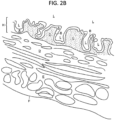
- the urinary bladder ECM hydrogel can be a UBM or a UBS ECM hydrogel, see FIGS. 2A and 2B .
- a urinary bladder ECM such as porcine bladder ECM is prepared by abrading bladder tissue to remove the outer (abluminal) layers including both the tunica serosa, the tunica muscularis, and the tunica submucosa using a longitudinal wiping motion with a scalpel handle and moistened gauze. Following eversion of the tissue segment, the luminal portion of the tunica mucosa is delaminated from the underlying tissue using the same wiping motion. After these tissues are removed, the resulting ECM consists of the tunica lamina intestinal and the overlying basement membrane.
- U.S. Patent No. 6,893,666 also discloses production of ECM from urinary bladder, skin, esophagus and small intestine.
- the ECM is isolated from harvested porcine urinary bladder to prepare urinary bladder matrix (UBM). Excess connective tissue and residual urine are removed from the urinary bladder.
- the tunica serosa, tunica muscularis externa, tunica submucosa and most of the muscularis mucosa can be removed by mechanical abrasion (see above) or by a combination of enzymatic treatment, hydration, and abrasion. Mechanical removal of these tissues can be accomplished by abrasion using a longitudinal wiping motion to remove the outer layers (particularly the abluminal smooth muscle layers) and even the luminal portions of the tunica mucosa (epithelial layers).
- the epithelial cells can be delaminated by first soaking the tissue in a de-epithelializing solution such as hypertonic saline, for example and without limitation, 1.0 N saline, for periods of time ranging from 10 minutes to 4 hours. Exposure to hypertonic saline solution effectively removes the epithelial cells from the underlying basement membrane.
- the tissue remaining after the initial delamination procedure includes epithelial basement membrane and the tissue layers abluminal to the epithelial basement membrane. This tissue is next subjected to further treatment to remove the majority of abluminal tissues but not the epithelial basement membrane.
- the outer serosal, adventitial, smooth muscle tissues, tunica submucosa and most of the muscularis mucosa are removed from the remaining de-epithelialized tissue by mechanical abrasion or by a combination of enzymatic treatment, hydration, and abrasion.
- urinary bladder ECM preparations can also be used in the methods, devices and compositions described herein.
- Commercially available preparations include, but are not limited to MATRISTEM UBM TM (Acell Corporation; Jessup, Md.).
- Urinary bladder ECM can be disinfected by any number of standard techniques, including, but not limited to, exposure to peracetic acid.
- ECM material can then be sterilized by propylene oxide or ethylene oxide treatment, gamma irradiation treatment (0.05 to 4 mRad), gas plasma sterilization, supercritical CO 2 , or electron beam treatment.
- the ECM can also be sterilized by treatment with glutaraldehyde, which causes cross linking of the protein material, but this treatment substantially alters the material such that it is slowly resorbed or not resorbed at all and incites a different type of host remodeling which more closely resembles scar tissue formation or encapsulation rather than constructive remodeling.
- Cross-linking of the protein material can also be induced with carbodiimide or dehydrothermal or photooxidation methods. As disclosed in U.S. Patent No.
- ECM is disinfected by immersion in 0.1% (v/v) peracetic acid (a), 4% (v/v) ethanol, and 96% (v/v) sterile water for 2 h.
- decellularization is performed by various methods, for example and without limitation, exposure to hypertonic saline, peracetic acid, TRITON-X ® or other detergents. Disinfection and decellularization can be simultaneous. For example, and without limitation, disinfection with peracetic acid, described above, also can serve to decellularize the ECM. Decellularized ECM can then be dried, either lyophilized (freeze-dried) or air dried. Dried ECM can be comminuted by methods including, but not limited to, tearing, milling, cutting, grinding, and shearing. The comminuted ECM can also be further processed into a powdered form by methods, for example and without limitation, such as grinding or milling in a frozen or freeze-dried state.
- ECM tissue for use in preparing an ECM hydrogel
- comminuted ECM is digested with an acid protease in an acidic solution to form a digest solution.
- the digest solution of ECM typically is kept at a constant stir for a certain amount of time at room temperature.
- the ECM digest can be used immediately or be stored at -20°C or frozen at, for example and without limitation, -20°C or -80°C.
- the pH of the solution is raised to between 7.2 and 7.8, and according to one embodiment, to pH 7.4.
- Bases such as bases containing hydroxyl ions, including NaOH, can be used to raise the pH of the solution.
- buffers such as an isotonic buffer, including, without limitation, Phosphate Buffered Saline (PBS), can be used to bring the solution to a target pH, or to aid in maintaining the pH and ionic strength of the gel to target levels, such as physiological pH and ionic conditions.
- PBS Phosphate Buffered Saline
- the neutralized digest solution can be gelled at temperatures approaching 37°C, wherein the temperature approaches physiological temperature.
- the method typically does not include a dialysis step prior to gelation, yielding a more-complete ECM-like matrix that typically gels at 37°C at specific rates (see below).
- the ECM is derived from urinary bladder.
- the urinary bladder ECM can be produced from one subject, or from more than one subject, such as 2, 3, or 4 subjects, or from a urinary bladder cell line.
- the ECM can be commercially available urinary bladder ECM.
- the ECM is lyophilized and comminuted.
- the ECM is then solubilized with an acid protease in an acidic solution to produce digested ECM.
- the acid protease may be, without limitation, pepsin or trypsin, or a combination thereof.
- the ECM can then be solubilized at an acid pH suitable or optimal for the protease, such as greater than about pH 2, or between pH and 4, for example in a 0.01M HCl solution.
- ECM hydrogel is prepared by (i) comminuting an extracellular matrix, (ii) solubilizing intact, non-dialyzed or non-cross-linked extracellular matrix by digestion with an acid protease in an acidic solution to produce a digest solution, (iii) raising the pH of the digest solution to a pH between 7.2 and 7.8 to produce a neutralized digest solution (pre-gel solution), and (iv) gelling the solution at a temperature of approximately 37°C within the esophagus of a subject of interest.
- the pre-gel solution and the resulting hydrogel may contain inactivated protease. Any of these urinary bladder ECM hydrogels are of use in in the methods disclosed herein.
- the urinary bladder ECM hydrogel when exposed to temperatures of about 37°C, forms the gel.
- the urinary bladder ECM hydrogel in the "pre-gel” form can be frozen and stored at, for example and without limitation, -20°C or -80°C.
- the urinary bladder ECM hydrogel in the "pre-gel” form can be stored at room temperature, such about 25°C.
- the urinary bladder ECM hydrogel is in the pre-gel form at below 37°C, such as at 25, 24, 23, 22, 21, 20, 19, 18, 17, 16, 15, 14, 13, 12, 11, 10, 9, 8, 7, 6, 5, 4°C.
- the urinary bladder ECM hydrogel can be frozen for storage, and thus, can be stored at below 0°C.
- pre-gel form refers to the urinary bladder ECM hydrogel wherein the pH is increased, but has not gelled.
- a urinary bladder ECM hydrogel in the pre-gel form has a pH between 7.2 and 7.8.
- the urinary bladder ECM hydrogel can be delivered in a pre-gel form to a subject with esophageal inflammation, such as orally, via a catheter, or endoscopically.
- the urinary bladder ECM hydrogel in the pre-gel form is amenable to introduction into the esophagus of a patient. Once introduced submucosally into the esophagus, which is approximately 37°C, the urinary bladder ECM hydrogel gels and creates a cushion of ECM hydrogel between the muscularis intestinal and the submucosa of the esophagus, lifting the submucosa for surgical resection.
- the urinary bladder ECM hydrogel has the following characteristics: a) a time to 50% gelation of less than 20 minutes at a temperature of about 37°C; b) a flow viscosity suitable for infusion into the esophagus; and c) a stiffness of about 10 to about 70 Pa.
- the urinary bladder ECM hydrogel has the following characteristics: a) a time to 50% gelation of less than 20 minutes at a temperature of about 37°C; b) a flow viscosity suitable for infusion into the esophagus; and c) a stiffness of about 10 to about 400 Pascal (Pa).
- the urinary bladder ECM hydrogel is produced by (a) solubilizing acellular extracellular matrix by digestion of urinary bladder with an acid protease in an acidic solution to produce digested ECM; (b) raising the pH of the digested ECM to a pH between 7.2 and 7.8 to produce a neutralized digest solution; (c) diluting the digested ECM to a concentration of about 2 mg/ml to about 16 mg/ml, such as about 8 mg/ml to about 12 mg/ml of the urinary bladder ECM hydrogel. This urinary bladder ECM hydrogel is then introduced into the esophagus of the subject, where it gels.
- the urinary bladder ECM hydrogel of use in the methods disclosed herein have a time to 50% gelation of less than 20 minutes at a temperature of about 37°C, such as less than 19, 18, 17, 16, 15, 14, 13, 12, 11, 10, 9, 8, 7, 6, 5, 4, 3, 2 minutes.
- the urinary bladder ECM hydrogel has a time to 50% gelation of less than 10 minutes at a temperature of about 37°C.
- the time to 50% gelation is about 2 to about 20 minutes at a temperature of about 37°C.
- the time to 50% gelation is about 2 to about 10 minutes at a temperature of about 37°C.
- the time to 50% gelation is about 3 to about 8 minutes at a temperature of about 37°C.
- the disclosed urinary bladder ECM hydrogel can have a flow viscosity suitable for injection into the esophageal submucosal space.
- the urinary bladder ECM hydrogel has a flow viscosity of about 0.1 to about 100 Pa*s at a shear rate of 0.1/s, such as about 0.2, 1, 10, 20, 30, 40, 50, 60, 70, 80, or 90 Pa*s at a sheer rate of 0.1/s.
- the urinary bladder ECM hydrogel has a flow viscosity of about 1 to about 40 Pa*s at a shear rate of 0.1/s, such as about 1, 2, 3, 4, 5, 6, 7, 8, 9, 10, 15, 20, 25, 30, 35, or 40 Pa*s at a shear rate of 0.1/s.
- the urinary bladder ECM hydrogel has a flow viscosity of about 0.01 to about 0.20 Pa*s at a shear rate of 1000/s, or of about 0.01 to about 0.10 Pa*s at a shear rate of 1000/s, such as about 0.01, 0.02, 0.03, 0.04, 0.05, 0.06, 0.07, 0.08, 0.09, 0.10, 0.11, 0.12, 0.13, 0.14, 0.15, 0.16, 0.17, 0.19 or 0.2 at a shear rate of 1000/s.
- the urinary bladder ECM hydrogel has about 0.02 to about 0.8 Pa*s at a shear rate of 100/s, or of about 0.1 to about 0.8 Pa*s at a shear rate of 100/s, such as about 0.1, 0.2, 0.3, 0.4, 0.5, 0.6, 0.7, or 0.8 Pa*s.
- the urinary bladder ECM hydrogel has a flow viscosity of about 10 to about 100 Pa*s at a shear rate of 0.2/s and a flow viscosity of about 0.01 to about 0.10 Pa*s at a shear rate of 1000/s. In some embodiments, the ECM hydrogel has a flow viscosity of 1 to 40 Pa*s at a shear rate of 0.1/s and 0.01 to 0.2 Pa*s at a shear rate of 1000/s.
- the urinary bladder ECM hydrogel has a flow viscosity of about 0.1 to about 25 Pa*s, such as 1 to about 25 Pa*s, or 1 to about 20 Pa*s, or 1 to about 10 Pa*s at a shear rate of 1/s, for example, 0.1, 0.2, 0.3, 0.4, 0.5, 0.6, 0.7, 0.8, 0.9, 1, 2, 3, 4, 5, 6, 7, 8, 9, 10, 11, 12, 13, 14, 15, 20, 25 Pa*s at a shear rate of 1/s.
- the shear rate can be, for example, 5, 10, 15 or 20 Pa*s at a shear rate of 1/s.
- the urinary bladder ECM hydrogel has a flow viscosity of about 0.025 to about 0.6 at a shear rate of 100/s, such as about 0.025, 0.030, 0.035, 0.040, 0.045, 0.050, 0.055, or 0.060 at a shear rate of 100/s.
- the flow viscosity is about 0.1 to about 25 Pa*s at a shear rate of 1/s, and is about 0.02 to about 0.8 Pa*s at a shear rate of 100/s.
- the flow viscosity is about 1 to about 10 Pa*s at a shear rate of 1/s, and is about 0.1 to about 0.3 at a shear rate of 100/s.
- the urinary bladder ECM hydrogel has a flow viscosity of about 10 to about 100 Pa*s at a shear rate of 0.2/s. In other embodiments, the urinary bladder ECM hydrogel has a flow viscosity of about 0.01 to about 0.10 Pa*s at a shear rate of 1000/s. In other embodiments, the urinary bladder ECM hydrogel has a flow viscosity of about 1 to about 40 Pa*s at a shear rate of 0.1/s and is 0.01 to 0.2 Pa*s at a shear rate of 1000/s.
- the urinary bladder ECM hydrogel has a stiffness of about 10 to about 400 Pascal (Pa), such as about 10 to about 70 Pa, about 10 to about 100 Pascal (Pa), or about 10 to about 150 Pa, about 10 to about 200 Pa, or about 10 to about 250 Pa.
- the disclosed urinary bladder ECM hydrogels have a stiffness of about 10, 15, 20, 25, 30, 35, 40, 45, 50, 55, 60, 65, or 70 Pa.
- the disclosed urinary bladder ECM hydrogels have a stiffness of about 10 to about 80, 90, 100, 110, 120, 130, 140, 150, 160, 170, 180, 190, 200, 210, 220, 230, 240, 250, 260, 270, 280, 290, 300, 310, 320, 330, 340, 350, 360, 370, 380, 390, or 400 Pa.
- the disclosed urinary bladder ECM hydrogel can have a stiffness of about 70, 75, 80, 85, 90, 95, 100, 110, 120, 130, 140, 150, 160, 170, 180, 190, 200, 210, 220, 230, 240, 250, 260, 270, 280, 290, 300, 310, 320, 330, 340, 350, 360, 370, 380, 390, 400Pa.
- the urinary bladder ECM concentration in the hydrogel is about 2 mg/ml to about 20 mg/ml, such as about 8 mg/ml to about 12 mg/ml or about 2 mg/ml to about 16 mg/ml. In other embodiments, the urinary bladder ECM concentration in the hydrogel is about 2, 3, 4, 5, 6, 7, 8, 9, 10, 11, 12, 13, 14, 15, or 16 mg/ml. Exemplary concentrations of use include, but are not limited to, about 9 mg/ml to about 11 mg/ml, and about 10 mg/ml to about 12 mg/ml.
- Additional exemplary concentrations include about 8 mg/ml to about 10 mg/ml, about 8 mg/ml to about 11 mg/ml, about 8 mg/ml to about 13 mg/ml, about 8 mg/ml to about 14 mg/ml, about 8 mg/ml to about 15 mg/ml, and about 8 mg/ml to about 16 mg/ml. Further exemplary concentrations of use also include about 6 mg/ml to about 12 mg/ml, about 13 mg/ml, about 14 mg/ml, about 15 mg/ml or about 16 mg/ml.
- Methods for dissecting a mucosa and a submucosa from a muscularis intestinal in the esophagus of a subject, these methods include injecting submucosally into the esophagus a pharmaceutical composition comprising a urinary bladder extracellular matrix (ECM) hydrogel, such as a UBS or a UBM ECM hydrogel, to form a cushion between the submucosa and the underlying muscularis intestinal at the region of the organ.
- ECM urinary bladder extracellular matrix
- the method can be an EMR or an EMD.
- EMR is an endoscopic technique developed for removal of sessile or flat neoplasms confined to the superficial layers (mucosa and submucosa) of the GI tract. EMR is typically used for removal of lesions smaller than 2 cm or piecemeal removal of larger lesions. EMR also plays an important role in the assessment of resected specimens for accurate pathological staging. In contrast to polypectomy, EMR involves the lifting up of a lesion from the muscular layer by injecting a fluid agent, commonly normal saline (NS) solution, into the submucosal layer. EMR is also useful for obtaining specimens for accurate histopathological staging to determine the risk of lymph-node metastasis.
- NS normal saline
- EMR facilitates the complete removal of the affected mucosa by excising through the middle or deeper portion of the gut wall submucosa.
- Various EMR techniques have been described and four methods involving snare resection are commonly used: (1) the inject and cut method; (2) the inject, lift, and cut method; (3) cap-assisted EMR (EMRC); and (4) EMR with ligation (EMRL).
- EMRC cap-assisted EMR
- EMRL EMR with ligation
- the inject and cut technique the diseased mucosa is lifted up from the muscular layer by creating a submucosal fluid cushion, captured, strangulated using an electrosurgical snare, and then resected.
- ESD Endoscopic submucosal dissection
- Lesions are dissected directly along the submucosal layer using an electrosurgical knife, resulting in an en-bloc resection of even large lesions.
- ESD has been predicted to replace conventional surgery in treating certain cancerous stages, but since it has a higher rate of perforation and bleeding complications than conventional EMR, a greater degree of endoscopic skill and experience is required than for EMR.
- ESD can use numerous electrosurgical knives, such as an insulation-tipped diathermic knife, a needle knife, a hook knife, a flex knife, a triangle tipped knife, a flush knife, splash needle, and a small-caliber tip transparent hood.
- ESD electrosurgical current
- a submucosal injection is used in EMR, as injection of fluid into the submucosa cushions facilitates the isolation of the tissue to be removed just before capture of the target lesion, such as with a snare, thereby reducing thermal injury and the risk of perforation and hemorrhage while also facilitating resection.
- Submucosal injection plays an important role in the EMR procedure, as the solution must be retained in place for sufficient duration and needs to form a hemispheric shape to facilitate snaring.
- providing a sufficiently high submucosal elevation results in safe submucosal cutting during the ESD procedure ( Uraoka et al., Drug Design, Development and Therapy 2008:2 131-138 ).
- any cushion retained at the procedure site should have anti-inflammatory properties.
- the urinary bladder ECM hydrogel will mitigate stricture and promote re-epithelialization. The presently disclosed methods also meets this need.
- the disclosed methods utilize an ECM hydrogel that has anti-inflammatory properties, and is inexpensive, non-toxic, easy to inject and provides a high, long-lasting submucosal cushion.
- the ECM hydrogel is administered in the pre-gel form, and then gels at the site of injection to form a cushion.
- the cushion can be dissected during the procedure so that some hydrogel remains on the underlying muscularis propria, thereby aiding healing.
- the disclosed ECM hydrogels facilitate closure of the wound created by removal of the resected mucosa/submucosa.
- the procedure is an ESD.
- the procedure is an EMR.
- endoscopic injection needles are devices which can be long (up to about 230) cm and which include a relatively long catheter within which an inner injection tube having a distal injection needle is slideably disposed.
- a proximal actuating handle is coupled to the catheter and the injection tube for moving one relative to the other when necessary. Fluid access to the injection tube is typically provided via a leer connector on the handle.
- Endoscopic injection needle devices are typically delivered to the injection site through the working channel of the endoscope.
- the handle of the infusion needle device is manipulated to withdraw the distal injection needle into the lumen of the catheter before inserting the device into the endoscope. This prevents exposure of the sharp point of the injection needle as the device is moved through the lumen of the endoscope.
- the distal end of the endoscopic injection needle device is located at the injection site, its handle is again manipulated to move the injection needle distally out of the lumen of the catheter.
- the exposed portion of the injection needle is approximately 4-6 mm in length.
- the ECM in pre-gel form can be delivered through the injection tube and the needle into the injection site, such as between the submucosa and the underlying muscularis propria.
- the injection needle and other accessories commonly used during endoscopic procedures are passed through one or more specific channels of the endoscope, usually called working channels or operating channels.
- the inner diameter of the working channel may vary.
- the most common endoscopes used in GI endoscopy have working channels with inner diameter in the range from about 2 mm to about 5 mm.
- the manufacturers of endoscopic accessories produce accessories having outer diameters which allow them to fit all the working channels.
- the endoscopic injection needles, the outer diameter of catheter ranges from 1.9 mm to 2.3 mm, such as about 1.9, 2.0, 2.1, 2.2 or 2.3cm.
- the inner injection tube is contained in the outer catheter, its internal diameter is usually 1 mm or less.
- the disclosed urinary bladder ECM hydrogels, in the pre-gel form can readily pass through these catheters.
- the urinary bladder ECM hydrogel in pre-gel form, can be used in an endoscopic resection procedure by sucking a volume of emulsion from its primary container by means of a syringe, injecting a suitable volume of said emulsion by means of an endoscopic injection needle inserted in the working channel of the endoscope immediately under the superficial mucosal layer, to depose a liquid volume into the submucosal layer that becomes a cushion when in place: the elevation of the mucosal surface allow the endoscopist to perform an easy resection of the mucosal lesion found during the execution of the endoscopic procedure even if the lesion is flat and thus not protruding into a lumen, such as an esophageal lumen.
- the presence of at least one dye into the cushion can aid an endoscopist to visualize the structures beneath the mucosa (e.g. the submucosal layer and the external muscular wall), thereby lowering the risk that the endoscopist, performing the resection procedure, may cause damages to said structures.
- the use of the dye can allow visualization of the cushion cavity and the mucosal basement.
- the removal of the lesion from the mucosal surface generates a mucosal wound.
- the persistence of the cushion generated by the injected volume of the pharmaceutical composition allows the endoscopic resection procedure to be performed without the need to re-inject.
- the urinary bladder ECM hydrogel in pre-gel form is injected submucosally into the organ of the subject, such as at the region of a lesion or tumor, to form a cushion between the submucosa and the underlying muscularis intestinal at the region of the organ.
- the cushion can be dissected, such that a portion of the urinary bladder ECM hydrogel is maintained on the underlying muscularislitis and aid in the healing process.
- the disclosed methods are of use in the esophagus.
- the organ is the esophagus, and the method comprises a method of dissecting an esophageal carcinoma or adenocarcinoma from the esophagus.
- the method comprises dissecting the mucosa and the submucosa from the esophagus of a subject who has Barrett's esophagus.
- a urinary bladder ECM hydrogel as disclosed herein, is maintained at a temperature at or below which it gels, such as at or below room temperature (e.g., about 25°C).
- the urinary bladder ECM hydrogel can be maintained, for example, at 25°C or 4°C prior to administration.
- An effective amount of the urinary bladder ECM hydrogel, in the pre-gel form, is then administered to the esophagus of the subject.
- the urinary bladder ECM hydrogel can be provided in in a lyophilized or frozen form, and reconstituted just prior to administration to the subject.
- the disclosed methods are of use in any subject, including human and veterinary subjects.
- the subject can be any age.
- a composition including a urinary bladder ECM hydrogel, in pre-gel form is injected in a target tissue of a human to form a cushion which is then optionally subjected to an endoscopic surgical procedure, such as a resection procedure.
- the urinary bladder ECM can be from the same species as the subject being treated, or can be from a different species.
- the subject is human, and the urinary bladder ECM hydrogel is derived from human and/or porcine urinary bladder.
- the urinary bladder ECM hydrogel is derived from a non-human primates, dog, cat, horse, or cow.
- the urinary bladder ECM can also be from a commercial source.
- the disclosed methods are invasive, as they require an injection that dissects a mucosa and a submucosa from a muscularis intestinal tract of a subject.
- Any of the methods disclosed herein can include injecting submucosally into the esophagus of the subject a pharmaceutical composition including a urinary bladder ECM hydrogel to form a cushion between the submucosa and the underlying muscularislitis at the region of the organ.
- the urinary bladder ECM hydrogel has the following characteristics: a) a time to 50% gelation of less than 20 minutes at a temperature of about 37°C; b) a flow viscosity suitable for infusion into the esophagus; and c) a stiffness of about 10 to about 400 Pascal (Pa).
- the urinary bladder ECM hydrogel gels and dissects the mucosa and the submucosa from the underlying muscularislitis and inhibits inflammation in the region of the organ in the subject.
- the urinary bladder ECM hydrogel, in pre-gel form, can be administered endoscopically or via a catheter.
- the resection procedure is an endoscopic mucosal resection or an esophageal endoscopic submucosal dissection
- the method comprises a method of dissecting an esophageal carcinoma or adenocarcinoma from the esophagus.
- the method includes dissecting the mucosa and the submucosa from the esophagus of a patient who has dysplasia.
- the method includes dissecting the mucosa and the submucosa from the esophagus of a subject who has Barrett's esophagus.
- the methods can also include performing an endoscopic resection procedure on the cushion.
- the methods include dividing the cushion such that hydrogel is retained on the underlying muscularis intestinal of the organ and the mucosa and the submucosa are removed from the region of the organ.
- the portion of the hydrogel cushion that is retained on the underlying muscularis basement downregulates pro-inflammatory macrophage activation in this tissue.
- the time to 50% gelation of the hydrogel is than 20 minutes at a temperature of about 37°C. In some specific non-limiting example, the time to 50% gelation is about 2 to about 20 minutes at about 37°C. In other specific non-limiting examples, the time to 50% gelation is about 2 to about 10 minutes at about 37°C. In further non-limiting examples, the time to 50% gelation is about 3 to about 8 minutes.
- the flow viscosity in pre-gel form is sufficient for injection into the esophagus.
- the flow viscosity of the urinary bladder ECM hydrogel is about 0.1 to about 100 Pa*s at a shear rate of about 0.1/s and is about 0.01 to about 0.2 Pa*s at a shear rate of 1000/s.
- the flow viscosity is about 0.1 to about 25 Pa*s at a shear rate of 1/s, and is about 0.02 to about 0.8 Pa*s at a shear rate of about 100/s.
- the urinary bladder ECM hydrogel has stiffness when introduced into the tissue of about 10 to about 400 Pascal (Pa); wherein the ECM hydrogel has a stiffness of 10-70 Pa.
- the ECM concentration in the hydrogel is 2 mg/ml to about 16 mg/ml.
- the urinary bladder ECM hydrogel can be produced by any method disclosed herein.
- the ECM hydrogel is produced by (a) solubilizing decellularized extracellular matrix (ECM) by digestion of tissue with an acid protease in an acidic solution to produce digested ECM; and (b) raising the pH of the digested esophageal ECM to a pH between 7.2 and 7.8 to produce a neutralized digest solution.
- step (b) raising the pH of the digested ECM includes adding a base or an isotonic buffer to raise the pH of the digested ECM.
- an acid protease is used, such as pepsin, trypsin or a combination thereof.
- the urinary bladder ECM hydrogel is maintained at or below 25°C prior to administration to the subject.
- the ECM hydrogel is maintained at about 4°C to about 28°C, such as about 4, 5, 6, 7, 8, 9, 10, 11, 12, 13, 14, 15, 16, 17, 18, 19, 20, 21, 22, 23, 24, 25, 26, 27 or 28°C.
- the ECM hydrogel can be maintained at about 4°C, and used at about 4°C to about 25°C, or warmed to just about 25°C, just prior to use.
- controlling temperature ensure that the ECM hydrogel is maintained in its pre-gel form, and thus is suitable for injection between the submucosa and the underlying muscularislitis.
- the hydrogel gel upon administration to the subject, such as when reaching a temperature of, for example, 37°C.
- ELEVIEW TM and urinary bladder ECM hydrogels are different biomaterials.
- ELEVIEW TM (Aries Pharmaceuticals, Inc, Dublin, Ireland) is a commercially available low viscosity emulsion of Poloxamer 188 clinically used to provide submucosal lift for EMR and ESD procedures.
- ELEVIEW TM does not form a stably formed hydrogel at 37°C, but rather remains a liquid over an hour at 37°C.
- urinary bladder ECM (prepared according to the method disclosed herein, i.e., by protease digestion of ECM) forms a hydrogel that is stably formed at 37°C (body temperature).
- Urinary bladder ECM hydrogels can be injected underneath the mucosa. An ideal biomaterial would adhere to both layers. Urinary bladder ECM hydrogels have strong mucoadhesive properties, and beneficial biological properties. A urinary bladder ECM hydrogel can be effectively used as a submucosal cushion in vivo, and thus can be used to dissect the submucosa from the underlying muscularis propria.
- the UBM was stored in Type I water at 4°C overnight and decellularized using 0.1% peracetic acid (PAA) in 4% ethanol for 4h, and 15 min washes of PBS, Type 1 water, PBS, and Type 1 water to create UBM. All decellularization steps were performed at room temperature agitated on a shaker plate at 300 rpm.
- PAA peracetic acid
- Urinary bladder ECM hydrogel formation UBM was lyophilized and powdered using a Wiley mill, and 10 mg/mL of powdered ECM was digested by pepsin (1 mg/mL) in 0.01 M HCl for 48 hours at room temperature. ECM digests and pepsin control were stored at -20°C until use. On the day of the experiment, ECM digests and pepsin control were neutralized with 0.1 M NaOH (1/10 volume of pre-gel solution), 10x PBS at pH 7.4 (1/9 volume of the pre-gel solution) at 4°C and diluted to 5 mg/mL ECM concentration using ice-cold 1x PBS at 4°C. See Freytes et al.. Biomaterials 29(11): p. 1630-7. 2008 .
- Rheology The viscoelastic properties of urinary bladder ECM were determined with a temperature-controlled, 40 mm parallel plate rheometer (AR2000). The samples were kept at 4°C and loaded onto the rheometer with a parallel plate geometry pre-cooled to 10 °C. Mineral oil was used to seal the sample-plate interface and to minimize evaporation during the testing. A series of rheological tests were conducted for each sample in sequence. A steady state flow curve at 10°C was performed to determine the viscosity profile of the samples at a range of shear rates (0.1-1000 s -1 ).
- ECM submucosal fluid cushion for EMR: Anesthesia was induced with Acepromazine (0.01 mg/kg, SC) and ketamine (5-11 mg/kg), and surgical plane anesthesia maintained with 1-5% Isofluorane via endotracheal tube. Throughout the procedure and immediate post-operative period, animals were administered 2 ml/kg/h of lactated Ringer's solution I.V. Temperature was controlled through warm water recirculating heating pads placed under the animal. Physiologic parameters such as heart, respiration rate, body temperature, and responsiveness were monitored during the procedure. Antibiotic prophylaxis with 25mg/kg of Cefazolin was administered before starting the procedure.
- the animal was placed in supine position with and a Pentax EG3430K endoscope was used to evaluate the esophagus. Distance from the mouth to the GE junction was measured. After identifying reference points in the esophagus the mucosa and submucosa at the site of excision were separated by with injection blue-dyed Urinary Bladder Matrix - hydrogel at 8mg/ml using a Olympus Injectorforce 4mm 23G needle, at 4°C. This temperature was maintained at all times to prevent gelation and potential plugging of the needle. Approximately 2-5 ml of blue gel were injected per site.
- the urinary bladder ECM-hydrogel was deliverable through a long endoscopic needle without any resistance. Elevation of the mucosa was successfully achieved and maintained to facilitate the EMR procedure and the blue dye was visible indicating the places were the dissection had been created for removal ( FIG. 1A ). Tissue was easily removed with the use of the snare. Upon macroscopic observation, the removed esophageal mucosal tissue included part of the gel ( FIG. 1B ). The blue dye in the hydrogel appeared to diffuse across the circumference of the esophagus after removing the mucosa and a full-circumferential was achieved with the use of the hydrogel ( FIG. 1C ).
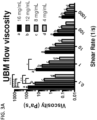
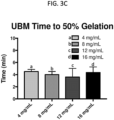
- Viscoelastic properties of UBM are shown in FIG. 3 .
- a steady state flow curve similarly performed as described for UBM ( FIG. 3A ) show a concentration-dependent increase in viscosity with increasing ECM concentration and shear-thinning profiles of the UBM hydrogel i.e., viscosity decreases with increasing shear rate for each ECM concentration.
- UBM ECM ( FIG. 3B ) showed increasing storage modulus (stiffness) with increasing ECM.
- UBM showed a storage modulus (G') that is ⁇ an order of magnitude greater than the loss modulus (G") at each ECM concentration, following the definition of a stably formed ECM hydrogel ( Freytes et al., Biomaterials, 2008. 29(11): p. 1630-7 ).
- UBM showed concentration-independent gelation times, i.e. gelation time remained constant for all ECM concentrations ( FIG. 3C ).
Landscapes
- Health & Medical Sciences (AREA)
- Life Sciences & Earth Sciences (AREA)
- Chemical & Material Sciences (AREA)
- Veterinary Medicine (AREA)
- Public Health (AREA)
- General Health & Medical Sciences (AREA)
- Animal Behavior & Ethology (AREA)
- Epidemiology (AREA)
- Oral & Maxillofacial Surgery (AREA)
- Transplantation (AREA)
- Medicinal Chemistry (AREA)
- Dermatology (AREA)
- Engineering & Computer Science (AREA)
- Biomedical Technology (AREA)
- Chemical Kinetics & Catalysis (AREA)
- Botany (AREA)
- Urology & Nephrology (AREA)
- Molecular Biology (AREA)
- Vascular Medicine (AREA)
- Dispersion Chemistry (AREA)
- Biophysics (AREA)
- Zoology (AREA)
- General Chemical & Material Sciences (AREA)
- Heart & Thoracic Surgery (AREA)
- Surgery (AREA)
- Materials For Medical Uses (AREA)
- Medicinal Preparation (AREA)
- Enzymes And Modification Thereof (AREA)
- Micro-Organisms Or Cultivation Processes Thereof (AREA)
- Peptides Or Proteins (AREA)
Applications Claiming Priority (2)
| Application Number | Priority Date | Filing Date | Title |
|---|---|---|---|
| US201862688191P | 2018-06-21 | 2018-06-21 | |
| PCT/US2019/038320 WO2019246447A1 (en) | 2018-06-21 | 2019-06-20 | Use of a urinary bladder ecm hydrogel as an esophageal submucosal fluid cushion |
Publications (3)
| Publication Number | Publication Date |
|---|---|
| EP3810213A1 EP3810213A1 (en) | 2021-04-28 |
| EP3810213A4 EP3810213A4 (en) | 2022-03-23 |
| EP3810213B1 true EP3810213B1 (en) | 2025-02-19 |
Family
ID=68983343
Family Applications (1)
| Application Number | Title | Priority Date | Filing Date |
|---|---|---|---|
| EP19822682.1A Active EP3810213B1 (en) | 2018-06-21 | 2019-06-20 | Use of a urinary bladder ecm hydrogel as an esophageal submucosal fluid cushion |
Country Status (9)
| Country | Link |
|---|---|
| US (1) | US12605489B2 (https=) |
| EP (1) | EP3810213B1 (https=) |
| JP (2) | JP2021527518A (https=) |
| KR (1) | KR20210022717A (https=) |
| CN (2) | CN115671410B (https=) |
| AU (2) | AU2019288591B2 (https=) |
| CA (1) | CA3103973A1 (https=) |
| ES (1) | ES3009946T3 (https=) |
| WO (1) | WO2019246447A1 (https=) |
Families Citing this family (5)
| Publication number | Priority date | Publication date | Assignee | Title |
|---|---|---|---|---|
| ES2945740T3 (es) | 2017-05-05 | 2023-07-06 | Univ Pittsburgh Commonwealth Sys Higher Education | Aplicaciones oculares de vesículas unidas a matriz (MBV) |
| ES2966711T3 (es) | 2018-06-21 | 2024-04-23 | Univ Pittsburgh Commonwealth Sys Higher Education | Hidrogel de matriz extracelular (ECM) como almohadilla líquida submucosa |
| CN115671410B (zh) | 2018-06-21 | 2024-06-18 | 联邦高等教育系统匹兹堡大学 | 膀胱ecm水凝胶作为食管粘膜下层流体垫的用途 |
| AU2020235627B2 (en) | 2019-03-13 | 2026-01-08 | University Of Pittsburgh - Of The Commonwealth System Of Higher Education | Acoustic extracellular matrix hydrogels and their use |
| CN116063684A (zh) * | 2023-04-03 | 2023-05-05 | 中日友好医院(中日友好临床医学研究所) | 一种应用于内镜粘膜下剥离技术的注射水凝胶及其制备方法 |
Family Cites Families (92)
| Publication number | Priority date | Publication date | Assignee | Title |
|---|---|---|---|---|
| US4978668A (en) | 1986-09-02 | 1990-12-18 | Purdue Research Foundation | Treatment to reduce ischemic tissue injury |
| US4956178A (en) | 1988-07-11 | 1990-09-11 | Purdue Research Foundation | Tissue graft composition |
| US4902508A (en) | 1988-07-11 | 1990-02-20 | Purdue Research Foundation | Tissue graft composition |
| US5007927A (en) | 1989-10-24 | 1991-04-16 | Purdue Research Foundation | Muscle-powered cardiac assist device |
| US5281422A (en) | 1991-09-24 | 1994-01-25 | Purdue Research Foundation | Graft for promoting autogenous tissue growth |
| US5354274A (en) | 1992-08-20 | 1994-10-11 | Methodist Hospital Of Indiana, Inc. | Device for oral administration of liquids |
| US5275826A (en) | 1992-11-13 | 1994-01-04 | Purdue Research Foundation | Fluidized intestinal submucosa and its use as an injectable tissue graft |
| US6653291B1 (en) | 1992-11-13 | 2003-11-25 | Purdue Research Foundation | Composition and method for production of transformed cells |
| US5352463A (en) | 1992-11-13 | 1994-10-04 | Badylak Steven F | Tissue graft for surgical reconstruction of a collagenous meniscus and method therefor |
| US5641518A (en) | 1992-11-13 | 1997-06-24 | Purdue Research Foundation | Method of repairing bone tissue |
| CA2188563C (en) | 1994-04-29 | 2005-08-02 | Andrew W. Buirge | Stent with collagen |
| US6475232B1 (en) | 1996-12-10 | 2002-11-05 | Purdue Research Foundation | Stent with reduced thrombogenicity |
| US6485723B1 (en) | 1995-02-10 | 2002-11-26 | Purdue Research Foundation | Enhanced submucosal tissue graft constructs |
| US5695998A (en) | 1995-02-10 | 1997-12-09 | Purdue Research Foundation | Submucosa as a growth substrate for islet cells |
| JPH11508151A (ja) | 1995-04-07 | 1999-07-21 | パーデュー・リサーチ・ファウンデーション | 膀胱再建方法及び膀胱再建用組織グラフト |
| US5554389A (en) | 1995-04-07 | 1996-09-10 | Purdue Research Foundation | Urinary bladder submucosa derived tissue graft |
| US5711969A (en) | 1995-04-07 | 1998-01-27 | Purdue Research Foundation | Large area submucosal tissue graft constructs |
| CA2160647C (en) | 1995-10-16 | 2002-05-28 | Thomas William Garay | Helical bearing anchor catcher |
| US5755791A (en) | 1996-04-05 | 1998-05-26 | Purdue Research Foundation | Perforated submucosal tissue graft constructs |
| WO1998022158A2 (en) | 1996-08-23 | 1998-05-28 | Cook Biotech, Incorporated | Graft prosthesis, materials and methods |
| AU731768B2 (en) | 1996-09-16 | 2001-04-05 | Purdue Research Foundation | Composition and method for repairing neurological tissue |
| US6096347A (en) | 1996-11-05 | 2000-08-01 | Purdue Research Foundation | Myocardial graft constructs |
| AU732726B2 (en) | 1996-12-10 | 2001-04-26 | Purdue Research Foundation | Biomaterial derived from vertebrate liver tissue |
| US6696270B2 (en) | 1996-12-10 | 2004-02-24 | Purdue Research Foundation | Gastric submucosal tissue as a novel diagnostic tool |
| WO1998025549A1 (en) | 1996-12-10 | 1998-06-18 | Purdue Research Foundation | Artificial vascular valves |
| JP4074666B2 (ja) | 1996-12-10 | 2008-04-09 | クック バイオテック、インク. | 精製粘膜下組織からの管状移植片 |
| US6375989B1 (en) | 1996-12-10 | 2002-04-23 | Purdue Research Foundation | Submucosa extracts |
| WO1998025636A1 (en) | 1996-12-10 | 1998-06-18 | Purdue Research Foundation | Stomach submucosa derived tissue graft |
| EP1011699B1 (en) | 1997-09-11 | 2001-12-05 | Purdue Research Foundation | Galactosidase modified submucosal tissue |
| AU759272B2 (en) | 1998-12-01 | 2003-04-10 | Medical College Of Ohio At Toledo | Submucosa modulation of mammalian immune response |
| US6918396B1 (en) | 1998-12-01 | 2005-07-19 | Purdue Research Foundation | Method for vocal cord reconstruction |
| US6576265B1 (en) | 1999-12-22 | 2003-06-10 | Acell, Inc. | Tissue regenerative composition, method of making, and method of use thereof |
| US20040043006A1 (en) | 2002-08-27 | 2004-03-04 | Badylak Stephen F. | Tissue regenerative composition |
| US6579538B1 (en) | 1999-12-22 | 2003-06-17 | Acell, Inc. | Tissue regenerative compositions for cardiac applications, method of making, and method of use thereof |
| WO2003059284A2 (en) | 2002-01-11 | 2003-07-24 | Purdue Research Foundation | Composition and method for inhibiting hypersensitivity |
| AU2003202264A1 (en) | 2002-01-11 | 2003-07-30 | Clarian Health Partners, Inc. | Composition and method for inhibiting hypersensitivity |
| WO2003092604A2 (en) | 2002-05-02 | 2003-11-13 | Purdue Research Foundation | Vascularization enhanced graft constructs |
| US20040187877A1 (en) | 2002-12-04 | 2004-09-30 | Badylak Stephen F. | Method for repair of liver tissue |
| US20040191226A1 (en) | 2002-12-04 | 2004-09-30 | Badylak Stephen F. | Method for repair of body wall |
| US20040175366A1 (en) | 2003-03-07 | 2004-09-09 | Acell, Inc. | Scaffold for cell growth and differentiation |
| US20040176855A1 (en) | 2003-03-07 | 2004-09-09 | Acell, Inc. | Decellularized liver for repair of tissue and treatment of organ deficiency |
| AU2004253508A1 (en) | 2003-06-25 | 2005-01-13 | Acell, Inc. | Conditioned matrix compositions for tissue restoration |
| DE112004001553T5 (de) | 2003-08-25 | 2006-08-10 | Cook Biotech, Inc., West Lafayette | Verpflanzungsmaterialien, die bioaktive Substanzen enthalten, und Methoden zu deren Herstellung |
| US7909809B2 (en) | 2004-09-27 | 2011-03-22 | Boston Scientific Scimed, Inc. | Devices and methods for agent-assisted medical procedures |
| AU2006265682A1 (en) | 2005-07-01 | 2007-01-11 | University Of Pittsburgh | Wound healing polymeric networks |
| WO2007084278A2 (en) | 2006-01-06 | 2007-07-26 | University Of Pittsburgh-Of The Commonwealth System Of Higher Education | Extracellular matrix based gastroesophageal junction reinforcement device |
| US8535719B2 (en) | 2006-07-07 | 2013-09-17 | University Of Pittsburgh - Of The Commonwealth System Of Higher Education | Biohybrid elastomeric scaffolds and methods of use thereof |
| CN101636181A (zh) | 2006-12-11 | 2010-01-27 | 莫尔研究应用有限公司 | 形成水凝胶的新颖的可注入壳聚糖混合物 |
| WO2008109407A2 (en) | 2007-03-02 | 2008-09-12 | University Of Pittsburgh-Of The Commonwealth System Of Higher Education | Extracellular matrix-derived gels and related methods |
| AU2008352542B2 (en) * | 2008-03-14 | 2013-07-18 | Cook Biotech Incorporated | Graft materials and methods for staged delivery of bioactive components |
| WO2009137755A2 (en) | 2008-05-09 | 2009-11-12 | University Of Pittsburgh- Commonwealth System Of Higher Education | Biologic matrix for cardiac repair |
| US9277999B2 (en) | 2009-02-27 | 2016-03-08 | University of Pittsburgh—of the Commonwealth System of Higher Education | Joint bioscaffolds |
| WO2011044443A2 (en) | 2009-10-09 | 2011-04-14 | University Of Pittsburgh-Of The Commonwealth System Of Higher Education | Matricryptic ecm peptides for tissue reconstruction |
| US9814744B2 (en) | 2009-12-22 | 2017-11-14 | University of Pittsburg—Of the Commonwealth System of Higher Education | Decellularized adipose cell growth scaffold |
| CA2789671C (en) | 2010-02-19 | 2016-10-25 | Cook Medical Technologies Llc | Apparatus and method for endoscopic submucosal dissection |
| WO2012024390A2 (en) | 2010-08-17 | 2012-02-23 | University Of Pittsburgh - Of The Commonwealth System Of Higher Education | Biohybrid composite scaffold |
| WO2013009595A2 (en) * | 2011-07-08 | 2013-01-17 | University Of Pittsburgh - Of The Commonwealth System Of Higher Education | Injectable cns-derived ecm for tissue reconstruction |
| EP2968651B1 (en) | 2013-03-15 | 2020-10-21 | Cook Medical Technologies LLC | Adhesive medical products and methods for treating gastrointestinal lesions |
| ES2703785T3 (es) | 2013-04-08 | 2019-03-12 | Regentys Corp | Método y composición para tratar una enfermedad inflamatoria intestinal sin colectomía |
| CN105358094B (zh) | 2013-05-29 | 2017-07-18 | 玛格凯斯有限公司 | 诸如失禁装置的尿液流动控制装置 |
| US9861662B2 (en) | 2013-07-03 | 2018-01-09 | University of Pittsburgh—of the Commonwealth System of Higher Education | Bone-derived extra cellular matrix gel |
| ITMI20131924A1 (it) | 2013-11-20 | 2015-05-21 | Cosmo Technologies Ltd | Emulsions or microemulsions for use in endoscopic mucosal resectioning and/or endoscopic submucosal dissection emulsioni o microemulsioni per uso nella resezione mucosale endoscopica e/o dissezione submucosale endoscopica |
| ITMI20131927A1 (it) | 2013-11-20 | 2015-05-21 | Cosmo Technologies Ltd | Emulsions or microemulsions for use in endoscopic mucosal resectioning and/or endoscopic submucosal dissection. emulsioni o microemulsioni per uso nella resezione mucosale endoscopica e/o dissezione submucosale endoscopica |
| HK1225745A1 (zh) * | 2013-11-30 | 2017-09-15 | 新加坡科技研究局 | 自组装肽、肽模拟物和肽缀合物作为构件用於生物制造和打印 |
| CN104689380A (zh) * | 2013-12-10 | 2015-06-10 | 复旦大学 | 一种由物理交联水凝胶构成的黏膜下注射材料及其应用 |
| CN104689381A (zh) | 2013-12-10 | 2015-06-10 | 复旦大学 | 一种消化道黏膜下注射的水凝胶组合物及其应用 |
| US10286119B2 (en) | 2014-01-24 | 2019-05-14 | University of Pittsburgh—of the Commonwealth System of Higher Education | Extracellular matrix mesh coating |
| EP3698815B1 (en) | 2014-03-21 | 2024-02-21 | University of Pittsburgh- Of the Commonwealth System of Higher Education | Terminally sterilized hydrogel derived from extracellular matrix |
| WO2015164728A1 (en) | 2014-04-24 | 2015-10-29 | University Of Pittsburgh - Of The Commonwealth System Of Higher Education | Fractionating extracellular matrix to modulate bioactivity and the host response |
| EP3302509B1 (en) | 2015-05-29 | 2024-01-24 | Lifenet Health | Placenta-derived matrix and methods of preparing and use thereof |
| WO2017011299A1 (en) | 2015-07-10 | 2017-01-19 | University Of Pittsburgh-Of The Commonwealth System Of Higher Education | Methods of preparing ecm scaffolds and hydrogels from colon |
| EP3347063B1 (en) | 2015-09-10 | 2025-11-19 | University of Pittsburgh - of the Commonwealth System of Higher Education | Bi-layer extra cellular matrix scaffolds and uses therefor |
| EP3349814B1 (en) | 2015-09-18 | 2021-03-17 | University of Pittsburgh- Of the Commonwealth System of Higher Education | Non-gelling soluble extracellular matrix with biological activity |
| US11406736B2 (en) | 2016-01-13 | 2022-08-09 | University of Pittsburgh—Of the Commonwealth Systems of Higher Education | Vascular extracellular matrix hydrogel |
| ES2965061T3 (es) | 2016-03-02 | 2024-04-10 | Univ Pittsburgh Commonwealth Sys Higher Education | Nanovesículas unidas a matriz y su uso |
| US11389566B2 (en) | 2016-03-14 | 2022-07-19 | Regentys Corporation | Method and composition for treating inflammatory bowel disease |
| EP3435975B1 (en) * | 2016-04-01 | 2021-09-15 | Boston Scientific Scimed, Inc. | Injectable compositions and methods of preparation and use thereof |
| CN105920669B (zh) | 2016-04-25 | 2019-03-29 | 上海卓阮医疗科技有限公司 | 一种复合细胞外基质成分生物材料 |
| CN109996553A (zh) | 2016-06-27 | 2019-07-09 | 立美基股份有限公司 | 用于在内窥镜剥离术后预防食管狭窄的自组装肽基质 |
| CN109715091A (zh) | 2016-08-19 | 2019-05-03 | 雷金蒂斯公司 | 用于粘膜组织的组织重建的细胞外基质 |
| JP7007086B2 (ja) | 2016-11-17 | 2022-01-24 | 地方独立行政法人東京都立産業技術研究センター | 粘膜下局注用コラーゲンゾル |
| US20200138711A1 (en) | 2017-01-12 | 2020-05-07 | Universite De Strasbourg | Injectable hydrogels and uses thereof |
| ES2957291T3 (es) * | 2017-03-02 | 2024-01-16 | Univ Pittsburgh Commonwealth Sys Higher Education | Hidrogel de ECM para el tratamiento de la inflamación esofágica |
| AU2018226871B2 (en) | 2017-03-02 | 2023-08-10 | University Of Pittsburgh - Of The Commonwealth System Of Higher Education | Extracellular matrix (ECM) hydrogel and soluble fraction thereof for the treatment of cancer |
| CN106924809B (zh) * | 2017-03-20 | 2020-06-23 | 北京华信佳音医疗科技发展有限责任公司 | 一种i型胶原蛋白及液态黏膜下填充剂 |
| US11389569B2 (en) | 2017-04-03 | 2022-07-19 | University of Pittsburgh—of the Commonwealth System of Higher Education | Biodegradable, porous, thermally responsive injectable hydrogel as soft tissue defect filler |
| ES2945740T3 (es) | 2017-05-05 | 2023-07-06 | Univ Pittsburgh Commonwealth Sys Higher Education | Aplicaciones oculares de vesículas unidas a matriz (MBV) |
| WO2018227187A1 (en) | 2017-06-09 | 2018-12-13 | The Regents Of The University Of California | Catheter injectable cyclic peptide pro-gelators for myocardial tissue engineering |
| US12329883B2 (en) | 2017-10-24 | 2025-06-17 | Davol Inc. | Soft tissue repair implants comprising hydroxybutyrate |
| CN115444993B (zh) | 2018-06-21 | 2024-03-29 | 联邦高等教育系统匹兹堡大学 | 细胞外基质(ecm)水凝胶作为食管粘膜下流体垫的用途 |
| ES2966711T3 (es) | 2018-06-21 | 2024-04-23 | Univ Pittsburgh Commonwealth Sys Higher Education | Hidrogel de matriz extracelular (ECM) como almohadilla líquida submucosa |
| CN115671410B (zh) | 2018-06-21 | 2024-06-18 | 联邦高等教育系统匹兹堡大学 | 膀胱ecm水凝胶作为食管粘膜下层流体垫的用途 |
-
2019
- 2019-06-20 CN CN202210918605.3A patent/CN115671410B/zh active Active
- 2019-06-20 AU AU2019288591A patent/AU2019288591B2/en active Active
- 2019-06-20 JP JP2020570866A patent/JP2021527518A/ja active Pending
- 2019-06-20 US US17/254,013 patent/US12605489B2/en active Active
- 2019-06-20 CN CN201980041877.6A patent/CN112334164B/zh active Active
- 2019-06-20 ES ES19822682T patent/ES3009946T3/es active Active
- 2019-06-20 WO PCT/US2019/038320 patent/WO2019246447A1/en not_active Ceased
- 2019-06-20 CA CA3103973A patent/CA3103973A1/en active Pending
- 2019-06-20 EP EP19822682.1A patent/EP3810213B1/en active Active
- 2019-06-20 KR KR1020217002120A patent/KR20210022717A/ko not_active Ceased
-
2024
- 2024-03-15 JP JP2024040848A patent/JP2024060076A/ja active Pending
- 2024-09-09 AU AU2024219503A patent/AU2024219503A1/en active Pending
Also Published As
| Publication number | Publication date |
|---|---|
| WO2019246447A1 (en) | 2019-12-26 |
| CN112334164B (zh) | 2022-08-19 |
| AU2024219503A1 (en) | 2024-09-26 |
| JP2021527518A (ja) | 2021-10-14 |
| KR20210022717A (ko) | 2021-03-03 |
| US12605489B2 (en) | 2026-04-21 |
| ES3009946T3 (en) | 2025-03-31 |
| EP3810213A1 (en) | 2021-04-28 |
| CN112334164A (zh) | 2021-02-05 |
| EP3810213A4 (en) | 2022-03-23 |
| JP2024060076A (ja) | 2024-05-01 |
| CN115671410A (zh) | 2023-02-03 |
| AU2019288591A1 (en) | 2021-02-04 |
| AU2019288591B2 (en) | 2024-06-13 |
| US20210268148A1 (en) | 2021-09-02 |
| CN115671410B (zh) | 2024-06-18 |
| CA3103973A1 (en) | 2019-12-26 |
Similar Documents
| Publication | Publication Date | Title |
|---|---|---|
| EP3810213B1 (en) | Use of a urinary bladder ecm hydrogel as an esophageal submucosal fluid cushion | |
| US12383243B2 (en) | Extracellular matrix (ECM) hydrogel as a submucosal fluid cushion | |
| US20220331486A1 (en) | Use of an extracellular matrix (ecm) hydrogel as an esophageal submucosal fluid cushion | |
| HK40040022B (en) | Use of a urinary bladder ecm hydrogel as an esophageal submucosal fluid cushion | |
| HK40040022A (en) | Use of a urinary bladder ecm hydrogel as an esophageal submucosal fluid cushion | |
| HK40040023A (en) | Extracellular matrix (ecm) hydrogel as a submucosal fluid cushion | |
| HK40040023B (en) | Extracellular matrix (ecm) hydrogel as a submucosal fluid cushion |
Legal Events
| Date | Code | Title | Description |
|---|---|---|---|
| STAA | Information on the status of an ep patent application or granted ep patent |
Free format text: STATUS: THE INTERNATIONAL PUBLICATION HAS BEEN MADE |
|
| PUAI | Public reference made under article 153(3) epc to a published international application that has entered the european phase |
Free format text: ORIGINAL CODE: 0009012 |
|
| STAA | Information on the status of an ep patent application or granted ep patent |
Free format text: STATUS: REQUEST FOR EXAMINATION WAS MADE |
|
| 17P | Request for examination filed |
Effective date: 20210113 |
|
| AK | Designated contracting states |
Kind code of ref document: A1 Designated state(s): AL AT BE BG CH CY CZ DE DK EE ES FI FR GB GR HR HU IE IS IT LI LT LU LV MC MK MT NL NO PL PT RO RS SE SI SK SM TR |
|
| AX | Request for extension of the european patent |
Extension state: BA ME |
|
| REG | Reference to a national code |
Ref country code: HK Ref legal event code: DE Ref document number: 40040022 Country of ref document: HK |
|
| DAV | Request for validation of the european patent (deleted) | ||
| DAX | Request for extension of the european patent (deleted) | ||
| A4 | Supplementary search report drawn up and despatched |
Effective date: 20220218 |
|
| RIC1 | Information provided on ipc code assigned before grant |
Ipc: A61K 35/12 20150101ALI20220211BHEP Ipc: A61L 31/14 20060101ALI20220211BHEP Ipc: A61L 31/04 20060101ALI20220211BHEP Ipc: A61L 24/10 20060101ALI20220211BHEP Ipc: A61L 24/04 20060101ALI20220211BHEP Ipc: A61L 24/00 20060101AFI20220211BHEP |
|
| P01 | Opt-out of the competence of the unified patent court (upc) registered |
Effective date: 20230510 |
|
| STAA | Information on the status of an ep patent application or granted ep patent |
Free format text: STATUS: EXAMINATION IS IN PROGRESS |
|
| 17Q | First examination report despatched |
Effective date: 20230711 |
|
| GRAP | Despatch of communication of intention to grant a patent |
Free format text: ORIGINAL CODE: EPIDOSNIGR1 |
|
| STAA | Information on the status of an ep patent application or granted ep patent |
Free format text: STATUS: GRANT OF PATENT IS INTENDED |
|
| INTG | Intention to grant announced |
Effective date: 20240412 |
|
| GRAJ | Information related to disapproval of communication of intention to grant by the applicant or resumption of examination proceedings by the epo deleted |
Free format text: ORIGINAL CODE: EPIDOSDIGR1 |
|
| STAA | Information on the status of an ep patent application or granted ep patent |
Free format text: STATUS: EXAMINATION IS IN PROGRESS |
|
| INTC | Intention to grant announced (deleted) | ||
| GRAP | Despatch of communication of intention to grant a patent |
Free format text: ORIGINAL CODE: EPIDOSNIGR1 |
|
| STAA | Information on the status of an ep patent application or granted ep patent |
Free format text: STATUS: GRANT OF PATENT IS INTENDED |
|
| INTG | Intention to grant announced |
Effective date: 20240910 |
|
| GRAS | Grant fee paid |
Free format text: ORIGINAL CODE: EPIDOSNIGR3 |
|
| GRAA | (expected) grant |
Free format text: ORIGINAL CODE: 0009210 |
|
| STAA | Information on the status of an ep patent application or granted ep patent |
Free format text: STATUS: THE PATENT HAS BEEN GRANTED |
|
| AK | Designated contracting states |
Kind code of ref document: B1 Designated state(s): AL AT BE BG CH CY CZ DE DK EE ES FI FR GB GR HR HU IE IS IT LI LT LU LV MC MK MT NL NO PL PT RO RS SE SI SK SM TR |
|
| REG | Reference to a national code |
Ref country code: GB Ref legal event code: FG4D |
|
| REG | Reference to a national code |
Ref country code: CH Ref legal event code: EP |
|
| REG | Reference to a national code |
Ref country code: IE Ref legal event code: FG4D |
|
| REG | Reference to a national code |
Ref country code: DE Ref legal event code: R096 Ref document number: 602019066246 Country of ref document: DE |
|
| REG | Reference to a national code |
Ref country code: NL Ref legal event code: FP |
|
| REG | Reference to a national code |
Ref country code: ES Ref legal event code: FG2A Ref document number: 3009946 Country of ref document: ES Kind code of ref document: T3 Effective date: 20250331 |
|
| PGFP | Annual fee paid to national office [announced via postgrant information from national office to epo] |
Ref country code: NL Payment date: 20250526 Year of fee payment: 7 |
|
| PG25 | Lapsed in a contracting state [announced via postgrant information from national office to epo] |
Ref country code: RS Free format text: LAPSE BECAUSE OF FAILURE TO SUBMIT A TRANSLATION OF THE DESCRIPTION OR TO PAY THE FEE WITHIN THE PRESCRIBED TIME-LIMIT Effective date: 20250519 |
|
| PG25 | Lapsed in a contracting state [announced via postgrant information from national office to epo] |
Ref country code: FI Free format text: LAPSE BECAUSE OF FAILURE TO SUBMIT A TRANSLATION OF THE DESCRIPTION OR TO PAY THE FEE WITHIN THE PRESCRIBED TIME-LIMIT Effective date: 20250219 |
|
| PG25 | Lapsed in a contracting state [announced via postgrant information from national office to epo] |
Ref country code: PL Free format text: LAPSE BECAUSE OF FAILURE TO SUBMIT A TRANSLATION OF THE DESCRIPTION OR TO PAY THE FEE WITHIN THE PRESCRIBED TIME-LIMIT Effective date: 20250219 |
|
| PGFP | Annual fee paid to national office [announced via postgrant information from national office to epo] |
Ref country code: DE Payment date: 20250521 Year of fee payment: 7 |
|
| PGFP | Annual fee paid to national office [announced via postgrant information from national office to epo] |
Ref country code: GB Payment date: 20250522 Year of fee payment: 7 |
|
| REG | Reference to a national code |
Ref country code: LT Ref legal event code: MG9D |
|
| PG25 | Lapsed in a contracting state [announced via postgrant information from national office to epo] |
Ref country code: NO Free format text: LAPSE BECAUSE OF FAILURE TO SUBMIT A TRANSLATION OF THE DESCRIPTION OR TO PAY THE FEE WITHIN THE PRESCRIBED TIME-LIMIT Effective date: 20250519 Ref country code: IS Free format text: LAPSE BECAUSE OF FAILURE TO SUBMIT A TRANSLATION OF THE DESCRIPTION OR TO PAY THE FEE WITHIN THE PRESCRIBED TIME-LIMIT Effective date: 20250619 |
|
| PGFP | Annual fee paid to national office [announced via postgrant information from national office to epo] |
Ref country code: IT Payment date: 20250528 Year of fee payment: 7 Ref country code: BE Payment date: 20250526 Year of fee payment: 7 |
|
| PG25 | Lapsed in a contracting state [announced via postgrant information from national office to epo] |
Ref country code: HR Free format text: LAPSE BECAUSE OF FAILURE TO SUBMIT A TRANSLATION OF THE DESCRIPTION OR TO PAY THE FEE WITHIN THE PRESCRIBED TIME-LIMIT Effective date: 20250219 |
|
| PG25 | Lapsed in a contracting state [announced via postgrant information from national office to epo] |
Ref country code: PT Free format text: LAPSE BECAUSE OF FAILURE TO SUBMIT A TRANSLATION OF THE DESCRIPTION OR TO PAY THE FEE WITHIN THE PRESCRIBED TIME-LIMIT Effective date: 20250620 Ref country code: LV Free format text: LAPSE BECAUSE OF FAILURE TO SUBMIT A TRANSLATION OF THE DESCRIPTION OR TO PAY THE FEE WITHIN THE PRESCRIBED TIME-LIMIT Effective date: 20250219 |
|
| PGFP | Annual fee paid to national office [announced via postgrant information from national office to epo] |
Ref country code: FR Payment date: 20250523 Year of fee payment: 7 |
|
| PG25 | Lapsed in a contracting state [announced via postgrant information from national office to epo] |
Ref country code: GR Free format text: LAPSE BECAUSE OF FAILURE TO SUBMIT A TRANSLATION OF THE DESCRIPTION OR TO PAY THE FEE WITHIN THE PRESCRIBED TIME-LIMIT Effective date: 20250520 Ref country code: BG Free format text: LAPSE BECAUSE OF FAILURE TO SUBMIT A TRANSLATION OF THE DESCRIPTION OR TO PAY THE FEE WITHIN THE PRESCRIBED TIME-LIMIT Effective date: 20250219 |
|
| PGFP | Annual fee paid to national office [announced via postgrant information from national office to epo] |
Ref country code: IE Payment date: 20250523 Year of fee payment: 7 |
|
| REG | Reference to a national code |
Ref country code: AT Ref legal event code: MK05 Ref document number: 1767691 Country of ref document: AT Kind code of ref document: T Effective date: 20250219 |
|
| PG25 | Lapsed in a contracting state [announced via postgrant information from national office to epo] |
Ref country code: SE Free format text: LAPSE BECAUSE OF FAILURE TO SUBMIT A TRANSLATION OF THE DESCRIPTION OR TO PAY THE FEE WITHIN THE PRESCRIBED TIME-LIMIT Effective date: 20250219 |
|
| PG25 | Lapsed in a contracting state [announced via postgrant information from national office to epo] |
Ref country code: SM Free format text: LAPSE BECAUSE OF FAILURE TO SUBMIT A TRANSLATION OF THE DESCRIPTION OR TO PAY THE FEE WITHIN THE PRESCRIBED TIME-LIMIT Effective date: 20250219 |
|
| PGFP | Annual fee paid to national office [announced via postgrant information from national office to epo] |
Ref country code: ES Payment date: 20250704 Year of fee payment: 7 |
|
| PG25 | Lapsed in a contracting state [announced via postgrant information from national office to epo] |
Ref country code: DK Free format text: LAPSE BECAUSE OF FAILURE TO SUBMIT A TRANSLATION OF THE DESCRIPTION OR TO PAY THE FEE WITHIN THE PRESCRIBED TIME-LIMIT Effective date: 20250219 |
|
| PG25 | Lapsed in a contracting state [announced via postgrant information from national office to epo] |
Ref country code: AT Free format text: LAPSE BECAUSE OF FAILURE TO SUBMIT A TRANSLATION OF THE DESCRIPTION OR TO PAY THE FEE WITHIN THE PRESCRIBED TIME-LIMIT Effective date: 20250219 |
|
| PGFP | Annual fee paid to national office [announced via postgrant information from national office to epo] |
Ref country code: CH Payment date: 20250701 Year of fee payment: 7 |
|
| PG25 | Lapsed in a contracting state [announced via postgrant information from national office to epo] |
Ref country code: EE Free format text: LAPSE BECAUSE OF FAILURE TO SUBMIT A TRANSLATION OF THE DESCRIPTION OR TO PAY THE FEE WITHIN THE PRESCRIBED TIME-LIMIT Effective date: 20250219 Ref country code: CZ Free format text: LAPSE BECAUSE OF FAILURE TO SUBMIT A TRANSLATION OF THE DESCRIPTION OR TO PAY THE FEE WITHIN THE PRESCRIBED TIME-LIMIT Effective date: 20250219 |
|
| PG25 | Lapsed in a contracting state [announced via postgrant information from national office to epo] |
Ref country code: RO Free format text: LAPSE BECAUSE OF FAILURE TO SUBMIT A TRANSLATION OF THE DESCRIPTION OR TO PAY THE FEE WITHIN THE PRESCRIBED TIME-LIMIT Effective date: 20250219 |
|
| PG25 | Lapsed in a contracting state [announced via postgrant information from national office to epo] |
Ref country code: SK Free format text: LAPSE BECAUSE OF FAILURE TO SUBMIT A TRANSLATION OF THE DESCRIPTION OR TO PAY THE FEE WITHIN THE PRESCRIBED TIME-LIMIT Effective date: 20250219 |
|
| REG | Reference to a national code |
Ref country code: DE Ref legal event code: R097 Ref document number: 602019066246 Country of ref document: DE |
|
| PLBE | No opposition filed within time limit |
Free format text: ORIGINAL CODE: 0009261 |
|
| STAA | Information on the status of an ep patent application or granted ep patent |
Free format text: STATUS: NO OPPOSITION FILED WITHIN TIME LIMIT |
|
| 26N | No opposition filed |
Effective date: 20251120 |
|
| PG25 | Lapsed in a contracting state [announced via postgrant information from national office to epo] |
Ref country code: MC Free format text: LAPSE BECAUSE OF FAILURE TO SUBMIT A TRANSLATION OF THE DESCRIPTION OR TO PAY THE FEE WITHIN THE PRESCRIBED TIME-LIMIT Effective date: 20250219 |
|
| PG25 | Lapsed in a contracting state [announced via postgrant information from national office to epo] |
Ref country code: LU Free format text: LAPSE BECAUSE OF NON-PAYMENT OF DUE FEES Effective date: 20250620 |