EP3784044B1 - Dha-angereicherte mehrfach ungesättigte fettsäurezusammensetzungen - Google Patents
Dha-angereicherte mehrfach ungesättigte fettsäurezusammensetzungen Download PDFInfo
- Publication number
- EP3784044B1 EP3784044B1 EP18822376.2A EP18822376A EP3784044B1 EP 3784044 B1 EP3784044 B1 EP 3784044B1 EP 18822376 A EP18822376 A EP 18822376A EP 3784044 B1 EP3784044 B1 EP 3784044B1
- Authority
- EP
- European Patent Office
- Prior art keywords
- fatty acid
- oil
- composition
- weight
- lipid
- Prior art date
- Legal status (The legal status is an assumption and is not a legal conclusion. Google has not performed a legal analysis and makes no representation as to the accuracy of the status listed.)
- Active
Links
Images

Classifications
-
- A—HUMAN NECESSITIES
- A23—FOODS OR FOODSTUFFS; TREATMENT THEREOF, NOT COVERED BY OTHER CLASSES
- A23D—EDIBLE OILS OR FATS, e.g. MARGARINES, SHORTENINGS OR COOKING OILS
- A23D9/00—Other edible oils or fats, e.g. shortenings or cooking oils
-
- A—HUMAN NECESSITIES
- A23—FOODS OR FOODSTUFFS; TREATMENT THEREOF, NOT COVERED BY OTHER CLASSES
- A23D—EDIBLE OILS OR FATS, e.g. MARGARINES, SHORTENINGS OR COOKING OILS
- A23D9/00—Other edible oils or fats, e.g. shortenings or cooking oils
- A23D9/02—Other edible oils or fats, e.g. shortenings or cooking oils characterised by the production or working-up
- A23D9/04—Working-up
-
- A—HUMAN NECESSITIES
- A23—FOODS OR FOODSTUFFS; TREATMENT THEREOF, NOT COVERED BY OTHER CLASSES
- A23K—FODDER
- A23K20/00—Accessory food factors for animal feeding-stuffs
- A23K20/10—Organic substances
- A23K20/158—Fatty acids; Fats; Products containing oils or fats
-
- A—HUMAN NECESSITIES
- A23—FOODS OR FOODSTUFFS; TREATMENT THEREOF, NOT COVERED BY OTHER CLASSES
- A23L—FOODS, FOODSTUFFS OR NON-ALCOHOLIC BEVERAGES, NOT OTHERWISE PROVIDED FOR; PREPARATION OR TREATMENT THEREOF
- A23L33/00—Modifying nutritive qualities of foods; Dietetic products; Preparation or treatment thereof
- A23L33/10—Modifying nutritive qualities of foods; Dietetic products; Preparation or treatment thereof using additives
- A23L33/115—Fatty acids or derivatives thereof; Fats or oils
-
- A—HUMAN NECESSITIES
- A23—FOODS OR FOODSTUFFS; TREATMENT THEREOF, NOT COVERED BY OTHER CLASSES
- A23L—FOODS, FOODSTUFFS OR NON-ALCOHOLIC BEVERAGES, NOT OTHERWISE PROVIDED FOR; PREPARATION OR TREATMENT THEREOF
- A23L33/00—Modifying nutritive qualities of foods; Dietetic products; Preparation or treatment thereof
- A23L33/10—Modifying nutritive qualities of foods; Dietetic products; Preparation or treatment thereof using additives
- A23L33/115—Fatty acids or derivatives thereof; Fats or oils
- A23L33/12—Fatty acids or derivatives thereof
-
- A—HUMAN NECESSITIES
- A23—FOODS OR FOODSTUFFS; TREATMENT THEREOF, NOT COVERED BY OTHER CLASSES
- A23L—FOODS, FOODSTUFFS OR NON-ALCOHOLIC BEVERAGES, NOT OTHERWISE PROVIDED FOR; PREPARATION OR TREATMENT THEREOF
- A23L33/00—Modifying nutritive qualities of foods; Dietetic products; Preparation or treatment thereof
- A23L33/40—Complete food formulations for specific consumer groups or specific purposes, e.g. infant formula
-
- A—HUMAN NECESSITIES
- A61—MEDICAL OR VETERINARY SCIENCE; HYGIENE
- A61K—PREPARATIONS FOR MEDICAL, DENTAL OR TOILETRY PURPOSES
- A61K31/00—Medicinal preparations containing organic active ingredients
- A61K31/185—Acids; Anhydrides, halides or salts thereof, e.g. sulfur acids, imidic, hydrazonic or hydroximic acids
- A61K31/19—Carboxylic acids, e.g. valproic acid
- A61K31/20—Carboxylic acids, e.g. valproic acid having a carboxyl group bound to a chain of seven or more carbon atoms, e.g. stearic, palmitic, arachidic acids
-
- A—HUMAN NECESSITIES
- A61—MEDICAL OR VETERINARY SCIENCE; HYGIENE
- A61K—PREPARATIONS FOR MEDICAL, DENTAL OR TOILETRY PURPOSES
- A61K31/00—Medicinal preparations containing organic active ingredients
- A61K31/185—Acids; Anhydrides, halides or salts thereof, e.g. sulfur acids, imidic, hydrazonic or hydroximic acids
- A61K31/19—Carboxylic acids, e.g. valproic acid
- A61K31/20—Carboxylic acids, e.g. valproic acid having a carboxyl group bound to a chain of seven or more carbon atoms, e.g. stearic, palmitic, arachidic acids
- A61K31/201—Carboxylic acids, e.g. valproic acid having a carboxyl group bound to a chain of seven or more carbon atoms, e.g. stearic, palmitic, arachidic acids having one or two double bonds, e.g. oleic, linoleic acids
-
- A—HUMAN NECESSITIES
- A61—MEDICAL OR VETERINARY SCIENCE; HYGIENE
- A61K—PREPARATIONS FOR MEDICAL, DENTAL OR TOILETRY PURPOSES
- A61K31/00—Medicinal preparations containing organic active ingredients
- A61K31/185—Acids; Anhydrides, halides or salts thereof, e.g. sulfur acids, imidic, hydrazonic or hydroximic acids
- A61K31/19—Carboxylic acids, e.g. valproic acid
- A61K31/20—Carboxylic acids, e.g. valproic acid having a carboxyl group bound to a chain of seven or more carbon atoms, e.g. stearic, palmitic, arachidic acids
- A61K31/202—Carboxylic acids, e.g. valproic acid having a carboxyl group bound to a chain of seven or more carbon atoms, e.g. stearic, palmitic, arachidic acids having three or more double bonds, e.g. linolenic
-
- A—HUMAN NECESSITIES
- A61—MEDICAL OR VETERINARY SCIENCE; HYGIENE
- A61K—PREPARATIONS FOR MEDICAL, DENTAL OR TOILETRY PURPOSES
- A61K31/00—Medicinal preparations containing organic active ingredients
- A61K31/21—Esters, e.g. nitroglycerine, selenocyanates
- A61K31/215—Esters, e.g. nitroglycerine, selenocyanates of carboxylic acids
- A61K31/22—Esters, e.g. nitroglycerine, selenocyanates of carboxylic acids of acyclic acids, e.g. pravastatin
- A61K31/23—Esters, e.g. nitroglycerine, selenocyanates of carboxylic acids of acyclic acids, e.g. pravastatin of acids having a carboxyl group bound to a chain of seven or more carbon atoms
-
- A—HUMAN NECESSITIES
- A61—MEDICAL OR VETERINARY SCIENCE; HYGIENE
- A61K—PREPARATIONS FOR MEDICAL, DENTAL OR TOILETRY PURPOSES
- A61K31/00—Medicinal preparations containing organic active ingredients
- A61K31/21—Esters, e.g. nitroglycerine, selenocyanates
- A61K31/215—Esters, e.g. nitroglycerine, selenocyanates of carboxylic acids
- A61K31/22—Esters, e.g. nitroglycerine, selenocyanates of carboxylic acids of acyclic acids, e.g. pravastatin
- A61K31/23—Esters, e.g. nitroglycerine, selenocyanates of carboxylic acids of acyclic acids, e.g. pravastatin of acids having a carboxyl group bound to a chain of seven or more carbon atoms
- A61K31/231—Esters, e.g. nitroglycerine, selenocyanates of carboxylic acids of acyclic acids, e.g. pravastatin of acids having a carboxyl group bound to a chain of seven or more carbon atoms having one or two double bonds
-
- A—HUMAN NECESSITIES
- A61—MEDICAL OR VETERINARY SCIENCE; HYGIENE
- A61K—PREPARATIONS FOR MEDICAL, DENTAL OR TOILETRY PURPOSES
- A61K31/00—Medicinal preparations containing organic active ingredients
- A61K31/21—Esters, e.g. nitroglycerine, selenocyanates
- A61K31/215—Esters, e.g. nitroglycerine, selenocyanates of carboxylic acids
- A61K31/22—Esters, e.g. nitroglycerine, selenocyanates of carboxylic acids of acyclic acids, e.g. pravastatin
- A61K31/23—Esters, e.g. nitroglycerine, selenocyanates of carboxylic acids of acyclic acids, e.g. pravastatin of acids having a carboxyl group bound to a chain of seven or more carbon atoms
- A61K31/232—Esters, e.g. nitroglycerine, selenocyanates of carboxylic acids of acyclic acids, e.g. pravastatin of acids having a carboxyl group bound to a chain of seven or more carbon atoms having three or more double bonds, e.g. etretinate
-
- A—HUMAN NECESSITIES
- A61—MEDICAL OR VETERINARY SCIENCE; HYGIENE
- A61P—SPECIFIC THERAPEUTIC ACTIVITY OF CHEMICAL COMPOUNDS OR MEDICINAL PREPARATIONS
- A61P9/00—Drugs for disorders of the cardiovascular system
-
- B—PERFORMING OPERATIONS; TRANSPORTING
- B01—PHYSICAL OR CHEMICAL PROCESSES OR APPARATUS IN GENERAL
- B01D—SEPARATION
- B01D3/00—Distillation or related exchange processes in which liquids are contacted with gaseous media, e.g. stripping
- B01D3/12—Molecular distillation
-
- A—HUMAN NECESSITIES
- A23—FOODS OR FOODSTUFFS; TREATMENT THEREOF, NOT COVERED BY OTHER CLASSES
- A23V—INDEXING SCHEME RELATING TO FOODS, FOODSTUFFS OR NON-ALCOHOLIC BEVERAGES AND LACTIC OR PROPIONIC ACID BACTERIA USED IN FOODSTUFFS OR FOOD PREPARATION
- A23V2002/00—Food compositions, function of food ingredients or processes for food or foodstuffs
-
- A—HUMAN NECESSITIES
- A23—FOODS OR FOODSTUFFS; TREATMENT THEREOF, NOT COVERED BY OTHER CLASSES
- A23V—INDEXING SCHEME RELATING TO FOODS, FOODSTUFFS OR NON-ALCOHOLIC BEVERAGES AND LACTIC OR PROPIONIC ACID BACTERIA USED IN FOODSTUFFS OR FOOD PREPARATION
- A23V2200/00—Function of food ingredients
- A23V2200/30—Foods, ingredients or supplements having a functional effect on health
- A23V2200/326—Foods, ingredients or supplements having a functional effect on health having effect on cardiovascular health
Definitions
- compositions that are enriched with docosahexaenoic acid.
- the compositions comprise a mixture of polyunsaturated fatty acids which have a number of health benefits.
- the compositions may provide nutritional benefits and are potentially obtainable from a single source, that is both scalable and sustainable. They also have an enhanced stability to oxidation.
- Omega-3 long chain polyunsaturated fatty acids are widely recognised as important compounds for human and animal health. These fatty acids may be obtained from dietary sources or to a lesser extent by conversion of linoleic (LA, 18:2 ⁇ -6) or ⁇ -linolenic (ALA, 18:3 ⁇ -3) fatty acids, all of which are regarded as essential fatty acids in the human diet.
- LA linoleic
- ALA ⁇ -linolenic
- omega-3 fatty acids are probably ⁇ -linolenic acid, eicosapentaenoic acid ("EPA”; 20:5n-3), and docosahexaenoic acid (“DHA”; 22:6n-3).
- DHA is a LC-PUFA, which is important for brain and eye development.
- Ingestion of omega-3 PUFAs may also help to prevent coronary diseases.
- Medical studies clearly indicate that these fatty acids have beneficial health aspects, such as improved cardiovascular and immune functions and reduction of cancer, diabetes, and high blood pressure. Clinical results have demonstrated that a dietary intake of 5.5 g of omega-3 PUFAs per week may be linked to a 50% reduction in the risk of primary cardiac arrest. Consequently, oil containing omega-3 PUFAs has been in high demand for pharmaceutical and dietetic purposes.
- oxidative stability of a fatty acid decreases noticeably as the number of carbon-carbon double bonds, or the degree of unsaturation, increases.
- ALA, EPA, and DHA are all polyunsaturated fats that tend to oxidise readily.
- EPA with 5 carbon-carbon double bonds
- DHA with 6 carbon-carbon double bonds
- increasing the omega-3 content tends to reduce the shelf life of many products.
- US 2015/223483 discloses canola oil-based blends which have improved oxidative stability.
- the stability is achieved by the addition of one or more additives.
- US 2011/0027443 discloses fat and oil compositions containing particular blends of oleic acid, linoleic acid, alpha linolenic acid and LC-PUFAs with an improved flavour profile.
- US 2004/209953 discloses nutritional products containing predominantly monoglycerides and diglycerides of LC-PUFAs.
- US 5,130,061 describes the use of transesterification and distillation processes to extract DHA from crude oils.
- US 9,040,730 describes the purification of lipid mixtures containing PUFAs in order to reduce the quantity of undesired sterols in the composition. In each of these cases, fish or microbial oils are used as the source material from which specific blends are obtained.
- a vegetable-based lipid composition comprising:
- compositions of the invention Said lipid compositions are referred to herein as the "compositions of the invention”.
- the present invention relates to lipid compositions containing simultaneously high levels of docosahexaenoic acid (DHA) and ⁇ -linolenic acid (ALA), either in the form of a free fatty acid, a salt, an ester or a salt of an ester.
- DHA docosahexaenoic acid
- ALA ⁇ -linolenic acid
- These compositions have been found to be obtainable from sustainable sources, such as plant sources. They have also been found to have an improved storage stability profile which is evidenced by a reduction in degradation by oxidation during storage. DHA, in particular, is recognised as an important compound for human and animal health.
- These compositions can be used in feedstuffs, nutraceuticals, cosmetics and other chemical compositions. They may also be useful as intermediates and active pharmaceutical ingredients.
- Fatty acid levels in the compositions of the invention can be determined using routine methods known to those skilled in the art. Such methods include gas chromatography (GC) in conjunction with reference standards, e.g. according to the methods disclosed in the examples.
- GC gas chromatography
- the fatty acids are converted to methyl or ethyl esters before GC analysis. Such techniques are described in the Examples.
- the peak position in the chromatogram may be used to identify each particular fatty acid, and the area under each peak integrated to determine the amount.
- the percentage of particular fatty acid in a sample is determined by calculating the area under the curve in the chromatogram for that fatty acid as a percentage of the total area for fatty acids in the chromatogram. This corresponds essentially to a weight percentage (w/w).
- the identity of fatty acids may be confirmed by GC-MS.
- references to docosahexaenoic acid and "DHA" in this context are, unless otherwise specified, references to the ⁇ 3 form of docosahexaenoic acid, that is docosahexaenoic acid having a desaturation (carbon-carbon double bond) in the third carbon-carbon bond from the methyl end of the fatty acid.
- Shorthand forms that may be used interchangeably include “22:6n-3" and "22:6 ⁇ -3".
- polyunsaturated fatty acid and “PUFA” refer to a fatty acid which comprises at least two carbon-carbon double bonds.
- long-chain polyunsaturated fatty acid and “LC-PUFA” refer to a fatty acid which comprises at least 20 carbon atoms and at least two carbon-carbon double bonds in its carbon chain, and hence include VLC-PUFAs.
- very long-chain polyunsaturated fatty acid and “VLC- PUFA” refer to a fatty acid which comprises at least 22 carbon atoms and at least three carbon-carbon double bonds in its carbon chain.
- the number of carbon atoms in the carbon chain of the fatty acid refers to an unbranched carbon chain. If the carbon chain is branched, the number of carbon atoms excludes those in sidegroups.
- compositions of the invention comprise at least two different polyunsaturated fatty acids, including DHA, and ⁇ -linolenic acid (ALA, 18:3n-3).
- DHA polyunsaturated fatty acids
- ALA ⁇ -linolenic acid
- either DHA or ALA is the most abundant fatty acid present in the composition (by weight relative to the total fatty acid content of the composition).
- DHA and ALA are the two most abundant fatty acids present in the composition.
- Components (i) to (v) in the compositions of the invention may each be present in the form of a fatty acid, a fatty acid salt, a fatty acid ester or a salt of a fatty acid ester.
- fatty acid refers to a carboxylic acid (or organic acid), often with a long aliphatic tail, either saturated or unsaturated.
- fatty acids typically have a carbon-carbon bonded chain of at least 8 carbon atoms in length, more particularly at least 12 carbons in length.
- Most naturally occurring fatty acids have an even number of carbon atoms because their biosynthesis involves acetate which has two carbon atoms.
- the fatty acids may be in a free state (non-esterified), referred to herein as a "free fatty acid", or in an esterified form such as an alkyl ester, part of a triglyceride, part of a diacylglyceride, part of a monoacylglyceride, acyl-CoA (thio-ester) bound or other bound form, or a mixture thereof.
- a free fatty acid or in an esterified form such as an alkyl ester, part of a triglyceride, part of a diacylglyceride, part of a monoacylglyceride, acyl-CoA (thio-ester) bound or other bound form, or a mixture thereof.
- the fatty acid may be esterified as a phospholipid such as a phosphatidylcholine, phosphatidylethanolamine, phosphatidylserine, phosphatidylglycerol, phosphatidylinositol or diphosphatidylglycerol forms, though preferably it is esterified as an alkyl ester, especially as an ethyl ester.
- a phospholipid such as a phosphatidylcholine, phosphatidylethanolamine, phosphatidylserine, phosphatidylglycerol, phosphatidylinositol or diphosphatidylglycerol forms, though preferably it is esterified as an alkyl ester, especially as an ethyl ester.
- the term "fatty acid” encompasses free fatty acids, fatty acid esters and salts of either of these.
- quantitative values associated with particular fatty acids refer to the amount (
- Each fatty acid in the composition may also be provided in the form of a salt of a fatty acid, for example an alkali salt or alkaline earth salt. Particular salts that may be mentioned include lithium salts and calcium salts. Such salts have potential additional medicinal benefits or offer processability improvements.
- a fatty acid ester may be provided in the form of a salt of a fatty acid ester. Any combination of fatty acids in the form of free fatty acids, salts, esters or salts of esters may be present in compositions of the invention.
- the DHA may be present predominantly as an ethyl ester
- the ALA may be present predominantly as a calcium salt of a methyl ester
- the oleic acid may be present predominantly as a free fatty acid.
- saturated fatty acids do not contain any double bonds or other functional groups along the chain.
- saturated refers to hydrogen, in that all carbons (apart from the carboxylic acid [-COOH] group) contain as many hydrogens as possible.
- omega ( ⁇ ) end is attached to three hydrogen atoms (CH 3 -) and each carbon within the chain is attached to two hydrogen atoms (-CH 2 -).
- total fatty acid includes fatty acids in all forms, be they saturated or unsaturated, free acids, esters and/or salts.
- compositions of the invention include those that contain a high concentration of omega-3 fatty acids, many of which are so-called "essential fats” that are considered to be particularly important for human health.
- Omega-3 fatty acids can have beneficial effects on HDL cholesterol levels, support brain development in the young, and have been shown to benefit mental health.
- These fatty acids are generally considered to be precursors to eicosanoids with anti-inflammatory properties.
- Particular compositions of the invention that may be mentioned include those in which the total amount of omega-3 polyunsaturated fatty acids in the lipid composition is at least about 30%, such as at least about 35%, by weight of the total fatty acid content of the composition.
- the total amount of omega-3 polyunsaturated fatty acid in the lipid composition is at least about 40% by weight of the total fatty acid content of the composition.
- Omega-6 fatty acids are also considered to be important for human health.
- certain omega-6 fatty acids are "essential fats" necessary for good health but the body is unable to synthesise them.
- omega-6 fats have been shown to be precursors to eicosanoids with more pro-inflammatory properties, and so when too many of these eicosanoids are produced, they can increase inflammation and inflammatory disease. Thus, it may be desirable to minimise the amount of such fatty acids in lipid compositions.
- the ratio of omega-6 to omega-3 fatty acids in the diet should be 4:1 or less.
- the normal western diet typically contains a higher proportion of omega-6 fatty acids.
- the DHA is present in an amount of from about 20% to about 35% (such as from about 22% to about 33%) by weight of the total fatty acid content of the composition.
- compositions of the present invention are advantageously obtainable from plant sources ("vegetable” sources).
- vegetable sources include plant sources.
- Vegetable sources include plant sources.
- said plant sources are as indicated in the claims.
- lipids are obtained from Brassica, for example Brassica napus or Brassica juncea.
- a proportion e.g. at most 30% by weight of the lipids in the compositions of the invention may be obtained from other sources, including marine (e.g.
- plants as a lipid or fatty acid source offers a number of advantages.
- marine sources of oils are known to contain relatively high levels of contaminants (such as mercury, PCBs and fish allergens (e.g. parvalbumins)) which are not found in plant materials.
- contaminants such as mercury, PCBs and fish allergens (e.g. parvalbumins)
- Historic overfishing has also depleted the stocks of fish and crustacea (e.g. krill) such that they are no longer sustainable.
- the present invention therefore offers a sustainably-sourced polyunsaturated fatty acid oil composition containing relatively low levels of unwanted contaminants.
- compositions of the invention are derived from oilseeds or other plant sources as stated in the claims.
- Oilseeds from which the compositions of the invention are derived may include copra, cottonseed, flax, palm kernel, peanut, rapeseed, soybean and sunflower seed. Compositions obtained exclusively from plants therefore may be referred to as “vegetable” oils or “vegetable lipid compositions”.
- the lipid compositions of the invention may be obtained directly from a naturally occurring source (e.g. an animal, algae and/or a plant). However, it is typically necessary to processes the oils obtained from naturally occurring sources in order to enrich them. Suitable enrichment processes are exemplified in the Examples.
- Suitable sources of lipid compositions of the invention, or "crude” oils which may be blended or enriched to produce those compositions, include marine species, algae and plants. Processes for obtaining oils from marine sources are well-known in the art.
- Plant sources are particularly suited due to the low levels of certain contaminants and superior sustainability, as is discussed above. Plants such as Brassica sp. (e.g. canola) produce seeds which can be processed to obtain oil.
- Brassica sp. e.g. canola
- lipid composition is obtained from a seed oil that has been degummed, refined, bleached and/or deodorised.
- the oils it is not necessary for the oils to be processed in this way and adequate purification and enrichment may be achieved without these methods.
- the majority of the seed oil is released by crushing using a screw press. Solid material expelled from the screw press is then extracted with a solvent, e.g. hexane, using a heat traced column, after which solvent is removed from the extracted oil.
- a solvent e.g. hexane
- crude oil produced by the pressing operation can be passed through a settling tank with a slotted wire drainage top to remove the solids that are expressed with the oil during the pressing operation.
- the clarified oil can be passed through a plate and frame filter to remove any remaining fine solid particles.
- the oil recovered from the extraction process can be combined with the clarified oil to produce a blended crude oil. Once the solvent is stripped from the crude oil, the pressed and extracted portions are combined and subjected to normal oil processing procedures.
- purified when used in connection with lipid or oil of the invention typically means that that the extracted lipid or oil has been subjected to one or more processing steps to increase the purity of the lipid/oil component.
- purification steps may comprise one or more of: degumming, deodorising, decolourising or drying the extracted oil.
- purified does not include a transesterification process or another process that alters the fatty acid composition of the lipid or oil of the invention so as to increase the DHA content as a percentage of the total fatty acid content.
- the fatty acid composition of the purified lipid or oil is essentially the same as that of the unpurified lipid or oil.
- Plant oils may be refined (purified) once extracted from the plant source, using one or more of the following process, and particularly using a combination of degumming, alkali refining, bleaching and deodorisation. Suitable methods are known to those skilled in the art (e.g. those disclosed in WO 2013/185184 ).
- Degumming is an early step in the refining of oils and its primary purpose is the removal of most of the phospholipids from the oil. Addition of ca. 2% of water, typically containing phosphoric acid, at 70 to 80°C to the crude oil results in the separation of most of the phospholipids accompanied by trace metals and pigments. The insoluble material that is removed is mainly a mixture of phospholipids and triacylglycerols. Degumming can be performed by addition of concentrated phosphoric acid to the crude seedoil to convert non-hydratable phosphatides to a hydratable form, and to chelate minor metals that are present. Gum is separated from the seedoil by centrifugation.
- Alkali refining is one of the refining processes for treating crude oil, sometimes also referred to as neutralisation. It usually follows degumming and precedes bleaching. Following degumming, the seedoil can be treated by the addition of a sufficient amount of an alkali solution to titrate all of the free fatty acids and phosphoric acid, and removing the soaps thus formed. Suitable alkaline materials include sodium hydroxide, potassium hydroxide, sodium carbonate, lithium hydroxide, calcium hydroxide, calcium carbonate and ammonium hydroxide. Alkali refining is typically carried out at room temperature and removes the free fatty acid fraction. Soap is removed by centrifugation or by extraction into a solvent for the soap, and the neutralised oil is washed with water. If required, any excess alkali in the oil may be neutralised with a suitable acid such as hydrochloric acid or sulphuric acid.
- a suitable acid such as hydrochloric acid or sulphuric acid.
- Bleaching is a refining process in which oils are heated at 90 to 120°C for 10 to 30 minutes in the presence of a bleaching earth (0.2 to 2.0%) and in the absence of oxygen by operating with nitrogen or steam or in a vacuum. Bleaching is designed to remove unwanted pigments (carotenoids, chlorophyll, etc), and the process also removes oxidation products, trace metals, sulphur compounds and traces of soap.
- Deodorisation is a treatment of oils and fats at a high temperature (e.g. ca. 180 °C) and low pressure (0.1 to 1 mm Hg). This is typically achieved by introducing steam into the seedoil at a rate of about 0.1 ml/minute/100 ml of seedoil. After about 30 minutes of sparging, the seedoil is allowed to cool under vacuum. This treatment improves the colour of the seedoil and removes a majority of the volatile substances or odorous compounds, including any remaining free fatty acids, monoacylglycerols and oxidation products.
- Winterisation is a process sometimes used in commercial production of oils for the separation of oils and fats into solid (stearin) and liquid (olein) fractions by crystallization at sub-ambient temperatures. It was applied originally to cottonseed oil to produce a solid-free product. It is typically used to decrease the saturated fatty acid content of oils.
- treatment refers to reversing, alleviating, inhibiting the progress of a disease or disorder as described herein, or delaying, eliminating or reducing the incidence or onset of a disorder or disease as described herein, as compared to that which would occur in the absence of the measure taken.
- prevention refers to the reduction in the risk of acquiring or developing a given condition, or the reduction or inhibition of the recurrence or said condition in a subject who is not ill.
- compositions of the invention are obtainable from starting mixtures which do not show an enhanced stability profile in comparison to reference blends (the reference blends having a similar composition in terms of the key LC-PUFAs but containing a significant quantity of lipid of animal (fish) origin).
- compositions of the invention may also have the advantage that they may be more efficacious than, be less toxic than, be longer acting than, be more potent than, produce fewer side effects than, be more easily absorbed than, and/or have a better pharmacokinetic profile (e.g. higher oral bioavailability and/or lower clearance) than, and/or have other useful pharmacological, physical, or chemical properties over, lipid compositions known in the prior art.
- Control checks were prepared as fatty acid methyl esters for canola oil, tuna oil and 3 x canola-DHA oil. These were analysed with every batch of samples to check GC performance and to monitor for any DHA degradation due to activity in the GC system.
- Crude canola-DHA FAEE was distilled under these conditions with the heater bands initially set to 147°C. The objective was to obtain a 50:50 split of distillate : residue.
- the temperature of the heater bands was increased to 154°C to increase the proportion of the oil that distilled and the still then allowed to equilibrate. After half an hour, the temperature of the heater bands was adjusted over half an hour down to 149°C. The remainder of the distillation took place at 149°C. The total time of distillation was 350 minutes. A portion of the residue from the above distillation was again subjected to the removal of more volatile components by distillation under the standard conditions with the temperature of the heater bands set to 149°C. The total time of distillation was 95 minutes. Distillation Feed Distillate Residue First 1395.4g 699.5g 690.5g Second 376.3g 211.7g 160.3g
- Crude reference blend FAEE was distilled under these standard conditions with the heater bands initially set to 152°C. The objective was to obtain a 50:50 split of distillate : residue. After 20 minutes the temperature of the heater bands was set to 154°C to increase the flow of distillate. After a further hour the heater bands temperature was adjusted to 153°C and then 152°C over the next hour. For the last hour of the distillation the heater bands temperature was set to 153°C. The total time of distillation was 380 minutes. The residue from the above distillation was again subjected to the removal of more volatile components by distillation under the standard conditions. The objective was to obtain a 50:50 split of distillate : residue. The distillation was mostly performed with the heater bands set to 150-151°C. The total time of distillation was 195 minutes. Distillation Feed Distillate Residue First 1515.7g 729.6g 775.1g Second 768.5g 399.7g 363.3g
- Headspace analysis was conducted on the enriched products described above to assess the quantities of propanal that are released under specific conditional. Increased levels of propanal release demonstrate reduced stability for the test material.
- a generic MS specific column with good synergy for headspace analysis was used.
- a slow initial temperature ramp was employed to maximise separation of volatiles before ramping up to maximum to maintain column performance.
- Split injections were employed to avoid the requirement for cryogenic cooling of the inlet and enhance column resolution.
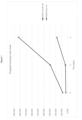
- the DHA canola oil released substantially lower amounts of propanal demonstrating the improved stability of the canola oil as compared to the reference. Time point (days) 0 2 4 DHA Canola oil (ppm propanal) 32.000 38.000 185.000 Reference oil (ppm propanal) 83.000 294.000 829.000
- the DHA Canola oil shows superior stability to oxidation compared with the reference oil.
- the fatty acid ethyl esters (FAEE) from the RBD canola-DHA (obtained in Example 15) were subjected to distillation under the following conditions. Separation by distillation was achieved by passing the trans-esterified oil through a Pope 2 inch (50 mm) wiped film still under vacuum equipped with 2 x 1000 ml collection flasks collecting the distillate and residue. Each was analysed for fatty acid composition.
- Vacuum was supplied by an Edwards 3 rotary pump and the vacuum measured by an ebro vacumeter VM2000.
- the oil was fed into the still by a Cole-Palmer Instrument Company easy-load II peristaltic pump at 4 mL / min with the still motor set to 325 rpm with water condenser used to condense the distillate. The feed was continued until such time as one or other of the receiver flasks was full.
- RBD canola-DHA FAEE was distilled under these conditions with the heater bands initially set to 152°C to obtain a 50:50 split of distillate : residue. A portion of the residue from this distillation was again subjected to the removal of more volatile components by distillation under the standard conditions with the temperature of the heater bands set to 152°C. The total time of distillation was approx. 90 minutes. Distillation Feed Distillate Residue First 1596.6 729.9 855.9 Second 851.3 503.5 343.1
- the fatty acid ethyl esters (FAEE) from the RBD reference blend (obtained in Example 16) were subjected to distillation under the same conditions as shown in the preceding Example.
- RBD reference blend FAEE was distilled under these standard conditions with the heater bands initially set to 152°C to obtain a 50:50 split of distillate : residue. The residue from this distillation was again subjected to the removal of more volatile components by distillation under the standard conditions. The objective was to obtain a 50:50 split of distillate : residue. The distillation was mostly performed with the heater bands set to 152°C. The total time of distillation was approx. 200 minutes. Distillation Feed Distillate Residue First 1195.1 674.7 504.6 Second 496.4 297.2 197.4
- Example 19 Fatty acid composition analysis for the enriched RBD oils
- the DHA Canola oil showed superior stability to oxidation compared with the reference oil.
Landscapes
- Health & Medical Sciences (AREA)
- Chemical & Material Sciences (AREA)
- Life Sciences & Earth Sciences (AREA)
- Veterinary Medicine (AREA)
- Medicinal Chemistry (AREA)
- Pharmacology & Pharmacy (AREA)
- Engineering & Computer Science (AREA)
- Animal Behavior & Ethology (AREA)
- General Health & Medical Sciences (AREA)
- Public Health (AREA)
- Polymers & Plastics (AREA)
- Epidemiology (AREA)
- Food Science & Technology (AREA)
- Oil, Petroleum & Natural Gas (AREA)
- Mycology (AREA)
- Nutrition Science (AREA)
- Emergency Medicine (AREA)
- Chemical Kinetics & Catalysis (AREA)
- Pediatric Medicine (AREA)
- Bioinformatics & Cheminformatics (AREA)
- Organic Chemistry (AREA)
- Nuclear Medicine, Radiotherapy & Molecular Imaging (AREA)
- Cardiology (AREA)
- Heart & Thoracic Surgery (AREA)
- General Chemical & Material Sciences (AREA)
- Animal Husbandry (AREA)
- Zoology (AREA)
- Fats And Perfumes (AREA)
- Acyclic And Carbocyclic Compounds In Medicinal Compositions (AREA)
- Coloring Foods And Improving Nutritive Qualities (AREA)
- Edible Oils And Fats (AREA)
- Medicines Containing Plant Substances (AREA)
- Preparation Of Compounds By Using Micro-Organisms (AREA)
- Medicinal Preparation (AREA)
Claims (16)
- Lipidzusammensetzung auf pflanzlicher Basis, umfassend:(i) Docosahexaensäure (22:6n-3) in einer Menge von etwa 15 Gew.-% bis etwa 35 Gew.-% des Gesamtfettsäuregehalts der Zusammensetzung;(ii) Eicosapentaensäure (20:5n-3) in einer Menge von bis zu etwa 5 Gew.-% des Gesamtfettsäuregehalts der Zusammensetzung;(iii) α-Linolensäure (18:3n-3) in einer Menge von etwa 10 Gew.-% bis etwa 20 Gew.-% des Gesamtfettsäuregehalts der Zusammensetzung;(iv) Ölsäure (18:1n-9) in einer Menge von etwa 20 Gew.-% bis etwa 40 Gew.-% des Gesamtfettsäuregehalts der Zusammensetzung; und(v) Palmitinsäure in einer Menge von bis zu etwa 1,5 Gew.-% des Gesamtfettsäuregehalts der Zusammensetzung;wobei die Komponenten (i) bis (v) jeweils unabhängig voneinander in Form einer Fettsäure, eines Fettsäuresalzes, eines Fettsäureesters oder eines Salzes eines Fettsäureesters bereitgestellt werden;wobei die Lipidzusammensetzung durch ein Verfahren erhältlich ist, das die Umesterung und Destillation eines Lipids auf pflanzlicher Basis umfasst;wobei mindestens 70 Gew.-% der Lipide in der Zusammensetzung aus Pflanzenquellen gewonnen werden, und wobei:(i) die Pflanzenquellen Ölsaaten sind; oder(ii) die Pflanzenquellen ausgewählt sind aus der Gruppe bestehend aus Brassica sp., Gossypium hirsutum, Linum usitatissimum, Helianthus sp., Carthamus tinctorius, Glycine max, Zea mays, Arabidopsis thaliana, Sorghum bicolor, Sorghum vulgare, Avena sativa, Trifolium sp., Elaesis guineenis, Nicotiana benthamiana, Hordeum vulgare, Lupinus angustifolius, Oryza sativa, Oryza glaberrima, Camelina sativa und Crambe abyssinica.
- Lipidzusammensetzung nach Anspruch 1, wobei Docosahexaensäure (22:6n-3) in einer Menge von etwa 20 Gew.-% bis etwa 35 Gew.-% (insbesondere von etwa 22 Gew.-% bis etwa 33 Gew.-%) des Gesamtfettsäuregehalts der Zusammensetzung vorhanden ist.
- Lipidzusammensetzung nach Anspruch 1 oder Anspruch 2, wobei die Eicosapentaensäure in einer Menge von bis zu etwa 3 Gew.-% (insbesondere bis zu etwa 1 Gew.-%) des Gesamtfettsäuregehalts der Zusammensetzung vorhanden ist.
- Lipidzusammensetzung nach irgendeinem der vorhergehenden Ansprüche, wobei die α-Linolensäure in einer Menge von etwa 12 Gew.-% bis etwa 20 Gew.-% (insbesondere von etwa 12 Gew.-% bis etwa 18 Gew.-%) des Gesamtfettsäuregehalts der Zusammensetzung vorhanden ist.
- Lipidzusammensetzung nach irgendeinem der vorhergehenden Ansprüche, wobei die Ölsäure in einer Menge von etwa 20 Gew.-% bis etwa 35 Gew.-% (insbesondere von etwa 22 Gew.-% bis etwa 33 Gew.-%) des Gesamtfettsäuregehalts der Zusammensetzung vorhanden ist.
- Lipidzusammensetzung nach Anspruch 5, wobei die Palmitinsäure (16:0) in einer Menge von bis zu etwa 1,0 Gew.-% (insbesondere bis zu etwa 0,7 Gew.-%) des Gesamtfettsäuregehalts der Zusammensetzung vorhanden ist.
- Lipidzusammensetzung nach irgendeinem der vorhergehenden Ansprüche, wobei die Komponenten (i) bis (v) jeweils unabhängig voneinander in Form eines Fettsäureesters oder eines Salzes eines Fettsäureesters bereitgestellt werden.
- Lipidzusammensetzung nach Anspruch 7, wobei die Komponenten (i) bis (v) jeweils unabhängig voneinander in Form eines Fettsäureethylesters oder eines Teils eines Triglycerids bereitgestellt werden.
- Lipidzusammensetzung nach irgendeinem der vorhergehenden Ansprüche, wobei die Lipidzusammensetzung aus einer einzigen Quelle gewonnen wird.
- Lipidzusammensetzung nach irgendeinem der vorhergehenden Ansprüche, wobei die Pflanzenquellen ausgewählt sind aus der Gruppe bestehend aus Brassica sp., Gossypium hirsutum, Linum usitatissimum, Helianthus sp., Carthamus tinctorius, Glycine max, Zea mays, Arabidopsis thaliana, Sorghum bicolor, Sorghum vulgare, Avena sativa, Trifolium sp., Elaesis guineenis, Nicotiana benthamiana, Hordeum vulgare, Lupinus angustifolius, Oryza sativa, Oryza glaberrima, Camelina sativa und Crambe abyssinica.
- Lipidzusammensetzung nach irgendeinem der vorhergehenden Ansprüche, wobei die Pflanzenquellen Pflanzen der Gattung Brassica, wie etwa Brassica napus oder Brassica juncea, sind.
- Lipidzusammensetzung nach irgendeinem der vorhergehenden Ansprüche, wobei die Pflanzenquellen genetisch modifiziert worden sind, um ihre Fähigkeit zu steigern, langkettige, mehrfach ungesättigte Fettsäuren zu produzieren.
- Lipidzusammensetzung nach irgendeinem der vorhergehenden Ansprüche, wobei die Zusammensetzung in Form einer Tablette, einer Kapsel, eines eingekapselten Gels, einer/s einnehmbaren Flüssigkeit oder Pulvers oder einer topischen Salbe oder Creme bereitgestellt wird.
- Lipidzusammensetzung nach irgendeinem der vorhergehenden Ansprüche, ferner umfassend eine oder mehrere zusätzliche Komponenten, ausgewählt aus der Gruppe bestehend aus einem Antioxidans, einem Stabilisator und einem Tensid.
- Lipidzusammensetzung, wie in irgendeinem der vorhergehenden Ansprüche definiert, zur Verwendung bei der Behandlung oder Vorbeugung von Herz-Kreislauf-Erkrankung, Senkung von Gesamtserumcholesterinspiegeln, Senkung von hohem Blutdruck, Erhöhung des HDL:LDL-Verhältnisses, Senkung von Triglyceriden oder Senkung von Apolipoprotein-B-Spiegeln.
- Verfahren zur Herstellung einer Lipidzusammensetzung, wie in irgendeinem der Ansprüche 1 bis 12 definiert, wobei das Verfahren das Bereitstellen eines Gemisches von Fettsäureethylestern, das Unterziehen dieses Gemisches einem ersten Molekulardestillationsschritt, um einen ersten Rückstand zu erhalten, und das Unterziehen des ersten Rückstandes einem zweiten Molekulardestillationsschritt umfasst.
Applications Claiming Priority (3)
| Application Number | Priority Date | Filing Date | Title |
|---|---|---|---|
| EP18169368.0A EP3560342B1 (de) | 2018-04-25 | 2018-04-25 | Dha-angereicherte mehrfach ungesättigte fettsäurezusammensetzungen |
| EP18179081 | 2018-06-21 | ||
| PCT/EP2018/086369 WO2019206443A1 (en) | 2018-04-25 | 2018-12-20 | Dha enriched polyunsaturated fatty acid compositions |
Publications (3)
| Publication Number | Publication Date |
|---|---|
| EP3784044A1 EP3784044A1 (de) | 2021-03-03 |
| EP3784044B1 true EP3784044B1 (de) | 2025-07-09 |
| EP3784044C0 EP3784044C0 (de) | 2025-07-09 |
Family
ID=64746567
Family Applications (1)
| Application Number | Title | Priority Date | Filing Date |
|---|---|---|---|
| EP18822376.2A Active EP3784044B1 (de) | 2018-04-25 | 2018-12-20 | Dha-angereicherte mehrfach ungesättigte fettsäurezusammensetzungen |
Country Status (16)
| Country | Link |
|---|---|
| US (1) | US20210236447A1 (de) |
| EP (1) | EP3784044B1 (de) |
| JP (2) | JP2021528365A (de) |
| KR (2) | KR20250004393A (de) |
| CN (1) | CN112165864A (de) |
| AR (1) | AR134182A2 (de) |
| AU (2) | AU2018420462B2 (de) |
| CA (1) | CA3098051A1 (de) |
| CL (1) | CL2020002728A1 (de) |
| CO (1) | CO2020013126A2 (de) |
| ES (1) | ES3036966T3 (de) |
| MX (2) | MX2020011185A (de) |
| PE (2) | PE20251289A1 (de) |
| PL (1) | PL3784044T3 (de) |
| TW (2) | TWI860542B (de) |
| WO (1) | WO2019206443A1 (de) |
Families Citing this family (4)
| Publication number | Priority date | Publication date | Assignee | Title |
|---|---|---|---|---|
| EP3586642A1 (de) | 2018-06-21 | 2020-01-01 | Nuseed Pty Ltd | Ala-angereicherte mehrfach ungesättigte fettsäurezusammensetzungen |
| EP3586640A1 (de) | 2018-06-21 | 2020-01-01 | Nuseed Pty Ltd | Dha-angereicherte mehrfach ungesättigte fettsäurezusammensetzungen |
| KR102557836B1 (ko) * | 2020-11-18 | 2023-07-24 | 주식회사 엘에스엔지니어링 | 도코사헥사엔산 또는 에이코사펜타엔산의 고순도 정제 장치 및 정제 방법 |
| KR20250159089A (ko) | 2024-05-01 | 2025-11-10 | 구자도 | 응집융합추출법을 적용하여 식물성 유지를 함유한 원물로부터 무색, 무취의 식물성 불포화지방산 dha 추출 방법 |
Family Cites Families (19)
| Publication number | Priority date | Publication date | Assignee | Title |
|---|---|---|---|---|
| US4526902A (en) * | 1983-10-24 | 1985-07-02 | Century Laboratories, Inc. | Combined fatty acid composition for treatment or prophylaxis of thrombo-embolic conditions |
| IT1205043B (it) | 1987-05-28 | 1989-03-10 | Innova Di Ridolfi Flora & C S | Procedimento per l'estrazione di esteri di acidi grassi poliinsaturi da olii di pesce e composizioni farmaceutiche e dietetiche contenenti detti esteri |
| JP2000104092A (ja) * | 1998-09-29 | 2000-04-11 | Nof Corp | 血清脂質改善油脂組成物 |
| US20120214771A1 (en) * | 2001-07-27 | 2012-08-23 | Fontini Sampalis | Compositions for treatment of cardiometabolic disorders |
| AU2015203218A1 (en) * | 2001-07-27 | 2015-07-09 | Aker Biomarine Antarctic As | Natural marine source phospholipids comprising flavonoids polyunsaturated fatty acids and their applications |
| US20040209953A1 (en) | 2002-12-06 | 2004-10-21 | Wai Lee Theresa Siu-Ling | Glyceride compositions and methods of making and using same |
| PT1645617E (pt) | 2003-07-09 | 2010-05-03 | J Oil Mills Inc | Composição anti-oxidante de gordura ou óleo contendo um ácido gordo altamente insaturado de cadeia longa |
| US7344747B2 (en) * | 2004-04-29 | 2008-03-18 | Gfa Brands, Inc. | Oxidative stabilization of omega-3 fatty acids in low linoleic acid-containing peanut butter |
| US8202541B2 (en) * | 2006-02-07 | 2012-06-19 | U.S. Nutraceuticals, LLC | Dietary supplement composition for blood lipid health |
| US20110305811A1 (en) * | 2008-03-03 | 2011-12-15 | Daniel Perlman | Stabilization of omega-3 fatty acids in milk |
| EP2613767A4 (de) * | 2010-09-08 | 2014-03-19 | Pronova Biopharma Norge As | Zusammensetzungen mit einer fettsäure-öl-mischung, einer freien fettsäure, einem tensid und einem statin |
| WO2012109563A1 (en) * | 2011-02-11 | 2012-08-16 | E. I. Du Pont De Nemours And Company | Purification of triglyceride oil from microbial sources using short path distillation |
| PE20200448A1 (es) | 2012-06-15 | 2020-02-28 | Commw Scient Ind Res Org | Produccion de acidos grasos poliinsaturados de cadena larga en celulas vegetales |
| US20150223483A1 (en) | 2012-09-11 | 2015-08-13 | Dow Agrosciences Llc | Omega-9 canola oil blended with dha |
| PH12016501194B1 (en) * | 2013-12-18 | 2022-04-22 | Commw Scient Ind Res Org | Lipid comprising long chain polyunsaturated fatty acids |
| CA2953008C (en) | 2014-06-27 | 2024-03-19 | Nuseed Pty Ltd | Lipid comprising docosapentaenoic acid |
| NZ749656A (en) | 2016-06-16 | 2022-12-23 | Nuseed Nutritional Australia Pty Ltd | Inbred transgenic canola line ns-b50027-4 and seeds thereof |
| IL296501B2 (en) | 2016-06-16 | 2025-07-01 | Nuseed Nutritional Australia Pty Ltd | Canola NS–B50027–4 |
| ES2949278T3 (es) * | 2016-08-17 | 2023-09-27 | Frutarom Ltd | Mezclas de aceites y procedimientos para su preparación |
-
2018
- 2018-12-20 EP EP18822376.2A patent/EP3784044B1/de active Active
- 2018-12-20 KR KR1020247042473A patent/KR20250004393A/ko active Pending
- 2018-12-20 PE PE2024002922A patent/PE20251289A1/es unknown
- 2018-12-20 KR KR1020207033988A patent/KR102747178B1/ko active Active
- 2018-12-20 ES ES18822376T patent/ES3036966T3/es active Active
- 2018-12-20 CN CN201880093616.4A patent/CN112165864A/zh active Pending
- 2018-12-20 MX MX2020011185A patent/MX2020011185A/es unknown
- 2018-12-20 PE PE2020001641A patent/PE20211003A1/es unknown
- 2018-12-20 PL PL18822376.2T patent/PL3784044T3/pl unknown
- 2018-12-20 US US17/049,006 patent/US20210236447A1/en active Pending
- 2018-12-20 WO PCT/EP2018/086369 patent/WO2019206443A1/en not_active Ceased
- 2018-12-20 AU AU2018420462A patent/AU2018420462B2/en active Active
- 2018-12-20 CA CA3098051A patent/CA3098051A1/en active Pending
- 2018-12-20 JP JP2020560368A patent/JP2021528365A/ja active Pending
- 2018-12-21 TW TW111131729A patent/TWI860542B/zh active
- 2018-12-21 TW TW107146463A patent/TWI778199B/zh active
-
2020
- 2020-10-21 CO CONC2020/0013126A patent/CO2020013126A2/es unknown
- 2020-10-21 CL CL2020002728A patent/CL2020002728A1/es unknown
- 2020-10-22 MX MX2024015300A patent/MX2024015300A/es unknown
-
2023
- 2023-11-09 JP JP2023191793A patent/JP2024023267A/ja active Pending
-
2024
- 2024-10-25 AR ARP240102910A patent/AR134182A2/es unknown
-
2025
- 2025-04-28 AU AU2025202943A patent/AU2025202943A1/en active Pending
Also Published As
| Publication number | Publication date |
|---|---|
| ES3036966T3 (en) | 2025-09-25 |
| CA3098051A1 (en) | 2019-10-31 |
| TWI860542B (zh) | 2024-11-01 |
| PE20251289A1 (es) | 2025-05-14 |
| MX2024015300A (es) | 2025-01-09 |
| WO2019206443A1 (en) | 2019-10-31 |
| BR112020021662A2 (pt) | 2021-01-26 |
| AU2018420462A1 (en) | 2020-11-26 |
| JP2024023267A (ja) | 2024-02-21 |
| MX2020011185A (es) | 2021-02-09 |
| US20210236447A1 (en) | 2021-08-05 |
| AU2025202943A1 (en) | 2025-05-15 |
| PL3784044T3 (pl) | 2025-11-24 |
| AU2018420462B2 (en) | 2025-01-30 |
| AR134182A2 (es) | 2025-12-10 |
| CL2020002728A1 (es) | 2021-01-22 |
| BR112020021662A8 (pt) | 2023-02-28 |
| KR20210006394A (ko) | 2021-01-18 |
| EP3784044C0 (de) | 2025-07-09 |
| KR102747178B1 (ko) | 2024-12-27 |
| TW202247774A (zh) | 2022-12-16 |
| CN112165864A (zh) | 2021-01-01 |
| EP3784044A1 (de) | 2021-03-03 |
| KR20250004393A (ko) | 2025-01-07 |
| JP2021528365A (ja) | 2021-10-21 |
| TWI778199B (zh) | 2022-09-21 |
| TW201944988A (zh) | 2019-12-01 |
| PE20211003A1 (es) | 2021-06-01 |
| CO2020013126A2 (es) | 2021-03-19 |
Similar Documents
| Publication | Publication Date | Title |
|---|---|---|
| AU2025202943A1 (en) | DHA Enriched Polyunsaturated Fatty Acids Compositions | |
| AU2025201537A1 (en) | DHA Enriched Polyunsaturated Fatty Acid Compositions | |
| AU2025203346A1 (en) | DHA Enriched Polyunsaturated Fatty Acid Compositions | |
| US12137701B2 (en) | ALA enriched polyunsaturated fatty acid compositions | |
| EP3560342B1 (de) | Dha-angereicherte mehrfach ungesättigte fettsäurezusammensetzungen | |
| EP3809860B1 (de) | Dha-angereicherte mehrfach ungesättigte fettsäurezusammensetzungen | |
| HK40045724B (en) | Dha enriched polyunsaturated fatty acid compositions | |
| HK40045724A (en) | Dha enriched polyunsaturated fatty acid compositions | |
| HK40047677A (en) | Dha enriched polyunsaturated fatty acid compositions | |
| HK40047677B (en) | Dha enriched polyunsaturated fatty acid compositions |
Legal Events
| Date | Code | Title | Description |
|---|---|---|---|
| STAA | Information on the status of an ep patent application or granted ep patent |
Free format text: STATUS: UNKNOWN |
|
| STAA | Information on the status of an ep patent application or granted ep patent |
Free format text: STATUS: THE INTERNATIONAL PUBLICATION HAS BEEN MADE |
|
| PUAI | Public reference made under article 153(3) epc to a published international application that has entered the european phase |
Free format text: ORIGINAL CODE: 0009012 |
|
| STAA | Information on the status of an ep patent application or granted ep patent |
Free format text: STATUS: REQUEST FOR EXAMINATION WAS MADE |
|
| 17P | Request for examination filed |
Effective date: 20201110 |
|
| AK | Designated contracting states |
Kind code of ref document: A1 Designated state(s): AL AT BE BG CH CY CZ DE DK EE ES FI FR GB GR HR HU IE IS IT LI LT LU LV MC MK MT NL NO PL PT RO RS SE SI SK SM TR |
|
| AX | Request for extension of the european patent |
Extension state: BA ME |
|
| DAV | Request for validation of the european patent (deleted) | ||
| DAX | Request for extension of the european patent (deleted) | ||
| REG | Reference to a national code |
Ref country code: HK Ref legal event code: DE Ref document number: 40045724 Country of ref document: HK |
|
| RAP1 | Party data changed (applicant data changed or rights of an application transferred) |
Owner name: NUSEED NUTRITIONAL US INC. |
|
| P01 | Opt-out of the competence of the unified patent court (upc) registered |
Effective date: 20230516 |
|
| STAA | Information on the status of an ep patent application or granted ep patent |
Free format text: STATUS: EXAMINATION IS IN PROGRESS |
|
| 17Q | First examination report despatched |
Effective date: 20240625 |
|
| GRAP | Despatch of communication of intention to grant a patent |
Free format text: ORIGINAL CODE: EPIDOSNIGR1 |
|
| STAA | Information on the status of an ep patent application or granted ep patent |
Free format text: STATUS: GRANT OF PATENT IS INTENDED |
|
| INTG | Intention to grant announced |
Effective date: 20250203 |
|
| GRAS | Grant fee paid |
Free format text: ORIGINAL CODE: EPIDOSNIGR3 |
|
| GRAA | (expected) grant |
Free format text: ORIGINAL CODE: 0009210 |
|
| STAA | Information on the status of an ep patent application or granted ep patent |
Free format text: STATUS: THE PATENT HAS BEEN GRANTED |
|
| AK | Designated contracting states |
Kind code of ref document: B1 Designated state(s): AL AT BE BG CH CY CZ DE DK EE ES FI FR GB GR HR HU IE IS IT LI LT LU LV MC MK MT NL NO PL PT RO RS SE SI SK SM TR |
|
| REG | Reference to a national code |
Ref country code: GB Ref legal event code: FG4D |
|
| REG | Reference to a national code |
Ref country code: CH Ref legal event code: EP |
|
| REG | Reference to a national code |
Ref country code: IE Ref legal event code: FG4D |
|
| REG | Reference to a national code |
Ref country code: DE Ref legal event code: R096 Ref document number: 602018083460 Country of ref document: DE |
|
| U01 | Request for unitary effect filed |
Effective date: 20250725 |
|
| U07 | Unitary effect registered |
Designated state(s): AT BE BG DE DK EE FI FR IT LT LU LV MT NL PT RO SE SI Effective date: 20250801 |
|
| REG | Reference to a national code |
Ref country code: ES Ref legal event code: FG2A Ref document number: 3036966 Country of ref document: ES Kind code of ref document: T3 Effective date: 20250925 |
|
| U20 | Renewal fee for the european patent with unitary effect paid |
Year of fee payment: 8 Effective date: 20251202 |
|
| PG25 | Lapsed in a contracting state [announced via postgrant information from national office to epo] |
Ref country code: IS Free format text: LAPSE BECAUSE OF FAILURE TO SUBMIT A TRANSLATION OF THE DESCRIPTION OR TO PAY THE FEE WITHIN THE PRESCRIBED TIME-LIMIT Effective date: 20251109 |
|
| PGFP | Annual fee paid to national office [announced via postgrant information from national office to epo] |
Ref country code: GB Payment date: 20251202 Year of fee payment: 8 |
|
| PGFP | Annual fee paid to national office [announced via postgrant information from national office to epo] |
Ref country code: NO Payment date: 20251217 Year of fee payment: 8 |
|
| PG25 | Lapsed in a contracting state [announced via postgrant information from national office to epo] |
Ref country code: HR Free format text: LAPSE BECAUSE OF FAILURE TO SUBMIT A TRANSLATION OF THE DESCRIPTION OR TO PAY THE FEE WITHIN THE PRESCRIBED TIME-LIMIT Effective date: 20250709 |
|
| PG25 | Lapsed in a contracting state [announced via postgrant information from national office to epo] |
Ref country code: GR Free format text: LAPSE BECAUSE OF FAILURE TO SUBMIT A TRANSLATION OF THE DESCRIPTION OR TO PAY THE FEE WITHIN THE PRESCRIBED TIME-LIMIT Effective date: 20251010 |
|
| PGFP | Annual fee paid to national office [announced via postgrant information from national office to epo] |
Ref country code: TR Payment date: 20251201 Year of fee payment: 8 |
|
| PGFP | Annual fee paid to national office [announced via postgrant information from national office to epo] |
Ref country code: PL Payment date: 20251202 Year of fee payment: 8 |
|
| PG25 | Lapsed in a contracting state [announced via postgrant information from national office to epo] |
Ref country code: RS Free format text: LAPSE BECAUSE OF FAILURE TO SUBMIT A TRANSLATION OF THE DESCRIPTION OR TO PAY THE FEE WITHIN THE PRESCRIBED TIME-LIMIT Effective date: 20251009 |