EP3772677B1 - Appareil, système et procédé de gestion d'alarme - Google Patents
Appareil, système et procédé de gestion d'alarme Download PDFInfo
- Publication number
- EP3772677B1 EP3772677B1 EP20189658.6A EP20189658A EP3772677B1 EP 3772677 B1 EP3772677 B1 EP 3772677B1 EP 20189658 A EP20189658 A EP 20189658A EP 3772677 B1 EP3772677 B1 EP 3772677B1
- Authority
- EP
- European Patent Office
- Prior art keywords
- alarm
- operator
- suppressed
- trigger
- alarms
- Prior art date
- Legal status (The legal status is an assumption and is not a legal conclusion. Google has not performed a legal analysis and makes no representation as to the accuracy of the status listed.)
- Active
Links
Images





Classifications
-
- G—PHYSICS
- G05—CONTROLLING; REGULATING
- G05B—CONTROL OR REGULATING SYSTEMS IN GENERAL; FUNCTIONAL ELEMENTS OF SUCH SYSTEMS; MONITORING OR TESTING ARRANGEMENTS FOR SUCH SYSTEMS OR ELEMENTS
- G05B23/00—Testing or monitoring of control systems or parts thereof
- G05B23/02—Electric testing or monitoring
- G05B23/0205—Electric testing or monitoring by means of a monitoring system capable of detecting and responding to faults
- G05B23/0259—Electric testing or monitoring by means of a monitoring system capable of detecting and responding to faults characterized by the response to fault detection
- G05B23/0267—Fault communication, e.g. human machine interface [HMI]
- G05B23/027—Alarm generation, e.g. communication protocol; Forms of alarm
-
- G—PHYSICS
- G08—SIGNALLING
- G08B—SIGNALLING SYSTEMS, e.g. PERSONAL CALLING SYSTEMS; ORDER TELEGRAPHS; ALARM SYSTEMS
- G08B25/00—Alarm systems in which the location of the alarm condition is signalled to a central station, e.g. fire or police telegraphic systems
- G08B25/001—Alarm cancelling procedures or alarm forwarding decisions, e.g. based on absence of alarm confirmation
-
- G—PHYSICS
- G05—CONTROLLING; REGULATING
- G05B—CONTROL OR REGULATING SYSTEMS IN GENERAL; FUNCTIONAL ELEMENTS OF SUCH SYSTEMS; MONITORING OR TESTING ARRANGEMENTS FOR SUCH SYSTEMS OR ELEMENTS
- G05B19/00—Program-control systems
- G05B19/02—Program-control systems electric
- G05B19/418—Total factory control, i.e. centrally controlling a plurality of machines, e.g. direct or distributed numerical control [DNC], flexible manufacturing systems [FMS], integrated manufacturing systems [IMS] or computer integrated manufacturing [CIM]
-
- G—PHYSICS
- G05—CONTROLLING; REGULATING
- G05B—CONTROL OR REGULATING SYSTEMS IN GENERAL; FUNCTIONAL ELEMENTS OF SUCH SYSTEMS; MONITORING OR TESTING ARRANGEMENTS FOR SUCH SYSTEMS OR ELEMENTS
- G05B23/00—Testing or monitoring of control systems or parts thereof
- G05B23/02—Electric testing or monitoring
- G05B23/0205—Electric testing or monitoring by means of a monitoring system capable of detecting and responding to faults
- G05B23/0259—Electric testing or monitoring by means of a monitoring system capable of detecting and responding to faults characterized by the response to fault detection
- G05B23/0267—Fault communication, e.g. human machine interface [HMI]
- G05B23/0272—Presentation of monitored results, e.g. selection of status reports to be displayed; Filtering information to the user
-
- G—PHYSICS
- G08—SIGNALLING
- G08B—SIGNALLING SYSTEMS, e.g. PERSONAL CALLING SYSTEMS; ORDER TELEGRAPHS; ALARM SYSTEMS
- G08B25/00—Alarm systems in which the location of the alarm condition is signalled to a central station, e.g. fire or police telegraphic systems
- G08B25/14—Central alarm receiver or annunciator arrangements
-
- G—PHYSICS
- G05—CONTROLLING; REGULATING
- G05B—CONTROL OR REGULATING SYSTEMS IN GENERAL; FUNCTIONAL ELEMENTS OF SUCH SYSTEMS; MONITORING OR TESTING ARRANGEMENTS FOR SUCH SYSTEMS OR ELEMENTS
- G05B2219/00—Program-control systems
- G05B2219/20—Pc systems
- G05B2219/24—Pc safety
- G05B2219/24123—Alarm filtering, level and direct precursor, required action, blocking condition
Definitions
- the present disclosure relates to an alarm management apparatus, an alarm management system, and an alarm management method.
- this abnormality may trigger a secondary process abnormality in another piece of equipment.
- the occurrence of a process abnormality upstream may cause a process abnormality to occur downstream as well. If all of the alarms indicating abnormalities are displayed on the monitoring screen of an operator in this case, the monitoring screen becomes covered in alarms (alarm flood), confusing the operator.
- One approach to address this issue could be to present the operator with only the alarm indicating the original cause of the abnormality (trigger alarm), without presenting the alarms indicating secondary process abnormalities.
- Patent literature (PTL) 1 proposes designating only the trigger alarm that indicates the original cause of the abnormality as the monitoring target of the operator and removing other alarms from the monitoring target of the operator. This prevents the operator from overlooking important alarms.
- WO 2014/129983 A1 relates to systems, methods, devices, computer-readable medium, and logic for managing a plurality of alarms initiated by a plurality of alarm sensors in an alarm-based environment.
- US 7,876,211 B2 discloses s method, apparatus and system that receive an alarm record and compare the alarm record to a suppression description that describes an alarm to be suppressed. From US 8,166,352 B2 , an alarm correlation method with rules and model is disclosed for suppression of alarms which will clear when another alarm clears is known.
- the operator When the monitoring target of the operator is only the trigger alarm as in PTL 1, the operator performs an operation to recover from the abnormality based only on the trigger alarm. A recovery operation based only on the trigger alarm, however, might not resolve the abnormality. In other words, the information presented to the operator has room for improvement to increase the efficiency of operations by the operator to recover from an abnormality.
- the present disclosure therefore aims to provide an alarm management apparatus, an alarm management system, and an alarm management method that can increase the efficiency of operations by the operator to recover from an abnormality.
- An alarm management apparatus presents a trigger alarm, which should be presented to an operator, to the operator when the trigger alarm is included in an alarm that is received or generated, stores a suppressed alarm related to the trigger alarm, without presenting the suppressed alarm to the operator, when the suppressed alarm is included in the alarm, and presents the stored suppressed alarm to the operator based on an operation by the operator.
- the suppressed alarm is presented to the operator based on an operation by the operator, thereby increasing the efficiency of operations by the operator to recover from an abnormality.
- the suppressed alarm when the suppressed alarm is effective for resolving the trigger alarm, the suppressed alarm may be presented to the operator together with the trigger alarm without the operator performing an operation.
- the suppressed alarm when the suppressed alarm is effective for resolving the trigger alarm, the suppressed alarm may be presented to the operator with greater emphasis than other suppressed alarms.
- the suppressed alarm effective for resolving the trigger alarm may be determined based on an operation history of the operator or a response from the operator.
- a learning unit configured to optimize a classification condition for classifying the alarm as the trigger alarm or the suppressed alarm based on an operation history of the operator may be further included.
- Inclusion of the learning unit can further increase the efficiency of operations by the operator to recover from an abnormality.
- An alarm management system includes the alarm management apparatus, an operation monitoring terminal, and an engineering terminal.
- the suppressed alarm is presented to the operator based on an operation by the operator, thereby increasing the efficiency of operations by the operator to recover from an abnormality.
- An alarm management method includes presenting a trigger alarm to an operator when the trigger alarm is included in an alarm that is received or generated, storing a suppressed alarm related to the trigger alarm, without presenting the suppressed alarm to the operator, when the suppressed alarm is included in the alarm, and presenting the stored suppressed alarm to the operator based on an operation by the operator.
- the suppressed alarm is presented to the operator based on an operation by the operator, thereby increasing the efficiency of operations by the operator to recover from an abnormality.
- the present disclosure can provide an alarm management apparatus, an alarm management system, and an alarm management method that can increase the efficiency of operations by the operator to recover from an abnormality.
- an alarm management apparatus 1 can perform data communication with an operation monitoring terminal 2, a controller 3, and an engineering terminal 5.
- the operation monitoring terminal 2 may be any terminal capable of including a display 21 that displays the result of processing by the alarm management apparatus 1 and an input interface 22 capable of receiving operations by the operator.
- Examples of the operation monitoring terminal 2 include a desktop PC, a smartphone, and a tablet terminal.
- the controller 3 is connected to field devices and the like and controls these devices.
- the controller 3 detects an abnormality from process modulation or a field device and transmits information based on the abnormality to the alarm management apparatus 1 via a control network 4.
- the controller 3 may transmit the alarm generated by the controller 3 to the alarm management apparatus 1 via the control network 4. Only one controller 3 is illustrated in FIG. 1 , but more than one controller may be provided.
- the engineering terminal 5 can include an input interface 51 capable of receiving an operation by an engineer.
- the engineer can use the input interface 51 to create a definition file, described below.
- the definition file created by the engineer is downloaded onto the alarm management apparatus 1 via the control network 4 and is used in the processing executed by the alarm management apparatus 1.
- Examples of the engineering terminal 5 include a desktop PC, a smartphone, and a tablet.
- the "definition file" is described below.
- this abnormality may trigger a secondary process abnormality in another piece of equipment.
- the occurrence of a process abnormality upstream may cause a process abnormality to occur downstream as well. If all of the alarms indicating abnormalities are displayed on the monitoring screen of an operator in this case, the monitoring screen becomes covered in alarms (alarm flood), confusing the operator.
- One approach to address this issue has been to present the operator with only the alarm indicating the original cause of the abnormality (trigger alarm), without presenting the alarms indicating secondary process abnormalities.
- the operator can efficiently perform operations to recover from the process abnormality that caused the trigger alarm, however, when an alarm indicating a secondary process abnormality due to the process abnormality that caused the trigger alarm (i.e. a suppressed alarm not presented to the operator with a known technique) is also presented to the operator as necessary.
- associating the trigger alarm with a suppressed alarm enables the operator to perform operations efficiently to recover from the process abnormality that caused the trigger alarm.
- an engineer can use the engineering terminal 5 to create a definition file for associating the trigger alarm and the suppressed alarm.
- the definition file contains a description of a trigger alarm, a suppressed alarm that occurs consequently with the process abnormality that caused the trigger alarm, and an alarm group to which the trigger alarm and the suppressed alarm belong.
- the alarm management apparatus 1 may include a processor 11, a storage 12, and a communication interface 15. The components of the alarm management apparatus 1 are described below in detail.
- the storage 12 may include a first storage area 13 and a second storage area 14.
- the storage 12 can be implemented using a semiconductor memory, a magnetic memory, or an optical memory, for example. Examples of the storage 12 include read only memory (ROM), flash memory, and dynamic random access memory (DRAM), which is capable of temporarily storing data.
- ROM read only memory
- DRAM dynamic random access memory
- the number of storages 12 is not limited to one, and the first storage area 13 and the second storage area 14 may be located in different storages.
- the storage 12 may be an external storage apparatus that is attached to the alarm management apparatus 1.
- the processor 11 receives information based on the abnormality and generates an alarm.
- the processor 11 can receive the information from the controller 3 via the control network 4 and the communication interface 15.
- the processor 11 can be implemented using one or a plurality of processors.
- the processor 11 judges whether a trigger alarm is included in the generated alarm. To make this judgment, the processor 11 can refer to the above-described definition file.
- the processor 11 When a trigger alarm is included, the processor 11 presents the trigger alarm to the operator. For example, the processor 11 can display the trigger alarm on the display 21 of the operation monitoring terminal 2.
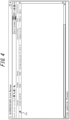
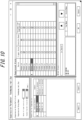
- FIG. 4 illustrates a window displayed on the display 21 of the operation monitoring terminal 2 when the trigger alarm is "PPX001.LL".
- the label "PPX001.LL” indicates that the state of an alarm occurring on the device with the tag name "PPX001” is LL (lower lower limit alarm).
- the processor 11 also presents the alarm group to which the trigger alarm belongs in a manner selectable by the operator. For example, the processor 11 can display the alarm group to which the trigger alarm belongs on the display 21 of the operation monitoring terminal 2 in a selectable manner.
- FIG. 4 illustrates a window displayed on the display 21 of the operation monitoring terminal 2 when the trigger alarm is "PPX001.LL".
- the label "PPX001.LL” indicates that the state of an alarm occurring on the device with the tag name "PPX001” is LL (lower lower limit alarm).
- FIG. 5 illustrates a list of alarm groups in a window displayed on the display 21 of the operation monitoring terminal 2. While details are provided below, the operator can refer to the "Suppression Group" column displayed in the window of FIG. 4 to confirm the trigger alarm and the alarm group to which the trigger alarm belongs.
- the window of FIG. 6 is displayed when the operator clicks or the like to select the icon 21a displayed in the window of FIG. 5 . Examples of the icon 21a include symbols, characters, numbers, graphics, or a combination thereof. The operator may, however, select the alarm group described above in the window of FIG. 4 without going through the window of FIG. 5 .
- the processor 11 can enter a standby state when a trigger alarm is not included in the generated alarm.
- the processor 11 judges whether a suppressed alarm related to the above-described trigger alarm is included in the generated alarm. To make this judgment, the processor 11 can refer to the above-described definition file.
- the processor 11 stores the suppressed alarm in the storage 12, for example, without presenting the suppressed alarm to the operator. Based on an operation by the operator, the processor 11 presents the suppressed alarms stored in the storage 12, for example, to the operator. In greater detail, the processor 11 associates the suppressed alarm with a predetermined alarm group based on the above-described definition file and stores the result in the second storage area 14, for example. The operator then refers to the window of FIG. 4 and the window of FIG. 5 to confirm a predetermined alarm group to which the trigger alarm belongs and selects the icon 21a displayed in the window of FIG. 5 by clicking or the like.
- the processor 11 receives notification, via the communication interface 15, that the predetermined alarm group has been selected by the operator.
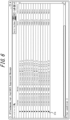
- the processor then refers to the second storage area 14, for example, and presents the operator with the suppressed alarms belonging to the predetermined alarm group selected by the operator. Consequently, the window of FIG. 6 , for example, is displayed on the display 21 of the operation monitoring terminal 2.
- FIG. 6 is displayed on the display 21 of the operation monitoring terminal 2.
- LO represents the state in which a lower limit alarm has occurred.
- the processor 11 can enter the standby state when a suppressed alarm 25 related to the trigger alarm is not included.
- the processor 11 may judge that an alarm is to be presented to the operator.
- the operator can use the definition file to freely set the "predetermined threshold" for each trigger alarm and suppressed alarm.
- the communication interface 15 may include one or a plurality of communication interfaces capable of communicating with each of the operation monitoring terminal 2, the controller 3, and the engineering terminal 5.
- the communication interface may be any communication interface capable of data communication in a wired or wireless manner.
- the logic of the processor 11 is set so that operator is notified only of trigger alarms, whereas notification of suppressed alarms is suppressed automatically.
- This state is referred to below as the "alarm suppressed state".
- the alarm suppressed state is, for example, set as necessary by the operator operating a selection screen on the display 21 via the input interface 22 of the operation monitoring terminal 2. For example, via the window of FIG.
- the operator can set the suppressed alarms belonging to an alarm group (group name "feedwpump_repl_Sup") to the alarm suppressed state and can set the suppressed alarms belonging to other alarm groups (group names "ASup01", "ASup02", and "Turbinne-start-up”) to an alarm non-suppressed state.
- group name "feedwpump_repl_Sup” group name "feedwpump_repl_Sup”
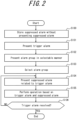
- step S100 the processor 11 stores suppressed alarms belonging to alarm groups in the alarm suppressed state in the storage, without presenting these suppressed alarms to the operator.
- step S101 the processor 11 presents the trigger alarm to the operator.
- the window of FIG. 5 was already being displayed on the display 21 of the operation monitoring terminal 2, and the window of FIG. 4 is additionally displayed separately from the window of FIG. 5 in step S101.
- step S102 the processor 11 presents the operator with the alarm group to which the trigger alarm presented to the operator in step S101 belongs.
- the alarm group is presented in a selectable manner.
- step S103 the operator selects the alarm group presented in a selectable manner in step S102.
- the operator can refer to the "Suppression Group” column displayed in the window of FIG. 4 , confirm the predetermined alarm group to which the trigger alarm in step S101 belongs (here, the group name "feedwpump_repl_Sup"), and select the icon 21a in the window of FIG. 5 by clicking or the like to select the predetermined alarm group (here, the group name "feedwpump_repl_Sup").
- the operator may select the alarm group (group name "feedwpump_repl_Sup") without passing through the window of FIG. 5 .
- step S104 the processor 11 refers to the storage 12 and presents the suppressed alarms belonging to the alarm group selected in step S103 to the operator.
- step S104 the window of FIG. 6 is additionally displayed on the display 21 of the operation monitoring terminal 2 separately from the window of FIG. 4 and the window of FIG. 5 .
- an icon 21b indicating an abnormality is displayed for each suppressed alarm. Examples of the icon 21b include symbols, characters, numbers, graphics, or a combination thereof.
- step S105 the operator performs an operation to recover from the abnormality based on the trigger alarm presented in step S101 and the suppressed alarms presented in step S104.
- the processor 11 can present a corresponding notification to the operator.
- the icon 21b displayed in the window of FIG. 6 to indicate the abnormality changes to an icon indicating a normal state.
- the window displayed on the display 21 of the operation monitoring terminal 2 changes from the "window of FIG. 4 , window of FIG. 5 , window of FIG.
- FIG. 7 window of FIG. 5
- window of FIG. 6 window of FIG. 6 (in which the icon 21b indicating an abnormality has changed to an icon indicating a normal state).
- the windows of FIGS. 6 , 7 disappear from the display 21 of the operation monitoring terminal 2 in response to the operator performing an operation via the input interface 22 of the operation monitoring terminal 2.
- the resolution of one trigger alarm does not necessarily resolve the other trigger alarms. The operator may therefore not always close the window of FIG. 7 .
- Examples of the icons 21c, 21d include symbols, characters, numbers, graphics, or a combination thereof.
- step S106 the processor 11 judges whether the trigger alarm has been resolved by the recovery operation in step S105.
- step S106: YES the trigger alarm has been resolved
- step S106: NO the processing returns to step S104.
- the consequent suppressed alarms that are normally not presented to the operator to avoid an alarm flood are presented intentionally based on an operation by the operator.
- the number of alarms can therefore be reduced to prevent an important alarm from being overlooked while also enabling suppressed alarms, which are normally not presented, to be used effectively as auxiliary information for an operation to recover from an abnormality.
- the operator can confirm that recovery from the trigger alarm has also resolved all of the secondary process abnormalities that occurred. This can increase the efficiency of operations by the operator to recover from an abnormality.
- the second processing example differs from the first processing example in that suppressed alarms effective for resolving the trigger alarm are presented to the operator along with the trigger alarm, without the operator performing an operation.
- the processor 11 performs similar processing to steps S100 to S103 of FIG. 2 in the second processing example as well.
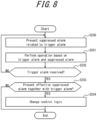
- FIG. 8 illustrates the processing from step S103 of FIG. 2 onwards.
- step S200 the processor 11 presents the consequent suppressed alarms to the operator, as in the first processing example.
- step S201 the operator performs an operation to recover from an abnormality based on the trigger alarm and the suppressed alarms, as in the first processing example.
- step S202 the processor 11 then judges whether the trigger alarm has been resolved by the recovery operation by the operator, as in the first processing example.
- the processing proceeds to step S203.
- the trigger alarm has not been resolved (step S202: NO)
- the processing returns to step S200.
- step S203 the processor 11 judges in this step whether to present suppressed alarms effective for resolving the trigger alarm subsequently to the operator.
- step S203: YES the processing proceeds to step S204.
- step S203: NO the present processing ends.
- a suppressed alarm is presented to the operator as necessary based on an operation by the operator.
- a suppressed alarm useful for resolving the trigger alarm is presented to the operator along with the trigger alarm without the operator performing an operation.
- the auxiliary information that the operator views can therefore be further optimized, which can further increase the efficiency of operations by the operator to recover from an abnormality.
- the operator may, as necessary, perform an operation to recover from an abnormality based only on the trigger alarm between the processing of step S101 and the processing of step S102 in FIG. 2 in the above-described first processing example.
- the processor 11 may then perform the processing from step S102 onward when the abnormality is not resolved by this recovery operation.
- a suppressed alarm effective for resolving the trigger alarm may be presented to the operator with greater emphasis than the other suppressed alarms.
- a suppressed alarm effective for resolving the trigger alarm may be displayed with greater emphasis than the other suppressed alarms in FIG. 6 by way of a mark, text that is colored or in bold, or the like.
- a suppressed alarm effective for resolving the trigger alarm when a suppressed alarm effective for resolving the trigger alarm is displayed to the operator with greater emphasis than the other suppressed alarms in the first processing example, and the trigger alarm is resolved with a recovery operation by the operator based on the suppressed alarm, then the suppressed alarm may be presented to the operator together with the trigger alarm without the operator performing an operation, as in the second processing example.
- a suppressed alarm effective for resolving the trigger alarm (such as "CPX002.LO”) may be displayed with emphasis in the first processing example to enable the operator to notice the suppressed alarm "CPX002.LO" when opening the window of FIG. 6 and perform an operation to recover from the abnormality in light of the suppressed alarm ("CPX002.LO").
- the suppressed alarm (“CPX002.LO”) may be displayed together with the trigger alarm ("PPX001.LL”) without the operator performing an operation, as in the second processing example.
- the operator sets the alarm classification condition.
- This condition may, however, be set using any type of machine learning, such as a neural network.
- the alarm management apparatus of the present disclosure may further include a learning unit. Based on the operation history of the operator, the learning unit optimizes the alarm classification condition so that the number of operations necessary for recovery from an abnormality decreases, for example. Subsequently, the learning unit transmits the optimized classification condition to the processor. The processor then updates the classification condition originally described in the definition file to the optimized classification condition. Alternatively, the processor may ask the operator whether to use the classification condition originally described in the definition file or the optimized classification condition. The processor judges whether to use the optimized classification condition based on the response from the operator.
- the learning unit can be implemented using one or more processors.
- An alarm management system A may be configured to include the alarm management apparatus 1, the operation monitoring terminal 2, and the engineering terminal 5 according to the above embodiment.
- the present disclosure can provide an alarm management apparatus, an alarm management system, and an alarm management method that can increase the efficiency of operations by the operator to recover from an abnormality.
Landscapes
- Engineering & Computer Science (AREA)
- Physics & Mathematics (AREA)
- General Physics & Mathematics (AREA)
- Automation & Control Theory (AREA)
- Human Computer Interaction (AREA)
- Business, Economics & Management (AREA)
- Emergency Management (AREA)
- General Engineering & Computer Science (AREA)
- Manufacturing & Machinery (AREA)
- Quality & Reliability (AREA)
- Testing And Monitoring For Control Systems (AREA)
Claims (4)
- Appareil de gestion des alarmes (1) configuré pour présenter (S200) une alarme de déclenchement indiquant une cause initiale d'anomalie à un opérateur lorsque l'alarme de déclenchement est incluse dans une pluralité d'alarmes qui sont reçues ou générées ;stocker au moins une alarme supprimée indiquant une anomalie de processus secondaire due à une anomalie de processus ayant causé l'alarme de déclenchement lorsque l'au moins une alarme supprimée est incluse dans la pluralité d'alarmes, l'appareil de gestion des alarmes étant caractérisé en ce qu'il est en outre configuré pourprésenter à l'opérateur l'au moins une alarme supprimée qui est stockée, sur la base d'une opération effectuée par l'opérateur,déterminer une alarme supprimée particulière qui est efficace pour résoudre l'alarme de déclenchement parmi les au moins une alarmes supprimées stockées, sur la base du fait que l'alarme de déclenchement est résolue à la suite de l'exécution antérieure par l'opérateur d'une opération de récupération d'une anomalie basée sur l'alarme supprimée particulière, ou sur la base de l'entrée antérieure de l'opérateur concernant l'efficacité de l'alarme supprimée particulière pour résoudre l'alarme de déclenchement, etmodifier (S204) une logique de commande de sorte que l'alarme supprimée déterminée comme étant efficace pour résoudre l'alarme de déclenchement soit présentée ultérieurement à l'opérateur en même temps que l'alarme de déclenchement sans que l'opérateur n'effectue d'opération.
- Appareil de gestion des alarmes selon la revendication 1, dans lequel l'appareil de gestion des alarmes est configuré pour présenter à l'opérateur l'alarme supprimée particulière avec plus d'importance que les autres alarmes supprimées.
- Système de gestion des alarmes comprenant :l'appareil de gestion des alarmes selon l'une quelconque des revendications 1 à 2 ;un terminal de surveillance des opérations ; etun terminal d'ingénierie.
- Procédé de gestion des alarmes utilisant un appareil de gestion des alarmes, le procédé de gestion des alarmes comprenant :présenter une alarme de déclenchement indiquant une cause initiale d'anomalie à un opérateur lorsque l'alarme de déclenchement est incluse dans une pluralité d'alarmes qui sont reçues ou générées ;stocker au moins une alarme supprimée indiquant une anomalie de processus secondaire due à une anomalie de processus ayant causé l'alarme de déclenchement lorsque l'au moins une alarme supprimée est incluse dans la pluralité d'alarmes ;présenter à l'opérateur l'au moins une alarme supprimée qui est stockée, sur la base d'une opération effectuée par l'opérateur,déterminer une alarme supprimée particulière qui est efficace pour résoudre l'alarme de déclenchement parmi les au moins une alarmes supprimées stockées, sur la base du fait que l'alarme de déclenchement est résolue à la suite de l'exécution antérieure par l'opérateur d'une opération de récupération d'une anomalie basée sur l'alarme supprimée particulière, ou sur la base de l'entrée antérieure de l'opérateur concernant l'efficacité de l'alarme supprimée particulière pour résoudre l'alarme de déclenchement, etmodifier une logique de commande de sorte que l'alarme supprimée déterminée comme étant efficace pour résoudre l'alarme de déclenchement soit présentée ultérieurement à l'opérateur en même temps que l'alarme de déclenchement sans que l'opérateur n'effectue d'opération.
Applications Claiming Priority (1)
| Application Number | Priority Date | Filing Date | Title |
|---|---|---|---|
| JP2019146753A JP7344041B2 (ja) | 2019-08-08 | 2019-08-08 | アラーム管理装置、アラーム管理システム、およびアラーム管理方法 |
Publications (2)
| Publication Number | Publication Date |
|---|---|
| EP3772677A1 EP3772677A1 (fr) | 2021-02-10 |
| EP3772677B1 true EP3772677B1 (fr) | 2024-10-02 |
Family
ID=71950543
Family Applications (1)
| Application Number | Title | Priority Date | Filing Date |
|---|---|---|---|
| EP20189658.6A Active EP3772677B1 (fr) | 2019-08-08 | 2020-08-05 | Appareil, système et procédé de gestion d'alarme |
Country Status (4)
| Country | Link |
|---|---|
| US (1) | US11869335B2 (fr) |
| EP (1) | EP3772677B1 (fr) |
| JP (1) | JP7344041B2 (fr) |
| CN (1) | CN112346433B (fr) |
Family Cites Families (17)
| Publication number | Priority date | Publication date | Assignee | Title |
|---|---|---|---|---|
| JPH05108412A (ja) * | 1991-10-15 | 1993-04-30 | Toshiba Corp | プラント警報装置 |
| JP3545513B2 (ja) * | 1995-09-28 | 2004-07-21 | 株式会社東芝 | プラント状態の警報装置 |
| US6774786B1 (en) * | 2000-11-07 | 2004-08-10 | Fisher-Rosemount Systems, Inc. | Integrated alarm display in a process control network |
| JP2001195124A (ja) * | 2000-01-07 | 2001-07-19 | Toshiba Corp | プラント監視制御装置 |
| JP2004086338A (ja) * | 2002-08-23 | 2004-03-18 | Toshiba Corp | 警報制御処理装置 |
| JP4247743B2 (ja) | 2004-06-29 | 2009-04-02 | 横河電機株式会社 | アラーム監視装置 |
| JP5024083B2 (ja) * | 2008-01-31 | 2012-09-12 | 横河電機株式会社 | アラーム管理装置 |
| US7876211B2 (en) * | 2008-02-21 | 2011-01-25 | Honeywell International Inc. | Apparatus and method for alarm suppression in a monitoring system |
| JP2010033118A (ja) * | 2008-07-25 | 2010-02-12 | Yokogawa Electric Corp | アラーム管理装置 |
| US8166352B2 (en) * | 2009-06-30 | 2012-04-24 | Alcatel Lucent | Alarm correlation system |
| WO2014129983A1 (fr) * | 2013-02-21 | 2014-08-28 | Thai Oil Public Company Limited | Procédés, systèmes et dispositifs de gestion d'une pluralité d'alarmes |
| US9360816B1 (en) * | 2014-12-15 | 2016-06-07 | Ricoh Company, Ltd. | Toner bottle driving device control method and image forming apparatus |
| JP6649756B2 (ja) * | 2015-11-26 | 2020-02-19 | アズビル株式会社 | 表示装置および方法 |
| US9754478B1 (en) * | 2016-05-31 | 2017-09-05 | Honeywell International Inc. | Reducing nuisance notifications from a building automation system |
| JP2018120456A (ja) * | 2017-01-26 | 2018-08-02 | 三菱日立パワーシステムズ株式会社 | アラーム表示システムおよびアラーム表示方法 |
| US10388140B2 (en) * | 2017-10-18 | 2019-08-20 | Bently Nevada, Llc | Automated alarm shelving |
| CN109474473A (zh) * | 2018-12-06 | 2019-03-15 | 浙江航天恒嘉数据科技有限公司 | 一种面向感知数据监测预警的通用告警系统及方法 |
-
2019
- 2019-08-08 JP JP2019146753A patent/JP7344041B2/ja active Active
-
2020
- 2020-08-05 CN CN202010775864.6A patent/CN112346433B/zh active Active
- 2020-08-05 EP EP20189658.6A patent/EP3772677B1/fr active Active
- 2020-08-06 US US16/986,521 patent/US11869335B2/en active Active
Also Published As
| Publication number | Publication date |
|---|---|
| JP7344041B2 (ja) | 2023-09-13 |
| EP3772677A1 (fr) | 2021-02-10 |
| JP2021026716A (ja) | 2021-02-22 |
| US11869335B2 (en) | 2024-01-09 |
| CN112346433A (zh) | 2021-02-09 |
| CN112346433B (zh) | 2024-08-27 |
| US20210043062A1 (en) | 2021-02-11 |
Similar Documents
| Publication | Publication Date | Title |
|---|---|---|
| JP5816166B2 (ja) | 故障の処理方法および処理装置 | |
| CN105487458A (zh) | 基于警报来源类型和/或警报目的过滤过程控制系统警报的方法和装置 | |
| US10698398B2 (en) | Alarm display system and alarm display method | |
| US20090212936A1 (en) | Apparatus and method for alarm suppression in a monitoring system | |
| CN110752944B (zh) | 告警派单方法及装置 | |
| JP2007323396A (ja) | プラント情報処理システムおよびプラント情報処理方法 | |
| US11681576B2 (en) | Anomaly coping support apparatus, method, and program | |
| US5617311A (en) | Information system for operating complex plant | |
| US12056033B2 (en) | Anomaly location estimating apparatus, method, and program | |
| CN101876828A (zh) | 一种管理飞机警报的方法以及实现所述方法的设备 | |
| JP5772128B2 (ja) | 工業プラント情報を提供するための方法及び装置 | |
| US20180308027A1 (en) | Apparatus and method for determining and rendering risk assessments to users | |
| US11869335B2 (en) | Alarm management apparatus, alarm management system, and alarm management method | |
| EP3889702A1 (fr) | Système de commande | |
| JP4867908B2 (ja) | 監視システム、ネットワーク監視装置及びサービス実行環境監視方法 | |
| CN105074833B (zh) | 用于识别对控制和调节单元的系统状态的未授权操控的装置以及具有该装置的核设施 | |
| JP5314741B2 (ja) | 遠隔監視システム | |
| US20200073777A1 (en) | Method for Automatically Evaluating Alarm Clusters | |
| KR101447031B1 (ko) | 원자력발전소의 비상 운전 절차서 검색 시스템 및 그 방법 | |
| US20230385406A1 (en) | Response support device and response support method | |
| CN112424716A (zh) | 通知装置、通知方法及程序 | |
| CN117636497A (zh) | 一种电网调度机房巡检控制方法、系统、终端及介质 | |
| EP3772676B1 (fr) | Système et procédé de gestion d'alarme | |
| EP3748451A1 (fr) | Appareil de traitement d'informations, système de gestion d'alarme et procédé de gestion d'alarme | |
| JP2010204924A (ja) | 監視制御システム及び保守機器の監視方法 |
Legal Events
| Date | Code | Title | Description |
|---|---|---|---|
| PUAI | Public reference made under article 153(3) epc to a published international application that has entered the european phase |
Free format text: ORIGINAL CODE: 0009012 |
|
| STAA | Information on the status of an ep patent application or granted ep patent |
Free format text: STATUS: THE APPLICATION HAS BEEN PUBLISHED |
|
| AK | Designated contracting states |
Kind code of ref document: A1 Designated state(s): AL AT BE BG CH CY CZ DE DK EE ES FI FR GB GR HR HU IE IS IT LI LT LU LV MC MK MT NL NO PL PT RO RS SE SI SK SM TR |
|
| AX | Request for extension of the european patent |
Extension state: BA ME |
|
| STAA | Information on the status of an ep patent application or granted ep patent |
Free format text: STATUS: REQUEST FOR EXAMINATION WAS MADE |
|
| STAA | Information on the status of an ep patent application or granted ep patent |
Free format text: STATUS: EXAMINATION IS IN PROGRESS |
|
| 17P | Request for examination filed |
Effective date: 20210806 |
|
| RBV | Designated contracting states (corrected) |
Designated state(s): AL AT BE BG CH CY CZ DE DK EE ES FI FR GB GR HR HU IE IS IT LI LT LU LV MC MK MT NL NO PL PT RO RS SE SI SK SM TR |
|
| 17Q | First examination report despatched |
Effective date: 20210902 |
|
| P01 | Opt-out of the competence of the unified patent court (upc) registered |
Effective date: 20230603 |
|
| GRAP | Despatch of communication of intention to grant a patent |
Free format text: ORIGINAL CODE: EPIDOSNIGR1 |
|
| STAA | Information on the status of an ep patent application or granted ep patent |
Free format text: STATUS: GRANT OF PATENT IS INTENDED |
|
| INTG | Intention to grant announced |
Effective date: 20240404 |
|
| GRAS | Grant fee paid |
Free format text: ORIGINAL CODE: EPIDOSNIGR3 |
|
| GRAA | (expected) grant |
Free format text: ORIGINAL CODE: 0009210 |
|
| STAA | Information on the status of an ep patent application or granted ep patent |
Free format text: STATUS: THE PATENT HAS BEEN GRANTED |
|
| AK | Designated contracting states |
Kind code of ref document: B1 Designated state(s): AL AT BE BG CH CY CZ DE DK EE ES FI FR GB GR HR HU IE IS IT LI LT LU LV MC MK MT NL NO PL PT RO RS SE SI SK SM TR |
|
| REG | Reference to a national code |
Ref country code: GB Ref legal event code: FG4D |
|
| REG | Reference to a national code |
Ref country code: CH Ref legal event code: EP |
|
| REG | Reference to a national code |
Ref country code: DE Ref legal event code: R096 Ref document number: 602020038599 Country of ref document: DE |
|
| REG | Reference to a national code |
Ref country code: IE Ref legal event code: FG4D |
|
| REG | Reference to a national code |
Ref country code: LT Ref legal event code: MG9D |
|
| REG | Reference to a national code |
Ref country code: NL Ref legal event code: MP Effective date: 20241002 |
|
| REG | Reference to a national code |
Ref country code: AT Ref legal event code: MK05 Ref document number: 1728930 Country of ref document: AT Kind code of ref document: T Effective date: 20241002 |
|
| PG25 | Lapsed in a contracting state [announced via postgrant information from national office to epo] |
Ref country code: NL Free format text: LAPSE BECAUSE OF FAILURE TO SUBMIT A TRANSLATION OF THE DESCRIPTION OR TO PAY THE FEE WITHIN THE PRESCRIBED TIME-LIMIT Effective date: 20241002 |
|
| PG25 | Lapsed in a contracting state [announced via postgrant information from national office to epo] |
Ref country code: NL Free format text: LAPSE BECAUSE OF FAILURE TO SUBMIT A TRANSLATION OF THE DESCRIPTION OR TO PAY THE FEE WITHIN THE PRESCRIBED TIME-LIMIT Effective date: 20241002 |
|
| PG25 | Lapsed in a contracting state [announced via postgrant information from national office to epo] |
Ref country code: HR Free format text: LAPSE BECAUSE OF FAILURE TO SUBMIT A TRANSLATION OF THE DESCRIPTION OR TO PAY THE FEE WITHIN THE PRESCRIBED TIME-LIMIT Effective date: 20241002 Ref country code: IS Free format text: LAPSE BECAUSE OF FAILURE TO SUBMIT A TRANSLATION OF THE DESCRIPTION OR TO PAY THE FEE WITHIN THE PRESCRIBED TIME-LIMIT Effective date: 20250202 Ref country code: PT Free format text: LAPSE BECAUSE OF FAILURE TO SUBMIT A TRANSLATION OF THE DESCRIPTION OR TO PAY THE FEE WITHIN THE PRESCRIBED TIME-LIMIT Effective date: 20250203 |
|
| PG25 | Lapsed in a contracting state [announced via postgrant information from national office to epo] |
Ref country code: FI Free format text: LAPSE BECAUSE OF FAILURE TO SUBMIT A TRANSLATION OF THE DESCRIPTION OR TO PAY THE FEE WITHIN THE PRESCRIBED TIME-LIMIT Effective date: 20241002 |
|
| PG25 | Lapsed in a contracting state [announced via postgrant information from national office to epo] |
Ref country code: BG Free format text: LAPSE BECAUSE OF FAILURE TO SUBMIT A TRANSLATION OF THE DESCRIPTION OR TO PAY THE FEE WITHIN THE PRESCRIBED TIME-LIMIT Effective date: 20241002 |
|
| PG25 | Lapsed in a contracting state [announced via postgrant information from national office to epo] |
Ref country code: ES Free format text: LAPSE BECAUSE OF FAILURE TO SUBMIT A TRANSLATION OF THE DESCRIPTION OR TO PAY THE FEE WITHIN THE PRESCRIBED TIME-LIMIT Effective date: 20241002 |
|
| PG25 | Lapsed in a contracting state [announced via postgrant information from national office to epo] |
Ref country code: NO Free format text: LAPSE BECAUSE OF FAILURE TO SUBMIT A TRANSLATION OF THE DESCRIPTION OR TO PAY THE FEE WITHIN THE PRESCRIBED TIME-LIMIT Effective date: 20250102 |
|
| PG25 | Lapsed in a contracting state [announced via postgrant information from national office to epo] |
Ref country code: LV Free format text: LAPSE BECAUSE OF FAILURE TO SUBMIT A TRANSLATION OF THE DESCRIPTION OR TO PAY THE FEE WITHIN THE PRESCRIBED TIME-LIMIT Effective date: 20241002 Ref country code: AT Free format text: LAPSE BECAUSE OF FAILURE TO SUBMIT A TRANSLATION OF THE DESCRIPTION OR TO PAY THE FEE WITHIN THE PRESCRIBED TIME-LIMIT Effective date: 20241002 Ref country code: GR Free format text: LAPSE BECAUSE OF FAILURE TO SUBMIT A TRANSLATION OF THE DESCRIPTION OR TO PAY THE FEE WITHIN THE PRESCRIBED TIME-LIMIT Effective date: 20250103 |
|
| PG25 | Lapsed in a contracting state [announced via postgrant information from national office to epo] |
Ref country code: CZ Free format text: LAPSE BECAUSE OF FAILURE TO SUBMIT A TRANSLATION OF THE DESCRIPTION OR TO PAY THE FEE WITHIN THE PRESCRIBED TIME-LIMIT Effective date: 20241002 Ref country code: PL Free format text: LAPSE BECAUSE OF FAILURE TO SUBMIT A TRANSLATION OF THE DESCRIPTION OR TO PAY THE FEE WITHIN THE PRESCRIBED TIME-LIMIT Effective date: 20241002 |
|
| PG25 | Lapsed in a contracting state [announced via postgrant information from national office to epo] |
Ref country code: RS Free format text: LAPSE BECAUSE OF FAILURE TO SUBMIT A TRANSLATION OF THE DESCRIPTION OR TO PAY THE FEE WITHIN THE PRESCRIBED TIME-LIMIT Effective date: 20250102 |
|
| PG25 | Lapsed in a contracting state [announced via postgrant information from national office to epo] |
Ref country code: SM Free format text: LAPSE BECAUSE OF FAILURE TO SUBMIT A TRANSLATION OF THE DESCRIPTION OR TO PAY THE FEE WITHIN THE PRESCRIBED TIME-LIMIT Effective date: 20241002 |
|
| REG | Reference to a national code |
Ref country code: DE Ref legal event code: R097 Ref document number: 602020038599 Country of ref document: DE |
|
| PG25 | Lapsed in a contracting state [announced via postgrant information from national office to epo] |
Ref country code: DK Free format text: LAPSE BECAUSE OF FAILURE TO SUBMIT A TRANSLATION OF THE DESCRIPTION OR TO PAY THE FEE WITHIN THE PRESCRIBED TIME-LIMIT Effective date: 20241002 |
|
| PG25 | Lapsed in a contracting state [announced via postgrant information from national office to epo] |
Ref country code: EE Free format text: LAPSE BECAUSE OF FAILURE TO SUBMIT A TRANSLATION OF THE DESCRIPTION OR TO PAY THE FEE WITHIN THE PRESCRIBED TIME-LIMIT Effective date: 20241002 |
|
| PG25 | Lapsed in a contracting state [announced via postgrant information from national office to epo] |
Ref country code: RO Free format text: LAPSE BECAUSE OF FAILURE TO SUBMIT A TRANSLATION OF THE DESCRIPTION OR TO PAY THE FEE WITHIN THE PRESCRIBED TIME-LIMIT Effective date: 20241002 |
|
| PG25 | Lapsed in a contracting state [announced via postgrant information from national office to epo] |
Ref country code: SK Free format text: LAPSE BECAUSE OF FAILURE TO SUBMIT A TRANSLATION OF THE DESCRIPTION OR TO PAY THE FEE WITHIN THE PRESCRIBED TIME-LIMIT Effective date: 20241002 |
|
| PG25 | Lapsed in a contracting state [announced via postgrant information from national office to epo] |
Ref country code: IT Free format text: LAPSE BECAUSE OF FAILURE TO SUBMIT A TRANSLATION OF THE DESCRIPTION OR TO PAY THE FEE WITHIN THE PRESCRIBED TIME-LIMIT Effective date: 20241002 |
|
| PLBE | No opposition filed within time limit |
Free format text: ORIGINAL CODE: 0009261 |
|
| STAA | Information on the status of an ep patent application or granted ep patent |
Free format text: STATUS: NO OPPOSITION FILED WITHIN TIME LIMIT |
|
| PG25 | Lapsed in a contracting state [announced via postgrant information from national office to epo] |
Ref country code: SE Free format text: LAPSE BECAUSE OF FAILURE TO SUBMIT A TRANSLATION OF THE DESCRIPTION OR TO PAY THE FEE WITHIN THE PRESCRIBED TIME-LIMIT Effective date: 20241002 |
|
| 26N | No opposition filed |
Effective date: 20250703 |
|
| PGFP | Annual fee paid to national office [announced via postgrant information from national office to epo] |
Ref country code: DE Payment date: 20250828 Year of fee payment: 6 |
|
| REG | Reference to a national code |
Ref country code: CH Ref legal event code: H13 Free format text: ST27 STATUS EVENT CODE: U-0-0-H10-H13 (AS PROVIDED BY THE NATIONAL OFFICE) Effective date: 20260324 |
|
| PG25 | Lapsed in a contracting state [announced via postgrant information from national office to epo] |
Ref country code: MC Free format text: LAPSE BECAUSE OF FAILURE TO SUBMIT A TRANSLATION OF THE DESCRIPTION OR TO PAY THE FEE WITHIN THE PRESCRIBED TIME-LIMIT Effective date: 20241002 |
|
| PG25 | Lapsed in a contracting state [announced via postgrant information from national office to epo] |
Ref country code: LU Free format text: LAPSE BECAUSE OF NON-PAYMENT OF DUE FEES Effective date: 20250805 |
|
| PG25 | Lapsed in a contracting state [announced via postgrant information from national office to epo] |
Ref country code: CH Free format text: LAPSE BECAUSE OF NON-PAYMENT OF DUE FEES Effective date: 20250831 |
|
| GBPC | Gb: european patent ceased through non-payment of renewal fee |
Effective date: 20250805 |
|
| REG | Reference to a national code |
Ref country code: BE Ref legal event code: MM Effective date: 20250831 |
|
| PG25 | Lapsed in a contracting state [announced via postgrant information from national office to epo] |
Ref country code: LT Free format text: LAPSE BECAUSE OF FAILURE TO SUBMIT A TRANSLATION OF THE DESCRIPTION OR TO PAY THE FEE WITHIN THE PRESCRIBED TIME-LIMIT Effective date: 20241002 |
|
| PG25 | Lapsed in a contracting state [announced via postgrant information from national office to epo] |
Ref country code: GB Free format text: LAPSE BECAUSE OF NON-PAYMENT OF DUE FEES Effective date: 20250805 |
|
| PG25 | Lapsed in a contracting state [announced via postgrant information from national office to epo] |
Ref country code: BE Free format text: LAPSE BECAUSE OF NON-PAYMENT OF DUE FEES Effective date: 20250831 Ref country code: IE Free format text: LAPSE BECAUSE OF NON-PAYMENT OF DUE FEES Effective date: 20250805 |
|
| PG25 | Lapsed in a contracting state [announced via postgrant information from national office to epo] |
Ref country code: FR Free format text: LAPSE BECAUSE OF NON-PAYMENT OF DUE FEES Effective date: 20250831 |