EP3748965B1 - Videokommunikation mit sehr niedriger latenz - Google Patents
Videokommunikation mit sehr niedriger latenz Download PDFInfo
- Publication number
- EP3748965B1 EP3748965B1 EP20182757.3A EP20182757A EP3748965B1 EP 3748965 B1 EP3748965 B1 EP 3748965B1 EP 20182757 A EP20182757 A EP 20182757A EP 3748965 B1 EP3748965 B1 EP 3748965B1
- Authority
- EP
- European Patent Office
- Prior art keywords
- video data
- image
- medical video
- image frame
- medical
- Prior art date
- Legal status (The legal status is an assumption and is not a legal conclusion. Google has not performed a legal analysis and makes no representation as to the accuracy of the status listed.)
- Active
Links
Images



Classifications
-
- H—ELECTRICITY
- H04—ELECTRIC COMMUNICATION TECHNIQUE
- H04N—PICTORIAL COMMUNICATION, e.g. TELEVISION
- H04N7/00—Television systems
- H04N7/14—Systems for two-way working
- H04N7/141—Systems for two-way working between two video terminals, e.g. videophone
- H04N7/147—Communication arrangements, e.g. identifying the communication as a video-communication, intermediate storage of the signals
-
- H—ELECTRICITY
- H04—ELECTRIC COMMUNICATION TECHNIQUE
- H04N—PICTORIAL COMMUNICATION, e.g. TELEVISION
- H04N19/00—Methods or arrangements for coding, decoding, compressing or decompressing digital video signals
- H04N19/10—Methods or arrangements for coding, decoding, compressing or decompressing digital video signals using adaptive coding
- H04N19/169—Methods or arrangements for coding, decoding, compressing or decompressing digital video signals using adaptive coding characterised by the coding unit, i.e. the structural portion or semantic portion of the video signal being the object or the subject of the adaptive coding
- H04N19/17—Methods or arrangements for coding, decoding, compressing or decompressing digital video signals using adaptive coding characterised by the coding unit, i.e. the structural portion or semantic portion of the video signal being the object or the subject of the adaptive coding the unit being an image region, e.g. an object
- H04N19/176—Methods or arrangements for coding, decoding, compressing or decompressing digital video signals using adaptive coding characterised by the coding unit, i.e. the structural portion or semantic portion of the video signal being the object or the subject of the adaptive coding the unit being an image region, e.g. an object the region being a block, e.g. a macroblock
-
- H—ELECTRICITY
- H04—ELECTRIC COMMUNICATION TECHNIQUE
- H04N—PICTORIAL COMMUNICATION, e.g. TELEVISION
- H04N19/00—Methods or arrangements for coding, decoding, compressing or decompressing digital video signals
- H04N19/10—Methods or arrangements for coding, decoding, compressing or decompressing digital video signals using adaptive coding
- H04N19/169—Methods or arrangements for coding, decoding, compressing or decompressing digital video signals using adaptive coding characterised by the coding unit, i.e. the structural portion or semantic portion of the video signal being the object or the subject of the adaptive coding
- H04N19/17—Methods or arrangements for coding, decoding, compressing or decompressing digital video signals using adaptive coding characterised by the coding unit, i.e. the structural portion or semantic portion of the video signal being the object or the subject of the adaptive coding the unit being an image region, e.g. an object
- H04N19/174—Methods or arrangements for coding, decoding, compressing or decompressing digital video signals using adaptive coding characterised by the coding unit, i.e. the structural portion or semantic portion of the video signal being the object or the subject of the adaptive coding the unit being an image region, e.g. an object the region being a slice, e.g. a line of blocks or a group of blocks
-
- H—ELECTRICITY
- H04—ELECTRIC COMMUNICATION TECHNIQUE
- H04N—PICTORIAL COMMUNICATION, e.g. TELEVISION
- H04N19/00—Methods or arrangements for coding, decoding, compressing or decompressing digital video signals
- H04N19/42—Methods or arrangements for coding, decoding, compressing or decompressing digital video signals characterised by implementation details or hardware specially adapted for video compression or decompression, e.g. dedicated software implementation
- H04N19/436—Methods or arrangements for coding, decoding, compressing or decompressing digital video signals characterised by implementation details or hardware specially adapted for video compression or decompression, e.g. dedicated software implementation using parallelised computational arrangements
-
- H—ELECTRICITY
- H04—ELECTRIC COMMUNICATION TECHNIQUE
- H04N—PICTORIAL COMMUNICATION, e.g. TELEVISION
- H04N19/00—Methods or arrangements for coding, decoding, compressing or decompressing digital video signals
- H04N19/60—Methods or arrangements for coding, decoding, compressing or decompressing digital video signals using transform coding
Definitions
- the invention relates to the field of data communication. More specifically it relates to methods and systems for low or ultra low latency video communication.
- Video data can be considered a three dimensional array of color or luminance data, depending if one refers to color or grayscale video.
- Two dimensions - horizontal and vertical - of this three dimensional array represent spatial data or so called pixels of a video image, whereas the third dimension represents the time domain of consecutive images.
- each video image will be called a frame.
- a frame of pixel data generated by an imaging sensor is typically transferred to a processing or visualisation unit by serialising the data, and sending it via one or a limited set of communication lines.
- the two dimensional spatial data of a single frame are transferred via a single communication line as a consecutive series of data in time.
- This communication line can carry analog data or digital codewords representing the original pixel data.
- data can be transferred more in parallel (e.g. some systems transfer red, green, blue and synchronization data in parallel).
- the above description typically explains how a camera system transports via a single cable its consecutive frame data to a display.
- a digital display will collect all consecutive data of a single frame in a buffer, and once the frame is completed it will present it to the display matrix for visualisation. In the remainder of this text, this will be referred to as a 'direct video link'.
- Video or image compression refers to bandwidth reduction either in the spatial domain (image compression) or in the spatial and temporal domain simultaneously (video compression).
- the principal goal of compression is to reduce the amount of data (bandwidth). The latter can either be done without losing any information (lossless compression).
- This said the original frame data can be reconstructed identically based on the compressed frame data, and is a bit-by-bit perfect match to the original.
- compression can be done such that a human observer is unable to perceive the differences between the original and the compressed frame data (visual lossless compression). This said the original frame cannot be reconstructed identically, but a human observer typically will not see the differences between the original and reconstructed frame.
- Video compression exploits the fact that pixel data is typically strongly temporal and spatial redundant. Compression can be achieved by storing the differences between a pixel and one or more references spatially (intra-frame: e.g. used in the JPEG compression scheme) and by storing the differences between consecutive frames in the time domain (inter-frame: e.g. used in the MPEG compression scheme). Additionally, given that the human eye is not very sensitive to subtle variations in intensity and/or color, further compression can be obtained by reducing the amount of different variations which are retained after compression. Combinations of these techniques form the basics behind modern nowadays compression schemes like e.g. used in the MPEG1 - MPEG2 and MPEG4 families and related.
- a communication protocol is an agreement between computing or telecommunication systems for exchange of information.
- Communication protocols used on the internet/intranet are designed to function in a complex and uncontrolled setting.
- the design hereto typically uses a layering scheme as a basis, which decouples a larger and more complex protocol in distinct, easier to manage sub-protocols.
- the Internet protocol suite consists of the following layers: application-, transport-, internet- and network interface-functions.
- the Internet hereby offers universal interconnection, which means that any pair of computers connected to the internet is allowed to communicate. All the interconnected physical networks appear to the user as a single large network. This interconnection scheme is hence called the internet.
- Communication protocols may include signaling, authentication, encryption and error detection and correction capabilities.
- Video communication can be obtained through an electrical or optical 'direct cable' carrying raw video data, minimally or not compressed and typically using no higher level communication protocols.
- the classic cable based system typically yields fast low latency communication, but consumes high bandwidths and normally cannot be tunnelled through a complex communication network like the internet or an intranet.
- traditional video cabling typically imposes limited maximum cable lengths, or it has to be extended with expensive and/or signal-specific technology such as UTP extenders, fiber-optic extenders, and satellite connections. Then, again, these technologies incur high costs for relatively limited flexibility to put multiple channels on the same "wire" and/or receive the same channel on multiple receivers.
- Patent literature WO 2006/036661 A1 (INTEL CORP [US]; PALLISTER KIM [US]) 6 April 2006 (2006-04-06) discloses an apparatus, system and method for low latency remote display rendering using tile-based rendering systems using block-wise parallel processing in rendering, encoding and transmission.
- IP Internet Protocol
- embodiments of the present invention typically are between 5 and 50 times faster in terms of delay.
- Embodiments provide a solution in a situation where we need low delay, lower bandwidth and cannot provide one or more 'direct video links'. This typically can occur in a situation where a human observer has to instantaneously act on what he or she sees, like e.g. in medical endoscopy. Similar situations can be found in any high speed feedback video based control loop.
- the present invention relates to a video data communication system comprising at least one video data transmission unit for sending or receiving video data over a data network, the transmission unit comprising an image acquiring circuitry or an image reconstruction circuitry for acquiring or reconstruction an image frame or image field, a video processing unit for processing at least part of the video data and a communication unit for sending or receiving at least part of the data, wherein at least two of the image acquiring circuitry or image reconstruction circuitry, the video processing unit and the communication unit are arranged, e.g. configured, for simultaneously handling different parts of a same image frame, the parts not being a complete image field, or different parts of a same image field of the video data. It is an advantage of embodiments according to the present invention that a video communication system can be obtained combining low latency and low bandwidth use.
- All of the image acquiring circuitry or image reconstruction circuitry, the video processing unit and the communication unit may be arranged for simultaneously handling different parts of a same image frame or same image field of the video data. It is an advantage of embodiment according to the present invention that gain in speed can be obtained by simultaneous processing in image acquisition or merging, image encoding or decoding and image sending or receiving.
- the image acquiring circuitry may comprise an image divider for dividing an image frame or image field into image blocks comprising a part of the image frame or field being one or more lines of pixels of the image frame or field or the image reconstruction circuitry comprises an image merger for merging image blocks comprising only a part of an image frame or image field being one or more lines of pixels of the image frame or field in a full image frame or image field.
- An image block may be an image slice.
- the video communication system may comprise an image block header generating means for generating an image block header for the image block for identifying an image frame or field wherefrom the image block is derived.
- the video processing unit may comprise an encoder or decoder adapted for encoding or decoding image blocks comprising only a part of an image frame or image field.
- the communication unit may be adapted for sending or receiving data representative of an image block comprising only a part of an image frame or image field.
- the at least one video data transmission unit may be a video sender or a video receiver. It is an advantage of embodiments according to the present invention that the advantageous processing can be implemented at the sender side as well as at the receiver side.
- the video communication system may comprise both a video sender comprising an image acquiring circuitry, a video processing unit and a communication unit arranged, e.g. configured, for simultaneously handling different parts of a same frame or same field of the video data and a video receiver comprising a communication unit, a video processing unit and an image reconstruction circuitry arranged for each simultaneously handling parts of a same frame or same field of the video data, the system furthermore being adapted for the video sender and the video receiver simultaneously handling parts of the same frame or same field of the video data. It is an advantage of embodiments according to the present invention that advantageous handling can be performed simultaneously at the sender side and the receiver side, resulting in an ultrafast video communication system, for example having no perceivable delay when compared to direct cable video.
- the reconstruction circuitry may be adapted for reconstructing frames or fields taking into account image block headers of the image blocks.
- the video communication system may be a software-implemented controller.
- the video processing unit may comprise a compressing or decompressing unit configured for compressing or decompressing image blocks comprising only a part of an image frame or image field.
- the video processing unit may comprise an encrypting or decrypting unit configured for encrypting or decrypting image blocks comprising only a part of an image frame or image field.
- the present invention also relates to a method for transferring video data, the video data comprising image frames or image fields of video data, the method comprising acquiring or reconstructing an image frame or image field, processing at least part of the video data, and sending or receiving at least part of the data, wherein at least two of said acquiring or reconstructing, processing and sending or receiving are performed simultaneously by simultaneously handling different parts of the same image frame, the parts not being a complete image field, or different parts of the same image field of the video data.
- All of said acquiring or reconstructing, processing and sending or receiving may be performed simultaneously by simultaneously handling different parts of the same image frame, the parts not being a complete image field, or different parts of the same image field of the video data.
- the method may comprise obtaining at least a first image block and a second image block, each image block being part of a same image frame or a same image field,
- the method further may comprise, upon receiving at least a first image block and a second image block, generating an image block header for the image block for identifying an image frame or field wherefrom the image block is derived.
- the method may comprise receiving at least a first image block and a second image, each image block being part of a same image frame or a same image field, over a data network,
- At least said merging may be performed taking into account an image block header for the image block for identifying an image frame or field wherefrom the image blocks are derived.
- the present invention also relates to a computer program product for, when executing on a processing unit, transferring video data according to any of the methods as described above.
- the present invention also relates to a data carrier medium storing such a computer program product
- the present invention furthermore relates to video data obtained using a method for transmitting video data as described above.
- the present invention also relates to the use of a video data communication system as described above in transmission of endoscopic video data.
- the present invention furthermore relates to the use of a video data communication system as described above for combining multiple video data inputs and for providing multiple video data outputs or providing a merged data output.
- the present invention also relates to the use of a video data communication system as described above for obtaining visual delay free transport of video data.
- description or claims of the present invention reference is made to part of an image frame or part of an image field, reference may be made to only part of an image frame or only part of an image field, i.e. not to the full image frame or the full image field.
- endoscopy refers to techniques used to inspect or to look into internal cavities or hollow structures.
- Endoscopy is used today for medical applications and for industrial applications such as for instance in the visual inspection of aircraft, diesel and automotive engines by so called borescopes.
- endocospes are used for life saving inspections and interventions such as endoscopic surgery on organs in a patient's body cavity.
- Borescopes allow preventive maintenance or inspection work where the area to be inspected is inaccessible by other means. They can for instance be used for preventive maintenance and inspection tasks on targets within an enclosed structure such as aircraft engines and others which require particular attention because of safety requirements.
- the medical field will be used to illustrate the new apparatus. Its applicability, however, extends without limitations to the industrial working domain.
- reference is made to a same image or video frame reference is made to a single image or shot, that shows the entire content of a scene at a single moment in time that is to be shown, typically shown as part of a larger video data.
- a single image or shot that shows the entire content of a scene at a single moment in time that is to be shown, typically shown as part of a larger video data.
- many single image frames are run in succession to produce what appears to be a seamless piece of video data.
- reference is made to a same image or video field reference is made to a selected set of image lines of an image frame, e.g. all odd or even image lines, still representative of the entire content of a scene at a single moment in time that is to be shown.
- an image block reference is made to a part of an image frame or image field that typically is not representative for the entire content of a scene at a single moment in time that it to be shown.
- Such an image block may consists of a set of pixels or a set of image lines, that typically only covers a portion of the scene that is shown with the image frame or image field, i.e. not the full scene that is shown with the image frame or image field.
- an image block reference also may be made to an image slice.
- the image block or image slice may comprise one or more but not all lines of an image frame or an image field. Typically the image block or image slice is not representative for the full scene represented by the image frame or image field.
- the image block or image slice may in some particular embodiments comprise 8 lines, 16 lines or a multiple thereof.
- the present invention relates to the video data communication process or a video data communication system for (ultra) low latency video communication.
- the system comprises at least one video data transmission unit for sending or receiving video data.
- the transmission unit comprises an image acquiring circuitry or an image reconstruction circuitry for acquiring or reconstructing an image frame or image field.
- at least two of the image acquiring circuitry or image reconstruction circuitry, the video processing unit and the communication unit are arranged for simultaneously processing, i.e. handling, different parts of a same image frame or image same field of the video data.
- the image acquisition and/or image reconstruction, the processing and the communicating may be all performed simultaneously on different parts of the same image frame or same image field.
- the transmission unit may be a sending unit, a receiving unit or a combination of a sending and a receiving unit.
- the sending unit may combine the acquisition, processing, e.g. compression, and transmission of video data, and/or a receiving unit which combines collection and possibly reordering compressed data packets, processing, e.g. decompressing, data packets and rendering the reconstructed video data.
- the system of present invention can provide a solution to implement this communication at a delay less than half of the time in between two consecutive frames, and a typical delay of less than 5 milliseconds. The delay in between two consecutive frames may be less than half of the frame time.
- the refresh clock of a flat panel display matrix, or the read-out frame rate clock of a receiving frame buffer device are typically not synchronized to the frame rate clock of the underlying camera system generating the image.
- the delay introduced in present invention is typically smaller than the time until the next refresh in case of a flat panel, or than the time until the next read-out in case of a frame buffer.
- the delay in present invention typically is not perceivable when compared to a 'direct video link'. This opens new possibilities for applications using (compressed) video transport over a communication medium like the internet/intranet.
- the image acquiring circuitry or an image reconstruction circuitry for acquiring or reconstructing an image frame or image field may be adapted for acquiring an image block being only part of an image frame - not being a full image field - or being only part of an image field.
- the image acquiring circuitry may be adapted for providing an image block header.
- Such an image block header may comprise metadata such as for example an identification of the image frame it stems from, but it may also comprise metadata identifying for the processing unit that for processing no future frames may be taken into account.
- the video processing unit may comprise a processor for processing the image block, i.e. part of the image frame or image field that has been acquired.
- processors that may be used can for example be conventional processors used in processing of conventional images.
- the image blocks may thus be handled similar as conventional images, but the size of the image blocks typically has a high width to height ratio, as it typically may contain one or more but not all lines of the image frame or image field.
- Examples of image or video processors that may be used are MPEG advanced video coding (AVC), such as for example H.264, or VC1, although embodiments of the present invention are not limited thereto.
- AVC MPEG advanced video coding
- Another example of a video processor that may be used is a Lempel Ziv or Lempel Ziv Welch based codec.
- the video processing unit may alternatively, combined therewith or in addition thereto also comprise a compression unit or decompression unit.
- the video processing unit may alternatively, combined therewith or in addition thereto also comprise an encrypting or decrypting unit. More generally, processing envisaged may include any type of processing allowing processing of part of an image frame or image field without the need for a lot of or any other information regarding to other parts of the image frame or image field, as corresponding processing can take advantage of the simultaneous handling as described herein.
- the communication unit may be a unit that is adapted for sending or receiving image blocks.
- the communication unit thereby typically sends the image blocks including their image block header.
- the present disclosure presents an integrated embodiment which therefore can work in a subframe or subfield based manner, i.e. on different image blocks being only part of an image frame - not being a full image field - or image field.
- the system may comprise a controller for controlling the image acquiring circuitry or an image reconstruction circuitry for acquiring or reconstructing an image frame or image field in such a way that two or more of these components can operate simultaneously on parts (typically different parts) of the same image frame or same image field.
- This communication unit will implement a digital or analog communication protocol in order to send the data over a communication channel.
- encryption or similar protocol specific functionality can be added.
- the inverse set of steps is executed, and instead of acquiring the data we render it and feed it 'via a direct video link' to a display, projector or other device for which the data was intended. This typical behaviour is further illustrated in FIG. 1 .
- Such a classic video communication unit always delays video when compared to a 'direct video link'.
- the delay hereby equals the time T to accumulate a frame in the frame buffer plus the time U needed for image processing (e.g. compression) plus the time C needed in the communication unit (e.g. sending / receiving data packets) of sender and receiver plus the time V needed for image processing at the receiver (e.g. decompression).
- the total latency, then, is 3 T + C . This is illustrated in the timing diagram of FIG. 2 . Given the video clocks of the source at the sender and the consumer (e.g. display) at the receiver are typically not synchronized, the actual delay will be even somewhat bigger.
- the video communication systems according to these embodiments present an integrated embodiment which can work in a subframe or subfield based manner.
- the acquisition building block, image processing unit and the communication unit are no longer independent units which work one after the other, but are integrated in a single logical parallel processing unit, combining at least some actions in parallel.
- This unit is able to perform at least two actions simultaneously and advantageously acquire, and meanwhile process the part of the image already acquired, and meanwhile communicate the part of the image already processed.
- the receiving unit works similarly, but respectively receives, processes and renders the arriving data in parallel or performs at least two of these actions in parallel.
- FIG. 3 shows an overview of this processing.
- the image communication unit arrives at a completely different timing than the classic unit described above. If image processing and communication unit only consume a negligible time interval, the communication is even as fast as in case of a direct video link.
- image processing and communication unit only consume a negligible time interval, the communication is even as fast as in case of a direct video link.
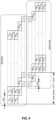
- the receiver depacketizes and reconstructs the image while the sender is still acquiring the image. See FIG. 4 for an updated timing diagram.
- the delay 3 T + C is now theoretically reduced to (3 T + C )/ N, where N is the number of pixels, typically a very high number (millions). Therefore the obtained delay is negligibly small (a few to a few tens of microseconds).
- Real-time image processing consumes a time interval comparable to, but at most, the acquisition time or inter-frame/field time. However, in embodiments of the present invention this processing time no longer creates additional lead time in the overall timing. Given the unit is parallelized one can start processing data once the first pixel was acquired. In reality, a real embodiment with somewhat more complex processing typically cannot work on discrete pixels but typically needs areas of pixels in horizontal and vertical direction. (An exception can be the application of a lookup table.) Given one needs both horizontal and vertical data, and pixel data arrive sequentially on a line by line basis (i.e., in scanning order), we define the concept of an 'image slice'.
- the latter is a sub-image (or image block or image slice) which contains a set of complete horizontal image lines, but is incomplete in the vertical direction.
- image data sequentially arriving, horizontally aligned on a row by row basis forms a slice.
- An image slice of e.g. 16 or 32 lines starts to be spatially relevant enough to run image processing tasks on it (e.g. compression).
- This said slice based processing allows us to introduce almost any kind of advanced image processing, and hardly changes the timing.
- the meaning of the parallelism N in FIG. 4 changes from the number of pixels in a frame or a field to the number of slices in a frame or a field, which changes overall delay from "negligibly small” (typically microseconds) to "very low” (typically a few milliseconds).
- the delay now sums to the waiting time to acquire the first slice, and the processing and sending time of a single slice. For example let us illustrate this based on a full HDTV 1080P60 image (1920x1080 pixels, progressively scanned at 60 frames per second), which for this example could be processed (e.g. video compression) at the inter-frame time (1/60 sec) and for which the communication unit consumes no time.
- video compression e.g. video compression
- Assuming video clocks would be in sync we delay the video with 3/60 sec 50 msec. Most human observers can perceive this delay.
- the present invention also relates to a method for transferring video data.
- the method is suitable for handling video data comprising image frames or image fields of video data.
- the method comprises acquiring or reconstructing an image frame or image field, processing at least part of the video data, and sending or receiving at least part of the data.
- at least two of said acquiring or reconstructing, processing and sending or receiving are performed simultaneously by simultaneously handling different parts of the same image frame, the parts not being a complete image field, or different parts of the same image field of the video data.
- all of said acquiring or reconstructing, processing and sending or receiving are performed simultaneously by simultaneously handling different parts of the same image frame, the parts not being a complete image field, or different parts of the same image field of the video data.
- the method comprises obtaining at least a first image block and a second image block, each image block being part of a same image frame or a same image field, after obtaining the at least a first image block and during obtaining of the second image block, processing the first image block, and thereafter, before or during processing of the second image block, sending the first image block over a data network.
- the method also may comprise, upon receiving at least a first image block and a second image block, generating an image block header for the image block for identifying an image frame or field wherefrom the image block is derived.
- Such an image block header also may comprise other metadata, such as for example the fact that for encoding or decoding, no frames of the future may be used. This image block header information may be used for controlling the image processing.
- the method further may comprise further steps expressing the functionality of components illustrated in system aspects or examples of the present description.
- the method comprises receiving at least a first image block and a second image, each image block being part of a same image frame or a same image field, over a data network, after receiving the first image block and before or during receiving of the second image block, processing the first image block, and thereafter merging the at least first image block and the second image block, after these image blocks have been processed, into a single image frame or image field.
- the merging may be performed taking into account an image block header for the image block for identifying an image frame or field wherefrom the image blocks are derived.
- the method further may comprise further steps expressing the functionality of components illustrated in system aspects or examples of the present description.
- the method for sending and the method for receiving is combined and provides a further method for transmitting video data.
- the method comprises obtaining at least a first image block and a second image block, each image block being part of a same image frame - but not being the complete image field - or being part of a same image field.
- the method also comprises, after obtaining the at least a first image block and before or during obtaining of the second image block, processing the first image block. In other words, processing of one image block has already started prior, while the second image block still is being obtained (e.g. read, received as input, ).
- the method comprising processing a first image block and a second image block, each image block being part of a same image frame - but not being the complete image field - or being part of a same image field.
- the method furthermore comprises, after processing the at least a first image block and before or during processing of the second image block, sending the first image block over a data network.
- the method comprising receiving at least a first image block and a second image, each image block being part of a same image frame or a same image field, over a data network, after receiving the first image block and before or during receiving of the second image block, processing the first image block.
- the method further may comprise thereafter merging the at least first image block and the second image block, i.e. after these image blocks have been processed, into a single image frame or image field.
- the present invention relates to a computer program product for, when executing on a processing means, for example in a device according to the first aspect of the invention, carrying out one of the methods for transmitting video data, as well as to a corresponding processing system.
- methods according to embodiments of the present invention may be implemented as computer-implemented methods, e.g. implemented in a software based manner.
- a processing system may be a processing system that includes at least one programmable processor coupled to a memory subsystem that includes at least one form of memory, e.g., RAM, ROM, and so forth.
- the processor or processors may be a general purpose, or a special purpose processor, and may be for inclusion in a device, e.g., a chip that has other components that perform other functions.
- a device e.g., a chip that has other components that perform other functions.
- the processing system may include a storage subsystem that has at least one disk drive and/or CD-ROM drive and/or DVD drive.
- a display system, a keyboard, and a pointing device may be included as part of a user interface subsystem to provide for a user to manually input information. Ports for inputting and outputting data also may be included.
- More elements such as network connections, interfaces to various devices, and so forth, may be included.
- the various elements of the processing system may be coupled in various ways, including via a bus subsystem, in the present example for simplicity a single bus, but will be understood to those skilled in the art to include a system of at least one bus.
- the memory of the memory subsystem may at some time hold part or all of a set of instructions that when executed on the processing system implement the steps of the method embodiments described herein.
- the present invention relates to a data carrier for storing a software implemented controller for controlling video data transmission as described above or a data carrier storing a computer program product as described above or to the transmission of a computer program product over a wide or local area network.
- a data carrier can thus tangibly embody a computer program product as described above.
- the carrier medium therefore may carry machine-readable code for execution by a programmable processor.
- the present invention thus relates to a carrier medium carrying a computer program product that, when executed on computing means, provides instructions for executing any of the methods as described above.
- carrier medium refers to any medium that participates in providing instructions to a processor for execution.
- Non volatile media includes, for example, optical or magnetic disks, such as a storage device which is part of mass storage.
- Common forms of computer readable media include, a CD-ROM, a DVD, a flexible disk or floppy disk, a tape, a memory chip or cartridge or any other medium from which a computer can read.
- Various forms of computer readable media may be involved in carrying one or more sequences of one or more instructions to a processor for execution.
- the computer program product can also be transmitted via a carrier wave in a network, such as a LAN, a WAN or the Internet.
- Transmission media can take the form of acoustic or light waves, such as those generated during radio wave and infrared data communications. Transmission media include coaxial cables, copper wire and fibre optics, including the wires that comprise a bus within a computer.
- the present invention relates to video data obtained after transmission using a method according to an aspect of the invention.
- the present invention also relates to the use of a video data communication system as described above for transmission of endoscopic video data. Particular features and advantages are illustrated in the particular examples, such features and advantages not being limited to these particular examples. It also relates to the use of a video data communication system for combining multiple video data inputs and for providing multiple video data outputs or providing a merged data output. The use may be a use for obtaining visual delay free transport of video data, applicable in a number or particular applications.
- Present embodiment uses an analog or digital set of video interfaces, feeding the video line data immediately to the image processing unit.
- image processing unit On the image processing unit an advanced slice-adapted version of an MPEG4 Advanced Simple Profile codec compresses the data in slices of height 32. Every slice is transferred by central processing unit to an ethernet controller which packetizes and sends the data over the network.
- a similar unit receives the video data via an ethernet controller, transfers it to an image processing unit which decompresses it, and finally renders the data to a video interface on DVI, VGA or (HD)-SDI.
- the overall delay in this system when compared to a direct video link, for an image pixel in one case electrically/optically travelling over the direct link (0 msec) is less than 5 msec.
- the bandwidth reduction brings a typically 1.5 Gbps HDTV signal back to below 50 Mbps at a visual lossless quality.
- the communication by the ethernet controller and presence of a central processing unit allows us to implement strong encryption on the communication if desirable. If no delay at all is desirable, and bandwidth forms no limitation one can disable the compression and send raw video data over the link.
- the bandwidth of the ethernet controller however should support this. This said, in the present embodiment with a twisted pair based Gigabit Ethernet PHY, this option is limited to SD resolutions. HD resolutions could be similarly supported via a fiber optic Ethernet interface.
- the system is self contained, passively cooled, receives power over ethernet 'PoE' and consumes typically only 15 watt.
- FIG. 5 A block diagram of this embodiment is presented in FIG. 5 .
- the embodiment as described above is used to implement multi sender multi receiver local communication systems which transport endoscopic surgical video between endoscopic camera and surgical displays.
- the embodiment consolidates any kind of video signal on an IP based network, and scales to an almost unlimited number of inputs and outputs.
- the system has a visual lossless compression quality, and presents no visual delay. This can be demonstrated via acceptance by surgeons which base eye-hand synchronization on the IP based video feed.
- This embodiment additionally implements a set of slice based image enhancement steps which improve the diagnostic quality of the image (LUT/gamma correction, feature retrieval and highlighting, %)
- Example 3 IP based machine vision
- the present embodiment overcomes these limitations via delay free IP based video transport, which at the level of the computing platform immediately can offer digital images to a CPU instead of converting it back to a video interface.
Landscapes
- Engineering & Computer Science (AREA)
- Multimedia (AREA)
- Signal Processing (AREA)
- Computing Systems (AREA)
- Theoretical Computer Science (AREA)
- Compression Or Coding Systems Of Tv Signals (AREA)
- Two-Way Televisions, Distribution Of Moving Picture Or The Like (AREA)
- Closed-Circuit Television Systems (AREA)
Claims (15)
- Medizinvideodatensender, umfassend eine Bilderfassungsschaltlogik zum Erfassen eines Bildrahmens oder Bildfelds als Medizinvideodaten von einem Medizinvideodateneingang, eine Videoverarbeitungseinheit zum Verarbeiten der Medizinvideodaten und eine Kommunikationseinheit zum Senden der verarbeiteten Daten über das Datennetzwerk, wobei mindestens zwei der Bilderfassungsschaltlogik und der Videoverarbeitungseinheit und der Kommunikationseinheit zum zusammen, gleichzeitig Handhaben eines ersten Teils eines Bildrahmens und eines zweiten Teils des Bildrahmens angeordnet sind, die unterschiedliche Teile desselben Bildrahmen der Medizinvideodaten sind, wobei jeder des ersten Teils des Bildrahmens und des zweiten Teils des Bildrahmens ein unvollständiges Bildfeld ist oder der erste Teil und der zweite Teil unterschiedliche Teile einesselben Bildfelds der Medizinvideodaten sind, und wobei die Bilderfassungsschaltlogik einen Bildteiler zum Teilen eines Bildrahmens der Medizinvideodaten in Bildblöcke als den ersten und den zweiten Teil des Bildrahmens umfasst, wobei jeder Bildblock eine oder mehrere vollständige Zeilen des gesamten Bildfelds oder Bildrahmens enthält.
- Medizinvideodatensender nach Anspruch 1, wobei die Videoverarbeitungseinheit einen Codierer umfasst, der zum individuell Codieren jedes Bildblocks ohne die Notwendigkeit von Informationen in Bezug auf andere Bildblöcke angepasst ist; und wobei der Videodatensender ein Bildblock-Header-Erzeugungsmittel zum Erzeugen eines Bildblock-Headers für jeden Bildblock zum Identifizieren eines Bildrahmens- oder felds umfasst, von dem der Bildblock abgeleitet ist.
- Medizinvideodatenempfänger, umfassend eine Kommunikationseinheit zum Empfangen von Medizinvideodaten von dem Datennetzwerk, eine Videoverarbeitungseinheit zum Verarbeiten der Medizinvideodaten und eine Bildrekonstruktionsschaltlogik zum Rekonstruieren eines Bildrahmens oder Bildfelds, wobei mindestens zwei des Medizinvideodatenempfängers, der Videoverarbeitungseinheit und der Bildrekonstruktionsschaltlogik zum zusammen, gleichzeitig Handhaben eines ersten Teils eines Bildrahmens und eines zweiten Teils des Bildrahmens angeordnet sind, die unterschiedliche Teile desselben Bildrahmens der Medizinvideodaten sind, wobei jeder des ersten Teils des Bildrahmens und des zweiten Teils des Bildrahmens ein unvollständiges Bildfeld ist oder der erste Teil und der zweite Teil unterschiedliche Teile einesselben Bildfelds der Medizinvideodaten sind, und wobei die Bildrekonstruktionsschaltlogik einen Bildkombinierer zum Kombinieren von Bildblöcken als den ersten und den zweiten Teil des Bildrahmens umfasst.
- Medizinvideodatenempfänger nach Anspruch 3, wobei die Videoverarbeitungseinheit einen Decodierer umfasst, der zum individuell Decodieren jedes Bildblocks, umfassend nur einen Teil eines Bildrahmens oder Bildfelds, ohne die Notwendigkeit von Informationen in Bezug auf andere Bildblöcke angepasst ist; und wobei die Rekonstruktionsschaltlogik zum Rekonstruieren von Rahmen oder Feldern unter Berücksichtigung von Bildblock-Headern der Bildblöcke angepasst ist.
- Medizinvideodatensender oder Medizinvideodatenempfänger nach einem der vorstehenden Ansprüche, wobei die Kommunikationseinheit des Medizinvideodatensenders bzw. des Medizinvideodatenempfängers zum Senden bzw. Empfangen von Daten angepasst ist, die einen Bildblock darstellen.
- Medizinvideodatensender oder Medizinvideodatenempfänger nach einem der vorstehenden Ansprüche, wobei der Medizinvideodatensender oder der Medizinvideodatenempfänger ein softwareimplementierter Controller ist.
- Medizinvideodatensender oder Medizinvideodatenempfänger nach einem der vorstehenden Ansprüche, wobei die Videoverarbeitungseinheit des Medizinvideodatensenders bzw. des Medizinvideodatenempfängers eine Videokomprimierungseinheit bzw. eine Videodekomprimierungseinheit umfasst, die zum Komprimieren bzw. Dekomprimieren der Medizinvideodaten eines Bildblocks ohne Notwendigkeit von Informationen in Bezug auf andere Bildblöcke konfiguriert ist.
- Medizinvideodatensender oder Medizinvideodatenempfänger nach einem der vorstehenden Ansprüche, wobei die Videoverarbeitungseinheit eine Verschlüsselungs- oder Entschlüsselungseinheit umfasst, die zum Verschlüsseln oder Entschlüsseln von Bildblöcken konfiguriert ist.
- Medizinvideodatensender oder Medizinvideodatenempfänger nach einem der vorstehenden Ansprüche, wobei der Medizinvideodatensender ferner umfassend eine Kamera zum sequentiellen zeilenweisen Bereitstellen von Videodaten an den Videodateneingang, und/oder wobei der Medizinvideodatenempfänger eine Anzeige zum Empfangen von Medizinvideodaten von dem Medizinvideodatenausgang umfasst.
- Medizinvideodaten-Kommunikationssystem, umfassend einen Medizinvideodatensender nach Anspruch 1 und einen Medizinvideodatenempfänger nach Anspruch 3.
- Verfahren zum Übertragen von Medizinvideodaten von einem Medizinvideodateneingang an einen Medizinvideodatenausgang über ein Datennetzwerk unter Verwendung eines Medizinvideodatensenders, umfassend eine Bilderfassungsschaltlogik, eine Videoverarbeitungseinheit und eine Kommunikationseinheit, die Videodaten umfassend Bildrahmen oder Bildfelder von Medizinvideodaten, das Verfahren umfassend:- Erfassen eines Bildrahmens oder Bildfelds als Medizinvideodaten von einem Medizinvideodateneingang,- Verarbeiten der Medizinvideodaten;- Senden der verarbeiteten Medizinvideodaten an den Videodatenempfänger über das Datennetzwerk,wobei mindestens zwei des Erfassens, Verarbeitens und Sendens durch gleichzeitiges Handhaben eines ersten Teils eines Bildrahmens und eines zweiten Teils des Bildrahmens gleichzeitig durchführt werden, die unterschiedliche Teile desselben Bildrahmens der Medizinvideodaten sind, wobei jeder des ersten Teils des Bildrahmens und des zweiten Teils des Bildrahmens ein unvollständiges Bildfeld ist oder der erste Teil und der zweite Teil unterschiedliche Teile einesselben Bildfelds der Medizinvideodaten sind, das Verfahren ferner umfassend- Teilen des Bildrahmens in mindestens einen ersten Bildblock und einen zweiten Bildblock als den ersten und den zweiten Teil desselben Bildrahmens, wobei jeder Bildblock eine oder mehrere vollständige Zeilen von Pixeln enthält.
- Verfahren nach Anspruch 11, ferner umfassend- Empfangen der Medizinvideodaten von dem Datennetzwerk durch den Medizinvideodatenempfänger,- Verarbeiten der empfangenen Medizinvideodaten;- Kombinieren der verarbeiteten Medizinvideodaten von Bildblöcken zum Bereitstellen von Medizinvideodaten eines vollständigen Bildrahmens oder Bildfelds an den Medizinvideodatenausgang;wobei mindestens zwei der Schritte des Empfangens, Verarbeitens und Kombinierens durch gleichzeitiges Handhaben eines ersten Teils eines Bildrahmens und eines zweiten Teils des Bildrahmens gleichzeitig durchführt werden, die unterschiedliche Teile desselben Bildrahmens der Medizinvideodaten sind, wobei jeder des ersten Teils des Bildrahmens und des zweiten Teils des Bildrahmens ein unvollständiges Bildfeld oder unterschiedliche Teile einesselben Bildfelds dessen sind, wobei das Kombinieren das Kombinieren von Bildblöcken als den ersten und den zweiten Teil der Medizinvideodaten des Bildrahmens umfasst.
- Verfahren nach Anspruch 11 oder 12, wobei das Verfahren ein Speichern von nur 8, 16 oder 32 Zeilen von Pixeldaten umfasst.
- Computerprogrammprodukt zum, wenn es auf einer Verarbeitungseinheit ausgeführt wird, Übertragen von Medizinvideodaten nach einem der Verfahren der Ansprüche 11 bis 13.
- Verwendung eines Medizinvideodatensenders und/oder eines Medizinvideodatenempfängers nach einem der Ansprüche 1 bis 9 in einer Übertragung von endoskopischen Videodaten und/oder zum Zusammenführen mehrerer Videodateneingänge und zum Bereitstellen mehrerer Videodatenausgänge oder zum Bereitstellen eines kombinierten Datenausgangs und/oder zum Erhalten eines visuell verzögerungsfreien Transports von Videodaten.
Applications Claiming Priority (3)
| Application Number | Priority Date | Filing Date | Title |
|---|---|---|---|
| GB1119433.9A GB2496418A (en) | 2011-11-10 | 2011-11-10 | Ultra low latency video communication. |
| EP12784592.3A EP2777257A1 (de) | 2011-11-10 | 2012-11-12 | Videokommunikation mit sehr niedriger latenz |
| PCT/EP2012/072381 WO2013068584A1 (en) | 2011-11-10 | 2012-11-12 | Ultra low latency video communication |
Related Parent Applications (2)
| Application Number | Title | Priority Date | Filing Date |
|---|---|---|---|
| PCT/EP2012/072381 Previously-Filed-Application WO2013068584A1 (en) | 2011-11-10 | 2012-11-12 | Ultra low latency video communication |
| EP12784592.3A Division EP2777257A1 (de) | 2011-11-10 | 2012-11-12 | Videokommunikation mit sehr niedriger latenz |
Publications (2)
| Publication Number | Publication Date |
|---|---|
| EP3748965A1 EP3748965A1 (de) | 2020-12-09 |
| EP3748965B1 true EP3748965B1 (de) | 2024-05-29 |
Family
ID=45421581
Family Applications (2)
| Application Number | Title | Priority Date | Filing Date |
|---|---|---|---|
| EP20182757.3A Active EP3748965B1 (de) | 2011-11-10 | 2012-11-12 | Videokommunikation mit sehr niedriger latenz |
| EP12784592.3A Withdrawn EP2777257A1 (de) | 2011-11-10 | 2012-11-12 | Videokommunikation mit sehr niedriger latenz |
Family Applications After (1)
| Application Number | Title | Priority Date | Filing Date |
|---|---|---|---|
| EP12784592.3A Withdrawn EP2777257A1 (de) | 2011-11-10 | 2012-11-12 | Videokommunikation mit sehr niedriger latenz |
Country Status (6)
| Country | Link |
|---|---|
| US (2) | USRE49077E1 (de) |
| EP (2) | EP3748965B1 (de) |
| JP (2) | JP2014533466A (de) |
| DE (1) | DE202012013682U1 (de) |
| GB (1) | GB2496418A (de) |
| WO (1) | WO2013068584A1 (de) |
Families Citing this family (14)
| Publication number | Priority date | Publication date | Assignee | Title |
|---|---|---|---|---|
| GB2496418A (en) * | 2011-11-10 | 2013-05-15 | Esaturnus | Ultra low latency video communication. |
| US10462381B2 (en) | 2014-04-30 | 2019-10-29 | Freedom Scientific, Inc. | System and method for processing a video signal with reduced latency |
| ES2905435T3 (es) | 2014-04-30 | 2022-04-08 | Freedom Scientific Inc | Sistema y método de procesamiento de una señal de vídeo con latencia reducida |
| GB2542637A (en) | 2015-09-28 | 2017-03-29 | Esaturnus Nv | Ultra low latency UHD and 3D networked video communication applicable to gigabit ethernet |
| US10230948B2 (en) | 2016-02-03 | 2019-03-12 | Mediatek Inc. | Video transmitting system with on-the-fly encoding and on-the-fly delivering and associated video receiving system |
| CN107241601B (zh) * | 2016-03-29 | 2020-06-05 | 展讯通信(上海)有限公司 | 图像数据传输方法、装置及终端 |
| WO2018035255A1 (en) * | 2016-08-16 | 2018-02-22 | Gary Abernathy | Real time damper visual verification device and system |
| WO2020020959A1 (en) | 2018-07-24 | 2020-01-30 | Sony Corporation | Distributed image processing system in operating theater |
| JP7501524B2 (ja) | 2019-04-17 | 2024-06-18 | ソニーグループ株式会社 | 情報処理装置、情報処理方法、およびプログラム |
| EP4002389A1 (de) | 2020-11-17 | 2022-05-25 | TRUMPF Medizin Systeme GmbH + Co. KG | Operationssaalsteuerungs- und kommunikationssystem |
| EP4391539A4 (de) * | 2021-08-18 | 2025-04-09 | Nippon Telegraph And Telephone Corporation | Videoübertragungsvorrichtung, videoempfangsvorrichtung, videoübertragungsverfahren, videoempfangsverfahren, videoübertragungsprogramm und videoempfangsprogramm |
| US12519938B2 (en) | 2021-09-23 | 2026-01-06 | Go4A Ltd. | System and method for transmission of video through unstable wireless links |
| CN116132612A (zh) * | 2023-02-24 | 2023-05-16 | 深圳市视显光电技术有限公司 | 视频接口转接的优化方法、装置、p2p检测分析仪及存储介质 |
| CN116996490A (zh) * | 2023-08-01 | 2023-11-03 | 杭州海康机器人股份有限公司 | 一种图像数据传输方法、装置、设备及介质 |
Citations (1)
| Publication number | Priority date | Publication date | Assignee | Title |
|---|---|---|---|---|
| US20100278404A1 (en) * | 2008-01-11 | 2010-11-04 | Olympus Medical Systems Corp. | Medical image processing apparatus and medical image pickup system |
Family Cites Families (35)
| Publication number | Priority date | Publication date | Assignee | Title |
|---|---|---|---|---|
| US5592237A (en) * | 1994-11-04 | 1997-01-07 | Infimed, Inc. | High resolution image processor with multiple bus architecture |
| JPH09238309A (ja) * | 1996-02-29 | 1997-09-09 | Nec Corp | 画像伝送装置 |
| JPH11252549A (ja) * | 1998-02-27 | 1999-09-17 | Toshiba Corp | 画像符号化/復号化装置 |
| US6563955B2 (en) * | 1998-11-13 | 2003-05-13 | Xerox Corporation | Method and apparatus for analyzing image data to use multiple transforms for enhanced image data transmission |
| JP2000324489A (ja) * | 1999-05-14 | 2000-11-24 | Sony Corp | マルチ画面映像送出方法とマルチ画面映像送出システムおよびマルチ画面映像送出システムのセットアップ方法 |
| US6711283B1 (en) * | 2000-05-03 | 2004-03-23 | Aperio Technologies, Inc. | Fully automatic rapid microscope slide scanner |
| US6801777B2 (en) * | 2001-11-27 | 2004-10-05 | Intel Corporation | Device and method for intelligent wireless communication selection |
| JP4594688B2 (ja) * | 2004-06-29 | 2010-12-08 | オリンパス株式会社 | 画像符号化処理方法、画像復号化処理方法、動画圧縮処理方法、動画伸張処理方法、画像符号化処理プログラム、画像符号化装置、画像復号化装置、画像符号化/復号化システム、拡張画像圧縮伸張処理システム |
| US7813562B2 (en) | 2004-09-27 | 2010-10-12 | Intel Corporation | Low-latency remote display rendering using tile-based rendering systems |
| US7457878B1 (en) * | 2004-11-04 | 2008-11-25 | Sun Microsystems, Inc. | Low-latency ultra-thin-client infrastructure |
| JP2006222626A (ja) * | 2005-02-09 | 2006-08-24 | Olympus Corp | 動画像伝送装置および動画像伝送システム |
| US7742644B2 (en) * | 2006-01-18 | 2010-06-22 | Qualcomm Incorporated | Processing of images in imaging systems |
| US8036517B2 (en) * | 2006-01-25 | 2011-10-11 | Qualcomm Incorporated | Parallel decoding of intra-encoded video |
| US20070216782A1 (en) * | 2006-03-20 | 2007-09-20 | Donald Lee Chernoff | Method of processing and storing files in a digital camera |
| US7593354B2 (en) * | 2006-03-22 | 2009-09-22 | Musigy Usa, Inc. | Method and system for low latency high quality music conferencing |
| WO2007140322A2 (en) | 2006-05-25 | 2007-12-06 | Quvis, Inc. | System for real-time processing changes between video content in disparate formats |
| US8005149B2 (en) * | 2006-07-03 | 2011-08-23 | Unisor Design Services Ltd. | Transmission of stream video in low latency |
| JP5062403B2 (ja) * | 2006-07-03 | 2012-10-31 | コニカミノルタビジネステクノロジーズ株式会社 | 画像形成装置および画像形成システム |
| JP4257347B2 (ja) * | 2006-07-11 | 2009-04-22 | 株式会社東芝 | 通信装置、表示端末および通信プログラム |
| US20080056349A1 (en) * | 2006-08-31 | 2008-03-06 | Ati Technologies, Inc. | Method and system for motion compensation method in decoding of video data |
| AU2007322085B2 (en) * | 2006-11-16 | 2013-06-27 | Stryker Corporation | Wireless endoscopic camera |
| US8582656B2 (en) * | 2007-04-13 | 2013-11-12 | Apple Inc. | Method and system for video encoding and decoding |
| US8149285B2 (en) * | 2007-09-12 | 2012-04-03 | Sanyo Electric Co., Ltd. | Video camera which executes a first process and a second process on image data |
| EP2083525A1 (de) * | 2008-01-28 | 2009-07-29 | Merging Technologies S.A. | System zur Verarbeitung mehrerer Audioquellen |
| JP4908440B2 (ja) * | 2008-03-06 | 2012-04-04 | 株式会社東芝 | 画像処理装置及び方法 |
| TW200952457A (en) * | 2008-06-06 | 2009-12-16 | Inventec Appliances Corp | Audio-video sharing system and audio-video sharing method thereof |
| US20090305782A1 (en) * | 2008-06-10 | 2009-12-10 | Oberg Gregory Keith | Double render processing for handheld video game device |
| WO2010080646A2 (en) * | 2009-01-12 | 2010-07-15 | Maxim Integrated Products, Inc. | Video acquisition and processing systems |
| US8743970B2 (en) | 2009-04-13 | 2014-06-03 | Freescale Semiconductor, Inc. | Video decoding with error detection and concealment |
| US9064282B1 (en) * | 2009-05-21 | 2015-06-23 | Heritage Capital Corp. | Live auctioning system and methods |
| US20110002376A1 (en) | 2009-07-01 | 2011-01-06 | Wham! Inc. | Latency Minimization Via Pipelining of Processing Blocks |
| US8217329B2 (en) * | 2010-01-06 | 2012-07-10 | Walsin Lihwa Corporation | Microminiaturized projection module having an image processing unit for transforming each of image signals into a modulating signal and a direction signal for projecting image onto object |
| JP5553663B2 (ja) | 2010-03-31 | 2014-07-16 | 日立コンシューマエレクトロニクス株式会社 | 映像送信装置、映像受信装置、映像伝送システム |
| US20120293607A1 (en) * | 2011-05-17 | 2012-11-22 | Apple Inc. | Panorama Processing |
| GB2496418A (en) * | 2011-11-10 | 2013-05-15 | Esaturnus | Ultra low latency video communication. |
-
2011
- 2011-11-10 GB GB1119433.9A patent/GB2496418A/en not_active Withdrawn
-
2012
- 2012-11-12 WO PCT/EP2012/072381 patent/WO2013068584A1/en not_active Ceased
- 2012-11-12 DE DE202012013682.8U patent/DE202012013682U1/de not_active Expired - Lifetime
- 2012-11-12 EP EP20182757.3A patent/EP3748965B1/de active Active
- 2012-11-12 JP JP2014540502A patent/JP2014533466A/ja active Pending
- 2012-11-12 EP EP12784592.3A patent/EP2777257A1/de not_active Withdrawn
- 2012-11-12 US US15/891,657 patent/USRE49077E1/en active Active
- 2012-11-12 US US14/357,505 patent/US9264663B2/en active Active
-
2018
- 2018-02-16 JP JP2018026235A patent/JP6564895B2/ja active Active
Patent Citations (1)
| Publication number | Priority date | Publication date | Assignee | Title |
|---|---|---|---|---|
| US20100278404A1 (en) * | 2008-01-11 | 2010-11-04 | Olympus Medical Systems Corp. | Medical image processing apparatus and medical image pickup system |
Also Published As
| Publication number | Publication date |
|---|---|
| JP6564895B2 (ja) | 2019-08-21 |
| EP3748965A1 (de) | 2020-12-09 |
| JP2014533466A (ja) | 2014-12-11 |
| DE202012013682U1 (de) | 2019-06-27 |
| EP2777257A1 (de) | 2014-09-17 |
| GB201119433D0 (en) | 2011-12-21 |
| USRE49077E1 (en) | 2022-05-17 |
| WO2013068584A1 (en) | 2013-05-16 |
| US9264663B2 (en) | 2016-02-16 |
| US20140307043A1 (en) | 2014-10-16 |
| GB2496418A (en) | 2013-05-15 |
| JP2018088711A (ja) | 2018-06-07 |
Similar Documents
| Publication | Publication Date | Title |
|---|---|---|
| US9264663B2 (en) | Ultra low latency video communication | |
| JP2014533466A5 (de) | ||
| KR101994599B1 (ko) | 전송 동기화 이벤트에 따라 압축된 픽처의 전송을 제어하는 방법 및 장치 | |
| JP5189167B2 (ja) | 画像を処理するための方法およびシステム | |
| US20180376181A1 (en) | Networked video communication applicable to gigabit ethernet | |
| US20050122309A1 (en) | Workstation for processing and producing a video signal | |
| CN110634564B (zh) | 一种病理信息处理方法、装置、系统、电子设备及存储介质 | |
| US20040237110A1 (en) | Display monitor | |
| JP4573001B2 (ja) | 画像圧縮方法、画像処理装置、画像表示装置及び画像表示システム | |
| US10469727B2 (en) | Imaging apparatus, imaging method, and imaging system | |
| CN216625908U (zh) | 一种视频存储装置及内窥镜设备 | |
| CN214675325U (zh) | 一种图像采集系统 | |
| WO2011042905A1 (en) | Distributed video compression system | |
| GB2639698A (en) | Data compression for medical images | |
| GB2639593A (en) | Data compression for medical images | |
| US11233999B2 (en) | Transmission of a reverse video feed | |
| WO2009098763A1 (ja) | 映像処理装置、映像処理方法及び映像処理プログラム | |
| Liang et al. | Experience with multi-camera tele-immersive environment | |
| US20120257106A1 (en) | Video processing apparatus and video processing method | |
| JPH10285563A (ja) | 画像伝送方式 | |
| JP2000032452A (ja) | 高精細度符号化 |
Legal Events
| Date | Code | Title | Description |
|---|---|---|---|
| PUAI | Public reference made under article 153(3) epc to a published international application that has entered the european phase |
Free format text: ORIGINAL CODE: 0009012 |
|
| STAA | Information on the status of an ep patent application or granted ep patent |
Free format text: STATUS: THE APPLICATION HAS BEEN PUBLISHED |
|
| AC | Divisional application: reference to earlier application |
Ref document number: 2777257 Country of ref document: EP Kind code of ref document: P |
|
| AK | Designated contracting states |
Kind code of ref document: A1 Designated state(s): AL AT BE BG CH CY CZ DE DK EE ES FI FR GB GR HR HU IE IS IT LI LT LU LV MC MK MT NL NO PL PT RO RS SE SI SK SM TR |
|
| STAA | Information on the status of an ep patent application or granted ep patent |
Free format text: STATUS: REQUEST FOR EXAMINATION WAS MADE |
|
| 17P | Request for examination filed |
Effective date: 20210106 |
|
| RBV | Designated contracting states (corrected) |
Designated state(s): AL AT BE BG CH CY CZ DE DK EE ES FI FR GB GR HR HU IE IS IT LI LT LU LV MC MK MT NL NO PL PT RO RS SE SI SK SM TR |
|
| STAA | Information on the status of an ep patent application or granted ep patent |
Free format text: STATUS: EXAMINATION IS IN PROGRESS |
|
| 17Q | First examination report despatched |
Effective date: 20230509 |
|
| GRAP | Despatch of communication of intention to grant a patent |
Free format text: ORIGINAL CODE: EPIDOSNIGR1 |
|
| STAA | Information on the status of an ep patent application or granted ep patent |
Free format text: STATUS: GRANT OF PATENT IS INTENDED |
|
| INTG | Intention to grant announced |
Effective date: 20240208 |
|
| GRAS | Grant fee paid |
Free format text: ORIGINAL CODE: EPIDOSNIGR3 |
|
| GRAA | (expected) grant |
Free format text: ORIGINAL CODE: 0009210 |
|
| STAA | Information on the status of an ep patent application or granted ep patent |
Free format text: STATUS: THE PATENT HAS BEEN GRANTED |
|
| P01 | Opt-out of the competence of the unified patent court (upc) registered |
Effective date: 20240326 |
|
| AC | Divisional application: reference to earlier application |
Ref document number: 2777257 Country of ref document: EP Kind code of ref document: P |
|
| AK | Designated contracting states |
Kind code of ref document: B1 Designated state(s): AL AT BE BG CH CY CZ DE DK EE ES FI FR GB GR HR HU IE IS IT LI LT LU LV MC MK MT NL NO PL PT RO RS SE SI SK SM TR |
|
| REG | Reference to a national code |
Ref country code: CH Ref legal event code: EP |
|
| REG | Reference to a national code |
Ref country code: IE Ref legal event code: FG4D |
|
| REG | Reference to a national code |
Ref country code: DE Ref legal event code: R096 Ref document number: 602012080834 Country of ref document: DE |
|
| REG | Reference to a national code |
Ref country code: NL Ref legal event code: FP |
|
| REG | Reference to a national code |
Ref country code: LT Ref legal event code: MG9D |
|
| PG25 | Lapsed in a contracting state [announced via postgrant information from national office to epo] |
Ref country code: IS Free format text: LAPSE BECAUSE OF FAILURE TO SUBMIT A TRANSLATION OF THE DESCRIPTION OR TO PAY THE FEE WITHIN THE PRESCRIBED TIME-LIMIT Effective date: 20240929 |
|
| PG25 | Lapsed in a contracting state [announced via postgrant information from national office to epo] |
Ref country code: BG Free format text: LAPSE BECAUSE OF FAILURE TO SUBMIT A TRANSLATION OF THE DESCRIPTION OR TO PAY THE FEE WITHIN THE PRESCRIBED TIME-LIMIT Effective date: 20240529 |
|
| PG25 | Lapsed in a contracting state [announced via postgrant information from national office to epo] |
Ref country code: FI Free format text: LAPSE BECAUSE OF FAILURE TO SUBMIT A TRANSLATION OF THE DESCRIPTION OR TO PAY THE FEE WITHIN THE PRESCRIBED TIME-LIMIT Effective date: 20240529 Ref country code: HR Free format text: LAPSE BECAUSE OF FAILURE TO SUBMIT A TRANSLATION OF THE DESCRIPTION OR TO PAY THE FEE WITHIN THE PRESCRIBED TIME-LIMIT Effective date: 20240529 |
|
| PG25 | Lapsed in a contracting state [announced via postgrant information from national office to epo] |
Ref country code: GR Free format text: LAPSE BECAUSE OF FAILURE TO SUBMIT A TRANSLATION OF THE DESCRIPTION OR TO PAY THE FEE WITHIN THE PRESCRIBED TIME-LIMIT Effective date: 20240830 |
|
| REG | Reference to a national code |
Ref country code: AT Ref legal event code: MK05 Ref document number: 1691580 Country of ref document: AT Kind code of ref document: T Effective date: 20240529 |
|
| PG25 | Lapsed in a contracting state [announced via postgrant information from national office to epo] |
Ref country code: ES Free format text: LAPSE BECAUSE OF FAILURE TO SUBMIT A TRANSLATION OF THE DESCRIPTION OR TO PAY THE FEE WITHIN THE PRESCRIBED TIME-LIMIT Effective date: 20240529 |
|
| PG25 | Lapsed in a contracting state [announced via postgrant information from national office to epo] |
Ref country code: AT Free format text: LAPSE BECAUSE OF FAILURE TO SUBMIT A TRANSLATION OF THE DESCRIPTION OR TO PAY THE FEE WITHIN THE PRESCRIBED TIME-LIMIT Effective date: 20240529 |
|
| PG25 | Lapsed in a contracting state [announced via postgrant information from national office to epo] |
Ref country code: PL Free format text: LAPSE BECAUSE OF FAILURE TO SUBMIT A TRANSLATION OF THE DESCRIPTION OR TO PAY THE FEE WITHIN THE PRESCRIBED TIME-LIMIT Effective date: 20240529 |
|
| PG25 | Lapsed in a contracting state [announced via postgrant information from national office to epo] |
Ref country code: LV Free format text: LAPSE BECAUSE OF FAILURE TO SUBMIT A TRANSLATION OF THE DESCRIPTION OR TO PAY THE FEE WITHIN THE PRESCRIBED TIME-LIMIT Effective date: 20240529 |
|
| PG25 | Lapsed in a contracting state [announced via postgrant information from national office to epo] |
Ref country code: PL Free format text: LAPSE BECAUSE OF FAILURE TO SUBMIT A TRANSLATION OF THE DESCRIPTION OR TO PAY THE FEE WITHIN THE PRESCRIBED TIME-LIMIT Effective date: 20240529 Ref country code: NO Free format text: LAPSE BECAUSE OF FAILURE TO SUBMIT A TRANSLATION OF THE DESCRIPTION OR TO PAY THE FEE WITHIN THE PRESCRIBED TIME-LIMIT Effective date: 20240829 Ref country code: LV Free format text: LAPSE BECAUSE OF FAILURE TO SUBMIT A TRANSLATION OF THE DESCRIPTION OR TO PAY THE FEE WITHIN THE PRESCRIBED TIME-LIMIT Effective date: 20240529 Ref country code: IS Free format text: LAPSE BECAUSE OF FAILURE TO SUBMIT A TRANSLATION OF THE DESCRIPTION OR TO PAY THE FEE WITHIN THE PRESCRIBED TIME-LIMIT Effective date: 20240929 Ref country code: HR Free format text: LAPSE BECAUSE OF FAILURE TO SUBMIT A TRANSLATION OF THE DESCRIPTION OR TO PAY THE FEE WITHIN THE PRESCRIBED TIME-LIMIT Effective date: 20240529 Ref country code: GR Free format text: LAPSE BECAUSE OF FAILURE TO SUBMIT A TRANSLATION OF THE DESCRIPTION OR TO PAY THE FEE WITHIN THE PRESCRIBED TIME-LIMIT Effective date: 20240830 Ref country code: FI Free format text: LAPSE BECAUSE OF FAILURE TO SUBMIT A TRANSLATION OF THE DESCRIPTION OR TO PAY THE FEE WITHIN THE PRESCRIBED TIME-LIMIT Effective date: 20240529 Ref country code: ES Free format text: LAPSE BECAUSE OF FAILURE TO SUBMIT A TRANSLATION OF THE DESCRIPTION OR TO PAY THE FEE WITHIN THE PRESCRIBED TIME-LIMIT Effective date: 20240529 Ref country code: BG Free format text: LAPSE BECAUSE OF FAILURE TO SUBMIT A TRANSLATION OF THE DESCRIPTION OR TO PAY THE FEE WITHIN THE PRESCRIBED TIME-LIMIT Effective date: 20240529 Ref country code: AT Free format text: LAPSE BECAUSE OF FAILURE TO SUBMIT A TRANSLATION OF THE DESCRIPTION OR TO PAY THE FEE WITHIN THE PRESCRIBED TIME-LIMIT Effective date: 20240529 Ref country code: RS Free format text: LAPSE BECAUSE OF FAILURE TO SUBMIT A TRANSLATION OF THE DESCRIPTION OR TO PAY THE FEE WITHIN THE PRESCRIBED TIME-LIMIT Effective date: 20240829 |
|
| PG25 | Lapsed in a contracting state [announced via postgrant information from national office to epo] |
Ref country code: DK Free format text: LAPSE BECAUSE OF FAILURE TO SUBMIT A TRANSLATION OF THE DESCRIPTION OR TO PAY THE FEE WITHIN THE PRESCRIBED TIME-LIMIT Effective date: 20240529 |
|
| PG25 | Lapsed in a contracting state [announced via postgrant information from national office to epo] |
Ref country code: EE Free format text: LAPSE BECAUSE OF FAILURE TO SUBMIT A TRANSLATION OF THE DESCRIPTION OR TO PAY THE FEE WITHIN THE PRESCRIBED TIME-LIMIT Effective date: 20240529 |
|
| PG25 | Lapsed in a contracting state [announced via postgrant information from national office to epo] |
Ref country code: CZ Free format text: LAPSE BECAUSE OF FAILURE TO SUBMIT A TRANSLATION OF THE DESCRIPTION OR TO PAY THE FEE WITHIN THE PRESCRIBED TIME-LIMIT Effective date: 20240529 |
|
| PG25 | Lapsed in a contracting state [announced via postgrant information from national office to epo] |
Ref country code: RO Free format text: LAPSE BECAUSE OF FAILURE TO SUBMIT A TRANSLATION OF THE DESCRIPTION OR TO PAY THE FEE WITHIN THE PRESCRIBED TIME-LIMIT Effective date: 20240529 Ref country code: SK Free format text: LAPSE BECAUSE OF FAILURE TO SUBMIT A TRANSLATION OF THE DESCRIPTION OR TO PAY THE FEE WITHIN THE PRESCRIBED TIME-LIMIT Effective date: 20240529 |
|
| PG25 | Lapsed in a contracting state [announced via postgrant information from national office to epo] |
Ref country code: SM Free format text: LAPSE BECAUSE OF FAILURE TO SUBMIT A TRANSLATION OF THE DESCRIPTION OR TO PAY THE FEE WITHIN THE PRESCRIBED TIME-LIMIT Effective date: 20240529 |
|
| PG25 | Lapsed in a contracting state [announced via postgrant information from national office to epo] |
Ref country code: SM Free format text: LAPSE BECAUSE OF FAILURE TO SUBMIT A TRANSLATION OF THE DESCRIPTION OR TO PAY THE FEE WITHIN THE PRESCRIBED TIME-LIMIT Effective date: 20240529 Ref country code: SK Free format text: LAPSE BECAUSE OF FAILURE TO SUBMIT A TRANSLATION OF THE DESCRIPTION OR TO PAY THE FEE WITHIN THE PRESCRIBED TIME-LIMIT Effective date: 20240529 Ref country code: RO Free format text: LAPSE BECAUSE OF FAILURE TO SUBMIT A TRANSLATION OF THE DESCRIPTION OR TO PAY THE FEE WITHIN THE PRESCRIBED TIME-LIMIT Effective date: 20240529 Ref country code: EE Free format text: LAPSE BECAUSE OF FAILURE TO SUBMIT A TRANSLATION OF THE DESCRIPTION OR TO PAY THE FEE WITHIN THE PRESCRIBED TIME-LIMIT Effective date: 20240529 Ref country code: DK Free format text: LAPSE BECAUSE OF FAILURE TO SUBMIT A TRANSLATION OF THE DESCRIPTION OR TO PAY THE FEE WITHIN THE PRESCRIBED TIME-LIMIT Effective date: 20240529 Ref country code: CZ Free format text: LAPSE BECAUSE OF FAILURE TO SUBMIT A TRANSLATION OF THE DESCRIPTION OR TO PAY THE FEE WITHIN THE PRESCRIBED TIME-LIMIT Effective date: 20240529 |
|
| PG25 | Lapsed in a contracting state [announced via postgrant information from national office to epo] |
Ref country code: IT Free format text: LAPSE BECAUSE OF FAILURE TO SUBMIT A TRANSLATION OF THE DESCRIPTION OR TO PAY THE FEE WITHIN THE PRESCRIBED TIME-LIMIT Effective date: 20240529 |
|
| REG | Reference to a national code |
Ref country code: DE Ref legal event code: R097 Ref document number: 602012080834 Country of ref document: DE |
|
| PLBE | No opposition filed within time limit |
Free format text: ORIGINAL CODE: 0009261 |
|
| STAA | Information on the status of an ep patent application or granted ep patent |
Free format text: STATUS: NO OPPOSITION FILED WITHIN TIME LIMIT |
|
| PG25 | Lapsed in a contracting state [announced via postgrant information from national office to epo] |
Ref country code: SI Free format text: LAPSE BECAUSE OF FAILURE TO SUBMIT A TRANSLATION OF THE DESCRIPTION OR TO PAY THE FEE WITHIN THE PRESCRIBED TIME-LIMIT Effective date: 20240529 |
|
| 26N | No opposition filed |
Effective date: 20250303 |
|
| REG | Reference to a national code |
Ref country code: CH Ref legal event code: PL |
|
| PG25 | Lapsed in a contracting state [announced via postgrant information from national office to epo] |
Ref country code: MC Free format text: LAPSE BECAUSE OF FAILURE TO SUBMIT A TRANSLATION OF THE DESCRIPTION OR TO PAY THE FEE WITHIN THE PRESCRIBED TIME-LIMIT Effective date: 20240529 |
|
| PG25 | Lapsed in a contracting state [announced via postgrant information from national office to epo] |
Ref country code: LU Free format text: LAPSE BECAUSE OF NON-PAYMENT OF DUE FEES Effective date: 20241112 |
|
| REG | Reference to a national code |
Ref country code: CH Ref legal event code: PL |
|
| PG25 | Lapsed in a contracting state [announced via postgrant information from national office to epo] |
Ref country code: CH Free format text: LAPSE BECAUSE OF NON-PAYMENT OF DUE FEES Effective date: 20241130 |
|
| REG | Reference to a national code |
Ref country code: BE Ref legal event code: MM Effective date: 20241130 |
|
| PG25 | Lapsed in a contracting state [announced via postgrant information from national office to epo] |
Ref country code: SE Free format text: LAPSE BECAUSE OF FAILURE TO SUBMIT A TRANSLATION OF THE DESCRIPTION OR TO PAY THE FEE WITHIN THE PRESCRIBED TIME-LIMIT Effective date: 20240529 |
|
| PG25 | Lapsed in a contracting state [announced via postgrant information from national office to epo] |
Ref country code: BE Free format text: LAPSE BECAUSE OF NON-PAYMENT OF DUE FEES Effective date: 20241130 |
|
| PG25 | Lapsed in a contracting state [announced via postgrant information from national office to epo] |
Ref country code: FR Free format text: LAPSE BECAUSE OF NON-PAYMENT OF DUE FEES Effective date: 20241130 |
|
| PG25 | Lapsed in a contracting state [announced via postgrant information from national office to epo] |
Ref country code: IE Free format text: LAPSE BECAUSE OF NON-PAYMENT OF DUE FEES Effective date: 20241112 |
|
| PGFP | Annual fee paid to national office [announced via postgrant information from national office to epo] |
Ref country code: NL Payment date: 20251022 Year of fee payment: 14 |
|
| PGFP | Annual fee paid to national office [announced via postgrant information from national office to epo] |
Ref country code: DE Payment date: 20251022 Year of fee payment: 14 |
|
| PGFP | Annual fee paid to national office [announced via postgrant information from national office to epo] |
Ref country code: GB Payment date: 20251023 Year of fee payment: 14 |
|
| PG25 | Lapsed in a contracting state [announced via postgrant information from national office to epo] |
Ref country code: PT Free format text: LAPSE BECAUSE OF NON-PAYMENT OF DUE FEES Effective date: 20240529 |
|
| PG25 | Lapsed in a contracting state [announced via postgrant information from national office to epo] |
Ref country code: HU Free format text: LAPSE BECAUSE OF FAILURE TO SUBMIT A TRANSLATION OF THE DESCRIPTION OR TO PAY THE FEE WITHIN THE PRESCRIBED TIME-LIMIT; INVALID AB INITIO Effective date: 20121112 |
|
| PG25 | Lapsed in a contracting state [announced via postgrant information from national office to epo] |
Ref country code: CY Free format text: LAPSE BECAUSE OF FAILURE TO SUBMIT A TRANSLATION OF THE DESCRIPTION OR TO PAY THE FEE WITHIN THE PRESCRIBED TIME-LIMIT; INVALID AB INITIO Effective date: 20121112 |