EP3746064B1 - Compounds for use in the treatment of acute brain injury - Google Patents
Compounds for use in the treatment of acute brain injury Download PDFInfo
- Publication number
- EP3746064B1 EP3746064B1 EP19704185.8A EP19704185A EP3746064B1 EP 3746064 B1 EP3746064 B1 EP 3746064B1 EP 19704185 A EP19704185 A EP 19704185A EP 3746064 B1 EP3746064 B1 EP 3746064B1
- Authority
- EP
- European Patent Office
- Prior art keywords
- compound
- mmol
- tetrahydro
- annulen
- benzo
- Prior art date
- Legal status (The legal status is an assumption and is not a legal conclusion. Google has not performed a legal analysis and makes no representation as to the accuracy of the status listed.)
- Active
Links
Images







Classifications
-
- A—HUMAN NECESSITIES
- A61—MEDICAL OR VETERINARY SCIENCE; HYGIENE
- A61K—PREPARATIONS FOR MEDICAL, DENTAL OR TOILETRY PURPOSES
- A61K31/00—Medicinal preparations containing organic active ingredients
- A61K31/185—Acids; Anhydrides, halides or salts thereof, e.g. sulfur acids, imidic, hydrazonic or hydroximic acids
- A61K31/19—Carboxylic acids, e.g. valproic acid
- A61K31/192—Carboxylic acids, e.g. valproic acid having aromatic groups, e.g. sulindac, 2-aryl-propionic acids, ethacrynic acid
-
- A—HUMAN NECESSITIES
- A61—MEDICAL OR VETERINARY SCIENCE; HYGIENE
- A61K—PREPARATIONS FOR MEDICAL, DENTAL OR TOILETRY PURPOSES
- A61K31/00—Medicinal preparations containing organic active ingredients
- A61K31/16—Amides, e.g. hydroxamic acids
- A61K31/165—Amides, e.g. hydroxamic acids having aromatic rings, e.g. colchicine, atenolol, progabide
- A61K31/167—Amides, e.g. hydroxamic acids having aromatic rings, e.g. colchicine, atenolol, progabide having the nitrogen of a carboxamide group directly attached to the aromatic ring, e.g. lidocaine, paracetamol
-
- A—HUMAN NECESSITIES
- A61—MEDICAL OR VETERINARY SCIENCE; HYGIENE
- A61K—PREPARATIONS FOR MEDICAL, DENTAL OR TOILETRY PURPOSES
- A61K31/00—Medicinal preparations containing organic active ingredients
- A61K31/21—Esters, e.g. nitroglycerine, selenocyanates
- A61K31/215—Esters, e.g. nitroglycerine, selenocyanates of carboxylic acids
- A61K31/235—Esters, e.g. nitroglycerine, selenocyanates of carboxylic acids having an aromatic ring attached to a carboxyl group
-
- A—HUMAN NECESSITIES
- A61—MEDICAL OR VETERINARY SCIENCE; HYGIENE
- A61P—SPECIFIC THERAPEUTIC ACTIVITY OF CHEMICAL COMPOUNDS OR MEDICINAL PREPARATIONS
- A61P25/00—Drugs for disorders of the nervous system
-
- C—CHEMISTRY; METALLURGY
- C07—ORGANIC CHEMISTRY
- C07C—ACYCLIC OR CARBOCYCLIC COMPOUNDS
- C07C201/00—Preparation of esters of nitric or nitrous acid or of compounds containing nitro or nitroso groups bound to a carbon skeleton
-
- C—CHEMISTRY; METALLURGY
- C07—ORGANIC CHEMISTRY
- C07C—ACYCLIC OR CARBOCYCLIC COMPOUNDS
- C07C235/00—Carboxylic acid amides, the carbon skeleton of the acid part being further substituted by oxygen atoms
- C07C235/40—Carboxylic acid amides, the carbon skeleton of the acid part being further substituted by oxygen atoms having carbon atoms of carboxamide groups bound to carbon atoms of rings other than six-membered aromatic rings and singly-bound oxygen atoms bound to the same carbon skeleton
-
- C—CHEMISTRY; METALLURGY
- C07—ORGANIC CHEMISTRY
- C07C—ACYCLIC OR CARBOCYCLIC COMPOUNDS
- C07C323/00—Thiols, sulfides, hydropolysulfides or polysulfides substituted by halogen, oxygen or nitrogen atoms, or by sulfur atoms not being part of thio groups
- C07C323/50—Thiols, sulfides, hydropolysulfides or polysulfides substituted by halogen, oxygen or nitrogen atoms, or by sulfur atoms not being part of thio groups containing thio groups and carboxyl groups bound to the same carbon skeleton
- C07C323/62—Thiols, sulfides, hydropolysulfides or polysulfides substituted by halogen, oxygen or nitrogen atoms, or by sulfur atoms not being part of thio groups containing thio groups and carboxyl groups bound to the same carbon skeleton having the sulfur atom of at least one of the thio groups bound to a carbon atom of a six-membered aromatic ring of the carbon skeleton
-
- C—CHEMISTRY; METALLURGY
- C07—ORGANIC CHEMISTRY
- C07C—ACYCLIC OR CARBOCYCLIC COMPOUNDS
- C07C59/00—Compounds having carboxyl groups bound to acyclic carbon atoms and containing any of the groups OH, O—metal, —CHO, keto, ether, groups, groups, or groups
- C07C59/40—Unsaturated compounds
- C07C59/42—Unsaturated compounds containing hydroxy or O-metal groups
- C07C59/54—Unsaturated compounds containing hydroxy or O-metal groups containing six-membered aromatic rings and other rings
-
- C—CHEMISTRY; METALLURGY
- C07—ORGANIC CHEMISTRY
- C07C—ACYCLIC OR CARBOCYCLIC COMPOUNDS
- C07C59/00—Compounds having carboxyl groups bound to acyclic carbon atoms and containing any of the groups OH, O—metal, —CHO, keto, ether, groups, groups, or groups
- C07C59/40—Unsaturated compounds
- C07C59/42—Unsaturated compounds containing hydroxy or O-metal groups
- C07C59/56—Unsaturated compounds containing hydroxy or O-metal groups containing halogen
-
- C—CHEMISTRY; METALLURGY
- C07—ORGANIC CHEMISTRY
- C07C—ACYCLIC OR CARBOCYCLIC COMPOUNDS
- C07C69/00—Esters of carboxylic acids; Esters of carbonic or haloformic acids
- C07C69/66—Esters of carboxylic acids having esterified carboxylic groups bound to acyclic carbon atoms and having any of the groups OH, O—metal, —CHO, keto, ether, acyloxy, groups, groups, or in the acid moiety
- C07C69/73—Esters of carboxylic acids having esterified carboxylic groups bound to acyclic carbon atoms and having any of the groups OH, O—metal, —CHO, keto, ether, acyloxy, groups, groups, or in the acid moiety of unsaturated acids
- C07C69/732—Esters of carboxylic acids having esterified carboxylic groups bound to acyclic carbon atoms and having any of the groups OH, O—metal, —CHO, keto, ether, acyloxy, groups, groups, or in the acid moiety of unsaturated acids of unsaturated hydroxy carboxylic acids
-
- C—CHEMISTRY; METALLURGY
- C07—ORGANIC CHEMISTRY
- C07C—ACYCLIC OR CARBOCYCLIC COMPOUNDS
- C07C69/00—Esters of carboxylic acids; Esters of carbonic or haloformic acids
- C07C69/74—Esters of carboxylic acids having an esterified carboxyl group bound to a carbon atom of a ring other than a six-membered aromatic ring
- C07C69/757—Esters of carboxylic acids having an esterified carboxyl group bound to a carbon atom of a ring other than a six-membered aromatic ring having any of the groups OH, O—metal, —CHO, keto, ether, acyloxy, groups, groups, or in the acid moiety
-
- C—CHEMISTRY; METALLURGY
- C07—ORGANIC CHEMISTRY
- C07C—ACYCLIC OR CARBOCYCLIC COMPOUNDS
- C07C2601/00—Systems containing only non-condensed rings
- C07C2601/06—Systems containing only non-condensed rings with a five-membered ring
- C07C2601/10—Systems containing only non-condensed rings with a five-membered ring the ring being unsaturated
-
- C—CHEMISTRY; METALLURGY
- C07—ORGANIC CHEMISTRY
- C07C—ACYCLIC OR CARBOCYCLIC COMPOUNDS
- C07C2602/00—Systems containing two condensed rings
- C07C2602/02—Systems containing two condensed rings the rings having only two atoms in common
- C07C2602/14—All rings being cycloaliphatic
- C07C2602/32—All rings being cycloaliphatic the ring system containing at least eleven carbon atoms
Definitions
- the present invention relates to novel compounds that are suitable for use in the treatment of acute brain injury.
- the invention also relates to use of already known compounds such as compound A, B, C and D for use in the treatment of acute brain injury.
- Injuries to the brain or spinal cord from episodes of reduced blood flow such as stroke, trauma or neurodegenerative disorders produce loss of behavioural function and limited recovery.
- the loss of function generally occurs in two ways. First, the injury causes complete damage at the center of the insult, resulting in damage to neural circuits that control a bodily function, such as movement, sensation, memory or language. Second, the injury causes partial damage to neural circuits that are adjacent to the injury site (termed peri-infarct cortex), and disables the function of these circuits.
- Stroke which can be either ischemic or haemorrhagic in nature, is a major worldwide health issue, often resulting in long-term disability. As the population ages, the number of stroke patients will increase, contributing to a significant social and economic burden on society. To date, the only medical therapy available is administration of tissue plasminogen activator (tPA), i.e. thrombolysis, which must be given within a 4.5-hr time window after the onset of stroke. Thus, there is a large, unmet need for neuroprotective compounds that can halt neuronal death in the early phase of brain ischemia.
- tPA tissue plasminogen activator
- tPA works by dissolving blood clots and opening brain blood vessels.
- tPA is thus a "neuroprotective" therapy because it works by restoring blood flow and preventing the expansion of ischemic cell death in the brain following acute injury.
- tPA confers a modest behavioral benefit in functional recovery, but has a very narrow therapeutic window.
- tPA must be delivered within 4.5 hrs from the time the patient suffers a stroke, otherwise the risks associated with tPA administration outweigh any potential benefit. At present this time window precludes administration of tPA to approximately 90% of all stroke patients. Furthermore, this treatment is effective only in a subset of stroke patients.
- tPA is not an appropriate treatment option following haemorrhagic stroke, as the "clot bursting" features of the drug can exacerbate the bleeding in this type of stroke. Therefore, having a compound that extends the narrow therapeutic window for treatment and facilitates an improvement in neurological function is of great need.
- NMDA N-methyl-D-aspartate
- GHB ⁇ -hydroxybutyric acid
- GABA ⁇ -aminobutyric acid
- GHB sodium oxybate
- GHB displays both low affinity (millimolar) binding to GABA B receptors and high affinity (nanomolar to micromolar) binding to a specific protein in neurons.
- GABA B receptors one well-established pharmacological effect of GHB is a lowering of body temperature (Kaupmann et al., 2003).
- the neuro-physiological and -pharmacological effects related to the high-affinity binding site are still unknown, because the precise molecular identity of this binding site has been elusive.
- the present invention provides compounds having one of the following structures
- the present invention provides compounds for use in the treatment of acute brain injury, wherein the compound has formula I wherein
- linear or branched C 1 -C 6 -alkyl includes methyl, ethyl, propyl, isopropyl, butyl, isobutyl, tert. butyl, pentyl, neopentyl and other branched pentyl hexyl and branched hexyl.
- the therm linear or branched C 1 -C 8 -alkyl included linear or branched C 1 -C 6 -alkyl as mentioned above and heptyl, branched heptyl, octyl and branched octyl.
- the present invention also relates to a compound of formula (I) for use in medicine.
- the invention relates to a compound of formula (I) for use in the treatment of acute brain injury as defined herein.
- the present invention discloses that 3-hydroxycyclopent-1-enecarboxylic acid (A), (Wellendorph et al., 2005), an in-house developed analogue of GHB, possesses neuroprotective properties against acute brain injury. It is contemplated that the compounds of formula (I) have similar neuroprotective properties. However, in contrast to GHB, A does not display any affinity for the GABA B binding site (Klein et al., 2016; Wellendorph et al., 2005), and so does not have the sedative effect that is problematic for GHB. A binds only to the 'elusive' high-affinity site.
- This binding site has been probed with a radiolabelled version of ( E , RS )-6,7,8,9-tetrahydro-5-hydroxy-5 H -benzocyclohept-6-ylidene acetic acid (NCS-382, B), termed 3 H-B. More recently, the inventors have developed a radiolabelled version of A ( 3 H-A) (Vogensen et al, 2013), and using this, characterized and shown 3 H-A binding to be restricted primarily to cortical and hippocampal brain regions in mice, rats and pigs (Klein et al., 2016).
- the inventors have shown that the sodium salt of A readily enters the brain after peripheral administration (Thiesen et al., 2015), and binds with specificity to the high-affinity target in vivo, with no apparent observations of acute toxicity or sedation in rodents after administration of doses as high as 500 mg/kg.
- the present invention further discloses that ( E )-2-(5-hydroxy-2-phenyl-5,7,8,9-tetrahydro-6 H -benzo[7]annulen-6-ylidene)acetic acid (2), an in-house developed novel analogue of B , possesses neuroprotective properties against acute brain injury.
- the inventors have further shown that 2 and related analogues 1, 3-10 bind to the 'elusive' high-affinity site probed by 3 H-A and 3 H-B and passes cellular membranes.
- A affords a significant effect on minimizing the extent of cellular damage and improving functional recovery following stroke. Specifically, administration of A caused a decrease in infarct size and a dose-dependent improvement in motor function 3-7 days after the induction of the infarct. In the examples herein, A was administered 30 min, 3, 6 or 12 hrs after the induction of a focal stroke to the motor cortex. Surprisingly, and of crucial importance to the clinical use of A in the treatment of acute brain injury, A has a significant effect on both infarct size and motor performance even when given up to 12 hrs after the induction of the infarct. Similarly, 2 affords significant neuroprotection when administered peripherally as the sodium salt 3 or 6 hrs after induction of the injury.
- GHB neuroprotective potential
- GABA modulators such as clomethiazole
- clomethiazole that have been reported to have a mild hypothermic response and afford significant protection, only delays, but does not prevent, the cascade of events that leads to cell death. This highlights the need to monitor drug-induced hypothermia and exclude drugs or receptor systems that are likely to induce such a response, such as GABA B receptors.
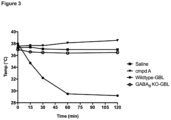
- GHB's control of body temperature has been shown to be mediated by GABA B receptors (Kaupmann et al., 2003), and unlike GHB, A does not bind to the GABA B receptor (Wellendorph et al., 2005). Consistent with this, the inventors show that A does not lower body temperature in mice at a high dose, highlighting that hypothermia is not involved in the neuroprotective activity of A. On the other hand, a decrease in the global central metabolic rate of glucose appears to be a non-GABA B -mediated action. Compound 2 is contemplated to act by a similar mechanism given the ability to bind to the same high-affinity binding site.
- CAMK2A calcium/calmodulin dependent protein kinase II alpha
- CAMK2A is a dodecameric enzyme and one of the most abundant proteins in the postsynaptic density (2-6% of total protein). CAMK2A is involved in a myriad of actions, including phosphorylation and regulation of synaptic activity, and plays a crucial role in long-term potentiation and memory formation.
- CAMK2A protein expression is upregulated in the peri-infarct area following an ischemic stroke.
- CAMK2A is known to phosphorylate both ⁇ -amino-3-hydroxy-5-methylisoxazole-4-propionic acid (AMPA) and NMDA receptors, and given that it is implicated in ischemic stroke, CAMK2A is rendered a promising drug target (Coultrap et al., 2011). Modulating CAMK2A activity directly in pre-clinical models of stroke and global cerebral ischemia, resulted in pronounced neuroprotective effects.
- AMPA ⁇ -amino-3-hydroxy-5-methylisoxazole-4-propionic acid
- NMDA receptors NMDA receptors
- CAMK2A The modulation of CAMK2A using the inhibitory peptide Tat-CN21 has shown promise in post-stroke treatment (Vest et al., 2007) and CN21 has been shown to prevent ischemia-induced increases in autophosphorylation of the Thr286 (pThr286) residue of the kinase (Ahmed et al. 2017).
- Tat-peptides are further known to cause hypertension. It is evident, that the modulation of CAMK2A as a target in brain ischemia is not trivial (Coultrap et al., 2011).
- CN21 Whilst CN21 is known to interact directly with the T-site of CAMK2A (Vest et al., 2007), compound A and related GHB analogues are contemplated to bind to either the kinase domain, the regulatory domain or the hub domain of CAMK2A. Given that no CAMK2A selective, small-molecule, non-peptide ligands exist, the presented compounds may also represent a novel mechanism of action.
- the inventors herein demonstrate that A and the novel analogue 2 display remarkable neuroprotective properties, and thus hold promise as candidates for diminishing neuronal death after acute brain injury.
- 'acute brain injury' refers to a primary cerebral or ischemic insult that damages brain tissue in an acute manner, but also initiates cascades of devastating neurotoxic effects. Examples include traumatic brain injury, stroke, subarachnoid haemorrhage, neonatal hypoxia-ischemia encephalopathy or associated in utero complications, haemodynamic shock with cardiac arrest, and global hypoperfusion during surgery or as a result from heart failure.
- 'GHB-related analogue' refers to the compounds of the present invention that share a common GHB-related structure (formula I) and bind to a unique site in CAMK2A, for example A, B, C, 1, 2, or other compounds of the present invention.
- 'autophosphorylation' refers to the phosphorylation of CAMK2A on residues Thr286, Thr305 and Thr306.
- 'CAMK2A' refers to Calcium/calmodulin-dependent protein kinase type II alpha.
- 'CMRglc' refers to alterations in the cerebral glucose metabolism as measured by 14 C-2-deoxyglucose autoradiography.
- 'neuroprotective' refers to the ability of a chemical substance to preserve nerve cell damage such as that induced by acute injury to the brain.
- peri-infarct refers to the region surrounding the infarct.
- 'pMCAO' refers to a permanent disruption of arterial blood flow to a region defined by the area supplied by the middle cerebral artery.
- 'photothrombotic focal ischemia' refers to method of introducing a cortical infarction through a photochemical reaction with a light-sensitive dye delivered by i.p. injection.
- 'recombinant' refers to DNA sequences that have been transfected into and expressed as proteins in HEK293T cells.
- 'traumatic brain injury' refers to an acute damage to the brain which may lead to a disruption of the normal function of the brain.
- membranes were incubated with increasing concentrations of test compound or 100 ⁇ M baclofen (Sigma) for non-specific binding in a 50 mM Tris-HCl buffer (pH 7.4) containing 2.5 mM CaCl 2 and 40 ⁇ M isoguvacine (Sigma) for 1 hr at room temperature in 48-well setup.
- the binding reactions were terminated by rapid filtration through GF/C filters (Whatman), soaked in 0.1% polyethylene imine, using a Brandell 48-well harvester and rapid washing with ice-cold binding buffer.
- the dried filters were added Optifluor scintillation liquid (PerkinElmer) and counts determined on a Tricarb 4910 TR Scintillation counter (PerkinElmer). Data are presented as % specific binding (of control), and IC 50 or K i values calculated by means of non-linear regression curve-fitting and the Cheng-Prusoff equation, respectively.
- mice Under anesthesia with isoflurane (2% to 2.5% in O 2 ) mice were placed in a stereotactic apparatus, the skull exposed through a midline incision, cleared of connective tissue and dried.
- a cold light source KL1500 LCD, Zeiss, Auckland, New Zealand
- a 40x objective providing a 2-mm diameter illumination was positioned 1.5 mm lateral from bregma.
- 0.2 ml of Rose Bengal Sigma-Aldrich, Auckland, New Zealand; 10 mg/ml in normal saline was administered i.p.
- mice After 5 min, the brain was illuminated through the exposed intact skull for 15 min, while keeping body temperature at 37.0 ⁇ 0.3 °C degrees using a heating pad (Harvard apparatus, Holliston, MA, USA). The skin was glued and animals left in a cage placed on a heating pad during the wake-up phase. Mice were housed under a 12-hr light/dark cycle with ad libitum access to food and water. Further, the mice were monitored and weighed on a daily basis.
- the sodium salt of A was synthesized in-house as described previously (Vogensen et al., 2013).
- the sodium salt of GHB, the GHB prodrug ⁇ -butyrolactone (GBL), NCS-382 (B), diclofenac and 4'-hydroxydiclofenac were purchased from Sigma-Aldrich, whereas C was obtained from Carbosynth or SantaCruz (Berkshire, UK).
- the CN21 peptide was obtained from Genscript.
- Forelimb motor performance was determined using the cylinder and grid-walking tasks as previously described (Clarkson et al., 2010). All animals were tested both in a pre- and post-testing session, 1 week before and 3 days or 7 days after the ischemic insult, respectively. Observers who scored the behaviour were blinded to the treatment groups.
- the permanent middle cerebral artery occlusion (pMCAO) model of focal ischemia The pMCAO study was performed using age-matched, young adult (7-8 weeks), male C57BL/6J mice (Taconic). Mice were housed in separate cages under diurnal lighting and given free access to food (1314 Altromin) and water. Mice were acclimatized for seven days prior to surgery in accordance with guidelines approved by the Danish Animal Ethical Committee.
- Focal cerebral ischemia was made by permanent occlusion of the distal part of the left middle cerebral artery (MCA).
- MCA left middle cerebral artery
- Mice were anesthetized by injection of a mixture of Hypnorm (fentanyl citrate 0.315 mg/ml and fluanisone 10 mg/ml; Jansen-Cilag), Stesolid (5 mg/ml Diazepamum; Dumex) and distilled water (1:1:2; 0.20 ml/10 g body weight, s.c.). The mouse was placed on a 37 ⁇ 0.5 °C warm heating pad and a skin incision was made from eye to ear.
- mice were injected with 1 ml isotonic saline and their eyes were coated with ointment. The mice recovered from the surgery in a recovery room at 28 °C. For treatment of post-surgical pain, mice were supplied s.c. with 0.15 ml Temgesic diluted 1:30 (stock: 0.3 mg/ml Buprenorphinum; Reckitt & Colman, UK) three times with an 8 hr interval starting immediately after surgery.
- the rotarod measures motor performance in rodents by assessing the time during which the animal remains on a rotating rod.
- the rod rotation accelerates from 0 to 40 rounds per min (rpm) over a time period of 5 min 48 hrs post-stroke, mice were tested in four repeating trials with a 20 min interval (resting time). Prior to surgery, mice were pretrained to stay on the rod for 30 s at 4 rpm.
- the grip strength meter (BIO-GT-3, BIOSEB) allowed the study of neuromuscular functions in mice by determining the maximum force that is required to make the mouse release its grip. The mouse is allowed to grasp a metal grid and then pulled backwards in the horizontal plane. The force applied to the grid is recorded as the peak tension.
- mice were perfused with saline and then with 4% paraformaldehyde (PFA) and the brain dissected out and submerged in 4% PFA for post-fixing overnight. Then the brains were moved to 30% sucrose solution and kept at 4 °C until processing. Brains were cut in 30 ⁇ m sections, free-floating in anti-freeze media. Sections were mounted, stained for cresyl violet and the infarct volumes determined by measuring every 6th section through the entire infarct as described in Lie et al (2017). All analyses were performed by an observer blinded to the treatment groups.
- PFA paraformaldehyde
- RNA was extracted using a RNA mini kit (Qiagen) following the instructions from the manufacturer. Extracted RNA was treated with DNAse using Turbo DNA-free kit (Ambion), all according to the manufacturer's protocol. The reverse transcription was performed using qScript TM cDNA SuperMix (Quanta Biosciences, Gaithersburg, MD, USA) on a standard PCR machine (25 °C for 5 min, 42 °C for 30 min, 85 °C for 5 min) and cDNA stored at -20 °C until further processing.
- qPCR was performed in 96-well plates (Agilent Technologies, Santa Clara, CA, USA) mixing PerfeCTa SYBR Green FastMix (Quanta Biosciences), nuclease free water (Qiagen, West Wales, UK), and primers (TAG Copenhagen A/S (Copenhagen, Denmark).
- the PCR was performed with an initial denaturation step of 95 °C for 30 s, followed by 40 cycles of 5 s at 95 °C, 60 °C for 15 s and 72 °C for 10 s.
- a dissociation curve analysis was performed consisting of 60 s at 95 °C, 30 s at 55 °C and 30 s at 95 °C.
- the qPCR was performed using the Agilent Mx3005P qPCR system (Agilent Technologies), and the corresponding MxPro software was used to determine the Ct values.
- the ⁇ Ct values were calculated using 2(Reference Ct - Target Ct).
- CD14 AATCTACCGACCATGGAGC SEQ ID NO 2 CD14 (R) ACTTTCCTCGTCTAGCTCG SEQ ID NO 3 IL-6 (F) CTCTGGGAAATCGTGGAAAT SEQ ID NO 4 IL-6 (R) CCAGTTTGGTAGCATCCATC SEQ ID NO 5 MMP9 (F) CAGCCGACTTTTGTGGTCTTC SEQ ID NO 6 MMP9 (R) CGGCCGTAGAGACTGCTTCTI SEQ ID NO 7 GFAP (F) GGAGATGCGGGATGGTGAG SEQ ID NO 8 GFAP (R) ACCACGTCCTTGTGCTCCTG SEQ ID NO 9 Rpl13a (F) GGAGGGGCAGGTTCTGGTAT SEQ ID NO 10 Rpl13a (R) TGTTGATGCCTTCACAGCGT SEQ ID NO 11 SDHA (F) GCCCATGCCAGGGAAGATTA SEQ ID NO 12 SDHA (R) TGTTCCCCAAACGGCT
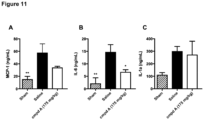
- MCP-1 monocyte chemotactant protein-1
- IL-6 interleukin-6
- IL-1a interleukin-1a
- the membranes were resuspended to a concentration of 0.5 mg/ml in 1x PBS and solubilized with 0.1% SDS and 1 mM EDTA for 15 min at 37 °C.
- EZ-Link TM Phosphine-PEG 3 -Biotin (ThermoFisher Scientific) was added to a final concentration of 200 ⁇ M and the reaction was shaken for 60 min at 37 °C. Prior to streptavidin affinity enrichment, excess EZ-Link TM Phosphine-PEG3-Biotin was removed using PD MiniTrap G25 spin columns (GE Healthcare, Pittsburgh, PA, USA).
- Biotinylated proteins were enriched using Pierce TM High Capacity Streptavidin Agarose (ThermoFisher Scientific). The solubilized membranes were diluted to a final concentration of 0.01% SDS and incubated with the resin under rotation for 30 min at room temperature. Enrichment was followed by a rigorous washing procedure (3 x 1 min with 10 CV 1x PBS, 0.01% Tween and 3x 10 min with 10 CV 1x PBS, 0.01% Tween). Biotinylated proteins were eluted by boiling in 1x NuPAGE TM LDS sample buffer (ThermoFisher Scientific) supplemented with 100 ⁇ M DTT at 100 °C for 10 min under vigorous shaking.
- In-gel digestions were carried out using 70 ng/band endoproteinase Lys-C (Sigma-Aldrich) over night at 37 °C and 175 ng/band trypsin (Sigma-Aldrich) for 8 h at 37 °C.
- Peptide extracts were loaded onto in-house packed C 18 STAGE Tips and eluted into a 96-well microtiter plate with with 2 x 20 ⁇ l 40% acetonitrile, 0.5% acetic acid in water, followed by removal of organic solvents in a vacuum centrifuge and reconstitution of peptides in 2% acetonitrile, 0.5% acetic acid, 0.1% TFA in water.
- Spray voltage was set to 2kV, S-lens RF level at 50, and heated capillary temperature at 275 °C. All experiments were performed in the data-dependent acquisition mode to automatically isolate and fragment Top10 multiply-charged precursors according to their intensities. Former target ions were dynamically for 40 s excluded and all experiments were acquired using positive polarity mode. Full scan resolution was set to 60.000 at m/z 200 and the mass range was set to m/z 350-1400. Full scan ion target value was 3E6 allowing a maximum fill time of 100 ms. Higher-energy collisional dissociation (HCD) fragment scans was acquired with optimal setting for parallel acquisition using 1.3 m/z isolation width and normalized collision energy of 28. Target value for HCD fragment scans was set to 1e5 with a maximum fill time of 45 ms and analyzed with 60.000 resolution.
- HCD collisional dissociation
- HEK293T 3 H-A binding to recombinant CAMK2 expressed in HEK293T cells
- HEK293T were cultured using standard conditions, using Dulbecco's modified Eagle Medium with GlutaMax, 10% fetal bovine serum and 1% penicillin-streptomycin, and incubated at 37 °C in a humidified atmosphere of 95% O 2 and 5% CO 2 .
- Cells were transfected with rat CAMK2A (Origene construct RR201121) or rat CAMK2B (Origene construct RR200520) using PolyFect (Qiagen, West Wales, UK) according to the manufacturer's protocol.
- 150-200 ⁇ g protein was incubated with 5 nM 3 H-A and test compound in 1 ml total volume for 1 hr at 0-4 °C. Nonspecific binding was determined with 1-10 mM GHB. Proteins were then precipitated by addition of ice-cold acetone (4x of the assay volume), vortexing and incubation at -20 °C for 1 hr. Proteins were filtrated rapidly through GF/C unifilters (Whatman) and washed. The dried filters were added scintillation liquid and radioactivity measured on a Tricarb 2100 Scintillation counter (Packard).
- Uptake was measured using the cell-permeable pH-sensitive dye 2',7'-Bis(2-carboxyethyl)-5(6)-carboxyfluorescein acetoxymethyl ester (BCECF-AM) (Molecular Probes), utilizing the endogenous expression of MCTs in tsA201 cells.
- BCECF-AM cell-permeable pH-sensitive dye
- MCTs cell-permeable cell-sensitive dye
- tsA201 cells utilizing the endogenous expression of MCTs in tsA201 cells.
- the day before the assay cells were plated (50,000 cells/well) in black poly-D-lysin-coated 96-well plates with clear bottom (VWR, Radnor, PA, USA).
- mice were treated with either saline or 175 mg/kg A (i.p.) 30 min after the injury.
- mice were sacrificed, brains were dissected out and immediately submerged in ice-cold PBS supplemented with 1% phosphatase and protease inhibitors (Phosphatase inhibitor cocktail 3 #P0044 (Sigma), Phosphatase inhibitor cocktail 2 #P5726 (Sigma) and complete EDTA protease inhibitors (Roche) for 5 min.
- Cortex tissue from the infarct core region i.e.
- the compounds of the general formula Illa may be prepared as given below from the appropriate substituted 6,7,8,9-tetrahydro-5H-benzo[7]annulen-5-on according to the procedures in Examples 1-3.
- the protection groups may be cleaved by BBr 3 .
- Step 1 To a solution of NaOH (368 mg, 9.1 mmol) in H 2 O (4.6 ml) and ethanol (10 ml) was added a mixture of 2-bromo-6,7,8,9-tetrahydro-5H-benzo[7]annulen-5-one (Murineddu et al., 2005) (400 mg, 1.6 mmol) and glyoxylic acid monohydrate (495 mg, 6.6 mmol) in water (10 ml) at room temperature. The mixture was stirred at room temperature until dissolution and then heated at reflux for 4 hr.
- Step 2 Under a nitrogen atmosphere, CeCl 3 7H 2 O (231 mg, 0.6 mmol) and ( E )-2-(2-bromo-5-oxo-5,7,8,9-tetrahydro-6 H -benzo[7]annulen-6-ylidene)acetic acid (183 mg, 0.6 mmol) were dissolved in MeOH (30 ml). NaBH 4 (351 mg, 9.3 mmol) was slowly added to the solution at 0 °C. The reaction was stirred at room temperature for 4 hr and then solvent was evaporated in vacuo. H 2 O (50 ml) was added to the residue and the pH was adjusted to 1 with HCl.
- Step 1 Phenylboronic acid (101 mg, 0.8 mmol) and K 2 CO 3 (173 mg, 1.2 mmol) were added to a solution of 2-bromo-6,7,8,9-tetrahydro-5H-benzo[7]annulen-5-one (Murineddu et al., 2005) (100 mg, 0.4 mmol) in DMF (16 ml) and H 2 O (8 ml). The solution was stirred under nitrogen atmosphere for 10 min, then tetrakis(triphenylphosphine)palladium (96 mg, 0.08 mmol) was added and the mixture was stirred under nitrogen atmosphere for additional 10 min. The reaction was heated at reflux for 24 hours.
- Step 2 Performed as describe in example 1 (step 1) using NaOH (59 mg, 1.4 mmol) in H 2 O (0.7 ml) and ethanol (10 ml), 2-phenyl-6,7,8,9-tetrahydro-5H-benzo[7]annulen-5-one (65 mg, 0.2 mmol) and glyoxylic acid monohydrate (79 mg, 1.0 mmol) in H 2 O (5 ml).
- Step 3 Performed as described in example 1 (step 2) using CeCl 3 , 7H 2 O (145 mg, 0.3 mmol), (E)-2-(5-oxo-2-phenyl-5,7,8,9-tetrahydro-6H-benzo[7]annulen-6-ylidene)acetic acid (116 mg, 0.3 mmol), MeOH (20 ml) and NaBH 4 (145 mg, 5.9 mmol).
- the sodium salt of 2 was prepared by dissolving 2 (85.4 mg, 0.290 mmol) in ethanol (2 ml) and NaOH (aq) (282 ⁇ l, 0.296 mmol, 0.5M Tritisol) was added. The solvent was removed in vacuo to give the product (90 mg, 99%) as white solid.
- Step 1 Styrene (8.4 ml, 6.0 mmol, 2 eq) and triethylamine (5.5 ml, 39.7 mmol, 19 eq) were added to a solution of 2-bromo-6,7,8,9-tetrahydro-5 H -benzo[7]annulen-5-one (Murineddu et al., 2005) in CH 3 CN (15 ml). The solution was stirred under nitrogen atmosphere for 5 min, then tetrakis(triphenylphosphine)palladium (725 mg, 0.4 mmol) was added and the mixture was stirred under nitrogen atmosphere for an additional 5 min. The reaction was heated at reflux for 22 hrs sat. aq.
- Step 2 Performed as described in example 1 (step 1) using NaOH (152 mg, 10 mmol) in H 2 O (1.9 ml) and ethanol (7 ml), ( E )-2-styryl-6,7,8,9-tetrahydro-5 H -benzo[7]annulen-5-one (100 mg, 0.3 mmol) and glyoxylic acid monohydrate (140 mg, 5 mmol) in H 2 O (5 ml).
- Step 3 Performed as described in example 1 (step 2) using CeCl 3 , 7H 2 O (70 mg, 0.1 mmol), ( E )-2-(5-oxo-2-(( E )-styryl)-5,7,8,9-tetrahydro-6 H -benzo[7]annulen-6-ylidene)acetic acid (63 mg, 0.1 mmol), MeOH (20 ml) and NaBH 4 (74 mg, 1.9 mmol).
- Step 1 Performed as describe in example 1 (step 1) using NaOH (1.48 g, 37.1 mmol) in H 2 O (18 mL) and EtOH (40 mL), 2-chloro-6,7,8,9-tetrahydro-5 H -benzo[7]annulen-5-one (Murineddu et al., 2005) (1.20 g, 6.18 mmol) and glyoxylic acid monohydrate (2.28 g, 24.7 mmol) in H 2 O (40 mL).
- Step 3 Performed as described in example 1 (step 2) using CeCl 3 , 7H 2 O (735 mg, 3.0 mmol), ( E )-2-(5-oxo-2-chloro-5,7,8,9-tetrahydro-6 H -benzo[7]annulen-6-ylidene)acetic acid (740 mg, 3.0 mmol), MeOH (150 mL) and NaBH 4 (1.1 g, 30 mmol).
- Step 1 A mixture of 2-bromo-6,7,8,9-tetrahydro-5 H -benzo[7]annulen-5-one (Murineddu et al., 2005) (826 mg, 3.5 mmol), bis(tributyltin) (4.0 g, 6.9 mmol) and tetrakis(triphenylphosphine)palladium (0) (400 mg, 0.3 mmol) in dry toluene (35 mL) was heated at reflux under argon atmosphere for 3 hours. The solvent was evaporated in vacuo to dryness. The crude product was carried on to step 2.
- Step 2 A solution of 2-(tributylstannyl)-6,7,8,9-tetrahydro-5 H -benzo[7]annulen-5-one (1068 g, 2.4 mmol) in THF (50 mL) was cooled to 0°C and a solution of iodine (905 g, 3.6 mmol) in THF (35 mL) was drop wise added. After 1 hour at 0°C the reaction was quenched by addition of saturated aqueous Na 2 S 2 O 3 . Neutralized with a solution of saturated aqueous NaHCO 3 and extracted with EtOAc. The combined organic layers were dried over Na 2 SO 4 , filtered and evaporated in vacuo.
- Step 3 Performed as describe in example 1 (step 1) using NaOH (215.0 mg, 5.2 mmol) in H 2 O (3 mL) and EtOH (6 mL) and 2-iodo-6,7,8,9-tetrahydro-5 H -benzo[7]annulen-5-one (272 mg, 0.95 mmol) and glyoxylic acid monohydrate (354 mg, 3.8 mmol) in H 2 O (7 mL).
- Step 4 Performed as described in example 1 (step 2) using CeCl 3 , 7H 2 O (158 mg, 0.4 mmol), ( E )-2-(5-oxo-2-iodo-5,7,8,9-tetrahydro-6H-benzo[7]annulen-6-ylidene)acetic acid (145 mg, 0.4 mmol), MeOH (20 mL) and NaBH 4 (160 mg, 4.2 mmol).
- Step 1 To 2-(tributylstannyl)-6,7,8,9-tetrahydro-5 H -benzo[7]annulen-5-one (1017 mg, 2.3 mmol) in acetone (35 mL) at room temperature were added Ag 2 O (31 mg, 0.1 mmol), NaHCO 3 (397 mg, 4.5 mmol) and F-TEDA-BF 4 (1204 mg, 3.4 mmol). The reaction mixture was stirred at reflux for 6 hours. After cooling to room temperature, the reaction mixture was filtered on a short pad of celite and evaporated in vacuo. The crude product was carried on to the next step.
- Step 2 Performed as describe in example 1 (step 1) using NaOH (221 mg, 5.5 mmol) in H 2 O (8 mL) and EtOH (16 mL) and 2-fluoro-6,7,8,9-tetrahydro-5 H -benzo[7]annulen-5-one (179 mg, 1.0 mmol) and glyoxylic acid monohydrate (370 mg, 4.0 mmol) in H 2 O (16 mL).
- Step 3 Performed as described in example 1 (step 2) using CeCl 3 , 7H 2 O (235.7 mg, 0.6 mmol), ( E )-2-(5-oxo-2-fluoro-5,7,8,9-tetrahydro-6 H -benzo[7]annulen-6-ylidene)acetic acid (135 mg, 0.6 mmol), MeOH (30 mL) and NaBH 4 (218 mg, 5.6 mmol). The crude product was purified by preparative HPLC to afford ( E )-2-(2-fluor-5-hydroxy-5,7,8,9-tetrahydro-6 H -benzo[7]annulen-6-ylidene)acetic acid (23.2 mg, 17 %) as a white solid.
- Step 2 Performed as described in example 1 (step 2) using CeCl 3 , 7H 2 O (6.35 g, 17.0 mmol), ( E )-2-(2-methyl-5-oxo-5,7,8,9-tetrahydro-6 H -benzo[7]annulen-6-ylidene)acetic acid (3.56 g, 15.5 mmol), MeOH (150 mL) and NaBH 4 (8.79 g, 232.3 mmol).
- Step 1 Performed as describe in example 1 (step 1) using NaOH (194 mg, 4.8 mmol) in H 2 O (3 mL) and EtOH (7 mL), 1-bromo-6,7,8,9-tetrahydro-5H-benzo[7]annulen-5-one (Gruber et al. 1983) (192 mg, 0.8 mmol) and glyoxylic acid monohydrate (299 mg, 3.2 mmol) in H 2 O (7 mL).
- Step 2 Performed as described in example 1 (step 2) using CeCl 3 , 7H 2 O (236 mg, 0.6 mmol), (E)-2-(1-bromo-5-oxo-5,7,8,9-tetrahydro-6H-benzo[7]annulen-6-ylidene)acetic acid (166 mg, 0.6 mmol), MeOH (8 mL) and NaBH 4 (214 mg, 5.6 mmol).
- Step1 Performed as describe in example 2 (step 1) using phenylboronic acid (255 mg, 2.1 mmol), K 2 CO 3 (436 mg, 3.1 mmol), 1-bromo-6,7,8,9-tetrahydro-5 H -benzo[7]annulen-5-one (Gruber et al. 1983) ( (247 mg, 1.0 mmol), tetrakis(triphenylphosphine)palladium (239 mg, 0.2 mmol) in DMF (24 mL) and H 2 O (16 mL).
- Step 2 Performed as describe in example 1 (step 1) using NaOH (214 mg, 5.3 mmol) in H 2 O (3 mL) and EtOH (8 mL), 1-phenyl-6,7,8,9-tetrahydro-5 H -benzo[7]annulen-5-one (210 mg, 0.9 mmol) and glyoxylic acid monohydrate (329 mg, 3.6 mmol) in H 2 O (5 mL).
- the crude ( E )-2-(5-oxo-1-phenyl-5,7,8,9-tetrahydro-6 H -benzo[7]annulen-6-ylidene)acetic acid was used for next step without any purification.
- Step 3 Performed as described in example 1 (step 2) using CeCl 3 , 7H 2 O (362 mg, 1.0 mmol), ( E )-2-(5-oxo-1-phenyl-5,7,8,9-tetrahydro-6 H -benzo[7]annulen-6-ylidene)acetic acid (258 mg, 0.9 mmol), MeOH (14 mL) and NaBH 4 (338 mg, 8.9 mmol).
- Step 1 Performed as describe in example 1 (step 1) using NaOH (246 mg, 6.0 mmol) in H 2 O (3 mL) and EtOH (7 mL), 3-bromo-6,7,8,9-tetrahydro-5 H -benzo[7]annulen-5-one (Gruber et al. 1983) (237 mg, 1.0 mmol) and glyoxylic acid monohydrate (366 mg, 4.0 mmol) in H 2 O (7 mL).
- Step 2 Performed as described in example 1 (step 2) using CeCl 3 , 7H 2 O (356 mg, 1.0 mmol), ( E )-2-(3-bromo-5-oxo-5,7,8,9-tetrahydro-6 H -benzo[7]annulen-6-ylidene)acetic acid (256 mg, 0.9 mmol), MeOH (10 mL) and NaBH 4 (332 mg, 8.7 mmol).
- Step1 To a solution of 3-oxocyclopent-1-ene-1-carboxylic acid 4 (126 mg, 1.0 mmol), 4-dimethylaminopyridine (24 mg, 0.2 mmol) and 2,2-dimethylpropan-1-ol (124 mg, 1.4 mmol) in DCM (9 mL) at 0 °C was added N -(3-dimethylaminopropyl)- N '-ethylcarbodiimide hydrochloride (260 mg, 1.4 mmol) dissolved in DCM (4 mL). The mixture was then allowed to warm to room temperature and stirred for overnight. A solution of saturated NH 4 Cl was added to the mixture, which then, was washed with DCM.
- Step 2 Performed as described in example 1 (step 2) using CeCl 3 , 7H 2 O (309 mg, 0.8 mmol), neopentyl 3-oxocyclopent-1-ene-1-carboxylate (131 mg, 0.7 mmol), MeOH (7 mL) and NaBH 4 (127 mg, 3.4 mmol). Purification by column chromatography (heptane/EtOAc 3:1) furnished neopentyl 3-hydroxycyclopent-1-ene-1-carboxylate (57 mg, 43%) as a transparent oil.
- Step1 To a solution of 3-oxocyclopent-1-ene-1-carboxylic acid 4 (209 mg, 1.7 mmol) in DMF (5 mL), tert-butyl 2,2,2- trichloroacetimidate (3.0 mL, 16.7 mmol) and boron trifluoride diethyl etherate (0.1 mL, 0.9 mmol) were added. The mixture was stirred overnight at 50°C. A solution of saturated NaHCO 3 was added and then aqueous phase was extracted with EtOAc. The combined organic phase was dried over anhydrous Na 2 SO 4 , filtered, and evaporated in vacuo to dryness. Rough purification by column chromatography (Heptane/EtOAc 3:1) furnished tert -butyl 3-oxocyclopent-1-ene-1-carboxylate (138 mg, 46%) as a yellow oil.
- Step 2 Performed as described in example 1 (step 2) using CeCl 3 , 7H 2 O (499 mg, 1.3 mmol), tert -butyl 3-oxocyclopent-1-ene-1-carboxylate (203 mg, 1.1 mmol), MeOH (11 mL) and NaBH 4 (213 mg, 5.6 mmol). Purification by column chromatography (heptane/EtOAc 2:1) furnished tert -butyl 3-hydroxycyclopent-1-ene-1-carboxylate (Aye et al, 2008) (25 mg, 12%) as an off-white oil.
- Step1 3-Hydroxycyclopent-1-ene-1-carboxylic acid (HOCPCA) (Vogensen et al., 2013) (355 mg, 2.8 mmol), 4-dimethylaminopyridine (35 mg, 0.3 mmol) were dissolved in THF (15 mL), and cooled to 0 °C under argon. Acetic anhydride (0.4 mL, 4.2 mmol) was added dropwise, and stirred overnight at room temperature. Water was added and the mixture was extracted with EtOAc. The combined organic phase was dried over Na 2 SO 4 , filtered, and evaporated in vacuo. Purification by column chromatography (heptane/EtOAc 1:3 + 1% of AcOH) furnished 3-acetoxycyclopent-1-ene-1-carboxylic acid (434 mg, 92%) as a white solid.
- HOCPCA 3-Hydroxycyclopent-1-ene-1-carboxylic acid
- Step 2 3-Acetoxycyclopent-1-ene-1-carboxylic acid (137 mg, 0.8 mmol), N-(3-dimethylaminopropyl)-N'-ethylcarbodiimide hydrochloride (152 mg, 0.8 mmol), hydroxybenzotriazole (108 mg, 0.8 mmol), triethylamine (0.22 mL, 1.6 mmol) were dissolved in THF (3 mL) and stirred for 10 minutes under argon.
- Step 3 To a solution of methyl (2 S )-3-(3-(3-acetoxycyclopent-1-ene-1-carboxamido)phenyl)-2-((tert-butoxycarbonyl)amino)propanoate (139 mg, 0.3 mmol) in dioxane (1.2 mL) was added dropwise with 4M HCl/ dioxane (1.2 mL, 4.7 mmol) at 0 °C. The mixture was allowed to stir for 1h at room temperature. A solution of saturated NaHCO 3 was added and then aqueous phase was extracted with EtOAc. The combined organic phase was dried over anhydrous Na 2 SO 4 , filtered, and evaporated in vacuo to dryness.
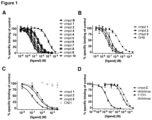
- GHB-related analogues bind with high affinity to specific GHB sites in rat brain synaptic membranes at both pH values of 6.0 and 7.4 (fig. 1)
- Novel analogues were tested in established binding assays and compared to reference compounds.
- compounds 1-10 were found to inhibit A) 3 H-B binding (respective K i values of 50, 92, 30, 52, 53, 108, 325, 225, 382, 9687 nM) compared to compound B with a K i value of 440 nM.
- B) Compounds 1, 2 and 3 also inhibited 3 H-A binding in a concentration-dependent manner with similar affinities (respective K i values of 56 nM, 144 nM and 50 nM) compared to GHB itself with a K i value of 2.75 ⁇ M.
- GHB GHB
- compounds A and C were tested for affinity for the GABA B receptor in an established binding assay. Whereas GHB at both 0.1 mM and 1 mM could inhibit 3 H-GABA B binding, compound A displayed no ability to compete up to concentrations of 1 mM and compound C showed limited inhibition at a concentration of 1 mM.
- Compound A does not produce hypothermia in mice, but GBL does (fig. 3)
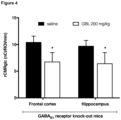
- GBL induces a reduction in the cerebral metabolic rate of glucose not mediated by GABA B receptors (fig. 4)
- GHB prodrug GBL alters glucose metabolism via a non-GABA B receptor-dependent mechanism
- either saline (black bars) or GBL (200 mg/kg) (white bars) were administered (i.p.) to GABA B1 receptor knock-out mice.
- 14 C-deoxyglucose was administered (i.p.) to all mice to estimate brain glucose consumption. This showed a significant GHB-induced lowering of the cerebral metabolic rate of glucose in frontal cortex and hippocampus after 45 min (10.46 vs. 6.78 nCi/ROI/min for frontal cortex and 9.74 vs. 6.45 for hippocampus, *P ⁇ 0.05, error bars depicted as SD).
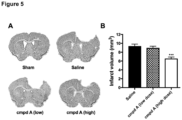
- Compound A reduces infarct size when administered 30 min after photothrombotic focal ischemia (fig. 5)
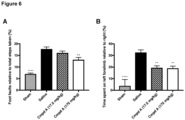
- Compound A improves motor performance in affected limbs when administered 30 min after photothrombotic focal ischemia (fig. 6)
- the cylinder task and the grid-walking task were used as specific measures for left forelimb motor recovery. Asymmetry was observed between left and right forelimb in the cylinder and grid-walking tasks 3 days after focal ischemia.
- the asymmetry measured with the cylinder task was significantly reduced when administering compound A for both the 17.5 and the 175 mg/kg dose groups with effects of 40% and 42%, respectively.
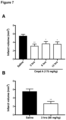
- Compound A reduces infarct size when administered 3, 6 or 12 hrs after photothrombotic focal ischemia (fig. 7)
- compound A was given 3, 6 or 12 hrs after induction of the infarct at two different doses.
- GHB 275 mg/kg
- Compound A improves motor performance in affected limbs when administered 3, 6 or 12 hrs after photothrombotic focal ischemia (fig. 8)
- asymmetry was measured between left and right forelimb in the grid-walking and cylinder tasks 7 days after the focal ischemia.
- Compound 2 reduces infarct size and improves motor performance in affected limbs when administered 3 or 6 hrs after photothrombotic focal ischemia (fig. 9)
- the novel compound 2 was given (i.p.) 3 or 6 hrs after induction of the infarct at doses of 175 mg/kg (A-C) or 50 mg/kg (D-F).
- Compound 2 administration significantly reduced
- mice treated with the lower dose displayed E-F) significantly improved motor performance in both asymmetry tests.
- Compound A treatment reduces the expression of selected molecular markers related to photothrombotic focal ischemia (fig. 10)
- mRNA expression levels of the markers GFAP, CD14 and MMP9 were measured in the brain tissue surrounding the ischemic core 3 days post-stroke.
- A (17.5 mg/kg
- MMP9 mRNA levels were significantly lower than in animals receiving saline.
- Similar results were found after 12 hrs.
- Compound A treatment reduces plasma levels of selected pro-inflammatory cytokines in photothrombotic focal ischemia (fig. 11)
- Compound A reduces infarct size in the permanent middle cerebral artery occlusion (pMCAO) model of focal ischemia (fig. 12)
- Compound A (175 mg/kg) was administered to mice 30 min after induction of a focal stroke via a permanent occlusion of the middle cerebral artery and compared to saline-treated animals. Three days after the induced stroke, an infarct was visible in the left motor cortex. Quantification of infarcts revealed a significant reduction in infarct volume when comparing saline with A (175 mg/kg) after 30 min (16.6 vs. 12.3 mm 3 , *P ⁇ 0.05).
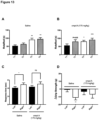
- Compound A improves functional recovery when administered 30 min after a pMCAO focal lesion (fig. 13)
- Compound A (175 mg/kg) was administered to mice 30 min after induction of a focal stroke via a permanent occlusion of the middle cerebral artery and compared to saline-treated animals and both motor- and sensory impairment was investigated using rotarod, grip strength and Hargreaves tests.
- mice were exposed to 4 trials (T1-T4) 48 hrs post-stroke.
- 3 H-A was used to perform ex vivo binding to C57BL/6J mice.
- 3 H-A 5 MBq per mouse was injected i.p. After 30 min, the brains were dissected and autoradiography performed. Significant specific binding levels were observed in the hippocampus and cortex compared to the cerebellum, used for normalization.
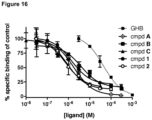
- GHB and the GHB-related analogues A, B, C, 1 and 2 bind directly to recombinant CAMK2A (fig. 16)
- Human/rat CAMK2A expressed in HEK cells was assayed in an in-house established 3 H-A filtration binding assay performed on whole cell lysates of CAMK2A-transfected HEK293T cells.
- compounds GHB, A, B, C, 1 and 2 were able to concentration-dependently inhibit radioligand binding.
- Obtained K i values were 50.4, 1.95, 3.71, 0.81, 0.72 and 1.09 ⁇ M, respectively, compounds 1 and 2 displaying up 50-70 times better affinity than GHB in competition with the 3 H-A radioligand, which is similar to the binding potency shift observed in the 3 H-A binding assay ( fig. 1B ).
- a fluorescence-based assay with the pH-sensitive dye BCECF was employed.
- Cells (tsA201; related to HEK293-T) known to express MCTs were grown in 96-well plates and exposed to compounds and pH-decreased measured for 2 min.
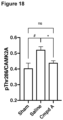
- Compound A prevents pThr286 CAMK2A autophosphorylation in mice subjected to photothrombotic focal ischemia (fig. 18)
- mice or mice were treated with either saline or 175 mg/kg A (i.p.) 3 hrs after the injury. Thirty (30) min after the injury, mice were sacrificed and cortex tissue processed. Autophosphorylation was assessed by Western blot analysis and levels of pThr286 CAMK2A normalized to total CAMK2A to detect changes in autophosphorylation. In accordance with other reports on ischemia (Ahmed et al., 2017), focal ischemia induced by photothrombosis significantly increased autophosphorylation ( # P ⁇ 0.05). This response was significantly inhibited by compound A (*P ⁇ 0.05) amounting to a 73% decrease in autophosphorylation compared to the sham condition.
Landscapes
- Chemical & Material Sciences (AREA)
- Organic Chemistry (AREA)
- Health & Medical Sciences (AREA)
- Medicinal Chemistry (AREA)
- Pharmacology & Pharmacy (AREA)
- Life Sciences & Earth Sciences (AREA)
- Animal Behavior & Ethology (AREA)
- General Health & Medical Sciences (AREA)
- Public Health (AREA)
- Veterinary Medicine (AREA)
- Epidemiology (AREA)
- Chemical Kinetics & Catalysis (AREA)
- Engineering & Computer Science (AREA)
- Bioinformatics & Cheminformatics (AREA)
- Biomedical Technology (AREA)
- Neurology (AREA)
- Neurosurgery (AREA)
- General Chemical & Material Sciences (AREA)
- Nuclear Medicine, Radiotherapy & Molecular Imaging (AREA)
- Emergency Medicine (AREA)
- Pain & Pain Management (AREA)
- Pharmaceuticals Containing Other Organic And Inorganic Compounds (AREA)
- Acyclic And Carbocyclic Compounds In Medicinal Compositions (AREA)
- Organic Low-Molecular-Weight Compounds And Preparation Thereof (AREA)
Applications Claiming Priority (2)
| Application Number | Priority Date | Filing Date | Title |
|---|---|---|---|
| DKPA201870067 | 2018-02-02 | ||
| PCT/DK2019/050041 WO2019149329A1 (en) | 2018-02-02 | 2019-02-01 | Compounds for the treatment of acute brain injury |
Publications (2)
| Publication Number | Publication Date |
|---|---|
| EP3746064A1 EP3746064A1 (en) | 2020-12-09 |
| EP3746064B1 true EP3746064B1 (en) | 2025-04-16 |
Family
ID=65363024
Family Applications (1)
| Application Number | Title | Priority Date | Filing Date |
|---|---|---|---|
| EP19704185.8A Active EP3746064B1 (en) | 2018-02-02 | 2019-02-01 | Compounds for use in the treatment of acute brain injury |
Country Status (8)
| Country | Link |
|---|---|
| US (2) | US12077495B2 (https=) |
| EP (1) | EP3746064B1 (https=) |
| JP (1) | JP7488521B2 (https=) |
| CN (1) | CN111989094A (https=) |
| AU (1) | AU2019214252B2 (https=) |
| CA (1) | CA3089161A1 (https=) |
| ES (1) | ES3035679T3 (https=) |
| WO (1) | WO2019149329A1 (https=) |
Families Citing this family (2)
| Publication number | Priority date | Publication date | Assignee | Title |
|---|---|---|---|---|
| MX2021016006A (es) * | 2019-06-28 | 2022-04-07 | Univ Copenhagen | Tratamiento de trastornos del sistema nervioso central (snc) con perturbaciones del sueño. |
| WO2023170024A1 (en) | 2022-03-11 | 2023-09-14 | University Of Copenhagen | Camk2 modulators and their use in medicine |
Family Cites Families (5)
| Publication number | Priority date | Publication date | Assignee | Title |
|---|---|---|---|---|
| US5466715A (en) | 1991-12-31 | 1995-11-14 | Sterling Winthrop Inc. | 3,4-disubstituted phenols-immunomodulating agents |
| IT1312362B1 (it) * | 1999-06-29 | 2002-04-15 | Neuroscienze S C A R L | Derivati dell'acido (5,7,8,9-tetraidro-5-idrossi-6h-benzociclo-ept-6-iliden) acetico |
| JP2010500351A (ja) * | 2006-08-09 | 2010-01-07 | メルク エンド カムパニー インコーポレーテッド | ラクタムタキキニン受容体拮抗薬の製造法 |
| ES2544573T3 (es) | 2011-05-13 | 2015-09-01 | Københavns Universitet (University Of Copenhagen) | Inhibidores diméricos de afinidad elevada de PSD-95 y su uso para el tratamiento del daño cerebral isquémico y del dolor |
| WO2013024028A1 (en) * | 2011-08-12 | 2013-02-21 | Institut National De La Sante Et De La Recherche Medicale (Inserm) | Compounds and compositions for treating proteinopathies |
-
2019
- 2019-02-01 CA CA3089161A patent/CA3089161A1/en active Pending
- 2019-02-01 EP EP19704185.8A patent/EP3746064B1/en active Active
- 2019-02-01 JP JP2020542088A patent/JP7488521B2/ja active Active
- 2019-02-01 CN CN201980011451.6A patent/CN111989094A/zh active Pending
- 2019-02-01 WO PCT/DK2019/050041 patent/WO2019149329A1/en not_active Ceased
- 2019-02-01 ES ES19704185T patent/ES3035679T3/es active Active
- 2019-02-01 AU AU2019214252A patent/AU2019214252B2/en active Active
- 2019-02-01 US US16/965,343 patent/US12077495B2/en active Active
-
2024
- 2024-07-22 US US18/779,719 patent/US20240391865A1/en active Pending
Non-Patent Citations (1)
| Title |
|---|
| SHANKAR SADASIVAN ET AL: "[gamma]-Hydroxybutyrate (GHB), [gamma]-Butyrolactone (GBL), and 1,4-Butanediol (1,4-BD) Reduce the Volume of Cerebral Infarction in Rodent Transient Middle Cerebral Artery Occlusion", ANNALS OF THE NEW YORK ACADEMY OF SCIENCES, NEW YORK ACADEMY OF SCIENCES, US, vol. 1074, no. 1, 6 September 2006 (2006-09-06), pages 537 - 544, XP071402159, ISSN: 0077-8923, DOI: 10.1196/ANNALS.1369.054 * |
Also Published As
| Publication number | Publication date |
|---|---|
| EP3746064A1 (en) | 2020-12-09 |
| CN111989094A (zh) | 2020-11-24 |
| WO2019149329A1 (en) | 2019-08-08 |
| US20210122700A1 (en) | 2021-04-29 |
| US20240391865A1 (en) | 2024-11-28 |
| AU2019214252A1 (en) | 2020-08-13 |
| JP7488521B2 (ja) | 2024-05-22 |
| AU2019214252B2 (en) | 2024-04-04 |
| JP2021513522A (ja) | 2021-05-27 |
| CA3089161A1 (en) | 2019-08-08 |
| US12077495B2 (en) | 2024-09-03 |
| ES3035679T3 (en) | 2025-09-08 |
Similar Documents
| Publication | Publication Date | Title |
|---|---|---|
| US20240391865A1 (en) | Compounds for the treatment of acute brain injury | |
| TWI776886B (zh) | Sestrin-gator2交互作用之調節劑及其用途 | |
| KR102464274B1 (ko) | 진단 및 치료를 위한 바이사이클릭 화합물 | |
| EP3983384B1 (en) | N-(phenyl)-indole-3-sulfonamide derivatives and related compounds as gpr17 modulators for treating cns disorders such as multiple sclerosis | |
| EP2560008B1 (en) | Pharmaceutical compositions for preventing or treating degenerative brain disease and method of screening the same | |
| RU2684616C2 (ru) | Стероидное соединение для применения в лечении печеночной энцефалопатии | |
| WO2016113357A1 (en) | Proteasome inhibitors for treating a disorder related to an accumulation of non-degraded abnormal protein or a cancer | |
| Mason et al. | Development of an improved and specific inhibitor of NADPH oxidase 2 to treat traumatic brain injury | |
| CN109843849A (zh) | 酰胺化合物、其药物组合物及其使用方法 | |
| EP3365329B1 (en) | Nurr1:rxr activating compounds for simultaneous treatment of symptoms and pathology of parkinson's disease | |
| Avraham et al. | Beta-Carotene derivatives as novel therapy for the prevention and treatment of autistic symptoms | |
| Wei et al. | Discovery of coumarin-derived imino sulfonates as a novel class of potential cardioprotective agents | |
| JP2019523245A (ja) | オーファン核内受容体Nur77のリガンド及びその使用 | |
| Duan et al. | Endothelial EGLN3-PKM2 signaling induces the formation of acute astrocytic barrier to alleviate immune cell infiltration after subarachnoid hemorrhage | |
| CN114302885A (zh) | 杯芳烃化合物及其用途 | |
| US20220411448A1 (en) | Chromene-4-one derivatives as brain-derived neurotrophic factor (bdnf) mimetics | |
| JP2019522650A (ja) | 4−(5−(4,7−ジメチルベンゾフラン−2−イル)−1,2,4−オキサジアゾール−3−イル)安息香酸の結晶形態及びそれらの調製方法 | |
| Ma et al. | The effect of the α7nAChR agonist on Wnt/β-catenin signaling in osteoporosis | |
| EP3952873B1 (en) | A class of small-molecule compounds and their prodrugs for intervention with camk2a, and their use in acute brain injuries and central hypersomnias | |
| CN104557897A (zh) | 法舒地尔-硫辛酸二联体的合成及其应用 | |
| WO2015197562A1 (en) | Methods and pharmaceutical compositions for the treatment of disorders or diseases associated with ryanodine receptor dysfunction | |
| Cadile | Molecular determinants of diaphragm muscle impairment in a mouse model of Spinal Muscular Atrophy and a possible nutraceutical intervention | |
| RU2799454C2 (ru) | Терапевтический препарат для лечения нейродегенеративных заболеваний и его применение | |
| CA3249322A1 (en) | R and S C25 Isomeres of Aminosterols and Methods of Manufacture and Use | |
| WO2026017129A1 (zh) | 一种六氢吡啶类化合物及其用途 |
Legal Events
| Date | Code | Title | Description |
|---|---|---|---|
| STAA | Information on the status of an ep patent application or granted ep patent |
Free format text: STATUS: UNKNOWN |
|
| STAA | Information on the status of an ep patent application or granted ep patent |
Free format text: STATUS: THE INTERNATIONAL PUBLICATION HAS BEEN MADE |
|
| PUAI | Public reference made under article 153(3) epc to a published international application that has entered the european phase |
Free format text: ORIGINAL CODE: 0009012 |
|
| STAA | Information on the status of an ep patent application or granted ep patent |
Free format text: STATUS: REQUEST FOR EXAMINATION WAS MADE |
|
| 17P | Request for examination filed |
Effective date: 20200828 |
|
| AK | Designated contracting states |
Kind code of ref document: A1 Designated state(s): AL AT BE BG CH CY CZ DE DK EE ES FI FR GB GR HR HU IE IS IT LI LT LU LV MC MK MT NL NO PL PT RO RS SE SI SK SM TR |
|
| AX | Request for extension of the european patent |
Extension state: BA ME |
|
| DAV | Request for validation of the european patent (deleted) | ||
| DAX | Request for extension of the european patent (deleted) | ||
| P01 | Opt-out of the competence of the unified patent court (upc) registered |
Effective date: 20230524 |
|
| STAA | Information on the status of an ep patent application or granted ep patent |
Free format text: STATUS: EXAMINATION IS IN PROGRESS |
|
| 17Q | First examination report despatched |
Effective date: 20231012 |
|
| GRAP | Despatch of communication of intention to grant a patent |
Free format text: ORIGINAL CODE: EPIDOSNIGR1 |
|
| STAA | Information on the status of an ep patent application or granted ep patent |
Free format text: STATUS: GRANT OF PATENT IS INTENDED |
|
| INTG | Intention to grant announced |
Effective date: 20241107 |
|
| GRAS | Grant fee paid |
Free format text: ORIGINAL CODE: EPIDOSNIGR3 |
|
| GRAA | (expected) grant |
Free format text: ORIGINAL CODE: 0009210 |
|
| STAA | Information on the status of an ep patent application or granted ep patent |
Free format text: STATUS: THE PATENT HAS BEEN GRANTED |
|
| AK | Designated contracting states |
Kind code of ref document: B1 Designated state(s): AL AT BE BG CH CY CZ DE DK EE ES FI FR GB GR HR HU IE IS IT LI LT LU LV MC MK MT NL NO PL PT RO RS SE SI SK SM TR |
|
| REG | Reference to a national code |
Ref country code: GB Ref legal event code: FG4D |
|
| REG | Reference to a national code |
Ref country code: CH Ref legal event code: EP Ref country code: DE Ref legal event code: R096 Ref document number: 602019068662 Country of ref document: DE |
|
| REG | Reference to a national code |
Ref country code: IE Ref legal event code: FG4D |
|
| REG | Reference to a national code |
Ref country code: NL Ref legal event code: FP |
|
| REG | Reference to a national code |
Ref country code: ES Ref legal event code: FG2A Ref document number: 3035679 Country of ref document: ES Kind code of ref document: T3 Effective date: 20250908 |
|
| REG | Reference to a national code |
Ref country code: AT Ref legal event code: MK05 Ref document number: 1785080 Country of ref document: AT Kind code of ref document: T Effective date: 20250416 |
|
| PG25 | Lapsed in a contracting state [announced via postgrant information from national office to epo] |
Ref country code: PT Free format text: LAPSE BECAUSE OF FAILURE TO SUBMIT A TRANSLATION OF THE DESCRIPTION OR TO PAY THE FEE WITHIN THE PRESCRIBED TIME-LIMIT Effective date: 20250818 Ref country code: FI Free format text: LAPSE BECAUSE OF FAILURE TO SUBMIT A TRANSLATION OF THE DESCRIPTION OR TO PAY THE FEE WITHIN THE PRESCRIBED TIME-LIMIT Effective date: 20250416 |
|
| REG | Reference to a national code |
Ref country code: LT Ref legal event code: MG9D |
|
| PG25 | Lapsed in a contracting state [announced via postgrant information from national office to epo] |
Ref country code: NO Free format text: LAPSE BECAUSE OF FAILURE TO SUBMIT A TRANSLATION OF THE DESCRIPTION OR TO PAY THE FEE WITHIN THE PRESCRIBED TIME-LIMIT Effective date: 20250716 Ref country code: GR Free format text: LAPSE BECAUSE OF FAILURE TO SUBMIT A TRANSLATION OF THE DESCRIPTION OR TO PAY THE FEE WITHIN THE PRESCRIBED TIME-LIMIT Effective date: 20250717 |
|
| PG25 | Lapsed in a contracting state [announced via postgrant information from national office to epo] |
Ref country code: PL Free format text: LAPSE BECAUSE OF FAILURE TO SUBMIT A TRANSLATION OF THE DESCRIPTION OR TO PAY THE FEE WITHIN THE PRESCRIBED TIME-LIMIT Effective date: 20250416 |
|
| PG25 | Lapsed in a contracting state [announced via postgrant information from national office to epo] |
Ref country code: BG Free format text: LAPSE BECAUSE OF FAILURE TO SUBMIT A TRANSLATION OF THE DESCRIPTION OR TO PAY THE FEE WITHIN THE PRESCRIBED TIME-LIMIT Effective date: 20250416 |
|
| PG25 | Lapsed in a contracting state [announced via postgrant information from national office to epo] |
Ref country code: HR Free format text: LAPSE BECAUSE OF FAILURE TO SUBMIT A TRANSLATION OF THE DESCRIPTION OR TO PAY THE FEE WITHIN THE PRESCRIBED TIME-LIMIT Effective date: 20250416 |
|
| PG25 | Lapsed in a contracting state [announced via postgrant information from national office to epo] |
Ref country code: AT Free format text: LAPSE BECAUSE OF FAILURE TO SUBMIT A TRANSLATION OF THE DESCRIPTION OR TO PAY THE FEE WITHIN THE PRESCRIBED TIME-LIMIT Effective date: 20250416 |
|
| PG25 | Lapsed in a contracting state [announced via postgrant information from national office to epo] |
Ref country code: RS Free format text: LAPSE BECAUSE OF FAILURE TO SUBMIT A TRANSLATION OF THE DESCRIPTION OR TO PAY THE FEE WITHIN THE PRESCRIBED TIME-LIMIT Effective date: 20250716 |
|
| PG25 | Lapsed in a contracting state [announced via postgrant information from national office to epo] |
Ref country code: IS Free format text: LAPSE BECAUSE OF FAILURE TO SUBMIT A TRANSLATION OF THE DESCRIPTION OR TO PAY THE FEE WITHIN THE PRESCRIBED TIME-LIMIT Effective date: 20250816 |
|
| PG25 | Lapsed in a contracting state [announced via postgrant information from national office to epo] |
Ref country code: LV Free format text: LAPSE BECAUSE OF FAILURE TO SUBMIT A TRANSLATION OF THE DESCRIPTION OR TO PAY THE FEE WITHIN THE PRESCRIBED TIME-LIMIT Effective date: 20250416 |
|
| PG25 | Lapsed in a contracting state [announced via postgrant information from national office to epo] |
Ref country code: SM Free format text: LAPSE BECAUSE OF FAILURE TO SUBMIT A TRANSLATION OF THE DESCRIPTION OR TO PAY THE FEE WITHIN THE PRESCRIBED TIME-LIMIT Effective date: 20250416 Ref country code: DK Free format text: LAPSE BECAUSE OF FAILURE TO SUBMIT A TRANSLATION OF THE DESCRIPTION OR TO PAY THE FEE WITHIN THE PRESCRIBED TIME-LIMIT Effective date: 20250416 |
|
| REG | Reference to a national code |
Ref country code: DE Ref legal event code: R097 Ref document number: 602019068662 Country of ref document: DE |
|
| PG25 | Lapsed in a contracting state [announced via postgrant information from national office to epo] |
Ref country code: CZ Free format text: LAPSE BECAUSE OF FAILURE TO SUBMIT A TRANSLATION OF THE DESCRIPTION OR TO PAY THE FEE WITHIN THE PRESCRIBED TIME-LIMIT Effective date: 20250416 |
|
| PG25 | Lapsed in a contracting state [announced via postgrant information from national office to epo] |
Ref country code: EE Free format text: LAPSE BECAUSE OF FAILURE TO SUBMIT A TRANSLATION OF THE DESCRIPTION OR TO PAY THE FEE WITHIN THE PRESCRIBED TIME-LIMIT Effective date: 20250416 |
|
| PG25 | Lapsed in a contracting state [announced via postgrant information from national office to epo] |
Ref country code: RO Free format text: LAPSE BECAUSE OF FAILURE TO SUBMIT A TRANSLATION OF THE DESCRIPTION OR TO PAY THE FEE WITHIN THE PRESCRIBED TIME-LIMIT Effective date: 20250416 Ref country code: SK Free format text: LAPSE BECAUSE OF FAILURE TO SUBMIT A TRANSLATION OF THE DESCRIPTION OR TO PAY THE FEE WITHIN THE PRESCRIBED TIME-LIMIT Effective date: 20250416 |
|
| PLBE | No opposition filed within time limit |
Free format text: ORIGINAL CODE: 0009261 |
|
| STAA | Information on the status of an ep patent application or granted ep patent |
Free format text: STATUS: NO OPPOSITION FILED WITHIN TIME LIMIT |
|
| REG | Reference to a national code |
Ref country code: CH Ref legal event code: L10 Free format text: ST27 STATUS EVENT CODE: U-0-0-L10-L00 (AS PROVIDED BY THE NATIONAL OFFICE) Effective date: 20260225 |
|
| REG | Reference to a national code |
Ref country code: CH Ref legal event code: U11 Free format text: ST27 STATUS EVENT CODE: U-0-0-U10-U11 (AS PROVIDED BY THE NATIONAL OFFICE) Effective date: 20260301 |
|
| PGFP | Annual fee paid to national office [announced via postgrant information from national office to epo] |
Ref country code: NL Payment date: 20260219 Year of fee payment: 8 |
|
| 26N | No opposition filed |
Effective date: 20260119 |
|
| PGFP | Annual fee paid to national office [announced via postgrant information from national office to epo] |
Ref country code: GB Payment date: 20260202 Year of fee payment: 8 |
|
| PGFP | Annual fee paid to national office [announced via postgrant information from national office to epo] |
Ref country code: ES Payment date: 20260306 Year of fee payment: 8 |
|
| PGFP | Annual fee paid to national office [announced via postgrant information from national office to epo] |
Ref country code: DE Payment date: 20260123 Year of fee payment: 8 |
|
| PGFP | Annual fee paid to national office [announced via postgrant information from national office to epo] |
Ref country code: IT Payment date: 20260202 Year of fee payment: 8 |
|
| PGFP | Annual fee paid to national office [announced via postgrant information from national office to epo] |
Ref country code: FR Payment date: 20260202 Year of fee payment: 8 |
|
| PGFP | Annual fee paid to national office [announced via postgrant information from national office to epo] |
Ref country code: CH Payment date: 20260301 Year of fee payment: 8 |