EP3738824B1 - Polster für einen sitz, insbesondere einen fahrzeugsitz, fahrzeugsitz - Google Patents
Polster für einen sitz, insbesondere einen fahrzeugsitz, fahrzeugsitz Download PDFInfo
- Publication number
- EP3738824B1 EP3738824B1 EP20174294.7A EP20174294A EP3738824B1 EP 3738824 B1 EP3738824 B1 EP 3738824B1 EP 20174294 A EP20174294 A EP 20174294A EP 3738824 B1 EP3738824 B1 EP 3738824B1
- Authority
- EP
- European Patent Office
- Prior art keywords
- pad
- cover
- seat
- upholstery
- opening
- Prior art date
- Legal status (The legal status is an assumption and is not a legal conclusion. Google has not performed a legal analysis and makes no representation as to the accuracy of the status listed.)
- Active
Links
Images



Classifications
-
- B—PERFORMING OPERATIONS; TRANSPORTING
- B60—VEHICLES IN GENERAL
- B60N—SEATS SPECIALLY ADAPTED FOR VEHICLES; VEHICLE PASSENGER ACCOMMODATION NOT OTHERWISE PROVIDED FOR
- B60N2/00—Seats specially adapted for vehicles; Arrangement or mounting of seats in vehicles
- B60N2/58—Seat coverings
-
- B—PERFORMING OPERATIONS; TRANSPORTING
- B60—VEHICLES IN GENERAL
- B60N—SEATS SPECIALLY ADAPTED FOR VEHICLES; VEHICLE PASSENGER ACCOMMODATION NOT OTHERWISE PROVIDED FOR
- B60N2/00—Seats specially adapted for vehicles; Arrangement or mounting of seats in vehicles
- B60N2/70—Upholstery springs ; Upholstery
- B60N2/7023—Coach-like constructions
- B60N2/7029—Coach-like constructions back-rests
-
- B—PERFORMING OPERATIONS; TRANSPORTING
- B60—VEHICLES IN GENERAL
- B60N—SEATS SPECIALLY ADAPTED FOR VEHICLES; VEHICLE PASSENGER ACCOMMODATION NOT OTHERWISE PROVIDED FOR
- B60N2/00—Seats specially adapted for vehicles; Arrangement or mounting of seats in vehicles
- B60N2/70—Upholstery springs ; Upholstery
- B60N2/7023—Coach-like constructions
- B60N2/7035—Cushions
-
- B—PERFORMING OPERATIONS; TRANSPORTING
- B60—VEHICLES IN GENERAL
- B60R—VEHICLES, VEHICLE FITTINGS, OR VEHICLE PARTS, NOT OTHERWISE PROVIDED FOR
- B60R7/00—Stowing or holding appliances inside vehicle primarily intended for personal property smaller than suit-cases, e.g. travelling articles, or maps
- B60R7/04—Stowing or holding appliances inside vehicle primarily intended for personal property smaller than suit-cases, e.g. travelling articles, or maps in driver or passenger space, e.g. using racks
- B60R7/043—Stowing or holding appliances inside vehicle primarily intended for personal property smaller than suit-cases, e.g. travelling articles, or maps in driver or passenger space, e.g. using racks mounted on or under a seat
Definitions
- the invention relates to an upholstery for a seat, in particular a vehicle seat having the features of the preamble of claim 1 and a vehicle seat.
- the cushions form a seat pad and/or back pad.
- a cladding element and/or upholstery element for a vehicle seat is known, the cladding element and/or upholstery element serving to close off a backrest of the vehicle seat on one side and the cladding element and/or upholstery element having a storage compartment.
- a vehicle seat comprising a seat body with a seat cushion for sitting a vehicle occupant and a backrest for leaning against the vehicle occupant.
- the vehicle seat has side bolsters, which are arranged between a side surface of a seat structure and a side surface of a vehicle body wall.
- Each of the side panels includes a base member having a cavity. Every the side walls have an outer layer element for covering a front surface of the respective base element.
- the object of the invention is to improve a cushion for a seat of the type mentioned at the outset and to provide a corresponding vehicle seat.
- an upholstery for a seat in particular a vehicle seat, having at least one upholstery element and an upholstery cover arranged over the upholstery element, the upholstery element having at least one side upholstery element, the side upholstery element having a recess open towards the upholstery cover, wherein the recess forms a storage space in which objects, for example a mobile phone and/or a tablet, can be stowed, the upholstery cover having at least one opening corresponding to the recess and at least one covering element arranged in the area of the opening, which completely covers the opening when not in use covers and in a state of use releases the opening, in particular completely releases it, the cover element comprising at least two cover parts which completely cover or close the opening and the recess, the cover parts being superimposed lays are.
- the upholstery cover has at least one opening that corresponds to the recess and at least one cover element that is arranged in the area of the opening and that completely covers the opening when it is not in use and exposes the opening when it is in use, in particular completely releases it
- the storage space integrated in the upholstery element is a person sitting on the seat, in particular a vehicle occupant, easily and quickly accessible.
- the storage space is designed in the immediate vicinity of the person.
- the side cushion element can be a side bolster.
- the side bolster can be arranged to the side of a body of an occupant who is to be transported in the vehicle seat, in order to support the body, in particular when cornering.
- the cutout is, for example, a depression or recess made in the padding element.
- the padding element is a foam element, for example.
- the upholstery cover is a trim part, for example.
- the upholstery cover is formed, for example, from textiles or natural materials, in particular a fabric, leather, plastic or artificial leather.
- the covering element is, for example, sewn in sections to an area of the rest of the upholstery cover surrounding the opening in the area of the opening.
- the covering element is formed, for example, from textiles or natural materials, in particular a fabric, a leather, a plastic or an artificial leather.
- the cover parts are designed to be lockable with one another, for example.
- the storage space can be completely covered and/or closed by means of the cover element.
- objects can be secured against falling out.
- the appearance of the cushion can be improved if the opening and thus the recess can be completely covered.
- the upholstery cover can form a substantially (optically and haptically) flat and uniform contact surface.
- a in 1 Schematically illustrated vehicle seat 1 is described below using three mutually perpendicular spatial directions.
- a longitudinal direction x runs largely horizontally and preferably parallel to a longitudinal direction of the vehicle, which corresponds to the usual direction of travel of the vehicle.
- a transverse direction y running perpendicularly to the longitudinal direction x is likewise aligned horizontally in the vehicle and runs parallel to a vehicle transverse direction.
- a vertical direction z runs perpendicular to the longitudinal direction x and perpendicular to the transverse direction y.
- the vertical direction z runs parallel to the vertical axis of the vehicle.
- the position and direction information used such as front, back, up and down, relates to a viewing direction of an occupant seated in the vehicle seat 1 in a normal seated position, with the vehicle seat 1 installed in the vehicle, in a usage position suitable for passenger transport with the backrest 4 upright and oriented in the direction of travel as usual.
- the vehicle seat 1 according to the invention can also be installed in a different orientation, for example transversely to the direction of travel.
- the vehicle seat 1 shows the vehicle seat 1 with an upholstery 10 for a seat part 2 of the vehicle seat 1 and an upholstery 30 for the backrest 4 of the vehicle seat 1.
- the upholstery 10 for the seat part 2 is hereinafter referred to as seat part upholstery 10 designated.
- the cushion 30 for the backrest 4 is referred to as the backrest cushion 30 in the following.
- the vehicle seat 1 can be designed as a bench seat arranged in a vehicle.
- the vehicle seat 1 comprises at least two seats S1, S2 that can each be occupied by one occupant.
- FIG. 2 schematically shows an enlarged representation of a cushion element 12 of the seat part cushion 10.
- an upholstery cover 18 of the seat part upholstery 10 is hidden.
- the seat cushion 10 comprises at least one cushion element 12 and a cushion cover 18 surrounding the cushion element 12 at least in sections.
- the seat cushion 10 has a seat surface 14 in particular in the area of the seats S1, S2.
- the upholstery element 12 comprises side upholstery elements 16, such as side bolsters for lateral support of an occupant.
- a side cushion element 16 is arranged on a side of the respective seat surface 14 that points outwards, viewed in the transverse direction y.
- the upholstered element 12 is provided with a recess 40 on a side of the respective seat surface 14 that is directed inward, viewed in the transverse direction y.
- the recess 40 forms a storage space and/or a storage compartment for at least one object, in particular for at least one small object belonging to a vehicle occupant.
- a tablet, one or more mobile phones, stationery, a child's toy, etc. can be inserted into the recess 40 and stowed in it.
- Such storage space is particularly quickly and easily accessible to an occupant.
- the storage space is arranged in the immediate vicinity of the occupant.
- the cutout 40 is formed in the area of a belt buckle passage 50 introduced in the padding element 12 .
- the recess 40 is in the form of an elongated hole/rectangle and extends essentially in the longitudinal direction x of the seat part 2.
- the recess 40 extends in the Substantially over a central area (seen in the longitudinal direction x) of the seat part 2.
- the recess 40 is upwards, i. H. to the so-called A-side of the seat part upholstery 10 or to the seat surface 14, open.
- the A side is therefore a side of the seat part upholstery 10 or the seat surface 14 which faces the occupant.
- the recess 40 forms in particular a pocket for inserting and storing objects.
- the recess 40 can be designed as a through opening.
- the upholstery cover 18 includes an opening 20 that corresponds to the recess 40. Furthermore, the upholstery cover 18 can have an in 8 have holding pocket 42 shown. For example, the holding pocket 42 is sewn to the upholstery cover 18 in the area of the opening 20 .
- the opening 20 is arranged on the A side of the seat part 2 .
- the upholstery cover 18 forms a support surface, in particular a seat support surface, for an occupant.
- the upholstery element 12 is, for example, upholstery made of foam for a seat.
- FIG. 4 shows schematically an embodiment of a seat part upholstery 10 with an upholstery element 12 and an upholstery cover 18 arranged above it.
- the upholstery element 12 comprises on both sides of a seat surface 14 a side upholstery element 16, such as a side bolster, wherein at least one of the side upholstery elements 16 has a recess 40 open towards the upholstery cover 18, in particular a bearing surface (A-side) of the upholstery cover 18.
- the recess 40 forms a storage space in which vehicle occupants' objects, such as mobile phones and tablets, can be stowed.
- the upholstery cover 18 comprises at least one opening 20 corresponding to the recess 40 and at least one covering element 60a, 60b arranged in the region of the opening 20, which in a non-use state P1 covers the opening 20 and thus the Storage space completely covers and in a state of use P2, the opening 20 and thus releases the storage space.
- the opening 20 can be closed or opened manually by the occupant.
- the cover element 60a, 60b comprises at least two cover parts 62a, 64a, 62b, 64b, which completely cover or close the respective opening 20 and the respective recess 40.
- the cover parts 62a, 64a are designed such that they can be closed with one another, for example.
- the cover parts 62b, 64b are, for example, superimposed.
- the seat part cushion 10 shown has a different design of the cover parts 62a, 64a on the left than the design of the right cover parts 62b, 64b.
- the left cover element 60a comprises two cover parts 62a, 64a which can be closed with one another and a closure means 66a.
- the closure means 66a is a zipper or a zipper, for example. By opening or closing (in particular in the longitudinal direction x) the closure means 66a, access to the storage space (the opening 20 and thus the recess 40) can be released or closed.
- the right-hand cover element 60b shown comprises two cover parts 62b, 64b placed one on top of the other.
- these cover parts 62b, 64b are designed in the form of tabs or folded edges and are at least partially sewn to the upholstery cover 18 in the area of the opening 20.
- Figures 5A and 5B schematically show an embodiment of a cover element 60a of the upholstery cover 18, wherein Figure 5A shows the cover parts 62a, 64a in a non-use state P1, in which the opening 20 and thus the storage space or the recess 40 are closed, and Figure 5B shows the cover parts 62a, 64a in a use state P2, in which the opening 20 and thus the storage space or the recess 40 are exposed.
- Figures 5A and 5B this in 4 cover element 60a shown on the left.
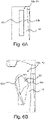
- Figures 6A and 6B schematically show a further embodiment of a cover element 60b of the upholstery cover 18, wherein Figure 6A shows the cover parts 62b, 64b in a non-use state P1, in which the opening 20 and thus the storage space or the recess 40 are closed, and Figure 6B shows the cover parts 62b, 64b in a usage state P2, in which the opening 20 and thus the storage space or the recess 40 are uncovered.
- Figures 6A and 6B the right in 4 illustrated cover element 60b.
- Figures 7A and 7B schematically show a further embodiment of a cover element 60c of the upholstery cover 18, wherein Figure 7A shows the cover parts 62c, 64c in a non-use state P1, in which the opening 20 and thus the storage space or the recess 40 are closed, and Figure 7B shows the cover parts 62c, 64c in a usage state P2, in which the opening 20 and thus the storage space or the recess 40 are uncovered.
- the cover element 60c comprises at least two cover parts 62c, 64c, which completely cover or close the opening 20 and the recess 40.
- the cover parts 62c, 64c can be closed with one another and placed one on top of the other in a non-use state P1.
- the cover element 60c comprises two cover parts 62c, 64c that can be closed with one another, the cover parts 62c, 64c being provided with closure means 66c that correspond to one another.
- the closure means 66c form a Velcro connection, for example. Access to the storage space (the opening 20 and thus the recess 40) can be opened or closed by pulling or pressing (in particular in the vertical direction z) the upper cover part 64c from the lower cover part 62c or onto the lower cover part 62c.
- the upholstery cover 18 is led out on an underside/rear side (so-called B-side) of the upholstery element 12 and fastened to the lattice support structure 70 .
- the upholstery cover 18 includes, for example, a holding pocket 42 that corresponds to the recess 40 and is inserted into the latter.
Landscapes
- Engineering & Computer Science (AREA)
- Mechanical Engineering (AREA)
- Aviation & Aerospace Engineering (AREA)
- Transportation (AREA)
- Seats For Vehicles (AREA)
Description
- Die Erfindung betrifft ein Polster für einen Sitz, insbesondere einen Fahrzeugsitz mit den Merkmalen des Oberbegriffs des Anspruchs 1 sowie einen Fahrzeugsitz.
- Aus der
EP 2 946 967 A1 ist ein Polster für einen Sitz bekannt, welches an einem nach vorne gerichtetem Bereich einen Stauraum aufweist. - Aus dem Stand der Technik sind unterschiedliche Polster für Sitze, insbesondere Fahrzeugsitze, bekannt. Zum Beispiel bilden die Polster eine Sitzflächenauflage und/oder Rückenauflage.
- Aus der
DE 10 2008 011 739 A1 ist ein Verkleidungselement und/oder Polsterelement für einen Fahrzeugsitz bekannt, wobei das Verkleidungselement und/oder Polsterelement zum Abschluss einer Rückenlehne des Fahrzeugsitzes zu einer Seite dient und das Verkleidungselement und/oder Polsterelement ein Staufach aufweist. - Aus der
US 2009/212610 A1 ist ein Fahrzeugsitz bekannt, umfassend einen Sitzkörper mit einem Sitzkissen zum Sitzen eines Fahrzeuginsassen und einer Rückenlehne zum Anlehnen des Fahrzeuginsassen. Der Fahrzeugsitz weist Seitenwangen auf, welche zwischen einer Seitenfläche einer Sitzstruktur und einer Seitenfläche einer Fahrzeugkarosseriewand angeordnet sind. Jede der Seitenwangen umfasst ein Basiselement, welches einen Hohlraum aufweist. Jede der Seitenwangen weist ein äußeres Schichtelement zum Abdecken einer Vorderfläche des jeweiligen Basiselements auf. - Der Erfindung liegt die Aufgabe zu Grunde, ein Polster für einen Sitz eingangs genannter Art zu verbessern sowie einen entsprechenden Fahrzeugsitz bereitzustellen.
- Diese Aufgabe wird erfindungsgemäß gelöst durch ein Polster für einen Sitz, insbesondere einen Fahrzeugsitz, aufweisend zumindest ein Polsterelement und einen über dem Polsterelement angeordneten Polsterbezug, wobei das Polsterelement zumindest ein Seitenpolsterelement, aufweist, wobei das Seitenpolsterelement eine zu dem Polsterbezug hin geöffnete Aussparung aufweist, wobei die Aussparung einen Stauraum bildet, in welchem Gegenstände, beispielsweise ein Mobiltelefon und/oder ein Tablet, verstaubar sind, wobei der Polsterbezug zumindest eine mit der Aussparung korrespondierende Öffnung und zumindest ein im Bereich der Öffnung angeordnetes Abdeckelement aufweist, welches in einem Nichtgebrauchszustand die Öffnung vollständig abdeckt und in einem Gebrauchszustand die Öffnung freigibt, insbesondere vollständig freigibt, wobei das Abdeckelement zumindest zwei Abdeckteile umfasst, die die Öffnung und die Aussparung vollständig abdecken oder verschließen, wobei die Abdeckteile übereinandergelegt sind.
- Dadurch, dass der Polsterbezug zumindest eine mit der Aussparung korrespondierende Öffnung und zumindest ein im Bereich der Öffnung angeordnetes Abdeckelement aufweist, welches in einem Nichtgebrauchszustand die Öffnung vollständig abdeckt und in einem Gebrauchszustand die Öffnung freigibt, insbesondere vollständig freigibt, ist der im Polsterelement integrierte Stauraum für eine auf dem Sitz sitzende Person, insbesondere einen Fahrzeuginsassen, leicht und schnell zugänglich. Insbesondere ist der Stauraum in unmittelbarer Nähe der Person ausgebildet.
- Vorteilhafte Ausgestaltungen, welche einzeln oder in Kombination miteinander eingesetzt werden können, sind Gegenstand der Unteransprüche.
- Das Seitenpolsterelement kann eine Seitenwange sein. Die Seitenwange kann seitlich von einem Körper eines in dem Fahrzeugsitz zu befördernden Insassen angeordnet sein, um den Körper, insbesondere bei Kurvenfahrten, zu stützen.
- Die Aussparung ist beispielsweise eine in dem Polsterelement eingebrachte Vertiefung oder Ausnehmung. Das Polsterelement ist beispielsweise ein Schaumstoffelement.
- Der Polsterbezug ist beispielsweise ein Verkleidungsteil. Der Polsterbezug ist beispielsweise aus Textilien oder Naturmaterialien, insbesondere einem Stoff, einem Leder, einem Kunststoff oder einem Kunstleder, gebildet. Das Abdeckelement ist beispielsweise mit einem die Öffnung umgebenden Bereich des übrigen Polsterbezugs im Bereich der Öffnung abschnittsweise vernäht. Das Abdeckelement ist beispielsweise aus Textilien oder Naturmaterialien, insbesondere einem Stoff, einem Leder, einem Kunststoff oder einem Kunstleder, gebildet. Die Abdeckteile sind beispielsweise miteinander verschließbar ausgebildet.
- Mittels des Abdeckelements kann der Stauraum vollständig abdeckbar und/oder verschließbar sein. Beispielsweise können dadurch Gegenstände gegen ein Herausfallen gesichert werden. Zudem kann ein Erscheinungsbild des Polsters verbessert sein, wenn die Öffnung und somit die Aussparung vollständig abdeckbar sind. Der Polsterbezug kann im Nichtgebrauchszustand des Abdeckelements eine im Wesentlichen (optisch und haptisch) ebene und gleichmäßige Auflagefläche bilden.
- Im Folgenden ist die Erfindung anhand von in den Figuren dargestellten vorteilhaften Ausführungsbeispielen näher erläutert. Die Erfindung ist jedoch nicht auf diese Ausführungsbeispiele beschränkt. Es zeigen:
- Fig. 1:
- schematisch in perspektivischer Ansicht einen Fahrzeugsitz mit jeweils einem Sitzteilpolster und einem Lehnenpolster,
- Fig. 2:
- schematisch eine vergrößerte Darstellung eines Polsterelements des Sitzteilpolsters,
- Fig. 3:
- schematisch ein Polsterelement eines Sitzteilpolsters,
- Fig. 4:
- schematisch ein Sitzteilpolster mit einem Polsterelement und einem darüber angeordneten Polsterbezug,
- Fig. 5A, 5B:
- ausschnittsweise ein Abdeckelement des Polsterbezugs des Sitzteilpolsters gemäß einer ersten Ausführungsform,
- Fig. 6A, 6B:
- ausschnittsweise ein Abdeckelement des Polsterbezugs des Sitzteilpolsters gemäß einer zweiten Ausführungsform,
- Fig. 7A, 7B:
- ausschnittsweise ein Abdeckelement des Polsterbezugs des Sitzteilpolsters gemäß einer dritten Ausführungsform, und
- Fig. 8:
- schematisch eine Rückansicht des Polsterelements, wobei das Polsterelement an einer Gitterträgerstruktur des Fahrzeugsitzes fixiert ist.
- Einander entsprechende Teile sind in allen Figuren mit den gleichen Bezugszeichen versehen.
- Ein in
Fig. 1 schematisch dargestellter Fahrzeugsitz 1 wird nachfolgend unter Verwendung von drei senkrecht zueinander verlaufenden Raumrichtungen beschrieben. Eine Längsrichtung x verläuft bei einem im Fahrzeug eingebauten Fahrzeugsitz 1 weitgehend horizontal und vorzugsweise parallel zu einer Fahrzeuglängsrichtung, die der gewöhnlichen Fahrtrichtung des Fahrzeuges entspricht. Eine zu der Längsrichtung x senkrecht verlaufende Querrichtung y ist im Fahrzeug ebenfalls horizontal ausgerichtet und verläuft parallel zu einer Fahrzeugquerrichtung. Eine Vertikalrichtung z verläuft senkrecht zu der Längsrichtung x und senkrecht zu der Querrichtung y. Bei einem im Fahrzeug eingebauten Fahrzeugsitz 1 verläuft die Vertikalrichtung z parallel zu der Fahrzeughochachse. - Die verwendeten Positionsangaben und Richtungsangaben, wie beispielsweise vorne, hinten, oben und unten beziehen sich auf eine Blickrichtung eines im Fahrzeugsitz 1 sitzenden Insassen in normaler Sitzposition, wobei der Fahrzeugsitz 1 im Fahrzeug eingebaut, in einer zur Personenbeförderung geeigneten Gebrauchsposition mit aufrecht stehender Rückenlehne 4 und wie üblich in Fahrtrichtung ausgerichtet ist. Der erfindungsgemäße Fahrzeugsitz 1 kann jedoch auch in abweichender Ausrichtung, beispielsweise quer zur Fahrtrichtung verbaut werden.
-
Fig. 1 zeigt den Fahrzeugsitz 1 mit einem Polster 10 für ein Sitzteil 2 des Fahrzeugsitzes 1 und einem Polster 30 für die Rückenlehne 4 des Fahrzeugsitzes 1. Das Polster 10 für das Sitzteil 2 wird im Folgenden beispielhaft als Sitzteilpolster 10 bezeichnet. Das Polster 30 für die Rückenlehne 4 wird im Folgenden als Lehnenpolster 30 bezeichnet. - Der Fahrzeugsitz 1 kann als eine in einem Fahrzeug angeordnete Sitzbank ausgeführt sein. Beispielsweise umfasst der Fahrzeugsitz 1 zumindest zwei von jeweils einem Insassen einnehmbare Sitzplätze S1, S2.
-
Fig. 2 zeigt schematisch eine vergrößerte Darstellung eines Polsterelements 12 des Sitzteilpolsters 10. InFig. 2 ist unter anderem ein Polsterbezug 18 des Sitzteilpolsters 10 ausgeblendet. - Das Sitzteilpolster 10 umfasst zumindest ein Polsterelement 12 und einen das Polsterelement 12 zumindest abschnittsweise umgebenden Polsterbezug 18. Das Sitzteilpolster 10 weist insbesondere im Bereich der Sitzplätze S1, S2 jeweils eine Sitzfläche 14 auf. Im Randbereich des Sitzteils 2 umfasst das Polsterelement 12 jeweils Seitenpolsterelemente 16, wie beispielsweise Seitenwangen zur seitlichen Abstützung eines Insassen. Im dargestellten Ausführungsbeispiel ist jeweils ein Seitenpolsterelement 16 auf einer in Querrichtung y betrachtet nach außen gerichteten Seite der jeweiligen Sitzfläche 14 angeordnet. Auf einer in Querrichtung y betrachtet nach innen gerichteten Seite der jeweiligen Sitzfläche 14 ist das Polsterelement 12 mit einer Aussparung 40 versehen. Die Aussparung 40 bildet dabei einen Stauraum und/oder ein Ablagefach für mindestens einen Gegenstand, insbesondere für mindestens einen kleinen Gegenstand eines Fahrzeuginsassen. Beispielsweise können ein Tablet, ein oder mehrere Mobiltelefone, Schreibwaren, ein Kinderspielzeug etc. in die Aussparung 40 gesteckt und in dieser verstaut werden. Solch ein Stauraum ist insbesondere schnell und leicht für einen Insassen zugänglich. Der Stauraum ist dabei in unmittelbarer Nähe des Insassen angeordnet.
- Die Aussparung 40 ist im Bereich einer im Polsterelement 12 eingebrachten Gurtschlossdurchführung 50 ausgebildet. Beispielsweise ist die Aussparung 40 in Form eines Langlochs/Rechtecks ausgebildet und erstreckt sich im Wesentlichen in Längsrichtung x des Sitzteils 2. Zum Beispiel erstreckt sich die Aussparung 40 im Wesentlichen über einen mittleren Bereich (in Längsrichtung x gesehen) des Sitzteils 2.
- Die Aussparung 40 ist nach oben, d. h. zur so genannten A-Seite des Sitzteilpolsters 10 bzw. zur Sitzfläche 14 hin, offen. Die A-Seite ist also eine dem Insassen zugewandte Seite des Sitzteilpolsters 10 bzw. der Sitzfläche 14. Die Aussparung 40 bildet insbesondere eine Tasche zum Einstecken und zur Aufbewahrung von Gegenständen. Die Aussparung 40 kann als Durchgangsöffnung ausgebildet sein.
- Der Polsterbezug 18 umfasst eine mit der Aussparung 40 korrespondierende Öffnung 20. Des Weiteren kann der Polsterbezug 18 eine in die Aussparung 40 steckbare, in
Fig. 8 gezeigte Haltetasche 42 aufweisen. Beispielsweise ist die Haltetasche 42 mit dem Polsterbezug 18 im Bereich der Öffnung 20 vernäht. Die Öffnung 20 ist auf der A-Seite des Sitzteils 2 angeordnet. Insbesondere bildet der Polsterbezug 18 eine Auflagefläche, insbesondere eine Sitzauflagefläche, für einen Insassen. -
Fig. 3 zeigt schematisch eine Ausführungsform eines Polsterelements 12 eines Sitzteilpolsters 10. Das Polsterelement 12 ist beispielsweise eine aus Schaumstoff gebildete Polsterung für einen Sitz. -
Fig. 4 zeigt schematisch eine Ausführungsform eines Sitzteilpolsters 10 mit einem Polsterelement 12 und einem darüber angeordneten Polsterbezug 18. - Das Polsterelement 12 umfasst auf beiden Seiten einer Sitzfläche 14 jeweils ein Seitenpolsterelement 16, wie beispielsweise eine Seitenwange, wobei zumindest eines der Seitenpolsterelemente 16 eine zu dem Polsterbezug 18, insbesondere einer Auflagefläche (A-Seite) des Polsterbezugs 18, hin geöffnete Aussparung 40 aufweist. Die Aussparung 40 bildet einen Stauraum, in welchem Gegenstände von Fahrzeuginsassen, wie Mobiltelefone und Tablets, verstaubar sind. Der Polsterbezug 18 umfasst zumindest eine mit der Aussparung 40 korrespondierende Öffnung 20 und zumindest ein im Bereich der Öffnung 20 angeordnetes Abdeckelement 60a, 60b, welches in einem Nichtgebrauchszustand P1 die Öffnung 20 und somit den Stauraum vollständig abdeckt und in einem Gebrauchszustand P2 die Öffnung 20 und somit den Stauraum freigibt. Die Öffnung 20 kann manuell vom Insassen verschlossen oder geöffnet werden.
- Das Abdeckelement 60a, 60b umfasst zumindest zwei Abdeckteile 62a, 64a, 62b, 64b, die die jeweilige Öffnung 20 und die jeweilige Aussparung 40 vollständig abdecken oder verschließen. Die Abdeckteile 62a, 64a sind beispielsweise miteinander verschließbar ausgebildet. Die Abdeckteile 62b, 64b sind beispielsweise übereinandergelegt.
- Das in
Fig. 4 gezeigte Sitzteilpolster 10 weist links eine andere Ausbildung der Abdeckteile 62a, 64a als die Ausbildung der rechten Abdeckteile 62b, 64b auf. Zum Beispiel umfasst das linke Abdeckelement 60a zwei miteinander verschließbare Abdeckteile 62a, 64a und ein Verschlussmittel 66a. Das Verschlussmittel 66a ist beispielsweise ein Zipper bzw. ein Reißverschluss. Durch Aufziehen oder Zuziehen (insbesondere in Längsrichtung x) des Verschlussmittels 66a ist ein Zugang zum Stauraum (die Öffnung 20 und somit die Aussparung 40) freigebbar oder verschließbar. - Das in
Fig. 4 gezeigte rechte Abdeckelement 60b umfasst zwei übereinandergelegte Abdeckteile 62b, 64b. Beispielsweise sind diese Abdeckteile 62b, 64b in Form von Laschen oder Umschlagrändern ausgebildet und mit dem Polsterbezug 18 im Bereich der Öffnung 20 zumindest teilweise vernäht. Durch Auseinanderdrücken (vorzugsweise in Querrichtung y) oder Übereinanderlegen (vorzugsweise in Vertikalrichtung z) der Abdeckteile 62b, 64b ist ein Zugang zum Stauraum (die Öffnung 20 und somit die Aussparung 40) freigebbar oder verschließbar. -
Figuren 5A und 5B zeigen schematisch eine Ausführungsform eines Abdeckelements 60a des Polsterbezugs 18, wobeiFig. 5A die Abdeckteile 62a, 64a in einem Nichtgebrauchszustand P1 zeigt, in welchem die Öffnung 20 und somit der Stauraum bzw. die Aussparung 40 verschlossen sind, undFig. 5B die Abdeckteile 62a, 64a in einem Gebrauchszustand P2 zeigt, in welchem die Öffnung 20 und somit der Stauraum bzw. die Aussparung 40 freigelegt sind. Insbesondere zeigen dieFiguren 5A und 5B das inFig. 4 links dargestellte Abdeckelement 60a. -
Figuren 6A und 6B zeigen schematisch eine weitere Ausführungsform eines Abdeckelements 60b des Polsterbezugs 18, wobeiFig. 6A die Abdeckteile 62b, 64b in einem Nichtgebrauchszustand P1 zeigt, in welchem die Öffnung 20 und somit der Stauraum bzw. die Aussparung 40 verschlossen sind, undFig. 6B die Abdeckteile 62b, 64b in einem Gebrauchszustand P2 zeigt, in welchem die Öffnung 20 und somit der Stauraum bzw. die Aussparung 40 freigelegt sind. Insbesondere zeigen dieFiguren 6A und 6B das rechts inFig. 4 dargestellte Abdeckelement 60b. -
Figuren 7A und 7B zeigen schematisch eine weitere Ausführungsform eines Abdeckelements 60c des Polsterbezugs 18, wobeiFig. 7A die Abdeckteile 62c, 64c in einem Nichtgebrauchszustand P1 zeigt, in welchem die Öffnung 20 und somit der Stauraum bzw. die Aussparung 40 verschlossen sind, undFig. 7B die Abdeckteile 62c, 64c in einem Gebrauchszustand P2 zeigt, in welchem die Öffnung 20 und somit der Stauraum bzw. die Aussparung 40 freigelegt sind. - Das Abdeckelement 60c umfasst zumindest zwei Abdeckteile 62c, 64c, die die Öffnung 20 und die Aussparung 40 vollständig abdecken oder verschließen. Die Abdeckteile 62c, 64c sind in einem Nichtgebrauchszustand P1 miteinander verschließbar und übereinandergelegt. Zum Beispiel umfasst das Abdeckelement 60c zwei miteinander verschließbare Abdeckteile 62c, 64c, wobei die Abdeckteile 62c, 64c mit miteinander korrespondierenden Verschlussmittel 66c versehen sind. Die Verschlussmittel 66c bilden beispielsweise eine Klettverschlussverbindung. Durch Abziehen oder Zudrücken (insbesondere in Vertikalrichtung z) des oben gelegenen Abdeckteils 64c von dem unten gelegenen Abdeckteil 62c oder auf das unten gelegene Abdeckteil 62c ist ein Zugang zum Stauraum (die Öffnung 20 und somit die Aussparung 40) freigebbar oder verschließbar.
-
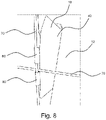
Fig. 8 zeigt schematisch eine Rückansicht des Polsterelements 12, wobei das Polsterelement 12 an einer Gitterträgerstruktur 70 des Fahrzeugsitzes 1 bzw. eines Sitzes fixiert ist. Beispielsweise ist die Aussparung 40 als Durchgangsöffnung ausgebildet. Auf einer Unterseite/Rückseite (so genannte B-Seite) des Polsterelements 12 wird der Polsterbezug 18 hinausgeführt und an der Gitterträgerstruktur 70 befestigt. Der Polsterbezug 18 umfasst beispielsweise eine mit der Aussparung 40 korrespondierende und in diese eingesteckte Haltetasche 42. Die Haltetasche 42 umfasst auf einer Unterseite/Rückseite Befestigungselemente 80, wie beispielsweise Hakenelemente oder Clipselemente, die mit der Gitterträgerstruktur 70 verbunden sind. - Obwohl die Erfindung in den Zeichnungen und der vorausgegangenen Darstellung im Detail beschrieben wurde, sind die Darstellungen illustrativ und beispielhaft und nicht einschränkend zu verstehen. Insbesondere ist die Wahl der zeichnerisch dargestellten Proportionen der einzelnen Elemente nicht als erforderlich oder beschränkend auszulegen.
- In den Ansprüchen verwendete Begriffe wie "umfassen", "aufweisen", "beinhalten", "enthalten" und dergleichen schließen weitere Elemente oder Schritte nicht aus. Die Verwendung des unbestimmten Artikels schließt eine Mehrzahl nicht aus. Eine einzelne Einrichtung kann die Funktionen mehrerer in den Ansprüchen genannten Einheiten bzw. Einrichtungen ausführen.
-
- 1
- Fahrzeugsitz
- 2
- Sitzteil
- 4
- Rückenlehne
- 10
- Polster, insbesondere Sitzteilpolster
- 12
- Polsterelement
- 14
- Sitzfläche
- 16
- Seitenpolsterelement
- 18
- Polsterbezug
- 20
- Öffnung
- 30
- Polster, insbesondere Lehnenpolster
- 40
- Aussparung
- 42
- Haltetasche
- 50
- Gurtschlossdurchführung
- 60a, 60b, 60c
- Abdeckelement
- 62a, 62b, 62c
- Abdeckteil
- 64a, 64b, 64c
- Abdeckteil
- 66a, 66c
- Verschlussmittel
- 70
- Gitterträgerstruktur
- 80
- Befestigungselement
- P1
- Nichtgebrauchszustand
- P2
- Gebrauchszustand
- S1, S2
- Sitzplatz
- x
- Längsrichtung
- y
- Querrichtung
- z
- Vertikalrichtung
Claims (15)
- Polster (10, 30) für einen Sitz, insbesondere einen Fahrzeugsitz (1), aufweisend zumindest ein Polsterelement (12) und einen über dem Polsterelement (12) angeordneten Polsterbezug (18), wobei das Polsterelement (12) zumindest ein Seitenpolsterelement (16) aufweist, wobei das Seitenpolsterelement (16) eine zu dem Polsterbezug (18) hin geöffnete Aussparung (40) aufweist, wobei die Aussparung (40) einen Stauraum bildet, in welchem Gegenstände verstaubar sind, wobei der Polsterbezug (18) zumindest eine mit der Aussparung (40) korrespondierende Öffnung (20) und zumindest ein im Bereich der Öffnung (20) angeordnetes Abdeckelement (60a, 60b, 60c) aufweist, welches in einem Nichtgebrauchszustand (P1) die Öffnung (20) vollständig abdeckt, und in einem Gebrauchszustand (P2) die Öffnung (20) freigibt, insbesondere vollständig freigibt, wobei das Abdeckelement (60b, 60c) zumindest zwei Abdeckteile (62b, 64b; 62c, 64c) umfasst, die die Öffnung (20) und die Aussparung (40) vollständig abdecken oder verschließen,
dadurch gekennzeichnet, dass
die Abdeckteile (62b, 64b; 62c, 64c) übereinandergelegt sind. - Polster (10, 30) gemäß Anspruch 1, wobei das Seitenpolsterelement (16) eine Seitenwange ist.
- Polster (10, 30) gemäß einem der Ansprüche 1 oder 2, wobei die Aussparung (40) eine im Polsterelement (12) eingebrachte Vertiefung oder Ausnehmung ist.
- Polster (10, 30) gemäß einem der Ansprüche 1 bis 3, wobei das Polsterelement (12) ein Schaumstoffelement ist.
- Polster (10, 30) gemäß einem der Ansprüche 1 bis 4, wobei der Polsterbezug (18) ein Verkleidungsteil ist.
- Polster (10, 30) gemäß einem der Ansprüche 1 bis 5, wobei der Polsterbezug (18) aus Textilien oder Naturmaterialien gebildet ist.
- Polster (10, 30) gemäß Anspruch 6, wobei der Polsterbezug (18) aus einem Stoff, einem Leder, einem Kunststoff oder einem Kunstleder gebildet ist.
- Polster (10, 30) gemäß einem der Ansprüche 1 bis 7, wobei das Abdeckelement (60b, 60c) mit einem die Öffnung (20) umgebenden Bereich des übrigen Polsterbezugs (18) vernäht ist.
- Polster (10, 30) gemäß einem der Ansprüche 1 bis 8, wobei das Abdeckelement (60b, 60c) aus Textilien oder Naturmaterialien gebildet ist.
- Polster (10, 30) gemäß Anspruch 9, wobei das Abdeckelement (60b, 60c) aus einem Stoff, einem Leder, einem Kunststoff oder einem Kunstleder gebildet ist.
- Polster (10, 30) gemäß einem der Ansprüche 1 bis 10, wobei die Abdeckteile (62b, 64b; 62c, 64c) miteinander verschließbar ausgebildet sind.
- Polster (10, 30) gemäß einem der Ansprüche 1 bis 11, wobei der Stauraum Mittels des Abdeckelements (60b, 60c) vollständig abdeckbar ist.
- Polster (10, 30) gemäß einem der Ansprüche 1 bis 12, wobei die Abdeckteile (62c, 64c) mit miteinander korrespondierenden Verschlussmitteln (66c) versehen sind.
- Polster (10, 30) gemäß Anspruch 13, wobei die Verschlussmittel (66c) eine Klettverschlussverbindung bilden.
- Fahrzeugsitz (1), insbesondere Kraftfahrzeugsitz, mit einem ein Polster (10) gemäß einem der Ansprüche 1 bis 14 aufweisenden Sitzteil (2) und/oder einer ein Polster (30) gemäß einem der Ansprüche 1 bis 14 aufweisenden Rückenlehne (4).
Applications Claiming Priority (2)
| Application Number | Priority Date | Filing Date | Title |
|---|---|---|---|
| DE102019207186 | 2019-05-16 | ||
| DE102019132104.2A DE102019132104A1 (de) | 2019-05-16 | 2019-11-27 | Polster für einen sitz, insbesondere einen fahrzeugsitz, fahrzeugsitz |
Publications (2)
| Publication Number | Publication Date |
|---|---|
| EP3738824A1 EP3738824A1 (de) | 2020-11-18 |
| EP3738824B1 true EP3738824B1 (de) | 2023-01-25 |
Family
ID=70682695
Family Applications (1)
| Application Number | Title | Priority Date | Filing Date |
|---|---|---|---|
| EP20174294.7A Active EP3738824B1 (de) | 2019-05-16 | 2020-05-13 | Polster für einen sitz, insbesondere einen fahrzeugsitz, fahrzeugsitz |
Country Status (1)
| Country | Link |
|---|---|
| EP (1) | EP3738824B1 (de) |
Family Cites Families (3)
| Publication number | Priority date | Publication date | Assignee | Title |
|---|---|---|---|---|
| JP2009196605A (ja) * | 2008-02-25 | 2009-09-03 | Honda Motor Co Ltd | 車両用シート |
| DE102008011739A1 (de) * | 2008-02-28 | 2009-09-03 | GM Global Technology Operations, Inc., Detroit | Verkleidungselement oder Polsterelement für einen Fahrzeugsitz und Staufach für ein Fahrzeug |
| JP5940464B2 (ja) | 2013-01-16 | 2016-06-29 | 株式会社タチエス | 車両用シート |
-
2020
- 2020-05-13 EP EP20174294.7A patent/EP3738824B1/de active Active
Also Published As
| Publication number | Publication date |
|---|---|
| EP3738824A1 (de) | 2020-11-18 |
Similar Documents
| Publication | Publication Date | Title |
|---|---|---|
| DE602004002622T2 (de) | Struktur mit einer Kiste und einem mittleren Sitz für Fahrzeug. | |
| DE10306960B4 (de) | Abdeckung eines Fahrzeugsitzes mit darin anzuordnender Fußmatte und Verwendung dieser Abdeckung | |
| DE69301803T2 (de) | Fahrzeugsitzanordnung | |
| DE102016112919B4 (de) | Sitzanordnung mit einem verstaubaren Tisch | |
| DE10259722A1 (de) | Fahrzeugsitz | |
| DE102018220906A1 (de) | Fahrzeugsitz | |
| DE202018102854U1 (de) | Fahrzeugsitzpolster mit Schnappverschlussbefestigungselementen zum Verbinden mit Schnappverschlussaufnahmeelementen an einer strukturellen Stütze | |
| DE102008029500A1 (de) | Fahrzeugsitz | |
| DE102013202935A1 (de) | Kopfstütze mit Ablage | |
| DE102012203932A1 (de) | Klappbares Polsterkissen | |
| DE102008045860A1 (de) | Fahrzeugsitz in Leichtbauweise | |
| DE102008023526B4 (de) | Mechanisierung zur flachen Verstauung von Sitzen | |
| DE102021208805B3 (de) | Fahrzeugsitz | |
| DE102015105806A1 (de) | Mittels Draht kippbare Sitzlehne der zweiten Sitzreihe mit integrierter Ablage | |
| EP3738824B1 (de) | Polster für einen sitz, insbesondere einen fahrzeugsitz, fahrzeugsitz | |
| EP0937605A1 (de) | Sitz für ein Kraftfahrzeug | |
| DE69401239T2 (de) | Kraftfahrzeugsitz | |
| DE602005006109T2 (de) | Kraftfahrzeug mit einem zusammenklappbaren und verstaubaren rücksitz | |
| DE3603891A1 (de) | Fahrzeugsitzsystem | |
| DE102019132104A1 (de) | Polster für einen sitz, insbesondere einen fahrzeugsitz, fahrzeugsitz | |
| DE19543927C2 (de) | Fahrzeug, insbesondere Personenkraftwagen | |
| DE102022130702B4 (de) | Rückenlehne, Sitzkomponente und Verfahren zur Herstellung eines Sitzes | |
| DE4225880A1 (de) | Sitzanordnung mit einem wahlweise als armlehne oder kopfstuetze zu benutzenden polsterelement | |
| DE102018215797B4 (de) | Fahrzeugsitz | |
| EP0625444A1 (de) | Integrierter Kindersitz für Kraftfahrzeuge |
Legal Events
| Date | Code | Title | Description |
|---|---|---|---|
| PUAI | Public reference made under article 153(3) epc to a published international application that has entered the european phase |
Free format text: ORIGINAL CODE: 0009012 |
|
| STAA | Information on the status of an ep patent application or granted ep patent |
Free format text: STATUS: THE APPLICATION HAS BEEN PUBLISHED |
|
| AK | Designated contracting states |
Kind code of ref document: A1 Designated state(s): AL AT BE BG CH CY CZ DE DK EE ES FI FR GB GR HR HU IE IS IT LI LT LU LV MC MK MT NL NO PL PT RO RS SE SI SK SM TR |
|
| AX | Request for extension of the european patent |
Extension state: BA ME |
|
| RIN1 | Information on inventor provided before grant (corrected) |
Inventor name: RAVINALE, MAURO Inventor name: CERRATO, ROBERTO Inventor name: BLIZNIAKOVA, ZDENKA |
|
| RIN1 | Information on inventor provided before grant (corrected) |
Inventor name: RAVINALE, MAURO Inventor name: CERRATO, ROBERTO Inventor name: BAJCAROVA, ZDENKA |
|
| STAA | Information on the status of an ep patent application or granted ep patent |
Free format text: STATUS: REQUEST FOR EXAMINATION WAS MADE |
|
| 17P | Request for examination filed |
Effective date: 20210518 |
|
| RBV | Designated contracting states (corrected) |
Designated state(s): AL AT BE BG CH CY CZ DE DK EE ES FI FR GB GR HR HU IE IS IT LI LT LU LV MC MK MT NL NO PL PT RO RS SE SI SK SM TR |
|
| RAP1 | Party data changed (applicant data changed or rights of an application transferred) |
Owner name: ADIENT US LLC |
|
| RIC1 | Information provided on ipc code assigned before grant |
Ipc: B60R 7/04 20060101ALI20220721BHEP Ipc: B60N 2/70 20060101ALI20220721BHEP Ipc: B60N 2/58 20060101AFI20220721BHEP |
|
| GRAP | Despatch of communication of intention to grant a patent |
Free format text: ORIGINAL CODE: EPIDOSNIGR1 |
|
| STAA | Information on the status of an ep patent application or granted ep patent |
Free format text: STATUS: GRANT OF PATENT IS INTENDED |
|
| INTG | Intention to grant announced |
Effective date: 20220929 |
|
| GRAS | Grant fee paid |
Free format text: ORIGINAL CODE: EPIDOSNIGR3 |
|
| GRAA | (expected) grant |
Free format text: ORIGINAL CODE: 0009210 |
|
| STAA | Information on the status of an ep patent application or granted ep patent |
Free format text: STATUS: THE PATENT HAS BEEN GRANTED |
|
| AK | Designated contracting states |
Kind code of ref document: B1 Designated state(s): AL AT BE BG CH CY CZ DE DK EE ES FI FR GB GR HR HU IE IS IT LI LT LU LV MC MK MT NL NO PL PT RO RS SE SI SK SM TR |
|
| REG | Reference to a national code |
Ref country code: GB Ref legal event code: FG4D Free format text: NOT ENGLISH |
|
| REG | Reference to a national code |
Ref country code: CH Ref legal event code: EP |
|
| REG | Reference to a national code |
Ref country code: AT Ref legal event code: REF Ref document number: 1545693 Country of ref document: AT Kind code of ref document: T Effective date: 20230215 Ref country code: IE Ref legal event code: FG4D Free format text: LANGUAGE OF EP DOCUMENT: GERMAN |
|
| REG | Reference to a national code |
Ref country code: DE Ref legal event code: R096 Ref document number: 502020002426 Country of ref document: DE |
|
| REG | Reference to a national code |
Ref country code: LT Ref legal event code: MG9D |
|
| REG | Reference to a national code |
Ref country code: NL Ref legal event code: MP Effective date: 20230125 |
|
| PG25 | Lapsed in a contracting state [announced via postgrant information from national office to epo] |
Ref country code: NL Free format text: LAPSE BECAUSE OF FAILURE TO SUBMIT A TRANSLATION OF THE DESCRIPTION OR TO PAY THE FEE WITHIN THE PRESCRIBED TIME-LIMIT Effective date: 20230125 |
|
| PG25 | Lapsed in a contracting state [announced via postgrant information from national office to epo] |
Ref country code: RS Free format text: LAPSE BECAUSE OF FAILURE TO SUBMIT A TRANSLATION OF THE DESCRIPTION OR TO PAY THE FEE WITHIN THE PRESCRIBED TIME-LIMIT Effective date: 20230125 Ref country code: PT Free format text: LAPSE BECAUSE OF FAILURE TO SUBMIT A TRANSLATION OF THE DESCRIPTION OR TO PAY THE FEE WITHIN THE PRESCRIBED TIME-LIMIT Effective date: 20230525 Ref country code: NO Free format text: LAPSE BECAUSE OF FAILURE TO SUBMIT A TRANSLATION OF THE DESCRIPTION OR TO PAY THE FEE WITHIN THE PRESCRIBED TIME-LIMIT Effective date: 20230425 Ref country code: LV Free format text: LAPSE BECAUSE OF FAILURE TO SUBMIT A TRANSLATION OF THE DESCRIPTION OR TO PAY THE FEE WITHIN THE PRESCRIBED TIME-LIMIT Effective date: 20230125 Ref country code: LT Free format text: LAPSE BECAUSE OF FAILURE TO SUBMIT A TRANSLATION OF THE DESCRIPTION OR TO PAY THE FEE WITHIN THE PRESCRIBED TIME-LIMIT Effective date: 20230125 Ref country code: HR Free format text: LAPSE BECAUSE OF FAILURE TO SUBMIT A TRANSLATION OF THE DESCRIPTION OR TO PAY THE FEE WITHIN THE PRESCRIBED TIME-LIMIT Effective date: 20230125 Ref country code: ES Free format text: LAPSE BECAUSE OF FAILURE TO SUBMIT A TRANSLATION OF THE DESCRIPTION OR TO PAY THE FEE WITHIN THE PRESCRIBED TIME-LIMIT Effective date: 20230125 |
|
| PG25 | Lapsed in a contracting state [announced via postgrant information from national office to epo] |
Ref country code: SE Free format text: LAPSE BECAUSE OF FAILURE TO SUBMIT A TRANSLATION OF THE DESCRIPTION OR TO PAY THE FEE WITHIN THE PRESCRIBED TIME-LIMIT Effective date: 20230125 Ref country code: PL Free format text: LAPSE BECAUSE OF FAILURE TO SUBMIT A TRANSLATION OF THE DESCRIPTION OR TO PAY THE FEE WITHIN THE PRESCRIBED TIME-LIMIT Effective date: 20230125 Ref country code: IS Free format text: LAPSE BECAUSE OF FAILURE TO SUBMIT A TRANSLATION OF THE DESCRIPTION OR TO PAY THE FEE WITHIN THE PRESCRIBED TIME-LIMIT Effective date: 20230525 Ref country code: GR Free format text: LAPSE BECAUSE OF FAILURE TO SUBMIT A TRANSLATION OF THE DESCRIPTION OR TO PAY THE FEE WITHIN THE PRESCRIBED TIME-LIMIT Effective date: 20230426 Ref country code: FI Free format text: LAPSE BECAUSE OF FAILURE TO SUBMIT A TRANSLATION OF THE DESCRIPTION OR TO PAY THE FEE WITHIN THE PRESCRIBED TIME-LIMIT Effective date: 20230125 |
|
| REG | Reference to a national code |
Ref country code: DE Ref legal event code: R097 Ref document number: 502020002426 Country of ref document: DE |
|
| PG25 | Lapsed in a contracting state [announced via postgrant information from national office to epo] |
Ref country code: SM Free format text: LAPSE BECAUSE OF FAILURE TO SUBMIT A TRANSLATION OF THE DESCRIPTION OR TO PAY THE FEE WITHIN THE PRESCRIBED TIME-LIMIT Effective date: 20230125 Ref country code: RO Free format text: LAPSE BECAUSE OF FAILURE TO SUBMIT A TRANSLATION OF THE DESCRIPTION OR TO PAY THE FEE WITHIN THE PRESCRIBED TIME-LIMIT Effective date: 20230125 Ref country code: EE Free format text: LAPSE BECAUSE OF FAILURE TO SUBMIT A TRANSLATION OF THE DESCRIPTION OR TO PAY THE FEE WITHIN THE PRESCRIBED TIME-LIMIT Effective date: 20230125 Ref country code: DK Free format text: LAPSE BECAUSE OF FAILURE TO SUBMIT A TRANSLATION OF THE DESCRIPTION OR TO PAY THE FEE WITHIN THE PRESCRIBED TIME-LIMIT Effective date: 20230125 Ref country code: CZ Free format text: LAPSE BECAUSE OF FAILURE TO SUBMIT A TRANSLATION OF THE DESCRIPTION OR TO PAY THE FEE WITHIN THE PRESCRIBED TIME-LIMIT Effective date: 20230125 |
|
| PG25 | Lapsed in a contracting state [announced via postgrant information from national office to epo] |
Ref country code: SK Free format text: LAPSE BECAUSE OF FAILURE TO SUBMIT A TRANSLATION OF THE DESCRIPTION OR TO PAY THE FEE WITHIN THE PRESCRIBED TIME-LIMIT Effective date: 20230125 |
|
| PLBE | No opposition filed within time limit |
Free format text: ORIGINAL CODE: 0009261 |
|
| STAA | Information on the status of an ep patent application or granted ep patent |
Free format text: STATUS: NO OPPOSITION FILED WITHIN TIME LIMIT |
|
| REG | Reference to a national code |
Ref country code: CH Ref legal event code: PL |
|
| 26N | No opposition filed |
Effective date: 20231026 |
|
| PG25 | Lapsed in a contracting state [announced via postgrant information from national office to epo] |
Ref country code: MC Free format text: LAPSE BECAUSE OF FAILURE TO SUBMIT A TRANSLATION OF THE DESCRIPTION OR TO PAY THE FEE WITHIN THE PRESCRIBED TIME-LIMIT Effective date: 20230125 |
|
| REG | Reference to a national code |
Ref country code: BE Ref legal event code: MM Effective date: 20230531 |
|
| PG25 | Lapsed in a contracting state [announced via postgrant information from national office to epo] |
Ref country code: SI Free format text: LAPSE BECAUSE OF FAILURE TO SUBMIT A TRANSLATION OF THE DESCRIPTION OR TO PAY THE FEE WITHIN THE PRESCRIBED TIME-LIMIT Effective date: 20230125 Ref country code: MC Free format text: LAPSE BECAUSE OF FAILURE TO SUBMIT A TRANSLATION OF THE DESCRIPTION OR TO PAY THE FEE WITHIN THE PRESCRIBED TIME-LIMIT Effective date: 20230125 Ref country code: LU Free format text: LAPSE BECAUSE OF NON-PAYMENT OF DUE FEES Effective date: 20230513 Ref country code: LI Free format text: LAPSE BECAUSE OF NON-PAYMENT OF DUE FEES Effective date: 20230531 Ref country code: CH Free format text: LAPSE BECAUSE OF NON-PAYMENT OF DUE FEES Effective date: 20230531 |
|
| REG | Reference to a national code |
Ref country code: IE Ref legal event code: MM4A |
|
| PG25 | Lapsed in a contracting state [announced via postgrant information from national office to epo] |
Ref country code: IE Free format text: LAPSE BECAUSE OF NON-PAYMENT OF DUE FEES Effective date: 20230513 |
|
| PG25 | Lapsed in a contracting state [announced via postgrant information from national office to epo] |
Ref country code: IE Free format text: LAPSE BECAUSE OF NON-PAYMENT OF DUE FEES Effective date: 20230513 |
|
| PG25 | Lapsed in a contracting state [announced via postgrant information from national office to epo] |
Ref country code: IT Free format text: LAPSE BECAUSE OF FAILURE TO SUBMIT A TRANSLATION OF THE DESCRIPTION OR TO PAY THE FEE WITHIN THE PRESCRIBED TIME-LIMIT Effective date: 20230125 Ref country code: BE Free format text: LAPSE BECAUSE OF NON-PAYMENT OF DUE FEES Effective date: 20230531 |
|
| PG25 | Lapsed in a contracting state [announced via postgrant information from national office to epo] |
Ref country code: BG Free format text: LAPSE BECAUSE OF FAILURE TO SUBMIT A TRANSLATION OF THE DESCRIPTION OR TO PAY THE FEE WITHIN THE PRESCRIBED TIME-LIMIT Effective date: 20230125 |
|
| PG25 | Lapsed in a contracting state [announced via postgrant information from national office to epo] |
Ref country code: BG Free format text: LAPSE BECAUSE OF FAILURE TO SUBMIT A TRANSLATION OF THE DESCRIPTION OR TO PAY THE FEE WITHIN THE PRESCRIBED TIME-LIMIT Effective date: 20230125 |
|
| GBPC | Gb: european patent ceased through non-payment of renewal fee |
Effective date: 20240513 |
|
| PG25 | Lapsed in a contracting state [announced via postgrant information from national office to epo] |
Ref country code: GB Free format text: LAPSE BECAUSE OF NON-PAYMENT OF DUE FEES Effective date: 20240513 |
|
| REG | Reference to a national code |
Ref country code: DE Ref legal event code: R082 Ref document number: 502020002426 Country of ref document: DE Representative=s name: LIEDTKE & PARTNER PATENTANWAELTE, DE |
|
| PGFP | Annual fee paid to national office [announced via postgrant information from national office to epo] |
Ref country code: DE Payment date: 20250529 Year of fee payment: 6 |
|
| PGFP | Annual fee paid to national office [announced via postgrant information from national office to epo] |
Ref country code: FR Payment date: 20250526 Year of fee payment: 6 |
|
| PGFP | Annual fee paid to national office [announced via postgrant information from national office to epo] |
Ref country code: AT Payment date: 20250721 Year of fee payment: 5 |
|
| PG25 | Lapsed in a contracting state [announced via postgrant information from national office to epo] |
Ref country code: CY Free format text: LAPSE BECAUSE OF FAILURE TO SUBMIT A TRANSLATION OF THE DESCRIPTION OR TO PAY THE FEE WITHIN THE PRESCRIBED TIME-LIMIT; INVALID AB INITIO Effective date: 20200513 |
|
| PG25 | Lapsed in a contracting state [announced via postgrant information from national office to epo] |
Ref country code: HU Free format text: LAPSE BECAUSE OF FAILURE TO SUBMIT A TRANSLATION OF THE DESCRIPTION OR TO PAY THE FEE WITHIN THE PRESCRIBED TIME-LIMIT; INVALID AB INITIO Effective date: 20200513 |
|
| PG25 | Lapsed in a contracting state [announced via postgrant information from national office to epo] |
Ref country code: TR Free format text: LAPSE BECAUSE OF FAILURE TO SUBMIT A TRANSLATION OF THE DESCRIPTION OR TO PAY THE FEE WITHIN THE PRESCRIBED TIME-LIMIT Effective date: 20230125 |