EP3709970B1 - Linezolid formulations - Google Patents
Linezolid formulations Download PDFInfo
- Publication number
- EP3709970B1 EP3709970B1 EP18808077.4A EP18808077A EP3709970B1 EP 3709970 B1 EP3709970 B1 EP 3709970B1 EP 18808077 A EP18808077 A EP 18808077A EP 3709970 B1 EP3709970 B1 EP 3709970B1
- Authority
- EP
- European Patent Office
- Prior art keywords
- linezolid
- formulation
- poloxamer
- pain
- iohexol
- Prior art date
- Legal status (The legal status is an assumption and is not a legal conclusion. Google has not performed a legal analysis and makes no representation as to the accuracy of the status listed.)
- Active
Links
Images



Classifications
-
- A—HUMAN NECESSITIES
- A61—MEDICAL OR VETERINARY SCIENCE; HYGIENE
- A61K—PREPARATIONS FOR MEDICAL, DENTAL OR TOILETRY PURPOSES
- A61K31/00—Medicinal preparations containing organic active ingredients
- A61K31/33—Heterocyclic compounds
- A61K31/395—Heterocyclic compounds having nitrogen as a ring hetero atom, e.g. guanethidine or rifamycins
- A61K31/535—Heterocyclic compounds having nitrogen as a ring hetero atom, e.g. guanethidine or rifamycins having six-membered rings with at least one nitrogen and one oxygen as the ring hetero atoms, e.g. 1,2-oxazines
- A61K31/5355—Non-condensed oxazines and containing further heterocyclic rings
-
- A—HUMAN NECESSITIES
- A61—MEDICAL OR VETERINARY SCIENCE; HYGIENE
- A61K—PREPARATIONS FOR MEDICAL, DENTAL OR TOILETRY PURPOSES
- A61K31/00—Medicinal preparations containing organic active ingredients
- A61K31/33—Heterocyclic compounds
- A61K31/395—Heterocyclic compounds having nitrogen as a ring hetero atom, e.g. guanethidine or rifamycins
- A61K31/535—Heterocyclic compounds having nitrogen as a ring hetero atom, e.g. guanethidine or rifamycins having six-membered rings with at least one nitrogen and one oxygen as the ring hetero atoms, e.g. 1,2-oxazines
- A61K31/5375—1,4-Oxazines, e.g. morpholine
- A61K31/5377—1,4-Oxazines, e.g. morpholine not condensed and containing further heterocyclic rings, e.g. timolol
-
- A—HUMAN NECESSITIES
- A61—MEDICAL OR VETERINARY SCIENCE; HYGIENE
- A61K—PREPARATIONS FOR MEDICAL, DENTAL OR TOILETRY PURPOSES
- A61K47/00—Medicinal preparations characterised by the non-active ingredients used, e.g. carriers or inert additives; Targeting or modifying agents chemically bound to the active ingredient
- A61K47/06—Organic compounds, e.g. natural or synthetic hydrocarbons, polyolefins, mineral oil, petrolatum or ozokerite
- A61K47/08—Organic compounds, e.g. natural or synthetic hydrocarbons, polyolefins, mineral oil, petrolatum or ozokerite containing oxygen, e.g. ethers, acetals, ketones, quinones, aldehydes, peroxides
- A61K47/10—Alcohols; Phenols; Salts thereof, e.g. glycerol; Polyethylene glycols [PEG]; Poloxamers; PEG/POE alkyl ethers
-
- A—HUMAN NECESSITIES
- A61—MEDICAL OR VETERINARY SCIENCE; HYGIENE
- A61K—PREPARATIONS FOR MEDICAL, DENTAL OR TOILETRY PURPOSES
- A61K47/00—Medicinal preparations characterised by the non-active ingredients used, e.g. carriers or inert additives; Targeting or modifying agents chemically bound to the active ingredient
- A61K47/06—Organic compounds, e.g. natural or synthetic hydrocarbons, polyolefins, mineral oil, petrolatum or ozokerite
- A61K47/16—Organic compounds, e.g. natural or synthetic hydrocarbons, polyolefins, mineral oil, petrolatum or ozokerite containing nitrogen, e.g. nitro-, nitroso-, azo-compounds, nitriles, cyanates
- A61K47/18—Amines; Amides; Ureas; Quaternary ammonium compounds; Amino acids; Oligopeptides having up to five amino acids
-
- A—HUMAN NECESSITIES
- A61—MEDICAL OR VETERINARY SCIENCE; HYGIENE
- A61K—PREPARATIONS FOR MEDICAL, DENTAL OR TOILETRY PURPOSES
- A61K47/00—Medicinal preparations characterised by the non-active ingredients used, e.g. carriers or inert additives; Targeting or modifying agents chemically bound to the active ingredient
- A61K47/30—Macromolecular organic or inorganic compounds, e.g. inorganic polyphosphates
- A61K47/34—Macromolecular compounds obtained otherwise than by reactions only involving carbon-to-carbon unsaturated bonds, e.g. polyesters, polyamino acids, polysiloxanes, polyphosphazines, copolymers of polyalkylene glycol or poloxamers
-
- A—HUMAN NECESSITIES
- A61—MEDICAL OR VETERINARY SCIENCE; HYGIENE
- A61K—PREPARATIONS FOR MEDICAL, DENTAL OR TOILETRY PURPOSES
- A61K49/00—Preparations for testing in vivo
- A61K49/04—X-ray contrast preparations
- A61K49/0433—X-ray contrast preparations containing an organic halogenated X-ray contrast-enhancing agent
- A61K49/0438—Organic X-ray contrast-enhancing agent comprising an iodinated group or an iodine atom, e.g. iopamidol
-
- A—HUMAN NECESSITIES
- A61—MEDICAL OR VETERINARY SCIENCE; HYGIENE
- A61K—PREPARATIONS FOR MEDICAL, DENTAL OR TOILETRY PURPOSES
- A61K49/00—Preparations for testing in vivo
- A61K49/04—X-ray contrast preparations
- A61K49/0433—X-ray contrast preparations containing an organic halogenated X-ray contrast-enhancing agent
- A61K49/0447—Physical forms of mixtures of two different X-ray contrast-enhancing agents, containing at least one X-ray contrast-enhancing agent which is a halogenated organic compound
- A61K49/0457—Semi-solid forms, ointments, gels, hydrogels
-
- A—HUMAN NECESSITIES
- A61—MEDICAL OR VETERINARY SCIENCE; HYGIENE
- A61K—PREPARATIONS FOR MEDICAL, DENTAL OR TOILETRY PURPOSES
- A61K9/00—Medicinal preparations characterised by special physical form
- A61K9/0012—Galenical forms characterised by the site of application
- A61K9/0019—Injectable compositions; Intramuscular, intravenous, arterial, subcutaneous administration; Compositions to be administered through the skin in an invasive manner
- A61K9/0024—Solid, semi-solid or solidifying implants, which are implanted or injected in body tissue
-
- A—HUMAN NECESSITIES
- A61—MEDICAL OR VETERINARY SCIENCE; HYGIENE
- A61K—PREPARATIONS FOR MEDICAL, DENTAL OR TOILETRY PURPOSES
- A61K9/00—Medicinal preparations characterised by special physical form
- A61K9/06—Ointments; Bases therefor; Other semi-solid forms, e.g. creams, sticks, gels
-
- A—HUMAN NECESSITIES
- A61—MEDICAL OR VETERINARY SCIENCE; HYGIENE
- A61P—SPECIFIC THERAPEUTIC ACTIVITY OF CHEMICAL COMPOUNDS OR MEDICINAL PREPARATIONS
- A61P19/00—Drugs for skeletal disorders
-
- A—HUMAN NECESSITIES
- A61—MEDICAL OR VETERINARY SCIENCE; HYGIENE
- A61P—SPECIFIC THERAPEUTIC ACTIVITY OF CHEMICAL COMPOUNDS OR MEDICINAL PREPARATIONS
- A61P19/00—Drugs for skeletal disorders
- A61P19/02—Drugs for skeletal disorders for joint disorders, e.g. arthritis, arthrosis
-
- A—HUMAN NECESSITIES
- A61—MEDICAL OR VETERINARY SCIENCE; HYGIENE
- A61P—SPECIFIC THERAPEUTIC ACTIVITY OF CHEMICAL COMPOUNDS OR MEDICINAL PREPARATIONS
- A61P25/00—Drugs for disorders of the nervous system
- A61P25/04—Centrally acting analgesics, e.g. opioids
-
- A—HUMAN NECESSITIES
- A61—MEDICAL OR VETERINARY SCIENCE; HYGIENE
- A61P—SPECIFIC THERAPEUTIC ACTIVITY OF CHEMICAL COMPOUNDS OR MEDICINAL PREPARATIONS
- A61P29/00—Non-central analgesic, antipyretic or antiinflammatory agents, e.g. antirheumatic agents; Non-steroidal antiinflammatory drugs [NSAID]
-
- A—HUMAN NECESSITIES
- A61—MEDICAL OR VETERINARY SCIENCE; HYGIENE
- A61P—SPECIFIC THERAPEUTIC ACTIVITY OF CHEMICAL COMPOUNDS OR MEDICINAL PREPARATIONS
- A61P31/00—Antiinfectives, i.e. antibiotics, antiseptics, chemotherapeutics
-
- A—HUMAN NECESSITIES
- A61—MEDICAL OR VETERINARY SCIENCE; HYGIENE
- A61P—SPECIFIC THERAPEUTIC ACTIVITY OF CHEMICAL COMPOUNDS OR MEDICINAL PREPARATIONS
- A61P31/00—Antiinfectives, i.e. antibiotics, antiseptics, chemotherapeutics
- A61P31/04—Antibacterial agents
Definitions
- the present invention provides linezolid formulations, methods and manufactures useful for chronic low back pain treatment.
- the linezolid formulation comprises linezolid form II suspension, iohexol and poloxamer 407, and is injectable.
- Chronic Low back pain is common among the general population worldwide.
- a positive association between Modic changes (bone edema) on MRI and non-specific LBP with a mean odds ratio (OR) of 4.5 has been observed.
- Jensen et al. reviewed that the prevalence for any type of Modic changes (e.g., Types I-III) in patients with non-specific CLBP was 46% as opposed to 6% in the general population ( Jensen et al., Eur. Spine J. 2008, 17:1407-1422 ).
- Modic changes characterized by edema (or inflammation) in vertebrae, are likely caused by low-grade infection of the disc tissue, where disc/endplate damage and the persistence of an inflammatory stimulus create predisposing conditions.
- Propionibacterium acnes ( P. acnes ) inside nonpyogenic intervertebral discs has been shown to be one pathogen causing Modic changes (e.g., Type I) and nonspecific low back pain ( Stirling et al. Lancet, 2001, 357:2024-2025 ; Agarwal et al. Spine J.
- Disc cells can develop an inflammatory response to P. acnes infection ( Dudli et al., Eur Spine J., 2017, Sep 7. doi: 10.1007/s00586-017-5291-4 ). P.
- acnes isolated from a patient associated with Modic changes and disc degeneration when inoculated into the intervertebral discs, can induce inflammatory reaction, intervertebral disc degeneration and Modic changes ( Chen et al., Biomed Res Int. 2016: 9612437. doi: 10.1155/2017/9612437. Epub 2016 Jan 26 ; and Chen et al., Int Orthop. 2016, 40(6):1291-1298 .; and Dudli et al., J Orthop Res. 2016, 34(8):1447-1455 ). Studies done in animals also show that P.
- Antibiotic therapy may be effective in the treatment of CLBP associated with Modic changes.
- oral administration of antibiotics such as amoxicillin-clavulanate can have a clinically important and statistically significant (p ⁇ 0.001) improvement in all outcome measures in patients with chronic LBP ( Albert et al., Br. J. Sports Med. 2008, 42(12): 969-973 ; and Albert et al. Eur Spine J. 2013, 22(4): 697-707 ).
- Linezolid is an antibiotic used for the treatment of infections caused by Gram-positive bacteria that are resistant to other antibiotics.
- injectable formulations are suitable for delivering linezolid to the infected spinal sites for treating, preventing, ameliorating, and/or mitigating one or more types of pain, or phenotypic presentations coincident with a clinical condition of the bones, joints, ligaments, or tendons. Kits, packages and methods of manufacturing and using the same are also provided.
- the formulation of the present invention comprises iohexol.
- the formulation of the present invention comprises iohexol with about 17 % to about 30% by weight of the formulation, or at a concentration of about 206 mg/ml to 364 mg/ml in the formulation.
- Formulations of the present invention may be applied to a subject in need in the lumbar intervertebral disc and/or the adjacent vertebrae, ligaments, muscles, tendons and joints, and the application is carried out by open surgery or by injection or by means of a microsurgical or percutaneous technique.
- the present invention provides methods of manufacture and use of the linezolid formulations.
- the linezolid formulation may be packed separately including a dose of linezolid powders and a solution of delivery vehicle comprising poloxamer 407 and iohexol with an optimized concentration ratio.
- the suspension can be prepared by mixing the linezolid power and poloxamer vehicle before administration.
- Provided in the present invention also includes a kit comprising the present compositions, vehicles and a syringe and/or needle for administering the sterile injectable formulation.
- the present invention is based on discoveries in human studies that chronic low back pain (CLBP) is often associated with Modic changes and disc herniation in which bacterial infection is observed.
- CLBP chronic low back pain
- pharmaceutical compositions and formulations comprising antibiotics against bacterial infections that cause Modic changes and CLBP are developed. These formulations and methods can be used for treating, preventing, ameliorating, and/or mitigating one or more types of pain or phenotypic presentation found to be coincident with diseases, conditions or disorders of the bones, joints, ligaments and/or tendons, especially where there is an association with Modic changes or bone edema caused by bacteria infection.
- Types of pain may include, but are not limited to, acute pain, sub-acute pain, chronic or constant pain, local pain, radicular pain, referred pain, somatic pain, radiating pain, neuropathic pain, inflammatory pain, and pain of mixed or non-specific origin. Pain may present in various parts of the body including the limbs, muscles, skin, joints, deep tissues or organs, or spine (including the cervical, thoracic, lumbar or sacral spine).
- Phenotypic presentations defined as any outward manifestation, whether perceived or experienced by a subject, may include, but are not limited to any type of pain generally, disturbed sleep at night due to pain, pain during the Valsalva maneuver, pain during active flexion of the lumbar spine, pain during active extension of the lumbar spine, positive cranial compression test, pain during springing test, difficulty to turn over in bed, difficulty to get out of a chair, difficulty to get on stairs, difficulty to bend or kneel down, and difficulty to stand or walk for a long time.
- Diseases, conditions or disorders of the bones, joints, ligaments and/or tendons that are coincident with pain include, but are not limited to: Modic changes, bone edema, lumbar disc herniation, tendonitis, tendon rupture, ligament inflammation, ligament rupture, symphysiolysis, pelvic girdle syndrome, and Scheuermann's disease.
- the pain or phenotypic presentation may be (1) caused by the disease, condition or disorder, (2) occur at the same time as the disease, condition or disorder, (3) present at or close to the site of the disease condition or disorder, or (4) any combination of the foregoing.
- diseases that cause lower back pain include arthritis, Diffuse Idiopathic Skeletal Hyperostosis (DISH or Forestier's Disease), sciatica, degenerative disc disease, lumbar spinal stenosis, spondylolisthesis, herniated disc, scoliosis, radiculopathy, joint dysfunction, coccydynia, endometriosis and osteoporosis.
- the present invention provides an injectable pharmaceutical formulation comprising:
- compositions and formulations of the present invention comprise linezolid Form II as the active pharmaceutical ingredient (the API) in combination with one or more pharmaceutically-acceptable carriers or excipients to treat, prevent, ameliorate, or mitigate pain.
- Linezolid Form II compositions and formulations of the present invention may optionally comprise one or more additional active substances, e.g. therapeutically and/or prophylactically active substances.
- the compositions may comprise at least another anti-inflammatory agent or another anti-infection agent, or the like.
- the linezolid Form II formulations may be used for administering the antibiotic compositions as discussed herein to a diseased site (or sites) for treating, preventing, ameliorating, or mitigating lower back pain and simultaneously eliminating bacterial infection in a cervical, thoracic, lumbar or sacral vertebra.
- Formulations described herein may be prepared by any method known or hereafter developed in the art of pharmacology.
- General considerations in the formulation and/or manufacture of pharmaceutical agents may be found, for example, in Remington: The Science and Practice of Pharmacy 21st ed., Lippincott Williams & Wilkins, 2005 .
- Such preparatory methods include the step of bringing the active ingredient into association with an excipient, a diluent and/or one or more other accessory ingredients, and then, if necessary and/or desirable, dividing, shaping and/or packaging the product into a desired single- or multi-dose unit.
- a pharmaceutical formulation in accordance with the invention may be prepared, packaged, and/or sold in bulk, as a single unit dose, and/or as a plurality of single unit doses.
- a "unit dose" is discrete amount of the pharmaceutical composition comprising a predetermined amount of the active ingredient.
- the amount of the active ingredient is generally equal to the dosage of the active ingredient which would be administered to a subject and/or a convenient fraction of such a dosage such as, for example, one-half or one-third of such a dosage.
- the linezolid formulation of the present invention comprises a therapeutically effective amount of linezolid Form II formulated in a delivery vehicle which comprise a thermosensitive poloxamer 407 hydrogel and a non-ionic contrast agent iohexol.
- the delivery vehicle comprising poloxamer and iohexol is an aqueous solution below 26°C and gels at higher temperature e.g. closer to the body temperature.
- one or more pharmaceutically acceptable excipients may also add to the formulation.
- Relative amounts of the active ingredient i.e.
- linezolid Form II the pharmaceutically-acceptable excipient, and/or any additional ingredients in a pharmaceutical composition in accordance with the invention will vary, depending upon the identity, size, and/or condition of the subject treated and further depending upon the route by which the composition is to be administered.
- the formulation is injectable.
- the injectable pharmaceutical compositions are formulated to be injected to an anatomical structure of a subject, including but not limited to, an intervertebral disc, intervertebral space, intra-articular space, ligament, tendon, tendon and bone junction, joint, epidural space, facet joint, site adjacent to bone edema, or other spinal compartments.
- the injectable linezolid formulation can be used for delivering the API into the intervertebral disc and/or the intervertebral disc space.
- the injectable formulations comprise at least one polymer which forms a solution but gels at body temperature.
- the thermosensitive hydrogels carry the loaded antibiotics to the injected site, where antibiotic is effective against infections.
- the gelling formulation of the present invention may stay long enough in the injected place for the antibiotic to diffuse into the disc tissue, and avoid leaking of antibiotics from the injected area. This feature is particularly beneficial in damaged discs where a quite fluid administration might quickly leak out of the disc when the injection needle is withdrawn.
- linezolid compositions and formulations are administered to humans, human patients or non-human subjects.
- the formulation may be administered to patients with lower back pain or to patients at risk of developing lower back pain.
- the subject to whom the therapeutic composition is administered suffers from or is at risk of developing pain at or near a bone, a joint, a ligament, or a tendon.
- active agents may depend on the bacterial pathogens isolated from Modic discs.
- the bacterial pathogens most frequently isolated from Modic discs are Staphylococcus spp. and P. acnes.
- Antibiotics resistances vary in different populations and territories worldwide. To have a robust and widely effective therapy, coverage of common resistances would be preferred with P. acnes and Staphylococcus , or with P. acnes only as a minimum.
- antibiotics that are effective against current clinical isolates from any infection site may be selected as active agents of the present compositions and formulations, given the resistance profiles of pathogens isolated at the site of infection associated with Modic
- pharmaceutical formulations of the present invention may comprise active agents for treating both Staphylococcus spp. and P. acnes which are the bacterial pathogens most frequently isolated form Modic discs.
- pharmaceutical formulations of the present invention may comprise at least one antibiotic for the treatment of the P. acnes infection that causes the majority of the investigated infection, about 38% of Modic Type 1 patients.
- antibiotics that are effective against both P. acnes and Staphylococci may be selected as active agents of the present compositions and formulations.
- a combination of the antibiotics that are effective against both P. acnes and Staphylococci may be selected.
- the antibiotic is linezolid Form II.
- Linezolid is the first clinically used oxazolidinone against most Gram-positive bacteria that cause disease, including streptococci, vancomycin-resistant enterococci (VRE), and methicillin-resistant Staphylococcus aureus (MRSA) ( Gaudin et al., Eur J Clin Microbiol Infect Dis. 2013, 32(2):195-198 ). It has been used successfully for the treatment of patients with endocarditis and bacteraemia, osteomyelitis, bone and joint infections and tuberculosis and it is often used for treatment of complicated infections when other therapies have failed ( Gautier et al., JM.J Biomater Appl.
- Linezolid is well absorbed, with a bioavailability of approximately 100% in healthy volunteers. Linezolid can penetrate to tissues relatively fast to reach its MIC at 4 mg/L. It can also penetrate to intervertebral discs and surrounding tissues ( Komatsu et al., Eur Spine J. 2010, 19(12): 2149-2155 ).
- linezolid Form II is selected as the active ingredient and formulated to deliver a pharmaceutically effective amount of linezolid Form II to a target site in a subject in need.
- the effective amount of the compositions is provided based, at least in part, on the target bacteria, means of administration, and other determinants. In general, an effective amount of the composition provides efficient killing or inhibition of target bacteria and reduces pain or the risk of developing pain in the subject in need.
- an effective dosage level of linezolid Form II is above the minimum inhibitory concentration (MIC) of the target bacteria.
- the target bacteria are anaerobic bacteria, such as P. acnes , Corynebacterium propinquum , or those of the genus Staphylococcus.
- Linezolid can be linezolid form I (e.g., U.S. Pat. No. 6,444,813 ), or form II (e.g., U.S. Pat. No. 6,559,305 ), or form III (e.g., US. Pat. NO. 7,718,799 ; U.S. Patent publication No. 2007/0104785 ), or form IV (e.g., U.S. Patent Publication No. 2008/0319191 ), or other crystal forms as described in PCT Application Publication Nos.
- linezolid can be linezolid form I (e.g., U.S. Pat. No. 6,444,813 ), or form II (e.g., U.S. Pat. No. 6,559,305 ), or form III (e.g., US. Pat. NO. 7,718,799 ; U.S. Patent publication No. 2007/0104785 ), or form IV (e.g., U.S. Patent Publication No. 2008/03
- the formulations of the present invention comprise linezolid form II. As detailed in U.S. Pat. No.
- Linezolid ((S)-N-[[3-[3-fluoro-4-(4-morpholinyl)phenyl]-2-oxo-5-oxazolidinyl] methyl] acetamide) form II may be characterized by a powder X-ray diffraction spectrum having the following peaks: d-Spacing ( ⁇ ) Two-Theta Angle (°) Relative Intensity (%) 12.44 7.10 2 9.26 9.54 9 6.37 13.88 6 6.22 14.23 24 5.48 16.18 3 5.28 16.79 100 5.01 17.69 2 4.57 19.41 4 4.50 19.69 2 4.45 19.93 6 4.11 21.61 15 3.97 22.39 23 3.89 22.84 4 3.78 23.52 7 3.68 24.16 1 3.52 25.28 13 3.34 26.66 1 3.30 27.01 3 3.21 27.77 1
- Linezolid ((S)-N-[[3-[3-fluoro-4-(4-morpholinyl)phenyl]-2-oxo-5-oxazolidinyl] methyl] acetamide) form II may be further characterised by an infrared (IR) spectrum as a mineral oil mull having the following peaks: 3364, 1748, 1675, 1537, 1517, 1445, 1410, 1401, 1358, 1329, 1287, 1274, 1253, 1237, 1221, 1145, 1130, 1123, 1116, 1078, 1066, 1049, 907, 852, and 758 cm -1 .
- IR infrared
- Linezolid form II is selected as the active ingredient of the presently claimed formulation.
- Linezolid form II may be milled into small particles and uniformly dispersed in a poloxamer solution at low or room temperature. The dispersed linezolid form II particles form a suspension in the poloxamer solution.
- linezolid particles may be sterilized for preparing sterile injectable formulations.
- Linezolid may be sterilized by any methods known in the art (e.g., dry heat, or steam).
- linezolid particles may be sterilized by gamma irradiation.
- Companion (or drugs given in combination) drugs may be administered along with the active ingredients of the present invention.
- an anti-inflammatory drug is also administered, such as aspirin, ibuprofen, ketoprofen, naproxen, cefacoxib, rofecoxib, parecoxib, celecoxib, valdecoxib, and indomethacin.
- a pain relieving medication is also administered, such as acetaminophen, morphine, oxycodone, and codeine.
- Companion drugs may also include over-the-counter pain relieving patches, drugs and/or ointments.
- the active ingredient of the invention (i.e., linezolid form II) is incorporated into a delivery vehicle for administration to a subject in need.
- the delivery vehicle is injectable.
- the delivery vehicle may be an aqueous solution, a low viscous solution, a suspension, or a reversible thermogel.
- the vehicle preferably is a biodegradable and biocompatible carrier.
- biocompatible means the carriers are not toxic to the tissues and cells.
- biodegradable and “bioabsorbable” are used interchangeably.
- biodegradation or bioabsorbance in the context of the present invention refers to the degradation, disassembly, digestion or disappearance of the delivery materials after releasing formulated therapeutically active ingredients, in the biological environment through the action of living organisms and most notably at physiological pH and temperature. Specific reactions include but are not limited to chemical or enzymatic degradation.
- thermosensitive hydrogels biomaterials especially injectable thermosensitive hydrogels with solution-gel transition temperature around or below physiological temperature are used in linezolid delivery.
- the thermosensitive hydrogel comprises about 10.8% to 12.8% poloxamer 407 by weight of the formulation and about 17% to 30% iohexol by weight of the formulation.
- An aqueous suspension comprising linezolid is formed at room temperature but after in vivo injection, can transit into a non-flowing/stiff gel at body temperature. Over several hours or days, the gels break down (i.e. biodegradable). Varying the concentrations of components in the formulation can allow fine tuning of the properties, such the temperature at which the gel forms or the rate of degradation of the gel.
- Thermosensitive hydrogel may be made up by synthetic polymers, natural polymers or a combination thereof.
- the pharmaceutical agents e.g. linezolid
- appropriate carriers may be mixed with the polymer solutions in vitro prior to gelation and the drug-loaded hydrogel can form in situ after in vivo administration.
- the thermosensitive hydrogel comprises about 10.8% to 12.8% poloxamer 407 by weight of the formulation.
- the thermosensitive hydrogel may further comprise other synthetic polymers.
- These synthetic polymers may include, but are not limited to, poly(ethylene oxide)-poly(propylene oxide)-poly(ethylene oxide) (PEO-PPO-PPO) triblock copolymers (also known as Poloxamers ® or Pluronics ® ) and derivatives thereof, poly (N-isopropylacrylamide) based (PNIPAAM) copolymers and derivatives thereof, poly(organophosphazene), and poly(ethylene glycol) (PEG)/ biodegradable polyester copolymers.
- radiopaque contrast agents are often used as a guide to confirm needle tip placement, during injections and other pain procedures (e.g., discography).
- the iodine content in the contrast agent such as iohexol (Trade name: Omnipaque) can block penetration of x-rays and visualize the injection sites under fluoroscopy or X-ray.
- Iohexol is a triiodinated molecule having a molecular weight of 821.1 (46.3% iodine content).
- the formulation of the present invention may further comprise chelating agents and buffering agents.
- chelating agents include ethylenediaminetetraacetic acid (EDTA), citric acid monohydrate, disodium edetate, disodium calcium edetate, dipotassium edetate, edetic acid, fumaric acid, malic acid, phosphoric acid, sodium edetate, tartaric acid, and/or trisodium edetate.
- the agent may be a salt of EDTA.
- Exemplary buffering agents include, but are not limited to, citrate buffer solutions, acetate buffer solutions, phosphate buffer solutions, ammonium chloride, calcium carbonate, calcium chloride, calcium citrate, calcium glubionate, calcium gluceptate, calcium gluconate, d-gluconic acid, calcium glycerophosphate, calcium lactate, propanoic acid, calcium levulinate, pentanoic acid, dibasic calcium phosphate, phosphoric acid, tribasic calcium phosphate, calcium hydroxide phosphate, potassium acetate, potassium chloride, potassium gluconate, potassium mixtures, dibasic potassium phosphate, monobasic potassium phosphate, potassium phosphate mixtures, sodium acetate, sodium bicarbonate, sodium chloride, sodium citrate, sodium lactate, dibasic sodium phosphate, monobasic sodium phosphate, sodium phosphate mixtures, tromethamine, magnesium hydroxide, aluminum hydroxide, alginic acid, pyrogen-free water, isot
- the linezolid formulations of the present invention comprise a thermosensitive poloxamer hydrogel loaded with an effective amount of linezolid, a non-ionic contrast agent iohexol at a concentration which is optimized for the poloxamer solution to gel transition, and optionally one or more pharmaceutically acceptably excipient.
- linezolid Form II is prepared as a suspension in a delivery vehicle comprising poloxamer and iohexol .
- the linezolid Form II may be milled to form small particles and sterilized by gamma irradiation, and forms a suspension in poloxamer-iohexol vehicles.
- Formulations of the present invention comprise linezolid Form II at a concentration ranging from about 1% to 20% by weight of the formulation (i.e., the linezolid suspension). In some aspects, it may be loaded with about 2.5% to about 20% or about 2.5% to about 10%, or about 3.0% to about 10% by weight or by volume of the composition. In one aspect, the linezolid formulation may comprise about 2. 5%, 5%, 7.5%, 10%, 12.5%, 15%, 17.5% or 20% linezolid by weight of the final composition (e.g., a suspension).
- Linezolid may be present in the formulation at a concentration from about 10mg/ml to about 200mg/ml, or from about 20mg/ml to about 200mg/ml, or from about 50mg/ml to about 200mg/ml.
- Particularly linezolid may be present in the formulation at a concentration of 10mg/ml, 25mg/ml, 30mg/ml, 35mg/ml, 40mg/ml, 45mg/ml, 50mg/ml, 55mg/ml, 60mg/ml, 65mg/ml, 70mg/ml, 75mg/ml, 80mg/ml, 85mg/ml, 90mg/ml, 100mg/ml, 150mg/ml, or 200mg/ml.
- the formulation of the present invention comprises poloxamer as a pharmaceutically acceptable biodegradable and biocompatible polymer which forms hydrogel in responding to the temperature increase, and the poloxamer is Poloxamer 407.
- the linezolid formulation of the present invention comprises Poloxamer 407 at about 10.8% to about 12.8% by weight of the formulation, or at a concentration of about 130mg/ml to 156mg/ml in the formulation.
- compositions of the present invention further comprise a non- ionic contrast agent.
- a pharmaceutical formulation according to the present invention may comprise about 30mg to about 600mg iodine per milliliter of the formulation solution, preferably about 50mg to about 300mg, or about 75mg to about 200mg iodine per milliliter of the formulation solution.
- the agent is iohexol.
- the linezolid formulation of the invention comprises iohexol at about 17% to about 30% by weight of the formulation, or at a concentration of about 206 mg/ml to 364 mg/ml in the formulation.
- the linezolid formulation comprises about 5% w/w linezolid, about 11.8% w/w poloxamer and about 27.2% w/w iohexol.
- the aqueous formulation may gel at about 26 °C, or about 27 °C, or about 28 °C, or about 30 °C, or about 31 °C, or about 32 °C, or about 33 °C, or about 34 °C, or about 35 °C, or about 36 °C, or about 37 °C.
- the linezolid formulation gels at about 28 °C. Linezolid can diffuse from the stiff gel. Over several days the gels breakdown. Varying the concentrations of components (e.g., iohexol and poloxamer 407) in the formulation can allow fine tuning of the properties of the gels such as solution-to-gel transition temperature.
- the formulation may be prepared by a method comprising the steps: (a) milling linezolid form II powder to form small linezolid particles; (b) preparing a unit of linezolid particles from step (a) and sterilizing the preparation; (c) preparing a delivery vehicle comprising poloxamer 407 and iohexol; and (d) suspending said linezolid particles from step (b) in the delivery vehicle from step (c) to form a stable and homogeneous suspension.
- thermogel poloxamer can be dissolved in an appropriate volume of an aqueous solution at low temperature and the concentrations of poloxamer and iohexol are optimized in terms of the gelation feature of the delivery vehicle.
- Linezolid particularly linezolid Form II, may be milled to form small particles using dry air-jet milling, or any other milling approaches.
- the resulted linezolid powder may be further sterilized by dry heating and/or gamma irradiation.
- the linezolid particles and the poloxamer/iohexol delivery vehicle may be prepared and packed separately, for instance, in two separate vials.
- the two preparations can be mixed to form a linezolid suspension before administration.
- the linezolid powder and the vehicle Prior to the application, are mixed to form a homogeneous suspension.
- the antibiotic suspension may be taken up into a syringe and prepared with the intended dose volume.
- about 253mg linezolid powder may be provided in the vial and about 7ml of delivery vehicle comprising poloxamer and iohexol may be prepared in the other vial.
- the delivery vehicle may be provided at a volume from about 3.8 to about 5.8ml, or from about 4.6ml to about 5.0ml.
- thermosensitive hydrogel formulations of the present invention may be administered to a disease site using a needle.
- the feature of the water solubility of thermogels at room temperature, and the relatively low viscosity of the aqueous solution makes the use of small-bore needles possible.
- injectable formulation can be effectively administered to a patient with a small size needle without exhibiting pre-gelation.
- references in the description to methods of treatment refer to the compounds, pharmaceutical compositions and medicaments of the present invention for use in a method of treatment of the human (or animal) body by therapy (or for diagnosis).
- the linezolid compositions of the present invention is injectable. Injectable administration producing a localized effective level of linezolid (above MIC of target bacteria) has beneficial outcomes (e.g., pain relief).
- Injectable administration would reduce the level of systemic side effects, increase patient compliance to the dosing regime and increase efficacy at the site of action with a smaller antibiotic dosage.
- the advantages may include relative ease of application, localized delivery for a site-specific action in the body, reduced dosing frequency without compromising the effectiveness of the treatment, increased dosing compliance, etc.
- compositions in accordance with the invention are typically formulated in dosage unit form for ease of administration and uniformity of dosage. It will be understood, however, that administration of the pharmaceutical compositions of the present invention will be decided by the attending physician within the scope of sound medical judgment.
- the pharmaceutical formulation may be administered at dosage levels sufficient to deliver a total dose of 5mg to 450mg of linezolid to the intervertebral disc, to obtain the desired therapeutic effect.
- the compositions may deliver about 50mg to about 200mg of linezolid to obtain the desired therapeutic effect.
- the total dose is about 10mg to about 100mg of linezolid, or about 10mg to about 200mg of linezolid, or about 20mg to about 200mg, or about 50mg to about 200mg of linezolid.
- the formulation may deliver a total dose of 50mg, 60mg, 70mg, 80mg, 90mg, 100mg, 110 mg, 120mg, 130mg, 140mg, 150mg, 160mg, 170mg, 180mg, 190mg, or 200mg, of linezolid.
- the dosage level is determined based upon the infected discs.
- dosages may range from 5mg to 450mg for each infected disc, for example, 5mg for each infected disc, or 10mg for each infected disc, or 15mg for each infected disc, or 20mg for each infected disc, or 50mg for each infected disc, or 100mg for each infected disc, or 150mg for each infected disc, or 200mg for each infected disc, or 250mg for each infected disc, or 300mg for each infected disc, or 350mg for each infected disc, or 400mg for each infected disc, or 450mg for each infected disc for each infected disc.
- the effective amount of linezolid is about 50mg to about 200mg for each infected disc.
- the present linezolid suspension may be administered at a volume range from about 0.1ml to about 4.0ml, for example, 0.1ml, or 0.3ml, or 0.5ml, or 1.0ml, or 1.2ml, or 1.5ml, or 2.0ml, or 2.5ml, or 3.0ml, or 3.5ml, or 4.0ml, or 4.5ml, or 5.0ml to achieve the expected total dose of linezolid for each infected disc.
- a single administration (e.g., a single injection) is used to deliver a desired dosage of linezolid to the infected disc.
- multiple administrations may be used to obtain the desired therapeutic effect.
- a second dose maybe a third dose is administered 2 days, or 5 days, or 10 days, or two weeks, or three weeks, or one month after the previous dose.
- the formulations of the present invention may be administered to a subject in need at or near the bone, joint, ligament and tendon by a single injection, or alternatively through multiple injections at more than one site.
- the linezolid formulation may be injected into multiple vertebra discs from the same side of the spine, or from both sides of the spine.
- formulations and compositions of the present invention may be injected into vertebra discs and vertebra disc space.
- kits comprising the linezolid formulation of the present invention are also provided.
- the kit may comprise one or more dose units of linezolid powder; and a hydrogel vehicle comprising poloxamer and iohexol, wherein the linezolid powder and the hydrogel vehicle can be mixed to form the linezolid suspension for use.
- Method and devices known in the art for multi-administration to cells, organs and tissues are contemplated for use in conjunction with the methods and compositions disclosed herein as embodiments of the present invention. These include, for example, those methods and devices having multiple needles, hybrid devices employing for example lumens or catheters as well as devices utilizing heat, electric current or radiation driven mechanisms.
- Devices for administration may be employed to deliver pharmaceutical compositions comprising at least one antibiotic of the present invention according to single, multi- or split-dosing regimens taught herein. According to the present invention, these multi-administration devices may be utilized to deliver the single, multi- or split doses of antibiotics loaded in the formulations contemplated herein.
- devices for delivering medical agents have been described by Mckay et al. and are taught for example in PCT Patent Publication NO.: WO2006/118804 . According to Mckay, multiple needles with multiple orifices on each needle are incorporated into the devices to facilitate regional delivery to a tissue, such as the interior disc space of a spinal disc.
- Syringes using needles may be employed to administer the pharmaceutical formulations of the present invention.
- the needle tips may be specialized for a particular injection purpose, such as spinal injection.
- Syringes for spinal injection may have a needle placed into a structure or space in the spine.
- the needle may have a bevel of any types from Quincke babcock, Sprotte, Whitacre, Greene, Pitkin and Tuohy.
- the shaft of the needle may be straight or curved, and be in a certain length suitable for placing the medications in a specific location in the spine.
- the syringe and needles may be designed as disclosed in U.S. Pat. NOs.: 5,628,734 ; 6,500,153 ; 7,367,961 ; and 8,112,159 .
- the syringes and needles for administration of the pharmaceutical formulations of the present invention may contain special structures configured for mixing the components of the pharmaceutical formulations in situ.
- the syringe may include one, two, or more separate chambers in which the components of the pharmaceutical formulations are stored separately and are mixed right before the injection.
- Active pharmaceutical ingredient refers to a pharmaceutical agent that is biologically active.
- the API is linezolid Form II.
- Biocompatible As used herein, the term “biocompatible” means compatible with living cells, tissues, organs or systems posing little to no risk of injury, toxicity or rejection by the immune system.
- Biodegradable As used herein, the term “biodegradable” means capable of being broken down into innocuous products by the action of living things.
- a “formulation” includes at least an active ingredient and a delivery agent.
- Hydrogel As used herein, the term “hydrogels” are viewed as water insoluble, crosslinked, three-dimensional networks of polymer chains plus water that fills the voids between polymer chains. Crosslinking facilitates insolubility in water and provides required mechanical strength and physical integrity. Hydrogel is mostly water (the mass fraction of water is much greater than that of polymer). The ability of a hydrogel to hold significant amount of water implies that the polymer chains must have at least moderate hydrophilic character.
- Patient refers to a subject who may seek or be in need of treatment, requires treatment, is receiving treatment, will receive treatment, or a subject who is under care by a trained professional for a particular disease or condition.
- compositions refers any ingredient other than the compounds described herein (for example, a vehicle capable of suspending or dissolving the active compound) and having the properties of being substantially nontoxic and non-inflammatory in a patient.
- split dose As used herein, a “split dose” is the division of single unit dose or total treatment dose into two or more doses.
- therapeutically effective amount means an amount of an agent to be delivered (e.g., antibiotic, drug, therapeutic agent, diagnostic agent, prophylactic agent, etc.) that is sufficient, when administered to a subject suffering from or susceptible to a disease, disorder, and/or condition, to treat, improve symptoms of, diagnose, prevent, and/or delay the onset of the disease, disorder, and/or condition.
- agent to be delivered e.g., antibiotic, drug, therapeutic agent, diagnostic agent, prophylactic agent, etc.
- Total treatment dose is an amount given or prescribed in a treatment period. It may be administered as a single unit dose.
- Treating refers to partially or completely alleviating, ameliorating, improving, relieving, delaying onset of, inhibiting progression of, reducing severity of, and/or reducing incidence of one or more symptoms or features of a particular disease, disorder, and/or condition.
- Treatment may be administered to a subject who does not exhibit signs of a disease, disorder, and/or condition and/or to a subject who exhibits only early signs of a disease, disorder, and/or condition for the purpose of decreasing the risk of developing pathology associated with the disease, disorder, and/or condition.
- Vehicle As used herein, the terms “vehicle” and “delivery vehicle” are used interchangeably, which refer to any agent, compound, or any combination thereof that can be used to carry an active ingredient (e.g., the API of the present invention) and deliver the same to a designated site.
- an active ingredient e.g., the API of the present invention
- articles such as “a,” “an,” and “the” may mean one or more than one unless indicated to the contrary or otherwise evident from the context. Claims or descriptions that include “or” between one or more members of a group are considered satisfied if one, more than one, or all of the group members are present in, employed in, or otherwise relevant to a given product or process unless indicated to the contrary or otherwise evident from the context.
- the invention includes embodiments in which exactly one member of the group is present in, employed in, or otherwise relevant to a given product or process.
- the invention includes embodiments in which more than one, or the entire group members are present in, employed in, or otherwise relevant to a given product or process.
- any particular embodiment of the present invention that falls within the prior art may be explicitly excluded from any one or more of the claims. Since such embodiments are deemed to be known to one of ordinary skill in the art, they may be excluded even if the exclusion is not set forth explicitly herein. Any particular embodiment of the compositions of the invention (e.g., any antibiotic, therapeutic or active ingredient; any method of production; any method of use; etc.) can be excluded from any one or more claims, for any reason, whether or not related to the existence of prior art.
- Example 1 A Sheep model of S. aureus intradiscal infection
- a sheep model of S. aureus intradiscal infection has been developed to test the in vivo efficacy of antibiotic formulations.
- Male Charollais or Suffolk cross sheep, approximately 35-40kg at the start of the study were housed according to Home Office guidelines under the Animals (Scientific Procedures) Act 1986 and acclimatised for at least 7 days with straw bedding and access to water. They were fed a Sheep concentrate diet without added antibiotics with additional forage (hay/straw) provided.
- the bacterial inoculum (ATCC 29213) was prepared from frozen glycerol/phosphate-buffered saline stock at 2.5 ⁇ 10 6 CFU/ml by dilution to 2 ⁇ 10 4 CFU/ml.
- 0.2ml of the S. aureus suspension or test formulations were drawn up into the 1ml syringe using an 18G 1inch or 1.5 inch needle.
- the syringe may be drawn back and forth to remove bubbles as necessary.
- the needle was then replaced with a 25G 4.69 inch administration needle, and primed leaving a dose of 0.05ml or 0.1ml. If not used immediately, the primed syringe was left in the fridge, but should be used within 30 minutes.
- each sheep was anesthetised. As part of the anaesthesia the animal was given analgesics (intra-muscular) in the form of meloxicam at the recommended dosage. This analgesic may be repeated if considered necessary by the named veterinary surgeon. Each sheep was given four 0.05ml (target volume) intradiscal Injections at L1/L2, L2/L3, L3/L4 and L4/5 of S. aureus inoculum (1 ⁇ 10 3 cells/disc), one injection per disc.
- analgesics intra-muscular in the form of meloxicam at the recommended dosage. This analgesic may be repeated if considered necessary by the named veterinary surgeon.
- Each sheep was given four 0.05ml (target volume) intradiscal Injections at L1/L2, L2/L3, L3/L4 and L4/5 of S. aureus inoculum (1 ⁇ 10 3 cells/disc), one injection per disc.
- each sheep was given a second injection of the linezolid formulation or control formulation.
- Each disc that was previously successfully injected with bacteria is given a 0.1ml (target volume) intradiscal injection.
- the time between administration of the antibiotic and bacteria may be hours, days, weeks or months.
- a single 20G 3.5 inch spinal needle was positioned directly into the edge of the nucleus pulposus of each disc. Following confirmation of positioning of the needles a second 25G 4.69 inch needle primed with the dose solution is inserted into the first needle and the tip placed into the middle of the nucleus pulposus. Following confirmation of positioning of the second needles each disc was injected with the bacteria. The inner needles will then be removed. Just prior to the 1 hour post-dose bacteria time-point a new 25G 4.69 inch needle, primed with the dose solution, was inserted into the 20G 3.5 inch and positioned into the middle of the nucleus pulposus. The second treatment was dose given via this needle, 1 hour post the first dose.
- Bacterial infection A single 20G 3.5 inch spinal needle was positioned directly into the edge of the nucleus pulposus of each disc. Following confirmation of positioning of the needles a second 25G 4.69 inch needle primed with the dose solution was inserted into the first needle and the tip placed into the middle of the nucleus pulposus. Following confirmation of positioning of the second needles each disc was injected with the bacteria. The needles were then removed. The animals were repositioned to access the other side of the spine.
- a second 20G 3.5 inch spinal needle was positioned directly into the edge of the nucleus pulposus on the opposite side to the first injection of each disc. Just prior to time-point for administration a new 25G 4.69 inch needle, primed with the dose solution, was inserted into the 20G 3.5 inch and positioned into the middle of the nucleus pulposus. The second treatment dose was given via this needle.
- the individual dosing syringe was weighed, and the weight recorded, pre and post-dosing to calculate the actual dose administered.
- the dose was given slowly, this should take 30 to 60 seconds to deliver, using enough force to successfully deliver the dose to the dose without causing any dose solution to leak out at the syringe/needle joint.
- a digital x-ray imaging system was used to aid injection and capture image records just prior to and post-dose. The animals were continuously monitored and when fully recovered returned to their pen.
- Minimal leakage good discrete dose visible within the disc, minimal dose visible outside of disc.
- Moderate leakage reduced dose visible within the disc, dose obviously visible outside of disc.
- the sheep is killed.
- the injected vertebrae discs are dissected out and the nucleus pulposus from each disc is removed.
- an extra untreated disc is sampled to provide control tissue. The disc is removed after all of the treated discs for the particular animal with care to ensure no contamination between control and treated samples.
- Pharmacokinetic analysis was performed with Phoenix WinNonL in Software version 6.4 using mean animal data of the four discs from each animal, non-compartmental analysis and uniform weighting, nominal time points and the actual amount of linezolid administered to the discs. Data points were excluded from the pharmacokinetic analysis if the dosing was considered less than nominal e.g. major leakage was observed.
- each disc was placed in a 7mL plastic Precellys bead-beater tube containing 2mL sterile phosphate-buffered saline (PBS) or a 6mL plastic Sterilin #. Homogenisation of each disc nucleus, to the extent that it was achievable, was performed twice in a Precellys 24BB bead-beater at 6500 rpm for 45 seconds, with a 30-second rest period between each homogenization step.
- PBS sterile phosphate-buffered saline
- MSA Mannitol Salt Agar
- Ultra Performance Liquid Chromatography was used to assay for the quantity and stability of linezolid in formulation preparations. Analysis was performed on a Waters Acquity system equipped with a diode array detector and single quad mass spectrometer using MassLynx software. The details of the method are listed below in Table 2.
- Table 2 UPLC for assaying Linezolid Column BEH C18 1.7u 100x2.1 mm Column temperature 40oC Injection 1 ul Detection UV Diode array 200-500nm Phase A 0.1% Formic acid in water Phase B 0.15 Formic acid in acetonitrile Flow rate 0.4ml/min Time (Minutes) % Phase A % Phase B 0 95 5 0.4 95 5 6 5 95 6.8 5 95 7.0 95 5 8.0 95 5
- Example 3 Methods for analyzing the quantity of iohexol in formulation preparations
- HPLC was used to estimate purity and quantity of iohexol in formulation preparations. The details of the method used are listed below in Table 3.
- Table 3 HPLC for assaying iohexol Parameter HPLC method Column ACE Excel C18 Amide (100 x 1.2 mm, 1.7 um) Column temp 40° Flow rate 0.23 ml/min Mobile Phase A HPLC water Mobile phase B HPLC water: acetonitrile 1:1 v/v Gradient Time (min) A (% v/v) B (%v/v) 0 90 10 2 90 10 5 10 90 7.5 10 90 7.6 90 10 15 90 10 Injection vol. 0.4 ul Run time 15 min UV 254 nm PDA 180 to 300 nm Wash/purge solvent Mobile phase B Diluent HPLC water: acetonitrile (95:5 v/v)
- Linezolid Two crystal modifications (polymorphs) of Linezolid: Form II (FII) and Form III (FIII) (Reference Example) were obtained from Symed labs Ltd (India). Approximately, 1g each of FII and FIII (Reference Example) was jet milled using a LaboMill jet miller (F.P.S. Food and Pharma Systems s.r.l, Italy) with an injection line pressure at 7 bar and the grind line at 4 bar. The particle size distribution of the raw and air-jet milled material was analyzed by laser diffraction (Sympatec GmbH, Helos Disperse). 5mg of each sample was placed in a dry powder disperser (RODOS/M).
- RODOS/M dry powder disperser
- Table 4 Particle size distribution of raw and jet milled FII and FIII API Processed Particle size distribution ( ⁇ m) Particle volume over particle size Method: Lens- R 1 (0.1-35 ⁇ m)/R 2 (0.25/0.45-87.5 ⁇ m) Dispersive pressure: 3bar 10mm/s X 10 X 50 X 90 VMD (Volume mean diameter in ⁇ m) FII Raw (pre- milled) 0.94 3.79 44.75 14.70 Jet milled 0.61 ⁇ 0.01 1.79 ⁇ 0.03 3.95 ⁇ 0.04 2.07 FIII (Reference Example) Raw (pre-milled) 1.03 4.33 11.46 5.52 Jet milled 0.63 ⁇ 0.01 2.06 ⁇ 0.02 4.50 ⁇ 0.12 2.38
- the X 90 particle size distribution post-milling was similar for both forms of linezolid.
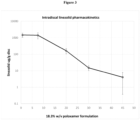
- the particle size was analyzed as shown in Figure 1 .
- Sterilization of a milled powder may be achieved by dry heat sterilization or gamma irradiation. Sterilization feasibility studies were performed using glass vials containing 200mg of milled linezolid Form II.
- Vials containing 200mg micronized linezolid or spordex discs were incubated at 120°C to 160°C for 2 to 50 hours as indicated in Table 6.
- the appearance and chemical stability (Method of Example 2) of the linezolid form II powder was assessed at each temperature timepoint. Spore discs were cultured for 7 days at 30-35°C and growth recorded.
- Vials containing 200mg micronized linezolid were filled in air or under nitrogen and were subjected to 15 KGy or 25 KGy gamma irradiation at ambient temperature or in the cold by packing with ice.
- the appearance and chemical stability were assessed at time zero after irradiation and also after 28 days storage at 25°C or 40°C to assess longer term stability (Table 7).
- Gamma irradiation appeared to offer a robust sterilization method that was within the pharmacopoeia guidelines. The data also suggest that the gamma irradiation does not affect the stability of linezolid. Gamma irradiation is the preferred method for sterilization of vialed milled linezolid form II powder.
- Example 5 Optimization of the delivery vehicle: poloxamer based gel vehicle
- Poloxamer hydrogels are formed using the cold method with modifications of the method described in the art ( Schmolka, Journal of Biomedical Materials Research, 1972, Vol 6(6): 571-582 ).
- the tromethamine pH buffer, the chelator calcium disodium EDTA and the radio-opaque iohexol are first made up in water and then poloxamer 407 is added. The mixture is left in the cold until the poloxamer hydrates to a clear solution.
- This vehicle for injection is made up on a weight by weight basis. The procedure is iterated to optimize the conditions until a suitable formulation is defined.
- Target concentrations and ranges for tromethamine, EDTA and iohexol in the final injection linezolid suspension is set using weight and volume.
- iodine provided by iohexol: V150, V170 and V190, and with the same concentrations of tromethamine and CaNa 2 EDTA.
- Each vehicle was split into two and Poloxamer 407 was added to at a concentration of 12% w/w or 12.5% w/w, respectively.
- the volumes of the 12% and 12.5% w/w poloxamer vehicles and therefore their densities were slightly different.
- the sol gel of the 6 formulations assessing the effect of iodine (iohexol) and poloxamer concentrations was assessed.
- Samples were classified accordingly to their rheological properties as assessed by warming the samples from room temperature to 40°C in 2°C intervals and inverting the vial: liquid (L)- when moving rapidly in the direction of gravity, viscous liquid (VL) and VVL- when moving slowly down in the direction of gravity and as a gel (G)- when remaining on the bottom of the vial.
- the latter was classified as the sol-gel transition temperature (Table 8).
- Linezolid micronized powder prepared as described in Example 4 is mixed with poloxamer solution just prior to administration.
- the target final concentration of linezolid at injection is set at 50mg/ml.
- the 50mg/ml linezolid concentration can be achieved by resuspending ⁇ 200mg of linezolid powder in approximately 3.8ml of poloxamer vehicle to give a final volume of approximately 4.0ml.
- Other quantities of linezolid and poloxamer vehicle could achieve the same concentration e.g. 100mg linezolid with 1.9ml of poloxamer vehicle.
- Step A Method of manufacturing 300g iohexol-containing solution:
- the 300g vehicle was split to three parts and poloxamer 407 was added as indicated in Table 10, following the method for manufacturing poloxamer gel.
- Table 10 Poloxamer solution preparation Material Gel 1 Gel 2 Gel 3 %w/w Mass (g) required for 100g preparation %w/w Mass (g) required for 100g preparation %w/w Mass (g) required for 100g preparation Poloxamer 12.00 12.00 12.25 12.25 12.50 12.50 Vehicle (Step A) 88.00 88.00 87.75 87.75 87.50 87.50 Total 100.00 % 100.00g 100.00 % 100.00g 100.00 % 100.00g 100.00g 100.00g 100.00g 100.00g 100.00g 100.00g.
- Step B Method of manufacturing poloxamer- iohexol solution:
- sol-gel transition test was performed using 2X5ml samples of each Gel 1, Gel 2 and Gel 3. If the sol-gel temperature is between the target temperatures of 30-34°C, airjet milled GMP linezolid powder was added to generate a solution containing 50mg/ml linezolid and tested the sol-gel temperature again as follows.
- the 12.5% w/w poloxamer gel made with a solution containing 32.743% (w/w) Iohexol provided the target sol-gel temperature (34 °C) for the 50 mg/ml linezolid suspension.
- the delivery vehicle comprising 12.5% w/w poloxamer 407 and 32.7% w/w iohexol (as tested in Example 5) was prepared at an intermediate scale and then at a larger scale to test the tolerance and long term stability of the formulation. These additional batches provide evidence of reproducibility.
- Table 12 Materials Material %w/w Mass (g) required for 400 g preparation Iohexol 32.743 130.972 Tromethamine 0.122 0.488 Calcium disodium EDTA 0.011 0.044 Deionized Water & pH adjustment to pH 8.0 67.124 268.496 Total 100% 400 g
- Method for the manufacture of a 400g poloxamer vehicle for injection includes the steps of:
- the poloxamer solution was sterilized by filtration using a Watson-Marlow peristaltic pump.
- the poloxamer solution was filtered through a Sartopore 2, 0.4 ⁇ m filter (Part No. 5441307H4G).
- the quantities of poloxamer and iohexol and the sol-gel temperature of the gel were assessed pre and post filtration to establish whether iohexol was retained by the filter or if performance of the gel was altered by filtration (Table 13).
- Table 13 Assay results for the gel pre and post filtration Sample Test Timepoint Result Poloxamer vehicle Density (pre filtration) Day 1 1.97 g/cm 3 Density (post filtration) Day 1 1.207 g/cm 3 Iohexol assay (pre filtration) Day 1 27.1 % w/w Iohexol (post filtration) Day 1 27.5 % w/w Sol gel Day 1 34°C Day 3 34°C Day 7 34°C Day 14 34°C
- the pre and post filtration results indicated that the gel could be filtered using a peristaltic pump and that the composition of the gel and its performance was not altered by filtration.
- the differences in assay results pre and post filtration are within the assay tolerances and specifications. Filtration is the preferred method for gel sterilization.
- Linezolid was then loaded into the gel and tested for sol-gel temperature. The results were shown in Table 14, indicating that the suspension prepared at an intermediate scale retains the required sol-gel temperature.
- Table 14 Sol-gel temperature of linezolid suspension Sample Test Timepoint Result Linezolid Suspension in Poloxamer vehicle Linezolid assay Day 1 47.7 mg/ml Sol gel Day 1 34°C 3.8 ml poloxamer vehicle plus 200 mg linezolid Day 3 34°C Day 7 34°C Day 14 34°C
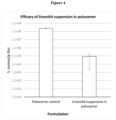
- a delivery vehicle containing 16.6% (w/w) poloxamer containing a 50mg/ml linezolid suspension was prepared following the manufacture methods described in Examples 2-5. 0.1ml of this linezolid suspension was injected into sheep disc as described in Example 1. As shown in Figure 2 , using iohexol in the formulation can allow visualization of the formulation being injected. The linezolid pharmacokinetics after intradiscal administration were measured. Figure 3 shows the amount of linezolid recovered from sheep discs after injection at a dose of 5mg linezolid per disc.
- the injectability of the suspension is evaluated using a fine bore 25 gauge needle that is longer than expected to be required for human administration (4.69 inch) in order to ensure that the suspension will not block the needle or be too viscous to pass through the syringe.
- the hydrogel alone or a linezolid suspension is made up and a 1ml luer lock syringe is primed with the formulation.
- the needle is positioned and the gel or suspension is injected out through the needle.
- the linezolid suspension in poloxamer-iohexol delivery solution that is optimized herein is manufactured in larger scale and under current Good Manufacturing Practice (cGMP) standards.
- the formulation is sterile and ready for clinical use.
- linezolid form II were micronized by airjet milling.
- Linezolid form II large crystals (about 1-2 kilogram) were micronized under nitrogen using a LaboMill jet miller (F.P.S. Food and Pharma Systems s.r.l, Italy) with a feed rate of 60g/min to 160g/min, a mill pressure of 2 to 4 bar, and a venturi pressure of 2 to 4 bar.
- the particle size distribution of the raw and air-jet milled material was analyzed by laser diffraction (Sympatec GmbH, Helos Disperse).
- the data on the size distribution for unmilled powder (R1) and milled powder (R4) were collected and analyzed. Air jet milling reduced the particle size from D10 4 to 6 ⁇ m (D10, 10% of the mass of the sample is comprised of particles with diameter less than this range) and D90 40 to 50 ⁇ m (D90, 90% of the mass of the sample is comprised of particles with is diameter less than this range) particle size distribution to a D10 0.4 to 0.50 ⁇ m and D90 4 to 5 ⁇ m.
- Specifications for the micronized Linezolid form II were set at D10 0.2 to 1.0 ⁇ m, D90 3 to 10 ⁇ m. At 1kg to 1.5kg scale, micronisation provided 87% to 89% yield of in specification linezolid form II powder.
- micronized linezolid form II powder was filled into 10 ml Schott Type I tubular clear glass vials at 253 mg ⁇ 2 mg per vial by hand and closed with West 4023/50 grey bromobutyl elastomeric stoppers which are FluroTec ® coated on the product contact surface and capped with aluminum seals. Approximately 608g of micronized linezolid form II filled approximately 2400 vials (Intermediate drug product: PP353-A).
- the ⁇ 2400 vials were sterilized by gamma irradiation using a Cobalt 60 source at ⁇ 23.5 ⁇ 10% kGy at ambient temperature.
- Irradiated vials of linezolid form II were labelled as PP353-A.
- the sterility of the irradiated linezolid form II powder was tested according to the pharmaceutical sterility requirements (EP 2.6.1).
- One canister was filled with 100ml TSB+1% Tween+0.07% Lecithine (including 17.0g pancreatic digest of casein, 3.0g papaic digest of soya bean, 5.0g sodium chloride, 2.5g dipotassium hydrogen phosphate, 2.5g glucose monohydrate, 10ml Polysorbate80, 0.7g Lecithine, 1000ml purified water, pH7.3 ⁇ 0.2) and incubated at 20-25°C for 14 days.
- Lecithine including 17.0g pancreatic digest of casein, 3.0g papaic digest of soya bean, 5.0g sodium chloride, 2.5g dipotassium hydrogen phosphate, 2.5g glucose monohydrate, 10ml Polysorbate80, 0.7g Lecithine, 1000ml purified water, pH7.3 ⁇ 0.2
- the other canister was filled with 100ml FTM (Fluid thioglycollate) +1% Tween+0.07% Lecithine (including 0.5g l-cystine, 0.75g granulated agar, 2.5g sodium chloride, 5.5g/5.0 g glucose monohydrate/anhydrous, 5.0g yeast extract, 15.0g pancreactic digest of casien, 0.5g sodium thioglycollate or 0.3ml thioglycollic acid, 1.0ml resazurin sodium solution freshly prepared, 10ml Polysorbate 80, 0.7g Lecithine, 1000ml purified water, pH7.1 ⁇ 0.2) and incubated at 30-35 °C for 14 days. All the solutions were sterilized using a validated process. After 14 days incubation there was no growth in the samples indicating that the PP353-A samples were sterile.
- FTM Fluid thioglycollate
- Lecithine including 0.5g
- Formulation of delivery solution (Poloxamer 407- iohexol solution) was performed at 18.4L ( ⁇ 22 kg) scale, followed by sterilization by aseptic filling into 10mL Schott Type I clear glass vials at a target fill weight of 8.40g (equivalent to a 7mL nominal fill volume).
- a preparation size of up to 2400 vials was made and referred as intermediate drug product PP353-B.
- Table 15 Formula for delivery vehicle solution (PP353-B) Poloxamer Kolliphor 407 149.50g Iohexol 342.65g Calcium disodium EDTA 0.100g Tromethamine 1.210g 1M hydrochloric acid solution As required Water for Injection (WFI) To 1196.0g Intermediate formulation pH target (the pH value prior to Poloxamer addition and final formulation to target weight) pH 8.00 ⁇ 0.20
- the 22kg preparation of the delivery solution (PP353-B) was prepared following the steps of:
- the formulation was chilled as poloxamer dissolves faster and has lower viscosity at lower temperatures.
- the final PP353-B poloxamer solution has a density of 1.196 g/mL at 15°C.
- the chilled PP353-B product was sterilized by double filtrations.
- the solution (PP353-B) was flowed using a peristaltic pump first through a Sartopore 2 XLG Midicap filter into an 8-glove, general purpose filling isolator, then through a second in-line Sartopore 2 XLG Midicap filter.
- the solution was chilled to reduce viscosity through the pump and filters.
- the sterile PP353-B was held at 15°C in 10L vessels within the isolator. This temperature control was set to define the density and gravimetric fill of the vials.
- the sterile solution was packed into 10 ml Schott Type I tubular clear glass vials at 7.0mL (8.4g) of the sterile solution per vial using a Masterflex pump and closed with West 4023/50 grey bromobutyl elastomeric stoppers which are FluroTec ® coated on the product contact surface and capped with aluminium seals.
- the 22kg solution (PP353-B) filled approximately 2400 vials.
- PP353-B The sterility of PP353-B was tested according to the requirements stated in the EP 2.6.1. Twenty vials of PP353-B were apportioned between two Steritest canisters and filtered. Each canister was washed with approximately 300 ml of Fluid A (0.1% peptone water). The Steritest canisters were filled with 100ml of TSB or FTM medium and incubated for 14 days. Absence of growth in the cultures indicates sterility of PP353-B.
- the transition temperature of the PP353-B solution was assessed in triplicate according to the sol-gel method described below:
- the sol-gel transition temperature of all three tested vials of the PP353-B solution was 28°C.
- Vials containing micronized and sterile linezolid powder (API) that were prepared according to the steps described above (9.1 and 9.2 ) i.e. PP353-A
- PP353-A sterile linezolid powder
- Each vial contains 253mg API.
- Vials containing the sterile solution prepared according to the method described above ( 9.3 and 9.4 ) i.e. PP353-B
- Each vial contains 7mL of PP353-B diluent.
- the sol-gel transition temperature of the PP353 suspension was assessed in triplicate according to the sol-gel method described in Section 9.4.
- sol-gel transition of all three tested vials was 28°C. It was noted that smaller scale non-GMP products of the poloxamer hydrogel and linezolid suspension formulations have higher sol-gel transition temperatures at 32°C to 36°C (Examples 5 and 6), while the gel and linezolid suspensions prepared in large scale GMP products have a lower sol gel transition temperature at 28°C. The results indicate that poloxamer based hydrogel solutions and linezolid suspensions have a wide range of sol-gel transition temperatures, at least from about 28°C to about 36°C.
- the linezolid suspensions made from this GMP scale preparation (PP353) were further tested the injectability to access the formulation to pass through an injection needle to enable administration.
- the injectability of the suspension (PP353) was tested using a double needle technique and a warmed sweet potato as a surrogate for patient's flesh.
- a sweet potato was warmed 37°C in a water bath.
- a 5 inch (127mm) 18 French gauge needle was placed through the sweet potato.
- This needle represents a guide needle that would be positioned in a patient under image guidance using fluoroscopy such that the needle point is adjacent to the disc to be injected.
- Another 7 inch (178mm) 22 French gauge needle was then inserted through the guide needle until the end protrudes from the 5 inch guide needle.
- This needle represents the administration needle that would be inserted into the disc to be injected.
- the two needles were allowed to warm to 37°C in the sweet potato.
- Example 11 The systemic pharmacological profile of PP353 linezolid suspension
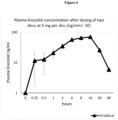
- the PP353 linezolid formulation (0.1 ml suspension containing 5mg linezolid) was injected into two discs in a sheep.
- the same volume of the poloxamer- iohexol delivery vehicle i.e. PP353-B
- Blood samples were taken at 0mins (prior to administration of the test material) and 15mins, 30mins, 1hour, 2hours, 4hours, 8hours, 16hours, 30hours and 48hours post dosing.
- the concentration of linezolid in the plasma extracts was measured and determined using LC-MS/MS following the GLP (Good Laboratory Practice for nonclinical laboratory studies) regulations.
- the concentration of linezolid in plasma depicts a similar pattern as observed previously with the experimental formulation products (e.g., Examples 4-7).
- the small injection volume (e.g., 0.1ml) of the suspension to sheep discs may minimize a potential depot effect.
Landscapes
- Health & Medical Sciences (AREA)
- Life Sciences & Earth Sciences (AREA)
- Chemical & Material Sciences (AREA)
- Public Health (AREA)
- General Health & Medical Sciences (AREA)
- Veterinary Medicine (AREA)
- Animal Behavior & Ethology (AREA)
- Pharmacology & Pharmacy (AREA)
- Medicinal Chemistry (AREA)
- Epidemiology (AREA)
- General Chemical & Material Sciences (AREA)
- Chemical Kinetics & Catalysis (AREA)
- Engineering & Computer Science (AREA)
- Organic Chemistry (AREA)
- Nuclear Medicine, Radiotherapy & Molecular Imaging (AREA)
- Dermatology (AREA)
- Oil, Petroleum & Natural Gas (AREA)
- Bioinformatics & Cheminformatics (AREA)
- Biomedical Technology (AREA)
- Neurosurgery (AREA)
- Proteomics, Peptides & Aminoacids (AREA)
- Rheumatology (AREA)
- Communicable Diseases (AREA)
- Oncology (AREA)
- Pain & Pain Management (AREA)
- Physical Education & Sports Medicine (AREA)
- Orthopedic Medicine & Surgery (AREA)
- Immunology (AREA)
- Inorganic Chemistry (AREA)
- Neurology (AREA)
- Pharmaceuticals Containing Other Organic And Inorganic Compounds (AREA)
- Medicinal Preparation (AREA)
- Medicines Containing Antibodies Or Antigens For Use As Internal Diagnostic Agents (AREA)
- Medicines That Contain Protein Lipid Enzymes And Other Medicines (AREA)
Priority Applications (1)
| Application Number | Priority Date | Filing Date | Title |
|---|---|---|---|
| EP25175859.5A EP4616848A3 (en) | 2017-11-16 | 2018-11-16 | Linezolid formulations |
Applications Claiming Priority (2)
| Application Number | Priority Date | Filing Date | Title |
|---|---|---|---|
| US201762587101P | 2017-11-16 | 2017-11-16 | |
| PCT/GB2018/053319 WO2019097242A1 (en) | 2017-11-16 | 2018-11-16 | Linezolid formulations |
Related Child Applications (1)
| Application Number | Title | Priority Date | Filing Date |
|---|---|---|---|
| EP25175859.5A Division EP4616848A3 (en) | 2017-11-16 | 2018-11-16 | Linezolid formulations |
Publications (2)
| Publication Number | Publication Date |
|---|---|
| EP3709970A1 EP3709970A1 (en) | 2020-09-23 |
| EP3709970B1 true EP3709970B1 (en) | 2025-05-14 |
Family
ID=64457035
Family Applications (2)
| Application Number | Title | Priority Date | Filing Date |
|---|---|---|---|
| EP18808077.4A Active EP3709970B1 (en) | 2017-11-16 | 2018-11-16 | Linezolid formulations |
| EP25175859.5A Pending EP4616848A3 (en) | 2017-11-16 | 2018-11-16 | Linezolid formulations |
Family Applications After (1)
| Application Number | Title | Priority Date | Filing Date |
|---|---|---|---|
| EP25175859.5A Pending EP4616848A3 (en) | 2017-11-16 | 2018-11-16 | Linezolid formulations |
Country Status (16)
| Country | Link |
|---|---|
| US (3) | US11517574B2 (es) |
| EP (2) | EP3709970B1 (es) |
| JP (3) | JP7251813B2 (es) |
| KR (1) | KR102787942B1 (es) |
| CN (1) | CN111432800B (es) |
| AU (1) | AU2018369696B2 (es) |
| CA (1) | CA3081449A1 (es) |
| DK (1) | DK3709970T3 (es) |
| ES (1) | ES3034187T3 (es) |
| FI (1) | FI3709970T3 (es) |
| MX (1) | MX2020004896A (es) |
| PL (1) | PL3709970T3 (es) |
| RU (1) | RU2771279C2 (es) |
| SG (1) | SG11202003537TA (es) |
| TW (1) | TWI835758B (es) |
| WO (1) | WO2019097242A1 (es) |
Families Citing this family (5)
| Publication number | Priority date | Publication date | Assignee | Title |
|---|---|---|---|---|
| US20190343761A1 (en) * | 2016-11-16 | 2019-11-14 | Persica Pharmaceuticals Ltd. | Antibiotic formulations for lower back pain |
| EP3709970B1 (en) * | 2017-11-16 | 2025-05-14 | Persica Pharmaceuticals Ltd. | Linezolid formulations |
| WO2022115568A1 (en) * | 2020-11-24 | 2022-06-02 | Discgenics, Inc. | Methods and systems for treatment of intervertebral disc by intradiscal micro-needle insertion cross reference to related applications |
| CN112451475B (zh) * | 2020-12-02 | 2022-04-05 | 深圳善康医疗健康产业有限公司 | 一种用于治疗空洞型肺结核的长效缓释凝胶 |
| US20250073243A1 (en) | 2021-10-12 | 2025-03-06 | Persica Pharmaceuticals Ltd. | Low back pain treatment |
Family Cites Families (37)
| Publication number | Priority date | Publication date | Assignee | Title |
|---|---|---|---|---|
| US5628734A (en) | 1995-03-23 | 1997-05-13 | Hatfalvi; Bela I. | Spinal needle with curved distal end and method of using said needle in a spinal injection to prevent post dural puncture headache |
| US5702717A (en) | 1995-10-25 | 1997-12-30 | Macromed, Inc. | Thermosensitive biodegradable polymers based on poly(ether-ester)block copolymers |
| US6803485B2 (en) | 1999-02-26 | 2004-10-12 | Bracco Imaging S.P.A. | Process for the preparation of iopamidol |
| AR027261A1 (es) * | 2000-02-02 | 2003-03-19 | Upjohn Co | Linezolid forma cristalina ii |
| US6444813B2 (en) | 2000-02-02 | 2002-09-03 | Pharmacia & Upjohn Company | Linezolid-crystal form II |
| AR031135A1 (es) | 2000-10-10 | 2003-09-10 | Upjohn Co | Composiciones de antibiotico topico para el tratamiento de infecciones oculares |
| US6500153B1 (en) | 2001-07-13 | 2002-12-31 | Children's And Women's Health Centre Of British Columbia | Syringe and needle for preventing inadvertent drug injection |
| JP4909071B2 (ja) * | 2003-03-24 | 2012-04-04 | プルーローメッド, インコーポレイテッド | 逆感熱性ポリマーを使用する一時的な塞栓形成 |
| WO2005032650A1 (en) | 2003-10-03 | 2005-04-14 | Medtronic, Inc. | Kit for implantation of therapy elements |
| US20050143678A1 (en) * | 2003-10-14 | 2005-06-30 | Pluromed, Inc. | Confinement of kidney-stone fragments during lithotripsy |
| ES2803516T3 (es) | 2003-10-16 | 2021-01-27 | Symed Labs Ltd | Una forma cristalina de linezolid |
| EP1745028A2 (en) | 2004-06-29 | 2007-01-24 | Teva Pharmaceutical Industries Ltd | Solid forms of linezolid and processes for preparation thereof |
| EP1658275A1 (en) | 2004-06-29 | 2006-05-24 | Teva Pharmaceutical Industries Ltd | Crystalline form iv of linezolid |
| US7367961B2 (en) | 2004-09-10 | 2008-05-06 | Depuy Spine, Inc. | Intradiscal injection of autologous interferon |
| US7850656B2 (en) | 2005-04-29 | 2010-12-14 | Warsaw Orthopedic, Inc. | Devices and methods for delivering medical agents |
| US20070104785A1 (en) | 2005-07-29 | 2007-05-10 | Navale Suryakant V | Tablets of linezolid form iii and processes for their preparation |
| WO2007026369A1 (en) | 2005-08-29 | 2007-03-08 | Symed Labs Limited | A novel amorphous form of linezolid |
| MX2011000862A (es) | 2008-07-21 | 2011-03-15 | Otonomy Inc | Composiciones antimicrobianas de liberacion controlada y metodos para el tratamiento de trastornos oticos. |
| US8318817B2 (en) | 2008-07-21 | 2012-11-27 | Otonomy, Inc. | Controlled release antimicrobial compositions and methods for the treatment of otic disorders |
| WO2011049958A2 (en) | 2009-10-21 | 2011-04-28 | Otonomy, Inc. | Modulation of gel temperature of poloxamer-containing formulations |
| US9132207B2 (en) | 2009-10-27 | 2015-09-15 | Spine Wave, Inc. | Radiopaque injectable nucleus hydrogel compositions |
| US10227289B2 (en) | 2010-05-07 | 2019-03-12 | Medicus Biosciences, Llc | Methods for treating diseases of the lung |
| SI2394663T1 (sl) * | 2010-05-31 | 2022-02-28 | Laboratorios Farmaceuticos Rovi, S.A. | Sestave za injicirane biološko razgradljive vsadke in situ |
| CN102988274B (zh) * | 2010-09-08 | 2015-01-28 | 上海市肿瘤研究所 | 用于治疗肿瘤的药物缓释血管栓塞凝胶剂及其制备方法 |
| EP2629780A4 (en) * | 2010-10-20 | 2014-10-01 | 206 Ortho Inc | IMPLANTABLE POLYMER FOR BONE AND VASCULAR LESIONS |
| US10111985B2 (en) | 2011-08-10 | 2018-10-30 | Medicus Biosciences, Llc | Biocompatible hydrogel polymer formulations for the controlled delivery of biomolecules |
| EP2606912A1 (en) | 2011-12-23 | 2013-06-26 | Central Medical Service Co., Ltd. | Contrast medium composition with contrast enhancement effect by comprising highly concentrated agent |
| WO2014013498A1 (en) | 2012-07-17 | 2014-01-23 | Symed Labs Limited | Amorphous coprecipitates of linezolid |
| US9610396B2 (en) | 2013-03-15 | 2017-04-04 | Thermedical, Inc. | Systems and methods for visualizing fluid enhanced ablation therapy |
| ITMI20131755A1 (it) * | 2013-10-21 | 2015-04-22 | Mero S R L | Composizione bioriassorbibile contenente agenti antibatterici per il trattamento del dolore lombare |
| CN105744969B (zh) | 2014-01-31 | 2019-12-31 | 雪松-西奈医学中心 | 用于最优主动脉瓣膜复合体成像和对准的猪尾装置 |
| CN105229001B (zh) | 2014-04-18 | 2017-04-26 | 杭州普晒医药科技有限公司 | 一种噁唑烷酮类抗生素的晶型及制备方法、组合物和用途 |
| CN104586768A (zh) | 2014-12-30 | 2015-05-06 | 亚邦医药股份有限公司 | 一种含利奈唑胺的抗感染药用组合物及其制备方法 |
| CA2993180A1 (en) | 2015-07-24 | 2017-02-02 | Ecm Diagnostics, Inc. | Methods for detecting and treating low-virulence infections |
| US20190343761A1 (en) * | 2016-11-16 | 2019-11-14 | Persica Pharmaceuticals Ltd. | Antibiotic formulations for lower back pain |
| WO2019060869A1 (en) | 2017-09-25 | 2019-03-28 | Discitisdx, Inc. | METHODS FOR TREATING DEGENERATIVE DISC DISEASE AND CHRONIC LOMBALGIA |
| EP3709970B1 (en) * | 2017-11-16 | 2025-05-14 | Persica Pharmaceuticals Ltd. | Linezolid formulations |
-
2018
- 2018-11-16 EP EP18808077.4A patent/EP3709970B1/en active Active
- 2018-11-16 SG SG11202003537TA patent/SG11202003537TA/en unknown
- 2018-11-16 RU RU2020115866A patent/RU2771279C2/ru active
- 2018-11-16 TW TW107140808A patent/TWI835758B/zh active
- 2018-11-16 CA CA3081449A patent/CA3081449A1/en active Pending
- 2018-11-16 DK DK18808077.4T patent/DK3709970T3/da active
- 2018-11-16 AU AU2018369696A patent/AU2018369696B2/en active Active
- 2018-11-16 EP EP25175859.5A patent/EP4616848A3/en active Pending
- 2018-11-16 CN CN201880074476.6A patent/CN111432800B/zh active Active
- 2018-11-16 MX MX2020004896A patent/MX2020004896A/es unknown
- 2018-11-16 KR KR1020207014091A patent/KR102787942B1/ko active Active
- 2018-11-16 FI FIEP18808077.4T patent/FI3709970T3/fi active
- 2018-11-16 US US16/764,468 patent/US11517574B2/en active Active
- 2018-11-16 PL PL18808077.4T patent/PL3709970T3/pl unknown
- 2018-11-16 ES ES18808077T patent/ES3034187T3/es active Active
- 2018-11-16 JP JP2020526890A patent/JP7251813B2/ja active Active
- 2018-11-16 WO PCT/GB2018/053319 patent/WO2019097242A1/en not_active Ceased
-
2022
- 2022-10-17 US US17/967,783 patent/US20230143410A1/en not_active Abandoned
-
2023
- 2023-03-15 JP JP2023040578A patent/JP7607962B2/ja active Active
-
2024
- 2024-12-11 JP JP2024216090A patent/JP2025032268A/ja active Pending
-
2025
- 2025-01-16 US US19/025,236 patent/US20250152597A1/en active Pending
Also Published As
| Publication number | Publication date |
|---|---|
| JP2021503462A (ja) | 2021-02-12 |
| JP7607962B2 (ja) | 2025-01-06 |
| DK3709970T3 (da) | 2025-07-07 |
| TWI835758B (zh) | 2024-03-21 |
| US20250152597A1 (en) | 2025-05-15 |
| PL3709970T3 (pl) | 2025-09-08 |
| RU2771279C2 (ru) | 2022-04-29 |
| AU2018369696B2 (en) | 2024-02-01 |
| ES3034187T3 (en) | 2025-08-13 |
| KR20200088328A (ko) | 2020-07-22 |
| RU2020115866A (ru) | 2021-12-16 |
| US20200352952A1 (en) | 2020-11-12 |
| WO2019097242A1 (en) | 2019-05-23 |
| JP2025032268A (ja) | 2025-03-11 |
| FI3709970T3 (fi) | 2025-08-13 |
| JP7251813B2 (ja) | 2023-04-04 |
| CN111432800B (zh) | 2023-12-15 |
| US11517574B2 (en) | 2022-12-06 |
| SG11202003537TA (en) | 2020-05-28 |
| EP4616848A2 (en) | 2025-09-17 |
| EP4616848A3 (en) | 2025-11-12 |
| US20230143410A1 (en) | 2023-05-11 |
| RU2020115866A3 (es) | 2021-12-16 |
| TW201932112A (zh) | 2019-08-16 |
| KR102787942B1 (ko) | 2025-03-31 |
| CN111432800A (zh) | 2020-07-17 |
| MX2020004896A (es) | 2020-10-19 |
| JP2023075287A (ja) | 2023-05-30 |
| EP3709970A1 (en) | 2020-09-23 |
| CA3081449A1 (en) | 2019-05-23 |
| AU2018369696A1 (en) | 2020-06-04 |
Similar Documents
| Publication | Publication Date | Title |
|---|---|---|
| US20250152597A1 (en) | Linezolid formulations | |
| US12161750B2 (en) | Antibiotic formulations for lower back pain | |
| HK40131501A (en) | Linezolid formulations | |
| HK40037679A (en) | Linezolid formulations | |
| HK40037679B (en) | Linezolid formulations | |
| US20250073243A1 (en) | Low back pain treatment | |
| HK40073130A (en) | Antibiotic formulations for lower back pain | |
| HK40111812A (en) | Antibiotic formulations for lower back pain | |
| HK40073130B (en) | Antibiotic formulations for lower back pain | |
| HK40012458B (en) | Antibiotic formulations for lower back pain |
Legal Events
| Date | Code | Title | Description |
|---|---|---|---|
| STAA | Information on the status of an ep patent application or granted ep patent |
Free format text: STATUS: UNKNOWN |
|
| STAA | Information on the status of an ep patent application or granted ep patent |
Free format text: STATUS: THE INTERNATIONAL PUBLICATION HAS BEEN MADE |
|
| PUAI | Public reference made under article 153(3) epc to a published international application that has entered the european phase |
Free format text: ORIGINAL CODE: 0009012 |
|
| STAA | Information on the status of an ep patent application or granted ep patent |
Free format text: STATUS: REQUEST FOR EXAMINATION WAS MADE |
|
| 17P | Request for examination filed |
Effective date: 20200512 |
|
| AK | Designated contracting states |
Kind code of ref document: A1 Designated state(s): AL AT BE BG CH CY CZ DE DK EE ES FI FR GB GR HR HU IE IS IT LI LT LU LV MC MK MT NL NO PL PT RO RS SE SI SK SM TR |
|
| AX | Request for extension of the european patent |
Extension state: BA ME |
|
| DAV | Request for validation of the european patent (deleted) | ||
| DAX | Request for extension of the european patent (deleted) | ||
| STAA | Information on the status of an ep patent application or granted ep patent |
Free format text: STATUS: EXAMINATION IS IN PROGRESS |
|
| 17Q | First examination report despatched |
Effective date: 20210414 |
|
| REG | Reference to a national code |
Ref country code: HK Ref legal event code: DE Ref document number: 40037679 Country of ref document: HK |
|
| GRAP | Despatch of communication of intention to grant a patent |
Free format text: ORIGINAL CODE: EPIDOSNIGR1 |
|
| STAA | Information on the status of an ep patent application or granted ep patent |
Free format text: STATUS: GRANT OF PATENT IS INTENDED |
|
| INTG | Intention to grant announced |
Effective date: 20241213 |
|
| GRAS | Grant fee paid |
Free format text: ORIGINAL CODE: EPIDOSNIGR3 |
|
| GRAA | (expected) grant |
Free format text: ORIGINAL CODE: 0009210 |
|
| STAA | Information on the status of an ep patent application or granted ep patent |
Free format text: STATUS: THE PATENT HAS BEEN GRANTED |
|
| AK | Designated contracting states |
Kind code of ref document: B1 Designated state(s): AL AT BE BG CH CY CZ DE DK EE ES FI FR GB GR HR HU IE IS IT LI LT LU LV MC MK MT NL NO PL PT RO RS SE SI SK SM TR |
|
| REG | Reference to a national code |
Ref country code: GB Ref legal event code: FG4D |
|
| REG | Reference to a national code |
Ref country code: CH Ref legal event code: EP |
|
| REG | Reference to a national code |
Ref country code: IE Ref legal event code: FG4D |
|
| REG | Reference to a national code |
Ref country code: DE Ref legal event code: R096 Ref document number: 602018081956 Country of ref document: DE |
|
| P01 | Opt-out of the competence of the unified patent court (upc) registered |
Free format text: CASE NUMBER: APP_22295/2025 Effective date: 20250512 |
|
| REG | Reference to a national code |
Ref country code: DK Ref legal event code: T3 Effective date: 20250630 |
|
| REG | Reference to a national code |
Ref country code: NL Ref legal event code: FP |
|
| REG | Reference to a national code |
Ref country code: SE Ref legal event code: TRGR |
|
| REG | Reference to a national code |
Ref country code: ES Ref legal event code: FG2A Ref document number: 3034187 Country of ref document: ES Kind code of ref document: T3 Effective date: 20250813 Ref country code: FI Ref legal event code: FGE |
|
| PG25 | Lapsed in a contracting state [announced via postgrant information from national office to epo] |
Ref country code: PT Free format text: LAPSE BECAUSE OF FAILURE TO SUBMIT A TRANSLATION OF THE DESCRIPTION OR TO PAY THE FEE WITHIN THE PRESCRIBED TIME-LIMIT Effective date: 20250915 |
|
| REG | Reference to a national code |
Ref country code: LT Ref legal event code: MG9D |
|
| PG25 | Lapsed in a contracting state [announced via postgrant information from national office to epo] |
Ref country code: GR Free format text: LAPSE BECAUSE OF FAILURE TO SUBMIT A TRANSLATION OF THE DESCRIPTION OR TO PAY THE FEE WITHIN THE PRESCRIBED TIME-LIMIT Effective date: 20250815 |
|
| PG25 | Lapsed in a contracting state [announced via postgrant information from national office to epo] |
Ref country code: BG Free format text: LAPSE BECAUSE OF FAILURE TO SUBMIT A TRANSLATION OF THE DESCRIPTION OR TO PAY THE FEE WITHIN THE PRESCRIBED TIME-LIMIT Effective date: 20250514 |
|
| PG25 | Lapsed in a contracting state [announced via postgrant information from national office to epo] |
Ref country code: HR Free format text: LAPSE BECAUSE OF FAILURE TO SUBMIT A TRANSLATION OF THE DESCRIPTION OR TO PAY THE FEE WITHIN THE PRESCRIBED TIME-LIMIT Effective date: 20250514 |
|
| PG25 | Lapsed in a contracting state [announced via postgrant information from national office to epo] |
Ref country code: RS Free format text: LAPSE BECAUSE OF FAILURE TO SUBMIT A TRANSLATION OF THE DESCRIPTION OR TO PAY THE FEE WITHIN THE PRESCRIBED TIME-LIMIT Effective date: 20250814 |
|
| PG25 | Lapsed in a contracting state [announced via postgrant information from national office to epo] |
Ref country code: IS Free format text: LAPSE BECAUSE OF FAILURE TO SUBMIT A TRANSLATION OF THE DESCRIPTION OR TO PAY THE FEE WITHIN THE PRESCRIBED TIME-LIMIT Effective date: 20250914 |
|
| PG25 | Lapsed in a contracting state [announced via postgrant information from national office to epo] |
Ref country code: LV Free format text: LAPSE BECAUSE OF FAILURE TO SUBMIT A TRANSLATION OF THE DESCRIPTION OR TO PAY THE FEE WITHIN THE PRESCRIBED TIME-LIMIT Effective date: 20250514 |
|
| REG | Reference to a national code |
Ref country code: CH Ref legal event code: U11 Free format text: ST27 STATUS EVENT CODE: U-0-0-U10-U11 (AS PROVIDED BY THE NATIONAL OFFICE) Effective date: 20251201 |
|
| PGFP | Annual fee paid to national office [announced via postgrant information from national office to epo] |
Ref country code: NL Payment date: 20251124 Year of fee payment: 8 |
|
| PGFP | Annual fee paid to national office [announced via postgrant information from national office to epo] |
Ref country code: DE Payment date: 20251126 Year of fee payment: 8 |
|
| PGFP | Annual fee paid to national office [announced via postgrant information from national office to epo] |
Ref country code: GB Payment date: 20251107 Year of fee payment: 8 |
|
| PGFP | Annual fee paid to national office [announced via postgrant information from national office to epo] |
Ref country code: NO Payment date: 20251120 Year of fee payment: 8 |
|
| PG25 | Lapsed in a contracting state [announced via postgrant information from national office to epo] |
Ref country code: SM Free format text: LAPSE BECAUSE OF FAILURE TO SUBMIT A TRANSLATION OF THE DESCRIPTION OR TO PAY THE FEE WITHIN THE PRESCRIBED TIME-LIMIT Effective date: 20250514 |
|
| PGFP | Annual fee paid to national office [announced via postgrant information from national office to epo] |
Ref country code: AT Payment date: 20251118 Year of fee payment: 8 |
|
| PGFP | Annual fee paid to national office [announced via postgrant information from national office to epo] |
Ref country code: IT Payment date: 20251120 Year of fee payment: 8 Ref country code: FI Payment date: 20251124 Year of fee payment: 8 Ref country code: DK Payment date: 20251124 Year of fee payment: 8 |
|
| PGFP | Annual fee paid to national office [announced via postgrant information from national office to epo] |
Ref country code: FR Payment date: 20251124 Year of fee payment: 8 |
|
| PGFP | Annual fee paid to national office [announced via postgrant information from national office to epo] |
Ref country code: BE Payment date: 20251124 Year of fee payment: 8 |
|
| PGFP | Annual fee paid to national office [announced via postgrant information from national office to epo] |
Ref country code: SE Payment date: 20251124 Year of fee payment: 8 Ref country code: CH Payment date: 20251201 Year of fee payment: 8 |
|
| PG25 | Lapsed in a contracting state [announced via postgrant information from national office to epo] |
Ref country code: CZ Free format text: LAPSE BECAUSE OF FAILURE TO SUBMIT A TRANSLATION OF THE DESCRIPTION OR TO PAY THE FEE WITHIN THE PRESCRIBED TIME-LIMIT Effective date: 20250514 |
|
| PGFP | Annual fee paid to national office [announced via postgrant information from national office to epo] |
Ref country code: IE Payment date: 20251118 Year of fee payment: 8 |
|
| PGFP | Annual fee paid to national office [announced via postgrant information from national office to epo] |
Ref country code: PL Payment date: 20251112 Year of fee payment: 8 |
|
| PG25 | Lapsed in a contracting state [announced via postgrant information from national office to epo] |
Ref country code: EE Free format text: LAPSE BECAUSE OF FAILURE TO SUBMIT A TRANSLATION OF THE DESCRIPTION OR TO PAY THE FEE WITHIN THE PRESCRIBED TIME-LIMIT Effective date: 20250514 |
|
| PG25 | Lapsed in a contracting state [announced via postgrant information from national office to epo] |
Ref country code: SK Free format text: LAPSE BECAUSE OF FAILURE TO SUBMIT A TRANSLATION OF THE DESCRIPTION OR TO PAY THE FEE WITHIN THE PRESCRIBED TIME-LIMIT Effective date: 20250514 Ref country code: RO Free format text: LAPSE BECAUSE OF FAILURE TO SUBMIT A TRANSLATION OF THE DESCRIPTION OR TO PAY THE FEE WITHIN THE PRESCRIBED TIME-LIMIT Effective date: 20250514 |
|
| PGFP | Annual fee paid to national office [announced via postgrant information from national office to epo] |
Ref country code: ES Payment date: 20251209 Year of fee payment: 8 |
|
| REG | Reference to a national code |
Ref country code: DE Ref legal event code: R097 Ref document number: 602018081956 Country of ref document: DE |
|
| PLBE | No opposition filed within time limit |
Free format text: ORIGINAL CODE: 0009261 |
|
| STAA | Information on the status of an ep patent application or granted ep patent |
Free format text: STATUS: NO OPPOSITION FILED WITHIN TIME LIMIT |
|
| REG | Reference to a national code |
Ref country code: CH Ref legal event code: L10 Free format text: ST27 STATUS EVENT CODE: U-0-0-L10-L00 (AS PROVIDED BY THE NATIONAL OFFICE) Effective date: 20260325 |
|
| 26N | No opposition filed |
Effective date: 20260217 |
|
| PG25 | Lapsed in a contracting state [announced via postgrant information from national office to epo] |
Ref country code: LT Free format text: LAPSE BECAUSE OF FAILURE TO SUBMIT A TRANSLATION OF THE DESCRIPTION OR TO PAY THE FEE WITHIN THE PRESCRIBED TIME-LIMIT Effective date: 20250514 |
|
| PG25 | Lapsed in a contracting state [announced via postgrant information from national office to epo] |
Ref country code: MC Free format text: LAPSE BECAUSE OF FAILURE TO SUBMIT A TRANSLATION OF THE DESCRIPTION OR TO PAY THE FEE WITHIN THE PRESCRIBED TIME-LIMIT Effective date: 20250514 |
|
| PG25 | Lapsed in a contracting state [announced via postgrant information from national office to epo] |
Ref country code: LU Free format text: LAPSE BECAUSE OF NON-PAYMENT OF DUE FEES Effective date: 20251116 |