EP3707197B1 - Verfahren zur herstellung von polyesterschaum mit niedriger dichte und daraus hergestellte artikel mit polyesterausgangsstoff mit niedriger iv - Google Patents
Verfahren zur herstellung von polyesterschaum mit niedriger dichte und daraus hergestellte artikel mit polyesterausgangsstoff mit niedriger iv Download PDFInfo
- Publication number
- EP3707197B1 EP3707197B1 EP18870494.4A EP18870494A EP3707197B1 EP 3707197 B1 EP3707197 B1 EP 3707197B1 EP 18870494 A EP18870494 A EP 18870494A EP 3707197 B1 EP3707197 B1 EP 3707197B1
- Authority
- EP
- European Patent Office
- Prior art keywords
- intrinsic viscosity
- polyester foam
- raw material
- polyester
- low intrinsic
- Prior art date
- Legal status (The legal status is an assumption and is not a legal conclusion. Google has not performed a legal analysis and makes no representation as to the accuracy of the status listed.)
- Active
Links
Images

Classifications
-
- C—CHEMISTRY; METALLURGY
- C08—ORGANIC MACROMOLECULAR COMPOUNDS; THEIR PREPARATION OR CHEMICAL WORKING-UP; COMPOSITIONS BASED THEREON
- C08J—WORKING-UP; GENERAL PROCESSES OF COMPOUNDING; AFTER-TREATMENT NOT COVERED BY SUBCLASSES C08B, C08C, C08F, C08G or C08H
- C08J9/00—Working-up of macromolecular substances to porous or cellular articles or materials; After-treatment thereof
- C08J9/0061—Working-up of macromolecular substances to porous or cellular articles or materials; After-treatment thereof characterized by the use of several polymeric components
-
- B—PERFORMING OPERATIONS; TRANSPORTING
- B29—WORKING OF PLASTICS; WORKING OF SUBSTANCES IN A PLASTIC STATE IN GENERAL
- B29B—PREPARATION OR PRETREATMENT OF THE MATERIAL TO BE SHAPED; MAKING GRANULES OR PREFORMS; RECOVERY OF PLASTICS OR OTHER CONSTITUENTS OF WASTE MATERIAL CONTAINING PLASTICS
- B29B11/00—Making preforms
- B29B11/06—Making preforms by moulding the material
- B29B11/10—Extrusion moulding
-
- B—PERFORMING OPERATIONS; TRANSPORTING
- B29—WORKING OF PLASTICS; WORKING OF SUBSTANCES IN A PLASTIC STATE IN GENERAL
- B29B—PREPARATION OR PRETREATMENT OF THE MATERIAL TO BE SHAPED; MAKING GRANULES OR PREFORMS; RECOVERY OF PLASTICS OR OTHER CONSTITUENTS OF WASTE MATERIAL CONTAINING PLASTICS
- B29B17/00—Recovery of plastics or other constituents of waste material containing plastics
- B29B17/0005—Direct recuperation and re-use of scrap material during moulding operation, i.e. feed-back of used material
-
- B—PERFORMING OPERATIONS; TRANSPORTING
- B29—WORKING OF PLASTICS; WORKING OF SUBSTANCES IN A PLASTIC STATE IN GENERAL
- B29C—SHAPING OR JOINING OF PLASTICS; SHAPING OF MATERIAL IN A PLASTIC STATE, NOT OTHERWISE PROVIDED FOR; AFTER-TREATMENT OF THE SHAPED PRODUCTS, e.g. REPAIRING
- B29C44/00—Shaping by internal pressure generated in the material, e.g. swelling or foaming ; Producing porous or cellular expanded plastics articles
-
- B—PERFORMING OPERATIONS; TRANSPORTING
- B29—WORKING OF PLASTICS; WORKING OF SUBSTANCES IN A PLASTIC STATE IN GENERAL
- B29C—SHAPING OR JOINING OF PLASTICS; SHAPING OF MATERIAL IN A PLASTIC STATE, NOT OTHERWISE PROVIDED FOR; AFTER-TREATMENT OF THE SHAPED PRODUCTS, e.g. REPAIRING
- B29C44/00—Shaping by internal pressure generated in the material, e.g. swelling or foaming ; Producing porous or cellular expanded plastics articles
- B29C44/34—Auxiliary operations
- B29C44/36—Feeding the material to be shaped
- B29C44/46—Feeding the material to be shaped into an open space or onto moving surfaces, i.e. to make articles of indefinite length
- B29C44/50—Feeding the material to be shaped into an open space or onto moving surfaces, i.e. to make articles of indefinite length using pressure difference, e.g. by extrusion or by spraying
- B29C44/505—Feeding the material to be shaped into an open space or onto moving surfaces, i.e. to make articles of indefinite length using pressure difference, e.g. by extrusion or by spraying extruding the compound through a flat die
-
- B—PERFORMING OPERATIONS; TRANSPORTING
- B29—WORKING OF PLASTICS; WORKING OF SUBSTANCES IN A PLASTIC STATE IN GENERAL
- B29C—SHAPING OR JOINING OF PLASTICS; SHAPING OF MATERIAL IN A PLASTIC STATE, NOT OTHERWISE PROVIDED FOR; AFTER-TREATMENT OF THE SHAPED PRODUCTS, e.g. REPAIRING
- B29C48/00—Extrusion moulding, i.e. expressing the moulding material through a die or nozzle which imparts the desired form; Apparatus therefor
- B29C48/022—Extrusion moulding, i.e. expressing the moulding material through a die or nozzle which imparts the desired form; Apparatus therefor characterised by the choice of material
-
- B—PERFORMING OPERATIONS; TRANSPORTING
- B29—WORKING OF PLASTICS; WORKING OF SUBSTANCES IN A PLASTIC STATE IN GENERAL
- B29C—SHAPING OR JOINING OF PLASTICS; SHAPING OF MATERIAL IN A PLASTIC STATE, NOT OTHERWISE PROVIDED FOR; AFTER-TREATMENT OF THE SHAPED PRODUCTS, e.g. REPAIRING
- B29C48/00—Extrusion moulding, i.e. expressing the moulding material through a die or nozzle which imparts the desired form; Apparatus therefor
- B29C48/25—Component parts, details or accessories; Auxiliary operations
- B29C48/78—Thermal treatment of the extrusion moulding material or of preformed parts or layers, e.g. by heating or cooling
- B29C48/80—Thermal treatment of the extrusion moulding material or of preformed parts or layers, e.g. by heating or cooling at the plasticising zone, e.g. by heating cylinders
- B29C48/84—Thermal treatment of the extrusion moulding material or of preformed parts or layers, e.g. by heating or cooling at the plasticising zone, e.g. by heating cylinders by heating or cooling the feeding screws
- B29C48/85—Cooling
-
- B—PERFORMING OPERATIONS; TRANSPORTING
- B29—WORKING OF PLASTICS; WORKING OF SUBSTANCES IN A PLASTIC STATE IN GENERAL
- B29C—SHAPING OR JOINING OF PLASTICS; SHAPING OF MATERIAL IN A PLASTIC STATE, NOT OTHERWISE PROVIDED FOR; AFTER-TREATMENT OF THE SHAPED PRODUCTS, e.g. REPAIRING
- B29C51/00—Shaping by thermoforming, i.e. shaping sheets or sheet like preforms after heating, e.g. shaping sheets in matched moulds or by deep-drawing; Apparatus therefor
- B29C51/002—Shaping by thermoforming, i.e. shaping sheets or sheet like preforms after heating, e.g. shaping sheets in matched moulds or by deep-drawing; Apparatus therefor characterised by the choice of material
-
- B—PERFORMING OPERATIONS; TRANSPORTING
- B29—WORKING OF PLASTICS; WORKING OF SUBSTANCES IN A PLASTIC STATE IN GENERAL
- B29C—SHAPING OR JOINING OF PLASTICS; SHAPING OF MATERIAL IN A PLASTIC STATE, NOT OTHERWISE PROVIDED FOR; AFTER-TREATMENT OF THE SHAPED PRODUCTS, e.g. REPAIRING
- B29C51/00—Shaping by thermoforming, i.e. shaping sheets or sheet like preforms after heating, e.g. shaping sheets in matched moulds or by deep-drawing; Apparatus therefor
- B29C51/02—Combined thermoforming and manufacture of the preform
-
- C—CHEMISTRY; METALLURGY
- C08—ORGANIC MACROMOLECULAR COMPOUNDS; THEIR PREPARATION OR CHEMICAL WORKING-UP; COMPOSITIONS BASED THEREON
- C08J—WORKING-UP; GENERAL PROCESSES OF COMPOUNDING; AFTER-TREATMENT NOT COVERED BY SUBCLASSES C08B, C08C, C08F, C08G or C08H
- C08J11/00—Recovery or working-up of waste materials
- C08J11/04—Recovery or working-up of waste materials of polymers
- C08J11/10—Recovery or working-up of waste materials of polymers by chemically breaking down the molecular chains of polymers or breaking of crosslinks, e.g. devulcanisation
-
- C—CHEMISTRY; METALLURGY
- C08—ORGANIC MACROMOLECULAR COMPOUNDS; THEIR PREPARATION OR CHEMICAL WORKING-UP; COMPOSITIONS BASED THEREON
- C08J—WORKING-UP; GENERAL PROCESSES OF COMPOUNDING; AFTER-TREATMENT NOT COVERED BY SUBCLASSES C08B, C08C, C08F, C08G or C08H
- C08J3/00—Processes of treating or compounding macromolecular substances
- C08J3/20—Compounding polymers with additives, e.g. colouring
- C08J3/203—Solid polymers with solid and/or liquid additives
-
- C—CHEMISTRY; METALLURGY
- C08—ORGANIC MACROMOLECULAR COMPOUNDS; THEIR PREPARATION OR CHEMICAL WORKING-UP; COMPOSITIONS BASED THEREON
- C08J—WORKING-UP; GENERAL PROCESSES OF COMPOUNDING; AFTER-TREATMENT NOT COVERED BY SUBCLASSES C08B, C08C, C08F, C08G or C08H
- C08J3/00—Processes of treating or compounding macromolecular substances
- C08J3/24—Crosslinking, e.g. vulcanising, of macromolecules
-
- C—CHEMISTRY; METALLURGY
- C08—ORGANIC MACROMOLECULAR COMPOUNDS; THEIR PREPARATION OR CHEMICAL WORKING-UP; COMPOSITIONS BASED THEREON
- C08J—WORKING-UP; GENERAL PROCESSES OF COMPOUNDING; AFTER-TREATMENT NOT COVERED BY SUBCLASSES C08B, C08C, C08F, C08G or C08H
- C08J9/00—Working-up of macromolecular substances to porous or cellular articles or materials; After-treatment thereof
- C08J9/36—After-treatment
-
- C—CHEMISTRY; METALLURGY
- C08—ORGANIC MACROMOLECULAR COMPOUNDS; THEIR PREPARATION OR CHEMICAL WORKING-UP; COMPOSITIONS BASED THEREON
- C08L—COMPOSITIONS OF MACROMOLECULAR COMPOUNDS
- C08L101/00—Compositions of unspecified macromolecular compounds
-
- B—PERFORMING OPERATIONS; TRANSPORTING
- B29—WORKING OF PLASTICS; WORKING OF SUBSTANCES IN A PLASTIC STATE IN GENERAL
- B29C—SHAPING OR JOINING OF PLASTICS; SHAPING OF MATERIAL IN A PLASTIC STATE, NOT OTHERWISE PROVIDED FOR; AFTER-TREATMENT OF THE SHAPED PRODUCTS, e.g. REPAIRING
- B29C2793/00—Shaping techniques involving a cutting or machining operation
- B29C2793/0027—Cutting off
-
- B—PERFORMING OPERATIONS; TRANSPORTING
- B29—WORKING OF PLASTICS; WORKING OF SUBSTANCES IN A PLASTIC STATE IN GENERAL
- B29C—SHAPING OR JOINING OF PLASTICS; SHAPING OF MATERIAL IN A PLASTIC STATE, NOT OTHERWISE PROVIDED FOR; AFTER-TREATMENT OF THE SHAPED PRODUCTS, e.g. REPAIRING
- B29C2793/00—Shaping techniques involving a cutting or machining operation
- B29C2793/009—Shaping techniques involving a cutting or machining operation after shaping
-
- B—PERFORMING OPERATIONS; TRANSPORTING
- B29—WORKING OF PLASTICS; WORKING OF SUBSTANCES IN A PLASTIC STATE IN GENERAL
- B29C—SHAPING OR JOINING OF PLASTICS; SHAPING OF MATERIAL IN A PLASTIC STATE, NOT OTHERWISE PROVIDED FOR; AFTER-TREATMENT OF THE SHAPED PRODUCTS, e.g. REPAIRING
- B29C44/00—Shaping by internal pressure generated in the material, e.g. swelling or foaming ; Producing porous or cellular expanded plastics articles
- B29C44/34—Auxiliary operations
- B29C44/3442—Mixing, kneading or conveying the foamable material
- B29C44/3446—Feeding the blowing agent
-
- B—PERFORMING OPERATIONS; TRANSPORTING
- B29—WORKING OF PLASTICS; WORKING OF SUBSTANCES IN A PLASTIC STATE IN GENERAL
- B29C—SHAPING OR JOINING OF PLASTICS; SHAPING OF MATERIAL IN A PLASTIC STATE, NOT OTHERWISE PROVIDED FOR; AFTER-TREATMENT OF THE SHAPED PRODUCTS, e.g. REPAIRING
- B29C48/00—Extrusion moulding, i.e. expressing the moulding material through a die or nozzle which imparts the desired form; Apparatus therefor
- B29C48/001—Combinations of extrusion moulding with other shaping operations
- B29C48/0017—Combinations of extrusion moulding with other shaping operations combined with blow-moulding or thermoforming
-
- B—PERFORMING OPERATIONS; TRANSPORTING
- B29—WORKING OF PLASTICS; WORKING OF SUBSTANCES IN A PLASTIC STATE IN GENERAL
- B29C—SHAPING OR JOINING OF PLASTICS; SHAPING OF MATERIAL IN A PLASTIC STATE, NOT OTHERWISE PROVIDED FOR; AFTER-TREATMENT OF THE SHAPED PRODUCTS, e.g. REPAIRING
- B29C48/00—Extrusion moulding, i.e. expressing the moulding material through a die or nozzle which imparts the desired form; Apparatus therefor
- B29C48/001—Combinations of extrusion moulding with other shaping operations
- B29C48/0022—Combinations of extrusion moulding with other shaping operations combined with cutting
-
- B—PERFORMING OPERATIONS; TRANSPORTING
- B29—WORKING OF PLASTICS; WORKING OF SUBSTANCES IN A PLASTIC STATE IN GENERAL
- B29C—SHAPING OR JOINING OF PLASTICS; SHAPING OF MATERIAL IN A PLASTIC STATE, NOT OTHERWISE PROVIDED FOR; AFTER-TREATMENT OF THE SHAPED PRODUCTS, e.g. REPAIRING
- B29C48/00—Extrusion moulding, i.e. expressing the moulding material through a die or nozzle which imparts the desired form; Apparatus therefor
- B29C48/025—General arrangement or layout of plant
-
- B—PERFORMING OPERATIONS; TRANSPORTING
- B29—WORKING OF PLASTICS; WORKING OF SUBSTANCES IN A PLASTIC STATE IN GENERAL
- B29C—SHAPING OR JOINING OF PLASTICS; SHAPING OF MATERIAL IN A PLASTIC STATE, NOT OTHERWISE PROVIDED FOR; AFTER-TREATMENT OF THE SHAPED PRODUCTS, e.g. REPAIRING
- B29C48/00—Extrusion moulding, i.e. expressing the moulding material through a die or nozzle which imparts the desired form; Apparatus therefor
- B29C48/03—Extrusion moulding, i.e. expressing the moulding material through a die or nozzle which imparts the desired form; Apparatus therefor characterised by the shape of the extruded material at extrusion
- B29C48/07—Flat, e.g. panels
-
- B—PERFORMING OPERATIONS; TRANSPORTING
- B29—WORKING OF PLASTICS; WORKING OF SUBSTANCES IN A PLASTIC STATE IN GENERAL
- B29C—SHAPING OR JOINING OF PLASTICS; SHAPING OF MATERIAL IN A PLASTIC STATE, NOT OTHERWISE PROVIDED FOR; AFTER-TREATMENT OF THE SHAPED PRODUCTS, e.g. REPAIRING
- B29C48/00—Extrusion moulding, i.e. expressing the moulding material through a die or nozzle which imparts the desired form; Apparatus therefor
- B29C48/25—Component parts, details or accessories; Auxiliary operations
- B29C48/28—Storing of extruded material, e.g. by winding up or stacking
-
- B—PERFORMING OPERATIONS; TRANSPORTING
- B29—WORKING OF PLASTICS; WORKING OF SUBSTANCES IN A PLASTIC STATE IN GENERAL
- B29C—SHAPING OR JOINING OF PLASTICS; SHAPING OF MATERIAL IN A PLASTIC STATE, NOT OTHERWISE PROVIDED FOR; AFTER-TREATMENT OF THE SHAPED PRODUCTS, e.g. REPAIRING
- B29C48/00—Extrusion moulding, i.e. expressing the moulding material through a die or nozzle which imparts the desired form; Apparatus therefor
- B29C48/25—Component parts, details or accessories; Auxiliary operations
- B29C48/355—Conveyors for extruded articles
-
- B—PERFORMING OPERATIONS; TRANSPORTING
- B29—WORKING OF PLASTICS; WORKING OF SUBSTANCES IN A PLASTIC STATE IN GENERAL
- B29C—SHAPING OR JOINING OF PLASTICS; SHAPING OF MATERIAL IN A PLASTIC STATE, NOT OTHERWISE PROVIDED FOR; AFTER-TREATMENT OF THE SHAPED PRODUCTS, e.g. REPAIRING
- B29C48/00—Extrusion moulding, i.e. expressing the moulding material through a die or nozzle which imparts the desired form; Apparatus therefor
- B29C48/25—Component parts, details or accessories; Auxiliary operations
- B29C48/36—Means for plasticising or homogenising the moulding material or forcing it through the nozzle or die
- B29C48/375—Plasticisers, homogenisers or feeders comprising two or more stages
- B29C48/385—Plasticisers, homogenisers or feeders comprising two or more stages using two or more serially arranged screws in separate barrels
-
- B—PERFORMING OPERATIONS; TRANSPORTING
- B29—WORKING OF PLASTICS; WORKING OF SUBSTANCES IN A PLASTIC STATE IN GENERAL
- B29C—SHAPING OR JOINING OF PLASTICS; SHAPING OF MATERIAL IN A PLASTIC STATE, NOT OTHERWISE PROVIDED FOR; AFTER-TREATMENT OF THE SHAPED PRODUCTS, e.g. REPAIRING
- B29C48/00—Extrusion moulding, i.e. expressing the moulding material through a die or nozzle which imparts the desired form; Apparatus therefor
- B29C48/25—Component parts, details or accessories; Auxiliary operations
- B29C48/36—Means for plasticising or homogenising the moulding material or forcing it through the nozzle or die
- B29C48/375—Plasticisers, homogenisers or feeders comprising two or more stages
- B29C48/387—Plasticisers, homogenisers or feeders comprising two or more stages using a screw extruder and a gear pump
-
- B—PERFORMING OPERATIONS; TRANSPORTING
- B29—WORKING OF PLASTICS; WORKING OF SUBSTANCES IN A PLASTIC STATE IN GENERAL
- B29C—SHAPING OR JOINING OF PLASTICS; SHAPING OF MATERIAL IN A PLASTIC STATE, NOT OTHERWISE PROVIDED FOR; AFTER-TREATMENT OF THE SHAPED PRODUCTS, e.g. REPAIRING
- B29C48/00—Extrusion moulding, i.e. expressing the moulding material through a die or nozzle which imparts the desired form; Apparatus therefor
- B29C48/25—Component parts, details or accessories; Auxiliary operations
- B29C48/36—Means for plasticising or homogenising the moulding material or forcing it through the nozzle or die
- B29C48/395—Means for plasticising or homogenising the moulding material or forcing it through the nozzle or die using screws surrounded by a cooperating barrel, e.g. single screw extruders
- B29C48/40—Means for plasticising or homogenising the moulding material or forcing it through the nozzle or die using screws surrounded by a cooperating barrel, e.g. single screw extruders using two or more parallel screws or at least two parallel non-intermeshing screws, e.g. twin screw extruders
-
- B—PERFORMING OPERATIONS; TRANSPORTING
- B29—WORKING OF PLASTICS; WORKING OF SUBSTANCES IN A PLASTIC STATE IN GENERAL
- B29C—SHAPING OR JOINING OF PLASTICS; SHAPING OF MATERIAL IN A PLASTIC STATE, NOT OTHERWISE PROVIDED FOR; AFTER-TREATMENT OF THE SHAPED PRODUCTS, e.g. REPAIRING
- B29C48/00—Extrusion moulding, i.e. expressing the moulding material through a die or nozzle which imparts the desired form; Apparatus therefor
- B29C48/25—Component parts, details or accessories; Auxiliary operations
- B29C48/36—Means for plasticising or homogenising the moulding material or forcing it through the nozzle or die
- B29C48/50—Details of extruders
- B29C48/69—Filters or screens for the moulding material
- B29C48/691—Arrangements for replacing filters, e.g. with two parallel filters for alternate use
-
- B—PERFORMING OPERATIONS; TRANSPORTING
- B29—WORKING OF PLASTICS; WORKING OF SUBSTANCES IN A PLASTIC STATE IN GENERAL
- B29C—SHAPING OR JOINING OF PLASTICS; SHAPING OF MATERIAL IN A PLASTIC STATE, NOT OTHERWISE PROVIDED FOR; AFTER-TREATMENT OF THE SHAPED PRODUCTS, e.g. REPAIRING
- B29C48/00—Extrusion moulding, i.e. expressing the moulding material through a die or nozzle which imparts the desired form; Apparatus therefor
- B29C48/25—Component parts, details or accessories; Auxiliary operations
- B29C48/88—Thermal treatment of the stream of extruded material, e.g. cooling
- B29C48/90—Thermal treatment of the stream of extruded material, e.g. cooling with calibration or sizing, i.e. combined with fixing or setting of the final dimensions of the extruded article
-
- B—PERFORMING OPERATIONS; TRANSPORTING
- B29—WORKING OF PLASTICS; WORKING OF SUBSTANCES IN A PLASTIC STATE IN GENERAL
- B29K—INDEXING SCHEME ASSOCIATED WITH SUBCLASSES B29B, B29C OR B29D, RELATING TO MOULDING MATERIALS OR TO MATERIALS FOR MOULDS, REINFORCEMENTS, FILLERS OR PREFORMED PARTS, e.g. INSERTS
- B29K2067/00—Use of polyesters or derivatives thereof, as moulding material
-
- B—PERFORMING OPERATIONS; TRANSPORTING
- B29—WORKING OF PLASTICS; WORKING OF SUBSTANCES IN A PLASTIC STATE IN GENERAL
- B29K—INDEXING SCHEME ASSOCIATED WITH SUBCLASSES B29B, B29C OR B29D, RELATING TO MOULDING MATERIALS OR TO MATERIALS FOR MOULDS, REINFORCEMENTS, FILLERS OR PREFORMED PARTS, e.g. INSERTS
- B29K2105/00—Condition, form or state of moulded material or of the material to be shaped
- B29K2105/04—Condition, form or state of moulded material or of the material to be shaped cellular or porous
-
- B—PERFORMING OPERATIONS; TRANSPORTING
- B29—WORKING OF PLASTICS; WORKING OF SUBSTANCES IN A PLASTIC STATE IN GENERAL
- B29K—INDEXING SCHEME ASSOCIATED WITH SUBCLASSES B29B, B29C OR B29D, RELATING TO MOULDING MATERIALS OR TO MATERIALS FOR MOULDS, REINFORCEMENTS, FILLERS OR PREFORMED PARTS, e.g. INSERTS
- B29K2105/00—Condition, form or state of moulded material or of the material to be shaped
- B29K2105/26—Scrap or recycled material
-
- B—PERFORMING OPERATIONS; TRANSPORTING
- B29—WORKING OF PLASTICS; WORKING OF SUBSTANCES IN A PLASTIC STATE IN GENERAL
- B29K—INDEXING SCHEME ASSOCIATED WITH SUBCLASSES B29B, B29C OR B29D, RELATING TO MOULDING MATERIALS OR TO MATERIALS FOR MOULDS, REINFORCEMENTS, FILLERS OR PREFORMED PARTS, e.g. INSERTS
- B29K2995/00—Properties of moulding materials, reinforcements, fillers, preformed parts or moulds
- B29K2995/0037—Other properties
- B29K2995/0063—Density
-
- C—CHEMISTRY; METALLURGY
- C08—ORGANIC MACROMOLECULAR COMPOUNDS; THEIR PREPARATION OR CHEMICAL WORKING-UP; COMPOSITIONS BASED THEREON
- C08J—WORKING-UP; GENERAL PROCESSES OF COMPOUNDING; AFTER-TREATMENT NOT COVERED BY SUBCLASSES C08B, C08C, C08F, C08G or C08H
- C08J2201/00—Foams characterised by the foaming process
- C08J2201/02—Foams characterised by the foaming process characterised by mechanical pre- or post-treatments
- C08J2201/03—Extrusion of the foamable blend
-
- C—CHEMISTRY; METALLURGY
- C08—ORGANIC MACROMOLECULAR COMPOUNDS; THEIR PREPARATION OR CHEMICAL WORKING-UP; COMPOSITIONS BASED THEREON
- C08J—WORKING-UP; GENERAL PROCESSES OF COMPOUNDING; AFTER-TREATMENT NOT COVERED BY SUBCLASSES C08B, C08C, C08F, C08G or C08H
- C08J2203/00—Foams characterized by the expanding agent
- C08J2203/14—Saturated hydrocarbons, e.g. butane; Unspecified hydrocarbons
-
- C—CHEMISTRY; METALLURGY
- C08—ORGANIC MACROMOLECULAR COMPOUNDS; THEIR PREPARATION OR CHEMICAL WORKING-UP; COMPOSITIONS BASED THEREON
- C08J—WORKING-UP; GENERAL PROCESSES OF COMPOUNDING; AFTER-TREATMENT NOT COVERED BY SUBCLASSES C08B, C08C, C08F, C08G or C08H
- C08J2203/00—Foams characterized by the expanding agent
- C08J2203/18—Binary blends of expanding agents
- C08J2203/182—Binary blends of expanding agents of physical blowing agents, e.g. acetone and butane
-
- C—CHEMISTRY; METALLURGY
- C08—ORGANIC MACROMOLECULAR COMPOUNDS; THEIR PREPARATION OR CHEMICAL WORKING-UP; COMPOSITIONS BASED THEREON
- C08J—WORKING-UP; GENERAL PROCESSES OF COMPOUNDING; AFTER-TREATMENT NOT COVERED BY SUBCLASSES C08B, C08C, C08F, C08G or C08H
- C08J2300/00—Characterised by the use of unspecified polymers
- C08J2300/30—Polymeric waste or recycled polymer
-
- C—CHEMISTRY; METALLURGY
- C08—ORGANIC MACROMOLECULAR COMPOUNDS; THEIR PREPARATION OR CHEMICAL WORKING-UP; COMPOSITIONS BASED THEREON
- C08J—WORKING-UP; GENERAL PROCESSES OF COMPOUNDING; AFTER-TREATMENT NOT COVERED BY SUBCLASSES C08B, C08C, C08F, C08G or C08H
- C08J2367/00—Characterised by the use of polyesters obtained by reactions forming a carboxylic ester link in the main chain; Derivatives of such polymers
-
- C—CHEMISTRY; METALLURGY
- C08—ORGANIC MACROMOLECULAR COMPOUNDS; THEIR PREPARATION OR CHEMICAL WORKING-UP; COMPOSITIONS BASED THEREON
- C08J—WORKING-UP; GENERAL PROCESSES OF COMPOUNDING; AFTER-TREATMENT NOT COVERED BY SUBCLASSES C08B, C08C, C08F, C08G or C08H
- C08J2400/00—Characterised by the use of unspecified polymers
- C08J2400/30—Polymeric waste or recycled polymer
-
- C—CHEMISTRY; METALLURGY
- C08—ORGANIC MACROMOLECULAR COMPOUNDS; THEIR PREPARATION OR CHEMICAL WORKING-UP; COMPOSITIONS BASED THEREON
- C08J—WORKING-UP; GENERAL PROCESSES OF COMPOUNDING; AFTER-TREATMENT NOT COVERED BY SUBCLASSES C08B, C08C, C08F, C08G or C08H
- C08J2467/00—Characterised by the use of polyesters obtained by reactions forming a carboxylic ester link in the main chain; Derivatives of such polymers
-
- C—CHEMISTRY; METALLURGY
- C08—ORGANIC MACROMOLECULAR COMPOUNDS; THEIR PREPARATION OR CHEMICAL WORKING-UP; COMPOSITIONS BASED THEREON
- C08J—WORKING-UP; GENERAL PROCESSES OF COMPOUNDING; AFTER-TREATMENT NOT COVERED BY SUBCLASSES C08B, C08C, C08F, C08G or C08H
- C08J9/00—Working-up of macromolecular substances to porous or cellular articles or materials; After-treatment thereof
- C08J9/04—Working-up of macromolecular substances to porous or cellular articles or materials; After-treatment thereof using blowing gases generated by a previously added blowing agent
- C08J9/12—Working-up of macromolecular substances to porous or cellular articles or materials; After-treatment thereof using blowing gases generated by a previously added blowing agent by a physical blowing agent
- C08J9/14—Working-up of macromolecular substances to porous or cellular articles or materials; After-treatment thereof using blowing gases generated by a previously added blowing agent by a physical blowing agent organic
- C08J9/141—Hydrocarbons
Definitions
- the present disclosure relates to low density polyester foam. More specifically, the present disclosure is directed toward low density polyester foam utilizing low Intrinsic Viscosity (I.V.) polyester feedstock, methods for production thereof, and articles made thereof.
- I.V. Intrinsic Viscosity
- Foam is a substance formed by trapping pockets of gas in a liquid or solid.
- Solid foams can be closed-cell or open-cell. In closed-cell foam, the gas forms discrete pockets, each completely surrounded by the solid material. In open-cell foam, gas pockets connect to each other.
- a bath sponge is an example of an open-cell foam, where water easily flows through the entire structure, displacing the air.
- a camping mat is an example of a closed-cell foam, where gas pockets are sealed from each other so the mat cannot soak up water.
- Foam can refer to many different variations of foam material, such as quantum foam, polyurethane foam (foam rubber), XPS foam, polystyrene, phenolic, or many other manufactured types of foam.
- foam may refer to polyester foam, namely, low density polyester foam.
- Low density polyester foam may have significant advantages over many other materials due to the low weight of articles achieved by foaming, large thermal window of performance, and inherent toughness of the material.
- the high specific gravity of the material results in a part weight increase which, along with resin cost has placed this material at a cost disadvantage to other materials.
- low density polyester foam has remained largely unused commercially. For example, while an excellent alternative to polystyrene foam containers, the cost has remained too high to be competitive.
- polyester resin of lower intrinsic viscosity As measured by ASTM method D-4603, specifically post-consumer resins, the cost disadvantage of polyester foams may be abated, thereby, making these polyester foams a viable commercial product.
- polyester resin of low intrinsic viscosity is unsuited for producing PET foam.
- Eastman produced a foaming system wherein a standard virgin PET of I.V. of 0.80 dl/g would be used and reactively the I.V. would be increased in the extrusion process via a cross linking additive.
- This additive was patented by Eastman, Boone, et. Al. (see U.S. Patent No. 5,696,176 ), Amoco, Rotter, et. Al. (see U.S. Patent Nos. 5,340,846 and 5,288,764 ) and others.
- EP 2 383 309 A1 discloses the manufacturing of polyester based expanded materials made of pre-cleaned and compound post-consumer polymer by increasing the intrinsic viscosity (IV) during an extrusion process, the manufacturing of such materials and the use of products made thereof.
- D1 discloses the use of reactive additives (RA) in order arrive at an intrinsic viscosity of the exciting foam of higher than 1.2 ml/g, wherein the authors possibly meant an intrinsic viscosity of higher than 1.2 dl/g.
- the disclosure is designed to address at least certain aspects of the problems or needs discussed above by providing a method for production of low density polyester foam and article made thereof utilizing low I.V. polyester feedstock.
- the present disclosure embraces a method of producing low density polyester foam utilizing low I.V. polyester feedstock.
- the method of producing low density polyester foam utilizing low I.V. polyester feedstock includes providing a low intrinsic viscosity raw material.
- the low intrinsic viscosity raw material includes between 25% to 100% of a post consumer polyester.
- the low intrinsic viscosity raw material is provided with an intrinsic viscosity of less than 0.8 dl/g.
- the intrinsic viscosity of the low intrinsic viscosity raw material is increased via a de-condensation reaction configured to support foaming.
- the intrinsic viscosity of the low intrinsic viscosity raw material is increased to 1.1 dl/g or greater.
- a starting formulation is created including the low intrinsic viscosity raw material with the increased intrinsic viscosity.
- the starting formulation is foamed to create the polyester foam.
- the polyester foam produced has a specific gravity of less than 0.65 g/cc.
- the method for producing polyester foam may further include crystallizing the low intrinsic viscosity raw material in a crystallizer.
- the method for producing polyester foam may further include pelletizing the low intrinsic viscosity raw material. The crystallizing or the pelletizing may be configured to prevent the low intrinsic viscosity raw material from melting during the de-condensation reaction.
- the low intrinsic viscosity raw material may include virgin polyester, the post consumer polyester may be a polyester feedstock that consists of post- industrial waste resin, and process regrind.
- the post-industrial waste resin of the low intrinsic viscosity raw material may consist of post-consumer scrap bottle flake.
- increasing the viscosity of the low intrinsic viscosity raw material via a de-condensation reaction to support foaming may include increasing the molecular weight of the low intrinsic viscosity raw material.
- the molecular weight of the low intrinsic viscosity raw material may be increased by feeding the low intrinsic viscosity raw material into a solid-state reactor.
- the molecular weight of the low intrinsic viscosity raw material may be increased by a melt-phase de-condensation reaction with vacuum using a melt phase reactor.
- creating of the starting formulation may include adding a viscosity enhancing agent and/or a nucleating agent.
- the viscosity enhancing agent may be configured to fine tune the viscosity of the low intrinsic viscosity raw material.
- the nucleating agent may be configured for aiding in nucleating the low intrinsic viscosity raw material.
- the viscosity enhancing agent may be a cross-linking agent.
- the nucleating agent may consist of a poly-flouro-ethylene particle.
- foaming of the starting formulation to create the polyester foam may include tandem extrusion of the starting formulation to create the polyester foam.
- the tandem extrusion of the starting formulation to create the polyester foam may include a primary twin screw extruder and a secondary cooling extruder.
- the primary twin screw extruder may include an injection system and a blowing agent storage system configured to introduce a blowing agent into the starting formulation once the starting formulation is melted and mixed via the primary twin screw extruder. A homogenous mixture of the starting formulation with the blowing agent injected therein may exit the primary twin screw extruder.
- the gear pump may be configured to pressurize the homogenous mixture exiting the primary twin screw extruder and to impart minimal additional shear heat while wiping and renewing a surface contact of the homogenous mixture.
- the blowing agent may consist of a hydrocarbon.
- the hydrocarbon of the blowing agent may be, but is clearly not limited thereto, C5 hydrocarbons, C6 hydrocarbons, the like, etc.
- the method for producing polyester foam may further include using a die to form the polyester foam.
- the die may be any desired type, size or shape of die, including, but not limited to, a board die or a sheet die.
- the die may be configured with associated finishing equipment.
- the associated finishing equipment for the die may include a sizing drum, a pull unit, and a winder to produce a roll.
- the pull unit may be configured to pull a bubble of the polyester foam over the sizing drum and slit the bubble to open a flat sheet.
- the polyester foam may be produced as the flat sheet in a roll stock form to a thickness of at least 0.040 inches (0.1016 cm) and of up to 0.375 inches (0.9525 cm) thick. In other select embodiments, the polyester foam may be produced with the thicknesses greater than 0.5 inches (1.27 cm) and widths of greater than 6 inches. (15.24 cm).
- the flat sheet may be used as a thermal barrier, the polyester foam may be utilized as a wood or equivalent substitute, or combinations thereof
- the flat sheet may be thermoformed into useful articles.
- the useful articles may include, but are clearly not limited thereto, clamshells, meat trays, plates, bowls etc.
- the flat sheet may be thermoformed into useful articles via: unwinding the roll of flat sheet of the polyester foam; heating the unwinded roll of flat sheet in an oven, where temperatures of the oven are controlled to soften but not melt the flat sheet of polyester foam; forming the heated flat sheet of polyester foam in a forming station, where the heated flat sheet of polyester foam is amorphous or crystallized when formed; cutting the formed flat sheet of polyester foam in a trim press, where skeletal waste or regrind is stored to be reused; and packaging the useful articles for sale.
- the disclosure embraces a useful article made of polyester foam.
- the useful article disclosed herein is made by any of the embodiments of the method of producing polyester foam as shown and/or described herein.
- the useful article includes a low intrinsic viscosity raw material.
- the low intrinsic viscosity raw material includes between 25% to 100% of a post consumer polyester.
- the low intrinsic viscosity raw material provided has an intrinsic viscosity of less than 0.8 dl/g.
- the intrinsic viscosity of the low intrinsic viscosity raw material is increased to 1.1 dl/g or greater to support foaming.
- the low intrinsic viscosity raw material may include virgin polyester, the post consumer polyester is a polyester feedstock that consists of post- industrial waste resin, and/or process regrind.
- the post-industrial waste resin of the low intrinsic viscosity raw material consists of post-consumer scrap bottle flake.
- a starting material includes with the low intrinsic viscosity raw material with the increased intrinsic viscosity, a viscosity enhancing agent configured to fine tune the viscosity of the low intrinsic viscosity raw material, and a nucleating agent configured for aiding in nucleating the low intrinsic viscosity raw material.
- the polyester foam of the useful article has a specific gravity of less than 0.65 g/cc.
- the polyester foam may be produced with the thicknesses greater than 0.5 inches (1.27 cm) and widths of greater than 6 inches (15.24 cm).
- the polyester foam may be produced as the flat sheet in a roll stock form to a thickness of at least 0.040 inches (0.1016 cm) and of up to 0.375 inches (0.9525 cm) thick.
- the flat sheet may be used as a thermal barrier.
- the flat sheet may be utilized as a wood or equivalent substitute.
- the flat sheet may be thermoformed into the useful articles.
- thermoformed useful articles may include, but are clearly not limited thereto, clamshells, meat trays, plates, bowls, the like, etc.
- Method 100 of producing low density polyester foam utilizing low I.V. polyester feedstock 104 may generally include step 102 of providing low intrinsic viscosity raw material 104.
- Low intrinsic viscosity raw material 104 may include between 25% to 100% of post consumer polyester 120.
- Low intrinsic viscosity raw material 104 provided may have an intrinsic viscosity of less than 0.8 dl/g.
- the intrinsic viscosity of the low intrinsic viscosity raw material 104 may be increased in step 106 via a de-condensation reaction configured to support foaming step 110.
- the intrinsic viscosity of the low intrinsic viscosity raw material may be increased to 1.1 dl/g or greater in step 106.
- Starting formulation 109 may be created in step 108.
- Step 108 of creating starting formulation 109 may include low intrinsic viscosity raw material 104 with the increased intrinsic viscosity.
- Starting formulation 109 may be foamed to create the polyester foam in step 110.
- the polyester foam produced via method 100 may have a specific gravity of less than 0.65 g/cc.
- the low intrinsic viscosity raw material 104 may include any types of polyester materials.
- low intrinsic viscosity raw material may include virgin polyester 118, post consumer polyester 120, and process regrind 122. See Figure 1 .
- Post consumer polyester 120 may be any types of recycled or reusable polyester materials.
- post consumer polyester 120 may be polyester feedstock that consists of post- industrial waste resin.
- the post-industrial waste resin of the low intrinsic viscosity raw material 104 may consist of post-consumer scrap bottle flake.
- Flake as used herein, may refer to a particle having a length, width and thickness, wherein the thickness is less than 20% of the smaller dimension of length or width. As such, a flake as used herein may be a particle with significant surface area to volume ratio.
- Crystallizing the low intrinsic viscosity raw material 104 in crystallizer 114 may be included in select embodiments of method 100 for producing polyester foam in step 112. See Figure 1 .
- method 100 may include pelletizing the low intrinsic viscosity raw material in step 116.
- the crystallizing or the pelletizing steps 112 or 116, respectively, may be configured to prevent the low intrinsic viscosity raw material 104 from melting during the de-condensation reaction in step 106.
- Step 106 of increasing the viscosity of low intrinsic viscosity raw material 104 may be included in method 100. See Figure 1 .
- Step 106 of increasing the viscosity of low intrinsic viscosity raw material 104 via the de-condensation reaction to support foaming may include increasing the molecular weight of the low intrinsic viscosity raw material 104.
- Step 106 of increasing the viscosity of the low intrinsic viscosity raw material 104 via the de-condensation reaction may include any various processes or apparatuses for increasing the viscosity of low intrinsic viscosity raw material 104 by increasing the molecular weight, including any processes or apparatuses currently known and/or discovered in the future.
- the molecular weight of low intrinsic viscosity raw material 104 may be increased in step 106 by feeding the low intrinsic viscosity raw material into solid-state reactor 124. In other select embodiments, the molecular weight of the low intrinsic viscosity raw material may be increased in step 106 by a melt-phase de-condensation reaction with vacuum using melt phase reactor 126.
- Step 108 of creating starting formulation 109 may be included in method 100. See Figure 1 .
- Step 108 of creating starting formulation 109 may include any processes or apparatuses for creating starting formulation 109, including any processes or apparatuses currently known and/or discovered in the future.
- step 108 of creating of starting formulation 109 in method 100 may include adding viscosity enhancing agent 128 and/or nucleating agent 130.
- Viscosity enhancing agent 128 may be configured to fine tune the viscosity of the low intrinsic viscosity raw material 104.
- viscosity enhancing agent 128 may be a cross-linking agent.
- Nucleating agent 130 may be configured for aiding in nucleating low intrinsic viscosity raw material 104.
- the nucleating agent 130 may be configured to control bubble or cell size.
- nucleating agent 130 may consist of a poly-flouro-ethylene particle.
- Step 110 of foaming of starting formulation 109 may be included in in method 100. See Figure 1 .
- Step 110 of foaming may be to create the polyester foam.
- Step 110 may include any processes or apparatuses for creating the polyester foam including any processes or apparatuses currently known and/or discovered in the future.
- step 110 of foaming of starting formulation 109 may include tandem extrusion 132 of starting formulation 109 to create the polyester foam.
- Step 132 of tandem extrusion of starting formulation 109 may be to create the polyester foam and may include the use of primary twin screw extruder 134 and secondary cooling extruder 142.
- Primary twin screw extruder 134 may include injection system 136 and blowing agent storage system 138 configured to introduce blowing agent 140 into starting formulation 109 once starting formulation 109 is melted and mixed via primary twin screw extruder 134.
- blowing agent 140 may consist of a hydrocarbon.
- the hydrocarbon of the blowing agent may be, but is clearly not limited thereto, C5 hydrocarbons, C6 hydrocarbons etc.
- Secondary cooling extruder 142 may be configured to cool the homogenous mixture that exits primary twin screw extruder 134 for giving the necessary rheology needed to the homogenous solution for successful foaming.
- Secondary cooling extruder 142 may be configured to give heat exchange with minimal shear heat generation.
- secondary cooling extruder 142 may include a screw configured to act as a heat exchanger for removing heat from the homogenous mixture and increasing viscosity.
- screen changer 146 may be included between primary twin screw extruder 134 and secondary cooling extruder 142. Screen changer 146 may be configured for step 144 of screening for solid impurities.
- gear pump 150 may be between primary twin screw extruder 134 and secondary cooling extruder 142. Gear pump 150 may be configured for step 148 of pressurizing the homogenous mixture exiting primary twin screw extruder 134 and to impart minimal additional shear heat while pressurizing.
- Step 152 of forming the polyester foam may be included with method 100. See Figure 1 .
- Step 152 of forming the polyester foam may include any processes or apparatuses for forming the polyester foam including any currently known processes or apparatuses and/or any processes or apparatuses discovered in the future.
- step 152 of forming the polyester foam in method 100 may include using die 154 to form the polyester foam.
- Die 154 may be any desired type, size or shape of die, including, but not limited to, a board die or a sheet die. Die 154 may be configured with associated finishing equipment 156.
- associated finishing equipment 156 for die 154 may include sizing drum 158, pull unit 160, winder 162, to produce roll 164.
- Pull unit 160 may be configured to pull a bubble of the polyester foam over sizing drum 158 and slit the bubble to open a flat sheet.
- the polyester foam may be produced as the flat sheet in a roll stock form to a thickness of at least 0.040 inches (0.1016 cm) and of up to 0.375 inches (0.9525 cm) thick.
- the polyester foam may be produced with the thicknesses greater than 0.5 inches (1.27 cm) and widths of greater than 6 inches. (15.24 cm).
- the flat sheet may be used as a thermal barrier, the polyester foam may be utilized as a wood or equivalent substitute, the like, or combinations thereof.
- the flat sheet may be thermoformed into useful articles 166.
- Useful articles 166 may include, but are clearly not limited thereto, clamshells, meat trays, plates, bowls etc.
- the flat sheet may be thermoformed into useful articles via: step 168 of unwinding roll 164 of flat sheet of the polyester foam; step 170 of heating the unwinded roll of flat sheet in oven 172, where temperatures of the oven may be controlled to soften but not melt the flat sheet of polyester foam; step 174 of forming the heated flat sheet of polyester foam in forming station 176, where the heated flat sheet of polyester foam may be amorphous or crystallized when formed; step 178 of cutting the formed flat sheet of polyester foam in trim press 180, where skeletal waste or regrind is stored to be reused; and step 182 of packaging the useful articles 166 for sale.
- the disclosure embraces useful article or articles 166 made of polyester foam.
- the useful article 166 disclosed herein may generally be made by any of the various embodiments of method 100 of producing polyester foam as shown and/or described herein.
- useful article 166 may include low intrinsic viscosity raw material 104.
- the low intrinsic viscosity raw material may include between 25% to 100% of post consumer polyester 120.
- Low intrinsic viscosity raw material 104 provided may have an intrinsic viscosity of less than 0.8 dl/g.
- the intrinsic viscosity of low intrinsic viscosity raw material 104 may be increased to 1.1 dl/g or greater to support foaming.
- Low intrinsic viscosity raw material 104 may include virgin polyester 118, post consumer polyester 120 that may be a polyester feedstock that consists of post- industrial waste resin, and process regrind 122.
- the post-industrial waste resin of low intrinsic viscosity raw material 104 may consist of post-consumer scrap bottle flake, as disclosed and defined herein.
- starting material 109 may be included with low intrinsic viscosity raw material 104 with the increased intrinsic viscosity
- viscosity enhancing agent 128 may be included to fine tune the viscosity of low intrinsic viscosity raw material 14
- nucleating agent 130 may be included for aiding in nucleating low intrinsic viscosity raw material 104.
- the polyester foam of useful article 166 may have a specific gravity of less than 0.65 g/cc.
- the polyester foam may be produced with the thicknesses greater than 0.5 inches (1.27 cm) and widths of greater than 6 inches (15.24 cm).
- the polyester foam may be produced as the flat sheet in a roll stock form to a thickness of at least 0.040 inches (0.1016 cm) and of up to 0.375 inches (0.9525 cm) thick.
- the flat sheet may be used as a thermal barrier.
- the flat sheet may be utilized as a wood or equivalent substitute.
- thermoformed useful article 166 made of polyester foam
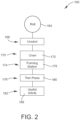
- the flat sheet may be thermoformed into the useful articles, as shown in Figure 2 .
- thermoformed useful articles 166 may include, but are clearly not limited thereto, clamshells, meat trays, plates, bowls, the like, etc.
- the disclosure may be directed toward increasing the melt strength of lower viscosity PET raw materials 104 to produce a low-density polyester foam.
- This method involves utilizing PET resins 104 with an I.V. of less than 0.8 dl/g and using solid state de-condensation to produce a foamable PET resin.
- low density PET foam may be successfully produced, which may be utilized as extruded material, or be formed into useful articles 166 in a secondary operation.
- method 100 may utilize a low I.V. polyester feedstock 104. This feedstock can be pelletized or used as flake. The feedstock I.V. may be increased to greater than 1.1 dl/g via solid state reactor 124.
- the material now with an improved I.V., may be processed using tandem extrusion 132 to produce foam.
- An I.V. enhancer may be used to achieve optimal density reduction.
- Various die configurations may be used to make roll, boards, or other geometry useful for commercial applications.
- the disclosure may utilize a lower I.V. virgin resin for low IV raw material 104, with post consumer polyester 120, which may be post-industrial or post-consumer PET resin available through recycling of bottles and other PET articles in recycle systems widely used across the country.
- post consumer polyester 120 which may be post-industrial or post-consumer PET resin available through recycling of bottles and other PET articles in recycle systems widely used across the country.
- Such materials are widely available and at considerably lower cost than the resins previously used for PET foam development.
- this material undergoes a de-condensation reaction with vacuum to increase the molecular weight either via solid-state reactor 124 such as is offered by Starlinger of Austria or by a melt phase de-condensation reaction with vacuum using melt phase reactor such as is offered by NGR of Austria.
- Muschiatti (see U.S. Patent No. 5,391,582 ) disclosed use of post -consumer polyester as well, but this was never reduced to practice. Muschiatti used a chain extender to make foamable resin, but I.V. is not linear and large amounts of enhancer are needed to achieve an I.V. of 1.2 dl/g. This can result in uneven reactions yielding a lumpy extrudate unable to be uniformly formed. By first increasing the I.V. by solid state de-condensation, foam can be made with little or no enhancer. This results in a uniform and stable extrudate.
- this material is combined with 0% to 75% virgin PET polyester resin 118 and extruded to produce low density foam.
- the foaming technology of choice may be tandem extrusion 132 which is well known in the industry with the primary extruder 134 preferably consisting of a twin rather than single screw extruder. This is advantageous for mixing and reducing loss of I.V. due to shear.
- the secondary extruder 142 may typically be a single screw extruder configured to give heat exchange with minimal shear heat generation but any type of polymer heat exchanger can be used.
- Typical blowing agents 140 may consist of hydrocarbons as well as hydro-chloro-flouro-carbons. Poly-flouro-ethylene particles have been found to be effective nucleators for cell size control.
- a cross-linking agent can be used to fine tune the viscosity as viscosity enhancing agent 128.
- Polyester foam will collapse if the viscosity is too low, but becomes non-uniform (lumpy) and unusable if the viscosity becomes too high or is uneven.
- control is best maintained by using the de-condensation reaction with vacuum to attain an I.V. of greater than 1.1 dl/g and then add a cross linking agent to fine tune the formulation to optional performance.
- Such agents are commercially available from companies such as Sukano S606-HP.
- a board or sheet die 154 can be used with the correct associated finishing equipment 156. Utilizing such a system, PET foam can be produced at less than 0.65 g/cc, a reduction in density of at least 50% from the base resin. This foam may be used for large cross-section applications, such as marine board, or can be made into roll-stock for the production of thermoformed articles 166, as shown and described in Figure 2 .
- virgin Polyester 118, post consumer polyester 120, and process regrind 122 in any proportions may be first crystallized to prevent material from melting during solid state de-condensation.
- This blend may then be fed into solid-state de-condensation reactor 124 where the I.V. may be increased to greater than a 1.1 dl/g intrinsic viscosity.
- this blend may first be pelletized before the solid-state de-condensation reaction.
- polyester resin now of high I.V. may be conveyed to a feed system where it is combined in proper proportions with viscosity enhancing additive 128 and nucleating agent 130. This mixture may be fed into primary extruder 134.
- blowing agent 140 may feed a metering system that is injected into primary extruder 134.
- Primary extruder 134 may first melt and mix the solid components. Once melted, blowing agent 140 may be injected and mixed such that a homogenous mixture exits primary extruder 134. The melt is subsequently screened for solid impurities that can get caught in die 154, pressurized utilizes gear pump 150, and then cooled in secondary cooling extruder 142.
- This secondary cooling extruder 142 may be designed with a screw to act as a heat exchanger removing heat from the melt and increasing the viscosity for optimal foam expansion out of die 154.
- roll stock may be made by pulling a bubble over sizing drum 158 and slitting the bubble to open a flat sheet.
- Pull unit 160 may ensure uniform gauge with the resulting material wound into roll form on winder 162.
- Rolls 164 can then be used as is or further processed by thermoforming.
- Figure 2 depicts a thermoforming operation wherein roll 164, such as produced via the process of Figure 1 , may be placed on unwind 168 that feeds the material into oven 172.
- the oven temperatures are carefully controlled to soften but not melt the polyester foam material. This softened material is then formed.
- the material may be amorphous or crystallized when formed.
- the formed items may be cut out in trim press 180.
- the skeletal waste or regrind may be stored to be reused in method 100 of Figure 1 .
- Useful articles 166 may then be packaged for sale.
- polyester foam can be created utilizing method 100 disclosed herein using post-consumer polyester bottle flake.
- the post-consumer polyester bottle flake be washed and cleaned, and may have a nominal intrinsic viscosity of 0.7 dl/g.
- the post-consumer polyester bottle flake may be first crystallized using a Starlinger crystallizer. This material can then be processed using a Starlinger ViscoSTAR solid state Polycondensation Plant to an intrinsic viscosity of 1.1 dl/g or more.
- a mixture of 25% virgin polyester having an intrinsic viscosity of 0.8dl/g and 72% of the improved bottle flake may be gravimetrically fed into a twin screw extruder.
- a chain extender additive such as pyromellitic-di-anhydride, may also be added at a 1 ⁇ 2% level to build the desired final viscosity. This additional level may vary based on the temperature of the melt as well as the blowing agent composition. Typically, experience indicates the amount needed based on the motor amps of the secondary extruder, which may serve as a defacto viscometer.
- a melt seal may be provided in the screw design. After this seal, under high pressure, the blowing agent may be injected. Cyclo-pentane may be added at about 2%, for optimal foaming. The level added can, however, vary based on the requirements of the product. The remainder of the twin screw extruder may be designed to mix and homogenize the composition.
- the homogenous melt may exit the twin screw extruder and flow through a screen changer which may filter out any unwanted particles.
- the melt typically at a temperature of 560°F and a pressure of 1,500 psi, (10342.14 Kpa) may enter the gear pump which may increase the pressure to 2,500 psi (17236.89 kPa).
- the gear pump may be sized to impart minimal additional shear heat.
- the melt On exiting the gear pump, the melt may enter the secondary or cooling extruder 142.
- the screw may be designed to impart minimal shear heat while wiping and renewing the surface contact of the melt with the barrel.
- the barrel may be oil cooled to avoid the thermal shock that can accompany heat of vaporization.
- the purpose of the secondary extruder may be to reduce the melt temperature from 560°F (293.3 °C) to between 490°F (254.4°C) and 520°F, (271.1 °C), which may give the necessary rheology needed for successful foaming.
- the tempered melt may exit the extrusion line through an annular die and may pass over a cooling drum which may freeze the foam in place.
- a pull unit and winder may collect the product in the form of rolls.
- the rolls can be used directly or formed in a secondary operation into useful articles.
- one such article may be a meat tray.
- a thermoformer such as an Irwin Model 50, and the appropriate tooling, such articles can be produced.
- Typical conditions for the former may include an oven temperature of about 600°F with a cycle speed of 25 cycles per minute.
- the formed shape may be trimmed in a punch and die trim station and the part may then be packaged for sale.
- polyester foam was created utilizing method 100 disclosed herein according to select possibly preferred embodiments.
- Primatop GP-80 virgin polyester resin with a measured I.V. of 0.85 di/gram was loaded into a Starlinger SSP solid state reactor. Approximately 6,000 pounds of material were loaded into the reactor.
- the reactor was set at a temperature of 212°C with a purge of 2, 100 liters per hour of nitrogen. The material was held in the reactor for a period of 25 hours. After this time, the material was unloaded and allowed to cool. The resulting material was measured for intrinsic viscosity. The results ranged from 1.30 di/gram to 1.35 di/gram. Prior art has shown this level of intrinsic viscosity may be suitable for low density foaming applications, as shown and described herein.
- polyester foam was created utilizing method 100 disclosed herein according to select possibly preferred embodiments.
- Post-consumer bottle flake was loaded into a Starlinger SSP reactor. Approximately 6,500 pounds of material was loaded. This material was characterized as having 20 ppm of wood, 260 ppm of polyvinyl chloride, and 990 ppm of G-Pet as contamination. In addition, the material contained 710 ppm of colored flake and 11,080 ppm of yellow discolored flake. The beginning intrinsic viscosity of this material was measured to have a range of 0.73 di/gram to 0.77 di/gram.
- the reactor was heated and maintained at a temperature of 212°C and under a nitrogen purge of 2,100 liters per hour per a period of 13 hours. The material was then unloaded and allowed to cool. The resultant material was measured for final intrinsic viscosity.
- Values ranged from 1.03 to 1.17 di/gram. Prior art has shown this level of intrinsic viscosity may be suitable for low density foaming applications, as shown and described herein.
- polyester foam was created utilizing method 100 disclosed herein according to select possibly preferred embodiments.
- Post-Consumer polyester resin in the form of Bottle Flake with a measure I.V. of 1.13 dl/gram after the de-condensation reaction (produced in Example 2) was mixed with 1.0% Equicell nucleating agent and then fed into a 27 mm Listritz twin screw extruder.
- the Extruder had an L/D of 40:1 consisting of ten barrel sections and a three-hole strand die.
- the polyester/nucleator mixture was fed into primary twin screw extruder 134 using a Brabender gravimetric feeder. Input rate to the extruder was 8 lb/hr. This rate may be low for an extruder of this size but was done so deliberately to allow residence time in the latter barrel sections to achieve needed cooling of the melt phase so that optimal viscosity for foaming could be achieved.
- blowing agent 140 was injected in the ninth barrel section.
- Blowing agent 140 consisted of a mixture of hexane and heptane isomers and was added to the melt at a rate of 2.5% by weight.
- Primary twin screw extruder 134 was used to melt, mix, and cool the polymer mixture with the resultant foam exiting the three-hole strand die. Process conditions for this sample were:
- the density of the extruded polyester foam was determined by water displacement.
- the foam density was estimated to be 0.6 grams/cubic centimeter +/- 0.06 grams/cubic centimeter.
- This example showed the feasibility of producing low density polyester foam using 100% post-consumer bottle flake.
Landscapes
- Chemical & Material Sciences (AREA)
- Engineering & Computer Science (AREA)
- Polymers & Plastics (AREA)
- Organic Chemistry (AREA)
- Health & Medical Sciences (AREA)
- Chemical Kinetics & Catalysis (AREA)
- Medicinal Chemistry (AREA)
- Mechanical Engineering (AREA)
- Materials Engineering (AREA)
- Life Sciences & Earth Sciences (AREA)
- Sustainable Development (AREA)
- Manufacturing & Machinery (AREA)
- Environmental & Geological Engineering (AREA)
- Physics & Mathematics (AREA)
- Thermal Sciences (AREA)
- Manufacture Of Porous Articles, And Recovery And Treatment Of Waste Products (AREA)
- Extrusion Moulding Of Plastics Or The Like (AREA)
- Polyesters Or Polycarbonates (AREA)
- Molding Of Porous Articles (AREA)
Claims (14)
- Verfahren zum Herstellen eines Polyesterschaums, umfassend:Bereitstellen eines Rohmaterials mit niedriger Grenzviskosität, wobei das Rohmaterial mit niedriger Grenzviskosität zwischen 25 % bis 100 % eines Post-Consumer-Polyesters beinhaltet und der Post-Consumer-Polyester eine Grenzviskosität von weniger als 0,8 dl/g, gemessen nach ASTM-Verfahren D-4603, aufweist;Erhöhen der Grenzviskosität des Rohmaterials mit niedriger Grenzviskosität durch eine Entkondensationsreaktion, die dazu konfiguriert ist, Schäumen zu unterstützen, beinhaltend Erhöhen eines Molekulargewichts des Rohmaterials mit niedriger Grenzviskosität durch Zuführen des Rohmaterials mit niedriger Grenzviskosität einem Festkörperreaktor oder durch eine Schmelzphasenentkondensationsreaktion unter Vakuum unter Verwendung eines Schmelzphasenreaktors,wobei die Grenzviskosität des Rohmaterials mit niedriger Grenzviskosität auf 1,1 dl/g oder mehr erhöht wird;Erzeugen einer Ausgangsformulierung, die das Rohmaterial mit niedriger Grenzviskosität mit der erhöhten Grenzviskosität beinhaltet;Aufschäumen der Ausgangsformulierung, um den Polyesterschaum zu erzeugen;wobei der hergestellte Polyesterschaum eine Dichte von weniger als 0,65 g/cc aufweist.
- Verfahren zum Herstellen des Polyesterschaums nach Anspruch 1, ferner umfassend:Kristallisieren des Rohmaterials mit niedriger Grenzviskosität in einem Kristallisator; oderPelletieren des Rohmaterials mit niedriger Grenzviskosität;wobei das Kristallisieren oder das Pelletieren konfiguriert ist, zu verhindern, dass das Rohmaterial mit niedriger Grenzviskosität während der Entkondensationsreaktion schmilzt.
- Verfahren zum Herstellen des Polyesterschaums nach Anspruch 1, wobei das Rohmaterial mit niedriger Grenzviskosität Folgendes beinhaltet:unbearbeiteten Polyester;dass der Post-Consumer-Polyester ein Polyester-Ausgangsstoff ist, der aus einem postindustriellen Abfallharz besteht; undMahlgut;wobei das postindustrielle Abfallharz des Rohmaterials mit niedriger Grenzviskosität aus Post-Consumer-Abfallflaschensschnitzeln besteht.
- Verfahren zum Herstellen des Polyesterschaums nach Anspruch 1, wobei das Erzeugen der Ausgangsformulierung Zusetzen von Folgendem beinhaltet:einem viskositätserhöhenden Mittel, das dazu konfiguriert ist,die Viskosität des Rohmaterials mit niedriger Grenzviskosität feinabzustimmen;einem Nukleierungsmittel, das dazu konfiguriert ist, das Nukleieren des Rohmaterials mit niedriger Grenzviskosität zu unterstützen; oderKombinationen davon;wobei:das viskositätserhöhende Mittel ein Vernetzungsmittel ist;das Nukleierungsmittel aus einem Polyfluorethylen-Partikel besteht; oderKombinationen davon.
- Verfahren zum Herstellen des Polyesterschaums nach Anspruch 1, wobei das Aufschäumen der Ausgangsformulierung zum Erzeugen des Polyesterschaums Tandemextrudieren der Ausgangsformulierung zum Erzeugen des Polyesterschaums beinhaltet, wobei das Tandemextrudieren der Ausgangsformulierung zum Erzeugen des Polyesterschaums Folgendes beinhaltet:einen Primär-Doppelschneckenextruder, der ein Injektionssystem und ein Treibmittelspeichersystem beinhaltet, die dazu konfiguriert sind, ein Treibmittel in die Ausgangsformulierung einzubringen, nachdem die Ausgangsformulierung geschmolzen undüber den Primär-Doppelschneckenextruder gemischt wurde, wodurch eine homogene Mischung aus dem Primär-Doppelschneckenextruder austritt;einen Sekundär-Kühlextruder, der dazu konfiguriert ist, die homogene Mischung, die aus dem Primär-Doppelschneckenextruder austritt, zu kühlen, um der homogenen Lösung eine für ein erfolgreiches Aufschäumen notwendige Rheologie zu verleihen, wobei der Sekundär-Kühlextruder dazu konfiguriert ist, einen Wärmeaustausch mit minimaler Scherwärmeerzeugung zu bewirken, wobei der Sekundär-Kühlextruder eine Schnecke beinhaltet, die dazu konfiguriert ist, als Wärmeaustauscher zu wirken, um Wärme aus der homogenen Mischung abzuführen und die Viskosität zu erhöhen;Aussieben von festen Verunreinigungen über einen Siebwechsler zwischen dem Primär- Doppelschneckenextruder und dem Sekundär-Kühlextruder; undmit Druck Beaufschlagen der aus dem Primär-Doppelschneckenextruder austretenden homogenen Mischung über eine Zahnradpumpe zwischen dem Primär-Doppelschneckenextruder und dem Sekundär-Kühlextruder, wobei die Zahnradpumpe dazu konfiguriert ist, bei gleichzeitiger Beaufschlagung der homogenen Mischung mit Druck eine minimale zusätzliche Scherwärme einzubringen;wobei das Treibmittel aus einem Kohlenwasserstoff besteht, der ausgewählt ist aus der Gruppe bestehend aus: C5-Kohlenwasserstoffen; und C6-Kohlenwasserstoffen.
- Verfahren zum Herstellen des Polyesterschaums nach Anspruch 5, ferner umfassend Formen des Polyesterschaums unter Verwendung einer Matrize, wobei die Matrize eine Brettmatrize oder eine Folienmatrize ist, die mit zugehörigen Endbearbeitungsgerätschaften konfiguriert ist, wobei die zugehörigen Endbearbeitungsgerätschaften Folgendes beinhalten:eine Siebtrommel;eine Zugeinheit; undeine Aufwickelvorrichtung, die dazu konfiguriert ist, eine Rolle Polyesterschaum zu erzeugen.
- Verfahren zum Herstellen des Polyesterschaums nach Anspruch 6, wobei die Zugeinheit dazu konfiguriert ist, eine Blase des Polyesterschaums über die Siebtrommel zu ziehen und die Blase zu schlitzen, um eine Flachfolie zu öffnen,wobei der Polyesterschaum als Flachfolie in einer Walzgutform mit einer Dicke von mindestens 1,016 mm und einer Dicke von bis zu 9,525 mm hergestellt wird; oderwobei der Polyesterschaum mit einer Dicke größer als 12,7 mm und einer Breite größer als 152,4 mm hergestellt wird.
- Verfahren zum Herstellen des Polyesterschaums nach Anspruch 7, wobei:die Flachfolie als Wärmedämmung verwendet wird;der Polyesterschaum als Holz- oder gleichwertiger Ersatz eingesetzt wird; oderKombinationen davon.
- Verfahren zum Herstellen des Polyesterschaums nach Anspruch 7, wobei die Flachfolie zu einem nützlichen Artikel thermogeformt wird, wobei der nützliche Artikel ausgewählt ist aus einer Gruppe bestehend aus: einer Muschelschale; einer Fleischplatte; einer Platte; und einer Schüssel, wobei die Flachfolie über Folgendes zu dem nützlichen Artikel thermogeformt wird:Abwickeln der Rolle Flachfolie des Polyesterschaums;Erwärmen der abgewickelten Rolle Flachfolie in einem Ofen, wobei die Temperaturen des Ofens so gesteuert werden, dass die Flachfolie des Polyesterschaums erweicht, aber nicht schmilzt;Formen der erwärmten Flachfolie des Polyesterschaums in einer Formstation, wobei die erwärmte Flachfolie des Polyesterschaums amorph oder kristallisiert ist, wenn sie geformt wird;Schneiden der geformten Flachfolie des Polyesterschaums in einer Entgratpresse, wo Stanzgitterreste oder Mahlgut gelagert werden/wird, um wiederverwendet zu werden; undVerpacken des nützlichen Artikels zum Verkauf.
- Verfahren zum Herstellen eines Polyesterschaums nach Anspruch 3, ferner umfassend:Kristallisieren des Rohmaterials mit niedriger Grenzviskosität in einem Kristallisator, wobei das Kristallisieren dazu konfiguriert ist, zu verhindern, dass das Rohmaterial mit niedriger Grenzviskosität während einer Entkondensationsreaktion schmilzt;wobei der Schritt des Erhöhens der Grenzviskosität des Rohmaterials mit niedriger Grenzviskosität über die Entkondensationsreaktion Erhöhen eines Molekulargewichts des Rohmaterials mit niedriger Grenzviskosität durch Zuführen des Rohmaterials mit niedriger Grenzviskosität einem Festkörperreaktor beinhaltet;wobei der Schritt des Erzeugens einer Ausgangsformulierung, die das Rohmaterial mit niedriger Grenzviskosität mit der erhöhten Grenzviskosität beinhaltet, Zusetzen von Folgendem beinhaltet:ein Vernetzungsmittel, das dazu konfiguriert ist, die Viskosität des Rohmaterials mit niedriger Grenzviskosität feinabzustimmen; undein Nukleierungsmittel, das dazu konfiguriert ist, das Nukleieren des Rohmaterials mit niedriger Grenzviskosität zu unterstützen, wobei das Nukleierungsmittel aus einem Polyfluorethylen-Partikel besteht;wobei der Schritt des Aufschäumens der Ausgangsformulierung zum Erzeugen des Polyesterschaums Tandemextrudieren der Ausgangsformulierung zum Erzeugen des Polyesterschaums beinhaltet, wobei das Tandemextrudieren der Ausgangsformulierung zum Erzeugen des Polyesterschaums Folgendes beinhaltet:Bereitstellen eines Primär-Doppelschneckenextruders, der ein Injektionssystem und ein Treibmittelspeichersystem beinhaltet, die dazu konfiguriert sind, ein Treibmittel in die Ausgangsformulierung einzubringen, nachdem die Ausgangsformulierung geschmolzen und über den Primär-Doppelschneckenextruder gemischt worden ist, wodurch ein homogenes Gemisch aus dem Primär-Doppelschneckenextruder austritt, wobei das Treibmittel aus einem Kohlenwasserstoff besteht, der ausgewählt ist aus einer Gruppe bestehend aus: C5-Kohlenwasserstoffen; und C6-Kohlenwasserstoffen;Bereitstellen eines Sekundär-Kühlextruders, der dazu konfiguriert ist, die homogene Mischung, die aus dem Primär-Doppelschneckenextruder austritt, zu kühlen, um der homogenen Lösung eine für ein erfolgreiches Aufschäumen notwendige Rheologie zu verleihen, wobei der Sekundär-Kühlextruder dazu konfiguriert ist, einen Wärmeaustausch mit minimaler Scherwärmeerzeugung zu bewirken, wobei der Sekundär-Kühlextruder eine Schnecke beinhaltet, die dazu konfiguriert ist, als Wärmeaustauscher zu wirken, um Wärme aus der homogenen Mischung abzuführen und die Viskosität zu erhöhen;Aussieben von festen Verunreinigungen über einen Siebwechsler zwischen dem Primär- Doppelschneckenextruder und dem Sekundär-Kühlextruder; undmit Druck Beaufschlagen der aus dem Primär-Doppelschneckenextruder austretenden homogenen Mischung über eine Zahnradpumpe zwischen dem Primär-Doppelschneckenextruder und dem Sekundär-Kühlextruder, wobei die Zahnradpumpe dazu konfiguriert ist, bei gleichzeitiger Beaufschlagung der homogenen Mischung mit Druck eine minimale zusätzliche Scherwärme einzubringen;Formen des Polyesterschaums unter Verwendung einer Matrize, wobei die Matrize eine Brettmatrize oder eine Folienmatrize ist, die mit zugehörigen Endbearbeitungsgerätschaften konfiguriert ist, wobei die zugehörigen Endbearbeitungsgerätschaften Folgendes beinhalten:eine Siebtrommel;eine Zugeinheit; undeine Aufwickelvorrichtung, die dazu konfiguriert ist, eine Rolle des Polyesterschaums zu erzeugen.wobei die Zugeinheit dazu konfiguriert ist, eine Blase des Polyesterschaums über die Siebtrommel zu ziehen und die Blase zu schlitzen, um eine Flachfolie zu öffnen, wobei der Polyesterschaum als Flachfolie in einer Walzgutform mit einer Dicke von mindestens 1,016 mm und einer Dicke von bis zu 9,525 mm hergestellt wird;wobei der Polyesterschaum mit den Dicken größer als 12,7 mm und den Breiten größer als 152,4 mm hergestellt wird;wobei der hergestellte Polyesterschaum eine Dichte von weniger als 0,65 g/cc aufweist.
- Nützlicher Artikel, hergestellt aus einem Polyesterschaum über das Verfahren zum Herstellen des Polyesterschaums nach Anspruch 1, wobei der nützliche Artikel Folgendes umfasst:ein Rohmaterial mit niedriger Grenzviskosität, wobei das Rohmaterial mit niedriger Grenzviskosität zwischen 25 % bis 100 % eines Post-Consumer-Polyesters beinhaltet, wobei das bereitgestellte Rohmaterial mit niedriger Grenzviskosität eine Grenzviskosität von weniger als 0,8 dl/g aufweist; wobei die Grenzviskosität des Rohmaterials mit niedriger Grenzviskosität auf 1,1 dl/g oder mehr erhöht wird, um das Schäumen zu unterstützen, wobei das Rohmaterial mit niedriger Grenzviskosität Folgendes beinhaltet:unbearbeiteten Polyester;dass der Post-Consumer-Polyester ein Polyester-Ausgangsstoff ist, der aus einem postindustriellen Abfallharz besteht; undMahlgut;wobei das postindustrielle Abfallharz des Rohmaterials mit niedriger Grenzviskosität aus wiederverwerteten Abfallflaschensschnitzeln besteht;eine Ausgangsformulierung, beinhaltend:das Rohmaterial mit niedriger Grenzviskosität mit der erhöhten Grenzviskosität;ein viskositätserhöhendes Mittel, das dazu konfiguriert ist, die Viskosität des Rohmaterials mit niedriger Grenzviskosität feinabzustimmen;ein Nukleierungsmittel, das dazu konfiguriert ist, das Nukleieren des Rohmaterials mit niedriger Grenzviskosität zu unterstützen,wobei der Polyesterschaum eine Dichte von weniger als 0,65 g/cc aufweist.
- Nützlicher Artikel, hergestellt aus Polyesterschaum nach Anspruch 11, wobei:der Polyesterschaum mit Dicken größer als 12,7 mm und Breiten größer als 152,4 mm hergestellt wird; oderder Polyesterschaum als Flachfolie in einer Walzgutform mit einer Dicke von mindestens 1,016 mm und einer Dicke von bis zu 9,525 mm hergestellt wird.
- Nützlicher Artikel, hergestellt aus Polyesterschaum nach Anspruch 12, wobei:die Flachfolie als Wärmedämmung verwendet wird;der Polyesterschaum als Holz- oder gleichwertiger Ersatz eingesetzt wird; oderKombinationen davon.
- Nützlicher Artikel, hergestellt aus Polyesterschaum nach Anspruch 12, wobei die Flachfolie zu dem nützlichen Artikel thermogeformt wird, wobei der nützliche Artikel ausgewählt ist aus einer Gruppe bestehend aus: einer Muschelschale; einer Fleischplatte; einer Platte; und einer Schüssel.
Applications Claiming Priority (3)
| Application Number | Priority Date | Filing Date | Title |
|---|---|---|---|
| US201762707259P | 2017-10-26 | 2017-10-26 | |
| US16/167,508 US11111350B2 (en) | 2017-10-26 | 2018-10-22 | Method for production of low density polyester foam and articles made thereof utilizing low I.V. polyester feedstock |
| PCT/US2018/057938 WO2019084533A1 (en) | 2017-10-26 | 2018-10-29 | PROCESS FOR PRODUCING LOW DENSITY POLYESTER FOAM AND ARTICLES MADE THEREBY USING LOW V.I. POLYESTER LOAD |
Publications (4)
| Publication Number | Publication Date |
|---|---|
| EP3707197A1 EP3707197A1 (de) | 2020-09-16 |
| EP3707197A4 EP3707197A4 (de) | 2021-07-28 |
| EP3707197B1 true EP3707197B1 (de) | 2025-01-01 |
| EP3707197C0 EP3707197C0 (de) | 2025-01-01 |
Family
ID=66245253
Family Applications (1)
| Application Number | Title | Priority Date | Filing Date |
|---|---|---|---|
| EP18870494.4A Active EP3707197B1 (de) | 2017-10-26 | 2018-10-29 | Verfahren zur herstellung von polyesterschaum mit niedriger dichte und daraus hergestellte artikel mit polyesterausgangsstoff mit niedriger iv |
Country Status (8)
| Country | Link |
|---|---|
| US (1) | US11111350B2 (de) |
| EP (1) | EP3707197B1 (de) |
| CN (1) | CN111356726A (de) |
| BR (1) | BR112020003876A2 (de) |
| CO (1) | CO2020006296A2 (de) |
| MX (1) | MX2020004089A (de) |
| RU (1) | RU2020104817A (de) |
| WO (1) | WO2019084533A1 (de) |
Families Citing this family (1)
| Publication number | Priority date | Publication date | Assignee | Title |
|---|---|---|---|---|
| CA3208343A1 (en) * | 2021-01-13 | 2022-07-21 | Mucell Extrusion, Llc | Method of making flat foam sheet comprising recycled pet and the product resulting therefrom |
Citations (6)
| Publication number | Priority date | Publication date | Assignee | Title |
|---|---|---|---|---|
| US5090134A (en) | 1988-12-23 | 1992-02-25 | Buhler Ag | Method and apparatus for continuously crystallizing polyester material |
| US5958164A (en) | 1994-12-27 | 1999-09-28 | Sekisui Kaseihin Kogyo Kabushiki Kaisha | Method of manufacturing thermoplastic polyester resin foam by extrusion |
| JP2001213951A (ja) | 2000-01-31 | 2001-08-07 | Utsumi Kikaku Kk | 高ivのpet薄片及び発泡シートの製造法 |
| US20150251343A1 (en) | 2014-03-07 | 2015-09-10 | Phoenix Technologies International, Llc | Method of using recycled pet flake directly in an injection molding process |
| CN105131538A (zh) | 2014-05-28 | 2015-12-09 | 华东理工大学 | 一种pet发泡制品及其制备方法 |
| CN105273368A (zh) | 2014-05-28 | 2016-01-27 | 华东理工大学 | 一种可发泡pet树脂及其制备方法和用途 |
Family Cites Families (28)
| Publication number | Priority date | Publication date | Assignee | Title |
|---|---|---|---|---|
| US3058159A (en) | 1958-12-29 | 1962-10-16 | Japan Reichhold Chemicals Inc | Method for producing a pearl-formed solid-state condensation-type resin |
| US3211678A (en) | 1963-08-06 | 1965-10-12 | Hercules Powder Co Ltd | Copolyester foams by treatment with a bis(azidoformate) modifying agent and a blowing agent |
| DE2706123A1 (de) | 1977-02-14 | 1978-08-17 | Bayer Ag | Schnell kristallisierende polyaethylenterephthalate und verfahren zu ihrer herstellung |
| US5176861A (en) | 1991-02-22 | 1993-01-05 | Osaka Chemical Co., Ltd. | Method of producing sheet made of a low-viscosity polyester resin |
| IT1252223B (it) | 1991-12-16 | 1995-06-05 | M & G Ricerche Spa | Resine poliestere cellulari e loro procedimento di preparazione |
| US5321052A (en) | 1992-05-12 | 1994-06-14 | Showa Highpolymer Co., Ltd. | Polyester foamed thin materials |
| US5288764A (en) | 1993-01-29 | 1994-02-22 | Amoco Corporation | Increased throughput in foaming and other melt fabrication of polyester |
| US5431972A (en) | 1993-10-22 | 1995-07-11 | Shell Oil Company | Nucleation of crystallization in polyesters |
| US5391582A (en) | 1994-04-19 | 1995-02-21 | E. I. Du Pont De Nemours And Company | Poly(ethylene terephthalate) foams comprising recycled plastic and methods relating thereto |
| US5696176A (en) * | 1995-09-22 | 1997-12-09 | Eastman Chemical Company | Foamable polyester compositions having a low level of unreacted branching agent |
| US5679295A (en) | 1996-07-11 | 1997-10-21 | Genpak Corporation | Method for producing polyester foam using a blowing agent combination |
| US5681865A (en) * | 1996-11-05 | 1997-10-28 | Genpak Corporation | Method for producing polyester foam |
| US6284808B1 (en) | 1997-02-03 | 2001-09-04 | Illinois Tool Works Inc. | Inline solid state polymerization of PET flakes for manufacturing plastic strap by removing non-crystalline materials from recycled PET |
| US6130261A (en) | 1997-05-20 | 2000-10-10 | Genpak, L.L.C. | Method of recycling polyester foam |
| US6100307A (en) | 1998-03-17 | 2000-08-08 | Shell Oil Company | Compositions of polycondensed branched polyester polymers and aromatic polycarbonates, and the closed cell polymer foams made therefrom |
| US6841106B1 (en) | 1998-10-02 | 2005-01-11 | Djk Techno Science Laboratories, Inc. | Foamed polyester resin molding and process for producing the same |
| AU2001260705A1 (en) | 2000-06-05 | 2001-12-17 | Ftex, Incorporated | Processes for producing polyester resin and molded object thereof using masterbatch |
| US20020177663A1 (en) * | 2001-03-16 | 2002-11-28 | Cahill Paul J. | Composites for railroad ties and other products |
| AT410942B (de) | 2001-10-29 | 2003-08-25 | Fellinger Markus | Verfahren und vorrichtung zur erhöhung der grenzviskosität von polyester |
| US7144632B2 (en) | 2003-06-11 | 2006-12-05 | E. I. Du Pont De Nemours And Company | Aliphatic-aromatic polyetherester compositions, articles, films, coating and laminates and processes for producing same |
| US7358324B2 (en) | 2005-12-06 | 2008-04-15 | Dak Americas Llc | Manufacturing method of co-polyester resins for clear mono-layer containers with improved gas barrier characteristics |
| AT508951B1 (de) * | 2009-04-17 | 2012-03-15 | Erema | Verfahren und anordnung zur recyclierung von kunststoff |
| LT2383309T (lt) * | 2010-04-29 | 2017-02-10 | Armacell Enterprise Gmbh & Co. Kg | Korėtas poliesteris, pagamintas iš naudotos medžiagos dribsnių, ir iš jo pagamintų produktų panaudojimas |
| JP5679168B2 (ja) * | 2010-10-18 | 2015-03-04 | 信越ポリマー株式会社 | フィルムキャパシタ用フィルムの製造方法 |
| TWI405778B (zh) | 2010-11-04 | 2013-08-21 | Far Eastern New Century Corp | A copolyester composition having thermal stability |
| CN103649173A (zh) | 2011-07-01 | 2014-03-19 | 帝斯曼知识产权资产管理有限公司 | 支链聚酰胺 |
| KR20140051920A (ko) | 2011-07-01 | 2014-05-02 | 디에스엠 아이피 어셋츠 비.브이. | 상이한 블럭들을 가진 분지형 폴리아마이드 |
| CN103764738A (zh) | 2011-08-29 | 2014-04-30 | 积水化成品工业株式会社 | 模内发泡成型用芳香族聚酯系树脂发泡颗粒及其制造方法、模内发泡成型体、复合结构构件、以及汽车用构件 |
-
2018
- 2018-10-22 US US16/167,508 patent/US11111350B2/en active Active
- 2018-10-29 RU RU2020104817A patent/RU2020104817A/ru unknown
- 2018-10-29 BR BR112020003876-8A patent/BR112020003876A2/pt not_active Application Discontinuation
- 2018-10-29 WO PCT/US2018/057938 patent/WO2019084533A1/en not_active Ceased
- 2018-10-29 MX MX2020004089A patent/MX2020004089A/es unknown
- 2018-10-29 EP EP18870494.4A patent/EP3707197B1/de active Active
- 2018-10-29 CN CN201880059635.5A patent/CN111356726A/zh active Pending
-
2020
- 2020-05-26 CO CONC2020/0006296A patent/CO2020006296A2/es unknown
Patent Citations (6)
| Publication number | Priority date | Publication date | Assignee | Title |
|---|---|---|---|---|
| US5090134A (en) | 1988-12-23 | 1992-02-25 | Buhler Ag | Method and apparatus for continuously crystallizing polyester material |
| US5958164A (en) | 1994-12-27 | 1999-09-28 | Sekisui Kaseihin Kogyo Kabushiki Kaisha | Method of manufacturing thermoplastic polyester resin foam by extrusion |
| JP2001213951A (ja) | 2000-01-31 | 2001-08-07 | Utsumi Kikaku Kk | 高ivのpet薄片及び発泡シートの製造法 |
| US20150251343A1 (en) | 2014-03-07 | 2015-09-10 | Phoenix Technologies International, Llc | Method of using recycled pet flake directly in an injection molding process |
| CN105131538A (zh) | 2014-05-28 | 2015-12-09 | 华东理工大学 | 一种pet发泡制品及其制备方法 |
| CN105273368A (zh) | 2014-05-28 | 2016-01-27 | 华东理工大学 | 一种可发泡pet树脂及其制备方法和用途 |
Non-Patent Citations (16)
Also Published As
| Publication number | Publication date |
|---|---|
| EP3707197A4 (de) | 2021-07-28 |
| CA3071565A1 (en) | 2019-05-02 |
| WO2019084533A1 (en) | 2019-05-02 |
| RU2020104817A (ru) | 2021-11-29 |
| CN111356726A (zh) | 2020-06-30 |
| US11111350B2 (en) | 2021-09-07 |
| CO2020006296A2 (es) | 2020-06-09 |
| RU2020104817A3 (de) | 2022-01-27 |
| BR112020003876A2 (pt) | 2021-06-08 |
| US20190127543A1 (en) | 2019-05-02 |
| MX2020004089A (es) | 2020-09-25 |
| EP3707197A1 (de) | 2020-09-16 |
| EP3707197C0 (de) | 2025-01-01 |
Similar Documents
| Publication | Publication Date | Title |
|---|---|---|
| KR100363291B1 (ko) | 열가소성폴리에스테르계수지발포체의연속적제조방법및제조장치 | |
| KR101864316B1 (ko) | 다층 플라스틱 필름의 제조 방법 | |
| EP0055437B1 (de) | Verfahren zur kontinuierlichen Herstellung von Gegenständen aus geschäumtem Polystyrol | |
| US5670552A (en) | Foam and process for producing foam using a carbon dioxide blowing agent | |
| US12128666B2 (en) | Multi-layer thermoformed polymeric foam articles and methods | |
| DE69934029T2 (de) | Geschäumtes polyesterharzformteil und verfahren zu dessen herstellung | |
| US20210268711A1 (en) | Multilayer-Structured Polylactic Acid Resin Foam Sheet Manufactured By Co-Extrusion Foaming Method, Molded Article, Method For Manufacturing Same, And Apparatus For Manufacturing Same | |
| EP2730386A2 (de) | Herstellung von vollständig recycelbarem geschäumtem Polymer aus recyceltem Material | |
| KR20160009087A (ko) | 유체 처리용 담체 및 그 제조 방법 | |
| US20070293593A1 (en) | Low density polylactic acid polymeric foam and articles made thereof | |
| CN118103435A (zh) | 聚丙烯类树脂发泡颗粒的制造方法 | |
| EP3707197B1 (de) | Verfahren zur herstellung von polyesterschaum mit niedriger dichte und daraus hergestellte artikel mit polyesterausgangsstoff mit niedriger iv | |
| EP1528079A1 (de) | Abbaubare Schäume auf Basis von Polymilchsäure und Verfahren zu ihrer Herstellung | |
| CA3071565C (en) | Method for production of low density polyester foam and articles made thereof utilizing low i.v. polyester feedstock | |
| JP2003182005A (ja) | 非発泡層用樹脂、多層発泡シートおよびその製造方法 | |
| CN119855865A (zh) | 发泡颗粒的制造方法 | |
| EP3775008B1 (de) | Verfahren zur herstellung eines schaumstoffs auf der grundlage von recyceltem pet | |
| JP2010280138A (ja) | ポリオレフィン系樹脂積層発泡シートの押出成形による製法 | |
| JP2001026246A (ja) | 自動車用内装材 | |
| JP2003039469A (ja) | 熱可塑性ポリエステル系樹脂の型内発泡成形体、その製造方法及びその用途 | |
| US20040075194A1 (en) | Process for the use of polymeric materials to produce molded foam products | |
| JP2001026217A (ja) | サンバイザー | |
| JPH05320402A (ja) | 発泡ポリエステルシート及びその製造方法 | |
| MXPA98004905A (en) | Thermoplastic foam and process to produce it using carb dioxide | |
| JP2014185205A (ja) | 樹脂発泡体 |
Legal Events
| Date | Code | Title | Description |
|---|---|---|---|
| STAA | Information on the status of an ep patent application or granted ep patent |
Free format text: STATUS: THE INTERNATIONAL PUBLICATION HAS BEEN MADE |
|
| PUAI | Public reference made under article 153(3) epc to a published international application that has entered the european phase |
Free format text: ORIGINAL CODE: 0009012 |
|
| STAA | Information on the status of an ep patent application or granted ep patent |
Free format text: STATUS: REQUEST FOR EXAMINATION WAS MADE |
|
| 17P | Request for examination filed |
Effective date: 20200423 |
|
| AK | Designated contracting states |
Kind code of ref document: A1 Designated state(s): AL AT BE BG CH CY CZ DE DK EE ES FI FR GB GR HR HU IE IS IT LI LT LU LV MC MK MT NL NO PL PT RO RS SE SI SK SM TR |
|
| AX | Request for extension of the european patent |
Extension state: BA ME |
|
| DAV | Request for validation of the european patent (deleted) | ||
| DAX | Request for extension of the european patent (deleted) | ||
| A4 | Supplementary search report drawn up and despatched |
Effective date: 20210630 |
|
| RIC1 | Information provided on ipc code assigned before grant |
Ipc: C08J 9/00 20060101AFI20210624BHEP Ipc: C08J 9/12 20060101ALI20210624BHEP Ipc: C08J 9/14 20060101ALI20210624BHEP Ipc: B29B 17/00 20060101ALI20210624BHEP Ipc: B29C 44/00 20060101ALI20210624BHEP Ipc: C08J 11/00 20060101ALI20210624BHEP Ipc: B29C 44/50 20060101ALI20210624BHEP Ipc: B29C 48/00 20190101ALI20210624BHEP Ipc: B29C 48/85 20190101ALI20210624BHEP Ipc: B29C 51/02 20060101ALI20210624BHEP Ipc: B29K 105/04 20060101ALI20210624BHEP Ipc: B29K 105/26 20060101ALI20210624BHEP Ipc: C08J 9/36 20060101ALI20210624BHEP Ipc: C08L 101/00 20060101ALI20210624BHEP |
|
| STAA | Information on the status of an ep patent application or granted ep patent |
Free format text: STATUS: EXAMINATION IS IN PROGRESS |
|
| 17Q | First examination report despatched |
Effective date: 20220502 |
|
| GRAP | Despatch of communication of intention to grant a patent |
Free format text: ORIGINAL CODE: EPIDOSNIGR1 |
|
| STAA | Information on the status of an ep patent application or granted ep patent |
Free format text: STATUS: GRANT OF PATENT IS INTENDED |
|
| INTG | Intention to grant announced |
Effective date: 20240724 |
|
| GRAS | Grant fee paid |
Free format text: ORIGINAL CODE: EPIDOSNIGR3 |
|
| GRAA | (expected) grant |
Free format text: ORIGINAL CODE: 0009210 |
|
| STAA | Information on the status of an ep patent application or granted ep patent |
Free format text: STATUS: THE PATENT HAS BEEN GRANTED |
|
| AK | Designated contracting states |
Kind code of ref document: B1 Designated state(s): AL AT BE BG CH CY CZ DE DK EE ES FI FR GB GR HR HU IE IS IT LI LT LU LV MC MK MT NL NO PL PT RO RS SE SI SK SM TR |
|
| REG | Reference to a national code |
Ref country code: GB Ref legal event code: FG4D |
|
| REG | Reference to a national code |
Ref country code: DE Ref legal event code: R096 Ref document number: 602018078210 Country of ref document: DE |
|
| REG | Reference to a national code |
Ref country code: CH Ref legal event code: EP |
|
| REG | Reference to a national code |
Ref country code: IE Ref legal event code: FG4D |
|
| U01 | Request for unitary effect filed |
Effective date: 20250130 |
|
| U07 | Unitary effect registered |
Designated state(s): AT BE BG DE DK EE FI FR IT LT LU LV MT NL PT RO SE SI Effective date: 20250307 |
|
| PG25 | Lapsed in a contracting state [announced via postgrant information from national office to epo] |
Ref country code: PL Free format text: LAPSE BECAUSE OF FAILURE TO SUBMIT A TRANSLATION OF THE DESCRIPTION OR TO PAY THE FEE WITHIN THE PRESCRIBED TIME-LIMIT Effective date: 20250101 |
|
| PG25 | Lapsed in a contracting state [announced via postgrant information from national office to epo] |
Ref country code: ES Free format text: LAPSE BECAUSE OF FAILURE TO SUBMIT A TRANSLATION OF THE DESCRIPTION OR TO PAY THE FEE WITHIN THE PRESCRIBED TIME-LIMIT Effective date: 20250101 |
|
| PG25 | Lapsed in a contracting state [announced via postgrant information from national office to epo] |
Ref country code: NO Free format text: LAPSE BECAUSE OF FAILURE TO SUBMIT A TRANSLATION OF THE DESCRIPTION OR TO PAY THE FEE WITHIN THE PRESCRIBED TIME-LIMIT Effective date: 20250401 Ref country code: IS Free format text: LAPSE BECAUSE OF FAILURE TO SUBMIT A TRANSLATION OF THE DESCRIPTION OR TO PAY THE FEE WITHIN THE PRESCRIBED TIME-LIMIT Effective date: 20250501 |
|
| PG25 | Lapsed in a contracting state [announced via postgrant information from national office to epo] |
Ref country code: HR Free format text: LAPSE BECAUSE OF FAILURE TO SUBMIT A TRANSLATION OF THE DESCRIPTION OR TO PAY THE FEE WITHIN THE PRESCRIBED TIME-LIMIT Effective date: 20250101 |
|
| PG25 | Lapsed in a contracting state [announced via postgrant information from national office to epo] |
Ref country code: GR Free format text: LAPSE BECAUSE OF FAILURE TO SUBMIT A TRANSLATION OF THE DESCRIPTION OR TO PAY THE FEE WITHIN THE PRESCRIBED TIME-LIMIT Effective date: 20250402 |
|
| PG25 | Lapsed in a contracting state [announced via postgrant information from national office to epo] |
Ref country code: CZ Free format text: LAPSE BECAUSE OF FAILURE TO SUBMIT A TRANSLATION OF THE DESCRIPTION OR TO PAY THE FEE WITHIN THE PRESCRIBED TIME-LIMIT Effective date: 20250101 |
|
| PLBI | Opposition filed |
Free format text: ORIGINAL CODE: 0009260 |
|
| PG25 | Lapsed in a contracting state [announced via postgrant information from national office to epo] |
Ref country code: SM Free format text: LAPSE BECAUSE OF FAILURE TO SUBMIT A TRANSLATION OF THE DESCRIPTION OR TO PAY THE FEE WITHIN THE PRESCRIBED TIME-LIMIT Effective date: 20250101 |
|
| PLAX | Notice of opposition and request to file observation + time limit sent |
Free format text: ORIGINAL CODE: EPIDOSNOBS2 |
|
| PG25 | Lapsed in a contracting state [announced via postgrant information from national office to epo] |
Ref country code: SK Free format text: LAPSE BECAUSE OF FAILURE TO SUBMIT A TRANSLATION OF THE DESCRIPTION OR TO PAY THE FEE WITHIN THE PRESCRIBED TIME-LIMIT Effective date: 20250101 |
|
| 26 | Opposition filed |
Opponent name: GURIT (UK) LIMITED Effective date: 20250922 |
|
| U20 | Renewal fee for the european patent with unitary effect paid |
Year of fee payment: 8 Effective date: 20251027 |