EP3679954A1 - Wundverband mit vernetzten gelatinederivatpartikeln - Google Patents
Wundverband mit vernetzten gelatinederivatpartikeln Download PDFInfo
- Publication number
- EP3679954A1 EP3679954A1 EP18850284.3A EP18850284A EP3679954A1 EP 3679954 A1 EP3679954 A1 EP 3679954A1 EP 18850284 A EP18850284 A EP 18850284A EP 3679954 A1 EP3679954 A1 EP 3679954A1
- Authority
- EP
- European Patent Office
- Prior art keywords
- gelatin
- particles
- gelatin derivative
- wound dressing
- derivative
- Prior art date
- Legal status (The legal status is an assumption and is not a legal conclusion. Google has not performed a legal analysis and makes no representation as to the accuracy of the status listed.)
- Granted
Links
Images





Classifications
-
- A—HUMAN NECESSITIES
- A61—MEDICAL OR VETERINARY SCIENCE; HYGIENE
- A61L—METHODS OR APPARATUS FOR STERILISING MATERIALS OR OBJECTS IN GENERAL; DISINFECTION, STERILISATION OR DEODORISATION OF AIR; CHEMICAL ASPECTS OF BANDAGES, DRESSINGS, ABSORBENT PADS OR SURGICAL ARTICLES; MATERIALS FOR BANDAGES, DRESSINGS, ABSORBENT PADS OR SURGICAL ARTICLES
- A61L15/00—Chemical aspects of, or use of materials for, bandages, dressings or absorbent pads
- A61L15/16—Bandages, dressings or absorbent pads for physiological fluids such as urine or blood, e.g. sanitary towels, tampons
- A61L15/22—Bandages, dressings or absorbent pads for physiological fluids such as urine or blood, e.g. sanitary towels, tampons containing macromolecular materials
- A61L15/32—Proteins, polypeptides; Degradation products or derivatives thereof, e.g. albumin, collagen, fibrin, gelatin
-
- A—HUMAN NECESSITIES
- A61—MEDICAL OR VETERINARY SCIENCE; HYGIENE
- A61L—METHODS OR APPARATUS FOR STERILISING MATERIALS OR OBJECTS IN GENERAL; DISINFECTION, STERILISATION OR DEODORISATION OF AIR; CHEMICAL ASPECTS OF BANDAGES, DRESSINGS, ABSORBENT PADS OR SURGICAL ARTICLES; MATERIALS FOR BANDAGES, DRESSINGS, ABSORBENT PADS OR SURGICAL ARTICLES
- A61L26/00—Chemical aspects of, or use of materials for, wound dressings or bandages in liquid, gel or powder form
- A61L26/0009—Chemical aspects of, or use of materials for, wound dressings or bandages in liquid, gel or powder form containing macromolecular materials
- A61L26/0028—Polypeptides; Proteins; Degradation products thereof
- A61L26/0038—Gelatin
-
- A—HUMAN NECESSITIES
- A61—MEDICAL OR VETERINARY SCIENCE; HYGIENE
- A61F—FILTERS IMPLANTABLE INTO BLOOD VESSELS; PROSTHESES; DEVICES PROVIDING PATENCY TO, OR PREVENTING COLLAPSING OF, TUBULAR STRUCTURES OF THE BODY, e.g. STENTS; ORTHOPAEDIC, NURSING OR CONTRACEPTIVE DEVICES; FOMENTATION; TREATMENT OR PROTECTION OF EYES OR EARS; BANDAGES, DRESSINGS OR ABSORBENT PADS; FIRST-AID KITS
- A61F13/00—Bandages or dressings; Absorbent pads
- A61F13/02—Adhesive bandages or dressings
-
- A—HUMAN NECESSITIES
- A61—MEDICAL OR VETERINARY SCIENCE; HYGIENE
- A61L—METHODS OR APPARATUS FOR STERILISING MATERIALS OR OBJECTS IN GENERAL; DISINFECTION, STERILISATION OR DEODORISATION OF AIR; CHEMICAL ASPECTS OF BANDAGES, DRESSINGS, ABSORBENT PADS OR SURGICAL ARTICLES; MATERIALS FOR BANDAGES, DRESSINGS, ABSORBENT PADS OR SURGICAL ARTICLES
- A61L24/00—Surgical adhesives or cements; Adhesives for colostomy devices
- A61L24/001—Use of materials characterised by their function or physical properties
- A61L24/0026—Sprayable compositions
-
- A—HUMAN NECESSITIES
- A61—MEDICAL OR VETERINARY SCIENCE; HYGIENE
- A61L—METHODS OR APPARATUS FOR STERILISING MATERIALS OR OBJECTS IN GENERAL; DISINFECTION, STERILISATION OR DEODORISATION OF AIR; CHEMICAL ASPECTS OF BANDAGES, DRESSINGS, ABSORBENT PADS OR SURGICAL ARTICLES; MATERIALS FOR BANDAGES, DRESSINGS, ABSORBENT PADS OR SURGICAL ARTICLES
- A61L24/00—Surgical adhesives or cements; Adhesives for colostomy devices
- A61L24/04—Surgical adhesives or cements; Adhesives for colostomy devices containing macromolecular materials
- A61L24/10—Polypeptides; Proteins
- A61L24/104—Gelatin
-
- A—HUMAN NECESSITIES
- A61—MEDICAL OR VETERINARY SCIENCE; HYGIENE
- A61L—METHODS OR APPARATUS FOR STERILISING MATERIALS OR OBJECTS IN GENERAL; DISINFECTION, STERILISATION OR DEODORISATION OF AIR; CHEMICAL ASPECTS OF BANDAGES, DRESSINGS, ABSORBENT PADS OR SURGICAL ARTICLES; MATERIALS FOR BANDAGES, DRESSINGS, ABSORBENT PADS OR SURGICAL ARTICLES
- A61L26/00—Chemical aspects of, or use of materials for, wound dressings or bandages in liquid, gel or powder form
- A61L26/0061—Use of materials characterised by their function or physical properties
- A61L26/0076—Sprayable compositions
-
- A—HUMAN NECESSITIES
- A61—MEDICAL OR VETERINARY SCIENCE; HYGIENE
- A61L—METHODS OR APPARATUS FOR STERILISING MATERIALS OR OBJECTS IN GENERAL; DISINFECTION, STERILISATION OR DEODORISATION OF AIR; CHEMICAL ASPECTS OF BANDAGES, DRESSINGS, ABSORBENT PADS OR SURGICAL ARTICLES; MATERIALS FOR BANDAGES, DRESSINGS, ABSORBENT PADS OR SURGICAL ARTICLES
- A61L31/00—Materials for other surgical articles, e.g. stents, stent-grafts, shunts, surgical drapes, guide wires, materials for adhesion prevention, occluding devices, surgical gloves, tissue fixation devices
- A61L31/04—Macromolecular materials
- A61L31/043—Proteins; Polypeptides; Degradation products thereof
- A61L31/045—Gelatin
-
- A—HUMAN NECESSITIES
- A61—MEDICAL OR VETERINARY SCIENCE; HYGIENE
- A61L—METHODS OR APPARATUS FOR STERILISING MATERIALS OR OBJECTS IN GENERAL; DISINFECTION, STERILISATION OR DEODORISATION OF AIR; CHEMICAL ASPECTS OF BANDAGES, DRESSINGS, ABSORBENT PADS OR SURGICAL ARTICLES; MATERIALS FOR BANDAGES, DRESSINGS, ABSORBENT PADS OR SURGICAL ARTICLES
- A61L2400/00—Materials characterised by their function or physical properties
- A61L2400/04—Materials for stopping bleeding
-
- A—HUMAN NECESSITIES
- A61—MEDICAL OR VETERINARY SCIENCE; HYGIENE
- A61L—METHODS OR APPARATUS FOR STERILISING MATERIALS OR OBJECTS IN GENERAL; DISINFECTION, STERILISATION OR DEODORISATION OF AIR; CHEMICAL ASPECTS OF BANDAGES, DRESSINGS, ABSORBENT PADS OR SURGICAL ARTICLES; MATERIALS FOR BANDAGES, DRESSINGS, ABSORBENT PADS OR SURGICAL ARTICLES
- A61L2400/00—Materials characterised by their function or physical properties
- A61L2400/12—Nanosized materials, e.g. nanofibres, nanoparticles, nanowires, nanotubes; Nanostructured surfaces
Definitions
- the present invention relates to a wound dressing material, specifically to a wound dressing material comprising a particle comprising crosslinked gelatin derivative.
- wound dressing material is defined in the Japanese Pharmaceutical Affairs Act, medical instrument classification, as follows: "wound dressing or protecting material: topically administered wound dressing or protecting material made of hydrophilic polymer used to absorb exudate, suppress breeding or loss of body fluid, and protect wound from scratch, friction, drying, or contamination.”
- wound dressing material include gauze, polyurethane foam, and hydrogel, all of which are in the form of fabric.
- ESD Endoscopic Submucosal Dissection
- a wound dressing material for ESD is required to have a shape conformity, that is, flexibility to conform to the shape of a wound, and biodegradability.
- polyglycolic acid nonwoven fabric NEOVEIL (registered trademark), Gunze Ltd.) is used.
- the polyglycolic acid nonwoven fabric has an excellent biodegradability, but it has no adhesiveness to the tissues, so that the fabric should be fixed by covering it with a fibrin adhesive.
- the fibrin adhesive is expensive and a blood product and thus is not free of the risk of contamination.
- the nonwoven fabric is difficult to expand on an application site and lacks the shape conformity for a site having a complicated shape.
- polyglycolic acid oligomer which is a biodegraded product, could cause the tissues inflammation.
- Gelatin is used for various medical applications because of its excellent biocompatibility and biodegradability.
- Particulate drugs thereof are known such as an embolic agent for transarterial embolization treatment (Patent document 1), and a sustained release carrier (Non-Patent document 1).
- a chemically modified gelatin has been developed for medical use.
- a tissue adhesive having a high adhesiveness to wet tissues is known wherein a gelatin has hydrophobic groups bonded thereto via imino group (Patent document 2).
- Non-Patent Document 1 Biomaterials, Vol.21, pp489-499, 2000
- the present invention is to provide a wound dressing material which can be applied to conform to the shape of a wound, has a high adhesiveness to wet tissues and is biodegradable.
- a wound dressing material comprising a particle comprising a crosslinked gelatin derivative, the gelatin derivative comprising the structure represented by the following formula (1): GltnNH-CHR 1 R 2 (1) wherein "Gltn” represents a gelatin residue, R 1 represents an alkyl group having 1-17 carbon atoms, and R 2 represents a hydrogen atom or an alkyl group having 1-17 carbon atoms, and the particle having a particle size ranging from 1 to 1,000 ⁇ m.
- the aforesaid wound dressing material comprises a particle having a size of the order of ⁇ m, and can be applied by spraying to the shape of wound even having a complicated shape.
- the particle has an alkyl group to be highly adhesive even to the wet tissues. Further, the particle can be prepared without using a dispersion medium or a crosslinking agent to be applicable to the tissues without worrying about adverse effects caused by residues or decomposition products thereof.
- the gelatin derivative comprises the structure represented by the following formula (1): GltnNH-CHR 1 R 2 (1) wherein "Gltn" represents a gelatin residue, R 1 represents an alkyl group having 1-17 carbon atoms, and R 2 represents a hydrogen atom or an alkyl group having 1-17 carbon atoms.
- N mainly originates from ⁇ -amino group of lysine (Lys) in the gelatin.
- R 2 is a hydrogen atom.
- the NH structure in the formula (1) can be identified by, for example, an absorption band around 3300 cm -1 in FT-IR spectrum.
- Figure 4 shows a FT-IR spectrum of the gelatin derivative of Example 7.
- R 2 is the alkyl group having 1 to 17 carbon atoms, it may be the same as or different from R 1 .
- the alkyl group may be branched. Examples of the alkyl group include methyl group, ethyl group, propyl group, butyl group, hexyl group, octyl group (or caprylic group), nonyl group (or pelargonyl group), decyl group, dodecyl group (or lauryl group), tetradecyl group (or myristyl group).
- R 1 is an alkyl group having 1 to 11 carbon atoms, preferably a linear alkyl group having 1 to 9 carbon atoms
- R 2 is a hydrogen atom.
- a ratio of derivatization in the gelatin derivative is defined as a molar % of the imino group to which the alkyl group bonded relative to the amino group in the original gelatin, and ranges from 20 to 80 mol%, preferably from 30 to 70 mol%.
- a molar ratio of imino group/amino group in the obtained gelatin derivative ranges from 20/80 to 80/20, preferably from 30/70 to 70/30.
- the ratio of derivatization can be determined by quantifying amino group of an original gelatin and that of the gelatin having an alkyl group bonded thereto by titration with 2, 4, 6-trinitrobenzene sulfonic acid (TNBS method), or by quantitative identification of the alkyl group with NMR or the like.
- TNBS method 2, 4, 6-trinitrobenzene sulfonic acid
- the original gelatin may be of natural origin, synthesized, fermented, or genetically engineered gelatin.
- a gelatin of animal origin such as porcine or bovine gelatin and a gelatin of fish origin such as Alaska pollock gelatin is used.
- the gelatin may be an acid-treated gelatin, an alkali-treated gelatin or genetically engineered gelatin, among which the alkali-treated gelatin is preferred, and a low endotoxin gelatin is more preferred.
- the gelatin preferably has a weight average molecular weight (Mw) of from 30, 000 to 150,000, more preferably from 50,000 to 120,000. The molecular weight can be determined by gel permeation chromatography (GPC) according to a conventional procedure.
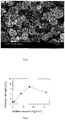
- Figure 1 shows a Scanning Electron Microscope (SEM) image of exemplary particles of the present invention (Example 7). It can be seen that the particles are substantially spherical. A particle size thereof is in the order of micrometer, that is, ranges from 1 to 1,000 ⁇ m, mainly from 1 to 50 ⁇ m, with a mode diameter ranging from 10 to 20 ⁇ m. According to application site and application means, particles of a predetermined range of particle size can be selected by screening or the like. From the viewpoints of delivery and handling properties, the particle size preferably ranges from 1 to 200 ⁇ m, more preferably from 1 to 50 ⁇ m. In the present invention, the particle size was determined by SEM image analysis, but other method, for example, laser diffraction method or the like can be also used.
- SEM Scanning Electron Microscope
- the particle can be prepared by spray drying a solution of the gelatin derivative or by pulverizing the gelatin derivative in solid state obtained by drying the solution, followed by thermally crosslinking.
- the spray drying is preferred.
- the method described in the aforesaid non-patent document 1 may be used wherein an aqueous solution of gelatin is dropped in an olive oil to form a gel in the form of oil-in-water emulsion and particles thus obtained are introduced in an aqueous solution of glutaraldehyde to be chemically crosslinked.
- the method of spray drying is preferred because no dispersion medium or crosslinking agent is used, so that there are no concerns of toxicity caused by residues or decomposition product thereof, no need of cleaning the dispersion medium off, and no concerns of aggregation of particles in drying process after cleaning process.
- FIG. 6a to 6e show phase-contrast micrographs of particles dispersed in water immediately after heat treating particles prepared by spray drying (Example 7) for a period of time varied from 20 minutes to 3 hours at 150 °C and at a reduced pressure ( ⁇ 10 Pa) in a vacuum dryer.
- Dissolving property in the body fluid of the above particles with 1-hour, 3-hour, or 6-hour heat treatment was examined by an accelerated test in the presence of collagenase.
- the results are shown in Figure 7 .
- 3-hour heat treatment enables particles to show required initial absorption of the body fluid without being dissolved in the body fluid when applied as a wound dressing material.
- a time for dissolution increased with increased time of heat treatment, which indicates that dissolving property in the body fluid can be controlled by the time of heat treatment.
- a degree of crosslinking cannot be limited to a specific range because 100 % of crosslinking, which is defined as a state where all the amino groups have reacted, varies according to the number of amino groups that can be involved in the crosslinking reaction depending on the degree of derivatization.
- Figure 8 shows a graph of amounts of amino group consumed by the crosslinking plotted versus heat treatment time, which amounts were determined by measuring an amount of remaining amino groups by TNBS method of the particles prepared by spray drying an original gelatin followed by heat treatment at 150 °C. As is found from the figure, the crosslinking rapidly advanced at 150 °C in the first 3 hours, and then gradually slowed to reach a plateau in 6 hours where about 40% of crosslinkable amino groups had been consumed.
- the wound dressing material of the present invention may comprise various additives in such an amount that they do not adversely affect the objects of the present invention.
- the additives include colorants, and preservatives. It may comprise various drugs, for example, antithrombotic drugs, antibiotics, and various growth factors.
- the additives or drugs may be supported on or bonded to the particles.
- a method of preparing the wound dressing material comprises the steps of: [1]preparing the gelatin derivative, [2] spray drying or pulverizing the gelatin derivative in solid state after drying to form particles, and [3] heat treating. Each step will be explained below.
- a starting original gelatin is dissolved in water or an aqueous solvent at a concentration of from 5 to 50 wt/v % by heating at 40 to 90 °C.
- Water may be ultrapure water, deionized water, or distilled water.
- aqueous solvent a mixture of water and water soluble organic solvent is used.
- the water soluble organic solvent include alcohols having 1 to 3 carbon atoms and esters having 1 to 3 carbon atoms, and preferably ethanol is used.
- a derivatizing agent having an alkyl group to be introduced to the gelatin is added and a mixture thus obtained is subjected to a reaction while stirring for a predetermined period of time.
- an aldehyde or a ketone having the alkyl group is used such as dodecanal, tetradecanal, and decyl ethyl ketone.
- a reaction temperature ranges from 30 to 80 °C, and a reaction time ranges from 0.5 to 12 hours.
- a gelatin derivative having the alkyl group bonded to an amino group of the gelatin via a Shiff base can be obtained only by stirring.
- the aldehyde is used in an amount of from 1 to 4 times the stoichiometric amount corresponding to a desired derivatization ratio, preferably, 1 to 2 times.
- a known reducing agent can be used such as sodium cyanoborohydride (NaBH 3 CN), sodium triacetoxyborohydride (NaBH(OAc) 3 ), 2- picoline borane, and pyridine borane, among which 2- picoline borane is preferred.
- the picoline borane is stable to allow a one-pot reductive amination reaction of aldehydes or ketones in an aqueous solvent. In addition, a yield of from 80 to 90% can be achieved.
- 2- picoline borane is used in an amount of from 1 to 3 equivalents relative to an equivalent of a derivatizing agent. It should be noted that the reducing agent and the aldehyde or the like can be added in any order and any one of them can be added to gelatin solution before the other, or they may be added simultaneously.
- reaction solution obtained in the step (2) a large excess amount of a poor solvent such as cold ethanol is added, or the reaction solution is added to cold ethanol to precipitate a gelatin derivative. After isolating the precipitate by filtration, it is washed with ethanol or the like to obtain a final product.
- a poor solvent such as cold ethanol
- a spray dryer may be of any type, for example, disc type, nozzle type, cyclone collection type, or filter collection type.
- Spray drying is performed by spraying a solution of the gelatin derivative dissolved in a mixed solvent of water and a water miscible organic solvent in the presence of an inert gas such as nitrogen.
- the organic solvent include alcohols having 1 to 3 carbon atoms and esters having 1 to 3 carbon atoms, among which ethanol is preferably used.
- a mixing ratio in volume of water/the organic solvent ranges from 10/0 to 3/7, preferably from 6/4 to 4/6.
- an aqueous solution of gelatin is used.
- the solution may be prepared by adding water to the gelatin derivative, then stirring at 50 to 90 °C to dissolve, and adding to thus obtained aqueous solution an organic solvent to make a concentration of the gelatin derivative ranging from 1 to 7 w/v%, preferably 3 to 5 w/v%.
- concentration below the aforesaid lower limit it would be difficult to obtain particles, whereas at a concentration above the aforesaid upper limit a proportional increase of a yield would not be achieved because particles tend to stick to a glass wall of a spray dryer before reaching a collecting container.
- a drying temperature ranges from 140 to 220 °C, preferably from 160 to 200 °C. At a temperature below the aforesaid lower limit, a particle size tends to be smaller than 1 ⁇ m, whereas at a temperature above the aforesaid upper limit particles tend to agglomerate.
- a flow rate of the inert gas ranges from 400 to 500 L/h, preferably from 400 to 480 L/h.
- a flow rate of the gelatin derivative solution ranges from 300 to 500 mL/h, preferably from 350 to 450 mL/h.
- the purified gelatin derivative is dissolved in ultrapure water and then dried at 40 to 60 °C into a solid state, followed by pulverized with pulverizer, for example, roller mill, jet mill, hammer mill or the like.
- pulverizer for example, roller mill, jet mill, hammer mill or the like.
- a dispersion medium such as polyethylene glycol or the like may be added.
- Particles obtained by spray drying or mechanical pulverization are heat treated to crosslink gelatin derivative. Temperature and time of heating should be appropriately adjusted according molecular weight of an original gelatin, degree of derivatization, and intended degree of crosslinking.
- An original gelatin having a molecular weight (Mw) of about 100,000 is heated at 140 to 160 °C for at least 3 hours.
- particles may be subjected to cleaning, drying, and screening as well as treatments for supporting a drug thereon.
- the wound dressing material of the preset invention can be applied to incised parts in various surgeries, for example, respiratory surgery, especially wounds after lung cancer surgery, gastrointestinal surgery, cardiovascular surgery, oral surgery, and gastrointestinal medicine, and skin wounds.
- ESD ESD
- it can be applied in the dry state using hemostatic forceps, stent, balloon, or endoscope.
- An amount of application thereof can be adjusted according to application site, and wound.
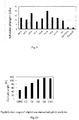
- preferred amount per area of tissue was found in the range of from 10 to 20 mg/cm 2 based on adhesion strength measurements performed in the same manner as Examples described below by varying amount of from 1.6 to 32 g/cm 2 of particles applied to porcine stomach lining tissues ( Figure 2 ).
- Gelatin derivatives shown in Table 1 were prepared. Method of preparation thereof will be explained for gelatin derivative 7 as an example.
- An introduction ratio of octyl group in the obtained gelatin derivative was determined by the following method.
- the original gelatin and the gelatin derivative were respectively dissolved in a mixed solvent of water/DMSO (volume ratio of 1/1, the same applies hereinafter) at a concentration of 0.1 w/v% and 100 ⁇ L of each solution thus obtained was dispensed in a 48-well plate.
- 100 ⁇ L of 0.1 v/v % trimethylamine (TEA, Nacalai Tesque, Inc.) solution dissolved in the mixed solvent of water/DMSO was added and stirred at 400 rpm for 1 minute by using a plate shaker.
- TEA trimethylamine
- the gelatin derivative was analyzed by 13 C-NMR and FT-IR.
- 13 C-NMR measurement each gelatin derivative and the original gelatin was dissolved in heavy water (containing 3-(trimethylsilyl)-1-propanesulfonic acid sodium salt as the internal standard) at a concentration of 20 wt% and the measurement was performed at 50 °C.
- Figure 3 shows 13 C-NMR spectra obtained.
- the gelatin derivative showed a peak around 17- 17.5 ppm assigned to a primary carbon atom whereby it was confirmed that an octyl group had been introduced in the gelatin.
- FT-IR measurement was performed on the gelatin derivative powder placed on a sample table.
- Figure 4 shows 2500 to 3500 cm -1 region of FT-IR spectra. Peaks assigned to stretching vibration of methyl group (2868 cm -1 ), stretching vibration of methylene group (2929 cm -1 ), and N-H stretching (3299 cm -1 ) were observed.
- Gelatin derivatives 1-6, 8, and the original gelatin were spray dried and heat treated (150 °C for 3 hours) in the same manner to form particles.
- Figure 1 shows a SEM image of particles obtained from gelatin derivative 7.
- the particles were substantially spherical. Results of an image analysis showed that they has a size distribution of from about 1 ⁇ m to 1,000 ⁇ m, and a mode diameter of from 10 to 20 ⁇ m.
- Adhesion test was performed using porcine stomach lining tissues (Tokyo Shibaura Zouki Co.,Ltd.). The test was performed according to the method of American Society for Testing and Materials (ASTM F-2258-05). A porcine stomach was opened, and mucosal layer thereof was removed. In this procedure, physiological saline was injected beneath the mucosal tissues and resulting uplifted parts were removed whereby only the mucosal layer was removed with submucosal tissues partly remaining. From the tissues thus obtained, 2.5 cm x 2.5 cm pieces were cut out. One piece was fixed on an upper jig of the test instrument and another piece was on a lower jig with an instant adhesive.
- the porcine stomach lining tissues were kept at 37 °C by using a hot plate. After removing excess water on surfaces of the pieces by KimWipes (tradename), 100 mg (16mg/ cm 2 ) of the gelatin particles were placed on the lower piece. After pressing the particles with the upper jig at a pressure of 80kPa for 3 minutes, an adhesion strength was measured by pulling up the upper jig.
- the particles obtained from the original gelatin was used as Comparative Example 1, NEOVEIL (trademark) was used as Comparative Example 2, and "Control" is a blank value with no sample. Results are shown in Table 2 and Figure 9 .
- Example 7 In a 5-mL vial, 1 mL of whole blood taken from a rat (6-week-old female Wister rat) was placed. To the vial, 50 mg of particles of Example 7 (75C8) were added, mixed lightly and left to stand. As a control, the whole blood without any additive was used. At 3 minutes after mixing, the blood sample containing 75C8 particles clotted whereas the control sample did not. This indicates that the gelatin derivative particles of the present invention have a hemostatic effect.
- Pellets were prepared by placing 100 mg of each particles of Example 1 (C2), Example 2 (C4), Example 3 (C6), Example 6 (C8), Example 8 (C12) and Comparative Example 1 (ORG) on a slide glass, sandwiching the particles with another slide glass, and then manually pressing the particles. Using a contact angle meter (DM-700, Kyowa Interface Science Co., Ltd.), a drop of ultrapure water was dropped on a surface of the pellet. At 200 seconds later, an angle between the drop and the surface of the pellet was measured. Results are shown in Figure 10 .
- DM-700 Kyowa Interface Science Co., Ltd.
- Comparative Example 1 showed a contact angle of 46 degrees, indicating hydrophilic surface, whereas the particles of Examples showed increasing contact angles with increasing alkyl chain length of modifier.
- the particles of Examples showed increasing contact angles with increasing alkyl chain length of modifier.
- hydrophobic surfaces were observed with a contact angle exceeding 100 degrees. It was thus found that particles having a higher hydrophobic surface can be produced by modifying gelatin with a group having a higher hydrophobicity.
- RAW264 cells which are macrophage-like cells derived from mouse, influences of the gelatin derivative particles on survival rate of the cells were evaluated.
- RAW264 cells were seeded at a concentration of 6 x 10 4 cells/cm 2 in a 96-well plate and cultured in RPMI1640 medium (10% fetal bovine serum, 1% non-essential amino acid, 1% antibiotic) at 37 °C in a 5% CO 2 incubator for 24 hours.
- Example 1 100 ⁇ L of a dispersion of particles of Example 1 (C2), Example 2 (C4), Example 3 (C6), Example 6 (C8), Example 8 (C12) and Comparative Example 1 (ORG) each dispersed in the above medium at concentrations of 0.625, 1.25, 2.5, 5, or 10 mg/mL was added. After culturing for 24 hours, the cells were counted using a cell counting kit (WST-8, Dojindo Laboratories). The number of cells of each sample are shown in the graph ( Figure 11 ) with the number of cells in the well without particles being 100 %.
- WST-8 Dojindo Laboratories
- Example 1 The samples containing particles of Example 1 (C2), Example 2 (C4), Example 3 (C6), Example 6 (C8), or Comparative Example 1 (ORG) showed a large number of cells, whereby a high cell compatibility was confirmed.
- Particles of Example 8 (C12) showed a decrease in cell number at a concentration of 2.5 mg/mL or higher. It follows that it would be preferred for particles having a long alkyl chain to be applied to a wound at a relatively low concentration.
- Wound healing involves an epithelialization process where new epithelial cells grow to close the wound.
- growth behaviors of Caco-2 cells derived from human epithelial colorectal adenocarcinoma cells on film made of the gelatin particles were evaluated.
- 100 ⁇ L of a dispersion of particles of Example 1 (C2), Example 2 (C4), Example 3 (C6), Example 6 (C8), Example 8 (C12) and Comparative Example 1 (ORG) each dispersed in ultrapure water at a concentration of 0.2 mg/mL was added. By evaporating ultrapure water, films composed of the particles were prepared.
- Caco-2 cells were seeded on the films at a concentration of 6 x 10 3 cells/cm 2 and then cultured in DMEM medium (20% fetal bovine serum, 1% non-essential amino acid, 1% antibiotic) at 37 °C in a 5% CO 2 incubator. After culturing for 24 hours, the cells were counted using a cell counting kit (WST-8, Dojindo Laboratories). Results are shown in Figure 12 .
- Example 1 the cells grew on the films of Example 1 (C2), Example 2 (C4), Example 3 (C6), and Comparative Example 1 (ORG) and, in particular, particles of Example 2 (C4), Example 3 (C6) showed significantly higher growth property than Comparative Example 1, implying capability of promoting epithelialization process.
- Example 6 the films of Example 6 (C8), and Example 8 (C12)
- the growth of Caco-2 cells were suppressed. This may possibly be caused by alkyl chain density on the films, considering the aforesaid results of cell survival rate.
- Mouse IL-6 assay was performed in the same manner as in the evaluation of cell survival rate except that mouse IL-6 was quantified in a supernatant collected after 24-hour culture by using ELISA assay kit (R&D systems, Inc.) instead of counting cells. Results are shown in Figure 13 .
- CTR means a sample with no particle.
- IL-6 was produced in the presence of the particles of Example 6 (C8), and Example 8 (C12), and especially more IL-6 was produced in the presence of the particles of Example 8 (C12).
- IL-6 is involved in fever development and angiogenesis in an acute phase response involved in a recovery from an undesired inflammatory state and has various physiological activities. It is expected that the use of the particles of Example 6 (C8), or Example 8 (C12) promote wound healing.
- Example 8(C12) showed almost the same degree of wound closure as that in CTR.
- wound healing process if a wound is closed rapidly before an inflammatory response subsides, scar contracture occurs, which possibly causes constriction. Accordingly, a larger remaining wound area is preferable. The larger remaining wound area indicated that scar contracture is suppressed by applying the particles of the present invention.
- all the samples showed closure of the wound.
- TEFLON tradename
- the wound dressing material of the present invention is very useful for applying to wounds and vascular anastomotic portions or the like in surgeries such as endoscopic submucosal dissection.
Landscapes
- Health & Medical Sciences (AREA)
- General Health & Medical Sciences (AREA)
- Veterinary Medicine (AREA)
- Public Health (AREA)
- Life Sciences & Earth Sciences (AREA)
- Animal Behavior & Ethology (AREA)
- Epidemiology (AREA)
- Engineering & Computer Science (AREA)
- Materials Engineering (AREA)
- Chemical & Material Sciences (AREA)
- Surgery (AREA)
- Heart & Thoracic Surgery (AREA)
- Vascular Medicine (AREA)
- Hematology (AREA)
- Biomedical Technology (AREA)
- Materials For Medical Uses (AREA)
- Medicinal Preparation (AREA)
Applications Claiming Priority (3)
| Application Number | Priority Date | Filing Date | Title |
|---|---|---|---|
| JP2017169127 | 2017-09-04 | ||
| JP2018056417 | 2018-03-23 | ||
| PCT/JP2018/032503 WO2019045081A1 (ja) | 2017-09-04 | 2018-08-31 | 架橋ゼラチン誘導体粒子を含む創傷被覆材 |
Publications (3)
| Publication Number | Publication Date |
|---|---|
| EP3679954A1 true EP3679954A1 (de) | 2020-07-15 |
| EP3679954A4 EP3679954A4 (de) | 2021-06-02 |
| EP3679954B1 EP3679954B1 (de) | 2025-03-05 |
Family
ID=65525760
Family Applications (1)
| Application Number | Title | Priority Date | Filing Date |
|---|---|---|---|
| EP18850284.3A Active EP3679954B1 (de) | 2017-09-04 | 2018-08-31 | Wundverband mit vernetzten gelatinederivatpartikeln |
Country Status (5)
| Country | Link |
|---|---|
| US (1) | US11975113B2 (de) |
| EP (1) | EP3679954B1 (de) |
| JP (1) | JP6851655B2 (de) |
| CN (1) | CN111065421B (de) |
| WO (1) | WO2019045081A1 (de) |
Families Citing this family (10)
| Publication number | Priority date | Publication date | Assignee | Title |
|---|---|---|---|---|
| WO2020050102A1 (ja) * | 2018-09-05 | 2020-03-12 | 国立研究開発法人物質・材料研究機構 | 癒着防止材 |
| WO2020071429A1 (ja) * | 2018-10-04 | 2020-04-09 | 国立研究開発法人物質・材料研究機構 | 血管新生促進剤、及び治療方法 |
| CN113227129B (zh) * | 2018-12-26 | 2026-02-06 | 国立研究开发法人物质·材料研究机构 | 粉体、创伤被覆材料、防粘连材料、止血材料及粉体的制造方法 |
| EP4167963A1 (de) * | 2020-06-19 | 2023-04-26 | Universiteit Gent | Quellbare gelatinezusammensetzungen |
| JP7683191B2 (ja) * | 2020-06-30 | 2025-05-27 | 富士フイルムビジネスイノベーション株式会社 | 生分解性樹脂粒子 |
| JP7698176B2 (ja) * | 2020-09-15 | 2025-06-25 | 株式会社パウレック | ゼラチン粒子製造方法およびゼラチン粒子製造装置 |
| TWI727894B (zh) * | 2020-09-28 | 2021-05-11 | 全通生醫有限公司 | 創傷敷料 |
| JP2022126909A (ja) * | 2021-02-19 | 2022-08-31 | 国立研究開発法人物質・材料研究機構 | 穿孔部閉鎖材、及び、穿孔部閉鎖材の製造方法 |
| EP4506021A4 (de) * | 2022-03-23 | 2026-03-18 | Nat Inst Materials Science | Antihaftmaterial und verfahren zur herstellung von antihaftmaterial |
| JPWO2025013818A1 (de) * | 2023-07-10 | 2025-01-16 |
Family Cites Families (10)
| Publication number | Priority date | Publication date | Assignee | Title |
|---|---|---|---|---|
| JP3805654B2 (ja) * | 2001-08-29 | 2006-08-02 | 株式会社ネクスト | 止血・癒着防止性のバイオポリマーの微細粒子 |
| US7854923B2 (en) * | 2006-04-18 | 2010-12-21 | Endomedix, Inc. | Biopolymer system for tissue sealing |
| BRPI0718328A2 (pt) * | 2006-12-15 | 2011-10-11 | Lifebond Ltd | composição, curativo hemostático e dispositivo médico para a inserção em um corpo de um ser humano ou de um mamìfero inferior |
| CA2716010C (en) * | 2008-04-03 | 2019-10-01 | Zymogenetics, Inc. | Hemostatic microspheres |
| JP4422191B1 (ja) | 2008-09-30 | 2010-02-24 | ゼライス株式会社 | 架橋ゼラチン、塞栓剤および架橋ゼラチンの製造方法 |
| JP2011025013A (ja) * | 2009-06-25 | 2011-02-10 | Doshisha | 癒着防止材及びその製造方法 |
| US20140296151A1 (en) * | 2011-10-14 | 2014-10-02 | Council Of Scientific And Industrial Research | Peptides from fish gelatine |
| US20140079794A1 (en) * | 2012-09-18 | 2014-03-20 | Nitto Denko Corporation | Gelatin particle and use thereof, and device for administration of physiologically active substance |
| WO2014141877A1 (ja) * | 2013-03-12 | 2014-09-18 | 富士フイルム株式会社 | 組織修復材 |
| JP5995128B1 (ja) * | 2016-01-20 | 2016-09-21 | 国立研究開発法人物質・材料研究機構 | 外科用シーラント |
-
2018
- 2018-08-31 CN CN201880057237.XA patent/CN111065421B/zh active Active
- 2018-08-31 US US16/642,887 patent/US11975113B2/en active Active
- 2018-08-31 WO PCT/JP2018/032503 patent/WO2019045081A1/ja not_active Ceased
- 2018-08-31 EP EP18850284.3A patent/EP3679954B1/de active Active
- 2018-08-31 JP JP2019539690A patent/JP6851655B2/ja active Active
Also Published As
| Publication number | Publication date |
|---|---|
| WO2019045081A1 (ja) | 2019-03-07 |
| EP3679954A4 (de) | 2021-06-02 |
| US20200206382A1 (en) | 2020-07-02 |
| JPWO2019045081A1 (ja) | 2020-05-28 |
| JP6851655B2 (ja) | 2021-03-31 |
| CN111065421B (zh) | 2022-04-29 |
| CN111065421A (zh) | 2020-04-24 |
| US11975113B2 (en) | 2024-05-07 |
| EP3679954B1 (de) | 2025-03-05 |
Similar Documents
| Publication | Publication Date | Title |
|---|---|---|
| EP3679954B1 (de) | Wundverband mit vernetzten gelatinederivatpartikeln | |
| Sizílio et al. | Chitosan/pvp-based mucoadhesive membranes as a promising delivery system of betamethasone-17-valerate for aphthous stomatitis | |
| JP6639441B2 (ja) | ヒドロゲルを生成するための方法 | |
| Ghobril et al. | The chemistry and engineering of polymeric hydrogel adhesives for wound closure: a tutorial | |
| EP2203053B1 (de) | Modifiziertes stärkematerial aus einer biokompatiblen hämostase | |
| US20050074495A1 (en) | Compositions of polyacids and methods for their use in reducing adhesions | |
| EP1181023B1 (de) | ZUSAMMENSETZUNGEN VON POLYSÄUREN, NICHTIONISCHEN POLYMEREN VON ALKYLENOXID-MONOMEREN UND MEHRWERTIGEN KATIONEN, UND DEREN vERWENDUNG ZUR REDUZIERUNG DER GEWEBEADHÄSION | |
| Kabiri et al. | Preparation and characterization of absorbable hemostat crosslinked gelatin sponges for surgical applications | |
| Singh et al. | Graft copolymerization of polyvinylpyrollidone onto Azadirachta indica gum polysaccharide in the presence of crosslinker to develop hydrogels for drug delivery applications | |
| EP3904377B1 (de) | Pulver, wundabdeckungsmaterial, adhäsionsverhinderndes material, hämostatisches material und verfahren zur herstellung des pulvers | |
| CN109922792A (zh) | 基于官能化多糖的水凝胶 | |
| CN116133702A (zh) | 防粘连用组合物 | |
| US20080317765A1 (en) | Method for Removal of Toxins from Mucosal Membranes | |
| Shajari et al. | Thiolated gellan gum/polyethylene glycol diacrylate hydrogels containing timolol maleate-loaded chitosan nanoparticles for ophthalmic delivery | |
| CN118141974A (zh) | 一种能够快速止血的丝素蛋白积聚颗粒 | |
| Jain et al. | Novel interpenetrating polymer network microspheres of Lepidium sativum and poly (vinyl alcohol) for the controlled release of simvastatin | |
| El-Meliegy et al. | Anticancer drug carriers using dicalcium phosphate/dextran/CMCnanocomposite scaffolds | |
| Zhao et al. | Adhesive and biodegradable polymer mixture composed of high-biosafety pharmaceutical excipients as non-setting periodontal dressing | |
| CN1917896B (zh) | 暴露的生物组织的表面保护 | |
| Ke et al. | Development of resveratrol with thiolated alginate as a supplement to prevent nonalcoholic fatty liver disease (NAFLD) | |
| US20230398265A1 (en) | Compositions and methods for inhibition of tissue adhesion | |
| Chan et al. | A silk fibroin/chitosan hydrogel with ferulic acid derivatives: Promoting diabetic wound healing through immune modulation and angiogenesis | |
| Basharat et al. | pH-Sensitive acrylic acid grafted Abelmoschus esculentus composite for sustained release of pantoprazole sodium | |
| WO2019172261A1 (ja) | 食道狭窄防止材料 | |
| Ng et al. | Sporopollenin-based material for prevention of postoperative adhesions: a murine study |
Legal Events
| Date | Code | Title | Description |
|---|---|---|---|
| STAA | Information on the status of an ep patent application or granted ep patent |
Free format text: STATUS: THE INTERNATIONAL PUBLICATION HAS BEEN MADE |
|
| PUAI | Public reference made under article 153(3) epc to a published international application that has entered the european phase |
Free format text: ORIGINAL CODE: 0009012 |
|
| STAA | Information on the status of an ep patent application or granted ep patent |
Free format text: STATUS: REQUEST FOR EXAMINATION WAS MADE |
|
| 17P | Request for examination filed |
Effective date: 20200304 |
|
| AK | Designated contracting states |
Kind code of ref document: A1 Designated state(s): AL AT BE BG CH CY CZ DE DK EE ES FI FR GB GR HR HU IE IS IT LI LT LU LV MC MK MT NL NO PL PT RO RS SE SI SK SM TR |
|
| AX | Request for extension of the european patent |
Extension state: BA ME |
|
| DAV | Request for validation of the european patent (deleted) | ||
| DAX | Request for extension of the european patent (deleted) | ||
| A4 | Supplementary search report drawn up and despatched |
Effective date: 20210503 |
|
| RIC1 | Information provided on ipc code assigned before grant |
Ipc: A61L 15/32 20060101AFI20210426BHEP Ipc: A61L 24/10 20060101ALI20210426BHEP Ipc: A61L 31/04 20060101ALI20210426BHEP Ipc: A61L 26/00 20060101ALI20210426BHEP Ipc: A61L 24/00 20060101ALI20210426BHEP |
|
| STAA | Information on the status of an ep patent application or granted ep patent |
Free format text: STATUS: EXAMINATION IS IN PROGRESS |
|
| 17Q | First examination report despatched |
Effective date: 20230214 |
|
| GRAP | Despatch of communication of intention to grant a patent |
Free format text: ORIGINAL CODE: EPIDOSNIGR1 |
|
| STAA | Information on the status of an ep patent application or granted ep patent |
Free format text: STATUS: GRANT OF PATENT IS INTENDED |
|
| INTG | Intention to grant announced |
Effective date: 20241118 |
|
| GRAS | Grant fee paid |
Free format text: ORIGINAL CODE: EPIDOSNIGR3 |
|
| GRAA | (expected) grant |
Free format text: ORIGINAL CODE: 0009210 |
|
| STAA | Information on the status of an ep patent application or granted ep patent |
Free format text: STATUS: THE PATENT HAS BEEN GRANTED |
|
| AK | Designated contracting states |
Kind code of ref document: B1 Designated state(s): AL AT BE BG CH CY CZ DE DK EE ES FI FR GB GR HR HU IE IS IT LI LT LU LV MC MK MT NL NO PL PT RO RS SE SI SK SM TR |
|
| REG | Reference to a national code |
Ref country code: GB Ref legal event code: FG4D |
|
| REG | Reference to a national code |
Ref country code: CH Ref legal event code: EP |
|
| REG | Reference to a national code |
Ref country code: DE Ref legal event code: R096 Ref document number: 602018079902 Country of ref document: DE |
|
| REG | Reference to a national code |
Ref country code: IE Ref legal event code: FG4D |
|
| PG25 | Lapsed in a contracting state [announced via postgrant information from national office to epo] |
Ref country code: RS Free format text: LAPSE BECAUSE OF FAILURE TO SUBMIT A TRANSLATION OF THE DESCRIPTION OR TO PAY THE FEE WITHIN THE PRESCRIBED TIME-LIMIT Effective date: 20250605 |
|
| PG25 | Lapsed in a contracting state [announced via postgrant information from national office to epo] |
Ref country code: FI Free format text: LAPSE BECAUSE OF FAILURE TO SUBMIT A TRANSLATION OF THE DESCRIPTION OR TO PAY THE FEE WITHIN THE PRESCRIBED TIME-LIMIT Effective date: 20250305 |
|
| REG | Reference to a national code |
Ref country code: NL Ref legal event code: MP Effective date: 20250305 |
|
| PG25 | Lapsed in a contracting state [announced via postgrant information from national office to epo] |
Ref country code: ES Free format text: LAPSE BECAUSE OF FAILURE TO SUBMIT A TRANSLATION OF THE DESCRIPTION OR TO PAY THE FEE WITHIN THE PRESCRIBED TIME-LIMIT Effective date: 20250305 |
|
| REG | Reference to a national code |
Ref country code: LT Ref legal event code: MG9D |
|
| PG25 | Lapsed in a contracting state [announced via postgrant information from national office to epo] |
Ref country code: NO Free format text: LAPSE BECAUSE OF FAILURE TO SUBMIT A TRANSLATION OF THE DESCRIPTION OR TO PAY THE FEE WITHIN THE PRESCRIBED TIME-LIMIT Effective date: 20250605 |
|
| PG25 | Lapsed in a contracting state [announced via postgrant information from national office to epo] |
Ref country code: HR Free format text: LAPSE BECAUSE OF FAILURE TO SUBMIT A TRANSLATION OF THE DESCRIPTION OR TO PAY THE FEE WITHIN THE PRESCRIBED TIME-LIMIT Effective date: 20250305 |
|
| PG25 | Lapsed in a contracting state [announced via postgrant information from national office to epo] |
Ref country code: LV Free format text: LAPSE BECAUSE OF FAILURE TO SUBMIT A TRANSLATION OF THE DESCRIPTION OR TO PAY THE FEE WITHIN THE PRESCRIBED TIME-LIMIT Effective date: 20250305 |
|
| PG25 | Lapsed in a contracting state [announced via postgrant information from national office to epo] |
Ref country code: GR Free format text: LAPSE BECAUSE OF FAILURE TO SUBMIT A TRANSLATION OF THE DESCRIPTION OR TO PAY THE FEE WITHIN THE PRESCRIBED TIME-LIMIT Effective date: 20250606 Ref country code: BG Free format text: LAPSE BECAUSE OF FAILURE TO SUBMIT A TRANSLATION OF THE DESCRIPTION OR TO PAY THE FEE WITHIN THE PRESCRIBED TIME-LIMIT Effective date: 20250305 |
|
| REG | Reference to a national code |
Ref country code: AT Ref legal event code: MK05 Ref document number: 1772326 Country of ref document: AT Kind code of ref document: T Effective date: 20250305 |
|
| PG25 | Lapsed in a contracting state [announced via postgrant information from national office to epo] |
Ref country code: NL Free format text: LAPSE BECAUSE OF FAILURE TO SUBMIT A TRANSLATION OF THE DESCRIPTION OR TO PAY THE FEE WITHIN THE PRESCRIBED TIME-LIMIT Effective date: 20250305 |
|
| PG25 | Lapsed in a contracting state [announced via postgrant information from national office to epo] |
Ref country code: SE Free format text: LAPSE BECAUSE OF FAILURE TO SUBMIT A TRANSLATION OF THE DESCRIPTION OR TO PAY THE FEE WITHIN THE PRESCRIBED TIME-LIMIT Effective date: 20250305 |
|
| PG25 | Lapsed in a contracting state [announced via postgrant information from national office to epo] |
Ref country code: SM Free format text: LAPSE BECAUSE OF FAILURE TO SUBMIT A TRANSLATION OF THE DESCRIPTION OR TO PAY THE FEE WITHIN THE PRESCRIBED TIME-LIMIT Effective date: 20250305 |
|
| PG25 | Lapsed in a contracting state [announced via postgrant information from national office to epo] |
Ref country code: PT Free format text: LAPSE BECAUSE OF FAILURE TO SUBMIT A TRANSLATION OF THE DESCRIPTION OR TO PAY THE FEE WITHIN THE PRESCRIBED TIME-LIMIT Effective date: 20250707 |
|
| PGFP | Annual fee paid to national office [announced via postgrant information from national office to epo] |
Ref country code: DE Payment date: 20250820 Year of fee payment: 8 |
|
| PG25 | Lapsed in a contracting state [announced via postgrant information from national office to epo] |
Ref country code: IT Free format text: LAPSE BECAUSE OF FAILURE TO SUBMIT A TRANSLATION OF THE DESCRIPTION OR TO PAY THE FEE WITHIN THE PRESCRIBED TIME-LIMIT Effective date: 20250305 Ref country code: PL Free format text: LAPSE BECAUSE OF FAILURE TO SUBMIT A TRANSLATION OF THE DESCRIPTION OR TO PAY THE FEE WITHIN THE PRESCRIBED TIME-LIMIT Effective date: 20250305 |
|
| PG25 | Lapsed in a contracting state [announced via postgrant information from national office to epo] |
Ref country code: AT Free format text: LAPSE BECAUSE OF FAILURE TO SUBMIT A TRANSLATION OF THE DESCRIPTION OR TO PAY THE FEE WITHIN THE PRESCRIBED TIME-LIMIT Effective date: 20250305 |
|
| PGFP | Annual fee paid to national office [announced via postgrant information from national office to epo] |
Ref country code: FR Payment date: 20250828 Year of fee payment: 8 |
|
| PG25 | Lapsed in a contracting state [announced via postgrant information from national office to epo] |
Ref country code: CZ Free format text: LAPSE BECAUSE OF FAILURE TO SUBMIT A TRANSLATION OF THE DESCRIPTION OR TO PAY THE FEE WITHIN THE PRESCRIBED TIME-LIMIT Effective date: 20250305 Ref country code: EE Free format text: LAPSE BECAUSE OF FAILURE TO SUBMIT A TRANSLATION OF THE DESCRIPTION OR TO PAY THE FEE WITHIN THE PRESCRIBED TIME-LIMIT Effective date: 20250305 |
|
| PG25 | Lapsed in a contracting state [announced via postgrant information from national office to epo] |
Ref country code: RO Free format text: LAPSE BECAUSE OF FAILURE TO SUBMIT A TRANSLATION OF THE DESCRIPTION OR TO PAY THE FEE WITHIN THE PRESCRIBED TIME-LIMIT Effective date: 20250305 |
|
| PG25 | Lapsed in a contracting state [announced via postgrant information from national office to epo] |
Ref country code: SK Free format text: LAPSE BECAUSE OF FAILURE TO SUBMIT A TRANSLATION OF THE DESCRIPTION OR TO PAY THE FEE WITHIN THE PRESCRIBED TIME-LIMIT Effective date: 20250305 |
|
| PG25 | Lapsed in a contracting state [announced via postgrant information from national office to epo] |
Ref country code: IS Free format text: LAPSE BECAUSE OF FAILURE TO SUBMIT A TRANSLATION OF THE DESCRIPTION OR TO PAY THE FEE WITHIN THE PRESCRIBED TIME-LIMIT Effective date: 20250705 |
|
| REG | Reference to a national code |
Ref country code: DE Ref legal event code: R097 Ref document number: 602018079902 Country of ref document: DE |
|
| PLBE | No opposition filed within time limit |
Free format text: ORIGINAL CODE: 0009261 |
|
| STAA | Information on the status of an ep patent application or granted ep patent |
Free format text: STATUS: NO OPPOSITION FILED WITHIN TIME LIMIT |
|
| PG25 | Lapsed in a contracting state [announced via postgrant information from national office to epo] |
Ref country code: DK Free format text: LAPSE BECAUSE OF FAILURE TO SUBMIT A TRANSLATION OF THE DESCRIPTION OR TO PAY THE FEE WITHIN THE PRESCRIBED TIME-LIMIT Effective date: 20250305 |
|
| REG | Reference to a national code |
Ref country code: CH Ref legal event code: L10 Free format text: ST27 STATUS EVENT CODE: U-0-0-L10-L00 (AS PROVIDED BY THE NATIONAL OFFICE) Effective date: 20260114 |
|
| 26N | No opposition filed |
Effective date: 20251208 |
|
| REG | Reference to a national code |
Ref country code: CH Ref legal event code: H13 Free format text: ST27 STATUS EVENT CODE: U-0-0-H10-H13 (AS PROVIDED BY THE NATIONAL OFFICE) Effective date: 20260324 |
|
| PG25 | Lapsed in a contracting state [announced via postgrant information from national office to epo] |
Ref country code: MC Free format text: LAPSE BECAUSE OF FAILURE TO SUBMIT A TRANSLATION OF THE DESCRIPTION OR TO PAY THE FEE WITHIN THE PRESCRIBED TIME-LIMIT Effective date: 20250305 |
|
| PG25 | Lapsed in a contracting state [announced via postgrant information from national office to epo] |
Ref country code: LU Free format text: LAPSE BECAUSE OF NON-PAYMENT OF DUE FEES Effective date: 20250831 |
|
| PG25 | Lapsed in a contracting state [announced via postgrant information from national office to epo] |
Ref country code: CH Free format text: LAPSE BECAUSE OF NON-PAYMENT OF DUE FEES Effective date: 20250831 |