EP3674076B1 - Elastic sheet for absorbent article and absorbent article comprising same - Google Patents
Elastic sheet for absorbent article and absorbent article comprising same Download PDFInfo
- Publication number
- EP3674076B1 EP3674076B1 EP18866094.8A EP18866094A EP3674076B1 EP 3674076 B1 EP3674076 B1 EP 3674076B1 EP 18866094 A EP18866094 A EP 18866094A EP 3674076 B1 EP3674076 B1 EP 3674076B1
- Authority
- EP
- European Patent Office
- Prior art keywords
- fibrous layer
- elastic sheet
- fibrous
- elastic
- elastic members
- Prior art date
- Legal status (The legal status is an assumption and is not a legal conclusion. Google has not performed a legal analysis and makes no representation as to the accuracy of the status listed.)
- Active
Links
Images


Classifications
-
- A—HUMAN NECESSITIES
- A61—MEDICAL OR VETERINARY SCIENCE; HYGIENE
- A61F—FILTERS IMPLANTABLE INTO BLOOD VESSELS; PROSTHESES; DEVICES PROVIDING PATENCY TO, OR PREVENTING COLLAPSING OF, TUBULAR STRUCTURES OF THE BODY, e.g. STENTS; ORTHOPAEDIC, NURSING OR CONTRACEPTIVE DEVICES; FOMENTATION; TREATMENT OR PROTECTION OF EYES OR EARS; BANDAGES, DRESSINGS OR ABSORBENT PADS; FIRST-AID KITS
- A61F13/00—Bandages or dressings; Absorbent pads
- A61F13/15—Absorbent pads, e.g. sanitary towels, swabs or tampons for external or internal application to the body; Supporting or fastening means therefor; Tampon applicators
- A61F13/45—Absorbent pads, e.g. sanitary towels, swabs or tampons for external or internal application to the body; Supporting or fastening means therefor; Tampon applicators characterised by the shape
- A61F13/49—Absorbent pads, e.g. sanitary towels, swabs or tampons for external or internal application to the body; Supporting or fastening means therefor; Tampon applicators characterised by the shape specially adapted to be worn around the waist, e.g. diapers, nappies
- A61F13/49007—Form-fitting, self-adjusting disposable diapers
- A61F13/49009—Form-fitting, self-adjusting disposable diapers with elastic means
- A61F13/49011—Form-fitting, self-adjusting disposable diapers with elastic means the elastic means is located at the waist region
- A61F13/49012—Form-fitting, self-adjusting disposable diapers with elastic means the elastic means is located at the waist region the elastic means being elastic panels
-
- A—HUMAN NECESSITIES
- A61—MEDICAL OR VETERINARY SCIENCE; HYGIENE
- A61F—FILTERS IMPLANTABLE INTO BLOOD VESSELS; PROSTHESES; DEVICES PROVIDING PATENCY TO, OR PREVENTING COLLAPSING OF, TUBULAR STRUCTURES OF THE BODY, e.g. STENTS; ORTHOPAEDIC, NURSING OR CONTRACEPTIVE DEVICES; FOMENTATION; TREATMENT OR PROTECTION OF EYES OR EARS; BANDAGES, DRESSINGS OR ABSORBENT PADS; FIRST-AID KITS
- A61F13/00—Bandages or dressings; Absorbent pads
- A61F13/15—Absorbent pads, e.g. sanitary towels, swabs or tampons for external or internal application to the body; Supporting or fastening means therefor; Tampon applicators
- A61F13/45—Absorbent pads, e.g. sanitary towels, swabs or tampons for external or internal application to the body; Supporting or fastening means therefor; Tampon applicators characterised by the shape
- A61F13/49—Absorbent pads, e.g. sanitary towels, swabs or tampons for external or internal application to the body; Supporting or fastening means therefor; Tampon applicators characterised by the shape specially adapted to be worn around the waist, e.g. diapers, nappies
- A61F13/49007—Form-fitting, self-adjusting disposable diapers
- A61F13/49009—Form-fitting, self-adjusting disposable diapers with elastic means
- A61F13/4902—Form-fitting, self-adjusting disposable diapers with elastic means characterised by the elastic material
-
- A—HUMAN NECESSITIES
- A61—MEDICAL OR VETERINARY SCIENCE; HYGIENE
- A61F—FILTERS IMPLANTABLE INTO BLOOD VESSELS; PROSTHESES; DEVICES PROVIDING PATENCY TO, OR PREVENTING COLLAPSING OF, TUBULAR STRUCTURES OF THE BODY, e.g. STENTS; ORTHOPAEDIC, NURSING OR CONTRACEPTIVE DEVICES; FOMENTATION; TREATMENT OR PROTECTION OF EYES OR EARS; BANDAGES, DRESSINGS OR ABSORBENT PADS; FIRST-AID KITS
- A61F13/00—Bandages or dressings; Absorbent pads
- A61F13/15—Absorbent pads, e.g. sanitary towels, swabs or tampons for external or internal application to the body; Supporting or fastening means therefor; Tampon applicators
- A61F13/45—Absorbent pads, e.g. sanitary towels, swabs or tampons for external or internal application to the body; Supporting or fastening means therefor; Tampon applicators characterised by the shape
- A61F13/49—Absorbent pads, e.g. sanitary towels, swabs or tampons for external or internal application to the body; Supporting or fastening means therefor; Tampon applicators characterised by the shape specially adapted to be worn around the waist, e.g. diapers, nappies
- A61F13/494—Absorbent pads, e.g. sanitary towels, swabs or tampons for external or internal application to the body; Supporting or fastening means therefor; Tampon applicators characterised by the shape specially adapted to be worn around the waist, e.g. diapers, nappies characterised by edge leakage prevention means
- A61F13/49406—Absorbent pads, e.g. sanitary towels, swabs or tampons for external or internal application to the body; Supporting or fastening means therefor; Tampon applicators characterised by the shape specially adapted to be worn around the waist, e.g. diapers, nappies characterised by edge leakage prevention means the edge leakage prevention means being at the crotch region
- A61F13/49413—Absorbent pads, e.g. sanitary towels, swabs or tampons for external or internal application to the body; Supporting or fastening means therefor; Tampon applicators characterised by the shape specially adapted to be worn around the waist, e.g. diapers, nappies characterised by edge leakage prevention means the edge leakage prevention means being at the crotch region the edge leakage prevention means being an upstanding barrier
- A61F13/4942—Absorbent pads, e.g. sanitary towels, swabs or tampons for external or internal application to the body; Supporting or fastening means therefor; Tampon applicators characterised by the shape specially adapted to be worn around the waist, e.g. diapers, nappies characterised by edge leakage prevention means the edge leakage prevention means being at the crotch region the edge leakage prevention means being an upstanding barrier the barrier not being integral with the top- or back-sheet
-
- B—PERFORMING OPERATIONS; TRANSPORTING
- B32—LAYERED PRODUCTS
- B32B—LAYERED PRODUCTS, i.e. PRODUCTS BUILT-UP OF STRATA OF FLAT OR NON-FLAT, e.g. CELLULAR OR HONEYCOMB, FORM
- B32B27/00—Layered products comprising a layer of synthetic resin
- B32B27/02—Layered products comprising a layer of synthetic resin in the form of fibres or filaments
-
- B—PERFORMING OPERATIONS; TRANSPORTING
- B32—LAYERED PRODUCTS
- B32B—LAYERED PRODUCTS, i.e. PRODUCTS BUILT-UP OF STRATA OF FLAT OR NON-FLAT, e.g. CELLULAR OR HONEYCOMB, FORM
- B32B3/00—Layered products comprising a layer with external or internal discontinuities or unevennesses, or a layer of non-planar shape; Layered products comprising a layer having particular features of form
- B32B3/10—Layered products comprising a layer with external or internal discontinuities or unevennesses, or a layer of non-planar shape; Layered products comprising a layer having particular features of form characterised by a discontinuous layer, i.e. formed of separate pieces of material
- B32B3/18—Layered products comprising a layer with external or internal discontinuities or unevennesses, or a layer of non-planar shape; Layered products comprising a layer having particular features of form characterised by a discontinuous layer, i.e. formed of separate pieces of material characterised by an internal layer formed of separate pieces of material which are juxtaposed side-by-side
-
- B—PERFORMING OPERATIONS; TRANSPORTING
- B32—LAYERED PRODUCTS
- B32B—LAYERED PRODUCTS, i.e. PRODUCTS BUILT-UP OF STRATA OF FLAT OR NON-FLAT, e.g. CELLULAR OR HONEYCOMB, FORM
- B32B3/00—Layered products comprising a layer with external or internal discontinuities or unevennesses, or a layer of non-planar shape; Layered products comprising a layer having particular features of form
- B32B3/10—Layered products comprising a layer with external or internal discontinuities or unevennesses, or a layer of non-planar shape; Layered products comprising a layer having particular features of form characterised by a discontinuous layer, i.e. formed of separate pieces of material
- B32B3/18—Layered products comprising a layer with external or internal discontinuities or unevennesses, or a layer of non-planar shape; Layered products comprising a layer having particular features of form characterised by a discontinuous layer, i.e. formed of separate pieces of material characterised by an internal layer formed of separate pieces of material which are juxtaposed side-by-side
- B32B3/22—Layered products comprising a layer with external or internal discontinuities or unevennesses, or a layer of non-planar shape; Layered products comprising a layer having particular features of form characterised by a discontinuous layer, i.e. formed of separate pieces of material characterised by an internal layer formed of separate pieces of material which are juxtaposed side-by-side of spaced pieces
-
- B—PERFORMING OPERATIONS; TRANSPORTING
- B32—LAYERED PRODUCTS
- B32B—LAYERED PRODUCTS, i.e. PRODUCTS BUILT-UP OF STRATA OF FLAT OR NON-FLAT, e.g. CELLULAR OR HONEYCOMB, FORM
- B32B3/00—Layered products comprising a layer with external or internal discontinuities or unevennesses, or a layer of non-planar shape; Layered products comprising a layer having particular features of form
- B32B3/26—Layered products comprising a layer with external or internal discontinuities or unevennesses, or a layer of non-planar shape; Layered products comprising a layer having particular features of form characterised by a particular shape of the outline of the cross-section of a continuous layer; characterised by a layer with cavities or internal voids ; characterised by an apertured layer
- B32B3/28—Layered products comprising a layer with external or internal discontinuities or unevennesses, or a layer of non-planar shape; Layered products comprising a layer having particular features of form characterised by a particular shape of the outline of the cross-section of a continuous layer; characterised by a layer with cavities or internal voids ; characterised by an apertured layer characterised by a layer comprising a deformed thin sheet, i.e. the layer having its entire thickness deformed out of the plane, e.g. corrugated, crumpled
-
- B—PERFORMING OPERATIONS; TRANSPORTING
- B32—LAYERED PRODUCTS
- B32B—LAYERED PRODUCTS, i.e. PRODUCTS BUILT-UP OF STRATA OF FLAT OR NON-FLAT, e.g. CELLULAR OR HONEYCOMB, FORM
- B32B5/00—Layered products characterised by the non- homogeneity or physical structure, i.e. comprising a fibrous, filamentary, particulate or foam layer; Layered products characterised by having a layer differing constitutionally or physically in different parts
- B32B5/02—Layered products characterised by the non- homogeneity or physical structure, i.e. comprising a fibrous, filamentary, particulate or foam layer; Layered products characterised by having a layer differing constitutionally or physically in different parts characterised by structural features of a fibrous or filamentary layer
- B32B5/022—Non-woven fabric
-
- B—PERFORMING OPERATIONS; TRANSPORTING
- B32—LAYERED PRODUCTS
- B32B—LAYERED PRODUCTS, i.e. PRODUCTS BUILT-UP OF STRATA OF FLAT OR NON-FLAT, e.g. CELLULAR OR HONEYCOMB, FORM
- B32B5/00—Layered products characterised by the non- homogeneity or physical structure, i.e. comprising a fibrous, filamentary, particulate or foam layer; Layered products characterised by having a layer differing constitutionally or physically in different parts
- B32B5/02—Layered products characterised by the non- homogeneity or physical structure, i.e. comprising a fibrous, filamentary, particulate or foam layer; Layered products characterised by having a layer differing constitutionally or physically in different parts characterised by structural features of a fibrous or filamentary layer
- B32B5/04—Layered products characterised by the non- homogeneity or physical structure, i.e. comprising a fibrous, filamentary, particulate or foam layer; Layered products characterised by having a layer differing constitutionally or physically in different parts characterised by structural features of a fibrous or filamentary layer characterised by a layer being specifically extensible by reason of its structure or arrangement, e.g. by reason of the chemical nature of the fibres or filaments
-
- B—PERFORMING OPERATIONS; TRANSPORTING
- B32—LAYERED PRODUCTS
- B32B—LAYERED PRODUCTS, i.e. PRODUCTS BUILT-UP OF STRATA OF FLAT OR NON-FLAT, e.g. CELLULAR OR HONEYCOMB, FORM
- B32B5/00—Layered products characterised by the non- homogeneity or physical structure, i.e. comprising a fibrous, filamentary, particulate or foam layer; Layered products characterised by having a layer differing constitutionally or physically in different parts
- B32B5/22—Layered products characterised by the non- homogeneity or physical structure, i.e. comprising a fibrous, filamentary, particulate or foam layer; Layered products characterised by having a layer differing constitutionally or physically in different parts characterised by the presence of two or more layers which are next to each other and are fibrous, filamentary, formed of particles or foamed
- B32B5/24—Layered products characterised by the non- homogeneity or physical structure, i.e. comprising a fibrous, filamentary, particulate or foam layer; Layered products characterised by having a layer differing constitutionally or physically in different parts characterised by the presence of two or more layers which are next to each other and are fibrous, filamentary, formed of particles or foamed one layer being a fibrous or filamentary layer
- B32B5/26—Layered products characterised by the non- homogeneity or physical structure, i.e. comprising a fibrous, filamentary, particulate or foam layer; Layered products characterised by having a layer differing constitutionally or physically in different parts characterised by the presence of two or more layers which are next to each other and are fibrous, filamentary, formed of particles or foamed one layer being a fibrous or filamentary layer another layer next to it also being fibrous or filamentary
-
- B—PERFORMING OPERATIONS; TRANSPORTING
- B32—LAYERED PRODUCTS
- B32B—LAYERED PRODUCTS, i.e. PRODUCTS BUILT-UP OF STRATA OF FLAT OR NON-FLAT, e.g. CELLULAR OR HONEYCOMB, FORM
- B32B5/00—Layered products characterised by the non- homogeneity or physical structure, i.e. comprising a fibrous, filamentary, particulate or foam layer; Layered products characterised by having a layer differing constitutionally or physically in different parts
- B32B5/22—Layered products characterised by the non- homogeneity or physical structure, i.e. comprising a fibrous, filamentary, particulate or foam layer; Layered products characterised by having a layer differing constitutionally or physically in different parts characterised by the presence of two or more layers which are next to each other and are fibrous, filamentary, formed of particles or foamed
- B32B5/24—Layered products characterised by the non- homogeneity or physical structure, i.e. comprising a fibrous, filamentary, particulate or foam layer; Layered products characterised by having a layer differing constitutionally or physically in different parts characterised by the presence of two or more layers which are next to each other and are fibrous, filamentary, formed of particles or foamed one layer being a fibrous or filamentary layer
- B32B5/26—Layered products characterised by the non- homogeneity or physical structure, i.e. comprising a fibrous, filamentary, particulate or foam layer; Layered products characterised by having a layer differing constitutionally or physically in different parts characterised by the presence of two or more layers which are next to each other and are fibrous, filamentary, formed of particles or foamed one layer being a fibrous or filamentary layer another layer next to it also being fibrous or filamentary
- B32B5/265—Layered products characterised by the non- homogeneity or physical structure, i.e. comprising a fibrous, filamentary, particulate or foam layer; Layered products characterised by having a layer differing constitutionally or physically in different parts characterised by the presence of two or more layers which are next to each other and are fibrous, filamentary, formed of particles or foamed one layer being a fibrous or filamentary layer another layer next to it also being fibrous or filamentary characterised by one fibrous or filamentary layer being a non-woven fabric layer
- B32B5/266—Layered products characterised by the non- homogeneity or physical structure, i.e. comprising a fibrous, filamentary, particulate or foam layer; Layered products characterised by having a layer differing constitutionally or physically in different parts characterised by the presence of two or more layers which are next to each other and are fibrous, filamentary, formed of particles or foamed one layer being a fibrous or filamentary layer another layer next to it also being fibrous or filamentary characterised by one fibrous or filamentary layer being a non-woven fabric layer next to one or more non-woven fabric layers
-
- B—PERFORMING OPERATIONS; TRANSPORTING
- B32—LAYERED PRODUCTS
- B32B—LAYERED PRODUCTS, i.e. PRODUCTS BUILT-UP OF STRATA OF FLAT OR NON-FLAT, e.g. CELLULAR OR HONEYCOMB, FORM
- B32B5/00—Layered products characterised by the non- homogeneity or physical structure, i.e. comprising a fibrous, filamentary, particulate or foam layer; Layered products characterised by having a layer differing constitutionally or physically in different parts
- B32B5/22—Layered products characterised by the non- homogeneity or physical structure, i.e. comprising a fibrous, filamentary, particulate or foam layer; Layered products characterised by having a layer differing constitutionally or physically in different parts characterised by the presence of two or more layers which are next to each other and are fibrous, filamentary, formed of particles or foamed
- B32B5/24—Layered products characterised by the non- homogeneity or physical structure, i.e. comprising a fibrous, filamentary, particulate or foam layer; Layered products characterised by having a layer differing constitutionally or physically in different parts characterised by the presence of two or more layers which are next to each other and are fibrous, filamentary, formed of particles or foamed one layer being a fibrous or filamentary layer
- B32B5/26—Layered products characterised by the non- homogeneity or physical structure, i.e. comprising a fibrous, filamentary, particulate or foam layer; Layered products characterised by having a layer differing constitutionally or physically in different parts characterised by the presence of two or more layers which are next to each other and are fibrous, filamentary, formed of particles or foamed one layer being a fibrous or filamentary layer another layer next to it also being fibrous or filamentary
- B32B5/265—Layered products characterised by the non- homogeneity or physical structure, i.e. comprising a fibrous, filamentary, particulate or foam layer; Layered products characterised by having a layer differing constitutionally or physically in different parts characterised by the presence of two or more layers which are next to each other and are fibrous, filamentary, formed of particles or foamed one layer being a fibrous or filamentary layer another layer next to it also being fibrous or filamentary characterised by one fibrous or filamentary layer being a non-woven fabric layer
- B32B5/266—Layered products characterised by the non- homogeneity or physical structure, i.e. comprising a fibrous, filamentary, particulate or foam layer; Layered products characterised by having a layer differing constitutionally or physically in different parts characterised by the presence of two or more layers which are next to each other and are fibrous, filamentary, formed of particles or foamed one layer being a fibrous or filamentary layer another layer next to it also being fibrous or filamentary characterised by one fibrous or filamentary layer being a non-woven fabric layer next to one or more non-woven fabric layers
- B32B5/267—Layered products characterised by the non- homogeneity or physical structure, i.e. comprising a fibrous, filamentary, particulate or foam layer; Layered products characterised by having a layer differing constitutionally or physically in different parts characterised by the presence of two or more layers which are next to each other and are fibrous, filamentary, formed of particles or foamed one layer being a fibrous or filamentary layer another layer next to it also being fibrous or filamentary characterised by one fibrous or filamentary layer being a non-woven fabric layer next to one or more non-woven fabric layers characterised by at least one non-woven fabric layer that is a spunbonded fabric
-
- B—PERFORMING OPERATIONS; TRANSPORTING
- B32—LAYERED PRODUCTS
- B32B—LAYERED PRODUCTS, i.e. PRODUCTS BUILT-UP OF STRATA OF FLAT OR NON-FLAT, e.g. CELLULAR OR HONEYCOMB, FORM
- B32B5/00—Layered products characterised by the non- homogeneity or physical structure, i.e. comprising a fibrous, filamentary, particulate or foam layer; Layered products characterised by having a layer differing constitutionally or physically in different parts
- B32B5/22—Layered products characterised by the non- homogeneity or physical structure, i.e. comprising a fibrous, filamentary, particulate or foam layer; Layered products characterised by having a layer differing constitutionally or physically in different parts characterised by the presence of two or more layers which are next to each other and are fibrous, filamentary, formed of particles or foamed
- B32B5/24—Layered products characterised by the non- homogeneity or physical structure, i.e. comprising a fibrous, filamentary, particulate or foam layer; Layered products characterised by having a layer differing constitutionally or physically in different parts characterised by the presence of two or more layers which are next to each other and are fibrous, filamentary, formed of particles or foamed one layer being a fibrous or filamentary layer
- B32B5/26—Layered products characterised by the non- homogeneity or physical structure, i.e. comprising a fibrous, filamentary, particulate or foam layer; Layered products characterised by having a layer differing constitutionally or physically in different parts characterised by the presence of two or more layers which are next to each other and are fibrous, filamentary, formed of particles or foamed one layer being a fibrous or filamentary layer another layer next to it also being fibrous or filamentary
- B32B5/265—Layered products characterised by the non- homogeneity or physical structure, i.e. comprising a fibrous, filamentary, particulate or foam layer; Layered products characterised by having a layer differing constitutionally or physically in different parts characterised by the presence of two or more layers which are next to each other and are fibrous, filamentary, formed of particles or foamed one layer being a fibrous or filamentary layer another layer next to it also being fibrous or filamentary characterised by one fibrous or filamentary layer being a non-woven fabric layer
- B32B5/266—Layered products characterised by the non- homogeneity or physical structure, i.e. comprising a fibrous, filamentary, particulate or foam layer; Layered products characterised by having a layer differing constitutionally or physically in different parts characterised by the presence of two or more layers which are next to each other and are fibrous, filamentary, formed of particles or foamed one layer being a fibrous or filamentary layer another layer next to it also being fibrous or filamentary characterised by one fibrous or filamentary layer being a non-woven fabric layer next to one or more non-woven fabric layers
- B32B5/268—Layered products characterised by the non- homogeneity or physical structure, i.e. comprising a fibrous, filamentary, particulate or foam layer; Layered products characterised by having a layer differing constitutionally or physically in different parts characterised by the presence of two or more layers which are next to each other and are fibrous, filamentary, formed of particles or foamed one layer being a fibrous or filamentary layer another layer next to it also being fibrous or filamentary characterised by one fibrous or filamentary layer being a non-woven fabric layer next to one or more non-woven fabric layers characterised by at least one non-woven fabric layer that is a melt-blown fabric
- B32B5/269—Layered products characterised by the non- homogeneity or physical structure, i.e. comprising a fibrous, filamentary, particulate or foam layer; Layered products characterised by having a layer differing constitutionally or physically in different parts characterised by the presence of two or more layers which are next to each other and are fibrous, filamentary, formed of particles or foamed one layer being a fibrous or filamentary layer another layer next to it also being fibrous or filamentary characterised by one fibrous or filamentary layer being a non-woven fabric layer next to one or more non-woven fabric layers characterised by at least one non-woven fabric layer that is a melt-blown fabric characterised by at least one non-woven fabric layer that is a melt-blown fabric next to a non-woven fabric layer that is a spunbonded fabric
-
- B—PERFORMING OPERATIONS; TRANSPORTING
- B32—LAYERED PRODUCTS
- B32B—LAYERED PRODUCTS, i.e. PRODUCTS BUILT-UP OF STRATA OF FLAT OR NON-FLAT, e.g. CELLULAR OR HONEYCOMB, FORM
- B32B5/00—Layered products characterised by the non- homogeneity or physical structure, i.e. comprising a fibrous, filamentary, particulate or foam layer; Layered products characterised by having a layer differing constitutionally or physically in different parts
- B32B5/22—Layered products characterised by the non- homogeneity or physical structure, i.e. comprising a fibrous, filamentary, particulate or foam layer; Layered products characterised by having a layer differing constitutionally or physically in different parts characterised by the presence of two or more layers which are next to each other and are fibrous, filamentary, formed of particles or foamed
- B32B5/24—Layered products characterised by the non- homogeneity or physical structure, i.e. comprising a fibrous, filamentary, particulate or foam layer; Layered products characterised by having a layer differing constitutionally or physically in different parts characterised by the presence of two or more layers which are next to each other and are fibrous, filamentary, formed of particles or foamed one layer being a fibrous or filamentary layer
- B32B5/26—Layered products characterised by the non- homogeneity or physical structure, i.e. comprising a fibrous, filamentary, particulate or foam layer; Layered products characterised by having a layer differing constitutionally or physically in different parts characterised by the presence of two or more layers which are next to each other and are fibrous, filamentary, formed of particles or foamed one layer being a fibrous or filamentary layer another layer next to it also being fibrous or filamentary
- B32B5/265—Layered products characterised by the non- homogeneity or physical structure, i.e. comprising a fibrous, filamentary, particulate or foam layer; Layered products characterised by having a layer differing constitutionally or physically in different parts characterised by the presence of two or more layers which are next to each other and are fibrous, filamentary, formed of particles or foamed one layer being a fibrous or filamentary layer another layer next to it also being fibrous or filamentary characterised by one fibrous or filamentary layer being a non-woven fabric layer
- B32B5/271—Layered products characterised by the non- homogeneity or physical structure, i.e. comprising a fibrous, filamentary, particulate or foam layer; Layered products characterised by having a layer differing constitutionally or physically in different parts characterised by the presence of two or more layers which are next to each other and are fibrous, filamentary, formed of particles or foamed one layer being a fibrous or filamentary layer another layer next to it also being fibrous or filamentary characterised by one fibrous or filamentary layer being a non-woven fabric layer characterised by separate non-woven fabric layers that comprise chemically different strands or fibre material
-
- B—PERFORMING OPERATIONS; TRANSPORTING
- B32—LAYERED PRODUCTS
- B32B—LAYERED PRODUCTS, i.e. PRODUCTS BUILT-UP OF STRATA OF FLAT OR NON-FLAT, e.g. CELLULAR OR HONEYCOMB, FORM
- B32B7/00—Layered products characterised by the relation between layers; Layered products characterised by the relative orientation of features between layers, or by the relative values of a measurable parameter between layers, i.e. products comprising layers having different physical, chemical or physicochemical properties; Layered products characterised by the interconnection of layers
- B32B7/04—Interconnection of layers
- B32B7/12—Interconnection of layers using interposed adhesives or interposed materials with bonding properties
- B32B7/14—Interconnection of layers using interposed adhesives or interposed materials with bonding properties applied in spaced arrangements, e.g. in stripes
-
- D—TEXTILES; PAPER
- D06—TREATMENT OF TEXTILES OR THE LIKE; LAUNDERING; FLEXIBLE MATERIALS NOT OTHERWISE PROVIDED FOR
- D06M—TREATMENT, NOT PROVIDED FOR ELSEWHERE IN CLASS D06, OF FIBRES, THREADS, YARNS, FABRICS, FEATHERS OR FIBROUS GOODS MADE FROM SUCH MATERIALS
- D06M17/00—Producing multi-layer textile fabrics
-
- A—HUMAN NECESSITIES
- A61—MEDICAL OR VETERINARY SCIENCE; HYGIENE
- A61F—FILTERS IMPLANTABLE INTO BLOOD VESSELS; PROSTHESES; DEVICES PROVIDING PATENCY TO, OR PREVENTING COLLAPSING OF, TUBULAR STRUCTURES OF THE BODY, e.g. STENTS; ORTHOPAEDIC, NURSING OR CONTRACEPTIVE DEVICES; FOMENTATION; TREATMENT OR PROTECTION OF EYES OR EARS; BANDAGES, DRESSINGS OR ABSORBENT PADS; FIRST-AID KITS
- A61F13/00—Bandages or dressings; Absorbent pads
- A61F13/15—Absorbent pads, e.g. sanitary towels, swabs or tampons for external or internal application to the body; Supporting or fastening means therefor; Tampon applicators
- A61F13/15577—Apparatus or processes for manufacturing
- A61F2013/15821—Apparatus or processes for manufacturing characterized by the apparatus for manufacturing
- A61F2013/15934—Apparatus or processes for manufacturing characterized by the apparatus for manufacturing for making non-woven
- A61F2013/15959—Apparatus or processes for manufacturing characterized by the apparatus for manufacturing for making non-woven by spunbond technique
-
- A—HUMAN NECESSITIES
- A61—MEDICAL OR VETERINARY SCIENCE; HYGIENE
- A61F—FILTERS IMPLANTABLE INTO BLOOD VESSELS; PROSTHESES; DEVICES PROVIDING PATENCY TO, OR PREVENTING COLLAPSING OF, TUBULAR STRUCTURES OF THE BODY, e.g. STENTS; ORTHOPAEDIC, NURSING OR CONTRACEPTIVE DEVICES; FOMENTATION; TREATMENT OR PROTECTION OF EYES OR EARS; BANDAGES, DRESSINGS OR ABSORBENT PADS; FIRST-AID KITS
- A61F13/00—Bandages or dressings; Absorbent pads
- A61F13/15—Absorbent pads, e.g. sanitary towels, swabs or tampons for external or internal application to the body; Supporting or fastening means therefor; Tampon applicators
- A61F13/15577—Apparatus or processes for manufacturing
- A61F2013/15821—Apparatus or processes for manufacturing characterized by the apparatus for manufacturing
- A61F2013/15934—Apparatus or processes for manufacturing characterized by the apparatus for manufacturing for making non-woven
- A61F2013/15967—Apparatus or processes for manufacturing characterized by the apparatus for manufacturing for making non-woven by meltblown technique
-
- A—HUMAN NECESSITIES
- A61—MEDICAL OR VETERINARY SCIENCE; HYGIENE
- A61F—FILTERS IMPLANTABLE INTO BLOOD VESSELS; PROSTHESES; DEVICES PROVIDING PATENCY TO, OR PREVENTING COLLAPSING OF, TUBULAR STRUCTURES OF THE BODY, e.g. STENTS; ORTHOPAEDIC, NURSING OR CONTRACEPTIVE DEVICES; FOMENTATION; TREATMENT OR PROTECTION OF EYES OR EARS; BANDAGES, DRESSINGS OR ABSORBENT PADS; FIRST-AID KITS
- A61F13/00—Bandages or dressings; Absorbent pads
- A61F13/15—Absorbent pads, e.g. sanitary towels, swabs or tampons for external or internal application to the body; Supporting or fastening means therefor; Tampon applicators
- A61F13/15577—Apparatus or processes for manufacturing
- A61F2013/15821—Apparatus or processes for manufacturing characterized by the apparatus for manufacturing
- A61F2013/15934—Apparatus or processes for manufacturing characterized by the apparatus for manufacturing for making non-woven
- A61F2013/15991—Apparatus or processes for manufacturing characterized by the apparatus for manufacturing for making non-woven in making composite multi-layered product
-
- A—HUMAN NECESSITIES
- A61—MEDICAL OR VETERINARY SCIENCE; HYGIENE
- A61F—FILTERS IMPLANTABLE INTO BLOOD VESSELS; PROSTHESES; DEVICES PROVIDING PATENCY TO, OR PREVENTING COLLAPSING OF, TUBULAR STRUCTURES OF THE BODY, e.g. STENTS; ORTHOPAEDIC, NURSING OR CONTRACEPTIVE DEVICES; FOMENTATION; TREATMENT OR PROTECTION OF EYES OR EARS; BANDAGES, DRESSINGS OR ABSORBENT PADS; FIRST-AID KITS
- A61F13/00—Bandages or dressings; Absorbent pads
- A61F13/15—Absorbent pads, e.g. sanitary towels, swabs or tampons for external or internal application to the body; Supporting or fastening means therefor; Tampon applicators
- A61F13/45—Absorbent pads, e.g. sanitary towels, swabs or tampons for external or internal application to the body; Supporting or fastening means therefor; Tampon applicators characterised by the shape
- A61F13/49—Absorbent pads, e.g. sanitary towels, swabs or tampons for external or internal application to the body; Supporting or fastening means therefor; Tampon applicators characterised by the shape specially adapted to be worn around the waist, e.g. diapers, nappies
- A61F13/49007—Form-fitting, self-adjusting disposable diapers
- A61F13/49009—Form-fitting, self-adjusting disposable diapers with elastic means
- A61F13/4902—Form-fitting, self-adjusting disposable diapers with elastic means characterised by the elastic material
- A61F2013/49022—Form-fitting, self-adjusting disposable diapers with elastic means characterised by the elastic material being elastomeric sheet
-
- A—HUMAN NECESSITIES
- A61—MEDICAL OR VETERINARY SCIENCE; HYGIENE
- A61F—FILTERS IMPLANTABLE INTO BLOOD VESSELS; PROSTHESES; DEVICES PROVIDING PATENCY TO, OR PREVENTING COLLAPSING OF, TUBULAR STRUCTURES OF THE BODY, e.g. STENTS; ORTHOPAEDIC, NURSING OR CONTRACEPTIVE DEVICES; FOMENTATION; TREATMENT OR PROTECTION OF EYES OR EARS; BANDAGES, DRESSINGS OR ABSORBENT PADS; FIRST-AID KITS
- A61F13/00—Bandages or dressings; Absorbent pads
- A61F13/15—Absorbent pads, e.g. sanitary towels, swabs or tampons for external or internal application to the body; Supporting or fastening means therefor; Tampon applicators
- A61F13/45—Absorbent pads, e.g. sanitary towels, swabs or tampons for external or internal application to the body; Supporting or fastening means therefor; Tampon applicators characterised by the shape
- A61F13/49—Absorbent pads, e.g. sanitary towels, swabs or tampons for external or internal application to the body; Supporting or fastening means therefor; Tampon applicators characterised by the shape specially adapted to be worn around the waist, e.g. diapers, nappies
- A61F13/49007—Form-fitting, self-adjusting disposable diapers
- A61F13/49009—Form-fitting, self-adjusting disposable diapers with elastic means
- A61F13/4902—Form-fitting, self-adjusting disposable diapers with elastic means characterised by the elastic material
- A61F2013/49022—Form-fitting, self-adjusting disposable diapers with elastic means characterised by the elastic material being elastomeric sheet
- A61F2013/49023—Form-fitting, self-adjusting disposable diapers with elastic means characterised by the elastic material being elastomeric sheet being textured, e.g. corrugated
-
- A—HUMAN NECESSITIES
- A61—MEDICAL OR VETERINARY SCIENCE; HYGIENE
- A61F—FILTERS IMPLANTABLE INTO BLOOD VESSELS; PROSTHESES; DEVICES PROVIDING PATENCY TO, OR PREVENTING COLLAPSING OF, TUBULAR STRUCTURES OF THE BODY, e.g. STENTS; ORTHOPAEDIC, NURSING OR CONTRACEPTIVE DEVICES; FOMENTATION; TREATMENT OR PROTECTION OF EYES OR EARS; BANDAGES, DRESSINGS OR ABSORBENT PADS; FIRST-AID KITS
- A61F13/00—Bandages or dressings; Absorbent pads
- A61F13/15—Absorbent pads, e.g. sanitary towels, swabs or tampons for external or internal application to the body; Supporting or fastening means therefor; Tampon applicators
- A61F13/45—Absorbent pads, e.g. sanitary towels, swabs or tampons for external or internal application to the body; Supporting or fastening means therefor; Tampon applicators characterised by the shape
- A61F13/49—Absorbent pads, e.g. sanitary towels, swabs or tampons for external or internal application to the body; Supporting or fastening means therefor; Tampon applicators characterised by the shape specially adapted to be worn around the waist, e.g. diapers, nappies
- A61F13/49007—Form-fitting, self-adjusting disposable diapers
- A61F13/49009—Form-fitting, self-adjusting disposable diapers with elastic means
- A61F13/4902—Form-fitting, self-adjusting disposable diapers with elastic means characterised by the elastic material
- A61F2013/49025—Form-fitting, self-adjusting disposable diapers with elastic means characterised by the elastic material having multiple elastic strands
-
- A—HUMAN NECESSITIES
- A61—MEDICAL OR VETERINARY SCIENCE; HYGIENE
- A61F—FILTERS IMPLANTABLE INTO BLOOD VESSELS; PROSTHESES; DEVICES PROVIDING PATENCY TO, OR PREVENTING COLLAPSING OF, TUBULAR STRUCTURES OF THE BODY, e.g. STENTS; ORTHOPAEDIC, NURSING OR CONTRACEPTIVE DEVICES; FOMENTATION; TREATMENT OR PROTECTION OF EYES OR EARS; BANDAGES, DRESSINGS OR ABSORBENT PADS; FIRST-AID KITS
- A61F13/00—Bandages or dressings; Absorbent pads
- A61F13/15—Absorbent pads, e.g. sanitary towels, swabs or tampons for external or internal application to the body; Supporting or fastening means therefor; Tampon applicators
- A61F13/45—Absorbent pads, e.g. sanitary towels, swabs or tampons for external or internal application to the body; Supporting or fastening means therefor; Tampon applicators characterised by the shape
- A61F13/49—Absorbent pads, e.g. sanitary towels, swabs or tampons for external or internal application to the body; Supporting or fastening means therefor; Tampon applicators characterised by the shape specially adapted to be worn around the waist, e.g. diapers, nappies
- A61F13/49007—Form-fitting, self-adjusting disposable diapers
- A61F13/49009—Form-fitting, self-adjusting disposable diapers with elastic means
- A61F13/4902—Form-fitting, self-adjusting disposable diapers with elastic means characterised by the elastic material
- A61F2013/49031—Form-fitting, self-adjusting disposable diapers with elastic means characterised by the elastic material being elastic in longitudinal direction
-
- A—HUMAN NECESSITIES
- A61—MEDICAL OR VETERINARY SCIENCE; HYGIENE
- A61F—FILTERS IMPLANTABLE INTO BLOOD VESSELS; PROSTHESES; DEVICES PROVIDING PATENCY TO, OR PREVENTING COLLAPSING OF, TUBULAR STRUCTURES OF THE BODY, e.g. STENTS; ORTHOPAEDIC, NURSING OR CONTRACEPTIVE DEVICES; FOMENTATION; TREATMENT OR PROTECTION OF EYES OR EARS; BANDAGES, DRESSINGS OR ABSORBENT PADS; FIRST-AID KITS
- A61F13/00—Bandages or dressings; Absorbent pads
- A61F13/15—Absorbent pads, e.g. sanitary towels, swabs or tampons for external or internal application to the body; Supporting or fastening means therefor; Tampon applicators
- A61F13/45—Absorbent pads, e.g. sanitary towels, swabs or tampons for external or internal application to the body; Supporting or fastening means therefor; Tampon applicators characterised by the shape
- A61F13/49—Absorbent pads, e.g. sanitary towels, swabs or tampons for external or internal application to the body; Supporting or fastening means therefor; Tampon applicators characterised by the shape specially adapted to be worn around the waist, e.g. diapers, nappies
- A61F2013/49098—Other Details not otherwise provided of the absorbent articles specially adapted to be worn around the waist
-
- A—HUMAN NECESSITIES
- A61—MEDICAL OR VETERINARY SCIENCE; HYGIENE
- A61F—FILTERS IMPLANTABLE INTO BLOOD VESSELS; PROSTHESES; DEVICES PROVIDING PATENCY TO, OR PREVENTING COLLAPSING OF, TUBULAR STRUCTURES OF THE BODY, e.g. STENTS; ORTHOPAEDIC, NURSING OR CONTRACEPTIVE DEVICES; FOMENTATION; TREATMENT OR PROTECTION OF EYES OR EARS; BANDAGES, DRESSINGS OR ABSORBENT PADS; FIRST-AID KITS
- A61F13/00—Bandages or dressings; Absorbent pads
- A61F13/15—Absorbent pads, e.g. sanitary towels, swabs or tampons for external or internal application to the body; Supporting or fastening means therefor; Tampon applicators
- A61F13/45—Absorbent pads, e.g. sanitary towels, swabs or tampons for external or internal application to the body; Supporting or fastening means therefor; Tampon applicators characterised by the shape
- A61F13/49—Absorbent pads, e.g. sanitary towels, swabs or tampons for external or internal application to the body; Supporting or fastening means therefor; Tampon applicators characterised by the shape specially adapted to be worn around the waist, e.g. diapers, nappies
- A61F13/494—Absorbent pads, e.g. sanitary towels, swabs or tampons for external or internal application to the body; Supporting or fastening means therefor; Tampon applicators characterised by the shape specially adapted to be worn around the waist, e.g. diapers, nappies characterised by edge leakage prevention means
- A61F2013/4948—Absorbent pads, e.g. sanitary towels, swabs or tampons for external or internal application to the body; Supporting or fastening means therefor; Tampon applicators characterised by the shape specially adapted to be worn around the waist, e.g. diapers, nappies characterised by edge leakage prevention means the edge leakage prevention means being elastic
-
- B—PERFORMING OPERATIONS; TRANSPORTING
- B32—LAYERED PRODUCTS
- B32B—LAYERED PRODUCTS, i.e. PRODUCTS BUILT-UP OF STRATA OF FLAT OR NON-FLAT, e.g. CELLULAR OR HONEYCOMB, FORM
- B32B2250/00—Layers arrangement
- B32B2250/03—3 layers
-
- B—PERFORMING OPERATIONS; TRANSPORTING
- B32—LAYERED PRODUCTS
- B32B—LAYERED PRODUCTS, i.e. PRODUCTS BUILT-UP OF STRATA OF FLAT OR NON-FLAT, e.g. CELLULAR OR HONEYCOMB, FORM
- B32B2250/00—Layers arrangement
- B32B2250/20—All layers being fibrous or filamentary
-
- B—PERFORMING OPERATIONS; TRANSPORTING
- B32—LAYERED PRODUCTS
- B32B—LAYERED PRODUCTS, i.e. PRODUCTS BUILT-UP OF STRATA OF FLAT OR NON-FLAT, e.g. CELLULAR OR HONEYCOMB, FORM
- B32B2250/00—Layers arrangement
- B32B2250/24—All layers being polymeric
-
- B—PERFORMING OPERATIONS; TRANSPORTING
- B32—LAYERED PRODUCTS
- B32B—LAYERED PRODUCTS, i.e. PRODUCTS BUILT-UP OF STRATA OF FLAT OR NON-FLAT, e.g. CELLULAR OR HONEYCOMB, FORM
- B32B2250/00—Layers arrangement
- B32B2250/40—Symmetrical or sandwich layers, e.g. ABA, ABCBA, ABCCBA
-
- B—PERFORMING OPERATIONS; TRANSPORTING
- B32—LAYERED PRODUCTS
- B32B—LAYERED PRODUCTS, i.e. PRODUCTS BUILT-UP OF STRATA OF FLAT OR NON-FLAT, e.g. CELLULAR OR HONEYCOMB, FORM
- B32B2262/00—Composition or structural features of fibres which form a fibrous or filamentary layer or are present as additives
- B32B2262/02—Synthetic macromolecular fibres
-
- B—PERFORMING OPERATIONS; TRANSPORTING
- B32—LAYERED PRODUCTS
- B32B—LAYERED PRODUCTS, i.e. PRODUCTS BUILT-UP OF STRATA OF FLAT OR NON-FLAT, e.g. CELLULAR OR HONEYCOMB, FORM
- B32B2262/00—Composition or structural features of fibres which form a fibrous or filamentary layer or are present as additives
- B32B2262/02—Synthetic macromolecular fibres
- B32B2262/0207—Elastomeric fibres
-
- B—PERFORMING OPERATIONS; TRANSPORTING
- B32—LAYERED PRODUCTS
- B32B—LAYERED PRODUCTS, i.e. PRODUCTS BUILT-UP OF STRATA OF FLAT OR NON-FLAT, e.g. CELLULAR OR HONEYCOMB, FORM
- B32B2262/00—Composition or structural features of fibres which form a fibrous or filamentary layer or are present as additives
- B32B2262/02—Synthetic macromolecular fibres
- B32B2262/0253—Polyolefin fibres
-
- B—PERFORMING OPERATIONS; TRANSPORTING
- B32—LAYERED PRODUCTS
- B32B—LAYERED PRODUCTS, i.e. PRODUCTS BUILT-UP OF STRATA OF FLAT OR NON-FLAT, e.g. CELLULAR OR HONEYCOMB, FORM
- B32B2262/00—Composition or structural features of fibres which form a fibrous or filamentary layer or are present as additives
- B32B2262/02—Synthetic macromolecular fibres
- B32B2262/0292—Polyurethane fibres
-
- B—PERFORMING OPERATIONS; TRANSPORTING
- B32—LAYERED PRODUCTS
- B32B—LAYERED PRODUCTS, i.e. PRODUCTS BUILT-UP OF STRATA OF FLAT OR NON-FLAT, e.g. CELLULAR OR HONEYCOMB, FORM
- B32B2305/00—Condition, form or state of the layers or laminate
- B32B2305/10—Fibres of continuous length
-
- B—PERFORMING OPERATIONS; TRANSPORTING
- B32—LAYERED PRODUCTS
- B32B—LAYERED PRODUCTS, i.e. PRODUCTS BUILT-UP OF STRATA OF FLAT OR NON-FLAT, e.g. CELLULAR OR HONEYCOMB, FORM
- B32B2305/00—Condition, form or state of the layers or laminate
- B32B2305/10—Fibres of continuous length
- B32B2305/20—Fibres of continuous length in the form of a non-woven mat
-
- B—PERFORMING OPERATIONS; TRANSPORTING
- B32—LAYERED PRODUCTS
- B32B—LAYERED PRODUCTS, i.e. PRODUCTS BUILT-UP OF STRATA OF FLAT OR NON-FLAT, e.g. CELLULAR OR HONEYCOMB, FORM
- B32B2307/00—Properties of the layers or laminate
- B32B2307/50—Properties of the layers or laminate having particular mechanical properties
- B32B2307/51—Elastic
-
- B—PERFORMING OPERATIONS; TRANSPORTING
- B32—LAYERED PRODUCTS
- B32B—LAYERED PRODUCTS, i.e. PRODUCTS BUILT-UP OF STRATA OF FLAT OR NON-FLAT, e.g. CELLULAR OR HONEYCOMB, FORM
- B32B2307/00—Properties of the layers or laminate
- B32B2307/50—Properties of the layers or laminate having particular mechanical properties
- B32B2307/546—Flexural strength; Flexion stiffness
-
- B—PERFORMING OPERATIONS; TRANSPORTING
- B32—LAYERED PRODUCTS
- B32B—LAYERED PRODUCTS, i.e. PRODUCTS BUILT-UP OF STRATA OF FLAT OR NON-FLAT, e.g. CELLULAR OR HONEYCOMB, FORM
- B32B2307/00—Properties of the layers or laminate
- B32B2307/70—Other properties
- B32B2307/718—Weight, e.g. weight per square meter
-
- B—PERFORMING OPERATIONS; TRANSPORTING
- B32—LAYERED PRODUCTS
- B32B—LAYERED PRODUCTS, i.e. PRODUCTS BUILT-UP OF STRATA OF FLAT OR NON-FLAT, e.g. CELLULAR OR HONEYCOMB, FORM
- B32B2307/00—Properties of the layers or laminate
- B32B2307/70—Other properties
- B32B2307/72—Density
-
- B—PERFORMING OPERATIONS; TRANSPORTING
- B32—LAYERED PRODUCTS
- B32B—LAYERED PRODUCTS, i.e. PRODUCTS BUILT-UP OF STRATA OF FLAT OR NON-FLAT, e.g. CELLULAR OR HONEYCOMB, FORM
- B32B2307/00—Properties of the layers or laminate
- B32B2307/70—Other properties
- B32B2307/732—Dimensional properties
-
- B—PERFORMING OPERATIONS; TRANSPORTING
- B32—LAYERED PRODUCTS
- B32B—LAYERED PRODUCTS, i.e. PRODUCTS BUILT-UP OF STRATA OF FLAT OR NON-FLAT, e.g. CELLULAR OR HONEYCOMB, FORM
- B32B2555/00—Personal care
- B32B2555/02—Diapers or napkins
-
- B—PERFORMING OPERATIONS; TRANSPORTING
- B32—LAYERED PRODUCTS
- B32B—LAYERED PRODUCTS, i.e. PRODUCTS BUILT-UP OF STRATA OF FLAT OR NON-FLAT, e.g. CELLULAR OR HONEYCOMB, FORM
- B32B27/00—Layered products comprising a layer of synthetic resin
- B32B27/32—Layered products comprising a layer of synthetic resin comprising polyolefins
-
- B—PERFORMING OPERATIONS; TRANSPORTING
- B32—LAYERED PRODUCTS
- B32B—LAYERED PRODUCTS, i.e. PRODUCTS BUILT-UP OF STRATA OF FLAT OR NON-FLAT, e.g. CELLULAR OR HONEYCOMB, FORM
- B32B7/00—Layered products characterised by the relation between layers; Layered products characterised by the relative orientation of features between layers, or by the relative values of a measurable parameter between layers, i.e. products comprising layers having different physical, chemical or physicochemical properties; Layered products characterised by the interconnection of layers
- B32B7/02—Physical, chemical or physicochemical properties
- B32B7/022—Mechanical properties
-
- Y—GENERAL TAGGING OF NEW TECHNOLOGICAL DEVELOPMENTS; GENERAL TAGGING OF CROSS-SECTIONAL TECHNOLOGIES SPANNING OVER SEVERAL SECTIONS OF THE IPC; TECHNICAL SUBJECTS COVERED BY FORMER USPC CROSS-REFERENCE ART COLLECTIONS [XRACs] AND DIGESTS
- Y10—TECHNICAL SUBJECTS COVERED BY FORMER USPC
- Y10T—TECHNICAL SUBJECTS COVERED BY FORMER US CLASSIFICATION
- Y10T428/00—Stock material or miscellaneous articles
- Y10T428/24—Structurally defined web or sheet [e.g., overall dimension, etc.]
- Y10T428/24628—Nonplanar uniform thickness material
- Y10T428/24669—Aligned or parallel nonplanarities
-
- Y—GENERAL TAGGING OF NEW TECHNOLOGICAL DEVELOPMENTS; GENERAL TAGGING OF CROSS-SECTIONAL TECHNOLOGIES SPANNING OVER SEVERAL SECTIONS OF THE IPC; TECHNICAL SUBJECTS COVERED BY FORMER USPC CROSS-REFERENCE ART COLLECTIONS [XRACs] AND DIGESTS
- Y10—TECHNICAL SUBJECTS COVERED BY FORMER USPC
- Y10T—TECHNICAL SUBJECTS COVERED BY FORMER US CLASSIFICATION
- Y10T428/00—Stock material or miscellaneous articles
- Y10T428/24—Structurally defined web or sheet [e.g., overall dimension, etc.]
- Y10T428/24628—Nonplanar uniform thickness material
- Y10T428/24669—Aligned or parallel nonplanarities
- Y10T428/24686—Pleats or otherwise parallel adjacent folds
-
- Y—GENERAL TAGGING OF NEW TECHNOLOGICAL DEVELOPMENTS; GENERAL TAGGING OF CROSS-SECTIONAL TECHNOLOGIES SPANNING OVER SEVERAL SECTIONS OF THE IPC; TECHNICAL SUBJECTS COVERED BY FORMER USPC CROSS-REFERENCE ART COLLECTIONS [XRACs] AND DIGESTS
- Y10—TECHNICAL SUBJECTS COVERED BY FORMER USPC
- Y10T—TECHNICAL SUBJECTS COVERED BY FORMER US CLASSIFICATION
- Y10T428/00—Stock material or miscellaneous articles
- Y10T428/24—Structurally defined web or sheet [e.g., overall dimension, etc.]
- Y10T428/24628—Nonplanar uniform thickness material
- Y10T428/24669—Aligned or parallel nonplanarities
- Y10T428/24694—Parallel corrugations
-
- Y—GENERAL TAGGING OF NEW TECHNOLOGICAL DEVELOPMENTS; GENERAL TAGGING OF CROSS-SECTIONAL TECHNOLOGIES SPANNING OVER SEVERAL SECTIONS OF THE IPC; TECHNICAL SUBJECTS COVERED BY FORMER USPC CROSS-REFERENCE ART COLLECTIONS [XRACs] AND DIGESTS
- Y10—TECHNICAL SUBJECTS COVERED BY FORMER USPC
- Y10T—TECHNICAL SUBJECTS COVERED BY FORMER US CLASSIFICATION
- Y10T428/00—Stock material or miscellaneous articles
- Y10T428/24—Structurally defined web or sheet [e.g., overall dimension, etc.]
- Y10T428/24628—Nonplanar uniform thickness material
- Y10T428/24669—Aligned or parallel nonplanarities
- Y10T428/24694—Parallel corrugations
- Y10T428/24702—Parallel corrugations with locally deformed crests or intersecting series of corrugations
-
- Y—GENERAL TAGGING OF NEW TECHNOLOGICAL DEVELOPMENTS; GENERAL TAGGING OF CROSS-SECTIONAL TECHNOLOGIES SPANNING OVER SEVERAL SECTIONS OF THE IPC; TECHNICAL SUBJECTS COVERED BY FORMER USPC CROSS-REFERENCE ART COLLECTIONS [XRACs] AND DIGESTS
- Y10—TECHNICAL SUBJECTS COVERED BY FORMER USPC
- Y10T—TECHNICAL SUBJECTS COVERED BY FORMER US CLASSIFICATION
- Y10T428/00—Stock material or miscellaneous articles
- Y10T428/24—Structurally defined web or sheet [e.g., overall dimension, etc.]
- Y10T428/24628—Nonplanar uniform thickness material
- Y10T428/24669—Aligned or parallel nonplanarities
- Y10T428/24694—Parallel corrugations
- Y10T428/24711—Plural corrugated components
-
- Y—GENERAL TAGGING OF NEW TECHNOLOGICAL DEVELOPMENTS; GENERAL TAGGING OF CROSS-SECTIONAL TECHNOLOGIES SPANNING OVER SEVERAL SECTIONS OF THE IPC; TECHNICAL SUBJECTS COVERED BY FORMER USPC CROSS-REFERENCE ART COLLECTIONS [XRACs] AND DIGESTS
- Y10—TECHNICAL SUBJECTS COVERED BY FORMER USPC
- Y10T—TECHNICAL SUBJECTS COVERED BY FORMER US CLASSIFICATION
- Y10T428/00—Stock material or miscellaneous articles
- Y10T428/24—Structurally defined web or sheet [e.g., overall dimension, etc.]
- Y10T428/24802—Discontinuous or differential coating, impregnation or bond [e.g., artwork, printing, retouched photograph, etc.]
- Y10T428/24851—Intermediate layer is discontinuous or differential
-
- Y—GENERAL TAGGING OF NEW TECHNOLOGICAL DEVELOPMENTS; GENERAL TAGGING OF CROSS-SECTIONAL TECHNOLOGIES SPANNING OVER SEVERAL SECTIONS OF THE IPC; TECHNICAL SUBJECTS COVERED BY FORMER USPC CROSS-REFERENCE ART COLLECTIONS [XRACs] AND DIGESTS
- Y10—TECHNICAL SUBJECTS COVERED BY FORMER USPC
- Y10T—TECHNICAL SUBJECTS COVERED BY FORMER US CLASSIFICATION
- Y10T428/00—Stock material or miscellaneous articles
- Y10T428/24—Structurally defined web or sheet [e.g., overall dimension, etc.]
- Y10T428/24942—Structurally defined web or sheet [e.g., overall dimension, etc.] including components having same physical characteristic in differing degree
-
- Y—GENERAL TAGGING OF NEW TECHNOLOGICAL DEVELOPMENTS; GENERAL TAGGING OF CROSS-SECTIONAL TECHNOLOGIES SPANNING OVER SEVERAL SECTIONS OF THE IPC; TECHNICAL SUBJECTS COVERED BY FORMER USPC CROSS-REFERENCE ART COLLECTIONS [XRACs] AND DIGESTS
- Y10—TECHNICAL SUBJECTS COVERED BY FORMER USPC
- Y10T—TECHNICAL SUBJECTS COVERED BY FORMER US CLASSIFICATION
- Y10T442/00—Fabric [woven, knitted, or nonwoven textile or cloth, etc.]
- Y10T442/60—Nonwoven fabric [i.e., nonwoven strand or fiber material]
- Y10T442/659—Including an additional nonwoven fabric
-
- Y—GENERAL TAGGING OF NEW TECHNOLOGICAL DEVELOPMENTS; GENERAL TAGGING OF CROSS-SECTIONAL TECHNOLOGIES SPANNING OVER SEVERAL SECTIONS OF THE IPC; TECHNICAL SUBJECTS COVERED BY FORMER USPC CROSS-REFERENCE ART COLLECTIONS [XRACs] AND DIGESTS
- Y10—TECHNICAL SUBJECTS COVERED BY FORMER USPC
- Y10T—TECHNICAL SUBJECTS COVERED BY FORMER US CLASSIFICATION
- Y10T442/00—Fabric [woven, knitted, or nonwoven textile or cloth, etc.]
- Y10T442/60—Nonwoven fabric [i.e., nonwoven strand or fiber material]
- Y10T442/659—Including an additional nonwoven fabric
- Y10T442/66—Additional nonwoven fabric is a spun-bonded fabric
-
- Y—GENERAL TAGGING OF NEW TECHNOLOGICAL DEVELOPMENTS; GENERAL TAGGING OF CROSS-SECTIONAL TECHNOLOGIES SPANNING OVER SEVERAL SECTIONS OF THE IPC; TECHNICAL SUBJECTS COVERED BY FORMER USPC CROSS-REFERENCE ART COLLECTIONS [XRACs] AND DIGESTS
- Y10—TECHNICAL SUBJECTS COVERED BY FORMER USPC
- Y10T—TECHNICAL SUBJECTS COVERED BY FORMER US CLASSIFICATION
- Y10T442/00—Fabric [woven, knitted, or nonwoven textile or cloth, etc.]
- Y10T442/60—Nonwoven fabric [i.e., nonwoven strand or fiber material]
- Y10T442/68—Melt-blown nonwoven fabric
-
- Y—GENERAL TAGGING OF NEW TECHNOLOGICAL DEVELOPMENTS; GENERAL TAGGING OF CROSS-SECTIONAL TECHNOLOGIES SPANNING OVER SEVERAL SECTIONS OF THE IPC; TECHNICAL SUBJECTS COVERED BY FORMER USPC CROSS-REFERENCE ART COLLECTIONS [XRACs] AND DIGESTS
- Y10—TECHNICAL SUBJECTS COVERED BY FORMER USPC
- Y10T—TECHNICAL SUBJECTS COVERED BY FORMER US CLASSIFICATION
- Y10T442/00—Fabric [woven, knitted, or nonwoven textile or cloth, etc.]
- Y10T442/60—Nonwoven fabric [i.e., nonwoven strand or fiber material]
- Y10T442/681—Spun-bonded nonwoven fabric
Definitions
- the present disclosure relates to an elastic sheet for an absorbent article such as a disposable diaper and a menstruation napkin/pad and an absorbent article comprising the same.
- Patent Literature 1 discloses an elastic sheet formed of a first fibrous layer, a second fibrous layer and a plurality of elastic members secured between the first and second fibrous layers in a contractible manner under tension.
- the first fibrous layer and the second fibrous layer are bonded to each other with adhesive applied to the entire periphery of a plurality of elastic members.
- JP2008 142342A US 2010/076394 A1 , US 2007/093771 A1 , US 2017/189244 A1 , US 2009/157036 A1 , US 2015/202095 A1 , US 2012/022488 A1 and US 2015/088087 A1 describe further elastic sheets and composites.
- Patent Literature 1 unexamined patent application publication 2016-13687 ( JP2016-13687A )
- the elastic sheet disclosed in Patent Literature 1 provided is good fittability to a wearer's skin and relatively thin as a whole and excellent in flexibility, and can give a good feeling to the wearer' s skin when the elastic sheet is disposed to a skin facing surface of the absorbent articles, by appropriately controlling a rigidity of a fibrous nonwoven fabric constructing the first and second fibrous layers, a pitch of the elastic members and an amount of adhesive coated to the entire periphery of the elastic members.
- Such elastic sheet provides the outside appearance having excellent aesthetics by approximately equal formation of gathers having a thickness of 0.5 to 10 mm over the entire surface of the elastic sheet, gather marks may be left on the wearer's skin due to a bite thereinto of the gathers.
- the pitch of the elastic members is made large to suppress the bite into the wearer's skin, the fittability of the elastic sheet to the wearer's skin may be degraded, and when decreasing an amount of adhesive to be applied to the entire peripheral of the elastic members to reduce the rigidity of the fibrous nonwoven fabric, the elastic members secured to the elastic sheet may be released therefrom while the absorbent article is worn.
- An object of the present invention according to the present disclosure is to improve conventional elastic sheets and provide an elastic sheet for an absorbent article and an absorbent article comprising the elastic sheet that has good fittability to a wearer's skin and can suppress the gather marks from being left on the wearer's skin.
- a first aspect of the present invention is directed to an elastic sheet for an absorbent article according to claim 1. Further embodiments are defined by dependent claims 2 to 8.
- the elastic sheet has a first surface and a second surface opposite to the first surface, and includes a first fibrous layer located on the first surface and a second fibrous layer located on the second surface respectively constructed of continuous fibers of thermoplastic resin; a plurality of elastic members being secured between the first fibrous layer and the second fibrous layer in a contractible manner; the first fibrous layer and the second fibrous layer respectively having a plurality of gathers formed in a direction intersecting with a direction in which the elastic members extend between the elastic members adjacent to each other; and the average flexural rigidity value of the first fibrous layer and the second fibrous layer in accordance with a KES method being 0.0035 ⁇ 10 -4 to 0.022 ⁇ 10 -4 (N ⁇ m 2 /m), and a thickness under a compression load of 49.03 hPa to the gathers in accordance with the KES method being 0.22 to
- a compression workload under a compression load to the gathers in accordance with the KES method is 0.236 to 5.0 N ⁇ m/m 2
- a compression resilience rate in accordance with the KES method is 19 to 36%.
- the compression workload WC and the compression resilience rate RC are a relative low numerical value, the convex parts are easily compressed by an external force, and a shape resilience after compressed is low.
- the convex parts are easily compressed when come in contact with the wearer's skin, a repulsive force against the wearer's is low due to the low resilience after compressed, and the gather marks can be suppressed from being left on the wearer's skin with the dispersion of a contact pressure.
- the first fibrous layer is formed of a spun-melt fibrous nonwoven fabric constructed of polyethylene fibers and the second fibrous layer is formed of a spun-melt fibrous nonwoven fabric including at least partly polyolefin fibers.
- the first fibrous layer is low in rigidity and excellent in flexibility compared to those of the second fibrous layer, and thus the gathers formed on the skin facing surface have gently raised shapes compared to those of the non-skin facing surface, and a contact pressure against the wearer's skin is dispersed when the article is worn, the gather mark can be suppressed from being left on the wearer's skin.
- the first fibrous layer and the second fibrous layer are formed of a spun-melt fibrous nonwoven fabric constructed of polyethylene fibers.
- both the first fibrous layer and the second fibrous layer have good flexibility, and thus the gathers having relatively small concave and convex parts are formed, and the gather marks can be further suppressed from being on the wearer's skin.
- the first fibrous layer and the second fibrous layer respectively have a plurality of fusion parts of the continuous fibers, and the difference in rigidity between the fused parts and non-fusion parts in the second fibrous layer is larger than the difference in rigidity between the fused parts and non-fusion parts in the first fibrous layer.
- the first fibrous layer is more excellent than the second fibrous layer in flexibility as a whole, and is repeated with small ups and downs by the contractile force of a plurality of elastic members.
- the gathers on the skin facing surface are smaller than the gathers on the non-skin facing surface in thickness, and the gathers mark can be suppressed from being left on the wearer's skin.
- each mass of the first fibrous layer and the second fibrous layer is 10 to 30 g/m 2
- each apparent density of the first fibrous layer and the second fibrous layer is 0.04 to 0.15 g/cm3
- a pitch between a plurality of elastic members arranged in the intersecting direction is 2.0 to 12.0 mm.
- the polyolefin fibers are polypropylene fibers, a fineness of the polyethylene fibers is 1.5 to 4.0 dtex, and a fineness of the polypropylene fibers is 0.9 to 2.5 dtex.
- the elastic sheet has a skin facing surface and a non-skin facing surface opposite thereto, the first surface corresponds to the skin facing surface, and the second surface corresponds to the non-skin facing surface.
- a second aspect of the present invention is directed to an absorbent article comprising the elastic sheet, as defined by claim 9.
- the absorbent article is a disposable diaper having a front waist region, a rear waist region and a crotch region, one sheet is formed of the elastic sheet at least of a waist elastic sheet defining the front waist region and the rear waist region, a leg elastic sheet disposed along a leg opening edge in the crotch region and leakage barrier flaps extending from the crotch region to the front and rear waist regions.
- the elastic sheet for the absorbent article related to the present invention has good fittability to the wearer's skin under the contractile force of the elastic members, each average flexural rigidity value of the first and second fibrous layers in accordance with the KES method is 0.0035 ⁇ 10 -4 to 0.022 ⁇ 10 -4 (N ⁇ m 2 /m) , and a thickness under a compression load of 49.03 hPa of the gathers in accordance with the KES method is 0.22 to 1.5 mm.
- the elastic sheet has excellent flexibility, and the gather marks can be suppressed from being left on the wearer's skin.
- it is beneficial to put into practical use as the elastic sheet for articles such as a disposable diaper and a menstruation pad/napkin and as a disposable diaper and a menstruation pad/napkin using the sheet.
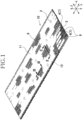
- an elastic sheet 10 for an absorbent article has a first direction Y, a second direction X intersecting with the first direction Y, a thickness direction Z intersecting the first and second directions Y, X, and include a first surface 11, a second surface 12 opposite to the first surface 11, a first fibrous layer 2 located on the first surface 11, a second fibrous layer 3 located on the second surface 12, and a plurality of elastic members 4 arranged in parallel to the first direction Y in a contractible manner under tension between the first and second layers 2, 3.
- the first surface 11 and the second surface 12 of the elastic sheet 10 respectively correspond to a skin facing surface and a non-skin facing surface of the absorbent article.
- the elastic members 4 are secured between the first and second fibrous layers 2, 3 with preferably hot melt adhesive (not shown) applied to each of the entire periphery of the elastic members.
- the first and second fibrous layers 2, 3 are integrally joined to each other with the hot melt adhesive.
- the absorbent article according to the embodiments of the present invention include disposable diapers, menstruation napkins, in addition, various well-known articles such as panty liners and incontinence pads for absorbing and containing body exudates, for example, such as menstrual blood, urine or feces.
- the elastic sheet 10 may be used as sheet materials coming in contact with the wearer's skin in the absorbent article, for example, may suitably be used as sheet materials including waist sheets to form waist panels, leakage barrier sheets extending in the longitudinal direction along both sides of an absorbent body, and leg elastic sheets to form leg elastic members disposed along leg opening edges.
- the first and second fibrous layers 2, 3 of the elastic sheet 10 is formed of fibrous nonwoven fabrics constructed of continuous fibers of thermoplastic resin.
- fibrous nonwoven fabrics constructing the first and second fibrous layers 2, 3 spun-melt fibrous nonwoven fabrics, especially, spun-bonded fibrous nonwoven fabrics, spun-bonded/melt-blown/spun-bonded fibrous nonwoven fabrics (SMS) are suitably used.
- SMS spun-bonded fibrous nonwoven fabrics
- continuous fibers constructing these fibrous nonwoven fabrics various well-known synthetic fibers, for example polyolefin fibers including polypropylene(PP) and polyethylene(PE) are suitably used.
- the first fibrous layer 2 spun-bonded fibrous fibers including polyethylene fibers having a fineness of 1.5 to 4.0 dtex, and as the second fibrous layer 3, spun-bonded fibrous fibers including polypropylene fibers having a fineness of 0.9 to 2.5 dtex are used.
- the first fibrous layer 2 is composed of polyethylene fibers softer than polypropylene fibers and thereby is low in rigidity and excellent in flexibility compared to the second fibrous layer 3.
- first fibrous layer 2 may be low in rigidity and high in flexibility compared to the second fibrous layer 3, it depends on a rigidity difference between the fibers constructing both layers 2, 3, in addition it can be adjusted appropriately, at least by an increase and decrease of mass or density of fibrous nonwoven fabrics.
- spun-bonded fibrous nonwoven fabrics or the SMS fibrous nonwoven fabrics constructed of the continuous fibers as the first fibrous layer 2 located on the first surface 11 makes it possible to give to the wearer an excellent texture and a smooth feeling with no fluff on surfaces compared to other short synthetic fibers.
- the spun-bond fibrous nonwoven fabrics are also easy to control fiber orientation compared to other fibrous nonwoven fabrics.
- both layers 2, 3 when staple (short) fibrous nonwoven fabrics are used as at least one of both layers 2, 3, they are excellent in flexibility and elasticity but inferior in tensile strength, while the use of the spun-bonded fibrous nonwoven fabrics constructed of the continuous fibers as both the first and second fibrous layers 2, 3 makes it possible to obtain a well-balanced composite elastic sheet having desired tensile strength and elasticity.
- a mass of the elastic sheet 10 is for example 25 to 135 g/m 2 , preferably 40 to 80 g/m 2 , and a mass of the first and second fibrous layer 2, 3 respectively are for example 10 to 30 g/m 2 , preferably 12 to 25 g/m 2 .
- the mass of the elastic sheet 10 is less than 25 g/m 2 , the elastic sheet 10 is excellent in flexibility but makes it difficult to have sufficient tensile strength.
- the elastic sheet 10 When the mass of the elastic sheet 10 is more than 135 g/m 2 , the elastic sheet 10 is possible to have relatively high tensile strength but impossible to have sufficient flexibility, and thereby impossible to deform along the wearer's body or to give good fittability to the wearer's skin.
- Each thickness of the first and second fibrous layers 2, 3 under 2.942 hPa load is 0.10 to 0.60 mm, and each apparent density of the first and second fibrous layers 2, 3 is 0.04 to 0.15 g/cm 3 , preferably 0.09 to 0.12 g/cm 3 .
- the apparent density is less than 0.04 g/cm 3 , the first and second fibrous layers 2, 3 may easily fluff because the fusion parts are less.
- the rigidity of the elastic sheet 10 is relatively high, and particularly the elastic sheet 10 may create a rigid feeling against the wearer's skin when the elastic sheet 10 is used at parts coming in contact with a weak skin part of the wearer such as the groins in the absorbent article.
- the mass of each fibrous nonwoven fabric was measured in accordance with a JIS L 1096 method.
- a plurality of elastic members 4 are threads-, string- or strand-like elastic materials arranged approximately in parallel in the first direction Y and at intervals in the second direction X.
- the elastic members 4 are secured between the first and second fibrous layers 2, 3 in a state stretched by for example 1.5 to 3.0 times, preferably 2.2 to 2.7 times from their natural states.
- the elastic materials may include without limitation various well-known synthetic rubber such as styrene rubber, urethane rubber, ester rubber, polyurethane rubber and polyethylene rubber, in addition to natural rubber.
- the fineness of the elastic members 4 are not limited in particular, but 200 to 1100 dtex, preferably 300 to 1000 dtex. When the fineness is less than 200 dtex, the elastic sheet 10 may not exert the required elasticity in a state that shapes and sizes of the gathers formed by a pitch between the elastic members 4 has been controlled. When the fineness is more than 1100 dtex, the elastic members 4 is likely to be seen from outside through the second fibrous layer 3 located on the non-skin facing surface of the absorbent article. In such case, when the elastic sheet 10 is used as sheet material forming the outer surface of the absorbent article in particular, the absorbent article may be recognized at a glance to be provided with a plurality of elastic members, which is undesirable in appearance.
- the pitch of the elastic members is not particularly limited because of being appropriately adjustable to control cross-sectional shapes and sizes including lengths of the gathers formed on the elastic sheet 10, but for example 2.0 to 12.0 mm, preferably 4.0 to 10.0 mm to suppress the bite of the gathers into the wearer's skin.
- the term "pitch" means a distance between centers of the elastic members 4 adjacent to each other in the second direction X.
- the first and second fibrous layers 2, 3 are joined to each other with adhesive applied continuously or partially to the entire periphery of each of the elastic members 4.
- the pitch between the elastic members 4 corresponds to the pitch between adjacent lines joining the first and second fibrous layers 2, 3 to each other.
- the first and second fibrous layers 2, 3 joined only by the adhesive applied to the entire periphery of each of the elastic members 4 makes the elastic sheet 10 relatively flexible and a texture to a wearer's skin improvable with the flexibility of the first fibrous layer 2.
- the first and second fibrous layers 2, 3 may be joined to each other with adhesive applied in known various pattern to a facing surface of at least one of the first and second fibrous layers 2, 3 rather than the adhesive applied to the entire periphery of each of the elastic members 4.
- the adhesive lines may extend in an extending direction of the elastic members 4 or in an intersecting direction with the extending direction of the elastic members 4.
- rubber-based hot melt adhesive such as styrene-butadiene-styrene based or styrene-isoprene-styrene based hot melt adhesive may be used.
- the elastic sheet 10 includes joining areas 7 in which the first and second fibrous layers 2, 3 are joined to each other with hot melt adhesive applied to the entire periphery of each of the elastic members 4, and non-joining areas 8 in which the first and second fibrous layers 2, 3 are not joined to each other with hot melt adhesive located between the elastic members 4 adjacent to each other in the second direction X.
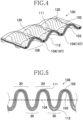
- the non-joining areas 8 of the elastic sheet 10 in a non-stretched state have a gathers-like concavity and convexity repeated, and include a plurality of convex parts 20 located onto the side of the skin facing surface bordering the elastic members 4 and a plurality of concave parts 30 located onto the side of the non-skin facing surface bordering the elastic members 4.
- the concave parts 30 of the non-joining areas 8 are convex parts when viewed from the non-skin facing surface.
- the second surface 12 as well as the first surface 11 has a structure of concavity and convexity with the concave parts 30.
- the term "gathers" of the elastic sheet 10 means the gathers formed by the entire ups and downs of the first and second fibrous layers 2, 3, and the term “thickness” of the gathers means a dimension in the thickness direction between a top edge of each convex part 20 and a bottom edge of each concave part 30 (both including thickness of the first and second fibrous layers 2, 3) . Such "thickness" of the gathers is different depending on each gather and does not mean a thickness itself of the elastic sheet 10.
- the first fibrous layer 2 is low in rigidity and excellent in flexibility compared to the second fibrous layer 3, the first fibrous layer 2 repeats narrower tops and downs than those of the second fibrous layer 3 in a state that the elastic sheet 10 has the convex part 20 and the concave part 30 alternately located in the second direction X under the contractile force of the elastic members 4.
- the first fibrous layer 2 has a configuration repeating the narrower tops and downs than those of the second fibrous layer 3, and thereby the convex parts 20 protrude gently like collapsing outward in the thickness direction Z without protruding higher outward in the thickness direction Z than the concave part 30, and an apparent thickness (height) D1 of the convex parts 20 is smaller than an apparent thickness D2 of the concave parts 30.
- the term "apparent thickness D1" of the convex parts 20 means a dimension in the thickness direction Z between the elastic members 4 and the top edges of the convex part 20, and the term “apparent thickness D2" of the concave parts 30 means a dimension in the thickness direction Z between the elastic members 4 and the bottom edges of the concave parts 30.
- each fibrous layer has thermal fusion parts at contact parts of the continuous fibers.
- each constructional fiber does not maintain a fiber shape due to the thermal fusion with a part formed into a film-like state and is higher in rigidity than non-fusion parts.
- the fusion parts have high rigidity compared to the non-fusion parts.
- the constructional fibers (polyolefin, preferably polyethylene fibers) of the first fibrous layer 2 are more flexible than constructional fibers (polyolefin, preferably polypropylene fibers) of the second fibrous layer 3, the fineness of the former constructional fibers is larger than the fineness of the latter constructional fibers, and the number of the former containing fibers is less than the number of the latter containing fibers in substantially the same mass of the sheet, and thus the rigidity difference between the fusion parts and the non-fusion parts of the first fibrous layer 2 is relatively small and is smaller than the rigidity difference between the fusion parts and non-fusion parts of the second fibrous layer.
- the first surface 11 is excellent in smoothness and has a larger area contacting with the wearer's skin compared to the second surface 12.
- the contact pressure of the elastic sheet 10 against the wearer's skin under the contractile force of the elastic members 4 is more dispersed compared to the case where the elastic sheet 10 partially comes in contact with the wearer's skin, and the gather marks are likely to be left.
- gather marks means the pressure marks left on the wearer's skin due to the convex parts 20 of the elastic sheet 10
- the term “rubber elasticity marks” means the pressure marks left on the wearer's skin due to the elastic members 4.
- Each average value of the flexural rigidity value B1 of the first fibrous layer 2 and the flexural rigidity value B2 of the second fibrous layer is 0.0035 ⁇ 10 -4 to 0.022 ⁇ 10 -4 (N ⁇ m 2 /m) .
- each average value of the flexural rigidity value B1, B2 is less than 0.0035 ⁇ 10 -4 (N ⁇ m 2 /m) , the tensile strength of the elastic sheet 10 is low, and a part of the absorbent article may be broken during wearing.
- each average value of the flexural rigidity value B1, B2 is more than 0.022 ⁇ 10 -4 (N ⁇ m 2 /m) , the rigidity of the sheet is high, and the elastic sheet 10 is difficult to conform to the wearer's body shape and the fittability to the wearer's body may be low.
- the measurement for the flexural rigidity value B1 of the first fibrous layer 2 and the flexural rigidity value B2 of the second fibrous layer 3 were measured by KES-FB2-AUTO-A FLEXURAL MEASURING AND TEST MACHINE of KATO TECH CO, LTD in Japan.
- each test piece was fixed between chucks of the measuring test machine so as to measure in the first direction Y of the elastic sheet.
- Each test piece was bent onto the front side up to the maximum curvature +2.5cm -1 and each bent test piece was undone after bent onto the back side up to the maximum curvature -2.5cm -1 .
- the flexural rigidity values B1, B2 [x10 -4 (N ⁇ m 2 /m) ] were calculated from the average value of an inclination of each test piece at the time when the slope of a bending moment for the first time curvature bending on the front side was almost constant and the slope of each test piece at the time when the slope of a bending moment for the first time curvature bending onto the back side was almost constant.
- Each average value of the flexural rigidity value B1 of the first fibrous layer 2 and the flexural rigidity value B2 of the second fibrous layer 3 was calculated by the following formula. ⁇ (the flexural rigidity value B1 of the first fibrous layer 2 ⁇ the mass of the first fibrous layer 2)/(the mass of first fibrous layer 2+the mass of the second fibrous layer 3) ⁇ + ⁇ ( the flexural rigidity value B2 of the second fibrous layer 3 ⁇ the mass of the second fibrous layer 3)/(the mass of the first fibrous layer 2+the mass of the second fibrous layer 3) ⁇
- a conventional elastic sheet 100 has a first surface 111, a second surface 112 opposite thereto, a first fibrous layer 102 located on the first surface 111, a second fibrous layer 103 located on the second surface 112, and a plurality of elastic members 104 secured with adhesive between the first fibrous layer 102 and the second fibrous layer 103.
- the first fibrous layer 102 and the second fibrous layer 103 are joined to each other with adhesive applied to the entire periphery of each of the elastic members 104.
- the elastic sheet 100 has joining areas 107 in which the first and second fibrous layers 102,103 are joined to each other and non-joining areas 108 located between the joining areas 107.
- a spun-bonded fibrous nonwoven fabrics constructed of polypropylene fibers having a mass of 17.0 g/m 2 is used as the first fibrous layer 102
- a spun-bonded fibrous nonwoven fabric constructed of polypropylene fibers having a mass of 17.0 g/m 2 is used as the second fibrous layer 103.
- Terms and conditions including elastic materials for the elastic members 104, the fineness and pitch thereof are almost the same as the elastic members 4 disposed on the elastic sheet 10 according to the present embodiment.
- the conventional elastic sheet 100 is formed with gathers-like concave and convex parts 120, 130 that are approximately uniform in size and relatively large in thickness (depth), and the number of the gathers of the elastic members 100 is less than the number of the gathers of the elastic members 10.
- each average value of the flexural rigidity value B1 of the first fibrous layer 2 and the flexural rigidity value B2 of the second fibrous layer 3 is 0.022 ⁇ 10 -4 (N ⁇ m 2 /m) or less, and thus the elastic sheet 10 has a configuration in which the ups and downs are repeated in the second direction X under the contractible force of the elastic members 4, shapes of the gathers are collapsed, and a plurality of small gathers that have non-uniform and relatively small thicknesses are formed.
- the number of the gathers of the conventional elastic sheet 100 described hereinafter was also calculated in the same way.
- the aesthetic appearance is excellent, but the rigidity is high compared to the elastic sheet 10 having non-uniform gather structure with small thickness, and the gather marks may be left on a wearer's skin due to the convex parts 120 being bit deeply into the wearer's skin even when they are compressed during wearing.
- the non-joining areas 8 of the elastic sheet 10 according to the present embodiment have a plurality of non-uniform gathers having a low uneven degree, and thus the first surface 11 has high smoothness and has a relatively large contact area with the first surface 11 and the wearer's skin.
- the contact pressure exerted to the wearer's skin under the contractile force of the elastic members 4 is dispersed and the elastic sheet 10 may not bite into the wearer's skin, and thus the gather marks due to the convex parts 20 are unlikely to be left on the wearer's skin.
- the thickness TO of each test piece under a micro load of the convex parts 20 of the elastic sheet 10 i.e., 0.49 hPa load in accordance with a KES method, is 2.70 to 4.70 mm, and the thickness Tm under 49.03 hPa load is 0.22 to 1.5 mm.
- the thickness Tm of the convex parts 20 of the elastic sheet 10 is less than 1.5 mm, which is relatively small, and each average value of the flexural rigidity values B1, B2 of the first and second fibrous layers 2, 3 is less than 0.022 ⁇ 10 -4 (N ⁇ m 2 /m) , and thus the gather shapes of the elastic sheet 10 are easily deformed by an external force.
- the compression workload WC of the convex parts 20 of the elastic sheet 10 in accordance with the KES method is 0.236 to 5.0 N ⁇ m/m 2 , and the compression resilience rate RC is 19 to 36%.
- Both the compression workload WC and the compression resilience rate RC are a relatively low numeric value, and the convex parts 20 are easily compressed by an external force and low in resilience after compressed.
- the convex parts 20 are easily compressed when come in contact with the wearer's skin, and since shape resilience properties after compressed are low, the repulsive force against the skin is low.
- the gather marks on the wearer's skin may be suppressed with the dispersion of the contact pressure.
- the term "good flexibility" of the first and second fibrous layers 2, 3 of the elastic sheet 10 means that the elastic sheet 10 has weak rigidity and low resilience at a degree such as the gathers are collapsed and only the shallow gather marks are left on the wearer's skin in a contact with the wearer's skin, unlike elastically contractible fibrous nonwoven fabrics including elastic fibers or other fibrous nonwoven fabrics, which are rich in elasticity.
- the elastic sheet 10 having the flexibility and compression properties in accordance with the KES method makes it possible to suppress the gather marks from being left on the skin without forming of the gathers having relatively high concavity and convexity degree.
- the elastic sheet 10 is high in rigidity and the rubber elasticity marks are easily left on the skin.
- the first fibrous layer 2 has good flexibility, the rigidity is not overly high, and makes it possible to suppress the rubber elasticity marks from being left on the skin.
- each test piece was cut out from the elastic sheet 10 in a size of 10.0 cm ⁇ 10.0 cm and was fixed on a test stand of metal plane in a contracted state so that the second fibrous layer was on the lower surface side of the test stand and the first fibrous layer was on the upper surface side thereof (measuring surface side).
- the center of each test piece was quietly sandwiched between both disks each having a compression area of about 2.0 cm 2 (an area of each desk), located on the upper and lower sides, and a thickness TO of each test piece was measured under a load of 0.49 hPa.
- a compression resilience rate RC(%) was obtained in accordance with the following formula, wherein a workload [N ⁇ m/m 2 ] required at the time when compressing from the thickness TO to the thickness Tm was set as WC, and a workload required at the time when recovering from the thickness Tm to the thickness TO is set as WC2.
- RC % WC2/WC ⁇ 100
- the first fibrous layer 2 is formed of a spun-bonded nonwoven fabric including polyethylene fibers and the second fibrous layer 3 is formed of a spun-bonded fibrous nonwoven fabric including polypropylene fibers, however, both the first and second fibrous layers 2, 3 may be formed of the spun-bonded fibrous nonwoven fabric including the polyethylene fibers.
- both the first and second fibrous layers 2, 3 are excellent in flexibility, their average flexural rigidity value and thickness Tm under a load are equal to or less than those of the elastic sheet 10 in the present embodiment. Since both the first and second fibrous layers 2, 3 are formed of a flexible fibrous nonwoven fabric, they would be formed with small gathers having a low degree of concavity and convexity compared to the elastic sheet 10 according to the present embodiment.
- Elastic sheets according to examples 1 to 6 and comparison examples 1 to 3 are composite sheets, which were composed of first and second fibrous sheets and elastic members interposed therebetween, and the first and second fibrous layers were joined to each other with hot melt adhesive of a mass of 0.07 g/m 2 applied to the entire periphery of the elastic members.
- first fibrous layer 2 a spun-bonded fibrous nonwoven fabric constructed of polyethylene fibers having a mass of 17.0 g/m 2
- second fibrous layer 3 a spun-bonded fibrous nonwoven fabric constructed of polypropylene fibers having a mass of 17.0 g/m 2
- elastic members polyurethane threads having a fineness of 470 dtex were used, and the elastic members were contractibly secured between the first and second fibrous layers in a state stretched by 2.5 times under a pitch of 9.0 mm.
- first fibrous layer 2 a spun-bonded fibrous nonwoven fabric constructed of polyethylene fibers having a mass of 17.0 g/m 2
- second fibrous layer 3 a spun-bonded fibrous nonwoven fabric constructed of polyethylene fibers having a mass of 17.0 g/m 2
- elastic members polyurethane threads having a fineness of 470 dtex were used, and the elastic members were contractibly secured between the first and second fibrous layers in a state stretched by 2.5 times under a pitch of 9.0 mm.
- first fibrous layer 2 a spun-bonded fibrous nonwoven fabric constructed of polyethylene fibers having a mass of 17.0 g/m 2
- second fibrous layer 3 a spun-bonded fibrous nonwoven fabric constructed of polypropylene fibers having a mass of 17.0 g/m 2
- elastic members 4 polyurethane threads having a fineness of 940 dtex were used, and the elastic members were contractibly secured between the first and second fibrous layers in a state stretched by 2.5 times under a pitch of 9.0 mm.
- first fibrous layer 2 a spun-bonded fibrous nonwoven fabric constructed of polyethylene fibers having a mass of 17.0 g/m 2
- second fibrous layer 3 a spun-bonded fibrous nonwoven fabric constructed of polyethylene fibers having a mass of 17.0 g/m 2
- elastic members 4 polyurethane threads having fineness of 940 dtex were used, and the elastic members were contractibly secured between the first and second fibrous layers in a state stretched by 2.5 times under a pitch of 9.0 mm
- first fibrous layer 2 a spun-bonded fibrous nonwoven fabric constructed of polyethylene fibers having a mass of 25.0 g/m 2
- second fibrous layer 3 a spun-bonded fibrous nonwoven fabric constructed of polypropylene fibers having a mass of 14.0 g/m 2
- elastic members 4 polyurethane threads having a fineness of 470 dtex was used, and the elastic members were contractibly secured between the first and second fibrous layers in a state stretched by 2.5 times under a pitch of 5.0 mm.
- first fibrous layer 2 a spun-bonded fibrous nonwoven fabric constructed of polyethylene fibers having a mass of 20.0 g/m 2
- second fibrous layer 3 a spun-bonded fibrous nonwoven fabric constructed of polyethylene fibers having a mass of 20.0 g/m 2
- elastic members 4 polyurethane threads having fineness of 470dtex were used, and the elastic members were contractibly secured between the first and second fibrous layers in a state stretched by 2.5 times under a pitch of 5.0 mm.
- first fibrous layer 2 a spun-bonded fibrous nonwoven fabric constructed of polypropylene fibers having a mass of 17.0 g/m 2
- second fibrous layer 3 a spun-bonded fibrous nonwoven fabric constructed of polypropylene fibers having a mass of 17.0 g/m 2
- elastic members polyurethane threads having fineness of 470 dtex were used, and the elastic members were contractibly secured between the first and second fibrous layers in a state stretched by 2.5 times under a pitch of 9.0 mm.
- first fibrous layer 2 a spun-bonded fibrous nonwoven fabric constructed of polypropylene fibers having a mass of 17.0 g/m 2
- second fibrous layer 3 a spun-bonded fibrous nonwoven fabric constructed of polypropylene fibers having a mass of 17.0 g/m 2
- elastic members polyurethane threads having a fineness of 940 dtex were used, and the elastic members were contractibly secured between the first and second fibrous layers in a state stretched by 2.5 times under a pitch of 9.0 mm.
- first fibrous layer 2 a spun-bonded fibrous nonwoven fabric constructed of polypropylene fibers having a mass of 17.0 g/m 2
- second fibrous layer a spun-bonded fibrous nonwoven fabric constructed of polypropylene fibers having a mass of 17.0 g/m 2
- elastic members polyurethane threads having a fineness of 470dtex was used, and the elastic members were contractibly secured between the first and second fibrous layers in a state stretched by 2.5 times under a pitch of 5.0 mm.
- the flexural rigidity value, the compression workload WC, the compression resilience rate RC, the initial thickness TO, the thickness Tm under a load, and the number of gathers were measured in accordance with the above measuring method.
- the evaluation results of the gather marks level were obtained by the following evaluation method.
- each example and each comparison example were cut in sizes of length 180 mm ⁇ width 100 mm.
- each annular test piece of circumference 140 cm was formed by connecting both ends of each cut sheet.
- each annular test piece was put on the forearms of search participants for 30 minutes, and after removed, the level of the gather marks left on the forearm was determined by visual observation. This measurement was carried out to 10 search participants (5 adult males, 5 adult females) .
- the average value of the level of the gather marks left on the forearms of 10 search participants was regarded as each gather mark level in each example and each comparison example.
- the thickness Tm under a load of the elastic sheet 10 according to examples 1 to 6 was 1.5 mm or less, an average flexural rigidity value of the first and second fibrous layers was 0.022 ⁇ 10 -4 (N ⁇ m 2 /m ) or less, and the gather marks level was 3 or less.
- thickness Tm under a load of the elastic sheet according to comparison examples 1 to 3 was 1.5 mm or more, an average flexural rigidity value of the first and second fibrous layers was 0.03 or more, and the gather marks level was 3 or more.
- the thickness Tm under the load and the average flexural rigidity value of the first and second fibrous layers are large, it can be said that the gather marks level tend to be higher.
- example 1 and example 3 when the fineness of the elastic members 4 is large, the gather mark level is also relatively large, but the gather marks level is maintained to the degree that there are no gather marks left more prominent than the rubber elasticity gather marks.
- example 1 and example 5 when the mass of the first fibrous layer 3 is higher and the pitch between the elastic members 4 is smaller, the gather marks level is higher, but even in such case, the level is maintained to the degree that the longitudinal gather marks by 5mm or more are not left at least between the elastic members 4.
- Fig. 6 shows a partially cutaway opened view from the inside of a disposable diaper 200 as an example of absorbent article, using the elastic sheet according to the preset invention, and at the when stretched longitudinally and transversely up to the maximum extension of each elastic member (to the degree that the gathers by the contraction of the elastic materials disappear).
- a diaper 200 has a longitudinal direction P and transverse direction Q intersecting with the direction P, and include an elastic waist panel 210 extending annularly to a waist circumference direction, an absorbent panel 220 attached onto the inside of the elastic waist panel 210, a front waist region 211, a rear waist region 212, and a crotch region 213 extending between the front and rear waist regions 211,212.
- the elastic waist panel 210 is constructed of a front waist panel 230 defining the front waist region 211 and a rear waist panel 240 defining the rear waist region 212. Both side edges of the front waist panel 230 and both side edges of the rear waist panel 240 are overlapped with each other and connected to each other by side seams 215 arranged continually in the longitudinal direction Y to define a waist opening and a pair of leg openings.
- the diaper 200 is disposed with an elastic sheet 10 as at least one of the waist elastic sheets 250, leg elastic sheets 260 and the leakage barrier flaps 270.
- the waist elastic members 251, leg elastic members 261 and flap elastic members 271 respectively correspond to the elastic members 4 of the elastic sheet 10.
- the first surface 11 of the elastic sheet 10 is located on the skin facing surface side of the wearer and the second surface 12 of the elastic sheet 10 is located on the non-skin facing surface side opposed thereto.
- the elastic sheet 10 is used as the waist elastic sheet 250, even when the waist elastic members 251 have tensile stresses to the degree that the front and rear waist regions 211, 212 exert the required holding force, the contact of the first surface 11 of the elastic sheet 10 with a wearer's skin does not make the waist opening edge bite into the skin with dispersion of the contact pressure generated by contractile force of the waist elastic members 251, and thus the gather marks are unlikely to be left on the skin. A similar effect is exhibited even when the elastic sheet 10 is used as the leg elastic sheet260 and the leakage barrier flap 270.
Landscapes
- Engineering & Computer Science (AREA)
- Textile Engineering (AREA)
- Health & Medical Sciences (AREA)
- General Health & Medical Sciences (AREA)
- Heart & Thoracic Surgery (AREA)
- Vascular Medicine (AREA)
- Life Sciences & Earth Sciences (AREA)
- Animal Behavior & Ethology (AREA)
- Biomedical Technology (AREA)
- Public Health (AREA)
- Veterinary Medicine (AREA)
- Epidemiology (AREA)
- Absorbent Articles And Supports Therefor (AREA)
- Laminated Bodies (AREA)
- Nonwoven Fabrics (AREA)
- Manufacturing Of Multi-Layer Textile Fabrics (AREA)
Applications Claiming Priority (2)
| Application Number | Priority Date | Filing Date | Title |
|---|---|---|---|
| JP2017198788A JP7025172B2 (ja) | 2017-10-12 | 2017-10-12 | 吸収性物品用伸縮性シート及びそれを使用した吸収性物品 |
| PCT/JP2018/023397 WO2019073636A1 (ja) | 2017-10-12 | 2018-06-20 | 吸収性物品用伸縮性シート及びそれを使用した吸収性物品 |
Publications (3)
| Publication Number | Publication Date |
|---|---|
| EP3674076A1 EP3674076A1 (en) | 2020-07-01 |
| EP3674076A4 EP3674076A4 (en) | 2020-12-09 |
| EP3674076B1 true EP3674076B1 (en) | 2024-12-11 |
Family
ID=66100806
Family Applications (1)
| Application Number | Title | Priority Date | Filing Date |
|---|---|---|---|
| EP18866094.8A Active EP3674076B1 (en) | 2017-10-12 | 2018-06-20 | Elastic sheet for absorbent article and absorbent article comprising same |
Country Status (7)
| Country | Link |
|---|---|
| US (1) | US11925540B2 (enExample) |
| EP (1) | EP3674076B1 (enExample) |
| JP (2) | JP7025172B2 (enExample) |
| CN (1) | CN111212730B (enExample) |
| BR (1) | BR112020007064B1 (enExample) |
| TW (1) | TW201929798A (enExample) |
| WO (1) | WO2019073636A1 (enExample) |
Families Citing this family (2)
| Publication number | Priority date | Publication date | Assignee | Title |
|---|---|---|---|---|
| JP7025172B2 (ja) * | 2017-10-12 | 2022-02-24 | ユニ・チャーム株式会社 | 吸収性物品用伸縮性シート及びそれを使用した吸収性物品 |
| USD915583S1 (en) * | 2019-03-28 | 2021-04-06 | Audree Blaikie | Incontinence article |
Family Cites Families (60)
| Publication number | Priority date | Publication date | Assignee | Title |
|---|---|---|---|---|
| EP0151485A1 (en) * | 1984-02-08 | 1985-08-14 | Teijin Limited | Wet-formed non-woven fabric having good drape characteristics |
| CA2087999A1 (en) * | 1992-09-23 | 1994-03-24 | Lee K. Jameson | Hydrosonically bonded nonwoven/paper material and process for forming the same |
| FR2738845B1 (fr) | 1995-09-15 | 1999-06-18 | Peaudouce | Materiau non-tisse composite, son procede de fabrication et son application a tout article d'hygiene absorbant |
| JP4215370B2 (ja) * | 2000-03-10 | 2009-01-28 | 花王株式会社 | 吸収性物品 |
| JP3859420B2 (ja) * | 2000-03-13 | 2006-12-20 | ユニ・チャーム株式会社 | 吸収性物品 |
| JP2002119538A (ja) * | 2000-10-13 | 2002-04-23 | Uni Charm Corp | パンツ型の使い捨て着用物品 |
| JP4070965B2 (ja) * | 2001-06-08 | 2008-04-02 | ユニ・チャーム株式会社 | 伸縮性複合シートおよび伸縮性複合シートに多数の襞を形成する方法 |
| DE10319754A1 (de) | 2003-04-30 | 2004-12-02 | Carl Freudenberg Kg | Elastischer Verbundstoff, Verfahren zu dessen Herstellung und dessen Verwendung |
| KR100705184B1 (ko) * | 2004-07-30 | 2007-04-06 | 가오가부시끼가이샤 | 팬츠형 일회용 기저귀 |
| MX2007009158A (es) * | 2005-03-02 | 2007-09-12 | Sca Hygiene Prod Ab | Articulo de ropa interior que comprende un material laminar elastico. |
| EP1876275B1 (en) * | 2005-04-25 | 2011-10-12 | Kao Corporation | Stretch sheet and process for producing the same |
| EP1787609A1 (en) * | 2005-10-18 | 2007-05-23 | The Procter and Gamble Company | Absorbent Articles with Comfortable Elasticated Laminates |
| JP4953613B2 (ja) * | 2005-10-24 | 2012-06-13 | ユニ・チャーム株式会社 | 吸収性物品 |
| KR20090034872A (ko) * | 2006-07-07 | 2009-04-08 | 유니챰 가부시키가이샤 | 시트 부재, 고밀도 영역 함유 시트의 제조 방법 및 시트 부재를 사용한 일회용 기저귀 |
| EP2086486B1 (en) * | 2006-11-13 | 2016-12-21 | SCA Hygiene Products AB | Absorbent article comprising an elastic laminate material |
| US20100076394A1 (en) * | 2006-11-27 | 2010-03-25 | Kao Corporation | Absorbent article |
| JP4986596B2 (ja) * | 2006-12-11 | 2012-07-25 | 花王株式会社 | パンツ型使い捨ておむつ |
| US8183429B2 (en) * | 2006-11-28 | 2012-05-22 | Uni-Charm Corporation | Composite sheet and absorbent article comprising composite sheet |
| JP5186385B2 (ja) * | 2006-11-28 | 2013-04-17 | ユニ・チャーム株式会社 | 複合シート及び複合シートを用いた吸収性物品 |
| EP1958604A1 (en) * | 2007-02-13 | 2008-08-20 | The Procter & Gamble Company | Disposable absorbent articles with separate part |
| JP2009106468A (ja) * | 2007-10-30 | 2009-05-21 | Kurashiki Seni Kako Kk | 衛生マスクおよびその基材 |
| BRPI0820916A2 (pt) * | 2007-12-13 | 2015-06-23 | Procter & Gamble | Artigo absorvente com folha compósita compreendendo material elástico |
| WO2009104673A1 (ja) * | 2008-02-19 | 2009-08-27 | ユニ・チャーム株式会社 | 吸収性物品 |
| CA2715756A1 (en) | 2008-02-19 | 2009-08-27 | Unicharm Corporation | Absorptive article |
| JP5697338B2 (ja) | 2008-02-19 | 2015-04-08 | ユニ・チャーム株式会社 | 吸収性物品 |
| CA2715993A1 (en) | 2008-02-19 | 2009-08-27 | Unicharm Corporation | Absorptive article |
| JP5383122B2 (ja) * | 2008-09-01 | 2014-01-08 | ユニ・チャーム株式会社 | 使い捨ておむつ |
| JP5385187B2 (ja) * | 2009-03-30 | 2014-01-08 | ユニ・チャーム株式会社 | 使い捨ての着用物品 |
| JP5280277B2 (ja) * | 2009-03-31 | 2013-09-04 | ユニ・チャーム株式会社 | 着用物品 |
| JP5592168B2 (ja) | 2009-08-31 | 2014-09-17 | ユニ・チャーム株式会社 | 使い捨て着用物品 |
| JP6009800B2 (ja) * | 2012-04-12 | 2016-10-19 | 株式会社リブドゥコーポレーション | 吸収性物品 |
| KR102070473B1 (ko) * | 2012-05-09 | 2020-01-29 | 유니챰 가부시키가이샤 | 복합 신축성 재료 |
| JP6198382B2 (ja) * | 2012-05-15 | 2017-09-20 | ユニ・チャーム株式会社 | 使い捨て着用物品 |
| JP5988836B2 (ja) * | 2012-05-15 | 2016-09-07 | ユニ・チャーム株式会社 | 使い捨て着用物品 |
| JP6005000B2 (ja) * | 2012-09-28 | 2016-10-12 | ユニ・チャーム株式会社 | 使い捨て着用物品 |
| JP6012378B2 (ja) * | 2012-09-28 | 2016-10-25 | ユニ・チャーム株式会社 | 使い捨てオムツ |
| JP5243655B1 (ja) * | 2012-11-27 | 2013-07-24 | ユニ・チャーム株式会社 | 使い捨ておむつ |
| RU2620747C2 (ru) * | 2012-12-21 | 2017-05-29 | Ска Хайджин Продактс Аб | Эластичный многослойный материал и способ изготовления эластичного многослойного материала |
| EP2979670B1 (en) * | 2013-03-29 | 2018-12-12 | Daio Paper Corporation | Elastic structure for absorbent article and method for manufacturing elastic structure for absorbent article |
| GB2530214B (en) * | 2013-06-20 | 2020-10-07 | Procter & Gamble | Array of disposable absorbent articles for fitting broad range of wearers |
| EP3053558B1 (en) * | 2013-09-30 | 2020-10-28 | Daio Paper Corporation | Stretchable structure for absorbent article, absorbent article comprising said stretchable structure, and method for forming stretchable structure for absorbent article |
| JP5766252B2 (ja) * | 2013-11-01 | 2015-08-19 | 花王株式会社 | パンツ型着用物品及びその製造方法 |
| JP6400699B2 (ja) * | 2013-11-05 | 2018-10-03 | ザ プロクター アンド ギャンブル カンパニー | ウエストバンドを有する吸収性物品 |
| CN105705122B (zh) * | 2013-11-05 | 2019-07-19 | 宝洁公司 | 具有腰带的吸收制品 |
| WO2015171379A1 (en) * | 2014-05-08 | 2015-11-12 | The Procter & Gamble Company | Length to waist silhouettes of adult disposable absorbent articles and arrays |
| JP6751284B2 (ja) * | 2014-06-09 | 2020-09-02 | 旭化成株式会社 | 肌触りの良い伸縮複合材料 |
| WO2016029370A1 (en) * | 2014-08-27 | 2016-03-03 | The Procter & Gamble Company | Wearable article having elastic belt |
| WO2016048337A1 (en) * | 2014-09-26 | 2016-03-31 | Kimberly-Clark Worldwide, Inc. | Waist assembly having apertured layer and non-apertured layer for absorbent articles |
| JP6257511B2 (ja) * | 2014-12-26 | 2018-01-10 | ユニ・チャーム株式会社 | 吸収性物品 |
| BR112017020650B1 (pt) * | 2015-03-27 | 2022-07-19 | Daio Paper Corporation | Estrutura extensível para artigo absorvente e fralda descartável |
| JP6444818B2 (ja) * | 2015-06-26 | 2018-12-26 | ユニ・チャーム株式会社 | 使い捨て着用物品 |
| US20170056257A1 (en) * | 2015-08-27 | 2017-03-02 | The Procter & Gamble Company | Belted structure |
| CN108778738A (zh) * | 2016-03-16 | 2018-11-09 | 山田菊夫 | 层叠片制造方法以及层叠片制造装置 |
| US10744044B2 (en) * | 2017-02-03 | 2020-08-18 | The Procter & Gamble Company | Wearable article having elastic belt |
| CN110300565A (zh) * | 2017-02-27 | 2019-10-01 | 宝洁公司 | 具有弹性带的可穿着制品 |
| EP3585338B1 (en) * | 2017-02-27 | 2024-01-17 | The Procter & Gamble Company | Wearable article having characteristic material properties |
| WO2018152834A1 (en) * | 2017-02-27 | 2018-08-30 | The Procter & Gamble Company | Absorbent article having elastic belt |
| JP6949976B2 (ja) * | 2017-02-27 | 2021-10-13 | ザ プロクター アンド ギャンブル カンパニーThe Procter & Gamble Company | 弾性ベルトを有する着用可能物品 |
| JP6382399B1 (ja) * | 2017-06-16 | 2018-08-29 | 大王製紙株式会社 | パンツタイプ使い捨ておむつ |
| JP7025172B2 (ja) * | 2017-10-12 | 2022-02-24 | ユニ・チャーム株式会社 | 吸収性物品用伸縮性シート及びそれを使用した吸収性物品 |
-
2017
- 2017-10-12 JP JP2017198788A patent/JP7025172B2/ja active Active
-
2018
- 2018-06-20 CN CN201880066017.3A patent/CN111212730B/zh active Active
- 2018-06-20 WO PCT/JP2018/023397 patent/WO2019073636A1/ja not_active Ceased
- 2018-06-20 BR BR112020007064-5A patent/BR112020007064B1/pt active IP Right Grant
- 2018-06-20 EP EP18866094.8A patent/EP3674076B1/en active Active
- 2018-06-27 TW TW107121997A patent/TW201929798A/zh unknown
-
2020
- 2020-04-10 US US16/845,450 patent/US11925540B2/en active Active
-
2022
- 2022-02-09 JP JP2022018674A patent/JP2022060321A/ja active Pending
Also Published As
| Publication number | Publication date |
|---|---|
| EP3674076A4 (en) | 2020-12-09 |
| JP7025172B2 (ja) | 2022-02-24 |
| JP2022060321A (ja) | 2022-04-14 |
| CN111212730B (zh) | 2022-05-03 |
| WO2019073636A1 (ja) | 2019-04-18 |
| US11925540B2 (en) | 2024-03-12 |
| TW201929798A (zh) | 2019-08-01 |
| BR112020007064B1 (pt) | 2023-02-07 |
| US20200237577A1 (en) | 2020-07-30 |
| CN111212730A (zh) | 2020-05-29 |
| EP3674076A1 (en) | 2020-07-01 |
| BR112020007064A2 (pt) | 2020-10-13 |
| JP2019072865A (ja) | 2019-05-16 |
Similar Documents
| Publication | Publication Date | Title |
|---|---|---|
| EP2589360B1 (en) | Absorbent product | |
| JP5592168B2 (ja) | 使い捨て着用物品 | |
| KR101415547B1 (ko) | 흡수성 물품 | |
| JP6400699B2 (ja) | ウエストバンドを有する吸収性物品 | |
| JP5674345B2 (ja) | 使い捨ての着用物品 | |
| JP7059360B2 (ja) | 性別による使い捨てパンツ式吸収性物品の配列 | |
| AU2017443643A1 (en) | Absorbent articles with visually different chassis and waistbands | |
| TWI626931B (zh) | 吸收性物品、及吸收性物品的製造方法 | |
| CN106488760A (zh) | 吸收性物品 | |
| CN101541525A (zh) | 复合片及使用复合片的吸收性物品 | |
| US11925540B2 (en) | Elastic sheet for absorbent article and absorbent article | |
| EP3600200B1 (en) | Absorbent article comprising elastomeric strips | |
| EP3747416B1 (en) | Absorbent article | |
| AU2018438448B2 (en) | Disposable wearable absorbent article | |
| WO2019017853A1 (en) | ABSORBENT ARTICLE COMPRISING ELASTOMERIC BANDS ATTACHED TO THE NONWOVEN LAYER OF THE BACK SHEET | |
| WO2018124996A1 (en) | Absorbent article having fit indicator | |
| WO2019231409A1 (en) | Absorbent articles having anti-sagging property via specific incorporation of elastomeric features on the designed crotch region | |
| JP2021087690A (ja) | シート部材及びこれを構成部材として具備する吸収性物品 | |
| WO2015151347A1 (ja) | パンツ型の着用物品 |
Legal Events
| Date | Code | Title | Description |
|---|---|---|---|
| STAA | Information on the status of an ep patent application or granted ep patent |
Free format text: STATUS: THE INTERNATIONAL PUBLICATION HAS BEEN MADE |
|
| PUAI | Public reference made under article 153(3) epc to a published international application that has entered the european phase |
Free format text: ORIGINAL CODE: 0009012 |
|
| STAA | Information on the status of an ep patent application or granted ep patent |
Free format text: STATUS: REQUEST FOR EXAMINATION WAS MADE |
|
| 17P | Request for examination filed |
Effective date: 20200325 |
|
| AK | Designated contracting states |
Kind code of ref document: A1 Designated state(s): AL AT BE BG CH CY CZ DE DK EE ES FI FR GB GR HR HU IE IS IT LI LT LU LV MC MK MT NL NO PL PT RO RS SE SI SK SM TR |
|
| AX | Request for extension of the european patent |
Extension state: BA ME |
|
| A4 | Supplementary search report drawn up and despatched |
Effective date: 20201109 |
|
| RIC1 | Information provided on ipc code assigned before grant |
Ipc: D04H 3/16 20060101ALI20201103BHEP Ipc: B32B 5/04 20060101ALI20201103BHEP Ipc: A61F 13/49 20060101ALI20201103BHEP Ipc: B32B 7/14 20060101ALI20201103BHEP Ipc: B32B 5/26 20060101AFI20201103BHEP Ipc: B32B 5/02 20060101ALI20201103BHEP Ipc: A61F 13/15 20060101ALI20201103BHEP Ipc: B32B 3/18 20060101ALI20201103BHEP Ipc: A61F 13/494 20060101ALN20201103BHEP Ipc: D04H 3/007 20120101ALI20201103BHEP Ipc: D06M 17/00 20060101ALI20201103BHEP |
|
| DAV | Request for validation of the european patent (deleted) | ||
| DAX | Request for extension of the european patent (deleted) | ||
| GRAP | Despatch of communication of intention to grant a patent |
Free format text: ORIGINAL CODE: EPIDOSNIGR1 |
|
| STAA | Information on the status of an ep patent application or granted ep patent |
Free format text: STATUS: GRANT OF PATENT IS INTENDED |
|
| RIC1 | Information provided on ipc code assigned before grant |
Ipc: A61F 13/494 20060101ALN20230216BHEP Ipc: A61F 13/15 20060101ALI20230216BHEP Ipc: B32B 7/14 20060101ALI20230216BHEP Ipc: B32B 5/04 20060101ALI20230216BHEP Ipc: B32B 5/02 20060101ALI20230216BHEP Ipc: B32B 3/18 20060101ALI20230216BHEP Ipc: D06M 17/00 20060101ALI20230216BHEP Ipc: D04H 3/16 20060101ALI20230216BHEP Ipc: D04H 3/007 20120101ALI20230216BHEP Ipc: A61F 13/49 20060101ALI20230216BHEP Ipc: B32B 5/26 20060101AFI20230216BHEP |
|
| INTG | Intention to grant announced |
Effective date: 20230306 |
|
| RIN1 | Information on inventor provided before grant (corrected) |
Inventor name: MITSUNO, SATOSHI Inventor name: IKEUCHI, NORIHITO |
|
| GRAS | Grant fee paid |
Free format text: ORIGINAL CODE: EPIDOSNIGR3 |
|
| GRAJ | Information related to disapproval of communication of intention to grant by the applicant or resumption of examination proceedings by the epo deleted |
Free format text: ORIGINAL CODE: EPIDOSDIGR1 |
|
| GRAL | Information related to payment of fee for publishing/printing deleted |
Free format text: ORIGINAL CODE: EPIDOSDIGR3 |
|
| STAA | Information on the status of an ep patent application or granted ep patent |
Free format text: STATUS: REQUEST FOR EXAMINATION WAS MADE |
|
| INTC | Intention to grant announced (deleted) | ||
| RIC1 | Information provided on ipc code assigned before grant |
Ipc: A61F 13/494 20060101ALN20230425BHEP Ipc: A61F 13/15 20060101ALI20230425BHEP Ipc: B32B 7/14 20060101ALI20230425BHEP Ipc: B32B 5/04 20060101ALI20230425BHEP Ipc: B32B 5/02 20060101ALI20230425BHEP Ipc: B32B 3/18 20060101ALI20230425BHEP Ipc: D06M 17/00 20060101ALI20230425BHEP Ipc: D04H 3/16 20060101ALI20230425BHEP Ipc: D04H 3/007 20120101ALI20230425BHEP Ipc: A61F 13/49 20060101ALI20230425BHEP Ipc: B32B 5/26 20060101AFI20230425BHEP |
|
| STAA | Information on the status of an ep patent application or granted ep patent |
Free format text: STATUS: EXAMINATION IS IN PROGRESS |
|
| 17Q | First examination report despatched |
Effective date: 20230602 |
|
| GRAP | Despatch of communication of intention to grant a patent |
Free format text: ORIGINAL CODE: EPIDOSNIGR1 |
|
| STAA | Information on the status of an ep patent application or granted ep patent |
Free format text: STATUS: GRANT OF PATENT IS INTENDED |
|
| RIC1 | Information provided on ipc code assigned before grant |
Ipc: A61F 13/494 20060101ALN20240926BHEP Ipc: A61F 13/15 20060101ALI20240926BHEP Ipc: B32B 7/14 20060101ALI20240926BHEP Ipc: B32B 5/04 20060101ALI20240926BHEP Ipc: B32B 5/02 20060101ALI20240926BHEP Ipc: B32B 3/18 20060101ALI20240926BHEP Ipc: D06M 17/00 20060101ALI20240926BHEP Ipc: D04H 3/16 20060101ALI20240926BHEP Ipc: D04H 3/007 20120101ALI20240926BHEP Ipc: A61F 13/49 20060101ALI20240926BHEP Ipc: B32B 5/26 20060101AFI20240926BHEP |
|
| GRAS | Grant fee paid |
Free format text: ORIGINAL CODE: EPIDOSNIGR3 |
|
| RIC1 | Information provided on ipc code assigned before grant |
Ipc: A61F 13/494 20060101ALN20240927BHEP Ipc: A61F 13/15 20060101ALI20240927BHEP Ipc: B32B 7/14 20060101ALI20240927BHEP Ipc: B32B 5/04 20060101ALI20240927BHEP Ipc: B32B 5/02 20060101ALI20240927BHEP Ipc: B32B 3/18 20060101ALI20240927BHEP Ipc: D06M 17/00 20060101ALI20240927BHEP Ipc: D04H 3/16 20060101ALI20240927BHEP Ipc: D04H 3/007 20120101ALI20240927BHEP Ipc: A61F 13/49 20060101ALI20240927BHEP Ipc: B32B 5/26 20060101AFI20240927BHEP |
|
| GRAA | (expected) grant |
Free format text: ORIGINAL CODE: 0009210 |
|
| STAA | Information on the status of an ep patent application or granted ep patent |
Free format text: STATUS: THE PATENT HAS BEEN GRANTED |
|
| INTG | Intention to grant announced |
Effective date: 20241015 |
|
| AK | Designated contracting states |
Kind code of ref document: B1 Designated state(s): AL AT BE BG CH CY CZ DE DK EE ES FI FR GB GR HR HU IE IS IT LI LT LU LV MC MK MT NL NO PL PT RO RS SE SI SK SM TR |
|
| REG | Reference to a national code |
Ref country code: GB Ref legal event code: FG4D |
|
| REG | Reference to a national code |
Ref country code: CH Ref legal event code: EP |
|
| REG | Reference to a national code |
Ref country code: DE Ref legal event code: R096 Ref document number: 602018077588 Country of ref document: DE |
|
| REG | Reference to a national code |
Ref country code: IE Ref legal event code: FG4D |
|
| REG | Reference to a national code |
Ref country code: LT Ref legal event code: MG9D |
|
| PG25 | Lapsed in a contracting state [announced via postgrant information from national office to epo] |
Ref country code: HR Free format text: LAPSE BECAUSE OF FAILURE TO SUBMIT A TRANSLATION OF THE DESCRIPTION OR TO PAY THE FEE WITHIN THE PRESCRIBED TIME-LIMIT Effective date: 20241211 |
|
| PG25 | Lapsed in a contracting state [announced via postgrant information from national office to epo] |
Ref country code: FI Free format text: LAPSE BECAUSE OF FAILURE TO SUBMIT A TRANSLATION OF THE DESCRIPTION OR TO PAY THE FEE WITHIN THE PRESCRIBED TIME-LIMIT Effective date: 20241211 |
|
| PG25 | Lapsed in a contracting state [announced via postgrant information from national office to epo] |
Ref country code: BG Free format text: LAPSE BECAUSE OF FAILURE TO SUBMIT A TRANSLATION OF THE DESCRIPTION OR TO PAY THE FEE WITHIN THE PRESCRIBED TIME-LIMIT Effective date: 20241211 |
|
| REG | Reference to a national code |
Ref country code: NL Ref legal event code: MP Effective date: 20241211 |
|
| PG25 | Lapsed in a contracting state [announced via postgrant information from national office to epo] |
Ref country code: ES Free format text: LAPSE BECAUSE OF FAILURE TO SUBMIT A TRANSLATION OF THE DESCRIPTION OR TO PAY THE FEE WITHIN THE PRESCRIBED TIME-LIMIT Effective date: 20241211 |
|
| PG25 | Lapsed in a contracting state [announced via postgrant information from national office to epo] |
Ref country code: NO Free format text: LAPSE BECAUSE OF FAILURE TO SUBMIT A TRANSLATION OF THE DESCRIPTION OR TO PAY THE FEE WITHIN THE PRESCRIBED TIME-LIMIT Effective date: 20250311 |
|
| PG25 | Lapsed in a contracting state [announced via postgrant information from national office to epo] |
Ref country code: LV Free format text: LAPSE BECAUSE OF FAILURE TO SUBMIT A TRANSLATION OF THE DESCRIPTION OR TO PAY THE FEE WITHIN THE PRESCRIBED TIME-LIMIT Effective date: 20241211 Ref country code: GR Free format text: LAPSE BECAUSE OF FAILURE TO SUBMIT A TRANSLATION OF THE DESCRIPTION OR TO PAY THE FEE WITHIN THE PRESCRIBED TIME-LIMIT Effective date: 20250312 |
|
| PG25 | Lapsed in a contracting state [announced via postgrant information from national office to epo] |
Ref country code: RS Free format text: LAPSE BECAUSE OF FAILURE TO SUBMIT A TRANSLATION OF THE DESCRIPTION OR TO PAY THE FEE WITHIN THE PRESCRIBED TIME-LIMIT Effective date: 20250311 |
|
| PG25 | Lapsed in a contracting state [announced via postgrant information from national office to epo] |
Ref country code: NL Free format text: LAPSE BECAUSE OF FAILURE TO SUBMIT A TRANSLATION OF THE DESCRIPTION OR TO PAY THE FEE WITHIN THE PRESCRIBED TIME-LIMIT Effective date: 20241211 |
|
| REG | Reference to a national code |
Ref country code: AT Ref legal event code: MK05 Ref document number: 1750101 Country of ref document: AT Kind code of ref document: T Effective date: 20241211 |
|
| PG25 | Lapsed in a contracting state [announced via postgrant information from national office to epo] |
Ref country code: SM Free format text: LAPSE BECAUSE OF FAILURE TO SUBMIT A TRANSLATION OF THE DESCRIPTION OR TO PAY THE FEE WITHIN THE PRESCRIBED TIME-LIMIT Effective date: 20241211 |
|
| PG25 | Lapsed in a contracting state [announced via postgrant information from national office to epo] |
Ref country code: PL Free format text: LAPSE BECAUSE OF FAILURE TO SUBMIT A TRANSLATION OF THE DESCRIPTION OR TO PAY THE FEE WITHIN THE PRESCRIBED TIME-LIMIT Effective date: 20241211 |
|
| PGFP | Annual fee paid to national office [announced via postgrant information from national office to epo] |
Ref country code: DE Payment date: 20250625 Year of fee payment: 8 |
|
| PGFP | Annual fee paid to national office [announced via postgrant information from national office to epo] |
Ref country code: GB Payment date: 20250618 Year of fee payment: 8 |
|
| PG25 | Lapsed in a contracting state [announced via postgrant information from national office to epo] |
Ref country code: IS Free format text: LAPSE BECAUSE OF FAILURE TO SUBMIT A TRANSLATION OF THE DESCRIPTION OR TO PAY THE FEE WITHIN THE PRESCRIBED TIME-LIMIT Effective date: 20250411 |
|
| PG25 | Lapsed in a contracting state [announced via postgrant information from national office to epo] |
Ref country code: PT Free format text: LAPSE BECAUSE OF FAILURE TO SUBMIT A TRANSLATION OF THE DESCRIPTION OR TO PAY THE FEE WITHIN THE PRESCRIBED TIME-LIMIT Effective date: 20250411 |
|
| PG25 | Lapsed in a contracting state [announced via postgrant information from national office to epo] |
Ref country code: EE Free format text: LAPSE BECAUSE OF FAILURE TO SUBMIT A TRANSLATION OF THE DESCRIPTION OR TO PAY THE FEE WITHIN THE PRESCRIBED TIME-LIMIT Effective date: 20241211 |
|
| PG25 | Lapsed in a contracting state [announced via postgrant information from national office to epo] |
Ref country code: AT Free format text: LAPSE BECAUSE OF FAILURE TO SUBMIT A TRANSLATION OF THE DESCRIPTION OR TO PAY THE FEE WITHIN THE PRESCRIBED TIME-LIMIT Effective date: 20241211 Ref country code: RO Free format text: LAPSE BECAUSE OF FAILURE TO SUBMIT A TRANSLATION OF THE DESCRIPTION OR TO PAY THE FEE WITHIN THE PRESCRIBED TIME-LIMIT Effective date: 20241211 |
|
| PG25 | Lapsed in a contracting state [announced via postgrant information from national office to epo] |
Ref country code: SK Free format text: LAPSE BECAUSE OF FAILURE TO SUBMIT A TRANSLATION OF THE DESCRIPTION OR TO PAY THE FEE WITHIN THE PRESCRIBED TIME-LIMIT Effective date: 20241211 |
|
| PG25 | Lapsed in a contracting state [announced via postgrant information from national office to epo] |
Ref country code: CZ Free format text: LAPSE BECAUSE OF FAILURE TO SUBMIT A TRANSLATION OF THE DESCRIPTION OR TO PAY THE FEE WITHIN THE PRESCRIBED TIME-LIMIT Effective date: 20241211 |
|
| PG25 | Lapsed in a contracting state [announced via postgrant information from national office to epo] |
Ref country code: IT Free format text: LAPSE BECAUSE OF FAILURE TO SUBMIT A TRANSLATION OF THE DESCRIPTION OR TO PAY THE FEE WITHIN THE PRESCRIBED TIME-LIMIT Effective date: 20241211 |
|
| PG25 | Lapsed in a contracting state [announced via postgrant information from national office to epo] |
Ref country code: SE Free format text: LAPSE BECAUSE OF FAILURE TO SUBMIT A TRANSLATION OF THE DESCRIPTION OR TO PAY THE FEE WITHIN THE PRESCRIBED TIME-LIMIT Effective date: 20241211 |
|
| REG | Reference to a national code |
Ref country code: DE Ref legal event code: R097 Ref document number: 602018077588 Country of ref document: DE |
|
| PG25 | Lapsed in a contracting state [announced via postgrant information from national office to epo] |
Ref country code: DK Free format text: LAPSE BECAUSE OF FAILURE TO SUBMIT A TRANSLATION OF THE DESCRIPTION OR TO PAY THE FEE WITHIN THE PRESCRIBED TIME-LIMIT Effective date: 20241211 |
|
| PLBE | No opposition filed within time limit |
Free format text: ORIGINAL CODE: 0009261 |
|
| STAA | Information on the status of an ep patent application or granted ep patent |
Free format text: STATUS: NO OPPOSITION FILED WITHIN TIME LIMIT |
|
| REG | Reference to a national code |
Ref country code: CH Ref legal event code: L10 Free format text: ST27 STATUS EVENT CODE: U-0-0-L10-L00 (AS PROVIDED BY THE NATIONAL OFFICE) Effective date: 20251022 |
|
| 26N | No opposition filed |
Effective date: 20250912 |
|
| REG | Reference to a national code |
Ref country code: CH Ref legal event code: H13 Free format text: ST27 STATUS EVENT CODE: U-0-0-H10-H13 (AS PROVIDED BY THE NATIONAL OFFICE) Effective date: 20260127 |
|
| PG25 | Lapsed in a contracting state [announced via postgrant information from national office to epo] |
Ref country code: MC Free format text: LAPSE BECAUSE OF FAILURE TO SUBMIT A TRANSLATION OF THE DESCRIPTION OR TO PAY THE FEE WITHIN THE PRESCRIBED TIME-LIMIT Effective date: 20241211 |
|
| PG25 | Lapsed in a contracting state [announced via postgrant information from national office to epo] |
Ref country code: LU Free format text: LAPSE BECAUSE OF NON-PAYMENT OF DUE FEES Effective date: 20250620 |
|
| REG | Reference to a national code |
Ref country code: BE Ref legal event code: MM Effective date: 20250630 |
|
| PG25 | Lapsed in a contracting state [announced via postgrant information from national office to epo] |
Ref country code: IE Free format text: LAPSE BECAUSE OF NON-PAYMENT OF DUE FEES Effective date: 20250620 |
|
| PG25 | Lapsed in a contracting state [announced via postgrant information from national office to epo] |
Ref country code: BE Free format text: LAPSE BECAUSE OF NON-PAYMENT OF DUE FEES Effective date: 20250630 |
|
| PG25 | Lapsed in a contracting state [announced via postgrant information from national office to epo] |
Ref country code: FR Free format text: LAPSE BECAUSE OF NON-PAYMENT OF DUE FEES Effective date: 20250630 |
|
| PG25 | Lapsed in a contracting state [announced via postgrant information from national office to epo] |
Ref country code: CH Free format text: LAPSE BECAUSE OF NON-PAYMENT OF DUE FEES Effective date: 20250630 |