EP3672542B1 - Wundverbände mit einer oder mehreren schichten - Google Patents
Wundverbände mit einer oder mehreren schichten Download PDFInfo
- Publication number
- EP3672542B1 EP3672542B1 EP18848123.8A EP18848123A EP3672542B1 EP 3672542 B1 EP3672542 B1 EP 3672542B1 EP 18848123 A EP18848123 A EP 18848123A EP 3672542 B1 EP3672542 B1 EP 3672542B1
- Authority
- EP
- European Patent Office
- Prior art keywords
- weight
- fibers
- cotton
- bleached
- blood
- Prior art date
- Legal status (The legal status is an assumption and is not a legal conclusion. Google has not performed a legal analysis and makes no representation as to the accuracy of the status listed.)
- Active
Links
Images


Classifications
-
- D—TEXTILES; PAPER
- D04—BRAIDING; LACE-MAKING; KNITTING; TRIMMINGS; NON-WOVEN FABRICS
- D04H—MAKING TEXTILE FABRICS, e.g. FROM FIBRES OR FILAMENTARY MATERIAL; FABRICS MADE BY SUCH PROCESSES OR APPARATUS, e.g. FELTS, NON-WOVEN FABRICS; COTTON-WOOL; WADDING ; NON-WOVEN FABRICS FROM STAPLE FIBRES, FILAMENTS OR YARNS, BONDED WITH AT LEAST ONE WEB-LIKE MATERIAL DURING THEIR CONSOLIDATION
- D04H1/00—Non-woven fabrics formed wholly or mainly of staple fibres or like relatively short fibres
- D04H1/40—Non-woven fabrics formed wholly or mainly of staple fibres or like relatively short fibres from fleeces or layers composed of fibres without existing or potential cohesive properties
- D04H1/42—Non-woven fabrics formed wholly or mainly of staple fibres or like relatively short fibres from fleeces or layers composed of fibres without existing or potential cohesive properties characterised by the use of certain kinds of fibres insofar as this use has no preponderant influence on the consolidation of the fleece
- D04H1/425—Cellulose series
-
- A—HUMAN NECESSITIES
- A61—MEDICAL OR VETERINARY SCIENCE; HYGIENE
- A61F—FILTERS IMPLANTABLE INTO BLOOD VESSELS; PROSTHESES; DEVICES PROVIDING PATENCY TO, OR PREVENTING COLLAPSING OF, TUBULAR STRUCTURES OF THE BODY, e.g. STENTS; ORTHOPAEDIC, NURSING OR CONTRACEPTIVE DEVICES; FOMENTATION; TREATMENT OR PROTECTION OF EYES OR EARS; BANDAGES, DRESSINGS OR ABSORBENT PADS; FIRST-AID KITS
- A61F13/00—Bandages or dressings; Absorbent pads
- A61F13/01—Non-adhesive bandages or dressings
- A61F13/01008—Non-adhesive bandages or dressings characterised by the material
- A61F13/01012—Non-adhesive bandages or dressings characterised by the material being made of natural material, e.g. cellulose-, protein-, collagen-based
-
- A—HUMAN NECESSITIES
- A61—MEDICAL OR VETERINARY SCIENCE; HYGIENE
- A61F—FILTERS IMPLANTABLE INTO BLOOD VESSELS; PROSTHESES; DEVICES PROVIDING PATENCY TO, OR PREVENTING COLLAPSING OF, TUBULAR STRUCTURES OF THE BODY, e.g. STENTS; ORTHOPAEDIC, NURSING OR CONTRACEPTIVE DEVICES; FOMENTATION; TREATMENT OR PROTECTION OF EYES OR EARS; BANDAGES, DRESSINGS OR ABSORBENT PADS; FIRST-AID KITS
- A61F13/00—Bandages or dressings; Absorbent pads
- A61F13/15—Absorbent pads, e.g. sanitary towels, swabs or tampons for external or internal application to the body; Supporting or fastening means therefor; Tampon applicators
- A61F13/51—Absorbent pads, e.g. sanitary towels, swabs or tampons for external or internal application to the body; Supporting or fastening means therefor; Tampon applicators characterised by the outer layers of the pads
- A61F13/511—Topsheet, i.e. the permeable cover or layer facing the skin
- A61F13/51113—Topsheet, i.e. the permeable cover or layer facing the skin comprising an additive, e.g. lotion or odour control
-
- A—HUMAN NECESSITIES
- A61—MEDICAL OR VETERINARY SCIENCE; HYGIENE
- A61F—FILTERS IMPLANTABLE INTO BLOOD VESSELS; PROSTHESES; DEVICES PROVIDING PATENCY TO, OR PREVENTING COLLAPSING OF, TUBULAR STRUCTURES OF THE BODY, e.g. STENTS; ORTHOPAEDIC, NURSING OR CONTRACEPTIVE DEVICES; FOMENTATION; TREATMENT OR PROTECTION OF EYES OR EARS; BANDAGES, DRESSINGS OR ABSORBENT PADS; FIRST-AID KITS
- A61F13/00—Bandages or dressings; Absorbent pads
- A61F13/15—Absorbent pads, e.g. sanitary towels, swabs or tampons for external or internal application to the body; Supporting or fastening means therefor; Tampon applicators
- A61F13/51—Absorbent pads, e.g. sanitary towels, swabs or tampons for external or internal application to the body; Supporting or fastening means therefor; Tampon applicators characterised by the outer layers of the pads
- A61F13/511—Topsheet, i.e. the permeable cover or layer facing the skin
- A61F13/51121—Topsheet, i.e. the permeable cover or layer facing the skin characterised by the material
-
- A—HUMAN NECESSITIES
- A61—MEDICAL OR VETERINARY SCIENCE; HYGIENE
- A61L—METHODS OR APPARATUS FOR STERILISING MATERIALS OR OBJECTS IN GENERAL; DISINFECTION, STERILISATION OR DEODORISATION OF AIR; CHEMICAL ASPECTS OF BANDAGES, DRESSINGS, ABSORBENT PADS OR SURGICAL ARTICLES; MATERIALS FOR BANDAGES, DRESSINGS, ABSORBENT PADS OR SURGICAL ARTICLES
- A61L15/00—Chemical aspects of, or use of materials for, bandages, dressings or absorbent pads
- A61L15/16—Bandages, dressings or absorbent pads for physiological fluids such as urine or blood, e.g. sanitary towels, tampons
- A61L15/22—Bandages, dressings or absorbent pads for physiological fluids such as urine or blood, e.g. sanitary towels, tampons containing macromolecular materials
- A61L15/24—Macromolecular compounds obtained by reactions only involving carbon-to-carbon unsaturated bonds; Derivatives thereof
-
- A—HUMAN NECESSITIES
- A61—MEDICAL OR VETERINARY SCIENCE; HYGIENE
- A61L—METHODS OR APPARATUS FOR STERILISING MATERIALS OR OBJECTS IN GENERAL; DISINFECTION, STERILISATION OR DEODORISATION OF AIR; CHEMICAL ASPECTS OF BANDAGES, DRESSINGS, ABSORBENT PADS OR SURGICAL ARTICLES; MATERIALS FOR BANDAGES, DRESSINGS, ABSORBENT PADS OR SURGICAL ARTICLES
- A61L15/00—Chemical aspects of, or use of materials for, bandages, dressings or absorbent pads
- A61L15/16—Bandages, dressings or absorbent pads for physiological fluids such as urine or blood, e.g. sanitary towels, tampons
- A61L15/22—Bandages, dressings or absorbent pads for physiological fluids such as urine or blood, e.g. sanitary towels, tampons containing macromolecular materials
- A61L15/28—Polysaccharides or their derivatives
-
- A—HUMAN NECESSITIES
- A61—MEDICAL OR VETERINARY SCIENCE; HYGIENE
- A61L—METHODS OR APPARATUS FOR STERILISING MATERIALS OR OBJECTS IN GENERAL; DISINFECTION, STERILISATION OR DEODORISATION OF AIR; CHEMICAL ASPECTS OF BANDAGES, DRESSINGS, ABSORBENT PADS OR SURGICAL ARTICLES; MATERIALS FOR BANDAGES, DRESSINGS, ABSORBENT PADS OR SURGICAL ARTICLES
- A61L15/00—Chemical aspects of, or use of materials for, bandages, dressings or absorbent pads
- A61L15/16—Bandages, dressings or absorbent pads for physiological fluids such as urine or blood, e.g. sanitary towels, tampons
- A61L15/42—Use of materials characterised by their function or physical properties
- A61L15/425—Porous materials, e.g. foams or sponges
-
- A—HUMAN NECESSITIES
- A61—MEDICAL OR VETERINARY SCIENCE; HYGIENE
- A61L—METHODS OR APPARATUS FOR STERILISING MATERIALS OR OBJECTS IN GENERAL; DISINFECTION, STERILISATION OR DEODORISATION OF AIR; CHEMICAL ASPECTS OF BANDAGES, DRESSINGS, ABSORBENT PADS OR SURGICAL ARTICLES; MATERIALS FOR BANDAGES, DRESSINGS, ABSORBENT PADS OR SURGICAL ARTICLES
- A61L15/00—Chemical aspects of, or use of materials for, bandages, dressings or absorbent pads
- A61L15/16—Bandages, dressings or absorbent pads for physiological fluids such as urine or blood, e.g. sanitary towels, tampons
- A61L15/42—Use of materials characterised by their function or physical properties
- A61L15/44—Medicaments
-
- D—TEXTILES; PAPER
- D04—BRAIDING; LACE-MAKING; KNITTING; TRIMMINGS; NON-WOVEN FABRICS
- D04H—MAKING TEXTILE FABRICS, e.g. FROM FIBRES OR FILAMENTARY MATERIAL; FABRICS MADE BY SUCH PROCESSES OR APPARATUS, e.g. FELTS, NON-WOVEN FABRICS; COTTON-WOOL; WADDING ; NON-WOVEN FABRICS FROM STAPLE FIBRES, FILAMENTS OR YARNS, BONDED WITH AT LEAST ONE WEB-LIKE MATERIAL DURING THEIR CONSOLIDATION
- D04H1/00—Non-woven fabrics formed wholly or mainly of staple fibres or like relatively short fibres
- D04H1/40—Non-woven fabrics formed wholly or mainly of staple fibres or like relatively short fibres from fleeces or layers composed of fibres without existing or potential cohesive properties
- D04H1/42—Non-woven fabrics formed wholly or mainly of staple fibres or like relatively short fibres from fleeces or layers composed of fibres without existing or potential cohesive properties characterised by the use of certain kinds of fibres insofar as this use has no preponderant influence on the consolidation of the fleece
- D04H1/4282—Addition polymers
- D04H1/4291—Olefin series
-
- D—TEXTILES; PAPER
- D04—BRAIDING; LACE-MAKING; KNITTING; TRIMMINGS; NON-WOVEN FABRICS
- D04H—MAKING TEXTILE FABRICS, e.g. FROM FIBRES OR FILAMENTARY MATERIAL; FABRICS MADE BY SUCH PROCESSES OR APPARATUS, e.g. FELTS, NON-WOVEN FABRICS; COTTON-WOOL; WADDING ; NON-WOVEN FABRICS FROM STAPLE FIBRES, FILAMENTS OR YARNS, BONDED WITH AT LEAST ONE WEB-LIKE MATERIAL DURING THEIR CONSOLIDATION
- D04H1/00—Non-woven fabrics formed wholly or mainly of staple fibres or like relatively short fibres
- D04H1/40—Non-woven fabrics formed wholly or mainly of staple fibres or like relatively short fibres from fleeces or layers composed of fibres without existing or potential cohesive properties
- D04H1/42—Non-woven fabrics formed wholly or mainly of staple fibres or like relatively short fibres from fleeces or layers composed of fibres without existing or potential cohesive properties characterised by the use of certain kinds of fibres insofar as this use has no preponderant influence on the consolidation of the fleece
- D04H1/4326—Condensation or reaction polymers
- D04H1/4334—Polyamides
-
- D—TEXTILES; PAPER
- D04—BRAIDING; LACE-MAKING; KNITTING; TRIMMINGS; NON-WOVEN FABRICS
- D04H—MAKING TEXTILE FABRICS, e.g. FROM FIBRES OR FILAMENTARY MATERIAL; FABRICS MADE BY SUCH PROCESSES OR APPARATUS, e.g. FELTS, NON-WOVEN FABRICS; COTTON-WOOL; WADDING ; NON-WOVEN FABRICS FROM STAPLE FIBRES, FILAMENTS OR YARNS, BONDED WITH AT LEAST ONE WEB-LIKE MATERIAL DURING THEIR CONSOLIDATION
- D04H1/00—Non-woven fabrics formed wholly or mainly of staple fibres or like relatively short fibres
- D04H1/40—Non-woven fabrics formed wholly or mainly of staple fibres or like relatively short fibres from fleeces or layers composed of fibres without existing or potential cohesive properties
- D04H1/42—Non-woven fabrics formed wholly or mainly of staple fibres or like relatively short fibres from fleeces or layers composed of fibres without existing or potential cohesive properties characterised by the use of certain kinds of fibres insofar as this use has no preponderant influence on the consolidation of the fleece
- D04H1/4374—Non-woven fabrics formed wholly or mainly of staple fibres or like relatively short fibres from fleeces or layers composed of fibres without existing or potential cohesive properties characterised by the use of certain kinds of fibres insofar as this use has no preponderant influence on the consolidation of the fleece using different kinds of webs, e.g. by layering webs
-
- D—TEXTILES; PAPER
- D04—BRAIDING; LACE-MAKING; KNITTING; TRIMMINGS; NON-WOVEN FABRICS
- D04H—MAKING TEXTILE FABRICS, e.g. FROM FIBRES OR FILAMENTARY MATERIAL; FABRICS MADE BY SUCH PROCESSES OR APPARATUS, e.g. FELTS, NON-WOVEN FABRICS; COTTON-WOOL; WADDING ; NON-WOVEN FABRICS FROM STAPLE FIBRES, FILAMENTS OR YARNS, BONDED WITH AT LEAST ONE WEB-LIKE MATERIAL DURING THEIR CONSOLIDATION
- D04H1/00—Non-woven fabrics formed wholly or mainly of staple fibres or like relatively short fibres
- D04H1/40—Non-woven fabrics formed wholly or mainly of staple fibres or like relatively short fibres from fleeces or layers composed of fibres without existing or potential cohesive properties
- D04H1/44—Non-woven fabrics formed wholly or mainly of staple fibres or like relatively short fibres from fleeces or layers composed of fibres without existing or potential cohesive properties the fleeces or layers being consolidated by mechanical means, e.g. by rolling
- D04H1/46—Non-woven fabrics formed wholly or mainly of staple fibres or like relatively short fibres from fleeces or layers composed of fibres without existing or potential cohesive properties the fleeces or layers being consolidated by mechanical means, e.g. by rolling by needling or like operations to cause entanglement of fibres
- D04H1/48—Non-woven fabrics formed wholly or mainly of staple fibres or like relatively short fibres from fleeces or layers composed of fibres without existing or potential cohesive properties the fleeces or layers being consolidated by mechanical means, e.g. by rolling by needling or like operations to cause entanglement of fibres in combination with at least one other method of consolidation
- D04H1/49—Non-woven fabrics formed wholly or mainly of staple fibres or like relatively short fibres from fleeces or layers composed of fibres without existing or potential cohesive properties the fleeces or layers being consolidated by mechanical means, e.g. by rolling by needling or like operations to cause entanglement of fibres in combination with at least one other method of consolidation entanglement by fluid jet in combination with another consolidation means
-
- D—TEXTILES; PAPER
- D04—BRAIDING; LACE-MAKING; KNITTING; TRIMMINGS; NON-WOVEN FABRICS
- D04H—MAKING TEXTILE FABRICS, e.g. FROM FIBRES OR FILAMENTARY MATERIAL; FABRICS MADE BY SUCH PROCESSES OR APPARATUS, e.g. FELTS, NON-WOVEN FABRICS; COTTON-WOOL; WADDING ; NON-WOVEN FABRICS FROM STAPLE FIBRES, FILAMENTS OR YARNS, BONDED WITH AT LEAST ONE WEB-LIKE MATERIAL DURING THEIR CONSOLIDATION
- D04H1/00—Non-woven fabrics formed wholly or mainly of staple fibres or like relatively short fibres
- D04H1/40—Non-woven fabrics formed wholly or mainly of staple fibres or like relatively short fibres from fleeces or layers composed of fibres without existing or potential cohesive properties
- D04H1/44—Non-woven fabrics formed wholly or mainly of staple fibres or like relatively short fibres from fleeces or layers composed of fibres without existing or potential cohesive properties the fleeces or layers being consolidated by mechanical means, e.g. by rolling
- D04H1/46—Non-woven fabrics formed wholly or mainly of staple fibres or like relatively short fibres from fleeces or layers composed of fibres without existing or potential cohesive properties the fleeces or layers being consolidated by mechanical means, e.g. by rolling by needling or like operations to cause entanglement of fibres
- D04H1/498—Non-woven fabrics formed wholly or mainly of staple fibres or like relatively short fibres from fleeces or layers composed of fibres without existing or potential cohesive properties the fleeces or layers being consolidated by mechanical means, e.g. by rolling by needling or like operations to cause entanglement of fibres entanglement of layered webs
-
- A—HUMAN NECESSITIES
- A61—MEDICAL OR VETERINARY SCIENCE; HYGIENE
- A61F—FILTERS IMPLANTABLE INTO BLOOD VESSELS; PROSTHESES; DEVICES PROVIDING PATENCY TO, OR PREVENTING COLLAPSING OF, TUBULAR STRUCTURES OF THE BODY, e.g. STENTS; ORTHOPAEDIC, NURSING OR CONTRACEPTIVE DEVICES; FOMENTATION; TREATMENT OR PROTECTION OF EYES OR EARS; BANDAGES, DRESSINGS OR ABSORBENT PADS; FIRST-AID KITS
- A61F13/00—Bandages or dressings; Absorbent pads
- A61F2013/00089—Wound bandages
- A61F2013/00106—Wound bandages emergency bandages, e.g. for first aid
-
- A—HUMAN NECESSITIES
- A61—MEDICAL OR VETERINARY SCIENCE; HYGIENE
- A61F—FILTERS IMPLANTABLE INTO BLOOD VESSELS; PROSTHESES; DEVICES PROVIDING PATENCY TO, OR PREVENTING COLLAPSING OF, TUBULAR STRUCTURES OF THE BODY, e.g. STENTS; ORTHOPAEDIC, NURSING OR CONTRACEPTIVE DEVICES; FOMENTATION; TREATMENT OR PROTECTION OF EYES OR EARS; BANDAGES, DRESSINGS OR ABSORBENT PADS; FIRST-AID KITS
- A61F13/00—Bandages or dressings; Absorbent pads
- A61F2013/00089—Wound bandages
- A61F2013/00217—Wound bandages not adhering to the wound
-
- A—HUMAN NECESSITIES
- A61—MEDICAL OR VETERINARY SCIENCE; HYGIENE
- A61F—FILTERS IMPLANTABLE INTO BLOOD VESSELS; PROSTHESES; DEVICES PROVIDING PATENCY TO, OR PREVENTING COLLAPSING OF, TUBULAR STRUCTURES OF THE BODY, e.g. STENTS; ORTHOPAEDIC, NURSING OR CONTRACEPTIVE DEVICES; FOMENTATION; TREATMENT OR PROTECTION OF EYES OR EARS; BANDAGES, DRESSINGS OR ABSORBENT PADS; FIRST-AID KITS
- A61F13/00—Bandages or dressings; Absorbent pads
- A61F2013/00089—Wound bandages
- A61F2013/00314—Wound bandages with surface treatments
- A61F2013/00319—Wound bandages with surface treatments to make surface hydrophobic
-
- A—HUMAN NECESSITIES
- A61—MEDICAL OR VETERINARY SCIENCE; HYGIENE
- A61F—FILTERS IMPLANTABLE INTO BLOOD VESSELS; PROSTHESES; DEVICES PROVIDING PATENCY TO, OR PREVENTING COLLAPSING OF, TUBULAR STRUCTURES OF THE BODY, e.g. STENTS; ORTHOPAEDIC, NURSING OR CONTRACEPTIVE DEVICES; FOMENTATION; TREATMENT OR PROTECTION OF EYES OR EARS; BANDAGES, DRESSINGS OR ABSORBENT PADS; FIRST-AID KITS
- A61F13/00—Bandages or dressings; Absorbent pads
- A61F2013/00361—Plasters
- A61F2013/00365—Plasters use
- A61F2013/0054—Plasters use for deep wounds
-
- A—HUMAN NECESSITIES
- A61—MEDICAL OR VETERINARY SCIENCE; HYGIENE
- A61F—FILTERS IMPLANTABLE INTO BLOOD VESSELS; PROSTHESES; DEVICES PROVIDING PATENCY TO, OR PREVENTING COLLAPSING OF, TUBULAR STRUCTURES OF THE BODY, e.g. STENTS; ORTHOPAEDIC, NURSING OR CONTRACEPTIVE DEVICES; FOMENTATION; TREATMENT OR PROTECTION OF EYES OR EARS; BANDAGES, DRESSINGS OR ABSORBENT PADS; FIRST-AID KITS
- A61F13/00—Bandages or dressings; Absorbent pads
- A61F2013/00361—Plasters
- A61F2013/00727—Plasters means for wound humidity control
- A61F2013/00731—Plasters means for wound humidity control with absorbing pads
- A61F2013/00736—Plasters means for wound humidity control with absorbing pads containing zeolites
-
- A—HUMAN NECESSITIES
- A61—MEDICAL OR VETERINARY SCIENCE; HYGIENE
- A61F—FILTERS IMPLANTABLE INTO BLOOD VESSELS; PROSTHESES; DEVICES PROVIDING PATENCY TO, OR PREVENTING COLLAPSING OF, TUBULAR STRUCTURES OF THE BODY, e.g. STENTS; ORTHOPAEDIC, NURSING OR CONTRACEPTIVE DEVICES; FOMENTATION; TREATMENT OR PROTECTION OF EYES OR EARS; BANDAGES, DRESSINGS OR ABSORBENT PADS; FIRST-AID KITS
- A61F13/00—Bandages or dressings; Absorbent pads
- A61F2013/00361—Plasters
- A61F2013/00727—Plasters means for wound humidity control
- A61F2013/00731—Plasters means for wound humidity control with absorbing pads
- A61F2013/00744—Plasters means for wound humidity control with absorbing pads containing non-woven
-
- A—HUMAN NECESSITIES
- A61—MEDICAL OR VETERINARY SCIENCE; HYGIENE
- A61F—FILTERS IMPLANTABLE INTO BLOOD VESSELS; PROSTHESES; DEVICES PROVIDING PATENCY TO, OR PREVENTING COLLAPSING OF, TUBULAR STRUCTURES OF THE BODY, e.g. STENTS; ORTHOPAEDIC, NURSING OR CONTRACEPTIVE DEVICES; FOMENTATION; TREATMENT OR PROTECTION OF EYES OR EARS; BANDAGES, DRESSINGS OR ABSORBENT PADS; FIRST-AID KITS
- A61F13/00—Bandages or dressings; Absorbent pads
- A61F2013/00361—Plasters
- A61F2013/00727—Plasters means for wound humidity control
- A61F2013/00748—Plasters means for wound humidity control with hydrocolloids or superabsorbers
-
- A—HUMAN NECESSITIES
- A61—MEDICAL OR VETERINARY SCIENCE; HYGIENE
- A61L—METHODS OR APPARATUS FOR STERILISING MATERIALS OR OBJECTS IN GENERAL; DISINFECTION, STERILISATION OR DEODORISATION OF AIR; CHEMICAL ASPECTS OF BANDAGES, DRESSINGS, ABSORBENT PADS OR SURGICAL ARTICLES; MATERIALS FOR BANDAGES, DRESSINGS, ABSORBENT PADS OR SURGICAL ARTICLES
- A61L15/00—Chemical aspects of, or use of materials for, bandages, dressings or absorbent pads
- A61L15/16—Bandages, dressings or absorbent pads for physiological fluids such as urine or blood, e.g. sanitary towels, tampons
- A61L15/40—Bandages, dressings or absorbent pads for physiological fluids such as urine or blood, e.g. sanitary towels, tampons containing ingredients of undetermined constitution or reaction products thereof, e.g. plant or animal extracts
Definitions
- single layered nonwoven wound dressings containing (1) about 5% by weight to about 95% by weight (e.g., 5% to 95%) non-scoured, non-bleached greige cotton fibers (preferably about 30% by weight to about 80% by weight (30-80), more preferably about 50% by weight to about 60% by weight (50-60)), (2) about 5% by weight to about 95% by weight (e.g., 5% to 95%) bleached cotton fibers (preferably about 20% by weight to about 70% by weight (20-70), more preferably about 20% by weight to about 30% by weight (20-30)), and (3) about 5% by weight to about 60% by weight (e.g., 5% to 60%) hydrophobic fibers (e.g., polypropylene, nylon) (preferably about 5% by weight to about 50% by weight (5-50), more preferably about 5% by weight to about 20% by weight (5-20)); all percentages adding up to 100 wt %.
- about 5% by weight to about 95% by weight e.g., 5% to 95%) non
- multi-layered nonwoven wound dressings containing (1) at least one inner layer containing (a) about 50% by weight to about 95% by weight (e.g., 50% to 95) non-scoured, non-bleached greige cotton fibers (preferably about 60% by weight to about 80% by weight (60-80); more preferably about 50% by weight to about 60% by weight (50-60)) and (b) about 5% by weight to about 50% by weight (e.g., 5% to 50%) hydrophobic fibers (preferably about 20% by weight to about 40% by weight (20-40), more preferably about 40% by weight to about 50% by weight (40-50)), all percentages adding up to 100 wt %, and (2) at least one outer layer containing (a) about 5% by weight to about 95% by weight (e.g., 5% to 95%) non-scoured, non-bleached greige cotton fibers (preferably about 30% by weight to about 80% by weight (30-80), more preferably about 50% by weight to about 60% by weight (50-60)), (b) about
- the dressings evaluated by USAISR were the Army Field Dressing (a cotton product of long-standing use), Quikclot ® , HemCon ® , and Fibrin Sealant. Surface area coverage, sealant efficacy, adherence, and adsorption capacity are all important factors in this challenging area of hemostasis since the geometry and anatomical location of the wounds can vary greatly and factors into the success of patient survival.
- the Army Field Dressing which is the standard field dressing used by the military, consists of two layers of gauze that wrap densely packed cotton. It absorbs a large volume of blood and the cotton strands stimulate platelet aggregation.
- Fibrin Sealant which consists of fibrinogen and thrombin ($500 to $1000 per dressing) prevents widespread deployment of this type of dressing.
- Quikclot ® is a granular mineral zeolite that rapidly absorbs water in an exothermic reaction (Pusateri, A.E., et al., 2006). Some improvements on zeolite-impregnated dressings in the form of the kaolin-impregnated gauze (Quikclot ® combat Gauze) have been made. Bentonite (WoundStat TM ) also rapidly halts clotting ( Ward, K.R., et al., J.
- Kaolin and bentonite are clay minerals which act as sealants; however, they do not produce an exothermic reaction. It is also noteworthy that recently the relative thrombogenic effects of these aluminum phyllosilicate clay minerals have been examined and questioned for their in vivo safety ( Kheirabadi, B.S., et al., J. Trauma Injury, Infection and Critical Care, 668: 2 (2010 )). However, it is important to understand their mode of action as blood flow sealants and in clotting.
- HemCon ® which is principally chitosan, has strong tissue adhesive properties that seal the wound and stops bleeding through promotion of platelet aggregation (Pusateri, A.E., et al., 2006). TraumaDex employs starch microspheres which seal blood flow upon application through a molecular sieve-like mechanism ( Gegel, B.T., AANA Journal, 78(2): 115-120 (2010 )).
- Nonwoven dressings are typically composite materials containing more than one fiber, component, or layer ( Das, D., et al., Text. Prog., 44: 1-84 (2012 ); Doh, S., et al., Fibers Polym., 14: 2176-2184 (2013 )).
- nonwoven medical dressings have increased in usage both for absorbent hemostatic and chronic wound applications (Abou-Okeil, A., et al., 2012; Parikh, D.V., et al., Int. Nonwovens J., 8: 24-28 (1999 )).
- natural hemostatic fibers may be made from polysaccharide fibers ( Rathinamoorthy, R., and I. Sasikala, Int. J. Pharm. Sci., 3: 38-44 (2013 )), some notable ones include oxidized regenerated cellulose (Hutchinson, R., et al., 2013), carboxymethylcellulose (Doh, S., et al., 2013; Wang, H., et al., 2007), N-acetyl-glucosamine ( Fischer, T.H., et al., J. Biomed. Mater. Res. A, 80: 167-174 (2007 ); Fischer, T.H., et al., Biomed.
- Greige cotton refers to unfinished cotton fibers that have not been scoured and bleached.
- the potential to use greige cotton in nonwoven absorbent products has received increased attention based on innovations in cotton cleaning and nonwovens processes that open and expose the hydrophilic cellulosic component of greige cotton fiber to water absorption.
- FIG. 1 portrays a micrograph of hydroentangled greige cotton fibers that show how the outer layers of the fibers are loosened or lifted from the fiber during the hydroentanglement process.
- TEG thromboelastography
- the present invention relates to a single layered nonwoven wound dressing as defined in claim 1. Preferred embodiments are defined in dependent claims 2-7. A further aspect of the invention relates to a multi-layered nonwoven wound dressing as defined in claim 8.
- single layered nonwoven wound dressings containing (1) 5% by weight to 95% by weight non-scoured, non-bleached greige cotton fibers (preferably about 30% by weight to about 80% by weight (30-80), more preferably about 50% by weight to about 60% by weight (50-60)), (2) 5% by weight to 95% by weight bleached cotton fibers (preferably about 20% by weight to about 70% by weight (20-70), more preferably about 20% by weight to about 30% by weight (20-30)), and (3) 5% by weight to 60% by weight hydrophobic fibers (e.g., polypropylene, nylon) (preferably about 5% by weight to about 50% by weight (5-50), more preferably 5% by weight to about 20% by weight (5-20)); all percentages adding up to 100 wt %.
- hydrophobic fibers
- multi-layered nonwoven wound dressings containing (1) at least one inner layer containing (a) about 50% by weight to about 95% by weight (e.g., 50% to 95) non-scoured, non-bleached greige cotton fibers (preferably about 60% by weight to about 80% by weight (60-80); more preferably about 50% by weight to about 60% by weight (50-60)) and (b) about 5% by weight to about 50% by weight (e.g., 5% to 50%) hydrophobic fibers (preferably about 20% by weight to about 40% by weight (20-40), more preferably about 40% by weight to about 50% by weight (40-50)), all percentages adding up to 100 wt %, and (2) at least one outer layer comprising the single layered nonwoven wound dressing described above.
- a about 50% by weight to about 95% by weight (e.g., 50% to 95) non-scoured, non-bleached greige cotton fibers (preferably about 60% by weight to about 80% by weight (60-80); more preferably about 50% by weight to about 60%
- single layered nonwoven wound dressings containing (1) 5% by weight to 95% by weight non-scoured, non-bleached greige cotton fibers (preferably about 30% by weight to about 80% by weight (30-80), more preferably about 50% by weight to about 60% by weight (50-60)), (2) 5% by weight to 95% by weight bleached cotton fibers (preferably about 20% by weight to about 70% by weight (20-70), more preferably about 20% by weight to about 30% by weight (20-30)), and (3) 5% by weight to 60% by weight hydrophobic fibers (e.g., polypropylene, nylon) (preferably 5% by weight to about 50% by weight (5-50), more preferably 5% by weight to about 20% by weight (5-20)); all percentages adding up to 100 wt %.
- non-scoured, non-bleached greige cotton fibers preferably about 30% by weight to about 80% by weight (30-80), more preferably about 50% by weight to about 60% by weight (50-60)
- bleached cotton fibers preferably about 20% by weight to
- a preferred ratio of 60/20/20 (e.g., 60/20/20) can be about 60 grams/20 grams/20 grams.
- the dressing may further contain minerals such as kaolin, zeolite, and pectin, wherein the pectin adheres the minerals to the fibers.
- multi-layered nonwoven wound dressings containing (1) at least one inner layer containing (a) about 50% by weight to about 95% by weight (e.g., 50% to 95) non-scoured, non-bleached greige cotton fibers (preferably about 60% by weight to about 80% by weight (60-80); more preferably about 50% by weight to about 60% by weight (50-60)) and (b) about 5% by weight to about 50% by weight (e.g., 5% to 50%) hydrophobic fibers (preferably about 20% by weight to about 40% by weight (20-40), more preferably about 40% by weight to about 50% by weight (40-50)), all percentages adding up to 100 wt %, and (2) at least one outer layer containing (a) 5% by weight to 95% by weight non-scoured, non-bleached greige cotton fibers (preferably about 30% by weight to about 80% by weight (30-80), more preferably about 50% by weight to about 60% by weight (50-60)), (b) 5% by weight to 95% by weight
- the single layered nonwoven wound dressings may be prepared by methods known in the art. For example, needle punched webs of the different fiber blends may be prepared. Then the needle-punched webs of the different fiber blends may be uniformly hydroentangled using, for example, a Fleissner MiniJet system where the system is equipped with one low water pressure jet head that wets the incoming feed web material on its top face, while two high water pressure jet heads alternatively impact the wetted substrate on either face. For all the fabrics, the low water pressure head may be set to inject the water at about 30 bars, and the two high water pressure heads may be set at about 60 to about 100 bars(e.g., 60 to 100).
- a 766 micron (23 mesh) screen or lower may be employed to modulate the fabric fenestration.
- the fabric production speed may be about 5 m per minute.
- the resulting hydroentangled fabric is dried (e.g., using a meter-wide, gas-fired drum dryer) and may be wound onto a tube (e.g., cardboard) to form a compact fabric roll.
- a significant amount of the cotton fiber cuticle and primary cell wall components are retained during hydroentanglement, but it is expected that increasing pressure removes more of the non-cellulosic fiber components.
- the non-cellulosic components can potentially detach or be removed from the fiber matrix due to the force of the water jets that creates an entangled fiber network and also exerts pressure, shear and friction on the outer cuticle layer of the fiber to an extent that this hydrophobic component (contains waxes) of the fiber begins to loosen or even detach from the secondary cell wall of the fiber.
- the dressing may further contain kaolin and pectin.
- Pectin is utilized to adhere the kaolin to the fabric.
- the addition of kaolin and pectin to the dressing may be achieved by any method known in the art, and one example is shown below.
- multi-layered (2-3 layers or more) nonwoven wound dressings which contain at least one inner layer containing about 50 % by weight non-scoured, non-bleached greige cotton fibers and about 50 % by weight hydrophobic (e.g., polypropylene, nylon) fibers and at least one outer layer containing about 30% by weight non-scoured, non-bleached greige cotton fibers, about 50% by weight bleached cotton fibers, and about 20% by weight hydrophobic (e.g., polypropylene, nylon) fibers (e.g., 30TC/50bl/20pp).
- Preparation of such multi-layers nonwoven wound dressings are described below and can be prepared by methods known in the art.
- the materials of this invention may be nonwoven fabrics, which contain greige cotton along with other hydrophilic and hydrophobic fibers the combination of which can produce rapid clotting as defined by both thromboelastography (TEG) and in vitro clotting experiments.
- TOG thromboelastography
- the materials when treated with a pectin/kaolin formulation also produce a more rapid clotting response sufficient to be considered a hemorrhage control dressing material.
- Hydrophobic fibers include TrueCotton TM which is a non-scoured, non-bleached 100% natural greige cotton fiber which has been carefully mechanically cleaned to unprecedented levels. Since the cotton fiber has not been chemically altered, the natural waxes and oils remain on the fiber which allows for exceptional processing characteristics in any textile or nonwovens staple fiber manufacturing scheme.
- True Cotton TM fiber is naturally hydrophobic, which sets it apart from any cotton fiber previously used for consumer goods.
- True Cotton TM is 99.99% pure, meaning that 99.99% of foreign matter (e.g., cotton harvest contaminants in the form of cotton leaves, stems, and bracts; in other words, foreign matter includes anything in the way of trash that is carried over from the field to the ginning process) has been removed.
- Other hydrophobic fibers similar to TrueCotton TM may be used.
- Hydrophilic fibers include, for example, bleached and scoured cotton, polyurethane, rayon, spandex, polyacrylate, flax, hemp, ramie, bamboo, alginate, chitosan, hyaluronan, regenerated cellulose, N-acetylglucosamine, and carbxoymethylcellulose.
- Hydrophobic fibers include, for example, polyolefin, polyester, polyacrylate, wool, glass filament, collagen, polypropylene and nylon.
- wound dressing As used in the context of the present invention, this in general in particular describes dressings for topical application onto external wounds, in order to prevent penetration of foreign bodies into the wound and to absorb blood and wound secretions. According to the invention, terms such as “wound plaster”, “wound bandage” or “wound covering” can also be used synonymously.
- wound dressings are not limited to a particular size or shape.
- the wound dressing composition may be multi-layered.
- the wound dressing composition may be in the form of a trilayer composition, comprising two outer layers and an inner layer.
- the multilayer wound dressing composition has been described herein as comprising first, second and third layers, although it may comprise further layers, such as fourth, fifth, sixth, seventh, eighth, ninth, tenth layers, or more.
- the further layers may comprise any of the features referred to herein in relation to the inner and outer layers.
- the wound dressing may contain at least one active substance which is in particular selected from the group of biostatically or biocidally, and/or antimicrobially, acting active substances, disinfecting active substances, inflammation-inhibiting substances, analgesically active substances, styptic active substances (hemostyptics), and wound healing-promoting active substances.
- the wound dressing is also treated with at least one biostatic or biocidal and/or antimicrobial and/or disinfecting and/or analgesic and/or inflammation-inhibiting and/or styptic and/or wound healing-promoting active substance.
- the wound dressing contains at least one antimicrobial and/or disinfecting and/or analgesic and/or inflammation-inhibiting and/or styptic and/or wound healing-promoting active substance.
- the active substance has a biocidal or biostatic action, in particular a bactericidal or bacteriostatic and/or a fungicidal or fungistatic and/or virucidal or virostatic action.
- Optional or “optionally” means that the subsequently described event or circumstance may or may not occur, and that the description includes instances in which said event or circumstance occurs and instances where it does not.
- the phrase “optionally comprising an antimicrobial agent” means that the wound dressing may or may not contain an antimicrobial agent and that this description includes wound dressings that contain and do not contain an antimicrobial agent.
- the phrase “optionally adding an antimicrobial agent” means that the method may or may not involve adding an antimicrobial agent and that this description includes methods that involve and do not involve adding an antimicrobial agent.
- Other compounds may be added to the wound dressing provided they do not substantially interfere with the intended activity and efficacy of the wound dressing; whether or not a compound interferes with activity and/or efficacy can be determined, for example, by the procedures utilized below.
- an effective amount of a compound or property as provided herein is meant such amount as is capable of performing the function of the compound or property for which an effective amount is expressed.
- the exact amount required will vary from process to process, depending on recognized variables such as the compounds employed and the processing conditions observed. Thus, it is not possible to specify an exact "effective amount.” However, an appropriate effective amount may be determined by one of ordinary skill in the art using only routine experimentation.
- the term "about” refers to a quantity, level, value, or amount that varies by as much as 10% to a reference quantity, level, value, or amount.
- Thromboelastography Citrated bovine blood was used for TEG analysis. Blood analysis: 240 ⁇ l bovine blood and 20 ⁇ l CaCl 2 were added to the sample cup and the run was begun. Alternatively, 20 ⁇ l citrated saline was added to the sample cup. 990 ⁇ l blood was gently mixed with 90 ⁇ l CaCl 2 240 ⁇ l of this was immediately added to the cup and the run was begun. Fabric samples: 1mg fabric was added to the sample cup with 20 ⁇ l citrated saline. 990 ⁇ l blood was gently mixed with 90 ⁇ l CaCl 2 . 240ul of the blood mix was added to the sample cup and the run was begun.
- Wicking data were created by hanging the fabric sample in either water or electrolyte (the same electrolyte used in the absorbance testing) and recording the mass reduction of the liquid vs. time. Experiments were carried out for 5 minutes. Data points were taken more frequently in early times to record initial liquid uptake. Since the liquid uptake will depend on the amount of contact between liquid and fabric, mass losses were divided by the width of the fabric sample to normalize that variable out of the calculation. Uptake units of g (liquid)/cm (fabric) were thus derived. Liquid uptake vs. time data were plotted in OriginPro ® 2016.
- OriginPro ® has built-in curve fitting routines, and although run times were 5 min, uptake data were not well-fit by any of the built-in routines or the user defined routine that was created for these measurements. For many of the tests the fits were evaluated from data taken up to 2 and at 3 minutes. In general data generated in the first 2 minutes of a wicking test gave better fits (higher R 2 ) and all data reported as "regression" were 2 minute fits.
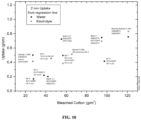
- the Uptake data shown in FIG. 10 were calculated from a regression line using data from 0-120 seconds. Component fabric densities were calculated from the fabric density multiplied by the fraction of that component in the blend. For multilayer fabrics a straight average was used.
- Absorbency A sample, consisting of 4 coupons, was measured and weighed so that a "density" in g/cm 2 was determined. The coupons were soaked in a 142 mM NaCl / 2.5 mM CaCl 2 solution, weighed, centrifuged, and reweighed. The mass changes at the various steps in the procedure allowed for the determination of the quantities of water that can be taken up and held. Although absorbency typically has been reported as g H 2 O/g fabric, with the density value the absorbency in g/100 cm 2 can also be calculated.
- Electrokinetic analysis The determination of the ⁇ -potential was carried out with the Electro Kinetic Analyzer (Anton Paar, Ashland, VA) using the Cylindrical Cell developed for the measurement of fibrous samples. When a fiber absorbs liquid and swells, the surface charges become farther separated and the absolute value of its ⁇ -potential decreases. Two kinds of measurements were made on each sample: (1) swell tests to measure the rate and extent of fiber swelling (at a given pH) and (2) a pH titration in which the swelling is measured as a function of pH. All ⁇ -potential measurements were made in a 1 mM KCl electrolyte.
- the streaming potential was measured and the zeta potential determined from the Smoluchowski equation: Where U is the streaming potential, the potential generated when an electrolyte is forced to flow over a stationary charged surface, p the pressure, ⁇ r and ⁇ 0 the dielectric constant and the vacuum permittivity, ⁇ the viscosity, and ⁇ is the conductivity of the measuring fluid. Surface conductivity of the fibrous samples was not taken into account.
- IEP isoelectric point
- the low water pressure head was set to wet the fabric at 30 bars of water pressure and the two high water pressure heads were set at either 60, 80, or 100 bars.
- the fabric production speed was 5 meters per minute.
- the resulting hydro-entangled fabric was dried using a meter-wide, gas-fired, through-Drum Dryer and wound onto a cardboard tube to form a compact fabric roll.
- the hydroentangling line utilizes municipal water that is passed through a reverse osmosis filter that is set to give a water hardness of 70 to 110 PPM.
- FIG. 4 illustrates that approach to preparation of the multilayered dressings.
- a square coupon of fabric assigned as the inner layer of the dressing was placed on a needle punched fabric containing the outer layer and a sheet of the outer layer composition was placed over it. The resulting composite was placed through a needle punch operation to fuse the fabric layers.
- One of our dressing design objectives was to prepare materials made of cotton-based fibers that are combined with other synthetic and/or natural fibers prepared in a manner that gives a nonwoven wound dressing product which accelerates clotting while having superior wicking and absorption capacity properties.
- the hemostatic functionality of the dressing is multi-factorial and results from fiber components to gross material structure and has fiber composition with properties of polarity, wettability, and swelling, as well as material structure (mesh, fenestration, density) that work synergistically to enhance clotting.
- the fiber composition is also determined by the hydroentanglement process which operates under varying pressures that remove or loosen waxes and pectin from the outer cotton fiber layers ( FIG. 1 ).
- materials have principally been prepared in the initial screening at varying hydroentanglement pressures (e.g., 60, 80, and 100mbar).
- Subsequent layered dressings also incorporated a needle punched layer to improve on loft (the properties of bulk and resilience in a fabric) and wicking properties.
- a significant amount of the cotton fiber cuticle and primary cell wall components are retained during hydroentanglement, but it is expected that increasing pressure removes more of the non-cellulosic fiber components.
- the non-cellulosic components can potentially detach or be removed from the fiber matrix due to the force of the water jets that creates an entangled fiber network and also exerts pressure, shear and friction on the outer cuticle layer of the fiber to an extent that this hydrophobic component (contains waxes) of the fiber begins to loosen or even detach from the secondary cell wall of the fiber.
- the approach to developing the single layered dressing was divided into three phases: (1) The initial phase involved screening nonwoven samples that varied in composition, density, and mesh, and which were contracted from a commercial nonwovens mill.
- composition ratios of greige cotton: bleached cotton: polypropylene were varied from hydrophilic polarity to increasing hydrophobicity as identified and confirmed in the electrokinetic analysis, i.e., from 100% bleached to 100% greige or 50% greige: 50% polypropylene.
- the correlation observed for the fiber composition was found to be consistent with increased clotting velocity paralleling increasing negative Zeta Plateau values.
- Nylon-Containing Materials By adding nylon 66 fibers as a hydrophobic component, a similar trend was observed to that of the polypropylene-containing greige cotton/bleached cotton composites. The results of the TEG clotting profiles for these types of fibers and the related electrokinetic results are shown in Table 5. It is also surprisingly notable that nylon-containing fabrics showed some relation between increased swell ratio and clotting, and increasing True Cotton TM and polypropylene surprisingly tended to increase swell ratio as well as shown in Table 5.
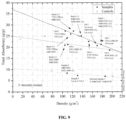
- the three layered fabric containing an outer layer of 30TC/50bl/20pp has approximately the same absorption capacity and density as the one with 80bl/20TC. Both motifs have a 50TC/50PP as the inner layer.
- the 50TC/50PP fabric would be a suitable clotting agent since, due to its hydrophobicity, it tends to repel water or has a high contact angle creating more buoyancy than absorption of whole blood.
- the compositions work synergistically to rapidly induce and stabilize clotting.
- FIG. 9 shows that the compositions work synergistically to rapidly induce and stabilize clotting.
- the rate of uptake of physiological saline by the 80bl/20TC-containing dressing was approximately 250 mg/cm more than the 30TC/50bl/20pp-containing dressing over a 2 minute period, and illustrated the importance of the more hydrophilic component of bleached cotton to facilitate solution uptake.
- the 30TC/50Bl/20PP (B2) fabric was found to accelerate blood clotting, as shown in fresh blood assessed in the Lee White clotting assay demonstrated in Table 7, more rapidly than more hydrophilic fabrics (i.e., 100% bleached cotton).
- Table 8 shows the results of two kaolin-treated materials at varying material:pectin/ kaolin (P:K) ratios.
- Pectin was utilized to adhere the kaolin to the fabric.
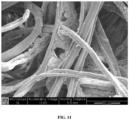
- the pectin/kaolin formulation adhered to the fabric by forming a coating both between and upon the fibers of the fabric as shown in the SEM in FIG. 11 .
- the P:K formulation was effective at doses as low as 1:1.
- the Lee White clotting assay revealed that the 1:2.5 ratio or greater (1:10) formulation was surprisingly required for optimal clotting efficiency.
- TEG results for fiber evaluations were subject to considerable variation due to differences in bovine blood clotting. However, where fiber compositions produced significant effects on R, K, and ⁇ that appeared promising, repeat experiments with new batches of bovine blood were examined for confirmation. Materials that showed the most promise based on differential clotting values of R and K in the results depicted in Tables 1-5 were as follows:
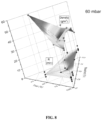
- FIG. 8 shows a comparison of the pretreated density and R and their variation with composition. Surprisingly, here it was seen that the inverse relation was found as is highlighted. The results of this analysis confirmed the importance of greige cotton within a larger data set as surprisingly playing an important role in accelerated clotting as determined by individual TEG measurements.
- Ascorbic Acid Antimicrobial Finish Purpose: Treatment of greige cotton-containing material (60/20/20, Greige Cotton/Bleached Cotton/Polypropylene) to impart antimicrobial activity. The padding /ovens used in processing were used to simulate commercial processing. Formulations: Solution 1: 10 mM Ascorbic acid, 1.76g deionized water (designated house tap), 1L; Solution 2: 10 mM Sodium ascorbate, 1.98g, deionized water (designated house tap), 1L.
- Multilayered Dressing Design One specific dressing design incorporated the fiber features illustrated in FIG. 2 where the detailed structure of cotton fiber components are depicted. A description of the multilayered samples is outlined in Table 9. This part of the study defined a layered motif with either two or three distinct nonwoven layers with the outside layers having the same blend of more hydrophilic fibers (e.g., bleached cotton, tencel, viscose) (see FIG. 3 ) and the inside layer having a different blend of more hydrophobic fibers (e.g., polypropylene, nylon, and forms of TC). The outside layers in the ⁇ sandwich design' portrayed in FIG.
- the inner layer contains a more hydrophobic component which when combined with the outer layer is designed to enable enhanced uptake and retention of blood by a mechanism that employs the juxtaposition of a hydrophobic material with a hydrophilic material.
- Both enhanced absorption capacity and wicking improved uptake and retention of blood in the material which in turn enable clot formation.
- increasing the hydrophobicity of the material can improve the absorption capacity and increasing hydrophilicity improves wicking, surprisingly the combination of these in an amphiphilic design improves clotting potentiation through rapid uptake and prolonged retention of clotted blood.
- a single layered nonwoven wound dressing comprising (or consisting essentially of or consisting of) 5% by weight to 95% by weight non-scoured, non-bleached greige cotton fibers, 5% by weight to 95% by weight bleached cotton fibers, and 5% by weight to 60% by weight hydrophobic fibers, all percentages adding up to 100 wt %.
- the above single layered nonwoven wound dressing wherein said dressing comprising (or consisting essentially of or consisting of) about 30% by weight non-scoured, non-bleached greige cotton fibers, about 50% by weight bleached cotton fibers, and about 20% by weight hydrophobic fibers.
- the above single layered nonwoven wound dressing wherein said hydrophobic fibers are selected from the group consisting of polypropylene, nylon, and mixtures thereof.
- the above single layered nonwoven wound dressing wherein said non-scoured, non-bleached greige cotton has a purity level of about 99.9%.
- the above single layered nonwoven wound dressing, wherein said dressing further comprises kaolin and pectin, wherein said pectin adheres said kaolin to said fibers.
- said nonwoven wound dressing is produced by a process comprising (or consisting essentially of or consisting of):
- a single layered nonwoven wound dressing comprising (or consisting essentially of or consisting of) 5% by weight to 95% by weight non-scoured, non-bleached greige cotton fibers, 5% by weight to 95% by weight bleached cotton fibers, and 5% by weight to 60% by weight hydrophobic fibers, all percentages adding up to 100 wt %, wherein said nonwoven wound dressing is produced by a process comprising (or consisting essentially of or consisting of):
- a multi-layered nonwoven wound dressing comprising (or consisting essentially of or consisting of) at least one inner layer containing about 50% by weight to about 95% by weight non-scoured, non-bleached greige cotton fibers and about 5% by weight to about 50% by weight hydrophobic fibers, all percentages adding up to 100 wt %, and at least one outer layer containing 5% by weight to 95% by weight non-scoured, non-bleached greige cotton fibers, 5% by weight to 95% by weight bleached cotton fibers, and 5% by weight to 60% by weight hydrophobic fibers, all percentages adding up to 100 wt % (e.g., 30TC/50bl/20pp).
- a nonwoven wound dressing comprising (or consisting essentially of or consisting of): (a) a first layer, wherein the first layer contains about 50% by weight to about 95% by weight non-scoured, non-bleached greige cotton fibers and about 5% by weight to about 50% by weight hydrophobic fibers (e.g., polypropylene, nylon), all percentages adding up to 100 wt %; and (b) a second layer, wherein the second layer contains about 5% by weight to about 95% by weight non-scoured, non-bleached greige cotton fibers, about 5% by weight to about 95% by weight bleached cotton fibers, and about 5% by weight to about 60% by weight hydrophobic fibers, all percentages adding up to 100 wt % (e.g., 30TC/50bl/20pp).
- hydrophobic fibers e.g., polypropylene, nylon
- Table 7 Lee White Clotting Assay Assessment of Sample B2, B5S3, and B6 with and without Pectin/Kaolin formulation applied. Six separate experiments are listed. B2: 30TC/50BL/20PP; B6: 100 BL, . B5S3: 33.3% PA6.6, 33.3% TC, 33.3% bl. Positive control is (CG). The Assay is used to assess the ability of the samples to initiate clotting in platelet fresh whole blood by optically assessing clotting rates for fabric treated blood versus untreated blood.
- Procedure to prepare blood hour preceding assay Collect swine blood (330mL) into 35mL of citrate phosphate dextrose adenine (CPDA-1): 0.327g/100 mL Citric acid monohydrate, 2.63g/100 mL Sodium citrate dihydrate, 0.222g/100 mL Sodium biphosphate monohydrate, 3.195g/100 mL Dextrose monohydrate, 0.0275g/100 mL adenine. Pilot: A pilot was run to determine the amount of CaCl 2 required to initiate clotting. 2.5mL blood was added to a tube containing no fabric or treatment.
- CPDA-1 citrate phosphate dextrose adenine
- Test #1 (2.5 mL of blood was added to each tube. Started adding CaCl 2 to 5mM with Tube #1 and began timer after all have received CaCl 2 ). Column numbers are in units of minutes.
- Test #2 Started adding CaCl 2 to 5mM with Tube #1 and began timer after all have received CaCl 2 )
- Test #1 Startted adding CaCl 2 to 5mM with Tube #1 and began timer after all have received CaCl 2 )
- Test #3 Startted adding CaCl 2 with Tube #1 and began timer after all have received CaCl 2 .
- Test #4 Startted adding CaCl 2 with Tube #1 and began timer after all have received CaCl 2 .
- Test #5 Startted adding CaCl 2 with Tube #1 and began timer after all have received CaCl 2 .
- the table describes samples that were combined on the same day in an operation to create layered dressing material.
- Sample i.d.s correspond with i.d. descriptions in FIG. 9 & FIG. 10 , which describe the absorbency and wicking activities of some of the samples.
Landscapes
- Health & Medical Sciences (AREA)
- Engineering & Computer Science (AREA)
- Chemical & Material Sciences (AREA)
- Life Sciences & Earth Sciences (AREA)
- General Health & Medical Sciences (AREA)
- Veterinary Medicine (AREA)
- Public Health (AREA)
- Animal Behavior & Ethology (AREA)
- Epidemiology (AREA)
- Materials Engineering (AREA)
- Hematology (AREA)
- Textile Engineering (AREA)
- Heart & Thoracic Surgery (AREA)
- Vascular Medicine (AREA)
- Biomedical Technology (AREA)
- Chemical Kinetics & Catalysis (AREA)
- Dispersion Chemistry (AREA)
- Mechanical Engineering (AREA)
- Botany (AREA)
- Zoology (AREA)
- Nonwoven Fabrics (AREA)
- Materials For Medical Uses (AREA)
Claims (8)
- Ein einschichtiger Wundverband aus Vliesstoff, umfassend 5 Gewichts% bis 95 Gewichts% nicht-gekämmte, nicht-gebleichte graue Baumwollfasern, 5 Gewichts% bis 95 Gewichts% gebleichte Baumwollfasern und 5 Gewichts% bis 60 Gewichts% hydrophobe Fasern, wobei sich alle Prozentsätze zu 100 Gewichts% addieren; wobei jener Wundverband aus Vliesstoff durch ein Verfahren hergestellt wird, das Nadelung und Wasserstrahlverfestigung umfasst.
- Der einschichtige Wundverband aus Vliesstoff nach Anspruch 1, wobei jener Verband 5 Gewichts% bis 80 Gewichts% nicht-gekämmte, nicht-gebleichte graue Baumwollfasern, 5 Gewichts% bis 70 Gewichts% gebleichte Baumwollfasern und 5 Gewichts% bis 60 Gewichts% hydrophobe Fasern umfasst.
- Der einschichtige Wundverband aus Vliesstoff nach Anspruch 1, wobei jene hydrophoben Fasern ausgewählt sind aus der Gruppe bestehend aus Polypropylen, Nylon und Mischungen davon.
- Der einschichtige Wundverband aus Vliesstoff nach Anspruch 1, wobei jene nicht-gekämmte, nicht-gebleichte graue Baumwolle ein Reinheitslevel von 99,9% hat.
- Der einschichtige Wundverband aus Vliesstoff nach Anspruch 1, wobei jener Verband ferner Kaolin und Pektin umfasst, wobei jenes Pektin jenes Kaolin an jenen Fasern anheftet.
- Der einschichtige Wundverband aus Vliesstoff nach Anspruch 1, wobei jener Wundverband aus Vliesstoff durch ein Verfahren hergestellt wird, das umfasst:(a) Herstellen von vernadelten Bahnen der Fasern, gefolgt von(b) einheitlicher Wasserstrahlverhärtung von jenen Bahnen unter Verwendung eines Systems, wobei jenes System mit einem Niedrigdruck-Wasserstrahlkopf ausgestattet ist, der jene Bahnen auf der Oberseite jener Bahnen befeuchtet, um ein befeuchtetes Substrat zu bilden und wobei jenes System mit zwei Hochdruck-Wasserstrahlköpfen ausgestattet ist, das danach alternativ jenes befeuchtete Substrat auf beiden Seiten jenes befeuchteten Substrats befeuchtet, wobei jenes System eine 766 Mikron (23 Mesh) bis 1.090 Mikron (17 Mesh) Blende verwendet, und(c) Trocknen jenes befeuchteten Substrats, um jenen Verband zu bilden.
- Der einschichtige Wundverband aus Vliesstoff nach Anspruch 2, wobei jener Verband 60 Gewichts% nicht-gekämmte, nicht-gebleichte graue Baumwollfasern, 20 Gewichts% gebleichte Baumwollfasern und 20 Gewichts% hydrophobe Fasern umfasst.
- Ein mehrschichtiger Wundverband aus Vliesstoff, umfassend mindestens eine innere Schicht, die 50 Gewichts% bis 95 Gewichts% nicht-gekämmte, nicht-gebleichte graue Baumwollfasern und mindestens 5 Gewichts% bis 50 Gewichts% hydrophobe Fasern enthält, wobei sich alle Prozentsätze auf 100 Gewichts% addieren, und mindestens eine äußere Schicht, die den einschichtigen Verband aus Vliesstoff von Anspruch 1 umfasst.
Applications Claiming Priority (3)
| Application Number | Priority Date | Filing Date | Title |
|---|---|---|---|
| US201762549676P | 2017-08-24 | 2017-08-24 | |
| US16/110,169 US11246756B2 (en) | 2017-08-24 | 2018-08-23 | Healthcare textiles |
| PCT/US2018/047869 WO2019040822A1 (en) | 2017-08-24 | 2018-08-24 | DRESSINGS CONTAINING ONE OR MORE LAYERS |
Publications (3)
| Publication Number | Publication Date |
|---|---|
| EP3672542A1 EP3672542A1 (de) | 2020-07-01 |
| EP3672542A4 EP3672542A4 (de) | 2021-05-19 |
| EP3672542B1 true EP3672542B1 (de) | 2023-05-17 |
Family
ID=65439275
Family Applications (1)
| Application Number | Title | Priority Date | Filing Date |
|---|---|---|---|
| EP18848123.8A Active EP3672542B1 (de) | 2017-08-24 | 2018-08-24 | Wundverbände mit einer oder mehreren schichten |
Country Status (3)
| Country | Link |
|---|---|
| US (1) | US11246756B2 (de) |
| EP (1) | EP3672542B1 (de) |
| WO (1) | WO2019040822A1 (de) |
Families Citing this family (24)
| Publication number | Priority date | Publication date | Assignee | Title |
|---|---|---|---|---|
| GB0808376D0 (en) | 2008-05-08 | 2008-06-18 | Bristol Myers Squibb Co | Wound dressing |
| GB0817796D0 (en) | 2008-09-29 | 2008-11-05 | Convatec Inc | wound dressing |
| GB201020236D0 (en) | 2010-11-30 | 2011-01-12 | Convatec Technologies Inc | A composition for detecting biofilms on viable tissues |
| JP6151186B2 (ja) | 2010-12-08 | 2017-06-21 | コンバテック・テクノロジーズ・インコーポレイテッドConvatec Technologies Inc | 創傷滲出液システム付属装置 |
| JP5833134B2 (ja) | 2010-12-08 | 2015-12-16 | コンバテック・テクノロジーズ・インコーポレイテッドConvatec Technologies Inc | 創傷部位から滲出液を除去するための方法およびシステム |
| CN103347561B (zh) | 2010-12-08 | 2016-09-07 | 康沃特克科技公司 | 用于评估伤口分泌液的集成系统 |
| GB201115182D0 (en) | 2011-09-02 | 2011-10-19 | Trio Healthcare Ltd | Skin contact material |
| GB2497406A (en) | 2011-11-29 | 2013-06-12 | Webtec Converting Llc | Dressing with a perforated binder layer |
| WO2014096843A2 (en) | 2012-12-20 | 2014-06-26 | Convatec Technologies Inc. | Processing of chemically modified cellulosic fibres |
| GB2543544A (en) | 2015-10-21 | 2017-04-26 | Brightwake Ltd | Wound dressing |
| CA3019436A1 (en) | 2016-03-30 | 2017-10-05 | Qualizyme Diagnostics Gmbh & Co Kg | Detecting microbial infection in wounds |
| SG11201808488XA (en) | 2016-03-30 | 2018-10-30 | Convatec Technologies Inc | Detecting microbial infections in wounds |
| GB201608099D0 (en) | 2016-05-09 | 2016-06-22 | Convatec Technologies Inc | Negative pressure wound dressing |
| EP3871645B1 (de) | 2016-07-08 | 2022-05-04 | ConvaTec Technologies Inc. | Flexibles unterdrucksystem |
| JP2019525799A (ja) | 2016-07-08 | 2019-09-12 | コンバテック・テクノロジーズ・インコーポレイテッドConvatec Technologies Inc | 流体収集装置 |
| ES2912094T3 (es) | 2016-07-08 | 2022-05-24 | Convatec Technologies Inc | Detección de flujo de fluidos |
| EP4360666A3 (de) | 2017-11-16 | 2024-05-08 | ConvaTec Limited | Flüssigkeitssammelvorrichtung |
| SG11202112292QA (en) | 2019-06-03 | 2021-12-30 | Convatec Ltd | Methods and devices to disrupt and contain pathogens |
| CN110791880A (zh) * | 2019-11-27 | 2020-02-14 | 浙江弘扬无纺新材料有限公司 | 一种含有棉短绒的无纺布生产工艺 |
| US11331221B2 (en) | 2019-12-27 | 2022-05-17 | Convatec Limited | Negative pressure wound dressing |
| US11771819B2 (en) | 2019-12-27 | 2023-10-03 | Convatec Limited | Low profile filter devices suitable for use in negative pressure wound therapy systems |
| EP4142670A4 (de) * | 2020-04-27 | 2024-05-22 | Zera, Inc. | Saugfähiger artikel auf pflanzenbasis |
| US20220241455A1 (en) * | 2021-02-04 | 2022-08-04 | Nan Liu Enterprise Co., Ltd. | Wound dressing |
| US20220323635A1 (en) * | 2021-04-06 | 2022-10-13 | The United States Of America, As Represented By The Secretary Of Agriculture | Fabric compositions comprising attached ascorbic acid |
Family Cites Families (8)
| Publication number | Priority date | Publication date | Assignee | Title |
|---|---|---|---|---|
| JP2000175958A (ja) | 1998-12-15 | 2000-06-27 | Toyobo Co Ltd | 創傷用包帯 |
| BR0010740B1 (pt) * | 1999-05-21 | 2012-11-27 | artigo antimicrobiano, vestimenta cirúrgica, mascara facial, e, processo para produzir artigo antimicrobiano. | |
| US6809231B2 (en) | 2001-11-21 | 2004-10-26 | The United States Of America As Represented By The Secretary Of Agriculture | Flexible and absorbent alginate wound dressing |
| US9463119B2 (en) | 2007-01-18 | 2016-10-11 | Abigo Medical Ab | Wound dressing with a bacterial adsorbing composition and moisture holding system |
| DE102011120487A1 (de) | 2011-09-02 | 2013-03-07 | BLüCHER GMBH | Wundauflage mit antimikrobieller Wirkung |
| WO2015041862A1 (en) | 2013-09-19 | 2015-03-26 | Huntsman International Llc | Treating nonwoven materials and obtaining products therefrom |
| GB201404947D0 (en) | 2014-03-19 | 2014-04-30 | Medtrade Products Ltd | Wound dressing |
| WO2017096402A1 (en) * | 2015-12-03 | 2017-06-08 | Xamax Industries, Inc. | Loofah |
-
2018
- 2018-08-23 US US16/110,169 patent/US11246756B2/en active Active
- 2018-08-24 EP EP18848123.8A patent/EP3672542B1/de active Active
- 2018-08-24 WO PCT/US2018/047869 patent/WO2019040822A1/en not_active Ceased
Also Published As
| Publication number | Publication date |
|---|---|
| US20190380878A1 (en) | 2019-12-19 |
| EP3672542A4 (de) | 2021-05-19 |
| US11246756B2 (en) | 2022-02-15 |
| WO2019040822A1 (en) | 2019-02-28 |
| EP3672542A1 (de) | 2020-07-01 |
Similar Documents
| Publication | Publication Date | Title |
|---|---|---|
| EP3672542B1 (de) | Wundverbände mit einer oder mehreren schichten | |
| EP1654114B1 (de) | Silberhaltige wundpflegevorrichtung, zusammensetzung dafür und herstellungsverfahren | |
| KR101361973B1 (ko) | 고통기성 내수성 시트, 고통기성 내수성 시트 복합체 및 흡수체 물품 그리고 고통기성 내수성 시트의 제조 방법 및 고통기성 내수성 시트 복합체의 제조 방법 | |
| EP3087960A1 (de) | Wundverband mit dreischichtigem gewebe und wundverbandherstellungsverfahren | |
| US9579411B2 (en) | Hydrogel wound dressings exhibiting reduced fiber losses in use | |
| EP2854881B1 (de) | Wundauflage | |
| JP4932498B2 (ja) | 創傷用多層包帯 | |
| AU2008205695B2 (en) | Wound dressing with a bacterial adsorbing composition and moisture holding system | |
| US20110213286A1 (en) | Wound care article, comprising a portion of modified natural fibers or synthetic fibers | |
| JPH04226657A (ja) | 改善された吸収力のあるアルギネート織布、外傷及び火傷の手当用品としての使用、及びその調製法 | |
| JP2015519137A5 (de) | ||
| US20070293799A1 (en) | Nano-silver wound dressing | |
| US20050035327A1 (en) | Topical silver-based antimicrobial composition for wound care devices | |
| CN107625582A (zh) | 具有多层结构的伤口敷料、其制备方法及其应用 | |
| TW201524448A (zh) | 抗菌性不織布薄片、含液薄片及面膜 | |
| JP5185280B2 (ja) | 酸性セルロース繊維及び有機亜鉛塩を含む吸収物品 | |
| WO2014165110A1 (en) | Biodegradable polymer non-woven field boot dryer insert with absorbency and antimicrobial chemistry | |
| DE102012100842A1 (de) | Wundpflegeartikel, aufweisend mindestens eine Oberfläche mit abrasiven Eigenschaften | |
| JP6436795B2 (ja) | フマル酸含有繊維、フマル酸含有繊維集合体および吸収体 | |
| JP4855241B2 (ja) | 除吸放出性シートおよびその製造方法 | |
| US20220347611A1 (en) | High particle capture moisture absorbing fabric | |
| KR20220093484A (ko) | 항균 및 지혈성을 가지는 복합드레싱재 | |
| JP4874723B2 (ja) | 銀ナノ医療湿布材 | |
| JP2019183337A (ja) | 機能性シートおよび機能性シートキット | |
| US20220323634A1 (en) | Fabric compositions comprising attached zeolite and/or a zeolite/pectin complex |
Legal Events
| Date | Code | Title | Description |
|---|---|---|---|
| STAA | Information on the status of an ep patent application or granted ep patent |
Free format text: STATUS: THE INTERNATIONAL PUBLICATION HAS BEEN MADE |
|
| PUAI | Public reference made under article 153(3) epc to a published international application that has entered the european phase |
Free format text: ORIGINAL CODE: 0009012 |
|
| STAA | Information on the status of an ep patent application or granted ep patent |
Free format text: STATUS: REQUEST FOR EXAMINATION WAS MADE |
|
| 17P | Request for examination filed |
Effective date: 20200224 |
|
| AK | Designated contracting states |
Kind code of ref document: A1 Designated state(s): AL AT BE BG CH CY CZ DE DK EE ES FI FR GB GR HR HU IE IS IT LI LT LU LV MC MK MT NL NO PL PT RO RS SE SI SK SM TR |
|
| AX | Request for extension of the european patent |
Extension state: BA ME |
|
| DAV | Request for validation of the european patent (deleted) | ||
| DAX | Request for extension of the european patent (deleted) | ||
| A4 | Supplementary search report drawn up and despatched |
Effective date: 20210419 |
|
| RIC1 | Information provided on ipc code assigned before grant |
Ipc: A61F 13/00 20060101AFI20210413BHEP Ipc: A61L 15/24 20060101ALI20210413BHEP Ipc: D04H 1/4266 20120101ALI20210413BHEP Ipc: D04H 1/4291 20120101ALI20210413BHEP Ipc: D04H 1/4334 20120101ALI20210413BHEP Ipc: D04H 1/4374 20120101ALI20210413BHEP Ipc: D04H 1/49 20120101ALI20210413BHEP Ipc: D04H 1/498 20120101ALI20210413BHEP |
|
| STAA | Information on the status of an ep patent application or granted ep patent |
Free format text: STATUS: EXAMINATION IS IN PROGRESS |
|
| 17Q | First examination report despatched |
Effective date: 20220609 |
|
| GRAP | Despatch of communication of intention to grant a patent |
Free format text: ORIGINAL CODE: EPIDOSNIGR1 |
|
| STAA | Information on the status of an ep patent application or granted ep patent |
Free format text: STATUS: GRANT OF PATENT IS INTENDED |
|
| INTG | Intention to grant announced |
Effective date: 20221125 |
|
| RIN1 | Information on inventor provided before grant (corrected) |
Inventor name: LAWSON, GARY Inventor name: DACORTA, JOSEPH Inventor name: EDWARDS, JUDSON V. |
|
| GRAS | Grant fee paid |
Free format text: ORIGINAL CODE: EPIDOSNIGR3 |
|
| GRAA | (expected) grant |
Free format text: ORIGINAL CODE: 0009210 |
|
| STAA | Information on the status of an ep patent application or granted ep patent |
Free format text: STATUS: THE PATENT HAS BEEN GRANTED |
|
| AK | Designated contracting states |
Kind code of ref document: B1 Designated state(s): AL AT BE BG CH CY CZ DE DK EE ES FI FR GB GR HR HU IE IS IT LI LT LU LV MC MK MT NL NO PL PT RO RS SE SI SK SM TR |
|
| REG | Reference to a national code |
Ref country code: GB Ref legal event code: FG4D |
|
| REG | Reference to a national code |
Ref country code: DE Ref legal event code: R096 Ref document number: 602018050033 Country of ref document: DE |
|
| REG | Reference to a national code |
Ref country code: CH Ref legal event code: EP |
|
| REG | Reference to a national code |
Ref country code: IE Ref legal event code: FG4D |
|
| REG | Reference to a national code |
Ref country code: AT Ref legal event code: REF Ref document number: 1568132 Country of ref document: AT Kind code of ref document: T Effective date: 20230615 |
|
| REG | Reference to a national code |
Ref country code: LT Ref legal event code: MG9D |
|
| REG | Reference to a national code |
Ref country code: NL Ref legal event code: MP Effective date: 20230517 |
|
| REG | Reference to a national code |
Ref country code: NO Ref legal event code: T2 Effective date: 20230517 |
|
| REG | Reference to a national code |
Ref country code: AT Ref legal event code: MK05 Ref document number: 1568132 Country of ref document: AT Kind code of ref document: T Effective date: 20230517 |
|
| PG25 | Lapsed in a contracting state [announced via postgrant information from national office to epo] |
Ref country code: SE Free format text: LAPSE BECAUSE OF FAILURE TO SUBMIT A TRANSLATION OF THE DESCRIPTION OR TO PAY THE FEE WITHIN THE PRESCRIBED TIME-LIMIT Effective date: 20230517 Ref country code: PT Free format text: LAPSE BECAUSE OF FAILURE TO SUBMIT A TRANSLATION OF THE DESCRIPTION OR TO PAY THE FEE WITHIN THE PRESCRIBED TIME-LIMIT Effective date: 20230918 Ref country code: NL Free format text: LAPSE BECAUSE OF FAILURE TO SUBMIT A TRANSLATION OF THE DESCRIPTION OR TO PAY THE FEE WITHIN THE PRESCRIBED TIME-LIMIT Effective date: 20230517 Ref country code: ES Free format text: LAPSE BECAUSE OF FAILURE TO SUBMIT A TRANSLATION OF THE DESCRIPTION OR TO PAY THE FEE WITHIN THE PRESCRIBED TIME-LIMIT Effective date: 20230517 Ref country code: AT Free format text: LAPSE BECAUSE OF FAILURE TO SUBMIT A TRANSLATION OF THE DESCRIPTION OR TO PAY THE FEE WITHIN THE PRESCRIBED TIME-LIMIT Effective date: 20230517 |
|
| PG25 | Lapsed in a contracting state [announced via postgrant information from national office to epo] |
Ref country code: RS Free format text: LAPSE BECAUSE OF FAILURE TO SUBMIT A TRANSLATION OF THE DESCRIPTION OR TO PAY THE FEE WITHIN THE PRESCRIBED TIME-LIMIT Effective date: 20230517 Ref country code: PL Free format text: LAPSE BECAUSE OF FAILURE TO SUBMIT A TRANSLATION OF THE DESCRIPTION OR TO PAY THE FEE WITHIN THE PRESCRIBED TIME-LIMIT Effective date: 20230517 Ref country code: LV Free format text: LAPSE BECAUSE OF FAILURE TO SUBMIT A TRANSLATION OF THE DESCRIPTION OR TO PAY THE FEE WITHIN THE PRESCRIBED TIME-LIMIT Effective date: 20230517 Ref country code: LT Free format text: LAPSE BECAUSE OF FAILURE TO SUBMIT A TRANSLATION OF THE DESCRIPTION OR TO PAY THE FEE WITHIN THE PRESCRIBED TIME-LIMIT Effective date: 20230517 Ref country code: IS Free format text: LAPSE BECAUSE OF FAILURE TO SUBMIT A TRANSLATION OF THE DESCRIPTION OR TO PAY THE FEE WITHIN THE PRESCRIBED TIME-LIMIT Effective date: 20230917 Ref country code: HR Free format text: LAPSE BECAUSE OF FAILURE TO SUBMIT A TRANSLATION OF THE DESCRIPTION OR TO PAY THE FEE WITHIN THE PRESCRIBED TIME-LIMIT Effective date: 20230517 Ref country code: GR Free format text: LAPSE BECAUSE OF FAILURE TO SUBMIT A TRANSLATION OF THE DESCRIPTION OR TO PAY THE FEE WITHIN THE PRESCRIBED TIME-LIMIT Effective date: 20230818 |
|
| PG25 | Lapsed in a contracting state [announced via postgrant information from national office to epo] |
Ref country code: FI Free format text: LAPSE BECAUSE OF FAILURE TO SUBMIT A TRANSLATION OF THE DESCRIPTION OR TO PAY THE FEE WITHIN THE PRESCRIBED TIME-LIMIT Effective date: 20230517 |
|
| PG25 | Lapsed in a contracting state [announced via postgrant information from national office to epo] |
Ref country code: SK Free format text: LAPSE BECAUSE OF FAILURE TO SUBMIT A TRANSLATION OF THE DESCRIPTION OR TO PAY THE FEE WITHIN THE PRESCRIBED TIME-LIMIT Effective date: 20230517 |
|
| PG25 | Lapsed in a contracting state [announced via postgrant information from national office to epo] |
Ref country code: SM Free format text: LAPSE BECAUSE OF FAILURE TO SUBMIT A TRANSLATION OF THE DESCRIPTION OR TO PAY THE FEE WITHIN THE PRESCRIBED TIME-LIMIT Effective date: 20230517 Ref country code: SK Free format text: LAPSE BECAUSE OF FAILURE TO SUBMIT A TRANSLATION OF THE DESCRIPTION OR TO PAY THE FEE WITHIN THE PRESCRIBED TIME-LIMIT Effective date: 20230517 Ref country code: RO Free format text: LAPSE BECAUSE OF FAILURE TO SUBMIT A TRANSLATION OF THE DESCRIPTION OR TO PAY THE FEE WITHIN THE PRESCRIBED TIME-LIMIT Effective date: 20230517 Ref country code: EE Free format text: LAPSE BECAUSE OF FAILURE TO SUBMIT A TRANSLATION OF THE DESCRIPTION OR TO PAY THE FEE WITHIN THE PRESCRIBED TIME-LIMIT Effective date: 20230517 Ref country code: DK Free format text: LAPSE BECAUSE OF FAILURE TO SUBMIT A TRANSLATION OF THE DESCRIPTION OR TO PAY THE FEE WITHIN THE PRESCRIBED TIME-LIMIT Effective date: 20230517 Ref country code: CZ Free format text: LAPSE BECAUSE OF FAILURE TO SUBMIT A TRANSLATION OF THE DESCRIPTION OR TO PAY THE FEE WITHIN THE PRESCRIBED TIME-LIMIT Effective date: 20230517 |
|
| REG | Reference to a national code |
Ref country code: DE Ref legal event code: R097 Ref document number: 602018050033 Country of ref document: DE |
|
| PG25 | Lapsed in a contracting state [announced via postgrant information from national office to epo] |
Ref country code: MC Free format text: LAPSE BECAUSE OF FAILURE TO SUBMIT A TRANSLATION OF THE DESCRIPTION OR TO PAY THE FEE WITHIN THE PRESCRIBED TIME-LIMIT Effective date: 20230517 |
|
| PLBE | No opposition filed within time limit |
Free format text: ORIGINAL CODE: 0009261 |
|
| STAA | Information on the status of an ep patent application or granted ep patent |
Free format text: STATUS: NO OPPOSITION FILED WITHIN TIME LIMIT |
|
| REG | Reference to a national code |
Ref country code: CH Ref legal event code: PL |
|
| PG25 | Lapsed in a contracting state [announced via postgrant information from national office to epo] |
Ref country code: MC Free format text: LAPSE BECAUSE OF FAILURE TO SUBMIT A TRANSLATION OF THE DESCRIPTION OR TO PAY THE FEE WITHIN THE PRESCRIBED TIME-LIMIT Effective date: 20230517 |
|
| PG25 | Lapsed in a contracting state [announced via postgrant information from national office to epo] |
Ref country code: LU Free format text: LAPSE BECAUSE OF NON-PAYMENT OF DUE FEES Effective date: 20230824 |
|
| 26N | No opposition filed |
Effective date: 20240220 |
|
| PG25 | Lapsed in a contracting state [announced via postgrant information from national office to epo] |
Ref country code: LU Free format text: LAPSE BECAUSE OF NON-PAYMENT OF DUE FEES Effective date: 20230824 Ref country code: CH Free format text: LAPSE BECAUSE OF NON-PAYMENT OF DUE FEES Effective date: 20230831 |
|
| PG25 | Lapsed in a contracting state [announced via postgrant information from national office to epo] |
Ref country code: SI Free format text: LAPSE BECAUSE OF FAILURE TO SUBMIT A TRANSLATION OF THE DESCRIPTION OR TO PAY THE FEE WITHIN THE PRESCRIBED TIME-LIMIT Effective date: 20230517 |
|
| REG | Reference to a national code |
Ref country code: BE Ref legal event code: MM Effective date: 20230831 |
|
| REG | Reference to a national code |
Ref country code: IE Ref legal event code: MM4A |
|
| PG25 | Lapsed in a contracting state [announced via postgrant information from national office to epo] |
Ref country code: SI Free format text: LAPSE BECAUSE OF FAILURE TO SUBMIT A TRANSLATION OF THE DESCRIPTION OR TO PAY THE FEE WITHIN THE PRESCRIBED TIME-LIMIT Effective date: 20230517 Ref country code: IT Free format text: LAPSE BECAUSE OF FAILURE TO SUBMIT A TRANSLATION OF THE DESCRIPTION OR TO PAY THE FEE WITHIN THE PRESCRIBED TIME-LIMIT Effective date: 20230517 |
|
| PG25 | Lapsed in a contracting state [announced via postgrant information from national office to epo] |
Ref country code: IE Free format text: LAPSE BECAUSE OF NON-PAYMENT OF DUE FEES Effective date: 20230824 |
|
| PG25 | Lapsed in a contracting state [announced via postgrant information from national office to epo] |
Ref country code: IE Free format text: LAPSE BECAUSE OF NON-PAYMENT OF DUE FEES Effective date: 20230824 |
|
| PG25 | Lapsed in a contracting state [announced via postgrant information from national office to epo] |
Ref country code: BE Free format text: LAPSE BECAUSE OF NON-PAYMENT OF DUE FEES Effective date: 20230831 |
|
| PG25 | Lapsed in a contracting state [announced via postgrant information from national office to epo] |
Ref country code: BG Free format text: LAPSE BECAUSE OF FAILURE TO SUBMIT A TRANSLATION OF THE DESCRIPTION OR TO PAY THE FEE WITHIN THE PRESCRIBED TIME-LIMIT Effective date: 20230517 |
|
| PG25 | Lapsed in a contracting state [announced via postgrant information from national office to epo] |
Ref country code: BG Free format text: LAPSE BECAUSE OF FAILURE TO SUBMIT A TRANSLATION OF THE DESCRIPTION OR TO PAY THE FEE WITHIN THE PRESCRIBED TIME-LIMIT Effective date: 20230517 |
|
| PG25 | Lapsed in a contracting state [announced via postgrant information from national office to epo] |
Ref country code: CY Free format text: LAPSE BECAUSE OF FAILURE TO SUBMIT A TRANSLATION OF THE DESCRIPTION OR TO PAY THE FEE WITHIN THE PRESCRIBED TIME-LIMIT; INVALID AB INITIO Effective date: 20180824 |
|
| PG25 | Lapsed in a contracting state [announced via postgrant information from national office to epo] |
Ref country code: HU Free format text: LAPSE BECAUSE OF FAILURE TO SUBMIT A TRANSLATION OF THE DESCRIPTION OR TO PAY THE FEE WITHIN THE PRESCRIBED TIME-LIMIT; INVALID AB INITIO Effective date: 20180824 |
|
| PGFP | Annual fee paid to national office [announced via postgrant information from national office to epo] |
Ref country code: DE Payment date: 20250827 Year of fee payment: 8 |
|
| PGFP | Annual fee paid to national office [announced via postgrant information from national office to epo] |
Ref country code: NO Payment date: 20250827 Year of fee payment: 8 |
|
| PGFP | Annual fee paid to national office [announced via postgrant information from national office to epo] |
Ref country code: GB Payment date: 20250827 Year of fee payment: 8 |
|
| PGFP | Annual fee paid to national office [announced via postgrant information from national office to epo] |
Ref country code: FR Payment date: 20250825 Year of fee payment: 8 |
|
| PG25 | Lapsed in a contracting state [announced via postgrant information from national office to epo] |
Ref country code: TR Free format text: LAPSE BECAUSE OF FAILURE TO SUBMIT A TRANSLATION OF THE DESCRIPTION OR TO PAY THE FEE WITHIN THE PRESCRIBED TIME-LIMIT Effective date: 20230517 |