EP3666863B2 - Verfahren zum reinigen von kunststoffpartikel enthaltenden abfallfetten und -ölen - Google Patents
Verfahren zum reinigen von kunststoffpartikel enthaltenden abfallfetten und -ölen Download PDFInfo
- Publication number
- EP3666863B2 EP3666863B2 EP18211748.1A EP18211748A EP3666863B2 EP 3666863 B2 EP3666863 B2 EP 3666863B2 EP 18211748 A EP18211748 A EP 18211748A EP 3666863 B2 EP3666863 B2 EP 3666863B2
- Authority
- EP
- European Patent Office
- Prior art keywords
- plastic particles
- plastic
- oils
- filter aid
- waste
- Prior art date
- Legal status (The legal status is an assumption and is not a legal conclusion. Google has not performed a legal analysis and makes no representation as to the accuracy of the status listed.)
- Active
Links
Images
Classifications
-
- C—CHEMISTRY; METALLURGY
- C11—ANIMAL OR VEGETABLE OILS, FATS, FATTY SUBSTANCES OR WAXES; FATTY ACIDS THEREFROM; DETERGENTS; CANDLES
- C11B—PRODUCING, e.g. BY PRESSING RAW MATERIALS OR BY EXTRACTION FROM WASTE MATERIALS, REFINING OR PRESERVING FATS, FATTY SUBSTANCES, e.g. LANOLIN, FATTY OILS OR WAXES; ESSENTIAL OILS; PERFUMES
- C11B3/00—Refining fats or fatty oils
- C11B3/001—Refining fats or fatty oils by a combination of two or more of the means hereafter
-
- C—CHEMISTRY; METALLURGY
- C11—ANIMAL OR VEGETABLE OILS, FATS, FATTY SUBSTANCES OR WAXES; FATTY ACIDS THEREFROM; DETERGENTS; CANDLES
- C11B—PRODUCING, e.g. BY PRESSING RAW MATERIALS OR BY EXTRACTION FROM WASTE MATERIALS, REFINING OR PRESERVING FATS, FATTY SUBSTANCES, e.g. LANOLIN, FATTY OILS OR WAXES; ESSENTIAL OILS; PERFUMES
- C11B3/00—Refining fats or fatty oils
- C11B3/02—Refining fats or fatty oils by chemical reaction
- C11B3/04—Refining fats or fatty oils by chemical reaction with acids
-
- C—CHEMISTRY; METALLURGY
- C11—ANIMAL OR VEGETABLE OILS, FATS, FATTY SUBSTANCES OR WAXES; FATTY ACIDS THEREFROM; DETERGENTS; CANDLES
- C11B—PRODUCING, e.g. BY PRESSING RAW MATERIALS OR BY EXTRACTION FROM WASTE MATERIALS, REFINING OR PRESERVING FATS, FATTY SUBSTANCES, e.g. LANOLIN, FATTY OILS OR WAXES; ESSENTIAL OILS; PERFUMES
- C11B3/00—Refining fats or fatty oils
- C11B3/10—Refining fats or fatty oils by adsorption
-
- C—CHEMISTRY; METALLURGY
- C11—ANIMAL OR VEGETABLE OILS, FATS, FATTY SUBSTANCES OR WAXES; FATTY ACIDS THEREFROM; DETERGENTS; CANDLES
- C11B—PRODUCING, e.g. BY PRESSING RAW MATERIALS OR BY EXTRACTION FROM WASTE MATERIALS, REFINING OR PRESERVING FATS, FATTY SUBSTANCES, e.g. LANOLIN, FATTY OILS OR WAXES; ESSENTIAL OILS; PERFUMES
- C11B3/00—Refining fats or fatty oils
- C11B3/16—Refining fats or fatty oils by mechanical means
Definitions
- the invention relates to a method for cleaning waste fats and/or oils containing plastic particles, in particular animal fats.
- Waste materials such as used cooking oil or animal fats have been increasingly used as raw materials for biodiesel production in recent years.
- Animal fat in particular, which comes from the recycling of residual and waste materials from the meat industry and subsequently from animal rendering plants, can contain a high proportion of plastic (polyethylene (PE) and related plastics) in addition to other solids such as bone meal.
- PET polyethylene
- This plastic material mostly in the form of microparticles, comes, among other things, from packaging that has not been completely separated.
- a starting material e.g. animal fat
- a high plastic content > 50 mg/kg
- biodiesel production this can lead to massive blockages in pipelines and, as a result, to the failure of production facilities.
- filtration with filter aids is usually carried out.
- the US 3,758,533 teaches a process for purifying fats containing plastic particles, in which the temperature of the fat is adjusted so that it is above the melting point of the starting material but below 95°C in order not to dissolve the polyethylene impurities in the fat so that they can subsequently be separated by filtration or centrifugation. Before separation, 0.5-2% by weight of a particulate material, e.g. Celite or fuller's earth, can be added as a filter aid.
- a particulate material e.g. Celite or fuller's earth
- the invention attempts to overcome the above-mentioned disadvantages of the prior art and has the object of providing a method for cleaning waste fats and/or oils containing plastic particles, in particular animal fats, which achieves a reduction in the content of plastic particles without or with smaller amounts of filter aid than the known methods.
- the softening temperature of the plastic is the Vicat softening temperature (VST) measured according to method A in accordance with ISO 306, which was introduced as a substitute for the melting point of thermoplastics. It describes the temperature at which a circular indenter with a cross-section of 1 mm 2 sinks exactly 1 mm deep into the test specimen under a standardized load of 10 N.
- VST Vicat softening temperature
- ASTM D 1525 ASTM D 1525
- the method further comprises the step of admixing filter aid to the waste fats and/or oils containing plastic particles, before or after the heating step, to produce a mixture of the waste fats and/or oils and the filter aid, wherein the filter aid is removed from the liquid waste fats and/or oils together with the plastic particles in the separation step.
- animal fat usually contains a proportion of solid contaminants, namely the plastic particles that are to be removed or the proportion of which is to be reduced by means of the process according to the invention, and other solid particles, such as bone fragments (in particular "bone meal"), protein residues, etc.
- the proportion of these solid particles that are not plastic particles depends on the origin and processing of the starting material and is usually about 0.03% by weight or more, based on the raw material. These solid particles can achieve the same effect as a filter aid in the process according to the invention.
- the plastic particles are deposited on solid particles that are not plastic particles, i.e. either those already present in the raw material or those of the admixed filter aid or both, and are fixed thereon by the subsequent step of cooling.
- the solid particles with the plastic fixed thereon can then be easily separated from the liquid waste fats and/or oils.
- the step of admixing is carried out by the person skilled in the art known filter aid, such as bleaching earth, e.g. bentonite. This step can take place before or after the heating step. It is advantageous to ensure thorough mixing, e.g. by stirring, of waste fats and/or oils containing plastic particles and filter aid.
- filter aid such as bleaching earth, e.g. bentonite.
- the step of adding filter aid comprises adding filter aid in an amount of 0.1-1.0 wt.%, based on the amount of waste fat and/or oil, such as 0.2 wt.%, 0.3 wt.%, 0.4 wt.%, 0.5 wt.%, 0.6 wt.%, 0.7 wt.%, 0.8 wt.% or 0.9 wt.%.
- filter aid in comparison with conventional bleaching earth defiltration, advantageously much smaller amounts of filter aid are required according to the invention.
- the method according to the invention further comprises a step of keeping the waste fats and/or oils containing plastic particles or the mixture of the waste fats and/or oils and the filter aid, preferably for 10-25 minutes, at the temperature above the softening temperature of the plastic of the plastic particles before the cooling step.
- the method according to the invention also comprises a step of keeping the waste fats and/or oils containing plastic particles or the mixture of the waste fats and/or oils and the filter aid, preferably for 10-25 minutes, at the temperature below the softening temperature of the plastic of the plastic particles before the separation step.
- This step improves the adhesion of the plastic particles to the solids, allowing a higher proportion of plastic to be removed from the waste fats and/or oils.
- the heating step comprises heating to a temperature ⁇ 130°C.
- the cooling step comprises cooling to a temperature ⁇ 100°C. This is particularly advantageous since the plastic most frequently present as a contaminant in animal fats is polyethylene, which, depending on the type, has a softening temperature of about 110°C to about 135°C.
- the plastic of the plastic particles comprises polyethylene, in particular it consists of polyethylene.
- Polyethylene type polymers are defined according to the analytical method ISO 6656 as impurities that are soluble in boiling perchloroethylene.
- a preferred embodiment of the method is characterized in that the separation step comprises centrifugation, in particular decanting centrifugation.
- the type of fat processing according to the invention not only cleans the waste fats and/or oils of plastic particles, but also removes substances that lead to phase separation difficulties in the further process.
- the process further comprises the step of adding water or steam and acid after the cooling step (or after the step of keeping below the softening temperature), wherein the acid is preferably selected from phosphoric acid, sulphuric acid, citric acid, methanesulphonic acid or any combination thereof.
- the acid is preferably selected from phosphoric acid, sulphuric acid, citric acid, methanesulphonic acid or any combination thereof.
- Unsaponifiables are understood to be sterols, hydrocarbons, carotenoids and tocopherols in particular. These fat components have a disruptive effect on biodiesel production and should therefore be removed from the starting material as far as possible.
- the addition step comprises the addition of water or steam in an amount of 5-15 wt.% or the addition of acid in an amount of 0.2-1.5 wt.%, in each case based on the amount of waste fat and/or oil.
- the separation step comprises separation by means of a 3-phase decanter, whereby an oil, a water and a solid phase are obtained.
- Animal fat for example for biodiesel production, is usually cleaned of solids and impurities by water washing at high temperature using a 3-phase decanter (three-phase separator).
- the method according to the invention can advantageously be carried out by decanting centrifugation in a 3-phase decanter.
- filter aid By adding and stirring in filter aid, if necessary, at temperatures above the softening point of the plastic of the plastic particles, these particles are brought onto the solid particles that are not plastic particles and/or the filter aid and fixed there by subsequent cooling below the softening temperature.
- the solid particles and/or the filter aid are then separated using the three-phase separator required for the raw washing. In this way, the plastic particles can be removed without complex filtration equipment in a simultaneous washing step with a 3-phase decanter required for fat processing.
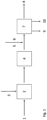
- FIG. 1 shows a block diagram of an embodiment of the method according to the invention.
- waste fat and/or oil containing plastic particles referred to as oil phase 1
- tank 2 the oil phase is heated to a temperature which is above the softening temperature of the plastic of the plastic particles.
- a filter aid e.g. bleaching earth
- the heated oil phase 1 or the mixture of oil phase 1 and filter aid 3 is advantageously kept in tank 2 for 10-25 minutes at a temperature above the softening temperature of the plastic of the plastic particles.
- the oil phase 1 or the mixture of oil phase 1 and filter aid 3 is then conveyed to tank 4, where it is cooled to a temperature below the softening temperature.
- the cooled oil phase 1 or the cooled mixture of the oil phase 1 and the filter aid 3 is left to rest for a period of time, e.g. 10 - 25 minutes, before water/steam 5 and acid 6 are added.
- the mixture is then separated in a 3-phase decanter 7 into a purified oil phase 8, a water phase 9 and a Solid phase 10 containing plastic particles (optionally together with the filter aid) and other solid particles is separated.
- Example 1 and Example 2 show that the content of plastic particles can be significantly reduced using the process according to the invention, even without the aid of filter aids.
- the addition of filter aids leads to a further reduction, although a much smaller amount of filter aid is required for the end result compared to the known prior art.
- An animal fat with 342 ppm PE (and 0.08 wt.% solid impurities that are not plastic, based on the animal fat) was mixed with 0.25 wt.% filter aid, based on the animal fat, heated to 130°C and cooled to 90°C after different residence times (5, 10 and 20 minutes). After a further residence time of 10 minutes, the mixture was mixed with 10 wt.% water and 0.5 wt.% phosphoric acid, each based on the animal fat, and the fat phase was then separated using a three-phase decanter.
- the resulting fat phases had the following PE content: 5 minutes dwell time: 80 ppm PE (77% reduction) 10 minutes dwell time: 66 ppm PE (81% reduction) 20 minutes dwell time: 35 ppm PE (90% reduction)
Landscapes
- Chemical & Material Sciences (AREA)
- Life Sciences & Earth Sciences (AREA)
- Chemical Kinetics & Catalysis (AREA)
- Microbiology (AREA)
- Engineering & Computer Science (AREA)
- Oil, Petroleum & Natural Gas (AREA)
- Wood Science & Technology (AREA)
- Organic Chemistry (AREA)
- General Chemical & Material Sciences (AREA)
- Mechanical Engineering (AREA)
- Fats And Perfumes (AREA)
Description
- Das zu dieser Anmeldung führende Projekt hat finanzielle Mittel vom EU-Programm Horizon 2020 für Forschung und Innovation unter Fördervertrag Nr. 737802 erhalten.
- Die Erfindung betrifft ein Verfahren zum Reinigen von Kunststoffpartikel enthaltenden Abfallfetten und/oder -ölen, insbesondere tierischen Fetten.
- Abfallstoffe wie Altspeiseöle oder tierische Fette finden in den letzten Jahren vermehrt Anwendung als Rohstoff für die Biodieselproduktion. Insbesondere bei Tierfett, welches der Verwertung von Rest- und Abfallstoffen aus der Fleischwirtschaft herrührt und in weiterer Folge aus Tierkörperverwertungsanlagen ("Rendering") stammt, kann neben anderen Feststoffen, wie etwa Knochenmehl, ein hoher Anteil an Kunststoff (Polyethylen (PE) und artverwandte Kunststoffe) enthalten sein. Dieses Plastikmaterial, zumeist in Form von Mikropartikeln, rührt unter anderem von nicht vollständig abgetrennten Verpackungen her.
- Wird in einem weiterführenden Prozess, wie z.B. in der Biodiesel-Herstellung, ein Ausgangsmaterial, z.B. Tierfett, mit einem hohen Kunststoffanteil (> 50 mg/kg) verarbeitet, kann es zu massiven Verstopfungen von Rohrleitungen und damit einhergehend zum Ausfall von Produktionsanlagen kommen.
- Um Rohstoffe, wie Tierfett, für weiterführende Prozesse, wie z.B. die Biodieselerzeugung oder die Seifenproduktion, nutzen zu können, ist es deshalb von großer Bedeutung, den Anteil an Kunststoffpartikeln im Ausgangsmaterial so weit wie möglich zu reduzieren.
- Um Kunststoffteilchen aus Tierfetten zu entfernen, die als Rohstoffe für weitere Anwendungen genutzt werden, wird üblicherweise eine Filtration mit Filterhilfsmitteln durchgeführt.
- In der Publikation Fats and Proteins Research Foundation, Inc., Director's Digest, Nr. 113 (November 1973) wird die Abtrennung von PE aus Talg mittels Filtration beschrieben, wobei das Rohmaterial mit Filterhilfsmittel und Bleicherde bei einer Temperatur von 200-250°F (93-121°C) angerührt und bei 190-250°F (88-121°C) filtriert wird. Als Alternative wird auch eine Behandlung mit Aluminiumhydroxid-Gel, Lauge oder Aktivkohle erwähnt.
- Gemäß der
US 4,159,992 wird das Tierfett auf eine Temperatur knapp über seinem Erstarrungspunkt eingestellt und mit einem organischen Lösungsmittel versetzt, in dem sich nur das Fett löst. Die nicht gelösten Kunststoffteilchen werden dann mittels Filtration aus der Lösung entfernt. - Die
US 3,758,533 lehrt ein Verfahren zum Reinigen von Kunststoffpartikel enthaltenden Fetten, bei dem die Temperatur des Fetts derart eingestellt wird, dass sie über dem Schmelzpunkt des Ausgangsmaterials aber unter 95°C liegt, um die Polyethylenverunreinigungen nicht im Fett zu lösen, so dass diese anschließend durch Filtration oder Zentrifugation abgetrennt werden können. Vor der Abtrennung können 0,5-2 Gew.-% eines teilchenförmigen Materials, z.B. Celite oder Bleicherde, als Filterhilfsmittel hinzugefügt werden. - Zwar wird mit den üblicherweise verwendeten Reinigungsverfahren, die eine Filtration mit Filterhilfsmitteln einsetzen, eine Reduktion des Gehalts an Kunststoffpartikeln erzielt, doch werden hierfür einerseits große Mengen an Filterhilfsmitteln benötigt und es ist eine vorherige Entfernung des im Fett enthaltenen Wassers erforderlich. Aufgrund der unterschiedlichen Größenverteilung der Kunststoffteilchen sind die erzielten Filtrationsergebnisse außerdem meist nur schwer reproduzierbar.
- Bei den bekannten Verfahren wird zudem vielfach eine Anschwemmfiltration eingesetzt, die mit hohen Investitions- und Betriebskosten verbunden ist.
- Bei dem in der
US 4,159,992 beschriebenen Verfahren wiederum bedarf es eines organischen Lösungsmittels, welches am Ende des Prozesses mittels energieaufwendiger Destillation aus dem Tierfett entfernt werden muss. - Die Erfindung versucht, die oben genannten Nachteile des Standes der Technik zu überwinden, und stellt sich die Aufgabe, ein Verfahren zum Reinigen von Kunststoffpartikel enthaltenden Abfallfetten und/oder -ölen, insbesondere tierischen Fetten, bereitzustellen, das eine Reduktion des Gehalts an Kunststoffpartikel ohne oder mit geringeren Mengen an Filterhilfsmittel als die bekannten Verfahren erzielt. Außerdem soll es auch möglich sein, kleine Partikel aus dem Tierfett abzutrennen, die in einer Anschwemmfiltration nicht entfernt werden können oder rasch zu einer Verstopfung des Filterkuchens führen.
- Diese Aufgabe wird bei einem Verfahren zum Reinigen von Kunststoffpartikel enthaltenden Abfallfetten und/oder -ölen erfindungsgemäß dadurch gelöst, dass es die folgenden Schritte umfasst:
- Erwärmen der Kunststoffpartikel enthaltenden Abfallfette und/oder -öle auf eine Temperatur über der Erweichungstemperatur des Kunststoffs der Kunststoffpartikel,
- Abkühlen der Abfallfette und/oder -öle auf eine Temperatur unter der Erweichungstemperatur des Kunststoffs der Kunststoffpartikel und
- Abtrennen der Kunststoffpartikel von den flüssigen Abfallfetten und/oder -ölen, wobei der Kunststoff der Kunststoffpartikel Polyethylen umfasst und wobei der Schritt des Erwärmens das Erwärmen auf eine Temperatur ≥ 130°C umfasst.
- Bei der Erweichungstemperatur des Kunststoffs handelt es sich um die nach Verfahren A gemessene Vicat-Erweichungstemperatur (VST) nach ISO 306, die als Ersatzgröße für den Schmelzpunkt von thermoplastischen Kunststoffen eingeführt wurde. Sie bezeichnet die Temperatur, bei der ein kreisförmiger Eindringkörper mit 1 mm2 Querschnitt unter genormter Belastung von 10 N genau 1 mm tief in den Probekörper einsinkt. Die Vicat Erweichungstemperatur ist z.B. in der ISO 306 und der ASTM D 1525 genormt.
- Gemäß einer besonders bevorzugten Ausführungsform umfasst das Verfahren weiters den Schritt des Zumischens von Filterhilfsmittel zu den Kunststoffpartikel enthaltenden Abfallfetten und/oder -ölen, vor oder nach dem Schritt des Erwärmens, zum Herstellen eines Gemischs der Abfallfette und/oder -öle und des Filterhilfsmittels, wobei das Filterhilfsmittel im Schritt des Abtrennens gemeinsam mit den Kunststoffpartikeln aus den flüssigen Abfallfetten und/oder -ölen entfernt wird.
- Wie weiter oben bereits angemerkt, enthält Tierfett üblicherweise einen Anteil an festen Verunreinigungen, nämlich die Kunststoffpartikel, die mittels des erfindungsgemäßen Verfahrens entfernt werden sollen bzw. deren Anteil reduziert werden soll, und andere Feststoffteilchen, wie z.B. Knochenfragmente (insbesondere "Knochenmehl"), Proteinreste, etc.. Der Anteil an diesen Feststoffteilchen, die keine Kunststoffpartikel sind, hängt von der Herkunft und Bearbeitung des Ausgangsmaterials ab und beträgt meistens etwa 0,03 Gew.-% oder darüber, bezogen auf den Rohstoff. Diese Feststoffteilchen können im erfindungsgemäßen Verfahren dieselbe Wirkung wie ein Filterhilfsmittel erzielen.
- Beim erfindungsgemäßen Schritt des Erwärmens der Kunststoffpartikel enthaltenden Abfallfette und/oder -öle auf eine Temperatur über der Erweichungstemperatur des Kunststoffs der Kunststoffpartikel werden die Kunststoffpartikel auf Feststoffteilchen, die keine Kunststoffpartikel sind, also entweder solchen, die bereits im Rohstoff vorhanden sind, oder jenen des zugemischten Filterhilfsmittels oder beiden, abgelagert und durch den nachfolgenden Schritt des Abkühlens darauf fixiert. Die Feststoffteilchen mit dem darauf fixierten Kunststoff können danach leicht von den flüssigen Abfallfetten und/oder -ölen abgetrennt werden.
- Bei manchen Rohstoffen ist der Anteil an Feststoffteilchen, die keine Kunststoffpartikel sind, zu gering, um den gewünschten oder um überhaupt einen Reinigungseffekt zu erzielen. In diesem Fall wird erfindungsgemäß der Schritt der Zumischung von dem Fachmann bekanntem Filterhilfsmittel, wie Bleicherden, z.B. Bentonit, vorgesehen. Dieser Schritt kann vor oder nach dem Schritt des Erwärmens erfolgen. Vorteilhafterweise wird dabei für eine gute Durchmischung, z.B. durch Rühren, von Kunststoffpartikel enthaltenden Abfallfetten und/oder -ölen und Filterhilfsmittel gesorgt.
- Durch Erwärmung über den Erweichungspunkt des Kunststoffs der in den Abfallfetten und/oder -ölen enthaltenen Kunststoffpartikel (bei Vorliegen mehrerer Kunststoffe oder verschiedener Typen eines Kunststoffs mit unterschiedlichen Erweichungstemperaturen wird die höchste Erweichungstemperatur von diesen genommen) und nachfolgendes Abkühlen unter den Erweichungspunkt (bei Vorliegen mehrerer Kunststoffe oder verschiedener Typen eines Kunststoffs mit unterschiedlichen Erweichungstemperaturen wird die niedrigste Erweichungstemperatur von diesen genommen) wird es möglich, auch kleine Kunststoffteilchen abzutrennen, die in einer Anschwemmfiltration nicht entfernt werden können oder zu einer Verstopfung des Filterkuchens führen.
- Vorzugsweise umfasst der Schritt des Zumischens von Filterhilfsmittel das Zumischen von Filterhilfsmittel in einer Menge von 0,1-1,0 Gew.%, bezogen auf die Menge an Abfallfett und/oder -öl, wie etwa 0,2 Gew.%, 0,3 Gew.%, 0,4 Gew.%, 0,5 Gew.%, 0,6 Gew.%, 0,7 Gew.%, 0,8 Gew.% oder 0,9 Gew.%. Im Vergleich zu einer herkömmlichen Bleicherdefiltration werden damit vorteilhafterweise erfindungsgemäß wesentlich geringere Mengen an Filterhilfsmittel benötigt.
- Gemäß einer weiteren bevorzugten Ausführungsform umfasst das erfindungsgemäße Verfahren weiters einen Schritt des Haltens der Kunststoffpartikel enthaltenden Abfallfette und/oder -öle oder des Gemischs der Abfallfette und/oder -öle und des Filterhilfsmittels, vorzugsweise von 10-25 min, auf der Temperatur über der Erweichungstemperatur des Kunststoffs der Kunststoffpartikel vor dem Schritt des Abkühlens.
- Hierdurch wird es den weichgemachten Kunststoffpartikeln erleichtert, die Feststoffteilchen (bereits in den Abfallfetten und/oder -ölen vorhandene Partikel oder Filterhilfsmittel) zu kontaktieren und sich daran abzusetzen bzw. darauf abzulagern, so dass Kunststoffpartikel während des Schritts des Abkühlens darauf fixiert werden können.
- Gemäß einer anderen bevorzugten Ausführungsform umfasst das erfindungsgemäße Verfahren auch einen Schritt des Haltens der Kunststoffpartikel enthaltenden Abfallfette und/oder -öle oder des Gemischs der Abfallfette und/oder -öle und des Filterhilfsmittels, vorzugsweise von 10-25 min, auf der Temperatur unter der Erweichungstemperatur des Kunststoffs der Kunststoffpartikel vor dem Schritt des Abtrennens.
- Durch diesen Schritt wird die Anhaftung der Kunststoffpartikel an den Feststoffen verbessert, wodurch ein höherer Kunststoffanteil aus den Abfallfetten und/oder -ölen entfernt werden kann.
- Gemäß der gegenständlichen Erfindung umfasst der Schritt des Erwärmens das Erwärmen auf eine Temperatur ≥ 130°C. In einer bevorzugten Ausführungsform umfasst der Schritt des Abkühlens das Abkühlen auf eine Temperatur < 100°C. Dies ist besonders günstig, da der am häufigsten als Verunreinigung in Tierfetten vorhandene Kunststoff Polyethylen ist, der je nach Typ eine Erweichungstemperatur von etwa 110°C bis etwa 135°C aufweist.
- Gemäß der gegenständlichen Erfindung umfasst der Kunststoff der Kunststoffpartikel Polyethylen, insbesondere besteht er daraus. "Polyethylentyp-Polymere" sind gemäß Analysenmethode ISO 6656 als Verunreinigungen, die in siedendem Perchlorethylen löslich sind, definiert.
- Eine bevorzugte Ausführungsform des Verfahrens ist dadurch gekennzeichnet, dass der Schritt der Abtrennung eine Zentrifugation, insbesondere eine Dekantierzentrifugation, umfasst.
- Überraschend wurde außerdem festgestellt, dass durch die erfindungsgemäße Art der Fettaufbereitung nicht nur die Abfallfette und/oder -öle von Kunststoffpartikeln gereinigt werden, sondern dass auch Substanzen entfernt werden, die im weiteren Prozess zu Phasentrennschwierigkeiten führen.
- Vorteilhafterweise umfasst das Verfahren weiters den Schritt der Zugabe von Wasser oder Dampf sowie von Säure nach dem Schritt des Abkühlens (bzw. nach dem Schritt des Haltens auf unter der Erweichungstemperatur), wobei die Säure bevorzugt ausgewählt ist aus Phosphorsäure, Schwefelsäure, Zitronensäure, Methansulfonsäure oder irgendeiner Kombination davon.
- Durch die Zugabe von Wasser oder Dampf sowie insbesondere von Säure kann der positive Effekt der Entfernung von Substanzen, die später zu Phasentrennschwierigkeiten führen, noch verstärkt werden. Insbesondere resultiert diese Dosierung überraschenderweise in einer Abnahme der nicht wasserlöslichen Unverseifbaren im Tierfett. Unter Unverseifbaren (Lipiden) werden insbesondere Sterole, Kohlenwasserstoffe, Carotinoide und Tocopherole verstanden. Diese Fettbestandteile wirken sich störend bei der Biodieselproduktion aus und sollten deshalb so weit wie möglich aus dem Ausgangsmaterial entfernt werden.
- Bevorzugt umfasst der Schritt der Zugabe die Zugabe von Wasser oder Dampf in einer Menge von 5-15 Gew.% bzw. die Zugabe von Säure in einer Menge von 0,2-1,5 Gew.%, jeweils bezogen auf die Menge an Abfallfett und/oder -öl.
- Gemäß einer bevorzugten Ausführungsform des Verfahrens umfasst der Schritt der Abtrennung die Abtrennung mittels eines 3-Phasen-Dekanters, wobei eine Öl-, eine Wasser- und eine Feststoffphase erhalten werden.
- Tierfett, beispielsweise für die Biodieselproduktion, wird üblicherweise durch Wasserwäsche bei hoher Temperatur mittels 3-Phasen-Dekanter (Dreiphasenseparator) von Feststoffen und Verunreinigungen gereinigt. Das erfindungsgemäße Verfahren kann vorteilhafterweise durch eine Dekantierzentrifugation in einem 3-Phasen-Dekanter durchgeführt werden. Durch Zugabe und Einrühren von Filterhilfsmittel, sofern erforderlich, bei Temperaturen über dem Erweichungspunkt des Kunststoffs der Kunststoffpartikel werden diese Partikel auf die Feststoffteilchen, die keine Kunststoffpartikel sind, und/oder das Filterhilfsmittel gebracht und durch nachfolgendes Abkühlen unter die Erweichungstemperatur darauf fixiert. Anschließend werden die Feststoffteilchen und/oder das Filterhilfsmittel mit dem für die Rohwäsche benötigten Dreiphasenseparator abgetrennt. Die Kunststoffpartikel können auf diese Weise ohne aufwendiges Filtrationsequipment in einem gleichzeitigen Waschschritt mit einem für die Fettaufbereitung benötigten 3-Phasen-Dekanter entfernt werden.
- Die Erfindung wird nachfolgend anhand von Beispielen und der Zeichnung näher erläutert, wobei
Fig. 1 ein Blockdiagramm einer Ausführungsform des erfindungsgemäßen Verfahrens zeigt. - Wie in
Fig. 1 gezeigt, wird Kunststoffpartikel enthaltendes Abfallfett und/oder -öl, als Ölphase 1 bezeichnet, in einen Tank 2 eingebracht. Im Tank 2 wird die Ölphase auf eine Temperatur erwärmt, die über der Erweichungstemperatur des Kunststoffs der Kunststoffpartikel liegt. Vor oder nach dem Erwärmen kann der Ölphase 1 ein Filterhilfsmittel 3, z.B. Bleicherde, zugemischt werden, um ein Gemisch der Ölphase 1 und des Filterhilfsmittels 3 herzustellen. Die erwämte Ölphase 1 oder das Gemisch der Ölphase 1 und des Filterhilfsmittels 3 wird im Tank 2 vorteilhaft 10-25 min auf der Temperatur über der Erweichungstemperatur des Kunststoffs der Kunststoffpartikel gehalten. Danach wird die Ölphase 1 oder das Gemisch der Ölphase 1 und des Filterhilfsmittels 3 in den Tank 4 befördert, wo eine Abkühlung auf eine Temperatur unter der Erweichungstemperatur erfolgt. Vorzugsweise wird die abgekühlte Ölphase 1 oder das abgekühlte Gemisch der Ölphase 1 und des Filterhilfsmittels 3 eine Zeit lang, z.B. 10 - 25 min, ruhen gelassen, bevor Wasser/Wasserdampf 5 sowie Säure 6 hinzugefügt werden. Anschließend wird das Gemisch in einem 3-Phasen-Dekanter 7 in eine gereinigte Ölphase 8, eine Wasserphase 9 und eine die Kunststoffpartikel (gegebenenfalls gemeinsam mit dem Filterhilfsmittel) und andere Feststoffteilchen enthaltende Feststoffphase 10 aufgetrennt. - In den folgenden Versuchen wurde als Rohstoff ein Tierfett mit 290 ppm Polyethylen (PE jeweils bestimmt nach ISO 6656) und einem Anteil an Feststoffen (die nicht Kunststoffteilchen sind) von 0,07%, bezogen auf den Rohstoff, verwendet.
- (A) Der Rohstoff wurde auf ca. 130°C erwärmt und für 10 Minuten auf dieser Temperatur gehalten. Im Anschluss wurde er auf ca. 100°C abgekühlt. Nach 10 Minuten Verweilzeit wurde das Tierfett mit 10 Gew.% Wasser und 0,5 Gew.% Phosphorsäure, jeweils bezogen auf den Rohstoff, vermischt und anschließend über einen 3-Phasen-Dekanter aufgetrennt. Der PE-Gehalt wurde auf 182 ppm gesenkt.
- (B) Dem Rohstoff wurden 0,25 Gew.% Filterhilfsmittel (Bentonit), bezogen auf den Rohstoff, zugegeben. Der Rohstoff wurde auf ca. 130°C erwärmt und für 10 Minuten auf dieser Temperatur gehalten. Im Anschluss wurde er auf ca. 100°C abgekühlt. Nach 10 Minuten Verweilzeit wurde das Tierfett mit 10 Gew.% Wasser und 0,5 Gew.% Phosphorsäure, jeweils bezogen auf den Rohstoff, vermischt und anschließend über einen 3-Phasen-Dekanter aufgetrennt. Der PE-Gehalt betrug nach der Abtrennung im 3-Phasen-Dekanter 51 ppm.
- In diesem Beispiel wurde als Rohstoff ein Tierfett mit 230 ppm PE und 0,05 Gew.% Feststoffverunreinigungen (die nicht Kunststoff sind), bezogen auf den Rohstoff, verwendet.
- (A) Der Rohstoff wurde auf ca. 130°C erwärmt, für 20 Minuten auf dieser Temperatur gehalten, nach dem Abkühlen auf 90°C und 10 Minuten Verweilzeit mit 10 Gew.% Wasser und 0,5 Gew.% Phosphorsäure, jeweils bezogen auf den Rohstoff, vermischt und anschließend über einen 3-Phasen-Dekanter aufgetrennt. Der PE-Gehalt betrug 139 ppm PE.
- (B) Dem Rohstoff wurden 0,5 Gew.% Filterhilfsmittel (Bentonit), bezogen auf den Rohstoff, zugesetzt. Das Gemisch wurde auf ca. 130°C erwärmt und für 20 Minuten auf dieser Temperatur gehalten. Nach dem Abkühlen auf 90°C und einer Verweilzeit von 10 Minuten wurde das Tierfett mit 10 Gew.% Wasser und 0,5 Gew.% Phosphorsäure, jeweils bezogen auf den Rohstoff, vermischt und anschließend über einen 3-Phasen-Dekanter aufgetrennt. Die erhaltene Fettphase hatte einen Gehalt von 39 ppm PE.
- Die Ergebnisse von Beispiel 1 und Beispiel 2 zeigen, dass der Gehalt an Kunststoffpartikeln mittels des erfindungsgemäßen Verfahrens sogar ohne Hilfe von Filterhilfsmittel deutlich reduziert werden kann. Die Beimengung von Filterhilfsmittel führt zu einer weiteren Verringerung, wobei für das Endergebnis im Vergleich zum bekannten Stand der Technik aber eine weitaus geringere Menge an Filterhilfsmittel erforderlich ist.
- Ein Tierfett mit 342 ppm PE (und 0,08 Gew.% Feststoffverunreinigungen, die nicht Kunststoff sind, bezogen auf das Tierfett) wurde mit 0,25 Gew.% Filterhilfsmittel, bezogen auf das Tierfett, versetzt, auf 130°C erwärmt und nach unterschiedlichen Verweilzeiten (5, 10 und 20 Minuten) auf 90°C abgekühlt. Nach einer weiteren Verweilzeit von 10 Minuten wurde das Gemisch mit 10 Gew.% Wasser und 0,5 Gew.% Phosphorsäure, jeweils bezogen auf das Teirfett, vermischt und die Fettphase anschließend über einen Drei-Phasen-Dekanter abgetrennt. Die erhaltenen Fettphasen wiesen folgenden PE-Gehalt auf:
5 Minuten Verweilzeit: 80 ppm PE (77% Reduktion) 10 Minuten Verweilzeit: 66 ppm PE (81% Reduktion) 20 Minuten Verweilzeit: 35 ppm PE (90% Reduktion) - Diese Ergebnisse zeigen, dass umso mehr Kunststoffpartikel abgetrennt werden können, je länger der Schritt des Haltens des Gemischs der Abfallfette und/oder -öle und des Filterhilfsmittels auf der Temperatur über der Erweichungstemperatur des Kunststoffs der Kunststoffpartikel ist. Analoges ist auch zu erwarten, wenn kein Filterhilfsmittel zugemischt wird, sondern die Reinigung allein mit dem bereits im Tierfett vorhandenen Feststoffanteil vorgenommen wird.
Claims (13)
- Verfahren zum Reinigen von Kunststoffpartikel enthaltenden Abfallfetten und/oder - ölen, insbesondere tierischen Fetten, dadurch gekennzeichnet, dass es die folgenden Schritte umfasst:- Erwärmen der Kunststoffpartikel enthaltenden Abfallfette und/oder -öle auf eine Temperatur über der Erweichungstemperatur des Kunststoffs der Kunststoffpartikel,- Abkühlen der Abfallfette und/oder öle auf eine Temperatur unter der Erweichungstemperatur des Kunststoffs der Kunststoffpartikel und- Abtrennen der Kunststoffpartikel von den flüssigen Abfallfetten und/oder -ölen,wobei der Kunststoff der Kunststoffpartikel Polyethylen umfasst und wobei der Schritt des Erwärmens das Erwärmen auf eine Temperatur ≥ 130°C umfasst.
- Verfahren nach Anspruch 1, dadurch gekennzeichnet, dass es weiters den Schritt des Zumischens von Filterhilfsmittel zu den Kunststoffpartikel enthaltenden Abfallfetten und/oder- ölen, vor oder nach dem Schritt des Erwärmens, zum Herstellen eines Gemischs der Abfallfette und/oder -öle und des Filterhilfsmittels umfasst, wobei das Filterhilfsmittel im Schritt des Abtrennens gemeinsam mit den Kunststoffpartikeln aus den flüssigen Abfallfetten und/oder -ölen entfernt wird.
- Verfahren nach Anspruch 2, dadurch gekennzeichnet, dass der Schritt des Zumischens von Filterhilfsmittel das Zumischen von Filterhilfsmittel in einer Menge von 0,1-1,0 Gew.%, bezogen auf die Menge an Abfallfett und/oder -öl, umfasst.
- Verfahren nach einem der Ansprüche 1 bis 3, dadurch gekennzeichnet, dass es weiters einen Schritt des Haltens der Kunststoffpartikel enthaltenden Abfallfette und/oder -öle oder des Gemischs der Abfallfette und/oder -öle und des Filterhilfsmittels, vorzugsweise von 10-25 min, auf der Temperatur über der Erweichungstemperatur des Kunststoffs der Kunststoffpartikel vor dem Schritt des Abkühlens umfasst.
- Verfahren nach einem der Ansprüche 1 bis 4, dadurch gekennzeichnet, dass es weiters einen Schritt des Haltens der Kunststoffpartikel enthaltenden Abfallfette und/oder -öle oder des Gemischs der Abfallfette und/oder -öle und des Filterhilfsmittels, vorzugsweise von 10-25 min, auf der Temperatur unter der Erweichungstemperatur des Kunststoffs der Kunststoffpartikel vor dem Schritt des Abtrennens umfasst.
- Verfahren nach einem der Ansprüche 1 bis 5, dadurch gekennzeichnet, dass der Schritt des Abkühlens das Abkühlen auf eine Temperatur < 100°C umfasst.
- Verfahren nach einem der vorhergehenden Ansprüche, dadurch gekennzeichnet, dass der Kunststoff der Kunststoffpartikel aus Polyethylen besteht.
- Verfahren nach einem der Ansprüche 1 bis 7, dadurch gekennzeichnet, dass der Schritt der Abtrennung eine Zentrifugation, vorzugsweise eine Dekantierzentrifugation, umfasst.
- Verfahren nach einem der Ansprüche 1 bis 8, dadurch gekennzeichnet, dass es weiters den Schritt der Zugabe von Wasser oder Dampf sowie von Säure nach dem Schritt des Abkühlens umfasst.
- Verfahren nach Anspruch 9, dadurch gekennzeichnet, dass die Säure ausgewählt ist aus Phosphorsäure, Schwefelsäure, Zitronensäure, Methansulfonsäure oder irgendeiner Kombination davon.
- Verfahren nach Anspruch 9 oder 10, dadurch gekennzeichnet, dass der Schritt der Zugabe die Zugabe von Wasser oder Dampf in einer Menge von 5-15 Gew.%, bezogen auf die Menge an Abfallfett und/oder -öl, umfasst.
- Verfahren nach einem der Ansprüche 9 bis 11, dadurch gekennzeichnet, dass der Schritt der Zugabe die Zugabe von Säure in einer Menge von 0,2-1,5 Gew.%, bezogen auf die Menge an Abfallfett und/oder -öl, umfasst.
- Verfahren nach einem der Ansprüche 9 bis 12, dadurch gekennzeichnet, dass der Schritt der Abtrennung die Abtrennung mittels eines 3-Phasen-Dekanters umfasst, wobei eine Öl-, eine Wasser- und eine Feststoffphase erhalten werden.
Priority Applications (1)
| Application Number | Priority Date | Filing Date | Title |
|---|---|---|---|
| EP18211748.1A EP3666863B2 (de) | 2018-12-11 | 2018-12-11 | Verfahren zum reinigen von kunststoffpartikel enthaltenden abfallfetten und -ölen |
Applications Claiming Priority (1)
| Application Number | Priority Date | Filing Date | Title |
|---|---|---|---|
| EP18211748.1A EP3666863B2 (de) | 2018-12-11 | 2018-12-11 | Verfahren zum reinigen von kunststoffpartikel enthaltenden abfallfetten und -ölen |
Publications (3)
| Publication Number | Publication Date |
|---|---|
| EP3666863A1 EP3666863A1 (de) | 2020-06-17 |
| EP3666863B1 EP3666863B1 (de) | 2021-07-14 |
| EP3666863B2 true EP3666863B2 (de) | 2024-10-16 |
Family
ID=64901300
Family Applications (1)
| Application Number | Title | Priority Date | Filing Date |
|---|---|---|---|
| EP18211748.1A Active EP3666863B2 (de) | 2018-12-11 | 2018-12-11 | Verfahren zum reinigen von kunststoffpartikel enthaltenden abfallfetten und -ölen |
Country Status (1)
| Country | Link |
|---|---|
| EP (1) | EP3666863B2 (de) |
Families Citing this family (1)
| Publication number | Priority date | Publication date | Assignee | Title |
|---|---|---|---|---|
| EP4245831A1 (de) | 2022-03-14 | 2023-09-20 | L'Air Liquide, Société Anonyme pour l'Etude et l'Exploitation des Procédés Georges Claude | Verfahren und vorrichtung zur herstellung von vorbehandelten öl- oder fettprodukten aus rohöl oder fettausgangsmaterial mit einem polymer |
Citations (1)
| Publication number | Priority date | Publication date | Assignee | Title |
|---|---|---|---|---|
| WO2014202979A1 (en) † | 2013-06-19 | 2014-12-24 | Argent Energy Group Limited | Process and apparatus for purifying a fatty mixture and related products including fuels |
Family Cites Families (3)
| Publication number | Priority date | Publication date | Assignee | Title |
|---|---|---|---|---|
| GB1341835A (en) | 1970-06-04 | 1973-12-28 | Colgate Palmolive Co | Treatment of tallow and like fatty materials |
| US4159992A (en) | 1978-07-03 | 1979-07-03 | The Badger Company, Inc. | Removal of plastic polymer fines from tallow |
| FI128404B (en) * | 2016-09-30 | 2020-04-30 | Neste Oyj | A new method for removing plastics |
-
2018
- 2018-12-11 EP EP18211748.1A patent/EP3666863B2/de active Active
Patent Citations (1)
| Publication number | Priority date | Publication date | Assignee | Title |
|---|---|---|---|---|
| WO2014202979A1 (en) † | 2013-06-19 | 2014-12-24 | Argent Energy Group Limited | Process and apparatus for purifying a fatty mixture and related products including fuels |
Non-Patent Citations (5)
| Title |
|---|
| "Oxford Dictionary of Chemistry, 6th ed.", 1 January 2008, pages: 410 - 411, 421 † |
| ANONYMOUS: "Animal and vegetable fats and oils — Determination of polyethylene-type polymers", INTERNATIONAL STANDARD ISO 6656 (2ND EDITION), 15 April 2002 (2002-04-15), [retrieved on 20240326] † |
| BOEHME WERNER R.: "Removal of Polyethylene from Tallow in the Rendering Plant", DIRECTORS DIGEST, no. 113, 1 November 1973 (1973-11-01), pages 1 - 3 † |
| MITTELBACH ET AL.: "Biodiesel - The Comprehensive Handbook", 1 January 2004, article "I. Current technologies in biodiesel production", pages: 1 - 108 † |
| O'NEIL ET AL.: "The Merck Index - an Encyclopedia of Chemicals, Drugs and Biologicals,14th Edition", 1 January 2006, article ""Fuller's Earth'', ''Polyethylene'' and ''Tallow"", pages: viii - xii, 4286, 7565, 9043 † |
Also Published As
| Publication number | Publication date |
|---|---|
| EP3666863A1 (de) | 2020-06-17 |
| EP3666863B1 (de) | 2021-07-14 |
Similar Documents
| Publication | Publication Date | Title |
|---|---|---|
| EP4402227B1 (de) | Verfahren zur reinigung eines synthetischen rohölstroms | |
| WO2000077082A1 (de) | Verfahren zur trennung von polyolefinischen kunststoffgemischen | |
| EP0088405A2 (de) | Verfahren zur extrakiven Gewinnung von hochwertigen natürlichen Wachsen | |
| WO2002048244A1 (de) | Verfahren zum aufbereiten eines kunststoffgemisches | |
| DE2637553C3 (de) | Verfahren zum Trennen von Öl-Wasser-Emulsionen | |
| EP3666863B2 (de) | Verfahren zum reinigen von kunststoffpartikel enthaltenden abfallfetten und -ölen | |
| DE69109507T2 (de) | Verfahren zur Raffinierung von durch Behandlung eines fetthaltigen Milieus mit Cyclodextrin erhaltenen Mischungen, die Komplexe von Cyclodextrin mit fettsäureartigen lipophilen Verbindungen enthalten. | |
| DE2446775C2 (de) | Verfahren zur Zerlegung von Steringemischen in an Campesterin angereicherte Fraktionen und an Sitosterin angereicherte Fraktionen | |
| EP3107953A1 (de) | Verfahren zur trocknung von partikulären polymeren | |
| DE10037229B4 (de) | Verfahren zur Herstellung von hochmolekularen Wachsen aus Polyolefinen | |
| EP2170481A2 (de) | Verfahren zur aufarbeitung von koaleszenzgehemmten emulsionen aus ganzzell-biotransformationen mit komprimierten oder überkritischen gasen, insbesondere mit kohlendioxid | |
| DE69023968T2 (de) | Verfahren zum Spalten von Seifenstock mittels einer Hochtemperatur-Behandlung. | |
| DE69836884T2 (de) | Entfernung von Kontaminierungsstoffen aus thermisch gecrackten gebrauchten Ölen durch Methanolextraktion | |
| DE102009049950A1 (de) | Verfahren zur Aufarbeitung von leicht verseifbarem Rohöl pflanzlicher oder tierischer Herkunft, für die Weiterverarbeitung zu Biodiesel | |
| DE3622429C2 (de) | Verfahren zur Abtrennung von Wasser und Feststoffen aus flüssigen Brennstoffen | |
| DE2926344A1 (de) | Verfahren und vorrichtung zur entfernung von plastischen polymerfeinteilen aus talg | |
| DE102021122726A1 (de) | Verfahren zur Bereitstellung von hydrierten Ölen und/oder Fetten | |
| EP2933322B1 (de) | Verfahren zur aufbereitung von tierischen und pflanzlichen wachsen | |
| DE102007034258A1 (de) | Verfahren zur Aufarbeitung von koaleszenzgehemmten Emulsionen aus Ganzzell-Biotransformationen mit Kohlendioxid | |
| DE1470642C (de) | Verfahren zur Gewinnung von im wesent liehen entasphaltierten Ölen und von Asphalten konzentraten, die aschebildende Bestandtei Ie enthalten können, aus einer Erddruck Standsfraktion | |
| DE102022128972B4 (de) | Verfahren zur Aufbereitung eines schüttfähigen, fließfähigen oder pastösen Ausgangssubstrats und Vorrichtung zur Durchführung des Verfahrens | |
| DE961480C (de) | Verfahren zum Entasphaltieren von Rueckstandsoelen | |
| DE945281C (de) | Verfahren zur Abtrennung von festem Paraffin aus paraffinhaltigen OElen, insbesondere fuer die Gewinnung von Paraffinkonzentraten durch Flotation | |
| DE372594C (de) | Verfahren, um die Verunreinigung von Fettsaeuren durch Zersetzung hochmolekularer Fettsaeuren bei der Destillation von Fettsaeuregemischen zu verhindern | |
| DD200891B5 (de) | Verfahren zur Gewinnung von Kohlenwasserstoffen aud Polyolefinen |
Legal Events
| Date | Code | Title | Description |
|---|---|---|---|
| PUAI | Public reference made under article 153(3) epc to a published international application that has entered the european phase |
Free format text: ORIGINAL CODE: 0009012 |
|
| STAA | Information on the status of an ep patent application or granted ep patent |
Free format text: STATUS: THE APPLICATION HAS BEEN PUBLISHED |
|
| AK | Designated contracting states |
Kind code of ref document: A1 Designated state(s): AL AT BE BG CH CY CZ DE DK EE ES FI FR GB GR HR HU IE IS IT LI LT LU LV MC MK MT NL NO PL PT RO RS SE SI SK SM TR |
|
| AX | Request for extension of the european patent |
Extension state: BA ME |
|
| STAA | Information on the status of an ep patent application or granted ep patent |
Free format text: STATUS: REQUEST FOR EXAMINATION WAS MADE |
|
| 17P | Request for examination filed |
Effective date: 20200825 |
|
| RBV | Designated contracting states (corrected) |
Designated state(s): AL AT BE BG CH CY CZ DE DK EE ES FI FR GB GR HR HU IE IS IT LI LT LU LV MC MK MT NL NO PL PT RO RS SE SI SK SM TR |
|
| GRAP | Despatch of communication of intention to grant a patent |
Free format text: ORIGINAL CODE: EPIDOSNIGR1 |
|
| STAA | Information on the status of an ep patent application or granted ep patent |
Free format text: STATUS: GRANT OF PATENT IS INTENDED |
|
| INTG | Intention to grant announced |
Effective date: 20210305 |
|
| GRAS | Grant fee paid |
Free format text: ORIGINAL CODE: EPIDOSNIGR3 |
|
| GRAA | (expected) grant |
Free format text: ORIGINAL CODE: 0009210 |
|
| STAA | Information on the status of an ep patent application or granted ep patent |
Free format text: STATUS: THE PATENT HAS BEEN GRANTED |
|
| AK | Designated contracting states |
Kind code of ref document: B1 Designated state(s): AL AT BE BG CH CY CZ DE DK EE ES FI FR GB GR HR HU IE IS IT LI LT LU LV MC MK MT NL NO PL PT RO RS SE SI SK SM TR |
|
| REG | Reference to a national code |
Ref country code: GB Ref legal event code: FG4D Free format text: NOT ENGLISH |
|
| REG | Reference to a national code |
Ref country code: IE Ref legal event code: FG4D Free format text: LANGUAGE OF EP DOCUMENT: GERMAN |
|
| REG | Reference to a national code |
Ref country code: DE Ref legal event code: R096 Ref document number: 502018006123 Country of ref document: DE |
|
| REG | Reference to a national code |
Ref country code: AT Ref legal event code: REF Ref document number: 1410667 Country of ref document: AT Kind code of ref document: T Effective date: 20210815 |
|
| REG | Reference to a national code |
Ref country code: LT Ref legal event code: MG9D |
|
| REG | Reference to a national code |
Ref country code: NL Ref legal event code: MP Effective date: 20210714 |
|
| PG25 | Lapsed in a contracting state [announced via postgrant information from national office to epo] |
Ref country code: SE Free format text: LAPSE BECAUSE OF FAILURE TO SUBMIT A TRANSLATION OF THE DESCRIPTION OR TO PAY THE FEE WITHIN THE PRESCRIBED TIME-LIMIT Effective date: 20210714 Ref country code: RS Free format text: LAPSE BECAUSE OF FAILURE TO SUBMIT A TRANSLATION OF THE DESCRIPTION OR TO PAY THE FEE WITHIN THE PRESCRIBED TIME-LIMIT Effective date: 20210714 Ref country code: HR Free format text: LAPSE BECAUSE OF FAILURE TO SUBMIT A TRANSLATION OF THE DESCRIPTION OR TO PAY THE FEE WITHIN THE PRESCRIBED TIME-LIMIT Effective date: 20210714 Ref country code: FI Free format text: LAPSE BECAUSE OF FAILURE TO SUBMIT A TRANSLATION OF THE DESCRIPTION OR TO PAY THE FEE WITHIN THE PRESCRIBED TIME-LIMIT Effective date: 20210714 Ref country code: ES Free format text: LAPSE BECAUSE OF FAILURE TO SUBMIT A TRANSLATION OF THE DESCRIPTION OR TO PAY THE FEE WITHIN THE PRESCRIBED TIME-LIMIT Effective date: 20210714 Ref country code: BG Free format text: LAPSE BECAUSE OF FAILURE TO SUBMIT A TRANSLATION OF THE DESCRIPTION OR TO PAY THE FEE WITHIN THE PRESCRIBED TIME-LIMIT Effective date: 20211014 Ref country code: LT Free format text: LAPSE BECAUSE OF FAILURE TO SUBMIT A TRANSLATION OF THE DESCRIPTION OR TO PAY THE FEE WITHIN THE PRESCRIBED TIME-LIMIT Effective date: 20210714 Ref country code: NL Free format text: LAPSE BECAUSE OF FAILURE TO SUBMIT A TRANSLATION OF THE DESCRIPTION OR TO PAY THE FEE WITHIN THE PRESCRIBED TIME-LIMIT Effective date: 20210714 Ref country code: PT Free format text: LAPSE BECAUSE OF FAILURE TO SUBMIT A TRANSLATION OF THE DESCRIPTION OR TO PAY THE FEE WITHIN THE PRESCRIBED TIME-LIMIT Effective date: 20211115 Ref country code: NO Free format text: LAPSE BECAUSE OF FAILURE TO SUBMIT A TRANSLATION OF THE DESCRIPTION OR TO PAY THE FEE WITHIN THE PRESCRIBED TIME-LIMIT Effective date: 20211014 |
|
| PG25 | Lapsed in a contracting state [announced via postgrant information from national office to epo] |
Ref country code: PL Free format text: LAPSE BECAUSE OF FAILURE TO SUBMIT A TRANSLATION OF THE DESCRIPTION OR TO PAY THE FEE WITHIN THE PRESCRIBED TIME-LIMIT Effective date: 20210714 Ref country code: LV Free format text: LAPSE BECAUSE OF FAILURE TO SUBMIT A TRANSLATION OF THE DESCRIPTION OR TO PAY THE FEE WITHIN THE PRESCRIBED TIME-LIMIT Effective date: 20210714 Ref country code: GR Free format text: LAPSE BECAUSE OF FAILURE TO SUBMIT A TRANSLATION OF THE DESCRIPTION OR TO PAY THE FEE WITHIN THE PRESCRIBED TIME-LIMIT Effective date: 20211015 |
|
| REG | Reference to a national code |
Ref country code: DE Ref legal event code: R026 Ref document number: 502018006123 Country of ref document: DE |
|
| PLBI | Opposition filed |
Free format text: ORIGINAL CODE: 0009260 |
|
| PG25 | Lapsed in a contracting state [announced via postgrant information from national office to epo] |
Ref country code: DK Free format text: LAPSE BECAUSE OF FAILURE TO SUBMIT A TRANSLATION OF THE DESCRIPTION OR TO PAY THE FEE WITHIN THE PRESCRIBED TIME-LIMIT Effective date: 20210714 |
|
| PLAX | Notice of opposition and request to file observation + time limit sent |
Free format text: ORIGINAL CODE: EPIDOSNOBS2 |
|
| 26 | Opposition filed |
Opponent name: BASCK LIMITED Effective date: 20220414 |
|
| PG25 | Lapsed in a contracting state [announced via postgrant information from national office to epo] |
Ref country code: SM Free format text: LAPSE BECAUSE OF FAILURE TO SUBMIT A TRANSLATION OF THE DESCRIPTION OR TO PAY THE FEE WITHIN THE PRESCRIBED TIME-LIMIT Effective date: 20210714 Ref country code: SK Free format text: LAPSE BECAUSE OF FAILURE TO SUBMIT A TRANSLATION OF THE DESCRIPTION OR TO PAY THE FEE WITHIN THE PRESCRIBED TIME-LIMIT Effective date: 20210714 Ref country code: RO Free format text: LAPSE BECAUSE OF FAILURE TO SUBMIT A TRANSLATION OF THE DESCRIPTION OR TO PAY THE FEE WITHIN THE PRESCRIBED TIME-LIMIT Effective date: 20210714 Ref country code: EE Free format text: LAPSE BECAUSE OF FAILURE TO SUBMIT A TRANSLATION OF THE DESCRIPTION OR TO PAY THE FEE WITHIN THE PRESCRIBED TIME-LIMIT Effective date: 20210714 Ref country code: CZ Free format text: LAPSE BECAUSE OF FAILURE TO SUBMIT A TRANSLATION OF THE DESCRIPTION OR TO PAY THE FEE WITHIN THE PRESCRIBED TIME-LIMIT Effective date: 20210714 Ref country code: AL Free format text: LAPSE BECAUSE OF FAILURE TO SUBMIT A TRANSLATION OF THE DESCRIPTION OR TO PAY THE FEE WITHIN THE PRESCRIBED TIME-LIMIT Effective date: 20210714 |
|
| PG25 | Lapsed in a contracting state [announced via postgrant information from national office to epo] |
Ref country code: MC Free format text: LAPSE BECAUSE OF FAILURE TO SUBMIT A TRANSLATION OF THE DESCRIPTION OR TO PAY THE FEE WITHIN THE PRESCRIBED TIME-LIMIT Effective date: 20210714 Ref country code: IT Free format text: LAPSE BECAUSE OF FAILURE TO SUBMIT A TRANSLATION OF THE DESCRIPTION OR TO PAY THE FEE WITHIN THE PRESCRIBED TIME-LIMIT Effective date: 20210714 |
|
| REG | Reference to a national code |
Ref country code: CH Ref legal event code: PL |
|
| PLBB | Reply of patent proprietor to notice(s) of opposition received |
Free format text: ORIGINAL CODE: EPIDOSNOBS3 |
|
| REG | Reference to a national code |
Ref country code: BE Ref legal event code: MM Effective date: 20211231 |
|
| PG25 | Lapsed in a contracting state [announced via postgrant information from national office to epo] |
Ref country code: LU Free format text: LAPSE BECAUSE OF NON-PAYMENT OF DUE FEES Effective date: 20211211 |
|
| PG25 | Lapsed in a contracting state [announced via postgrant information from national office to epo] |
Ref country code: FR Free format text: LAPSE BECAUSE OF NON-PAYMENT OF DUE FEES Effective date: 20211231 Ref country code: BE Free format text: LAPSE BECAUSE OF NON-PAYMENT OF DUE FEES Effective date: 20211231 |
|
| PG25 | Lapsed in a contracting state [announced via postgrant information from national office to epo] |
Ref country code: LI Free format text: LAPSE BECAUSE OF NON-PAYMENT OF DUE FEES Effective date: 20211231 Ref country code: CH Free format text: LAPSE BECAUSE OF NON-PAYMENT OF DUE FEES Effective date: 20211231 |
|
| PG25 | Lapsed in a contracting state [announced via postgrant information from national office to epo] |
Ref country code: CY Free format text: LAPSE BECAUSE OF FAILURE TO SUBMIT A TRANSLATION OF THE DESCRIPTION OR TO PAY THE FEE WITHIN THE PRESCRIBED TIME-LIMIT Effective date: 20210714 |
|
| PG25 | Lapsed in a contracting state [announced via postgrant information from national office to epo] |
Ref country code: HU Free format text: LAPSE BECAUSE OF FAILURE TO SUBMIT A TRANSLATION OF THE DESCRIPTION OR TO PAY THE FEE WITHIN THE PRESCRIBED TIME-LIMIT; INVALID AB INITIO Effective date: 20181211 |
|
| PLAB | Opposition data, opponent's data or that of the opponent's representative modified |
Free format text: ORIGINAL CODE: 0009299OPPO |
|
| R26 | Opposition filed (corrected) |
Opponent name: BASCK LIMITED Effective date: 20220414 |
|
| PG25 | Lapsed in a contracting state [announced via postgrant information from national office to epo] |
Ref country code: MK Free format text: LAPSE BECAUSE OF FAILURE TO SUBMIT A TRANSLATION OF THE DESCRIPTION OR TO PAY THE FEE WITHIN THE PRESCRIBED TIME-LIMIT Effective date: 20210714 |
|
| PUAH | Patent maintained in amended form |
Free format text: ORIGINAL CODE: 0009272 |
|
| STAA | Information on the status of an ep patent application or granted ep patent |
Free format text: STATUS: PATENT MAINTAINED AS AMENDED |
|
| PG25 | Lapsed in a contracting state [announced via postgrant information from national office to epo] |
Ref country code: MT Free format text: LAPSE BECAUSE OF FAILURE TO SUBMIT A TRANSLATION OF THE DESCRIPTION OR TO PAY THE FEE WITHIN THE PRESCRIBED TIME-LIMIT Effective date: 20210714 |
|
| 27A | Patent maintained in amended form |
Effective date: 20241016 |
|
| AK | Designated contracting states |
Kind code of ref document: B2 Designated state(s): AL AT BE BG CH CY CZ DE DK EE ES FI FR GB GR HR HU IE IS IT LI LT LU LV MC MK MT NL NO PL PT RO RS SE SI SK SM TR |
|
| REG | Reference to a national code |
Ref country code: DE Ref legal event code: R102 Ref document number: 502018006123 Country of ref document: DE |
|
| PG25 | Lapsed in a contracting state [announced via postgrant information from national office to epo] |
Ref country code: TR Free format text: LAPSE BECAUSE OF FAILURE TO SUBMIT A TRANSLATION OF THE DESCRIPTION OR TO PAY THE FEE WITHIN THE PRESCRIBED TIME-LIMIT Effective date: 20210714 |
|
| PGFP | Annual fee paid to national office [announced via postgrant information from national office to epo] |
Ref country code: GB Payment date: 20251218 Year of fee payment: 8 |
|
| PGFP | Annual fee paid to national office [announced via postgrant information from national office to epo] |
Ref country code: AT Payment date: 20251114 Year of fee payment: 8 |
|
| PGFP | Annual fee paid to national office [announced via postgrant information from national office to epo] |
Ref country code: IE Payment date: 20251218 Year of fee payment: 8 |
|
| PGFP | Annual fee paid to national office [announced via postgrant information from national office to epo] |
Ref country code: DE Payment date: 20251222 Year of fee payment: 8 |