EP3666820B1 - Formkörper aus hochdichtem polystyrol - Google Patents
Formkörper aus hochdichtem polystyrol Download PDFInfo
- Publication number
- EP3666820B1 EP3666820B1 EP19210958.5A EP19210958A EP3666820B1 EP 3666820 B1 EP3666820 B1 EP 3666820B1 EP 19210958 A EP19210958 A EP 19210958A EP 3666820 B1 EP3666820 B1 EP 3666820B1
- Authority
- EP
- European Patent Office
- Prior art keywords
- mpa
- moulded body
- range
- shaped body
- expanded polystyrene
- Prior art date
- Legal status (The legal status is an assumption and is not a legal conclusion. Google has not performed a legal analysis and makes no representation as to the accuracy of the status listed.)
- Active
Links
Classifications
-
- C—CHEMISTRY; METALLURGY
- C08—ORGANIC MACROMOLECULAR COMPOUNDS; THEIR PREPARATION OR CHEMICAL WORKING-UP; COMPOSITIONS BASED THEREON
- C08J—WORKING-UP; GENERAL PROCESSES OF COMPOUNDING; AFTER-TREATMENT NOT COVERED BY SUBCLASSES C08B, C08C, C08F, C08G or C08H
- C08J9/00—Working-up of macromolecular substances to porous or cellular articles or materials; After-treatment thereof
- C08J9/04—Working-up of macromolecular substances to porous or cellular articles or materials; After-treatment thereof using blowing gases generated by a previously added blowing agent
- C08J9/12—Working-up of macromolecular substances to porous or cellular articles or materials; After-treatment thereof using blowing gases generated by a previously added blowing agent by a physical blowing agent
- C08J9/14—Working-up of macromolecular substances to porous or cellular articles or materials; After-treatment thereof using blowing gases generated by a previously added blowing agent by a physical blowing agent organic
- C08J9/141—Hydrocarbons
-
- C—CHEMISTRY; METALLURGY
- C08—ORGANIC MACROMOLECULAR COMPOUNDS; THEIR PREPARATION OR CHEMICAL WORKING-UP; COMPOSITIONS BASED THEREON
- C08J—WORKING-UP; GENERAL PROCESSES OF COMPOUNDING; AFTER-TREATMENT NOT COVERED BY SUBCLASSES C08B, C08C, C08F, C08G or C08H
- C08J9/00—Working-up of macromolecular substances to porous or cellular articles or materials; After-treatment thereof
- C08J9/22—After-treatment of expandable particles; Forming foamed products
- C08J9/228—Forming foamed products
-
- C—CHEMISTRY; METALLURGY
- C08—ORGANIC MACROMOLECULAR COMPOUNDS; THEIR PREPARATION OR CHEMICAL WORKING-UP; COMPOSITIONS BASED THEREON
- C08J—WORKING-UP; GENERAL PROCESSES OF COMPOUNDING; AFTER-TREATMENT NOT COVERED BY SUBCLASSES C08B, C08C, C08F, C08G or C08H
- C08J9/00—Working-up of macromolecular substances to porous or cellular articles or materials; After-treatment thereof
- C08J9/22—After-treatment of expandable particles; Forming foamed products
- C08J9/228—Forming foamed products
- C08J9/232—Forming foamed products by sintering expandable particles
-
- C—CHEMISTRY; METALLURGY
- C08—ORGANIC MACROMOLECULAR COMPOUNDS; THEIR PREPARATION OR CHEMICAL WORKING-UP; COMPOSITIONS BASED THEREON
- C08J—WORKING-UP; GENERAL PROCESSES OF COMPOUNDING; AFTER-TREATMENT NOT COVERED BY SUBCLASSES C08B, C08C, C08F, C08G or C08H
- C08J2201/00—Foams characterised by the foaming process
- C08J2201/02—Foams characterised by the foaming process characterised by mechanical pre- or post-treatments
- C08J2201/024—Preparation or use of a blowing agent concentrate, i.e. masterbatch in a foamable composition
-
- C—CHEMISTRY; METALLURGY
- C08—ORGANIC MACROMOLECULAR COMPOUNDS; THEIR PREPARATION OR CHEMICAL WORKING-UP; COMPOSITIONS BASED THEREON
- C08J—WORKING-UP; GENERAL PROCESSES OF COMPOUNDING; AFTER-TREATMENT NOT COVERED BY SUBCLASSES C08B, C08C, C08F, C08G or C08H
- C08J2201/00—Foams characterised by the foaming process
- C08J2201/02—Foams characterised by the foaming process characterised by mechanical pre- or post-treatments
- C08J2201/032—Impregnation of a formed object with a gas
-
- C—CHEMISTRY; METALLURGY
- C08—ORGANIC MACROMOLECULAR COMPOUNDS; THEIR PREPARATION OR CHEMICAL WORKING-UP; COMPOSITIONS BASED THEREON
- C08J—WORKING-UP; GENERAL PROCESSES OF COMPOUNDING; AFTER-TREATMENT NOT COVERED BY SUBCLASSES C08B, C08C, C08F, C08G or C08H
- C08J2203/00—Foams characterized by the expanding agent
- C08J2203/14—Saturated hydrocarbons, e.g. butane; Unspecified hydrocarbons
-
- C—CHEMISTRY; METALLURGY
- C08—ORGANIC MACROMOLECULAR COMPOUNDS; THEIR PREPARATION OR CHEMICAL WORKING-UP; COMPOSITIONS BASED THEREON
- C08J—WORKING-UP; GENERAL PROCESSES OF COMPOUNDING; AFTER-TREATMENT NOT COVERED BY SUBCLASSES C08B, C08C, C08F, C08G or C08H
- C08J2205/00—Foams characterised by their properties
- C08J2205/04—Foams characterised by their properties characterised by the foam pores
- C08J2205/044—Micropores, i.e. average diameter being between 0,1 micrometer and 0,1 millimeter
-
- C—CHEMISTRY; METALLURGY
- C08—ORGANIC MACROMOLECULAR COMPOUNDS; THEIR PREPARATION OR CHEMICAL WORKING-UP; COMPOSITIONS BASED THEREON
- C08J—WORKING-UP; GENERAL PROCESSES OF COMPOUNDING; AFTER-TREATMENT NOT COVERED BY SUBCLASSES C08B, C08C, C08F, C08G or C08H
- C08J2205/00—Foams characterised by their properties
- C08J2205/04—Foams characterised by their properties characterised by the foam pores
- C08J2205/052—Closed cells, i.e. more than 50% of the pores are closed
-
- C—CHEMISTRY; METALLURGY
- C08—ORGANIC MACROMOLECULAR COMPOUNDS; THEIR PREPARATION OR CHEMICAL WORKING-UP; COMPOSITIONS BASED THEREON
- C08J—WORKING-UP; GENERAL PROCESSES OF COMPOUNDING; AFTER-TREATMENT NOT COVERED BY SUBCLASSES C08B, C08C, C08F, C08G or C08H
- C08J2205/00—Foams characterised by their properties
- C08J2205/10—Rigid foams
-
- C—CHEMISTRY; METALLURGY
- C08—ORGANIC MACROMOLECULAR COMPOUNDS; THEIR PREPARATION OR CHEMICAL WORKING-UP; COMPOSITIONS BASED THEREON
- C08J—WORKING-UP; GENERAL PROCESSES OF COMPOUNDING; AFTER-TREATMENT NOT COVERED BY SUBCLASSES C08B, C08C, C08F, C08G or C08H
- C08J2325/00—Characterised by the use of homopolymers or copolymers of compounds having one or more unsaturated aliphatic radicals, each having only one carbon-to-carbon double bond, and at least one being terminated by an aromatic carbocyclic ring; Derivatives of such polymers
- C08J2325/02—Homopolymers or copolymers of hydrocarbons
- C08J2325/04—Homopolymers or copolymers of styrene
- C08J2325/06—Polystyrene
Definitions
- the present invention relates to molded articles made of high-density polystyrene.
- Polystyrene is a thermoplastic polymer made from styrene monomers, which is usually available as granules with a density of approx. 1050 kg / m 3 . Polystyrene granulate is often further processed in a known manner for various applications. A distinction is made between expanded polystyrene (EPS) and extruded polystyrene (XPS), depending on the type of processing.
- EPS expanded polystyrene
- XPS extruded polystyrene
- XPS is produced in a known manner with an extruder by melting the raw granulate and pressing the melt, in particular with a blowing agent, through a nozzle.
- the homogeneous material foams up and can be removed from the process as a continuous part.
- shapes such as blocks, plates or foils are obtained.
- EPS is obtained in a known manner by expanding the raw granulate with a blowing agent (for example pentane) at temperatures above 90.degree.
- a blowing agent for example pentane
- the granulate is pre-expanded in a first step.
- the pre-expanded granulate is expanded further in a hollow mold.
- the expanded granulate particles weld together to form a coherent molded body.
- more complicated shaped bodies can also be obtained, with the granulate also filling angled or undercut shapes during expansion.
- polystyrene beads are first made from the granulate using a melt, which are no longer completely melted during further processing into molded parts. Instead, polystyrene beads are simply heated so that the original particles remain visible in the EPS. The polystyrene particles network with one another, whereby the cell structure of the pearls is retained. The polystyrene beads are therefore only melted to the extent that the beads weld together on their surface.
- EPS is a particle foam.
- XPS and EPS moldings are often used for thermal insulation or impact sound insulation or as custom-fit transport packaging for sensitive objects.
- shaped bodies of this type can be used as positive models in metal casting processes.
- a disadvantage of such known shaped bodies can be, for example, that they have too little strength for some applications.
- such shaped bodies can have a low compressive, tensile and fracture stability. This means that filigree areas can easily break off.
- a further disadvantage can be that near-net-shape molded bodies with a corresponding strength are usually only obtained via a blank from a top-down process, that is, are separated from a larger block or are subsequently shaped. It can also be disadvantageous that shaped bodies of this type usually have a rough surface.
- EP 1 995 273 A2 describes a method and an apparatus for producing styrene polymer foam profiles, comprising mixing in an extruder a styrene polymer composition, a chemical blowing agent, for example in an amount of 0.1 to 1.5% by weight based on the weight of the styrene polymer composition, and additionally one physical blowing agent, for example in an amount of 5 ⁇ 10 -2 to 1.6 ⁇ 10 -1 mol / kg of the styrene polymer composition, under sufficient pressure and heat to produce a single-phase To obtain mixture. The mixture is then extruded through a molding die to form a foam, such as a foam profile.
- a chemical blowing agent for example in an amount of 0.1 to 1.5% by weight based on the weight of the styrene polymer composition
- one physical blowing agent for example in an amount of 5 ⁇ 10 -2 to 1.6 ⁇ 10 -1 mol / kg of the styrene polymer composition
- US 2014/1274436 A1 describes a shaped body with a cavity structure for sound and / or heat insulation of buildings.
- the molded body has a cavity structure and pre-expanded polystyrene particles that have been compressed in a mold or on a conveyor belt system under the influence of pressure and / or heat.
- the formed body has a communicating void volume and the communicating void volume has a volume fraction which is 5 to 30 vol .-%, preferably 10 to 25 vol. %, especially 15 to 20 vol.
- % based on the total volume of the body formed, and comprises at least a part of the pre-expanded polystyrene particles, which are firmly enclosed in a hardened organic or inorganic binder, which is used to coat at least a part of the polystyrene particles before their compression in a mold or on a conveyor belt system will.
- Moldings made of polystyrene can therefore still offer potential for improvement.
- the invention proposes a molded body made of expanded polystyrene particles.
- the shaped body consists essentially of expanded polystyrene particles, the shaped body having a mass density in the range from 100 kg / m 3 to 600 kg / m 3 , preferably 150 kg / m 3 to 550 kg / m 3 , particularly preferably 200 kg / m 3 to 500 kg / m 3 , in particular 250 kg / m 3 to 400 kg / m 3 .
- Expanded polystyrene particles are to be understood as meaning particles made of expanded polystyrene. It should be understood that the shaped body is not a homogeneously porous structure made of polystyrene with gas, such as a sponge, but rather consists of adjoining particles of polystyrene that are only connected to one another at interfaces. In the context of the present invention, expanded polystyrene particles are to be understood as meaning, in particular, a particle foam.
- Expanded polystyrene is understood to mean a styrene polymer which was obtained by expanding a polystyrene granulate. This is understood to mean that the expanded polystyrene has essentially the same solid constituents as the corresponding polystyrene granulate or as a corresponding pre-expanded polystyrene granulate.
- the expanded polystyrene also has cavities that can be filled with gas, for example with a propellant gas or with air. The cavities can be closed or be connected to the environment in terms of flow.
- a shaped body is understood to mean a physical object with a defined shape. Moldings are also called molded parts.
- a shaped body according to the invention as described above, it can advantageously be achieved that the shaped body can be produced using a bottom-up method, whereby more complicated shaped bodies can also be produced.
- a molded body described above advantageously has good strength and can therefore also meet load-bearing requirements.
- the molded parts can also have complicated shapes.
- the expanded polystyrene particles are essentially closed-cell. This is to be understood as meaning that the expanded polystyrene particles have cavities which are not in fluid contact with the environment. In particular, it can preferably be provided that the expanded polystyrene particles have a closed surface.
- the molded bodies have a particularly reinforced surface.
- it can thereby be achieved that even filigree areas of complex molded parts have sufficient dimensional stability.
- the expanded polystyrene particles can be connected to one another via their closed surfaces without the cavities of the polystyrene particles being in mutual fluidic contact with one another.
- the polystyrene particles have an average equivalent diameter in a range from 0.5 mm to 5 mm, preferably from 1 mm to 3 mm.
- the molded parts are particularly easy to manufacture and at the same time have particularly homogeneous mechanical properties.
- the molded body has a closed-cell surface.
- the molded bodies have a particularly reinforced surface.
- the molded parts have a particularly precise fit.
- the expanded polystyrene particles were expanded at a temperature in a range from 90 ° C to 120 ° C.
- the expanded polystyrene particles were expanded without complete melting of the polystyrene beads.
- the molded body has advantageous expanded polystyrene particles.
- the density of the shaped body is homogeneous even in the case of complex shapes, because the polystyrene particles expand individually and thus expansion is possible in every area of the shaped body.
- the expanded polystyrene of the expanded polystyrene particles was not processed further in an extruder after the production of polystyrene beads. In a further embodiment of the invention it can be provided that the expanded polystyrene of the expanded polystyrene particles was not continuously brought into a mold. What has been described above is to be understood in particular that the molded body made of expanded polystyrene particles was not obtained like molded bodies made of extruded polystyrene.
- the molded part can only be obtained in continuously producible forms, such as plates, for example.
- the shaped body has pores with a pore diameter in the range from 1 ⁇ m to 150 ⁇ m, preferably 10 ⁇ m to 140 ⁇ m, in particular 20 ⁇ m to 130 ⁇ m.
- the pore diameter of the pores of the expanded polystyrene of the expanded polystyrene particles of a cross section of the shaped body, starting from the geometric center of gravity of a respective pore is preferably in the range described above.
- the pore diameter can in particular be determined by evaluating microscopic incident light recordings.
- the geometrical center of gravity of the respective pore like the geometrical center of gravity of the area, can be determined numerically using conventional mathematical methods. The average distance from two edge points of the pore, which are connected with a straight line through the geometric center of gravity of the pore, gives the pore diameter of the pore.
- the shaped body has an average pore diameter in the range from 1 ⁇ m to 150 ⁇ m, preferably 2 ⁇ m to 100 ⁇ m, particularly preferably 5 ⁇ m to 50 ⁇ m, in particular 8 ⁇ m to ⁇ 12 ⁇ m.
- the mean pore diameter is to be understood as the arithmetic mean value of the pore diameter of the expanded polystyrene of the expanded polystyrene particles of a cross section of the shaped body.
- the shaped body has an average thermal conductivity according to ISO 8301 in the range of ⁇ 35 mW / (m ⁇ K) to ⁇ 80 mW / (m ⁇ K), preferably ⁇ 40 mW / (m ⁇ K) to ⁇ 70 mW / (m ⁇ K), in particular ⁇ 45 mW / (m ⁇ K) to ⁇ 65 mW / (m ⁇ K).
- the shaped body is also suitable for thermal insulation despite its high density.
- the shaped body has a specific heat capacity according to ISO 11357-1 in a temperature range from -20 ° C to + 50 ° C in a range from ⁇ 800 J / (kg ⁇ K) to ⁇ 1100 J / (kg ⁇ K), preferably from ⁇ 830 J / (kg ⁇ K) to ⁇ 1080 J / (kg ⁇ K), having.
- the shaped body has a surface with a mean roughness value according to ⁇ NORM EN ISO 4287 in a range from ⁇ 5 ⁇ m to ⁇ 25 ⁇ m, preferably from ⁇ 10 ⁇ m to ⁇ 20 ⁇ m, in particular from ⁇ 11 ⁇ m to ⁇ 17 ⁇ m and / or has a surface with a mean roughness depth according to ⁇ NORM EN ISO 4287 in a range from ⁇ 80 ⁇ m to ⁇ 140 ⁇ m, preferably ⁇ 90 ⁇ m to ⁇ 130 ⁇ m, in particular ⁇ 100 ⁇ m to ⁇ 120 ⁇ m and / or has a surface with a maximum roughness depth according to ⁇ NORM EN ISO 4287 in a range from 130 ⁇ m to 200 ⁇ m, preferably 140 ⁇ m to 170 ⁇ m.
- Such a surface can advantageously ensure that the molded body can be processed with a particularly precise fit. In particular, it can thereby be achieved that the shaped body can be joined together with other shaped bodies of this type or with other shaped bodies. It has been shown that with such a surface it is possible to join parts with little play without tilting. In addition, such a surface also has haptic properties that give the molded part a valuable impression. As a result, molded parts of this type can also be used in assemblies in a visible manner and without cladding.
- the molded body has a tensile modulus according to EN 1607 in the range from ⁇ 50 MPa to ⁇ 500 MPa, preferably from ⁇ 100 MPa to ⁇ 400 MPa, in particular from ⁇ 120 MPa to ⁇ 320 MPa .
- the shaped body has a tensile strength according to EN 1607 in the range from 0.8 MPa to 4.5 MPa, preferably from 1.0 MPa to 4.0 MPa, in particular of 1.2 MPa to 3.5 MPa.
- the shaped body has an elongation at break according to EN 1607 in the range from 0.7% to 1.9%, preferably from 0.9% to 1.7%, in particular of 1.1% to 1.5%.
- tensile modulus tensile modulus, tensile strength and / or elongation at break
- a shaped body can also have eyelets or hook profiles that can be subjected to a pull without tearing off.
- the molded body has a pressure module according to EN 826 in the range from 40 MPa to 450 MPa, preferably from 60 MPa to 350 MPa, in particular from 80 MPa to 250 MPa .
- the shaped body preferably has a stress value at 2% elongation in a range from 0.4 MPa to 3.0 MPa, preferably from 0.6 MPa to 2.5 MPa, and / or at 5% elongation in a range from 2.0 MPa to 10.0 MPa, preferably from 2.3 MPa to 8.2 MPa, and / or at 10% elongation in a range from 2.5 MPa to 13.0 MPa, preferably from ⁇ 3.0 MPa to ⁇ 10.7 MPa.
- the molded body holds its shape sufficiently well under pressure. In this way, in particular, applications of such shaped bodies can be made possible in which pressures are exerted on the shaped body.
- the molded body has a flexural modulus according to EN 12089 in the range from ⁇ 50 MPa to ⁇ 500 MPa, preferably from ⁇ 100 MPa to ⁇ 400 MPa, in particular from ⁇ 120 MPa to ⁇ 350 MPa .
- the shaped body has an elongation at break according to EN 12089 in the range from 1.8 MPa to 6.5 MPa, preferably from 2.2 MPa to 6.0 MPa, in particular of 2.6 MPa to ⁇ 5.5 MPa.
- the shaped body is lowered in the event of breakage according to EN 12089 in the range from 0.9 mm to 2.0 mm, preferably from 1.1 mm to 1.9 mm, in particular from ⁇ 1.2 mm to ⁇ 1.8 mm.
- flexural and fracture properties can advantageously ensure that the molded body can also be used as a mechanically stressed part.
- a shaped body can also have regions that can be exposed to impacts.
- the shaped body has a screw extraction force in the range from 800 N to 7000 N, preferably from 1200 N to 6000 N, in particular from 1500 N to 5000 N.
- the screw pull-out force is the maximum force that is required to insert a 90 mm long frame anchor with a flat countersunk head (head diameter 11 mm), e.g. EJOT® frame anchor type RA-P and a thread diameter of 7.5 mm, which is 45 mm into an inventive Shaped body was screwed to pull it out of the shaped body at a pull-out speed of 10 mm / min.
- a molded part according to the invention can also be fastened with screws or that other parts can be fastened to a molded part according to the invention with screws.
- the shaped body consists of at least 50%, preferably 75%, more preferably 90%, particularly preferably 93%, in particular 95%, of expanded polystyrene particles.
- the expanded polystyrene of the expanded polystyrene particles has at least one additive, preferably selected from the group consisting of dyes, pigments, fire retardants and stabilizers.
- the shaped body is essentially not a cuboid or a round bar.
- the molded body also has concave areas, for example cutouts and / or undercuts.
- the molded body can also be used for complex applications without further processing of the shape.
- the molded body was obtained from a hollow mold.
- the finished molded body is obtained directly from a hollow mold and no significant changes in shape are made to the molded body after the molded body has been removed from the hollow mold.
- the shaped body has advantageous properties over its entire surface and, in particular, has no cut or milled edges.
- the shaped body corresponds as precisely as possible to the desired shape.
- the molded body was obtained from a molding machine. This is to be understood as meaning that the molded body was obtained from a machine which is suitable for the production of EPS molded parts.
- the shaped body is not a cuboid or a rod and has a closed-cell surface.
- a mass of the shaped body corresponds essentially to a mass of polystyrene granulate used for the production of the shaped body.
- the density of the shaped body can be adjusted essentially via the mass of the polystyrene granulate used.
- the invention also enables the use of expanded polystyrene particles to produce a molded body with a mass density in the range from 100 kg / m 3 to 600 kg / m 3 , preferably 150 kg / m 3 to 550 kg / m 3 , in particular 200 kg / m 3 to ⁇ 500 kg / m 3 are suggested.
- a molded body A for example, 230 g of a polystyrene granulate were expanded into a hollow mold with a volume of 1 L (0.001 m 3 ).
- a molded body B correspondingly 320 g of a polystyrene granulate were expanded into a hollow mold with a volume of 1 L (0.001 m 3 ).
- a molded body C 410 g of a polystyrene granulate were expanded into a hollow mold with a volume of 1 L (0.001 m 3 ).
- the density of the moldings was calculated on 3 cuboid samples by determining the mass and volume. 3 calculations per type were carried out.
- the thermal conductivity (WLF) was determined based on ISO 8301.
- a heat flow measuring plate apparatus HFM 436 Lambda from Netzsch was used.
- the tensile properties were determined based on EN 1607.
- a Z020 universal testing machine from ZWICK-ROELL was used.
- the printing properties were determined based on EN 826.
- the material parameters were determined using the Z020 universal testing machine from ZWICK-ROELL. Stress values were measured at 2%, 5% and 10% elongation.
- the flexural properties were determined based on EN 12089.
- a Z020 universal testing machine from ZWICK-ROELL was used.
- the maximum pull-out force was determined using the Z020 universal testing machine from ZWICK-ROELL, as described above, at a pull-out speed of 10 mm / min with a 90 mm long frame anchor.
- the surface quality was determined in accordance with ⁇ NORM EN ISO 4287. A MarSurf 300 perthometer from Mahr was used.
- the specific heat capacity was determined in accordance with ISO 11357-1.
- a DSC 1 differential calorimeter from Mettler-Toledo was used. The determination was carried out using the sapphire comparison method in the temperature range from -20 ° C to 50 ° C.
- the mean cell size was determined numerically on the basis of microscopic images using programmed software. A BX51 microscope from OLYMPUS was used. The mean radius (based on the geometric center of gravity) of a respective pore (or pore agglomerate) was evaluated with the aid of microscope images in the incident light method. This radius was used to calculate the pore diameter. Foam surfaces were measured at 40 and 90 times magnification.
- Table 1 Moldings Density [kg / m 3 ] WLF [mW / (m ⁇ K)] Tensile modulus [MPa] Tensile strength ( ⁇ max ) [MPa] Elongation at break ( ⁇ b) [%] A. 249 ⁇ 2.5 47.67 ⁇ 0.47 126 ⁇ 7.7 1.3 ⁇ 0.1 1.3 ⁇ 0.1 B.
Landscapes
- Chemical & Material Sciences (AREA)
- Engineering & Computer Science (AREA)
- Materials Engineering (AREA)
- Health & Medical Sciences (AREA)
- Chemical Kinetics & Catalysis (AREA)
- Medicinal Chemistry (AREA)
- Polymers & Plastics (AREA)
- Organic Chemistry (AREA)
- Manufacture Of Porous Articles, And Recovery And Treatment Of Waste Products (AREA)
Description
- Die vorliegende Erfindung betrifft Formkörper aus hochdichtem Polystyrol.
- Polystyrol ist ein thermoplastisches Polymer aus Styrolmonomeren, welches üblicherweise als Granulat mit einer Dichte von ca. 1050 kg/m3 erhältlich ist. Polystyrolgranulat wird häufig in bekannter Weise für verschiedene Anwendungen weiterverarbeitet. Dabei wird nach der Verarbeitungsart zwischen expandiertem Polystyrol (EPS) und extrudiertem Polystyrol (XPS) unterschieden.
- XPS wird in bekannter Weise mit einem Extruder durch Schmelzen des Rohgranulates und Pressen der Schmelze insbesondere mit einem Treibmittel durch eine Düse hergestellt. Das homogene Material schäumt dabei auf und kann als kontinuierliches Teil dem Prozess entnommen werden. Dabei werden prozessbedingt Formen wie Blöcke, Platten oder Folien erhalten.
- EPS wird in bekannter Weise durch Expandieren des Rohgranulates mit einem Treibmittel (beispielsweise Pentan) bei Temperaturen über 90°C erhalten. Üblicherweise wird in einem ersten Schritt das Granulat vorexpandiert. In einem zweiten Schritt wird das vorexpandierte Granulat in einer Hohlform weiter expandiert. Dabei verschweißen die expandierten Granulatpartikel zu einem zusammenhängenden Formkörper. Prozessbedingt können dabei auch kompliziertere Formkörper erhalten werden, wobei das Granulat bei der Expansion auch verwinkelte oder hinterschnittene Formen ausfüllt.
- Im Unterschied zu XPS werden bei der Herstellung von EPS zunächst aus dem Granulat über eine Schmelze Polystyrol-Perlen hergestellt, die bei der weiteren Verarbeitung zu Formteilen nicht mehr vollständig aufgeschmolzen werden. Polystyrol-Perlen werden stattdessen lediglich erwärmt, so dass die ursprünglichen Partikel im EPS sichtbar bleiben. Dabei vernetzen die Polystyrolpartikel miteinander, wobei die Zellstruktur der Perlen erhalten bleibt. Ein Aufschmelzen der Polystyrol-Perlen erfolgt somit nur in dem Maße, dass die Perlen an ihrer Oberfläche miteinander verschweißen. EPS ist also im Gegensatz zu XPS ein Partikelschaum.
- XPS und EPS Formkörper werden häufig zur Wärmedämmung oder Trittschalldämmung verwendet oder als passgenaue Transportverpackung für empfindliche Gegenstände. Zudem können derartige Formkörper als Positivmodell in Metallgießverfahren eingesetzt werden.
- Ein Nachteil solcher bekannten Formkörper kann beispielsweise sein, dass sie für manche Anwendungen eine zu geringe Festigkeit aufweisen. Insbesondere können solche Formkörper eine geringe Druck-, Zug- und Bruchstabilität aufweisen. Dadurch können filigrane Bereiche leicht abbrechen. Weiterhin kann ein Nachteil sein, dass endkonturnahe Formkörper mit einer entsprechenden Festigkeit üblicherweise nur über einen Rohling aus top-down Verfahren erhalten werden, also aus einem größeren Block herausgetrennt werden oder nachträglich geformt werden. Nachteilig kann zudem sein, dass derartige Formkörper üblicherweise eine raue Oberfläche aufweisen.
-
EP 1 995 273 A2 beschreibt ein Verfahren und eine Vorrichtung zur Herstellung von Styrolpolymerschaumprofilen, umfassend das Mischen in einem Extruder einer Styrolpolymerzusammensetzung, eines chemisches Treibmittel, z.B. in einer Menge von 0,1 bis 1,5 Gew .-% bezogen auf das Gewicht der Styrolpolymerzusammensetzung, und zusätzlich eines physikalischen Treibmittels, z.B. in einer Menge von 5∗10-2 bis 1,6∗10-1 mol / kg der Styrolpolymerzusammensetzung, unter ausreichendem Druck und Wärme, um ein einphasiges Gemisch zu erhalten. Die Mischung wird dann durch ein Fonnwerkzeug extrudiert, um einen Schaum zu bilden, z.B. ein Schaumprofil. -
US 2014/1274436 A1 beschreibt einen geformten Körper mit einer Hohlraumstruktur zur Schall- und/ oder Wärmeisolierung von Gebäuden. Der geformte Körper hat eine Hohlraumstruktur und vorgeschäumte Polystyrolpartikel, die in einer Form oder auf einem Förderbandsystem unter dem Einfluss von Druck und / oder Wärme komprimiert Wurden. Der gebildete Körper hat ein kommunizierendes Hohlraumvolumen und das kommunizierende Hohlraumvolumen hat einen Volumenanteil, der 5 bis 30 vol.-% beträgt, vorzugsweise 10 bis 25 vol. %, insbesondere 15 bis 20 vol. %, bezogen auf das Gesamtvolumen des gebildeten Körpers, und umfasst mindestens einen Teil der vorgeschäumten Polystyrolpartikel, die fest in einem gehärteten organischen oder anorganischen Bindemittel eingeschlossen sind, das zum Beschichten mindestens eines Teils der Polystyrolpartikel vor ihrer Kompression in einer Form oder auf einem Förderbandsystem verwendet wird. - Formkörper aus Polystyrol können deswegen noch Verbesserungspotential bieten.
- Es ist daher die Aufgabe der vorliegenden Erfindung, Formkörper aus Polystyrol mit verbesserten Eigenschaften bereitzustellen.
- Gelöst wird diese Aufgabe durch einen Formkörper gemäß Anspruch 1. Bevorzugte Ausgestaltungen der Erfindung sind in den Unteransprüchen, in der Beschreibung oder den Beispielen angegeben, wobei weitere in den Unteransprüchen oder in der Beschreibung oder den Beispielen beschriebene oder gezeigte Merkmale einzeln oder in einer beliebigen Kombination einen Gegenstand der Erfindung darstellen können, wenn sich aus dem Kontext nicht eindeutig das Gegenteil ergibt.
- Mit der Erfindung wird ein Formkörper aus expandierten Polystyrolpartikeln vorgeschlagen.
- Der Formkörper besteht im Wesentlichen aus expandierten Polystyrolpartikeln, wobei der Formkörper eine Massendichte im Bereich von ≥ 100 kg/m3 bis ≤ 600 kg/m3, bevorzugt ≥ 150 kg/m3 bis ≤ 550 kg/m3, besonders bevorzugt ≥ 200 kg/m3 bis ≤ 500 kg/m3, insbesondere ≥ 250 kg/m3 bis ≤ 400 kg/m3 aufweist.
- Unter expandierten Polystyrolpartikeln sind Partikel aus expandiertem Polystyrol zu verstehen. Dabei ist zu verstehen, dass der Formkörper keine homogen poröse Struktur aus Polystyrol mit Gas ist, wie beispielsweise ein Schwamm, sondern erkennbar aus aneinander angrenzenden Partikeln aus Polystyrol besteht, die nur an Grenzflächen miteinander verbunden sind. Unter expandierten Polystyrolpartikeln ist im Sinne der vorliegenden Erfindung insbesondere ein Partikelschaum zu verstehen.
- Unter expandiertem Polystyrol wird dabei ein Styrolpolymer verstanden, welches durch Expansion eines Polystyrolgranulates erhalten wurde. Dabei wird darunter verstanden, dass das expandierte Polystyrol im Wesentlichen die gleichen festen Bestandteile aufweist wie das entsprechende Polystyrolgranulat oder wie ein entsprechendes vorexpandiertes Polystyrolgranulat. Das expandierte Polystyrol weist dabei zusätzlich Hohlräume auf, die mit Gas gefüllt sein können, beispielsweise mit einem Treibgas oder mit Luft. Die Hohlräume können dabei geschlossen sein oder mit der Umgebung strömungsmäßig verbunden sein.
- Unter einem Formkörper wird ein körperlicher Gegenstand mit definierter Form verstanden. Formkörper werden auch Formteile genannt.
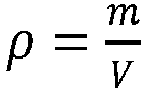
- Die Massendichte (p) kann durch Berechnung des Volumens (V) einer quaderförmigen Probe des Formkörper anhand von gemessen Seitenlängen und mit einer mit einer Waage gemessenen Masse (m) der quaderförmigen Probe berechnet werden über
- Durch einen vorbeschriebenen erfindungsgemäßen Formkörper kann vorteilhafterweise erreicht werden, dass der Formkörper mit einem bottom-up Verfahren herstellbar ist, wodurch sich auch kompliziertere Formkörper herstellen lassen. Zudem konnte in überraschender Weise gezeigt werden, dass ein vorbeschriebener Formkörper vorteilhafterweise eine gute Festigkeit aufweist und dadurch auch tragende Anforderungen erfüllen kann.
- Vorteilhafterweise kann dadurch erreicht werden, dass die Formteile auch komplizierte Formen aufweisen können.
- Bevorzugt kann vorgesehen sein, dass die expandierten Polystyrolpartikel im Wesentlichen geschlossenzellig sind. Darunter ist zu verstehen, dass die expandierten Polystyrolpartikel Hohlräume aufweisen, die fluidisch nicht mit der Umgebung in Kontakt stehen. Insbesondere kann bevorzugt vorgesehen sein, dass die expandierten Polystyrolpartikel eine geschlossene Oberfläche aufweisen.
- Dadurch kann vorteilhafterweise erreicht werden, dass die Formköper eine besonders verstärkte Oberfläche aufweisen. Insbesondere kann dadurch erreicht werden, dass auch filigrane Bereiche von komplizierten Formteilen eine ausreichende Formstabilität aufweisen.
- Weiter bevorzugt können die expandierten Polystyrolpartikel über ihre geschlossenen Oberflächen miteinander verbunden sein, ohne, dass die Hohlräume der Polystyrolpartikel miteinander gegenseitig fluidisch in Kontakt stehen.
- Dadurch kann bevorzugt im Gegensatz zu fluidisch miteinander verbundenen Hohlräumen eine verbesserte Wärmeisolierung der Formteile erreicht werden.
- Bevorzugt kann vorgesehen sein, dass die Polystyrolpartikel einen mittleren Äquivalenzdurchmesser aufweisen in einem Bereich von ≥ 0,5 mm bis ≤ 5 mm, bevorzugt von ≥ 1 mm bis ≤ 3 mm.
- Dadurch kann erreicht werden, dass die Formteile besonders gut herstellbar sind und zugleich besonders homogene mechanische Eigenschaften aufweisen.
- In einer bevorzugten Ausgestaltung kann vorgesehen sein, dass der Formkörper eine geschlossenzellige Oberfläche aufweist.
- Dadurch kann ebenfalls vorteilhafterweise erreicht werden, dass die Formköper eine besonders verstärkte Oberfläche aufweisen. Insbesondere kann dadurch erreicht werden, dass die Formteile eine besonders genaue Passform aufweisen.
- Bevorzugt kann vorgesehen sein, dass die expandierten Polystyrolpartikel bei einer Temperatur in einem Bereich von ≥ 90°C bis ≤ 120°C expandiert wurden. Insbesondere kann bevorzugt vorgesehen sein, dass die expandierten Polystyrolpartikel ohne ein vollständiges Aufschmelzen von Polystyrol-Perlen expandiert wurden.
- Dadurch kann vorteilhafterweise erreicht werden, dass der Formkörper vorteilhafte expandierte Polystyrolpartikel aufweist. Insbesondere kann dadurch vorteilhafterweise erreicht werden, dass die Dichte des Formkörpers auch bei komplexen Formen homogen ist, weil die Polystyrolpartikel jeweils für sich expandieren und somit eine Expansion in jedem Bereich des Formkörpers möglich ist. Ohne an eine Theorie gebunden zu sein wird davon ausgegangen, dass durch das Vermeiden eines vollständigen Aufschmelzens durch Expansion in dem vorbeschriebenen Temperaturbereich die in der Form verteilten Polystyrolpartikel sich expandieren und dabei einen isostatischen Druck auf alle Teile der Form ausüben. Dadurch können besonders homogene mechanische Eigenschaften des Formteils erreicht werden.
- In einer Ausgestaltung der Erfindung kann vorgesehen sein, dass das expandierte Polystyrol der expandierten Polystyrolpartikel nach einer Herstellung von Polystyrol-Perlen nicht weiter in einem Extruder verarbeitet wurde. In einer weiteren Ausgestaltung der Erfindung kann vorgesehen sein, dass das expandierte Polystyrol der expandierten Polystyrolpartikel nicht kontinuierlich in eine Form gebracht wurde. Unter dem vorbeschriebenen ist insbesondere zu verstehen, dass der Formkörper aus expandierten Polystyrolpartikeln nicht wie Formkörper aus extrudiertem Polystyrol erhalten wurde.
- Dadurch kann vorteilhafterweise vermieden werden, dass das Formteil nur in kontinuierlich herstellbaren Formen, wie beispielsweise Platten, erhalten werden kann.
- Dadurch kann eine besonders hohe Dichte des Formteils erreicht werden. Zudem kann dadurch vorteilhafterweise erreicht werden, dass die Partikel bei Expandieren besonders stark aneinandergepresst wurden, wodurch sich eine besonders hohe mechanische Festigkeit des Partikelschaums ergibt.
- In einer Ausgestaltung der Erfindung kann vorgesehen sein, dass der Formkörper Poren mit einem Porendurchmesser im Bereich von ≥ 1 µm bis ≤ 150 µm, vorzugsweise ≥ 10 µm bis ≤ 140 µm, insbesondere ≥ 20 µm bis ≤ 130 µm, aufweist.
- Darunter ist zu verstehen, dass der Porendurchmesser der Poren des expandierten Polystyrols der expandierten Polystyrolpartikel eines Querschnitts des Formkörpers ausgehend vom geometrischen Schwerpunkt einer jeweiligen Pore vorzugsweise in dem vorbeschriebenen Bereich liegt. Der Porendurchmesser kann insbesondere durch die Auswertung mikroskopischer Auflichtaufnahmen bestimmt werden. Dabei kann der geometrische Schwerpunkt der jeweiligen Pore wie der geometrische Flächenschwerpunkt mit üblichen mathematischen Methoden numerisch bestimmt werden. Der durchschnittliche Abstand von jeweils zwei Randpunkten der Pore, die mit einer Geraden durch den geometrischen Schwerpunkt der Pore verbunden sind, ergibt den Porendurchmesser der Pore.
- In einer weiteren Ausgestaltung der Erfindung kann vorgesehen sein, dass der Formkörper einen mittleren Porendurchmesser im Bereich von ≥ 1 µm bis ≤ 150 µm, vorzugsweise ≥ 2 µm bis ≤ 100 µm, besonders bevorzugt ≥ 5 µm bis ≤ 50 µm, insbesondere ≥ 8 µm bis ≤ 12 µm, aufweist.
- Unter dem mittleren Porendurchmesser ist dabei der arithmetische Mittelwert der Porendurchmesser des expandierten Polystyrols der expandierten Polystyrolpartikel eines Querschnitts des Formkörpers zu verstehen.
- Durch Poren mit einem Porendurchmesser und/oder einem mittleren Porendurchmesser in den vorbeschriebenen Bereichen kann vorteilhafterweise erreicht werden, dass eine Granulatstruktur der Formkörper besonders gut zusammenhält. Dadurch kann insbesondere erreicht werden, dass der Formkörper auch an Kanten oder Vorsprüngen besonders stabil ist.
- In einer weiteren Ausgestaltung der Erfindung kann vorgesehen sein, dass der Formkörper eine mittlere Wärmeleitfähigkeit nach ISO 8301 im Bereich von ≥ 35 mW/(m∗K) bis ≤ 80 mW/(m∗K), vorzugsweise ≥ 40 mW/(m∗K) bis ≤ 70 mW/(m∗K), insbesondere ≥ 45 mW/(m∗K) bis ≤ 65 mW/(m∗K), aufweist.
- Dadurch kann vorteilhafterweise erreicht werden, dass der Formkörper trotz seiner hohen Dichte auch zur Wärmedämmung geeignet ist.
- In einer weiteren Ausgestaltung der Erfindung kann vorgesehen sein, dass der Formkörper eine spezifische Wärmekapazität nach ISO 11357-1 in einem Temperaturbereich von -20°C bis +50°C in einem Bereich von ≥ 800 J/(kg∗K) bis ≤ 1100 J/(kg∗K), vorzugsweise von ≥ 830 J/(kg∗K) bis ≤ 1080 J/(kg∗K), aufweist.
- In einer weiteren Ausgestaltung der Erfindung kann vorgesehen sein, dass der Formkörper eine Oberfläche mit einem mittleren Rauwert nach ÖNORM EN ISO 4287 in einem Bereich von ≥ 5 µm bis ≤ 25 µm, vorzugsweise ≥ 10 µm bis ≤ 20 µm, insbesondere ≥ 11 µm bis ≤ 17 µm, aufweist und/oder eine Oberfläche mit einer mittleren Rautiefe nach ÖNORM EN ISO 4287 in einem Bereich von ≥ 80 µm bis ≤ 140 µm, vorzugsweise ≥ 90 µm bis ≤ 130 µm, insbesondere ≥ 100 µm bis ≤ 120 µm, aufweist und/oder eine Oberfläche mit einer maximalen Rautiefe nach ÖNORM EN ISO 4287 in einem Bereich von ≥ 130 µm bis ≤ 200 µm, vorzugsweise ≥ 140 µm bis ≤ 170 µm, aufweist.
- Durch eine derartige Oberfläche kann vorteilhafterweise erreicht werden, dass der Formkörper besonders passgenau verarbeitet werden kann. Insbesondere kann dadurch erreicht werden, dass der Formkörper mit weiteren solcher oder anderer Formkörpern zusammengefügt werden kann. Es hat sich gezeigt, dass mit einer derartigen Oberfläche ein Fügen von Teilen auch mit wenig Spiel ohne Verkanten ermöglicht wird. Zudem weist eine derartige Oberfläche auch haptische Eigenschaften auf, die dem Formteil einen wertigen Eindruck verleihen. Dadurch lassen sich derartige Formteile auch in Baugruppen sichtbar und ohne Verkleidung einsetzen.
- In einer weiteren Ausgestaltung der Erfindung kann vorgesehen sein, dass der Formkörper einen Zugmodul nach EN 1607 im Bereich von ≥ 50 MPa bis ≤ 500 MPa, vorzugsweise von ≥ 100 MPa bis ≤ 400 MPa, insbesondere von ≥ 120 MPa bis ≤ 320 MPa, aufweist.
- In einer weiteren Ausgestaltung der Erfindung kann vorgesehen sein, dass der Formkörper eine Zugfestigkeit nach EN 1607 im Bereich von ≥ 0,8 MPa bis ≤ 4,5 MPa, vorzugsweise von ≥ 1,0 MPa bis ≤ 4,0 MPa, insbesondere von ≥ 1,2 MPa bis ≤ 3,5 MPa, aufweist.
- In einer weiteren Ausgestaltung der Erfindung kann vorgesehen sein, dass der Formkörper eine Bruchdehnung nach EN 1607 im Bereich von ≥ 0,7 % bis ≤ 1,9 %, vorzugsweise von ≥ 0,9 % bis ≤ 1,7 %, insbesondere von ≥ 1,1 % bis ≤ 1,5 %, aufweist.
- Durch die vorgenannten Zugeigenschaften (Zugmodul, Zugfestigkeit und/oder Bruchdehnung) kann vorteilhafterweise erreicht werden, dass der Formkörper auch als mechanisch beanspruchtes Teil einsetzbar ist. Insbesondere kann ein derartiger Formkörper auch Ösen oder Hakenprofile aufweisen, die einem Zug ausgesetzt werden können ohne abzureißen.
- In einer weiteren Ausgestaltung der Erfindung kann vorgesehen sein, dass der Formkörper einen Druckmodul nach EN 826 im Bereich von ≥ 40 MPa bis ≤ 450 MPa, vorzugsweise von ≥ 60 MPa bis ≤ 350 MPa, insbesondere von ≥ 80 MPa bis ≤ 250 MPa, aufweist.
- Vorzugsweise weist der Formkörper dabei einen Spannungswert auf bei 2 % Dehnung in einem Bereich von ≥ 0,4 MPa bis ≤ 3,0 MPa, vorzugsweise von ≥ 0,6 MPa bis ≤ 2,5 MPa, und/oder bei 5 % Dehnung in einem Bereich von ≥ 2,0 MPa bis ≤ 10,0 MPa, vorzugsweise von ≥ 2,3 MPa bis ≤ 8,2 MPa, und/oder bei 10 % Dehnung in einem Bereich von ≥ 2,5 MPa bis ≤ 13,0 MPa, vorzugsweise von ≥ 3,0 MPa bis ≤ 10,7 MPa.
- Dadurch kann erreicht werden, dass der Formkörper unter Druck seine Form ausreichend gut hält. Dadurch können insbesondere Anwendungen derartiger Formkörper ermöglicht werden, bei denen Drücke auf den Formkörper ausgeübt werden.
- In einer weiteren Ausgestaltung der Erfindung kann vorgesehen sein, dass der Formkörper einen Biegemodul nach EN 12089 im Bereich von ≥ 50 MPa bis ≤ 500 MPa, vorzugsweise von ≥ 100 MPa bis ≤ 400 MPa, insbesondere von ≥ 120 MPa bis ≤ 350 MPa, aufweist.
- In einer weiteren Ausgestaltung der Erfindung kann vorgesehen sein, dass der Formkörper eine Bruchdehnung nach EN 12089 im Bereich von ≥ 1,8 MPa bis ≤ 6,5 MPa, vorzugsweise von ≥ 2,2 MPa bis ≤ 6,0 MPa, insbesondere von ≥ 2,6 MPa bis ≤ 5,5 MPa, aufweist.
- In einer weiteren Ausgestaltung der Erfindung kann vorgesehen sein, dass der Formkörper eine Absenkung bei Bruch nach EN 12089 im Bereich von ≥ 0,9 mm bis ≤ 2,0 mm, vorzugsweise von ≥ 1,1 mm bis ≤ 1,9 mm, insbesondere von ≥ 1,2 mm bis ≤ 1,8 mm, aufweist.
- Durch die vorgenannten Biege- und Brucheigenschaften (Biegemodul, Bruchdehnung und/oder Absenkung bei Bruch) kann vorteilhafterweise erreicht werden, dass der Formkörper auch als mechanisch beanspruchtes Teil einsetzbar ist. Insbesondere kann ein derartiger Formkörper auch Bereiche aufweisen, die Stößen ausgesetzt werden können.
- In einer weiteren Ausgestaltung der Erfindung kann vorgesehen sein, dass der Formkörper eine Schraubenauszugskraft im Bereich von ≥ 800 N bis ≤ 7000 N, vorzugsweise von ≥ 1200 N bis ≤ 6000 N, insbesondere von ≥ 1500 N bis ≤ 5000 N, aufweist.
- Unter der Schraubenauszugskraft ist die maximale Kraft zu verstehen, die benötigt wird um einen 90 mm langen Rahmenanker mit Flachsenkkopf (Kopfdurchmesser 11 mm) z.B.: EJOT® Rahmenanker Typ RA-P und einem Gewindedurchmesser von 7,5 mm, der 45 mm in einen erfindungsgemäßen Formkörper geschraubt wurde, bei einer Auszugsgeschwindigkeit von 10 mm/min aus dem Formkörper herauszuziehen.
- Dadurch kann vorteilhafterweise erreicht werden, dass ein erfindungsgemäßes Formteil auch mit Schrauben befestigt werden kann oder dass andere Teile an einem erfindungsgemäßen Formteil mit Schrauben befestigt werden können. Dadurch ergeben sich insbesondere diverse Anwendungsmöglichkeiten der erfindungsgemäßen Formteile.
- In einer weiteren Ausgestaltung der Erfindung kann vorgesehen sein, dass der Formkörper zumindest zu ≥ 50 %, bevorzugt ≥ 75 %, mehr bevorzugt ≥ 90 %, besonders bevorzugt ≥ 93 %, insbesondere ≥ 95 %, aus expandierten Polystyrolpartikeln besteht.
- Dadurch kann vorteilhafterweise erreicht werden, dass die chemischen und optischen Eigenschaften des Formkörpers verändert werden können, ohne die mechanischen Eigenschaften des Formkörpers zu stark zu beeinflussen.
- In einer weiteren Ausgestaltung der Erfindung kann vorgesehen sein, dass das expandierte Polystyrol der expandierten Polystyrolpartikel zumindest einen Zusatzstoff aufweist, vorzugsweise ausgewählt aus der Gruppe bestehend aus Farbstoffen, Pigmenten, Brandschutzmitteln und Stabilisatoren.
- In einer weiteren Ausgestaltung der Erfindung kann vorgesehen sein, dass der Formkörper im Wesentlichen kein Quader oder Rundstab ist. Insbesondere kann vorgesehen sein, dass der Formkörper auch konkave Bereiche aufweist, beispielsweise Aussparungen und/oder Hinterschneidungen.
- Dadurch kann erreicht werden, dass der Formkörper auch für komplexe Anwendungen ohne weitere Bearbeitung der Form eingesetzt werden kann.
- In einer weiteren Ausgestaltung der Erfindung kann vorgesehen sein, dass der Formkörper aus einer Hohlform erhalten wurde. Insbesondere kann vorgesehen sein, dass der fertige Formkörper direkt aus einer Hohlform erhalten wird und keine wesentlichen Formveränderungen nach Entfernen des Formkörpers aus der Hohlform an dem Formkörper vorgenommen werden.
- Dadurch kann erreicht werden, dass der Formkörper an seiner gesamten Oberfläche vorteilhafte Eigenschaften aufweist und insbesondere keine Schnitt- oder Fräskanten aufweist. Zudem kann dadurch erreicht werden, dass der Formkörper möglichst genau der gewünschten Form entspricht.
- In einer Ausgestaltung der Erfindung kann vorgesehen sein, dass der Formkörper aus einer Formteilmaschine erhalten wurde. Darunter ist zu verstehen, dass der Formkörper aus einer Maschine erhalten wurde, die für die Herstellung von EPS-Formteilen geeignet ist.
- In einer Ausgestaltung der Erfindung kann vorgesehen sein, dass der Formkörper kein Quader oder Stab ist und eine geschlossenzellige Oberfläche aufweist.
- In einer weiteren Ausgestaltung der Erfindung kann vorgesehen sein, dass eine Masse des Formkörpers im Wesentlichen einer Masse von eingesetztem Polystyrolgranulat zur Herstellung des Formkörpers entspricht.
- Dadurch kann erreicht werden, dass die Dichte des Formkörpers im Wesentlichen über die Masse des eingesetzten Polystyrolgranulates einstellbar ist.
- Es versteht sich, dass für einen erfindungsgemäßen Formkörper mit einem Volumen V1, und einer Dichte ρ1 eine entsprechende Masse m1 = ρ1 ∗ V1 eines Polystyrolgranulates expandiert werden kann.
- Mit der Erfindung wird zudem die Verwendung expandierter Polystyrolpartikel zur Herstellung eines Formkörpers mit einer Massendichte im Bereich von ≥ 100 kg/m3 bis ≤ 600 kg/m3, vorzugsweise ≥ 150 kg/m3 bis ≤ 550 kg/m3, insbesondere ≥ 200 kg/m3 bis ≤ 500 kg/m3 vorgeschlagen.
- Die Erfindung ist nachfolgend anhand von Beispielen weiter erläutert.
- Es wurden drei Formkörper mit unterschiedlicher Dichte hergestellt. Für einen Formkörper A wurden beispielsweise 230 g eines Polystyrolgranulates in eine Hohlform mit einem Volumen von 1 L (0,001 m3) expandiert. Für einen Formkörper B wurden entsprechend 320 g eines Polystyrolgranulates in eine Hohlform mit einem Volumen von 1 L (0,001 m3) expandiert. Für einen Formkörper C wurden entsprechend 410 g eines Polystyrolgranulates in eine Hohlform mit einem Volumen von 1 L (0,001 m3) expandiert.
- Die Berechnung der Dichte der Formkörper erfolgte an 3 quaderförmigen Proben durch Masse- und Volumenbestimmung. Es wurden je 3 Kalkulationen pro Typ durchgeführt.
- Die Bestimmung der Wärmeleitfähigkeit (WLF) erfolgte in Anlehnung an ISO 8301. Verwendet wurde eine Wärmeflussmessplattenapparatur HFM 436 Lambda der Firma Netzsch.
- Die Ermittlung der Zugeigenschaften erfolgte in Anlehnung an EN 1607. Verwendet wurde eine Universalprüfmaschine Z020 der Firma ZWICK-ROELL.
- Die Bestimmung der Druckeigenschaften erfolgte in Anlehnung an EN 826. Bestimmt wurden die Werkstoffkennwerte mittels Universalprüfmaschine Z020 der Firma ZWICK-ROELL. Spannungswerte wurden bei 2%, 5% und 10% Dehnung gemessen.
- Die Bestimmung der Biegeeigenschaften erfolgte in Anlehnung an EN 12089. Verwendet wurde eine Universalprüfmaschine Z020 der Firma ZWICK-ROELL.
- Die Bestimmung der maximalen Auszugskraft erfolgte mittels Universalprüfmaschine Z020 der Firma ZWICK-ROELL wie zuvor beschrieben bei einer Auszugsgeschwindigkeit von 10 mm/min mit einem 90 mm langen Rahmenanker.
- Die Bestimmung der Oberflächenbeschaffenheit erfolgte nach ÖNORM EN ISO 4287. Zur Anwendung kam ein Perthometer MarSurf 300 der Fa. Mahr.
- Die Bestimmung der spezifischen Wärmekapazität erfolgte nach ISO 11357-1. Zur Anwendung kam ein Differenzkalorimeter vom Type DSC 1 der Fa. Mettler-Toledo. Die Bestimmung erfolgte nach der Saphirvergleichsmethode im Temperaturbereich von -20°C bis 50°C.
- Die Bestimmung der mittleren Zellgröße erfolgte numerisch anhand von mikroskopischen Aufnahmen unter Verwendung einer programmierten Software. Zur Anwendung kam ein Mikroskop vom Typ BX51 der Firma OLYMPUS. Ausgewertet wurde, unter Zuhilfenahme von Mikroskopaufnahmen im Auflichtverfahren, der mittlere Radius (Ausgehend vom geometrischen Schwerpunkt) einer jeweiligen Pore (oder Porenagglomerat). Dieser Radius wurde zur Berechnung des Porendurchmessers herangezogen. Vermessen wurden Schaumoberflächen bei 40- und 90-facher Vergrößerung.
- Die Ergebnisse sind in Tabelle 1 dargestellt.
Tabelle 1: Formkörper Dichte [kg/m3] WLF [mW/(m∗K)] Zugmodul [MPa] Zugfestigkeit (σmax) [MPa] Bruchdehnung (εb) [%] A 249±2,5 47,67±0,47 126±7,7 1,3±0,1 1,3±0,1 B 340±5 56,53±0,58 200±4,1 2,1±0,1 1,4±0,1 c 403±1,7 63,47±0,69 298±10,8 3±0,2 1,2±0,1 Formkörper Druckmodul [MPa] Spannungswert bei 2 % Dehnung [MPa] Spannungswert bei 5 % Dehnung [MPa] Spannungswert bei 10 % Dehnung [MPa] A 88,4±4,6 0,7±0,1 2,5±0,2 3,2±0,2 B 138±4,1 1±0,1 4,4±0,3 6,0±0,2 C 218±6,2 2±0,5 7,7±0,5 10,1±0,6 Formkörper Biegemodul [MPa] Bruchdehnung (σb) [MPa] Absenkung bei Bruch (xb) [mm] Schraubenauszugs-kraft [N] A 139±12,5 2,8±0,2 1,7±0,1 1635±78 B 212±11,5 3,7±0,2 1,5±0,1 3690±185 C 337±20,8 5,3±0,3 1,3±0,1 4840±242 Formkörper Mittenrauw ert Ra [µm] Gemittelte Rautiefe Rz [µm] maximale Rautiefe Rmax [µm] Spezifische Wärmekapazität [J/kg∗K] A 15,9±1,6 115,9±3,7 162,5±13,1 840 bis 1050 B 12,8±2,3 103,3±13,4 149,7±16,4 850 bis 1080 C 15,5±3,5 111,2±15,1 151,8±8,5 850 bis 1070 Formkörper Minimaler Porendurchmesser [µm] Maximaler Porendurchmesser [µm] Mittlerer Porendurchmesser [µm] A 1,62 118 9,4 B 1,68 119 11,35 C 1,79 96,3 8,56
Claims (9)
- Formkörper bestehend zumindest zu ≥ 50 %, bevorzugt ≥ 75 %, mehr bevorzugt ≥ 90 %, besonders bevorzugt ≥ 93 %, insbesondere ≥ 95 % aus expandierten Polystyrolpartikeln, wobei der Formkörper eine Massendichte im Bereich von ≥ 100 kg/m3 bis ≤ 600 kg/m3, bevorzugt ≥ 150 kg/m3 bis ≤ 550 kg/m3, besonders bevorzugt ≥ 200 kg/m3 bis ≤ 500 kg/m3, insbesondere ≥ 250 kg/m3 bis ≤ 400 kg/m3, aufweist.
- Formkörper nach Anspruch 1, wobei der Formkörper Poren mit einem Porendurchmesser im Bereich von ≥ 1 µm bis ≤ 150 µm, vorzugsweise ≥ 10 µm bis ≤ 140 µm, insbesondere ≥ 20 µm bis ≤ 130 µm, aufweist.
- Formkörper nach einem der vorherigen Ansprüche, wobei der Formkörper eine Oberfläche mit einem mittleren Rauwert nach ÖNORM EN ISO 4287 in einem Bereich von ≥ 5 µm bis ≤ 25 µm vorzugsweise ≥ 10 µm bis ≤ 20 µm, insbesondere ≥ 11 µm bis ≤ 17 µm, aufweist und/oder eine Oberfläche mit einer mittleren Rautiefe in einem Bereich von ≥ 80 µm bis ≤ 140 µm, vorzugsweise ≥ 90 µm bis ≤ 130 µm, insbesondere ≥ 100 µm bis ≤ 120 µm, aufweist und/oder eine Oberfläche mit einer maximalen Rautiefe in einem Bereich von ≥ 130 µm bis ≤ 200 µm, vorzugsweise ≥ 140 µm bis ≤ 170 µm, aufweist.
- Formkörper nach einem der vorherigen Ansprüche, wobei der Formkörper einen Zugmodul nach EN 1607 im Bereich von ≥ 50 MPa bis ≤ 500 MPa, vorzugsweise von ≥ 100 MPa bis ≤ 400 MPa, insbesondere von ≥ 120 MPa bis ≤ 320 MPa, aufweist.
- Formkörper nach einem der vorherigen Ansprüche, wobei der Formkörper einen Druckmodul nach EN 826 im Bereich von ≥ 40 MPa bis ≤ 450 MPa, vorzugsweise von ≥ 60 MPa bis ≤ 350 MPa, insbesondere von ≥ 80 MPa bis ≤ 250 MPa, aufweist.
- Formkörper nach einem der vorherigen Ansprüche, wobei der Formkörper einen Biegemodul nach EN 12089 im Bereich von ≥ 50 MPa bis ≤ 500 MPa, vorzugsweise von ≥ 100 MPa bis ≤ 400 MPa, insbesondere von ≥ 120 MPa bis ≤ 350 MPa, aufweist.
- Formkörper nach einem der vorherigen Ansprüche, wobei der Formkörper eine Schraubenauszugskraft bestimmt wie in der Beschreibung beschrieben im Bereich von ≥ 800 N bis ≤ 7000 N, vorzugsweise von ≥ 1200 N bis ≤ 6000 N, insbesondere von ≥ 1500 N bis ≤ 5000 N, aufweist.
- Formkörper nach einem der vorherigen Ansprüche, wobei die Masse des Formkörpers einer Masse von eingesetztem Polystyrolgranulat zur Herstellung des Formkörpers entspricht.
- Verwendung expandierter Polystyrolpartikel zur Herstellung eines Formkörpers mit einer Massendichte im Bereich von ≥ 100 kg/m3 bis ≤ 600 kg/m3, vorzugsweise ≥ 150 kg/m3 bis ≤ 550 kg/m3, insbesondere ≥ 200 kg/m3 bis ≤ 500 kg/m3, wobei der Formkörper zumindest zu ≥ 50 %, bevorzugt ≥ 75 %, mehr bevorzugt ≥ 90 %, besonders bevorzugt ≥ 93 %, insbesondere ≥ 95 % aus den expandierten Polystyrolpartikeln besteht.
Priority Applications (1)
| Application Number | Priority Date | Filing Date | Title |
|---|---|---|---|
| PL19210958T PL3666820T3 (pl) | 2018-12-11 | 2019-11-22 | Wyrób formowany wykonany z polistyrenu o wysokiej gęstości |
Applications Claiming Priority (1)
| Application Number | Priority Date | Filing Date | Title |
|---|---|---|---|
| DE102018131801 | 2018-12-11 |
Publications (2)
| Publication Number | Publication Date |
|---|---|
| EP3666820A1 EP3666820A1 (de) | 2020-06-17 |
| EP3666820B1 true EP3666820B1 (de) | 2021-11-17 |
Family
ID=68840884
Family Applications (1)
| Application Number | Title | Priority Date | Filing Date |
|---|---|---|---|
| EP19210958.5A Active EP3666820B1 (de) | 2018-12-11 | 2019-11-22 | Formkörper aus hochdichtem polystyrol |
Country Status (3)
| Country | Link |
|---|---|
| EP (1) | EP3666820B1 (de) |
| HU (1) | HUE057412T2 (de) |
| PL (1) | PL3666820T3 (de) |
Family Cites Families (2)
| Publication number | Priority date | Publication date | Assignee | Title |
|---|---|---|---|---|
| GB0709720D0 (en) * | 2007-05-22 | 2007-06-27 | Orac Holding Nv | Process and apparatus for producing foamed styrenic polymers |
| EP2527124A1 (de) * | 2011-05-27 | 2012-11-28 | Sto Ag | Verfahren zur Herstellung eines eine Hohlraumstruktur aufweisenden Formkörpers zur Schall- und/oder Wärmedämmung sowie Formkörper zur Schall- und/oder Wärmedämmung |
-
2019
- 2019-11-22 HU HUE19210958A patent/HUE057412T2/hu unknown
- 2019-11-22 PL PL19210958T patent/PL3666820T3/pl unknown
- 2019-11-22 EP EP19210958.5A patent/EP3666820B1/de active Active
Also Published As
| Publication number | Publication date |
|---|---|
| HUE057412T2 (hu) | 2022-05-28 |
| EP3666820A1 (de) | 2020-06-17 |
| PL3666820T3 (pl) | 2022-03-21 |
Similar Documents
| Publication | Publication Date | Title |
|---|---|---|
| DE69903593T2 (de) | Geformter Gegenstand aus geschäumten und expandierten Propylenperlen | |
| DE69724688T3 (de) | Thermoplastisches Harzprodukt und seine Herstellung | |
| DE69826733T2 (de) | Faserverstärkter Formkörper aus Kunststoff und Verfahren zur dessen Herstellung | |
| DE1504291A1 (de) | Bahn oder Band beliebiger Laenge aus ungesintertem Polytetrafluoraethylen | |
| DE102011105775B4 (de) | Verfahren zum Spritzgießen von Kunststoff-Formteilen aus thermoplastischem Kunststoff | |
| DE1194139B (de) | Verfahren zur Herstellung geschaeumter Formkoerper aus thermoplastischen harzartigen Vinylpolymerisaten | |
| DE102014216992A1 (de) | Expandierte Polymerpellets | |
| EP3628036B1 (de) | Verfahren zur herstellung eines schaumstoffkörpers | |
| WO2015197734A1 (de) | Druckabhängiges formschäumen von poly(meth)acrylimid-partikeln in geschlossenen werkzeugen zur herstellung von hartschaumstoffkernen | |
| EP2041212B1 (de) | Verfahren zur herstellung nanoporöser formteile | |
| DE1504851A1 (de) | Verfahren zur Herstellung poroeser Formteile aus thermoplastischen Harzen | |
| DE4424157A1 (de) | Poröser metallischer Werkstoff mit anisotropen Eigenschaften | |
| EP3666820B1 (de) | Formkörper aus hochdichtem polystyrol | |
| DE69812571T2 (de) | Expandierte Harzperlen | |
| DE602004000291T2 (de) | Verfahren zum Druckgiessen von Sphärogusseisen | |
| AT501518A1 (de) | Schaumstoffprodukt | |
| DE2652137A1 (de) | Verfahren zum formen von zellularem polycarbodiimid, und mit diesem verfahren erhaltenes produkt | |
| DE1953037A1 (de) | Kunststoff-Formteil | |
| DE602004002481T2 (de) | Verfahren zur kontinuierlichen herstellung eines vollen, hohlen oder offenen profils | |
| DE19705758B4 (de) | Mikrozelluläres Schäumen, geschäumtes polymeres Material und dessen Verwendung | |
| DE1198044B (de) | Giessform | |
| EP3159129A1 (de) | Herstellung von komplexen schaum-/ oder sandwichholstrukturen mittels eines formkerns | |
| DE102014007889B4 (de) | Verfahren zur Herstellung eines Salzkörpers, insbesondere für den Druckguss | |
| EP0149211B1 (de) | Verfahren zur Herstellung von aus expandierten Schaumstoffperlen bestehenden, verlorenen Giessmodellen für das Vollformgiessverfahren, vorzugsweise zur Fertigung von Seriengussteilen, sowie Vorrichtung hierzu | |
| EP2306135B1 (de) | Grafitplatte |
Legal Events
| Date | Code | Title | Description |
|---|---|---|---|
| PUAI | Public reference made under article 153(3) epc to a published international application that has entered the european phase |
Free format text: ORIGINAL CODE: 0009012 |
|
| STAA | Information on the status of an ep patent application or granted ep patent |
Free format text: STATUS: THE APPLICATION HAS BEEN PUBLISHED |
|
| AK | Designated contracting states |
Kind code of ref document: A1 Designated state(s): AL AT BE BG CH CY CZ DE DK EE ES FI FR GB GR HR HU IE IS IT LI LT LU LV MC MK MT NL NO PL PT RO RS SE SI SK SM TR |
|
| AX | Request for extension of the european patent |
Extension state: BA ME |
|
| STAA | Information on the status of an ep patent application or granted ep patent |
Free format text: STATUS: REQUEST FOR EXAMINATION WAS MADE |
|
| 17P | Request for examination filed |
Effective date: 20200915 |
|
| RBV | Designated contracting states (corrected) |
Designated state(s): AL AT BE BG CH CY CZ DE DK EE ES FI FR GB GR HR HU IE IS IT LI LT LU LV MC MK MT NL NO PL PT RO RS SE SI SK SM TR |
|
| STAA | Information on the status of an ep patent application or granted ep patent |
Free format text: STATUS: EXAMINATION IS IN PROGRESS |
|
| 17Q | First examination report despatched |
Effective date: 20210114 |
|
| GRAP | Despatch of communication of intention to grant a patent |
Free format text: ORIGINAL CODE: EPIDOSNIGR1 |
|
| STAA | Information on the status of an ep patent application or granted ep patent |
Free format text: STATUS: GRANT OF PATENT IS INTENDED |
|
| GRAJ | Information related to disapproval of communication of intention to grant by the applicant or resumption of examination proceedings by the epo deleted |
Free format text: ORIGINAL CODE: EPIDOSDIGR1 |
|
| STAA | Information on the status of an ep patent application or granted ep patent |
Free format text: STATUS: EXAMINATION IS IN PROGRESS |
|
| INTG | Intention to grant announced |
Effective date: 20210510 |
|
| INTC | Intention to grant announced (deleted) | ||
| GRAP | Despatch of communication of intention to grant a patent |
Free format text: ORIGINAL CODE: EPIDOSNIGR1 |
|
| STAA | Information on the status of an ep patent application or granted ep patent |
Free format text: STATUS: GRANT OF PATENT IS INTENDED |
|
| INTG | Intention to grant announced |
Effective date: 20210714 |
|
| GRAS | Grant fee paid |
Free format text: ORIGINAL CODE: EPIDOSNIGR3 |
|
| GRAA | (expected) grant |
Free format text: ORIGINAL CODE: 0009210 |
|
| STAA | Information on the status of an ep patent application or granted ep patent |
Free format text: STATUS: THE PATENT HAS BEEN GRANTED |
|
| AK | Designated contracting states |
Kind code of ref document: B1 Designated state(s): AL AT BE BG CH CY CZ DE DK EE ES FI FR GB GR HR HU IE IS IT LI LT LU LV MC MK MT NL NO PL PT RO RS SE SI SK SM TR |
|
| REG | Reference to a national code |
Ref country code: GB Ref legal event code: FG4D Free format text: NOT ENGLISH |
|
| REG | Reference to a national code |
Ref country code: IE Ref legal event code: FG4D Free format text: LANGUAGE OF EP DOCUMENT: GERMAN |
|
| REG | Reference to a national code |
Ref country code: DE Ref legal event code: R096 Ref document number: 502019002771 Country of ref document: DE |
|
| REG | Reference to a national code |
Ref country code: AT Ref legal event code: REF Ref document number: 1448027 Country of ref document: AT Kind code of ref document: T Effective date: 20211215 |
|
| REG | Reference to a national code |
Ref country code: NL Ref legal event code: FP |
|
| REG | Reference to a national code |
Ref country code: LT Ref legal event code: MG9D |
|
| PG25 | Lapsed in a contracting state [announced via postgrant information from national office to epo] |
Ref country code: RS Free format text: LAPSE BECAUSE OF FAILURE TO SUBMIT A TRANSLATION OF THE DESCRIPTION OR TO PAY THE FEE WITHIN THE PRESCRIBED TIME-LIMIT Effective date: 20211117 Ref country code: LT Free format text: LAPSE BECAUSE OF FAILURE TO SUBMIT A TRANSLATION OF THE DESCRIPTION OR TO PAY THE FEE WITHIN THE PRESCRIBED TIME-LIMIT Effective date: 20211117 Ref country code: FI Free format text: LAPSE BECAUSE OF FAILURE TO SUBMIT A TRANSLATION OF THE DESCRIPTION OR TO PAY THE FEE WITHIN THE PRESCRIBED TIME-LIMIT Effective date: 20211117 Ref country code: BG Free format text: LAPSE BECAUSE OF FAILURE TO SUBMIT A TRANSLATION OF THE DESCRIPTION OR TO PAY THE FEE WITHIN THE PRESCRIBED TIME-LIMIT Effective date: 20220217 |
|
| REG | Reference to a national code |
Ref country code: SK Ref legal event code: T3 Ref document number: E 39229 Country of ref document: SK |
|
| REG | Reference to a national code |
Ref country code: HU Ref legal event code: AG4A Ref document number: E057412 Country of ref document: HU |
|
| PG25 | Lapsed in a contracting state [announced via postgrant information from national office to epo] |
Ref country code: IS Free format text: LAPSE BECAUSE OF FAILURE TO SUBMIT A TRANSLATION OF THE DESCRIPTION OR TO PAY THE FEE WITHIN THE PRESCRIBED TIME-LIMIT Effective date: 20220317 Ref country code: SE Free format text: LAPSE BECAUSE OF FAILURE TO SUBMIT A TRANSLATION OF THE DESCRIPTION OR TO PAY THE FEE WITHIN THE PRESCRIBED TIME-LIMIT Effective date: 20211117 Ref country code: PT Free format text: LAPSE BECAUSE OF FAILURE TO SUBMIT A TRANSLATION OF THE DESCRIPTION OR TO PAY THE FEE WITHIN THE PRESCRIBED TIME-LIMIT Effective date: 20220317 Ref country code: NO Free format text: LAPSE BECAUSE OF FAILURE TO SUBMIT A TRANSLATION OF THE DESCRIPTION OR TO PAY THE FEE WITHIN THE PRESCRIBED TIME-LIMIT Effective date: 20220217 Ref country code: LV Free format text: LAPSE BECAUSE OF FAILURE TO SUBMIT A TRANSLATION OF THE DESCRIPTION OR TO PAY THE FEE WITHIN THE PRESCRIBED TIME-LIMIT Effective date: 20211117 Ref country code: HR Free format text: LAPSE BECAUSE OF FAILURE TO SUBMIT A TRANSLATION OF THE DESCRIPTION OR TO PAY THE FEE WITHIN THE PRESCRIBED TIME-LIMIT Effective date: 20211117 Ref country code: GR Free format text: LAPSE BECAUSE OF FAILURE TO SUBMIT A TRANSLATION OF THE DESCRIPTION OR TO PAY THE FEE WITHIN THE PRESCRIBED TIME-LIMIT Effective date: 20220218 Ref country code: ES Free format text: LAPSE BECAUSE OF FAILURE TO SUBMIT A TRANSLATION OF THE DESCRIPTION OR TO PAY THE FEE WITHIN THE PRESCRIBED TIME-LIMIT Effective date: 20211117 |
|
| PG25 | Lapsed in a contracting state [announced via postgrant information from national office to epo] |
Ref country code: SM Free format text: LAPSE BECAUSE OF FAILURE TO SUBMIT A TRANSLATION OF THE DESCRIPTION OR TO PAY THE FEE WITHIN THE PRESCRIBED TIME-LIMIT Effective date: 20211117 Ref country code: RO Free format text: LAPSE BECAUSE OF FAILURE TO SUBMIT A TRANSLATION OF THE DESCRIPTION OR TO PAY THE FEE WITHIN THE PRESCRIBED TIME-LIMIT Effective date: 20211117 Ref country code: LU Free format text: LAPSE BECAUSE OF NON-PAYMENT OF DUE FEES Effective date: 20211122 Ref country code: EE Free format text: LAPSE BECAUSE OF FAILURE TO SUBMIT A TRANSLATION OF THE DESCRIPTION OR TO PAY THE FEE WITHIN THE PRESCRIBED TIME-LIMIT Effective date: 20211117 Ref country code: DK Free format text: LAPSE BECAUSE OF FAILURE TO SUBMIT A TRANSLATION OF THE DESCRIPTION OR TO PAY THE FEE WITHIN THE PRESCRIBED TIME-LIMIT Effective date: 20211117 Ref country code: BE Free format text: LAPSE BECAUSE OF NON-PAYMENT OF DUE FEES Effective date: 20211130 |
|
| REG | Reference to a national code |
Ref country code: BE Ref legal event code: MM Effective date: 20211130 |
|
| REG | Reference to a national code |
Ref country code: DE Ref legal event code: R097 Ref document number: 502019002771 Country of ref document: DE |
|
| PG25 | Lapsed in a contracting state [announced via postgrant information from national office to epo] |
Ref country code: MC Free format text: LAPSE BECAUSE OF FAILURE TO SUBMIT A TRANSLATION OF THE DESCRIPTION OR TO PAY THE FEE WITHIN THE PRESCRIBED TIME-LIMIT Effective date: 20211117 |
|
| PLBE | No opposition filed within time limit |
Free format text: ORIGINAL CODE: 0009261 |
|
| STAA | Information on the status of an ep patent application or granted ep patent |
Free format text: STATUS: NO OPPOSITION FILED WITHIN TIME LIMIT |
|
| 26N | No opposition filed |
Effective date: 20220818 |
|
| PG25 | Lapsed in a contracting state [announced via postgrant information from national office to epo] |
Ref country code: IE Free format text: LAPSE BECAUSE OF NON-PAYMENT OF DUE FEES Effective date: 20211122 Ref country code: AL Free format text: LAPSE BECAUSE OF FAILURE TO SUBMIT A TRANSLATION OF THE DESCRIPTION OR TO PAY THE FEE WITHIN THE PRESCRIBED TIME-LIMIT Effective date: 20211117 |
|
| PG25 | Lapsed in a contracting state [announced via postgrant information from national office to epo] |
Ref country code: SI Free format text: LAPSE BECAUSE OF FAILURE TO SUBMIT A TRANSLATION OF THE DESCRIPTION OR TO PAY THE FEE WITHIN THE PRESCRIBED TIME-LIMIT Effective date: 20211117 |
|
| PG25 | Lapsed in a contracting state [announced via postgrant information from national office to epo] |
Ref country code: CY Free format text: LAPSE BECAUSE OF FAILURE TO SUBMIT A TRANSLATION OF THE DESCRIPTION OR TO PAY THE FEE WITHIN THE PRESCRIBED TIME-LIMIT Effective date: 20211117 |
|
| PG25 | Lapsed in a contracting state [announced via postgrant information from national office to epo] |
Ref country code: MK Free format text: LAPSE BECAUSE OF FAILURE TO SUBMIT A TRANSLATION OF THE DESCRIPTION OR TO PAY THE FEE WITHIN THE PRESCRIBED TIME-LIMIT Effective date: 20211117 |
|
| GBPC | Gb: european patent ceased through non-payment of renewal fee |
Effective date: 20231122 |
|
| PG25 | Lapsed in a contracting state [announced via postgrant information from national office to epo] |
Ref country code: MT Free format text: LAPSE BECAUSE OF FAILURE TO SUBMIT A TRANSLATION OF THE DESCRIPTION OR TO PAY THE FEE WITHIN THE PRESCRIBED TIME-LIMIT Effective date: 20211117 |
|
| PG25 | Lapsed in a contracting state [announced via postgrant information from national office to epo] |
Ref country code: GB Free format text: LAPSE BECAUSE OF NON-PAYMENT OF DUE FEES Effective date: 20231122 |
|
| PG25 | Lapsed in a contracting state [announced via postgrant information from national office to epo] |
Ref country code: GB Free format text: LAPSE BECAUSE OF NON-PAYMENT OF DUE FEES Effective date: 20231122 |
|
| REG | Reference to a national code |
Ref country code: CH Ref legal event code: U11 Free format text: ST27 STATUS EVENT CODE: U-0-0-U10-U11 (AS PROVIDED BY THE NATIONAL OFFICE) Effective date: 20251201 |
|
| PGFP | Annual fee paid to national office [announced via postgrant information from national office to epo] |
Ref country code: HU Payment date: 20251121 Year of fee payment: 7 |
|
| PGFP | Annual fee paid to national office [announced via postgrant information from national office to epo] |
Ref country code: NL Payment date: 20251119 Year of fee payment: 7 |
|
| PGFP | Annual fee paid to national office [announced via postgrant information from national office to epo] |
Ref country code: DE Payment date: 20251126 Year of fee payment: 7 |
|
| PGFP | Annual fee paid to national office [announced via postgrant information from national office to epo] |
Ref country code: AT Payment date: 20251120 Year of fee payment: 7 |
|
| PGFP | Annual fee paid to national office [announced via postgrant information from national office to epo] |
Ref country code: IT Payment date: 20251125 Year of fee payment: 7 |
|
| PGFP | Annual fee paid to national office [announced via postgrant information from national office to epo] |
Ref country code: FR Payment date: 20251126 Year of fee payment: 7 |
|
| PGFP | Annual fee paid to national office [announced via postgrant information from national office to epo] |
Ref country code: TR Payment date: 20251117 Year of fee payment: 7 |
|
| PGFP | Annual fee paid to national office [announced via postgrant information from national office to epo] |
Ref country code: CH Payment date: 20251201 Year of fee payment: 7 |
|
| PGFP | Annual fee paid to national office [announced via postgrant information from national office to epo] |
Ref country code: CZ Payment date: 20251119 Year of fee payment: 7 |
|
| PGFP | Annual fee paid to national office [announced via postgrant information from national office to epo] |
Ref country code: PL Payment date: 20251022 Year of fee payment: 7 |
|
| PGFP | Annual fee paid to national office [announced via postgrant information from national office to epo] |
Ref country code: SK Payment date: 20251119 Year of fee payment: 7 |