EP3661935B1 - Als kinasehemmer nützliche substituierte pyrazolopyrimidine - Google Patents
Als kinasehemmer nützliche substituierte pyrazolopyrimidine Download PDFInfo
- Publication number
- EP3661935B1 EP3661935B1 EP18844511.8A EP18844511A EP3661935B1 EP 3661935 B1 EP3661935 B1 EP 3661935B1 EP 18844511 A EP18844511 A EP 18844511A EP 3661935 B1 EP3661935 B1 EP 3661935B1
- Authority
- EP
- European Patent Office
- Prior art keywords
- compound
- cancer
- compounds
- alkyl
- formula
- Prior art date
- Legal status (The legal status is an assumption and is not a legal conclusion. Google has not performed a legal analysis and makes no representation as to the accuracy of the status listed.)
- Active
Links
Classifications
-
- A—HUMAN NECESSITIES
- A61—MEDICAL OR VETERINARY SCIENCE; HYGIENE
- A61K—PREPARATIONS FOR MEDICAL, DENTAL OR TOILETRY PURPOSES
- A61K31/00—Medicinal preparations containing organic active ingredients
- A61K31/33—Heterocyclic compounds
- A61K31/395—Heterocyclic compounds having nitrogen as a ring hetero atom, e.g. guanethidine or rifamycins
- A61K31/495—Heterocyclic compounds having nitrogen as a ring hetero atom, e.g. guanethidine or rifamycins having six-membered rings with two or more nitrogen atoms as the only ring heteroatoms, e.g. piperazine or tetrazines
- A61K31/505—Pyrimidines; Hydrogenated pyrimidines, e.g. trimethoprim
- A61K31/519—Pyrimidines; Hydrogenated pyrimidines, e.g. trimethoprim ortho- or peri-condensed with heterocyclic rings
-
- A—HUMAN NECESSITIES
- A61—MEDICAL OR VETERINARY SCIENCE; HYGIENE
- A61K—PREPARATIONS FOR MEDICAL, DENTAL OR TOILETRY PURPOSES
- A61K45/00—Medicinal preparations containing active ingredients not provided for in groups A61K31/00 - A61K41/00
- A61K45/06—Mixtures of active ingredients without chemical characterisation, e.g. antiphlogistics and cardiaca
-
- C—CHEMISTRY; METALLURGY
- C07—ORGANIC CHEMISTRY
- C07D—HETEROCYCLIC COMPOUNDS
- C07D487/00—Heterocyclic compounds containing nitrogen atoms as the only ring hetero atoms in the condensed system, not provided for by groups C07D451/00 - C07D477/00
- C07D487/02—Heterocyclic compounds containing nitrogen atoms as the only ring hetero atoms in the condensed system, not provided for by groups C07D451/00 - C07D477/00 in which the condensed system contains two hetero rings
- C07D487/04—Ortho-condensed systems
-
- A—HUMAN NECESSITIES
- A61—MEDICAL OR VETERINARY SCIENCE; HYGIENE
- A61P—SPECIFIC THERAPEUTIC ACTIVITY OF CHEMICAL COMPOUNDS OR MEDICINAL PREPARATIONS
- A61P35/00—Antineoplastic agents
Definitions
- the disclosure is directed to kinase inhibitors.
- This disclosure also relates to pharmaceutical compositions comprising kinases inhibitors and to the use of kinases inhibitors and pharmaceutical compositions comprising kinases inhibitors to treat disease such as cancers.
- Protein kinases represent a large family of enzymes, which catalyze the phosphorylation of target protein substrates.
- the phosphorylation is usually a transfer reaction of a phosphate group from ATP to the protein substrate.
- Common points of attachment for the phosphate group to the protein substrate include, for example, a tyrosine, serine or threonine residue.
- protein tyrosine kinases are enzymes, which catalyze the phosphorylation of specific tyrosine residues in cellular proteins.
- kinases in the protein kinase family include, without limitation, Abl1 (v-Abl Abelson murine leukemia viral oncogene homolog 1), Akt, Alk, Bcr-Abl1, Blk, Brk, Btk, c-Kit, c-Met, c-Src, c-Fms, CDK1-10, b-Raf, c-Raf1, CSF1R, CSK, EGFR, ErbB2, ErbB3, ErbB4, Erk, FGFR1, FGFR2, FGFR3, FGFR4, FGFR5, Flt-1, Fps, Frk, Jak, KDR, MEK, PDGFR, PIK, PKC, PYK2, Ros, Tie, Tie2, and Zap70. Due to their activity in numerous cellular processes, protein kinases have emerged as important therapeutic targets.
- Abl1 v-Abl Abelson murine leukemia viral oncogene homolog 1
- Trks overexpression, activation, amplification and/or mutation of Trks and several cancers as seen with studies conduct on neuroblastoma ( Brodeur, G. M., Nat. Rev. Cancer 2003, 3, 203-216 ), ovarian cancer ( Kruettgen et al., Brain Pathology 2006, 16: 304-310 ), prostate cancer ( Dionne et al., Clin. Cancer Res. 1998, 4(8): 1887-1898 ), pancreatic cancer ( Dang et al., J. Gastroenterol. Hepatol.
- WO2010048314 discloses compounds of Formula (I) in which R1, R2, R3, R4, X, Y and n have the meanings given in the specification, which are inhibitors of Trk kinases and are useful in the treatment of diseases which can be treated with a Trk kinase inhibitor.
- compositions comprising a compound of the present disclosure and a pharmaceutically acceptable carrier.
- compositions for use in methods of treating or preventing a hyper-proliferative disorder in a patient comprising the step of administering to the patient in need thereof a pharmaceutical composition described above.
- a compound of the present disclosure for use as a medicament for treating or preventing various cancers.
- a compound of the present disclosure for use in a method of regulating the kinase signaling transduction.
- a compound of the present disclosure in combination with one more anti-cancer agents for use in a method of treating or preventing a hyper-proliferative disorder.
- compositions comprising a compound of the present disclosure and a pharmaceutically acceptable carrier.
- compositions for use in methods of treating or preventing a hyper-proliferative disorder in a patient comprising the step of administering to the patient in need thereof a pharmaceutical composition described above.
- compounds of the present disclosure for use as a medicament for treating or preventing a hyper-proliferative disorder.
- compounds of present disclosure for use as a medicament for treating or preventing various cancers.
- compounds of present disclosure for use in a method of regulating the kinase signaling transduction.
- compositions comprising a compound of present disclosure in combination with one or more anti-cancer agents for use in a method of treating or preventing a hyper-proliferative disorder.
- the compound of this disclosure is in the form of pharmaceutically acceptable salt.
- the compound of this disclosure is an enantiomer.
- the compound of this disclosure is a diastereomer.
- the deuterium enrichment in compounds of this disclosure is at least about 1%.
- compositions comprising a compound of the disclosure and a pharmaceutically acceptable carrier.
- the compositions are for use in the treatment of a disease regulated by a protein kinase.
- the compositions are for use in the prevention or the treatment of a hyper-proliferative disorder and/or angiogenesis disorder.
- the pharmaceutical compositions further comprise an anti-neoplastic agent, an immunosuppressant, an immunostimulant, or combination thereof.
- the pharmaceutical compositions are suitable for oral, parenteral, or intravenous administration.
- the present disclosure provides pharmaceutical compositions for use in methods for regulating the kinase signaling transduction comprising administrating to a mammalian subject a therapeutically effective amount of any of the inventive compounds described herein.
- compositions for use in methods for treating or preventing a tropomyosin-related kinases mediated disorder comprises administrating to a mammalian subject a therapeutically effective amount of any of the inventive compounds described herein.
- compositions for use in methods for treating neoplasia comprising administrating to a mammalian subject in need thereof, a therapeutically effective amount of any of the inventive compounds described herein selected from skin cancer, leukemia, colon carcinoma, renal cell carcinoma, gastrointestinal stromal cancer, solid tumor cancer, myeloma, breast cancer, pancreatic carcinoma, non-small cell lung cancer, non-Hodgkin's lymphoma, hepatocellular carcinoma, thyroid cancer, bladder cancer, colorectal cancer, and prostate cancer.
- the methods further comprise administering one or more anti-cancer agents.
- a mammalian subject in need thereof, a therapeutically effective amount of a compound of Formula I or Formula II, or a pharmaceutical composition comprising a compound of Formula I or Formula II.
- Trk inhibitors As used herein, the term Trk generally refers to tropomyosin receptor kinase or tyrosine receptor kinase.
- the family of Trk receptors is named for the oncogene trk. Trk, initially identified in a colon carcinoma, is frequently activated in thyroid papillary carcinomas. The oncogene trk is reported to be generated by a mutation in chromosome 1. Normal Trk receptors do not contain amino acid or DNA sequences related to tropomyosin.
- TrkA, TrkB, and TrkC each of which may have different binding affinity to certain types of neurotrophins.
- Trk receptors are a family of tyrosine kinases that regulates synaptic strength and plasticity in the mammalian nervous system. The differences in the signaling initiated by these distinct types of receptors may generate diverse biological responses.
- Neurotrophin ligands of Trk receptors may be processed ligands that are synthesized in immature forms and then transformed by protease cleavage. Immature neurotrophins may be specific only to one common p75NTR receptor. However, protease cleavage may generate neurotrophins that have higher affinity to their corresponding Trk receptors. These processed neurotrophins may still bind to p75NTR, but may bind at a lower affinity.
- compositions for use in methods for treating or preventing a hyper-proliferative and/or angiogenesis comprising administrating to a mammalian subject a therapeutically effective amount of any of the inventive compounds described herein.
- compositions for use in methods to treat mammalian hyper-proliferative disorders including cancer.
- hyper-proliferative disorders and/or “cancer” not only refers to solid tumors, such as cancers of the breast, respiratory tract, brain, reproductive organs, digestive tract, urinary tract, eye, liver, skin, head and neck, thyroid, parathyroid and their distant metastases, but also includes lymphomas, sarcomas, and leukemias.
- alkyl is intended to include straight, branched, and cyclic hydrocarbon groups, which contain only single carbon-carbon bonds and which may be unsubstituted or optionally substituted with one or more functional groups.
- the preferred chain length of an alkyl group is from 1 to 6 carbon atoms.
- C 1 -C 6 alkyl is intended to include C 1 , C 2 , C 3 , C 4 , C 5 and C 6 alkyl groups.
- Alkyl may be substituted or unsubstituted.
- Typical substituent groups include deuterium, cycloalkyl, aryl, heteroaryl, heteroalicyclic, hydroxy, alkoxy, aryloxy, mercapto, alkylthio, arylthio, cyano, halo, carbonyl, thiocarbonyl, O-carbamyl, N-carbamyl, O-thiocarbamyl, N-thiocarbamyl, C-amido, N-amido, C-carboxy, O-carboxy, nitro, silyl, amino and -NR X R Y , wherein R X and R Y are independently selected from the group consisting of hydrogen, alkyl, cycloalkyl, aryl, carbonyl, acetyl, sulfonyl, trifluoromethanesulfonyl and, combined, a five- or six-member heteroalicyclic ring.
- Illustrative substituted alkyl group include, but are not limited to, CD 3 , CD 2 CD 3 , fluoromethyl, difluoromethyl, trifluoromethyl, aminomethyl, aminoethyl, hydoxymethyl, methoxymethyl, 2-fluoroethyl, and 2-methoxyethyl, etc.
- alkoxy refers to both an -O-(alkyl) and an -O-(unsubstituted cycloalkyl) group.
- C 1 -C 6 alkoxy is intended to include C 1 -C 6 alkyl groups, wherein C 1 -C 6 alkyl is defined above.
- Representative examples include, but are not limited to, OCD 3 , OCD 2 CD 3 , methoxy, ethoxy, propoxy, butoxy, cyclopropyloxy, cyclobutyloxy, cyclopentyloxy, cyclohexyloxy, and the like.
- Halogen or "halide” means fluorine, chlorine, bromine, and iodine.
- Halo means fluoro, chloro, bromo, and iodo, preferably fluorine or chlorine.
- the disclosure also includes isotopically-labeled compounds of the disclosure, wherein one or more atoms is replaced by an atom having the same atomic number, but an atomic mass or mass number different from the atomic mass or mass number usually found in nature.
- isotopes suitable for inclusion in the compounds of the disclosure include isotopes of hydrogen, such as deuterium and carbon such as 13 C. Substitution with heavier isotopes such as deuterium may afford certain therapeutic advantages resulting from greater metabolic stability; for example, increased in vivo half-life or reduced dosage requirements, and hence may be preferred in some circumstances.
- Deuterium (D or 2 H) is a non-radioactive, stable isotope of hydrogen, the natural abundance of deuterium is 0.015%.
- a ecompound should be considered to be unnatural, if its level of deuterium has been enriched to be greater than the natural abundance level of 0.015%.
- the abundance of deuterium is substantially greater than the natural abundance of deuterium, which is 0.015%, when a particular position is designated as deuterium.
- a position designated as deuterium typically has a minimum isotopic enrichment factor of at least 3000 at each atom designated as deuterium in said compound.
- the concentration of naturally abundant stable hydrogen is small and immaterial compared to the degree of stable isotopic substitution of compounds of this disclosure.
- a pharmaceutically acceptable when used with reference to a compound of the disclosure is intended to refer to a form of the compound that is safe for administration to a subject.
- a free base, a salt form, a solvate, a hydrate, a prodrug or derivative form of a compound of this disclosure which has been approved for mammalian use, via oral ingestion or any other route of administration, by a governing authority or regulatory agency, such as the Food and Drug Administration (FDA) of the United States, is pharmaceutically acceptable.
- FDA Food and Drug Administration
- the phrase "effective amount" is intended to quantify the amount of each agent, which will achieve the goal of improvement in disorder severity and the frequency of incidence over treatment of each agent by itself, while avoiding adverse side effects typically associated with alternative therapies.
- the effective amount in one embodiment, is administered in a single dosage form or in multiple dosage forms.
- Starting materials of the disclosure are either known, commercially available, or can be synthesized in analogy to or according to methods that are known in the art. Many starting materials may be prepared according to known processes and, in particular, can be prepared using processes described in the examples. In synthesizing starting materials, functional groups in some cases are protected with suitable protecting groups when necessary. Protecting groups, their introduction and removal are described below.
- the steps in some embodiment are performed in an order suitable to prepare the compound, including a procedure described herein or by an alternate order of steps described herein, and in one embodiment, be preceded, or followed, by additional protection/deprotection steps as necessary.
- the intermediates in some embodiments are isolated or carried on in situ, with or without purification.
- Synthetic chemistry transformations and protecting group methodologies (protection and deprotection) useful in synthesizing the inhibitor compounds described herein are known in the art and include, for example, those such as described in R. Larock, Comprehensive Organic Transformations, VCH Publishers (1989 ); T.W. Greene and P.G.M.
- the compounds of this disclosure in some embodiments also are represented in multiple tautomeric forms.
- the disclosure expressly includes all tautomeric forms of the compounds described herein.
- the compounds in one embodiment also occur in cis- or trans- or E- or Z- double bond isomeric forms. All such isomeric forms of such compounds are expressly included in the present disclosure.
- the present disclosure provides compounds which are capable of modulating one or more signal transduction pathways comprising, but not limited to tropomyosin-related kinase.
- modulating it is meant that the functional activity of the pathway (or a component of it) is changed in comparison to its normal activity in the absence of the compound. This effect includes any quality or degree of modulation, including, increasing, agonizing, augmenting, enhancing, facilitating, stimulating, decreasing, blocking, inhibiting, reducing, diminishing, antagonizing, etc.
- the compounds of the present disclosure can also modulate one or more of the following processes, including, but not limited to, e.g., cell growth (including, e.g., differentiation, cell survival, and/or proliferation), tumor cell growth (including, e.g., differentiation, cell survival, and/or proliferation), tumor regression, endothelial cell growth (including, e.g., differentiation, cell survival, and/or proliferation), angiogenesis (blood vessel growth), lymphangiogenesis (lymphatic vessel growth), and/or hematopoiesis (e.g., T- and B-cell development, dendritic cell development, etc.).
- cell growth including, e.g., differentiation, cell survival, and/or proliferation
- tumor cell growth including, e.g., differentiation, cell survival, and/or proliferation
- tumor regression including, e.g., differentiation, cell survival, and/or proliferation
- endothelial cell growth including, e.g., differentiation, cell survival, and/or proliferation
- angiogenesis blood vessel growth
- kinase activity it is meant a catalytic activity in which a gamma-phosphate from adenosine triphosphate (ATP) is transferred to an amino acid residue (e.g., serine, threonine, or tyrosine) in a protein substrate.
- ATP adenosine triphosphate
- a compound can modulate kinase activity, e.g., inhibiting it by directly competing with ATP for the ATP-binding pocket of the kinase, by producing a conformational change in the enzyme's structure that affects its activity (e.g., by disrupting the biologically-active three-dimensional structure), by binding to and locking the kinase in an inactive conformation, etc.
- the amount of compound(s) which is/are administered and the dosage regimen for treating cancer with the compounds and/or compositions of this disclosure depends on a variety of factors, including the age, weight, sex and medical condition of the subject, the type of disease, the severity of the disease, the route and frequency of administration, and the particular compound employed. Thus, the dosage regimen may vary widely, but can be determined routinely using standard methods.
- a daily dose of about 0.01 to 500 mg/kg, advantageously between about 0.01 and about 50 mg/kg, more advantageously about 0.01 and about 30 mg/kg, even more advantageously between about 0.1 and about 10 mg/kg may be appropriate, and should be useful for all methods of use disclosed herein.
- the daily dose can be administered in one to four doses per day.
- a pharmaceutical composition comprising a compound of this disclosure in combination with a pharmaceutically acceptable carrier, which includes diluents, excipients, adjuvants and the like (collectively referred to herein as "carrier" materials) as described herein, and, if desired, other active ingredients.
- carrier includes diluents, excipients, adjuvants and the like (collectively referred to herein as "carrier" materials) as described herein, and, if desired, other active ingredients.
- carrier includes diluents, excipients, adjuvants and the like
- An effective dosage amount of a compound of the disclosure includes an amount less than, equal to or greater than an effective amount of the compound; for example, a pharmaceutical composition in which two or more unit dosages, such as in tablets, capsules and the like, are required to administer an effective amount of the compound, or alternatively, a multi-dose pharmaceutical composition, such as powders, liquids and the like, in which an effective amount of the compound is administered by administering a portion of the composition.
- Suitable routes of administration include, but are not limited to, oral, intravenous, rectal, aerosol, parenteral, ophthalmic, pulmonary, transmucosal, transdermal, vaginal, otic, nasal, and topical administration.
- parenteral delivery includes intramuscular, subcutaneous, intravenous, intramedullary injections, as well as intrathecal, direct intraventricular, intraperitoneal, intralymphatic, and intranasal injections.
- the compounds of the disclosure may be administered orally.
- Oral administration may involve swallowing, so that the compound enters the gastrointestinal tract, or buccal or sublingual administration may be employed by which the compound enters the blood stream directly from the mouth.
- Formulations suitable for oral administration include solid formulations such as tablets, capsules containing particulates, liquids, or powders, lozenges (including liquid-filled), chews, multi- and nanoparticulates, gels, solid solution, liposome, films (including muco-adhesive), ovules, sprays and liquid formulations.
- the compounds of the disclosure may also be used in fast-dissolving, fast-disintegrating dosage forms such as those described in Expert Opinion in Therapeutic Patents, 11 (6), 981-986 by Liang and Chen (2001 ), the disclosure of which is incorporated herein by reference in its entirety.
- Formulations for parenteral administration may be formulated to be immediate and/or modified release.
- Modified release formulations include delayed-, sustained-, pulsed-, controlled-, targeted and programmed release.
- compounds of the disclosure may be formulated as a solid, semi-solid, or thixotropic liquid for administration as an implanted depot providing modified release of the active compound. Examples of such formulations include drug-coated stents and PGLA microspheres.
- compounds of the disclosure can be dosed or administered as the sole active pharmaceutical agent, they can also be used in combination with one or more compounds of the disclosure or in conjunction with other agents.
- the therapeutic effectiveness of one of the compounds described herein is enhanced by administration of an adjuvant (i.e., by itself the adjuvant may have minimal therapeutic benefit, but in combination with another therapeutic agent, the overall therapeutic benefit to the patient is enhanced).
- an adjuvant i.e., by itself the adjuvant may have minimal therapeutic benefit, but in combination with another therapeutic agent, the overall therapeutic benefit to the patient is enhanced.
- the benefit experienced by a patient is increased by administering one of the compounds described herein with another therapeutic agent (which also includes a therapeutic regimen) that also has therapeutic benefit.
- a compound of Formula I or Formula II is co-administered with a second therapeutic agent, wherein the compound of Formula I or Formula II and the second therapeutic agent modulate different aspects of the disease, disorder or condition being treated, thereby providing a greater overall benefit than administration of either therapeutic agent alone.
- the overall benefit experienced by the patient may simply be additive of the two therapeutic agents or the patient may experience a synergistic benefit.
- different therapeutically-effective dosages of the compounds disclosed herein will be utilized in formulating pharmaceutical composition and/or in treatment regimens when the compounds disclosed herein are administered in combination with one or more additional agent, such as an additional therapeutically effective drug, an adjuvant or the like.
- additional agent such as an additional therapeutically effective drug, an adjuvant or the like.
- Therapeutically-effective dosages of drugs and other agents for use in combination treatment regimens can be determined by means similar to those set forth hereinabove for the actives themselves.
- the methods of prevention/treatment described herein encompasses the use of metronomic dosing, i.e., providing more frequent, lower doses in order to minimize toxic side effects.
- a combination treatment regimen encompasses treatment regimens in which administration of a compound of Formula I or Formula II is initiated prior to, during, or after treatment with a second agent described herein, and continues until any time during treatment with the second agent or after termination of treatment with the second agent. It also includes treatments in which a compound of Formula I or Formula II and the second agent being used in combination are administered simultaneously or at different times and/or at decreasing or increasing intervals during the treatment period. Combination treatment further includes periodic treatments that start and stop at various times to assist with the clinical management of the patient.
- the dosage regimen to treat, prevent, or ameliorate the condition(s) for which relief is sought is modified in accordance with a variety of factors. These factors include the disease, disorder or condition from which the subject suffers, as well as the age, weight, sex, diet, and medical condition of the subject. Thus, in some instances, the dosage regimen actually employed varies and, in some embodiments, deviates from the dosage regimens set forth herein.
- dosages of the co-administered compounds vary depending on the type of co-drug employed, on the specific drug employed, on the disease or condition being treated and so forth.
- the compound provided herein when co-administered with one or more other therapeutic agents, is administered either simultaneously with the one or more other therapeutic agents, or sequentially.
- the multiple therapeutic agents are administered in any order or even simultaneously. If administration is simultaneous, the multiple therapeutic agents are, by way of example only, provided in a single, unified form, or in multiple forms (e.g., as a single pill or as two separate pills). In one embodiment, one of the therapeutic agents is given in multiple doses, and in another, two (or more if present) are given as multiple doses. In some embodiments of non-simultaneous administration, the timing between the multiple doses vary from more than zero weeks to less than four weeks. In addition, the combination methods, compositions and formulations are not to be limited to the use of only two agents; the use of multiple therapeutic combinations is also envisioned.
- the compounds of Formula I or Formula II as well as combination therapies that include compounds of Formula I or Formula II, are administered before, during or after the occurrence of a disease or condition, and the timing of administering the composition containing a compound varies.
- the compounds described herein are used as a prophylactic and are administered continuously to subjects with a propensity to develop conditions or diseases in order to prevent the occurrence of the disease or condition.
- the compounds and compositions are administered to a subject during or as soon as possible after the onset of the symptoms.
- a compound described herein is administered as soon as is practicable after the onset of a disease or condition is detected or suspected, and for a length of time necessary for the treatment of the disease.
- the length required for treatment varies, and the treatment length is adjusted to suit the specific needs of each subject.
- a compound described herein or a formulation containing the compound is administered for at least 2 weeks, about 1 month to about 5 years.
- the administration of compounds of the present disclosure in some embodiments are in conjunction with additional therapies known to those skilled in the art in the prevention or treatment of cancer.
- DCM dichloromethane
- RT means room temperature.
- EA means ethyl acetate.
- DIPEA N,N-diisopropylethylamine.
- TLC means thin-layer chromatography
- HATU means 1-[bis(dimethylamino)methylene]-1H-1,2,3-triazolo[4,5-b]pyridinium 3-oxide hexafluorophosphate or hexafluorophosphate azabenzotriazole tetramethyl uranium.
- Step 1 Synthesis of (R)-5-(2-(2,5-difluorophenyl)pyrrolidin-1-yl)-3-nitropyrazolo[1,5-a]pyrimidine
- Step 2 Synthesis of (R)-5-(2-(2,5-difluorophenyl)pyrrolidin-1-yl)pyrazolo[1,5-a]pyrimidin-3-amine
- reaction mixture was then filtered over a bed of celite.
- the filter bed was washed with DCM (200 ml ⁇ 2), separated and the water phase was extracted with DCM(250 ml ⁇ 2). Separated and combined with organic layers, dried over anhydrous sodium sulfate. Evaporated by vacuum and purified by flash silica gel column chromatography to give the product (51 g)
- the aqueous phase was heated to 50-55 °C, then the pH of reaction solution was adjusted to 9-10 with aqueous NaOH (20%). It was extracted with EA (250 ml), some precipitates were formed, which were filtered and separated. The aqueous phase was extracted with EA (200 ml ⁇ 2). The organic layers were combined.
- Activated charcoal(5.0 g) was added to the organic layer, then the reaction mixture was heated to 50-55°C and stirred for 30 minutes. The reaction mixture was then filtered over a bed of celite. The filter bed washed with EA (100 ml ⁇ 3), the filtrate was dried over anhydrous sodium sulfate. Evaporated by vacuum at 40 °C to give the product (71.3 g) as a yellow solid.
- Step 1 Synthesis of methyl 2-methoxy-4-(4-methylpiperazin-1-yl)benzoate
- Step 3 Synthesis of (R)-N-(5-(2-(2,5-difluorophenyl)pyrrolidin-1-yl)pyrazolo[1,5-a]pyrimidin-3-yl)-2-methoxy-4-(4-methylpiperazin-1-yl)benzamide
- Step 3 Synthesis of (R)-N-(5-(2-(2,5-difluorophenyl)pyrrolidin-1-yl)pyrazolo[1,5-a]pyrimidin-3-yl)-4-(ethylsulfonamido)benzamide
- kinase-tagged T7 phage strains were prepared in an E. coli host derived from the BL21 strain. E. coli were grown to log-phase and infected with T7 phage and incubated with shaking at 32°C until lysis. The lysates were centrifuged and filtered to remove cell debris. The remaining kinases were produced in HEK-293 cells and subsequently tagged with DNA for qPCR detection.
- Streptavidin-coated magnetic beads were treated with biotinylated small molecule ligands for 30 minutes at room temperature to generate affinity resins for kinase assays.
- the liganded beads were blocked with excess biotin and washed with blocking buffer (SeaBlock (Pierce), 1% BSA, 0.05% Tween 20, 1 mM DTT) to remove unbound ligand and to reduce non-specific binding.
- Binding reactions were assembled by combining kinases, liganded affinity beads, and test compounds in 1 ⁇ binding buffer (20% SeaBlock, 0.17x PBS, 0.05% Tween 20, 6 mM DTT).
- Table A lists compounds representative of the disclosure and their activity in ROS1 and TRK-A assays, both of which are kinase assays generally described above.
- Table A Compound TRK-A ROS-1 IC 50 IC 50 2 1.8 nM NA 3 3.0 nM 104 nM
- Compounds to be assayed were dissolved in 100% DMSO to prepare a 4 mM mother solution, which underwent 3 ⁇ series dilution to prepare solutions with concentrations of 10 mM,3.333 mM,1.111 mM,0.370 mM,0.123 mM,0.041 mM,0.014 mM, all of which stored in 0.5 mL sterile eppendorf (Corning, NY, USA). At the same time prepare a blank sample as control containing DMSO only with the same volume as the compound solutions. The 9 samples on the Compound plate were store at -20 °C in vacuum.
- TEL-NTRK1-BaF3 cell line was cultured in RPMI 1640 (Corning, NY, USA) +10% fetal calf serum (Gibco/Invitrogen, USA) for two generations after resuscitation. Stored for future use.
- Cells (2,000-2,500 cells per well) at log phase were harvested and inoculated in wells of a white, opaque cell culture plate (Corning 3570, NY, USA). The volume of suspensions comprising cells in each well was 100 ⁇ L. Compounds from the Compound plate were added 0.1 ⁇ L per well to the cell culture plate to reach a final compound concentrations of 10 ⁇ M, 3.3 ⁇ M, 1.1 ⁇ M, 0.37 ⁇ M, 0.12 ⁇ M, 0.04 ⁇ M, and 0.014 ⁇ M. Incubated at 37 °C and 5% CO 2 culture chamber for 72 hours. Ten ⁇ L CellTiter-Glo ® Luminescent Cell Viability Assay Reagent was added to each well, wait for 10 minutes, then read using Evision Plate -Reader.
- Table B lists compounds representative of the disclosure and their activity in TEL-NTRK1-BaF3 Cell assay.
- Table B TEL-NTRK1-BaF3 GI50 (nM) LOXO-101 25 Compound 2 ⁇ 1 Compound 3 3 Compound 4 24
- Solubility measurement procedure may include:
- sample solution 2 mg of the testing compound was added individually to 2 mL eppendorf tube (EP), followed by the addition of 1 mL of pH 4.0 buffer solution (20 mM). The solution was shaken for 2 minutes and left for 30 minutes at 25 °C. After standing for 30 minutes, precipitate was formed at the bottom of the EP. The solution was filtered through a 0.2 ⁇ m membrane filter, and then diluted by 50 times with water.
- Table C lists solubility data for selected compounds.
- Table C LOXO-101 Compound 3
- Compound 4 Solubility at pH 4.0 0.31 mg/mL 36.10 mg/mL 0.31 mg/mL
- PK pharmacokinetic assay
- Compounds were given either IV or orally to the same animals.
- the dose for each compound was 2 mg/kg (volume 5 ml/kg) IV and 5 mg/kg (volume 10 ml/kg) orally.
- the formulation for IV was in10% Solutol HS 15 + 90% Phosphate-Buffered Saline at 0.4 mg/mL.
- Plasma sample were collected at the time points of 0.083, 0.25, 0.5, 1, 2, 4, 8 and 24 hr.
- plasma sample were collected at the time points of 0.25, 0.5, 1, 2, 4, 8 and 24 hr.
- LC-MS/MS was used to calculate PK parameters: t1/2, tmax, Cmax, Vss and AUC, etc.
- Compound 1 (LOXO-101) had low brain penetration, In contrast, both Compounds 2 and 3 have very high brain to plasma ratio (0.96 and 5.47, respectively), indicating that Compounds 2 and 3 can penetrate the blood brain barrier.
- some animals in the group administered with LOXO-101 at 30 mg/kg and 100 mg/kg dosages displayed slight decrease in #LYMPH and/or %LYMPH in blood, and a slight increase trend in #NEUT and/or %NEUT in blood.
- the corresponding animal bone marrow displayed increase or trend for increase in myeloid:erythroid ratio.
- similar changes were not observed in the Compound 3 treatment group at 30 mg/kg or 100 mg/kg dosages or the vehicle control group.
Landscapes
- Health & Medical Sciences (AREA)
- Chemical & Material Sciences (AREA)
- Organic Chemistry (AREA)
- General Health & Medical Sciences (AREA)
- Pharmacology & Pharmacy (AREA)
- Life Sciences & Earth Sciences (AREA)
- Animal Behavior & Ethology (AREA)
- Medicinal Chemistry (AREA)
- Public Health (AREA)
- Veterinary Medicine (AREA)
- Epidemiology (AREA)
- Chemical Kinetics & Catalysis (AREA)
- General Chemical & Material Sciences (AREA)
- Nuclear Medicine, Radiotherapy & Molecular Imaging (AREA)
- Pharmaceuticals Containing Other Organic And Inorganic Compounds (AREA)
- Nitrogen Condensed Heterocyclic Rings (AREA)
Claims (10)
- Eine Verbindung entsprechend der Formel I:
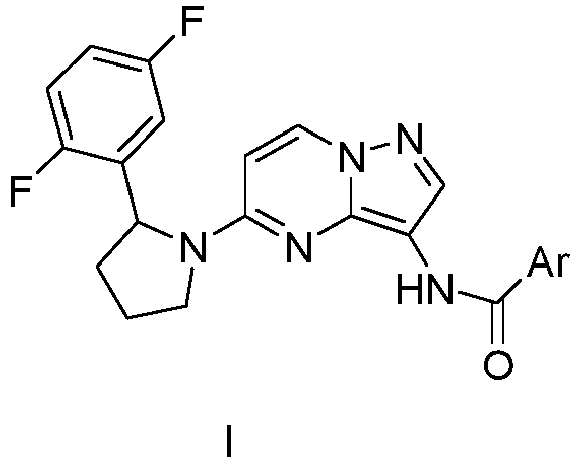
 R1, R2, R4 und R5 unabhängig Wasserstoff, Halogenid, CF3, C1-C3-Alkyl, NO2, C1-C3-Alkoxyl oder Oxan-4-ylamino sind;R21 eine oder mehrere Gruppen ist, die unabhängig aus der Gruppe, bestehend aus Wasserstoff, C1-C3-Alkyl und Deuterium, ausgewählt sind;R22 C1-C3-Alkyl, CO(C1-C3-Alkyl) oder Wasserstoff ist; undjedes von R23 und R24 unabhängig Wasserstoff, Deuterium oder C1-C3-Alkyl ist.
 - Verbindung gemäß Anspruch 1, wobei die Verbindung der Formel II entspricht:

- Verbindung gemäß Anspruch 1, wobei die Verbindung aus der Gruppe ausgewählt ist, die aus Folgendem besteht:


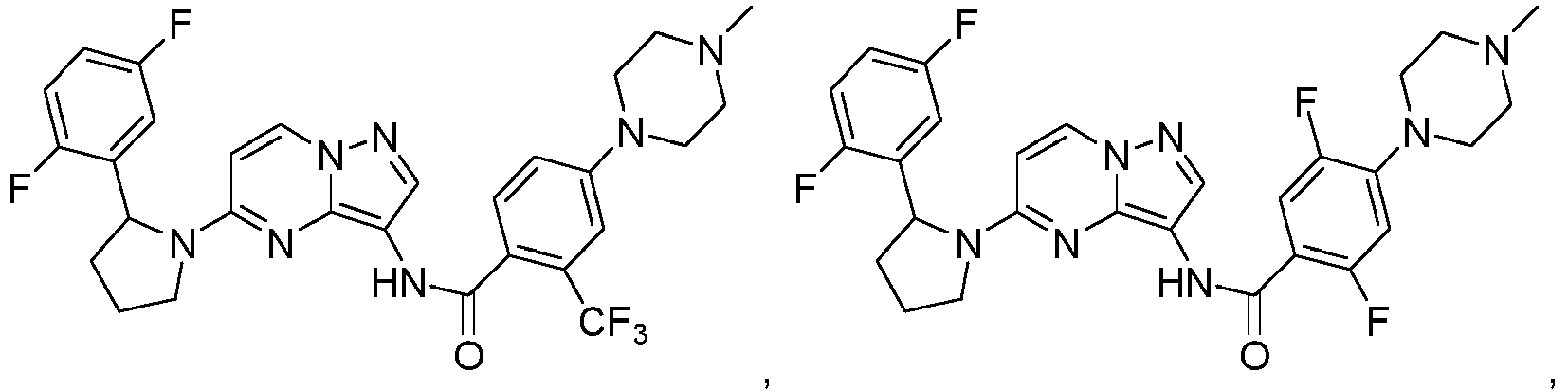
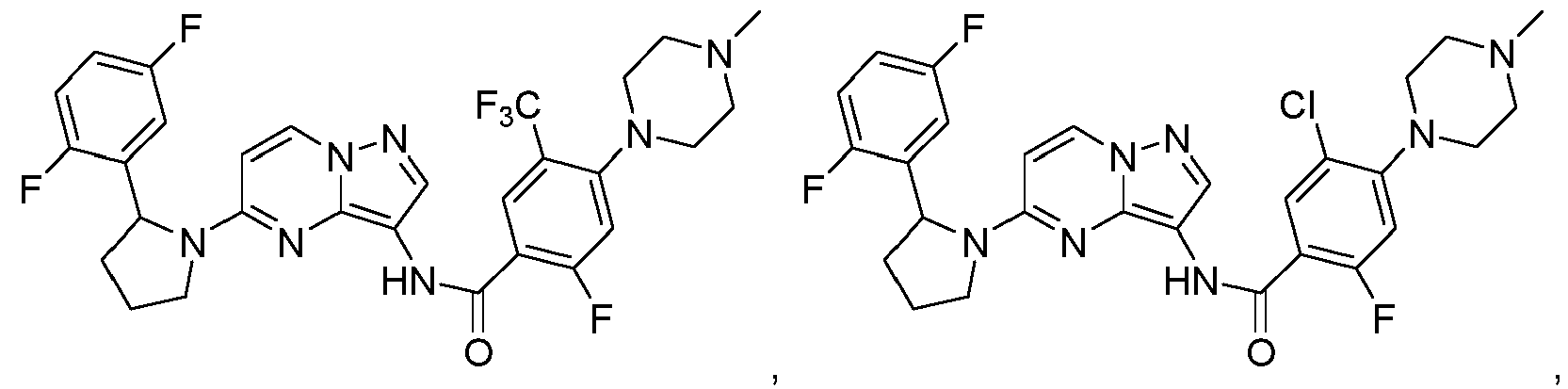


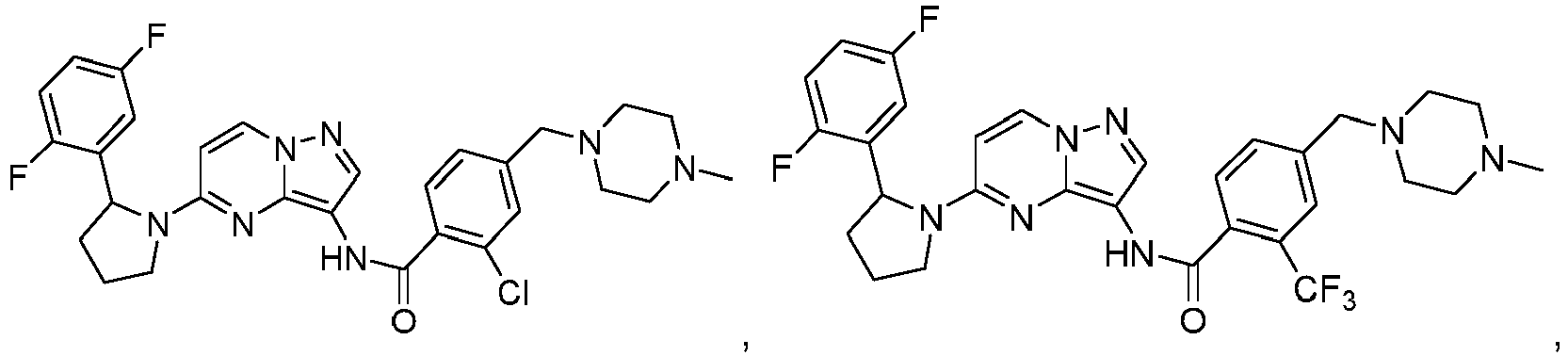


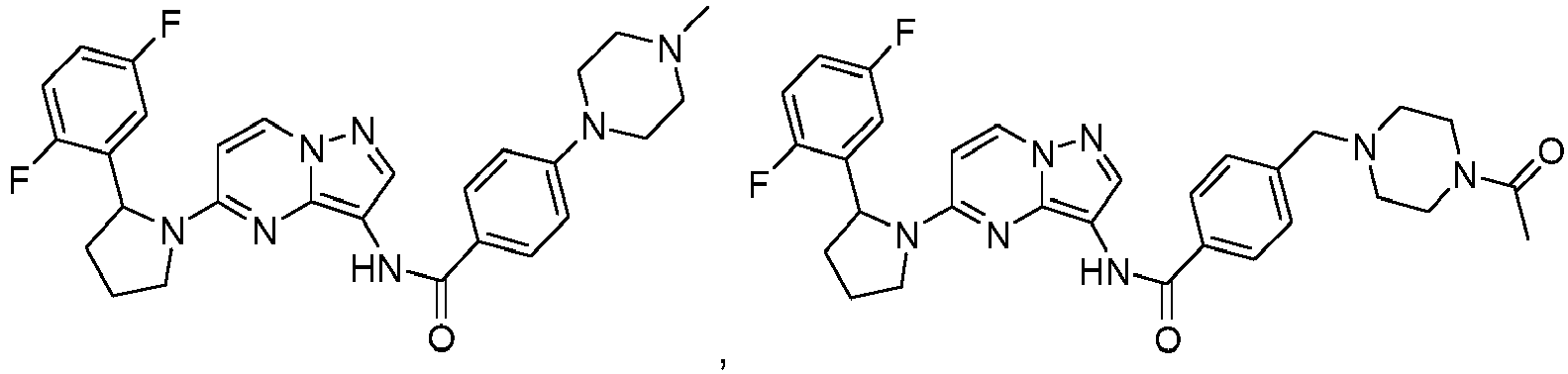

- Verbindung gemäß Anspruch 2, wobei die Verbindung aus der Gruppe ausgewählt ist, die aus Folgendem besteht:

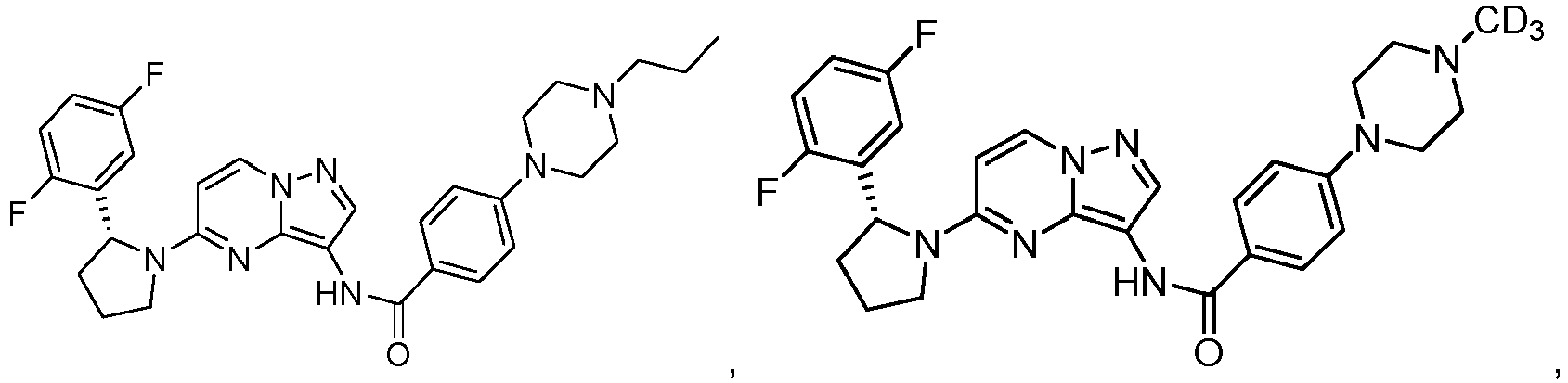


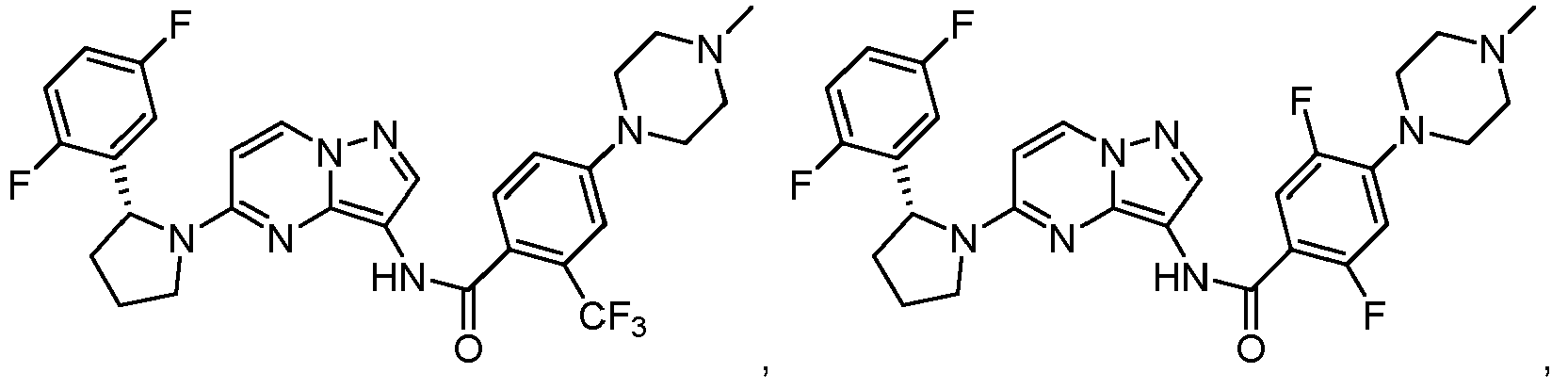


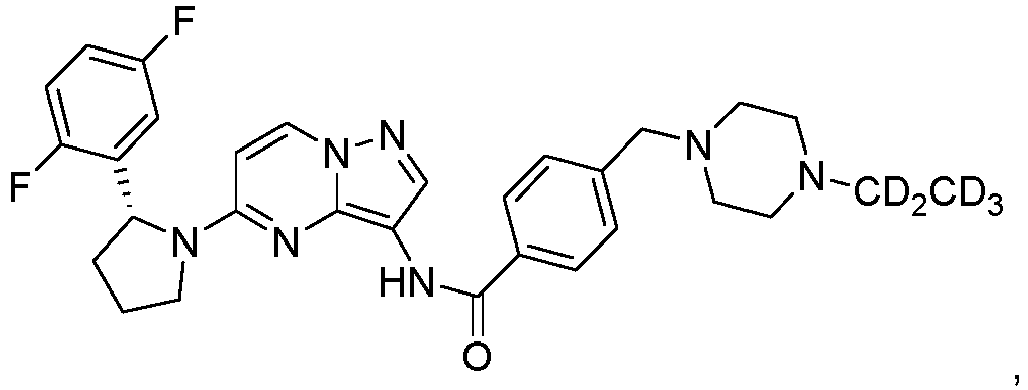


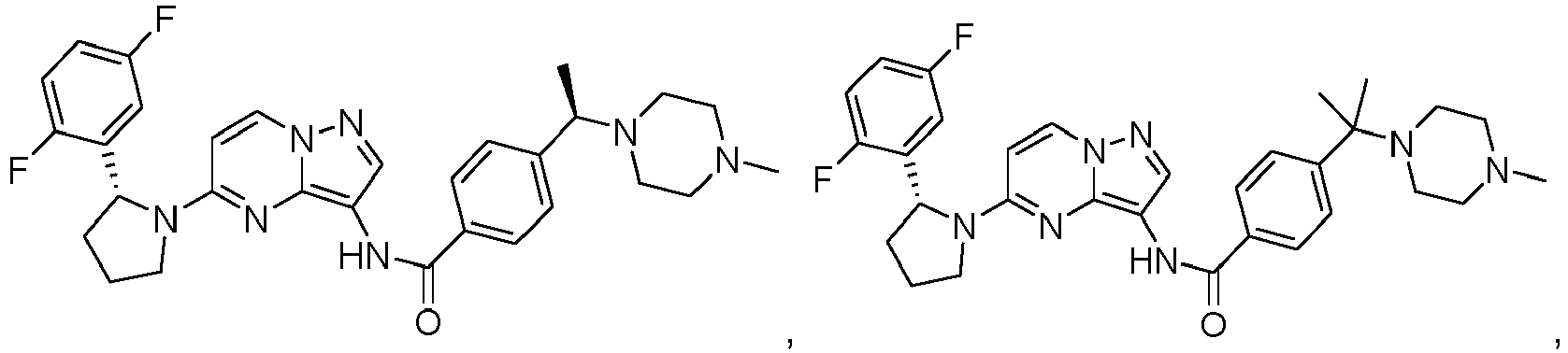

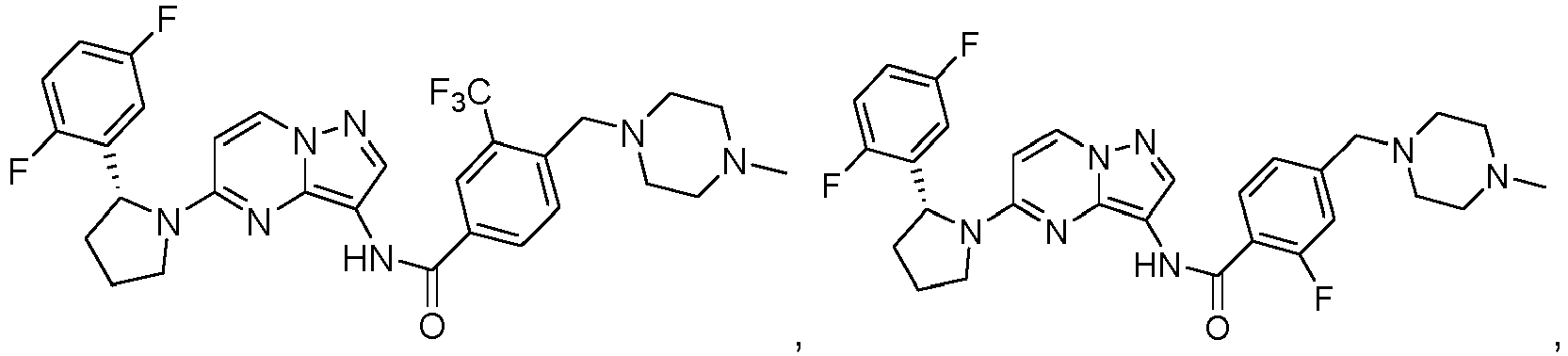


- Eine pharmazeutische Zusammensetzung, die eine Verbindung gemäß einem der Ansprüche 1-4 und einen pharmazeutisch akzeptablen Träger beinhaltet.
- Pharmazeutische Zusammensetzung gemäß Anspruch 5 zur Verwendung beim Behandeln oder Vorbeugen einer hyperproliferativen Erkrankung bei einem Patienten.
- Verbindung gemäß einem der Ansprüche 1-4 zur Verwendung als ein Medikament.
- Verbindung gemäß einem der Ansprüche 1-4 zur Verwendung als ein Medikament zum Behandeln oder Vorbeugen einer hyperproliferativen Erkrankung.
- Verbindung gemäß einem der Ansprüche 1-4 zur Verwendung als ein Medikament zum Behandeln oder Vorbeugen von Krebs, ausgewählt aus Hautkrebs, Leukämie, Dickdarmkarzinom, Nierenzellkarzinom, gastrointestinalem Stromakrebs, Solider-Tumor-Krebs, Myelom, Brustkrebs, Pankreaskarzinom, nichtkleinzelligem Lungenkrebs, Non-Hodgkin-Lymphom, hepatozellulärem Karzinom, Schilddrüsenkrebs, Blasenkrebs, Kolorektalkrebs und Prostatakrebs.
- Eine pharmazeutische Zusammensetzung, die eine Verbindung gemäß einem der Ansprüche 1-4 in Kombination mit einer oder mehreren antineoplastischen Substanzen beinhaltet, zur Verwendung in einem Verfahren zum Behandeln oder Vorbeugen einer hyperproliferativen Erkrankung.
Applications Claiming Priority (2)
| Application Number | Priority Date | Filing Date | Title |
|---|---|---|---|
| US201762605390P | 2017-08-11 | 2017-08-11 | |
| PCT/CN2018/099652 WO2019029629A1 (en) | 2017-08-11 | 2018-08-09 | SUBSTITUTED PYRAZOLOPYRIMIDINES FOR USE AS KINASE INHIBITORS |
Publications (3)
| Publication Number | Publication Date |
|---|---|
| EP3661935A1 EP3661935A1 (de) | 2020-06-10 |
| EP3661935A4 EP3661935A4 (de) | 2020-08-26 |
| EP3661935B1 true EP3661935B1 (de) | 2022-10-12 |
Family
ID=65270851
Family Applications (1)
| Application Number | Title | Priority Date | Filing Date |
|---|---|---|---|
| EP18844511.8A Active EP3661935B1 (de) | 2017-08-11 | 2018-08-09 | Als kinasehemmer nützliche substituierte pyrazolopyrimidine |
Country Status (7)
| Country | Link |
|---|---|
| US (1) | US11344553B2 (de) |
| EP (1) | EP3661935B1 (de) |
| JP (1) | JP6916562B2 (de) |
| CN (1) | CN111542522B (de) |
| ES (1) | ES2930081T3 (de) |
| FI (1) | FI3661935T3 (de) |
| WO (1) | WO2019029629A1 (de) |
Families Citing this family (5)
| Publication number | Priority date | Publication date | Assignee | Title |
|---|---|---|---|---|
| CN111138437B (zh) * | 2019-12-04 | 2021-03-05 | 杭州华东医药集团新药研究院有限公司 | 取代的吡唑并[1,5-a]嘧啶氨基酸衍生物及其用途 |
| WO2021197467A1 (zh) * | 2020-04-02 | 2021-10-07 | 上海华汇拓医药科技有限公司 | 多靶点的抗肿瘤化合物及其制备方法和应用 |
| KR102874188B1 (ko) | 2020-05-15 | 2025-10-21 | 씨에스피씨 종콰이 팔마씨우티컬 테크놀로지 (스자좡) 컴퍼니 리미티드 | 융합된 아자 헤테로 시클릭 아미드계 화합물 및 이의 용도 |
| WO2023083356A1 (zh) * | 2021-11-15 | 2023-05-19 | 石药集团中奇制药技术(石家庄)有限公司 | 固体形式的氮杂稠环酰胺类化合物及其用途 |
| WO2023083357A1 (zh) * | 2021-11-15 | 2023-05-19 | 石药集团中奇制药技术(石家庄)有限公司 | 氮杂稠环酰胺类化合物的盐、其结晶形式及其用途 |
Family Cites Families (15)
| Publication number | Priority date | Publication date | Assignee | Title |
|---|---|---|---|---|
| JP4564485B2 (ja) * | 2003-02-28 | 2010-10-20 | 帝人ファーマ株式会社 | ピラゾロ[1,5−a]ピリミジン誘導体 |
| JP2009502734A (ja) | 2005-07-29 | 2009-01-29 | アステラス製薬株式会社 | Lck阻害剤としての縮合複素環 |
| DE102005042742A1 (de) | 2005-09-02 | 2007-03-08 | Schering Ag | Substituierte Imidazo[1,2b]pyridazine als Kinase-Inhibitoren, deren Herstellung und Verwendung als Arzneimittel |
| WO2008037477A1 (en) * | 2006-09-29 | 2008-04-03 | Novartis Ag | Pyrazolopyrimidines as p13k lipid kinase inhibitors |
| CN101522682A (zh) | 2006-10-30 | 2009-09-02 | 诺瓦提斯公司 | 作为抗炎剂的杂环化合物 |
| BRPI0718029A2 (pt) * | 2006-11-06 | 2013-11-26 | Supergen Inc | Derivados de imidazo(1,2-b)piridazina e pirazolo(1,5-a)pirimidina e seu uso como inibidores da proteína cinase |
| AR064106A1 (es) * | 2006-12-05 | 2009-03-11 | Bayer Schering Pharma Ag | Derivados de 2,3-dihidroimidazo [1,2-c] quinazolina sustituida utiles para el tratamiento de enfermedades y trastornos hiper-proliferativos asociados con la angiogenesis |
| PT2350075E (pt) * | 2008-09-22 | 2014-06-09 | Array Biopharma Inc | Compostos imidazo[1,2b]piridazina substituídos como inibidores da trk cinase |
| AR074052A1 (es) * | 2008-10-22 | 2010-12-22 | Array Biopharma Inc | Compuestos pirazolo{1,5-a}pirimidina sustituida como inhibidores de trk cinasa |
| AR077468A1 (es) * | 2009-07-09 | 2011-08-31 | Array Biopharma Inc | Compuestos de pirazolo (1,5 -a) pirimidina sustituidos como inhibidores de trk- quinasa |
| WO2012125667A1 (en) * | 2011-03-17 | 2012-09-20 | Merck Sharp & Dohme Corp. | TrkA KINASE INHIBITORS, COMPOSITIONS AND METHODS THEREOF |
| CA2949160C (en) * | 2014-05-15 | 2023-03-21 | Array Biopharma Inc. | 1-((3s,4r)-4-(3-fluorophenyl)-1-(2-methoxyethyl)pyrrolidin-3-yl)-3-(4-methyl-3-(2-methylpyrimidin-5-yl)-1-phenyl-1h-pyrazol-5-yl)urea as a trka kinase inhibitor |
| EP3157921A1 (de) * | 2014-06-23 | 2017-04-26 | Dr. Reddy's Laboratories Ltd. | Substituierte imidazo[1,2-a]pyridin-verbindungen zur behandlung von schmerzen |
| ES2836222T3 (es) * | 2016-05-18 | 2021-06-24 | Loxo Oncology Inc | Preparación de (S)-N-(5-((R)-2-(2,5-difluorofenil)pirrolidin-1-il)pirazolo[1,5-a]pirimidin-3-il)-3-hidroxipirrolidina-1-carboxamida |
| EP4100439A4 (de) | 2020-02-05 | 2024-05-29 | The Board Of Regents Of The University Of Texas System | Neuartige lilrb2-antikörper und verwendungen davon |
-
2018
- 2018-08-09 EP EP18844511.8A patent/EP3661935B1/de active Active
- 2018-08-09 ES ES18844511T patent/ES2930081T3/es active Active
- 2018-08-09 CN CN201880051836.0A patent/CN111542522B/zh active Active
- 2018-08-09 WO PCT/CN2018/099652 patent/WO2019029629A1/en not_active Ceased
- 2018-08-09 FI FIEP18844511.8T patent/FI3661935T3/fi active
- 2018-08-09 JP JP2020507645A patent/JP6916562B2/ja active Active
- 2018-08-09 US US16/636,020 patent/US11344553B2/en active Active
Also Published As
| Publication number | Publication date |
|---|---|
| FI3661935T3 (fi) | 2023-01-13 |
| CN111542522B (zh) | 2021-10-15 |
| JP6916562B2 (ja) | 2021-08-11 |
| ES2930081T3 (es) | 2022-12-07 |
| EP3661935A1 (de) | 2020-06-10 |
| US11344553B2 (en) | 2022-05-31 |
| WO2019029629A1 (en) | 2019-02-14 |
| CN111542522A (zh) | 2020-08-14 |
| US20210315899A1 (en) | 2021-10-14 |
| EP3661935A4 (de) | 2020-08-26 |
| JP2020529465A (ja) | 2020-10-08 |
Similar Documents
| Publication | Publication Date | Title |
|---|---|---|
| EP2931722B1 (de) | Substituierte 1h-pyrrolo-[2,3-b]pyridin- und 1h-pyrazolo-[3,4-b]pyridinderivate als salzinduzierbare kinase-2 (sik2)-hemmer | |
| EP3661935B1 (de) | Als kinasehemmer nützliche substituierte pyrazolopyrimidine | |
| KR101398268B1 (ko) | Akt 억제제 | |
| EP3873477A1 (de) | Hemmer der cyclinabhängigen kinase 7 (cdk7) | |
| US12338251B2 (en) | Substituted macrocycles useful as kinase inhibitors | |
| WO2014187319A1 (en) | Substituted pyrazolopyrimidines as kinases inhibitors | |
| WO2013173254A1 (en) | Bicyclic compounds as kinases inhibitors | |
| Yang et al. | Discovery of highly selective and orally available benzimidazole-based phosphodiesterase 10 inhibitors with improved solubility and pharmacokinetic properties for treatment of pulmonary arterial hypertension | |
| US20140350050A1 (en) | Pyridine compounds as inhibitors of kinase | |
| US10159663B2 (en) | Substituted macrocycles useful as kinases inhibitors and methods of use thereof | |
| WO2012138809A1 (en) | Heterocyclic compounds as kinase inhibitors | |
| WO2016026423A1 (en) | Substituted macrocycles useful as kinases inhibitors and methods of use thereof | |
| US11427559B2 (en) | Substituted quinolines useful as kinase inhibitors | |
| US10173995B2 (en) | Pyridine compounds used as PI3 kinase inhibitors | |
| JP2022504082A (ja) | ウイルス感染を処置するための2,6-ジメチル-N-((ピリジン-4-イル)メチル)イミダゾ[1,2-b]ピリダジン-8-アミンおよび2,5-ジメチル-N-[(ピリジン-4-イル)メチル]ピラゾロ[1,5-a]ピリミジン-7-アミン誘導体 | |
| CN105985354B (zh) | 嘧啶衍生物、细胞毒性剂、药物组合物及其应用 | |
| WO2014139391A1 (en) | Substituted pyridine compounds as kinases inhibitors |
Legal Events
| Date | Code | Title | Description |
|---|---|---|---|
| STAA | Information on the status of an ep patent application or granted ep patent |
Free format text: STATUS: THE INTERNATIONAL PUBLICATION HAS BEEN MADE |
|
| PUAI | Public reference made under article 153(3) epc to a published international application that has entered the european phase |
Free format text: ORIGINAL CODE: 0009012 |
|
| STAA | Information on the status of an ep patent application or granted ep patent |
Free format text: STATUS: REQUEST FOR EXAMINATION WAS MADE |
|
| 17P | Request for examination filed |
Effective date: 20200302 |
|
| AK | Designated contracting states |
Kind code of ref document: A1 Designated state(s): AL AT BE BG CH CY CZ DE DK EE ES FI FR GB GR HR HU IE IS IT LI LT LU LV MC MK MT NL NO PL PT RO RS SE SI SK SM TR |
|
| AX | Request for extension of the european patent |
Extension state: BA ME |
|
| A4 | Supplementary search report drawn up and despatched |
Effective date: 20200724 |
|
| RIC1 | Information provided on ipc code assigned before grant |
Ipc: A61P 35/00 20060101ALI20200720BHEP Ipc: A61K 31/519 20060101ALI20200720BHEP Ipc: C07D 471/04 20060101AFI20200720BHEP |
|
| DAV | Request for validation of the european patent (deleted) | ||
| DAX | Request for extension of the european patent (deleted) | ||
| STAA | Information on the status of an ep patent application or granted ep patent |
Free format text: STATUS: EXAMINATION IS IN PROGRESS |
|
| 17Q | First examination report despatched |
Effective date: 20210311 |
|
| REG | Reference to a national code |
Ref country code: DE Ref legal event code: R079 Ref document number: 602018041788 Country of ref document: DE Free format text: PREVIOUS MAIN CLASS: C07D0471040000 Ipc: A61K0031519000 |
|
| GRAP | Despatch of communication of intention to grant a patent |
Free format text: ORIGINAL CODE: EPIDOSNIGR1 |
|
| STAA | Information on the status of an ep patent application or granted ep patent |
Free format text: STATUS: GRANT OF PATENT IS INTENDED |
|
| RIC1 | Information provided on ipc code assigned before grant |
Ipc: C07D 487/04 20060101ALI20220425BHEP Ipc: A61P 35/00 20060101ALI20220425BHEP Ipc: A61K 45/06 20060101ALI20220425BHEP Ipc: A61K 31/519 20060101AFI20220425BHEP |
|
| INTG | Intention to grant announced |
Effective date: 20220519 |
|
| RAP3 | Party data changed (applicant data changed or rights of an application transferred) |
Owner name: TELIGENE LTD |
|
| RIN1 | Information on inventor provided before grant (corrected) |
Inventor name: ZHANG, DAWEI |
|
| GRAS | Grant fee paid |
Free format text: ORIGINAL CODE: EPIDOSNIGR3 |
|
| GRAA | (expected) grant |
Free format text: ORIGINAL CODE: 0009210 |
|
| STAA | Information on the status of an ep patent application or granted ep patent |
Free format text: STATUS: THE PATENT HAS BEEN GRANTED |
|
| AK | Designated contracting states |
Kind code of ref document: B1 Designated state(s): AL AT BE BG CH CY CZ DE DK EE ES FI FR GB GR HR HU IE IS IT LI LT LU LV MC MK MT NL NO PL PT RO RS SE SI SK SM TR |
|
| REG | Reference to a national code |
Ref country code: GB Ref legal event code: FG4D |
|
| REG | Reference to a national code |
Ref country code: CH Ref legal event code: EP |
|
| REG | Reference to a national code |
Ref country code: DE Ref legal event code: R096 Ref document number: 602018041788 Country of ref document: DE |
|
| REG | Reference to a national code |
Ref country code: IE Ref legal event code: FG4D |
|
| REG | Reference to a national code |
Ref country code: AT Ref legal event code: REF Ref document number: 1523744 Country of ref document: AT Kind code of ref document: T Effective date: 20221115 |
|
| REG | Reference to a national code |
Ref country code: ES Ref legal event code: FG2A Ref document number: 2930081 Country of ref document: ES Kind code of ref document: T3 Effective date: 20221207 |
|
| REG | Reference to a national code |
Ref country code: NL Ref legal event code: FP |
|
| REG | Reference to a national code |
Ref country code: DK Ref legal event code: T3 Effective date: 20221220 |
|
| REG | Reference to a national code |
Ref country code: SE Ref legal event code: TRGR |
|
| REG | Reference to a national code |
Ref country code: NO Ref legal event code: T2 Effective date: 20221012 |
|
| REG | Reference to a national code |
Ref country code: LT Ref legal event code: MG9D |
|
| PG25 | Lapsed in a contracting state [announced via postgrant information from national office to epo] |
Ref country code: PT Free format text: LAPSE BECAUSE OF FAILURE TO SUBMIT A TRANSLATION OF THE DESCRIPTION OR TO PAY THE FEE WITHIN THE PRESCRIBED TIME-LIMIT Effective date: 20230213 Ref country code: LT Free format text: LAPSE BECAUSE OF FAILURE TO SUBMIT A TRANSLATION OF THE DESCRIPTION OR TO PAY THE FEE WITHIN THE PRESCRIBED TIME-LIMIT Effective date: 20221012 |
|
| PG25 | Lapsed in a contracting state [announced via postgrant information from national office to epo] |
Ref country code: RS Free format text: LAPSE BECAUSE OF FAILURE TO SUBMIT A TRANSLATION OF THE DESCRIPTION OR TO PAY THE FEE WITHIN THE PRESCRIBED TIME-LIMIT Effective date: 20221012 Ref country code: PL Free format text: LAPSE BECAUSE OF FAILURE TO SUBMIT A TRANSLATION OF THE DESCRIPTION OR TO PAY THE FEE WITHIN THE PRESCRIBED TIME-LIMIT Effective date: 20221012 Ref country code: LV Free format text: LAPSE BECAUSE OF FAILURE TO SUBMIT A TRANSLATION OF THE DESCRIPTION OR TO PAY THE FEE WITHIN THE PRESCRIBED TIME-LIMIT Effective date: 20221012 Ref country code: IS Free format text: LAPSE BECAUSE OF FAILURE TO SUBMIT A TRANSLATION OF THE DESCRIPTION OR TO PAY THE FEE WITHIN THE PRESCRIBED TIME-LIMIT Effective date: 20230212 Ref country code: HR Free format text: LAPSE BECAUSE OF FAILURE TO SUBMIT A TRANSLATION OF THE DESCRIPTION OR TO PAY THE FEE WITHIN THE PRESCRIBED TIME-LIMIT Effective date: 20221012 Ref country code: GR Free format text: LAPSE BECAUSE OF FAILURE TO SUBMIT A TRANSLATION OF THE DESCRIPTION OR TO PAY THE FEE WITHIN THE PRESCRIBED TIME-LIMIT Effective date: 20230113 |
|
| REG | Reference to a national code |
Ref country code: DE Ref legal event code: R097 Ref document number: 602018041788 Country of ref document: DE |
|
| PG25 | Lapsed in a contracting state [announced via postgrant information from national office to epo] |
Ref country code: SM Free format text: LAPSE BECAUSE OF FAILURE TO SUBMIT A TRANSLATION OF THE DESCRIPTION OR TO PAY THE FEE WITHIN THE PRESCRIBED TIME-LIMIT Effective date: 20221012 Ref country code: RO Free format text: LAPSE BECAUSE OF FAILURE TO SUBMIT A TRANSLATION OF THE DESCRIPTION OR TO PAY THE FEE WITHIN THE PRESCRIBED TIME-LIMIT Effective date: 20221012 Ref country code: EE Free format text: LAPSE BECAUSE OF FAILURE TO SUBMIT A TRANSLATION OF THE DESCRIPTION OR TO PAY THE FEE WITHIN THE PRESCRIBED TIME-LIMIT Effective date: 20221012 Ref country code: CZ Free format text: LAPSE BECAUSE OF FAILURE TO SUBMIT A TRANSLATION OF THE DESCRIPTION OR TO PAY THE FEE WITHIN THE PRESCRIBED TIME-LIMIT Effective date: 20221012 |
|
| PLBE | No opposition filed within time limit |
Free format text: ORIGINAL CODE: 0009261 |
|
| STAA | Information on the status of an ep patent application or granted ep patent |
Free format text: STATUS: NO OPPOSITION FILED WITHIN TIME LIMIT |
|
| PG25 | Lapsed in a contracting state [announced via postgrant information from national office to epo] |
Ref country code: SK Free format text: LAPSE BECAUSE OF FAILURE TO SUBMIT A TRANSLATION OF THE DESCRIPTION OR TO PAY THE FEE WITHIN THE PRESCRIBED TIME-LIMIT Effective date: 20221012 Ref country code: AL Free format text: LAPSE BECAUSE OF FAILURE TO SUBMIT A TRANSLATION OF THE DESCRIPTION OR TO PAY THE FEE WITHIN THE PRESCRIBED TIME-LIMIT Effective date: 20221012 |
|
| 26N | No opposition filed |
Effective date: 20230713 |
|
| PG25 | Lapsed in a contracting state [announced via postgrant information from national office to epo] |
Ref country code: SI Free format text: LAPSE BECAUSE OF FAILURE TO SUBMIT A TRANSLATION OF THE DESCRIPTION OR TO PAY THE FEE WITHIN THE PRESCRIBED TIME-LIMIT Effective date: 20221012 |
|
| REG | Reference to a national code |
Ref country code: AT Ref legal event code: UEP Ref document number: 1523744 Country of ref document: AT Kind code of ref document: T Effective date: 20221012 |
|
| PG25 | Lapsed in a contracting state [announced via postgrant information from national office to epo] |
Ref country code: BG Free format text: LAPSE BECAUSE OF FAILURE TO SUBMIT A TRANSLATION OF THE DESCRIPTION OR TO PAY THE FEE WITHIN THE PRESCRIBED TIME-LIMIT Effective date: 20221012 |
|
| PG25 | Lapsed in a contracting state [announced via postgrant information from national office to epo] |
Ref country code: BG Free format text: LAPSE BECAUSE OF FAILURE TO SUBMIT A TRANSLATION OF THE DESCRIPTION OR TO PAY THE FEE WITHIN THE PRESCRIBED TIME-LIMIT Effective date: 20221012 |
|
| PG25 | Lapsed in a contracting state [announced via postgrant information from national office to epo] |
Ref country code: CY Free format text: LAPSE BECAUSE OF FAILURE TO SUBMIT A TRANSLATION OF THE DESCRIPTION OR TO PAY THE FEE WITHIN THE PRESCRIBED TIME-LIMIT; INVALID AB INITIO Effective date: 20180809 |
|
| PG25 | Lapsed in a contracting state [announced via postgrant information from national office to epo] |
Ref country code: HU Free format text: LAPSE BECAUSE OF FAILURE TO SUBMIT A TRANSLATION OF THE DESCRIPTION OR TO PAY THE FEE WITHIN THE PRESCRIBED TIME-LIMIT; INVALID AB INITIO Effective date: 20180809 |
|
| PGFP | Annual fee paid to national office [announced via postgrant information from national office to epo] |
Ref country code: NL Payment date: 20250724 Year of fee payment: 8 Ref country code: LU Payment date: 20250724 Year of fee payment: 8 |
|
| PGFP | Annual fee paid to national office [announced via postgrant information from national office to epo] |
Ref country code: ES Payment date: 20250908 Year of fee payment: 8 Ref country code: FI Payment date: 20250722 Year of fee payment: 8 |
|
| PGFP | Annual fee paid to national office [announced via postgrant information from national office to epo] |
Ref country code: DK Payment date: 20250729 Year of fee payment: 8 Ref country code: DE Payment date: 20250812 Year of fee payment: 8 |
|
| PGFP | Annual fee paid to national office [announced via postgrant information from national office to epo] |
Ref country code: MC Payment date: 20250723 Year of fee payment: 8 Ref country code: NO Payment date: 20250728 Year of fee payment: 8 |
|
| PGFP | Annual fee paid to national office [announced via postgrant information from national office to epo] |
Ref country code: IT Payment date: 20250808 Year of fee payment: 8 |
|
| PGFP | Annual fee paid to national office [announced via postgrant information from national office to epo] |
Ref country code: BE Payment date: 20250826 Year of fee payment: 8 Ref country code: GB Payment date: 20250826 Year of fee payment: 8 |
|
| PGFP | Annual fee paid to national office [announced via postgrant information from national office to epo] |
Ref country code: FR Payment date: 20250828 Year of fee payment: 8 Ref country code: AT Payment date: 20250722 Year of fee payment: 8 |
|
| PGFP | Annual fee paid to national office [announced via postgrant information from national office to epo] |
Ref country code: MT Payment date: 20250724 Year of fee payment: 8 Ref country code: CH Payment date: 20250901 Year of fee payment: 8 Ref country code: SE Payment date: 20250826 Year of fee payment: 8 |
|
| PGFP | Annual fee paid to national office [announced via postgrant information from national office to epo] |
Ref country code: IE Payment date: 20250728 Year of fee payment: 8 |
|
| PG25 | Lapsed in a contracting state [announced via postgrant information from national office to epo] |
Ref country code: TR Free format text: LAPSE BECAUSE OF FAILURE TO SUBMIT A TRANSLATION OF THE DESCRIPTION OR TO PAY THE FEE WITHIN THE PRESCRIBED TIME-LIMIT Effective date: 20221012 |