EP3660189A1 - Zusammensetzung und verfahren zur metallisierung von nichtleitenden kunststoffoberflächen - Google Patents
Zusammensetzung und verfahren zur metallisierung von nichtleitenden kunststoffoberflächen Download PDFInfo
- Publication number
- EP3660189A1 EP3660189A1 EP20152479.0A EP20152479A EP3660189A1 EP 3660189 A1 EP3660189 A1 EP 3660189A1 EP 20152479 A EP20152479 A EP 20152479A EP 3660189 A1 EP3660189 A1 EP 3660189A1
- Authority
- EP
- European Patent Office
- Prior art keywords
- solution
- metal
- process step
- plastic
- etching solution
- Prior art date
- Legal status (The legal status is an assumption and is not a legal conclusion. Google has not performed a legal analysis and makes no representation as to the accuracy of the status listed.)
- Granted
Links
Images


Classifications
-
- C—CHEMISTRY; METALLURGY
- C09—DYES; PAINTS; POLISHES; NATURAL RESINS; ADHESIVES; COMPOSITIONS NOT OTHERWISE PROVIDED FOR; APPLICATIONS OF MATERIALS NOT OTHERWISE PROVIDED FOR
- C09K—MATERIALS FOR MISCELLANEOUS APPLICATIONS, NOT PROVIDED FOR ELSEWHERE
- C09K13/00—Etching, surface-brightening or pickling compositions
- C09K13/02—Etching, surface-brightening or pickling compositions containing an alkali metal hydroxide
-
- C—CHEMISTRY; METALLURGY
- C09—DYES; PAINTS; POLISHES; NATURAL RESINS; ADHESIVES; COMPOSITIONS NOT OTHERWISE PROVIDED FOR; APPLICATIONS OF MATERIALS NOT OTHERWISE PROVIDED FOR
- C09K—MATERIALS FOR MISCELLANEOUS APPLICATIONS, NOT PROVIDED FOR ELSEWHERE
- C09K13/00—Etching, surface-brightening or pickling compositions
- C09K13/04—Etching, surface-brightening or pickling compositions containing an inorganic acid
-
- C—CHEMISTRY; METALLURGY
- C23—COATING METALLIC MATERIAL; COATING MATERIAL WITH METALLIC MATERIAL; CHEMICAL SURFACE TREATMENT; DIFFUSION TREATMENT OF METALLIC MATERIAL; COATING BY VACUUM EVAPORATION, BY SPUTTERING, BY ION IMPLANTATION OR BY CHEMICAL VAPOUR DEPOSITION, IN GENERAL; INHIBITING CORROSION OF METALLIC MATERIAL OR INCRUSTATION IN GENERAL
- C23C—COATING METALLIC MATERIAL; COATING MATERIAL WITH METALLIC MATERIAL; SURFACE TREATMENT OF METALLIC MATERIAL BY DIFFUSION INTO THE SURFACE, BY CHEMICAL CONVERSION OR SUBSTITUTION; COATING BY VACUUM EVAPORATION, BY SPUTTERING, BY ION IMPLANTATION OR BY CHEMICAL VAPOUR DEPOSITION, IN GENERAL
- C23C18/00—Chemical coating by decomposition of either liquid compounds or solutions of the coating forming compounds, without leaving reaction products of surface material in the coating; Contact plating
- C23C18/16—Chemical coating by decomposition of either liquid compounds or solutions of the coating forming compounds, without leaving reaction products of surface material in the coating; Contact plating by reduction or substitution, e.g. electroless plating
- C23C18/1601—Process or apparatus
- C23C18/1633—Process of electroless plating
- C23C18/1646—Characteristics of the product obtained
- C23C18/165—Multilayered product
- C23C18/1653—Two or more layers with at least one layer obtained by electroless plating and one layer obtained by electroplating
-
- C—CHEMISTRY; METALLURGY
- C23—COATING METALLIC MATERIAL; COATING MATERIAL WITH METALLIC MATERIAL; CHEMICAL SURFACE TREATMENT; DIFFUSION TREATMENT OF METALLIC MATERIAL; COATING BY VACUUM EVAPORATION, BY SPUTTERING, BY ION IMPLANTATION OR BY CHEMICAL VAPOUR DEPOSITION, IN GENERAL; INHIBITING CORROSION OF METALLIC MATERIAL OR INCRUSTATION IN GENERAL
- C23C—COATING METALLIC MATERIAL; COATING MATERIAL WITH METALLIC MATERIAL; SURFACE TREATMENT OF METALLIC MATERIAL BY DIFFUSION INTO THE SURFACE, BY CHEMICAL CONVERSION OR SUBSTITUTION; COATING BY VACUUM EVAPORATION, BY SPUTTERING, BY ION IMPLANTATION OR BY CHEMICAL VAPOUR DEPOSITION, IN GENERAL
- C23C18/00—Chemical coating by decomposition of either liquid compounds or solutions of the coating forming compounds, without leaving reaction products of surface material in the coating; Contact plating
- C23C18/16—Chemical coating by decomposition of either liquid compounds or solutions of the coating forming compounds, without leaving reaction products of surface material in the coating; Contact plating by reduction or substitution, e.g. electroless plating
- C23C18/18—Pretreatment of the material to be coated
- C23C18/20—Pretreatment of the material to be coated of organic surfaces, e.g. resins
-
- C—CHEMISTRY; METALLURGY
- C23—COATING METALLIC MATERIAL; COATING MATERIAL WITH METALLIC MATERIAL; CHEMICAL SURFACE TREATMENT; DIFFUSION TREATMENT OF METALLIC MATERIAL; COATING BY VACUUM EVAPORATION, BY SPUTTERING, BY ION IMPLANTATION OR BY CHEMICAL VAPOUR DEPOSITION, IN GENERAL; INHIBITING CORROSION OF METALLIC MATERIAL OR INCRUSTATION IN GENERAL
- C23C—COATING METALLIC MATERIAL; COATING MATERIAL WITH METALLIC MATERIAL; SURFACE TREATMENT OF METALLIC MATERIAL BY DIFFUSION INTO THE SURFACE, BY CHEMICAL CONVERSION OR SUBSTITUTION; COATING BY VACUUM EVAPORATION, BY SPUTTERING, BY ION IMPLANTATION OR BY CHEMICAL VAPOUR DEPOSITION, IN GENERAL
- C23C18/00—Chemical coating by decomposition of either liquid compounds or solutions of the coating forming compounds, without leaving reaction products of surface material in the coating; Contact plating
- C23C18/16—Chemical coating by decomposition of either liquid compounds or solutions of the coating forming compounds, without leaving reaction products of surface material in the coating; Contact plating by reduction or substitution, e.g. electroless plating
- C23C18/18—Pretreatment of the material to be coated
- C23C18/20—Pretreatment of the material to be coated of organic surfaces, e.g. resins
- C23C18/2006—Pretreatment of the material to be coated of organic surfaces, e.g. resins by other methods than those of C23C18/22 - C23C18/30
- C23C18/2046—Pretreatment of the material to be coated of organic surfaces, e.g. resins by other methods than those of C23C18/22 - C23C18/30 by chemical pretreatment
- C23C18/2073—Multistep pretreatment
- C23C18/2086—Multistep pretreatment with use of organic or inorganic compounds other than metals, first
-
- C—CHEMISTRY; METALLURGY
- C23—COATING METALLIC MATERIAL; COATING MATERIAL WITH METALLIC MATERIAL; CHEMICAL SURFACE TREATMENT; DIFFUSION TREATMENT OF METALLIC MATERIAL; COATING BY VACUUM EVAPORATION, BY SPUTTERING, BY ION IMPLANTATION OR BY CHEMICAL VAPOUR DEPOSITION, IN GENERAL; INHIBITING CORROSION OF METALLIC MATERIAL OR INCRUSTATION IN GENERAL
- C23C—COATING METALLIC MATERIAL; COATING MATERIAL WITH METALLIC MATERIAL; SURFACE TREATMENT OF METALLIC MATERIAL BY DIFFUSION INTO THE SURFACE, BY CHEMICAL CONVERSION OR SUBSTITUTION; COATING BY VACUUM EVAPORATION, BY SPUTTERING, BY ION IMPLANTATION OR BY CHEMICAL VAPOUR DEPOSITION, IN GENERAL
- C23C18/00—Chemical coating by decomposition of either liquid compounds or solutions of the coating forming compounds, without leaving reaction products of surface material in the coating; Contact plating
- C23C18/16—Chemical coating by decomposition of either liquid compounds or solutions of the coating forming compounds, without leaving reaction products of surface material in the coating; Contact plating by reduction or substitution, e.g. electroless plating
- C23C18/18—Pretreatment of the material to be coated
- C23C18/20—Pretreatment of the material to be coated of organic surfaces, e.g. resins
- C23C18/22—Roughening, e.g. by etching
-
- C—CHEMISTRY; METALLURGY
- C23—COATING METALLIC MATERIAL; COATING MATERIAL WITH METALLIC MATERIAL; CHEMICAL SURFACE TREATMENT; DIFFUSION TREATMENT OF METALLIC MATERIAL; COATING BY VACUUM EVAPORATION, BY SPUTTERING, BY ION IMPLANTATION OR BY CHEMICAL VAPOUR DEPOSITION, IN GENERAL; INHIBITING CORROSION OF METALLIC MATERIAL OR INCRUSTATION IN GENERAL
- C23C—COATING METALLIC MATERIAL; COATING MATERIAL WITH METALLIC MATERIAL; SURFACE TREATMENT OF METALLIC MATERIAL BY DIFFUSION INTO THE SURFACE, BY CHEMICAL CONVERSION OR SUBSTITUTION; COATING BY VACUUM EVAPORATION, BY SPUTTERING, BY ION IMPLANTATION OR BY CHEMICAL VAPOUR DEPOSITION, IN GENERAL
- C23C18/00—Chemical coating by decomposition of either liquid compounds or solutions of the coating forming compounds, without leaving reaction products of surface material in the coating; Contact plating
- C23C18/16—Chemical coating by decomposition of either liquid compounds or solutions of the coating forming compounds, without leaving reaction products of surface material in the coating; Contact plating by reduction or substitution, e.g. electroless plating
- C23C18/18—Pretreatment of the material to be coated
- C23C18/20—Pretreatment of the material to be coated of organic surfaces, e.g. resins
- C23C18/22—Roughening, e.g. by etching
- C23C18/24—Roughening, e.g. by etching using acid aqueous solutions
-
- C—CHEMISTRY; METALLURGY
- C23—COATING METALLIC MATERIAL; COATING MATERIAL WITH METALLIC MATERIAL; CHEMICAL SURFACE TREATMENT; DIFFUSION TREATMENT OF METALLIC MATERIAL; COATING BY VACUUM EVAPORATION, BY SPUTTERING, BY ION IMPLANTATION OR BY CHEMICAL VAPOUR DEPOSITION, IN GENERAL; INHIBITING CORROSION OF METALLIC MATERIAL OR INCRUSTATION IN GENERAL
- C23C—COATING METALLIC MATERIAL; COATING MATERIAL WITH METALLIC MATERIAL; SURFACE TREATMENT OF METALLIC MATERIAL BY DIFFUSION INTO THE SURFACE, BY CHEMICAL CONVERSION OR SUBSTITUTION; COATING BY VACUUM EVAPORATION, BY SPUTTERING, BY ION IMPLANTATION OR BY CHEMICAL VAPOUR DEPOSITION, IN GENERAL
- C23C18/00—Chemical coating by decomposition of either liquid compounds or solutions of the coating forming compounds, without leaving reaction products of surface material in the coating; Contact plating
- C23C18/16—Chemical coating by decomposition of either liquid compounds or solutions of the coating forming compounds, without leaving reaction products of surface material in the coating; Contact plating by reduction or substitution, e.g. electroless plating
- C23C18/18—Pretreatment of the material to be coated
- C23C18/20—Pretreatment of the material to be coated of organic surfaces, e.g. resins
- C23C18/28—Sensitising or activating
- C23C18/30—Activating or accelerating or sensitising with palladium or other noble metal
-
- C—CHEMISTRY; METALLURGY
- C25—ELECTROLYTIC OR ELECTROPHORETIC PROCESSES; APPARATUS THEREFOR
- C25D—PROCESSES FOR THE ELECTROLYTIC OR ELECTROPHORETIC PRODUCTION OF COATINGS; ELECTROFORMING; APPARATUS THEREFOR
- C25D5/00—Electroplating characterised by the process; Pretreatment or after-treatment of workpieces
- C25D5/54—Electroplating of non-metallic surfaces
- C25D5/56—Electroplating of non-metallic surfaces of plastics
Definitions
- EP 202 57 08 A1 discloses a pickling solution and a pickling process for pickling ABS plastic surfaces or ABS polymer blend surfaces prior to a subsequent metallization of these surfaces.
- the pickling solution includes Mn(VII) ions and an inorganic acid.
- the pickling solution is free of alkali and alkaline earth ions which is achieved by generating the Mn(VII) ions by anodic oxidation of manganese(II) salts.
- Redox mediators like Ag (I), Bi(V), V(V), Mo(VI), Cu(II), Ti(II), Au(I), Fe(II), Ce(III), or Sb(II) ions may be added in order to increase the efficiency of the anodic oxidation.
- acidic permanganate solutions can be suited for etching plastics surfaces and sufficient adhesion strength between deposited metal layer and plastic substrate may be obtained, acidic permanganate solutions are unstable. When etching the substrate surface, the permanganate ions are reduced and the end-product is manganese dioxide. Manganese dioxide catalyzes the formation of further manganese dioxide and oxygen and leads to self-decomposition of permanganate. Thus, the etching effect of a freshly prepared acidic permanganate solution will be insufficient already after several hours.
- the acidic permanganate etching solution can be re-sharpened by addition of permanganate which causes a high consumption of the permanganate compounds. In addition, the concentration of manganese dioxide further increases.
- the objective of the present invention is to provide a stable, acidic permanganate solution that is easy to prepare, has a long life and minimizes permanganate consumption.
- Another objective was to provide a method for metallizing electrically nonconductive plastic surfaces of articles with constant high quality of the metallization and sufficient adhesion strength of the metal layer deposited onto the plastic surfaces.
- the inventive etching solution comprises at least one acid, at least one permanganate salt selected from alkali metal permanganates and earth alkali metal permanganates, and at least one source for a metal ion according to (iii).
- Sodium permanganate may be present in the etching solution in a concentration of up to 250 g/l.
- the lower concentration limit for each of these two salts is typically 30 g/l.
- the content of sodium permanganate is preferably between 90 g/l and 180 g/l.
- the permanganate salt and the acid of the etching solution of the present invention contribute to the stability of the etching solution if contained in the concentration ranges specified above.An acidic permanganate solution is very reactive. The oxidation reaction with the plastic surface then forms many manganese(IV) species which precipitate out. These manganese(IV) species are predominantly manganese(IV) oxides or oxide hydrates and are referred to hereinafter simply as manganese dioxide.
- the manganese dioxide precipitate has a disruptive effect on the subsequent metallization if it remains on the plastic surface.
- the manganese dioxide also catalyses the reaction of permanganate with water according to formula (2) and thus leads to instability of an etching solution.
- the metal of the metal ion according to (iii) is selected from titanium, zirconium, niobium, molybdenum, ruthenium, rhodium, nickel, copper, silver, zinc and cadmium.
- the metal may be selected from copper, nickel, and zinc. More preferably, the metal may be selected from copper.
- the concentration of the metal ion according to (iii) ranges preferably from 1 mmol/l to 90 mmol/l, more preferably from 1 mmol/l to 80 mmol/l.
- the inventive process for etching electrically nonconductive plastic surfaces of articles comprises the process step of:
- the optimal treatment time depends on the plastic surface being treated and the selected temperature of the etching solution.
- the best adhesion strength between plastic surface and subsequently applied metal layer is achieved at a treatment time between 5 and 30 minutes, preferably between 10 and 25 minutes and more preferably between 10 and 15 minutes.
- a longer treatment time than 30 minutes generally leads to no further improvement in the adhesion strengths.
- This further process step is referred to hereinafter as pretreatment step.
- This pretreatment step increases the adhesion strength between the plastic and the metal layer.
- a glycol compound is understood to mean compounds of the following general formula (I): wherein
- the optimal treatment time for the plastic surface depends on the plastic used, the temperature, and the nature and concentration of the glycol compound. Treating the plastic surface in an aqueous solution comprising at least one glycol compound contributes to the adhesion strength of the subsequently deposited metal layer.
- the treatment time in the pretreatment step is between 1 and 30 minutes, preferably between 5 and 20 minutes and more preferably between 7 and 15 minutes.
- Process step A i) may be performed in the process for etching electrically nonconductive plastic surfaces of articles and/or in the process for metallizing electrically nonconductive plastic surfaces of articles. If the process for metallizing electrically nonconductive plastic surfaces is performed including process step B), process step A i) is preferably performed after process step A) and prior to process step B). Preferably, process step A i) is performed between process steps A) and B).
- the permanganate salts of the alkaline etching solution are selected from the same permanganate salts as listed for the acidic etching solution; these are the permanganate salts according to (ii).
- the permanganate salt is selected independently for the alkaline and acidic etching solutions, meaning that the two etching solutions may contain the same permanganate salt or the two etching solutions may contain different permanganate salts.
- the permanganate salt is present in alkaline etching solution in a concentration as given above for the acidic etching solution.
- concentration of the permanganate salt for the alkaline and acidic etching solutions is selected independently, meaning that the two etching solutions may contain the same concentration of permanganate salt or the two etching solutions may contain different concentrations of permanganate salts.
- following further process step is performed after process step A): A ii) treating the plastic surface in a solution comprising a reducing agent for manganese dioxide.
- an acidic solution of a reducing agent is used.
- the reducing agent is selected from the group comprising hydroxylammonium sulphate, hydroxylammonium chloride and hydrogen peroxide.
- the content of hydrogen peroxide in the solution of the reduction treatment is between 25 ml/l and 35 ml/l of a 30% hydrogen peroxide solution (% by weight), preferably 30 ml/l of a 30% hydrogen peroxide solution (% by weight).
- the etched plastics surface is metallized by electroless metal plating.
- the metal of transition group VIII of the PTE is selected from the group comprising palladium, platinum, iridium, rhodium and a mixture of two or more of these metals.
- the metal of transition group I of the PTE is selected from the group comprising gold, silver and a mixture of these metals.
- a preferred metal in the metal colloid is palladium.
- the metal colloid is stabilized with the protective colloid.
- the protective colloid is selected from the group comprising metallic protective colloids, organic protective colloids and other protective colloids.
- metallic protective colloid preference is given to tin ions.
- the organic protective colloid is selected from the group comprising polyvinyl alcohol, polyvinylpyrrolidone and gelatine, preferably polyvinyl alcohol.
- the solution of the metal colloid in process step A iii) is an activator solution with a palladium/tin colloid.
- This colloid solution is obtained from a palladium salt, a tin(II) salt and an inorganic acid.
- a preferred palladium salt is palladium chloride.
- a preferred tin(II) salt is tin(II) chloride.
- the inorganic acid may consist in hydrochloric acid or sulphuric acid, preferably hydrochloric acid.
- the colloid solution forms through reduction of the palladium chloride to palladium with the aid of the tin(II) chloride. The conversion of the palladium chloride to the colloid is complete; therefore, the colloid solution no longer contains any palladium chloride.
- the concentration of palladium in the colloid solution is 5 mg/l - 100 mg/l, preferably 20 mg/l - 50 mg/l and more preferably 30 mg/l - 45 mg/l, based on Pd 2+ .
- the solution of a compound of a metal is used in place of the metal colloid.
- the solution of a metal compound used is a solution comprising an acid and a metal salt.
- the metal in the metal salt consists in one or more of the above-listed metals of transition groups I and VIII of the PTE.
- the metal salt may be a palladium salt, preferably palladium chloride, palladium sulphate or palladium acetate, or a silver salt, preferably silver acetate.
- the acid is preferably hydrochloric acid.
- it is also possible to use a metal complex for example a palladium complex salt, such as a salt of a palladium-aminopyridine complex.
- the metal compound in process step A iii) is present in a concentration of 40 mg/l to 80 mg/l, based on the metal.
- the solution of the metal compound can be employed at a temperature of 25°C to 70°C, preferably at 25°C.
- the treatment time with the solution of a metal compound is 0.5 min - 10 min, preferably 2 min - 6 min and more preferably 3 min - 5 min.
- the rack protection step leads to protection of the plastic casing of the racks against metal deposition while the plastic articles which are fastened to the racks are being metallized.
- the protection of the rack is executed at a temperature of 20°C to 70°C, more preferably of 45°C to 55°C.
- the iodate ions are in the form of metal iodates.
- the metal iodates are selected from the group comprising sodium iodate, potassium iodate, magnesium iodate, calcium iodate and the hydrates thereof.
- the concentration of the metal iodates is between 5 g/l and 50 g/l, preferably from 15 g/l to 25 g/l.
- the duration of the treatment of the rack with iodate ions is between 1 and 20 minutes, preferably between 2 and 15 minutes and more preferably between 5 and 10 minutes.
- the solution comprising iodate ions may further comprise an acid.
- Inorganic acids are preferred.
- the inorganic acids are selected from the group comprising sulphuric acid and phosphoric acid, preferably sulphuric acid.
- the acid concentration is 0.02 mol/l to 2.0 mol/l, preferably 0.06 mol/l to 1.5 mol/l, more preferably 0.1 mol/l to 1.0 mol/l, based in each case on a monobasic acid.
- sulphuric acid In the case of use of sulphuric acid, particular preference is given to concentrations of 5 g/l 96% sulphuric acid to 50 g/l 96% sulphuric acid, corresponding to an acid concentration of 0.1 mol/l to 1.0 mol/l based on a monobasic acid.
- the aqueous acidic solution used in the preliminary dipping step is referred to as a preliminary dipping solution.
- the preliminary dipping solution has the same composition as the colloid solution in process step B), without the presence of the metal in the colloid and the protective colloid thereof.
- the preliminary dipping solution in the case of use of a palladium/tin colloid solution in process step A iii), comprises exclusively hydrochloric acid if the colloid solution likewise comprises hydrochloric acid.
- brief immersion into the preliminary dipping solution at ambient temperature is sufficient. Without rinsing the plastic surfaces, they are treated further directly with the colloid solution of process step B) after the treatment in the preliminary dipping solution.
- the preliminary dipping step is preferably performed when process step A iii) involves the treatment of a plastic surface with a solution of a metal colloid.
- the preliminary dipping step can also be performed when process step A iii) involves the treatment of a plastic surface with a solution of a compound of a metal.
- the plastic surfaces are treated in process step A iv) with an accelerator solution in order to remove constituents of the colloid in the colloid solution, for example a protective colloid, from the plastic surfaces.
- the accelerator solution used is preferably an aqueous solution of an acid.
- the acid is selected, for example, from the group comprising sulphuric acid, hydrochloric acid, citric acid and tetrafluoroboric acid.
- the accelerator solution helps to remove the tin compounds which served as the protective colloid.
- a reductor treatment is performed when, in process step A iii), a solution of a metal compound has been used in place of a metal colloid for the activation.
- the reductor solution used for this purpose then comprises, if the solution of the metal compound was a hydrochloric acid solution of palladium chloride or an acidic solution of a silver salt, hydrochloric acid and tin(II) chloride.
- the reductor solution may also comprise another reducing agent, such as NaH 2 PO 2 or else a borane or borohydride, such as an alkali metal borane or alkaline earth metal borane or dimethylaminoborane. Preference is given to using NaH 2 PO 2 in the reductor solution.
- Process step A iv) and optionally one or more rinse steps are followed by process step A v) in which the plastic surfaces are metallized electrolessly.
- Electroless nickel-plating is accomplished, for example, using a conventional nickel bath which comprises, inter alia, nickel sulphate, a hypophosphite, for example sodium hypophosphite, as a reducing agent, and also organic complexing agents and pH adjusters (for example a buffer).
- the reducing agent used may likewise be dimethylaminoborane or a mixture of hypophosphite and dimethylaminoborane.
- an electroless copper bath for electroless copper-plating typically comprising a copper salt, for example copper sulphate or copper hypophosphite, and also a reducing agent, such as formaldehyde or a hypophosphite salt, for example an alkali metal or ammonium salt, or hypophosphorous acid, and additionally one or more complexing agents such as tartaric acid, and also a pH adjuster such as sodium hydroxide.
- a copper salt for example copper sulphate or copper hypophosphite
- a reducing agent such as formaldehyde or a hypophosphite salt, for example an alkali metal or ammonium salt, or hypophosphorous acid
- complexing agents such as tartaric acid
- a pH adjuster such as sodium hydroxide
- the surface thus rendered conductive can subsequently be electrolytically further metallized in order to obtain a functional or decorative surface.
- the plastic surfaces are metallized by means of direct electroplating, meaning that the plastic surfaces are metallized not electrolessly but directly by an electrolytic metallization process.
- the following further process step is performed between process steps A) and B): A iv) treating the plastic surfaces in a conversion solution.
- process step A iv) is performed between process steps A iii) and B).
- This step A iv) is an alternative process step. It replaces steps A iv) and A v) of the embodiment in which the etched plastics surface is metallized by electroless metal plating. The remaining process steps are identical for the embodiment concerning electroless metal plating and for the embodiment concerning direct electroplating.
- the effect of the treatment of the plastic surfaces in a conversion solution is that an electrically conductive layer sufficient for a direct electrolytic metallization is formed on the plastic surfaces without prior electroless metallization.
- the colloid in the colloid solution in process step A iii) is a palladium/tin colloid
- the conversion solution used is preferably an alkaline solution of copper ions complexed by a complexing agent.
- the conversion solution may comprise an organic complexing agent, such as tartaric acid, ethylenediaminetetraacetic acid (EDTA) or ethanolamine and/or a salt thereof, and a copper salt, such as copper sulphate.
- the conversion solution may comprise (a) a soluble metal salt, (b) a group IA metal hydroxide, and (c) a complexing agent for an ion of the metal of the soluble metal salt according to (a).
- the metal of the soluble metal salt according to (a) may be selected from the group comprising Cu, Ag, Au, Ni and mixtures thereof.
- the soluble metal salt according to (a) may be selected from the group comprising Ag(I), Ag(II), Au(I), Au(II), Ni(II) and Cu(II) salts.
- the soluble metal salt according to (a) may be a Cu(II) salt.
- the soluble metal salt according to (a) may be present in the conversion solution in a concentration ranging from 0.2 mmol/l to 200 mmol/l, preferably from 1 mmol/l to 100 mmol/l, more preferably from 5 mmol/l to 20 mmol/l.
- the metal of the group IA metal hydroxide according to (b) may be selected from the group comprising Li, Na, K, Rb, Cs and mixtures thereof, preferably Li, Na, K and mixtures thereof.
- the group IA metal hydroxide according to (b) may be present in the conversion solution in a concentration ranging from 0.05 mol/l to 5 mol/l, preferably from 0.1 mol/l to 3 mol/l, more preferably from 0.5 mol/l to 2 mol/l.
- the complexing agent according to (c) may be selected from the group comprising mono and poly carboxylic acids, like tartaric acid, gluconic acid, lactic acid, acetic acid, succinic acid; chelating agents, like ethylenediaminetetraacetic acid (EDTA); alkanolamines, like ethanolamine; iminosuccinic acid and/or derivatives thereof; salts of the aforementioned; and mixtures thereof.
- the complexing agent according to (c) may be present in the conversion solution in a concentration ranging from 5 mmol/l to 5 mol/l, preferably from 50 mmol/l to 3 mol/l, more preferably from 100 mmol/l to 2 mol/.
- the conversion solution is an alkaline solution. More preferably, the pH value of the conversion solution ranges from 8 to 15, even more preferably from 10 to 15 and most preferably from 12 to 15.
- the temperature of the conversion solution may range from 40°C to 80°C, preferably from 45°C to 70°C, when treating the nonconductive plastic surfaces.
- the treatment time may range from 1 minute to 20 minutes, preferably from 2 minutes to 10 minutes.
- the plastic surface which has thus been rendered conductive can subsequently be further metallized electrolytically, in order to obtain a functional or decorative surface.
- the plastic surfaces are metallized also by means of direct electroplating.
- the following alternative process step is performed between process steps A) and B): A iv) treating the plastic surfaces in a sulfide containing solution.
- alternative process step A iv) is performed after process steps A) or A i).
- This alternative process step A iv) replaces step A iv) of the embodiment in which the etched plastics surface is metallized by direct electroplating via treatment with a conversion solution and alternative process step A iv) replaces steps A iv) and A v) of the embodiment in which the etched plastics surface is metallized by electroless metal plating.
- this treatment generates a metal sulfide layer on the plastic surfaces that is sufficiently electrically conductive to enable direct electroplating afterwards.
- the metal of the generated metal sulfide originates from the etching solution containing a source for metal ion according to (iii) applied to the plastic surface in process step A). If, for example, an etching solution containing 10 g/l copper sulfate is used in process step A), the substrate surface is covered with a manganese dioxide layer containing an amount of about 0.7 g/m 2 manganese. This manganese dioxide layer contains copper ions in an amount of about 100 mg/m 2 copper ions. This amount of copper is sufficient to enable direct electroplating in subsequent process step B).
- the plastic surface which has thus been rendered conductive can subsequently be further metallized electrolytically, in order to obtain a functional or decorative surface.
- the deposited metal layer is of good quality and has good adhesion strength.
- the acidic permanganate etching solution containing metal ions according to (iii) is not only excellently stable. It also provides good etching of plastic surfaces which leads to good adhesion strength of metal layers deposited thereon. It further enables direct metallizing of plastic surfaces in only three process steps.
- the source for sulfide in the sulfide containing solution is selected from alkali metal sulfides, earth alkali metal sulfides and ammonium sulfides.
- the sulfide may be a monosulfide, disulfide, tetrasulfide or a polysulfide.
- the source for sulfide in the sulfide containing solution is selected from sodium monosulfide, sodium disulphide, potassium monosulfide and potassium disulphide.
- the concentration of the source for sulphide ranges from 0.5 to 50 g/l, preferably from 0.5 to 10 g/l, more preferably from 2 to 8 g/l.
- the sulfide containing solution may further be an alkaline solution.
- the pH value of the sulfide containing solution ranges from 8 to 12, preferably from 9 to 11.
- the sulfide containing solution comprises a source for hydroxide ions.
- the source for hydroxide ions in the sulfide containing solution is selected from alkali metal hydroxides, earth alkali metal hydroxides and ammonium hydroxide.
- the source for hydroxide ions is selected from sodium hydroxide and potassium hydroxide.
- the concentration of the source for hydroxide ions ranges from 1 to 25 g/l, preferably from 5 to 10 g/l.
- the treatment with the sulfide solution is performed for a time ranging from 1 minute to 10 minutes, preferably from 2 to 7 minutes.
- the treatment with the sulfide solution is performed at a temperature ranging from 20 to 60°C, preferably from 30 to 50°C.
- the treatment with the sulfide containing solution has two effects. It reduces the manganese dioxide deposited on the surface of the plastic substrate during process step A). Thus, it removes the manganese dioxide and thereby contributes to the adhesion strength of the subsequently deposited metal layer.
- the sulfide containing solution forms an electrically conductive metal sulfide layer with the metal ions according to (iii) originating from the inventive etching solution.
- the metal ions according to (iii) are not removed by the sulfide containing solution together with the manganese dioxide although the metal ions are contained within the manganese dioxide layer.
- a sufficient amount of metal ions according to (iii) remains on the surface of the plastic substrate to generate a metal sulfide layer with an electrical conductivity sufficient for subsequent direct electroplating.
- the pretreatment step may be performed prior to process step A): pretreatment step: treating the plastic surface in an aqueous solution comprising at least one glycol compound.
- This process step is already described above and is performed as described above.
- This process step is an optional process step; it is not essential for rendering the plastic surface sufficiently conductive to enable direct electroplating.
- process step A i) may be performed after process step A): A i) treating the plastic surface with an alkaline etching solution.
- process step A i) is performed between process step A) and process step B), more preferably between process step A) and process step A iv). If alternative process step A iii) is performed, optional process step A i) is preferably performed between process step A) and alternative process step A iii).
- Process step A i) is an optional process step; it is not essential for rendering the plastic surface sufficiently conductive to enable direct electroplating. But if performed, optional process step A i) contributes to improving the adhesion strength of the metal layer subsequently deposited onto the nonconductive plastic surface.
- process steps A) and B) may be performed between process steps A) and B): A iii) treating the plastic surface in a solution containing a source for metal ions.
- This alternative process step A iii) replaces step A iii) of the embodiment in which the etched plastics surface is metallized by direct electroplating via treatment with a conversion solution and alternative process step A iii) replaces step A iii) of the embodiment in which the etched plastics surface is metallized by electroless metal plating.
- the metal of the metal ion according to A iii) is selected from titanium, zirconium, vanadium, niobium, chromium, molybdenum, ruthenium, cobalt, rhodium, nickel, palladium, copper, silver, zinc, bismuth and cadmium.
- the metal is selected from titanium, zirconium, vanadium, niobium, chromium, molybdenum, ruthenium, cobalt, rhodium, nickel, palladium, copper, silver, zinc and cadmium. More preferably, the metal is selected from copper, nickel, zinc, chromium and cobalt. Even more preferably, the metal is copper.
- the at least one source for a metal ion according to A iii) is selected from water soluble salts of the above listed metals of the metal ion according to A iii).
- the at least one source for a metal ion is selected from water soluble sulphate, phosphate, nitrate and permanganate salts of the above listed metals of the metal ion.
- the at least one source for a metal ion is selected from copper sulfate, copper phosphate, copper nitrate, copper permanganate, silver nitrate, zinc sulphate, zinc nitrate, zinc permanganate, cadmium sulphate, cadmium nitrate, titanium sulfate, titanium nitrate, zirconium sulfate, vanadyl sulfate, chromium trioxide, chromium(III) tri-sulfate, chromium(II) sulfate, chromium nitrate, cobalt sulphate, cobalt nitrate, nickel sulfate, nickel nitrate, rhodium sulphate and the hydrates thereof.
- the at least one source for a metal ion is selected from copper sulfate, copper phosphate, copper nitrate, copper permanganate and the hydrates thereof.
- the concentration of the metal ion according to A iii) ranges from 1 mmol/l to 1 mol/l, preferably from 10 mmol/l to 1 mol/l, more preferably from 10 mmol/l to 100 mmol/l, most preferably 30 mmol/l to 100 mmol/l.
- the solution containing a source for metal ions according to A iii) can be employed at temperatures ranging from 20 to 60°C, preferably from 30 to 50°C.
- the treatment with the solution containing a source for metal ions according to A iii) is performed for a time ranging from 1 minute to 10 minutes, preferably from 2 to 7 minutes.
- the solution containing a source for metal ions according to A iii) may be an alkaline solution.
- the pH value may range from 7.5 to 12.5, preferably from 8 to 12.
- pH adjusting agents are selected from ammonia and/or amine.
- Amines may be monoethanolamine and/or triethanolamine.
- This alternative process step A iii) is an optional process step; it is not essential for rendering the plastic surface sufficiently conductive to enable direct electroplating.
- the articles are usually fastened to racks.
- racks These are metallic carrier systems which allow the simultaneous treatment of a large number of articles with the successive solutions for the individual process steps, and last steps for electrolytic deposition of one or more metal layers.
- the racks are generally themselves coated with plastic, e.g. poly vinyl chloride (PVC). Therefore, the racks in principle likewise constitute a substrate for metallization processes on plastic surfaces.
- PVC poly vinyl chloride
- the racks in principle likewise constitute a substrate for metallization processes on plastic surfaces.
- the additional metallization of the racks is undesirable, since the metal layers have to be removed again from the racks after the coating of the articles. This means additional cost and inconvenience for the removal, combined with additional consumption of chemicals.
- the productivity of the metallization plant in this case is lower, since the racks first have to be demetallized prior to reloading with articles. If the demetallization has to take place using semi-concentrated hydrochloric acid and/or using nitric acid, vapours and aerosols are produced, and these lead to corrosion in the environment.
- a further problem is that, when rack metallization occurs, it is no longer possible to achieve a defined current density in a reproducible manner because the extent of the rack coverage is usually unknown, and the exact surface area of the rack is likewise unknown. The consequence is then usually that the metal layer applied to the galvanized plastic articles is too thin.
- rack metallization can be prevented by slipping stripes of a plastic material that is not etched by the inventive etching solution over the plastic coat of the rack.
- rack metallization can be prevented by slipping stripes of a plastic material that is not etched by the inventive etching solution over the plastic coat of the rack. Preventing rack metallization by this process step is of particular advantage for the the embodiment containing the process step of treating the plastic surfaces in a sulfide containing solution.
- Plastic material not being etched by the inventive etching solution is selected from polytetrafluoroethylene (PTFE), polyvinylidene difluoride (PVDF), copolymers of hexafluoropropylene (HFP) and vinylidene fluoride (VDF or VF2), terpolymers of tetrafluoroethylene (TFE), vinylidene fluoride (VDF) and hexafluoropropylene (HFP) or per-fluoromethylvinylether (PMVE) containing elastomers.
- PTFE polytetrafluoroethylene
- PVDF polyvinylidene difluoride
- HFP hexafluoropropylene
- VDF or VF2 vinylidene fluoride
- TFE terpolymers of tetrafluoroethylene
- VDF vinylidene fluoride
- HFP hexafluoropropylene
- PMVE per-fluoromethyl
- plastic material not being etched by the inventive etching solution are terpolymers of TFE, VDF and propylene; as well as fluoroelastomers composed of VDF, HFP, TFE, PMVE, and Ethylene.
- the plastic material not being etched by the inventive etching solution may be a heat shrinkable plastic material.
- the stripes of a plastic material not being etched by the inventive etching solution may also have the form of a shrinkable tubing, preferably a heat shrinkable tubing.
- Stripes of the plastic material not being etched by the inventive etching solution are slipped over the plastic coat in positions of the rack where an electrically conductive layer of metal sulfide would lead to rack metallization. Preferably, these positions are in the very near of the electrical contacts of the rack.
- the stripes of the plastic material not being etched by the inventive etching solution are not covered with an electrically conductive metal sulfide layer. Therefore they interrupt the electrical contact to the conductive metal sulfide layer coated over the parts of original plastic coat of the rack and thus prevent metallization of the rack during direct electroplating.
- the process step of slipping stripes of a plastic material not being etched by the inventive etching solution over the plastic coat of the rack may be performed prior to process step A), preferably prior to the pretreatment step.
- Step B) of the process according to the invention is the metallization of the plastic surface with a metallization solution.
- the metallization in process step B) can be effected electrolytically.
- electrolytic metallization it is possible to use any desired metal deposition baths, for example for deposition of nickel, copper, silver, gold, tin, zinc, iron, lead or alloys thereof.
- deposition baths are familiar to those skilled in the art.
- a Watts nickel bath is typically used as a bright nickel bath, this comprising nickel sulphate, nickel chloride and boric acid, and also saccharine as an additive.
- composition used as a bright copper bath is one comprising copper sulphate, sulphuric acid, sodium chloride and organic sulphur compounds in which the sulphur is in a low oxidation state, for example organic sulphides or disulphides, as additives.
- electrodeposition bath compositions being weakly acidic to alkaline are suited for the embodiment of the invention containing the process step of treating the plastic surfaces in a sulfide containing solution.
- the pH value of electrodeposition baths suited for this embodiment ranges from 3 to 10.
- the effect of the metallization of the plastic surface in process step B) is that the plastic surface is coated with metal, the metal being selected from the above-listed metals for the deposition baths.
- Such a step may involve treating a metallized article made of ABS plastic at elevated temperature in the range from 50°C to 80°C for a period between 5 minutes and 60 minutes, preferably at a temperature of 70°C.
- the effect of the treatment or storage of the metallized plastic surfaces at elevated temperature is that an initial, relatively low adhesion strength is enhanced further, such that, after process step B i), an adhesion strength of the metal layer applied to the plastic surface which is within the desired range of at least or greater than 0.6 N/mm is achieved.
- the process according to the invention thus enables, with good process reliability and excellent adhesion strength of the subsequently applied metal layers, achievement of metallization of electrically nonconductive plastic surfaces of articles.
- not just planar plastic surfaces are metallized with high adhesion strength by the process according to the invention; instead, inhomogeneously shaped plastic surfaces are also provided with a homogeneous and strongly adhered metal coating.
- ABS/PC - blend parts (Mini Front Finishers made of Bayblend T45PG) were plated.
- the line comprised the following process steps: a 390I tank containing a 40% solution of ethyldiglycol acetate at 25 ⁇ 1°C (pretreatment step for 7 minutes), a 525I tank containing a solution of 100g/l sodium permanganate and 10g/l sulfuric acid (96%) at 70°C (comparative acidic etching solution without metal ion according to (iii); etching step instead of inventive process step A) for 10 minutes), a 340I tank containing a solution made of 25ml/l (96%) sulfuric acid and 30ml/l of 30% hydrogen peroxide (process step A ii) at 40°C), a pre-dip solution (preliminary dipping step, 300ml/l 36% hydrochloric acid at ambient temperature), an activator bath (process step A iii), colloidal palladium
- ABS Novodur P2MC
- ABS-PC-blends Bayblend T45PG
- Two 701 tanks were used, containing a 40% solution of ethyldiglycol acetate at 25°C for ABS-PC, and a solution of 10% butylglycol and 15% ethyldiglycol acetate at 45°C for the ABS.
- the ABS-PC parts were pre-treated in its respective solution for 7 minutes and the ABS parts were pre-treated in its respective solution for 10 minutes (pretreatment step).
- a 1701 etching tank contained an acidic permanganate solution (100g/l sodium permanganate, 10g/l 96% sulfuric acid, 70°C).
- ABS plastic substrates were plated.
- a 35001 tank was filled with a solution of 10% butylglycol and 15% ethyldiglycol acetate and held at 45°C and the substrates treated therein (pretreatment step for 10 minutes).
- the plastic substrates were treated in a 4800I tank holding a solution of 100g/l sodium permanganate and 10g/l sulfuric acid at 70°C (comparative acidic etching solution without metal ion according to (iii); etching step instead of inventive process step A)) for 10 minutes.
- This tank was connected to a lamellar clarifier (350I volume) to separate sludge from the solution.
- the plastic substrates were treated in an alkaline permanganate solution at 60°C (30 g/l NaMnO4 and 20 g/l NaOH) for 10 minutes; process step A°i)).
- the plastic surfaces were then cleaned from manganese dioxide using acidic hydrogen peroxide (25ml/l 96% sulfuric acid and 30ml/l of 30% hydrogen peroxide at 40°C; process step A ii)).
- the plastic substrates were preliminarily dipped as specified in Example 1 (preliminary dipping step) and activated in a palladium colloid (100 mg/l palladium, NeoLink Activator, Atotech product) at 45°C (process step A iii)).
- the substrates were dipped into a conversion solution based on copper ions (NeoLink from Atotech, process step A iv)) for 3 minutes at 55°C. All substrates were copper-plated by introducing them into a copper electroplating bath (Cupracid Ultra, from Atotech, process step B)) at 20°C for 60 minutes and applying 3.5 A/dm 2 of current.
- a conversion solution based on copper ions NioLink from Atotech, process step A iv)
- All substrates were copper-plated by introducing them into a copper electroplating bath (Cupracid Ultra, from Atotech, process step B)) at 20°C for 60 minutes and applying 3.5 A/dm 2 of current.
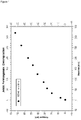
- permanganate of the inventive acidic etching solution is predominantly consumed for etching the surfaces of the plastic substrates.
- manganese dioxide is formed which separates into the etching solution.
- acid manganese dioxide catalyzes the oxidation of water, producing more manganese dioxide.
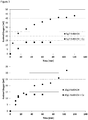
- oxygen is liberated. Therefore, the evolved oxygen is an indicator for the decomposition reaction of permanganate.
- a round bottomed glass flask with a total volume of about one liter was closed with a glass stopper having an outlet for evolved gas.
- a silicon tube from the outlet lead into a water bath where a graduated glass cylinder filled with water was placed upside-down to collect all gas evolved.
- the round bottomed flask was placed in a beaker with water held at 70°C. Exactly 600ml of a pre-heated permanganate solution (100g/l sodium permanganate, 10g/l 96% sulfuric acid) were placed into the glass flask.
- Table 1 Oxygen evolution in acidic permanganate solution without metal ion according to (iii) Duration [min] 0 10 32 55 85 123 166 200 260 320 Oxygen [ml] 0 7 20 27 32 41 48 55 65 74
- Table 2 Oxygen evolution in acidic permanganate solution with metal ion according to (iii) Duration [min] 0 22 45 75 100 150 195 255 320 Oxygen [ml] 5 13 21 23 28 29 29 31 32
- ABS/PC - blend parts (Mini Front Finishers made of Bayblend T45PG) were dipped for 7 minutes into a solution of 40% solution of ethyldiglycol acetate at 25 ⁇ 1°C (pretreatment step). All parts were rinsed under running water for one minute. Subsequently, parts 1 and 3 were introduced into a bath of 100 g/l sodium permanganate and 10 g/l 96% sulphuric acid (comparative acidic etching solution without metal ion according to (iii); etching step instead of inventive process step A)) for 10 minutes.
- parts 3 and 4 were dipped into a conversion solution based on copper ions (NeoLink from Atotech, process step A iv)) for 3 minutes at 55°C.
- Example 6 was repeated using a panel made of ABS/PC (Bayblend T45) having the same dimensions as the panel used in Example 6. After deposition of the copper layer, the ABS/PC panel was stored at 70°C for 60 minutes (process step B i)). Subsequently, the adhesion strength of the deposited layer stack of nickel and copper was measured as described in Example 5. The adhesion strength was between 0.7 and 0.9 N/mm.
- the mouldings were subsequently nickel-plated at 40°C without external current for ten minutes (Adhemax LFS, from Atotech, process step A°v)) and rinsed. Subsequently, the mouldings were copper-plated by introducing them into a copper electroplating bath (Cupracid 5000, from Atotech, process step B)) at 25°C for 60 minutes and applying 4 A/dm 2 of current.
- Adhemax LFS from Atotech, process step A°v
Landscapes
- Chemical & Material Sciences (AREA)
- Organic Chemistry (AREA)
- Engineering & Computer Science (AREA)
- Materials Engineering (AREA)
- Chemical Kinetics & Catalysis (AREA)
- Metallurgy (AREA)
- General Chemical & Material Sciences (AREA)
- Mechanical Engineering (AREA)
- Inorganic Chemistry (AREA)
- Electrochemistry (AREA)
- Chemically Coating (AREA)
- Treatments Of Macromolecular Shaped Articles (AREA)
- ing And Chemical Polishing (AREA)
- Compositions Of Macromolecular Compounds (AREA)
- Physical Vapour Deposition (AREA)
- Dental Preparations (AREA)
Applications Claiming Priority (3)
| Application Number | Priority Date | Filing Date | Title |
|---|---|---|---|
| EP14163083 | 2014-04-01 | ||
| PCT/EP2015/056195 WO2015150156A1 (en) | 2014-04-01 | 2015-03-24 | Composition and process for metallizing nonconductive plastic surfaces |
| EP15711529.6A EP3126547B1 (de) | 2014-04-01 | 2015-03-24 | Zusammensetzung und verfahren zur metallisierung von nichtleitenden kunststoffoberflächen |
Related Parent Applications (2)
| Application Number | Title | Priority Date | Filing Date |
|---|---|---|---|
| EP15711529.6A Division EP3126547B1 (de) | 2014-04-01 | 2015-03-24 | Zusammensetzung und verfahren zur metallisierung von nichtleitenden kunststoffoberflächen |
| EP15711529.6A Division-Into EP3126547B1 (de) | 2014-04-01 | 2015-03-24 | Zusammensetzung und verfahren zur metallisierung von nichtleitenden kunststoffoberflächen |
Publications (2)
| Publication Number | Publication Date |
|---|---|
| EP3660189A1 true EP3660189A1 (de) | 2020-06-03 |
| EP3660189B1 EP3660189B1 (de) | 2023-11-15 |
Family
ID=50434027
Family Applications (2)
| Application Number | Title | Priority Date | Filing Date |
|---|---|---|---|
| EP15711529.6A Active EP3126547B1 (de) | 2014-04-01 | 2015-03-24 | Zusammensetzung und verfahren zur metallisierung von nichtleitenden kunststoffoberflächen |
| EP20152479.0A Active EP3660189B1 (de) | 2014-04-01 | 2015-03-24 | Verfahren zur metallisierung von nichtleitenden kunststoffoberflächen |
Family Applications Before (1)
| Application Number | Title | Priority Date | Filing Date |
|---|---|---|---|
| EP15711529.6A Active EP3126547B1 (de) | 2014-04-01 | 2015-03-24 | Zusammensetzung und verfahren zur metallisierung von nichtleitenden kunststoffoberflächen |
Country Status (10)
| Country | Link |
|---|---|
| US (2) | US10174250B2 (de) |
| EP (2) | EP3126547B1 (de) |
| JP (2) | JP6622712B2 (de) |
| KR (1) | KR102447849B1 (de) |
| CN (1) | CN106471155B (de) |
| BR (1) | BR112016017812B1 (de) |
| ES (2) | ES2785400T3 (de) |
| PT (2) | PT3126547T (de) |
| TW (1) | TWI658122B (de) |
| WO (1) | WO2015150156A1 (de) |
Cited By (1)
| Publication number | Priority date | Publication date | Assignee | Title |
|---|---|---|---|---|
| WO2022180197A1 (en) | 2021-02-26 | 2022-09-01 | Atotech Deutschland GmbH & Co. KG | Method for etching at least one surface of a plastic substrate |
Families Citing this family (14)
| Publication number | Priority date | Publication date | Assignee | Title |
|---|---|---|---|---|
| LT2015105A (lt) * | 2015-12-18 | 2017-06-26 | Vmti Fiziniå² Ir Technologijos Mokslå² Centras | Plastikų paviršiaus adhezinio paruošimo prieš metalizavimą būdas |
| US10151035B2 (en) * | 2016-05-26 | 2018-12-11 | Rohm And Haas Electronic Materials Llc | Electroless metallization of through-holes and vias of substrates with tin-free ionic silver containing catalysts |
| MY176735A (en) * | 2017-05-23 | 2020-08-20 | Okuno Chem Ind Co | Composition for pretreatment for electroless plating, pretreatment method for electroless plating, and electroless plating method |
| EP3652360A1 (de) * | 2017-07-10 | 2020-05-20 | SRG Global, Inc. | System zur rückgewinnung von sechswertigen chromfreien manganätzlösungen |
| KR102241457B1 (ko) * | 2019-06-19 | 2021-04-19 | 대영엔지니어링 주식회사 | 비 전도성 플라스틱의 습식 표면처리 방법 |
| KR102232079B1 (ko) * | 2019-06-19 | 2021-03-25 | 대영엔지니어링 주식회사 | 비 전도성 플라스틱의 표면특성 개선을 위한 도금방법 |
| CN110438500B (zh) * | 2019-07-30 | 2022-07-12 | 广东硕成科技股份有限公司 | 一种塑料/金属制品及其制备方法 |
| GB2587662A (en) * | 2019-10-04 | 2021-04-07 | Macdermid Inc | Prevention of unwanted plating on rack coatings for electrodeposition |
| CN116724145A (zh) * | 2020-12-18 | 2023-09-08 | 德国艾托特克有限两合公司 | 用于蚀刻塑料衬底的至少一个表面的方法 |
| EP4326462A1 (de) * | 2021-04-19 | 2024-02-28 | SABIC Global Technologies B.V. | Ätzfreie metallplattierung mittels kaltsintern |
| EP4089201A1 (de) * | 2021-05-10 | 2022-11-16 | Atotech Deutschland GmbH & Co. KG | Verfahren zur behandlung eines nichtmetallischen substrats für die nachfolgende metallisierung |
| JP7138880B1 (ja) * | 2021-08-06 | 2022-09-20 | 株式会社太洋工作所 | 無電解めっき方法 |
| US20250188349A1 (en) * | 2023-12-11 | 2025-06-12 | Macdermid Enthone Inc. | Suppression of manganese dioxide formation in manganese (iii)-based etching solutions |
| US12584225B1 (en) | 2024-11-25 | 2026-03-24 | Okuno Chemical Industries Co., Ltd. | Resin material treatment method, and compositions for the same |
Citations (10)
| Publication number | Priority date | Publication date | Assignee | Title |
|---|---|---|---|---|
| US3650859A (en) * | 1969-09-12 | 1972-03-21 | Macdermid Inc | Regeneration of chromic acid etching solutions |
| US4204013A (en) * | 1978-10-20 | 1980-05-20 | Oxy Metal Industries Corporation | Method for treating polymeric substrates prior to plating employing accelerating composition containing an alkyl amine |
| SU1104377A1 (ru) * | 1983-01-28 | 1984-07-23 | Всесоюзный Научно-Исследовательский И Проектный Институт Технологии Химического И Нефтяного Аппаратостроения | Реактив дл вы влени границы между нержавеющими и углеродистыми стал ми и сплавами |
| EP1001052A2 (de) | 1998-11-13 | 2000-05-17 | LPW-Chemie GmbH | Verfahren zur Metallisierung einer Kunststoffoberfläche |
| JP2003013244A (ja) * | 2001-07-03 | 2003-01-15 | Okuno Chem Ind Co Ltd | 樹脂基材表面への無電解めっき用触媒付与方法 |
| EP1600528A2 (de) * | 2004-05-27 | 2005-11-30 | Enthone, Inc. | Verfahren zur Metallisierung von Kunststoffoberflächen |
| EP1054081B1 (de) | 1993-03-18 | 2006-02-01 | ATOTECH Deutschland GmbH | Sich selbstbeschleunigendes und sich selbst auffrischendes Verfahren zur Tauchbeschichtung ohne Formaldehyd, sowie die entsprechende Zusammensetzung |
| GB2428885A (en) * | 2005-07-28 | 2007-02-07 | Shin Etsu Handotai Europ Ltd | Etching solution for identifying defects in silicon |
| EP2025708A1 (de) | 2007-08-10 | 2009-02-18 | Enthone Inc. | Chromfreie Beize für Kunststoffoberflächen |
| EP2657367A1 (de) * | 2012-04-24 | 2013-10-30 | Enthone Inc. | Vorätzzusammensetzung und Ätzverfahren für Kunststoffsubstrate |
Family Cites Families (8)
| Publication number | Priority date | Publication date | Assignee | Title |
|---|---|---|---|---|
| DE94540C (de) | ||||
| DD94540A (de) | ||||
| DE3816494A1 (de) * | 1988-05-10 | 1989-11-16 | Schering Ag | Loesung und verfahren zum aetzen und aktivieren von isolierenden oberflaechen |
| GB9722028D0 (en) | 1997-10-17 | 1997-12-17 | Shipley Company Ll C | Plating of polymers |
| JP2009228083A (ja) * | 2008-03-25 | 2009-10-08 | Ebara-Udylite Co Ltd | プラスチック表面への金属めっき方法 |
| EP2639333A1 (de) * | 2012-03-15 | 2013-09-18 | Atotech Deutschland GmbH | Verfahren zum Metallisieren nichtleitender Kunststoffoberflächen |
| EP2639334A1 (de) * | 2012-03-15 | 2013-09-18 | Atotech Deutschland GmbH | Verfahren zum Metallisieren nichtleitender Kunststoffoberflächen |
| CN103305822A (zh) | 2013-05-31 | 2013-09-18 | 海安县申菱电器制造有限公司 | 一种提高铝合金耐蚀性的处理方法 |
-
2015
- 2015-03-24 ES ES15711529T patent/ES2785400T3/es active Active
- 2015-03-24 PT PT157115296T patent/PT3126547T/pt unknown
- 2015-03-24 US US15/112,700 patent/US10174250B2/en active Active
- 2015-03-24 WO PCT/EP2015/056195 patent/WO2015150156A1/en not_active Ceased
- 2015-03-24 KR KR1020167024200A patent/KR102447849B1/ko active Active
- 2015-03-24 PT PT201524790T patent/PT3660189T/pt unknown
- 2015-03-24 EP EP15711529.6A patent/EP3126547B1/de active Active
- 2015-03-24 CN CN201580018742.XA patent/CN106471155B/zh active Active
- 2015-03-24 BR BR112016017812-2A patent/BR112016017812B1/pt not_active IP Right Cessation
- 2015-03-24 JP JP2016559915A patent/JP6622712B2/ja not_active Expired - Fee Related
- 2015-03-24 ES ES20152479T patent/ES2972552T3/es active Active
- 2015-03-24 EP EP20152479.0A patent/EP3660189B1/de active Active
- 2015-04-01 TW TW104110771A patent/TWI658122B/zh not_active IP Right Cessation
-
2019
- 2019-01-03 US US16/238,596 patent/US10377947B2/en active Active
- 2019-11-22 JP JP2019211405A patent/JP2020045574A/ja active Pending
Patent Citations (10)
| Publication number | Priority date | Publication date | Assignee | Title |
|---|---|---|---|---|
| US3650859A (en) * | 1969-09-12 | 1972-03-21 | Macdermid Inc | Regeneration of chromic acid etching solutions |
| US4204013A (en) * | 1978-10-20 | 1980-05-20 | Oxy Metal Industries Corporation | Method for treating polymeric substrates prior to plating employing accelerating composition containing an alkyl amine |
| SU1104377A1 (ru) * | 1983-01-28 | 1984-07-23 | Всесоюзный Научно-Исследовательский И Проектный Институт Технологии Химического И Нефтяного Аппаратостроения | Реактив дл вы влени границы между нержавеющими и углеродистыми стал ми и сплавами |
| EP1054081B1 (de) | 1993-03-18 | 2006-02-01 | ATOTECH Deutschland GmbH | Sich selbstbeschleunigendes und sich selbst auffrischendes Verfahren zur Tauchbeschichtung ohne Formaldehyd, sowie die entsprechende Zusammensetzung |
| EP1001052A2 (de) | 1998-11-13 | 2000-05-17 | LPW-Chemie GmbH | Verfahren zur Metallisierung einer Kunststoffoberfläche |
| JP2003013244A (ja) * | 2001-07-03 | 2003-01-15 | Okuno Chem Ind Co Ltd | 樹脂基材表面への無電解めっき用触媒付与方法 |
| EP1600528A2 (de) * | 2004-05-27 | 2005-11-30 | Enthone, Inc. | Verfahren zur Metallisierung von Kunststoffoberflächen |
| GB2428885A (en) * | 2005-07-28 | 2007-02-07 | Shin Etsu Handotai Europ Ltd | Etching solution for identifying defects in silicon |
| EP2025708A1 (de) | 2007-08-10 | 2009-02-18 | Enthone Inc. | Chromfreie Beize für Kunststoffoberflächen |
| EP2657367A1 (de) * | 2012-04-24 | 2013-10-30 | Enthone Inc. | Vorätzzusammensetzung und Ätzverfahren für Kunststoffsubstrate |
Non-Patent Citations (1)
| Title |
|---|
| DATABASE WPI Week 198507, 23 July 1984 Derwent World Patents Index; AN 1985-043578, XP002729297 * |
Cited By (2)
| Publication number | Priority date | Publication date | Assignee | Title |
|---|---|---|---|---|
| WO2022180197A1 (en) | 2021-02-26 | 2022-09-01 | Atotech Deutschland GmbH & Co. KG | Method for etching at least one surface of a plastic substrate |
| US12435273B2 (en) | 2021-02-26 | 2025-10-07 | Atotech Deutschland GmbH & Co. KG | Method for etching at least one surface of a plastic substrate |
Also Published As
| Publication number | Publication date |
|---|---|
| TWI658122B (zh) | 2019-05-01 |
| KR102447849B1 (ko) | 2022-09-26 |
| BR112016017812B1 (pt) | 2021-08-17 |
| KR20160140609A (ko) | 2016-12-07 |
| TW201546241A (zh) | 2015-12-16 |
| JP2017517626A (ja) | 2017-06-29 |
| EP3660189B1 (de) | 2023-11-15 |
| EP3126547A1 (de) | 2017-02-08 |
| EP3126547B1 (de) | 2020-03-04 |
| JP6622712B2 (ja) | 2019-12-18 |
| WO2015150156A1 (en) | 2015-10-08 |
| PT3660189T (pt) | 2024-02-14 |
| US10174250B2 (en) | 2019-01-08 |
| US10377947B2 (en) | 2019-08-13 |
| CN106471155A (zh) | 2017-03-01 |
| BR112016017812A2 (pt) | 2017-08-08 |
| US20170166812A1 (en) | 2017-06-15 |
| PT3126547T (pt) | 2020-05-19 |
| CN106471155B (zh) | 2019-11-15 |
| ES2785400T3 (es) | 2020-10-06 |
| JP2020045574A (ja) | 2020-03-26 |
| ES2972552T3 (es) | 2024-06-13 |
| US20190144747A1 (en) | 2019-05-16 |
Similar Documents
| Publication | Publication Date | Title |
|---|---|---|
| US10377947B2 (en) | Composition and process for metallizing nonconductive plastic surfaces | |
| EP2825689B1 (de) | Verfahren zum metallisieren nichtleitender kunststoffoberflächen | |
| EP2855731B1 (de) | Verfahren zur metallisierung von nichtleitenden kunststoffoberflächen | |
| EP2825690B1 (de) | Verfahren zum metallisieren elektrisch nichtleitenden kunststoffoberflächen | |
| CA2893664C (en) | Process for metallizing nonconductive plastic surfaces | |
| KR20160147752A (ko) | 철 붕소 합금 코팅들 및 그것의 제조 방법 |
Legal Events
| Date | Code | Title | Description |
|---|---|---|---|
| PUAI | Public reference made under article 153(3) epc to a published international application that has entered the european phase |
Free format text: ORIGINAL CODE: 0009012 |
|
| STAA | Information on the status of an ep patent application or granted ep patent |
Free format text: STATUS: THE APPLICATION HAS BEEN PUBLISHED |
|
| AC | Divisional application: reference to earlier application |
Ref document number: 3126547 Country of ref document: EP Kind code of ref document: P |
|
| AK | Designated contracting states |
Kind code of ref document: A1 Designated state(s): AL AT BE BG CH CY CZ DE DK EE ES FI FR GB GR HR HU IE IS IT LI LT LU LV MC MK MT NL NO PL PT RO RS SE SI SK SM TR |
|
| STAA | Information on the status of an ep patent application or granted ep patent |
Free format text: STATUS: REQUEST FOR EXAMINATION WAS MADE |
|
| 17P | Request for examination filed |
Effective date: 20201201 |
|
| RBV | Designated contracting states (corrected) |
Designated state(s): AL AT BE BG CH CY CZ DE DK EE ES FI FR GB GR HR HU IE IS IT LI LT LU LV MC MK MT NL NO PL PT RO RS SE SI SK SM TR |
|
| STAA | Information on the status of an ep patent application or granted ep patent |
Free format text: STATUS: EXAMINATION IS IN PROGRESS |
|
| 17Q | First examination report despatched |
Effective date: 20210517 |
|
| RAP3 | Party data changed (applicant data changed or rights of an application transferred) |
Owner name: ATOTECH DEUTSCHLAND GMBH & CO. KG |
|
| RIC1 | Information provided on ipc code assigned before grant |
Ipc: C23C 18/16 20060101ALN20230327BHEP Ipc: C25D 5/56 20060101ALI20230327BHEP Ipc: C23C 18/30 20060101ALI20230327BHEP Ipc: C23C 18/24 20060101ALI20230327BHEP Ipc: C23C 18/20 20060101ALI20230327BHEP Ipc: C25D 5/54 20060101AFI20230327BHEP |
|
| RIC1 | Information provided on ipc code assigned before grant |
Ipc: C23C 18/16 20060101ALN20230420BHEP Ipc: C25D 5/56 20060101ALI20230420BHEP Ipc: C23C 18/30 20060101ALI20230420BHEP Ipc: C23C 18/24 20060101ALI20230420BHEP Ipc: C23C 18/20 20060101ALI20230420BHEP Ipc: C25D 5/54 20060101AFI20230420BHEP |
|
| GRAP | Despatch of communication of intention to grant a patent |
Free format text: ORIGINAL CODE: EPIDOSNIGR1 |
|
| STAA | Information on the status of an ep patent application or granted ep patent |
Free format text: STATUS: GRANT OF PATENT IS INTENDED |
|
| RIC1 | Information provided on ipc code assigned before grant |
Ipc: C23C 18/16 20060101ALN20230525BHEP Ipc: C25D 5/56 20060101ALI20230525BHEP Ipc: C23C 18/30 20060101ALI20230525BHEP Ipc: C23C 18/24 20060101ALI20230525BHEP Ipc: C23C 18/20 20060101ALI20230525BHEP Ipc: C25D 5/54 20060101AFI20230525BHEP |
|
| INTG | Intention to grant announced |
Effective date: 20230609 |
|
| RIN1 | Information on inventor provided before grant (corrected) |
Inventor name: FELS, CARL CHRISTIAN Inventor name: SCHNEIDER, STEVE Inventor name: MIDDEKE, HERMANN |
|
| GRAS | Grant fee paid |
Free format text: ORIGINAL CODE: EPIDOSNIGR3 |
|
| GRAA | (expected) grant |
Free format text: ORIGINAL CODE: 0009210 |
|
| STAA | Information on the status of an ep patent application or granted ep patent |
Free format text: STATUS: THE PATENT HAS BEEN GRANTED |
|
| AC | Divisional application: reference to earlier application |
Ref document number: 3126547 Country of ref document: EP Kind code of ref document: P |
|
| AK | Designated contracting states |
Kind code of ref document: B1 Designated state(s): AL AT BE BG CH CY CZ DE DK EE ES FI FR GB GR HR HU IE IS IT LI LT LU LV MC MK MT NL NO PL PT RO RS SE SI SK SM TR |
|
| REG | Reference to a national code |
Ref country code: CH Ref legal event code: EP Ref country code: GB Ref legal event code: FG4D |
|
| REG | Reference to a national code |
Ref country code: DE Ref legal event code: R096 Ref document number: 602015086593 Country of ref document: DE |
|
| REG | Reference to a national code |
Ref country code: IE Ref legal event code: FG4D |
|
| RAP4 | Party data changed (patent owner data changed or rights of a patent transferred) |
Owner name: ATOTECH DEUTSCHLAND GMBH & CO. KG |
|
| REG | Reference to a national code |
Ref country code: PT Ref legal event code: SC4A Ref document number: 3660189 Country of ref document: PT Date of ref document: 20240214 Kind code of ref document: T Free format text: AVAILABILITY OF NATIONAL TRANSLATION Effective date: 20240209 |
|
| REG | Reference to a national code |
Ref country code: LT Ref legal event code: MG9D |
|
| REG | Reference to a national code |
Ref country code: NL Ref legal event code: MP Effective date: 20231115 |
|
| PG25 | Lapsed in a contracting state [announced via postgrant information from national office to epo] |
Ref country code: GR Free format text: LAPSE BECAUSE OF FAILURE TO SUBMIT A TRANSLATION OF THE DESCRIPTION OR TO PAY THE FEE WITHIN THE PRESCRIBED TIME-LIMIT Effective date: 20240216 |
|
| PG25 | Lapsed in a contracting state [announced via postgrant information from national office to epo] |
Ref country code: IS Free format text: LAPSE BECAUSE OF FAILURE TO SUBMIT A TRANSLATION OF THE DESCRIPTION OR TO PAY THE FEE WITHIN THE PRESCRIBED TIME-LIMIT Effective date: 20240315 |
|
| PG25 | Lapsed in a contracting state [announced via postgrant information from national office to epo] |
Ref country code: LT Free format text: LAPSE BECAUSE OF FAILURE TO SUBMIT A TRANSLATION OF THE DESCRIPTION OR TO PAY THE FEE WITHIN THE PRESCRIBED TIME-LIMIT Effective date: 20231115 |
|
| REG | Reference to a national code |
Ref country code: AT Ref legal event code: MK05 Ref document number: 1631853 Country of ref document: AT Kind code of ref document: T Effective date: 20231115 |
|
| PG25 | Lapsed in a contracting state [announced via postgrant information from national office to epo] |
Ref country code: NL Free format text: LAPSE BECAUSE OF FAILURE TO SUBMIT A TRANSLATION OF THE DESCRIPTION OR TO PAY THE FEE WITHIN THE PRESCRIBED TIME-LIMIT Effective date: 20231115 |
|
| PG25 | Lapsed in a contracting state [announced via postgrant information from national office to epo] |
Ref country code: AT Free format text: LAPSE BECAUSE OF FAILURE TO SUBMIT A TRANSLATION OF THE DESCRIPTION OR TO PAY THE FEE WITHIN THE PRESCRIBED TIME-LIMIT Effective date: 20231115 |
|
| PG25 | Lapsed in a contracting state [announced via postgrant information from national office to epo] |
Ref country code: NL Free format text: LAPSE BECAUSE OF FAILURE TO SUBMIT A TRANSLATION OF THE DESCRIPTION OR TO PAY THE FEE WITHIN THE PRESCRIBED TIME-LIMIT Effective date: 20231115 Ref country code: LT Free format text: LAPSE BECAUSE OF FAILURE TO SUBMIT A TRANSLATION OF THE DESCRIPTION OR TO PAY THE FEE WITHIN THE PRESCRIBED TIME-LIMIT Effective date: 20231115 Ref country code: IS Free format text: LAPSE BECAUSE OF FAILURE TO SUBMIT A TRANSLATION OF THE DESCRIPTION OR TO PAY THE FEE WITHIN THE PRESCRIBED TIME-LIMIT Effective date: 20240315 Ref country code: GR Free format text: LAPSE BECAUSE OF FAILURE TO SUBMIT A TRANSLATION OF THE DESCRIPTION OR TO PAY THE FEE WITHIN THE PRESCRIBED TIME-LIMIT Effective date: 20240216 Ref country code: BG Free format text: LAPSE BECAUSE OF FAILURE TO SUBMIT A TRANSLATION OF THE DESCRIPTION OR TO PAY THE FEE WITHIN THE PRESCRIBED TIME-LIMIT Effective date: 20240215 Ref country code: AT Free format text: LAPSE BECAUSE OF FAILURE TO SUBMIT A TRANSLATION OF THE DESCRIPTION OR TO PAY THE FEE WITHIN THE PRESCRIBED TIME-LIMIT Effective date: 20231115 |
|
| PG25 | Lapsed in a contracting state [announced via postgrant information from national office to epo] |
Ref country code: SE Free format text: LAPSE BECAUSE OF FAILURE TO SUBMIT A TRANSLATION OF THE DESCRIPTION OR TO PAY THE FEE WITHIN THE PRESCRIBED TIME-LIMIT Effective date: 20231115 Ref country code: RS Free format text: LAPSE BECAUSE OF FAILURE TO SUBMIT A TRANSLATION OF THE DESCRIPTION OR TO PAY THE FEE WITHIN THE PRESCRIBED TIME-LIMIT Effective date: 20231115 Ref country code: PL Free format text: LAPSE BECAUSE OF FAILURE TO SUBMIT A TRANSLATION OF THE DESCRIPTION OR TO PAY THE FEE WITHIN THE PRESCRIBED TIME-LIMIT Effective date: 20231115 Ref country code: NO Free format text: LAPSE BECAUSE OF FAILURE TO SUBMIT A TRANSLATION OF THE DESCRIPTION OR TO PAY THE FEE WITHIN THE PRESCRIBED TIME-LIMIT Effective date: 20240215 Ref country code: LV Free format text: LAPSE BECAUSE OF FAILURE TO SUBMIT A TRANSLATION OF THE DESCRIPTION OR TO PAY THE FEE WITHIN THE PRESCRIBED TIME-LIMIT Effective date: 20231115 Ref country code: HR Free format text: LAPSE BECAUSE OF FAILURE TO SUBMIT A TRANSLATION OF THE DESCRIPTION OR TO PAY THE FEE WITHIN THE PRESCRIBED TIME-LIMIT Effective date: 20231115 |
|
| REG | Reference to a national code |
Ref country code: ES Ref legal event code: FG2A Ref document number: 2972552 Country of ref document: ES Kind code of ref document: T3 Effective date: 20240613 |
|
| PG25 | Lapsed in a contracting state [announced via postgrant information from national office to epo] |
Ref country code: DK Free format text: LAPSE BECAUSE OF FAILURE TO SUBMIT A TRANSLATION OF THE DESCRIPTION OR TO PAY THE FEE WITHIN THE PRESCRIBED TIME-LIMIT Effective date: 20231115 |
|
| PG25 | Lapsed in a contracting state [announced via postgrant information from national office to epo] |
Ref country code: SK Free format text: LAPSE BECAUSE OF FAILURE TO SUBMIT A TRANSLATION OF THE DESCRIPTION OR TO PAY THE FEE WITHIN THE PRESCRIBED TIME-LIMIT Effective date: 20231115 |
|
| PG25 | Lapsed in a contracting state [announced via postgrant information from national office to epo] |
Ref country code: SM Free format text: LAPSE BECAUSE OF FAILURE TO SUBMIT A TRANSLATION OF THE DESCRIPTION OR TO PAY THE FEE WITHIN THE PRESCRIBED TIME-LIMIT Effective date: 20231115 Ref country code: SK Free format text: LAPSE BECAUSE OF FAILURE TO SUBMIT A TRANSLATION OF THE DESCRIPTION OR TO PAY THE FEE WITHIN THE PRESCRIBED TIME-LIMIT Effective date: 20231115 Ref country code: RO Free format text: LAPSE BECAUSE OF FAILURE TO SUBMIT A TRANSLATION OF THE DESCRIPTION OR TO PAY THE FEE WITHIN THE PRESCRIBED TIME-LIMIT Effective date: 20231115 Ref country code: EE Free format text: LAPSE BECAUSE OF FAILURE TO SUBMIT A TRANSLATION OF THE DESCRIPTION OR TO PAY THE FEE WITHIN THE PRESCRIBED TIME-LIMIT Effective date: 20231115 Ref country code: DK Free format text: LAPSE BECAUSE OF FAILURE TO SUBMIT A TRANSLATION OF THE DESCRIPTION OR TO PAY THE FEE WITHIN THE PRESCRIBED TIME-LIMIT Effective date: 20231115 |
|
| REG | Reference to a national code |
Ref country code: DE Ref legal event code: R097 Ref document number: 602015086593 Country of ref document: DE |
|
| PLBE | No opposition filed within time limit |
Free format text: ORIGINAL CODE: 0009261 |
|
| STAA | Information on the status of an ep patent application or granted ep patent |
Free format text: STATUS: NO OPPOSITION FILED WITHIN TIME LIMIT |
|
| 26N | No opposition filed |
Effective date: 20240819 |
|
| PG25 | Lapsed in a contracting state [announced via postgrant information from national office to epo] |
Ref country code: SI Free format text: LAPSE BECAUSE OF FAILURE TO SUBMIT A TRANSLATION OF THE DESCRIPTION OR TO PAY THE FEE WITHIN THE PRESCRIBED TIME-LIMIT Effective date: 20231115 |
|
| PG25 | Lapsed in a contracting state [announced via postgrant information from national office to epo] |
Ref country code: SI Free format text: LAPSE BECAUSE OF FAILURE TO SUBMIT A TRANSLATION OF THE DESCRIPTION OR TO PAY THE FEE WITHIN THE PRESCRIBED TIME-LIMIT Effective date: 20231115 |
|
| REG | Reference to a national code |
Ref country code: CH Ref legal event code: PL |
|
| PG25 | Lapsed in a contracting state [announced via postgrant information from national office to epo] |
Ref country code: LU Free format text: LAPSE BECAUSE OF NON-PAYMENT OF DUE FEES Effective date: 20240324 |
|
| PG25 | Lapsed in a contracting state [announced via postgrant information from national office to epo] |
Ref country code: MC Free format text: LAPSE BECAUSE OF FAILURE TO SUBMIT A TRANSLATION OF THE DESCRIPTION OR TO PAY THE FEE WITHIN THE PRESCRIBED TIME-LIMIT Effective date: 20231115 |
|
| GBPC | Gb: european patent ceased through non-payment of renewal fee |
Effective date: 20240324 |
|
| PG25 | Lapsed in a contracting state [announced via postgrant information from national office to epo] |
Ref country code: MC Free format text: LAPSE BECAUSE OF FAILURE TO SUBMIT A TRANSLATION OF THE DESCRIPTION OR TO PAY THE FEE WITHIN THE PRESCRIBED TIME-LIMIT Effective date: 20231115 Ref country code: LU Free format text: LAPSE BECAUSE OF NON-PAYMENT OF DUE FEES Effective date: 20240324 |
|
| REG | Reference to a national code |
Ref country code: BE Ref legal event code: MM Effective date: 20240331 |
|
| PG25 | Lapsed in a contracting state [announced via postgrant information from national office to epo] |
Ref country code: BE Free format text: LAPSE BECAUSE OF NON-PAYMENT OF DUE FEES Effective date: 20240331 |
|
| PG25 | Lapsed in a contracting state [announced via postgrant information from national office to epo] |
Ref country code: GB Free format text: LAPSE BECAUSE OF NON-PAYMENT OF DUE FEES Effective date: 20240324 |
|
| PG25 | Lapsed in a contracting state [announced via postgrant information from national office to epo] |
Ref country code: IE Free format text: LAPSE BECAUSE OF NON-PAYMENT OF DUE FEES Effective date: 20240324 |
|
| PG25 | Lapsed in a contracting state [announced via postgrant information from national office to epo] |
Ref country code: IE Free format text: LAPSE BECAUSE OF NON-PAYMENT OF DUE FEES Effective date: 20240324 Ref country code: GB Free format text: LAPSE BECAUSE OF NON-PAYMENT OF DUE FEES Effective date: 20240324 Ref country code: BE Free format text: LAPSE BECAUSE OF NON-PAYMENT OF DUE FEES Effective date: 20240331 Ref country code: CH Free format text: LAPSE BECAUSE OF NON-PAYMENT OF DUE FEES Effective date: 20240331 |
|
| PGFP | Annual fee paid to national office [announced via postgrant information from national office to epo] |
Ref country code: DE Payment date: 20250327 Year of fee payment: 11 Ref country code: PT Payment date: 20250310 Year of fee payment: 11 |
|
| PGFP | Annual fee paid to national office [announced via postgrant information from national office to epo] |
Ref country code: FR Payment date: 20250324 Year of fee payment: 11 Ref country code: CZ Payment date: 20250317 Year of fee payment: 11 |
|
| PGFP | Annual fee paid to national office [announced via postgrant information from national office to epo] |
Ref country code: IT Payment date: 20250321 Year of fee payment: 11 |
|
| PGFP | Annual fee paid to national office [announced via postgrant information from national office to epo] |
Ref country code: ES Payment date: 20250423 Year of fee payment: 11 |
|
| PG25 | Lapsed in a contracting state [announced via postgrant information from national office to epo] |
Ref country code: CY Free format text: LAPSE BECAUSE OF FAILURE TO SUBMIT A TRANSLATION OF THE DESCRIPTION OR TO PAY THE FEE WITHIN THE PRESCRIBED TIME-LIMIT; INVALID AB INITIO Effective date: 20150324 |
|
| PG25 | Lapsed in a contracting state [announced via postgrant information from national office to epo] |
Ref country code: HU Free format text: LAPSE BECAUSE OF FAILURE TO SUBMIT A TRANSLATION OF THE DESCRIPTION OR TO PAY THE FEE WITHIN THE PRESCRIBED TIME-LIMIT; INVALID AB INITIO Effective date: 20150324 |
|
| PG25 | Lapsed in a contracting state [announced via postgrant information from national office to epo] |
Ref country code: FI Free format text: LAPSE BECAUSE OF FAILURE TO SUBMIT A TRANSLATION OF THE DESCRIPTION OR TO PAY THE FEE WITHIN THE PRESCRIBED TIME-LIMIT Effective date: 20231115 |
|
| PG25 | Lapsed in a contracting state [announced via postgrant information from national office to epo] |
Ref country code: TR Free format text: LAPSE BECAUSE OF FAILURE TO SUBMIT A TRANSLATION OF THE DESCRIPTION OR TO PAY THE FEE WITHIN THE PRESCRIBED TIME-LIMIT Effective date: 20231115 |