EP3653111B1 - Apparatus for providing stimuli to the brain - Google Patents
Apparatus for providing stimuli to the brain Download PDFInfo
- Publication number
- EP3653111B1 EP3653111B1 EP19216447.3A EP19216447A EP3653111B1 EP 3653111 B1 EP3653111 B1 EP 3653111B1 EP 19216447 A EP19216447 A EP 19216447A EP 3653111 B1 EP3653111 B1 EP 3653111B1
- Authority
- EP
- European Patent Office
- Prior art keywords
- auditory
- stimulus
- light
- frequency
- pattern
- Prior art date
- Legal status (The legal status is an assumption and is not a legal conclusion. Google has not performed a legal analysis and makes no representation as to the accuracy of the status listed.)
- Active
Links
Images



Classifications
-
- A—HUMAN NECESSITIES
- A61—MEDICAL OR VETERINARY SCIENCE; HYGIENE
- A61M—DEVICES FOR INTRODUCING MEDIA INTO, OR ONTO, THE BODY; DEVICES FOR TRANSDUCING BODY MEDIA OR FOR TAKING MEDIA FROM THE BODY; DEVICES FOR PRODUCING OR ENDING SLEEP OR STUPOR
- A61M21/00—Other devices or methods to cause a change in the state of consciousness; Devices for producing or ending sleep by mechanical, optical, or acoustical means, e.g. for hypnosis
- A61M21/02—Other devices or methods to cause a change in the state of consciousness; Devices for producing or ending sleep by mechanical, optical, or acoustical means, e.g. for hypnosis for inducing sleep or relaxation, e.g. by direct nerve stimulation, hypnosis, analgesia
-
- G—PHYSICS
- G02—OPTICS
- G02B—OPTICAL ELEMENTS, SYSTEMS OR APPARATUS
- G02B27/00—Optical systems or apparatus not provided for by any of the groups G02B1/00 - G02B26/00, G02B30/00
- G02B27/01—Head-up displays
- G02B27/017—Head mounted
-
- A—HUMAN NECESSITIES
- A61—MEDICAL OR VETERINARY SCIENCE; HYGIENE
- A61M—DEVICES FOR INTRODUCING MEDIA INTO, OR ONTO, THE BODY; DEVICES FOR TRANSDUCING BODY MEDIA OR FOR TAKING MEDIA FROM THE BODY; DEVICES FOR PRODUCING OR ENDING SLEEP OR STUPOR
- A61M21/00—Other devices or methods to cause a change in the state of consciousness; Devices for producing or ending sleep by mechanical, optical, or acoustical means, e.g. for hypnosis
- A61M2021/0005—Other devices or methods to cause a change in the state of consciousness; Devices for producing or ending sleep by mechanical, optical, or acoustical means, e.g. for hypnosis by the use of a particular sense, or stimulus
- A61M2021/0022—Other devices or methods to cause a change in the state of consciousness; Devices for producing or ending sleep by mechanical, optical, or acoustical means, e.g. for hypnosis by the use of a particular sense, or stimulus by the tactile sense, e.g. vibrations
-
- A—HUMAN NECESSITIES
- A61—MEDICAL OR VETERINARY SCIENCE; HYGIENE
- A61M—DEVICES FOR INTRODUCING MEDIA INTO, OR ONTO, THE BODY; DEVICES FOR TRANSDUCING BODY MEDIA OR FOR TAKING MEDIA FROM THE BODY; DEVICES FOR PRODUCING OR ENDING SLEEP OR STUPOR
- A61M21/00—Other devices or methods to cause a change in the state of consciousness; Devices for producing or ending sleep by mechanical, optical, or acoustical means, e.g. for hypnosis
- A61M2021/0005—Other devices or methods to cause a change in the state of consciousness; Devices for producing or ending sleep by mechanical, optical, or acoustical means, e.g. for hypnosis by the use of a particular sense, or stimulus
- A61M2021/0027—Other devices or methods to cause a change in the state of consciousness; Devices for producing or ending sleep by mechanical, optical, or acoustical means, e.g. for hypnosis by the use of a particular sense, or stimulus by the hearing sense
-
- A—HUMAN NECESSITIES
- A61—MEDICAL OR VETERINARY SCIENCE; HYGIENE
- A61M—DEVICES FOR INTRODUCING MEDIA INTO, OR ONTO, THE BODY; DEVICES FOR TRANSDUCING BODY MEDIA OR FOR TAKING MEDIA FROM THE BODY; DEVICES FOR PRODUCING OR ENDING SLEEP OR STUPOR
- A61M21/00—Other devices or methods to cause a change in the state of consciousness; Devices for producing or ending sleep by mechanical, optical, or acoustical means, e.g. for hypnosis
- A61M2021/0005—Other devices or methods to cause a change in the state of consciousness; Devices for producing or ending sleep by mechanical, optical, or acoustical means, e.g. for hypnosis by the use of a particular sense, or stimulus
- A61M2021/0044—Other devices or methods to cause a change in the state of consciousness; Devices for producing or ending sleep by mechanical, optical, or acoustical means, e.g. for hypnosis by the use of a particular sense, or stimulus by the sight sense
- A61M2021/005—Other devices or methods to cause a change in the state of consciousness; Devices for producing or ending sleep by mechanical, optical, or acoustical means, e.g. for hypnosis by the use of a particular sense, or stimulus by the sight sense images, e.g. video
-
- A—HUMAN NECESSITIES
- A61—MEDICAL OR VETERINARY SCIENCE; HYGIENE
- A61M—DEVICES FOR INTRODUCING MEDIA INTO, OR ONTO, THE BODY; DEVICES FOR TRANSDUCING BODY MEDIA OR FOR TAKING MEDIA FROM THE BODY; DEVICES FOR PRODUCING OR ENDING SLEEP OR STUPOR
- A61M2205/00—General characteristics of the apparatus
- A61M2205/35—Communication
- A61M2205/3546—Range
- A61M2205/3569—Range sublocal, e.g. between console and disposable
-
- A—HUMAN NECESSITIES
- A61—MEDICAL OR VETERINARY SCIENCE; HYGIENE
- A61M—DEVICES FOR INTRODUCING MEDIA INTO, OR ONTO, THE BODY; DEVICES FOR TRANSDUCING BODY MEDIA OR FOR TAKING MEDIA FROM THE BODY; DEVICES FOR PRODUCING OR ENDING SLEEP OR STUPOR
- A61M2205/00—General characteristics of the apparatus
- A61M2205/35—Communication
- A61M2205/3576—Communication with non implanted data transmission devices, e.g. using external transmitter or receiver
- A61M2205/3592—Communication with non implanted data transmission devices, e.g. using external transmitter or receiver using telemetric means, e.g. radio or optical transmission
-
- A—HUMAN NECESSITIES
- A61—MEDICAL OR VETERINARY SCIENCE; HYGIENE
- A61M—DEVICES FOR INTRODUCING MEDIA INTO, OR ONTO, THE BODY; DEVICES FOR TRANSDUCING BODY MEDIA OR FOR TAKING MEDIA FROM THE BODY; DEVICES FOR PRODUCING OR ENDING SLEEP OR STUPOR
- A61M2205/00—General characteristics of the apparatus
- A61M2205/50—General characteristics of the apparatus with microprocessors or computers
- A61M2205/502—User interfaces, e.g. screens or keyboards
- A61M2205/505—Touch-screens; Virtual keyboard or keypads; Virtual buttons; Soft keys; Mouse touches
-
- A—HUMAN NECESSITIES
- A61—MEDICAL OR VETERINARY SCIENCE; HYGIENE
- A61M—DEVICES FOR INTRODUCING MEDIA INTO, OR ONTO, THE BODY; DEVICES FOR TRANSDUCING BODY MEDIA OR FOR TAKING MEDIA FROM THE BODY; DEVICES FOR PRODUCING OR ENDING SLEEP OR STUPOR
- A61M2205/00—General characteristics of the apparatus
- A61M2205/50—General characteristics of the apparatus with microprocessors or computers
- A61M2205/502—User interfaces, e.g. screens or keyboards
- A61M2205/507—Head Mounted Displays [HMD]
-
- A—HUMAN NECESSITIES
- A61—MEDICAL OR VETERINARY SCIENCE; HYGIENE
- A61M—DEVICES FOR INTRODUCING MEDIA INTO, OR ONTO, THE BODY; DEVICES FOR TRANSDUCING BODY MEDIA OR FOR TAKING MEDIA FROM THE BODY; DEVICES FOR PRODUCING OR ENDING SLEEP OR STUPOR
- A61M2209/00—Ancillary equipment
- A61M2209/08—Supports for equipment
- A61M2209/088—Supports for equipment on the body
Definitions
- the present disclosure relates to medical devices and methods.
- the present disclosure relates to providing stimuli to a subject to treat various neurological disorders or conditions and/or to provide performance enhancement.
- Sensory stimulation has been applied to treat various disorders. For example, binaural beats have applied to induce various mental states to encourage sleep, relaxation, meditation, creativity, and other desirable mental states. Combinations of auditory and visual stimuli have been applied to encourage such mental states as well.
- the application of such therapy has been less than ideal in many circumstances.
- Equipment to provide the stimulus can be bulky, expensive, generally inaccessible, and below the critical efficacy threshold for widespread use, typically only helping subsets of the population. Users may find the use of such equipment difficult in many circumstances, such as when trying to sleep in a bedroom or an airplane cabin.
- US 4 892 106 A discloses a multiple afferent sensory stimulation device that is provided to receive a prerecorded tape program upon which the audio stimulation and control signals for the visual stimulation of a subject person's eyes and ears is provided, the invention consisting of a reproducing device to emit the audio and visual control signals on separate left and right channels, the audio stimulation proceeding directly to earphones worn by the subject person, and the visual stimulation control signals processed electronically.
- WO 01/64005 A2 discloses a device for influencing the motor-sensory information processing, whereby visual stimuli for stimulating eye movements may be presented to a user.
- At least one visual channel is provided, arranged in a screen which may be worn on the head of the user and, on viewing the above, in the operating state, at least a first and second extreme eye position within the range of movement may be defined, with at least one optical display element arranged in each of the first and second extreme eye positions and a control module, by means of which the display elements may be alternately activated and deactivated, preferably in a rhythmical pattern.
- US 4 172 406 A discloses a pair of headphones has a right speaker for the right ear and a left speaker for the left ear of the user.
- the speakers are electrically connected to each other and to a sound input source whereby the speakers reproduce sound from the sound input source.
- a pair of goggles is coupled to the headphones and covers the eyes of the user.
- a plurality of lamps are provided in the goggles, visible to the user.
- a microphone is electrically connected in circuit with a source of electrical energy and the lamps whereby sound reproduced by the speakers is picked up by the microphone, converted into electrical energy which varies in intensity with variations in the sound, and varies the energization of the lamps to provide a light pattern which varies in accordance with variations in the sound.
- US 4 315 502 A discloses a device for relaxing, stimulating and/or driving brain wave form function in a human subject.
- the device comprises, in combination, an eye mask having independently controlled left and right eyepieces and a peripheral light array in each eyepiece, an audio headset having independently controlled left and right earpieces and a control panel which controls light and sound signals to the light arrays and earpieces, respectively.
- Various control functions allow simultaneous or alternating light and sound pulsations in the left and right light arrays and earpieces, as well as selective phasing between light and sound pulsations.
- US 2010/323335 A1 discloses a psychotherapeutic device which induces saccadic eye movement of a user in a certain way, thus increasing the efficacy of psychiatric treatment for the user.
- the psychotherapeutic device in accordance with the present invention includes a main body including a frame having an opened portion corresponding to a user's eyes, a support means for placing the frame on the user's face, and a front panel connected to a front surface of the frame and providing light spots moved left and right with respect to the user's eyes; and a control box for controlling the operation of the front panel, wherein the main body and the control box are electrically connected to each other by a wire.
- the present disclosure relates to medical devices and methods which may be used, for example, to provide stimulus to a subject to treat various neurological disorders or conditions, where the stimulus provided may include one or more of an auditory, a visual, or a tactile stimulus.
- neurological disorders which may be treated with devices and methods may include, but are not limited to, insomnia, post-traumatic stress disorder (PTSD), brain injuries including, but not limited to traumatic brain injury (TBI), mild traumatic brain injury (mTBI), or injury from oxygen deprivation of the brain from strokes, depression, anxiety, mood disorders, personality disorders, eating disorders, psychotic disorders, and balance disorders, to name a few.
- the stimulus provided by the medical devices and methods described herein may provide cognitive benefits and/or enhancement, including, but not limited to, improving neuroplasticity, motor skills, coordination, reaction times, alertness, energy, working memory, mood, and feelings of wellbeing.
- stimuli may be provided to the wearer of a headset or sleep mask that may be comfortably worn by a user, such as in bed to induce sleep.
- the wearable headset or sleep mask may be operated by a personal computing device of the user, such as smartphone, having downloaded and active thereon a control application or "app" for the therapy.
- the wearable headset or sleep mask may also concurrently provide tactile stimuli, and the tactile stimuli may be provided from bone conduction transducer that may concurrently provide the auditory stimuli.
- Various patterns of the stimuli to induce different user responses are also disclosed.
- a device that produces an output that may be perceived by a user of the device as a visual, auditory or tactile stimuli at one or more frequencies, or in one or more frequency ranges.
- the stimuli may be turned on and off at frequencies that are believed to induce one or more frequencies of electrical activity in the brain, which are generally accepted as being delta waves (1.0 to 3.0 Hz), theta waves (3.0 to 7.0 Hz), alpha waves (7.0 to 12 Hz), beta waves (12 to 38 Hz), and gamma waves (38 to 42 Hz).
- one embodiment device produces an output that may be perceived by a user of the device as a stimuli at sequential frequencies, such as sequences of alpha waves, theta waves, and delta waves.
- the stimuli is a coordinated auditory and visual stimulation, providing right and left eyes and ears to pulsed light and pulsed auditory in each of the ranges listed above.
- the coordinated stimulation may be: 1) both eyes and both ears being stimulated at the same time; 2) the left eye and ear being stimulated at the same time, followed by the right eye and ear being stimulated at the same time; 3) both eyes being stimulated at the same time, followed by both ears being stimulated at the same time; or 4) the right eye and left ear being stimulated at the same time, followed by the left eye and right eye being stimulated at the same time.
- the stimulation may include, for example, sequentially stimulating in the alpha wave range, followed by the theta wave range, followed by the delta wave range. The stimulation can last for a period of one minute up to an hour.
- the method includes: providing a headset to be worn by the user; applying, with the headset, a left visual stimulus pattern to the left eye of the user; applying, with the headset, a right visual stimulus pattern to the right eye of the user; applying, with the headset, a left auditory stimulus pattern to the left side of a head of the user; and applying, with the headset, a right auditory stimulus pattern to the right side of the head.
- the applications of the left visual stimulus pattern, the right visual stimulus pattern, the left auditory stimulus pattern, and the right auditory stimulus pattern are coordinated with one another.
- the method includes: providing a headset to be worn by the user; applying, with the headset, a left visual stimulus pattern to the left eye of the user; applying, with the headset, a right visual stimulus pattern to the right eye of the user; applying, with the headset, a left auditory stimulus pattern to the left side of a head of the user; and applying, with the headset, a right auditory stimulus pattern to the right side of the head.
- the applications of the left visual stimulus pattern, the right visual stimulus pattern, the left auditory stimulus pattern, and the right auditory stimulus pattern are coordinated with one another.
- the apparatus includes: a frame configured to be worn on a head of a user; a left light source configured to generate a left visual stimulus pattern; a right light source configured to generate a right visual stimulus pattern; a left auditory source configured to generate a left auditory stimulus pattern; a right auditory source configured to generate a right auditory stimulus pattern; and a controller coupled to the left light source, the right light source, the left auditory source, and the right auditory source,
- the applications of the left visual stimulus pattern, the right visual stimulus pattern, the left auditory stimulus pattern, and the right auditory stimulus pattern are independently controlled from one another but coordinated with one another by the controller.
- It is yet another aspect to provide a method to provide stimulation to a user includes: concurrently providing a left-side light stimulus to a left eye of the user, a rightside light stimulus to a right eye of the user, a left-side auditory stimulus to a left side of the user, and a right-side auditory stimulus to a right side of the user for a first time interval; alternating providing the left-side light stimulus and left-side auditory stimulus with providing the right-side light stimulus and right-side auditory stimulus for a second time interval; alternating providing the left-side and right-side light stimuli with providing the left-side and right-side auditory stimuli for a third time interval; and alternating providing the left-side light stimulus and rightside auditory stimulus with providing the right-side light stimulus and left-side auditory stimulus for a fourth time interval.
- It is another aspect to provide a method of providing stimulation to a user includes: providing a headset to be worn by the user; applying, with the headset, a left auditory stimulus pattern to the left side of a head of the user; and applying, with the headset, a right auditory stimulus pattern to the right side of the head,
- the applications of the left auditory stimulus pattern and the right auditory stimulus pattern are coordinated with one another.
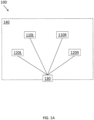
- FIGURE 1A is a schematic diagram of a first embodiment therapeutic system 100.
- Therapeutic system 100 provides one or more outputs that a person wearing the therapeutic system may experience as auditory, visual, and/or tactile stimulus.
- therapeutic system may comprise a left light source 110L, a right light source 110R, a left vibration source 120L, a right vibration source 120R, and a controller 130 for independently controlling and coordinating the action of the light and vibration sources.
- therapeutic system 100 may be positioned on the head of a user with left light source 110L positioned over the left eye to provide a left visual stimuli, right light source 110R positioned over the right eye to provide a right visual stimuli, left vibration source 120L positioned to provide left ear auditory stimuli, and right vibration source 120R positioned to provide right ear auditory stimuli.
- left and right light sources 110L, 110R may each comprise lightemitting diodes, an incandescent light source having a wavelength filter, a fluorescent light source, a backlit LCD panel, or other light source configured to provide to the user light at a desired, predetermined wavelength or wavelength range.
- left and right vibration sources 120L, 120R may each comprise earbuds, miniature speakers, or other vibration sources that can provide auditory stimuli to a user.
- left and right vibration sources 120L, 120R may comprise bone conduction transducers in the audible frequency range to provide vibrations to the user's skull bone that is sensed as auditory by the user's ear.
- one or more of left and right vibration sources 120L, 120R may also produce vibrations that are sensed as tactile stimuli.
- controller 130 may provide first signals to bone conduction transducers that vibrate or oscillate at a first frequency that can be interpreted by the user as auditory stimuli and may provide second signals at a second, lower frequency that can be interpreted as a tactile sensation by the user.
- bone conduction transducers may be adapted to provide both auditory and tactile stimulus to the user.
- left and right vibration sources 120L, 120R provide output at specific one or more frequencies or a range of frequencies, and are turned on and off at a stimulation frequency.
- a vibration source may be programmed to provide an output at an audio frequency of 256 Hz for some period of time, followed by no output for the following period of time.
- the vibration source is the product of an audio frequency and a square wave.
- FIGURE 1B is a schematic diagram of a second embodiment therapeutic system 100'.
- Second embodiment therapeutic system 100' is generally similar to first embodiment therapeutic system 100', except as explicitly noted.
- second embodiment therapeutic system 100' includes a left tactile stimulus source 121L and a right tactile stimulus source 121R, each of which may be individually controlled and coordinated with the controller 130 to provide tactile stimuli to a user of therapeutic system 100'.
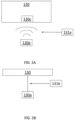
- FIGURES 2A and 2B show schematic diagrams of the controller 130 of therapeutic system 100 or 100'.
- therapeutic system 100 or 100' may optionally include an external control unit 130a that may wirelessly communicate with a wireless receiver/transmitter 130c of the controller 130 through a wireless connection 131a.
- the wireless connection 131a may comprise a Bluetooth connection, a Bluetooth LE connection, a WiFi connection, a ZigBee connection, an infrared (IR) connection, a radiofrequency (RF) connection, or an inaudible auditory signal connection, to name a few examples.
- the external control unit 130a may comprise a custom-built, electronic controller.
- the external control unit 130a may comprise a personal computing device of the user that may have downloaded onto and operating, a custom computer application or "app" to operate the system 100 or 100' to provide a therapeutic regimen.
- the personal computing device may comprise a personal computer, a personal laptop computer, a tablet computer (such as an Apple iPad, a Samsung Galaxy Tab, a Microsoft Surface, or an Amazon Fire, to name a few examples), a smartphone (such as an Apple iPhone, a Samsung Galaxy phone, or a Google Nexus phone, to name a few examples), and the custom computer application or "app” may be an application or "app” downloadable from an application distribution platform such as Apple iTunes, Apple Store, Google Play, Google Chrome Web Store, Amazon App Store, or Microsoft Windows Store, to name a few examples.
- an application distribution platform such as Apple iTunes, Apple Store, Google Play, Google Chrome Web Store, Amazon App Store, or Microsoft Windows Store, to name a few examples.
- the application may include one or more therapeutic regimens that the user may select for implementation by the therapeutic system 100 or 100'.
- the application may allow the user to provide feedback information about the efficacy of the therapeutic regimen(s), the feedback may be uploaded and collected by a central server(s) in communication with the application, and the therapeutic regimen(s) may be improved or optimized based on the feedback from the one or more users.
- the system 100 or 100' may further comprise an external control unit 130a, such as a custom-built controller, that may communicate with the controller 130 through a wired connection 131a, for example, a USB, FireWire, or Lightning connection, to name a few examples.
- FIGURE 3A shows one embodiment of the therapeutic system 100 as including therapeutic wearable headset or sleep mask 140 which integrates the light, vibration, and, optionally, tactile sources into a single form factor for presentation to a user.
- therapeutic wearable headset or sleep mask 140 which integrates the light, vibration, and, optionally, tactile sources into a single form factor for presentation to a user.
- left light source 110L is positioned over the left eye to provide a left visual stimuli
- right light source 110R is positioned over the right eye to provide a right visual stimuli
- left vibration source 120L is positioned to provide left ear auditory stimuli
- right vibration source 120R is positioned to provide right ear auditory stimuli.
- the left vibration source 120L and the right vibration source 120R may each comprise bone conduction transducer that may provide both auditory and tactile stimulus.
- wearable headset or sleep mask 140 is therapeutic system 100' which includes left tactile stimulus source 121L and right tactile stimulus source 121R, each of which may be individually controlled and coordinated with the controller 130, as described above regarding FIG. 1B .
- the therapeutic wearable headset or sleep mask 140 may be operated with an external controller 130a (e.g., a smartphone) in communication with the controller 130 through a wireless connection 131a, for example.
- the user US may have an option to turn tactile stimulation on or off, for example.
- FIG. 3B shows a user US wearing the therapeutic wearable headset or sleep mask 140.
- FIGURE 4 shows a flow chart of an exemplary therapeutic method 400 for providing therapeutic auditory, visual, and/or tactile stimulus.
- a subject having a neurological disorder or condition may be identified.
- neurological disorders may include, but are not limited to, insomnia, post-traumatic stress disorder (PTSD), brain injuries such as traumatic brain injury (TBI), mild traumatic brain injury (mTBI), or injuries to the brain due to oxygen deprivation, such as strokes, depression, anxiety, mood disorders, personality disorders, eating disorders, and psychotic disorders.
- PTSD post-traumatic stress disorder
- TBI traumatic brain injury
- mTBI mild traumatic brain injury
- a subject may be selected to undergo a therapeutic method 400 for the purpose of performance enhancement of mental and/or physical tasks for to aid the subject in napping or sleeping.
- the subject may be provided the therapeutic system or headwear, such as the system 100 or 100' described above.
- the subject may wear the therapeutic system or headwear, such as wearable headset or sleep mask 140.
- headset 140 executes programming 450 provided in controller 130 to provide stimuli to the subject.
- the programming provides two or more of auditory, video, and/or tactile stimulus are concurrently provided by headset 140 to the subject, and thus, for example, may provide power to activate left light source 110L, right light source 110R, left vibration source 120L and or right vibration source 120R.
- the left vibration source 120L and the right vibration source 120R may each comprise bone conduction transducer that may provide both auditory and tactile stimulus.
- wearable headset or sleep mask 140 is therapeutic system 100' which includes left tactile stimulus source 121L and right tactile stimulus source 121R, each of which may be individually controlled and coordinated with the controller 130, as described above regarding FIG. 1B .
- providing two or more of auditory, video, and/or tactile stimulus concurrently may provide improved therapeutic benefits as compared to providing only one of auditory, video, or tactile stimulus at one time.
- the two or more auditory, video, and/or tactile stimulus may thus combine to provide the improved therapeutic benefits, for example (i.e., the two or more auditory, video, and/or tactile stimulus may synergize in a way to provide improved results over providing two of the stimuli individually.)
- Exemplary instructions for providing stimuli may be provided, for example, by programming 450, such as a subroutine 450a, which includes the simultaneous activation of all active auditory, video, and/or tactile stimulus sources.
- the activation of all sources may include the activation of tactile stimulation to run throughout all subsequent auditory and/or visual stimulation.
- Another exemplary subroutine 450b may comprise alternating the left auditory, video, and/or tactile stimulus sources with the right auditory, video, and/or tactile stimulus sources (i.e., the left stimuli and right stimuli take turns being active.)
- Another exemplary subroutine 450c may comprise alternating the visual sources with the auditory and/or tactile sources (i.e., the visual stimuli and the auditory/tactile stimuli take turns being active.)
- Another exemplary subroutine 450d may comprise alternating the left auditory and/or tactile source and the right visual source with the right auditory and/or tactile source and the left visual source (i.e., opposite auditory/tactile stimuli take turns being active.)
- Such programming is further described below.
- programming 450 including by not limited to subroutines 450a, 450b, 450c, and 450d, may each be applied one or more times, individually or in combination with one another.
- the programming may, in addition, provide sequences of output in subroutines 450a, 450b, 450c, and 450d at different frequencies and/or timings.
- the subroutines may provide output at specific frequencies that change as the subroutine is repeated.
- subroutine 450a may provide auditory output to vibration source 120R or 120L at a frequency of 256 Hz that is turned on and off, that is it is pulsed, at a pulse frequency of 1 Hz for 2 minutes.
- This square pulse auditory signal thus generates signals at a frequency of 1 Hz in addition to higher harmonics.
- the output at 256 Hz is pulsed at twice the previous pulse frequency for 2 minutes.
- the auditory frequency of 256 Hz may be modulated over a wide range, including frequencies corresponding to brain wave frequencies.
- the brain may be stimulated in a way that it is forced to communicate between the left and right sides of the brain.
- This forced communication for example, can allow PTSD memories to be wired to both sides of the brain, thereby stopping undesirable flashbacks.
- steps show method 400 of treating a patient in accordance with embodiments, a person of ordinary skill in the art will recognize many variations based on the teaching described herein.
- the steps may be completed in a different order. Steps may be added or deleted. Some of the steps may comprise sub-steps. Many of the steps may be repeated as often as beneficial to the treatment.
- circuitry of the controller 130 or the external control unit 130a such as one or more of a processor or logic circuitry such as a central processing unit (CPU) or a programmable array logic for field programmable gate array.
- the circuitry may be programmed to provide one or more of the steps of the method 400, and the program may comprise program instructions stored on a computer readable memory or programmed steps of the logic circuitry such as the programmable array logic or the field programmable gate array, for example.
- the following describes an example of a stimulation pattern that has been found by empirical studies to be effective for inducing sleep, including napping, increasing neuroplasticity, treating brain injuries from strokes, TBI, or mTBI, improving balance, including improving fine motor control and reaction times, and treating PTSD, to name a few indications.
- Light and auditory stimulus at a first frequency may be provided for a first time segment, then at a second lower frequency for a second time segment, and then at a third lower frequency for a third time segment.
- Each time segment may include one or more sub-segments of light and auditory stimulus, each sub-segment comprising one of the subroutines described above, for example.
- the light and auditory stimulus may end after a pre-determined time period, such as 20 minutes.
- the light and auditory stimulus may be ramped back up (i.e., starting from the third frequency, then transitioning to the second frequency, and finally transitioning to the third frequency), such as to wake the user.
- the light and auditory stimulus may be maintained at the second frequency such as to maintain a sleep state of the user.
- tactile stimulus may be provided concurrently with the auditory stimulus.
- the light may be provided at a wavelength of 580 nm and the auditory having a frequency of 256 Hz may be provided, or any of a number of auditory frequencies or combinations thereof that the subject can select as they wish.
- Table 1 below describes an exemplary treatment regimen for this example.
- the stimulation provided in Table 1 first cycles through a block of four Segment A outputs, then cycles through a block of four Segment B outputs, then cycles through seven blocks of four Segment C outputs, and lastly repeats the block of four Segment A outputs.
- Segment A outputs (A1, A2, A3, and A4)
- the auditory and light outputs cycle 115 or 116 times between being on for 0.1277 seconds and then being off for 0.1277 seconds (that is, at a pulse frequency of 3.9 Hz), followed by no output for 0.5 seconds.
- Segment B outputs (B1, B2, B3 and B4)
- Segment C outputs (C1, C2, C3 and C4)
- Segments A1, B1, and C1 pulse the right and left sides of both the light and auditory together, with all outputs are synchronized to be on or off at the same time, as provided by subroutine 450a.
- Segments A2, B2, and C2 synchronize the left side light and auditory output, and the right side light and auditory output to be opposite to one another, as provided by subroutine 450b.
- Segments A3, B3, and C3 synchronize both lights together to be opposite to both auditory outputs, as provided by subroutine 450c.
- Segments A4, B4, and C4 synchronize the right auditory and light to be opposite to the left auditory and light outputs, as provided by subroutine 450d.
- the stimulation pattern of Example 2 includes the part of the treatment regimen shown in Table 1. Specifically, the stimulation first cycles through a block of four Segment A outputs, then cycles through a block of four Segment B outputs, and then cycles through seven blocks of four Segment C outputs. The repetition of the last block of four Segment A outputs is not provided in Example 2.
- the four subroutines described above and herein are applied and repeated for multiple time segments, each at a predetermined stimulation (repetition) frequency.
- the four subroutines may be repeated, such as with each segment of the four subroutines lasting 120 seconds, for example.
- tactile stimulus may be provided concurrently with the auditory stimulus.
- the light may be provided at a wavelength of 580 nm and the auditory having a frequency of 432 Hz may be provided.
- Table 2 below describes an exemplary treatment regimen for this example.
- the stimulation provided in Table 2 cycles through a block of four Segment A outputs 10 times.
- the auditory and light outputs cycle 115 or 116 times between being on for 0.1277 seconds and then being off for 0.1277 seconds, followed by no output for 0.5 seconds.
- Segments A1 pulses the right and left sides of both the light and auditory together, with all outputs are synchronized to be on or off at the same time, as provided by subroutine 450a.
- Segment A2 synchronizes the left side light and auditory output, and the right side light and auditory output to be opposite to one another, as provided by subroutine 450b.
- Segment A3 synchronizes both lights together to be opposite to both auditory outputs, as provided by subroutine 450c.
- Segment A4 synchronizes the right auditory and light to be opposite to the left auditory and light outputs, as provided by subroutine 450d.
- Light and auditory stimulus at a first frequency may be provided for a first time segment, then at a second higher frequency for a second time segment, then back at the first frequency for a subsequent time segment, and so forth.
- Each time segment may include one or more sub-segments of light and auditory stimulus, each sub-segment comprising one of the subroutines described above, for example.
- the light and auditory stimulus may end after a pre-determined time period, such as 20 minutes.
- tactile stimulus may be provided concurrently with the auditory stimulus.
- the light may be provided at a wavelength of 580 nm and the auditory having a frequency of 432 Hz may be provided.
- Table 3 below describes an exemplary treatment regimen for this example.
- the stimulation provided in Table 3 cycles ten times first through a block of four Segment A outputs, then through a block of four Segment D outputs.
- Segment A outputs A1, A2, A3, and A4
- the auditory and light outputs cycle 115 or 116 times between being on for 0.1277 seconds and then being off for 0.1277 seconds, followed by no output for 0.5 seconds.
- Segment D outputs (D1, D2, D3 and D4)
- the auditory and light outputs cycle 44 or 45 times between being on for 0.0667 seconds and then being off for 0. 0667 seconds, followed by no output for 0.5 seconds.
- Segments A1 and D1 pulse the right and left sides of both the light and auditory together, with all outputs are synchronized to be on or off at the same time, as provided by subroutine 450a.
- Segments A2 and D2 synchronize the left side light and auditory output, and the right side light and auditory output to be opposite to one another, as provided by subroutine 450b .
- Segments A3 and D3 synchronize both lights together to be opposite to both auditory outputs, as provided by subroutine 450c.
- Segments A4 and D4 synchronize the right auditory and light to be opposite to the left auditory and light outputs, as provided by subroutine 450d .
- Table 4 lists experimental results for the use of the inventive methods.
- the table lists what was being tested or treated, details of the conditions, the number of subjects, and the results of the tests.
- the stimulation in Example 1 for treating non-sleep related problems and for inducing a short sleep was used for all other treatments.
- Performance Enhancement Marksmanship (rifles and pistols), endurance and speed driving (advanced surveillance, coordination and evasion). 6 hours training each subj ect. 20 Significant improvements in marksmanship in all participants and ease of concentration during speed driving, faster times on endurance trials for 19/20 subjects Performance Enhancement Fine motor skills on bomb disposal personnel 3 hours training with device 3 Improved performance of fine motor skills on bomb disposal VR simulation for all subjects Performance Enhancement Fine motor skills of surgeons- 3 hours training each 3 Improved performance of fine motor skills on surgical procedures VR simulation for all subjects. Performance Enhancement Pistol use and marksmanship.
- Performance Enhancement Soccer player kicking performance 5 days of 1 hour each day 1 Subject went from 5th ranked to highest ranked Stroke Recovery Use on 6 year post stroke subjects. four hours training. 10 Observable balance improvement in 7/10 subjects. 3 subjects had had dramatic improvements in their sleep.
Landscapes
- Health & Medical Sciences (AREA)
- Anesthesiology (AREA)
- Physics & Mathematics (AREA)
- Life Sciences & Earth Sciences (AREA)
- General Health & Medical Sciences (AREA)
- Psychology (AREA)
- Engineering & Computer Science (AREA)
- Biomedical Technology (AREA)
- Heart & Thoracic Surgery (AREA)
- Hematology (AREA)
- Pain & Pain Management (AREA)
- Animal Behavior & Ethology (AREA)
- Acoustics & Sound (AREA)
- Public Health (AREA)
- Veterinary Medicine (AREA)
- General Physics & Mathematics (AREA)
- Optics & Photonics (AREA)
- Radiation-Therapy Devices (AREA)
- Electrotherapy Devices (AREA)
- User Interface Of Digital Computer (AREA)
Applications Claiming Priority (3)
| Application Number | Priority Date | Filing Date | Title |
|---|---|---|---|
| US201562258965P | 2015-11-23 | 2015-11-23 | |
| EP16869299.4A EP3380000A4 (en) | 2015-11-23 | 2016-11-23 | METHOD AND DEVICE FOR SUPPLYING THE BRAIN WITH IRRITATION |
| PCT/US2016/063651 WO2017091758A1 (en) | 2015-11-23 | 2016-11-23 | Methods and systems for providing stimuli to the brain |
Related Parent Applications (1)
| Application Number | Title | Priority Date | Filing Date |
|---|---|---|---|
| EP16869299.4A Division EP3380000A4 (en) | 2015-11-23 | 2016-11-23 | METHOD AND DEVICE FOR SUPPLYING THE BRAIN WITH IRRITATION |
Publications (3)
| Publication Number | Publication Date |
|---|---|
| EP3653111A1 EP3653111A1 (en) | 2020-05-20 |
| EP3653111B1 true EP3653111B1 (en) | 2024-01-03 |
| EP3653111C0 EP3653111C0 (en) | 2024-01-03 |
Family
ID=58719498
Family Applications (2)
| Application Number | Title | Priority Date | Filing Date |
|---|---|---|---|
| EP19216447.3A Active EP3653111B1 (en) | 2015-11-23 | 2016-11-23 | Apparatus for providing stimuli to the brain |
| EP16869299.4A Withdrawn EP3380000A4 (en) | 2015-11-23 | 2016-11-23 | METHOD AND DEVICE FOR SUPPLYING THE BRAIN WITH IRRITATION |
Family Applications After (1)
| Application Number | Title | Priority Date | Filing Date |
|---|---|---|---|
| EP16869299.4A Withdrawn EP3380000A4 (en) | 2015-11-23 | 2016-11-23 | METHOD AND DEVICE FOR SUPPLYING THE BRAIN WITH IRRITATION |
Country Status (11)
| Country | Link |
|---|---|
| US (6) | US10328236B2 (enExample) |
| EP (2) | EP3653111B1 (enExample) |
| JP (1) | JP7269010B2 (enExample) |
| KR (1) | KR102349466B1 (enExample) |
| CN (1) | CN109152524B (enExample) |
| AU (2) | AU2016359154B2 (enExample) |
| BR (1) | BR112018010286A2 (enExample) |
| CA (1) | CA3029198A1 (enExample) |
| EA (1) | EA035285B1 (enExample) |
| PH (1) | PH12018501330A1 (enExample) |
| WO (1) | WO2017091758A1 (enExample) |
Families Citing this family (25)
| Publication number | Priority date | Publication date | Assignee | Title |
|---|---|---|---|---|
| US11400252B2 (en) | 2015-11-23 | 2022-08-02 | Sana Heath Inc. | Non-pharmaceutical method of managing pain |
| US11524135B2 (en) | 2015-11-23 | 2022-12-13 | Sana Health Inc. | Non-pharmaceutical systems and methods of treating the symptoms of fibromyalgia |
| AU2016359154B2 (en) | 2015-11-23 | 2020-08-06 | Sana Health, Inc. | Methods and systems for providing stimuli to the brain |
| US11298502B2 (en) | 2015-11-23 | 2022-04-12 | Sana Health, Inc. | Non-pharmaceutical methods of mitigating addiction withdrawal symptoms |
| IL295071A (en) | 2015-11-24 | 2022-09-01 | Massachusetts Inst Technology | Systems and methods for preventing, alleviating and/or treating dementia |
| KR20250153860A (ko) | 2016-11-17 | 2025-10-27 | 코그니토 쎄라퓨틱스, 인코포레이티드 | 시각 자극을 통한 신경 자극 방법 및 시스템 |
| EP3589193A4 (en) | 2017-03-02 | 2020-12-30 | Sana Health, Inc. | METHODS AND SYSTEMS FOR MODULATING BRAIN STIMULI WITH BIO-SENSORS |
| JP2020536653A (ja) * | 2017-10-10 | 2020-12-17 | マサチューセッツ インスティテュート オブ テクノロジー | 認知症の予防、緩和および/または治療のためのシステムならびに方法 |
| US20190262223A1 (en) * | 2018-02-28 | 2019-08-29 | Bipri, Llc | Therapeutic vibration device and method of use thereof |
| WO2019226656A1 (en) * | 2018-05-23 | 2019-11-28 | Sana Health, Inc. | A non-pharmaceutical method of managing pain |
| CA3107107A1 (en) * | 2018-07-20 | 2020-01-23 | Stacy JONES | Bilateral stimulation devices |
| US11969556B2 (en) * | 2018-12-21 | 2024-04-30 | Cochlear Limited | Therapeutic sound through bone conduction |
| WO2020172448A1 (en) * | 2019-02-21 | 2020-08-27 | Sana Health, Inc. | Non-pharmaceutical methods of mitigating addiction withdrawal symptoms |
| KR102299217B1 (ko) * | 2019-03-14 | 2021-09-09 | (주)하스피케어 | 클라우드 기반 암 재활환자 통합 케어 서비스 제공 방법 |
| WO2020221898A1 (en) * | 2019-05-01 | 2020-11-05 | Widex A/S | An ear level auditory system |
| US11275441B2 (en) * | 2019-05-12 | 2022-03-15 | Neurohaptics, Inc | Motion sickness reduction, directional indication, and neural rehabilitation device |
| US11586291B2 (en) * | 2019-05-12 | 2023-02-21 | NeuroHaptics, Inc. | Motion sickness reduction device |
| WO2021007444A1 (en) * | 2019-07-10 | 2021-01-14 | Sana Health, Inc. | Non-pharmaceutical systems and methods of treating the symptoms of fibromyalgia |
| AU2021274703A1 (en) * | 2020-05-18 | 2022-12-22 | Sana Health, Inc. | Methods and systems for treating anxiety and depression |
| CN114159275A (zh) * | 2020-09-10 | 2022-03-11 | 上海神奕医疗科技有限公司 | 康复训练设备 |
| MY194782A (en) * | 2021-01-22 | 2022-12-15 | Togl Tech Sdn Bhd | Device and method for processing, storing and transmitting a signal in a media file |
| WO2022216853A1 (en) * | 2021-04-07 | 2022-10-13 | Into Technologies Inc. | Systems and methods of treating medical indications by administering dosages of light and sound |
| GB2605832A (en) * | 2021-04-15 | 2022-10-19 | Ed Can Help Ltd | Methods and systems for generating sound for use in treating a mental disorder |
| IL322229A (en) * | 2023-01-27 | 2025-09-01 | Sana Health Inc | Methods and systems for providing sensory stimulation to the brain for the treatment of post-traumatic stress disorder |
| TWI850130B (zh) | 2023-10-16 | 2024-07-21 | 督洋生技股份有限公司 | 聲光助眠眼罩及其控制方法 |
Family Cites Families (75)
| Publication number | Priority date | Publication date | Assignee | Title |
|---|---|---|---|---|
| US4172406A (en) * | 1978-10-16 | 1979-10-30 | Martinez Rosa E | Audio-visual headphones |
| US4315502A (en) * | 1979-10-11 | 1982-02-16 | Gorges Denis E | Learning-relaxation device |
| US4892106A (en) * | 1987-10-19 | 1990-01-09 | Gleeson Iii William J | Multiple afferent sensory stimulation device |
| JPH01175867A (ja) | 1987-12-29 | 1989-07-12 | Wako Corp Kk | 耳に装着して治療する装置 |
| US5507716A (en) * | 1991-08-21 | 1996-04-16 | The Lucidity Institute, Inc. | Equipment and methods used to induce lucid dreams in sleeping persons |
| US5343261A (en) | 1992-01-09 | 1994-08-30 | Wilson David L | Device for inducing saccadic eye movement |
| JPH07194706A (ja) * | 1993-12-28 | 1995-08-01 | Sateraito Intelligence:Kk | 光信号と音信号とを使用したリラクセーション方法及びリラクセーション機器 |
| US6123661A (en) | 1996-05-28 | 2000-09-26 | Matsushita Electric Works, Ltd. | Relax refresh system |
| US5783909A (en) | 1997-01-10 | 1998-07-21 | Relume Corporation | Maintaining LED luminous intensity |
| US20020198577A1 (en) | 1998-11-30 | 2002-12-26 | Jaillet Peter D. | Apparatus and method for changing critical brain activity using light and sound |
| US6409655B1 (en) * | 1999-03-05 | 2002-06-25 | David L. Wilson | Device for applying stimuli to a subject |
| WO2001064005A2 (de) * | 2000-02-08 | 2001-09-07 | Bernd Michael Pohlmann | Verfahren und vorrichtung zur beeinflussung der senso-motorischen informationsverarbeitung eines benutzers |
| JP2003117001A (ja) * | 2001-10-17 | 2003-04-22 | Kenji Kokama | リラクセーション誘導装置 |
| US20100161010A1 (en) | 2003-12-11 | 2010-06-24 | Thomas David A | Perceptible Apparatus and Methods for Reactive Effect |
| CN2696657Y (zh) * | 2004-04-12 | 2005-05-04 | 王宏 | 多功能脑保健仪 |
| US7645226B2 (en) | 2004-11-12 | 2010-01-12 | Biogenics Ii L.L.C. | Relaxation device and method |
| WO2006121956A1 (en) * | 2005-05-09 | 2006-11-16 | Infinite Z, Inc. | Biofeedback eyewear system |
| EP2150315A4 (en) * | 2007-04-24 | 2011-03-23 | Mitchell A Altman | GUIDE GLASSES |
| US20080269629A1 (en) * | 2007-04-25 | 2008-10-30 | Robert Howard Reiner | Multimodal therapeutic and feedback system |
| KR20100039287A (ko) * | 2007-05-25 | 2010-04-15 | 토마스 제퍼슨 유니버시티 | 집중력 및/또는 기억력의 향상이 필요한 개체에 집중력 및/또는 기억력을 향상시키는 치료방법 |
| US20090156886A1 (en) | 2007-12-12 | 2009-06-18 | Synapse Research Company | Method and apparatus for providing automatic eye focused therapy |
| JP2011517602A (ja) | 2008-04-11 | 2011-06-16 | チャン,ダニエル,ウォンチョル | 脳エントレインメント方法およびシステム |
| US9649469B2 (en) | 2008-04-24 | 2017-05-16 | The Invention Science Fund I Llc | Methods and systems for presenting a combination treatment |
| KR100902610B1 (ko) * | 2008-05-19 | 2009-06-11 | 이인태 | 정신치료장치 |
| US20190030279A1 (en) | 2008-09-22 | 2019-01-31 | Dawn Nowlin | Method of Conditioning a Living Body to Respond Appropriately to Stimuli |
| US8784293B2 (en) | 2008-10-07 | 2014-07-22 | Advanced Brain Monitoring, Inc. | Systems and methods for optimization of sleep and post-sleep performance |
| EP2384227B1 (en) * | 2008-12-30 | 2014-11-05 | Koninklijke Philips N.V. | System for administering light therapy |
| JP5668053B2 (ja) * | 2009-04-16 | 2015-02-12 | コーニンクレッカ フィリップス エヌ ヴェ | 照明装置及び睡眠慣性を低減する又は覚醒状態を制御する方法 |
| US20130090520A1 (en) * | 2009-06-19 | 2013-04-11 | Randall Redfield | Bone Conduction Apparatus and Multi-sensory Brain Integration Method |
| US10112029B2 (en) | 2009-06-19 | 2018-10-30 | Integrated Listening Systems, LLC | Bone conduction apparatus and multi-sensory brain integration method |
| US8879745B2 (en) * | 2009-07-23 | 2014-11-04 | Dean Robert Gary Anderson As Trustee Of The D/L Anderson Family Trust | Method of deriving individualized gain compensation curves for hearing aid fitting |
| US8838247B2 (en) | 2010-01-06 | 2014-09-16 | Evoke Neuroscience, Inc. | Transcranial stimulation device and method based on electrophysiological testing |
| US20110213664A1 (en) * | 2010-02-28 | 2011-09-01 | Osterhout Group, Inc. | Local advertising content on an interactive head-mounted eyepiece |
| EP2563462B1 (en) | 2010-04-27 | 2022-12-28 | Rhode Island Hospital | Device for detecting a pain signature based on changes in burst firing |
| US9333372B2 (en) * | 2011-02-20 | 2016-05-10 | James Otis | Methods and apparatus for intermittent stimuli |
| RU2013144221A (ru) | 2011-03-02 | 2015-04-10 | Конинклейке Филипс Н.В. | Устройство и способ для познавательного развития пользователя |
| KR20120108488A (ko) * | 2011-03-24 | 2012-10-05 | 유남구 | 수면 보조 장치 및 방법 |
| US8725264B2 (en) | 2011-08-04 | 2014-05-13 | Fundacio Privada Institut de Neurorehabilitacio Guttmann | Method for treating neuropathic pain |
| US8852073B2 (en) | 2012-01-17 | 2014-10-07 | Headwater R&D Inc | Relaxation inducing sleep mask |
| WO2013152348A1 (en) | 2012-04-06 | 2013-10-10 | Newport Brain Research Laboratory Inc. | Frequency specific sensory stimulation |
| KR102067594B1 (ko) * | 2012-11-26 | 2020-01-17 | 유나이트 헬스 유에스 인코포레이티드 | 골전도 장치 및 다중-감각 뇌 통합 방법 |
| US9521976B2 (en) | 2013-01-24 | 2016-12-20 | Devon Greco | Method and apparatus for encouraging physiological change through physiological control of wearable auditory and visual interruption device |
| US9872968B2 (en) * | 2013-04-17 | 2018-01-23 | Sri International | Biofeedback virtual reality sleep assistant |
| WO2015028480A1 (en) | 2013-08-28 | 2015-03-05 | Koninklijke Philips N.V. | Pain relieving stimulation system |
| US9547175B2 (en) * | 2014-03-18 | 2017-01-17 | Google Inc. | Adaptive piezoelectric array for bone conduction receiver in wearable computers |
| CA2963289C (en) | 2014-10-03 | 2023-03-21 | British Columbia Cancer Agency Branch | Apparatus and methods for improving health outcomes of preterm infants |
| CN204484476U (zh) * | 2015-01-31 | 2015-07-22 | 东莞市速普得电子科技股份有限公司 | 一种led保健眼罩 |
| US9999835B2 (en) | 2015-02-05 | 2018-06-19 | Sony Interactive Entertainment Inc. | Motion sickness monitoring and application of supplemental sound to counteract sickness |
| CN104546285B (zh) | 2015-02-05 | 2017-03-08 | 京东方科技集团股份有限公司 | 眼罩、睡眠监测装置及方法 |
| USD775260S1 (en) | 2015-02-16 | 2016-12-27 | Cynthia Callendar Gordon | Sleep mask with compartment for wireless speaker system |
| KR101687321B1 (ko) | 2015-03-05 | 2016-12-16 | 주식회사 프라센 | 수면 유도 장치 및 이를 포함하는 수면 관리 시스템 |
| WO2016140408A1 (ko) | 2015-03-05 | 2016-09-09 | 주식회사 프라센 | 수면 유도 장치 및 이를 포함하는 수면 관리 시스템 |
| US20220265959A1 (en) | 2015-11-23 | 2022-08-25 | Sana Health, Inc. | Systems and methods for auditory, visual and/or auditory and visual cortex targeting and treatment |
| US20220249803A1 (en) | 2015-11-23 | 2022-08-11 | Sana Health, Inc. | Systems and methods for visual cortex targeting and treatment |
| US20220409849A1 (en) | 2015-11-23 | 2022-12-29 | Sana Health, Inc. | Systems and methods for electronic patient stimulation and diagnosis |
| AU2016359154B2 (en) | 2015-11-23 | 2020-08-06 | Sana Health, Inc. | Methods and systems for providing stimuli to the brain |
| US10286181B2 (en) | 2015-12-31 | 2019-05-14 | Cigna Intellectual Property, Inc. | Method and apparatus for virtual reality-based mindfulness therapy |
| US10449326B2 (en) | 2016-03-03 | 2019-10-22 | Headwaters R & D Inc | Audio tone programmed hygienic and therapeutic sleep and wake eye mask having remotely controlled sunrise and sunset multimodes |
| US10383769B1 (en) | 2016-03-30 | 2019-08-20 | Juanita Miller | Eye cover with audio transmitter |
| US10582908B2 (en) | 2016-04-01 | 2020-03-10 | Intel Corporation | Sleep management device and methods for operation |
| CN105640703A (zh) | 2016-04-07 | 2016-06-08 | 京东方科技集团股份有限公司 | 智能眼罩 |
| CN205814527U (zh) | 2016-04-07 | 2016-12-21 | 京东方科技集团股份有限公司 | 智能眼罩 |
| USD827701S1 (en) | 2016-08-26 | 2018-09-04 | Castar, Inc. | Augmented reality glasses |
| KR20190058538A (ko) | 2016-09-19 | 2019-05-29 | 닉스 테크놀로지스 엘티디 | 다기능 폐쇄 루프 신경 피드백 자극 디바이스 및 그 방법 |
| USD805515S1 (en) | 2016-12-15 | 2017-12-19 | Intel Corporation | Headwear |
| EP3589193A4 (en) | 2017-03-02 | 2020-12-30 | Sana Health, Inc. | METHODS AND SYSTEMS FOR MODULATING BRAIN STIMULI WITH BIO-SENSORS |
| WO2019060598A1 (en) | 2017-09-22 | 2019-03-28 | Theranova, Llc | METHODS AND DEVICES FOR TREATING AND MANAGING ADDICTION |
| WO2019226656A1 (en) | 2018-05-23 | 2019-11-28 | Sana Health, Inc. | A non-pharmaceutical method of managing pain |
| US20190388020A1 (en) | 2018-06-20 | 2019-12-26 | NeuroPlus Inc. | System and Method for Treating and Preventing Cognitive Disorders |
| WO2020172448A1 (en) | 2019-02-21 | 2020-08-27 | Sana Health, Inc. | Non-pharmaceutical methods of mitigating addiction withdrawal symptoms |
| WO2020219350A1 (en) | 2019-04-25 | 2020-10-29 | Bose Corporation | Smart relaxation mask |
| US11786694B2 (en) | 2019-05-24 | 2023-10-17 | NeuroLight, Inc. | Device, method, and app for facilitating sleep |
| WO2021007444A1 (en) | 2019-07-10 | 2021-01-14 | Sana Health, Inc. | Non-pharmaceutical systems and methods of treating the symptoms of fibromyalgia |
| US11633565B2 (en) | 2019-07-12 | 2023-04-25 | Bose Corporation | Light diffusers for smart relaxation masks |
| AU2021274703A1 (en) | 2020-05-18 | 2022-12-22 | Sana Health, Inc. | Methods and systems for treating anxiety and depression |
-
2016
- 2016-11-23 AU AU2016359154A patent/AU2016359154B2/en active Active
- 2016-11-23 BR BR112018010286-5A patent/BR112018010286A2/pt not_active Application Discontinuation
- 2016-11-23 CN CN201680079663.4A patent/CN109152524B/zh active Active
- 2016-11-23 WO PCT/US2016/063651 patent/WO2017091758A1/en not_active Ceased
- 2016-11-23 KR KR1020187017718A patent/KR102349466B1/ko active Active
- 2016-11-23 EA EA201891224A patent/EA035285B1/ru unknown
- 2016-11-23 CA CA3029198A patent/CA3029198A1/en active Pending
- 2016-11-23 EP EP19216447.3A patent/EP3653111B1/en active Active
- 2016-11-23 US US15/360,808 patent/US10328236B2/en active Active
- 2016-11-23 JP JP2018546406A patent/JP7269010B2/ja active Active
- 2016-11-23 EP EP16869299.4A patent/EP3380000A4/en not_active Withdrawn
-
2018
- 2018-06-21 PH PH12018501330A patent/PH12018501330A1/en unknown
-
2019
- 2019-05-24 US US16/422,592 patent/US11141559B2/en active Active
-
2020
- 2020-08-27 US US17/005,047 patent/US11679231B2/en active Active
- 2020-08-27 US US17/005,042 patent/US11701487B2/en active Active
- 2020-11-05 AU AU2020264336A patent/AU2020264336B2/en active Active
-
2023
- 2023-01-27 US US18/102,564 patent/US12201781B2/en active Active
-
2025
- 2025-01-21 US US19/032,548 patent/US20250242127A1/en active Pending
Also Published As
Similar Documents
| Publication | Publication Date | Title |
|---|---|---|
| AU2020264336B2 (en) | Methods and systems for providing stimuli to the brain | |
| AU2018226818B2 (en) | Methods and systems for modulating stimuli to the brain with biosensors | |
| EP3551145B1 (en) | Systems and methods for treating neurological disorders | |
| US20230347103A1 (en) | Methods and systems for providing sensory stimulation to a brain to treat post-traumatic stress disorder | |
| US20220265959A1 (en) | Systems and methods for auditory, visual and/or auditory and visual cortex targeting and treatment | |
| IL322229A (en) | Methods and systems for providing sensory stimulation to the brain for the treatment of post-traumatic stress disorder | |
| NZ743587B2 (en) | Methods and systems for providing stimuli to the brain | |
| HK40002584A (en) | Methods and systems for providing stimuli to the brain | |
| HK40002584B (zh) | 用於向大脑提供刺激的方法和系统 |
Legal Events
| Date | Code | Title | Description |
|---|---|---|---|
| PUAI | Public reference made under article 153(3) epc to a published international application that has entered the european phase |
Free format text: ORIGINAL CODE: 0009012 |
|
| STAA | Information on the status of an ep patent application or granted ep patent |
Free format text: STATUS: THE APPLICATION HAS BEEN PUBLISHED |
|
| AC | Divisional application: reference to earlier application |
Ref document number: 3380000 Country of ref document: EP Kind code of ref document: P |
|
| AK | Designated contracting states |
Kind code of ref document: A1 Designated state(s): AL AT BE BG CH CY CZ DE DK EE ES FI FR GB GR HR HU IE IS IT LI LT LU LV MC MK MT NL NO PL PT RO RS SE SI SK SM TR |
|
| RAP1 | Party data changed (applicant data changed or rights of an application transferred) |
Owner name: SANA HEALTH, INC. |
|
| STAA | Information on the status of an ep patent application or granted ep patent |
Free format text: STATUS: REQUEST FOR EXAMINATION WAS MADE |
|
| 17P | Request for examination filed |
Effective date: 20201120 |
|
| RBV | Designated contracting states (corrected) |
Designated state(s): AL AT BE BG CH CY CZ DE DK EE ES FI FR GB GR HR HU IE IS IT LI LT LU LV MC MK MT NL NO PL PT RO RS SE SI SK SM TR |
|
| GRAP | Despatch of communication of intention to grant a patent |
Free format text: ORIGINAL CODE: EPIDOSNIGR1 |
|
| STAA | Information on the status of an ep patent application or granted ep patent |
Free format text: STATUS: GRANT OF PATENT IS INTENDED |
|
| INTG | Intention to grant announced |
Effective date: 20230216 |
|
| GRAJ | Information related to disapproval of communication of intention to grant by the applicant or resumption of examination proceedings by the epo deleted |
Free format text: ORIGINAL CODE: EPIDOSDIGR1 |
|
| STAA | Information on the status of an ep patent application or granted ep patent |
Free format text: STATUS: REQUEST FOR EXAMINATION WAS MADE |
|
| GRAP | Despatch of communication of intention to grant a patent |
Free format text: ORIGINAL CODE: EPIDOSNIGR1 |
|
| STAA | Information on the status of an ep patent application or granted ep patent |
Free format text: STATUS: GRANT OF PATENT IS INTENDED |
|
| INTC | Intention to grant announced (deleted) | ||
| INTG | Intention to grant announced |
Effective date: 20230720 |
|
| GRAS | Grant fee paid |
Free format text: ORIGINAL CODE: EPIDOSNIGR3 |
|
| GRAA | (expected) grant |
Free format text: ORIGINAL CODE: 0009210 |
|
| STAA | Information on the status of an ep patent application or granted ep patent |
Free format text: STATUS: THE PATENT HAS BEEN GRANTED |
|
| AC | Divisional application: reference to earlier application |
Ref document number: 3380000 Country of ref document: EP Kind code of ref document: P |
|
| AK | Designated contracting states |
Kind code of ref document: B1 Designated state(s): AL AT BE BG CH CY CZ DE DK EE ES FI FR GB GR HR HU IE IS IT LI LT LU LV MC MK MT NL NO PL PT RO RS SE SI SK SM TR |
|
| REG | Reference to a national code |
Ref country code: GB Ref legal event code: FG4D |
|
| REG | Reference to a national code |
Ref country code: CH Ref legal event code: EP |
|
| REG | Reference to a national code |
Ref country code: DE Ref legal event code: R096 Ref document number: 602016085216 Country of ref document: DE |
|
| REG | Reference to a national code |
Ref country code: IE Ref legal event code: FG4D |
|
| U01 | Request for unitary effect filed |
Effective date: 20240119 |
|
| U07 | Unitary effect registered |
Designated state(s): AT BE BG DE DK EE FI FR IT LT LU LV MT NL PT SE SI Effective date: 20240207 |
|
| PG25 | Lapsed in a contracting state [announced via postgrant information from national office to epo] |
Ref country code: ES Free format text: LAPSE BECAUSE OF FAILURE TO SUBMIT A TRANSLATION OF THE DESCRIPTION OR TO PAY THE FEE WITHIN THE PRESCRIBED TIME-LIMIT Effective date: 20240103 |
|
| PG25 | Lapsed in a contracting state [announced via postgrant information from national office to epo] |
Ref country code: ES Free format text: LAPSE BECAUSE OF FAILURE TO SUBMIT A TRANSLATION OF THE DESCRIPTION OR TO PAY THE FEE WITHIN THE PRESCRIBED TIME-LIMIT Effective date: 20240103 |
|
| PG25 | Lapsed in a contracting state [announced via postgrant information from national office to epo] |
Ref country code: IS Free format text: LAPSE BECAUSE OF FAILURE TO SUBMIT A TRANSLATION OF THE DESCRIPTION OR TO PAY THE FEE WITHIN THE PRESCRIBED TIME-LIMIT Effective date: 20240503 |
|
| PG25 | Lapsed in a contracting state [announced via postgrant information from national office to epo] |
Ref country code: GR Free format text: LAPSE BECAUSE OF FAILURE TO SUBMIT A TRANSLATION OF THE DESCRIPTION OR TO PAY THE FEE WITHIN THE PRESCRIBED TIME-LIMIT Effective date: 20240404 |
|
| PG25 | Lapsed in a contracting state [announced via postgrant information from national office to epo] |
Ref country code: RS Free format text: LAPSE BECAUSE OF FAILURE TO SUBMIT A TRANSLATION OF THE DESCRIPTION OR TO PAY THE FEE WITHIN THE PRESCRIBED TIME-LIMIT Effective date: 20240403 Ref country code: HR Free format text: LAPSE BECAUSE OF FAILURE TO SUBMIT A TRANSLATION OF THE DESCRIPTION OR TO PAY THE FEE WITHIN THE PRESCRIBED TIME-LIMIT Effective date: 20240103 |
|
| PG25 | Lapsed in a contracting state [announced via postgrant information from national office to epo] |
Ref country code: CZ Free format text: LAPSE BECAUSE OF FAILURE TO SUBMIT A TRANSLATION OF THE DESCRIPTION OR TO PAY THE FEE WITHIN THE PRESCRIBED TIME-LIMIT Effective date: 20240103 |
|
| PG25 | Lapsed in a contracting state [announced via postgrant information from national office to epo] |
Ref country code: RS Free format text: LAPSE BECAUSE OF FAILURE TO SUBMIT A TRANSLATION OF THE DESCRIPTION OR TO PAY THE FEE WITHIN THE PRESCRIBED TIME-LIMIT Effective date: 20240403 Ref country code: NO Free format text: LAPSE BECAUSE OF FAILURE TO SUBMIT A TRANSLATION OF THE DESCRIPTION OR TO PAY THE FEE WITHIN THE PRESCRIBED TIME-LIMIT Effective date: 20240403 Ref country code: IS Free format text: LAPSE BECAUSE OF FAILURE TO SUBMIT A TRANSLATION OF THE DESCRIPTION OR TO PAY THE FEE WITHIN THE PRESCRIBED TIME-LIMIT Effective date: 20240503 Ref country code: HR Free format text: LAPSE BECAUSE OF FAILURE TO SUBMIT A TRANSLATION OF THE DESCRIPTION OR TO PAY THE FEE WITHIN THE PRESCRIBED TIME-LIMIT Effective date: 20240103 Ref country code: GR Free format text: LAPSE BECAUSE OF FAILURE TO SUBMIT A TRANSLATION OF THE DESCRIPTION OR TO PAY THE FEE WITHIN THE PRESCRIBED TIME-LIMIT Effective date: 20240404 Ref country code: CZ Free format text: LAPSE BECAUSE OF FAILURE TO SUBMIT A TRANSLATION OF THE DESCRIPTION OR TO PAY THE FEE WITHIN THE PRESCRIBED TIME-LIMIT Effective date: 20240103 |
|
| PG25 | Lapsed in a contracting state [announced via postgrant information from national office to epo] |
Ref country code: PL Free format text: LAPSE BECAUSE OF FAILURE TO SUBMIT A TRANSLATION OF THE DESCRIPTION OR TO PAY THE FEE WITHIN THE PRESCRIBED TIME-LIMIT Effective date: 20240103 |
|
| PG25 | Lapsed in a contracting state [announced via postgrant information from national office to epo] |
Ref country code: PL Free format text: LAPSE BECAUSE OF FAILURE TO SUBMIT A TRANSLATION OF THE DESCRIPTION OR TO PAY THE FEE WITHIN THE PRESCRIBED TIME-LIMIT Effective date: 20240103 |
|
| REG | Reference to a national code |
Ref country code: DE Ref legal event code: R097 Ref document number: 602016085216 Country of ref document: DE |
|
| PG25 | Lapsed in a contracting state [announced via postgrant information from national office to epo] |
Ref country code: SM Free format text: LAPSE BECAUSE OF FAILURE TO SUBMIT A TRANSLATION OF THE DESCRIPTION OR TO PAY THE FEE WITHIN THE PRESCRIBED TIME-LIMIT Effective date: 20240103 |
|
| PG25 | Lapsed in a contracting state [announced via postgrant information from national office to epo] |
Ref country code: SK Free format text: LAPSE BECAUSE OF FAILURE TO SUBMIT A TRANSLATION OF THE DESCRIPTION OR TO PAY THE FEE WITHIN THE PRESCRIBED TIME-LIMIT Effective date: 20240103 |
|
| PG25 | Lapsed in a contracting state [announced via postgrant information from national office to epo] |
Ref country code: SM Free format text: LAPSE BECAUSE OF FAILURE TO SUBMIT A TRANSLATION OF THE DESCRIPTION OR TO PAY THE FEE WITHIN THE PRESCRIBED TIME-LIMIT Effective date: 20240103 Ref country code: SK Free format text: LAPSE BECAUSE OF FAILURE TO SUBMIT A TRANSLATION OF THE DESCRIPTION OR TO PAY THE FEE WITHIN THE PRESCRIBED TIME-LIMIT Effective date: 20240103 Ref country code: RO Free format text: LAPSE BECAUSE OF FAILURE TO SUBMIT A TRANSLATION OF THE DESCRIPTION OR TO PAY THE FEE WITHIN THE PRESCRIBED TIME-LIMIT Effective date: 20240103 |
|
| PLBE | No opposition filed within time limit |
Free format text: ORIGINAL CODE: 0009261 |
|
| STAA | Information on the status of an ep patent application or granted ep patent |
Free format text: STATUS: NO OPPOSITION FILED WITHIN TIME LIMIT |
|
| 26N | No opposition filed |
Effective date: 20241007 |
|
| U1N | Appointed representative for the unitary patent procedure changed after the registration of the unitary effect |
Representative=s name: MEISSNER BOLTE NUERNBERG; DE |
|
| U20 | Renewal fee for the european patent with unitary effect paid |
Year of fee payment: 9 Effective date: 20241126 |
|
| PGFP | Annual fee paid to national office [announced via postgrant information from national office to epo] |
Ref country code: GB Payment date: 20241120 Year of fee payment: 9 |
|
| REG | Reference to a national code |
Ref country code: CH Ref legal event code: PL |
|
| PG25 | Lapsed in a contracting state [announced via postgrant information from national office to epo] |
Ref country code: MC Free format text: LAPSE BECAUSE OF FAILURE TO SUBMIT A TRANSLATION OF THE DESCRIPTION OR TO PAY THE FEE WITHIN THE PRESCRIBED TIME-LIMIT Effective date: 20240103 |
|
| REG | Reference to a national code |
Ref country code: CH Ref legal event code: PL |
|
| PG25 | Lapsed in a contracting state [announced via postgrant information from national office to epo] |
Ref country code: CH Free format text: LAPSE BECAUSE OF NON-PAYMENT OF DUE FEES Effective date: 20241130 |
|
| PG25 | Lapsed in a contracting state [announced via postgrant information from national office to epo] |
Ref country code: IE Free format text: LAPSE BECAUSE OF NON-PAYMENT OF DUE FEES Effective date: 20241123 |