EP3649868A1 - Verfahren zum herstellen eines schnittfesten lebensmittelgelkörpers aus pflanzlichen proteinen, lebensmittelgelkörper sowie aggregator zur durchführung des verfahrens - Google Patents
Verfahren zum herstellen eines schnittfesten lebensmittelgelkörpers aus pflanzlichen proteinen, lebensmittelgelkörper sowie aggregator zur durchführung des verfahrens Download PDFInfo
- Publication number
- EP3649868A1 EP3649868A1 EP18204936.1A EP18204936A EP3649868A1 EP 3649868 A1 EP3649868 A1 EP 3649868A1 EP 18204936 A EP18204936 A EP 18204936A EP 3649868 A1 EP3649868 A1 EP 3649868A1
- Authority
- EP
- European Patent Office
- Prior art keywords
- composition
- peak
- temperature
- weight
- protein concentrate
- Prior art date
- Legal status (The legal status is an assumption and is not a legal conclusion. Google has not performed a legal analysis and makes no representation as to the accuracy of the status listed.)
- Granted
Links
Images




Classifications
-
- A—HUMAN NECESSITIES
- A23—FOODS OR FOODSTUFFS; TREATMENT THEREOF, NOT COVERED BY OTHER CLASSES
- A23J—PROTEIN COMPOSITIONS FOR FOODSTUFFS; WORKING-UP PROTEINS FOR FOODSTUFFS; PHOSPHATIDE COMPOSITIONS FOR FOODSTUFFS
- A23J3/00—Working-up of proteins for foodstuffs
- A23J3/22—Working-up of proteins for foodstuffs by texturising
-
- A—HUMAN NECESSITIES
- A23—FOODS OR FOODSTUFFS; TREATMENT THEREOF, NOT COVERED BY OTHER CLASSES
- A23C—DAIRY PRODUCTS, e.g. MILK, BUTTER OR CHEESE; MILK OR CHEESE SUBSTITUTES; PREPARATION THEREOF
- A23C20/00—Cheese substitutes
- A23C20/02—Cheese substitutes containing neither milk components, nor caseinate, nor lactose, as sources of fats, proteins or carbohydrates
- A23C20/025—Cheese substitutes containing neither milk components, nor caseinate, nor lactose, as sources of fats, proteins or carbohydrates mainly containing proteins from pulses or oilseeds
-
- A—HUMAN NECESSITIES
- A23—FOODS OR FOODSTUFFS; TREATMENT THEREOF, NOT COVERED BY OTHER CLASSES
- A23J—PROTEIN COMPOSITIONS FOR FOODSTUFFS; WORKING-UP PROTEINS FOR FOODSTUFFS; PHOSPHATIDE COMPOSITIONS FOR FOODSTUFFS
- A23J3/00—Working-up of proteins for foodstuffs
- A23J3/14—Vegetable proteins
-
- A—HUMAN NECESSITIES
- A23—FOODS OR FOODSTUFFS; TREATMENT THEREOF, NOT COVERED BY OTHER CLASSES
- A23J—PROTEIN COMPOSITIONS FOR FOODSTUFFS; WORKING-UP PROTEINS FOR FOODSTUFFS; PHOSPHATIDE COMPOSITIONS FOR FOODSTUFFS
- A23J3/00—Working-up of proteins for foodstuffs
- A23J3/22—Working-up of proteins for foodstuffs by texturising
- A23J3/225—Texturised simulated foods with high protein content
-
- A—HUMAN NECESSITIES
- A23—FOODS OR FOODSTUFFS; TREATMENT THEREOF, NOT COVERED BY OTHER CLASSES
- A23L—FOODS, FOODSTUFFS OR NON-ALCOHOLIC BEVERAGES, NOT OTHERWISE PROVIDED FOR; PREPARATION OR TREATMENT THEREOF
- A23L11/00—Pulses, i.e. fruits of leguminous plants, for production of food; Products from legumes; Preparation or treatment thereof
- A23L11/40—Pulse curds
-
- A—HUMAN NECESSITIES
- A23—FOODS OR FOODSTUFFS; TREATMENT THEREOF, NOT COVERED BY OTHER CLASSES
- A23P—SHAPING OR WORKING OF FOODSTUFFS, NOT FULLY COVERED BY A SINGLE OTHER SUBCLASS
- A23P30/00—Shaping or working of foodstuffs characterised by the process or apparatus
- A23P30/10—Moulding
Definitions
- the invention relates to a method according to claim 1 for producing a cut-resistant, in particular vegan, food gel body, preferably a food gel block, based on vegetable proteins.
- the food gel body is characterized by a continuous phase of aggregated, i.e. three-dimensionally cross-linked plant proteins and water, i.e. through a three-dimensional plant protein matrix.
- the invention relates to an elastic and cut-resistant, preferably vegan, food gel body, preferably food gel block according to claim 14, in particular as a result of the method according to the invention.
- the invention relates to an aggregator, i.e. a device according to claim 15 for performing the method according to the invention and for producing the food gel body according to the invention.
- the corresponding use of an aggregator according to the invention is expressly disclosed as being essential to the invention.
- Cut-resistant vegan food gel bodies previously available on the market, for example in the form of cheese replacement slices, are produced on the basis of starch gels. Hydrocolloids are also used here.
- the well-known starch gel bodies are characterized by a low protein content. If you want to produce alternative products with a high protein content, you can see that the addition of vegetable proteins to a carbohydrate or starch matrix is limited due to a limited miscibility if the product is to continue to be an elastic gel system. Higher amounts of vegetable proteins lead to the destruction of the elastic starch gel, which results in a rather mushy and therefore inelastic and no longer cut-resistant mass. In practice, therefore, only small amounts of vegetable proteins (about 1 to 2% by weight) are added to the carbohydrate gel system.
- Cut-resistant vegan, highly elastic sausage substitutes without the addition of technical additives such as transglutaminase or hydrocolloids have so far not been available in retail stores.
- the gel system is generally based on the coagulation of chicken egg white, since chicken egg white gels are comparatively insensitive to additives of any kind.
- the DE 10 2014 005 466 A1 describes the extraction of rapeseed protein.
- the extraction of oat protein is, for example, in the US 2016/030 9762 A1 described.
- the US 2017/023 8590 A1 describes methods for extracting mung bean protein for the production of scrambled egg substitute.
- the invention is based on the object of specifying an elastic, in particular vegan, cut-resistant food gel body based on vegetable proteins and a process for its production.
- the task is to propose an aggregator for performing the method or for producing the food gel block.
- the invention is based on the idea of producing or specifying a, in particular vegan, cut-resistant food gel body from suitable plant proteins, such as, for example, almond proteins, cashew proteins, mung bean proteins, coconut proteins, chickpea proteins, peanut proteins, oat proteins, etc., which is distinguished by the fact that the plant proteins do this Form gel-like elastic network, ie represent the continuous phase of the food gel body.
- suitable plant proteins such as, for example, almond proteins, cashew proteins, mung bean proteins, coconut proteins, chickpea proteins, peanut proteins, oat proteins, etc.
- Other optional additives also known as disturbance variables based on the gel network
- fat, sugar, salt, flavoring ingredients such as herbs, colors and / or flavorings, if added, serve as fillers within this continuous phase and / or as flavor carriers.
- the food gel bodies obtained, in particular in the form of gel blocks can serve as cheese or meat or sausage substitute food. Further processing into blocks, disks, shreds, cubes, pins,
- the starting point for the process according to the invention for producing the food gel body is an aqueous plant protein concentrate solution, the plant proteins contained therein being distinguished by high, in particular complete, functionality.
- This native behavior is required in the context of the method according to the invention in order to aggregate the proteins, i.e. network three-dimensionally to a plant protein gel system.
- a plant protein concentrate solution suitable for the method according to the invention i.e. for the extraction and concentration of plant proteins, methods known per se can be used, which are preferably optimally adapted to the respective type of protein or raw material source.
- Oil-containing seeds can, for example, be largely freed of oil by pressing in an oil press, in particular until a residual oil content of between 10 and 12% by weight remains, whereupon the pressed seeds or the press cake can / can be ground.
- the press cake and the flour from it are an ideal starting material for the extraction of proteins.
- Starchy seeds, such as legumes can either be soaked or ground directly and then sent for extraction. All of these preparation steps are known to the person skilled in the art.
- the extraction preferably proceeds according to the following basic scheme:
- The, in particular ground, vegetable raw material is mixed with water in a dilution of in particular 1: 4 to 1:10.
- the pH of the water is between 5.8 and 9.6 in Dependency of the raw material.
- the NaCl content is generally between 0 mol / l and 2 mol / l.
- a temperature of between 10 ° C. and 50 ° C. is preferably maintained during the extraction, the respective suspension being stirred for a minimum of between 1 and 5 hours.
- the proteins are released from the raw material and are then in solution in the solution. This is preferably followed by a filtration step and, in many cases, centrifugation of the filtered suspension in order to separate undesired solid constituents.
- the supernatant is processed further.
- pH-controlled precipitation of the proteins is preferably brought about, in particular at pH values between 4.5 and 5.6. Centrifugation takes place to separate the proteins, the resulting protein precipitate usually having a water content of between 50% by weight and 80% by weight.
- the proteins are then usually brought back into solution, the redilution being carried out with an aqueous solution whose pH is adjusted such that, after the redilution, the aqueous protein concentrate solution has a pH between 4.5 and 7.5, in particular between 5 , 4 and 7.2.
- the buffering effect of the proteins must be taken into account.
- the solution for re-dilution can also contain NaCl, in particular between 0.5 and 2% by weight, depending on the origin of the protein.
- the finished protein concentrate solution is preferably characterized by a protein concentration between 12 and 35% by weight, in particular between 16 and 30% by weight, very particularly preferably between 18 and 22% by weight.
- the protein concentrates can be frozen, for example, or pasteurized depending on the type of protein.
- the production of the vegetable protein concentrate solution is a component or upstream process step of the method according to the invention.
- a plant protein concentrate solution suitable for carrying out the method according to the invention is distinguished in that it has an endothermic peak, which is characterized by a DSC curve resulting from a dynamic differential calorimetry measurement and describing the relationship between the specific thermal energy converted and the temperature a peak temperature range over which the peak extends, which is limited by a peak start temperature and a peak end temperature.
- the examination method differential calorimetry measurement mentioned above and explained in detail below can be used to check whether it is a suitable plant protein concentrate solution or within the scope of the invention, the proteins of which have a high or sufficient functionality.
- the enthalpy of denaturation (corresponds to the peak area) is at least 10J / g protein.
- 50 to 100 mg of the vegetable protein concentrate with a known protein content are placed in a steel vessel with a volume of 100 ⁇ l weighed in and sealed pressure-tight. Another steel vessel is filled with water and serves as a reference for the measurement. Mettler Toledo Type DSC 1 Star is the preferred measuring system.
- the differential calorimetry measurement consists in performing a temperature scan with a heating rate of 2 K / min. The scanning area starts at 25 ° Celsius and preferably ends at 130 ° Celsius.
- Denaturing of the proteins in a specific temperature range is visible in the DSC curve obtained as an endothermic peak.
- a peak is characterized by a peak start temperature, a peak maximum temperature, ie a temperature at the peak maximum, in particular between 90 ° Celsius and 125 ° Celsius and a peak end temperature.
- the temperature range ie the peak temperature range which is covered between the peak start temperature and the peak end temperature, is preferably between 25 ° Celsius and 40 ° Celsius, in particular between 30 ° Celsius and 35 ° Celsius.
- the peak area of the endothermic peak in the DSC curve is a measure of the extent of denaturation. Different proteins have different enthalpies of denaturation.
- these are preferably above 10 J / g protein, very particularly preferably between 12 J / g and 30 J / g protein.
- the enthalpy of denaturation is a measure of how much of the protein present is still native, that is to say has functionality and how much has already been denatured. The greatest possible value should be aimed for.
- the formation of a peak in a DSC curve in a differential calorimetry measurement of a plant protein concentrate solution used is a first necessary prerequisite for the suitability and formation or nature of the plant protein concentrate solution for carrying out an inventive process
- the procedure is that of denaturing, however the plant proteins are not synonymous with their aggregation behavior, ie gel formation behavior.
- the plant proteins of the plant protein concentrate solution used must not only be distinguished by native, ie still denaturable, plant proteins, but also by a suitable gel formation behavior as a second quality requirement.
- a plant protein concentrate solution based on lupine protein shows a clear peak in a differential calorimetry measurement as described, but still does not form elastic gels.
- the oscillation rheology can be used to check whether the plant protein concentrate solution used has sufficient aggregation behavior to carry out the method according to the invention or whether the plant protein type used is suitable for carrying out the method according to the invention (for example, lupine is not), i.e. fulfills the second condition.
- the advantage of this method is that the measured substance, in this case the plant protein concentrate solution used, is in no way influenced by the measurement, since it is not stirred, but rather the measuring system only oscillates by a small angle.
- the plant protein concentrate solution is poured into a suitable steel vessel (beaker: C25 DIN system) between 10 and 15 ml. The steel vessel is closed pressure-tight.
- the rheological properties are measured by means of the cylinder (C25 DIN system) which is located in the steel vessel (beaker) with the protein concentrate solution.
- the cylinder in the cup is driven by a magnetic coupling so that the system is absolutely pressure-tight.
- the Bohlin Gemini HR nano coaxial cylinder (C25 DIN3019) measuring system is preferred for the measurement.
- G 'and G " ie the elastic and the viscous portion of the viscoelastic concentrate, are measured.
- the two portions G' and G" change in the subsequent temperature program. It starts at 25 ° Celsius. Then rapid heating takes place with a heating rate between 3 K / min and 5 K / min up to the respective peak end temperature from the previous differential calorimetry measurement.
- G' values storage module values
- suitable vegetable protein concentrate solutions with an aggregation behavior suitable or sufficient for carrying out the method according to the invention
- the plant protein concentrate solution is suitable for carrying out the method according to the invention when the storage module rises by at least a factor of 6, in particular a factor of 6-12, particularly preferably a factor of 7 to 12, compared to the storage value at the beginning, during the heating phase the measurement, in particular at 25 ° C. Lupine protein does not reach this factor.
- the storage module G 'then rises further on cooling until the gel has solidified.
- Characteristic of an aggregation behavior suitable for the method according to the invention however, the increase in G 'during the Heating phase in the area between the peak start temperature and the peak end temperature - surprisingly, the modulus of elasticity increases with increasing temperature until the peak end temperature is reached.
- plant protein concentrate solution The selection or suitability of the plant protein concentrate used (plant protein concentrate solution) is an essential part of the invention.
- the tests described above are used to characterize a plant protein concentrate solution for carrying out the invention or to define a suitable nature of the plant protein concentrate solution.
- a composition can be produced as the basis for the aggregation process according to the invention.
- the composition can consist exclusively of the vegetable protein concentrate solution or, which is preferred, contain at least one further ingredient, such as fat and / or sugar and / or salt and / or aroma and / or color.
- the total protein content of the composition carries or is adjusted to a value between 12% by weight and 28% by weight.
- the protein contents or proportions disclosed in the context of the present application are preferably determined by means of nitrogen determination according to Kjeldahl (AOAC 991.20 "Cheese Method").
- the composition is characterized by the fact that it has an endothermic peak, which is characterized by a peak temperature range and which results from a dynamic differential calorimetry measurement and describes the relationship between the specific converted thermal energy and the temperature over which the peak extends, which is limited by a peak start temperature and a peak end temperature. Determining the DSC curve of the composition with its endothermic peak as well The associated peak temperatures, such as the peak start temperature, the peak end temperature, the peak temperature range and the peak maximum temperature, are carried out as previously described in connection with the protein concentrate solution, with the difference that instead of the protein concentrate solution, 50 to 100 mg of the composition are examined or subjected to the differential calorimetry measurement .
- the differential calorimetry measurement consists in performing a temperature scan with a heating rate of 2 K / min. The scanning area starts at 25 ° Celsius and preferably ends at 130 ° Celsius. Denaturing of the proteins in a specific temperature range is visible in the DSC curve obtained as an endothermic peak. Such a peak is characterized by a peak start temperature, a peak maximum temperature, ie a temperature at the peak maximum.
- the composition can correspond to the protein concentrate solution, or it preferably differs from this by additions such as fat, etc.
- the composition is preferably vegan - in this case the fat or the fats are vegetable fat.
- animal fat in addition or as an alternative to vegetable fat.
- additives such as NaCl
- the NaCl content of the composition is preferably adjusted, either by adding NaCl or by choosing a protein concentrate solution with a correspondingly high NaCl content, such that the peak end temperature of the endothermic peak of the composition is at least 94 ° C., preferably at least 96 ° C., even more preferred is at least 98 ° C, very particularly preferably at least 100 ° C or above. It is important for the aggregation of the composition described below that the peak temperatures described in connection with the aggregation of the composition (recipe) are those from the DSC curve of the composition. If, therefore, there is talk of peak temperatures or peak temperatures of the composition in connection with the aggregation of the composition, then these are peak temperatures from the DSC curve of the differential calorimetry measurement of the composition.
- the aggregation of the composition into an elastic, cut-resistant gel generally takes place above 100 ° Celsius, depending on the type of protein and, if appropriate, the choice of a corresponding NaCl content.
- the temperature of the composition is at least partially increased to at least 100 ° Celsius during the aggregation - this is due to the fact that the composition used to achieve a suitable maximum temperature for the aggregation Heating medium must be heated to a higher temperature than this maximum temperature in order to achieve sufficient or optimal aggregation within a reasonable process time, whereby temperatures of over 100 ° Celsius can be reached at least partially in the composition.
- the aggregation is carried out according to the invention in a closable, pressure-resistant vessel (pressure container) which is designed for a corresponding excess pressure , in particular for an absolute pressure between 1.3 and 5 bar, in particular between 2 and 3 bar.
- the composition is heated by suitable heating means in the pressure vessel to the aforementioned maximum temperature (not to be confused with the lower maximum temperature at the peak maximum of the endothermic peak of the composition), which in particular is at least partially at least 100 ° Celsius.
- the maximum temperature is characterized by the fact that it lies above the peak start temperature of the composition and preferably above the peak maximum temperature of the differential calorimetry measurement of the composition.
- the maximum temperature is preferably in the range of the peak end temperature of the composition. After reaching the maximum temperature, in particular after adhering to an optional hot holding time to be explained later, the composition is cooled to a cooling temperature which is below 100 ° Celsius and below the peak start temperature of the composition.
- the pressure vessel used in accordance with the invention is required in order to avoid boiling and thus undesired bubble formation during the aggregation process by means of a counter pressure acting on the composition.
- the back pressure is at least the saturated steam pressure Composition at a respective process temperature, preferably plus a safety margin.
- the back pressure is formed in the pressure vessel solely by the heating process without further measures. At least for the cooling process, however, an active counterpressure of the composition has to take place at least temporarily until the temperature falls below the 100 ° C. limit, for example by applying a corresponding compressed gas, in particular compressed air, to the pressure vessel. In the simplest case, a suitable back pressure that is sufficient for the entire aggregation process is built up before and / or during heating.
- the invention is not limited to providing the back pressure by means of compressed gas, in particular compressed air - other alternatives, such as, for example, mechanical and / or hydraulic pressurization of the pressure container and / or the composition, in particular by deformation of the volume container by reducing the volume, for example by retracting one Piston, etc. is conceivable - it is important that, as mentioned, gas bubbles do not form due to boiling, particularly and especially during the cooling phase, since there is a particular risk of boiling in the area of contact of the composition with the surrounding materials.
- a corresponding back pressure above atmospheric pressure should be present and maintained at least for the time as long as the composition, even if only partially, has a temperature of 100 ° Celsius or higher.
- the process according to the invention results in a preferably gel-free, cut-resistant, preferably vegan, food gel body with a continuous phase based on aggregated, ie three-dimensionally cross-linked, plant proteins, which is used due to a high protein content and good gel properties.
- the food gel body is particularly suitable for use as a cheese or sausage substitute and can be provided in block, slice, rasp, stick or cube form, etc.
- a significant advantage of the method and the food gel body according to the invention is that the actual gel system is formed by the vegetable proteins and no additional gel formers such as starch or hydrocolloids are required. It is therefore preferred not to add starch and / or hydrocolloids and / or other gel formers.
- the quality, ie the strength and elasticity of the vegetable protein gel it is advantageous for the quality, ie the strength and elasticity of the vegetable protein gel, to go through the peak temperature range, ie the temperature range of the DSC peak of the composition, to a large extent, in particular for the most part, very particularly preferably, and further preferably as quickly as possible, the composition temperature after heating up being brought back as quickly as possible below the DSC peak start temperature of the composition by choosing a preferred large cooling rate to be explained later.
- the vegetable protein concentrate also completely reaches the intended maximum temperature. Too slow Raising the temperature, incompletely reaching the maximum temperature and too long holding times in the range of the maximum temperature can lead to a deterioration in the gel quality. It is very particularly preferred to reach the peak end temperature of the denaturation peak of the composition in order to thus produce gels with optimal properties.
- a plant protein concentrate solution which is suitable or can be obtained and / or provided for carrying out the method according to the invention, it has already been explained in detail. It is particularly advantageous if the plant protein concentrate solution, in addition to the formation of an endothermic peak in the DSC curve, a differential calorimetry measurement and in addition to an increase (at least six times as much) of the storage module G 'in an oscillation rheology measurement already described in detail is distinguished by the fact that it can be aggregated into a gel body (under the application of counterpressure according to the invention), the storage module G 'of which in a plate-plate rheometer has a measured value of at least 30,000 Pa preferably at least 50,000 Pa, more preferably between 50,000 Pa and 150,000 Pa, even more preferably between 50,000 Pa and 100,000 Pa.
- a plant protein concentrate solution which is particularly suitable for carrying out the method according to the invention should, in a further development of the invention, lead as a third condition by aggregation to a gel body which, in the case of a rheological measurement mentioned above, leads to a previously specified storage module value G '.
- the plant protein concentrate solution is aggregated, as specified in claim 1 in connection with the aggregation of the composition, ie in a pressure vessel by heating to a maximum temperature, in particular at least partially of at least 100 ° Celsius and above the peak start temperature of the plant protein concentrate solution, in particular to the peak end temperature, whereupon the plant protein concentrate solution or the gel that has already formed is cooled to a temperature below 100 ° Celsius and below the peak start temperature of the plant protein concentrate solution, the heating and cooling, at least in the range of temperatures of over 100 ° Celsius with a counterpressure in the pressure vessel acting on the vegetable protein concentrate solution, which is above atmospheric normal pressure, such that ei n Boiling of the vegetable protein concentrate solution is avoided.
- a circular disk with a diameter of 20 mm and a thickness or height of 2.5 mm is obtained therefrom, in particular by cutting out.
- the disc is heated to 16 ° Celsius and then placed directly on the measuring unit and the gap distance set to 2.5 mm.
- a Bohlin rheometer Gemini HR is preferred Nano with a plate-plate measuring system (PP20).
- PP20 plate-plate measuring system
- the disc is placed directly under the top plate in the rheometer and moved down until a normal force of 1N is established.
- the sample is then oscillated at a constant deformation mode of 1% at a frequency of 1 Hz.
- the measuring points after 100, 200 and 300s are exported and an average is formed.
- Plant protein concentrate solutions made from unsuitable plant proteins, such as lupine in particular do not achieve the desired high storage module values and do not lead to the desired highly elastic gel systems, but rather to pulpy particle gels.
- the vegetable protein concentrate solution used has a certain percentage of vegetable proteins between 12 and 35% by weight and / or a pH value from a value range between 4.0 and 7.5, in particular between 5.4 and 7.2. It is particularly preferred if the NaCl content of the vegetable protein concentrate solution is between 0 and 1.0 mol / l. It is particularly advantageous if the plant protein concentrate solution is such that the denaturation enthalpy of the proteins of the plant protein concentrate solution, which can be determined by means of the dynamic differential calorimetry measurement described above, is at least 10 J / g, in particular between 10 J / g and 30 J / g, more preferably between 15 J / g and 25 J / g.
- the storage module G 'of the plant protein concentrate solution in the aforementioned oscillation rheology measurement after passing through the peak temperature range of the plant protein concentrate solution from the peak start temperature in the direction of the peak end temperature of the plant protein concentrate solution, that is to say before the cooling process begins is at least 900 Pa and very special preferably has a value from a range between 900 Pa and 1500 Pa, in particular between 900 and 1200 Pa.
- the size of the back pressure corresponds at least to the saturated steam pressure of the composition at the respective temperature of the composition during the aggregation process. It is preferably the saturated steam pressure plus a safety margin of at least 0.1 bar, preferably of at least 0.25 bar or higher.
- the back pressure acting on the composition can be generated and / or applied in different ways. It is easiest to apply a correspondingly high and certainly sufficient back pressure before the heating phase and / or during the heating phase in the pressure vessel. Basically, as mentioned, it is conceivable that a (natural) back pressure builds up automatically only by heating the composition in the closed pressure vessel. When cooling down at the latest, active application of a sufficiently high back pressure must be ensured to ensure that the existing back pressure is sufficiently high to avoid boiling.
- the gel body generally cools down more slowly when cooled than a medium and / or material surrounding it, such as a heater and / or a container wall, as a result of which it is in the contact area between the gel body and the surrounding medium and / or If there is insufficient back pressure, material can boil and gas bubbles can form, which is avoided according to the invention by maintaining a sufficient back pressure.
- a medium and / or material surrounding it such as a heater and / or a container wall
- no shear force is introduced into the composition, for example by stirring, during the heating and / or cooling. It is also preferred to avoid heating by direct steam injection - overall, it is advantageous to minimize the movement or mixing of the composition during the aggregation (heating and cooling phase) and preferably to avoid it completely.
- the maximum temperature to which the composition is heated for aggregation should at least correspond to the peak maximum temperature at the peak maximum of the endothermic peak of the composition or more preferably from a temperature range between the peak maximum temperature of the composition and the peak end temperature of the composition and / or the peak maximum temperature of the Composition and peak temperature of the composition plus 20% can be selected. Basically, a slight exceeding of the final peak temperature of the composition is not critical.
- the maximum temperature corresponds at most to the peak end temperature of the composition plus 20% and / or that the maximum temperature of the peak end temperature of the composition is +/- 10 ° Celsius, preferably +/- 5 ° Celsius, in particular +/- 3 ° Celsius, more preferably corresponds to +/- 1 ° Celsius.
- the average heating rate, at least from reaching the peak starting temperature of the composition and / or the average cooling rate, at least until reaching the peak starting temperature of the composition is at least 4 K / min, more preferably at least 8 K / min and / or from one Value range between 4 K / min and 15 K / min, more preferably between 8 K / min and 15 K / min. It is particularly preferred to keep the heating rate and / or the cooling rate constant, at least in the temperature range of the peak temperature range of the composition.
- a holding phase after the heating phase before the cooling phase begins, in particular between 0.5 and 10 minutes, preferably between 0.2 and 1 minute, the holding temperature being from a temperature range between the peak maximum temperature of the composition and the Maximum temperature is selected and most preferably corresponds to the maximum temperature.
- the vegetable proteins are preferably obtained from the following vegetable raw materials, the selection not being limited to this: almond, mung bean, coconut, chickpea, peanut, cashew, oat, pea, bean, rice, wheat gluten, lentils, amaranth, Beans, white beans, kidney beans, fava beans, soybeans, cereals.
- the fat content of the composition ranges from 0% by weight to 30% by weight, in particular between 1% by weight and 30% by weight, more preferably between 10% by weight. -% and 20 wt .-% is selected.
- the fat content discussed in the context of the present disclosure can be determined using the common Soxhlet method AOAC 933.05 Fat in Cheese.
- sugar can be added to the composition as an ingredient.
- the peak end temperature of the composition during the aggregation is above 94 ° Celsius, preferably above 98 ° Celsius, very particularly preferably at least 100 ° Celsius or above and very particularly preferably in one Temperature range is between 101 ° Celsius and 140 ° Celsius.
- the peak final temperature of the composition can also be higher, since the addition of sugar (as with NaCl addition) shifts the denaturation peak of the composition (compared to the denaturation peak of the protein concentrate solution) to higher temperatures.
- sugar in particular sucrose, is possible up to a total sugar content in the composition of 60% by weight.
- the composition can comprise at least one functional ingredient, in particular from the group of substances: coloring substance, aroma, in particular cheese flavor aroma, preservative, flavoring ingredient, especially herbs. It is particularly preferred to do without preservatives.
- the ingredients of the composition are preferably emulsified, in particular if the composition contains fat, in particular by applying a corresponding amount of shear force, it being particularly preferred if gas bubbles are removed from the composition during and / or in particular after the emulsification phase and / or formed during the emulsion process Foam is removed by an evacuation process or step in which the composition is subjected to negative pressure.
- Examples 1 to 4 eight example formulations for advantageous compositions based on an almond protein concentrate solution (Examples 1 to 4) and on the basis of a mung bean protein concentrate solution (Examples 5 to 8) are shown in the form of Tables 1 to 4.
- the respective protein concentrate solutions are referred to in the tables as protein concentrate.
- the values given are percentages by weight.
- Example 3 Almond recipes with functional ingredients
- Example 4 Almond protein concentrate (18% protein, 1.9% NaCl) 83.8 - Almond protein concentrate (22% protein, 1.6% NaCl) - 78.8
- Example 7 Example 8 Mung bean protein concentrate (18% protein, 1.7% NaCl) 83.8 - Mung bean protein concentrate (22% protein, 1.4% NaCl) - 78.8
- Table 5 shows the aforementioned different limit parameters that should be maintained in the development of the invention from the composition to obtain a protein network with desired properties, such as elastic properties and strength properties.
- the addition of fat can be minimized to zero, since it does not play a major role in aggregation.
- the upper limit of the fat content should be limited, otherwise the protein cross-linking may be disturbed.
- As a lower limit for the formation of a highly elastic protein network a minimum total protein content of 12% by weight and / or a protein / water ratio of 16% should be observed.
- the protein / water ratio or the protein / water content depends on the fat content.
- the protein / water content should also be increased, as can be seen, for example, from Example 9 which is shown below.
- the stated maximum values for the protein content or the protein / water ratio should be evaluated as a process limit, since higher protein contents lead to highly viscous masses, which require comparatively difficult handling.
- Table 6 which appears below, shows two defined borderline formulations using the example of a composition based on an almond protein concentrate solution:
- Example 9 shows a recipe or a composition with which a continuous protein network can certainly be formed despite the increased fat content and the reduced protein content. If the protein content is further reduced, even though the protein / water ratio is kept the same, this could result in the proteins no longer linking or crosslinking / aggregating with one another, as a result of which a pulpy, non-elastic consistency can be obtained. If the protein / water ratio is lowered and the total protein content remains the same, this can also be disadvantageous for the formation of a continuous protein structure.
- Example 10 shows a maximum formulation or composition with twice the protein content in the water phase. It is conceivable to set the protein content higher in order to maintain a stable protein network even then. Due to the associated increasing viscosity, however, the handling of the composition becomes much more difficult.
- borderline recipes are shown using the example of a composition based on a Mung bean protein concentrate solution.
- Table 7 Border recipes using the Mung bean as an example Example 11
- Example 12 Mung bean protein concentrate (18% protein, 1.9% NaCl) 70 - Mung bean protein concentrate (35% protein, 1.7% NaCl) - 80
- Coconut fat 30th 20th coloring ingredients - - flavoring ingredients - - Preservatives - - Total 100 100 Fat (absolute) 30th 20th Bold iT 67 40 Protein (absolute) 12.6 28 Protein / water 18.5 36.2 Salt (absolute) 1.2
- Mung bean protein concentrate (18% protein, 1.9% NaCl) 70 - Mung bean protein concentrate (35% protein, 1.7% NaCl) - 80
- Coconut fat 30th 20th coloring ingredients - - flavoring ingredients - -
- Protein absolute (absolute) 1
- Example 11 shows a composition with which a continuous protein network can still be formed in spite of an increased fat content and a reduced protein content. If the protein content is further reduced, even though the protein / water ratio is kept the same, this could result in the proteins no longer (adequately) crosslinking, which increases the risk of developing a mushy, non-elastic consistency. If the protein / water ratio is lowered and the total protein content remains the same, the risk increases that a continuous protein scaffold cannot be built up.
- Example 12 shows a maximum formulation or composition with twice as high a protein content in the water phase.
- the invention also leads to a, preferably vegan, food gel body, in particular in the form of a food gel block, obtained by carrying out a method according to the invention, the continuous aqueous phase of which is aggregated, ie three-dimensionally cross-linked, vegetable proteins, the food body being characterized by a percentage by weight of each other aggregated plant proteins from a value range between 12 and 28 wt .-% and a fat content between 0 and 30 wt .-%.
- the food gel body can be provided in the form of a block, in the form of disks, pens, cubes, shreds, etc., in particular by comminuting a food gel block obtained as a process result.
- the food gel body has a strength from a value range between 15N and 40N, in particular between 17N and 35N.
- the breaking strength of a food gel body according to the invention is preferably between 20N and 70N, more preferably between 25N and 45N. It is particularly preferred if the elasticity of a food gel body according to the invention is between 85% and 100%, very particularly preferably between 90% and 95%.
- the bendability of a food body according to the invention is preferably between 80% and 100%, preferably between 85% and 98%.
- the flexural strength of a food gel body designed according to the concept of the invention is preferably between 10mN and 1000mN, preferably between 15mN and 400mN.
- the parameters of strength, elasticity and breaking strength discussed or disclosed in the context of the present disclosure are determined by means of a so-called texture analyzer (texture analysis device).
- the texture analyzer TA-XTplus, Stable Micro Systems was used specifically.
- a modified texture profile analysis is used to measure strength, breaking strength and elasticity, with the samples being standardized as follows: circular cylindrical shape with a diameter of 47 mm and a height of 25 mm. The samples should be tempered to 16 ° Celsius.
- the compression of the sample by 5 mm corresponds to a deformation of 20% of the total height.
- the measuring stamp is moved back to its starting point and the sample is left to stand for 15 s, before which further compression takes place.
- the strength corresponds to the maximum force from the first measuring cycle.
- the elasticity is calculated from the ratio of the positive peak areas of both measurements in a diagram in which the force applied is plotted over time.
- the tensile strength determines which force is required for the non-reversible deformation of the sample. 15 mm should be selected as the penetration depth.
- the parameters of the bending ability and bending strength discussed in the context of the present disclosure are determined with the texture analyzer: Texture Analyzer TA-XTplus, Stable Micro Systems. Table 9 Settings Test settings Test Mode: Compression PreTest Speed: 1mm / s Test Speed: 1mm / s PostTest Speed (post test speed): 5mm / s Target Mode: Distance Distance: 25mm Trigger Type: Auto (Force) Trigger Force: 1g Break Mode: Off Stop Plot At: end position Tare Mode: Auto Advanced Options: Off Measuring cell 5kg Measuring pin SMS P / 75 Temperature 16 ° C
- the samples are standardized as follows for the bending tests to be carried out using the texture analyzer (texture analysis device): Rectangular disc 35 x 30 mm with a thickness (material thickness) of 2mm.
- the samples are tempered to a temperature of 16 ° Celsius.
- the bendability is the percentage of the distance by which the sample (disk) can be compressed in the texture measuring device without breaking. As the distance between the base plate and the measuring stamp are set as the starting position 32 mm before the sample is clamped in height.
- the bendability is calculated from the ratio of the distance at break and the maximum distance.
- the invention also leads to an aggregator and its use for carrying out a method according to the invention, the aggregator according to the invention having a pressure container for holding the composition to be aggregated.
- the aggregator comprises heating and cooling agents for heating and cooling the composition, the heating and cooling agents preferably being designed in such a way that the process parameters specified in the process disclosure, such as, for example, the heating and cooling rate, can be met or fulfilled .
- the back pressure adjusting means for adjusting a back pressure at least temporarily, ie at least at temperatures of the composition of at least partially at least 100 ° Celsius, are associated with the composition and are explained in the context of the above disclosure.
- the counterpressure setting means can comprise, for example, a compressed gas, in particular compressed air connection, by means of which the container interior can be brought to the counterpressure disclosed within the scope of the method disclosure.
- a compressed gas in particular compressed air connection
- the counter pressure means but not limited to such a compressed gas version - alternative counterpressure adjusting means are also feasible within the scope of the invention, which generate the counterpressure acting on the composition, for example mechanically or hydraulically and / or by changing the volume of the pressure container, etc.
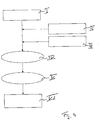
- Fig. 1 a possible manufacturing process of a protein concentrate solution is shown using the example of almond.
- almond flour for example comprising 45 to 55% by weight of protein and 11 to 16% by weight of fat, the protein content preferably being at least 50% by weight and the fat content preferably not exceeding 13% by weight.
- the plant protein is extracted in water at a dilution of 1: 4, the pH value preferably being adjusted to 5.8 to 6.5.
- a pH of 6.0 is particularly preferred.
- the extraction takes place in particular at a temperature between 15 and 25 ° Celsius, very particularly preferably at 20 ° Celsius, the extraction time being at least one hour, preferably while stirring, in particular at a speed between 300 and 600 rpm, preferably of 400 rpm
- the centrifugation at III. is preferably carried out for at least one hour at a preferred temperature between 15 and 25 ° Celsius, very particularly preferably of 20 ° Celsius.
- the centrifugation is preferably carried out at between 14,000 and 27,000 g, very particularly preferably at 27,000 g.
- the precipitated protein is then centrifuged at VII., In particular at 14,000 to 27,000 g, in particular at 27,000 g, very particularly preferably for at least 20 minutes, even more preferably for 45 minutes, in particular at a temperature between 4 and 8 ° Celsius, very particularly preferably at 8 ° Celsius.
- a supernatant is obtained in VIII. With the arrears at IX. it is an acidic protein concentrate (protein precipitate) with a protein weight fraction between 45 and 50%.
- the pH, protein and NaCI concentration are adjusted.
- the pH is preferably adjusted to a value in a range between 5.2 and 6.5, very particularly preferably to 5.4.
- the protein content is preferably set to 16 to 30% by weight, particularly preferably to 18 to 22% and the NaCl content to 0 to 3.3% by weight, very particularly preferably to 1.6 to 1.9% by weight. %.
- the result of the process at XI a protein concentrate solution suitable for carrying out a method according to the invention.
- FIG. 2 the process of aggregating a composition to obtain an aggregated product, ie a food gel body, is shown.
- an aggregator 1 is used, as exemplified in FIG Fig. 10 is shown.
- a pressure vessel 2 can be seen, which is designed for excess pressure.
- the pressure container 2 delimits an internal volume 3 (container volume) for receiving a composition designed according to the concept of the invention.
- the Pressure vessel 2 can be closed in a pressure-tight manner and can be acted upon with a back pressure above atmospheric pressure by means of back pressure setting means 4.
- Heating means 5 and coolant 6 are also assigned to pressure vessel 2.
- the heating means 5 are designed, for example, as electrical heating cartridges in the container wall, while the cooling means 6 comprise cooling channels through which a cooling medium can be conveyed.
- I. provides a composition in the form of an emulsion based on an almond protein concentrate solution.
- the composition comprises, for example, between 13 and 24% by weight of protein, between 0 and 2.8% by weight of NaCl, between 0 and 1.8% by weight of aroma, in the present case cheese flavorings and between 10 and 30% by weight of fat .
- a back pressure of, for example, at least 1.3 bar is set.
- There is a heating phase in particular with a heating rate of 6.5 and 8 K / min. to a maximum temperature between 108 ° Celsius and 120 ° Celsius.
- the heating-up phase is followed by an optional holding time at maximum temperature between 0 and 10 min, whereupon at VI. a cooling phase takes place, in particular with a cooling rate between 7 and 8.5 K / min.
- a food gel body according to the invention is obtained in VII.
- Table 10 shows preferred aggregation conditions using the example of an almond protein concentrate solution: Table 10: Aggregation conditions using the example of almond protein concentrate MIN MAX OPTIMUM Heating phase (K / min) 6.5 8.0 8.0 Holding time (min ) 0 10th 0 Cooling phase (K / min) 7.0 8.5 8.5 Temperature (° C) 108 120 113
- the following table 11 shows preferred minimum and maximum and optimal maximum temperatures, to which different compositions based on different plant protein concentrate solutions shown in the table are heated in the aggregator during the heating phase, where T-min denotes a preferred minimum maximum temperature to be set, T-max a preferred maximum temperature to be selected and T-opt. an optimally adjustable maximum temperature for aggregation.
- Table 11 preferred minimum, maximum and optimal maximum temperatures for the aggregation of composition based on different vegetable protein concentrate solutions T min (° C) T max (° C) T opt. (° C) Almond protein 108 120 113 Mung protein 95 108 100 Coconut protein 108 120 113 Chickpea protein 108 120 113 Oat protein 118 125 120 Peanut protein 110 120 115
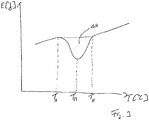
- Fig. 3 a typical DSC curve from a dynamic differential calorimetry measurement of a suitable plant protein concentrate solution is shown. It can be seen that the specific, converted thermal energy is plotted against the temperature in the diagram. The curve shows an endothermic peak, the peak area representing the enthalpy of denaturation ⁇ H of the proteins contained.
- the peak extends over a peak temperature range which ranges from a peak start temperature T A to a peak end temperature T E.
- the peak has a maximum at a peak maximum temperature T M.
- the maximum temperature to which a composition is preferably heated for aggregation is preferably in the range of the peak end temperature T E , in any case above the peak maximum temperature T M.
- a separate representation of a DSC curve from a dynamic differential calorimetry measurement of a composition was dispensed with.
- the above explanations of the endothermic peak and the associated temperatures apply analogously.
- the endothermic peak of the DSC curve of the composition can be shifted on the temperature axis compared to the endothermic peak of the DSC curve of the associated protein concentrate solution, with NaCl addition further to the right.
- protein concentrate solution in particular its NaCL content in connection with the preparation of the composition, for example by adding water, the peak can be shifted further to the left, ie towards lower temperatures.
- the peak temperatures from the DSC curve of the composition are decisive for the selection of the maximum temperature for aggregating the composition.
- a protein concentrate solution based on almond protein is provided. This is preferably characterized by a protein content between 16 and 30% by weight, in particular between 18 and 22% by weight, and by an NaCl content between 0 and 3.3% by weight, preferably between 1.6 and 1.9% by weight.
- the protein concentrate solution is also preferably characterized by a pH between 5.2 and 6.5, in particular 5.4.
- meltted fat especially coconut fat
- aroma is added, for example between 0 and 2% by weight.
- An emulsification step takes place, in particular for 1 to 3 minutes at preferably 8,000 to 20,000 rpm. Emulsification is very particularly preferably carried out for 2 min at a speed between 15,000 and 20,000 rpm.
- an evacuation step at five for removing gas bubbles and / or destroying the foam formed during the emulsification process, in particular for 2 to 5 minutes, more preferably for 3 minutes.
- the pressure for the evacuation is preferably reduced to 100 to 300 mbar, very particularly preferably to 150 m bar - the evacuation is preferably carried out at a temperature between 20 and 25 ° Celsius.
- VI. obtain a composition in the form of a protein-based almond emulsion, which is preferably characterized by a protein weight fraction between 13 and 24% by weight, preferably between 15 and 17.5% by weight, an NaCl content between 0 and 2.8% by weight %, in particular between 1.3 and 1.6% by weight, an aroma content between 0 and 1.8% by weight and a fat content between 10 and 30% by weight, in particular between 15 and 20% by weight.
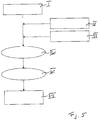
- FIG. 5 An exemplary process of manufacturing a composition based on a mung bean protein concentrate solution is shown. This is provided by I. and is preferably characterized by a protein weight fraction between 16 and 30% by weight, in particular between 18 and 22% by weight, an NaCl content between 0 and 3.3% by weight, in particular between 1.4 and 1.7% by weight and a pH between 5.2 and 6.5, preferably of 5.8.
- Steps II. To V. are then identical to those in connection with Fig. 4 explained.
- the result of the procedure in VI. receive a composition in the form of a protein-based mung bean emulsion, the preferred protein, NaCl, flavor and fat contents according to those from the exemplary embodiment Fig. 4 correspond.
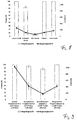
- the strength and breaking strength increase with decreasing water content, at the same time the elasticity decreases. While the young Gouda still has an elasticity of 95%, this drops to 85 and 46% in the middle-aged and old Gouda. Edam and Emmental are both in the same range as young Gouda, namely 95 and 93%.
- the strength and breaking strength of the old Gouda are highest at 70 and 72N respectively, with the water content being the lowest here at 31% by weight.
- the middle-aged Gouda has an almost half as strong structure (strength: 32.7N; breaking strength: 37.9N), with the water content being only 4.5% by weight higher lies.
- the water content of Edamer and Gouda is highest at 45 and 41%, the strengths are therefore lowest at 17.6 and 17.2N, or 27.3 and 29.1N breaking strength.
- the Emmentaler is shortly behind the two, with a strength of 25N and a breaking strength of just under 42N.
- the water content of the aggregated concentrates is around 70% and 73% by weight for almond and mung bean, respectively. In the case of the recipes (see example 2 and example 6), this drops to 55 or 57% by weight (almond or mung bean) due to the addition of fat.
- the strengths and breaking strengths as well as the elasticities can be compared with conventional grades.
- the almond gel without the addition of fat has the highest strength (38N) or breaking strength (65N), and shows a very high elasticity (95%), which is comparable to a young Gouda.
- the breaking strength of the almond sample is 26N, which is in the Edamer range.
- the elasticity remains almost identical, around 95%.
- the Mung bean sample without the addition of fat has a strength that is equivalent to the middle-aged Gouda (32N), with a slightly higher breaking strength of 52N. At 91%, the elasticity is just below an Emmental sample.
- the Mung bean recipe benefits from the added fat in terms of elasticity and reaches a value of almost 96%.
- the strength and breaking strength are 31 and 42N, respectively.
- the aggregated lupine protein concentrate shows significantly poorer values in all areas. The strength and breaking strength are the same, since the sample breaks at a low penetration depth. These values are 0.9N.
- the elasticity of the sample is also extremely low at 27.5%. It can be seen from this that the aggregate of a composition based on lupine protein does not belong to the invention, but only serves as a comparative approach.
- the slices of young Gouda, Edam and Emmental are still intact after a complete compression cycle and therefore have a bending capacity of 100%.
- a force of approx. 125mN is required for a complete compression of the Edamer, whereas Emmentaler requires around 50mN more force on average.
- Young Gouda has the highest flexural strength. Here the value is around 260mN.
- the older and less elastic cheeses of the Middle Ages and old Gouda cannot withstand the bending test.
- the middle-aged Gouda breaks after about 83% of the way.
- the bending strength (corresponds to the force at break) is accordingly lower, namely at 115mN.
- the old Gouda has an extremely poor ability to bend. It breaks after 6.5% of the distance, after a force of just under 52mN.
- the samples without additives (22% by weight protein, almond: 1.6% by weight NaCl, mung. 1.4% by weight NaCl) both have a very high bendability.
- the almond sample shows an analogous behavior to the young Gouda, Edam and Emmentaler, with 100% flexibility.
- the bending strength is comparatively very high, with 1037mN.
- the sample of mung protein concentrate has a bendability of almost 96%, with a bend strength of 424mN.
- 20% by weight of fat is added to the almond protein concentrate (see recipe example 2)
- the bendability drops to 87%, which is equivalent to a structure between a young and a middle-aged Gouda.
- the bending strength drops significantly to 176mN, which is in the area of the Emmental.
Landscapes
- Life Sciences & Earth Sciences (AREA)
- Chemical & Material Sciences (AREA)
- Engineering & Computer Science (AREA)
- Food Science & Technology (AREA)
- Polymers & Plastics (AREA)
- Health & Medical Sciences (AREA)
- Nutrition Science (AREA)
- Biochemistry (AREA)
- Molecular Biology (AREA)
- Agronomy & Crop Science (AREA)
- Botany (AREA)
- Manufacturing & Machinery (AREA)
- Peptides Or Proteins (AREA)
- Jellies, Jams, And Syrups (AREA)
- Seeds, Soups, And Other Foods (AREA)
- General Preparation And Processing Of Foods (AREA)
Abstract
a) Bereitstellen einer Zusammensetzung bestehend aus oder umfassend eine wässrige Pflanzenproteinkonzentratlösung
b) Aggregieren der Zusammensetzung in einem Druckbehälter (2) durch Aufheizen der Zusammensetzung auf eine Maximaltemperatur danach Abkühlen der Zusammensetzung auf eine unterhalb von 100°C und unterhalb der Peakanfangstemperatur (7) liegende Kühltemperatur,
c) Durchführen des Aufheizens und Abkühlens bei einem auf die Zusammensetzung wirkenden, über Atmosphärennormaldruck liegenden Gegendruck in dem Druckbehälter (2), derart, dass ein Sieden der Zusammensetzung verhindert wird.
Description
- Die Erfindung betrifft ein Verfahren gemäß Anspruch 1 zum Herstellen eines schnittfesten, insbesondere veganen, Lebensmittelgelkörpers, vorzugsweise eines Lebensmittel-Gelblocks, auf der Basis von pflanzlichen Proteinen. Der Lebensmittelgelkörper zeichnet sich durch eine kontinuierliche Phase aus miteinander aggregierten, d.h. dreidimensional vernetzten Pflanzenproteinen und Wasser aus, also durch eine dreidimensionale Pflanzenproteinmatrix. Des Weiteren betrifft die Erfindung einen elastischen und schnittfesten, bevorzugt veganen, Lebensmittelgelkörper, vorzugsweise Lebensmittel-Gelblock gemäß Anspruch 14, insbesondere als Ergebnis des erfindungsgemäßen Verfahrens. Darüber hinaus betrifft die Erfindung einen Aggregator, d.h. eine Vorrichtung gemäß Anspruch 15 zur Durchführung des erfindungsgemäßen Verfahrens sowie zur Herstellung des erfindungsgemäßen Lebensmittelgelkörpers. In diesem Zusammenhang sei ausdrücklich auch die entsprechende Verwendung eines erfindungsgemäßen Aggregators als erfindungswesentlich offenbart.
- Bisher auf dem Markt erhältliche, schnittfeste vegane Lebensmittelgelkörper, beispielsweise in Form von Käseersatzscheiben werden auf Basis von Stärkegelen hergestellt. Hierbei kommen auch Hydrokolloide zur Anwendung. Die bekannten Stärkegelkörper zeichnen sich durch einen geringen Proteingehalt aus. Möchte man alternative Produkte mit hohem Proteingehalt herstellen, erkennt man, dass der Zusatz von pflanzlichen Proteinen zu einer Kohlenhydrat- bzw. Stärkematrix aufgrund einer eingeschränkten Mischbarkeit begrenzt ist, wenn das Produkt weiterhin ein elastisches Gelsystem sein soll. Höhere Anteile von pflanzlichen Proteinen führen nämlich zu einer Zerstörung des elastischen Stärkegels, woraus eine eher breiige und somit unelastische und nicht mehr schnittfeste Masse resultiert. In der Praxis werden daher lediglich geringe Mengen pflanzlicher Proteine (etwa 1 bis 2 Gew.-%) dem Kohlenhydrat-Gelsystem zugesetzt. Schnittfeste vegane, hochelastische Wurstersatzwaren ohne den Zusatz von technischen Hilfsstoffen wie Transglutaminase oder Hydrokolloiden, sind bisher im Einzenhandel nicht erhältlich. Bei vegetarischen Alternativen basiert das Gelsystem im Allgemeinen auf der Koagulation von Hühnereiweiß, da Hühnereiweiß-Gele vergleichsweise unempfindlich sind gegenüber Zusätzen jeglicher Art.
- Es besteht daher Bedarf an einem Lebensmittelgelkörper sowie an einem Verfahren zu dessen Herstellung, der sich durch einen hohen Pflanzenproteingehalt auszeichnet und der darüber hinaus als elastisches Gelsystem ausgebildet ist.
- Extraktionsverfahren zur Gewinnung und Aufkonzentrierung von Pflanzenproteinen sind vielfältig in der wissenschaftlichen Literatur sowie in der Patentliteratur beschrieben, bei denen die Funktionalität der Proteine erhalten bleibt.
- So wurde zum Beispiel in: "Ultracentrifugal and Polyacrylamide Gel Electrophoretic Studies of Extractability and Stability of Almond Meal Proteins" von Wolf & Sathe 1998 die Extraktion von Mandelproteinen bei unterschiedlichen Bedingungen weitreichend beschrieben.
- In der
GB 1 318 596 A1 - Die
DE 10 2014 005 466 A1 beschreibt die Gewinnung von Rapsprotein. - Die Extraktion von Haferprotein ist beispielsweise in der
US 2016/030 9762 A1 beschrieben. - Die
US 2017/023 8590 A1 beschreibt Verfahren zur Extraktion von Mungbohnenprotein zur Herstellung von Rühreiersatz. - Darüber hinaus existieren eine Vielzahl weiterer Quellen für pflanzenprotein-spezifische Extraktionsverfahren, bei denen die Proteinfunktionalität erhalten bleibt. In der industriellen Praxis werden die Extrakte in der Regel jedoch im Rahmen eines Sprühtrocknungsschrittes getrocknet, welcher zur Denaturierung der Proteine führt.
- In der
EP 2 984 936 A1 ist die Gewinnung eines gelierfähigen Mungbohnenproteinkonzentrats beschrieben. - Ausgehend von dem vorgenannten Stand der Technik, liegt der Erfindung die Aufgabe zugrunde, einen elastischen, insbesondere veganen, schnittfesten Lebensmittelgelkörper auf Basis von Pflanzenproteinen sowie ein Verfahren zu dessen Herstellung anzugeben. Darüber hinaus besteht die Aufgabe darin, einen Aggregator zur Durchführung des Verfahrens bzw. zur Herstellung des Lebensmittel-Gelblocks vorzuschlagen.
- Diese Aufgabe wird hinsichtlich des Verfahrens mit den Merkmalen des Anspruchs 1, hinsichtlich des Lebensmittelgelkörpers mit den Merkmalen des Anspruchs 14 und hinsichtlich des Aggregators mit den Merkmalen des Anspruchs 15 gelöst.
- Vorteilhafte Weiterbildungen der Erfindung sind in den Unteransprüchen angegeben. In den Rahmen der Erfindung fallen sämtliche Kombinationen aus zumindest zwei von in der Beschreibung, den Ansprüchen und/oder den Figuren angegebenen Merkmalen.
- Zur Vermeidung von Wiederholungen sollen verfahrensgemäß offenbarte Merkmale auch als vorrichtungsgemäß offenbart gelten und beanspruchbar sein. Ebenso sollen vorrichtungsgemäß offenbarte Merkmale auch als verfahrensgemäß offenbart gelten und beanspruchbar sein. Gegenstand der Offenbarung ist zudem die Verwendung des erfindungsgemäßen Aggregators zur Durchführung des erfindungsgemäßen Verfahrens sowie zur Herstellung des erfindungsgemäßen Lebensmittelgelkörpers.
- Der Erfindung liegt der Gedanke zugrunde, einen, insbesondere veganen, schnittfesten Lebensmittelgelkörper aus geeigneten Pflanzenproteinen, wie beispielsweise Mandelproteinen, Cashewproteinen, Mungbohnenproteinen, Kokosproteinen, Kichererbsenproteinen, Erdnussproteinen, Haferproteinen, etc. herzustellen bzw. anzugeben, der sich dadurch auszeichnet, dass die Pflanzenproteine das gelartigelastische Netzwerk ausbilden, d.h. die kontinuierliche Phase des Lebensmittelgelkörpers darstellen. Andere, fakultative Zusätze (bezogen auf das Gelnetzwerk auch Störgrößen bezeichenbar) wie Fett, Zucker, Salz, geschmacksgebende Zutaten, wie z.B. Kräuter, Farb- und/oder Aromastoffe dienen, falls zugesetzt, als Füllstoffe innerhalb dieser kontinuierlichen Phase und/oder als Geschmacksträger. Die erhaltenen Lebensmittelgelkörper, insbesondere in Form von Gelblöcken, können als Käse- oder Fleisch- bzw. Wurstwarenersatzlebensmittel dienen. Die Weiterverarbeitung zu Blöcken, Scheiben, Raspeln (shreds), Würfel, Stiften, etc. ist ohne Weiteres möglich und ist hiermit als Weiterbildung der Erfindung bzw. bevorzugte Ausführungsform offenbart.
- Ausgangsbasis für das erfindungsgemäße Verfahren zur Herstellung des Lebensmittelgelkörpers ist eine wässrige Pflanzenproteinkonzentratlösung, wobei sich die darin enthaltenen Pflanzenproteine durch eine hohe, insbesondere eine vollständige, Funktionalität auszeichnen. Dieses native Verhalten wird im Rahmen des erfindungsgemäßen Verfahrens benötigt, um die Proteine zu aggregieren, d.h. dreidimensional zu einem Pflanzenproteingelsystem zu vernetzen.
- Zum Erhalten einer für das erfindungsgemäße Verfahren geeigneten Pflanzenproteinkonzentratlösung, d.h. zur Extraktion und Aufkonzentration von Pflanzenproteinen kann auf an sich bekannte Verfahren zurückgegriffen werden, die bevorzugt auf die jeweilige Proteinsorte bzw. Rohstoffquelle optimal angepasst sind.
- Allgemein ist es bevorzugt und in Weiterbildung der Erfindung vorgesehen, die pflanzlichen Rohstoffe, wie beispielsweise Mandel, Erdnuss, Kokosnuss oder Kichererbse, Erbse oder Bohne, etc. einer Vorbehandlung zu unterziehen. Ölhaltige Samen können beispielsweise durch Auspressen in einer Ölpresse weitestgehend vom Öl befreit werden, insbesondere bis ein Restölgehalt zwischen 10 und 12 Gew.-% verbleibt, woraufhin die ausgepressten Samen bzw. der Presskuchen vermahlen werden können/kann. Der Presskuchen sowie das Mehl daraus sind ein idealer Ausgangsstoff für die Extraktion von Proteinen. Stärkehaltige Samen, wie beispielsweise Leguminosen können entweder eingeweicht oder direkt vermahlen und dann der Extraktion zugeführt werden. Sämtliche dieser Vorbereitungsschritte sind dem Fachmann bekannt.
- Die Extraktion verläuft bevorzugt nach folgendem Grundschema: Der, insbesondere vermahlene, pflanzliche Rohstoff wird in einer Verdünnung von insbesondere 1:4 bis 1:10 mit Wasser vermengt. Je nach Rohstoff wird der pH-Wert des Wassers auf einen Wert zwischen 5,8 und 9,6, in Abhängigkeit des Rohstoffs, eingestellt. Der NaCI-Gehalt liegt im Allgemeinen zwischen 0 Mol/l und 2 Mol/l. Während der Extraktion wird bevorzugt in Abhängigkeit des Rohstoffs eine Temperatur zwischen 10° Celsius und 50° Celsius gehalten, wobei die jeweilige Suspension minimal zwischen 1 und 5 Stunden gerührt wird. Hierbei lösen sich die Proteine aus dem Rohstoff und befinden sich danach in gelöstem Zustand in der Lösung. Vorzugsweise folgt daraufhin ein Filtrationsschritt und in vielen Fällen eine Zentrifugation der filtrierten Suspension um unerwünschte Festkörperbestandteile abzutrennen. Der Überstand wird weiter verarbeitet.
- In den meisten Fällen wird vorzugsweise eine pH-gesteuerte Ausfällung der Proteine herbeigeführt, insbesondere bei pH-Werten zwischen 4,5 und 5,6. Zur Abtrennung der Proteine erfolgt eine Zentrifugation, wobei das resultierende Proteinpräzipitat üblicherweise einen Wassergehalt zwischen 50 Gew.-% und 80 Gew.-% aufweist.
- Die Proteine werden dann üblicherweise wieder in Lösung gebracht, wobei die Rückverdünnung mit einer wässrigen Lösung erfolgt, deren pH-Wert so eingestellt ist, dass nach der Rückverdünnung die wässrige Proteinkonzentratlösung einen pH-Wert zwischen 4,5 und 7,5, insbesondere zwischen 5,4 und 7,2 aufweist. Dabei ist die Pufferwirkung der Proteine zu berücksichtigen. Die Lösung zur Rückverdünnung kann auch NaCl enthalten, insbesondere zwischen 0,5 und 2 Gew.-%, je nach Proteinherkunft. Bevorzugt zeichnet sich die fertige Proteinkonzentratlösung durch eine Proteinkonzentration zwischen 12 und 35 Gew.-% aus, insbesondere zwischen 16 und 30 Gew.-%, ganz besonders bevorzugt zwischen 18 und 22 Gew.-%.
- Wichtig ist, dass die Proteine nach dem Ausfällen nicht getrocknet werden, um eine hohe, bevorzugt volle Funktionalität zu erhalten. Zur Haltbarmachung können die Proteinkonzentrate beispielsweise eingefroren oder in Abhängigkeit der Proteinsorte auch pasteurisiert werden.
- In Weiterbildung der Erfindung ist die Herstellung der Pflanzenproteinkonzentratlösung Bestandteil bzw. vorgelagerter Verfahrensschritt des erfindungsgemäßen Verfahrens.
- Wie erwähnt, müssen sich die extrahierten Pflanzenproteine der zum Einsatz kommenden Pflanzenproteinkonzentratlösung durch eine ausreichend hohe, insbesondere volle Funktionalität auszeichnen. Eine zur Durchführung des erfindungsgemäßen Verfahrens geeignete Pflanzenproteinkonzentratlösung zeichnet sich dadurch aus, dass sie in einer aus einer dynamischen Differenz-Kalorimetrie-Messung resultierenden, dem Zusammenhang zwischen der spezifischen umgesetzten Wärmeenergie und der Temperatur beschreibenden DSC-Kurve einen endothermen Peak aufweist, der gekennzeichnet ist durch eine Peaktemperaturspanne, über die sich der Peak erstreckt, die begrenzt ist durch eine Peakanfangstemperatur und eine Peakendtemperatur. Anders ausgedrückt kann durch vorstehend genannte und im Folgenden noch im Detail erläuterte Untersuchungsmethode (Differenz-Kalorimetrie-Messung) überprüft werden, ob es sich um eine geeignete bzw. im Rahmen der Erfindung liegende Pflanzenproteinkonzentratlösung handelt, deren Proteine eine hohe bzw. ausreichende Funktionalität aufweisen. Dies ist dann der Fall, wenn ein vorstehend genannter und im Folgenden noch weiter beschriebener Peak feststellbar ist, wobei es besonders bevorzugt ist, wenn die Denaturierungsenthalpie (entspricht der Peakfläche) mindestens 10J/g Protein beträgt. Zur Durchführung der Differenz-Kalorimetrie-Messung werden 50 bis 100 mg des Pflanzenproteinkonzentrats mit bekanntem Proteingehalt in einem Stahlgefäß mit einem Volumen von 100µl eingewogen und druckdicht verschlossen. Ein weiteres Stahlgefäß ist mit Wasser gefüllt und dient bei der Messung als Referenz. Als Messsystem kommt bevorzugt Mettler Toledo Typ DSC 1 Star zum Einsatz. Die Differenz-Kalorimetrie-Messung besteht in der Durchführung eines Temperatur-Scans mit einer Aufheizrate von 2 K/min. Der Scanbereich startet bei 25° Celsius und endet bevorzugt bei 130° Celsius. Ein Denaturieren der Proteine in einem spezifischen Temperaturbereich wird in der erhaltenen DSC-Kurve als endothermer Peak sichtbar. Ein solcher Peak ist durch eine Peakanfangstemperatur, eine Peakmaximumtemperatur, d.h. eine Temperatur am Peakmaximum, insbesondere zwischen 90° Celsius und 125° Celsius sowie eine Peakendtemperatur gekennzeichnet. Der Temperatur-Bereich, d.h. die Peaktemperaturspanne, die dabei zwischen Peakanfangstemperatur und Peakendtemperatur überstrichen wird, ist bevorzugt zwischen 25° Celsius und 40° Celsius, insbesondere zwischen 30° Celsius und 35° Celsius breit. Die Peak-Fläche des endothermen Peaks in der DSC-Kurve ist ein Maß für das Ausmaß der Denaturierung. Unterschiedliche Proteine haben dabei unterschiedliche Denaturierungsenthalpien. Diese liegen bevorzugt bei besonders geeigneten Pflanzenproteinkonzentratlösungen oberhalb von 10 J/g Protein, ganz besonders bevorzugt zwischen 12 J/g und 30 J/g Protein. Für eine jeweilige, d.h. bestimmte Proteinsorte ist die Denaturierungsenthalpie ein Maß dafür, wie viel des vorhandenen Proteins noch nativ vorliegt, also eine Funktionalität aufweist und wie viel schon denaturiert ist. Ein möglichst großer Wert ist anzustreben.
- Im Rahmen der Erfindung wurde festgestellt, dass zwar die Ausbildung eines Peaks in einer DSC-Kurve bei einer Differenz-Kalorimetrie-Messung einer zum Einsatz kommenden Pflanzenproteinkonzentratlösung eine erste notwendige Voraussetzung für die Eignung und Ausbildung bzw. Beschaffenheit der Pflanzenproteinkonzentrat-Lösung zur Durchführung eines erfindungsgemäßen Verfahrens ist, dass jedoch das Denaturieren der Pflanzenproteine nicht gleichbedeutend mit ihrem Aggregrationsverhalten, d.h. Gelbildungsverhalten ist. Mit anderen Worten müssen sich die Pflanzenproteine der zum Einsatz kommenden Pflanzenproteinkonzentratlösung nicht nur durch native, d.h. noch denaturierbare Pflanzenproteine auszeichnen, sondern zusätzlich durch ein geeignetes Gelbildungsverhalten als zweite BeschaffenheitsVoraussetzung. So zeigt beispielsweise eine Pflanzenproteinkonzentratlösung auf Basis von Lupinenprotein bei einer wie beschrieben durchgeführten Differenz-Kalorimetrie-Messung durchaus einen deutlichen Peak, bildet jedoch trotzdem keine elastischen Gele aus. Vermutlich sind die Ursachen hierfür auf molekularer Ebene zu suchen. Es wird vermutet, dass eine wesentliche Voraussetzung zur Gelbildung das nach Außen-Falten der internen SH-Gruppen der Proteine ist, die dann miteinander unter Bildung von Disulfidbrücken reagieren können. Darüber hinaus werden mehr oder wenige starke hydrophobe Wechselwirkungen zwischen den Proteinen eingegangen.
- Ob die zum Einsatz kommende Pflanzenproteinkonzentratlösung also ein zur Durchführung des erfindungsgemäßen Verfahrens ausreichendes Aggregationsverhalten aufweist bzw. ob die eingesetzte Pflanzenproteinsorte zur Durchführung des erfindungsgemäßen Verfahrens geeignet ist (Lupine ist dies beispielsweise nicht), also die zweite Beschaffenheitsvoraussetzung erfüllt, kann mittels der Oszillationsrheologie überprüft werden. Der Vorteil dieser Methode besteht darin, dass die gemessene Substanz, vorliegend also die zum Einsatz kommende Pflanzenproteinkonzentratlösung durch die Messung in keiner Weise beeinflusst wird, da diese nicht gerührt wird, sondern das Messsystem nur um einen kleinen Winkel oszilliert. Zur Durchführung der Oszillationsrheologie wird die Pflanzenproteinkonzentratlösung in ein geeignetes Stahlgefäß (Becher: C25 DIN-System) eingefüllt und zwar zwischen 10 und 15 ml. Das Stahlgefäß wird druckdicht verschlossen. Die Messung der rheologischen Eigenschaften erfolgt mittels des Zylinders (C25 DIN-System) der sich mit der Proteinkonzentratlösung in dem Stahlgefäß (Becher) befindet. Der Antrieb des Zylinders im Becher erfolgt über eine Magnetkupplung, so dass das System absolut druckdicht ist. Für die Messung kommt bevorzugt das Messsystem Bohlin Gemini HRnano Koaxialer Zylinder (C25 DIN3019) zum Einsatz. Gemessen werden G' und G", also der elastische und der viskose Anteil des viskoelastischen Konzentrates. Die beiden Anteile G' und G" verändern sich beim nachfolgenden Temperaturprogramm. Gestartet wird bei 25° Celsius. Dann erfolgt eine schnelle Erhitzung mit einer Aufheizrate zwischen 3 K/min und 5 K/min bis auf die jeweilige Peak-Endtemperatur aus der vorhergehenden Differenz-Kalorimetrie-Messung. Eine kurze Haltezeit zwischen 2 und 5 min bei dieser Temperatur stellt sicher, dass das Pflanzenproteinkonzentrat auch vollständig dieser Temperatur ausgesetzt war. Danach wird schnell mit einer Abkühlrate zwischen 3 K/min und 5 K/min abgekühlt. Während des vorgenannten Temperaturprogramms werden kontinuierlich G' und G" aufgezeichnet. Während der Aufheizphase wird, insbesondere im Bereich der Peak-Anfangstemperatur bei geeigneten Pflanzenproteinkonzentratlösungen mit einem zur Durchführung des erfindungsgemäßen Verfahrens geeigneten bzw. ausreichenden Aggregationsverhaltens ein extremer Anstieg der G'-Werte (Speichermodulwerte) beobachtet. Zur Durchführung des erfindungsgemäßen Verfahrens ist die Pflanzenproteinkonzentratlösung dann geeignet, wenn das Speichermodul noch während der Aufheizphase um mindestens den Faktor 6, insbesondere den Faktor 6-12, ganz besonders bevorzugt den Faktor 7 bis 12 ansteigt, verglichen mit dem Speicherwert zu Beginn der Messung, insbesondere bei 25° Celsius. Lupinenprotein erreicht diesen Faktor nicht. Das Speichermodul G' steigt dann beim Abkühlen weiter an, bis das Gel verfestigt ist. Charakteristisch für ein für das erfindungsgemäße Verfahren geeignetes Aggregationsverhalten ist jedoch der Anstieg von G' während der Aufheizphase im Bereich zwischen der Peakanfangstemperatur und der Peakendtemperatur - überraschend steigt das Elastizitätsmodul mit zunehmender Temperatur bis zum Erreichen der Peakendtemperatur an.
- Die Auswahl bzw. Eignung des eingesetzten Pflanzenproteinkonzentrates (Pflanzenproteinkonzentratlösung) ist wesentlicher Bestandteil der Erfindung. Die zuvor beschriebenen Tests dienen zur Charakterisierung einer Pflanzenproteinkonzentratlösung zur Durchführung der Erfindung bzw. dienen zur Definition einer geeigneten Beschaffenheit der Pflanzenproteinkonzentratösung. Auf Basis einer geeigneten Pflanzenproteinkonzentratlösung kann eine Zusammensetzung (Rezeptur) als Basis für den erfindungsgemäßen Aggregationsvorgang hergestellt werden. Die Zusammensetzung kann im einfachsten Fall ausschließlich aus der Pflanzenproteinkonzentratlösung bestehen oder, was bevorzugt ist, mindestens eine weitere Zutat, wie Fett und/oder Zucker und/oder Salz und/oder Aroma und/oder Farbstoff enthalten. Der Gesamtproteingehalt der Zusammensetzung trägt bzw. wird eingestellt auf einen Wert zwischen 12 Gew.-% und 28 Gew.-%. Die im Rahmen der vorliegenden Anmeldung offenbarten Proteingehalte bzw. -anteile werden bevorzugt bestimmt mittels Stickstoffbestimmung nach Kjeldahl (AOAC 991.20 "Cheese-Method").
- Ebenso wie die Proteinkonzentratlösung zeichnet sich die Zusammensetzung dadurch aus, dass diese in einer aus einer dynamischen Differenz-Kalorimetrie-Messung resultierenden, den Zusammenhang zwischen der spezifischen umgesetzten Wärmeenergie und der Temperatur beschreibenden DSC-Kurve einen endothermen Peak aufweist, der gekennzeichnet ist durch eine Peaktemperaturspanne, über die sich der Peak erstreckt, die begrenzt ist durch eine Peakanfangstemperatur und eine Peakendtemperatur. Die Ermittlung der DSC-Kurve der Zusammensetzung mit ihrem endothermen Peak sowie der zugehörigen Peaktemperaturen, wie der Peakanfangstemperatur, der Peakendtemperatur, der Peaktemperaturspanne und der Peakmaximumtemperatur erfolgt wie zuvor im Zusammenhang mit der Proteinkonzentratlösung beschrieben, mit dem Unterschied, dass anstelle der Proteinkonzentratlösung 50 bis 100mg der Zusammensetzung untersucht bzw. der Differenz-Kalorimetrie-Messung unterzogen werden. Konkret bedeutet dies, dass zur Durchführung der Differenz-Kalorimetrie-Messung der Zusammensetzung 50 bis 100 mg der Zusammensetzung mit in einem Stahlgefäß mit einem Volumen von 100µl eingewogen und druckdicht verschlossen werden. Ein weiteres Stahlgefäß ist mit Wasser gefüllt und dient bei der Messung als Referenz. Als Messsystem kommt bevorzugt Mettler Toledo Typ DSC 1 Star zum Einsatz. Die Differenz-Kalorimetrie-Messung besteht in der Durchführung eines Temperatur-Scans mit einer Aufheizrate von 2 K/min. Der Scanbereich startet bei 25° Celsius und endet bevorzugt bei 130° Celsius. Ein Denaturieren der Proteine in einem spezifischen Temperaturbereich wird in der erhaltenen DSC-Kurve als endothermer Peak sichtbar. Ein solcher Peak ist durch eine Peakanfangstemperatur, eine Peakmaximumtemperatur, d.h. eine Temperatur am Peakmaximum gekennzeichnet.
- Die Zusammensetzung kann im einfachsten Fall der Proteinkonzentratlösung entsprechen, oder sie unterscheidet sich bevorzugt hiervon durch Zusätze wie Fett, etc. Bevorzugt ist die Zusammensetzung vegan - in diesem Fall handelt es sich bei dem Fett bzw. den fetten um pflanzliches Fett. Denkbar ist es jedoch auch, zusätzlich oder alternativ zu pflanzlichem Fett tierisches fett einzusetzen. Je nach Art und Menge der Zusätze, wie beispielsweise NaCl führen diese zu einer Veränderung der Zusammensetzung der wässrigen Phase, wodurch der endotherme Peak der Zusammensetzung gegenüber dem endothermen Peak der Proteinkonzentratlösung auf der Temperaturachse verschoben sein kann. Wird beispielsweise im Zusammenhang mit der Herstellung der Zusammensetzung NaCl zugegeben, führt dies dazu, dass der endotherme Peak der Zusammensetzung verglichen mit dem endothermen Peak der Proteinkonzentratlösung hin zu höheren Temperaturen verschoben wird. Bevorzugt wird der NaCI-Gehalt der Zusammensetzung so eingestellt, entweder durch NaCI-Zugabe oder durch Wahl einer Proteinkonzentratlösung mit entsprechend hohem NaCl-Gehalt, dass die Peakendtemperatur des endothermen Peaks der Zusammensetzung mindestens 94°C, bevorzugt mindestens 96°C, noch weiter bevorzugt mindestens 98°C, ganz besonders bevorzugt mindestens 100°C oder darüber beträgt. Wichtig für die im Folgenden beschriebene Aggregation der Zusammensetzung ist es, dass es sich bei den im Zusammenhang mit der Aggregation der Zusammensetzung (Rezeptur) beschriebenen Peaktemperaturen um diejenigen aus der DSC-Kurve der Zusammensetzung handelt. Wenn also im Zusammenhang mit der Aggregation der Zusammensetzung von Peaktemperaturen oder Peaktemperaturen der Zusammensetzung die Rede ist, handelt es sich um Peaktemperaturen aus der DSC-Kurve der Differenz-Kalorimetrie-Messung der Zusammensetzung.
- Die Aggregation der Zusammensetzung zu einem elastischen, schnittfesten Gel findet je nach Proteinsorte und ggf. Wahl eines entsprechenden NaCI-Gehaltes im Allgemeinen erfindungsgemäß oberhalb von 100° Celsius statt. In den Fällen, in denen die Peak-Endtemperatur der Zusammensetzung, ebenfalls erfindungsgemäß, knapp unter 100° Celsius liegt (dies kann z.B. bei Mung-Bohnen-Protein der Fall sein), insbesondere oberhalb von 94° Celsius, noch weiter bevorzugt oberhalb von 98° Celsius findet erfindungsgemäß trotzdem während der Aggregation zumindest partiell eine Temperaturerhöhung der Zusammensetzung auf mindestens 100° Celsius statt - dies ist darauf zurückzuführen, dass zum Erreichen einer geeigneten Maximaltemperatur der Zusammensetzung für die Aggregation die zum Einsatz kommenden Heizmittel auf eine höhere Temperatur als diese Maximaltemperatur aufgeheizt werden müssen, um in vertretbarer Prozesszeit eine ausreichende bzw. optimale Aggregation zu erreichen, wodurch zumindest partiell in der Zusammensetzung Temperaturen von über 100° Celsius erreicht werden. Da oberhalb von 100° Celsius der Wasserdampfdruck höher ist als der umgebende Luftdruck und insbesondere als der atmosphärische Normaldruck (1013 mbar), wird die Aggregation erfindungsgemäß in einem verschließbaren, druckfesten Gefäß (Druckbehälter) durchgeführt, das bzw. der für einen entsprechenden Überdruck ausgelegt ist, insbesondere für einen Absolutdruck zwischen 1,3 und 5 bar, insbesondere zwischen 2 und 3 bar. Die Zusammensetzung wird über geeignete Heizmittel in dem Druckbehälter auf die vorerwähnte Maximaltemperatur (nicht zu verwechseln mit der geringeren Maximumtemperatur am Peakmaximum des endothermen Peaks der Zusammensetzung) erhitzt, die insbesondere zumindest partiell mindestens 100° Celsius beträgt. Die Maximaltemperatur zeichnet sich dadurch aus, dass sie oberhalb der Peakanfangstemperatur der Zusammensetzung liegt und bevorzugt oberhalb der Peakmaximumtemperatur der Differenz-Kalorimetrie-Messung der Zusammensetzung. Wie später noch erläutert werden wird, liegt die Maximaltemperatur bevorzugt im Bereich der Peakendtemperatur der Zusammensetzung. Nach Erreichen der Maximaltemperatur, insbesondere nach Einhalten einer später noch zu erläuternden, fakultativen, Heißhaltezeit wird die Zusammensetzung abgekühlt und zwar auf eine Kühletemperatur, die unterhalb von 100° Celsius liegt sowie unterhalb der Peakanfangstemperatur der Zusammensetzung. Der erfindungsgemäß zum Einsatz kommende Druckbehälter wird benötigt, um mittels eines auf die Zusammensetzung einwirkenden Gegendrucks ein Sieden und somit eine unerwünschte Blasenbildung während des Aggregationsprozesses zu vermeiden. Wie später noch erläutert werden wird, beträgt der Gegendruck zumindest dem Sattdampfdruck der Zusammensetzung bei einer jeweiligen Prozesstemperatur, bevorzugt zuzüglich eines Sicherheitsaufschlags.
- Im Hinblick auf die Bereitstellung des Gegendruckes gibt es unterschiedliche Möglichkeiten.
- Für die Aufheizphase ist es denkbar, dass sich der Gegendruck ohne weitere Maßnahmen allein durch den Erhitzungsprozess im Druckbehälter ausbildet. Zumindest jedoch für den Abkühlprozess muss zumindest zeitweise bis zum vollständigen Unterschreiten der 100°-Celsius-Grenze eine aktive Gegendruckbeaufschlagung der Zusammensetzung erfolgen, beispielsweise durch die Beaufschlagung des Druckbehälters mit einem entsprechenden Druckgas, insbesondere Druckluft. Im einfachsten Fall erfolgt der Aufbau eines geeigneten, für den gesamten Aggregations-Prozess ausreichenden Gegendrucks bereits vor und/oder während des Aufheizens. Selbstverständlich ist die Erfindung nicht darauf beschränkt, den Gegendruck durch Druckgas, insbesondere Druckluft bereitzustellen - andere Alternativen, wie beispielsweise eine mechanische und/oder hydraulische Druckkraftbeaufschlagung des Druckbehälters und/oder der Zusammensetzung, insbesondere durch Deformation des durch Volumenverkleinerung des Druckbehälters, beispielsweise durch Einfahren eines Kolbens, etc. ist denkbar - wesentlich ist, dass wie erwähnt, eine Gasblasenbildung durch Sieden unterbleibt, insbesondere und besonders während der Abkühlphase, da hier insbesondere partielle Siedegefahr im Kontaktbereich der Zusammensetzung zu umgebenden Materialien besteht. Jedenfalls sollte ein entsprechender Gegendruck oberhalb des Atmosphärendrucks zumindest für die Zeit vorhanden sein und aufrecht erhalten werden, solange die Zusammensetzung, wenn auch nur partiell, eine Temperatur von 100° Celsius oder höher aufweist. Insgesamt resultiert aus dem erfindungsgemäßen Verfahren ein, bevorzugt lufteinschlussfreier, schnittfester, bevorzugt veganer, Lebensmittelgelkörper mit einer kontinuierlichen Phase auf Basis miteinander aggregierter, d.h. dreidimensional vernetzter Pflanzenproteine, der sich durch einen hohen Proteingehalt und gute Geleigenschaften einsetzt. Der Lebensmittelgelkörper eignet sich insbesondere für den Einsatz als Käse- oder Wurstersatz und kann in Block-, Scheiben-, Raspel-, Stift- oder Würfelform, etc. bereitgestellt werden.
- Neben der Tatsache, dass sich durch das erfindungsgemäße Verfahren die Pflanzenproteingehalte in nahezu beliebiger Höhe in Produkt, d.h. in Lebensmittelgelkörper einstellen lassen, besteht ein wesentlicher Vorteil des erfindungsgemäßen Verfahrens sowie des erfindungsgemäßen Lebensmittelgelkörpers darin, dass das eigentliche Gelsystem von den Pflanzenproteinen gebildet wird und es keiner zusätzlichen Gelbildner wie beispielsweise Stärke oder Hydrokolloiden bedarf. Bevorzugt ist es daher, auf den Zusatz von Stärke und/oder Hydrokolloiden und/oder sonstigen Gelbildnern zu verzichten.
- Es hat sich gezeigt, dass es für die Qualität, d.h. die Festigkeit und Elastizität des Pflanzenproteingels vorteilhaft ist, die Peaktemperaturspanne, d.h. den Temperaturbereich des DSC-Peaks der Zusammensetzung zu einem großen Teil, insbesondere größtenteils, ganz besonders bevorzugt vollständig zu durchfahren und zwar weiter bevorzugt möglichst schnell, wobei die Zusammensetzungstemperatur nach dem Aufheizen durch Wahl einer später noch zu erläuternden, bevorzugten großen Abkühlrate möglichst rasch wieder unterhalb der DSC-Peakanfangstemperatur der Zusammensetzung gebracht werden sollte. Dabei ist es bevorzugt, dass das Pflanzenproteinkonzentrat die vorgesehene Maximaltemperatur auch vollständig erreicht. Zu langsames Hochfahren der Temperatur, unvollständiges Erreichen der Maximaltemperatur sowie zu lange Haltezeiten im Bereich der Maximaltemperatur können zu einer Verschlechterung der Gelqualität führen. Ganz besonders bevorzugt ist es, die Peakendtemperatur des Denaturierungspeaks der Zusammensetzung zu erreichen, um somit Gele mit optimalen Eigenschaften zu erzeugen.
- Konventionell werden Massen in Behältern entweder durch Erhitzen der Behälterwandung und Rühren der Massen oder aber durch direkten Eintrag von Wasserdampf erhöhter Temperatur (Direktdampf) erhitzt. Bei der Aggregation der Zusammensetzung sollte in Weiterbildung der Erfindung jedoch kein Scherkrafteintrag erfolgen, insbesondere sollte nicht gerührt werden, da hieraus eine irreversible Zerstörung der Gele erfolgen kann. Daher sollte auf Direktdampf-Eintrag verzichtet werden. Dies hat dann jedoch zur Folge, dass die Erhitzung allein durch die Wärmeleitung der Zusammensetzung erfolgt, was sehr zeitintensiv ist. Insbesondere ist auf eine Überprozessierung der Außenbereiche der Zusammensetzung durch Wahl von zu hohen Temperaturen zu achten.
- Im Hinblick auf die bevorzugte Ausbildung bzw. Beschaffenheit einer zur Durchführung des erfindungsgemäßen Verfahrens geeigneten bzw. zu gewinnenden und/oder bereitzustellenden Pflanzenproteinkonzentratlösung wurde bereits umfassend ausgeführt. Von besonderem Vorteil ist es, wenn die Pflanzenproteinkonzentratlösung neben der Ausbildung eines endothermen Peaks in der DSC-Kurve einer Differenz-Kalorimetrie-Messung und zusätzlich zu einem Anstieg (zumindest Versechsfachung) des Speichermoduls G' in einer bereits im Detail beschriebenen Oszillationsrheologie-Messung sich dadurch auszeichnet, dass diese (unter erfindungsgemäßer Beaufschlagung mit Gegendruck) zu einem Gelkörper aggregierbar ist, dessen Speichermodul G' in einem Platte-Platte-Rheometer zu einem Messwert von mindestens 30.000 Pa bevorzugt mindestens 50.000 Pa, weiter bevorzugt zwischen 50.000 Pa und 150.000 Pa, noch weiter bevorzugt zwischen 50.000 Pa und 100.000 Pa führt. Anders ausgedrückt sollte eine zur Durchführung des erfindungsgemäßen Verfahren besonders geeignete Pflanzenproteinkonzentratlösung in Weiterbildung der Erfindung als dritte Beschaffenheitsvoraussetzung durch Aggregation zu einem Gelkörper führen, der bei einer vorgenannten rheologischen Messung zu einem zuvor angegebenen Speichermodulwert G' führt.
- Zur Aggregation, d.h. zur Ausbildung eines entsprechenden Gel-Blocks mit hohem Speichermodul erfolgt die Aggregation der Pflanzenproteinkonzentratlösung, wie in Anspruch 1 im Zusammenhang mit der Aggregation der Zusammensetzung angegeben, d.h. in einem Druckbehälter durch Aufheizen auf eine Maximaltemperatur, insbesondere zumindest partiell von mindestens 100° Celsius und oberhalb der Peakanfangstemperatur der Pflanzenproteinkonzentratlösung, insbesondere auf die Peakendtemperatur, woraufhin die Pflanzenproteinkonzentratlösung bzw. das sich bereits ausgebildete Gel auf eine Temperatur unterhalb von 100° Celsius und unterhalb der Peakanfangstemperatur der Pflanzenproteinkonzentratlösung liegende Kühltemperatur abgekühlt wird, wobei das Aufheizen und das Abkühlen, zumindest im Bereich von Temperaturen von über 100° Celsius bei einem auf die Pflanzenproteinkonzentratlösung wirkenden, über AtmosphärenNormaldruck liegenden Gegendruck in dem Druckbehälter erfolgt, derart, dass ein Sieden der Pflanzenproteinkonzentratlösung vermieden wird. Zur Bestimmung des Speichermoduls G' des so erhaltenen Gelkörpers wird aus diesem eine kreisrunde Scheibe mit einem Durchmesser von 20 mm und einer Dicke bzw. Höhe von 2,5 mm gewonnen, insbesondere durch Ausstechen. Die Scheibe wird auf 16° Celsius temperiert und dann direkt auf die Messeinheit gegeben und der Spaltabstand auf 2,5 mm eingestellt. Zum Einsatz kommt dabei bevorzugt ein Bohlin-Rheometer Gemini HR Nano mit einer Platte-Platte-Messsystem (PP20). Zur Messung wird die Scheibe direkt unter die obere Platte im Rheometer platziert und soweit herunter gefahren, bis sich eine Normalkraft von 1N einstellt. Danach wird die Probe bei einem konstanten Deformationsmodus von 1% bei einer Frequenz von 1 Hz oszilliert. Die Messpunkte nach 100, 200 und 300s werden exportiert und ein Mittelwert gebildet. Pflanzenproteinkonzentratlösungen aus ungeeigneten Pflanzenproteinen, wie insbesondere Lupine, erreichen die gewünschten hohen Speichermodulwerte nicht und führen nicht zu den gewünschten hochelastischen Gelsystemen, sondern eher zu breiigen Partikelgelen.
- Besonders bevorzugt ist es, wenn die zum Einsatz kommende Pflanzenproteinkonzentratlösung einen gewissen Prozentanteil an pflanzlichen Proteinen zwischen 12 und 35 Gew.-% aufweist und/oder einen pH-Wert aus einem Wertebereich zwischen 4,0 und 7,5, insbesondere zwischen 5,4 und 7,2. Besonders bevorzugt ist es, wenn der NaCI-Gehalt der Pflanzenproteinkonzentratlösung zwischen 0 und 1,0 mol/l beträgt. Besonders vorteilhaft ist es, wenn die Pflanzenproteinkonzentratlösung so beschaffen ist, dass die mittels der vorbeschriebenen dynamischen Differenz-Kalorimetrie-Messung bestimmbare Denaturierungsenthalpie der Proteine der Pflanzenproteinkonzentratlösung mindestens 10 J/g, insbesondere zwischen 10 J/g und 30 J/g, weiter bevorzugt zwischen 15 J/g und 25 J/g beträgt. Als besonders vorteilhaft hat es sich herausgestellt, wenn das Speichermodul G' der Planzenproteinkonzentratlösung bei der vorerwähnten, u.a. in Patentanspruch 1 beschriebenen Oszillationsrheologie-Messung nach dem Durchfahren der Peaktemperaturspanne der Pflanzenproteinkonzentratlösung von der Peakanfangstemperatur in Richtung der Peakendtemperatur der Pflanzenproteinkonzentratlösung, also noch vor Beginn des Abkühlvorgangs mindestens 900 Pa beträgt und ganz besonders bevorzugt einen Wert aus einem Bereich zwischen 900 Pa und 1500 Pa, insbesondere zwischen 900 und 1200 Pa aufweist.
- Im Hinblick auf die Wahl der Größe des Gegendrucks ist es bevorzugt, wenn dieser zumindest dem Sattdampfdruck der Zusammensetzung bei der jeweiligen Temperatur der Zusammensetzung während des Aggregationsvorgangs entspricht. Bevorzugt beträgt er dabei dem Sattdampfdruck zuzüglich eines Sicherheitsaufschlags von mindestens 0,1 bar, bevorzugt von mindestens 0,25 bar oder höher.
- Wie bereits erwähnt, kann der auf die Zusammensetzung wirkende Gegendruck auf unterschiedliche Weise erzeugt und/oder appliziert werden. Am einfachsten ist es, einen entsprechend hoch gewählten und sicher ausreichenden Gegendruck bereits vor der Aufheizphase und/oder während der Aufheizphase im Druckbehälter zu applizieren. Grundsätzlich ist es, wie erwähnt, denkbar, dass sich ein (natürlicher) Gegendruck automatisch ausschließlich durch das Aufheizen der Zusammensetzung im geschlossenen Druckbehälter aufbaut. Spätestens beim Abkühlen muss für eine aktive Applizierung eines ausreichend hohen Gegendrucks gesorgt werden, um sicherzustellen, dass der vorhandene Gegendruck ausreichend groß ist, um ein Sieden zu vermeiden. Dies ist darauf zurückzuführen, dass der Gelkörper beim Erkalten in der Regel langsamer abkühlt, als ein ihn umgebendes Medium und/oder Material, wie beispielsweise eine Heizung und/oder eine Behälterwandung, wodurch es im Kontaktbereich zwischen dem Gelkörper und dem umgebenden Medium und/oder Material bei nicht ausreichendem Gegendruck zu einem partiellen Sieden und damit zu Gasblasenbildung kommen kann, was erfindungsgemäß durch Aufrechterhaltung eines ausreichenden Gegendrucks vermieden wird.
- Zur Vermeidung einer Beschädigung oder Zerstörung des Gelsystems ist es vorteilhaft, wenn während des Aufheizens und/oder des Abkühlens kein Scherkrafteintrag, beispielsweise durch Rühren, in die Zusammensetzung erfolgt. Auch ist es bevorzugt, auf eine Erwärmung durch Dampf-Direkteinspritzung zu verzichten - insgesamt ist es vorteilhaft, die Bewegung bzw. Durchmischung der Zusammensetzung während der Aggregation (Aufheiz- und Abkühlphase) auf ein Minimum einzuschränken und bevorzugt vollständig zu vermeiden.
- Wie bereits erwähnt, ist es zum Erhalten optimaler Gelsystemeigenschaften von Vorteil, die gesamte Peaktemperaturspanne des endothermen Peaks der Zusammensetzung, d.h. den Temperarturbereich zwischen Peakanfangs- und Peakendtemperatur der Zusammensetzung zumindest näherungsweise vollständig, ganz besonders bevorzugt vollständig während der Aufheizphase zu durchfahren. Als Minimum-Anforderung sollte die Maximaltemperatur, auf die die Zusammensetzung zur Aggregation aufgeheizt wird, mindestens der Peakmaximumtemperatur am Peakmaximum des endothermen Peaks der Zusammensetzung entsprechen oder weiter bevorzugt aus einem Temperaturbereich zwischen der Peakmaximumtemperatur der Zusammensetzung und der Peakendtemperatur der Zusammensetzung und/oder der Peakmaximumtemperatur der Zusammensetzung und Peakendtemperatur der Zusammensetzung zuzüglich 20% gewählt werden. Grundsätzlich ist ein geringfügiges Überschreiten der Peakendtemperatur der Zusammensetzung unkritisch. Bevorzugt ist es so, dass die Maximaltemperatur höchstens der Peakendtemperatur der Zusammensetzung zuzüglich 20% entspricht und/oder dass die Maximaltemperatur der Peakendtemperatur der Zusammensetzung +/-10° Celsius, vorzugsweise +/- 5° Celsius, insbesondere +/- 3° Celsius, weiter bevorzugt +/- 1° Celsius entspricht.
- Bevorzugt ist es, wenn die mittlere Aufheizrate, zumindest ab Erreichen der Peakanfangstemperatur der Zusammensetzung und/oder die mittlere Abkühlrate, zumindest bis zum Erreichen der Peakanfangstemperatur der Zusammensetzung mindestens 4 K/min, weiter bevorzugt mindestens 8 K/min beträgt und/oder aus einem Wertebereich zwischen 4 K/min und 15 K/min, weiter bevorzugt zwischen 8 K/min und 15 K/min gewählt ist. Besonders bevorzugt ist es, die Aufheizrate und/oder die Abkühlrate, zumindest im Temperaturbereich der Peaktemperaturspanne der Zusammensetzung, konstant zu halten.
- Je nach Pflanzenproteinsorte kann es sinnvoll sein, nach der Aufheizphase vor Beginn der Abkühlphase eine Heißhaltephase vorzusehen, insbesondere zwischen 0,5 und 10 Minuten, bevorzugt zwischen 0,2 und 1 Minute, wobei die Heißhaltetemperatur aus einem Temperaturbereich zwischen der Peakmaximumtemperatur der Zusammensetzung und der Maximaltemperatur gewählt ist und ganz besonders bevorzugt der Maximaltemperatur entspricht.
- Im Hinblick auf die Auswahl der Pflanzenproteine als Basis für eine Extraktion und Aufkonzentration zum Erhalten des zum Einsatz kommenden Pflanzenproteinkonzentrats gibt es unterschiedliche Möglichkeiten. Grundsätzlich ist es möglich, die Pflanzenproteinkonzentration sortenrein zu bilden oder als Mischung aus mindestens zwei unterschiedlichen Pflanzensorten. Bevorzugt sind die Pflanzenproteine (sortenrein oder als Mischung) gewonnen aus folgenden pflanzlichen Rohstoffen, wobei die Auswahl hierauf nicht beschränkt ist: Mandel, Mungbohne, Kokosnuss, Kichererbse, Erdnuss, Cashew, Hafer, Erbse, Bohne, Reis, Weizenkleber, Linsen, Amaranth, Bohnen, weiße Bohnen, Kidneybohnen, Favabohnen, Sojabohnen, Getreide.
- In Weiterbildung der Erfindung ist mit Vorteil vorgesehen, dass der Fettgehalt der Zusammensetzung aus einem Wertebereich zwischen 0 Gew.-% und 30 Gew.-%, insbesondere zwischen 1 Gew.-% und 30 Gew.-%, weiter bevorzugt zwischen 10 Gew.-% und 20 Gew.-% gewählt ist. Der im Rahmen vorliegender Offenbarung diskutierte Fettgehalt kann bestimmt werden nach der gängigen Soxhlet-Methode AOAC 933.05 Fat in Cheese. Zusätzlich oder alternativ zu einem, bevorzugt bei Raumtemperatur von 22° Celsius festen, Fett kann der Zusammensetzung als Zutat Zucker zugesetzt werden. Zusätzlich oder alternativ ist es bevorzugt, den NaCI-Gehalt der Zusammensetzung auf einen Wert aus einem Wertebereich zwischen 1,1 und 1,6 Gew.-% einzustellen. Insbesondere durch die Einstellung eines entsprechenden Salzgehaltes kann sichergestellt werden, was bevorzugt ist, dass die Peakendtemperatur der Zusammensetzung bei der Aggregation über 94° Celsius, vorzugsweise über 98° Celsius, ganz besonders bevorzugt mindestens 100° Celsius oder darüber beträgt und ganz besonders bevorzugt in einem Temperaturbereich zwischen 101° Celsius und 140° Celsius liegt. Insbesondere für den Fall der fakultativen Zugabe größerer Zuckermengen kann die Peakendtempertur der Zusammensetzung auch darüber liegen, da durch Zuckerzugabe (wie bei NaCI-Zugabe) der Denaturierungspeak der Zusammensetzung (verglichen mit dem Denaturierungspeak der Proteinkonzentratlösung) hin zu höheren Temperaturen verschoben wird. Die Zugabe von Zucker, insbesondere Saccharose, ist bis zu einem Gesamtzuckeranteil an der Zusammensetzung von 60Gew.-% möglich.
- Zusätzlich oder alternativ zu Fett und/oder Zucker und/oder Salz kann die Zusammensetzung mindestens eine funktionale Zutat umfassen, insbesondere aus der Substanzgruppe: farbgebende Substanz, Aroma, insbesondere Käsegeschmacksaroma, Konservierungsmittel, geschmacksgebende Zutat, insbesondere Kräuter. Bevorzugt ist es insbesondere auf Konservierungsmittel zu verzichten.
- Bevorzugt werden die Zutaten der Zusammensetzung, insbesondere dann, wenn die Zusammensetzung Fett enthält, emulgiert, insbesondere durch einen entsprechenden Scherkrafteintrag, wobei es besonders bevorzugt ist, wenn während und/oder insbesondere nach der Emulgierphase der Zusammensetzung Gasblasen entzogen und/oder bei dem Emulsionsprozess gebildeter Schaum entfernt wird und zwar durch einen Evakuierprozess bzw. -schritt bei dem die Zusammensetzung mit Unterdruck beaufschlagt wird.
- Im Folgenden werden in Form von Tabellen 1 bis 4 acht Beispielrezepturen für vorteilhafte Zusammensetzungen auf Basis einer Mandelproteinkonzentratlösung (Beispiele 1 bis 4), sowie auf Basis einer Mungbohnenproteinkonzentratlösung (Beispiele 5 bis 8) eingeblendet. Die jeweiligen Proteinkonzentratlösungen sind in den Tabellen als Proteinkonzentrat bezeichnet. Bei den angegebenen Werten handelt es sich um Gew.-%-Angaben.

Tabelle 2: Mandel Rezepturen mit funktionellen Zutaten Beispiel 3 Beispiel 4 Mandel Proteinkonzentrat (18% Protein, 1,9% NaCl) 83,8 - Mandel Proteinkonzentrat (22% Protein, 1,6% NaCl) - 78,8 Kokosfett 15 20 farbgebende Zutaten 0,2 0,2 geschmacksgebende Zutaten 1,0 1,0 Korservierungsstoffe - - Total 100 100 Fett (absolut) 15 20 Fett i.T. 44 48 Protein (absolut) 15,1 17,3 Protein/Wasser 18,7 22,9 Salz (absolut) 1,6 1,3 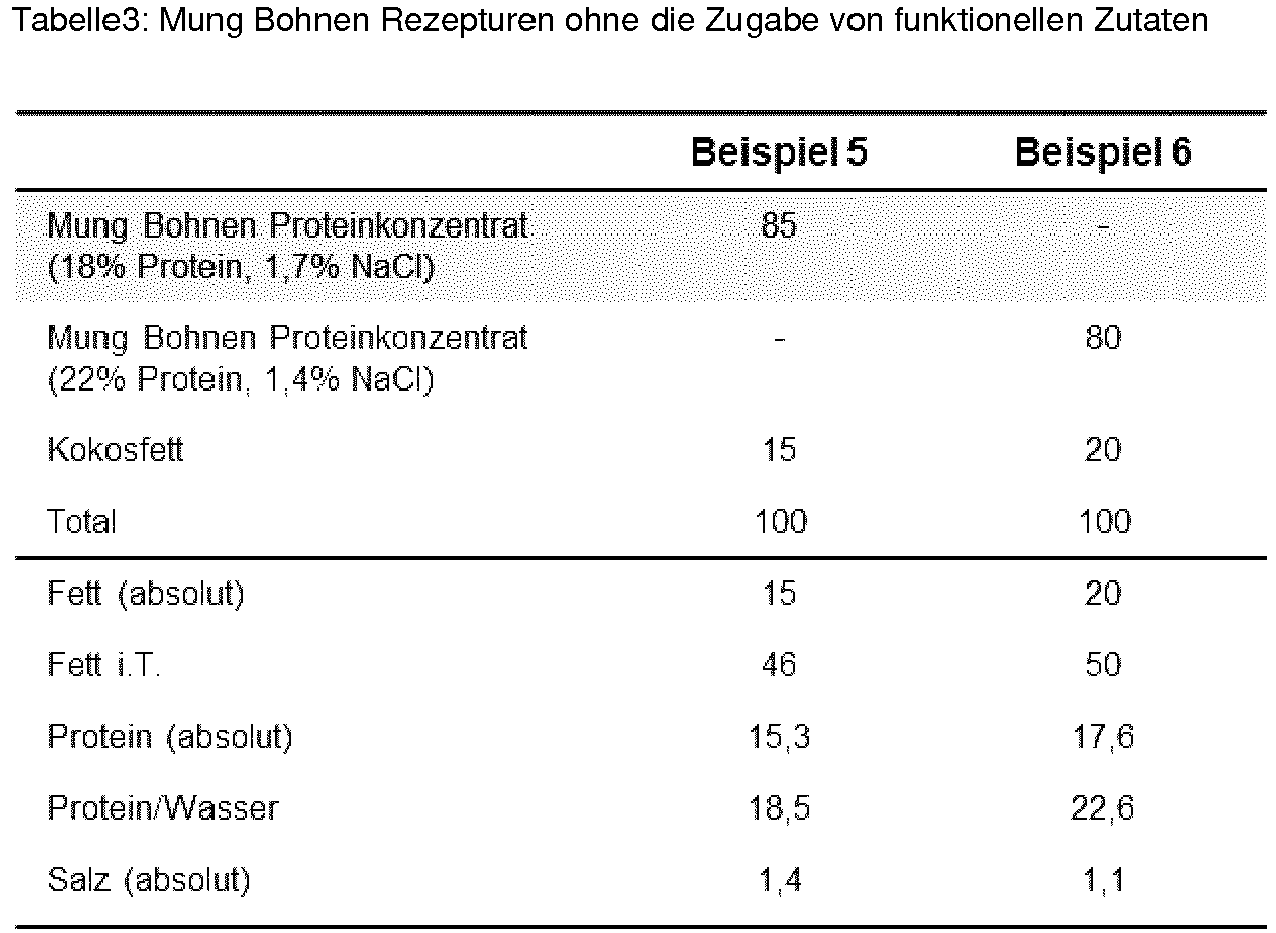
Tabelle 4: Mung Bohnen Rezepturen mit funktionellen Zutaten Beispiel 7 Beispiel 8 Mung Bohnen Proteinkonzentrat (18% Protein, 1,7% NaCl) 83,8 - Mung Bohnen Proteinkonzentrat (22% Protein, 1,4% NaCl) - 78,8 Kokosfett 15 20 farbgebende Zutaten 0,2 0,2 geschmacksgebende Zutaten 1,0 1,0 Korservierungsstoffe - Total 100 100 Fett (absolut) 15 20 Fett i.T. 46 51 Protein (absolut) 15,1 17,3 Protein/Wasser 18,2 22,2 Salz (absolut) 1,4 1,1 - Um ein kontinuierliches Proteinnetzwerk zu erhalten, ist es unabdinglich, die Menge an nicht Proteinbestandteilen zu begrenzen, da diese Störgrößen in Bezug auf die kontinuierliche Phase darstellen. Hierbei ist der Gesamtproteingehalt und der Proteingehalt im Verhältnis zur Wasserphase wichtig.

- Tabelle 5 zeigt die vorgenannten unterschiedlichen Grenzparameter, die in Weiterbildung der Erfindung von der Zusammensetzung zum Erhalten eines Proteinnetzwerkes mit gewünschten Eigenschaften, wie elastischen Eigenschaften und Festigkeitseigenschaften eingehalten werden sollten. Die Zugabe von Fett ist auf Null minimierbar, da diesem keine tragende Rolle zur Aggregation zukommt. Nach oben sollte der Fettanteil begrenzt werden, da ansonsten eine Störung der Proteinvernetzung möglich ist. Als untere Grenze zur Ausbildung eines hochelastischen Proteinnetzwerkes sollte ein Mindestgesamtproteingehalt von 12 Gew.-% und/oder ein Protein-/Wasserverhältnis von 16% eingehalten werden. Das Protein-/Wasserverhältnis bzw. der Protein-/Wassergehalt ist abhängig vom Fettgehalt. Wird dieser in der Rezeptur, d.h. der Zusammensetzung angehoben, sollte der Protein-/Wasseranteil ebenfalls angehoben werden, wie sich beispielsweise aus den weiter unten eingeblendeten Beispiel 9 ergibt. Die angegebenen Maximalwerte für den Proteingehalt bzw. das Protein-/Wasserverhältnis sollten als Prozessgrenze bewertet werden, da höhere Proteingehalte zu hoch viskosen Massen führen, welche ein vergleichsweise schwieriges Handling bedingen.
- In der im Folgenden eingeblendeten Tabelle 6 werden zwei definierte Grenzrezepturen am Beispiel einer Zusammensetzung auf Basis von einer Mandelproteinkonzentratlösung dargestellt:
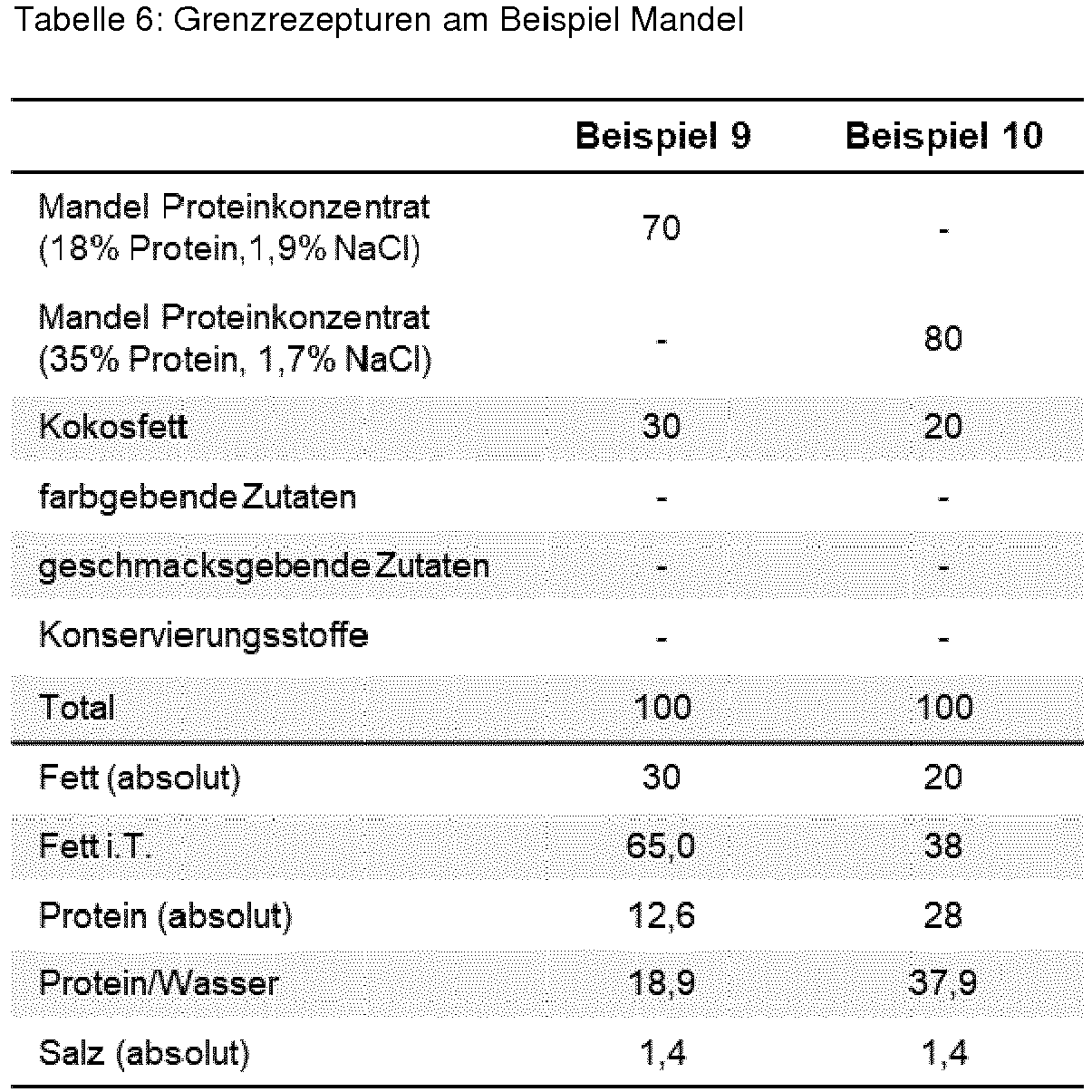
- Beispiel 9 zeigt eine Rezeptur bzw. eine Zusammensetzung mit welcher trotz erhöhtem Fettgehalt und abgesenkten Proteingehalt sicher noch ein kontinuierliches Proteinnetzwerk gebildet werden kann. Wird der Proteingehalt weiter verringert, obwohl das Protein-/Wasserverhältnis gleich gehalten wird, so könnte dies dazu führen, dass sich die Proteine nicht mehr verknüpfen bzw. miteinander vernetzen/aggregieren, wodurch eine breiige nicht elastische Konsistenz erhalten werden kann. Wird das Protein-/Wasserverhältnis abgesenkt und der Gesamtproteingehalt bleibt gleich, kann dies ebenfalls nachteilig für die Ausbildung eines kontinuierlichen Proteingerüstes sein.
- Beispiel 10 zeigt eine Maximalrezeptur bzw. -zusammensetzung mit einem doppelt so hohen Proteingehalt in der Wasserphase. Denkbar ist es, den Proteingehalt auch höher anzusetzen, um auch dann noch ein stabiles Proteinnetzwerk zu erhalten. Aufgrund der hiermit verbundenen, steigenden Viskosität wird das Handling der Zusammensetzung jedoch deutlich schwieriger.
- In der im Folgenden eingeblendeten Tabelle 7 sind Grenzrezepturen am Beispiel einer Zusammensetzung auf Basis einer Mung Bohnen Proteinkonzentratlösung gezeigt.
Tabelle 7: Grenzrezepturen am Beispiel Mung-Bohne Beispiel 11 Beispiel 12 Mung Bohnen Proteinkonzentrat (18% Protein,1,9% NaCl) 70 - Mung Bohnen Proteinkonzentrat (35% Protein, 1,7% NaCl) - 80 Kokosfett 30 20 farbgebende Zutaten - - geschmacksgebende Zutaten - - Konservierungsstoffe - - Total 100 100 Fett (absolut) 30 20 Fett i.T. 67 40 Protein (absolut) 12,6 28 Protein/Wasser 18,5 36,2 Salz (absolut) 1,2 1,1 - Beispiel 11 zeigt eine Zusammensetzung, mit welcher trotz erhöhtem Fettgehalt und abgesenktem Proteingehalt noch ein kontinuierliches Proteinnetzwerk gebildet werden kann. Wird der Proteingehalt weiter verringert, obwohl das Protein-/Wasserverhältnis gleichgehalten wird, könnte dies dazu führen, dass die Proteine nicht mehr (ausreichend) vernetzen, wodurch die Gefahr des Entstehens einer breiartigen, nicht elastischen Konsistenz steigt. Wird das Protein-/Wasserverhältnis abgesenkt und der Gesamtproteingehalt bleibt gleich, steigt ebenfalls die Gefahr, dass kein kontinuierliches Proteingerüst aufgebaut werden kann.
- Beispiel 12 zeigt eine Maximalrezeptur bzw. -zusammensetzung mit einem doppelt so hohen Proteingehalt in der Wasserphase. Auch hier ist es denkbar, den Proteingehalt höher anzusetzen und dennoch ein stabiles Proteinnetzwerk zu erhalten. Aufgrund der steigenden Viskosität würde sich jedoch das Handling erschweren.
Die Erfindung führt auch auf einen, insbesondere durch Ausführung eines erfindungsgemäßen Verfahrens erhaltenen, bevorzugt veganen, Lebensmittelgelkörper, insbesondere in Form eines Lebensmittelgel-Blocks, dessen kontinuierliche wässrige Phase aus miteinander aggregierten, d.h. dreidimensional vernetzten Pflanzenproteinen, wobei sich der Lebensmittelgekörper durch einen Gewichtsprozentanteil an miteinander aggregierten Pflanzen-Proteinen aus einem Wertebereich zwischen 12 und 28 Gew.-% und einem Fettgehalt zwischen 0 und 30 Gew.-% auszeichnet. Der Lebensmittelgelkörper kann in Form eines Blocks, in Form von Scheiben, Stiften, Würfeln, Raspeln (Shreds), etc. bereitgestellt werden, insbesondere durch Zerkleinern eines als Verfahrensergebnis erhaltenen Lebensmittelgel-Blocks. - Besonders bevorzugt ist es, wenn der Lebensmittelgelkörper eine Festigkeit aus einem Wertebereich zwischen 15N und 40N, insbesondere zwischen 17N und 35N. Bevorzugt beträgt die Bruchfestigkeit eines erfindungsgemäßen Lebensmittelgelkörpers zwischen 20N und 70N, weiter bevorzugt zwischen 25N und 45N. Besonders bevorzugt ist es, wenn die Elastizität eines erfindungsgemäßen Lebensmittelgelkörpers zwischen 85% und 100%, ganz besonders bevorzugt zwischen 90% und 95% beträgt. Bevorzugt beträgt die Biegefähigkeit eines erfindungsgemäßen Lebensmittelkörpers zwischen 80% und 100%, bevorzugt zwischen 85% und 98%. Die Biegefestigkeit eines nach dem Konzept der Erfindung ausgebildeten Lebensmittelgelkörpers beträgt bevorzugt zwischen 10mN und 1000mN, vorzugsweise zwischen 15mN und 400mN.
- Die im Rahmen der vorliegenden Offenbarung diskutierten bzw. offenbarten Parameter Festigkeit, Elastizität und Bruchfestigkeit werden mittels eines sog. Texture-Analysers (Texturanalysegerät) ermittelt. Dabei kam konkret der Texture Analyser TA-XTplus, Stable Micro Systems zum Einsatz. Zur Messung der Festigkeit, der Bruchfestigkeit und der Elastizität wird eine abgewandelte Texturprofilanalyse angewandt, wobei die Proben folgendermaßen zu standardisieren sind: Kreiszylinderform mit einem Durchmesser von 47 mm und einer Höhe von 25 mm. Die Proben sind auf 16° Celsius zu temperieren.
- Zur Ermittlung der Festigkeit und Elastizität ist eine doppelte Kompression der Probe durchzuführen, wobei aus folgender Tabelle 8 entnehmbarer Einstellungen am Texture-Analyser (Texturanalysegerät) vorzunehmen sind:
Tabelle 8: Einstellungen Test Mode (Testmodus): Compression (Kompression) PreTest Speed (Vortestgeschwindigkeit):5mm/s Test Speed (Testgeschwindigkeit): 1mm/s PostTest Speed (Nachtestgeschwindigkeit): 5mm/s Target Mode (Vorgabe Modus): Distance (Weg) Distance (Weg): 5mm Trigger Type (Auslöseart): Auto (Force) (Kraft) Trigger Force (Auslösekraft): 1g Break Mode Abbrechmodus: Off (aus) Stop Plot At (Endposition): Start Position Tare Mode (Taramodus): Auto Advanced Options (erweiterte Optionen): Off (aus) Measuring cell (Kraftzelle) 5kg Measuring pin (Messstempel) ½" Cyl. Delrin P/0.5 Temperature (Temperatur) 16°C - Die Kompression der Probe um 5 mm entspricht einer Verformung um 20% der Gesamthöhe. Nach der ersten Messung wird der Messstempel wieder zu seinem Ausgangspunkt zurückgefahren und die Probe für 15 s ruhen gelassen, wovor eine weitere Kompression stattfindet. Die Festigkeit entspricht der maximalen Kraft aus dem ersten Messzyklus. Die Elastizität berechnet sich aus dem Verhältnis der positiven Peakflächen beider Messungen in einem Diagramm, in dem die aufgewendete Kraft über die Zeit aufgetragen ist.
- Bei der Bruchfestigkeit wird ermittelt, welche Kraft zur nicht reversiblen Deformation der Probe notwendig ist. Als Eindringtiefe ist hierbei 15 mm zu wählen. Das Peakmaximum einer Messkurve in einem Diagramm, bei dem die eingesetzte Kraft über die Zeit aufgetragen ist, entspricht der Bruchfestigkeit.
- Die im Rahmen der vorliegenden Offenbarung diskutierten Parameter der Biegefähigkeit und Biegefestigkeit werden mit dem Texturanalysegerät: Texture Analyser TA-XTplus, Stable Micro Systems bestimmt.
Tabelle 9 Einstellungen Test settings Test Mode (Testmodus): Compression PreTest Speed (Vortestgeschwindigkeit): 1mm/s Test Speed (Testgeschwindigkeit): 1mm/s PostTest Speed (Nachtestgeschw.):5mm/s Target Mode (Vorgabemodus): Distance (Weg) Distance (Weg): 25mm Trigger Type (Auslöseart): Auto (Force) (Kraft) Trigger Force (Auslösekraft): 1g Break Mode (Abbrechmodus): Off (aus) Stop Plot At (Endposition): Start Position Tare Mode (Taramodus): Auto Advanced Options (erweiterte Optionen):Off (aus) Measuring cell (Kraftzelle) 5kg Measuring pin (Messstempel) SMS P/75 Temperature (Temperatur) 16°C - Für den mittels des Texture-Analysers (Texturanalysegerät) durchzuführenden Biegetests werden die Proben folgendermaßen standardisiert:
Rechteckige Scheibe 35 x 30 mm mit einer Dicke (Materialstärke) von 2mm. Die Proben werden auf eine Temperatur von 16° Celsius temperiert. - Bei der Biegefähigkeit handelt es sich um den Prozentanteil der Strecke, um den die Probe (Scheibe) im Texturmessgerät zusammengedrückt werden kann, ohne zu brechen. Als Abstand zwischen der Bodenplatte und dem Messstempel werden dabei als Startposition 32 mm eingestellt, bevor die Probe der Höhe nach dazwischen geklemmt wird.
- Ist die Scheibe nach vollständiger Kompression noch intakt, entspricht dies einer Biegefähigkeit von 100%. In diesem Fall ist die maximale positive Kraft am Endpunkt des Abstandes erreicht. Bricht die Probe bevor die vollständige Kompression erreicht wurde, ist dies an einem abrupten Abfallen der aufgenommenen Kraft zu erkennen. Die Biegefestigkeit entspricht dabei der maximal gemessenen Kraft in mN. Die Biegefähigkeit wird in diesem Fall aus dem Verhältnis der Wegstrecke beim Bruch und der maximalen Wegstrecke berechnet.
- Die Erfindung führt auch auf einen Aggregator sowie dessen Verwendung zur Durchführung eines erfindungsgemäßen Verfahrens, wobei der Aggregator erfindungsgemäß einen Druckbehälter zur Aufnahme der zu aggregierenden Zusammensetzung aufweist. Ferner umfasst der Aggregator Heiz- und Kühlmittel zum Aufheizen und Abkühlen der Zusammensetzung, wobei die Heiz- und Kühlmittel bevorzugt so ausgelegt sind, dass mit diesen die im Rahmen der Verfahrensoffenbarung angegebenen Prozessparameter, wie beispielsweise die Aufheiz- und Abkühlrate erfüllbar sind bzw. erfüllt werden. Wesentlich ist, dass dem Druckbehälter Gegendruckeinstellmittel zum Einstellen eines, zumindest zeitweise, d.h. zumindest bei Temperaturen der Zusammensetzung von zumindest partiell mindestens 100° Celsius, auf die Zusammensetzung einwirkenden, im Rahmen vorstehender Offenbarung erläuterten Gegendruckes zugeordnet sind. Die Gegendruckeinstellmittel können beispielsweise einen Druckgas-, insbesondere Druckluftanschluss umfassen, mit dem der Behälterinnenraum auf den im Rahmen der Verfahrensoffenbarung offenbarten Gegendruck bringbar ist. Wie im Rahmen der Verfahrensoffenbarung im Detail erläutert, sind die Gegendruckmittel jedoch nicht auf eine solche Druckgasausführung beschränkt - realisierbar sind im Rahmen der Erfindung auch alternative Gegendruckeinstellmittel, die den auf die Zusammensetzung wirkenden Gegendruck beispielsweise mechanisch oder hydraulisch und/oder durch Volumenveränderung des Druckbehälters erzeugen, etc.
- Weitere Vorteile, Merkmale und Einzelheiten der Erfindung ergeben sich aus der nachfolgenden Beschreibung bevorzugter Ausführungsbeispiele sowie anhand der Figuren.
- Diese zeigen in:
- Fig. 1
- einen bevorzugten Herstellungsprozess zur Herstellung einer Proteinkonzentratlösung am Beispiel Mandel
- Fig. 2
- Den Ablauf einer Aggregation einer Zusammensetzung auf Basis einer Mandelproteinkonzentratlösung,
- Fig. 3
- ein typisches DSC-Diagramm einer Pflanzenproteinkonzentratlösung,
- Fig. 4
- einen Herstellungsprozess zur Herstellung einer Zusammensetzung (Rezeptur) auf Basis eines Mandelproteinkonzentrats,
- Fig. 5
- einen Herstellungsprozess zur Herstellung einer Zusammensetzung (Rezeptur) auf Basis einer Mungbohnenproteinkonzentratlösung,
- Fig. 6
- ein Diagramm, aus dem die Festigkeit, die Bruchfestigkeit, die Elastizität und der Wassergehalt unterschiedlicher natürlicher Käse ersichtlich sind.
- Fig. 7
- ein Diagramm, bei dem die Parameter gemäß
Fig. 6 für Lebensmittelgelkörper auf Basis unterschiedlicher Pflanzenproteinkonzentrate gezeigt sind, wobei mit Lupine ein nicht zur Erfindung zählendes Produkt bezeichnet ist, - Fig. 8
- ein Diagramm, aus dem die Biegefähigkeit und Biegefestigkeit unterschiedlicher natürlicher Käse ersichtlich ist,
- Fig. 9
- ein Diagramm, aus dem die Parameter gem.
Fig. 8 für Lebensmittelgelkörper aufgetragen sind, die hergestellt sind auf Basis aus Zusammensetzungen auf Basis unterschiedlicher Pflanzenproteinkonzentratlösungen - Fig. 10
- in einer schematischen Darstellung eine mögliche Ausführungsform eines Aggregators.
- Die im Rahmen der Figurenbeschreibung offenbarten Angaben und Parameterwerte sollen die Erfindung nicht beschränken. Sie sollen jedoch als erfindungswesentlich und damit beanspruchbar offenbart gelten.
- In den Figuren sind gleiche Elemente und Elemente mit den gleichen Bezugszeichen gekennzeichnet.
- In
Fig. 1 ist ein möglicher Herstellungsprozess einer Proteinkonzentratlösung am Beispiel Mandel gezeigt. - Bei I. wird Mandelmehl bereitgestellt, beispielsweise aufweisend 45 bis 55 Gew.-% Protein und 11 bis 16 Gew.-% Fett, wobei der Proteingehalt bevorzugt mindestens 50 Gew.-% beträgt und der Fettgehalt bevorzugt maximal 13 Gew.-%.
- Bei II. erfolgt eine Extraktion des Pflanzenproteins in Wasser bei einer Verdünnung von 1:4, wobei der pH-Wert bevorzugt auf 5,8 bis 6,5 eingestellt wird. Besonders bevorzugt ist ein pH-Wert von 6,0. Die Extraktion erfolgt insbesondere bei einer Temperatur zwischen 15 und 25° Celsius, ganz besonders bevorzugt bei 20° Celsius, wobei die Extraktionszeit mindestens eine Stunde beträgt, vorzugsweise während eines Rührens, insbesondere mit einer Drehzahl zwischen 300 und 600 u/min, bevorzugt von 400 u/min.
- Daraufhin erfolgt bei III. eine Zentrifugation und bei IV. wird ein Rückstand erhalten. Der Überstand ist mit V. bezeichnet. Die Zentrifugation bei III. wird bevorzugt für mindestens eine Stunde durchgeführt bei einer bevorzugten Temperatur zwischen 15 und 25° Celsius, ganz besonders bevorzugt von 20° Celsius. Die Zentrifugation erfolgt bevorzugt bei zwischen 14.000 und 27.000 g, ganz besonders bevorzugt bei 27.000 g.
- Daraufhin erfolgt bei VI. eine saure Ausfällung des Proteins des Überstandes, insbesondere bei einem pH-Wert zwischen 4,8 und 5,2, ganz besonders bevorzugt von 5,2. Die Ausfällung wird bevorzugt über einen Zeitraum von mindestens 30 Minuten, ganz besonders bevorzugt von einer Stunde durchgeführt, insbesondere bei einer Temperatur aus einem Wertebereich zwischen 15 und 25° Celsius, insbesondere von 20° Celsius.
- Daraufhin wird das ausgefällte Protein bei VII. zentrifugiert, insbesondere bei 14.000 bis 27.000 g, insbesondere bei 27.000 g, ganz besonders bevorzugt von mindestens 20 Minuten, noch weiter bevorzugt für 45 Minuten, insbesondere bei einer Temperatur zwischen 4 und 8° Celsius, ganz besonders bevorzugt bei 8° Celsius.
- Bei VIII. wird ein Überstand erhalten. Bei dem Rückstand bei IX. handelt es sich um saures Proteinkonzentrat (Proteinpräzipitat) mit einem Proteingewichtsanteil zwischen 45 und 50%.
- Bei X. erfolgt die Einstellung des pH-Wertes sowie der Protein und der NaCI-Konzentration. Bevorzugt wird der pH-Wert auf einen Wert auf einem Bereich zwischen 5,2 und 6,5, ganz besonders bevorzugt auf 5,4 eingestellt. Bevorzugt wird der Proteingehalt auf 16 bis 30 Gew.-%, besonders bevorzugt auf 18 bis 22% eingestellt und der NaCI-Gehalt auf 0 bis 3,3 Gew.-%, ganz besonders bevorzugt auf 1,6 bis1,9 Gew.-%. Als Prozessergebnis resultiert bei XI. ein für die Durchführung eines erfindungsgemäßen Verfahrens geeignete Proteinkonzentratlösung.
- In
Fig. 2 ist der Ablauf einer Aggregation einer Zusammensetzung zum Erhalten eines aggregierten Produktes, d.h. eines Lebensmittelgelköpers gezeigt. Hierzu kommt ein Aggregator 1 zum Einsatz, wie dieser beispielhaft inFig. 10 gezeigt ist. Zu erkennen ist ein Druckbehälter 2, der für Überdruck ausgelegt ist. Der Druckbehälter 2 begrenzt ein Innenvolumen 3 (Behältervolumen) zur Aufnahme einer nach dem Konzept der Erfindung ausgebildeten Zusammensetzung. Der Druckbehälter 2 ist druckdicht verschließbar und mit Hilfe von Gegendruckeinstellmitteln 4 mit einem Gegendruck oberhalb des Atmosphärendrucks beaufschlagbar. - Dem Druckbehälter 2 sind zudem Heizmittel 5 und Kühlmittel 6 zugeordnet. Vorliegend sind die Heizmittel 5 beispielsweise als elektrische Heizpatronen in der Behälterwandung ausgeführt, während die Kühlmittel 6 Kühlkanäle umfassen, durch die ein Kühlmedium förderbar ist.
- Bei I. wird eine Zusammensetzung in Form einer Emulsion auf Basis einer Mandelproteinkonzentratlösung bereitgestellt. Die Zusammensetzung umfasst beispielsweise zwischen 13 und 24 Gew.-% Protein, zwischen 0 und 2,8 Gew.-% NaCl, zwischen 0 und 1,8 Gew.-% Aroma, vorliegend Käsegeschmacksaromen und zwischen 10 und 30 Gew.-% Fett. Eine derartige Zusammensetzung wird bei II. in einem Aggregator gegeben und bei III. erfolgt die Einstellung eines Gegendrucks von beispielsweise mindestens 1,3 bar. Bei IV. erfolgt eine Aufheizphase, insbesondere mit einer Aufheizrate mit 6,5 und 8 K/min. auf eine Maximaltemperatur zwischen 108° Celsius und 120° Celsius. An die Aufheizphase schließt bei V. eine fakultative Heißhaltezeit bei Maximaltemperatur zwischen 0 und 10 min an, woraufhin bei VI. eine Abkühlphase erfolgt, insbesondere mit einer Kühlrate zwischen 7 und 8,5 K/min. Bei VII. wird ein erfindungsgemäßer Lebensmittelgelkörper erhalten.
- In der folgenden Tabelle 10 sind bevorzugte Aggregationsbedingungen am Beispiel einer Mandelproteinkonzentratlösung eingeblendet:
Tabelle 10: Aggregationsbedingungen am Beispiel Mandelproteinkonzentrat MIN MAX OPTIMUM Aufheizphase (K/min) 6,5 8,0 8,0 Haltezeit (min) 0 10 0 Abkühlphase (K/min) 7,0 8,5 8,5 Temperatur (°C) 108 120 113 - Aus der folgenden Tabelle 11 sind bevorzugte minimale und maximale sowie optimale Maximaltemperaturen ersichtlich, auf die unterschiedlichen Zusammensetzungen auf Basis unterschiedlicher aus der Tabelle ersichtlicher Pflanzenproteinkonzentratlösungen im Aggregator im Rahmen der Aufheizphase erhitzt werden, wobei T-min eine bevorzugte minimal einzustellende Maximaltemperatur bezeichnet, T-max eine bevorzugte maximal zu wählende Maximaltemperatur und T-opt. eine optimal einzustellende Maximaltemperatur zur Aggregation.
Tabelle 11: bevorzugte minimale, maximale und optimale Maximaltemperaturen für die Aggregation von Zusammensetzung auf Basis unterschiedlicher Pflanzenproteinkonzentratlösungen Tmin(°C) Tmax(°C) Topt.(°C) Mandel Protein 108 120 113 Mung Protein 95 108 100 Kokos Protein 108 120 113 Kichererbsen Protein 108 120 113 Hafer Protein 118 125 120 Erdnuss Protein 110 120 115 - In
Fig. 3 ist eine typische DSC-Kurve aus einer dynamischen Differenz-Kalorimetrie-Messung einer geeigneten Pflanzenproteinkonzentratlösung gezeigt. Zu erkennen ist, dass in dem Diagramm die spezifische, umgesetzte Wärmeenergie über die Temperatur aufgetragen ist. Die Kurve zeigt einen endothermen Peak, wobei die Peakfläche die Denaturierungsenthalpie ΔH der enthaltenen Proteine darstellt. - Der Peak erstreckt sich über eine Peaktemperaturspanne, die von einer Peakanfangstemperatur TA bis zu einer Peakendtemperatur TE reicht. Der Peak hat bei einer Peakmaximaltemperatur TM ein Maximum. Die Maximaltemperatur, auf die eine Zusammensetzung zur Aggregation bevorzugt erhitzt wird, liegt bevorzugt im Bereich der Peakendtemperatur TE, jedenfalls oberhalb der Peakmaximaltemperatur TM.
- Auf die separate Darstellung einer DSC-Kurve aus einer dynamischen Differenz-Kalorimetrie-Messung einer Zusammensetzung (Rezeptur) wurde verzichtet. Vorstehende Erläuterungen des endothermen Peaks sowie der zugehörigen Temperaturen gelten analog. Durch Zugabe von Zutaten, insbesondere von Salz, kann der endotherme Peak der DSC Kurve der Zusammensetzung verglichen mit dem endothermen Peak der DSC Kurve der zugehörigen Proteinkonzentratlösung auf der Temperaturachse verschoben sein, bei NaCI-Zugabe weiter nach rechts. Ebenso kann durch entsprechende Verdünnung der wässrigen Phase Proteinkonzentratlösung, insbesondere von deren NaCL-Gehalt im Zusammenhang mit der Herstellung der Zusammensetzung, beispielsweise durch Zugabe von Wasser der Peak weiter nach links, d.h. hin zu niedrigeren Temperaturen verschoben sein bzw. werden. Maßgeblich für die Wahl der Maximaltempertur zum Aggregieren der Zusammensetzung sind die Peaktemperaturen aus der DSC-Kurve der Zusammensetzung.
- In
Fig. 4 ist am Beispiel Mandel eine mögliche Herstellung einer Zusammensetzung gezeigt. Bei I. wird eine Proteinkonzentratlösung auf Mandelproteinbasis bereit gestellt. Diese zeichnet sich bevorzugt durch einen Proteingehalt zwischen 16 und 30 Gew.-%, insbesondere zwischen 18 und 22 Gew.-% aus, sowie durch einen NaCI-Gehalt zwischen 0 und 3,3 Gew.-%, bevorzugt zwischen 1,6 und 1,9 Gew.-%. Die Proteinkonzentratlösung zeichnet sich darüber hinaus bevorzugt durch einen pH-Wert zwischen 5,2 und 6,5, insbesondere von 5,4 aus. - Bei II. wird geschmolzenes Fett, insbesondere Kokosfett zugegeben, bevorzugt bei einer Temperatur zwischen 45 und 60° Celsius. Bei III. erfolgt die Zugabe von Aroma, beispielsweise zwischen 0 und 2 Gew.-%.
- Bei IV. erfolgt ein Emulgierschritt, insbesondere für 1 bis 3 min bei bevorzugt 8.000 bis 20.000 u/min. Ganz besonders bevorzugt wird für 2 min bei einer Umdrehungszahl zwischen 15.000 und 20.000 U/min emulgiert.
- Daraufhin erfolgt bei fünf ein Evakuierschritt zum Entziehen von Gasblasen und/oder der Zerstörung des während des Emulgierprozesses gebildeten Schaum, insbesondere für 2 bis 5 min, noch weiter bevorzugt für 3 min. Der Druck wird für die Evakuierung bevorzugt auf 100 bis 300 mbar, ganz besonders bevorzugt auf 150 m barreduziert - das Evakuieren erfolgt bevorzugt bei einer Temperatur zwischen 20 und 25° Celsius.
- Als Ergebnis wird dann bei VI. eine Zusammensetzung in Form einer proteinbasierten Mandelemulsion erhalten, die sich bevorzugt auszeichnet durch einen Proteingewichtsanteil zwischen 13 und 24 Gew.-%, bevorzugt zwischen 15 und 17,5 Gew.-%, einen NaCI-Gehalt zwischen 0 und 2,8 Gew.-%, insbesondere zwischen 1,3 und 1,6 Gew.-%, einen Aromagehalt zwischen 0 und 1,8 Gew.-% und einen Fettgehalt zwischen 10 und 30 Gew.-%, insbesondere zwischen 15 und 20 Gew.-%.
- In
Fig. 5 ist ein beispielhafter Herstellungsprozess einer Zusammensetzung auf Basis einer Mungbohnenproteinkonzentratlösung gezeigt. Diese wird bei I. bereit gestellt und zeichnet sich bevorzugt aus durch einen Proteingewichtsanteil zwischen 16 und 30 Gew.-%, insbesondere zwischen 18 und 22 Gew.-%, einen NaCI-Gehalt zwischen 0 und 3,3 Gew.-%, insbesondere zwischen 1,4 und 1,7 Gew.-% und einen pH-Wert zwischen 5,2 und 6,5, bevorzugt von 5,8. - Die Schritte II. bis V. sind dann identisch wie im Zusammenhang mit
Fig. 4 erläutert. Als Verfahrensergebnis wird bei VI. eine Zusammensetzung in Form einer proteinbasierten Mungbohnenemulsion erhalten, wobei die bevorzugten Protein-, NaCl-, Aroma- und Fettgehalte denen aus dem Ausführungsbeispiel gemäßFig. 4 entsprechen. - Aus
Fig. 6 ist ersichtlich, dass die Charakterisierung der ausgewählten Standardprodukte (verschiedene Käsesorten) zeigt, dass die vier dargestellten Parameter Festigkeit, Bruchfestigkeit, Elastizität und Wassergehalt miteinander korrelieren. - Die Festigkeit und die Bruchfestigkeit steigt mit sinkendem Wassergehalt, gleichzeitig nimmt die Elastizität ab. Während der junge Gouda noch eine Elastizität von 95% aufweist, sinkt diese beim mittelalten und alten Gouda auf 85 bzw. 46%. Edamer und Emmentaler liegen beide im ähnlichen Bereich wie der junge Gouda, nämlich bei 95 und 93%. Die Festigkeit und Bruchfestigkeit liegt beim alten Gouda mit 70 bzw. 72N am höchsten, wobei der Wassergehalt mit 31Gew-% hier am geringsten ist. Der mittelalte Gouda hat eine nahezu halb so feste Struktur (Festigkeit: 32,7N; Bruchfestigkeit: 37,9N), wobei der Wassergehalt um nur 4,5Gew.-% höher liegt. Der Wassergehalt von Edamer und Gouda liegen mit 45 und 41% am höchsten, die Festigkeiten sind folglich am geringsten mit 17,6 und 17,2N, bzw. 27,3 und 29,1N Bruchfestigkeit. Der Emmentaler gliedert sich kurz hinter den beiden ein, mit einer Festigkeit von 25N und einer Bruchfestigkeit von knapp 42N.
- Bei der Betrachtung der pflanzlichen Gele bzw. Lebensmittelgelkörper gemäß
Fig. 7 stellt man fest, dass die Korrelation des Wassergehaltes nur bedingt zutrifft. - Der Wassergehalt der aggregierten Konzentrate liegt bei rund 70 bzw. 73Gew.-% für Mandel bzw. Mung Bohne. Bei den Rezepturen (siehe Beispiel 2 und Beispiel 6) sinkt dieser durch die Fettzugabe auf 55 bzw. 57Gew.-% (Mandel bzw. Mung Bohne). Die Festigkeiten und Bruchfestigkeiten, sowie die Elastizitäten können mit den konventionellen Sorten verglichen werden. Das Mandelgel ohne die Zugabe von Fett weist die höchste Festigkeit (38N) bzw. Bruchfestigkeit (65N) auf, und zeigt eine sehr hohe Elastizität (95%), welche mit einem jungen Gouda vergleichbar ist. Bei der Zugabe von Fett verringert sich die Festigkeit der Mandelrezeptur deutlich auf einen Wert von 17,2N, was ebenfalls mit einem jungen Gouda bzw. dem Edamer vergleichbar ist. Die Bruchfestigkeit liegt bei der Mandelprobe bei 26N, welche im Bereich des Edamers liegt. Die Elastizität bleibt nahezu identisch, um 95%. Die Mung Bohnen Probe ohne die Zugabe von Fett hat eine Festigkeit, die dem mittelalten Gouda gleichkommt (32N), bei einer etwas höheren Bruchfestigkeit von 52N. Die Elastizität liegt mit 91% knapp unter einer Emmentaler Probe. Die Mung Bohnen Rezeptur profitiert hinsichtlich der Elastizität von der Fettzugabe und erreicht hier einen Wert von fast 96%. Die Festigkeit sowie Bruchfestigkeit liegen bei 31 bzw. 42N. Das aggregierte Lupinen Proteinkonzentrat zeigt - wie bei den Oszillationsmessungen - deutlich schlechtere Werte in allen Bereichen. Die Festigkeit und die Bruchfestigkeit liegt gleich auf, da die Probe bereits bei einer geringen Eindringtiefe bricht. Diese Werte liegen bei 0,9N. Die Elastizität der Probe ist mit 27,5% ebenfalls extrem gering. Zu erkennen ist daraus, dass das Aggregat aus einer Zusammensetzung auf Lupinenproteinkonzentratbasis nicht zur Erfindung gehört, sondern lediglich als Vergleichsansatz dient.
- Wie sich aus
Fig. 8 ergibt, können bei der Bestimmung der Biegefähigkeit und -festigkeit für die Käsestandards gut erkennbare Unterschiede festgestellt werden. - Die Scheiben junger Gouda, Edamer und Emmentaler sind nach einem vollständigen Kompressionszyklus noch intakt und haben daher eine Biegefähigkeit von 100%. Für eine vollständige Kompression des Edamers wird eine Kraft von ca. 125mN benötigt, wohingegen Emmentaler im Schnitt rund 50mN mehr Kraft benötigt. Die höchste Biegefestigkeit weist der junge Gouda auf. Hier liegt der Wert um 260mN. Die älteren und weniger elastischen Käsesorten mittelalter und alter Gouda können dem Biegetest nicht stand halten. Nach ca. 83% der Wegstrecke zerbricht der mittelalte Gouda. Die Biegefestigkeit (entspricht der Kraft bei Bruch) liegt dementsprechend niedriger, nämlich bei 115mN. Der alte Gouda weist eine extrem schlechte Biegefähigkeit auf. Er zerbricht bereits nach 6,5% der Wegstrecke, nach eine benötigten Kraft von knapp 52mN.
- Im Vergleich zu den konventionellen Käseprodukten, gibt es viele Parallelen bei den pflanzlichen Produkten bzw. Lebensmittelgelkörpern gemäß
Fig. 9 . - Die Proben ohne Zusätze (22Gew.-% Protein, Mandel: 1,6Gew.-% NaCl, Mung. 1,4Gew.-% NaCl), weisen beide eine sehr hohe Biegefähigkeit auf. Die Mandelprobe zeigt hier ein analoges Verhalten zum jungen Gouda, Edamer und Emmentaler, mit 100%iger Biegefähigkeit. Die Biegefestigkeit ist vergleichsweise sehr hoch, mit 1037mN. Die Probe aus Mungproteinkonzentrat weist eine Biegefähigkeit von knapp 96% auf, bei einer Biegefestigkeit von 424mN. Beim Zusatz von 20Gew.-% Fett zum Mandelproteinkonzentrat (siehe Rezepturbeispiel 2) sinkt die Biegefähigkeit auf 87%, was einer Struktur zwischen einem jungen und einem mittelalten Gouda gleichkommt. Die Biegefestigkeit sinkt deutlich auf 176mN, was im Bereich des Emmentalers liegt. Bei Zugabe von Fett zum Mungproteinkonzentrat (siehe Rezepturbeispiel 6) steigt die Biegefähigkeit nochmals an, und erreicht nahezu 100%. Die Biegefestigkeit liegt hier mit 420mN wieder etwas höher, wie die konventionellen Käsesorten. Der Biegetest konnte bei dem Aggregat einer Zusammensetzung auf Lupinenproteinkonzentratlösungsbasis nicht durchgeführt werden, da kein schnittfestes Endprodukt bei der Aggregation gebildet wurde.
-
- 1.
- Aggregator
- 2.
- Druckbehälter
- 3.
- Innenvolumen
- 4.
- Gegendruckeinstellmittel
- 5.
- Heizmittel
- 6.
- Kühlmittel
- TA
- Peakanfangstemperatur
- TE
- Peakendtemperatur
- TM
- Peakmaximumtemperatur
Claims (15)
- Verfahren zum Herstellen eines schnittfesten, insbesondere veganen, Lebensmittelgelkörpers, vorzugsweise Lebensmittel-Gelblocks, aus pflanzlichen Proteinen mit den Schritten:a) Bereitstellen einer Zusammensetzung bestehend aus oder umfassend eine wässrige Pflanzenproteinkonzentratlösung mit, insbesondere eine vollständige Funktionalität aufweisenden, pflanzlichen Proteinen, wobei die Menge der Pflanzenproteinkonzentratlösung so gewählt wird, dass der Proteingewichtsanteil der Zusammensetzung zwischen 12 Gew.% und 28Gew.% beträgt
und wobei die Pflanzenproteinkonzentratlösung so beschaffen ist, dass diese in einer aus einer dynamischen Differenz-Kalorimetrie-Messung resultierenden, den Zusammenhang zwischen der spezifischen umgesetzten Wärmeenergie und der Temperatur beschreibenden DSC-Kurve einen endothermen Peak aufweist, der gekennzeichnet ist durch eine Peaktemperaturspanne, über die sich der Peak erstreckt, die begrenzt ist durch eine Peakanfangstemperatur und eine Peakendtemperatur und wobei das Speichermodul G' der Pflanzenproteinkonzentratlösung bei einer Oszillationsrheologiemessung beim Durchfahren der Peaktemperaturspanne von der Peakanfangstemperatur in Richtung der Peakendtemperatur um mindestens den Faktor 6, insbesondere 6 bis 12, bevorzugt 7 bis 12 ansteigt,
und wobei sich die Zusammensetzung dadurch auszeichnet, dass diese in einer aus einer dynamischen Differenz-Kalorimetrie-Messung resultierenden, den Zusammenhang zwischen der spezifischen umgesetzten Wärmeenergie und der Temperatur beschreibenden DSC-Kurve einen endothermen Peak aufweist, der gekennzeichnet ist durch eine Peaktemperaturspanne, über die sich der Peak erstreckt, die begrenzt ist durch eine Peakanfangstemperatur und eine Peakendtemperatur,b) Aggregieren der Zusammensetzung in einem Druckbehälter (2) durch Aufheizen der Zusammensetzung auf eine Maximaltemperatur, insbesondere zumindest partiell von mindestens 100°C und oberhalb der Peakanfangstemperatur des endothermen Peaks der Zusammensetzung, in einem Druckbehälter (2) und danach Abkühlen der Zusammensetzung auf eine unterhalb von 100°C und unterhalb der Peakanfangstemperatur der Zusammensetzung liegende Kühltemperatur,c) Durchführen des Aufheizens und Abkühlens bei einem auf die Zusammensetzung wirkenden, über Atmosphärennormaldruck liegenden Gegendruck in dem Druckbehälter (2), derart, dass ein Sieden der Zusammensetzung verhindert wird. - Verfahren nach Anspruch 1,
dadurch gekennzeichnet,
dass ein Gewichtsprozentanteil der pflanzlichen Proteine in der Pflanzenproteinkonzentratlösung aus einem Wertebereich zwischen 12 und 35 Gew.-% gewählt wird und/oder dass die Pflanzenproteinkonzentratlösung einen pH-Wert aus einem Wertebereich zwischen 4,5 und 7,5, insbesondere zwischen 5,4 und 7,2, aufweist und/oder dass ein NaCl-Gehalt der Pflanzenproteinkonzentratlösung zwischen 0 und 1,0 Mol/l gewählt wird. - Verfahren nach einem der vorhergehenden Ansprüche,
dadurch gekennzeichnet,
dass die Pflanzenproteinkonzentratlösung so beschaffen ist, dass die mittels der dynamischen Differenz-Kalorimetrie-Messung bestimmbare Denaturierungsenthalpie der Proteine der Pflanzenproteinkonzentratlösung mindestens 10J/g, insbesondere zwischen 10J/g und 30J/g, weiter bevorzugt zwischen 15J/g und 25J/g beträgt und/oder derart beschaffen ist, dass das Speichermodul G' der Pflanzenproteinkonzentratlösung bei der Oszillationsrheologiemessung nach dem Durchfahren der Peaktemperaturspanne von der Peakanfangstemperatur der Pflanzenproteinkonzentratlösung in Richtung der Peakendtemperatur der Pflanzenproteinkonzentratlösung vor dem Abkühlen mindestens 900Pa beträgt, bevorzugt zwischen 900 Pa und 1.500 Pa, weiter bevorzugt zwischen 900 Pa und 1200 Pa und/oder derart beschaffen ist, dass eine kreisrunde Scheibe eines daraus durch Anwendung der Schritte b und c gemäß Anspruch 1 aggregierten Lebensmittelgelkörpers mit einem Durchmesser von 20mm und einer Dicke von 2,5mm bei 16°C bei einer Messung in einem Platte-Platte Rheometer ein Speichermodul G' von mindestens 30.000 Pa, bevorzugt mindestens 50.000 Pa, weiter bevorzugt zwischen 50.000 Pa und 150.000 Pa, noch weiter bevorzugt zwischen 50.000 Pa und 100.000 Pa aufweist, wobei zur Bestimmung des Speichermoduls die Platten so weit aufeinander zu festgestellt werden, bis sich eine Normalkraft von 1N einstellt und wobei die Probe bei einem konstanten Deformationsmodus von 1% bei einer Frequenz von 1Hz oszilliert wird und sich das Speichermodul ergibt durch Mittelwertbildung der Messpunkte nach einer Zeitspanne von 100s, 200s und 300s nach Beginn der Oszillation. - Verfahren nach Anspruch einem der vorhergehenden Ansprüche,
dadurch gekennzeichnet,
dass der über Atmosphärennormaldruck liegende Gegendruck zumindest dem Sattdampfdruck der Zusammensetzung bei der jeweiligen Temperatur, bevorzugt zusätzlich eines Sicherheitsaufschlags von mindestens 0,1 bar, bevorzugt von mindestens 0,25bar, weiter bevorzugt von mindestens 0,5 bar, weiter bevorzugt mindestens 1 bar entspricht. - Verfahren nach einem der vorhergehenden Ansprüche,
dadurch gekennzeichnet,
dass der Druckbehälter (2) vor und/oder während und/oder nach dem Aufheizen aktiv mit dem Gegendruck, insbesondere Druckgas, beaufschlagt wird und/oder dass der Gegendruck während des Abkühlens zumindest solange aufrechterhalten wird, bis die aggregierte Zusammensetzung vollständig unter 100°C abgekühlt ist. - Verfahren nach einem der vorhergehenden Ansprüche,
dadurch gekennzeichnet,
dass das Aufheizen und/oder das Abkühlen ohne Scherkrafteintrag, insbesondere ohne Rühren durchgeführt wird. - Verfahren nach einem der vorhergehenden Ansprüche,
dadurch gekennzeichnet,
dass die Maximaltemperatur, auf die die Zusammensetzung aufgeheizt wird, mindestens der Peakmaximumtemperatur der Zusammensetzung am Peakmaximum des endothermen Peaks der Zusammensetzung entspricht, oder dass die Maximaltemperatur aus einem Temperaturbereich zwischen der Peakmaximumtemperatur der Zusammensetzung und der Peakendtemperatur der Zusammensetzung zuzüglich 20% gewählt ist, und/oder dass die dass die Maximaltemperatur der Peakendtemperatur der Zusammensetzung +/- 10°C, vorzugsweise +/- 5°C, insbesondere +/- 3°C, bevorzugt +/- 1°C, ganz besonders bevorzugt genau der Peakendtemperatur der Zusammensetzung entspricht. - Verfahren nach einem der vorhergehenden Ansprüche,
dadurch gekennzeichnet,
dass die mittlere Aufheizrate, zumindest ab Erreichen der Peakanfangstemperatur der Zusammensetzung, und/oder die mittlere Abkühlrate, zumindest bis zum Erreichen der Peakanfangstemperatur der Zusammensetzung, mindestens 4K/min, bevorzugt mindestens 8K/min beträgt und/oder aus einem Wertebereich zwischen 4K/min und 15K/min, weiter bevorzugt zwischen 8K/min und 15K/min, gewählt wird. - Verfahren nach einem der vorhergehenden Ansprüche,
dadurch gekennzeichnet,
dass die Zusammensetzung vor dem Abkühlen über eine Zeitspanne zwischen 0,5 bis 10 min, bevorzugt zwischen 0,2 bis 1 min bei einer zwischen der Peakmaximumtemperatur der Zusammensetzung und der Maximaltemperatur liegenden Heißhaltetemperatur, bevorzugt der der Maximaltemperatur, heißgehalten wird. - Verfahren nach einem der vorhergehenden Ansprüche,
dadurch gekennzeichnet,
dass die Pflanzenproteine des Pflanzenproteinkonzentrats extrahiert sind aus einem oder mehreren pflanzlichen Rohstoffen ausgewählt aus der Gruppe: Mandel, Mungbohne, Kokosnuss, Kichererbse, Erdnuss, Cashew, Hafer, Erbse, Bohne, Reis, Weizenkleber, Linsen, Amaranth, Bohnen, weiße Bohnen, Kidney Bohnen, Fava Bohnen, Sojabohnen, Getreide. - Verfahren nach einem der vorhergehenden Ansprüche,
dadurch gekennzeichnet,
dass der Fettgehalt der Zusammensetzung auf einen Wert aus einem Wertebereich zwischen 0 Gew.% und 30 Gew.%, insbesondere zwischen 1 Gew.% und 30 Gew.-%, bevorzugt zwischen 10 Gew.-% und 20 Gew.-% und/oder dass der Zuckergehalt der Zusammensetzung durch Zugabe von Zucker, insbesondere Saccharose, auf einen Wert aus einem Wertebereich zwischen 0 Gew.% und 60 Gew.%, insbesondere zwischen 5 Gew.% und 50 Gew.%, bevorzugt zwischen 10 Gew.% und 35 Gew.% und/oder dass der NaCI-Gehalt der Zusammensetzung auf einen Wert aus einem Bereich zwischen 1,1 und 1,6 Gew.-% eingestellt wird. - Verfahren nach einem der vorhergehenden Ansprüche,
dadurch gekennzeichnet,
dass die Zusammensetzung mindestens eine funktionale Zutat aus der Gruppe an Zutaten umfasst: farbgebende Substanz, Aroma, insbesondere Käsegeschmacksaroma, Konservierungsmittel, geschmacksgebende Zutat. - Verfahren nach einem der vorhergehenden Ansprüche,
dadurch gekennzeichnet,
dass die Zutaten der Zusammensetzung emulgiert werden und dass der Emulsion unter Unterdruckatmosphäre Gasblasen entzogen und/oder bei der Emulsion gebildeter Schaum entfernt werden/wird. - Schnittfester, insbesondere veganer, Lebensmittelgelkörper, insbesondere Lebensmittel-Gelblock, bevorzugt erhalten durch ein Verfahren nach einem der vorhergehenden Ansprüche mit einer kontinuierlichen wässrigen Phase aus miteinander aggregierten Pflanzenproteinen und einem Gewichtsprozentanteil an den miteinander aggregierten Pflanzen-Proteinen aus einem Wertebereich zwischen 12 und 28 Gew.-%, wobei ein Fettgehalt des Gelblocks zwischen 0 und 30 Gew.-%,.%, insbesondere zwischen 1 Gew.% und 30 Gew.-%, bevorzugt zwischen 10 Gew.-% und 20 Gew.-% beträgt
- Aggregator (1) zur Durchführung eines Verfahrens nach einem der Ansprüche 1 bis 13, umfassend einen Druckbehälter (2) zur Aufnahme der zu aggregierenden Zusammensetzung, mit Heiz- und Kühlmitteln (6) zum Aufheizen und Abkühlen der Zusammensetzung im Druckbehälter (2) sowie bevorzugt mit Gegendruckeinstellmitteln (4) zum Einstellen eines während der Aggregation auf die Zusammensetzung einwirkenden, über Atmosphärendruck liegenden Gegendrucks.
Priority Applications (7)
| Application Number | Priority Date | Filing Date | Title |
|---|---|---|---|
| PL18204936T PL3649868T3 (pl) | 2018-11-07 | 2018-11-07 | Sposób wytwarzania krajalnej żelowej bryły środka spożywczego z białek roślinnych, żelowa bryła środka spożywczego |
| DK18204936.1T DK3649868T3 (da) | 2018-11-07 | 2018-11-07 | Fremgangsmåde til fremstilling af et skærefast levnedsmiddel-gellegeme af planteproteiner, levnedsmiddel-gellegeme |
| ES18204936T ES2895728T3 (es) | 2018-11-07 | 2018-11-07 | Procedimiento para la producción de un cuerpo de gel alimenticio resistente al corte a partir de proteínas vegetales, así como cuerpo de gel alimenticio |
| EP18204936.1A EP3649868B1 (de) | 2018-11-07 | 2018-11-07 | Verfahren zum herstellen eines schnittfesten lebensmittelgelkörpers aus pflanzlichen proteinen, lebensmittelgelkörper |
| CA3118960A CA3118960C (en) | 2018-11-07 | 2019-10-31 | Method for producing a firm gel food body made of plant proteins, a gel food body, and use of an aggregator for carrying out the method |
| PCT/EP2019/079868 WO2020094501A1 (de) | 2018-11-07 | 2019-10-31 | Verfahren zum herstellen eines schnittfesten lebensmittelgelkörpers aus pflanzlichen proteinen, lebensmittelgelkörper sowie verwendung eines aggregators zur durchführung des verfahrens |
| US17/292,015 US20220256885A1 (en) | 2018-11-07 | 2019-10-31 | Method for producing a firm gel food body made of plant proteins, a gel food body, and use of an aggregator for carrying out the method |
Applications Claiming Priority (1)
| Application Number | Priority Date | Filing Date | Title |
|---|---|---|---|
| EP18204936.1A EP3649868B1 (de) | 2018-11-07 | 2018-11-07 | Verfahren zum herstellen eines schnittfesten lebensmittelgelkörpers aus pflanzlichen proteinen, lebensmittelgelkörper |
Publications (2)
| Publication Number | Publication Date |
|---|---|
| EP3649868A1 true EP3649868A1 (de) | 2020-05-13 |
| EP3649868B1 EP3649868B1 (de) | 2021-09-08 |
Family
ID=64401973
Family Applications (1)
| Application Number | Title | Priority Date | Filing Date |
|---|---|---|---|
| EP18204936.1A Active EP3649868B1 (de) | 2018-11-07 | 2018-11-07 | Verfahren zum herstellen eines schnittfesten lebensmittelgelkörpers aus pflanzlichen proteinen, lebensmittelgelkörper |
Country Status (7)
| Country | Link |
|---|---|
| US (1) | US20220256885A1 (de) |
| EP (1) | EP3649868B1 (de) |
| CA (1) | CA3118960C (de) |
| DK (1) | DK3649868T3 (de) |
| ES (1) | ES2895728T3 (de) |
| PL (1) | PL3649868T3 (de) |
| WO (1) | WO2020094501A1 (de) |
Citations (10)
| Publication number | Priority date | Publication date | Assignee | Title |
|---|---|---|---|---|
| GB1300711A (en) * | 1970-05-25 | 1972-12-20 | Ralston Purina Co | Proteinaceous food product |
| GB1318596A (en) | 1970-10-09 | 1973-05-31 | Unilever Ltd | Extraction of protein from seed |
| GB2016255A (en) * | 1978-03-06 | 1979-09-26 | Miles Lab | Process for preparing cheese analogs |
| US5225233A (en) * | 1990-05-08 | 1993-07-06 | Otsuka Foods Co., Ltd. | Process for the production of food materials |
| CH684923A5 (de) * | 1993-01-20 | 1995-02-15 | Bechtiger Edelstahl | Käsepressform. |
| DE102014005466A1 (de) | 2014-04-12 | 2015-10-15 | Klaus Düring | Verfahren zur Gewinnung von Napin und Cruciferin oder einem Gemisch davon aus Raps |
| EP2984936A1 (de) | 2014-08-07 | 2016-02-17 | Fuji Oil Company, Limited | Gelartige Zusammensetzung von Mungbohnenprotein und käseähnliches Nahrungsmittel |
| US20160309762A1 (en) | 2014-12-01 | 2016-10-27 | The Governors Of The University Of Alberta | Oat protein gels |
| US20170105438A1 (en) * | 2015-10-20 | 2017-04-20 | SAVAGE RIVER, INC. dba BEYOND MEAT | Meat-like food products |
| US20170238590A1 (en) | 2016-02-19 | 2017-08-24 | Hampton Creek, Inc. | Functional mung bean-derived compositions |
-
2018
- 2018-11-07 PL PL18204936T patent/PL3649868T3/pl unknown
- 2018-11-07 DK DK18204936.1T patent/DK3649868T3/da active
- 2018-11-07 EP EP18204936.1A patent/EP3649868B1/de active Active
- 2018-11-07 ES ES18204936T patent/ES2895728T3/es active Active
-
2019
- 2019-10-31 WO PCT/EP2019/079868 patent/WO2020094501A1/de not_active Ceased
- 2019-10-31 US US17/292,015 patent/US20220256885A1/en not_active Abandoned
- 2019-10-31 CA CA3118960A patent/CA3118960C/en active Active
Patent Citations (10)
| Publication number | Priority date | Publication date | Assignee | Title |
|---|---|---|---|---|
| GB1300711A (en) * | 1970-05-25 | 1972-12-20 | Ralston Purina Co | Proteinaceous food product |
| GB1318596A (en) | 1970-10-09 | 1973-05-31 | Unilever Ltd | Extraction of protein from seed |
| GB2016255A (en) * | 1978-03-06 | 1979-09-26 | Miles Lab | Process for preparing cheese analogs |
| US5225233A (en) * | 1990-05-08 | 1993-07-06 | Otsuka Foods Co., Ltd. | Process for the production of food materials |
| CH684923A5 (de) * | 1993-01-20 | 1995-02-15 | Bechtiger Edelstahl | Käsepressform. |
| DE102014005466A1 (de) | 2014-04-12 | 2015-10-15 | Klaus Düring | Verfahren zur Gewinnung von Napin und Cruciferin oder einem Gemisch davon aus Raps |
| EP2984936A1 (de) | 2014-08-07 | 2016-02-17 | Fuji Oil Company, Limited | Gelartige Zusammensetzung von Mungbohnenprotein und käseähnliches Nahrungsmittel |
| US20160309762A1 (en) | 2014-12-01 | 2016-10-27 | The Governors Of The University Of Alberta | Oat protein gels |
| US20170105438A1 (en) * | 2015-10-20 | 2017-04-20 | SAVAGE RIVER, INC. dba BEYOND MEAT | Meat-like food products |
| US20170238590A1 (en) | 2016-02-19 | 2017-08-24 | Hampton Creek, Inc. | Functional mung bean-derived compositions |
Non-Patent Citations (2)
| Title |
|---|
| BAINY EDUARDA M ET AL: "Assessment of the effects of soy protein isolates with different protein compositions on gluten thermosetting gelation", FOOD RESEARCH INTERNATIONAL, vol. 43, no. 6, July 2010 (2010-07-01), pages 1684 - 1691, XP002790567, ISSN: 0963-9969 * |
| JEREZ ET AL: "Egg white-based bioplastics developed by thermomechanical processing", JOURNAL OF FOOD ENGINEERING, BARKING, ESSEX, GB, vol. 82, no. 4, 14 May 2007 (2007-05-14), pages 608 - 617, XP022077937, ISSN: 0260-8774, DOI: 10.1016/J.JFOODENG.2007.03.020 * |
Also Published As
| Publication number | Publication date |
|---|---|
| CA3118960A1 (en) | 2020-05-14 |
| ES2895728T3 (es) | 2022-02-22 |
| US20220256885A1 (en) | 2022-08-18 |
| PL3649868T3 (pl) | 2022-01-31 |
| CA3118960C (en) | 2023-09-26 |
| DK3649868T3 (da) | 2021-12-06 |
| WO2020094501A1 (de) | 2020-05-14 |
| EP3649868B1 (de) | 2021-09-08 |
Similar Documents
| Publication | Publication Date | Title |
|---|---|---|
| AT518771B1 (de) | Verfahren zur Herstellung von Fleischersatz- bzw. Fleischimitatprodukten | |
| EP2086344B1 (de) | Verfahren zum erhalt von leguminosenproteinfraktionen mittleren molekulargewichts | |
| DE69214723T2 (de) | Verfahren zur Herstellung von Proteinkörnchen geeignet zur Fleischstreckung | |
| EP2303033A2 (de) | Partikel aus kollagenmaterial und verfahren zur herstellung | |
| DE2557782C3 (de) | Wärmekoagulierbares viskoses Proteinprodukt, Verfahren zu seiner Herstellung und seine Verwendung | |
| EP3620059B1 (de) | Verfahren zum herstellen eines, bevorzugt veganen, lebensmittelpartikulates auf mandelmehlbasis | |
| DE69807514T2 (de) | Verwendung von mikrofibrillierter cellulose in trockener form in lebensmitteln | |
| DE2527118A1 (de) | Verfahren zur herstellung von texturiertem proteinmaterial | |
| DE2353126A1 (de) | Verfahren zur herstellung eines poroesen expandierten nahrungsmittels mit einem fleischaroma | |
| EP2112888B1 (de) | Wasserhaltiges pflanzliches proteinpräparat und verfahren zur herstellung desselben | |
| EP3649868B1 (de) | Verfahren zum herstellen eines schnittfesten lebensmittelgelkörpers aus pflanzlichen proteinen, lebensmittelgelkörper | |
| DE2837513C2 (de) | Verfahren zur Herstellung eines texturierten proteinischen Nahrungsmittelprodukts | |
| DE60215529T2 (de) | Tofupüree-haltige saure getränke | |
| DE102010017210A1 (de) | Verfahren zur Herstellung von Pulver, Pulver und Adsorptionsvorrichtung | |
| DE2849129A1 (de) | Verfahren zur herstellung texturierter oelsaatproteinprodukte bzw. zur konzentration einer oelsaatmilch und danach hergestellte produkte | |
| EP4192260A1 (de) | Pektinhaltige pflanzenfaserzusammensetzung für proteinhaltige getränke auf pflanzlicher basis | |
| RU2778570C1 (ru) | Способ получения режущегося желеобразного пищевого продукта из растительных белков, желеобразный пищевой продукт, а также применение устройства агрегирования для осуществления способа | |
| EP4543214B1 (de) | Verfahren zum herstellen eines veganen mozzarella-ersatzlebensmittelproduktes mit einer faserigen textur sowie veganes mozzarella-ersatzlebensmittelprodukt | |
| EP1611793A1 (de) | In Scheiben portionierter Frischkäse und Verfahren zur Herstellung von Frischkäsescheiben | |
| DE4119808C2 (de) | Verfahren zur Verstärkung einiger funktioneller Eigenschaften von Protein-Material | |
| EP4223128A1 (de) | Verwendung einer aktivierbaren, entesterten, pektin-konvertierten fruchtfaser zur herstellung von brühwürsten oder fleischersatzprodukten ohne phosphatzusatz | |
| DE102021111185A1 (de) | Verwendung eines Gemisches aus Fruchtfaser und niederverestertem Pektin zur Herstellung eines Nahrungs- oder Futtermittels | |
| KR102707440B1 (ko) | 대체 지방 조직의 제조방법 및 이에 따라 제조된 대체 지방 조직 | |
| EP4491031A1 (de) | Geformte lipid-nahrungsmittelzusammensetzung | |
| DE102022128750A1 (de) | Verfahren zur Herstellung einer zum Verzehr geeigneten Paste |
Legal Events
| Date | Code | Title | Description |
|---|---|---|---|
| PUAI | Public reference made under article 153(3) epc to a published international application that has entered the european phase |
Free format text: ORIGINAL CODE: 0009012 |
|
| STAA | Information on the status of an ep patent application or granted ep patent |
Free format text: STATUS: THE APPLICATION HAS BEEN PUBLISHED |
|
| STAA | Information on the status of an ep patent application or granted ep patent |
Free format text: STATUS: REQUEST FOR EXAMINATION WAS MADE |
|
| AK | Designated contracting states |
Kind code of ref document: A1 Designated state(s): AL AT BE BG CH CY CZ DE DK EE ES FI FR GB GR HR HU IE IS IT LI LT LU LV MC MK MT NL NO PL PT RO RS SE SI SK SM TR |
|
| AX | Request for extension of the european patent |
Extension state: BA ME |
|
| 17P | Request for examination filed |
Effective date: 20200423 |
|
| RBV | Designated contracting states (corrected) |
Designated state(s): AL AT BE BG CH CY CZ DE DK EE ES FI FR GB GR HR HU IE IS IT LI LT LU LV MC MK MT NL NO PL PT RO RS SE SI SK SM TR |
|
| STAA | Information on the status of an ep patent application or granted ep patent |
Free format text: STATUS: EXAMINATION IS IN PROGRESS |
|
| 17Q | First examination report despatched |
Effective date: 20200715 |
|
| GRAP | Despatch of communication of intention to grant a patent |
Free format text: ORIGINAL CODE: EPIDOSNIGR1 |
|
| STAA | Information on the status of an ep patent application or granted ep patent |
Free format text: STATUS: GRANT OF PATENT IS INTENDED |
|
| INTG | Intention to grant announced |
Effective date: 20210416 |
|
| GRAS | Grant fee paid |
Free format text: ORIGINAL CODE: EPIDOSNIGR3 |
|
| GRAA | (expected) grant |
Free format text: ORIGINAL CODE: 0009210 |
|
| STAA | Information on the status of an ep patent application or granted ep patent |
Free format text: STATUS: THE PATENT HAS BEEN GRANTED |
|
| AK | Designated contracting states |
Kind code of ref document: B1 Designated state(s): AL AT BE BG CH CY CZ DE DK EE ES FI FR GB GR HR HU IE IS IT LI LT LU LV MC MK MT NL NO PL PT RO RS SE SI SK SM TR |
|
| REG | Reference to a national code |
Ref country code: GB Ref legal event code: FG4D Free format text: NOT ENGLISH |
|
| REG | Reference to a national code |
Ref country code: AT Ref legal event code: REF Ref document number: 1427709 Country of ref document: AT Kind code of ref document: T Effective date: 20210915 Ref country code: CH Ref legal event code: EP |
|
| REG | Reference to a national code |
Ref country code: IE Ref legal event code: FG4D Free format text: LANGUAGE OF EP DOCUMENT: GERMAN |
|
| REG | Reference to a national code |
Ref country code: DE Ref legal event code: R096 Ref document number: 502018006947 Country of ref document: DE |
|
| REG | Reference to a national code |
Ref country code: CH Ref legal event code: PK Free format text: BERICHTIGUNGEN |
|
| REG | Reference to a national code |
Ref country code: DK Ref legal event code: T3 Effective date: 20211203 |
|
| REG | Reference to a national code |
Ref country code: NL Ref legal event code: FP |
|
| REG | Reference to a national code |
Ref country code: FI Ref legal event code: FGE |
|
| REG | Reference to a national code |
Ref country code: SE Ref legal event code: TRGR |
|
| REG | Reference to a national code |
Ref country code: LT Ref legal event code: MG9D |
|
| PG25 | Lapsed in a contracting state [announced via postgrant information from national office to epo] |
Ref country code: RS Free format text: LAPSE BECAUSE OF FAILURE TO SUBMIT A TRANSLATION OF THE DESCRIPTION OR TO PAY THE FEE WITHIN THE PRESCRIBED TIME-LIMIT Effective date: 20210908 Ref country code: HR Free format text: LAPSE BECAUSE OF FAILURE TO SUBMIT A TRANSLATION OF THE DESCRIPTION OR TO PAY THE FEE WITHIN THE PRESCRIBED TIME-LIMIT Effective date: 20210908 Ref country code: LT Free format text: LAPSE BECAUSE OF FAILURE TO SUBMIT A TRANSLATION OF THE DESCRIPTION OR TO PAY THE FEE WITHIN THE PRESCRIBED TIME-LIMIT Effective date: 20210908 Ref country code: BG Free format text: LAPSE BECAUSE OF FAILURE TO SUBMIT A TRANSLATION OF THE DESCRIPTION OR TO PAY THE FEE WITHIN THE PRESCRIBED TIME-LIMIT Effective date: 20211208 |
|
| PGFP | Annual fee paid to national office [announced via postgrant information from national office to epo] |
Ref country code: NO Payment date: 20211119 Year of fee payment: 4 |
|
| REG | Reference to a national code |
Ref country code: NO Ref legal event code: T2 Effective date: 20210908 |
|
| REG | Reference to a national code |
Ref country code: ES Ref legal event code: FG2A Ref document number: 2895728 Country of ref document: ES Kind code of ref document: T3 Effective date: 20220222 |
|
| PG25 | Lapsed in a contracting state [announced via postgrant information from national office to epo] |
Ref country code: LV Free format text: LAPSE BECAUSE OF FAILURE TO SUBMIT A TRANSLATION OF THE DESCRIPTION OR TO PAY THE FEE WITHIN THE PRESCRIBED TIME-LIMIT Effective date: 20210908 Ref country code: GR Free format text: LAPSE BECAUSE OF FAILURE TO SUBMIT A TRANSLATION OF THE DESCRIPTION OR TO PAY THE FEE WITHIN THE PRESCRIBED TIME-LIMIT Effective date: 20211209 |
|
| PG25 | Lapsed in a contracting state [announced via postgrant information from national office to epo] |
Ref country code: IS Free format text: LAPSE BECAUSE OF FAILURE TO SUBMIT A TRANSLATION OF THE DESCRIPTION OR TO PAY THE FEE WITHIN THE PRESCRIBED TIME-LIMIT Effective date: 20220108 Ref country code: SM Free format text: LAPSE BECAUSE OF FAILURE TO SUBMIT A TRANSLATION OF THE DESCRIPTION OR TO PAY THE FEE WITHIN THE PRESCRIBED TIME-LIMIT Effective date: 20210908 Ref country code: SK Free format text: LAPSE BECAUSE OF FAILURE TO SUBMIT A TRANSLATION OF THE DESCRIPTION OR TO PAY THE FEE WITHIN THE PRESCRIBED TIME-LIMIT Effective date: 20210908 Ref country code: PT Free format text: LAPSE BECAUSE OF FAILURE TO SUBMIT A TRANSLATION OF THE DESCRIPTION OR TO PAY THE FEE WITHIN THE PRESCRIBED TIME-LIMIT Effective date: 20220110 Ref country code: EE Free format text: LAPSE BECAUSE OF FAILURE TO SUBMIT A TRANSLATION OF THE DESCRIPTION OR TO PAY THE FEE WITHIN THE PRESCRIBED TIME-LIMIT Effective date: 20210908 Ref country code: CZ Free format text: LAPSE BECAUSE OF FAILURE TO SUBMIT A TRANSLATION OF THE DESCRIPTION OR TO PAY THE FEE WITHIN THE PRESCRIBED TIME-LIMIT Effective date: 20210908 Ref country code: AL Free format text: LAPSE BECAUSE OF FAILURE TO SUBMIT A TRANSLATION OF THE DESCRIPTION OR TO PAY THE FEE WITHIN THE PRESCRIBED TIME-LIMIT Effective date: 20210908 |
|
| REG | Reference to a national code |
Ref country code: DE Ref legal event code: R097 Ref document number: 502018006947 Country of ref document: DE |
|
| PG25 | Lapsed in a contracting state [announced via postgrant information from national office to epo] |
Ref country code: MC Free format text: LAPSE BECAUSE OF FAILURE TO SUBMIT A TRANSLATION OF THE DESCRIPTION OR TO PAY THE FEE WITHIN THE PRESCRIBED TIME-LIMIT Effective date: 20210908 |
|
| PLBE | No opposition filed within time limit |
Free format text: ORIGINAL CODE: 0009261 |
|
| STAA | Information on the status of an ep patent application or granted ep patent |
Free format text: STATUS: NO OPPOSITION FILED WITHIN TIME LIMIT |
|
| 26N | No opposition filed |
Effective date: 20220609 |
|
| PG25 | Lapsed in a contracting state [announced via postgrant information from national office to epo] |
Ref country code: SI Free format text: LAPSE BECAUSE OF FAILURE TO SUBMIT A TRANSLATION OF THE DESCRIPTION OR TO PAY THE FEE WITHIN THE PRESCRIBED TIME-LIMIT Effective date: 20210908 |
|
| PG25 | Lapsed in a contracting state [announced via postgrant information from national office to epo] |
Ref country code: IT Free format text: LAPSE BECAUSE OF FAILURE TO SUBMIT A TRANSLATION OF THE DESCRIPTION OR TO PAY THE FEE WITHIN THE PRESCRIBED TIME-LIMIT Effective date: 20210908 |
|
| REG | Reference to a national code |
Ref country code: NO Ref legal event code: MMEP |
|
| PG25 | Lapsed in a contracting state [announced via postgrant information from national office to epo] |
Ref country code: CY Free format text: LAPSE BECAUSE OF FAILURE TO SUBMIT A TRANSLATION OF THE DESCRIPTION OR TO PAY THE FEE WITHIN THE PRESCRIBED TIME-LIMIT Effective date: 20210908 |
|
| P01 | Opt-out of the competence of the unified patent court (upc) registered |
Effective date: 20230601 |
|
| PG25 | Lapsed in a contracting state [announced via postgrant information from national office to epo] |
Ref country code: NO Free format text: LAPSE BECAUSE OF NON-PAYMENT OF DUE FEES Effective date: 20221130 Ref country code: HU Free format text: LAPSE BECAUSE OF FAILURE TO SUBMIT A TRANSLATION OF THE DESCRIPTION OR TO PAY THE FEE WITHIN THE PRESCRIBED TIME-LIMIT; INVALID AB INITIO Effective date: 20181107 |
|
| PGFP | Annual fee paid to national office [announced via postgrant information from national office to epo] |
Ref country code: LU Payment date: 20231120 Year of fee payment: 6 |
|
| PGFP | Annual fee paid to national office [announced via postgrant information from national office to epo] |
Ref country code: FI Payment date: 20231120 Year of fee payment: 6 |
|
| PGFP | Annual fee paid to national office [announced via postgrant information from national office to epo] |
Ref country code: BE Payment date: 20231121 Year of fee payment: 6 |
|
| PG25 | Lapsed in a contracting state [announced via postgrant information from national office to epo] |
Ref country code: MK Free format text: LAPSE BECAUSE OF FAILURE TO SUBMIT A TRANSLATION OF THE DESCRIPTION OR TO PAY THE FEE WITHIN THE PRESCRIBED TIME-LIMIT Effective date: 20210908 |
|
| PG25 | Lapsed in a contracting state [announced via postgrant information from national office to epo] |
Ref country code: TR Free format text: LAPSE BECAUSE OF FAILURE TO SUBMIT A TRANSLATION OF THE DESCRIPTION OR TO PAY THE FEE WITHIN THE PRESCRIBED TIME-LIMIT Effective date: 20210908 |
|
| PG25 | Lapsed in a contracting state [announced via postgrant information from national office to epo] |
Ref country code: MT Free format text: LAPSE BECAUSE OF FAILURE TO SUBMIT A TRANSLATION OF THE DESCRIPTION OR TO PAY THE FEE WITHIN THE PRESCRIBED TIME-LIMIT Effective date: 20210908 |
|
| PGFP | Annual fee paid to national office [announced via postgrant information from national office to epo] |
Ref country code: DK Payment date: 20241120 Year of fee payment: 7 |
|
| PGFP | Annual fee paid to national office [announced via postgrant information from national office to epo] |
Ref country code: GB Payment date: 20241121 Year of fee payment: 7 |
|
| PGFP | Annual fee paid to national office [announced via postgrant information from national office to epo] |
Ref country code: FR Payment date: 20241122 Year of fee payment: 7 |
|
| PGFP | Annual fee paid to national office [announced via postgrant information from national office to epo] |
Ref country code: IE Payment date: 20241120 Year of fee payment: 7 |
|
| PGFP | Annual fee paid to national office [announced via postgrant information from national office to epo] |
Ref country code: ES Payment date: 20241213 Year of fee payment: 7 |
|
| PGFP | Annual fee paid to national office [announced via postgrant information from national office to epo] |
Ref country code: SE Payment date: 20241120 Year of fee payment: 7 |
|
| PG25 | Lapsed in a contracting state [announced via postgrant information from national office to epo] |
Ref country code: FI Free format text: LAPSE BECAUSE OF NON-PAYMENT OF DUE FEES Effective date: 20241107 |
|
| PG25 | Lapsed in a contracting state [announced via postgrant information from national office to epo] |
Ref country code: LU Free format text: LAPSE BECAUSE OF NON-PAYMENT OF DUE FEES Effective date: 20241107 |
|
| REG | Reference to a national code |
Ref country code: BE Ref legal event code: MM Effective date: 20241130 |
|
| PG25 | Lapsed in a contracting state [announced via postgrant information from national office to epo] |
Ref country code: BE Free format text: LAPSE BECAUSE OF NON-PAYMENT OF DUE FEES Effective date: 20241130 |
|
| REG | Reference to a national code |
Ref country code: CH Ref legal event code: U11 Free format text: ST27 STATUS EVENT CODE: U-0-0-U10-U11 (AS PROVIDED BY THE NATIONAL OFFICE) Effective date: 20251201 |
|
| PGFP | Annual fee paid to national office [announced via postgrant information from national office to epo] |
Ref country code: NL Payment date: 20251119 Year of fee payment: 8 |
|
| PGFP | Annual fee paid to national office [announced via postgrant information from national office to epo] |
Ref country code: DE Payment date: 20251124 Year of fee payment: 8 |
|
| PGFP | Annual fee paid to national office [announced via postgrant information from national office to epo] |
Ref country code: AT Payment date: 20251117 Year of fee payment: 8 |
|
| PGFP | Annual fee paid to national office [announced via postgrant information from national office to epo] |
Ref country code: CH Payment date: 20251201 Year of fee payment: 8 |
|
| PGFP | Annual fee paid to national office [announced via postgrant information from national office to epo] |
Ref country code: PL Payment date: 20251027 Year of fee payment: 8 |
|
| PGFP | Annual fee paid to national office [announced via postgrant information from national office to epo] |
Ref country code: RO Payment date: 20251030 Year of fee payment: 8 |
|
| REG | Reference to a national code |
Ref country code: DK Ref legal event code: EBP Effective date: 20251130 |
|
| PG25 | Lapsed in a contracting state [announced via postgrant information from national office to epo] |
Ref country code: SE Free format text: LAPSE BECAUSE OF NON-PAYMENT OF DUE FEES Effective date: 20251108 |